EP3798635A1 - Method for measuring activated partial thromboplastin time and reagent kit for activated partial thromboplastin time measurement - Google Patents
Method for measuring activated partial thromboplastin time and reagent kit for activated partial thromboplastin time measurement Download PDFInfo
- Publication number
- EP3798635A1 EP3798635A1 EP20197998.6A EP20197998A EP3798635A1 EP 3798635 A1 EP3798635 A1 EP 3798635A1 EP 20197998 A EP20197998 A EP 20197998A EP 3798635 A1 EP3798635 A1 EP 3798635A1
- Authority
- EP
- European Patent Office
- Prior art keywords
- reagent
- formula
- ellagic acid
- compound represented
- group
- Prior art date
- Legal status (The legal status is an assumption and is not a legal conclusion. Google has not performed a legal analysis and makes no representation as to the accuracy of the status listed.)
- Granted
Links
- 0 CC(CC(*)C=C1*)=C1O Chemical compound CC(CC(*)C=C1*)=C1O 0.000 description 2
Images



Classifications
-
- G—PHYSICS
- G01—MEASURING; TESTING
- G01N—INVESTIGATING OR ANALYSING MATERIALS BY DETERMINING THEIR CHEMICAL OR PHYSICAL PROPERTIES
- G01N33/00—Investigating or analysing materials by specific methods not covered by groups G01N1/00 - G01N31/00
- G01N33/48—Biological material, e.g. blood, urine; Haemocytometers
- G01N33/50—Chemical analysis of biological material, e.g. blood, urine; Testing involving biospecific ligand binding methods; Immunological testing
- G01N33/86—Chemical analysis of biological material, e.g. blood, urine; Testing involving biospecific ligand binding methods; Immunological testing involving blood coagulating time or factors, or their receptors
-
- C—CHEMISTRY; METALLURGY
- C12—BIOCHEMISTRY; BEER; SPIRITS; WINE; VINEGAR; MICROBIOLOGY; ENZYMOLOGY; MUTATION OR GENETIC ENGINEERING
- C12Q—MEASURING OR TESTING PROCESSES INVOLVING ENZYMES, NUCLEIC ACIDS OR MICROORGANISMS; COMPOSITIONS OR TEST PAPERS THEREFOR; PROCESSES OF PREPARING SUCH COMPOSITIONS; CONDITION-RESPONSIVE CONTROL IN MICROBIOLOGICAL OR ENZYMOLOGICAL PROCESSES
- C12Q1/00—Measuring or testing processes involving enzymes, nucleic acids or microorganisms; Compositions therefor; Processes of preparing such compositions
- C12Q1/56—Measuring or testing processes involving enzymes, nucleic acids or microorganisms; Compositions therefor; Processes of preparing such compositions involving blood clotting factors, e.g. involving thrombin, thromboplastin, fibrinogen
-
- G—PHYSICS
- G01—MEASURING; TESTING
- G01N—INVESTIGATING OR ANALYSING MATERIALS BY DETERMINING THEIR CHEMICAL OR PHYSICAL PROPERTIES
- G01N33/00—Investigating or analysing materials by specific methods not covered by groups G01N1/00 - G01N31/00
- G01N33/48—Biological material, e.g. blood, urine; Haemocytometers
- G01N33/483—Physical analysis of biological material
- G01N33/487—Physical analysis of biological material of liquid biological material
- G01N33/49—Blood
- G01N33/4905—Determining clotting time of blood
Definitions
- the present invention relates to a method for measuring activated partial thromboplastin time.
- the present invention also relates to a reagent kit for activated partial thromboplastin time measurement.
- ellagic acid activates the contact factor system
- ellagic acid is often used in reagents for activated partial thromboplastin time (APTT) measurement as a coagulation activator.
- APTT activated partial thromboplastin time
- ellagic acid is likely to precipitate in aqueous solvents which may be used in APTT measurement reagents.
- APTT activated partial thromboplastin time
- ellagic acid is likely to precipitate in aqueous solvents which may be used in APTT measurement reagents.
- the ellagic acid required for the coagulation reaction is insufficient and the coagulation time cannot be accurately measured.
- phenol has been added to reagents for APTT measurement containing ellagic acid as a substance which suppresses the precipitation of ellagic acid.
- phenol is an environmentally hazardous substance, and regulations on the use of phenol have been stricter.
- reagents for APTT measurement are desired which do not substantially contain phenol and in which the precipitation of ellagic acid is suppressed.
- Japanese Laid-Open Patent Publication No. 2013-205087 describes that amino acids having aromatic rings are added to reagents for APTT measurement as a substance which suppresses the precipitation of ellagic acid.
- U.S. Patent Application Publication No. 2017/0059594 describes that a polyvinyl alcohol compound is added to reagents for APTT measurement as a substance which suppresses the precipitation of ellagic acid.
- the present inventors have completed the present invention by finding out that a compound represented by Formula (I) suppresses the precipitation of an ellagic acid compound. Consequently, the present invention provides a method for measuring activated partial thromboplastin time, the method comprising: mixing: a blood sample; a first reagent comprising an ellagic acid compound and a compound represented by Formula (I); and a second reagent comprising a calcium ion; and measuring activated partial thromboplastin time using the mixture prepared in the mixing step.
- the present invention also provides a reagent kit for activated partial thromboplastin time measurement which contains a first reagent containing an ellagic acid compound and a compound represented by Formula (I) above and a second reagent containing a calcium salt.
- the present invention also provides a use of a compound represented by Formula (I) for suppressing precipitation of an ellagic acid compound in activated partial thromboplastin time reagent
- the APTT reagent as provided herein comprises a compound represented by Formula (I) as a substance which suppresses the precipitation of ellagic acid.
- Examples of the linear or branched alkyl group having a carbon number of 1 or more and 6 or less in Formula (I) comprise groups such as methyl, ethyl, propyl, butyl, pentyl, hexyl, isopropyl, isobutyl, isopentyl (isoamyl), and isohexyl.
- Formula (I) represents an alkali metal salt of gallic acid.
- Examples of the alkali metal include sodium, potassium, and lithium. Among these, sodium and potassium are preferable.
- Examples of the compound represented by Formula (I) include pyrogallol, gallic acid, 3,4,5-trihydroxybenzaldehyde, methyl gallate, ethyl gallate, propyl gallate, butyl gallate, pentyl gallate, hexyl gallate, isopropyl gallate, isobutyl gallate, isopentyl gallate (isoamyl gallate), isohexyl gallate, benzopyrogallol (3,4,5-trihydroxybenzophenone), sodium gallate, and potassium gallate.
- pyrogallol and gallic acid are preferable.
- the concentration of the compound represented by Formula (I) in the APTT reagent can be determined depending on the concentration of the ellagic acid compound in the reagent.
- concentration of the ellagic acid compound in the APTT reagent is a concentration at which the ellagic acid compound is usually used for APTT measurement
- concentration of the compound represented by Formula (I) in the APTT reagent is, for example, 0.001% by mass or more and 0.02% by mass or less, preferably 0.005% by mass or more and 0.02% by mass or less.
- the quantity of the compound represented by Formula (I) in the APTT reagent is 5 parts by mass or more and 65 parts by mass or less, more preferably 20 parts by mass or more and 65 parts by mass or less per 100 parts by mass of the ellagic acid compound.
- the APTT reagent of the provided herein comprises an ellagic acid compound as an activator.
- the ellagic acid compound may be any of ellagic acid, a salt of ellagic acid, or a metal complex of ellagic acid.
- the central metal of the metal complex may be an ion or an atom.
- the central metals may be the same as or different from each other in the metal complexes of ellagic acid.
- a metal ion complex of ellagic acid is particularly preferable as the ellagic acid compound from the viewpoint of strength of the activation action. Examples of the metal ion comprise zinc ion, aluminum ion, and manganese ion.
- the concentration of the ellagic acid compound in the APTT reagent is usually 10 ⁇ M or more and 400 ⁇ M or less, preferably 30 ⁇ M or more and 150 ⁇ M or less.
- an activator other than the ellagic acid compound may be further comprised in the APTT reagent.
- an activator may be any substance which activates the contact factor in the intrinsic coagulation pathway, and examples thereof comprise silica, kaolin, and celite.
- the concentration of this activator in the APTT reagent is usually 0.1 mg/mL or more and 1.0 mg/mL or less, preferably 0.2 mg/mL or more and 0.6 mg/mL or less.
- the APTT reagent preferably comprises a phospholipid.
- the phospholipid include phosphatidylethanolamine (PE), phosphatidylcholine (PC), and phosphatidylserine (PS).
- the APTT reagent as envisaged herein comprises preferably at least one selected from the group consisting of PE, PC, and PS, more preferably PE, PC, and PS.
- the phospholipid may be a naturally-derived phospholipid or a synthetic phospholipid. Examples of the naturally-derived phospholipid include but are not limited to phospholipids derived from rabbit brain, bovine brain, human placenta, soybean, and egg yolk. In particular, a synthetic phospholipid or a naturally-derived phospholipid purified to a purity of 99% or more is preferable.
- the fatty acid side chain (acyl group) of PE, PC, and PS is not particularly limited, and examples thereof comprise an acyl group having a carbon number of 8 or more and 20 or less, preferably a carbon number of 14 or more and 18 or less. Examples of such an acyl group include but are not limited to lauroyl group, myristoyl group, palmitoyl group, stearoyl group and oleoyl group.
- PE, PC, and PS all have two fatty acid side chains in the molecule. The two fatty acid side chains in each molecule of PE, PC, and PS may be the same as or different from each other.
- PE comprise dilauroylphosphatidylethanolamine, dimyristoylphosphatidylethanolamine, dipalmitoylphosphatidylethanolamine, distearoylphosphatidylethanolamine, and dioleoylphosphatidylethanolamine.
- PC comprise dilauroylphosphatidylcholine, dimyristoylphosphatidylcholine, dipalmitoylphosphatidylcholine, distearoylphosphatidylcholine, and dioleoylphosphatidylcholine.
- PS comprise dilauroylphosphatidylserine, dimyristoylphosphatidylserine, dipalmitoylphosphatidylserine, distearoylphosphatidylserine, and dioleoylphosphatidylserine.
- the concentration of the phospholipid in the APTT reagent can be appropriately determined depending on the kind of phospholipid, the measurement conditions, and the like.
- the concentration of phospholipid in the APTT reagent is 30 to 2000 ⁇ g/mL, preferably 60 to 1000 ⁇ g/mL.
- the PE concentration in the reagent is usually 10 to 700 ⁇ g/mL, preferably 30 to 300 ⁇ g/mL
- the PC concentration in the reagent is usually 20 to 1000 ⁇ g/mL, preferably 30 to 500 ⁇ g/mL
- the PS concentration in the reagent is usually 3 to 300 ⁇ g/mL, preferably 5 to 150 ⁇ g/mL.
- the APTT reagent envisaged herein preferably comprises a metal ion. It is expected that a metal ion activates the contact factor and suppresses the generation of precipitates. Ellagic acid in the reagent forms a chelate with the metal ion to be a metal ion complex of ellagic acid.
- the APTT reagent comprising a metal ion can be prepared by adding a metal ion-forming compound to the APTT reagent.
- a metal ion-forming compound is a compound broken down into a metal ion and the others when it dissolves in an aqueous solution.
- the metal ion-forming compound is not particularly limited as long as it generates a metal ion in the APTT reagent and an anion generated from this compound does not inhibit the blood coagulation reaction.
- the metal ion-forming compound include salts of metals and organic acids or inorganic acids. Among these, salts of metals and inorganic acids are preferable, and examples thereof include salts of metals and acids such as hydrochloric acid, sulfuric acid, and nitric acid. More preferred metal salts comprise at least one selected from a zinc salt, a manganese salt, an aluminum salt, or a nickel salt.
- the metal ion-forming compound may be one kind or a combination of two or more kinds.
- the metal ion-forming compound comprises a zinc ion compound and an aluminum ion-forming compound or comprises a manganese ion-forming compound with an aluminum ion-forming compound.
- examples of such compounds include zinc chloride, manganese chloride, aluminum chloride, and nickel chloride.
- the metal ion-forming compound may be an anhydride or a hydrate.
- the concentration of the metal ion in the APTT reagent is, for example, 1 ⁇ M or more and 1 mM or less, preferably 10 ⁇ M or more and 500 ⁇ M or less.
- the APTT reagent envisaged herein may further contain a nonpolar amino acid for stability improvement.
- the nonpolar amino acid comprise glycine, alanine, and phenylalanine.
- Glycine also functions as a buffer and phenylalanine also functions as a precipitation inhibitor of ellagic acid, and thus glycine and phenylalanine are preferable as the nonpolar amino acid.
- the nonpolar amino acid may be any of an L-form, a D-form, or a mixture thereof.
- the nonpolar amino acid may be a naturally-derived amino acid or a synthetic amino acid.
- the concentration of the nonpolar amino acid in the APTT reagent can be appropriately set but is usually 0.75% by mass or more, preferably 0.75% by mass or more and 5% by mass or less, more preferably 0.75% by mass or more and 1.5% by mass or less.
- the APTT reagent envisaged herein may further contain an additive for improving the storage stability and stability.
- an additive include a preservative, an antioxidant, and a stabilizer.
- the preservative include an antibiotic such as an aminoglycoside antibiotic and sodium azide.
- a commercially available preservative such as ProClin (trademark) 300 may be added.
- the antioxidant include butylhydroxyanisole.
- the stabilizer include polyethylene glycol and polyvinylpyrrolidone.
- the solvent used in the APTT reagent envisaged herein can be appropriately selected from the aqueous solvents which are usually used in the field of blood test.
- aqueous solvents include water, physiological saline, and a buffer solution.
- the pH of the buffer solution is preferably 6 or more and 8 or less, more preferably 7 or more and 7.6 or less.
- the buffer solution include Good buffer solutions such as HEPES, TAPS, MOPS, BES, and TES, Tris-HCl buffer solution (Tris-HCl), Orenberonal buffer solution, and imidazole-HCl buffer solution.
- the buffer contained in the buffer solution may be one kind or two or more kinds. Glycine may be added to the buffer solution if necessary.
- the pH of the APTT reagent envisaged herein is usually 6 or more and 8 or less, preferably 7 or more and 7.6 or less.
- the pH of the APTT reagent can be adjusted by adding the buffer solution described above.
- Abnormal initial reaction refers to a phenomenon in which the optical measurement value of the sample changes immediately after the APTT reagent is added to the blood sample.
- a normal blood sample and APTT reagent are mixed together, usually the optical measurement value of the sample hardly changes during the period from the addition of the reagent to the deposition of fibrin (the start of coagulation), and the optical measurement value greatly changes from the time of fibrin deposition.
- an abnormal initial reaction may occur in a blood sample of a patient with abnormal coagulation.
- the APTT reagent of the invention is used in the determination of coagulation time for a blood sample of a patient with abnormal coagulation.
- the APTT reagent provided herein can be produced in the same manner as the conventional method for producing an APTT reagent except that the compound represented by Formula (I) is used instead of phenol as a precipitation inhibitor of ellagic acid.
- the preparation of the APTT reagent of the present invention containing a phospholipid will be described.
- ellagic acid or a salt of ellagic acid is dissolved in an aqueous solvent to prepare an aqueous solution of ellagic acid.
- Good buffer is preferable as the aqueous solvent.
- a metal ion-forming compound is added to the ellagic acid solution obtained so as to prepare a solution comprising a metal ion complex of ellagic acid.
- the above-mentioned phospholipid is added to the solution obtained, whereby an APTT reagent according to an embodiment of the present invention containing a phospholipid can be obtained. If necessary, the above-mentioned nonpolar amino acid, preservative, antioxidant, stabilizer and the like may be added to the APTT reagent.
- the APTT reagent of the present invention can be used under general APTT measurement conditions as a conventional APTT reagent.
- the APTT reagent provided herein can be used for a screening test for an endogenous coagulation factor, and monitoring of heparin therapy, and a screening test for lupus anticoagulant (LA) as the conventional APTT reagent.
- the mixing ratio of the APTT reagent envisaged herein to the blood sample may be about 8 : 2 to 2 : 8 and is preferably 5 : 5 as a volume ratio.
- the amount of the APTT reagent envisaged herein added may be an amount (volume) to be 0.25 time or more and 4 times or less the amount (volume) of the blood sample.
- the amount of the APTT reagent added is equal to the amount (volume) of the blood sample.
- APTT When the coagulation time of a normal sample is measured using the APTT reagent according to an embodiment of the invention, it is possible to attain a measurement result that is similar to that obtained by a conventional APTT reagent.
- a predetermined normal plasma for example, Coagtrol IX manufactured by Sysmex Corporation
- APTT is desirably around 30 seconds (for example, 25 seconds or more and 35 seconds or less).
- APTT of a predetermined abnormal plasma for example, Coagtrol IIX manufactured by Sysmex Corporation
- APTT is desirably within a range of 60 to 100 seconds.
- a container accommodating the APTT reagent may be packed in a box and provided to the user.
- the package insert describing how to use the APTT reagent and the like may be enclosed in the box.
- Fig. 1 shows an example of the APTT reagentenvisaged herein.
- 10 indicates an embodiment of a container accommodating the APTT reagent as envisaged herein
- 11 indicates a packing box
- 12 indicates a package insert.
- the reagent kit for APTT measurement according to the invention (hereinafter, also referred to as "reagent kit”) comprises a first reagent containing an ellagic acid compound and a compound represented by Formula (I) and a second reagent containing a calcium salt.
- the APTT reagent provided herein as described above can be used as the first reagent.
- the details of the first reagent are the same as those described for the APTT reagent as provided herein.
- the details of the ellagic acid compound are as described above.
- the second reagent is a reagent which is added to the mixture of a blood sample with the first reagent and starts blood coagulation.
- the second reagent is preferably a calcium ion-containing aqueous solution.
- As the calcium ion-containing aqueous solution an aqueous solution of a calcium salt is preferable.
- the calcium salt include calcium chloride.
- the calcium ion concentration in the second reagent is usually 2.5 mM or more and 40 mM or less, preferably 10 mM or more and 30 mM or less. When a calcium salt such as calcium chloride that is easily dissolved in water is used, the calcium ion concentration in the second reagent may be expressed by the concentration of the calcium salt.
- a container accommodating the first reagent and a container accommodating the second reagent may be packed in a box and provided to the user.
- the package insert describing how to use the APTT reagent kit and the like may be enclosed in the box.
- Fig. 2 shows an example of the APTT reagent kit according to an embodiment of the present invention.
- 20 indicates the reagent kit as envisaged herein
- 21 indicates a first container accommodating the first reagent
- 22 indicates a second container accommodating the second reagent
- 23 indicates a packing box
- 24 indicates a package insert.
- the reagent kit as provided herein may further contain one or more reagents and the like that are usually used in the APTT measurement as other reagents.
- a reagent include plasma for reference and an aqueous medium for dilution.
- the plasma for reference include normal plasma, plasma for quality control, plasma deficient in various coagulation factors, LA-containing plasma, and heparin-containing plasma.
- the aqueous medium for dilution is an aqueous medium for diluting the first reagent.
- the concentration of phospholipid in the first reagent is lowered by diluting the first reagent with an aqueous medium for dilution.
- the APTT measured by the diluted first reagent and the second reagent is called "diluted APTT" (dAPTT) in the field of blood testing.
- Another aspect of the invention provides a method for suppressing the precipitation of an ellagic acid compound.
- the precipitation of an ellagic acid compound is suppressed by mixing the ellagic acid compound and a compound represented by Formula (I) in an aqueous solution so that the ellagic acid compound and the compound represented by Formula (I) coexist in the mixture.
- the details of the ellagic acid compound and the compound represented by Formula (I) are as described above.
- the aqueous solution may be an aqueous solvent capable of dissolving the ellagic acid compound and the compound represented by Formula (I). The details of such an aqueous solvent are the same as those described for the aqueous solvent used in the APTT reagent provided herein.
- the method for mixing the ellagic acid compound and the compound represented by Formula (I) in an aqueous solution is not particularly limited.
- the ellagic acid compound may be added to an aqueous solution containing the compound represented by Formula (I).
- the compound represented by Formula (I) may be added to an aqueous solution containing the ellagic acid compound.
- an aqueous solution containing the compound represented by Formula (I) and an aqueous solution containing the ellagic acid compound may be mixed together.
- the salting-out effect causes the precipitation of the ellagic acid compound.
- the compound represented by Formula (I) is mixed with the ellagic acid compound in an aqueous solution, the precipitation of the ellagic acid compound is suppressed even when the salt concentration in the aqueous solution is increased.
- the APTT measurement methods of the invention include mixing a blood sample, a first reagent comprising an ellagic acid compound and a compound represented by Formula (I), and a second reagent comprising a calcium ion and measuring the coagulation time.
- the APTT reagent provided herein as described above can be used as the first reagent.
- the reagent kit provided herein as described above can be used as the first reagent and the second reagent.
- blood sample blood collected from a subject or plasma prepared from the blood is used.
- the preferred blood sample is plasma.
- a known anticoagulant usually used in blood test may be added to the blood sample. Examples of such an anticoagulant include trisodium citrate.
- blood or plasma of a subject to which heparin has been administered is used.
- the blood sample may be incubated before the addition of the first reagent, for example, at a temperature of 35°C or more and 40°C or less for a time period of 30 seconds or more and 2 minutes or less.
- the blood sample and the first reagent are first mixed together.
- the mixing ratio of the first reagent to the blood sample may be about 8 : 2 to 2 : 8 and is preferably 5 : 5 as a volume ratio.
- the amount of the first reagent added may be an amount (volume) to be 0.25 time or more and 4 times or less the amount (volume) of the blood sample.
- the amount of the first reagent added is equal to the amount (volume) of the blood sample.
- predetermined conditions include a condition under which the mixture is incubated at a temperature of 35°C or more and 40°C or less for a time period of 2 minutes or more and 5 minutes or less.
- the mixture of the blood sample with the first reagent is mixed with the second reagent.
- the mixture of the blood sample with the first reagent and the second reagent is also referred to as "measurement sample”.
- the amount of the second reagent added may be an amount (volume) so that the calcium ion concentration in the measurement sample is usually 2 mM or more and 20 mM or less, preferably 4 mM or more and 10 mM or less.
- the measurement sample may be prepared by a manual method or using a fully automatic measuring instrument. Examples of such an instrument include CS series (Sysmex Corporation) of a fully automatic blood coagulation measuring instrument.
- the coagulation time is measured by taking the time at which the second reagent is added as the measurement start point.
- the coagulation time may be measured by a manual method or using a fully automatic measuring instrument. In the manual method, the time until fibrin is deposited is measured by visual observation using a stopwatch or the like.
- the coagulation time may be measured by an optical measurement method or a physical measurement method. In particular embodiments of the optical measurement method, for example, the measurement sample is irradiated with light, the optical information regarding transmittance, absorbance, scattered light intensity, and the like is acquired, and the coagulation time is acquired based on the acquired information.
- the physical information regarding the viscosity of the measurement sample is acquired using a steel ball and the coagulation time is acquired based on the acquired information.
- the nature of the fully automatic measuring instrument is not particularly limited.
- CS series Sysmex Corporation
- STA Compact Roche Diagnostics Co., Ltd.
- STA Compact of a fully automatic blood coagulation/fibrinolysis measuring instrument can measure the coagulation time based on the physical information such as viscosity.
- An ellagic acid-metal ion complex solution was prepared to contain 50 mM HEPES, 8 mM TAPS, and 1% by mass glycine as buffer components, 100 ⁇ M ellagic acid, 60 ⁇ M zinc chloride, and 50 ⁇ M aluminum chloride as a metal ion complex of ellagic acid, and 0.05% ProClin (trademark) 300 (Sigma-Aldrich Co., LLC.) as a preservative.
- a complex solution comprising each additive at a concentration of 100 ⁇ M was obtained by mixing this solution with any one selected from gallic acid, pyrogallol, hydroquinone, 5-methylpyrogallol, resorcinol, or cyclohexanetriol as an additive.
- an ellagic acid-metal ion complex solution not comprising an additive was used.
- Each complex solution prepared in (1) above was mixed with a 5 M sodium chloride solution to obtain a mixed solution (test group) having a sodium chloride concentration of 10 mM, 50 mM, or 100 mM.
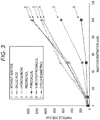
- the relationship between the salt concentration in each mixed solution and the average particle size of complex was confirmed by a dynamic scattered light method using Zetasizer Nano (Malvern Panalytical Ltd.). The results are shown in Fig. 3 .
- Fig. 3 As shown in Fig. 3 , in the test group to which gallic acid or pyrogallol was added, it has been found that the degree of increase in particle size with respect to the increase in salt concentration is small.
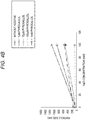
- Gallic acid and pyrogallol that were observed to have the effect of suppressing the precipitation of complex particles, were added to ellagic acid-metal ion complex solutions at the concentrations shown in Figs. 4A and 4B .
- the effect of suppressing precipitation was confirmed in the same manner as in (2) above using the complex solutions containing gallic acid or pyrogallol at various concentrations. The results are shown in Figs. 4A and 4B . It has been suggested that the precipitation suppressing effect is observed at all concentrations.
- An ellagic acid-metal ion complex solution was prepared to contain 50 mM HEPES, 8 mM TAPS, and 1% by mass glycine as buffer components, 100 ⁇ M ellagic acid, 60 ⁇ M zinc chloride, and 50 ⁇ M aluminum chloride as a metal ion complex of ellagic acid, and 0.05% ProClin (trademark) 300 (Sigma-Aldrich Co., LLC.) as a preservative.
- the complex solution was mixed with gallic acid or pyrogallol as an additive to obtain a complex solution comprising gallic acid or pyrogallol at a concentration of 100 ⁇ M.
- an ellagic acid-metal ion complex solution not containing an additive was used as a control.
- PE L- ⁇ -phosphatidylethanolamine
- PC L- ⁇ -phosphatidylcholine
- PS L- ⁇ -phosphatidylserine
- the concentrations of gallic acid and pyrogallol in the respective APTT reagents were 0.013% by mass and 0.009% by mass, respectively.
- the concentration of gallic acid and pyrogallol per 100 parts by mass of ellagic acid were 43 parts by mass and 32 parts by mass, respectively.
- VLDL very low density lipoprotein
- CRP C-reactive protein
- the optical measurement value has sharply decreased immediately after the addition of the reagent and abnormal initial reaction for coagulation has been observed.
- the test group using the APTT reagent comprising gallic acid or pyrogallol it has been confirmed that the decrease in the optical measurement value after the addition of the reagent is gradual and the abnormal initial reaction for coagulation has decreased.
Landscapes
- Health & Medical Sciences (AREA)
- Life Sciences & Earth Sciences (AREA)
- Engineering & Computer Science (AREA)
- Hematology (AREA)
- Chemical & Material Sciences (AREA)
- Molecular Biology (AREA)
- Immunology (AREA)
- Biomedical Technology (AREA)
- Urology & Nephrology (AREA)
- Microbiology (AREA)
- Biochemistry (AREA)
- General Health & Medical Sciences (AREA)
- Analytical Chemistry (AREA)
- Physics & Mathematics (AREA)
- Biotechnology (AREA)
- Medicinal Chemistry (AREA)
- General Physics & Mathematics (AREA)
- Food Science & Technology (AREA)
- Pathology (AREA)
- Cell Biology (AREA)
- Organic Chemistry (AREA)
- Zoology (AREA)
- Wood Science & Technology (AREA)
- Proteomics, Peptides & Aminoacids (AREA)
- Biophysics (AREA)
- Genetics & Genomics (AREA)
- General Engineering & Computer Science (AREA)
- Bioinformatics & Cheminformatics (AREA)
- Neurosurgery (AREA)
- Investigating Or Analysing Biological Materials (AREA)
Abstract
Description
- The present invention relates to a method for measuring activated partial thromboplastin time. The present invention also relates to a reagent kit for activated partial thromboplastin time measurement.
- Since ellagic acid activates the contact factor system, ellagic acid is often used in reagents for activated partial thromboplastin time (APTT) measurement as a coagulation activator. However, ellagic acid is likely to precipitate in aqueous solvents which may be used in APTT measurement reagents. When ellagic acid precipitates, the ellagic acid required for the coagulation reaction is insufficient and the coagulation time cannot be accurately measured. Conventionally, phenol has been added to reagents for APTT measurement containing ellagic acid as a substance which suppresses the precipitation of ellagic acid. However, phenol is an environmentally hazardous substance, and regulations on the use of phenol have been stricter. Hence, reagents for APTT measurement are desired which do not substantially contain phenol and in which the precipitation of ellagic acid is suppressed. For example, Japanese Laid-Open Patent Publication No.
2013-205087 U.S. Patent Application Publication No. 2017/0059594 describes that a polyvinyl alcohol compound is added to reagents for APTT measurement as a substance which suppresses the precipitation of ellagic acid. - An object of the present invention is to find a further substance which has low environmental burden and can suppress the precipitation of ellagic acid and to provide a reagent and a reagent kit for APTT measurement in which the precipitation of ellagic acid is suppressed. Another object of the present invention is to provide a use of such a substance for suppressing the precipitation of ellagic acid.
- The present inventors have completed the present invention by finding out that a compound represented by Formula (I) suppresses the precipitation of an ellagic acid compound. Consequently, the present invention provides a method for measuring activated partial thromboplastin time, the method comprising: mixing: a blood sample; a first reagent comprising an ellagic acid compound and a compound represented by Formula (I); and a second reagent comprising a calcium ion; and measuring activated partial thromboplastin time using the mixture prepared in the mixing step.

- X is a hydrogen atom, -(C=O)-Y, or -(C=O)-OZ,
- Y is a hydroxyl group, a hydrogen atom, a linear or branched alkyl group having a carbon number of 1 or more and 6 or less, or a phenyl group, and
- Z is an alkali metal.
- The present invention also provides a reagent kit for activated partial thromboplastin time measurement which contains a first reagent containing an ellagic acid compound and a compound represented by Formula (I) above and a second reagent containing a calcium salt.
- The present invention also provides a use of a compound represented by Formula (I) for suppressing precipitation of an ellagic acid compound in activated partial thromboplastin time reagent
-
-
Fig. 1 shows a schematic diagram illustrating an example of an APTT reagent according to an embodiment of the present invention. -
Fig. 2 shows a schematic diagram illustrating an example of an APTT reagent kit according to an embodiment of the present invention. -
Fig. 3 shows a relation between a particle size of a complex and a concentration of sodium chloride in ellagic acid-metal ion complex solutions containing various additives. -
Fig. 4A shows a relation between a particle size of a complex and a concentration of sodium chloride in ellagic acid-metal ion complex solutions containing gallic acid at various concentrations. -
Fig. 4B shows a relation between a particle size of a complex and a concentration of sodium chloride in ellagic acid-metal ion complex solutions containing pyrogallol at various concentrations. -
Fig. 5 shows a coagulation waveform acquired by optical measurement using an APTT reagent containing gallic acid or pyrogallol. - The APTT reagent as provided herein comprises a compound represented by Formula (I) as a substance which suppresses the precipitation of ellagic acid.

- X is a hydrogen atom, -(C=O)-Y, or -(C=O)-OZ,
- Y is a hydroxyl group, a hydrogen atom, a linear or branched alkyl group having a carbon number of 1 or more and 6 or less, or a phenyl group, and
- Z is an alkali metal.
- Examples of the linear or branched alkyl group having a carbon number of 1 or more and 6 or less in Formula (I) comprise groups such as methyl, ethyl, propyl, butyl, pentyl, hexyl, isopropyl, isobutyl, isopentyl (isoamyl), and isohexyl. When X in Formula (I) is -(C=O)-OZ, Formula (I) represents an alkali metal salt of gallic acid. Examples of the alkali metal include sodium, potassium, and lithium. Among these, sodium and potassium are preferable.
- Examples of the compound represented by Formula (I) include pyrogallol, gallic acid, 3,4,5-trihydroxybenzaldehyde, methyl gallate, ethyl gallate, propyl gallate, butyl gallate, pentyl gallate, hexyl gallate, isopropyl gallate, isobutyl gallate, isopentyl gallate (isoamyl gallate), isohexyl gallate, benzopyrogallol (3,4,5-trihydroxybenzophenone), sodium gallate, and potassium gallate. Among these, pyrogallol and gallic acid are preferable.
- The concentration of the compound represented by Formula (I) in the APTT reagent can be determined depending on the concentration of the ellagic acid compound in the reagent. When the concentration of the ellagic acid compound in the APTT reagent is a concentration at which the ellagic acid compound is usually used for APTT measurement, the concentration of the compound represented by Formula (I) in the APTT reagent is, for example, 0.001% by mass or more and 0.02% by mass or less, preferably 0.005% by mass or more and 0.02% by mass or less. In a preferred embodiment, the quantity of the compound represented by Formula (I) in the APTT reagent is 5 parts by mass or more and 65 parts by mass or less, more preferably 20 parts by mass or more and 65 parts by mass or less per 100 parts by mass of the ellagic acid compound.
- The APTT reagent of the provided herein comprises an ellagic acid compound as an activator. The ellagic acid compound may be any of ellagic acid, a salt of ellagic acid, or a metal complex of ellagic acid. The central metal of the metal complex may be an ion or an atom. The central metals may be the same as or different from each other in the metal complexes of ellagic acid. A metal ion complex of ellagic acid is particularly preferable as the ellagic acid compound from the viewpoint of strength of the activation action. Examples of the metal ion comprise zinc ion, aluminum ion, and manganese ion. The concentration of the ellagic acid compound in the APTT reagent is usually 10 µM or more and 400 µM or less, preferably 30 µM or more and 150 µM or less.
- In particular embodiments, an activator other than the ellagic acid compound may be further comprised in the APTT reagent. Such an activator may be any substance which activates the contact factor in the intrinsic coagulation pathway, and examples thereof comprise silica, kaolin, and celite. When the activator is, for example, silica, the concentration of this activator in the APTT reagent is usually 0.1 mg/mL or more and 1.0 mg/mL or less, preferably 0.2 mg/mL or more and 0.6 mg/mL or less.
- The APTT reagent preferably comprises a phospholipid. Examples of the phospholipid include phosphatidylethanolamine (PE), phosphatidylcholine (PC), and phosphatidylserine (PS). The APTT reagent as envisaged herein comprises preferably at least one selected from the group consisting of PE, PC, and PS, more preferably PE, PC, and PS. The phospholipid may be a naturally-derived phospholipid or a synthetic phospholipid. Examples of the naturally-derived phospholipid include but are not limited to phospholipids derived from rabbit brain, bovine brain, human placenta, soybean, and egg yolk. In particular, a synthetic phospholipid or a naturally-derived phospholipid purified to a purity of 99% or more is preferable.
- The fatty acid side chain (acyl group) of PE, PC, and PS is not particularly limited, and examples thereof comprise an acyl group having a carbon number of 8 or more and 20 or less, preferably a carbon number of 14 or more and 18 or less. Examples of such an acyl group include but are not limited to lauroyl group, myristoyl group, palmitoyl group, stearoyl group and oleoyl group. PE, PC, and PS all have two fatty acid side chains in the molecule. The two fatty acid side chains in each molecule of PE, PC, and PS may be the same as or different from each other.
- Specific examples of PE comprise dilauroylphosphatidylethanolamine, dimyristoylphosphatidylethanolamine, dipalmitoylphosphatidylethanolamine, distearoylphosphatidylethanolamine, and dioleoylphosphatidylethanolamine. Specific examples of PC comprise dilauroylphosphatidylcholine, dimyristoylphosphatidylcholine, dipalmitoylphosphatidylcholine, distearoylphosphatidylcholine, and dioleoylphosphatidylcholine. Specific examples of PS comprise dilauroylphosphatidylserine, dimyristoylphosphatidylserine, dipalmitoylphosphatidylserine, distearoylphosphatidylserine, and dioleoylphosphatidylserine.
- The concentration of the phospholipid in the APTT reagent can be appropriately determined depending on the kind of phospholipid, the measurement conditions, and the like. For example, the concentration of phospholipid in the APTT reagent is 30 to 2000 µg/mL, preferably 60 to 1000 µg/mL. When the APTT reagent contains PE, PC, and PS as the phospholipid, the PE concentration in the reagent is usually 10 to 700 µg/mL, preferably 30 to 300 µg/mL, the PC concentration in the reagent is usually 20 to 1000 µg/mL, preferably 30 to 500 µg/mL, and the PS concentration in the reagent is usually 3 to 300 µg/mL, preferably 5 to 150 µg/mL.
- The APTT reagent envisaged herein preferably comprises a metal ion. It is expected that a metal ion activates the contact factor and suppresses the generation of precipitates. Ellagic acid in the reagent forms a chelate with the metal ion to be a metal ion complex of ellagic acid. The APTT reagent comprising a metal ion can be prepared by adding a metal ion-forming compound to the APTT reagent. A metal ion-forming compound is a compound broken down into a metal ion and the others when it dissolves in an aqueous solution. The metal ion-forming compound is not particularly limited as long as it generates a metal ion in the APTT reagent and an anion generated from this compound does not inhibit the blood coagulation reaction. Examples of the metal ion-forming compound include salts of metals and organic acids or inorganic acids. Among these, salts of metals and inorganic acids are preferable, and examples thereof include salts of metals and acids such as hydrochloric acid, sulfuric acid, and nitric acid. More preferred metal salts comprise at least one selected from a zinc salt, a manganese salt, an aluminum salt, or a nickel salt. The metal ion-forming compound may be one kind or a combination of two or more kinds. In a preferred embodiment, the metal ion-forming compound comprises a zinc ion compound and an aluminum ion-forming compound or comprises a manganese ion-forming compound with an aluminum ion-forming compound. Examples of such compounds include zinc chloride, manganese chloride, aluminum chloride, and nickel chloride. The metal ion-forming compound may be an anhydride or a hydrate. The concentration of the metal ion in the APTT reagent is, for example, 1 µM or more and 1 mM or less, preferably 10 µM or more and 500 µM or less.
- The APTT reagent envisaged herein may further contain a nonpolar amino acid for stability improvement. Examples of the nonpolar amino acid comprise glycine, alanine, and phenylalanine. Glycine also functions as a buffer and phenylalanine also functions as a precipitation inhibitor of ellagic acid, and thus glycine and phenylalanine are preferable as the nonpolar amino acid. The nonpolar amino acid may be any of an L-form, a D-form, or a mixture thereof. The nonpolar amino acid may be a naturally-derived amino acid or a synthetic amino acid. The concentration of the nonpolar amino acid in the APTT reagent can be appropriately set but is usually 0.75% by mass or more, preferably 0.75% by mass or more and 5% by mass or less, more preferably 0.75% by mass or more and 1.5% by mass or less.
- The APTT reagent envisaged herein may further contain an additive for improving the storage stability and stability. Examples of such an additive include a preservative, an antioxidant, and a stabilizer. Examples of the preservative include an antibiotic such as an aminoglycoside antibiotic and sodium azide. A commercially available preservative such as ProClin (trademark) 300 may be added. Examples of the antioxidant include butylhydroxyanisole. Examples of the stabilizer include polyethylene glycol and polyvinylpyrrolidone.
- The solvent used in the APTT reagent envisaged herein can be appropriately selected from the aqueous solvents which are usually used in the field of blood test. Examples of such aqueous solvents include water, physiological saline, and a buffer solution. The pH of the buffer solution is preferably 6 or more and 8 or less, more preferably 7 or more and 7.6 or less. Examples of the buffer solution include Good buffer solutions such as HEPES, TAPS, MOPS, BES, and TES, Tris-HCl buffer solution (Tris-HCl), Orenberonal buffer solution, and imidazole-HCl buffer solution. The buffer contained in the buffer solution may be one kind or two or more kinds. Glycine may be added to the buffer solution if necessary.
- The pH of the APTT reagent envisaged herein is usually 6 or more and 8 or less, preferably 7 or more and 7.6 or less. The pH of the APTT reagent can be adjusted by adding the buffer solution described above.
- As the APTT reagent envisaged herein contains the compound represented by Formula (I), it is possible not only to prevent the precipitation of ellagic acid but also to decrease the abnormal initial reaction in the optical measurement of APTT. Abnormal initial reaction refers to a phenomenon in which the optical measurement value of the sample changes immediately after the APTT reagent is added to the blood sample. When a normal blood sample and APTT reagent are mixed together, usually the optical measurement value of the sample hardly changes during the period from the addition of the reagent to the deposition of fibrin (the start of coagulation), and the optical measurement value greatly changes from the time of fibrin deposition. However, an abnormal initial reaction may occur in a blood sample of a patient with abnormal coagulation. Depending on the measuring instrument, it may not be possible to acquire an accurate coagulation time when an abnormal initial reaction is detected. Accordingly, in a particular embodiment, the APTT reagent of the invention is used in the determination of coagulation time for a blood sample of a patient with abnormal coagulation.
- The APTT reagent provided herein can be produced in the same manner as the conventional method for producing an APTT reagent except that the compound represented by Formula (I) is used instead of phenol as a precipitation inhibitor of ellagic acid. As an example, the preparation of the APTT reagent of the present invention containing a phospholipid will be described. First, ellagic acid or a salt of ellagic acid is dissolved in an aqueous solvent to prepare an aqueous solution of ellagic acid. Good buffer is preferable as the aqueous solvent. A metal ion-forming compound is added to the ellagic acid solution obtained so as to prepare a solution comprising a metal ion complex of ellagic acid. The above-mentioned phospholipid is added to the solution obtained, whereby an APTT reagent according to an embodiment of the present invention containing a phospholipid can be obtained. If necessary, the above-mentioned nonpolar amino acid, preservative, antioxidant, stabilizer and the like may be added to the APTT reagent.
- The APTT reagent of the present invention can be used under general APTT measurement conditions as a conventional APTT reagent. The APTT reagent provided herein can be used for a screening test for an endogenous coagulation factor, and monitoring of heparin therapy, and a screening test for lupus anticoagulant (LA) as the conventional APTT reagent. The mixing ratio of the APTT reagent envisaged herein to the blood sample may be about 8 : 2 to 2 : 8 and is preferably 5 : 5 as a volume ratio. In other words, the amount of the APTT reagent envisaged herein added may be an amount (volume) to be 0.25 time or more and 4 times or less the amount (volume) of the blood sample. Preferably, the amount of the APTT reagent added is equal to the amount (volume) of the blood sample.
- When the coagulation time of a normal sample is measured using the APTT reagent according to an embodiment of the invention, it is possible to attain a measurement result that is similar to that obtained by a conventional APTT reagent. For example, when an APTT reagent according to an embodiment of the present invention is appropriately used together with a calcium ion-containing aqueous solution to measure the APTT of a predetermined normal plasma (for example, Coagtrol IX manufactured by Sysmex Corporation), APTT is desirably around 30 seconds (for example, 25 seconds or more and 35 seconds or less). When APTT of a predetermined abnormal plasma (for example, Coagtrol IIX manufactured by Sysmex Corporation) is measured, APTT is desirably within a range of 60 to 100 seconds.
- In particular embodiments, a container accommodating the APTT reagent may be packed in a box and provided to the user. The package insert describing how to use the APTT reagent and the like may be enclosed in the box.
Fig. 1 shows an example of the APTT reagentenvisaged herein. With reference toFig. 1 , 10 indicates an embodiment of a container accommodating the APTT reagent as envisaged herein 11 indicates a packing box, and 12 indicates a package insert. - The reagent kit for APTT measurement according to the invention (hereinafter, also referred to as "reagent kit") comprises a first reagent containing an ellagic acid compound and a compound represented by Formula (I) and a second reagent containing a calcium salt. The APTT reagent provided herein as described above can be used as the first reagent. The details of the first reagent are the same as those described for the APTT reagent as provided herein. The details of the ellagic acid compound are as described above.
- The second reagent is a reagent which is added to the mixture of a blood sample with the first reagent and starts blood coagulation. The second reagent is preferably a calcium ion-containing aqueous solution. As the calcium ion-containing aqueous solution, an aqueous solution of a calcium salt is preferable. Examples of the calcium salt include calcium chloride. The calcium ion concentration in the second reagent is usually 2.5 mM or more and 40 mM or less, preferably 10 mM or more and 30 mM or less. When a calcium salt such as calcium chloride that is easily dissolved in water is used, the calcium ion concentration in the second reagent may be expressed by the concentration of the calcium salt.
- In particular embodiments of the invention, a container accommodating the first reagent and a container accommodating the second reagent may be packed in a box and provided to the user. The package insert describing how to use the APTT reagent kit and the like may be enclosed in the box.
Fig. 2 shows an example of the APTT reagent kit according to an embodiment of the present invention. With reference toFig. 2 , 20 indicates the reagent kit as envisaged herein, 21 indicates a first container accommodating the first reagent, 22 indicates a second container accommodating the second reagent, 23 indicates a packing box, and 24 indicates a package insert. - The reagent kit as provided herein may further contain one or more reagents and the like that are usually used in the APTT measurement as other reagents. Examples of such a reagent include plasma for reference and an aqueous medium for dilution. Examples of the plasma for reference include normal plasma, plasma for quality control, plasma deficient in various coagulation factors, LA-containing plasma, and heparin-containing plasma. The aqueous medium for dilution is an aqueous medium for diluting the first reagent. For example, when LA is detected using a reagent kit according to an embodiment of the present invention equipped with the first reagent comprising a phospholipid, the concentration of phospholipid in the first reagent is lowered by diluting the first reagent with an aqueous medium for dilution. By this, the inhibition reaction of phospholipid by LA is more likely to proceed. The APTT measured by the diluted first reagent and the second reagent is called "diluted APTT" (dAPTT) in the field of blood testing.
- Another aspect of the invention provides a method for suppressing the precipitation of an ellagic acid compound. In this method, the precipitation of an ellagic acid compound is suppressed by mixing the ellagic acid compound and a compound represented by Formula (I) in an aqueous solution so that the ellagic acid compound and the compound represented by Formula (I) coexist in the mixture. The details of the ellagic acid compound and the compound represented by Formula (I) are as described above. The aqueous solution may be an aqueous solvent capable of dissolving the ellagic acid compound and the compound represented by Formula (I). The details of such an aqueous solvent are the same as those described for the aqueous solvent used in the APTT reagent provided herein.
- The method for mixing the ellagic acid compound and the compound represented by Formula (I) in an aqueous solution is not particularly limited. For example, the ellagic acid compound may be added to an aqueous solution containing the compound represented by Formula (I). The compound represented by Formula (I) may be added to an aqueous solution containing the ellagic acid compound. Alternatively, an aqueous solution containing the compound represented by Formula (I) and an aqueous solution containing the ellagic acid compound may be mixed together.
- As presented in Examples to be described later, when the salt concentration in the aqueous solution which contains the ellagic acid compound but does not contain the compound represented by Formula (I) is increased, the salting-out effect causes the precipitation of the ellagic acid compound. However, when the compound represented by Formula (I) is mixed with the ellagic acid compound in an aqueous solution, the precipitation of the ellagic acid compound is suppressed even when the salt concentration in the aqueous solution is increased.
- The APTT measurement methods of the invention (hereinafter, also referred to as "measurement method") include mixing a blood sample, a first reagent comprising an ellagic acid compound and a compound represented by Formula (I), and a second reagent comprising a calcium ion and measuring the coagulation time. The APTT reagent provided herein as described above can be used as the first reagent. Alternatively, the reagent kitprovided herein as described above can be used as the first reagent and the second reagent.
- In particular embodiments, as the blood sample, blood collected from a subject or plasma prepared from the blood is used. The preferred blood sample is plasma. A known anticoagulant usually used in blood test may be added to the blood sample. Examples of such an anticoagulant include trisodium citrate. When heparin therapy is monitored by the measurement method of the present invention, blood or plasma of a subject to which heparin has been administered is used. The blood sample may be incubated before the addition of the first reagent, for example, at a temperature of 35°C or more and 40°C or less for a time period of 30 seconds or more and 2 minutes or less.
- In the particular embodiments of the methods envisaged herein, the blood sample and the first reagent are first mixed together. The mixing ratio of the first reagent to the blood sample may be about 8 : 2 to 2 : 8 and is preferably 5 : 5 as a volume ratio. In other words, the amount of the first reagent added may be an amount (volume) to be 0.25 time or more and 4 times or less the amount (volume) of the blood sample. Preferably, the amount of the first reagent added is equal to the amount (volume) of the blood sample. After the blood sample and the first reagent are mixed together, it is preferable to incubate the mixture under predetermined conditions. Examples of predetermined conditions include a condition under which the mixture is incubated at a temperature of 35°C or more and 40°C or less for a time period of 2 minutes or more and 5 minutes or less.
- Subsequently, the mixture of the blood sample with the first reagent is mixed with the second reagent. Hereinafter, the mixture of the blood sample with the first reagent and the second reagent is also referred to as "measurement sample". The amount of the second reagent added may be an amount (volume) so that the calcium ion concentration in the measurement sample is usually 2 mM or more and 20 mM or less, preferably 4 mM or more and 10 mM or less. The measurement sample may be prepared by a manual method or using a fully automatic measuring instrument. Examples of such an instrument include CS series (Sysmex Corporation) of a fully automatic blood coagulation measuring instrument.
- In particular embodiments, the coagulation time is measured by taking the time at which the second reagent is added as the measurement start point. The coagulation time may be measured by a manual method or using a fully automatic measuring instrument. In the manual method, the time until fibrin is deposited is measured by visual observation using a stopwatch or the like. When a fully automatic measuring instrument is used, the coagulation time may be measured by an optical measurement method or a physical measurement method. In particular embodiments of the optical measurement method, for example, the measurement sample is irradiated with light, the optical information regarding transmittance, absorbance, scattered light intensity, and the like is acquired, and the coagulation time is acquired based on the acquired information. In particular embodiments of the physical measurement method, for example, the physical information regarding the viscosity of the measurement sample is acquired using a steel ball and the coagulation time is acquired based on the acquired information. The nature of the fully automatic measuring instrument is not particularly limited. For example, CS series (Sysmex Corporation) of a fully automatic blood coagulation measuring instrument can measure the coagulation time based on the optical information such as transmittance, absorbance, and scattered light intensity. STA Compact (Roche Diagnostics Co., Ltd.) of a fully automatic blood coagulation/fibrinolysis measuring instrument can measure the coagulation time based on the physical information such as viscosity.
- Hereinafter, the present invention will be described in detail with reference to Examples, but the present invention is not limited to these Examples.
- In an APTT reagent comprising a metal ion complex of ellagic acid as an activator, when the salt concentration increases, the complex particle size increases by the salting-out effect, and finally precipitation occurs. By utilizing the principle of salting out, the effect of suppressing the precipitation of various additives in ellagic acid-metal ion complex solutions was confirmed.
- An ellagic acid-metal ion complex solution was prepared to contain 50 mM HEPES, 8 mM TAPS, and 1% by mass glycine as buffer components, 100 µM ellagic acid, 60 µM zinc chloride, and 50 µM aluminum chloride as a metal ion complex of ellagic acid, and 0.05% ProClin (trademark) 300 (Sigma-Aldrich Co., LLC.) as a preservative. A complex solution comprising each additive at a concentration of 100 µM was obtained by mixing this solution with any one selected from gallic acid, pyrogallol, hydroquinone, 5-methylpyrogallol, resorcinol, or cyclohexanetriol as an additive. As a control, an ellagic acid-metal ion complex solution not comprising an additive was used.
- Each complex solution prepared in (1) above was mixed with a 5 M sodium chloride solution to obtain a mixed solution (test group) having a sodium chloride concentration of 10 mM, 50 mM, or 100 mM. The relationship between the salt concentration in each mixed solution and the average particle size of complex was confirmed by a dynamic scattered light method using Zetasizer Nano (Malvern Panalytical Ltd.). The results are shown in
Fig. 3 . As shown inFig. 3 , in the test group to which gallic acid or pyrogallol was added, it has been found that the degree of increase in particle size with respect to the increase in salt concentration is small. In fact, when the sodium chloride concentration is 100 mM, precipitation has not been visually confirmed in the test group to which gallic acid or pyrogallol was added but precipitation has been visually confirmed in the test groups containing additives other than these and the test group not containing an additive. - Gallic acid and pyrogallol, that were observed to have the effect of suppressing the precipitation of complex particles, were added to ellagic acid-metal ion complex solutions at the concentrations shown in
Figs. 4A and4B . The effect of suppressing precipitation was confirmed in the same manner as in (2) above using the complex solutions containing gallic acid or pyrogallol at various concentrations. The results are shown inFigs. 4A and4B . It has been suggested that the precipitation suppressing effect is observed at all concentrations. - It was investigated whether the abnormal initial reaction was suppressed when using an APTT reagent containing pyrogallol or gallic acid.
- An ellagic acid-metal ion complex solution was prepared to contain 50 mM HEPES, 8 mM TAPS, and 1% by mass glycine as buffer components, 100 µM ellagic acid, 60 µM zinc chloride, and 50 µM aluminum chloride as a metal ion complex of ellagic acid, and 0.05% ProClin (trademark) 300 (Sigma-Aldrich Co., LLC.) as a preservative. The complex solution was mixed with gallic acid or pyrogallol as an additive to obtain a complex solution comprising gallic acid or pyrogallol at a concentration of 100 µM. As a control, an ellagic acid-metal ion complex solution not containing an additive was used. PE (L-α-phosphatidylethanolamine), PC (L-α-phosphatidylcholine), and PS (L-α-phosphatidylserine) as a phospholipid component were added to the respective complex solutions so as to have final concentrations of 10 mg/dL, 45 mg/dL, and 5 mg/dL, respectively, thereby preparing APTT reagents. The concentrations of gallic acid and pyrogallol in the respective APTT reagents were 0.013% by mass and 0.009% by mass, respectively. In the respective APTT reagents, the concentration of gallic acid and pyrogallol per 100 parts by mass of ellagic acid were 43 parts by mass and 32 parts by mass, respectively.
- Pseudo samples were prepared to induce an abnormal initial reaction for coagulation by adding very low density lipoprotein (VLDL) and C-reactive protein (CRP) to frozen plasma so as to have final concentrations of 100 µg/mL and 300 µg/mL, respectively. These pseudo samples were subjected to the APTT measurement using a fully automatic coagulation measuring instrument CS-5100 (Sysmex Corporation) set with the reagent prepared in (1) above and a calcium ion-containing reagent, and the coagulation waveforms thereof were acquired.
Fig. 5 shows the coagulation waveforms acquired by the measurement using the respective APTT reagents. - As illustrated in
Fig. 5 , in the control group (APTT reagent not containing an additive), the optical measurement value has sharply decreased immediately after the addition of the reagent and abnormal initial reaction for coagulation has been observed. On the other hand, in the test group using the APTT reagent comprising gallic acid or pyrogallol, it has been confirmed that the decrease in the optical measurement value after the addition of the reagent is gradual and the abnormal initial reaction for coagulation has decreased.
Claims (15)
- A method for measuring activated partial thromboplastin time, the method comprising:mixing: a blood sample; a first reagent comprising an ellagic acid compound and a compound represented by Formula (I); and a second reagent comprising a calcium ion; andmeasuring activated partial thromboplastin time using the mixture prepared in the mixing step,wherein the compound represented by Formula (I) is shown below
 X is a hydrogen atom, -(C=O)-Y, or -(C=O)-OZ,Y is a hydroxyl group, a hydrogen atom, a linear or branched alkyl group having a carbon number of 1 or more and 6 or less, or a phenyl group, andZ is an alkali metal.
 - The method according to claim 1, wherein the compound represented by Formula (I) is at least one selected from the group consisting of pyrogallol and gallic acid.
- The method according to claim 1 or 2, wherein a concentration of the compound represented by Formula (I) in the first reagent is 0.001% by mass or more and 0.02% by mass or less.
- The method according to any one of claims 1 to 3, wherein a quantity of the compound represented by Formula (I) in the first reagent comprises 5 parts by mass or more and 65 parts by mass or less per 100 parts by mass of the ellagic acid compound.
- The method according to any one of claims 1 to 4, wherein the first reagent further comprises a metal ion.
- The method according to any one of claims 1 to 5, wherein the first reagent comprises a metal ion at least one selected from the group consisting of a zinc ion, an aluminum ion and a manganese ion.
- The method according to any one of claims 1 to 6, wherein the reagent further comprises a nonpolar amino acid.
- The method according to claim 7, wherein the nonpolar amino acid is at least one selected from the group consisting of glycine, alanine, and phenylalanine.
- The method according to claim 7 or 8, wherein a concentration of the nonpolar amino acid in the first reagent is 0.75% by mass or more.
- The method according to any one of claims 1 to 9, wherein the first reagent further comprises a phospholipid.
- The method according to claim 10, wherein the phospholipid is at least one selected from the group consisting of phosphatidylserine, phosphatidylethanolamine, and phosphatidylcholine.
- A reagent kit for activated partial thromboplastin time measurement, the reagent kit comprising:a first reagent comprising an ellagic acid compound and a compound represented by Formula (I); anda second reagent containing a calcium ion,
 X is a hydrogen atom, -(C=O)-Y, or -(C=O)-OZ,Y is a hydroxyl group, a hydrogen atom, a linear or branched alkyl group having a carbon number of 1 or more and 6 or less, or a phenyl group, andZ is an alkali metal.
 - Use of a compound represented by Formula (I) for suppressing precipitation of an ellagic acid compound in activated partial thromboplastin time reagent,
 X is a hydrogen atom, -(C=O)-Y, or -(C=O)-OZ,Y is a hydroxyl group, a hydrogen atom, a linear or branched alkyl group having a carbon number of 1 or more and 6 or less, or a phenyl group, andZ is an alkali metal.
 - The use according to claim 13 wherein the compound represented by Formula (I) is at least one selected from the group consisting of pyrogallol and gallic acid.
- The use according to claims 13 to 14, further comprising a phospholipid.
Applications Claiming Priority (1)
| Application Number | Priority Date | Filing Date | Title |
|---|---|---|---|
| JP2019173297A JP7444572B2 (en) | 2019-09-24 | 2019-09-24 | Reagent and reagent kit for measuring activated partial thromboplastin time, and method for suppressing precipitation of ellagic acid compound |
Publications (2)
| Publication Number | Publication Date |
|---|---|
| EP3798635A1 true EP3798635A1 (en) | 2021-03-31 |
| EP3798635B1 EP3798635B1 (en) | 2025-09-10 |
Family
ID=72644125
Family Applications (1)
| Application Number | Title | Priority Date | Filing Date |
|---|---|---|---|
| EP20197998.6A Active EP3798635B1 (en) | 2019-09-24 | 2020-09-24 | Method for measuring activated partial thromboplastin time and reagent kit for activated partial thromboplastin time measurement |
Country Status (4)
| Country | Link |
|---|---|
| US (1) | US12140600B2 (en) |
| EP (1) | EP3798635B1 (en) |
| JP (1) | JP7444572B2 (en) |
| CN (1) | CN112630452B (en) |
Families Citing this family (1)
| Publication number | Priority date | Publication date | Assignee | Title |
|---|---|---|---|---|
| WO2026094429A1 (en) * | 2024-10-31 | 2026-05-07 | 積水メディカル株式会社 | Reagent for coagulation time measurement and coagulation time measurement method |
Citations (4)
| Publication number | Priority date | Publication date | Assignee | Title |
|---|---|---|---|---|
| DE2915310A1 (en) * | 1979-04-14 | 1980-10-30 | Behringwerke Ag | NEW PARTIAL THROMBOPLASTINE AND THEIR USE |
| DE102008008537A1 (en) * | 2008-02-06 | 2009-08-13 | Beiersdorf Ag | Wound Care Product |
| JP2013205087A (en) | 2012-03-27 | 2013-10-07 | Sysmex Corp | Reagent for coagulation time measurement, reagent kit for coagulation time measurement and coagulation time measuring method |
| EP3136105A1 (en) * | 2015-08-31 | 2017-03-01 | Sysmex Corporation | Reagent for activated partial thromboplastin time measurement, reagent kit for activated partial thromboplastin time measurement, and method for measuring activated partial thromboplastin time |
Family Cites Families (6)
| Publication number | Priority date | Publication date | Assignee | Title |
|---|---|---|---|---|
| US4971918A (en) | 1988-05-25 | 1990-11-20 | Boehringer Mannheim Corporation | Reducible indicator compositions containing pyrogallol derivatives |
| US5055412A (en) * | 1989-03-21 | 1991-10-08 | Proksch Gary J | Factor sensitive reagent for testing of blood coagulation containing ellagic acid and divalent metal ions and method of making the same |
| EP0633473B1 (en) * | 1993-06-30 | 1999-03-10 | Stiftung Für Diagnostische Forschung | Measurement of the activated partial thromboplastin time (APTT) in a single-step reaction |
| JP6692023B2 (en) * | 2014-06-18 | 2020-05-13 | 学校法人近畿大学 | Blood coagulation promoter and blood coagulation function test drug using the same |
| CN108226539B (en) * | 2018-01-12 | 2020-09-18 | 三诺生物传感股份有限公司 | Activated partial thromboplastin time detection reagent and detection method |
| CN109613279A (en) * | 2018-12-06 | 2019-04-12 | 太原博奥特生物技术有限公司 | A novel ellagic acid compound and preparation of activated partial thromboplastin time assay reagent using ellagic acid compound |
-
2019
- 2019-09-24 JP JP2019173297A patent/JP7444572B2/en active Active
-
2020
- 2020-09-21 CN CN202010996041.6A patent/CN112630452B/en active Active
- 2020-09-23 US US17/029,933 patent/US12140600B2/en active Active
- 2020-09-24 EP EP20197998.6A patent/EP3798635B1/en active Active
Patent Citations (5)
| Publication number | Priority date | Publication date | Assignee | Title |
|---|---|---|---|---|
| DE2915310A1 (en) * | 1979-04-14 | 1980-10-30 | Behringwerke Ag | NEW PARTIAL THROMBOPLASTINE AND THEIR USE |
| DE102008008537A1 (en) * | 2008-02-06 | 2009-08-13 | Beiersdorf Ag | Wound Care Product |
| JP2013205087A (en) | 2012-03-27 | 2013-10-07 | Sysmex Corp | Reagent for coagulation time measurement, reagent kit for coagulation time measurement and coagulation time measuring method |
| EP3136105A1 (en) * | 2015-08-31 | 2017-03-01 | Sysmex Corporation | Reagent for activated partial thromboplastin time measurement, reagent kit for activated partial thromboplastin time measurement, and method for measuring activated partial thromboplastin time |
| US20170059594A1 (en) | 2015-08-31 | 2017-03-02 | Sysmex Corporation | Reagent for activated partial thromboplastin time measurement, reagent kit for activated partial thromboplastin time measurement, and method for measuring activated partial thrombopalstin time |
Also Published As
| Publication number | Publication date |
|---|---|
| EP3798635B1 (en) | 2025-09-10 |
| JP2021050976A (en) | 2021-04-01 |
| US12140600B2 (en) | 2024-11-12 |
| JP7444572B2 (en) | 2024-03-06 |
| CN112630452B (en) | 2025-04-22 |
| CN112630452A (en) | 2021-04-09 |
| US20210088537A1 (en) | 2021-03-25 |
Similar Documents
| Publication | Publication Date | Title |
|---|---|---|
| JP7153519B2 (en) | Coagulation time measurement reagent, manufacturing method thereof, reagent kit, and clotting time measurement method | |
| JP2013205087A (en) | Reagent for coagulation time measurement, reagent kit for coagulation time measurement and coagulation time measuring method | |
| JP2017049040A (en) | Reagent, reagent kit and method for measuring activated partial thromboplastin time | |
| US8557592B2 (en) | Reagent kit for detecting lupus anticoagulant and method of determining presence or absence of lupus anticoagulant | |
| JP2011133396A (en) | Activated partial thromboplastin time measuring reagent, activated partial thromboplastin time measuring method, and determination method for determining presence or absence of blood coagulation inhibitor | |
| ES2602980T3 (en) | Reagent kit to detect lupus anticoagulant and method to determine the presence or absence of lupus anticoagulant | |
| US20150185236A1 (en) | Blood coagulation time prolonging agent | |
| JP4999613B2 (en) | Blood coagulation measurement reagent and blood coagulation time measurement method | |
| EP3798635B1 (en) | Method for measuring activated partial thromboplastin time and reagent kit for activated partial thromboplastin time measurement | |
| JP7473283B1 (en) | Reagent for measuring activated partial thromboplastin time and blood coagulation time regulator for lupus anticoagulant positive blood specimen or heparin-containing blood specimen | |
| JP6709286B2 (en) | Two-component "mix and use" liquid thromboplastin reagent, methods of making and using the same | |
| Estrada et al. | Influence of temperature on 31P NMR chemical shifts of phospholipids and their metabolites I. In chloroform–methanol–water | |
| EP3225992A1 (en) | Reagent for prothrombin time measurement and method for production thereof | |
| De Kruijff et al. | Phosphorus nuclear magnetic resonance of Acholeplasma laidlawii cell membranes and derived liposomes | |
| JP7473282B1 (en) | Agent for shortening blood clotting time in blood samples deficient in coagulation factor XII | |
| WO2024080372A1 (en) | Blood coagulation time regulator for blood specimen deficient in coagulation factor viii, ix or xi, and reagent for activated partial thromboplastin time measurement | |
| WO2026094429A1 (en) | Reagent for coagulation time measurement and coagulation time measurement method | |
| Morin et al. | A lipoprotein independent assay for human serum lecithin-cholesterol acyltransferase | |
| US20120129808A1 (en) | Blood coagulation reaction inhibitor |
Legal Events
| Date | Code | Title | Description |
|---|---|---|---|
| PUAI | Public reference made under article 153(3) epc to a published international application that has entered the european phase |
Free format text: ORIGINAL CODE: 0009012 |
|
| STAA | Information on the status of an ep patent application or granted ep patent |
Free format text: STATUS: THE APPLICATION HAS BEEN PUBLISHED |
|
| AK | Designated contracting states |
Kind code of ref document: A1 Designated state(s): AL AT BE BG CH CY CZ DE DK EE ES FI FR GB GR HR HU IE IS IT LI LT LU LV MC MK MT NL NO PL PT RO RS SE SI SK SM TR |
|
| AX | Request for extension of the european patent |
Extension state: BA ME |
|
| STAA | Information on the status of an ep patent application or granted ep patent |
Free format text: STATUS: REQUEST FOR EXAMINATION WAS MADE |
|
| 17P | Request for examination filed |
Effective date: 20210818 |
|
| RBV | Designated contracting states (corrected) |
Designated state(s): AL AT BE BG CH CY CZ DE DK EE ES FI FR GB GR HR HU IE IS IT LI LT LU LV MC MK MT NL NO PL PT RO RS SE SI SK SM TR |
|
| STAA | Information on the status of an ep patent application or granted ep patent |
Free format text: STATUS: EXAMINATION IS IN PROGRESS |
|
| 17Q | First examination report despatched |
Effective date: 20230628 |
|
| GRAP | Despatch of communication of intention to grant a patent |
Free format text: ORIGINAL CODE: EPIDOSNIGR1 |
|
| STAA | Information on the status of an ep patent application or granted ep patent |
Free format text: STATUS: GRANT OF PATENT IS INTENDED |
|
| INTG | Intention to grant announced |
Effective date: 20241213 |
|
| GRAJ | Information related to disapproval of communication of intention to grant by the applicant or resumption of examination proceedings by the epo deleted |
Free format text: ORIGINAL CODE: EPIDOSDIGR1 |
|
| STAA | Information on the status of an ep patent application or granted ep patent |
Free format text: STATUS: EXAMINATION IS IN PROGRESS |
|
| GRAS | Grant fee paid |
Free format text: ORIGINAL CODE: EPIDOSNIGR3 |
|
| STAA | Information on the status of an ep patent application or granted ep patent |
Free format text: STATUS: GRANT OF PATENT IS INTENDED |
|
| GRAP | Despatch of communication of intention to grant a patent |
Free format text: ORIGINAL CODE: EPIDOSNIGR1 |
|
| INTC | Intention to grant announced (deleted) | ||
| INTG | Intention to grant announced |
Effective date: 20250415 |
|
| GRAA | (expected) grant |
Free format text: ORIGINAL CODE: 0009210 |
|
| STAA | Information on the status of an ep patent application or granted ep patent |
Free format text: STATUS: THE PATENT HAS BEEN GRANTED |
|
| AK | Designated contracting states |
Kind code of ref document: B1 Designated state(s): AL AT BE BG CH CY CZ DE DK EE ES FI FR GB GR HR HU IE IS IT LI LT LU LV MC MK MT NL NO PL PT RO RS SE SI SK SM TR |
|
| REG | Reference to a national code |
Ref country code: GB Ref legal event code: FG4D |
|
| REG | Reference to a national code |
Ref country code: CH Ref legal event code: EP |
|
| REG | Reference to a national code |
Ref country code: DE Ref legal event code: R096 Ref document number: 602020058418 Country of ref document: DE |
|
| REG | Reference to a national code |
Ref country code: IE Ref legal event code: FG4D |
|
| PGFP | Annual fee paid to national office [announced via postgrant information from national office to epo] |
Ref country code: DE Payment date: 20250919 Year of fee payment: 6 |
|
| PGFP | Annual fee paid to national office [announced via postgrant information from national office to epo] |
Ref country code: GB Payment date: 20251022 Year of fee payment: 6 |
|
| PG25 | Lapsed in a contracting state [announced via postgrant information from national office to epo] |
Ref country code: NO Free format text: LAPSE BECAUSE OF FAILURE TO SUBMIT A TRANSLATION OF THE DESCRIPTION OR TO PAY THE FEE WITHIN THE PRESCRIBED TIME-LIMIT Effective date: 20251210 |
|
| REG | Reference to a national code |
Ref country code: LT Ref legal event code: MG9D |
|
| PG25 | Lapsed in a contracting state [announced via postgrant information from national office to epo] |
Ref country code: FI Free format text: LAPSE BECAUSE OF FAILURE TO SUBMIT A TRANSLATION OF THE DESCRIPTION OR TO PAY THE FEE WITHIN THE PRESCRIBED TIME-LIMIT Effective date: 20250910 |
|
| REG | Reference to a national code |
Ref country code: NL Ref legal event code: MP Effective date: 20250910 |
|
| PG25 | Lapsed in a contracting state [announced via postgrant information from national office to epo] |
Ref country code: HR Free format text: LAPSE BECAUSE OF FAILURE TO SUBMIT A TRANSLATION OF THE DESCRIPTION OR TO PAY THE FEE WITHIN THE PRESCRIBED TIME-LIMIT Effective date: 20250910 |
|
| PGFP | Annual fee paid to national office [announced via postgrant information from national office to epo] |
Ref country code: FR Payment date: 20251104 Year of fee payment: 6 |
|
| PG25 | Lapsed in a contracting state [announced via postgrant information from national office to epo] |
Ref country code: GR Free format text: LAPSE BECAUSE OF FAILURE TO SUBMIT A TRANSLATION OF THE DESCRIPTION OR TO PAY THE FEE WITHIN THE PRESCRIBED TIME-LIMIT Effective date: 20251211 |
|
| PG25 | Lapsed in a contracting state [announced via postgrant information from national office to epo] |
Ref country code: SE Free format text: LAPSE BECAUSE OF FAILURE TO SUBMIT A TRANSLATION OF THE DESCRIPTION OR TO PAY THE FEE WITHIN THE PRESCRIBED TIME-LIMIT Effective date: 20250910 |
|
| PG25 | Lapsed in a contracting state [announced via postgrant information from national office to epo] |
Ref country code: LV Free format text: LAPSE BECAUSE OF FAILURE TO SUBMIT A TRANSLATION OF THE DESCRIPTION OR TO PAY THE FEE WITHIN THE PRESCRIBED TIME-LIMIT Effective date: 20250910 |
|
| PG25 | Lapsed in a contracting state [announced via postgrant information from national office to epo] |
Ref country code: PL Free format text: LAPSE BECAUSE OF FAILURE TO SUBMIT A TRANSLATION OF THE DESCRIPTION OR TO PAY THE FEE WITHIN THE PRESCRIBED TIME-LIMIT Effective date: 20250910 Ref country code: BG Free format text: LAPSE BECAUSE OF FAILURE TO SUBMIT A TRANSLATION OF THE DESCRIPTION OR TO PAY THE FEE WITHIN THE PRESCRIBED TIME-LIMIT Effective date: 20250910 |
|
| PG25 | Lapsed in a contracting state [announced via postgrant information from national office to epo] |
Ref country code: RS Free format text: LAPSE BECAUSE OF FAILURE TO SUBMIT A TRANSLATION OF THE DESCRIPTION OR TO PAY THE FEE WITHIN THE PRESCRIBED TIME-LIMIT Effective date: 20251210 |
|
| PG25 | Lapsed in a contracting state [announced via postgrant information from national office to epo] |
Ref country code: ES Free format text: LAPSE BECAUSE OF FAILURE TO SUBMIT A TRANSLATION OF THE DESCRIPTION OR TO PAY THE FEE WITHIN THE PRESCRIBED TIME-LIMIT Effective date: 20250910 |
|
| REG | Reference to a national code |
Ref country code: AT Ref legal event code: MK05 Ref document number: 1836385 Country of ref document: AT Kind code of ref document: T Effective date: 20250910 |
|
| PG25 | Lapsed in a contracting state [announced via postgrant information from national office to epo] |
Ref country code: NL Free format text: LAPSE BECAUSE OF FAILURE TO SUBMIT A TRANSLATION OF THE DESCRIPTION OR TO PAY THE FEE WITHIN THE PRESCRIBED TIME-LIMIT Effective date: 20250910 |
|
| PG25 | Lapsed in a contracting state [announced via postgrant information from national office to epo] |
Ref country code: SM Free format text: LAPSE BECAUSE OF FAILURE TO SUBMIT A TRANSLATION OF THE DESCRIPTION OR TO PAY THE FEE WITHIN THE PRESCRIBED TIME-LIMIT Effective date: 20250910 |
|
| PG25 | Lapsed in a contracting state [announced via postgrant information from national office to epo] |
Ref country code: AT Free format text: LAPSE BECAUSE OF FAILURE TO SUBMIT A TRANSLATION OF THE DESCRIPTION OR TO PAY THE FEE WITHIN THE PRESCRIBED TIME-LIMIT Effective date: 20250910 |
|
| PG25 | Lapsed in a contracting state [announced via postgrant information from national office to epo] |
Ref country code: IT Free format text: LAPSE BECAUSE OF FAILURE TO SUBMIT A TRANSLATION OF THE DESCRIPTION OR TO PAY THE FEE WITHIN THE PRESCRIBED TIME-LIMIT Effective date: 20250910 Ref country code: RO Free format text: LAPSE BECAUSE OF FAILURE TO SUBMIT A TRANSLATION OF THE DESCRIPTION OR TO PAY THE FEE WITHIN THE PRESCRIBED TIME-LIMIT Effective date: 20250910 |
|
| PG25 | Lapsed in a contracting state [announced via postgrant information from national office to epo] |
Ref country code: IS Free format text: LAPSE BECAUSE OF FAILURE TO SUBMIT A TRANSLATION OF THE DESCRIPTION OR TO PAY THE FEE WITHIN THE PRESCRIBED TIME-LIMIT Effective date: 20260110 |
|
| PG25 | Lapsed in a contracting state [announced via postgrant information from national office to epo] |
Ref country code: CZ Free format text: LAPSE BECAUSE OF FAILURE TO SUBMIT A TRANSLATION OF THE DESCRIPTION OR TO PAY THE FEE WITHIN THE PRESCRIBED TIME-LIMIT Effective date: 20250910 Ref country code: PT Free format text: LAPSE BECAUSE OF FAILURE TO SUBMIT A TRANSLATION OF THE DESCRIPTION OR TO PAY THE FEE WITHIN THE PRESCRIBED TIME-LIMIT Effective date: 20260112 |
|
| PG25 | Lapsed in a contracting state [announced via postgrant information from national office to epo] |
Ref country code: SK Free format text: LAPSE BECAUSE OF FAILURE TO SUBMIT A TRANSLATION OF THE DESCRIPTION OR TO PAY THE FEE WITHIN THE PRESCRIBED TIME-LIMIT Effective date: 20250910 Ref country code: EE Free format text: LAPSE BECAUSE OF FAILURE TO SUBMIT A TRANSLATION OF THE DESCRIPTION OR TO PAY THE FEE WITHIN THE PRESCRIBED TIME-LIMIT Effective date: 20250910 |
|
| REG | Reference to a national code |
Ref country code: CH Ref legal event code: H13 Free format text: ST27 STATUS EVENT CODE: U-0-0-H10-H13 (AS PROVIDED BY THE NATIONAL OFFICE) Effective date: 20260504 |