EP3798047A1 - Facilitating battery maintenance - Google Patents
Facilitating battery maintenance Download PDFInfo
- Publication number
- EP3798047A1 EP3798047A1 EP19199103.3A EP19199103A EP3798047A1 EP 3798047 A1 EP3798047 A1 EP 3798047A1 EP 19199103 A EP19199103 A EP 19199103A EP 3798047 A1 EP3798047 A1 EP 3798047A1
- Authority
- EP
- European Patent Office
- Prior art keywords
- battery
- monitored
- recommendation
- lifetime
- vehicle
- Prior art date
- Legal status (The legal status is an assumption and is not a legal conclusion. Google has not performed a legal analysis and makes no representation as to the accuracy of the status listed.)
- Pending
Links
Images




Classifications
-
- B—PERFORMING OPERATIONS; TRANSPORTING
- B60—VEHICLES IN GENERAL
- B60L—PROPULSION OF ELECTRICALLY-PROPELLED VEHICLES; SUPPLYING ELECTRIC POWER FOR AUXILIARY EQUIPMENT OF ELECTRICALLY-PROPELLED VEHICLES; ELECTRODYNAMIC BRAKE SYSTEMS FOR VEHICLES IN GENERAL; MAGNETIC SUSPENSION OR LEVITATION FOR VEHICLES; MONITORING OPERATING VARIABLES OF ELECTRICALLY-PROPELLED VEHICLES; ELECTRIC SAFETY DEVICES FOR ELECTRICALLY-PROPELLED VEHICLES
- B60L58/00—Methods or circuit arrangements for monitoring or controlling batteries or fuel cells, specially adapted for electric vehicles
- B60L58/10—Methods or circuit arrangements for monitoring or controlling batteries or fuel cells, specially adapted for electric vehicles for monitoring or controlling batteries
- B60L58/12—Methods or circuit arrangements for monitoring or controlling batteries or fuel cells, specially adapted for electric vehicles for monitoring or controlling batteries responding to state of charge [SoC]
- B60L58/13—Maintaining the SoC within a determined range
-
- B—PERFORMING OPERATIONS; TRANSPORTING
- B60—VEHICLES IN GENERAL
- B60L—PROPULSION OF ELECTRICALLY-PROPELLED VEHICLES; SUPPLYING ELECTRIC POWER FOR AUXILIARY EQUIPMENT OF ELECTRICALLY-PROPELLED VEHICLES; ELECTRODYNAMIC BRAKE SYSTEMS FOR VEHICLES IN GENERAL; MAGNETIC SUSPENSION OR LEVITATION FOR VEHICLES; MONITORING OPERATING VARIABLES OF ELECTRICALLY-PROPELLED VEHICLES; ELECTRIC SAFETY DEVICES FOR ELECTRICALLY-PROPELLED VEHICLES
- B60L58/00—Methods or circuit arrangements for monitoring or controlling batteries or fuel cells, specially adapted for electric vehicles
- B60L58/10—Methods or circuit arrangements for monitoring or controlling batteries or fuel cells, specially adapted for electric vehicles for monitoring or controlling batteries
- B60L58/16—Methods or circuit arrangements for monitoring or controlling batteries or fuel cells, specially adapted for electric vehicles for monitoring or controlling batteries responding to battery ageing, e.g. to the number of charging cycles or the state of health [SoH]
-
- H—ELECTRICITY
- H02—GENERATION; CONVERSION OR DISTRIBUTION OF ELECTRIC POWER
- H02J—ELECTRIC POWER NETWORKS; CIRCUIT ARRANGEMENTS OR SYSTEMS FOR SUPPLYING OR DISTRIBUTING ELECTRIC POWER; SYSTEMS FOR STORING ELECTRIC ENERGY
- H02J7/00—Circuit arrangements for charging or discharging batteries or for supplying loads from batteries
- H02J7/90—Regulation of charging or discharging current or voltage
- H02J7/92—Regulation of charging or discharging current or voltage with prioritisation of loads or sources
-
- B—PERFORMING OPERATIONS; TRANSPORTING
- B60—VEHICLES IN GENERAL
- B60L—PROPULSION OF ELECTRICALLY-PROPELLED VEHICLES; SUPPLYING ELECTRIC POWER FOR AUXILIARY EQUIPMENT OF ELECTRICALLY-PROPELLED VEHICLES; ELECTRODYNAMIC BRAKE SYSTEMS FOR VEHICLES IN GENERAL; MAGNETIC SUSPENSION OR LEVITATION FOR VEHICLES; MONITORING OPERATING VARIABLES OF ELECTRICALLY-PROPELLED VEHICLES; ELECTRIC SAFETY DEVICES FOR ELECTRICALLY-PROPELLED VEHICLES
- B60L2250/00—Driver interactions
-
- Y—GENERAL TAGGING OF NEW TECHNOLOGICAL DEVELOPMENTS; GENERAL TAGGING OF CROSS-SECTIONAL TECHNOLOGIES SPANNING OVER SEVERAL SECTIONS OF THE IPC; TECHNICAL SUBJECTS COVERED BY FORMER USPC CROSS-REFERENCE ART COLLECTIONS [XRACs] AND DIGESTS
- Y02—TECHNOLOGIES OR APPLICATIONS FOR MITIGATION OR ADAPTATION AGAINST CLIMATE CHANGE
- Y02T—CLIMATE CHANGE MITIGATION TECHNOLOGIES RELATED TO TRANSPORTATION
- Y02T10/00—Road transport of goods or passengers
- Y02T10/60—Other road transportation technologies with climate change mitigation effect
- Y02T10/70—Energy storage systems for electromobility, e.g. batteries
-
- Y—GENERAL TAGGING OF NEW TECHNOLOGICAL DEVELOPMENTS; GENERAL TAGGING OF CROSS-SECTIONAL TECHNOLOGIES SPANNING OVER SEVERAL SECTIONS OF THE IPC; TECHNICAL SUBJECTS COVERED BY FORMER USPC CROSS-REFERENCE ART COLLECTIONS [XRACs] AND DIGESTS
- Y02—TECHNOLOGIES OR APPLICATIONS FOR MITIGATION OR ADAPTATION AGAINST CLIMATE CHANGE
- Y02T—CLIMATE CHANGE MITIGATION TECHNOLOGIES RELATED TO TRANSPORTATION
- Y02T90/00—Enabling technologies or technologies with a potential or indirect contribution to GHG emissions mitigation
- Y02T90/10—Technologies relating to charging of electric vehicles
- Y02T90/16—Information or communication technologies improving the operation of electric vehicles
Definitions
- the present disclosure relates to methods of facilitating maintenance of a battery of a vehicle and devices performing the methods.
- the many rewards of electrification are accompanied by huge risks.
- the cost of the battery constitutes the better portion of the cost of the entire vehicle, and replacements will be expensive. Useful life of the battery is hence a critical factor for an electric/hybrid vehicle.
- One object is to solve, or at least mitigate, this problem in the art and to provide a method of facilitating maintenance of a battery of a vehicle.
- any non-optimal action performed on the battery - for instance excessive charging - should be identified such that an appropriate recommendation for a battery maintenance operation can be provided.
- a user of the vehicle may be instructed to charge the battery less often.
- a device such as an Electronic Control Unit (ECU)
- ECU Electronic Control Unit
- the monitored property is evaluated by the ECU to determine an effect that the monitored property has on the lifetime of the battery. Based on this evaluation, the ECU performs an action with aim to prolong the lifetime of the battery, such as instructing a user of the vehicle to perform a particular action.
- the ECU reports any monitored properties to a supervising device, such as a cloud server, which creates the recommendation, possibly by taking into account reports of other vehicles.
- a supervising device such as a cloud server
- the battery is a key component - and an expensive such.
- the useful life of the battery is thus a very important factor for these vehicles.
- Useful life can be defined as the time interval where the battery is able to operate within the operational window for a certain application, for instance providing the proper capacity to give an electric vehicle a certain range or providing enough power to perform a strong acceleration. Over time the abilities of the battery will be impaired, the capacity will decrease, and so will the power.
- Ageing can thus be defined as any effect that decreases ability of a battery to deliver power within the operational window. This includes, but is not limited to, decreased capacity, power, increased leakage current, thermal runaways, etc. This decrease in ability is a symptom of an ageing battery, and different ability parameters oftentimes act in combination, and may be reflected by a battery measure commonly known as State-of-health (SOH). Measuring SOH thus provides an indication of the ageing of the battery.
- SOH State-of-health
- the risks posed by a vehicle battery is mitigated if events potentially causing battery damage could be identified and properly responded to in order to increase the lifetime of the battery.
- One measure of lifetime is e.g. number of charge/discharge cycles over which the battery maintains a given fraction of its capacity.
- FIG. 1 illustrates an electric motor (or hybrid) vehicle 100 according to an embodiment.
- the vehicle 100 comprises a battery 110 such as a rechargeable lithium-ion battery which may be charged via a vehicle connector (not shown).
- a vehicle connector not shown
- the method of performing diagnostics on a battery of a vehicle according to embodiments may be used in other vehicles, such as trucks, motorcycles, boats, aeroplanes, etc.
- An energy storage system such as a battery may be used in a vehicle travelling by land, sea or air, or in a stationary energy storage application.
- the embodiments of this disclosure are implemented in other contexts, such as for example in stationary energy storage systems, aerospace applications, such as satellites, space suits and space stations, military applications, etc.
- embodiments are implemented with other types of batteries, such as for instance of any of the following types: solid state, lithium-air, lead-acid, nickel-metal hydride, nickel Cadmium, etc.
- the vehicle 100 is typically equipped with an Electronic Control Unit (ECU, 120), which may be implemented by one or more microprocessors executing appropriate software for controlling various systems and components in the vehicle.
- ECU Electronic Control Unit
- a car may contain a number of interconnected ECUs for controlling all properties of the car, thereby providing for instance a brake control module (BCM), a speed control module (SCM) or a Battery Management System (BMS).
- BCM brake control module
- SCM speed control module
- BMS Battery Management System
- the ECU 120 may further be equipped with an interface for wireless transmission of data, for instance for wireless communication of various parameters and data and/or measured properties of the vehicle 100 to a remote location for further analysis.
- the ECU 120 may be equipped with data logging capabilities and the ability to analyse the logged data.
- FIG. 2 illustrates a battery 110, commonly referred as a battery pack, which comprises a plurality of cells 111:1, ..., 111:n.
- Battery cells 111 are electrochemical units interconnected to form the battery 110.
- any non-optimal action performed on the battery - for instance excessive charging - should be identified such that an appropriate battery maintenance recommendation can be provided.
- a user of the vehicle 100 may be instructed to charge the battery 110 less often.
- a device such as the ECU 120, will monitor one or more operational properties of the battery 110. Thereafter, the monitored property is evaluated by the ECU 120 to determine an effect that the monitored property has on the lifetime of the battery 110. Based on this evaluation, the ECU 120 performs an action with aim to prolong the lifetime of the battery 110. It is noted that operational properties may be monitored on a cell-level or for the battery 110 as a whole.
- SoC State of Charge
- the SoC indicates charging level of an individual cell 111 or of the complete battery 110.
- There are numerous well-known methods of determining a value for the SoC of the battery 110 including both chemical (electrolyte) measurements and voltage measurements. The actual measurement method used will not be discussed in the following.
- the ECU 110 may determine the SoC of each individual cell 111:1-111:n or the SoC for the battery 110 as a whole. It is further envisaged that the SoC for the battery 110 as a whole is obtained by evaluating the determined SoCs for each individual cell.
- FIG. 3 shows a flow chart illustrating a method according to an embodiment of facilitating maintenance of the battery 110 of the vehicle 100.
- the ECU 120 monitors the SoC of the battery 110 and determines that the SoC has decreased to a value of 68%.
- the battery 110 there may be a value for the SoC which is preferred, or even optimal, in terms of attaining a longest possible lifetime of the battery 110. In other words, there may exist a preferred value for the SoC of the battery 110 for which the lifetime of the battery 100 will be the longest.
- This value may vary depending on the type of battery used and may even slightly vary in a population of batteries of the same type.
- the battery 110 used in the vehicle 100 preferably should have an SoC around 80%; at this SoC level, the lifetime of battery 110 is likely to be the longest.
- the ECU 120 could store information indicating that the value of the SoC at all times should be in the range 70-90%; as soon as the value of the SoC is not in this range, the ECU 120 should take action.
- the ECU 120 performs an action in step S102 with aim to increase the lifetime of the battery 110.
- the ECU 120 signals to a driver of the vehicle - for example visually via a dashboard display of the vehicle 100 - a recommendation for a battery maintenance operation such that the preferred result is better complied with.
- the maintenance recommendation to the driver is that the battery should be charged.
- this is exemplifying only, and a lower threshold than 70 % could be envisaged in practice.
- the utility of the vehicle 100 is not affected; the driver can continue driving the vehicle even though the maintenance recommendation is given.
- the ECU 120 not only will the ECU 120 inform the driver that the battery 110 should be charged; the ECU 120 will further take the informed decision to signal to the driver that the battery should be charged to an SoC level of 85% and certainly not over 90%. Again, this does not affect the usability of the vehicle 100.
- "bad" usage of batteries is prevented by indirectly monitoring user behaviour. For instance, if an operational property such as battery charging time schedule is monitored, it is possible to recommend to a driver that the battery 110 preferably should be charged in the morning (possibly timer-based) instead of in the evening to limit the time period spent with high SOC. Hence, the result of the monitoring may be that the battery is charged in the evening, while the preferred result to be complied with is that the battery should be charged in the morning, wherein the driver is informed accordingly such that the preferred result is complied with.
- the ECU 120 itself, or in communication with the BMS, determine that the charging of the battery 110 is to be terminated if the SoC reaches a value of 90%. That could be straightforwardly attained by allowing the ECU 120 to control a relay connecting/disconnecting the battery 110 to/from a charging cable. Alternatively, in an embodiment, the ECU 120 may determine a preferred length of a charging period for the battery, such as 1 or 2 hours, after which the relay is controlled by the ECU 120 to discontinue the charging of the battery 100.
- the ECU 120 could increase the lifetime of the battery 110 and thus accomplish a longer useful life of the battery 110 as compared to a scenario where no action is taken.
- the ECU 120 performs the action of signalling to the driver that charging of the battery 110 should be performed.
- other actions are envisaged such as for instance signalling that another maintenance operation of the battery 110 is required, e.g. due to faulty cells, or that the battery 110 needs to be replaced.
- the ECU 120 may provide a variety of different recommendations for battery maintenance operations to be performed to the driver based on the monitored at least one operational property.
- the ECU 120 comprises a machine learning (ML) module which continuously is trained with new measurement data obtained through monitoring one or more operational properties of the battery 110.
- ML machine learning
- the ECU 120 may utilize the ML module continuously processing measurement data to conclude that the optimal SoC for achieving the longest possible battery lifetime changes over time, say from a value of 80% to a values of 82%.
- OCV Open Circuit Voltage
- SoHCC State of Health Cell Capacity
- SoHCR State of Health Cell Resistance
- other operational properties affecting the battery lifetime are envisaged to be monitored by the ECU 120, for instance battery temperature, current through each cell or the pack, current peaks, and voltage. These can also be compared to other symptoms of ageing, such as State of Health Cell Capacity (SoHCC) of a cell, State of Health Cell Resistance (SoHCR) of a cell, leakage current, State of Health Power (SoHP), etc.
- SoHCC State of Health Cell Capacity
- SoHCR State of Health Cell Resistance
- SoHP State of Health Power
- one or more operational properties of the battery 110 is monitored by the ECU 120 and used by the ML module of the ECU 120 to estimate a point in time when battery maintenance is expected to be required.
- this may greatly ease the handling of the battery for the driver/user. Rather than suddenly noticing that the battery needs maintenance - or even that the battery has been permanently damaged and needs to be changed - the user is given timely notice such that a far more inexpensive maintenance operation may be undertaken.
- FIGS 4 and 5 illustrate a further embodiment where the monitoring of the operational battery properties is performed by the ECU 120 in step S101, but the result of the monitoring - for instance in the form of measured values of the monitored properties - is wirelessly communicated in step S101b to a remote location such as for example a server 130 of for instance a car manufacturer, a car rental agency or a car pool operator, where the server 130 will determine which action to perform for extending the lifetime of the battery 110 based on the monitored properties.
- the server 130 will thus act as a supervising device.
- Such action may indeed include signalling the driver as in the example of Figure 3 by providing a preferred SoC to which the battery should comply upon being charged.
- the server 130 may alternatively in an example conclude that the driver is about to return the car 110 to the car pool operator/car rental agency, in which case it is not meaningful to signal to the driver that the battery 110 needs charging.
- the server 130 may signal in step S102a to service personnel at the car pool operator/car rental agency that the battery 110 should be charged to reach the preferred SoC.
- the action taken by the ECU 120 with aim to improve the lifetime of the battery 110 based on the monitored at least one operational property comprises sending the value of the monitored SoC to the server in step S101b to cause the server 130 to signal to service personnel in step S102 that the battery 110 needs to be charged.
- the ECU 120 determines whether a value of the monitored SoC falls under 70% or not. However, it may alternatively be envisaged that all the measured values of SoC are sent in step S101a to the server 130, which will conclude whether or not the received values comply with SoC requirements.
- the single vehicle 100 transmits results of monitored operational properties of the battery 110 to the server 130, but each one of the cars of a car fleet (to which the vehicle 100 belongs) of the car manufacturer/car pool operator/car rental agency transmits correspondingly monitored operational properties of the battery for each individual car to the server 130.
- the server 130 would preferably be equipped with one or more ML modules being trained with the enormous amount of battery data with which it is supplied by the cars in the car fleet.
- the server 130 has access to each and every one of the individual batteries of the vehicles included in the car fleet supervised by the server 130.
- a network of battery diagnostic systems is interconnected via the server 130, where each system is accessible by the server 130.
- each individual vehicle in the fleet reports results of the monitored operational parameters of the battery accommodated in the individual vehicle to the server 130.
- the action performed by the server 130 on an individual battery may then be based on monitored operational properties of all or a subset of the batteries of the vehicles included in the car fleet supervised by the server 130.
- the server 130 may signal that accordingly to a driver of the vehicle 100. Further, from that information the server may conclude that the optimal range of SoC level is 72-92% rather than 70-90%, which also may be communicated to the vehicle 100 and to one or more - or all- of the vehicles in the fleet.
- a fleet of vehicles monitor operational properties of the battery of each vehicle and reports the results to the server 130 which will draw conclusions based on the reported data and take action with the aim to increase the lifetime of the batteries, such as sending a maintenance recommendation to a driver of one or more of the vehicles (or even the ECU of a vehicle).
- the recommendation could be that the battery maintenance operation to be performed should be to charge the battery in the morning (instead of in the evening).
- SoC battery properties
- C cell temperature
- T ambient temperature
- SoH State of Health
- the server 130 receives, in steps S201 and S202, a result of a plurality of monitored operational properties affecting lifetime of the battery arranged in each of the two vehicles, in this example SoC, CT and T. It is noted that this is an example only, and the server 130 may in practice receive results of monitored battery properties from hundreds or even thousands of cars in the fleet. As is understood, any data resulting from the monitored battery properties may be pre-processed at the cars before being sent to the server.
- the server 130 concludes in step S203 that a setting constituting for instance an overlap of the two settings is damaging to the battery 110.
- the server 130 creates a recommendation of a maintenance operation to be performed with aim to increase battery lifetime based on the received observations.
- the recommendation is to avoid the setting SOC 30-50 %, CT > 30 °C and T > 20 °C.
- the server 130 subsequently reports this setting to a driver of the first vehicle 100 and to a driver of the second vehicle (and potentially to any driver and/or ECU of a vehicle in the fleet) in step S204.
- the server 130 thus in practice has access to each and every one of the individual batteries of the vehicles included in the car fleet supervised by the server 130.
- Each individual vehicle in the fleet may thus report observations of the monitored operational parameters of the battery accommodated in the individual vehicle to the server 130.
- the action performed by the server 130 on an individual battery may then be based on monitored operational properties of all or a subset of the batteries of the vehicles included in the car fleet supervised by the server 130.
- the ECU 120 of the first vehicle 100 included in a fleet of vehicle reports that the driver of the first vehicle 100 appears to be charging the vehicle 100 every day when parked in a garage.
- the ECU 120 may either inform the driver that this will decrease the lifetime of the battery 100, thereby enabling for the driver to instead increase the lifetime of the battery 110 by performing the charging more seldom, or report the observation to the server 130.
- the battery of a second vehicle in the fleet always appears to be charged when the SoC already is very low, which is damaging and thus decreases the lifetime of the battery. Again, an ECU may alert a driver that this behaviour is damaging, or report the observation to the server 130.
- the battery of a third vehicle in the fleet always appears to be charged when the SoC already is very low, which is damaging and thus decreases the lifetime of the battery.
- an ECU may alert a driver that this behaviour is damaging, or report the observation to the server 130.
- the server 130 may create a maintenance recommendation based on the reported observations and send the recommendation to the driver of the respective vehicle.
- the maintenance recommendation may comprise a preferred SoC level at which each battery optimally is to be charged.
- the server 130 will create and store a user profile based on the reported observations of a vehicle associated with the user for which the profile is created. For instance, the ECU 120 may report that the user normally only drives a short stretch on Fridays thus consuming only a small amount of energy provided by the battery, and that the battery 110 as a consequence does not need to be fully charged. Hence, as soon as the vehicle 100 reports monitored operational properties of the battery 110, where the result of the observations does not comply with the stored user profile, the server 130 will send a maintenance recommendation accordingly. For instance, if the observations indicate excessive battery charging, an appropriate maintenance recommendation may be to inform the user to charge the battery 110 less often.
- the processing onboard the vehicle is done by machine learning models to provide a latent space of features that describes the system with good resolution but in limited amount of data.
- These latent space features may or may not be human readable but is transferred to the server 130 which has a similar machine learning model to read the features and access its impact on the vehicle 100 and other vehicles in the fleet. This approach also provides privacy to the user of the vehicle.
- FIG. 7 illustrates an ECU 120 included in the vehicle 100 according to an embodiment.
- the steps of the method of facilitating maintenance of a battery of a vehicle according to embodiments are in practice performed by a processing unit 121 embodied in the form of one or more microprocessors arranged to execute a computer program 122 downloaded to a suitable storage volatile medium 123 associated with the microprocessor, such as a Random Access Memory (RAM), or a non-volatile storage medium such as a Flash memory or a hard disk drive.
- the processing unit 121 is arranged to cause the ECU 120 to carry out the method according to embodiments when the appropriate computer program 122 comprising computer-executable instructions is downloaded to the storage medium 123 and executed by the processing unit 121.
- the storage medium 123 may also be a computer program product comprising the computer program 122.
- the computer program 122 may be transferred to the storage medium 123 by means of a suitable computer program product, such as a Digital Versatile Disc (DVD) or a memory stick.
- DVD Digital Versatile Disc
- the computer program 122 may be downloaded to the storage medium 123 over a network.
- the processing unit 121 may alternatively be embodied in the form of a digital signal processor (DSP), an application specific integrated circuit (ASIC), a field-programmable gate array (FPGA), a complex programmable logic device (CPLD), etc.
- FIG. 8 illustrates a server 130 according to an embodiment.
- the steps of the method of facilitating maintenance of a battery of a vehicle according to embodiments are in practice performed by a processing unit 131 embodied in the form of one or more microprocessors arranged to execute a computer program 132 downloaded to a suitable storage volatile medium 133 associated with the microprocessor, such as a RAM, or a non-volatile storage medium such as a Flash memory or a hard disk drive.
- the processing unit 131 is arranged to cause the server 130 to carry out the method according to embodiments when the appropriate computer program 132 comprising computer-executable instructions is downloaded to the storage medium 133 and executed by the processing unit 131.
- the storage medium 133 may also be a computer program product comprising the computer program 132.
- the computer program 132 may be transferred to the storage medium 133 by means of a suitable computer program product, such as a DVD or a memory stick.
- the computer program 132 may be downloaded to the storage medium 133 over a network.
- the processing unit 131 may alternatively be embodied in the form of a DSP, an ASIC, an FPGA, a CPLD, etc.
Landscapes
- Engineering & Computer Science (AREA)
- Power Engineering (AREA)
- Life Sciences & Earth Sciences (AREA)
- Sustainable Development (AREA)
- Sustainable Energy (AREA)
- Transportation (AREA)
- Mechanical Engineering (AREA)
- Secondary Cells (AREA)
- Electric Propulsion And Braking For Vehicles (AREA)
- Charge And Discharge Circuits For Batteries Or The Like (AREA)
Abstract
Description
- The present disclosure relates to methods of facilitating maintenance of a battery of a vehicle and devices performing the methods.
- Electrification is somewhat of a paradigm shift currently occurring in the automotive industry. Traditional petrol and diesel cars are replaced with new hybrid and fully electric vehicles. Well-established car manufacturers are focusing on electrifying their fleets, turning away from a well-known skill sets of building combustion engines, and towards using a battery; a complicated chemical system.
- The many rewards of electrification are accompanied by huge risks. The cost of the battery constitutes the better portion of the cost of the entire vehicle, and replacements will be expensive. Useful life of the battery is hence a critical factor for an electric/hybrid vehicle.
- One object is to solve, or at least mitigate, this problem in the art and to provide a method of facilitating maintenance of a battery of a vehicle.
- It is desirable to facilitate maintenance of a battery of a vehicle. Ideally, any non-optimal action performed on the battery - for instance excessive charging - should be identified such that an appropriate recommendation for a battery maintenance operation can be provided. For instance, a user of the vehicle may be instructed to charge the battery less often. Thus, in an embodiment, a device such as an Electronic Control Unit (ECU), will monitor one or more operational properties of the battery. Thereafter, the monitored property is evaluated by the ECU to determine an effect that the monitored property has on the lifetime of the battery. Based on this evaluation, the ECU performs an action with aim to prolong the lifetime of the battery, such as instructing a user of the vehicle to perform a particular action.
- Alternatively, the ECU reports any monitored properties to a supervising device, such as a cloud server, which creates the recommendation, possibly by taking into account reports of other vehicles.
- Generally, all terms used in the claims are to be interpreted according to their ordinary meaning in the technical field, unless explicitly defined otherwise herein. All references to "a/an/the element, apparatus, component, means, step, etc." are to be interpreted openly as referring to at least one instance of the element, apparatus, component, means, step, etc., unless explicitly stated otherwise. The steps of any method disclosed herein do not have to be performed in the exact order disclosed, unless explicitly stated.
- Aspects and embodiments are now described, by way of example, with reference to the accompanying drawings, in which:
-
Figure 1 illustrates an electric motor (or hybrid) vehicle according to an embodiment; -
Figure 2 illustrates a battery; -
Figure 3 shows a flowchart illustrating a method according to an embodiment of facilitating maintenance of a battery of a vehicle; -
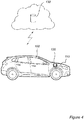
Figure 4 shows a vehicle communicating with a cloud server according to an embodiment; -
Figure 5 shows a flowchart illustrating a method according to another embodiment of facilitating maintenance of a battery of a vehicle; -
Figure 6 shows a flowchart illustrating a method according to yet another embodiment of facilitating maintenance of a battery of a vehicle; -
Figure 7 illustrates an ECU according to an embodiment; and -
Figure 8 illustrates a supervising device according to an embodiment. - The aspects of the present disclosure will now be described more fully hereinafter with reference to the accompanying drawings, in which certain embodiments of the invention are shown.
- These aspects may, however, be embodied in many different forms and should not be construed as limiting; rather, these embodiments are provided by way of example so that this disclosure will be thorough and complete, and to fully convey the scope of all aspects of invention to those skilled in the art. Like numbers refer to like elements throughout the description.
- As mentioned, in hybrid/electric vehicles, the battery is a key component - and an expensive such. The useful life of the battery is thus a very important factor for these vehicles.
- Useful life can be defined as the time interval where the battery is able to operate within the operational window for a certain application, for instance providing the proper capacity to give an electric vehicle a certain range or providing enough power to perform a strong acceleration. Over time the abilities of the battery will be impaired, the capacity will decrease, and so will the power.
- Ageing can thus be defined as any effect that decreases ability of a battery to deliver power within the operational window. This includes, but is not limited to, decreased capacity, power, increased leakage current, thermal runaways, etc. This decrease in ability is a symptom of an ageing battery, and different ability parameters oftentimes act in combination, and may be reflected by a battery measure commonly known as State-of-health (SOH). Measuring SOH thus provides an indication of the ageing of the battery.
- The risks posed by a vehicle battery is mitigated if events potentially causing battery damage could be identified and properly responded to in order to increase the lifetime of the battery. One measure of lifetime is e.g. number of charge/discharge cycles over which the battery maintains a given fraction of its capacity.
-
Figure 1 illustrates an electric motor (or hybrid)vehicle 100 according to an embodiment. Thevehicle 100 comprises abattery 110 such as a rechargeable lithium-ion battery which may be charged via a vehicle connector (not shown). It is noted that thecar 100 illustrated inFigure 1 is used as an example only. The method of performing diagnostics on a battery of a vehicle according to embodiments may be used in other vehicles, such as trucks, motorcycles, boats, aeroplanes, etc. An energy storage system such as a battery may be used in a vehicle travelling by land, sea or air, or in a stationary energy storage application. Further, it may be envisaged that the embodiments of this disclosure are implemented in other contexts, such as for example in stationary energy storage systems, aerospace applications, such as satellites, space suits and space stations, military applications, etc. - It is further envisaged that embodiments are implemented with other types of batteries, such as for instance of any of the following types: solid state, lithium-air, lead-acid, nickel-metal hydride, nickel Cadmium, etc.
- The
vehicle 100, or thebattery 110 itself, is typically equipped with an Electronic Control Unit (ECU, 120), which may be implemented by one or more microprocessors executing appropriate software for controlling various systems and components in the vehicle. A car may contain a number of interconnected ECUs for controlling all properties of the car, thereby providing for instance a brake control module (BCM), a speed control module (SCM) or a Battery Management System (BMS). The ECU 120 may further be equipped with an interface for wireless transmission of data, for instance for wireless communication of various parameters and data and/or measured properties of thevehicle 100 to a remote location for further analysis. The ECU 120 may be equipped with data logging capabilities and the ability to analyse the logged data. -
Figure 2 illustrates abattery 110, commonly referred as a battery pack, which comprises a plurality of cells 111:1, ..., 111:n.Battery cells 111 are electrochemical units interconnected to form thebattery 110. - As previously discussed, it is desirable to facilitate maintenance of the
battery 110 of thevehicle 100. Ideally, any non-optimal action performed on the battery - for instance excessive charging - should be identified such that an appropriate battery maintenance recommendation can be provided. For instance, a user of thevehicle 100 may be instructed to charge thebattery 110 less often. Thus, in an embodiment, a device such as theECU 120, will monitor one or more operational properties of thebattery 110. Thereafter, the monitored property is evaluated by theECU 120 to determine an effect that the monitored property has on the lifetime of thebattery 110. Based on this evaluation, the ECU 120 performs an action with aim to prolong the lifetime of thebattery 110. It is noted that operational properties may be monitored on a cell-level or for thebattery 110 as a whole. - A practical example will be given in the following. Assuming that the ECU 120 (or the previously mentioned BMS) monitors an operational property of the
battery 110 referred to as State of Charge (SoC). The SoC indicates charging level of anindividual cell 111 or of thecomplete battery 110. There are numerous well-known methods of determining a value for the SoC of the battery 110 (where a fully charged battery has an SoC value of 100% while a fully discharged battery has a value of 0%), including both chemical (electrolyte) measurements and voltage measurements. The actual measurement method used will not be discussed in the following. - Thus, the
ECU 110 may determine the SoC of each individual cell 111:1-111:n or the SoC for thebattery 110 as a whole. It is further envisaged that the SoC for thebattery 110 as a whole is obtained by evaluating the determined SoCs for each individual cell. -
Figure 3 shows a flow chart illustrating a method according to an embodiment of facilitating maintenance of thebattery 110 of thevehicle 100. In a first step S101, theECU 120 monitors the SoC of thebattery 110 and determines that the SoC has decreased to a value of 68%. - For the
battery 110 there may be a value for the SoC which is preferred, or even optimal, in terms of attaining a longest possible lifetime of thebattery 110. In other words, there may exist a preferred value for the SoC of thebattery 110 for which the lifetime of thebattery 100 will be the longest. - This value may vary depending on the type of battery used and may even slightly vary in a population of batteries of the same type. In this example, it is assumed that the
battery 110 used in thevehicle 100 preferably should have an SoC around 80%; at this SoC level, the lifetime ofbattery 110 is likely to be the longest. - Further, the
ECU 120 could store information indicating that the value of the SoC at all times should be in the range 70-90%; as soon as the value of the SoC is not in this range, theECU 120 should take action. Hence, in step S101a, theECU 120 determines whether or not a result of the monitored SoC - i.e. SoC = 68% complies with a preferred result considered to increase the battery lifetime - i.e. an SoC in the range 70-90%. - As a result of the monitored SoC decreasing to 68%, the
ECU 120 performs an action in step S102 with aim to increase the lifetime of thebattery 110. In this particular exemplifying embodiment, theECU 120 signals to a driver of the vehicle - for example visually via a dashboard display of the vehicle 100 - a recommendation for a battery maintenance operation such that the preferred result is better complied with. In this particular example, the maintenance recommendation to the driver is that the battery should be charged. As is understood, this is exemplifying only, and a lower threshold than 70 % could be envisaged in practice. Further, the utility of thevehicle 100 is not affected; the driver can continue driving the vehicle even though the maintenance recommendation is given. - Moreover, in this embodiment, not only will the
ECU 120 inform the driver that thebattery 110 should be charged; theECU 120 will further take the informed decision to signal to the driver that the battery should be charged to an SoC level of 85% and certainly not over 90%. Again, this does not affect the usability of thevehicle 100. - Thus, with embodiments, "bad" usage of batteries is prevented by indirectly monitoring user behaviour. For instance, if an operational property such as battery charging time schedule is monitored, it is possible to recommend to a driver that the
battery 110 preferably should be charged in the morning (possibly timer-based) instead of in the evening to limit the time period spent with high SOC. Hence, the result of the monitoring may be that the battery is charged in the evening, while the preferred result to be complied with is that the battery should be charged in the morning, wherein the driver is informed accordingly such that the preferred result is complied with. - It may even be envisaged that the
ECU 120 itself, or in communication with the BMS, determine that the charging of thebattery 110 is to be terminated if the SoC reaches a value of 90%. That could be straightforwardly attained by allowing theECU 120 to control a relay connecting/disconnecting thebattery 110 to/from a charging cable. Alternatively, in an embodiment, theECU 120 may determine a preferred length of a charging period for the battery, such as 1 or 2 hours, after which the relay is controlled by theECU 120 to discontinue the charging of thebattery 100. - Advantageously, by performing an appropriate and informed action based on a monitored operational property of the battery, the
ECU 120 could increase the lifetime of thebattery 110 and thus accomplish a longer useful life of thebattery 110 as compared to a scenario where no action is taken. - In the above-described exemplifying embodiment, the
ECU 120 performs the action of signalling to the driver that charging of thebattery 110 should be performed. However, in other embodiments, other actions are envisaged such as for instance signalling that another maintenance operation of thebattery 110 is required, e.g. due to faulty cells, or that thebattery 110 needs to be replaced. Hence, theECU 120 may provide a variety of different recommendations for battery maintenance operations to be performed to the driver based on the monitored at least one operational property. - In a further embodiment the
ECU 120 comprises a machine learning (ML) module which continuously is trained with new measurement data obtained through monitoring one or more operational properties of thebattery 110. Thus, in the above-given example, theECU 120 may utilize the ML module continuously processing measurement data to conclude that the optimal SoC for achieving the longest possible battery lifetime changes over time, say from a value of 80% to a values of 82%. - In further embodiments, other operational properties affecting the battery lifetime are envisaged to be monitored by the
ECU 120, such as for instance Open Circuit Voltage (OCV) indicating the voltage difference between the two terminals of each battery cell, State of Health Cell Capacity (SoHCC) of a cell, which typically is defined as measured or computed amount of electric charge that the cell can deliver at rated voltage, State of Health Cell Resistance (SoHCR) of a cell, which typically is defined as measured or computed internal impedance of the cell, etc. - In further embodiments, other operational properties affecting the battery lifetime are envisaged to be monitored by the
ECU 120, for instance battery temperature, current through each cell or the pack, current peaks, and voltage. These can also be compared to other symptoms of ageing, such as State of Health Cell Capacity (SoHCC) of a cell, State of Health Cell Resistance (SoHCR) of a cell, leakage current, State of Health Power (SoHP), etc. - In an embodiment, one or more operational properties of the
battery 110 is monitored by theECU 120 and used by the ML module of theECU 120 to estimate a point in time when battery maintenance is expected to be required. Advantageously, this may greatly ease the handling of the battery for the driver/user. Rather than suddenly noticing that the battery needs maintenance - or even that the battery has been permanently damaged and needs to be changed - the user is given timely notice such that a far more inexpensive maintenance operation may be undertaken. -
Figures 4 and5 illustrate a further embodiment where the monitoring of the operational battery properties is performed by theECU 120 in step S101, but the result of the monitoring - for instance in the form of measured values of the monitored properties - is wirelessly communicated in step S101b to a remote location such as for example aserver 130 of for instance a car manufacturer, a car rental agency or a car pool operator, where theserver 130 will determine which action to perform for extending the lifetime of thebattery 110 based on the monitored properties. Theserver 130 will thus act as a supervising device. - Such action may indeed include signalling the driver as in the example of
Figure 3 by providing a preferred SoC to which the battery should comply upon being charged. However, theserver 130 may alternatively in an example conclude that the driver is about to return thecar 110 to the car pool operator/car rental agency, in which case it is not meaningful to signal to the driver that thebattery 110 needs charging. - Instead, the
server 130 may signal in step S102a to service personnel at the car pool operator/car rental agency that thebattery 110 should be charged to reach the preferred SoC. Thus, the action taken by theECU 120 with aim to improve the lifetime of thebattery 110 based on the monitored at least one operational property comprises sending the value of the monitored SoC to the server in step S101b to cause theserver 130 to signal to service personnel in step S102 that thebattery 110 needs to be charged. - In the flowchart of
Figure 5 , it is illustrated that theECU 120 determines whether a value of the monitored SoC falls under 70% or not. However, it may alternatively be envisaged that all the measured values of SoC are sent in step S101a to theserver 130, which will conclude whether or not the received values comply with SoC requirements. - Again with reference to
Figure 4 , in an alternative embodiment, not only thesingle vehicle 100 transmits results of monitored operational properties of thebattery 110 to theserver 130, but each one of the cars of a car fleet (to which thevehicle 100 belongs) of the car manufacturer/car pool operator/car rental agency transmits correspondingly monitored operational properties of the battery for each individual car to theserver 130. - Now, the
server 130 would preferably be equipped with one or more ML modules being trained with the enormous amount of battery data with which it is supplied by the cars in the car fleet. Thus, in practice, theserver 130 has access to each and every one of the individual batteries of the vehicles included in the car fleet supervised by theserver 130. In other words, a network of battery diagnostic systems is interconnected via theserver 130, where each system is accessible by theserver 130. - It is thus envisaged that each individual vehicle in the fleet reports results of the monitored operational parameters of the battery accommodated in the individual vehicle to the
server 130. The action performed by theserver 130 on an individual battery may then be based on monitored operational properties of all or a subset of the batteries of the vehicles included in the car fleet supervised by theserver 130. - In an example, assuming that the preferred value of the SoC of a battery is evaluated (from the monitored SoC of all or a subset of the car fleet batteries) to be 82%, then the
server 130 may signal that accordingly to a driver of thevehicle 100. Further, from that information the server may conclude that the optimal range of SoC level is 72-92% rather than 70-90%, which also may be communicated to thevehicle 100 and to one or more - or all- of the vehicles in the fleet. - In the art, the registering of operational properties of a great number of batteries is difficult to achieve, even in a laboratory setting. Since a massive number of batteries (and amount of time) is required. Moreover, mimicking the battery usage reflecting an increasingly complex customer landscape is complex and expensive as regards for instance driving patterns and charging settings. In the above-described embodiment, data is monitored and collected under real-life conditions.
- Again, with reference to
Figure 4 and further to the flowchart ofFigure 6 illustrating a method of facilitating maintenance of a battery of a vehicle, an embodiment will be described where a fleet of vehicles monitor operational properties of the battery of each vehicle and reports the results to theserver 130 which will draw conclusions based on the reported data and take action with the aim to increase the lifetime of the batteries, such as sending a maintenance recommendation to a driver of one or more of the vehicles (or even the ECU of a vehicle). For instance, the recommendation could be that the battery maintenance operation to be performed should be to charge the battery in the morning (instead of in the evening). - In this example, the following battery properties are monitored: SoC, cell temperature (CT), ambient temperature (T), and State of Health (SoH). SoH is typically 100% at the time of manufacture and will decrease over time.
- Operational properties SoC, CT and T are measured with a high resolution (such as every second), while the SoH is changing slowly and measured more seldom (such as on a weekly basis).
- By analysing historical data of the battery, the
ECU 120 offirst vehicle 100 may conclude that a particular operational property setting which has been monitored appears to be damaging to thebattery 110. For instance, in this particular example, theECU 120 concludes that the setting SOC = 30-70 %, CT > 30 °C and T > 20 °C appears to be damaging to the battery based on statistical and machine learning methods identifying correlation with one or many of the symptoms of battery ageing. This result is reported to theserver 130 in step S201 which stores the reported setting for thefirst vehicle 100. A second vehicle (not shown inFigure 4 ) has observed that the following setting appears to be damaging to the battery arranged in the second vehicle: SOC = 20-50 %, CT > 30 °C , and T > 20 °C, and reports the setting to theserver 130 in step S202. - Hence, the
server 130 receives, in steps S201 and S202, a result of a plurality of monitored operational properties affecting lifetime of the battery arranged in each of the two vehicles, in this example SoC, CT and T. It is noted that this is an example only, and theserver 130 may in practice receive results of monitored battery properties from hundreds or even thousands of cars in the fleet. As is understood, any data resulting from the monitored battery properties may be pre-processed at the cars before being sent to the server. - Based on these two reported results, the
server 130 concludes in step S203 that a setting constituting for instance an overlap of the two settings is damaging to thebattery 110. Theserver 130 thus concludes that the resulting setting SOC = 30-50 %, CT > 30 °C and T > 20 °C, is the actual damaging setting for a battery. In other words, theserver 130 determines whether or not a result of the monitored operational properties received from the two vehicles complies with a preferred result - i.e. to avoid SOC = 30-50 %, CT > 30 °C and T > 20 °C - considered to increase the lifetime of the battery (which is not the case in this example). - Hence, in step S203, the
server 130 creates a recommendation of a maintenance operation to be performed with aim to increase battery lifetime based on the received observations. In this example, the recommendation is to avoid the setting SOC 30-50 %, CT > 30 °C and T > 20 °C. - The
server 130 subsequently reports this setting to a driver of thefirst vehicle 100 and to a driver of the second vehicle (and potentially to any driver and/or ECU of a vehicle in the fleet) in step S204. - In the embodiment of
Figure 6 , not only thesingle vehicle 100 transmits results of monitored operational properties of thebattery 110 to theserver 130, but each one of the cars of a car fleet (to which thevehicle 100 belongs) of the car manufacturer/car pool operator/car rental agency transmits correspondingly monitored operational properties of the battery for each individual car to theserver 130. - The
server 130 thus in practice has access to each and every one of the individual batteries of the vehicles included in the car fleet supervised by theserver 130. Each individual vehicle in the fleet may thus report observations of the monitored operational parameters of the battery accommodated in the individual vehicle to theserver 130. The action performed by theserver 130 on an individual battery may then be based on monitored operational properties of all or a subset of the batteries of the vehicles included in the car fleet supervised by theserver 130. - In the art, the registering of operational properties of a great number of batteries is difficult to achieve, even in a laboratory setting. Since a massive number of batteries (and amount of time) is required. Moreover, mimicking the battery usage reflecting an increasingly complex customer landscape is complex and expensive as regards for instance driving patterns and charging settings. In the above-described embodiment, data is monitored and collected under real-life conditions.
- In another embodiment, the
ECU 120 of thefirst vehicle 100 included in a fleet of vehicle reports that the driver of thefirst vehicle 100 appears to be charging thevehicle 100 every day when parked in a garage. TheECU 120 may either inform the driver that this will decrease the lifetime of thebattery 100, thereby enabling for the driver to instead increase the lifetime of thebattery 110 by performing the charging more seldom, or report the observation to theserver 130. - Further, the battery of a second vehicle in the fleet always appears to be charged when the SoC already is very low, which is damaging and thus decreases the lifetime of the battery. Again, an ECU may alert a driver that this behaviour is damaging, or report the observation to the
server 130. - Moreover, the battery of a third vehicle in the fleet always appears to be charged when the SoC already is very low, which is damaging and thus decreases the lifetime of the battery. Again, an ECU may alert a driver that this behaviour is damaging, or report the observation to the
server 130. If the three observations are reported to theserver 130, theserver 130 may create a maintenance recommendation based on the reported observations and send the recommendation to the driver of the respective vehicle. For instance, the maintenance recommendation may comprise a preferred SoC level at which each battery optimally is to be charged. - In a further embodiment, the
server 130 will create and store a user profile based on the reported observations of a vehicle associated with the user for which the profile is created. For instance, theECU 120 may report that the user normally only drives a short stretch on Fridays thus consuming only a small amount of energy provided by the battery, and that thebattery 110 as a consequence does not need to be fully charged. Hence, as soon as thevehicle 100 reports monitored operational properties of thebattery 110, where the result of the observations does not comply with the stored user profile, theserver 130 will send a maintenance recommendation accordingly. For instance, if the observations indicate excessive battery charging, an appropriate maintenance recommendation may be to inform the user to charge thebattery 110 less often. - In another embodiment, the processing onboard the vehicle is done by machine learning models to provide a latent space of features that describes the system with good resolution but in limited amount of data. These latent space features may or may not be human readable but is transferred to the
server 130 which has a similar machine learning model to read the features and access its impact on thevehicle 100 and other vehicles in the fleet. This approach also provides privacy to the user of the vehicle. -
Figure 7 illustrates anECU 120 included in thevehicle 100 according to an embodiment. The steps of the method of facilitating maintenance of a battery of a vehicle according to embodiments are in practice performed by aprocessing unit 121 embodied in the form of one or more microprocessors arranged to execute acomputer program 122 downloaded to a suitable storagevolatile medium 123 associated with the microprocessor, such as a Random Access Memory (RAM), or a non-volatile storage medium such as a Flash memory or a hard disk drive. Theprocessing unit 121 is arranged to cause theECU 120 to carry out the method according to embodiments when theappropriate computer program 122 comprising computer-executable instructions is downloaded to thestorage medium 123 and executed by theprocessing unit 121. Thestorage medium 123 may also be a computer program product comprising thecomputer program 122. Alternatively, thecomputer program 122 may be transferred to thestorage medium 123 by means of a suitable computer program product, such as a Digital Versatile Disc (DVD) or a memory stick. As a further alternative, thecomputer program 122 may be downloaded to thestorage medium 123 over a network. Theprocessing unit 121 may alternatively be embodied in the form of a digital signal processor (DSP), an application specific integrated circuit (ASIC), a field-programmable gate array (FPGA), a complex programmable logic device (CPLD), etc. -
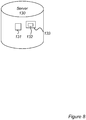
Figure 8 illustrates aserver 130 according to an embodiment. The steps of the method of facilitating maintenance of a battery of a vehicle according to embodiments are in practice performed by aprocessing unit 131 embodied in the form of one or more microprocessors arranged to execute acomputer program 132 downloaded to a suitable storagevolatile medium 133 associated with the microprocessor, such as a RAM, or a non-volatile storage medium such as a Flash memory or a hard disk drive. Theprocessing unit 131 is arranged to cause theserver 130 to carry out the method according to embodiments when theappropriate computer program 132 comprising computer-executable instructions is downloaded to thestorage medium 133 and executed by theprocessing unit 131. Thestorage medium 133 may also be a computer program product comprising thecomputer program 132. Alternatively, thecomputer program 132 may be transferred to thestorage medium 133 by means of a suitable computer program product, such as a DVD or a memory stick. As a further alternative, thecomputer program 132 may be downloaded to thestorage medium 133 over a network. Theprocessing unit 131 may alternatively be embodied in the form of a DSP, an ASIC, an FPGA, a CPLD, etc. - The aspects of the present disclosure have mainly been described above with reference to a few embodiments and examples thereof. However, as is readily appreciated by a person skilled in the art, other embodiments than the ones disclosed above are equally possible within the scope of the invention, as defined by the appended patent claims.
- Thus, while various aspects and embodiments have been disclosed herein, other aspects and embodiments will be apparent to those skilled in the art. The various aspects and embodiments disclosed herein are for purposes of illustration and are not intended to be limiting, with the true scope and spirit being indicated by the following claims.
-
- ASIC - Application Specific Integrated Circuit
- BCM - Brake Control Module
- BMS - Battery Management System
- CPLD - Complex Programmable Logic Device
- CT - Cell Temperature
- DSP - Digital Signal Processor
- DVD - Digital Versatile Disc
- ECU - Electronic Control Unit
- FPGA - Field-Programmable Gate Array
- ML - Machine Learning
- RAM - Random Access Memory
- SCM - Speed Control Module
- SISC - Spontaneous Internal Short Circuits
- SoC - State of Charge
- SoH - State of Health
- SoHCC - State of Health Cell Capacity
- SoHCR - State of Health Cell Resistance
- SoHP - State of Health Power
- T - Ambient Temperature
Claims (15)
- A method of facilitating maintenance of a battery (110) of a vehicle (100), comprising:monitoring (S101) at least one operational property of the battery (110) affecting lifetime of said battery (110); andperforming (S102) an action with aim to increase the lifetime of the battery (110) based on the monitored at least one operational property.
- The method of claim 1, further comprising:
determining (S101a) whether or not a result of the monitored at least one operational property complies with a preferred result considered to increase the lifetime of the battery (110); and if not the performing (S102) of an action comprises:
providing, to a driver of the vehicle (100), a recommendation for a battery maintenance operation such that the preferred result is better complied with. - The method of claims 1 or 2, wherein the performing (S102) of an action comprises:
controlling charging of the battery based on the monitored at least one operational property. - The method of claim 3, wherein the controlling of charging of the battery comprises:
controlling length of a charging period for the battery. - The method of claims 3 or 4, wherein the controlling of charging of the battery comprises:
controlling a level of charging of the battery. - The method of any one of the preceding claims, further comprising:
sending (S101a), to a supervising device (130), a result of the monitored at least one operational property, the supervising device (130) being configured to receive results of the monitored at least one operational property from further vehicles. - The method of claim 6, further comprising:
receiving, from the supervising device, a recommendation on a battery maintenance operation to be performed based on the result of the monitored at least one operational property of at least one of said further vehicles. - A method of a supervising device (130) of facilitating maintenance of a battery (110) of at least one vehicle (100) among a plurality of vehicles, comprising:receiving (S201, S202) a result of at least one monitored operational property affecting lifetime of a battery arranged in each of the plurality of vehicles;creating (S203) a recommendation for a battery maintenance operation to be performed with aim to increase battery lifetime based on one or more of the received results; andsending (S204) the created recommendation to one or more of the plurality of vehicles.
- The method of claim 8, further comprising:
determining whether or not a result of the monitored at least one operational property received from one or more of the plurality of vehicles complies with a preferred result considered to increase the lifetime of the battery of said one or more of the plurality of vehicles; and if not the creating (S203) of a recommendation comprises:
creating a recommendation for a battery maintenance operation to be performed such that the preferred result is better complied with; and the sending (S204) comprises:
sending the created recommendation to said one or more of the plurality of vehicles. - A computer program (122) comprising computer-executable instructions for causing a device (120) to perform steps recited in any one of claims 1-7 when the computer-executable instructions are executed on a processing unit (121) included in the device (120).
- A computer program product comprising a computer readable medium (123), the computer readable medium having the computer program (122) according to claim 10 embodied thereon.
- A control unit (120) configured to facilitate maintenance of a battery (110) of a vehicle (100), the control unit (120) comprising a processing unit (121) and a memory (123), said memory containing instructions (122) executable by said processing unit (121), whereby the control unit (120) is operative to:monitor at least one operational property of the battery (110) affecting lifetime of said battery (110); andperform an action with aim to increase the lifetime of the battery (110) based on the monitored at least one operational property.
- The control unit (120) of claim 12, further being operative to:
determine whether or not a result of the monitored at least one operational property complies with a preferred result considered to increase the lifetime of the battery (110); and if not to, when performing an action:
provide, to a driver of the vehicle (100), a recommendation for a battery maintenance operation such that the preferred result is better complied with. - A supervising device (130) configured to facilitate maintenance of a battery (110) of a vehicle (100), the supervising device (130) comprising a processing unit (131) and a memory (133), said memory containing instructions (132) executable by said processing unit (131), whereby the supervising device (130) is operative to:receive a result of at least one monitored operational property affecting lifetime of a battery arranged in each of the plurality of vehicles;create a recommendation for a battery maintenance operation to be performed with aim to increase battery lifetime based on one or more of the received results; andsend the created recommendation to one or more of the plurality of vehicles.
- The supervising device (130) of claim 14, further being operative to:
determine whether or not a result of the monitored at least one operational property received from one or more of the plurality of vehicles complies with a preferred result considered to increase the lifetime of the battery of said one or more of the plurality of vehicles; and if not to, when creating a recommendation :
create a recommendation for a battery maintenance operation to be performed such that the preferred result is better complied with; and to, when sending the created recommendation:
send the created recommendation to said one or more of the plurality of vehicles.
Priority Applications (2)
| Application Number | Priority Date | Filing Date | Title |
|---|---|---|---|
| EP19199103.3A EP3798047A1 (en) | 2019-09-24 | 2019-09-24 | Facilitating battery maintenance |
| US17/024,772 US11718200B2 (en) | 2019-09-24 | 2020-09-18 | Facilitating battery maintenance |
Applications Claiming Priority (1)
| Application Number | Priority Date | Filing Date | Title |
|---|---|---|---|
| EP19199103.3A EP3798047A1 (en) | 2019-09-24 | 2019-09-24 | Facilitating battery maintenance |
Publications (1)
| Publication Number | Publication Date |
|---|---|
| EP3798047A1 true EP3798047A1 (en) | 2021-03-31 |
Family
ID=68072102
Family Applications (1)
| Application Number | Title | Priority Date | Filing Date |
|---|---|---|---|
| EP19199103.3A Pending EP3798047A1 (en) | 2019-09-24 | 2019-09-24 | Facilitating battery maintenance |
Country Status (2)
| Country | Link |
|---|---|
| US (1) | US11718200B2 (en) |
| EP (1) | EP3798047A1 (en) |
Citations (4)
| Publication number | Priority date | Publication date | Assignee | Title |
|---|---|---|---|---|
| EP2572951A1 (en) * | 2010-05-20 | 2013-03-27 | Toyota Jidosha Kabushiki Kaisha | Electrically driven vehicle and control method for same |
| US8536825B2 (en) * | 2009-12-31 | 2013-09-17 | Tesla Motors, Inc. | State of charge range |
| EP3309892A1 (en) * | 2016-10-14 | 2018-04-18 | Toyota Jidosha Kabushiki Kaisha | Lithium ion secondary battery capacity restoration system |
| WO2019131825A1 (en) * | 2017-12-27 | 2019-07-04 | Future Science Research株式会社 | Secondary battery management device, secondary battery, and secondary battery management program |
Family Cites Families (14)
| Publication number | Priority date | Publication date | Assignee | Title |
|---|---|---|---|---|
| US7705602B2 (en) | 1997-11-03 | 2010-04-27 | Midtronics, Inc. | Automotive vehicle electrical system diagnostic device |
| CN101067644B (en) * | 2007-04-20 | 2010-05-26 | 杭州高特电子设备有限公司 | Storage battery performance analytical expert diagnosing method |
| CN103392133A (en) * | 2011-03-07 | 2013-11-13 | 株式会社日立制作所 | Battery state estimating method and battery management system |
| US20120296512A1 (en) | 2011-04-26 | 2012-11-22 | University Of Cincinnati | Method and system for electric vehicle battery prognostics and health management |
| US20160375782A1 (en) * | 2015-06-23 | 2016-12-29 | Atieva, Inc. | Electric Vehicle Driving Range Optimization System with Dynamic Feedback |
| US11760214B2 (en) * | 2018-04-25 | 2023-09-19 | EGS Entwicklungs—und Forschungs—GmbH | Digital access system for vehicles for externally controlled loading processes |
| EP3560751A1 (en) * | 2018-04-27 | 2019-10-30 | Panasonic Intellectual Property Corporation of America | Control method, server, in-vehicle device, and program |
| US11110809B2 (en) * | 2018-08-10 | 2021-09-07 | Ford Global Technologies, Llc | Vehicle energy consumption during charging |
| US20210049480A1 (en) * | 2019-08-12 | 2021-02-18 | Micron Technology, Inc. | Predictive maintenance of automotive battery |
| US11214171B2 (en) * | 2019-09-13 | 2022-01-04 | Ford Global Technologies, Llc | Mixed battery pack control |
| JP7060561B2 (en) * | 2019-11-08 | 2022-04-26 | 本田技研工業株式会社 | Battery status determination system, battery status determination method, and program |
| KR102704487B1 (en) * | 2019-12-06 | 2024-09-10 | 현대자동차주식회사 | Vehicle and controlling method of vehicle |
| US11760223B2 (en) * | 2020-06-23 | 2023-09-19 | Toyota Motor North America, Inc. | Need-based energy sharing |
| US11368028B2 (en) * | 2020-09-16 | 2022-06-21 | Evq Technologies Private Limited | Facilitating charging of acceptor nodes by mobile charging systems |
-
2019
- 2019-09-24 EP EP19199103.3A patent/EP3798047A1/en active Pending
-
2020
- 2020-09-18 US US17/024,772 patent/US11718200B2/en active Active
Patent Citations (4)
| Publication number | Priority date | Publication date | Assignee | Title |
|---|---|---|---|---|
| US8536825B2 (en) * | 2009-12-31 | 2013-09-17 | Tesla Motors, Inc. | State of charge range |
| EP2572951A1 (en) * | 2010-05-20 | 2013-03-27 | Toyota Jidosha Kabushiki Kaisha | Electrically driven vehicle and control method for same |
| EP3309892A1 (en) * | 2016-10-14 | 2018-04-18 | Toyota Jidosha Kabushiki Kaisha | Lithium ion secondary battery capacity restoration system |
| WO2019131825A1 (en) * | 2017-12-27 | 2019-07-04 | Future Science Research株式会社 | Secondary battery management device, secondary battery, and secondary battery management program |
Also Published As
| Publication number | Publication date |
|---|---|
| US20210086659A1 (en) | 2021-03-25 |
| US11718200B2 (en) | 2023-08-08 |
Similar Documents
| Publication | Publication Date | Title |
|---|---|---|
| EP4321884B1 (en) | Apparatus and method for detecting latent defective cell in battery pack | |
| Meng et al. | Incipient short-circuit fault diagnosis of lithium-ion batteries | |
| EP2629109B1 (en) | Electrical storage device | |
| CN104931889A (en) | Systems and methods for determining battery system performance degradation | |
| EP4194870B1 (en) | A method and system for determining a remaining useful lifetime of a battery | |
| DE102014210782A1 (en) | Detection of imbalance over multiple battery cells, measured by the same voltage sensor | |
| EP4481906A2 (en) | Intelligent lead-acid battery system and method of operating the same | |
| US12228613B1 (en) | Battery system state of health prediction modeling | |
| US20240003981A1 (en) | Method for estimating a power or current limit for an electrical energy storage system | |
| US12142090B2 (en) | Battery diagnosis apparatus for vehicle and method thereof | |
| CN120103193A (en) | A lithium battery life prediction method and system | |
| Bank et al. | Lithium-ion cell requirements in a real-world 48 V system and implications for an extensive aging analysis | |
| CN115047344A (en) | Power battery pack heat estimation method and device | |
| CN107658921B (en) | Fixed energy management system of communication base station and management method thereof | |
| CN115489391B (en) | A control method and system for an electric vehicle battery pack with a wireless antenna | |
| KR20240141478A (en) | Apparatus, method and computer program for diagnosing safety of electric vehicle battery | |
| US11635471B2 (en) | Detecting latent faults within a cell of an energy storage system | |
| Du et al. | Development of robust fault signatures for battery and starter failure prognosis | |
| US11718200B2 (en) | Facilitating battery maintenance | |
| US20230009045A1 (en) | System and method for battery life diagnosis | |
| US12282071B2 (en) | Predictive battery health detection from pack soaking behavior | |
| WO2014018048A1 (en) | Battery management system | |
| Conradt et al. | Cell shorts in automotive lead batteries for safety applications | |
| KR102898768B1 (en) | Digital Twin-based Electric Vehicle Battery Fire Safety And Health Condition Diagnosis System, Electric Vehicle Battery Fire Safety And Health Condition Diagnosis Method, And Electric Vehicle Battery Fire Safety And Health Condition Diagnosis Data Processing Cloud Server | |
| KR102925209B1 (en) | Apparatus for battery data managing and operating method of the same |
Legal Events
| Date | Code | Title | Description |
|---|---|---|---|
| PUAI | Public reference made under article 153(3) epc to a published international application that has entered the european phase |
Free format text: ORIGINAL CODE: 0009012 |
|
| STAA | Information on the status of an ep patent application or granted ep patent |
Free format text: STATUS: THE APPLICATION HAS BEEN PUBLISHED |
|
| AK | Designated contracting states |
Kind code of ref document: A1 Designated state(s): AL AT BE BG CH CY CZ DE DK EE ES FI FR GB GR HR HU IE IS IT LI LT LU LV MC MK MT NL NO PL PT RO RS SE SI SK SM TR |
|
| AX | Request for extension of the european patent |
Extension state: BA ME |
|
| STAA | Information on the status of an ep patent application or granted ep patent |
Free format text: STATUS: REQUEST FOR EXAMINATION WAS MADE |
|
| 17P | Request for examination filed |
Effective date: 20210930 |
|
| RBV | Designated contracting states (corrected) |
Designated state(s): AL AT BE BG CH CY CZ DE DK EE ES FI FR GB GR HR HU IE IS IT LI LT LU LV MC MK MT NL NO PL PT RO RS SE SI SK SM TR |
|
| STAA | Information on the status of an ep patent application or granted ep patent |
Free format text: STATUS: EXAMINATION IS IN PROGRESS |
|
| 17Q | First examination report despatched |
Effective date: 20221219 |
|
| P01 | Opt-out of the competence of the unified patent court (upc) registered |
Effective date: 20230828 |