EP3790229B1 - Slave bms inspection system and method - Google Patents
Slave bms inspection system and method Download PDFInfo
- Publication number
- EP3790229B1 EP3790229B1 EP20755133.4A EP20755133A EP3790229B1 EP 3790229 B1 EP3790229 B1 EP 3790229B1 EP 20755133 A EP20755133 A EP 20755133A EP 3790229 B1 EP3790229 B1 EP 3790229B1
- Authority
- EP
- European Patent Office
- Prior art keywords
- slave
- battery management
- management system
- bms
- data
- Prior art date
- Legal status (The legal status is an assumption and is not a legal conclusion. Google has not performed a legal analysis and makes no representation as to the accuracy of the status listed.)
- Active
Links
Images



Classifications
-
- H—ELECTRICITY
- H01—ELECTRIC ELEMENTS
- H01M—PROCESSES OR MEANS, e.g. BATTERIES, FOR THE DIRECT CONVERSION OF CHEMICAL ENERGY INTO ELECTRICAL ENERGY
- H01M10/00—Secondary cells; Manufacture thereof
- H01M10/42—Methods or arrangements for servicing or maintenance of secondary cells or secondary half-cells
-
- H—ELECTRICITY
- H04—ELECTRIC COMMUNICATION TECHNIQUE
- H04L—TRANSMISSION OF DIGITAL INFORMATION, e.g. TELEGRAPHIC COMMUNICATION
- H04L43/00—Arrangements for monitoring or testing data switching networks
- H04L43/08—Monitoring or testing based on specific metrics, e.g. QoS, energy consumption or environmental parameters
- H04L43/0805—Monitoring or testing based on specific metrics, e.g. QoS, energy consumption or environmental parameters by checking availability
- H04L43/0817—Monitoring or testing based on specific metrics, e.g. QoS, energy consumption or environmental parameters by checking availability by checking functioning
-
- G—PHYSICS
- G01—MEASURING; TESTING
- G01R—MEASURING ELECTRIC VARIABLES; MEASURING MAGNETIC VARIABLES
- G01R31/00—Arrangements for testing electric properties; Arrangements for locating electric faults; Arrangements for electrical testing characterised by what is being tested not provided for elsewhere
- G01R31/26—Testing of individual semiconductor devices
- G01R31/2646—Testing of individual semiconductor devices for measuring noise
-
- G—PHYSICS
- G08—SIGNALLING
- G08C—TRANSMISSION SYSTEMS FOR MEASURED VALUES, CONTROL OR SIMILAR SIGNALS
- G08C17/00—Arrangements for transmitting signals characterised by the use of a wireless electrical link
- G08C17/02—Arrangements for transmitting signals characterised by the use of a wireless electrical link using a radio link
-
- G—PHYSICS
- G08—SIGNALLING
- G08C—TRANSMISSION SYSTEMS FOR MEASURED VALUES, CONTROL OR SIMILAR SIGNALS
- G08C25/00—Arrangements for preventing or correcting errors; Monitoring arrangements
-
- H—ELECTRICITY
- H01—ELECTRIC ELEMENTS
- H01M—PROCESSES OR MEANS, e.g. BATTERIES, FOR THE DIRECT CONVERSION OF CHEMICAL ENERGY INTO ELECTRICAL ENERGY
- H01M10/00—Secondary cells; Manufacture thereof
- H01M10/42—Methods or arrangements for servicing or maintenance of secondary cells or secondary half-cells
- H01M10/4207—Methods or arrangements for servicing or maintenance of secondary cells or secondary half-cells for several batteries or cells simultaneously or sequentially
-
- H—ELECTRICITY
- H01—ELECTRIC ELEMENTS
- H01M—PROCESSES OR MEANS, e.g. BATTERIES, FOR THE DIRECT CONVERSION OF CHEMICAL ENERGY INTO ELECTRICAL ENERGY
- H01M10/00—Secondary cells; Manufacture thereof
- H01M10/42—Methods or arrangements for servicing or maintenance of secondary cells or secondary half-cells
- H01M10/425—Structural combination with electronic components, e.g. electronic circuits integrated to the outside of the casing
-
- H—ELECTRICITY
- H04—ELECTRIC COMMUNICATION TECHNIQUE
- H04B—TRANSMISSION
- H04B1/00—Details of transmission systems, not covered by a single one of groups H04B3/00 - H04B13/00; Details of transmission systems not characterised by the medium used for transmission
- H04B1/06—Receivers
- H04B1/10—Means associated with receiver for limiting or suppressing noise or interference
-
- H—ELECTRICITY
- H04—ELECTRIC COMMUNICATION TECHNIQUE
- H04L—TRANSMISSION OF DIGITAL INFORMATION, e.g. TELEGRAPHIC COMMUNICATION
- H04L12/00—Data switching networks
- H04L12/28—Data switching networks characterised by path configuration, e.g. LAN [Local Area Networks] or WAN [Wide Area Networks]
- H04L12/40—Bus networks
- H04L12/403—Bus networks with centralised control, e.g. polling
-
- H—ELECTRICITY
- H04—ELECTRIC COMMUNICATION TECHNIQUE
- H04L—TRANSMISSION OF DIGITAL INFORMATION, e.g. TELEGRAPHIC COMMUNICATION
- H04L41/00—Arrangements for maintenance, administration or management of data switching networks, e.g. of packet switching networks
- H04L41/04—Network management architectures or arrangements
- H04L41/044—Network management architectures or arrangements comprising hierarchical management structures
-
- H—ELECTRICITY
- H04—ELECTRIC COMMUNICATION TECHNIQUE
- H04L—TRANSMISSION OF DIGITAL INFORMATION, e.g. TELEGRAPHIC COMMUNICATION
- H04L41/00—Arrangements for maintenance, administration or management of data switching networks, e.g. of packet switching networks
- H04L41/06—Management of faults, events, alarms or notifications
- H04L41/0695—Management of faults, events, alarms or notifications the faulty arrangement being the maintenance, administration or management system
-
- H—ELECTRICITY
- H04—ELECTRIC COMMUNICATION TECHNIQUE
- H04L—TRANSMISSION OF DIGITAL INFORMATION, e.g. TELEGRAPHIC COMMUNICATION
- H04L43/00—Arrangements for monitoring or testing data switching networks
- H04L43/08—Monitoring or testing based on specific metrics, e.g. QoS, energy consumption or environmental parameters
-
- H—ELECTRICITY
- H04—ELECTRIC COMMUNICATION TECHNIQUE
- H04L—TRANSMISSION OF DIGITAL INFORMATION, e.g. TELEGRAPHIC COMMUNICATION
- H04L43/00—Arrangements for monitoring or testing data switching networks
- H04L43/08—Monitoring or testing based on specific metrics, e.g. QoS, energy consumption or environmental parameters
- H04L43/0823—Errors, e.g. transmission errors
-
- H—ELECTRICITY
- H04—ELECTRIC COMMUNICATION TECHNIQUE
- H04W—WIRELESS COMMUNICATION NETWORKS
- H04W24/00—Supervisory, monitoring or testing arrangements
- H04W24/08—Testing, supervising or monitoring using real traffic
-
- H—ELECTRICITY
- H01—ELECTRIC ELEMENTS
- H01M—PROCESSES OR MEANS, e.g. BATTERIES, FOR THE DIRECT CONVERSION OF CHEMICAL ENERGY INTO ELECTRICAL ENERGY
- H01M10/00—Secondary cells; Manufacture thereof
- H01M10/42—Methods or arrangements for servicing or maintenance of secondary cells or secondary half-cells
- H01M10/425—Structural combination with electronic components, e.g. electronic circuits integrated to the outside of the casing
- H01M2010/4271—Battery management systems including electronic circuits, e.g. control of current or voltage to keep battery in healthy state, cell balancing
-
- H—ELECTRICITY
- H01—ELECTRIC ELEMENTS
- H01M—PROCESSES OR MEANS, e.g. BATTERIES, FOR THE DIRECT CONVERSION OF CHEMICAL ENERGY INTO ELECTRICAL ENERGY
- H01M10/00—Secondary cells; Manufacture thereof
- H01M10/42—Methods or arrangements for servicing or maintenance of secondary cells or secondary half-cells
- H01M10/425—Structural combination with electronic components, e.g. electronic circuits integrated to the outside of the casing
- H01M2010/4278—Systems for data transfer from batteries, e.g. transfer of battery parameters to a controller, data transferred between battery controller and main controller
-
- H—ELECTRICITY
- H04—ELECTRIC COMMUNICATION TECHNIQUE
- H04L—TRANSMISSION OF DIGITAL INFORMATION, e.g. TELEGRAPHIC COMMUNICATION
- H04L43/00—Arrangements for monitoring or testing data switching networks
- H04L43/08—Monitoring or testing based on specific metrics, e.g. QoS, energy consumption or environmental parameters
- H04L43/0823—Errors, e.g. transmission errors
- H04L43/0847—Transmission error
-
- H—ELECTRICITY
- H04—ELECTRIC COMMUNICATION TECHNIQUE
- H04L—TRANSMISSION OF DIGITAL INFORMATION, e.g. TELEGRAPHIC COMMUNICATION
- H04L43/00—Arrangements for monitoring or testing data switching networks
- H04L43/10—Active monitoring, e.g. heartbeat, ping or trace-route
-
- Y—GENERAL TAGGING OF NEW TECHNOLOGICAL DEVELOPMENTS; GENERAL TAGGING OF CROSS-SECTIONAL TECHNOLOGIES SPANNING OVER SEVERAL SECTIONS OF THE IPC; TECHNICAL SUBJECTS COVERED BY FORMER USPC CROSS-REFERENCE ART COLLECTIONS [XRACs] AND DIGESTS
- Y02—TECHNOLOGIES OR APPLICATIONS FOR MITIGATION OR ADAPTATION AGAINST CLIMATE CHANGE
- Y02E—REDUCTION OF GREENHOUSE GAS [GHG] EMISSIONS, RELATED TO ENERGY GENERATION, TRANSMISSION OR DISTRIBUTION
- Y02E60/00—Enabling technologies; Technologies with a potential or indirect contribution to GHG emissions mitigation
- Y02E60/10—Energy storage using batteries
Definitions
- the present invention relates to a system and method for a master Battery Management System (hereinafter also referred to as a BMS) to inspect each slave BMS through wireless communication with a plurality of slave BMSs.
- a BMS Battery Management System
- the secondary batteries as batteries that can be charged and discharged, mean that they include conventional Ni/Cd batteries and Ni/MH batteries, and recent lithium ion batteries.
- the lithium ion battery has an advantage that the energy density is much higher than that of the conventional Ni/Cd battery and Ni/MH battery, and further, the lithium ion battery can be manufactured with a tendency of a small size so that it is used as a power source for a mobile apparatus.
- the usage range of the lithium ion battery extends as a power source for electric vehicles, so that the lithium ion battery attracts attention as a next generation energy storage medium.
- a secondary battery is generally used as a battery pack including a battery module in which a plurality of battery cells are connected in series and/or in parallel. And, a state and an operation of a battery pack are managed and controlled by a battery management system.
- a battery system composed of a plurality of battery packs may include a master battery management system and a plurality of slave battery management systems.
- the master battery management system communicates with an upper system to control the operation of the plurality of slave battery management systems.
- the master battery management system transmits a command signal to each of the plurality of slave battery management systems through wireless communication.
- the master battery management system wirelessly receives data from each of a plurality of slave battery management systems.
- the data received includes information related to a battery managed by each of the slave battery management systems.
- the master battery management system may determine the state of each slave battery management system based on the data received from the slave battery management systems.
- the master battery management system determines the state of each slave battery management system based on the data received from the slave battery management systems.
- first, second, A, B, (a), and (b) may be used. These terms are only to distinguish the components from other components, and the nature, sequence, or order of the components are not limited by the terms.
- a component is described as being “connected to”, “coupled to” or “linked to” another component, the components may be directly connected to or linked to each other but it should be understood that other components may be “connected”, “coupled”, or “linked” between each component.
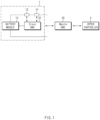
- FIG. 1 is a block diagram schematically illustrating a battery control system including a battery pack 1 and an upper controller 2 included in an upper system according to an embodiment of the present invention.
- the battery pack 1 includes a battery module 10 composed of one or more battery cells and capable of being charged and discharged, a switching unit 14 connected in series to the + terminal side or the - terminal side of the battery module 10 to control the charge/discharge current flow of the battery module 10, and a battery management system 32 that monitors the voltage, current, temperature, and the like of the battery pack 1 to control and manage the battery pack 1 so as to prevent overcharge and overdischarge.
- the switching unit 14 is a semiconductor switching element for controlling the current flow for the charge or discharge of the battery module 10, and for example, at least one MOSFET may be used.
- the BMS 32 can measure or calculate voltages and currents of gates, sources, and drains of semiconductor switching elements, and in addition, can measure the current, voltage, temperature, etc. of the battery pack using the sensor 12 provided adjacent to the semiconductor switching element.
- the BMS 32 is an interface for receiving the values obtained by measuring the above-described various parameters, and may include a plurality of terminals and a circuit that is connected to these terminals and processes the received values.
- the BMS 32 may control ON/OFF of the MOSFET and may be connected to the battery module 10 to monitor the state of the battery module 10.
- the BMS 32 may be connected to an upper BMS (master battery management system 30) so that an operation may be controlled based on a signal applied from the upper BMS.
- the upper BMS 30 may be connected to the upper controller 2. Operations of the upper BMS 30 may also be controlled based on a signal applied from the upper controller 2.
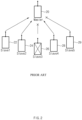
- FIG. 2 is a simplified block diagram of a slave BMS inspection system of the prior art.
- the slave BMS inspection system includes a master battery management system 20 and a plurality of slave battery management systems 22 to 29.
- the master battery management system 20 receives an operation control command signal for each slave battery management system directly from the upper controller 2 and controls each slave battery management system.
- the master battery management system 20 wirelessly receives battery-related data from each of the plurality of slave battery management systems 22 to 29 and transmits them to the upper controller 2.
- the slave battery management systems 22 to 29 wirelessly receiving the control signal from the master battery management system 20 perform an operation according to the received control signal. For example, operations of controlling the charging and discharging of each managed battery module or transmitting data on the state of the battery module being monitored to the master battery management system 20 are performed. Thereafter, each of the slave battery management systems 22 to 29 wirelessly transmits data obtained by inspecting the state of the connected battery module 10 according to the control signal or periodically to the master battery management system 20.
- the wireless link between the master battery management system and the slave battery management system may become unstable according to the surrounding environment.
- the master battery management system 20 may incorrectly determine the soundness of the slave battery management systems 22 to 29 due to link instability.
- the master battery management system 20 directly receives data that each of the slave battery management systems 22 to 29 is to transmit to the master battery management system 20 from the slave battery management systems 22 to 29. That is, each of the slave battery management systems 22 to 29 transmits only data on itself, for example, data on a battery module managed by the slave battery management system 20.
- the master battery management system 20 receives data from the first, second and fourth slave battery management systems 22, 24, and 28. However, the master battery management system 20 does not receive data from the third and fifth slave battery management systems 26 and 29. In this case, the third slave battery management system 26 fails in transmitting data to the master battery management system 20 because of an error in the BMS itself. Meanwhile, that is the case that the fifth slave battery management system 29 has no problem with the BMS itself, but there is a communication error with the master management system 20 so that data transmitted from the fifth slave battery management system 29 does not reach the master battery management system 20.
- the conventional communication method does not distinguish a case where the master battery management system 20 does not receive data due to an error in the slave battery management system itself from a case where the slave battery management system has no problem but there is a communication status error so that the data cannot be received. Therefore, the soundness inspection of the slave BMS cannot be accurately performed by the prior art.
- the configuration of the present invention to complement this point will be described in detail below.
- FIG. 3 is a schematic diagram of a slave BMS inspection system according to an embodiment of the present invention.
- the slave BMS inspection system 3 includes a master battery management system 30 and a plurality of slave battery management systems 32 to 40.
- the plurality of slave battery management systems 32 to 40 respectively transmit data to the master battery management system 30.
- at least one other slave battery management system that does not transmit data also receives data signals transmitted by the one slave battery management system to the master battery management system 30.
- At least one other slave battery management system that does not transmit data associates the received data signal with the at least one other slave battery management system identification information and stores it as data transmission information of the one slave battery management system. Subsequently, when at least one other slave battery management system not transmitting data transmits data to the master battery management system, it transmits data transmission information of the one slave battery management system together.
- the transmission signal can be received by another slave battery management system
- the data transmission information is information including a transmission signal received by another slave battery management system. That is, the data transmission information includes information that a specific slave battery management system has transmitted data to the master battery management system.
- each slave battery management system has data transmission information of at least one other slave battery management system.
- the number of slave battery management systems may be smaller or larger.
- the first slave battery management system 32 receives the signal when each of the second slave battery management system 34, the fourth slave battery management system 38, and the fifth slave battery management system 40 transmit data to the master battery management system 30. Accordingly, when transmitting data to the master battery management system 30, the first slave battery management system 32 transmits data transmission information of the second slave battery management system 34, the fourth battery management system 38, and the fifth battery management system 40 together.
- the second slave battery management system 34 receives the signal when the first slave battery management system 32 and the fourth slave battery management system 38 respectively transmit data to the master battery management system 30. Accordingly, when transmitting data to the master battery management system 30, the second slave battery management system 34 transmits data transmission information of the first slave battery management system 32 and the fourth slave battery management system 38 together.
- the fourth slave battery management system 38 receives the signal when the first slave battery management system 32, the second slave battery management system 34 and the fifth slave battery management system 40 respectively transmit data to the master battery management system 30. Accordingly, when transmitting data to the master battery management system 30, the fourth slave battery management system 38 transmits data transmission information of the first slave battery management system 32, the second slave battery management system 34, and the fifth slave battery management system 40 together.
- the fifth slave battery management system 40 receives the signal when the second slave battery management system 34 and the fourth slave battery management system 38 respectively transmit data to the master battery management system 30. Accordingly, when transmitting data to the master battery management system 30, the fifth slave battery management system 40 transmits data transmission information of the second slave battery management system 34 and the fourth slave battery management system 38 together.
- the third slave battery management system 36 is configured to not perform the data transmission itself because of slave errors, and the fifth slave battery management system 40 transmits data but has communication error with the master battery management system 30.
- the master battery management system 30 does not receive data directly from the third slave battery management system 36 and the fifth slave battery management system 40.
- the master battery management system 30 since the fifth slave battery management system 40 attempts to transmit data to the master battery management system 30, the master battery management system 30 does not receive the data due to a communication error but data transmission information of the fifth slave battery management system 40 is recorded by another slave battery management system.
- the master battery management system 30 receives data of the first slave battery management system 32 and data transmission information of the second slave battery management system, the fourth slave battery management system, and the fifth slave battery management system together from the first slave battery management system 32.
- the master battery management system 30 receives data of the first slave. In addition, the master battery management system 30 receives data of the second slave battery management system 34 and data transmission information of the first slave battery management system and the fourth slave battery management system together from the second slave battery management system 34.
- the master battery management system 30 receives data transmission information of the first slave battery management system, the second slave battery management system, and the fifth slave battery management system together from fourth slave battery management system 38.
- the master battery management system 30 did not receive data directly from the third slave battery management system 36 and the fifth slave battery management system 40. According thereto, in the related art, the master battery management system 30 may determine that both the third slave battery management system 36 and the fifth slave battery management system have slave errors, but in one embodiment according to the present invention, the master battery management system 30 examines the data transmission information received from each slave battery management system.
- the master battery management system 30 checks the soundness of the fifth slave battery management system 40 by checking the history of the data transmitted by the fifth slave battery management system 40 through the data transmission information of the first slave battery management system 32, the second slave battery management system 34, the fourth slave battery management system 38 and the fifth slave battery management system 40, which is received from the first slave battery management system 32, the second slave battery management system 34, and the fourth slave battery management system 38.
- the master battery management system 30 determines that there is an error in the slave BMS in the case of the third slave battery system 36, and the fifth slave battery management system 40 determines that there is a communication error.
- all the slave battery management systems operate in the reception mode except for the time of communication with the master battery management system to receive the communication state of the other slave battery management system.
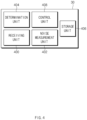
- FIG. 4 is a schematic diagram of a master battery management system according to an embodiment of the present invention.
- the master battery management system 30 includes a receiving unit 400, a noise measurement unit 402, a determination unit 404, a storage unit 406, and a control unit 408. For the sake of understanding, the operation of each component will be described with reference to the example of FIG. 3 .
- the receiving unit 400 receives data and data transmission information of the second slave battery management system 34, the fourth battery management system 38, and the fifth battery management system 40 from the first slave battery management system 32.
- the receiving unit 400 receives data and data transmission information of the first slave battery management system 32, and the fourth slave battery management system 38 from the second slave battery management system 34.
- the receiving unit 400 receives data and data transmission information of the first slave battery management system 32, the second slave battery management system 34, and the fifth slave battery management system 40 from the fourth slave battery management system 38.
- the noise measurement unit 402 measures noise of a signal when the receiving unit 400 receives data and data transmission information from each slave battery management system.
- the determination unit 404 determines the soundness of each of the plurality of slave battery management systems using the data and the information received at the receiving unit. For example, the determination unit 404 firstly determines the slave battery system that does not directly transmit data, and secondly determines the state of the slave battery system by using the received data transmission information.
- the determination unit 404 checks that data is not directly received from the third slave battery management system 36 and the fifth slave battery management system 40. Thereafter, the determination unit 404 examines the data transmission information received by the receiving unit 400.
- the data transmission information received by the receiving unit 400 includes data transmission information of the first slave battery management system, the second slave battery management system, the fourth slave battery management system, and the fifth slave battery management system. Through this, the determination unit 404 checks the data transmission history of the fifth slave battery management system and determines that there is no error in the fifth slave battery management system.
- the determination unit 404 determines the slave error as to the third slave battery management system 36 having no data directly received and no data transmission information. Then, the determination unit 404 determines from the transmission history of the fifth slave battery management system 40, which is not directly received but checked by the data transmission information received from another slave battery management system, that there is no error in the fifth slave battery management system and that an error exists in the communication link.
- the determination unit 404 may additionally refer to the noise measured by the noise measurement unit 402. For example, if the noise measured by the noise measurement unit 402 basically exceeds a preset criterion, the determination unit 404 may more easily determine a situation in which a communication problem occurs due to a communication error.
- the storage unit 406 stores ID information of each of the plurality of slave battery management systems, and the ID information can be used to identify each slave battery management system.
- the control unit 408 allows the determination unit 404 to determine an error or communication error of the slave battery management system using the data and data transmission information of the slave battery management system received at the receiving unit 400 and the noise measured by the noise measurement unit 402.
- FIG. 5 is a schematic diagram of a slave battery management system according to an embodiment of the present invention.
- the slave battery management system 32 includes a transmission unit 500, a receiving unit 502, a storage unit 504, and a control unit 506.
- the transmission unit 500 transmits battery related data and the like to the master battery management system 30. In addition, the transmission unit 500 transmits data transmission information of another slave battery management system to the master battery management system 30.
- the receiving unit 502 remains active while the slave battery management system 32 does not transmit data to the master battery management system 30 to receive data transmission signals from other slave battery management systems.
- the storage unit 504 stores data transmission information of another slave battery management system based on data transmission signals of other slave battery management systems received at the receiving unit 502.
- the control unit 506 activates the receiving unit 502 to receive data transmission signals from other slave battery management systems when the transmission unit 500 does not transmit data and data transmission information to the master battery management system.
- FIG. 6A is a diagram illustrating a reception state for each time interval according to the prior art.
- Each slave battery management system transmits data to the master battery management system in a preset order for a preset time.
- each slave battery management system respectively transmits data to the master battery management system, if the number of times (fail count) that a particular slave battery management system does not transmit any data to the master battery management system is two, it is configured to determine that there is an error in the slave battery management system.
- the first slave battery management system transmits data to the master battery management system in the timeslot T_1.
- the second slave battery management system transmits data to the master battery management system in the timeslot T_2.
- the third slave battery management system transmits data to the master battery management system in the timeslot T_3.
- the fourth slave battery management system transmits data to the master battery management system in the timeslot T_4.
- the fifth slave battery management system transmits no data due to BMS errors.
- the master battery management system determines that no data has been received from the fifth slave battery management system in the timeslot T_5 and counts a fail count 1. Thus, one communication period between the five slave battery management systems and the master battery management system is completed.
- the first slave battery management system transmits data again to the master battery management system in the timeslot T_1.
- the second slave battery management system transmits data to the master battery management system in the timeslot T_2.
- the third slave battery management system transmits data to the master battery management system in the timeslot T_3.
- the fourth slave battery management system transmits data to the master battery management system in the timeslot T_4.
- the master battery management system checks that the data transmission of the fifth slave battery management system is not made, and counts the fail count to 2 to detect an error of the fifth slave battery management system. That is, in the prior art, it may be determined whether the slave battery management system is abnormal when the second period transmission order of the slave battery management system is reached. In comparison with this, an inspection system of a slave battery management system through a method according to an embodiment of the present invention will be described.
- FIG. 6B is a diagram illustrating a reception state for each time interval according to an embodiment of the present invention.
- Each slave battery management system transmits data to the master battery management system in a preset order for a preset time.
- each slave battery management system respectively transmits data to the master battery management system, if the number of times that a particular slave battery management system does not transmit any data to the master battery management system is two, it is configured to determine that there is an error in the slave battery management system.
- another slave battery management system may receive this data transmission signal when transmitting data to the master battery management system.
- a management system other than the slave battery management system transmitting data receives all signals that the slave battery management system transmits data and this will be described.
- the first slave battery management system transmits data to the master battery management system in the timeslot T_1.
- the second to fourth slave battery management systems receive the data transmission signal of the first slave battery management system.
- the second slave battery management system transmits data to the master battery management system in the timeslot T_2.
- the first slave battery management system, the third slave battery management system, and the fourth slave battery management system receive a data transmission signal of the second slave battery management system.
- the third slave battery management system transmits data to the master battery management system in the timeslot T_3.
- the first slave battery management system, the second slave battery management system, and the fourth slave battery management system receive a data transmission signal of the third slave battery management system.
- the fourth slave battery management system transmits data to the master battery management system in the timeslot T_4.
- the first to third slave battery management systems receive a data transmission signal of the fourth slave battery management system.
- the master battery management system determines that no data has been received from the fifth slave battery management system in the timeslot T_5 and counts a fail count 1. Thus, one communication period between the five slave battery management systems and the master battery management system is completed.
- the first slave battery management system transmits data again to the master battery management system in the timeslot T_1.
- the first slave battery management system transmits data transmission information together, including data transmission signals of the second to fourth slave battery management systems received in the previous period.
- the master slave battery management system checks that there is no data transmission information of the fifth slave battery management system, counts the fail count to 2, and detects an error of the fifth slave battery management system.
- each slave battery management system since each slave battery management system receives data transmission signals of other slave battery management systems, even if the second cycle transmission order of a specific slave battery management system is not reached when a specific slave battery management system is abnormal, the master battery management system may determine faster than the prior art whether the specific slave battery management system is abnormal.
- FIG. 7 is a flowchart illustrating a slave BMS inspection method according to an embodiment of the present invention.
- Each slave battery management system transmits data to the master battery management system in a preset order for a preset time.
- the master battery management system 30 receives data transmission information of the slave BMS other than the slave BMS together with the data of the slave BMS from the slave BMS. This will be described in detail below.
- the master battery management system 30 receives data and data transmission information of at least one other slave BMS from the first slave BMS (S700).
- the data transmission information of another slave BMS is based on the data transmission signal of another slave BMS transmitting data to the master battery management system while the first slave BMS does not transmit data.
- the master battery management system 30 receives data and data transmission information of at least one other slave BMS from the second slave BMS (S702).
- the master battery management system 30 receives data and data transmission information of at least one other slave BMS from the third slave BMS (S704).
- the master battery management system 30 receives data and data transmission information of at least one other slave BMS from the fourth slave BMS (S706).
- the master battery management system 30 inspects a state and a communication state of each slave BMS by using the received data and data transmission information (S710).
- the master battery management system 30 determines the soundness of each of the plurality of slave battery management systems using the received data and data transmission information.
- the master battery management system 30 firstly determines the slave battery system that does not directly transmit data, and secondly determines the state of the slave battery system by using the received data transmission information.
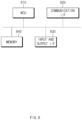
- FIG. 8 is a block diagram illustrating a hardware configuration of a battery management system according to an embodiment of the present invention.
- a battery management system 800 may include a microcontroller (MCU) 810 for controlling various processes and components, a memory 840 in which an operating system program and various programs (for example, a battery pack abnormality diagnosis program or a battery pack temperature estimation program) are recorded, an input/output interface 830 for providing an input interface and an output interface between the battery cell module and/or the semiconductor switching element, and a communication interface 820 capable of communicating with the outside through a wired or wireless communication network.
- the computer program according to the present invention may be recorded in the memory 840 and processed by the microcontroller 810 to be implemented as a module for performing the respective functional blocks shown in FIG. 4 and FIG. 5 .
Landscapes
- Engineering & Computer Science (AREA)
- Computer Networks & Wireless Communication (AREA)
- Signal Processing (AREA)
- Environmental & Geological Engineering (AREA)
- Chemical & Material Sciences (AREA)
- Electrochemistry (AREA)
- General Chemical & Material Sciences (AREA)
- Chemical Kinetics & Catalysis (AREA)
- Manufacturing & Machinery (AREA)
- Microelectronics & Electronic Packaging (AREA)
- Physics & Mathematics (AREA)
- General Physics & Mathematics (AREA)
- Charge And Discharge Circuits For Batteries Or The Like (AREA)
- Secondary Cells (AREA)
- Small-Scale Networks (AREA)
Description
- This application claims priority to and the benefit of
Korean Patent Application No. 10-2019-0015709, filed on February 11, 2019 - The present invention relates to a system and method for a master Battery Management System (hereinafter also referred to as a BMS) to inspect each slave BMS through wireless communication with a plurality of slave BMSs.
- Recently, research and development on secondary batteries have been actively conducted. Here, the secondary batteries, as batteries that can be charged and discharged, mean that they include conventional Ni/Cd batteries and Ni/MH batteries, and recent lithium ion batteries. Among the secondary batteries, the lithium ion battery has an advantage that the energy density is much higher than that of the conventional Ni/Cd battery and Ni/MH battery, and further, the lithium ion battery can be manufactured with a tendency of a small size so that it is used as a power source for a mobile apparatus. In addition, the usage range of the lithium ion battery extends as a power source for electric vehicles, so that the lithium ion battery attracts attention as a next generation energy storage medium.
- In addition, a secondary battery is generally used as a battery pack including a battery module in which a plurality of battery cells are connected in series and/or in parallel. And, a state and an operation of a battery pack are managed and controlled by a battery management system.
- A battery system composed of a plurality of battery packs may include a master battery management system and a plurality of slave battery management systems. The master battery management system communicates with an upper system to control the operation of the plurality of slave battery management systems. At this time, the master battery management system transmits a command signal to each of the plurality of slave battery management systems through wireless communication.
- In addition, the master battery management system wirelessly receives data from each of a plurality of slave battery management systems. The data received includes information related to a battery managed by each of the slave battery management systems. At this time, the master battery management system may determine the state of each slave battery management system based on the data received from the slave battery management systems. However, in determining the state of the slave battery management system, if the master battery management system does not receive data from a specific slave battery management system, it is difficult to distinguish whether the above issue is a problem of wireless communication itself or a slave battery management system.
-
- It is an object of the present invention to make it possible to more clearly perform soundness determination in determining the soundness of a slave battery management system as a master battery management system receives data from a slave battery management system.
- This object is accomplished with a master battery management comprising the features of
claim 1 and with a method comprising the features ofclaim 10. - Dependent claims are directed on features of preferred embodiments of the present invention.
- According to the present invention, it is possible to clearly determine whether a slave battery management system is abnormal through wireless communication between a slave battery management system and a master battery management system.
-
-
FIG. 1 is a block diagram showing the configuration of a battery control system. -
FIG. 2 is a simplified block diagram of a slave BMS inspection system of the prior art. -
FIG. 3 is a schematic diagram of a slave BMS inspection system according to an embodiment of the present invention. -
FIG. 4 is a schematic diagram of a master battery management system according to an embodiment of the present invention. -
FIG. 5 is a schematic diagram of a slave battery management system according to an embodiment of the present invention. -
FIG. 6A is a diagram illustrating a reception state for each time interval according to the prior art. -
FIG. 6B is a diagram illustrating a reception state for each time interval according to an embodiment of the present invention. -
FIG. 7 is a flowchart illustrating a slave BMS inspection method according to an embodiment of the present invention. -
FIG. 8 is a block diagram illustrating a hardware configuration of a battery management system according to an embodiment of the present invention. - Hereinafter, various embodiments of the present disclosure are disclosed with reference to the accompanying drawings.
- In addition, in describing the components of the embodiment of the present invention, terms such as first, second, A, B, (a), and (b) may be used. These terms are only to distinguish the components from other components, and the nature, sequence, or order of the components are not limited by the terms. In addition, if a component is described as being "connected to", "coupled to" or "linked to" another component, the components may be directly connected to or linked to each other but it should be understood that other components may be "connected", "coupled", or "linked" between each component.
-
FIG. 1 is a block diagram schematically illustrating a battery control system including abattery pack 1 and anupper controller 2 included in an upper system according to an embodiment of the present invention. - As shown in
FIG. 1 , thebattery pack 1 includes abattery module 10 composed of one or more battery cells and capable of being charged and discharged, aswitching unit 14 connected in series to the + terminal side or the - terminal side of thebattery module 10 to control the charge/discharge current flow of thebattery module 10, and abattery management system 32 that monitors the voltage, current, temperature, and the like of thebattery pack 1 to control and manage thebattery pack 1 so as to prevent overcharge and overdischarge. - Here, the
switching unit 14 is a semiconductor switching element for controlling the current flow for the charge or discharge of thebattery module 10, and for example, at least one MOSFET may be used. - In addition, in order to monitor the voltage, current, temperature, etc. of the
battery pack 1, theBMS 32 can measure or calculate voltages and currents of gates, sources, and drains of semiconductor switching elements, and in addition, can measure the current, voltage, temperature, etc. of the battery pack using thesensor 12 provided adjacent to the semiconductor switching element. TheBMS 32 is an interface for receiving the values obtained by measuring the above-described various parameters, and may include a plurality of terminals and a circuit that is connected to these terminals and processes the received values. - In addition, the
BMS 32 may control ON/OFF of the MOSFET and may be connected to thebattery module 10 to monitor the state of thebattery module 10. - Since the configuration of the
battery rack 1 and the configuration of theBMS 32 are known configurations, more detailed description thereof will be omitted. - Meanwhile, the
BMS 32 according to the embodiments of the present invention may be connected to an upper BMS (master battery management system 30) so that an operation may be controlled based on a signal applied from the upper BMS. In addition, theupper BMS 30 may be connected to theupper controller 2. Operations of theupper BMS 30 may also be controlled based on a signal applied from theupper controller 2. - Hereinafter, the configuration and method for the soundness evaluation of the slave BMS wirelessly transmitting data to the
upper BMS 30 that receives the control signal directly from theupper controller 2 will be described. -
FIG. 2 is a simplified block diagram of a slave BMS inspection system of the prior art. - The slave BMS inspection system includes a master
battery management system 20 and a plurality of slavebattery management systems 22 to 29. The masterbattery management system 20 receives an operation control command signal for each slave battery management system directly from theupper controller 2 and controls each slave battery management system. In addition, the masterbattery management system 20 wirelessly receives battery-related data from each of the plurality of slavebattery management systems 22 to 29 and transmits them to theupper controller 2. - In addition, the slave
battery management systems 22 to 29 wirelessly receiving the control signal from the masterbattery management system 20 perform an operation according to the received control signal. For example, operations of controlling the charging and discharging of each managed battery module or transmitting data on the state of the battery module being monitored to the masterbattery management system 20 are performed. Thereafter, each of the slavebattery management systems 22 to 29 wirelessly transmits data obtained by inspecting the state of the connectedbattery module 10 according to the control signal or periodically to the masterbattery management system 20. - As such, as the master
battery management system 20 and the plurality of slavebattery management systems 22 to 29 perform wireless communication, the wireless link between the master battery management system and the slave battery management system may become unstable according to the surrounding environment. In addition, even when the slavebattery management systems 22 to 29 operate normally, the masterbattery management system 20 may incorrectly determine the soundness of the slavebattery management systems 22 to 29 due to link instability. - Specifically, conventionally, the master
battery management system 20 directly receives data that each of the slavebattery management systems 22 to 29 is to transmit to the masterbattery management system 20 from the slavebattery management systems 22 to 29. That is, each of the slavebattery management systems 22 to 29 transmits only data on itself, for example, data on a battery module managed by the slavebattery management system 20. - For example, as shown in
FIG. 2 , the masterbattery management system 20 receives data from the first, second and fourth slavebattery management systems battery management system 20 does not receive data from the third and fifth slavebattery management systems battery management system 26 fails in transmitting data to the masterbattery management system 20 because of an error in the BMS itself. Meanwhile, that is the case that the fifth slavebattery management system 29 has no problem with the BMS itself, but there is a communication error with themaster management system 20 so that data transmitted from the fifth slavebattery management system 29 does not reach the masterbattery management system 20. - In such a manner, the conventional communication method does not distinguish a case where the master
battery management system 20 does not receive data due to an error in the slave battery management system itself from a case where the slave battery management system has no problem but there is a communication status error so that the data cannot be received. Therefore, the soundness inspection of the slave BMS cannot be accurately performed by the prior art. The configuration of the present invention to complement this point will be described in detail below. -
FIG. 3 is a schematic diagram of a slave BMS inspection system according to an embodiment of the present invention. - The slave
BMS inspection system 3 includes a masterbattery management system 30 and a plurality of slavebattery management systems 32 to 40. - The plurality of slave
battery management systems 32 to 40 respectively transmit data to the masterbattery management system 30. When one slave battery management system among the plurality of slavebattery management systems 32 to 40 transmits data to the masterbattery management system 30, at least one other slave battery management system that does not transmit data also receives data signals transmitted by the one slave battery management system to the masterbattery management system 30. At least one other slave battery management system that does not transmit data associates the received data signal with the at least one other slave battery management system identification information and stores it as data transmission information of the one slave battery management system. Subsequently, when at least one other slave battery management system not transmitting data transmits data to the master battery management system, it transmits data transmission information of the one slave battery management system together. Here, when a specific slave battery management system transmits data to the master battery management system, the transmission signal can be received by another slave battery management system, and the data transmission information is information including a transmission signal received by another slave battery management system. That is, the data transmission information includes information that a specific slave battery management system has transmitted data to the master battery management system. - For example, as shown in
FIG. 3 , after the first to fifth slavebattery management systems 32 to 40 transmit data to the masterbattery management system 30, respectively, in the next cycle, each slave battery management system has data transmission information of at least one other slave battery management system. However, in this description, although five of the slave battery management system have been described as an example, the number of slave battery management systems may be smaller or larger. - In the previous data transmission period, the first slave
battery management system 32 receives the signal when each of the second slavebattery management system 34, the fourth slavebattery management system 38, and the fifth slavebattery management system 40 transmit data to the masterbattery management system 30. Accordingly, when transmitting data to the masterbattery management system 30, the first slavebattery management system 32 transmits data transmission information of the second slavebattery management system 34, the fourthbattery management system 38, and the fifthbattery management system 40 together. - Also, in the previous data transmission period, the second slave
battery management system 34 receives the signal when the first slavebattery management system 32 and the fourth slavebattery management system 38 respectively transmit data to the masterbattery management system 30. Accordingly, when transmitting data to the masterbattery management system 30, the second slavebattery management system 34 transmits data transmission information of the first slavebattery management system 32 and the fourth slavebattery management system 38 together. - Also, in the previous data transmission period, the fourth slave
battery management system 38 receives the signal when the first slavebattery management system 32, the second slavebattery management system 34 and the fifth slavebattery management system 40 respectively transmit data to the masterbattery management system 30. Accordingly, when transmitting data to the masterbattery management system 30, the fourth slavebattery management system 38 transmits data transmission information of the first slavebattery management system 32, the second slavebattery management system 34, and the fifth slavebattery management system 40 together. - Also, in the previous data transmission period, the fifth slave
battery management system 40 receives the signal when the second slavebattery management system 34 and the fourth slavebattery management system 38 respectively transmit data to the masterbattery management system 30. Accordingly, when transmitting data to the masterbattery management system 30, the fifth slavebattery management system 40 transmits data transmission information of the second slavebattery management system 34 and the fourth slavebattery management system 38 together. - In this example, the third slave
battery management system 36 is configured to not perform the data transmission itself because of slave errors, and the fifth slavebattery management system 40 transmits data but has communication error with the masterbattery management system 30. Thus, the masterbattery management system 30 does not receive data directly from the third slavebattery management system 36 and the fifth slavebattery management system 40. - However, since the fifth slave
battery management system 40 attempts to transmit data to the masterbattery management system 30, the masterbattery management system 30 does not receive the data due to a communication error but data transmission information of the fifth slavebattery management system 40 is recorded by another slave battery management system. - The master
battery management system 30 receives data of the first slavebattery management system 32 and data transmission information of the second slave battery management system, the fourth slave battery management system, and the fifth slave battery management system together from the first slavebattery management system 32. - The master
battery management system 30 receives data of the first slave. In addition, the masterbattery management system 30 receives data of the second slavebattery management system 34 and data transmission information of the first slave battery management system and the fourth slave battery management system together from the second slavebattery management system 34. - In addition, the master
battery management system 30 receives data transmission information of the first slave battery management system, the second slave battery management system, and the fifth slave battery management system together from fourth slavebattery management system 38. - The master
battery management system 30 did not receive data directly from the third slavebattery management system 36 and the fifth slavebattery management system 40. According thereto, in the related art, the masterbattery management system 30 may determine that both the third slavebattery management system 36 and the fifth slave battery management system have slave errors, but in one embodiment according to the present invention, the masterbattery management system 30 examines the data transmission information received from each slave battery management system. - The master
battery management system 30 checks the soundness of the fifth slavebattery management system 40 by checking the history of the data transmitted by the fifth slavebattery management system 40 through the data transmission information of the first slavebattery management system 32, the second slavebattery management system 34, the fourth slavebattery management system 38 and the fifth slavebattery management system 40, which is received from the first slavebattery management system 32, the second slavebattery management system 34, and the fourth slavebattery management system 38. - Accordingly, the master
battery management system 30 determines that there is an error in the slave BMS in the case of the thirdslave battery system 36, and the fifth slavebattery management system 40 determines that there is a communication error. - Meanwhile, all the slave battery management systems operate in the reception mode except for the time of communication with the master battery management system to receive the communication state of the other slave battery management system.
-
FIG. 4 is a schematic diagram of a master battery management system according to an embodiment of the present invention. - The master
battery management system 30 includes a receivingunit 400, anoise measurement unit 402, adetermination unit 404, astorage unit 406, and acontrol unit 408. For the sake of understanding, the operation of each component will be described with reference to the example ofFIG. 3 . - The receiving
unit 400 receives data and data transmission information of the second slavebattery management system 34, the fourthbattery management system 38, and the fifthbattery management system 40 from the first slavebattery management system 32. - In addition, the receiving
unit 400 receives data and data transmission information of the first slavebattery management system 32, and the fourth slavebattery management system 38 from the second slavebattery management system 34. - In addition, the receiving
unit 400 receives data and data transmission information of the first slavebattery management system 32, the second slavebattery management system 34, and the fifth slavebattery management system 40 from the fourth slavebattery management system 38. - The
noise measurement unit 402 measures noise of a signal when the receivingunit 400 receives data and data transmission information from each slave battery management system. - The
determination unit 404 determines the soundness of each of the plurality of slave battery management systems using the data and the information received at the receiving unit. For example, thedetermination unit 404 firstly determines the slave battery system that does not directly transmit data, and secondly determines the state of the slave battery system by using the received data transmission information. - The
determination unit 404 checks that data is not directly received from the third slavebattery management system 36 and the fifth slavebattery management system 40. Thereafter, thedetermination unit 404 examines the data transmission information received by the receivingunit 400. The data transmission information received by the receivingunit 400 includes data transmission information of the first slave battery management system, the second slave battery management system, the fourth slave battery management system, and the fifth slave battery management system. Through this, thedetermination unit 404 checks the data transmission history of the fifth slave battery management system and determines that there is no error in the fifth slave battery management system. - Accordingly, the
determination unit 404 determines the slave error as to the third slavebattery management system 36 having no data directly received and no data transmission information. Then, thedetermination unit 404 determines from the transmission history of the fifth slavebattery management system 40, which is not directly received but checked by the data transmission information received from another slave battery management system, that there is no error in the fifth slave battery management system and that an error exists in the communication link. - In addition, when determining that the communication is abnormal, the
determination unit 404 may additionally refer to the noise measured by thenoise measurement unit 402. For example, if the noise measured by thenoise measurement unit 402 basically exceeds a preset criterion, thedetermination unit 404 may more easily determine a situation in which a communication problem occurs due to a communication error. - The
storage unit 406 stores ID information of each of the plurality of slave battery management systems, and the ID information can be used to identify each slave battery management system. - The
control unit 408 allows thedetermination unit 404 to determine an error or communication error of the slave battery management system using the data and data transmission information of the slave battery management system received at the receivingunit 400 and the noise measured by thenoise measurement unit 402. -
FIG. 5 is a schematic diagram of a slave battery management system according to an embodiment of the present invention. - The slave
battery management system 32 includes atransmission unit 500, a receivingunit 502, astorage unit 504, and acontrol unit 506. - The
transmission unit 500 transmits battery related data and the like to the masterbattery management system 30. In addition, thetransmission unit 500 transmits data transmission information of another slave battery management system to the masterbattery management system 30. - The receiving
unit 502 remains active while the slavebattery management system 32 does not transmit data to the masterbattery management system 30 to receive data transmission signals from other slave battery management systems. - The
storage unit 504 stores data transmission information of another slave battery management system based on data transmission signals of other slave battery management systems received at the receivingunit 502. - The
control unit 506 activates the receivingunit 502 to receive data transmission signals from other slave battery management systems when thetransmission unit 500 does not transmit data and data transmission information to the master battery management system. -
FIG. 6A is a diagram illustrating a reception state for each time interval according to the prior art. - For example, a case in which five slave battery management systems sequentially transmit data to the master battery management system will be described. Each slave battery management system transmits data to the master battery management system in a preset order for a preset time.
- At this time, while each slave battery management system respectively transmits data to the master battery management system, if the number of times (fail count) that a particular slave battery management system does not transmit any data to the master battery management system is two, it is configured to determine that there is an error in the slave battery management system.
- Specifically, the first slave battery management system transmits data to the master battery management system in the timeslot T_1. In addition, the second slave battery management system transmits data to the master battery management system in the timeslot T_2. In addition, the third slave battery management system transmits data to the master battery management system in the timeslot T_3. Furthermore, the fourth slave battery management system transmits data to the master battery management system in the timeslot T_4. Here, the fifth slave battery management system transmits no data due to BMS errors. Here, the master battery management system determines that no data has been received from the fifth slave battery management system in the timeslot T_5 and counts a
fail count 1. Thus, one communication period between the five slave battery management systems and the master battery management system is completed. - Then, the first slave battery management system transmits data again to the master battery management system in the timeslot T_1. In addition, the second slave battery management system transmits data to the master battery management system in the timeslot T_2. In addition, the third slave battery management system transmits data to the master battery management system in the timeslot T_3. Furthermore, the fourth slave battery management system transmits data to the master battery management system in the timeslot T_4. At this time, since each slave battery management system transmits only the data of the slave battery management system to the master battery management system, the master battery management system is in a state where the fail count of the fifth slave battery management system is still one.
- Thus, when the transmission order of the fifth slave battery management system in the second period is returned, the master battery management system checks that the data transmission of the fifth slave battery management system is not made, and counts the fail count to 2 to detect an error of the fifth slave battery management system. That is, in the prior art, it may be determined whether the slave battery management system is abnormal when the second period transmission order of the slave battery management system is reached. In comparison with this, an inspection system of a slave battery management system through a method according to an embodiment of the present invention will be described.
-
FIG. 6B is a diagram illustrating a reception state for each time interval according to an embodiment of the present invention. - For example, a case in which five slave battery management systems sequentially transmit data to the master battery management system will be described. Each slave battery management system transmits data to the master battery management system in a preset order for a preset time.
- At this time, while each slave battery management system respectively transmits data to the master battery management system, if the number of times that a particular slave battery management system does not transmit any data to the master battery management system is two, it is configured to determine that there is an error in the slave battery management system.
- In addition, the embodiment of the present invention, another slave battery management system may receive this data transmission signal when transmitting data to the master battery management system, In this example, it is assumed that a management system other than the slave battery management system transmitting data receives all signals that the slave battery management system transmits data and this will be described.
- Specifically, the first slave battery management system transmits data to the master battery management system in the timeslot T_1. At this time, the second to fourth slave battery management systems receive the data transmission signal of the first slave battery management system.
- In addition, the second slave battery management system transmits data to the master battery management system in the timeslot T_2. In this case, the first slave battery management system, the third slave battery management system, and the fourth slave battery management system receive a data transmission signal of the second slave battery management system.
- In addition, the third slave battery management system transmits data to the master battery management system in the timeslot T_3. In this case, the first slave battery management system, the second slave battery management system, and the fourth slave battery management system receive a data transmission signal of the third slave battery management system.
- Furthermore, the fourth slave battery management system transmits data to the master battery management system in the timeslot T_4. In this case, the first to third slave battery management systems receive a data transmission signal of the fourth slave battery management system.
- Here, the master battery management system determines that no data has been received from the fifth slave battery management system in the timeslot T_5 and counts a
fail count 1. Thus, one communication period between the five slave battery management systems and the master battery management system is completed. - Then, the first slave battery management system transmits data again to the master battery management system in the timeslot T_1. At this time, when transmitting data, the first slave battery management system transmits data transmission information together, including data transmission signals of the second to fourth slave battery management systems received in the previous period. At this time, the master slave battery management system checks that there is no data transmission information of the fifth slave battery management system, counts the fail count to 2, and detects an error of the fifth slave battery management system. That is, according to the present invention different from the prior art, since each slave battery management system receives data transmission signals of other slave battery management systems, even if the second cycle transmission order of a specific slave battery management system is not reached when a specific slave battery management system is abnormal, the master battery management system may determine faster than the prior art whether the specific slave battery management system is abnormal.
-
FIG. 7 is a flowchart illustrating a slave BMS inspection method according to an embodiment of the present invention. - Each slave battery management system transmits data to the master battery management system in a preset order for a preset time. In addition, the master
battery management system 30 receives data transmission information of the slave BMS other than the slave BMS together with the data of the slave BMS from the slave BMS. This will be described in detail below. - The master
battery management system 30 receives data and data transmission information of at least one other slave BMS from the first slave BMS (S700). - The data transmission information of another slave BMS is based on the data transmission signal of another slave BMS transmitting data to the master battery management system while the first slave BMS does not transmit data.
- Then, the master
battery management system 30 receives data and data transmission information of at least one other slave BMS from the second slave BMS (S702). - In addition, the master
battery management system 30 receives data and data transmission information of at least one other slave BMS from the third slave BMS (S704). - In addition, the master
battery management system 30 receives data and data transmission information of at least one other slave BMS from the fourth slave BMS (S706). - Subsequently, the master
battery management system 30 inspects a state and a communication state of each slave BMS by using the received data and data transmission information (S710). - Specifically, the master
battery management system 30 determines the soundness of each of the plurality of slave battery management systems using the received data and data transmission information. - For example, the master
battery management system 30 firstly determines the slave battery system that does not directly transmit data, and secondly determines the state of the slave battery system by using the received data transmission information. - If data is not directly received from a specific slave BMS, it is determined whether data transmission information of the specific slave BMS is received from another slave BMS (S712).
- When the data transmission information of the specific slave BMS is received, it is determined that the communication with the specific slave BMS is abnormal (S716).
- If data transmission information of the specific slave BMS is not received, it is determined that the specific slave BMS is abnormal (S714).
-
FIG. 8 is a block diagram illustrating a hardware configuration of a battery management system according to an embodiment of the present invention. - A battery management system 800 may include a microcontroller (MCU) 810 for controlling various processes and components, a
memory 840 in which an operating system program and various programs (for example, a battery pack abnormality diagnosis program or a battery pack temperature estimation program) are recorded, an input/output interface 830 for providing an input interface and an output interface between the battery cell module and/or the semiconductor switching element, and acommunication interface 820 capable of communicating with the outside through a wired or wireless communication network. As described above, the computer program according to the present invention may be recorded in thememory 840 and processed by themicrocontroller 810 to be implemented as a module for performing the respective functional blocks shown inFIG. 4 andFIG. 5 .
Claims (11)
- A master battery management system (30) used for a battery system in which a plurality of slave battery management systems, slave BMSs, (32 to 40) and the master battery management system (30) communicate wirelessly, the master battery management system (30) comprising:a receiving unit (400) configured to receive, from each slave BMS (32 to 40) of the plurality of slave BMSs (32 to 40), battery-related data of this slave BMS and data transmission information including a transmission signal received from at least one other slave BMS among the plurality of slave BMSs (32 to 40), during one period in which each of the plurality of slave BMSs transmits data at least once, said data transmission information including information that said other slave battery management system has transmitted battery-related data to the master battery management system (30), characterized bya determination unit (404) configured to determine a communication error or an abnormal slave BMS (32 to 40) by using the battery-related data of this slave BMS and the at least one other slave BMS battery-related data received from each slave BMS during one period,wherein the data transmission information of the at least one other slave BMS (32 to 40) among the plurality of slave BMSs is information on a history that the at least one other slave BMS transmits battery-related data.
- The master battery management system (30) of claim 1, wherein, if there is no data transmission information of a slave BMS (32 to 40) among the data received from eachs slave BMS and there is no battery-related data directly received from this slave BMS among battery-related data received from each slave BMS among the plurality of slave BMSs (32 to 40) during the one period, the determination unit (404) determines that an error occurs in this slave BMS (32 to 40).
- The master battery management system (30) of claim 1, wherein if there is data transmission information of a slave BMS (32 to 40) among the data received from each slave BMS during the one period but there is no battery-related data directly received from this slave BMS, the determination unit (404) determines that a communication error occurs in this slave BMS.
- The master battery management system (30) of claim 1, further comprising a noise measurement unit (402) configured to measure noise of battery-related data and data transmission information received when communicating with the plurality of slave BMSs (32 to 40),
wherein the determination unit (404) determines a communication possible state with the plurality of slave BMSs additionally using the noise measured in the noise measurement unit (402). - A slave battery management system (32) used in a battery system in which a plurality of slave battery management systems, slave BMSs, (32 to 40) and a master battery management system, master BMS, (30) communicate wirelessly, wherein the master BMS (30) comprises all features of claim 1, the slave battery management system (32) comprising:a receiving unit (502) configured to receive data transmission information including a data transmission signal that data of at least one slave BMS among the plurality of slave BMSs (32 to 40) is transmitted to the master battery management system (30);a storage unit (504) configured to store data transmission information indicating that a slave BMS transmits data to the master BMS (30) based on the received data transmission signal of the at least one slave BMS (32 to 40); anda transmission unit (500) configured to transmit, to the master BMS (30), data including data transmission information of the at least one slave BMS (32 to 40) and battery information of a battery module managed by the same.
- The slave battery management system (32) of claim 5, wherein during one period, each of the plurality of other slave BMSs (32 to 40) transmits the slave BMS battery-related data to the master BMS (30) at least once, and the transmission unit (500) transmits the battery-related data and data transmission information signals to the master BMS (30) once.
- A slave BMS inspection system of a battery system in which a plurality of slave battery management systems, slave BMSs, (32 to 40) and a master battery management system, master BMS, (30) communicate wirelessly,wherein each of the plurality of slave BMSs (32 to 40) comprises all features of claim 5,wherein the master BMS (30) comprises all features of claim 1, anda second receiving unit configured to receive, from each slave BMS of the plurality of slave BMSs (32 to 40), battery-related data of this slave BMS and data transmission information of at least one other slave BMS among the plurality of slave BMSs (32 to 40) except for this slave BMS among the plurality of slave BMS (32 to 40) during one period in which each of the plurality of slave BMSs (32 to 40) transmits data at least once.
- The slave BMS inspection system of claim 7, wherein, if there is no data transmission information of a slave BMS (32 to 40) among the data received from each slave BMS, and there is no battery-related data directly received from this slave BMS among battery-related data received from each slave BMS among the plurality of slave BMSs (32 to 40) during the one period, the determination unit (404) determines that an error occurs in this slave BMS (32 to 40).
- The slave BMS inspection system of claim 7, wherein if there is data transmission information of a slave BMS among the data received from each slave BMS (32 to 40) during the one period but there is no battery-related data directly received from this slave BMS, it is determined that a communication error with the corresponding slave BMS occurs.
- A slave battery management system, slave BMS, inspection method performed by a master battery management system (30) according to at least one of the preceding claims, the method comprising:receiving data (S700) sequentially from each of a plurality of slave BMSs (32 to 40); and characterized in that the method further comprises the steps ofdetermining (S712) a communication error with a specific slave BMS or a slave BMS error based on received data after receiving the data sequentially from each of the plurality of slave BMSs (32 to 40),wherein when data is received from each of the plurality of slave BMSs (32 to 40), data transmission information of at least one other slave BMS among the plurality of slave BMSs (32 to 40) other than the slave BMS that transmits the data is received together (S702) with the battery-related data by the master battery management system (30),wherein the determining of the communication error comprises determining (S712) that an error occurs in a specific slave BMS if there is no battery-related data directly received from this slave BMS and there is no data transmission information of the specific slave BMS after sequentially receiving data from each of a plurality of slave BMSs (32 to 40),wherein the determining of the communication error comprises determining (S712) that a communication error with a specific slave BMS occurs if there is data transmission information of this slave BMS received from at least one slave BMS among the plurality of slave BMSs (32 to 40) but there is no battery-related data directly received from this slave BMS.
- The slave BMS inspection method of claim 10, further comprising:measuring noise of received data when communicating with the plurality of slave BMSs; anddetermining a state in which communication with the plurality of slave BMSs (32-40) is possible by additionally using the measured noise.
Applications Claiming Priority (2)
| Application Number | Priority Date | Filing Date | Title |
|---|---|---|---|
| KR1020190015709A KR102481113B1 (en) | 2019-02-11 | 2019-02-11 | System and method for checking slave battery management system |
| PCT/KR2020/000317 WO2020166827A1 (en) | 2019-02-11 | 2020-01-08 | Slave bms inspection system and method |
Publications (3)
| Publication Number | Publication Date |
|---|---|
| EP3790229A1 EP3790229A1 (en) | 2021-03-10 |
| EP3790229A4 EP3790229A4 (en) | 2021-08-25 |
| EP3790229B1 true EP3790229B1 (en) | 2024-08-28 |
Family
ID=72045020
Family Applications (1)
| Application Number | Title | Priority Date | Filing Date |
|---|---|---|---|
| EP20755133.4A Active EP3790229B1 (en) | 2019-02-11 | 2020-01-08 | Slave bms inspection system and method |
Country Status (9)
| Country | Link |
|---|---|
| US (3) | US11688887B2 (en) |
| EP (1) | EP3790229B1 (en) |
| JP (2) | JP7197611B2 (en) |
| KR (2) | KR102481113B1 (en) |
| CN (2) | CN117478553A (en) |
| ES (1) | ES2989980T3 (en) |
| HU (1) | HUE068465T2 (en) |
| PL (1) | PL3790229T3 (en) |
| WO (1) | WO2020166827A1 (en) |
Families Citing this family (16)
| Publication number | Priority date | Publication date | Assignee | Title |
|---|---|---|---|---|
| KR102481113B1 (en) * | 2019-02-11 | 2022-12-26 | 주식회사 엘지에너지솔루션 | System and method for checking slave battery management system |
| KR102743585B1 (en) * | 2019-09-09 | 2024-12-17 | 주식회사 엘지에너지솔루션 | Battery management system and method of communicating using intermediate nodes |
| KR102859416B1 (en) * | 2020-09-29 | 2025-09-11 | 주식회사 엘지에너지솔루션 | Battery control system, battery control method, power supply apparatus and electric vehicle |
| KR102744524B1 (en) | 2020-11-05 | 2024-12-19 | 주식회사 엘지에너지솔루션 | Battery management method and battery system using the same |
| KR102888311B1 (en) * | 2021-02-19 | 2025-11-19 | 주식회사 엘지에너지솔루션 | Power apparatus and method for performing safety operation |
| EP4079560A1 (en) * | 2021-04-23 | 2022-10-26 | Volvo Truck Corporation | A method for improving the availability of an energy storage or transformation system |
| US11736928B2 (en) * | 2021-05-07 | 2023-08-22 | Texas Instruments Incorporated | Wireless management of modular subsystems with proxy node options |
| US20250166424A1 (en) * | 2022-03-04 | 2025-05-22 | Hitachi Astemo, Ltd. | Battery control device |
| WO2024050750A1 (en) * | 2022-09-08 | 2024-03-14 | 宁德时代新能源科技股份有限公司 | Anomaly identification method for battery management systems, apparatus, electronic device, and medium |
| CN115696098B (en) * | 2022-12-30 | 2023-04-07 | 石家庄科林电气股份有限公司 | BMS system data transmission method and BMS system |
| KR20240121028A (en) * | 2023-02-01 | 2024-08-08 | 삼성에스디아이 주식회사 | Method and apparatus for defending wireless attack, and battery pack including the apparatus |
| KR102772817B1 (en) | 2023-03-27 | 2025-02-26 | (주)에어포인트 | The System And Method Of Diagnosing Battery Cells Using Asynchronous Wireless Communication |
| KR102790910B1 (en) | 2023-03-27 | 2025-04-04 | (주)에어포인트 | The System And Method Of Diagnosing Battery Cells That Support One-To-Many Wireless Communication Using Common-Frequency-Channels And Multiple Communication-Frequency-Channels |
| CN116381515A (en) * | 2023-03-31 | 2023-07-04 | 欣旺达电动汽车电池有限公司 | A offline detection method, device and system suitable for wireless communication BMS |
| KR20250162977A (en) * | 2024-05-13 | 2025-11-20 | 주식회사 엘지에너지솔루션 | Battery management apparatus and method for migrating bms data |
| KR102891471B1 (en) * | 2025-08-20 | 2025-11-26 | (주)에어포인트 | The Method For Communicating Synchronized Multiple Battery Cell Information And Battery Management System For Performing The Same |
Family Cites Families (29)
| Publication number | Priority date | Publication date | Assignee | Title |
|---|---|---|---|---|
| JPH0522329A (en) | 1991-07-12 | 1993-01-29 | Fanuc Ltd | Specifying method for signal transmission fault |
| US5663963A (en) * | 1995-07-17 | 1997-09-02 | Ncr Corporation | Method for detecting and reporting failures in EPL systems |
| JPH11167401A (en) | 1997-12-03 | 1999-06-22 | Olympus Optical Co Ltd | Distributed control system |
| JP2002051016A (en) * | 2000-08-03 | 2002-02-15 | Mitsubishi Electric Corp | Wireless receiver |
| US20080298256A1 (en) | 2007-05-30 | 2008-12-04 | Hitachi, Ltd. | Distributed System |
| EP2015182A3 (en) * | 2007-05-30 | 2010-03-24 | Hitachi Ltd. | Distributed system |
| KR101075352B1 (en) * | 2009-12-24 | 2011-10-19 | 삼성에스디아이 주식회사 | Battery multi-series system and communication method thereof |
| JP2011183937A (en) | 2010-03-09 | 2011-09-22 | Railway Technical Research Institute | Method and device for detecting failure of non-contact communication equipment |
| KR101077750B1 (en) * | 2010-04-09 | 2011-10-27 | 엘에스산전 주식회사 | Method for Transmitting Up-Link Data of Master-Slave System, and Extended Apparatus for Programmable Logic Controller System |
| US9564762B2 (en) * | 2010-11-02 | 2017-02-07 | Navitas Solutions | Fault tolerant wireless battery area network for a smart battery management system |
| JP5677171B2 (en) * | 2011-04-07 | 2015-02-25 | 株式会社日立製作所 | Battery module and battery system including the same |
| CN103650284A (en) | 2011-09-02 | 2014-03-19 | 三星Sdi株式会社 | Data transmitting method, data transmitting apparatus, and energy storage system including the same |
| KR101564365B1 (en) | 2012-11-12 | 2015-10-29 | 주식회사 엘지화학 | System and method for balancing of battery using wireless communications |
| KR101416798B1 (en) * | 2012-11-27 | 2014-07-09 | 에스케이씨앤씨 주식회사 | Battery management system and method with a hierarchical structure |
| CN103036719A (en) | 2012-12-12 | 2013-04-10 | 北京星网锐捷网络技术有限公司 | Cross-regional service disaster method and device based on main cluster servers |
| KR101768251B1 (en) | 2013-04-05 | 2017-08-30 | 삼성에스디아이 주식회사 | Battery Pack Providing Confirmation For Normal Connection Of Battery Module |
| JP2014230097A (en) | 2013-05-22 | 2014-12-08 | 株式会社 日立産業制御ソリューションズ | Master-slave system and node control method thereof |
| JP6375144B2 (en) | 2014-05-15 | 2018-08-15 | 西部電機株式会社 | Control system, failure diagnosis method and program |
| KR101641435B1 (en) | 2014-12-16 | 2016-07-20 | 중소기업은행 | Battery management system and electric vehicles equipped with the same |
| CN106603261B (en) | 2015-10-15 | 2019-12-06 | 华为技术有限公司 | Hot backup method, first main device, standby device and communication system |
| CN107181289A (en) * | 2016-03-10 | 2017-09-19 | 肖华军 | Modularization intelligent battery management system |
| KR102167427B1 (en) | 2016-04-11 | 2020-10-19 | 주식회사 엘지화학 | Apparatus and method for cognizance of master bms and slave bms |
| KR20180056088A (en) * | 2016-11-18 | 2018-05-28 | 삼성전자주식회사 | Sensing apparatus and battery management system including the same |
| KR101914549B1 (en) | 2017-03-24 | 2018-11-02 | 엘에스산전 주식회사 | Data communication apparatus for electric power distributing automation system |
| KR102137759B1 (en) * | 2017-07-06 | 2020-07-24 | 주식회사 엘지화학 | Apparatus for managing battery pack |
| KR102157882B1 (en) * | 2017-07-19 | 2020-09-18 | 주식회사 엘지화학 | Wireless battery manamement system and a battery pack including the same |
| KR102173777B1 (en) * | 2017-07-25 | 2020-11-03 | 주식회사 엘지화학 | Master battery management unit and a battery pack including the same |
| KR20190073109A (en) * | 2017-12-18 | 2019-06-26 | 주식회사 나인 | Unattended Automation Cafe Booth System |
| KR102481113B1 (en) * | 2019-02-11 | 2022-12-26 | 주식회사 엘지에너지솔루션 | System and method for checking slave battery management system |
-
2019
- 2019-02-11 KR KR1020190015709A patent/KR102481113B1/en active Active
-
2020
- 2020-01-08 WO PCT/KR2020/000317 patent/WO2020166827A1/en not_active Ceased
- 2020-01-08 EP EP20755133.4A patent/EP3790229B1/en active Active
- 2020-01-08 US US17/053,213 patent/US11688887B2/en active Active
- 2020-01-08 JP JP2020571794A patent/JP7197611B2/en active Active
- 2020-01-08 CN CN202311427064.5A patent/CN117478553A/en active Pending
- 2020-01-08 ES ES20755133T patent/ES2989980T3/en active Active
- 2020-01-08 PL PL20755133.4T patent/PL3790229T3/en unknown
- 2020-01-08 HU HUE20755133A patent/HUE068465T2/en unknown
- 2020-01-08 CN CN202080002613.2A patent/CN112088520B/en active Active
-
2022
- 2022-12-15 JP JP2022200478A patent/JP7517771B2/en active Active
- 2022-12-20 KR KR1020220179900A patent/KR102568627B1/en active Active
-
2023
- 2023-05-09 US US18/144,916 patent/US12040458B2/en active Active
-
2024
- 2024-06-12 US US18/741,198 patent/US20240332648A1/en active Pending
Also Published As
| Publication number | Publication date |
|---|---|
| HUE068465T2 (en) | 2024-12-28 |
| KR102568627B1 (en) | 2023-08-22 |
| US11688887B2 (en) | 2023-06-27 |
| KR102481113B1 (en) | 2022-12-26 |
| KR20200098071A (en) | 2020-08-20 |
| CN112088520A (en) | 2020-12-15 |
| EP3790229A4 (en) | 2021-08-25 |
| EP3790229A1 (en) | 2021-03-10 |
| JP7517771B2 (en) | 2024-07-17 |
| JP2023051966A (en) | 2023-04-11 |
| US12040458B2 (en) | 2024-07-16 |
| US20210265670A1 (en) | 2021-08-26 |
| ES2989980T3 (en) | 2024-11-28 |
| PL3790229T3 (en) | 2024-12-23 |
| JP7197611B2 (en) | 2022-12-27 |
| CN117478553A (en) | 2024-01-30 |
| US20240332648A1 (en) | 2024-10-03 |
| JP2021530079A (en) | 2021-11-04 |
| CN112088520B (en) | 2023-11-14 |
| US20230275276A1 (en) | 2023-08-31 |
| WO2020166827A1 (en) | 2020-08-20 |
| KR20230004400A (en) | 2023-01-06 |
Similar Documents
| Publication | Publication Date | Title |
|---|---|---|
| EP3790229B1 (en) | Slave bms inspection system and method | |
| US11965936B2 (en) | Battery diagnosis apparatus and method | |
| US11815558B2 (en) | Apparatus and method for diagnosing abnormal degradated battery cell | |
| KR102752993B1 (en) | Slave battery management system, master battery management system and battery pack for diagnosing cause of communication errors | |
| EP4394407B1 (en) | Battery management device and operation method thereof | |
| EP4137829A1 (en) | Device and method for diagnosing battery | |
| KR20210157017A (en) | Slave battery monitoring system diagnosing error of battery module and battery pack including the slave battery monitoring system | |
| US20240348061A1 (en) | Battery system and monitoring method of battery system | |
| EP4567447A1 (en) | Battery management apparatus and operation method therefor | |
| US20260058226A1 (en) | Battery Management Apparatus and Operating Method Thereof | |
| EP4365613B1 (en) | Battery pack and operating method thereof | |
| AU2023378020A1 (en) | Battery pack management apparatus and operating method thereof | |
| KR20240162881A (en) | Battery management apparatus and operating method of the same | |
| KR20230040808A (en) | Battery management apparatus, battery system and operating method of the same | |
| KR20250097496A (en) | Battery management apparatus and operating method of the same | |
| KR20240055537A (en) | Battery management apparatus and operating method of the same, battery system | |
| KR20250120700A (en) | Battery diagnosis apparatus and operating method of the same | |
| CN120202420A (en) | Battery management device and operating method thereof |
Legal Events
| Date | Code | Title | Description |
|---|---|---|---|
| STAA | Information on the status of an ep patent application or granted ep patent |
Free format text: STATUS: THE INTERNATIONAL PUBLICATION HAS BEEN MADE |
|
| PUAI | Public reference made under article 153(3) epc to a published international application that has entered the european phase |
Free format text: ORIGINAL CODE: 0009012 |
|
| STAA | Information on the status of an ep patent application or granted ep patent |
Free format text: STATUS: REQUEST FOR EXAMINATION WAS MADE |
|
| 17P | Request for examination filed |
Effective date: 20201130 |
|
| AK | Designated contracting states |
Kind code of ref document: A1 Designated state(s): AL AT BE BG CH CY CZ DE DK EE ES FI FR GB GR HR HU IE IS IT LI LT LU LV MC MK MT NL NO PL PT RO RS SE SI SK SM TR |
|
| AX | Request for extension of the european patent |
Extension state: BA ME |
|
| A4 | Supplementary search report drawn up and despatched |
Effective date: 20210726 |
|
| RIC1 | Information provided on ipc code assigned before grant |
Ipc: H04L 12/26 20060101AFI20210720BHEP Ipc: H04L 12/403 20060101ALI20210720BHEP Ipc: H04B 1/10 20060101ALI20210720BHEP Ipc: H01M 10/42 20060101ALI20210720BHEP Ipc: H04L 12/24 20060101ALI20210720BHEP |
|
| RAP1 | Party data changed (applicant data changed or rights of an application transferred) |
Owner name: LG ENERGY SOLUTION LTD. |
|
| RAP3 | Party data changed (applicant data changed or rights of an application transferred) |
Owner name: LG ENERGY SOLUTION, LTD. |
|
| DAV | Request for validation of the european patent (deleted) | ||
| DAX | Request for extension of the european patent (deleted) | ||
| STAA | Information on the status of an ep patent application or granted ep patent |
Free format text: STATUS: EXAMINATION IS IN PROGRESS |
|
| 17Q | First examination report despatched |
Effective date: 20221025 |
|
| REG | Reference to a national code |
Ref country code: DE Free format text: PREVIOUS MAIN CLASS: H04L0012260000 Ipc: H04L0041069500 Ref country code: DE Ref legal event code: R079 Ref document number: 602020036691 Country of ref document: DE Free format text: PREVIOUS MAIN CLASS: H04L0012260000 Ipc: H04L0041069500 |
|
| GRAP | Despatch of communication of intention to grant a patent |
Free format text: ORIGINAL CODE: EPIDOSNIGR1 |
|
| STAA | Information on the status of an ep patent application or granted ep patent |
Free format text: STATUS: GRANT OF PATENT IS INTENDED |
|
| RIC1 | Information provided on ipc code assigned before grant |
Ipc: H04L 43/10 20220101ALN20240216BHEP Ipc: H04L 43/0823 20220101ALN20240216BHEP Ipc: H04L 41/044 20220101ALI20240216BHEP Ipc: H04L 43/0817 20220101ALI20240216BHEP Ipc: H04L 41/0695 20220101AFI20240216BHEP |
|
| INTG | Intention to grant announced |
Effective date: 20240325 |
|
| P01 | Opt-out of the competence of the unified patent court (upc) registered |
Effective date: 20240404 |
|
| GRAS | Grant fee paid |
Free format text: ORIGINAL CODE: EPIDOSNIGR3 |
|
| GRAA | (expected) grant |
Free format text: ORIGINAL CODE: 0009210 |
|
| STAA | Information on the status of an ep patent application or granted ep patent |
Free format text: STATUS: THE PATENT HAS BEEN GRANTED |
|
| AK | Designated contracting states |
Kind code of ref document: B1 Designated state(s): AL AT BE BG CH CY CZ DE DK EE ES FI FR GB GR HR HU IE IS IT LI LT LU LV MC MK MT NL NO PL PT RO RS SE SI SK SM TR |
|
| REG | Reference to a national code |
Ref country code: CH Ref legal event code: EP |
|
| REG | Reference to a national code |
Ref country code: DE Ref legal event code: R096 Ref document number: 602020036691 Country of ref document: DE |
|
| REG | Reference to a national code |
Ref country code: IE Ref legal event code: FG4D |
|
| REG | Reference to a national code |
Ref country code: SE Ref legal event code: TRGR |
|
| REG | Reference to a national code |
Ref country code: ES Ref legal event code: FG2A Ref document number: 2989980 Country of ref document: ES Kind code of ref document: T3 Effective date: 20241128 |
|
| REG | Reference to a national code |
Ref country code: LT Ref legal event code: MG9D |
|
| REG | Reference to a national code |
Ref country code: HU Ref legal event code: AG4A Ref document number: E068465 Country of ref document: HU |
|
| PG25 | Lapsed in a contracting state [announced via postgrant information from national office to epo] |
Ref country code: NO Free format text: LAPSE BECAUSE OF FAILURE TO SUBMIT A TRANSLATION OF THE DESCRIPTION OR TO PAY THE FEE WITHIN THE PRESCRIBED TIME-LIMIT Effective date: 20241128 |
|
| REG | Reference to a national code |
Ref country code: AT Ref legal event code: MK05 Ref document number: 1719155 Country of ref document: AT Kind code of ref document: T Effective date: 20240828 |
|
| PG25 | Lapsed in a contracting state [announced via postgrant information from national office to epo] |
Ref country code: NL Free format text: LAPSE BECAUSE OF FAILURE TO SUBMIT A TRANSLATION OF THE DESCRIPTION OR TO PAY THE FEE WITHIN THE PRESCRIBED TIME-LIMIT Effective date: 20240828 Ref country code: GR Free format text: LAPSE BECAUSE OF FAILURE TO SUBMIT A TRANSLATION OF THE DESCRIPTION OR TO PAY THE FEE WITHIN THE PRESCRIBED TIME-LIMIT Effective date: 20241129 Ref country code: FI Free format text: LAPSE BECAUSE OF FAILURE TO SUBMIT A TRANSLATION OF THE DESCRIPTION OR TO PAY THE FEE WITHIN THE PRESCRIBED TIME-LIMIT Effective date: 20240828 Ref country code: PT Free format text: LAPSE BECAUSE OF FAILURE TO SUBMIT A TRANSLATION OF THE DESCRIPTION OR TO PAY THE FEE WITHIN THE PRESCRIBED TIME-LIMIT Effective date: 20241230 |
|
| PG25 | Lapsed in a contracting state [announced via postgrant information from national office to epo] |
Ref country code: BG Free format text: LAPSE BECAUSE OF FAILURE TO SUBMIT A TRANSLATION OF THE DESCRIPTION OR TO PAY THE FEE WITHIN THE PRESCRIBED TIME-LIMIT Effective date: 20240828 |
|
| PG25 | Lapsed in a contracting state [announced via postgrant information from national office to epo] |
Ref country code: LV Free format text: LAPSE BECAUSE OF FAILURE TO SUBMIT A TRANSLATION OF THE DESCRIPTION OR TO PAY THE FEE WITHIN THE PRESCRIBED TIME-LIMIT Effective date: 20240828 |
|
| REG | Reference to a national code |
Ref country code: NL Ref legal event code: MP Effective date: 20240828 |
|
| PG25 | Lapsed in a contracting state [announced via postgrant information from national office to epo] |
Ref country code: AT Free format text: LAPSE BECAUSE OF FAILURE TO SUBMIT A TRANSLATION OF THE DESCRIPTION OR TO PAY THE FEE WITHIN THE PRESCRIBED TIME-LIMIT Effective date: 20240828 Ref country code: IS Free format text: LAPSE BECAUSE OF FAILURE TO SUBMIT A TRANSLATION OF THE DESCRIPTION OR TO PAY THE FEE WITHIN THE PRESCRIBED TIME-LIMIT Effective date: 20241228 |
|
| PG25 | Lapsed in a contracting state [announced via postgrant information from national office to epo] |
Ref country code: HR Free format text: LAPSE BECAUSE OF FAILURE TO SUBMIT A TRANSLATION OF THE DESCRIPTION OR TO PAY THE FEE WITHIN THE PRESCRIBED TIME-LIMIT Effective date: 20240828 |
|
| PG25 | Lapsed in a contracting state [announced via postgrant information from national office to epo] |
Ref country code: RS Free format text: LAPSE BECAUSE OF FAILURE TO SUBMIT A TRANSLATION OF THE DESCRIPTION OR TO PAY THE FEE WITHIN THE PRESCRIBED TIME-LIMIT Effective date: 20241128 |
|
| PG25 | Lapsed in a contracting state [announced via postgrant information from national office to epo] |
Ref country code: RS Free format text: LAPSE BECAUSE OF FAILURE TO SUBMIT A TRANSLATION OF THE DESCRIPTION OR TO PAY THE FEE WITHIN THE PRESCRIBED TIME-LIMIT Effective date: 20241128 Ref country code: PT Free format text: LAPSE BECAUSE OF FAILURE TO SUBMIT A TRANSLATION OF THE DESCRIPTION OR TO PAY THE FEE WITHIN THE PRESCRIBED TIME-LIMIT Effective date: 20241230 Ref country code: NO Free format text: LAPSE BECAUSE OF FAILURE TO SUBMIT A TRANSLATION OF THE DESCRIPTION OR TO PAY THE FEE WITHIN THE PRESCRIBED TIME-LIMIT Effective date: 20241128 Ref country code: NL Free format text: LAPSE BECAUSE OF FAILURE TO SUBMIT A TRANSLATION OF THE DESCRIPTION OR TO PAY THE FEE WITHIN THE PRESCRIBED TIME-LIMIT Effective date: 20240828 Ref country code: LV Free format text: LAPSE BECAUSE OF FAILURE TO SUBMIT A TRANSLATION OF THE DESCRIPTION OR TO PAY THE FEE WITHIN THE PRESCRIBED TIME-LIMIT Effective date: 20240828 Ref country code: IS Free format text: LAPSE BECAUSE OF FAILURE TO SUBMIT A TRANSLATION OF THE DESCRIPTION OR TO PAY THE FEE WITHIN THE PRESCRIBED TIME-LIMIT Effective date: 20241228 Ref country code: HR Free format text: LAPSE BECAUSE OF FAILURE TO SUBMIT A TRANSLATION OF THE DESCRIPTION OR TO PAY THE FEE WITHIN THE PRESCRIBED TIME-LIMIT Effective date: 20240828 Ref country code: GR Free format text: LAPSE BECAUSE OF FAILURE TO SUBMIT A TRANSLATION OF THE DESCRIPTION OR TO PAY THE FEE WITHIN THE PRESCRIBED TIME-LIMIT Effective date: 20241129 Ref country code: FI Free format text: LAPSE BECAUSE OF FAILURE TO SUBMIT A TRANSLATION OF THE DESCRIPTION OR TO PAY THE FEE WITHIN THE PRESCRIBED TIME-LIMIT Effective date: 20240828 Ref country code: BG Free format text: LAPSE BECAUSE OF FAILURE TO SUBMIT A TRANSLATION OF THE DESCRIPTION OR TO PAY THE FEE WITHIN THE PRESCRIBED TIME-LIMIT Effective date: 20240828 Ref country code: AT Free format text: LAPSE BECAUSE OF FAILURE TO SUBMIT A TRANSLATION OF THE DESCRIPTION OR TO PAY THE FEE WITHIN THE PRESCRIBED TIME-LIMIT Effective date: 20240828 |
|
| PG25 | Lapsed in a contracting state [announced via postgrant information from national office to epo] |
Ref country code: DK Free format text: LAPSE BECAUSE OF FAILURE TO SUBMIT A TRANSLATION OF THE DESCRIPTION OR TO PAY THE FEE WITHIN THE PRESCRIBED TIME-LIMIT Effective date: 20240828 Ref country code: SM Free format text: LAPSE BECAUSE OF FAILURE TO SUBMIT A TRANSLATION OF THE DESCRIPTION OR TO PAY THE FEE WITHIN THE PRESCRIBED TIME-LIMIT Effective date: 20240828 Ref country code: RO Free format text: LAPSE BECAUSE OF FAILURE TO SUBMIT A TRANSLATION OF THE DESCRIPTION OR TO PAY THE FEE WITHIN THE PRESCRIBED TIME-LIMIT Effective date: 20240828 |
|
| PG25 | Lapsed in a contracting state [announced via postgrant information from national office to epo] |
Ref country code: EE Free format text: LAPSE BECAUSE OF FAILURE TO SUBMIT A TRANSLATION OF THE DESCRIPTION OR TO PAY THE FEE WITHIN THE PRESCRIBED TIME-LIMIT Effective date: 20240828 |
|
| PG25 | Lapsed in a contracting state [announced via postgrant information from national office to epo] |
Ref country code: CZ Free format text: LAPSE BECAUSE OF FAILURE TO SUBMIT A TRANSLATION OF THE DESCRIPTION OR TO PAY THE FEE WITHIN THE PRESCRIBED TIME-LIMIT Effective date: 20240828 |
|
| PG25 | Lapsed in a contracting state [announced via postgrant information from national office to epo] |
Ref country code: SK Free format text: LAPSE BECAUSE OF FAILURE TO SUBMIT A TRANSLATION OF THE DESCRIPTION OR TO PAY THE FEE WITHIN THE PRESCRIBED TIME-LIMIT Effective date: 20240828 Ref country code: IT Free format text: LAPSE BECAUSE OF FAILURE TO SUBMIT A TRANSLATION OF THE DESCRIPTION OR TO PAY THE FEE WITHIN THE PRESCRIBED TIME-LIMIT Effective date: 20240828 |
|
| REG | Reference to a national code |
Ref country code: DE Ref legal event code: R097 Ref document number: 602020036691 Country of ref document: DE |
|
| PLBE | No opposition filed within time limit |
Free format text: ORIGINAL CODE: 0009261 |
|
| STAA | Information on the status of an ep patent application or granted ep patent |
Free format text: STATUS: NO OPPOSITION FILED WITHIN TIME LIMIT |
|
| 26N | No opposition filed |
Effective date: 20250530 |
|
| REG | Reference to a national code |
Ref country code: CH Ref legal event code: PL |
|
| PG25 | Lapsed in a contracting state [announced via postgrant information from national office to epo] |
Ref country code: MC Free format text: LAPSE BECAUSE OF FAILURE TO SUBMIT A TRANSLATION OF THE DESCRIPTION OR TO PAY THE FEE WITHIN THE PRESCRIBED TIME-LIMIT Effective date: 20240828 Ref country code: LU Free format text: LAPSE BECAUSE OF NON-PAYMENT OF DUE FEES Effective date: 20250108 |
|
| PG25 | Lapsed in a contracting state [announced via postgrant information from national office to epo] |
Ref country code: CH Free format text: LAPSE BECAUSE OF NON-PAYMENT OF DUE FEES Effective date: 20250131 |
|
| PGFP | Annual fee paid to national office [announced via postgrant information from national office to epo] |
Ref country code: GB Payment date: 20251222 Year of fee payment: 7 |
|
| PGFP | Annual fee paid to national office [announced via postgrant information from national office to epo] |
Ref country code: FR Payment date: 20251223 Year of fee payment: 7 |
|
| PGFP | Annual fee paid to national office [announced via postgrant information from national office to epo] |
Ref country code: BE Payment date: 20251229 Year of fee payment: 7 |
|
| PGFP | Annual fee paid to national office [announced via postgrant information from national office to epo] |
Ref country code: SE Payment date: 20251223 Year of fee payment: 7 |
|
| PG25 | Lapsed in a contracting state [announced via postgrant information from national office to epo] |
Ref country code: IE Free format text: LAPSE BECAUSE OF NON-PAYMENT OF DUE FEES Effective date: 20250108 |
|
| PGFP | Annual fee paid to national office [announced via postgrant information from national office to epo] |
Ref country code: PL Payment date: 20251222 Year of fee payment: 7 |
|
| PGFP | Annual fee paid to national office [announced via postgrant information from national office to epo] |
Ref country code: HU Payment date: 20260129 Year of fee payment: 7 |
|
| PGFP | Annual fee paid to national office [announced via postgrant information from national office to epo] |
Ref country code: ES Payment date: 20260212 Year of fee payment: 7 |
|
| PGFP | Annual fee paid to national office [announced via postgrant information from national office to epo] |
Ref country code: DE Payment date: 20251222 Year of fee payment: 7 |