EP3789689A1 - Fragrance adjustment system and fragrance material cartridge - Google Patents
Fragrance adjustment system and fragrance material cartridge Download PDFInfo
- Publication number
- EP3789689A1 EP3789689A1 EP19819720.4A EP19819720A EP3789689A1 EP 3789689 A1 EP3789689 A1 EP 3789689A1 EP 19819720 A EP19819720 A EP 19819720A EP 3789689 A1 EP3789689 A1 EP 3789689A1
- Authority
- EP
- European Patent Office
- Prior art keywords
- scent
- scent material
- concentration
- storage
- emitter
- Prior art date
- Legal status (The legal status is an assumption and is not a legal conclusion. Google has not performed a legal analysis and makes no representation as to the accuracy of the status listed.)
- Granted
Links
Images


Classifications
-
- A—HUMAN NECESSITIES
- A61—MEDICAL OR VETERINARY SCIENCE; HYGIENE
- A61L—METHODS OR APPARATUS FOR STERILISING MATERIALS OR OBJECTS IN GENERAL; DISINFECTION, STERILISATION OR DEODORISATION OF AIR; CHEMICAL ASPECTS OF BANDAGES, DRESSINGS, ABSORBENT PADS OR SURGICAL ARTICLES; MATERIALS FOR BANDAGES, DRESSINGS, ABSORBENT PADS OR SURGICAL ARTICLES
- A61L9/00—Disinfection, sterilisation or deodorisation of air
- A61L9/14—Disinfection, sterilisation or deodorisation of air using sprayed or atomised substances including air-liquid contact processes
-
- A—HUMAN NECESSITIES
- A45—HAND OR TRAVELLING ARTICLES
- A45D—HAIRDRESSING OR SHAVING EQUIPMENT; EQUIPMENT FOR COSMETICS OR COSMETIC TREATMENTS, e.g. FOR MANICURING OR PEDICURING
- A45D34/00—Containers or accessories specially adapted for handling liquid toiletry or cosmetic substances, e.g. perfumes
- A45D34/02—Scent flasks, e.g. with evaporator
-
- B—PERFORMING OPERATIONS; TRANSPORTING
- B05—SPRAYING OR ATOMISING IN GENERAL; APPLYING FLUENT MATERIALS TO SURFACES, IN GENERAL
- B05B—SPRAYING APPARATUS; ATOMISING APPARATUS; NOZZLES
- B05B12/00—Arrangements for controlling delivery; Arrangements for controlling the spray area
- B05B12/08—Arrangements for controlling delivery; Arrangements for controlling the spray area responsive to condition of liquid or other fluent material to be discharged, of ambient medium or of target ; responsive to condition of spray devices or of supply means, e.g. pipes, pumps or their drive means
- B05B12/12—Arrangements for controlling delivery; Arrangements for controlling the spray area responsive to condition of liquid or other fluent material to be discharged, of ambient medium or of target ; responsive to condition of spray devices or of supply means, e.g. pipes, pumps or their drive means responsive to conditions of ambient medium or target, e.g. humidity, temperature position or movement of the target relative to the spray apparatus
-
- F—MECHANICAL ENGINEERING; LIGHTING; HEATING; WEAPONS; BLASTING
- F24—HEATING; RANGES; VENTILATING
- F24F—AIR-CONDITIONING; AIR-HUMIDIFICATION; VENTILATION; USE OF AIR CURRENTS FOR SCREENING
- F24F1/00—Room units for air-conditioning, e.g. separate or self-contained units or units receiving primary air from a central station
- F24F1/0007—Indoor units, e.g. fan coil units
- F24F1/008—Indoor units, e.g. fan coil units with perfuming or deodorising means
-
- F—MECHANICAL ENGINEERING; LIGHTING; HEATING; WEAPONS; BLASTING
- F24—HEATING; RANGES; VENTILATING
- F24F—AIR-CONDITIONING; AIR-HUMIDIFICATION; VENTILATION; USE OF AIR CURRENTS FOR SCREENING
- F24F11/00—Control or safety arrangements
- F24F11/62—Control or safety arrangements characterised by the type of control or by internal processing, e.g. using fuzzy logic, adaptive control or estimation of values
- F24F11/63—Electronic processing
- F24F11/64—Electronic processing using pre-stored data
-
- F—MECHANICAL ENGINEERING; LIGHTING; HEATING; WEAPONS; BLASTING
- F24—HEATING; RANGES; VENTILATING
- F24F—AIR-CONDITIONING; AIR-HUMIDIFICATION; VENTILATION; USE OF AIR CURRENTS FOR SCREENING
- F24F8/00—Treatment, e.g. purification, of air supplied to human living or working spaces otherwise than by heating, cooling, humidifying or drying
- F24F8/50—Treatment, e.g. purification, of air supplied to human living or working spaces otherwise than by heating, cooling, humidifying or drying by odorisation
-
- A—HUMAN NECESSITIES
- A61—MEDICAL OR VETERINARY SCIENCE; HYGIENE
- A61L—METHODS OR APPARATUS FOR STERILISING MATERIALS OR OBJECTS IN GENERAL; DISINFECTION, STERILISATION OR DEODORISATION OF AIR; CHEMICAL ASPECTS OF BANDAGES, DRESSINGS, ABSORBENT PADS OR SURGICAL ARTICLES; MATERIALS FOR BANDAGES, DRESSINGS, ABSORBENT PADS OR SURGICAL ARTICLES
- A61L2209/00—Aspects relating to disinfection, sterilisation or deodorisation of air
- A61L2209/10—Apparatus features
- A61L2209/11—Apparatus for controlling air treatment
-
- A—HUMAN NECESSITIES
- A61—MEDICAL OR VETERINARY SCIENCE; HYGIENE
- A61L—METHODS OR APPARATUS FOR STERILISING MATERIALS OR OBJECTS IN GENERAL; DISINFECTION, STERILISATION OR DEODORISATION OF AIR; CHEMICAL ASPECTS OF BANDAGES, DRESSINGS, ABSORBENT PADS OR SURGICAL ARTICLES; MATERIALS FOR BANDAGES, DRESSINGS, ABSORBENT PADS OR SURGICAL ARTICLES
- A61L2209/00—Aspects relating to disinfection, sterilisation or deodorisation of air
- A61L2209/10—Apparatus features
- A61L2209/11—Apparatus for controlling air treatment
- A61L2209/111—Sensor means, e.g. motion, brightness, scent, contaminant sensors
-
- A—HUMAN NECESSITIES
- A61—MEDICAL OR VETERINARY SCIENCE; HYGIENE
- A61L—METHODS OR APPARATUS FOR STERILISING MATERIALS OR OBJECTS IN GENERAL; DISINFECTION, STERILISATION OR DEODORISATION OF AIR; CHEMICAL ASPECTS OF BANDAGES, DRESSINGS, ABSORBENT PADS OR SURGICAL ARTICLES; MATERIALS FOR BANDAGES, DRESSINGS, ABSORBENT PADS OR SURGICAL ARTICLES
- A61L2209/00—Aspects relating to disinfection, sterilisation or deodorisation of air
- A61L2209/10—Apparatus features
- A61L2209/13—Dispensing or storing means for active compounds
- A61L2209/133—Replaceable cartridges, refills
-
- A—HUMAN NECESSITIES
- A61—MEDICAL OR VETERINARY SCIENCE; HYGIENE
- A61L—METHODS OR APPARATUS FOR STERILISING MATERIALS OR OBJECTS IN GENERAL; DISINFECTION, STERILISATION OR DEODORISATION OF AIR; CHEMICAL ASPECTS OF BANDAGES, DRESSINGS, ABSORBENT PADS OR SURGICAL ARTICLES; MATERIALS FOR BANDAGES, DRESSINGS, ABSORBENT PADS OR SURGICAL ARTICLES
- A61L2209/00—Aspects relating to disinfection, sterilisation or deodorisation of air
- A61L2209/10—Apparatus features
- A61L2209/13—Dispensing or storing means for active compounds
- A61L2209/134—Distributing means, e.g. baffles, valves, manifolds, nozzles
-
- A—HUMAN NECESSITIES
- A61—MEDICAL OR VETERINARY SCIENCE; HYGIENE
- A61L—METHODS OR APPARATUS FOR STERILISING MATERIALS OR OBJECTS IN GENERAL; DISINFECTION, STERILISATION OR DEODORISATION OF AIR; CHEMICAL ASPECTS OF BANDAGES, DRESSINGS, ABSORBENT PADS OR SURGICAL ARTICLES; MATERIALS FOR BANDAGES, DRESSINGS, ABSORBENT PADS OR SURGICAL ARTICLES
- A61L2209/00—Aspects relating to disinfection, sterilisation or deodorisation of air
- A61L2209/10—Apparatus features
- A61L2209/16—Connections to a HVAC unit
-
- B—PERFORMING OPERATIONS; TRANSPORTING
- B05—SPRAYING OR ATOMISING IN GENERAL; APPLYING FLUENT MATERIALS TO SURFACES, IN GENERAL
- B05B—SPRAYING APPARATUS; ATOMISING APPARATUS; NOZZLES
- B05B17/00—Apparatus for spraying or atomising liquids or other fluent materials, not covered by the preceding groups
- B05B17/04—Apparatus for spraying or atomising liquids or other fluent materials, not covered by the preceding groups operating with special methods
- B05B17/06—Apparatus for spraying or atomising liquids or other fluent materials, not covered by the preceding groups operating with special methods using ultrasonic or other kinds of vibrations
-
- B—PERFORMING OPERATIONS; TRANSPORTING
- B05—SPRAYING OR ATOMISING IN GENERAL; APPLYING FLUENT MATERIALS TO SURFACES, IN GENERAL
- B05B—SPRAYING APPARATUS; ATOMISING APPARATUS; NOZZLES
- B05B7/00—Spraying apparatus for discharge of liquids or other fluent materials from two or more sources, e.g. of liquid and air, of powder and gas
- B05B7/0075—Nozzle arrangements in gas streams
-
- B—PERFORMING OPERATIONS; TRANSPORTING
- B05—SPRAYING OR ATOMISING IN GENERAL; APPLYING FLUENT MATERIALS TO SURFACES, IN GENERAL
- B05B—SPRAYING APPARATUS; ATOMISING APPARATUS; NOZZLES
- B05B7/00—Spraying apparatus for discharge of liquids or other fluent materials from two or more sources, e.g. of liquid and air, of powder and gas
- B05B7/0081—Apparatus supplied with low pressure gas, e.g. "hvlp"-guns; air supplied by a fan
-
- F—MECHANICAL ENGINEERING; LIGHTING; HEATING; WEAPONS; BLASTING
- F24—HEATING; RANGES; VENTILATING
- F24F—AIR-CONDITIONING; AIR-HUMIDIFICATION; VENTILATION; USE OF AIR CURRENTS FOR SCREENING
- F24F2110/00—Control inputs relating to air properties
- F24F2110/50—Air quality properties
- F24F2110/65—Concentration of specific substances or contaminants
-
- Y—GENERAL TAGGING OF NEW TECHNOLOGICAL DEVELOPMENTS; GENERAL TAGGING OF CROSS-SECTIONAL TECHNOLOGIES SPANNING OVER SEVERAL SECTIONS OF THE IPC; TECHNICAL SUBJECTS COVERED BY FORMER USPC CROSS-REFERENCE ART COLLECTIONS [XRACs] AND DIGESTS
- Y02—TECHNOLOGIES OR APPLICATIONS FOR MITIGATION OR ADAPTATION AGAINST CLIMATE CHANGE
- Y02B—CLIMATE CHANGE MITIGATION TECHNOLOGIES RELATED TO BUILDINGS, e.g. HOUSING, HOUSE APPLIANCES OR RELATED END-USER APPLICATIONS
- Y02B30/00—Energy efficient heating, ventilation or air conditioning [HVAC]
- Y02B30/70—Efficient control or regulation technologies, e.g. for control of refrigerant flow, motor or heating
Definitions
- the present disclosure relates to a scent adjustment system and a scent material cartridge.
- Patent Document 1 discloses a supplier that supplies a scent material for a driver to a vehicle.
- the supplier supplies the scent material adjusted to have a predetermined concentration depending on the environment and the condition of the driver's body.
- Patent Document 1 Japanese Unexamined Patent Publication No. H11-278048
- a scent adjustment system includes: a scent emitter (30) that supplies a scent material to a target space (S); a storage (51) that stores sensory information in which an intensity of a smell of the scent material perceived by a person and a concentration of the scent material are associated with each other; and a controller (40) that adjusts a concentration of the scent material supplied from the scent emitter (30) based on the sensory information stored in the storage (51).
- the intensity of the smell perceived by a person is a degree of the perceptibility of the smell and includes, for example, a digitalized index of the intensity of the smell such as an odor intensity and an odor index, and activity of olfactory receptors.
- the storage (51) stores sensory information in which an intensity of a smell of the scent material perceived by a person and a concentration of the scent material are associated with each other.
- the use of the sensory information allows the scent material at the optimal concentration according to the intensity of the smell perceived by a person to be supplied to the target space (S)for each scent material.
- a second aspect is an embodiment of the first aspect.
- the storage (51) stores the sensory information for each of a plurality of kinds of scent materials.
- the sensory information corresponding to each of the scent materials is used.
- a third aspect is an embodiment of the second aspect.
- the scent adjustment system further includes: a specifying unit (52) that specifies a kind of the scent material used in the scent emitter (30), and the controller (40) adjusts a concentration of the scent material supplied from the scent emitter (30) based on the sensory information corresponding to the scent material specified in the specifying unit (52) from the sensory information for each of a plurality of kinds of scent materials stored in the storage (51).
- the third aspect allows only the sensory information of the scent material used in the scent emitter (30) to be selected from the sensory information corresponding to each of a plurality of kinds of scent materials, and allows this sensory information to be used to adjust the concentration of the scent material.
- the scent emitter (30) includes a scent material cartridge (31) that includes a reservoir (32) containing the scent material, the scent material cartridge (31) further includes an identification information storage (33) that stores identification information indicating a kind of the scent material contained in the reservoir (32); and the specifying unit (52) specifies a scent material used in the scent emitter (30) based on the identification information stored in the identification information storage (33).
- the identification information storage (33) of the scent material cartridge (31) stores identification information indicating a kind of the scent material.
- the sensory information corresponding to this identification information is used to adjust the concentration of the scent material. This allows avoidance of the discrepancy between the scent material used in the scent emitter (30) and the scent material corresponding to the sensory information used to adjust the concentration.
- the scent emitter (30) includes a scent material cartridge (31) that is attached to the scent emitter (30) and that includes a reservoir (32) containing a scent material, and the storage (51) is provided in the scent material cartridge (31), and stores at least the sensory information corresponding to the scent material contained in the reservoir (32) of the scent material cartridge (31).
- the scent material cartridge (31) itself stores the sensory information corresponding to the scent material contained in the reservoir (32). This allows avoidance of the discrepancy between the scent material used in the scent emitter (30) and the scent material corresponding to the sensory information used to adjust the concentration. Further, it is unnecessary to store the sensory information corresponding to each of the numerous scent materials in the storage (51).
- a sixth aspect is an embodiment of the fifth aspect.
- the storage (51) stores the sensory information corresponding to one kind of the scent material contained in the reservoir (32) of the scent material cartridge (31).
- the storage (51) stores the sensory information of only one kind of scent material. This allows the usage of the memory capacity of the storage (51) to be kept minimum.
- a seventh aspect is an embodiment of any one of the first to sixth aspects.
- the sensory information includes at least one of a detection threshold for the scent material, a discomfort concentration of the scent material, or an adaptive pattern to the scent material.
- At least one of a detection threshold for the scent material, a discomfort concentration of the scent material, or an adaptive pattern to the scent material is used as the sensory information corresponding to the scent material.
- An eighth aspect is an embodiment of any one of the first to seventh aspects.
- the storage (51) further stores functional information in which a function and a concentration of the scent material are associated, and the controller (40) controls the scent emitter (30) based on the sensory information and the functional information stored in the storage (51).
- the concentration of the scent material is adjusted while considering not only the sensory information of the scent material, but also the function of the scent material. This allows a predetermined function (efficacy) to be given to a subject by supplying the adjusted scent material.
- the scent adjustment system includes a concentration sensor (35) that detects a concentration of a scent material supplied to the target space (S), the sensory information includes a discomfort concentration of the scent material, and when a concentration detected by the concentration sensor (35) is equal to or higher than the discomfort concentration during a supply operation of supplying the scent material to the target space (S) by the scent emitter (30), the controller (40) stops the supply operation of the scent emitter (30).
- the ninth aspect allows a person in the target space (S) to be avoided from feeling uncomfortable with the scent material.
- a tenth aspect is directed to a scent material cartridge attached to the scent emitter (30) of the scent adjustment system (10) of the fourth aspect.
- the scent material cartridge includes: a reservoir (32) containing the scent material, and an identification information storage (33) storing identification information indicating a kind of the scent material contained in the reservoir (32).
- An eleventh aspect is directed to a scent material cartridge attached to the scent emitter (30) of the scent adjustment system (10) of the fifth aspect.
- the scent material cartridge includes: a storage (51) that stores at least the sensory information corresponding to the scent material contained in a reservoir (32) of the scent material cartridge (31).
- a scent adjustment system (10) of the embodiment supplies air containing a scent material into a target space (S).
- the target space (S) is an indoor space such as a house or an office.
- the scent adjustment system (10) of the present embodiment includes an air conditioner (20) that is an air supplier, a concentration sensor (35), and a database (50).
- the air conditioner (20) shown in FIG. 2 is mounted on the ceiling (strictly speaking, embedded in the ceiling).
- the air conditioner (20) may be of any other kind such as a ceiling hanging-type, a wall-hanging type, or a floor mounted-type.
- the air conditioner (20) includes a casing (21), a fan (22), and a heat exchanger (23).
- the casing (21) includes an inlet (21a) (suction grille) at the center of its lower surface.
- the inlet (21a) on the lower surface of the casing (21) is surrounded by a plurality of outlets (21b).
- the casing (21) incorporates an air passage (24) extending from the inlet (21a) to the outlets (21b).
- the fan (22) and the heat exchanger (23) are arranged in order from the upstream to the downstream.
- the heat exchanger (23) is connected to a refrigerant circuit (not shown) which circulates a refrigerant.
- the heat exchanger (23) functions as an evaporator or a condenser (radiator), depending on the direction of the refrigerant circulation.
- the heat exchanger (23) serves as an evaporator to cool the refrigerant.
- the heat exchanger (23) serving as a condenser heats the refrigerant.
- the air conditioner (20) further includes a scent emitting unit (30) (scent emitter) that applys a scent material to supply air. As shown in FIG. 2 , the scent emitting unit (30) is disposed downstream of the heat exchanger (23) in the air passage (24). The scent emitting unit (30) may also be disposed on the outflow end of the outlet (21b).
- a scent emitting unit (30) scent emitter
- the scent emitting unit (30) sprays the scent material contained in a tank (32) (reservoir) into the air through a nozzle.
- the scent emitting unit (30) may employ various spraying types, such as electrostatic spraying, ultrasonic spraying, steam spraying, centrifugal spraying, piezoelectric spraying, and two-fluid nozzle spraying.
- the scent material cartridge (31) includes the tank (32) containing the scent material, and an identification information storage (33).
- the tank (32) is detachably attached to a detachable portion (34) of the scent emitting unit (30).
- the scent material is, for example, a liquid containing a scent component, and may further contain another component (e.g., ethanol) that is not a scent material, to dilute the scent component.
- the identification information storage (33) is constituted by a memory device (e.g., a semiconductor memory).
- the identification information storage (33) stores identification information for specifying the kind of scent material to be contained in the tank (32).
- the identification information storage (33) is capable of specifying the kind of scent material to be contained in the tank (32), using the identification information stored therein.
- the identification information of the identification information storage (33) is transferred to a specifying unit (52) in the database (50).
- a controller (40) adjusts the concentration of the scent material supplied from the scent emitting unit (30) to the air.
- the controller (40) outputs a control signal for controlling the scent emitting unit (30) to the scent emitting unit (30).
- the controller (40) controls, for example, the amount and time of spraying the scent material supplied to the air passage (24) from the scent emitting unit (30) to adjust the concentration of the scent material.
- the controller (40) includes, for example, a control board, a processor (e.g., a micro-controller) mounted on the control board, and a memory device (e.g., a semiconductor memory) storing the software for actuating the processor.
- the controller (40) includes a concentration derivation unit (41) that determines the optimal concentration of the scent material to be supplied to the target space (S).
- the concentration derivation unit (41) determines the optimal concentration of the scent material to be supplied to the target space (S) based on the information corresponding to the scent material (sensory information and functional information) transferred from the database (50) (the detail will be described later).
- Complementary information used for controlling the scent emitting unit (30) is input to the input unit (42).
- the information may be output with, for example, a remote controller, external communication equipment (e.g., a smartphone, a personal computer), and a detector that detects and outputs the necessary information in real time and outputs the detected information.
- Examples of the information input to the input unit (42) include information of the subject, environment information of the target space, and information on the function of the scent material. Examples of the information of the subject include age, sex, and a woman's menstrual cycle. Examples of the environment information of the target space include the capacity of the target space and the number of people in the room.
- Examples of the functional information of the scent material may be defined as functional information (intended use) of the scent emitting unit desired by the user, such as a "desire to perform operation such that a quiet sleep inducing effect is obtained.”
- the air conditioner (20) further includes a communicator (43).
- the communicator (43) is constituted by, for example, a wireless LAN adapter, and is connected to the controller (40).
- the communicator (43) is connected to the database (50) on the server via, for example, a router and an Internet connection (I). This configuration makes it possible to exchange signals between the controller (40) and the database (50).
- the communication line connecting the controller (40) and the database (50) may be partially or entirely wired.
- the database (50) may also be provided to, for example, the scent emitting unit (30) or the scent material cartridge (31).
- the concentration sensor (35) detects the concentration of the scent material supplied to the target space (S).
- the concentration sensor (35) may be disposed, for example, in the target space (S) or disposed downstream of the scent emitting unit (30) in the air passage (24).
- the database (50) includes a storage (51) and a specifying unit (52).
- the storage (51) is a memory device (e.g., a semiconductor memory).
- the storage (51) stores information corresponding to a plurality or multiplicity of scent materials.
- the information corresponding to the scent material includes sensory information in which at least the intensity of a smell of the scent material perceived by a person and the concentration of the scent material are associated.
- the information corresponding to the scent material also includes functional information in which the concentration and the function of the scent material are associated.
- the "sensory information” is data concerning an olfactory sensibility of a person (i.e., the intensity of smell perceived by a person), and is previously determined for each scent material through experiments.
- the sensory information includes at least one of information of a detection threshold of the scent material, information of a discomfort concentration of the scent material, or information of an adaptive pattern to the scent material.
- the detection threshold may be defined as a minimum concentration at which a person perceives some smell.
- the discomfort concentration may be defined as a concentration at which the subject feels uncomfortable with the scent material.
- the adaptive pattern to the scent material may be defined as an olfactory sensibility which changes over time when the subject is exposed to the scent material.
- the sensory information preferably includes at least one of information of the tendency of the olfactory sensibility depending on age, information of the tendency of the olfactory sensibility on sex, or information on the tendency of the olfactory sensibility depending on the woman's menstrual cycle. This is because the olfactory sensibility of a person changes depending on age, sex, and a woman's menstrual cycle.
- the storage (51) stores various pieces of sensory information corresponding to each of the plurality of scent materials.
- the storage (51) appropriately accumulates sensory information of the scent material.
- the storage (51) has enough memory capacity to store sensory information corresponding to thousands of different scent materials.
- the "functional information" is data concerning the influence of a predetermined function on the subject and is previously determined for each scent material through experiments.
- the functional information includes at least one of information on the concentration for exhibiting a predetermined function or information on safe exposure amount.
- the concentration for exhibiting a predetermined function may be defined as a concentration for achieving a sufficient function (efficacy) desired by the subject who is exposed to the scent material. If one scent material has a plurality of functions, the storage (51) stores concentrations for exhibiting the respective functions.
- the safe exposure amount may be defined as the maximum concentration at which the subject who is exposed to the scent material is not adversely affected.
- the functional information may include information on the influence of an absorption pathway on the function.
- the pathway through which a person takes the scent material in includes, for example, the lungs and the skin.
- the optimal concentration for exhibiting the function changes depending on these pathways. When these absorption pathways are taken into consideration, a more optimal concentration at which the function is exhibited on the subject can be obtained.
- the storage (51) stores various pieces of functional information corresponding to the plurality of scent materials.
- the storage (51) appropriately accumulates functional information of the scent material.
- the storage (51) has enough memory capacity to store functional information corresponding to thousands of different scent materials.
- the specifying unit (52) specifies the kind of the scent material used in the scent emitting unit (30).
- the specifying unit (52) specifies the scent material used in the scent emitting unit (30) based on the identification information stored in the identification information storage (33). More specifically, the identification information storage (33) of the scent material cartridge (31) stores identification information corresponding to the scent material (e.g., the scent material A) contained in the tank (32).
- the identification information is input to the database (50) via the communicator (43) and the Internet connection (I).
- the specifying unit (52) specifies the scent material contained in the tank (32) as, for example, a scent material A based on this identification information.
- the specifying unit (52) extracts the information (the sensory information and the functional information) corresponding to this scent material (scent material A) from the storage (51).
- the database (50) outputs the information of the scent material extracted in this manner to the controller (40).
- the air conditioner (20) is configured to be capable of performing a scent material supply operation of supplying air containing a scent material to the target space (S), in addition to normal cooling and heating operations.
- a fan (22) and a scent emitting unit (30) starts operating.
- the air in the target space (S) is sucked into an air passage (24) and then passes through a heat exchanger (23) and the scent emitting unit (30) in this order.
- the scent emitting unit (30) the scent material contained in the tank (32) is sprayed into the air flowing through the air passage (24). The scent material that has been applied to the air in the air passage (24) is supplied to the target space (S).
- the identification information stored in the identification information storage (33) is input into the database (50) via the communicator (43) and the Internet connection (I).
- the specifying unit (52) extracts the information (sensory information and functional information) of the scent material corresponding to the identification information.
- the extracted information of the scent material is input into the controller (40) via the Internet connection (I) and the communicator (43).
- the controller (40) determines the optimal concentration of the scent material (target concentration (C*)) based on the input sensory information and functional information of the scent material.
- concentration of the scent material detected by the concentration sensor (35) detected concentration (C) is input into the controller (40).
- the controller (40) controls the scent emitting unit (30) so that the detected concentration (C) reaches the target concentration (C*). This control adjusts the concentration of the scent material sprayed from the scent emitting unit (30) into the air, and allows the scent material at the target concentration (C*) to be applied to the target space (S).
- the controller (40) can acquire various kinds of sensory information and functional information from the database (50), and thus can perform various kinds of control depending on the intended use.
- One example of such control will now be described in detail.
- the optimal concentration is determined using the detection threshold and the discomfort concentration in the sensory information corresponding to the scent material.
- the subject can certainly smell the scent material while avoiding from feeling uncomfortable due to an excessive concentration of the scent material.
- the optimal concentration may be determined in consideration of the other sensory information and functional information.
- the time of continuous scent material supply operation is measured to consider the adaptive pattern to the scent material according to this operation time.
- the longer the operation time (strictly speaking, the time for which the subject is exposed to the scent material) is, the more the olfactory sensibility to the scent material decreases.
- Such an adaptive pattern is considered in order to determine the optimal concentration.
- the optimal concentration is gradually increased over operation time. This gradual increase allows the subject to feel comfort continuously.
- Age, sex, a woman's menstrual cycle, and the like of the subject influence his/her sensibility to the scent material.
- the subject inputs these pieces of information of the subject into the input unit (42).
- the controller (40) uses the information of the subject input into the input unit (42) and the sensory information stored in the storage (51) to determine the optimal concentration for the subject.
- the concentration of the scent material in the air in the target space (S) changes depending on the capacity of the target space (S), the number of people in the target space (S), and other factors.
- the subject inputs such environment information into the input unit (42).
- the controller (40) uses the environment information input into the input unit (42) to correct the optimal concentration.
- the subject inputs the desired function (intended use) into the input unit (42).
- the controller (40) determines the optimal concentration for exhibiting the input function (e.g., quiet sleep inducing effect) by using the functional information. In this determination, the safe exposure amount is also considered. This consideration allows avoidance of an adverse effect caused by an excessive concentration of the scent material on the subject, while the function desired by the subject is reliably exhibited.
- the optimal concentration differs depending on an absorption pathway for the scent material.
- the optimal concentration differs between the case in which a certain scent material is taken in via the lungs and the case in which a certain scent material is taken via the skin.
- the optimal concentration is calculated in consideration of such an absorption pathway.
- the scent material at the optimal concentration according to the intensity of smell perceived by a person is supplied to the target space (S) by using the sensory information of the scent material stored in the storage (51) of database (50).
- the storage (51) stores the sensory information corresponding to the plurality of kinds of scent materials. Thus, even if the scent material used in the scent emitter (30) is changed, the sensory information corresponding to this scent material can be obtained. Accordingly, many scent materials are handled, and the scent material at the optimal concentration according to the intensity of the smell perceived by a person is supplied to the target space (S).
- the specifying unit (52) of the database (50) specifies the scent material used in the scent emitting unit (30). That is, the specifying unit (52) automatically extracts only the information corresponding to the scent material actually used from the information (sensory information and functional information) corresponding to the plurality of kinds of the scent materials. Specifically, the specifying unit (52) uses the identification information stored in the identification information storage (33) of the scent material cartridge (31), thereby allowing avoidance of discrepancy between the kind of the scent material actually sprayed and the kind of the scent material used for determination of the optimal concentration.
- a scent adjustment system (10) of the first variation shown in FIG. 3 has a different configuration from that of the embodiment.
- the scent adjustment system (10) of the first variation does not include the identification information storage (33), the communicator (43), and the database (50) of the embodiment.
- a scent material cartridge (31) includes a storage (51).
- the storage (51) stores at least sensory information corresponding to the scent material contained in the tank (32). Specifically, for example, if the scent material contained in the tank (32) is a scent material A, the storage (51) stores at least the sensory information corresponding to the scent material A. As in the above embodiment, the storage (51) may store the functional information corresponding to the scent material A. The storage (51) of the first variation may store information corresponding to another scent material. However, the storage (51) stores preferably only information (sensory information and functional information) corresponding to the scent material contained in the tank (32). In this manner, the usage of the memory capacity of the storage (51) is kept minimum.
- the controller (40) stores the sensory information and the functional information stored in the storage (51) of the scent material cartridge (31). The controller (40) determines the optimal concentration of the scent material in the same manner as in the embodiment, based on this information.
- an exchange of signals for controlling the scent emitting unit (30) is performed only inside the air conditioner (20).
- the communicator (43) of the embodiment and appliances such as a router are unnecessary.
- This configuration allows the scent adjustment system (10) to be simplified and allows the costs to be reduced.
- the storage (51) stores information corresponding to the scent material cartridge (31), thereby allowing reliable avoidance of the discrepancy between the scent material actually used and the scent material corresponding to the information for determination of the optimal concentration.
- a scent adjustment system (10) shown in FIG.4 includes an operation unit (44) that adjusts a target concentration (C*) of the scent emitting unit (30).
- the operation unit (44) is a remote controller operated by a user. The user operates the operation unit (44) to appropriately change the concentration of the scent material supplied from the scent emitting unit (30) to the target space (S).
- the storage (51) stores the sensory information in which the intensity of a smell perceived by a person and the concentration of the scent material are associated with each other, for each kind of the scent material. More specifically, the storage (51) stores, for example, information in which the multiple-stage intensities of the smell and the multiple-stage concentrations of the scent material are associated with each other.
- the stages may include two or more stages, preferably two to seven stages, and more preferably five stages.
- the operation unit (44) may change the intensity of the smell, for example, between one to five stages.
- the operation unit (44) sets the intensity of the smell to "1,” this signal is input to the input unit (42).
- the concentration derivation unit (41) derives a concentration corresponding to the intensity of the smell of "1” and sets the concentration as the target concentration (C*).
- the controller (40) controls the scent emitting unit (30) so that the detected concentration (C) detected by the concentration sensor (35) reaches the target concentration (C*).
- the intensity of smell sprayed from the scent emitter (30) to the air is at the lowest level.
- the concentration derivation unit (41) derives a concentration corresponding to the intensity of the smell of "5" and sets the concentration as the target concentration (C*).
- the controller (40) controls the scent emitting unit (30) so that the detected concentration (C) detected by the concentration sensor (35) reaches the target concentration (C*).
- the intensity of smell sprayed from the scent emitter (30) to the air is at the highest level.
- the concentration derivation unit (41) derives a concentration corresponding to the intensity of the smell of "3" and sets the concentration as the target concentration (C*).
- the controller (40) controls the scent emitting unit (30) so that the detected concentration (C) detected by the concentration sensor (35) reaches the target concentration (C*).
- the intensity of smell sprayed from the scent emitter (30) to the air is at a middle level.
- the intensity of the smell set by the operation unit (44) and the target concentration (C*) based on the sensory information stored in the storage (51) may be appropriately changed. This appropriate change allows the scent material having the intensity of the smell desired by the user to be applied to the target space (S).
- the function (intended use) desired by the subject may be set by the operation unit (44) of the second variation.
- a signal relating to the function set by the operation unit (44) is input to the input unit (42).
- the controller (40) determines the optimal concentration (target concentration (C*)) for exhibiting the input function (e.g., quiet sleep inducing effect) by using the functional information.
- the controller (40) controls the scent emitting unit (30) so that the detected concentration (C) detected by the concentration sensor (35) reaches the target concentration (C*). This control allows the scent material at the optimal concentration for exhibiting the function desired by the user to be applied to the target space (S).
- the third variation is configured such that in the scent adjustment system (10) of the second variation, when the detected concentration (C) detected by the concentration sensor (35) is equal to or higher than the discomfort concentration, the supply operation of supplying the scent material to the target space (S) stops.
- the operation unit (44) sets the intensity of the smell and performs an operation of turning ON the scent emitting unit (30)
- the scent material having a predetermined intensity of the smell is supplied to the target space (S).
- This operation will be referred to as a supply operation.
- the concentration sensor (35) appropriately detects the concentration of the scent material in the air in the target space (S).
- the storage (51) of the third variation stores the discomfort concentration as the sensory information corresponding to the scent material.
- the controller (40) stops the supply operation when the detected concentration (C) detected by the concentration sensor (35) is equal to or lower than the discomfort concentration stored in the storage (51). Accordingly, the supply of the scent material from the scent emitting unit (30) to the target space (S) ends immediately. Accordingly, the person in the target space (S) is avoided from feeling uncomfortable with the scent material, and is avoided from impairing the feeling of comfort.
- the supply operation of the third variation may not change the intensity of smell to various stages as in the second variation, and the intensity of the smell of the scent material may be constant.
- the air supplier (20) of the embodiment is an air conditioner.
- the air supplier may have any configuration that supplies air to a target space (S), and includes, for example, an air purifier, a ventilator, a humidifier, and a dehumidifier.
- the present disclosure is useful for a scent supplying system and a scent cartridge.
Landscapes
- Engineering & Computer Science (AREA)
- Health & Medical Sciences (AREA)
- Mechanical Engineering (AREA)
- Signal Processing (AREA)
- General Engineering & Computer Science (AREA)
- Chemical & Material Sciences (AREA)
- Combustion & Propulsion (AREA)
- Epidemiology (AREA)
- Public Health (AREA)
- Veterinary Medicine (AREA)
- General Health & Medical Sciences (AREA)
- Life Sciences & Earth Sciences (AREA)
- Animal Behavior & Ethology (AREA)
- Physics & Mathematics (AREA)
- Mathematical Physics (AREA)
- Fuzzy Systems (AREA)
- Disinfection, Sterilisation Or Deodorisation Of Air (AREA)
- Air Filters, Heat-Exchange Apparatuses, And Housings Of Air-Conditioning Units (AREA)
- Spray Control Apparatus (AREA)
- Fats And Perfumes (AREA)
- Air-Conditioning For Vehicles (AREA)
- Air Conditioning Control Device (AREA)
Abstract
Description
- The present disclosure relates to a scent adjustment system and a scent material cartridge.
-
Patent Document 1 discloses a supplier that supplies a scent material for a driver to a vehicle. The supplier supplies the scent material adjusted to have a predetermined concentration depending on the environment and the condition of the driver's body. - Patent Document 1: Japanese Unexamined Patent Publication No.
H11-278048 - There are various kinds of scent materials, and the intensity of the smell perceived by a person varies depending on the kind of the scent material. The characteristics of the intensity of the smell which varies depending on the kind of the scent material have not been sufficiently taken into consideration. Thus, it has been difficult to supply a scent material at an optimal concentration for a person.
- It is an object of the present disclosure to provide a scent adjustment system capable of supplying a scent material at the optimal concentration according to the intensity of the smell perceived by a person for each kind of the scent material.
- In a first aspect, a scent adjustment system includes: a scent emitter (30) that supplies a scent material to a target space (S); a storage (51) that stores sensory information in which an intensity of a smell of the scent material perceived by a person and a concentration of the scent material are associated with each other; and a controller (40) that adjusts a concentration of the scent material supplied from the scent emitter (30) based on the sensory information stored in the storage (51).
- The intensity of the smell perceived by a person is a degree of the perceptibility of the smell and includes, for example, a digitalized index of the intensity of the smell such as an odor intensity and an odor index, and activity of olfactory receptors.
- In the first aspect, the storage (51) stores sensory information in which an intensity of a smell of the scent material perceived by a person and a concentration of the scent material are associated with each other. The use of the sensory information allows the scent material at the optimal concentration according to the intensity of the smell perceived by a person to be supplied to the target space (S)for each scent material.
- A second aspect is an embodiment of the first aspect. In the second aspect, the storage (51) stores the sensory information for each of a plurality of kinds of scent materials.
- In the second aspect, if a plurality of kinds of scent materials are supplied to the target space (S), the sensory information corresponding to each of the scent materials is used.
- A third aspect is an embodiment of the second aspect. In the third aspect, the scent adjustment system further includes: a specifying unit (52) that specifies a kind of the scent material used in the scent emitter (30), and the controller (40) adjusts a concentration of the scent material supplied from the scent emitter (30) based on the sensory information corresponding to the scent material specified in the specifying unit (52) from the sensory information for each of a plurality of kinds of scent materials stored in the storage (51).
- The third aspect allows only the sensory information of the scent material used in the scent emitter (30) to be selected from the sensory information corresponding to each of a plurality of kinds of scent materials, and allows this sensory information to be used to adjust the concentration of the scent material.
- A fourth aspect is an embodiment of the third aspect. In the fourth aspect, the scent emitter (30) includes a scent material cartridge (31) that includes a reservoir (32) containing the scent material, the scent material cartridge (31) further includes an identification information storage (33) that stores identification information indicating a kind of the scent material contained in the reservoir (32); and the specifying unit (52) specifies a scent material used in the scent emitter (30) based on the identification information stored in the identification information storage (33).
- In the fourth aspect, the identification information storage (33) of the scent material cartridge (31) stores identification information indicating a kind of the scent material. The sensory information corresponding to this identification information is used to adjust the concentration of the scent material. This allows avoidance of the discrepancy between the scent material used in the scent emitter (30) and the scent material corresponding to the sensory information used to adjust the concentration.
- A fifth aspect is an embodiment of the first aspect. In the fifth aspect, the scent emitter (30) includes a scent material cartridge (31) that is attached to the scent emitter (30) and that includes a reservoir (32) containing a scent material, and the storage (51) is provided in the scent material cartridge (31), and stores at least the sensory information corresponding to the scent material contained in the reservoir (32) of the scent material cartridge (31).
- In the fifth aspect, the scent material cartridge (31) itself stores the sensory information corresponding to the scent material contained in the reservoir (32). This allows avoidance of the discrepancy between the scent material used in the scent emitter (30) and the scent material corresponding to the sensory information used to adjust the concentration. Further, it is unnecessary to store the sensory information corresponding to each of the numerous scent materials in the storage (51).
- A sixth aspect is an embodiment of the fifth aspect. In the sixth aspect, the storage (51) stores the sensory information corresponding to one kind of the scent material contained in the reservoir (32) of the scent material cartridge (31).
- In the sixth aspect, the storage (51) stores the sensory information of only one kind of scent material. This allows the usage of the memory capacity of the storage (51) to be kept minimum.
- A seventh aspect is an embodiment of any one of the first to sixth aspects. In the seventh aspect, the sensory information includes at least one of a detection threshold for the scent material, a discomfort concentration of the scent material, or an adaptive pattern to the scent material.
- In the seventh aspect, at least one of a detection threshold for the scent material, a discomfort concentration of the scent material, or an adaptive pattern to the scent material is used as the sensory information corresponding to the scent material.
- An eighth aspect is an embodiment of any one of the first to seventh aspects. In the eighth aspect, the storage (51) further stores functional information in which a function and a concentration of the scent material are associated, and the controller (40) controls the scent emitter (30) based on the sensory information and the functional information stored in the storage (51).
- In the eighth aspect, the concentration of the scent material is adjusted while considering not only the sensory information of the scent material, but also the function of the scent material. This allows a predetermined function (efficacy) to be given to a subject by supplying the adjusted scent material.
- A ninth aspect is an embodiment of the seventh aspect. In the ninth aspect, the scent adjustment system includes a concentration sensor (35) that detects a concentration of a scent material supplied to the target space (S), the sensory information includes a discomfort concentration of the scent material, and when a concentration detected by the concentration sensor (35) is equal to or higher than the discomfort concentration during a supply operation of supplying the scent material to the target space (S) by the scent emitter (30), the controller (40) stops the supply operation of the scent emitter (30).
- The ninth aspect allows a person in the target space (S) to be avoided from feeling uncomfortable with the scent material.
- A tenth aspect is directed to a scent material cartridge attached to the scent emitter (30) of the scent adjustment system (10) of the fourth aspect. The scent material cartridge includes: a reservoir (32) containing the scent material, and an identification information storage (33) storing identification information indicating a kind of the scent material contained in the reservoir (32).
- An eleventh aspect is directed to a scent material cartridge attached to the scent emitter (30) of the scent adjustment system (10) of the fifth aspect. The scent material cartridge includes: a storage (51) that stores at least the sensory information corresponding to the scent material contained in a reservoir (32) of the scent material cartridge (31).
-
-
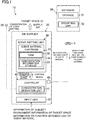
FIG. 1 is an overall schematic diagram illustrating a scent adjustment system of an embodiment. -
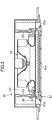
FIG. 2 is a schematic diagram illustrating an air conditioner of an embodiment. -
FIG. 3 is a diagram corresponding toFIG. 1 illustrating a scent adjustment system of a first variation. -
FIG. 4 is a diagram corresponding toFIG. 1 illustrating a scent adjustment system of a second variation. - An embodiment of the present disclosure will now be described with reference to the drawings. It should be noted that the following embodiment and variations are merely preferred examples, and are not intended to limit the scope, applications, or use of the present disclosure.
- A scent adjustment system (10) of the embodiment supplies air containing a scent material into a target space (S). The target space (S) is an indoor space such as a house or an office. As shown in
FIG. 1 , the scent adjustment system (10) of the present embodiment includes an air conditioner (20) that is an air supplier, a concentration sensor (35), and a database (50). - The air conditioner (20) shown in
FIG. 2 is mounted on the ceiling (strictly speaking, embedded in the ceiling). The air conditioner (20) may be of any other kind such as a ceiling hanging-type, a wall-hanging type, or a floor mounted-type. The air conditioner (20) includes a casing (21), a fan (22), and a heat exchanger (23). - The casing (21) includes an inlet (21a) (suction grille) at the center of its lower surface. The inlet (21a) on the lower surface of the casing (21) is surrounded by a plurality of outlets (21b). The casing (21) incorporates an air passage (24) extending from the inlet (21a) to the outlets (21b).
- In the air passage (24), the fan (22) and the heat exchanger (23) are arranged in order from the upstream to the downstream. The heat exchanger (23) is connected to a refrigerant circuit (not shown) which circulates a refrigerant. The heat exchanger (23) functions as an evaporator or a condenser (radiator), depending on the direction of the refrigerant circulation. During a cooling operation of the air conditioner (20), the heat exchanger (23) serves as an evaporator to cool the refrigerant. During a heating operation of the air conditioner (20), the heat exchanger (23) serving as a condenser heats the refrigerant.
- The air conditioner (20) further includes a scent emitting unit (30) (scent emitter) that applys a scent material to supply air. As shown in
FIG. 2 , the scent emitting unit (30) is disposed downstream of the heat exchanger (23) in the air passage (24). The scent emitting unit (30) may also be disposed on the outflow end of the outlet (21b). - As shown in
FIG. 1 , the scent emitting unit (30) sprays the scent material contained in a tank (32) (reservoir) into the air through a nozzle. The scent emitting unit (30) may employ various spraying types, such as electrostatic spraying, ultrasonic spraying, steam spraying, centrifugal spraying, piezoelectric spraying, and two-fluid nozzle spraying. - The scent material cartridge (31) includes the tank (32) containing the scent material, and an identification information storage (33). The tank (32) is detachably attached to a detachable portion (34) of the scent emitting unit (30). The scent material is, for example, a liquid containing a scent component, and may further contain another component (e.g., ethanol) that is not a scent material, to dilute the scent component.
- The identification information storage (33) is constituted by a memory device (e.g., a semiconductor memory). The identification information storage (33) stores identification information for specifying the kind of scent material to be contained in the tank (32). Specifically, the identification information storage (33) is capable of specifying the kind of scent material to be contained in the tank (32), using the identification information stored therein. The identification information of the identification information storage (33) is transferred to a specifying unit (52) in the database (50).
- A controller (40) adjusts the concentration of the scent material supplied from the scent emitting unit (30) to the air. The controller (40) outputs a control signal for controlling the scent emitting unit (30) to the scent emitting unit (30). The controller (40) controls, for example, the amount and time of spraying the scent material supplied to the air passage (24) from the scent emitting unit (30) to adjust the concentration of the scent material. The controller (40) includes, for example, a control board, a processor (e.g., a micro-controller) mounted on the control board, and a memory device (e.g., a semiconductor memory) storing the software for actuating the processor.
- The controller (40) includes a concentration derivation unit (41) that determines the optimal concentration of the scent material to be supplied to the target space (S). The concentration derivation unit (41) determines the optimal concentration of the scent material to be supplied to the target space (S) based on the information corresponding to the scent material (sensory information and functional information) transferred from the database (50) (the detail will be described later).
- Complementary information used for controlling the scent emitting unit (30) is input to the input unit (42). The information may be output with, for example, a remote controller, external communication equipment (e.g., a smartphone, a personal computer), and a detector that detects and outputs the necessary information in real time and outputs the detected information. Examples of the information input to the input unit (42) include information of the subject, environment information of the target space, and information on the function of the scent material. Examples of the information of the subject include age, sex, and a woman's menstrual cycle. Examples of the environment information of the target space include the capacity of the target space and the number of people in the room. Examples of the functional information of the scent material may be defined as functional information (intended use) of the scent emitting unit desired by the user, such as a "desire to perform operation such that a quiet sleep inducing effect is obtained."
- The air conditioner (20) further includes a communicator (43). The communicator (43) is constituted by, for example, a wireless LAN adapter, and is connected to the controller (40). The communicator (43) is connected to the database (50) on the server via, for example, a router and an Internet connection (I). This configuration makes it possible to exchange signals between the controller (40) and the database (50).
- The communication line connecting the controller (40) and the database (50) may be partially or entirely wired. The database (50) may also be provided to, for example, the scent emitting unit (30) or the scent material cartridge (31).
- The concentration sensor (35) detects the concentration of the scent material supplied to the target space (S). The concentration sensor (35) may be disposed, for example, in the target space (S) or disposed downstream of the scent emitting unit (30) in the air passage (24).
- The database (50) includes a storage (51) and a specifying unit (52).
- The storage (51) is a memory device (e.g., a semiconductor memory). The storage (51) stores information corresponding to a plurality or multiplicity of scent materials. Specifically, the information corresponding to the scent material includes sensory information in which at least the intensity of a smell of the scent material perceived by a person and the concentration of the scent material are associated. The information corresponding to the scent material also includes functional information in which the concentration and the function of the scent material are associated.
- The "sensory information" is data concerning an olfactory sensibility of a person (i.e., the intensity of smell perceived by a person), and is previously determined for each scent material through experiments. The sensory information includes at least one of information of a detection threshold of the scent material, information of a discomfort concentration of the scent material, or information of an adaptive pattern to the scent material. The detection threshold may be defined as a minimum concentration at which a person perceives some smell. The discomfort concentration may be defined as a concentration at which the subject feels uncomfortable with the scent material. The adaptive pattern to the scent material may be defined as an olfactory sensibility which changes over time when the subject is exposed to the scent material.
- In addition, the sensory information preferably includes at least one of information of the tendency of the olfactory sensibility depending on age, information of the tendency of the olfactory sensibility on sex, or information on the tendency of the olfactory sensibility depending on the woman's menstrual cycle. This is because the olfactory sensibility of a person changes depending on age, sex, and a woman's menstrual cycle.
- This sensory information has a different characteristic depending on the kind of the scent material. Accordingly, the storage (51) stores various pieces of sensory information corresponding to each of the plurality of scent materials. The storage (51) appropriately accumulates sensory information of the scent material. Thus, the storage (51) has enough memory capacity to store sensory information corresponding to thousands of different scent materials.
- The "functional information" is data concerning the influence of a predetermined function on the subject and is previously determined for each scent material through experiments. The functional information includes at least one of information on the concentration for exhibiting a predetermined function or information on safe exposure amount. The concentration for exhibiting a predetermined function may be defined as a concentration for achieving a sufficient function (efficacy) desired by the subject who is exposed to the scent material. If one scent material has a plurality of functions, the storage (51) stores concentrations for exhibiting the respective functions. The safe exposure amount may be defined as the maximum concentration at which the subject who is exposed to the scent material is not adversely affected.
- The functional information may include information on the influence of an absorption pathway on the function. The pathway through which a person takes the scent material in includes, for example, the lungs and the skin. The optimal concentration for exhibiting the function changes depending on these pathways. When these absorption pathways are taken into consideration, a more optimal concentration at which the function is exhibited on the subject can be obtained.
- This functional information has a different characteristic depending on the kind of the scent material. Accordingly, the storage (51) stores various pieces of functional information corresponding to the plurality of scent materials. The storage (51) appropriately accumulates functional information of the scent material. Thus, the storage (51) has enough memory capacity to store functional information corresponding to thousands of different scent materials.
- The specifying unit (52) specifies the kind of the scent material used in the scent emitting unit (30). The specifying unit (52) specifies the scent material used in the scent emitting unit (30) based on the identification information stored in the identification information storage (33). More specifically, the identification information storage (33) of the scent material cartridge (31) stores identification information corresponding to the scent material (e.g., the scent material A) contained in the tank (32). The identification information is input to the database (50) via the communicator (43) and the Internet connection (I). The specifying unit (52) specifies the scent material contained in the tank (32) as, for example, a scent material A based on this identification information. The specifying unit (52) extracts the information (the sensory information and the functional information) corresponding to this scent material (scent material A) from the storage (51). The database (50) outputs the information of the scent material extracted in this manner to the controller (40).
- The air conditioner (20) is configured to be capable of performing a scent material supply operation of supplying air containing a scent material to the target space (S), in addition to normal cooling and heating operations.
- When the scent material supply operation starts, a fan (22) and a scent emitting unit (30) starts operating. In the air conditioner (20), the air in the target space (S) is sucked into an air passage (24) and then passes through a heat exchanger (23) and the scent emitting unit (30) in this order. In the scent emitting unit (30), the scent material contained in the tank (32) is sprayed into the air flowing through the air passage (24). The scent material that has been applied to the air in the air passage (24) is supplied to the target space (S).
- When the scent material supply operation starts, the identification information stored in the identification information storage (33) is input into the database (50) via the communicator (43) and the Internet connection (I). In the database (50), the specifying unit (52) extracts the information (sensory information and functional information) of the scent material corresponding to the identification information. The extracted information of the scent material is input into the controller (40) via the Internet connection (I) and the communicator (43). The controller (40) determines the optimal concentration of the scent material (target concentration (C*)) based on the input sensory information and functional information of the scent material. The concentration of the scent material detected by the concentration sensor (35) (detected concentration (C)) is input into the controller (40). The controller (40) controls the scent emitting unit (30) so that the detected concentration (C) reaches the target concentration (C*). This control adjusts the concentration of the scent material sprayed from the scent emitting unit (30) into the air, and allows the scent material at the target concentration (C*) to be applied to the target space (S).
- The controller (40) can acquire various kinds of sensory information and functional information from the database (50), and thus can perform various kinds of control depending on the intended use. One example of such control will now be described in detail.
- If priority is given to the comfort in the target space (S), the optimal concentration is determined using the detection threshold and the discomfort concentration in the sensory information corresponding to the scent material. Thus, the subject can certainly smell the scent material while avoiding from feeling uncomfortable due to an excessive concentration of the scent material. In such a control considering the comfort, the optimal concentration may be determined in consideration of the other sensory information and functional information.
- It is also possible to perform a control in consideration of an adaptive pattern of the subject to the scent material. For example, the time of continuous scent material supply operation is measured to consider the adaptive pattern to the scent material according to this operation time. For example, with a certain scent material, the longer the operation time (strictly speaking, the time for which the subject is exposed to the scent material) is, the more the olfactory sensibility to the scent material decreases. Such an adaptive pattern is considered in order to determine the optimal concentration. In this example, the optimal concentration is gradually increased over operation time. This gradual increase allows the subject to feel comfort continuously.
- Age, sex, a woman's menstrual cycle, and the like of the subject influence his/her sensibility to the scent material. For example, the subject inputs these pieces of information of the subject into the input unit (42). The controller (40) uses the information of the subject input into the input unit (42) and the sensory information stored in the storage (51) to determine the optimal concentration for the subject.
- The concentration of the scent material in the air in the target space (S) changes depending on the capacity of the target space (S), the number of people in the target space (S), and other factors. For example, the subject inputs such environment information into the input unit (42). The controller (40) uses the environment information input into the input unit (42) to correct the optimal concentration.
- The subject inputs the desired function (intended use) into the input unit (42). The controller (40) determines the optimal concentration for exhibiting the input function (e.g., quiet sleep inducing effect) by using the functional information. In this determination, the safe exposure amount is also considered. This consideration allows avoidance of an adverse effect caused by an excessive concentration of the scent material on the subject, while the function desired by the subject is reliably exhibited.
- When the predetermined function is exhibited on the subject, the optimal concentration differs depending on an absorption pathway for the scent material. For example, the optimal concentration differs between the case in which a certain scent material is taken in via the lungs and the case in which a certain scent material is taken via the skin. Thus, the optimal concentration is calculated in consideration of such an absorption pathway.
- In the present embodiment, the scent material at the optimal concentration according to the intensity of smell perceived by a person is supplied to the target space (S) by using the sensory information of the scent material stored in the storage (51) of database (50).
- The storage (51) stores the sensory information corresponding to the plurality of kinds of scent materials. Thus, even if the scent material used in the scent emitter (30) is changed, the sensory information corresponding to this scent material can be obtained. Accordingly, many scent materials are handled, and the scent material at the optimal concentration according to the intensity of the smell perceived by a person is supplied to the target space (S).
- In the embodiment, the specifying unit (52) of the database (50) specifies the scent material used in the scent emitting unit (30). That is, the specifying unit (52) automatically extracts only the information corresponding to the scent material actually used from the information (sensory information and functional information) corresponding to the plurality of kinds of the scent materials. Specifically, the specifying unit (52) uses the identification information stored in the identification information storage (33) of the scent material cartridge (31), thereby allowing avoidance of discrepancy between the kind of the scent material actually sprayed and the kind of the scent material used for determination of the optimal concentration.
- A scent adjustment system (10) of the first variation shown in
FIG. 3 has a different configuration from that of the embodiment. The scent adjustment system (10) of the first variation does not include the identification information storage (33), the communicator (43), and the database (50) of the embodiment. On the other hand, in the scent adjustment system (10) of the first variation, a scent material cartridge (31) includes a storage (51). - The storage (51) stores at least sensory information corresponding to the scent material contained in the tank (32). Specifically, for example, if the scent material contained in the tank (32) is a scent material A, the storage (51) stores at least the sensory information corresponding to the scent material A. As in the above embodiment, the storage (51) may store the functional information corresponding to the scent material A. The storage (51) of the first variation may store information corresponding to another scent material. However, the storage (51) stores preferably only information (sensory information and functional information) corresponding to the scent material contained in the tank (32). In this manner, the usage of the memory capacity of the storage (51) is kept minimum.
- In the scent material supply operation of the first variation, the controller (40) stores the sensory information and the functional information stored in the storage (51) of the scent material cartridge (31). The controller (40) determines the optimal concentration of the scent material in the same manner as in the embodiment, based on this information.
- In the first variation, an exchange of signals for controlling the scent emitting unit (30) is performed only inside the air conditioner (20). Thus, the communicator (43) of the embodiment and appliances such as a router are unnecessary. This configuration allows the scent adjustment system (10) to be simplified and allows the costs to be reduced.
- The storage (51) stores information corresponding to the scent material cartridge (31), thereby allowing reliable avoidance of the discrepancy between the scent material actually used and the scent material corresponding to the information for determination of the optimal concentration.
- Other advantages of the first variation are basically the same as those of the embodiment.
- A scent adjustment system (10) shown in
FIG.4 includes an operation unit (44) that adjusts a target concentration (C*) of the scent emitting unit (30). The operation unit (44) is a remote controller operated by a user. The user operates the operation unit (44) to appropriately change the concentration of the scent material supplied from the scent emitting unit (30) to the target space (S). - Specifically, the storage (51) stores the sensory information in which the intensity of a smell perceived by a person and the concentration of the scent material are associated with each other, for each kind of the scent material. More specifically, the storage (51) stores, for example, information in which the multiple-stage intensities of the smell and the multiple-stage concentrations of the scent material are associated with each other. The stages may include two or more stages, preferably two to seven stages, and more preferably five stages.
- The operation unit (44) may change the intensity of the smell, for example, between one to five stages. When the operation unit (44) sets the intensity of the smell to "1," this signal is input to the input unit (42). Based on the sensory information stored in the storage (51), the concentration derivation unit (41) derives a concentration corresponding to the intensity of the smell of "1" and sets the concentration as the target concentration (C*). The controller (40) controls the scent emitting unit (30) so that the detected concentration (C) detected by the concentration sensor (35) reaches the target concentration (C*). Thus, the intensity of smell sprayed from the scent emitter (30) to the air is at the lowest level.
- When the operation unit (44) sets the intensity of the smell to "5," this signal is input to the input unit (42). Based on the sensory information stored in the storage (51), the concentration derivation unit (41) derives a concentration corresponding to the intensity of the smell of "5" and sets the concentration as the target concentration (C*). The controller (40) controls the scent emitting unit (30) so that the detected concentration (C) detected by the concentration sensor (35) reaches the target concentration (C*). Thus, the intensity of smell sprayed from the scent emitter (30) to the air is at the highest level.
- When the operation unit (44) sets the intensity of the smell to "3," this signal is input to the input unit (42). Based on the sensory information stored in the storage (51), the concentration derivation unit (41) derives a concentration corresponding to the intensity of the smell of "3" and sets the concentration as the target concentration (C*). The controller (40) controls the scent emitting unit (30) so that the detected concentration (C) detected by the concentration sensor (35) reaches the target concentration (C*). Thus, the intensity of smell sprayed from the scent emitter (30) to the air is at a middle level.
- As described above, in the second variation, the intensity of the smell set by the operation unit (44) and the target concentration (C*) based on the sensory information stored in the storage (51) may be appropriately changed. This appropriate change allows the scent material having the intensity of the smell desired by the user to be applied to the target space (S).
- As described above, the function (intended use) desired by the subject may be set by the operation unit (44) of the second variation. In this case, a signal relating to the function set by the operation unit (44) is input to the input unit (42). The controller (40) determines the optimal concentration (target concentration (C*)) for exhibiting the input function (e.g., quiet sleep inducing effect) by using the functional information. The controller (40) controls the scent emitting unit (30) so that the detected concentration (C) detected by the concentration sensor (35) reaches the target concentration (C*). This control allows the scent material at the optimal concentration for exhibiting the function desired by the user to be applied to the target space (S).
- The third variation is configured such that in the scent adjustment system (10) of the second variation, when the detected concentration (C) detected by the concentration sensor (35) is equal to or higher than the discomfort concentration, the supply operation of supplying the scent material to the target space (S) stops.
- Specifically, for example, when the operation unit (44) sets the intensity of the smell and performs an operation of turning ON the scent emitting unit (30), the scent material having a predetermined intensity of the smell is supplied to the target space (S). This operation will be referred to as a supply operation. During the supply operation, the concentration sensor (35) appropriately detects the concentration of the scent material in the air in the target space (S).
- On the other hand, the storage (51) of the third variation stores the discomfort concentration as the sensory information corresponding to the scent material. The controller (40) stops the supply operation when the detected concentration (C) detected by the concentration sensor (35) is equal to or lower than the discomfort concentration stored in the storage (51). Accordingly, the supply of the scent material from the scent emitting unit (30) to the target space (S) ends immediately. Accordingly, the person in the target space (S) is avoided from feeling uncomfortable with the scent material, and is avoided from impairing the feeling of comfort.
- Note that, the supply operation of the third variation may not change the intensity of smell to various stages as in the second variation, and the intensity of the smell of the scent material may be constant.
- The above embodiment and variations may also be configured as follows.
- The air supplier (20) of the embodiment is an air conditioner. However, the air supplier may have any configuration that supplies air to a target space (S), and includes, for example, an air purifier, a ventilator, a humidifier, and a dehumidifier.
- While the embodiments and variations thereof have been described above, it will be understood that various changes in form and details may be made without departing from the spirit and scope of the claims. The embodiments and the variations thereof may be combined and replaced with each other without deteriorating intended functions of the present disclosure. The expressions of "first," "second," "third," described above are used to distinguish the words to which these expressions are given, and the number and order of the words are not limited.
- As described above, the present disclosure is useful for a scent supplying system and a scent cartridge.
-
- 10
- Scent Adjustment System
- 30
- Scent Emitting Unit (Scent Emitter)
- 31
- Scent Material Cartridge
- 32
- Tank (Reservoir)
- 33
- Identification Information Storage
- 40
- Controller
- 51
- Storage
- 52
- Specifying Unit
Claims (11)
- A scent adjustment system comprising:a scent emitter (30) that supplies a scent material to a target space (S);a storage (51) that stores sensory information in which an intensity of a smell of the scent material perceived by a person and a concentration of the scent material are associated with each other; anda controller (40) that adjusts a concentration of the scent material supplied from the scent emitter (30) based on the sensory information stored in the storage (51).
- The scent adjustment system of claim 1, wherein
the storage (51) stores the sensory information for each of a plurality of kinds of scent materials. - The scent adjustment system of claim 2, further comprising a specifying unit (52) that specifies a kind of the scent material used in the scent emitter (30), wherein
the controller (40) adjusts a concentration of the scent material supplied from the scent emitter (30) based on the sensory information corresponding to the scent material specified in the specifying unit (52) from the sensory information for each of a plurality of kinds of scent materials stored in the storage (51). - The scent adjustment system of claim 3, wherein
the scent emitter (30) includes a scent material cartridge (31) that includes a reservoir (32) containing the scent material,
the scent material cartridge (31) further includes an identification information storage (33) that stores identification information indicating a kind of the scent material contained in the reservoir (32); and
the specifying unit (52) specifies a scent material used in the scent emitter (30) based on the identification information stored in the identification information storage (33). - The scent adjustment system of claim 1, wherein
the scent emitter (30) includes a scent material cartridge (31) that is attached to the scent emitter (30) and that includes a reservoir (32) containing a scent material,
the storage (51) is provided in the scent material cartridge (31), and stores at least the sensory information corresponding to the scent material contained in the reservoir (32) of the scent material cartridge (31). - The scent adjustment system of claim 5, wherein
the storage (51) stores the sensory information corresponding to one kind of the scent material contained in the reservoir (32) of the scent material cartridge (31). - The scent adjustment system of any one of claims 1 to 6, wherein
the sensory information includes at least one of a detection threshold for the scent material, a discomfort concentration of the scent material, or an adaptive pattern to the scent material. - The scent adjustment system of any one of claims 1 to 7, wherein
the storage (51) further stores functional information in which a function and a concentration of the scent material are associated, and
the controller (40) controls the scent emitter (30) based on the sensory information and the functional information stored in the storage (51). - The scent adjustment system of claim 7, further comprising:the scent adjustment system includes a concentration sensor (35) that detects a concentration of a scent material supplied to the target space (S),the sensory information includes a discomfort concentration of the scent material, andwhen a concentration detected by the concentration sensor (35) is equal to or higher than the discomfort concentration during a supply operation of supplying the scent material to the target space (S) by the scent emitter (30), the controller (40) stops the supply operation of the scent emitter (30).
- A scent material cartridge attached to the scent emitter (30) of the scent adjustment system (10) of claim 4, the scent material cartridge comprising:the scent material cartridge includes: a reservoir (32) containing the scent material, andan identification information storage (33) storing identification information indicating a kind of the scent material contained in the reservoir (32).
- A scent material cartridge attached to the scent emitter (30) of the scent adjustment system (10) of claim 5, the scent material cartridge comprising:
a storage (51) that stores at least the sensory information corresponding to the scent material contained in a reservoir (32) of the scent material cartridge (31).
Applications Claiming Priority (2)
| Application Number | Priority Date | Filing Date | Title |
|---|---|---|---|
| JP2018112268 | 2018-06-12 | ||
| PCT/JP2019/022991 WO2019240100A1 (en) | 2018-06-12 | 2019-06-10 | Fragrance adjustment system and fragrance material cartridge |
Publications (3)
| Publication Number | Publication Date |
|---|---|
| EP3789689A1 true EP3789689A1 (en) | 2021-03-10 |
| EP3789689A4 EP3789689A4 (en) | 2022-02-23 |
| EP3789689B1 EP3789689B1 (en) | 2024-09-11 |
Family
ID=68841988
Family Applications (1)
| Application Number | Title | Priority Date | Filing Date |
|---|---|---|---|
| EP19819720.4A Active EP3789689B1 (en) | 2018-06-12 | 2019-06-10 | Scent adjustment system |
Country Status (5)
| Country | Link |
|---|---|
| US (1) | US11666679B2 (en) |
| EP (1) | EP3789689B1 (en) |
| JP (2) | JP6876747B2 (en) |
| CN (1) | CN112334708A (en) |
| WO (1) | WO2019240100A1 (en) |
Cited By (2)
| Publication number | Priority date | Publication date | Assignee | Title |
|---|---|---|---|---|
| DE102021119748A1 (en) | 2021-07-29 | 2023-02-02 | Audi Aktiengesellschaft | Method for operating a motor vehicle with a scenting device, motor vehicle with a scenting device |
| GB2629456A (en) * | 2023-04-28 | 2024-10-30 | Scentient Ltd | A scent delivery device and replaceable scent cartridges for use therein |
Families Citing this family (22)
| Publication number | Priority date | Publication date | Assignee | Title |
|---|---|---|---|---|
| JP7383494B2 (en) * | 2020-01-09 | 2023-11-20 | 日立グローバルライフソリューションズ株式会社 | Spatial environment control system |
| US11266921B1 (en) * | 2020-08-19 | 2022-03-08 | Msg Entertainment Group, Llc | Atmospheric effects systems for presenting atmospheric effects relating to an event |
| US11760169B2 (en) | 2020-08-20 | 2023-09-19 | Denso International America, Inc. | Particulate control systems and methods for olfaction sensors |
| US11828210B2 (en) | 2020-08-20 | 2023-11-28 | Denso International America, Inc. | Diagnostic systems and methods of vehicles using olfaction |
| US11881093B2 (en) | 2020-08-20 | 2024-01-23 | Denso International America, Inc. | Systems and methods for identifying smoking in vehicles |
| US11813926B2 (en) | 2020-08-20 | 2023-11-14 | Denso International America, Inc. | Binding agent and olfaction sensor |
| US12251991B2 (en) | 2020-08-20 | 2025-03-18 | Denso International America, Inc. | Humidity control for olfaction sensors |
| US11932080B2 (en) | 2020-08-20 | 2024-03-19 | Denso International America, Inc. | Diagnostic and recirculation control systems and methods |
| US12017506B2 (en) | 2020-08-20 | 2024-06-25 | Denso International America, Inc. | Passenger cabin air control systems and methods |
| US11760170B2 (en) | 2020-08-20 | 2023-09-19 | Denso International America, Inc. | Olfaction sensor preservation systems and methods |
| US11636870B2 (en) | 2020-08-20 | 2023-04-25 | Denso International America, Inc. | Smoking cessation systems and methods |
| US12377711B2 (en) | 2020-08-20 | 2025-08-05 | Denso International America, Inc. | Vehicle feature control systems and methods based on smoking |
| US12269315B2 (en) | 2020-08-20 | 2025-04-08 | Denso International America, Inc. | Systems and methods for measuring and managing odor brought into rental vehicles |
| GB2600142B (en) * | 2020-10-22 | 2024-11-20 | Owidgets Ltd | Adaptive smell delivery system |
| US11986849B2 (en) | 2021-01-15 | 2024-05-21 | Msg Entertainment Group, Llc | Air amplifier with noise suppression |
| CN115247867A (en) * | 2021-04-28 | 2022-10-28 | 青岛海尔智能技术研发有限公司 | Control method and device for aromatherapy device and air purification equipment |
| CN113641194B (en) * | 2021-07-26 | 2024-05-28 | 佛山市顺德区美的电子科技有限公司 | Control method, control equipment and storage medium |
| CN115264866A (en) * | 2022-07-07 | 2022-11-01 | 青岛海尔空调器有限总公司 | Control method of aromatherapy device and aromatherapy device |
| CN115970035A (en) * | 2022-12-19 | 2023-04-18 | 珠海格力电器股份有限公司 | Aromatherapy device and its control method, computer device and readable storage medium |
| US12623160B2 (en) | 2023-03-15 | 2026-05-12 | Sphere Entertainment Group, Llc | Closed loop feedback atmospheric effects systems |
| CN119617571B (en) * | 2023-09-14 | 2025-12-19 | 青岛海尔空调器有限总公司 | Aromatherapy device, control method thereof, readable storage medium, and computer device |
| WO2025187556A1 (en) * | 2024-03-05 | 2025-09-12 | パナソニックIpマネジメント株式会社 | Estimation system, estimation method, and program |
Family Cites Families (21)
| Publication number | Priority date | Publication date | Assignee | Title |
|---|---|---|---|---|
| JPH029801Y2 (en) * | 1987-06-26 | 1990-03-12 | ||
| JPH01218458A (en) * | 1988-02-26 | 1989-08-31 | Nissan Motor Co Ltd | Method and device for spreading aromatic |
| JPH033626U (en) * | 1989-05-30 | 1991-01-16 | ||
| JPH0792236B2 (en) * | 1990-02-14 | 1995-10-09 | 鹿島建設株式会社 | Aroma generator |
| JPH04268127A (en) * | 1991-02-21 | 1992-09-24 | Matsushita Electric Ind Co Ltd | air conditioner |
| JPH05215357A (en) * | 1991-06-07 | 1993-08-24 | Matsushita Refrig Co Ltd | Air conditioner with scent generator |
| JPH11278048A (en) | 1998-03-27 | 1999-10-12 | Denso Corp | Vehicle fragrance control device |
| ATE244075T1 (en) * | 2000-08-30 | 2003-07-15 | Pfeiffer Erich Gmbh & Co Kg | MINIATURE DISPENSER FOR DISPENSING FRAGRANCES IN VARIOUS APPLICATIONS AND ENVIRONMENTS |
| JP2002200157A (en) * | 2000-12-28 | 2002-07-16 | Toshiba Corp | Odor generator, odor substance cartridge, and odor substance cartridge kit |
| JP4378900B2 (en) * | 2001-08-03 | 2009-12-09 | 株式会社デンソー | Heat pump type water heater |
| JP2003254927A (en) * | 2002-03-06 | 2003-09-10 | Seiko Epson Corp | Fragrance device |
| JP2006174900A (en) * | 2004-12-21 | 2006-07-06 | Daikin Ind Ltd | Aroma bus control system |
| CN101184389B (en) * | 2005-04-04 | 2011-12-21 | 奇华顿股份有限公司 | Fragrance composition |
| KR20070019335A (en) * | 2005-08-12 | 2007-02-15 | 엘지전자 주식회사 | Scent generator of air conditioner |
| KR101065133B1 (en) * | 2009-04-22 | 2011-09-16 | 한밭대학교 산학협력단 | How to control high temperature water production geothermal heat pump system |
| JP2011224071A (en) * | 2010-04-16 | 2011-11-10 | Daiei Kogyo Kk | Device for volatilizing volatile component, cartridge for volatilizing volatile component, and electronic equipment |
| JP2016097208A (en) * | 2014-11-26 | 2016-05-30 | 株式会社アロマジョイン | Fragrance clock |
| CN204910206U (en) * | 2015-08-21 | 2015-12-30 | 刘峥霞 | Tealeaves stacte device |
| WO2017190390A1 (en) * | 2016-05-04 | 2017-11-09 | 朱红英 | Air purifier |
| US20220082330A1 (en) * | 2019-01-29 | 2022-03-17 | Faiveley Transport Leipzig Gmbh & Co. Kg | Heat exchanger for flammable refrigerants |
| KR102083950B1 (en) * | 2019-07-25 | 2020-03-03 | 주식회사 반다이앤에스 | A Load Responsive Geothermal Heat Pump System using Bypass of Heat Medium |
-
2019
- 2019-06-10 EP EP19819720.4A patent/EP3789689B1/en active Active
- 2019-06-10 JP JP2019107963A patent/JP6876747B2/en active Active
- 2019-06-10 CN CN201980039571.7A patent/CN112334708A/en active Pending
- 2019-06-10 WO PCT/JP2019/022991 patent/WO2019240100A1/en not_active Ceased
-
2020
- 2020-12-10 US US17/117,895 patent/US11666679B2/en active Active
-
2021
- 2021-01-18 JP JP2021005882A patent/JP2021074568A/en active Pending
Cited By (3)
| Publication number | Priority date | Publication date | Assignee | Title |
|---|---|---|---|---|
| DE102021119748A1 (en) | 2021-07-29 | 2023-02-02 | Audi Aktiengesellschaft | Method for operating a motor vehicle with a scenting device, motor vehicle with a scenting device |
| GB2629456A (en) * | 2023-04-28 | 2024-10-30 | Scentient Ltd | A scent delivery device and replaceable scent cartridges for use therein |
| GB2629456B (en) * | 2023-04-28 | 2025-04-23 | Scentient Ltd | A scent delivery device and replaceable scent cartridges for use therein |
Also Published As
| Publication number | Publication date |
|---|---|
| JP2021074568A (en) | 2021-05-20 |
| US11666679B2 (en) | 2023-06-06 |
| CN112334708A (en) | 2021-02-05 |
| EP3789689B1 (en) | 2024-09-11 |
| WO2019240100A1 (en) | 2019-12-19 |
| EP3789689A4 (en) | 2022-02-23 |
| US20210093742A1 (en) | 2021-04-01 |
| JP2019215152A (en) | 2019-12-19 |
| JP6876747B2 (en) | 2021-05-26 |
Similar Documents
| Publication | Publication Date | Title |
|---|---|---|
| EP3789689B1 (en) | Scent adjustment system | |
| CN108800457B (en) | Air conditioner control method, air conditioner, and computer-readable storage medium | |
| CN113710963A (en) | Air Conditioning System | |
| JP7418049B2 (en) | Control system, control method, and program | |
| WO2024066307A1 (en) | Air fragrance conditioner, control method, and air conditioner indoor unit | |
| CN115046256B (en) | Air conditioner, control method thereof, control device thereof and computer readable storage medium | |
| JPH05215357A (en) | Air conditioner with scent generator | |
| KR20190125736A (en) | System and method for controlling patient's room environment using hospital information system | |
| JP7630069B2 (en) | Space Purification Device | |
| JP6756359B2 (en) | Chemical spray device | |
| US20250341334A1 (en) | Air conditioning coordination system, and control device | |
| CN214536493U (en) | Air conditioner and indoor unit thereof | |
| US20230082709A1 (en) | Aerosol Purifier for HVAC System | |
| WO2024093283A1 (en) | Air fragrance regulator, control method, and air conditioner | |
| JP7507345B2 (en) | Air Conditioning System | |
| JP2019148241A5 (en) | ||
| WO2021140794A1 (en) | Spatial environment control system | |
| CN112728640A (en) | Air conditioner and indoor unit thereof | |
| JP2024121839A (en) | Equipment Control System | |
| JP7557668B2 (en) | Air Purifier | |
| CN115970117B (en) | Power control method of ventilation equipment, power control device and ventilation equipment | |
| US20230349582A1 (en) | Personal comfort variable air volume diffuser with improved air quality elements | |
| JP7798116B2 (en) | air conditioner | |
| JP2022069778A (en) | Space purification device | |
| JP2012143184A (en) | Air conditioning facility for animal-rearing chamber and air conditioning method for the animal-rearing chamber |
Legal Events
| Date | Code | Title | Description |
|---|---|---|---|
| STAA | Information on the status of an ep patent application or granted ep patent |
Free format text: STATUS: THE INTERNATIONAL PUBLICATION HAS BEEN MADE |
|
| PUAI | Public reference made under article 153(3) epc to a published international application that has entered the european phase |
Free format text: ORIGINAL CODE: 0009012 |
|
| STAA | Information on the status of an ep patent application or granted ep patent |
Free format text: STATUS: REQUEST FOR EXAMINATION WAS MADE |
|
| 17P | Request for examination filed |
Effective date: 20201201 |
|
| AK | Designated contracting states |
Kind code of ref document: A1 Designated state(s): AL AT BE BG CH CY CZ DE DK EE ES FI FR GB GR HR HU IE IS IT LI LT LU LV MC MK MT NL NO PL PT RO RS SE SI SK SM TR |
|
| AX | Request for extension of the european patent |
Extension state: BA ME |
|
| DAV | Request for validation of the european patent (deleted) | ||
| DAX | Request for extension of the european patent (deleted) | ||
| A4 | Supplementary search report drawn up and despatched |
Effective date: 20220120 |
|
| RIC1 | Information provided on ipc code assigned before grant |
Ipc: A45D 34/02 20060101ALI20220114BHEP Ipc: F24F 110/65 20180101ALI20220114BHEP Ipc: F24F 11/64 20180101ALI20220114BHEP Ipc: B05B 7/00 20060101ALI20220114BHEP Ipc: B05B 17/06 20060101ALI20220114BHEP Ipc: B05B 12/12 20060101ALI20220114BHEP Ipc: A61L 9/14 20060101ALI20220114BHEP Ipc: F24F 1/008 20190101AFI20220114BHEP |
|
| RAP3 | Party data changed (applicant data changed or rights of an application transferred) |
Owner name: DAIKIN INDUSTRIES, LTD. |
|
| P01 | Opt-out of the competence of the unified patent court (upc) registered |
Effective date: 20230525 |
|
| GRAP | Despatch of communication of intention to grant a patent |
Free format text: ORIGINAL CODE: EPIDOSNIGR1 |
|
| STAA | Information on the status of an ep patent application or granted ep patent |
Free format text: STATUS: GRANT OF PATENT IS INTENDED |
|
| INTG | Intention to grant announced |
Effective date: 20240403 |
|
| RIN1 | Information on inventor provided before grant (corrected) |
Inventor name: MIKI, SANAE |
|
| GRAS | Grant fee paid |
Free format text: ORIGINAL CODE: EPIDOSNIGR3 |
|
| GRAA | (expected) grant |
Free format text: ORIGINAL CODE: 0009210 |
|
| STAA | Information on the status of an ep patent application or granted ep patent |
Free format text: STATUS: THE PATENT HAS BEEN GRANTED |
|
| AK | Designated contracting states |
Kind code of ref document: B1 Designated state(s): AL AT BE BG CH CY CZ DE DK EE ES FI FR GB GR HR HU IE IS IT LI LT LU LV MC MK MT NL NO PL PT RO RS SE SI SK SM TR |
|
| REG | Reference to a national code |
Ref country code: GB Ref legal event code: FG4D |
|
| REG | Reference to a national code |
Ref country code: CH Ref legal event code: EP |
|
| REG | Reference to a national code |
Ref country code: DE Ref legal event code: R096 Ref document number: 602019058812 Country of ref document: DE |
|
| REG | Reference to a national code |
Ref country code: IE Ref legal event code: FG4D |
|
| REG | Reference to a national code |
Ref country code: LT Ref legal event code: MG9D |
|
| PG25 | Lapsed in a contracting state [announced via postgrant information from national office to epo] |
Ref country code: NO Free format text: LAPSE BECAUSE OF FAILURE TO SUBMIT A TRANSLATION OF THE DESCRIPTION OR TO PAY THE FEE WITHIN THE PRESCRIBED TIME-LIMIT Effective date: 20241211 |
|
| REG | Reference to a national code |
Ref country code: NL Ref legal event code: MP Effective date: 20240911 |
|
| PG25 | Lapsed in a contracting state [announced via postgrant information from national office to epo] |
Ref country code: GR Free format text: LAPSE BECAUSE OF FAILURE TO SUBMIT A TRANSLATION OF THE DESCRIPTION OR TO PAY THE FEE WITHIN THE PRESCRIBED TIME-LIMIT Effective date: 20241212 Ref country code: FI Free format text: LAPSE BECAUSE OF FAILURE TO SUBMIT A TRANSLATION OF THE DESCRIPTION OR TO PAY THE FEE WITHIN THE PRESCRIBED TIME-LIMIT Effective date: 20240911 |
|
| PG25 | Lapsed in a contracting state [announced via postgrant information from national office to epo] |
Ref country code: BG Free format text: LAPSE BECAUSE OF FAILURE TO SUBMIT A TRANSLATION OF THE DESCRIPTION OR TO PAY THE FEE WITHIN THE PRESCRIBED TIME-LIMIT Effective date: 20240911 |
|
| PG25 | Lapsed in a contracting state [announced via postgrant information from national office to epo] |
Ref country code: LV Free format text: LAPSE BECAUSE OF FAILURE TO SUBMIT A TRANSLATION OF THE DESCRIPTION OR TO PAY THE FEE WITHIN THE PRESCRIBED TIME-LIMIT Effective date: 20240911 |
|
| PG25 | Lapsed in a contracting state [announced via postgrant information from national office to epo] |
Ref country code: HR Free format text: LAPSE BECAUSE OF FAILURE TO SUBMIT A TRANSLATION OF THE DESCRIPTION OR TO PAY THE FEE WITHIN THE PRESCRIBED TIME-LIMIT Effective date: 20240911 |
|
| PG25 | Lapsed in a contracting state [announced via postgrant information from national office to epo] |
Ref country code: RS Free format text: LAPSE BECAUSE OF FAILURE TO SUBMIT A TRANSLATION OF THE DESCRIPTION OR TO PAY THE FEE WITHIN THE PRESCRIBED TIME-LIMIT Effective date: 20241211 Ref country code: ES Free format text: LAPSE BECAUSE OF FAILURE TO SUBMIT A TRANSLATION OF THE DESCRIPTION OR TO PAY THE FEE WITHIN THE PRESCRIBED TIME-LIMIT Effective date: 20240911 |
|
| PG25 | Lapsed in a contracting state [announced via postgrant information from national office to epo] |
Ref country code: RS Free format text: LAPSE BECAUSE OF FAILURE TO SUBMIT A TRANSLATION OF THE DESCRIPTION OR TO PAY THE FEE WITHIN THE PRESCRIBED TIME-LIMIT Effective date: 20241211 Ref country code: NO Free format text: LAPSE BECAUSE OF FAILURE TO SUBMIT A TRANSLATION OF THE DESCRIPTION OR TO PAY THE FEE WITHIN THE PRESCRIBED TIME-LIMIT Effective date: 20241211 Ref country code: LV Free format text: LAPSE BECAUSE OF FAILURE TO SUBMIT A TRANSLATION OF THE DESCRIPTION OR TO PAY THE FEE WITHIN THE PRESCRIBED TIME-LIMIT Effective date: 20240911 Ref country code: HR Free format text: LAPSE BECAUSE OF FAILURE TO SUBMIT A TRANSLATION OF THE DESCRIPTION OR TO PAY THE FEE WITHIN THE PRESCRIBED TIME-LIMIT Effective date: 20240911 Ref country code: GR Free format text: LAPSE BECAUSE OF FAILURE TO SUBMIT A TRANSLATION OF THE DESCRIPTION OR TO PAY THE FEE WITHIN THE PRESCRIBED TIME-LIMIT Effective date: 20241212 Ref country code: FI Free format text: LAPSE BECAUSE OF FAILURE TO SUBMIT A TRANSLATION OF THE DESCRIPTION OR TO PAY THE FEE WITHIN THE PRESCRIBED TIME-LIMIT Effective date: 20240911 Ref country code: ES Free format text: LAPSE BECAUSE OF FAILURE TO SUBMIT A TRANSLATION OF THE DESCRIPTION OR TO PAY THE FEE WITHIN THE PRESCRIBED TIME-LIMIT Effective date: 20240911 Ref country code: BG Free format text: LAPSE BECAUSE OF FAILURE TO SUBMIT A TRANSLATION OF THE DESCRIPTION OR TO PAY THE FEE WITHIN THE PRESCRIBED TIME-LIMIT Effective date: 20240911 |
|
| REG | Reference to a national code |
Ref country code: AT Ref legal event code: MK05 Ref document number: 1723008 Country of ref document: AT Kind code of ref document: T Effective date: 20240911 |
|
| PG25 | Lapsed in a contracting state [announced via postgrant information from national office to epo] |
Ref country code: NL Free format text: LAPSE BECAUSE OF FAILURE TO SUBMIT A TRANSLATION OF THE DESCRIPTION OR TO PAY THE FEE WITHIN THE PRESCRIBED TIME-LIMIT Effective date: 20240911 |
|
| PG25 | Lapsed in a contracting state [announced via postgrant information from national office to epo] |
Ref country code: IS Free format text: LAPSE BECAUSE OF FAILURE TO SUBMIT A TRANSLATION OF THE DESCRIPTION OR TO PAY THE FEE WITHIN THE PRESCRIBED TIME-LIMIT Effective date: 20250111 Ref country code: PT Free format text: LAPSE BECAUSE OF FAILURE TO SUBMIT A TRANSLATION OF THE DESCRIPTION OR TO PAY THE FEE WITHIN THE PRESCRIBED TIME-LIMIT Effective date: 20250113 |
|
| PG25 | Lapsed in a contracting state [announced via postgrant information from national office to epo] |
Ref country code: RO Free format text: LAPSE BECAUSE OF FAILURE TO SUBMIT A TRANSLATION OF THE DESCRIPTION OR TO PAY THE FEE WITHIN THE PRESCRIBED TIME-LIMIT Effective date: 20240911 Ref country code: SM Free format text: LAPSE BECAUSE OF FAILURE TO SUBMIT A TRANSLATION OF THE DESCRIPTION OR TO PAY THE FEE WITHIN THE PRESCRIBED TIME-LIMIT Effective date: 20240911 |
|
| PG25 | Lapsed in a contracting state [announced via postgrant information from national office to epo] |
Ref country code: AT Free format text: LAPSE BECAUSE OF FAILURE TO SUBMIT A TRANSLATION OF THE DESCRIPTION OR TO PAY THE FEE WITHIN THE PRESCRIBED TIME-LIMIT Effective date: 20240911 Ref country code: EE Free format text: LAPSE BECAUSE OF FAILURE TO SUBMIT A TRANSLATION OF THE DESCRIPTION OR TO PAY THE FEE WITHIN THE PRESCRIBED TIME-LIMIT Effective date: 20240911 |
|
| PG25 | Lapsed in a contracting state [announced via postgrant information from national office to epo] |
Ref country code: CZ Free format text: LAPSE BECAUSE OF FAILURE TO SUBMIT A TRANSLATION OF THE DESCRIPTION OR TO PAY THE FEE WITHIN THE PRESCRIBED TIME-LIMIT Effective date: 20240911 Ref country code: PL Free format text: LAPSE BECAUSE OF FAILURE TO SUBMIT A TRANSLATION OF THE DESCRIPTION OR TO PAY THE FEE WITHIN THE PRESCRIBED TIME-LIMIT Effective date: 20240911 |
|
| PG25 | Lapsed in a contracting state [announced via postgrant information from national office to epo] |
Ref country code: SK Free format text: LAPSE BECAUSE OF FAILURE TO SUBMIT A TRANSLATION OF THE DESCRIPTION OR TO PAY THE FEE WITHIN THE PRESCRIBED TIME-LIMIT Effective date: 20240911 |
|
| REG | Reference to a national code |
Ref country code: DE Ref legal event code: R097 Ref document number: 602019058812 Country of ref document: DE |
|
| PGFP | Annual fee paid to national office [announced via postgrant information from national office to epo] |
Ref country code: DE Payment date: 20250618 Year of fee payment: 7 |
|
| PG25 | Lapsed in a contracting state [announced via postgrant information from national office to epo] |
Ref country code: DK Free format text: LAPSE BECAUSE OF FAILURE TO SUBMIT A TRANSLATION OF THE DESCRIPTION OR TO PAY THE FEE WITHIN THE PRESCRIBED TIME-LIMIT Effective date: 20240911 |
|
| PGFP | Annual fee paid to national office [announced via postgrant information from national office to epo] |
Ref country code: GB Payment date: 20250618 Year of fee payment: 7 |
|
| PGFP | Annual fee paid to national office [announced via postgrant information from national office to epo] |
Ref country code: FR Payment date: 20250626 Year of fee payment: 7 |
|
| PLBE | No opposition filed within time limit |
Free format text: ORIGINAL CODE: 0009261 |
|
| STAA | Information on the status of an ep patent application or granted ep patent |
Free format text: STATUS: NO OPPOSITION FILED WITHIN TIME LIMIT |
|
| 26N | No opposition filed |
Effective date: 20250612 |
|
| PG25 | Lapsed in a contracting state [announced via postgrant information from national office to epo] |
Ref country code: SE Free format text: LAPSE BECAUSE OF FAILURE TO SUBMIT A TRANSLATION OF THE DESCRIPTION OR TO PAY THE FEE WITHIN THE PRESCRIBED TIME-LIMIT Effective date: 20240911 |
|
| PGFP | Annual fee paid to national office [announced via postgrant information from national office to epo] |
Ref country code: IT Payment date: 20250624 Year of fee payment: 7 |
|
| REG | Reference to a national code |
Ref country code: CH Ref legal event code: H13 Free format text: ST27 STATUS EVENT CODE: U-0-0-H10-H13 (AS PROVIDED BY THE NATIONAL OFFICE) Effective date: 20260127 |
|
| PG25 | Lapsed in a contracting state [announced via postgrant information from national office to epo] |
Ref country code: MC Free format text: LAPSE BECAUSE OF FAILURE TO SUBMIT A TRANSLATION OF THE DESCRIPTION OR TO PAY THE FEE WITHIN THE PRESCRIBED TIME-LIMIT Effective date: 20240911 |
|
| PG25 | Lapsed in a contracting state [announced via postgrant information from national office to epo] |
Ref country code: LU Free format text: LAPSE BECAUSE OF NON-PAYMENT OF DUE FEES Effective date: 20250610 |
|
| REG | Reference to a national code |
Ref country code: BE Ref legal event code: MM Effective date: 20250630 |
|
| PG25 | Lapsed in a contracting state [announced via postgrant information from national office to epo] |
Ref country code: IE Free format text: LAPSE BECAUSE OF NON-PAYMENT OF DUE FEES Effective date: 20250610 |
|
| PG25 | Lapsed in a contracting state [announced via postgrant information from national office to epo] |
Ref country code: BE Free format text: LAPSE BECAUSE OF NON-PAYMENT OF DUE FEES Effective date: 20250630 |
|
| PG25 | Lapsed in a contracting state [announced via postgrant information from national office to epo] |
Ref country code: CH Free format text: LAPSE BECAUSE OF NON-PAYMENT OF DUE FEES Effective date: 20250630 |