EP3788808B1 - Method for personalizing pre-generated protected profiles and corresponding system - Google Patents
Method for personalizing pre-generated protected profiles and corresponding system Download PDFInfo
- Publication number
- EP3788808B1 EP3788808B1 EP19720615.4A EP19720615A EP3788808B1 EP 3788808 B1 EP3788808 B1 EP 3788808B1 EP 19720615 A EP19720615 A EP 19720615A EP 3788808 B1 EP3788808 B1 EP 3788808B1
- Authority
- EP
- European Patent Office
- Prior art keywords
- profile
- data
- application
- euicc
- generated protected
- Prior art date
- Legal status (The legal status is an assumption and is not a legal conclusion. Google has not performed a legal analysis and makes no representation as to the accuracy of the status listed.)
- Active
Links
Images


Classifications
-
- H—ELECTRICITY
- H04—ELECTRIC COMMUNICATION TECHNIQUE
- H04W—WIRELESS COMMUNICATION NETWORKS
- H04W8/00—Network data management
- H04W8/18—Processing of user or subscriber data, e.g. subscribed services, user preferences or user profiles; Transfer of user or subscriber data
-
- H—ELECTRICITY
- H04—ELECTRIC COMMUNICATION TECHNIQUE
- H04W—WIRELESS COMMUNICATION NETWORKS
- H04W12/00—Security arrangements; Authentication; Protecting privacy or anonymity
- H04W12/30—Security of mobile devices; Security of mobile applications
- H04W12/35—Protecting application or service provisioning, e.g. securing SIM application provisioning
-
- H—ELECTRICITY
- H04—ELECTRIC COMMUNICATION TECHNIQUE
- H04L—TRANSMISSION OF DIGITAL INFORMATION, e.g. TELEGRAPHIC COMMUNICATION
- H04L67/00—Network arrangements or protocols for supporting network services or applications
- H04L67/34—Network arrangements or protocols for supporting network services or applications involving the movement of software or configuration parameters
-
- H—ELECTRICITY
- H04—ELECTRIC COMMUNICATION TECHNIQUE
- H04W—WIRELESS COMMUNICATION NETWORKS
- H04W12/00—Security arrangements; Authentication; Protecting privacy or anonymity
- H04W12/40—Security arrangements using identity modules
-
- H—ELECTRICITY
- H04—ELECTRIC COMMUNICATION TECHNIQUE
- H04W—WIRELESS COMMUNICATION NETWORKS
- H04W12/00—Security arrangements; Authentication; Protecting privacy or anonymity
- H04W12/60—Context-dependent security
- H04W12/69—Identity-dependent
- H04W12/72—Subscriber identity
-
- H—ELECTRICITY
- H04—ELECTRIC COMMUNICATION TECHNIQUE
- H04W—WIRELESS COMMUNICATION NETWORKS
- H04W4/00—Services specially adapted for wireless communication networks; Facilities therefor
- H04W4/60—Subscription-based services using application servers or record carriers, e.g. SIM application toolkits
-
- H—ELECTRICITY
- H04—ELECTRIC COMMUNICATION TECHNIQUE
- H04W—WIRELESS COMMUNICATION NETWORKS
- H04W8/00—Network data management
- H04W8/18—Processing of user or subscriber data, e.g. subscribed services, user preferences or user profiles; Transfer of user or subscriber data
- H04W8/20—Transfer of user or subscriber data
- H04W8/205—Transfer to or from user equipment or user record carrier
Definitions
- the invention concerns telecommunication systems.
- the invention concerns the customization of pre-generated protected profiles as defined in GSMA and SIM Alliance for any Consumer and M2M secure element, in particular for eUICCs (embedded UICCs).
- IMSIs International Mobile Subscriber Identity
- An IMSI is constituted by a MCC (Mobile Country Code), a MNC (Mobile Network Code) and a MSIN (Mobile Subscriber Identification Number).
- MCC Mobile Country Code
- MNC Mobile Network Code
- MSIN Mobile Subscriber Identification Number
- MNO Mobile Subscriber Identification Number
- IMSIs are stored in secure elements profiles comprised in eUICCs for example.
- a Subscription Manager - Data Preparation is an element of a telecommunication network which role is to securely download and install operator subscription profiles into eUICCs.
- the SM-DP securely stores profiles to be provisioned on the eUICCs.
- the SM-DP manages the installation of these profiles onto the eUICCs.
- the GSMA SM-DP is provisioned with pre-generated profiles protected using SCP03t security.
- SCP03t is an evolution/optimization of the SCP03 protocol defined by Global Platform Amendment D.
- the MNO wants to provide profile custom data ("diversified data” hereinafter) like the IMSI, the IP multimedia private identity (IMPI) or the IP multimedia public identity (IMPU). Consequently the pre-generated protected profile shall be updated to inject all the MNO diversified data.
- profile custom data like the IMSI, the IP multimedia private identity (IMPI) or the IP multimedia public identity (IMPU). Consequently the pre-generated protected profile shall be updated to inject all the MNO diversified data.
- SCP03t blocks of the pre-generated profile shall be updated and recomputed by the SM-DP using a HSM (Hardware Security Module).
- HSM Hard Security Module
- the HSM computes SCP03t encryption and MACs (Message Authentication Codes).
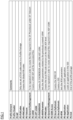
- Figure 1 represents an example of a profile as defined by the SI Malliance.specification (section 8.1.3 of eUICC Profile Package: Interoperable Format TS v2.0).
- the two GSMA specs SGP.02 v3.2 (M2M) and SGP.22 v2.2 (Consumer) refer to the same SIM Alliance v2.0 spec concerning the profile format (UPP: Unprotected Profile Package). So referring to the GSMA specifications involves referencing the SIM Alliance specification.
- GSMA specifications define the SCP03t protocol that protects these profiles (PPP: Protected Profile Package) as well as the client system (eUICC) / server (SM-DP).
- PPP Protected Profile Package
- eUICC client system
- SM-DP server
- the SGP.22 spec refers to GSMA spec SGP.02 for the SCP03t protocol.
- Different profile elements are represented in figure 1 . It always begins with a field comprising a profile header and ends with a PE-End, "PE" meaning Profile Element.
- a SCP03t block takes a maximum of 1008 bytes (up to 1007 bytes of data and at least 1 byte of padding for the last block). These fields are enclosed in the SCP03t blocks transmitted to the eUICC.
- MAC1 For instance, a first MAC called MAC1 is computed on a first SCP03t block containing the first Profile Elements (PE) like the PE-Header and the PE-MF.
- PE Profile Elements
- a second MAC called MAC2 is computed by taking into account the content of the second SCP03t block and MAC1.
- each MAC takes into account the preceding MAC (each MAC is chained with the previous MAC).
- This MAC chaining implies that if a data block is modified to inject a diversified data (like for example an IMSI, an IMPI or an IMPU), the SCP03t of the current data block and all the following blocks shall be recomputed, because the MAC of the current data block is changed.
- the main problem of this is that, for example concerning the IMSI, the IMSI sent by the MNO being located in the PE-USIM block, since this IMSI is changed, it is necessary to re-compute the SCP03t block containing the PE-USIM and all MACs following this block. This necessitates to use a plurality of HSMs when the demand for downloading new subscriptions on secure elements is high.
- the order may change for some PEs (they have however constraints in the SIM Alliance specification).
- Some PEs are also optional and other PEs may be added in the future (for example for the future 5G).
- the major SM-DP constraint is to update only a small part of a profile and at the end of the profile to avoid to re-compute all the SCP03t blocks of the profile, avoiding very significant performance impact with a significant additional cost of hardware and software resources.
- This re-computing is necessary when a MNO sends for example an IMSI to a SM-DP in order to personalize a eUICC profile before the profile download and installation.
- the invention proposes a method according to claims 1 to 3.
- the invention also concerns a system according to claims 4 to 6.
- Figure 2 represents a profile according to the present invention.
- PE-Application-1 a PE-Application, called PE-Application-1, is foreseen at the end of the profile, just before the PE-End profile element.
- the principle of the invention is precisely to add at the end of the profile a small dedicated applet (Profile Element application) taking in charge the MNO custom data overwrite.
- the applet byte code is defined, followed by its diversified data, a for example an IMSI, an IMPI or an IMPU.
- the applet (or application) is composed by byte codes. Installation parameters are also included in the PE-Application-1 and for example an AID. The size of these data is approximately of 1 KB.
- the PE-Application-1 also contains the diversified data, among with for example the IMSI to be sent to the eUICC. This may represent between some tens and some hundreds of bytes depending on the number of data to be personalized.
- Figure 3 represents an example of the protected profile with SCP03t blocks according to the invention.
- all blocks 1 to n are SCP03t blocks.
- the first block contains the ProfileHeader and the beginning of PE-MF.
- the second block contains the end of PE-MF and the PE-PUKCodes.
- the following blocks contain the profile elements of figure 2 , the block n-1 containing the beginning of the PE-Application-1 with diversified data.
- the last block (n) contains the end of PE-Application-1 with diversified data and PE-End.
- Fig. 4 represents a flow of exchanges between different entities.
- a MNO asks, at a step 40, a profile reservation to a SM-DP.
- the profile reservation comprises a profile type (international, prepaid,%) and diversified data, like an IMSI.
- the SM-DP has pre-generated protected profiles and has provisioned them.
- the SM-DP verifies if it has a corresponding profile in stock, thanks to a ICCID (to each ICCID corresponds a profile).
- the SM-DP informs the MNO that he has a profile, sends him the corresponding ICCID along with parameters (Matching ID, confirmation Code,).
- the diversified data are not limited to an IMSI, it can also be all the diversified data stored into the telecom applications like UICC, USIM, ISIM, CSIM...
- IMSI customization in the PE-USIM, the field IMSI is dummy it will be replaced by the applet PE-Application-1.
- the SM-DP also extracts the last SCP03t block (or two blocks if necessary - this is a question of length of the diversified data and length of last SCP03t block) of the profile.
- the protected pre-generated profile already contains the application PE-Application-1 with its dummy diversified data, in figure 3 , the last two blocks shall be extracted since the n-1 block contains the beginning of PE-Application-1 with diversified data. If the PE-Application-1 with diversified data and PE-End can be comprised in the last block (n), only the last SCP03t block has to be extracted.
- the last block(s) are sent to a HSM that checks, at step 46, the SCP03t block MAC(s). It decrypts the block, overwrites the diversified data (TLV - Tag Length Value), encrypts the block and computes a new MAC (or new MACs if necessary).
- the HSM sends the new SCP03t block to the SM-DP.
- the SM-DP overwrites the last block(s) containing the diversified data.
- Steps 49 to 51 are standard in GSMA (the SM-DP sends the protected profile (all the SCP03t blocks) to the eUICC).
- the protected pre-generated profile doesn't contain the application PE-Application-1 with its diversified data.
- the last block shall be extracted by the SM-DP, the SM-DP shall generate the PE Application containing the PE-Application-1 with its diversified data.
- the last block and the PE application-1 are sent to a HSM that checks, at step 46, the SCP03t block MAC. It decrypts the block, inserts the PE Application-1 containing the diversified data, encrypts the block(s) and computes the new MAC(s).
- Step 47 up to step 51 are unchanged compared to the previous description.
- Figure 5 shows the profile enabling procedure using the UICC Refresh command and two alternatives triggering the applet installing the diversified data like the IMSI in the eUICC profile.
- the first alternative is to use, after standard exchanges between the SM-DP, the ME and the eUICC, after a warm reset (only a reset of the eUICC when the eUICC is powered on), any command from the ME to the eUICC to trigger the applet (PE-Application-1) in order that this applet parses the diversified data (among which the IMSI) in the different files, especially in the EFimsi file if the IMSI has to be personalized. After that, several exchanges are done and the IMSI is transmitted to the ME by the eUICC.
- the second alternative consists in using the Terminal Profile command (used when there is a boot between the ME and the eUICC). The same operations as described just before happened and it ends with a transmission of the IMSI to the ME.
- Figure 6 shows the profile enabling procedure using the future Profile State Change command (not standardized at the time of filing this patent application), the applet installing the personalization (diversified) data being triggered by the Terminal profile.
- the dedicated applet is able to update all the telecom applications files targeted with the new MNO custom data before that the mobile equipment reads the eUICC telecom applications and files system.
- the eUICC After having installed the profile, the eUICC informs the SM-DP that the profile has been installed in the eUICC.
- the user Mobile Equipment ME
- authorizes the profile step "Enable profile”
- the eUICC sends a UICC reset or a Profile State Change command to the ME.
- the ME answers with a Terminal response "OK” and starts the classical boot sequence with the eUICC.
- Another alternative is to, after download of the SCP03t blocks, to execute immediately in the eUICC, the applet diversified data in the eUICC profile.
- the applet uses the diversified data provided by the SM-DP and takes in charge the pre-generated profile personalization when triggered in the eUICC.
- the main advantage of the invention is that only the last block containing diversified data and PE-End shall be to be recomputed by the HSM.
- the major interest is to avoid to re-compute all the security (SCP03t) associated to the protected profile.
- the invention allows to customize online the pre-generated profiles on MNO demand to inject MNO diversified data and end user diversified data.
- the invention avoids to deploy additional server resources allowing to absorb very high computing power, consequently it allows to reduce significantly the solution cost avoiding new hardware investment with its additional recurrent hosting costs.
- a HSM is able to customize up to 6 profiles of 64 KB per second.
- a HSM should be able to customize up to 100 profiles per second (whatever the size of the profile).
- the proposed solution doesn't require 3GPP/GSMA/SIMalliance standard modifications, the solution being interoperable (applet PE application-1, profile, eUICC).
- the main advantage of the invention is that only the last block containing diversified data and PE-End shall be to be recomputed by the HSM.
- the major interest is to avoid to re-compute all the security (SCP03t) associated to the protected profile.
- the invention allows to customize online the pre-generated profiles on MNO demand to inject MNO diversified data and end user diversified data.
- the invention avoids to deploy additional server resources allowing to absorb very high computing power, consequently it allows to reduce significantly the solution cost avoiding new hardware investment with its additional recurrent hosting costs.
- a HSM is able to customize up to 6 profiles of 64 KB per second.
- a HSM should be able to customize up to 100 profiles per second (whatever the size of the profile).
- the proposed solution doesn't require 3GPP/GSMA/SIMalliance standard modifications, the solution being interoperable (applet PE application-1, profile, eUICC).
Landscapes
- Engineering & Computer Science (AREA)
- Computer Networks & Wireless Communication (AREA)
- Signal Processing (AREA)
- Computer Security & Cryptography (AREA)
- Databases & Information Systems (AREA)
- Mobile Radio Communication Systems (AREA)
- Stored Programmes (AREA)
Description
- The invention concerns telecommunication systems.
- More precisely, the invention concerns the customization of pre-generated protected profiles as defined in GSMA and SIM Alliance for any Consumer and M2M secure element, in particular for eUICCs (embedded UICCs).
- It is known that the number of IMSIs (International Mobile Subscriber Identity) still available is limited at some operators, especially in countries having an important number of citizens, like China or India for example.
- An IMSI is constituted by a MCC (Mobile Country Code), a MNC (Mobile Network Code) and a MSIN (Mobile Subscriber Identification Number). For a given operator (MNO), the number of MSINs still available is limited.
- IMSIs are stored in secure elements profiles comprised in eUICCs for example.
- The problem is that when a eUICC profile is manufactured and personalized with an IMSI, this IMSI is only used when the eUICC profile is downloaded to an end-user or when an apparatus comprising the eUICC is powered on for the first time. There are therefore a huge amount of IMSIs that are not used and this represents a cost for the MNO.
- In order to solve this problem, it is known to download over the air and on demand IMSIs on secure elements like eUICCs. A Subscription Manager - Data Preparation (SM-DP) is an element of a telecommunication network which role is to securely download and install operator subscription profiles into eUICCs. The SM-DP securely stores profiles to be provisioned on the eUICCs. The SM-DP manages the installation of these profiles onto the eUICCs.
- More precisely, the GSMA SM-DP is provisioned with pre-generated profiles protected using SCP03t security. SCP03t is an evolution/optimization of the SCP03 protocol defined by Global Platform Amendment D.
- In the pre-generated profile, all the diversified data are generated in advance to reduce the workload and the execution time of the SM-DP.
- Using the SM-DP, during the profile reservation, the MNO wants to provide profile custom data ("diversified data" hereinafter) like the IMSI, the IP multimedia private identity (IMPI) or the IP multimedia public identity (IMPU). Consequently the pre-generated protected profile shall be updated to inject all the MNO diversified data.
- In such a procedure, different SCP03t blocks of the pre-generated profile shall be updated and recomputed by the SM-DP using a HSM (Hardware Security Module). The HSM computes SCP03t encryption and MACs (Message Authentication Codes).
-
Figure 1 represents an example of a profile as defined by the SI Malliance.specification (section 8.1.3 of eUICC Profile Package: Interoperable Format TS v2.0). - As for the standards, the two GSMA specs SGP.02 v3.2 (M2M) and SGP.22 v2.2 (Consumer) refer to the same SIM Alliance v2.0 spec concerning the profile format (UPP: Unprotected Profile Package). So referring to the GSMA specifications involves referencing the SIM Alliance specification.
- GSMA specifications define the SCP03t protocol that protects these profiles (PPP: Protected Profile Package) as well as the client system (eUICC) / server (SM-DP).
- Specifically, the SGP.22 spec refers to GSMA spec SGP.02 for the SCP03t protocol. Different profile elements are represented in
figure 1 . It always begins with a field comprising a profile header and ends with a PE-End, "PE" meaning Profile Element. - A SCP03t block takes a maximum of 1008 bytes (up to 1007 bytes of data and at least 1 byte of padding for the last block). These fields are enclosed in the SCP03t blocks transmitted to the eUICC.
- In the SCP03t all the blocks are chained using the MAC.
- For instance, a first MAC called MAC1 is computed on a first SCP03t block containing the first Profile Elements (PE) like the PE-Header and the PE-MF. A second MAC, called MAC2, is computed by taking into account the content of the second SCP03t block and MAC1. Thus, each MAC takes into account the preceding MAC (each MAC is chained with the previous MAC). This MAC chaining implies that if a data block is modified to inject a diversified data (like for example an IMSI, an IMPI or an IMPU), the SCP03t of the current data block and all the following blocks shall be recomputed, because the MAC of the current data block is changed.
- The main problem of this is that, for example concerning the IMSI, the IMSI sent by the MNO being located in the PE-USIM block, since this IMSI is changed, it is necessary to re-compute the SCP03t block containing the PE-USIM and all MACs following this block. This necessitates to use a plurality of HSMs when the demand for downloading new subscriptions on secure elements is high.
- The order may change for some PEs (they have however constraints in the SIM Alliance specification).
- Some PEs are also optional and other PEs may be added in the future (for example for the future 5G).
- The order of the different profile elements can change but the SIMalliance specification provides in particular that the security domains and the applications shall be located at the end of profile. It means that it is not possible to isolate the telecom applications to be customized by the MNO like USIM, ISIM, CSIM... at the end of the profile.
- Thus, the major SM-DP constraint is to update only a small part of a profile and at the end of the profile to avoid to re-compute all the SCP03t blocks of the profile, avoiding very significant performance impact with a significant additional cost of hardware and software resources. This re-computing is necessary when a MNO sends for example an IMSI to a SM-DP in order to personalize a eUICC profile before the profile download and installation.
- The single alternative is to deploy additional resources allowing to absorb very high computing power. There would be two possible solutions:
- Either using additional SM-DP instances and additional HSMs in the cluster;
- Or using an additional server infrastructure called RTDP (Real Time Data Processing) connected to the SM-DP. The RTDP having its dedicated instances and its dedicated HSMs. In the both cases, the impact on costs is disproportionate compared to the micro operations done on the profile (replacing a dummy IMSI by an IMSI received from the MNO).
-
US 2016/142906 ,EP 3 007 404US 2017/222991 relate to the same domain than the invention but do not propose a solution to this problem. - This problem is solved by the invention.
- More precisely, the invention proposes a method according to
claims 1 to 3. - The invention also concerns a system according to claims 4 to 6.
- Other features and advantages of the invention will appear by reading the following description in regard of the figures that represent:
-
Fig. 1 an example of a profile of the state of the art; -
Fig. 2 a profile according to the present invention; -
Fig. 3 and 7 examples of the protected profiles with SCP03t blocks; -
Fig. 4 a flow of exchanges between different entities; -
Fig. 5 to 6 different alternatives for installing the personalization data (diversified data) like the IMSI for example in the eUICC. -
Figure 1 has been presented previously for explaining the state of the art. -
Figure 2 represents a profile according to the present invention. - In this figure, as can be seen in the last two lines, a PE-Application, called PE-Application-1, is foreseen at the end of the profile, just before the PE-End profile element.
- The principle of the invention is precisely to add at the end of the profile a small dedicated applet (Profile Element application) taking in charge the MNO custom data overwrite.
- In the PEapplication-1, the applet byte code is defined, followed by its diversified data, a for example an IMSI, an IMPI or an IMPU.
- The idea is to use this diversified data to inject the MNO diversified data with all the dependency files (USIM EF_IMSI, EF_AD, ISIM EF_IMPI, EF_IMPU, EF_AD,...)
- In the pre-generated profile, two possible implementations: Either the dedicated applet and its diversified data are included, indicating by default no new custom data or the dedicated applet and its diversified data are inserted at the end just before the Profile Element End (PE-End).
- In the table at the bottom of this figure, we can see the profile representation according to the SIMalliance with the additional dedicated applet.
- The applet (or application) is composed by byte codes. Installation parameters are also included in the PE-Application-1 and for example an AID. The size of these data is approximately of 1 KB.
- The PE-Application-1 also contains the diversified data, among with for example the IMSI to be sent to the eUICC. This may represent between some tens and some hundreds of bytes depending on the number of data to be personalized.
- Like aforementioned, the profile ends with a PE-End (9 bytes).
-
Figure 3 represents an example of the protected profile with SCP03t blocks according to the invention. - In this figure, all
blocks 1 to n are SCP03t blocks. The first block contains the ProfileHeader and the beginning of PE-MF. The second block contains the end of PE-MF and the PE-PUKCodes. The following blocks contain the profile elements offigure 2 , the block n-1 containing the beginning of the PE-Application-1 with diversified data. The last block (n) contains the end of PE-Application-1 with diversified data and PE-End. -
Fig. 4 represents a flow of exchanges between different entities. - Here, a MNO asks, at a
step 40, a profile reservation to a SM-DP. The profile reservation comprises a profile type (international, prepaid,...) and diversified data, like an IMSI. - At a
previous step 40, the SM-DP has pre-generated protected profiles and has provisioned them. - At
step 42, the SM-DP verifies if it has a corresponding profile in stock, thanks to a ICCID (to each ICCID corresponds a profile). - At
step 43, the SM-DP informs the MNO that he has a profile, sends him the corresponding ICCID along with parameters (Matching ID, confirmation Code,...). - At step 44, two solutions are possible:
- 1. At 40, the SM-DP stores pre-generated profiles without modification (like shown in
figure 1 ). It has then to add at the end of the profile just before the PE-End the PE-Application-1 and the received diversified data; - 2. At 40, the SM-DP already stores the PE-Application-1 for diversified data with a dummy diversified data in its pre-generated profiles. It replaces the dummy diversified data by the diversified data received at step 41 by the mobile network operator (MNO).
- It has to be noted that the diversified data are not limited to an IMSI, it can also be all the diversified data stored into the telecom applications like UICC, USIM, ISIM, CSIM... In the case of IMSI customization, in the PE-USIM, the field IMSI is dummy it will be replaced by the applet PE-Application-1.
- The SM-DP also extracts the last SCP03t block (or two blocks if necessary - this is a question of length of the diversified data and length of last SCP03t block) of the profile. In a first solution, the protected pre-generated profile already contains the application PE-Application-1 with its dummy diversified data, in
figure 3 , the last two blocks shall be extracted since the n-1 block contains the beginning of PE-Application-1 with diversified data. If the PE-Application-1 with diversified data and PE-End can be comprised in the last block (n), only the last SCP03t block has to be extracted. - At
step 45, the last block(s) are sent to a HSM that checks, atstep 46, the SCP03t block MAC(s). It decrypts the block, overwrites the diversified data (TLV - Tag Length Value), encrypts the block and computes a new MAC (or new MACs if necessary). - At
step 47, the HSM sends the new SCP03t block to the SM-DP. - At
step 48, the SM-DP overwrites the last block(s) containing the diversified data. - Steps 49 to 51 are standard in GSMA (the SM-DP sends the protected profile (all the SCP03t blocks) to the eUICC).
- In a second implementation, the protected pre-generated profile doesn't contain the application PE-Application-1 with its diversified data. In
figure 7 , the last block shall be extracted by the SM-DP, the SM-DP shall generate the PE Application containing the PE-Application-1 with its diversified data. Atstep 45, the last block and the PE application-1 are sent to a HSM that checks, atstep 46, the SCP03t block MAC. It decrypts the block, inserts the PE Application-1 containing the diversified data, encrypts the block(s) and computes the new MAC(s). -
Step 47 up to step 51 are unchanged compared to the previous description. -
Figure 5 shows the profile enabling procedure using the UICC Refresh command and two alternatives triggering the applet installing the diversified data like the IMSI in the eUICC profile. - The first alternative is to use, after standard exchanges between the SM-DP, the ME and the eUICC, after a warm reset (only a reset of the eUICC when the eUICC is powered on), any command from the ME to the eUICC to trigger the applet (PE-Application-1) in order that this applet parses the diversified data (among which the IMSI) in the different files, especially in the EFimsi file if the IMSI has to be personalized. After that, several exchanges are done and the IMSI is transmitted to the ME by the eUICC.
- The second alternative consists in using the Terminal Profile command (used when there is a boot between the ME and the eUICC). The same operations as described just before happened and it ends with a transmission of the IMSI to the ME.
-
Figure 6 shows the profile enabling procedure using the future Profile State Change command (not standardized at the time of filing this patent application), the applet installing the personalization (diversified) data being triggered by the Terminal profile. - Using its diversified data, the dedicated applet is able to update all the telecom applications files targeted with the new MNO custom data before that the mobile equipment reads the eUICC telecom applications and files system.
- After having installed the profile, the eUICC informs the SM-DP that the profile has been installed in the eUICC. The user (Mobile Equipment ME) then authorizes the profile (step "Enable profile"). The eUICC sends a UICC reset or a Profile State Change command to the ME. The ME then answers with a Terminal response "OK" and starts the classical boot sequence with the eUICC.
- Another alternative is to, after download of the SCP03t blocks, to execute immediately in the eUICC, the applet diversified data in the eUICC profile.
- So, the applet uses the diversified data provided by the SM-DP and takes in charge the pre-generated profile personalization when triggered in the eUICC.
- The main advantage of the invention is that only the last block containing diversified data and PE-End shall be to be recomputed by the HSM. The major interest is to avoid to re-compute all the security (SCP03t) associated to the protected profile.
- The invention allows to customize online the pre-generated profiles on MNO demand to inject MNO diversified data and end user diversified data.
- For some MNOs, it solves the issue of the IMSI (or other diversified data) pre-reservation stock unused while not downloaded.
- The invention avoids to deploy additional server resources allowing to absorb very high computing power, consequently it allows to reduce significantly the solution cost avoiding new hardware investment with its additional recurrent hosting costs.
- Without the invention, a HSM is able to customize up to 6 profiles of 64 KB per second.
- With the invention, a HSM should be able to customize up to 100 profiles per second (whatever the size of the profile).
- The proposed solution doesn't require 3GPP/GSMA/SIMalliance standard modifications, the solution being interoperable (applet PE application-1, profile, eUICC).
- The main advantage of the invention is that only the last block containing diversified data and PE-End shall be to be recomputed by the HSM. The major interest is to avoid to re-compute all the security (SCP03t) associated to the protected profile.
- The invention allows to customize online the pre-generated profiles on MNO demand to inject MNO diversified data and end user diversified data.
- For some MNOs, it solves the issue of the IMSI (or other diversified data) pre-reservation stock unused while not downloaded.
- The invention avoids to deploy additional server resources allowing to absorb very high computing power, consequently it allows to reduce significantly the solution cost avoiding new hardware investment with its additional recurrent hosting costs.
- Without the invention, a HSM is able to customize up to 6 profiles of 64 KB per second.
- With the invention, a HSM should be able to customize up to 100 profiles per second (whatever the size of the profile).
- The proposed solution doesn't require 3GPP/GSMA/SIMalliance standard modifications, the solution being interoperable (applet PE application-1, profile, eUICC).
Claims (6)
- A method for personalizing a pre-generated protected eUICC profile stored in a Subscriber Manager - Data Preparation, SM-DP in a telecommunications network, wherein said method comprises updating the pre-generated protected eUICC profile by adding by the SM-DP an application and diversified data to said pre-generated protected profile just before a PE-End profile element in a SCP03t profile block at the end of said pre-generated protected profile in order for the SM-DP to re-compute only the SCP03t profile block comprising said application and PE-End profile element following the update and wherein said Subscriber Manager - Data Preparation, SM-DP securely downloads and installs the updated pre-generated protected eUICC profile comprising the added application and diversified data into a elllCC.
- The method according to claim 1, wherein said application takes charge of said pre-generated profile personalization when triggered in said eUICC.
- The method according to claims 1 or 2, wherein said diversified data comprises an IMSI.
- A system comprising means for personalizing a pre-generated protected eUICC profile stored in a Subscriber Manager - Data Preparation, SM-DP in a telecommunications network, said Subscriber Manager - Data Preparation, SM-DP being configured to receive from a mobile network operator diversified data to be applied in said pre-generated protected profile, wherein said SM-DP is configured to update the pre-generated protected eUICC profile by adding add- an application and said diversified data to said pre-generated protected profile just before a PE-End profile element in a SCP03t profile block at the end of said pre-generated protected profile in order for the SM-DP to re-compute only the SCP03t profile block comprising said application and PE-End profile element following the update, and wherein said Subscriber Manager - Data Preparation, SM-DP is configured to securely download and install the updated pre-generated protected profile into a eUICC.
- The system according to claim 4, wherein before sending said pre-generated protected profile, said Subscriber Manager - Data Preparation, SM-DP is adding to said pre-generated protected profile the application and said diversified data just before the PE-End profile.
- The system according to claim 4, wherein before sending said pre-generated protected profile, said Subscriber Manager - Data Preparation, SM-DP storing a pre-generated protected profiles, said pre-generated protected profile being either without modification or containing an application and dummy diversified data just before the PE-End profile element, said Subscriber Manager - Data Preparation, SM-DP adding the application with its diversified data or overwriting said dummy diversified data to said pre-generated protected profile.
Applications Claiming Priority (2)
| Application Number | Priority Date | Filing Date | Title |
|---|---|---|---|
| EP18305543.3A EP3565288A1 (en) | 2018-05-02 | 2018-05-02 | Method for personalizing pre-generated protected profiles and corresponding system |
| PCT/EP2019/061096 WO2019211295A1 (en) | 2018-05-02 | 2019-04-30 | Method for personalizing pre-generated protected profiles and corresponding system |
Publications (2)
| Publication Number | Publication Date |
|---|---|
| EP3788808A1 EP3788808A1 (en) | 2021-03-10 |
| EP3788808B1 true EP3788808B1 (en) | 2025-01-29 |
Family
ID=62916593
Family Applications (2)
| Application Number | Title | Priority Date | Filing Date |
|---|---|---|---|
| EP18305543.3A Withdrawn EP3565288A1 (en) | 2018-05-02 | 2018-05-02 | Method for personalizing pre-generated protected profiles and corresponding system |
| EP19720615.4A Active EP3788808B1 (en) | 2018-05-02 | 2019-04-30 | Method for personalizing pre-generated protected profiles and corresponding system |
Family Applications Before (1)
| Application Number | Title | Priority Date | Filing Date |
|---|---|---|---|
| EP18305543.3A Withdrawn EP3565288A1 (en) | 2018-05-02 | 2018-05-02 | Method for personalizing pre-generated protected profiles and corresponding system |
Country Status (6)
| Country | Link |
|---|---|
| US (1) | US11252571B2 (en) |
| EP (2) | EP3565288A1 (en) |
| JP (1) | JP7066009B2 (en) |
| KR (1) | KR102384195B1 (en) |
| ES (1) | ES3016507T3 (en) |
| WO (1) | WO2019211295A1 (en) |
Families Citing this family (5)
| Publication number | Priority date | Publication date | Assignee | Title |
|---|---|---|---|---|
| CN118632228A (en) | 2018-08-07 | 2024-09-10 | 三星电子株式会社 | Method, apparatus and system for authorizing remote profile management |
| US11979940B2 (en) * | 2020-10-14 | 2024-05-07 | Flo Live Israel LTD. | System and method for provisioning enhanced SIM profiles as standard eUICC profiles |
| KR102836677B1 (en) | 2021-01-11 | 2025-07-21 | 주식회사 엘지화학 | Manufacturing method of positive electrode active material and positive electrode active material |
| US11930367B2 (en) * | 2021-01-19 | 2024-03-12 | RIPSIM Technologies, Inc. | Inline eSIM generation |
| US12402094B2 (en) * | 2022-08-24 | 2025-08-26 | At&T Intellectual Property I, L.P. | Private home PLMN in UICC |
Family Cites Families (9)
| Publication number | Priority date | Publication date | Assignee | Title |
|---|---|---|---|---|
| EP2802162A1 (en) * | 2013-05-07 | 2014-11-12 | Gemalto SA | Method for accessing a service, corresponding device and system |
| KR102311027B1 (en) * | 2014-08-14 | 2021-10-08 | 삼성전자 주식회사 | A method and apparatus for profile downloading of group devices |
| EP3007404A1 (en) * | 2014-10-10 | 2016-04-13 | Gemalto Sa | Remote personalization of secure elements cooperating with telecommunication terminals |
| ES2925633T3 (en) * | 2014-11-17 | 2022-10-19 | Samsung Electronics Co Ltd | Apparatus and method for installing a profile in the communication system |
| US10939279B2 (en) | 2015-03-25 | 2021-03-02 | Samsung Electronics Co., Ltd. | Method and apparatus for downloading profile in wireless communication system |
| US10516540B2 (en) * | 2016-01-28 | 2019-12-24 | Apple Inc. | Management of profiles in an embedded universal integrated circuit card (eUICC) |
| US20190253563A1 (en) * | 2016-10-21 | 2019-08-15 | Telefonaktiebolaget Lm Ericsson (Publ) | Time-Bounded Network Subscriptions |
| WO2018206097A1 (en) * | 2017-05-10 | 2018-11-15 | Telefonaktiebolaget Lm Ericsson (Publ) | Initial network connectivity for a terminal device |
| KR102424358B1 (en) * | 2017-11-30 | 2022-07-22 | 삼성전자주식회사 | Method and Electronic apparatus for providing communication service |
-
2018
- 2018-05-02 EP EP18305543.3A patent/EP3565288A1/en not_active Withdrawn
-
2019
- 2019-04-30 KR KR1020207033516A patent/KR102384195B1/en active Active
- 2019-04-30 WO PCT/EP2019/061096 patent/WO2019211295A1/en not_active Ceased
- 2019-04-30 JP JP2020560936A patent/JP7066009B2/en active Active
- 2019-04-30 EP EP19720615.4A patent/EP3788808B1/en active Active
- 2019-04-30 US US17/051,521 patent/US11252571B2/en active Active
- 2019-04-30 ES ES19720615T patent/ES3016507T3/en active Active
Also Published As
| Publication number | Publication date |
|---|---|
| WO2019211295A1 (en) | 2019-11-07 |
| US11252571B2 (en) | 2022-02-15 |
| ES3016507T3 (en) | 2025-05-09 |
| KR20210003193A (en) | 2021-01-11 |
| US20210227395A1 (en) | 2021-07-22 |
| KR102384195B1 (en) | 2022-04-08 |
| EP3788808A1 (en) | 2021-03-10 |
| JP2021520571A (en) | 2021-08-19 |
| EP3565288A1 (en) | 2019-11-06 |
| JP7066009B2 (en) | 2022-05-12 |
Similar Documents
| Publication | Publication Date | Title |
|---|---|---|
| US11252571B2 (en) | Method for personalizing pre-generated protected profiles and corresponding system | |
| JP7384920B2 (en) | Method of providing subscription profile, subscriber identity module, and subscription server | |
| US10623944B2 (en) | Method and apparatus for profile download of group devices | |
| US20210185523A1 (en) | Secure privacy provisioning in 5g networks | |
| US10356606B2 (en) | Proxy platform for inter-operator provisioning of eSIM profiles | |
| EP2938108B1 (en) | Method and apparatus for provisioning profiles | |
| CN105682075B (en) | Method for supplying subscriber data to terminal, terminal and supply server | |
| KR20190134603A (en) | How to send an existing subscription profile from the mobile network operator to the secure element, the corresponding servers and the secure element | |
| JP7757434B2 (en) | Flexible Remote SIM Provisioning | |
| EP3729845B1 (en) | Adaptive esim delivery | |
| EP3171622A1 (en) | Method and device for installing profile of euicc | |
| US12114166B2 (en) | Method for setting up a subscription profile, method for providing a subscription profile, subscriber identity module | |
| KR20160009966A (en) | A method and apparatus for updating profile managing server | |
| CN115665725B (en) | Method, mobile terminal and medium for downloading subscription profile to subscriber identity module | |
| WO2008035183A2 (en) | Method, server and mobile station for transfering data from the server to the mobile station. | |
| US20240365106A1 (en) | Flexible remote sim provisioning | |
| JP6634530B2 (en) | Method of provisioning terminal application authentication information provided by an application server to an applet and corresponding OTA platform | |
| EP4601342A1 (en) | Providing an euicc with profile data of at least one profile |
Legal Events
| Date | Code | Title | Description |
|---|---|---|---|
| STAA | Information on the status of an ep patent application or granted ep patent |
Free format text: STATUS: UNKNOWN |
|
| STAA | Information on the status of an ep patent application or granted ep patent |
Free format text: STATUS: THE INTERNATIONAL PUBLICATION HAS BEEN MADE |
|
| PUAI | Public reference made under article 153(3) epc to a published international application that has entered the european phase |
Free format text: ORIGINAL CODE: 0009012 |
|
| STAA | Information on the status of an ep patent application or granted ep patent |
Free format text: STATUS: REQUEST FOR EXAMINATION WAS MADE |
|
| 17P | Request for examination filed |
Effective date: 20201202 |
|
| AK | Designated contracting states |
Kind code of ref document: A1 Designated state(s): AL AT BE BG CH CY CZ DE DK EE ES FI FR GB GR HR HU IE IS IT LI LT LU LV MC MK MT NL NO PL PT RO RS SE SI SK SM TR |
|
| AX | Request for extension of the european patent |
Extension state: BA ME |
|
| DAV | Request for validation of the european patent (deleted) | ||
| DAX | Request for extension of the european patent (deleted) | ||
| RAP1 | Party data changed (applicant data changed or rights of an application transferred) |
Owner name: THALES DIS FRANCE SAS |
|
| STAA | Information on the status of an ep patent application or granted ep patent |
Free format text: STATUS: EXAMINATION IS IN PROGRESS |
|
| 17Q | First examination report despatched |
Effective date: 20221213 |
|
| REG | Reference to a national code |
Ref country code: DE Ref legal event code: R079 Free format text: PREVIOUS MAIN CLASS: H04W0008180000 Ipc: H04L0067000000 Ref country code: DE Ref legal event code: R079 Ref document number: 602019065381 Country of ref document: DE Free format text: PREVIOUS MAIN CLASS: H04W0008180000 Ipc: H04L0067000000 |
|
| GRAP | Despatch of communication of intention to grant a patent |
Free format text: ORIGINAL CODE: EPIDOSNIGR1 |
|
| STAA | Information on the status of an ep patent application or granted ep patent |
Free format text: STATUS: GRANT OF PATENT IS INTENDED |
|
| RIC1 | Information provided on ipc code assigned before grant |
Ipc: H04W 8/18 20090101ALI20240822BHEP Ipc: H04W 8/20 20090101ALI20240822BHEP Ipc: H04L 67/00 20220101AFI20240822BHEP |
|
| INTG | Intention to grant announced |
Effective date: 20240830 |
|
| GRAS | Grant fee paid |
Free format text: ORIGINAL CODE: EPIDOSNIGR3 |
|
| GRAA | (expected) grant |
Free format text: ORIGINAL CODE: 0009210 |
|
| STAA | Information on the status of an ep patent application or granted ep patent |
Free format text: STATUS: THE PATENT HAS BEEN GRANTED |
|
| AK | Designated contracting states |
Kind code of ref document: B1 Designated state(s): AL AT BE BG CH CY CZ DE DK EE ES FI FR GB GR HR HU IE IS IT LI LT LU LV MC MK MT NL NO PL PT RO RS SE SI SK SM TR |
|
| REG | Reference to a national code |
Ref country code: GB Ref legal event code: FG4D |
|
| REG | Reference to a national code |
Ref country code: CH Ref legal event code: EP |
|
| P01 | Opt-out of the competence of the unified patent court (upc) registered |
Free format text: CASE NUMBER: APP_79/2025 Effective date: 20250102 |
|
| REG | Reference to a national code |
Ref country code: DE Ref legal event code: R096 Ref document number: 602019065381 Country of ref document: DE |
|
| REG | Reference to a national code |
Ref country code: IE Ref legal event code: FG4D |
|
| REG | Reference to a national code |
Ref country code: ES Ref legal event code: FG2A Ref document number: 3016507 Country of ref document: ES Kind code of ref document: T3 Effective date: 20250509 |
|
| REG | Reference to a national code |
Ref country code: NL Ref legal event code: MP Effective date: 20250129 |
|
| PG25 | Lapsed in a contracting state [announced via postgrant information from national office to epo] |
Ref country code: NL Free format text: LAPSE BECAUSE OF FAILURE TO SUBMIT A TRANSLATION OF THE DESCRIPTION OR TO PAY THE FEE WITHIN THE PRESCRIBED TIME-LIMIT Effective date: 20250129 |
|
| PG25 | Lapsed in a contracting state [announced via postgrant information from national office to epo] |
Ref country code: RS Free format text: LAPSE BECAUSE OF FAILURE TO SUBMIT A TRANSLATION OF THE DESCRIPTION OR TO PAY THE FEE WITHIN THE PRESCRIBED TIME-LIMIT Effective date: 20250429 |
|
| PG25 | Lapsed in a contracting state [announced via postgrant information from national office to epo] |
Ref country code: FI Free format text: LAPSE BECAUSE OF FAILURE TO SUBMIT A TRANSLATION OF THE DESCRIPTION OR TO PAY THE FEE WITHIN THE PRESCRIBED TIME-LIMIT Effective date: 20250129 |
|
| PG25 | Lapsed in a contracting state [announced via postgrant information from national office to epo] |
Ref country code: PL Free format text: LAPSE BECAUSE OF FAILURE TO SUBMIT A TRANSLATION OF THE DESCRIPTION OR TO PAY THE FEE WITHIN THE PRESCRIBED TIME-LIMIT Effective date: 20250129 |
|
| PGFP | Annual fee paid to national office [announced via postgrant information from national office to epo] |
Ref country code: DE Payment date: 20250319 Year of fee payment: 7 |
|
| PGFP | Annual fee paid to national office [announced via postgrant information from national office to epo] |
Ref country code: ES Payment date: 20250502 Year of fee payment: 7 |
|
| REG | Reference to a national code |
Ref country code: LT Ref legal event code: MG9D |
|
| PG25 | Lapsed in a contracting state [announced via postgrant information from national office to epo] |
Ref country code: NO Free format text: LAPSE BECAUSE OF FAILURE TO SUBMIT A TRANSLATION OF THE DESCRIPTION OR TO PAY THE FEE WITHIN THE PRESCRIBED TIME-LIMIT Effective date: 20250429 Ref country code: IS Free format text: LAPSE BECAUSE OF FAILURE TO SUBMIT A TRANSLATION OF THE DESCRIPTION OR TO PAY THE FEE WITHIN THE PRESCRIBED TIME-LIMIT Effective date: 20250529 |
|
| REG | Reference to a national code |
Ref country code: AT Ref legal event code: MK05 Ref document number: 1764554 Country of ref document: AT Kind code of ref document: T Effective date: 20250129 |
|
| PG25 | Lapsed in a contracting state [announced via postgrant information from national office to epo] |
Ref country code: HR Free format text: LAPSE BECAUSE OF FAILURE TO SUBMIT A TRANSLATION OF THE DESCRIPTION OR TO PAY THE FEE WITHIN THE PRESCRIBED TIME-LIMIT Effective date: 20250129 |
|
| PG25 | Lapsed in a contracting state [announced via postgrant information from national office to epo] |
Ref country code: LV Free format text: LAPSE BECAUSE OF FAILURE TO SUBMIT A TRANSLATION OF THE DESCRIPTION OR TO PAY THE FEE WITHIN THE PRESCRIBED TIME-LIMIT Effective date: 20250129 Ref country code: PT Free format text: LAPSE BECAUSE OF FAILURE TO SUBMIT A TRANSLATION OF THE DESCRIPTION OR TO PAY THE FEE WITHIN THE PRESCRIBED TIME-LIMIT Effective date: 20250529 |
|
| PG25 | Lapsed in a contracting state [announced via postgrant information from national office to epo] |
Ref country code: BG Free format text: LAPSE BECAUSE OF FAILURE TO SUBMIT A TRANSLATION OF THE DESCRIPTION OR TO PAY THE FEE WITHIN THE PRESCRIBED TIME-LIMIT Effective date: 20250129 Ref country code: GR Free format text: LAPSE BECAUSE OF FAILURE TO SUBMIT A TRANSLATION OF THE DESCRIPTION OR TO PAY THE FEE WITHIN THE PRESCRIBED TIME-LIMIT Effective date: 20250430 |
|
| PG25 | Lapsed in a contracting state [announced via postgrant information from national office to epo] |
Ref country code: AT Free format text: LAPSE BECAUSE OF FAILURE TO SUBMIT A TRANSLATION OF THE DESCRIPTION OR TO PAY THE FEE WITHIN THE PRESCRIBED TIME-LIMIT Effective date: 20250129 |
|
| PG25 | Lapsed in a contracting state [announced via postgrant information from national office to epo] |
Ref country code: SE Free format text: LAPSE BECAUSE OF FAILURE TO SUBMIT A TRANSLATION OF THE DESCRIPTION OR TO PAY THE FEE WITHIN THE PRESCRIBED TIME-LIMIT Effective date: 20250129 |
|
| PG25 | Lapsed in a contracting state [announced via postgrant information from national office to epo] |
Ref country code: SM Free format text: LAPSE BECAUSE OF FAILURE TO SUBMIT A TRANSLATION OF THE DESCRIPTION OR TO PAY THE FEE WITHIN THE PRESCRIBED TIME-LIMIT Effective date: 20250129 |
|
| PG25 | Lapsed in a contracting state [announced via postgrant information from national office to epo] |
Ref country code: DK Free format text: LAPSE BECAUSE OF FAILURE TO SUBMIT A TRANSLATION OF THE DESCRIPTION OR TO PAY THE FEE WITHIN THE PRESCRIBED TIME-LIMIT Effective date: 20250129 |
|
| PG25 | Lapsed in a contracting state [announced via postgrant information from national office to epo] |
Ref country code: CZ Free format text: LAPSE BECAUSE OF FAILURE TO SUBMIT A TRANSLATION OF THE DESCRIPTION OR TO PAY THE FEE WITHIN THE PRESCRIBED TIME-LIMIT Effective date: 20250129 Ref country code: EE Free format text: LAPSE BECAUSE OF FAILURE TO SUBMIT A TRANSLATION OF THE DESCRIPTION OR TO PAY THE FEE WITHIN THE PRESCRIBED TIME-LIMIT Effective date: 20250129 |
|
| PG25 | Lapsed in a contracting state [announced via postgrant information from national office to epo] |
Ref country code: RO Free format text: LAPSE BECAUSE OF FAILURE TO SUBMIT A TRANSLATION OF THE DESCRIPTION OR TO PAY THE FEE WITHIN THE PRESCRIBED TIME-LIMIT Effective date: 20250129 |
|
| PG25 | Lapsed in a contracting state [announced via postgrant information from national office to epo] |
Ref country code: SK Free format text: LAPSE BECAUSE OF FAILURE TO SUBMIT A TRANSLATION OF THE DESCRIPTION OR TO PAY THE FEE WITHIN THE PRESCRIBED TIME-LIMIT Effective date: 20250129 |
|
| REG | Reference to a national code |
Ref country code: DE Ref legal event code: R097 Ref document number: 602019065381 Country of ref document: DE |
|
| REG | Reference to a national code |
Ref country code: CH Ref legal event code: H13 Free format text: ST27 STATUS EVENT CODE: U-0-0-H10-H13 (AS PROVIDED BY THE NATIONAL OFFICE) Effective date: 20251125 |
|
| PLBE | No opposition filed within time limit |
Free format text: ORIGINAL CODE: 0009261 |
|
| STAA | Information on the status of an ep patent application or granted ep patent |
Free format text: STATUS: NO OPPOSITION FILED WITHIN TIME LIMIT |
|
| PG25 | Lapsed in a contracting state [announced via postgrant information from national office to epo] |
Ref country code: LU Free format text: LAPSE BECAUSE OF NON-PAYMENT OF DUE FEES Effective date: 20250430 |
|
| PG25 | Lapsed in a contracting state [announced via postgrant information from national office to epo] |
Ref country code: MC Free format text: LAPSE BECAUSE OF FAILURE TO SUBMIT A TRANSLATION OF THE DESCRIPTION OR TO PAY THE FEE WITHIN THE PRESCRIBED TIME-LIMIT Effective date: 20250129 |
|
| REG | Reference to a national code |
Ref country code: BE Ref legal event code: MM Effective date: 20250430 |
|
| 26N | No opposition filed |
Effective date: 20251030 |
|
| PG25 | Lapsed in a contracting state [announced via postgrant information from national office to epo] |
Ref country code: BE Free format text: LAPSE BECAUSE OF NON-PAYMENT OF DUE FEES Effective date: 20250430 |
|
| PG25 | Lapsed in a contracting state [announced via postgrant information from national office to epo] |
Ref country code: CH Free format text: LAPSE BECAUSE OF NON-PAYMENT OF DUE FEES Effective date: 20250430 |
|
| PGFP | Annual fee paid to national office [announced via postgrant information from national office to epo] |
Ref country code: GB Payment date: 20260320 Year of fee payment: 8 |
|
| PG25 | Lapsed in a contracting state [announced via postgrant information from national office to epo] |
Ref country code: IE Free format text: LAPSE BECAUSE OF NON-PAYMENT OF DUE FEES Effective date: 20250430 |
|
| PGFP | Annual fee paid to national office [announced via postgrant information from national office to epo] |
Ref country code: IT Payment date: 20260319 Year of fee payment: 8 |
|
| PGFP | Annual fee paid to national office [announced via postgrant information from national office to epo] |
Ref country code: FR Payment date: 20260319 Year of fee payment: 8 |