EP3786963A1 - Design program and design method - Google Patents
Design program and design method Download PDFInfo
- Publication number
- EP3786963A1 EP3786963A1 EP20192211.9A EP20192211A EP3786963A1 EP 3786963 A1 EP3786963 A1 EP 3786963A1 EP 20192211 A EP20192211 A EP 20192211A EP 3786963 A1 EP3786963 A1 EP 3786963A1
- Authority
- EP
- European Patent Office
- Prior art keywords
- formula
- site
- represented
- log
- formulas
- Prior art date
- Legal status (The legal status is an assumption and is not a legal conclusion. Google has not performed a legal analysis and makes no representation as to the accuracy of the status listed.)
- Granted
Links
Images





Classifications
-
- G—PHYSICS
- G06—COMPUTING OR CALCULATING; COUNTING
- G06F—ELECTRIC DIGITAL DATA PROCESSING
- G06F30/00—Computer-aided design [CAD]
- G06F30/20—Design optimisation, verification or simulation
-
- C—CHEMISTRY; METALLURGY
- C30—CRYSTAL GROWTH
- C30B—SINGLE-CRYSTAL GROWTH; UNIDIRECTIONAL SOLIDIFICATION OF EUTECTIC MATERIAL OR UNIDIRECTIONAL DEMIXING OF EUTECTOID MATERIAL; REFINING BY ZONE-MELTING OF MATERIAL; PRODUCTION OF A HOMOGENEOUS POLYCRYSTALLINE MATERIAL WITH DEFINED STRUCTURE; SINGLE CRYSTALS OR HOMOGENEOUS POLYCRYSTALLINE MATERIAL WITH DEFINED STRUCTURE; AFTER-TREATMENT OF SINGLE CRYSTALS OR A HOMOGENEOUS POLYCRYSTALLINE MATERIAL WITH DEFINED STRUCTURE; APPARATUS THEREFOR
- C30B29/00—Single crystals or homogeneous polycrystalline material with defined structure characterised by the material or by their shape
- C30B29/10—Inorganic compounds or compositions
- C30B29/16—Oxides
- C30B29/22—Complex oxides
-
- G—PHYSICS
- G06—COMPUTING OR CALCULATING; COUNTING
- G06F—ELECTRIC DIGITAL DATA PROCESSING
- G06F17/00—Digital computing or data processing equipment or methods, specially adapted for specific functions
- G06F17/10—Complex mathematical operations
- G06F17/11—Complex mathematical operations for solving equations, e.g. nonlinear equations, general mathematical optimization problems
-
- G—PHYSICS
- G06—COMPUTING OR CALCULATING; COUNTING
- G06F—ELECTRIC DIGITAL DATA PROCESSING
- G06F17/00—Digital computing or data processing equipment or methods, specially adapted for specific functions
- G06F17/10—Complex mathematical operations
- G06F17/15—Correlation function computation including computation of convolution operations
-
- G—PHYSICS
- G06—COMPUTING OR CALCULATING; COUNTING
- G06N—COMPUTING ARRANGEMENTS BASED ON SPECIFIC COMPUTATIONAL MODELS
- G06N7/00—Computing arrangements based on specific mathematical models
- G06N7/08—Computing arrangements based on specific mathematical models using chaos models or non-linear system models
-
- G—PHYSICS
- G16—INFORMATION AND COMMUNICATION TECHNOLOGY [ICT] SPECIALLY ADAPTED FOR SPECIFIC APPLICATION FIELDS
- G16C—COMPUTATIONAL CHEMISTRY; CHEMOINFORMATICS; COMPUTATIONAL MATERIALS SCIENCE
- G16C60/00—Computational materials science, i.e. ICT specially adapted for investigating the physical or chemical properties of materials or phenomena associated with their design, synthesis, processing, characterisation or utilisation
-
- G—PHYSICS
- G06—COMPUTING OR CALCULATING; COUNTING
- G06F—ELECTRIC DIGITAL DATA PROCESSING
- G06F2111/00—Details relating to CAD techniques
- G06F2111/10—Numerical modelling
-
- G—PHYSICS
- G16—INFORMATION AND COMMUNICATION TECHNOLOGY [ICT] SPECIALLY ADAPTED FOR SPECIFIC APPLICATION FIELDS
- G16C—COMPUTATIONAL CHEMISTRY; CHEMOINFORMATICS; COMPUTATIONAL MATERIALS SCIENCE
- G16C20/00—Chemoinformatics, i.e. ICT specially adapted for the handling of physicochemical or structural data of chemical particles, elements, compounds or mixtures
- G16C20/30—Prediction of properties of chemical compounds, compositions or mixtures
-
- G—PHYSICS
- G16—INFORMATION AND COMMUNICATION TECHNOLOGY [ICT] SPECIALLY ADAPTED FOR SPECIFIC APPLICATION FIELDS
- G16C—COMPUTATIONAL CHEMISTRY; CHEMOINFORMATICS; COMPUTATIONAL MATERIALS SCIENCE
- G16C20/00—Chemoinformatics, i.e. ICT specially adapted for the handling of physicochemical or structural data of chemical particles, elements, compounds or mixtures
- G16C20/50—Molecular design, e.g. of drugs
Definitions
- the embodiment relates to a design program for a composition of a perovskite type crystal structure and a design method.
- a material having a perovskite type crystal structure exhibits various physical properties such as ferroelectricity depending on a composition. Therefore, a material having a perovskite type crystal structure has been applied to an electronic part such as a capacitor or a storage element. Furthermore, recently, a photovoltaic cell using a material having a perovskite type crystal structure has been developed.
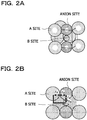
- r A , r B , and r x represent the ionic radii at A site, B site, and an anion site, respectively ( FIGs. 2A and 2B ).
- t tolerance factor
- the perovskite type crystal structure is a material whose physical properties largely change depending on a composition. Furthermore, in the perovskite type crystal structure, ions located at A site, B site, and an anion site can be replaced with various ions, and physical properties can be adjusted by forming a solid solution (or mixed crystal) of a plurality of perovskite materials. Specifically, for example, lead zirconate titanate (PZT) which is a typical ferroelectric material is obtained by replacing a part of B site of lead titanate in which a lead ion is located at A site, a titanium ion is located at B site, and an oxygen ion is located at an anion site with a zircon ion.
- PZT lead zirconate titanate
- a method for calculating a tolerance factor in such a solid solution system a method using a geometric mean weighted by a composition ratio to the ionic radius at a partially replaced site has been proposed.
- the disclosed design program it is possible to solve the problems in related art and to provide a design program capable of designing a composition of a stable perovskite type crystal structure at a high speed.
- the disclosed design method it is possible to solve the problems in related art and to provide a design method capable of designing a composition of a stable perovskite type crystal structure at a high speed.
- a combination of cations of a perovskite type oxide or a perovskite type oxynitride and the number thereof, obtained by a simple combination in a case where only one element is located at each of A site and B site are, for example, illustrated in Table 2 below.
- a represents the number of candidate ions at A site
- b represents the number of candidate ions at B site.
- y represents y in an anion (O 3-y N y ).
- r x represents an ionic radius at an anion site.
- d A-X and d B-X are represented by the formulas in Table 3 below.
- a stable combination of ions at A site, B site, and an anion site in the perovskite type crystal structure is determined by executing ground state search by an annealing method using an Ising model or quadratic unconstrained binary optimization (QUBO).
- QUBO quadratic unconstrained binary optimization
- the disclosed design program is a design program for designing a composition of a perovskite type crystal structure, and includes causing a computer to determine a combination of A i and B i in the following formula (2) created by taking a logarithm of a formula of a tolerance factor (t) represented by the following formula (1), in which logt is 0 or close to 0, by executing ground state search by an annealing method using an Ising model or QUBO.
- the disclosed design method is a design method for designing a composition of a perovskite type crystal structure using a computer, and includes determining a combination of A i and B i in the following formula (2) created by taking a logarithm of a formula of a tolerance factor (t) represented by the following formula (1), in which logt is 0 or close to 0, by executing ground state search by an annealing method using an Ising model or QUBO.
- a i and B i are represented by the following formulas (3) and (4), respectively.
- d A-X and d Ai-X in formula (3) satisfy the following formula (5)
- d B-X and d Bi-X in formula (4) satisfy the following formula (6).
- n is the same as n in formulas (2) to (4).
- the kind of ion at A site and the kind of ion at B site are set to one or more specific ions, and ground state search is executed.
- X (anion) in ABX is not particularly limited, can be appropriately selected depending on a purpose, and may be, for example, O 3-y N y (in which y represents an integer of 0 to 3) or a halogen.
- ABX is represented by ABO 3-y N y (in which y represents an integer of 0 to 3).
- the Ising model is a model represented by the following energy function.
- ⁇ i represents an input variable
- ⁇ ⁇ ⁇ -1, + 1 ⁇ is satisfied.
- J ij is a (two-body) interaction parameter
- h i is referred to as a magnetic field as a (one-body) parameter. Note that a sign may be minus.
- input to an annealing machine that executes ground state search by an annealing method is performed by giving J ij and h i .
- the machine executes annealing and outputs an approximate solution of a combination ⁇ that minimizes energy.
- QUBO is a model in which a variable has been converted into q ⁇ ⁇ 0, 1 ⁇ which is compatible with bits instead of ⁇ ⁇ ⁇ -1, + 1 ⁇ .
- FIG. 3 is a flowchart of an example of the design method.
- a formula of a tolerance factor (t) is converted (S1).
- the conversion is performed by taking a logarithm of the formula of the tolerance factor (t) represented by formula (1), and formula (2) is created after the conversion.
- a combination of A i and B i in formula (2), in which logt is 0 or close to 0, is determined by executing ground state search by an annealing method using the Ising model or QUBO (S2).
- r A , r B , and r X represent the ionic radii at A site, B site, and an anion site, respectively.
- publicly known data of an ionic radius for each valence and coordination number of ionic species of most elements, and the publicly known data can be used. Examples of the publicly known data include publicly known data disclosed in Non-Patent Documents 2 and 3.
- Non-Patent Document 3 can be easily obtained from https://supercon.nims.go.jp/matprop/radion.html and the like.
- a i means selecting p A 1 S and q A 2 s from ⁇ A 1 , A 2 ... ⁇ .
- B i means selecting r B 1 s and s B 2 s from ⁇ B 1 , B 2 ... ⁇ .
- logt is represented by the following formula (2) when definition is made as represented by the following formulas (3) and (4).
- [Mathematical Formula 21] 1 n log d A i ⁇ X ⁇ A i 1 n log 2 d B i ⁇ X ⁇ B i
- formula (2) can be derived from formula (1) of the tolerance factor (t).
- the bottom of log may be 10 or e without any particular limitation.
- each column corresponds to each ionic species, and each of rows 1 to 10 represent a composition ratio.
- a composition (j) of each ion (i) is "1".
- a composition (j) of each ion (i) is "1".
- Table 5 is obtained by applying the following formulas (3) and (4) to Table 4. At this time, the sign of B site is made negative in consideration of formula (2). Note that the values of Non-Patent Document 2 are used for each ion radii. Furthermore, in this calculation, the bottom of log is e.
- the coefficient D ij is an array of numbers A i and B i calculated in advance from the logarithm of the ionic radius, and i and j represent the matrix in Table 5. Ground state search is performed such that the absolute value of D approaches 0.
- the constraint term F By formulating the constraint term as the constraint term F, it is guaranteed that there is at most one bit that is 1 in a certain ionic species column, and it can be interpreted that the bit represents a composition ratio of the ionic species.
- a constraint term that the total number of cations at A site and B site is a predetermined value is added to the overall energy function.
- the total number of cations at A site and B site is the number of cations determined by a perovskite type crystal structure.
- the total number of cations is guaranteed by the constraint term G, it is not guaranteed that the number of cations at each of A site and B site is the number of cations determined by a perovskite type crystal structure.
- the constraint term H it is guaranteed that the number of cations at A site is the same as the number of cations at B site.
- E is a value of 0 or more.
- ⁇ , ⁇ , ⁇ , and ⁇ are parameters that adjust a balance between the constraint term and the objective function, and are set appropriately.
- a structure to be determined is an ABO 3 type perovskite type oxide, and is moreover, a combination of A + and B 5+ . Therefore, as a prerequisite in the above specific example, the charge is neutral.
- An annealing machine may be a quantum annealing machine, a semiconductor annealing machine using semiconductor technology, or simulated annealing executed by software using a central processing unit (CPU) or a graphics processing unit (GPU) as long as being a computer that adopts an annealing method that performs ground state search for an energy function represented by an Ising model.
- CPU central processing unit
- GPU graphics processing unit
- the annealing method (simulated annealing method, SA method) is a kind of Monte Carlo method, and is a method for probabilistically determining a solution using a random number value.
- SA method simulated annealing method
- the following describes a problem of minimizing a value of an evaluation function to be optimized as an example.
- the value of the evaluation function is referred to as energy. For maximization, the sign of the evaluation function only needs to be changed.
- a process is started from an initial state in which one of discrete values is assigned to each variable. With respect to a current state (combination of variable values), a state close to the current state (for example, a state in which only one variable is changed) is selected, and a state transition therebetween is considered. An energy change with respect to the state transition is calculated. Depending on the value, it is probabilistically determined whether to adopt the state transition to change the state or not to adopt the state transition to keep the original state. In a case where an adoption probability when the energy goes down is selected to be larger than that when the energy goes up, it can be expected that a state change will occur in a direction that the energy goes down on average, and that a state transition will occur to a more appropriate state over time.
- a permissible probability p of the state transition is determined by any one of the following functions f ().
- f metro x min 1 e x Metropolis method
- f Gibbs x 1 1 + e ⁇ x Gibbs method
- T is a parameter called a temperature value and is changed as follows.
- T T 0 log c log t + c
- To is an initial temperature value, and is desirably a sufficiently large value depending on a problem.
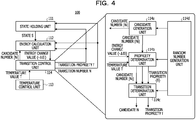
- FIG. 4 illustrates a conceptual configuration of an optimizing device (arithmetic unit 18) that performs the annealing method.
- an optimizing device (arithmetic unit 18) that performs the annealing method.
- a case of generating a plurality of state transition candidates is also described, but an original basic annealing method generates one transition candidate at a time.
- an optimizing device 100 includes a state holding unit 111 that holds a current state S (a plurality of state variable values). Furthermore, the optimizing device 100 includes an energy calculation unit 112 that calculates an energy change value ⁇ - ⁇ Ei ⁇ of each state transition when a state transition from the current state S occurs due to a change in any one of the plurality of state variable values. In addition, the optimizing device 100 includes a temperature control unit 113 that controls a temperature value T and a transition control unit 114 that controls a state change.
- the transition control unit 114 probabilistically determines whether to accept or not any one of a plurality of state transitions according to a relative relationship between an energy change value ⁇ - ⁇ Ei ⁇ and thermal excitation energy on the basis of a temperature value T, the energy change value ⁇ - ⁇ Ei ⁇ , and a random value.
- the transition control unit 114 includes a candidate generation unit 114a that generates a state transition candidate, and a propriety determination unit 114b for probabilistically determining whether or not to permit a state transition for each candidate on the basis of an energy change value ⁇ - ⁇ Ei ⁇ and a temperature value T. Moreover, the transition control unit 114 includes a transition determination unit 114c that determines a candidate to be adopted from the candidates that have been permitted, and a random number generation unit 114d that generates a random variable.
- the candidate generation unit 114a generates one or more state transition candidates (candidate number ⁇ Ni ⁇ ) from the current state S held in the state holding unit 111 to a next state.
- the energy calculation unit 112 calculates an energy change value ⁇ - ⁇ Ei ⁇ for each state transition listed as a candidate using the current state S and the state transition candidates.
- the propriety determination unit 114b permits a state transition with a permissible probability of the formula described in above (A) according to an energy change value ⁇ - ⁇ Ei ⁇ of each state transition using the temperature value T generated by the temperature control unit 113 and the random variable (random number value) generated by the random number generation unit 114d.
- the propriety determination unit 114b outputs propriety ⁇ fi ⁇ of each state transition.
- the transition determination unit 114c randomly selects one of the permitted state transitions using a random number value.
- the transition determination unit 114c outputs a transition number N of the selected state transition and transition propriety f.
- a state variable value stored in the state holding unit 111 is updated according to the adopted state transition.
- the above-described iteration is repeated while the temperature value is lowered by the temperature control unit 113.
- a completion determination condition such as reaching a certain iteration count or energy falling below a certain value is satisfied, the operation is completed.
- An answer output by the optimizing device 110 is a state when the operation is completed.
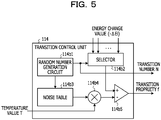
- FIG. 5 is a circuit-level block diagram of a configuration example of a transition control unit in a normal annealing method for generating one candidate at a time, particularly an arithmetic unit for a propriety determination unit.
- the transition control unit 114 includes a random number generation circuit 114b1, a selector 114b2, a noise table 114b3, a multiplier 114b4, and a comparator 114b5.
- the selector 114b2 selects and outputs a value corresponding to the transition number N which is a random number value generated by the random number generation circuit 114b1 among energy change values ⁇ - ⁇ Ei ⁇ calculated for each state transition candidates.
- noise table 114b3 The function of the noise table 114b3 will be described later.
- a memory such as a random access memory (RAM) or a flash memory can be used.
- the multiplier 114b4 outputs a product obtained by multiplying a value output by the noise table 114b3 by a temperature value T (corresponding to the above-described thermal excitation energy).
- the comparator 114b5 outputs a comparison result obtained by comparing a multiplication result output by the multiplier 114b4 with - ⁇ E which is an energy change value selected by the selector 114b2 as transition propriety f.
- the transition control unit 114 illustrated in FIG. 5 basically implements the above-described functions as they are. However, a mechanism that permits a state transition with a permissible probability represented by the formula described in (A) has not been described so far, and therefore will be described.
- a circuit that outputs 1 at a permissible probability p and outputs 0 at a permissible probability (1-p) can be achieved by inputting a uniform random number that takes the permissible probability p for input A and takes a value of an interval [0, 1) for input B in a comparator that has two inputs A and B, outputs 1 when A > B is satisfied and outputs 0 when A ⁇ B is satisfied. Therefore, if a value of a permissible probability p calculated on the basis of the energy change value and the temperature value T using the formula described in (A) is input to input A of this comparator, the above-described function can be achieved.
- the transition control unit 114 also includes a latch that holds a determination result and the like, a state machine that generates a timing thereof, and the like, but these are not illustrated in FIG. 5 for simplicity of illustration.
- FIG. 6 is an operation flow of the transition control unit 114.
- the operation flow includes a step of selecting one state transition as a candidate (S0001), a step of determining propriety of the state transition by comparing an energy change value for the state transition with a product of a temperature value and a random number value (S0002), and a step of adopting the state transition if the state transition is permitted, and not adopting the state transition if the state transition is not permitted (S0003).
- a program can be created using various known programming languages according to the configuration of a computer system used, the kind and version of an operating system, and the like.
- the program may be recorded on a recording medium such as an internal hard disk or an external hard disk, or may be recorded on a recording medium such as a compact disc read only memory (CD-ROM), a digital versatile disk read only memory (DVD-ROM), a magneto-optical (MO) disk, or a universal serial bus (USB) memory [USB flash drive], for example.
- a recording medium such as a CD-ROM, a DVD-ROM, an MO disk, or a USB memory
- the program can be directly used through a recording medium reader included in the computer system, or be installed into a hard disk and be then used, as needed.
- the program can be recorded in an external storage area (another computer or the like) that is accessible from the computer system through an information communication network, and this program can be directly used from the external storage area through an information communication network, or be installed into a hard disk and then be used, as needed.
- an external storage area another computer or the like
- this program can be directly used from the external storage area through an information communication network, or be installed into a hard disk and then be used, as needed.
- the program may be divided into respective arbitrary processes, and be recorded on a plurality of recording media.
- a recording medium disclosed in the present case records the design program disclosed in the present case.
- the recording medium is computer-readable.
- the recording medium disclosed in the present case is not particularly limited, and can be appropriately selected according to a purpose.
- Examples of the recording medium include an internal hard disk, an external hard disk, a CD-ROM, a DVD-ROM, an MO disk, and a USB memory.
- the recording medium disclosed in the present case may be a plurality of recording media on which the design program disclosed in the present case is divided into respective arbitrary processes, and is recorded.
- the recording medium may be transitory or non-transitory.
- the disclosed design device includes at least an execution unit, and further includes another unit as needed.
- the disclosed design device designs a composition of a perovskite type crystal structure.
- the execution unit determines a combination of A i and B i in formula (2) created by taking a logarithm of a formula of a tolerance factor (t) represented by formula (1), in which logt is 0 or close to 0, by executing ground state search by an annealing method using an Ising model or QUBO.
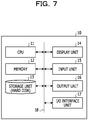
- FIG. 7 illustrates a configuration example of the disclosed design device.
- a design device 10 includes a CPU 11, a memory 12, a storage unit 13, a display unit 14, an input unit 15, an output unit 16, an I/O interface unit 17, and the like that are connected to each other via a system bus 18, for example.
- the CPU 11 performs arithmetic operations (such as four arithmetic operations and comparison operations), hardware and software operation control, and the like.
- the memory 12 is a memory such as a random access memory (RAM) or a read only memory (ROM).
- the RAM stores an operating system (OS), an application program, and the like read from the ROM and the storage unit 13, and functions as a main memory and a work area of the CPU 11.
- OS operating system
- application program application program
- the storage unit 13 is a device that stores various kinds of programs and data, and may be a hard disk, for example.
- the storage unit 13 stores a program to be executed by the CPU 11, data to be used in executing the program, an OS, and the like.
- a program is stored in the storage unit 13, is loaded into the RAM (main memory) of the memory 12, and is executed by the CPU 11.
- the display unit 14 is a display device, and may be a display device such as a CRT monitor or a liquid crystal panel, for example.
- the input unit 15 is an input device for various kinds of data, and may be a keyboard, a pointing device (such as a mouse), or the like, for example.
- the output unit 16 is an output device for various kinds of data, and may be a printer, for example.
- the I/O interface unit 17 is an interface for connecting various external devices.
- the I/O interface unit 17 enables inputting/outputting of data into/from a CD-ROM, a DVD-ROM, an MO disk, a USB memory, or the like.
- FIG. 8 illustrates another configuration example of the disclosed design device.
- the configuration example in FIG. 8 is a cloud type configuration example, in which the CPU 11 is independent of the storage unit 13 and the like.
- a computer 30 that includes the storage unit 13 and the like is connected to a computer 40 that includes the CPU 11 via network interface units 19 and 20.
- the network interface units 19 and 20 are hardware that performs communication using the Internet.
- FIG. 9 illustrates another configuration example of the disclosed design device.
- the configuration example in FIG. 9 is a cloud type configuration example, in which the storage unit 13 is independent of the CPU 11 and the like.
- a computer 30 that includes the CPU 11 and the like is connected to a computer 40 that includes the storage unit 13 via the network interface units 19 and 20.
- the various features may be implemented in hardware, or as software modules running on one or more processors/computers.
- the invention also provides a computer program or a computer program product comprising instructions which, when executed by a computer, cause the computer to carry out any of the methods/method steps described herein, and a non-transitory computer-readable medium comprising instructions which, when executed by a computer, cause the computer to carry out any of the methods/method steps described herein.
- a computer program embodying the invention may be stored on a non-transitory computer-readable medium, or it could, for example, be in the form of a signal such as a downloadable data signal provided from an Internet website, or it could be in any other form.
Landscapes
- Engineering & Computer Science (AREA)
- Physics & Mathematics (AREA)
- Theoretical Computer Science (AREA)
- General Physics & Mathematics (AREA)
- Computing Systems (AREA)
- Mathematical Physics (AREA)
- General Engineering & Computer Science (AREA)
- Computational Mathematics (AREA)
- Data Mining & Analysis (AREA)
- Pure & Applied Mathematics (AREA)
- Mathematical Optimization (AREA)
- Mathematical Analysis (AREA)
- Evolutionary Computation (AREA)
- Software Systems (AREA)
- Algebra (AREA)
- Chemical & Material Sciences (AREA)
- Computer Hardware Design (AREA)
- Geometry (AREA)
- Life Sciences & Earth Sciences (AREA)
- Bioinformatics & Computational Biology (AREA)
- Bioinformatics & Cheminformatics (AREA)
- Databases & Information Systems (AREA)
- Artificial Intelligence (AREA)
- Nonlinear Science (AREA)
- Materials Engineering (AREA)
- Metallurgy (AREA)
- Organic Chemistry (AREA)
- Crystallography & Structural Chemistry (AREA)
- Operations Research (AREA)
- Inorganic Chemistry (AREA)
- Compositions Of Oxide Ceramics (AREA)
- Crystals, And After-Treatments Of Crystals (AREA)
- Semiconductor Memories (AREA)
Abstract
Description
- The embodiment relates to a design program for a composition of a perovskite type crystal structure and a design method.
- A material having a perovskite type crystal structure exhibits various physical properties such as ferroelectricity depending on a composition. Therefore, a material having a perovskite type crystal structure has been applied to an electronic part such as a capacitor or a storage element. Furthermore, recently, a photovoltaic cell using a material having a perovskite type crystal structure has been developed.
- In the perovskite type crystal structure, cations are located at A site and B site, and an anion is located at an anion site (
FIG. 1 ). Here, in order for the crystal to exist stably, the size of an ion at each site needs to satisfy a specific relationship. In addition, an amount representing geometric distortion of the perovskite type crystal structure is defined by the following tolerance factor (t) (see Non-Patent Document 1).
- Here, rA, rB, and rx represent the ionic radii at A site, B site, and an anion site, respectively (
FIGs. 2A and 2B ). In addition, it is known that a tetragonal crystal is most stable when the tolerance factor (t) is 1. - Note that there is publicly known data of an ionic radius for each valence and coordination number of ionic species of most elements, and the publicly known data can be used (for example, see Non-Patent Documents 2 and 3).
- As described above, the perovskite type crystal structure is a material whose physical properties largely change depending on a composition. Furthermore, in the perovskite type crystal structure, ions located at A site, B site, and an anion site can be replaced with various ions, and physical properties can be adjusted by forming a solid solution (or mixed crystal) of a plurality of perovskite materials. Specifically, for example, lead zirconate titanate (PZT) which is a typical ferroelectric material is obtained by replacing a part of B site of lead titanate in which a lead ion is located at A site, a titanium ion is located at B site, and an oxygen ion is located at an anion site with a zircon ion. As a method for calculating a tolerance factor in such a solid solution system, a method using a geometric mean weighted by a composition ratio to the ionic radius at a partially replaced site has been proposed.
- J. B. Goodenough and J. M. Longo, Landolt-Bornstein, Mew Series, Group. III, Vol. 4a, Springer-Verlag, Berlin, p.126 (1970)., R. D. Shannon, Acta Crystallographica A32, p.751 (1976), and Y. Q. Jia, Journal of Solid State Chemistry,95,184(1991) are disclosed as related art.
- However, in a case where there is a plurality of ionic species to be formed into a solid solution, and a combination and a composition of ionic species that make a tolerance factor 1 are determined on the basis thereof, calculation needs to be performed by changing the ionic species and the composition one by one. Then, in a case where the number of ionic species increases or in a case where a solid solution ratio is finely adjusted, the number of combinations is enormous, and the calculation takes a very long time.
- It is desirable to provide a program capable of designing a composition of a stable perovskite type crystal structure at a high speed and a design method capable of designing a composition of a stable perovskite type crystal structure at a high speed.
- A design program causes a computer to execute a process for designing a composition of a perovskite type crystal structure, the design program comprising causing a computer to determine a combination of Ai and Bi in the following formula (2) created by taking a logarithm of a formula of a tolerance factor (t) represented by the following formula (1), in which logt is 0 or close to 0, by executing ground state search by an annealing method using an Ising model or QUBO,


in the formula (2), Ai and Bi are represented by the following formulas (3) and (4) respectively,



- According to the disclosed design program, it is possible to solve the problems in related art and to provide a design program capable of designing a composition of a stable perovskite type crystal structure at a high speed.
- According to the disclosed design method, it is possible to solve the problems in related art and to provide a design method capable of designing a composition of a stable perovskite type crystal structure at a high speed.
- Embodiments are set out, by way of example only, with reference to the following drawings, in which:
-
FIG. 1 is a schematic diagram illustrating an atomic arrangement of a perovskite type crystal structure; -
FIG. 2A is a diagram for explaining a formula of a tolerance factor (No. 1); -
FIG. 2B is a diagram for explaining a formula of a tolerance factor (No. 2); -
FIG. 3 is a flowchart of an example of a disclosed design method; -
FIG. 4 is a diagram illustrating a conceptual configuration of an optimizing device (arithmetic unit) used in an annealing method; -
FIG. 5 is a circuit level block diagram of a transition control unit; -
FIG. 6 is a diagram illustrating an operation flow of the transition control unit; -
FIG. 7 is a configuration example of a disclosed design device; -
FIG. 8 is another configuration example of the disclosed design device; and -
FIG. 9 is another configuration example of the disclosed design device. - Regarding the perovskite type crystal structures illustrated in
FIGs. 2A and 2B , typical elements and valences at A site and B site are illustrated in Table 1 below.[Table 1] Site/Valence Typical element a b A+ Li, Na, K, Ag 4 A2+ Pb, Ba, Sr, Ca 4 A3+ Bi, La, Ce, Nd 4 B+ Li, Cu 2 B2+ Mg, Ni, Zn, Co, Sn, Fe, Cd, Cu, Cr 9 B3+ Mn, Sb, Al, Yb, In, Fe, Co, Sc, Y, Sn 10 B4+ Ti, Zr 2 B5* Nb, Sb, Ta, Bi 4 B6+ W, Te, Re 3 - In addition, a combination of cations of a perovskite type oxide or a perovskite type oxynitride and the number thereof, obtained by a simple combination in a case where only one element is located at each of A site and B site are, for example, illustrated in Table 2 below.
[Table 2] y 0 1 2 3 Composition O3 O2N ON2 N3 Charge -6 -7 -8 -9 rx (Å) 1.35 1.39 1.42 1.46 a b a b a b a b Permissible combination of cations A+ - B5+ 4 4 A+ - B6+ 4 3 A2+ - B6+ 4 3 A3+ - B6+ 4 3 A2+-B4+ 4 2 A2+ - B5+ 4 4 A3+ - B5+ 4 4 A3+-B3+ 4 10 A3+-B4+ 4 2 - Here, in Tables 1 and 2, a represents the number of candidate ions at A site, and b represents the number of candidate ions at B site. In Tables 2 and 3 below, y represents y in an anion (O3-yNy). rx represents an ionic radius at an anion site.
- In addition, the total number of permissible combinations of cations is 64 in a case of y = 0, 38 in a case of y = 1, 28 in a case of y = 2, and 12 in a case of y = 3, and the total number thereof is 142.
- Therefore, in a case of a simple composition, calculation can be performed also by a method using a geometric mean for a composition in which the tolerance factor (t) is 1 or close to 1 in the following formula.

- Here, rA, rB, and rX represent the ionic radii at A site, B site, and an anion site, respectively. Note that rA + rX = dA-X and rB + rX = dB-X are satisfied in the rightmost side.
- Then, for example, dA-X and dB-X are represented by the formulas in Table 3 below.
[Table 3] y Composition formula dA-X dB-X 0 ABO3 

1 ABO2N 

2 ABON2 

3 ABN3 

- However, in a case where a plurality of elements is introduced into A site, B site, an anion site, or any combination thereof, and in a case where a solid solution ratio is finely adjusted, the number of combinations is enormous, and calculation takes a very long time.
- Therefore, in the disclosed technology, by taking a logarithm of the formula of the tolerance factor (t), a stable combination of ions at A site, B site, and an anion site in the perovskite type crystal structure is determined by executing ground state search by an annealing method using an Ising model or quadratic unconstrained binary optimization (QUBO).
- This makes it possible to perform calculation at a higher speed than a calculation method using a geometric mean even in a case where the number of combinations of ions at A site, B site, and an anion site is enormous.
- (Design program for composition of perovskite type crystal structure and design method)
- The disclosed design program is a design program for designing a composition of a perovskite type crystal structure, and includes causing a computer to determine a combination of Ai and Bi in the following formula (2) created by taking a logarithm of a formula of a tolerance factor (t) represented by the following formula (1), in which logt is 0 or close to 0, by executing ground state search by an annealing method using an Ising model or QUBO.
- The disclosed design method is a design method for designing a composition of a perovskite type crystal structure using a computer, and includes determining a combination of Ai and Bi in the following formula (2) created by taking a logarithm of a formula of a tolerance factor (t) represented by the following formula (1), in which logt is 0 or close to 0, by executing ground state search by an annealing method using an Ising model or QUBO.
[Mathematical Formula 11]

- In formula (1), rA, rB, and rx represent ionic radii at A site, B site, and an anion site, respectively, when a general formula of a perovskite type crystal structure is represented by ABX (in which A represents a cation, B represents a cation, and X represents an anion), and dA-X = rA + rX and dB-X = rB + rX are satisfied.
- In formula (2), Ai and Bi are represented by the following formulas (3) and (4), respectively.
[Mathematical Formula 13]

- In formulas (2), (3), and (4), n means the parameter n in A1 pA2 q...B1 rB2 s... Xn (p + q + ... = r + s + ... = n; each number represents an integer) which is a composition formula when ions A1, A2,..., and Au (composition ratio is p: q:...) are located at A site, and ions B1, B2,..., and Bv (composition ratio is r: s:...) are located at B site in ABX which is a general formula. Moreover, dA-X and dAi-X in formula (3) satisfy the following formula (5), and dB-X and dBi-X in formula (4) satisfy the following formula (6).
[Mathematical Formula 14]

- In formulas (5) and (6), n is the same as n in formulas (2) to (4).
- In the design program and the design method, for example, the kind of ion at A site and the kind of ion at B site are set to one or more specific ions, and ground state search is executed.
- X (anion) in ABX is not particularly limited, can be appropriately selected depending on a purpose, and may be, for example, O3-yNy (in which y represents an integer of 0 to 3) or a halogen.
- When X represents O3-yNy, ABX is represented by ABO3-yNy (in which y represents an integer of 0 to 3).
- Generally, the Ising model is a model represented by the following energy function.

- Here, σi represents an input variable, and σ ∈ {-1, + 1} is satisfied. Jij is a (two-body) interaction parameter, and hi is referred to as a magnetic field as a (one-body) parameter. Note that a sign may be minus.
- Here, input to an annealing machine that executes ground state search by an annealing method is performed by giving Jij and hi. When these parameters are given, the machine executes annealing and outputs an approximate solution of a combination σ that minimizes energy.
- Furthermore, QUBO is a model in which a variable has been converted into q ∈ {0, 1} which is compatible with bits instead of σ ∈ {-1, + 1}.
- The Ising model and QUBO are equivalent to each other because QUBO is obtained only by converting a variable in the Ising model [σ = 2q - 1 or q = (σ + 1)/2].
- An example of the disclosed design method will be described with reference to a flowchart.
-
FIG. 3 is a flowchart of an example of the design method. - In an example of the design method, first, a formula of a tolerance factor (t) is converted (S1). The conversion is performed by taking a logarithm of the formula of the tolerance factor (t) represented by formula (1), and formula (2) is created after the conversion.
- Next, a combination of Ai and Bi in formula (2), in which logt is 0 or close to 0, is determined by executing ground state search by an annealing method using the Ising model or QUBO (S2).
- An example of a method for deriving formula (2) from formula (1) of the tolerance factor (t) will be described below. In the following example, an anion (X) is "O3-yNy".
- The tolerance factor (t) is represented by the following formula.

- Here, rA, rB, and rX represent the ionic radii at A site, B site, and an anion site, respectively. There is publicly known data of an ionic radius for each valence and coordination number of ionic species of most elements, and the publicly known data can be used. Examples of the publicly known data include publicly known data disclosed in Non-Patent Documents 2 and 3.
- The data of Non-Patent Document 2 can be easily obtained from http://research.kek.jp/people/hironori/nakao/lab/info/ionra dii-ele.html, http://pmsl.planet.sci.kobe-u.ac.jp/∼seto/?page_id=51&lang=ja, and the like.
- The data of Non-Patent Document 3 can be easily obtained from https://supercon.nims.go.jp/matprop/radion.html and the like.
- Then, assuming that rA + rx = dA-X and rB + rx = dB-X are satisfied, the tolerance factor (t) is represented by the following formula.

- Then, in A1 pA2 q... B1 rB2 s ...On(3-y)Nny (p + q + ... = r + s + ... = n; each number represents an integer) which is a composition formula when ions A1, A2,..., and Au (composition ratio is p: q:...) are located at A site, and ions B1, B2,..., and Bv (composition ratio is r: s:...) are located at B site in a perovskite type crystal structure represented by a general formula ABO3-yNy, a geometric mean of each of compositions of dA-X and dB-X is represented by the following.

- In the formulas, Ai means selecting p A1S and q A2s from {A1, A2...}. Bi means selecting r B1s and s B2s from {B1, B2...}.
- Based on the above description, the tolerance factor (t) is represented by the following formula.

- Here, in order to determine a stable perovskite type crystal structure, a composition of Ai and Bi in which t is 1 or close to 1 is determined.
- However, it is difficult to handle the above formula in calculation of an annealing method for performing ground state search for an energy function represented by the Ising model.
- Therefore, a logarithm of the above formula is taken, and an infinite product is converted into a total sum as follows.

- Here, logt is represented by the following formula (2) when definition is made as represented by the following formulas (3) and (4).
[Mathematical Formula 21]


- As described above, formula (2) can be derived from formula (1) of the tolerance factor (t).
- Then, by setting Ai and Bi in a table and finding a combination of Ai and Bi in which logt is 0 or close to 0 by calculation of an annealing method, a composition of a stable perovskite type crystal structure can be determined.
- Note that in order to determine a value at which logt is 0 or close to 0, the bottom of log may be 10 or e without any particular limitation.
- Next, as one specific example, a method for determining a stable structure of a perovskite type oxide will be described.
- As a prerequisite, a structure to be determined is an ABO3 type perovskite type oxide. Furthermore, a combination of A+ and B5+ in Table 1 is used. In this case, a = 4 and b = 4 are satisfied, and a sum (m) of the number of candidate ions at A site (a) and the number of candidate ions at B site (b) is a + b = 8.
- Furthermore, as a prerequisite, the composition is changed by 1/10 = 0.1 (n = p + q + ... = r + s + ... = 10). Therefore, when ABO3 is A10B10O30, the combination of A+ and B5+ can be represented as follows.
[Chemical Formula 1] Li0∼10Na0∼10K0∼10Ag0∼10Nb0∼10Sb0∼10Ta0∼10Bi0∼10O30
- In this case, a matrix for optimization is illustrated in Table 4 below in which each column corresponds to each ionic species, and each of rows 1 to 10 represent a composition ratio.
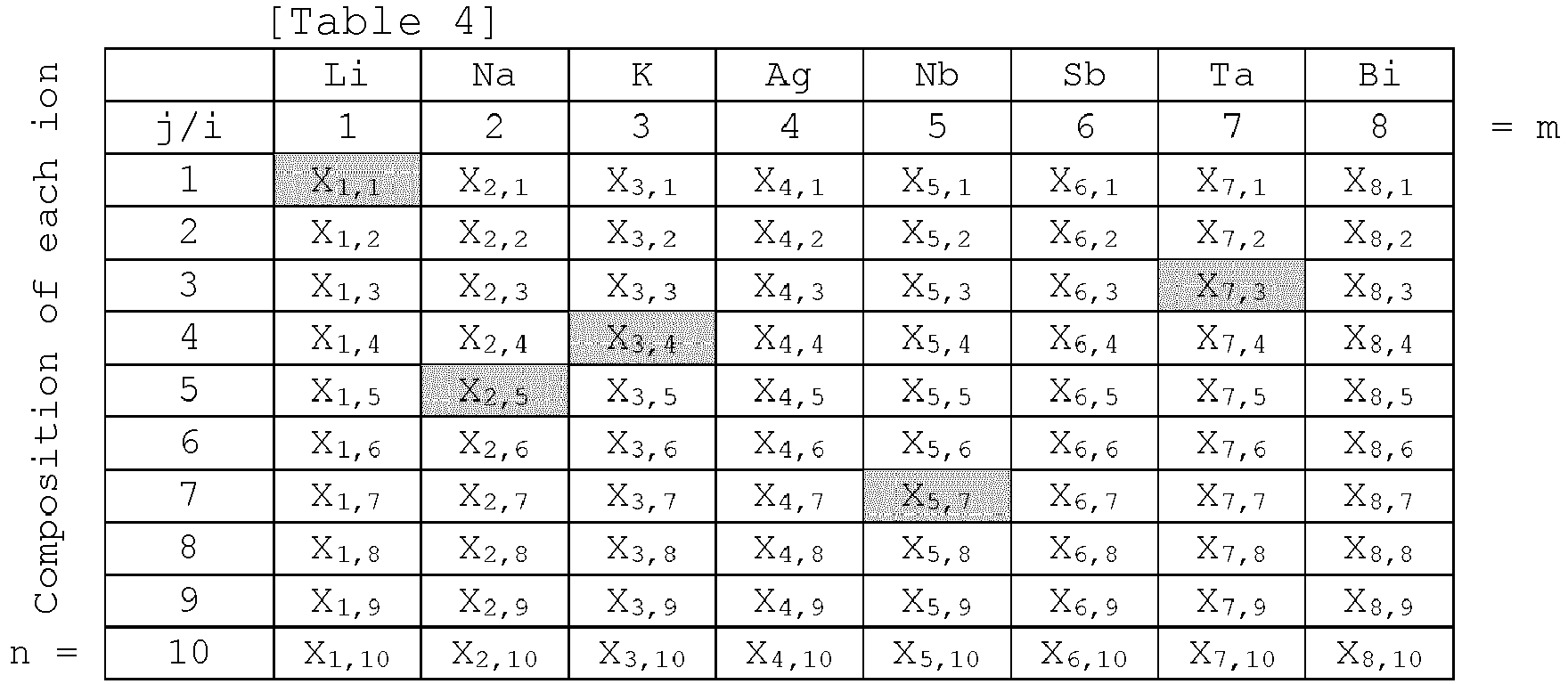
- Here, regarding xi,j = {0,1}, a composition (j) of each ion (i) is "1". For example, in a case of Li1Na5K4Nb7Ta3O30, only the hatched parts in Table 4 (x1,1, X2,5, X3,4, X5,7, and X7,3) are "1", and the other parts are "0".
- Meanwhile, Table 5 is obtained by applying the following formulas (3) and (4) to Table 4. At this time, the sign of B site is made negative in consideration of formula (2). Note that the values of Non-Patent Document 2 are used for each ion radii. Furthermore, in this calculation, the bottom of log is e.
[Mathematical Formula 23]

[Table 5] Ai Bi Li Na K Ag Nb Sb Ta Bi j\i 1 2 3 4 5 6 7 8 1 0.0880 0.1058 0.1141 0.1019 -0.1103 -0.1084 -0.1103 -0.1158 2 0.1759 0.2116 0.2282 0.2038 -0.2205 -0.2167 -0.2205 -0.2315 3 0.2639 0.3173 0.3423 0.3057 -0.3308 -0.3251 -0.3308 -0.3473 4 0.3519 0.4231 0.4564 0.4075 -0.4411 -0.4335 -0.4411 -0.4630 5 0.4398 0.5289 0.5705 0.5094 -0.5513 -0.5419 -0.5513 -0.5788 6 0.5278 0.6347 0.6846 0.6113 -0.6616 -0.6502 -0.6616 -0.6945 7 0.6157 0.7405 0.7987 0.7132 -0.7719 -0.7586 -0.7719 -0.8103 8 0.7037 0.8462 0.9128 0.8151 -0.8822 -0.8670 -0.8822 -0.9260 9 0.7917 0.9520 1.0269 0.9170 -0.9924 -0.9754 -0.9924 -1.0418 10 0.8796 1.0578 1.1410 1.0188 -1.1027 -1.0837 -1.1027 -1.1575 - Then, an objective function is represented by the following formula.

- In the above formula, the coefficient Dij is an array of numbers Ai and Bi calculated in advance from the logarithm of the ionic radius, and i and j represent the matrix in Table 5. Ground state search is performed such that the absolute value of D approaches 0.
- Here, as a constraint term, a constraint term that at each ion (column i) illustrated in Table 6 below, only one bit xi,j representing a composition (j) is "1" at most is added to the overall energy function.
[Table 6] Li Na K Ag Nb Sb Ta Bi j\i 1 2 3 4 5 6 7 8 = m 1 X1,1 X2,1 X3,1 X4,1 X5,1 X6,1 X7,1 X8,1 2 X1,2 X2,2 X3,2 X4,2 X5,2 X6,2 X7,2 X8,2 3 X1,3 X2,3 X3,3 X4,3 X5,3 X6,3 X7,3 X8,3 4 X1,4 X2,4 X3,4 X4,4 X5,4 X6,4 X7,4 X8,4 5 X1,5 X2,5 X3,5 X4,5 X5,5 X6,5 X7,5 X8,5 6 X1,6 X2,6 X3,6 X4,6 X5,6 X6,6 X7,6 X8,6 7 X1,7 X2,7 X3,7 X4,7 X5,7 X6,7 X7,7 X8,7 8 X1,8 X2,8 X3,8 X4,8 X5,8 X6,8 X7,8 X8,8 9 X1,9 X2,9 X3,9 X4,9 X59 X6,9 X7,9 X8,9 n = 10 X1,10 X2,10 X3,10 X4,10 X5,10 X6,10 X7,10 X8,10 
F1,j F2,j F3,j F4,j F5,j F6,j F7,j F8,j - This constraint term F is represented by the following formula.

- By formulating the constraint term as the constraint term F, it is guaranteed that there is at most one bit that is 1 in a certain ionic species column, and it can be interpreted that the bit represents a composition ratio of the ionic species.
- Moreover, as a constraint term, a constraint term that the total number of cations at A site and B site is a predetermined value is added to the overall energy function.
- This constraint term G is represented by the following formula.

- By formulating the constraint term as the constraint term G, it is guaranteed that the total number of cations at A site and B site is the number of cations determined by a perovskite type crystal structure.
- Moreover, as a constraint term, a constraint term that the number of cations at A site and the number of cations at B site illustrated in Table 7 below are the same as each other is added to the overall energy function.
[Table 7] A site B site Hi,j Li Na K Ag Nb Sb Ta Bi j\i 1 2 3 4 5 6 7 8 1 1 1 1 1 -1 -1 -1 -1 2 2 2 2 2 -2 -2 -2 -2 3 3 3 3 3 -3 -3 -3 -3 4 4 4 4 4 -4 -4 -4 -4 5 5 5 5 5 -5 -5 -5 -5 6 6 6 6 6 -6 -6 -6 -6 7 7 7 7 7 -7 -7 -7 -7 8 8 8 8 8 -8 -8 -8 -8 9 9 9 9 9 -9 -9 -9 -9 10 10 10 10 10 -10 -10 -10 -10 - This constraint term H is represented by the following formula.

- Although the total number of cations is guaranteed by the constraint term G, it is not guaranteed that the number of cations at each of A site and B site is the number of cations determined by a perovskite type crystal structure. By adding the constraint term H, it is guaranteed that the number of cations at A site is the same as the number of cations at B site.
- Here, as illustrated in Table 7, by using a numerical table in which the signs of the numbers representing the compositions at A site and B site are reversed to each other, an ionic species in which xij is simply 1 and a total sum of the compositions are determined. When the total sum is 0, it is possible to guarantee that a condition that the number of cations at A site is the same as the number of cations at B site is satisfied.
- The above-described objective function and constraint term are summarized as follows.

- Note that the closer the objective function is to 0, the better. Furthermore, the constraint term is 0.
- Then, the overall energy function (E) is represented as follows.

- Since all the terms D, F, G, and H each are 0 or more, E is a value of 0 or more.
- Here, α, β, γ, and δ are parameters that adjust a balance between the constraint term and the objective function, and are set appropriately.
- Then, by determining a bit pattern of a matrix in Table 4 in which E is from a minimum value to 0 by annealing, it is possible to design ionic species that achieve a perovskite type oxide having a stable crystal structure containing Li, Na, K, Ag, or any combination thereof, and Nb, Sb, Ta, Bi, or any combination thereof, and a combination of compositions thereof at a high speed.
- Note that as a prerequisite in a specific example, a structure to be determined is an ABO3 type perovskite type oxide, and is moreover, a combination of A+ and B5+. Therefore, as a prerequisite in the above specific example, the charge is neutral.
- Meanwhile, in a case where the charge does not become neutral only by the prerequisite, a constraint term that the charge becomes neutral is added to the overall energy function (E).
- An annealing machine may be a quantum annealing machine, a semiconductor annealing machine using semiconductor technology, or simulated annealing executed by software using a central processing unit (CPU) or a graphics processing unit (GPU) as long as being a computer that adopts an annealing method that performs ground state search for an energy function represented by an Ising model.
- Examples of the annealing method and the annealing machine will be described below.
- The annealing method (simulated annealing method, SA method) is a kind of Monte Carlo method, and is a method for probabilistically determining a solution using a random number value. The following describes a problem of minimizing a value of an evaluation function to be optimized as an example. The value of the evaluation function is referred to as energy. For maximization, the sign of the evaluation function only needs to be changed.
- A process is started from an initial state in which one of discrete values is assigned to each variable. With respect to a current state (combination of variable values), a state close to the current state (for example, a state in which only one variable is changed) is selected, and a state transition therebetween is considered. An energy change with respect to the state transition is calculated. Depending on the value, it is probabilistically determined whether to adopt the state transition to change the state or not to adopt the state transition to keep the original state. In a case where an adoption probability when the energy goes down is selected to be larger than that when the energy goes up, it can be expected that a state change will occur in a direction that the energy goes down on average, and that a state transition will occur to a more appropriate state over time. Then, finally, there is a possibility that an optimal solution or an approximate solution that gives energy close to the optimal value can be obtained. If this is adopted when the energy goes down deterministically and is not adopted when the energy goes up, the energy change decreases monotonically in a broad sense with respect to time, but no further change occurs when a local solution is reached. As described above, since there are a very a large number of local solutions in the discrete optimization problem, a state is almost certainly caught in a local solution that is not so close to an optimum value. Therefore, it is important to determine probabilistically whether to adopt a state transition.
- In the annealing method, it has been proved that by determining an adoption (permissible) probability of a state transition as follows, a state reaches an optimum solution in the limit of infinite time (iteration count).
- (A) For an energy change (energy reduction) value (-ΔE) due to a state transition, a permissible probability p of the state transition is determined by any one of the following functions f ().
[Mathematical Formula 30]
[Mathematical Formula 31]
[Mathematical Formula 32]
Here, T is a parameter called a temperature value and is changed as follows. - (B) The temperature value T is logarithmically reduced with respect to an iteration count t as represented by the following formula.
[Mathematical Formula 33]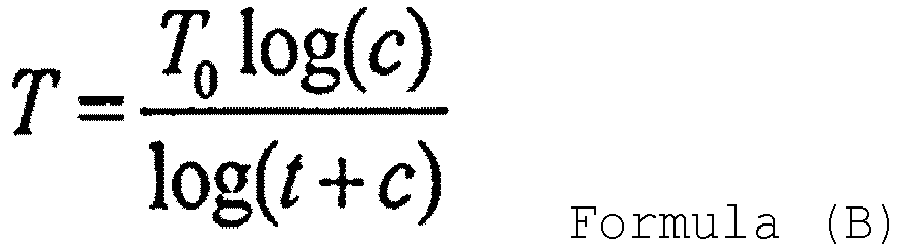
- Here, To is an initial temperature value, and is desirably a sufficiently large value depending on a problem.
- In a case where the permissible probability represented by the formula described in (A) is used, if a steady state is reached after sufficient iterations, an occupation probability of each state follows a Boltzmann distribution for a thermal equilibrium state in thermodynamics. Then, when the temperature is gradually lowered from a high temperature, an occupation probability of a low energy state increases. Therefore, the low energy state may be obtained when the temperature is sufficiently lowered. Since this state is very similar to a state change caused when a material is annealed, this method is referred to as an annealing method (or pseudo-annealing method). At this time, probabilistic occurrence of a state transition that increases energy corresponds to thermal excitation in physics.
-
FIG. 4 illustrates a conceptual configuration of an optimizing device (arithmetic unit 18) that performs the annealing method. However, in the following description, a case of generating a plurality of state transition candidates is also described, but an original basic annealing method generates one transition candidate at a time. - First, an optimizing
device 100 includes astate holding unit 111 that holds a current state S (a plurality of state variable values). Furthermore, the optimizingdevice 100 includes anenergy calculation unit 112 that calculates an energy change value {-ΔEi} of each state transition when a state transition from the current state S occurs due to a change in any one of the plurality of state variable values. In addition, the optimizingdevice 100 includes atemperature control unit 113 that controls a temperature value T and atransition control unit 114 that controls a state change. - The
transition control unit 114 probabilistically determines whether to accept or not any one of a plurality of state transitions according to a relative relationship between an energy change value {-ΔEi} and thermal excitation energy on the basis of a temperature value T, the energy change value {-ΔEi}, and a random value. - When the
transition control unit 114 is further subdivided, thetransition control unit 114 includes acandidate generation unit 114a that generates a state transition candidate, and apropriety determination unit 114b for probabilistically determining whether or not to permit a state transition for each candidate on the basis of an energy change value {-ΔEi} and a temperature value T. Moreover, thetransition control unit 114 includes atransition determination unit 114c that determines a candidate to be adopted from the candidates that have been permitted, and a randomnumber generation unit 114d that generates a random variable. - Operation in one iteration is as follows. First, the
candidate generation unit 114a generates one or more state transition candidates (candidate number {Ni}) from the current state S held in thestate holding unit 111 to a next state. Theenergy calculation unit 112 calculates an energy change value {-ΔEi} for each state transition listed as a candidate using the current state S and the state transition candidates. Thepropriety determination unit 114b permits a state transition with a permissible probability of the formula described in above (A) according to an energy change value {-ΔEi} of each state transition using the temperature value T generated by thetemperature control unit 113 and the random variable (random number value) generated by the randomnumber generation unit 114d. Then, thepropriety determination unit 114b outputs propriety {fi} of each state transition. In a case where there is a plurality of permitted state transitions, thetransition determination unit 114c randomly selects one of the permitted state transitions using a random number value. Then, thetransition determination unit 114c outputs a transition number N of the selected state transition and transition propriety f. In a case where there is a permitted state transition, a state variable value stored in thestate holding unit 111 is updated according to the adopted state transition. - Starting from an initial state, the above-described iteration is repeated while the temperature value is lowered by the
temperature control unit 113. When a completion determination condition such as reaching a certain iteration count or energy falling below a certain value is satisfied, the operation is completed. An answer output by the optimizing device 110 is a state when the operation is completed. -
FIG. 5 is a circuit-level block diagram of a configuration example of a transition control unit in a normal annealing method for generating one candidate at a time, particularly an arithmetic unit for a propriety determination unit. - The
transition control unit 114 includes a random number generation circuit 114b1, a selector 114b2, a noise table 114b3, a multiplier 114b4, and a comparator 114b5. - The selector 114b2 selects and outputs a value corresponding to the transition number N which is a random number value generated by the random number generation circuit 114b1 among energy change values {-ΔEi} calculated for each state transition candidates.
- The function of the noise table 114b3 will be described later. As the noise table 114b3, for example, a memory such as a random access memory (RAM) or a flash memory can be used.
- The multiplier 114b4 outputs a product obtained by multiplying a value output by the noise table 114b3 by a temperature value T (corresponding to the above-described thermal excitation energy).
- The comparator 114b5 outputs a comparison result obtained by comparing a multiplication result output by the multiplier 114b4 with -ΔE which is an energy change value selected by the selector 114b2 as transition propriety f.
- The
transition control unit 114 illustrated inFIG. 5 basically implements the above-described functions as they are. However, a mechanism that permits a state transition with a permissible probability represented by the formula described in (A) has not been described so far, and therefore will be described. - A circuit that outputs 1 at a permissible probability p and outputs 0 at a permissible probability (1-p) can be achieved by inputting a uniform random number that takes the permissible probability p for input A and takes a value of an interval [0, 1) for input B in a comparator that has two inputs A and B, outputs 1 when A > B is satisfied and outputs 0 when A < B is satisfied. Therefore, if a value of a permissible probability p calculated on the basis of the energy change value and the temperature value T using the formula described in (A) is input to input A of this comparator, the above-described function can be achieved.
- That is, with a circuit that outputs 1 when f (ΔE/T) is larger than u, in which f is a function used in the formula described in (A), and u is a uniform random number that takes a value of an interval [0, 1), the above-described function can be achieved.
- Although it may be left as it is, the same function can be achieved also by the following modification. Applying the same monotonically increasing function to two numbers does not change the magnitude relationship. Therefore, an output is not changed even if the same monotonically increasing function is applied to two inputs of the comparator. If an inverse function f-1 of f is adopted as this monotonically increasing function, it can be found that a circuit that outputs 1 when -ΔE/T is larger than f-1(u) may be sufficient. Moreover, since the temperature value T is positive, a circuit that outputs 1 when -ΔE is larger than Tf-1(u) may be sufficient. The noise table 114b3 in
FIG. 5 is a conversion table for achieving this inverse function f-1(u), and is a table that outputs a value of the following function to an input that discretizes the interval [0,1).
[Mathematical Formula 34]
[Mathematical Formula 35]
- The
transition control unit 114 also includes a latch that holds a determination result and the like, a state machine that generates a timing thereof, and the like, but these are not illustrated inFIG. 5 for simplicity of illustration. -
FIG. 6 is an operation flow of thetransition control unit 114. The operation flow includes a step of selecting one state transition as a candidate (S0001), a step of determining propriety of the state transition by comparing an energy change value for the state transition with a product of a temperature value and a random number value (S0002), and a step of adopting the state transition if the state transition is permitted, and not adopting the state transition if the state transition is not permitted (S0003). - A program can be created using various known programming languages according to the configuration of a computer system used, the kind and version of an operating system, and the like.
- The program may be recorded on a recording medium such as an internal hard disk or an external hard disk, or may be recorded on a recording medium such as a compact disc read only memory (CD-ROM), a digital versatile disk read only memory (DVD-ROM), a magneto-optical (MO) disk, or a universal serial bus (USB) memory [USB flash drive], for example. In a case where the program is recorded on a recording medium such as a CD-ROM, a DVD-ROM, an MO disk, or a USB memory, the program can be directly used through a recording medium reader included in the computer system, or be installed into a hard disk and be then used, as needed. Alternatively, the program can be recorded in an external storage area (another computer or the like) that is accessible from the computer system through an information communication network, and this program can be directly used from the external storage area through an information communication network, or be installed into a hard disk and then be used, as needed.
- The program may be divided into respective arbitrary processes, and be recorded on a plurality of recording media.
- A recording medium disclosed in the present case records the design program disclosed in the present case.
- The recording medium is computer-readable.
- The recording medium disclosed in the present case is not particularly limited, and can be appropriately selected according to a purpose. Examples of the recording medium include an internal hard disk, an external hard disk, a CD-ROM, a DVD-ROM, an MO disk, and a USB memory.
- Furthermore, the recording medium disclosed in the present case may be a plurality of recording media on which the design program disclosed in the present case is divided into respective arbitrary processes, and is recorded.
- The recording medium may be transitory or non-transitory.
- The disclosed design device includes at least an execution unit, and further includes another unit as needed.
- The disclosed design device designs a composition of a perovskite type crystal structure.
- The execution unit determines a combination of Ai and Bi in formula (2) created by taking a logarithm of a formula of a tolerance factor (t) represented by formula (1), in which logt is 0 or close to 0, by executing ground state search by an annealing method using an Ising model or QUBO.
-
FIG. 7 illustrates a configuration example of the disclosed design device. - A
design device 10 includes aCPU 11, amemory 12, astorage unit 13, adisplay unit 14, aninput unit 15, anoutput unit 16, an I/O interface unit 17, and the like that are connected to each other via asystem bus 18, for example. - The
CPU 11 performs arithmetic operations (such as four arithmetic operations and comparison operations), hardware and software operation control, and the like. - The
memory 12 is a memory such as a random access memory (RAM) or a read only memory (ROM). The RAM stores an operating system (OS), an application program, and the like read from the ROM and thestorage unit 13, and functions as a main memory and a work area of theCPU 11. - The
storage unit 13 is a device that stores various kinds of programs and data, and may be a hard disk, for example. Thestorage unit 13 stores a program to be executed by theCPU 11, data to be used in executing the program, an OS, and the like. - A program is stored in the
storage unit 13, is loaded into the RAM (main memory) of thememory 12, and is executed by theCPU 11. - The
display unit 14 is a display device, and may be a display device such as a CRT monitor or a liquid crystal panel, for example. - The
input unit 15 is an input device for various kinds of data, and may be a keyboard, a pointing device (such as a mouse), or the like, for example. - The
output unit 16 is an output device for various kinds of data, and may be a printer, for example. - The I/
O interface unit 17 is an interface for connecting various external devices. For example, the I/O interface unit 17 enables inputting/outputting of data into/from a CD-ROM, a DVD-ROM, an MO disk, a USB memory, or the like. -
FIG. 8 illustrates another configuration example of the disclosed design device. - The configuration example in
FIG. 8 is a cloud type configuration example, in which theCPU 11 is independent of thestorage unit 13 and the like. In this configuration example, acomputer 30 that includes thestorage unit 13 and the like is connected to acomputer 40 that includes theCPU 11 vianetwork interface units - The
network interface units -
FIG. 9 illustrates another configuration example of the disclosed design device. - The configuration example in
FIG. 9 is a cloud type configuration example, in which thestorage unit 13 is independent of theCPU 11 and the like. In this configuration example, acomputer 30 that includes theCPU 11 and the like is connected to acomputer 40 that includes thestorage unit 13 via thenetwork interface units - In any of the above aspects, the various features may be implemented in hardware, or as software modules running on one or more processors/computers.
- The invention also provides a computer program or a computer program product comprising instructions which, when executed by a computer, cause the computer to carry out any of the methods/method steps described herein, and a non-transitory computer-readable medium comprising instructions which, when executed by a computer, cause the computer to carry out any of the methods/method steps described herein. A computer program embodying the invention may be stored on a non-transitory computer-readable medium, or it could, for example, be in the form of a signal such as a downloadable data signal provided from an Internet website, or it could be in any other form.
Claims (6)
- A design program for causing a computer to execute a process for designing a composition of a perovskite type crystal structure, the design program comprising causing a computer to determine a combination of Ai and Bi in the following formula (2) created by taking a logarithm of a formula of a tolerance factor, t, represented by the following formula (1), in which logt is 0 or close to 0, by executing ground state search by an annealing method using an Ising model or QUBO,

 wherein, in the formula (1), rA, rB, and rx represent ionic radii at A site, B site, and an anion site, respectively, when a general formula of the perovskite type crystal structure is represented by ABX, in which A represents a cation, B represents a cation, and X represents an anion, and dA-x = rA + rx and dB-x = rB + rx are satisfied,wherein, in the formula (2), Ai and Bi are represented by the following formulas (3) and (4), respectively,


- The design program according to claim 1, wherein the kind of ion at the A site and the kind of ion at the B site are set to one or more specific ions, and the ground state search is executed.
- The design program according to claim 1 or 2, wherein the ABX is represented by ABO3-yNy, in which y represents an integer of 0 to 3.
- A design method for designing a composition of a perovskite type crystal structure using a computer, the design method comprising
determining a combination of Ai and Bi in the following formula (2) created by taking a logarithm of a formula of a tolerance factor, t, represented by the following formula (1), in which logt is 0 or close to 0, by executing ground state search by an annealing method using an Ising model or QUBO,
 wherein, in the formula (1), rA, rB, and rX represent ionic radii at A site, B site, and an anion site, respectively, when a general formula of the perovskite type crystal structure is represented by ABX, in which A represents a cation, B represents a cation, and X represents an anion, and dA-X = rA + rX and dB-X = rB + rX are satisfied,wherein in the formula (2), Ai and Bi are represented by the following formulas (3) and (4), respectively,


- The design method according to claim 4, wherein the kind of ion at the A site and the kind of ion at the B site are set to one or more specific ions, and the ground state search is executed.
- The design method according to claim 4 or 5, wherein the ABX is represented by ABO3-yNy, in which y represents an integer of 0 to 3.
Applications Claiming Priority (1)
| Application Number | Priority Date | Filing Date | Title |
|---|---|---|---|
| JP2019154807A JP7283307B2 (en) | 2019-08-27 | 2019-08-27 | Design program and design method |
Publications (2)
| Publication Number | Publication Date |
|---|---|
| EP3786963A1 true EP3786963A1 (en) | 2021-03-03 |
| EP3786963B1 EP3786963B1 (en) | 2023-04-12 |
Family
ID=72234641
Family Applications (1)
| Application Number | Title | Priority Date | Filing Date |
|---|---|---|---|
| EP20192211.9A Active EP3786963B1 (en) | 2019-08-27 | 2020-08-21 | Design program and design method |
Country Status (4)
| Country | Link |
|---|---|
| US (1) | US20210064799A1 (en) |
| EP (1) | EP3786963B1 (en) |
| JP (1) | JP7283307B2 (en) |
| CN (1) | CN112446127A (en) |
Families Citing this family (5)
| Publication number | Priority date | Publication date | Assignee | Title |
|---|---|---|---|---|
| JP7314963B2 (en) * | 2021-03-08 | 2023-07-26 | 株式会社豊田中央研究所 | CRYSTAL STRUCTURE SEARCHING DEVICE AND CRYSTAL STRUCTURE SEARCHING METHOD |
| CN119013730A (en) | 2022-03-18 | 2024-11-22 | 松下知识产权经营株式会社 | Information processing system, information processing apparatus, computing apparatus, information processing method, and computing method |
| JP7414194B1 (en) | 2022-07-07 | 2024-01-16 | 株式会社レゾナック | Information processing device, information processing system, program, and Ising model creation support method |
| WO2024018958A1 (en) | 2022-07-22 | 2024-01-25 | 株式会社レゾナック | Information processing device, information processing system, program, and method for assisting with creation of ising model |
| EP4597505A4 (en) * | 2022-10-04 | 2026-01-28 | Quemix Inc | INFORMATION PROCESSING SYSTEM, INFORMATION PROCESSING PROCESS AND INFORMATION PROCESSING PROGRAM |
Citations (3)
| Publication number | Priority date | Publication date | Assignee | Title |
|---|---|---|---|---|
| US20120180453A1 (en) * | 2011-01-13 | 2012-07-19 | GM Global Technology Operations LLC | SULFUR-TOLERANT PEROVSKITE NOx OXIDATION CATALYSTS |
| US20150060743A1 (en) * | 2013-08-27 | 2015-03-05 | Tokyo Institute Of Technology | Perovskite related compound |
| CN110021371A (en) * | 2017-12-04 | 2019-07-16 | 北京有色金属研究总院 | A kind of screening technique of organic and inorganic perovskite material |
Family Cites Families (7)
| Publication number | Priority date | Publication date | Assignee | Title |
|---|---|---|---|---|
| WO2007071095A1 (en) | 2005-12-22 | 2007-06-28 | Eidgenössische Technische Hochschule Zürich | Method for crystal structure determination |
| JP5546105B2 (en) | 2007-01-19 | 2014-07-09 | 富士フイルム株式会社 | Perovskite oxide and method for manufacturing the same, piezoelectric film, piezoelectric element, and liquid ejection device |
| KR102224714B1 (en) | 2013-12-03 | 2021-03-08 | 삼성전자주식회사 | System and method for searching new material |
| US9541669B2 (en) * | 2014-03-18 | 2017-01-10 | Crytur | High transmittance single crystal YAP scintillators |
| CN106299128B (en) * | 2016-08-19 | 2019-08-23 | 中国科学院化学研究所 | A kind of perovskite photonic crystal and preparation method thereof and perovskite solar battery and preparation method thereof |
| CN110008531B (en) * | 2019-03-15 | 2020-01-31 | 北京应用物理与计算数学研究所 | Atomic structure modeling method for disordered solid solution materials containing interstitial atoms |
| CN109992867B (en) * | 2019-03-25 | 2023-05-05 | 仰恩大学 | A simulation method for the research and simulation of the properties of cubic zirconia doped Y and Nb composite materials |
-
2019
- 2019-08-27 JP JP2019154807A patent/JP7283307B2/en active Active
-
2020
- 2020-08-21 EP EP20192211.9A patent/EP3786963B1/en active Active
- 2020-08-21 CN CN202010849044.7A patent/CN112446127A/en active Pending
- 2020-08-24 US US17/000,412 patent/US20210064799A1/en not_active Abandoned
Patent Citations (3)
| Publication number | Priority date | Publication date | Assignee | Title |
|---|---|---|---|---|
| US20120180453A1 (en) * | 2011-01-13 | 2012-07-19 | GM Global Technology Operations LLC | SULFUR-TOLERANT PEROVSKITE NOx OXIDATION CATALYSTS |
| US20150060743A1 (en) * | 2013-08-27 | 2015-03-05 | Tokyo Institute Of Technology | Perovskite related compound |
| CN110021371A (en) * | 2017-12-04 | 2019-07-16 | 北京有色金属研究总院 | A kind of screening technique of organic and inorganic perovskite material |
Non-Patent Citations (3)
| Title |
|---|
| J. B. GOODENOUGHJ. M. LONGO: "Landolt-Bornstein, Mew Series, Group. III", vol. 4a, 1970, SPRINGER-VERLAG, pages: 126 |
| R. D. SHANNON, ACTA CRYSTALLOGRAPHICA, vol. A32, 1976, pages 751 |
| Y. Q. JIA, JOURNAL OF SOLID STATE CHEMISTRY, vol. 95, 1991, pages 184 |
Also Published As
| Publication number | Publication date |
|---|---|
| JP7283307B2 (en) | 2023-05-30 |
| CN112446127A (en) | 2021-03-05 |
| US20210064799A1 (en) | 2021-03-04 |
| EP3786963B1 (en) | 2023-04-12 |
| JP2021033768A (en) | 2021-03-01 |
Similar Documents
| Publication | Publication Date | Title |
|---|---|---|
| EP3786963A1 (en) | Design program and design method | |
| Zhang et al. | Random forest prediction intervals | |
| Ning et al. | A data‐driven multistage adaptive robust optimization framework for planning and scheduling under uncertainty | |
| Li et al. | Understanding machine‐learned density functionals | |
| Stein | A parametric model for distributions with flexible behavior in both tails | |
| Benali et al. | Toward a systematic improvement of the fixed-node approximation in diffusion Monte Carlo for solids—A case study in diamond | |
| Lu et al. | Exact diagonalization as an impurity solver in dynamical mean field theory | |
| Yu et al. | Asymptotic properties and information criteria for misspecified generalized linear mixed models | |
| Huang et al. | Construction of ground-state preserving sparse lattice models for predictive materials simulations | |
| Aurell | The maximum entropy fallacy redux? | |
| He | Resampling methods | |
| Olive et al. | Prediction intervals for GLMs, GAMs, and some survival regression models | |
| Guo et al. | SOiCISCF: Combining SOiCI and iCISCF for Variational Treatment of Spin–Orbit Coupling | |
| Halson et al. | Improved stochastic multireference perturbation theory for correlated systems with large active spaces | |
| Tandoc et al. | A bond-based model for accurate prediction of lattice parameters of bcc solid solution alloys | |
| EP3855445A1 (en) | Similarity calculation device, similarity calculation method, and program | |
| Wang et al. | The art of transfer learning: An adaptive and robust pipeline | |
| Evarestov et al. | Hartree–Fock calculations of electronic structure of (110)‐surface of rutile TiO2: Comparison of single (2D) and periodic (3D) slab models | |
| KE et al. | Thermoelectric Properties in Skutterudite Materials: Integrating Experimental Data, Density Functional Theory, and Machine Learning | |
| Castaños et al. | Geometry, quantum correlations, and phase transitions in the Λ-atomic configuration | |
| Kono et al. | Consistent Bayesian information criterion based on a mixture prior for possibly high‐dimensional multivariate linear regression models | |
| Bosko et al. | Derivation and reinterpretation of the Fermi–Amaldi functional | |
| Ruan et al. | Adjustable distributionally robust optimization with infinitely constrained ambiguity sets | |
| Diercksen et al. | Computational implementation of the polarization propagator method | |
| Akashi et al. | Robust Regression on Stationary Time Series: A Self‐Normalized Resampling Approach |
Legal Events
| Date | Code | Title | Description |
|---|---|---|---|
| PUAI | Public reference made under article 153(3) epc to a published international application that has entered the european phase |
Free format text: ORIGINAL CODE: 0009012 |
|
| STAA | Information on the status of an ep patent application or granted ep patent |
Free format text: STATUS: THE APPLICATION HAS BEEN PUBLISHED |
|
| AK | Designated contracting states |
Kind code of ref document: A1 Designated state(s): AL AT BE BG CH CY CZ DE DK EE ES FI FR GB GR HR HU IE IS IT LI LT LU LV MC MK MT NL NO PL PT RO RS SE SI SK SM TR |
|
| AX | Request for extension of the european patent |
Extension state: BA ME |
|
| STAA | Information on the status of an ep patent application or granted ep patent |
Free format text: STATUS: REQUEST FOR EXAMINATION WAS MADE |
|
| 17P | Request for examination filed |
Effective date: 20210629 |
|
| RBV | Designated contracting states (corrected) |
Designated state(s): AL AT BE BG CH CY CZ DE DK EE ES FI FR GB GR HR HU IE IS IT LI LT LU LV MC MK MT NL NO PL PT RO RS SE SI SK SM TR |
|
| GRAP | Despatch of communication of intention to grant a patent |
Free format text: ORIGINAL CODE: EPIDOSNIGR1 |
|
| STAA | Information on the status of an ep patent application or granted ep patent |
Free format text: STATUS: GRANT OF PATENT IS INTENDED |
|
| RIC1 | Information provided on ipc code assigned before grant |
Ipc: G16C 60/00 20190101AFI20221018BHEP |
|
| INTG | Intention to grant announced |
Effective date: 20221109 |
|
| GRAS | Grant fee paid |
Free format text: ORIGINAL CODE: EPIDOSNIGR3 |
|
| GRAA | (expected) grant |
Free format text: ORIGINAL CODE: 0009210 |
|
| STAA | Information on the status of an ep patent application or granted ep patent |
Free format text: STATUS: THE PATENT HAS BEEN GRANTED |
|
| AK | Designated contracting states |
Kind code of ref document: B1 Designated state(s): AL AT BE BG CH CY CZ DE DK EE ES FI FR GB GR HR HU IE IS IT LI LT LU LV MC MK MT NL NO PL PT RO RS SE SI SK SM TR |
|
| REG | Reference to a national code |
Ref country code: GB Ref legal event code: FG4D |
|
| REG | Reference to a national code |
Ref country code: CH Ref legal event code: EP |
|
| REG | Reference to a national code |
Ref country code: DE Ref legal event code: R096 Ref document number: 602020009647 Country of ref document: DE |
|
| REG | Reference to a national code |
Ref country code: IE Ref legal event code: FG4D |
|
| REG | Reference to a national code |
Ref country code: AT Ref legal event code: REF Ref document number: 1560239 Country of ref document: AT Kind code of ref document: T Effective date: 20230515 |
|
| PGFP | Annual fee paid to national office [announced via postgrant information from national office to epo] |
Ref country code: FR Payment date: 20230620 Year of fee payment: 4 |
|
| REG | Reference to a national code |
Ref country code: LT Ref legal event code: MG9D |
|
| REG | Reference to a national code |
Ref country code: NL Ref legal event code: MP Effective date: 20230412 |
|
| REG | Reference to a national code |
Ref country code: AT Ref legal event code: MK05 Ref document number: 1560239 Country of ref document: AT Kind code of ref document: T Effective date: 20230412 |
|
| PG25 | Lapsed in a contracting state [announced via postgrant information from national office to epo] |
Ref country code: NL Free format text: LAPSE BECAUSE OF FAILURE TO SUBMIT A TRANSLATION OF THE DESCRIPTION OR TO PAY THE FEE WITHIN THE PRESCRIBED TIME-LIMIT Effective date: 20230412 |
|
| PG25 | Lapsed in a contracting state [announced via postgrant information from national office to epo] |
Ref country code: SE Free format text: LAPSE BECAUSE OF FAILURE TO SUBMIT A TRANSLATION OF THE DESCRIPTION OR TO PAY THE FEE WITHIN THE PRESCRIBED TIME-LIMIT Effective date: 20230412 Ref country code: PT Free format text: LAPSE BECAUSE OF FAILURE TO SUBMIT A TRANSLATION OF THE DESCRIPTION OR TO PAY THE FEE WITHIN THE PRESCRIBED TIME-LIMIT Effective date: 20230814 Ref country code: NO Free format text: LAPSE BECAUSE OF FAILURE TO SUBMIT A TRANSLATION OF THE DESCRIPTION OR TO PAY THE FEE WITHIN THE PRESCRIBED TIME-LIMIT Effective date: 20230712 Ref country code: ES Free format text: LAPSE BECAUSE OF FAILURE TO SUBMIT A TRANSLATION OF THE DESCRIPTION OR TO PAY THE FEE WITHIN THE PRESCRIBED TIME-LIMIT Effective date: 20230412 Ref country code: AT Free format text: LAPSE BECAUSE OF FAILURE TO SUBMIT A TRANSLATION OF THE DESCRIPTION OR TO PAY THE FEE WITHIN THE PRESCRIBED TIME-LIMIT Effective date: 20230412 |
|
| PG25 | Lapsed in a contracting state [announced via postgrant information from national office to epo] |
Ref country code: RS Free format text: LAPSE BECAUSE OF FAILURE TO SUBMIT A TRANSLATION OF THE DESCRIPTION OR TO PAY THE FEE WITHIN THE PRESCRIBED TIME-LIMIT Effective date: 20230412 Ref country code: PL Free format text: LAPSE BECAUSE OF FAILURE TO SUBMIT A TRANSLATION OF THE DESCRIPTION OR TO PAY THE FEE WITHIN THE PRESCRIBED TIME-LIMIT Effective date: 20230412 Ref country code: LV Free format text: LAPSE BECAUSE OF FAILURE TO SUBMIT A TRANSLATION OF THE DESCRIPTION OR TO PAY THE FEE WITHIN THE PRESCRIBED TIME-LIMIT Effective date: 20230412 Ref country code: LT Free format text: LAPSE BECAUSE OF FAILURE TO SUBMIT A TRANSLATION OF THE DESCRIPTION OR TO PAY THE FEE WITHIN THE PRESCRIBED TIME-LIMIT Effective date: 20230412 Ref country code: IS Free format text: LAPSE BECAUSE OF FAILURE TO SUBMIT A TRANSLATION OF THE DESCRIPTION OR TO PAY THE FEE WITHIN THE PRESCRIBED TIME-LIMIT Effective date: 20230812 Ref country code: HR Free format text: LAPSE BECAUSE OF FAILURE TO SUBMIT A TRANSLATION OF THE DESCRIPTION OR TO PAY THE FEE WITHIN THE PRESCRIBED TIME-LIMIT Effective date: 20230412 Ref country code: GR Free format text: LAPSE BECAUSE OF FAILURE TO SUBMIT A TRANSLATION OF THE DESCRIPTION OR TO PAY THE FEE WITHIN THE PRESCRIBED TIME-LIMIT Effective date: 20230713 Ref country code: AL Free format text: LAPSE BECAUSE OF FAILURE TO SUBMIT A TRANSLATION OF THE DESCRIPTION OR TO PAY THE FEE WITHIN THE PRESCRIBED TIME-LIMIT Effective date: 20230412 |
|
| PGFP | Annual fee paid to national office [announced via postgrant information from national office to epo] |
Ref country code: DE Payment date: 20230601 Year of fee payment: 4 |
|
| PG25 | Lapsed in a contracting state [announced via postgrant information from national office to epo] |
Ref country code: FI Free format text: LAPSE BECAUSE OF FAILURE TO SUBMIT A TRANSLATION OF THE DESCRIPTION OR TO PAY THE FEE WITHIN THE PRESCRIBED TIME-LIMIT Effective date: 20230412 |
|
| REG | Reference to a national code |
Ref country code: DE Ref legal event code: R097 Ref document number: 602020009647 Country of ref document: DE |
|
| PG25 | Lapsed in a contracting state [announced via postgrant information from national office to epo] |
Ref country code: SK Free format text: LAPSE BECAUSE OF FAILURE TO SUBMIT A TRANSLATION OF THE DESCRIPTION OR TO PAY THE FEE WITHIN THE PRESCRIBED TIME-LIMIT Effective date: 20230412 |
|
| PG25 | Lapsed in a contracting state [announced via postgrant information from national office to epo] |
Ref country code: SM Free format text: LAPSE BECAUSE OF FAILURE TO SUBMIT A TRANSLATION OF THE DESCRIPTION OR TO PAY THE FEE WITHIN THE PRESCRIBED TIME-LIMIT Effective date: 20230412 Ref country code: SK Free format text: LAPSE BECAUSE OF FAILURE TO SUBMIT A TRANSLATION OF THE DESCRIPTION OR TO PAY THE FEE WITHIN THE PRESCRIBED TIME-LIMIT Effective date: 20230412 Ref country code: RO Free format text: LAPSE BECAUSE OF FAILURE TO SUBMIT A TRANSLATION OF THE DESCRIPTION OR TO PAY THE FEE WITHIN THE PRESCRIBED TIME-LIMIT Effective date: 20230412 Ref country code: EE Free format text: LAPSE BECAUSE OF FAILURE TO SUBMIT A TRANSLATION OF THE DESCRIPTION OR TO PAY THE FEE WITHIN THE PRESCRIBED TIME-LIMIT Effective date: 20230412 Ref country code: DK Free format text: LAPSE BECAUSE OF FAILURE TO SUBMIT A TRANSLATION OF THE DESCRIPTION OR TO PAY THE FEE WITHIN THE PRESCRIBED TIME-LIMIT Effective date: 20230412 Ref country code: CZ Free format text: LAPSE BECAUSE OF FAILURE TO SUBMIT A TRANSLATION OF THE DESCRIPTION OR TO PAY THE FEE WITHIN THE PRESCRIBED TIME-LIMIT Effective date: 20230412 |
|
| PLBE | No opposition filed within time limit |
Free format text: ORIGINAL CODE: 0009261 |
|
| STAA | Information on the status of an ep patent application or granted ep patent |
Free format text: STATUS: NO OPPOSITION FILED WITHIN TIME LIMIT |
|
| PG25 | Lapsed in a contracting state [announced via postgrant information from national office to epo] |
Ref country code: MC Free format text: LAPSE BECAUSE OF FAILURE TO SUBMIT A TRANSLATION OF THE DESCRIPTION OR TO PAY THE FEE WITHIN THE PRESCRIBED TIME-LIMIT Effective date: 20230412 |
|
| 26N | No opposition filed |
Effective date: 20240115 |
|
| REG | Reference to a national code |
Ref country code: CH Ref legal event code: PL |
|
| PG25 | Lapsed in a contracting state [announced via postgrant information from national office to epo] |
Ref country code: MC Free format text: LAPSE BECAUSE OF FAILURE TO SUBMIT A TRANSLATION OF THE DESCRIPTION OR TO PAY THE FEE WITHIN THE PRESCRIBED TIME-LIMIT Effective date: 20230412 |
|
| PG25 | Lapsed in a contracting state [announced via postgrant information from national office to epo] |
Ref country code: LU Free format text: LAPSE BECAUSE OF NON-PAYMENT OF DUE FEES Effective date: 20230821 |
|
| PG25 | Lapsed in a contracting state [announced via postgrant information from national office to epo] |
Ref country code: LU Free format text: LAPSE BECAUSE OF NON-PAYMENT OF DUE FEES Effective date: 20230821 Ref country code: CH Free format text: LAPSE BECAUSE OF NON-PAYMENT OF DUE FEES Effective date: 20230831 |
|
| PG25 | Lapsed in a contracting state [announced via postgrant information from national office to epo] |
Ref country code: SI Free format text: LAPSE BECAUSE OF FAILURE TO SUBMIT A TRANSLATION OF THE DESCRIPTION OR TO PAY THE FEE WITHIN THE PRESCRIBED TIME-LIMIT Effective date: 20230412 |
|
| REG | Reference to a national code |
Ref country code: BE Ref legal event code: MM Effective date: 20230831 |
|
| REG | Reference to a national code |
Ref country code: IE Ref legal event code: MM4A |
|
| PG25 | Lapsed in a contracting state [announced via postgrant information from national office to epo] |
Ref country code: SI Free format text: LAPSE BECAUSE OF FAILURE TO SUBMIT A TRANSLATION OF THE DESCRIPTION OR TO PAY THE FEE WITHIN THE PRESCRIBED TIME-LIMIT Effective date: 20230412 Ref country code: IT Free format text: LAPSE BECAUSE OF FAILURE TO SUBMIT A TRANSLATION OF THE DESCRIPTION OR TO PAY THE FEE WITHIN THE PRESCRIBED TIME-LIMIT Effective date: 20230412 |
|
| PG25 | Lapsed in a contracting state [announced via postgrant information from national office to epo] |
Ref country code: IE Free format text: LAPSE BECAUSE OF NON-PAYMENT OF DUE FEES Effective date: 20230821 |
|
| PG25 | Lapsed in a contracting state [announced via postgrant information from national office to epo] |
Ref country code: IE Free format text: LAPSE BECAUSE OF NON-PAYMENT OF DUE FEES Effective date: 20230821 |
|
| PG25 | Lapsed in a contracting state [announced via postgrant information from national office to epo] |
Ref country code: BE Free format text: LAPSE BECAUSE OF NON-PAYMENT OF DUE FEES Effective date: 20230831 |
|
| PG25 | Lapsed in a contracting state [announced via postgrant information from national office to epo] |
Ref country code: BG Free format text: LAPSE BECAUSE OF FAILURE TO SUBMIT A TRANSLATION OF THE DESCRIPTION OR TO PAY THE FEE WITHIN THE PRESCRIBED TIME-LIMIT Effective date: 20230412 |
|
| PG25 | Lapsed in a contracting state [announced via postgrant information from national office to epo] |
Ref country code: BG Free format text: LAPSE BECAUSE OF FAILURE TO SUBMIT A TRANSLATION OF THE DESCRIPTION OR TO PAY THE FEE WITHIN THE PRESCRIBED TIME-LIMIT Effective date: 20230412 |
|
| REG | Reference to a national code |
Ref country code: DE Ref legal event code: R119 Ref document number: 602020009647 Country of ref document: DE |
|
| GBPC | Gb: european patent ceased through non-payment of renewal fee |
Effective date: 20240821 |
|
| PG25 | Lapsed in a contracting state [announced via postgrant information from national office to epo] |
Ref country code: DE Free format text: LAPSE BECAUSE OF NON-PAYMENT OF DUE FEES Effective date: 20250301 |
|
| PG25 | Lapsed in a contracting state [announced via postgrant information from national office to epo] |
Ref country code: GB Free format text: LAPSE BECAUSE OF NON-PAYMENT OF DUE FEES Effective date: 20240821 |
|
| PG25 | Lapsed in a contracting state [announced via postgrant information from national office to epo] |
Ref country code: FR Free format text: LAPSE BECAUSE OF NON-PAYMENT OF DUE FEES Effective date: 20240831 |
|
| PG25 | Lapsed in a contracting state [announced via postgrant information from national office to epo] |
Ref country code: CY Free format text: LAPSE BECAUSE OF FAILURE TO SUBMIT A TRANSLATION OF THE DESCRIPTION OR TO PAY THE FEE WITHIN THE PRESCRIBED TIME-LIMIT; INVALID AB INITIO Effective date: 20200821 |
|
| PG25 | Lapsed in a contracting state [announced via postgrant information from national office to epo] |
Ref country code: HU Free format text: LAPSE BECAUSE OF FAILURE TO SUBMIT A TRANSLATION OF THE DESCRIPTION OR TO PAY THE FEE WITHIN THE PRESCRIBED TIME-LIMIT; INVALID AB INITIO Effective date: 20200821 |
|
| PG25 | Lapsed in a contracting state [announced via postgrant information from national office to epo] |
Ref country code: TR Free format text: LAPSE BECAUSE OF FAILURE TO SUBMIT A TRANSLATION OF THE DESCRIPTION OR TO PAY THE FEE WITHIN THE PRESCRIBED TIME-LIMIT Effective date: 20230412 |