EP3786915B1 - A method for sorting vehicles of vehicle platoons - Google Patents
A method for sorting vehicles of vehicle platoons Download PDFInfo
- Publication number
- EP3786915B1 EP3786915B1 EP19194924.7A EP19194924A EP3786915B1 EP 3786915 B1 EP3786915 B1 EP 3786915B1 EP 19194924 A EP19194924 A EP 19194924A EP 3786915 B1 EP3786915 B1 EP 3786915B1
- Authority
- EP
- European Patent Office
- Prior art keywords
- vehicle
- platoon
- vehicle platoon
- following
- lane
- Prior art date
- Legal status (The legal status is an assumption and is not a legal conclusion. Google has not performed a legal analysis and makes no representation as to the accuracy of the status listed.)
- Active
Links
Images



Classifications
-
- G—PHYSICS
- G08—SIGNALLING
- G08G—TRAFFIC CONTROL SYSTEMS
- G08G1/00—Traffic control systems for road vehicles
- G08G1/22—Platooning, i.e. convoy of communicating vehicles
-
- B—PERFORMING OPERATIONS; TRANSPORTING
- B60—VEHICLES IN GENERAL
- B60W—CONJOINT CONTROL OF VEHICLE SUB-UNITS OF DIFFERENT TYPE OR DIFFERENT FUNCTION; CONTROL SYSTEMS SPECIALLY ADAPTED FOR HYBRID VEHICLES; ROAD VEHICLE DRIVE CONTROL SYSTEMS FOR PURPOSES NOT RELATED TO THE CONTROL OF A PARTICULAR SUB-UNIT
- B60W30/00—Purposes of road vehicle drive control systems not related to the control of a particular sub-unit, e.g. of systems using conjoint control of vehicle sub-units
- B60W30/14—Adaptive cruise control
- B60W30/16—Control of distance between vehicles, e.g. keeping a distance to preceding vehicle
- B60W30/165—Automatically following the path of a preceding lead vehicle, e.g. "electronic tow-bar"
-
- B—PERFORMING OPERATIONS; TRANSPORTING
- B60—VEHICLES IN GENERAL
- B60W—CONJOINT CONTROL OF VEHICLE SUB-UNITS OF DIFFERENT TYPE OR DIFFERENT FUNCTION; CONTROL SYSTEMS SPECIALLY ADAPTED FOR HYBRID VEHICLES; ROAD VEHICLE DRIVE CONTROL SYSTEMS FOR PURPOSES NOT RELATED TO THE CONTROL OF A PARTICULAR SUB-UNIT
- B60W30/00—Purposes of road vehicle drive control systems not related to the control of a particular sub-unit, e.g. of systems using conjoint control of vehicle sub-units
- B60W30/18—Propelling the vehicle
- B60W30/18009—Propelling the vehicle related to particular drive situations
- B60W30/18163—Lane change; Overtaking manoeuvres
-
- G—PHYSICS
- G05—CONTROLLING; REGULATING
- G05D—SYSTEMS FOR CONTROLLING OR REGULATING NON-ELECTRIC VARIABLES
- G05D1/00—Control of position, course, altitude or attitude of land, water, air or space vehicles, e.g. using automatic pilots
- G05D1/02—Control of position or course in two dimensions
- G05D1/021—Control of position or course in two dimensions specially adapted to land vehicles
- G05D1/0287—Control of position or course in two dimensions specially adapted to land vehicles involving a plurality of land vehicles, e.g. fleet or convoy travelling
- G05D1/0291—Fleet control
- G05D1/0293—Convoy travelling
-
- G—PHYSICS
- G05—CONTROLLING; REGULATING
- G05D—SYSTEMS FOR CONTROLLING OR REGULATING NON-ELECTRIC VARIABLES
- G05D1/00—Control of position, course, altitude or attitude of land, water, air or space vehicles, e.g. using automatic pilots
- G05D1/02—Control of position or course in two dimensions
- G05D1/021—Control of position or course in two dimensions specially adapted to land vehicles
- G05D1/0287—Control of position or course in two dimensions specially adapted to land vehicles involving a plurality of land vehicles, e.g. fleet or convoy travelling
- G05D1/0291—Fleet control
- G05D1/0295—Fleet control by at least one leading vehicle of the fleet
-
- G—PHYSICS
- G08—SIGNALLING
- G08G—TRAFFIC CONTROL SYSTEMS
- G08G1/00—Traffic control systems for road vehicles
- G08G1/16—Anti-collision systems
- G08G1/161—Decentralised systems, e.g. inter-vehicle communication
-
- G—PHYSICS
- G08—SIGNALLING
- G08G—TRAFFIC CONTROL SYSTEMS
- G08G1/00—Traffic control systems for road vehicles
- G08G1/16—Anti-collision systems
- G08G1/167—Driving aids for lane monitoring, lane changing, e.g. blind spot detection
-
- G—PHYSICS
- G08—SIGNALLING
- G08G—TRAFFIC CONTROL SYSTEMS
- G08G1/00—Traffic control systems for road vehicles
- G08G1/20—Monitoring the location of vehicles belonging to a group, e.g. fleet of vehicles, countable or determined number of vehicles
-
- B—PERFORMING OPERATIONS; TRANSPORTING
- B60—VEHICLES IN GENERAL
- B60W—CONJOINT CONTROL OF VEHICLE SUB-UNITS OF DIFFERENT TYPE OR DIFFERENT FUNCTION; CONTROL SYSTEMS SPECIALLY ADAPTED FOR HYBRID VEHICLES; ROAD VEHICLE DRIVE CONTROL SYSTEMS FOR PURPOSES NOT RELATED TO THE CONTROL OF A PARTICULAR SUB-UNIT
- B60W2554/00—Input parameters relating to objects
- B60W2554/80—Spatial relation or speed relative to objects
- B60W2554/802—Longitudinal distance
Definitions
- the invention relates to a method for sorting vehicles of vehicle platoons and a control arrangement for controlling vehicles of vehicle platoons.
- each vehicle platoon has a lead vehicle and a plurality of following vehicles driving in a convoy after the lead vehicle
- the connection and disconnection of vehicles to/from a vehicle platoon should however be performed without disturbances leading to delays and longer driving times.
- Document GB2558051 describes how to control vehicles of platoons before a roundabout to make it possible for the vehicles to reach the intended destinations.
- a lane shift of a vehicle belonging to a first platoon into a second platoon driving in an adjacent lane is described.
- An objective of the invention is to provide a method for sorting vehicles of vehicle platoons, by which method connection and disconnection of vehicles to/from a vehicle platoon can be performed in an efficient way.
- the objective is achieved by a method for sorting vehicles of vehicle platoons according to claim 1.
- the invention is based on the insight that by such method, vehicles having same planned destination but initially are driving in different vehicle platoons can join the same vehicle platoon while keeping a significant velocity of the vehicle platoons, and then continue towards the planned destination.
- the method comprises the steps of repositioning the first vehicle platoon and the second vehicle platoon relative to each other such that a rear end of the first vehicle platoon is in front of said at least one following vehicle of the second vehicle platoon, controlling said at least one following vehicle of the second platoon to change from the second lane to the first lane and join the first vehicle platoon at the rear end of the first vehicle platoon.
- the energy consumption can be kept low at the same time as the sorting of vehicles can be performed in a relatively short time.
- the method comprises the steps of performing the lane change of said at least one following vehicle of the first vehicle platoon, and thereafter the lane change of said at least one following vehicle of the second vehicle platoon, during an overtaking where the first vehicle platoon passes the second vehicle platoon.
- a further objective is to provide a control arrangement for controlling vehicles of vehicle platoons, by which control arrangement connection and disconnection of vehicles to/from a vehicle platoon can be performed in an efficient way.
- Fig. 1 shows a vehicle platoon 1 having a lead vehicle 2 and a plurality of following vehicles 3.
- the lead vehicle 2 and the following vehicles 3 are individual vehicles but driven together as a group or convoy.
- the following vehicles 3 are positioned in a line after the lead vehicle 2.
- the driving direction is indicated with an arrow 8.
- the lead vehicle 2 can be a so called autonomous or self-driving vehicle, or the lead vehicle 2 can be at least partly controlled by an operator of the lead vehicle.
- the following vehicles 3 of the vehicle platoon are suitably automatically controlled without any driver assistance.
- the following vehicles 3 are controlled to follow the lead vehicle 2 or the vehicle closest to the front, such that when the speed of the lead vehicle 2 is increased/decreased the speed of the following vehicles 3 is increased/decreased correspondingly for maintaining or achieving the desired distances and time gaps between the vehicles. Further, when the lead vehicle 2 is changing driving direction, a following vehicle 3 will also change driving direction and follow the lead vehicle or rather the vehicle closest to the front.
- each vehicle can be provided with any suitable sensor equipment 4 for receiving information about the environment, and a control unit 5 for controlling the vehicle.
- the sensor equipment gives information about at least the vehicle closest to the front, but preferably the sensor equipment is covering 360 degrees around the vehicle for obtaining the information that is required for longitudinal and lateral control of the vehicle.
- Such sensor equipment 4 may comprise lidar, radar and ultrasonic sensors, cameras, etc.
- the information received by the sensor equipment is used by the control unit 5 for controlling the driving behaviour of the vehicle.
- maps, GPS, etc. can be used for determining the current position of a vehicle platoon or an individual vehicle of a vehicle platoon.
- each vehicle 2, 3 is provided with a communication unit 6 for communicating with one or more of the other vehicles of the vehicle platoon 1.
- a communication unit 6 may comprise any suitable components for establish communication between the vehicles.
- the communication unit 6 may comprise a transmitter and a receiver based on radio waves or microwaves.
- each vehicle can be part of a local network for communication 7 between the vehicles of the vehicle platoon 1.
- control signals can be transmitted from one vehicle to another vehicle.
- the control signals received are then used by the control unit 5 arranged on the vehicle for controlling the driving behaviour of the vehicle.
- Such control signals received by the following vehicles 3 are preferably at least initially transmitted by the lead vehicle 2.
- Fig. 2 shows two vehicle platoons 1a, 1b driving in different lanes of a road.
- Each vehicle platoon 1a, 1b of the current traffic system is also part of a central network for communication 9 between the vehicle platoon 1a, 1b and a central control unit 10.
- control signals can be transmitted from the central control unit 10 to a vehicle platoon 1a, 1b for controlling the driving behaviour of the vehicle platoon.
- Such control signals are preferably received by the lead vehicle 2a, 2b of the vehicle platoon, but could also be received by one or more of the following vehicles 3 of the vehicle platoon.
- the central control unit 10 can be part of a server of a wireless network, such as Internet, for cloud computing.
- the central control unit 10 and the local control unit 5 arranged on a vehicle may comprise one or more microprocessors and/or one or more memory devices or any other components for executing computer programs to perform the method described hereinafter.
- the central control unit and/or the local control unit is preferably provided with a computer program comprising program code means for performing the steps of any example embodiment of the method described hereinafter.
- both the control unit 5 of the vehicle and the central control unit 10 are used in cooperation.
- sensors can be arranged in the environment to the current road where the vehicle platoons are driven. These sensors may provide information received by the control unit 5 and/or the central control unit 10. Such sensors could be a complement to the sensors of the vehicles, giving further information and/or redundancy to the system.
- Fig. 3 is a simplified map showing some routes for vehicle platoons.
- a first vehicle platoon is driving from position A to position D along a first route 20
- a second vehicle platoon is driving from position B to position C along a second route 21.
- the first route 20 and the second route 21 have a road segment 22 in common.
- some following vehicles of the first vehicle platoon could however have position C as final destination, and some following vehicles of the second vehicle platoon could have position D as final destination.
- the method comprises the steps of providing the first vehicle platoon 1a driving along the first route 20 and the second vehicle platoon 1b driving along the second route 21.
- the first vehicle platoon 1a comprises a lead vehicle 2a and a plurality of following vehicles 3
- the second vehicle platoon 1b comprises a lead vehicle 2b and a plurality of following vehicles 3.
- the method further comprises the steps of selecting the road segment 22 in common to the first route 20 and the second route 21, and controlling at least one following vehicle 3a of the first vehicle platoon 1a to leave the first vehicle platoon and join the second vehicle platoon 1b, and and/or controlling at least one following vehicle 3b of the second vehicle platoon 1b to leave the second vehicle platoon and join the first vehicle platoon 1a, while driving the first vehicle platoon 1a and the second vehicle platoon 1b along said road segment 22.
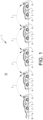
- Figs. 4a, 4b, 4c and 4d show an example embodiment of the method where sorting of vehicles is performed during overtaking. These figures show a part of the road segment 22 in common to the first route 20 and the second route 21.
- the road 23 of the road segment 22 comprises a first lane 24 and a second lane 25, which lanes preferably are dedicated for vehicle platoons only.
- the method comprises the steps of driving the first vehicle platoon 1a in the first lane 24 of the road segment 22 and driving the second vehicle platoon 1b in the second lane 25 of the road segment 22, and positioning the first vehicle platoon 1a and the second vehicle platoon 1b relative to each other such that a rear end 26 of the second vehicle platoon 1b is in front of said at least one following vehicle 3a of the first vehicle platoon 1a, and controlling said at least one following vehicle 3a of the first vehicle platoon 1a to change from the first lane 24 to the second lane 25 and join the second vehicle platoon 1b at the rear end 26 of the second vehicle platoon 1b.
- two following vehicles 3a, 3a' of the first vehicle platoon 1a are disconnecting from the first vehicle platoon 1a and changing from the first lane 24 to the second lane 25 for connecting to the second vehicle platoon 1b.
- These following vehicles 3a, 3a' are dark grey for illustration purposes only.
- the wording "connecting” and “disconnecting" to/from a vehicle platoon used herein, is referring to which lead vehicle the following vehicle will follow and the connection to any local network associated with the current vehicle platoon.
- the vehicles of the vehicle platoon are however individually driven vehicles as previously described hereinabove, though driven together as a group or convoy.
- the method further comprises the steps of repositioning the first vehicle platoon 1a and the second vehicle platoon 1b relative to each other such that a rear end 27 of the first vehicle platoon 1a is in front of said at least one following vehicle 3b of the second vehicle platoon 1b, controlling said at least one following vehicle 3b of the second platoon 1b to change from the second lane 25 to the first lane 24 and join the first vehicle platoon 1a at the rear end 27 of the first vehicle platoon 1a.
- two following vehicles 3b, 3b' of the second vehicle platoon 1b are disconnecting from the second vehicle platoon 1b and changing from the second lane 25 to the first lane 24 for connecting to the first vehicle platoon 1a.
- These following vehicles 3b, 3b' are grey for illustration purposes only.
- the method can comprise the step of performing the lane change of said at least one following vehicle 3a of the first vehicle platoon 1a, and thereafter the lane change of said at least one following vehicle 3b of the second vehicle platoon 1b, during an overtaking where the first vehicle platoon 1a passes the second vehicle platoon 1b.
- the first vehicle platoon 1a has performed an overtaking relative to the second vehicle platoon 1b.
- the first vehicle platoon 1a and the second vehicle platoon 1b can proceed towards their destinations, as indicated in Fig. 4d .
- sorting operations described herein are preferably performed by controlling the vehicles by means of the equipment and control units described with reference to Figs. 1 and 2 , without any assistance from any driver of any of the vehicles.
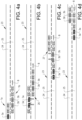
- Figs. 5a, 5b, 5c and 5d show another example embodiment of the method where sorting of vehicles is performed by zipper merging. These figures show a part of the road segment 22 in common to the first route 20 and the second route 21.
- the road 23 of the road segment 22 comprises the first lane 24 and the second lane 25, which lanes preferably are dedicated for vehicle platoons only.
- the method comprises the steps of driving the first vehicle platoon 1a in the first lane 24 of the road segment 22 and driving the second vehicle platoon 1b in the second lane 25 of the road segment 22, side by side, providing a distance 30 between a first following vehicle 3b and a second following vehicle 3b' of the second vehicle platoon 1b, for receiving a following vehicle 3a therebetween at a position corresponding to the longitudinal position (in the driving direction 8) of said at least one following vehicle 3a of the first vehicle platoon 1a, and controlling said at least one following vehicle 3a of the first vehicle platoon 1a to change from the first lane 24 to the second lane 25 and join the second vehicle platoon 1b between the first following vehicle 3b and the second following vehicle 3b' of the second vehicle platoon 1b.
- two following vehicles 3a, 3a' of the first vehicle platoon 1a are disconnecting from the first vehicle platoon 1a and changing from the first lane 24 to the second lane 25 for connecting to the second vehicle platoon 1b.
- These following vehicles 3a, 3a' are dark grey for illustration purposes only.
- the method can also comprise the steps of providing a distance 31 between a first following vehicle 3 and a second following vehicle 3a of the first vehicle platoon 1a, for receiving a following vehicle 3b therebetween at a position corresponding to the longitudinal position (in the driving direction 8) of said at least one following vehicle 3b of the second vehicle platoon 1b, controlling said at least one following vehicle 3b of the second vehicle platoon 1b to change from the second lane 25 to the first lane 24 and join the first vehicle platoon 1a between the first following vehicle 3 and the second following vehicle 3a of the first vehicle platoon 1a.
- the distances 30, 31 are adapted to the size of the vehicles and the time gap between the vehicles for performing the lane shift.
- two following vehicles 3b, 3b' of the second vehicle platoon 1b are disconnecting from the second vehicle platoon 1b and changing from the second lane 25 to the first lane 24 for connecting to the first vehicle platoon 1a.
- These following vehicles 3b, 3b' are grey for illustration purposes only.
- the method can comprise the step of performing the lane change of said at least one following vehicle 3a of the first vehicle platoon 1a and the lane change of said at least one following vehicle 3b of the second vehicle platoon 1b by zipper merging said at least one following vehicle 3a of the first vehicle platoon 1a and said at least one following vehicle 3b of the second vehicle platoon 1b.
- two following vehicles 3a, 3a' of the first vehicle platoon 1a and two following vehicles 3b, 3b' of the second platoon 1b have been controlled to perform a zipper merge operation.
- the first vehicle platoon 1a and the second vehicle platoon 1b can proceed side by side towards their destinations, as indicated in Fig. 5d .
- the invention also relates a control arrangement 40 for controlling vehicles of vehicle platoons.
- control arrangement 40 for controlling vehicles of vehicle platoons.
- the control arrangement 40 preferably comprises one or more of the central control unit 10, control units 5 and communication units 6 arranged on the vehicles, and the sensor equipment 4 of the vehicles.
- the central control unit 10 is suitably used for selecting the road segment 22, and the first vehicle platoon 1a and the second vehicle platoon 1b, between which vehicle platoons 1a, 1b one or more following vehicles are to be switched.
- control arrangement is configured to control the vehicle platoons 1a, 1b accordingly.
- the control arrangement 40 is configured to select the road segment 22 in common to the first route 20 and the second route 21, and to control at least one following vehicle 3a of the first vehicle platoon 1a to leave the first vehicle platoon 1a and join the second vehicle platoon 1b, and control at least one following vehicle 3b of the second vehicle platoon 1b to leave the second vehicle platoon 1b and join the first vehicle platoon 1a, while the first vehicle platoon 1a and the second vehicle platoon 1b are driving along said road segment 22.
- the control arrangement 40 can be configured to control the first vehicle platoon 1a driving in a first lane 24 of the road segment 22 and the second vehicle platoon 1b driving in a second lane 25 of the road segment 22, thereby positioning the first vehicle platoon 1a and the second vehicle platoon 1b relative to each other such that a rear end 26 of the second vehicle platoon 1b is in front of said at least one following vehicle 3a of the first vehicle platoon 1a, and to control said at least one following vehicle 3a of the first vehicle platoon 1a to change from the first lane 24 to the second lane 25 and join the second vehicle platoon 1b at the rear end 26 of the second vehicle platoon 1b.
- control arrangement 40 can be configured to control the first vehicle platoon 1a and the second vehicle platoon 1b for repositioning the first vehicle platoon 1a and the second vehicle platoon 1b relative to each other such that a rear end 27 of the first vehicle platoon 1a is in front of said at least one following vehicle 3b of the second vehicle platoon 1b, and to control said at least one following vehicle 3b of the second vehicle platoon 1b to change from the second lane 25 to the first lane 24 and join the first vehicle platoon 1a at the rear end 27 of the first vehicle platoon 1a.
- control arrangement 40 can be configured to control the first vehicle platoon 1a driving in a first lane 24 of the road segment 22 and control the second vehicle platoon 1b driving in a second lane 25 of the road segment 22, and to control a first following vehicle 3b and a second following vehicle 3b' of the second vehicle platoon 1b, thereby providing a distance 30 between the first following vehicle 3b and the second following vehicle 3b' of the second vehicle platoon 1b, for receiving a following vehicle 3a therebetween at a position corresponding to the longitudinal position (in the driving direction 8) of said at least one following vehicle 3a of the first vehicle platoon 1a, and configured to control said at least one following vehicle 3a of the first vehicle platoon 1a to change from the first lane 24 to the second lane 25 and join the second vehicle platoon 1b between the first following vehicle 3b and the second following vehicle 3b' of the second vehicle platoon 1b.
- control arrangement 40 can be configured to control a first following vehicle 3 and a second following vehicle 3a of the first vehicle platoon 1a, thereby providing a distance 31 between the first following vehicle 3 and the second following vehicle 3a of the first vehicle platoon 1a, for receiving a following vehicle 3b therebetween at a position corresponding to the longitudinal position (in the driving direction 8) of said at least one following vehicle 3b of the second vehicle platoon 1b, and configured to control said at least one following vehicle 3b of the second vehicle platoon 1b to change from the second lane 25 to the first lane 24 and join the first vehicle platoon 1a between the first following vehicle 3 and the second following vehicle 3a of the first vehicle platoon 1a.
Landscapes
- Engineering & Computer Science (AREA)
- Physics & Mathematics (AREA)
- General Physics & Mathematics (AREA)
- Automation & Control Theory (AREA)
- Transportation (AREA)
- Mechanical Engineering (AREA)
- Aviation & Aerospace Engineering (AREA)
- Radar, Positioning & Navigation (AREA)
- Remote Sensing (AREA)
- Traffic Control Systems (AREA)
- Control Of Driving Devices And Active Controlling Of Vehicle (AREA)
Description
- The invention relates to a method for sorting vehicles of vehicle platoons and a control arrangement for controlling vehicles of vehicle platoons.
- In a traffic system comprising vehicle platoons, where each vehicle platoon has a lead vehicle and a plurality of following vehicles driving in a convoy after the lead vehicle, there is a need for individual vehicles to change from one vehicle platoon to another vehicle platoon for reaching the planned destination. The connection and disconnection of vehicles to/from a vehicle platoon should however be performed without disturbances leading to delays and longer driving times.
- Document
GB2558051 - An objective of the invention is to provide a method for sorting vehicles of vehicle platoons, by which method connection and disconnection of vehicles to/from a vehicle platoon can be performed in an efficient way.
- The objective is achieved by a method for sorting vehicles of vehicle platoons according to
claim 1. - The invention is based on the insight that by such method, vehicles having same planned destination but initially are driving in different vehicle platoons can join the same vehicle platoon while keeping a significant velocity of the vehicle platoons, and then continue towards the planned destination.
- According to one embodiment of the method, the method comprises the steps of repositioning the first vehicle platoon and the second vehicle platoon relative to each other such that a rear end of the first vehicle platoon is in front of said at least one following vehicle of the second vehicle platoon, controlling said at least one following vehicle of the second platoon to change from the second lane to the first lane and join the first vehicle platoon at the rear end of the first vehicle platoon. Hereby, the energy consumption can be kept low at the same time as the sorting of vehicles can be performed in a relatively short time.
- According to a further embodiment, the method comprises the steps of performing the lane change of said at least one following vehicle of the first vehicle platoon, and thereafter the lane change of said at least one following vehicle of the second vehicle platoon, during an overtaking where the first vehicle platoon passes the second vehicle platoon. Hereby, no additional braking consuming energy is required for performing sorting of the vehicles.
- According to another aspect of the invention, a further objective is to provide a control arrangement for controlling vehicles of vehicle platoons, by which control arrangement connection and disconnection of vehicles to/from a vehicle platoon can be performed in an efficient way.
- This objective is achieved by a control arrangement for controlling vehicles of vehicle platoons according to
claim 3. - The advantages of the control arrangement are similar to the advantages already discussed hereinabove with reference to the different embodiments of the method. Further advantages and advantageous features of the invention are disclosed in the following description and in the claims.
- With reference to the appended drawings, below follows a more detailed description of embodiments of the invention cited as examples.
- In the drawings:
-
Fig. 1 shows a vehicle platoon, -
Fig. 2 shows two vehicle platoons driving in different lanes, -
Fig. 3 is a map showing some routes for vehicle platoons, -
Figs. 4a, 4b, 4c and 4b show a road segment and an example embodiment of sorting following vehicles of two vehicle platoons, and -
Figs. 5a, 5b, 5c and 5d show a road segment and a further example embodiment of sorting following vehicles of two vehicle platoons. -
Fig. 1 shows avehicle platoon 1 having alead vehicle 2 and a plurality of followingvehicles 3. Thelead vehicle 2 and the followingvehicles 3 are individual vehicles but driven together as a group or convoy. The followingvehicles 3 are positioned in a line after thelead vehicle 2. The driving direction is indicated with anarrow 8. Thelead vehicle 2 can be a so called autonomous or self-driving vehicle, or thelead vehicle 2 can be at least partly controlled by an operator of the lead vehicle. The followingvehicles 3 of the vehicle platoon are suitably automatically controlled without any driver assistance. - When driving in the
vehicle platoon 1, the followingvehicles 3 are controlled to follow thelead vehicle 2 or the vehicle closest to the front, such that when the speed of thelead vehicle 2 is increased/decreased the speed of the followingvehicles 3 is increased/decreased correspondingly for maintaining or achieving the desired distances and time gaps between the vehicles. Further, when thelead vehicle 2 is changing driving direction, a followingvehicle 3 will also change driving direction and follow the lead vehicle or rather the vehicle closest to the front. - For enabling the
vehicles suitable sensor equipment 4 for receiving information about the environment, and acontrol unit 5 for controlling the vehicle. The sensor equipment gives information about at least the vehicle closest to the front, but preferably the sensor equipment is covering 360 degrees around the vehicle for obtaining the information that is required for longitudinal and lateral control of the vehicle.Such sensor equipment 4 may comprise lidar, radar and ultrasonic sensors, cameras, etc. The information received by the sensor equipment is used by thecontrol unit 5 for controlling the driving behaviour of the vehicle. In addition, maps, GPS, etc., can be used for determining the current position of a vehicle platoon or an individual vehicle of a vehicle platoon. - Alternatively or in addition to the
sensor equipment 4, eachvehicle communication unit 6 for communicating with one or more of the other vehicles of thevehicle platoon 1. Such acommunication unit 6 may comprise any suitable components for establish communication between the vehicles. For example, thecommunication unit 6 may comprise a transmitter and a receiver based on radio waves or microwaves. In other words, each vehicle can be part of a local network forcommunication 7 between the vehicles of thevehicle platoon 1. By means of the local network, control signals can be transmitted from one vehicle to another vehicle. The control signals received are then used by thecontrol unit 5 arranged on the vehicle for controlling the driving behaviour of the vehicle. Such control signals received by the followingvehicles 3 are preferably at least initially transmitted by thelead vehicle 2. -
Fig. 2 shows twovehicle platoons vehicle platoon communication 9 between thevehicle platoon central control unit 10. By means of the central network, control signals can be transmitted from thecentral control unit 10 to avehicle platoon lead vehicle vehicles 3 of the vehicle platoon. Thecentral control unit 10 can be part of a server of a wireless network, such as Internet, for cloud computing. - The
central control unit 10 and thelocal control unit 5 arranged on a vehicle may comprise one or more microprocessors and/or one or more memory devices or any other components for executing computer programs to perform the method described hereinafter. Thus, the central control unit and/or the local control unit is preferably provided with a computer program comprising program code means for performing the steps of any example embodiment of the method described hereinafter. - For controlling a vehicle platoon or an individual vehicle of the vehicle platoon when a vehicle is to change from one vehicle platoon to another vehicle platoon, preferably both the
control unit 5 of the vehicle and thecentral control unit 10 are used in cooperation. Alternatively or in addition to what has been described hereinabove, sensors can be arranged in the environment to the current road where the vehicle platoons are driven. These sensors may provide information received by thecontrol unit 5 and/or thecentral control unit 10. Such sensors could be a complement to the sensors of the vehicles, giving further information and/or redundancy to the system. -
Fig. 3 is a simplified map showing some routes for vehicle platoons. In this example, a first vehicle platoon is driving from position A to position D along afirst route 20, and a second vehicle platoon is driving from position B to position C along asecond route 21. Thefirst route 20 and thesecond route 21 have aroad segment 22 in common. In this case, some following vehicles of the first vehicle platoon could however have position C as final destination, and some following vehicles of the second vehicle platoon could have position D as final destination. - When describing the method hereinafter, reference to
Figs. 1-3 will be made. - The method comprises the steps of providing the
first vehicle platoon 1a driving along thefirst route 20 and thesecond vehicle platoon 1b driving along thesecond route 21. As previously described hereinabove, thefirst vehicle platoon 1a comprises alead vehicle 2a and a plurality of followingvehicles 3 and thesecond vehicle platoon 1b comprises alead vehicle 2b and a plurality of followingvehicles 3. The method further comprises the steps of selecting theroad segment 22 in common to thefirst route 20 and thesecond route 21, and controlling at least one followingvehicle 3a of thefirst vehicle platoon 1a to leave the first vehicle platoon and join thesecond vehicle platoon 1b, and and/or controlling at least one followingvehicle 3b of thesecond vehicle platoon 1b to leave the second vehicle platoon and join thefirst vehicle platoon 1a, while driving thefirst vehicle platoon 1a and thesecond vehicle platoon 1b along saidroad segment 22. -
Figs. 4a, 4b, 4c and 4d show an example embodiment of the method where sorting of vehicles is performed during overtaking. These figures show a part of theroad segment 22 in common to thefirst route 20 and thesecond route 21. Theroad 23 of theroad segment 22 comprises afirst lane 24 and asecond lane 25, which lanes preferably are dedicated for vehicle platoons only. - In the example embodiment illustrated in
Figs. 4a-4d , the method comprises the steps of driving thefirst vehicle platoon 1a in thefirst lane 24 of theroad segment 22 and driving thesecond vehicle platoon 1b in thesecond lane 25 of theroad segment 22, and positioning thefirst vehicle platoon 1a and thesecond vehicle platoon 1b relative to each other such that arear end 26 of thesecond vehicle platoon 1b is in front of said at least one followingvehicle 3a of thefirst vehicle platoon 1a, and controlling said at least one followingvehicle 3a of thefirst vehicle platoon 1a to change from thefirst lane 24 to thesecond lane 25 and join thesecond vehicle platoon 1b at therear end 26 of thesecond vehicle platoon 1b. - As indicated in
Figs. 4a and 4b , two followingvehicles first vehicle platoon 1a are disconnecting from thefirst vehicle platoon 1a and changing from thefirst lane 24 to thesecond lane 25 for connecting to thesecond vehicle platoon 1b. These followingvehicles - The method further comprises the steps of repositioning the
first vehicle platoon 1a and thesecond vehicle platoon 1b relative to each other such that arear end 27 of thefirst vehicle platoon 1a is in front of said at least one followingvehicle 3b of thesecond vehicle platoon 1b, controlling said at least one followingvehicle 3b of thesecond platoon 1b to change from thesecond lane 25 to thefirst lane 24 and join thefirst vehicle platoon 1a at therear end 27 of thefirst vehicle platoon 1a. - As indicated in
Figs. 4c and 4d , two followingvehicles second vehicle platoon 1b are disconnecting from thesecond vehicle platoon 1b and changing from thesecond lane 25 to thefirst lane 24 for connecting to thefirst vehicle platoon 1a. These followingvehicles - The method can comprise the step of performing the lane change of said at least one following
vehicle 3a of thefirst vehicle platoon 1a, and thereafter the lane change of said at least one followingvehicle 3b of thesecond vehicle platoon 1b, during an overtaking where thefirst vehicle platoon 1a passes thesecond vehicle platoon 1b. In the example embodiment illustrated inFigs. 4a-4d , during the sorting operation of the following vehicles thefirst vehicle platoon 1a has performed an overtaking relative to thesecond vehicle platoon 1b. After the sorting operation has been performed, thefirst vehicle platoon 1a and thesecond vehicle platoon 1b can proceed towards their destinations, as indicated inFig. 4d . - It should be stressed that the sorting operations described herein are preferably performed by controlling the vehicles by means of the equipment and control units described with reference to
Figs. 1 and2 , without any assistance from any driver of any of the vehicles. -
Figs. 5a, 5b, 5c and 5d show another example embodiment of the method where sorting of vehicles is performed by zipper merging. These figures show a part of theroad segment 22 in common to thefirst route 20 and thesecond route 21. Theroad 23 of theroad segment 22 comprises thefirst lane 24 and thesecond lane 25, which lanes preferably are dedicated for vehicle platoons only. - In the example embodiment illustrated in
Figs. 5a-5d , the method comprises the steps of driving thefirst vehicle platoon 1a in thefirst lane 24 of theroad segment 22 and driving thesecond vehicle platoon 1b in thesecond lane 25 of theroad segment 22, side by side, providing a distance 30 between a first followingvehicle 3b and a second followingvehicle 3b' of thesecond vehicle platoon 1b, for receiving a followingvehicle 3a therebetween at a position corresponding to the longitudinal position (in the driving direction 8) of said at least one followingvehicle 3a of thefirst vehicle platoon 1a, and controlling said at least one followingvehicle 3a of thefirst vehicle platoon 1a to change from thefirst lane 24 to thesecond lane 25 and join thesecond vehicle platoon 1b between the first followingvehicle 3b and the second followingvehicle 3b' of thesecond vehicle platoon 1b. - As indicated in
Figs. 5a and 5b , two followingvehicles first vehicle platoon 1a are disconnecting from thefirst vehicle platoon 1a and changing from thefirst lane 24 to thesecond lane 25 for connecting to thesecond vehicle platoon 1b. These followingvehicles - The method can also comprise the steps of providing a
distance 31 between a first followingvehicle 3 and a second followingvehicle 3a of thefirst vehicle platoon 1a, for receiving a followingvehicle 3b therebetween at a position corresponding to the longitudinal position (in the driving direction 8) of said at least one followingvehicle 3b of thesecond vehicle platoon 1b, controlling said at least one followingvehicle 3b of thesecond vehicle platoon 1b to change from thesecond lane 25 to thefirst lane 24 and join thefirst vehicle platoon 1a between the first followingvehicle 3 and the second followingvehicle 3a of thefirst vehicle platoon 1a. - The
distances 30, 31 are adapted to the size of the vehicles and the time gap between the vehicles for performing the lane shift. - As also indicated in
Figs. 5a and 5b , two followingvehicles second vehicle platoon 1b are disconnecting from thesecond vehicle platoon 1b and changing from thesecond lane 25 to thefirst lane 24 for connecting to thefirst vehicle platoon 1a. These followingvehicles - The method can comprise the step of performing the lane change of said at least one following
vehicle 3a of thefirst vehicle platoon 1a and the lane change of said at least one followingvehicle 3b of thesecond vehicle platoon 1b by zipper merging said at least one followingvehicle 3a of thefirst vehicle platoon 1a and said at least one followingvehicle 3b of thesecond vehicle platoon 1b. In the example embodiment illustrated inFigs. 5a-5d , during the sorting operation of the following vehicles, two followingvehicles first vehicle platoon 1a and two followingvehicles second platoon 1b have been controlled to perform a zipper merge operation. After the sorting operation has been performed, thefirst vehicle platoon 1a and thesecond vehicle platoon 1b can proceed side by side towards their destinations, as indicated inFig. 5d . - The invention also relates a
control arrangement 40 for controlling vehicles of vehicle platoons. When describing thecontrol arrangement 40 hereinafter, reference is made to previously described figures, particularlyFigs. 1 and2 . - The
control arrangement 40 preferably comprises one or more of thecentral control unit 10,control units 5 andcommunication units 6 arranged on the vehicles, and thesensor equipment 4 of the vehicles. For example, thecentral control unit 10 is suitably used for selecting theroad segment 22, and thefirst vehicle platoon 1a and thesecond vehicle platoon 1b, between which vehicle platoons 1a, 1b one or more following vehicles are to be switched. - In analogy to what is described hereinabove as it regards the method, the control arrangement is configured to control the vehicle platoons 1a, 1b accordingly.
- The
control arrangement 40 is configured to select theroad segment 22 in common to thefirst route 20 and thesecond route 21, and to control at least one followingvehicle 3a of thefirst vehicle platoon 1a to leave thefirst vehicle platoon 1a and join thesecond vehicle platoon 1b, and control at least one followingvehicle 3b of thesecond vehicle platoon 1b to leave thesecond vehicle platoon 1b and join thefirst vehicle platoon 1a, while thefirst vehicle platoon 1a and thesecond vehicle platoon 1b are driving along saidroad segment 22. - The
control arrangement 40 can be configured to control thefirst vehicle platoon 1a driving in afirst lane 24 of theroad segment 22 and thesecond vehicle platoon 1b driving in asecond lane 25 of theroad segment 22, thereby positioning thefirst vehicle platoon 1a and thesecond vehicle platoon 1b relative to each other such that arear end 26 of thesecond vehicle platoon 1b is in front of said at least one followingvehicle 3a of thefirst vehicle platoon 1a, and to control said at least one followingvehicle 3a of thefirst vehicle platoon 1a to change from thefirst lane 24 to thesecond lane 25 and join thesecond vehicle platoon 1b at therear end 26 of thesecond vehicle platoon 1b. - Correspondingly, the
control arrangement 40 can be configured to control thefirst vehicle platoon 1a and thesecond vehicle platoon 1b for repositioning thefirst vehicle platoon 1a and thesecond vehicle platoon 1b relative to each other such that arear end 27 of thefirst vehicle platoon 1a is in front of said at least one followingvehicle 3b of thesecond vehicle platoon 1b, and to control said at least one followingvehicle 3b of thesecond vehicle platoon 1b to change from thesecond lane 25 to thefirst lane 24 and join thefirst vehicle platoon 1a at therear end 27 of thefirst vehicle platoon 1a. - Further, the
control arrangement 40 can be configured to control thefirst vehicle platoon 1a driving in afirst lane 24 of theroad segment 22 and control thesecond vehicle platoon 1b driving in asecond lane 25 of theroad segment 22, and to control a first followingvehicle 3b and a second followingvehicle 3b' of thesecond vehicle platoon 1b, thereby providing a distance 30 between the first followingvehicle 3b and the second followingvehicle 3b' of thesecond vehicle platoon 1b, for receiving a followingvehicle 3a therebetween at a position corresponding to the longitudinal position (in the driving direction 8) of said at least one followingvehicle 3a of thefirst vehicle platoon 1a, and configured to control said at least one followingvehicle 3a of thefirst vehicle platoon 1a to change from thefirst lane 24 to thesecond lane 25 and join thesecond vehicle platoon 1b between the first followingvehicle 3b and the second followingvehicle 3b' of thesecond vehicle platoon 1b. - Correspondingly, the
control arrangement 40 can be configured to control a first followingvehicle 3 and a second followingvehicle 3a of thefirst vehicle platoon 1a, thereby providing adistance 31 between the first followingvehicle 3 and the second followingvehicle 3a of thefirst vehicle platoon 1a, for receiving a followingvehicle 3b therebetween at a position corresponding to the longitudinal position (in the driving direction 8) of said at least one followingvehicle 3b of thesecond vehicle platoon 1b, and configured to control said at least one followingvehicle 3b of thesecond vehicle platoon 1b to change from thesecond lane 25 to thefirst lane 24 and join thefirst vehicle platoon 1a between the first followingvehicle 3 and the second followingvehicle 3a of thefirst vehicle platoon 1a. - It is to be understood that the present invention is not limited to the embodiments described above and illustrated in the drawings; rather, the skilled person will recognize that many changes and modifications may be made within the scope of the appended claims.
Claims (5)
- A method for sorting vehicles of vehicle platoons, allowing said vehicles having the same planned destination but initially driving in different vehicle platoons to join the same vehicle platoon while keeping a significant velocity of the vehicle platoons and then continue towards the planned destination, comprising the steps of providing a first vehicle platoon (1a) driving along a first route (20) and a second vehicle platoon (1b) driving along a second route (21), the first vehicle platoon (1a) comprising a lead vehicle (2a) and a plurality of following vehicles (3) and the second vehicle platoon comprising a lead vehicle (2b) and a plurality of following vehicles (3), selecting a road segment (22) in common to the first route (20) and the second route (21), controlling at least one following vehicle (3a) of the first vehicle platoon (1a) to leave the first vehicle platoon and join the second vehicle platoon (1b) and controlling at least one following vehicle (3b) of the second vehicle platoon (1b) to leave the second vehicle platoon and join the first vehicle platoon (1a) while driving the first vehicle platoon (1a) and the second vehicle platoon (1 b) along said road segment (22),by driving the first vehicle platoon (1a) in a first lane (24) of the road segment (22) and driving the second vehicle platoon (1 b) in a second lane (25) of the road segment (22), and positioning the first vehicle platoon (1a) and the second vehicle platoon (1b) relative to each other such that a rear end (26) of the second vehicle platoon (1 b) is in front of said at least one following vehicle (3a) of the first vehicle platoon (1a), controlling said at least one following vehicle (3a) of the first vehicle platoon (1 a) to change from the first lane (24) to the second lane (25) and join the second vehicle platoon (1 b) at the rear end (26) of the second vehicle platoon (1b), repositioning the first vehicle platoon (1a) and the second vehicle platoon (1b) relative to each other such that a rear end (27) of the first vehicle platoon (1a) is in front of said at least one following vehicle (3b) of the second vehicle platoon (1 b), and controlling said at least one following vehicle (3b) of the second platoon (1 b) to change from the second lane (25) to the first lane (24) and join the first vehicle platoon (1a) at the rear end (27) of the first vehicle platoon (1a).
- method according to claim 1
characterized by performing the lane change of said at least one following vehicle (3a) of the first vehicle platoon (1a), and thereafter the lane change of said at least one following vehicle (3b) of the second vehicle platoon (1b), during an overtaking where the first vehicle platoon (1a) passes the second vehicle platoon (1b). - A control arrangement (40) for controlling vehicles of vehicle platoons, allowing said vehicles having the same planned destination but initially driving in different vehicle platoons to join the same vehicle platoon while keeping a significant velocity of the vehicle platoons and then continue towards the planned destination, the vehicle platoons comprising a first vehicle platoon (1a) driving along a first route (20) and a second vehicle platoon (1b) driving along a second route (21), the first vehicle platoon (1a) comprising a lead vehicle (2a) and a plurality of following vehicles (3) and the second vehicle platoon (1b) comprising a lead vehicle (2b) and a plurality of following vehicles (3), the control arrangement (40) being configured to select a road segment (22) in common to the first route (20) and the second route (21), to control at least one following vehicle (3a) of the first vehicle platoon (1a) to leave the first vehicle platoon and join the second vehicle platoon (1b) and control at least one following vehicle (3b) of the second vehicle platoon (1b) to leave the second vehicle platoon and join the first vehicle platoon (1a) while driving the first vehicle platoon (1a) and the second vehicle platoon (1 b) along said road segment (22), by driving the first vehicle platoon (1a) in a first lane (24) of the road segment (22) and driving the second vehicle platoon (1b) in a second lane (25) of the road segment (22), and positioning the first vehicle platoon (1a) and the second vehicle platoon (1b) relative to each other such that a rear end (26) of the second vehicle platoon (1b) is in front of said at least one following vehicle (3a) of the first vehicle platoon (1a), controlling said at least one following vehicle (3a) of the first vehicle platoon (1a) to change from the first lane (24) to the second lane (25) and join the second vehicle platoon (1b) at the rear end (26) of the second vehicle platoon (1b), repositioning the first vehicle platoon (1a) and the second vehicle platoon (1b) relative to each other such that a rear end (27) of the first vehicle platoon (1a) is in front of said at least one following vehicle (3b) of the second vehicle platoon (1b), and controlling said at least one following vehicle (3b) of the second platoon (1b) to change from the second lane (25) to the first lane (24) and join the first vehicle platoon (1a) at the rear end (27) of the first vehicle platoon (1a). 25
- A control arrangement according to claim 3 characterized in that the control arrangement (40) is configured to control said at least one following vehicle (3a) of the first vehicle platoon (1a) to perform the lane change, and thereafter control said at least one following vehicle (3b) of the second vehicle platoon (1b) to perform the lane change, during an overtaking where the first vehicle platoon (1a) passes the second vehicle platoon (1b).
- A computer program comprising program code which, when the program code is executed by a computer, cause the computer to carry out the method according to any of claims 1-3.
Priority Applications (4)
| Application Number | Priority Date | Filing Date | Title |
|---|---|---|---|
| EP19194924.7A EP3786915B1 (en) | 2019-09-02 | 2019-09-02 | A method for sorting vehicles of vehicle platoons |
| PCT/CN2020/111876 WO2021043072A1 (en) | 2019-09-02 | 2020-08-27 | Method for sorting vehicles of vehicle platoons |
| CN202080059941.6A CN114287027B (en) | 2019-09-02 | 2020-08-27 | Method for grouping vehicles in a vehicle queue |
| US17/680,573 US20220292982A1 (en) | 2019-09-02 | 2022-02-25 | Method for sorting vehicles of vehicle platoons |
Applications Claiming Priority (1)
| Application Number | Priority Date | Filing Date | Title |
|---|---|---|---|
| EP19194924.7A EP3786915B1 (en) | 2019-09-02 | 2019-09-02 | A method for sorting vehicles of vehicle platoons |
Publications (2)
| Publication Number | Publication Date |
|---|---|
| EP3786915A1 EP3786915A1 (en) | 2021-03-03 |
| EP3786915B1 true EP3786915B1 (en) | 2023-11-08 |
Family
ID=67840989
Family Applications (1)
| Application Number | Title | Priority Date | Filing Date |
|---|---|---|---|
| EP19194924.7A Active EP3786915B1 (en) | 2019-09-02 | 2019-09-02 | A method for sorting vehicles of vehicle platoons |
Country Status (4)
| Country | Link |
|---|---|
| US (1) | US20220292982A1 (en) |
| EP (1) | EP3786915B1 (en) |
| CN (1) | CN114287027B (en) |
| WO (1) | WO2021043072A1 (en) |
Families Citing this family (11)
| Publication number | Priority date | Publication date | Assignee | Title |
|---|---|---|---|---|
| JP7371520B2 (en) * | 2020-02-14 | 2023-10-31 | トヨタ自動車株式会社 | Information processing device, information processing method, and program |
| US11097735B1 (en) * | 2020-03-19 | 2021-08-24 | Toyota Motor North America, Inc. | Transport lane usage |
| US11720114B2 (en) | 2020-03-19 | 2023-08-08 | Toyota Motor North America, Inc. | Safety of transport maneuvering |
| US11488424B2 (en) | 2020-03-19 | 2022-11-01 | Toyota Motor North America, Inc. | Motion-based transport assessment |
| US11675371B2 (en) * | 2020-04-08 | 2023-06-13 | Pony Ai Inc. | System and method for fleet management |
| DE102020002993B4 (en) * | 2020-05-19 | 2022-11-10 | Mercedes-Benz Group AG | Method for supporting a vehicle |
| KR20220056304A (en) * | 2020-10-27 | 2022-05-06 | 현대자동차주식회사 | Apparatus and method for controlling platooning information of vehicle |
| US11792801B2 (en) * | 2021-08-02 | 2023-10-17 | Qualcomm Incorporated | Route-based sidelink communication assignments |
| US11491987B1 (en) * | 2022-06-22 | 2022-11-08 | Embark Trucks Inc. | Merge handling based on merge intentions over time |
| CN116311863B (en) * | 2022-11-29 | 2024-05-10 | 北京航空航天大学 | Intersection connection road section vehicle formation control method under automatic driving environment |
| US20240321110A1 (en) * | 2023-03-24 | 2024-09-26 | Mercedes-Benz Group AG | Methods and Computing Systems for Vehicle to Vehicle Platooning and Communications |
Family Cites Families (18)
| Publication number | Priority date | Publication date | Assignee | Title |
|---|---|---|---|---|
| US8352112B2 (en) * | 2009-04-06 | 2013-01-08 | GM Global Technology Operations LLC | Autonomous vehicle management |
| JP6015329B2 (en) * | 2012-10-11 | 2016-10-26 | 株式会社デンソー | Convoy travel system and convoy travel device |
| JP5817777B2 (en) * | 2013-04-17 | 2015-11-18 | 株式会社デンソー | Convoy travel system |
| EP2881926B1 (en) * | 2013-12-04 | 2021-08-04 | Volvo Car Corporation | Method and control system for controlling movement of a group of road vehicles |
| US10115314B2 (en) * | 2015-07-08 | 2018-10-30 | Magna Electronics Inc. | Lane change system for platoon of vehicles |
| KR101846631B1 (en) * | 2015-12-08 | 2018-04-06 | 현대자동차주식회사 | Method for joining driving the ranks of vehicle |
| US11527157B2 (en) * | 2016-03-04 | 2022-12-13 | Telefonaktiebolaget Lm Ericsson (Publ) | Method for traffic control entity for controlling vehicle traffic |
| US10353387B2 (en) * | 2016-04-12 | 2019-07-16 | Here Global B.V. | Method, apparatus and computer program product for grouping vehicles into a platoon |
| US9928746B1 (en) * | 2016-09-16 | 2018-03-27 | Ford Global Technologies, Llc | Vehicle-to-vehicle cooperation to marshal traffic |
| US10399564B2 (en) * | 2016-10-25 | 2019-09-03 | Ford Global Technologies, Llc | Vehicle roundabout management |
| CN108877199A (en) * | 2017-05-15 | 2018-11-23 | 华为技术有限公司 | Fleet control method, equipment and vehicle networking system |
| US10653400B2 (en) * | 2017-08-07 | 2020-05-19 | Covidien Lp | Specimen retrieval device |
| KR102288799B1 (en) * | 2017-09-27 | 2021-08-11 | 현대모비스 주식회사 | Apparatus for controlling group driving and method thereof |
| KR102350092B1 (en) * | 2017-11-13 | 2022-01-12 | 현대자동차주식회사 | Apparatus for controlling cluster driving of vehicle and method thereof |
| KR102417906B1 (en) * | 2017-12-11 | 2022-07-07 | 현대자동차주식회사 | Apparatus and method for controlling platooning of leading vehicle |
| US10921821B2 (en) * | 2017-12-21 | 2021-02-16 | Bendix Commercial Vehicle Systems Llc | Determining and using braking capabilities of vehicles for platooning deceleration operations |
| US10739787B2 (en) * | 2018-01-12 | 2020-08-11 | Toyota Motor Engineering & Manufacturing North America, Inc. | Responsibilities and agreement acceptance for vehicle platooning |
| KR20210020613A (en) * | 2019-08-16 | 2021-02-24 | 엘지전자 주식회사 | A method for transferring of vehicle between groups during platooning |
-
2019
- 2019-09-02 EP EP19194924.7A patent/EP3786915B1/en active Active
-
2020
- 2020-08-27 WO PCT/CN2020/111876 patent/WO2021043072A1/en not_active Ceased
- 2020-08-27 CN CN202080059941.6A patent/CN114287027B/en active Active
-
2022
- 2022-02-25 US US17/680,573 patent/US20220292982A1/en not_active Abandoned
Also Published As
| Publication number | Publication date |
|---|---|
| EP3786915A1 (en) | 2021-03-03 |
| WO2021043072A1 (en) | 2021-03-11 |
| CN114287027A (en) | 2022-04-05 |
| CN114287027B (en) | 2024-01-09 |
| US20220292982A1 (en) | 2022-09-15 |
Similar Documents
| Publication | Publication Date | Title |
|---|---|---|
| US20220292982A1 (en) | Method for sorting vehicles of vehicle platoons | |
| EP4041608B1 (en) | Methods and systems for lane changes using a multi-corridor representation of local route regions | |
| EP3782000B1 (en) | A method for controlling a string of vehicles | |
| US11485382B2 (en) | Control unit and method for operating a driving function at a signalling installation | |
| JP4371137B2 (en) | Automatic operation control device | |
| JP6771150B2 (en) | Roadside equipment, in-vehicle equipment, vehicles | |
| JP7052692B2 (en) | Formation system | |
| US20140107867A1 (en) | Convoy travel system and convoy travel apparatus | |
| WO2017164792A1 (en) | A method and a system for controlling platooning operation when a vehicle is to leave the platoon | |
| CN108806295A (en) | Automotive vehicle route crosses | |
| EP4030792B1 (en) | V2x communication system with autonomous driving information | |
| JP2016146131A (en) | Convoy traveling management device and convoy traveling management program | |
| US20210009126A1 (en) | Vehicle control device, vehicle control method, and storage medium | |
| KR102231830B1 (en) | Vehicle's platooning join method and platooning join approval method | |
| US20220292986A1 (en) | Method for operating a transportation system | |
| JP2016146130A (en) | Convoy traveling management device and convoy traveling management program | |
| JP2019028733A (en) | Convoy travel system | |
| WO2019089749A1 (en) | Control of vehicle platoon systems in response to traffic and route conditions | |
| GB2570898A (en) | A controller and a method for managing vehicles | |
| US20220292985A1 (en) | Method for opearting a transportation system | |
| JP6388127B2 (en) | Convoy travel management device and convoy travel management program | |
| KR20230072294A (en) | Method for Providing Platooning in Intersection And Vehicle Controller Therefor | |
| JP2018134971A (en) | Vehicle control device | |
| CN110940346A (en) | High-precision map processing method and device for automatic driving lane changing | |
| US20220292984A1 (en) | Method for operating a transportation system |
Legal Events
| Date | Code | Title | Description |
|---|---|---|---|
| PUAI | Public reference made under article 153(3) epc to a published international application that has entered the european phase |
Free format text: ORIGINAL CODE: 0009012 |
|
| STAA | Information on the status of an ep patent application or granted ep patent |
Free format text: STATUS: REQUEST FOR EXAMINATION WAS MADE |
|
| 17P | Request for examination filed |
Effective date: 20190902 |
|
| AK | Designated contracting states |
Kind code of ref document: A1 Designated state(s): AL AT BE BG CH CY CZ DE DK EE ES FI FR GB GR HR HU IE IS IT LI LT LU LV MC MK MT NL NO PL PT RO RS SE SI SK SM TR |
|
| AX | Request for extension of the european patent |
Extension state: BA ME |
|
| GRAP | Despatch of communication of intention to grant a patent |
Free format text: ORIGINAL CODE: EPIDOSNIGR1 |
|
| STAA | Information on the status of an ep patent application or granted ep patent |
Free format text: STATUS: GRANT OF PATENT IS INTENDED |
|
| INTG | Intention to grant announced |
Effective date: 20230601 |
|
| GRAS | Grant fee paid |
Free format text: ORIGINAL CODE: EPIDOSNIGR3 |
|
| GRAA | (expected) grant |
Free format text: ORIGINAL CODE: 0009210 |
|
| STAA | Information on the status of an ep patent application or granted ep patent |
Free format text: STATUS: THE PATENT HAS BEEN GRANTED |
|
| AK | Designated contracting states |
Kind code of ref document: B1 Designated state(s): AL AT BE BG CH CY CZ DE DK EE ES FI FR GB GR HR HU IE IS IT LI LT LU LV MC MK MT NL NO PL PT RO RS SE SI SK SM TR |
|
| REG | Reference to a national code |
Ref country code: GB Ref legal event code: FG4D |
|
| REG | Reference to a national code |
Ref country code: CH Ref legal event code: EP |
|
| REG | Reference to a national code |
Ref country code: DE Ref legal event code: R096 Ref document number: 602019040953 Country of ref document: DE |
|
| REG | Reference to a national code |
Ref country code: IE Ref legal event code: FG4D |
|
| REG | Reference to a national code |
Ref country code: LT Ref legal event code: MG9D |
|
| REG | Reference to a national code |
Ref country code: NL Ref legal event code: MP Effective date: 20231108 |
|
| PG25 | Lapsed in a contracting state [announced via postgrant information from national office to epo] |
Ref country code: IS Free format text: LAPSE BECAUSE OF FAILURE TO SUBMIT A TRANSLATION OF THE DESCRIPTION OR TO PAY THE FEE WITHIN THE PRESCRIBED TIME-LIMIT Effective date: 20240308 |
|
| PG25 | Lapsed in a contracting state [announced via postgrant information from national office to epo] |
Ref country code: LT Free format text: LAPSE BECAUSE OF FAILURE TO SUBMIT A TRANSLATION OF THE DESCRIPTION OR TO PAY THE FEE WITHIN THE PRESCRIBED TIME-LIMIT Effective date: 20231108 |
|
| REG | Reference to a national code |
Ref country code: AT Ref legal event code: MK05 Ref document number: 1630364 Country of ref document: AT Kind code of ref document: T Effective date: 20231108 |
|
| PG25 | Lapsed in a contracting state [announced via postgrant information from national office to epo] |
Ref country code: NL Free format text: LAPSE BECAUSE OF FAILURE TO SUBMIT A TRANSLATION OF THE DESCRIPTION OR TO PAY THE FEE WITHIN THE PRESCRIBED TIME-LIMIT Effective date: 20231108 |
|
| PG25 | Lapsed in a contracting state [announced via postgrant information from national office to epo] |
Ref country code: AT Free format text: LAPSE BECAUSE OF FAILURE TO SUBMIT A TRANSLATION OF THE DESCRIPTION OR TO PAY THE FEE WITHIN THE PRESCRIBED TIME-LIMIT Effective date: 20231108 |
|
| PG25 | Lapsed in a contracting state [announced via postgrant information from national office to epo] |
Ref country code: ES Free format text: LAPSE BECAUSE OF FAILURE TO SUBMIT A TRANSLATION OF THE DESCRIPTION OR TO PAY THE FEE WITHIN THE PRESCRIBED TIME-LIMIT Effective date: 20231108 |
|
| PG25 | Lapsed in a contracting state [announced via postgrant information from national office to epo] |
Ref country code: NL Free format text: LAPSE BECAUSE OF FAILURE TO SUBMIT A TRANSLATION OF THE DESCRIPTION OR TO PAY THE FEE WITHIN THE PRESCRIBED TIME-LIMIT Effective date: 20231108 Ref country code: LT Free format text: LAPSE BECAUSE OF FAILURE TO SUBMIT A TRANSLATION OF THE DESCRIPTION OR TO PAY THE FEE WITHIN THE PRESCRIBED TIME-LIMIT Effective date: 20231108 Ref country code: IS Free format text: LAPSE BECAUSE OF FAILURE TO SUBMIT A TRANSLATION OF THE DESCRIPTION OR TO PAY THE FEE WITHIN THE PRESCRIBED TIME-LIMIT Effective date: 20240308 Ref country code: ES Free format text: LAPSE BECAUSE OF FAILURE TO SUBMIT A TRANSLATION OF THE DESCRIPTION OR TO PAY THE FEE WITHIN THE PRESCRIBED TIME-LIMIT Effective date: 20231108 Ref country code: BG Free format text: LAPSE BECAUSE OF FAILURE TO SUBMIT A TRANSLATION OF THE DESCRIPTION OR TO PAY THE FEE WITHIN THE PRESCRIBED TIME-LIMIT Effective date: 20240208 Ref country code: AT Free format text: LAPSE BECAUSE OF FAILURE TO SUBMIT A TRANSLATION OF THE DESCRIPTION OR TO PAY THE FEE WITHIN THE PRESCRIBED TIME-LIMIT Effective date: 20231108 Ref country code: PT Free format text: LAPSE BECAUSE OF FAILURE TO SUBMIT A TRANSLATION OF THE DESCRIPTION OR TO PAY THE FEE WITHIN THE PRESCRIBED TIME-LIMIT Effective date: 20240308 |
|
| PG25 | Lapsed in a contracting state [announced via postgrant information from national office to epo] |
Ref country code: SE Free format text: LAPSE BECAUSE OF FAILURE TO SUBMIT A TRANSLATION OF THE DESCRIPTION OR TO PAY THE FEE WITHIN THE PRESCRIBED TIME-LIMIT Effective date: 20231108 Ref country code: RS Free format text: LAPSE BECAUSE OF FAILURE TO SUBMIT A TRANSLATION OF THE DESCRIPTION OR TO PAY THE FEE WITHIN THE PRESCRIBED TIME-LIMIT Effective date: 20231108 Ref country code: PL Free format text: LAPSE BECAUSE OF FAILURE TO SUBMIT A TRANSLATION OF THE DESCRIPTION OR TO PAY THE FEE WITHIN THE PRESCRIBED TIME-LIMIT Effective date: 20231108 Ref country code: NO Free format text: LAPSE BECAUSE OF FAILURE TO SUBMIT A TRANSLATION OF THE DESCRIPTION OR TO PAY THE FEE WITHIN THE PRESCRIBED TIME-LIMIT Effective date: 20240208 Ref country code: LV Free format text: LAPSE BECAUSE OF FAILURE TO SUBMIT A TRANSLATION OF THE DESCRIPTION OR TO PAY THE FEE WITHIN THE PRESCRIBED TIME-LIMIT Effective date: 20231108 Ref country code: HR Free format text: LAPSE BECAUSE OF FAILURE TO SUBMIT A TRANSLATION OF THE DESCRIPTION OR TO PAY THE FEE WITHIN THE PRESCRIBED TIME-LIMIT Effective date: 20231108 |
|
| PG25 | Lapsed in a contracting state [announced via postgrant information from national office to epo] |
Ref country code: DK Free format text: LAPSE BECAUSE OF FAILURE TO SUBMIT A TRANSLATION OF THE DESCRIPTION OR TO PAY THE FEE WITHIN THE PRESCRIBED TIME-LIMIT Effective date: 20231108 |
|
| PG25 | Lapsed in a contracting state [announced via postgrant information from national office to epo] |
Ref country code: CZ Free format text: LAPSE BECAUSE OF FAILURE TO SUBMIT A TRANSLATION OF THE DESCRIPTION OR TO PAY THE FEE WITHIN THE PRESCRIBED TIME-LIMIT Effective date: 20231108 |
|
| PG25 | Lapsed in a contracting state [announced via postgrant information from national office to epo] |
Ref country code: SK Free format text: LAPSE BECAUSE OF FAILURE TO SUBMIT A TRANSLATION OF THE DESCRIPTION OR TO PAY THE FEE WITHIN THE PRESCRIBED TIME-LIMIT Effective date: 20231108 |
|
| PG25 | Lapsed in a contracting state [announced via postgrant information from national office to epo] |
Ref country code: SM Free format text: LAPSE BECAUSE OF FAILURE TO SUBMIT A TRANSLATION OF THE DESCRIPTION OR TO PAY THE FEE WITHIN THE PRESCRIBED TIME-LIMIT Effective date: 20231108 Ref country code: SK Free format text: LAPSE BECAUSE OF FAILURE TO SUBMIT A TRANSLATION OF THE DESCRIPTION OR TO PAY THE FEE WITHIN THE PRESCRIBED TIME-LIMIT Effective date: 20231108 Ref country code: RO Free format text: LAPSE BECAUSE OF FAILURE TO SUBMIT A TRANSLATION OF THE DESCRIPTION OR TO PAY THE FEE WITHIN THE PRESCRIBED TIME-LIMIT Effective date: 20231108 Ref country code: IT Free format text: LAPSE BECAUSE OF FAILURE TO SUBMIT A TRANSLATION OF THE DESCRIPTION OR TO PAY THE FEE WITHIN THE PRESCRIBED TIME-LIMIT Effective date: 20231108 Ref country code: EE Free format text: LAPSE BECAUSE OF FAILURE TO SUBMIT A TRANSLATION OF THE DESCRIPTION OR TO PAY THE FEE WITHIN THE PRESCRIBED TIME-LIMIT Effective date: 20231108 Ref country code: DK Free format text: LAPSE BECAUSE OF FAILURE TO SUBMIT A TRANSLATION OF THE DESCRIPTION OR TO PAY THE FEE WITHIN THE PRESCRIBED TIME-LIMIT Effective date: 20231108 Ref country code: CZ Free format text: LAPSE BECAUSE OF FAILURE TO SUBMIT A TRANSLATION OF THE DESCRIPTION OR TO PAY THE FEE WITHIN THE PRESCRIBED TIME-LIMIT Effective date: 20231108 |
|
| REG | Reference to a national code |
Ref country code: DE Ref legal event code: R097 Ref document number: 602019040953 Country of ref document: DE |
|
| PLBE | No opposition filed within time limit |
Free format text: ORIGINAL CODE: 0009261 |
|
| STAA | Information on the status of an ep patent application or granted ep patent |
Free format text: STATUS: NO OPPOSITION FILED WITHIN TIME LIMIT |
|
| 26N | No opposition filed |
Effective date: 20240809 |
|
| PG25 | Lapsed in a contracting state [announced via postgrant information from national office to epo] |
Ref country code: SI Free format text: LAPSE BECAUSE OF FAILURE TO SUBMIT A TRANSLATION OF THE DESCRIPTION OR TO PAY THE FEE WITHIN THE PRESCRIBED TIME-LIMIT Effective date: 20231108 |
|
| PG25 | Lapsed in a contracting state [announced via postgrant information from national office to epo] |
Ref country code: SI Free format text: LAPSE BECAUSE OF FAILURE TO SUBMIT A TRANSLATION OF THE DESCRIPTION OR TO PAY THE FEE WITHIN THE PRESCRIBED TIME-LIMIT Effective date: 20231108 |
|
| PG25 | Lapsed in a contracting state [announced via postgrant information from national office to epo] |
Ref country code: MC Free format text: LAPSE BECAUSE OF FAILURE TO SUBMIT A TRANSLATION OF THE DESCRIPTION OR TO PAY THE FEE WITHIN THE PRESCRIBED TIME-LIMIT Effective date: 20231108 |
|
| REG | Reference to a national code |
Ref country code: CH Ref legal event code: PL |
|
| PG25 | Lapsed in a contracting state [announced via postgrant information from national office to epo] |
Ref country code: LU Free format text: LAPSE BECAUSE OF NON-PAYMENT OF DUE FEES Effective date: 20240902 |
|
| REG | Reference to a national code |
Ref country code: BE Ref legal event code: MM Effective date: 20240930 |
|
| PG25 | Lapsed in a contracting state [announced via postgrant information from national office to epo] |
Ref country code: BE Free format text: LAPSE BECAUSE OF NON-PAYMENT OF DUE FEES Effective date: 20240930 |
|
| PG25 | Lapsed in a contracting state [announced via postgrant information from national office to epo] |
Ref country code: CH Free format text: LAPSE BECAUSE OF NON-PAYMENT OF DUE FEES Effective date: 20240930 |
|
| PG25 | Lapsed in a contracting state [announced via postgrant information from national office to epo] |
Ref country code: IE Free format text: LAPSE BECAUSE OF NON-PAYMENT OF DUE FEES Effective date: 20240902 |
|
| PG25 | Lapsed in a contracting state [announced via postgrant information from national office to epo] |
Ref country code: FI Free format text: LAPSE BECAUSE OF FAILURE TO SUBMIT A TRANSLATION OF THE DESCRIPTION OR TO PAY THE FEE WITHIN THE PRESCRIBED TIME-LIMIT Effective date: 20231108 |
|
| PGFP | Annual fee paid to national office [announced via postgrant information from national office to epo] |
Ref country code: DE Payment date: 20250919 Year of fee payment: 7 |
|
| PGFP | Annual fee paid to national office [announced via postgrant information from national office to epo] |
Ref country code: GB Payment date: 20250716 Year of fee payment: 7 |
|
| PGFP | Annual fee paid to national office [announced via postgrant information from national office to epo] |
Ref country code: FR Payment date: 20250716 Year of fee payment: 7 |
|
| PG25 | Lapsed in a contracting state [announced via postgrant information from national office to epo] |
Ref country code: CY Free format text: LAPSE BECAUSE OF FAILURE TO SUBMIT A TRANSLATION OF THE DESCRIPTION OR TO PAY THE FEE WITHIN THE PRESCRIBED TIME-LIMIT; INVALID AB INITIO Effective date: 20190902 |
|
| PG25 | Lapsed in a contracting state [announced via postgrant information from national office to epo] |
Ref country code: HU Free format text: LAPSE BECAUSE OF FAILURE TO SUBMIT A TRANSLATION OF THE DESCRIPTION OR TO PAY THE FEE WITHIN THE PRESCRIBED TIME-LIMIT; INVALID AB INITIO Effective date: 20190902 |