EP3786830A1 - Protecting device and protecting method - Google Patents
Protecting device and protecting method Download PDFInfo
- Publication number
- EP3786830A1 EP3786830A1 EP19810107.3A EP19810107A EP3786830A1 EP 3786830 A1 EP3786830 A1 EP 3786830A1 EP 19810107 A EP19810107 A EP 19810107A EP 3786830 A1 EP3786830 A1 EP 3786830A1
- Authority
- EP
- European Patent Office
- Prior art keywords
- file
- unit
- protection
- list
- protection device
- Prior art date
- Legal status (The legal status is an assumption and is not a legal conclusion. Google has not performed a legal analysis and makes no representation as to the accuracy of the status listed.)
- Granted
Links
Images



Classifications
-
- G—PHYSICS
- G06—COMPUTING OR CALCULATING; COUNTING
- G06F—ELECTRIC DIGITAL DATA PROCESSING
- G06F21/00—Security arrangements for protecting computers, components thereof, programs or data against unauthorised activity
- G06F21/50—Monitoring users, programs or devices to maintain the integrity of platforms, e.g. of processors, firmware or operating systems
- G06F21/57—Certifying or maintaining trusted computer platforms, e.g. secure boots or power-downs, version controls, system software checks, secure updates or assessing vulnerabilities
- G06F21/575—Secure boot
-
- G—PHYSICS
- G06—COMPUTING OR CALCULATING; COUNTING
- G06F—ELECTRIC DIGITAL DATA PROCESSING
- G06F21/00—Security arrangements for protecting computers, components thereof, programs or data against unauthorised activity
- G06F21/60—Protecting data
- G06F21/62—Protecting access to data via a platform, e.g. using keys or access control rules
- G06F21/6218—Protecting access to data via a platform, e.g. using keys or access control rules to a system of files or objects, e.g. local or distributed file system or database
-
- G—PHYSICS
- G06—COMPUTING OR CALCULATING; COUNTING
- G06F—ELECTRIC DIGITAL DATA PROCESSING
- G06F16/00—Information retrieval; Database structures therefor; File system structures therefor
- G06F16/10—File systems; File servers
- G06F16/17—Details of further file system functions
- G06F16/1727—Details of free space management performed by the file system
-
- G—PHYSICS
- G06—COMPUTING OR CALCULATING; COUNTING
- G06F—ELECTRIC DIGITAL DATA PROCESSING
- G06F21/00—Security arrangements for protecting computers, components thereof, programs or data against unauthorised activity
- G06F21/60—Protecting data
- G06F21/62—Protecting access to data via a platform, e.g. using keys or access control rules
- G06F21/6209—Protecting access to data via a platform, e.g. using keys or access control rules to a single file or object, e.g. in a secure envelope, encrypted and accessed using a key, or with access control rules appended to the object itself
Definitions
- the present invention relates to a protection device and a protection method.
- Patent Literature 1 Japanese Laid-open Patent Publication No. 2004-220400
- a protection device includes: a managing unit configured to acquire a list of file paths of predetermined protection target files; and an operating unit configured to perform an operation of protecting data of a file corresponding to a file path included in the list.
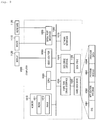
- Fig. 1 is a diagram showing an example of the configuration of the protection device according to the first embodiment.
- a protection device 10 includes an input unit 11, a storage unit 12, and a control unit 13.
- the input unit 11 receives input of data from a user.
- the input unit 11 is, for example, an input device such as a mouse and a keyboard.
- the input unit 11 may be an interface for receiving input of data from another device.
- the storage unit 12 is a storage device such as a hard disk drive (HDD), a solid state drive (SSD), and an optical disk. Note that the storage unit 12 may be a data-rewritable semiconductor memory such as a random access memory (RAM), a flash memory, and a non-volatile static random access memory (NVSRAM).
- the storage unit 12 stores an OS and various programs that are executed in the protection device 10. Additionally, the storage unit 12 stores various types of information used for executing the programs.
- the storage unit 12 also stores file data 121, a file system 122, a protection-target-file list 123, a process white list 124, and key information 125.
- the storage unit 12 stores a file entity as the file data 121. Also, the storage unit 12 stores the file system 122.
- the file system 122 is information for accessing a file entity contained in the file data 121.
- the file system 122 includes a file path of each file of the file data 121. Note that the file system 122 may be implemented as a basic function of the OS.
- creating a link means making a file accessible via the file system 122.
- Deleting a link means making a created link unusable.
- the protection device 10 creates a link by adding a file path of a file to the file system 122, and deletes the link by deleting the file path.
- the protection-target-file list 123 is information for identifying a file that is to be protected by the protection device 10.
- the protection-target-file list 123 is an example of a list of file paths of predetermined protection target files.
- the protection-target-file list 123 is a list of file paths of protection target files.
- Fig. 2 is a diagram showing an example of the protection-target-file list according to the first embodiment. As shown in Fig. 2 , for example, the protection-target-file list 123 includes the file path "/a/b/f1" of a protection target file.
- the process white list 124 is information indicating a process capable of making access for each file.
- the process white list 124 is a list of combinations of file paths of files and paths of processes that are allowed to access the respective files.
- Fig. 3 is a diagram showing an example of the process white list according to the first embodiment. As shown in Fig. 3 , processes capable of making access are identified by execution file paths. Also, as shown in Fig. 3 , processes that use "/x/w" and “/x/z" as execution files correspond to the file path "/c/f2". Thus, a plurality of processes may correspond to one file in the process white list 124.
- the key information 125 is information for managing the protection-target-file list 123 and the process white list 124 in a secure state.
- the key information 125 is used for encryption of each list or addition of a signature to each list.
- the key information 125 may be stored in an anti-tampering area.
- the control unit 13 controls the overall protection device 10.
- the control unit 13 is, for example, an electronic circuit such as a central processing unit (CPU) and a micro processing unit (MPU), or an integrated circuit such as an application specific integrated circuit (ASIC) and a field programmable gate array (FPGA).
- the control unit 13 includes an internal memory for storing a program specifying various processing procedures, and control data, and executes various types of processing using the internal memory.
- the control unit 13 functions as various processing units through operation of various programs.
- the control unit 13 includes an operating unit 131, a creating unit 132, a managing unit 133, a detecting unit 134, a determining unit 135, a restoring unit 136, and a stopping unit 137.
- the operating unit 131 and the creating unit 132 may be implemented as basic functions of the OS, as in the case of the file system 122.
- the detecting unit 134, the determining unit 135, the restoring unit 136, and the stopping unit 137 can request the OS for execution of processing, and execute processing in response to a request from the OS. Accordingly, the present embodiment is realized by implementing the managing unit 133, the detecting unit 134, the determining unit 135, the restoring unit 136, and the stopping unit 137 into a computer having an OS such as Linux installed thereon.
- the operating unit 131 performs an operation of protecting data of a file corresponding to a file path included in the protection-target-file list 123.
- the operating unit 131 can perform the protecting operation at a timing at which the protection device 10 is started.
- the operating unit 131 can protect the data of a file by opening the file. Also, the operating unit 131 can close the file.
- Opening a file means making the file available for various types of processing such as reading, alteration, and deletion.
- the actual data of the file is in a protected state. That is, even if a file that is being opened by a certain process is subjected to deletion performed by another process, only the link of the file is deleted, and the actual data thereof will not be deleted.
- Closing a file means making the file unavailable for various type of processing.
- the creating unit 132 creates a link of a file.
- the operating unit 131 and the creating unit 132 can execute processing in response to a request from another processing unit.
- the managing unit 133 manages the protection-target-file list 123 and the process white list 124.
- the managing unit 133 can perform addition, deletion, and the like of data to and from the protection-target-file list 123 and the process white list 124.
- the managing unit 133 uses the key information 125 to confirm that the protection-target-file list 123 and the process white list 124 have not been altered, and thereafter expands the protection-target-file list 123 and the process white list 124 onto a volatile area (hereinafter referred to as a "memory") of the storage unit 12.
- the protection-target-file list 123 and the process white list 124 that have been expanded are stored in a nonvolatile area of the storage unit 12 by a secure method using the key information 125.
- the secure method refers to encryption using a key, addition of a signature, and the like.
- the detecting unit 134 detects that a link to a file has been deleted. For example, the detecting unit 134 can detect the deletion using inotify, which is an application programming interface (API) of Linux. If deletion of a link has been detected, the detecting unit 134 acquires the file path of the file corresponding to the deleted link.
- inotify which is an application programming interface (API) of Linux.
- the protection device 10 can return the file into the state before deletion.
- the detecting unit 134 further detects that access is being made to a file. For example, the detecting unit 134 can detect access using fanotify, which is an API of Linux. If access to a file has been detected, the detecting unit 134 acquires a combination of the file path of the accessed file and the file path of the execution file of the process of the access source.
- fanotify which is an API of Linux.
- access means opening of a file or requesting opening of a file.
- the detecting unit 134 can detect access by receiving information related to requesting of opening of a file.
- the determining unit 135 determines whether or not the file is a protection target file. Specifically, if deletion of a link has been detected by the detecting unit 134, the determining unit 135 receives the file path of the file corresponding to the deleted link from the detecting unit 134, and determines whether or not the file path exists in the protection-target-file list 123.
- the determining unit 135 Based on the file path of the file and the process that is making the access, the determining unit 135 further determines whether or not to allow the access. Specifically, if access to a file has been detected by the detecting unit 134, the determining unit 135 receives, from the detecting unit 134, a combination of the file path of the accessed file and the file path of the execution file of the process of the access source, and determines whether or not to allow the access depending on which of the following three cases the combination corresponds to.
- the first case is a case where the combination itself exists in the process white list 124.
- the second case is a case where only the file path of the accessed file exists in the process white list 124, and the file path of the execution file does not exist.
- the third case is a case where the file path of the accessed file does not exist in the process white list 124. Note that a case where only the file path of the execution file exists in the process white list 124 is included in the third case.
- a combination in which the file path of the accessed file is "/a/b/f1" and the file path of the execution file is "/x/y" corresponds to the first case.
- a combination in which the file path of the accessed file is "/a/b/f1" and the file path of the execution file is "/x/z" corresponds to the second case.
- a combination in which the file path of the accessed file is "/a/b/f0" corresponds to the third case, regardless of the file path of the execution file. Note that it is assumed here that the fourth line onward in Fig. 3 does not exist in the process white list 124.
- the determining unit 135 determines to allow the access. On the other hand, if the received combination corresponds to the second case, the determining unit 135 determines not to allow the access.
- the restoring unit 136 restores the link to the file. Specifically, if it is determined by the determining unit 135 that the file path of the file corresponding to the deleted link exists in the protection-target-file list 123, the restoring unit 136 requests the creating unit 132 to create the link.
- the stopping unit 137 stops the access. Specifically, the stopping unit 137 can stop the access by requesting the operating unit 131 not to open the file.
- Fig. 4 is a flowchart illustrating a flow of processing in the protection device according to the first embodiment at the time of starting the system.
- the managing unit 133 uses the key information 125 to confirm that the protection-target-file list 123 and the process white list 124 have not been altered, and expands each list onto a memory (step S101) .
- the managing unit 133 transfers a file path included in the protection-target-file list 123 to the operating unit 131, and requests the operating unit 131 to open the corresponding file. Then, the operating unit 131 opens the file corresponding to the received file path (step S102).
- FIG. 5 is a flowchart illustrating a flow of processing in the protection device according to the first embodiment at the time of adding a protection target file.
- the managing unit 133 receives a request to add a protection target file (step S201).
- the request may be input by the user via the input unit 11, or may be automatically generated when a new file is added to the file system 122.
- the request contains the file path of a file to be added as a protection target, or a combination of the file path of the file and the file path of the process capable of accessing the file.
- the managing unit 133 adds the file path contained in the request to the protection-target-file list 123 (step S202). Also, the managing unit 133 adds a combination of the file path of the file and the file path of the process that are contained in the request to the process white list 124 (step S203). Note that if the file path of the process is not contained in the request, the managing unit 133 does not perform addition to the process white list 124.
- the managing unit 133 transfers the file path of the file that has been added to each list to the operating unit 131, and requests the operating unit 131 to open the corresponding file. Then, the operating unit 131 opens the file corresponding to the received file path (step S204).
- Fig. 6 is a flowchart illustrating a flow of processing in the protection device according to the first embodiment at the time of deleting a file.
- the detecting unit 134 detects deletion of a link (step S301) . Then, based on the file path received from the detecting unit 134, the determining unit 135 determines whether or not the file corresponding to the link for which deletion has been detected is a protection target file (step S302).
- the restoring unit 136 restores the link (step S303) .
- the protection device 10 does not restore the link.
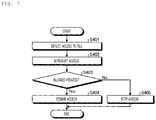
- Fig. 7 is a flowchart illustrating a flow of processing in the protection device according to the first embodiment at the time of controlling access.
- the detecting unit 134 detects access to a file (step S401).
- the detecting unit 134 requests the operating unit 131 to interrupt the access, or in other words, opening of the file. Then, the operating unit 131 interrupts the access in response to the request from the detecting unit 134 (step S402) .
- the determining unit 135 determines whether or not the access to the file by the process has been allowed (step S403) .
- the determining unit 135 requests the operating unit 131 to resume the access that has been interrupted. Then, the operating unit 131 resumes the access in response to the request from the determining unit 135 (step S404) . Note that if the file path of the accessed file does not exist in the process white list 124 in the first place, or in other words, if the received combination corresponds to the third case described above, the determining unit 135 determines that the access has been allowed.
- step S403 if the access has not been allowed (step S403, No), the stopping unit 137 requests the operating unit 131 to stop the access that has been interrupted. Then, the operating unit 131 stops the access in response to the request from the stopping unit 137 (step S405).
- Fig. 8 is a flowchart illustrating a flow of processing in the protection device according to the first embodiment at the time of ending the system.
- the managing unit 133 updates the protection-target-file list 123 and the process white list 124 (step S501) .
- the managing unit 133 overwrites the original data with the protection-target-file list 123 and the process white list 124 that are expanded on the memory.
- the protection-target-file list 123 and the process white list 124 on the memory may have been altered, for example, due to addition of a protection target file, since the time when they were expanded onto the memory.
- the managing unit 133 transfers the file path included in the protection-target-file list 123 to the operating unit 131, and requests the operating unit 131 to close the corresponding file. Then, the operating unit 131 closes the file corresponding to the received file path (step S502) . Then, the protection device 10 ends the system (step S503).
- the protection device 10 acquires a list of file paths of predetermined protection target files.
- the protection device 10 performs an operation of protecting data of a file corresponding to a file path included in the list.
- the protection device 10 protects data of a file by opening the file.
- the protection device 10 can acquire the list at a timing at which the protection device 10 is started. At this time, the operating unit 131 performs an operation of protecting the data at a timing at which the list is acquired by the managing unit 133. Thus, by opening a protection target file during starting, it is possible to protect the file more reliably.
- the protection device 10 detects that a link to a file has been deleted. Based on the file path to a file, the protection device 10 determines whether or not the file is a protection target file. If it is determined that the file is a protection target file, the protection device 10 restores the link to the file. Thus, according to the present embodiment, at the time of protecting a file against deletion, it is not necessary to set authority regarding deletion, or changing the location or content of the file.
- the detecting unit 134 can detect that access is being made to a file. At this time, in the protection device 10, based on the file path of the file and the process that is making access, the determining unit 135 determines whether or not to allow the access. If it is determined that the access is not allowed, the protection device 10 stops the access.
- access to a file can be controlled for each process, and it is therefore possible to protect a file against not only deletion, but also alteration.
- the OS of the protection device 10 is not limited to Linux.
- the OS of the protection device 10 is other than Linux, it is also possible to realize the above-described embodiment by detecting deletion of a file and access to a file using a monitoring function similar to inotify and fanotify.
- the protection device 10 can be implemented by installing, on a desired computer, a protection program executing the above-described protection as package software or online software.
- a protection program executing the above-described protection as package software or online software.
- the information processing device can function as the protection device 10.
- the information processing device as mentioned herein includes a desktop or notebook personal computer.
- a mobile communication terminal such as a smartphone, a mobile phone, and a personal handyphone system (PHS), and also a slate terminal such as a personal digital assistant (PDA) fall under the category of the information processing device.
- PDA personal digital assistant
- FIG. 9 is a diagram showing an example of a computer that executes the protection program.
- a computer 1000 includes a memory 1010 and a CPU 1020, for example. Also, the computer 1000 includes a hard disk drive interface 1030, a disk drive interface 1040, a serial port interface 1050, a video adapter 1060, and a network interface 1070. Each of these units is connected by a bus 1080.
- the memory 1010 includes a read only memory (ROM) 1011 and a RAM 1012.
- the ROM 1011 stores a boot program such as a basic input output system (BIOS), for example.
- BIOS basic input output system
- the hard disk drive interface 1030 is connected to a hard disk drive 1090.
- the disk drive interface 1040 is connected to a disk drive 1100.
- a removable storage medium such as a magnetic disk and an optical disk is inserted into the disk drive 1100.
- the serial port interface 1050 is connected to a mouse 1110 and a keyboard 1120, for example.
- the video adapter 1060 is connected to a display 1130, for example.
- the hard disk drive 1090 stores an OS 1091, an application program 1092, a program module 1093, and program data 1094, for example. That is, the program specifying various types of processing of the protection device 10 is implemented as a program module 1093 in which a computer-executable code is written.
- the program module 1093 is stored in the hard disk drive 1090, for example.
- a program module 1093 for executing the same processing as the functional configuration in the protection device 10 is stored in the hard disk drive 1090.
- the hard disk drive 1090 may be replaced with an SSD.
- the setting data used in the processing of the embodiment described above is stored, as the program data 1094, in the memory 1010 or the hard disk drive 1090, for example. Then, the CPU 1020 reads the program module 1093 and the program data 1094 stored in the memory 1010 or the hard disk drive 1090 to the RAM 1012 as needed, and executes the processing of the embodiment described above.
- program module 1093 and the program data 1094 are not necessarily stored in the hard disk drive 1090, and may be stored in a removable storage medium, for example, and read by the CPU 1020 via the disk drive 1100 or the like.
- the program module 1093 and the program data 1094 may be stored in another computer connected via a network (e.g., a local area network (LAN) and a wide area network (WAN)). Then, the program module 1093 and the program data 1094 may be read from the other computer by the CPU 1020 via the network interface 1070.
- LAN local area network
- WAN wide area network
Landscapes
- Engineering & Computer Science (AREA)
- Theoretical Computer Science (AREA)
- General Engineering & Computer Science (AREA)
- General Physics & Mathematics (AREA)
- Physics & Mathematics (AREA)
- Computer Security & Cryptography (AREA)
- Computer Hardware Design (AREA)
- Software Systems (AREA)
- Databases & Information Systems (AREA)
- General Health & Medical Sciences (AREA)
- Bioethics (AREA)
- Health & Medical Sciences (AREA)
- Data Mining & Analysis (AREA)
- Storage Device Security (AREA)
- Information Retrieval, Db Structures And Fs Structures Therefor (AREA)
Abstract
Description
- The present invention relates to a protection device and a protection method.
- Conventionally, methods for protecting files on a file system against deletion due to an unauthorized process or the carelessness of the user are known. For example, for Linux (registered trademark), authority is set for a user to write to a directory or a file, thus making it possible to prohibit deletion or the like of the file by the user. Furthermore, for Linux, i (immutable) attribute is set for a file as an extended attribute, thus making it possible to prevent deletion or the like of the file.
- Also, a method is known in which a protection target file is moved to a protected area that is inaccessible from an operating system (OS), thereby preventing deletion or the like of the file (see, e.g., Patent Literature 1).
- [Patent Literature 1] Japanese Laid-open Patent Publication No.
2004-220400 - However, the conventional methods are problematic in that there may be cases where it is difficult to efficiently protect files. For example, as for the method in which authority is set, files cannot be sufficiently protected when the authority is seized illicitly or the authority is erroneously set. As for the method in which a file is moved to a protected area, a file needs to be moved each time it is used, which takes time and effort. Moreover, there is a problem in that restriction is imposed on a program that uses the file.
- In order to solve the above-described problems and attain an object, a protection device includes: a managing unit configured to acquire a list of file paths of predetermined protection target files; and an operating unit configured to perform an operation of protecting data of a file corresponding to a file path included in the list.
- According to the present invention, it is possible to protect files efficiently.
-
- [
Fig. 1] Fig. 1 is a diagram showing an example of the configuration of a protection device according to a first embodiment. - [
Fig. 2]Fig. 2 is a diagram showing an example of a protection-target-file list according to the first embodiment. - [
Fig. 3] Fig. 3 is a diagram showing an example of a process white list according to the first embodiment. - [
Fig. 4]Fig. 4 is a flowchart illustrating a flow of processing in the protection device according to the first embodiment at the time of starting a system. - [
Fig. 5]Fig. 5 is a flowchart illustrating a flow of processing in the protection device according to the first embodiment at the time of adding a protection target file. - [
Fig. 6]Fig. 6 is a flowchart illustrating a flow of processing in the protection device according to the first embodiment at the time of deleting a file. - [
Fig. 7]Fig. 7 is a flowchart illustrating a flow of processing in the protection device according to the first embodiment at the time of controlling access. - [
Fig. 8]Fig. 8 is a flowchart illustrating a flow of processing in the protection device according to the first embodiment at the time of ending the system. - [
Fig. 9]Fig. 9 is a diagram showing an example of a computer that executes a protection program. - Hereinafter, embodiments of a protection device and a protection method according to the present application will be described in detail with reference to the drawings. Note that the present invention is not limited by the embodiments described below.
- First, the configuration of a protection device according to a first embodiment will be described with reference to
Fig. 1. Fig. 1 is a diagram showing an example of the configuration of the protection device according to the first embodiment. As shown inFig. 1 , aprotection device 10 includes aninput unit 11, a storage unit 12, and a control unit 13. - The
input unit 11 receives input of data from a user. Theinput unit 11 is, for example, an input device such as a mouse and a keyboard. Alternatively, theinput unit 11 may be an interface for receiving input of data from another device. - The storage unit 12 is a storage device such as a hard disk drive (HDD), a solid state drive (SSD), and an optical disk. Note that the storage unit 12 may be a data-rewritable semiconductor memory such as a random access memory (RAM), a flash memory, and a non-volatile static random access memory (NVSRAM). The storage unit 12 stores an OS and various programs that are executed in the
protection device 10. Additionally, the storage unit 12 stores various types of information used for executing the programs. The storage unit 12 also storesfile data 121, a file system 122, a protection-target-file list 123, a process white list 124, andkey information 125. - The storage unit 12 stores a file entity as the
file data 121. Also, the storage unit 12 stores the file system 122. The file system 122 is information for accessing a file entity contained in thefile data 121. The file system 122 includes a file path of each file of thefile data 121. Note that the file system 122 may be implemented as a basic function of the OS. - In the present embodiment, creating a link means making a file accessible via the file system 122. Deleting a link means making a created link unusable. For example, the
protection device 10 creates a link by adding a file path of a file to the file system 122, and deletes the link by deleting the file path. - The protection-target-
file list 123 is information for identifying a file that is to be protected by theprotection device 10. The protection-target-file list 123 is an example of a list of file paths of predetermined protection target files. In the present embodiment, the protection-target-file list 123 is a list of file paths of protection target files.Fig. 2 is a diagram showing an example of the protection-target-file list according to the first embodiment. As shown inFig. 2 , for example, the protection-target-file list 123 includes the file path "/a/b/f1" of a protection target file. - The process white list 124 is information indicating a process capable of making access for each file. In the present embodiment, the process white list 124 is a list of combinations of file paths of files and paths of processes that are allowed to access the respective files.
-
Fig. 3 is a diagram showing an example of the process white list according to the first embodiment. As shown inFig. 3 , processes capable of making access are identified by execution file paths. Also, as shown inFig. 3 , processes that use "/x/w" and "/x/z" as execution files correspond to the file path "/c/f2". Thus, a plurality of processes may correspond to one file in the process white list 124. - The
key information 125 is information for managing the protection-target-file list 123 and the process white list 124 in a secure state. For example, thekey information 125 is used for encryption of each list or addition of a signature to each list. In order to further increase the robustness, thekey information 125 may be stored in an anti-tampering area. - The control unit 13 controls the
overall protection device 10. The control unit 13 is, for example, an electronic circuit such as a central processing unit (CPU) and a micro processing unit (MPU), or an integrated circuit such as an application specific integrated circuit (ASIC) and a field programmable gate array (FPGA). The control unit 13 includes an internal memory for storing a program specifying various processing procedures, and control data, and executes various types of processing using the internal memory. The control unit 13 functions as various processing units through operation of various programs. For example, the control unit 13 includes an operating unit 131, a creating unit 132, a managing unit 133, a detectingunit 134, a determiningunit 135, a restoring unit 136, and a stopping unit 137. - Note that the operating unit 131 and the creating unit 132 may be implemented as basic functions of the OS, as in the case of the file system 122. On the other hand, the detecting
unit 134, the determiningunit 135, the restoring unit 136, and the stopping unit 137 can request the OS for execution of processing, and execute processing in response to a request from the OS. Accordingly, the present embodiment is realized by implementing the managing unit 133, the detectingunit 134, the determiningunit 135, the restoring unit 136, and the stopping unit 137 into a computer having an OS such as Linux installed thereon. - The operating unit 131 performs an operation of protecting data of a file corresponding to a file path included in the protection-target-
file list 123. The operating unit 131 can perform the protecting operation at a timing at which theprotection device 10 is started. The operating unit 131 can protect the data of a file by opening the file. Also, the operating unit 131 can close the file. - Opening a file means making the file available for various types of processing such as reading, alteration, and deletion. On the other hand, when a file is opened, the actual data of the file is in a protected state. That is, even if a file that is being opened by a certain process is subjected to deletion performed by another process, only the link of the file is deleted, and the actual data thereof will not be deleted. Closing a file means making the file unavailable for various type of processing.
- The creating unit 132 creates a link of a file. The operating unit 131 and the creating unit 132 can execute processing in response to a request from another processing unit.
- The managing unit 133 manages the protection-target-
file list 123 and the process white list 124. The managing unit 133 can perform addition, deletion, and the like of data to and from the protection-target-file list 123 and the process white list 124. - At the time of starting the system of the
protection device 10, the managing unit 133 uses thekey information 125 to confirm that the protection-target-file list 123 and the process white list 124 have not been altered, and thereafter expands the protection-target-file list 123 and the process white list 124 onto a volatile area (hereinafter referred to as a "memory") of the storage unit 12. At the time of ending the system of theprotection device 10, the protection-target-file list 123 and the process white list 124 that have been expanded are stored in a nonvolatile area of the storage unit 12 by a secure method using thekey information 125. Note that the secure method refers to encryption using a key, addition of a signature, and the like. - The detecting
unit 134 detects that a link to a file has been deleted. For example, the detectingunit 134 can detect the deletion using inotify, which is an application programming interface (API) of Linux. If deletion of a link has been detected, the detectingunit 134 acquires the file path of the file corresponding to the deleted link. - Note that even if the link of a protection target file being opened by the operating unit 131 has been deleted at the time of starting the
protection device 10, the actual data of the file will not be deleted. Accordingly, as long as the link of the protection target file that has been deleted can be restored, theprotection device 10 can return the file into the state before deletion. - The detecting
unit 134 further detects that access is being made to a file. For example, the detectingunit 134 can detect access using fanotify, which is an API of Linux. If access to a file has been detected, the detectingunit 134 acquires a combination of the file path of the accessed file and the file path of the execution file of the process of the access source. - Here "access" means opening of a file or requesting opening of a file. The detecting
unit 134 can detect access by receiving information related to requesting of opening of a file. - Based on the file path of a file, the determining
unit 135 determines whether or not the file is a protection target file. Specifically, if deletion of a link has been detected by the detectingunit 134, the determiningunit 135 receives the file path of the file corresponding to the deleted link from the detectingunit 134, and determines whether or not the file path exists in the protection-target-file list 123. - Based on the file path of the file and the process that is making the access, the determining
unit 135 further determines whether or not to allow the access. Specifically, if access to a file has been detected by the detectingunit 134, the determiningunit 135 receives, from the detectingunit 134, a combination of the file path of the accessed file and the file path of the execution file of the process of the access source, and determines whether or not to allow the access depending on which of the following three cases the combination corresponds to. - The first case is a case where the combination itself exists in the process white list 124. The second case is a case where only the file path of the accessed file exists in the process white list 124, and the file path of the execution file does not exist. The third case is a case where the file path of the accessed file does not exist in the process white list 124. Note that a case where only the file path of the execution file exists in the process white list 124 is included in the third case.
- For example, in the example shown in
Fig. 3 , a combination in which the file path of the accessed file is "/a/b/f1" and the file path of the execution file is "/x/y" corresponds to the first case. For example, in the example shown inFig. 3 , a combination in which the file path of the accessed file is "/a/b/f1" and the file path of the execution file is "/x/z" corresponds to the second case. For example, in the example shown inFig. 3 , a combination in which the file path of the accessed file is "/a/b/f0" corresponds to the third case, regardless of the file path of the execution file. Note that it is assumed here that the fourth line onward inFig. 3 does not exist in the process white list 124. - If the received combination corresponds to one of the first case and the third case, the determining
unit 135 determines to allow the access. On the other hand, if the received combination corresponds to the second case, the determiningunit 135 determines not to allow the access. - If it is determined by the determining
unit 135 that the file is a protection target file, the restoring unit 136 restores the link to the file. Specifically, if it is determined by the determiningunit 135 that the file path of the file corresponding to the deleted link exists in the protection-target-file list 123, the restoring unit 136 requests the creating unit 132 to create the link. - If the determining
unit 135 that the access is not allowed, the stopping unit 137 stops the access. Specifically, the stopping unit 137 can stop the access by requesting the operating unit 131 not to open the file. - Processing in the
protection device 10 at the time of starting the system will be described with reference toFig. 4. Fig. 4 is a flowchart illustrating a flow of processing in the protection device according to the first embodiment at the time of starting the system. - As shown in
Fig. 4 , when the system is started, the managing unit 133 uses thekey information 125 to confirm that the protection-target-file list 123 and the process white list 124 have not been altered, and expands each list onto a memory (step S101) . - The managing unit 133 transfers a file path included in the protection-target-
file list 123 to the operating unit 131, and requests the operating unit 131 to open the corresponding file. Then, the operating unit 131 opens the file corresponding to the received file path (step S102). - Processing in the
protection device 10 at the time of adding a protection target file will be described with reference toFig. 5. Fig. 5 is a flowchart illustrating a flow of processing in the protection device according to the first embodiment at the time of adding a protection target file. - As shown in
Fig. 5 , the managing unit 133 receives a request to add a protection target file (step S201). For example, the request may be input by the user via theinput unit 11, or may be automatically generated when a new file is added to the file system 122. The request contains the file path of a file to be added as a protection target, or a combination of the file path of the file and the file path of the process capable of accessing the file. - The managing unit 133 adds the file path contained in the request to the protection-target-file list 123 (step S202). Also, the managing unit 133 adds a combination of the file path of the file and the file path of the process that are contained in the request to the process white list 124 (step S203). Note that if the file path of the process is not contained in the request, the managing unit 133 does not perform addition to the process white list 124.
- The managing unit 133 transfers the file path of the file that has been added to each list to the operating unit 131, and requests the operating unit 131 to open the corresponding file. Then, the operating unit 131 opens the file corresponding to the received file path (step S204).
- Processing in the
protection device 10 at the time of deleting a file will be described with reference toFig. 6. Fig. 6 is a flowchart illustrating a flow of processing in the protection device according to the first embodiment at the time of deleting a file. - As shown in
Fig. 6 , the detectingunit 134 detects deletion of a link (step S301) . Then, based on the file path received from the detectingunit 134, the determiningunit 135 determines whether or not the file corresponding to the link for which deletion has been detected is a protection target file (step S302). - Here, if the file is a protection target file (step S302, Yes), the restoring unit 136 restores the link (step S303) . On the other hand, if the file is not a protection target file (step S302, No), the
protection device 10 does not restore the link. - Access controlling processing in the
protection device 10 will be described with reference toFig. 7. Fig. 7 is a flowchart illustrating a flow of processing in the protection device according to the first embodiment at the time of controlling access. - As shown in
Fig. 7 , the detectingunit 134 detects access to a file (step S401). Here, the detectingunit 134 requests the operating unit 131 to interrupt the access, or in other words, opening of the file. Then, the operating unit 131 interrupts the access in response to the request from the detecting unit 134 (step S402) . - Then, based on whether or not the file path of the accessed file and the file path of the process of the access source that have been received from the detecting
unit 134 exist in the process white list 124, the determiningunit 135 determines whether or not the access to the file by the process has been allowed (step S403) . - Here, if the access has been allowed (step S403, Yes), the determining
unit 135 requests the operating unit 131 to resume the access that has been interrupted. Then, the operating unit 131 resumes the access in response to the request from the determining unit 135 (step S404) . Note that if the file path of the accessed file does not exist in the process white list 124 in the first place, or in other words, if the received combination corresponds to the third case described above, the determiningunit 135 determines that the access has been allowed. - On the other hand, if the access has not been allowed (step S403, No), the stopping unit 137 requests the operating unit 131 to stop the access that has been interrupted. Then, the operating unit 131 stops the access in response to the request from the stopping unit 137 (step S405).
- Processing in the
protection device 10 at the time of ending the system will be described with reference toFig. 8. Fig. 8 is a flowchart illustrating a flow of processing in the protection device according to the first embodiment at the time of ending the system. - As shown in
Fig. 8 , the managing unit 133 updates the protection-target-file list 123 and the process white list 124 (step S501) . For example, the managing unit 133 overwrites the original data with the protection-target-file list 123 and the process white list 124 that are expanded on the memory. At this time, the protection-target-file list 123 and the process white list 124 on the memory may have been altered, for example, due to addition of a protection target file, since the time when they were expanded onto the memory. - The managing unit 133 transfers the file path included in the protection-target-
file list 123 to the operating unit 131, and requests the operating unit 131 to close the corresponding file. Then, the operating unit 131 closes the file corresponding to the received file path (step S502) . Then, theprotection device 10 ends the system (step S503). - In the first embodiment, the
protection device 10 acquires a list of file paths of predetermined protection target files. Theprotection device 10 performs an operation of protecting data of a file corresponding to a file path included in the list. Thus, in the present embodiment, it is possible to protect files without setting authority or moving the storage area. Therefore, according to the present embodiment, it is possible to protect files efficiently. - The
protection device 10 protects data of a file by opening the file. Thus, in the present embodiment, it is possible to protect files using a basic function included in the OS. - The
protection device 10 can acquire the list at a timing at which theprotection device 10 is started. At this time, the operating unit 131 performs an operation of protecting the data at a timing at which the list is acquired by the managing unit 133. Thus, by opening a protection target file during starting, it is possible to protect the file more reliably. - The
protection device 10 detects that a link to a file has been deleted. Based on the file path to a file, theprotection device 10 determines whether or not the file is a protection target file. If it is determined that the file is a protection target file, theprotection device 10 restores the link to the file. Thus, according to the present embodiment, at the time of protecting a file against deletion, it is not necessary to set authority regarding deletion, or changing the location or content of the file. - In the
protection device 10, the detectingunit 134 can detect that access is being made to a file. At this time, in theprotection device 10, based on the file path of the file and the process that is making access, the determiningunit 135 determines whether or not to allow the access. If it is determined that the access is not allowed, theprotection device 10 stops the access. Thus, according to the present embodiment, access to a file can be controlled for each process, and it is therefore possible to protect a file against not only deletion, but also alteration. - Although an example of a case where the OS of the
protection device 10 is Linux has been described in the above embodiment, the OS of theprotection device 10 is not limited to Linux. For example, when the OS of theprotection device 10 is other than Linux, it is also possible to realize the above-described embodiment by detecting deletion of a file and access to a file using a monitoring function similar to inotify and fanotify. - The constituent elements of the devices illustrated in the drawings are functionally conceptual, and are not necessarily configured physically as illustrated in the drawings. That is, specific modes of distribution and integration of the devices are not limited to those illustrated in the drawings, and all or part of the devices can be configured while being functionally or physically distributed or integrated in any unit according to various types of loads, use status, and the like. Further, all or any part of the processing functions executed in the devices can be realized by a CPU and a program analyzed and executed in the CPU, or can be realized as hardware by a wired logic.
- Of the various types of processing described in the embodiments of the present invention, all or part of each processing described as being performed automatically may be performed manually, or all or part of each processing described as being performed manually may be automatically performed by a known method. In addition, the processing procedures, control procedures, specific names, information containing various types of data and parameters described in the above document and illustrated in the drawings may be changed freely unless otherwise specified.
- In an embodiment, the
protection device 10 can be implemented by installing, on a desired computer, a protection program executing the above-described protection as package software or online software. For example, by causing an information processing device to execute the above-described protection program, the information processing device can function as theprotection device 10. The information processing device as mentioned herein includes a desktop or notebook personal computer. In addition, a mobile communication terminal such as a smartphone, a mobile phone, and a personal handyphone system (PHS), and also a slate terminal such as a personal digital assistant (PDA) fall under the category of the information processing device. -
Fig. 9 is a diagram showing an example of a computer that executes the protection program. Acomputer 1000 includes amemory 1010 and aCPU 1020, for example. Also, thecomputer 1000 includes a harddisk drive interface 1030, adisk drive interface 1040, aserial port interface 1050, avideo adapter 1060, and anetwork interface 1070. Each of these units is connected by abus 1080. - The
memory 1010 includes a read only memory (ROM) 1011 and aRAM 1012. The ROM 1011 stores a boot program such as a basic input output system (BIOS), for example. The harddisk drive interface 1030 is connected to ahard disk drive 1090. Thedisk drive interface 1040 is connected to adisk drive 1100. For example, a removable storage medium such as a magnetic disk and an optical disk is inserted into thedisk drive 1100. Theserial port interface 1050 is connected to amouse 1110 and akeyboard 1120, for example. Thevideo adapter 1060 is connected to adisplay 1130, for example. - The
hard disk drive 1090 stores anOS 1091, anapplication program 1092, aprogram module 1093, andprogram data 1094, for example. That is, the program specifying various types of processing of theprotection device 10 is implemented as aprogram module 1093 in which a computer-executable code is written. Theprogram module 1093 is stored in thehard disk drive 1090, for example. For example, aprogram module 1093 for executing the same processing as the functional configuration in theprotection device 10 is stored in thehard disk drive 1090. Note that thehard disk drive 1090 may be replaced with an SSD. - The setting data used in the processing of the embodiment described above is stored, as the
program data 1094, in thememory 1010 or thehard disk drive 1090, for example. Then, theCPU 1020 reads theprogram module 1093 and theprogram data 1094 stored in thememory 1010 or thehard disk drive 1090 to theRAM 1012 as needed, and executes the processing of the embodiment described above. - Note that the
program module 1093 and theprogram data 1094 are not necessarily stored in thehard disk drive 1090, and may be stored in a removable storage medium, for example, and read by theCPU 1020 via thedisk drive 1100 or the like. Alternatively, theprogram module 1093 and theprogram data 1094 may be stored in another computer connected via a network (e.g., a local area network (LAN) and a wide area network (WAN)). Then, theprogram module 1093 and theprogram data 1094 may be read from the other computer by theCPU 1020 via thenetwork interface 1070. -
- 10
- Protection device
- 11
- Input unit
- 12
- Storage unit
- 13
- Control unit
- 121
- File data
- 122
- File system
- 123
- Protection-target-file list
- 124
- Process white list
- 125
- Key information
- 131
- Operating unit
- 132
- Creating unit
- 133
- Managing unit
- 134
- Detecting unit
- 135
- Determining unit
- 136
- Restoring unit
- 137
- Stopping unit
Claims (6)
- A protection device comprising:a managing unit configured to acquire a list of file paths of predetermined protection target files; andan operating unit configured to perform an operation of protecting data of a file corresponding to a file path included in the list.
- The protection device according to claim 1, wherein the operating unit is configured to protect the data of the file by opening the file.
- The protection device according to claim 1, wherein the managing unit is configured to acquire the list at a timing at which the protection device is started, and
the operating unit is configured to perform the operation of protecting the data at a timing at which the list is acquired by the managing unit. - The protection device according to claim 1, including:a detecting unit configured to detect that a link to a file has been deleted;a determining unit configured to query the list for a file path to the file, and determine whether or not the file is a protection target file; anda restoring unit configured to restore the link to the file if it is determined by the determining unit that the file is a protection target file.
- The protection device according to claim 4, wherein the detecting unit is configured to further detect that access is being made to a file,
the determining unit is configured to further determine whether or not to allow the access, based on a file path of the file and a process that is making the access, and
the protection device further includes a stopping unit configured to stop the access if the determining unit determines not to allow the access. - A computer-implemented protection method comprising:a managing step of acquiring a list of file paths of predetermined protection target files; andan operating step of performing an operation of protecting data of a file corresponding to a file path included in the list.
Applications Claiming Priority (2)
| Application Number | Priority Date | Filing Date | Title |
|---|---|---|---|
| JP2018104038A JP6700337B2 (en) | 2018-05-30 | 2018-05-30 | Protection device and protection method |
| PCT/JP2019/021080 WO2019230715A1 (en) | 2018-05-30 | 2019-05-28 | Protecting device and protecting method |
Publications (3)
| Publication Number | Publication Date |
|---|---|
| EP3786830A1 true EP3786830A1 (en) | 2021-03-03 |
| EP3786830A4 EP3786830A4 (en) | 2022-01-19 |
| EP3786830B1 EP3786830B1 (en) | 2023-05-17 |
Family
ID=68698862
Family Applications (1)
| Application Number | Title | Priority Date | Filing Date |
|---|---|---|---|
| EP19810107.3A Active EP3786830B1 (en) | 2018-05-30 | 2019-05-28 | Protecting device and protecting method |
Country Status (6)
| Country | Link |
|---|---|
| US (1) | US12223071B2 (en) |
| EP (1) | EP3786830B1 (en) |
| JP (1) | JP6700337B2 (en) |
| CN (1) | CN112166427A (en) |
| AU (1) | AU2019277415B2 (en) |
| WO (1) | WO2019230715A1 (en) |
Families Citing this family (4)
| Publication number | Priority date | Publication date | Assignee | Title |
|---|---|---|---|---|
| US20240086534A1 (en) * | 2021-01-13 | 2024-03-14 | Nippon Telegraph And Telephone Corporation | Falsification detection device, falsification detection method, and falsification detection program |
| US12386961B2 (en) | 2021-01-13 | 2025-08-12 | Nippon Telegraph And Telephone Corporation | Falsification detection device, falsification detection method, and falsification detection program |
| CN115310084B (en) * | 2022-07-28 | 2026-04-28 | 上海爱数信息技术股份有限公司 | A data protection method and system for preventing tampering |
| CN115951907A (en) * | 2023-01-04 | 2023-04-11 | 安徽华云安科技有限公司 | Software deletion prevention method, device, equipment and storage medium |
Family Cites Families (47)
| Publication number | Priority date | Publication date | Assignee | Title |
|---|---|---|---|---|
| US7017188B1 (en) * | 1998-11-16 | 2006-03-21 | Softricity, Inc. | Method and apparatus for secure content delivery over broadband access networks |
| US7249379B2 (en) * | 2002-02-01 | 2007-07-24 | Systems Advisory Group Enterprises, Inc. | Method and apparatus for implementing process-based security in a computer system |
| JP2003288250A (en) * | 2002-03-28 | 2003-10-10 | Sanyo Electric Co Ltd | File management method |
| JP2004220400A (en) | 2003-01-16 | 2004-08-05 | Top Rank:Kk | File protecting method and file protection program |
| US7032088B2 (en) * | 2003-08-07 | 2006-04-18 | Siemens Corporate Research, Inc. | Advanced memory management architecture for large data volumes |
| JP2005339008A (en) * | 2004-05-25 | 2005-12-08 | Nippon Telegr & Teleph Corp <Ntt> | Access control method, program, and recording medium |
| US7730114B2 (en) * | 2004-11-12 | 2010-06-01 | Microsoft Corporation | Computer file system |
| US8433693B2 (en) * | 2007-04-02 | 2013-04-30 | Microsoft Corporation | Locking semantics for a storage system based on file types |
| JP2009026022A (en) | 2007-07-19 | 2009-02-05 | Hitachi Systems & Services Ltd | File protection device and method |
| US8950007B1 (en) * | 2008-04-07 | 2015-02-03 | Lumension Security, Inc. | Policy-based whitelisting with system change management based on trust framework |
| CN101477486B (en) * | 2009-01-22 | 2010-08-04 | 中国人民解放军国防科学技术大学 | A File Backup and Recovery Method Based on Sector Reorganization |
| AU2010226395B2 (en) * | 2009-03-20 | 2016-10-13 | Ad-Vantage Networks, Llc | Methods and systems for searching, selecting, and displaying content |
| US9355267B2 (en) * | 2009-03-26 | 2016-05-31 | The University Of Houston System | Integrated file level cryptographical access control |
| US8725780B2 (en) * | 2009-06-12 | 2014-05-13 | Imation Corp. | Methods and systems for rule-based worm enforcement |
| US8515434B1 (en) * | 2010-04-08 | 2013-08-20 | Sprint Spectrum L.P. | Methods and devices for limiting access to femtocell radio access networks |
| US9678968B1 (en) * | 2010-05-03 | 2017-06-13 | Panzura, Inc. | Deleting a file from a distributed filesystem |
| US8290996B2 (en) * | 2010-07-30 | 2012-10-16 | International Business Machines Corporation | Data sharing for file clones using reverse ditto references |
| JP5617734B2 (en) | 2011-03-30 | 2014-11-05 | 富士通株式会社 | File management method, file management apparatus, and file management program |
| CN102164138A (en) * | 2011-04-18 | 2011-08-24 | 奇智软件(北京)有限公司 | A method and client for ensuring user network security |
| US8468138B1 (en) * | 2011-12-02 | 2013-06-18 | International Business Machines Corporation | Managing redundant immutable files using deduplication in storage clouds |
| US8639665B2 (en) * | 2012-04-04 | 2014-01-28 | International Business Machines Corporation | Hybrid backup and restore of very large file system using metadata image backup and traditional backup |
| EP2688264B1 (en) * | 2012-07-16 | 2016-08-24 | Alcatel Lucent | Method and apparatus for privacy protected clustering of user interest profiles |
| CN105844161B (en) * | 2012-11-12 | 2019-07-02 | 北京奇虎科技有限公司 | Security defense method, device and system |
| CN102984134B (en) * | 2012-11-12 | 2015-11-25 | 北京奇虎科技有限公司 | Safety defense system |
| KR101482886B1 (en) * | 2013-11-13 | 2015-01-15 | 닉스테크 주식회사 | Apparatus and method of data loss prevention using file tagging |
| US10628411B2 (en) * | 2013-11-20 | 2020-04-21 | International Business Machines Corporation | Repairing a link based on an issue |
| WO2015084409A1 (en) * | 2013-12-06 | 2015-06-11 | Hewlett-Packard Development Company, L.P. | Nosql database data validation |
| US9819663B1 (en) * | 2014-04-02 | 2017-11-14 | ThinAir Labs, Inc. | Data protection file system |
| US9734352B2 (en) * | 2014-06-27 | 2017-08-15 | Microsoft Technology Licensing, Llc | Data protection based on user and gesture recognition |
| CN105519038B (en) | 2014-06-27 | 2020-03-17 | 微软技术许可有限责任公司 | User input data protection method and system |
| EP3161645B1 (en) * | 2014-06-27 | 2019-11-27 | Microsoft Technology Licensing, LLC | Fast data protection using dual file systems |
| CN104268468B (en) | 2014-09-25 | 2018-08-24 | 福建升腾资讯有限公司 | It is a kind of to the guard method of android system dynamic link library and system |
| KR101605156B1 (en) * | 2014-12-11 | 2016-03-21 | 네이버비즈니스플랫폼 주식회사 | Device, method, and computer for providing file deleting service |
| CN104778413B (en) * | 2015-04-15 | 2018-04-03 | 南京大学 | A kind of software vulnerability detection method based on simulated strike |
| WO2017014799A1 (en) * | 2015-07-17 | 2017-01-26 | Hewlett Packard Enterprise Development Lp | Managing appendable state of an immutable file |
| CN105450756A (en) * | 2015-12-02 | 2016-03-30 | 赛尔网络有限公司 | Recovery processing method and device for URL link failure based on identification |
| CN105631312B (en) * | 2015-12-25 | 2018-09-07 | 北京奇虎科技有限公司 | The processing method and system of rogue program |
| US10460119B2 (en) * | 2016-02-26 | 2019-10-29 | Intuit Inc. | IDPS access-controlled and encrypted file system design |
| US9753935B1 (en) * | 2016-08-02 | 2017-09-05 | Palantir Technologies Inc. | Time-series data storage and processing database system |
| JP6469189B2 (en) * | 2016-08-09 | 2019-02-13 | 崇司 今川 | Information providing system and information providing method using physical medium |
| CN109923548B (en) * | 2016-10-11 | 2022-06-10 | 佰倬信息科技有限责任公司 | Method, system and computer program product for implementing data protection by supervising process access to encrypted data |
| CN106789242B (en) * | 2016-12-22 | 2019-12-31 | 广东华仝九方科技有限公司 | Intelligent identification application analysis method based on mobile phone client software dynamic feature library |
| US20180336336A1 (en) * | 2017-05-17 | 2018-11-22 | B. G. Negev Technologies And Applications Ltd., At Ben-Gurion University | System for authentication - based file access control |
| US10783041B2 (en) * | 2017-09-22 | 2020-09-22 | Mcafee, Llc | Backup and recovery of data files using hard links |
| US20190158512A1 (en) * | 2017-11-20 | 2019-05-23 | Fortinet, Inc. | Lightweight anti-ransomware system |
| US11102207B2 (en) * | 2017-11-21 | 2021-08-24 | T-Mobile Usa, Inc. | Adaptive greylist processing |
| KR101899149B1 (en) * | 2018-04-30 | 2018-09-14 | 에스엠테크놀러지(주) | Abnormal Process Monitoring and Controlling System and Method, Recording Medium for Performing the Method |
-
2018
- 2018-05-30 JP JP2018104038A patent/JP6700337B2/en active Active
-
2019
- 2019-05-28 CN CN201980035607.4A patent/CN112166427A/en active Pending
- 2019-05-28 WO PCT/JP2019/021080 patent/WO2019230715A1/en not_active Ceased
- 2019-05-28 EP EP19810107.3A patent/EP3786830B1/en active Active
- 2019-05-28 US US17/059,139 patent/US12223071B2/en active Active
- 2019-05-28 AU AU2019277415A patent/AU2019277415B2/en active Active
Also Published As
| Publication number | Publication date |
|---|---|
| US12223071B2 (en) | 2025-02-11 |
| AU2019277415B2 (en) | 2022-06-09 |
| EP3786830B1 (en) | 2023-05-17 |
| CN112166427A (en) | 2021-01-01 |
| JP2019207661A (en) | 2019-12-05 |
| AU2019277415A1 (en) | 2020-12-10 |
| US20210216659A1 (en) | 2021-07-15 |
| JP6700337B2 (en) | 2020-05-27 |
| EP3786830A4 (en) | 2022-01-19 |
| WO2019230715A1 (en) | 2019-12-05 |
Similar Documents
| Publication | Publication Date | Title |
|---|---|---|
| US12223071B2 (en) | Protecting device and protecting method | |
| US9729579B1 (en) | Systems and methods for increasing security on computing systems that launch application containers | |
| US10289860B2 (en) | Method and apparatus for access control of application program for secure storage area | |
| US20100050257A1 (en) | Confirmation method of api by the information at call-stack | |
| US20190095285A1 (en) | Backup and recovery of data files using hard links | |
| JPWO2007074565A1 (en) | Program execution control method and apparatus, and execution control program | |
| CN101176096A (en) | virtualized file system | |
| JP2009238153A (en) | Malware handling system, method, and program | |
| EP3513353B1 (en) | Systems and methods for detecting malicious processes on computing devices | |
| CN102754082A (en) | Update method, update device, and update program | |
| KR20120102615A (en) | Enforcing a file protection policy by a storage device | |
| US10754931B2 (en) | Methods for configuring security restrictions of a data processing system | |
| JP6483459B2 (en) | File management system and file management program | |
| US9390275B1 (en) | System and method for controlling hard drive data change | |
| US11960617B2 (en) | Hardware protection of files in an integrated-circuit device | |
| US7523319B2 (en) | System and method for tracking changed LBAs on disk drive | |
| US20200142738A1 (en) | Systems And Methods For Control Flow Integrity In System Management Mode (SMM) | |
| JP2016177525A (en) | Digital evidence creation device, digital evidence creation system, and digital evidence creation program | |
| JP2011040044A (en) | Device, system, program and method for integrating virtual thin client | |
| US10521592B2 (en) | Application translocation | |
| CN115083463B (en) | Method, electronic system and storage medium for controlling memory access rights | |
| US20240231959A9 (en) | Apparatus, and method | |
| JP6204555B1 (en) | Method, system firmware, and computer for protecting variables stored in non-volatile memory | |
| JP4358648B2 (en) | Stack smashing attack defense method, stack smashing attack defense apparatus, and stack smashing attack defense program | |
| JP7160202B2 (en) | Information processing device, control method and control program |
Legal Events
| Date | Code | Title | Description |
|---|---|---|---|
| STAA | Information on the status of an ep patent application or granted ep patent |
Free format text: STATUS: THE INTERNATIONAL PUBLICATION HAS BEEN MADE |
|
| PUAI | Public reference made under article 153(3) epc to a published international application that has entered the european phase |
Free format text: ORIGINAL CODE: 0009012 |
|
| STAA | Information on the status of an ep patent application or granted ep patent |
Free format text: STATUS: REQUEST FOR EXAMINATION WAS MADE |
|
| 17P | Request for examination filed |
Effective date: 20201123 |
|
| AK | Designated contracting states |
Kind code of ref document: A1 Designated state(s): AL AT BE BG CH CY CZ DE DK EE ES FI FR GB GR HR HU IE IS IT LI LT LU LV MC MK MT NL NO PL PT RO RS SE SI SK SM TR |
|
| AX | Request for extension of the european patent |
Extension state: BA ME |
|
| DAV | Request for validation of the european patent (deleted) | ||
| DAX | Request for extension of the european patent (deleted) | ||
| A4 | Supplementary search report drawn up and despatched |
Effective date: 20211217 |
|
| RIC1 | Information provided on ipc code assigned before grant |
Ipc: G06F 21/57 20130101ALI20211213BHEP Ipc: G06F 21/62 20130101AFI20211213BHEP |
|
| STAA | Information on the status of an ep patent application or granted ep patent |
Free format text: STATUS: EXAMINATION IS IN PROGRESS |
|
| 17Q | First examination report despatched |
Effective date: 20220808 |
|
| GRAP | Despatch of communication of intention to grant a patent |
Free format text: ORIGINAL CODE: EPIDOSNIGR1 |
|
| STAA | Information on the status of an ep patent application or granted ep patent |
Free format text: STATUS: GRANT OF PATENT IS INTENDED |
|
| INTG | Intention to grant announced |
Effective date: 20230127 |
|
| GRAS | Grant fee paid |
Free format text: ORIGINAL CODE: EPIDOSNIGR3 |
|
| GRAA | (expected) grant |
Free format text: ORIGINAL CODE: 0009210 |
|
| STAA | Information on the status of an ep patent application or granted ep patent |
Free format text: STATUS: THE PATENT HAS BEEN GRANTED |
|
| AK | Designated contracting states |
Kind code of ref document: B1 Designated state(s): AL AT BE BG CH CY CZ DE DK EE ES FI FR GB GR HR HU IE IS IT LI LT LU LV MC MK MT NL NO PL PT RO RS SE SI SK SM TR |
|
| REG | Reference to a national code |
Ref country code: GB Ref legal event code: FG4D |
|
| REG | Reference to a national code |
Ref country code: CH Ref legal event code: EP |
|
| REG | Reference to a national code |
Ref country code: DE Ref legal event code: R096 Ref document number: 602019029119 Country of ref document: DE |
|
| REG | Reference to a national code |
Ref country code: IE Ref legal event code: FG4D |
|
| REG | Reference to a national code |
Ref country code: AT Ref legal event code: REF Ref document number: 1568695 Country of ref document: AT Kind code of ref document: T Effective date: 20230615 |
|
| REG | Reference to a national code |
Ref country code: SE Ref legal event code: TRGR |
|
| REG | Reference to a national code |
Ref country code: LT Ref legal event code: MG9D |
|
| REG | Reference to a national code |
Ref country code: NL Ref legal event code: MP Effective date: 20230517 |
|
| REG | Reference to a national code |
Ref country code: AT Ref legal event code: MK05 Ref document number: 1568695 Country of ref document: AT Kind code of ref document: T Effective date: 20230517 |
|
| PG25 | Lapsed in a contracting state [announced via postgrant information from national office to epo] |
Ref country code: PT Free format text: LAPSE BECAUSE OF FAILURE TO SUBMIT A TRANSLATION OF THE DESCRIPTION OR TO PAY THE FEE WITHIN THE PRESCRIBED TIME-LIMIT Effective date: 20230918 Ref country code: NO Free format text: LAPSE BECAUSE OF FAILURE TO SUBMIT A TRANSLATION OF THE DESCRIPTION OR TO PAY THE FEE WITHIN THE PRESCRIBED TIME-LIMIT Effective date: 20230817 Ref country code: NL Free format text: LAPSE BECAUSE OF FAILURE TO SUBMIT A TRANSLATION OF THE DESCRIPTION OR TO PAY THE FEE WITHIN THE PRESCRIBED TIME-LIMIT Effective date: 20230517 Ref country code: ES Free format text: LAPSE BECAUSE OF FAILURE TO SUBMIT A TRANSLATION OF THE DESCRIPTION OR TO PAY THE FEE WITHIN THE PRESCRIBED TIME-LIMIT Effective date: 20230517 Ref country code: AT Free format text: LAPSE BECAUSE OF FAILURE TO SUBMIT A TRANSLATION OF THE DESCRIPTION OR TO PAY THE FEE WITHIN THE PRESCRIBED TIME-LIMIT Effective date: 20230517 |
|
| PG25 | Lapsed in a contracting state [announced via postgrant information from national office to epo] |
Ref country code: RS Free format text: LAPSE BECAUSE OF FAILURE TO SUBMIT A TRANSLATION OF THE DESCRIPTION OR TO PAY THE FEE WITHIN THE PRESCRIBED TIME-LIMIT Effective date: 20230517 Ref country code: PL Free format text: LAPSE BECAUSE OF FAILURE TO SUBMIT A TRANSLATION OF THE DESCRIPTION OR TO PAY THE FEE WITHIN THE PRESCRIBED TIME-LIMIT Effective date: 20230517 Ref country code: LV Free format text: LAPSE BECAUSE OF FAILURE TO SUBMIT A TRANSLATION OF THE DESCRIPTION OR TO PAY THE FEE WITHIN THE PRESCRIBED TIME-LIMIT Effective date: 20230517 Ref country code: LT Free format text: LAPSE BECAUSE OF FAILURE TO SUBMIT A TRANSLATION OF THE DESCRIPTION OR TO PAY THE FEE WITHIN THE PRESCRIBED TIME-LIMIT Effective date: 20230517 Ref country code: IS Free format text: LAPSE BECAUSE OF FAILURE TO SUBMIT A TRANSLATION OF THE DESCRIPTION OR TO PAY THE FEE WITHIN THE PRESCRIBED TIME-LIMIT Effective date: 20230917 Ref country code: HR Free format text: LAPSE BECAUSE OF FAILURE TO SUBMIT A TRANSLATION OF THE DESCRIPTION OR TO PAY THE FEE WITHIN THE PRESCRIBED TIME-LIMIT Effective date: 20230517 Ref country code: GR Free format text: LAPSE BECAUSE OF FAILURE TO SUBMIT A TRANSLATION OF THE DESCRIPTION OR TO PAY THE FEE WITHIN THE PRESCRIBED TIME-LIMIT Effective date: 20230818 |
|
| PG25 | Lapsed in a contracting state [announced via postgrant information from national office to epo] |
Ref country code: FI Free format text: LAPSE BECAUSE OF FAILURE TO SUBMIT A TRANSLATION OF THE DESCRIPTION OR TO PAY THE FEE WITHIN THE PRESCRIBED TIME-LIMIT Effective date: 20230517 |
|
| REG | Reference to a national code |
Ref country code: CH Ref legal event code: PL |
|
| PG25 | Lapsed in a contracting state [announced via postgrant information from national office to epo] |
Ref country code: SK Free format text: LAPSE BECAUSE OF FAILURE TO SUBMIT A TRANSLATION OF THE DESCRIPTION OR TO PAY THE FEE WITHIN THE PRESCRIBED TIME-LIMIT Effective date: 20230517 |
|
| REG | Reference to a national code |
Ref country code: BE Ref legal event code: MM Effective date: 20230531 |
|
| PG25 | Lapsed in a contracting state [announced via postgrant information from national office to epo] |
Ref country code: SM Free format text: LAPSE BECAUSE OF FAILURE TO SUBMIT A TRANSLATION OF THE DESCRIPTION OR TO PAY THE FEE WITHIN THE PRESCRIBED TIME-LIMIT Effective date: 20230517 Ref country code: SK Free format text: LAPSE BECAUSE OF FAILURE TO SUBMIT A TRANSLATION OF THE DESCRIPTION OR TO PAY THE FEE WITHIN THE PRESCRIBED TIME-LIMIT Effective date: 20230517 Ref country code: RO Free format text: LAPSE BECAUSE OF FAILURE TO SUBMIT A TRANSLATION OF THE DESCRIPTION OR TO PAY THE FEE WITHIN THE PRESCRIBED TIME-LIMIT Effective date: 20230517 Ref country code: LU Free format text: LAPSE BECAUSE OF NON-PAYMENT OF DUE FEES Effective date: 20230528 Ref country code: LI Free format text: LAPSE BECAUSE OF NON-PAYMENT OF DUE FEES Effective date: 20230531 Ref country code: EE Free format text: LAPSE BECAUSE OF FAILURE TO SUBMIT A TRANSLATION OF THE DESCRIPTION OR TO PAY THE FEE WITHIN THE PRESCRIBED TIME-LIMIT Effective date: 20230517 Ref country code: DK Free format text: LAPSE BECAUSE OF FAILURE TO SUBMIT A TRANSLATION OF THE DESCRIPTION OR TO PAY THE FEE WITHIN THE PRESCRIBED TIME-LIMIT Effective date: 20230517 Ref country code: CZ Free format text: LAPSE BECAUSE OF FAILURE TO SUBMIT A TRANSLATION OF THE DESCRIPTION OR TO PAY THE FEE WITHIN THE PRESCRIBED TIME-LIMIT Effective date: 20230517 Ref country code: CH Free format text: LAPSE BECAUSE OF NON-PAYMENT OF DUE FEES Effective date: 20230531 |
|
| REG | Reference to a national code |
Ref country code: DE Ref legal event code: R097 Ref document number: 602019029119 Country of ref document: DE |
|
| PG25 | Lapsed in a contracting state [announced via postgrant information from national office to epo] |
Ref country code: MC Free format text: LAPSE BECAUSE OF FAILURE TO SUBMIT A TRANSLATION OF THE DESCRIPTION OR TO PAY THE FEE WITHIN THE PRESCRIBED TIME-LIMIT Effective date: 20230517 |
|
| REG | Reference to a national code |
Ref country code: IE Ref legal event code: MM4A |
|
| PG25 | Lapsed in a contracting state [announced via postgrant information from national office to epo] |
Ref country code: MC Free format text: LAPSE BECAUSE OF FAILURE TO SUBMIT A TRANSLATION OF THE DESCRIPTION OR TO PAY THE FEE WITHIN THE PRESCRIBED TIME-LIMIT Effective date: 20230517 |
|
| PLBE | No opposition filed within time limit |
Free format text: ORIGINAL CODE: 0009261 |
|
| STAA | Information on the status of an ep patent application or granted ep patent |
Free format text: STATUS: NO OPPOSITION FILED WITHIN TIME LIMIT |
|
| PG25 | Lapsed in a contracting state [announced via postgrant information from national office to epo] |
Ref country code: IE Free format text: LAPSE BECAUSE OF NON-PAYMENT OF DUE FEES Effective date: 20230528 |
|
| 26N | No opposition filed |
Effective date: 20240220 |
|
| PG25 | Lapsed in a contracting state [announced via postgrant information from national office to epo] |
Ref country code: IE Free format text: LAPSE BECAUSE OF NON-PAYMENT OF DUE FEES Effective date: 20230528 |
|
| PG25 | Lapsed in a contracting state [announced via postgrant information from national office to epo] |
Ref country code: SI Free format text: LAPSE BECAUSE OF FAILURE TO SUBMIT A TRANSLATION OF THE DESCRIPTION OR TO PAY THE FEE WITHIN THE PRESCRIBED TIME-LIMIT Effective date: 20230517 |
|
| PG25 | Lapsed in a contracting state [announced via postgrant information from national office to epo] |
Ref country code: SI Free format text: LAPSE BECAUSE OF FAILURE TO SUBMIT A TRANSLATION OF THE DESCRIPTION OR TO PAY THE FEE WITHIN THE PRESCRIBED TIME-LIMIT Effective date: 20230517 Ref country code: IT Free format text: LAPSE BECAUSE OF FAILURE TO SUBMIT A TRANSLATION OF THE DESCRIPTION OR TO PAY THE FEE WITHIN THE PRESCRIBED TIME-LIMIT Effective date: 20230517 Ref country code: BE Free format text: LAPSE BECAUSE OF NON-PAYMENT OF DUE FEES Effective date: 20230531 |
|
| PG25 | Lapsed in a contracting state [announced via postgrant information from national office to epo] |
Ref country code: BG Free format text: LAPSE BECAUSE OF FAILURE TO SUBMIT A TRANSLATION OF THE DESCRIPTION OR TO PAY THE FEE WITHIN THE PRESCRIBED TIME-LIMIT Effective date: 20230517 |
|
| PG25 | Lapsed in a contracting state [announced via postgrant information from national office to epo] |
Ref country code: BG Free format text: LAPSE BECAUSE OF FAILURE TO SUBMIT A TRANSLATION OF THE DESCRIPTION OR TO PAY THE FEE WITHIN THE PRESCRIBED TIME-LIMIT Effective date: 20230517 |
|
| PGFP | Annual fee paid to national office [announced via postgrant information from national office to epo] |
Ref country code: DE Payment date: 20250521 Year of fee payment: 7 |
|
| PGFP | Annual fee paid to national office [announced via postgrant information from national office to epo] |
Ref country code: GB Payment date: 20250527 Year of fee payment: 7 |
|
| PGFP | Annual fee paid to national office [announced via postgrant information from national office to epo] |
Ref country code: FR Payment date: 20250528 Year of fee payment: 7 |
|
| PG25 | Lapsed in a contracting state [announced via postgrant information from national office to epo] |
Ref country code: CY Free format text: LAPSE BECAUSE OF FAILURE TO SUBMIT A TRANSLATION OF THE DESCRIPTION OR TO PAY THE FEE WITHIN THE PRESCRIBED TIME-LIMIT; INVALID AB INITIO Effective date: 20190528 |
|
| PGFP | Annual fee paid to national office [announced via postgrant information from national office to epo] |
Ref country code: SE Payment date: 20250521 Year of fee payment: 7 |
|
| PG25 | Lapsed in a contracting state [announced via postgrant information from national office to epo] |
Ref country code: HU Free format text: LAPSE BECAUSE OF FAILURE TO SUBMIT A TRANSLATION OF THE DESCRIPTION OR TO PAY THE FEE WITHIN THE PRESCRIBED TIME-LIMIT; INVALID AB INITIO Effective date: 20190528 |
|
| PG25 | Lapsed in a contracting state [announced via postgrant information from national office to epo] |
Ref country code: TR Free format text: LAPSE BECAUSE OF FAILURE TO SUBMIT A TRANSLATION OF THE DESCRIPTION OR TO PAY THE FEE WITHIN THE PRESCRIBED TIME-LIMIT Effective date: 20230517 |
|
| REG | Reference to a national code |
Ref country code: DE Ref legal event code: R081 Ref document number: 602019029119 Country of ref document: DE Owner name: NTT, INC., JP Free format text: FORMER OWNER: NIPPON TELEGRAPH AND TELEPHONE CORPORATION, TOKYO, JP Ref country code: DE Ref legal event code: R082 Ref document number: 602019029119 Country of ref document: DE Representative=s name: DENNEMEYER & ASSOCIATES RECHTSANWALTSGESELLSCH, DE |