EP3786260B1 - Doped tin-carbodiimide and use thereof in energy storage systems and as phosphors - Google Patents
Doped tin-carbodiimide and use thereof in energy storage systems and as phosphors Download PDFInfo
- Publication number
- EP3786260B1 EP3786260B1 EP19193824.0A EP19193824A EP3786260B1 EP 3786260 B1 EP3786260 B1 EP 3786260B1 EP 19193824 A EP19193824 A EP 19193824A EP 3786260 B1 EP3786260 B1 EP 3786260B1
- Authority
- EP
- European Patent Office
- Prior art keywords
- dopant
- carbodiimide compound
- doped
- carbodiimide
- compound according
- Prior art date
- Legal status (The legal status is an assumption and is not a legal conclusion. Google has not performed a legal analysis and makes no representation as to the accuracy of the status listed.)
- Active
Links
Images


Classifications
-
- C—CHEMISTRY; METALLURGY
- C09—DYES; PAINTS; POLISHES; NATURAL RESINS; ADHESIVES; COMPOSITIONS NOT OTHERWISE PROVIDED FOR; APPLICATIONS OF MATERIALS NOT OTHERWISE PROVIDED FOR
- C09K—MATERIALS FOR MISCELLANEOUS APPLICATIONS, NOT PROVIDED FOR ELSEWHERE
- C09K11/00—Luminescent materials, e.g. electroluminescent or chemiluminescent
- C09K11/08—Luminescent materials, e.g. electroluminescent or chemiluminescent containing inorganic luminescent materials
- C09K11/77—Luminescent materials, e.g. electroluminescent or chemiluminescent containing inorganic luminescent materials containing rare earth metals
- C09K11/7728—Luminescent materials, e.g. electroluminescent or chemiluminescent containing inorganic luminescent materials containing rare earth metals containing europium
-
- C—CHEMISTRY; METALLURGY
- C09—DYES; PAINTS; POLISHES; NATURAL RESINS; ADHESIVES; COMPOSITIONS NOT OTHERWISE PROVIDED FOR; APPLICATIONS OF MATERIALS NOT OTHERWISE PROVIDED FOR
- C09K—MATERIALS FOR MISCELLANEOUS APPLICATIONS, NOT PROVIDED FOR ELSEWHERE
- C09K11/00—Luminescent materials, e.g. electroluminescent or chemiluminescent
- C09K11/08—Luminescent materials, e.g. electroluminescent or chemiluminescent containing inorganic luminescent materials
- C09K11/77—Luminescent materials, e.g. electroluminescent or chemiluminescent containing inorganic luminescent materials containing rare earth metals
- C09K11/7743—Luminescent materials, e.g. electroluminescent or chemiluminescent containing inorganic luminescent materials containing rare earth metals containing terbium
-
- H—ELECTRICITY
- H01—ELECTRIC ELEMENTS
- H01B—CABLES; CONDUCTORS; INSULATORS; SELECTION OF MATERIALS FOR THEIR CONDUCTIVE, INSULATING OR DIELECTRIC PROPERTIES
- H01B1/00—Conductors or conductive bodies characterised by the conductive materials; Selection of materials as conductors
- H01B1/06—Conductors or conductive bodies characterised by the conductive materials; Selection of materials as conductors mainly consisting of other non-metallic substances
-
- H—ELECTRICITY
- H01—ELECTRIC ELEMENTS
- H01G—CAPACITORS; CAPACITORS, RECTIFIERS, DETECTORS, SWITCHING DEVICES, LIGHT-SENSITIVE OR TEMPERATURE-SENSITIVE DEVICES OF THE ELECTROLYTIC TYPE
- H01G11/00—Hybrid capacitors, i.e. capacitors having different positive and negative electrodes; Electric double-layer [EDL] capacitors; Processes for the manufacture thereof or of parts thereof
- H01G11/04—Hybrid capacitors
- H01G11/06—Hybrid capacitors with one of the electrodes allowing ions to be reversibly doped thereinto, e.g. lithium ion capacitors [LIC]
-
- H—ELECTRICITY
- H01—ELECTRIC ELEMENTS
- H01G—CAPACITORS; CAPACITORS, RECTIFIERS, DETECTORS, SWITCHING DEVICES, LIGHT-SENSITIVE OR TEMPERATURE-SENSITIVE DEVICES OF THE ELECTROLYTIC TYPE
- H01G11/00—Hybrid capacitors, i.e. capacitors having different positive and negative electrodes; Electric double-layer [EDL] capacitors; Processes for the manufacture thereof or of parts thereof
- H01G11/22—Electrodes
- H01G11/30—Electrodes characterised by their material
- H01G11/50—Electrodes characterised by their material specially adapted for lithium-ion capacitors, e.g. for lithium-doping or for intercalation
-
- H—ELECTRICITY
- H01—ELECTRIC ELEMENTS
- H01M—PROCESSES OR MEANS, e.g. BATTERIES, FOR THE DIRECT CONVERSION OF CHEMICAL ENERGY INTO ELECTRICAL ENERGY
- H01M4/00—Electrodes
- H01M4/02—Electrodes composed of, or comprising, active material
- H01M4/36—Selection of substances as active materials, active masses, active liquids
- H01M4/58—Selection of substances as active materials, active masses, active liquids of inorganic compounds other than oxides or hydroxides, e.g. sulfides, selenides, tellurides, halogenides or LiCoFy; of polyanionic structures, e.g. phosphates, silicates or borates
-
- H—ELECTRICITY
- H05—ELECTRIC TECHNIQUES NOT OTHERWISE PROVIDED FOR
- H05B—ELECTRIC HEATING; ELECTRIC LIGHT SOURCES NOT OTHERWISE PROVIDED FOR; CIRCUIT ARRANGEMENTS FOR ELECTRIC LIGHT SOURCES, IN GENERAL
- H05B33/00—Electroluminescent light sources
- H05B33/12—Light sources with substantially two-dimensional [2D] radiating surfaces
- H05B33/14—Light sources with substantially two-dimensional [2D] radiating surfaces characterised by the chemical or physical composition or the arrangement of the electroluminescent material, or by the simultaneous addition of the electroluminescent material in or onto the light source
-
- H—ELECTRICITY
- H01—ELECTRIC ELEMENTS
- H01G—CAPACITORS; CAPACITORS, RECTIFIERS, DETECTORS, SWITCHING DEVICES, LIGHT-SENSITIVE OR TEMPERATURE-SENSITIVE DEVICES OF THE ELECTROLYTIC TYPE
- H01G11/00—Hybrid capacitors, i.e. capacitors having different positive and negative electrodes; Electric double-layer [EDL] capacitors; Processes for the manufacture thereof or of parts thereof
- H01G11/04—Hybrid capacitors
-
- H—ELECTRICITY
- H01—ELECTRIC ELEMENTS
- H01M—PROCESSES OR MEANS, e.g. BATTERIES, FOR THE DIRECT CONVERSION OF CHEMICAL ENERGY INTO ELECTRICAL ENERGY
- H01M10/00—Secondary cells; Manufacture thereof
- H01M10/05—Accumulators with non-aqueous electrolyte
- H01M10/052—Li-accumulators
- H01M10/0525—Rocking-chair batteries, i.e. batteries with lithium insertion or intercalation in both electrodes; Lithium-ion batteries
-
- H—ELECTRICITY
- H01—ELECTRIC ELEMENTS
- H01M—PROCESSES OR MEANS, e.g. BATTERIES, FOR THE DIRECT CONVERSION OF CHEMICAL ENERGY INTO ELECTRICAL ENERGY
- H01M10/00—Secondary cells; Manufacture thereof
- H01M10/05—Accumulators with non-aqueous electrolyte
- H01M10/054—Accumulators with insertion or intercalation of metals other than lithium, e.g. with magnesium or aluminium
-
- Y—GENERAL TAGGING OF NEW TECHNOLOGICAL DEVELOPMENTS; GENERAL TAGGING OF CROSS-SECTIONAL TECHNOLOGIES SPANNING OVER SEVERAL SECTIONS OF THE IPC; TECHNICAL SUBJECTS COVERED BY FORMER USPC CROSS-REFERENCE ART COLLECTIONS [XRACs] AND DIGESTS
- Y02—TECHNOLOGIES OR APPLICATIONS FOR MITIGATION OR ADAPTATION AGAINST CLIMATE CHANGE
- Y02E—REDUCTION OF GREENHOUSE GAS [GHG] EMISSIONS, RELATED TO ENERGY GENERATION, TRANSMISSION OR DISTRIBUTION
- Y02E60/00—Enabling technologies; Technologies with a potential or indirect contribution to GHG emissions mitigation
- Y02E60/10—Energy storage using batteries
Definitions
- the present invention relates to novel carbodiimide compounds of the following formula Sn(CN 2 ):M X+ as well as to their use in energy storage systems and as phosphors. Further, the present invention also relates to novel methods for producing the carbodiimide Sn(CN 2 ) and subsequent doping steps.
- the luminescence of inorganic materials is composed of the following processes: (1) absorption and excitation, (2) energy transfer, and (3) emission.
- Most luminescent materials consist of a so-called host material to which certain dopant ions, also termed activators, are added.
- the host lattice plays two distinct roles: as a passive matrix to define the spatial locations of the activator ions; and as an active participant in the luminescence process, exerting its own specific influence on the spectroscopic behavior of the activator. In the latter, it helps to shape the structure of the energy levels of the activator and also introduces vibrations of various energies, the so-called phonons, which influence the kinetics of the luminescence phenomena.
- Oxyamides, cyanamides and carbodiimides as a fundamental class of compounds have gained increasing attention within the past decade in the field of synthetic solid-state chemistry by revealing remarkably high thermal and chemical resistivity which makes them excellent candidates for luminescent host materials, which are commonly doped with rare-earth (RE) activator ions, i.e. RE 2+ as well as RE 3+ .
- RE rare-earth
- Luminescent phosphors are usually doped with Eu 2+ , for instance, and only one activator ion can be used for one specific host material. Therefore, one host commonly shows only one color. Thus, different host materials applied as thin films are commonly used to achieve different colors. However, using different host materials commonly leads to structural misfits. In particular, since the host materials can have different coefficients of thermal expansion and due to different grid bias voltages of the host materials, multicolor LEDs often suffer from such structural problems.
- CaNCN is best known and used as fertilizer or nitrogen source for the steel industry.
- transition metal carbodiimides have been reported to be electrochemically active materials for electrochemical energy-storage systems, such as anode materials for sodium- and lithium ion batteries.
- transition metal carbodiimides MCN 2 Cu, Zn, Mn, Fe, Co, Ni and Cr
- transition metal carbodiimides MCN 2 Cu, Zn, Mn, Fe, Co, Ni and Cr
- Cu, Zn, Mn, Fe, Co, Ni and Cr transition metal carbodiimides
- the carbodiimides of copper (Cu), zinc, (Zn), manganese (Mn), iron (Fe), cobalt (Co), nickel (Ni), and chromium (Cr) have been prepared via different synthetic routes.
- the development of further carbodiimides has also been reported, and includes carbodiimides of rare earth, transition metal, and main group elements.
- CN 106587160 A describes carbodiimide-based compounds of Mn, Fe, Co, Ni, and Cu having a MN 6 octahedral-dimensional plane and a two-dimensional slice through the C layer forming an alternating layer structure.
- MN 6 octahedral-dimensional planes shall be the characteristic structural feature make it rather unlikely that CN 106587160 A relates to a compound of the carbodiimide group.
- WO 2012/010243 A1 describes carbodiimide compounds, a process for the preparation of these compounds and the use thereof as conversion phosphors or in lamps.
- WO 2016/198550 A1 describes several metal carbodiimides and metal cyanamides of the formula M x M' y (NCN) w and their use as an active material for a negative electrode, where M is a metal selected from the group consisting of Cr, Fe, Co, Ni, Cu, Zn, Cd, Pb, Ag, Si, In, Ti and Sn; M' is a metal different from M and selected from the group consisting of Mn, Cr, Fe, Co, Ni, Cu, Zn, Cd, Pb, Ag, Si, In, Ti and Sn; 1 ⁇ x + y ⁇ 2; 1 ⁇ w ⁇ 3; 0 ⁇ x ⁇ 2; 0 ⁇ y ⁇ 2; and the values of x, y and w are chosen such that the metal carbodiimide or the metal cyanamide is electronically neutral in view of the oxidation state(s) of the element or elements represented by M and M'.
- M is a metal selected from the group consisting of
- Examples of WO 2016/198550 A1 include FeCN 2 , ZnCN 2 , Cr 2 (CN 2 ) 3 , PbCN 2 , and Fe 0.8 Co 0.2 CN 2 . Even though tin (Sn) is listed among the metals, at that time SnCN 2 did not yet exist.
- the synthetic intermediate compound Sn 4 Cl 2 (CN 2 ) 3 is formed from SnCl 2 and Li 2 (CN 2 ) at 200°C, and is described as a versatile precursor, because it can form Sn(CN 2 ) when reacted with Li 2 (CN 2 ), or Sn 2 O(CN 2 ) when reacted with Li 2 (CN 2 ) and Na 2 O.
- Sn(CN 2 ) is formed from SnCl 2 and Li 2 (CN 2 ) at 200°C, and is described as a versatile precursor, because it can form Sn(CN 2 ) when reacted with Li 2 (CN 2 ), or Sn 2 O(CN 2 ) when reacted with Li 2 (CN 2 ) and Na 2 O.
- Sn(CN 2 ) 3 is formed from SnCl 2 and Li 2 (CN 2 ) at 200°C, and is described as a versatile precursor, because it can form Sn(CN 2 ) when reacted with Li 2 (CN 2 ), or Sn 2 O(CN
- the object of the invention is to provide a novel material for highly efficient phosphors in modern LED-technology and for highly efficient electrode materials in energy storage systems.
- the above object is achieved by providing a carbodiimide compound of the following formula Sn(CN 2 ):M X+ as characterized in claim 1.
- the above object is also achieved by a method for producing the carbodiimide compound according to the present invention as well as by a method for producing Sn(CN 2 ) as characterized in claims 7 and 8, respectively.
- the above object is achieved by using Sn(CN 2 ) or the doped carbodiimide compound Sn(CN 2 ):M x+ according to the present invention as an electrode material in energy storage systems, or as a phosphor material in light-emitting diodes as characterized in claims 9 and 11, respectively.
- the present invention provides a carbodiimide compound of the following formula Sn(CN 2 ):M X+ , which is Sn(CN 2 ) doped with at least one dopant (M x+ ).
- the at least one dopant is selected from alkaline earth metals, lanthanoids, actinoids, transition metals, post-transition metals and metalloids (hereinafter also referred to as "dopant metal").
- dopant metal alkaline earth metals, lanthanoids, actinoids, transition metals, post-transition metals and metalloids
- Sn is excluded as dopant.
- X+ represents the oxidation state of the dopant, such as 2+ or 3+ etc., depending on the potential oxidation state of the dopant metal.
- alkaline earth metals encompass the elements of group 2 of the periodic table of elements (hereinafter also referred to as "periodic table”), i.e. beryllium (Be), magnesium (Mg), calcium (Ca), strontium (Sr), barium (Ba), and radium (Ra).
- Lanthanoids encompass the chemical elements with atomic numbers 57 through 71, i.e.
- Actinoids encompass the chemical elements with atomic numbers 89 through 103, i.e.
- Transition metals encompass in accordance with the present invention any element in the d-block of the periodic table, which includes groups 3 to 12 of the periodic table (except for La and Ac).
- Post-transition metals encompass gallium (Ga), indium (In), thallium (TI), lead (Pb), and bismuth (Bi).
- metalloids encompass boron (B), aluminium (Al), carbon (C), silicon (Si), germanium (Ge), arsenic (As), antimony (Sb), selenium (Se), tellurium (Te), polonium (Po), and astatine (At).
- the dopant is at least one rare earth (RE) activator ion selected from the group consisting of Sc, Y, Ce, Pr, Nd, Sm, Eu, Gd, Tb, Dy, Ho, Er, Tm, and Yb in its corresponding oxidation state.
- RE activator ions it is particularly preferred that Sn(CN 2 ) is doped with at least one selected from the group consisting of Eu and Tb.
- the dopant is at least one element selected from the group consisting of Mg, Si, Mn, Fe, Co, Ni, Cu, and Zn in its corresponding oxidation state.
- the dopant metal may not only be selected from the aforementioned ionic elements, but also from halogenated compounds of the alkaline earth metals, lanthanoids, actinoids, transition metals, post-transition metals and metalloids.
- SiCl 4 may be mentioned without being limited thereto.
- the dopant metal M X+ in the formula Sn(CN 2 ):M X+ is preferably at least one selected from the group consisting of RE activator ions (Sc 3+ , Y 3+ , Ce 3+ , Pr 3+ , Nd 3+ , Sm 3+ , Eu 3+ , Eu 2+ , Gd 3+ , Tb 3+ , Dy 3+ , Ho 3+ , Er 3+ , Tm 3+ , and Yb 3+ ), transition metals (particularly Ni 2+ , Mn 2-7+ , Fe 2+ , Fe 3+ , Co 2+ , Cu 1+ , Cu 2+ , and Zn 2+ ), Mg (Mg 2+ ), Si (Si 4+ ) and SiCl 4 .
- RE activator ions Sc 3+ , Y 3+ , Ce 3+ , Pr 3+ , Nd 3+ , Sm 3+ , Eu 3+ , Eu 2+ , Gd
- the carbodiimide compound Sn(CN 2 ):M X+ includes two or more different dopants (M X+ ).
- the at least two different dopants are preferably selected from the group consisting of Sc, Y, Ce, Pr, Nd, Sm, Eu, Gd, Tb, Dy, Ho, Er, Tm, and Yb.
- the concentration of the dopant (M X+ ) is in the range of 1 to 30 mol-% based on Sn(CN 2 ).
- the present invention provides a method for producing the doped Sn(CN 2 ) according to the present invention, which comprises the step of doping Sn(CN 2 ) with at least one dopant (M X+ ) at an elevated temperature of at least 400°C.
- the present invention provides a method for producing Sn(CN 2 ), which comprises the step of reacting a Sn(IV) compound with urea (CO(NH 2 ) 2 ) under an NH 3 atmosphere at an elevated temperature of at least 300°C.
- Sn(CN 2 ) or the doped Sn(CN 2 ) can be used as an electrode material in energy storage systems, or as a phosphor material in light-emitting diodes (LEDs).
- the energy storage system is an alkali-metal ion battery, or a hybrid alkali-metal ion battery or a hybrid capacitor.
- Sn(CN 2 ) or the doped Sn(CN 2 ) is particularly useful as an electrode material in beyond lithium-ion batteries or a lithium-ion battery (LIB).
- lithium ion batteries encompass sodium/sodium-ion batteries, potassium/potassium-ion batteries, calcium/calcium-ion batteries, magnesium/magnesium-ion batteries, aluminum/aluminum-ion batteries, and zinc/zinc-ion batteries as well as corresponding alkali-metal-air batteries.
- the present invention provides a multicolored LED, which comprises at least two different luminescent hosts, wherein the at least two different luminescent hosts each comprise Sn(CN 2 ):M X+ , including two or more different dopants (M X+ ) selected from the group consisting of Sc, Y, Ce, Pr, Nd, Sm, Eu, Gd, Tb, Dy, Ho, Er, Tm, and Yb.
- the present invention is based on a novel approach for preparing Sn(CN 2 ), namely by a low temperature synthesis using a soft urea route, which comprises the step of reacting a Sn(IV) compound (such as tin (IV) chloride pentahydrate (SnCl 4 ⁇ 5 H 2 O)) with urea (CO(NH 2 ) 2 ) under an NH 3 atmosphere at an elevated temperature of at least 300°C.
- a Sn(IV) compound such as tin (IV) chloride pentahydrate (SnCl 4 ⁇ 5 H 2 O)
- urea CO(NH 2 ) 2
- phosphors are usually doped with Eu 2+ , and only one activator ion is used. Therefore, one host shows one color.
- Sn(CN 2 ) can be obtained by reacting a Sn(IV) compound with urea under an NH 3 atmosphere at an elevated temperature of at least 300°C.
- the reaction temperature is set to at least 350°C, more preferably to at least 400°C.
- the Sn(IV) compound is not specifically limited and can be chosen e.g. from halogenated tin compounds, such as tin (IV) chloride pentahydrate (SnCl 4 ⁇ 5 H 2 O, available from Sigma Aldrich).
- a solvent preferably in a polar solvent, such as a C1-C6 alcohol.
- methanol, ethanol, propanol etc. may be mentioned as suitable solvents.
- Sn(CN 2 ) can be obtained by adding tin (IV) chloride pentahydrate powder (SnCl 4 ⁇ 5 H 2 O, ⁇ 99%, Sigma Aldrich) to ethanol in order to obtain a stable and clear solution.
- tin (IV) chloride pentahydrate powder SnCl 4 ⁇ 5 H 2 O, ⁇ 99%, Sigma Aldrich
- urea ⁇ 99%, Sigma Aldrich
- This precursor solution can be treated under an NH 3 atmosphere at 350 to 550°C for 2 h at a heating rate of 10°C/min, for instance.
- Subsequent cooling to room temperature in an argon (Ar) atmosphere (20 ml/min) provides the desired Sn(CN 2 ).
- Fig. 3 and 5a The voltage profile observed during galvanostatic cycling of undoped Sn(CN 2 ) with respect to Li +
- first discharge cf. Fig. 3a and 5a
- two regimes are visible in this voltage profile.
- a first sloping plateau occurs between 1.3 V and 0.5 V with a length of 350 mAh/g, corresponding to conversion of 2.2 Li per formula unit Sn(CN 2 ).
- a long second plateau is observed. This plateau has a smaller slope, but still a clear inclination, and its length of 750 mAh/g corresponds to conversion of additional 4.8 Li.
- the cyclic voltammogram of Fig. 5b also reveals two redox processes in agreement with the galvanostatic measurements. The main contribution is visible at 0.13 V/0.54 V and a second, broader contribution occurs around 1.0 V. In addition, in the first cycle, another reduction process is visible at 0.65 V which can be assigned to formation of the solid-electrolyte interphase (SEI).
- SEI solid-electrolyte interphase
- the above results demonstrate that undoped Sn(CN 2 ) can be used as a negative electrode (anode) material in energy storage systems, since said carbodiimide compound shows electrochemical activity and reversible electrochemical lithiation and delithiation.
- the above investigations show that the undoped Sn(CN 2 ) has very good cycling properties over a large cycle number which have never been reported before.
- the undoped Sn(CN 2 ) can be suitably used in highly efficient energy storage systems, particularly in an alkali-metal ion battery such as in beyond lithium-ion batteries (Na, K, Ca, Mg, Al, Zn) or a lithium-ion battery.
- the undoped Sn(CN 2 ) can be suitably used in a hybrid alkali-metal ion battery, or a hybrid capacitor.
- pure Sn(CN 2 ) can be subsequently doped with a dopant metal (M X+ ).
- M X+ dopant metal
- oxo/carbodiimides or cyanamides doped with rare-earth (RE) activator ions, i.e. RE 2+ as well as RE 3+ (cf. for instance S. Yuan et al., Ceram. Int., 2017, 43, 16018-16022 ).
- RE rare-earth
- RE 3+ cf. for instance S. Yuan et al., Ceram. Int., 2017, 43, 16018-16022 .
- the doping ion is inserted during the main synthesis and not afterwards. Normally doping is performed with Eu 2+ and only one activator ion is used. Therefore, one host shows one color.
- the method for producing the doped Sn(CN 2 ) comprises the step of doping Sn(CN 2 ) with at least one dopant (M X+ ) at an elevated temperature of at least 400°. That is, contrary to the above-mentioned state of the art, doping with activator ions is not carried out during the main synthesis of the carbodiimide.
- doping with activator ions is not carried out during the main synthesis of the carbodiimide.
- such attempts merely result in metallic Sn and Sn 3 N 4 , but not in doped Sn(CN 2 ).
- the dopant metal is selected from alkaline earth metals, lanthanoids, actinoids, transition metals, post-transition metals and metalloids.
- the doping of SnCN 2 can be carried out by a successive combustion synthesis in which the respective halogenated dopant metal(s) will be mixed with Sn(CN 2 ) and heated to at least 400°C.
- the corresponding metal chlorides which are commonly in powder form.
- SiCl 4 doped Sn(CN 2 ) liquid SiCl 4 can be similarly mixed with Sn(CN 2 ).
- the mixture of Sn(CN 2 ) and the halogenated dopant metal(s) may be combined with an aqueous urea ammonium nitrate solution, which is to be heated to at least 400°C.
- the reaction temperature is set to at least 450°C, more preferably to at least 500°C.
- the molar ratio of Sn(CN 2 ) and the dopant metal(s) is not specifically limited.
- the concentration of the dopant metal(s) is in the range of 1 to 30 mol-% based on Sn(CN 2 ), more preferably 5 to 20 mol-%.
- the dopant metal(s) are preferably mixed with Sn(CN 2 ) in an amount so that the content of the dopant metal(s) in the doped Sn(CN) 2 is in the aforementioned range, for instance in an about equimolar amount.
- Doping of Sn(CN 2 ) with such a dopant metal opens up a multitude of degrees of freedom to customize and adapt a battery material to special needs for their applicability in lithium ion batteries as well as in post-lithium ion energy storage systems, such as beyond lithium-ion batteries (Na, K, Ca, Mg, Al, Zn), hybrid alkali-metal ion batteries, or hybrid capacitors. This is even more important as for the search of novel transition metal carbodiimides the right synthetic conditions are often very challenging. As shown in the experimental section, this doping improves the capacity enormously.
- Sn(CN 2 ) was prepared by a low temperature synthesis using a soft urea route.
- the precursor was obtained by adding 2-6 g of tin (IV) chloride pentahydrate (SnCl 4 ⁇ 5 H 2 O, ⁇ 99%, Sigma Aldrich) powder to 4-8 ml ethanol in order to obtain the targeted concentration and form a stable and clear solution.
- 2 g of urea ( ⁇ 99%, Sigma Aldrich) were added to the alcoholic solution. This mixture was stirred until the urea was completely dissolved and became a clear solution.
- the precursor was then put into an oven and treated under a NH 3 atmosphere (100 ml/min) at 350 to 550°C (10°C/min) for 2 h. Subsequently, the sample was cooled down to room temperature in Ar atmosphere (20 ml/min).
- the doping of Sn(CN 2 ) was realized by a successive combustion synthesis. Therefore, the respective metal chlorides (such as MCl 2 or MCl 3 , equimolar amount with respect to Sn(CN 2 )), NH 4 NO 3 (40 mg), urea (900 mg) and 5 ml H 2 O were added to the sample of Sn(CN 2 ) (1 mol). This mixture was put into an oven at 400 to 600°C for 10 min.
- the respective metal chlorides such as MCl 2 or MCl 3 , equimolar amount with respect to Sn(CN 2 )
- NH 4 NO 3 40 mg
- urea 900 mg
- 5 ml H 2 O 5 ml H 2 O
- Carbodiimide compounds are considered to be efficient host candidates for rare-earth activator ions such as Eu 3+ and Tb 3+ .
- the emission of Tb 3+ is due to the transition between the emitting states of 5 D J and the excited states of 7 F J , and the main intense green emission is attributed to the transition of 5 D 4 - 7 F 5 which is located at ca. 543 nm.
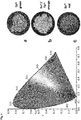
- Fig. 1 shows the CIE diagram and colors of Sn(CN 2 ) doped with Eu 3+ and Tb 3+ proving that a color tuning of one host with different activator ions is possible.
- Sn(CN 2 ) was doped with different dopant metals (Eu 3+ and Tb 3+ ) at the same time.
- Fig. 2a shows that in the emission spectrum of Sn(CN 2 ) doped with Eu 3+ , the transitions 5 D 0 ⁇ 7 F 0 and 7 F 3 seem to be more intense than usually.
- the 5 D 0 ⁇ 7 F 3 transition is even greater than the 5 D 0 ⁇ 7 F 4 transition, which is not common. This means a strong J-mixing and a strong crystal-field perturbation in this matrix.
- the 5 D 0 ⁇ 7 F 0 transition is also broad, indicating the location of Eu 3+ ions in several sites (cf. Fig. 2a ).
- Fig. 2b illustrates the excitation (monitored at 543 nm) and emission spectra of Tb 3+ doped Sn(CN 2 ).
- the excitation spectrum exhibits a broad and intense band in the range from 280 to 370 nm with a peak at around 334 nm. This broad band is attributed to 4f 8 ⁇ 4f 7 5d 1 transitions of the Tb 3+ ions.
- the strongest peak is at 543 nm corresponding to the 5 D 4 ⁇ 7 F 5 transition, while the peaks at 488 nm, 494 nm, 584 nm and 619 nm, respectively, originate from the 5 D 4 ⁇ 7 F 6 , 5 D 4 ⁇ 7 F 4 , and 5 D 4 ⁇ 7 F 3 transitions of the Tb 3+ ions.
- Fig. 2c proves that it is possible to insert two different activator ions in one host showing the typical bands of Eu 3+ as well as Tb 3+ resulting in an orange body color.
- Figs. 3 and 5a The voltage profile observed during galvanostatic cycling of undoped Sn(CN 2 ) with respect to Li +
- first discharge cf. Figs. 3a and 5a
- two regimes are visible in this voltage profile.
- a first sloping plateau occurs between 1.3 V and 0.5 V with a length of 350 mAh/g, corresponding to conversion of 2.2 Li per formula unit Sn(CN 2 ).
- a long second plateau is observed. This plateau has a smaller slope, but still a clear inclination, and its length of 750 mAh/g corresponds to conversion of additional 4.8 Li.
- the cyclic voltammogram of Fig. 5b also reveals two redox processes in agreement with the galvanostatic measurements. The main contribution is visible at 0.13 V/0.54 V and a second, broader contribution occurs around 1.0 V. In addition, in the first cycle, another reduction process is visible at 0.65 V which can be assigned to formation of the solid-electrolyte interphase (SEI).
- SEI solid-electrolyte interphase
- the galvanostatic cycling and the cyclic voltammogram are shown in Figs. 5c and 5d , respectively.
- additional processes are present, which can be assigned to the redox activity of Ni.
- the cyclic voltammogram two strong processes are visible at 0.63 V/1.45 V and 1.63 V/2.5 V.
- the reversible specific discharge capacity is increased to 800 mAh/g, which corresponds to reversible cycling of 5 Li per formula unit Sn(CN) 2 .
Landscapes
- Chemical & Material Sciences (AREA)
- Engineering & Computer Science (AREA)
- Materials Engineering (AREA)
- Power Engineering (AREA)
- Inorganic Chemistry (AREA)
- Microelectronics & Electronic Packaging (AREA)
- Organic Chemistry (AREA)
- Chemical Kinetics & Catalysis (AREA)
- Electrochemistry (AREA)
- General Chemical & Material Sciences (AREA)
- Battery Electrode And Active Subsutance (AREA)
Description
- The present invention relates to novel carbodiimide compounds of the following formula Sn(CN2):MX+ as well as to their use in energy storage systems and as phosphors. Further, the present invention also relates to novel methods for producing the carbodiimide Sn(CN2) and subsequent doping steps.
- The luminescence of inorganic materials is composed of the following processes: (1) absorption and excitation, (2) energy transfer, and (3) emission. Most luminescent materials consist of a so-called host material to which certain dopant ions, also termed activators, are added. In such cases, the host lattice plays two distinct roles: as a passive matrix to define the spatial locations of the activator ions; and as an active participant in the luminescence process, exerting its own specific influence on the spectroscopic behavior of the activator. In the latter, it helps to shape the structure of the energy levels of the activator and also introduces vibrations of various energies, the so-called phonons, which influence the kinetics of the luminescence phenomena.
- Oxyamides, cyanamides and carbodiimides as a fundamental class of compounds have gained increasing attention within the past decade in the field of synthetic solid-state chemistry by revealing remarkably high thermal and chemical resistivity which makes them excellent candidates for luminescent host materials, which are commonly doped with rare-earth (RE) activator ions, i.e. RE2+ as well as RE3+. For instance, down conversion of blue light from InGaN LEDs (light-emitting diodes) by suitable color converters, especially phosphors, has become a dominant technique for producing white light for all kinds of applications. However, there are still some technical challenges to overcome.
- Luminescent phosphors are usually doped with Eu2+, for instance, and only one activator ion can be used for one specific host material. Therefore, one host commonly shows only one color. Thus, different host materials applied as thin films are commonly used to achieve different colors. However, using different host materials commonly leads to structural misfits. In particular, since the host materials can have different coefficients of thermal expansion and due to different grid bias voltages of the host materials, multicolor LEDs often suffer from such structural problems.
- Current battery technologies also suffer from a number of challenges, and search for novel high-performing electrode materials is still essential. In particular, the need to overcome the present limitations concerning electrode capacities is a great topic.
- Solid-state carbodiimides of the general formula Mx(NCN)y or Mx(CN2)y, where M is an alkali, an alkaline-earth, or a transition metal or a metalloid, are a class of inorganic compounds, among which CaNCN is best known and used as fertilizer or nitrogen source for the steel industry. Recently, other transition metal carbodiimides have been reported to be electrochemically active materials for electrochemical energy-storage systems, such as anode materials for sodium- and lithium ion batteries. In particular, E. Eguia-Barrio et al., J. Mater. Chem. A, 2016, 4, 1608-1611, and M. T. Sougrati et al., Angew. Chem. Int. Ed., 2016, 55, 5090-5095, reported that transition metal carbodiimides MCN2 (M = Cu, Zn, Mn, Fe, Co, Ni and Cr) can be applied as negative electrode materials for lithium- and sodium ion batteries with very good cycling properties. In this report, the carbodiimides of copper (Cu), zinc, (Zn), manganese (Mn), iron (Fe), cobalt (Co), nickel (Ni), and chromium (Cr) have been prepared via different synthetic routes. The development of further carbodiimides has also been reported, and includes carbodiimides of rare earth, transition metal, and main group elements.
-
CN 106587160 A describes carbodiimide-based compounds of Mn, Fe, Co, Ni, and Cu having a MN6 octahedral-dimensional plane and a two-dimensional slice through the C layer forming an alternating layer structure. The fact that absolutely no compound formula is given and that MN6 octahedral-dimensional planes shall be the characteristic structural feature make it rather unlikely thatCN 106587160 A relates to a compound of the carbodiimide group. - Further,
WO 2012/010243 A1 describes carbodiimide compounds, a process for the preparation of these compounds and the use thereof as conversion phosphors or in lamps. In particular,WO 2012/010243 A1 describes a compound of the formula EA2-ySi(CN2)4-xOx:Euy (EA = Mg, Ca, Sr, Ba or Zn). This is an earth alkaline silicocarbodiimide. - On the other hand,
WO 2016/198550 A1 describes several metal carbodiimides and metal cyanamides of the formula MxM'y(NCN)w and their use as an active material for a negative electrode, where M is a metal selected from the group consisting of Cr, Fe, Co, Ni, Cu, Zn, Cd, Pb, Ag, Si, In, Ti and Sn; M' is a metal different from M and selected from the group consisting of Mn, Cr, Fe, Co, Ni, Cu, Zn, Cd, Pb, Ag, Si, In, Ti and Sn; 1 ≤ x + y ≤ 2; 1 ≤ w ≤ 3; 0 < x ≤ 2; 0 ≤ y ≤ 2; and the values of x, y and w are chosen such that the metal carbodiimide or the metal cyanamide is electronically neutral in view of the oxidation state(s) of the element or elements represented by M and M'. Examples ofWO 2016/198550 A1 include FeCN2, ZnCN2, Cr2(CN2)3, PbCN2, and Fe0.8Co0.2CN2. Even though tin (Sn) is listed among the metals, at that time SnCN2 did not yet exist. - As summarized, for instance, in M. T. Sougrati et al., Dalt. Trans., 2018, 47, 10827-10832, different synthetic routes are necessary to prepare the different carbodiimides. For instance, X. Liu et al., Z. Naturforsch. B, 2005, 60, 593-596, have described a slow oxidation approach to prepare CuNCN from Cu4(NCN)2NH3 at room temperature. The same compound was prepared by D. Koziej et al., J. Mater. Chem., 2009, 19, 5122-5124, following a non-aqueous soft chemistry approach via the reaction of copper chloride (CuCl2) with cyanamide and benzylamine. Nevertheless, other routes are also described, such as the metathesis reaction involving the heating of a mixture comprising an appropriate metal carbodiimide or metal cyanamide and a chloride of another appropriate metal, or the decomposition under argon of a compound of formula M1(NCNH)2 (M1being e.g. Ni, Co or Fe) as described in
WO 2016/198550 A1 . - While tin(II) thiocyanate Sn(SCN)2 is identified for many years (cf. A. G. Filby et al., J. Chem. Soc. Dalt. Trans. 1978, 12, 1797-1799), just recently new attempts have been made to synthesize SnCN2, which led to Sn2O(CN)2 as described in K. Dolabdjian et al., Dalton Trans., 2018, 47, 13378-13383. Most recently, M. Löber et al., Inorg. Chem., 2019, 58, 12, 7845-7851, reported for the first time the synthesis of Sn(CN2) via the intermediate compound Sn4Cl2(CN2)3. The synthetic intermediate compound Sn4Cl2(CN2)3 is formed from SnCl2 and Li2(CN2) at 200°C, and is described as a versatile precursor, because it can form Sn(CN2) when reacted with Li2(CN2), or Sn2O(CN2) when reacted with Li2(CN2) and Na2O. However, details on possible material properties of Sn(CN2) are not given in said paper.
- Based on the above, the object of the invention is to provide a novel material for highly efficient phosphors in modern LED-technology and for highly efficient electrode materials in energy storage systems.
- According to the present invention, the above object is achieved by providing a carbodiimide compound of the following formula Sn(CN2):MX+ as characterized in
claim 1. The above object is also achieved by a method for producing the carbodiimide compound according to the present invention as well as by a method for producing Sn(CN2) as characterized inclaims 7 and 8, respectively. In addition, the above object is achieved by using Sn(CN2) or the doped carbodiimide compound Sn(CN2):Mx+ according to the present invention as an electrode material in energy storage systems, or as a phosphor material in light-emitting diodes as characterized inclaims 9 and 11, respectively. In addition, the above object is achieved by providing a multicolored light-emitting diode as characterized in claim 12. Preferred embodiments of the present invention are set out in the dependent claims. - Specifically, the present invention provides a carbodiimide compound of the following formula Sn(CN2):MX+, which is Sn(CN2) doped with at least one dopant (Mx+). According to the present invention, the at least one dopant is selected from alkaline earth metals, lanthanoids, actinoids, transition metals, post-transition metals and metalloids (hereinafter also referred to as "dopant metal"). Sn is excluded as dopant. The term "X+" represents the oxidation state of the dopant, such as 2+ or 3+ etc., depending on the potential oxidation state of the dopant metal.
- According to the present invention, alkaline earth metals encompass the elements of
group 2 of the periodic table of elements (hereinafter also referred to as "periodic table"), i.e. beryllium (Be), magnesium (Mg), calcium (Ca), strontium (Sr), barium (Ba), and radium (Ra). Lanthanoids encompass the chemical elements with atomic numbers 57 through 71, i.e. lanthanum (La), cerium (Ce), praseodynium (Pr), neodynium (Nd), promethium (Pm), samarium (Sm), europium (Eu), gadolinium (Gd), terbium (Tb), dysprosium (Dy), holmium (Ho), erbium (Er), thulium (Tm), ytterbium (Yb), and lutetium (Lu). Actinoids encompass the chemical elements with atomic numbers 89 through 103, i.e. actinium (Ac), thorium (Th), protactinium (Pa), uranium (U), neptunium (Np), plutonium (Pu), americium (Am), curium (Cm), berkelium (Bk), californium (Cf), einsteinium (Es), fermium (Fm), mendelevium (Md), nobelium (No), and lawrencium (Lr). Transition metals encompass in accordance with the present invention any element in the d-block of the periodic table, which includesgroups 3 to 12 of the periodic table (except for La and Ac). Post-transition metals encompass gallium (Ga), indium (In), thallium (TI), lead (Pb), and bismuth (Bi). Further, metalloids encompass boron (B), aluminium (Al), carbon (C), silicon (Si), germanium (Ge), arsenic (As), antimony (Sb), selenium (Se), tellurium (Te), polonium (Po), and astatine (At). - Preferably, the dopant is at least one rare earth (RE) activator ion selected from the group consisting of Sc, Y, Ce, Pr, Nd, Sm, Eu, Gd, Tb, Dy, Ho, Er, Tm, and Yb in its corresponding oxidation state. Among those RE activator ions, it is particularly preferred that Sn(CN2) is doped with at least one selected from the group consisting of Eu and Tb.
- Also, it is preferred that the dopant is at least one element selected from the group consisting of Mg, Si, Mn, Fe, Co, Ni, Cu, and Zn in its corresponding oxidation state.
- According to the present invention, however, the dopant metal may not only be selected from the aforementioned ionic elements, but also from halogenated compounds of the alkaline earth metals, lanthanoids, actinoids, transition metals, post-transition metals and metalloids. As an example, SiCl4 may be mentioned without being limited thereto.
- Thus, according to a preferred embodiment, the dopant metal MX+ in the formula Sn(CN2):MX+ is preferably at least one selected from the group consisting of RE activator ions (Sc3+, Y3+, Ce3+, Pr3+, Nd3+, Sm3+, Eu3+, Eu2+, Gd3+, Tb3+, Dy3+, Ho3+, Er3+, Tm3+, and Yb3+), transition metals (particularly Ni2+, Mn2-7+, Fe2+, Fe3+, Co2+, Cu1+, Cu2+, and Zn2+), Mg (Mg2+), Si (Si4+) and SiCl4.
- Besides, the inventor has surprisingly found that Sn(CN2) can be doped with several ions, even at the same time. Thus, according to a preferred embodiment of the present invention, the carbodiimide compound Sn(CN2):MX+ (hereinafter also referred to as "doped Sn(CN2)") includes two or more different dopants (MX+). According to this embodiment, the at least two different dopants are preferably selected from the group consisting of Sc, Y, Ce, Pr, Nd, Sm, Eu, Gd, Tb, Dy, Ho, Er, Tm, and Yb.
- Preferably, the concentration of the dopant (MX+) is in the range of 1 to 30 mol-% based on Sn(CN2).
- In another aspect, the present invention provides a method for producing the doped Sn(CN2) according to the present invention, which comprises the step of doping Sn(CN2) with at least one dopant (MX+) at an elevated temperature of at least 400°C.
- Further, the present invention provides a method for producing Sn(CN2), which comprises the step of reacting a Sn(IV) compound with urea (CO(NH2)2) under an NH3 atmosphere at an elevated temperature of at least 300°C.
- According to the present invention, Sn(CN2) or the doped Sn(CN2) can be used as an electrode material in energy storage systems, or as a phosphor material in light-emitting diodes (LEDs). Preferably, the energy storage system is an alkali-metal ion battery, or a hybrid alkali-metal ion battery or a hybrid capacitor. Among those systems, Sn(CN2) or the doped Sn(CN2) is particularly useful as an electrode material in beyond lithium-ion batteries or a lithium-ion battery (LIB). Beyond lithium ion batteries encompass sodium/sodium-ion batteries, potassium/potassium-ion batteries, calcium/calcium-ion batteries, magnesium/magnesium-ion batteries, aluminum/aluminum-ion batteries, and zinc/zinc-ion batteries as well as corresponding alkali-metal-air batteries.
- In another aspect, the present invention provides a multicolored LED, which comprises at least two different luminescent hosts, wherein the at least two different luminescent hosts each comprise Sn(CN2):MX+, including two or more different dopants (MX+) selected from the group consisting of Sc, Y, Ce, Pr, Nd, Sm, Eu, Gd, Tb, Dy, Ho, Er, Tm, and Yb.
- The present invention is based on a novel approach for preparing Sn(CN2), namely by a low temperature synthesis using a soft urea route, which comprises the step of reacting a Sn(IV) compound (such as tin (IV) chloride pentahydrate (SnCl4·5 H2O)) with urea (CO(NH2)2) under an NH3 atmosphere at an elevated temperature of at least 300°C.
- According to the present invention, it was found that the thus obtained carbodiimide Sn(CN2) (also referred to as SnCN2) in pure form shows electrochemical activity and reversible electrochemical lithiation and delithiation. This will enlarge the circle of possible materials for lithium and post-lithium ion batteries tremendously.
- In addition, according to the present invention, it was surprisingly found that pure Sn(CN2) can be subsequently doped with a dopant metal (MX+), resulting in a distinct improvement of the battery capacity. This also facilitates a multitude of degrees of freedom to customize and adapt a battery material to special needs. This is even more important as for the search of novel transition metal carbodiimides the right synthetic conditions are often very challenging.
- Besides, as mentioned above, phosphors are usually doped with Eu2+, and only one activator ion is used. Therefore, one host shows one color. The fact that one host can be doped with e.g. several rare-earth activator ions, even at the same time, is an absolutely new approach, enabling host materials having different colors. Based thereon, structural problems inside the LED setup caused by different luminescent hosts can be avoided by using only one material. This will be a large benefit for the development of modern LED phosphors, since more colors can be realized with just one host material. Until now, a new host material was required for each color. Furthermore, the construction of an LED can be simplified massively, since the individual color layers essentially consist of one material, and thus no more problems arise by different coefficients of thermal expansion and grid bias voltages.
- The present invention including preferred embodiments will now be described in more detail along with the accompanying figures. The figures show:
- Fig. 1:
- CIE diagram and colors of Sn(CN)2 doped with a) Tb3+, b) Eu3+ and Tb3+, and c) Eu3+,
- Fig. 2:
- Excitation (black) and emission spectra (colored) of Sn(CN)2 doped with (a) Eu3+ (red), (b) Tb3+ (green), and (c) Eu3+ and Tb3+ (orange).
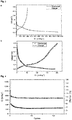
- Fig. 3:
- (a) First galvanostatic cycling of undoped Sn(CN)2 vs Li+ | Li, and (b) after 200 cycles.
- Fig. 4:
- Cycle stability of undoped Sn(CN)2 vs Li+ | Li.
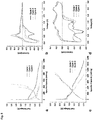
- Fig. 5:
- (a) Galvanostatic cycling and (b) cyclic voltammogram of undoped Sn(CN)2 vs Li+ | Li, (c) galvanostatic cycling and (d) cyclic voltammogram of Ni doped Sn(CN)2 vs Li+ | Li.
- Fig. 6:
- (a) Galvanostatic cycling and (b) cyclic voltammogram of Co doped Sn(CN)2 vs Li+ | Li, (c) galvanostatic cycling and (d) cyclic voltammogram of Fe doped Sn(CN)2 vs Li+ | Li.
- As mentioned above, the present invention is based on a novel approach for preparing Sn(CN2), namely by a low temperature synthesis using a soft urea route. According to the present invention, Sn(CN2) can be obtained by reacting a Sn(IV) compound with urea under an NH3 atmosphere at an elevated temperature of at least 300°C. Preferably, the reaction temperature is set to at least 350°C, more preferably to at least 400°C.
- The Sn(IV) compound is not specifically limited and can be chosen e.g. from halogenated tin compounds, such as tin (IV) chloride pentahydrate (SnCl4·5 H2O, available from Sigma Aldrich). The reaction may be carried out in a solvent, preferably in a polar solvent, such as a C1-C6 alcohol. In particular, methanol, ethanol, propanol etc. may be mentioned as suitable solvents.
- According to a non-limiting example, Sn(CN2) can be obtained by adding tin (IV) chloride pentahydrate powder (SnCl4·5 H2O, ≥ 99%, Sigma Aldrich) to ethanol in order to obtain a stable and clear solution. The addition of urea (≥ 99%, Sigma Aldrich) to the alcoholic solution provides a clear solution upon stirring. This precursor solution can be treated under an NH3 atmosphere at 350 to 550°C for 2 h at a heating rate of 10°C/min, for instance. Subsequent cooling to room temperature in an argon (Ar) atmosphere (20 ml/min) provides the desired Sn(CN2).
- Of course, this reaction is neither limited to that specific temperature, nor to the specific compounds, but is applicable to other materials and temperatures.
- The voltage profile observed during galvanostatic cycling of undoped Sn(CN2) with respect to Li+ | Li in the voltage range between 3.0 V and 0.01 V is shown in
Fig. 3 and5a . During the first discharge (cf.Fig. 3a and5a ), two regimes are visible in this voltage profile. At the beginning, a first sloping plateau occurs between 1.3 V and 0.5 V with a length of 350 mAh/g, corresponding to conversion of 2.2 Li per formula unit Sn(CN2). Subsequently, a long second plateau is observed. This plateau has a smaller slope, but still a clear inclination, and its length of 750 mAh/g corresponds to conversion of additional 4.8 Li. During the first charge to 3.0 V, a specific capacity of 300 mAh/g is obtained. This reveals a high irreversible capacity of about 800 mAh/g in the first discharge, and the reversible contribution is only 27% (about two Li per formula unit). During further cycling, the two contributions in the discharge voltage profile are still clearly visible as can be taken fromcycles Figure 5a . This also applies even after 200 cycles as shown inFig. 3b , and the reversible specific capacity stabilizes at 230 mAh/g with a Coulombic efficiency of 97% as shown inFig. 4 . - The cyclic voltammogram of
Fig. 5b also reveals two redox processes in agreement with the galvanostatic measurements. The main contribution is visible at 0.13 V/0.54 V and a second, broader contribution occurs around 1.0 V. In addition, in the first cycle, another reduction process is visible at 0.65 V which can be assigned to formation of the solid-electrolyte interphase (SEI). - The above results demonstrate that undoped Sn(CN2) can be used as a negative electrode (anode) material in energy storage systems, since said carbodiimide compound shows electrochemical activity and reversible electrochemical lithiation and delithiation. In particular, the above investigations show that the undoped Sn(CN2) has very good cycling properties over a large cycle number which have never been reported before. Thus, the undoped Sn(CN2) can be suitably used in highly efficient energy storage systems, particularly in an alkali-metal ion battery such as in beyond lithium-ion batteries (Na, K, Ca, Mg, Al, Zn) or a lithium-ion battery. In addition, the undoped Sn(CN2) can be suitably used in a hybrid alkali-metal ion battery, or a hybrid capacitor.
- According to the present invention, it has further been found that pure Sn(CN2) can be subsequently doped with a dopant metal (MX+). As mentioned above, in literature there can be found several oxo/carbodiimides or cyanamides doped with rare-earth (RE) activator ions, i.e. RE2+ as well as RE3+ (cf. for instance S. Yuan et al., Ceram. Int., 2017, 43, 16018-16022). However, a relevant point here is that the doping ion is inserted during the main synthesis and not afterwards. Normally doping is performed with Eu2+ and only one activator ion is used. Therefore, one host shows one color.
- According to the present invention, it has surprisingly been found that Sn(CN2) can be selectively doped by a subsequent combustion synthesis as will be described in more detail below. The method for producing the doped Sn(CN2) according to the present invention comprises the step of doping Sn(CN2) with at least one dopant (MX+) at an elevated temperature of at least 400°. That is, contrary to the above-mentioned state of the art, doping with activator ions is not carried out during the main synthesis of the carbodiimide. Here, it should be noted that such attempts merely result in metallic Sn and Sn3N4, but not in doped Sn(CN2). By subsequently doping Sn(CN2), it is possible to produce the carbodiimide compound of the formula Sn(CN2):MX+.
- As mentioned above, according to the present invention, the dopant metal is selected from alkaline earth metals, lanthanoids, actinoids, transition metals, post-transition metals and metalloids. The doping of SnCN2 can be carried out by a successive combustion synthesis in which the respective halogenated dopant metal(s) will be mixed with Sn(CN2) and heated to at least 400°C. For instance, it is preferred to use the corresponding metal chlorides which are commonly in powder form. As long as SiCl4 doped Sn(CN2) is concerned, liquid SiCl4 can be similarly mixed with Sn(CN2).
- For the combustion synthesis, it is preferred to carry out the doping in the presence of a low explosive material, such as a nitrogen-based fuel. For instance, the mixture of Sn(CN2) and the halogenated dopant metal(s) may be combined with an aqueous urea ammonium nitrate solution, which is to be heated to at least 400°C. Preferably, the reaction temperature is set to at least 450°C, more preferably to at least 500°C.
- The molar ratio of Sn(CN2) and the dopant metal(s) is not specifically limited. Preferably, however, the concentration of the dopant metal(s) is in the range of 1 to 30 mol-% based on Sn(CN2), more preferably 5 to 20 mol-%. Accordingly, the dopant metal(s) are preferably mixed with Sn(CN2) in an amount so that the content of the dopant metal(s) in the doped Sn(CN)2 is in the aforementioned range, for instance in an about equimolar amount.
- Doping of Sn(CN2) with such a dopant metal opens up a multitude of degrees of freedom to customize and adapt a battery material to special needs for their applicability in lithium ion batteries as well as in post-lithium ion energy storage systems, such as beyond lithium-ion batteries (Na, K, Ca, Mg, Al, Zn), hybrid alkali-metal ion batteries, or hybrid capacitors. This is even more important as for the search of novel transition metal carbodiimides the right synthetic conditions are often very challenging. As shown in the experimental section, this doping improves the capacity enormously.
- Concerning the luminescence of doped Sn(CN2), a large benefit is that one host can deliver several colors. Normally, doping is performed with Eu2+ and only one activator ion is used, and thus one host shows only one color.
- The fact that one host can be doped with different dopant metals, even at the same time, is absolutely new, resulting in the fact that one host can deliver different colors as it is also shown in
Fig. 1 . By this fact, structural problems inside the LED setup caused by different luminescent hosts can be avoided by using only one material. This will be a large benefit for the development of modern LED phosphors. - The present invention will be further illustrated in the following examples without being limited thereto.
- Sn(CN2) was prepared by a low temperature synthesis using a soft urea route. The precursor was obtained by adding 2-6 g of tin (IV) chloride pentahydrate (SnCl4·5 H2O, ≥ 99%, Sigma Aldrich) powder to 4-8 ml ethanol in order to obtain the targeted concentration and form a stable and clear solution. Then, 2 g of urea (≥99%, Sigma Aldrich) were added to the alcoholic solution. This mixture was stirred until the urea was completely dissolved and became a clear solution. The precursor was then put into an oven and treated under a NH3 atmosphere (100 ml/min) at 350 to 550°C (10°C/min) for 2 h. Subsequently, the sample was cooled down to room temperature in Ar atmosphere (20 ml/min).
- The doping of Sn(CN2) was realized by a successive combustion synthesis. Therefore, the respective metal chlorides (such as MCl2 or MCl3, equimolar amount with respect to Sn(CN2)), NH4NO3 (40 mg), urea (900 mg) and 5 ml H2O were added to the sample of Sn(CN2) (1 mol). This mixture was put into an oven at 400 to 600°C for 10 min.
- Carbodiimide compounds are considered to be efficient host candidates for rare-earth activator ions such as Eu3+ and Tb3+. Eu3+ is considered as an important activator ion with red emission corresponding to the transition of 5D0 → 7FJ (J = 1-6). The emission of Tb3+ is due to the transition between the emitting states of 5DJ and the excited states of 7FJ, and the main intense green emission is attributed to the transition of 5D4- 7F5 which is located at ca. 543 nm.
-
Fig. 1 shows the CIE diagram and colors of Sn(CN2) doped with Eu3+ and Tb3+ proving that a color tuning of one host with different activator ions is possible. In addition, it has been proven that Sn(CN2) was doped with different dopant metals (Eu3+ and Tb3+) at the same time. -
Fig. 2a shows that in the emission spectrum of Sn(CN2) doped with Eu3+, the transitions 5D0 → 7F0 and 7F3 seem to be more intense than usually. The 5D0 → 7F3 transition is even greater than the 5D0 → 7F4 transition, which is not common. This means a strong J-mixing and a strong crystal-field perturbation in this matrix. The 5D0 → 7F0 transition is also broad, indicating the location of Eu3+ ions in several sites (cf.Fig. 2a ). -
Fig. 2b illustrates the excitation (monitored at 543 nm) and emission spectra of Tb3+ doped Sn(CN2). The excitation spectrum exhibits a broad and intense band in the range from 280 to 370 nm with a peak at around 334 nm. This broad band is attributed to 4f8 → 4f75d1 transitions of the Tb3+ ions. - The strongest peak is at 543 nm corresponding to the 5D4 → 7F5 transition, while the peaks at 488 nm, 494 nm, 584 nm and 619 nm, respectively, originate from the 5D4 → 7F6, 5D4 → 7F4, and 5D4 → 7F3 transitions of the Tb3+ ions.
-
Fig. 2c proves that it is possible to insert two different activator ions in one host showing the typical bands of Eu3+ as well as Tb3+ resulting in an orange body color. - The voltage profile observed during galvanostatic cycling of undoped Sn(CN2) with respect to Li+ | Li in the voltage range between 3.0 V and 0.01 V is shown in
Figs. 3 and5a . During the first discharge (cf.Figs. 3a and5a ), two regimes are visible in this voltage profile. At the beginning, a first sloping plateau occurs between 1.3 V and 0.5 V with a length of 350 mAh/g, corresponding to conversion of 2.2 Li per formula unit Sn(CN2). Subsequently, a long second plateau is observed. This plateau has a smaller slope, but still a clear inclination, and its length of 750 mAh/g corresponds to conversion of additional 4.8 Li. During the first charge to 3.0 V, a specific capacity of 300 mAh/g is obtained. This reveals a high irreversible capacity of about 800 mAh/g in the first discharge, and the reversible contribution is only 27% (about two Li per formula unit). During further cycling, the two contributions in the discharge voltage profile are still clearly visible as can be taken fromcycles Figure 5a . This also applies even after 200 cycles as shown inFig. 3b , and the reversible specific capacity stabilizes at 230 mAh/g with a Coulombic efficiency of 97% as shown inFig. 4 . - The cyclic voltammogram of
Fig. 5b also reveals two redox processes in agreement with the galvanostatic measurements. The main contribution is visible at 0.13 V/0.54 V and a second, broader contribution occurs around 1.0 V. In addition, in the first cycle, another reduction process is visible at 0.65 V which can be assigned to formation of the solid-electrolyte interphase (SEI). - For the Ni doped Sn(CN2), the galvanostatic cycling and the cyclic voltammogram are shown in
Figs. 5c and 5d , respectively. In comparison to the undoped Sn(CN)2, it becomes obvious that additional processes are present, which can be assigned to the redox activity of Ni. In the cyclic voltammogram, two strong processes are visible at 0.63 V/1.45 V and 1.63 V/2.5 V. Overall, the specific capacity and also the cyclic stability are significantly increased by the doping with Ni as shown inFig. 5d . The reversible specific discharge capacity is increased to 800 mAh/g, which corresponds to reversible cycling of 5 Li per formula unit Sn(CN)2. - Similar results were obtained when Sn(CN)2 was doped with Co, Fe, Mg, Zn, Si, SiCl4 and Mg demonstrating that the doping can influence and improve the cycling behavior of Sn(CN)2. A respective galvanostatic cycling and cyclic voltammogram of Co doped Sn(CN)2 vs Li+ | Li are shown in
Figs. 6 a and b, whereas a galvanostatic cycling and cyclic voltammogram of Fe doped Sn(CN)2 vs Li+ | Li are shown inFigs. 6(c) and (d) .
Claims (12)
- A carbodiimide compound of the following formula Sn(CN2):MX+, which is Sn(CN2) doped with at least one dopant (MX+), wherein the at least one dopant is selected from alkaline earth metals, lanthanoids, actinoids, transition metals, post-transition metals and metalloids, and wherein X+ represents the oxidation state of the dopant.
- The carbodiimide compound according to claim 1, wherein the dopant is at least one rare earth (RE) activator ion selected from the group consisting of Sc, Y, Ce, Pr, Nd, Sm, Eu, Gd, Tb, Dy, Ho, Er, Tm, and Yb in its corresponding oxidation state.
- The carbodiimide compound according to claim 1, wherein the dopant is at least one element selected from the group consisting of Mg, Si, Mn, Fe, Co, Ni, Cu, and Zn in its corresponding oxidation state.
- The carbodiimide compound according to any one of claims 1 to 3, which includes two or more different dopants (MX+).
- The carbodiimide compound according to claim 4, wherein the dopants are selected from the group consisting of Sc, Y, Ce, Pr, Nd, Sm, Eu, Gd, Tb, Dy, Ho, Er, Tm, and Yb.
- The carbodiimide compound according to any one of claims 1 to 5, wherein the concentration of the dopant (MX+) is in the range of 1 to 30 mol-% based on Sn(CN2).
- A method for producing the carbodiimide compound according to any one of claims 1 to 6, which comprises the step of doping Sn(CN2) with at least one dopant (MX+) at an elevated temperature of at least 400°C.
- A method for producing Sn(CN2), which comprises the step of reacting a Sn(IV) compound with urea (CO(NH2)2) under an NH3 atmosphere at an elevated temperature of at least 300°C.
- Use of Sn(CN2) or the doped carbodiimide compound of the following formula Sn(CN2):MX+ according to any one of claims 1 to 6 as an electrode material in energy storage systems.
- The use according to claim 9, wherein the energy storage system is an alkali-metal ion battery such as beyond lithium ion batteries (Na, K, Ca, Mg, Al, Zn) or a lithium-ion battery, or a hybrid alkali-metal ion battery, or a hybrid capacitor.
- Use of Sn(CN2) or the doped carbodiimide compound of the following formula Sn(CN2):MX+ according to any one of claims 1 to 6 as a phosphor material in light-emitting diodes (LEDs).
- A multicolored light-emitting diode (LED), comprising at least two different luminescent hosts, wherein the at least two different luminescent hosts each comprises Sn(CN2):MX+, including two or more different dopants (MX+) selected from the group consisting of Sc, Y, Ce, Pr, Nd, Sm, Eu, Gd, Tb, Dy, Ho, Er, Tm, and Yb.
Priority Applications (1)
| Application Number | Priority Date | Filing Date | Title |
|---|---|---|---|
| EP19193824.0A EP3786260B1 (en) | 2019-08-27 | 2019-08-27 | Doped tin-carbodiimide and use thereof in energy storage systems and as phosphors |
Applications Claiming Priority (1)
| Application Number | Priority Date | Filing Date | Title |
|---|---|---|---|
| EP19193824.0A EP3786260B1 (en) | 2019-08-27 | 2019-08-27 | Doped tin-carbodiimide and use thereof in energy storage systems and as phosphors |
Publications (2)
| Publication Number | Publication Date |
|---|---|
| EP3786260A1 EP3786260A1 (en) | 2021-03-03 |
| EP3786260B1 true EP3786260B1 (en) | 2021-12-15 |
Family
ID=67777063
Family Applications (1)
| Application Number | Title | Priority Date | Filing Date |
|---|---|---|---|
| EP19193824.0A Active EP3786260B1 (en) | 2019-08-27 | 2019-08-27 | Doped tin-carbodiimide and use thereof in energy storage systems and as phosphors |
Country Status (1)
| Country | Link |
|---|---|
| EP (1) | EP3786260B1 (en) |
Family Cites Families (4)
| Publication number | Priority date | Publication date | Assignee | Title |
|---|---|---|---|---|
| DE202011110976U1 (en) * | 2010-06-21 | 2017-11-27 | Lg Chem. Ltd. | Polylactide resin with excellent heat resistance |
| DE102010031914A1 (en) | 2010-07-22 | 2012-01-26 | Merck Patent Gmbh | Carbodiimide phosphors |
| EP3104437A1 (en) | 2015-06-10 | 2016-12-14 | Centre National De La Recherche Scientifique | Metal carbodiimides and metal cyanamides as electrode materials |
| CN106587160B (en) | 2016-03-28 | 2018-05-01 | 北京纳米能源与系统研究所 | Carbodiimides and its preparation method and application |
-
2019
- 2019-08-27 EP EP19193824.0A patent/EP3786260B1/en active Active
Also Published As
| Publication number | Publication date |
|---|---|
| EP3786260A1 (en) | 2021-03-03 |
Similar Documents
| Publication | Publication Date | Title |
|---|---|---|
| KR100701532B1 (en) | Lithium secondary battery positive electrode active material to which fluorine compound is added and manufacturing method thereof | |
| US7314684B2 (en) | Layer cathode methods of manufacturing and materials for Li-ion rechargeable batteries | |
| KR100428616B1 (en) | Positive active material for lithium secondary battery and method of preparing same | |
| KR100822013B1 (en) | Fluorine compound coated lithium secondary battery positive electrode active material and its manufacturing method | |
| US7008566B2 (en) | Oligo phosphate-based electrode active materials and methods of making same | |
| WO2006109930A1 (en) | Cathode active material coated with fluorine compound for lithium secondary batteries and method for preparing the same | |
| CN108461736A (en) | A kind of nickel cobalt aluminium ternary anode material for lithium-ion batteries, Preparation method and use being mixed with | |
| Aravindan et al. | Effect of LiBOB additive on the electrochemical performance of LiCoPO4 | |
| US20040202935A1 (en) | Cathode active material with increased alkali/metal content and method of making same | |
| US11658296B2 (en) | Use of nickel in a lithium rich cathode material for suppressing gas evolution from the cathode material during a charge cycle and for increasing the charge capacity of the cathode material | |
| US12206101B2 (en) | Disordered rock salt electrodes for lithium batteries | |
| EP3943445A1 (en) | Bulk materials of doped multinary nitrides and nitridosilicates, their production method and uses | |
| EP3415470A1 (en) | Boron-doped sodium-ion cathode material, method of producing same and its use | |
| US6998069B1 (en) | Electrode material for positive electrodes of rechargeable lithium batteries | |
| CN102544447A (en) | Method for preparing positive electrode material of lithium ion battery | |
| EP3728127A1 (en) | A compound | |
| KR20230054639A (en) | A method for manufacturing 3-dimensional porous cathode material as sodium ion batteries | |
| GB2569389A (en) | Compound | |
| GB2569392A (en) | Compound | |
| KR20220098177A (en) | lithium transition metal halide | |
| CN108461750A (en) | A kind of nickel cobalt aluminium ternary anode material for lithium-ion batteries, the Preparation method and use of doping | |
| KR100430408B1 (en) | Layered manganese cathode active materials for lithium secondary batteries, method for preparing the same for lithium secondary batteries, and lithium secondary batteries comprising the same | |
| EP3786260B1 (en) | Doped tin-carbodiimide and use thereof in energy storage systems and as phosphors | |
| KR100739620B1 (en) | Cathode active material for lithium secondary battery and its manufacturing method | |
| JP3631150B2 (en) | Method for selecting lithium manganate and method for producing lithium secondary battery |
Legal Events
| Date | Code | Title | Description |
|---|---|---|---|
| PUAI | Public reference made under article 153(3) epc to a published international application that has entered the european phase |
Free format text: ORIGINAL CODE: 0009012 |
|
| STAA | Information on the status of an ep patent application or granted ep patent |
Free format text: STATUS: REQUEST FOR EXAMINATION WAS MADE |
|
| 17P | Request for examination filed |
Effective date: 20200326 |
|
| AK | Designated contracting states |
Kind code of ref document: A1 Designated state(s): AL AT BE BG CH CY CZ DE DK EE ES FI FR GB GR HR HU IE IS IT LI LT LU LV MC MK MT NL NO PL PT RO RS SE SI SK SM TR |
|
| AX | Request for extension of the european patent |
Extension state: BA ME |
|
| RIC1 | Information provided on ipc code assigned before grant |
Ipc: C09K 11/77 20060101AFI20210318BHEP Ipc: H05B 33/14 20060101ALI20210318BHEP Ipc: H01B 1/06 20060101ALI20210318BHEP Ipc: H01M 4/02 20060101ALI20210318BHEP Ipc: H01G 11/04 20130101ALI20210318BHEP Ipc: H01G 11/06 20130101ALI20210318BHEP Ipc: H01G 11/50 20130101ALI20210318BHEP Ipc: H01M 4/58 20100101ALI20210318BHEP Ipc: H01M 10/0525 20100101ALI20210318BHEP Ipc: H01M 10/054 20100101ALI20210318BHEP |
|
| GRAP | Despatch of communication of intention to grant a patent |
Free format text: ORIGINAL CODE: EPIDOSNIGR1 |
|
| STAA | Information on the status of an ep patent application or granted ep patent |
Free format text: STATUS: GRANT OF PATENT IS INTENDED |
|
| INTG | Intention to grant announced |
Effective date: 20210510 |
|
| GRAS | Grant fee paid |
Free format text: ORIGINAL CODE: EPIDOSNIGR3 |
|
| GRAA | (expected) grant |
Free format text: ORIGINAL CODE: 0009210 |
|
| STAA | Information on the status of an ep patent application or granted ep patent |
Free format text: STATUS: THE PATENT HAS BEEN GRANTED |
|
| AK | Designated contracting states |
Kind code of ref document: B1 Designated state(s): AL AT BE BG CH CY CZ DE DK EE ES FI FR GB GR HR HU IE IS IT LI LT LU LV MC MK MT NL NO PL PT RO RS SE SI SK SM TR |
|
| REG | Reference to a national code |
Ref country code: GB Ref legal event code: FG4D Ref country code: CH Ref legal event code: EP |
|
| REG | Reference to a national code |
Ref country code: IE Ref legal event code: FG4D Ref country code: DE Ref legal event code: R096 Ref document number: 602019010048 Country of ref document: DE |
|
| REG | Reference to a national code |
Ref country code: AT Ref legal event code: REF Ref document number: 1455507 Country of ref document: AT Kind code of ref document: T Effective date: 20220115 |
|
| REG | Reference to a national code |
Ref country code: NL Ref legal event code: FP |
|
| REG | Reference to a national code |
Ref country code: LT Ref legal event code: MG9D |
|
| PG25 | Lapsed in a contracting state [announced via postgrant information from national office to epo] |
Ref country code: RS Free format text: LAPSE BECAUSE OF FAILURE TO SUBMIT A TRANSLATION OF THE DESCRIPTION OR TO PAY THE FEE WITHIN THE PRESCRIBED TIME-LIMIT Effective date: 20211215 Ref country code: LT Free format text: LAPSE BECAUSE OF FAILURE TO SUBMIT A TRANSLATION OF THE DESCRIPTION OR TO PAY THE FEE WITHIN THE PRESCRIBED TIME-LIMIT Effective date: 20211215 Ref country code: FI Free format text: LAPSE BECAUSE OF FAILURE TO SUBMIT A TRANSLATION OF THE DESCRIPTION OR TO PAY THE FEE WITHIN THE PRESCRIBED TIME-LIMIT Effective date: 20211215 Ref country code: BG Free format text: LAPSE BECAUSE OF FAILURE TO SUBMIT A TRANSLATION OF THE DESCRIPTION OR TO PAY THE FEE WITHIN THE PRESCRIBED TIME-LIMIT Effective date: 20220315 |
|
| REG | Reference to a national code |
Ref country code: AT Ref legal event code: MK05 Ref document number: 1455507 Country of ref document: AT Kind code of ref document: T Effective date: 20211215 |
|
| PG25 | Lapsed in a contracting state [announced via postgrant information from national office to epo] |
Ref country code: SE Free format text: LAPSE BECAUSE OF FAILURE TO SUBMIT A TRANSLATION OF THE DESCRIPTION OR TO PAY THE FEE WITHIN THE PRESCRIBED TIME-LIMIT Effective date: 20211215 Ref country code: NO Free format text: LAPSE BECAUSE OF FAILURE TO SUBMIT A TRANSLATION OF THE DESCRIPTION OR TO PAY THE FEE WITHIN THE PRESCRIBED TIME-LIMIT Effective date: 20220315 Ref country code: LV Free format text: LAPSE BECAUSE OF FAILURE TO SUBMIT A TRANSLATION OF THE DESCRIPTION OR TO PAY THE FEE WITHIN THE PRESCRIBED TIME-LIMIT Effective date: 20211215 Ref country code: HR Free format text: LAPSE BECAUSE OF FAILURE TO SUBMIT A TRANSLATION OF THE DESCRIPTION OR TO PAY THE FEE WITHIN THE PRESCRIBED TIME-LIMIT Effective date: 20211215 Ref country code: GR Free format text: LAPSE BECAUSE OF FAILURE TO SUBMIT A TRANSLATION OF THE DESCRIPTION OR TO PAY THE FEE WITHIN THE PRESCRIBED TIME-LIMIT Effective date: 20220316 |
|
| PG25 | Lapsed in a contracting state [announced via postgrant information from national office to epo] |
Ref country code: SM Free format text: LAPSE BECAUSE OF FAILURE TO SUBMIT A TRANSLATION OF THE DESCRIPTION OR TO PAY THE FEE WITHIN THE PRESCRIBED TIME-LIMIT Effective date: 20211215 Ref country code: SK Free format text: LAPSE BECAUSE OF FAILURE TO SUBMIT A TRANSLATION OF THE DESCRIPTION OR TO PAY THE FEE WITHIN THE PRESCRIBED TIME-LIMIT Effective date: 20211215 Ref country code: RO Free format text: LAPSE BECAUSE OF FAILURE TO SUBMIT A TRANSLATION OF THE DESCRIPTION OR TO PAY THE FEE WITHIN THE PRESCRIBED TIME-LIMIT Effective date: 20211215 Ref country code: PT Free format text: LAPSE BECAUSE OF FAILURE TO SUBMIT A TRANSLATION OF THE DESCRIPTION OR TO PAY THE FEE WITHIN THE PRESCRIBED TIME-LIMIT Effective date: 20220418 Ref country code: ES Free format text: LAPSE BECAUSE OF FAILURE TO SUBMIT A TRANSLATION OF THE DESCRIPTION OR TO PAY THE FEE WITHIN THE PRESCRIBED TIME-LIMIT Effective date: 20211215 Ref country code: EE Free format text: LAPSE BECAUSE OF FAILURE TO SUBMIT A TRANSLATION OF THE DESCRIPTION OR TO PAY THE FEE WITHIN THE PRESCRIBED TIME-LIMIT Effective date: 20211215 Ref country code: CZ Free format text: LAPSE BECAUSE OF FAILURE TO SUBMIT A TRANSLATION OF THE DESCRIPTION OR TO PAY THE FEE WITHIN THE PRESCRIBED TIME-LIMIT Effective date: 20211215 |
|
| PG25 | Lapsed in a contracting state [announced via postgrant information from national office to epo] |
Ref country code: PL Free format text: LAPSE BECAUSE OF FAILURE TO SUBMIT A TRANSLATION OF THE DESCRIPTION OR TO PAY THE FEE WITHIN THE PRESCRIBED TIME-LIMIT Effective date: 20211215 Ref country code: AT Free format text: LAPSE BECAUSE OF FAILURE TO SUBMIT A TRANSLATION OF THE DESCRIPTION OR TO PAY THE FEE WITHIN THE PRESCRIBED TIME-LIMIT Effective date: 20211215 |
|
| REG | Reference to a national code |
Ref country code: DE Ref legal event code: R097 Ref document number: 602019010048 Country of ref document: DE |
|
| PG25 | Lapsed in a contracting state [announced via postgrant information from national office to epo] |
Ref country code: IS Free format text: LAPSE BECAUSE OF FAILURE TO SUBMIT A TRANSLATION OF THE DESCRIPTION OR TO PAY THE FEE WITHIN THE PRESCRIBED TIME-LIMIT Effective date: 20220415 |
|
| PLBE | No opposition filed within time limit |
Free format text: ORIGINAL CODE: 0009261 |
|
| STAA | Information on the status of an ep patent application or granted ep patent |
Free format text: STATUS: NO OPPOSITION FILED WITHIN TIME LIMIT |
|
| PG25 | Lapsed in a contracting state [announced via postgrant information from national office to epo] |
Ref country code: DK Free format text: LAPSE BECAUSE OF FAILURE TO SUBMIT A TRANSLATION OF THE DESCRIPTION OR TO PAY THE FEE WITHIN THE PRESCRIBED TIME-LIMIT Effective date: 20211215 Ref country code: AL Free format text: LAPSE BECAUSE OF FAILURE TO SUBMIT A TRANSLATION OF THE DESCRIPTION OR TO PAY THE FEE WITHIN THE PRESCRIBED TIME-LIMIT Effective date: 20211215 |
|
| 26N | No opposition filed |
Effective date: 20220916 |
|
| PG25 | Lapsed in a contracting state [announced via postgrant information from national office to epo] |
Ref country code: MC Free format text: LAPSE BECAUSE OF FAILURE TO SUBMIT A TRANSLATION OF THE DESCRIPTION OR TO PAY THE FEE WITHIN THE PRESCRIBED TIME-LIMIT Effective date: 20211215 |
|
| REG | Reference to a national code |
Ref country code: CH Ref legal event code: PL |
|
| PG25 | Lapsed in a contracting state [announced via postgrant information from national office to epo] |
Ref country code: LU Free format text: LAPSE BECAUSE OF NON-PAYMENT OF DUE FEES Effective date: 20220827 Ref country code: LI Free format text: LAPSE BECAUSE OF NON-PAYMENT OF DUE FEES Effective date: 20220831 Ref country code: CH Free format text: LAPSE BECAUSE OF NON-PAYMENT OF DUE FEES Effective date: 20220831 |
|
| REG | Reference to a national code |
Ref country code: BE Ref legal event code: MM Effective date: 20220831 |
|
| PG25 | Lapsed in a contracting state [announced via postgrant information from national office to epo] |
Ref country code: IT Free format text: LAPSE BECAUSE OF FAILURE TO SUBMIT A TRANSLATION OF THE DESCRIPTION OR TO PAY THE FEE WITHIN THE PRESCRIBED TIME-LIMIT Effective date: 20211215 |
|
| PG25 | Lapsed in a contracting state [announced via postgrant information from national office to epo] |
Ref country code: IE Free format text: LAPSE BECAUSE OF NON-PAYMENT OF DUE FEES Effective date: 20220827 |
|
| PG25 | Lapsed in a contracting state [announced via postgrant information from national office to epo] |
Ref country code: BE Free format text: LAPSE BECAUSE OF NON-PAYMENT OF DUE FEES Effective date: 20220831 |
|
| PG25 | Lapsed in a contracting state [announced via postgrant information from national office to epo] |
Ref country code: CY Free format text: LAPSE BECAUSE OF FAILURE TO SUBMIT A TRANSLATION OF THE DESCRIPTION OR TO PAY THE FEE WITHIN THE PRESCRIBED TIME-LIMIT Effective date: 20211215 |
|
| PG25 | Lapsed in a contracting state [announced via postgrant information from national office to epo] |
Ref country code: MK Free format text: LAPSE BECAUSE OF FAILURE TO SUBMIT A TRANSLATION OF THE DESCRIPTION OR TO PAY THE FEE WITHIN THE PRESCRIBED TIME-LIMIT Effective date: 20211215 Ref country code: HU Free format text: LAPSE BECAUSE OF FAILURE TO SUBMIT A TRANSLATION OF THE DESCRIPTION OR TO PAY THE FEE WITHIN THE PRESCRIBED TIME-LIMIT; INVALID AB INITIO Effective date: 20190827 |
|
| PGFP | Annual fee paid to national office [announced via postgrant information from national office to epo] |
Ref country code: NL Payment date: 20240821 Year of fee payment: 6 |
|
| PG25 | Lapsed in a contracting state [announced via postgrant information from national office to epo] |
Ref country code: MT Free format text: LAPSE BECAUSE OF FAILURE TO SUBMIT A TRANSLATION OF THE DESCRIPTION OR TO PAY THE FEE WITHIN THE PRESCRIBED TIME-LIMIT Effective date: 20211215 |
|
| PGFP | Annual fee paid to national office [announced via postgrant information from national office to epo] |
Ref country code: DE Payment date: 20240819 Year of fee payment: 6 |
|
| PGFP | Annual fee paid to national office [announced via postgrant information from national office to epo] |
Ref country code: GB Payment date: 20240822 Year of fee payment: 6 |
|
| PGFP | Annual fee paid to national office [announced via postgrant information from national office to epo] |
Ref country code: FR Payment date: 20240823 Year of fee payment: 6 |
|
| PG25 | Lapsed in a contracting state [announced via postgrant information from national office to epo] |
Ref country code: TR Free format text: LAPSE BECAUSE OF FAILURE TO SUBMIT A TRANSLATION OF THE DESCRIPTION OR TO PAY THE FEE WITHIN THE PRESCRIBED TIME-LIMIT Effective date: 20211215 |
|
| PG25 | Lapsed in a contracting state [announced via postgrant information from national office to epo] |
Ref country code: SI Free format text: LAPSE BECAUSE OF FAILURE TO SUBMIT A TRANSLATION OF THE DESCRIPTION OR TO PAY THE FEE WITHIN THE PRESCRIBED TIME-LIMIT Effective date: 20211215 |
|
| REG | Reference to a national code |
Ref country code: DE Ref legal event code: R119 Ref document number: 602019010048 Country of ref document: DE |
|
| REG | Reference to a national code |
Ref country code: NL Ref legal event code: MM Effective date: 20250901 |