EP3786189A1 - Electrochemically active nanoparticulated polymer material - Google Patents
Electrochemically active nanoparticulated polymer material Download PDFInfo
- Publication number
- EP3786189A1 EP3786189A1 EP19382731.8A EP19382731A EP3786189A1 EP 3786189 A1 EP3786189 A1 EP 3786189A1 EP 19382731 A EP19382731 A EP 19382731A EP 3786189 A1 EP3786189 A1 EP 3786189A1
- Authority
- EP
- European Patent Office
- Prior art keywords
- polymer material
- weight
- nanoparticulate
- stage
- polymer
- Prior art date
- Legal status (The legal status is an assumption and is not a legal conclusion. Google has not performed a legal analysis and makes no representation as to the accuracy of the status listed.)
- Granted
Links
- 0 CC*NCCC*(C)CO* Chemical compound CC*NCCC*(C)CO* 0.000 description 1
Images








Classifications
-
- C—CHEMISTRY; METALLURGY
- C08—ORGANIC MACROMOLECULAR COMPOUNDS; THEIR PREPARATION OR CHEMICAL WORKING-UP; COMPOSITIONS BASED THEREON
- C08B—POLYSACCHARIDES; DERIVATIVES THEREOF
- C08B11/00—Preparation of cellulose ethers
- C08B11/02—Alkyl or cycloalkyl ethers
-
- H—ELECTRICITY
- H01—ELECTRIC ELEMENTS
- H01B—CABLES; CONDUCTORS; INSULATORS; SELECTION OF MATERIALS FOR THEIR CONDUCTIVE, INSULATING OR DIELECTRIC PROPERTIES
- H01B1/00—Conductors or conductive bodies characterised by the conductive materials; Selection of materials as conductors
- H01B1/06—Conductors or conductive bodies characterised by the conductive materials; Selection of materials as conductors mainly consisting of other non-metallic substances
- H01B1/12—Conductors or conductive bodies characterised by the conductive materials; Selection of materials as conductors mainly consisting of other non-metallic substances organic substances
- H01B1/124—Intrinsically conductive polymers
- H01B1/127—Intrinsically conductive polymers comprising five-membered aromatic rings in the main chain, e.g. polypyrroles, polythiophenes
Definitions
- the present invention relates to an electrochemically active nanoparticulate polymer material comprising methylcellulose, sulfonated lignin and polypyrrole with a hierarchical structure and method of obtaining thereof, for use as an electrochemical material dispersed in an aqueous medium.
- the present invention belongs to the field of sustainable electrochemical systems mainly for converting and storing energy from renewable sources and capturing and transporting CO 2 gas from the combustion of fossil fuels in the industry sector.
- one of the strategies adopted by researchers is the creation of electroactive materials on a nanometric scale.
- particle size or electrode thickness falls below 100 nanometres, the diffusion of ions between active sites increases due to the decrease in the distance between them, while the amount of available surface charge increases.
- the ions will easily access the redox-active centres in the nanoparticle and also through the thin-film electrode structures, enabling near-theoretical capacities, even at high cycle speeds.
- the nanostructured electrodes can also hold high current densities without being pulverised, providing good electronic contact between the electrode and the current collector during cycling, extending the battery's useful life.
- Electroactive nanoparticles usually have low density, which creates a challenge for packaging them into very compact electrodes, since the possibility of improving battery volumetric energy density decreases.
- Redox flow batteries are an effective system of balancing the fluctuations in the renewable energy supply, thereby guaranteeing the permanent availability thereof. This would limit and/or minimise CO 2 emissions into the atmosphere, which is the pollutant product of non-renewable energy sources.
- a redox flow battery is an electrochemical storage device that makes it possible to convert electricity and store it as chemical energy, inverting the process in a controlled manner when necessary.
- Flow batteries store energy in chemical fluids contained in two independent external tanks instead of in the battery case itself, so the amount of energy that can be stored is exclusively limited by the size of said external tanks.
- the larger the external tanks the larger the amount of electrolyte present therein and, therefore, the more energy we can store.
- the larger the amount of stacked reaction cells the higher the speed of generation of said chemical energy.
- electroactive particles flowing continuously from the external tanks to the inside of the electrochemical cell will increase the battery capacity and power.
- the main reason for this increase is the decrease in the distances between the ions and active centres in the particles.
- the use of electroactive nanoparticles is a fundamental breakthrough, since a larger amount of energy can be stored.
- the density of these nanoparticles is high, the volumetric energy will also be high.
- one of the limitations in relation to the amount of energy stored in these systems is the low dispersibility of the redox material in the liquid phase.
- organic solvents are used to maximize the concentration of the electroactive materials and the potential window, but this option increases the cost of the battery system and reduces its safety. Furthermore, the use of organic solvents reduces the mobility of the electrolyte ions and, therefore, the possibility of applying high current densities that make it possible to obtain high battery power values. Therefore, in order to obtain an electrochemical system for large-scale renewable energy storage that is efficient, economically viable and safe for the user, non-organic solvents must be used.
- suspensions of particles with electroactive properties will also make it possible to replace the ion-conducting membranes currently used by other, much cheaper ones such as dialysis membranes which incorporate a size exclusion mechanism.
- the present invention provides a new electrochemically active nanoparticulate polymer material characterized in that it comprises methylcellulose, sulfonated lignin and polypyrrole, and a method of obtaining thereof.
- the material has a hybrid, hierarchical structure wherein the macromolecular chains of a conjugated electron- and ion-conducting polymer and redox polymer are arranged in an interpenetrated manner. Additionally, they are coated with a third water-soluble polymer. Accordingly, the material of the present invention makes it possible to obtain an electrochemical system for large-scale renewable energy storage that is efficient and safe for a user using water as the main solvent.
- the present invention relates to a method for obtaining an electrochemically active nanoparticulate polymer material, characterized in that it comprises the following stages:
- the sulfonated lignin has a sulfur percentage between 2.5% and 5% by weight of the total amount of lignin.
- the sulfonated lignin has a percentage of sulfur between 3.5 % and 5% by weight of the total amount of lignin.
- the catalyst added in stage (c) is selected from FeCl 3 , CuCl 2 , Fe(SO 4 ) 3 , K3Fe(CN)6, Fe(NO 3 )3 ⁇ 9H 2 O, Cu(NO 3 ) 2 , Cu(NO 3 ) 2 -AlCl 3 , Ag(NO 3 ), para-toluenesulfonic acid (tosylates), organic and alkali metal salts of the persulfate (S 2 O 8 2- ) and sodium dodecyl sulfate (C 12 H 25 NaO 4 S) anion.
- the purification of stage (d) is carried out by gelation at a temperature between 80°C and 90°C for a period of time between 80 min and 100 min, and the gel phase is subsequently separated from the aqueous phase.
- the washing of stage (e) is carried out using deionized water and with centrifugation at a speed between 1,000 rpm and 10,000 rpm for 10 min, and the gel phase is subsequently separated from the liquid phase.
- the drying of the phase (g) is carried out by lyophilization.
- lyophilization comprises the stages of
- This controlled drying is carried out slowly at low temperatures using the lyophilization technique to avoid cross-linking of the different polymer chains that constitute the compound material, otherwise the material becomes crosslinked and loses its dispersibility properties in an aqueous medium. Additionally, said lyophilization avoids having to obtain an agglomerated material in which the contour of the particles that form the material is not defined or delimited.
- a second aspect of the invention relates to an electrochemically active nanoparticulate polymer material obtained using the method described in the present invention.
- the polymer material is characterized in that it has a pore size between 0.80 nm and 0.99 nm; and in that it comprises a plurality of nanoparticles and a plurality of nanoparticle aggregates, wherein the size of the nanoparticle aggregates is between 100 nm and 250 nm, and wherein the nanoparticles have a size between 1 nm and 20 nm, a hierarchical morphology and are formed by the following polymers:
- the hierarchical structure or morphology of the present invention is described with a primary structure of the individual methylcellulose, polypyrrole and sulfonated lignin molecules; a secondary structure of the nanoparticles formed by the primary structure, wherein said nanoparticles additionally form aggregates of a size between 100 nm and 250 nm; and a tertiary structure of the nanoparticle sequence and aggregates of said nanoparticles forming nanoparticle chains serially connected in a pearl-necklace structure, through the nanofibres of the first polymer. Due to the close connectivity between the nanoparticles, the charge transfer in the polymer material is more efficient.
- the nanoparticulate polymer material is therefore a material wherein each of the individual polymers constitutes a primary structure and its assembly will give rise to the creation of the polymer nanoparticles having a size between 1 nm and 20 nm, and aggregates thereof, secondary structure.
- Said nanoparticles and nanoparticle aggregates are joined together by means of methylcellulose nanofibres, constituting an assembly with an isotropic structure (tertiary structure), similar to the structure of the beads of a necklace, having a size between 200 nm and 2 ⁇ m in the longitudinal direction and between 200 nm and 450 nm in the direction with the shortest or transverse length.
- said hierarchical structure or morphology of the electrochemically active nanoparticulate material has the aforementioned pearl-necklace or chain nanoparticle assemblies.
- the sulfonated lignin is present in the composition of the nanoparticles, their size is an order of magnitude smaller than in particulate polymer materials wherein it is absent and only comprises the other two components, methylcellulose and polypyrrole.
- the presence of the cellulose component in the electrochemically active nanoparticulate material is crucial in the genesis of the individual particles and in their assembly to form the chains.
- Methylcellulose acts as a substrate for the initial growth of the conjugated polymer cores (polypyrrole), favouring the subsequent incorporation and consequent growth of the polymer chain in the nanoparticle network.
- Methylcellulose also acts as a binder of the individual particles, favouring the connectivity between them and, therefore, the organization of the structures in the form of a chain or pearl necklace. Furthermore, methylcellulose has a major impact on the formation of aggregates of the largest nanoparticles, since its absence causes the loss of sphericity of the nanoparticles, as evidenced in samples containing only polypyrrole and highly sulfonated lignin.
- the macromolecular polypyrrole and lignin networks interact inside each of the individual particles through the positive charges of the pyrrole monomer ring and the negative charges of the sulfonic anions anchored onto the lignin chains. This interaction enables efficient cohesion between the two macromolecular networks during and after the polymerization reaction.
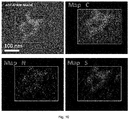
- the spatial distribution of each of the macromolecules in the nanoparticle by means of energy-dispersive X-ray spectroscopy of nitrogen, carbon and sulfur during the transmission electron microscopy analysis of the compound polymer materials shows a homogeneous distribution of the three elements in the polymer nanoparticle of the nanoparticulate polymer material of the present invention, confirming that the three macromolecules are homogeneously distributed forming an interpenetrated network in the electrochemically active nanoparticulate material.
- a suspension of this hierarchical nanomaterial is capable of developing two sets of reversible redox reactions separated there between by 0.7 V when a potential differential is applied.
- One of the processes corresponds to the redox reaction of the quinone groups in the lignin, and the other to a potential that appears at lower values and which is related to a reversible hydrogen reduction/oxidation catalytic reaction.
- the stability of the nanoparticles of the material of the present invention in water does not directly depend on the acid-base properties or ionization potential of the material obtained, all dependent on the functional groups present on the surface, but rather on methylcellulose, since not only does it act as a binder favouring connectivity between each nanoparticle throughout the chain (tertiary structure) and a nucleating agent during nanoparticle synthesis favouring their formation, but it also acts as a dispersing agent favouring the stability of the nanostructured solid in an aqueous medium.
- surfactants, emulsifiers or other type of chemical agent is not required to stabilize the suspensions of electrochemically active nanoparticulate material due to the presence of methylcellulose in the nanoparticles of the polymer material of the present invention.
- the content of quinone redox groups in the nanoparticulate material was determined by means of the electrochemical analysis of solid thin-film electrodes. Said content in electrochemically active functional groups is determined by means of cyclic voltammetry. Furthermore, the value of the charge corresponding to the oxidation and reduction of polypyrrole is determined through the analysis of said experiments. Both values are determined from the integration of the anode and cathode regions of the cyclic voltammetry. The results indicate that the nanoparticulate sample containing the three macromolecular components has higher capacitance resulting from the quinone-type electroactive groups present in the lignin.
- the capacitance of the nanoparticulate polymer material of the present invention is 1.62 10 -5 C compared to a value of 5.33 10 -6 C for a material composed of polypyrrole and lignin (PLH), said value being of an order of magnitude smaller than that corresponding to the nanoparticulate sample containing the three polymers.
- the charge assigned to the polypyrrole component was evaluated based on the analysis of cyclic voltammetry considering the percentage by weight of polypyrrole in each of the nanoparticulate materials.
- the charge values obtained and directly related to the storage capacity of the polypyrrole component in the nanoparticulate material were 350 C/g for the PLH sample and 157 C/g for the material of the present invention.
- nanopores in the nanoparticulate compound material significantly increases the surface/volume ratio of the material. This facilitates molecular contact between the particle surface and chemical species such as water, carbon dioxide, oxygen, hydrogen or electrolyte ions if in solution, facilitating the catalytic, chemical and electrochemical reactions.
- the third sulfonated lignin polymer has a percentage by weight of sulfur between 3.5% and 5%.
- the advantage of this sulfur content is the increased stability of the nanoparticulate material obtained from this lignin in an aqueous medium, up to one week, compared to the stability of the material with a sulfur content between 2.5% and 3.4%, which is only between 48 h and 72 h.
- the excess or fraction of free sulfonic groups promote the solubility and dispersibility of the polymer material in water compared to samples with a lower number of sulfonic groups interacting with the positive charge of the pyrrole.
- the surface area of the polymer material is between 10 m 2 and 230 m 2 measured by CO 2 gas adsorption.
- a third aspect of the invention relates to the use of the electrochemically active nanoparticulate polymer material described in the present invention as an electrolyte in redox batteries that use water as a solvent.
- a fourth aspect relates to the use of the electrochemically active nanoparticulate polymer material described in the present invention as active material in reversible CO 2 capture and transport reactions.
- methylcellulose 0.16 g are dissolved in deionized water (200 ml) at 60°C for 60 minutes. After cooling at room temperature, 1 g of lignin biopolymer (Sigma-Aldrich), with a sulfonic group content in its composition of 5% by weight of sulfur, 0.25 g of pyrrole monomer (Sigma-Aldrich) and 0.5 g of FeCl 3 (Sigma-Aldrich), was added progressively as a catalyst. It is mixed for 1 hour and the solution immediately turns black, which indicates the start of polymerization.
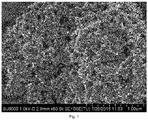
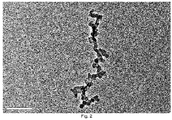
- the electrochemically active nanoparticulate polymer obtained using the method of example 1, which comprises nanoparticles having an average size of 20 nm with a ratio of each of the components comprised between a minimum value of 10% and a maximum value of 70%, such that the total sum of the three is 100%, are included in Figures 1 to 3 .
- the effect of the constituents on the polymer material structure is crucial on the final structure of the compound polymer material and to its properties.
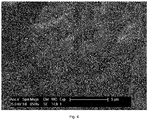
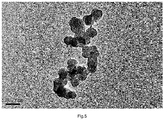
- the polymer material composed of cellulose and polypyrrole also forms particles, but with a size of one order of magnitude higher ( Figures 4 to 6 ).
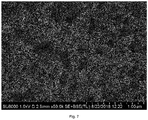
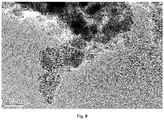
- the polymer material constituted by polypyrrole and lignin forms a structure without a structural hierarchy based on the formation of aggregates wherein the primary particles inside said aggregates do not have a defined shape ( Figures 7 to 9 ).
- each of the polymers inside the individual nanoparticles of the polymer obtained by the method described in example 1 was determined by means of dispersive X-ray spectroscopy (performed during the analysis by high-resolution transmission electron microscopy).
- Figure 10 shows the distribution of carbon (present in the three polymers), nitrogen (present in polypyrrole) and sulfur (present in lignin) contained in the polymer nanoparticles, reaching the conclusion that the three polymers are homogeneously distributed (interpenetrated polymer networks) in the nanoparticles.
- Thin-film electrodes were prepared, which made it possible to study the electrochemical properties of the nanoparticulate material containing or not containing the cellulose component, in the solid state and in an acid aqueous medium, applying cyclic voltammetry at a scan rate of 0.01 V/s ( Figure 11 ). These measurements made it possible to infer that the material is electrochemically active, and that the macromolecular network of lignin biopolymer was successfully incorporated into the nanoparticle structure, since both the nanoparticulate sample with three polymers in its composition (MPLH) and the sample containing only polypyrrole and lignin (PLH) have shown redox processes corresponding to the quinone groups present in the lignin.
- MPLH nanoparticulate sample with three polymers in its composition
- PLAH polypyrrole and lignin
- the sulfur content of the biopolymer in accordance with the amount of lignin has a crucial impact on the final structure of the nanoparticulate polymer material constituted by the three functional macromolecular networks and also on its stability in an aqueous medium.
- the stability of the nanoparticulate material containing lignin with a sulfur percentage of 2.5% in the aqueous medium is three days, while the stability of MPLH is one week.
- the polymer compound does not have a particulate structure, but rather it is a polymer material with a continuous structure consisting of shapeless aggregates and a defined organization, and it is not possible to achieve dispersions of polymer nanoparticles neither in the aqueous nor organic phase ( Figure 12 ).
- the new nanoparticulate polymers obtained using the method of example 1 have greater stability in water over time in comparison to the hybrid and/or compound materials composed solely of lignin and polypyrrole ( Figures 7 to 9 ). Due to the presence of methylcellulose in the polymer material nanoparticles, the use of surfactants, emulsifiers or other type of chemical agent is not required to stabilize the suspensions of nanoparticles in the aqueous phase. Stable concentrations of up to 5 g/l for more than one month were obtained. The presence of sulfur in the biopolymer (lignin) also induces an increase and/or improvement in the solubility and dispersibility of the compound polymer nanoparticles.
- the nanopores in the polymer nanoparticles containing the three polymers will significantly increase the surface/volume ratio of the nanoparticles. Furthermore, this property will facilitate the molecular contact between the nanoparticle surface and different chemical species such as water, carbon dioxide, oxygen and hydrogen, inter alia. This property will also facilitate the course of the catalytic and electrochemical reactions in comparison with other materials wherein they are limited due to the presence of interfaces and a solid surface.
- Figure 14 shows a comparison between different adsorption isotherms for a series of polymer compound particles.
- the isotherms clearly show the impact of the composition of the hybrid on gas adsorption capacity and, as expected, a trend between the volume of adsorbed gas, pore size and surface area.
- Significant differences such as the effect of the content of sulfonic groups (% sulfur) on the pore size of the particles of electroactive material can be observed ( Figure 14 A) . It can be clearly observed that, on decreasing the % of S, the pore size increases from 0.85 nm in the MPLH material to 0.99 nm in the MPLL material.
- Figure 15 shows the acid-base properties of an aqueous suspension of 1 g/l of compound polymer nanoparticles obtained according to example 1 and characterized according to examples 2 to 3, in accordance with the pH and measurements of the different surface potentials obtained from zeta potential measurements. Two clear ionization potentials were evidenced at acid pH (1.5) and another at basic pH (9), which coincide with the changes in the net surface charge of the nanoparticles obtained from the zeta potential measurements of a MPLH suspension at different pH.
- Figure 16 A shows the electrochemical properties of a polymer nanoparticle suspension (1 g/l) stable in an aqueous medium, without presence of additives.
- Figure 16 A shows a reversible electrochemical process at around 0.5 V versus the Ag/AgCI reference electrode corresponding to the electrochemical oxidation and reduction of the quinone groups present in the lignin. This property will facilitate the application of these nanoparticles as an electrolyte, more specifically as an anolyte, in redox flow batteries.
Landscapes
- Chemical & Material Sciences (AREA)
- Chemical Kinetics & Catalysis (AREA)
- Engineering & Computer Science (AREA)
- Biochemistry (AREA)
- Materials Engineering (AREA)
- Health & Medical Sciences (AREA)
- Life Sciences & Earth Sciences (AREA)
- Medicinal Chemistry (AREA)
- Polymers & Plastics (AREA)
- Organic Chemistry (AREA)
- Physics & Mathematics (AREA)
- Spectroscopy & Molecular Physics (AREA)
- Battery Electrode And Active Subsutance (AREA)
Abstract
Description
- The present invention relates to an electrochemically active nanoparticulate polymer material comprising methylcellulose, sulfonated lignin and polypyrrole with a hierarchical structure and method of obtaining thereof, for use as an electrochemical material dispersed in an aqueous medium. The present invention belongs to the field of sustainable electrochemical systems mainly for converting and storing energy from renewable sources and capturing and transporting CO2 gas from the combustion of fossil fuels in the industry sector.
- Due to current needs related to the optimised use and accumulation of energy from the main renewable energy sources, Solar and Wind, from photovoltaic cells and wind turbines, respectively, such that excess energy is stored for use during peak demand hours, the development and use of efficient, cheap, safe and long-lasting batteries is required.
- In order to enhance battery performance, one of the strategies adopted by researchers is the creation of electroactive materials on a nanometric scale. When particle size or electrode thickness falls below 100 nanometres, the diffusion of ions between active sites increases due to the decrease in the distance between them, while the amount of available surface charge increases. Furthermore, the ions will easily access the redox-active centres in the nanoparticle and also through the thin-film electrode structures, enabling near-theoretical capacities, even at high cycle speeds. The nanostructured electrodes can also hold high current densities without being pulverised, providing good electronic contact between the electrode and the current collector during cycling, extending the battery's useful life.
- However, the manufacture of nanostructured electrodes and electroactive nanoparticles normally involves the application of complex synthesis routes with several steps and the presence of harmful chemical substances. Furthermore, these methods usually provide a very low amount of functional material, which makes the overall process very expensive and difficult to scale. Electroactive nanoparticles usually have low density, which creates a challenge for packaging them into very compact electrodes, since the possibility of improving battery volumetric energy density decreases.
- Redox flow batteries are an effective system of balancing the fluctuations in the renewable energy supply, thereby guaranteeing the permanent availability thereof. This would limit and/or minimise CO2 emissions into the atmosphere, which is the pollutant product of non-renewable energy sources.
- A redox flow battery is an electrochemical storage device that makes it possible to convert electricity and store it as chemical energy, inverting the process in a controlled manner when necessary. Flow batteries store energy in chemical fluids contained in two independent external tanks instead of in the battery case itself, so the amount of energy that can be stored is exclusively limited by the size of said external tanks. The larger the external tanks, the larger the amount of electrolyte present therein and, therefore, the more energy we can store. Furthermore, the larger the amount of stacked reaction cells, the higher the speed of generation of said chemical energy.
- The application of electroactive particles flowing continuously from the external tanks to the inside of the electrochemical cell will increase the battery capacity and power. The main reason for this increase is the decrease in the distances between the ions and active centres in the particles. Compared to the use of thin-film electrodes in traditional batteries, wherein energy and power are coupled indistinguishably, the use of electroactive nanoparticles is a fundamental breakthrough, since a larger amount of energy can be stored. Furthermore, if the density of these nanoparticles is high, the volumetric energy will also be high. However, one of the limitations in relation to the amount of energy stored in these systems is the low dispersibility of the redox material in the liquid phase. Normally, organic solvents are used to maximize the concentration of the electroactive materials and the potential window, but this option increases the cost of the battery system and reduces its safety. Furthermore, the use of organic solvents reduces the mobility of the electrolyte ions and, therefore, the possibility of applying high current densities that make it possible to obtain high battery power values. Therefore, in order to obtain an electrochemical system for large-scale renewable energy storage that is efficient, economically viable and safe for the user, non-organic solvents must be used.
- The application of suspensions of particles with electroactive properties will also make it possible to replace the ion-conducting membranes currently used by other, much cheaper ones such as dialysis membranes which incorporate a size exclusion mechanism.
- The present invention provides a new electrochemically active nanoparticulate polymer material characterized in that it comprises methylcellulose, sulfonated lignin and polypyrrole, and a method of obtaining thereof. The material has a hybrid, hierarchical structure wherein the macromolecular chains of a conjugated electron- and ion-conducting polymer and redox polymer are arranged in an interpenetrated manner. Additionally, they are coated with a third water-soluble polymer. Accordingly, the material of the present invention makes it possible to obtain an electrochemical system for large-scale renewable energy storage that is efficient and safe for a user using water as the main solvent.
- The advantages of the material of the present invention are:
- capacity to form stable dispersions of the material in an aqueous medium;
- chemical bifunctionality such as the production of a clean, non-fossil fuel and the possibility of storing electricity in the same material structure;
- absence of, scarce, expensive and toxic metals; and
- use of products to obtain them, which are inexpensive, abundant, renewable, biodegradable and biocompatible.
- In a first aspect, the present invention relates to a method for obtaining an electrochemically active nanoparticulate polymer material, characterized in that it comprises the following stages:
- a) dissolving an amount expressed as a percentage by weight of the final total weight of the nanoparticulate polymer material between 10% and 70% of methylcellulose in deionized water at a temperature between 50°C and 70°C under agitation at revolutions between 50 rpm and 1,500 rpm and, once dissolved, cooling at a temperature between 5°C and 35°C;
- b) adding an amount expressed as a percentage by weight of the final total weight of the nanoparticulate polymer material between 10% and 70% of sulfonated lignin in the solution obtained in stage (a);
- c) adding an amount expressed as a percentage by weight of the final total weight of the nanoparticulate polymer material between 10% and 70% of pyrrole drop by drop to the solution obtained in stage (b) and, next, adding a catalyst of the polymerisation reaction and agitating at revolutions between 50 rpm and 1,500 rpm for a period of time between 5 h and 7 h;
- d) purifying the mixture obtained in stage (c);
- e) washing the gel phase obtained in stage (d);
- f) repeating stages (d) and (e) at least three times; and
- g) drying the gel phase obtained in stage (f).
- In a preferred embodiment of the method, the sulfonated lignin has a sulfur percentage between 2.5% and 5% by weight of the total amount of lignin.
- In a more preferred embodiment of the method, the sulfonated lignin has a percentage of sulfur between 3.5 % and 5% by weight of the total amount of lignin. The higher the sulfur content of the sulfonated lignin, the higher the content of polypyrrole in the final % by weight of the material and the smaller the average size of the nanoparticles of the material obtained using the method of the invention. This is due to the interactions between the positive charges in the pyrrole monomer ring and the negative charges of the sulfonic anions anchored onto the lignin chains, which achieve a highly efficient assembly between the two macromolecular networks during the polymerization reaction.
- In another preferred embodiment of the method, the catalyst added in stage (c) is selected from FeCl3, CuCl2, Fe(SO4)3, K3Fe(CN)6, Fe(NO3)3·9H2O, Cu(NO3)2, Cu(NO3)2-AlCl3, Ag(NO3), para-toluenesulfonic acid (tosylates), organic and alkali metal salts of the persulfate (S2O8 2-) and sodium dodecyl sulfate (C12H25NaO4S) anion.
- In another preferred embodiment, the purification of stage (d) is carried out by gelation at a temperature between 80°C and 90°C for a period of time between 80 min and 100 min, and the gel phase is subsequently separated from the aqueous phase.
- In another preferred embodiment, the washing of stage (e) is carried out using deionized water and with centrifugation at a speed between 1,000 rpm and 10,000 rpm for 10 min, and the gel phase is subsequently separated from the liquid phase.
- In another preferred embodiment, the drying of the phase (g) is carried out by lyophilization.
- In another more preferred embodiment, lyophilization comprises the stages of
- i) freezing the material purified after stage (f) at a temperature between - 195.8°C and 0°C;
- ii) drying the sample obtained in stage (i) in a vacuum at a pressure between 10-1 mbar and 10-6 mbar; and
- iii) dehydrating the sample obtained in stage (ii) in a vacuum at a pressure between 10-1 mbar and 10-6 mbar.
- This controlled drying is carried out slowly at low temperatures using the lyophilization technique to avoid cross-linking of the different polymer chains that constitute the compound material, otherwise the material becomes crosslinked and loses its dispersibility properties in an aqueous medium. Additionally, said lyophilization avoids having to obtain an agglomerated material in which the contour of the particles that form the material is not defined or delimited.
- A second aspect of the invention relates to an electrochemically active nanoparticulate polymer material obtained using the method described in the present invention. The polymer material is characterized in that it has a pore size between 0.80 nm and 0.99 nm; and in that it comprises a plurality of nanoparticles and a plurality of nanoparticle aggregates, wherein the size of the nanoparticle aggregates is between 100 nm and 250 nm, and wherein the nanoparticles have a size between 1 nm and 20 nm, a hierarchical morphology and are formed by the following polymers:
- a first methylcellulose polymer, in the form of nanofibres, preferably in a proportion by weight of the total weight of the nanoparticulate polymer material between 10% and 70%;
- a second polypyrrole polymer; preferably in a proportion by weight of the total weight of the nanoparticulate polymer material between 10% and 70%; and
- a third sulfonated lignin polymer, preferably with a percentage by weight of sulfur between 2.5% and 5% of the total amount of lignin, and more preferably in a proportion by weight of the total weight of the nanoparticulate polymer material between 10% and 70%;
- The hierarchical structure or morphology of the present invention is described with a primary structure of the individual methylcellulose, polypyrrole and sulfonated lignin molecules; a secondary structure of the nanoparticles formed by the primary structure, wherein said nanoparticles additionally form aggregates of a size between 100 nm and 250 nm; and a tertiary structure of the nanoparticle sequence and aggregates of said nanoparticles forming nanoparticle chains serially connected in a pearl-necklace structure, through the nanofibres of the first polymer. Due to the close connectivity between the nanoparticles, the charge transfer in the polymer material is more efficient. The nanoparticulate polymer material is therefore a material wherein each of the individual polymers constitutes a primary structure and its assembly will give rise to the creation of the polymer nanoparticles having a size between 1 nm and 20 nm, and aggregates thereof, secondary structure. Said nanoparticles and nanoparticle aggregates are joined together by means of methylcellulose nanofibres, constituting an assembly with an isotropic structure (tertiary structure), similar to the structure of the beads of a necklace, having a size between 200 nm and 2 µm in the longitudinal direction and between 200 nm and 450 nm in the direction with the shortest or transverse length.
- Therefore, said hierarchical structure or morphology of the electrochemically active nanoparticulate material has the aforementioned pearl-necklace or chain nanoparticle assemblies. When the sulfonated lignin is present in the composition of the nanoparticles, their size is an order of magnitude smaller than in particulate polymer materials wherein it is absent and only comprises the other two components, methylcellulose and polypyrrole. The presence of the cellulose component in the electrochemically active nanoparticulate material is crucial in the genesis of the individual particles and in their assembly to form the chains. Methylcellulose acts as a substrate for the initial growth of the conjugated polymer cores (polypyrrole), favouring the subsequent incorporation and consequent growth of the polymer chain in the nanoparticle network. Methylcellulose also acts as a binder of the individual particles, favouring the connectivity between them and, therefore, the organization of the structures in the form of a chain or pearl necklace. Furthermore, methylcellulose has a major impact on the formation of aggregates of the largest nanoparticles, since its absence causes the loss of sphericity of the nanoparticles, as evidenced in samples containing only polypyrrole and highly sulfonated lignin.
- The macromolecular polypyrrole and lignin networks interact inside each of the individual particles through the positive charges of the pyrrole monomer ring and the negative charges of the sulfonic anions anchored onto the lignin chains. This interaction enables efficient cohesion between the two macromolecular networks during and after the polymerization reaction. The spatial distribution of each of the macromolecules in the nanoparticle by means of energy-dispersive X-ray spectroscopy of nitrogen, carbon and sulfur during the transmission electron microscopy analysis of the compound polymer materials shows a homogeneous distribution of the three elements in the polymer nanoparticle of the nanoparticulate polymer material of the present invention, confirming that the three macromolecules are homogeneously distributed forming an interpenetrated network in the electrochemically active nanoparticulate material.
- A suspension of this hierarchical nanomaterial is capable of developing two sets of reversible redox reactions separated there between by 0.7 V when a potential differential is applied. One of the processes corresponds to the redox reaction of the quinone groups in the lignin, and the other to a potential that appears at lower values and which is related to a reversible hydrogen reduction/oxidation catalytic reaction. The stability of the nanoparticles of the material of the present invention in water does not directly depend on the acid-base properties or ionization potential of the material obtained, all dependent on the functional groups present on the surface, but rather on methylcellulose, since not only does it act as a binder favouring connectivity between each nanoparticle throughout the chain (tertiary structure) and a nucleating agent during nanoparticle synthesis favouring their formation, but it also acts as a dispersing agent favouring the stability of the nanostructured solid in an aqueous medium. Such that the use of surfactants, emulsifiers or other type of chemical agent is not required to stabilize the suspensions of electrochemically active nanoparticulate material due to the presence of methylcellulose in the nanoparticles of the polymer material of the present invention.
- The content of quinone redox groups in the nanoparticulate material was determined by means of the electrochemical analysis of solid thin-film electrodes. Said content in electrochemically active functional groups is determined by means of cyclic voltammetry. Furthermore, the value of the charge corresponding to the oxidation and reduction of polypyrrole is determined through the analysis of said experiments. Both values are determined from the integration of the anode and cathode regions of the cyclic voltammetry. The results indicate that the nanoparticulate sample containing the three macromolecular components has higher capacitance resulting from the quinone-type electroactive groups present in the lignin. The capacitance of the nanoparticulate polymer material of the present invention is 1.62 10-5 C compared to a value of 5.33 10-6 C for a material composed of polypyrrole and lignin (PLH), said value being of an order of magnitude smaller than that corresponding to the nanoparticulate sample containing the three polymers. The charge assigned to the polypyrrole component was evaluated based on the analysis of cyclic voltammetry considering the percentage by weight of polypyrrole in each of the nanoparticulate materials. The charge values obtained and directly related to the storage capacity of the polypyrrole component in the nanoparticulate material were 350 C/g for the PLH sample and 157 C/g for the material of the present invention.
- The presence of nanopores in the nanoparticulate compound material significantly increases the surface/volume ratio of the material. This facilitates molecular contact between the particle surface and chemical species such as water, carbon dioxide, oxygen, hydrogen or electrolyte ions if in solution, facilitating the catalytic, chemical and electrochemical reactions.
- In a preferred embodiment of the electrochemically active nanoparticulate polymer material, the third sulfonated lignin polymer has a percentage by weight of sulfur between 3.5% and 5%. The advantage of this sulfur content is the increased stability of the nanoparticulate material obtained from this lignin in an aqueous medium, up to one week, compared to the stability of the material with a sulfur content between 2.5% and 3.4%, which is only between 48 h and 72 h. The excess or fraction of free sulfonic groups promote the solubility and dispersibility of the polymer material in water compared to samples with a lower number of sulfonic groups interacting with the positive charge of the pyrrole.
- In a preferred embodiment of the material of the present invention, the surface area of the polymer material is between 10 m2 and 230 m2 measured by CO2 gas adsorption.
- A third aspect of the invention relates to the use of the electrochemically active nanoparticulate polymer material described in the present invention as an electrolyte in redox batteries that use water as a solvent.
- The advantages of using this material in said batteries are those explained above, and which is also advantageous for the safety of the device since organic solvents are not used, thereby preventing the accumulation of inflammable solvents.
- A fourth aspect relates to the use of the electrochemically active nanoparticulate polymer material described in the present invention as active material in reversible CO2 capture and transport reactions.
- Throughout the description and the claims, the word "comprises" and its variants do not intend to exclude other technical features, additives, components or steps. For those skilled in the art, other objects, advantages and features of the invention may be inferred from both the description and the embodiment of the invention. The following examples and figures are provided by way of example and are not intended to limit the present invention.
-
-
FIG. 1 shows scanning micrography of the nanoparticulate polymer material containing methylcellulose, sulfonated lignin and polypyrrole (MPHL). -
FIG. 2 shows transmission micrography of the nanoparticulate polymer material containing methylcellulose + sulfonated lignin + polypyrrole (MPLH). -
FIG. 3 shows transmission micrography of the nanoparticulate polymer material containing methylcellulose, sulfonated lignin and polypyrrole (MPHL). -
FIG. 4 shows scanning micrography of the nanoparticulate polymer material containing methylcellulose and polypyrrole (MP). -
FIG. 5 shows transmission micrography of the nanoparticulate polymer material containing methylcellulose and polypyrrole (MP). -
FIG. 6 shows transmission micrography of the nanoparticulate polymer material containing methylcellulose and polypyrrole (MP). -
FIG. 7 shows scanning micrography of the nanoparticulate polymer material containing polypyrrole and lignin (PLH). -
FIG. 8 shows transmission micrography of the nanoparticulate polymer material containing polypyrrole and lignin (PLH). -
FIG. 9 shows transmission micrography of the nanoparticulate polymer material containing polypyrrole and lignin (PLH). -
FIG. 10 shows energy-dispersive X-ray spectroscopy of carbon, nitrogen and sulfur contained in the polymer nanoparticles MPLH. -
FIG. 11 shows cyclic voltammetry in an aqueous medium of solid thin-film electrodes of the developed nanoparticulate materials containing methylcellulose, sulfonated lignin and polypyrrole (MPLH) and polypyrrole + lignin (PLH). -
FIG. 12 shows scanning and transmission micrography of the nanoparticulate polymer material containing cellulose + lignin (1% sulfur) + polypyrrole. -
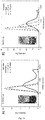
FIG. 13 shows dynamic light scattering measurements of the nanoparticulate polymer materials. Figure A corresponds to the nanoparticles of the polymer material comprising lignin, polypyrrole and cellulose and figure B corresponds to the particles of the material composed of two lignin and polypyrrole polymers. -
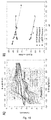
FIG. 14 shows the CO2 adsorption isotherms of a series of electroactive polymer materials. -
FIG. 15 shows the study of the properties of Zeta Potential and mmoles of H+ and OH of the electroactive nanoparticle material containing cellulose + polypyrrole + lignin. -
FIG. 16 shows the electrochemical properties of the compound nanoparticulate polymer suspension MPLH containing the three constituents (lignin+polypyrrole+cellulose) in an aqueous medium. (A) cyclic voltammetry and (B) dependence on the pH of the aqueous electrolyte of the electrochemical potential to which the redox processes evidenced in the nanoparticle suspension give rise. -
FIG. 17 shows cyclic voltammetry wherein electrochemical CO2 capture in an aqueous and organic medium is shown. - Next, the invention will be illustrated by means of assays carried out by the inventors that demonstrate the effectiveness of the product of the invention.
- Method for preparing the electrochemically active nanoparticulate polymer material.
- 0.16 g of methylcellulose (Sigma-Aldrich) are dissolved in deionized water (200 ml) at 60°C for 60 minutes. After cooling at room temperature, 1 g of lignin biopolymer (Sigma-Aldrich), with a sulfonic group content in its composition of 5% by weight of sulfur, 0.25 g of pyrrole monomer (Sigma-Aldrich) and 0.5 g of FeCl3 (Sigma-Aldrich), was added progressively as a catalyst. It is mixed for 1 hour and the solution immediately turns black, which indicates the start of polymerization. After a few minutes, a black solid precipitates at the bottom of the reaction flask, while the solution turns yellow due mainly to the presence of FeCl2. The solid is separated by centrifugation. Next, the solid is washed with deionized water and is centrifuged again. This process is repeated three times. Next, the solid was lyophilized for 12 hours and stored in the refrigerator at 2°C. The material obtained using this method is characterized by high-resolution transmission electron microscopy, as can be observed in
Figure 1 . - The electrochemically active nanoparticulate polymer obtained using the method of example 1, which comprises nanoparticles having an average size of 20 nm with a ratio of each of the components comprised between a minimum value of 10% and a maximum value of 70%, such that the total sum of the three is 100%, are included in
Figures 1 to 3 . The effect of the constituents on the polymer material structure is crucial on the final structure of the compound polymer material and to its properties. The polymer material composed of cellulose and polypyrrole also forms particles, but with a size of one order of magnitude higher (Figures 4 to 6 ). The polymer material constituted by polypyrrole and lignin forms a structure without a structural hierarchy based on the formation of aggregates wherein the primary particles inside said aggregates do not have a defined shape (Figures 7 to 9 ). - The distribution of each of the polymers inside the individual nanoparticles of the polymer obtained by the method described in example 1 was determined by means of dispersive X-ray spectroscopy (performed during the analysis by high-resolution transmission electron microscopy).
Figure 10 shows the distribution of carbon (present in the three polymers), nitrogen (present in polypyrrole) and sulfur (present in lignin) contained in the polymer nanoparticles, reaching the conclusion that the three polymers are homogeneously distributed (interpenetrated polymer networks) in the nanoparticles. - Thin-film electrodes were prepared, which made it possible to study the electrochemical properties of the nanoparticulate material containing or not containing the cellulose component, in the solid state and in an acid aqueous medium, applying cyclic voltammetry at a scan rate of 0.01 V/s (
Figure 11 ). These measurements made it possible to infer that the material is electrochemically active, and that the macromolecular network of lignin biopolymer was successfully incorporated into the nanoparticle structure, since both the nanoparticulate sample with three polymers in its composition (MPLH) and the sample containing only polypyrrole and lignin (PLH) have shown redox processes corresponding to the quinone groups present in the lignin. Furthermore, an oxidation-reduction process has also been evidenced that we assign to the polypyrrole, also present in both electroactive materials. These results prove the electroactive properties of the particulate materials developed, in addition to the possibility of applying them in the storage of electrochemical energy also forming part of solid electrodes. - The sulfur content of the biopolymer in accordance with the amount of lignin has a crucial impact on the final structure of the nanoparticulate polymer material constituted by the three functional macromolecular networks and also on its stability in an aqueous medium. The sample composed of the three polymers: lignin + polypyrrole + methylcellulose, but with lignin having a molar sulfur content with a value of 2.5% compared to 3.75% molar present in the nanoparticulate polymer material obtained using the method described in example 1 (MPLH), is organized in a hierarchical structure identical to that of the nanoparticulate polymer material MPLH. Although both electroactive materials have a similar nanoparticulate structure, the stability of the nanoparticulate material containing lignin with a sulfur percentage of 2.5% in the aqueous medium is three days, while the stability of MPLH is one week. When the molar sulfur content of the biopolymer decreases to a value equal to or less than 1%, the polymer compound does not have a particulate structure, but rather it is a polymer material with a continuous structure consisting of shapeless aggregates and a defined organization, and it is not possible to achieve dispersions of polymer nanoparticles neither in the aqueous nor organic phase (
Figure 12 ). - The new nanoparticulate polymers obtained using the method of example 1 (
Figures 1 to 3 ) have greater stability in water over time in comparison to the hybrid and/or compound materials composed solely of lignin and polypyrrole (Figures 7 to 9 ). Due to the presence of methylcellulose in the polymer material nanoparticles, the use of surfactants, emulsifiers or other type of chemical agent is not required to stabilize the suspensions of nanoparticles in the aqueous phase. Stable concentrations of up to 5 g/l for more than one month were obtained. The presence of sulfur in the biopolymer (lignin) also induces an increase and/or improvement in the solubility and dispersibility of the compound polymer nanoparticles. Furthermore, the size distribution of the particles studied by dynamic light scattering (Figure 13 ) coincides with the size of the aggregates evidenced by the application of transmission electron microscopy shown inFigures 2 ,3 ,8 and9 . It can be clearly observed inFigure 13 B how the absence of cellulose affects the stability of the nanoparticle suspension, which precipitates at the bottom of the flask over time, despite the fact that the size distribution of particle aggregates containing two polymers, polypyrrole and lignin (PLH) is in the same order of magnitude as the compound nanoparticles consisting of the three polymers (MPLH) (Figure 13 A) . - The nanopores in the polymer nanoparticles containing the three polymers will significantly increase the surface/volume ratio of the nanoparticles. Furthermore, this property will facilitate the molecular contact between the nanoparticle surface and different chemical species such as water, carbon dioxide, oxygen and hydrogen, inter alia. This property will also facilitate the course of the catalytic and electrochemical reactions in comparison with other materials wherein they are limited due to the presence of interfaces and a solid surface.
-
Figure 14 shows a comparison between different adsorption isotherms for a series of polymer compound particles. The isotherms clearly show the impact of the composition of the hybrid on gas adsorption capacity and, as expected, a trend between the volume of adsorbed gas, pore size and surface area. Significant differences such as the effect of the content of sulfonic groups (% sulfur) on the pore size of the particles of electroactive material can be observed (Figure 14 A) . It can be clearly observed that, on decreasing the % of S, the pore size increases from 0.85 nm in the MPLH material to 0.99 nm in the MPLL material. The presence of cellulose in the pore size of the nanoparticles of material composed of the three polymers also has a clear impact, evidencing a size of 0.85 nm in the presence thereof (MPLH) and an increase of up to 1 nm when it is absent (PLH) (Figure 14 B) . Lastly, the presence of methylcellulose combined with the polypyrrole (MP) causes an increase in pore size of 0.69 nm (PPy) up to 0.77 nm (MP) (Figure 14 B) . -
Figure 15 shows the acid-base properties of an aqueous suspension of 1 g/l of compound polymer nanoparticles obtained according to example 1 and characterized according to examples 2 to 3, in accordance with the pH and measurements of the different surface potentials obtained from zeta potential measurements. Two clear ionization potentials were evidenced at acid pH (1.5) and another at basic pH (9), which coincide with the changes in the net surface charge of the nanoparticles obtained from the zeta potential measurements of a MPLH suspension at different pH. - The properties exhibited by the new nanoparticulate materials described in this and preceding examples make them adequate for implementation as multifunctional electrode material in applications such as electrocatalysis, production of non-fossil fuels, conversion and storage of energy and capture and transport of CO2 (or other greenhouse gases).
- Use of an electrochemically active nanoparticulate polymer described in example 1 and 2, as an electrolyte in supercapacitors and redox flow batteries.
Figure 16 A shows the electrochemical properties of a polymer nanoparticle suspension (1 g/l) stable in an aqueous medium, without presence of additives.Figure 16 A shows a reversible electrochemical process at around 0.5 V versus the Ag/AgCI reference electrode corresponding to the electrochemical oxidation and reduction of the quinone groups present in the lignin. This property will facilitate the application of these nanoparticles as an electrolyte, more specifically as an anolyte, in redox flow batteries. - Use of the nanoparticles obtained according to the method of obtaining described in example 1 and described in examples 2 and 3 for the simultaneous conversion of hydrogen and electrochemical storage of energy. Adding CO2 and acid to the suspension of polymer nanoparticles causes the appearance of a second reversible electrochemical process (centered at around 0.1 V versus the Ag/AgCI reference electrode) corresponding to the reversible formation of hydrogen, as indicated in
Figure 16 A . The simultaneous existence of both reversible electrochemical processes in the aqueous phase would facilitate the production of hydrogen (a non-fossil and therefore "clean" fuel) and the electrochemical storage of energy simultaneously in the same electrochemically active hierarchical structure.Figure 16 B shows the pH dependence of each of the electrochemical processes. - Use of the nanoparticulate polymer for electrochemical CO2 capture and transport in an aqueous medium and organic medium (
Figure 17 ). The electrochemical capture of the CO2 molecules takes place in an aqueous medium using only deionized water as a solvent (Figure 17 A) and in an organic medium in the presence of acetonitrile as an organic solvent (Figure 17 B) . The addition of CO2 gas to a suspension of nanoparticles dispersed in deionized water and the subsequent application of a current to achieve the electrochemical reduction of the quinone groups present in the lignin enables the reversible reaction of these groups with the CO2 molecule. This reaction gives rise to the formation of a carbonated organic polymer compound which, via electrochemical oxidation, reforms the redox groups of the lignin to its quinone form, while simultaneously returning the CO2 to the reaction medium. The shift in the maximum current value corresponding to the electrochemical potential of the redox processes observed in the cyclic voltammetry at 20 mV/s without and in the presence of CO2 gas confirms the electrochemical capture of CO2 in water using the electroactive nanoparticulate material developed (Figure 17 A) . A similar experiment (Figure 17 B) also confirms the possibility of electrochemically capturing CO2 gas in an organic medium using the same scan rate, 20 mV/s, and in the presence of a support organic salt such as tetrabutylammonium tetrafluoroborate dissolved in acetonitrile. The electrochemical capture of CO2 has major economic implications, since the technology currently used does not have a positive energy balance, making it necessary to apply temperature to obtain the CO2 gas after being captured. Furthermore, capture in an aqueous medium with the nanoparticles in suspension will make it possible to easily transport the carbonated material either via ducts (pipes) or in tank trucks to the place where the stage of converting CO2 into chemical products with high added value is carried out.
and wherein said hierarchical morphology is a structure that follows an essentially longitudinal direction having a size between 200 nm and 2 µm, and another that follows an essentially transverse direction having a size between 200 nm and 400 nm, wherein the nanoparticles are randomly arranged along the essentially longitudinal direction and are joined together by means of the nanofibres of the first polymer, and the nanoparticle aggregates are arranged in an essentially transverse manner to the essentially longitudinal direction.
Claims (15)
- A method for obtaining an electrochemically active nanoparticulate polymer material, characterized in that it comprises the following stages:a) dissolving an amount expressed as a percentage by weight of the final total weight of the nanoparticulate polymer material between 10% and 70% of methylcellulose in deionized water at a temperature between 50°C and 70°C under agitation at revolutions between 50 rpm and 1,500 rpm and, once dissolved, cooling at a temperature between 5°C and 35°C;b) adding an amount expressed as a percentage by weight of the final total weight of the nanoparticulate polymer material between 10% and 70% of sulfonated lignin in the solution obtained in stage (a);c) adding an amount expressed as a percentage by weight of the final total weight of the nanoparticulate polymer material between 10% and 70% of pyrrole drop by drop to the solution obtained in stage (b) and, next, adding a catalyst of the polymerization reaction and agitating at revolutions between 50 rpm and 1,500 rpm for a period of time between 5 h and 7 h;d) purifying the mixture obtained in stage (c);e) washing the gel phase obtained in stage (d);f) repeating stages (d) and (e) at least three times; andg) drying the gel phase obtained in stage (f).
- The method according to claim 1, wherein the sulfonated lignin has a percentage of sulfur between 2.5% and 5% by weight of the total amount of lignin.
- The method according to any of claims 1 or 2, wherein the sulfonated lignin has a percentage of sulfur between 3.5 % and 5% by weight of the total amount of lignin.
- The method according to any of claims 1 to 3, wherein the catalyst added in stage (c) is selected from FeCl3, CuCl2, Fe(SO4)3, K3Fe(CN)6, Fe(NO3)3·9H2O, Cu(NO3)2, Cu(NO3)2-AlCl3, Ag(NO3), para-toluenesulfonic acid, organic or alkali metal salts of the persulfate and sodium dodecyl sulfate anion.
- The method according to any of claims 1 to 4, wherein the purification of stage (d) is carried out by gelation at a temperature between 80°C and 90°C for a period of time between 80 min and 100 min, and the gel phase is subsequently separated from the aqueous phase.
- The method according to any of claims 1 to 5, wherein the washing of stage (e) is carried out using deionized water and with centrifugation at a speed between 1,000 rpm and 10,000 rpm for 10 min, and the gel phase is subsequently separated from the liquid phase.
- The method according to any of claims 1 to 6, wherein the drying of phase (g) is carried out by lyophilization.
- The method according to claim 7, wherein lyophilization comprises the stages ofi) freezing the material purified and washed after stage (f) at a temperature between -195.8°C and 0°C;ii) drying the sample obtained in stage (i) in a vacuum at a pressure between 10-1 mbar and 10-6 mbar; andiii) dehydrating the sample obtained in stage (ii) in a vacuum at a pressure between 10-1 mbar and 10-6 mbar.
- An electrochemically active nanoparticulate polymer material, obtained according to the method described according to any of claims 1 to 8.
- The electrochemically active nanoparticulate polymer material characterized in that it has a pore size between 0.80 nm and 0.99 nm; and in that it comprises a plurality of nanoparticles and a plurality of said nanoparticle aggregates, wherein the size of the nanoparticle aggregates is between 100 nm and 250 nm, and wherein the nanoparticles have a size between 1 nm and 20 nm, the material has a hierarchical morphology and wherein the nanoparticles and their aggregates are formed from the following polymers:• a first methylcellulose polymer, in the form of nanofibres;• a second polypyrrole polymer; and• a third sulfonated lignin polymer;wherein the total sum of the percentage by weight of the first, second and third polymer is 100%;
and wherein said hierarchical morphology is a structure that follows an essentially longitudinal direction having a size between 200 nm and 2 µm, and another that follows an essentially transverse direction having a size between 200 nm and 400 nm, wherein the nanoparticles are randomly arranged along the essentially longitudinal direction and are joined together by means of the nanofibres of the first polymer, and the nanoparticle aggregates are arranged in an essentially transverse manner to the essentially longitudinal direction. - The electrochemically active nanoparticulate polymer material according to claim 10, wherein the first methylcellulose polymer is in a proportion by weight of the total weight of the nanoparticulate polymer material between 10% and 70%; the second polypyrrole polymer is in a proportion by weight of the total weight of the nanoparticulate polymer material between 10% and 70%; and the third sulfonated lignin polymer is in a proportion by weight of the total weight of the nanoparticulate polymer material between 10% and 70%.
- The electrochemically active nanoparticulate polymer material according to any of claims 10 or 11, wherein the third sulfonated lignin polymer has a percentage by weight of sulfur between 2.5% and 5% of the total amount of lignin, and preferably has a percentage by weight of sulfur between 3.5% and 5%.
- The electrochemically active nanoparticulate polymer material, according to any of claims 10 to 12, wherein the surface area of the polymer material is between 10 m2 and 230 m2 measured by means of CO2 gas adsorption.
- The use of the electrochemically active nanoparticulate polymer material according to any of claims 9 to 13, as an electrolyte in redox batteries that use water as a solvent.
- The use of the electrochemically active nanoparticulate polymer material according to any of claims 9 to 13, as an active material in reversible CO2 capture and transport reactions.
Priority Applications (2)
| Application Number | Priority Date | Filing Date | Title |
|---|---|---|---|
| EP19382731.8A EP3786189B1 (en) | 2019-08-28 | 2019-08-28 | Electrochemically active nanoparticulated polymer material |
| PCT/EP2020/070521 WO2021037441A1 (en) | 2019-08-28 | 2020-07-21 | Electrochemically active nanoparticulate polymer material |
Applications Claiming Priority (1)
| Application Number | Priority Date | Filing Date | Title |
|---|---|---|---|
| EP19382731.8A EP3786189B1 (en) | 2019-08-28 | 2019-08-28 | Electrochemically active nanoparticulated polymer material |
Publications (2)
| Publication Number | Publication Date |
|---|---|
| EP3786189A1 true EP3786189A1 (en) | 2021-03-03 |
| EP3786189B1 EP3786189B1 (en) | 2022-03-09 |
Family
ID=68281378
Family Applications (1)
| Application Number | Title | Priority Date | Filing Date |
|---|---|---|---|
| EP19382731.8A Not-in-force EP3786189B1 (en) | 2019-08-28 | 2019-08-28 | Electrochemically active nanoparticulated polymer material |
Country Status (2)
| Country | Link |
|---|---|
| EP (1) | EP3786189B1 (en) |
| WO (1) | WO2021037441A1 (en) |
Citations (1)
| Publication number | Priority date | Publication date | Assignee | Title |
|---|---|---|---|---|
| WO2012150900A1 (en) * | 2011-05-02 | 2012-11-08 | Epipolysteme Ab | Composites from biopolymers |
-
2019
- 2019-08-28 EP EP19382731.8A patent/EP3786189B1/en not_active Not-in-force
-
2020
- 2020-07-21 WO PCT/EP2020/070521 patent/WO2021037441A1/en not_active Ceased
Patent Citations (1)
| Publication number | Priority date | Publication date | Assignee | Title |
|---|---|---|---|---|
| WO2012150900A1 (en) * | 2011-05-02 | 2012-11-08 | Epipolysteme Ab | Composites from biopolymers |
Non-Patent Citations (5)
| Title |
|---|
| CHAO YANG ET AL: "Water-Dispersed Conductive Polypyrroles Doped with Lignosulfonate and the Weak Temperature Dependence of Electrical Conductivity", INDUSTRIAL & ENGINEERING CHEMISTRY RESEARCH, vol. 48, no. 21, 4 November 2009 (2009-11-04), pages 9498 - 9503, XP055666043, ISSN: 0888-5885, DOI: 10.1021/ie900189j * |
| CLAUDIA SASSO: "Polypyrrole and polypyrrole/wood-derived materials conducting composites: A review", 1 August 2011 (2011-08-01), XP055666018, Retrieved from the Internet <URL:https://www.researchgate.net/profile/Michel_Petit-Conil/publication/265417579_Polypyrrole_and_polypyrrolewood-derived_materials_conducting_composites_A_review/links/57c70d1d08aefc4af34c7a80/Polypyrrole-and-polypyrrole-wood-derived-materials-conducting-composites-A-review.pdf> [retrieved on 20200206] * |
| NIRMALE TRUPTI C ET AL: "A review on cellulose and lignin based binders and electrodes: Small steps towards a sustainable lithium ion battery", INTERNATIONAL JOURNAL OF BIOLOGICAL MACROMOLECULES, ELSEVIER BV, NL, vol. 103, 26 May 2017 (2017-05-26), pages 1032 - 1043, XP085146652, ISSN: 0141-8130, DOI: 10.1016/J.IJBIOMAC.2017.05.155 * |
| ROBERT B BJORKLUND ET AL: "Electrically Conducting Composites of Colloidal Polypyrrole and Methylcellulose", J. CHEM. SOC., CHEM. COMMUN,, 1 January 1986 (1986-01-01), pages 1293 - 1295, XP001382220 * |
| SASSO: "Use of wood derivatives as doping / dispersing agents in the preparation of polypyrrole aqueous dispersions", BIORESOURCES, vol. 3, no. 4, 1 January 2008 (2008-01-01), pages 1187 - 1195, XP055035654, ISSN: 1930-2126 * |
Also Published As
| Publication number | Publication date |
|---|---|
| WO2021037441A1 (en) | 2021-03-04 |
| EP3786189B1 (en) | 2022-03-09 |
Similar Documents
| Publication | Publication Date | Title |
|---|---|---|
| Li et al. | Covalent–organic framework (COF)‐core–shell composites: classification, synthesis, properties, and applications | |
| Cai et al. | A cocklebur-like sulfur host with the TiO2-VOx heterostructure efficiently implementing one-step adsorption-diffusion-conversion towards long-life Li–S batteries | |
| Yao et al. | Hybrid membrane with SnS2 nanoplates decorated nitrogen-doped carbon nanofibers as binder-free electrodes with ultrahigh sulfur loading for lithium sulfur batteries | |
| Yang et al. | Promoted deposition of three-dimensional Li2S on catalytic Co phthalocyanine nanorods for stable high-loading lithium–sulfur batteries | |
| Yi et al. | Metal–organic frameworks and their composites: synthesis and electrochemical applications | |
| Guo et al. | Ordered structure of interlayer constructed with metal-organic frameworks improves the performance of lithium-sulfur batteries | |
| Li et al. | Functional gels based on chemically modified graphenes | |
| Hussain et al. | Interface and surface engineering of MXenes and COFs for energy storage and conversion | |
| Han et al. | Zwitterionic covalent organic framework as a multifunctional sulfur host toward durable lithium-sulfur batteries | |
| Fan et al. | Carbon-covered hollow nitrogen-doped carbon nanoparticles and nitrogen-doped carbon-covered hollow carbon nanoparticles for oxygen reduction | |
| Zhang et al. | Nanosized FeS/ZnS heterojunctions derived using zeolitic imidazolate Framework-8 (ZIF-8) for pH-universal oxygen reduction and High-efficiency Zn–air battery | |
| Krishnan et al. | Recent Developments and Prospects on Functional Graphene‐Based Nanocomposites as Potential Sulfur Hosts for Next‐Generation Lithium‐Sulfur Batteries | |
| Wu et al. | Tetrazole-functionalized benzoquinoline-linked covalent organic frameworks with efficient performance for electrocatalytic H 2 O 2 production and Li–S batteries | |
| Iqbal et al. | Polyaniline grafted mesoporous zinc sulfide nanoparticles for hydrogen evolution reaction | |
| Guo et al. | FeCo alloy modified and carbon nanotube linked hollow carbon nanocages as efficient sulfur hosts for Li-S batteries | |
| Zhang et al. | Rational design of MoSSe nanosheets on N-doped carbon hollow spheres for accelerating polysulfide redox kinetics of high-performance lithium-sulfur batteries | |
| Tsai et al. | Exfoliated 2D nanosheet‐based conjugated polymer composites with P‐N heterojunction interfaces for highly efficient electrocatalytic hydrogen evolution | |
| Mei et al. | Large‐Scale Synthesis of Nanostructured Carbon‐Ti4O7 Hollow Particles as Efficient Sulfur Host Materials for Multilayer Lithium‐Sulfur Pouch Cells | |
| Liu et al. | Pt-NbC Composite as a Bifunctional Catalyst for Redox Transformation of Polysulfides in High-Rate-Performing Lithium–Sulfur Batteries | |
| Xu et al. | Two-dimensional sandwich-like MXene–conductive polymer nanocomposite with in-plane cylindrical mesopores for long cycling lithium-sulfur batteries | |
| Chen et al. | Nanostructured covalent organic frameworks with elevated crystallization for (electro) photocatalysis and energy storage devices | |
| Mao et al. | A Ni/Ni2P heterostructure in modified porous carbon separator for boosting polysulfide catalytic conversion | |
| Xie et al. | Porous Organic cage as a sulfur host for upgrading capacity and longevity of Li–S batteries | |
| Liao et al. | Active sites-rich zeolitic imidazolate framework/MXene heterostructure modified separator with improved Li+ transport for high-performance Li-S batteries | |
| Hao et al. | Polyzwitterions Functionalized Nafion Barrier Toward High Performance Lithium‐Sulfur Batteries |
Legal Events
| Date | Code | Title | Description |
|---|---|---|---|
| PUAI | Public reference made under article 153(3) epc to a published international application that has entered the european phase |
Free format text: ORIGINAL CODE: 0009012 |
|
| STAA | Information on the status of an ep patent application or granted ep patent |
Free format text: STATUS: THE APPLICATION HAS BEEN PUBLISHED |
|
| AK | Designated contracting states |
Kind code of ref document: A1 Designated state(s): AL AT BE BG CH CY CZ DE DK EE ES FI FR GB GR HR HU IE IS IT LI LT LU LV MC MK MT NL NO PL PT RO RS SE SI SK SM TR |
|
| AX | Request for extension of the european patent |
Extension state: BA ME |
|
| STAA | Information on the status of an ep patent application or granted ep patent |
Free format text: STATUS: REQUEST FOR EXAMINATION WAS MADE |
|
| 17P | Request for examination filed |
Effective date: 20210617 |
|
| RBV | Designated contracting states (corrected) |
Designated state(s): AL AT BE BG CH CY CZ DE DK EE ES FI FR GB GR HR HU IE IS IT LI LT LU LV MC MK MT NL NO PL PT RO RS SE SI SK SM TR |
|
| RIC1 | Information provided on ipc code assigned before grant |
Ipc: C08B 11/02 20060101AFI20210713BHEP Ipc: H01B 1/12 20060101ALI20210713BHEP |
|
| GRAP | Despatch of communication of intention to grant a patent |
Free format text: ORIGINAL CODE: EPIDOSNIGR1 |
|
| STAA | Information on the status of an ep patent application or granted ep patent |
Free format text: STATUS: GRANT OF PATENT IS INTENDED |
|
| INTG | Intention to grant announced |
Effective date: 20210907 |
|
| GRAS | Grant fee paid |
Free format text: ORIGINAL CODE: EPIDOSNIGR3 |
|
| GRAA | (expected) grant |
Free format text: ORIGINAL CODE: 0009210 |
|
| STAA | Information on the status of an ep patent application or granted ep patent |
Free format text: STATUS: THE PATENT HAS BEEN GRANTED |
|
| AK | Designated contracting states |
Kind code of ref document: B1 Designated state(s): AL AT BE BG CH CY CZ DE DK EE ES FI FR GB GR HR HU IE IS IT LI LT LU LV MC MK MT NL NO PL PT RO RS SE SI SK SM TR |
|
| REG | Reference to a national code |
Ref country code: CH Ref legal event code: EP Ref country code: AT Ref legal event code: REF Ref document number: 1474110 Country of ref document: AT Kind code of ref document: T Effective date: 20220315 |
|
| REG | Reference to a national code |
Ref country code: DE Ref legal event code: R096 Ref document number: 602019012339 Country of ref document: DE |
|
| REG | Reference to a national code |
Ref country code: IE Ref legal event code: FG4D |
|
| REG | Reference to a national code |
Ref country code: LT Ref legal event code: MG9D |
|
| REG | Reference to a national code |
Ref country code: NL Ref legal event code: MP Effective date: 20220309 |
|
| PG25 | Lapsed in a contracting state [announced via postgrant information from national office to epo] |
Ref country code: SE Free format text: LAPSE BECAUSE OF FAILURE TO SUBMIT A TRANSLATION OF THE DESCRIPTION OR TO PAY THE FEE WITHIN THE PRESCRIBED TIME-LIMIT Effective date: 20220309 Ref country code: RS Free format text: LAPSE BECAUSE OF FAILURE TO SUBMIT A TRANSLATION OF THE DESCRIPTION OR TO PAY THE FEE WITHIN THE PRESCRIBED TIME-LIMIT Effective date: 20220309 Ref country code: NO Free format text: LAPSE BECAUSE OF FAILURE TO SUBMIT A TRANSLATION OF THE DESCRIPTION OR TO PAY THE FEE WITHIN THE PRESCRIBED TIME-LIMIT Effective date: 20220609 Ref country code: LT Free format text: LAPSE BECAUSE OF FAILURE TO SUBMIT A TRANSLATION OF THE DESCRIPTION OR TO PAY THE FEE WITHIN THE PRESCRIBED TIME-LIMIT Effective date: 20220309 Ref country code: HR Free format text: LAPSE BECAUSE OF FAILURE TO SUBMIT A TRANSLATION OF THE DESCRIPTION OR TO PAY THE FEE WITHIN THE PRESCRIBED TIME-LIMIT Effective date: 20220309 Ref country code: BG Free format text: LAPSE BECAUSE OF FAILURE TO SUBMIT A TRANSLATION OF THE DESCRIPTION OR TO PAY THE FEE WITHIN THE PRESCRIBED TIME-LIMIT Effective date: 20220609 |
|
| REG | Reference to a national code |
Ref country code: AT Ref legal event code: MK05 Ref document number: 1474110 Country of ref document: AT Kind code of ref document: T Effective date: 20220309 |
|
| PG25 | Lapsed in a contracting state [announced via postgrant information from national office to epo] |
Ref country code: LV Free format text: LAPSE BECAUSE OF FAILURE TO SUBMIT A TRANSLATION OF THE DESCRIPTION OR TO PAY THE FEE WITHIN THE PRESCRIBED TIME-LIMIT Effective date: 20220309 Ref country code: GR Free format text: LAPSE BECAUSE OF FAILURE TO SUBMIT A TRANSLATION OF THE DESCRIPTION OR TO PAY THE FEE WITHIN THE PRESCRIBED TIME-LIMIT Effective date: 20220610 Ref country code: FI Free format text: LAPSE BECAUSE OF FAILURE TO SUBMIT A TRANSLATION OF THE DESCRIPTION OR TO PAY THE FEE WITHIN THE PRESCRIBED TIME-LIMIT Effective date: 20220309 |
|
| PG25 | Lapsed in a contracting state [announced via postgrant information from national office to epo] |
Ref country code: NL Free format text: LAPSE BECAUSE OF FAILURE TO SUBMIT A TRANSLATION OF THE DESCRIPTION OR TO PAY THE FEE WITHIN THE PRESCRIBED TIME-LIMIT Effective date: 20220309 |
|
| PG25 | Lapsed in a contracting state [announced via postgrant information from national office to epo] |
Ref country code: SM Free format text: LAPSE BECAUSE OF FAILURE TO SUBMIT A TRANSLATION OF THE DESCRIPTION OR TO PAY THE FEE WITHIN THE PRESCRIBED TIME-LIMIT Effective date: 20220309 Ref country code: SK Free format text: LAPSE BECAUSE OF FAILURE TO SUBMIT A TRANSLATION OF THE DESCRIPTION OR TO PAY THE FEE WITHIN THE PRESCRIBED TIME-LIMIT Effective date: 20220309 Ref country code: RO Free format text: LAPSE BECAUSE OF FAILURE TO SUBMIT A TRANSLATION OF THE DESCRIPTION OR TO PAY THE FEE WITHIN THE PRESCRIBED TIME-LIMIT Effective date: 20220309 Ref country code: PT Free format text: LAPSE BECAUSE OF FAILURE TO SUBMIT A TRANSLATION OF THE DESCRIPTION OR TO PAY THE FEE WITHIN THE PRESCRIBED TIME-LIMIT Effective date: 20220711 Ref country code: ES Free format text: LAPSE BECAUSE OF FAILURE TO SUBMIT A TRANSLATION OF THE DESCRIPTION OR TO PAY THE FEE WITHIN THE PRESCRIBED TIME-LIMIT Effective date: 20220309 Ref country code: EE Free format text: LAPSE BECAUSE OF FAILURE TO SUBMIT A TRANSLATION OF THE DESCRIPTION OR TO PAY THE FEE WITHIN THE PRESCRIBED TIME-LIMIT Effective date: 20220309 Ref country code: CZ Free format text: LAPSE BECAUSE OF FAILURE TO SUBMIT A TRANSLATION OF THE DESCRIPTION OR TO PAY THE FEE WITHIN THE PRESCRIBED TIME-LIMIT Effective date: 20220309 Ref country code: AT Free format text: LAPSE BECAUSE OF FAILURE TO SUBMIT A TRANSLATION OF THE DESCRIPTION OR TO PAY THE FEE WITHIN THE PRESCRIBED TIME-LIMIT Effective date: 20220309 |
|
| PG25 | Lapsed in a contracting state [announced via postgrant information from national office to epo] |
Ref country code: PL Free format text: LAPSE BECAUSE OF FAILURE TO SUBMIT A TRANSLATION OF THE DESCRIPTION OR TO PAY THE FEE WITHIN THE PRESCRIBED TIME-LIMIT Effective date: 20220309 Ref country code: IS Free format text: LAPSE BECAUSE OF FAILURE TO SUBMIT A TRANSLATION OF THE DESCRIPTION OR TO PAY THE FEE WITHIN THE PRESCRIBED TIME-LIMIT Effective date: 20220709 Ref country code: AL Free format text: LAPSE BECAUSE OF FAILURE TO SUBMIT A TRANSLATION OF THE DESCRIPTION OR TO PAY THE FEE WITHIN THE PRESCRIBED TIME-LIMIT Effective date: 20220309 |
|
| REG | Reference to a national code |
Ref country code: DE Ref legal event code: R097 Ref document number: 602019012339 Country of ref document: DE |
|
| PLBE | No opposition filed within time limit |
Free format text: ORIGINAL CODE: 0009261 |
|
| STAA | Information on the status of an ep patent application or granted ep patent |
Free format text: STATUS: NO OPPOSITION FILED WITHIN TIME LIMIT |
|
| PG25 | Lapsed in a contracting state [announced via postgrant information from national office to epo] |
Ref country code: DK Free format text: LAPSE BECAUSE OF FAILURE TO SUBMIT A TRANSLATION OF THE DESCRIPTION OR TO PAY THE FEE WITHIN THE PRESCRIBED TIME-LIMIT Effective date: 20220309 |
|
| 26N | No opposition filed |
Effective date: 20221212 |
|
| PG25 | Lapsed in a contracting state [announced via postgrant information from national office to epo] |
Ref country code: SI Free format text: LAPSE BECAUSE OF FAILURE TO SUBMIT A TRANSLATION OF THE DESCRIPTION OR TO PAY THE FEE WITHIN THE PRESCRIBED TIME-LIMIT Effective date: 20220309 |
|
| REG | Reference to a national code |
Ref country code: DE Ref legal event code: R119 Ref document number: 602019012339 Country of ref document: DE |
|
| PG25 | Lapsed in a contracting state [announced via postgrant information from national office to epo] |
Ref country code: MC Free format text: LAPSE BECAUSE OF FAILURE TO SUBMIT A TRANSLATION OF THE DESCRIPTION OR TO PAY THE FEE WITHIN THE PRESCRIBED TIME-LIMIT Effective date: 20220309 |
|
| REG | Reference to a national code |
Ref country code: CH Ref legal event code: PL |
|
| PG25 | Lapsed in a contracting state [announced via postgrant information from national office to epo] |
Ref country code: LU Free format text: LAPSE BECAUSE OF NON-PAYMENT OF DUE FEES Effective date: 20220828 Ref country code: LI Free format text: LAPSE BECAUSE OF NON-PAYMENT OF DUE FEES Effective date: 20220831 Ref country code: CH Free format text: LAPSE BECAUSE OF NON-PAYMENT OF DUE FEES Effective date: 20220831 |
|
| REG | Reference to a national code |
Ref country code: BE Ref legal event code: MM Effective date: 20220831 |
|
| PG25 | Lapsed in a contracting state [announced via postgrant information from national office to epo] |
Ref country code: IT Free format text: LAPSE BECAUSE OF FAILURE TO SUBMIT A TRANSLATION OF THE DESCRIPTION OR TO PAY THE FEE WITHIN THE PRESCRIBED TIME-LIMIT Effective date: 20220309 Ref country code: IE Free format text: LAPSE BECAUSE OF NON-PAYMENT OF DUE FEES Effective date: 20220828 Ref country code: FR Free format text: LAPSE BECAUSE OF NON-PAYMENT OF DUE FEES Effective date: 20220831 Ref country code: DE Free format text: LAPSE BECAUSE OF NON-PAYMENT OF DUE FEES Effective date: 20230301 |
|
| PG25 | Lapsed in a contracting state [announced via postgrant information from national office to epo] |
Ref country code: BE Free format text: LAPSE BECAUSE OF NON-PAYMENT OF DUE FEES Effective date: 20220831 |
|
| GBPC | Gb: european patent ceased through non-payment of renewal fee |
Effective date: 20230828 |
|
| PG25 | Lapsed in a contracting state [announced via postgrant information from national office to epo] |
Ref country code: CY Free format text: LAPSE BECAUSE OF FAILURE TO SUBMIT A TRANSLATION OF THE DESCRIPTION OR TO PAY THE FEE WITHIN THE PRESCRIBED TIME-LIMIT Effective date: 20220309 |
|
| PG25 | Lapsed in a contracting state [announced via postgrant information from national office to epo] |
Ref country code: MK Free format text: LAPSE BECAUSE OF FAILURE TO SUBMIT A TRANSLATION OF THE DESCRIPTION OR TO PAY THE FEE WITHIN THE PRESCRIBED TIME-LIMIT Effective date: 20220309 Ref country code: HU Free format text: LAPSE BECAUSE OF FAILURE TO SUBMIT A TRANSLATION OF THE DESCRIPTION OR TO PAY THE FEE WITHIN THE PRESCRIBED TIME-LIMIT; INVALID AB INITIO Effective date: 20190828 |
|
| PG25 | Lapsed in a contracting state [announced via postgrant information from national office to epo] |
Ref country code: GB Free format text: LAPSE BECAUSE OF NON-PAYMENT OF DUE FEES Effective date: 20230828 |
|
| PG25 | Lapsed in a contracting state [announced via postgrant information from national office to epo] |
Ref country code: GB Free format text: LAPSE BECAUSE OF NON-PAYMENT OF DUE FEES Effective date: 20230828 |
|
| PG25 | Lapsed in a contracting state [announced via postgrant information from national office to epo] |
Ref country code: MT Free format text: LAPSE BECAUSE OF FAILURE TO SUBMIT A TRANSLATION OF THE DESCRIPTION OR TO PAY THE FEE WITHIN THE PRESCRIBED TIME-LIMIT Effective date: 20220309 |
|
| PG25 | Lapsed in a contracting state [announced via postgrant information from national office to epo] |
Ref country code: TR Free format text: LAPSE BECAUSE OF FAILURE TO SUBMIT A TRANSLATION OF THE DESCRIPTION OR TO PAY THE FEE WITHIN THE PRESCRIBED TIME-LIMIT Effective date: 20220309 |