EP3785415B1 - Apparatus and method for evaluating multiple aspects of the security for virtualized infrastructure in a cloud environment - Google Patents
Apparatus and method for evaluating multiple aspects of the security for virtualized infrastructure in a cloud environment Download PDFInfo
- Publication number
- EP3785415B1 EP3785415B1 EP19727729.6A EP19727729A EP3785415B1 EP 3785415 B1 EP3785415 B1 EP 3785415B1 EP 19727729 A EP19727729 A EP 19727729A EP 3785415 B1 EP3785415 B1 EP 3785415B1
- Authority
- EP
- European Patent Office
- Prior art keywords
- tenant
- host
- metric
- security
- level
- Prior art date
- Legal status (The legal status is an assumption and is not a legal conclusion. Google has not performed a legal analysis and makes no representation as to the accuracy of the status listed.)
- Active
Links
Images




Classifications
-
- H—ELECTRICITY
- H04—ELECTRIC COMMUNICATION TECHNIQUE
- H04L—TRANSMISSION OF DIGITAL INFORMATION, e.g. TELEGRAPHIC COMMUNICATION
- H04L63/00—Network architectures or network communication protocols for network security
- H04L63/14—Network architectures or network communication protocols for network security for detecting or protecting against malicious traffic
- H04L63/1408—Network architectures or network communication protocols for network security for detecting or protecting against malicious traffic by monitoring network traffic
- H04L63/1416—Event detection, e.g. attack signature detection
-
- H—ELECTRICITY
- H04—ELECTRIC COMMUNICATION TECHNIQUE
- H04L—TRANSMISSION OF DIGITAL INFORMATION, e.g. TELEGRAPHIC COMMUNICATION
- H04L63/00—Network architectures or network communication protocols for network security
- H04L63/14—Network architectures or network communication protocols for network security for detecting or protecting against malicious traffic
- H04L63/1433—Vulnerability analysis
-
- H—ELECTRICITY
- H04—ELECTRIC COMMUNICATION TECHNIQUE
- H04L—TRANSMISSION OF DIGITAL INFORMATION, e.g. TELEGRAPHIC COMMUNICATION
- H04L63/00—Network architectures or network communication protocols for network security
- H04L63/14—Network architectures or network communication protocols for network security for detecting or protecting against malicious traffic
- H04L63/1441—Countermeasures against malicious traffic
-
- H—ELECTRICITY
- H04—ELECTRIC COMMUNICATION TECHNIQUE
- H04L—TRANSMISSION OF DIGITAL INFORMATION, e.g. TELEGRAPHIC COMMUNICATION
- H04L63/00—Network architectures or network communication protocols for network security
- H04L63/20—Network architectures or network communication protocols for network security for managing network security; network security policies in general
-
- H—ELECTRICITY
- H04—ELECTRIC COMMUNICATION TECHNIQUE
- H04L—TRANSMISSION OF DIGITAL INFORMATION, e.g. TELEGRAPHIC COMMUNICATION
- H04L63/00—Network architectures or network communication protocols for network security
- H04L63/14—Network architectures or network communication protocols for network security for detecting or protecting against malicious traffic
- H04L63/1441—Countermeasures against malicious traffic
- H04L63/1458—Denial of Service
-
- H—ELECTRICITY
- H04—ELECTRIC COMMUNICATION TECHNIQUE
- H04W—WIRELESS COMMUNICATION NETWORKS
- H04W12/00—Security arrangements; Authentication; Protecting privacy or anonymity
- H04W12/009—Security arrangements; Authentication; Protecting privacy or anonymity specially adapted for networks, e.g. wireless sensor networks, ad-hoc networks, RFID networks or cloud networks
Definitions
- the present disclosure relates to security in a cloud environment, and in particular, to methods and apparatuses for evaluating one or more aspects of the security for virtualized infrastructure in the cloud environment.
- Multi-tenancy and shared resources are fundamental characteristics of cloud computing. However, co-residency threats, and more generally proximity-related security threats, in multi-tenant clouds constitute major security concerns and are still holding back the wide adoption of cloud technology.
- VM virtual machine
- Possible attacks have been described in works, for example, cross-VM side-channel attacks and covert channel attacks, which can include, for example, extracting information from a target VM on the same physical machine; Denial-of-Service (DoS) attacks, which can include exploiting the network in a cloud environment; and flow analysis, which can include extracting information from flows.
- DoS Denial-of-Service
- Document US 2013/0247205 A1 discloses a system for generating quantitative risk metrics for assets in a network. Risk metrics are generated for individual assets and individual threats. These individual metrics are then analyzed to generate aggregate risk metrics for assets, groups of assets, and threats. Assets and threats can be ordered according to their aggregate risk metrics.
- logs of IT events are accessed in a distributed system that includes a distributed application.
- the distributed system includes multiple data objects.
- the distributed application uses, processes, or otherwise accesses one or more of data objects.
- the IT events concern the distributed application and concern accesses by the distributed application to the data object(s).
- the IT events are correlated with a selected set of the data objects. Risks are estimated to the selected set of data objects based on the information technology events. Estimating risks uses at least ranks of compliance rules as these rules apply to the data objects in the system, and vulnerability scores of systems corresponding to the set of data objects and information technology events.
- Information is output that allows a user to determine the estimated risks for the selected set of data objects.
- the conventional metrics from the tenants' point of view are insufficient in modeling the proximity between different virtual infrastructures deployed inside a complex cloud environment. More precisely, the conventional coverage metric only focuses on host-level measurements; the information related to the virtual network is ignored. Furthermore, such conventional metric, generally defined as the average
- attack surface was originally proposed for specific software and requires domain-specific expertise to formulate and implement.
- existing systems do not apply an attack surface concept to evaluate the security level in a multi-tenancy environment such as Software-defined networking (SDN)-based clouds.
- SDN Software-defined networking
- Some embodiments discussed herein provide techniques for evaluating security of the tenants' virtual infrastructures against e.g., multi-tenancy threats, such as side channel attack, power attack etc., at different levels of cloud infrastructures. Some embodiments provide techniques for calculating network level and compute level measurement for virtual infrastructures.
- Some embodiments advantageously provide methods and apparatuses for evaluating the impact of proximity-related security threats in multi-tenant clouds.
- Some embodiments include measuring the security posture for tenants in the cloud using novel security metrics, which may include at least the three building blocks of metrics discussed herein.
- the novel metrics which may be considered the building blocks for evaluating security for cloud tenants according to this disclosure, may be referred to generally a host sharing metrics, coverage metrics and/or abundance metrics. It should be understood that, in other embodiments, such metrics may be referred to using different terminology, but generally corresponding to definitions of such metrics described herein. In some embodiments, such metrics may be used to output certain security measurements provided by the disclosure and which may be useful for cloud tenants.
- Some embodiments may include a security evaluation system, apparatus and/or method, which combines a set of virtual network-level as well as compute-level measurements for virtual infrastructures in order to quantitatively evaluate the security level of tenants' deployments in an SDN-based cloud.
- Some embodiments provide for a system, apparatus and/or method that quantitatively evaluates the proximity between different virtual infrastructure deployments based on an inventive maximum proximity technique, which, in some embodiments, aggregates one or more novel metrics (e.g., coverage metric) that may be defined at network and/or compute levels (e.g., virtual machine (VM) and flow coverage metrics).
- novel metrics e.g., coverage metric
- VM virtual machine
- Some embodiments of the disclosure provide a system, apparatus and/or method that quantitatively evaluates the potential attackability risk between different virtual infrastructure deployments based on a newly defined multi-tenancy attack surface method/technique, which, in some embodiments, aggregates new metrics (e.g., host sharing and coverage metrics) defined at network and compute levels.
- the multi-tenancy attack surface method may evaluate an aspect of security using the VM coverage, flow coverage, and/or normalized host sharing metrics disclosed herein.
- a system, apparatus and/or method is provided that quantitatively evaluates the potential maximum damage per tenant virtual infrastructure deployment based on a newly defined maximum exposure technique, which, in some embodiments, aggregates new metrics defined at network and compute levels as described in the present disclosure.
- such maximum exposure technique may utilize the following metrics: VM coverage and VM abundance and sometimes flow coverage and flow abundance metrics, as well.
- a computing device for evaluating security for virtualized infrastructures of tenants in a cloud environment.
- the computing device comprises processing circuitry including instructions executable by the processing circuitry to configure the computing device to calculate at least one security metric for a first tenant based at least in part on information associated with at least one virtual resource of the first tenant and at least one interaction of the at least one virtual resource of the first tenant with at least one virtual resource of at least one other tenant in a multi-tenant virtualized infrastructure; and evaluate at least one security parameter for the first tenant based at least in part on at least one of the at least one calculated security metric for monitoring a security level of the first tenant relative to the at least one other tenant in the multi-tenant virtualized infrastructure.
- each of the at least one virtual resource of the first tenant and the at least one virtual resource of the at least one other tenant includes at least one of a compute resource and a network resource.
- the at least one interaction of the at least one virtual resource of the first tenant with the at least one virtual resource of the at least one other tenant includes at least one interaction between the at least one of the compute resource and the network resource of the first tenant and the at least one of the compute resource and the network resource of the at least one other tenant.
- the processing circuitry includes further instructions executable by the processing circuitry to configure the computing device to obtain at least one weight, the at least one weight based at least in part on at least one vulnerability score of at least one known vulnerability associated with the at least one virtual resource of the first tenant. In some embodiments of the first aspect, the processing circuitry includes further instructions executable by the processing circuitry to configure the computing device to evaluate the at least one security parameter using the obtained at least one weight. In some embodiments of the first aspect, the processing circuitry includes further instructions executable by the processing circuitry to configure the computing device to dynamically update the at least one weight based on information from an exploitation database.
- the at least one security metric includes at least one of a normalized host sharing metric, a coverage metric and an abundance metric.
- the normalized host sharing metric is based on a number of other tenants that are co-located within a host of the at least one virtual resource of the first tenant;
- the coverage metric is based on a ratio of virtual resources of the first tenant on a host in which there are other virtual resources of the at least one other tenant to a total number of virtual resources of the first tenant in the multi-tenant virtualized infrastructure;
- the abundance metric is based on a number of virtual resources of the first tenant on a host divided by a total number of virtual resources on the host.
- the processing circuitry includes further instructions executable by the processing circuitry to configure the computing device to calculate the at least one security metric for the first tenant by calculating a normalized host sharing metric according to T h , A ⁇ 1 T ⁇ 1 , where T h , A is a total number of other tenants that are co-located within a host h of the at least one virtual resource of the first tenant A and T is a total number of tenants in the multi-tenant virtualized infrastructure.
- the processing circuitry includes further instructions executable by the processing circuitry to configure the computing device to calculate the at least one security metric for the first tenant by calculating a coverage metric, the coverage metric including at least one of a host-level virtual machine coverage metric and a host-level flow coverage metric, the host-level virtual machine coverage metric being calculated as a ratio of virtual machines belonging to the first tenant A located at the host h within which there is at least one other virtual machine belonging to the at least one other tenant B to a total number of virtual machines belonging to the first tenant A in the multi-tenant virtualized infrastructure and the host-level flow coverage metric with respect to the first tenant A and the host h being calculated as a ratio of flow rules that match to the virtual machines of the first tenant A located at the host h to a total number of flows corresponding to all the virtual machines of the first tenant A in the multi-tenant virtualized infrastructure, where h is common to the first tenant A and the at least one other tenant B.
- the processing circuitry includes further instructions executable by the processing circuitry to configure the computing device to calculate the at least one security metric for the first tenant by calculating an abundance metric, the abundance metric including at least one of a host-level virtual machine abundance metric and a host-level flow abundance metric, the host-level virtual machine abundance metric being calculated according to a number of virtual machines of the at least one other tenant B on a host h divided by a total number of virtual machines on the host h and the host-level flow abundance metric being calculated according to a number of flow rules of the virtual machines of the at least one other tenant B on the host h divided by a total number of flow rules on the host h.
- the abundance metric including at least one of a host-level virtual machine abundance metric and a host-level flow abundance metric
- the host-level virtual machine abundance metric being calculated according to a number of virtual machines of the at least one other tenant B on a host h divided by a total number of virtual machines on the host h
- the at least one security parameter includes at least one of a maximum proximity, a multi-tenancy attack surface, and a maximum exposure.
- the processing circuitry includes further instructions executable by the processing circuitry to configure the computing device to evaluate the at least one security parameter for the first tenant by evaluating a maximum proximity for the first tenant, the maximum proximity representing a maximum coverage metric for the first tenant relative to the at least one other tenant.
- the processing circuitry includes further instructions executable by the processing circuitry to configure the computing device to evaluate the at least one security parameter for the first tenant by evaluating a multi-tenancy attack surface for the first tenant, the multi-tenancy attack surface representing a set of virtual resources belonging to the first tenant on a host that can be attacked. In some embodiments of the first aspect, the processing circuitry includes further instructions executable by the processing circuitry to configure the computing device to evaluate the at least one security parameter for the first tenant by evaluating a maximum exposure for the first tenant, the maximum exposure representing an exposure of the first tenant in a zone shared with the at least one other tenant.
- the multi-tenancy attack surface is evaluated for the first tenant by multiplying a coverage metric and a normalized host sharing metric defined for the host. In some embodiments of the first aspect, the maximum exposure is evaluated for the first tenant by multiplying a coverage metric and an abundance metric defined for a host. In some embodiments of the first aspect, the processing circuitry includes further instructions executable by the processing circuitry to configure the computing device to determine a multi-tenancy attack surface value for the first tenant for each host in the multi-tenant virtualized infrastructure; and calculate a total multi-tenancy attack surface value for the first tenant as a sum of the multi-tenancy attack surface values for the first tenant for each host multiplied by a severity weight.
- the processing circuitry includes further instructions executable by the processing circuitry to configure the computing device to calculate the total multi-tenancy attack surface value as at least a two-dimensional attack surface value including a compute-level attack surface value and a network-level attack surface value for the first tenant. In some embodiments of the first aspect, the processing circuitry includes further instructions executable by the processing circuitry to configure the computing device to determine a maximum exposure value for the first tenant for each host in the multi-tenant virtualized infrastructure on which there is at least one of the at least one virtual resource of the first tenant; and calculate an overall maximum exposure value for the first tenant by combining each determined maximum exposure value.
- a method implemented by a computing device for evaluating security for virtualized infrastructures of tenants in a cloud environment comprising calculating at least one security metric for a first tenant based at least in part on information associated with at least one virtual resource of the first tenant and at least one interaction of the at least one virtual resource of the first tenant with at least one virtual resource of at least one other tenant in a multi-tenant virtualized infrastructure; and evaluating at least one security parameter for the first tenant based at least in part on at least one of the at least one calculated security metric for monitoring a security level of the first tenant relative to the at least one other tenant in the multi-tenant virtualized infrastructure.
- each of the at least one virtual resource of the first tenant and the at least one virtual resource of the at least one other tenant includes at least one of a compute resource and a network resource.
- the at least one interaction of the at least one virtual resource of the first tenant with the at least one virtual resource of the at least one other tenant includes at least one interaction between the at least one of the compute resource and the network resource of the first tenant and the at least one of the compute resource and the network resource of the at least one other tenant.
- the method further comprises obtaining at least one weight, the at least one weight based at least in part on at least one vulnerability score of at least one known vulnerability associated with the at least one virtual resource of the first tenant.
- the evaluating the at least one security parameter further comprises evaluating the at least one security parameter using the obtained at least one weight.
- the method further comprises dynamically updating the at least one weight based on information from an exploitation database.
- the at least one security metric includes at least one of a normalized host sharing metric, a coverage metric and an abundance metric.
- the normalized host sharing metric is based on a number of other tenants that are co-located within a host of the at least one virtual resource of the first tenant; the coverage metric is based on a ratio of virtual resources of the first tenant on a host in which there are other virtual resources of the at least one other tenant to a total number of virtual resources of the first tenant in the multi-tenant virtualized infrastructure; and the abundance metric is based on a number of virtual resources of the first tenant on a host divided by a total number of virtual resources on the host.
- the calculating the at least one security metric for the first tenant further comprises calculating a normalized host sharing metric according to T h , A ⁇ 1 T ⁇ 1 , where T h , A is a total number of other tenants that are co-located within a host h of the at least one virtual resource of the first tenant A and T is a total number of tenants in the multi-tenant virtualized infrastructure.
- the calculating the at least one security metric for the first tenant further comprises calculating a coverage metric, the coverage metric including at least one of a host-level virtual machine coverage metric and a host-level flow coverage metric, the host-level virtual machine coverage metric being calculated as a ratio of virtual machines belonging to the first tenant A located at the host h within which there is at least one other virtual machine belonging to the at least one other tenant B to a total number of virtual machines belonging to the first tenant A in the multi-tenant virtualized infrastructure and the host-level flow coverage metric with respect to the first tenant A and the host h being calculated as a ratio of flow rules that match to the virtual machines of the first tenant A located at the host h to a total number of flows corresponding to all the virtual machines of the first tenant A in the multi-tenant virtualized infrastructure, where h is common to the first tenant A and the at least one other tenant B.
- the calculating the at least one security metric for the first tenant further comprises calculating an abundance metric, the abundance metric including at least one of a host-level virtual machine abundance metric and a host-level flow abundance metric, the host-level virtual machine abundance metric being calculated according to a number of virtual machines of the at least one other tenant B on a host h divided by a total number of virtual machines on the host h and the host-level flow abundance metric being calculated according to a number of flow rules of the virtual machines of the at least one other tenant B on the host h divided by a total number of flow rules on the host h.
- the evaluating the at least one security parameter for the first tenant further comprises evaluating at least one of a maximum proximity, a multi-tenancy attack surface, and a maximum exposure. In some embodiments of the second aspect, the evaluating the at least one security parameter for the first tenant further comprises evaluating a maximum proximity for the first tenant, the maximum proximity representing a maximum coverage metric for the first tenant relative to the at least one other tenant.
- the evaluating the at least one security parameter for the first tenant further comprises evaluating a multi-tenancy attack surface for the first tenant, the multi-tenancy attack surface representing a set of virtual resources belonging to the first tenant on a host that can be attacked. In some embodiments of the second aspect, the evaluating the at least one security parameter for the first tenant further comprises evaluating a maximum exposure for the first tenant, the maximum exposure representing an exposure of the first tenant in a zone shared with the at least one other tenant. In some embodiments of the second aspect, the evaluating the multi-tenancy attack surface for the first tenant further comprises multiplying a coverage metric and a normalized host sharing metric defined for the host.
- the evaluating the maximum exposure for the first tenant further comprises multiplying a coverage metric and an abundance metric defined for a host.
- the method further comprises determining a multi-tenancy attack surface value for the first tenant for each host in the multi-tenant virtualized infrastructure; and calculating a total multi-tenancy attack surface value for the first tenant as a sum of the multi-tenancy attack surface values for the first tenant for each host multiplied by a severity weight.
- the calculating the total multi-tenancy attack surface value further comprises calculating the total multi-tenancy attack surface value as at least a two-dimensional attack surface value including a compute-level attack surface value and a network-level attack surface value for the first tenant.
- the method further comprises determining a maximum exposure value for the first tenant for each host in the multi-tenant virtualized infrastructure on which there is at least one of the at least one virtual resource of the first tenant; and calculating an overall maximum exposure value for the first tenant by combining each determined maximum exposure value.
- relational terms such as “first” and “second,” “top” and “bottom,” and the like, may be used solely to distinguish one entity or element from another entity or element without necessarily requiring or implying any physical or logical relationship or order between such entities or elements.
- the terminology used herein is for the purpose of describing particular embodiments only and is not intended to be limiting of the concepts described herein.
- the singular forms “a”, “an” and “the” are intended to include the plural forms as well, unless the context clearly indicates otherwise.
- the joining term, "in communication with” and the like may be used to indicate electrical or data communication, which may be accomplished by physical contact, induction, electromagnetic radiation, radio signaling, infrared signaling or optical signaling, for example.
- electrical or data communication may be accomplished by physical contact, induction, electromagnetic radiation, radio signaling, infrared signaling or optical signaling, for example.
- Coupled may be used herein to indicate a connection, although not necessarily directly, and may include wired and/or wireless connections.
- the term "computing device” is used and may indicate a single device or may be used to indicate more than one physical device connected together to implement one or more of the methods, functions, and techniques described herein.
- functions, methods, apparatuses, systems and techniques described herein may be performed by a single device, in some embodiments, and/or may be distributed over a plurality of devices and/or network nodes, in other embodiments.
- functions, methods, apparatuses, systems and techniques described herein are not limited to performance by a single physical device and, in fact, can be distributed among several physical devices.
- apparatuses and methods are provided for determining the security level of virtual applications deployed in a multi-tenant SDN-based cloud based on a novel set of metrics.
- degrees of proximity among virtual applications are used as the measurement of security and the security level of virtual applications are audited in the cloud environment.
- a warning message and/or alarm may be sent or triggered indicating a possible security breach to the cloud management system to request a further action associated with the affected virtual application(s).
- a security metric requester e.g., a cloud tenant
- a security metric requester is provided that is also able to continuously monitor the security level of the virtual applications based on continuous auditing reports generated by the system. More specifically, in some embodiments, one or all of at least three building block security metrics may be combined together for security level evaluations. These security level evaluations may be referred to herein as maximum proximity, multi-tenancy attack surface, and maximum exposure. It should be understood that these security evaluations may be referred to using different terminology as well, but generally corresponding to the definitions described herein. In other words, the disclosure is not intended to be limited in any way to the names of the novel security approaches used herein.
- maximum proximity includes computing the proximity between different virtual infrastructure deployments. Independent of the potential attackers, this technique may include measuring the proximity of a given tenant deployment with respect to all other tenants. In some aspects, this method can be thought as a maximum risk-level (or lowest security level) for a given tenant relative to other tenants.
- multi-tenancy attack surface provides a multi-dimension (e.g., two dimensional) attackability measurement that may be calculated based on the potential resources that would be used by a potential malicious tenant to perform an attack. This technique may provide an overview of the security level of a tenant.
- the maximum exposure technique includes evaluating the potential maximum damage per tenant virtual infrastructure deployment. Similar to the maximum proximity technique, the maximum exposure technique may reveal the maximum risk level in terms of abundance of virtual resources.
- FIG. 1 a schematic diagram of a communication system 10, representing one example of architecture a system integrated into a multi-tenant SDN-based cloud environment.
- Communication system 10 may support a number of use cases including but not limited to: Quantified compliance checking and Optimal placement.
- FIG. 1 presents an example computing device 12 that can be used to measure the security level of tenants' virtual infrastructures based on compute-level and network-level building block metrics according to any of the techniques in the present disclosure.
- the example computing device 12 includes at least the following elements, which may, in some embodiments, be software, computing hardware, and/or a combination of software implemented by the computing hardware:
- each of the elements described above, and, in some embodiments in particular, the compute-level building block metrics evaluator 22, the network-level building blocks metrics evaluator 24, and the Aggregator 32 may be considered to implement some of novel and/or inventive techniques described in the disclosure (e.g., such as those described with reference to FIGS. 2 and 3 ).
- the computing device 12 may use a new set of metrics and methods to measure and audit security levels in a multi-tenant cloud environment.
- tenants can specify thresholds for these security metrics to specify the tolerant low-boundary security levels of their virtual applications to other tenants' virtual applications. This may be accomplished depending on several factors including the characteristics of their own applications (e.g., workload sensitivity and communication patterns), the security levels of different tiers of the same application, and/or the trust-relationship with respect to other potential tenants sharing the same cloud infrastructure 42.
- a first tenant may share the same physical infrastructure in the cloud environment 42 with at least one other (e.g., untrusted) tenant, which may be considered a source of vulnerability in such multi-tenant virtualized infrastructure 42.
- the cloud providers can deploy the computing device 12 to measure the security level of different tenants' virtual infrastructures based on the data collected from the SDN-based cloud infrastructure 42 and can monitor quantitatively the compliance of the tenants' virtual applications with respect to their security requirements.
- the computing device 12 may evaluate multiple aspects of security level from both compute-level and network-level perspectives using one or more of the three methods discussed in the disclosure that are aggregated, e.g., via aggregator 32, from the three building block metrics.
- the maximum proximity from other tenants reveals the upper bound risk for a tenant; multi-tenancy attack surface illustrates the potential attackability risk, which is the likelihood of potential attacks, at both compute and network levels; and maximum exposure demonstrates the maximum damages that a tenant might face. Compliance may be checked by comparing the determined security level with the specified thresholds.
- the deviation values can be provided to the tenants to monitor their compliance.
- FIG. 1 illustrates how the quantified compliance checker 40 of virtual applications' security level with respect to tenants' requirements can be deployed using the proposed computing device 12 in an SDN-based cloud.
- Example methods and techniques that may be used by such computing device 12 to measure tenant security will be explained in more detail below with reference to FIGS. 3-9 .
- some embodiments of the hardware of such computing device 12, used to implement one or more of the methods and techniques herein, will be described in more detail below with reference to FIG. 2 .
- FIG. 2 illustrates an exemplary computing device 12 for evaluating security for virtual infrastructures of tenants in a cloud environment.
- the computing device 12 includes a communication interface 54, processing circuitry 56, and memory 58.
- the communication interface 54 may be configured to communicate with the cloud infrastructure management system 16 SDN controller 20 and/or other elements in the system 10.
- the communication interface 54 may be formed as or may include, for example, one or more radio frequency (RF) transmitters, one or more RF receivers, and/or one or more RF transceivers, and/or may be considered a radio interface.
- the communication interface 54 may include a wired and/or a wireless interface.
- the communication interface 54 may include or be associated with a network interface element, such as, for example, network interface card.
- the processing circuitry 56 may include one or more processors 60 and memory, such as, the memory 58.
- the processing circuitry 56 may comprise integrated circuitry for processing and/or control, e.g., one or more processors and/or processor cores and/or FPGAs (Field Programmable Gate Array) and/or ASICs (Application Specific Integrated Circuitry) adapted to execute instructions.
- processors and/or processor cores and/or FPGAs Field Programmable Gate Array
- ASICs Application Specific Integrated Circuitry
- the processor 60 and/or the processing circuitry 56 may be configured to access (e.g., write to and/or read from) the memory 58, which may comprise any kind of volatile and/or nonvolatile memory, e.g., cache and/or buffer memory and/or RAM (Random Access Memory) and/or ROM (Read-Only Memory) and/or optical memory and/or EPROM (Erasable Programmable Read-Only Memory).
- the memory 58 may comprise any kind of volatile and/or nonvolatile memory, e.g., cache and/or buffer memory and/or RAM (Random Access Memory) and/or ROM (Read-Only Memory) and/or optical memory and/or EPROM (Erasable Programmable Read-Only Memory).
- the computing device 12 may further include software stored internally in, for example, memory 58, or stored in external memory (e.g., database) accessible by the computing device 12 via an external connection.
- the software may be executable by the processing circuitry 56.
- the processing circuitry 56 may be configured to control any of the methods and/or processes described herein and/or to cause such methods, and/or processes to be performed, e.g., by the computing device 12, such as the methods, modules, functions and techniques described herein with reference to FIGS. 1-9 .
- the memory 58 is configured to store data, programmatic software code and/or other information described herein.
- the software may include instructions that, when executed by the processor 60 and/or processing circuitry 56, causes the processor 60 and/or processing circuitry 56 to perform the processes described herein with respect to the computing device 12.
- the processor 60 may include a metric calculator 62 and a security evaluator 64.
- the metric calculator 62 and/or the methods performed via the metric calculator 62 may be implemented in and/or by one or more of the compute-level building block metric evaluator 22 and/or the network-level building block metric evaluator 24, discussed with reference to FIG. 1 .
- the security evaluator 64 and/or the methods performed via the security evaluator 64 may be implemented in and/or by the aggregator 32, discussed with reference to FIG. 1 .
- the metric calculator 62 is configured to calculate at least one security metric for a first tenant based at least in part on information associated with at least one virtual resource of the first tenant and at least one interaction of the at least one virtual resource of the first tenant with at least one virtual resource of at least one other tenant in a multi-tenant virtualized infrastructure.
- the least one virtual resource (e.g., virtual compute and/or network resource) of the first tenant may be considered to share the same physical infrastructure of the at least one virtual resource of the at least one other tenant.
- the security evaluator 64 is configured to evaluate at least one security parameter for the first tenant based at least in part on at least one of the at least one calculated security metric for monitoring a security level of the first tenant relative to the at least one other tenant in the multi-tenant virtualized infrastructure.
- each of the at least one virtual resource of the first tenant and the at least one virtual resource of the at least one other tenant includes at least one of a compute resource and a network resource.
- the at least one interaction of the at least one virtual resource of the first tenant with the at least one virtual resource of the at least one other tenant includes at least one interaction between the at least one of the compute resource and the network resource of the first tenant and the at least one of the compute resource and the network resource of the at least one other tenant. The interaction may be considered an interaction between virtual compute resources and/or network resources between tenants.
- the processing circuitry 56 includes further instructions executable by the processing circuitry 56 to configure the computing device 12 to obtain at least one weight, the at least one weight based at least in part on at least one vulnerability score of at least one known vulnerability associated with the at least one virtual resource of the first tenant. In some embodiments, the processing circuitry 56 includes further instructions executable by the processing circuitry 56 to configure the computing device 12 to evaluate the at least one security parameter using the obtained at least one weight.
- the processing circuitry 56 includes further instructions executable by the processing circuitry 56 to configure the computing device 12 to dynamically update the at least one weight based on information from an exploitation database.
- the at least one security metric includes at least one of a normalized host sharing metric, a coverage metric and an abundance metric.
- the normalized host sharing metric is based on a number of other tenants that are co-located within a host of the at least one virtual resource of the first tenant; the coverage metric is based on a ratio of virtual resources of the first tenant on a host in which there are other virtual resources of the at least one other tenant to a total number of virtual resources of the first tenant in the multi-tenant virtualized infrastructure; and the abundance metric is based on a number of virtual resources of the first tenant on a host divided by a total number of virtual resources on the host.
- the processing circuitry 56 includes further instructions executable by the processing circuitry 56 to configure the computing device 12 to calculate the at least one security metric for the first tenant by calculating a normalized host sharing metric according to T h , A ⁇ 1 T ⁇ 1 , where T h , A is a total number of other tenants that are co-located within a host h of the at least one virtual resource of the first tenant A and T is a total number of tenants in the multi-tenant virtualized infrastructure.
- the processing circuitry 56 includes further instructions executable by the processing circuitry 56 to configure the computing device 12 to calculate the at least one security metric for the first tenant by calculating a coverage metric, the coverage metric including at least one of a host-level virtual machine coverage metric and a host-level flow coverage metric, the host-level virtual machine coverage metric being calculated as a ratio of virtual machines belonging to the first tenant A located at the host h within which there is at least one other virtual machine belonging to the at least one other tenant B to a total number of virtual machines belonging to the first tenant A in the multi-tenant virtualized infrastructure and the host-level flow coverage metric with respect to the first tenant A and the host h being calculated as a ratio of flow rules that match to the virtual machines of the first tenant A located at the host h to a total number of flows corresponding to all the virtual machines of the first tenant A in the multi-tenant virtualized infrastructure, where h is common to the first tenant A and the at least one other tenant B.
- the processing circuitry 56 includes further instructions executable by the processing circuitry 56 to configure the computing device 12 to calculate the at least one security metric for the first tenant by calculating an abundance metric, the abundance metric including at least one of a host-level virtual machine abundance metric and a host-level flow abundance metric, the host-level virtual machine abundance metric being calculated according to a number of virtual machines of the at least one other tenant B on a host h divided by a total number of virtual machines on the host h and the host-level flow abundance metric being calculated according to a number of flow rules of the virtual machines of the at least one other tenant B on the host h divided by a total number of flow rules on the host h.
- the abundance metric including at least one of a host-level virtual machine abundance metric and a host-level flow abundance metric
- the host-level virtual machine abundance metric being calculated according to a number of virtual machines of the at least one other tenant B on a host h divided by a total number of virtual machines on the host h
- the at least one security parameter includes at least one of a maximum proximity, a multi-tenancy attack surface, and a maximum exposure.
- the processing circuitry 56 includes further instructions executable by the processing circuitry 56 to configure the computing device 12 to evaluate the at least one security parameter for the first tenant by evaluating a maximum proximity for the first tenant, the maximum proximity representing a maximum coverage metric for the first tenant relative to the at least one other tenant.
- the processing circuitry 56 includes further instructions executable by the processing circuitry 56 to configure the computing device 12 to evaluate the at least one security parameter for the first tenant by evaluating a multi-tenancy attack surface for the first tenant, the multi-tenancy attack surface representing a set of virtual resources belonging to the first tenant on a host that can be attacked. In some embodiments, the processing circuitry 56 includes further instructions executable by the processing circuitry 56 to configure the computing device 12 to evaluate the at least one security parameter for the first tenant by evaluating a maximum exposure for the first tenant, the maximum exposure representing an exposure of the first tenant in a zone shared with the at least one other tenant.
- the multi-tenancy attack surface is evaluated for the first tenant by multiplying a coverage metric and a normalized host sharing metric defined for the host.
- the maximum exposure is evaluated for the first tenant by multiplying a coverage metric and an abundance metric defined for a host.
- the processing circuitry 56 includes further instructions executable by the processing circuitry 56 to configure the computing device 12 to determine a multi-tenancy attack surface value for the first tenant for each host in the multi-tenant virtualized infrastructure; and calculate a total multi-tenancy attack surface value for the first tenant as a sum of the multi-tenancy attack surface values for the first tenant for each host multiplied by a severity weight.
- the processing circuitry 56 includes further instructions executable by the processing circuitry 56 to configure the computing device 12 to calculate the total multi-tenancy attack surface value as at least a two-dimensional attack surface value including a compute-level attack surface value and a network-level attack surface value for the first tenant.
- the processing circuitry 56 includes further instructions executable by the processing circuitry 56 to configure the computing device 12 to determine a maximum exposure value for the first tenant for each host in the multi-tenant virtualized infrastructure on which there is at least one of the at least one virtual resource of the first tenant; and calculate an overall maximum exposure value for the first tenant by combining each determined maximum exposure value.
- the metric calculator 62 may be configured to cause the computing device 12 to calculate at least one security metric for virtual infrastructures of a tenant based on information associated with a cloud infrastructure.
- the security evaluator 64 may be configured to evaluate at least one security parameter for the tenant based on one or more of the at least one calculated security metric for monitoring a security level of the tenant relative to other tenants in a multi-tenant cloud.
- the processing circuitry 56 may be configured to collect the information associated with the cloud infrastructure from a software-defined network; and output the evaluated at least one security parameter to the tenant. In some embodiments, the processing circuitry 56 is further configured to: compare the evaluated at least one security parameter to a predetermined threshold to determine whether a security level of the virtual infrastructures of the tenant are in compliance. In some embodiments, the at least one security metric includes a normalized host sharing metric, a coverage metric and an abundance metric.
- the normalized host sharing metric is associated with a number of other tenants co-located within a host having at least one virtual machine of the tenant; the coverage metric is associated with a ratio of resources of the tenant corresponding to a common host in which there are other resources of at least one other tenant; and the abundance metric is associated with a number of resources of the tenant corresponding to a host divided by a total number of resources on the host.
- the normalized host sharing metric is calculated by T h , A ⁇ 1 T ⁇ 1 , where T h , A is a total number of tenants co-located within a host h having at least one virtual machine of the tenant A and T is a total number of tenants in a data center corresponding to the multi-tenant cloud;
- the coverage metric includes at least one of a host-level virtual machine coverage metric and a host-level flow coverage metric, the host-level virtual machine coverage metric being calculated as a ratio of virtual machines belonging to the tenant A located at the host h within which there is at least one other virtual machine belonging to another tenant B divided by a total number of virtual machines belonging to tenant A at the data center and the host-level flow coverage metric with respect to the tenant A and the host h being calculated as a ratio of flow rules that match to the virtual machines of the tenant A located at the host h divided by a total number of flows corresponding to all the virtual machines of tenant A at the data center, where h
- the resources of the tenant include the virtual machines of the tenant and the flows corresponding to the virtual machines of the tenant.
- the at least one security parameter includes a maximum proximity, a multi-tenancy attack surface, and a maximum exposure.
- the maximum proximity is evaluated for the tenant using the coverage metric and the maximum proximity represents a maximum coverage metric for the tenant relative to another tenant with resources that are co-resided with the resources of the tenant;
- the multi-tenancy attack surface is evaluated for the tenant within the host using the coverage metric and the normalized host sharing metric defined for the host and the multi-tenancy attack surface represents a set of resources for the tenant on the host that can be attacked;
- the maximum exposure is evaluated for the tenant at host level using the coverage metric and the abundance metric at the host and the maximum exposure represents the exposure of the tenant in a zone with other tenants.
- the multi-tenancy attack surface is evaluated for the tenant within the host at least by multiplying the coverage metric and the normalized host sharing metric defined for the host; and the maximum exposure is evaluated for the tenant at host level at least by multiplying the coverage metric and the abundance metric for the host.
- the processing circuitry 56 is further configured to: after obtaining the multi-tenancy attack surface for the tenant for each host at a data center, calculate a total multi-tenancy attack surface for the tenant as a sum of the multi-tenancy attack surfaces for the tenant for each host multiplied by a severity weight.
- the calculation of the total multi-tenancy attack surface for the tenant is at least a two-dimensional attack surface including a compute-level attack surface and a network-level attack surface for the tenant.
- the processing circuitry 56 is further configured to: after obtaining the maximum exposure for the tenant for each host at a data center, calculate an overall maximum exposure for the tenant at a compute-level and a network-level defined as a compute-level maximum exposure and a network-level maximum exposure, respectively among all hosts at the data center having at least one virtual machine belonging to the tenant.
- an exemplary method that may be implemented by a computing device such as the computing device 12 for evaluating security for virtual infrastructures of tenants in a cloud environment is provided.
- One or more Blocks and/or functions and/or methods performed by the computing device 12 may be performed by one or more elements of computing device 12 such as by metric calculator 62 and/or security evaluator 64 in processing circuitry 56, processor 60, communication interface 54, etc. according to the example method.
- the method includes calculating (S100), such as via metric calculator 62, processing circuitry 56 and/or processor 60, at least one security metric for a first tenant based at least in part on information associated with at least one virtual resource of the first tenant and at least one interaction of the at least one virtual resource of the first tenant with at least one virtual resource of at least one other tenant in a multi-tenant virtualized infrastructure.
- the method includes evaluating (S102), such as via security evaluator 64, processing circuitry 56 and/or processor 60, at least one security parameter for the first tenant based at least in part on at least one of the at least one calculated security metric for monitoring a security level of the first tenant relative to the at least one other tenant in the multi-tenant virtualized infrastructure.
- each of the at least one virtual resource of the first tenant and the at least one virtual resource of the at least one other tenant includes at least one of a compute resource and a network resource.
- the at least one interaction of the at least one virtual resource of the first tenant with the at least one virtual resource of the at least one other tenant includes at least one interaction between the at least one of the compute resource and the network resource of the first tenant and the at least one of the compute resource and the network resource of the at least one other tenant.
- the method further comprises obtaining, such as via metric calculator 62 and/or security evaluator 64 in processing circuitry 56, processor 60 and/or communication interface 54, at least one weight, the at least one weight based at least in part on at least one vulnerability score of at least one known vulnerability associated with the at least one virtual resource of the first tenant.
- the evaluating the at least one security parameter further comprises evaluating the at least one security parameter using the obtained at least one weight.
- the method further comprises dynamically updating, such as via metric calculator 62 and/or security evaluator 64 in processing circuitry 56, processor 60 and/or communication interface 54, the at least one weight based on information from an exploitation database 30.
- the at least one security metric includes at least one of a normalized host sharing metric, a coverage metric and an abundance metric.
- the normalized host sharing metric is based on a number of other tenants that are co-located within a host of the at least one virtual resource of the first tenant.
- the coverage metric is based on a ratio of virtual resources of the first tenant on a host in which there are other virtual resources of the at least one other tenant to a total number of virtual resources of the first tenant in the multi-tenant virtualized infrastructure.
- the abundance metric is based on a number of virtual resources of the first tenant on a host divided by a total number of virtual resources on the host.
- the calculating the at least one security metric for the first tenant further comprises calculating a normalized host sharing metric according to T h , A ⁇ 1 T ⁇ 1 , where T h , A is a total number of other tenants that are co-located within a host h of the at least one virtual resource of the first tenant A and T is a total number of tenants in the multi-tenant virtualized infrastructure.
- the calculating the at least one security metric for the first tenant further comprises calculating a coverage metric, the coverage metric including at least one of a host-level virtual machine coverage metric and a host-level flow coverage metric, the host-level virtual machine coverage metric being calculated as a ratio of virtual machines belonging to the first tenant A located at the host h within which there is at least one other virtual machine belonging to the at least one other tenant B to a total number of virtual machines belonging to the first tenant A in the multi-tenant virtualized infrastructure and the host-level flow coverage metric with respect to the first tenant A and the host h being calculated as a ratio of flow rules that match to the virtual machines of the first tenant A located at the host h to a total number of flows corresponding to all the virtual machines of the first tenant A in the multi-tenant virtualized infrastructure, where h is common to the first tenant A and the at least one other tenant B.
- the calculating the at least one security metric for the first tenant further comprises calculating an abundance metric, the abundance metric including at least one of a host-level virtual machine abundance metric and a host-level flow abundance metric, the host-level virtual machine abundance metric being calculated according to a number of virtual machines of the at least one other tenant B on a host h divided by a total number of virtual machines on the host h and the host-level flow abundance metric being calculated according to a number of flow rules of the virtual machines of the at least one other tenant B on the host h divided by a total number of flow rules on the host h.
- the evaluating the at least one security parameter for the first tenant further comprises evaluating at least one of a maximum proximity, a multi-tenancy attack surface, and a maximum exposure. In some embodiments, the evaluating the at least one security parameter for the first tenant further comprises evaluating a maximum proximity for the first tenant, the maximum proximity representing a maximum coverage metric for the first tenant relative to the at least one other tenant. In some embodiments, the evaluating the at least one security parameter for the first tenant further comprises evaluating a multi-tenancy attack surface for the first tenant, the multi-tenancy attack surface representing a set of virtual resources belonging to the first tenant on a host that can be attacked. In some embodiments, the evaluating the at least one security parameter for the first tenant further comprises evaluating a maximum exposure for the first tenant, the maximum exposure representing an exposure of the first tenant in a zone shared with the at least one other tenant.
- the evaluating the multi-tenancy attack surface for the first tenant further comprises multiplying a coverage metric and a normalized host sharing metric defined for the host. In some embodiments, the evaluating the maximum exposure for the first tenant further comprises multiplying a coverage metric and an abundance metric defined for a host.
- the method further comprises determining, such as via metric calculator 62 and/or security evaluator 64 in processing circuitry 56, processor 60 and/or communication interface 54, a multi-tenancy attack surface value for the first tenant for each host in the multi-tenant virtualized infrastructure; and calculating, such as via metric calculator 62 and/or security evaluator 64 in processing circuitry 56, processor 60 and/or communication interface 54, a total multi-tenancy attack surface value for the first tenant as a sum of the multi-tenancy attack surface values for the first tenant for each host multiplied by a severity weight.
- the calculating the total multi-tenancy attack surface value further comprises calculating the total multi-tenancy attack surface value as at least a two-dimensional attack surface value including a compute-level attack surface value and a network-level attack surface value for the first tenant.
- the method further comprises determining, such as via metric calculator 62 and/or security evaluator 64 in processing circuitry 56, processor 60 and/or communication interface 54, a maximum exposure value for the first tenant for each host in the multi-tenant virtualized infrastructure on which there is at least one of the at least one virtual resource of the first tenant; and calculating, such as via metric calculator 62 and/or security evaluator 64 in processing circuitry 56, processor 60 and/or communication interface 54, an overall maximum exposure value for the first tenant by combining each determined maximum exposure value.
- the method includes calculating at least one security metric for virtual infrastructures of a tenant based on information associated with a cloud infrastructure; and evaluating at least one security parameter for the tenant based on one or more of the at least one calculated security metric for monitoring a security level of the tenant relative to other tenants in a multi-tenant cloud.
- the method further includes collecting the information associated with the cloud infrastructure from a software-defined network; and outputting the evaluated at least one security parameter to the tenant. In some embodiments, the method further includes comparing, such as via processing circuitry 56, the evaluated at least one security parameter to a predetermined threshold to determine whether a security level of the virtual infrastructures of the tenant are in compliance. In some embodiments, the at least one security metric includes a normalized host sharing metric, a coverage metric and an abundance metric.
- the normalized host sharing metric is associated with a number of other tenants co-located within a host having at least one virtual machine of the tenant; the coverage metric is associated with a ratio of resources of the tenant corresponding to a common host in which there are other resources of at least one other tenant; and the abundance metric is associated with a number of resources of the tenant corresponding to a host divided by a total number of resources on the host.
- the normalized host sharing metric is calculated by T h , A ⁇ 1 T ⁇ 1 , where T h,A is a total number of tenants co-located within a host h having at least one virtual machine of the tenant A and T is a total number of tenants in a data center corresponding to the multi-tenant cloud;
- the coverage metric includes at least one of a host-level virtual machine coverage metric and a host-level flow coverage metric, the host-level virtual machine coverage metric being calculated as a ratio of virtual machines belonging to the tenant A located at the host h within which there is at least one other virtual machine belonging to another tenant B divided by a total number of virtual machines belonging to tenant A at the data center and the host-level flow coverage metric with respect to the tenant A and the host h being calculated as a ratio of flow rules that match to the virtual machines of the tenant A located at the host h divided by a total number of flows corresponding to all the virtual machines of tenant A at the data center, where h is
- the resources of the tenant include the virtual machines of the tenant and the flows corresponding to the virtual machines of the tenant.
- the at least one security parameter includes a maximum proximity, a multi-tenancy attack surface, and a maximum exposure.
- the maximum proximity is evaluated for the tenant using the coverage metric and the maximum proximity represents a maximum coverage metric for the tenant relative to another tenant with resources that are co-resided with the resources of the tenant;
- the multi-tenancy attack surface is evaluated for the tenant within the host using the coverage metric and the normalized host sharing metric defined for the host and the multi-tenancy attack surface represents a set of resources for the tenant on the host that can be attacked; and the maximum exposure is evaluated for the tenant at host level using the coverage metric and the abundance metric at the host and the maximum exposure represents the exposure of the tenant in a zone with other tenants.
- the multi-tenancy attack surface is evaluated for the tenant within the host at least by multiplying the coverage metric and the normalized host sharing metric defined for the host; and the maximum exposure is evaluated for the tenant at host level at least by multiplying the coverage metric and the abundance metric for the host.
- the method further comprising: after obtaining the multi-tenancy attack surface for the tenant for each host at a data center, calculating, such as via processing circuitry 56, a total multi-tenancy attack surface for the tenant as a sum of the multi-tenancy attack surfaces for the tenant for each host multiplied by a severity weight.
- calculating the total multi-tenancy attack surface for the tenant includes calculating the total multi-tenancy attack surface for the tenant as at least a two-dimensional attack surface including a compute-level attack surface and a network-level attack surface for the tenant.
- the method further comprising, after obtaining the maximum exposure for the tenant for each host at a data center, calculating, such as via processing circuitry 56, an overall maximum exposure for the tenant at a compute-level and a network-level defined as a compute-level maximum exposure and a network-level maximum exposure, respectively among all hosts at the data center having at least one virtual machine belonging to the tenant.
- one or more of the building block metrics described below may be calculated via e.g., compute-level building block metric evaluator 22, network-level building block metric evaluator 24 and/or metric calculator 62.
- Metric 1 Normalized Host Sharing Metric (NHS)
- a novel metric may be defined and may be called a normalized host sharing (NHS) metric (or host sharing metric) for a specific tenant A.
- NLS normalized host sharing
- the host-sharing metric may count the number of tenants co-located within the same host with at least one VM of a given tenant A.
- This tenant A could have signed a specific contract with the cloud provider to request a given security level for the alive VMs.
- FIG. 4 illustrates an example of Data Center Deployment.
- FIG. 4 demonstrates VM deployment in a datacenter for five tenants, as an illustrative example.
- Table 2 shows the calculation results of the host sharing metrics.
- Computing this metric such as via metric calculator 62 and/or processing circuitry 56, from tenant A's perspective, involves three hosts: h 1 , h 2 and h 4 .
- Table 2 The calculation of host sharing metric related to example of FIG. 4 Host Host Sharing Metric Normalized Host Sharing Metric h 1 0 0 h 2 2 2/4 h 4 1 1/4
- Some tenants may be interested in a specific zone where they have most important VMs deployed, e.g., webserver, database, etc.
- tenant A deployed database and webserver on the VMs located on h 1 and h 2 .
- Tenant A may focus on the sharing in this zone that is combined with h 1 and h 2 .
- NZS A z T z h , A ⁇ 1 T ⁇ 1
- This NZS metric may extend the sharing from a host-level to the level of a zone of any size as defined by e.g. a tenant. This may provide the flexibility for tenants to generate and/or have monitored security levels of combined regions based on their own risk/requirements.
- NDS A D T D h , A ⁇ 1 T ⁇ 1
- a coverage metric may be used with two types of resources: virtual machine (VM) and flow and may, in some embodiments, also include the whole resource coverage in multi-abstraction levels: host level, zone level and data center level.
- VM virtual machine
- flow may, in some embodiments, also include the whole resource coverage in multi-abstraction levels: host level, zone level and data center level.
- Host-level VM coverage metric calculates, such as via metric calculator 62 and/or processing circuitry 56, the ratio of VMs belonging to a given tenant A, located at host h in which there is also at least one VM from another tenant B.
- VM coverage A h B ⁇ vm A , h VM A h ⁇ h A ⁇ h B 0 otherwise
- the host-level flow coverage metric with respect to the tenant A and a given host h is the ratio of the flows rules that matches to tenant A's VMs located at host h where h is common to tenant A and tenant B ( h ⁇ h A ⁇ h B ) .
- Flow coverage A h B ⁇ flowsize A h flowsize A h ⁇ h A ⁇ h B 0 otherwise
- Table 3 shows the example of OpenFlow rules based on FIG. 4 .
- Two examples are shown for calculating flowsize.
- Table 3 OpenFlow rules for FIG.
- Tenants could pre-define a zone z that hosts important assets to calculate their coverage metrics in that zone. Both VM and Flow coverage can be extended to a zone level.
- VM coverage A z B ⁇ vm A , z h , A VM A h ⁇ Z h A ⁇ Z h B 0 otherwise
- Flow coverage A z B ⁇ flowsize A z h , A flowsize A h ⁇ Z h A ⁇ Z h B 0 otherwise
- the VM abundance metric may be defined as the portion of the number of VMs of tenant B over total number of VMs (regardless the tenant) on host h A .
- VM Abundance B h ⁇ VM B , h VM h if h ⁇ h B ⁇ h A 0 otherwise
- the flow abundance metric may be defined as the ratio of the number of flow rules of tenant B's VMs on host h A .
- Flow Abundance B h ⁇ flowsize B h flowsize h h ⁇ h A ⁇ h B 0 otherwise
- VM Abundance B z ⁇ vm B , z h , A VM Z h ⁇ Z h A ⁇ Z h B 0 otherwise
- Flow coverage B ,z ⁇ flowsize B z h , A flowsize z h ⁇ Z h A ⁇ Z h B 0 otherwise
- VM Abundance B D ⁇ vm B , D h , A VM D h ⁇ D h A ⁇ D h B 0 otherwise
- Flow coverage B D ⁇ flowsize B D h , A flowsize D h ⁇ D h A ⁇ D h B 0 otherwise
- FIG. 5 illustrates an example functional diagram that demonstrates some of the inputs and outputs that may flow through the computing device 12.
- FIG. 5 illustrates some inputs that may be used for the building block metrics and the aggregator output methods that may be used to measure multiple security aspects.
- the computing device 12 may compute each building block metric (via e.g., the building block metrics evaluator 22 and/or 24) and then output the building block metrics as input for the dynamic weighting system 26 (a detailed diagram for an example weighting system 26 is illustrated in FIG. 6 ).
- the computing device 12 may evaluate, calculate and/or output the three measurements/parameters (e.g., maximum proximity, multi-tenancy attack surface, and maximum exposure) that may be used to evaluate/determine a security/risk level for a given tenant.
- the three measurements/parameters e.g., maximum proximity, multi-tenancy attack surface, and maximum exposure
- FIG. 6 illustrates an example implementation of the dynamic weighting system 26.
- weighting system 26 may take a severity level of existing vulnerabilities from each category (e.g., via vulnerability database 28), e.g., a base score of vulnerabilities on hosts and VMs, into consideration to obtain a weight.
- the Common Vulnerabilities and Exposures (CVEs) that have already been exploited from the exploit database 30 may be considered to reduce the effect of vulnerabilities that are not exploitable. Therefore, weights may change within time according to the exploitability of the CVEs.
- the weights may be computed in real-time or on a periodic basis (e.g., dynamically), such as via weighting system 26 and/or processing circuitry 56.
- the base score of vulnerabilities for different related attacks can be used to generate a corresponding weight. For example, if attacks a1...aN (where "N" can be any number greater than 1) can be performed through host co-residency, the average value of base score vulnerabilities may be assigned for the metric normalized to the total value of base scores for all attacks concerning all metrics.
- the weighting system takes the severity level of existing vulnerabilities from each category, i.e. base score of vulnerabilities on host and VMs, into consideration to obtain weight.
- some embodiments may only consider the CVEs that have been already exploited (e.g., from exploit database). For example, for each metric, the base score of vulnerabilities for different related attacks can be used to generate the corresponding weight. Weights may be readjusted at runtime according to the exploited vulnerabilities. Weights may be used as input to the aggregator to evaluate the security parameters.
- the composed security metrics measure the intensity/impact (e.g.
- the weights for this composition may be defined using the evaluation of the existing known vulnerabilities and the study of the existing attack methods (e.g., vulnerabilities vs. exploits).
- one or more of the security parameters described below may be evaluated via e.g., aggregator 32, processing circuitry 56 and/or security evaluator 64.
- a maximum proximity method may be determined to reveal the maximum of VMs/flows that can be co-resided with a same tenant. This method may not require a specific potential attacker as an input, and may include calculating, such as via security evaluator 64 and/or processing circuitry 56, a maximum proximation in VMs/flows level to present as an upper bound of risk level for one tenant.
- the maximum priority may be considered a lower bound of security level for a tenant (e.g., tenant A).
- the proximity of each tenant against tenant A could be calculated, such as via security evaluator 64 and/or processing circuitry 56, based on coverage metrics.
- Table 4 Building block metrics for Maximum proximity Resources Building block metrics Maximum proximity Compute-level VM coverage ( A ) V t ⁇ T c A Max M coverge A t Network-level Flow coverage ( A ) F t ⁇ T c A Max lo w coverage A t
- Table 4 shows the maximum proximity method building blocks.
- the dynamic weighting system 26 may be used to generate weights, w , for the calculation of overall maximum proximity, which may be referred to as maxProximity.
- the requester tenant may assign a trust weight to a group of tenants.
- company A may assign trust weight Tr to competitor tenants.
- tenant A could assign the trust weight to each tenant to achieve multi-trust based maximum proximity.
- Table 5 illustrates the building block metrics involved with Trust-based Maximum proximity. Table 5 The trust based maximum proximity Resources Building block metrics Maximum proximity Compute-level VM coverage ( A ) T t ⁇ T c A Max r i ⁇ V M coverge A t Network-level Flow coverage ( A ) T t ⁇ T c A Max r i Flo w coverge A t
- FIG. 7 illustrates a running example for the Maximum proximity method based on for example metric 2 (coverage metric).
- tenant A may be considered the security metric requester and t1-t6 represents the other tenants in the cloud data center environment.
- V A is intended to indicate the virtual infrastructure (VI) from tenant A and the sub-virtual infrastructure (svi) represents the VMs in each host.
- the percentage e.g., 10%
- h 1 indicates the portion of VMs from tenant A that are located in such host.
- the proximity between each tenant with tenant A may be calculated, such as via security evaluator 64 and/or processing circuitry 56, as shown below in Table 6.
- the maximum proximity for tenant A is 70% and it is related to tenant t 1 .
- the maximum priority may represent the maximum risk level for tenant A in the data center.
- tenant A has entered into an agreement/contract with the cloud provider for a certain threshold based on the maximum proximity method, e.g., 60%
- both cloud provider and tenant A may receive an auditing report based on the current cloud deployment.
- cloud provider should adjust the deployment to at least meet the threshold proximity and tenant A may be able to continuously monitor the maximum risk level to ensure compliance with the tenant's threshold.
- the maximum proximity method may be computed at zone-level and/or data center-level, such as via security evaluator 64 and/or processing circuitry 56, based on the host level formula described herein.
- An attack surface concept may be used to provide a security metric from a software level, which may consider a potential or estimated security level of a software and may consider the set of resources that could be used during an attack process.
- a multi-tenancy attack surface may be determined on the cloud level, such as via security evaluator 64 and/or processing circuitry 56.
- potential attacks may be divided into at least two categories, VMs and flows.
- VMs virtual machines
- attackers could launch VMs to collocate with victim VMs on the same host to achieve a residency attack or at the same data center to perform power attacks.
- attackers could generate flows for information probing and/or distributed denial-of-service (DDoS) attacks.
- DDoS distributed denial-of-service
- the Multi-tenancy Attack Surface method may be based on the concept of attackability on each resource level (i.e., compute-level and network-level).
- FIG. 8 illustrates one example of resources associated with a multi-tenancy attack surface.
- FIG. 8 shows an example of the resources that may be defined in a multi-tenancy attack surface method according to this disclosure.
- the actors in FIG. 8 are the tenants sharing the same host as the victim. Actors may have multiple VMs that share resources with the victim tenant A and may manipulate their VMs to generate malicious flows, as indicated by the dotted lines in FIG. 8 .
- Table 7 shows an example of how to calculate resources for each host.
- resources may be defined as the shared VMs on the same level. Generally, the more the shared VMs the larger the attack surface. The VM coverage may be applied to calculate this type of resources.
- resources On the network-level, resources may be modeled by the shared flows. Generally, the larger the shared flows the larger attack surface. Therefore, the Flow coverage may be calculated to represent an attack surface for the type of resources.
- Normalized host sharing (i.e., metric 1 from the building block metrics) may be used to reveal the exposure rate for the resources on the host level against all the other tenants that share the same physical machine. Generally, more tenants on the same host indicates a higher exposure for this svi. Furthermore, NHS may provide the attack likelihood for this particular svi. Attackability at a given host may be modeled as a multiplication of the risk of coverage and the attack likelihood.
- the overall/total attackability at the compute-level and network-level may be defined as a sum of the attackability of each host, as shown for example in Table 8 below.
- the term "attackability” and "multi-tenancy attack surface” may be used herein interchangeably.
- Table 8 Multi-tenancy Attack Surface Method Multi-tenancy attack surface Compute-level attack surface ACR(A ) Network-level attack surface ANR ( A ) ⁇ ACR, ANR > w 0 * ⁇ h ⁇ h A AC A h w 1 * ⁇ h ⁇ h A AF A h
- the multi-tenancy attack surface may be defined as the set of two- dimensional attackabilities, e.g., the compute-level resources attackability and the network/flow resource attackability, denoted herein as ACR and ANR, respectively.
- ACR may be considered the overall attackability from the compute-level and may be multiplied with severity weight, w 0 , which can be obtained from dynamic weighting system 26, as described above.
- ANR may be considered the overall attackbility from network-level multiplied with severity weight, w 1 .
- Such two-dimensional multi-tenancy attack surface shows the potential attacks from both compute-level and network-level.
- FIG. 9 illustrates a deployment of tenants' virtual infrastructure and Table 9 below illustrates the example VM and flow information.
- Table 9 VM and Flow information for FIG. 9 Tenants VMs Number of flows Tenant_A VM_A1 4 VM_A2 6 VM_A3 2 VM_A4 4 Tenant_B VM_B1 6 VM_B2 4 VM_B3 8 Tenant_C VM_C1 1 VM_C2 5
- tenant A files a security check to cloud provider to output a multi-tenancy attack surface.
- computing device 12 e.g., via metric calculator 62, security evaluator 64 and/or processing circuitry 56:
- Table 10 below demonstrates the NHS calculation for each host from FIG. 9 .
- Table 10 VM/Flow information in the Data center and NHS Calculation Result
- Host2 1 2 2 12 1 1 1 1 Host3 1 4 0 0 1 5 0.5
- Table 11 shows an example of the detailed calculation process (that may be performed by computing device 12, such as via metric calculator 62, security evaluator 64 and/or processing circuitry 56) to obtain overall attackability on both compute-level and network-level for the data center shown in FIG. 9 .
- NHS 1 on host 2
- the multi-tenancy attack surface can be calculated for tenant A as ⁇ w 0 * 0.625, w 1 ⁇ 0.562>.
- an exposure level of a given tenant inside a cloud data center may be calculated, such as via security evaluator 64 and/or processing circuitry 56.
- an interaction index may be applied as a measurement of the exposure of minority group members to members of a majority group as a minority-weighted average of the majority proportion of the population in each area unit. The interaction index can be used to calculate the sum of the portion of minority members in a given area and multiply with the portion of the majority group in same area.
- exposure of a given tenant A to other tenants can be defined as the multiplication of the coverage metric (the portion of tenant A in a host/zone/data center) and the abundance metric (the portion of another tenant in the same host/zone/datacenter).
- This maximum exposure method may be considered a reflection of the exposure of the given tenant in a fixed zone with any other tenant.
- exposure may have two abstraction levels, namely, the compute-level and network-level.
- the exposure on a given zone may be defined, and may start with the host.
- Table 12 shows the exemplary exposure formulas for both compute-level and network-level.
- Compute-level exposure may be considered to capture the VM exposures between the given tenant A and another tenant B and the compute-level exposure may capture the flow interactions between tenant A and tenant B based on flow rules.
- Table 13 below demonstrates an example of the maximum exposure method based on both compute-level and network-level.
- metric calculator 62 to calculate maximum exposure in a given zone with a given tenant, one or more of the following steps may be performed, such as via metric calculator 62, security evaluator 64 and/or processing circuitry 56:
- the exposure on each host may be calculated, such as via security evaluator 64 and/or processing circuitry 56, as shown, for example, in Table 15 below.
- some embodiments of the present disclosure may be triggered as a new evaluation for each tenant sharing the same physical infrastructure based on cloud management events, like new VMs, virtual net creation in the same physical environment, etc.
- cloud management events like new VMs, virtual net creation in the same physical environment, etc.
- Such events may trigger re-calculating the security measurements based on changes in the sharing of different physical resources dedicated to different virtual resources, this being due at least in part to cloud management events like creating new virtual machines (VM) or migrating existing VMs.
- VM virtual machines
- migrating existing VMs migrating existing VMs.
- the cloud management event (e.g., creation of new VM) can trigger a change in the virtual resources (between a first tenant and at least one other tenant), which in turn can effect the interactions at compute-level and network-level between virtual resources from the first and the at least one other tenant. Therefore, such changes may trigger a new evaluation of the security measurements, metrics and/or parameters as discussed herein and the techniques disclosed herein may be used to dynamically (e.g., periodically, trigger-based, etc.) update security calculations and/or evaluations based e.g., on such virtual infrastructure cloud management events.
- Some embodiments of the disclosure have been provided to evaluate various aspects of security for a tenant within a multi-tenant cloud environment.
- Some embodiments include a novel security evaluation system, apparatus and/or method, which combine a set of virtual network-level as well as compute-level measurements for virtual infrastructures in order to quantitatively evaluate the security level of tenants' deployments in an SDN-based cloud.
- Some embodiments provide for a system, apparatus and/or method that quantitatively evaluates the proximity between different virtual infrastructure deployments, that quantitatively evaluates the potential attackability risk between different virtual infrastructure deployments, and that quantitatively evaluates the potential maximum damage per tenant virtual infrastructure deployment using novel metrics calculations, which may include metrics for VM and flow coverage and abundance, as well as, normalized host sharing metrics. Accordingly, some embodiments of the present disclosure may advantageously improve security concerns associated with sharing tenancy in a cloud environment among arms-length/distrusted tenants.
- the concepts described herein may be embodied as a method, data processing system, computer program product and/or computer storage media storing an executable computer program. Accordingly, the concepts described herein may take the form of an entirely hardware embodiment, an entirely software embodiment or an embodiment combining software and hardware aspects all generally referred to herein as a "circuit" or “module.” Any process, step, action and/or functionality described herein may be performed by, and/or associated to, a corresponding module, which may be implemented in software and/or firmware and/or hardware. Furthermore, the disclosure may take the form of a computer program product on a tangible computer usable storage medium having computer program code embodied in the medium that can be executed by a computer. Any suitable tangible computer readable medium may be utilized including hard disks, CD-ROMs, electronic storage devices, optical storage devices, or magnetic storage devices.
- These computer program instructions may also be stored in a computer readable memory or storage medium that can direct a computer or other programmable data processing apparatus to function in a particular manner, such that the instructions stored in the computer readable memory produce an article of manufacture including instruction means which implement the function/act specified in the flowchart and/or block diagram block or blocks.
- the computer program instructions may also be loaded onto a computer or other programmable data processing apparatus to cause a series of operational steps to be performed on the computer or other programmable apparatus to produce a computer implemented process such that the instructions which execute on the computer or other programmable apparatus provide steps for implementing the functions/acts specified in the flowchart and/or block diagram block or blocks.
- Computer program code for carrying out operations of the concepts described herein may be written in an object oriented programming language such as Java ® or C++.
- the computer program code for carrying out operations of the disclosure may also be written in conventional procedural programming languages, such as the "C" programming language.
- the program code may execute entirely on the user's computer, partly on the user's computer, as a stand-alone software package, partly on the user's computer and partly on a remote computer or entirely on the remote computer.
- the remote computer may be connected to the user's computer through a local area network (LAN) or a wide area network (WAN), or the connection may be made to an external computer (for example, through the Internet using an Internet Service Provider).
- LAN local area network
- WAN wide area network
- Internet Service Provider for example, AT&T, MCI, Sprint, EarthLink, MSN, GTE, etc.
Landscapes
- Engineering & Computer Science (AREA)
- Computer Security & Cryptography (AREA)
- Computer Hardware Design (AREA)
- Computing Systems (AREA)
- General Engineering & Computer Science (AREA)
- Computer Networks & Wireless Communication (AREA)
- Signal Processing (AREA)
- Data Exchanges In Wide-Area Networks (AREA)
Description
- The present disclosure relates to security in a cloud environment, and in particular, to methods and apparatuses for evaluating one or more aspects of the security for virtualized infrastructure in the cloud environment.
- Multi-tenancy and shared resources are fundamental characteristics of cloud computing. However, co-residency threats, and more generally proximity-related security threats, in multi-tenant clouds constitute major security concerns and are still holding back the wide adoption of cloud technology.
- There are several works on security attacks and risks related to virtual machine (VM) co-residency and, in particular, in the same hypervisor. Possible attacks have been described in works, for example, cross-VM side-channel attacks and covert channel attacks, which can include, for example, extracting information from a target VM on the same physical machine; Denial-of-Service (DoS) attacks, which can include exploiting the network in a cloud environment; and flow analysis, which can include extracting information from flows.
- Few works propose quantitative metrics and quantitative assessment frameworks to evaluate security-related Service Level Agreements (SLAs) (or SecLAs). However, such works do not relate to quantitative evaluation of proximity of virtual applications in the cloud. For instance, Luna et al. (in "Quantitative assessment of cloud security level agreements: A case study, "Proc. of Security and Cryptography, pp. 64-73, 2012) has contemplated a set of metrics to quantitatively compare, benchmark and evaluate the compliance of cloud service providers' (CSPs') reference SecSLAs.
- In the context of co-residency in the cloud, four metrics have been considered (see e.g., Y. Han, J. Chan, T. Alpcan, and C. Leckie, "Using virtual machine allocation policies to defend against co-resident attacks in cloud computing," IEEE Transactions on Dependable and Secure Computing (TDSC), 14, no. 1 pp. 95-108, 2017). These four metrics can be divided into two general categories: metrics from the attackers' point of view (efficiency metric and VMmin metric), and metrics from the tenants' point of view (coverage metric and average number of tenants per host metric). Such metrics may be applied to evaluate the effectiveness of virtual machines' placement algorithms against co-residency attacks. However, existing metrics are lacking.
- Document
US 2013/0247205 A1 discloses a system for generating quantitative risk metrics for assets in a network. Risk metrics are generated for individual assets and individual threats. These individual metrics are then analyzed to generate aggregate risk metrics for assets, groups of assets, and threats. Assets and threats can be ordered according to their aggregate risk metrics. - According to
US 2017/193239 A1 , logs of IT events are accessed in a distributed system that includes a distributed application. The distributed system includes multiple data objects. The distributed application uses, processes, or otherwise accesses one or more of data objects. The IT events concern the distributed application and concern accesses by the distributed application to the data object(s). The IT events are correlated with a selected set of the data objects. Risks are estimated to the selected set of data objects based on the information technology events. Estimating risks uses at least ranks of compliance rules as these rules apply to the data objects in the system, and vulnerability scores of systems corresponding to the set of data objects and information technology events. Information is output that allows a user to determine the estimated risks for the selected set of data objects. - As discussed above, while some works have focused on demonstrating security problems related to tenants' virtual resource proximity, none of them have proposed a mechanism to quantitatively measure the security posture of different virtual applications in the cloud.
- Further, while some works have presented frameworks for prospective cloud customers to choose the right CSP based on the advocated SecLAs, such works do not propose any security metric to quantify proximity of a tenant virtual application in the cloud with respect to others.
- The conventional metrics from the tenants' point of view are insufficient in modeling the proximity between different virtual infrastructures deployed inside a complex cloud environment. More precisely, the conventional coverage metric only focuses on host-level measurements; the information related to the virtual network is ignored. Furthermore, such conventional metric, generally defined as the average
- number of tenants per host, is computed for the whole datacenter and is not tenant-oriented. Therefore, it is impossible to use this as a direct input to quantify the security posture between virtual infrastructures of different tenants.
- The concept of attack surface was originally proposed for specific software and requires domain-specific expertise to formulate and implement. However, existing systems do not apply an attack surface concept to evaluate the security level in a multi-tenancy environment such as Software-defined networking (SDN)-based clouds.
- According to the present disclosure, a method and a computing device according to the independent claims are provided. Developments are set forth in the dependent claims.
- Some embodiments discussed herein provide techniques for evaluating security of the tenants' virtual infrastructures against e.g., multi-tenancy threats, such as side channel attack, power attack etc., at different levels of cloud infrastructures. Some embodiments provide techniques for calculating network level and compute level measurement for virtual infrastructures.
- Some embodiments advantageously provide methods and apparatuses for evaluating the impact of proximity-related security threats in multi-tenant clouds. Some embodiments include measuring the security posture for tenants in the cloud using novel security metrics, which may include at least the three building blocks of metrics discussed herein. In some embodiments, the novel metrics, which may be considered the building blocks for evaluating security for cloud tenants according to this disclosure, may be referred to generally a host sharing metrics, coverage metrics and/or abundance metrics. It should be understood that, in other embodiments, such metrics may be referred to using different terminology, but generally corresponding to definitions of such metrics described herein. In some embodiments, such metrics may be used to output certain security measurements provided by the disclosure and which may be useful for cloud tenants.
- Some embodiments may include a security evaluation system, apparatus and/or method, which combines a set of virtual network-level as well as compute-level measurements for virtual infrastructures in order to quantitatively evaluate the security level of tenants' deployments in an SDN-based cloud. Some embodiments provide for a system, apparatus and/or method that quantitatively evaluates the proximity between different virtual infrastructure deployments based on an inventive maximum proximity technique, which, in some embodiments, aggregates one or more novel metrics (e.g., coverage metric) that may be defined at network and/or compute levels (e.g., virtual machine (VM) and flow coverage metrics). Some embodiments of the disclosure provide a system, apparatus and/or method that quantitatively evaluates the potential attackability risk between different virtual infrastructure deployments based on a newly defined multi-tenancy attack surface method/technique, which, in some embodiments, aggregates new metrics (e.g., host sharing and coverage metrics) defined at network and compute levels. In some embodiments, the multi-tenancy attack surface method may evaluate an aspect of security using the VM coverage, flow coverage, and/or normalized host sharing metrics disclosed herein. According to some embodiments, a system, apparatus and/or method is provided that quantitatively evaluates the potential maximum damage per tenant virtual infrastructure deployment based on a newly defined maximum exposure technique, which, in some embodiments, aggregates new metrics defined at network and compute levels as described in the present disclosure. In some embodiments, such maximum exposure technique may utilize the following metrics: VM coverage and VM abundance and sometimes flow coverage and flow abundance metrics, as well.
- According to a first aspect of the present disclosure, a computing device for evaluating security for virtualized infrastructures of tenants in a cloud environment is provided. The computing device comprises processing circuitry including instructions executable by the processing circuitry to configure the computing device to calculate at least one security metric for a first tenant based at least in part on information associated with at least one virtual resource of the first tenant and at least one interaction of the at least one virtual resource of the first tenant with at least one virtual resource of at least one other tenant in a multi-tenant virtualized infrastructure; and evaluate at least one security parameter for the first tenant based at least in part on at least one of the at least one calculated security metric for monitoring a security level of the first tenant relative to the at least one other tenant in the multi-tenant virtualized infrastructure.
- In some embodiments of the first aspect, each of the at least one virtual resource of the first tenant and the at least one virtual resource of the at least one other tenant includes at least one of a compute resource and a network resource. In some embodiments of the first aspect, the at least one interaction of the at least one virtual resource of the first tenant with the at least one virtual resource of the at least one other tenant includes at least one interaction between the at least one of the compute resource and the network resource of the first tenant and the at least one of the compute resource and the network resource of the at least one other tenant. In some embodiments of the first aspect, the processing circuitry includes further instructions executable by the processing circuitry to configure the computing device to obtain at least one weight, the at least one weight based at least in part on at least one vulnerability score of at least one known vulnerability associated with the at least one virtual resource of the first tenant. In some embodiments of the first aspect, the processing circuitry includes further instructions executable by the processing circuitry to configure the computing device to evaluate the at least one security parameter using the obtained at least one weight. In some embodiments of the first aspect, the processing circuitry includes further instructions executable by the processing circuitry to configure the computing device to dynamically update the at least one weight based on information from an exploitation database.
- In some embodiments of the first aspect, the at least one security metric includes at least one of a normalized host sharing metric, a coverage metric and an abundance metric. In some embodiments of the first aspect, the normalized host sharing metric is based on a number of other tenants that are co-located within a host of the at least one virtual resource of the first tenant; the coverage metric is based on a ratio of virtual resources of the first tenant on a host in which there are other virtual resources of the at least one other tenant to a total number of virtual resources of the first tenant in the multi-tenant virtualized infrastructure; and the abundance metric is based on a number of virtual resources of the first tenant on a host divided by a total number of virtual resources on the host.
- In some embodiments of the first aspect, the processing circuitry includes further instructions executable by the processing circuitry to configure the computing device to calculate the at least one security metric for the first tenant by calculating a normalized host sharing metric according to

- In some embodiments of the first aspect, the processing circuitry includes further instructions executable by the processing circuitry to configure the computing device to calculate the at least one security metric for the first tenant by calculating an abundance metric, the abundance metric including at least one of a host-level virtual machine abundance metric and a host-level flow abundance metric, the host-level virtual machine abundance metric being calculated according to a number of virtual machines of the at least one other tenant B on a host h divided by a total number of virtual machines on the host h and the host-level flow abundance metric being calculated according to a number of flow rules of the virtual machines of the at least one other tenant B on the host h divided by a total number of flow rules on the host h.
- In some embodiments of the first aspect, the at least one security parameter includes at least one of a maximum proximity, a multi-tenancy attack surface, and a maximum exposure. In some embodiments of the first aspect, the processing circuitry includes further instructions executable by the processing circuitry to configure the computing device to evaluate the at least one security parameter for the first tenant by evaluating a maximum proximity for the first tenant, the maximum proximity representing a maximum coverage metric for the first tenant relative to the at least one other tenant. In some embodiments of the first aspect, the processing circuitry includes further instructions executable by the processing circuitry to configure the computing device to evaluate the at least one security parameter for the first tenant by evaluating a multi-tenancy attack surface for the first tenant, the multi-tenancy attack surface representing a set of virtual resources belonging to the first tenant on a host that can be attacked. In some embodiments of the first aspect, the processing circuitry includes further instructions executable by the processing circuitry to configure the computing device to evaluate the at least one security parameter for the first tenant by evaluating a maximum exposure for the first tenant, the maximum exposure representing an exposure of the first tenant in a zone shared with the at least one other tenant.
- In some embodiments of the first aspect, the multi-tenancy attack surface is evaluated for the first tenant by multiplying a coverage metric and a normalized host sharing metric defined for the host. In some embodiments of the first aspect, the maximum exposure is evaluated for the first tenant by multiplying a coverage metric and an abundance metric defined for a host. In some embodiments of the first aspect, the processing circuitry includes further instructions executable by the processing circuitry to configure the computing device to determine a multi-tenancy attack surface value for the first tenant for each host in the multi-tenant virtualized infrastructure; and calculate a total multi-tenancy attack surface value for the first tenant as a sum of the multi-tenancy attack surface values for the first tenant for each host multiplied by a severity weight. In some embodiments of the first aspect, the processing circuitry includes further instructions executable by the processing circuitry to configure the computing device to calculate the total multi-tenancy attack surface value as at least a two-dimensional attack surface value including a compute-level attack surface value and a network-level attack surface value for the first tenant. In some embodiments of the first aspect, the processing circuitry includes further instructions executable by the processing circuitry to configure the computing device to determine a maximum exposure value for the first tenant for each host in the multi-tenant virtualized infrastructure on which there is at least one of the at least one virtual resource of the first tenant; and calculate an overall maximum exposure value for the first tenant by combining each determined maximum exposure value.
- According to a second aspect of the present disclosure, a method implemented by a computing device for evaluating security for virtualized infrastructures of tenants in a cloud environment is provided. The method comprising calculating at least one security metric for a first tenant based at least in part on information associated with at least one virtual resource of the first tenant and at least one interaction of the at least one virtual resource of the first tenant with at least one virtual resource of at least one other tenant in a multi-tenant virtualized infrastructure; and evaluating at least one security parameter for the first tenant based at least in part on at least one of the at least one calculated security metric for monitoring a security level of the first tenant relative to the at least one other tenant in the multi-tenant virtualized infrastructure.
- In some embodiments of the second aspect, each of the at least one virtual resource of the first tenant and the at least one virtual resource of the at least one other tenant includes at least one of a compute resource and a network resource. In some embodiments of the second aspect, the at least one interaction of the at least one virtual resource of the first tenant with the at least one virtual resource of the at least one other tenant includes at least one interaction between the at least one of the compute resource and the network resource of the first tenant and the at least one of the compute resource and the network resource of the at least one other tenant. In some embodiments of the second aspect, the method further comprises obtaining at least one weight, the at least one weight based at least in part on at least one vulnerability score of at least one known vulnerability associated with the at least one virtual resource of the first tenant. In some embodiments of the second aspect, the evaluating the at least one security parameter further comprises evaluating the at least one security parameter using the obtained at least one weight.
- In some embodiments of the second aspect, the method further comprises dynamically updating the at least one weight based on information from an exploitation database. In some embodiments of the second aspect, the at least one security metric includes at least one of a normalized host sharing metric, a coverage metric and an abundance metric. In some embodiments of the second aspect, the normalized host sharing metric is based on a number of other tenants that are co-located within a host of the at least one virtual resource of the first tenant; the coverage metric is based on a ratio of virtual resources of the first tenant on a host in which there are other virtual resources of the at least one other tenant to a total number of virtual resources of the first tenant in the multi-tenant virtualized infrastructure; and the abundance metric is based on a number of virtual resources of the first tenant on a host divided by a total number of virtual resources on the host.
- In some embodiments of the second aspect, the calculating the at least one security metric for the first tenant further comprises calculating a normalized host sharing metric according to

- In some embodiments of the second aspect, the calculating the at least one security metric for the first tenant further comprises calculating an abundance metric, the abundance metric including at least one of a host-level virtual machine abundance metric and a host-level flow abundance metric, the host-level virtual machine abundance metric being calculated according to a number of virtual machines of the at least one other tenant B on a host h divided by a total number of virtual machines on the host h and the host-level flow abundance metric being calculated according to a number of flow rules of the virtual machines of the at least one other tenant B on the host h divided by a total number of flow rules on the host h. In some embodiments of the second aspect, the evaluating the at least one security parameter for the first tenant further comprises evaluating at least one of a maximum proximity, a multi-tenancy attack surface, and a maximum exposure. In some embodiments of the second aspect, the evaluating the at least one security parameter for the first tenant further comprises evaluating a maximum proximity for the first tenant, the maximum proximity representing a maximum coverage metric for the first tenant relative to the at least one other tenant.
- In some embodiments of the second aspect, the evaluating the at least one security parameter for the first tenant further comprises evaluating a multi-tenancy attack surface for the first tenant, the multi-tenancy attack surface representing a set of virtual resources belonging to the first tenant on a host that can be attacked. In some embodiments of the second aspect, the evaluating the at least one security parameter for the first tenant further comprises evaluating a maximum exposure for the first tenant, the maximum exposure representing an exposure of the first tenant in a zone shared with the at least one other tenant. In some embodiments of the second aspect, the evaluating the multi-tenancy attack surface for the first tenant further comprises multiplying a coverage metric and a normalized host sharing metric defined for the host. In some embodiments of the second aspect, the evaluating the maximum exposure for the first tenant further comprises multiplying a coverage metric and an abundance metric defined for a host. In some embodiments of the second aspect, the method further comprises determining a multi-tenancy attack surface value for the first tenant for each host in the multi-tenant virtualized infrastructure; and calculating a total multi-tenancy attack surface value for the first tenant as a sum of the multi-tenancy attack surface values for the first tenant for each host multiplied by a severity weight.
- In some embodiments of the second aspect, the calculating the total multi-tenancy attack surface value further comprises calculating the total multi-tenancy attack surface value as at least a two-dimensional attack surface value including a compute-level attack surface value and a network-level attack surface value for the first tenant. In some embodiments of the second aspect, the method further comprises determining a maximum exposure value for the first tenant for each host in the multi-tenant virtualized infrastructure on which there is at least one of the at least one virtual resource of the first tenant; and calculating an overall maximum exposure value for the first tenant by combining each determined maximum exposure value.
- A more complete understanding of the present embodiments, and the attendant advantages and features thereof, will be more readily understood by reference to the following detailed description when considered in conjunction with the accompanying drawings wherein:
-
FIG. 1 is a schematic diagram illustrating an exemplary architecture and integration of a computing device for measuring tenant security into a multi-tenant SDN-based cloud environment according to the principles in the present disclosure; -
FIG. 2 is a block diagram of an exemplary computing device according to some embodiments of the present disclosure; and -
FIG. 3 is a flow chart illustrating an exemplary method according to some embodiments of the present disclosure; -
FIG. 4 is a schematic diagram of an example data cloud deployment according to some embodiments of the present disclosure; -
FIG. 5 is a block diagram illustrating the functionality and flow of inputs/outputs of the computing device ofFIG. 1 according to some embodiments of the present disclosure; -
FIG. 6 is a block diagram of an exemplary dynamic weighting system according to some embodiments of the present disclosure; -
FIG. 7 is a schematic diagram illustrating an example of a maximum proximity determination method according to some embodiments of the present disclosure; -
FIG. 8 is a schematic diagram illustrating an example of resources in a multi-tenancy attack surface according to some embodiments of the present disclosure; -
FIG. 9 is a block diagram illustrating an exemplary deployment of tenants' virtual infrastructure according to some embodiments of the present disclosure. - Before describing in detail exemplary embodiments, it is noted that the embodiments reside primarily in combinations of apparatus components and processing steps related to apparatuses and methods for evaluating one or more aspects of the security of a virtualized infrastructure in a cloud environment. Accordingly, components have been represented where appropriate by conventional symbols in the drawings, showing only those specific details that are pertinent to understanding the embodiments so as not to obscure the disclosure with details that will be readily apparent to those of ordinary skill in the art having the benefit of the description herein. Like numbers refer to like elements throughout the description.
- As used herein, relational terms, such as "first" and "second," "top" and "bottom," and the like, may be used solely to distinguish one entity or element from another entity or element without necessarily requiring or implying any physical or logical relationship or order between such entities or elements. The terminology used herein is for the purpose of describing particular embodiments only and is not intended to be limiting of the concepts described herein. As used herein, the singular forms "a", "an" and "the" are intended to include the plural forms as well, unless the context clearly indicates otherwise. It will be further understood that the terms "comprises," "comprising," "includes" and/or "including" when used herein, specify the presence of stated features, integers, steps, operations, elements, and/or components, but do not preclude the presence or addition of one or more other features, integers, steps, operations, elements, components, and/or groups thereof.
- In embodiments described herein, the joining term, "in communication with" and the like, may be used to indicate electrical or data communication, which may be accomplished by physical contact, induction, electromagnetic radiation, radio signaling, infrared signaling or optical signaling, for example. One having ordinary skill in the art will appreciate that multiple components may interoperate and modifications and variations are possible of achieving the electrical and data communication.
- In some embodiments described herein, the term "coupled," "connected," and the like, may be used herein to indicate a connection, although not necessarily directly, and may include wired and/or wireless connections.
- Note that although terminology from one particular networking environment, such as, for example, software-defined networking (SDN) and cloud computing, may be used in this disclosure, this should not be seen as limiting the scope of the disclosure to only the aforementioned technologies. Other communication systems and networks may also benefit from exploiting the ideas covered within this disclosure.
- In some embodiments, the term "computing device" is used and may indicate a single device or may be used to indicate more than one physical device connected together to implement one or more of the methods, functions, and techniques described herein.
- Note further, that functions, methods, apparatuses, systems and techniques described herein may be performed by a single device, in some embodiments, and/or may be distributed over a plurality of devices and/or network nodes, in other embodiments. In other words, it is contemplated that the functions, methods, apparatuses, systems and techniques described herein are not limited to performance by a single physical device and, in fact, can be distributed among several physical devices.
- Unless otherwise defined, all terms (including technical and scientific terms) used herein have the same meaning as commonly understood by one of ordinary skill in the art to which this disclosure belongs. It will be further understood that terms used herein should be interpreted as having a meaning that is consistent with their meaning in the context of this specification and the relevant art and will not be interpreted in an idealized or overly formal sense unless expressly so defined herein.
- According to some embodiments of the disclosure, apparatuses and methods are provided for determining the security level of virtual applications deployed in a multi-tenant SDN-based cloud based on a novel set of metrics. In some embodiments, degrees of proximity among virtual applications are used as the measurement of security and the security level of virtual applications are audited in the cloud environment. In further embodiments, if the security level of the requested virtual applications is found to be inferior to some threshold value (e.g., the security level defined in an agreement/contract signed by both parties, e.g., a provider and a tenant), a warning message and/or alarm may be sent or triggered indicating a possible security breach to the cloud management system to request a further action associated with the affected virtual application(s). In one embodiment, a security metric requester (e.g., a cloud tenant) is provided that is also able to continuously monitor the security level of the virtual applications based on continuous auditing reports generated by the system. More specifically, in some embodiments, one or all of at least three building block security metrics may be combined together for security level evaluations. These security level evaluations may be referred to herein as maximum proximity, multi-tenancy attack surface, and maximum exposure. It should be understood that these security evaluations may be referred to using different terminology as well, but generally corresponding to the definitions described herein. In other words, the disclosure is not intended to be limited in any way to the names of the novel security approaches used herein.
- In one embodiment, maximum proximity includes computing the proximity between different virtual infrastructure deployments. Independent of the potential attackers, this technique may include measuring the proximity of a given tenant deployment with respect to all other tenants. In some aspects, this method can be thought as a maximum risk-level (or lowest security level) for a given tenant relative to other tenants.
- In one embodiment, multi-tenancy attack surface provides a multi-dimension (e.g., two dimensional) attackability measurement that may be calculated based on the potential resources that would be used by a potential malicious tenant to perform an attack. This technique may provide an overview of the security level of a tenant.
- In one embodiment, the maximum exposure technique includes evaluating the potential maximum damage per tenant virtual infrastructure deployment. Similar to the maximum proximity technique, the maximum exposure technique may reveal the maximum risk level in terms of abundance of virtual resources.
- All or some of these methods can be used to evaluate the security level from multiple abstraction levels: compute-level and network-level. These techniques may be integrated into an SDN-based cloud system composed of a cloud infrastructure management system and an SDN controller. Some of the advantages of the techniques provided by the disclosure include one or more of the following:
- Defining and enabling a quantification of the proximity between virtual resources along with their generated network flows, possibly belonging to tenants with different trust levels, at different granularity levels (e.g., a set of VMs belonging to the same tenant, the same application, the same application tier, etc.).
- Provide tenants with tool(s) to express their co-residency and proximity requirements in terms of thresholds expressing the tolerated/accepted level of proximity depending on the sensitivity of their assets and their tolerated security risks.
- Provide Cloud providers and tenants with a quantified auditing system promoting more transparency in terms of proximity, which would increase tenants' trust in the CSPs and security awareness.
- Enable evaluation of security postures of cloud deployments and the comparison between different deployment choices from a security perspective. This could advantageously enable CSPs to perform security-aware virtual applications placement to optimize compute-level and network-level distances between mutually distrusted consumers/tenants.
- Referring to the drawing figures, in which like elements are referred to by like reference numerals, there is shown in
FIG. 1 a schematic diagram of acommunication system 10, representing one example of architecture a system integrated into a multi-tenant SDN-based cloud environment.Communication system 10 may support a number of use cases including but not limited to: Quantified compliance checking and Optimal placement.FIG. 1 presents anexample computing device 12 that can be used to measure the security level of tenants' virtual infrastructures based on compute-level and network-level building block metrics according to any of the techniques in the present disclosure. - The
example computing device 12 includes at least the following elements, which may, in some embodiments, be software, computing hardware, and/or a combination of software implemented by the computing hardware: - 1- Compute-
level data collector 14. In one embodiment, the computer-level data collector 14 connects to the cloudinfrastructure management system 16 in order to collect compute-related information including information related to the servers and the location of the VMs in the servers based on their associated virtual applications. - 2- Network-
level data collector 18. In one embodiment, the network-level data collector 18 connects to the cloudinfrastructure management system 16 and theSDN controller 20 to collect the information that can be used to perform network-level building block metrics, e.g., network flow size. The cloudinfrastructure management system 16 may assist in relating the virtual application networks to their unique identifier, which can allow e.g., thecomputing device 12 to identify the associated rules per switch for each virtual application. As an example, in a cloud managed by Openstack and Opendaylight, virtual networks' segmentation IDs (or flow-IDs) may be collected from a table of networks in Neutron, and the routing rules from the table routers. The OpenDaylight database may be relied on to collect the OpenFlow rules installed in physical and virtual switches associated to sets of VMs or to applications connecting networks. - 3- Compute-level building
block metrics evaluator 22. In one embodiment, the compute-level buildingblock metrics evaluator 22 evaluates metrics related to compute resources (e.g., VM coverage). Example functionality is described in more detail herein below. - 4- Network-level building
block metrics evaluator 24. In one embodiment, the network-level buildingblock metrics evaluator 24 evaluates metrics related to virtual network resources (e.g., flow coverage). Example functionality is described in more detail herein below. - 5-
Dynamic weighting system 26. In one embodiment, thedynamic weighting system 26 may receive inputs from one or more databases, such as, for example, both the Natural Vulnerability Database (NVD)1 28 and Exploits2 databases 30 and may map the joint vulnerabilities. Thedynamic weighting system 26 may then search a Common Vulnerability Scoring System (CVSS) base source for the joint vulnerabilities. The average of the joint vulnerabilities CVSS base scores may be calculated as the weight for an aggregator 32 (e.g., an Aggregator). - 6-
Aggregator 32. TheAggregator 32 may obtain as inputs the building block metrics (e.g., frommetrics Evaluators 22 and 24) and thedynamic weighting system 26 output, as shown inFIG. 1 , and may then aggregate such data to obtain the three parameters/measurements/metrics disclosed herein, namely the maximum proximity, multi-tenancy attack surface and maximum exposure. Examples of the implemented functionalities are described below with reference toFIG. 4 . TheAggregator 32 may also coordinate the data collection and measurements and can be used to trigger the time instant for measuring the security level and storing them in aProximity database 34. TheAggregator 32 can also implement the REST-API that can be used to query these measurements by different modules or devices either offline or online. This REST API can be used by different modules or devices depending on the use case, such as, for example, the use cases of quantified compliance verification and optimal placement of virtual applications based on the proximity metrics. - 7-
Proximity database 34. Theproximity database 34 may store different measurements performed by thecomputing device 12 at different time instants. - Each of the elements described above, and, in some embodiments in particular, the compute-level building
block metrics evaluator 22, the network-level buildingblocks metrics evaluator 24, and theAggregator 32 may be considered to implement some of novel and/or inventive techniques described in the disclosure (e.g., such as those described with reference toFIGS. 2 and3 ). - To increase trust between provider and tenants, there is proposed a security measurement feature that may be implemented by the
computing device 12. Thecomputing device 12 may use a new set of metrics and methods to measure and audit security levels in a multi-tenant cloud environment. With the system, tenants can specify thresholds for these security metrics to specify the tolerant low-boundary security levels of their virtual applications to other tenants' virtual applications. This may be accomplished depending on several factors including the characteristics of their own applications (e.g., workload sensitivity and communication patterns), the security levels of different tiers of the same application, and/or the trust-relationship with respect to other potential tenants sharing thesame cloud infrastructure 42. Stated another way, for example, a first tenant may share the same physical infrastructure in thecloud environment 42 with at least one other (e.g., untrusted) tenant, which may be considered a source of vulnerability in such multi-tenantvirtualized infrastructure 42. - In counterpart, the cloud providers can deploy the
computing device 12 to measure the security level of different tenants' virtual infrastructures based on the data collected from the SDN-basedcloud infrastructure 42 and can monitor quantitatively the compliance of the tenants' virtual applications with respect to their security requirements. - The
computing device 12 may evaluate multiple aspects of security level from both compute-level and network-level perspectives using one or more of the three methods discussed in the disclosure that are aggregated, e.g., viaaggregator 32, from the three building block metrics. The maximum proximity from other tenants reveals the upper bound risk for a tenant; multi-tenancy attack surface illustrates the potential attackability risk, which is the likelihood of potential attacks, at both compute and network levels; and maximum exposure demonstrates the maximum damages that a tenant might face. Compliance may be checked by comparing the determined security level with the specified thresholds. - If the security levels are determined to be lower than the predetermined thresholds, the deviation values can be provided to the tenants to monitor their compliance.
-
FIG. 1 illustrates how the quantifiedcompliance checker 40 of virtual applications' security level with respect to tenants' requirements can be deployed using the proposedcomputing device 12 in an SDN-based cloud. - Before describing in more detailed the building block metrics included in
computing device 12, some of the notation symbols and their descriptions are shown below in Table 1.Notations Descriptions h A host h A, hB The set of hosts containing at least one VM from tenant A and from tenant B, respectively T h,A The total number of tenants in host h, which have at least one VM collocated with tenant A's VM T The total number of tenants in a datacenter Zh,A The set of hosts in zone z containing at least one VM from a given tenant A TZ h ,AThe total number of tenants in hosts Z h,A Dh,A The set of hosts in a data center D, containing at least one VM from a given tenant TD h ,AThe total number of tenants in hosts Dh,A VM_A, VM_B, VM_C, VM_D Total numbers of VMs in the virtual application A, B, C, and D, respectively hi The ith host vmA,h, vmA,Z h ,A, vmA,Dh ,AThe number of VMs from tenant A in hosts h, Zh,A , and D h,A , respectively vmA,h , vmA,Z h ,B , vmA,Dh ,BThe number of VMs from tenant B in hosts h, Zh,B , and Dh,B , respectively VMA The total number of VMs in the data center from tenant A flowsize(A, h),
flowsize(A, Zh ,A ),
f lowsize (A, Dh,A )The number of network flow rules of the VMs from tenant B, located in hosts h , Zh,A , and Dh,A respectively flowsize(B, h),
flowsize(B, Zh ,B ),
flowsize(B, Dh,B )The number of flow rules matches the VMs on host h , Zh,B , and Dh,B from tenant B flowsize(A),flowsize(B) The total number of flow rules corresponding to all VMs from tenant A or tenant B, respectively VMh ,VMz ,VMD The total number of VMs on host h, zone Z and data center D t A tenant Tc (A) The set of tenants collocated with tenant A on at least one host Wi Weight generated from dynamic weighting system VI A Virtual Infrastructure of tenant A svi Subset of the virtual infrastructure Tr Trust weight assigned by a given tenant based on group of tenants Table 1 Notations symbols and their descriptions - Example methods and techniques that may be used by
such computing device 12 to measure tenant security will be explained in more detail below with reference toFIGS. 3-9 . In addition, some embodiments of the hardware ofsuch computing device 12, used to implement one or more of the methods and techniques herein, will be described in more detail below with reference toFIG. 2 . -
FIG. 2 illustrates anexemplary computing device 12 for evaluating security for virtual infrastructures of tenants in a cloud environment. Thecomputing device 12 includes acommunication interface 54, processingcircuitry 56, andmemory 58. Thecommunication interface 54 may be configured to communicate with the cloudinfrastructure management system 16SDN controller 20 and/or other elements in thesystem 10. In some embodiments, thecommunication interface 54 may be formed as or may include, for example, one or more radio frequency (RF) transmitters, one or more RF receivers, and/or one or more RF transceivers, and/or may be considered a radio interface. In some embodiments, thecommunication interface 54 may include a wired and/or a wireless interface. In one embodiment, thecommunication interface 54 may include or be associated with a network interface element, such as, for example, network interface card. - The
processing circuitry 56 may include one ormore processors 60 and memory, such as, thememory 58. In particular, in addition to a traditional processor and memory, theprocessing circuitry 56 may comprise integrated circuitry for processing and/or control, e.g., one or more processors and/or processor cores and/or FPGAs (Field Programmable Gate Array) and/or ASICs (Application Specific Integrated Circuitry) adapted to execute instructions. Theprocessor 60 and/or theprocessing circuitry 56 may be configured to access (e.g., write to and/or read from) thememory 58, which may comprise any kind of volatile and/or nonvolatile memory, e.g., cache and/or buffer memory and/or RAM (Random Access Memory) and/or ROM (Read-Only Memory) and/or optical memory and/or EPROM (Erasable Programmable Read-Only Memory). - Thus, the
computing device 12 may further include software stored internally in, for example,memory 58, or stored in external memory (e.g., database) accessible by thecomputing device 12 via an external connection. The software may be executable by theprocessing circuitry 56. Theprocessing circuitry 56 may be configured to control any of the methods and/or processes described herein and/or to cause such methods, and/or processes to be performed, e.g., by thecomputing device 12, such as the methods, modules, functions and techniques described herein with reference toFIGS. 1-9 . Thememory 58 is configured to store data, programmatic software code and/or other information described herein. In some embodiments, the software may include instructions that, when executed by theprocessor 60 and/orprocessing circuitry 56, causes theprocessor 60 and/orprocessing circuitry 56 to perform the processes described herein with respect to thecomputing device 12. In some embodiments, theprocessor 60 may include ametric calculator 62 and asecurity evaluator 64. In some embodiments, themetric calculator 62 and/or the methods performed via themetric calculator 62 may be implemented in and/or by one or more of the compute-level building blockmetric evaluator 22 and/or the network-level building blockmetric evaluator 24, discussed with reference toFIG. 1 . In some embodiments, thesecurity evaluator 64 and/or the methods performed via thesecurity evaluator 64 may be implemented in and/or by theaggregator 32, discussed with reference toFIG. 1 . - In some embodiments, the
metric calculator 62 is configured to calculate at least one security metric for a first tenant based at least in part on information associated with at least one virtual resource of the first tenant and at least one interaction of the at least one virtual resource of the first tenant with at least one virtual resource of at least one other tenant in a multi-tenant virtualized infrastructure. The least one virtual resource (e.g., virtual compute and/or network resource) of the first tenant may be considered to share the same physical infrastructure of the at least one virtual resource of the at least one other tenant. Thesecurity evaluator 64 is configured to evaluate at least one security parameter for the first tenant based at least in part on at least one of the at least one calculated security metric for monitoring a security level of the first tenant relative to the at least one other tenant in the multi-tenant virtualized infrastructure. - In some embodiments, each of the at least one virtual resource of the first tenant and the at least one virtual resource of the at least one other tenant includes at least one of a compute resource and a network resource. In some embodiments, the at least one interaction of the at least one virtual resource of the first tenant with the at least one virtual resource of the at least one other tenant includes at least one interaction between the at least one of the compute resource and the network resource of the first tenant and the at least one of the compute resource and the network resource of the at least one other tenant. The interaction may be considered an interaction between virtual compute resources and/or network resources between tenants. In some embodiments, the
processing circuitry 56 includes further instructions executable by theprocessing circuitry 56 to configure thecomputing device 12 to obtain at least one weight, the at least one weight based at least in part on at least one vulnerability score of at least one known vulnerability associated with the at least one virtual resource of the first tenant. In some embodiments, theprocessing circuitry 56 includes further instructions executable by theprocessing circuitry 56 to configure thecomputing device 12 to evaluate the at least one security parameter using the obtained at least one weight. - In some embodiments, the
processing circuitry 56 includes further instructions executable by theprocessing circuitry 56 to configure thecomputing device 12 to dynamically update the at least one weight based on information from an exploitation database. In some embodiments, the at least one security metric includes at least one of a normalized host sharing metric, a coverage metric and an abundance metric. In some embodiments, the normalized host sharing metric is based on a number of other tenants that are co-located within a host of the at least one virtual resource of the first tenant; the coverage metric is based on a ratio of virtual resources of the first tenant on a host in which there are other virtual resources of the at least one other tenant to a total number of virtual resources of the first tenant in the multi-tenant virtualized infrastructure; and the abundance metric is based on a number of virtual resources of the first tenant on a host divided by a total number of virtual resources on the host. - In some embodiments, the
processing circuitry 56 includes further instructions executable by theprocessing circuitry 56 to configure thecomputing device 12 to calculate the at least one security metric for the first tenant by calculating a normalized host sharing metric according to
processing circuitry 56 includes further instructions executable by theprocessing circuitry 56 to configure thecomputing device 12 to calculate the at least one security metric for the first tenant by calculating a coverage metric, the coverage metric including at least one of a host-level virtual machine coverage metric and a host-level flow coverage metric, the host-level virtual machine coverage metric being calculated as a ratio of virtual machines belonging to the first tenant A located at the host h within which there is at least one other virtual machine belonging to the at least one other tenant B to a total number of virtual machines belonging to the first tenant A in the multi-tenant virtualized infrastructure and the host-level flow coverage metric with respect to the first tenant A and the host h being calculated as a ratio of flow rules that match to the virtual machines of the first tenant A located at the host h to a total number of flows corresponding to all the virtual machines of the first tenant A in the multi-tenant virtualized infrastructure, where h is common to the first tenant A and the at least one other tenant B. - In some embodiments, the
processing circuitry 56 includes further instructions executable by theprocessing circuitry 56 to configure thecomputing device 12 to calculate the at least one security metric for the first tenant by calculating an abundance metric, the abundance metric including at least one of a host-level virtual machine abundance metric and a host-level flow abundance metric, the host-level virtual machine abundance metric being calculated according to a number of virtual machines of the at least one other tenant B on a host h divided by a total number of virtual machines on the host h and the host-level flow abundance metric being calculated according to a number of flow rules of the virtual machines of the at least one other tenant B on the host h divided by a total number of flow rules on the host h. In some embodiments, the at least one security parameter includes at least one of a maximum proximity, a multi-tenancy attack surface, and a maximum exposure. In some embodiments, theprocessing circuitry 56 includes further instructions executable by theprocessing circuitry 56 to configure thecomputing device 12 to evaluate the at least one security parameter for the first tenant by evaluating a maximum proximity for the first tenant, the maximum proximity representing a maximum coverage metric for the first tenant relative to the at least one other tenant. - In some embodiments, the
processing circuitry 56 includes further instructions executable by theprocessing circuitry 56 to configure thecomputing device 12 to evaluate the at least one security parameter for the first tenant by evaluating a multi-tenancy attack surface for the first tenant, the multi-tenancy attack surface representing a set of virtual resources belonging to the first tenant on a host that can be attacked. In some embodiments, theprocessing circuitry 56 includes further instructions executable by theprocessing circuitry 56 to configure thecomputing device 12 to evaluate the at least one security parameter for the first tenant by evaluating a maximum exposure for the first tenant, the maximum exposure representing an exposure of the first tenant in a zone shared with the at least one other tenant. In some embodiments, the multi-tenancy attack surface is evaluated for the first tenant by multiplying a coverage metric and a normalized host sharing metric defined for the host. In some embodiments, the maximum exposure is evaluated for the first tenant by multiplying a coverage metric and an abundance metric defined for a host. - In some embodiments, the
processing circuitry 56 includes further instructions executable by theprocessing circuitry 56 to configure thecomputing device 12 to determine a multi-tenancy attack surface value for the first tenant for each host in the multi-tenant virtualized infrastructure; and calculate a total multi-tenancy attack surface value for the first tenant as a sum of the multi-tenancy attack surface values for the first tenant for each host multiplied by a severity weight. In some embodiments, theprocessing circuitry 56 includes further instructions executable by theprocessing circuitry 56 to configure thecomputing device 12 to calculate the total multi-tenancy attack surface value as at least a two-dimensional attack surface value including a compute-level attack surface value and a network-level attack surface value for the first tenant. In some embodiments, theprocessing circuitry 56 includes further instructions executable by theprocessing circuitry 56 to configure thecomputing device 12 to determine a maximum exposure value for the first tenant for each host in the multi-tenant virtualized infrastructure on which there is at least one of the at least one virtual resource of the first tenant; and calculate an overall maximum exposure value for the first tenant by combining each determined maximum exposure value. - In other embodiments, the
metric calculator 62 may be configured to cause thecomputing device 12 to calculate at least one security metric for virtual infrastructures of a tenant based on information associated with a cloud infrastructure. Thesecurity evaluator 64 may be configured to evaluate at least one security parameter for the tenant based on one or more of the at least one calculated security metric for monitoring a security level of the tenant relative to other tenants in a multi-tenant cloud. - In one embodiment, the
processing circuitry 56 may be configured to collect the information associated with the cloud infrastructure from a software-defined network; and output the evaluated at least one security parameter to the tenant. In some embodiments, theprocessing circuitry 56 is further configured to: compare the evaluated at least one security parameter to a predetermined threshold to determine whether a security level of the virtual infrastructures of the tenant are in compliance. In some embodiments, the at least one security metric includes a normalized host sharing metric, a coverage metric and an abundance metric. In some embodiments, at least one of: the normalized host sharing metric is associated with a number of other tenants co-located within a host having at least one virtual machine of the tenant; the coverage metric is associated with a ratio of resources of the tenant corresponding to a common host in which there are other resources of at least one other tenant; and the abundance metric is associated with a number of resources of the tenant corresponding to a host divided by a total number of resources on the host. In some embodiments, at least one of: the normalized host sharing metric is calculated by
- In some embodiments, the resources of the tenant include the virtual machines of the tenant and the flows corresponding to the virtual machines of the tenant. In some embodiments, the at least one security parameter includes a maximum proximity, a multi-tenancy attack surface, and a maximum exposure. In some embodiments, at least one of: the maximum proximity is evaluated for the tenant using the coverage metric and the maximum proximity represents a maximum coverage metric for the tenant relative to another tenant with resources that are co-resided with the resources of the tenant; the multi-tenancy attack surface is evaluated for the tenant within the host using the coverage metric and the normalized host sharing metric defined for the host and the multi-tenancy attack surface represents a set of resources for the tenant on the host that can be attacked; and the maximum exposure is evaluated for the tenant at host level using the coverage metric and the abundance metric at the host and the maximum exposure represents the exposure of the tenant in a zone with other tenants. In some embodiments, the multi-tenancy attack surface is evaluated for the tenant within the host at least by multiplying the coverage metric and the normalized host sharing metric defined for the host; and the maximum exposure is evaluated for the tenant at host level at least by multiplying the coverage metric and the abundance metric for the host. In some embodiments, the
processing circuitry 56 is further configured to: after obtaining the multi-tenancy attack surface for the tenant for each host at a data center, calculate a total multi-tenancy attack surface for the tenant as a sum of the multi-tenancy attack surfaces for the tenant for each host multiplied by a severity weight. In some embodiments, the calculation of the total multi-tenancy attack surface for the tenant is at least a two-dimensional attack surface including a compute-level attack surface and a network-level attack surface for the tenant. In some embodiments, theprocessing circuitry 56 is further configured to: after obtaining the maximum exposure for the tenant for each host at a data center, calculate an overall maximum exposure for the tenant at a compute-level and a network-level defined as a compute-level maximum exposure and a network-level maximum exposure, respectively among all hosts at the data center having at least one virtual machine belonging to the tenant. - Referring to
FIG. 3 , an exemplary method that may be implemented by a computing device, such as thecomputing device 12 for evaluating security for virtual infrastructures of tenants in a cloud environment is provided. One or more Blocks and/or functions and/or methods performed by thecomputing device 12 may be performed by one or more elements ofcomputing device 12 such as bymetric calculator 62 and/orsecurity evaluator 64 inprocessing circuitry 56,processor 60,communication interface 54, etc. according to the example method. The method includes calculating (S100), such as viametric calculator 62, processingcircuitry 56 and/orprocessor 60, at least one security metric for a first tenant based at least in part on information associated with at least one virtual resource of the first tenant and at least one interaction of the at least one virtual resource of the first tenant with at least one virtual resource of at least one other tenant in a multi-tenant virtualized infrastructure. The method includes evaluating (S102), such as viasecurity evaluator 64, processingcircuitry 56 and/orprocessor 60, at least one security parameter for the first tenant based at least in part on at least one of the at least one calculated security metric for monitoring a security level of the first tenant relative to the at least one other tenant in the multi-tenant virtualized infrastructure. - In some embodiments, each of the at least one virtual resource of the first tenant and the at least one virtual resource of the at least one other tenant includes at least one of a compute resource and a network resource. In some embodiments, the at least one interaction of the at least one virtual resource of the first tenant with the at least one virtual resource of the at least one other tenant includes at least one interaction between the at least one of the compute resource and the network resource of the first tenant and the at least one of the compute resource and the network resource of the at least one other tenant. In some embodiments, the method further comprises obtaining, such as via
metric calculator 62 and/orsecurity evaluator 64 inprocessing circuitry 56,processor 60 and/orcommunication interface 54, at least one weight, the at least one weight based at least in part on at least one vulnerability score of at least one known vulnerability associated with the at least one virtual resource of the first tenant. In some embodiments, the evaluating the at least one security parameter further comprises evaluating the at least one security parameter using the obtained at least one weight. In some embodiments, the method further comprises dynamically updating, such as viametric calculator 62 and/orsecurity evaluator 64 inprocessing circuitry 56,processor 60 and/orcommunication interface 54, the at least one weight based on information from anexploitation database 30. In some embodiments, the at least one security metric includes at least one of a normalized host sharing metric, a coverage metric and an abundance metric. - In some embodiments, the normalized host sharing metric is based on a number of other tenants that are co-located within a host of the at least one virtual resource of the first tenant. In some embodiments, the coverage metric is based on a ratio of virtual resources of the first tenant on a host in which there are other virtual resources of the at least one other tenant to a total number of virtual resources of the first tenant in the multi-tenant virtualized infrastructure. In some embodiments, the abundance metric is based on a number of virtual resources of the first tenant on a host divided by a total number of virtual resources on the host. In some embodiments, the calculating the at least one security metric for the first tenant further comprises calculating a normalized host sharing metric according to

- In some embodiments, the calculating the at least one security metric for the first tenant further comprises calculating a coverage metric, the coverage metric including at least one of a host-level virtual machine coverage metric and a host-level flow coverage metric, the host-level virtual machine coverage metric being calculated as a ratio of virtual machines belonging to the first tenant A located at the host h within which there is at least one other virtual machine belonging to the at least one other tenant B to a total number of virtual machines belonging to the first tenant A in the multi-tenant virtualized infrastructure and the host-level flow coverage metric with respect to the first tenant A and the host h being calculated as a ratio of flow rules that match to the virtual machines of the first tenant A located at the host h to a total number of flows corresponding to all the virtual machines of the first tenant A in the multi-tenant virtualized infrastructure, where h is common to the first tenant A and the at least one other tenant B. In some embodiments, the calculating the at least one security metric for the first tenant further comprises calculating an abundance metric, the abundance metric including at least one of a host-level virtual machine abundance metric and a host-level flow abundance metric, the host-level virtual machine abundance metric being calculated according to a number of virtual machines of the at least one other tenant B on a host h divided by a total number of virtual machines on the host h and the host-level flow abundance metric being calculated according to a number of flow rules of the virtual machines of the at least one other tenant B on the host h divided by a total number of flow rules on the host h.
- In some embodiments, the evaluating the at least one security parameter for the first tenant further comprises evaluating at least one of a maximum proximity, a multi-tenancy attack surface, and a maximum exposure. In some embodiments, the evaluating the at least one security parameter for the first tenant further comprises evaluating a maximum proximity for the first tenant, the maximum proximity representing a maximum coverage metric for the first tenant relative to the at least one other tenant. In some embodiments, the evaluating the at least one security parameter for the first tenant further comprises evaluating a multi-tenancy attack surface for the first tenant, the multi-tenancy attack surface representing a set of virtual resources belonging to the first tenant on a host that can be attacked. In some embodiments, the evaluating the at least one security parameter for the first tenant further comprises evaluating a maximum exposure for the first tenant, the maximum exposure representing an exposure of the first tenant in a zone shared with the at least one other tenant.
- In some embodiments, the evaluating the multi-tenancy attack surface for the first tenant further comprises multiplying a coverage metric and a normalized host sharing metric defined for the host. In some embodiments, the evaluating the maximum exposure for the first tenant further comprises multiplying a coverage metric and an abundance metric defined for a host. In some embodiments, the method further comprises determining, such as via
metric calculator 62 and/orsecurity evaluator 64 inprocessing circuitry 56,processor 60 and/orcommunication interface 54, a multi-tenancy attack surface value for the first tenant for each host in the multi-tenant virtualized infrastructure; and calculating, such as viametric calculator 62 and/orsecurity evaluator 64 inprocessing circuitry 56,processor 60 and/orcommunication interface 54, a total multi-tenancy attack surface value for the first tenant as a sum of the multi-tenancy attack surface values for the first tenant for each host multiplied by a severity weight. In some embodiments, the calculating the total multi-tenancy attack surface value further comprises calculating the total multi-tenancy attack surface value as at least a two-dimensional attack surface value including a compute-level attack surface value and a network-level attack surface value for the first tenant. In some embodiments, the method further comprises determining, such as viametric calculator 62 and/orsecurity evaluator 64 inprocessing circuitry 56,processor 60 and/orcommunication interface 54, a maximum exposure value for the first tenant for each host in the multi-tenant virtualized infrastructure on which there is at least one of the at least one virtual resource of the first tenant; and calculating, such as viametric calculator 62 and/orsecurity evaluator 64 inprocessing circuitry 56,processor 60 and/orcommunication interface 54, an overall maximum exposure value for the first tenant by combining each determined maximum exposure value. - In another embodiment, the method includes calculating at least one security metric for virtual infrastructures of a tenant based on information associated with a cloud infrastructure; and evaluating at least one security parameter for the tenant based on one or more of the at least one calculated security metric for monitoring a security level of the tenant relative to other tenants in a multi-tenant cloud.
- In some embodiments, the method further includes collecting the information associated with the cloud infrastructure from a software-defined network; and outputting the evaluated at least one security parameter to the tenant. In some embodiments, the method further includes comparing, such as via processing
circuitry 56, the evaluated at least one security parameter to a predetermined threshold to determine whether a security level of the virtual infrastructures of the tenant are in compliance. In some embodiments, the at least one security metric includes a normalized host sharing metric, a coverage metric and an abundance metric. In some embodiments, at least one of: the normalized host sharing metric is associated with a number of other tenants co-located within a host having at least one virtual machine of the tenant; the coverage metric is associated with a ratio of resources of the tenant corresponding to a common host in which there are other resources of at least one other tenant; and the abundance metric is associated with a number of resources of the tenant corresponding to a host divided by a total number of resources on the host. In some embodiments, at least one of: the normalized host sharing metric is calculated by
- In some embodiments, the resources of the tenant include the virtual machines of the tenant and the flows corresponding to the virtual machines of the tenant. In some embodiments, the at least one security parameter includes a maximum proximity, a multi-tenancy attack surface, and a maximum exposure. In some embodiments, the maximum proximity is evaluated for the tenant using the coverage metric and the maximum proximity represents a maximum coverage metric for the tenant relative to another tenant with resources that are co-resided with the resources of the tenant; the multi-tenancy attack surface is evaluated for the tenant within the host using the coverage metric and the normalized host sharing metric defined for the host and the multi-tenancy attack surface represents a set of resources for the tenant on the host that can be attacked; and the maximum exposure is evaluated for the tenant at host level using the coverage metric and the abundance metric at the host and the maximum exposure represents the exposure of the tenant in a zone with other tenants. In some embodiments, the multi-tenancy attack surface is evaluated for the tenant within the host at least by multiplying the coverage metric and the normalized host sharing metric defined for the host; and the maximum exposure is evaluated for the tenant at host level at least by multiplying the coverage metric and the abundance metric for the host. In some embodiments, the method further comprising: after obtaining the multi-tenancy attack surface for the tenant for each host at a data center, calculating, such as via processing
circuitry 56, a total multi-tenancy attack surface for the tenant as a sum of the multi-tenancy attack surfaces for the tenant for each host multiplied by a severity weight. In some embodiments, calculating the total multi-tenancy attack surface for the tenant includes calculating the total multi-tenancy attack surface for the tenant as at least a two-dimensional attack surface including a compute-level attack surface and a network-level attack surface for the tenant. In some embodiments, the method further comprising, after obtaining the maximum exposure for the tenant for each host at a data center, calculating, such as via processingcircuitry 56, an overall maximum exposure for the tenant at a compute-level and a network-level defined as a compute-level maximum exposure and a network-level maximum exposure, respectively among all hosts at the data center having at least one virtual machine belonging to the tenant. - Having described some embodiments of the hardware of
such computing device 12 and some of the methods that may be implemented by thecomputing device 12, some of the example methods and techniques that may be used by thecomputing device 12 to measure tenant security will be described in more detail below with reference toFIGS. 4-9 . - In some embodiments, one or more of the building block metrics described below may be calculated via e.g., compute-level building block
metric evaluator 22, network-level building blockmetric evaluator 24 and/ormetric calculator 62. - In one embodiment, a novel metric may be defined and may be called a normalized host sharing (NHS) metric (or host sharing metric) for a specific tenant A. For a given host h ∈ hA, hA = {h|∃VM ∈ A: locatedAt(VM, h), the host-sharing metric may count the number of tenants co-located within the same host with at least one VM of a given tenant A. This tenant A could have signed a specific contract with the cloud provider to request a given security level for the alive VMs. The formula for host sharing may be:

- The host-sharing metric can be normalized based on the total number of other tenants (T) in the data center to obtain a comparable metric in range [0,1]:

-
FIG. 4 illustrates an example of Data Center Deployment. -
FIG. 4 demonstrates VM deployment in a datacenter for five tenants, as an illustrative example. Table 2 below shows the calculation results of the host sharing metrics. Computing this metric, such as viametric calculator 62 and/orprocessing circuitry 56, from tenant A's perspective, involves three hosts: h 1, h 2 and h 4 . For example, h 2 hosts VMs from three tenants (e.g., tenant D, B and A); therefore, the host sharing is HS(A, h) = 3 - 1 = 2; since there are five tenants in total (e.g., tenants A-E) in this data center, the normalized host sharing is
Table 2 The calculation of host sharing metric related to example of FIG. 4 Host Host Sharing Metric Normalized Host Sharing Metric h 1 0 0 h 22 2/4 h 41 1/4 - Some tenants may be interested in a specific zone where they have most important VMs deployed, e.g., webserver, database, etc. For example, in
FIG. 4 tenant A deployed database and webserver on the VMs located on h 1 and h 2. Tenant A may focus on the sharing in this zone that is combined with h 1 and h 2. The normalized host sharing metric can be extended to a zone sharing metric as follows:
- And the normalized zone sharing metric may be:

- This NZS metric may extend the sharing from a host-level to the level of a zone of any size as defined by e.g. a tenant. This may provide the flexibility for tenants to generate and/or have monitored security levels of combined regions based on their own risk/requirements.
- The zone sharing based on the example of
FIG. 4 for tenant A (assume tenant A wants to calculate the sharing on the zone including both h 1 and h 2) is ZS(A, z) = 3 - 1 = 2 and the normalized zone sharing is
- Data center level sharing metric may provide the comparable values for tenants to evaluate their security level at the data center and can be used to compare different deployments levels from different providers. Therefore, datacenter sharing metric could be extended from zone sharing metric to achieve the full picture of the sharing in the entire data center-level:

- And the normalized data center sharing may be:

- The data center sharing in
FIG. 4 for tenant A is DS(A, D) = 4 - 1 = 3, and the normalized zone sharing is
- In one embodiment, a coverage metric may be used with two types of resources: virtual machine (VM) and flow and may, in some embodiments, also include the whole resource coverage in multi-abstraction levels: host level, zone level and data center level.
- Host-level VM coverage metric calculates, such as via
metric calculator 62 and/orprocessing circuitry 56, the ratio of VMs belonging to a given tenant A, located at host h in which there is also at least one VM from another tenant B.
- The host-level flow coverage metric with respect to the tenant A and a given host h is the ratio of the flows rules that matches to tenant A's VMs located at host h where h is common to tenant A and tenant B (h ∈ hA ∩ hB ).

- In one example, the flowsize can be computed as follows. Let L be the total number of match bits for an openFlow rules (defined as a region in the space {0,1} L ), and a flow rule R specifying an exact match for n bits over L. Then the flowsize may be defined as:

- For a given VM, v, the corresponding set of flow rules, namely, rules(v) may be the set of all flow entries where v appears either as a source or as a destination. Therefore, flowsize of v may be defined as the sum of the size of different rules in rules(v). For simplicity, we may consider that rules do not overlap.

- Table 3 below shows the example of OpenFlow rules based on
FIG. 4 . Two examples are shown for calculating flowsize. For example, rule R1 of vNetA1 and R1 of vNetB from Table 3 are in the space {0,1}204; therefore, the flowsize for these two rules is 2204-204 = 20 = 1. For R2, the flowsize for this rule can be calculated through the exact match bits: 12+48+32+24 =116 bits in this rule; therefore, flowsize(R2) = 2204-116 = 288.Table 3 OpenFlow rules for FIG. 4 Rule Flow -ID Src-MAC Dst-MAC Src-IP Dst-IP Src-POR T Dst-POR T Exact match es vNetA1: R1 1∗00 01 MAC(V M-A2) MAC(V M-A3) IP(V MA2) IP(VM-A3) 80 80 204 vNetA1: R2 1∗00 01 MAC(V M-A1) ∗ IP(V MA1) 192.20.15 /24 ∗ ∗ 116 vNetB: R 11∗00 02 MAC(V M-B2) MAC(V M-B1) IP(V M-B2) IP(VM-B1) 20 20 204 - Tenants could pre-define a zone z that hosts important assets to calculate their coverage metrics in that zone. Both VM and Flow coverage can be extended to a zone level.


- Similar to the sharing metrics, the coverage metrics could be extended at the datacenter level to provide a full picture of the coverage.


- The same example in
FIG. 4 may be used to calculate the coverage metrics, such as viametric calculator 62 and/orprocessing circuitry 56. For example, in h 2, tenant A's VM coverage is the ratio of VMs on this host (which is 1) to the total number of the VMs from tenant A in this data center (which is 4). Therefore,
- The VM abundance metric may be defined as the portion of the number of VMs of tenant B over total number of VMs (regardless the tenant) on host hA.

- The flow abundance metric may be defined as the ratio of the number of flow rules of tenant B's VMs on host hA.

- Same as the previous building block metrics, abundance metrics can be easily extended to zone level for both VM and flow.


- Data center level abundance metrics demonstrate the overall measure for a given tenant with respect to another.


- In
FIG. 4 , the abundance in h2 for tenant B can be calculated, such as viametric calculator 62 and/orprocessing circuitry 56, based on the number of VMs on h2 (which is 1) and the number of total VMs on h 2 (which is 3), VM Abundance(B,h2) =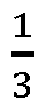
- Having described the three building block metrics that may be used with embodiments of the present disclosure, one example of the inner working of the
computing device 12 based on these defined building block metrics follows, with reference toFIG. 5 . After which, the disclosure will explain examples of each of some security parameters (e.g., maximum proximity, multi-tenancy attack surface, and maximum exposure) determined by thecomputing device 12 for virtual infrastructures of one or more tenants in more detail. -
FIG. 5 illustrates an example functional diagram that demonstrates some of the inputs and outputs that may flow through thecomputing device 12. In particular,FIG. 5 illustrates some inputs that may be used for the building block metrics and the aggregator output methods that may be used to measure multiple security aspects. - After gathering the inputs for each metric (via e.g., the compute-level and network
level data collectors FIG. 5 ), thecomputing device 12 may compute each building block metric (via e.g., the buildingblock metrics evaluator 22 and/or 24) and then output the building block metrics as input for the dynamic weighting system 26 (a detailed diagram for anexample weighting system 26 is illustrated inFIG. 6 ). Based on multi-aspects of security requests, the computing device 12 (e.g., via theAggregator 32,security evaluator 64 and/or processing circuitry 56) may evaluate, calculate and/or output the three measurements/parameters (e.g., maximum proximity, multi-tenancy attack surface, and maximum exposure) that may be used to evaluate/determine a security/risk level for a given tenant. -
FIG. 6 illustrates an example implementation of thedynamic weighting system 26.Such weighting system 26 may take a severity level of existing vulnerabilities from each category (e.g., via vulnerability database 28), e.g., a base score of vulnerabilities on hosts and VMs, into consideration to obtain a weight. In some embodiments, to achieve a more realistic weight, the Common Vulnerabilities and Exposures (CVEs) that have already been exploited from theexploit database 30 may be considered to reduce the effect of vulnerabilities that are not exploitable. Therefore, weights may change within time according to the exploitability of the CVEs. In some embodiments, the weights may be computed in real-time or on a periodic basis (e.g., dynamically), such as viaweighting system 26 and/orprocessing circuitry 56. In some embodiments, for each metric, the base score of vulnerabilities for different related attacks can be used to generate a corresponding weight. For example, if attacks a1...aN (where "N" can be any number greater than 1) can be performed through host co-residency, the average value of base score vulnerabilities may be assigned for the metric normalized to the total value of base scores for all attacks concerning all metrics. - In some embodiments, the weighting system takes the severity level of existing vulnerabilities from each category, i.e. base score of vulnerabilities on host and VMs, into consideration to obtain weight. To achieve more realistic weight, some embodiments may only consider the CVEs that have been already exploited (e.g., from exploit database). For example, for each metric, the base score of vulnerabilities for different related attacks can be used to generate the corresponding weight. Weights may be readjusted at runtime according to the exploited vulnerabilities. Weights may be used as input to the aggregator to evaluate the security parameters. In some embodiments, the composed security metrics measure the intensity/impact (e.g. maximum proximity) and the coverage/extent (e.g., maximum exposure) for a class of attacks on a tenant's virtual resources using a composition of the security metrics. The weights for this composition may be defined using the evaluation of the existing known vulnerabilities and the study of the existing attack methods (e.g., vulnerabilities vs. exploits).
- Having described example calculations of some of the security metrics disclosed herein, some examples of the output methods (maximum proximity, multi-tenancy attack surface, and maximum exposure) that may be used in the
computing device 12 are described in more detail below. In some embodiments, one or more of the security parameters described below may be evaluated via e.g.,aggregator 32, processingcircuitry 56 and/orsecurity evaluator 64. - In one embodiment, to generate a direct warning to cloud administrators and/or continuous auditing reports to tenants, a maximum proximity method may be determined to reveal the maximum of VMs/flows that can be co-resided with a same tenant. This method may not require a specific potential attacker as an input, and may include calculating, such as via
security evaluator 64 and/orprocessing circuitry 56, a maximum proximation in VMs/flows level to present as an upper bound of risk level for one tenant. - Since malicious entities are generally uncertain, the maximum priority may be considered a lower bound of security level for a tenant (e.g., tenant A). The proximity of each tenant against tenant A could be calculated, such as via
security evaluator 64 and/orprocessing circuitry 56, based on coverage metrics.Table 4 Building block metrics for Maximum proximity Resources Building block metrics Maximum proximity Compute-level VMcoverage ( A ) 
Network-level Flowcoverage ( A ) 
- Table 4 shows the maximum proximity method building blocks. In one embodiment, the
dynamic weighting system 26 may be used to generate weights, w, for the calculation of overall maximum proximity, which may be referred to as maxProximity. Maximum proximity may be output to either or both of the cloud provider and tenant. The resulting maximum proximity may be determined/evaluated, such as viasecurity evaluator 64 and/orprocessing circuitry 56, as follows:
- In one embodiment, the requester tenant, for example tenant A, may assign a trust weight to a group of tenants. For example, company A may assign trust weight Tr to competitor tenants. Similarly, tenant A could assign the trust weight to each tenant to achieve multi-trust based maximum proximity. Table 5 below illustrates the building block metrics involved with Trust-based Maximum proximity.
Table 5 The trust based maximum proximity Resources Building block metrics Maximum proximity Compute-level VMcoverage ( A ) 
Network-level Flowcoverage ( A ) 
-
FIG. 7 illustrates a running example for the Maximum proximity method based on for example metric 2 (coverage metric). In this illustrative example, tenant A may be considered the security metric requester and t1-t6 represents the other tenants in the cloud data center environment. InFIG. 7 , "VI A" is intended to indicate the virtual infrastructure (VI) from tenant A and the sub-virtual infrastructure (svi) represents the VMs in each host. The percentage (e.g., 10%) on top of each host (e.g., h1) indicates the portion of VMs from tenant A that are located in such host. - Thus, the proximity between each tenant with tenant A may be calculated, such as via
security evaluator 64 and/orprocessing circuitry 56, as shown below in Table 6.

- According to Table 6, the maximum proximity for tenant A is 70% and it is related to tenant t 1. The maximum priority may represent the maximum risk level for tenant A in the data center. In one embodiment, if tenant A has entered into an agreement/contract with the cloud provider for a certain threshold based on the maximum proximity method, e.g., 60%, both cloud provider and tenant A may receive an auditing report based on the current cloud deployment. In this example, because the maximum proximity is above the threshold proximity (e.g., 70% maxProxmity is greater than the threshold of 60%) cloud provider should adjust the deployment to at least meet the threshold proximity and tenant A may be able to continuously monitor the maximum risk level to ensure compliance with the tenant's threshold.
- In some embodiments, the maximum proximity method may be computed at zone-level and/or data center-level, such as via
security evaluator 64 and/orprocessing circuitry 56, based on the host level formula described herein. - An attack surface concept may be used to provide a security metric from a software level, which may consider a potential or estimated security level of a software and may consider the set of resources that could be used during an attack process. Thus, in one embodiment, a multi-tenancy attack surface may be determined on the cloud level, such as via
security evaluator 64 and/orprocessing circuitry 56. - According to one aspect, potential attacks may be divided into at least two categories, VMs and flows. For example, attackers could launch VMs to collocate with victim VMs on the same host to achieve a residency attack or at the same data center to perform power attacks. In the flow level, attackers could generate flows for information probing and/or distributed denial-of-service (DDoS) attacks.
- The Multi-tenancy Attack Surface method may be based on the concept of attackability on each resource level (i.e., compute-level and network-level).
FIG. 8 illustrates one example of resources associated with a multi-tenancy attack surface.FIG. 8 shows an example of the resources that may be defined in a multi-tenancy attack surface method according to this disclosure. The actors inFIG. 8 are the tenants sharing the same host as the victim. Actors may have multiple VMs that share resources with the victim tenant A and may manipulate their VMs to generate malicious flows, as indicated by the dotted lines inFIG. 8 . - Table 7 below shows an example of how to calculate resources for each host.
Table 7 Building block metrics used in the Multi-tenancy Attack Surface method at host-level Resources Building block metrics Attackability Compute-Level VMcoverage ( A ) AC ( A, h ) = VMcoverage ( A, h ) ∗ NHS ( A, h ) Network-Level Flowcoverage ( A ) AF(A, h ) = Flowcoverage ( A , h ) * NHS ( A, h ) ∗ NHS ( A, h ) * - On the compute-level, resources may be defined as the shared VMs on the same level. Generally, the more the shared VMs the larger the attack surface. The VMcoverage may be applied to calculate this type of resources. On the network-level, resources may be modeled by the shared flows. Generally, the larger the shared flows the larger attack surface. Therefore, the Flowcoverage may be calculated to represent an attack surface for the type of resources.
- Normalized host sharing (i.e., metric 1 from the building block metrics) may be used to reveal the exposure rate for the resources on the host level against all the other tenants that share the same physical machine. Generally, more tenants on the same host indicates a higher exposure for this svi. Furthermore, NHS may provide the attack likelihood for this particular svi. Attackability at a given host may be modeled as a multiplication of the risk of coverage and the attack likelihood.
- After obtaining the attackability for each host, the overall/total attackability at the compute-level and network-level may be defined as a sum of the attackability of each host, as shown for example in Table 8 below. In some embodiments, the term "attackability" and "multi-tenancy attack surface" may be used herein interchangeably.
Table 8 Multi-tenancy Attack Surface Method Multi-tenancy attack surface Compute-level attack surface ACR(A) Network-level attack surface ANR(A) < ACR, ANR > 

- With the overall attackability, the multi-tenancy attack surface may be defined as the set of two- dimensional attackabilities, e.g., the compute-level resources attackability and the network/flow resource attackability, denoted herein as ACR and ANR, respectively. ACR may be considered the overall attackability from the compute-level and may be multiplied with severity weight, w 0, which can be obtained from
dynamic weighting system 26, as described above. Similarly, ANR may be considered the overall attackbility from network-level multiplied with severity weight, w 1 . Such two-dimensional multi-tenancy attack surface shows the potential attacks from both compute-level and network-level. -
FIG. 9 illustrates a deployment of tenants' virtual infrastructure and Table 9 below illustrates the example VM and flow information.Table 9 VM and Flow information for FIG. 9 Tenants VMs Number of flows Tenant_A VM_A1 4 VM_A2 6 VM_A3 2 VM_A4 4 Tenant_B VM_B1 6 VM_B2 4 VM_B3 8 Tenant_C VM_C1 1 VM_C2 5 - In this example, it may be assumed that tenant A files a security check to cloud provider to output a multi-tenancy attack surface. In one embodiment, to calculate multi-tenancy attack surface one or more of the following steps may be performed by computing
device 12 e.g., viametric calculator 62,security evaluator 64 and/or processing circuitry 56: - Collect information for resources (e.g., VM and flows).
- Calculate NHS in terms of tenant A.
- Convert resources into an attackability parameter, AC and AF, on the host level (e.g., Table 7).
- Calculate a two-dimensional attack surface based on the weight from dynamic weighting system and the sum of the attackability on each host (e.g., Table 8).
- Table 10 below demonstrates the NHS calculation for each host from
FIG. 9 . For example,Host 1, h 1 has two tenants, thus,
Table 10 VM/Flow information in the Data center and NHS Calculation Result Tenant_A Tenant_B Tenant_C NHS NA_VMs NA_Flows NB_VMs NB_Flows NC_VMs NC_Flows Host1 2 10 1 6 0 0 0.5 Host2 1 2 2 12 1 1 1 Host3 1 4 0 0 1 5 0.5 - Table 11 below shows an example of the detailed calculation process (that may be performed by computing
device 12, such as viametric calculator 62,security evaluator 64 and/or processing circuitry 56) to obtain overall attackability on both compute-level and network-level for the data center shown inFIG. 9 . For example,host 2 has one VM from tenant A with the
host 2, the compute-level attackability is AC = 0.25 * 1 = 0.25 After summing up the attackability on each host, we have overall attackability on compute-level AC = 0.625, and network-level AF = 0.562. With the weights generated fromdynamic weighting system 26, the multi-tenancy attack surface can be calculated for tenant A as <w 0 * 0.625,w 1 ∗0.562>.Table 11 Attackability Calculation Result Host/resource coverage Per-host VM-coverage for Tenant_A Per-host Flow coverage for Tenant_A NHS AC(A,h) AF(A,h) Host1 2/4=0.5 10/16=0.625 0.5 0.25 0.3125 Host2 1/4=0.25 2/16=0.125 1 0.25 0.125 Host3 1/4=0.25 4/16=0.25 0.5 0.125 0.125 Sum 0.625 0.562 - According to yet another security technique, an exposure level of a given tenant inside a cloud data center may be calculated, such as via
security evaluator 64 and/orprocessing circuitry 56. In sociology, an interaction index may be applied as a measurement of the exposure of minority group members to members of a majority group as a minority-weighted average of the majority proportion of the population in each area unit. The interaction index can be used to calculate the sum of the portion of minority members in a given area and multiply with the portion of the majority group in same area. - Inspired from the interaction index from an unrelated art, sociology, exposure of a given tenant A to other tenants can be defined as the multiplication of the coverage metric (the portion of tenant A in a host/zone/data center) and the abundance metric (the portion of another tenant in the same host/zone/datacenter). This maximum exposure method may be considered a reflection of the exposure of the given tenant in a fixed zone with any other tenant.
Table 12 Building block metrics used in maximum exposure methods at host-level Resources Building block of metrics Exposure Compute-level VM_coverage(A, h, B), VMAbundance (B, h) VM Explosure(A,B,h) = VMcoverage(A, h, B) ∗ VMAbundance (B, h) Network-level flowcoverage (A, h, B), flowAbundance (B, h) FExplosure (A,B,h) = flowcoverage (A, h, B) ∗ flowAbundance (B, h) - Similar to the previous output methods described above (i.e., maximum proximity and attack surface), exposure may have two abstraction levels, namely, the compute-level and network-level. In one embodiment, to define the maximum exposure, the exposure on a given zone may be defined, and may start with the host. Table 12 shows the exemplary exposure formulas for both compute-level and network-level. Compute-level exposure may be considered to capture the VM exposures between the given tenant A and another tenant B and the compute-level exposure may capture the flow interactions between tenant A and tenant B based on flow rules. Table 13 below demonstrates an example of the maximum exposure method based on both compute-level and network-level.
Table 13 Maximum exposure method/technique Resources Maximum Exposure Compute-level 
Network-level 
- Using
FIG. 9 in this example, to calculate maximum exposure in a given zone with a given tenant, one or more of the following steps may be performed, such as viametric calculator 62,security evaluator 64 and/or processing circuitry 56: - Collect information from compute-level and network-level (e.g., via the collectors shown in
FIGS. 1 and5 ). - Build a table with VM/flow information for each tenant in each host for further calculations.
- Calculate coverage metrics for the given tenant A (e.g., via the evalulator(s) shown in
FIGS. 1 and5 ). - Calculate abundance metrics for tenant A with other tenants (e.g., via the evalulator(s) shown in
FIGS. 1 and5 ). - Calculate the exposure metric on the host level and aggregate it to zone and/or datacenter level based on the requests from security metric requester (e.g., tenant A) (e.g., via the evalulator(s) shown in
FIGS. 1 and5 ). - Generate maximum exposure from the exposure sets between tenant A and all the other tenants (e.g., via the evalulator(s) shown in
FIGS. 1 and5 ). - Aggregate maximum exposure in different abstraction levels with weights, w, that are generated by the dynamic weighting system.
- Table 14 below demonstrates exemplary calculated results from coverage metrics and abundance metrics corresponding to the data center shown in
FIG. 9 . Since the calculation of coverage metrics have already been explained in example 8 above, only the example calculation of abundance metrics in this example will be described here. For example, inhost 2, the number of VMs that belong to tenant B is two and the total number of VMs on this host is four, as can be seen inFIG. 9 . Therefore,
Table 14 The resulting table with example coverage metrics and abundance metrics Host Per-host VM-coverage for Tenant_ A Per-host Flow coverage for Tenant_A Abundance of Tenant_B Abundance of Tenant_C VM-level Flow_ level VM-level Flow- level Host 1 2/4=0.5 10/16=0.62 5 1/3=0.3 3 6/16=0.37 5 0/3=0 0/16=0 Host 21/4=0.25 2/16=0.125 2/4=0.5 12/15=0.8 1/4=0.2 5 1/15=0.06 6 Host 3 1/4=0.25 4/16=0.25 0/2=0 0/9=0 1/2=0.5 5/9=0.55 - After obtaining the coverage metrics and
abundance metrics 5, the exposure on each host may be calculated, such as viasecurity evaluator 64 and/orprocessing circuitry 56, as shown, for example, in Table 15 below. For example, inhost 2, we have VMexposure (A, B, h 2) = VMcoverage (A,h 2 ,B) ∗ VMAbundance (B,h 2) = 0.25 ∗ 0.5 = 0.125Table 15 The calculation results for exposure method example Host Exposure to Tenant_B Exposure to Tenant_C VM-level Flow-level VM-level Flow-level Host1 0.5∗0.33=0.165 0.625∗0.375=0.234 0.5∗0=0 0.625∗0=0 Host2 0.25∗0.5=0.125 0.125∗0.8=0.1 0.25∗0.25=0.062 0.125∗0.66=0.082 Host3 0.25∗0=0 0.25∗0=0 0.25∗0.5=0.125 0.25∗0.55=0.137 Sum 0.29 0.334 0.187 0.219 - Thus, the maximum VM exposure and the maximum flow exposure in the example may be determined, such as via
security evaluator 64 and/orprocessing circuitry 56, as the maximum of the sums, e.g., max(0.29, 0.187) = 0.29 and max(0.334, 0.219)=0.334, respectively. Based on these results, the aggregated maximum exposure for tenant A is MaxExposure = w0 * 0.29 + w1 * 0.334. - In addition, some embodiments of the present disclosure may be triggered as a new evaluation for each tenant sharing the same physical infrastructure based on cloud management events, like new VMs, virtual net creation in the same physical environment, etc. Such events may trigger re-calculating the security measurements based on changes in the sharing of different physical resources dedicated to different virtual resources, this being due at least in part to cloud management events like creating new virtual machines (VM) or migrating existing VMs. For example, when a new VM from another tenant is created in a physical node hosting an existing tenant's VM, the entire security measures for at least that particular node may be re-computed using the techniques disclosed herein. Therefore, the cloud management event (e.g., creation of new VM) can trigger a change in the virtual resources (between a first tenant and at least one other tenant), which in turn can effect the interactions at compute-level and network-level between virtual resources from the first and the at least one other tenant. Therefore, such changes may trigger a new evaluation of the security measurements, metrics and/or parameters as discussed herein and the techniques disclosed herein may be used to dynamically (e.g., periodically, trigger-based, etc.) update security calculations and/or evaluations based e.g., on such virtual infrastructure cloud management events.
- Thus, some embodiments of the disclosure have been provided to evaluate various aspects of security for a tenant within a multi-tenant cloud environment. Some embodiments include a novel security evaluation system, apparatus and/or method, which combine a set of virtual network-level as well as compute-level measurements for virtual infrastructures in order to quantitatively evaluate the security level of tenants' deployments in an SDN-based cloud. Some embodiments provide for a system, apparatus and/or method that quantitatively evaluates the proximity between different virtual infrastructure deployments, that quantitatively evaluates the potential attackability risk between different virtual infrastructure deployments, and that quantitatively evaluates the potential maximum damage per tenant virtual infrastructure deployment using novel metrics calculations, which may include metrics for VM and flow coverage and abundance, as well as, normalized host sharing metrics. Accordingly, some embodiments of the present disclosure may advantageously improve security concerns associated with sharing tenancy in a cloud environment among arms-length/distrusted tenants.
- As will be appreciated by one of skill in the art, the concepts described herein may be embodied as a method, data processing system, computer program product and/or computer storage media storing an executable computer program. Accordingly, the concepts described herein may take the form of an entirely hardware embodiment, an entirely software embodiment or an embodiment combining software and hardware aspects all generally referred to herein as a "circuit" or "module." Any process, step, action and/or functionality described herein may be performed by, and/or associated to, a corresponding module, which may be implemented in software and/or firmware and/or hardware. Furthermore, the disclosure may take the form of a computer program product on a tangible computer usable storage medium having computer program code embodied in the medium that can be executed by a computer. Any suitable tangible computer readable medium may be utilized including hard disks, CD-ROMs, electronic storage devices, optical storage devices, or magnetic storage devices.
- Some embodiments are described herein with reference to flowchart illustrations and/or block diagrams of methods, systems and computer program products. It will be understood that each block of the flowchart illustrations and/or block diagrams, and combinations of blocks in the flowchart illustrations and/or block diagrams, can be implemented by computer program instructions. These computer program instructions may be provided to a processor of a general purpose computer (to thereby create a special purpose computer), special purpose computer, or other programmable data processing apparatus to produce a machine, such that the instructions, which execute via the processor of the computer or other programmable data processing apparatus, create means for implementing the functions/acts specified in the flowchart and/or block diagram block or blocks.
- These computer program instructions may also be stored in a computer readable memory or storage medium that can direct a computer or other programmable data processing apparatus to function in a particular manner, such that the instructions stored in the computer readable memory produce an article of manufacture including instruction means which implement the function/act specified in the flowchart and/or block diagram block or blocks.
- The computer program instructions may also be loaded onto a computer or other programmable data processing apparatus to cause a series of operational steps to be performed on the computer or other programmable apparatus to produce a computer implemented process such that the instructions which execute on the computer or other programmable apparatus provide steps for implementing the functions/acts specified in the flowchart and/or block diagram block or blocks.
- It is to be understood that the functions/acts noted in the blocks may occur out of the order noted in the operational illustrations. For example, two blocks shown in succession may in fact be executed substantially concurrently or the blocks may sometimes be executed in the reverse order, depending upon the functionality/acts involved. Although some of the diagrams include arrows on communication paths to show a primary direction of communication, it is to be understood that communication may occur in the opposite direction to the depicted arrows.
- Computer program code for carrying out operations of the concepts described herein may be written in an object oriented programming language such as Java® or C++. However, the computer program code for carrying out operations of the disclosure may also be written in conventional procedural programming languages, such as the "C" programming language. The program code may execute entirely on the user's computer, partly on the user's computer, as a stand-alone software package, partly on the user's computer and partly on a remote computer or entirely on the remote computer. In the latter scenario, the remote computer may be connected to the user's computer through a local area network (LAN) or a wide area network (WAN), or the connection may be made to an external computer (for example, through the Internet using an Internet Service Provider).
- Many different embodiments have been disclosed herein, in connection with the above description and the drawings. It will be understood that it would be unduly repetitious and obfuscating to literally describe and illustrate every combination and subcombination of these embodiments. Accordingly, all embodiments can be combined in any way and/or combination, and the present specification, including the drawings, shall be construed to constitute a complete written description of all combinations and subcombinations of the embodiments described herein, and of the manner and process of making and using them, and shall support claims to any such combination or subcombination.
- It will be appreciated by persons skilled in the art that the embodiments described herein are not limited to what has been particularly shown and described herein above. In addition, unless mention was made above to the contrary, it should be noted that all of the accompanying drawings are not to scale. A variety of modifications and variations are possible in light of the above teachings without departing from the scope of the following claims.
Claims (15)
- A method implemented by a computing device (12) for evaluating security for virtualized infrastructures of tenants in a cloud environment, the method comprising:calculating (S100) at least one security metric for a first tenant based at least in part on information associated with at least one virtual resource of the first tenant and at least one interaction of the at least one virtual resource of the first tenant with at least one virtual resource of at least one other tenant in a multi-tenant virtualized infrastructure; andevaluating (S102) at least one security parameter for the first tenant, wherein the at least one security parameter is determined based on at least one of the at least one calculated security metric for monitoring a security level of the first tenant relative to the at least one other tenant in the multi-tenant virtualized infrastructure,wherein the at least one security metric includes at least one of a normalized host sharing metric, a coverage metric and an abundance metric,wherein:the normalized host sharing metric is based on a number of other tenants that are co-located within a host of the at least one virtual resource of the first tenant;the coverage metric is based on a ratio of virtual resources of the first tenant on a host in which there are other virtual resources of the at least one other tenant to a total number of virtual resources of the first tenant in the multi-tenant virtualized infrastructure; andthe abundance metric is based on a number of virtual resources of the first tenant on a host divided by a total number of virtual resources on the host.
- The method of Claim 1, wherein each of the at least one virtual resource of the first tenant and the at least one virtual resource of the at least one other tenant includes at least one of a compute resource and a network resource, wherein, optionally, the at least one interaction of the at least one virtual resource of the first tenant with the at least one virtual resource of the at least one other tenant includes:
at least one interaction between the at least one of the compute resource and the network resource of the first tenant and the at least one of the compute resource and the network resource of the at least one other tenant. - The method of Claim 1, further comprising:
obtaining at least one weight, the at least one weight based at least in part on at least one vulnerability score of at least one known vulnerability associated with the at least one virtual resource of the first tenant, wherein, optionally:- the evaluating the at least one security parameter further comprises evaluating the at least one security parameter using the obtained at least one weight, and/or- the method further comprises dynamically updating the at least one weight based on information from an exploitation database. - The method of any one of Claims 1-3, wherein the calculating the at least one security metric for the first tenant further comprises:
calculating a normalized host sharing metric according to
- The method of any one of Claims 1-4, wherein the calculating the at least one security metric for the first tenant further comprises:
calculating a coverage metric, the coverage metric including at least one of a host-level virtual machine coverage metric and a host-level flow coverage metric, the host-level virtual machine coverage metric being calculated as a ratio of virtual machines belonging to the first tenant A located at the host h within which there is at least one other virtual machine belonging to the at least one other tenant B to a total number of virtual machines belonging to the first tenant A in the multi-tenant virtualized infrastructure and the host-level flow coverage metric with respect to the first tenant A and the host h being calculated as a ratio of flow rules that match to the virtual machines of the first tenant A located at the host h to a total number of flows corresponding to all the virtual machines of the first tenant A in the multi-tenant virtualized infrastructure, where h is common to the first tenant A and the at least one other tenant B. - The method of any one of Claims 1-5, wherein the calculating the at least one security metric for the first tenant further comprises:
calculating an abundance metric, the abundance metric including at least one of a host-level virtual machine abundance metric and a host-level flow abundance metric, the host-level virtual machine abundance metric being calculated according to a number of virtual machines of the at least one other tenant B on a host h divided by a total number of virtual machines on the host h and the host-level flow abundance metric being calculated according to a number of flow rules of the virtual machines of the at least one other tenant B on the host h divided by a total number of flow rules on the host h. - The method of any one of Claims 1-6, wherein the evaluating the at least one security parameter for the first tenant further comprises evaluating at least one of a maximum proximity, a multi-tenancy attack surface, and a maximum exposure.
- The method of any one of Claims 1-7, wherein the evaluating the at least one security parameter for the first tenant further comprises:
evaluating a maximum proximity for the first tenant, the maximum proximity representing a maximum coverage metric for the first tenant relative to the at least one other tenant. - The method of any one of Claims 1-8, wherein the evaluating the at least one security parameter for the first tenant further comprises:
evaluating a multi-tenancy attack surface for the first tenant, the multi-tenancy attack surface representing a set of virtual resources belonging to the first tenant on a host that can be attacked. - The method of any one of Claims 1-9, wherein the evaluating the at least one security parameter for the first tenant further comprises:
evaluating a maximum exposure for the first tenant, the maximum exposure representing an exposure of the first tenant in a zone shared with the at least one other tenant. - The method of Claim 9, wherein the evaluating the multi-tenancy attack surface for the first tenant further comprises multiplying a coverage metric and a normalized host sharing metric defined for the host.
- The method of Claim 10, wherein the evaluating the maximum exposure for the first tenant further comprises multiplying a coverage metric and an abundance metric defined for a host.
- The method of any one of Claims 1-12, further comprising:determining a multi-tenancy attack surface value for the first tenant for each host in the multi-tenant virtualized infrastructure; andcalculating a total multi-tenancy attack surface value for the first tenant as a sum of the multi-tenancy attack surface values for the first tenant for each host multiplied by a severity weight, wherein, optionally, the calculating the total multi-tenancy attack surface value further comprises calculating the total multi-tenancy attack surface value as at least a two-dimensional attack surface value including a compute-level attack surface value and a network-level attack surface value for the first tenant.
- The method of any one of Claims 1-13, further comprising:determining a maximum exposure value for the first tenant for each host in the multi-tenant virtualized infrastructure on which there is at least one of the at least one virtual resource of the first tenant; andcalculating an overall maximum exposure value for the first tenant by combining each determined maximum exposure value.
- A computing device (12) for evaluating security for virtualized infrastructures of tenants in a cloud environment, the computing device (12) comprising processing circuitry (56) including instructions executable by the processing circuitry (56) to configure the computing device (12) to perform the method of any one of the preceding claims.
Applications Claiming Priority (2)
| Application Number | Priority Date | Filing Date | Title |
|---|---|---|---|
| US201862661410P | 2018-04-23 | 2018-04-23 | |
| PCT/IB2019/053352 WO2019207486A1 (en) | 2018-04-23 | 2019-04-23 | Apparatus and method for evaluating multiple aspects of the security for virtualized infrastructure in a cloud environment |
Publications (2)
| Publication Number | Publication Date |
|---|---|
| EP3785415A1 EP3785415A1 (en) | 2021-03-03 |
| EP3785415B1 true EP3785415B1 (en) | 2022-12-14 |
Family
ID=66677183
Family Applications (1)
| Application Number | Title | Priority Date | Filing Date |
|---|---|---|---|
| EP19727729.6A Active EP3785415B1 (en) | 2018-04-23 | 2019-04-23 | Apparatus and method for evaluating multiple aspects of the security for virtualized infrastructure in a cloud environment |
Country Status (3)
| Country | Link |
|---|---|
| US (1) | US11677762B2 (en) |
| EP (1) | EP3785415B1 (en) |
| WO (1) | WO2019207486A1 (en) |
Families Citing this family (9)
| Publication number | Priority date | Publication date | Assignee | Title |
|---|---|---|---|---|
| US11475126B2 (en) * | 2019-10-31 | 2022-10-18 | Dell Products, L.P. | Systems and methods for modernizing workspace and hardware lifecycle management in an enterprise productivity ecosystem |
| US11960373B2 (en) * | 2020-03-20 | 2024-04-16 | UncommonX Inc. | Function evaluation of a system or portion thereof |
| US11716352B2 (en) | 2020-06-16 | 2023-08-01 | Cisco Technology, Inc. | Application protectability schemes for enterprise applications |
| US11539735B2 (en) | 2020-08-05 | 2022-12-27 | Cisco Technology, Inc. | Systems and methods for application placement in a network based on host security posture |
| US20220294818A1 (en) * | 2021-03-11 | 2022-09-15 | Virtustream Ip Holding Company Llc | Management of multi-cloud workloads using relative risk ranking of cloud assets |
| US11783068B2 (en) * | 2021-03-24 | 2023-10-10 | Bank Of America Corporation | System for dynamic exposure monitoring |
| US11729161B1 (en) * | 2022-12-15 | 2023-08-15 | Citibank, N.A. | Pre-built, pre-tested, and standardized connectors for end-to-end connection |
| US20250004808A1 (en) * | 2023-06-30 | 2025-01-02 | VMware LLC | Placement in a virtualized computing environment based on resource allocation |
| US20250298805A1 (en) * | 2024-03-21 | 2025-09-25 | Honeywell International Inc. | Method and a system for normalizing data in data processing pipelines |
Family Cites Families (9)
| Publication number | Priority date | Publication date | Assignee | Title |
|---|---|---|---|---|
| US7735136B2 (en) * | 2005-04-18 | 2010-06-08 | Vmware, Inc. | 0-touch and 1-touch techniques for improving the availability of computer programs under protection without compromising security |
| US20130247205A1 (en) * | 2010-07-14 | 2013-09-19 | Mcafee, Inc. | Calculating quantitative asset risk |
| US9674211B2 (en) * | 2013-01-30 | 2017-06-06 | Skyhigh Networks, Inc. | Cloud service usage risk assessment using darknet intelligence |
| US9363282B1 (en) * | 2014-01-28 | 2016-06-07 | Infoblox Inc. | Platforms for implementing an analytics framework for DNS security |
| US9311131B2 (en) * | 2014-08-04 | 2016-04-12 | International Business Machines Corporation | Monitoring and dynamically reconfiguring virtual machine patterns |
| US9769201B2 (en) * | 2015-03-06 | 2017-09-19 | Radware, Ltd. | System and method thereof for multi-tiered mitigation of cyber-attacks |
| US10482265B2 (en) | 2015-12-30 | 2019-11-19 | International Business Machines Corporation | Data-centric monitoring of compliance of distributed applications |
| US10447526B2 (en) * | 2016-11-02 | 2019-10-15 | Servicenow, Inc. | Network event grouping |
| US11252188B1 (en) * | 2020-08-13 | 2022-02-15 | Room40 Labs, Inc. | Methods and apparatus to automate cyber defense decision process and response actions by operationalizing adversarial technique frameworks |
-
2019
- 2019-04-23 US US17/046,458 patent/US11677762B2/en active Active
- 2019-04-23 EP EP19727729.6A patent/EP3785415B1/en active Active
- 2019-04-23 WO PCT/IB2019/053352 patent/WO2019207486A1/en not_active Ceased
Also Published As
| Publication number | Publication date |
|---|---|
| EP3785415A1 (en) | 2021-03-03 |
| US20210152572A1 (en) | 2021-05-20 |
| US11677762B2 (en) | 2023-06-13 |
| WO2019207486A1 (en) | 2019-10-31 |
Similar Documents
| Publication | Publication Date | Title |
|---|---|---|
| US11677762B2 (en) | Apparatus and method for evaluating multiple aspects of the security for virtualized infrastructure in a cloud environment | |
| US11863434B2 (en) | System and method of providing policy selection in a network | |
| Kumar et al. | A Distributed framework for detecting DDoS attacks in smart contract‐based Blockchain‐IoT Systems by leveraging Fog computing | |
| TWI724896B (en) | Method and device for constructing relational network based on privacy protection | |
| US10574681B2 (en) | Detection of known and unknown malicious domains | |
| US8528088B2 (en) | Modeling and outlier detection in threat management system data | |
| Bhushan et al. | Network flow analysis for detection and mitigation of Fraudulent Resource Consumption (FRC) attacks in multimedia cloud computing | |
| Kolomeec et al. | Choosing models for security metrics visualization | |
| Hu et al. | Security risk situation quantification method based on threat prediction for multimedia communication network | |
| Xie et al. | A secure and efficient data sharing scheme for UAV networks: Integration of blockchain and prospect theory | |
| Meena et al. | Trust enforced computational offloading for health care applications in fog computing | |
| JP6553816B2 (en) | User data sharing method and apparatus | |
| Salau et al. | Data cooperatives for neighborhood watch | |
| Abraham et al. | Predictive cyber-security analytics framework: A non-homogenous markov model for security quantification | |
| Bang et al. | Design and implementation of storage system for real-time blockchain network monitoring system | |
| Halabi et al. | A cooperative game for online cloud federation formation based on security risk assessment | |
| Zambianco et al. | Resource-aware cyber deception for microservice-based applications | |
| Gattoju et al. | Design of ChaApache framework for securing Hadoop application in big data | |
| Baumann et al. | Vulnerability against internet disruptions–a graph-based perspective | |
| Benjamin Franklin et al. | Machine learning-based trust management in cloud using blockchain technology | |
| Xiulei et al. | Defending DDoS attacks in software defined networking based on improved Shiryaev–Roberts detection algorithm | |
| Brügner | Holt-Winters Traffic Prediction on Aggregated Flow Data | |
| Obaid et al. | Leveraging Blockchain for Secure IoT Device Communication in Smart Cities | |
| Vijayan et al. | Trust management approaches in mobile adhoc networks | |
| Vijayalakshmi et al. | An exponent based error detection mechanism against dxdos attack for improving the security in cloud |
Legal Events
| Date | Code | Title | Description |
|---|---|---|---|
| STAA | Information on the status of an ep patent application or granted ep patent |
Free format text: STATUS: UNKNOWN |
|
| STAA | Information on the status of an ep patent application or granted ep patent |
Free format text: STATUS: THE INTERNATIONAL PUBLICATION HAS BEEN MADE |
|
| PUAI | Public reference made under article 153(3) epc to a published international application that has entered the european phase |
Free format text: ORIGINAL CODE: 0009012 |
|
| STAA | Information on the status of an ep patent application or granted ep patent |
Free format text: STATUS: REQUEST FOR EXAMINATION WAS MADE |
|
| 17P | Request for examination filed |
Effective date: 20201117 |
|
| AK | Designated contracting states |
Kind code of ref document: A1 Designated state(s): AL AT BE BG CH CY CZ DE DK EE ES FI FR GB GR HR HU IE IS IT LI LT LU LV MC MK MT NL NO PL PT RO RS SE SI SK SM TR |
|
| AX | Request for extension of the european patent |
Extension state: BA ME |
|
| DAV | Request for validation of the european patent (deleted) | ||
| DAX | Request for extension of the european patent (deleted) | ||
| REG | Reference to a national code |
Ref country code: DE Ref legal event code: R079 Ref document number: 602019023166 Country of ref document: DE Free format text: PREVIOUS MAIN CLASS: H04L0029060000 Ipc: H04L0009400000 |
|
| GRAP | Despatch of communication of intention to grant a patent |
Free format text: ORIGINAL CODE: EPIDOSNIGR1 |
|
| STAA | Information on the status of an ep patent application or granted ep patent |
Free format text: STATUS: GRANT OF PATENT IS INTENDED |
|
| RIC1 | Information provided on ipc code assigned before grant |
Ipc: H04W 12/00 20210101ALN20220524BHEP Ipc: H04L 9/40 20220101AFI20220524BHEP |
|
| INTG | Intention to grant announced |
Effective date: 20220627 |
|
| GRAS | Grant fee paid |
Free format text: ORIGINAL CODE: EPIDOSNIGR3 |
|
| GRAA | (expected) grant |
Free format text: ORIGINAL CODE: 0009210 |
|
| STAA | Information on the status of an ep patent application or granted ep patent |
Free format text: STATUS: THE PATENT HAS BEEN GRANTED |
|
| AK | Designated contracting states |
Kind code of ref document: B1 Designated state(s): AL AT BE BG CH CY CZ DE DK EE ES FI FR GB GR HR HU IE IS IT LI LT LU LV MC MK MT NL NO PL PT RO RS SE SI SK SM TR |
|
| REG | Reference to a national code |
Ref country code: GB Ref legal event code: FG4D |
|
| REG | Reference to a national code |
Ref country code: CH Ref legal event code: EP |
|
| REG | Reference to a national code |
Ref country code: DE Ref legal event code: R096 Ref document number: 602019023166 Country of ref document: DE |
|
| REG | Reference to a national code |
Ref country code: IE Ref legal event code: FG4D |
|
| REG | Reference to a national code |
Ref country code: AT Ref legal event code: REF Ref document number: 1538327 Country of ref document: AT Kind code of ref document: T Effective date: 20230115 |
|
| REG | Reference to a national code |
Ref country code: LT Ref legal event code: MG9D |
|
| REG | Reference to a national code |
Ref country code: NL Ref legal event code: MP Effective date: 20221214 |
|
| PG25 | Lapsed in a contracting state [announced via postgrant information from national office to epo] |
Ref country code: SE Free format text: LAPSE BECAUSE OF FAILURE TO SUBMIT A TRANSLATION OF THE DESCRIPTION OR TO PAY THE FEE WITHIN THE PRESCRIBED TIME-LIMIT Effective date: 20221214 Ref country code: NO Free format text: LAPSE BECAUSE OF FAILURE TO SUBMIT A TRANSLATION OF THE DESCRIPTION OR TO PAY THE FEE WITHIN THE PRESCRIBED TIME-LIMIT Effective date: 20230314 Ref country code: LT Free format text: LAPSE BECAUSE OF FAILURE TO SUBMIT A TRANSLATION OF THE DESCRIPTION OR TO PAY THE FEE WITHIN THE PRESCRIBED TIME-LIMIT Effective date: 20221214 Ref country code: FI Free format text: LAPSE BECAUSE OF FAILURE TO SUBMIT A TRANSLATION OF THE DESCRIPTION OR TO PAY THE FEE WITHIN THE PRESCRIBED TIME-LIMIT Effective date: 20221214 |
|
| REG | Reference to a national code |
Ref country code: AT Ref legal event code: MK05 Ref document number: 1538327 Country of ref document: AT Kind code of ref document: T Effective date: 20221214 |
|
| PG25 | Lapsed in a contracting state [announced via postgrant information from national office to epo] |
Ref country code: LV Free format text: LAPSE BECAUSE OF FAILURE TO SUBMIT A TRANSLATION OF THE DESCRIPTION OR TO PAY THE FEE WITHIN THE PRESCRIBED TIME-LIMIT Effective date: 20221214 Ref country code: HR Free format text: LAPSE BECAUSE OF FAILURE TO SUBMIT A TRANSLATION OF THE DESCRIPTION OR TO PAY THE FEE WITHIN THE PRESCRIBED TIME-LIMIT Effective date: 20221214 Ref country code: GR Free format text: LAPSE BECAUSE OF FAILURE TO SUBMIT A TRANSLATION OF THE DESCRIPTION OR TO PAY THE FEE WITHIN THE PRESCRIBED TIME-LIMIT Effective date: 20230315 Ref country code: RS Free format text: LAPSE BECAUSE OF FAILURE TO SUBMIT A TRANSLATION OF THE DESCRIPTION OR TO PAY THE FEE WITHIN THE PRESCRIBED TIME-LIMIT Effective date: 20221214 |
|
| PG25 | Lapsed in a contracting state [announced via postgrant information from national office to epo] |
Ref country code: NL Free format text: LAPSE BECAUSE OF FAILURE TO SUBMIT A TRANSLATION OF THE DESCRIPTION OR TO PAY THE FEE WITHIN THE PRESCRIBED TIME-LIMIT Effective date: 20221214 |
|
| PG25 | Lapsed in a contracting state [announced via postgrant information from national office to epo] |
Ref country code: SM Free format text: LAPSE BECAUSE OF FAILURE TO SUBMIT A TRANSLATION OF THE DESCRIPTION OR TO PAY THE FEE WITHIN THE PRESCRIBED TIME-LIMIT Effective date: 20221214 Ref country code: RO Free format text: LAPSE BECAUSE OF FAILURE TO SUBMIT A TRANSLATION OF THE DESCRIPTION OR TO PAY THE FEE WITHIN THE PRESCRIBED TIME-LIMIT Effective date: 20221214 Ref country code: PT Free format text: LAPSE BECAUSE OF FAILURE TO SUBMIT A TRANSLATION OF THE DESCRIPTION OR TO PAY THE FEE WITHIN THE PRESCRIBED TIME-LIMIT Effective date: 20230414 Ref country code: ES Free format text: LAPSE BECAUSE OF FAILURE TO SUBMIT A TRANSLATION OF THE DESCRIPTION OR TO PAY THE FEE WITHIN THE PRESCRIBED TIME-LIMIT Effective date: 20221214 Ref country code: EE Free format text: LAPSE BECAUSE OF FAILURE TO SUBMIT A TRANSLATION OF THE DESCRIPTION OR TO PAY THE FEE WITHIN THE PRESCRIBED TIME-LIMIT Effective date: 20221214 Ref country code: CZ Free format text: LAPSE BECAUSE OF FAILURE TO SUBMIT A TRANSLATION OF THE DESCRIPTION OR TO PAY THE FEE WITHIN THE PRESCRIBED TIME-LIMIT Effective date: 20221214 Ref country code: AT Free format text: LAPSE BECAUSE OF FAILURE TO SUBMIT A TRANSLATION OF THE DESCRIPTION OR TO PAY THE FEE WITHIN THE PRESCRIBED TIME-LIMIT Effective date: 20221214 |
|
| PG25 | Lapsed in a contracting state [announced via postgrant information from national office to epo] |
Ref country code: SK Free format text: LAPSE BECAUSE OF FAILURE TO SUBMIT A TRANSLATION OF THE DESCRIPTION OR TO PAY THE FEE WITHIN THE PRESCRIBED TIME-LIMIT Effective date: 20221214 Ref country code: PL Free format text: LAPSE BECAUSE OF FAILURE TO SUBMIT A TRANSLATION OF THE DESCRIPTION OR TO PAY THE FEE WITHIN THE PRESCRIBED TIME-LIMIT Effective date: 20221214 Ref country code: IS Free format text: LAPSE BECAUSE OF FAILURE TO SUBMIT A TRANSLATION OF THE DESCRIPTION OR TO PAY THE FEE WITHIN THE PRESCRIBED TIME-LIMIT Effective date: 20230414 Ref country code: AL Free format text: LAPSE BECAUSE OF FAILURE TO SUBMIT A TRANSLATION OF THE DESCRIPTION OR TO PAY THE FEE WITHIN THE PRESCRIBED TIME-LIMIT Effective date: 20221214 |
|
| REG | Reference to a national code |
Ref country code: DE Ref legal event code: R097 Ref document number: 602019023166 Country of ref document: DE |
|
| PLBE | No opposition filed within time limit |
Free format text: ORIGINAL CODE: 0009261 |
|
| STAA | Information on the status of an ep patent application or granted ep patent |
Free format text: STATUS: NO OPPOSITION FILED WITHIN TIME LIMIT |
|
| PG25 | Lapsed in a contracting state [announced via postgrant information from national office to epo] |
Ref country code: DK Free format text: LAPSE BECAUSE OF FAILURE TO SUBMIT A TRANSLATION OF THE DESCRIPTION OR TO PAY THE FEE WITHIN THE PRESCRIBED TIME-LIMIT Effective date: 20221214 |
|
| 26N | No opposition filed |
Effective date: 20230915 |
|
| PG25 | Lapsed in a contracting state [announced via postgrant information from national office to epo] |
Ref country code: SI Free format text: LAPSE BECAUSE OF FAILURE TO SUBMIT A TRANSLATION OF THE DESCRIPTION OR TO PAY THE FEE WITHIN THE PRESCRIBED TIME-LIMIT Effective date: 20221214 |
|
| REG | Reference to a national code |
Ref country code: CH Ref legal event code: PL |
|
| GBPC | Gb: european patent ceased through non-payment of renewal fee |
Effective date: 20230423 |
|
| PG25 | Lapsed in a contracting state [announced via postgrant information from national office to epo] |
Ref country code: LU Free format text: LAPSE BECAUSE OF NON-PAYMENT OF DUE FEES Effective date: 20230423 |
|
| REG | Reference to a national code |
Ref country code: BE Ref legal event code: MM Effective date: 20230430 |
|
| PG25 | Lapsed in a contracting state [announced via postgrant information from national office to epo] |
Ref country code: MC Free format text: LAPSE BECAUSE OF FAILURE TO SUBMIT A TRANSLATION OF THE DESCRIPTION OR TO PAY THE FEE WITHIN THE PRESCRIBED TIME-LIMIT Effective date: 20221214 |
|
| PG25 | Lapsed in a contracting state [announced via postgrant information from national office to epo] |
Ref country code: GB Free format text: LAPSE BECAUSE OF NON-PAYMENT OF DUE FEES Effective date: 20230423 |
|
| PG25 | Lapsed in a contracting state [announced via postgrant information from national office to epo] |
Ref country code: MC Free format text: LAPSE BECAUSE OF FAILURE TO SUBMIT A TRANSLATION OF THE DESCRIPTION OR TO PAY THE FEE WITHIN THE PRESCRIBED TIME-LIMIT Effective date: 20221214 Ref country code: LI Free format text: LAPSE BECAUSE OF NON-PAYMENT OF DUE FEES Effective date: 20230430 Ref country code: GB Free format text: LAPSE BECAUSE OF NON-PAYMENT OF DUE FEES Effective date: 20230423 Ref country code: FR Free format text: LAPSE BECAUSE OF NON-PAYMENT OF DUE FEES Effective date: 20230430 Ref country code: CH Free format text: LAPSE BECAUSE OF NON-PAYMENT OF DUE FEES Effective date: 20230430 |
|
| REG | Reference to a national code |
Ref country code: IE Ref legal event code: MM4A |
|
| PG25 | Lapsed in a contracting state [announced via postgrant information from national office to epo] |
Ref country code: BE Free format text: LAPSE BECAUSE OF NON-PAYMENT OF DUE FEES Effective date: 20230430 |
|
| PG25 | Lapsed in a contracting state [announced via postgrant information from national office to epo] |
Ref country code: IE Free format text: LAPSE BECAUSE OF NON-PAYMENT OF DUE FEES Effective date: 20230423 |
|
| PG25 | Lapsed in a contracting state [announced via postgrant information from national office to epo] |
Ref country code: IE Free format text: LAPSE BECAUSE OF NON-PAYMENT OF DUE FEES Effective date: 20230423 |
|
| PG25 | Lapsed in a contracting state [announced via postgrant information from national office to epo] |
Ref country code: IT Free format text: LAPSE BECAUSE OF FAILURE TO SUBMIT A TRANSLATION OF THE DESCRIPTION OR TO PAY THE FEE WITHIN THE PRESCRIBED TIME-LIMIT Effective date: 20221214 |
|
| PG25 | Lapsed in a contracting state [announced via postgrant information from national office to epo] |
Ref country code: BG Free format text: LAPSE BECAUSE OF FAILURE TO SUBMIT A TRANSLATION OF THE DESCRIPTION OR TO PAY THE FEE WITHIN THE PRESCRIBED TIME-LIMIT Effective date: 20221214 |
|
| PG25 | Lapsed in a contracting state [announced via postgrant information from national office to epo] |
Ref country code: BG Free format text: LAPSE BECAUSE OF FAILURE TO SUBMIT A TRANSLATION OF THE DESCRIPTION OR TO PAY THE FEE WITHIN THE PRESCRIBED TIME-LIMIT Effective date: 20221214 |
|
| PGFP | Annual fee paid to national office [announced via postgrant information from national office to epo] |
Ref country code: DE Payment date: 20250429 Year of fee payment: 7 |
|
| PG25 | Lapsed in a contracting state [announced via postgrant information from national office to epo] |
Ref country code: CY Free format text: LAPSE BECAUSE OF FAILURE TO SUBMIT A TRANSLATION OF THE DESCRIPTION OR TO PAY THE FEE WITHIN THE PRESCRIBED TIME-LIMIT; INVALID AB INITIO Effective date: 20190423 |
|
| PG25 | Lapsed in a contracting state [announced via postgrant information from national office to epo] |
Ref country code: HU Free format text: LAPSE BECAUSE OF FAILURE TO SUBMIT A TRANSLATION OF THE DESCRIPTION OR TO PAY THE FEE WITHIN THE PRESCRIBED TIME-LIMIT; INVALID AB INITIO Effective date: 20190423 |
|
| PG25 | Lapsed in a contracting state [announced via postgrant information from national office to epo] |
Ref country code: TR Free format text: LAPSE BECAUSE OF FAILURE TO SUBMIT A TRANSLATION OF THE DESCRIPTION OR TO PAY THE FEE WITHIN THE PRESCRIBED TIME-LIMIT Effective date: 20221214 |