EP3783474B1 - Method, apparatus and device for erasing handwriting on electronic whiteboard - Google Patents
Method, apparatus and device for erasing handwriting on electronic whiteboard Download PDFInfo
- Publication number
- EP3783474B1 EP3783474B1 EP20191493.4A EP20191493A EP3783474B1 EP 3783474 B1 EP3783474 B1 EP 3783474B1 EP 20191493 A EP20191493 A EP 20191493A EP 3783474 B1 EP3783474 B1 EP 3783474B1
- Authority
- EP
- European Patent Office
- Prior art keywords
- erasing
- contact points
- handwriting
- intersects
- geometric
- Prior art date
- Legal status (The legal status is an assumption and is not a legal conclusion. Google has not performed a legal analysis and makes no representation as to the accuracy of the status listed.)
- Active
Links
Images


Classifications
-
- G—PHYSICS
- G06—COMPUTING OR CALCULATING; COUNTING
- G06F—ELECTRIC DIGITAL DATA PROCESSING
- G06F3/00—Input arrangements for transferring data to be processed into a form capable of being handled by the computer; Output arrangements for transferring data from processing unit to output unit, e.g. interface arrangements
- G06F3/01—Input arrangements or combined input and output arrangements for interaction between user and computer
- G06F3/048—Interaction techniques based on graphical user interfaces [GUI]
- G06F3/0487—Interaction techniques based on graphical user interfaces [GUI] using specific features provided by the input device, e.g. functions controlled by the rotation of a mouse with dual sensing arrangements, or of the nature of the input device, e.g. tap gestures based on pressure sensed by a digitiser
- G06F3/0488—Interaction techniques based on graphical user interfaces [GUI] using specific features provided by the input device, e.g. functions controlled by the rotation of a mouse with dual sensing arrangements, or of the nature of the input device, e.g. tap gestures based on pressure sensed by a digitiser using a touch-screen or digitiser, e.g. input of commands through traced gestures
- G06F3/04883—Interaction techniques based on graphical user interfaces [GUI] using specific features provided by the input device, e.g. functions controlled by the rotation of a mouse with dual sensing arrangements, or of the nature of the input device, e.g. tap gestures based on pressure sensed by a digitiser using a touch-screen or digitiser, e.g. input of commands through traced gestures for inputting data by handwriting, e.g. gesture or text
-
- G—PHYSICS
- G06—COMPUTING OR CALCULATING; COUNTING
- G06F—ELECTRIC DIGITAL DATA PROCESSING
- G06F3/00—Input arrangements for transferring data to be processed into a form capable of being handled by the computer; Output arrangements for transferring data from processing unit to output unit, e.g. interface arrangements
- G06F3/01—Input arrangements or combined input and output arrangements for interaction between user and computer
- G06F3/03—Arrangements for converting the position or the displacement of a member into a coded form
- G06F3/033—Pointing devices displaced or positioned by the user, e.g. mice, trackballs, pens or joysticks; Accessories therefor
- G06F3/038—Control and interface arrangements therefor, e.g. drivers or device-embedded control circuitry
-
- G—PHYSICS
- G06—COMPUTING OR CALCULATING; COUNTING
- G06F—ELECTRIC DIGITAL DATA PROCESSING
- G06F3/00—Input arrangements for transferring data to be processed into a form capable of being handled by the computer; Output arrangements for transferring data from processing unit to output unit, e.g. interface arrangements
- G06F3/01—Input arrangements or combined input and output arrangements for interaction between user and computer
- G06F3/03—Arrangements for converting the position or the displacement of a member into a coded form
- G06F3/033—Pointing devices displaced or positioned by the user, e.g. mice, trackballs, pens or joysticks; Accessories therefor
- G06F3/0354—Pointing devices displaced or positioned by the user, e.g. mice, trackballs, pens or joysticks; Accessories therefor with detection of two-dimensional [2D] relative movements between the device, or an operating part thereof, and a plane or surface, e.g. 2D mice, trackballs, pens or pucks
- G06F3/03543—Mice or pucks
-
- G—PHYSICS
- G06—COMPUTING OR CALCULATING; COUNTING
- G06F—ELECTRIC DIGITAL DATA PROCESSING
- G06F3/00—Input arrangements for transferring data to be processed into a form capable of being handled by the computer; Output arrangements for transferring data from processing unit to output unit, e.g. interface arrangements
- G06F3/01—Input arrangements or combined input and output arrangements for interaction between user and computer
- G06F3/048—Interaction techniques based on graphical user interfaces [GUI]
- G06F3/0484—Interaction techniques based on graphical user interfaces [GUI] for the control of specific functions or operations, e.g. selecting or manipulating an object, an image or a displayed text element, setting a parameter value or selecting a range
- G06F3/04845—Interaction techniques based on graphical user interfaces [GUI] for the control of specific functions or operations, e.g. selecting or manipulating an object, an image or a displayed text element, setting a parameter value or selecting a range for image manipulation, e.g. dragging, rotation, expansion or change of colour
-
- G—PHYSICS
- G06—COMPUTING OR CALCULATING; COUNTING
- G06F—ELECTRIC DIGITAL DATA PROCESSING
- G06F3/00—Input arrangements for transferring data to be processed into a form capable of being handled by the computer; Output arrangements for transferring data from processing unit to output unit, e.g. interface arrangements
- G06F3/01—Input arrangements or combined input and output arrangements for interaction between user and computer
- G06F3/048—Interaction techniques based on graphical user interfaces [GUI]
- G06F3/0487—Interaction techniques based on graphical user interfaces [GUI] using specific features provided by the input device, e.g. functions controlled by the rotation of a mouse with dual sensing arrangements, or of the nature of the input device, e.g. tap gestures based on pressure sensed by a digitiser
- G06F3/0488—Interaction techniques based on graphical user interfaces [GUI] using specific features provided by the input device, e.g. functions controlled by the rotation of a mouse with dual sensing arrangements, or of the nature of the input device, e.g. tap gestures based on pressure sensed by a digitiser using a touch-screen or digitiser, e.g. input of commands through traced gestures
-
- G—PHYSICS
- G06—COMPUTING OR CALCULATING; COUNTING
- G06F—ELECTRIC DIGITAL DATA PROCESSING
- G06F9/00—Arrangements for program control, e.g. control units
- G06F9/06—Arrangements for program control, e.g. control units using stored programs, i.e. using an internal store of processing equipment to receive or retain programs
- G06F9/44—Arrangements for executing specific programs
- G06F9/451—Execution arrangements for user interfaces
-
- G—PHYSICS
- G06—COMPUTING OR CALCULATING; COUNTING
- G06V—IMAGE OR VIDEO RECOGNITION OR UNDERSTANDING
- G06V30/00—Character recognition; Recognising digital ink; Document-oriented image-based pattern recognition
- G06V30/10—Character recognition
- G06V30/32—Digital ink
-
- G—PHYSICS
- G06—COMPUTING OR CALCULATING; COUNTING
- G06F—ELECTRIC DIGITAL DATA PROCESSING
- G06F2203/00—Indexing scheme relating to G06F3/00 - G06F3/048
- G06F2203/048—Indexing scheme relating to G06F3/048
- G06F2203/04808—Several contacts: gestures triggering a specific function, e.g. scrolling, zooming, right-click, when the user establishes several contacts with the surface simultaneously; e.g. using several fingers or a combination of fingers and pen
Definitions
- An electronic whiteboard is an intelligent interaction device that combines many high-tech technologies such as a cutting-edge electronic technology and software technology.
- a user may write characters or draw patterns on an electronic whiteboard with an electronic stylus or a finger, and can also delete written and drawn content, to realize paperless office and teaching.
- a method for erasing handwriting on an electronic whiteboard includes: using touch points formed by four fingers held together or a fist, and recognizing an erasing mode when the quantity of touch points is greater than 6 to 10 after pressing for the first time.
- EP3413179A1 describes a presentation system.
- the system can display indicia of such contacts, such as when a user writes with a fingertip, and can remove or alter such indicia responsive to other geatures and contacts.
- the system can accurately distinguish between types of gestures detected, such as between a writing gesture and an erasing gesture, thereby obviating the need for a user to make additional selective inputs to transition from one type of gesture to another.
- An embodiment of the present disclosure provides a method for erasing handwriting on an electronic whiteboard, including:
- the calculating an erasing region according to the first contact points and the second contact points specifically includes:
- the deleting handwriting data in the erasing region specifically includes:
- the determining whether the geometric figure intersects with the convex polygon includes: upon detecting that at least one endpoint of a line segment forming the handwriting is within the convex polygon, determining that the line segment intersects with the convex polygon.
- the determining whether the geometric figure intersects with the convex polygon includes: upon detecting that a line segment forming the handwriting intersects with any edge of the convex polygon, determining that the line segment intersects with the convex polygon.
- the present disclosure herein provides an apparatus for erasing handwriting on an electronic whiteboard, including:
- the region calculation module further includes:
- the present disclosure provides a method for erasing handwriting on an electronic whiteboard.
- the erasing mode can be enabled provided that the user inputs, on a touch screen, first contact points of which the quantity is greater than a preset value.
- the method for erasing handwriting on an electronic whiteboard according to the present disclosure has higher recognition accuracy for contact points, which helps enter the erasing mode rapidly and improves use efficiency of the electronic whiteboard.
- an erasing region is calculated according to first contact points and second contact points. Because positions and quantities of the first contact points and the second contact points on the touch screen can be customized by the user, the user can set the size of the erasing region as required. Compared with the prior art, the present disclosure is more flexible and practical. In addition, once being set, the erasing region is relatively stable, thus avoiding incomplete deletion of handwriting due to variations of the erasing region.
- FIG. 2 shows an exemplary embodiment of the present disclosure.
- a method for erasing handwriting on an electronic whiteboard includes the following steps:
- the first contact points are contact points that are detected by a touch screen of the electronic whiteboard and initially inputted by a user.
- a system uploads N points, and each point has coordinates (x, y) on the screen.
- the preset value is set to 3, and when N>3, the erasing mode is entered.
- the second contact points are obtained in the erasing mode, the erasing mode is exited.
- the second contact points are contact points that are detected by the screen and inputted by the user when exiting erasing mode. That is, when the user raises the hand, all the contact points disappear, and at the same time, the erasing mode is exited.
- Last contact points before the user raises the hand are the second contact points.
- the erasing mode when a user applies the method to a device, the erasing mode can be enabled provided that the user inputs, on a touch screen, first contact points of which the quantity is greater than a preset value; alternatively, the erasing mode can be exited provided that the user does not touch the touch screen so that there is no contact point on the touch screen.
- the method for erasing handwriting on an electronic whiteboard has higher recognition accuracy for contact points, which helps enter the erasing mode rapidly and improves use efficiency of the electronic whiteboard.
- an erasing region is calculated according to first contact points and second contact points. Because positions and quantities of the first contact points and the second contact points on the touch screen can be customized by the user, the user can set the size of the erasing region as required. Compared with the prior art, the present disclosure is more flexible and practical. In addition, once being set, the erasing region is relatively stable, thus avoiding incomplete deletion of partial handwriting due to variations of the erasing region.
- the calculating an erasing region according to the first contact points and the second contact points specifically includes:
- a variable mlastupload is defined to store data of the contact points uploaded by the touch screen. mlastupload is used for storing, upon recognition that a deletion mode has been entered, data uploaded by the touch screen last time. The variable is meaningful only in the deletion mode. After it is determined that the deletion mode has been entered, data of the first contact points for determining the entry into the deletion mode is uploaded for the first time after the entry into the deletion mode. When all the contact points disappear, it means that the deletion mode is exited. Therefore, the variable is initialized automatically.
- mlastupload and the N points uploaded this time can form a point set including M points.
- data stored in mlastupload is replaced with data of the points uploaded this time.
- a convex hull may be calculated by using the convex hull algorithm, to obtain a convex polygon including all the points.
- the convex hull algorithm may be implemented using an existing algorithm, for example, a Graham scan method or a Jarvis march method.
- any line of handwriting may be considered as formed by a line connecting multiple points. Therefore, a line of handwriting in a computer may be represented by all points forming the line of handwriting.
- a convex polygon formed by multiple vertexes may be obtained through the convex hull algorithm. If the handwriting intersects with the convex polygon, the handwriting needs to be deleted. Determining whether the handwriting intersects with the convex polygon may be equivalent to determining whether each line segment forming the handwriting intersects with the convex polygon; if any line segment intersects with the polygon, the handwriting intersects with the convex polygon; otherwise, the handwriting does not intersect with the convex polygon.
- the determining whether the geometric figure intersects with the convex polygon includes: upon detecting that at least one endpoint of a line segment forming the handwriting is within the convex polygon, determining that the line segment intersects with the convex polygon.
- to determine whether the line segment intersects with the convex polygon is to determine whether the line segment (X1, Y1) (X2, Y2) intersects with any edge (Xn-1, Yn-1) (Xn, Yn) of the convex polygon; and if yes, the line segment intersects with the convex polygon.
- An algorithm for determining whether two line segments intersect may be implemented as follows:
- FIG. 6 shows an exemplary embodiment of the present disclosure.
- An apparatus for erasing handwriting on an electronic whiteboard includes:
- the region calculation module further includes:
- the data deletion module further includes:
- intersection determining module is further configured to: upon detecting that at least one endpoint of a line segment forming the handwriting is within the convex polygon, determine that the line segment intersects with the convex polygon.
- intersection determining module is further configured to: upon detecting that a line segment forming the handwriting intersects with any edge of the convex polygon, determine that the line segment intersects with the convex polygon.
- the mode switching module is further configured to exit the erasing mode when a touch screen of the electronic whiteboard detects no contact point.
- the mode switching module and the region calculation module each may include one or more sensors and processors, or may be an integrated chip.
- the data deletion module may be one or more processors. If necessary, the data deletion module may further include a memory, a related interface, and a system transmission bus.
- the variable generating module and the convex hull calculation module may be independent processors or share a processor.
- the data parsing module and the intersection determining module may be independent processors or share a processor.
- the processor executes related code of a program to implement corresponding functions.
- An exemplary embodiment of the present disclosure provides a device for erasing handwriting on an electronic whiteboard, including a processor, a memory, and a computer program that is stored in the memory and configured to be executed by the processor.
- the processor When executing the computer program, the processor implements the foregoing method for erasing handwriting on an electronic whiteboard.
- the program may be stored in a computer readable storage medium.
- the storage medium may be a magnetic disk, an optical disc, a read-only memory (ROM), a random access memory (RAM), or the like.
Landscapes
- Engineering & Computer Science (AREA)
- Theoretical Computer Science (AREA)
- General Engineering & Computer Science (AREA)
- Physics & Mathematics (AREA)
- General Physics & Mathematics (AREA)
- Human Computer Interaction (AREA)
- Software Systems (AREA)
- Computer Vision & Pattern Recognition (AREA)
- Multimedia (AREA)
- User Interface Of Digital Computer (AREA)
- Position Input By Displaying (AREA)
Description
- The present disclosure relates to the field of information processing technologies, and in particular, to a method and an apparatus for erasing handwriting on an electronic whiteboard.
- An electronic whiteboard is an intelligent interaction device that combines many high-tech technologies such as a cutting-edge electronic technology and software technology. A user may write characters or draw patterns on an electronic whiteboard with an electronic stylus or a finger, and can also delete written and drawn content, to realize paperless office and teaching.
- With the development of science and technology, electronic whiteboards are applied to more and more fields. Currently on the market, a method for erasing handwriting on an electronic whiteboard includes: using touch points formed by four fingers held together or a fist, and recognizing an erasing mode when the quantity of touch points is greater than 6 to 10 after pressing for the first time.
- However, when the foregoing method is used, in a case of four fingers held together, the quantity of touch points on a multi-touch screen is not greater than 4, and the quantity of touch points between a fist and the touch screen is generally not greater than 5. Therefore, when the foregoing method is run on a current device on the market, the device may fail to enter an erasing mode. Meanwhile, because a size of an erasing region can only be determined according to an area formed by four fingers held together or a fist in the foregoing solution, the size of the erasing region is fixed. Therefore, the size of the erasing region cannot be controlled dynamically. Moreover, referring to
FIG. 1 , touch points uploaded at an initial position are ABCD. As the touch points are uploaded by the touch screen at a certain frequency, when the touch points move to A1B1C1D1 rapidly, the touch screen cannot upload all the touch points. As a result, handwriting in a partial region in the middle cannot be deleted. -
EP3413179A1 describes a presentation system. The system can display indicia of such contacts, such as when a user writes with a fingertip, and can remove or alter such indicia responsive to other geatures and contacts. The system can accurately distinguish between types of gestures detected, such as between a writing gesture and an erasing gesture, thereby obviating the need for a user to make additional selective inputs to transition from one type of gesture to another. Reference document. - The invention is defined by the features of the independent claims.
- To solve the foregoing technical problem, the present disclosure provides a method and an apparatus for erasing handwriting on an electronic whiteboard, to enter an erasing mode rapidly and erase handwriting effectively, thus improving the practicability of the electronic whiteboard. The technical solution is as follows:
- An embodiment of the present disclosure provides a method for erasing handwriting on an electronic whiteboard, including:
- obtaining first contact points; and enabling an erasing mode when a quantity of the first contact points is greater than a preset value;
- obtaining second contact points in the erasing mode, and calculating an erasing region according to the first contact points and the second contact points; and
- deleting handwriting data in the erasing region.
- In some embodiments of the present disclosure, the calculating an erasing region according to the first contact points and the second contact points specifically includes:
- generating contact point variables, where the contact point variables include quantity information and position information of contact points in the erasing mode; and
- calculating a convex polygonal erasing region according to the contact point variables by using a convex hull algorithm.
- In some embodiments of the present disclosure, the deleting handwriting data in the erasing region specifically includes:
- dividing handwriting into a plurality of geometric figures; and
- determining whether the geometric figure intersects with the convex polygon; and deleting handwriting data of the geometric figure when the geometric figure intersects with the convex polygon.
- In some embodiments of the present disclosure, the determining whether the geometric figure intersects with the convex polygon includes:
upon detecting that at least one endpoint of a line segment forming the handwriting is within the convex polygon, determining that the line segment intersects with the convex polygon. - In some embodiments of the first aspect of the present disclosure, the determining whether the geometric figure intersects with the convex polygon includes:
upon detecting that a line segment forming the handwriting intersects with any edge of the convex polygon, determining that the line segment intersects with the convex polygon. - In some embodiments of the first aspect of the present disclosure, the obtaining first contact points, and enabling an erasing mode when a quantity of the first contact points is greater than a preset value further includes:
exiting the erasing mode when a touch screen of the electronic whiteboard detects no contact point. - The present disclosure herein provides an apparatus for erasing handwriting on an electronic whiteboard, including:
- a mode switching module, configured to obtain first contact points; and enable an erasing mode when a quantity of the first contact points is greater than a preset value;
- a region calculation module, configured to obtain second contact points in the erasing mode, and calculate an erasing region according to the first contact points and the second contact points; and
- a data deletion module, configured to delete handwriting data in the erasing region.
- In a first possible implementation of the second aspect of the present disclosure, the region calculation module further includes:
- a variable generating module, configured to generate contact point variables, where the contact point variables include quantity information and position information of contact points in the erasing mode; and
- a convex hull calculation module, configured to calculate a convex polygonal erasing region according to the contact point variables by using a convex hull algorithm.
- In some embodiments of the present disclosure, the data deletion module further includes:
- a data parsing module, configured to divide handwriting into a plurality of geometric figures; and
- an intersection determining module, configured to determine whether the geometric figure intersects with the convex polygon; and delete handwriting data of the geometric figure when the geometric figure intersects with the convex polygon.
- In some embodiments of the present disclosure provides a device for erasing handwriting on an electronic whiteboard, including a processor, a memory, and a computer program that is stored in the memory and configured to be executed by the processor, where when executing the computer program, the processor implements the above method for erasing handwriting on an electronic whiteboard.
- Compared with the prior art, embodiments of the present disclosure have the following beneficial effects:
The present disclosure provides a method for erasing handwriting on an electronic whiteboard. When a user applies the method to a device, the erasing mode can be enabled provided that the user inputs, on a touch screen, first contact points of which the quantity is greater than a preset value. Compared with an existing erasing method in which contact points are inputted using a special gesture such as four fingers held together or a clenched fist, the method for erasing handwriting on an electronic whiteboard according to the present disclosure has higher recognition accuracy for contact points, which helps enter the erasing mode rapidly and improves use efficiency of the electronic whiteboard. - In the method for erasing handwriting on an electronic whiteboard according to the present disclosure, an erasing region is calculated according to first contact points and second contact points. Because positions and quantities of the first contact points and the second contact points on the touch screen can be customized by the user, the user can set the size of the erasing region as required. Compared with the prior art, the present disclosure is more flexible and practical. In addition, once being set, the erasing region is relatively stable, thus avoiding incomplete deletion of handwriting due to variations of the erasing region.
-
-
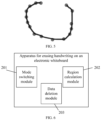
FIG. 1 is an effect diagram of an erasing region of a method for erasing handwriting on an electronic whiteboard in the prior art; -
FIG. 2 is a flowchart of steps of a method for erasing handwriting on an electronic whiteboard according to an embodiment of the present disclosure; -
FIG. 3 is an effect diagram of an erasing region of a method for erasing handwriting on an electronic whiteboard according to an embodiment of the present disclosure; -
FIG. 4 is a flowchart of steps of a method for erasing handwriting on an electronic whiteboard using a convex hull algorithm according to an embodiment of the present disclosure; -
FIG. 5 is an effect diagram of dividing handwriting into a plurality of line segments in a method for erasing handwriting on an electronic whiteboard according to an embodiment of the present disclosure; and -
FIG. 6 is a module diagram of an apparatus for erasing handwriting on an electronic whiteboard according to an embodiment of the present disclosure. - The following clearly and completely describes the technical solutions in the embodiments of the present disclosure with reference to accompanying drawings in the embodiments of the present disclosure. Apparently, the described embodiments are merely a part rather than all of the embodiments of the present disclosure. All other embodiments obtained by a person of ordinary skill in the art based on the embodiments of the present disclosure without creative efforts shall fall within the protection scope of the present disclosure.
-
FIG. 2 shows an exemplary embodiment of the present disclosure. A method for erasing handwriting on an electronic whiteboard includes the following steps: - S101: obtain first contact points; and enable an erasing mode when a quantity of the first contact points is greater than a preset value.
- S102: obtain second contact points in the erasing mode, and calculate an erasing region according to the first contact points and the second contact points.
- S103: delete handwriting data in the erasing region.
- In this embodiment, the first contact points are contact points that are detected by a touch screen of the electronic whiteboard and initially inputted by a user. When the user touches the touch screen of the electronic whiteboard with N fingers simultaneously, a system uploads N points, and each point has coordinates (x, y) on the screen. In this embodiment, the preset value is set to 3, and when N>3, the erasing mode is entered. After the second contact points are obtained in the erasing mode, the erasing mode is exited. The second contact points are contact points that are detected by the screen and inputted by the user when exiting erasing mode. That is, when the user raises the hand, all the contact points disappear, and at the same time, the erasing mode is exited. Last contact points before the user raises the hand are the second contact points.
- In a possible implementation of this embodiment, when detecting no contact point, the touch screen of the electronic whiteboard exits the erasing mode while recognizing last detected contact points as the second contact points.
- In the method for erasing handwriting on an electronic whiteboard provided in the present disclosure, when a user applies the method to a device, the erasing mode can be enabled provided that the user inputs, on a touch screen, first contact points of which the quantity is greater than a preset value; alternatively, the erasing mode can be exited provided that the user does not touch the touch screen so that there is no contact point on the touch screen. Compared with an existing erasing method in which contact points are inputted using a special gesture such as four fingers held together or a clenched fist, the method for erasing handwriting on an electronic whiteboard according to the present disclosure has higher recognition accuracy for contact points, which helps enter the erasing mode rapidly and improves use efficiency of the electronic whiteboard.
- In the method for erasing handwriting on an electronic whiteboard according to the present disclosure, an erasing region is calculated according to first contact points and second contact points. Because positions and quantities of the first contact points and the second contact points on the touch screen can be customized by the user, the user can set the size of the erasing region as required. Compared with the prior art, the present disclosure is more flexible and practical. In addition, once being set, the erasing region is relatively stable, thus avoiding incomplete deletion of partial handwriting due to variations of the erasing region.
- Preferably, the calculating an erasing region according to the first contact points and the second contact points specifically includes:
- generating contact point variables, where the contact point variables include quantity information and position information of all contact points in the erasing mode; and
- calculating a convex polygonal erasing region according to the contact point variables by using a convex hull algorithm.
- It may be appreciated that, the convex hull is a concept in computational geometry (graphics). In a real-number vector space V, for a given set X, an intersection S of all convex sets including X is referred to as a convex hull. The convex hull of X may be constructed by using convex combinations of all points (X1,...Xn) in X. In a two-dimensional Euclidean space, the convex hull may be imagined as a rubber ring exactly encircling all the points.
- In this embodiment, a variable mlastupload is defined to store data of the contact points uploaded by the touch screen. mlastupload is used for storing, upon recognition that a deletion mode has been entered, data uploaded by the touch screen last time. The variable is meaningful only in the deletion mode. After it is determined that the deletion mode has been entered, data of the first contact points for determining the entry into the deletion mode is uploaded for the first time after the entry into the deletion mode. When all the contact points disappear, it means that the deletion mode is exited. Therefore, the variable is initialized automatically.
- Referring to
FIG. 3 , mlastupload and the N points uploaded this time can form a point set including M points. Next, data stored in mlastupload is replaced with data of the points uploaded this time. For the set of the M points that are uploaded successively, a convex hull may be calculated by using the convex hull algorithm, to obtain a convex polygon including all the points. The convex hull algorithm may be implemented using an existing algorithm, for example, a Graham scan method or a Jarvis march method. -
FIG. 4 shows an exemplary embodiment of the present disclosure. A method for erasing handwriting on an electronic whiteboard includes the following steps: - obtaining first contact points; and enabling an erasing mode when a quantity of the first contact points is greater than a preset value;
- obtaining second contact points in the erasing mode;
- generating contact point variables, and storing data of the first contact points and the second contact points into the contact point variables, where the contact point variables include quantity information and position information of contact points in the erasing mode;
- calculating a convex polygonal erasing region according to the contact point variables by using a convex hull algorithm;
- obtaining position information from handwriting data and dividing handwriting into a plurality of geometric figures, where the geometric figures include, but are not limited to, a point, a line segment, a curve, a circle, and the like; and
- determining whether the geometric figure intersects with the convex polygon; and deleting handwriting data of the geometric figure when the geometric figure intersects with the convex polygon.
- Referring to
FIG. 5 , it may be appreciated that in the electronic whiteboard, any line of handwriting may be considered as formed by a line connecting multiple points. Therefore, a line of handwriting in a computer may be represented by all points forming the line of handwriting. - In this embodiment, a convex polygon formed by multiple vertexes may be obtained through the convex hull algorithm. If the handwriting intersects with the convex polygon, the handwriting needs to be deleted. Determining whether the handwriting intersects with the convex polygon may be equivalent to determining whether each line segment forming the handwriting intersects with the convex polygon; if any line segment intersects with the polygon, the handwriting intersects with the convex polygon; otherwise, the handwriting does not intersect with the convex polygon.
- Preferably, the determining whether the geometric figure intersects with the convex polygon includes:
upon detecting that at least one endpoint of a line segment forming the handwriting is within the convex polygon, determining that the line segment intersects with the convex polygon. - In this embodiment, it is assumed that two points forming the line segment are (X1, Y1), and (X2, Y2), and the convex polygon is formed by N vertexes. It is determined whether either of the two points forming the line segment is within the convex polygon; if yes, the line segment intersects with the convex polygon. An algorithm for determining whether a point is within a convex polygon may be implemented by C programming language as follows:


- Preferably, the determining whether the geometric figure intersects with the convex polygon includes:
upon detecting that a line segment forming the handwriting intersects with any edge of the convex polygonal, determining that the line segment intersects with the convex polygon. - In this embodiment, if neither of the two points is within the convex polygon, to determine whether the line segment intersects with the convex polygon is to determine whether the line segment (X1, Y1) (X2, Y2) intersects with any edge (Xn-1, Yn-1) (Xn, Yn) of the convex polygon; and if yes, the line segment intersects with the convex polygon. An algorithm for determining whether two line segments intersect may be implemented as follows:


-
FIG. 6 shows an exemplary embodiment of the present disclosure. An apparatus for erasing handwriting on an electronic whiteboard includes: - a
mode switching module 201, configured to obtain first contact points; and enable an erasing mode when a quantity of the first contact points is greater than a preset value; - a
region calculation module 202, configured to obtain second contact points in the erasing mode, and calculate an erasing region according to the first contact points and the second contact points; and - a
data deletion module 203, configured to delete handwriting data in the erasing region. - Preferably, the region calculation module further includes:
- a variable generating module, configured to generate contact point variables, where the contact point variables include quantity information and position information of contact points in the erasing mode; and
- a convex hull calculation module, configured to calculate a convex polygonal erasing region according to the contact point variables by using a convex hull algorithm.
- Preferably, the data deletion module further includes:
- a data parsing module, configured to divide handwriting into a plurality of geometric figures; and
- an intersection determining module, configured to determine whether the geometric figure intersects with the convex polygon; and delete handwriting data of the geometric figure when the geometric figure intersects with the convex polygon.
- Preferably, the intersection determining module is further configured to: upon detecting that at least one endpoint of a line segment forming the handwriting is within the convex polygon, determine that the line segment intersects with the convex polygon.
- Preferably, the intersection determining module is further configured to: upon detecting that a line segment forming the handwriting intersects with any edge of the convex polygon, determine that the line segment intersects with the convex polygon.
- Preferably, the mode switching module is further configured to exit the erasing mode when a touch screen of the electronic whiteboard detects no contact point.
- In the present disclosure, the mode switching module and the region calculation module each may include one or more sensors and processors, or may be an integrated chip. The data deletion module may be one or more processors. If necessary, the data deletion module may further include a memory, a related interface, and a system transmission bus. The variable generating module and the convex hull calculation module may be independent processors or share a processor. The data parsing module and the intersection determining module may be independent processors or share a processor. The processor executes related code of a program to implement corresponding functions.
- An exemplary embodiment of the present disclosure provides a device for erasing handwriting on an electronic whiteboard, including a processor, a memory, and a computer program that is stored in the memory and configured to be executed by the processor. When executing the computer program, the processor implements the foregoing method for erasing handwriting on an electronic whiteboard.
- The descriptions above are preferred examples of the present disclosure, and it should be noted that for those of ordinary skill in the art, various improvements and modifications can be made without departing from the principles of the present disclosure.
- Those of ordinary skill in the art can understand that all or some of processes for implementing the methods of the foregoing embodiments can be completed by instructing relevant hardware through a computer program. The program may be stored in a computer readable storage medium. When the program is executed, processes of the embodiments of the foregoing methods may be included. The storage medium may be a magnetic disk, an optical disc, a read-only memory (ROM), a random access memory (RAM), or the like.
Claims (3)
- A method for erasing handwriting on an electronic whiteboard, comprising:obtaining first contact points; and enabling an erasing mode when a quantity of the first contact points is greater than a preset value;obtaining second contact points in the erasing mode, and calculating an erasing region according to the first contact points and the second contact points; anddeleting handwriting data in the erasing region;wherein the calculating an erasing region according to the first contact points and the second contact points specifically comprises:generating contact point variables, wherein the contact point variables comprise quantity information and position information of contact points in the erasing mode; andcalculating a convex polygonal erasing region according to the contact point variables by using a convex hull algorithm; whereinthe deleting handwriting data in the erasing region specifically comprises:dividing handwriting into a plurality of geometric figures; anddetermining whether the geometric figure intersects with the convex polygon; and deleting handwriting data of the geometric figure when the geometric figure intersects with the convex polygon; andthe determining whether the geometric figure intersects with the convex polygon comprises:
upon detecting that a line segment forming the handwriting intersects with any edge of the convex polygon, determining that the line segment intersects with the convex polygon. - The method for erasing handwriting on an electronic whiteboard according to the previous claim, wherein the obtaining first contact points, and enabling an erasing mode when a quantity of the first contact points is greater than a preset value further comprises:
exiting the erasing mode when a touch screen of the electronic whiteboard detects no first contact point. - An apparatus for erasing handwriting on an electronic whiteboard, comprising:a mode switching module (201), configured to obtain first contact points; and enable an erasing mode when a quantity of the first contact points is greater than a preset value;a region calculation module (202), configured to obtain second contact points in the erasing mode, and calculate an erasing region according to the first contact points and the second contact points; anda data deletion module (203), configured to delete handwriting data in the erasing region;wherein the region calculation module further comprises:a variable generating module, configured to generate contact point variables, where the contact point variables comprise quantity information and position information of contact points in the erasing mode; anda convex hull calculation module, configured to calculate a convex polygonal erasing region according to the contact point variables by using a convex hull algorithm; whereinthe data deletion module further comprises:a data parsing module, configured to divide handwriting into a plurality of geometric figures; andan intersection determining module, configured to determine whether the geometric figure intersects with the convex polygon; and delete handwriting data of the geometric figure when the geometric figure intersects with the convex polygon; andthe intersection determining module is further configured to:
upon detecting that a line segment forming the handwriting intersects with any edge of the convex polygon, determine that the line segment intersects with the convex polygon.
Applications Claiming Priority (1)
| Application Number | Priority Date | Filing Date | Title |
|---|---|---|---|
| CN201910781500.6A CN110633042A (en) | 2019-08-23 | 2019-08-23 | Handwriting erasing method, device and equipment for electronic whiteboard |
Publications (2)
| Publication Number | Publication Date |
|---|---|
| EP3783474A1 EP3783474A1 (en) | 2021-02-24 |
| EP3783474B1 true EP3783474B1 (en) | 2025-03-26 |
Family
ID=68970583
Family Applications (1)
| Application Number | Title | Priority Date | Filing Date |
|---|---|---|---|
| EP20191493.4A Active EP3783474B1 (en) | 2019-08-23 | 2020-08-18 | Method, apparatus and device for erasing handwriting on electronic whiteboard |
Country Status (3)
| Country | Link |
|---|---|
| US (1) | US11474627B2 (en) |
| EP (1) | EP3783474B1 (en) |
| CN (1) | CN110633042A (en) |
Families Citing this family (6)
| Publication number | Priority date | Publication date | Assignee | Title |
|---|---|---|---|---|
| CN111524211B (en) * | 2020-04-17 | 2024-01-23 | 杭州海康威视数字技术股份有限公司 | Handwriting erasing methods, devices and equipment |
| CN115407889A (en) * | 2021-05-27 | 2022-11-29 | 广州视源电子科技股份有限公司 | Method and device for erasing handwriting and electronic whiteboard |
| CN114003145B (en) * | 2021-11-01 | 2024-01-09 | 深圳市康冠商用科技有限公司 | Touch screen writing and erasing method and device, electronic whiteboard and storage medium |
| CN114296564A (en) * | 2021-12-13 | 2022-04-08 | 广州朗国电子科技股份有限公司 | Writing deleting method and system for electronic whiteboard, electronic whiteboard and storage medium |
| CN115033169B (en) * | 2022-05-20 | 2024-09-13 | 广州朗国电子科技股份有限公司 | A writing and erasing method, device and storage medium for electronic whiteboard touch screen |
| CN115494982B (en) * | 2022-10-27 | 2025-04-15 | 长沙朗源电子科技有限公司 | Method, device and medium for smoothing sliding path of electronic eraser |
Citations (1)
| Publication number | Priority date | Publication date | Assignee | Title |
|---|---|---|---|---|
| US20180046345A1 (en) * | 2016-01-05 | 2018-02-15 | Quirklogic, Inc. | Method and system for erasing an enclosed area on an interactive display |
Family Cites Families (15)
| Publication number | Priority date | Publication date | Assignee | Title |
|---|---|---|---|---|
| US7427984B2 (en) * | 2003-10-26 | 2008-09-23 | Microsoft Corporation | Point erasing |
| US7936341B2 (en) * | 2007-05-30 | 2011-05-03 | Microsoft Corporation | Recognizing selection regions from multiple simultaneous inputs |
| CN101477694B (en) * | 2008-12-02 | 2011-07-27 | 广东威创视讯科技股份有限公司 | Handwriting erasing method and apparatus |
| US20100216508A1 (en) * | 2009-02-23 | 2010-08-26 | Augusta Technology, Inc. | Systems and Methods for Driving an External Display Device Using a Mobile Phone Device |
| CN101609560B (en) * | 2009-07-16 | 2011-09-14 | 广东威创视讯科技股份有限公司 | Method for erasing handwriting |
| KR101718893B1 (en) * | 2010-12-24 | 2017-04-05 | 삼성전자주식회사 | Method and apparatus for providing touch interface |
| US9436906B2 (en) * | 2014-05-09 | 2016-09-06 | Sap Se | Discovering user-behavior from trajectory-as-polygon (TaP) |
| US20160048318A1 (en) * | 2014-08-15 | 2016-02-18 | Microsoft Technology Licensing, Llc | Detecting selection of digital ink |
| US10198177B2 (en) * | 2016-07-14 | 2019-02-05 | Ricoh Company, Ltd. | Image processing apparatus, image processing method, and recording medium |
| CN106325737B (en) * | 2016-08-03 | 2021-06-18 | 海信视像科技股份有限公司 | Method and device for erasing writing path |
| KR102717180B1 (en) * | 2017-02-24 | 2024-10-15 | 삼성전자주식회사 | Electronic apparatus and control method thereof |
| US10303302B2 (en) * | 2017-06-06 | 2019-05-28 | Polycom, Inc. | Rejecting extraneous touch inputs in an electronic presentation system |
| CN107193424A (en) * | 2017-06-27 | 2017-09-22 | 北京北纬天辰科技有限公司 | A kind of Intelligent electronic-type method for deleting and device |
| CN108491141A (en) * | 2018-03-07 | 2018-09-04 | 青岛海信电器股份有限公司 | A kind of generation method, device and the terminal device of electronic whiteboard choice box |
| CN108733296B (en) * | 2018-04-28 | 2021-07-09 | 广州视源电子科技股份有限公司 | Method, device and device for erasing handwriting |
-
2019
- 2019-08-23 CN CN201910781500.6A patent/CN110633042A/en active Pending
-
2020
- 2020-08-18 US US16/995,811 patent/US11474627B2/en active Active
- 2020-08-18 EP EP20191493.4A patent/EP3783474B1/en active Active
Patent Citations (1)
| Publication number | Priority date | Publication date | Assignee | Title |
|---|---|---|---|---|
| US20180046345A1 (en) * | 2016-01-05 | 2018-02-15 | Quirklogic, Inc. | Method and system for erasing an enclosed area on an interactive display |
Also Published As
| Publication number | Publication date |
|---|---|
| US20210055803A1 (en) | 2021-02-25 |
| US11474627B2 (en) | 2022-10-18 |
| EP3783474A1 (en) | 2021-02-24 |
| CN110633042A (en) | 2019-12-31 |
Similar Documents
| Publication | Publication Date | Title |
|---|---|---|
| US11474627B2 (en) | Method, apparatus and device for erasing handwriting on electronic whiteboard | |
| US9207858B2 (en) | Method and apparatus for drawing and erasing calligraphic ink objects on a display surface | |
| US9417701B2 (en) | Flick gesture | |
| US10996843B2 (en) | System and method for selecting graphical objects | |
| US8542207B1 (en) | Pencil eraser gesture and gesture recognition method for touch-enabled user interfaces | |
| CN106575291A (en) | Detecting selection of digital ink | |
| CN105830011A (en) | User interface for overlapping handwritten text input | |
| JP2008250374A (en) | Handwriting determination apparatus, method, and program | |
| WO2014127697A1 (en) | Method and terminal for triggering application programs and application program functions | |
| JP6807840B2 (en) | Systems and methods for recognizing geometry | |
| US11693556B2 (en) | Creating tables using gestures | |
| US10146424B2 (en) | Display of objects on a touch screen and their selection | |
| US11429259B2 (en) | System and method for selecting and editing handwriting input elements | |
| CN101601050A (en) | Word is carried out the system and method for preview and selection | |
| CN107193424A (en) | A kind of Intelligent electronic-type method for deleting and device | |
| CN107679219A (en) | Matching method and device, interactive intelligent panel and storage medium | |
| JP3139902B2 (en) | Figure recognition method and apparatus | |
| EP4073624B1 (en) | Systems and methods for grid-aligned inking | |
| WO2024115177A1 (en) | Selecting handwritten objects | |
| CN118244964A (en) | A touch editing erasing method and device |
Legal Events
| Date | Code | Title | Description |
|---|---|---|---|
| PUAI | Public reference made under article 153(3) epc to a published international application that has entered the european phase |
Free format text: ORIGINAL CODE: 0009012 |
|
| STAA | Information on the status of an ep patent application or granted ep patent |
Free format text: STATUS: THE APPLICATION HAS BEEN PUBLISHED |
|
| AK | Designated contracting states |
Kind code of ref document: A1 Designated state(s): AL AT BE BG CH CY CZ DE DK EE ES FI FR GB GR HR HU IE IS IT LI LT LU LV MC MK MT NL NO PL PT RO RS SE SI SK SM TR |
|
| AX | Request for extension of the european patent |
Extension state: BA ME |
|
| STAA | Information on the status of an ep patent application or granted ep patent |
Free format text: STATUS: REQUEST FOR EXAMINATION WAS MADE |
|
| 17P | Request for examination filed |
Effective date: 20210824 |
|
| RBV | Designated contracting states (corrected) |
Designated state(s): AL AT BE BG CH CY CZ DE DK EE ES FI FR GB GR HR HU IE IS IT LI LT LU LV MC MK MT NL NO PL PT RO RS SE SI SK SM TR |
|
| STAA | Information on the status of an ep patent application or granted ep patent |
Free format text: STATUS: EXAMINATION IS IN PROGRESS |
|
| 17Q | First examination report despatched |
Effective date: 20230222 |
|
| REG | Reference to a national code |
Ref country code: DE Ref legal event code: R079 Free format text: PREVIOUS MAIN CLASS: G06F0003048400 Ipc: G06F0003048830 Ref document number: 602020048224 Country of ref document: DE |
|
| GRAP | Despatch of communication of intention to grant a patent |
Free format text: ORIGINAL CODE: EPIDOSNIGR1 |
|
| STAA | Information on the status of an ep patent application or granted ep patent |
Free format text: STATUS: GRANT OF PATENT IS INTENDED |
|
| RIC1 | Information provided on ipc code assigned before grant |
Ipc: G06F 3/0488 20130101ALI20241007BHEP Ipc: G06F 3/0484 20130101ALI20241007BHEP Ipc: G06F 3/04845 20220101ALI20241007BHEP Ipc: G06F 3/04883 20220101AFI20241007BHEP |
|
| INTG | Intention to grant announced |
Effective date: 20241017 |
|
| GRAS | Grant fee paid |
Free format text: ORIGINAL CODE: EPIDOSNIGR3 |
|
| GRAA | (expected) grant |
Free format text: ORIGINAL CODE: 0009210 |
|
| STAA | Information on the status of an ep patent application or granted ep patent |
Free format text: STATUS: THE PATENT HAS BEEN GRANTED |
|
| AK | Designated contracting states |
Kind code of ref document: B1 Designated state(s): AL AT BE BG CH CY CZ DE DK EE ES FI FR GB GR HR HU IE IS IT LI LT LU LV MC MK MT NL NO PL PT RO RS SE SI SK SM TR |
|
| REG | Reference to a national code |
Ref country code: GB Ref legal event code: FG4D |
|
| REG | Reference to a national code |
Ref country code: CH Ref legal event code: EP |
|
| REG | Reference to a national code |
Ref country code: DE Ref legal event code: R096 Ref document number: 602020048224 Country of ref document: DE |
|
| REG | Reference to a national code |
Ref country code: IE Ref legal event code: FG4D |
|
| PG25 | Lapsed in a contracting state [announced via postgrant information from national office to epo] |
Ref country code: RS Free format text: LAPSE BECAUSE OF FAILURE TO SUBMIT A TRANSLATION OF THE DESCRIPTION OR TO PAY THE FEE WITHIN THE PRESCRIBED TIME-LIMIT Effective date: 20250626 |
|
| PG25 | Lapsed in a contracting state [announced via postgrant information from national office to epo] |
Ref country code: FI Free format text: LAPSE BECAUSE OF FAILURE TO SUBMIT A TRANSLATION OF THE DESCRIPTION OR TO PAY THE FEE WITHIN THE PRESCRIBED TIME-LIMIT Effective date: 20250326 |
|
| REG | Reference to a national code |
Ref country code: LT Ref legal event code: MG9D |
|
| PG25 | Lapsed in a contracting state [announced via postgrant information from national office to epo] |
Ref country code: NO Free format text: LAPSE BECAUSE OF FAILURE TO SUBMIT A TRANSLATION OF THE DESCRIPTION OR TO PAY THE FEE WITHIN THE PRESCRIBED TIME-LIMIT Effective date: 20250626 |
|
| PG25 | Lapsed in a contracting state [announced via postgrant information from national office to epo] |
Ref country code: HR Free format text: LAPSE BECAUSE OF FAILURE TO SUBMIT A TRANSLATION OF THE DESCRIPTION OR TO PAY THE FEE WITHIN THE PRESCRIBED TIME-LIMIT Effective date: 20250326 |
|
| PG25 | Lapsed in a contracting state [announced via postgrant information from national office to epo] |
Ref country code: LV Free format text: LAPSE BECAUSE OF FAILURE TO SUBMIT A TRANSLATION OF THE DESCRIPTION OR TO PAY THE FEE WITHIN THE PRESCRIBED TIME-LIMIT Effective date: 20250326 |
|
| PG25 | Lapsed in a contracting state [announced via postgrant information from national office to epo] |
Ref country code: GR Free format text: LAPSE BECAUSE OF FAILURE TO SUBMIT A TRANSLATION OF THE DESCRIPTION OR TO PAY THE FEE WITHIN THE PRESCRIBED TIME-LIMIT Effective date: 20250627 Ref country code: BG Free format text: LAPSE BECAUSE OF FAILURE TO SUBMIT A TRANSLATION OF THE DESCRIPTION OR TO PAY THE FEE WITHIN THE PRESCRIBED TIME-LIMIT Effective date: 20250326 |
|
| REG | Reference to a national code |
Ref country code: NL Ref legal event code: MP Effective date: 20250326 |
|
| PG25 | Lapsed in a contracting state [announced via postgrant information from national office to epo] |
Ref country code: NL Free format text: LAPSE BECAUSE OF FAILURE TO SUBMIT A TRANSLATION OF THE DESCRIPTION OR TO PAY THE FEE WITHIN THE PRESCRIBED TIME-LIMIT Effective date: 20250326 |
|
| PG25 | Lapsed in a contracting state [announced via postgrant information from national office to epo] |
Ref country code: SE Free format text: LAPSE BECAUSE OF FAILURE TO SUBMIT A TRANSLATION OF THE DESCRIPTION OR TO PAY THE FEE WITHIN THE PRESCRIBED TIME-LIMIT Effective date: 20250326 |
|
| REG | Reference to a national code |
Ref country code: AT Ref legal event code: MK05 Ref document number: 1779573 Country of ref document: AT Kind code of ref document: T Effective date: 20250326 |
|
| PG25 | Lapsed in a contracting state [announced via postgrant information from national office to epo] |
Ref country code: SM Free format text: LAPSE BECAUSE OF FAILURE TO SUBMIT A TRANSLATION OF THE DESCRIPTION OR TO PAY THE FEE WITHIN THE PRESCRIBED TIME-LIMIT Effective date: 20250326 |
|
| PG25 | Lapsed in a contracting state [announced via postgrant information from national office to epo] |
Ref country code: ES Free format text: LAPSE BECAUSE OF FAILURE TO SUBMIT A TRANSLATION OF THE DESCRIPTION OR TO PAY THE FEE WITHIN THE PRESCRIBED TIME-LIMIT Effective date: 20250326 Ref country code: PT Free format text: LAPSE BECAUSE OF FAILURE TO SUBMIT A TRANSLATION OF THE DESCRIPTION OR TO PAY THE FEE WITHIN THE PRESCRIBED TIME-LIMIT Effective date: 20250728 |
|
| PGFP | Annual fee paid to national office [announced via postgrant information from national office to epo] |
Ref country code: DE Payment date: 20250821 Year of fee payment: 6 |
|
| PG25 | Lapsed in a contracting state [announced via postgrant information from national office to epo] |
Ref country code: PL Free format text: LAPSE BECAUSE OF FAILURE TO SUBMIT A TRANSLATION OF THE DESCRIPTION OR TO PAY THE FEE WITHIN THE PRESCRIBED TIME-LIMIT Effective date: 20250326 Ref country code: IT Free format text: LAPSE BECAUSE OF FAILURE TO SUBMIT A TRANSLATION OF THE DESCRIPTION OR TO PAY THE FEE WITHIN THE PRESCRIBED TIME-LIMIT Effective date: 20250326 |
|
| PGFP | Annual fee paid to national office [announced via postgrant information from national office to epo] |
Ref country code: GB Payment date: 20250729 Year of fee payment: 6 |
|
| PG25 | Lapsed in a contracting state [announced via postgrant information from national office to epo] |
Ref country code: AT Free format text: LAPSE BECAUSE OF FAILURE TO SUBMIT A TRANSLATION OF THE DESCRIPTION OR TO PAY THE FEE WITHIN THE PRESCRIBED TIME-LIMIT Effective date: 20250326 |
|
| PG25 | Lapsed in a contracting state [announced via postgrant information from national office to epo] |
Ref country code: EE Free format text: LAPSE BECAUSE OF FAILURE TO SUBMIT A TRANSLATION OF THE DESCRIPTION OR TO PAY THE FEE WITHIN THE PRESCRIBED TIME-LIMIT Effective date: 20250326 |
|
| PG25 | Lapsed in a contracting state [announced via postgrant information from national office to epo] |
Ref country code: RO Free format text: LAPSE BECAUSE OF FAILURE TO SUBMIT A TRANSLATION OF THE DESCRIPTION OR TO PAY THE FEE WITHIN THE PRESCRIBED TIME-LIMIT Effective date: 20250326 |
|
| PG25 | Lapsed in a contracting state [announced via postgrant information from national office to epo] |
Ref country code: SK Free format text: LAPSE BECAUSE OF FAILURE TO SUBMIT A TRANSLATION OF THE DESCRIPTION OR TO PAY THE FEE WITHIN THE PRESCRIBED TIME-LIMIT Effective date: 20250326 |
|
| PG25 | Lapsed in a contracting state [announced via postgrant information from national office to epo] |
Ref country code: IS Free format text: LAPSE BECAUSE OF FAILURE TO SUBMIT A TRANSLATION OF THE DESCRIPTION OR TO PAY THE FEE WITHIN THE PRESCRIBED TIME-LIMIT Effective date: 20250726 |
|
| REG | Reference to a national code |
Ref country code: DE Ref legal event code: R097 Ref document number: 602020048224 Country of ref document: DE |
|
| PG25 | Lapsed in a contracting state [announced via postgrant information from national office to epo] |
Ref country code: DK Free format text: LAPSE BECAUSE OF FAILURE TO SUBMIT A TRANSLATION OF THE DESCRIPTION OR TO PAY THE FEE WITHIN THE PRESCRIBED TIME-LIMIT Effective date: 20250326 |
|
| PG25 | Lapsed in a contracting state [announced via postgrant information from national office to epo] |
Ref country code: CZ Free format text: LAPSE BECAUSE OF FAILURE TO SUBMIT A TRANSLATION OF THE DESCRIPTION OR TO PAY THE FEE WITHIN THE PRESCRIBED TIME-LIMIT Effective date: 20250326 |
|
| PLBE | No opposition filed within time limit |
Free format text: ORIGINAL CODE: 0009261 |
|
| STAA | Information on the status of an ep patent application or granted ep patent |
Free format text: STATUS: NO OPPOSITION FILED WITHIN TIME LIMIT |
|
| REG | Reference to a national code |
Ref country code: CH Ref legal event code: L10 Free format text: ST27 STATUS EVENT CODE: U-0-0-L10-L00 (AS PROVIDED BY THE NATIONAL OFFICE) Effective date: 20260211 |
|
| 26N | No opposition filed |
Effective date: 20260105 |
|
| REG | Reference to a national code |
Ref country code: CH Ref legal event code: H13 Free format text: ST27 STATUS EVENT CODE: U-0-0-H10-H13 (AS PROVIDED BY THE NATIONAL OFFICE) Effective date: 20260324 |
|
| PG25 | Lapsed in a contracting state [announced via postgrant information from national office to epo] |
Ref country code: MC Free format text: LAPSE BECAUSE OF FAILURE TO SUBMIT A TRANSLATION OF THE DESCRIPTION OR TO PAY THE FEE WITHIN THE PRESCRIBED TIME-LIMIT Effective date: 20250326 |
|
| PG25 | Lapsed in a contracting state [announced via postgrant information from national office to epo] |
Ref country code: LU Free format text: LAPSE BECAUSE OF NON-PAYMENT OF DUE FEES Effective date: 20250818 |
|
| PG25 | Lapsed in a contracting state [announced via postgrant information from national office to epo] |
Ref country code: CH Free format text: LAPSE BECAUSE OF NON-PAYMENT OF DUE FEES Effective date: 20250831 |