EP3783082A1 - Composition containing refrigerant comprising r32, r125, r143a, r1234yf and r134a, and refrigeration method, refrigerator operating method and refrigerator using said composition - Google Patents
Composition containing refrigerant comprising r32, r125, r143a, r1234yf and r134a, and refrigeration method, refrigerator operating method and refrigerator using said composition Download PDFInfo
- Publication number
- EP3783082A1 EP3783082A1 EP19789478.5A EP19789478A EP3783082A1 EP 3783082 A1 EP3783082 A1 EP 3783082A1 EP 19789478 A EP19789478 A EP 19789478A EP 3783082 A1 EP3783082 A1 EP 3783082A1
- Authority
- EP
- European Patent Office
- Prior art keywords
- mass
- refrigerant
- concentration
- r1234yf
- point
- Prior art date
- Legal status (The legal status is an assumption and is not a legal conclusion. Google has not performed a legal analysis and makes no representation as to the accuracy of the status listed.)
- Pending
Links
Images




Classifications
-
- C—CHEMISTRY; METALLURGY
- C09—DYES; PAINTS; POLISHES; NATURAL RESINS; ADHESIVES; COMPOSITIONS NOT OTHERWISE PROVIDED FOR; APPLICATIONS OF MATERIALS NOT OTHERWISE PROVIDED FOR
- C09K—MATERIALS FOR MISCELLANEOUS APPLICATIONS, NOT PROVIDED FOR ELSEWHERE
- C09K5/00—Heat-transfer, heat-exchange or heat-storage materials, e.g. refrigerants; Materials for the production of heat or cold by chemical reactions other than by combustion
- C09K5/02—Materials undergoing a change of physical state when used
- C09K5/04—Materials undergoing a change of physical state when used the change of state being from liquid to vapour or vice versa
- C09K5/041—Materials undergoing a change of physical state when used the change of state being from liquid to vapour or vice versa for compression-type refrigeration systems
- C09K5/044—Materials undergoing a change of physical state when used the change of state being from liquid to vapour or vice versa for compression-type refrigeration systems comprising halogenated compounds
- C09K5/045—Materials undergoing a change of physical state when used the change of state being from liquid to vapour or vice versa for compression-type refrigeration systems comprising halogenated compounds containing only fluorine as halogen
-
- C—CHEMISTRY; METALLURGY
- C09—DYES; PAINTS; POLISHES; NATURAL RESINS; ADHESIVES; COMPOSITIONS NOT OTHERWISE PROVIDED FOR; APPLICATIONS OF MATERIALS NOT OTHERWISE PROVIDED FOR
- C09K—MATERIALS FOR MISCELLANEOUS APPLICATIONS, NOT PROVIDED FOR ELSEWHERE
- C09K2205/00—Aspects relating to compounds used in compression type refrigeration systems
- C09K2205/10—Components
- C09K2205/12—Hydrocarbons
- C09K2205/122—Halogenated hydrocarbons
-
- C—CHEMISTRY; METALLURGY
- C09—DYES; PAINTS; POLISHES; NATURAL RESINS; ADHESIVES; COMPOSITIONS NOT OTHERWISE PROVIDED FOR; APPLICATIONS OF MATERIALS NOT OTHERWISE PROVIDED FOR
- C09K—MATERIALS FOR MISCELLANEOUS APPLICATIONS, NOT PROVIDED FOR ELSEWHERE
- C09K2205/00—Aspects relating to compounds used in compression type refrigeration systems
- C09K2205/10—Components
- C09K2205/12—Hydrocarbons
- C09K2205/126—Unsaturated fluorinated hydrocarbons
-
- C—CHEMISTRY; METALLURGY
- C09—DYES; PAINTS; POLISHES; NATURAL RESINS; ADHESIVES; COMPOSITIONS NOT OTHERWISE PROVIDED FOR; APPLICATIONS OF MATERIALS NOT OTHERWISE PROVIDED FOR
- C09K—MATERIALS FOR MISCELLANEOUS APPLICATIONS, NOT PROVIDED FOR ELSEWHERE
- C09K2205/00—Aspects relating to compounds used in compression type refrigeration systems
- C09K2205/22—All components of a mixture being fluoro compounds
-
- C—CHEMISTRY; METALLURGY
- C09—DYES; PAINTS; POLISHES; NATURAL RESINS; ADHESIVES; COMPOSITIONS NOT OTHERWISE PROVIDED FOR; APPLICATIONS OF MATERIALS NOT OTHERWISE PROVIDED FOR
- C09K—MATERIALS FOR MISCELLANEOUS APPLICATIONS, NOT PROVIDED FOR ELSEWHERE
- C09K2205/00—Aspects relating to compounds used in compression type refrigeration systems
- C09K2205/40—Replacement mixtures
-
- C—CHEMISTRY; METALLURGY
- C10—PETROLEUM, GAS OR COKE INDUSTRIES; TECHNICAL GASES CONTAINING CARBON MONOXIDE; FUELS; LUBRICANTS; PEAT
- C10M—LUBRICATING COMPOSITIONS; USE OF CHEMICAL SUBSTANCES EITHER ALONE OR AS LUBRICATING INGREDIENTS IN A LUBRICATING COMPOSITION
- C10M2207/00—Organic non-macromolecular hydrocarbon compounds containing hydrogen, carbon and oxygen as ingredients in lubricant compositions
- C10M2207/28—Esters
- C10M2207/283—Esters of polyhydroxy compounds
- C10M2207/2835—Esters of polyhydroxy compounds used as base material
-
- C—CHEMISTRY; METALLURGY
- C10—PETROLEUM, GAS OR COKE INDUSTRIES; TECHNICAL GASES CONTAINING CARBON MONOXIDE; FUELS; LUBRICANTS; PEAT
- C10M—LUBRICATING COMPOSITIONS; USE OF CHEMICAL SUBSTANCES EITHER ALONE OR AS LUBRICATING INGREDIENTS IN A LUBRICATING COMPOSITION
- C10M2209/00—Organic macromolecular compounds containing oxygen as ingredients in lubricant compositions
- C10M2209/02—Macromolecular compounds obtained by reactions only involving carbon-to-carbon unsaturated bonds
- C10M2209/04—Macromolecular compounds obtained by reactions only involving carbon-to-carbon unsaturated bonds containing monomers having an unsaturated radical bound to an alcohol or ester thereof; bound to an aldehyde, ketonic, ether, ketal or acetal radical
- C10M2209/043—Macromolecular compounds obtained by reactions only involving carbon-to-carbon unsaturated bonds containing monomers having an unsaturated radical bound to an alcohol or ester thereof; bound to an aldehyde, ketonic, ether, ketal or acetal radical used as base material
-
- C—CHEMISTRY; METALLURGY
- C10—PETROLEUM, GAS OR COKE INDUSTRIES; TECHNICAL GASES CONTAINING CARBON MONOXIDE; FUELS; LUBRICANTS; PEAT
- C10M—LUBRICATING COMPOSITIONS; USE OF CHEMICAL SUBSTANCES EITHER ALONE OR AS LUBRICATING INGREDIENTS IN A LUBRICATING COMPOSITION
- C10M2209/00—Organic macromolecular compounds containing oxygen as ingredients in lubricant compositions
- C10M2209/10—Macromolecular compoundss obtained otherwise than by reactions only involving carbon-to-carbon unsaturated bonds
- C10M2209/103—Polyethers, i.e. containing di- or higher polyoxyalkylene groups
- C10M2209/1033—Polyethers, i.e. containing di- or higher polyoxyalkylene groups used as base material
-
- C—CHEMISTRY; METALLURGY
- C10—PETROLEUM, GAS OR COKE INDUSTRIES; TECHNICAL GASES CONTAINING CARBON MONOXIDE; FUELS; LUBRICANTS; PEAT
- C10N—INDEXING SCHEME ASSOCIATED WITH SUBCLASS C10M RELATING TO LUBRICATING COMPOSITIONS
- C10N2020/00—Specified physical or chemical properties or characteristics, i.e. function, of component of lubricating compositions
- C10N2020/09—Characteristics associated with water
- C10N2020/097—Refrigerants
- C10N2020/101—Containing Hydrofluorocarbons
-
- F—MECHANICAL ENGINEERING; LIGHTING; HEATING; WEAPONS; BLASTING
- F25—REFRIGERATION OR COOLING; COMBINED HEATING AND REFRIGERATION SYSTEMS; HEAT PUMP SYSTEMS; MANUFACTURE OR STORAGE OF ICE; LIQUEFACTION SOLIDIFICATION OF GASES
- F25B—REFRIGERATION MACHINES, PLANTS OR SYSTEMS; COMBINED HEATING AND REFRIGERATION SYSTEMS; HEAT PUMP SYSTEMS
- F25B1/00—Compression machines, plants or systems with non-reversible cycle
-
- F—MECHANICAL ENGINEERING; LIGHTING; HEATING; WEAPONS; BLASTING
- F25—REFRIGERATION OR COOLING; COMBINED HEATING AND REFRIGERATION SYSTEMS; HEAT PUMP SYSTEMS; MANUFACTURE OR STORAGE OF ICE; LIQUEFACTION SOLIDIFICATION OF GASES
- F25B—REFRIGERATION MACHINES, PLANTS OR SYSTEMS; COMBINED HEATING AND REFRIGERATION SYSTEMS; HEAT PUMP SYSTEMS
- F25B2400/00—Component parts or details not otherwise provided for in this subclass
- F25B2400/12—Inflammable refrigerants
- F25B2400/121—Inflammable refrigerants using R1234
Definitions
- the present invention relates to a composition that comprises a refrigerant containing R32, R125, R143a, R1234yf, and R134a (the composition also includes a composition that consists of the five components contained in the refrigerant, i.e., difluoromethane (R32), pentafluoroethane (R125), 1,1,1-trifluoroethane (R143a), 2,3,3,3-tetrafluropropene (R1234yf), and 1,1,1,2-tetrafluoroethane (R134a)), a refrigeration method using the composition, a method for operating a refrigerating machine using the composition, and a refrigerating machine using the composition.
- a refrigerant containing R32, R125, R143a, R1234yf, and R134a
- the composition also includes a composition that consists of the five components contained in the refrigerant, i.e., difluoromethane (R32), pen
- CF 3 CF CH 2 , 1234yf, boiling point
- R404A is widely used as a refrigerant for freezing and refrigeration (e.g., PTL 1 and 2).
- R404A has a very high global warming potential (GWP) at 3922; this is about twice as large as the GWP of CHClF 2 (R22), one of the chlorine-containing fluorinated hydrocarbons.
- GWP global warming potential
- R404A there is demand for the development of a refrigerant that has a refrigerating capacity equivalent to that of R404A, and a low GWP.
- PTL 1 and 2 report mixed refrigerants containing pentafluoroethane (R125), 1,1,1-trifluoroethane (R143a), and 1,1,1,2-tetrafluoroethane (R134a) in various formulations.
- R125 pentafluoroethane
- R143a 1,1,1-trifluoroethane
- R134a 1,1,1,2-tetrafluoroethane
- the present inventors conducted extensive research to achieve the objects, and found that a composition that contains a refrigerant containing difluoromethane (R32), pentafluoroethane (R125), 1,1,1-trifluoroethane (R143a), 2,3,3,3-tetrafluropropene (R1234yf), and 1,1,1,2-tetrafluoroethane (R134a) in specific concentrations can achieve the objects.
- the inventors then completed the present invention.
- the present invention relates to the following composition, refrigeration method, method for operating a refrigerating machine, and refrigerating machine.
- the composition according to the present invention contains a refrigerant that contains difluoromethane (R32), pentafluoroethane (R125), 1,1,1-trifluoroethane (R143a), 2,3,3,3-tetrafluoropropene (R1234yf), and 1,1,1,2-tetrafluoroethane (R134a) in specific concentrations.
- the refrigerant has the following performance: a refrigerating capacity equivalent to that of widely used R404A, and a low GWP (2500 or less).
- Such a composition according to the present invention is suitable as a working fluid for use in a refrigeration method including operating a refrigeration cycle.
- refrigerant includes at least compounds that are specified in ISO817 (International Organization for Standardization), and that are provided a refrigerant number (ASHRAE number) representing the type of refrigerant with R at the beginning; and further includes refrigerants that have properties equivalent to those of such refrigerants, even though a refrigerant number is not provided.
- Refrigerants are broadly divided into fluorocarbon-based compounds and non-fluorocarbon-based compounds, in terms of the structure of compounds.
- Fluorocarbon-based compounds include chlorofluorocarbons (CFC), hydrochlorofluorocarbons (HCFC), and hydrofluorocarbons (HFC).
- Non-fluorocarbon-based compounds include propane (R290), propylene (R1270), butane (R600), isobutane (R600a), carbon dioxide (R744), and ammonia (R717).
- composition comprising a refrigerant includes at least the following:
- the composition in item (2) is referred to as a "refrigerant composition” in order to distinguish it from the refrigerant itself, which includes a mixed refrigerant.
- the working fluid for a refrigerating machine in item (3) is referred to as a "refrigerant oil-containing working fluid” in order to distinguish it from the refrigerant composition.
- the first type of alternative means that equipment designed for operation using the first refrigerant can be operated using the second refrigerant under optimum conditions, optionally with changes of only a few parts (at least one member of the refrigerant oil, gasket, packing, expansion valve, capillary tube, dryer, compressor, heat exchanger, control panel, and other parts) and equipment adjustment.
- this type of alternative means that the same equipment is operated with an alternative refrigerant.
- Embodiments of this type of alternative include drop-in alternative, nearly drop-in alternative, and retrofit, in the order in which the extent of changes and/or adjustment necessary for replacing the first refrigerant with the second refrigerant is smaller.
- alterative also includes the second type of alternative that means that equipment designed for operation using the second refrigerant is operated for the same use as the existing use with the first refrigerant, using the second refrigerant. This type of alternative means that the same use is achieved with an alternative refrigerant.
- refrigerating machine refers to machines in general that draw heat from an object or space to make its temperature lower than the temperature of ambient air, and maintain the low temperature.
- refrigerating machines refer to conversion machines that gain energy from the outside to do work; and that perform energy conversion, in order to transfer heat from where the temperature is lower to where the temperature is higher.
- the refrigerant for use in the present invention (below, “the refrigerant according to the present invention”) is a mixed refrigerant containing difluoromethane (R32), pentafluoroethane (R125), 1,1,1-trifluoroethane (R143a), 2,3,3,3-tetrafluoropropene(R1234yf), and 1,1,1,2-tetrafluoroethane (R134a) in specific concentrations (these refrigerants are described by their refrigerant number in most cases below), and has the following performance: a refrigerating capacity equivalent to that of widely used R404A, and a low GWP (2500 or less).
- the refrigerant according to the present invention may have a refrigerating capacity of 85% or more relative to R404A.
- the refrigerant preferably has a refrigerating capacity of 90% or more, and more preferably 100% or more relative to R404A.
- the refrigerant according to the present invention can significantly reduce the impact on the environment as compared with other widely used refrigerants, from the global warming viewpoint.
- the refrigerant according to the present invention preferably has a high ratio of the power consumed in refrigeration cycle to the refrigerating capacity (coefficient of performance (COP)).
- the refrigerant has a COP of preferably 95 or more, and more preferably 100 or more.
- compositional ratio of the mixed refrigerant (a mixed refrigerant of five components: R32, R125, R143a, R1234yf, and R134a), which is the basis for the effects provided by the refrigerant according to the present invention, cannot be directly described in a ternary composition diagram (ternary diagram) that illustrates the mixture formulation composed of three refrigerant components; this is because the mixed refrigerant has a mixture formulation composed of five refrigerant components.
- Method 1 for Showing the Mixed Formulation Composed of Five Refrigerant Components
- Method 2 for Showing the Mixed Formulation Composed of Five Refrigerant Components
- Method 1 is a method for showing a mixture formulation composed of five refrigerant components with the total concentration of the five refrigerant components taken as 100 mass%, and the concentration of each component taken as a mass%, b mass%, c mass%, d mass%, and e mass%.
- the method comprises fixing the concentration of one refrigerant component at a mass%, and setting the concentrations of the four remaining refrigerant components as b mass%, c mass%, and d+e mass% as three apparent components; and showing the respective concentrations of the three refrigerant components in a ternary composition diagram (ternary diagram) in which the total concentration is shown as (100-a) mass%.
- Method 2 is a method for showing a mixture formulation composed of five refrigerant components with the total concentration of the five refrigerant components taken as 100 mass%, and the concentration of each component taken as a mass%, b mass%, c mass%, d mass%, and e mass%.
- the refrigerant (mixed refrigerant) according to the present invention can be specified as follows by indicating the compositional ratio using Method 2.
- the refrigerant according to the present invention can be specified as follows:
- the refrigerant according to the present invention is one member selected from the group consisting of refrigerants 1 to 3 (refrigerant 1, refrigerant 2, or refrigerant 3), and the total of refrigerants 1 to 3 is the maximum range of the refrigerant of the present invention (excluding unavoidable impurities).
- Table 1 shows point A 0 ⁇ r ⁇ 100 when 20.0 mass%>x ⁇ 17.4 mass% and 100 ⁇ r ⁇ 0.
- Table 2 shows point A 0 ⁇ r ⁇ 100 when 22.5 masso>x ⁇ 20.0 mass% and 100 ⁇ r ⁇ 0, which was obtained in the same manner as above.
- Table 3 shows point A 0 ⁇ r ⁇ 100 when 25.0 mass% ⁇ x ⁇ 22.5 mass% and 100 ⁇ r ⁇ 0, which was obtained in the same manner as above.
- the GWP is 2500 or less in the region from the straight line toward the vertex of (R134a+ R1234yf).
- the refrigerating capacity relative to R404A is 95% or more in the region from the approximate straight line toward the vertex of R125.
- the refrigerant according to the present invention has the following performance: a refrigerating capacity equivalent to that of widely used R404A, and a low GWP (2500 or less).
- the composition containing the refrigerant according to the present invention has a wide range of applications as a working fluid in existing refrigerants, such as in (1) a refrigeration method including operating a refrigeration cycle, and (2) a method for operating a refrigerating machine that operates a refrigeration cycle.
- the "refrigeration cycle” refers to energy conversion by circulating the composition according to the present invention in the form of a refrigerant as is, or in the form of a refrigerant composition or a refrigerant oil-containing working fluid described later, through a compressor.
- the present invention includes an invention of the use of the composition according to the present invention in a refrigeration method, an invention of the use of the composition according to the present invention in a method for operating a refrigerating machine, and an invention of a refrigerating machine including the composition according to the present invention.
- An applicable refrigerating machine is, for example, although not limited to, preferably at least one member selected from the group consisting of refrigerators, freezers, water coolers, ice makers, refrigerating showcases, freezing showcases, freezing and refrigerating units, refrigerating machines for freezing and refrigerating warehouses, turbo refrigerating machines, and screw refrigerating machines.
- the refrigerant composition according to the present invention contains at least the refrigerant according to the present invention, and can be used in the same application as with the refrigerant according to the present invention.
- the refrigerant composition according to the present invention can be used in obtaining a working fluid for a refrigerating machine by further mixing the refrigerant composition with at least a refrigerant oil.
- the refrigerant composition according to the present invention further contains at least one component other than the refrigerant according to the present invention, in addition to the refrigerant.
- the refrigerant composition of the present invention may optionally contain at least one of such other components as described below.
- the refrigerant composition according to the present invention for use as a working fluid in a refrigerating machine is typically used as a mixture with at least a refrigerant oil.
- the refrigerant composition according to the present invention is substantially free of a refrigerant oil.
- the refrigerant composition according to the present invention has a refrigerant oil content of preferably 0 to 1 mass%, and more preferably 0 to 0.1 mass%, based on the entire refrigerant composition.
- the refrigerant composition according to the present invention may contain a small amount of water.
- the water content in the refrigerant composition is preferably 0.1 parts by mass or less, per 100 parts by mass of the refrigerant.
- a small amount of water contained in the refrigerant composition stabilizes double bonds in the molecules of unsaturated fluorocarbon-based compounds that can be present in the refrigerant, and makes it less likely that the unsaturated fluorocarbon-based compounds will be oxidized, thus increasing the stability of the refrigerant composition.
- a tracer is added to the refrigerant composition according to the present invention in a detectable concentration so that when the refrigerant composition has been diluted, contaminated, or undergone other changes, the tracer can trace the changes.
- the refrigerant composition according to the present invention may contain a single tracer, or two or more tracers.
- the tracer is not limited, and can be suitably selected from typically used tracers.
- tracers examples include hydrofluorocarbons, deuterated hydrocarbons, deuterated hydrofluorocarbons, perfluorocarbons, fluoroethers, brominated compounds, iodinated compounds, alcohols, aldehydes, ketones, and nitrous oxide (N 2 O).
- the tracer is particularly preferably a hydrofluorocarbon or a fluoroether.
- the refrigerant composition according to the present invention may contain a single ultraviolet fluorescent dye, or two or more ultraviolet fluorescent dyes.
- the ultraviolet fluorescent dye is not limited, and can be suitably selected from typically used ultraviolet fluorescent dyes.
- ultraviolet fluorescent dyes examples include naphthalimide, coumarin, anthracene, phenanthrene, xanthene, thioxanthene, naphthoxanthene, fluorescein, and derivatives thereof.
- the ultraviolet fluorescent dye is particularly preferably either naphthalimide or coumarin, or both.
- the refrigerant composition according to the present invention may contain a single stabilizer, or two or more stabilizers.
- the stabilizer is not limited, and can be suitably selected from typically used stabilizers.
- stabilizers examples include nitro compounds, ethers, and amines.
- nitro compounds include aliphatic nitro compounds, such as nitromethane and nitroethane; and aromatic nitro compounds, such as nitro benzene and nitro styrene.
- ethers examples include 1,4-dioxane.
- amines examples include 2,2,3,3,3-pentafluoropropylamine, and diphenyl amine.
- stabilizers also include butylhydroxyxylene, and benzotriazole.
- the content of the stabilizer is not limited. Typically, the content of the stabilizer is preferably 0.01 to 5 parts by mass, and more preferably 0.05 to 2 parts by mass, per 100 parts by mass of the refrigerant.
- the method for evaluating the stability of the refrigerant composition is not limited, and the refrigerant composition can be evaluated by a commonly used technique.
- An example of such techniques is a method evaluating stability with the amount of free fluorine ions as an index in accordance with ASHRAE Standard 97-2007. Additionally, a method evaluating stability with the total acid number as an index is also usable. This method can be performed, for example, in accordance with ASTM D 974-06.
- the refrigerant composition according to the present invention may contain a single polymerization inhibitor, or two or more polymerization inhibitors.
- the polymerization inhibitor is not limited, and can be suitably selected from typically used polymerization inhibitors.
- polymerization inhibitors examples include 4-methoxy-1-naphthol, hydroquinone, hydroquinone methyl ether, dimethyl-t-butylphenol, 2,6-di-tert-butyl-p-cresol, and benzotriazole.
- the content of the polymerization inhibitor is not limited. Typically, the content of the polymerization inhibitor is preferably 0.01 to 5 parts by mass, and more preferably 0.05 to 2 parts by mass, per 100 parts by mass of the refrigerant.
- the refrigerant composition according to the present invention may contain the following components.
- the refrigerant composition may contain a fluorinated hydrocarbon different from the refrigerant described above.
- the fluorinated hydrocarbon as another component is not limited, and such fluorinated hydrocarbons include at least one fluorinated hydrocarbon selected from the group consisting of HCFC-1122, HCFC-124, CFC-1113, and 3,3,3-trifluoropropyne.
- the refrigerant composition may also contain, as another component other than those described above, for example, at least one halogenated organic compound represented by formula (1): C m H n X p wherein each X independently represents a fluorine atom, a chlorine atom, or a bromine atom; m is 1 or 2; and 2m+2 ⁇ n+p and p ⁇ 1.
- the halogenated organic compound is not limited; and is preferably, for example, difluorochloromethane, chloromethane, 2-chloro-1,1,1,2,2-pentafluoroethane, 2-chloro-1,1,1,2-tetrafluoroethane, 2-chloro-1,1-difluoroethylene, or trifluoroethylene.
- the refrigerant composition may also contain, as another component other than those described above, for example, at least one organic compound represented by formula (2): C m H n X p wherein each X independently represents an atom other than halogen atoms; m is 1 or 2; and 2m+2 ⁇ n+p and p ⁇ 1.
- the organic compound is not limited; and is preferably, for example, propane or isobutane.
- the content of the fluorinated hydrocarbon, the halogenated organic compound represented by formula (1), and the organic compound represented by formula (2) is not limited. However, the total amount of these compounds is preferably 0.5 mass% or less, more preferably 0.3 mass% or less, and particularly preferably 0.1 mass% or less, based on the total amount of the refrigerant composition.
- the refrigerant oil-containing working fluid according to the present invention contains at least the refrigerant or refrigerant composition for use in the present invention, and a refrigerant oil.
- the refrigerant oil-containing working fluid for use in the present invention is obtained by mixing a refrigerant oil for use in a compressor of a refrigerating machine with the refrigerant or refrigerant composition.
- the refrigerant oil-containing working fluid typically contains 1 to 50 mass% of a refrigerant oil.
- composition according to the present invention may contain only one refrigerant oil, or two or more refrigerant oils.
- the refrigerant oil is not limited, and can be suitably selected from typically used refrigerant oils. When doing so, a refrigerant oil that is superior, for example, in action of improving miscibility with the mixture and the stability of the mixture can be suitably selected, as necessary.
- the base oil of the refrigerant oil is preferably, for example, at least one member selected from the group consisting of polyalkylene glycols (PAG), polyol esters (POE), and polyvinyl ethers (PVE).
- PAG polyalkylene glycols
- POE polyol esters
- PVE polyvinyl ethers
- the refrigerant oil may further contain an additive in addition to the base oil.
- the additive may be at least one member selected from the group consisting of antioxidants, extreme-pressure additives, acid scavengers, oxygen scavengers, copper deactivators, rust inhibitors, oil agents, and antifoaming agents.
- the refrigerant oil preferably has a kinematic viscosity of 5 to 400 cSt at 40°C, from the standpoint of lubrication.
- the refrigerant oil-containing working fluid according to the present invention may further optionally contain at least one additive.
- additives include the following compatibilizing agent.
- the refrigerant oil-containing working fluid according to the present invention may contain only one compatibilizing agent, or two or more compatibilizing agents.
- the compatibilizing agent is not limited, and can be suitably selected from typically used compatibilizing agents.
- compatibilizing agents include polyoxyalkylene glycol ethers, amides, nitriles, ketones, chlorocarbons, esters, lactones, aryl ethers, fluoroethers, and 1,1,1-trifluoroalkanes.
- the compatibilizing agent is particularly preferably a polyoxyalkylene glycol ether.
- Refrigerants containing R32, R125, R143a, R1234yf, and R134a of various formulations and the GWP of R404A were evaluated based on the values in the fourth report of the Intergovernmental Panel on Climate Change (IPCC).
- IPCC Intergovernmental Panel on Climate Change
- Refrigerants containing R32, R125, R143a, R1234yf, and R134a of various formulations and the refrigerating capacity of R404A were determined by performing theoretical calculation of the refrigeration cycle for each refrigerant by using the Reference Fluid Thermodynamic and Transport Properties Database (REFPROP 9.0) of the National Institute of Science and Technology (NIST) under the following conditions.
- REFPROP 9.0 Reference Fluid Thermodynamic and Transport Properties Database
- Tables 13 to 16 illustrate the GWP, coefficient of performance (COP), and refrigerating capacity calculated based on these results.
- the COP and the refrigerating capacity are indicated by the percentage relative to R404A.
- COP refrigerating capacity or heating capacity / power consumption
Landscapes
- Chemical & Material Sciences (AREA)
- Engineering & Computer Science (AREA)
- Physics & Mathematics (AREA)
- Chemical Kinetics & Catalysis (AREA)
- Combustion & Propulsion (AREA)
- Thermal Sciences (AREA)
- Materials Engineering (AREA)
- Organic Chemistry (AREA)
- Lubricants (AREA)
Abstract
Description
- The present invention relates to a composition that comprises a refrigerant containing R32, R125, R143a, R1234yf, and R134a (the composition also includes a composition that consists of the five components contained in the refrigerant, i.e., difluoromethane (R32), pentafluoroethane (R125), 1,1,1-trifluoroethane (R143a), 2,3,3,3-tetrafluropropene (R1234yf), and 1,1,1,2-tetrafluoroethane (R134a)), a refrigeration method using the composition, a method for operating a refrigerating machine using the composition, and a refrigerating machine using the composition.
- A mixture of fluorinated hydrocarbons free of chlorine in their molecular structure, such as difluoromethane (CH2F2, R32, boiling point: -52°C), pentafluoroethane (CF3CHF2, R125, boiling point: -48°C), 1,1,1-trifluoroethane (CF3CH3, R143a, boiling point: -47°C), 1,1,1,2-tetrafluoroethane (CF3CH2F, R134a, boiling point: -26°C), 1,1-difluoroethane (CHF2CH3, R152a, boiling point: -24°C), and 2,3,3,3-tetrafluoropropene (CF3CF=CH2, 1234yf, boiling point: -29°C), has been used in refrigerants for air conditioners, refrigerating machines, refrigerators, and other similar equipment.
- Of these fluorinated hydrocarbons, there have been suggested, for example, a three-component mixed refrigerant consisting of R32, R125, and R134a in respective amounts of 23, 25, and 52 mass% (R407C); and a three-component mixed refrigerant consisting of R125, 143a, and R134a in respective amounts of 44, 52, and 4 mass% (R404A). Currently, R404A is widely used as a refrigerant for freezing and refrigeration (e.g., PTL 1 and 2).
- However, R404A has a very high global warming potential (GWP) at 3922; this is about twice as large as the GWP of CHClF2 (R22), one of the chlorine-containing fluorinated hydrocarbons. Thus, as an alternative refrigerant for R404A, there is demand for the development of a refrigerant that has a refrigerating capacity equivalent to that of R404A, and a low GWP.
-
- PTL 1:
WO92/01762 - PTL 2: JPH03-287688A
- PTL 1 and 2 report mixed refrigerants containing pentafluoroethane (R125), 1,1,1-trifluoroethane (R143a), and 1,1,1,2-tetrafluoroethane (R134a) in various formulations. However, at present, refrigerants that have a refrigerating capacity equivalent to that of R404A and a low GWP (including mixed refrigerants) have yet to be developed.
- An object of the present invention is to provide a refrigerant-containing composition by using a refrigerant that has a refrigerating capacity equivalent to that of widely used R404A, and a low GWP (2500 or less). Another object of the present invention is to provide a refrigeration method using the composition, a method for operating a refrigerating machine using the composition, and a refrigerating machine using the composition.
- The present inventors conducted extensive research to achieve the objects, and found that a composition that contains a refrigerant containing difluoromethane (R32), pentafluoroethane (R125), 1,1,1-trifluoroethane (R143a), 2,3,3,3-tetrafluropropene (R1234yf), and 1,1,1,2-tetrafluoroethane (R134a) in specific concentrations can achieve the objects. The inventors then completed the present invention.
- Specifically, the present invention relates to the following composition, refrigeration method, method for operating a refrigerating machine, and refrigerating machine.
-
- 1. A composition comprising a refrigerant that contains R32, R125, R143a, R1234yf, and R134a,
the composition comprising one member selected from the group consisting of refrigerant 1, refrigerant 2, and refrigerant 3,
wherein
when the total concentration of R32, R125, R143a, R1234yf, and R134a is 100 mass%,
in a ternary composition diagram in which the concentration of R32 is x mass%,
the ratio r of the R1234yf concentration and the total concentration of R1234yf and R134a is
the total concentration of R125, R143a, R1234yf, and R134a is (100-x) mass%,
refrigerant 1 has a compositional ratio as follows- (1)-1 20.0 mass%>x≥17.4 mass%, and 100≥r≥0,
- (1)-2 the concentration (mass%) of R125, the concentration (mass%) of R143a, and the concentration (mass%) of (R1234yf+R134a) fall within a square or triangular region that has the following points as vertices (with the proviso that r=0 or 100 is excluded)


- (2)-1 22.5 mass%>x≥20.0 mass%, and 100≥r≥0,
- (2)-2 the concentration (mass%) of R125, the concentration (mass%) of R143a, and the concentration (mass%) of (R1234yf+R134a) fall within a square region that has the following points as vertices (with the proviso that r=0 or 100 is excluded)


refrigerant 3 has a compositional ratio as follows- (3)-1 25.0 mass%≥x≥22.5 mass%, and 100≥r≥0,
- (3)-2 the concentration (mass%) of R125, the concentration (mass%) of R143a, and the concentration (mass%) of (R1234yf + R134a) fall within a square region that has the following points as vertices (with the proviso that r=0 or 100 is excluded)



- 2. The composition according to Item 1, wherein the refrigerant is used as an alternative refrigerant for R404A.
- 3. The composition according to Item 1 or 2, wherein the total concentration of R32, R125, R143a, R1234yf, and R134a is 99.5 mass% or more based on the entire refrigerant.
- 4. The composition according to Item 1 or 2, wherein the refrigerant consists of R32, R125, R143a, R1234yf, and R134a.
- 5. The composition according to any one of Items 1 to 4, comprising at least one material selected from the group consisting of water, tracers, ultraviolet fluorescent dyes, stabilizers, and polymerization inhibitors.
- 6. The composition according to any one of Items 1 to 5, comprising a refrigerant oil.
- 7. The composition according to Item 6, wherein the refrigerant oil contains at least one polymer selected from the group consisting of polyalkylene glycols (PAG), polyol esters (POE), and polyvinyl ethers (PVE).
- 8. A refrigeration method comprising operating a refrigeration cycle using the composition of any one of Items 1 to 7.
- 9. A method for operating a refrigerating machine that operates a refrigeration cycle using the composition of any one of Items 1 to 7.
- 10. A refrigerating machine using the composition of any one of Items 1 to 7.
- 11. The refrigerating machine according to
Item 10, which is at least one member selected from the group consisting of refrigerators, freezers, water coolers, ice makers, refrigerating showcases, freezing showcases, freezing and refrigerating units, refrigerating machines for freezing and refrigerating warehouses, turbo refrigerating machines, and screw refrigerating machines. - 12. A method for showing a mixture formulation composed of five refrigerant components with the total concentration of the five refrigerant components taken as 100 mass%, and the concentration of each component taken as a mass%, b mass%, c mass%, d mass%, and e mass%, the method comprising
fixing the concentration of one refrigerant component at a mass%, and setting the concentration of the four remaining refrigerant components as b mass%, c mass%, and (d+e) mass% as three apparent components; and
showing the respective concentrations of the three components in a ternary composition diagram (ternary diagram) in which the total concentration of the three components is shown as (100-a) mass%. - 13. A method for showing a mixture formulation composed of five refrigerant components with the total concentration of the five refrigerant components taken as 100 mass%, and the concentration of each component taken as a mass%, b mass%, c mass%, d mass%, and e mass%, the method comprising
fixing the concentration of one refrigerant component at a mass%, and setting the concentration of the four remaining refrigerant components as b mass%, c mass%, and (d+e) mass% as three apparent components;
further introducing the mass ratio of d mass% to (d+e) mass%, i.e., r=100*(d/(d+e)); and
showing the respective concentrations of the three components for each value r in a ternary composition diagram (ternary diagram) in which the total concentration of the three components is shown as (100-a) mass%. - The composition according to the present invention contains a refrigerant that contains difluoromethane (R32), pentafluoroethane (R125), 1,1,1-trifluoroethane (R143a), 2,3,3,3-tetrafluoropropene (R1234yf), and 1,1,1,2-tetrafluoroethane (R134a) in specific concentrations. The refrigerant has the following performance: a refrigerating capacity equivalent to that of widely used R404A, and a low GWP (2500 or less). Such a composition according to the present invention is suitable as a working fluid for use in a refrigeration method including operating a refrigeration cycle.
-
-
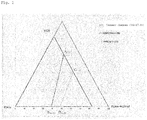
Fig. 1 is a diagram illustrating the compositional ratio of a refrigerant (a mixture refrigerant of five components R32, R125, R143a, R1234yf, and R134a; the same applies toFigs. 2 to 9 ) contained in the composition according to the present invention (the compositional ratio falls within a region surrounded by point Ar=0, point Br=0 (=Dr=0), and point Cr=0 when x=17.4 mass% and r=0 (excluding the compositional ratio on each side)). -
Fig. 2 is a diagram illustrating the compositional ratio of a refrigerant contained in the composition according to the present invention (the compositional ratio falls within a region surrounded by point Ar=25, point Br=25, point Cr=25, and point Dr=25 when x=17.4 mass% and r=25) . -
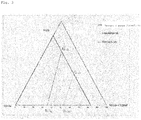
Fig. 3 is a diagram illustrating the compositional ratio of a refrigerant contained in the composition according to the present invention (the compositional ratio falls within a region surrounded by point Ar=50, point Br=50, point Cr=50, and point Dr=50 when x=17.4 mass% and r=50) . -
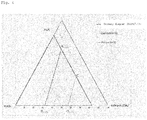
Fig. 4 is a diagram illustrating the compositional ratio of a refrigerant contained in the composition according to the present invention (the compositional ratio falls within a region surrounded by point Ar=75, point Br=75, point Cr=75, and point Dr=75 when x=17.4 mass% and r=75) . -
Fig. 5 is a diagram illustrating the compositional ratio of a refrigerant contained in the composition according to the present invention (the compositional ratio falls within a region surrounded by point Ar=100, point Br=100, point Cr=100, and point Dr=100 when x=17.4 mass% and r=100) . -
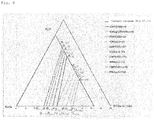
Fig. 6 is a diagram including the contents illustrated inFigs. 1 to 5 . -
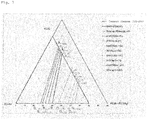
Fig. 7 is a diagram in which x is changed to 20.0 mass% inFig. 6 . -
Fig. 8 is a diagram in which x is changed to 22.5 mass% inFig. 6 . -
Fig. 9 is a diagram in which x is changed to 25.0 mass% inFig. 6 . - In this specification, the term "refrigerant" includes at least compounds that are specified in ISO817 (International Organization for Standardization), and that are provided a refrigerant number (ASHRAE number) representing the type of refrigerant with R at the beginning; and further includes refrigerants that have properties equivalent to those of such refrigerants, even though a refrigerant number is not provided. Refrigerants are broadly divided into fluorocarbon-based compounds and non-fluorocarbon-based compounds, in terms of the structure of compounds. Fluorocarbon-based compounds include chlorofluorocarbons (CFC), hydrochlorofluorocarbons (HCFC), and hydrofluorocarbons (HFC). Non-fluorocarbon-based compounds include propane (R290), propylene (R1270), butane (R600), isobutane (R600a), carbon dioxide (R744), and ammonia (R717).
- In the present specification, the phrase "a composition comprising a refrigerant" includes at least the following:
- (1) a refrigerant itself (including a mixture of refrigerants, i.e., "a mixed refrigerant");
- (2) a composition that further comprises other components, and that can be used in obtaining a working fluid for a refrigerating machine by mixing the composition with at least a refrigerant oil, and
- (3) a working fluid for a refrigerating machine that contains a refrigerant oil.
- In the present specification, of these three aspects, the composition in item (2) is referred to as a "refrigerant composition" in order to distinguish it from the refrigerant itself, which includes a mixed refrigerant. The working fluid for a refrigerating machine in item (3) is referred to as a "refrigerant oil-containing working fluid" in order to distinguish it from the refrigerant composition.
- In this specification, when the term "alternative" is used in the context in which the first refrigerant is replaced with the second refrigerant, the first type of alternative means that equipment designed for operation using the first refrigerant can be operated using the second refrigerant under optimum conditions, optionally with changes of only a few parts (at least one member of the refrigerant oil, gasket, packing, expansion valve, capillary tube, dryer, compressor, heat exchanger, control panel, and other parts) and equipment adjustment. In other words, this type of alternative means that the same equipment is operated with an alternative refrigerant. Embodiments of this type of alternative include drop-in alternative, nearly drop-in alternative, and retrofit, in the order in which the extent of changes and/or adjustment necessary for replacing the first refrigerant with the second refrigerant is smaller.
- The term "alternative" also includes the second type of alternative that means that equipment designed for operation using the second refrigerant is operated for the same use as the existing use with the first refrigerant, using the second refrigerant. This type of alternative means that the same use is achieved with an alternative refrigerant.
- In the present specification, the term "refrigerating machine" refers to machines in general that draw heat from an object or space to make its temperature lower than the temperature of ambient air, and maintain the low temperature. In other words, refrigerating machines refer to conversion machines that gain energy from the outside to do work; and that perform energy conversion, in order to transfer heat from where the temperature is lower to where the temperature is higher.
- The refrigerant for use in the present invention (below, "the refrigerant according to the present invention") is a mixed refrigerant containing difluoromethane (R32), pentafluoroethane (R125), 1,1,1-trifluoroethane (R143a), 2,3,3,3-tetrafluoropropene(R1234yf), and 1,1,1,2-tetrafluoroethane (R134a) in specific concentrations (these refrigerants are described by their refrigerant number in most cases below), and has the following performance: a refrigerating capacity equivalent to that of widely used R404A, and a low GWP (2500 or less).
- The refrigerant according to the present invention may have a refrigerating capacity of 85% or more relative to R404A. The refrigerant preferably has a refrigerating capacity of 90% or more, and more preferably 100% or more relative to R404A.
- Due to its GWP of 2500 or less (preferably 2200 or less), the refrigerant according to the present invention can significantly reduce the impact on the environment as compared with other widely used refrigerants, from the global warming viewpoint.
- The refrigerant according to the present invention preferably has a high ratio of the power consumed in refrigeration cycle to the refrigerating capacity (coefficient of performance (COP)). Specifically, the refrigerant has a COP of preferably 95 or more, and more preferably 100 or more.
- The compositional ratio of the mixed refrigerant (a mixed refrigerant of five components: R32, R125, R143a, R1234yf, and R134a), which is the basis for the effects provided by the refrigerant according to the present invention, cannot be directly described in a ternary composition diagram (ternary diagram) that illustrates the mixture formulation composed of three refrigerant components; this is because the mixed refrigerant has a mixture formulation composed of five refrigerant components. However, the following "Method 1 for Showing the Mixed Formulation Composed of Five Refrigerant Components" and "Method 2 for Showing the Mixed Formulation Composed of Five Refrigerant Components" make it possible to show the mixture formulation composed of five refrigerant components in a ternary composition diagram.
- Method 1 is a method for showing a mixture formulation composed of five refrigerant components with the total concentration of the five refrigerant components taken as 100 mass%, and the concentration of each component taken as a mass%, b mass%, c mass%, d mass%, and e mass%. The method comprises fixing the concentration of one refrigerant component at a mass%, and setting the concentrations of the four remaining refrigerant components as b mass%, c mass%, and d+e mass% as three apparent components; and showing the respective concentrations of the three refrigerant components in a ternary composition diagram (ternary diagram) in which the total concentration is shown as (100-a) mass%.
- Method 2 is a method for showing a mixture formulation composed of five refrigerant components with the total concentration of the five refrigerant components taken as 100 mass%, and the concentration of each component taken as a mass%, b mass%, c mass%, d mass%, and e mass%. The method comprises fixing the concentration of one refrigerant component at a mass%; setting the concentrations of the four remaining refrigerant components as b mass%, c mass%, and (d+e) mass% as three apparent components; further introducing the mass ratio of d mass% to (d+e) mass%, i.e., r = 100×[d/(d+e)]; and showing the respective concentrations of the three components for each value r in a ternary composition diagram (ternary diagram) in which the total concentration of the three components is shown as (100-a) mass%.
- The refrigerant (mixed refrigerant) according to the present invention can be specified as follows by indicating the compositional ratio using Method 2.
- Specifically, the refrigerant according to the present invention can be specified as follows:
- a refrigerant that contains R32, R125, R143a, R1234yf, and R134a, and that is one member selected from the group consisting of refrigerant 1, refrigerant 2, and refrigerant 3, wherein
- when the total concentration of R32, R125, R143a, R1234yf, and R134a is 100 mass%, in a ternary composition diagram in which
- the concentration of R32 is x mass%,
- the ratio r of the R1234yf concentration and the total concentration of R1234yf and R134a is

- the total concentration of R125, R143a, R1234yf, and R134a is (100-x) mass%,
- refrigerant 1 has a compositional ratio as follows
- (1)-1 20.0 masso>x≥ 17.4 mass%, and 100≥r≥0,
- (1)-2 the concentration (mass%) of R125, the concentration (mass%) of R143a, and the concentration (mass%) of (R1234yf+R134a) fall within a square or triangular region that has the following points as vertices (with the proviso that r=0 or 100 is excluded)


- refrigerant 2 has a compositional ratio as follows
- (2)-1 22.5 mass%>x≥20.0 mass%, and 100≥r≥0,
- (2)-2 the concentration (mass%) of R125, the concentration (mass%) of R143a, and the concentration (mass%) of (R1234yf+R134a) fall within a square region that has the following points as vertices (with the proviso that r=0 or 100 is excluded)


- refrigerant 3 has a compositional ratio as follows
- (3)-1 25.0 mass%≥x≥22.5 mass%, and 100≥r≥0,
- (3)-2 the concentration (mass%) of R125, the concentration (mass%) of R143a, and the concentration (mass%) of (R1234yf+R134a) fall within a square region that has the following points as vertices (with the proviso that r=0 or 100 is excluded)


- Specifically, the refrigerant according to the present invention is one member selected from the group consisting of refrigerants 1 to 3 (refrigerant 1, refrigerant 2, or refrigerant 3), and the total of refrigerants 1 to 3 is the maximum range of the refrigerant of the present invention (excluding unavoidable impurities).
- The following explains how to determine points A, B, C, and D according to different ranges of x. The technical meaning of points A, B, C, and D is also explained below. The concentration at each point is a value determined in Example 1, described later.
- A: a compositional ratio when the GWP is 2500, and the concentration of R143a (mass%) is 0.0 mass%.
- B: a compositional ratio when the GWP is 2500, and the concentration of R125 (mass%) is 0.0 mass%.
- C: a compositional ratio when the refrigerating capacity is 95% relative to R404A (a refrigerating capacity relative to R404A: 95%), and the concentration of R143a (mass%) is 0.0 mass%.
- D: a compositional ratio when the refrigerating capacity is 95% relative to R404A (a refrigerating capacity relative to R404A: 95%), and the concentration of R125 (mass%) is 0.0 mass% (when D=B, GWP=2500 is satisfied).
- In the ternary composition diagram in which the concentration of R32 is 17.4 mass% and the total concentration of R125, R143a, R1234yf, and 134a is taken as (100-x) mass%, when the ratio of the R1234yf concentration and the total concentration of R1234yf and R134a is expressed by r=100xR1234yf/(R1234yf+R134a), point Ar=0 is (the concentration of R125 (mass%)/the concentration of R143a (mass%)/the concentration of (R1234yf+134a (mass%))=(58.0/0/24.6),


- Thus, the concentration of R1250≤r≤100 is expressed by an approximate expression using r, i.e., R1250≤r≤100=-0.0005r2+0.1518r+58.043 as.
- In the ternary composition diagram in which the concentration of R32 is 20.0 mass% and the total concentration of R125, R143a, R1234yf, and 134a is taken as (100-x) mass%, when the ratio of the R1234yf concentration and the total concentration of R1234yf and R134a is expressed by




- Thus, the concentration of R1250≤r≤100 is expressed by an approximate expression using r, i.e., R1250≤r≤100=-0.0005r2+0.1326r+59.003.
- Accordingly, in the case in which 20.0 mass%>x≥17.4 mass%, the concentration of R1250≤r≤100 is approximated by R1250≤r≤100=ar2+br+c; when x=17.4 mass%, a/b/c is expressed by - 0.0005/0.1518/58.043, and when x=20 mass%, a/b/c is expressed by -0.0005/0.1326/59.003. Accordingly, when 20.0 mass%>x≥17.4 mass%, the values are approximated by a=-0.0005, b=-0.0038x+0.1556, and c=0.192x+57.851, and thus the concentration of R1250≤r≤100 is approximated by R1250≤r<100=-0.0005r2+(-0.0038x+0.1556)r+(0.192x+57.851).
- Thus, when 20.0 mass%>x≥17.4 mass% and 100≥r≥0, point A0≤r≤100 (the concentration of R125/the concentration of R143a/the concentration of (R1234yf+R134a)) is expressed as point A0≤r≤100 (the concentration of R125/the concentration of R143a/the concentration of (R1234yf+R134a))=(-0.0005r2+(-0.0074x+0.2803)r+(0.3692x+51.618)/0/100-R32-R125). For example, when x=18.5 mass% and r=50, point Ar=50=(the concentration of R125/the concentration of R143a/(R1234yf+R134a)) =(64.4/0/17.1). The concentration of R1234yf in this case is R1234yf=50×17.1=8.55 mass%, and the concentration of R134a is also 8.55 mass%.
- Table 1 shows point A0≤r≤100 when 20.0 mass%>x≥17.4 mass% and 100≥r≥0. Table 2 shows point A0≤r≤100 when 22.5 masso>x≥20.0 mass% and 100≥r≥0, which was obtained in the same manner as above. Table 3 shows point A0≤r≤100 when 25.0 mass%≥x≥22.5 mass% and 100≥r≥0, which was obtained in the same manner as above.
Table 1 20≥R32≥17.4 Item r=100*R1234yf/(R1234yf+R134a) r=100*R1234yf/(R1234yf+R134a) 0 25 50 75 100 0 25 50 75 100 Point A R125 58.0 61.5 64.4 66.6 68.2 59.0 62.0 64.4 66.1 67.3 R143a 0.0 0.0 0.0 0.0 0.0 0.0 0.0 0.0 0.0 0.0 R1234yf+R134a 24.6 21.1 18.2 16.0 14.4 21.0 18.0 15.6 13.9 12.7 R32 17.4 17.4 17.4 17.4 17.4 20.0 20.0 20.0 20.0 20.0 Approximate expression expressed by r R125 -0.0005r2+0.1518r+58.043 -0.0005r2+0.1326r+59.003 R143a 0 0 R1234yf+R134a 100-R32-R125 100-R32-R125 R125 approximate expression expressed by r and x x=R32 17.4 20.0 a -0.0005 -0.0005 b 0.1518 0.1326 c 58.0430 59.0030 Approximate expression a -0.0005 Approximate expression b -0.0074x+0.2803 Approximate expression c 0.3692x+51.618 Approximate expression R125=-0.0005r2+(-0.0074x+0.2803)r+(0.3692x+51.618) Table 2 22.5≥R32≥20 Item r=100*R1234yf/(R1234yf+R134a) r=100*R1234yf/(R1234yf+R134a) 0 25 50 75 100 0 25 50 75 100 Point A R125 59.0 62.0 64.4 66.1 67.3 59.9 62.3 64.4 66.0 67.3 R143a 0.0 0.0 0.0 0.0 0.0 0.0 0.0 0.0 0.0 0.0 R1234yf+R134a 21.0 18.0 15.6 13.9 12.7 17.6 15.2 13.1 11.5 10.2 R32 20.0 20.0 20.0 20.0 20.0 22.5 22.5 22.5 22.5 22.5 Approximate expression expressed by r R125 -0.0005r2+0.1326r+59.003 -0.0003r2+0.1031r+59.946 R143a 0 0 R1234yf+R134a 100-R32-R125 100-R32-R125 R125 approximate expression expressed by r and x x=R32 20.0 22.5 a -0.0005 -0.0003 b 0.1326 0.1031 c 59.0030 59.9460 Approximate expression a 0.00008x-0.0021 Approximate expression b -0.0118x+0.3686 Approximate expression c 0.3772x+51.459 Approximate expression R125=(0.00008x-0.0021)r2+(-0.0118x+0.3686)r+(0.3772x+51.459) Table 3 25≥R32≥22.5 Item r=100*R1234yf/(R1234yf+R134a) r=100*R1234yf/(R1234yf+R134a) 0 25 50 75 100 0 25 50 75 100 Point A R125 59.9 62.3 64.4 66.0 67.3 60.8 62.8 64.5 65.8 66.6 R143a 0.0 0.0 0.0 0.0 0.0 0.0 0.0 0.0 0.0 0.0 R1234yf+R134a 17.6 15.2 13.1 11.5 10.2 14.2 12.2 10.5 9.2 8.4 R32 22.5 22.5 22.5 22.5 22.5 25.0 25.0 25.0 25.0 25.0 Approximate expression expressed by r R125 -0.0003r2+0.1031r+59.946 -0.0003r2+0.0881r+60.834 R143a 0 0 R1234yf+R134a 100-R32-R125 100-R32-R125 R125 approximate expression expressed by r and x x=R32 22.5 25 a -0.0003 -0.0003 b 0.1031 0.0881 c 59.9460 60.8340 Approximate expression a -0.0003 Approximate expression b -0.006x+0.2381 Approximate expression c 0.3552x+51.954 Approximate expression R125=-0.0003r2+(-0.006x+0.2381)r+(0.3552x+51.954) - In the same manner as point A, point B0≤r≤100, point C0≤r≤100, point D0≤r≤100 were obtained. Tables 4 to 12 show the results.
Table 4 20≥R32≥17.4 Item r=100*R1234yf/(R1234yf+R134a) r=100*R1234yf/(R1234yf+R134a) 0 25 50 75 100 0 25 50 75 100 Point B R125 0.0 0.0 0.0 0.0 0.0 0.0 0.0 0.0 0.0 0.0 R143a 39.5 43.9 47.6 50.8 53.3 40.1 44.2 47.7 50.6 52.8 R1234yf+R134a 43.1 38.7 35.0 31.8 29.3 39.9 35.8 32.3 29.4 27.2 R32 17.4 17.4 17.4 17.4 17.4 20.0 20.0 20.0 20.0 20.0 Approximate expression expressed by r R125 0 0 R143a -0.0005r2+0.1901r+39.529 -0.0005r2+0.1774r+40.097 R1234yf+R134a 100-R32-R143a 100-R32-R143a R125 approximate expression expressed by r and x x=R32 17.4 20.0 a -0.0005 -0.0005 b 0.1901 0.1774 c 39.5290 40.0970 Approximate expression a -0.0005 Approximate expression b -0.0049x+0.2751 Approximate expression c 0.2185x+35.728 Approximate expression R143a=-0.0005r2+(-0.0049x+0.2751)r+(0.2185x+35.728) Table 5 22. 5≥R32≥20 Item r=100*R1234yf/(R1234yf+R134a) r=100*R1234yf/(R1234yf+R134a) 0 25 50 75 100 0 25 50 75 100 Point B R125 0.0 0.0 0.0 0.0 0.0 0.0 0.0 0.0 0.0 0.0 R143a 40.1 44.2 47.7 50.6 52.8 40.7 44.6 47.8 50.4 52.4 R1234yf+R134a 39.9 35.8 32.3 29.4 27.2 36.8 32.9 29.7 27.1 25.1 R32 20.0 20.0 20.0 20.0 20.0 22.5 22.5 22.5 22.5 22.5 Approximate expression expressed by r R125 0 0 R143a -0.0005r2+0.1774r+40.097 -0.0004r2+0.161r+40.823 R1234yf+R134a 100-R32-R143a 100-R32-R143a R125 approximate expression expressed by r and x x=R32 20.0 22.5 a -0.0005 -0.0004 b 0.1774 0.1610 c 40.0970 40.8230 Approximate expression a 0.00004x-0.0013 Approximate expression b -0.0066x+0.3086 Approximate expression c 0.2904x+34.289 Approximate expression R143a=(0.00004x-0.0013)r2+(-0.0066x+0.3086)r+(0.2904x+34.289) Table 6 25≥R32≥22.5 Item r=100*R1234yf/(R1234yf+R134a) r=100*R1234yf/(R1234yf+R134a) 0 25 50 75 100 0 25 50 75 100 Point B R125 0.0 0.0 0.0 0.0 0.0 0.0 0.0 0.0 0.0 0.0 R143a 40.7 44.6 47.8 50.4 52.4 41.4 44.9 47.8 50.2 52.2 R1234yf+R134a 36.8 32.9 29.7 27.1 25.1 33.6 30.1 27.2 24.8 22.8 R32 22.5 22.5 22.5 22.5 22.5 25.0 25.0 25.0 25.0 25.0 Approximate expression expressed by r R125 0 0 R143a -0.0004r2+0.161r+40.823 -0.0004r2+0.1475r+41.426 R1234yf+R134a 100-R32-R143a 100-R32-R143a R125 approximate expression expressed by r and x x=R32 22.5 25 a -0.0004 -0.0004 b 0.1610 0.1475 c 40.8230 41.4260 Approximate expression a -0.0004 Approximate expression b -0.0054x+0.2825 Approximate expression c 0.2412x+35.396 Approximate expression R143a=-0.0004r2+(-0.0054x+0.2825)r+(0.2412x+35.396) Table 7 20≥R32≥17.4 Item r=100*R1234yf/(R1234yf+R134a) r=100*R1234yf/(R1234yf+R134a) 0 25 50 75 100 0 25 50 75 100 Point C R125 45.4 41.0 37.3 34.2 31.7 38.9 33.7 29.3 25.6 22.7 R143a 0.0 0.0 0.0 0.0 0.0 0.0 0.0 0.0 0.0 0.0 R1234yf+R134a 37.2 41.6 45.3 48.4 50.9 41.1 46.3 50.7 54.4 57.3 R32 17.4 17.4 17.4 17.4 17.4 20.0 20.0 20.0 20.0 20.0 Approximate expression expressed by r R125 0.0005r2-0.1872r+45.4 0.0006r2-0.2212r+38.86 R143a 0 0 R1234yf+R134a 100-R32-R125 100-R32-R125 R125 approximate expression expressed by r and x x=R32 17.4 20.0 a 0.0005 0.0006 b -0.1872 -0.2212 c 45.4000 38.8600 Approximate expression a 0.00004x-0.0002 Approximate expression b -0.0131x+0.0403 Approximate expression c -2.51541x+89.168 Approximate expression R125=(0.00004x-0.0002)r2+(-0.0131x-0.0403)r+(-2.5154x+89.168) Table 8 22. 5≥R32≥20 Item r=100*R1234yf/(R1234yf+R134a) r=100*R1234yf/(R1234yf+R134a) 0 25 50 75 100 0 25 50 75 100 Point C R125 38.9 33.7 29.3 25.6 22.7 32.8 26.8 21.6 17.4 14.0 R143a 0.0 0.0 0.0 0.0 0.0 0.0 0.0 0.0 0.0 0.0 R1234yf+R134a 41.1 46.3 50.7 54.4 57.3 44.7 50.7 55.9 60.1 63.5 R32 20.0 20.0 20.0 20.0 20.0 22.5 22.5 22.5 22.5 22.5 Approximate expression expressed by r R125 0.0006r2-0.2212r+38.86 0.0007r2-0.2581r+32.771 R143a 0 0 R1234yf+R134a 100-R32-R125 100-R32-R125 R125 approximate expression expressed by r and x x=R32 20.0 22.5 a 0.0006 0.0007 b -0.2212 -0.2581 c 38.8600 32.7710 Approximate expression a 0.00004x-0.0002 Approximate expression b -0.0148x+0.074 Approximate expression c -2.4356x+87.572 Approximate expression R125=(0.00004x-0.0002)r2+(-0.00148x+0.074)r+(-2.4356x+87.572) Table 9 25≥R32≥22.5 Item r=100*R1234yf/(R1234yf+R134a) r=100*R1234yf/(R1234yf+R134a) 0 25 50 75 100 0 25 50 75 100 Point C R125 32.8 26.8 21.6 17.4 14.0 26.6 19.9 14.0 9.0 4.9 R143a 0.0 0.0 0.0 0.0 0.0 0.0 0.0 0.0 0.0 0.0 R1234yf+R134a 44.7 50.7 55.9 60.1 63.5 48.4 55.1 61.0 66.0 70.1 R32 22.5 22.5 22.5 22.5 22.5 25.0 25.0 25.0 25.0 25.0 Approximate expression expressed by r R125 0.0007r2-0.2581r+32.771 0.0007r2-0.287r+26.617 R143a 0 0 R1234yf+R134a 100-R32-R125 100-R32-R125 R125 approximate expression expressed by r and x x=R32 22.5 25 a 0.0007 0.0007 b -0.2581 -0.2870 c 32.7710 26.6170 Approximate expression a 0.0007 Approximate expression b -0.0116x+0.002 Approximate expression c -2.4616x+88.157 Approximate expression R125=0.0007r2+(-0.0116x+0.002)r+(-2.4616x+88.157) Table 10 20≥R32≥17.4 Item r=100*R1234yf/(R1234yf+R134a) r=100*R1234yf/(R1234yf+R134a) 0 25 50 75 100 0 25 50 75 100 Point D R125 0.0 0.0 0.0 0.0 0.0 0.0 0.0 0.0 0.0 0.0 R143a 39.7 34.3 29.7 25.8 22.6 33.8 28.1 23.2 19.0 15.6 R1234yf+R134a 42.9 48.3 52.9 56.8 60.0 46.2 51.9 56.8 61.0 64.4 R32 17.4 17.4 17.4 17.4 17.4 20.0 20.0 20.0 20.0 20.0 Approximate expression expressed by r R125 0 0 R143a 0.0006r2-0.2305r+39.691 0.0006r2-0.2417r+33.751 R1234yf+R134a 100-R32-R143a 100-R32-R143a R125 approximate expression expressed by r and x x=R32 17.4 20.0 a 0.0006 0.0006 b -0.2305 -0.2417 c 39.6910 33.7510 Approximate expression a 0.0006 Approximate expression b -0.0043x-0.1555 Approximate expression c -2.2846x+79.443 Approximate expression R143a=0.0006r2+(-0.0043x-0.1555)r+(-2.2846x+79.443) Table 11 22. 5≥R32≥20 Item r=100*R1234yf/(R1234yf+R134a) r=100*R1234yf/(R1234yf+R134a) 0 25 50 75 100 0 25 50 75 100 Point D R125 0.0 0.0 0.0 0.0 0.0 0.0 0.0 0.0 0.0 0.0 R143a 33.8 28.1 23.2 19.0 15.6 28.3 22.3 17.2 13.1 10.0 R1234yf+R134a 46.2 51.9 56.8 61.0 64.4 49.2 55.2 60.3 64.4 67.5 R32 20.0 20.0 20.0 20.0 20.0 22.5 22.5 22.5 22.5 22.5 Approximate expression expressed by r R125 0 0 R143a 0.0006r2-0.2417r+33.751 0.0008r2-0.2634r+28.343 R1234yf+R134a 100-R32-R143a 100-R32-R143a R125 approximate expression expressed by r and x x=R32 20.0 22.5 a 0.0006 0.0008 b -0.2417 -0.2634 c 33.7510 28.3430 Approximate expression a 0.00008x-0.001 Approximate expression b -0.0087x-0.0681 Approximate expression c 2.1632x+77.015 Approximate expression R143a=(0.00008x-0.001)r2+(-0.0087x-0.06811)r+(-2.1632x+77.015) Table 12 25≥R32≥22.5 Item r=100*R1234yf/(R1234yf+R134a) r=100*R1234yf/(R1234yf+R134a) 0 25 50 75 100 0 25 50 75 100 Point D R125 0.0 0.0 0.0 0.0 0.0 0.0 0.0 0.0 0.0 0.0 R143a 28.3 22.3 17.2 13.1 10.0 23.0 16.5 11.1 6.9 3.8 R1234yf+R134a 49.2 55.2 60.3 64.4 67.5 52.0 58.5 63.9 68.1 71.2 R32 22.5 22.5 22.5 22.5 22.5 25.0 25.0 25.0 25.0 25.0 Approximate expression expressed by r R125 0 0 R143a 0.0008r2-0.2634r+28.343 0.0009r2-0.2821r+22.971 R1234yf+R134a 100-R32-R143a 100-R32-R143a R125 approximate expression expressed by r and x x=R32 22.5 25 a 0.0008 0.0009 b -0.2634 -0.2821 c 28.3430 22.9710 Approximate expression a 0.00004x-0.0001 Approximate expression b -0.0075x-0.0951 Approximate expression c -2.1488x+76.691 Approximate expression R143=(0.00004x-0.0001)r2+(-0.0075x-0.0951)r+(-2.1488x+76.691) - In the ternary composition diagram in which the total concentration of R125, R143a, R1234yf, and R134a is (100-x), a set of points at which GWP=2500 is expressed as a straight line that connects point A and point B, which is indicated as a function of x where R32=x. For example, in the ternary composition diagrams of
Figs. 1 to 9 , the GWP is 2500 or less in the region from the straight line toward the vertex of (R134a+ R1234yf). - In the ternary composition diagram in which the total concentration of R125, R143a, R1234yf, and R134a is (100-x), a set of points at which the refrigerating capacity relative to R404A is 95% is approximated to a straight line that connects point C and point D, which is indicated as a function of x where R32 = x. For example, in the ternary composition diagrams of
Figs. 1 to 9 , the refrigerating capacity relative to R404A is 95% or more in the region from the approximate straight line toward the vertex of R125. - The refrigerant according to the present invention has the following performance: a refrigerating capacity equivalent to that of widely used R404A, and a low GWP (2500 or less). Thus, the composition containing the refrigerant according to the present invention has a wide range of applications as a working fluid in existing refrigerants, such as in (1) a refrigeration method including operating a refrigeration cycle, and (2) a method for operating a refrigerating machine that operates a refrigeration cycle. The "refrigeration cycle" refers to energy conversion by circulating the composition according to the present invention in the form of a refrigerant as is, or in the form of a refrigerant composition or a refrigerant oil-containing working fluid described later, through a compressor.
- Thus, the present invention includes an invention of the use of the composition according to the present invention in a refrigeration method, an invention of the use of the composition according to the present invention in a method for operating a refrigerating machine, and an invention of a refrigerating machine including the composition according to the present invention. An applicable refrigerating machine is, for example, although not limited to, preferably at least one member selected from the group consisting of refrigerators, freezers, water coolers, ice makers, refrigerating showcases, freezing showcases, freezing and refrigerating units, refrigerating machines for freezing and refrigerating warehouses, turbo refrigerating machines, and screw refrigerating machines.
- The refrigerant composition according to the present invention contains at least the refrigerant according to the present invention, and can be used in the same application as with the refrigerant according to the present invention. The refrigerant composition according to the present invention can be used in obtaining a working fluid for a refrigerating machine by further mixing the refrigerant composition with at least a refrigerant oil.
- The refrigerant composition according to the present invention further contains at least one component other than the refrigerant according to the present invention, in addition to the refrigerant. The refrigerant composition of the present invention may optionally contain at least one of such other components as described below. As described above, the refrigerant composition according to the present invention for use as a working fluid in a refrigerating machine is typically used as a mixture with at least a refrigerant oil. Preferably, the refrigerant composition according to the present invention is substantially free of a refrigerant oil. Specifically, the refrigerant composition according to the present invention has a refrigerant oil content of preferably 0 to 1 mass%, and more preferably 0 to 0.1 mass%, based on the entire refrigerant composition.
- The refrigerant composition according to the present invention may contain a small amount of water. The water content in the refrigerant composition is preferably 0.1 parts by mass or less, per 100 parts by mass of the refrigerant. A small amount of water contained in the refrigerant composition stabilizes double bonds in the molecules of unsaturated fluorocarbon-based compounds that can be present in the refrigerant, and makes it less likely that the unsaturated fluorocarbon-based compounds will be oxidized, thus increasing the stability of the refrigerant composition.
- A tracer is added to the refrigerant composition according to the present invention in a detectable concentration so that when the refrigerant composition has been diluted, contaminated, or undergone other changes, the tracer can trace the changes.
- The refrigerant composition according to the present invention may contain a single tracer, or two or more tracers.
- The tracer is not limited, and can be suitably selected from typically used tracers.
- Examples of tracers include hydrofluorocarbons, deuterated hydrocarbons, deuterated hydrofluorocarbons, perfluorocarbons, fluoroethers, brominated compounds, iodinated compounds, alcohols, aldehydes, ketones, and nitrous oxide (N2O). The tracer is particularly preferably a hydrofluorocarbon or a fluoroether.
- The refrigerant composition according to the present invention may contain a single ultraviolet fluorescent dye, or two or more ultraviolet fluorescent dyes.
- The ultraviolet fluorescent dye is not limited, and can be suitably selected from typically used ultraviolet fluorescent dyes.
- Examples of ultraviolet fluorescent dyes include naphthalimide, coumarin, anthracene, phenanthrene, xanthene, thioxanthene, naphthoxanthene, fluorescein, and derivatives thereof. The ultraviolet fluorescent dye is particularly preferably either naphthalimide or coumarin, or both.
- The refrigerant composition according to the present invention may contain a single stabilizer, or two or more stabilizers.
- The stabilizer is not limited, and can be suitably selected from typically used stabilizers.
- Examples of stabilizers include nitro compounds, ethers, and amines.
- Examples of nitro compounds include aliphatic nitro compounds, such as nitromethane and nitroethane; and aromatic nitro compounds, such as nitro benzene and nitro styrene.
- Examples of ethers include 1,4-dioxane.
- Examples of amines include 2,2,3,3,3-pentafluoropropylamine, and diphenyl amine.
- Examples of stabilizers also include butylhydroxyxylene, and benzotriazole.
- The content of the stabilizer is not limited. Typically, the content of the stabilizer is preferably 0.01 to 5 parts by mass, and more preferably 0.05 to 2 parts by mass, per 100 parts by mass of the refrigerant.
- The method for evaluating the stability of the refrigerant composition is not limited, and the refrigerant composition can be evaluated by a commonly used technique. An example of such techniques is a method evaluating stability with the amount of free fluorine ions as an index in accordance with ASHRAE Standard 97-2007. Additionally, a method evaluating stability with the total acid number as an index is also usable. This method can be performed, for example, in accordance with ASTM D 974-06.
- The refrigerant composition according to the present invention may contain a single polymerization inhibitor, or two or more polymerization inhibitors.
- The polymerization inhibitor is not limited, and can be suitably selected from typically used polymerization inhibitors.
- Examples of polymerization inhibitors include 4-methoxy-1-naphthol, hydroquinone, hydroquinone methyl ether, dimethyl-t-butylphenol, 2,6-di-tert-butyl-p-cresol, and benzotriazole.
- The content of the polymerization inhibitor is not limited. Typically, the content of the polymerization inhibitor is preferably 0.01 to 5 parts by mass, and more preferably 0.05 to 2 parts by mass, per 100 parts by mass of the refrigerant.
- The refrigerant composition according to the present invention may contain the following components.
- For example, the refrigerant composition may contain a fluorinated hydrocarbon different from the refrigerant described above. The fluorinated hydrocarbon as another component is not limited, and such fluorinated hydrocarbons include at least one fluorinated hydrocarbon selected from the group consisting of HCFC-1122, HCFC-124, CFC-1113, and 3,3,3-trifluoropropyne.
- The refrigerant composition may also contain, as another component other than those described above, for example, at least one halogenated organic compound represented by formula (1): CmHnXp wherein each X independently represents a fluorine atom, a chlorine atom, or a bromine atom; m is 1 or 2; and 2m+2≥n+p and p≥1. The halogenated organic compound is not limited; and is preferably, for example, difluorochloromethane, chloromethane, 2-chloro-1,1,1,2,2-pentafluoroethane, 2-chloro-1,1,1,2-tetrafluoroethane, 2-chloro-1,1-difluoroethylene, or trifluoroethylene.
- The refrigerant composition may also contain, as another component other than those described above, for example, at least one organic compound represented by formula (2): CmHnXp wherein each X independently represents an atom other than halogen atoms; m is 1 or 2; and 2m+2≥n+p and p≥1. The organic compound is not limited; and is preferably, for example, propane or isobutane.
- The content of the fluorinated hydrocarbon, the halogenated organic compound represented by formula (1), and the organic compound represented by formula (2) is not limited. However, the total amount of these compounds is preferably 0.5 mass% or less, more preferably 0.3 mass% or less, and particularly preferably 0.1 mass% or less, based on the total amount of the refrigerant composition.
- The refrigerant oil-containing working fluid according to the present invention contains at least the refrigerant or refrigerant composition for use in the present invention, and a refrigerant oil. Specifically, the refrigerant oil-containing working fluid for use in the present invention is obtained by mixing a refrigerant oil for use in a compressor of a refrigerating machine with the refrigerant or refrigerant composition. The refrigerant oil-containing working fluid typically contains 1 to 50 mass% of a refrigerant oil.
- The composition according to the present invention may contain only one refrigerant oil, or two or more refrigerant oils.
- The refrigerant oil is not limited, and can be suitably selected from typically used refrigerant oils. When doing so, a refrigerant oil that is superior, for example, in action of improving miscibility with the mixture and the stability of the mixture can be suitably selected, as necessary.
- The base oil of the refrigerant oil is preferably, for example, at least one member selected from the group consisting of polyalkylene glycols (PAG), polyol esters (POE), and polyvinyl ethers (PVE).
- The refrigerant oil may further contain an additive in addition to the base oil. The additive may be at least one member selected from the group consisting of antioxidants, extreme-pressure additives, acid scavengers, oxygen scavengers, copper deactivators, rust inhibitors, oil agents, and antifoaming agents.
- The refrigerant oil preferably has a kinematic viscosity of 5 to 400 cSt at 40°C, from the standpoint of lubrication.
- The refrigerant oil-containing working fluid according to the present invention may further optionally contain at least one additive. Examples of additives include the following compatibilizing agent.
- The refrigerant oil-containing working fluid according to the present invention may contain only one compatibilizing agent, or two or more compatibilizing agents.
- The compatibilizing agent is not limited, and can be suitably selected from typically used compatibilizing agents.
- Examples of compatibilizing agents include polyoxyalkylene glycol ethers, amides, nitriles, ketones, chlorocarbons, esters, lactones, aryl ethers, fluoroethers, and 1,1,1-trifluoroalkanes. The compatibilizing agent is particularly preferably a polyoxyalkylene glycol ether.
- Below, the present invention will be described in detail with reference to Examples and Comparative Examples. However, the present invention is not limited to the Examples.
- Refrigerants containing R32, R125, R143a, R1234yf, and R134a of various formulations and the GWP of R404A were evaluated based on the values in the fourth report of the Intergovernmental Panel on Climate Change (IPCC).
- Refrigerants containing R32, R125, R143a, R1234yf, and R134a of various formulations and the refrigerating capacity of R404A were determined by performing theoretical calculation of the refrigeration cycle for each refrigerant by using the Reference Fluid Thermodynamic and Transport Properties Database (REFPROP 9.0) of the National Institute of Science and Technology (NIST) under the following conditions.
- Evaporating Temperature: -40°C
- Condensation Temperature: 40°C
- Superheating Temperature: 20 K
- Subcooling Temperature: 0 K
- Compressor Efficiency: 70%
- Tables 13 to 16 illustrate the GWP, coefficient of performance (COP), and refrigerating capacity calculated based on these results. The COP and the refrigerating capacity are indicated by the percentage relative to R404A.
- The COP was calculated using the following formula.


- Ar=0: In the ratio of the concentration of R1234yf to the total concentration of R1234yf and R134a, i.e.,

- Br=0: In the ratio of the concentration of R1234yf to the total concentration of R1234yf and R134a, i.e.,

- Cr=0: In the ratio of the concentration of R1234yf to the total concentration of R1234yf and R134a, i.e.,


- Ar=a: In the ratio of the concentration of R1234yf to the total concentration of R1234yf and R134a, i.e.,

- Br=a: In the ratio of the concentration of R1234yf to the total concentration of R1234yf and R134a, i.e.,

- Cr=a: In the ratio of the concentration of R1234yf to the total concentration of R1234yf and R134a, i.e.,


Claims (13)
- A composition comprising a refrigerant that contains R32, R125, R143a, R1234yf, and R134a,
the composition comprising one member selected from the group consisting of refrigerant 1, refrigerant 2, and refrigerant 3,
wherein
when the total concentration of R32, R125, R143a, R1234yf, and R134a is 100 mass%,
in a ternary composition diagram in which the concentration of R32 is x mass%,
the ratio r of the R1234yf concentration and the total concentration of R1234yf and R134a is
the total concentration of R125, R143a, R1234yf, and R134a is (100-x) mass%,
refrigerant 1 has a compositional ratio as follows(1)-1 20.0 mass%>x≥17.4 mass%, and 100≥r≥0,(1)-2 the concentration (mass%) of R125, the concentration (mass%) of R143a, and the concentration (mass%) of (R1234yf+R134a) fall within a square or triangular region that has the following points as vertices (with the proviso that r=0 or 100 is excluded)


 (2)-1 22.5 mass%>x≥20.0 mass%, and 100≥r≥0,(2)-2 the concentration (mass%) of R125, the concentration (mass%) of R143a, and the concentration (mass%) of (R1234yf+R134a) fall within a square region that has the following points as vertices (with the proviso that r=0 or 100 is excluded)


refrigerant 3 has a compositional ratio as follows(3)-1 25.0 mass%≥x≥22.5 mass%, and 100≥r≥0,(3)-2 the concentration (mass%) of R125, the concentration (mass%) of R143a, and the concentration (mass%) of (R1234yf + R134a) fall within a square region that has the following points as vertices (with the proviso that r=0 or 100 is excluded) point A0≤r≤100 [-0.0003r2+(-0.006x+0.2381)r+(0.3552x+51.954)/0/100-R32-R125],


- The composition according to claim 1, wherein the refrigerant is used as an alternative refrigerant for R404A.
- The composition according to claim 1 or 2, wherein the total concentration of R32, R125, R143a, R1234yf, and R134a is 99.5 mass% or more based on the entire refrigerant.
- The composition according to claim 1 or 2, wherein the refrigerant consists of R32, R125, R143a, R1234yf, and R134a.
- The composition according to any one of claims 1 to 4, comprising at least one material selected from the group consisting of water, tracers, ultraviolet fluorescent dyes, stabilizers, and polymerization inhibitors.
- The composition according to any one of claims 1 to 5, comprising a refrigerant oil.
- The composition according to claim 6, wherein the refrigerant oil contains at least one polymer selected from the group consisting of polyalkylene glycols (PAG), polyol esters (POE), and polyvinyl ethers (PVE).
- A refrigeration method comprising operating a refrigeration cycle using the composition of any one of claims 1 to 7.
- A method for operating a refrigerating machine that operates a refrigeration cycle using the composition of any one of claims 1 to 7.
- A refrigerating machine using the composition of any one of claims 1 to 7.
- The refrigerating machine according to claim 10, which is at least one member selected from the group consisting of refrigerators, freezers, water coolers, ice makers, refrigerating showcases, freezing showcases, freezing and refrigerating units, refrigerating machines for freezing and refrigerating warehouses, turbo refrigerating machines, and screw refrigerating machines.
- A method for showing a mixture formulation composed of five refrigerant components with the total concentration of the five refrigerant components taken as 100 mass%, and the concentration of each component taken as a mass%, b mass%, c mass%, d mass%, and e mass%, the method comprising
fixing the concentration of one refrigerant component at a mass%, and setting the concentration of the four remaining refrigerant components as b mass%, c mass%, and (d+e) mass% as three apparent components; and
showing the respective concentrations of the three components in a ternary composition diagram (ternary diagram) in which the total concentration of the three components is shown as (100-a) mass%. - A method for showing a mixture formulation composed of five refrigerant components with the total concentration of the five refrigerant components taken as 100 mass%, and the concentration of each component taken as a mass%, b mass%, c mass%, d mass%, and e mass%, the method comprising
fixing the concentration of one refrigerant component at a mass%, and setting the concentration of the four remaining refrigerant components as b mass%, c mass%, and (d+e) mass% as three apparent components;
further introducing the mass ratio of d mass% to (d+e) mass%, i.e., r=100*(d/(d+e)); and
showing the respective concentrations of the three components for each value r in a ternary composition diagram (ternary diagram) in which the total concentration of the three components is shown as (100-a) mass%.
Priority Applications (1)
| Application Number | Priority Date | Filing Date | Title |
|---|---|---|---|
| EP24197547.3A EP4450603A3 (en) | 2018-04-18 | 2019-04-18 | Composition containing refrigerant comprising r32, r125, r143a, r1234yf and r134a, and refrigeration method, refrigerator operating method and refrigerator using said composition |
Applications Claiming Priority (2)
| Application Number | Priority Date | Filing Date | Title |
|---|---|---|---|
| JP2018080117A JP6729626B2 (en) | 2018-04-18 | 2018-04-18 | Composition containing refrigerant containing R32, R125, R143a, R1234yf and R134a, and refrigeration method, refrigerator operation method and refrigerator using the composition |
| PCT/JP2019/016710 WO2019203328A1 (en) | 2018-04-18 | 2019-04-18 | Composition containing refrigerant comprising r32, r125, r143a, r1234yf and r134a, and refrigeration method, refrigerator operating method and refrigerator using said composition |
Related Child Applications (1)
| Application Number | Title | Priority Date | Filing Date |
|---|---|---|---|
| EP24197547.3A Division EP4450603A3 (en) | 2018-04-18 | 2019-04-18 | Composition containing refrigerant comprising r32, r125, r143a, r1234yf and r134a, and refrigeration method, refrigerator operating method and refrigerator using said composition |
Publications (2)
| Publication Number | Publication Date |
|---|---|
| EP3783082A1 true EP3783082A1 (en) | 2021-02-24 |
| EP3783082A4 EP3783082A4 (en) | 2022-01-19 |
Family
ID=68238925
Family Applications (2)
| Application Number | Title | Priority Date | Filing Date |
|---|---|---|---|
| EP24197547.3A Pending EP4450603A3 (en) | 2018-04-18 | 2019-04-18 | Composition containing refrigerant comprising r32, r125, r143a, r1234yf and r134a, and refrigeration method, refrigerator operating method and refrigerator using said composition |
| EP19789478.5A Pending EP3783082A4 (en) | 2018-04-18 | 2019-04-18 | COMPOSITION CONTAINING A REFRIGERANT FLUID COMPRISING R32, R125, R143A, R1234YF AND R134A AND REFRIGERATION METHOD, REFRIGERATOR OPERATING METHOD AND REFRIGERATOR USING SUCH COMPOSITION |
Family Applications Before (1)
| Application Number | Title | Priority Date | Filing Date |
|---|---|---|---|
| EP24197547.3A Pending EP4450603A3 (en) | 2018-04-18 | 2019-04-18 | Composition containing refrigerant comprising r32, r125, r143a, r1234yf and r134a, and refrigeration method, refrigerator operating method and refrigerator using said composition |
Country Status (5)
| Country | Link |
|---|---|
| US (1) | US11952529B2 (en) |
| EP (2) | EP4450603A3 (en) |
| JP (1) | JP6729626B2 (en) |
| CN (1) | CN111989380A (en) |
| WO (1) | WO2019203328A1 (en) |
Families Citing this family (4)
| Publication number | Priority date | Publication date | Assignee | Title |
|---|---|---|---|---|
| JP6677288B2 (en) * | 2017-12-07 | 2020-04-08 | ダイキン工業株式会社 | Composition containing refrigerant containing R32, R125, R143a and R134a, refrigeration method using the composition, operation method of refrigerator and refrigerator |
| JP6729626B2 (en) | 2018-04-18 | 2020-07-22 | ダイキン工業株式会社 | Composition containing refrigerant containing R32, R125, R143a, R1234yf and R134a, and refrigeration method, refrigerator operation method and refrigerator using the composition |
| CN112004908B (en) * | 2018-04-25 | 2022-02-18 | 大金工业株式会社 | Composition containing refrigerant, use thereof, method of freezing using the same, and refrigerator having the same |
| CN116814219A (en) * | 2023-06-12 | 2023-09-29 | 浙江永和制冷股份有限公司 | Mixed refrigerant and preparation method thereof |
Family Cites Families (30)
| Publication number | Priority date | Publication date | Assignee | Title |
|---|---|---|---|---|
| JPS4725559U (en) | 1971-04-12 | 1972-11-22 | ||
| JPS57123843A (en) * | 1981-01-26 | 1982-08-02 | Nippon Telegr & Teleph Corp <Ntt> | Optical fiber and its preparation |
| JP2536482B2 (en) | 1986-07-14 | 1996-09-18 | ソニー株式会社 | Magnetic recording / reproducing device |
| US5066410A (en) | 1989-05-02 | 1991-11-19 | Daikin Industries, Ltd. | Refrigerating machine composition comprising a fluorine-containing polyether oil |
| JP2792191B2 (en) | 1990-04-04 | 1998-08-27 | ダイキン工業株式会社 | Coolant |
| CA2148854C (en) | 1990-07-26 | 2003-03-18 | Donald Bernard Bivens | Near-azeotropic blends for use as refrigerants |
| ES2148743T3 (en) | 1995-04-18 | 2000-10-16 | Daikin Ind Ltd | PROCEDURE FOR LOADING A REFRIGERANT MIXTURE. |
| JP2004067495A (en) * | 2002-08-09 | 2004-03-04 | Sumitomo Metal Ind Ltd | Piezoelectric ceramic material |
| FR2860001B1 (en) | 2003-09-19 | 2008-02-15 | Arkema | COMPOSITION BASED ON HFCs (HYDROFLUOROCARBONS) AND USE THEREOF |
| US7569170B2 (en) * | 2005-03-04 | 2009-08-04 | E.I. Du Pont De Nemours And Company | Compositions comprising a fluoroolefin |
| US7759532B2 (en) | 2006-01-13 | 2010-07-20 | E.I. Du Pont De Nemours And Company | Refrigerant additive compositions containing perfluoropolyethers |
| US8623235B2 (en) | 2008-02-29 | 2014-01-07 | Arkema Inc. | Block copolymer oil return agents |
| CN101880519A (en) | 2009-05-08 | 2010-11-10 | 霍尼韦尔国际公司 | Hydrofluorocarbon refrigerant compositions for heat pump water heaters |
| JP2013529703A (en) | 2010-06-22 | 2013-07-22 | アーケマ・インコーポレイテッド | Heat transfer composition of hydrofluorocarbon and hydrofluoroolefin |
| US20120291433A1 (en) | 2011-05-19 | 2012-11-22 | Ning Meng | Low temperature rankine cycle solar power system with low critical temperature hfc or hc working fluid |
| CN110373159B (en) * | 2013-07-12 | 2021-08-10 | Agc株式会社 | Working medium for heat cycle, composition for heat cycle system, and heat cycle system |
| US9463909B2 (en) * | 2013-10-30 | 2016-10-11 | Colt's Plastics Co., Inc. | Cap assembly with integrated liner and outer shell |
| JP5861719B2 (en) | 2014-01-17 | 2016-02-16 | Tdk株式会社 | Transparent conductor and touch panel |
| EP3149765B1 (en) * | 2014-05-28 | 2019-03-13 | Alliance for Sustainable Energy, LLC | Methods for producing perovskite materials |
| US20170369754A1 (en) | 2015-01-16 | 2017-12-28 | Denso Corporation | Working medium for heat cycle |
| MY182105A (en) | 2015-02-19 | 2021-01-18 | Daikin Ind Ltd | Composition containing mixture of fluorinated hydrocarbons, and method for producing same |
| JP2018535296A (en) * | 2015-10-07 | 2018-11-29 | ハネウェル・インターナショナル・インコーポレーテッドHoneywell International Inc. | Method and composition for refilling a system and refilled system |
| CN117210201A (en) * | 2015-11-20 | 2023-12-12 | 大金工业株式会社 | Compositions containing mixtures of fluorocarbons and uses thereof |
| WO2017145244A1 (en) * | 2016-02-22 | 2017-08-31 | 三菱電機株式会社 | Refrigeration cycle device |
| WO2017171090A1 (en) * | 2016-03-31 | 2017-10-05 | ダイキン工業株式会社 | Composition containing fluorinated hydrocarbon mixture, and application for same |
| JP6315071B1 (en) | 2016-11-28 | 2018-04-25 | ダイキン工業株式会社 | Method for transferring and filling refrigerant composition |
| JP6841066B2 (en) | 2017-02-03 | 2021-03-10 | ダイキン工業株式会社 | A method of using a mixture of fluorinated hydrocarbons as a refrigerant, and a refrigerating device using the mixture as a refrigerant. |
| JP6504298B2 (en) | 2017-04-21 | 2019-04-24 | ダイキン工業株式会社 | Composition containing refrigerant and application thereof |
| JP6677288B2 (en) | 2017-12-07 | 2020-04-08 | ダイキン工業株式会社 | Composition containing refrigerant containing R32, R125, R143a and R134a, refrigeration method using the composition, operation method of refrigerator and refrigerator |
| JP6729626B2 (en) | 2018-04-18 | 2020-07-22 | ダイキン工業株式会社 | Composition containing refrigerant containing R32, R125, R143a, R1234yf and R134a, and refrigeration method, refrigerator operation method and refrigerator using the composition |
-
2018
- 2018-04-18 JP JP2018080117A patent/JP6729626B2/en active Active
-
2019
- 2019-04-18 WO PCT/JP2019/016710 patent/WO2019203328A1/en not_active Ceased
- 2019-04-18 CN CN201980026287.6A patent/CN111989380A/en active Pending
- 2019-04-18 EP EP24197547.3A patent/EP4450603A3/en active Pending
- 2019-04-18 US US17/047,913 patent/US11952529B2/en active Active
- 2019-04-18 EP EP19789478.5A patent/EP3783082A4/en active Pending
Also Published As
| Publication number | Publication date |
|---|---|
| EP4450603A3 (en) | 2025-01-22 |
| EP3783082A4 (en) | 2022-01-19 |
| JP2019189676A (en) | 2019-10-31 |
| CN111989380A (en) | 2020-11-24 |
| WO2019203328A1 (en) | 2019-10-24 |
| US20210108120A1 (en) | 2021-04-15 |
| US11952529B2 (en) | 2024-04-09 |
| EP4450603A2 (en) | 2024-10-23 |
| JP6729626B2 (en) | 2020-07-22 |
Similar Documents
| Publication | Publication Date | Title |
|---|---|---|
| US12473477B2 (en) | Refrigerant-containing composition, heat transfer medium, and heat cycle system | |
| EP3922922B1 (en) | Refrigerant-containing composition, and refrigerating method, refrigerating device operating method, and refrigerating device using said composition | |
| US11034871B2 (en) | Composition containing refrigerant and application of said composition | |
| AU2018392389B2 (en) | Refrigerant-containing composition, use thereof, refrigerating machine having same, and method for operating said refrigerating machine | |
| EP3730586A1 (en) | Coolant-containing composition, use for same, refrigerator having same, and method for operating refrigerator | |
| JP7108212B2 (en) | Composition containing refrigerant, heat transfer medium and heat cycle system | |
| JP7410429B2 (en) | Compositions containing refrigerants and their applications | |
| EP3919593A1 (en) | Composition containing refrigerant, refrigeration method using said composition, method for operating refrigeration device, and refrigeration device | |
| US20230151257A1 (en) | Refrigerant-containing composition, use thereof, refrigerator having same, and method for operating said refrigerator | |
| EP3786253A1 (en) | Refrigerant-containing composition, use thereof, refrigerating method using same, and refrigerator comprising same | |
| US11952529B2 (en) | Composition containing refrigerant comprising R32, R125, R143A, R1234YF and R134A, and refrigeration method, refrigerator operating method and refrigerator using said composition | |
| US20210147734A1 (en) | Refrigerant-containing composition, use thereof, cooling method using same, and refrigerator comprising same | |
| EP3722390B1 (en) | Composition containing refrigerant including r32, r125, r143a, and r134a and refrigeration method using said composition, method for operating refrigerator, and refrigerator | |
| US20230174836A1 (en) | Refrigerant-containing composition, use thereof, refrigerator having same, and method for operating said refrigerator | |
| US20230323179A1 (en) | Refrigerant-containing composition, use thereof, refrigerator having same, and method for operating said refrigerator | |
| EP3992545A1 (en) | Composition containing refrigerant, use of same, refrigerator having same, and method for operating said refrigerator |
Legal Events
| Date | Code | Title | Description |
|---|---|---|---|
| STAA | Information on the status of an ep patent application or granted ep patent |
Free format text: STATUS: THE INTERNATIONAL PUBLICATION HAS BEEN MADE |
|
| PUAI | Public reference made under article 153(3) epc to a published international application that has entered the european phase |
Free format text: ORIGINAL CODE: 0009012 |
|
| STAA | Information on the status of an ep patent application or granted ep patent |
Free format text: STATUS: REQUEST FOR EXAMINATION WAS MADE |
|
| 17P | Request for examination filed |
Effective date: 20201027 |
|
| AK | Designated contracting states |
Kind code of ref document: A1 Designated state(s): AL AT BE BG CH CY CZ DE DK EE ES FI FR GB GR HR HU IE IS IT LI LT LU LV MC MK MT NL NO PL PT RO RS SE SI SK SM TR |
|
| AX | Request for extension of the european patent |
Extension state: BA ME |
|
| DAV | Request for validation of the european patent (deleted) | ||
| DAX | Request for extension of the european patent (deleted) | ||
| A4 | Supplementary search report drawn up and despatched |
Effective date: 20211222 |
|
| RIC1 | Information provided on ipc code assigned before grant |
Ipc: C10N 20/00 20060101ALI20211216BHEP Ipc: F25B 1/00 20060101ALI20211216BHEP Ipc: C09K 5/04 20060101AFI20211216BHEP |
|
| RAP3 | Party data changed (applicant data changed or rights of an application transferred) |
Owner name: DAIKIN INDUSTRIES, LTD. |
|
| P01 | Opt-out of the competence of the unified patent court (upc) registered |
Effective date: 20230525 |
|
| STAA | Information on the status of an ep patent application or granted ep patent |
Free format text: STATUS: EXAMINATION IS IN PROGRESS |
|
| 17Q | First examination report despatched |
Effective date: 20240430 |
|
| GRAP | Despatch of communication of intention to grant a patent |
Free format text: ORIGINAL CODE: EPIDOSNIGR1 |
|
| STAA | Information on the status of an ep patent application or granted ep patent |
Free format text: STATUS: GRANT OF PATENT IS INTENDED |
|
| INTG | Intention to grant announced |
Effective date: 20251202 |