EP3781982B1 - Wgm microresonator - Google Patents
Wgm microresonator Download PDFInfo
- Publication number
- EP3781982B1 EP3781982B1 EP19728116.5A EP19728116A EP3781982B1 EP 3781982 B1 EP3781982 B1 EP 3781982B1 EP 19728116 A EP19728116 A EP 19728116A EP 3781982 B1 EP3781982 B1 EP 3781982B1
- Authority
- EP
- European Patent Office
- Prior art keywords
- wgm
- matrix
- quantum dots
- microresonator according
- wgm microresonator
- Prior art date
- Legal status (The legal status is an assumption and is not a legal conclusion. Google has not performed a legal analysis and makes no representation as to the accuracy of the status listed.)
- Active
Links
Images
Classifications
-
- G—PHYSICS
- G02—OPTICS
- G02F—OPTICAL DEVICES OR ARRANGEMENTS FOR THE CONTROL OF LIGHT BY MODIFICATION OF THE OPTICAL PROPERTIES OF THE MEDIA OF THE ELEMENTS INVOLVED THEREIN; NON-LINEAR OPTICS; FREQUENCY-CHANGING OF LIGHT; OPTICAL LOGIC ELEMENTS; OPTICAL ANALOGUE/DIGITAL CONVERTERS
- G02F1/00—Devices or arrangements for the control of the intensity, colour, phase, polarisation or direction of light arriving from an independent light source, e.g. switching, gating or modulating; Non-linear optics
- G02F1/01—Devices or arrangements for the control of the intensity, colour, phase, polarisation or direction of light arriving from an independent light source, e.g. switching, gating or modulating; Non-linear optics for the control of the intensity, phase, polarisation or colour
-
- G—PHYSICS
- G01—MEASURING; TESTING
- G01N—INVESTIGATING OR ANALYSING MATERIALS BY DETERMINING THEIR CHEMICAL OR PHYSICAL PROPERTIES
- G01N21/00—Investigating or analysing materials by the use of optical means, i.e. using sub-millimetre waves, infrared, visible or ultraviolet light
- G01N21/75—Systems in which material is subjected to a chemical reaction, the progress or the result of the reaction being investigated
- G01N21/77—Systems in which material is subjected to a chemical reaction, the progress or the result of the reaction being investigated by observing the effect on a chemical indicator
- G01N21/7703—Systems in which material is subjected to a chemical reaction, the progress or the result of the reaction being investigated by observing the effect on a chemical indicator using reagent-clad optical fibres or optical waveguides
- G01N21/7746—Systems in which material is subjected to a chemical reaction, the progress or the result of the reaction being investigated by observing the effect on a chemical indicator using reagent-clad optical fibres or optical waveguides the waveguide coupled to a cavity resonator
-
- G—PHYSICS
- G02—OPTICS
- G02F—OPTICAL DEVICES OR ARRANGEMENTS FOR THE CONTROL OF LIGHT BY MODIFICATION OF THE OPTICAL PROPERTIES OF THE MEDIA OF THE ELEMENTS INVOLVED THEREIN; NON-LINEAR OPTICS; FREQUENCY-CHANGING OF LIGHT; OPTICAL LOGIC ELEMENTS; OPTICAL ANALOGUE/DIGITAL CONVERTERS
- G02F1/00—Devices or arrangements for the control of the intensity, colour, phase, polarisation or direction of light arriving from an independent light source, e.g. switching, gating or modulating; Non-linear optics
- G02F1/01—Devices or arrangements for the control of the intensity, colour, phase, polarisation or direction of light arriving from an independent light source, e.g. switching, gating or modulating; Non-linear optics for the control of the intensity, phase, polarisation or colour
- G02F1/21—Devices or arrangements for the control of the intensity, colour, phase, polarisation or direction of light arriving from an independent light source, e.g. switching, gating or modulating; Non-linear optics for the control of the intensity, phase, polarisation or colour by interference
-
- G—PHYSICS
- G01—MEASURING; TESTING
- G01N—INVESTIGATING OR ANALYSING MATERIALS BY DETERMINING THEIR CHEMICAL OR PHYSICAL PROPERTIES
- G01N21/00—Investigating or analysing materials by the use of optical means, i.e. using sub-millimetre waves, infrared, visible or ultraviolet light
- G01N21/62—Systems in which the material investigated is excited whereby it emits light or causes a change in wavelength of the incident light
- G01N21/63—Systems in which the material investigated is excited whereby it emits light or causes a change in wavelength of the incident light optically excited
- G01N21/64—Fluorescence; Phosphorescence
- G01N21/645—Specially adapted constructive features of fluorimeters
- G01N21/648—Specially adapted constructive features of fluorimeters using evanescent coupling or surface plasmon coupling for the excitation of fluorescence
-
- G—PHYSICS
- G02—OPTICS
- G02B—OPTICAL ELEMENTS, SYSTEMS OR APPARATUS
- G02B6/00—Light guides; Structural details of arrangements comprising light guides and other optical elements, e.g. couplings
- G02B6/24—Coupling light guides
- G02B6/26—Optical coupling means
- G02B6/28—Optical coupling means having data bus means, i.e. plural waveguides interconnected and providing an inherently bidirectional system by mixing and splitting signals
- G02B6/293—Optical coupling means having data bus means, i.e. plural waveguides interconnected and providing an inherently bidirectional system by mixing and splitting signals with wavelength selective means
- G02B6/29331—Optical coupling means having data bus means, i.e. plural waveguides interconnected and providing an inherently bidirectional system by mixing and splitting signals with wavelength selective means operating by evanescent wave coupling
- G02B6/29335—Evanescent coupling to a resonator cavity, i.e. between a waveguide mode and a resonant mode of the cavity
- G02B6/29338—Loop resonators
- G02B6/29341—Loop resonators operating in a whispering gallery mode evanescently coupled to a light guide, e.g. sphere or disk or cylinder
-
- G—PHYSICS
- G02—OPTICS
- G02F—OPTICAL DEVICES OR ARRANGEMENTS FOR THE CONTROL OF LIGHT BY MODIFICATION OF THE OPTICAL PROPERTIES OF THE MEDIA OF THE ELEMENTS INVOLVED THEREIN; NON-LINEAR OPTICS; FREQUENCY-CHANGING OF LIGHT; OPTICAL LOGIC ELEMENTS; OPTICAL ANALOGUE/DIGITAL CONVERTERS
- G02F2203/00—Function characteristic
- G02F2203/15—Function characteristic involving resonance effects, e.g. resonantly enhanced interaction
Definitions
- the invention relates to a WGM microresonator, applicable in sensing to the detection of physical or biological properties or as filters in optical fibre lines.
- WGM waves or modes a term derived as an abbreviation of "Whispering Gallery Modes"-i.e., grazing-incidence oblique modes, are a specific type of wave field resonance, for example acoustic or electromagnetic, inside a resonator cavity.
- the wave propagates at the surface of the resonator.
- the resonance occurs for such wavelengths for which the optical path in one cycle is an integer multiple of the wavelength. In this case, constructive interference occurs.
- the resonant frequency depends on the geometry of the cavity, as well as on the dielectric constant of the medium in which the wave propagates and the dielectric constant of the surrounding.
- the WGM resonance modes can be generated in differently shaped resonators: spherical, toroidal, cylindrical, disc or ring shaped ones.
- Electromagnetic WGM microresonators are characterised by a large value of the Q-factor, narrow resonance lines, large density of accumulated energy, multi-mode generation of resonance frequencies, as well as a small size.
- the electromagnetic WGM microresonators are widely used in practice, as reported by A. B. Matsko, V. S. Ilchenko, IEEE J. Sel. Top. Quant. Electron., 12 (2006) 15-32 .
- the application possibilities include interferometry, spectroscopy, data storage devices, filters in optical fibre lines.
- A. M. Armani et al., Science, 317 (2007) 783-787 present also a wide range of their possible applications related to the technology of pressure sensors, temperature sensors, and sensors of other mechanical parameters, as well as biosensors, as the WGM resonators allow the analyte detection even at the single molecule level.
- the dielectric materials used to produce WGM resonators are often inorganic glasses, as they are transparent in the visible and infrared spectral ranges, allow doping with different methods, are resistant to thermal deformation in the range up to the softening temperature.
- WGM microresonator comprising a dielectric matrix (Glass), characterised in that in the dielectric matrix with positive real part of the electric permittivity Re( ⁇ )>0 in the UV/VIS/NIR wavelength range of electromagnetic radiation and with low dielectric losses it comprises at least one type of plasmonic nanoparticles (silver) with negative real part of the electric permittivity Re( ⁇ ) ⁇ 0 in the UV/VIS/NIR wavelength range of electromagnetic radiation or at least one type of luminescent semiconductor (CdTe QD).
- the purpose of the present invention is to enhance the intensity of the resonance modes in a WGM resonator, while simultaneously narrowing the width of the resonance peak, and thus to increase the value of the Q-factor.
- a WGM microresonator according to the invention is characterized in that in a dielectric matrix with positive real part of the electric permittivity Re( ⁇ )>0 in the UV/VIS/NIR wavelength range of electromagnetic radiation it comprises at least one type of plasmonic nanoparticles with negative real part of the electric permittivity Re( ⁇ ) ⁇ 0 and at least one type of luminescent semiconductor or perovskite quantum dots, wherein the plasmonic nanoparticles have diameter of 10 to 50 nm, and wherein diameter of quantum dots is from 1 to 15 nm.
- a dielectric matrix it preferably comprises a low-melting inorganic glass, most preferably a phosphate glass, and especially a glass with a formula Na 3 Al 2 P 3 O 12 , in short NAP, or a glass with a formula Na 5 B 2 P 3 O 13 , in short NBP, or a tellurium glass with composition: 80mol%TeO 2 -10mol%ZnO-10mol%Na 2 CO 3 , in short TZN.
- plasmonic nanoparticles in the matrix it preferably comprises metal or semiconductor nanoparticles with low optical losses, i.e. with imaginary part of the electrical permittivity Im( ⁇ ) ⁇ 30 F/m, and with melting temperature higher than the melting point of the matrix, most preferably silver nanoparticles.
- quantum dots in the matrix it preferably comprises quantum dots of semiconductor material: CdTe or CdSe/ZnS.
- the diameter of the semiconductor quantum dots ranges preferably from 1 to 6 nm.
- a WGM microresonator according to the invention preferably comprises in the dielectric matrix 0.2 - 0.6 wt% quantum dots and 0.1 - 1 wt% metal nanoparticles.
- the WGM microresonator is preferably spherical in shape, and the diameter of microspheres is 1 - 300 ⁇ m.
- a microresonator according to the invention is an active microresonator, in which internal amplification of the electromagnetic wave takes place, with simultaneous narrowing of the resonance peak width, which results in an increase of the Q-factor.
- the internal gain compensates for the losses resulting from the absorption of radiation.
- the amplification and the narrowing of the resonance peak are obtained by doping the dielectric matrix with nanoparticles with plasmonic properties and quantum dots.
- Metal or semiconductor nanoparticles with negative real part of the electric permittivity - Re( ⁇ ) ⁇ 0 located in a dielectric environment with positive real part of the electric permittivity Re( ⁇ )>0 show plasmonic properties.
- the wave field is coupled to the oscillations of the electron plasma in the nanoparticles. This results in amplification of the electromagnetic field with a frequency equal to the electron plasma frequency at the metal/semiconductor-dielectric interface.
- the interaction of the field induced by the plasmonic nanoparticles with the quantum dots results in enhanced quantum dot emission, shortening of the excited state lifetime and narrowing of the peak width of the quantum dot emission, which results in an increase in the Q-factor.
- the frequency of the emission line from the quantum dots depends primarily on the chemical composition and the diameter of the dots. Simultaneous doping of the dielectric matrix with various types of quantum dots allows for obtaining microresonators with different resonance frequencies.
- the admixture of quantum dots contained in the volume of the glass matrix in combination with plasmonic nanoparticles increase the Q-factor of the WGM microresonator.
- the luminescence spectrum of the WGM microresonator contains an emission band in the 600 - 700 nm range with a maximum at 662 nm.
- the luminescence spectrum of the WGM microresonator contains a broad band with a maximum at 590 nm, and a narrow band with a maximum at 510 nm.
- the luminescence spectrum of the WGM microresonator contains a narrow band with a maximum at 513 nm.
Landscapes
- Physics & Mathematics (AREA)
- Nonlinear Science (AREA)
- General Physics & Mathematics (AREA)
- Optics & Photonics (AREA)
- Chemical & Material Sciences (AREA)
- Engineering & Computer Science (AREA)
- Chemical Kinetics & Catalysis (AREA)
- Plasma & Fusion (AREA)
- Health & Medical Sciences (AREA)
- Life Sciences & Earth Sciences (AREA)
- Analytical Chemistry (AREA)
- Biochemistry (AREA)
- General Health & Medical Sciences (AREA)
- Immunology (AREA)
- Pathology (AREA)
- Glass Compositions (AREA)
- Luminescent Compositions (AREA)
- Investigating Or Analysing Materials By The Use Of Chemical Reactions (AREA)
Description
- The invention relates to a WGM microresonator, applicable in sensing to the detection of physical or biological properties or as filters in optical fibre lines.
- WGM waves or modes, a term derived as an abbreviation of "Whispering Gallery Modes"-i.e., grazing-incidence oblique modes, are a specific type of wave field resonance, for example acoustic or electromagnetic, inside a resonator cavity. As a result of total internal reflection, the wave propagates at the surface of the resonator. The resonance occurs for such wavelengths for which the optical path in one cycle is an integer multiple of the wavelength. In this case, constructive interference occurs. The resonant frequency depends on the geometry of the cavity, as well as on the dielectric constant of the medium in which the wave propagates and the dielectric constant of the surrounding. The resonator efficiency, the resonance line width and the intensity of the resonant modes inside the WGM cavity is described by the microresonator quality factor - the Q-factor. It is the ratio of the energy stored in the microresonator to the energy dissipated in one optical cycle and is given by the following formula:

- The WGM resonance modes can be generated in differently shaped resonators: spherical, toroidal, cylindrical, disc or ring shaped ones.
- Electromagnetic WGM microresonators are characterised by a large value of the Q-factor, narrow resonance lines, large density of accumulated energy, multi-mode generation of resonance frequencies, as well as a small size. The electromagnetic WGM microresonators are widely used in practice, as reported by A. B. Matsko, V. S. Ilchenko, IEEE J. Sel. Top. Quant. Electron., 12 (2006) 15-32. The application possibilities include interferometry, spectroscopy, data storage devices, filters in optical fibre lines.
- A. M. Armani et al., Science, 317 (2007) 783-787 present also a wide range of their possible applications related to the technology of pressure sensors, temperature sensors, and sensors of other mechanical parameters, as well as biosensors, as the WGM resonators allow the analyte detection even at the single molecule level.
- G. Lin. et al., Micro-Optics, 2010, 771622, doi:10.1117/12.853915, report the use of WGM resonators in laser technology, because they have a very low threshold for initiation of the laser action. The small size allow for easy integration and connection of many resonators within one fibre and, consequently, obtaining a tuneable laser.
- The dielectric materials used to produce WGM resonators are often inorganic glasses, as they are transparent in the visible and infrared spectral ranges, allow doping with different methods, are resistant to thermal deformation in the range up to the softening temperature.
- Rare earth ion-doped microresonators were reported by A. Rasoloniaina et al., Sci. Rep., 4 (2014) 4023, doi:10.1038/srep04319.
- Organic dye-doped microresonators were reported by J. Yang, L. J. Guo, IEEE J. Sel. Top. Quant. Electron., 12 (2006) 143-147.
- CdSe/ZnS quantum dot-embedded microresonators were reported by S. Pang, R. E. Beckham, K. E. Meissner, Appl. Phys. Lett., 92(22) (2008) 221108, doi: 10.1063/1.2937209.
- Finally, R Nowaczynski et al.: "Fabrication of glass microspheres doped with metallic nanoparticles and quantum dots for Whispering Gallery Mode resonators" Molecular Plasmonics 2017, 18 May 2017 disclose a WGM microresonator (microspheres) comprising a dielectric matrix (Glass), characterised in that in the dielectric matrix with positive real part of the electric permittivity Re(ε)>0 in the UV/VIS/NIR wavelength range of electromagnetic radiation and with low dielectric losses it comprises at least one type of plasmonic nanoparticles (silver) with negative real part of the electric permittivity Re(ε)<0 in the UV/VIS/NIR wavelength range of electromagnetic radiation or at least one type of luminescent semiconductor (CdTe QD). However it is silent silent with respect to diameters of plasmonic nanoparticles or diameters of quantum dots. Nor does it disclose combination of at least one type of plasmonic nanoparticles and at least one type of luminescent semiconductor or perovskite quantum dots, let alone such combination's unexpected technical effected disclosed in the present application.
- The purpose of the present invention is to enhance the intensity of the resonance modes in a WGM resonator, while simultaneously narrowing the width of the resonance peak, and thus to increase the value of the Q-factor.
- A WGM microresonator according to the invention is characterized in that in a dielectric matrix with positive real part of the electric permittivity Re(ε)>0 in the UV/VIS/NIR wavelength range of electromagnetic radiation it comprises at least one type of plasmonic nanoparticles with negative real part of the electric permittivity Re(ε)<0 and at least one type of luminescent semiconductor or perovskite quantum dots, wherein the plasmonic nanoparticles have diameter of 10 to 50 nm, and wherein diameter of quantum dots is from 1 to 15 nm.
- As a dielectric matrix it preferably comprises a low-melting inorganic glass, most preferably a phosphate glass, and especially a glass with a formula Na3Al2P3O12, in short NAP, or a glass with a formula Na5B2P3O13, in short NBP, or a tellurium glass with composition: 80mol%TeO2-10mol%ZnO-10mol%Na2CO3, in short TZN.
- As plasmonic nanoparticles in the matrix it preferably comprises metal or semiconductor nanoparticles with low optical losses, i.e. with imaginary part of the electrical permittivity Im(ε)<30 F/m, and with melting temperature higher than the melting point of the matrix, most preferably silver nanoparticles.
- As quantum dots in the matrix it preferably comprises quantum dots of semiconductor material: CdTe or CdSe/ZnS. The diameter of the semiconductor quantum dots ranges preferably from 1 to 6 nm.
- A WGM microresonator according to the invention preferably comprises in the dielectric matrix 0.2 - 0.6 wt% quantum dots and 0.1 - 1 wt% metal nanoparticles. The WGM microresonator is preferably spherical in shape, and the diameter of microspheres is 1 - 300 µm.
- A microresonator according to the invention is an active microresonator, in which internal amplification of the electromagnetic wave takes place, with simultaneous narrowing of the resonance peak width, which results in an increase of the Q-factor. The internal gain compensates for the losses resulting from the absorption of radiation. The amplification and the narrowing of the resonance peak are obtained by doping the dielectric matrix with nanoparticles with plasmonic properties and quantum dots. Metal or semiconductor nanoparticles with negative real part of the electric permittivity - Re(ε)<0 located in a dielectric environment with positive real part of the electric permittivity Re(ε)>0 show plasmonic properties. Under the influence of interaction with the electromagnetic wave, for a strictly defined frequency, dependent on the type and size of the nanoparticles, as well as their electric permittivities and the dielectric matrix, the wave field is coupled to the oscillations of the electron plasma in the nanoparticles. This results in amplification of the electromagnetic field with a frequency equal to the electron plasma frequency at the metal/semiconductor-dielectric interface. In turn, the interaction of the field induced by the plasmonic nanoparticles with the quantum dots results in enhanced quantum dot emission, shortening of the excited state lifetime and narrowing of the peak width of the quantum dot emission, which results in an increase in the Q-factor.
- The frequency of the emission line from the quantum dots depends primarily on the chemical composition and the diameter of the dots. Simultaneous doping of the dielectric matrix with various types of quantum dots allows for obtaining microresonators with different resonance frequencies.
- The admixture of quantum dots contained in the volume of the glass matrix in combination with plasmonic nanoparticles increase the Q-factor of the WGM microresonator.
- The examples given below illustrate in more detail the WGM microresonator according to the invention in specific embodiments, without limiting the scope of its application, based on the drawings, wherein:
-
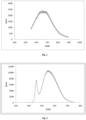
Fig.1 shows photoluminescence as a function of wavelength for a WGM microresonator doped with CdTe quantum dots only, whereas -
Fig.2 shows photoluminescence as a function of wavelength for a WGM microresonator appropriately co-doped with CdTe quantum dots and silver nanoparticles. A broad emission peak in the 500-800 nm range comes from the quantum dots. The co-doping results in appearance of a very narrow peak with a maximum at 510 nm. The existence of this peak is a result of excitonic emission enhanced due to the increase in radiative recombination of excitonic states in quantum dots as a result of the interaction with an induced electromagnetic field around the Ag nanoparticles. -
- A WGM microresonator with a spherical shape and a diameter of 30 µm, wherein the matrix is a Na5B2P3O13 glass doped with silver nanoparticles in an amount of 0.4 wt% and a diameter of 20 nm, and CdTe quantum dots with a diameter of 3 nm in an amount of 0.3 wt%. The luminescence spectrum of the WGM microresonator contains a broad band with a maximum at 590 nm, and a narrow band with a maximum at 510 nm. Example 2
- A WGM microresonator with a spherical shape and a diameter of 30 µm, wherein the matrix is a Na3Al2P3O12 glass doped with CdTe quantum dots with a diameter of 3 nm in an amount of 0.3 wt%. The luminescence spectrum of the WGM microresonator contains a broad band with a maximum at 590 nm
- A WGM microresonator with a spherical shape and a diameter of 30 µm, wherein the matrix is a Na5B2P3O13 glass doped with silver nanoparticles in an amount of 0.4 wt% and a diameter of 20 nm, and CdSe/ZnS quantum dots with a diameter of 3 nm and 0.3 wt% content. The luminescence spectrum of the WGM microresonator contains an emission band in the 600 - 700 nm range with a maximum at 662 nm.
- A WGM microresonator with a spherical shape and a diameter of 30 µm, wherein the matrix is a glass with composition: 80mol%TeO2-10mol%ZnO-10mol%Na2CO3 doped with silver nanoparticles in an amount of 0.4 wt% and a diameter of 20 nm, and CdTe quantum dots with a diameter of 3 nm in an amount of 0.3 wt%. The luminescence spectrum of the WGM microresonator contains a broad band with a maximum at 590 nm, and a narrow band with a maximum at 510 nm.
- A WGM microresonator with a spherical shape and a diameter of 30 µm, wherein the matrix is a glass with composition 80TeO2-10ZnO-10Na2CO3 doped with CsPbBr3 perovskite quantum dots with a diameter of 10 nm in an amount 0.3 wt%. The luminescence spectrum of the WGM microresonator contains a narrow band with a maximum at 513 nm.
Claims (14)
- A WGM microresonator comprising a dielectric matrix, characterized in that in the dielectric matrix with positive real part of the electric permittivity Re(ε)>0 in the UV/VIS/NIR wavelength range of electromagnetic radiation and with low dielectric losses it comprises at least one type of plasmonic nanoparticles with negative real part of the electric permittivity Re(ε)<0 in the UV/VIS/NIR wavelength range of electromagnetic radiation and at least one type of luminescent semiconductor or perovskite quantum dots, wherein the plasmonic nanoparticles have diameter of 10 to 50 nm, and wherein diameter of quantum dots is from 1 to 15 nm.
- A WGM microresonator according to claim 1, characterized in that it comprises a low-melting inorganic glass as a dielectric matrix.
- A WGM microresonator according to claim 2, characterized in that it comprises a phosphate glass as a dielectric matrix.
- A WGM microresonator according to claim 3, characterized in that the matrix is a glass with composition Na3Al2P3O12.
- A WGM microresonator according to claim 2, characterized in that it comprises a glass with composition Na5B2P3O13 as a dielectric matrix.
- A WGM microresonator according to claim 2, characterized in that it comprises a tellurium glass as a dielectric matrix.
- A WGM microresonator according to claim 6, characterized in that it comprises a glass with composition 80 mol% TeO2-10mol%ZnO-10mol%Na2CO3 as a dielectric matrix.
- A WGM microresonator according to claim 1, characterized in that, as plasmonic nanoparticles in the matrix, it preferably comprises metal or semiconductor nanoparticles with low optical losses, i.e. with imaginary part of the electrical permittivity Im(ε)<30 F/m, and with melting temperature higher than the melting point of the matrix.
- A WGM microresonator according to claim 8, characterized in that it comprises silver nanoparticles, as metal nanoparticles.
- A WGM microresonator according to claim 1 or 2, characterized in that it comprises 0.1 -1 wt% metal nanoparticles in the dielectric matrix.
- A WGM microresonator according to claim 1, characterized in that, as quantum dots, it comprises quantum dots of semiconductor material, of melting temperature higher than the melting temperature of the matrix.
- A WGM microresonator according to claim 11, characterized in that, as quantum dots, it comprises quantum dots of CdTe and/or CdSe/ZnS material, preferably of a diameter of 1-6 nm.
- A WGM microresonator according to claim 1, characterized in that it comprises 0.2 - 0.6 wt% quantum dots in the dielectric matrix.
- A WGM microresonator according to claim 1, characterized in that it is spherical in shape, and the microsphere diameter is 1 - 300 micrometers.
Applications Claiming Priority (2)
| Application Number | Priority Date | Filing Date | Title |
|---|---|---|---|
| PL425285A PL240811B1 (en) | 2018-04-19 | 2018-04-19 | WGM microresonator |
| PCT/IB2019/053254 WO2019202560A1 (en) | 2018-04-19 | 2019-04-19 | Wgm microresonator |
Publications (2)
| Publication Number | Publication Date |
|---|---|
| EP3781982A1 EP3781982A1 (en) | 2021-02-24 |
| EP3781982B1 true EP3781982B1 (en) | 2024-06-05 |
Family
ID=68238723
Family Applications (1)
| Application Number | Title | Priority Date | Filing Date |
|---|---|---|---|
| EP19728116.5A Active EP3781982B1 (en) | 2018-04-19 | 2019-04-19 | Wgm microresonator |
Country Status (3)
| Country | Link |
|---|---|
| EP (1) | EP3781982B1 (en) |
| PL (1) | PL240811B1 (en) |
| WO (1) | WO2019202560A1 (en) |
Families Citing this family (5)
| Publication number | Priority date | Publication date | Assignee | Title |
|---|---|---|---|---|
| IL293578A (en) | 2019-12-09 | 2022-08-01 | Deepsight Tech Inc | Whispering gallery mode resonators for sensing applications |
| CN115485549B (en) | 2020-03-30 | 2025-11-11 | 深视超声科技公司 | Optical microresonator array device for ultrasonic sensing |
| CN116113825A (en) | 2020-07-01 | 2023-05-12 | 深视超声科技公司 | Acousto-optic harmonic imaging with optical sensor |
| CN114605077B (en) * | 2022-02-22 | 2023-11-17 | 泰山学院 | All-inorganic perovskite quantum dot glass microsphere laser and preparation method and application thereof |
| CN117534325A (en) * | 2023-11-01 | 2024-02-09 | 湖南师范大学 | CsPbCl in tellurium-germanium-based glass by using NaF as nucleating agent 0.6 Br 2.4 Quantum dot size and emission modulation |
Family Cites Families (3)
| Publication number | Priority date | Publication date | Assignee | Title |
|---|---|---|---|---|
| US7561770B2 (en) * | 2007-07-30 | 2009-07-14 | Hewlett-Packard Development Company, L.P. | Microresonator systems and methods of fabricating the same |
| JP2011164127A (en) * | 2010-02-04 | 2011-08-25 | Nec Corp | Wavelength conversion device, wavelength conversion method, and single photon generation device |
| GB201419267D0 (en) * | 2014-10-29 | 2014-12-10 | Univ Aston | Methods and devices incorporating surface nanoscale axial photonics |
-
2018
- 2018-04-19 PL PL425285A patent/PL240811B1/en unknown
-
2019
- 2019-04-19 EP EP19728116.5A patent/EP3781982B1/en active Active
- 2019-04-19 WO PCT/IB2019/053254 patent/WO2019202560A1/en not_active Ceased
Also Published As
| Publication number | Publication date |
|---|---|
| EP3781982A1 (en) | 2021-02-24 |
| PL425285A1 (en) | 2019-10-21 |
| PL240811B1 (en) | 2022-06-06 |
| WO2019202560A1 (en) | 2019-10-24 |
Similar Documents
| Publication | Publication Date | Title |
|---|---|---|
| WO2019202560A1 (en) | Wgm microresonator | |
| KR100305412B1 (en) | Light emitting device | |
| Du et al. | Blue‐pumped deep ultraviolet lasing from lanthanide‐doped Lu6O5F8 upconversion nanocrystals | |
| EP0646999B1 (en) | Absorption resonant rare earth-doped micro-cavities | |
| Kuwata-Gonokami et al. | Polymer whispering gallery mode lasers | |
| Marjanovic et al. | Characterization of new erbium-doped tellurite glasses and fibers | |
| Dianov et al. | CW bismuth fibre laser | |
| Choi et al. | Comparative study of energy transfers from Er 3+ to Ce 3+ in tellurite and sulfide glasses under 980 nm excitation | |
| RU2269849C2 (en) | Narrow-band fiber lasers of great power with expanded range of wave lengths | |
| Lakshminarayana et al. | Spectral analysis of Er3+-, Er3+/Yb3+-and Er3+/Tm3+/Yb3+-doped TeO2–ZnO–WO3–TiO2–Na2O glasses | |
| Von Klitzing et al. | Very low threshold lasing in Er3+ doped ZBLAN microsphere | |
| Lissillour et al. | Erbium-doped microspherical lasers at 1.56 µm | |
| Wu et al. | The nonlinear effects and applications of gain doped whispering-gallery mode cavities | |
| Wang et al. | All-optical tunable whispering gallery modes in a polymer bottle micro-resonator | |
| US4648094A (en) | Chromium (3+) doped germanate garnets as active media for tunable solid state lasers | |
| Huang et al. | All-optical tuning of the frequency of Yb3+/Er3+ co-doped microsphere WGM laser pumped by 1 µm ASE light source | |
| Rakovich et al. | Raman scattering and anti-Stokes emission from a single spherical microcavity with a CdTe quantum dot monolayer | |
| Li et al. | Single mode compound microsphere laser | |
| Lipson et al. | Er 3+ in strong light-confining microcavity | |
| US9482608B1 (en) | WGM-based molecular sensors | |
| Zhi et al. | Tunable solid-state dye laser with narrow linewidth operation | |
| Kishi et al. | Glass Microspheres with Add-on Structures for Optical Resonators | |
| Zampedri et al. | Spectroscopic assessment of rare-earth activated planar waveguides and microcavities | |
| Van Hoi et al. | High Q-factor micro-cavity laser: Fabrication and lasing emission properties | |
| Ha et al. | High-power microcavity lasers based on highly erbium-doped sol–gel aluminosilicate glasses |
Legal Events
| Date | Code | Title | Description |
|---|---|---|---|
| STAA | Information on the status of an ep patent application or granted ep patent |
Free format text: STATUS: UNKNOWN |
|
| STAA | Information on the status of an ep patent application or granted ep patent |
Free format text: STATUS: THE INTERNATIONAL PUBLICATION HAS BEEN MADE |
|
| PUAI | Public reference made under article 153(3) epc to a published international application that has entered the european phase |
Free format text: ORIGINAL CODE: 0009012 |
|
| STAA | Information on the status of an ep patent application or granted ep patent |
Free format text: STATUS: REQUEST FOR EXAMINATION WAS MADE |
|
| 17P | Request for examination filed |
Effective date: 20201118 |
|
| AK | Designated contracting states |
Kind code of ref document: A1 Designated state(s): AL AT BE BG CH CY CZ DE DK EE ES FI FR GB GR HR HU IE IS IT LI LT LU LV MC MK MT NL NO PL PT RO RS SE SI SK SM TR |
|
| AX | Request for extension of the european patent |
Extension state: BA ME |
|
| DAV | Request for validation of the european patent (deleted) | ||
| DAX | Request for extension of the european patent (deleted) | ||
| STAA | Information on the status of an ep patent application or granted ep patent |
Free format text: STATUS: EXAMINATION IS IN PROGRESS |
|
| 17Q | First examination report despatched |
Effective date: 20220706 |
|
| GRAP | Despatch of communication of intention to grant a patent |
Free format text: ORIGINAL CODE: EPIDOSNIGR1 |
|
| STAA | Information on the status of an ep patent application or granted ep patent |
Free format text: STATUS: GRANT OF PATENT IS INTENDED |
|
| INTG | Intention to grant announced |
Effective date: 20240313 |
|
| GRAS | Grant fee paid |
Free format text: ORIGINAL CODE: EPIDOSNIGR3 |
|
| GRAA | (expected) grant |
Free format text: ORIGINAL CODE: 0009210 |
|
| STAA | Information on the status of an ep patent application or granted ep patent |
Free format text: STATUS: THE PATENT HAS BEEN GRANTED |
|
| AK | Designated contracting states |
Kind code of ref document: B1 Designated state(s): AL AT BE BG CH CY CZ DE DK EE ES FI FR GB GR HR HU IE IS IT LI LT LU LV MC MK MT NL NO PL PT RO RS SE SI SK SM TR |
|
| REG | Reference to a national code |
Ref country code: CH Ref legal event code: EP |
|
| REG | Reference to a national code |
Ref country code: DE Ref legal event code: R096 Ref document number: 602019053237 Country of ref document: DE |
|
| REG | Reference to a national code |
Ref country code: IE Ref legal event code: FG4D |
|
| REG | Reference to a national code |
Ref country code: LT Ref legal event code: MG9D |
|
| PG25 | Lapsed in a contracting state [announced via postgrant information from national office to epo] |
Ref country code: BG Free format text: LAPSE BECAUSE OF FAILURE TO SUBMIT A TRANSLATION OF THE DESCRIPTION OR TO PAY THE FEE WITHIN THE PRESCRIBED TIME-LIMIT Effective date: 20240605 |
|
| REG | Reference to a national code |
Ref country code: NL Ref legal event code: MP Effective date: 20240605 |
|
| PG25 | Lapsed in a contracting state [announced via postgrant information from national office to epo] |
Ref country code: FI Free format text: LAPSE BECAUSE OF FAILURE TO SUBMIT A TRANSLATION OF THE DESCRIPTION OR TO PAY THE FEE WITHIN THE PRESCRIBED TIME-LIMIT Effective date: 20240605 Ref country code: HR Free format text: LAPSE BECAUSE OF FAILURE TO SUBMIT A TRANSLATION OF THE DESCRIPTION OR TO PAY THE FEE WITHIN THE PRESCRIBED TIME-LIMIT Effective date: 20240605 |
|
| PG25 | Lapsed in a contracting state [announced via postgrant information from national office to epo] |
Ref country code: GR Free format text: LAPSE BECAUSE OF FAILURE TO SUBMIT A TRANSLATION OF THE DESCRIPTION OR TO PAY THE FEE WITHIN THE PRESCRIBED TIME-LIMIT Effective date: 20240906 |
|
| PG25 | Lapsed in a contracting state [announced via postgrant information from national office to epo] |
Ref country code: ES Free format text: LAPSE BECAUSE OF FAILURE TO SUBMIT A TRANSLATION OF THE DESCRIPTION OR TO PAY THE FEE WITHIN THE PRESCRIBED TIME-LIMIT Effective date: 20240605 |
|
| PG25 | Lapsed in a contracting state [announced via postgrant information from national office to epo] |
Ref country code: LV Free format text: LAPSE BECAUSE OF FAILURE TO SUBMIT A TRANSLATION OF THE DESCRIPTION OR TO PAY THE FEE WITHIN THE PRESCRIBED TIME-LIMIT Effective date: 20240605 |
|
| PG25 | Lapsed in a contracting state [announced via postgrant information from national office to epo] |
Ref country code: NO Free format text: LAPSE BECAUSE OF FAILURE TO SUBMIT A TRANSLATION OF THE DESCRIPTION OR TO PAY THE FEE WITHIN THE PRESCRIBED TIME-LIMIT Effective date: 20240905 Ref country code: LV Free format text: LAPSE BECAUSE OF FAILURE TO SUBMIT A TRANSLATION OF THE DESCRIPTION OR TO PAY THE FEE WITHIN THE PRESCRIBED TIME-LIMIT Effective date: 20240605 Ref country code: HR Free format text: LAPSE BECAUSE OF FAILURE TO SUBMIT A TRANSLATION OF THE DESCRIPTION OR TO PAY THE FEE WITHIN THE PRESCRIBED TIME-LIMIT Effective date: 20240605 Ref country code: GR Free format text: LAPSE BECAUSE OF FAILURE TO SUBMIT A TRANSLATION OF THE DESCRIPTION OR TO PAY THE FEE WITHIN THE PRESCRIBED TIME-LIMIT Effective date: 20240906 Ref country code: FI Free format text: LAPSE BECAUSE OF FAILURE TO SUBMIT A TRANSLATION OF THE DESCRIPTION OR TO PAY THE FEE WITHIN THE PRESCRIBED TIME-LIMIT Effective date: 20240605 Ref country code: ES Free format text: LAPSE BECAUSE OF FAILURE TO SUBMIT A TRANSLATION OF THE DESCRIPTION OR TO PAY THE FEE WITHIN THE PRESCRIBED TIME-LIMIT Effective date: 20240605 Ref country code: BG Free format text: LAPSE BECAUSE OF FAILURE TO SUBMIT A TRANSLATION OF THE DESCRIPTION OR TO PAY THE FEE WITHIN THE PRESCRIBED TIME-LIMIT Effective date: 20240605 Ref country code: RS Free format text: LAPSE BECAUSE OF FAILURE TO SUBMIT A TRANSLATION OF THE DESCRIPTION OR TO PAY THE FEE WITHIN THE PRESCRIBED TIME-LIMIT Effective date: 20240905 |
|
| PG25 | Lapsed in a contracting state [announced via postgrant information from national office to epo] |
Ref country code: NL Free format text: LAPSE BECAUSE OF FAILURE TO SUBMIT A TRANSLATION OF THE DESCRIPTION OR TO PAY THE FEE WITHIN THE PRESCRIBED TIME-LIMIT Effective date: 20240605 |
|
| REG | Reference to a national code |
Ref country code: AT Ref legal event code: MK05 Ref document number: 1692880 Country of ref document: AT Kind code of ref document: T Effective date: 20240605 |
|
| PG25 | Lapsed in a contracting state [announced via postgrant information from national office to epo] |
Ref country code: NL Free format text: LAPSE BECAUSE OF FAILURE TO SUBMIT A TRANSLATION OF THE DESCRIPTION OR TO PAY THE FEE WITHIN THE PRESCRIBED TIME-LIMIT Effective date: 20240605 |
|
| PG25 | Lapsed in a contracting state [announced via postgrant information from national office to epo] |
Ref country code: PT Free format text: LAPSE BECAUSE OF FAILURE TO SUBMIT A TRANSLATION OF THE DESCRIPTION OR TO PAY THE FEE WITHIN THE PRESCRIBED TIME-LIMIT Effective date: 20241007 |
|
| PG25 | Lapsed in a contracting state [announced via postgrant information from national office to epo] |
Ref country code: PT Free format text: LAPSE BECAUSE OF FAILURE TO SUBMIT A TRANSLATION OF THE DESCRIPTION OR TO PAY THE FEE WITHIN THE PRESCRIBED TIME-LIMIT Effective date: 20241007 |
|
| PG25 | Lapsed in a contracting state [announced via postgrant information from national office to epo] |
Ref country code: PL Free format text: LAPSE BECAUSE OF FAILURE TO SUBMIT A TRANSLATION OF THE DESCRIPTION OR TO PAY THE FEE WITHIN THE PRESCRIBED TIME-LIMIT Effective date: 20240605 |
|
| PG25 | Lapsed in a contracting state [announced via postgrant information from national office to epo] |
Ref country code: EE Free format text: LAPSE BECAUSE OF FAILURE TO SUBMIT A TRANSLATION OF THE DESCRIPTION OR TO PAY THE FEE WITHIN THE PRESCRIBED TIME-LIMIT Effective date: 20240605 |
|
| PG25 | Lapsed in a contracting state [announced via postgrant information from national office to epo] |
Ref country code: AT Free format text: LAPSE BECAUSE OF FAILURE TO SUBMIT A TRANSLATION OF THE DESCRIPTION OR TO PAY THE FEE WITHIN THE PRESCRIBED TIME-LIMIT Effective date: 20240605 Ref country code: IS Free format text: LAPSE BECAUSE OF FAILURE TO SUBMIT A TRANSLATION OF THE DESCRIPTION OR TO PAY THE FEE WITHIN THE PRESCRIBED TIME-LIMIT Effective date: 20241005 |
|
| PG25 | Lapsed in a contracting state [announced via postgrant information from national office to epo] |
Ref country code: CZ Free format text: LAPSE BECAUSE OF FAILURE TO SUBMIT A TRANSLATION OF THE DESCRIPTION OR TO PAY THE FEE WITHIN THE PRESCRIBED TIME-LIMIT Effective date: 20240605 |
|
| PG25 | Lapsed in a contracting state [announced via postgrant information from national office to epo] |
Ref country code: RO Free format text: LAPSE BECAUSE OF FAILURE TO SUBMIT A TRANSLATION OF THE DESCRIPTION OR TO PAY THE FEE WITHIN THE PRESCRIBED TIME-LIMIT Effective date: 20240605 Ref country code: SK Free format text: LAPSE BECAUSE OF FAILURE TO SUBMIT A TRANSLATION OF THE DESCRIPTION OR TO PAY THE FEE WITHIN THE PRESCRIBED TIME-LIMIT Effective date: 20240605 |
|
| PG25 | Lapsed in a contracting state [announced via postgrant information from national office to epo] |
Ref country code: SM Free format text: LAPSE BECAUSE OF FAILURE TO SUBMIT A TRANSLATION OF THE DESCRIPTION OR TO PAY THE FEE WITHIN THE PRESCRIBED TIME-LIMIT Effective date: 20240605 |
|
| PG25 | Lapsed in a contracting state [announced via postgrant information from national office to epo] |
Ref country code: SM Free format text: LAPSE BECAUSE OF FAILURE TO SUBMIT A TRANSLATION OF THE DESCRIPTION OR TO PAY THE FEE WITHIN THE PRESCRIBED TIME-LIMIT Effective date: 20240605 Ref country code: SK Free format text: LAPSE BECAUSE OF FAILURE TO SUBMIT A TRANSLATION OF THE DESCRIPTION OR TO PAY THE FEE WITHIN THE PRESCRIBED TIME-LIMIT Effective date: 20240605 Ref country code: RO Free format text: LAPSE BECAUSE OF FAILURE TO SUBMIT A TRANSLATION OF THE DESCRIPTION OR TO PAY THE FEE WITHIN THE PRESCRIBED TIME-LIMIT Effective date: 20240605 Ref country code: PL Free format text: LAPSE BECAUSE OF FAILURE TO SUBMIT A TRANSLATION OF THE DESCRIPTION OR TO PAY THE FEE WITHIN THE PRESCRIBED TIME-LIMIT Effective date: 20240605 Ref country code: IS Free format text: LAPSE BECAUSE OF FAILURE TO SUBMIT A TRANSLATION OF THE DESCRIPTION OR TO PAY THE FEE WITHIN THE PRESCRIBED TIME-LIMIT Effective date: 20241005 Ref country code: EE Free format text: LAPSE BECAUSE OF FAILURE TO SUBMIT A TRANSLATION OF THE DESCRIPTION OR TO PAY THE FEE WITHIN THE PRESCRIBED TIME-LIMIT Effective date: 20240605 Ref country code: CZ Free format text: LAPSE BECAUSE OF FAILURE TO SUBMIT A TRANSLATION OF THE DESCRIPTION OR TO PAY THE FEE WITHIN THE PRESCRIBED TIME-LIMIT Effective date: 20240605 Ref country code: AT Free format text: LAPSE BECAUSE OF FAILURE TO SUBMIT A TRANSLATION OF THE DESCRIPTION OR TO PAY THE FEE WITHIN THE PRESCRIBED TIME-LIMIT Effective date: 20240605 |
|
| PG25 | Lapsed in a contracting state [announced via postgrant information from national office to epo] |
Ref country code: IT Free format text: LAPSE BECAUSE OF FAILURE TO SUBMIT A TRANSLATION OF THE DESCRIPTION OR TO PAY THE FEE WITHIN THE PRESCRIBED TIME-LIMIT Effective date: 20240605 |
|
| REG | Reference to a national code |
Ref country code: DE Ref legal event code: R097 Ref document number: 602019053237 Country of ref document: DE |
|
| PLBE | No opposition filed within time limit |
Free format text: ORIGINAL CODE: 0009261 |
|
| STAA | Information on the status of an ep patent application or granted ep patent |
Free format text: STATUS: NO OPPOSITION FILED WITHIN TIME LIMIT |
|
| PG25 | Lapsed in a contracting state [announced via postgrant information from national office to epo] |
Ref country code: DK Free format text: LAPSE BECAUSE OF FAILURE TO SUBMIT A TRANSLATION OF THE DESCRIPTION OR TO PAY THE FEE WITHIN THE PRESCRIBED TIME-LIMIT Effective date: 20240605 |
|
| 26N | No opposition filed |
Effective date: 20250306 |
|
| PGFP | Annual fee paid to national office [announced via postgrant information from national office to epo] |
Ref country code: DE Payment date: 20250403 Year of fee payment: 7 |
|
| PGFP | Annual fee paid to national office [announced via postgrant information from national office to epo] |
Ref country code: GB Payment date: 20250402 Year of fee payment: 7 |
|
| PGFP | Annual fee paid to national office [announced via postgrant information from national office to epo] |
Ref country code: FR Payment date: 20250402 Year of fee payment: 7 |
|
| PG25 | Lapsed in a contracting state [announced via postgrant information from national office to epo] |
Ref country code: SE Free format text: LAPSE BECAUSE OF FAILURE TO SUBMIT A TRANSLATION OF THE DESCRIPTION OR TO PAY THE FEE WITHIN THE PRESCRIBED TIME-LIMIT Effective date: 20240605 |
|
| REG | Reference to a national code |
Ref country code: CH Ref legal event code: H13 Free format text: ST27 STATUS EVENT CODE: U-0-0-H10-H13 (AS PROVIDED BY THE NATIONAL OFFICE) Effective date: 20251125 |
|
| PG25 | Lapsed in a contracting state [announced via postgrant information from national office to epo] |
Ref country code: LU Free format text: LAPSE BECAUSE OF NON-PAYMENT OF DUE FEES Effective date: 20250419 |
|
| PG25 | Lapsed in a contracting state [announced via postgrant information from national office to epo] |
Ref country code: MC Free format text: LAPSE BECAUSE OF FAILURE TO SUBMIT A TRANSLATION OF THE DESCRIPTION OR TO PAY THE FEE WITHIN THE PRESCRIBED TIME-LIMIT Effective date: 20240605 |
|
| REG | Reference to a national code |
Ref country code: BE Ref legal event code: MM Effective date: 20250430 |
|
| PG25 | Lapsed in a contracting state [announced via postgrant information from national office to epo] |
Ref country code: BE Free format text: LAPSE BECAUSE OF NON-PAYMENT OF DUE FEES Effective date: 20250430 |
|
| PG25 | Lapsed in a contracting state [announced via postgrant information from national office to epo] |
Ref country code: CH Free format text: LAPSE BECAUSE OF NON-PAYMENT OF DUE FEES Effective date: 20250430 |
|
| PG25 | Lapsed in a contracting state [announced via postgrant information from national office to epo] |
Ref country code: IE Free format text: LAPSE BECAUSE OF NON-PAYMENT OF DUE FEES Effective date: 20250419 |