EP3780823A1 - Downlink information processing method and apparatus - Google Patents
Downlink information processing method and apparatus Download PDFInfo
- Publication number
- EP3780823A1 EP3780823A1 EP19851434.1A EP19851434A EP3780823A1 EP 3780823 A1 EP3780823 A1 EP 3780823A1 EP 19851434 A EP19851434 A EP 19851434A EP 3780823 A1 EP3780823 A1 EP 3780823A1
- Authority
- EP
- European Patent Office
- Prior art keywords
- information
- terminal
- downlink
- channel quality
- macce
- Prior art date
- Legal status (The legal status is an assumption and is not a legal conclusion. Google has not performed a legal analysis and makes no representation as to the accuracy of the status listed.)
- Granted
Links
Images

Classifications
-
- H—ELECTRICITY
- H04—ELECTRIC COMMUNICATION TECHNIQUE
- H04L—TRANSMISSION OF DIGITAL INFORMATION, e.g. TELEGRAPHIC COMMUNICATION
- H04L5/00—Arrangements affording multiple use of the transmission path
- H04L5/0091—Signalling for the administration of the divided path, e.g. signalling of configuration information
- H04L5/0094—Indication of how sub-channels of the path are allocated
-
- H—ELECTRICITY
- H04—ELECTRIC COMMUNICATION TECHNIQUE
- H04W—WIRELESS COMMUNICATION NETWORKS
- H04W72/00—Local resource management
- H04W72/20—Control channels or signalling for resource management
- H04W72/23—Control channels or signalling for resource management in the downlink direction of a wireless link, i.e. towards a terminal
-
- H—ELECTRICITY
- H04—ELECTRIC COMMUNICATION TECHNIQUE
- H04L—TRANSMISSION OF DIGITAL INFORMATION, e.g. TELEGRAPHIC COMMUNICATION
- H04L5/00—Arrangements affording multiple use of the transmission path
- H04L5/003—Arrangements for allocating sub-channels of the transmission path
- H04L5/0048—Allocation of pilot signals, i.e. of signals known to the receiver
-
- H—ELECTRICITY
- H04—ELECTRIC COMMUNICATION TECHNIQUE
- H04L—TRANSMISSION OF DIGITAL INFORMATION, e.g. TELEGRAPHIC COMMUNICATION
- H04L5/00—Arrangements affording multiple use of the transmission path
- H04L5/003—Arrangements for allocating sub-channels of the transmission path
- H04L5/0053—Allocation of signalling, i.e. of overhead other than pilot signals
- H04L5/0057—Physical resource allocation for CQI
-
- H—ELECTRICITY
- H04—ELECTRIC COMMUNICATION TECHNIQUE
- H04W—WIRELESS COMMUNICATION NETWORKS
- H04W72/00—Local resource management
- H04W72/20—Control channels or signalling for resource management
-
- H—ELECTRICITY
- H04—ELECTRIC COMMUNICATION TECHNIQUE
- H04W—WIRELESS COMMUNICATION NETWORKS
- H04W72/00—Local resource management
- H04W72/20—Control channels or signalling for resource management
- H04W72/21—Control channels or signalling for resource management in the uplink direction of a wireless link, i.e. towards the network
-
- H—ELECTRICITY
- H04—ELECTRIC COMMUNICATION TECHNIQUE
- H04W—WIRELESS COMMUNICATION NETWORKS
- H04W72/00—Local resource management
- H04W72/50—Allocation or scheduling criteria for wireless resources
- H04W72/54—Allocation or scheduling criteria for wireless resources based on quality criteria
- H04W72/542—Allocation or scheduling criteria for wireless resources based on quality criteria using measured or perceived quality
-
- H—ELECTRICITY
- H04—ELECTRIC COMMUNICATION TECHNIQUE
- H04L—TRANSMISSION OF DIGITAL INFORMATION, e.g. TELEGRAPHIC COMMUNICATION
- H04L5/00—Arrangements affording multiple use of the transmission path
- H04L5/003—Arrangements for allocating sub-channels of the transmission path
- H04L5/0058—Allocation criteria
- H04L5/006—Quality of the received signal, e.g. BER, SNR, water filling
-
- H—ELECTRICITY
- H04—ELECTRIC COMMUNICATION TECHNIQUE
- H04W—WIRELESS COMMUNICATION NETWORKS
- H04W48/00—Access restriction; Network selection; Access point selection
- H04W48/08—Access restriction or access information delivery, e.g. discovery data delivery
- H04W48/12—Access restriction or access information delivery, e.g. discovery data delivery using downlink control channel
Definitions
- This application relates to, but not limited to, mobile communication technology, such as a downlink information processing method and apparatus.
- the wireless channel conditions of a communication system are constantly changing, and terminal signals in different coverage areas are also different. If low-order modulation is used in downlink transmission in the case of good channel quality, the spectrum efficiency is very low; on the contrary, if high-order coding is used in the case of poor channel quality, it will cause high bit error rate. Moreover, no matter what happens, there will be a waste of resources.
- a terminal may report the downlink channel quality to an eNodeB through Channel State Information (CSI).
- CSI Channel State Information
- the terminal acquires the CSI by measuring a downlink reference signal, and reports a measurement result to the eNodeB through a Physical Uplink Control Channel (PUCCH) or a Physical Uplink Shared Channel (PUSCH).
- PUCCH Physical Uplink Control Channel
- PUSCH Physical Uplink Shared Channel
- NB-IOT Narrow Band Internet of Things
- the bandwidth is only 180K, so several physical channels used by LTE, including PUCCH channel, are cancelled, and the function of reporting the measurement result of terminal to the eNodeB is also cancelled.
- 3GPP 3rd Generation Partnership Project
- eNodeB can only estimate the downlink channel quality through the uplink channel quality, and determine the downlink coding mode based on the estimated value. The downlink coding mode obtained in this way cannot accurately reflect the actual channel quality.
- a processing downlink information method and apparatus are provided, which can realize reporting of downlink information, so as to ensure that the determined downlink coding mode can meet the quality requirements of downlink channels.
- a downlink information processing method including: acquiring, by a terminal, configuration information; and carrying, by the terminal based on the configuration information, downlink channel quality information and scheduling information in a media access control control element (MACCE) to report to a base station.
- MACCE media access control control element
- a computer readable storage medium which stores computer executable instructions, where the computer executable instructions are set to execute the downlink information processing method described in any of the above.
- an electronic device for realizing information processing which includes a processor and a memory storing a computer program executable on the processor, which is set to execute the steps of the downlink information processing method described in any of the above.
- a downlink information processing apparatus which includes an acquisition module and a processing module; wherein the acquisition module is configured to acquire a configuration information; and the processing module is configured to carry, based on the configuration information, downlink channel quality information and scheduling information into a MACCE to report to a base station.
- the method for reporting downlink channel quality is mentioned in the proposal of 3GPP R14 protocol.
- the downlink channel quality is reported through Radio Resource Control (RRC) signaling, and the information of Reference Signal Received Power (RSRP) and Reference Signal Received Quality (RSRQ) is carried in the RRC connection setup complete-NB message.
- RRC Radio Resource Control
- RSRP Reference Signal Received Power
- RSRQ Reference Signal Received Quality
- the eNodeB cannot adjust the coding mode in time to adapt to the downlink.
- the downlink channel quality is reported through RRC signaling, not directly to the medium access control (MAC) layer, while the adjustment of the downlink coding mode is controlled by the MAC layer.
- MAC medium access control
- the MAC layer needs to adjust the coding mode according to the link, it also needs to notify the MAC layer after RRC decoding. In this way, it may not be able to apply the downlink channel quality to the selection of the coding mode of the MAC layer in time.
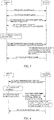
- Fig. 1 is a flow chart of a downlink information processing method according to the present application, as shown in Fig. 1 , step 100 and step 101 are included.
- a terminal acquires configuration information.
- the terminal may acquire the configuration information from a systematic message received from a base station or a RRC signaling.
- the configuration information includes: a reporting mode and a plurality of corresponding parameters, etc.
- the configuration information may be pre-configured in the terminal, and the terminal only needs to read to obtain it.
- the configuration information includes: a reporting mode and a plurality of corresponding parameters, etc.
- the terminal carries, according to the configuration information, downlink channel quality information and scheduling information into an Media Access Control Control Element (MACCE) to report to a base station.
- MACCE Media Access Control Control Element
- MACCE is a way to exchange control information between UE and network besides RRC messages and NAS messages in LTE, that is, MACCE exchanges the control information with respect to MAC layer.
- MACCE is used to carry downlink measurement information and scheduling information, and the downlink measurement information and scheduling information are directly reported to the MAC layer.
- the terminal also reports the scheduling information proposed by itself to the base station, which forms a dynamic negotiation process for scheduling information between the terminal and the base station, and better ensures the adaptability of the downlink coding mode to the change of downlink information.
- the downlink channel quality information includes any one or any combination of the following: Reference Signal Received Power(RSRP), which may be a RSRP measured by the terminal in LTE or NB-IOT system; Reference Signal Received Quality (RSRQ), which may be a RSRQ measured by the terminal in LTE or NB-IOT system; Channel Quality Indicator(CQI), which may be a CQI defined in 3GPP protocol standard, that is, CQI information used in LTE system; signal to interference plus noise ratio(SINR), which may be a SINR measured by the terminal in LTE or NB-IOT system.
- RSRP Reference Signal Received Power
- RSRQ Reference Signal Received Quality
- CQI Channel Quality Indicator
- SINR signal to interference plus noise ratio
- the scheduling information reported by the terminal is scheduling information proposed by the terminal according to the previous decoding situation and the current channel condition, including any one or any combination of the following: Modulation and Coding Scheme (MCS); modulation mode, which may be Binary Phase Shift Keying (BPSK), Quadrature Phase Shift Keying (QPSK) and so on specified in 3GPP protocol standard.
- MCS Modulation and Coding Scheme
- BPSK Binary Phase Shift Keying
- QPSK Quadrature Phase Shift Keying
- the number of downlink repetitions may be the number of repetitions of a Narrowband Physical Downlink Control Channel (NPDCCH) or a Narrowband Physical Downlink Shared Channel (NPDSCH) proposed by the terminal.
- NPDCCH Narrowband Physical Downlink Control Channel
- NPDSCH Narrowband Physical Downlink Shared Channel
- the logical channel group ID (LCG ID) field value of UL-SCH specified in the extending protocol may be used as the LCID of the newly added MACCE to carry the downlink channel quality information and the scheduling information.
- the LCID As shown in bold and italicized information in Table 1, values for the reserved fields 01101-10011 used in the embodiments of this application are used for reporting the downlink channel quality information and the scheduling information.
- Table 1 shows the LCID information defined on the UL-SCH channel specified by the protocol except for the above reserved fields, which will not be described here.
- the MAC PDU structure in NB-IOT system includes MAC header, MAC control element, MAC Service Data Unit (MAC SDU) and optional Padding.
- MAC SDU MAC Service Data Unit
- the downlink channel quality information and the scheduling information may be carried by extending the MAC control element.
- the extended MAC control element structure for carrying the downlink channel quality information and the scheduling information may occupy 8bits, which includes a logical channel group ID (LCG ID) field and an information field for carrying the downlink channel quality information and the scheduling information.
- LCG ID logical channel group ID
- Table 2 LCG ID Field(2bits) Information Field(6bits)
- the value of the LCG ID field is set to be 0, and the information carried in the information field may include, but is not limited to, any one or any combination of the following: RSRP, RSRQ, SINR, CQI, MCS, modulation mode or number of downlink repetitions, etc.
- the information carried in the information field may be an index value corresponding to a real value.
- Table 3 is an example of an embodiment of the corresponding relationship between RSRP value and index value according to the present application
- Table 4 is an example of an embodiment of the corresponding relationship between RSRQ value and index value according to the present application
- Table 5 is an example of an embodiment of the corresponding relationship between SINR value and index value according to the present application.
- the reported downlink channel quality information is the measured value of the Anchor carrier or the measured value of the current resident carrier.
- the RSRP information reported by the terminal is an index value shown in Table 3, and the RSRP value monitored by the terminal can be converted into an index value according to the corresponding relationship in Table 3 and then reported.
- Table 4 Index values RSRQ values 0 ⁇ -19.5dB 1 -19.5dB ⁇ -19dB 2 -19dB ⁇ -18.5dB 3 -18.5dB ⁇ -18dB 5 -18dB ⁇ -17.5dB 5 -17.5dB ⁇ -17dB 6 -17dB ⁇ -16.5dB 7 -16.5dB ⁇ -16dB 8 -16dB ⁇ -15.5dB 9 -15.5dB ⁇ -15dB 10 -15dB ⁇ -14.5dB 11 -14.5dB ⁇ -14dB 12 -14dB ⁇ -13.5dB 13 -13.5dB ⁇ -13dB 14 -13dB ⁇ -12.5dB 15 -12.5dB ⁇ -12dB 16 -12dB ⁇ -11.5dB 17 -11.5dB ⁇ -11dB 18 -11dB ⁇ -10.5dB 19 -10.5
- the RSRQ information reported by the terminal is an index value as shown in Table 3, and the RSRQ value monitored by the terminal may be converted into an index value according to the corresponding relationship in Table 4 and then reported.
- Table 5 Index values SINR values 0 ⁇ -20dB 1 -20dB ⁇ -19dB 2 -19dB ⁇ -18dB 3 -18dB ⁇ -17dB 5 -17dB ⁇ -16dB 5 -16dB ⁇ -15dB 6 -15dB ⁇ -14dB 7 -14dB ⁇ -13dB 8 -13dB ⁇ -12dB 9 -12dB ⁇ -11dB 10 -11dB ⁇ -10dB 11 -10dB ⁇ -9dB 12 -9dB ⁇ -8dB 13 -8dB ⁇ -7dB 14 -7dB ⁇ -6dB 15 -6dB ⁇ -5dB 16 -5dB ⁇ -4dB 17 -4dB ⁇ -3dB 18 -3dB ⁇ -2dB 19 -2dB ⁇ -1dB 20 -1dB ⁇ 0dB 21 -0d
- the SINR information reported by the terminal is an index value as shown in Table 3, and the SINR value monitored by the terminal may be converted into an index value according to the corresponding relationship in Table 5 and then reported.
- the reported CQI is consistent with the definition value in LTE system, and the reported value is also an index value, with a value range of 0-15.
- the reported value is also an index value, with a value range of 0-15.
- the reported modulation mode is also an index value. Since the downlink NPDSCH of NB-IOT system only supports QPSK modulation mode at present, this value may be filled with 0. If other modulation modes are supported, it can be accumulated backward, and the modulation mode corresponding to the specific index value is not used to limit the protection scope of the present application.
- the reported number of downlink repetitions is also an index value, and the index value defined in 3GPP protocol is adopted, with a value range of 0-15 respectively corresponding to the number of downlink repetitions in the protocol.
- relevant protocols which will not be repeated here.
- the reporting modes in the present application may include, but are not limited to: periodic reporting, such as periodic reporting according to a preset period; event reporting, for example, when a coverage level where the terminal is located changes, or when a cell where the terminal is located changes, the reporting is triggered; change reporting, for example, when the terminal downlink measured value exceeds the threshold and the duration exceeds the preset threshold, the reporting is triggered; following reporting, such as following RRC connection request, following RRC connection recovery request, following RRC connection reestablishment request, etc.
- the terminal may initiate a connected state access and conduct a report through the MACCE using the UL Grant resource assigned by the base station, such as eNodeB, after requesting the connected state resource scheduling when there is no UL grant; or may conduct a report through MSG3 in the access procedure along with MACCE carrying a Cell Radio Network Temporary identifier (C-RNTI) and a Buffer Status Report (BSR) when there is no UL Grant.
- C-RNTI Cell Radio Network Temporary identifier
- BSR Buffer Status Report
- the connected state resource scheduling request includes any one or any combination of the following: a resource scheduling request reported through a Contention Free Random Access (CFRA) resource preconfigured in the connected state; a resource scheduling request reported through a buffer status report sent with semi-persistent scheduling (SPS for BSR); a resource scheduling request reported through contention-based radio access (CBRA) in the connected state; a resource scheduling request reported along with a Hybrid Automatic Repeat request-ACK/NACK (Harq-ACK/NACK).
- CFRA Contention Free Random Access
- SPS for BSR semi-persistent scheduling
- CBRA contention-based radio access
- Harq-ACK/NACK Hybrid Automatic Repeat request-ACK/NACK
- the terminal when the configuration information received by the terminal includes a reporting mode of periodic reporting and a periodic parameter with a preset period, the terminal will set and start a periodic timer according to the preset period after entering the RRC connected state; when the periodic timer expires and there is an UL Grant, the terminal may directly enable the downlink channel quality information and the scheduling information proposed by the terminal into the MACCE (for example, a MACCE on a narrowband physical uplink shared channel (NPUSCH) in NB-IOT system) to report to the eNodeB; when there is no UL Grant, the terminal may initiate a connected state resource scheduling request (SR) procedure, and enable the downlink channel quality information and the scheduling information proposed by the terminal into the MACCE to report to the eNodeB through the UL Grant resource assigned by the eNodeB; or, may report them to the eNodeB through message 3(MSG3) in an access procedure along with MACCE carrying a cell radio network temporary identifier (C-RNTI) and
- the eNodeB may send the configuration information to the terminal through procedures such as narrowband Internet of Things-system information block type 2-NB, narrowband Internet of Things-RRC connection setup-NB, narrowband Internet of Things-RRC connection resume-NB, narrowband Internet of Things -RRC connection reestablishment-NB, or narrowband Internet of Things-RRC connection reconfiguration-NB, etc.
- the terminal when the configuration information received by the terminal includes: a reporting mode of event reporting (such as receiving SR), and a plurality of event parameters, where the plurality of event parameters may include triggered events, information state reported after the event is triggered (such as receiving SR), such as channel quality type and/or indication of whether to report, etc., the terminal will enable the downlink channel quality information and the scheduling information proposed by the terminal into the MACCE to report to the eNodeB through the UL Grant resource assigned by the eNodeB according to the channel quality type and/or the indication of whether to report, after the event is triggered(such as connected resource scheduling request).
- a reporting mode of event reporting such as receiving SR
- the plurality of event parameters may include triggered events, information state reported after the event is triggered (such as receiving SR), such as channel quality type and/or indication of whether to report, etc.
- the eNodeB may send the configuration information to the terminal through procedures such as system information block type2-NB, RRC connection setup-NB, RRC connection resume-NB, RRC connection reestablishment-NB, or RRC connection reconfiguration-NB, etc.
- the change reporting may be triggered.
- the change conditions may include, but are not limited to, any one or any combination of the following: a difference between the current channel quality monitoring value and the last monitoring result exceeds the preset change threshold (such as the change threshold in measured values of RSRP, and/or RSPQ, and/or SINR, and/or CQI, etc.), and the duration exceeds the preset duration (such as the duration of changes in measured values of RSRP, and/or RSPQ, and/or SINR, and/or CQI, etc.).
- the preset change threshold such as the change threshold in measured values of RSRP, and/or RSPQ, and/or SINR, and/or CQI, etc.
- whether to trigger change reporting may also be determined by judging whether the current monitoring value exceeds a preset threshold, but whether the difference between the current channel quality monitoring value and the last monitoring result exceeds the preset change threshold to determine whether to trigger the change reporting or not can avoid the situation that the terminal continuously reports and takes up a lot of resources.
- the change reporting is triggered; when the cell where the terminal is located changes, the change reporting is triggered.
- the terminal monitors the downlink channel quality in real time after entering the RRC connection, and triggers change reporting if one of the above change conditions is met.
- the terminal may directly enable the downlink channel quality information and the scheduling information proposed by the terminal into the MACCE to report to the eNodeB; when there is no UL Grant, the terminal may initiate a connected state resource request (SR) procedure, and enable the downlink channel quality information and the scheduling information proposed by the terminal into the MACCE to report to the eNodeB through an UL Grant resource assigned by the eNodeB; or, may report them to the eNodeB through message 3(MSG3) in an access procedure along with MACCE carrying a cell radio network temporary identifier (C-RNTI) and a buffer status report (BSR).
- C-RNTI cell radio network temporary identifier
- BSR buffer status report
- the eNodeB may send the configuration information to the terminal through procedures such as system information block type2-NB, RRC connection setup-NB, RRC connection resume-NB, RRC connection reestablishment-NB, or RRC connection reconfiguration-NB, etc.
- the terminal may directly enable the downlink channel quality information and the scheduling information proposed by the terminal into the MACCE to report to the eNodeB during initiating RRC connection setup request, RRC connection restoration request, or RRC connection reestablishment request.
- the following parameters may include but is not limited to: following RRC connection request, following RRC connection restoration request, following RRC connection reestablishment request, etc.
- the eNodeB may send the configuration information to the terminal through, for example, system information block type2-NB.
- the embodiments of the present application are applied to the NB-IOT system, and the terminal may timely feed back the downlink channel quality status to the eNodeB, and the eNodeB may select a suitable downlink coding mode according to the downlink channel quality and the scheduling information reported by the terminal, so as to reduce downlink error codes and improve the utilization rate of downlink resources.
- the bandwidth is relatively small.
- the resources are very valuable, especially the downlink resources.
- the most suitable coding mode is selected for terminals with different channel qualities, and the reasonable and effective use of the downlink resources is realized.
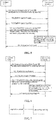
- Fig. 2 is a schematic flow chart of an embodiment of realizing downlink information processing through periodic reporting according to the present application.
- steps 200 to 204 are included.
- the eNodeB enables the configuration information into the system information block type2-NB message to send to the terminal.
- the configuration information includes: a reporting mode of periodic reporting and a preset periodic parameter.
- the configuration information may also be sent to the terminal through, for example, an RRC connection setup-NB message, an RRC connection resume-NB message, an RRC connection reestablishment-NB message, or an RRC connection reconfiguration-NB message.
- the terminal sets and starts a periodic timer according to the preset period in the configuration information after a RRC connection is established and the terminal enters the RRC connected state.
- the periodic timer expires, and the terminal enables the downlink channel quality information and the scheduling information proposed by the terminal into the MACCE to report to the eNodeB.
- the MACCE is a MACCE on NPUSCH channel in NB-IOT system.
- the terminal determines that the downlink channel quality information and the scheduling information proposed by the terminal need to be reported.
- the MAC control element structure can be assembled after the terminal obtains an UL Grant, and the assembly format is consistent with the MAC PDU structure in the NB-IOT system, including a MAC header and a MAC control element, where the LCID value in the MAC header is a reserved field in the original system, and the specific definition of LCID corresponding to each measurement information is shown in Table 1.
- the terminal may initiate a connected state resource scheduling request (SR), so that the downlink channel quality information and the scheduling information proposed by the terminal may be enabled into the MACCE to be reported through the UL Grant resource granted by the eNodeB.
- SR connected state resource scheduling request
- the downlink channel quality information and the scheduling information proposed by the terminal may be reported to the eNodeB along with MACCE carrying a BSR and a CRNTI, that is to say, they are reported through MACCE of MSG3 message. In this way, the downlink channel quality information and the scheduling information proposed by the terminal are fed back to the eNodeB in time.
- the procedure may be shown in Fig. 6 .
- the MAC control element structure is defined as shown in Table 2, where the LCG ID is fixed to 0 in the NB-IOT system, the downlink channel quality information may be one or any one or any combination of RSRP, RSRQ, SINR, CQI, etc., the scheduling information may include one or any one or any combination of MCS, modulation mode and number of downlink repetitions, and the values of these information may be index values.
- the index values of the reported RSRP may include 0 ⁇ 33, and the specific definition is shown in Table 3.
- the index values of reported RSRQ may include 0 ⁇ 34, and the specific definition is shown in Table 4.
- the index values of reported SINR may include 0 ⁇ 41, and the specific definition is shown in Table 5.
- the reported CQI is consistent with the defined value of LTE system, and the reported value is an index value, with a value range of 0-15. For details, please refer to relevant protocols, which will not be repeated here.
- the reported modulation mode is also an index value. Since the downlink NPDSCH of NB-IOT system only supports QPSK modulation mode at present, this value may be filled with 0. If other modulation modes are supported, it can be accumulated backward. The modulation mode corresponding to the specific index value is not used to limit the protection scope of the present application.
- the reported number of downlink repetitions is also an index value, and the index value defined in 3GPP protocol is adopted, with a value range of 0-15 respectively corresponding to the number of downlink repetitions in the protocol.
- relevant protocols which will not be repeated here.
- the eNodeB determines a modulation mode according to the received downlink channel quality information and the scheduling information proposed by the terminal.
- the modulation mode may be a modulation mode such as BPSK, QPSK and so on specified in 3GPP protocol standard.
- the eNodeB after the eNodeB parses out the MAC control element carrying the downlink channel quality information and the scheduling information proposed by the terminal, it adjusts the downlink coding mode according to the downlink channel quality information and the scheduling information proposed by the terminal which are reported by the terminal, for example, if the downlink channel quality is good, high-order coding mode is selected, and if it is bad, low-order coding mode is selected.
- the eNodeB Each time the eNodeB receives the downlink channel quality information and the scheduling information proposed by the terminal, it will adjust the subsequent downlink coding mode according to the reported value. For example, assuming that the eNodeB parses out the MAC control element of RSRP, and the index value of RSRP is 8, it can be obtained from Table 3 that the actual value of RSRP is -74 dBm ⁇ -76 dBm. At this time, it can be considered that the downlink channel quality is very good, and high-order coding mode may be selected, such as MCS selection 11, 12, etc.
- the eNodeB sends the determined modulation mode to the UE.
- Fig. 3 is a schematic flow chart of an embodiment of realizing downlink information processing through event reporting according to the present application.
- the UE initiates a random access request, and the eNodeB returns a random access response; the UE initiates a narrowband RRC connection request (RRC connection request-NB).
- RRC connection request-NB narrowband RRC connection request
- the eNodeB enables the configuration information into the system information block type2-NB message to send to the terminal.
- the configuration information includes: a reporting mode of event reporting and a plurality of event parameters.
- the plurality of event parameters may include events that trigger event reporting, such as SR, channel quality types reported and/or indications of whether to report after the events are triggered.
- events that trigger event reporting such as SR, channel quality types reported and/or indications of whether to report after the events are triggered.
- the configuration information may also be sent to the terminal through, for example, an RRC connection setup-NB message, an RRC connection resume-NB message, an RRC connection reestablishment-NB message, or an RRC connection reconfiguration-NB message, etc.
- the newly added parameters include indications of whether to report and the type of reported measurement information, and the type is defined as follows:
- the terminal Upon receiving the above configuration information, if the measReportEnabled field is TRUE, the terminal will enable the designated downlink channel quality information and the scheduling information proposed by the terminal into the MACCE to report to the eNodeB through the UL Grant resource assigned by the eNodeB after the SR procedure is triggered.
- the UE initiates a connected sate access (SR).
- SR connected sate access
- step 303 there may be other message interactions between the UE and the eNodeB besides SR.
- the UE since the UE initiated SR and the trigger condition of event reporting in the configuration information is met, the UE enables the downlink channel quality information and the scheduling information proposed by the terminal into the MACCE to report to the eNodeB, and the reported information met the type of time parameter in the configuration information.
- the MACCE is a MACCE on NPUSCH channel in NB-IOT system.
- the MAC control element structure is defined as shown in Table 2, where the LCG ID is fixed to 0 in the NB-IOT system, the downlink channel quality information may be one or any one or any combination of RSRP, RSRQ, SINR, CQI, etc., the scheduling information may include one or any one or any combination of MCS, modulation mode and number of downlink repetitions, etc., and the values of these information may be index values.
- the index value of the reported RSRP may include 0 ⁇ 33, and the specific definition is shown in Table 3.
- the index value of reported RSRQ may include 0 ⁇ 34, and the specific definition is shown in Table 4.
- the index value of reported SINR may include 0 ⁇ 41, and the specific definition is shown in Table 5.
- the reported CQI is consistent with the defined value of LTE system, and the reported value is an index value, with a value range of 0-15. For details, please refer to relevant protocols, which will not be repeated here.
- the reported modulation mode is also an index value. Since the downlink NPDSCH of NB-IOT system only supports QPSK modulation mode at present, this value may be filled with 0. If other modulation modes are supported, it can be accumulated backward, and the modulation mode corresponding to the specific index value is not used to limit the protection scope of the present application.
- the reported number of downlink repetitions is also an index value, and the index value defined in the 3GPP protocol is adopted, with a value range of of 0-15 respectively corresponding to the number of downlink repetitions in the protocol.
- relevant protocols which will not be repeated here.
- the eNodeB determines a modulation mode according to the received downlink channel quality information and the scheduling information proposed by the terminal.
- the modulation mode may be BPSK, QPSK and so on specified in 3GPP protocol standards.
- the eNodeB sends the determined modulation mode to the UE.
- Fig. 4 is a schematic flow chart of an embodiment of realizing downlink information processing through change reporting according to the present application, in this embodiment, taking the eNodeB sending the configuration information through the system information block type2-NB message as an example, as shown in Fig. 4 , steps 400 to 404 are included.
- the eNodeB enables the configuration information into the system information Block Type2-NB message to send to the terminal.
- the configuration information includes: a reporting mode of change reporting, and change threshold including preset parameters and a corresponding duration.
- the configuration information may also be sent to the terminal through, for example, an RRC connection setup-NB message, an RRC connection resume-NB message, an RRC connection reestablishment-NB message, or an RRC connection reconfiguration-NB message, etc.
- different parameters may have different change thresholds, and the durations corresponding to the change thresholds of different parameters may be the same or different.
- the change threshold in the configuration information includes the change threshold of the measured value of channel, such as the change threshold in the measured value of RSRP, and/or RSPQ, and/or SINR, and/or CQI, etc.
- step 401 there may be other message interactions between the UE and the eNodeB.
- the terminal when it is detected that a difference between the measured value of the current channel and a last monitoring result exceeds the change threshold corresponding to the parameter in the configuration information, and a duration also exceeds the duration corresponding to the parameter in the configuration information, the terminal enables the downlink channel quality information and the scheduling information proposed by the terminal into the MACCE to report to the eNodeB.
- the MACCE is a MACCE on NPUSCH channel in NB-IOT system.
- the terminal After receiving the configuration information of change reporting, the terminal will detect whether the change of the downlink channel quality information exceeds the change threshold, and if the change threshold is exceeded and the duration exceeds the configured duration, the procedure of reporting the downlink channel quality information and the scheduling information proposed by the terminal will be triggered.
- the procedure of reporting the downlink measurement information will also be triggered.
- the terminal determines that it needs to report the downlink channel quality information and the scheduling information proposed by the terminal.
- the MAC control element structure can be assembled after the terminal obtains an UL Grant, and the assembly format is consistent with the MAC PDU structure in the NB-IOT system, including a MAC header and a MAC control element, where the LCID value in the MAC header is a reserved field in the original system, and the specific definition of LCID corresponding to each measurement information is shown in Table 1.
- the terminal may initiate a connected state resource scheduling request (SR), so that the downlink channel quality information and the scheduling information proposed by the terminal may be enabled into the MACCE to be reported through the UL Grant resource granted by the eNodeB.
- SR connected state resource scheduling request
- the downlink channel quality information and the scheduling information proposed by the terminal may be reported to the eNodeB along with MACCE carrying a BSR and a CRNTI, that is to say, they are reported through MACCE of MSG3 message. In this way, the downlink channel quality information and the scheduling information proposed by the terminal are fed back to the eNodeB in time.
- the procedure may be shown in Fig. 6 .
- the MAC control element structure is defined as shown in Table 2, where the LCG ID is fixed to 0 in the NB-IOT system, the downlink channel quality information may be one or any one or any combination of RSRP, RSRQ, SINR, CQI, etc., the scheduling information may include one or any one or any combination of MCS, modulation mode and number of downlink repetitions, and the values of these information may be index values.
- the index value of the reported RSRP may include 0 ⁇ 33, and the specific definition is shown in Table 3.
- the index value of reported RSRQ may include 0 ⁇ 34, and the specific definition is shown in Table 4.
- the index value of reported SINR may include 0 ⁇ 41, and the specific definition is shown in Table 5.
- the reported CQI is consistent with the defined value of LTE system, and the reported value is an index value, with a value range of 0-15. For details, please refer to relevant protocols, which will not be repeated here.
- the reported modulation mode is also an index value. Since the downlink NPDSCH of NB-IOT system only supports QPSK modulation mode at present, this value may be filled with 0. If other modulation modes are supported, it can be accumulated backward. The modulation mode corresponding to the specific index value is not used to limit the protection scope of the present application.
- the reported number of downlink repetitions is also an index value, and the index value defined in 3GPP protocol is adopted, with a value range of 0-15 respectively corresponding to the number of downlink repetitions in the protocol.
- relevant protocols which will not be repeated here.
- the RSRP change threshold in the configuration information is configured as 5 dB and the change duration is configured as 500ms
- the RSRP value measured by the terminal in the previous (last) monitoring is -85dBm. If the wireless channel is interfered all the time, the measured RSRP will change to -93dBm, that is, the RSRP value is reduced by 8dB, exceeding the configured RSRP change threshold (5dB). If the change duration (that is, the change duration corresponding to the RSRP change threshold) exceeds 500ms, the procedure of reporting the downlink channel quality information and the scheduling information proposed by the terminal will be triggered.
- the eNodeB determines the modulation mode according to the received downlink channel quality information and the scheduling information proposed by the terminal.
- the modulation mode may be BPSK, QPSK and so on specified in 3GPP protocol standards.
- the eNodeB sends the determined modulation mode to the UE.
- Fig. 5 is a schematic flow chart of an embodiment of realizing downlink information processing through following reporting according to the present application.
- the downlink channel quality information and the scheduling information proposed by the terminal are reported in the RRC establishment procedure.
- the RRC connection resume Request-NB message and the RRC connection reestablishment request-NB message may also be used to carry the downlink channel quality information and the scheduling information proposed by the terminal, the embodiment procedures of which are similar to that in Fig. 5 , and will not be repeated here.
- steps 500 to 505 are included.
- the eNodeB enables the configuration information into the system information block type2-NB message to send to the terminal.
- the configuration information includes: a reporting mode of following reporting, and preset following parameters, that is, following RRC connection request reporting.
- step 501 to step 502 the UE initiates a random access request, and the eNodeB returns a random access response.
- the terminal enables the downlink channel quality information and the scheduling information proposed by the terminal into a MACCE to report to the eNodeB according to the following parameters in the configuration information, accompanying with the RRC Connection Request-NB.
- the downlink channel quality information and the scheduling information proposed by the terminal may be reported along with the MACCE carrying RRC Connection resume request-NB message and RRC connection reestablishment request-NB message, respectively.
- the MAC control element structure is defined as shown in Table 2, where the LCG ID is fixed to 0 in the NB-IOT system, the downlink channel quality information may be one or any one or any combination of RSRP, RSRQ, SINR, CQI, etc., the scheduling information may include one or any one or any combination of MCS, modulation mode and number of downlink repetitions, and the values of these information may be index values.
- the index value of the reported RSRP may include 0 ⁇ 33, and the specific definition is shown in Table 3.
- the index value of reported RSRQ may include 0 ⁇ 34, and the specific definition is shown in Table 4.
- the index value of reported SINR may include 0 ⁇ 41, and the specific definition is shown in Table 5.
- the reported CQI is consistent with the defined value of LTE system, and the reported value is an index value, with a value range of 0-15. For details, please refer to relevant protocols, which will not be repeated here.
- the reported modulation mode is also an index value. Since the downlink NPDSCH of NB-IOT system only supports QPSK modulation mode at present, this value may be filled with 0. If other modulation modes are supported, it can be accumulated backward. The modulation mode corresponding to the specific index value is not used to limit the protection scope of the present application.
- the reported number of downlink repetitions is also an index value, and the index value defined in 3GPP protocol is adopted, with a value range of 0-15 respectively corresponding to the number of downlink repetitions in the protocol.
- relevant protocols please refer to relevant protocols, and they will not be repeated here.
- the eNodeB determines the modulation mode according to the received downlink channel quality information and the scheduling information proposed by the terminal.
- the modulation mode may be BPSK, QPSK and so on specified in 3GPP protocol standards.
- the eNodeB sends the determined modulation mode to the UE.
- Fig. 6 is a schematic flow chart of another embodiment of realizing downlink information processing through following reporting according to the present application.
- the terminal triggers a connected state resource scheduling request (SR)
- the downlink channel quality information and the scheduling information proposed by the terminal are enabled into the MACCE of MSG3 to be reported.
- steps 600 to 605 are included.
- the eNodeB enables the configuration information into the system information block type2-NB message to send to the terminal.
- the configuration information includes: a reporting mode of following reporting, and preset following parameters. That is, the downlink channel quality information and the scheduling information proposed by the terminal are enabled into the MACCE to be reported accompanying with MSG3 in the access procedure.
- step 600 there may be other message interactions between the UE and the eNodeB.
- step 601 to step 602 the UE initiates a random access request, and the eNodeB returns a random access response.
- the terminal enables the downlink channel quality information and the scheduling information proposed by the terminal into the MACCE to report to the eNodeB according to the following parameters in the configuration information, accompanying with MSG3.
- the eNodeB determines the modulation mode according to the received downlink channel quality information and the scheduling information proposed by the terminal.
- the modulation mode may be BPSK, QPSK and so on specified in 3GPP protocol standards.
- the eNodeB sends the determined modulation mode to the UE.
- the connected state resource scheduling requests include at least one of the following: a resource scheduling request reported through CFRA resource preconfigured in the connected state, a resource scheduling request reported through SPS for BSR, a resource scheduling request reported through CBRA procedure in the connected state, and a resource scheduling request reported along with Harq-ACK/NACK.
- a computer readable storage medium is further provided, where the computer readable storage medium stores computer executable instructions, which are set to execute the downlink information processing method described in any of the above.
- an electronic device for realizing monitoring including a processor and a memory storing a computer program executable on the processor, which is set to execute any of the steps of the downlink information processing.
- Fig. 7 is a schematic structural diagram of a downlink information processing apparatus according to the present application, as shown in Fig. 7 , the apparatus at least includes an acquisition module and a processing module.
- the acquisition module is configured to acquire configuration information.
- the processing module is configured to carry, according to the configuration information, downlink channel quality information and scheduling information into a MACCE to report to a base station.
- the MACCE is a way to exchange control information between UE and network besides RRC message and NAS message in LTE, that is, MACCE exchanges control information with respect to MAC layer.
- the downlink information processing apparatus uses MACCE to carry downlink measurement information and scheduling information, and directly reports the downlink measurement information and the scheduling information to the MAC layer.
- the MAC layer needs to adjust the coding mode according to the link, the process of notifying the MAC layer after RRC decoding in related technologies is avoided, and the adjustment of the downlink coding mode is ensured to quickly adapt to the change of the downlink channel.
- the terminal also reports the scheduling information proposed by itself to the base station, which forms a dynamic negotiation process for scheduling information between the terminal and the base station, and better ensures the adaptability of the downlink coding mode to the change of downlink information.
- the downlink channel quality information includes any one or any combination of the following: Reference Signal Received Power(RSRP), which may be a RSRP measured by the terminal in LTE or NB-IOT system; Reference Signal Received Quality(RSRQ), which may be a RSRQ measured by the terminal in LTE or NB-IOT system; channel quality indicator(CQI), which may be a CQI defined in 3GPP protocol standard, that is, a CQI information used in LTE system; signal to interference plus noise ratio(SINR), which may be a SINR measured by the terminal in LTE or NB-IOT system.
- RSRP Reference Signal Received Power
- RSRQ Reference Signal Received Quality
- CQI channel quality indicator
- SINR signal to interference plus noise ratio
- the scheduling information reported by the terminal is a scheduling information proposed by the terminal according to the current channel condition, including any one or any combination of the following: Modulation and Coding Scheme (MCS); modulation mode, which may be Binary Phase Shift Keying (BPSK), Quadrature Phase Shift Keying (QPSK) and so on specified in 3GPP protocol standards.
- MCS Modulation and Coding Scheme
- BPSK Binary Phase Shift Keying
- QPSK Quadrature Phase Shift Keying
- the number of downlink repetitions may be the number of repetitions of a Narrowband Physical Downlink Control Channel (NPDCCH) or a Narrowband Physical Downlink Shared Channel (NPDSCH) proposed by the terminal.
- NPDCCH Narrowband Physical Downlink Control Channel
- NPDSCH Narrowband Physical Downlink Shared Channel
- the downlink channel quality information and the scheduling information may be carried by extending the MAC control element.
- the extended MAC control element structure for carrying the downlink channel quality information and the scheduling information may occupy 8bits, including a logical channel group ID (LCG ID) field and an information field for carrying the downlink channel quality information and the scheduling information.
- LCG ID logical channel group ID
- the value of the LCG ID field is set to 0, and the information carried in the information field may include, but is not limited to, any one or any combination of the following: RSRP, RSRQ, SINR, CQI, MCS, modulation mode or number of downlink repetitions, etc.
- the information carried in the information field may be an index value corresponding to a real value.
- the reporting modes in this application may include, but are not limited to, periodic reporting, such as periodic reporting according to a preset period; event reporting, for example, when a coverage level where the terminal is located changes, or when a cell where the terminal is located changes; change reporting, for example, when the terminal downlink measured value exceeds the threshold and the duration exceeds the preset threshold, the reporting is triggered; following reporting, such as following RRC connection request, following RRC connection recovery request, following RRC connection reestablishment request, etc.
- the terminal may initiate a connected state access and conduct a report through the MACCE using the UL Grant resource assigned by the base station, such as eNodeB, after requesting the connected state resource scheduling when there is no UL grant; or may conduct a report through MSG3 in the access procedure along with MACCE carrying a cell radio network temporary identifier (C-RNTI) and a buffer status report (BSR) when there is no UL Grant.
- C-RNTI cell radio network temporary identifier
- BSR buffer status report
- the connected state resource scheduling request includes any one or any combination of the following: a resource scheduling request reported through a contention free random access (CFRA) resource preconfigured in the connected state; a resource scheduling request reported through a buffer status report sent with semi-persistent scheduling (SPS for BSR); a resource scheduling request reported through a contention-based random access (CBRA) in the connected state; a resource scheduling request reported along with a Hybrid Automatic Repeat request--ACK/NACK (Harq-ACK/NACK).
- CFRA contention free random access
- SPS for BSR semi-persistent scheduling
- CBRA contention-based random access
- Harq-ACK/NACK Hybrid Automatic Repeat request--ACK/NACK
Landscapes
- Engineering & Computer Science (AREA)
- Signal Processing (AREA)
- Computer Networks & Wireless Communication (AREA)
- Quality & Reliability (AREA)
- Mobile Radio Communication Systems (AREA)
Abstract
Description
- This application claims priority to Chinese patent application No.
201810958608.3 - This application relates to, but not limited to, mobile communication technology, such as a downlink information processing method and apparatus.
- The wireless channel conditions of a communication system are constantly changing, and terminal signals in different coverage areas are also different. If low-order modulation is used in downlink transmission in the case of good channel quality, the spectrum efficiency is very low; on the contrary, if high-order coding is used in the case of poor channel quality, it will cause high bit error rate. Moreover, no matter what happens, there will be a waste of resources.
- In a Long Term Eevolution (LTE) system, a terminal may report the downlink channel quality to an eNodeB through Channel State Information (CSI). In this way, the eNodeB can reasonably select a coding method according to the channel situation reported by the terminal, so as to improve resource utilization rate as much as possible. The terminal acquires the CSI by measuring a downlink reference signal, and reports a measurement result to the eNodeB through a Physical Uplink Control Channel (PUCCH) or a Physical Uplink Shared Channel (PUSCH).
- In a Narrow Band Internet of Things (NB-IOT) system, the bandwidth is only 180K, so several physical channels used by LTE, including PUCCH channel, are cancelled, and the function of reporting the measurement result of terminal to the eNodeB is also cancelled. In the 3rd Generation Partnership Project (3GPP) R13 protocol, eNodeB can only estimate the downlink channel quality through the uplink channel quality, and determine the downlink coding mode based on the estimated value. The downlink coding mode obtained in this way cannot accurately reflect the actual channel quality.
- The following is a summary of the subject matter described in detail herein. This summary is not intended to limit the scope of protection of the claims.
- According to an embodiment of the present application, a processing downlink information method and apparatus are provided, which can realize reporting of downlink information, so as to ensure that the determined downlink coding mode can meet the quality requirements of downlink channels.
- According to an embodiment of the present application, a downlink information processing method is provided, including: acquiring, by a terminal, configuration information; and carrying, by the terminal based on the configuration information, downlink channel quality information and scheduling information in a media access control control element (MACCE) to report to a base station.
- According to an embodiment of the present application, a computer readable storage medium is further provided, which stores computer executable instructions, where the computer executable instructions are set to execute the downlink information processing method described in any of the above.
- According to an embodiment of the present application, an electronic device for realizing information processing is further provided, which includes a processor and a memory storing a computer program executable on the processor, which is set to execute the steps of the downlink information processing method described in any of the above.
- According to an embodiment of the present application, a downlink information processing apparatus is further provided, which includes an acquisition module and a processing module; wherein the acquisition module is configured to acquire a configuration information; and the processing module is configured to carry, based on the configuration information, downlink channel quality information and scheduling information into a MACCE to report to a base station.
- Other aspects will become apparent after reading and understanding the drawings and detailed description.
- The drawings are provided for a further understanding of the technical solutions of the present application, and constitute a part of the description. The drawings and the embodiments of the present application are used to explain the technical solutions of the present application, and do not constitute a restriction on the technical solutions of the present application.
-
Fig. 1 is a flow chart of a downlink information processing method according to an embodiment of the present application; -
Fig. 2 is a schematic flow chart of an embodiment of realizing downlink information processing through periodic reporting according to the present application; -
Fig. 3 is a schematic flow chart of an embodiment of realizing downlink information processing through event reporting according to the present application; -
Fig. 4 is a schematic flow chart of an embodiment of realizing downlink information processing through change reporting according to the present application; -
Fig. 5 is a schematic flow chart of an embodiment of realizing downlink information processing through following reporting according to the present application; -
Fig. 6 is a schematic flow chart of another embodiment of realizing downlink information processing through following reporting according to the present application; and -
Fig. 7 is a schematic structural diagram of a downlink information processing apparatus according to an embodiment of the present application. - Embodiments of the present application will be described below in detail with reference to the accompanying drawings. It is to be noted that if not in collision, the embodiments and features therein in the present application may be combined with each other.
- The method for reporting downlink channel quality is mentioned in the proposal of 3GPP R14 protocol. On the one hand, in the method, the downlink channel quality is reported through Radio Resource Control (RRC) signaling, and the information of Reference Signal Received Power (RSRP) and Reference Signal Received Quality (RSRQ) is carried in the RRC connection setup complete-NB message. However, if the downlink channel quality changes during the connection process, the eNodeB cannot adjust the coding mode in time to adapt to the downlink. On the other hand, in the proposal, the downlink channel quality is reported through RRC signaling, not directly to the medium access control (MAC) layer, while the adjustment of the downlink coding mode is controlled by the MAC layer. That is to say, if the MAC layer needs to adjust the coding mode according to the link, it also needs to notify the MAC layer after RRC decoding. In this way, it may not be able to apply the downlink channel quality to the selection of the coding mode of the MAC layer in time.
-
Fig. 1 is a flow chart of a downlink information processing method according to the present application, as shown inFig. 1 ,step 100 andstep 101 are included. - At
step 100, a terminal acquires configuration information. - In an exemplary example, the terminal may acquire the configuration information from a systematic message received from a base station or a RRC signaling. The configuration information includes: a reporting mode and a plurality of corresponding parameters, etc.
- In an exemplary example, the configuration information may be pre-configured in the terminal, and the terminal only needs to read to obtain it. The configuration information includes: a reporting mode and a plurality of corresponding parameters, etc.
- At
step 101, the terminal carries, according to the configuration information, downlink channel quality information and scheduling information into an Media Access Control Control Element (MACCE) to report to a base station. - MACCE is a way to exchange control information between UE and network besides RRC messages and NAS messages in LTE, that is, MACCE exchanges the control information with respect to MAC layer.
- In the downlink information processing method of the present application, MACCE is used to carry downlink measurement information and scheduling information, and the downlink measurement information and scheduling information are directly reported to the MAC layer. In this way, if the MAC layer needs to adjust the coding mode according to the link, the process of notifying the MAC layer after RRC decoding in related technologies is avoided, and the adjustment of downlink coding mode can quickly adapt to the needs of the downlink channel changes. In addition, the terminal also reports the scheduling information proposed by itself to the base station, which forms a dynamic negotiation process for scheduling information between the terminal and the base station, and better ensures the adaptability of the downlink coding mode to the change of downlink information.
- In an embodiment, the downlink channel quality information includes any one or any combination of the following: Reference Signal Received Power(RSRP), which may be a RSRP measured by the terminal in LTE or NB-IOT system; Reference Signal Received Quality (RSRQ), which may be a RSRQ measured by the terminal in LTE or NB-IOT system; Channel Quality Indicator(CQI), which may be a CQI defined in 3GPP protocol standard, that is, CQI information used in LTE system; signal to interference plus noise ratio(SINR), which may be a SINR measured by the terminal in LTE or NB-IOT system.
- In an embodiment, the scheduling information reported by the terminal is scheduling information proposed by the terminal according to the previous decoding situation and the current channel condition, including any one or any combination of the following: Modulation and Coding Scheme (MCS); modulation mode, which may be Binary Phase Shift Keying (BPSK), Quadrature Phase Shift Keying (QPSK) and so on specified in 3GPP protocol standard.
- The number of downlink repetitions may be the number of repetitions of a Narrowband Physical Downlink Control Channel (NPDCCH) or a Narrowband Physical Downlink Shared Channel (NPDSCH) proposed by the terminal.
- In an exemplary example, the logical channel group ID (LCG ID) field value of UL-SCH specified in the extending protocol may be used as the LCID of the newly added MACCE to carry the downlink channel quality information and the scheduling information. As shown in bold and italicized information in Table 1, values for the reserved fields 01101-10011 used in the embodiments of this application are used for reporting the downlink channel quality information and the scheduling information. Table 1 shows the LCID information defined on the UL-SCH channel specified by the protocol except for the above reserved fields, which will not be described here.
Table 1 Index values LCID values 00000 CCCH 00001-01010 Identity of the logical channel 01011 CCCH 01100 CCCH 10011 RSRP 10010 RSRQ 10001 SINR 10000 CQI 01111 MCS 01110 Modulation 01101 Number of NPDCCH/NPDSCH repetitions 10100 Recommended bit rate query 10101 SPS confirmation 10110 Truncated Sidelink BSR 10111 Sidelink BSR 11000 Dual Connectivity Power Headroom Report 11001 Extended Power Headroom Report 11010 Power Headroom Report 11011 C-RNTI 11100 Truncated BSR 11101 Short BSR 11110 Long BSR 11111 Padding - The MAC PDU structure in NB-IOT system includes MAC header, MAC control element, MAC Service Data Unit (MAC SDU) and optional Padding. In this embodiment of the present application, the downlink channel quality information and the scheduling information may be carried by extending the MAC control element.
- In an exemplary embodiment, as shown in Table 2, the extended MAC control element structure for carrying the downlink channel quality information and the scheduling information may occupy 8bits, which includes a logical channel group ID (LCG ID) field and an information field for carrying the downlink channel quality information and the scheduling information.
Table 2 LCG ID Field(2bits) Information Field(6bits) - In an embodiment, in the NB-IOT system, the value of the LCG ID field is set to be 0, and the information carried in the information field may include, but is not limited to, any one or any combination of the following: RSRP, RSRQ, SINR, CQI, MCS, modulation mode or number of downlink repetitions, etc.
- In an embodiment, the information carried in the information field may be an index value corresponding to a real value. As shown in the following tables, Table 3 is an example of an embodiment of the corresponding relationship between RSRP value and index value according to the present application, Table 4 is an example of an embodiment of the corresponding relationship between RSRQ value and index value according to the present application, and Table 5 is an example of an embodiment of the corresponding relationship between SINR value and index value according to the present application.
- The reported downlink channel quality information is the measured value of the Anchor carrier or the measured value of the current resident carrier.
Table 3 Index values RSRP values 0 >-60dBm 1 -60dBm∼-62dBm 2 -62dBm∼-64dBm 3 -64dBm∼-66dBm 4 -66dBm∼-68dBm 5 -68dBm∼-70dBm 6 -70dBm∼-72dBm 7 -72dBm∼-74dBm 8 -74dBm∼-76dBm 9 -76dBm∼-78dBm 10 -78dBm∼-80dBm 11 -82dBm∼-84dBm 12 -84dBm∼-86dBm 13 -86dBm∼-88dBm 14 -88dBm∼-90dBm 15 -90dBm∼-92dBm 16 -92dBm∼-94dBm 17 -94dBm∼-96dBm 18 -96dBm∼-98dBm 19 -100dBm∼-102dBm 20 -102dBm∼-104dBm 21 -104dBm∼-106dBm 22 -106dBm∼-108dBm 23 -108dBm∼-110dBm 23 -110dBm∼-112dBm 24 -112dBm∼-114dBm 25 -114dBm∼-116dBm 26 -116dBm∼-118dBm 27 -118dBm∼-120dBm 28 -120dBm∼-122dBm 29 -122dBm∼-124dBm 30 -124dBm∼-126dBm 31 -126dBm∼-128dBm 32 -128dBm∼-130dBm 33 <-130dBm - In an embodiment of the present application, the RSRP information reported by the terminal is an index value shown in Table 3, and the RSRP value monitored by the terminal can be converted into an index value according to the corresponding relationship in Table 3 and then reported.
Table 4 Index values RSRQ values 0 <-19.5dB 1 -19.5dB∼-19dB 2 -19dB∼-18.5dB 3 -18.5dB∼-18dB 5 -18dB∼-17.5dB 5 -17.5dB∼-17dB 6 -17dB∼-16.5dB 7 -16.5dB∼-16dB 8 -16dB∼-15.5dB 9 -15.5dB∼-15dB 10 -15dB∼-14.5dB 11 -14.5dB∼-14dB 12 -14dB∼-13.5dB 13 -13.5dB∼-13dB 14 -13dB∼-12.5dB 15 -12.5dB∼-12dB 16 -12dB∼-11.5dB 17 -11.5dB∼-11dB 18 -11dB∼-10.5dB 19 -10.5dB∼-10dB 20 -10dB∼-9.5dB 21 -9.5dB∼-9dB 22 -9dB∼-8.5dB 23 -8.5dB∼-8dB 24 -8dB∼-7.5dB 25 -7.5dB∼-7dB 26 -7dB∼-6.5dB 27 -6.5dB∼-6dB 28 -6dB∼-5.5dB 29 -5.5dB∼-5dB 30 -5dB∼-4.5dB 31 -4.5dB∼-4dB 32 -4dB∼-3.5dB 33 -3.5dB∼-3dB 34 >=-3dB - In an embodiment of the present application, the RSRQ information reported by the terminal is an index value as shown in Table 3, and the RSRQ value monitored by the terminal may be converted into an index value according to the corresponding relationship in Table 4 and then reported.
Table 5 Index values SINR values 0 <-20dB 1 -20dB∼-19dB 2 -19dB∼-18dB 3 -18dB∼-17dB 5 -17dB∼-16dB 5 -16dB∼-15dB 6 -15dB∼-14dB 7 -14dB∼-13dB 8 -13dB∼-12dB 9 -12dB∼-11dB 10 -11dB∼-10dB 11 -10dB∼-9dB 12 -9dB∼-8dB 13 -8dB∼-7dB 14 -7dB∼-6dB 15 -6dB∼-5dB 16 -5dB∼-4dB 17 -4dB∼-3dB 18 -3dB∼-2dB 19 -2dB∼-1dB 20 -1dB∼0dB 21 -0dB∼1dB 22 1dB∼2dB 23 2dB∼-3dB 24 3dB∼4dB 25 4dB∼-5dB 26 5dB∼6dB 27 6dB∼7dB 28 7dB∼8dB 29 8dB∼9dB 30 9dB∼10dB 31 10dB∼11dB 32 11dB∼12dB 33 12dB∼13dB 34 13dB∼14dB 35 14dB∼15dB 36 15dB∼16dB 37 16dB∼17dB 38 17dB∼18dB 39 18dB∼19dB 40 19dB∼20dB 41 >20dB - In an embodiment of the present application, the SINR information reported by the terminal is an index value as shown in Table 3, and the SINR value monitored by the terminal may be converted into an index value according to the corresponding relationship in Table 5 and then reported.
- In an embodiment of the present application, the reported CQI is consistent with the definition value in LTE system, and the reported value is also an index value, with a value range of 0-15. For details, please refer to relevant protocols, which will not be repeated here.
- The reported modulation mode is also an index value. Since the downlink NPDSCH of NB-IOT system only supports QPSK modulation mode at present, this value may be filled with 0. If other modulation modes are supported, it can be accumulated backward, and the modulation mode corresponding to the specific index value is not used to limit the protection scope of the present application.
- The reported number of downlink repetitions is also an index value, and the index value defined in 3GPP protocol is adopted, with a value range of 0-15 respectively corresponding to the number of downlink repetitions in the protocol. For details, please refer to relevant protocols, which will not be repeated here.
- In an embodiment, the reporting modes in the present application may include, but are not limited to: periodic reporting, such as periodic reporting according to a preset period; event reporting, for example, when a coverage level where the terminal is located changes, or when a cell where the terminal is located changes, the reporting is triggered; change reporting, for example, when the terminal downlink measured value exceeds the threshold and the duration exceeds the preset threshold, the reporting is triggered; following reporting, such as following RRC connection request, following RRC connection recovery request, following RRC connection reestablishment request, etc. The terminal may initiate a connected state access and conduct a report through the MACCE using the UL Grant resource assigned by the base station, such as eNodeB, after requesting the connected state resource scheduling when there is no UL grant; or may conduct a report through MSG3 in the access procedure along with MACCE carrying a Cell Radio Network Temporary identifier (C-RNTI) and a Buffer Status Report (BSR) when there is no UL Grant.
- In an embodiment, the connected state resource scheduling request includes any one or any combination of the following: a resource scheduling request reported through a Contention Free Random Access (CFRA) resource preconfigured in the connected state; a resource scheduling request reported through a buffer status report sent with semi-persistent scheduling (SPS for BSR); a resource scheduling request reported through contention-based radio access (CBRA) in the connected state; a resource scheduling request reported along with a Hybrid Automatic Repeat request-ACK/NACK (Harq-ACK/NACK).
- In an exemplary example, when the configuration information received by the terminal includes a reporting mode of periodic reporting and a periodic parameter with a preset period, the terminal will set and start a periodic timer according to the preset period after entering the RRC connected state; when the periodic timer expires and there is an UL Grant, the terminal may directly enable the downlink channel quality information and the scheduling information proposed by the terminal into the MACCE (for example, a MACCE on a narrowband physical uplink shared channel (NPUSCH) in NB-IOT system) to report to the eNodeB; when there is no UL Grant, the terminal may initiate a connected state resource scheduling request (SR) procedure, and enable the downlink channel quality information and the scheduling information proposed by the terminal into the MACCE to report to the eNodeB through the UL Grant resource assigned by the eNodeB; or, may report them to the eNodeB through message 3(MSG3) in an access procedure along with MACCE carrying a cell radio network temporary identifier (C-RNTI) and a buffer status report (BSR). The MSG3 is a message 3 in random access (RA) procedure, which is also called scheduling transmission information.
- In an embodiment of periodic reporting, the eNodeB may send the configuration information to the terminal through procedures such as narrowband Internet of Things-system information block type 2-NB, narrowband Internet of Things-RRC connection setup-NB, narrowband Internet of Things-RRC connection resume-NB, narrowband Internet of Things -RRC connection reestablishment-NB, or narrowband Internet of Things-RRC connection reconfiguration-NB, etc.
- In an exemplary example, when the configuration information received by the terminal includes: a reporting mode of event reporting (such as receiving SR), and a plurality of event parameters, where the plurality of event parameters may include triggered events, information state reported after the event is triggered (such as receiving SR), such as channel quality type and/or indication of whether to report, etc., the terminal will enable the downlink channel quality information and the scheduling information proposed by the terminal into the MACCE to report to the eNodeB through the UL Grant resource assigned by the eNodeB according to the channel quality type and/or the indication of whether to report, after the event is triggered(such as connected resource scheduling request).
- In an event reporting embodiment, the eNodeB may send the configuration information to the terminal through procedures such as system information block type2-NB, RRC connection setup-NB, RRC connection resume-NB, RRC connection reestablishment-NB, or RRC connection reconfiguration-NB, etc.
- In an exemplary example, when the configuration information received by the terminal includes: a reporting mode of change reporting, and a plurality of change parameters with change conditions, the change reporting may be triggered. In an embodiment, the change conditions may include, but are not limited to, any one or any combination of the following: a difference between the current channel quality monitoring value and the last monitoring result exceeds the preset change threshold (such as the change threshold in measured values of RSRP, and/or RSPQ, and/or SINR, and/or CQI, etc.), and the duration exceeds the preset duration (such as the duration of changes in measured values of RSRP, and/or RSPQ, and/or SINR, and/or CQI, etc.). It should be noted that whether to trigger change reporting may also be determined by judging whether the current monitoring value exceeds a preset threshold, but whether the difference between the current channel quality monitoring value and the last monitoring result exceeds the preset change threshold to determine whether to trigger the change reporting or not can avoid the situation that the terminal continuously reports and takes up a lot of resources. When the coverage level where the terminal is located changes, the change reporting is triggered; when the cell where the terminal is located changes, the change reporting is triggered.
- In this embodiment, the terminal monitors the downlink channel quality in real time after entering the RRC connection, and triggers change reporting if one of the above change conditions is met. After triggering the change reporting, when there is an UL Grant, the terminal may directly enable the downlink channel quality information and the scheduling information proposed by the terminal into the MACCE to report to the eNodeB; when there is no UL Grant, the terminal may initiate a connected state resource request (SR) procedure, and enable the downlink channel quality information and the scheduling information proposed by the terminal into the MACCE to report to the eNodeB through an UL Grant resource assigned by the eNodeB; or, may report them to the eNodeB through message 3(MSG3) in an access procedure along with MACCE carrying a cell radio network temporary identifier (C-RNTI) and a buffer status report (BSR).
- In an embodiment of change reporting, the eNodeB may send the configuration information to the terminal through procedures such as system information block type2-NB, RRC connection setup-NB, RRC connection resume-NB, RRC connection reestablishment-NB, or RRC connection reconfiguration-NB, etc.
- In an exemplary example, when the configuration information received by the terminal includes a report mode of following reporting and a plurality of following parameters including following event, i.e., a message used for reporting, the terminal may directly enable the downlink channel quality information and the scheduling information proposed by the terminal into the MACCE to report to the eNodeB during initiating RRC connection setup request, RRC connection restoration request, or RRC connection reestablishment request. In an embodiment, the following parameters may include but is not limited to: following RRC connection request, following RRC connection restoration request, following RRC connection reestablishment request, etc.
- In an embodiment of following reporting, the eNodeB may send the configuration information to the terminal through, for example, system information block type2-NB.
- The embodiments of the present application are applied to the NB-IOT system, and the terminal may timely feed back the downlink channel quality status to the eNodeB, and the eNodeB may select a suitable downlink coding mode according to the downlink channel quality and the scheduling information reported by the terminal, so as to reduce downlink error codes and improve the utilization rate of downlink resources. Especially for the narrowband Internet of Things system, the bandwidth is relatively small. When a large number of terminals are accessed to the system, the resources are very valuable, especially the downlink resources. Through the present application, the most suitable coding mode is selected for terminals with different channel qualities, and the reasonable and effective use of the downlink resources is realized.
- The embodiment of reporting the downlink channel quality information and the scheduling information in this application will be illustrated with specific embodiments.
-
Fig. 2 is a schematic flow chart of an embodiment of realizing downlink information processing through periodic reporting according to the present application. In this embodiment, taking an eNodeB sending a configuration information through a system information block type2-NB message as an example, as shown inFig. 2 , steps 200 to 204 are included. - At step 200, the eNodeB enables the configuration information into the system information block type2-NB message to send to the terminal.
- The configuration information includes: a reporting mode of periodic reporting and a preset periodic parameter.
- In an embodiment, the configuration information may also be sent to the terminal through, for example, an RRC connection setup-NB message, an RRC connection resume-NB message, an RRC connection reestablishment-NB message, or an RRC connection reconfiguration-NB message.
- At step 201, the terminal sets and starts a periodic timer according to the preset period in the configuration information after a RRC connection is established and the terminal enters the RRC connected state.
- At
step 202, the periodic timer expires, and the terminal enables the downlink channel quality information and the scheduling information proposed by the terminal into the MACCE to report to the eNodeB. - The MACCE is a MACCE on NPUSCH channel in NB-IOT system.
- When the periodic timer expires, the terminal determines that the downlink channel quality information and the scheduling information proposed by the terminal need to be reported. The MAC control element structure can be assembled after the terminal obtains an UL Grant, and the assembly format is consistent with the MAC PDU structure in the NB-IOT system, including a MAC header and a MAC control element, where the LCID value in the MAC header is a reserved field in the original system, and the specific definition of LCID corresponding to each measurement information is shown in Table 1.
- If the terminal has no UL Grant, the terminal may initiate a connected state resource scheduling request (SR), so that the downlink channel quality information and the scheduling information proposed by the terminal may be enabled into the MACCE to be reported through the UL Grant resource granted by the eNodeB. If there is MSG3 message in the resource scheduling request procedure, the downlink channel quality information and the scheduling information proposed by the terminal may be reported to the eNodeB along with MACCE carrying a BSR and a CRNTI, that is to say, they are reported through MACCE of MSG3 message. In this way, the downlink channel quality information and the scheduling information proposed by the terminal are fed back to the eNodeB in time. The procedure may be shown in
Fig. 6 . - In an exemplary example, the MAC control element structure is defined as shown in Table 2, where the LCG ID is fixed to 0 in the NB-IOT system, the downlink channel quality information may be one or any one or any combination of RSRP, RSRQ, SINR, CQI, etc., the scheduling information may include one or any one or any combination of MCS, modulation mode and number of downlink repetitions, and the values of these information may be index values.
- The index values of the reported RSRP may include 0∼33, and the specific definition is shown in Table 3. The index values of reported RSRQ may include 0∼34, and the specific definition is shown in Table 4. The index values of reported SINR may include 0∼41, and the specific definition is shown in Table 5.
- The reported CQI is consistent with the defined value of LTE system, and the reported value is an index value, with a value range of 0-15. For details, please refer to relevant protocols, which will not be repeated here.
- The reported modulation mode is also an index value. Since the downlink NPDSCH of NB-IOT system only supports QPSK modulation mode at present, this value may be filled with 0. If other modulation modes are supported, it can be accumulated backward. The modulation mode corresponding to the specific index value is not used to limit the protection scope of the present application.
- The reported number of downlink repetitions is also an index value, and the index value defined in 3GPP protocol is adopted, with a value range of 0-15 respectively corresponding to the number of downlink repetitions in the protocol. For details, please refer to relevant protocols, which will not be repeated here.
- At step 203, the eNodeB determines a modulation mode according to the received downlink channel quality information and the scheduling information proposed by the terminal.
- The modulation mode may be a modulation mode such as BPSK, QPSK and so on specified in 3GPP protocol standard.
- In an exemplary example, after the eNodeB parses out the MAC control element carrying the downlink channel quality information and the scheduling information proposed by the terminal, it adjusts the downlink coding mode according to the downlink channel quality information and the scheduling information proposed by the terminal which are reported by the terminal, for example, if the downlink channel quality is good, high-order coding mode is selected, and if it is bad, low-order coding mode is selected.
- Each time the eNodeB receives the downlink channel quality information and the scheduling information proposed by the terminal, it will adjust the subsequent downlink coding mode according to the reported value. For example, assuming that the eNodeB parses out the MAC control element of RSRP, and the index value of RSRP is 8, it can be obtained from Table 3 that the actual value of RSRP is -74 dBm∼-76 dBm. At this time, it can be considered that the downlink channel quality is very good, and high-order coding mode may be selected, such as MCS selection 11, 12, etc.
- At
step 204, the eNodeB sends the determined modulation mode to the UE. -
Fig. 3 is a schematic flow chart of an embodiment of realizing downlink information processing through event reporting according to the present application. In this embodiment, taking an eNodeB sending a configuration information through a RRC connection setup-NB message as an example, as shown inFig. 3 ,steps 300 to 307 are included. - At
steps 300 to 302, the UE initiates a random access request, and the eNodeB returns a random access response; the UE initiates a narrowband RRC connection request (RRC connection request-NB). - At step 303, the eNodeB enables the configuration information into the system information block type2-NB message to send to the terminal.
- The configuration information includes: a reporting mode of event reporting and a plurality of event parameters.
- In this embodiment, the plurality of event parameters may include events that trigger event reporting, such as SR, channel quality types reported and/or indications of whether to report after the events are triggered.
- In an embodiment, the configuration information may also be sent to the terminal through, for example, an RRC connection setup-NB message, an RRC connection resume-NB message, an RRC connection reestablishment-NB message, or an RRC connection reconfiguration-NB message, etc.
- In an exemplary example, the newly added parameters include indications of whether to report and the type of reported measurement information, and the type is defined as follows:
   DIChannelReportConfig-NB :: = SEQUENCE {
             measReportEnabled    BOOLEAN,
   measType               measType-NB
    }
   measType-NB ::= ENUMERATED {RSRP, RSRQ, SINR, CQI, MCS, Modulation,
   Repetitions}
where MeasReportEnabled is a BOOLEAN value, and when the value is TRUE, it indicates that the terminal is instructed to report the downlink channel quality information and the scheduling information proposed by the terminal; when the value is FALSE, it indicates that there is no need to report the downlink channel quality information and the scheduling information proposed by the terminal. MeasType indicates the type of reported measurement information.
Claims (26)
- A downlink information processing method, comprising:acquiring, by a terminal, configuration information;carrying, by the terminal, based on the configuration information, downlink channel quality information and scheduling information in a Media Access Control Control Element (MACCE) to report to a base station.
- The downlink information processing method according to claim 1, further comprising: receiving, by the terminal, a modulation mode from the base station;
wherein, the modulation mode is determined by the base station according to the downlink channel quality information and the scheduling information proposed by the terminal. - The downlink information processing method according to claim 1, wherein the configuration information comprises: a reporting mode of periodic reporting and a preset periodic parameter.
- The downlink information processing method according to claim 3, wherein carrying downlink channel quality information and scheduling information in a MACCE to report to a base station comprises:setting and starting a periodic timer according to the preset period in response to the terminal having entered a Radio Resource Control (RRC) connected state;carrying, by the terminal, the downlink channel quality information and the scheduling information proposed by the terminal in the MACCE to report to the base station in response to the periodic timer expiring and the terminal having an UpLink Grant (UL Grant);initiating, by the terminal, a connected state resource Scheduling Request (SR), and carrying the downlink channel quality information and the scheduling information proposed by the terminal into the MACCE to report to the base station through an UL Grant resource assigned by the base station; or, initiating by the terminal, the connected state resource Scheduling Request (SR), and carrying the downlink channel quality information and the scheduling information proposed by the terminal in the MACCE to report to the base station through MSG3 in an access procedure, in response to the periodic timer expiring and the terminal having no UL Grant.
- The downlink information processing method according to claim 1, wherein the configuration information comprises: a reporting mode of event reporting and a plurality of event parameters; wherein the plurality of event parameters comprise a preset triggered event and an information state reported after the event is triggered.
- The downlink information processing method according to claim 5, wherein carrying downlink channel quality information and scheduling information in a MACCE to report to a base station comprises:
carrying, by the terminal, the downlink channel quality information and the scheduling information proposed by the terminal in the MACCE to report to the base station through an UL Grant resource assigned by the base station according to the information state reported after the triggered event is triggered. - The downlink information processing method according to claim 1, wherein the configuration information comprises: a reporting mode of change reporting and a plurality of change parameters; wherein the plurality of change parameters comprise a preset change threshold and a duration corresponding to the change threshold.
- The downlink information processing method according to claim 7, wherein carrying downlink channel quality information and scheduling information in a MACCE to report to a base station comprises:
in response to the terminal having entered the RRC connection and at least one of the following cases occurs: it is monitored that a difference between a current channel quality and a last monitoring result exceeds the change threshold and a duration exceeds the duration corresponding to the change threshold, a coverage level where the terminal is located changes, and a cell where the terminal is located changes, performing by the terminal, the following operations:carrying, by the terminal, the downlink channel quality information and the scheduling information proposed by the terminal in the MACCE to report to the base station in response to the terminal having an UL Grant;initiating by the terminal, a SR, and carrying the downlink channel quality information and the scheduling information proposed by the terminal in the MACCE to report to the base station through an UL Grant resource assigned by the base station ; or, initiating by the terminal, the SR, and carrying the downlink channel quality information and the scheduling information proposed by the terminal in the MACCE to report to the base station through MSG3 in an access procedure, in response to the terminal having no UL Grant. - The downlink information processing method according to claim 1, wherein the configuration information comprises: a reporting mode of following reporting and a plurality of following parameters; wherein, the plurality of following parameters comprise a message used for reporting.
- The downlink information processing method according to claim 9, wherein carrying downlink channel quality information and scheduling information in a MACCE to report to a base station comprises:
carrying, by the terminal, the downlink channel quality information and the scheduling information proposed by the terminal in the MACCE to report to the base station when the terminal initiates a message presented in the plurality of following parameters. - The downlink information processing method according to claim 4 or 8, wherein the connected state resource scheduling request comprises any one or any combination of the following:a resource scheduling request reported through a contention free random access(CFRA) resource preconfigured in the connected state;a resource scheduling request reported through a buffer status report sent with semi-persistent scheduling;a resource scheduling request reported through a contention-based random access(CBRA) in the connected state;a resource scheduling request reported along with a Hybrid Automatic Repeat request-ACK/NACK.
- The downlink information processing method according to claim 1, wherein acquiring by the terminal, the configuration information comprises:acquiring by the terminal, the configuration information from a systematic message received from the base station and a RRC signaling;or, reading by the terminal, the configuration information preconfigured by the terminal.
- The downlink information processing method according to any of claims 1 to 12, wherein the downlink channel quality information comprises any one or any combination of the following:Reference Signal Received Power (RSRP);Reference Signal Received Quality (RSRQ);Channel Quality Indicator (CQI);Signal to Interference plus Noise Ratio (SINR).
- The downlink information processing method according to any of claims 1 to 12, wherein the scheduling information comprises any one or any combination of the following:Modulation and Coding Scheme (MCS);modulation mode;number of downlink repetitions.
- The downlink information processing method according to any of claims 1 to 12, wherein the downlink channel quality information and the scheduling information are carried in a Logical Channel Group Identifier (LCG ID) in an extended MACCE.
- The downlink information processing method according to claim 15, wherein the extended MACCE structure comprises 8 bits, the extended MACCE structure comprises an LCG ID field and an information field for carrying the downlink channel quality information and the scheduling information.
- The downlink information processing method according to claim 16, wherein a value of the LCG ID field is set to 0.
- The downlink information processing method according to claim 16, wherein the information carried in the information field is an index value corresponding to a real value.
- A computer readable storage medium storing computer executable instructions, which are set to execute the downlink information processing method according to any of claims 1 to 18.
- An electronic device for realizing information processing, comprising a processor and a memory storing a computer program executable on the processor, which is set to execute the downlink information processing method according to any of claims 1 to 18.
- A downlink information processing apparatus, comprising: an acquisition module and a processing module; wherein,
the acquisition module is configured to acquire a configuration information;
the processing module is configured to carry downlink channel quality information and scheduling information in a MACCE to report to a base station according to the configuration information. - The downlink information processing apparatus according to claim 21, wherein the configuration information comprises: a reporting mode of periodic reporting, and a periodic parameter with a preset period;
or, the configuration information comprises: a reporting mode of event reporting and a plurality of event parameters; wherein, the plurality of event parameters comprise a preset triggered event and an information state reported after the event is triggered;
or, the configuration information comprises: a reporting mode of change reporting and a plurality of change parameters; wherein, the plurality of change parameters comprise a preset change threshold and a corresponding duration;
or, the configuration information comprises: a reporting mode of following reporting and a plurality of following parameters; wherein, the plurality of following parameters comprise a message used for reporting. - The downlink information processing apparatus according to claim 21 or 22, wherein the scheduling information comprises any one or any combination of the following:Modulation and Coding Scheme (MCS);modulation mode;number of downlink repetitions.
- The downlink information processing apparatus according to claim 21 or 22, wherein the downlink channel quality information and the scheduling information are carried in a logical channel group identifier (LCG ID) in an extended MACCE.
- The downlink information processing apparatus according to claim 24, wherein the extended MACCE structure comprises 8 bits; the extended MACCE structure comprises an LCG ID field and an information field for carrying the downlink channel quality information and the scheduling information.
- The downlink information processing apparatus according to claim 25, wherein the information carried in the information field is an index value corresponding to a real value.
Applications Claiming Priority (2)
| Application Number | Priority Date | Filing Date | Title |
|---|---|---|---|
| CN201810958608.3A CN110859002B (en) | 2018-08-22 | 2018-08-22 | Downlink information processing method and device |
| PCT/CN2019/097025 WO2020038173A1 (en) | 2018-08-22 | 2019-07-22 | Downlink information processing method and apparatus |
Publications (3)
| Publication Number | Publication Date |
|---|---|
| EP3780823A1 true EP3780823A1 (en) | 2021-02-17 |
| EP3780823A4 EP3780823A4 (en) | 2021-06-09 |
| EP3780823B1 EP3780823B1 (en) | 2025-07-30 |
Family
ID=69592845
Family Applications (1)
| Application Number | Title | Priority Date | Filing Date |
|---|---|---|---|
| EP19851434.1A Active EP3780823B1 (en) | 2018-08-22 | 2019-07-22 | Downlink information processing method and apparatus |
Country Status (3)
| Country | Link |
|---|---|
| EP (1) | EP3780823B1 (en) |
| CN (1) | CN110859002B (en) |
| WO (1) | WO2020038173A1 (en) |
Cited By (1)
| Publication number | Priority date | Publication date | Assignee | Title |
|---|---|---|---|---|
| US20220393780A1 (en) * | 2019-11-07 | 2022-12-08 | Samsung Electronics Co., Ltd. | Method and apparatus for performing v2x communication in a wireless communication system |
Families Citing this family (4)
| Publication number | Priority date | Publication date | Assignee | Title |
|---|---|---|---|---|
| CN111935770B (en) * | 2020-08-05 | 2025-10-31 | 中兴通讯股份有限公司 | Quality type determination and quality value transmission method, device, equipment and medium |
| CN114285520B (en) * | 2021-12-21 | 2024-12-27 | 中国电信股份有限公司 | Adaptive configuration method, device, storage medium and electronic device for configuration authorization |
| CN115866779B (en) * | 2022-11-22 | 2024-05-14 | 三维通信股份有限公司 | Base station downlink scheduling control method, device, storage medium and electronic device |
| CN119051735B (en) * | 2024-11-01 | 2025-01-24 | 中国星网网络应用研究院有限公司 | A communication method, a communication device, a satellite network device and a communication system |
Family Cites Families (8)
| Publication number | Priority date | Publication date | Assignee | Title |
|---|---|---|---|---|
| CN101425884A (en) * | 2007-10-30 | 2009-05-06 | 华为技术有限公司 | Data transmission method and device for uplink in radio communication |
| CN101478786A (en) * | 2008-01-04 | 2009-07-08 | 华为技术有限公司 | Method, system and apparatus for uploading feedback information |
| CN102149206B (en) * | 2010-02-09 | 2016-01-13 | 中兴通讯股份有限公司 | Uplink dispatch method |
| WO2013062388A2 (en) * | 2011-10-27 | 2013-05-02 | 삼성전자 주식회사 | Method and apparatus for effectively reducing power consumption of terminal in mobile communication system |
| US9635657B2 (en) * | 2012-12-21 | 2017-04-25 | Blackberry Limited | Resource scheduling in direct device to device communications systems |
| US9609605B2 (en) * | 2015-04-15 | 2017-03-28 | Ofinno Technologies, Llc | Control elements in a wireless device and wireless network |
| CN106211216A (en) * | 2015-04-29 | 2016-12-07 | 北京信威通信技术股份有限公司 | Modulation coding mode processing method and processing device |
| CN107864482A (en) * | 2016-09-22 | 2018-03-30 | 北京信威通信技术股份有限公司 | The measurement collocation method and device of a kind of arrowband Internet of Things |
-
2018
- 2018-08-22 CN CN201810958608.3A patent/CN110859002B/en active Active
-
2019
- 2019-07-22 WO PCT/CN2019/097025 patent/WO2020038173A1/en not_active Ceased
- 2019-07-22 EP EP19851434.1A patent/EP3780823B1/en active Active
Cited By (2)
| Publication number | Priority date | Publication date | Assignee | Title |
|---|---|---|---|---|
| US20220393780A1 (en) * | 2019-11-07 | 2022-12-08 | Samsung Electronics Co., Ltd. | Method and apparatus for performing v2x communication in a wireless communication system |
| US12489533B2 (en) * | 2019-11-07 | 2025-12-02 | Samsung Electronics Co., Ltd. | Method and apparatus for performing V2X communication in a wireless communication system |
Also Published As
| Publication number | Publication date |
|---|---|
| EP3780823A4 (en) | 2021-06-09 |
| EP3780823B1 (en) | 2025-07-30 |
| CN110859002A (en) | 2020-03-03 |
| CN110859002B (en) | 2023-04-18 |
| WO2020038173A1 (en) | 2020-02-27 |
Similar Documents
| Publication | Publication Date | Title |
|---|---|---|
| US20230269673A1 (en) | Method for modifying parameter values for long range extension and corresponding node | |
| EP3780823B1 (en) | Downlink information processing method and apparatus | |
| US11902915B2 (en) | Communication method and communications apparatus | |
| CA2725771C (en) | Method for detecting failures of random access procedures | |
| US9326164B2 (en) | Method for detecting failures of random access procedures | |
| AU2021203632B2 (en) | Power control enhancement for random access | |
| US20090316638A1 (en) | Method for performing random access Procedures and terminal thereof | |
| KR20130140856A (en) | Method for detecting radio link failure for transmission over enhanced dedicated channel in a cell_fach state | |
| US20120257557A1 (en) | Mobile communication method and radio terminal | |
| US20220279591A1 (en) | Random access method and apparatus | |
| EP3387769B1 (en) | A radio network node and a wireless device, and methods therein | |
| CN121174298A (en) | Wireless communication method and device | |
| HK1257774A1 (en) | Extending timers for extended coverage | |
| US20250392405A1 (en) | Method and apparatus for robust small data transmission in a wireless network | |
| WO2024016882A1 (en) | Method and apparatus for sidelink transmission | |
| WO2011060836A1 (en) | Method and node in a telecommunications network for controlling the load of a control channel | |
| WO2025086042A1 (en) | Information sending method, information receiving method, terminal, network node and storage medium |
Legal Events
| Date | Code | Title | Description |
|---|---|---|---|
| STAA | Information on the status of an ep patent application or granted ep patent |
Free format text: STATUS: THE INTERNATIONAL PUBLICATION HAS BEEN MADE |
|
| PUAI | Public reference made under article 153(3) epc to a published international application that has entered the european phase |
Free format text: ORIGINAL CODE: 0009012 |
|
| STAA | Information on the status of an ep patent application or granted ep patent |
Free format text: STATUS: REQUEST FOR EXAMINATION WAS MADE |
|
| 17P | Request for examination filed |
Effective date: 20201028 |
|
| AK | Designated contracting states |
Kind code of ref document: A1 Designated state(s): AL AT BE BG CH CY CZ DE DK EE ES FI FR GB GR HR HU IE IS IT LI LT LU LV MC MK MT NL NO PL PT RO RS SE SI SK SM TR |
|
| AX | Request for extension of the european patent |
Extension state: BA ME |
|
| A4 | Supplementary search report drawn up and despatched |
Effective date: 20210510 |
|
| RIC1 | Information provided on ipc code assigned before grant |
Ipc: H04W 72/04 20090101AFI20210503BHEP Ipc: H04W 24/10 20090101ALI20210503BHEP |
|
| DAV | Request for validation of the european patent (deleted) | ||
| DAX | Request for extension of the european patent (deleted) | ||
| STAA | Information on the status of an ep patent application or granted ep patent |
Free format text: STATUS: EXAMINATION IS IN PROGRESS |
|
| 17Q | First examination report despatched |
Effective date: 20230323 |
|
| GRAP | Despatch of communication of intention to grant a patent |
Free format text: ORIGINAL CODE: EPIDOSNIGR1 |
|
| STAA | Information on the status of an ep patent application or granted ep patent |
Free format text: STATUS: GRANT OF PATENT IS INTENDED |
|
| RIC1 | Information provided on ipc code assigned before grant |
Ipc: H04W 24/10 20090101ALI20250304BHEP Ipc: H04W 72/04 20090101AFI20250304BHEP |
|
| INTG | Intention to grant announced |
Effective date: 20250326 |
|
| GRAS | Grant fee paid |
Free format text: ORIGINAL CODE: EPIDOSNIGR3 |
|
| GRAA | (expected) grant |
Free format text: ORIGINAL CODE: 0009210 |
|
| STAA | Information on the status of an ep patent application or granted ep patent |
Free format text: STATUS: THE PATENT HAS BEEN GRANTED |
|
| AK | Designated contracting states |
Kind code of ref document: B1 Designated state(s): AL AT BE BG CH CY CZ DE DK EE ES FI FR GB GR HR HU IE IS IT LI LT LU LV MC MK MT NL NO PL PT RO RS SE SI SK SM TR |
|
| REG | Reference to a national code |
Ref country code: GB Ref legal event code: FG4D |
|
| REG | Reference to a national code |
Ref country code: CH Ref legal event code: EP |
|
| REG | Reference to a national code |
Ref country code: DE Ref legal event code: R096 Ref document number: 602019073413 Country of ref document: DE |
|
| REG | Reference to a national code |
Ref country code: IE Ref legal event code: FG4D |
|
| REG | Reference to a national code |
Ref country code: NL Ref legal event code: MP Effective date: 20250730 |
|
| REG | Reference to a national code |
Ref country code: AT Ref legal event code: MK05 Ref document number: 1820513 Country of ref document: AT Kind code of ref document: T Effective date: 20250730 |
|
| PG25 | Lapsed in a contracting state [announced via postgrant information from national office to epo] |
Ref country code: PT Free format text: LAPSE BECAUSE OF FAILURE TO SUBMIT A TRANSLATION OF THE DESCRIPTION OR TO PAY THE FEE WITHIN THE PRESCRIBED TIME-LIMIT Effective date: 20251202 |
|
| PG25 | Lapsed in a contracting state [announced via postgrant information from national office to epo] |
Ref country code: IS Free format text: LAPSE BECAUSE OF FAILURE TO SUBMIT A TRANSLATION OF THE DESCRIPTION OR TO PAY THE FEE WITHIN THE PRESCRIBED TIME-LIMIT Effective date: 20251130 |
|
| PG25 | Lapsed in a contracting state [announced via postgrant information from national office to epo] |
Ref country code: NO Free format text: LAPSE BECAUSE OF FAILURE TO SUBMIT A TRANSLATION OF THE DESCRIPTION OR TO PAY THE FEE WITHIN THE PRESCRIBED TIME-LIMIT Effective date: 20251030 |
|
| REG | Reference to a national code |
Ref country code: LT Ref legal event code: MG9D |
|
| PG25 | Lapsed in a contracting state [announced via postgrant information from national office to epo] |
Ref country code: AT Free format text: LAPSE BECAUSE OF FAILURE TO SUBMIT A TRANSLATION OF THE DESCRIPTION OR TO PAY THE FEE WITHIN THE PRESCRIBED TIME-LIMIT Effective date: 20250730 |
|
| PG25 | Lapsed in a contracting state [announced via postgrant information from national office to epo] |
Ref country code: FI Free format text: LAPSE BECAUSE OF FAILURE TO SUBMIT A TRANSLATION OF THE DESCRIPTION OR TO PAY THE FEE WITHIN THE PRESCRIBED TIME-LIMIT Effective date: 20250730 |
|
| PG25 | Lapsed in a contracting state [announced via postgrant information from national office to epo] |
Ref country code: HR Free format text: LAPSE BECAUSE OF FAILURE TO SUBMIT A TRANSLATION OF THE DESCRIPTION OR TO PAY THE FEE WITHIN THE PRESCRIBED TIME-LIMIT Effective date: 20250730 Ref country code: NL Free format text: LAPSE BECAUSE OF FAILURE TO SUBMIT A TRANSLATION OF THE DESCRIPTION OR TO PAY THE FEE WITHIN THE PRESCRIBED TIME-LIMIT Effective date: 20250730 |
|
| PG25 | Lapsed in a contracting state [announced via postgrant information from national office to epo] |
Ref country code: GR Free format text: LAPSE BECAUSE OF FAILURE TO SUBMIT A TRANSLATION OF THE DESCRIPTION OR TO PAY THE FEE WITHIN THE PRESCRIBED TIME-LIMIT Effective date: 20251031 |
|
| PG25 | Lapsed in a contracting state [announced via postgrant information from national office to epo] |
Ref country code: SE Free format text: LAPSE BECAUSE OF FAILURE TO SUBMIT A TRANSLATION OF THE DESCRIPTION OR TO PAY THE FEE WITHIN THE PRESCRIBED TIME-LIMIT Effective date: 20250730 |
|
| PG25 | Lapsed in a contracting state [announced via postgrant information from national office to epo] |
Ref country code: LV Free format text: LAPSE BECAUSE OF FAILURE TO SUBMIT A TRANSLATION OF THE DESCRIPTION OR TO PAY THE FEE WITHIN THE PRESCRIBED TIME-LIMIT Effective date: 20250730 |
|
| PG25 | Lapsed in a contracting state [announced via postgrant information from national office to epo] |
Ref country code: BG Free format text: LAPSE BECAUSE OF FAILURE TO SUBMIT A TRANSLATION OF THE DESCRIPTION OR TO PAY THE FEE WITHIN THE PRESCRIBED TIME-LIMIT Effective date: 20250730 Ref country code: PL Free format text: LAPSE BECAUSE OF FAILURE TO SUBMIT A TRANSLATION OF THE DESCRIPTION OR TO PAY THE FEE WITHIN THE PRESCRIBED TIME-LIMIT Effective date: 20250730 |
|
| PG25 | Lapsed in a contracting state [announced via postgrant information from national office to epo] |
Ref country code: RS Free format text: LAPSE BECAUSE OF FAILURE TO SUBMIT A TRANSLATION OF THE DESCRIPTION OR TO PAY THE FEE WITHIN THE PRESCRIBED TIME-LIMIT Effective date: 20251030 |
|
| PG25 | Lapsed in a contracting state [announced via postgrant information from national office to epo] |
Ref country code: ES Free format text: LAPSE BECAUSE OF FAILURE TO SUBMIT A TRANSLATION OF THE DESCRIPTION OR TO PAY THE FEE WITHIN THE PRESCRIBED TIME-LIMIT Effective date: 20250730 |
|
| PG25 | Lapsed in a contracting state [announced via postgrant information from national office to epo] |
Ref country code: SM Free format text: LAPSE BECAUSE OF FAILURE TO SUBMIT A TRANSLATION OF THE DESCRIPTION OR TO PAY THE FEE WITHIN THE PRESCRIBED TIME-LIMIT Effective date: 20250730 |
|
| PG25 | Lapsed in a contracting state [announced via postgrant information from national office to epo] |
Ref country code: DK Free format text: LAPSE BECAUSE OF FAILURE TO SUBMIT A TRANSLATION OF THE DESCRIPTION OR TO PAY THE FEE WITHIN THE PRESCRIBED TIME-LIMIT Effective date: 20250730 |
|
| PG25 | Lapsed in a contracting state [announced via postgrant information from national office to epo] |
Ref country code: IT Free format text: LAPSE BECAUSE OF FAILURE TO SUBMIT A TRANSLATION OF THE DESCRIPTION OR TO PAY THE FEE WITHIN THE PRESCRIBED TIME-LIMIT Effective date: 20250730 |
|
| PG25 | Lapsed in a contracting state [announced via postgrant information from national office to epo] |
Ref country code: CZ Free format text: LAPSE BECAUSE OF FAILURE TO SUBMIT A TRANSLATION OF THE DESCRIPTION OR TO PAY THE FEE WITHIN THE PRESCRIBED TIME-LIMIT Effective date: 20250730 |
|
| PG25 | Lapsed in a contracting state [announced via postgrant information from national office to epo] |
Ref country code: SK Free format text: LAPSE BECAUSE OF FAILURE TO SUBMIT A TRANSLATION OF THE DESCRIPTION OR TO PAY THE FEE WITHIN THE PRESCRIBED TIME-LIMIT Effective date: 20250730 Ref country code: EE Free format text: LAPSE BECAUSE OF FAILURE TO SUBMIT A TRANSLATION OF THE DESCRIPTION OR TO PAY THE FEE WITHIN THE PRESCRIBED TIME-LIMIT Effective date: 20250730 |