EP3780712A1 - Baseband processing combined bpc capability configuration method and device, base station and computer storage medium - Google Patents
Baseband processing combined bpc capability configuration method and device, base station and computer storage medium Download PDFInfo
- Publication number
- EP3780712A1 EP3780712A1 EP19781978.2A EP19781978A EP3780712A1 EP 3780712 A1 EP3780712 A1 EP 3780712A1 EP 19781978 A EP19781978 A EP 19781978A EP 3780712 A1 EP3780712 A1 EP 3780712A1
- Authority
- EP
- European Patent Office
- Prior art keywords
- bpc
- network element
- user equipment
- base station
- condition
- Prior art date
- Legal status (The legal status is an assumption and is not a legal conclusion. Google has not performed a legal analysis and makes no representation as to the accuracy of the status listed.)
- Granted
Links
Images



Classifications
-
- H—ELECTRICITY
- H04—ELECTRIC COMMUNICATION TECHNIQUE
- H04W—WIRELESS COMMUNICATION NETWORKS
- H04W24/00—Supervisory, monitoring or testing arrangements
- H04W24/02—Arrangements for optimising operational condition
-
- H—ELECTRICITY
- H04—ELECTRIC COMMUNICATION TECHNIQUE
- H04W—WIRELESS COMMUNICATION NETWORKS
- H04W28/00—Network traffic management; Network resource management
- H04W28/02—Traffic management, e.g. flow control or congestion control
- H04W28/0215—Traffic management, e.g. flow control or congestion control based on user or device properties, e.g. MTC-capable devices
-
- H—ELECTRICITY
- H04—ELECTRIC COMMUNICATION TECHNIQUE
- H04W—WIRELESS COMMUNICATION NETWORKS
- H04W48/00—Access restriction; Network selection; Access point selection
- H04W48/20—Selecting an access point
-
- H—ELECTRICITY
- H04—ELECTRIC COMMUNICATION TECHNIQUE
- H04W—WIRELESS COMMUNICATION NETWORKS
- H04W8/00—Network data management
- H04W8/22—Processing or transfer of terminal data, e.g. status or physical capabilities
-
- H—ELECTRICITY
- H04—ELECTRIC COMMUNICATION TECHNIQUE
- H04W—WIRELESS COMMUNICATION NETWORKS
- H04W88/00—Devices specially adapted for wireless communication networks, e.g. terminals, base stations or access point devices
- H04W88/08—Access point devices
- H04W88/085—Access point devices with remote components
-
- H—ELECTRICITY
- H04—ELECTRIC COMMUNICATION TECHNIQUE
- H04W—WIRELESS COMMUNICATION NETWORKS
- H04W92/00—Interfaces specially adapted for wireless communication networks
- H04W92/04—Interfaces between hierarchically different network devices
- H04W92/12—Interfaces between hierarchically different network devices between access points and access point controllers
Definitions
- the present application relates to the communication field, for example, to a baseband processing combination (BPC) capability configuration method and device, a base station and a computer storage medium.
- BPC baseband processing combination
- a gNB may be comprised of one centralized unit (CU) and at least one distributed unit (DU).
- CU centralized unit
- DU distributed unit
- Such base station is also referred to as a separated base station or a distributed base station.
- DC dual connectivity
- the gNB in the form of CU-DU may be a master node (MN) and/or a secondary node (SN).
- MN master node
- SN secondary node
- a serving base station includes at least one base station deployed in the form of CU-DU, there is currently no solution to how to select a baseband processing combination (BPC) capability used by a user equipment (UE).
- BPC baseband processing combination
- the embodiments of the present application provide a BPC capability configuration method and device, a base station and a computer storage medium to mainly solve the technical problem of how to achieve the selection of a BPC capability for a user equipment.
- a baseband processing combination (BPC) capability configuration method is provided in the embodiments of the present application and includes steps described below.
- a second network element of a base station selects a BPC for the user equipment.
- the base station includes a first network element and the second network element connected to the first network element, and the first network element and the second network element are separately deployed.
- a baseband processing combination (BPC) capability configuration device is further provided in the embodiments of the present application, is configured in a second network element of a base station, and includes a configuration module.
- the configuration module is configured to select a BPC for a user equipment in a process of the user equipment accessing the second network element of the base station.
- the base station includes a first network element and the second network element connected to the first network element, and the first network element and the second network element are separately deployed.
- a base station is further provided in the embodiments of the present application, and includes a first network element and a second network element connected to the first network element.
- the first network element and the second network element are separately deployed, the first network element is at least responsible for radio resource management, and the second network element is at least responsible for lower layer radio transmission management.
- the second network element includes a processor, a memory and a communication bus.
- the communication bus is configured to implement connection communication between the processor and the memory.
- the processor is configured to execute one or more programs stored in the memory to implement the baseband processing combination (BPC) capability configuration method described above.
- BPC baseband processing combination
- a computer storage medium is further provided in the embodiments of the present application, and is configured to store one or more programs.
- the one or more programs are executed by a processor for implementing the baseband processing combination (BPC) capability configuration method described above.
- BPC baseband processing combination
- the base station in this embodiment includes a first network element and a second network element connected to the first network element.
- the number of second network elements under the first network element may be flexibly set.
- One second network element may be provided, or two or more second network elements may be included.
- the first network element and the second network element are separately deployed, and the second network element may be configured in a distributed manner.
- the first network element is at least responsible for radio resource management (RRM).
- RRM radio resource management
- the first network element may also be configured with radio resources of at least one of a radio resource control (RRC) layer, a service data adaptation protocol (SDAP) sublayer in layer 2 (L2) or a packet data convergence protocol (PDCP) sublayer in L2.
- RRC radio resource control
- SDAP service data adaptation protocol
- L2 layer 2
- PDCP packet data convergence protocol
- the second network element is at least responsible for underlying radio transmission management.
- the second network element may also be responsible for configuring radio resources of at least one of a radio link control (RLC) sublayer in L2, a medium access control (MAC) sublayer in L2 or a physical layer and communicates with the UE over a Uu radio interface.
- RLC radio link control
- MAC medium access control
- the functions of the first network element and the second network element may be flexibly set and are not limited to the functions exemplified above.
- a baseband processing combination (BPC) capability configuration method provided in this embodiment includes: in an access process of a UE, a second network element of a base station selects a BPC for the UE. That is, in a case where the base station of the structure shown in FIG. 2 is provided as a serving base station in this embodiment, when the UE accesses the base station, the second network element of the base station selects the BPC for the UE.
- the second network element since the second network element is at least responsible for underlying radio transmission management, the second network element selects a BPC for the UE, and the base station can then schedule the UE according to the BPC selected by the second network element for the UE and perform necessary radio resource configuration, etc.; the BPC selection when the UE accesses the separated base station is achieved.
- the second network element since the second network element is at least responsible for underlying radio transmission management, the second network element selecting the BPC for the UE can also avoid a case of selection of a wrong BPC due to the fact that the first network element does not know the situation of the underlying radio resource and environment, thus enabling the BPC that should be currently used by the UE to be effectively and reasonably selected in an access network. Thereby, when the UE is scheduled, full use can be made without exceeding the capability range of the UE, achieving reasonable maximization of the performance of the UE.
- the manner of configuring a BPC for the UE by the second network element p can be flexibly set according to requirements.
- this embodiment is illustrated in several exemplary configurations.
- the step in which the second network element selects the BPC for the UE may include: the second network element selecting the BPC for the UE according to a current radio resource situation of the second network element itself. At this time, the second network element is necessarily to acquire the current radio resource situation of the second network element itself.
- the configuration process includes step S301 and step S302.
- step S301 the second network element acquires the current radio resource situation of the second network element itself.
- the current radio resource situation of the second network element may be detected and acquired by the second network element itself and may also be acquired from another network element or device that can detect and acquire the current radio resource situation of the second network element.
- the radio resource situation in this embodiment may include at least one radio resource situation affecting the BPC selection for the UE.
- a radio resource that does not directly affect the BPC selection for the UE may also be included at the same time.
- the radio resource includes, but is not limited to, a network element-side radio frequency capability situation and an antenna usage situation.
- step S302 the second network element selects a BPC for the UE according to the current radio resource situation of the second network element itself.
- a BPC with a higher level of multiple-input multiple-output may be selected on the premise that the UE capability is not exceeded.
- a radio frequency capability is less than or equal to a preset radio frequency capability threshold and/or an antenna idle rate is less than or equal to a preset idle rate threshold
- a BPC with a lower level of MIMO may be selected.
- the selection can be flexibly set according to specific communication environment, specific application scenario requirements, etc.
- the second network element selects the BPC for the UE, that is, selects a BPC that should be currently used for the UE.
- the "BPC that should be currently used by the UE" in this embodiment refers to that when the second network element performs transmission scheduling on the UE, the corresponding parameters do not go beyond various parameter values included in the BPC selected for the UE.
- the parameter values included in the BPC include, but are not limited to, a bandwidth class, subcarrier spacing, a MIMO layer, etc. It should also be understood that in this embodiment, the number and content of parameter values included in the BPC can be flexibly set and adjusted according to specific requirements.
- the first network element since the first network element is at least responsible for radio resource management (RRM), the first network element can know the overall network environment. Therefore, in one example of this embodiment, the first network element can converge the BPCs in the list of BPCs supported by the UE, and send a BPC convergence list obtained after the convergence processing to the second network element.
- the BPC convergence list includes BPCs currently applicable to the UE and selected by the first network element from the list of BPCs supported by the UE, so that the second network element can select an appropriate BPC in the BPC convergence list, thus improving the accuracy and efficiency of BPC selection performed by the second network element.
- the first network element can screen the BPCs in the list of BPCs supported by the UE to obtain a BPC convergence list, and the obtained BPC convergence list generally includes at least one BPC currently applicable to the UE.
- the first network element can send the obtained BPC convergence list to the second network element through an interface message between network elements.
- the second network element when the second network element receives the BPC convergence list from the first network element, the second network element can select a BPC for the UE from the received BPC convergence list when selecting the BPC for the UE.
- the step in which the second network element selects the BPC for the UE according to the current radio resource situation of the second network element itself may include that: the second network element selects the BPC for the UE from the BPC convergence list according to the current radio resource situation of the second network element itself.
- the list of BPCs supported by the UE can be acquired from the capability information of the UE, and the list of BPCs includes a plurality of BPCs supported by the UE.
- the capability information of the UE includes information such as a frequency band that the UE can support, a frequency band combination that the UE can support, and a BPC capability that the UE can support.
- the step in which the first network element performs convergence processing on the list of BPCs supported by the UE may also be an optional step, that is, the first network element may not perform convergence processing on the list of BPCs supported by the UE.
- the second network element directly selects a BPC from the list of BPCs supported by the UE.
- the second network element may first acquire at least one of the current serving frequency band or the current serving cell of the UE, and then select a BPC for the UE from the BPCs supported by the UE according to the at least one of the current serving frequency band or the current serving cell of the UE.
- the second network element can select a BPC for the UE according to the current radio resource situation of the second network element itself and in combination with at least one of the current serving frequency band or the current serving cell of the UE, thus ensuring the accuracy of BPC selection.
- the method after the second network element configures the BPC for the UE, the method also includes sending the BPC selected for the UE to the first network element for the first network element to perform at least one of the following operations: saving the BPC, performing various management based on the BPC, etc.
- the base station may also be adapted to a DC architecture, and in this embodiment, the base station may act as a master node (MN) or a secondary node (SN) in the DC architecture.
- MN master node
- SN secondary node
- the adaptation to the BPC used by the SN in the DC architecture should be considered. That is, a BPC in the BPC convergence list sent by the first network element to the second network element is adapted to the BPC used by the secondary node in the DC architecture. In this way, it can be ensured that the BPC selected by the second network element for the UE is adapted to the BPC used by the SN in the DC architecture.
- the base station acts as an SN
- the first network element when the first network element performs convergence processing on the BPCs supported by the UE and obtains and sends the range of converged BPCs to the second network element for indication, the range of converged BPCs indicated by the first network element to the second network element cannot exceed the range of BPCs available on the SN side indicated by the MN in the DC architecture. That is, the BPC in the BPC convergence list sent by the first network element to the second network element is within the BPC range designated for the secondary node by the master node in the DC architecture. In this way, it can be ensured that the BPC selected by the second network element for the UE is adapted to the BPC used by the SN in the DC architecture.
- the adaptation of two BPCs refers to indicating, in the UE radio capability information, when one network element (e.g., MN) selects a BPC, the corresponding other network element (e.g., SN) may select one or more BPCs corresponding to the BPC selected by the previous one network element.
- a parameter used for the DC can be defined in the UE capability. For example, it is defined that when the first network element uses a frequency band 1, the second network element may use a frequency band 2, which is referred to as adaptation of the frequency band 1 to the frequency band 2 in this embodiment.
- BPC#1/2 may also be referred to as being adapted to BPC#3/4 in this embodiment.
- the UE when at least two second network elements are connected to the first network element of the second network element of the base station, the UE may be connected to only one of the second network elements, or may be connected to two or more second network elements at the same time according to requirements.
- a plurality of second network elements connected to the UE each can perform the above-mentioned process of selecting the BPC for the UE, and the first network element can indicate the list of BPCs to at least one of these second network elements; in some examples, the first network element may indicate the lists of BPCs to each of the second network elements.
- the plurality of second network elements can directly coordinate, through the first network element or between the second network elements, the BPCs selected for the UE, so as to ensure that the sum of UE capabilities occupied by these second network elements when the UE is scheduled does not exceed the maximum BPC capability that the UE should currently support. For example, when the BPC of the UE supports a maximum of 6 levels of MIMO, the MIMO occupied by the respective second network elements cannot exceed 6 levels.
- the UE being connected to two second network elements at the same time.
- the first network element is referred to as a network element A
- the two network elements each connected to the UE are referred to as a network element B and a network element C respectively.
- the network element A sends BPC convergence lists to the network element B and network element C respectively, and the network element B and the network element C respectively select BPCs for the UE through the BPC selection method described above.
- the network element B and the network element C respectively send the selected BPCs to the network element A.
- the network element A can determine whether the BPC selected for the UE by the network element B affects the BPC selected for the UE by the network element C, and/or whether the BPC selected for the UE by the network element C affects the BPC selected for the UE by the network element B.
- a BPC change notification is sent to the affected network element B or network element C to notify the network element B or network element C to perform BPC re-selection, or the BPC convergence list sent to the network element B or network element C is modified according to the effect so that network element B or network element C can perform BPC re-selection according to the received new list of BPCs.
- the network element B and the network element C respectively select BPCs for the UE through the BPC selection method described above, at least one of the network element B or network element C sends the BPC selected for the UE to the other network element.
- the network element B sends, directly or through the network element A, the BPC selected for the UE by the network element B itself to the network element C.
- the network element C can determine, according to the BPC selected for the UE by the network element B and the BPC selected for the UE by the network element C itself, whether the BPC previously selected for the UE by the network element C itself needs to be re-selected.
- the occupied UE radio capabilities will not exceed the maximum BPC capability that the UE can support for the servicing frequency band. It should be understood that when the UE is connected to three or more second network elements under the first network element at the same time, the selection negotiation process of the BPC can be analogized on the basis of the above example and will not be repeated here.
- the second network element may also need to re-select the BPC for the UE. That is, after the second network element selects the BPC for the UE, the following determination process shown in FIG. 4 is also included.
- the determination process includes step S401 and step S402.
- step S401 the second network element detects whether a BPC change condition is triggered. If the BPC change condition is triggered, the process proceeds to S402. If the BPC change condition is not triggered, the process proceeds back to S401 to continue the determination.
- step S402 a BPC is re-selected for the UE.
- the BPC change condition includes, but is not limited to, at least one of the conditions described below.
- Radio resource configuration of the UE changes, and the changed radio resource configuration affects a BPC selection for the UE.
- the first network element may adjust the radio resource configuration of the UE (e.g., modifying the serving frequency band of the UE), or other network elements or devices may adjust the radio resource configuration of the UE.
- Condition two BPCs applicable to the UE change.
- the first network element may adjust the BPCs applicable to the UE, and the trigger situation for the first network element to adjust the BPCs applicable to the UE can also be flexibly set.
- the network element A determines that the BPC selected for the UE by the network element C affects the BPC selected for the UE by the network element B
- the adjusted new BPC convergence list can be sent to the network element B to change the BPCs currently applicable to the UE.
- the second network element initiates a BPC re-selection.
- the second network element may initiate the BPC re-selection when the current radio resource situation of the second network element itself satisfies the BPC re-selection condition, or initiate the BPC re-selection when a preset time period is reached.
- the initiation condition may be flexibly set.
- the second network element needs to adjust the BPC previously selected for the UE due to the fact that the second network element detects a BPC selected for the UE by another network element.
- the network element C may determine whether to reconfigure the BPC previously selected for the UE by the network element C itself according to the BPC selected for the UE by the network element B and the BPC selected for the UE by the network element C itself.
- the manner of re-selecting a BPC for the UE by the second network element includes either manner one or manner two described below.
- the second network element re-selects a BPC for the UE according to the changed radio resource configuration of the UE (optionally, in combination with the current radio resource situation of the second network element itself), and at this time, the BPC for the UE may be re-selected from a list of BPCs supported by the UE, or the BPC for the UE may be re-selected from a BPC convergence list previously received from the first network element (if the first network element previously sends the BPC convergence list to the second network element by).
- step S501 and step S502 are included.
- step S501 the second network element receives a new BPC convergence list from the first network element, where the new BPC convergence list includes BPCs currently applicable to the UE and re-selected by the first network element according to the changed radio resource configuration of the UE.
- the second network element re-selects a BPC for the UE from the new BPC convergence list (in an embodiment, the BPC for the UE may be re-selected from the BPC convergence list also in combination with the current radio resource situation of the second network element itself).
- the step in which the second network element re-selects the BPC for the UE includes a step described below.
- the second network element re-selects a BPC for the UE from the BPCs currently applicable to the UE (in an embodiment, the re-selection for the UE may be performed also in combination with the current radio resource situation of the second network element itself), for example, the BPC for the UE is re-selected from a new BPC convergence list sent by a new first network element.
- the step in which the second network element re-selects the BPC for the UE includes a step described below.
- the second network element re-selects a BPC from the BPC convergence list or the BPCs supported by the UE, for example, the second network element re-selects the BPC for the UE according to the current radio resource situation of the second network element itself.
- the step in which the second network element re-selects the BPC for the UE includes a step described below.
- the second network element re-selects a BPC for the UE according to the BPC selected for the UE by another network element (in an embodiment, the re-selection for the UE may be performed also in combination with the current radio resource situation of the second network element itself).
- the method also includes sending the BPC re-selected for the UE to the first network element for the first network element to perform at least one of the following operations: saving the BPC, performing various management based on the BPC, etc.
- the second network element is not limited to configuring the BPC for the UE, and it should be understood that other capabilities having similar properties and characteristics to the BPC in this example can also be selected by the second network element by using the method provided in this embodiment.
- the coordination of the first network element and the second network element in the BPC selection process can not only avoid selection of a wrong BPC due to the fact that the first network element does not know the situation of the underlying radio resource and environment, but also avoid selection of a wrong BPC due to the fact that the second network element does not know the overall network environment, thus enabling the BPC that should be currently used by the UE to be effectively and reasonably selected in an access network.
- full use can be made without exceeding the capability range of the UE, achieving reasonable maximization of the performance of the UE.
- a baseband processing combination (BPC) capability configuration device is further provided in this embodiment.
- the BPC capability configuration device is configured in the second network element of a base station, and includes a configuration module 601 as shown in FIG. 6 .
- the configuration module 601 is configured to select a BPC for a user equipment in a process of the user equipment accessing the second network element of the base station.
- the base station in this embodiment also includes a first network element and a second network element connected to the first network element.
- the first network element and the second network element are separately deployed, the first network element is at least responsible for radio resource management, and the second network element is at least responsible for underlying radio transmission management.
- the specific structures and the specific function of each network element will not be repeated here.
- the manner of configuring a BPC for the UE by the configuration module 601 can be flexibly set according to requirements. For ease of understanding, this embodiment is illustrated in several exemplary configurations.
- the configuration module 601 selects a BPC for the user equipment according to a current radio resource situation of the second network element.
- the current radio resource situation of the second network element is necessarily to be acquired.
- the BPC capability configuration device in this embodiment further includes an acquisition module 602.
- the acquisition module 602 is configured to acquire the current radio resource situation of the second network element. It should be understood that in this embodiment, when the acquisition module 602 acquires the current radio resource situation of the second network element, the current radio resource situation of the second network element may be acquired from the second network element and may also be acquired from another network element or device that can detect and acquire the current radio resource situation of the second network element.
- the radio resource situation in this embodiment may include at least one radio resource situation affecting the BPC selection for the UE, and in an embodiment, may also include a radio resource not directly affecting the BPC selection for the UE.
- the radio resource includes, but is not limited to, a network element-side radio frequency capability situation and an antenna usage situation.
- the manner of selecting a BPC for the user equipment by the configuration module 601 according to the current radio resource situation of the second network element includes, but is not limited to, the two manners described below.
- the acquisition module 602 is further configured to receive a BPC convergence list from the first network element, and as illustrated in embodiment one, the BPC convergence list includes BPCs currently applicable to the user equipment selected by the first network element.
- the configuration module 601 is configured to select a BPC for the user equipment from the BPC convergence list (in an embodiment, the BPC selection may be performed in combination with the current radio resource situation of the second network element acquired by the acquisition module 602).
- the acquisition module 602 is further configured to acquire at least one of the current serving frequency band or the current serving cell of the user equipment.
- the serving frequency band may be acquired in various manners. Details are not repeated here.
- the configuration module 601 is configured to select a BPC for the user equipment according to at least one of the serving frequency band or the serving cell (in an embodiment, the BPC selection may be performed in combination with the current radio resource situation of the second network element acquired by the acquisition module 602).
- the list of BPCs supported by the UE can be acquired from the capability information of the UE.
- the capability information of the UE includes information such as a frequency band that the UE may support, a frequency band combination that the UE may support, and a BPC capability that the UE may support.
- the step in which the first network element performs convergence processing on the list of BPCs supported by the UE may also be an optional step, that is, the first network element may not perform convergence processing on the list of BPCs supported by the UE.
- the configuration module 601 directly selects the BPC from the list of BPCs supported by the UE.
- the BPC capability configuration device in this embodiment further includes a sending module 603.
- the sending module 603 is configured to: after the configuration module selects the BPC for the UE, send the BPC selected for the UE to the first network element for the first network element to performed one of the following operations: saving the BPC, performing various management based on the BPC, etc.
- the base station may also be adapted to a DC architecture, and in this embodiment, the base station may act as a master node (MN) or a secondary node (SN) in the DC architecture.
- MN master node
- SN secondary node
- the adaptation to the BPC used by the SN in the DC architecture should be considered. That is, a BPC in the BPC convergence list sent by the first network element to the second network element is adapted to the BPC used by the secondary node in the DC architecture. In this way, it can be ensured that the BPC selected by the configuration module 601 for the UE is adapted to the BPC used by the SN in the DC architecture.
- the base station acts as an SN
- the first network element when the first network element performs convergence processing on the BPCs supported by the UE and obtains and sends the range of converged BPCs to the second network element for indication, the range of converged BPCs indicated by the first network element to the second network element cannot exceed the range of BPCs available on the SN side indicated by the MN in the DC architecture. That is, the BPC in the BPC convergence list sent by the first network element to the second network element is within the BPC range designated for the secondary node by the master node in the DC architecture. In this way, it can be ensured that the BPC selected by the configuration module 601 for the UE is adapted to the BPC used by the SN in the DC architecture.
- the UE when at least two second network elements are connected to the first network element of the second network element of the base station, the UE may be connected to only one of the second network elements, or may be connected to two or more second network elements at the same time according to requirements.
- a plurality of second network elements connected to the UE each can perform the above-mentioned process of selecting the BPC for the UE, and the first network element can indicate the list of BPCs to at least one of these second network elements; in some examples, the first network element may indicate the lists of BPCs to the second network elements respectively.
- the plurality of second network elements can directly coordinate, through the first network element or between the second network elements, the BPCs selected for the UE, so as to ensure that the sum of UE capabilities occupied by these second network elements when the UE is scheduled does not exceed the maximum BPC capability that the UE should currently support. For example, when the BPC of the UE supports a maximum of 6 levels of MIMO, the MIMO respectively occupied by these second network elements cannot exceed 6 levels.
- the UE is still connected to two second network elements at the same time by way of example.
- the first network element is referred to as a network element A
- the two network elements connected to the UE at the same time are a network element B and a network element C respectively.
- the structures of the network element B and network element C may both be the structures illustrated in FIGS. 6-8 .
- the network element A sends BPC convergence lists to the network element B and network element C respectively, and the network element B and network element C respectively configure BPCs for the UE through the BPC selection method described above.
- the network element B and network element C respectively send the selected BPCs to the network element A.
- the network element A can determine whether the BPC selected for the UE by the network element B affects the BPC selected for the UE by the network element C, and/or whether the BPC selected for the UE by network element C affects the BPC selected for the UE by network element B.
- a BPC change notice is sent to the affected the network element B or network element C to notify the network element B or network element C to perform BPC re-selection, or the BPC convergence list sent to the network element B or network element C is modified according to the effect, so that the network element B or network element C can perform BPC re-selection according to the received new list of BPCs.
- the network element B and network element C respectively configure BPCs for the UE through the BPC selection method described above
- at least one of the network element B or network element C sends the BPC selected for the UE to the other network element.
- the network element B sends, directly or through the network element A, the BPC selected for the UE to the network element C.
- the network element C can determine, according to the BPC selected for the UE by the network element B and the BPC selected for the UE by the network element C itself, whether the BPC previously selected for the UE by the network element C itself needs to be re-selected.
- the network element B and network element C schedule the UE, the occupied UE radio capabilities will not exceed the maximum BPC capability that the UE can support for the servicing frequency band.
- the configuration module 601 is further configured to: after the BPC for the user equipment is selected, re-select the BPC for the user equipment when the BPC change condition is triggered.
- the BPC change condition includes, but is not limited to, at least one of the conditions described below.
- Radio resource configuration of the UE changes, and the changed radio resource configuration affects a BPC selection for the UE.
- the first network element may adjust the radio resource configuration of the UE (e.g., modifying the serving frequency band of the UE, etc.), or other network elements or devices may adjust the radio resource configuration of the UE.
- Condition two BPCs applicable to the UE change.
- the first network element may adjust the BPCs applicable to the UE, and the trigger situation in which the first network element adjusts the BPCs applicable to the UE can also be flexibly configured.
- the adjusted new BPC convergence list can be sent to network element B to thus change the BPCs currently applicable to the UE.
- Condition three The second network element initiates a BPC re-selection.
- the second network element needs to adjust the BPC previously selected for the UE due to the fact that the second network element detects a BPC selected for the UE by another network element.
- network element C may determine whether to reconfigure the BPC previously selected for the UE by network element C itself according to the BPC selected for the UE by network element B and the BPC selected for the UE by network element C itself.
- the manner of re-selecting a BPC for the UE by the configuration module 601 includes either manner one or manner two described below.
- the configuration module 601 re-selects the BPC for the UE according to the changed radio resource configuration of the UE (in an embodiment, may also in combination with the current radio resource situation of the second network element itself), and at this time, the BPC for the UE may be re-selected from a list of BPCs supported by the UE, or the BPC for the UE may be re-selected from a BPC convergence list previously received from the first network element (if the BPC convergence list was previously sent to the second network element by the first network element).
- step S501 and step S502 are included.
- step S501 the acquisition module 602 receives a new BPC convergence list from the first network element, where the new BPC convergence list includes BPCs currently applicable to the UE and re-selected by the first network element according to the changed radio resource configuration of the UE.
- step S502 the configuration module 601 re-selects the BPC for the UE according to the new BPC convergence list (in an embodiment, the BPC for the UE may be re-selected from the BPC convergence list also in combination with the current radio resource situation of the second network element itself).
- the step in which the configuration module 601 re-selects the BPC for the UE includes a step described below.
- the configuration module 601 re-selects the BPC for the UE from the BPCs currently applicable to the UE (in an embodiment, re-selection for the UE may be performed also in combination with the current radio resource situation of the second network element itself), for example, the BPC for the UE is re-selected from a new BPC convergence list sent by a new first network element.
- the step in which the configuration module 601 re-selects the BPC for the UE includes a step described below.
- the configuration module 601 re-selects the BPC from the BPC convergence list or the BPCs supported by the UE, for example, the second network element re-selects the BPC for the UE according to the current radio resource situation of the second network element itself.
- the step in which the configuration module 601 re-selects the BPC for the UE includes a step described below.
- the configuration module 601 re-selects the BPC for the UE according to the BPC selected for the UE by another network element (in an embodiment, the re-selection for the UE may be performed also in combination with the current radio resource situation of the second network element itself).
- the sending module 603 is further configured to: after the configuration module 601 re-selects the BPC for the UE, send the BPC re-selected for the UE by the configuration module 601 to the first network element for the first network element to performed one of the following operations: saving the BPC, performing various management based on the BPC, etc.
- the BPC capability configuration device is not limited to configuring the BPC for the UE, and it should be understood that other capabilities having similar properties and characteristics to the BPC in this example can also be configured by the BPC capability configuration device by using the scheme provided in this embodiment.
- the functions of the configuration module 601, acquisition module 602 and sending module 603 described above can be implemented by a processor or controller in the second network element.
- various configuration schemes for configuring the BPC for the UE by the BPC capability configuration device configured on the second network element are provided for accurately configuring the BPC for the UE, thus enabling the BPC that should be currently used by the UE to be effectively and reasonably selected in an access network.
- a base station is further provided in this embodiment, and includes a first network element and a second network element connected to the first network element.
- the first network element and the second network element are separately deployed, the first network element is at least responsible for radio resource management, and the second network element is at least responsible for underlying radio transmission management.
- the second network element includes a processor 91, a memory 92 and a communication bus 93.
- the communication bus 93 is configured to implement connection communication between the processor 91 and the memory 92.
- the processor 91 is configured to execute one or more programs stored in the memory 92 to implement steps of the BPC capability configuration method described in the above embodiment.
- a computer-readable storage medium is further provided in this embodiment, may be applied in various communication devices, and is configured to store one or more programs.
- the one or more programs are executed by one or more processors to implement steps of the BPC capability configuration method described in the above embodiment.
- this embodiment further illustrates the present application with several application scenarios of a separate base station including the second network element shown in FIG. 9 as examples.
- a separate base station When a separate base station independently communicates with a UE, for an initially accessed UE, the second network element of the separate base station will select a BPC that should be used currently for the UE; in an embodiment, a first network element may provide a second network element with a range of available BPCs obtained after convergence, i.e., a BPC convergence list.
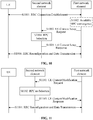
- a BPC selection process in this scenario is shown in FIG. 10 and includes steps S1001 to S1006.
- the first network element and the second network element can determine a current serving cell of the UE; correspondingly, a current serving frequency band of the UE can also be determined in this process.
- Various RRC connection establishment processes may be used for the specific execution of the RRC Connection Establishment process, including, for example, but not limited to, a process exemplified in the standard protocol TS 38.401 v15.0.0.
- step S1002 Available BPC Convergence is performed, which is an optional step.
- the first network element can perform an Available BPC convergence operation according to the current radio resource configuration of the UE to obtain the BPC convergence list. For example, if the first network element determines that only a single serving cell is currently configured for the UE instead of configuring carrier aggregation (CA), the first network element may decide, according to the indication in the UE radio capability information, to converge the range of BPCs currently applicable to the UE (for example, assuming that the range of BPCs supported by the UE includes BPC #1 to BPC #5, such range can be carried in the UE radio capability information and corresponds to the serving frequency band of the UE), such as excluding some BPCs, i.e., BPC #3 to BPC #5, related to the CA to obtain a BPC convergence list including BPC #1 to BPC #2.
- CA carrier aggregation
- step S1003 the BPC convergence list is sent to the second network element through a UE CONTEXT SETUP REQUEST message.
- the first network element can send the obtained BPC convergence list to the second network element through the interface between the network elements and various messages.
- the obtained BPC list is carried in the UE CONTEXT SETUP REQUEST message and sent to the second network element through the UE CONTEXT SETUP REQUEST message.
- the obtained BPC list is not limited to being sent to the second network element through the UE CONTEXT SETUP REQUEST message.
- the UE CONTEXT SETUP REQUEST message does not include the BPC convergence list, that is, the existing message content may be kept unchanged.
- the UE CONTEXT SETUP REQUEST message can also be adjusted adaptively according to the requirements of a specific application scenario.
- step S1004 the second network element performs BPC selection for the UE, that is, executes BPC Selection.
- the second network element selects a BPC applicable to the UE from the BPC convergence list (e.g., BPC #1 is selected from BPC #1 and BPC #2) according to the current radio resource situation and other information.
- the second network element determines the current serving frequency band of the UE according to the serving cell of the UE and the UE radio capability information carried in the UE CONTEXT SETUP REQUEST message, and then, selects a BPC (e.g., BPC #1 is selected from BPC #1 to BPC #5) applicable to the UE in the UE radio capability information in combination with the current radio resource situation and other information.
- a BPC e.g., BPC #1 is selected from BPC #1 to BPC #5
- the second network element configures the radio resources of the UE in combination with the BPC selected for the UE.
- step S1005 the second network element sends the BPC selected for the UE to the first network element through the UE CONTEXT SETUP RESPONSE message.
- step S1006 RRC Reconfiguration and Data Transmission are performed.
- the second network element executes corresponding scheduling on the UE according to the selected BPC.
- a second network element When a separate base station independently communicates with a UE and a first network element has reconfiguration requirements for the current serving cell or other radio resources of the UE in this scenario, a second network element will reconfigure a corresponding BPC for the UE; in an embodiment, the first network element may re-provide the second network element with a range of available BPCs obtained after convergence, i.e., a new BPC convergence list, according to the modified radio resource configuration.
- the BPC reconfiguration process in this case is shown in FIG. 11 and includes steps S1101 to S1104.
- step S 1101 the first network element sends a UE CONTEXT MODIFICATION REQUEST message to the second network element.
- the first network element when the first network element decides to trigger UE Context Modification, for the modified radio resource configuration (such as at least one of changing the serving frequency band of the UE or configuring a CA cell for the UE), in an embodiment, the first network element can converge (such as excluding some BPCs, i.e., BPC #1 and BPC #/2, that are not applicable to the CA) the list of BPCs (such as including BPC #1 to BPC #5) currently applicable to the UE, and send a convergence list carried in the UE CONTEXT MODIFICATION REQUEST message to the second network element.
- BPC #1 and BPC #/2 that are not applicable to the CA
- the execution process of UE context modification in this embodiment may adopt any process that can achieve UE context modification, which is not specially limited in this embodiment.
- the UE context modification process exemplified in protocol TS 38.473 v15.0.0 may be adopted.
- step S1102 after receiving the UE CONTEXT MODIFICATION REQUEST message, the second network element performs BPC re-selection, i.e., executes BPC re-Selection.
- the second network element re-selects the BPC applicable to the UE from the BPC convergence list (e.g., BPC #3 is selected from BPC #3 to BPC #5, following the example of scenario one, that is, the BPC applicable to the UE is changed from BPC #1 to BPC #3).
- the BPC re-selected for the UE is carried in the UE CONTEXT MODIFICATION RESPONS message with which the second network element subsequently replies to the first network element, i.e., the second network element indicates information about the re-selected BPC to the first network element.
- the second network element decides whether to change the BPC currently selected for the UE according to the modified radio resource configuration of the UE. If change occurs, the second network element indicates information about the changed BPC to the first network element in the UE CONTEXT MODIFICATION RESPONS message. If change does not occur, whether to carry BPC information is optional, and the BPC information may or may not be carried as required.
- the second network element considers the selected BPC when performing radio resource configuration.
- step S1103 the second network element replies to the first network element with the UE CONTEXT MODIFICATION RESPONS message.
- step S1104 RRC Reconfiguration and Data Transmission are performed.
- the second network element executes corresponding scheduling on the UE according to the re-selected BPC.
- a BPC selection process in this case is shown in FIG. 12 , and includes steps S1201 to S1204.
- step S 1201 the second network element re-selects a BPC, that is, executes BPC re-Selection.
- the second network element may decide to change the BPC currently used by the UE according to the current radio resource situation and other information of the second network element itself. Before the change decision is made, the second network element may have received a BPC convergence list (referring to description in scenarios one and two) indicated by the first network element, and the changed BPC may or may not be in the BPC convergence list.
- a BPC convergence list (referring to description in scenarios one and two) indicated by the first network element, and the changed BPC may or may not be in the BPC convergence list.
- step S1202 the second network element notifies the first network element of the changed BPC through a UE CONTEXT MODIFICATION REQUIRED message.
- the implementation manner of UE context modification triggered by the second network element may adopt any context modification manner, for example, the implementation manner of UE context modification recorded in protocol TS 38.473 v15.0.0 may be adopted.
- This embodiment has no limitation thereto.
- step S1203 when the first network element agrees to the modification, the first network element sends a UE CONTEXT MODIFICATION CONFIRM message to the second network element.
- the first network element after receiving the UE CONTEXT MODIFICATION REQUIRED message, the first network element decides whether to agree to the request from the second network element according to the BPC and other information requested for modification in the UE CONTEXT MODIFICATION REQUIRED message from the second network element. If the first network element agrees, the first network element replies to the second network element with the UE CONTEXT MODIFICATION CONFIRM message; and if the first network element does not agree, the first network element may perform steps such as releasing or switching the second network element.
- step S1204 RRC Reconfiguration and Data Transmission are performed.
- the second network element executes corresponding scheduling on the UE according to the re-selected BPC.
- a second network element When a separate base station and other radio access network elements jointly provide communication services for the UE, taking the separate base station as an SN in a DC architecture as an example, a second network element will select a BPC currently applicable on the SN side for the UE; in an embodiment, a first network element may provide a BPC convergence list obtained after convergence for the second network element.
- a BPC selection process in this case is shown in FIG. 13 , and includes steps S1301 to S1304.
- step S1301 in an SN Addition Request message sent by an MN to the first network element of the base station (as the SN), the MN indicates the frequency band list and BPC lists (taking BPC List 1 and BPC List 2 as examples in this embodiment) that the secondary node can configure for the UE.
- step S1302 after receiving the SN Addition Request message, the first network element selects a serving cell and a frequency band where the serving cell is located that are suitable for being configured for the UE.
- the first network element decides to converge (e.g., it is defined that only BPC #1 and BPC #2 in BPC List 1 are available) the list of BPCs (e.g., BPC List 1, where BPC List 1 includes BPC #1 to BPC #5) currently applicable to the UE, the first network element indicates information about the BPC convergence list obtained after convergence to the second network element in a UE Context Setup Request message; and if the first network element decides not to converge the list of BPCs currently applicable to the UE, the current UE Context Setup Request message content can remain unchanged.
- the list of BPCs e.g., BPC List 1, where BPC List 1 includes BPC #1 to BPC #5
- the first network element indicates information about the BPC convergence list obtained after convergence to the second network element in a UE Context Setup Request message; and if the first network element decides not to converge the list of BPCs currently applicable to the UE, the current UE Context Setup Request message content can remain unchanged.
- step S1303 after receiving the UE Context Setup Request message, the second network element selects a BPC for the UE.
- step S1304 after receiving a UE CONTEXT SETUP RESPONSE message, the first network element saves information about the BPC currently used by the UE and replies to the MN with an SN Addition Request ACK message.
- the SN Addition Request ACK message includes information about the BPC allocated to the UE.
- step S1305 RRC Reconfiguration and Data Transmission are performed.
- the second network element executes corresponding scheduling on the UE according to the selected BPC.
- a separate base station independently communicates with a UE, and the UE is connected to two second network elements (the two network elements are respectively referred to as a network element B and a network element C in this scenario) at the same time
- the network element B and network element C will respectively select BPCs for the UE based on their respective information such as serving cells; in an embodiment, a first network element provides the network element B and/or network element C with the ranges of optional BPCs obtained after convergence, i.e., BPC convergence lists.
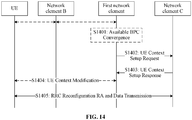
- This embodiment takes the procedure of adding the network element C as an example to illustrate the BPC selection process of the UE. The process is shown in FIG. 14 and includes steps described below.
- the first network element can decide to add the network element C on the basis of the network element B according to information such as at least one of service requirements or radio environment of the UE so as to provide radio resources for the UE.
- the first network element decides the serving cell and serving frequency band of the UE under the network element C.
- the first network element may also decide to perform Available BPC Convergence on the range of BPCs to obtain a BPC convergence list for the network element C.
- the first network element indicates the range of converged BPCs in the UE CONTEXT SETUP REQUEST message subsequently sent to the network element C, i.e., adding a BPC convergence list (or adding a BPC exclusion list in reverse, where the BPC exclusion list includes BPCs not suitable for the UE).
- step S1402 the first network element sends the UE CONTEXT SETUP REQUEST message to the network element C.
- step S1403 the network element C performs BPC selection after receiving the UE CONTEXT SETUP REQUEST message, and the selection process is similar to S1004 in scenario one and will not be repeated here; and the network element C feeds back a UE CONTEXT SETUP RESPONSE message including the selected BPC to the first network element.
- step S1404 after receiving the selected BPC indicated by the network element C, the first network element determines whether the BPC currently selected for the UE on the network element B side will be affected.
- the first network element triggers UE Context Modification to the network element B.
- the first network element can indicate information about the BPC selected by the network element C side to the network element B. After reception of the information about the BPC, the network element B can determine by itself whether the BPC selected for the UE needs to be reconfigured.
- the coordination among the above three network elements can make the occupied UE radio capabilities not exceed the maximum BPC capability that the UE can support for the serving frequency band.
- Various existing algorithms may be adopted for BPC selection in the network element, which is not limited in this embodiment.
- step S1405 RRC Reconfiguration and Data Transmission are performed.
- the network element C executes corresponding scheduling on the UE according to the selected BPC.
- various configuration schemes for configuring the BPC for the UE by the BPC capability configuration device configured on the second network element are provided for accurately configuring the BPC for the UE, and the selected BPC can also be dynamically adjusted according to the specific BPC allocation situation, radio resource usage situation, radio resource configuration situation of the UE, and the like, thus enabling the BPC that should be currently used by the UE to be effectively and reasonably selected by the second network element.
- each of the above-mentioned modules or steps in the embodiments of the present application may be implemented by a general-purpose computing apparatus, the modules or steps may be concentrated on a single computing device or distributed on a network composed of multiple computing devices, and alternatively, the modules or steps may be implemented by program codes executable by the computing devices, so that the modules or steps may be stored in a computer storage medium (such as a read-only memory (ROM)/random access memory (RAM), a magnetic disk or an optical disk) and executed by the computing devices.
- ROM read-only memory
- RAM random access memory
- the illustrated or described steps may be executed in sequences different from those described herein, or the modules or steps are made into various integrated circuit modules separately, or multiple modules or steps therein are made into a single integrated circuit module for implementation. Therefore, the present application is not limited to any specific combination of hardware and software.
Landscapes
- Engineering & Computer Science (AREA)
- Computer Networks & Wireless Communication (AREA)
- Signal Processing (AREA)
- Computer Security & Cryptography (AREA)
- Mobile Radio Communication Systems (AREA)
Abstract
Description
- This application claims priority to Chinese patent application No.
201810299706.0 - The present application relates to the communication field, for example, to a baseband processing combination (BPC) capability configuration method and device, a base station and a computer storage medium.
- The generation Node B (gNB) which adopts a new radio (NR) access technology over a radio interface is deployed in the radio access network (RAN) of the fifth generation (5G) communication system. Referring to the illustration of
FIG. 1 , a gNB may be comprised of one centralized unit (CU) and at least one distributed unit (DU). Such base station is also referred to as a separated base station or a distributed base station. Such base station is also applicable to a dual connectivity (DC) architecture, and in the DC architecture, the gNB in the form of CU-DU may be a master node (MN) and/or a secondary node (SN). - When a serving base station includes at least one base station deployed in the form of CU-DU, there is currently no solution to how to select a baseband processing combination (BPC) capability used by a user equipment (UE).
- The embodiments of the present application provide a BPC capability configuration method and device, a base station and a computer storage medium to mainly solve the technical problem of how to achieve the selection of a BPC capability for a user equipment.
- A baseband processing combination (BPC) capability configuration method is provided in the embodiments of the present application and includes steps described below.
- In an access process of a user equipment, a second network element of a base station selects a BPC for the user equipment.
- The base station includes a first network element and the second network element connected to the first network element, and the first network element and the second network element are separately deployed.
- A baseband processing combination (BPC) capability configuration device is further provided in the embodiments of the present application, is configured in a second network element of a base station, and includes a configuration module.
- The configuration module is configured to select a BPC for a user equipment in a process of the user equipment accessing the second network element of the base station.
- The base station includes a first network element and the second network element connected to the first network element, and the first network element and the second network element are separately deployed.
- A base station is further provided in the embodiments of the present application, and includes a first network element and a second network element connected to the first network element. The first network element and the second network element are separately deployed, the first network element is at least responsible for radio resource management, and the second network element is at least responsible for lower layer radio transmission management.
- The second network element includes a processor, a memory and a communication bus.
- The communication bus is configured to implement connection communication between the processor and the memory.
- The processor is configured to execute one or more programs stored in the memory to implement the baseband processing combination (BPC) capability configuration method described above.
- To solve the above technical problem, a computer storage medium is further provided in the embodiments of the present application, and is configured to store one or more programs. The one or more programs are executed by a processor for implementing the baseband processing combination (BPC) capability configuration method described above.
-
-
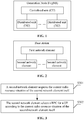
FIG. 1 is a structure diagram of a gNB; -
FIG. 2 is a structure diagram of a base station according to embodiment one of the present application; -
FIG. 3 is a flowchart of a BPC capability configuration according to embodiment one of the present application; -
FIG. 4 is a flowchart of a BPC reconfiguration determination according to embodiment one of the present application; -
FIG. 5 is a flowchart of a BPC capability configuration based on a BPC convergence list according to embodiment one of the present application; -
FIG. 6 is structure diagram one of a BPC capability configuration device according to embodiment two of the present application; -
FIG. 7 is structure diagram two of a BPC capability configuration device according to embodiment two of the present application; -
FIG. 8 is structure diagram three of a BPC capability configuration device according to embodiment two of the present application; -
FIG. 9 is a structure diagram of a second network element of a base station according to embodiment three of the present application; -
FIG. 10 is a flowchart of BPC capability configuration in scenario one according to embodiment three of the present application; -
FIG. 11 is a flowchart of BPC capability configuration in scenario two according to embodiment three of the present application; -
FIG. 12 is a flowchart of BPC capability configuration in scenario three according to embodiment three of the present application; -
FIG. 13 is a flowchart of BPC capability configuration in scenario four according to embodiment three of the present application; and -
FIG. 14 is a flowchart of BPC capability configuration in scenario five according to embodiment three of the present application. - Embodiments of the present application will be further described below in detail by use of implementations and with reference to drawings. It is to be understood that the embodiments described herein are merely intended to explain the present application and not to limit the present application.
- Referring to
FIG. 2 , the base station in this embodiment includes a first network element and a second network element connected to the first network element. It should be understood that in this embodiment, the number of second network elements under the first network element may be flexibly set. One second network element may be provided, or two or more second network elements may be included. The first network element and the second network element are separately deployed, and the second network element may be configured in a distributed manner. The first network element is at least responsible for radio resource management (RRM). In some application scenarios, the first network element may also be configured with radio resources of at least one of a radio resource control (RRC) layer, a service data adaptation protocol (SDAP) sublayer in layer 2 (L2) or a packet data convergence protocol (PDCP) sublayer in L2. The second network element is at least responsible for underlying radio transmission management. For example, in some application scenarios, the second network element may also be responsible for configuring radio resources of at least one of a radio link control (RLC) sublayer in L2, a medium access control (MAC) sublayer in L2 or a physical layer and communicates with the UE over a Uu radio interface. Of course, it should be understood that in this embodiment, the functions of the first network element and the second network element may be flexibly set and are not limited to the functions exemplified above. - A baseband processing combination (BPC) capability configuration method provided in this embodiment includes: in an access process of a UE, a second network element of a base station selects a BPC for the UE. That is, in a case where the base station of the structure shown in
FIG. 2 is provided as a serving base station in this embodiment, when the UE accesses the base station, the second network element of the base station selects the BPC for the UE. Moreover, since the second network element is at least responsible for underlying radio transmission management, the second network element selects a BPC for the UE, and the base station can then schedule the UE according to the BPC selected by the second network element for the UE and perform necessary radio resource configuration, etc.; the BPC selection when the UE accesses the separated base station is achieved. Moreover, since the second network element is at least responsible for underlying radio transmission management, the second network element selecting the BPC for the UE can also avoid a case of selection of a wrong BPC due to the fact that the first network element does not know the situation of the underlying radio resource and environment, thus enabling the BPC that should be currently used by the UE to be effectively and reasonably selected in an access network. Thereby, when the UE is scheduled, full use can be made without exceeding the capability range of the UE, achieving reasonable maximization of the performance of the UE. - In this embodiment, the manner of configuring a BPC for the UE by the second network element p can be flexibly set according to requirements. For ease of understanding, this embodiment is illustrated in several exemplary configurations.
- In this embodiment, the step in which the second network element selects the BPC for the UE may include: the second network element selecting the BPC for the UE according to a current radio resource situation of the second network element itself. At this time, the second network element is necessarily to acquire the current radio resource situation of the second network element itself. For the configuration process, reference is made to
FIG. 3 . The configuration process includes step S301 and step S302. - In step S301, the second network element acquires the current radio resource situation of the second network element itself.
- It should be understood that in this embodiment, when the second network element acquires the current radio resource situation of the second network element itself, the current radio resource situation of the second network element may be detected and acquired by the second network element itself and may also be acquired from another network element or device that can detect and acquire the current radio resource situation of the second network element. Moreover, the radio resource situation in this embodiment may include at least one radio resource situation affecting the BPC selection for the UE. In an embodiment, a radio resource that does not directly affect the BPC selection for the UE may also be included at the same time. For example, in one example, the radio resource includes, but is not limited to, a network element-side radio frequency capability situation and an antenna usage situation.
- In step S302, the second network element selects a BPC for the UE according to the current radio resource situation of the second network element itself.
- For example, when the current radio resource situation of the second network element is that a radio frequency capability is greater than a preset radio frequency capability threshold and an antenna idle rate is greater than a preset idle rate threshold, a BPC with a higher level of multiple-input multiple-output (MIMO) may be selected on the premise that the UE capability is not exceeded. When a radio frequency capability is less than or equal to a preset radio frequency capability threshold and/or an antenna idle rate is less than or equal to a preset idle rate threshold, a BPC with a lower level of MIMO may be selected. For example, the selection can be flexibly set according to specific communication environment, specific application scenario requirements, etc.
- In this embodiment, the second network element selects the BPC for the UE, that is, selects a BPC that should be currently used for the UE. The "BPC that should be currently used by the UE" in this embodiment refers to that when the second network element performs transmission scheduling on the UE, the corresponding parameters do not go beyond various parameter values included in the BPC selected for the UE. In this embodiment, the parameter values included in the BPC include, but are not limited to, a bandwidth class, subcarrier spacing, a MIMO layer, etc. It should also be understood that in this embodiment, the number and content of parameter values included in the BPC can be flexibly set and adjusted according to specific requirements.
- In this embodiment, since the first network element is at least responsible for radio resource management (RRM), the first network element can know the overall network environment. Therefore, in one example of this embodiment, the first network element can converge the BPCs in the list of BPCs supported by the UE, and send a BPC convergence list obtained after the convergence processing to the second network element. The BPC convergence list includes BPCs currently applicable to the UE and selected by the first network element from the list of BPCs supported by the UE, so that the second network element can select an appropriate BPC in the BPC convergence list, thus improving the accuracy and efficiency of BPC selection performed by the second network element.
- In this embodiment, according to the current radio resource configuration of the UE and at least one of the service requirements of the UE, the first network element can screen the BPCs in the list of BPCs supported by the UE to obtain a BPC convergence list, and the obtained BPC convergence list generally includes at least one BPC currently applicable to the UE. The first network element can send the obtained BPC convergence list to the second network element through an interface message between network elements.
- In this embodiment, when the second network element receives the BPC convergence list from the first network element, the second network element can select a BPC for the UE from the received BPC convergence list when selecting the BPC for the UE. In an embodiment, the step in which the second network element selects the BPC for the UE according to the current radio resource situation of the second network element itself may include that: the second network element selects the BPC for the UE from the BPC convergence list according to the current radio resource situation of the second network element itself.
- In this embodiment, the list of BPCs supported by the UE can be acquired from the capability information of the UE, and the list of BPCs includes a plurality of BPCs supported by the UE. For example, in one example of this embodiment, the capability information of the UE includes information such as a frequency band that the UE can support, a frequency band combination that the UE can support, and a BPC capability that the UE can support.
- In this embodiment, the step in which the first network element performs convergence processing on the list of BPCs supported by the UE may also be an optional step, that is, the first network element may not perform convergence processing on the list of BPCs supported by the UE. In this case, the second network element directly selects a BPC from the list of BPCs supported by the UE. In one example, the second network element may first acquire at least one of the current serving frequency band or the current serving cell of the UE, and then select a BPC for the UE from the BPCs supported by the UE according to the at least one of the current serving frequency band or the current serving cell of the UE. In an embodiment, the second network element can select a BPC for the UE according to the current radio resource situation of the second network element itself and in combination with at least one of the current serving frequency band or the current serving cell of the UE, thus ensuring the accuracy of BPC selection.
- In this embodiment, after the second network element configures the BPC for the UE, the method also includes sending the BPC selected for the UE to the first network element for the first network element to perform at least one of the following operations: saving the BPC, performing various management based on the BPC, etc.
- In an embodiment, the base station may also be adapted to a DC architecture, and in this embodiment, the base station may act as a master node (MN) or a secondary node (SN) in the DC architecture.
- In the DC architecture, when the base station acts as an MN, in an embodiment, when the first network element performs convergence processing on the BPCs supported by the UE and obtains and sends the range of converged BPCs to the second network element for indication, the adaptation to the BPC used by the SN in the DC architecture should be considered. That is, a BPC in the BPC convergence list sent by the first network element to the second network element is adapted to the BPC used by the secondary node in the DC architecture. In this way, it can be ensured that the BPC selected by the second network element for the UE is adapted to the BPC used by the SN in the DC architecture.
- In the DC architecture, when the base station acts as an SN, in an embodiment, when the first network element performs convergence processing on the BPCs supported by the UE and obtains and sends the range of converged BPCs to the second network element for indication, the range of converged BPCs indicated by the first network element to the second network element cannot exceed the range of BPCs available on the SN side indicated by the MN in the DC architecture. That is, the BPC in the BPC convergence list sent by the first network element to the second network element is within the BPC range designated for the secondary node by the master node in the DC architecture. In this way, it can be ensured that the BPC selected by the second network element for the UE is adapted to the BPC used by the SN in the DC architecture.
- In this embodiment, the adaptation of two BPCs refers to indicating, in the UE radio capability information, when one network element (e.g., MN) selects a BPC, the corresponding other network element (e.g., SN) may select one or more BPCs corresponding to the BPC selected by the previous one network element. In an embodiment, a parameter used for the DC can be defined in the UE capability. For example, it is defined that when the first network element uses a frequency band 1, the second network element may use a frequency band 2, which is referred to as adaptation of the frequency band 1 to the frequency band 2 in this embodiment. In an embodiment, it may also be defined in the UE capability that when the first network element uses the frequency band 1, scheduling can be performed based on BPC #1/2, and that when the second network element uses the frequency band 2, scheduling can be performed based on BPC#3/4, and then BPC#1/2 may also be referred to as being adapted to BPC#3/4 in this embodiment.
- In this embodiment, when at least two second network elements are connected to the first network element of the second network element of the base station, the UE may be connected to only one of the second network elements, or may be connected to two or more second network elements at the same time according to requirements. In an embodiment, at this time, a plurality of second network elements connected to the UE each can perform the above-mentioned process of selecting the BPC for the UE, and the first network element can indicate the list of BPCs to at least one of these second network elements; in some examples, the first network element may indicate the lists of BPCs to each of the second network elements. In this embodiment, after these second network elements select BPCs for the UE, the plurality of second network elements can directly coordinate, through the first network element or between the second network elements, the BPCs selected for the UE, so as to ensure that the sum of UE capabilities occupied by these second network elements when the UE is scheduled does not exceed the maximum BPC capability that the UE should currently support. For example, when the BPC of the UE supports a maximum of 6 levels of MIMO, the MIMO occupied by the respective second network elements cannot exceed 6 levels.
- In this embodiment, for ease of understanding, a description is given by taking as an example the UE being connected to two second network elements at the same time. In this example, the first network element is referred to as a network element A, and the two network elements each connected to the UE are referred to as a network element B and a network element C respectively. It is assumed that the network element A sends BPC convergence lists to the network element B and network element C respectively, and the network element B and the network element C respectively select BPCs for the UE through the BPC selection method described above. Moreover, in one application scenario, the network element B and the network element C respectively send the selected BPCs to the network element A. At this time, the network element A can determine whether the BPC selected for the UE by the network element B affects the BPC selected for the UE by the network element C, and/or whether the BPC selected for the UE by the network element C affects the BPC selected for the UE by the network element B. If the BPC selected for the UE by the network element B affects the BPC selected for the UE by the network element C, and/or the BPC selected for the UE by the network element C affects the BPC selected for the UE by the network element B, a BPC change notification is sent to the affected network element B or network element C to notify the network element B or network element C to perform BPC re-selection, or the BPC convergence list sent to the network element B or network element C is modified according to the effect so that network element B or network element C can perform BPC re-selection according to the received new list of BPCs. In another application scenario, after the network element B and the network element C respectively select BPCs for the UE through the BPC selection method described above, at least one of the network element B or network element C sends the BPC selected for the UE to the other network element. For example, the network element B sends, directly or through the network element A, the BPC selected for the UE by the network element B itself to the network element C. At this time, the network element C can determine, according to the BPC selected for the UE by the network element B and the BPC selected for the UE by the network element C itself, whether the BPC previously selected for the UE by the network element C itself needs to be re-selected.
- Through the above exemplary coordination among the network element A, the network element B and the network element C, when the network element B and network element C schedule the UE, the occupied UE radio capabilities will not exceed the maximum BPC capability that the UE can support for the servicing frequency band. It should be understood that when the UE is connected to three or more second network elements under the first network element at the same time, the selection negotiation process of the BPC can be analogized on the basis of the above example and will not be repeated here.
- According to the above example, in this embodiment, after configuring the BPC for the UE during the initial access process of the UE, the second network element may also need to re-select the BPC for the UE. That is, after the second network element selects the BPC for the UE, the following determination process shown in
FIG. 4 is also included. The determination process includes step S401 and step S402. - In step S401, the second network element detects whether a BPC change condition is triggered. If the BPC change condition is triggered, the process proceeds to S402. If the BPC change condition is not triggered, the process proceeds back to S401 to continue the determination.
- In step S402, a BPC is re-selected for the UE.
- In one example of this embodiment, the BPC change condition includes, but is not limited to, at least one of the conditions described below.
- Condition one: Radio resource configuration of the UE changes, and the changed radio resource configuration affects a BPC selection for the UE. In this example, the first network element may adjust the radio resource configuration of the UE (e.g., modifying the serving frequency band of the UE), or other network elements or devices may adjust the radio resource configuration of the UE.
- Condition two: BPCs applicable to the UE change. In this example, the first network element may adjust the BPCs applicable to the UE, and the trigger situation for the first network element to adjust the BPCs applicable to the UE can also be flexibly set. For example, in the above example, when the network element A determines that the BPC selected for the UE by the network element C affects the BPC selected for the UE by the network element B, the adjusted new BPC convergence list can be sent to the network element B to change the BPCs currently applicable to the UE.
- Condition three: The second network element initiates a BPC re-selection. For example, the second network element may initiate the BPC re-selection when the current radio resource situation of the second network element itself satisfies the BPC re-selection condition, or initiate the BPC re-selection when a preset time period is reached. The initiation condition may be flexibly set.
- Condition four: The second network element needs to adjust the BPC previously selected for the UE due to the fact that the second network element detects a BPC selected for the UE by another network element. For example, in the above example, the network element C may determine whether to reconfigure the BPC previously selected for the UE by the network element C itself according to the BPC selected for the UE by the network element B and the BPC selected for the UE by the network element C itself.
- In this embodiment, when the BPC change condition includes condition one and condition one is triggered, the manner of re-selecting a BPC for the UE by the second network element includes either manner one or manner two described below.
- Manner one: The second network element re-selects a BPC for the UE according to the changed radio resource configuration of the UE (optionally, in combination with the current radio resource situation of the second network element itself), and at this time, the BPC for the UE may be re-selected from a list of BPCs supported by the UE, or the BPC for the UE may be re-selected from a BPC convergence list previously received from the first network element (if the first network element previously sends the BPC convergence list to the second network element by).
- Manner two: Referring to
FIG. 5 , step S501 and step S502 are included. - In step S501, the second network element receives a new BPC convergence list from the first network element, where the new BPC convergence list includes BPCs currently applicable to the UE and re-selected by the first network element according to the changed radio resource configuration of the UE.
- In step S502, the second network element re-selects a BPC for the UE from the new BPC convergence list (in an embodiment, the BPC for the UE may be re-selected from the BPC convergence list also in combination with the current radio resource situation of the second network element itself).
- In this embodiment, when the BPC change condition includes condition two and condition two is triggered, the step in which the second network element re-selects the BPC for the UE includes a step described below.
- The second network element re-selects a BPC for the UE from the BPCs currently applicable to the UE (in an embodiment, the re-selection for the UE may be performed also in combination with the current radio resource situation of the second network element itself), for example, the BPC for the UE is re-selected from a new BPC convergence list sent by a new first network element.
- In this embodiment, when the BPC change condition includes condition three and condition three is triggered, the step in which the second network element re-selects the BPC for the UE includes a step described below.
- The second network element re-selects a BPC from the BPC convergence list or the BPCs supported by the UE, for example, the second network element re-selects the BPC for the UE according to the current radio resource situation of the second network element itself.
- In this embodiment, when the BPC change condition includes condition four and condition four is triggered, the step in which the second network element re-selects the BPC for the UE includes a step described below.
- The second network element re-selects a BPC for the UE according to the BPC selected for the UE by another network element (in an embodiment, the re-selection for the UE may be performed also in combination with the current radio resource situation of the second network element itself).
- After the second network element reconfigures the BPC for the UE, the method also includes sending the BPC re-selected for the UE to the first network element for the first network element to perform at least one of the following operations: saving the BPC, performing various management based on the BPC, etc.
- In this embodiment, the second network element is not limited to configuring the BPC for the UE, and it should be understood that other capabilities having similar properties and characteristics to the BPC in this example can also be selected by the second network element by using the method provided in this embodiment.
- For a separated base station or a distributed base station having the structure of the first network element and the second network element in this embodiment, various configuration schemes for configuring the BPC for the UE by the second network element of the base station are provided in this embodiment. For example, the coordination of the first network element and the second network element in the BPC selection process can not only avoid selection of a wrong BPC due to the fact that the first network element does not know the situation of the underlying radio resource and environment, but also avoid selection of a wrong BPC due to the fact that the second network element does not know the overall network environment, thus enabling the BPC that should be currently used by the UE to be effectively and reasonably selected in an access network. Thereby, when the UE is scheduled, full use can be made without exceeding the capability range of the UE, achieving reasonable maximization of the performance of the UE.
- A baseband processing combination (BPC) capability configuration device is further provided in this embodiment. The BPC capability configuration device is configured in the second network element of a base station, and includes a
configuration module 601 as shown inFIG. 6 . - The
configuration module 601 is configured to select a BPC for a user equipment in a process of the user equipment accessing the second network element of the base station. - The base station in this embodiment, as illustrated in embodiment one, also includes a first network element and a second network element connected to the first network element. The first network element and the second network element are separately deployed, the first network element is at least responsible for radio resource management, and the second network element is at least responsible for underlying radio transmission management. The specific structures and the specific function of each network element will not be repeated here.
- The manner of configuring a BPC for the UE by the
configuration module 601 can be flexibly set according to requirements. For ease of understanding, this embodiment is illustrated in several exemplary configurations. - In an embodiment, the
configuration module 601 selects a BPC for the user equipment according to a current radio resource situation of the second network element. In this case, the current radio resource situation of the second network element is necessarily to be acquired. Thus, as shown inFIG. 7 , the BPC capability configuration device in this embodiment further includes anacquisition module 602. Theacquisition module 602 is configured to acquire the current radio resource situation of the second network element. It should be understood that in this embodiment, when theacquisition module 602 acquires the current radio resource situation of the second network element, the current radio resource situation of the second network element may be acquired from the second network element and may also be acquired from another network element or device that can detect and acquire the current radio resource situation of the second network element. The radio resource situation in this embodiment may include at least one radio resource situation affecting the BPC selection for the UE, and in an embodiment, may also include a radio resource not directly affecting the BPC selection for the UE. For example, in one example, the radio resource includes, but is not limited to, a network element-side radio frequency capability situation and an antenna usage situation. - In this embodiment, the manner of selecting a BPC for the user equipment by the
configuration module 601 according to the current radio resource situation of the second network element includes, but is not limited to, the two manners described below. - In this manner, the
acquisition module 602 is further configured to receive a BPC convergence list from the first network element, and as illustrated in embodiment one, the BPC convergence list includes BPCs currently applicable to the user equipment selected by the first network element. - The
configuration module 601 is configured to select a BPC for the user equipment from the BPC convergence list (in an embodiment, the BPC selection may be performed in combination with the current radio resource situation of the second network element acquired by the acquisition module 602). - In this manner, the
acquisition module 602 is further configured to acquire at least one of the current serving frequency band or the current serving cell of the user equipment. The serving frequency band may be acquired in various manners. Details are not repeated here. - The
configuration module 601 is configured to select a BPC for the user equipment according to at least one of the serving frequency band or the serving cell (in an embodiment, the BPC selection may be performed in combination with the current radio resource situation of the second network element acquired by the acquisition module 602). - In this embodiment, the list of BPCs supported by the UE can be acquired from the capability information of the UE. In one example of this embodiment, the capability information of the UE includes information such as a frequency band that the UE may support, a frequency band combination that the UE may support, and a BPC capability that the UE may support.
- In this embodiment, the step in which the first network element performs convergence processing on the list of BPCs supported by the UE may also be an optional step, that is, the first network element may not perform convergence processing on the list of BPCs supported by the UE. In this case, the
configuration module 601 directly selects the BPC from the list of BPCs supported by the UE. - Referring to
FIG. 8 , the BPC capability configuration device in this embodiment further includes a sendingmodule 603. The sendingmodule 603 is configured to: after the configuration module selects the BPC for the UE, send the BPC selected for the UE to the first network element for the first network element to performed one of the following operations: saving the BPC, performing various management based on the BPC, etc. - In an embodiment, the base station may also be adapted to a DC architecture, and in this embodiment, the base station may act as a master node (MN) or a secondary node (SN) in the DC architecture.
- In the DC architecture, when the base station acts as an MN, in an embodiment, when the first network element performs convergence processing on the BPCs supported by the UE and obtains and sends the range of converged BPCs to the second network element for indication, the adaptation to the BPC used by the SN in the DC architecture should be considered. That is, a BPC in the BPC convergence list sent by the first network element to the second network element is adapted to the BPC used by the secondary node in the DC architecture. In this way, it can be ensured that the BPC selected by the
configuration module 601 for the UE is adapted to the BPC used by the SN in the DC architecture. - In the DC architecture, when the base station acts as an SN, in an embodiment, when the first network element performs convergence processing on the BPCs supported by the UE and obtains and sends the range of converged BPCs to the second network element for indication, the range of converged BPCs indicated by the first network element to the second network element cannot exceed the range of BPCs available on the SN side indicated by the MN in the DC architecture. That is, the BPC in the BPC convergence list sent by the first network element to the second network element is within the BPC range designated for the secondary node by the master node in the DC architecture. In this way, it can be ensured that the BPC selected by the
configuration module 601 for the UE is adapted to the BPC used by the SN in the DC architecture. - In this embodiment, when at least two second network elements are connected to the first network element of the second network element of the base station, the UE may be connected to only one of the second network elements, or may be connected to two or more second network elements at the same time according to requirements. In an embodiment, at this time, a plurality of second network elements connected to the UE each can perform the above-mentioned process of selecting the BPC for the UE, and the first network element can indicate the list of BPCs to at least one of these second network elements; in some examples, the first network element may indicate the lists of BPCs to the second network elements respectively. In this embodiment, after these second network elements select BPCs for the UE, the plurality of second network elements can directly coordinate, through the first network element or between the second network elements, the BPCs selected for the UE, so as to ensure that the sum of UE capabilities occupied by these second network elements when the UE is scheduled does not exceed the maximum BPC capability that the UE should currently support. For example, when the BPC of the UE supports a maximum of 6 levels of MIMO, the MIMO respectively occupied by these second network elements cannot exceed 6 levels.
- In this embodiment, for ease of understanding, the UE is still connected to two second network elements at the same time by way of example. In this example, the first network element is referred to as a network element A, and the two network elements connected to the UE at the same time are a network element B and a network element C respectively. In this case, the structures of the network element B and network element C may both be the structures illustrated in
FIGS. 6-8 . It is assumed that the network element A sends BPC convergence lists to the network element B and network element C respectively, and the network element B and network element C respectively configure BPCs for the UE through the BPC selection method described above. Moreover, in one application scenario, the network element B and network element C respectively send the selected BPCs to the network element A. At this time, the network element A can determine whether the BPC selected for the UE by the network element B affects the BPC selected for the UE by the network element C, and/or whether the BPC selected for the UE by network element C affects the BPC selected for the UE by network element B. If the BPC selected for the UE by the network element B affects the BPC selected for the UE by the network element C, and/or the BPC selected for the UE by the network element C affects the BPC selected for the UE by the network element B, a BPC change notice is sent to the affected the network element B or network element C to notify the network element B or network element C to perform BPC re-selection, or the BPC convergence list sent to the network element B or network element C is modified according to the effect, so that the network element B or network element C can perform BPC re-selection according to the received new list of BPCs. In another application scenario, after the network element B and network element C respectively configure BPCs for the UE through the BPC selection method described above, at least one of the network element B or network element C sends the BPC selected for the UE to the other network element. For example, the network element B sends, directly or through the network element A, the BPC selected for the UE to the network element C. At this time, the network element C can determine, according to the BPC selected for the UE by the network element B and the BPC selected for the UE by the network element C itself, whether the BPC previously selected for the UE by the network element C itself needs to be re-selected. Through the above exemplary coordination among the network element A, network element B and the network element C, when the network element B and network element C schedule the UE, the occupied UE radio capabilities will not exceed the maximum BPC capability that the UE can support for the servicing frequency band. - Therefore, in this embodiment, the
configuration module 601 is further configured to: after the BPC for the user equipment is selected, re-select the BPC for the user equipment when the BPC change condition is triggered. In one example of this embodiment, the BPC change condition includes, but is not limited to, at least one of the conditions described below. - Condition one: Radio resource configuration of the UE changes, and the changed radio resource configuration affects a BPC selection for the UE. In this example, the first network element may adjust the radio resource configuration of the UE (e.g., modifying the serving frequency band of the UE, etc.), or other network elements or devices may adjust the radio resource configuration of the UE.
- Condition two: BPCs applicable to the UE change. In this example, the first network element may adjust the BPCs applicable to the UE, and the trigger situation in which the first network element adjusts the BPCs applicable to the UE can also be flexibly configured. For example, in the above example, when network element A determines that the BPC selected for the UE by network element C affects the BPC selected for the UE by network element B, the adjusted new BPC convergence list can be sent to network element B to thus change the BPCs currently applicable to the UE.
- Condition three: The second network element initiates a BPC re-selection.
- Condition four: The second network element needs to adjust the BPC previously selected for the UE due to the fact that the second network element detects a BPC selected for the UE by another network element. For example, in the above example, network element C may determine whether to reconfigure the BPC previously selected for the UE by network element C itself according to the BPC selected for the UE by network element B and the BPC selected for the UE by network element C itself.
- In this embodiment, when the BPC change condition includes condition one and condition one is triggered, the manner of re-selecting a BPC for the UE by the
configuration module 601 includes either manner one or manner two described below. - Manner one: The
configuration module 601 re-selects the BPC for the UE according to the changed radio resource configuration of the UE (in an embodiment, may also in combination with the current radio resource situation of the second network element itself), and at this time, the BPC for the UE may be re-selected from a list of BPCs supported by the UE, or the BPC for the UE may be re-selected from a BPC convergence list previously received from the first network element (if the BPC convergence list was previously sent to the second network element by the first network element). - Manner two: Referring to
FIG. 5 , step S501 and step S502 are included. - In step S501, the
acquisition module 602 receives a new BPC convergence list from the first network element, where the new BPC convergence list includes BPCs currently applicable to the UE and re-selected by the first network element according to the changed radio resource configuration of the UE. - In step S502, the
configuration module 601 re-selects the BPC for the UE according to the new BPC convergence list (in an embodiment, the BPC for the UE may be re-selected from the BPC convergence list also in combination with the current radio resource situation of the second network element itself). - In this embodiment, when the BPC change condition includes condition two and condition two is triggered, the step in which the
configuration module 601 re-selects the BPC for the UE includes a step described below. - The
configuration module 601 re-selects the BPC for the UE from the BPCs currently applicable to the UE (in an embodiment, re-selection for the UE may be performed also in combination with the current radio resource situation of the second network element itself), for example, the BPC for the UE is re-selected from a new BPC convergence list sent by a new first network element. - In this embodiment, when the BPC change condition includes condition three and condition three is triggered, the step in which the
configuration module 601 re-selects the BPC for the UE includes a step described below. - The
configuration module 601 re-selects the BPC from the BPC convergence list or the BPCs supported by the UE, for example, the second network element re-selects the BPC for the UE according to the current radio resource situation of the second network element itself. - In this embodiment, when the BPC change condition includes condition four and condition four is triggered, the step in which the
configuration module 601 re-selects the BPC for the UE includes a step described below. - The
configuration module 601 re-selects the BPC for the UE according to the BPC selected for the UE by another network element (in an embodiment, the re-selection for the UE may be performed also in combination with the current radio resource situation of the second network element itself). - In this embodiment, the sending
module 603 is further configured to: after theconfiguration module 601 re-selects the BPC for the UE, send the BPC re-selected for the UE by theconfiguration module 601 to the first network element for the first network element to performed one of the following operations: saving the BPC, performing various management based on the BPC, etc. - In this embodiment, the BPC capability configuration device is not limited to configuring the BPC for the UE, and it should be understood that other capabilities having similar properties and characteristics to the BPC in this example can also be configured by the BPC capability configuration device by using the scheme provided in this embodiment.
- In this embodiment, the functions of the
configuration module 601,acquisition module 602 and sendingmodule 603 described above can be implemented by a processor or controller in the second network element. - For a separated base station or a distributed base station having the structure of the first network element and the second network element in this embodiment, various configuration schemes for configuring the BPC for the UE by the BPC capability configuration device configured on the second network element are provided for accurately configuring the BPC for the UE, thus enabling the BPC that should be currently used by the UE to be effectively and reasonably selected in an access network. Thereby, when the UE is scheduled, full use can be made without exceeding the capability range of the UE, achieving reasonable maximization of the performance of the UE.
- A base station is further provided in this embodiment, and includes a first network element and a second network element connected to the first network element. The first network element and the second network element are separately deployed, the first network element is at least responsible for radio resource management, and the second network element is at least responsible for underlying radio transmission management.
- The second network element, as shown in
FIG. 9 , includes a processor 91, a memory 92 and a communication bus 93. - The communication bus 93 is configured to implement connection communication between the processor 91 and the memory 92.
- The processor 91 is configured to execute one or more programs stored in the memory 92 to implement steps of the BPC capability configuration method described in the above embodiment.
- A computer-readable storage medium is further provided in this embodiment, may be applied in various communication devices, and is configured to store one or more programs. The one or more programs are executed by one or more processors to implement steps of the BPC capability configuration method described in the above embodiment.
- In order to facilitate understanding of the present application, this embodiment further illustrates the present application with several application scenarios of a separate base station including the second network element shown in
FIG. 9 as examples. - When a separate base station independently communicates with a UE, for an initially accessed UE, the second network element of the separate base station will select a BPC that should be used currently for the UE; in an embodiment, a first network element may provide a second network element with a range of available BPCs obtained after convergence, i.e., a BPC convergence list. A BPC selection process in this scenario is shown in
FIG. 10 and includes steps S1001 to S1006. - In step S1001, in the RRC Connection Establishment process, the first network element and the second network element can determine a current serving cell of the UE; correspondingly, a current serving frequency band of the UE can also be determined in this process. Various RRC connection establishment processes may be used for the specific execution of the RRC Connection Establishment process, including, for example, but not limited to, a process exemplified in the standard protocol TS 38.401 v15.0.0.
- In step S1002, Available BPC Convergence is performed, which is an optional step. The first network element can perform an Available BPC convergence operation according to the current radio resource configuration of the UE to obtain the BPC convergence list. For example, if the first network element determines that only a single serving cell is currently configured for the UE instead of configuring carrier aggregation (CA), the first network element may decide, according to the indication in the UE radio capability information, to converge the range of BPCs currently applicable to the UE (for example, assuming that the range of BPCs supported by the UE includes BPC #1 to BPC #5, such range can be carried in the UE radio capability information and corresponds to the serving frequency band of the UE), such as excluding some BPCs, i.e., BPC #3 to BPC #5, related to the CA to obtain a BPC convergence list including BPC #1 to BPC #2.
- In step S1003, the BPC convergence list is sent to the second network element through a UE CONTEXT SETUP REQUEST message.
- In this application scenario, the first network element can send the obtained BPC convergence list to the second network element through the interface between the network elements and various messages. For example, the obtained BPC list is carried in the UE CONTEXT SETUP REQUEST message and sent to the second network element through the UE CONTEXT SETUP REQUEST message. However, it should be understood that the obtained BPC list is not limited to being sent to the second network element through the UE CONTEXT SETUP REQUEST message.
- If the first network element does not perform Available BPC Convergence, the UE CONTEXT SETUP REQUEST message does not include the BPC convergence list, that is, the existing message content may be kept unchanged. Of course, the UE CONTEXT SETUP REQUEST message can also be adjusted adaptively according to the requirements of a specific application scenario.
- In step S1004, the second network element performs BPC selection for the UE, that is, executes BPC Selection.
- In this step, the following case corresponds to S1002.
- If the UE CONTEXT SETUP REQUEST message carries the BPC convergence list, the second network element selects a BPC applicable to the UE from the BPC convergence list (e.g., BPC #1 is selected from BPC #1 and BPC #2) according to the current radio resource situation and other information.
- If the UE CONTEXT SETUP REQUEST message does not carry the BPC convergence list, the second network element determines the current serving frequency band of the UE according to the serving cell of the UE and the UE radio capability information carried in the UE CONTEXT SETUP REQUEST message, and then, selects a BPC (e.g., BPC #1 is selected from BPC #1 to BPC #5) applicable to the UE in the UE radio capability information in combination with the current radio resource situation and other information.
- In an embodiment, the second network element configures the radio resources of the UE in combination with the BPC selected for the UE.
- In step S1005, the second network element sends the BPC selected for the UE to the first network element through the UE CONTEXT SETUP RESPONSE message.
- In step S1006, RRC Reconfiguration and Data Transmission are performed. When the UE communicates with the second network element, the second network element executes corresponding scheduling on the UE according to the selected BPC.
- When a separate base station independently communicates with a UE and a first network element has reconfiguration requirements for the current serving cell or other radio resources of the UE in this scenario, a second network element will reconfigure a corresponding BPC for the UE; in an embodiment, the first network element may re-provide the second network element with a range of available BPCs obtained after convergence, i.e., a new BPC convergence list, according to the modified radio resource configuration. The BPC reconfiguration process in this case is shown in
FIG. 11 and includes steps S1101 to S1104. - In step S 1101, the first network element sends a UE CONTEXT MODIFICATION REQUEST message to the second network element.
- In this embodiment, when the first network element decides to trigger UE Context Modification, for the modified radio resource configuration (such as at least one of changing the serving frequency band of the UE or configuring a CA cell for the UE), in an embodiment, the first network element can converge (such as excluding some BPCs, i.e., BPC #1 and BPC #/2, that are not applicable to the CA) the list of BPCs (such as including BPC #1 to BPC #5) currently applicable to the UE, and send a convergence list carried in the UE CONTEXT MODIFICATION REQUEST message to the second network element.
- The execution process of UE context modification in this embodiment may adopt any process that can achieve UE context modification, which is not specially limited in this embodiment. For example, the UE context modification process exemplified in protocol TS 38.473 v15.0.0 may be adopted.
- In step S1102, after receiving the UE CONTEXT MODIFICATION REQUEST message, the second network element performs BPC re-selection, i.e., executes BPC re-Selection.
- In this step, if the UE CONTEXT MODIFICATION REQUEST message carries a new BPC convergence list, the second network element re-selects the BPC applicable to the UE from the BPC convergence list (e.g., BPC #3 is selected from BPC #3 to BPC #5, following the example of scenario one, that is, the BPC applicable to the UE is changed from BPC #1 to BPC #3). Then, the BPC re-selected for the UE is carried in the UE CONTEXT MODIFICATION RESPONS message with which the second network element subsequently replies to the first network element, i.e., the second network element indicates information about the re-selected BPC to the first network element.
- If the UE CONTEXT MODIFICATION REQUEST message does not carry the new BPC convergence list, the second network element decides whether to change the BPC currently selected for the UE according to the modified radio resource configuration of the UE. If change occurs, the second network element indicates information about the changed BPC to the first network element in the UE CONTEXT MODIFICATION RESPONS message. If change does not occur, whether to carry BPC information is optional, and the BPC information may or may not be carried as required.
- In an embodiment, the second network element considers the selected BPC when performing radio resource configuration.
- In step S1103, the second network element replies to the first network element with the UE CONTEXT MODIFICATION RESPONS message.
- In step S1104, RRC Reconfiguration and Data Transmission are performed. When the UE communicates with the second network element, the second network element executes corresponding scheduling on the UE according to the re-selected BPC.
- When a separate base station independently communicates with a UE, if a second network element decides to change the BPC currently used by the UE, the second network element indicates information about the changed BPC to a first network element. A BPC selection process in this case is shown in
FIG. 12 , and includes steps S1201 to S1204. - In
step S 1201, the second network element re-selects a BPC, that is, executes BPC re-Selection. - The second network element may decide to change the BPC currently used by the UE according to the current radio resource situation and other information of the second network element itself. Before the change decision is made, the second network element may have received a BPC convergence list (referring to description in scenarios one and two) indicated by the first network element, and the changed BPC may or may not be in the BPC convergence list.
- In step S1202, the second network element notifies the first network element of the changed BPC through a UE CONTEXT MODIFICATION REQUIRED message.
- In this embodiment, the implementation manner of UE context modification triggered by the second network element may adopt any context modification manner, for example, the implementation manner of UE context modification recorded in protocol TS 38.473 v15.0.0 may be adopted. This embodiment has no limitation thereto.
- In step S1203, when the first network element agrees to the modification, the first network element sends a UE CONTEXT MODIFICATION CONFIRM message to the second network element.
- In the example of this scenario, after receiving the UE CONTEXT MODIFICATION REQUIRED message, the first network element decides whether to agree to the request from the second network element according to the BPC and other information requested for modification in the UE CONTEXT MODIFICATION REQUIRED message from the second network element. If the first network element agrees, the first network element replies to the second network element with the UE CONTEXT MODIFICATION CONFIRM message; and if the first network element does not agree, the first network element may perform steps such as releasing or switching the second network element.
- In step S1204, RRC Reconfiguration and Data Transmission are performed. When the UE communicates with the second network element, the second network element executes corresponding scheduling on the UE according to the re-selected BPC.
- When a separate base station and other radio access network elements jointly provide communication services for the UE, taking the separate base station as an SN in a DC architecture as an example, a second network element will select a BPC currently applicable on the SN side for the UE; in an embodiment, a first network element may provide a BPC convergence list obtained after convergence for the second network element. A BPC selection process in this case is shown in
FIG. 13 , and includes steps S1301 to S1304. - In step S1301, in an SN Addition Request message sent by an MN to the first network element of the base station (as the SN), the MN indicates the frequency band list and BPC lists (taking BPC List 1 and BPC List 2 as examples in this embodiment) that the secondary node can configure for the UE.
- In step S1302, after receiving the SN Addition Request message, the first network element selects a serving cell and a frequency band where the serving cell is located that are suitable for being configured for the UE.
- In an embodiment, if the first network element decides to converge (e.g., it is defined that only BPC #1 and BPC #2 in BPC List 1 are available) the list of BPCs (e.g., BPC List 1, where BPC List 1 includes BPC #1 to BPC #5) currently applicable to the UE, the first network element indicates information about the BPC convergence list obtained after convergence to the second network element in a UE Context Setup Request message; and if the first network element decides not to converge the list of BPCs currently applicable to the UE, the current UE Context Setup Request message content can remain unchanged.
- In step S1303, after receiving the UE Context Setup Request message, the second network element selects a BPC for the UE.
- For the BPC selection process in this step, reference is made to S1004 in scenario one. Details are not repeated here.
- In step S1304, after receiving a UE CONTEXT SETUP RESPONSE message, the first network element saves information about the BPC currently used by the UE and replies to the MN with an SN Addition Request ACK message. In an embodiment, the SN Addition Request ACK message includes information about the BPC allocated to the UE.
- In step S1305, RRC Reconfiguration and Data Transmission are performed. When the UE communicates with the second network element, the second network element executes corresponding scheduling on the UE according to the selected BPC.
- When a separate base station independently communicates with a UE, and the UE is connected to two second network elements (the two network elements are respectively referred to as a network element B and a network element C in this scenario) at the same time, the network element B and network element C will respectively select BPCs for the UE based on their respective information such as serving cells; in an embodiment, a first network element provides the network element B and/or network element C with the ranges of optional BPCs obtained after convergence, i.e., BPC convergence lists. This embodiment takes the procedure of adding the network element C as an example to illustrate the BPC selection process of the UE. The process is shown in
FIG. 14 and includes steps described below. - In step S1401, the first network element can decide to add the network element C on the basis of the network element B according to information such as at least one of service requirements or radio environment of the UE so as to provide radio resources for the UE. The first network element decides the serving cell and serving frequency band of the UE under the network element C. In an embodiment, according to the radio capability information of the UE and the BPC currently used by the UE on the network element B side, for the range of BPCs adapted to the serving frequency band of the UE in the network element C (various BPCs in the range of BPCs may belong to the same or different BPC Lists), the first network element may also decide to perform Available BPC Convergence on the range of BPCs to obtain a BPC convergence list for the network element C. in this case, the first network element indicates the range of converged BPCs in the UE CONTEXT SETUP REQUEST message subsequently sent to the network element C, i.e., adding a BPC convergence list (or adding a BPC exclusion list in reverse, where the BPC exclusion list includes BPCs not suitable for the UE).
- In step S1402, the first network element sends the UE CONTEXT SETUP REQUEST message to the network element C.
- In step S1403, the network element C performs BPC selection after receiving the UE CONTEXT SETUP REQUEST message, and the selection process is similar to S1004 in scenario one and will not be repeated here; and the network element C feeds back a UE CONTEXT SETUP RESPONSE message including the selected BPC to the first network element.
- In step S1404, after receiving the selected BPC indicated by the network element C, the first network element determines whether the BPC currently selected for the UE on the network element B side will be affected. In an embodiment, the first network element triggers UE Context Modification to the network element B. For the execution of the UE Context Modification, reference can be made to scenario two described above. In an embodiment, the first network element can indicate information about the BPC selected by the network element C side to the network element B. After reception of the information about the BPC, the network element B can determine by itself whether the BPC selected for the UE needs to be reconfigured.
- When the network elements B and C schedule the UE, the coordination among the above three network elements can make the occupied UE radio capabilities not exceed the maximum BPC capability that the UE can support for the serving frequency band. Various existing algorithms may be adopted for BPC selection in the network element, which is not limited in this embodiment.
- In step S1405, RRC Reconfiguration and Data Transmission are performed. When the UE communicates with the network element C, the network element C executes corresponding scheduling on the UE according to the selected BPC.
- For a separated base station or a distributed base station having the structure of the first network element and the second network element in this embodiment, various configuration schemes for configuring the BPC for the UE by the BPC capability configuration device configured on the second network element are provided for accurately configuring the BPC for the UE, and the selected BPC can also be dynamically adjusted according to the specific BPC allocation situation, radio resource usage situation, radio resource configuration situation of the UE, and the like, thus enabling the BPC that should be currently used by the UE to be effectively and reasonably selected by the second network element. Thereby, when the UE is scheduled, full use can be made without exceeding the capability range of the UE, achieving reasonable maximization of the performance of the UE.
- Apparently, it should be understood by those skilled in the art that each of the above-mentioned modules or steps in the embodiments of the present application may be implemented by a general-purpose computing apparatus, the modules or steps may be concentrated on a single computing device or distributed on a network composed of multiple computing devices, and alternatively, the modules or steps may be implemented by program codes executable by the computing devices, so that the modules or steps may be stored in a computer storage medium (such as a read-only memory (ROM)/random access memory (RAM), a magnetic disk or an optical disk) and executed by the computing devices. In some circumstances, the illustrated or described steps may be executed in sequences different from those described herein, or the modules or steps are made into various integrated circuit modules separately, or multiple modules or steps therein are made into a single integrated circuit module for implementation. Therefore, the present application is not limited to any specific combination of hardware and software.
Claims (18)
- A baseband processing combination (BPC) capability configuration method, comprising:in a process of a user equipment accessing a second network element of a base station, selecting, by the second network element, a BPC for the user equipment;wherein the base station comprises a first network element and the second network element connected to the first network element, and the first network element and the second network element are separately deployed.
- The method of claim 1, before selecting, by the second network element, the BPC for the user equipment, further comprising: receiving, by the second network element, a BPC convergence list from the first network element, wherein the BPC convergence list comprises at least one BPC currently applicable to the user equipment and selected by the first network element;
wherein selecting, by the second network element, the BPC for the user equipment comprises: selecting, by the second network element, the BPC for the user equipment from the BPC convergence list. - The method of claim 1, wherein selecting, by the second network element, the BPC for the user equipment comprises:
selecting, by the second network element, the BPC for the user equipment according to a current radio resource situation of the second network element; or acquiring, by the second network element, at least one of a current serving frequency band of the user equipment or a current serving cell of the user equipment, and selecting, by the second network element according to the at least one of the serving frequency band or the serving cell, the BPC for the user equipment from at least one BPC supported by the user equipment. - The method of claim 2, wherein in a case where the base station is a master node in a dual connectivity (DC) architecture, a BPC in the BPC convergence list is adapted to a BPC used by a secondary node in the DC architecture; or
in a case where the base station is a secondary node in a DC architecture, the at least one BPC in the BPC convergence list is within a BPC range designated for the secondary node by a master node in the DC architecture. - The method of claim 1, further comprising: sending, by the second network element, the BPC selected for the user equipment to the first network element.
- The method of any one of claims 1 to 5, after selecting, by the second network element, the BPC for the user equipment, further comprising: in response to triggering a BPC change condition, re-selecting, by the second network element, a BPC for the user equipment.
- The method of claim 6, wherein the BPC change condition comprises at least one of the following:condition one: radio resource configuration of the user equipment changes, and the changed radio resource configuration affects a BPC selection for the user equipment;condition two: a BPC applicable to the user equipment changes;condition three: the second network element initiates a BPC re-selection; orcondition four: the second network element detects that the second network element needs to adjust the BPC previously selected for the user equipment due to a BPC selected by another network element for the user equipment.
- The method of claim 7, wherein in a case where the BPC change condition comprises the condition one and the condition one is triggered, re-selecting, by the second network element, the BPC for the user equipment comprises:re-selecting, by the second network element, the BPC for the user equipment from at least one BPC supported by the user equipment; orreceiving, by the second network element, a new BPC convergence list from the first network element, and re-selecting, by the second network element, the BPC for the user equipment from the new BPC convergence list.
- The method of claim 7, wherein in a case where the BPC change condition comprises the condition two and the condition two is triggered, re-selecting, by the second network element, the BPC for the user equipment comprises:
re-selecting, by the second network element, the BPC for the user equipment from the at least one BPC currently applicable to the user equipment. - The method of claim 7, wherein in a case where the BPC change condition comprises the condition four and the condition four is triggered, re-selecting, by the second network element, the BPC for the user equipment comprises:
re-selecting, by the second network element, the BPC for the user equipment according to the BPC selected by the another network element for the user equipment. - The method of claim 6, after re-selecting, by the second network element, the BPC for the user equipment, further comprising:
sending, by the second network element, the BPC selected for the user equipment to the first network element. - A baseband processing combination (BPC) capability configuration device, configured in a second network element of a base station and comprising:a selection module, which is configured to select a BPC for a user equipment in a process of the user equipment accessing the second network element of the base station;wherein the base station comprises a first network element and the second network element connected to the first network element, and the first network element and the second network element are separately deployed.
- The device of claim 12, further comprising: an acquisition module;
wherein the acquisition module is configured to receive a BPC convergence list from the first network element, and the BPC convergence list comprises at least one BPC currently applicable to the user equipment selected by the first network element; and the selection module is further configured to select the BPC for the user equipment from the BPC convergence list;
or
wherein the acquisition module is configured to acquire at least one of a current serving frequency band of the user equipment or a current serving cell of the user equipment; and the selection module is further configured to select the BPC for the user equipment according to the at least one of the serving frequency band or the serving cell. - The device of claim 13, wherein in a case where the base station is a master node in a dual connectivity (DC) architecture, a BPC in the BPC convergence list is adapted to a BPC used by a secondary node in the DC architecture; or
in a case where the base station is a secondary node in a DC architecture, the at least one BPC in the BPC convergence list is within a BPC range designated for the secondary node by a master node in the DC architecture. - The device of any one of claims 12 to 14, wherein the selection module is further configured to:
in a case where a BPC change condition is triggered, re-select a BPC for the user equipment. - The device of claim 14, wherein a BPC change condition comprises at least one of the following:condition one: radio resource configuration of the user equipment changes, and the changed radio resource configuration affects a BPC selection for the user equipment;condition two: a BPC applicable to the user equipment changes;condition three: the second network element initiates a BPC re-selection; orcondition four: the second network element detects that the second network element needs to adjust the BPC previously selected for the user equipment due to a BPC configured by another network element for the user equipment.
- Abase station, comprising a first network element and a second network element connected to the first network element, wherein the first network element and the second network element are separately deployed, the first network element is responsible for radio resource management, and the second network element is responsible for underlying radio transmission management;
the second network element comprises a processor, a memory and a communication bus;
the communication bus is configured to implement connection communication between the processor and the memory; and
the processor is configured to execute at least one program stored in the memory to implement the baseband processing combination (BPC) capability configuration method of any one of claims 1 to 11. - A computer storage medium, which is configured to store at least one program, wherein the at least one program is configured to, when executed by a processor, implement the baseband processing combination (BPC) capability configuration method of any one of claims 1 to 11.
Applications Claiming Priority (2)
| Application Number | Priority Date | Filing Date | Title |
|---|---|---|---|
| CN201810299706.0A CN110351770B (en) | 2018-04-04 | 2018-04-04 | BPC (Business Process control) capability configuration method, device, base station and computer storage medium |
| PCT/CN2019/080360 WO2019192398A1 (en) | 2018-04-04 | 2019-03-29 | Baseband processing combined bpc capability configuration method and device, base station and computer storage medium |
Publications (3)
| Publication Number | Publication Date |
|---|---|
| EP3780712A1 true EP3780712A1 (en) | 2021-02-17 |
| EP3780712A4 EP3780712A4 (en) | 2021-06-09 |
| EP3780712B1 EP3780712B1 (en) | 2025-04-23 |
Family
ID=68100042
Family Applications (1)
| Application Number | Title | Priority Date | Filing Date |
|---|---|---|---|
| EP19781978.2A Active EP3780712B1 (en) | 2018-04-04 | 2019-03-29 | Baseband processing combined bpc capability configuration method and device, base station and computer storage medium |
Country Status (6)
| Country | Link |
|---|---|
| US (2) | US11425641B2 (en) |
| EP (1) | EP3780712B1 (en) |
| CN (2) | CN114845329A (en) |
| AU (1) | AU2019248667B2 (en) |
| ES (1) | ES3028207T3 (en) |
| WO (1) | WO2019192398A1 (en) |
Family Cites Families (3)
| Publication number | Priority date | Publication date | Assignee | Title |
|---|---|---|---|---|
| CN103582179A (en) * | 2012-07-23 | 2014-02-12 | 中兴通讯股份有限公司 | Implement method of convertible multi-mode terminal and multi-mode terminal |
| CN108307425A (en) * | 2016-08-11 | 2018-07-20 | 财团法人资讯工业策进会 | Support the communication system and attaching method thereof of multi connectivity |
| US11284303B2 (en) * | 2017-02-06 | 2022-03-22 | Apple Inc. | Network resource model to support next generation node B |
-
2018
- 2018-04-04 CN CN202210615511.9A patent/CN114845329A/en active Pending
- 2018-04-04 CN CN201810299706.0A patent/CN110351770B/en active Active
-
2019
- 2019-03-29 ES ES19781978T patent/ES3028207T3/en active Active
- 2019-03-29 WO PCT/CN2019/080360 patent/WO2019192398A1/en not_active Ceased
- 2019-03-29 AU AU2019248667A patent/AU2019248667B2/en active Active
- 2019-03-29 EP EP19781978.2A patent/EP3780712B1/en active Active
-
2020
- 2020-10-01 US US17/060,949 patent/US11425641B2/en active Active
-
2022
- 2022-07-12 US US17/862,802 patent/US11641623B2/en active Active
Also Published As
| Publication number | Publication date |
|---|---|
| AU2019248667A2 (en) | 2020-12-17 |
| EP3780712A4 (en) | 2021-06-09 |
| US11641623B2 (en) | 2023-05-02 |
| US20220353806A1 (en) | 2022-11-03 |
| CN114845329A (en) | 2022-08-02 |
| AU2019248667A1 (en) | 2020-11-12 |
| EP3780712B1 (en) | 2025-04-23 |
| US11425641B2 (en) | 2022-08-23 |
| CN110351770A (en) | 2019-10-18 |
| WO2019192398A1 (en) | 2019-10-10 |
| ES3028207T3 (en) | 2025-06-18 |
| AU2019248667B2 (en) | 2022-02-24 |
| CN110351770B (en) | 2022-05-31 |
| US20210022074A1 (en) | 2021-01-21 |
Similar Documents
| Publication | Publication Date | Title |
|---|---|---|
| JP2024040162A (en) | Uplink switching method, communication device, and communication system | |
| KR102340706B1 (en) | Handover method, terminal and network-side device | |
| KR101636788B1 (en) | Method and device for mbms receipt and capability transmission | |
| US9686740B2 (en) | Systems and methods for intelligent frequency selection in carrier aggregation enabled networks | |
| CN109152036B (en) | Uplink resource authorization method, device and system | |
| CN104350788B (en) | Wireless communication system, mobile station and base station | |
| CN111212448B (en) | BWP self-adaptive selection modulation method and system | |
| US11356232B2 (en) | BWP deactivation method, device, and system | |
| US11350359B2 (en) | Data transmission method, access point, and station | |
| KR102921344B1 (en) | Joint bandwidth part switching for a group of ues | |
| WO2019195098A1 (en) | Optimizing new radio standalone and dual connectivity access | |
| EP4319026A1 (en) | Downlink scheduling method and apparatus | |
| WO2021254166A1 (en) | Carrier configuration method and related device | |
| CN102256258B (en) | Allocation method for carrier frequency resource and allocation device for carrier frequency resource | |
| EP4354987A1 (en) | Resource indication method, data transmission method, network side device and terminal device | |
| EP3780712B1 (en) | Baseband processing combined bpc capability configuration method and device, base station and computer storage medium | |
| US12574812B2 (en) | Cell selection method, broadcast message sending method, terminal and network device | |
| CN110351033B (en) | LTE (Long term evolution) main carrier selection method and device based on carrier aggregation | |
| WO2020215848A1 (en) | Resource sharing method and device | |
| KR102502560B1 (en) | Cell selection method, broadcast message transmission method, terminal and network device | |
| WO2025148873A1 (en) | Transmission method and apparatus in multi-connection scenario, device, and readable storage medium | |
| HK40106506A (en) | Resource indication method, data transmission method, network side device and terminal device | |
| KR20250150456A (en) | Methods for communication between devices |
Legal Events
| Date | Code | Title | Description |
|---|---|---|---|
| STAA | Information on the status of an ep patent application or granted ep patent |
Free format text: STATUS: THE INTERNATIONAL PUBLICATION HAS BEEN MADE |
|
| PUAI | Public reference made under article 153(3) epc to a published international application that has entered the european phase |
Free format text: ORIGINAL CODE: 0009012 |
|
| STAA | Information on the status of an ep patent application or granted ep patent |
Free format text: STATUS: REQUEST FOR EXAMINATION WAS MADE |
|
| 17P | Request for examination filed |
Effective date: 20201103 |
|
| AK | Designated contracting states |
Kind code of ref document: A1 Designated state(s): AL AT BE BG CH CY CZ DE DK EE ES FI FR GB GR HR HU IE IS IT LI LT LU LV MC MK MT NL NO PL PT RO RS SE SI SK SM TR |
|
| AX | Request for extension of the european patent |
Extension state: BA ME |
|
| A4 | Supplementary search report drawn up and despatched |
Effective date: 20210507 |
|
| RIC1 | Information provided on ipc code assigned before grant |
Ipc: H04W 28/02 20090101AFI20210430BHEP Ipc: H04W 8/22 20090101ALN20210430BHEP Ipc: H04W 48/20 20090101ALN20210430BHEP Ipc: H04W 88/08 20090101ALN20210430BHEP Ipc: H04W 92/12 20090101ALN20210430BHEP |
|
| DAV | Request for validation of the european patent (deleted) | ||
| DAX | Request for extension of the european patent (deleted) | ||
| STAA | Information on the status of an ep patent application or granted ep patent |
Free format text: STATUS: EXAMINATION IS IN PROGRESS |
|
| 17Q | First examination report despatched |
Effective date: 20230224 |
|
| GRAP | Despatch of communication of intention to grant a patent |
Free format text: ORIGINAL CODE: EPIDOSNIGR1 |
|
| STAA | Information on the status of an ep patent application or granted ep patent |
Free format text: STATUS: GRANT OF PATENT IS INTENDED |
|
| RIC1 | Information provided on ipc code assigned before grant |
Ipc: H04W 92/12 20090101ALN20241204BHEP Ipc: H04W 88/08 20090101ALN20241204BHEP Ipc: H04W 48/20 20090101ALN20241204BHEP Ipc: H04W 8/22 20090101ALN20241204BHEP Ipc: H04W 28/02 20090101AFI20241204BHEP |
|
| INTG | Intention to grant announced |
Effective date: 20241223 |
|
| GRAS | Grant fee paid |
Free format text: ORIGINAL CODE: EPIDOSNIGR3 |
|
| GRAA | (expected) grant |
Free format text: ORIGINAL CODE: 0009210 |
|
| STAA | Information on the status of an ep patent application or granted ep patent |
Free format text: STATUS: THE PATENT HAS BEEN GRANTED |
|
| AK | Designated contracting states |
Kind code of ref document: B1 Designated state(s): AL AT BE BG CH CY CZ DE DK EE ES FI FR GB GR HR HU IE IS IT LI LT LU LV MC MK MT NL NO PL PT RO RS SE SI SK SM TR |
|
| REG | Reference to a national code |
Ref country code: GB Ref legal event code: FG4D |
|
| REG | Reference to a national code |
Ref country code: CH Ref legal event code: EP |
|
| REG | Reference to a national code |
Ref country code: DE Ref legal event code: R096 Ref document number: 602019069033 Country of ref document: DE |
|
| REG | Reference to a national code |
Ref country code: IE Ref legal event code: FG4D |
|
| REG | Reference to a national code |
Ref country code: ES Ref legal event code: FG2A Ref document number: 3028207 Country of ref document: ES Kind code of ref document: T3 Effective date: 20250618 |
|
| REG | Reference to a national code |
Ref country code: NL Ref legal event code: MP Effective date: 20250423 |
|
| PG25 | Lapsed in a contracting state [announced via postgrant information from national office to epo] |
Ref country code: NL Free format text: LAPSE BECAUSE OF FAILURE TO SUBMIT A TRANSLATION OF THE DESCRIPTION OR TO PAY THE FEE WITHIN THE PRESCRIBED TIME-LIMIT Effective date: 20250423 |
|
| REG | Reference to a national code |
Ref country code: AT Ref legal event code: MK05 Ref document number: 1789025 Country of ref document: AT Kind code of ref document: T Effective date: 20250423 |
|
| PG25 | Lapsed in a contracting state [announced via postgrant information from national office to epo] |
Ref country code: FI Free format text: LAPSE BECAUSE OF FAILURE TO SUBMIT A TRANSLATION OF THE DESCRIPTION OR TO PAY THE FEE WITHIN THE PRESCRIBED TIME-LIMIT Effective date: 20250423 Ref country code: PT Free format text: LAPSE BECAUSE OF FAILURE TO SUBMIT A TRANSLATION OF THE DESCRIPTION OR TO PAY THE FEE WITHIN THE PRESCRIBED TIME-LIMIT Effective date: 20250825 |
|
| REG | Reference to a national code |
Ref country code: LT Ref legal event code: MG9D |
|
| PG25 | Lapsed in a contracting state [announced via postgrant information from national office to epo] |
Ref country code: GR Free format text: LAPSE BECAUSE OF FAILURE TO SUBMIT A TRANSLATION OF THE DESCRIPTION OR TO PAY THE FEE WITHIN THE PRESCRIBED TIME-LIMIT Effective date: 20250724 Ref country code: NO Free format text: LAPSE BECAUSE OF FAILURE TO SUBMIT A TRANSLATION OF THE DESCRIPTION OR TO PAY THE FEE WITHIN THE PRESCRIBED TIME-LIMIT Effective date: 20250723 |
|
| PG25 | Lapsed in a contracting state [announced via postgrant information from national office to epo] |
Ref country code: PL Free format text: LAPSE BECAUSE OF FAILURE TO SUBMIT A TRANSLATION OF THE DESCRIPTION OR TO PAY THE FEE WITHIN THE PRESCRIBED TIME-LIMIT Effective date: 20250423 |
|
| PG25 | Lapsed in a contracting state [announced via postgrant information from national office to epo] |
Ref country code: BG Free format text: LAPSE BECAUSE OF FAILURE TO SUBMIT A TRANSLATION OF THE DESCRIPTION OR TO PAY THE FEE WITHIN THE PRESCRIBED TIME-LIMIT Effective date: 20250423 |
|
| PG25 | Lapsed in a contracting state [announced via postgrant information from national office to epo] |
Ref country code: HR Free format text: LAPSE BECAUSE OF FAILURE TO SUBMIT A TRANSLATION OF THE DESCRIPTION OR TO PAY THE FEE WITHIN THE PRESCRIBED TIME-LIMIT Effective date: 20250423 |
|
| PG25 | Lapsed in a contracting state [announced via postgrant information from national office to epo] |
Ref country code: AT Free format text: LAPSE BECAUSE OF FAILURE TO SUBMIT A TRANSLATION OF THE DESCRIPTION OR TO PAY THE FEE WITHIN THE PRESCRIBED TIME-LIMIT Effective date: 20250423 |
|
| PG25 | Lapsed in a contracting state [announced via postgrant information from national office to epo] |
Ref country code: RS Free format text: LAPSE BECAUSE OF FAILURE TO SUBMIT A TRANSLATION OF THE DESCRIPTION OR TO PAY THE FEE WITHIN THE PRESCRIBED TIME-LIMIT Effective date: 20250723 |
|
| PG25 | Lapsed in a contracting state [announced via postgrant information from national office to epo] |
Ref country code: IS Free format text: LAPSE BECAUSE OF FAILURE TO SUBMIT A TRANSLATION OF THE DESCRIPTION OR TO PAY THE FEE WITHIN THE PRESCRIBED TIME-LIMIT Effective date: 20250823 |
|
| PG25 | Lapsed in a contracting state [announced via postgrant information from national office to epo] |
Ref country code: LV Free format text: LAPSE BECAUSE OF FAILURE TO SUBMIT A TRANSLATION OF THE DESCRIPTION OR TO PAY THE FEE WITHIN THE PRESCRIBED TIME-LIMIT Effective date: 20250423 |
|
| PG25 | Lapsed in a contracting state [announced via postgrant information from national office to epo] |
Ref country code: DK Free format text: LAPSE BECAUSE OF FAILURE TO SUBMIT A TRANSLATION OF THE DESCRIPTION OR TO PAY THE FEE WITHIN THE PRESCRIBED TIME-LIMIT Effective date: 20250423 Ref country code: SM Free format text: LAPSE BECAUSE OF FAILURE TO SUBMIT A TRANSLATION OF THE DESCRIPTION OR TO PAY THE FEE WITHIN THE PRESCRIBED TIME-LIMIT Effective date: 20250423 |
|
| PGFP | Annual fee paid to national office [announced via postgrant information from national office to epo] |
Ref country code: FR Payment date: 20251231 Year of fee payment: 8 |
|
| PG25 | Lapsed in a contracting state [announced via postgrant information from national office to epo] |
Ref country code: CZ Free format text: LAPSE BECAUSE OF FAILURE TO SUBMIT A TRANSLATION OF THE DESCRIPTION OR TO PAY THE FEE WITHIN THE PRESCRIBED TIME-LIMIT Effective date: 20250423 |
|
| PG25 | Lapsed in a contracting state [announced via postgrant information from national office to epo] |
Ref country code: EE Free format text: LAPSE BECAUSE OF FAILURE TO SUBMIT A TRANSLATION OF THE DESCRIPTION OR TO PAY THE FEE WITHIN THE PRESCRIBED TIME-LIMIT Effective date: 20250423 |
|
| REG | Reference to a national code |
Ref country code: DE Ref legal event code: R097 Ref document number: 602019069033 Country of ref document: DE |
|
| PG25 | Lapsed in a contracting state [announced via postgrant information from national office to epo] |
Ref country code: SK Free format text: LAPSE BECAUSE OF FAILURE TO SUBMIT A TRANSLATION OF THE DESCRIPTION OR TO PAY THE FEE WITHIN THE PRESCRIBED TIME-LIMIT Effective date: 20250423 Ref country code: RO Free format text: LAPSE BECAUSE OF FAILURE TO SUBMIT A TRANSLATION OF THE DESCRIPTION OR TO PAY THE FEE WITHIN THE PRESCRIBED TIME-LIMIT Effective date: 20250423 |
|
| PLBE | No opposition filed within time limit |
Free format text: ORIGINAL CODE: 0009261 |
|
| STAA | Information on the status of an ep patent application or granted ep patent |
Free format text: STATUS: NO OPPOSITION FILED WITHIN TIME LIMIT |
|
| REG | Reference to a national code |
Ref country code: CH Ref legal event code: L10 Free format text: ST27 STATUS EVENT CODE: U-0-0-L10-L00 (AS PROVIDED BY THE NATIONAL OFFICE) Effective date: 20260304 |
|
| 26N | No opposition filed |
Effective date: 20260126 |
|
| PGFP | Annual fee paid to national office [announced via postgrant information from national office to epo] |
Ref country code: GB Payment date: 20260106 Year of fee payment: 8 |
|
| PGFP | Annual fee paid to national office [announced via postgrant information from national office to epo] |
Ref country code: DE Payment date: 20260102 Year of fee payment: 8 |
|
| PGFP | Annual fee paid to national office [announced via postgrant information from national office to epo] |
Ref country code: IT Payment date: 20260220 Year of fee payment: 8 |