EP3780698A1 - Measuring method, terminal and network side device - Google Patents
Measuring method, terminal and network side device Download PDFInfo
- Publication number
- EP3780698A1 EP3780698A1 EP19781422.1A EP19781422A EP3780698A1 EP 3780698 A1 EP3780698 A1 EP 3780698A1 EP 19781422 A EP19781422 A EP 19781422A EP 3780698 A1 EP3780698 A1 EP 3780698A1
- Authority
- EP
- European Patent Office
- Prior art keywords
- system information
- connected state
- terminal
- measurement
- network
- Prior art date
- Legal status (The legal status is an assumption and is not a legal conclusion. Google has not performed a legal analysis and makes no representation as to the accuracy of the status listed.)
- Granted
Links
Images




Classifications
-
- H—ELECTRICITY
- H04—ELECTRIC COMMUNICATION TECHNIQUE
- H04W—WIRELESS COMMUNICATION NETWORKS
- H04W24/00—Supervisory, monitoring or testing arrangements
- H04W24/02—Arrangements for optimising operational condition
-
- H—ELECTRICITY
- H04—ELECTRIC COMMUNICATION TECHNIQUE
- H04W—WIRELESS COMMUNICATION NETWORKS
- H04W48/00—Access restriction; Network selection; Access point selection
- H04W48/08—Access restriction or access information delivery, e.g. discovery data delivery
- H04W48/12—Access restriction or access information delivery, e.g. discovery data delivery using downlink control channel
-
- H—ELECTRICITY
- H04—ELECTRIC COMMUNICATION TECHNIQUE
- H04L—TRANSMISSION OF DIGITAL INFORMATION, e.g. TELEGRAPHIC COMMUNICATION
- H04L5/00—Arrangements affording multiple use of the transmission path
-
- H—ELECTRICITY
- H04—ELECTRIC COMMUNICATION TECHNIQUE
- H04L—TRANSMISSION OF DIGITAL INFORMATION, e.g. TELEGRAPHIC COMMUNICATION
- H04L5/00—Arrangements affording multiple use of the transmission path
- H04L5/0001—Arrangements for dividing the transmission path
- H04L5/0003—Two-dimensional division
- H04L5/0005—Time-frequency
- H04L5/0007—Time-frequency the frequencies being orthogonal, e.g. OFDM(A) or DMT
- H04L5/001—Time-frequency the frequencies being orthogonal, e.g. OFDM(A) or DMT the frequencies being arranged in component carriers
-
- H—ELECTRICITY
- H04—ELECTRIC COMMUNICATION TECHNIQUE
- H04L—TRANSMISSION OF DIGITAL INFORMATION, e.g. TELEGRAPHIC COMMUNICATION
- H04L5/00—Arrangements affording multiple use of the transmission path
- H04L5/0091—Signalling for the administration of the divided path, e.g. signalling of configuration information
- H04L5/0096—Indication of changes in allocation
- H04L5/0098—Signalling of the activation or deactivation of component carriers, subcarriers or frequency bands
-
- H—ELECTRICITY
- H04—ELECTRIC COMMUNICATION TECHNIQUE
- H04W—WIRELESS COMMUNICATION NETWORKS
- H04W24/00—Supervisory, monitoring or testing arrangements
- H04W24/10—Scheduling measurement reports ; Arrangements for measurement reports
-
- H—ELECTRICITY
- H04—ELECTRIC COMMUNICATION TECHNIQUE
- H04W—WIRELESS COMMUNICATION NETWORKS
- H04W48/00—Access restriction; Network selection; Access point selection
- H04W48/08—Access restriction or access information delivery, e.g. discovery data delivery
- H04W48/10—Access restriction or access information delivery, e.g. discovery data delivery using broadcasted information
-
- H—ELECTRICITY
- H04—ELECTRIC COMMUNICATION TECHNIQUE
- H04W—WIRELESS COMMUNICATION NETWORKS
- H04W76/00—Connection management
- H04W76/20—Manipulation of established connections
- H04W76/27—Transitions between radio resource control [RRC] states
Definitions
- the present disclosure relates to the field of communications technology, and in particular, relates to a measurement method, a terminal and a network-side device.
- Carrier aggregation (Carrier Aggregation, CA) technology has been introduced in a long term evolution (Long Term Evolution, LTE) system.
- LTE Long Term Evolution
- a single terminal may communicate and connect to a network through multiple cells.
- One of the cells is a primary cell (Primary Cell, PCell) and the other cells are secondary cells (Secondary Cell, SCell).
- PCell Primary Cell
- SCell Secondary Cell
- the SCell has two states, i.e., an activated state and a deactivated state, and the PCell remains in the activated state all the time.
- a function of fast carrier activation or deactivation is also introduced in the LTE system.
- An approach for fast carrier activation or deactivation in LTE is as follows: a network-side device indicates, in a system information block type 5 (System Information Block Type 5, SIB5), a frequency that a terminal needs to measure in an idle state (idle state), and after the terminal enters a connected state (Connected state), the terminal immediately reports that a measurement result is available; the terminal reports the measurement result in a case that the network-side device requires the terminal to report the measurement result.
- SIB5 System Information Block Type 5
- the network-side device may quickly configure and activate a carrier (Carrier) or a secondary cell (Secondary Cell, SCell) based on the measurement result reported by the terminal.
- Carrier Carrier
- SCell Secondary Cell
- the above process is also called a method of enhancing LTE CA utilization (Enhancing LTE CA utilization).
- 5G New Radio 5th-Generation New Radio, 5G NR
- system information is divided into two categories, one category is minimum system information (Minimum SI, MSI), and the other category is other system information (other SI).
- the MSI includes a master information block (Master Information Block, MIB) and system information block type 1 (System Information Block Type 1, SIB 1), which the network-side device directly broadcasts to the UE.
- SIB2 Master Information Block
- SIB4 System Information Block Type 1, SIB1
- communication systems such as 5GNR may not perform fast cell activation or deactivation, resulting in poor communication performance of communication systems such as 5G NR
- Embodiment of the present disclosure provide a measurement method, a terminal, and a network-side device, so as to solve a problem that communication performance of communication systems are poor due to inability to perform fast cell activation or deactivation.
- an embodiment of the present disclosure provides a measurement method, and the method is applied to a terminal and includes: acquiring first system information sent by a network-side device in a case that the terminal is in a non-connected state; performing a corresponding measurement operation according to the first system information; wherein the first system information is used for at least one of: indicating whether a cell supports a function of fast activation or deactivation; indicating whether the network-side device broadcasts second system information, wherein the second system information is used to configure measurement information of fast activation or deactivation; indicating whether third system information includes measurement information of fast activation or deactivation, and indicating whether the network-side device broadcasts the third system information.
- an embodiment of the present disclosure provides a measurement method, and the method is applied to a network-side device and includes: sending first system information to a terminal in a non-connected state, to enable the terminal to execute a corresponding measurement operation according to the first system information; wherein the first system information is used for at least one of: indicating whether a cell supports a function of fast activation or deactivation; indicating whether the network-side device broadcasts second system information, wherein the second system information is used to configure measurement information of fast activation or deactivation; indicating whether third system information includes measurement information of fast activation or deactivation, and indicating whether the network-side device broadcasts the third system information.
- an embodiment of the present disclosure provides a terminal, and the terminal includes: an acquisition module, used to acquire first system information sent by a network-side device in a case that the terminal is in a non-connected state; a performing module, used to perform a corresponding measurement operation according to the first system information; wherein the first system information is used for at least one of: indicating whether a cell supports a function of fast activation or deactivation; indicating whether the network-side device broadcasts second system information, wherein the second system information is used to configure measurement information of fast activation or deactivation; indicating whether third system information includes measurement information of fast activation or deactivation, and indicating whether the network-side device broadcasts the third system information.
- an embodiment of the present disclosure provides a network-side device, and the network-side device includes: a sending module, used to send first system information to a terminal in a non-connected state, to enable the terminal to perform a corresponding measurement operation according to the first system information; wherein the first system information is used for at least one of: indicating whether a cell supports a function of fast activation or deactivation; indicating whether the network-side device broadcasts second system information, wherein the second system information is used to configure measurement information of fast activation or deactivation; indicating whether third system information includes measurement information of fast activation or deactivation, and indicating whether the network-side device broadcasts the third system information.
- an embodiment of the present disclosure provides a terminal, and the terminal includes: a storage, a processor, and a computer program stored on the storage and executable by the processor, wherein in a case that the computer program is executed by the processor, the processor implements steps of the measurement method corresponding to the terminal provided in the embodiments of the present disclosure.
- an embodiment of the present disclosure provides a network-side device, and the network-side device includes: a storage, a processor, and a computer program stored on the storage and executable by the processor, wherein in a case that the computer program is executed by the processor, the processor implements steps of the measurement method corresponding to the network-side device provided in the embodiments of the present disclosure.
- an embodiment of the present disclosure provides a computer readable storage medium, wherein a computer program is stored on the computer readable storage medium, and when the computer program is executed by a processor, the processor implements steps of the measurement method corresponding to the terminal provided in the embodiments of the present disclosure, or implements steps of the measurement method corresponding to the network-side device provided in the embodiments of the present disclosure.
- a network-side device broadcasts first system information directly to a terminal, thus enabling the terminal in a non-connected state to determine and execute a corresponding measurement operation according to the first system information. Since the terminal in the non-connected state may perform the measurement operation, and report to the network-side device a measurement result in the non-connected state for configuring fast activation or deactivation, therefore the communication performance of the communication system may be improved.
- Fig.1 is a structural diagram of a measurement system provided in an embodiment of the present disclosure.
- a terminal (User Equipment, UE) 11 and a network-side device 12 are included.
- the terminal 11 may be a mobile communication terminal, such as a mobile phone, a tablet personal computer (Tablet Personal Computer), a laptop computer (Laptop Computer), a personal digital assistant (personal digital assistant, PDA), a mobile internet device (Mobile Internet Device, MID), or a wearable device (Wearable Device) and other terminal-side devices.
- a specific type of the terminal 11 is not limited in the embodiments of the present disclosure.
- the network-side device 12 may be a 5G network-side device (e.g., gNB, 5G NR NB), or a 4G network-side device (e.g., eNB), or a 3G network-side device (e.g., NB), etc., and it should be noted that a specific type of the network-side device 12 is not limited in an embodiment of the present disclosure.
- a 5G network-side device e.g., gNB, 5G NR NB
- 4G network-side device e.g., eNB
- 3G network-side device e.g., NB
- the terminal acquires first system information sent by a network-side device in a case that the terminal is in a non-connected state; the terminal executes a corresponding measurement behavior according to the first system information; where the first system information is used for at least one of following: indicating whether a cell supports a function of fast activation or deactivation; indicating whether the network-side device broadcasts second system information, where the second system information is used for configuring measurement information of fast activation or deactivation; indicating whether third system information includes measurement information of fast activation or deactivation; and indicating whether the network-side device broadcasts the third system information.
- an independent radio resource control (Radio Resource Control, RRC) state is also introduced, which is called an inactive state (inactive state).
- RRC Radio Resource Control
- the idle state and the inactive state may be called a non-connected state. Therefore, an embodiment of the present disclosure may be applicable to a terminal in the idle state or the inactive state in the eLTE system or the 5G NR system.
- fast activation or deactivation may refer to fast carrier activation or deactivation applicable to the eLTE system or the 5G NR system, or SCell fast activation or deactivation applicable to the eLTE system or the 5G NR system, or bandwidth part (Bandwidth Part, BWP) fast activation or deactivation applicable to the 5G NR system, and so on.
- fast carrier activation or deactivation applicable to the eLTE system or the 5G NR system
- SCell fast activation or deactivation applicable to the eLTE system or the 5G NR system
- bandwidth part Bandwidth Part, BWP
- a network-side device broadcasts first system information directly to a terminal, enabling the terminal in a non-connected state to determine and execute a corresponding measurement operation according to the first system information. Since the terminal in the non-connected state may execute the measurement operation, and report a measurement result for configuring fast activation or deactivation in the non-connected state to the network-side device, therefore the communication performance of the communication system may be improved.
- Fig.2 is a flowchart of a measurement method provided in an embodiment of the present disclosure. As shown in Fig.2 , a measurement method applied to a terminal includes the following steps.
- Step 201 acquiring, in a case that the terminal is in a non-connected state, first system information sent by a network-side device.
- the first system information is used for at least one of following: indicating whether a cell supports a function of fast activation or deactivation; indicating whether the network-side device broadcasts second system information, where the second system information is used for configuring measurement information of fast activation or deactivation; indicating whether third system information includes measurement information of fast activation or deactivation; and indicating whether the network-side device broadcasts the third system information.
- a non-connected state of a terminal may be either the idle state or the inactive state;
- first system information refers to system information that a network-side device may broadcast directly to the terminal, such as SIB1 or remaining minimum system information (Remaining Minimum System Information, RMSI).
- Second system information refers to system information that a network-side device does not directly broadcast to the terminal, but is sent based on a request of the terminal, and is used by the network-side device to configure, for the terminal, measurement information of fast activation or deactivation, for example, other system information block types such as SIB5 or SIBX.
- SIB5 includes not only measurement information for cell reselection, but also measurement information for configuring fast activation or deactivation; or, it is assumed that the 5G NR system introduces a new SIBX (X is an integer different from 1-22 of SIB type 1 to SIB type 22 in the related art, such as SIB23) to an SIB including configuration of fast activation or deactivation, and the SIBX is different from the SIB5 in the LTE system, the SIBX is only used to configure measurement information of fast activation or deactivation.
- SIBX is an integer different from 1-22 of SIB type 1 to SIB type 22 in the related art, such as SIB23
- the terminal may be understood as a terminal having measurement capability in a non-connected state, and the terminal is performing measurement in the non-connected state in a process that the terminal switches from a network-side device A to a network-side device B until the terminal acquires first system information sent by the network-side device. All the network-side devices involved in embodiments of the present disclosure may be understood as the network-side device B.
- Step 202 performing a corresponding measurement operation according to the first system information.
- the terminal may perform a corresponding measurement operation according to content indicated by the first system information.
- the following embodiments describe in detail corresponding relationship between indication of the first system information and the measurement operation performed by the terminal.
- Embodiment 1 the first system information is used to indicate whether a cell supports a function of fast activation or deactivation.
- the Step 202 may include at least one of the following; 1) the terminal stops a measurement in the non-connected state; 2) the terminal does not report that there is an available measurement result in the non-connected state in a case that the terminal enters the connected state, or during a process of switching from the non-connected state to the connected state by the terminal.
- the terminal stops a measurement in the non-connected state, and the terminal does not report that there is an available measurement result in the non-connected state in a case that the terminal enters the connected state, or during a process of switching from the non-connected state to the connected state by the terminal.
- Step 202 may include at least one of the following: 1) stopping measurement performed in the non-connected state; 2) reporting that there is an available measurement result in the non-connected state if there is a measurement result meeting a reporting condition, in a case that the terminal enters the connected state, or during a process of switching from the non-connected state to the connected state by the terminal.
- the first system information indicates that the cell supports the function of fast activation or deactivation
- the first system information indicates that the network-side device does not broadcast the second system information used for configuring the measurement information of fast activation or deactivation. In this case, the terminal may not actually acquire the measurement information of fast activation or deactivation, and therefore, the terminal may stop the measurement performed in the non-connected state.
- the first system information indicates that the cell supports the function of fast activation or deactivation
- the terminal still may report that there is an available measurement result in the non-connected state if there is the available measurement result.
- Step 202 may include: reading the measurement information for configuring fast activation or deactivation included in the second system information or the third system information; acquiring a frequency point configured in the measurement information; measuring the configured frequency point in the non-connected state.
- Step 202 may further include: reporting that there is an available measurement result in the non-connected state if there is a measurement result meeting a reporting condition, in a case that the terminal enters the connected state, or during a process of switching from the non-connected state to the connected state by the terminal.
- the terminal in the non-connected state may perform measurement according to the frequency point configured in the measurement information, after updating the measurement frequency point, and the terminal may also report measurement results that meet reporting conditions to the network-side device.
- the terminal in the non-connected state performs measurement on the frequency point in advance, this may assist the network-side device to quickly perform configuration of fast activation or deactivation, and may improve communication performance of the communication system.
- the first system information is introduced to indicate whether the cell supports fast activation or deactivation, so that the terminal may performs a corresponding measurement operation and a measurement report operation according to the indication information.
- Embodiment 2 the first system information is used to indicate whether third system information includes measurement information of fast activation or deactivation, and the first system information is used to indicate whether the network-side device broadcasts the third system information.
- Step 202 may include at least one of the following: 1) stopping measurement performed in the non-connected state; 2) not reporting that there is an available measurement result in the non-connected state, in a case that the terminal enters the connected state, or during a process of switching from the non-connected state to the connected state by the terminal.
- the terminal since the first system information indicates that the third system information does not include measurement information of fast activation or deactivation, the terminal in this case may not actually acquire the measurement information of fast activation or deactivation, and therefore, the terminal may stop the measurement in the non-connected state.
- Step 202 may include: sending to the network-side device a request for acquiring the third system information; reading the third system information sent by the network-side; reading the measurement information of fast activation or deactivation included in the third system information; acquiring a frequency point configured in the measurement information; measuring the configured frequency point in the non-connected state.
- the third system information e.g., SIB5
- Step 202 may include: sending to the network-side device a request for acquiring the third system information; reading the third system information sent by the network-side; reading the measurement information of fast activation or deactivation included in the third system information; acquiring a frequency point configured in the measurement information; measuring the configured frequency point in the non-connected state.
- Step 202 may further include: reporting that there is an available measurement result in the non-connected state if there is a measurement result meeting a reporting condition, in a case that the terminal enters the connected state, or during a process of switching from the non-connected state to the connected state by the terminal.
- the terminal may consider that the cell may support the function of fast activation or deactivation. Therefore, even if the first system information indicates that the network-side device does not broadcast the third system information, the terminal may send a request to the network-side device to request the network-side device to broadcast the third system information, so that the terminal in the non-connected state may perform measurement.
- the terminal in the non-connected state performs measurement on the frequency point in advance, this may assist the network-side device to quickly perform configuration of fast cell activation or deactivation, and may improve communication performance of the communication system.
- Step 202 may include: reading the third system information sent by the network-side; reading the measurement information of fast activation or deactivation included in the third system information; acquiring a frequency point configured in the measurement information; measuring the configured frequency point in the non-connected state.
- the third system information e.g., SIB5
- Step 202 may further include: reporting that there is an available measurement result in the non-connected state if there is a measurement result meeting a reporting condition, in a case that the terminal enters the connected state, or during a process of switching from the non-connected state to the connected state by the terminal.
- the terminal in the non-connected state may perform measurement according to the frequency point configured in the measurement information after updating the measurement frequency point, and the terminal may also report to the network-side device a measurement result that meets a reporting condition.
- the terminal in the non-connected state performs measurement on the frequency point in advance, this may assist the network-side device to quickly perform configuration of fast cell activation or deactivation, and may improve communication performance of the communication system.
- the first system information is introduced to indicate whether the third system information includes measurement information of fast activation or deactivation, and the first system information is used to indicate whether the network-side device broadcasts the third system information, so that the terminal may perform a corresponding measurement operation and a measurement report operation according to the indication information.
- Embodiment 3 the first system information is used to indicate whether the network-side device broadcasts second system information, where the second system information is used to configure measurement information of fast activation or deactivation.
- the first system information is used to indicate whether the network-side device broadcasts the second system information, it may be implicitly indicated whether the cell supports the function of fast activation or deactivation.
- Step 202 may include at least one of the following: stopping measurement performed in the non-connected state; not reporting that there is an available measurement result in the non-connected state in a case that the terminal enters the connected state, or during a process of switching from the non-connected state to the connected state by the terminal.
- the terminal since the first system information indicates that the network-side device does not broadcast the second system information, the terminal may know that the cell does not support the function of fast activation or deactivation. In this way, the terminal stops a measurement in the non-connected state, and the terminal does not report that there is an available measurement result in the non-connected state in a case that the terminal enters the connected state, or during a process of switching from the non-connected state to the connected state by the terminal.
- Step 202 may include: reading a frequency point configured in the second system information; measuring the configured frequency point in the non-connected state.
- Step 202 may further include: reporting that there is an available measurement result in the non-connected state if there is a measurement result meeting a reporting condition, in a case that the terminal enters the connected state or during a process of switching from the non-connected state to the connected state by the terminal.
- the terminal since the first system information indicates that the network-side device is broadcasting the second system information, the terminal may know that the cell supports the function of fast activation or deactivation. In this way, the terminal in the non-connected state may perform measurement according to the frequency point configured in the measurement information after updating the measurement frequency point, and the terminal may also report a measurement result that meet a reporting condition to the network-side device. The terminal in the non-connected state performs measurement on the frequency point in advance, which may assist the network-side device to quickly perform configuration of fast activation or deactivation, and may improve communication performance of the communication system.
- the first system information is introduced to indicate whether the network-side device broadcasts the second system information, so that the terminal may perform a corresponding measurement operation and a measurement report operation according to the indication information.
- a network-side device broadcasts first system information directly to a terminal, thereby enabling the terminal in a non-connected state to determine and perform a corresponding measurement operation according to the first system information. Since the terminal in the non-connected state may perform the measurement operation, a delay caused by switching between the non-connected state and the connected state of the terminal may be reduced, therefore the communication performance of the communication system may be improved.
- Fig.3 is another flowchart of a measurement method provided in an embodiment of the present disclosure. As shown in Fig.3 , a measurement method applied to a network-side device includes the following step 301.
- Step 301 sending first system information to a terminal in a non-connected state to enable the terminal to perform a corresponding measurement operation according to the first system information.
- the first system information is used for at least one of: indicating whether a cell supports a function of fast activation or deactivation; indicating whether the network-side device broadcasts second system information, where the second system information is used to configure measurement information of fast activation or deactivation; indicating whether third system information includes measurement information of fast activation or deactivation, and indicating whether the network-side device broadcasts the third system information.
- the method further includes: receiving, in a case that the terminal has a measurement result meeting a reporting condition, the measurement result reported by the terminal.
- the method further includes: sending the second system information to the terminal.
- the method further includes: receiving a request for acquiring the third system information sent by the terminal; sending the third system information to the terminal.
- the non-connected state includes an idle state or an inactive state;
- the first system information includes a system information block type 1 (SIB1) or a remaining minimum system information (RMSI);
- the second system information includes a system information block type 5 (SIB5) or other system information block type;
- the third system information includes an SIB5 or other system information block type.
- the terminal is a terminal having a measurement capability in the non-connected state, and the terminal is performing measurement in the non-connected state before the terminal acquires the first system information sent by the network-side device.
- the embodiment of the present disclosure serves as an embodiment of a network-side device corresponding to the embodiment shown in Fig.2 .
- a network-side device corresponding to the embodiment shown in Fig.2 .
- reference may be made to the relevant description of the embodiment shown in Fig.2 the same beneficial effects are achieved, which is not detailed herein again to avoid repetition.
- Fig.4 is a structural diagram of a terminal provided in an embodiment of the present disclosure.
- the terminal 400 includes: an acquisition module 401, used to acquire first system information sent by a network-side device in a case that the terminal is in a non-connected state; a performing module 402, used to perform a corresponding measurement operation according to the first system information; wherein the first system information is used for at least one of: indicating whether a cell supports a function of fast activation or deactivation; indicating whether the network-side device broadcasts second system information, where the second system information is used to configure measurement information of fast activation or deactivation; indicating whether third system information includes measurement information of fast activation or deactivation, and indicating whether the network-side device broadcasts the third system information.
- the performing module 402 is specifically used to at least one of: stopping measurement performed in the non-connected state; not reporting that there is an available measurement result in the non-connected state in a case that the terminal enters the connected state, or during a process of switching from the non-connected state to the connected state by the terminal; reporting that there is an available measurement result in the non-connected state if there is a measurement result meeting a reporting condition in a case that the terminal enters the connected state, or during a process of switching from the non-connected state to the connected state by the terminal.
- the first system information is used to indicate that the cell supports the function of fast activation or deactivation, and the first system information is used to indicate that the network-side device is broadcasting the second system information;
- the performing module 402 is specifically used to: read the measurement information of fast activation deactivation included in the second system information; acquire a frequency point configured in the measurement information; measure the configured frequency point in the non-connected state.
- the first system information is used to indicate that the third system information includes the measurement information of fast activation or deactivation, and the network-side device does not broadcast the third system information.
- the performing module 402 is specifically used to: send a request for acquiring the third system information to the network-side device; read the third system information sent by the network-side; read the measurement information of fast activation or deactivation included in the third system information; acquire a frequency point configured in the measurement information; measure the configured frequency point in the non-connected state.
- the first system information is used to indicate that the third system information includes the measurement information of fast activation or deactivation
- the network-side device is broadcasting the third system information.
- the performing module 402 is specifically used to: read the third system information sent by the network-side; read the measurement information of fast activation or deactivation included in the third system information; acquire a frequency point configured in the measurement information; measure the configured frequency point in the non-connected state.
- the first system information is used to indicate that the network-side device is broadcasting the second system information.
- the performing module 402 is specifically used to: read a frequency point configured in the second system information; measure the configured frequency point in the non-connected state.
- the non-connected state includes an idle state or an inactive state
- the first system information includes a system information block type 1 (SIB1) or a remaining minimum system information (RMSI);
- the second system information includes a system information block type 5 (SIB5) or other system information block type;
- the third system information includes an SIB5 or other system information block type.
- the terminal is a terminal with measurement capability in the non-connected state, and the terminal is performing measurement in the non-connected state before the terminal acquires the first system information sent by the network-side device.
- the terminal 400 may be a terminal in any of the method embodiments, and any implementation of the terminal in the method embodiments of the present disclosure may be implemented by the terminal 400 in the embodiments of the present disclosure, the same beneficial effects are achieved, and which is not detailed herein again to avoid repetition.
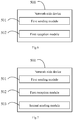
- Fig.5 is a structural diagram of a network-side device provided in an embodiment of the present disclosure.
- the network-side device 500 includes: a first sending module 501, used to send first system information to a terminal in a non-connected state to enable the terminal to perform a corresponding measurement operation according to the first system information; wherein the first system information is used for at least one of: indicating whether a cell supports a function of fast activation or deactivation; indicating whether the network-side device broadcasts second system information, where the second system information is used to configure measurement information of fast activation or deactivation; indicating whether third system information includes measurement information of fast activation or deactivation, and indicating whether the network-side device broadcasts the third system information.
- the network-side device 500 further includes: a first reception module 502, used to receive, in a case that the terminal has a measurement result meeting a reporting condition, the measurement result reported by the terminal.
- the network-side device 500 further includes: a second sending module 503, used to send the second system information to the terminal.
- the network-side device 500 further includes: a second reception module 504, used to receive a request for acquiring the third system information sent by the terminal; a third sending module 505, used to send the third system information to the terminal.
- the non-connected state includes an idle state or an inactive state.
- the first system information includes a system information block type 1 (SIB1) or a remaining minimum system information (RMSI);
- the second system information includes a system information block type 5 (SIB5) or other system information block type;
- the third system information includes an SIB5 or other system information block type.
- the terminal is a terminal with measurement capability in the non-connected state, and the terminal is performing measurement in the non-connected state before the terminal acquires the first system information sent by the network-side device.
- the network-side device 500 may be a network-side device in any of the method embodiments, and any implementation of the network-side device in the method embodiments of the present disclosure may be implemented by the network-side device 500 in the embodiments of the present disclosure, the same beneficial effects are achieved, thus detailed description thereof is not provided herein to avoid repetition.
- Fig.9 is a schematic diagram of a hardware structure of a terminal that implements various embodiments of the present disclosure.
- a terminal 800 includes, but is not limited to, a radio frequency unit 801, a network module 802, and an audio output unit 803, an input unit 804, a sensor 805, a display unit 806, a user input unit 807, an interface unit 808, a storage 809, a processor 810, and a power supply 811 and other components.
- the structure of the UE shown in Fig.8 does not constitute a limitation on the UE, and the terminal may include more or fewer components than shown in the figure, or some combined components, or different arrangements of components.
- the terminal includes, but is not limited to, a mobile phone, a tablet computer, a notebook computer, a palmtop computer, a car terminal, a wearable device, a pedometer, and the like.
- the processor 810 is used for: acquiring first system information sent by a network-side device in a case that the terminal is in a non-connected state; performing a corresponding measurement operation according to the first system information.
- the first system information is used for at least one of: indicating whether a cell supports a function of fast activation or deactivation; indicating whether the network-side device broadcasts second system information, where the second system information is used to configure measurement information of fast activation or deactivation; indicating whether third system information includes measurement information of fast activation or deactivation, and indicating whether the network-side device broadcasts the third system information.
- the first system information is used to indicate that the cell does not support the function of fast activation or deactivation.
- the step of performing the corresponding measurement operation according to the first system information performed by the processor 810 further includes at least one of: stopping measurement performed in the non-connected state; not reporting that there is an available measurement result in the non-connected state in a case that the terminal enters the connected state, or during a process of switching from the non-connected state to the connected state by the terminal.
- the first system information is used to indicate that the cell supports the function of fast activation or deactivation
- the first system information is used to indicate that the network-side device does not broadcast the second system information.
- the step of performing the corresponding measurement operation according to the first system information performed by the processor 810 further includes at least one of: stopping measurement performed in the non-connected state; reporting that there is an available measurement result in the non-connected state if there is a measurement result meeting a reporting condition in a case that the terminal enters the connected state, or during a process of switching from the non-connected state to the connected state by the terminal.
- the first system information is used to indicate that the cell supports the function of fast activation or deactivation
- the first system information is used to indicate that the network-side device is broadcasting the second system information.
- the step of performing the corresponding measurement operation according to the first system information performed by the processor 810 further includes: reading the measurement information of fast activation or deactivation included in the second system information; acquiring a frequency point configured in the measurement information; measuring the configured frequency point in the non-connected state.
- the step of performing the corresponding measurement operation according to the first system information performed by the processor 810 further includes: reporting that there is an available measurement result in the non-connected state if there is a measurement result meeting a reporting condition in a case that the terminal enters the connected state, or during a process of switching from the non-connected state to the connected state by the terminal.
- the first system information is used to indicate that the third system information does not include the measurement information of fast activation or deactivation.
- the step of performing the corresponding measurement operation according to the first system information performed by the processor 810 further includes at least one of: stopping measurement performed in the non-connected state; not reporting that there is an available measurement result in the non-connected state in a case that the terminal enters the connected state, or during a process of switching from the non-connected state to the connected state by the terminal.
- the first system information is used to indicate that the third system information includes the measurement information of fast activation or deactivation, and the network-side device does not broadcast the third system information.
- the step of performing the corresponding measurement operation according to the first system information performed by the processor 810 further includes: sending a request for acquiring the third system information to the network-side device; reading the third system information sent by the network-side; reading the measurement information of fast activation or deactivation included in the third system information; acquiring a frequency point configured in the measurement information; measuring the configured frequency point in the non-connected state.
- the first system information is used to indicate that the third system information includes the measurement information fast activation or deactivation and the network-side device is broadcasting the third system information.
- the step of performing the corresponding measurement operation according to the first system information performed by the processor 810 further includes: reading the third system information sent by the network-side; reading the measurement information of fast activation or deactivation included in the third system information; acquiring a frequency point configured in the measurement information; measuring the configured frequency point in the non-connected state.
- the step of performing the corresponding measurement operation according to the first system information performed by the processor 810 further includes: reporting that there is an available measurement result in the non-connected state if there is a measurement result meeting a reporting condition in a case that the terminal enters the connected state, or during a process of switching from the non-connected state to the connected state by the terminal.
- the first system information is used to indicate that the network-side device does not broadcast the second system information.
- the step of performing the corresponding measurement operation according to the first system information performed by the processor 810 further includes: stopping measurement performed in the non-connected state; not reporting that there is an available measurement result in the non-connected state in a case that the terminal enters the connected state, or during a process of switching from the non-connected state to the connected state by the terminal.
- the first system information is used to indicate that the network-side device is broadcasting the second system information.
- the step of performing the corresponding measurement operation according to the first system information performed by the processor 810 further includes: reading a frequency point configured in the second system information; measuring the configured frequency point in the non-connected state.
- the step of performing the corresponding measurement operation according to the first system information performed by the processor 810 further includes: reporting that there is an available measurement result in the non-connected state if there is a measurement result meeting a reporting condition in a case that the terminal enters the connected state, or during a process of switching from the non-connected state to the connected state by the terminal.
- the non-connected state includes an idle state or an inactive state.
- the first system information includes a system information block type 1 (SIB1) or a remaining minimum system information (RMSI);
- the second system information includes a system information block type 5 (SIB5) or other system information block type;
- the third system information includes an SIB5 or other system information block type.
- the terminal is a terminal having measurement capability in the non-connected state, and the terminal is performing measurement in the non-connected state before the terminal acquires the first system information sent by the network-side device.
- a network-side device broadcasts first system information directly to a terminal, enabling the terminal in a non-connected state to determine and perform a corresponding measurement operation according to the first system information. Since the terminal in the non-connected state may perform the measurement operation, and report to the network-side device a measurement result for configuring fast activation or deactivation in the non-connected state, therefore the communication performance of the communication system may be improved.
- the radio frequency unit 801 may be used to receive and send information or send and receive signals during a call. Specifically, downlink data from a base station is received and processed by the processor 810; in addition, uplink data is sent to the base station.
- the radio frequency unit 801 includes, but is not limited to, an antenna, at least one amplifier, a transceiver, a coupler, a low-noise amplifier, a duplexer, and the like.
- the radio frequency unit 801 may also communicate with a network and other devices through a wireless communication system.
- the terminal provides users with wireless broadband Internet access through the network module 802, such as helping users to send and receive email, to browse web pages, and to access streaming media, etc.
- the audio output unit 803 may convert audio data received by the radio frequency unit 801 or the network module 802 or stored in the storage 809 into audio signals and output the audio signal as sound. Moreover, the audio output unit 803 may also provide audio output (for example, a call signal reception sound, a message reception sound, etc.) related to a specific function performed by the terminal 800.
- the audio output unit 803 includes a speaker, a buzzer, a receiver, and the like.
- the input unit 804 is used to receive audio signals or video signals.
- the input unit 804 may include a graphics processing unit (Graphics Processing Unit, GPU) 8041 and a microphone 8042, and the graphics processing unit 8041 processes image data of a still picture or video obtained by an image capture device (such as a camera) in a video capture mode or an image capture mode.
- the processed image frames may be displayed on the display unit 806.
- the image frames processed by the graphics processing unit 8041 may be stored in the storage 809 (or other storage medium) or transmitted via the radio frequency unit 801 or the network module 802.
- the microphone 8042 may receive sound, and may process such sound into audio data.
- the processed audio data may be converted into an output format that may be transmitted to a mobile communication base station via the radio frequency unit 801 in the case of a telephone call mode.
- the terminal 800 further includes at least one sensor 805, such as a light sensor, a motion sensor, and other sensors.
- the light sensor includes an ambient light sensor and a proximity sensor, where the ambient light sensor may adjust brightness of a display panel 8061 according to brightness of the ambient light, and the proximity sensor may turn off the display panel 8061 and backlight in a case that the terminal 800 is moved to an ear.
- an accelerometer sensor may detect a magnitude of acceleration in various directions (usually three axes), and detect a magnitude and direction of gravity in the case of stationary, and be used to identify attitude of the terminal (such as horizontal and vertical screen switching, related games, magnetometer attitude calibration), vibration recognition related functions (such as pedometer, tap), etc.; the sensor 805 may also include a fingerprint sensor, a pressure sensor, an iris sensor, a molecular sensor, a gyroscope, a barometer, a hygrometer, a thermometer, an infrared sensor and the like, which are not repeated here.
- the display unit 806 may be used to display information inputted by the user or information provided to the user.
- the display unit 806 may include the display panel 8061, and the display panel 8061 may be configured as a form of a liquid crystal display (Liquid Crystal Display, LCD), an organic light-emitting diode (Organic Light-Emitting Diode, OLED) or the like.
- LCD Liquid Crystal Display
- OLED Organic Light-Emitting Diode
- the user input unit 807 may be used to receive numeric information or character information inputted by a user and generate a signal input related to user's settings and related to a function control of the terminal.
- the user input unit 807 includes a touch panel 8071 and other input devices 8072.
- the touch panel 8071 also referred to as a touch screen, may collect the user's touch operations thereon or nearby (such as the user's operation on the touch panel 8071 or near the touch panel 8071 using any suitable object or accessory such as a finger or a stylus).
- the touch panel 8071 may include two parts, namely a touch detection device and a touch controller.
- the touch detection device detects a touch orientation of the user, and detects a signal generated by the touch operation, and transmits the signal to the touch controller; the touch controller receives touch information from the touch detection device, converts the touch information into a coordinate of a touch point, transmits the coordinate to the processor 810, and may receive and execute a command from the processor 810.
- the touch panel 8071 can be implemented in various types such as resistive, capacitive, infrared, and surface acoustic waves, etc.
- the user input unit 807 may further include other input devices 8072.
- the other input devices 8072 may include, but are not limited to, a physical keyboard, a function button (such as a volume control button, a switch button, etc.), a trackball, a mouse, and a joystick, and details thereof are not described herein again.
- a function button such as a volume control button, a switch button, etc.
- a trackball such as a mouse, and a joystick, and details thereof are not described herein again.
- the touch panel 8071 may be overlaid on the display panel 8061, in a case that the touch screen 8071 detects a touch operation thereon or nearby, the touch operation is transmitted to the processor 810 to determine the type of the touch event, then the processor 810 provides a corresponding visual output on the display screen 8061 based on the type of the touch event.
- the touch panel 8071 and the display panel 8061 are implemented as two independent components to implement input and output functions of the terminal, in some embodiments, the touch panel 8071 and the display panel 8061 may be integrated to implement the input and output functions of the terminal, which are not limited here.
- the interface unit 808 is an interface through which an external device is connected to the terminal 800.
- the external device may include a wired or wireless headset port, an external power supply (or battery charger) port, a wired or wireless data port, a storage card port, a port for connecting a device with an identification module, and an audio input/output (I/O) port, a video I/O port, or a headphone port, etc.
- the interface unit 808 may be used to receive input (e.g., data information, power, etc.) from the external device and transmit the received input to one or more elements within the terminal 800 or may be used to transmit data between the terminal 800 and the external device.
- the storage 809 may be used to store software programs and various data.
- the storage 809 may mainly include a storage program area and a storage data area, where the storage program area may store an operating system, an application program (such as a sound playback function, an image playback function, etc.) required for at least one function, and the like; the storage data area may store data (such as audio data, a phone book, etc.) created based on the use of a mobile phone and the like.
- the storage 809 may include a high-speed random access storage, and may further include a non-volatile/non-transitory storage, such as at least one magnetic disk storage device, a flash memory device, or other volatile solid-state storage device.
- the processor 810 is a control center of the terminal, and uses various interfaces and lines to connect various parts of the entire terminal. By running or executing software programs and modules stored in the storage 809 and calling data stored in the storage 809, various functions of the terminal and processing data are performed, so that the overall monitoring of the terminal is performed.
- the processor 810 may include one or more processing units; optionally, the processor 810 may integrate an application processor and a modem processor, where the application processor mainly processes an operating system, a user interface, and an application program, etc.
- the modem processor mainly handles wireless communication. It could be understood that the modem processor may not be integrated into the processor 810.
- the terminal 800 may further include a power source 811 (such as a battery) for supplying power to various components.
- a power source 811 such as a battery
- the power supply 811 may be logically connected to the processor 810 through a power management system, so as to implement functions such as management of charging, management of discharging, and power consumption management through the power management system.
- the terminal 800 includes some functional modules that are not shown, and details are not described herein again.
- an embodiment of the present disclosure further provides a terminal, and the terminal includes: a processor 810, a storage 809, and a computer program stored in the storage 809 and executable by the processor 810, wherein when the computer program is used to executed by the processor 810, the processor 810 implements various processes in the method embodiments of the measurement method, and the same technical effect may be achieved, which will not be repeated herein to avoid repetition.
- Fig.9 is another structural diagram of a network-side device provided in the embodiments of the present disclosure.
- the network-side device 900 includes: a processor 901, a transceiver 902, a storage 903 and a bus interface.
- the transceiver 902 is used to: send first system information to a terminal in a non-connected state to enable the terminal to perform a corresponding measurement operation according to the first system information; receive, in a case that the terminal has a measurement result meeting a reporting condition, the measurement result reported by the terminal.
- the first system information is used for at least one of: indicating whether a cell supports a function of fast activation or deactivation; indicating whether the network-side device broadcasts second system information, where the second system information is used to configure measurement information of fast activation or deactivation; indicating whether third system information includes measurement information of fast activation or deactivation, and indicating whether the network-side device broadcasts the third system information.
- the transceiver 902 is further used to send the second system information to the terminal.
- the transceiver 902 is further used to receive a request for acquiring the third system information sent by the terminal; sending the third system information to the terminal.
- a bus architecture may include any number of interconnected buses and bridges. Various circuits, specifically, one or more processors represented by the processor 901 and a storage represented by the storage 903, are linked together. The bus architecture may also link various other circuits such as peripherals, voltage regulators and power management circuits, which are well known in the art, and therefore a further description thereof is omitted herein.
- the bus interface provides interfaces.
- the transceiver 902 may be a plurality of elements, that is, includes a transmitter and a receiver, to provide units used to communicate with various other apparatuses over a transmission medium.
- the user interface 904 can also be an interface capable of externally/internally connecting the required devices which including but not limited to a keypad, a display, a speaker, a microphone, a joystick, and the like.
- the processor 901 is responsible for managing the bus architecture and general processing, and the storage 903 can store data used by the processor 901 when performing operations.
- the network-side device 900 in the embodiment may be a network-side device in any of the method embodiments of the present disclosure, and any implementation of the network-side device in the method embodiments in the present disclosure may be implemented by the network-side device 900 in the present embodiment, the same beneficial effects are achieved, and detailed description thereof is not repeated herein again.
- the embodiments of the present disclosure also provide a computer readable storage medium, a computer program is stored on the computer readable storage medium.
- the processor implements various processes in the embodiments corresponding to a measurement method applied to a network-side devices or a terminal, and the same technical effect may be achieved, which will not be repeated herein to avoid repetition.
- the computer readable storage medium may be, for example, a read-only memory (Read-Only Memory, ROM), a random access memory (Random Access Memory, RAM), a magnetic disk or an optical disk, etc.
- the foregoing method embodiments may be implemented by software plus a necessary general hardware platform, and certainly may also be implemented by hardware, but in many cases, the former is a better implementation.
- the technical solutions of the present disclosure essentially or a part thereof contributing to the prior art may be embodied in the form of a computer software product which may be stored in a storage medium (e.g., a ROM/RAM, a magnetic disk or an optical disk) and which includes several instructions to cause a terminal (which may be a personal computer, a server, an air-conditioner or a network device, etc.) to perform the methods described in the various embodiments of the present disclosure.
- a storage medium e.g., a ROM/RAM, a magnetic disk or an optical disk
- a terminal which may be a personal computer, a server, an air-conditioner or a network device, etc.
Landscapes
- Engineering & Computer Science (AREA)
- Signal Processing (AREA)
- Computer Networks & Wireless Communication (AREA)
- Computer Security & Cryptography (AREA)
- Mobile Radio Communication Systems (AREA)
- Data Exchanges In Wide-Area Networks (AREA)
Abstract
Description
- This application claims a priority to a Chinese patent application No.
201810302201.5 - The present disclosure relates to the field of communications technology, and in particular, relates to a measurement method, a terminal and a network-side device.
- Carrier aggregation (Carrier Aggregation, CA) technology has been introduced in a long term evolution (Long Term Evolution, LTE) system. In the carrier aggregation technology, a single terminal may communicate and connect to a network through multiple cells. One of the cells is a primary cell (Primary Cell, PCell) and the other cells are secondary cells (Secondary Cell, SCell). The SCell has two states, i.e., an activated state and a deactivated state, and the PCell remains in the activated state all the time.
- A function of fast carrier activation or deactivation (fast SCell activation or deactivation) is also introduced in the LTE system. An approach for fast carrier activation or deactivation in LTE is as follows: a network-side device indicates, in a system information block type 5 (System Information Block Type 5, SIB5), a frequency that a terminal needs to measure in an idle state (idle state), and after the terminal enters a connected state (Connected state), the terminal immediately reports that a measurement result is available; the terminal reports the measurement result in a case that the network-side device requires the terminal to report the measurement result. In this way, the network-side device may quickly configure and activate a carrier (Carrier) or a secondary cell (Secondary Cell, SCell) based on the measurement result reported by the terminal. The above process is also called a method of enhancing LTE CA utilization (Enhancing LTE CA utilization).
- In 5G New Radio (5th-Generation New Radio, 5G NR) systems, system information is divided into two categories, one category is minimum system information (Minimum SI, MSI), and the other category is other system information (other SI). The MSI includes a master information block (Master Information Block, MIB) and system information block type 1 (System Information Block Type 1, SIB 1), which the network-side device directly broadcasts to the UE. For other SI including SIB2, SIB3, SIB4, SIB5, etc., only after the terminal sends a request for acquiring related other SI to the network-side device, the network-side device then sends the other SI requested by the terminal to the terminal. Therefore, this type of system information is also called system information based on request (On demand SI). Since a broadcast mechanism and content of system information for other SI in the 5G NR system are different from those in the LTE system, the approach for fast carrier activation or deactivation in the LTE system may not be applied to the 5G NR system.
- It may be seen that in related art, communication systems such as 5GNR may not perform fast cell activation or deactivation, resulting in poor communication performance of communication systems such as 5G NR
- Embodiment of the present disclosure provide a measurement method, a terminal, and a network-side device, so as to solve a problem that communication performance of communication systems are poor due to inability to perform fast cell activation or deactivation.
- In order to address the technical problem described above, the present disclosure is implemented as follows.
- In a first aspect, an embodiment of the present disclosure provides a measurement method, and the method is applied to a terminal and includes: acquiring first system information sent by a network-side device in a case that the terminal is in a non-connected state; performing a corresponding measurement operation according to the first system information; wherein the first system information is used for at least one of: indicating whether a cell supports a function of fast activation or deactivation; indicating whether the network-side device broadcasts second system information, wherein the second system information is used to configure measurement information of fast activation or deactivation; indicating whether third system information includes measurement information of fast activation or deactivation, and indicating whether the network-side device broadcasts the third system information.
- In a second aspect, an embodiment of the present disclosure provides a measurement method, and the method is applied to a network-side device and includes: sending first system information to a terminal in a non-connected state, to enable the terminal to execute a corresponding measurement operation according to the first system information; wherein the first system information is used for at least one of: indicating whether a cell supports a function of fast activation or deactivation; indicating whether the network-side device broadcasts second system information, wherein the second system information is used to configure measurement information of fast activation or deactivation; indicating whether third system information includes measurement information of fast activation or deactivation, and indicating whether the network-side device broadcasts the third system information.
- In a third aspect, an embodiment of the present disclosure provides a terminal, and the terminal includes: an acquisition module, used to acquire first system information sent by a network-side device in a case that the terminal is in a non-connected state; a performing module, used to perform a corresponding measurement operation according to the first system information; wherein the first system information is used for at least one of: indicating whether a cell supports a function of fast activation or deactivation; indicating whether the network-side device broadcasts second system information, wherein the second system information is used to configure measurement information of fast activation or deactivation; indicating whether third system information includes measurement information of fast activation or deactivation, and indicating whether the network-side device broadcasts the third system information.
- In a fourth aspect, an embodiment of the present disclosure provides a network-side device, and the network-side device includes: a sending module, used to send first system information to a terminal in a non-connected state, to enable the terminal to perform a corresponding measurement operation according to the first system information; wherein the first system information is used for at least one of: indicating whether a cell supports a function of fast activation or deactivation; indicating whether the network-side device broadcasts second system information, wherein the second system information is used to configure measurement information of fast activation or deactivation; indicating whether third system information includes measurement information of fast activation or deactivation, and indicating whether the network-side device broadcasts the third system information.
- In a fifth aspect, an embodiment of the present disclosure provides a terminal, and the terminal includes: a storage, a processor, and a computer program stored on the storage and executable by the processor, wherein in a case that the computer program is executed by the processor, the processor implements steps of the measurement method corresponding to the terminal provided in the embodiments of the present disclosure.
- In a sixth aspect, an embodiment of the present disclosure provides a network-side device, and the network-side device includes: a storage, a processor, and a computer program stored on the storage and executable by the processor, wherein in a case that the computer program is executed by the processor, the processor implements steps of the measurement method corresponding to the network-side device provided in the embodiments of the present disclosure.
- In a seventh aspect, an embodiment of the present disclosure provides a computer readable storage medium, wherein a computer program is stored on the computer readable storage medium, and when the computer program is executed by a processor, the processor implements steps of the measurement method corresponding to the terminal provided in the embodiments of the present disclosure, or implements steps of the measurement method corresponding to the network-side device provided in the embodiments of the present disclosure.
- According to the embodiments of the present disclosure, a network-side device broadcasts first system information directly to a terminal, thus enabling the terminal in a non-connected state to determine and execute a corresponding measurement operation according to the first system information. Since the terminal in the non-connected state may perform the measurement operation, and report to the network-side device a measurement result in the non-connected state for configuring fast activation or deactivation, therefore the communication performance of the communication system may be improved.
- In order to more clearly illustrate technical solutions in embodiments of the present disclosure, drawings used in description of the embodiments of the present disclosure will be briefly introduced below. Obviously, the drawings in the following description are only some embodiments of the present disclosure. Based on these drawings, other drawings may be obtained by those skilled in the art without any creative work.
-
Fig.1 is a structural diagram of a measurement system provided in an embodiment of the present disclosure; -
Fig.2 is a flowchart of a measurement method provided in an embodiment of the present disclosure; -
Fig.3 is another flowchart of a measurement method provided in an embodiment of the present disclosure; -
Fig.4 is a structural diagram of a terminal provided in an embodiment of the present disclosure; -
Fig.5 is a structural diagram of a network-side device provided in an embodiment of the present disclosure; -
Fig.6 is another structural diagram of a network-side device provided in an embodiment of the present disclosure; -
Fig.7 is still another structural diagram of a network-side device provided in an embodiment of the present disclosure; -
Fig.8 is yet another structural diagram of a network-side device provided in an embodiment of the present disclosure; -
Fig.9 is a schematic diagram of a hardware structure of a terminal provided in an embodiment of the present disclosure; -
Fig.10 is another schematic diagram of a hardware structure of a network-side device provided in an embodiment of the present disclosure. - The technical solutions of embodiments of the present disclosure will be clearly and completely described below with reference to the drawings of embodiments of the present disclosure. Apparently, the described embodiments are some of the embodiments of the present disclosure, but are not all of the embodiments. Based on embodiments of the present disclosure, all other embodiments derived by a person of ordinary skill in the art without any creative effort shall fall within the protection scope of the present disclosure.
-
Fig.1 is a structural diagram of a measurement system provided in an embodiment of the present disclosure. As shown inFig.1 , a terminal (User Equipment, UE) 11 and a network-side device 12 are included. The terminal 11 may be a mobile communication terminal, such as a mobile phone, a tablet personal computer (Tablet Personal Computer), a laptop computer (Laptop Computer), a personal digital assistant (personal digital assistant, PDA), a mobile internet device (Mobile Internet Device, MID), or a wearable device (Wearable Device) and other terminal-side devices. It should be noted that a specific type of the terminal 11 is not limited in the embodiments of the present disclosure. The network-side device 12 may be a 5G network-side device (e.g., gNB, 5G NR NB), or a 4G network-side device (e.g., eNB), or a 3G network-side device (e.g., NB), etc., and it should be noted that a specific type of the network-side device 12 is not limited in an embodiment of the present disclosure. - In an embodiment of the present disclosure, the terminal acquires first system information sent by a network-side device in a case that the terminal is in a non-connected state; the terminal executes a corresponding measurement behavior according to the first system information; where the first system information is used for at least one of following: indicating whether a cell supports a function of fast activation or deactivation; indicating whether the network-side device broadcasts second system information, where the second system information is used for configuring measurement information of fast activation or deactivation; indicating whether third system information includes measurement information of fast activation or deactivation; and indicating whether the network-side device broadcasts the third system information.
- In an eLTE system and a 5GNR system, in addition to a Connected state and an idle state, an independent radio resource control (Radio Resource Control, RRC) state is also introduced, which is called an inactive state (inactive state). Here, the idle state and the inactive state may be called a non-connected state. Therefore, an embodiment of the present disclosure may be applicable to a terminal in the idle state or the inactive state in the eLTE system or the 5G NR system.
- In an embodiment of the present disclosure, fast activation or deactivation may refer to fast carrier activation or deactivation applicable to the eLTE system or the 5G NR system, or SCell fast activation or deactivation applicable to the eLTE system or the 5G NR system, or bandwidth part (Bandwidth Part, BWP) fast activation or deactivation applicable to the 5G NR system, and so on.
- Thus, in an embodiment of the present disclosure, a network-side device broadcasts first system information directly to a terminal, enabling the terminal in a non-connected state to determine and execute a corresponding measurement operation according to the first system information. Since the terminal in the non-connected state may execute the measurement operation, and report a measurement result for configuring fast activation or deactivation in the non-connected state to the network-side device, therefore the communication performance of the communication system may be improved.
-
Fig.2 is a flowchart of a measurement method provided in an embodiment of the present disclosure. As shown inFig.2 , a measurement method applied to a terminal includes the following steps. - Step 201: acquiring, in a case that the terminal is in a non-connected state, first system information sent by a network-side device.
- The first system information is used for at least one of following: indicating whether a cell supports a function of fast activation or deactivation; indicating whether the network-side device broadcasts second system information, where the second system information is used for configuring measurement information of fast activation or deactivation; indicating whether third system information includes measurement information of fast activation or deactivation; and indicating whether the network-side device broadcasts the third system information.
- In a 5G NR system, for example, a non-connected state of a terminal may be either the idle state or the inactive state; first system information refers to system information that a network-side device may broadcast directly to the terminal, such as SIB1 or remaining minimum system information (Remaining Minimum System Information, RMSI). Second system information (or third system information) refers to system information that a network-side device does not directly broadcast to the terminal, but is sent based on a request of the terminal, and is used by the network-side device to configure, for the terminal, measurement information of fast activation or deactivation, for example, other system information block types such as SIB5 or SIBX. It is assumed that a SIB including configuration of fast activation or deactivation in the 5G NR system is reused as SIB5 as in the LTE system, that is, SIB5 includes not only measurement information for cell reselection, but also measurement information for configuring fast activation or deactivation; or, it is assumed that the 5G NR system introduces a new SIBX (X is an integer different from 1-22 of SIB type 1 to SIB type 22 in the related art, such as SIB23) to an SIB including configuration of fast activation or deactivation, and the SIBX is different from the SIB5 in the LTE system, the SIBX is only used to configure measurement information of fast activation or deactivation.
- The terminal may be understood as a terminal having measurement capability in a non-connected state, and the terminal is performing measurement in the non-connected state in a process that the terminal switches from a network-side device A to a network-side device B until the terminal acquires first system information sent by the network-side device. All the network-side devices involved in embodiments of the present disclosure may be understood as the network-side device B.
- Step 202: performing a corresponding measurement operation according to the first system information.
- During specific implementation, the terminal may perform a corresponding measurement operation according to content indicated by the first system information. The following embodiments describe in detail corresponding relationship between indication of the first system information and the measurement operation performed by the terminal.
- Embodiment 1: the first system information is used to indicate whether a cell supports a function of fast activation or deactivation.
- In a case that the first system information (such as SIB1 or RMSI) is used to indicate that a cell does not support the function of fast activation or deactivation, the
Step 202 may include at least one of the following; 1) the terminal stops a measurement in the non-connected state; 2) the terminal does not report that there is an available measurement result in the non-connected state in a case that the terminal enters the connected state, or during a process of switching from the non-connected state to the connected state by the terminal. - In the implementation, since the first system information indicates that the cell does not support the function of fast activation or deactivation, the terminal stops a measurement in the non-connected state, and the terminal does not report that there is an available measurement result in the non-connected state in a case that the terminal enters the connected state, or during a process of switching from the non-connected state to the connected state by the terminal.
- In a case that the first system information (such as SIB 1 or RMSI) is used to indicate that the cell supports the function of fast activation or deactivation, and the first system information is used to indicate that the network-side device does not broadcast the second system information (the second system information refers to system information used by the network-side device to configure measurement information of fast activation or deactivation, such as SIB5 or SIBX),
Step 202 may include at least one of the following: 1) stopping measurement performed in the non-connected state; 2) reporting that there is an available measurement result in the non-connected state if there is a measurement result meeting a reporting condition, in a case that the terminal enters the connected state, or during a process of switching from the non-connected state to the connected state by the terminal. - In the implementation, on one hand, although the first system information indicates that the cell supports the function of fast activation or deactivation, the first system information indicates that the network-side device does not broadcast the second system information used for configuring the measurement information of fast activation or deactivation. In this case, the terminal may not actually acquire the measurement information of fast activation or deactivation, and therefore, the terminal may stop the measurement performed in the non-connected state. On the other hand, although the first system information indicates that the cell supports the function of fast activation or deactivation, even if the first system information indicates that the network-side device does not broadcast the second system information used for configuring the measurement information of fast activation or deactivation, the terminal still may report that there is an available measurement result in the non-connected state if there is the available measurement result.
- In a case that the first system information (such as SIB 1 or RMSI) is used to indicate that the cell supports the function of fast activation or deactivation, and the first system information is used to indicate that the network-side device is broadcasting the second system information (the second system information refers to system information used by the network-side device to configure measurement information of fast activation or deactivation, such as SIB5 or SIBX),
Step 202 may include: reading the measurement information for configuring fast activation or deactivation included in the second system information or the third system information; acquiring a frequency point configured in the measurement information; measuring the configured frequency point in the non-connected state. - In the implementation,
Step 202 may further include: reporting that there is an available measurement result in the non-connected state if there is a measurement result meeting a reporting condition, in a case that the terminal enters the connected state, or during a process of switching from the non-connected state to the connected state by the terminal. - In the implementation, since the first system information indicates that the cell supports the function of fast activation or deactivation, and the network-side device is broadcasting the second system information used for configuring the measurement information of fast activation or deactivation, the terminal in the non-connected state may perform measurement according to the frequency point configured in the measurement information, after updating the measurement frequency point, and the terminal may also report measurement results that meet reporting conditions to the network-side device. The terminal in the non-connected state performs measurement on the frequency point in advance, this may assist the network-side device to quickly perform configuration of fast activation or deactivation, and may improve communication performance of the communication system.
- In the embodiment, through any of the foregoing implementations, the first system information is introduced to indicate whether the cell supports fast activation or deactivation, so that the terminal may performs a corresponding measurement operation and a measurement report operation according to the indication information.
- Embodiment 2: the first system information is used to indicate whether third system information includes measurement information of fast activation or deactivation, and the first system information is used to indicate whether the network-side device broadcasts the third system information.
- In a case that the first system information (such as SIB 1 or RMSI) is used to indicate that the third system information (e.g., SIB5) does not include the measurement information of fast activation or deactivation,
Step 202 may include at least one of the following: 1) stopping measurement performed in the non-connected state; 2) not reporting that there is an available measurement result in the non-connected state, in a case that the terminal enters the connected state, or during a process of switching from the non-connected state to the connected state by the terminal. - In the implementation, since the first system information indicates that the third system information does not include measurement information of fast activation or deactivation, the terminal in this case may not actually acquire the measurement information of fast activation or deactivation, and therefore, the terminal may stop the measurement in the non-connected state.
- In a case that the first system information (such as SIB 1 or RMSI) is used to indicate that the third system information (e.g., SIB5) includes the measurement information of fast activation or deactivation, and the network-side device does not broadcast the third system information,
Step 202 may include: sending to the network-side device a request for acquiring the third system information; reading the third system information sent by the network-side; reading the measurement information of fast activation or deactivation included in the third system information; acquiring a frequency point configured in the measurement information; measuring the configured frequency point in the non-connected state. - In the implementation,
Step 202 may further include: reporting that there is an available measurement result in the non-connected state if there is a measurement result meeting a reporting condition, in a case that the terminal enters the connected state, or during a process of switching from the non-connected state to the connected state by the terminal. - In the implementation, since the first system information indicates that the third system information includes measurement information of fast activation or deactivation, the terminal may consider that the cell may support the function of fast activation or deactivation. Therefore, even if the first system information indicates that the network-side device does not broadcast the third system information, the terminal may send a request to the network-side device to request the network-side device to broadcast the third system information, so that the terminal in the non-connected state may perform measurement. The terminal in the non-connected state performs measurement on the frequency point in advance, this may assist the network-side device to quickly perform configuration of fast cell activation or deactivation, and may improve communication performance of the communication system.
- In a case that the first system information (e.g., SIB1 or RMSI) is used to indicate that the third system information (e.g., SIB5) includes the measurement information of fast activation or deactivation, and the network-side device is broadcasting the third system information,
Step 202 may include: reading the third system information sent by the network-side; reading the measurement information of fast activation or deactivation included in the third system information; acquiring a frequency point configured in the measurement information; measuring the configured frequency point in the non-connected state. - In the implementation,
Step 202 may further include: reporting that there is an available measurement result in the non-connected state if there is a measurement result meeting a reporting condition, in a case that the terminal enters the connected state, or during a process of switching from the non-connected state to the connected state by the terminal. - In the implementation, since the first system information indicates that the third system information includes measurement information of fast activation or deactivation, and the first system information indicates that the network-side device is broadcasting the third system information, the terminal in the non-connected state may perform measurement according to the frequency point configured in the measurement information after updating the measurement frequency point, and the terminal may also report to the network-side device a measurement result that meets a reporting condition. The terminal in the non-connected state performs measurement on the frequency point in advance, this may assist the network-side device to quickly perform configuration of fast cell activation or deactivation, and may improve communication performance of the communication system.
- In the implementation, through any of the foregoing implementation manners, the first system information is introduced to indicate whether the third system information includes measurement information of fast activation or deactivation, and the first system information is used to indicate whether the network-side device broadcasts the third system information, so that the terminal may perform a corresponding measurement operation and a measurement report operation according to the indication information.
- Embodiment 3: the first system information is used to indicate whether the network-side device broadcasts second system information, where the second system information is used to configure measurement information of fast activation or deactivation. In the implementation, by using the first system information to indicate whether the network-side device broadcasts the second system information, it may be implicitly indicated whether the cell supports the function of fast activation or deactivation.
- In a case that the first system information (such as SIB1 or RMSI) is used to indicate that the network-side device does not broadcast the second system information (e.g., SIBX),
Step 202 may include at least one of the following: stopping measurement performed in the non-connected state; not reporting that there is an available measurement result in the non-connected state in a case that the terminal enters the connected state, or during a process of switching from the non-connected state to the connected state by the terminal. - In the implementation, since the first system information indicates that the network-side device does not broadcast the second system information, the terminal may know that the cell does not support the function of fast activation or deactivation. In this way, the terminal stops a measurement in the non-connected state, and the terminal does not report that there is an available measurement result in the non-connected state in a case that the terminal enters the connected state, or during a process of switching from the non-connected state to the connected state by the terminal.
- In a case that the first system information (such as SIB1 or RMSI) is used to indicate that the network-side device is broadcasting the second system information (e.g., SIBX),
Step 202 may include: reading a frequency point configured in the second system information; measuring the configured frequency point in the non-connected state. - In the implementation,
Step 202 may further include: reporting that there is an available measurement result in the non-connected state if there is a measurement result meeting a reporting condition, in a case that the terminal enters the connected state or during a process of switching from the non-connected state to the connected state by the terminal. - In the implementation, since the first system information indicates that the network-side device is broadcasting the second system information, the terminal may know that the cell supports the function of fast activation or deactivation. In this way, the terminal in the non-connected state may perform measurement according to the frequency point configured in the measurement information after updating the measurement frequency point, and the terminal may also report a measurement result that meet a reporting condition to the network-side device. The terminal in the non-connected state performs measurement on the frequency point in advance, which may assist the network-side device to quickly perform configuration of fast activation or deactivation, and may improve communication performance of the communication system.
- In the implementation, through any of the foregoing implementation manners, the first system information is introduced to indicate whether the network-side device broadcasts the second system information, so that the terminal may perform a corresponding measurement operation and a measurement report operation according to the indication information.
- Thus, in embodiments of the present disclosure, a network-side device broadcasts first system information directly to a terminal, thereby enabling the terminal in a non-connected state to determine and perform a corresponding measurement operation according to the first system information. Since the terminal in the non-connected state may perform the measurement operation, a delay caused by switching between the non-connected state and the connected state of the terminal may be reduced, therefore the communication performance of the communication system may be improved.
-
Fig.3 is another flowchart of a measurement method provided in an embodiment of the present disclosure. As shown inFig.3 , a measurement method applied to a network-side device includes the followingstep 301. - Step 301: sending first system information to a terminal in a non-connected state to enable the terminal to perform a corresponding measurement operation according to the first system information.
- The first system information is used for at least one of: indicating whether a cell supports a function of fast activation or deactivation; indicating whether the network-side device broadcasts second system information, where the second system information is used to configure measurement information of fast activation or deactivation; indicating whether third system information includes measurement information of fast activation or deactivation, and indicating whether the network-side device broadcasts the third system information.
- Optionally, the method further includes: receiving, in a case that the terminal has a measurement result meeting a reporting condition, the measurement result reported by the terminal.
- Optionally, the method further includes: sending the second system information to the terminal.
- Optionally, the method further includes: receiving a request for acquiring the third system information sent by the terminal; sending the third system information to the terminal.
- Optionally, the non-connected state includes an idle state or an inactive state; the first system information includes a system information block type 1 (SIB1) or a remaining minimum system information (RMSI); the second system information includes a system information block type 5 (SIB5) or other system information block type; the third system information includes an SIB5 or other system information block type.
- Optionally, the terminal is a terminal having a measurement capability in the non-connected state, and the terminal is performing measurement in the non-connected state before the terminal acquires the first system information sent by the network-side device.
- It should be noted that, the embodiment of the present disclosure serves as an embodiment of a network-side device corresponding to the embodiment shown in
Fig.2 . For specific implementation manners, reference may be made to the relevant description of the embodiment shown inFig.2 , the same beneficial effects are achieved, which is not detailed herein again to avoid repetition. -
Fig.4 is a structural diagram of a terminal provided in an embodiment of the present disclosure. As shown inFig.4 , the terminal 400 includes: anacquisition module 401, used to acquire first system information sent by a network-side device in a case that the terminal is in a non-connected state; a performingmodule 402, used to perform a corresponding measurement operation according to the first system information; wherein the first system information is used for at least one of: indicating whether a cell supports a function of fast activation or deactivation; indicating whether the network-side device broadcasts second system information, where the second system information is used to configure measurement information of fast activation or deactivation; indicating whether third system information includes measurement information of fast activation or deactivation, and indicating whether the network-side device broadcasts the third system information. - Optionally, the performing
module 402 is specifically used to at least one of: stopping measurement performed in the non-connected state; not reporting that there is an available measurement result in the non-connected state in a case that the terminal enters the connected state, or during a process of switching from the non-connected state to the connected state by the terminal; reporting that there is an available measurement result in the non-connected state if there is a measurement result meeting a reporting condition in a case that the terminal enters the connected state, or during a process of switching from the non-connected state to the connected state by the terminal. - Optionally, the first system information is used to indicate that the cell supports the function of fast activation or deactivation, and the first system information is used to indicate that the network-side device is broadcasting the second system information;
- The performing
module 402 is specifically used to: read the measurement information of fast activation deactivation included in the second system information; acquire a frequency point configured in the measurement information; measure the configured frequency point in the non-connected state. - Optionally, the first system information is used to indicate that the third system information includes the measurement information of fast activation or deactivation, and the network-side device does not broadcast the third system information. The performing
module 402 is specifically used to: send a request for acquiring the third system information to the network-side device; read the third system information sent by the network-side; read the measurement information of fast activation or deactivation included in the third system information; acquire a frequency point configured in the measurement information; measure the configured frequency point in the non-connected state. - Optionally, the first system information is used to indicate that the third system information includes the measurement information of fast activation or deactivation, and the network-side device is broadcasting the third system information. The performing
module 402 is specifically used to: read the third system information sent by the network-side; read the measurement information of fast activation or deactivation included in the third system information; acquire a frequency point configured in the measurement information; measure the configured frequency point in the non-connected state. - Optionally, the first system information is used to indicate that the network-side device is broadcasting the second system information. The performing
module 402 is specifically used to: read a frequency point configured in the second system information; measure the configured frequency point in the non-connected state. - Optionally, the non-connected state includes an idle state or an inactive state;
- The first system information includes a system information block type 1 (SIB1) or a remaining minimum system information (RMSI); the second system information includes a system information block type 5 (SIB5) or other system information block type; the third system information includes an SIB5 or other system information block type.
- Optionally, the terminal is a terminal with measurement capability in the non-connected state, and the terminal is performing measurement in the non-connected state before the terminal acquires the first system information sent by the network-side device.
- It should be noted that, in an embodiment of the present disclosure, the terminal 400 may be a terminal in any of the method embodiments, and any implementation of the terminal in the method embodiments of the present disclosure may be implemented by the terminal 400 in the embodiments of the present disclosure, the same beneficial effects are achieved, and which is not detailed herein again to avoid repetition.
- Referring to
Fig.5, Fig.5 is a structural diagram of a network-side device provided in an embodiment of the present disclosure. As shown inFig.5 , the network-side device 500 includes: afirst sending module 501, used to send first system information to a terminal in a non-connected state to enable the terminal to perform a corresponding measurement operation according to the first system information; wherein the first system information is used for at least one of: indicating whether a cell supports a function of fast activation or deactivation; indicating whether the network-side device broadcasts second system information, where the second system information is used to configure measurement information of fast activation or deactivation; indicating whether third system information includes measurement information of fast activation or deactivation, and indicating whether the network-side device broadcasts the third system information. - Optionally, as shown in
Fig.6 , the network-side device 500 further includes: afirst reception module 502, used to receive, in a case that the terminal has a measurement result meeting a reporting condition, the measurement result reported by the terminal. - Optionally, as shown in
Fig.7 , the network-side device 500 further includes: asecond sending module 503, used to send the second system information to the terminal. - Optionally, as shown in
Fig.8 , the network-side device 500 further includes: asecond reception module 504, used to receive a request for acquiring the third system information sent by the terminal; athird sending module 505, used to send the third system information to the terminal. - Optionally, the non-connected state includes an idle state or an inactive state. The first system information includes a system information block type 1 (SIB1) or a remaining minimum system information (RMSI); the second system information includes a system information block type 5 (SIB5) or other system information block type; the third system information includes an SIB5 or other system information block type.
- Optionally, the terminal is a terminal with measurement capability in the non-connected state, and the terminal is performing measurement in the non-connected state before the terminal acquires the first system information sent by the network-side device.
- It should be noted that, in an embodiment of the present disclosure, the network-
side device 500 may be a network-side device in any of the method embodiments, and any implementation of the network-side device in the method embodiments of the present disclosure may be implemented by the network-side device 500 in the embodiments of the present disclosure, the same beneficial effects are achieved, thus detailed description thereof is not provided herein to avoid repetition. - Specifically,
Fig.9 is a schematic diagram of a hardware structure of a terminal that implements various embodiments of the present disclosure. A terminal 800 includes, but is not limited to, aradio frequency unit 801, anetwork module 802, and anaudio output unit 803, aninput unit 804, asensor 805, adisplay unit 806, auser input unit 807, aninterface unit 808, astorage 809, aprocessor 810, and apower supply 811 and other components. Those skilled in the art may understand that the structure of the UE shown inFig.8 does not constitute a limitation on the UE, and the terminal may include more or fewer components than shown in the figure, or some combined components, or different arrangements of components. In the embodiment of the present disclosure, the terminal includes, but is not limited to, a mobile phone, a tablet computer, a notebook computer, a palmtop computer, a car terminal, a wearable device, a pedometer, and the like. - The
processor 810 is used for: acquiring first system information sent by a network-side device in a case that the terminal is in a non-connected state; performing a corresponding measurement operation according to the first system information. The first system information is used for at least one of: indicating whether a cell supports a function of fast activation or deactivation; indicating whether the network-side device broadcasts second system information, where the second system information is used to configure measurement information of fast activation or deactivation; indicating whether third system information includes measurement information of fast activation or deactivation, and indicating whether the network-side device broadcasts the third system information. - Optionally, the first system information is used to indicate that the cell does not support the function of fast activation or deactivation. The step of performing the corresponding measurement operation according to the first system information performed by the
processor 810 further includes at least one of: stopping measurement performed in the non-connected state; not reporting that there is an available measurement result in the non-connected state in a case that the terminal enters the connected state, or during a process of switching from the non-connected state to the connected state by the terminal. - Optionally, the first system information is used to indicate that the cell supports the function of fast activation or deactivation, and the first system information is used to indicate that the network-side device does not broadcast the second system information. The step of performing the corresponding measurement operation according to the first system information performed by the
processor 810 further includes at least one of: stopping measurement performed in the non-connected state; reporting that there is an available measurement result in the non-connected state if there is a measurement result meeting a reporting condition in a case that the terminal enters the connected state, or during a process of switching from the non-connected state to the connected state by the terminal. - Optionally, the first system information is used to indicate that the cell supports the function of fast activation or deactivation, and the first system information is used to indicate that the network-side device is broadcasting the second system information. The step of performing the corresponding measurement operation according to the first system information performed by the
processor 810 further includes: reading the measurement information of fast activation or deactivation included in the second system information; acquiring a frequency point configured in the measurement information; measuring the configured frequency point in the non-connected state. - Optionally, the step of performing the corresponding measurement operation according to the first system information performed by the
processor 810 further includes: reporting that there is an available measurement result in the non-connected state if there is a measurement result meeting a reporting condition in a case that the terminal enters the connected state, or during a process of switching from the non-connected state to the connected state by the terminal. - Optionally, the first system information is used to indicate that the third system information does not include the measurement information of fast activation or deactivation. The step of performing the corresponding measurement operation according to the first system information performed by the
processor 810 further includes at least one of: stopping measurement performed in the non-connected state; not reporting that there is an available measurement result in the non-connected state in a case that the terminal enters the connected state, or during a process of switching from the non-connected state to the connected state by the terminal. Optionally, the first system information is used to indicate that the third system information includes the measurement information of fast activation or deactivation, and the network-side device does not broadcast the third system information. The step of performing the corresponding measurement operation according to the first system information performed by theprocessor 810 further includes: sending a request for acquiring the third system information to the network-side device; reading the third system information sent by the network-side; reading the measurement information of fast activation or deactivation included in the third system information; acquiring a frequency point configured in the measurement information; measuring the configured frequency point in the non-connected state. - Optionally, the first system information is used to indicate that the third system information includes the measurement information fast activation or deactivation and the network-side device is broadcasting the third system information. The step of performing the corresponding measurement operation according to the first system information performed by the
processor 810 further includes: reading the third system information sent by the network-side; reading the measurement information of fast activation or deactivation included in the third system information; acquiring a frequency point configured in the measurement information; measuring the configured frequency point in the non-connected state. - Optionally, the step of performing the corresponding measurement operation according to the first system information performed by the
processor 810 further includes: reporting that there is an available measurement result in the non-connected state if there is a measurement result meeting a reporting condition in a case that the terminal enters the connected state, or during a process of switching from the non-connected state to the connected state by the terminal. - Optionally, the first system information is used to indicate that the network-side device does not broadcast the second system information. The step of performing the corresponding measurement operation according to the first system information performed by the
processor 810 further includes: stopping measurement performed in the non-connected state; not reporting that there is an available measurement result in the non-connected state in a case that the terminal enters the connected state, or during a process of switching from the non-connected state to the connected state by the terminal. - Optionally, the first system information is used to indicate that the network-side device is broadcasting the second system information. The step of performing the corresponding measurement operation according to the first system information performed by the
processor 810 further includes: reading a frequency point configured in the second system information; measuring the configured frequency point in the non-connected state. - Optionally, the step of performing the corresponding measurement operation according to the first system information performed by the
processor 810 further includes: reporting that there is an available measurement result in the non-connected state if there is a measurement result meeting a reporting condition in a case that the terminal enters the connected state, or during a process of switching from the non-connected state to the connected state by the terminal. - Optionally, the non-connected state includes an idle state or an inactive state.
- The first system information includes a system information block type 1 (SIB1) or a remaining minimum system information (RMSI); the second system information includes a system information block type 5 (SIB5) or other system information block type; the third system information includes an SIB5 or other system information block type.
- Optionally, the terminal is a terminal having measurement capability in the non-connected state, and the terminal is performing measurement in the non-connected state before the terminal acquires the first system information sent by the network-side device.
- In the embodiment of the present disclosure, a network-side device broadcasts first system information directly to a terminal, enabling the terminal in a non-connected state to determine and perform a corresponding measurement operation according to the first system information. Since the terminal in the non-connected state may perform the measurement operation, and report to the network-side device a measurement result for configuring fast activation or deactivation in the non-connected state, therefore the communication performance of the communication system may be improved.
- It should be understood that, in the embodiments of the present disclosure, the
radio frequency unit 801 may be used to receive and send information or send and receive signals during a call. Specifically, downlink data from a base station is received and processed by theprocessor 810; in addition, uplink data is sent to the base station. Generally, theradio frequency unit 801 includes, but is not limited to, an antenna, at least one amplifier, a transceiver, a coupler, a low-noise amplifier, a duplexer, and the like. In addition, theradio frequency unit 801 may also communicate with a network and other devices through a wireless communication system. - The terminal provides users with wireless broadband Internet access through the
network module 802, such as helping users to send and receive email, to browse web pages, and to access streaming media, etc. - The
audio output unit 803 may convert audio data received by theradio frequency unit 801 or thenetwork module 802 or stored in thestorage 809 into audio signals and output the audio signal as sound. Moreover, theaudio output unit 803 may also provide audio output (for example, a call signal reception sound, a message reception sound, etc.) related to a specific function performed by theterminal 800. Theaudio output unit 803 includes a speaker, a buzzer, a receiver, and the like. - The
input unit 804 is used to receive audio signals or video signals. Theinput unit 804 may include a graphics processing unit (Graphics Processing Unit, GPU) 8041 and amicrophone 8042, and thegraphics processing unit 8041 processes image data of a still picture or video obtained by an image capture device (such as a camera) in a video capture mode or an image capture mode. The processed image frames may be displayed on thedisplay unit 806. The image frames processed by thegraphics processing unit 8041 may be stored in the storage 809 (or other storage medium) or transmitted via theradio frequency unit 801 or thenetwork module 802. Themicrophone 8042 may receive sound, and may process such sound into audio data. The processed audio data may be converted into an output format that may be transmitted to a mobile communication base station via theradio frequency unit 801 in the case of a telephone call mode. - The terminal 800 further includes at least one
sensor 805, such as a light sensor, a motion sensor, and other sensors. Specifically, the light sensor includes an ambient light sensor and a proximity sensor, where the ambient light sensor may adjust brightness of adisplay panel 8061 according to brightness of the ambient light, and the proximity sensor may turn off thedisplay panel 8061 and backlight in a case that the terminal 800 is moved to an ear. As a type of the motion sensor, an accelerometer sensor may detect a magnitude of acceleration in various directions (usually three axes), and detect a magnitude and direction of gravity in the case of stationary, and be used to identify attitude of the terminal (such as horizontal and vertical screen switching, related games, magnetometer attitude calibration), vibration recognition related functions (such as pedometer, tap), etc.; thesensor 805 may also include a fingerprint sensor, a pressure sensor, an iris sensor, a molecular sensor, a gyroscope, a barometer, a hygrometer, a thermometer, an infrared sensor and the like, which are not repeated here. - The
display unit 806 may be used to display information inputted by the user or information provided to the user. Thedisplay unit 806 may include thedisplay panel 8061, and thedisplay panel 8061 may be configured as a form of a liquid crystal display (Liquid Crystal Display, LCD), an organic light-emitting diode (Organic Light-Emitting Diode, OLED) or the like. - The
user input unit 807 may be used to receive numeric information or character information inputted by a user and generate a signal input related to user's settings and related to a function control of the terminal. Specifically, theuser input unit 807 includes atouch panel 8071 andother input devices 8072. Thetouch panel 8071, also referred to as a touch screen, may collect the user's touch operations thereon or nearby (such as the user's operation on thetouch panel 8071 or near thetouch panel 8071 using any suitable object or accessory such as a finger or a stylus). Thetouch panel 8071 may include two parts, namely a touch detection device and a touch controller. The touch detection device detects a touch orientation of the user, and detects a signal generated by the touch operation, and transmits the signal to the touch controller; the touch controller receives touch information from the touch detection device, converts the touch information into a coordinate of a touch point, transmits the coordinate to theprocessor 810, and may receive and execute a command from theprocessor 810. In addition, thetouch panel 8071 can be implemented in various types such as resistive, capacitive, infrared, and surface acoustic waves, etc. Besides thetouch panel 8071, theuser input unit 807 may further includeother input devices 8072. Specifically, theother input devices 8072 may include, but are not limited to, a physical keyboard, a function button (such as a volume control button, a switch button, etc.), a trackball, a mouse, and a joystick, and details thereof are not described herein again. - Further, the
touch panel 8071 may be overlaid on thedisplay panel 8061, in a case that thetouch screen 8071 detects a touch operation thereon or nearby, the touch operation is transmitted to theprocessor 810 to determine the type of the touch event, then theprocessor 810 provides a corresponding visual output on thedisplay screen 8061 based on the type of the touch event. Although inFig.8 , thetouch panel 8071 and thedisplay panel 8061 are implemented as two independent components to implement input and output functions of the terminal, in some embodiments, thetouch panel 8071 and thedisplay panel 8061 may be integrated to implement the input and output functions of the terminal, which are not limited here. - The
interface unit 808 is an interface through which an external device is connected to the terminal 800. For example, the external device may include a wired or wireless headset port, an external power supply (or battery charger) port, a wired or wireless data port, a storage card port, a port for connecting a device with an identification module, and an audio input/output (I/O) port, a video I/O port, or a headphone port, etc. Theinterface unit 808 may be used to receive input (e.g., data information, power, etc.) from the external device and transmit the received input to one or more elements within the terminal 800 or may be used to transmit data between the terminal 800 and the external device. - The
storage 809 may be used to store software programs and various data. Thestorage 809 may mainly include a storage program area and a storage data area, where the storage program area may store an operating system, an application program (such as a sound playback function, an image playback function, etc.) required for at least one function, and the like; the storage data area may store data (such as audio data, a phone book, etc.) created based on the use of a mobile phone and the like. In addition, thestorage 809 may include a high-speed random access storage, and may further include a non-volatile/non-transitory storage, such as at least one magnetic disk storage device, a flash memory device, or other volatile solid-state storage device. - The
processor 810 is a control center of the terminal, and uses various interfaces and lines to connect various parts of the entire terminal. By running or executing software programs and modules stored in thestorage 809 and calling data stored in thestorage 809, various functions of the terminal and processing data are performed, so that the overall monitoring of the terminal is performed. Theprocessor 810 may include one or more processing units; optionally, theprocessor 810 may integrate an application processor and a modem processor, where the application processor mainly processes an operating system, a user interface, and an application program, etc. The modem processor mainly handles wireless communication. It could be understood that the modem processor may not be integrated into theprocessor 810. - The terminal 800 may further include a power source 811 (such as a battery) for supplying power to various components. Optionally, the
power supply 811 may be logically connected to theprocessor 810 through a power management system, so as to implement functions such as management of charging, management of discharging, and power consumption management through the power management system. - In addition, the terminal 800 includes some functional modules that are not shown, and details are not described herein again.
- Optionally, an embodiment of the present disclosure further provides a terminal, and the terminal includes: a
processor 810, astorage 809, and a computer program stored in thestorage 809 and executable by theprocessor 810, wherein when the computer program is used to executed by theprocessor 810, theprocessor 810 implements various processes in the method embodiments of the measurement method, and the same technical effect may be achieved, which will not be repeated herein to avoid repetition. - Referring
Fig.9, Fig.9 is another structural diagram of a network-side device provided in the embodiments of the present disclosure. As shown inFig.9 , the network-side device 900 includes: aprocessor 901, atransceiver 902, astorage 903 and a bus interface. - The
transceiver 902 is used to: send first system information to a terminal in a non-connected state to enable the terminal to perform a corresponding measurement operation according to the first system information; receive, in a case that the terminal has a measurement result meeting a reporting condition, the measurement result reported by the terminal. - The first system information is used for at least one of: indicating whether a cell supports a function of fast activation or deactivation; indicating whether the network-side device broadcasts second system information, where the second system information is used to configure measurement information of fast activation or deactivation; indicating whether third system information includes measurement information of fast activation or deactivation, and indicating whether the network-side device broadcasts the third system information.
- Optionally, the
transceiver 902 is further used to send the second system information to the terminal. - Optionally, the
transceiver 902 is further used to receive a request for acquiring the third system information sent by the terminal; sending the third system information to the terminal. - In
Fig.9 , a bus architecture may include any number of interconnected buses and bridges. Various circuits, specifically, one or more processors represented by theprocessor 901 and a storage represented by thestorage 903, are linked together. The bus architecture may also link various other circuits such as peripherals, voltage regulators and power management circuits, which are well known in the art, and therefore a further description thereof is omitted herein. The bus interface provides interfaces. Thetransceiver 902 may be a plurality of elements, that is, includes a transmitter and a receiver, to provide units used to communicate with various other apparatuses over a transmission medium. For different user equipments, the user interface 904 can also be an interface capable of externally/internally connecting the required devices which including but not limited to a keypad, a display, a speaker, a microphone, a joystick, and the like. - The
processor 901 is responsible for managing the bus architecture and general processing, and thestorage 903 can store data used by theprocessor 901 when performing operations. - It should be noted that the network-
side device 900 in the embodiment may be a network-side device in any of the method embodiments of the present disclosure, and any implementation of the network-side device in the method embodiments in the present disclosure may be implemented by the network-side device 900 in the present embodiment, the same beneficial effects are achieved, and detailed description thereof is not repeated herein again. - The embodiments of the present disclosure also provide a computer readable storage medium, a computer program is stored on the computer readable storage medium. When the computer program is executed by a processor, the processor implements various processes in the embodiments corresponding to a measurement method applied to a network-side devices or a terminal, and the same technical effect may be achieved, which will not be repeated herein to avoid repetition. The computer readable storage medium may be, for example, a read-only memory (Read-Only Memory, ROM), a random access memory (Random Access Memory, RAM), a magnetic disk or an optical disk, etc.
- It should be noted that, such terms as "including" or "having" or any other variations thereof herein are intended to encompass a non-exclusive inclusion, such that a process, method, article, or device that includes a plurality of elements includes not only those elements but also other elements not explicitly listed, or elements that are inherent to such a process, method, article, or device. An element after the phrase "comprising a ..." does not exclude presence of additional identical elements in the process, method, article, or device that comprises the element, if without further limitation.
- Through the description of the foregoing embodiments, it is clear to those skilled in the art that the foregoing method embodiments may be implemented by software plus a necessary general hardware platform, and certainly may also be implemented by hardware, but in many cases, the former is a better implementation. Based upon such understanding, the technical solutions of the present disclosure essentially or a part thereof contributing to the prior art may be embodied in the form of a computer software product which may be stored in a storage medium (e.g., a ROM/RAM, a magnetic disk or an optical disk) and which includes several instructions to cause a terminal (which may be a personal computer, a server, an air-conditioner or a network device, etc.) to perform the methods described in the various embodiments of the present disclosure.
- The aforementioned are merely specific implementations of the present disclosure, but the protection scope of the present disclosure is by no means limited thereto. Any modifications or substitutions that would easily occurred to those skilled in the art within the technical scope disclosed in the present disclosure should be encompassed in the protection scope of the present disclosure. Therefore, the protection scope of the present disclosure is to be determined by the protection scope of the claims.
Claims (25)
- A measurement method, applied to a terminal, the method comprising:acquiring first system information sent by a network-side device in a case that the terminal is in a non-connected state;performing a corresponding measurement operation according to the first system information;wherein the first system information is used for at least one of:indicating whether a cell supports a function of fast activation or deactivation;indicating whether the network-side device broadcasts second system information, wherein the second system information is used to configure measurement information of fast activation or deactivation;indicating whether third system information comprises measurement information of fast activation or deactivation, and indicating whether the network-side device broadcasts the third system information.
- The method according to claim 1, wherein the first system information is used to indicate that the cell does not support the function of fast activation or deactivation;
performing the corresponding measurement operation according to content of the first system information comprises at least one of:stopping measurement performed in the non-connected state;not reporting that there is an available measurement result in the non-connected state, in a case that the terminal enters a connected state or during a process of switching from the non-connected state to a connected state by the terminal. - The method according to claim 1, wherein the first system information is used to indicate that the cell supports the function of fast activation or deactivation, and the first system information is used to indicate that the network-side device does not broadcast the second system information;
performing the corresponding measurement operation according to content of the first system information comprises at least one of:stopping measurement performed in the non-connected state;reporting that there is an available measurement result in the non-connected state if there is a measurement result meeting a reporting condition, in a case that the terminal enters a connected state or during a process of switching from the non-connected state to a connected state by the terminal. - The method according to claim 1, wherein the first system information is used to indicate that the cell supports the function of fast activation or deactivation, and the first system information is used to indicate that the network-side device is broadcasting the second system information;
performing the corresponding measurement operation according to content of the first system information comprises:reading the measurement information of fast activation or deactivation comprised in the second system information;acquiring a frequency point configured in the measurement information;measuring the configured frequency point in the non-connected state. - The method according to claim 4, wherein, performing the corresponding measurement operation according to content of the first system information further comprises:
reporting that there is an available measurement result in the non-connected state if there is a measurement result meeting a reporting condition, in a case that the terminal enters a connected state or during a process of switching from the non-connected state to a connected state by the terminal. - The method according to claim 1, wherein the first system information is used to indicate that the third system information does not comprise the measurement information of fast activation or deactivation;
performing the corresponding measurement operation according to the first system information comprises at least one of:stopping measurement performed in the non-connected state;not reporting that there is an available measurement result in the non-connected state, in a case that the terminal enters the connected state, or during a process of switching from the non-connected state to the connected state by the terminal. - The method according to claim 1, wherein the first system information is used to indicate that the third system information comprises the measurement information of fast activation or deactivation, and the network-side device does not broadcast the third system information;
performing the corresponding measurement operation according to the first system information comprises:sending, to the network-side device, a request for acquiring the third system information;reading the third system information sent by the network-side;reading the measurement information of fast activation or deactivation comprised in the third system information;acquire a frequency point configured in the measurement information;measuring the configured frequency point in the non-connected state. - The method according to claim 1, wherein the first system information is used to indicate that the third system information comprises the measurement information of fast activation or deactivation, and the network-side device is broadcasting the third system information;
performing the corresponding measurement operation according to the first system information comprises:reading the third system information sent by the network-side;reading the measurement information of fast activation or deactivation comprised in the third system information;acquiring a frequency point configured in the measurement information;measuring the configured frequency point in the non-connected state. - The method according to claim 7 or 8, wherein, performing the corresponding measurement operation according to the first system information further comprises:
reporting that there is an available measurement result in the non-connected state if there is a measurement result meeting a reporting condition, in a case that the terminal enters a connected state or during a process of switching from the non-connected state to a connected state by the terminal. - The method according to claim 1, wherein the first system information is used to indicate that the network-side device does not broadcast the second system information;
performing the corresponding measurement operation according to the first system information comprises at least one of:stopping measurement performed in the non-connected state;not reporting that there is an available measurement result in the non-connected state in a case that the terminal enters a connected state or during a process of switching from the non-connected state to a connected state by the terminal. - The method according to claim 1, wherein the first system information is used to indicate that the network-side device is broadcasting the second system information;
performing the corresponding measurement operation according to the first system information comprises:reading a frequency point configured in the second system information;measuring the configured frequency point in the non-connected state. - The method according to claim 11, wherein, performing the corresponding measurement operation according to the first system information further comprises:
reporting that there is an available measurement result in the non-connected state if there is a measurement result meeting a reporting condition, in a case that the terminal enters a connected state or during a process of switching from the non-connected state to a connected state by the terminal. - The method according to claim 1, wherein the non-connected state comprises an idle state or an inactive state;
the first system information comprises a system information block type 1 (SIB1) or a remaining minimum system information (RMSI);
the second system information comprises a system information block type 5 (SIB5) or other system information block type;
the third system information comprises an SIB5 or other system information block type. - The method according to claim 1, wherein the terminal is a terminal having measurement capability in the non-connected state, and the terminal is performing measurement in the non-connected state before the terminal acquires the first system information sent by the network-side device.
- A measurement method, applied to a network-side device, the method comprising:sending first system information to a terminal in a non-connected state, to enable the terminal to execute a corresponding measurement operation according to the first system information;wherein the first system information is used for at least one of:indicating whether a cell supports a function of fast activation or deactivation;indicating whether the network-side device broadcasts second system information, wherein the second system information is used to configure measurement information of fast activation or deactivation;indicating whether third system information comprises measurement information of fast activation or deactivation, and indicating whether the network-side device broadcasts the third system information.
- The method according to claim 15, further comprising:
receiving, in a case that the terminal has a measurement result meeting a reporting condition, the measurement result reported by the terminal. - The method according to claim 15, further comprising:
sending the second system information to the terminal. - The method according to claim 15, further comprising:receiving a request for acquiring the third system information sent by the terminal;sending the third system information to the terminal.
- The method according to claim 15, wherein the non-connected state comprises an idle state or an inactive state;
the first system information comprises a system information block type 1 (SIB1) or a remaining minimum system information (RMSI);
the second system information comprises a system information block type 5 (SIB5) or other system information block type;
the third system information comprises an SIB5 or other system information block type. - The method according to claim 15, wherein the terminal is a terminal having measurement capability in the non-connected state, and the terminal is performing measurement in the non-connected state before the terminal acquires the first system information sent by the network-side device.
- A terminal, comprising:an acquisition module, used to acquire first system information sent by a network-side device in a case that the terminal is in a non-connected state;a performing module, used to perform a corresponding measurement operation according to the first system information;wherein the first system information is used for at least one of:indicating whether a cell supports a function of fast activation or deactivation;indicating whether the network-side device broadcasts second system information, wherein the second system information is used to configure measurement information of fast activation or deactivation;indicating whether third system information comprises measurement information of fast activation or deactivation, and indicating whether the network-side device broadcasts the third system information.
- A network-side device, comprising:a sending module, used to send first system information to a terminal in a non-connected state, to enable the terminal to perform a corresponding measurement operation according to the first system information;wherein the first system information is used for at least one of:indicating whether a cell supports a function of fast activation or deactivation;indicating whether the network-side device broadcasts second system information, wherein the second system information is used to configure measurement information of fast activation or deactivation;indicating whether third system information comprises measurement information of fast activation or deactivation, and indicating whether the network-side device broadcasts the third system information.
- A terminal, comprising:
a storage, a processor, and a computer program stored on the storage and executable by the processor, wherein in a case that the computer program is executed by the processor, the processor implements steps of the measurement method according to any one of claims 1 to 14. - A network-side device, comprising:
a storage, a processor, and a computer program stored on the storage and executable by the processor, wherein in a case that the computer program is executed by the processor, the processor implements steps of the measurement method according to any one of claims 15 to 20. - A computer readable storage medium, wherein a computer program is stored on the computer readable storage medium, and when the computer program is executed by a processor, the processor implements steps of the measurement method according to any one of claims 1 to 14, or implements steps of the measurement method according to any one of claims 15 to 20.
Applications Claiming Priority (2)
| Application Number | Priority Date | Filing Date | Title |
|---|---|---|---|
| CN201810302201.5A CN110351743B (en) | 2018-04-04 | 2018-04-04 | A measurement method, terminal, network side device and computer-readable storage medium |
| PCT/CN2019/081255 WO2019192520A1 (en) | 2018-04-04 | 2019-04-03 | Measuring method, terminal and network side device |
Publications (3)
| Publication Number | Publication Date |
|---|---|
| EP3780698A1 true EP3780698A1 (en) | 2021-02-17 |
| EP3780698A4 EP3780698A4 (en) | 2021-05-26 |
| EP3780698B1 EP3780698B1 (en) | 2024-10-02 |
Family
ID=68100010
Family Applications (1)
| Application Number | Title | Priority Date | Filing Date |
|---|---|---|---|
| EP19781422.1A Active EP3780698B1 (en) | 2018-04-04 | 2019-04-03 | Measurements of fast activation and fast deactivation cells |
Country Status (10)
| Country | Link |
|---|---|
| US (1) | US11812281B2 (en) |
| EP (1) | EP3780698B1 (en) |
| JP (1) | JP7369710B2 (en) |
| KR (1) | KR102425932B1 (en) |
| CN (1) | CN110351743B (en) |
| AU (1) | AU2019247007B2 (en) |
| BR (1) | BR112020020339A2 (en) |
| ES (1) | ES2993810T3 (en) |
| MY (1) | MY206892A (en) |
| WO (1) | WO2019192520A1 (en) |
Families Citing this family (4)
| Publication number | Priority date | Publication date | Assignee | Title |
|---|---|---|---|---|
| WO2021046695A1 (en) * | 2019-09-09 | 2021-03-18 | 北京小米移动软件有限公司 | Measurement processing method and device |
| CN114666022B (en) * | 2020-12-23 | 2024-11-22 | 维沃移动通信有限公司 | Non-connected positioning method, device and equipment |
| CN113242567B (en) * | 2021-05-12 | 2022-08-19 | 江苏亨鑫众联通信技术有限公司 | Method for reporting information, detecting terminal and mobility problem of non-connected terminal |
| CN115348602B (en) * | 2022-08-10 | 2026-05-08 | 北京小米移动软件有限公司 | Terminal access methods, devices, storage media and terminals |
Family Cites Families (22)
| Publication number | Priority date | Publication date | Assignee | Title |
|---|---|---|---|---|
| US9602269B2 (en) * | 2013-05-13 | 2017-03-21 | Acer Incorporated | Dynamic time division duplexing method and apparatuses using the same |
| CN104469945B (en) | 2013-09-12 | 2019-01-25 | 索尼公司 | Activation control apparatus and method of NCT SCC, management method, and base station apparatus |
| US9655048B2 (en) | 2014-04-07 | 2017-05-16 | Futurewei Technologies, Inc. | System and method for discontinuous transmissions and measurements |
| EP3001725B1 (en) * | 2014-09-26 | 2020-08-12 | Nokia Technologies Oy | Secondary cell state activation and deactivation of gaps |
| US10123348B2 (en) * | 2015-04-01 | 2018-11-06 | Qualcomm Incorporated | Enhanced carrier aggregation activation and scheduling request procedures |
| HUE049927T2 (en) * | 2016-05-12 | 2020-11-30 | Guangdong Oppo Mobile Telecommunications Corp Ltd | System information transmission method, base station, and terminal |
| WO2017201720A1 (en) * | 2016-05-26 | 2017-11-30 | 华为技术有限公司 | Transmission method for system message, and related device and communication system |
| US20190289532A1 (en) * | 2016-07-13 | 2019-09-19 | Lg Electronics Inc. | Method and user equipment for receiving system information, and method and base station for transmitting system information |
| WO2018026218A1 (en) * | 2016-08-05 | 2018-02-08 | 삼성전자 주식회사 | Method and apparatus for beam selection in mobile communication system |
| US10764798B2 (en) * | 2016-11-16 | 2020-09-01 | Corning Optical Communications LLC | Discovery of neighbor radio access systems by a user mobile communications device serviced by a radio access network (RAN) for reporting discovered systems to a serving system in the RAN |
| CN109309969B (en) | 2017-07-26 | 2022-07-29 | 株式会社Kt | Method and apparatus for controlling measurement processing in RRC idle mode |
| CN107295558B (en) * | 2017-08-10 | 2019-09-20 | Oppo广东移动通信有限公司 | Cell measurement method, device and storage medium |
| US10674498B2 (en) * | 2017-10-12 | 2020-06-02 | Qualcomm Incorporated | Accelerated cell activation in wireless communication |
| US10638411B2 (en) * | 2017-10-27 | 2020-04-28 | LGS Innovations LLC | Rogue base station router detection with machine learning algorithms |
| US11290146B2 (en) * | 2017-12-12 | 2022-03-29 | Lg Electronics Inc. | Method and apparatus for supporting flexible carrier aggregation in wireless communication system |
| US11968154B2 (en) * | 2017-12-19 | 2024-04-23 | Qualcomm Incorporated | Carrier aggregation SCell new state transition design |
| EP3512265B1 (en) * | 2018-01-10 | 2022-05-11 | Comcast Cable Communications LLC | Power control for channel state information |
| EP3753371B1 (en) * | 2018-02-15 | 2022-12-14 | Nokia Technologies Oy | Methods and apparatuses for faster radio frequency activation |
| WO2019190245A1 (en) * | 2018-03-28 | 2019-10-03 | Samsung Electronics Co., Ltd. | Apparatus and method for measurement in wireless communication system |
| US11277876B2 (en) * | 2018-03-30 | 2022-03-15 | Hyundai Motor Company | Method and apparatus for low latency communication in vehicle-to-everything communication system |
| WO2019197711A1 (en) * | 2018-04-13 | 2019-10-17 | Nokia Technologies Oy | Improving idle mode radio measurements |
| CN110505638B (en) * | 2018-05-16 | 2021-06-04 | 维沃移动通信有限公司 | Measurement control method, terminal and network side equipment |
-
2018
- 2018-04-04 CN CN201810302201.5A patent/CN110351743B/en active Active
-
2019
- 2019-04-03 JP JP2020554067A patent/JP7369710B2/en active Active
- 2019-04-03 EP EP19781422.1A patent/EP3780698B1/en active Active
- 2019-04-03 KR KR1020207031616A patent/KR102425932B1/en active Active
- 2019-04-03 AU AU2019247007A patent/AU2019247007B2/en active Active
- 2019-04-03 MY MYPI2020005180A patent/MY206892A/en unknown
- 2019-04-03 ES ES19781422T patent/ES2993810T3/en active Active
- 2019-04-03 BR BR112020020339-4A patent/BR112020020339A2/en unknown
- 2019-04-03 WO PCT/CN2019/081255 patent/WO2019192520A1/en not_active Ceased
-
2020
- 2020-09-30 US US17/039,399 patent/US11812281B2/en active Active
Also Published As
| Publication number | Publication date |
|---|---|
| US20210014704A1 (en) | 2021-01-14 |
| WO2019192520A1 (en) | 2019-10-10 |
| KR102425932B1 (en) | 2022-07-27 |
| JP2021517781A (en) | 2021-07-26 |
| ES2993810T3 (en) | 2025-01-09 |
| EP3780698B1 (en) | 2024-10-02 |
| CN110351743A (en) | 2019-10-18 |
| BR112020020339A2 (en) | 2021-01-05 |
| US11812281B2 (en) | 2023-11-07 |
| AU2019247007A1 (en) | 2020-11-26 |
| CN110351743B (en) | 2021-02-19 |
| EP3780698A4 (en) | 2021-05-26 |
| KR20200139767A (en) | 2020-12-14 |
| AU2019247007B2 (en) | 2022-01-06 |
| JP7369710B2 (en) | 2023-10-26 |
| MY206892A (en) | 2025-01-13 |
Similar Documents
| Publication | Publication Date | Title |
|---|---|---|
| US11665571B2 (en) | Reference signal measurement method and user terminal | |
| US11711191B2 (en) | Transmission method for configuration information, and relevant device | |
| US11902818B2 (en) | Measurement method, user equipment, and network side device | |
| US12069608B2 (en) | Paging indication method, apparatus, and system | |
| US12432602B2 (en) | Measurement control method, terminal, and network-side device | |
| CN112702750B (en) | Measurement processing method, indication information sending method, terminal and network equipment | |
| US12156061B2 (en) | Method for controlling interference reporting, user equipment, and network side device | |
| US11812281B2 (en) | Measuring method, terminal and network side device | |
| WO2020156433A1 (en) | Method for reporting auxiliary information and terminal | |
| US11445399B2 (en) | Indication method for measurement result, terminal, and base station | |
| JP7457703B2 (en) | Measurement instruction method, device and system | |
| CN111601334A (en) | A measuring method, equipment and system | |
| CN111465124A (en) | Information sending method, information receiving method, terminal and network equipment |
Legal Events
| Date | Code | Title | Description |
|---|---|---|---|
| STAA | Information on the status of an ep patent application or granted ep patent |
Free format text: STATUS: THE INTERNATIONAL PUBLICATION HAS BEEN MADE |
|
| PUAI | Public reference made under article 153(3) epc to a published international application that has entered the european phase |
Free format text: ORIGINAL CODE: 0009012 |
|
| STAA | Information on the status of an ep patent application or granted ep patent |
Free format text: STATUS: REQUEST FOR EXAMINATION WAS MADE |
|
| 17P | Request for examination filed |
Effective date: 20201102 |
|
| AK | Designated contracting states |
Kind code of ref document: A1 Designated state(s): AL AT BE BG CH CY CZ DE DK EE ES FI FR GB GR HR HU IE IS IT LI LT LU LV MC MK MT NL NO PL PT RO RS SE SI SK SM TR |
|
| AX | Request for extension of the european patent |
Extension state: BA ME |
|
| REG | Reference to a national code |
Ref country code: DE Ref legal event code: R079 Free format text: PREVIOUS MAIN CLASS: H04W0024020000 Ipc: H04W0024100000 Ref country code: DE Ref legal event code: R079 Ref document number: 602019059760 Country of ref document: DE Free format text: PREVIOUS MAIN CLASS: H04W0024020000 Ipc: H04W0024100000 |
|
| A4 | Supplementary search report drawn up and despatched |
Effective date: 20210426 |
|
| RIC1 | Information provided on ipc code assigned before grant |
Ipc: H04W 24/10 20090101AFI20210420BHEP Ipc: H04W 48/12 20090101ALI20210420BHEP |
|
| DAV | Request for validation of the european patent (deleted) | ||
| DAX | Request for extension of the european patent (deleted) | ||
| STAA | Information on the status of an ep patent application or granted ep patent |
Free format text: STATUS: EXAMINATION IS IN PROGRESS |
|
| 17Q | First examination report despatched |
Effective date: 20230118 |
|
| REG | Reference to a national code |
Ref country code: DE Ref legal event code: R079 Free format text: PREVIOUS MAIN CLASS: H04W0024100000 Ipc: H04W0048120000 Ref document number: 602019059760 Country of ref document: DE |
|
| GRAP | Despatch of communication of intention to grant a patent |
Free format text: ORIGINAL CODE: EPIDOSNIGR1 |
|
| STAA | Information on the status of an ep patent application or granted ep patent |
Free format text: STATUS: GRANT OF PATENT IS INTENDED |
|
| RIC1 | Information provided on ipc code assigned before grant |
Ipc: H04L 5/00 20060101ALI20240402BHEP Ipc: H04W 48/12 20090101AFI20240402BHEP |
|
| INTG | Intention to grant announced |
Effective date: 20240422 |
|
| GRAS | Grant fee paid |
Free format text: ORIGINAL CODE: EPIDOSNIGR3 |
|
| GRAA | (expected) grant |
Free format text: ORIGINAL CODE: 0009210 |
|
| STAA | Information on the status of an ep patent application or granted ep patent |
Free format text: STATUS: THE PATENT HAS BEEN GRANTED |
|
| AK | Designated contracting states |
Kind code of ref document: B1 Designated state(s): AL AT BE BG CH CY CZ DE DK EE ES FI FR GB GR HR HU IE IS IT LI LT LU LV MC MK MT NL NO PL PT RO RS SE SI SK SM TR |
|
| REG | Reference to a national code |
Ref country code: GB Ref legal event code: FG4D |
|
| REG | Reference to a national code |
Ref country code: CH Ref legal event code: EP |
|
| REG | Reference to a national code |
Ref country code: DE Ref legal event code: R096 Ref document number: 602019059760 Country of ref document: DE |
|
| REG | Reference to a national code |
Ref country code: IE Ref legal event code: FG4D |
|
| REG | Reference to a national code |
Ref country code: NL Ref legal event code: FP |
|
| REG | Reference to a national code |
Ref country code: ES Ref legal event code: FG2A Ref document number: 2993810 Country of ref document: ES Kind code of ref document: T3 Effective date: 20250109 |
|
| REG | Reference to a national code |
Ref country code: LT Ref legal event code: MG9D |
|
| REG | Reference to a national code |
Ref country code: AT Ref legal event code: MK05 Ref document number: 1729378 Country of ref document: AT Kind code of ref document: T Effective date: 20241002 |
|
| PG25 | Lapsed in a contracting state [announced via postgrant information from national office to epo] |
Ref country code: HR Free format text: LAPSE BECAUSE OF FAILURE TO SUBMIT A TRANSLATION OF THE DESCRIPTION OR TO PAY THE FEE WITHIN THE PRESCRIBED TIME-LIMIT Effective date: 20241002 Ref country code: PT Free format text: LAPSE BECAUSE OF FAILURE TO SUBMIT A TRANSLATION OF THE DESCRIPTION OR TO PAY THE FEE WITHIN THE PRESCRIBED TIME-LIMIT Effective date: 20250203 Ref country code: IS Free format text: LAPSE BECAUSE OF FAILURE TO SUBMIT A TRANSLATION OF THE DESCRIPTION OR TO PAY THE FEE WITHIN THE PRESCRIBED TIME-LIMIT Effective date: 20250202 |
|
| PG25 | Lapsed in a contracting state [announced via postgrant information from national office to epo] |
Ref country code: FI Free format text: LAPSE BECAUSE OF FAILURE TO SUBMIT A TRANSLATION OF THE DESCRIPTION OR TO PAY THE FEE WITHIN THE PRESCRIBED TIME-LIMIT Effective date: 20241002 |
|
| PG25 | Lapsed in a contracting state [announced via postgrant information from national office to epo] |
Ref country code: BG Free format text: LAPSE BECAUSE OF FAILURE TO SUBMIT A TRANSLATION OF THE DESCRIPTION OR TO PAY THE FEE WITHIN THE PRESCRIBED TIME-LIMIT Effective date: 20241002 |
|
| PG25 | Lapsed in a contracting state [announced via postgrant information from national office to epo] |
Ref country code: NO Free format text: LAPSE BECAUSE OF FAILURE TO SUBMIT A TRANSLATION OF THE DESCRIPTION OR TO PAY THE FEE WITHIN THE PRESCRIBED TIME-LIMIT Effective date: 20250102 |
|
| PG25 | Lapsed in a contracting state [announced via postgrant information from national office to epo] |
Ref country code: AT Free format text: LAPSE BECAUSE OF FAILURE TO SUBMIT A TRANSLATION OF THE DESCRIPTION OR TO PAY THE FEE WITHIN THE PRESCRIBED TIME-LIMIT Effective date: 20241002 Ref country code: LV Free format text: LAPSE BECAUSE OF FAILURE TO SUBMIT A TRANSLATION OF THE DESCRIPTION OR TO PAY THE FEE WITHIN THE PRESCRIBED TIME-LIMIT Effective date: 20241002 Ref country code: GR Free format text: LAPSE BECAUSE OF FAILURE TO SUBMIT A TRANSLATION OF THE DESCRIPTION OR TO PAY THE FEE WITHIN THE PRESCRIBED TIME-LIMIT Effective date: 20250103 |
|
| PG25 | Lapsed in a contracting state [announced via postgrant information from national office to epo] |
Ref country code: CZ Free format text: LAPSE BECAUSE OF FAILURE TO SUBMIT A TRANSLATION OF THE DESCRIPTION OR TO PAY THE FEE WITHIN THE PRESCRIBED TIME-LIMIT Effective date: 20241002 Ref country code: PL Free format text: LAPSE BECAUSE OF FAILURE TO SUBMIT A TRANSLATION OF THE DESCRIPTION OR TO PAY THE FEE WITHIN THE PRESCRIBED TIME-LIMIT Effective date: 20241002 |
|
| PG25 | Lapsed in a contracting state [announced via postgrant information from national office to epo] |
Ref country code: RS Free format text: LAPSE BECAUSE OF FAILURE TO SUBMIT A TRANSLATION OF THE DESCRIPTION OR TO PAY THE FEE WITHIN THE PRESCRIBED TIME-LIMIT Effective date: 20250102 |
|
| PG25 | Lapsed in a contracting state [announced via postgrant information from national office to epo] |
Ref country code: SM Free format text: LAPSE BECAUSE OF FAILURE TO SUBMIT A TRANSLATION OF THE DESCRIPTION OR TO PAY THE FEE WITHIN THE PRESCRIBED TIME-LIMIT Effective date: 20241002 |
|
| REG | Reference to a national code |
Ref country code: DE Ref legal event code: R097 Ref document number: 602019059760 Country of ref document: DE |
|
| PGFP | Annual fee paid to national office [announced via postgrant information from national office to epo] |
Ref country code: DE Payment date: 20250305 Year of fee payment: 7 |
|
| PG25 | Lapsed in a contracting state [announced via postgrant information from national office to epo] |
Ref country code: DK Free format text: LAPSE BECAUSE OF FAILURE TO SUBMIT A TRANSLATION OF THE DESCRIPTION OR TO PAY THE FEE WITHIN THE PRESCRIBED TIME-LIMIT Effective date: 20241002 |
|
| PGFP | Annual fee paid to national office [announced via postgrant information from national office to epo] |
Ref country code: ES Payment date: 20250509 Year of fee payment: 7 |
|
| PG25 | Lapsed in a contracting state [announced via postgrant information from national office to epo] |
Ref country code: EE Free format text: LAPSE BECAUSE OF FAILURE TO SUBMIT A TRANSLATION OF THE DESCRIPTION OR TO PAY THE FEE WITHIN THE PRESCRIBED TIME-LIMIT Effective date: 20241002 |
|
| PG25 | Lapsed in a contracting state [announced via postgrant information from national office to epo] |
Ref country code: RO Free format text: LAPSE BECAUSE OF FAILURE TO SUBMIT A TRANSLATION OF THE DESCRIPTION OR TO PAY THE FEE WITHIN THE PRESCRIBED TIME-LIMIT Effective date: 20241002 |
|
| PG25 | Lapsed in a contracting state [announced via postgrant information from national office to epo] |
Ref country code: SK Free format text: LAPSE BECAUSE OF FAILURE TO SUBMIT A TRANSLATION OF THE DESCRIPTION OR TO PAY THE FEE WITHIN THE PRESCRIBED TIME-LIMIT Effective date: 20241002 |
|
| PG25 | Lapsed in a contracting state [announced via postgrant information from national office to epo] |
Ref country code: IT Free format text: LAPSE BECAUSE OF FAILURE TO SUBMIT A TRANSLATION OF THE DESCRIPTION OR TO PAY THE FEE WITHIN THE PRESCRIBED TIME-LIMIT Effective date: 20241002 |
|
| PLBE | No opposition filed within time limit |
Free format text: ORIGINAL CODE: 0009261 |
|
| STAA | Information on the status of an ep patent application or granted ep patent |
Free format text: STATUS: NO OPPOSITION FILED WITHIN TIME LIMIT |
|
| PG25 | Lapsed in a contracting state [announced via postgrant information from national office to epo] |
Ref country code: SE Free format text: LAPSE BECAUSE OF FAILURE TO SUBMIT A TRANSLATION OF THE DESCRIPTION OR TO PAY THE FEE WITHIN THE PRESCRIBED TIME-LIMIT Effective date: 20241002 |
|
| 26N | No opposition filed |
Effective date: 20250703 |
|
| REG | Reference to a national code |
Ref country code: CH Ref legal event code: H13 Free format text: ST27 STATUS EVENT CODE: U-0-0-H10-H13 (AS PROVIDED BY THE NATIONAL OFFICE) Effective date: 20251125 |
|
| PG25 | Lapsed in a contracting state [announced via postgrant information from national office to epo] |
Ref country code: LU Free format text: LAPSE BECAUSE OF NON-PAYMENT OF DUE FEES Effective date: 20250403 |
|
| PG25 | Lapsed in a contracting state [announced via postgrant information from national office to epo] |
Ref country code: MC Free format text: LAPSE BECAUSE OF FAILURE TO SUBMIT A TRANSLATION OF THE DESCRIPTION OR TO PAY THE FEE WITHIN THE PRESCRIBED TIME-LIMIT Effective date: 20241002 |
|
| REG | Reference to a national code |
Ref country code: BE Ref legal event code: MM Effective date: 20250430 |
|
| PG25 | Lapsed in a contracting state [announced via postgrant information from national office to epo] |
Ref country code: BE Free format text: LAPSE BECAUSE OF NON-PAYMENT OF DUE FEES Effective date: 20250430 |
|
| PG25 | Lapsed in a contracting state [announced via postgrant information from national office to epo] |
Ref country code: CH Free format text: LAPSE BECAUSE OF NON-PAYMENT OF DUE FEES Effective date: 20250430 |
|
| PGFP | Annual fee paid to national office [announced via postgrant information from national office to epo] |
Ref country code: GB Payment date: 20260303 Year of fee payment: 8 |
|
| PG25 | Lapsed in a contracting state [announced via postgrant information from national office to epo] |
Ref country code: IE Free format text: LAPSE BECAUSE OF NON-PAYMENT OF DUE FEES Effective date: 20250403 |
|
| PGFP | Annual fee paid to national office [announced via postgrant information from national office to epo] |
Ref country code: NL Payment date: 20260317 Year of fee payment: 8 |
|
| PGFP | Annual fee paid to national office [announced via postgrant information from national office to epo] |
Ref country code: FR Payment date: 20260309 Year of fee payment: 8 |