EP3780690A1 - Device behavior detection method, blocking processing method, medium and electronic device - Google Patents
Device behavior detection method, blocking processing method, medium and electronic device Download PDFInfo
- Publication number
- EP3780690A1 EP3780690A1 EP19863247.3A EP19863247A EP3780690A1 EP 3780690 A1 EP3780690 A1 EP 3780690A1 EP 19863247 A EP19863247 A EP 19863247A EP 3780690 A1 EP3780690 A1 EP 3780690A1
- Authority
- EP
- European Patent Office
- Prior art keywords
- user equipment
- wireless communication
- rogue
- network
- behavior
- Prior art date
- Legal status (The legal status is an assumption and is not a legal conclusion. Google has not performed a legal analysis and makes no representation as to the accuracy of the status listed.)
- Pending
Links
- 230000000903 blocking effect Effects 0.000 title claims abstract description 88
- 238000001514 detection method Methods 0.000 title claims abstract description 78
- 238000003672 processing method Methods 0.000 title claims abstract description 28
- 238000004891 communication Methods 0.000 claims abstract description 119
- 238000012545 processing Methods 0.000 claims abstract description 53
- 230000003993 interaction Effects 0.000 claims abstract description 8
- 230000011664 signaling Effects 0.000 claims description 59
- 230000002452 interceptive effect Effects 0.000 claims description 36
- 238000000034 method Methods 0.000 claims description 27
- 230000002159 abnormal effect Effects 0.000 claims description 21
- 230000005540 biological transmission Effects 0.000 claims description 18
- 230000003542 behavioural effect Effects 0.000 claims description 17
- 238000004590 computer program Methods 0.000 claims description 17
- 230000004044 response Effects 0.000 claims description 16
- 230000006399 behavior Effects 0.000 description 100
- 230000006870 function Effects 0.000 description 28
- 238000010586 diagram Methods 0.000 description 15
- 238000010801 machine learning Methods 0.000 description 5
- 230000003287 optical effect Effects 0.000 description 4
- 230000008569 process Effects 0.000 description 3
- 230000006978 adaptation Effects 0.000 description 2
- 238000005516 engineering process Methods 0.000 description 2
- 238000007726 management method Methods 0.000 description 2
- 239000000523 sample Substances 0.000 description 2
- 238000012549 training Methods 0.000 description 2
- CSRZQMIRAZTJOY-UHFFFAOYSA-N trimethylsilyl iodide Substances C[Si](C)(C)I CSRZQMIRAZTJOY-UHFFFAOYSA-N 0.000 description 2
- 230000002155 anti-virotic effect Effects 0.000 description 1
- 230000008859 change Effects 0.000 description 1
- 238000007405 data analysis Methods 0.000 description 1
- 239000004973 liquid crystal related substance Substances 0.000 description 1
- 230000007774 longterm Effects 0.000 description 1
- 230000007246 mechanism Effects 0.000 description 1
- 238000012986 modification Methods 0.000 description 1
- 230000004048 modification Effects 0.000 description 1
- 239000013307 optical fiber Substances 0.000 description 1
- 230000000644 propagated effect Effects 0.000 description 1
- 238000013468 resource allocation Methods 0.000 description 1
- 239000004065 semiconductor Substances 0.000 description 1
- 230000005641 tunneling Effects 0.000 description 1
Images



Classifications
-
- H—ELECTRICITY
- H04—ELECTRIC COMMUNICATION TECHNIQUE
- H04W—WIRELESS COMMUNICATION NETWORKS
- H04W12/00—Security arrangements; Authentication; Protecting privacy or anonymity
- H04W12/12—Detection or prevention of fraud
-
- H—ELECTRICITY
- H04—ELECTRIC COMMUNICATION TECHNIQUE
- H04W—WIRELESS COMMUNICATION NETWORKS
- H04W12/00—Security arrangements; Authentication; Protecting privacy or anonymity
- H04W12/12—Detection or prevention of fraud
- H04W12/121—Wireless intrusion detection systems [WIDS]; Wireless intrusion prevention systems [WIPS]
- H04W12/122—Counter-measures against attacks; Protection against rogue devices
-
- H—ELECTRICITY
- H04—ELECTRIC COMMUNICATION TECHNIQUE
- H04L—TRANSMISSION OF DIGITAL INFORMATION, e.g. TELEGRAPHIC COMMUNICATION
- H04L63/00—Network architectures or network communication protocols for network security
- H04L63/14—Network architectures or network communication protocols for network security for detecting or protecting against malicious traffic
- H04L63/1408—Network architectures or network communication protocols for network security for detecting or protecting against malicious traffic by monitoring network traffic
- H04L63/1416—Event detection, e.g. attack signature detection
-
- H—ELECTRICITY
- H04—ELECTRIC COMMUNICATION TECHNIQUE
- H04L—TRANSMISSION OF DIGITAL INFORMATION, e.g. TELEGRAPHIC COMMUNICATION
- H04L63/00—Network architectures or network communication protocols for network security
- H04L63/14—Network architectures or network communication protocols for network security for detecting or protecting against malicious traffic
- H04L63/1408—Network architectures or network communication protocols for network security for detecting or protecting against malicious traffic by monitoring network traffic
- H04L63/1425—Traffic logging, e.g. anomaly detection
-
- H—ELECTRICITY
- H04—ELECTRIC COMMUNICATION TECHNIQUE
- H04L—TRANSMISSION OF DIGITAL INFORMATION, e.g. TELEGRAPHIC COMMUNICATION
- H04L63/00—Network architectures or network communication protocols for network security
- H04L63/14—Network architectures or network communication protocols for network security for detecting or protecting against malicious traffic
- H04L63/1441—Countermeasures against malicious traffic
-
- H—ELECTRICITY
- H04—ELECTRIC COMMUNICATION TECHNIQUE
- H04W—WIRELESS COMMUNICATION NETWORKS
- H04W12/00—Security arrangements; Authentication; Protecting privacy or anonymity
- H04W12/60—Context-dependent security
- H04W12/69—Identity-dependent
- H04W12/71—Hardware identity
-
- H—ELECTRICITY
- H04—ELECTRIC COMMUNICATION TECHNIQUE
- H04W—WIRELESS COMMUNICATION NETWORKS
- H04W76/00—Connection management
- H04W76/10—Connection setup
- H04W76/11—Allocation or use of connection identifiers
-
- H—ELECTRICITY
- H04—ELECTRIC COMMUNICATION TECHNIQUE
- H04W—WIRELESS COMMUNICATION NETWORKS
- H04W76/00—Connection management
- H04W76/30—Connection release
Definitions
- the present disclosure relates to the field of communication technologies, and in particular, to a device behavior detection method, a blocking processing method, a medium, and an electronic device.
- a wireless communication system such as a 4G system or a 5G system
- UE user equipment
- UE user equipment
- rogue devices inevitably occur in the system. Such devices may perform data transmission in violation of the provisions of the communication protocol intentionally, thereby affecting normal operation of the entire wireless communication system.
- a device behavior detection method, a blocking processing method, a medium, and an electronic device are provided, to avoid, at least to some extent, a rogue device from affecting normal operation of a wireless communication system.
- a device behavior detection method for a wireless communication network applied to a network device, the method including: detecting an interactive behavior between user equipment and a network-side device in a wireless communication network; determining whether the user equipment is a rogue device according to the interactive behavior; and transmitting identification information of the determined rogue device to the network-side device, so that the network-side device performs blocking processing on the rogue device.
- a blocking processing method for a wireless communication network applied to an access network device, the method including: obtaining identification information of a rogue device in a wireless communication network; ignoring, in response to receiving request signaling related to access to the wireless communication network that is initiated by the rogue device, the request signaling; and releasing, in response to detecting that a connection to the rogue device has been established, the connection to the rogue device.
- a blocking processing method for a wireless communication network including: obtaining identification information of a rogue device in a wireless communication network; and releasing, in response to detecting that a connection to the rogue device has been established, a non-access stratum connection to the rogue device, and notifying a base station to release a Radio Resource Control (RRC) connection to the rogue device.
- RRC Radio Resource Control
- the detection unit is specifically configured to detect a control plane protocol behavior of the user equipment performed with the network-side device; and the determining unit is specifically configured to determine whether the user equipment is a rogue device according to the control plane protocol behavior of the user equipment.
- the determining unit is specifically configured to determine whether a logic function and/or an execution time sequence of signaling transmitted by the user equipment is abnormal according to the control plane protocol behavior of the user equipment; and to determine that the user equipment is a rogue device in a case that the logic function and/or the execution time sequence of the signaling transmitted by the user equipment is abnormal.
- the determining unit is specifically configured to determine that the logic function and/or the execution time sequence of the signaling transmitted by the user equipment is abnormal in a case that control plane protocol signaling of the user equipment indicates that a behavior of the user equipment meets at least one of a plurality of conditions, the plurality of conditions including a condition that the user equipment repeatedly initiates a random access request, a condition that the user equipment repeatedly initiates an RRC connection request, and a condition that the user equipment repeatedly initiates a connection establishment completion message.
- the detection unit is specifically configured to detect the control plane protocol behavior of the user equipment performed with the network-side device through a detection module installed on the network-side device.
- the detection unit is specifically configured to detect a user plane protocol behavior of the user equipment performed with the network-side device; and the determining unit is specifically configured to determine whether the user equipment is a rogue device according to a user plane transmission status of the user equipment and a behavioral characteristic of the user equipment that are represented by the user plane protocol behavior.
- the determining unit is specifically configured to determine that the user equipment is a rogue device in a case that user plane transmission of the user equipment is abnormal, and the behavioral characteristic of the user equipment is a predetermined behavioral characteristic.
- the detection unit is specifically configured to detect an application layer behavior of the user equipment in interaction with the network-side device; and the determining unit is specifically configured to determine that the user equipment is a rogue device in a case that the application layer behavior of the user equipment is a predetermined behavior.
- the detection unit is specifically configured to detect the application layer behavior through a detection module installed on the user equipment.
- the detection unit is specifically configured to receive the interactive behavior between the user equipment and the network-side device provided by the network-side device in the wireless communication network, the interactive behavior including a signaling behavior and a data transmission behavior that are initiated by the user equipment.
- the transmitting unit is specifically configured to count, for each user equipment, a quantity of times that the user equipment is determined as a rogue device; and to transmit identification information of user equipment that is determined as a rogue device for a quantity of times reaching a predetermined quantity of times in a predetermined duration to the network-side device.
- the transmitting unit is specifically configured to transmit a notification message including the identification information of the rogue device to the network-side device, the identification information of the rogue device including a core network identifier of the rogue device and/or an identifier of an air interface used by the rogue device.
- the transmitting unit is specifically configured to transmit identification information of one determined rogue device to the network-side device, or to transmit identification information of a plurality of determined rogue devices together to the network-side device.
- a blocking processing apparatus for a wireless communication network including: an obtaining unit, configured to obtain identification information of a rogue device in a wireless communication network; a first processing unit, configured to ignore, in response to receiving request signaling related to access to the wireless communication network that is initiated by the rogue device, the request signaling; and a second processing unit, configured to release, in response to detecting that a connection to the rogue device has been established, the connection to the rogue device.
- the request signaling includes: a random access request, an RRC connection request, and a connection establishment completion message.
- the first processing unit is further configured to recover, in a case that the rogue device initiates the random access request through a dedicated random access preamble and/or a dedicated random access resource, the random access preamble and/or the random access resource.
- the second processing unit is configured to release an RRC connection between a base station and the rogue device according to the identification information of the rogue device; or release an RRC connection between a base station and the rogue device according to a release instruction transmitted by a core network device.
- a blocking processing apparatus for a wireless communication network including: an obtaining unit, configured to obtain identification information of a rogue device in a wireless communication network; and a processing unit, configured to release, in response to detecting that a connection to the rogue device has been established, a non-access stratum connection to the rogue device, and notify a base station to release an RRC connection to the rogue device.
- the blocking processing apparatus for a wireless communication network further includes: a transmitting unit, configured to transmit the identification information of the rogue device to the base station, so that the base station controls an access procedure of the rogue device.
- a computer-readable medium storing a computer program, the computer program, when executed by a processor, implementing the device behavior detection method for a wireless communication network and/or the blocking processing method for the wireless communication network according to the foregoing embodiments.
- an electronic device including: one or more processors; and a storage apparatus, configured to store one or more programs, the one or more programs, when executed by the one or more processors, causing the one or more processors to implement the device behavior detection method for a wireless communication network and/or the blocking processing method for the wireless communication network according to the foregoing embodiments.
- an interactive behavior between user equipment and a network-side device in a wireless communication network is detected, to determine whether the user equipment is a rogue device according to the interactive behavior, and identification information of the rogue device is transmitted to the network-side device for blocking processing.
- a rogue device can be effectively determined based on an interactive behavior between user equipment and a network-side device in a wireless communication network, so that the network-side device performs blocking processing on the rogue device, thereby effectively overcoming malicious attacks of the rogue device on the wireless communication system and avoiding the rogue device from affecting normal operation of the wireless communication system.
- FIG. 1 is a schematic diagram of an exemplary system architecture 100 to which a technical solution according to an embodiment of the present disclosure may be applied.
- the system architecture 100 may include user equipment 101, an access network device 102, and a core network device 103.
- the user equipment 101 may be a smartphone, a tablet computer, a portable computer, a desktop computer, or the like.
- the access network device 102 may be a base station or the like.
- the core network device 103 may be a mobility management entity (MME) in a 4G core network or an access and mobility function (AMF) entity in a 5G core network.
- MME mobility management entity
- AMF access and mobility function
- a quantity of the user equipment 101, a quantity of the access network devices 102, and a quantity of the core network devices 103 shown in FIG. 1 are merely exemplary. There may be any quantity of the user equipment 101, any quantity of the access network devices 102, and any quantity of the core network devices 103 according to implementation requirements.
- a detection module may be arranged (for example, the detection module is arranged on the user equipment 101, a network-side device, or an entity other than the network-side device), to detect an interactive behavior between the user equipment 101 and the network-side device (including the access network device 102 and the core network device 103), determine whether the user equipment 101 is a rogue device according to the interactive behavior, and transmit identification information of the determined rogue device to the network-side device, so that the network-side device performs blocking processing on the rogue device. For example, when receiving information such as a random access request, an RRC connection request, and a connection establishment completion message that are initiated by the rogue device, the access network device 102 may ignore the information.
- the access network device 102 may release an RRC connection to the rogue device.
- the core network device 103 may release a non-access stratum (NAS) connection to the rogue device.
- NAS non-access stratum
- FIG. 2 schematically shows a flowchart of a device behavior detection method for a wireless communication network according to an embodiment of the present disclosure.
- the device behavior detection method may be performed by the detection module.
- the device behavior detection method includes at least steps S210 to S230, which are described below in detail.
- step S210 an interactive behavior between user equipment and a network-side device in a wireless communication network is detected.
- the interactive behavior between the user equipment and the network-side device includes a control plane protocol behavior and a user plane protocol behavior of the user equipment performed with the network-side device, and an application layer behavior of the user equipment in interaction with the network-side device.
- control plane protocol behavior and the user plane protocol behavior of the user equipment performed with the network-side device may be detected through a detection module installed on the network-side device.
- application layer behavior may be detected through a detection module installed on the user equipment.
- the interactive behavior between the user equipment and the network-side device may be detected through an entity other than the network-side device.
- the detection module needs to receive the interactive behavior between the user equipment and the network-side device provided by the network-side device.
- the interactive behavior may include a signaling behavior and a data transmission behavior that are initiated by the user equipment.
- step S220 whether the user equipment is a rogue device is determined according to the interactive behavior.
- whether the user equipment is a rogue device may be determined according to the signaling behavior of the user equipment. For example, whether a logic function and/or an execution time sequence of signaling transmitted by the user equipment is abnormal may be determined according to the signaling behavior of the user equipment. If the logic function and/or the execution time sequence of the signaling transmitted by the user equipment is abnormal, the user equipment may be determined as a rogue device.
- control plane protocol signaling of the user equipment indicates that a behavior of the user equipment meets at least one of a plurality of conditions including a condition that the user equipment repeatedly initiates a random access request, a condition that the user equipment repeatedly initiates an RRC connection request, and a condition that the user equipment repeatedly initiates a connection establishment completion message, it may be determined that the logic function and/or the execution time sequence of the signaling transmitted by the user equipment is abnormal.
- whether the user equipment is a rogue device may be determined according to a user plane transmission status and a behavioral characteristic of the user equipment. For example, if user plane transmission of the user equipment is abnormal, and the behavioral characteristic of the user equipment is a predetermined behavioral characteristic (for example, a rogue device characteristic library may be constructed according to predetermined behavioral characteristics), the user equipment is determined as a rogue device.
- a predetermined behavioral characteristic for example, a rogue device characteristic library may be constructed according to predetermined behavioral characteristics
- that the user plane transmission is abnormal may be that a user plane transmission exception occurs in a GPRS tunneling protocol (GTP) tunnel of a 5G air interface user plane and a GTP tunnel of a 5G core network user plane.
- the predetermined behavioral characteristic may be that a Radio Link Control (RLC) layer violates sliding window and sequence number restrictions, or may be an abnormal protocol behavior in a packet data convergence protocol (PDCP) layer.
- RLC Radio Link Control
- PDCP packet data convergence protocol
- a transmitting end does not start a retransmission mechanism, but a receiving end receives repeated packets or the like one or more times.
- the user equipment is determined as a rogue device if the application layer behavior of the user equipment is a predetermined behavior.
- a rogue device characteristic library may be constructed according to rogue behaviors in an application layer.
- the user equipment is determined as a rogue device in response to detecting that the application layer behavior of the user equipment is a behavior in the rogue device characteristic library.
- behavioral characteristics of the rogue device may be collected to form training samples of a machine learning model, then the machine learning model is trained using the training samples, and finally, the rogue device may be recognized through the trained machine learning model.
- a behavioral characteristic of to-be-recognized user equipment is inputted into the trained machine learning model, then whether the to-be-recognized user equipment is a rogue device is determined by using output of the machine learning model.
- the rogue behavior of the application layer may be an insecure behavior, such as malicious data theft, violent obtaining of a related permission, and abnormal data transmission, in a specific application program of the user equipment detected through a firewall or anti-virus software or by another method.
- step S230 identification information of the determined rogue device is transmitted to the network-side device, so that the network-side device performs blocking processing on the rogue device.
- a notification message including the identification information of the rogue device may be transmitted to the network-side device, to transmit the identification information of the determined rogue device to the network-side device.
- the identification information of the rogue device includes a core network identifier of the rogue device and/or an identifier of an air interface used by the rogue device.
- the core network identifier may be a system architecture evolution-temporary mobile subscriber identity (S-TMSI)/5G-S-TMSI, an international mobile subscriber identity (IMSI), an international mobile equipment identity (IMEI), a mobile station-integrated service digital network (MS-ISDN) number, or the like.
- the air interface identifier may be a cell-radio network temporary identifier (C-RNTI) or the like.
- identification information of the determined rogue devices in transmitting the identification information of the determined rogue device to the network-side device, identification information of determined rogue devices may be seperately transmitted to the network-side device, or identification information of a plurality of determined rogue devices may be transmitted together to the network-side device.
- a quantity of times that a user equipment is determined as a rogue device may be counted for each equipment, and then, identification information of user equipment that is determined as a rogue device for a quantity of times reaching a predetermined quantity of times in a predetermined duration is transmitted to the network-side device.
- the detection module may perform further processing after detecting the user equipment as a rogue device for many times, thereby ensuring accuracy of a detection result and avoiding a problem that a device is incorrectly detected as a rogue device due to an accidental factor.
- a rogue device in the wireless communication network, can be effectively determined based on the interactive behavior between the user equipment and the network-side device, so that the network-side device performs blocking processing on the rogue device, thereby effectively overcoming malicious attacks of the rogue device on the wireless communication system and avoiding the rogue device from affecting normal operation of the wireless communication system.
- FIG. 3 schematically shows a flowchart of a blocking processing method for a wireless communication network according to an embodiment of the present disclosure.
- the blocking processing method may be performed by an access network device.
- the access network device may be an evolved NodeB (eNB) in a long-term evolution (LTE) network, a gNB in 5G new radio (NR), or an access network element in a future wireless communication network.
- eNB evolved NodeB
- LTE long-term evolution
- NR 5G new radio
- the blocking processing method includes at least steps S310 to S330, which are described below in detail.
- step S310 identification information of a rogue device in a wireless communication network is obtained.
- the access network device may receive the identification information of the rogue device transmitted by a detection module.
- the detection module transmits the identification information of the rogue device to the access network device.
- the access network device may alternatively receive the identification information of the rogue device transmitted by a core network device. For example, after obtaining the identification information of the rogue device detected by the detection module, the core network device may transmit the identification information of the rogue device to the access network device.
- step S320 in a case that request signaling related to access to the wireless communication network that is initiated by the rogue device is received, the request signaling is ignored.
- the request signaling related to access to the wireless communication network that is initiated by the rogue device includes: a random access request, an RRC connection request, and a connection establishment completion message.
- the request signaling may be ignored by not responding to the request signaling, for example, not performing resource allocation in response to the request signaling.
- the random access preamble and/or the random access resource may be recovered while ignoring the random access request, so as to allocate the random access preamble and/or the random access resource to normal user equipment. Therefore, the rogue device cannot consume much radio resources, and utilization efficiency of resources is improved.
- the random access resource may include a time domain resource and a frequency domain resource.
- step S330 a connection to the rogue device is released in response to detecting that the connection to the rogue device has been established.
- an RRC connection between a base station and the rogue device in releasing the connection to the rogue device, may be released according to the identification information of the rogue device, or may be released according to a release instruction transmitted by a core network device.
- the access network device in releasing the connection to the rogue device, may determine by itself to release the RRC connection between the base station and the rogue device according to the identification information of the rogue device, or release the RRC connection according to the release instruction transmitted by the access network device.
- the access network device can perform blocking processing on a rogue device according to information of the rogue device, thereby effectively overcoming malicious attacks of the rogue device on the wireless communication system and avoiding the rogue device from affecting normal operation of the wireless communication system.
- the technical solution of the embodiment shown in FIG. 3 is also applicable to other network elements that have interfaces with 4G or 5G network elements, such as a network element supporting edge computing (EC), and an application function (AF) element supporting network exposure functions.
- EC network element supporting edge computing
- AF application function
- the technical solution of this embodiment of the present disclosure is also applicable to a terminal-base station integrated node capable of serving another terminal, such as an integrated access and backhaul (IAB) node introduced to the 5G network.
- IAB integrated access and backhaul
- FIG. 4 schematically shows a flowchart of a blocking processing method for a wireless communication network according to an embodiment of the present disclosure.
- the blocking processing method may be performed by a core network device (such as an MME or an AMF).
- a core network device such as an MME or an AMF.
- the blocking processing method includes at least steps S410 to S420, which are described below in detail.
- step S410 identification information of a rogue device in a wireless communication network is obtained.
- the core network device may receive the identification information of the rogue device transmitted by the detection module.
- the detection module transmits the identification information of the rogue device to the core network device.
- the core network device may further transmit the identification information of the rogue device to the base station, so that the base station controls an access procedure of the rogue device. For example, when receiving information such as a random access request, an RRC connection request, and a connection establishment completion message that are initiated by the rogue device, the base station may ignore the information.
- step S420 a non-access stratum connection to the rogue device is released in response to detecting that a connection to the rogue device has been established, and a base station is notified to release an RRC connection to the rogue device.
- the core network device may perform blocking processing on the rogue device according to information of the rogue device, thereby effectively overcoming malicious attacks of the rogue device on the wireless communication system and avoiding the rogue device from affecting normal operation of the wireless communication system.
- the technical solution of the embodiment shown in FIG. 4 is also applicable to other network elements that have interfaces with 4G or 5G network elements, such as a network element supporting EC, and an AF element supporting network exposure functions.
- the technical solution of this embodiment of the present disclosure is also applicable to the terminal-base station integrated node capable of serving another terminal, such as an IAB node introduced to the 5G network.
- the technical solution of this embodiment of the present disclosure is mainly to change an assumption that a terminal always performs a signaling procedure in accordance with a provision of a communication protocol in the existing 4G and 5G communication standards.
- a rogue-UE detection module for example, a probe arranged on a 4G or 5G base station or on a core network element MME/AMF
- the network-side device can block the UE at different protocol layers, thereby preventing the rogue UE from affecting the wireless communication system.
- FIG. 5 shows a user port function (UPF), a service management point (SMF), and a network element function (NEF).
- UPF user port function
- SMF service management point
- NEF network element function
- the rogue-UE detection module may transmit a blocking parameter including identification information of the rogue UE to a radio-side device (that is, a radio access network-side device), so that the base station performs radio-side blocking.
- the blocking parameter including the identification information of the rogue UE may also be transmitted to the core network device, so that the core network device performs core network blocking.
- the blocking parameter including the identification information of the rogue UE may also be transmitted to a cloud, so that a core network element or an access network element obtains the blocking parameter from the cloud, and performs blocking processing on the rogue UE according to the blocking parameter.
- the rogue-UE detection module, the radio-side blocking, and the core network blocking are described below respectively.
- the rogue-UE detection module may detect a rogue UE according to a control plane protocol behavior, a user plane protocol behavior, and an application layer behavior of the UE.
- the control plane protocol behavior includes NAS signaling and RRC signaling, and a signaling behavior based on another interface. Because the 3GPP specifications specify a logic function and an execution time sequence for UE signaling, if signaling transmitted by UE violates a provision, the UE may be determined as a rogue UE. For example, if UE repeatedly initiates a random access request, repeatedly initiates an RRC connection request, or repeatedly initiates a connection establishment completion message, the UE may be determined as a rogue UE.
- the control plane protocol behavior of the UE may be detected by a probe installed on the base station, the AMF, or another network element. In addition, all UEs or some randomly selected UEs in a network area may be detected, or suspected UE selected by the network side or the cloud according to big data analysis may be detected.
- the user plane protocol behavior includes an access network protocol behavior and a core network protocol behavior.
- a user plane protocol stack of the access network is a port physical layer (PHY), Media Access Control (MAC), Radio Link Control (RLC), the Packet Data Convergence Protocol (PDCP), or the Service Data Adaptation Protocol (SDAP).
- PHY physical layer
- MAC Media Access Control
- RLC Radio Link Control
- PDCP Packet Data Convergence Protocol
- SDAP Service Data Adaptation Protocol
- the user plane protocol stack is the L1/L2 Internet Protocol (IP), the User Datagram Protocol (UDP), or the GPRS Tunnel Protocol-User Plane (GTP-U). Any abnormal user plane transmission with a characteristic matching a characteristic of rogue UE may be detected by the detection module.
- IP Internet Protocol
- UDP User Datagram Protocol
- GTP-U GPRS Tunnel Protocol-User Plane
- Detection of the application layer behavior may be performed in the AF, or may be performed by installing an application layer detection module on the terminal.
- the 4G and 5G networks are required to support network exposure functions, so as to provide a related parameter to the AF, such as signaling and data behavior information of a specified terminal, so that the AF performs detection on a rogue UE according to the parameter.
- the above detection may be performed based on a probability. Specifically, because there may be a false positive, UE may not be blocked each time the UE is detected to be rogue. Instead, a threshold may be set, so that only if it is detected for many times that a specific UE may be rogue, blocking processing is performed on the UE.
- the rogue-UE detection module may notify the 4G/5G network to block a batch of terminals such as UEs under one or more cells, or even UEs under a tracking area (TA). Therefore, a new function needs to be added to network elements in the 4G and 5G networks to support releasing the batch of terminals.
- TA tracking area
- a parameter of the command may include, but is not limited to, an identifier of the UE.
- the identifier of the UE includes any parameter capable of identifying the UE, such as a core network identifier, an air interface identifier, or an IP address currently allocated to the UE.
- the radio-side blocking on the UE may be performed in a stage in which the UE performs initial access and establishes a core network signaling or data connection, and may also be performed in a stage in which the UE has established an end-to-end signaling or data connection.
- the terminal may be determined to be rogue.
- the base station may take the following blocking measures for different situations.
- RACH random access channel
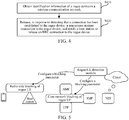
- the blocking processing on the rogue device that initiates the connection request may include: step S601 that a core network pre-configures blocking information to a radio access network; step S602 that the radio access network receives a connection establishment request initiated by a rogue device in an idle state; and step S603 that a base station ignores the connection establishment request initiated by the rogue device according to the configured blocking information.
- the base station may not process the request and may mark the terminal as rogue in the context of the base station side.
- the base station may release the radio-side signaling connection and the data connection related to the UE.
- the blocking processing on a rogue device that has established an end-to-end signaling and data connection may include: step S701 that the core network releases a NAS connection and a session to the rogue device according to the configured blocking information; and step S702 that the base station releases an RRC connection to the rogue device according to the configured blocking information.
- the core network and the radio access network may obtain blocking information such as a rogue device identifier from the cloud, to perform blocking processing according to the blocking information.
- the base station may collect an attacking time of the rogue UE and identification information of the rogue UE, and report them to the core network device.
- the core network blocking processing on the UE may be performed in a case in which an end-to-end signaling and data connection has been established.
- the core network signaling and data connection and a radio-side signaling and data connection need to be removed.
- the blocking processing on a rogue device that has established an end-to-end signaling and data connection may include: step S801that the core network releases a NAS connection and a session to the rogue device according to configured blocking information; step S802 that the core network transmits a release connection instruction to the radio access network; and step S803 that the base station releases an RRC connection to the rogue device according to the release connection instruction transmitted by the core network.
- the core network may obtain blocking information such as a rogue device identifier from the cloud, but the radio access network does not need to obtain the blocking information.
- the UE may further be prohibited from re-accessing the wireless communication system permanently or in a specified time set by a timer.
- the network-side device may further broadcast a blocking parameter in system information or configure a blocking parameter for the terminal in an RRC connection release procedure, so that the rogue terminal learns of a specific time during which it cannot access the wireless communication system.
- the network-side device may further record at an access stratum (AS) configuration information of blocking, such as a 5G-S-TMSI allocated to the terminal by a 5G core (5GC) or IMEI information of the terminal.
- AS access stratum
- the terminal may be rejected at the NAS entity (that is, the core network entity such as an MME or an AMF).
- the terminal may alternatively be rejected at the application layer.
- the application function AF can obtain the identifier of the rogue UE, the AF may provide the identifier of the rogue UE to the core network element, and the core network element may determine whether to prohibit the UE from registering with the wireless communication system again according to the identifier of the rogue UE.
- apparatus embodiments of the present disclosure may be used for performing the device behavior detection method for a wireless communication network and the blocking processing method for a wireless communication network in the foregoing embodiments of the present disclosure.
- the apparatus embodiments may be used for performing the device behavior detection method for a wireless communication network and the blocking processing method for a wireless communication network in the foregoing embodiments of the present disclosure.
- the apparatus embodiments may be used for performing the device behavior detection method for a wireless communication network and the blocking processing method for a wireless communication network in the foregoing embodiments of the present disclosure.
- FIG. 9 schematically shows a block diagram of a device behavior detection apparatus for a wireless communication network according to an embodiment of the present disclosure.
- a device behavior detection apparatus 900 for a wireless communication network includes: a detection unit 902, a determining unit 904, and a transmitting unit 906.
- the detection unit 902 is configured to detect an interactive behavior between user equipment and a network-side device in a wireless communication network.
- the determining unit 904 is configured to determine whether the user equipment is a rogue device according to the interactive behavior.
- the transmitting unit 906 is configured to transmit identification information of the determined rogue device to the network-side device, so that the network-side device performs blocking processing on the rogue device.
- the detection unit 902 is specifically configured to detect a control plane protocol behavior of the user equipment performed with the network-side device; and the determining unit 904 is specifically configured to determine whether the user equipment is a rogue device according to the control plane protocol behavior of the user equipment.
- the determining unit 904 is specifically configured to determine whether a logic function and/or an execution time sequence of signaling transmitted by the user equipment is abnormal according to the control plane protocol behavior of the user equipment; and determine that the user equipment is a rogue device in a case that the logic function and/or the execution time sequence of the signaling transmitted by the user equipment is abnormal.
- the determining unit 904 is specifically configured to determine that the logic function and/or the execution time sequence of the signaling transmitted by the user equipment is abnormal in a case that control plane protocol signaling of the user equipment indicates that a behavior of the user equipment meets at least one of a plurality of conditions, the plurality of conditions including a condition that the user equipment repeatedly initiates a random access request, a condition that the user equipment repeatedly initiates an RRC connection request, and a condition that the user equipment repeatedly initiates a connection establishment completion message.
- the detection unit 902 is specifically configured to detect the control plane protocol behavior of the user equipment performed with the network-side device through a detection module installed on the network-side device.
- the detection unit 902 is specifically configured to detect a user plane protocol behavior of the user equipment performed with the network-side device; and the determining unit 904 is specifically configured to determine whether the user equipment is a rogue device according to a user plane transmission status of the user equipment and a behavioral characteristic of the user equipment that are represented by the user plane protocol behavior.
- the determining unit 904 is specifically configured to determine that the user equipment is a rogue device in a case that user plane transmission of the user equipment is abnormal, and the behavioral characteristic of the user equipment is a predetermined behavioral characteristic.
- the detection unit 902 is specifically configured to detect an application layer behavior of the user equipment in interaction with the network-side device; and the determining unit 904 is specifically configured to determine that the user equipment is a rogue device in a case that the application layer behavior of the user equipment is a predetermined behavior.
- the detection unit 902 is specifically configured to detect the application layer behavior through a detection module installed on the user equipment.
- the transmitting unit 906 is specifically configured to count, for each user equipment, a quantity of times that the user equipment is determined as a rogue device; and transmit identification information of user equipment that is determined as a rogue device for a quantity of times reaching a predetermined quantity of times in a predetermined duration to the network-side device.
- the detection unit 902 is specifically configured to receive the interactive behavior between the user equipment and the network-side device provided by the network-side device in the wireless communication network, the interactive behavior including a signaling behavior and a data transmission behavior that are initiated by the user equipment.
- the transmitting unit 906 is specifically configured to transmit a notification message including the identification information of the rogue device to the network-side device, the identification information of the rogue device including a core network identifier of the rogue device and/or an identifier of an air interface used by the rogue device.
- the transmitting unit 906 is specifically configured to transmit identification information of one determined rogue device to the network-side device, or to transmit identification information of a plurality of determined rogue devices together to the network-side device.
- FIG. 10 schematically shows a block diagram of a blocking processing apparatus for a wireless communication network according to an embodiment of the present disclosure.
- a blocking processing apparatus 1000 for a wireless communication network includes: an obtaining unit 1002, a first processing unit 1004, and a second processing unit 1006.
- the obtaining unit 1002 is configured to obtain identification information of a rogue device in a wireless communication network.
- the first processing unit 1004 is configured to ignore, in response to receiving request signaling related to access to the wireless communication network that is initiated by the rogue device, the request signaling.
- the second processing unit 1006 is configured to release, in response to detecting that a connection to the rogue device has been established, the connection to the rogue device.
- the request signaling includes: a random access request, an RRC connection request, and a connection establishment completion message.
- the first processing unit 1004 is further configured to recover, in a case that the rogue device initiates the random access request through a dedicated random access preamble and/or a dedicated random access resource, the random access preamble and/or the random access resource.
- the second processing unit 1006 is configured to release an RRC connection between a base station and the rogue device according to the identification information of the rogue device; or release an RRC connection between a base station and the rogue device according to a release instruction transmitted by a core network device.
- FIG. 11 schematically shows a block diagram of a blocking processing apparatus for a wireless communication network according to an embodiment of the present disclosure.
- a blocking processing apparatus 1100 for a wireless communication network includes: an obtaining unit 1102 and a processing unit 1104.
- the obtaining unit 1102 is configured to obtain identification information of a rogue device in a wireless communication network.
- the processing unit 1104 is configured to release, in response to detecting that a connection to the rogue device has been established, a non-access stratum connection to the rogue device, and notify a base station to release an RRC connection to the rogue device.
- the blocking processing apparatus 1100 for a wireless communication network further includes: a transmitting unit, configured to transmit the identification information of the rogue device to the base station, so that the base station controls an access procedure of the rogue device.
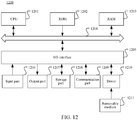
- FIG. 12 is a schematic structural diagram of a computer system adapted to implement an electronic device according to an embodiment of the present disclosure.
- a computer system 1200 of the electronic device shown in FIG. 12 is merely an example, and does not constitute any limitation on functions and use ranges of the embodiments of the present disclosure.
- the computer system 1200 includes a central processing unit (CPU) 1201, which may perform various proper actions and processing based on a program stored in a read-only memory (ROM) 1202 or a program loaded from a storage part 1208 into a random access memory (RAM) 1203.
- the RAM 1203 further stores various programs and data required for system operations.
- the CPU 1201, the ROM 1202, and the RAM 1203 are connected to each other through a bus 1204.
- An input/output (I/O) interface 1205 is also connected to the bus 1204.
- the following components are connected to the I/O interface 1205: an input part 1206 including a keyboard, a mouse, or the like, an output part 1207 including a cathode ray tube (CRT), a liquid crystal display (LCD), a speaker, or the like, a storage part 1208 including a hard disk, or the like, and a communication part 1209 including a network interface card such as a local area network (LAN) card or a modem.
- the communication part 1209 performs communication processing through a network such as the Internet.
- a driver 1210 is also connected to the I/O interface 1205 as required.
- a removable medium 1211 such as a magnetic disk, an optical disc, a magneto-optical disk, or a semiconductor memory is installed on the driver 1210 as required, so that a computer program read from the removable medium 1211 is installed into the storage part 1208 as required.
- an embodiment of the present disclosure includes a computer program product.
- the computer program product includes a computer program stored in a computer-readable medium.
- the computer program includes a computer program used for performing a method shown in the flowchart.
- the computer program may be downloaded and installed through the communication part 1209 from a network, and/or installed from the removable medium 1211.
- the central processing unit (CPU) 1201 the various functions defined in the system of the present disclosure are executed.
- the computer-readable medium shown in the embodiments of the present disclosure may be a computer-readable signal medium or a computer-readable storage medium or any combination of the two.
- the computer-readable storage medium may be, for example, but is not limited to, an electric, magnetic, optical, electromagnetic, infrared, or semi-conductive system, apparatus, or component, or any combination of the above.
- a more specific example of the computer-readable storage medium may include but is not limited to: an electrical connection having one or more wires, a portable computer magnetic disk, a hard disk, a random access memory (RAM), a read-only memory (ROM), an erasable programmable read-only memory (EPROM), a flash memory, an optical fiber, a portable compact disk read-only memory (CD-ROM), an optical storage device, a magnetic storage device, or any appropriate combination thereof.
- the computer-readable storage medium may be any tangible medium containing or storing a program, and the program may be used by or used in combination with an instruction execution system, an apparatus, or a device.
- the computer-readable signal medium may include a data signal transmitted in a baseband or as part of a carrier, and stores a computer-readable computer program.
- the propagated data signal may be in a plurality of forms, including, but not limited to, an electromagnetic signal, an optical signal, or any appropriate combination thereof.
- the computer-readable signal medium may alternatively be any computer-readable medium other than the computer-readable storage medium.
- the computer-readable medium may send, propagate or transmit a program for use by or use in combination with an instruction execution system, apparatus or a component.
- the computer program included in the computer-readable medium may be transmitted by using any suitable medium, including but not limited to: a wireless medium, a wire, or the like, or any suitable combination thereof.
- each box in a flowchart or a block diagram may represent a module, a program segment, or a part of code.
- the module, the program segment, or the part of code includes one or more executable instructions used for implementing specified logic functions.
- functions annotated in boxes may be alternatively performed in a sequence different from that annotated in an accompanying drawing. For example, two boxes shown in succession may be performed substantially in parallel in practices, and sometimes the two boxes may be performed in a reverse sequence, which is determined by involved functions.
- Each box in a block diagram or a flowchart and a combination of boxes in the block diagram or the flowchart may be implemented by using a dedicated hardware-based system configured to perform a specified function or operation, or may be implemented by using a combination of dedicated hardware and a computer instruction.
- a related unit described in the embodiments of the present disclosure may be implemented in a software manner, or may be implemented in a hardware manner, and the unit described can also be arranged in a processor.
- the present disclosure further provides a computer-readable medium.
- the computer-readable medium may be included in the electronic device described in the foregoing embodiments, or may exist alone and is not disposed in the electronic device.
- the computer-readable medium carries one or more programs, the one or more programs, when executed by the electronic device, causing the electronic device to implement the method described in the foregoing embodiments.
- modules or units of a device configured to perform actions are discussed in the foregoing detailed description, such division of modules or units is exemplary. In practices, according to the implementations of the present disclosure, the features and functions of two or more modules or units described above may be specifically implemented in one module or unit. Conversely, features and functions of one module or unit described above may be further divided into a plurality of modules or units for implementation.
- the software product may be stored in a non-volatile storage medium (which may be a CD-ROM, a USB flash drive, a removable hard disk, or the like) or on the network, including several instructions for instructing a computing device (which may be a personal computer, a server, a touch terminal, a network device, or the like) to perform the methods according to the embodiments of the present disclosure.
- a non-volatile storage medium which may be a CD-ROM, a USB flash drive, a removable hard disk, or the like
- a computing device which may be a personal computer, a server, a touch terminal, a network device, or the like
Landscapes
- Engineering & Computer Science (AREA)
- Computer Security & Cryptography (AREA)
- Computer Networks & Wireless Communication (AREA)
- Signal Processing (AREA)
- Computer Hardware Design (AREA)
- Computing Systems (AREA)
- General Engineering & Computer Science (AREA)
- Mobile Radio Communication Systems (AREA)
Abstract
Description
- This application claims priority to Chinese Patent Application No.
201811110283.X - The present disclosure relates to the field of communication technologies, and in particular, to a device behavior detection method, a blocking processing method, a medium, and an electronic device.
- In a wireless communication system (such as a 4G system or a 5G system), it is usually assumed that user equipment (UE) always performs a signaling procedure in accordance with provisions of a communication protocol. However, with the gradual opening of the wireless communication system, rogue devices inevitably occur in the system. Such devices may perform data transmission in violation of the provisions of the communication protocol intentionally, thereby affecting normal operation of the entire wireless communication system.
- According to embodiments of the present disclosure, a device behavior detection method, a blocking processing method, a medium, and an electronic device are provided, to avoid, at least to some extent, a rogue device from affecting normal operation of a wireless communication system.
- According to an aspect of the embodiments of the present disclosure, a device behavior detection method for a wireless communication network is provided, applied to a network device, the method including: detecting an interactive behavior between user equipment and a network-side device in a wireless communication network; determining whether the user equipment is a rogue device according to the interactive behavior; and transmitting identification information of the determined rogue device to the network-side device, so that the network-side device performs blocking processing on the rogue device.
- According to an aspect of the embodiments of the present disclosure, a blocking processing method for a wireless communication network is provided, applied to an access network device, the method including: obtaining identification information of a rogue device in a wireless communication network; ignoring, in response to receiving request signaling related to access to the wireless communication network that is initiated by the rogue device, the request signaling; and releasing, in response to detecting that a connection to the rogue device has been established, the connection to the rogue device.
- According to an aspect of the embodiments of the present disclosure, a blocking processing method for a wireless communication network is provided, including: obtaining identification information of a rogue device in a wireless communication network; and releasing, in response to detecting that a connection to the rogue device has been established, a non-access stratum connection to the rogue device, and notifying a base station to release a Radio Resource Control (RRC) connection to the rogue device.
- According to an aspect of the embodiments of the present disclosure, a device behavior detection apparatus for a wireless communication network is provided, including: a detection unit, configured to detect an interactive behavior between user equipment and a network-side device in a wireless communication network; a determining unit, configured to determine whether the user equipment is a rogue device according to the interactive behavior; and a transmitting unit, configured to transmit identification information of the determined rogue device to the network-side device, so that the network-side device performs blocking processing on the rogue device.
- In some embodiments of the present disclosure, based on the foregoing solution, the detection unit is specifically configured to detect a control plane protocol behavior of the user equipment performed with the network-side device; and the determining unit is specifically configured to determine whether the user equipment is a rogue device according to the control plane protocol behavior of the user equipment.
- In some embodiments of the present disclosure, based on the foregoing solution, the determining unit is specifically configured to determine whether a logic function and/or an execution time sequence of signaling transmitted by the user equipment is abnormal according to the control plane protocol behavior of the user equipment; and to determine that the user equipment is a rogue device in a case that the logic function and/or the execution time sequence of the signaling transmitted by the user equipment is abnormal.
- In some embodiments of the present disclosure, based on the foregoing solution, the determining unit is specifically configured to determine that the logic function and/or the execution time sequence of the signaling transmitted by the user equipment is abnormal in a case that control plane protocol signaling of the user equipment indicates that a behavior of the user equipment meets at least one of a plurality of conditions, the plurality of conditions including a condition that the user equipment repeatedly initiates a random access request, a condition that the user equipment repeatedly initiates an RRC connection request, and a condition that the user equipment repeatedly initiates a connection establishment completion message.
- In some embodiments of the present disclosure, based on the foregoing solution, the detection unit is specifically configured to detect the control plane protocol behavior of the user equipment performed with the network-side device through a detection module installed on the network-side device.
- In some embodiments of the present disclosure, based on the foregoing solution, the detection unit is specifically configured to detect a user plane protocol behavior of the user equipment performed with the network-side device; and the determining unit is specifically configured to determine whether the user equipment is a rogue device according to a user plane transmission status of the user equipment and a behavioral characteristic of the user equipment that are represented by the user plane protocol behavior.
- In some embodiments of the present disclosure, based on the foregoing solution, the determining unit is specifically configured to determine that the user equipment is a rogue device in a case that user plane transmission of the user equipment is abnormal, and the behavioral characteristic of the user equipment is a predetermined behavioral characteristic.
- In some embodiments of the present disclosure, based on the foregoing solution, the detection unit is specifically configured to detect an application layer behavior of the user equipment in interaction with the network-side device; and the determining unit is specifically configured to determine that the user equipment is a rogue device in a case that the application layer behavior of the user equipment is a predetermined behavior.
- In some embodiments of the present disclosure, based on the foregoing solution, the detection unit is specifically configured to detect the application layer behavior through a detection module installed on the user equipment.
- In some embodiments of the present disclosure, based on the foregoing solution, the detection unit is specifically configured to receive the interactive behavior between the user equipment and the network-side device provided by the network-side device in the wireless communication network, the interactive behavior including a signaling behavior and a data transmission behavior that are initiated by the user equipment.
- In some embodiments of the present disclosure, based on the foregoing solution, the transmitting unit is specifically configured to count, for each user equipment, a quantity of times that the user equipment is determined as a rogue device; and to transmit identification information of user equipment that is determined as a rogue device for a quantity of times reaching a predetermined quantity of times in a predetermined duration to the network-side device.
- In some embodiments of the present disclosure, based on the foregoing solution, the transmitting unit is specifically configured to transmit a notification message including the identification information of the rogue device to the network-side device, the identification information of the rogue device including a core network identifier of the rogue device and/or an identifier of an air interface used by the rogue device.
- In some embodiments of the present disclosure, based on the foregoing solution, the transmitting unit is specifically configured to transmit identification information of one determined rogue device to the network-side device, or to transmit identification information of a plurality of determined rogue devices together to the network-side device.
- According to an aspect of the embodiments of the present disclosure, a blocking processing apparatus for a wireless communication network is provided, including: an obtaining unit, configured to obtain identification information of a rogue device in a wireless communication network; a first processing unit, configured to ignore, in response to receiving request signaling related to access to the wireless communication network that is initiated by the rogue device, the request signaling; and a second processing unit, configured to release, in response to detecting that a connection to the rogue device has been established, the connection to the rogue device.
- In some embodiments of the present disclosure, based on the foregoing solution, the request signaling includes: a random access request, an RRC connection request, and a connection establishment completion message.
- In some embodiments of the present disclosure, based on the foregoing solution, the first processing unit is further configured to recover, in a case that the rogue device initiates the random access request through a dedicated random access preamble and/or a dedicated random access resource, the random access preamble and/or the random access resource.
- In some embodiments of the present disclosure, based on the foregoing solution, the second processing unit is configured to release an RRC connection between a base station and the rogue device according to the identification information of the rogue device; or release an RRC connection between a base station and the rogue device according to a release instruction transmitted by a core network device.
- According to an aspect of the embodiments of the present disclosure, a blocking processing apparatus for a wireless communication network is provided, including: an obtaining unit, configured to obtain identification information of a rogue device in a wireless communication network; and a processing unit, configured to release, in response to detecting that a connection to the rogue device has been established, a non-access stratum connection to the rogue device, and notify a base station to release an RRC connection to the rogue device.
- In some embodiments of the present disclosure, based on the foregoing solution, the blocking processing apparatus for a wireless communication network further includes: a transmitting unit, configured to transmit the identification information of the rogue device to the base station, so that the base station controls an access procedure of the rogue device.
- According to an aspect of the embodiments of the present disclosure, a computer-readable medium is provided, storing a computer program, the computer program, when executed by a processor, implementing the device behavior detection method for a wireless communication network and/or the blocking processing method for the wireless communication network according to the foregoing embodiments.
- According to an aspect of the embodiments of the present disclosure, an electronic device is provided, including: one or more processors; and a storage apparatus, configured to store one or more programs, the one or more programs, when executed by the one or more processors, causing the one or more processors to implement the device behavior detection method for a wireless communication network and/or the blocking processing method for the wireless communication network according to the foregoing embodiments.
- In the technical solutions provided in some embodiments of the present disclosure, an interactive behavior between user equipment and a network-side device in a wireless communication network is detected, to determine whether the user equipment is a rogue device according to the interactive behavior, and identification information of the rogue device is transmitted to the network-side device for blocking processing. In this way, a rogue device can be effectively determined based on an interactive behavior between user equipment and a network-side device in a wireless communication network, so that the network-side device performs blocking processing on the rogue device, thereby effectively overcoming malicious attacks of the rogue device on the wireless communication system and avoiding the rogue device from affecting normal operation of the wireless communication system.
- It is to be understood that, the foregoing general descriptions and the following detailed descriptions are merely for exemplary and explanatory purposes and are not intended to limit the present disclosure.
-
-
FIG. 1 is a schematic diagram of an exemplary system architecture to which a technical solution according to an embodiment of the present disclosure may be applied. -
FIG. 2 schematically shows a flowchart of a device behavior detection method for a wireless communication network according to an embodiment of the present disclosure. -
FIG. 3 schematically shows a flowchart of a blocking processing method for a wireless communication network according to an embodiment of the present disclosure. -
FIG. 4 schematically shows a flowchart of a blocking processing method for a wireless communication network according to an embodiment of the present disclosure. -
FIG. 5 schematically shows a flowchart of processing of detecting and blocking a rogue terminal in a wireless communication network according to an embodiment of the present disclosure. -
FIG. 6 schematically shows a flowchart of performing blocking processing on a rogue device that initiates a connection request according to an embodiment of the present disclosure. -
FIG. 7 schematically shows a flowchart of performing blocking processing on a rogue device that has established an end-to-end signaling and data connection according to an embodiment of the present disclosure. -
FIG. 8 schematically shows a flowchart of performing blocking processing on a rogue device that has established an end-to-end signaling and data connection according to an embodiment of the present disclosure. -
FIG. 9 schematically shows a block diagram of a device behavior detection apparatus for a wireless communication network according to an embodiment of the present disclosure. -
FIG. 10 schematically shows a block diagram of a blocking processing apparatus for a wireless communication network according to an embodiment of the present disclosure. -
FIG. 11 schematically shows a block diagram of a blocking processing apparatus for a wireless communication network according to an embodiment of the present disclosure. -
FIG. 12 is a schematic structural diagram of a computer system adapted to implement an electronic device according to an embodiment of the present disclosure. - Exemplary implementations are now described more comprehensively with reference to the accompanying drawings. However, the examples of implementations may be implemented in multiple forms, and it is not to be understood as being limited to the examples described herein. Conversely, the implementations are provided to make the present disclosure more comprehensive and complete, and comprehensively convey the idea of the examples of the implementations to a person skilled in the art.
- In addition, the described characteristics, structures, or features may be combined in one or more embodiments in any appropriate manner. In the following descriptions, a lot of specific details are provided to give a comprehensive understanding of the embodiments of the present disclosure. However, a person of ordinary skill in the art is to be aware that, the technical solutions in the present disclosure may be implemented without one or more of the particular details, or another method, unit, apparatus, or step may be used. In other cases, well-known methods, apparatuses, implementations, or operations are not shown or described in detail, in order not to obscure the aspects of the present disclosure.
- The block diagrams shown in the accompany drawings are merely functional entities and do not necessarily correspond to physically independent entities. In other words, such functional entities may be implemented in the form of software, or implemented in one or more hardware modules or integrated circuits, or implemented in different networks and/or processor apparatuses and/or microcontroller apparatuses.
- The flowcharts shown in the accompanying drawings are merely exemplary descriptions and do not necessarily include all of the content and operations/steps, nor are they necessarily performed in the sequence described. For example, some operations/steps may be further divided, and some operations/steps may be combined or partially combined. Therefore, an actual execution sequence may be changed according to an actual situation.
-
FIG. 1 is a schematic diagram of anexemplary system architecture 100 to which a technical solution according to an embodiment of the present disclosure may be applied. - As shown in
FIG. 1 , thesystem architecture 100 may includeuser equipment 101, anaccess network device 102, and acore network device 103. Theuser equipment 101 may be a smartphone, a tablet computer, a portable computer, a desktop computer, or the like. Theaccess network device 102 may be a base station or the like. Thecore network device 103 may be a mobility management entity (MME) in a 4G core network or an access and mobility function (AMF) entity in a 5G core network. - It is to be understood that a quantity of the
user equipment 101, a quantity of theaccess network devices 102, and a quantity of thecore network devices 103 shown inFIG. 1 are merely exemplary. There may be any quantity of theuser equipment 101, any quantity of theaccess network devices 102, and any quantity of thecore network devices 103 according to implementation requirements. - In an embodiment of the present disclosure, a detection module may be arranged (for example, the detection module is arranged on the
user equipment 101, a network-side device, or an entity other than the network-side device), to detect an interactive behavior between theuser equipment 101 and the network-side device (including theaccess network device 102 and the core network device 103), determine whether theuser equipment 101 is a rogue device according to the interactive behavior, and transmit identification information of the determined rogue device to the network-side device, so that the network-side device performs blocking processing on the rogue device. For example, when receiving information such as a random access request, an RRC connection request, and a connection establishment completion message that are initiated by the rogue device, theaccess network device 102 may ignore the information. If theaccess network device 102 has established a connection to the rogue device, theaccess network device 102 may release an RRC connection to the rogue device. In another example, if a connection to the rogue device has been established, thecore network device 103 may release a non-access stratum (NAS) connection to the rogue device. It can be seen that the technical solution of this embodiment of the present disclosure effectively overcomes malicious attacks of the rogue device on the wireless communication system, avoiding the rogue device from affecting normal operation of the wireless communication system. - The implementation details of the technical solution of this embodiment of the present disclosure are described in detail in the following.
-
FIG. 2 schematically shows a flowchart of a device behavior detection method for a wireless communication network according to an embodiment of the present disclosure. The device behavior detection method may be performed by the detection module. Referring toFIG. 2 , the device behavior detection method includes at least steps S210 to S230, which are described below in detail. - In step S210, an interactive behavior between user equipment and a network-side device in a wireless communication network is detected.
- In an embodiment of the present disclosure, the interactive behavior between the user equipment and the network-side device includes a control plane protocol behavior and a user plane protocol behavior of the user equipment performed with the network-side device, and an application layer behavior of the user equipment in interaction with the network-side device.
- In an embodiment of the present disclosure, the control plane protocol behavior and the user plane protocol behavior of the user equipment performed with the network-side device may be detected through a detection module installed on the network-side device. In addition, the application layer behavior may be detected through a detection module installed on the user equipment.
- In an embodiment of the present disclosure, the interactive behavior between the user equipment and the network-side device may be detected through an entity other than the network-side device. In this case, the detection module needs to receive the interactive behavior between the user equipment and the network-side device provided by the network-side device. For example, the interactive behavior may include a signaling behavior and a data transmission behavior that are initiated by the user equipment.
- Referring still to
FIG. 2 , in step S220, whether the user equipment is a rogue device is determined according to the interactive behavior. - In an embodiment of the present disclosure, if the detected interactive behavior is the control plane protocol behavior of the user equipment performed with the network-side device, whether the user equipment is a rogue device may be determined according to the signaling behavior of the user equipment. For example, whether a logic function and/or an execution time sequence of signaling transmitted by the user equipment is abnormal may be determined according to the signaling behavior of the user equipment. If the logic function and/or the execution time sequence of the signaling transmitted by the user equipment is abnormal, the user equipment may be determined as a rogue device.
- In an embodiment of the present disclosure, if control plane protocol signaling of the user equipment indicates that a behavior of the user equipment meets at least one of a plurality of conditions including a condition that the user equipment repeatedly initiates a random access request, a condition that the user equipment repeatedly initiates an RRC connection request, and a condition that the user equipment repeatedly initiates a connection establishment completion message, it may be determined that the logic function and/or the execution time sequence of the signaling transmitted by the user equipment is abnormal.
- In an embodiment of the present disclosure, if the detected interactive behavior is the user plane protocol behavior of the user equipment performed with the network-side device, whether the user equipment is a rogue device may be determined according to a user plane transmission status and a behavioral characteristic of the user equipment. For example, if user plane transmission of the user equipment is abnormal, and the behavioral characteristic of the user equipment is a predetermined behavioral characteristic (for example, a rogue device characteristic library may be constructed according to predetermined behavioral characteristics), the user equipment is determined as a rogue device.
- In an embodiment of the present disclosure, that the user plane transmission is abnormal may be that a user plane transmission exception occurs in a GPRS tunneling protocol (GTP) tunnel of a 5G air interface user plane and a GTP tunnel of a 5G core network user plane. The predetermined behavioral characteristic may be that a Radio Link Control (RLC) layer violates sliding window and sequence number restrictions, or may be an abnormal protocol behavior in a packet data convergence protocol (PDCP) layer. For example, a transmitting end does not start a retransmission mechanism, but a receiving end receives repeated packets or the like one or more times.
- In an embodiment of the present disclosure, if the detected interactive behavior is the application layer behavior of the user equipment in interaction with the network-side device, the user equipment is determined as a rogue device if the application layer behavior of the user equipment is a predetermined behavior. For example, a rogue device characteristic library may be constructed according to rogue behaviors in an application layer. The user equipment is determined as a rogue device in response to detecting that the application layer behavior of the user equipment is a behavior in the rogue device characteristic library. In another example, behavioral characteristics of the rogue device may be collected to form training samples of a machine learning model, then the machine learning model is trained using the training samples, and finally, the rogue device may be recognized through the trained machine learning model. For example, a behavioral characteristic of to-be-recognized user equipment is inputted into the trained machine learning model, then whether the to-be-recognized user equipment is a rogue device is determined by using output of the machine learning model. The rogue behavior of the application layer may be an insecure behavior, such as malicious data theft, violent obtaining of a related permission, and abnormal data transmission, in a specific application program of the user equipment detected through a firewall or anti-virus software or by another method.
- Referring still to
FIG. 2 , in step S230, identification information of the determined rogue device is transmitted to the network-side device, so that the network-side device performs blocking processing on the rogue device. - In an embodiment of the present disclosure, a notification message including the identification information of the rogue device may be transmitted to the network-side device, to transmit the identification information of the determined rogue device to the network-side device. The identification information of the rogue device includes a core network identifier of the rogue device and/or an identifier of an air interface used by the rogue device.
- In an embodiment of the present disclosure, the core network identifier may be a system architecture evolution-temporary mobile subscriber identity (S-TMSI)/5G-S-TMSI, an international mobile subscriber identity (IMSI), an international mobile equipment identity (IMEI), a mobile station-integrated service digital network (MS-ISDN) number, or the like. The air interface identifier may be a cell-radio network temporary identifier (C-RNTI) or the like.
- In an embodiment of the present disclosure, in transmitting the identification information of the determined rogue device to the network-side device, identification information of determined rogue devices may be seperately transmitted to the network-side device, or identification information of a plurality of determined rogue devices may be transmitted together to the network-side device.
- In an embodiment of the present disclosure, in transmitting the identification information of the determined rogue device to the network-side device, a quantity of times that a user equipment is determined as a rogue device may be counted for each equipment, and then, identification information of user equipment that is determined as a rogue device for a quantity of times reaching a predetermined quantity of times in a predetermined duration is transmitted to the network-side device. In other words, in some possible implementations, the detection module may perform further processing after detecting the user equipment as a rogue device for many times, thereby ensuring accuracy of a detection result and avoiding a problem that a device is incorrectly detected as a rogue device due to an accidental factor.
- According to the technical solution of the embodiment shown in
FIG. 2 , in the wireless communication network, a rogue device can be effectively determined based on the interactive behavior between the user equipment and the network-side device, so that the network-side device performs blocking processing on the rogue device, thereby effectively overcoming malicious attacks of the rogue device on the wireless communication system and avoiding the rogue device from affecting normal operation of the wireless communication system. -
FIG. 3 schematically shows a flowchart of a blocking processing method for a wireless communication network according to an embodiment of the present disclosure. The blocking processing method may be performed by an access network device. The access network device may be an evolved NodeB (eNB) in a long-term evolution (LTE) network, a gNB in 5G new radio (NR), or an access network element in a future wireless communication network. Referring toFIG. 3 , the blocking processing method includes at least steps S310 to S330, which are described below in detail. - In step S310, identification information of a rogue device in a wireless communication network is obtained.
- In an embodiment of the present disclosure, the access network device may receive the identification information of the rogue device transmitted by a detection module. In other words, after detecting the rogue device, the detection module transmits the identification information of the rogue device to the access network device. In addition, the access network device may alternatively receive the identification information of the rogue device transmitted by a core network device. For example, after obtaining the identification information of the rogue device detected by the detection module, the core network device may transmit the identification information of the rogue device to the access network device.
- In step S320, in a case that request signaling related to access to the wireless communication network that is initiated by the rogue device is received, the request signaling is ignored.
- In an embodiment of the present disclosure, the request signaling related to access to the wireless communication network that is initiated by the rogue device includes: a random access request, an RRC connection request, and a connection establishment completion message. The request signaling may be ignored by not responding to the request signaling, for example, not performing resource allocation in response to the request signaling.
- In an embodiment of the present disclosure, if the rogue device initiates the random access request through a dedicated random access preamble and/or a dedicated random access resource, the random access preamble and/or the random access resource may be recovered while ignoring the random access request, so as to allocate the random access preamble and/or the random access resource to normal user equipment. Therefore, the rogue device cannot consume much radio resources, and utilization efficiency of resources is improved. The random access resource may include a time domain resource and a frequency domain resource.
- In step S330, a connection to the rogue device is released in response to detecting that the connection to the rogue device has been established.
- In an embodiment of the present disclosure, in releasing the connection to the rogue device, an RRC connection between a base station and the rogue device may be released according to the identification information of the rogue device, or may be released according to a release instruction transmitted by a core network device. In other words, in releasing the connection to the rogue device, the access network device may determine by itself to release the RRC connection between the base station and the rogue device according to the identification information of the rogue device, or release the RRC connection according to the release instruction transmitted by the access network device.
- According to the technical solution of the embodiment shown in
FIG. 3 , in the wireless communication network, the access network device can perform blocking processing on a rogue device according to information of the rogue device, thereby effectively overcoming malicious attacks of the rogue device on the wireless communication system and avoiding the rogue device from affecting normal operation of the wireless communication system. In addition, the technical solution of the embodiment shown inFIG. 3 is also applicable to other network elements that have interfaces with 4G or 5G network elements, such as a network element supporting edge computing (EC), and an application function (AF) element supporting network exposure functions. The technical solution of this embodiment of the present disclosure is also applicable to a terminal-base station integrated node capable of serving another terminal, such as an integrated access and backhaul (IAB) node introduced to the 5G network. -
FIG. 4 schematically shows a flowchart of a blocking processing method for a wireless communication network according to an embodiment of the present disclosure. The blocking processing method may be performed by a core network device (such as an MME or an AMF). Referring toFIG. 4 , the blocking processing method includes at least steps S410 to S420, which are described below in detail. - In step S410, identification information of a rogue device in a wireless communication network is obtained.
- In an embodiment of the present disclosure, the core network device may receive the identification information of the rogue device transmitted by the detection module. In other words, after detecting the rogue device, the detection module transmits the identification information of the rogue device to the core network device.
- In an embodiment of the present disclosure, after obtaining the identification information of the rogue device, the core network device may further transmit the identification information of the rogue device to the base station, so that the base station controls an access procedure of the rogue device. For example, when receiving information such as a random access request, an RRC connection request, and a connection establishment completion message that are initiated by the rogue device, the base station may ignore the information.
- In step S420, a non-access stratum connection to the rogue device is released in response to detecting that a connection to the rogue device has been established, and a base station is notified to release an RRC connection to the rogue device.
- According to the technical solution of the embodiment shown in
FIG. 4 , in the wireless communication network, the core network device may perform blocking processing on the rogue device according to information of the rogue device, thereby effectively overcoming malicious attacks of the rogue device on the wireless communication system and avoiding the rogue device from affecting normal operation of the wireless communication system. In addition, the technical solution of the embodiment shown inFIG. 4 is also applicable to other network elements that have interfaces with 4G or 5G network elements, such as a network element supporting EC, and an AF element supporting network exposure functions. The technical solution of this embodiment of the present disclosure is also applicable to the terminal-base station integrated node capable of serving another terminal, such as an IAB node introduced to the 5G network. - Implementation details of the technical solution of this embodiment of the present disclosure are specifically described below with reference to
FIG. 5 to FIG. 8 . - As shown in
FIG. 5 , the technical solution of this embodiment of the present disclosure is mainly to change an assumption that a terminal always performs a signaling procedure in accordance with a provision of a communication protocol in the existing 4G and 5G communication standards. When a rogue-UE detection module (for example, a probe arranged on a 4G or 5G base station or on a core network element MME/AMF) detects that UE triggers a behavior that violates a protocol procedure, the network-side device can block the UE at different protocol layers, thereby preventing the rogue UE from affecting the wireless communication system.FIG. 5 shows a user port function (UPF), a service management point (SMF), and a network element function (NEF). After detecting rogue UE, the rogue-UE detection module may transmit a blocking parameter including identification information of the rogue UE to a radio-side device (that is, a radio access network-side device), so that the base station performs radio-side blocking. The blocking parameter including the identification information of the rogue UE may also be transmitted to the core network device, so that the core network device performs core network blocking. In addition, the blocking parameter including the identification information of the rogue UE may also be transmitted to a cloud, so that a core network element or an access network element obtains the blocking parameter from the cloud, and performs blocking processing on the rogue UE according to the blocking parameter. The rogue-UE detection module, the radio-side blocking, and the core network blocking are described below respectively. - In an embodiment of the present disclosure, the rogue-UE detection module may detect a rogue UE according to a control plane protocol behavior, a user plane protocol behavior, and an application layer behavior of the UE.
- The control plane protocol behavior includes NAS signaling and RRC signaling, and a signaling behavior based on another interface. Because the 3GPP specifications specify a logic function and an execution time sequence for UE signaling, if signaling transmitted by UE violates a provision, the UE may be determined as a rogue UE. For example, if UE repeatedly initiates a random access request, repeatedly initiates an RRC connection request, or repeatedly initiates a connection establishment completion message, the UE may be determined as a rogue UE. The control plane protocol behavior of the UE may be detected by a probe installed on the base station, the AMF, or another network element. In addition, all UEs or some randomly selected UEs in a network area may be detected, or suspected UE selected by the network side or the cloud according to big data analysis may be detected.
- The user plane protocol behavior includes an access network protocol behavior and a core network protocol behavior. A user plane protocol stack of the access network is a port physical layer (PHY), Media Access Control (MAC), Radio Link Control (RLC), the Packet Data Convergence Protocol (PDCP), or the Service Data Adaptation Protocol (SDAP). In a core network segment, the user plane protocol stack is the L1/L2 Internet Protocol (IP), the User Datagram Protocol (UDP), or the GPRS Tunnel Protocol-User Plane (GTP-U). Any abnormal user plane transmission with a characteristic matching a characteristic of rogue UE may be detected by the detection module.
- Detection of the application layer behavior may be performed in the AF, or may be performed by installing an application layer detection module on the terminal.
- In an embodiment of the present disclosure, if detection of the rogue UE relies on an entity other than 4G and 5G access networks elements and the core network elements, such as the AF, the 4G and 5G networks are required to support network exposure functions, so as to provide a related parameter to the AF, such as signaling and data behavior information of a specified terminal, so that the AF performs detection on a rogue UE according to the parameter.
- The above detection may be performed based on a probability. Specifically, because there may be a false positive, UE may not be blocked each time the UE is detected to be rogue. Instead, a threshold may be set, so that only if it is detected for many times that a specific UE may be rogue, blocking processing is performed on the UE.
- In an embodiment of the present disclosure, after detecting a rogue UE, the rogue-UE detection module may notify the 4G/5G network to block a batch of terminals such as UEs under one or more cells, or even UEs under a tracking area (TA). Therefore, a new function needs to be added to network elements in the 4G and 5G networks to support releasing the batch of terminals.
- In an embodiment of the present disclosure, 4G and 5G network elements need to support a notification or a command of the rogue-UE detection module. A parameter of the command may include, but is not limited to, an identifier of the UE. The identifier of the UE includes any parameter capable of identifying the UE, such as a core network identifier, an air interface identifier, or an IP address currently allocated to the UE.
- In an embodiment of the present disclosure, the radio-side blocking on the UE may be performed in a stage in which the UE performs initial access and establishes a core network signaling or data connection, and may also be performed in a stage in which the UE has established an end-to-end signaling or data connection. The details are described as follows.
- 1. For UE that performs an initial access, if a rogue attack is detected, for example, the same terminal repeatedly initiates a random access request, an RRC connection request, or a connection establishment completion message, the terminal may be determined to be rogue. In this case, the base station may take the following blocking measures for different situations.
- If the same terminal repeatedly initiates the random access request, a random access channel (RACH) request message of the terminal may be ignored and not responded to. If dedicated RACH preambles and resources are used when the UE initiates the request, the resources are recovered and allocated to other UEs to prevent the rogue UE from occupying too many resources.
- If the same terminal repeatedly initiates the connection request, the base station may not process the request. In an embodiment of the present disclosure, as shown in
FIG. 6 ,the blocking processing on the rogue device that initiates the connection request may include: step S601 that a core network pre-configures blocking information to a radio access network; step S602 that the radio access network receives a connection establishment request initiated by a rogue device in an idle state; and step S603 that a base station ignores the connection establishment request initiated by the rogue device according to the configured blocking information. - If the same terminal repeatedly initiates the connection establishment completion message, the base station may not process the request and may mark the terminal as rogue in the context of the base station side.
- 2. For UE that has established an end-to-end signaling and data connection, if the UE is determined to be rogue, the base station may release the radio-side signaling connection and the data connection related to the UE.
- In an embodiment of the present disclosure, as shown in
FIG. 7 , the blocking processing on a rogue device that has established an end-to-end signaling and data connection may include: step S701 that the core network releases a NAS connection and a session to the rogue device according to the configured blocking information; and step S702 that the base station releases an RRC connection to the rogue device according to the configured blocking information. Prior to this, the core network and the radio access network may obtain blocking information such as a rogue device identifier from the cloud, to perform blocking processing according to the blocking information. - In an embodiment of the present disclosure, the base station may collect an attacking time of the rogue UE and identification information of the rogue UE, and report them to the core network device.
- In an embodiment of the present disclosure, the core network blocking processing on the UE may be performed in a case in which an end-to-end signaling and data connection has been established. In this case, the core network signaling and data connection and a radio-side signaling and data connection need to be removed.
- In an embodiment of the present disclosure, as shown in
FIG. 8 , the blocking processing on a rogue device that has established an end-to-end signaling and data connection may include: step S801that the core network releases a NAS connection and a session to the rogue device according to configured blocking information; step S802 that the core network transmits a release connection instruction to the radio access network; and step S803 that the base station releases an RRC connection to the rogue device according to the release connection instruction transmitted by the core network. Prior to this, the core network may obtain blocking information such as a rogue device identifier from the cloud, but the radio access network does not need to obtain the blocking information. - In an embodiment of the present disclosure, after the rogue UE is detected and blocked, the UE may further be prohibited from re-accessing the wireless communication system permanently or in a specified time set by a timer. In addition, the network-side device may further broadcast a blocking parameter in system information or configure a blocking parameter for the terminal in an RRC connection release procedure, so that the rogue terminal learns of a specific time during which it cannot access the wireless communication system.
- In an embodiment of the present disclosure, the network-side device may further record at an access stratum (AS) configuration information of blocking, such as a 5G-S-TMSI allocated to the terminal by a 5G core (5GC) or IMEI information of the terminal. If blocking in the AS is ineffective, the terminal may be rejected at the NAS entity (that is, the core network entity such as an MME or an AMF). The terminal may alternatively be rejected at the application layer. If the application function AF can obtain the identifier of the rogue UE, the AF may provide the identifier of the rogue UE to the core network element, and the core network element may determine whether to prohibit the UE from registering with the wireless communication system again according to the identifier of the rogue UE.
- The following describes apparatus embodiments of the present disclosure, and the apparatus embodiments may be used for performing the device behavior detection method for a wireless communication network and the blocking processing method for a wireless communication network in the foregoing embodiments of the present disclosure. For details not disclosed in the apparatus embodiments of the present disclosure, reference may be made to the foregoing method embodiments of the present disclosure.
-
FIG. 9 schematically shows a block diagram of a device behavior detection apparatus for a wireless communication network according to an embodiment of the present disclosure. - Referring to
FIG. 9 , a devicebehavior detection apparatus 900 for a wireless communication network according to an embodiment of the present disclosure includes: adetection unit 902, a determiningunit 904, and a transmittingunit 906. - The
detection unit 902 is configured to detect an interactive behavior between user equipment and a network-side device in a wireless communication network. The determiningunit 904 is configured to determine whether the user equipment is a rogue device according to the interactive behavior. The transmittingunit 906 is configured to transmit identification information of the determined rogue device to the network-side device, so that the network-side device performs blocking processing on the rogue device. - In an embodiment of the present disclosure, the
detection unit 902 is specifically configured to detect a control plane protocol behavior of the user equipment performed with the network-side device; and the determiningunit 904 is specifically configured to determine whether the user equipment is a rogue device according to the control plane protocol behavior of the user equipment. - In an embodiment of the present disclosure, the determining
unit 904 is specifically configured to determine whether a logic function and/or an execution time sequence of signaling transmitted by the user equipment is abnormal according to the control plane protocol behavior of the user equipment; and determine that the user equipment is a rogue device in a case that the logic function and/or the execution time sequence of the signaling transmitted by the user equipment is abnormal. - In an embodiment of the present disclosure, the determining
unit 904 is specifically configured to determine that the logic function and/or the execution time sequence of the signaling transmitted by the user equipment is abnormal in a case that control plane protocol signaling of the user equipment indicates that a behavior of the user equipment meets at least one of a plurality of conditions, the plurality of conditions including a condition that the user equipment repeatedly initiates a random access request, a condition that the user equipment repeatedly initiates an RRC connection request, and a condition that the user equipment repeatedly initiates a connection establishment completion message. - In an embodiment of the present disclosure, the
detection unit 902 is specifically configured to detect the control plane protocol behavior of the user equipment performed with the network-side device through a detection module installed on the network-side device. - In an embodiment of the present disclosure, the
detection unit 902 is specifically configured to detect a user plane protocol behavior of the user equipment performed with the network-side device; and the determiningunit 904 is specifically configured to determine whether the user equipment is a rogue device according to a user plane transmission status of the user equipment and a behavioral characteristic of the user equipment that are represented by the user plane protocol behavior. - In an embodiment of the present disclosure, the determining
unit 904 is specifically configured to determine that the user equipment is a rogue device in a case that user plane transmission of the user equipment is abnormal, and the behavioral characteristic of the user equipment is a predetermined behavioral characteristic. - In an embodiment of the present disclosure, the
detection unit 902 is specifically configured to detect an application layer behavior of the user equipment in interaction with the network-side device; and the determiningunit 904 is specifically configured to determine that the user equipment is a rogue device in a case that the application layer behavior of the user equipment is a predetermined behavior. - In an embodiment of the present disclosure, the
detection unit 902 is specifically configured to detect the application layer behavior through a detection module installed on the user equipment. - In an embodiment of the present disclosure, the transmitting
unit 906 is specifically configured to count, for each user equipment, a quantity of times that the user equipment is determined as a rogue device; and transmit identification information of user equipment that is determined as a rogue device for a quantity of times reaching a predetermined quantity of times in a predetermined duration to the network-side device. - In an embodiment of the present disclosure, the
detection unit 902 is specifically configured to receive the interactive behavior between the user equipment and the network-side device provided by the network-side device in the wireless communication network, the interactive behavior including a signaling behavior and a data transmission behavior that are initiated by the user equipment. - In an embodiment of the present disclosure, the transmitting
unit 906 is specifically configured to transmit a notification message including the identification information of the rogue device to the network-side device, the identification information of the rogue device including a core network identifier of the rogue device and/or an identifier of an air interface used by the rogue device. - In an embodiment of the present disclosure, the transmitting
unit 906 is specifically configured to transmit identification information of one determined rogue device to the network-side device, or to transmit identification information of a plurality of determined rogue devices together to the network-side device. -
FIG. 10 schematically shows a block diagram of a blocking processing apparatus for a wireless communication network according to an embodiment of the present disclosure. - Referring to
FIG. 10 , a blockingprocessing apparatus 1000 for a wireless communication network according to an embodiment of the present disclosure includes: an obtainingunit 1002, afirst processing unit 1004, and asecond processing unit 1006. - The obtaining
unit 1002 is configured to obtain identification information of a rogue device in a wireless communication network. Thefirst processing unit 1004 is configured to ignore, in response to receiving request signaling related to access to the wireless communication network that is initiated by the rogue device, the request signaling. Thesecond processing unit 1006 is configured to release, in response to detecting that a connection to the rogue device has been established, the connection to the rogue device. - In an embodiment of the present disclosure, the request signaling includes: a random access request, an RRC connection request, and a connection establishment completion message.
- In an embodiment of the present disclosure, the
first processing unit 1004 is further configured to recover, in a case that the rogue device initiates the random access request through a dedicated random access preamble and/or a dedicated random access resource, the random access preamble and/or the random access resource. - In an embodiment of the present disclosure, the
second processing unit 1006 is configured to release an RRC connection between a base station and the rogue device according to the identification information of the rogue device; or release an RRC connection between a base station and the rogue device according to a release instruction transmitted by a core network device. -
FIG. 11 schematically shows a block diagram of a blocking processing apparatus for a wireless communication network according to an embodiment of the present disclosure. - Referring to
FIG. 11 , a blockingprocessing apparatus 1100 for a wireless communication network according to an embodiment of the present disclosure includes: an obtainingunit 1102 and aprocessing unit 1104. - The obtaining
unit 1102 is configured to obtain identification information of a rogue device in a wireless communication network. Theprocessing unit 1104 is configured to release, in response to detecting that a connection to the rogue device has been established, a non-access stratum connection to the rogue device, and notify a base station to release an RRC connection to the rogue device. - In an embodiment of the present disclosure, the blocking
processing apparatus 1100 for a wireless communication network further includes: a transmitting unit, configured to transmit the identification information of the rogue device to the base station, so that the base station controls an access procedure of the rogue device. -
FIG. 12 is a schematic structural diagram of a computer system adapted to implement an electronic device according to an embodiment of the present disclosure. - A
computer system 1200 of the electronic device shown inFIG. 12 is merely an example, and does not constitute any limitation on functions and use ranges of the embodiments of the present disclosure. - As shown in
FIG. 12 , thecomputer system 1200 includes a central processing unit (CPU) 1201, which may perform various proper actions and processing based on a program stored in a read-only memory (ROM) 1202 or a program loaded from astorage part 1208 into a random access memory (RAM) 1203. TheRAM 1203 further stores various programs and data required for system operations. TheCPU 1201, theROM 1202, and theRAM 1203 are connected to each other through abus 1204. An input/output (I/O)interface 1205 is also connected to thebus 1204. - The following components are connected to the I/O interface 1205: an
input part 1206 including a keyboard, a mouse, or the like, anoutput part 1207 including a cathode ray tube (CRT), a liquid crystal display (LCD), a speaker, or the like, astorage part 1208 including a hard disk, or the like, and acommunication part 1209 including a network interface card such as a local area network (LAN) card or a modem. Thecommunication part 1209 performs communication processing through a network such as the Internet. Adriver 1210 is also connected to the I/O interface 1205 as required. A removable medium 1211 such as a magnetic disk, an optical disc, a magneto-optical disk, or a semiconductor memory is installed on thedriver 1210 as required, so that a computer program read from the removable medium 1211 is installed into thestorage part 1208 as required. - Particularly, according to the embodiments of the present disclosure, the processes described below with reference to the flowcharts may be implemented as computer software programs. For example, an embodiment of the present disclosure includes a computer program product. The computer program product includes a computer program stored in a computer-readable medium. The computer program includes a computer program used for performing a method shown in the flowchart. In such an embodiment, the computer program may be downloaded and installed through the
communication part 1209 from a network, and/or installed from theremovable medium 1211. When the computer program is executed by the central processing unit (CPU) 1201, the various functions defined in the system of the present disclosure are executed. - The computer-readable medium shown in the embodiments of the present disclosure may be a computer-readable signal medium or a computer-readable storage medium or any combination of the two. The computer-readable storage medium may be, for example, but is not limited to, an electric, magnetic, optical, electromagnetic, infrared, or semi-conductive system, apparatus, or component, or any combination of the above. A more specific example of the computer-readable storage medium may include but is not limited to: an electrical connection having one or more wires, a portable computer magnetic disk, a hard disk, a random access memory (RAM), a read-only memory (ROM), an erasable programmable read-only memory (EPROM), a flash memory, an optical fiber, a portable compact disk read-only memory (CD-ROM), an optical storage device, a magnetic storage device, or any appropriate combination thereof. In the present disclosure, the computer-readable storage medium may be any tangible medium containing or storing a program, and the program may be used by or used in combination with an instruction execution system, an apparatus, or a device. In the present disclosure, the computer-readable signal medium may include a data signal transmitted in a baseband or as part of a carrier, and stores a computer-readable computer program. The propagated data signal may be in a plurality of forms, including, but not limited to, an electromagnetic signal, an optical signal, or any appropriate combination thereof. The computer-readable signal medium may alternatively be any computer-readable medium other than the computer-readable storage medium. The computer-readable medium may send, propagate or transmit a program for use by or use in combination with an instruction execution system, apparatus or a component. The computer program included in the computer-readable medium may be transmitted by using any suitable medium, including but not limited to: a wireless medium, a wire, or the like, or any suitable combination thereof.
- The flowcharts and block diagrams in the accompanying drawings illustrate possible system architectures, functions and operations that may be implemented by a system, a method, and a computer program product according to various embodiments of the present disclosure. In this regard, each box in a flowchart or a block diagram may represent a module, a program segment, or a part of code. The module, the program segment, or the part of code includes one or more executable instructions used for implementing specified logic functions. In some implementations used as substitutes, functions annotated in boxes may be alternatively performed in a sequence different from that annotated in an accompanying drawing. For example, two boxes shown in succession may be performed substantially in parallel in practices, and sometimes the two boxes may be performed in a reverse sequence, which is determined by involved functions. Each box in a block diagram or a flowchart and a combination of boxes in the block diagram or the flowchart may be implemented by using a dedicated hardware-based system configured to perform a specified function or operation, or may be implemented by using a combination of dedicated hardware and a computer instruction.
- A related unit described in the embodiments of the present disclosure may be implemented in a software manner, or may be implemented in a hardware manner, and the unit described can also be arranged in a processor.
- According to another aspect, the present disclosure further provides a computer-readable medium. The computer-readable medium may be included in the electronic device described in the foregoing embodiments, or may exist alone and is not disposed in the electronic device. The computer-readable medium carries one or more programs, the one or more programs, when executed by the electronic device, causing the electronic device to implement the method described in the foregoing embodiments.
- Although a plurality of modules or units of a device configured to perform actions are discussed in the foregoing detailed description, such division of modules or units is exemplary. In practices, according to the implementations of the present disclosure, the features and functions of two or more modules or units described above may be specifically implemented in one module or unit. Conversely, features and functions of one module or unit described above may be further divided into a plurality of modules or units for implementation.
- Through the descriptions of the foregoing implementations, a person skilled in the art easily understands that the exemplary implementations described herein may be implemented through software, or may be implemented through software in combination with necessary hardware. Therefore, the technical solutions of the embodiments of the present disclosure may be implemented in a form of a software product. The software product may be stored in a non-volatile storage medium (which may be a CD-ROM, a USB flash drive, a removable hard disk, or the like) or on the network, including several instructions for instructing a computing device (which may be a personal computer, a server, a touch terminal, a network device, or the like) to perform the methods according to the embodiments of the present disclosure.
- After considering the specification and practicing the present disclosure, a person skilled in the art can readily think of other implementations of the present disclosure. The present disclosure is intended to cover any variations, uses or adaptation of the present disclosure following the general principles of the present disclosure, and includes the well-known knowledge and conventional technical means in the art and undisclosed in the present disclosure.
- It is to be understood that the present disclosure is not limited to the specified structures that are described above and that are shown in the accompanying drawings, and modifications and changes may be made without departing from the scope of the present disclosure. The scope of the present disclosure is limited by the appended claims only.
Claims (20)
- A device behavior detection method for a wireless communication network, applied to a network device, the method comprising:detecting an interactive behavior between user equipment and a network-side device in a wireless communication network;determining whether the user equipment is a rogue device according to the interactive behavior; andtransmitting identification information of the determined rogue device to the network-side device, to be used by the network-side device to perform blocking processing on the rogue device.
- The device behavior detection method for a wireless communication network according to claim 1, wherein the detecting an interactive behavior between user equipment and a network-side device in a wireless communication network comprises:detecting a control plane protocol behavior of the user equipment performed with the network-side device; andthe determining whether the user equipment is a rogue device according to the interactive behavior comprises: determining whether the user equipment is a rogue device according to the control plane protocol behavior of the user equipment.
- The device behavior detection method for a wireless communication network according to claim 2, wherein the determining whether the user equipment is a rogue device according to the control plane protocol behavior of the user equipment comprises:determining whether a logic function and/or an execution time sequence of signaling transmitted by the user equipment is abnormal according to the control plane protocol behavior of the user equipment; anddetermining that the user equipment is a rogue device in a case that the logic function and/or the execution time sequence of the signaling transmitted by the user equipment is abnormal.
- The device behavior detection method for a wireless communication network according to claim 3, wherein the determining whether a logic function and/or an execution time sequence of signaling transmitted by the user equipment is abnormal according to the control plane protocol behavior of the user equipment comprises:
determining that the logic function and/or the execution time sequence of the signaling transmitted by the user equipment is abnormal in a case that control plane protocol signaling of the user equipment indicates that a behavior of the user equipment meets at least one of a plurality of conditions, the plurality of conditions comprising a condition that the user equipment repeatedly initiates a random access request, a condition that the user equipment repeatedly initiates a Radio Resource Control (RRC) connection request, and a condition that the user equipment repeatedly initiates a connection establishment completion message. - The device behavior detection method for a wireless communication network according to claim 2, wherein the control plane protocol behavior of the user equipment performed with the network-side device is detected through a detection module installed on the network-side device.
- The device behavior detection method for a wireless communication network according to claim 1, wherein the detecting an interactive behavior between user equipment and a network-side device in a wireless communication network comprises:detecting a user plane protocol behavior of the user equipment performed with the network-side device; andthe determining whether the user equipment is a rogue device according to the interactive behavior comprises: determining whether the user equipment is a rogue device according to a user plane transmission status of the user equipment and a behavioral characteristic of the user equipment that are represented by the user plane protocol behavior.
- The device behavior detection method for a wireless communication network according to claim 6, wherein the determining whether the user equipment is a rogue device according to a user plane transmission status of the user equipment and a behavioral characteristic of the user equipment that are represented by the user plane protocol behavior comprises:
determining that the user equipment is a rogue device in a case that user plane transmission of the user equipment is abnormal, and the behavioral characteristic of the user equipment is a predetermined behavioral characteristic. - The device behavior detection method for a wireless communication network according to claim 1, wherein the detecting an interactive behavior between user equipment and a network-side device in a wireless communication network comprises: detecting an application layer behavior of the user equipment in interaction with the network-side device; and
the determining whether the user equipment is a rogue device according to the interactive behavior comprises: determining that the user equipment is a rogue device in a case that the application layer behavior of the user equipment is a predetermined behavior. - The device behavior detection method for a wireless communication network according to claim 1, wherein the detecting an interactive behavior between user equipment and a network-side device in a wireless communication network comprises:
receiving the interactive behavior between the user equipment and the network-side device provided by the network-side device in the wireless communication network, the interactive behavior comprising a signaling behavior and a data transmission behavior that are initiated by the user equipment. - The device behavior detection method for a wireless communication network according to claim 1, wherein the transmitting identification information of the determined rogue device to the network-side device comprises:counting, for each user equipment, a quantity of times that the user equipment is determined as a rogue device; andtransmitting identification information of user equipment that is determined as a rogue device for a quantity of times reaching a predetermined quantity of times in a predetermined duration to the network-side device.
- The device behavior detection method for a wireless communication network according to any one of claims 1 to 10, wherein the transmitting identification information of the determined rogue device to the network-side device comprises:
transmitting a notification message comprising the identification information of the rogue device to the network-side device, the identification information of the rogue device comprising a core network identifier of the rogue device and/or an identifier of an air interface used by the rogue device. - The device behavior detection method for a wireless communication network according to any one of claims 1 to 10, wherein the transmitting identification information of the determined rogue device to the network-side device comprises:
transmitting identification information of one determined rogue device to the network-side device, or transmitting identification information of a plurality of determined rogue devices together to the network-side device. - A blocking processing method for a wireless communication network, applied to an access network device, the method comprising:obtaining identification information of a rogue device in a wireless communication network;ignoring, in response to receiving request signaling related to access to the wireless communication network that is initiated by the rogue device, the request signaling; andreleasing, in response to detecting that a connection to the rogue device has been established, the connection to the rogue device.
- The blocking processing method for a wireless communication network according to claim 13, wherein the request signaling comprises: a random access request, a Radio Resource Control (RRC) connection request, and a connection establishment completion message.
- The blocking processing method for a wireless communication network according to claim 14, further comprising:
recovering, in a case that the rogue device initiates the random access request through a dedicated random access preamble and/or a dedicated random access resource, the random access preamble and/or the random access resource. - The blocking processing method for a wireless communication network according to claim 13, wherein the releasing the connection to the rogue device comprises:releasing an RRC connection between a base station and the rogue device according to the identification information of the rogue device; orreleasing an RRC connection between a base station and the rogue device according to a release instruction transmitted by a core network device.
- A blocking processing method for a wireless communication network, applied to a core network device, the method comprising:obtaining identification information of a rogue device in a wireless communication network; andreleasing, in response to detecting that a connection to the rogue device has been established, a non-access stratum connection to the rogue device, and notifying a base station to release a Radio Resource Control (RRC) connection to the rogue device.
- The blocking processing method for a wireless communication network according to claim 17, further comprising:
transmitting the identification information of the rogue device to the base station, to be used by the base station to control an access procedure of the rogue device. - A computer-readable medium, storing a computer program, the computer program, when executed by a processor, implementing the device behavior detection method for a wireless communication network according to any one of claims 1 to 12; and/or implementing the blocking processing method for a wireless communication network according to any one of claims 13 to 16; and/or implementing the blocking processing method for a wireless communication network according to claim 17 or 18.
- An electronic device, comprising:one or more processors; anda storage apparatus, configured to store one or more computer programs, the one or more computer programs, when executed by the one or more processors, causing the one or more processors to implement the device behavior detection method for a wireless communication network according to any one of claims 1 to 12; and/or implement the blocking processing method for a wireless communication network according to any one of claims 13 to 16; and/or implement the blocking processing method for a wireless communication network according to claim 17 or 18.
Applications Claiming Priority (2)
| Application Number | Priority Date | Filing Date | Title |
|---|---|---|---|
| CN201811110283.XA CN109275145B (en) | 2018-09-21 | 2018-09-21 | Device behavior detection and barrier processing method, medium and electronic device |
| PCT/CN2019/090155 WO2020057177A1 (en) | 2018-09-21 | 2019-06-05 | Device behavior detection method, blocking processing method, medium and electronic device |
Publications (2)
| Publication Number | Publication Date |
|---|---|
| EP3780690A1 true EP3780690A1 (en) | 2021-02-17 |
| EP3780690A4 EP3780690A4 (en) | 2022-02-09 |
Family
ID=65197881
Family Applications (1)
| Application Number | Title | Priority Date | Filing Date |
|---|---|---|---|
| EP19863247.3A Pending EP3780690A4 (en) | 2018-09-21 | 2019-06-05 | Device behavior detection method, blocking processing method, medium and electronic device |
Country Status (4)
| Country | Link |
|---|---|
| US (1) | US12225381B2 (en) |
| EP (1) | EP3780690A4 (en) |
| CN (1) | CN109275145B (en) |
| WO (1) | WO2020057177A1 (en) |
Cited By (1)
| Publication number | Priority date | Publication date | Assignee | Title |
|---|---|---|---|---|
| EP4021050A4 (en) * | 2019-09-25 | 2022-10-12 | ZTE Corporation | Abnormal terminal identifying method and apparatus, base station and storage medium |
Families Citing this family (15)
| Publication number | Priority date | Publication date | Assignee | Title |
|---|---|---|---|---|
| CN109275145B (en) * | 2018-09-21 | 2022-04-12 | 腾讯科技(深圳)有限公司 | Device behavior detection and barrier processing method, medium and electronic device |
| CN111726240B (en) * | 2019-03-22 | 2022-01-21 | 华为技术有限公司 | Terminal control method, device and system |
| CN110753349B (en) * | 2019-10-29 | 2020-10-27 | 西安交通大学 | Method and device for identifying pseudo base station |
| KR102865136B1 (en) | 2020-02-25 | 2025-09-29 | 삼성전자주식회사 | Method for defending an attack of a fake base station in communication network, management server and base station |
| CN113691483B (en) * | 2020-05-18 | 2022-06-14 | 华为技术有限公司 | Method, device and equipment for detecting abnormal user equipment and storage medium |
| CN114158080B (en) * | 2020-08-17 | 2024-03-01 | 中国电信股份有限公司 | Monitoring method, device and computer readable storage medium |
| CN114465739B (en) * | 2020-10-21 | 2025-02-14 | 中兴通讯股份有限公司 | Abnormal identification method and system, storage medium and electronic device |
| WO2022191745A1 (en) * | 2021-03-09 | 2022-09-15 | Telefonaktiebolaget Lm Ericsson (Publ) | Treatment of malicious user equipment in a wireless communication network |
| US12143821B2 (en) * | 2022-05-02 | 2024-11-12 | T-Mobile Innovations Llc | Fraud detection in wireless communication networks |
| CN115037526B (en) * | 2022-05-19 | 2024-04-19 | 咪咕文化科技有限公司 | Anti-crawler method, device, equipment and computer storage medium |
| US12439255B2 (en) * | 2022-07-12 | 2025-10-07 | Qualcomm Incorporated | Network response against malicious nodes |
| CN117633774B (en) * | 2022-08-12 | 2025-08-26 | 荣耀终端股份有限公司 | A method and device for visualizing application icons |
| EP4599552A1 (en) * | 2022-10-04 | 2025-08-13 | Telefonaktiebolaget LM Ericsson (publ) | Managing connection of wireless devices to a communication network |
| CN115696335B (en) * | 2022-10-31 | 2026-03-20 | 国网山东省电力公司电力科学研究院 | A method, system, medium, and device for testing PFCP protocol data. |
| US12596799B2 (en) * | 2024-09-03 | 2026-04-07 | Fortinet, Inc. | Externally securing unmanaged devices using artificial intelligence operations (AIOPS) for network operations |
Family Cites Families (29)
| Publication number | Priority date | Publication date | Assignee | Title |
|---|---|---|---|---|
| US6223032B1 (en) * | 1998-02-27 | 2001-04-24 | Telefonaktiebolaget Lm Ericsson (Publ) | Misbehaving mobile station identification system and method, and a mobile station for use therewith |
| GB2411801B (en) * | 2004-03-05 | 2006-12-20 | Toshiba Res Europ Ltd | Wireless network |
| US7997485B2 (en) * | 2006-06-29 | 2011-08-16 | Microsoft Corporation | Content presentation based on user preferences |
| CN102143552A (en) * | 2010-11-24 | 2011-08-03 | 华为技术有限公司 | Access processing method, base station and terminal |
| US9219744B2 (en) * | 2010-12-08 | 2015-12-22 | At&T Intellectual Property I, L.P. | Mobile botnet mitigation |
| CN102769549B (en) * | 2011-05-05 | 2016-02-17 | 腾讯科技(深圳)有限公司 | The method and apparatus of network security monitoring |
| CN103888949A (en) * | 2012-12-19 | 2014-06-25 | 杭州华三通信技术有限公司 | Illegal AP prevention method and device |
| US9413772B2 (en) * | 2013-03-15 | 2016-08-09 | Aerohive Networks, Inc. | Managing rogue devices through a network backhaul |
| CN106165506B (en) * | 2013-07-19 | 2020-11-10 | 英特尔公司 | Computing device, method and storage medium for identifying rogue access points |
| EP3149891B1 (en) * | 2014-05-30 | 2021-08-04 | Assia Spe, Llc | Method and apparatus for improving broadband experience using cloud based recommendation engine |
| CN104410642B (en) * | 2014-12-11 | 2017-10-10 | 国家电网公司 | Equipment access cognitive method based on ARP protocol |
| US9774604B2 (en) * | 2015-01-16 | 2017-09-26 | Zingbox, Ltd. | Private cloud control |
| JP2016134798A (en) * | 2015-01-20 | 2016-07-25 | 株式会社リコー | Image forming apparatus, information processing system, and information processing program |
| CA2983429C (en) * | 2015-04-21 | 2020-04-28 | Cujo LLC | Network security analysis for smart appliances |
| US10135633B2 (en) | 2015-04-21 | 2018-11-20 | Cujo LLC | Network security analysis for smart appliances |
| WO2016184505A1 (en) * | 2015-05-19 | 2016-11-24 | Telefonaktiebolaget Lm Ericsson (Publ) | Identifying a misbehaving ue initiating a random access procedure |
| CN106470421A (en) * | 2015-08-20 | 2017-03-01 | 中国移动通信集团公司 | A kind of method and apparatus preventing malicious peer from illegally occupying resources of core network |
| CN105357146B (en) * | 2015-10-21 | 2018-10-09 | 北京交通大学 | Buffer queue saturation attack defence method, apparatus and system in egress gateways |
| US20170289159A1 (en) * | 2016-03-31 | 2017-10-05 | Intel IP Corporation | Security support for free wi-fi and sponsored connectivity for paid wi-fi |
| US11509501B2 (en) * | 2016-07-20 | 2022-11-22 | Cisco Technology, Inc. | Automatic port verification and policy application for rogue devices |
| US10511620B2 (en) * | 2016-10-31 | 2019-12-17 | Armis Security Ltd. | Detection of vulnerable devices in wireless networks |
| RU2736884C2 (en) | 2016-11-08 | 2020-11-23 | Телефонактиеболагет Лм Эрикссон (Пабл) | Protection from load on the side of faulty devices |
| CN107707571A (en) * | 2017-11-15 | 2018-02-16 | 江苏神州信源系统工程有限公司 | A kind of method and apparatus for managing network external connection |
| CN107948199B (en) * | 2017-12-27 | 2021-05-25 | 北京奇安信科技有限公司 | A method and device for fast detection of terminal shared access |
| CN109275145B (en) * | 2018-09-21 | 2022-04-12 | 腾讯科技(深圳)有限公司 | Device behavior detection and barrier processing method, medium and electronic device |
| US10492071B1 (en) * | 2018-10-31 | 2019-11-26 | Hewlett Packard Enterprise Development Lp | Determining client device authenticity |
| US11096047B2 (en) * | 2018-11-27 | 2021-08-17 | LGS Innovations LLC | Methods and systems for SCTP probing |
| WO2021022515A1 (en) * | 2019-08-07 | 2021-02-11 | 华为技术有限公司 | Communication method, apparatus, and system |
| US11765590B2 (en) * | 2020-09-15 | 2023-09-19 | Sophos Limited | System and method for rogue device detection |
-
2018
- 2018-09-21 CN CN201811110283.XA patent/CN109275145B/en active Active
-
2019
- 2019-06-05 WO PCT/CN2019/090155 patent/WO2020057177A1/en not_active Ceased
- 2019-06-05 EP EP19863247.3A patent/EP3780690A4/en active Pending
-
2020
- 2020-09-28 US US17/034,412 patent/US12225381B2/en active Active
Cited By (1)
| Publication number | Priority date | Publication date | Assignee | Title |
|---|---|---|---|---|
| EP4021050A4 (en) * | 2019-09-25 | 2022-10-12 | ZTE Corporation | Abnormal terminal identifying method and apparatus, base station and storage medium |
Also Published As
| Publication number | Publication date |
|---|---|
| CN109275145B (en) | 2022-04-12 |
| EP3780690A4 (en) | 2022-02-09 |
| WO2020057177A1 (en) | 2020-03-26 |
| US12225381B2 (en) | 2025-02-11 |
| CN109275145A (en) | 2019-01-25 |
| US20210014689A1 (en) | 2021-01-14 |
Similar Documents
| Publication | Publication Date | Title |
|---|---|---|
| US12225381B2 (en) | Device behavior detection method, blocking processing method, medium, and electronic device | |
| US11895533B2 (en) | Method for controlling connection between terminal and network, and related apparatus | |
| WO2018126801A1 (en) | Data sending method and apparatus, and data receiving method and apparatus | |
| US20160165572A1 (en) | Method of transmission scheme switch, ue and base station | |
| EP3198919B1 (en) | Methods and apparatus for minimization of drive testing | |
| TWI647964B (en) | Device and method of handling channel access procedures | |
| EP3180944B1 (en) | Access controlling of abnormal terminal devices | |
| WO2018196092A1 (en) | Random access method and device | |
| CN108684042A (en) | Detect the method and apparatus of man-in-the-middle attack | |
| US20150341789A1 (en) | Preventing clients from accessing a rogue access point | |
| US10798125B2 (en) | System and method for network entity assisted honeypot access point detection | |
| WO2016056865A1 (en) | System and methods for detection of hidden nodes in cellular systems on unlicensed bands | |
| WO2015026140A1 (en) | Method and device for solving congestion in device to device communication | |
| CN105307284A (en) | Random access method and user equipment | |
| US9538378B2 (en) | Controlling access to a long term evolution network via a non-long term evolution access network | |
| CN106790299B (en) | Wireless attack defense method and device applied to wireless Access Point (AP) | |
| CN104955171A (en) | Method and device for controlling establishment of mobile communication network connection | |
| CN110140419A (en) | User apparatus, base station and signaling method | |
| Gelenbe et al. | Detection and mitigation of signaling storms in mobile networks | |
| US20250247753A1 (en) | Cell reselection method and apparatus, communication device, and storage medium | |
| WO2017157290A1 (en) | Interception method, core network device and base station | |
| CN111836293B (en) | Method for reporting beam failure recovery BFR, terminal and network side equipment | |
| Gelenbe et al. | Countering mobile signaling storms with counters | |
| US20140308951A1 (en) | Method and apparatus for detecting recovery of an interrupted cell | |
| CN104349502B (en) | A kind of wireless heterogeneous networks connection processing method, device and base station |
Legal Events
| Date | Code | Title | Description |
|---|---|---|---|
| STAA | Information on the status of an ep patent application or granted ep patent |
Free format text: STATUS: THE INTERNATIONAL PUBLICATION HAS BEEN MADE |
|
| PUAI | Public reference made under article 153(3) epc to a published international application that has entered the european phase |
Free format text: ORIGINAL CODE: 0009012 |
|
| STAA | Information on the status of an ep patent application or granted ep patent |
Free format text: STATUS: REQUEST FOR EXAMINATION WAS MADE |
|
| 17P | Request for examination filed |
Effective date: 20201106 |
|
| AK | Designated contracting states |
Kind code of ref document: A1 Designated state(s): AL AT BE BG CH CY CZ DE DK EE ES FI FR GB GR HR HU IE IS IT LI LT LU LV MC MK MT NL NO PL PT RO RS SE SI SK SM TR |
|
| AX | Request for extension of the european patent |
Extension state: BA ME |
|
| REG | Reference to a national code |
Ref country code: DE Ref legal event code: R079 Free format text: PREVIOUS MAIN CLASS: H04W0012120000 Ipc: H04W0012122000 |
|
| RIC1 | Information provided on ipc code assigned before grant |
Ipc: H04W 76/11 20180101ALN20210909BHEP Ipc: H04L 29/06 20060101ALI20210909BHEP Ipc: H04W 12/71 20210101ALI20210909BHEP Ipc: H04W 12/122 20210101AFI20210909BHEP |
|
| DAV | Request for validation of the european patent (deleted) | ||
| DAX | Request for extension of the european patent (deleted) | ||
| A4 | Supplementary search report drawn up and despatched |
Effective date: 20220110 |
|
| RAP3 | Party data changed (applicant data changed or rights of an application transferred) |
Owner name: TENCENT TECHNOLOGY (SHENZHEN) COMPANY LIMITED |
|
| STAA | Information on the status of an ep patent application or granted ep patent |
Free format text: STATUS: EXAMINATION IS IN PROGRESS |
|
| 17Q | First examination report despatched |
Effective date: 20250116 |