EP3780483A1 - Cryptographic operation method, method for creating work key, and cryptographic service platform and device - Google Patents
Cryptographic operation method, method for creating work key, and cryptographic service platform and device Download PDFInfo
- Publication number
- EP3780483A1 EP3780483A1 EP19853586.6A EP19853586A EP3780483A1 EP 3780483 A1 EP3780483 A1 EP 3780483A1 EP 19853586 A EP19853586 A EP 19853586A EP 3780483 A1 EP3780483 A1 EP 3780483A1
- Authority
- EP
- European Patent Office
- Prior art keywords
- security module
- key
- primary
- master key
- target
- Prior art date
- Legal status (The legal status is an assumption and is not a legal conclusion. Google has not performed a legal analysis and makes no representation as to the accuracy of the status listed.)
- Granted
Links
Images



Classifications
-
- H—ELECTRICITY
- H04—ELECTRIC COMMUNICATION TECHNIQUE
- H04L—TRANSMISSION OF DIGITAL INFORMATION, e.g. TELEGRAPHIC COMMUNICATION
- H04L9/00—Cryptographic mechanisms or cryptographic arrangements for secret or secure communications; Network security protocols
- H04L9/08—Key distribution or management, e.g. generation, sharing or updating, of cryptographic keys or passwords
- H04L9/0861—Generation of secret information including derivation or calculation of cryptographic keys or passwords
- H04L9/0863—Generation of secret information including derivation or calculation of cryptographic keys or passwords involving passwords or one-time passwords
-
- H—ELECTRICITY
- H04—ELECTRIC COMMUNICATION TECHNIQUE
- H04L—TRANSMISSION OF DIGITAL INFORMATION, e.g. TELEGRAPHIC COMMUNICATION
- H04L63/00—Network architectures or network communication protocols for network security
- H04L63/06—Network architectures or network communication protocols for network security for supporting key management in a packet data network
- H04L63/061—Network architectures or network communication protocols for network security for supporting key management in a packet data network for key exchange, e.g. in peer-to-peer networks
-
- G—PHYSICS
- G06—COMPUTING OR CALCULATING; COUNTING
- G06F—ELECTRIC DIGITAL DATA PROCESSING
- G06F21/00—Security arrangements for protecting computers, components thereof, programs or data against unauthorised activity
- G06F21/60—Protecting data
- G06F21/602—Providing cryptographic facilities or services
-
- H—ELECTRICITY
- H04—ELECTRIC COMMUNICATION TECHNIQUE
- H04L—TRANSMISSION OF DIGITAL INFORMATION, e.g. TELEGRAPHIC COMMUNICATION
- H04L63/00—Network architectures or network communication protocols for network security
- H04L63/06—Network architectures or network communication protocols for network security for supporting key management in a packet data network
- H04L63/062—Network architectures or network communication protocols for network security for supporting key management in a packet data network for key distribution, e.g. centrally by trusted party
-
- H—ELECTRICITY
- H04—ELECTRIC COMMUNICATION TECHNIQUE
- H04L—TRANSMISSION OF DIGITAL INFORMATION, e.g. TELEGRAPHIC COMMUNICATION
- H04L9/00—Cryptographic mechanisms or cryptographic arrangements for secret or secure communications; Network security protocols
- H04L9/06—Cryptographic mechanisms or cryptographic arrangements for secret or secure communications; Network security protocols the encryption apparatus using shift registers or memories for block-wise or stream coding, e.g. DES systems or RC4; Hash functions; Pseudorandom sequence generators
- H04L9/0618—Block ciphers, i.e. encrypting groups of characters of a plain text message using fixed encryption transformation
-
- H—ELECTRICITY
- H04—ELECTRIC COMMUNICATION TECHNIQUE
- H04L—TRANSMISSION OF DIGITAL INFORMATION, e.g. TELEGRAPHIC COMMUNICATION
- H04L9/00—Cryptographic mechanisms or cryptographic arrangements for secret or secure communications; Network security protocols
- H04L9/08—Key distribution or management, e.g. generation, sharing or updating, of cryptographic keys or passwords
- H04L9/0816—Key establishment, i.e. cryptographic processes or cryptographic protocols whereby a shared secret becomes available to two or more parties, for subsequent use
- H04L9/0819—Key transport or distribution, i.e. key establishment techniques where one party creates or otherwise obtains a secret value, and securely transfers it to the other(s)
- H04L9/0825—Key transport or distribution, i.e. key establishment techniques where one party creates or otherwise obtains a secret value, and securely transfers it to the other(s) using asymmetric-key encryption or public key infrastructure [PKI], e.g. key signature or public key certificates
-
- H—ELECTRICITY
- H04—ELECTRIC COMMUNICATION TECHNIQUE
- H04L—TRANSMISSION OF DIGITAL INFORMATION, e.g. TELEGRAPHIC COMMUNICATION
- H04L9/00—Cryptographic mechanisms or cryptographic arrangements for secret or secure communications; Network security protocols
- H04L9/08—Key distribution or management, e.g. generation, sharing or updating, of cryptographic keys or passwords
- H04L9/0816—Key establishment, i.e. cryptographic processes or cryptographic protocols whereby a shared secret becomes available to two or more parties, for subsequent use
- H04L9/0819—Key transport or distribution, i.e. key establishment techniques where one party creates or otherwise obtains a secret value, and securely transfers it to the other(s)
- H04L9/083—Key transport or distribution, i.e. key establishment techniques where one party creates or otherwise obtains a secret value, and securely transfers it to the other(s) involving central third party, e.g. key distribution center [KDC] or trusted third party [TTP]
-
- H—ELECTRICITY
- H04—ELECTRIC COMMUNICATION TECHNIQUE
- H04L—TRANSMISSION OF DIGITAL INFORMATION, e.g. TELEGRAPHIC COMMUNICATION
- H04L9/00—Cryptographic mechanisms or cryptographic arrangements for secret or secure communications; Network security protocols
- H04L9/08—Key distribution or management, e.g. generation, sharing or updating, of cryptographic keys or passwords
- H04L9/0861—Generation of secret information including derivation or calculation of cryptographic keys or passwords
- H04L9/0877—Generation of secret information including derivation or calculation of cryptographic keys or passwords using additional device, e.g. trusted platform module [TPM], smartcard, USB or hardware security module [HSM]
-
- H—ELECTRICITY
- H04—ELECTRIC COMMUNICATION TECHNIQUE
- H04L—TRANSMISSION OF DIGITAL INFORMATION, e.g. TELEGRAPHIC COMMUNICATION
- H04L9/00—Cryptographic mechanisms or cryptographic arrangements for secret or secure communications; Network security protocols
- H04L9/30—Public key, i.e. encryption algorithm being computationally infeasible to invert or user's encryption keys not requiring secrecy
-
- H—ELECTRICITY
- H04—ELECTRIC COMMUNICATION TECHNIQUE
- H04L—TRANSMISSION OF DIGITAL INFORMATION, e.g. TELEGRAPHIC COMMUNICATION
- H04L9/00—Cryptographic mechanisms or cryptographic arrangements for secret or secure communications; Network security protocols
- H04L9/32—Cryptographic mechanisms or cryptographic arrangements for secret or secure communications; Network security protocols including means for verifying the identity or authority of a user of the system or for message authentication, e.g. authorization, entity authentication, data integrity or data verification, non-repudiation, key authentication or verification of credentials
- H04L9/3236—Cryptographic mechanisms or cryptographic arrangements for secret or secure communications; Network security protocols including means for verifying the identity or authority of a user of the system or for message authentication, e.g. authorization, entity authentication, data integrity or data verification, non-repudiation, key authentication or verification of credentials using cryptographic hash functions
- H04L9/3242—Cryptographic mechanisms or cryptographic arrangements for secret or secure communications; Network security protocols including means for verifying the identity or authority of a user of the system or for message authentication, e.g. authorization, entity authentication, data integrity or data verification, non-repudiation, key authentication or verification of credentials using cryptographic hash functions involving keyed hash functions, e.g. message authentication codes [MACs], CBC-MAC or HMAC
-
- H—ELECTRICITY
- H04—ELECTRIC COMMUNICATION TECHNIQUE
- H04L—TRANSMISSION OF DIGITAL INFORMATION, e.g. TELEGRAPHIC COMMUNICATION
- H04L2463/00—Additional details relating to network architectures or network communication protocols for network security covered by H04L63/00
- H04L2463/062—Additional details relating to network architectures or network communication protocols for network security covered by H04L63/00 applying encryption of the keys
-
- H—ELECTRICITY
- H04—ELECTRIC COMMUNICATION TECHNIQUE
- H04L—TRANSMISSION OF DIGITAL INFORMATION, e.g. TELEGRAPHIC COMMUNICATION
- H04L63/00—Network architectures or network communication protocols for network security
- H04L63/08—Network architectures or network communication protocols for network security for authentication of entities
- H04L63/083—Network architectures or network communication protocols for network security for authentication of entities using passwords
-
- H—ELECTRICITY
- H04—ELECTRIC COMMUNICATION TECHNIQUE
- H04L—TRANSMISSION OF DIGITAL INFORMATION, e.g. TELEGRAPHIC COMMUNICATION
- H04L63/00—Network architectures or network communication protocols for network security
- H04L63/08—Network architectures or network communication protocols for network security for authentication of entities
- H04L63/083—Network architectures or network communication protocols for network security for authentication of entities using passwords
- H04L63/0838—Network architectures or network communication protocols for network security for authentication of entities using passwords using one-time-passwords
-
- H—ELECTRICITY
- H04—ELECTRIC COMMUNICATION TECHNIQUE
- H04L—TRANSMISSION OF DIGITAL INFORMATION, e.g. TELEGRAPHIC COMMUNICATION
- H04L9/00—Cryptographic mechanisms or cryptographic arrangements for secret or secure communications; Network security protocols
- H04L9/32—Cryptographic mechanisms or cryptographic arrangements for secret or secure communications; Network security protocols including means for verifying the identity or authority of a user of the system or for message authentication, e.g. authorization, entity authentication, data integrity or data verification, non-repudiation, key authentication or verification of credentials
- H04L9/3226—Cryptographic mechanisms or cryptographic arrangements for secret or secure communications; Network security protocols including means for verifying the identity or authority of a user of the system or for message authentication, e.g. authorization, entity authentication, data integrity or data verification, non-repudiation, key authentication or verification of credentials using a predetermined code, e.g. password, passphrase or PIN
-
- H—ELECTRICITY
- H04—ELECTRIC COMMUNICATION TECHNIQUE
- H04L—TRANSMISSION OF DIGITAL INFORMATION, e.g. TELEGRAPHIC COMMUNICATION
- H04L9/00—Cryptographic mechanisms or cryptographic arrangements for secret or secure communications; Network security protocols
- H04L9/32—Cryptographic mechanisms or cryptographic arrangements for secret or secure communications; Network security protocols including means for verifying the identity or authority of a user of the system or for message authentication, e.g. authorization, entity authentication, data integrity or data verification, non-repudiation, key authentication or verification of credentials
- H04L9/3226—Cryptographic mechanisms or cryptographic arrangements for secret or secure communications; Network security protocols including means for verifying the identity or authority of a user of the system or for message authentication, e.g. authorization, entity authentication, data integrity or data verification, non-repudiation, key authentication or verification of credentials using a predetermined code, e.g. password, passphrase or PIN
- H04L9/3228—One-time or temporary data, i.e. information which is sent for every authentication or authorization, e.g. one-time-password, one-time-token or one-time-key
Definitions
- the present specification relates to the technical field of cryptography, and in particular to a cryptographic operation method, a working key creation method, a cryptographic service platform, and a cryptographic service device.
- Cryptographic technology is an important technical means to protect business systems of banks, securities, or transactions to ensure data confidentiality, integrity, non-repudiation, and availability during data storage, transmission, and access control.
- the cryptographic service platform is a system platform that provides key management and cryptographic operation services based on security modules.
- the platform which functions as a server of the business system, can provide application layer cryptographic services such as message check, data encryption and decryption, signature verification, etc. for the business system, thereby ensuring the security of data in the processes of storage, transmission and application, and prevent data from being stolen or maliciously tampered with. Based on this, how to provide a more stable cryptographic service platform becomes an urgent technical problem to be solved.
- the present specification provides a cryptographic operation method, a working key creation method, a cryptographic service platform, and a cryptographic service device.
- a cryptographic service platform is provided, the cryptographic service platform is connected to a primary security module, and the cryptographic service platform includes:
- the registration module is further configured to configure the master key of the secondary security module by:
- the registration module is further configured to:
- the registration module is further configured to configure the master key of the secondary security module by:
- the registration module is further configured to: receive and store the master key ciphertext of the secondary security module returned by the primary security module, the master key ciphertext being encrypted by the master key of the primary security module.
- a cryptographic operation method including:
- the master key of the secondary security module is obtained by:
- calling the primary security module using the target public key as input, and generating, by the primary security module, the master key of the secondary security module includes:
- the master key of the secondary security module is obtained by:
- the method further includes: receiving and storing the master key ciphertext of the secondary security module returned by the primary security module, the master key ciphertext being encrypted by the master key of the primary security module.
- a cryptographic service device including a memory, a processor, and a computer program stored on the memory and capable of running on the processor, wherein the processor executes the program so as to:
- a working key creation method including:
- a cryptographic service device including a memory, a processor, and a computer program stored on the memory and capable of running on the processor, wherein the processor executes the program so as to:
- one of the security modules connected to the cryptographic service platform functions as the primary security module
- the key management function of the cryptographic service platform is provided by the primary security module
- the primary security module is configured to generate a key
- the primary security module and other secondary security modules provide cryptographic operation functions required by the cryptographic service platform.
- Master keys of the secondary security modules are generated by the primary security module, and the working key of the business system is also generated by the primary security module.
- the cryptographic service platform stores the working key ciphertext encrypted by the master key of the primary security module, and the working key ciphertext encrypted by the master key of each secondary security module. Therefore, in the present embodiment, the master keys are stored in the primary security module.
- the master keys which function as sensitive security parameter plaintexts, do not exceed a boundary of the security module, and the security of the keys is not put at risk, thereby meeting key security requirements.
- the cryptographic service platform can call any one of the security modules to respond to the cryptographic operation request of the business system, and therefore, the cryptographic service platform can be compatible with various security modules.
- the cryptographic service platform cannot be bound by a single security module manufacturer, the requirements of using various security modules are met, and the cryptographic service platform can provide a more stable cryptographic service.
- first, second, third, etc. may be used to describe various information in the present specification, the information shall not be limited to these terms. These terms are only used for distinguishing the same type of information from each other.
- first information may also be referred to as second information, and similarly, the second information may also be referred to as the first information, under the condition of not departing from the scope of the present specification.
- the word “if” used herein may be interpreted as "when,” or “while,” or “in response to a determination,” depending on the context.
- FIG. 1 an application scenario diagram of a cryptographic service platform shown according to an example embodiment of the present specification is provided.
- the cryptographic service platform communicates with an application system host.
- the application system host uses a cryptographic service by calling an interface provided by the cryptographic service platform.
- Bottom services such as cryptographic operation, etc. are achieved by the cryptographic service platform calling a security module.
- a security module contains a cryptographic algorithm and a security function, is relatively independent software, hardware, firmware, or a combination thereof capable of realizing a key management mechanism, and is contained in a cryptographic boundary.
- a cryptographic boundary refers to: a clearly defined continuous sideline. The sideline establishes a physical and/or logical boundary of the security module, and contains all hardware, software, and/or firmware components of the security module.
- the cryptographic service platform in the embodiments of the present specification is built based on various security modules. Therefore, the cryptographic service platform is connected with various security modules. When being connected to various security modules, it is necessary to consider how to be compatible with various security modules to uniformly provide a cryptographic service for the business system while meeting the security of the cryptographic service.
- the solution in the embodiments of the present specification is that one of the security modules connected to the cryptographic service platform functions as a primary security module, and in a key management function of the cryptographic service platform, the primary security module generates a key.
- Other security modules, except the primary security module, are referred to as secondary security modules in the embodiments of the present specification. Both the secondary security modules and the primary security module may provide cryptographic operation functions required by the cryptographic service platform.
- Master keys of the secondary security modules are generated by the primary security module, and the working key of the business system is also generated by the primary security module.
- the cryptographic service platform stores the working key ciphertext encrypted by the master key of the primary security module, and the working key ciphertext encrypted by the master key of each secondary security module. Therefore, in the present embodiment, the master keys are stored in the primary security module. Master keys and working key ciphertexts, which function as sensitive security parameters, do not exceed a boundary of the security module, and therefore the security of the keys is not put at risk, thereby meeting key security requirements.
- the cryptographic service platform can call any one of the security modules to respond to the cryptographic operation request of the business system, therefore, the cryptographic service platform cannot be bound by a single security module manufacturer, the requirements of using various security modules are met, and the cryptographic service platform can provide a more stable cryptographic service.
- the cryptographic service platform of the embodiment of the present specification may include registration module 21, working key creation module 22, and cryptographic operation calling module 23, which are respectively configured to register secondary security modules, create a working key of a business system, and call a security module to respond to a cryptographic operation request of the business system.
- Registration module 21 is configured to call the primary security module to generate a master key for a newly added secondary security module.
- Working key creation module 22 is configured to receive a working key creation request of the business system, call the primary security module to generate a working key for the business system, and acquire a working key ciphertext encrypted by the master key of the primary security module and a working key ciphertext encrypted by the master key of each connected secondary security module, returned by the primary security module.
- Cryptographic operation calling module 23 is configured to receive the cryptographic operation request of the business system, the cryptographic operation request carrying data to be operated; determine a target security module responding to the cryptographic operation request; call the target security module using a working key ciphertext corresponding to the target security module and the data to be operated as input, and acquire an operation result of the target security module, the operation result being obtained by the target security module by decrypting the working key ciphertext to obtain the working key using the stored master key, and then encrypting the data to be operated using the decrypted working key.
- a master key for working needs to be configured for a security module before working, and the security module uses the master key to encrypt a key to be protected.
- the security module per se has a key derivation algorithm to generate a key; however, in the present embodiment, the primary security module generates master keys for the secondary security modules.
- the cryptographic service platform may call a key generation interface of the primary security module, and after the primary security module is called, the master keys of the secondary security modules may be generated by using the key derivation algorithm.
- the present embodiment adopts a mode of using the primary security module to generate a master key of each secondary security module, such that the primary security module obtains the master key of each secondary security module, thereby encrypting the working key by using the master key of each secondary security module when the working key of the business system is generated (this process will be described in detail later).
- the master key may be transmitted to the secondary security module by encryption, etc.
- Specific encryption transmission modes may be flexibly configured according to actual needs, thereby ensuring the security of the transmission process.
- the key management entities transmit all the key components to the secondary security module, respectively, so as to allow the secondary security module to generate master key according to the key components input by each of the key management entities.
- the key management entity may be a key manager. Each key manager obtains one of the key components, respectively. Each key manager may input the key component it holds through a control input interface of a secondary security module.
- the secondary security module may generate a master key for working after acquiring all the key components.
- the key components are generated and transmitted to the secondary security module by the various key management entities. Since each of the key management entities only owns a key component, even if the key component is leaked, it is relatively difficult to obtain all the key components. Therefore, the risk of keys being leaked and attacked can be reduced, and the security of master key transmission is improved.
- the asymmetric cryptographic technology may be used to perform encryption transmission on the master key.
- the secondary security module may generate asymmetric keys including a target public key and a target private key.
- the cryptographic service platform may obtain the target public key of the secondary security module.
- the cryptographic service platform may call the primary security module and transmit the target public key to the primary security module.
- the target public key is used to encrypt the generated master key to obtain a master key ciphertext.
- the primary security module returns the master key ciphertext to the cryptographic service platform.
- the cryptographic service platform sends the master key ciphertext to the secondary security module.
- the secondary security module decrypts the master key ciphertext using the target private key to obtain the master key.
- the present embodiment may further reduce the risk of the target public key being tampered with during the transmission process through the following embodiments, thereby ensuring the secure transmission of the master key of the secondary security module.
- the cryptographic service platform calls the primary security module and transmits the target public key to the primary security module, and the primary security module authenticates the target public key.
- the authentication process is that the primary security module performs message authentication code calculation on the target public key using its own master key so as to obtain a message authentication code value (i.e., the check value of the target public key).
- the primary security module returns the calculated message authentication code value to the cryptographic service platform.
- the cryptographic service platform calls the primary security module and transmits the target public key and the message authentication code value to the primary security module. After verifying the target public key based on the message authentication code value and determining that the target public key is legal (indicating that the target public key is safe, has not been tampered with, etc.), the primary security module generates the master key of the secondary security module for the secondary security module, and encrypts the generated master key using the target public key so as to obtain the master key ciphertext and return the master key ciphertext to the cryptographic service platform.
- FIG. 2B A registration process of a secondary security module shown according to an example embodiment of the present specification is shown in FIG. 2B :
- the primary security module may save the master key of each of the secondary security modules, or the primary security module may encrypt the master key of the secondary security module using its own master key, so as to obtain a master key ciphertext of the secondary security module, and transmit the master key ciphertext to the cryptographic service platform for storage.
- the working key refers to a key created for a business system by a security module for providing a cryptographic operation function for the business system.
- a working key creation process may be as follows.
- a working key creation request of a business system is received.
- the primary security module is called to generate a working key for the business system.
- a working key ciphertext encrypted by the master key of the primary security module and a working key ciphertext encrypted by the master key of each connected secondary security module, fed back by the primary security module, are acquired.
- the primary security module after the working key of the business system is generated by the primary security module, the primary security module generates multiple working key ciphertexts and provides the working key ciphertexts to the cryptographic service platform for storage, thereby allowing the working key ciphertexts to be used in a subsequent cryptographic operation treatment process.
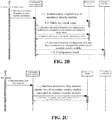
- FIG. 2C a process of working key creation shown according to an example embodiment of the present specification is shown in FIG. 2C :
- the cryptographic service platform After the execution is completed, the cryptographic service platform records multiple working key ciphertexts: the ciphertexts encrypted by the master key of the primary security module, and ciphertext contents encrypted by the master key of each secondary security module.
- the cryptographic service platform provides cryptographic operation services to the business system.
- the cryptographic service platform may receive a cryptographic operation request from the business system, the cryptographic operation request carrying data to be operated.
- the cryptographic service platform may provide services to multiple business systems, and each business system may also correspond to multiple working keys. Therefore, the cryptographic operation request also carries a key identifier, for the cryptographic service platform to determine which working key needs to be used for providing cryptographic operation services.
- the cryptographic service platform may select one of the security modules to respond to the cryptographic calculation request.
- the selected security module is referred to as a target security module in the present embodiment.
- the selection method of the cryptographic service platform may be flexibly configured as needed, for example, depending on the current processing capability of each security module, the number of tasks being processed, etc.
- the cryptographic service platform may obtain the working key ciphertext corresponding to the target security module from the multiple stored working key ciphertexts.
- the cryptographic service platform may call the target security module using the working key ciphertext as input.
- the target security module may decrypt the working key ciphertext using its own stored master key to obtain the working key, and then perform an operation on the data to be operated using the working key.
- the operation result may be returned to the cryptographic service platform, and then returned to the business system by the cryptographic service platform.
- FIG. 2D a schematic cryptographic operation diagram shown according to an example embodiment of the present specification is shown in FIG. 2D :
- the present specification also provides embodiments of a computer device to which the cryptographic operation method and the cryptographic service platform are applied.
- the embodiments of the cryptographic service platform of the present specification may be applied to a computer device, such as a server, etc.
- Apparatus embodiments may be implemented by software, or may also be implemented by hardware or a combination of hardware and software. Taking software implementation as an example, as an apparatus in a logical sense, it is formed by a processor where the software is located reading a corresponding computer program instruction in a nonvolatile memory into a memory and running the computer program.
- FIG. 3 a hardware structure diagram of a computer device where a cryptographic service platform is located according to an embodiment of the present specification is shown in FIG. 3 .
- the server where cryptographic service platform 331 is located in the embodiment may generally also include other hardware according to the actual function of the computer device, which will not be repeated here.
- FIG. 4 is a flow chart of a cryptographic operation method shown according to an example embodiment of the present specification, including the following steps:
- step 402 a cryptographic operation request initiated by a business system is received, the cryptographic operation request carrying data to be operated.
- a target security module responding to the cryptographic operation request is determined, the target security module being one of a primary security module or at least one secondary security module, and a master key of the secondary security module being generated by the primary security module.
- a working key ciphertext corresponding to the target security module is acquired, the working key ciphertext being a ciphertext that is obtained when the primary security module encrypts the working key using the master key of the target security module, the working key being created by the primary security module for the business system.
- step 408 the target security module is called using the working key ciphertext and the data to be operated as input.
- An operation result returned by the target security module is acquired and sent to the business system.
- the operation result is obtained by the target security module by decrypting the working key ciphertext to obtain the working key using the stored master key, and then encrypting the data to be operated using the decrypted working key.
- the master key of the secondary security module is obtained by:
- calling the primary security module using the target public key as input, and generating, by the primary security module, the master key of the secondary security module includes:
- the master key of the secondary security module is obtained by:
- the method further includes: receiving and storing the master key ciphertext of the secondary security module returned by the primary security module, the master key ciphertext being encrypted by the master key of the primary security module.
- FIG. 5 is a flow chart of working key creation shown according to an example embodiment of the present specification, including the following steps:
- step 502 a working key creation request of a business system is received.
- a primary security module is called to generate a working key for the business system.
- a working key ciphertext encrypted by the master key of the primary security module and a working key ciphertext encrypted by the master key of each connected secondary security module, returned by the primary security module, are acquired.
- the master key of the secondary security module is generated by the primary security module for the secondary security module by calling the primary security module.
- one of the security modules connected to the cryptographic service platform functions as the primary security module
- the key management function of the cryptographic service platform is provided by the primary security module
- the primary security module is configured to generate a key
- the primary security module and other secondary security modules provide cryptographic operation functions required by the cryptographic service platform.
- Master keys of the secondary security modules are generated by the primary security module, and the working key of the business system is also generated by the primary security module.
- the cryptographic service platform stores the working key ciphertext encrypted by the master key of the primary security module, and the working key ciphertext encrypted by the master key of each secondary security module. Therefore, in the present embodiment, the master keys are stored in the primary security module.
- the master keys which function as sensitive security parameter plaintexts, do not exceed a boundary of the security module, and the security of keys is not put at risk, thereby meeting key security requirements.
- the embodiment of the present specification further provides a computer device, including a memory, a processor, and a computer program stored on the memory and capable of running on the processor, wherein the processor executes the program so as to:
- the embodiment of the present specification further provides a cryptographic service device, including a memory, a processor, and a computer program stored on the memory and capable of running on the processor, wherein the processor executes the program so as to:
- the apparatus embodiment basically corresponds to the method embodiment, and therefore reference may be made to the description of the method embodiment section for relevant parts.
- the apparatus embodiments described above are only illustrative.
- the modules thereof described as separate components may or may not be physically separated.
- the components shown as modules may or may not be physical modules, that is, may be located in one place, or may also be distributed onto multiple network modules. Part or all of the modules may be selected according to actual needs to achieve the objectives of the solution of the present specification, and can be understood and implemented by those of ordinary skill in the art without creative labor.
Landscapes
- Engineering & Computer Science (AREA)
- Computer Security & Cryptography (AREA)
- Computer Networks & Wireless Communication (AREA)
- Signal Processing (AREA)
- Theoretical Computer Science (AREA)
- Computing Systems (AREA)
- Computer Hardware Design (AREA)
- General Engineering & Computer Science (AREA)
- Power Engineering (AREA)
- Health & Medical Sciences (AREA)
- General Health & Medical Sciences (AREA)
- Software Systems (AREA)
- Physics & Mathematics (AREA)
- General Physics & Mathematics (AREA)
- Bioethics (AREA)
- Storage Device Security (AREA)
- Computer And Data Communications (AREA)
Abstract
Description
- The present specification relates to the technical field of cryptography, and in particular to a cryptographic operation method, a working key creation method, a cryptographic service platform, and a cryptographic service device.
- With the development of Internet technology, various business systems emerge in an endless stream, bringing great convenience to people's work and life, and also promoting the economic growth and social progress. Cryptographic technology is an important technical means to protect business systems of banks, securities, or transactions to ensure data confidentiality, integrity, non-repudiation, and availability during data storage, transmission, and access control.
- For example, enterprises can configure a cryptographic service platform. The cryptographic service platform is a system platform that provides key management and cryptographic operation services based on security modules. The platform, which functions as a server of the business system, can provide application layer cryptographic services such as message check, data encryption and decryption, signature verification, etc. for the business system, thereby ensuring the security of data in the processes of storage, transmission and application, and prevent data from being stolen or maliciously tampered with. Based on this, how to provide a more stable cryptographic service platform becomes an urgent technical problem to be solved.
- In order to solve the problem in related art, the present specification provides a cryptographic operation method, a working key creation method, a cryptographic service platform, and a cryptographic service device.
- According to a first aspect of embodiments of the present specification, a cryptographic service platform is provided, the cryptographic service platform is connected to a primary security module, and the cryptographic service platform includes:
- a registration module, configured to call the primary security module to generate a master key for a newly added secondary security module;
- a working key creation module, configured to receive a working key creation request of a business system, call the primary security module to generate a working key for the business system, and acquire a working key ciphertext encrypted by the master key of the primary security module and a working key ciphertext encrypted by the master key of each connected secondary security module, returned by the primary security module; and
- a cryptographic operation calling module, configured to receive a cryptographic operation request of the business system, the cryptographic operation request carrying data to be operated; determine a target security module responding to the cryptographic operation request; call the target security module using a working key ciphertext corresponding to the target security module and the data to be operated as input, and acquire an operation result of the target security module, the operation result being obtained by the target security module by decrypting the working key ciphertext to obtain the working key using the stored master key, and then encrypting the data to be operated using the decrypted working key.
- Optionally, the registration module is further configured to configure the master key of the secondary security module by:
- acquiring a target public key generated by the secondary security module;
- calling the primary security module using the target public key as input, generating, by the primary security module, the master key of the secondary security module, and encrypting the generated master key using the target public key so as to obtain a master key ciphertext; and
- sending the master key ciphertext to the secondary security module, and decrypting, by the secondary security module, the master key ciphertext using a target private key corresponding to the target public key so as to obtain the master key.
- Optionally, the registration module is further configured to:
- acquire a public key check value obtained when the primary security module performs message authentication code calculation on the target public key; and
- call the primary security module using the target public key and the public key check value as input, and generate the master key of the secondary security module after the primary security module checks the validity of the input target public key based on the public key check value.
- Optionally, the registration module is further configured to configure the master key of the secondary security module by:
- calling the primary security module, and acquiring two or more key components of the master key of the secondary security module after the primary security module generates the master key; and
- outputting the two or more key components to key management entities, respectively, and transmitting, by the key management entities, the key components to the secondary security module so as to allow the secondary security module to generate the master key according to each key component.
- Optionally, the registration module is further configured to:
receive and store the master key ciphertext of the secondary security module returned by the primary security module, the master key ciphertext being encrypted by the master key of the primary security module. - According to a second aspect of the embodiments of the present specification, a cryptographic operation method is provided, including:
- receiving a cryptographic operation request initiated by a business system, the cryptographic operation request carrying data to be operated;
- determining a target security module responding to the cryptographic operation request, the target security module being one of a primary security module or at least one secondary security module, and a master key of the secondary security module being generated by the primary security module;
- acquiring a working key ciphertext corresponding to the target security module, the working key ciphertext being a ciphertext that is obtained when the primary security module encrypts the working key using the master key of the target security module, the working key being created by the primary security module for the business system; and
- calling the target security module using the working key ciphertext and the data to be operated as input, acquiring an operation result returned by the target security module, and sending the operation result to the business system, the operation result being obtained by the target security module by decrypting the working key ciphertext to obtain the working key using the stored master key, and then encrypting the data to be operated using the decrypted working key.
- Optionally, the master key of the secondary security module is obtained by:
- acquiring a target public key generated by the secondary security module;
- calling the primary security module using the target public key as input, generating, by the primary security module, the master key of the secondary security module, and encrypting the generated master key using the target public key so as to obtain a master key ciphertext; and
- sending the master key ciphertext to the secondary security module, and decrypting, by the secondary security module, the master key ciphertext using a target private key corresponding to the target public key so as to obtain the master key.
- Optionally, calling the primary security module using the target public key as input, and generating, by the primary security module, the master key of the secondary security module includes:
- acquiring a public key check value obtained when the primary security module performs message authentication code calculation on the target public key; and
- calling the primary security module using the target public key and the public key check value as input, and generating the master key of the secondary security module after the primary security module checks the validity of the input target public key based on the public key check value.
- Optionally, the master key of the secondary security module is obtained by:
- calling the primary security module, and acquiring two or more key components of the master key of the secondary security module after the primary security module generates the master key; and
- outputting the two or more key components to key management entities, respectively, and transmitting, by the key management entities, the key components to the secondary security module so as to allow the secondary security module to generate the master key according to each key component.
- Optionally, the method further includes:
receiving and storing the master key ciphertext of the secondary security module returned by the primary security module, the master key ciphertext being encrypted by the master key of the primary security module. - According to a third aspect of the embodiments of the present specification, a cryptographic service device is provided, including a memory, a processor, and a computer program stored on the memory and capable of running on the processor, wherein the processor executes the program so as to:
- receive a cryptographic operation request initiated by a business system, the cryptographic operation request carrying data to be operated;
- determine a target security module responding to the cryptographic operation request, the target security module being one of a primary security module or at least one secondary security module, and a master key of the secondary security module being generated by the primary security module;
- acquire a working key ciphertext of the target security module, the working key ciphertext being a ciphertext that is obtained when the primary security module encrypts the working key using the master key of the target security module, the working key being created by the primary security module for the business system; and
- call the target security module using the working key ciphertext and the data to be operated as input, acquire an operation result returned by the target security module and send the operation result to the business system, the operation result being obtained by the target security module by decrypting the working key ciphertext to obtain the working key using the stored master key, and then encrypting the data to be operated using the decrypted working key.
- According to a fourth aspect of the embodiments of the present specification, a working key creation method is provided, including:
- receiving a working key creation request of a business system;
- calling a primary security module to generate a working key for the business system, and acquiring a working key ciphertext encrypted by the master key of the primary security module and a working key ciphertext encrypted by the master key of each connected secondary security module, returned by the primary security module, the master key of the secondary security module being generated by the primary security module for the secondary security module by calling the primary security module.
- According to a fifth aspect of the embodiments of the present specification, a cryptographic service device is provided, including a memory, a processor, and a computer program stored on the memory and capable of running on the processor, wherein the processor executes the program so as to:
- receive a working key creation request of a business system;
- call a primary security module to generate a working key for the business system, and acquire a working key ciphertext encrypted by a master key of the primary security module and a working key ciphertext encrypted by a master key of each connected secondary security module, returned by the primary security module, the master key of the secondary security module being generated by the primary security module for the secondary security module by calling the primary security module.
- The technical solution provided by the embodiments of the present specification can include the following beneficial effects.
- In the embodiments of the present specification, one of the security modules connected to the cryptographic service platform functions as the primary security module, the key management function of the cryptographic service platform is provided by the primary security module, the primary security module is configured to generate a key, and the primary security module and other secondary security modules provide cryptographic operation functions required by the cryptographic service platform.
- Master keys of the secondary security modules are generated by the primary security module, and the working key of the business system is also generated by the primary security module. In addition, the cryptographic service platform stores the working key ciphertext encrypted by the master key of the primary security module, and the working key ciphertext encrypted by the master key of each secondary security module. Therefore, in the present embodiment, the master keys are stored in the primary security module. The master keys, which function as sensitive security parameter plaintexts, do not exceed a boundary of the security module, and the security of the keys is not put at risk, thereby meeting key security requirements. Moreover, the cryptographic service platform can call any one of the security modules to respond to the cryptographic operation request of the business system, and therefore, the cryptographic service platform can be compatible with various security modules. The cryptographic service platform cannot be bound by a single security module manufacturer, the requirements of using various security modules are met, and the cryptographic service platform can provide a more stable cryptographic service.
- It should be understood that the above general description and the following detailed description are only exemplary and explanatory, and do not limit the present specification.
- Accompanying drawings here are incorporated into the present specification and constitute a part of the present specification, show embodiments conforming to the present specification, and explain the principle of the present specification together with the present specification.
-
FIG. 1 is an application scenario diagram of a cryptographic service platform shown according to an example embodiment of the present specification. -
FIG. 2A is a block diagram of a cryptographic service platform shown according to an example embodiment of the present specification. -
FIG. 2B is a schematic registration process diagram of a secondary security module shown according to an example embodiment of the present specification. -
FIG. 2C is a schematic process diagram of working key creation shown according to an example embodiment of the present specification. -
FIG. 2D is a schematic cryptographic operation diagram shown according to an example embodiment of the present specification. -
FIG. 3 is a hardware structure diagram of a computer device where a cryptographic service platform is located according to an embodiment of the present specification. -
FIG. 4 is a flow chart of a cryptographic operation method shown according to an example embodiment of the present specification. -
FIG. 5 is a flow chart of a working key creation method shown according to an example embodiment of the present specification. - Example embodiments will be described in detail here, and examples thereof are shown in the accompanying drawings. When the following description involves the accompanying drawings, the same numerals in the different accompanying drawings indicate the same or similar elements, unless otherwise indicated. The implementation modes described in the following example embodiments do not represent all implementation modes consistent with the present specification. Rather, they are only examples of apparatuses and methods consistent with some aspects of the present specification as detailed in the appended claims.
- The terms used in the present specification are for describing specific examples only, and are not intended to limit the present specification. The singular forms "a," "said," and "the" used in the present specification and the appended claims are also intended to include plural forms, unless other meanings are clearly indicated in the context. It should also be understood that the term "and/or" used herein refers to and cover any or all possible combinations of one or more associated items listed.
- It should be understood that although the terms first, second, third, etc. may be used to describe various information in the present specification, the information shall not be limited to these terms. These terms are only used for distinguishing the same type of information from each other. For example, first information may also be referred to as second information, and similarly, the second information may also be referred to as the first information, under the condition of not departing from the scope of the present specification. The word "if" used herein may be interpreted as "when," or "while," or "in response to a determination," depending on the context.
- As shown in
FIG. 1 , an application scenario diagram of a cryptographic service platform shown according to an example embodiment of the present specification is provided. InFIG. 1 , the cryptographic service platform communicates with an application system host. The application system host uses a cryptographic service by calling an interface provided by the cryptographic service platform. Bottom services such as cryptographic operation, etc. are achieved by the cryptographic service platform calling a security module. - A security module contains a cryptographic algorithm and a security function, is relatively independent software, hardware, firmware, or a combination thereof capable of realizing a key management mechanism, and is contained in a cryptographic boundary. A cryptographic boundary refers to: a clearly defined continuous sideline. The sideline establishes a physical and/or logical boundary of the security module, and contains all hardware, software, and/or firmware components of the security module.
- At present, many manufacturers push out security modules, and master keys thereof have different generation algorithms. In order to avoid being bound by a single manufacturer and improve the robustness of the cryptographic service platform, the cryptographic service platform in the embodiments of the present specification is built based on various security modules. Therefore, the cryptographic service platform is connected with various security modules. When being connected to various security modules, it is necessary to consider how to be compatible with various security modules to uniformly provide a cryptographic service for the business system while meeting the security of the cryptographic service.
- The solution in the embodiments of the present specification is that one of the security modules connected to the cryptographic service platform functions as a primary security module, and in a key management function of the cryptographic service platform, the primary security module generates a key. Other security modules, except the primary security module, are referred to as secondary security modules in the embodiments of the present specification. Both the secondary security modules and the primary security module may provide cryptographic operation functions required by the cryptographic service platform.
- Master keys of the secondary security modules are generated by the primary security module, and the working key of the business system is also generated by the primary security module. In addition, the cryptographic service platform stores the working key ciphertext encrypted by the master key of the primary security module, and the working key ciphertext encrypted by the master key of each secondary security module. Therefore, in the present embodiment, the master keys are stored in the primary security module. Master keys and working key ciphertexts, which function as sensitive security parameters, do not exceed a boundary of the security module, and therefore the security of the keys is not put at risk, thereby meeting key security requirements. Moreover, the cryptographic service platform can call any one of the security modules to respond to the cryptographic operation request of the business system, therefore, the cryptographic service platform cannot be bound by a single security module manufacturer, the requirements of using various security modules are met, and the cryptographic service platform can provide a more stable cryptographic service.
- As an example, as shown in
FIG. 2A , the cryptographic service platform of the embodiment of the present specification may includeregistration module 21, workingkey creation module 22, and cryptographicoperation calling module 23, which are respectively configured to register secondary security modules, create a working key of a business system, and call a security module to respond to a cryptographic operation request of the business system. -
Registration module 21 is configured to call the primary security module to generate a master key for a newly added secondary security module. - Working
key creation module 22 is configured to receive a working key creation request of the business system, call the primary security module to generate a working key for the business system, and acquire a working key ciphertext encrypted by the master key of the primary security module and a working key ciphertext encrypted by the master key of each connected secondary security module, returned by the primary security module. - Cryptographic
operation calling module 23 is configured to receive the cryptographic operation request of the business system, the cryptographic operation request carrying data to be operated; determine a target security module responding to the cryptographic operation request; call the target security module using a working key ciphertext corresponding to the target security module and the data to be operated as input, and acquire an operation result of the target security module, the operation result being obtained by the target security module by decrypting the working key ciphertext to obtain the working key using the stored master key, and then encrypting the data to be operated using the decrypted working key. - Next, detailed description will be made.
- A master key for working needs to be configured for a security module before working, and the security module uses the master key to encrypt a key to be protected. The security module per se has a key derivation algorithm to generate a key; however, in the present embodiment, the primary security module generates master keys for the secondary security modules. Specifically, the cryptographic service platform may call a key generation interface of the primary security module, and after the primary security module is called, the master keys of the secondary security modules may be generated by using the key derivation algorithm. The present embodiment adopts a mode of using the primary security module to generate a master key of each secondary security module, such that the primary security module obtains the master key of each secondary security module, thereby encrypting the working key by using the master key of each secondary security module when the working key of the business system is generated (this process will be described in detail later).
- After the primary security module generates the master key of the secondary security module, the master key may be transmitted to the secondary security module by encryption, etc. Specific encryption transmission modes may be flexibly configured according to actual needs, thereby ensuring the security of the transmission process. As an example, after the primary security module generates the master key, two or more key components are generated based on the master key, and all the key components are output to respective key management entities, respectively. The key management entities transmit all the key components to the secondary security module, respectively, so as to allow the secondary security module to generate master key according to the key components input by each of the key management entities. The key management entity may be a key manager. Each key manager obtains one of the key components, respectively. Each key manager may input the key component it holds through a control input interface of a secondary security module. The secondary security module may generate a master key for working after acquiring all the key components. In the present embodiment, the key components are generated and transmitted to the secondary security module by the various key management entities. Since each of the key management entities only owns a key component, even if the key component is leaked, it is relatively difficult to obtain all the key components. Therefore, the risk of keys being leaked and attacked can be reduced, and the security of master key transmission is improved.
- In some other examples, the asymmetric cryptographic technology may be used to perform encryption transmission on the master key. As an example, the secondary security module may generate asymmetric keys including a target public key and a target private key. The cryptographic service platform may obtain the target public key of the secondary security module. The cryptographic service platform may call the primary security module and transmit the target public key to the primary security module. After the primary security module generates the master key of the secondary security module, the target public key is used to encrypt the generated master key to obtain a master key ciphertext. The primary security module returns the master key ciphertext to the cryptographic service platform. After receiving the master key ciphertext, the cryptographic service platform sends the master key ciphertext to the secondary security module. The secondary security module decrypts the master key ciphertext using the target private key to obtain the master key.
- The above process involves the transmission of the target public key. Optionally, the present embodiment may further reduce the risk of the target public key being tampered with during the transmission process through the following embodiments, thereby ensuring the secure transmission of the master key of the secondary security module. As an example, it may be that the cryptographic service platform calls the primary security module and transmits the target public key to the primary security module, and the primary security module authenticates the target public key. The authentication process is that the primary security module performs message authentication code calculation on the target public key using its own master key so as to obtain a message authentication code value (i.e., the check value of the target public key). The primary security module returns the calculated message authentication code value to the cryptographic service platform. The cryptographic service platform calls the primary security module and transmits the target public key and the message authentication code value to the primary security module. After verifying the target public key based on the message authentication code value and determining that the target public key is legal (indicating that the target public key is safe, has not been tampered with, etc.), the primary security module generates the master key of the secondary security module for the secondary security module, and encrypts the generated master key using the target public key so as to obtain the master key ciphertext and return the master key ciphertext to the cryptographic service platform.
- Next, the above registration process will be described again with reference to
FIG. 2B . A registration process of a secondary security module shown according to an example embodiment of the present specification is shown inFIG. 2B : - 1. A manager of the cryptographic service platform sends an operation instruction for registering a secondary security module to the cryptographic service platform. After receiving the instruction, the cryptographic service platform performs the following operations:
- 1.1. The cryptographic service platform calls a public key authentication service interface of the primary security module. The primary security module authenticates the target public key of the secondary security module (the secondary security module generates an asymmetric key pair including the target public key and the target private key in advance, and provides the asymmetric key pair to the cryptographic service platform).
- 1.2. The primary security module performs message authentication code calculation on the target public key using its own master key, obtains a public key check value, and returns the public key check value to the cryptographic service platform.
- 1.3. The cryptographic service platform calls a symmetric key generation instruction of the primary security module, and transmits the target public key and public key check value of the secondary security module.
- 1.4. The primary security module checks the validity of the target public key based on the public key check value, and after the check is passed, generates a symmetric key. The symmetric key is encrypted using the target public key, and the encrypted symmetric key is returned.
- 1.5. The cryptographic service platform calls a master key control input configuration interface of the the secondary key module, and transmits the symmetric key encrypted with the target public key in the previous step.
- 1.6. The secondary security module receives the above master key configuration instruction, decrypts the master key configuration instruction using the target private key to obtain the symmetric key, and configures the symmetric key as a working master key.
- Optionally, the primary security module may save the master key of each of the secondary security modules, or the primary security module may encrypt the master key of the secondary security module using its own master key, so as to obtain a master key ciphertext of the secondary security module, and transmit the master key ciphertext to the cryptographic service platform for storage.
- In the present embodiment, the working key refers to a key created for a business system by a security module for providing a cryptographic operation function for the business system. A working key creation process may be as follows.
- A working key creation request of a business system is received. The primary security module is called to generate a working key for the business system. A working key ciphertext encrypted by the master key of the primary security module and a working key ciphertext encrypted by the master key of each connected secondary security module, fed back by the primary security module, are acquired.
- In the present embodiment, after the working key of the business system is generated by the primary security module, the primary security module generates multiple working key ciphertexts and provides the working key ciphertexts to the cryptographic service platform for storage, thereby allowing the working key ciphertexts to be used in a subsequent cryptographic operation treatment process.
- As an example, a process of working key creation shown according to an example embodiment of the present specification is shown in
FIG. 2C : - 1. A key manager initiates a key creation operation instruction. After receiving the operation instruction, a cryptographic service platform performs the following operations:
- 1.1. The cryptographic service platform calls a working key creation interface of the primary security module, and at the same time inputs a master key ciphertext of each secondary security module (the ciphertext is encrypted by the master key of the primary security module).
- 1.2. After the primary security module is called, a key derivation module is used to generate a working key, and the working key is returned after being encrypted by a master key of the primary security module and the master key of each secondary security module, respectively. (There may be multiple working keys. A private key and a secret key may be encrypted, but the public key may be returned directly in plaintext without encryption. Of course, the public key may also be encrypted as needed, and flexible configuration may be performed in practical applications).
- After the execution is completed, the cryptographic service platform records multiple working key ciphertexts: the ciphertexts encrypted by the master key of the primary security module, and ciphertext contents encrypted by the master key of each secondary security module.
- In the present embodiment, the cryptographic service platform provides cryptographic operation services to the business system. The cryptographic service platform may receive a cryptographic operation request from the business system, the cryptographic operation request carrying data to be operated. Generally, the cryptographic service platform may provide services to multiple business systems, and each business system may also correspond to multiple working keys. Therefore, the cryptographic operation request also carries a key identifier, for the cryptographic service platform to determine which working key needs to be used for providing cryptographic operation services.
- Since there are multiple security modules connected, the cryptographic service platform may select one of the security modules to respond to the cryptographic calculation request. In order to facilitate differentiation, the selected security module is referred to as a target security module in the present embodiment. Optionally, the selection method of the cryptographic service platform may be flexibly configured as needed, for example, depending on the current processing capability of each security module, the number of tasks being processed, etc.
- After determining the target security module responding to the cryptographic operation request, the cryptographic service platform may obtain the working key ciphertext corresponding to the target security module from the multiple stored working key ciphertexts. The cryptographic service platform may call the target security module using the working key ciphertext as input. After being called, the target security module may decrypt the working key ciphertext using its own stored master key to obtain the working key, and then perform an operation on the data to be operated using the working key. The operation result may be returned to the cryptographic service platform, and then returned to the business system by the cryptographic service platform.
- As an example, a schematic cryptographic operation diagram shown according to an example embodiment of the present specification is shown in
FIG. 2D : - 1.1. After receiving the cryptographic operation request, the cryptographic service platform determines which security module needs to be used for this operation. Specific selection logic is not limited, and may be formulated according to requirements of the traffic management by the cryptographic service platform on the security module.
- 1.1.1. If the selection result is the primary security module, the cryptographic service platform calls a cryptographic operation interface of the primary security module, and the input data is key content of a working cryptogram (encrypted by the primary security module) and the data to be operated.
- 1.1.2. The primary security module performs decryption using the internal master key to obtain a working key plaintext, performs cryptographic operation on the data to be operated, and returns the operation result to the cryptographic service platform.
- 2.2.1. If the selection result is a secondary security module, the cryptographic service platform calls a cryptographic operation interface of the secondary security module, and input data is the key content of the working cryptogram (encrypted by the secondary security module) and the data to be operated.
- 2.2.2. The secondary security module performs decryption using the internal master key to obtain a working key plaintext, performs cryptographic operation on the data to be operated, and returns the operation result to the cryptographic service platform.
- Corresponding to the foregoing embodiments of the cryptographic service platform, the present specification also provides embodiments of a computer device to which the cryptographic operation method and the cryptographic service platform are applied.
- The embodiments of the cryptographic service platform of the present specification may be applied to a computer device, such as a server, etc. Apparatus embodiments may be implemented by software, or may also be implemented by hardware or a combination of hardware and software. Taking software implementation as an example, as an apparatus in a logical sense, it is formed by a processor where the software is located reading a corresponding computer program instruction in a nonvolatile memory into a memory and running the computer program. From the perspective of hardware, a hardware structure diagram of a computer device where a cryptographic service platform is located according to an embodiment of the present specification is shown in
FIG. 3 . In addition toprocessor 310,memory 330,network interface 320, andnonvolatile memory 340 shown inFIG. 3 , the server wherecryptographic service platform 331 is located in the embodiment may generally also include other hardware according to the actual function of the computer device, which will not be repeated here. - As shown in
FIG. 4, FIG. 4 is a flow chart of a cryptographic operation method shown according to an example embodiment of the present specification, including the following steps: - In
step 402, a cryptographic operation request initiated by a business system is received, the cryptographic operation request carrying data to be operated. - In
step 404, a target security module responding to the cryptographic operation request is determined, the target security module being one of a primary security module or at least one secondary security module, and a master key of the secondary security module being generated by the primary security module. - In
step 406, a working key ciphertext corresponding to the target security module is acquired, the working key ciphertext being a ciphertext that is obtained when the primary security module encrypts the working key using the master key of the target security module, the working key being created by the primary security module for the business system. - In
step 408, the target security module is called using the working key ciphertext and the data to be operated as input. An operation result returned by the target security module is acquired and sent to the business system. The operation result is obtained by the target security module by decrypting the working key ciphertext to obtain the working key using the stored master key, and then encrypting the data to be operated using the decrypted working key. - Optionally, the master key of the secondary security module is obtained by:
- acquiring a target public key generated by the secondary security module;
- calling the primary security module using the target public key as input, generating, by the primary security module, the master key of the secondary security module, and encrypting the generated master key using the target public key so as to obtain a master key ciphertext; and
- sending the master key ciphertext to the secondary security module, and decrypting, by the secondary security module, the master key ciphertext using a target private key corresponding to the target public key so as to obtain the master key.
- Optionally, calling the primary security module using the target public key as input, and generating, by the primary security module, the master key of the secondary security module includes:
- acquiring a public key check value obtained when the primary security module performs message authentication code calculation on the target public key; and
- calling the primary security module using the target public key and the public key check value as input, and generating the master key of the secondary security module after the primary security module checks the validity of the input target public key based on the public key check value.
- Optionally, the master key of the secondary security module is obtained by:
- calling the primary security module, and acquiring two or more key components of the master key of the secondary security module after the primary security module generates the master key; and
- transmitting the two or more key components to key management entities, respectively, and transmitting, by the key management entities, the key components to the secondary security module respectively so as to allow the secondary security module to generate the master key according to each key component.
- Optionally, the method further includes:
receiving and storing the master key ciphertext of the secondary security module returned by the primary security module, the master key ciphertext being encrypted by the master key of the primary security module. - For the implementation process of each step in the above cryptographic calculation method, reference may be made to the implementation process of the function and effect of each module in the above cryptographic service platform, which will not be repeated here.
- As shown in
FIG. 5, FIG. 5 is a flow chart of working key creation shown according to an example embodiment of the present specification, including the following steps: - In
step 502, a working key creation request of a business system is received. - In
step 504, a primary security module is called to generate a working key for the business system. A working key ciphertext encrypted by the master key of the primary security module and a working key ciphertext encrypted by the master key of each connected secondary security module, returned by the primary security module, are acquired. The master key of the secondary security module is generated by the primary security module for the secondary security module by calling the primary security module. - In the embodiments of the present specification, one of the security modules connected to the cryptographic service platform functions as the primary security module, the key management function of the cryptographic service platform is provided by the primary security module, the primary security module is configured to generate a key, and the primary security module and other secondary security modules provide cryptographic operation functions required by the cryptographic service platform.
- Master keys of the secondary security modules are generated by the primary security module, and the working key of the business system is also generated by the primary security module. In addition, the cryptographic service platform stores the working key ciphertext encrypted by the master key of the primary security module, and the working key ciphertext encrypted by the master key of each secondary security module. Therefore, in the present embodiment, the master keys are stored in the primary security module. The master keys, which function as sensitive security parameter plaintexts, do not exceed a boundary of the security module, and the security of keys is not put at risk, thereby meeting key security requirements.
- Accordingly, the embodiment of the present specification further provides a computer device, including a memory, a processor, and a computer program stored on the memory and capable of running on the processor, wherein the processor executes the program so as to:
- receive a cryptographic operation request initiated by a business system, the cryptographic operation request carrying data to be operated;
- determine a target security module responding to the cryptographic operation request, the target security module being one of a primary security module or at least one secondary security module, and a master key of the secondary security module being generated by the primary security module;
- acquire a working key ciphertext of the target security module, the working key ciphertext being a ciphertext that is obtained when the primary security module encrypts the working key using the master key of the target security module, the working key being created by the primary security module for the business system; and
- call the target security module using the working key ciphertext and the data to be operated as input, acquire an operation result returned by the target security module, and send the operation result to the business system, the operation result being obtained by the target security module by decrypting the working key ciphertext to obtain the working key using the stored master key, and then encrypting the data to be operated using the decrypted working key.
- Accordingly, the embodiment of the present specification further provides a cryptographic service device, including a memory, a processor, and a computer program stored on the memory and capable of running on the processor, wherein the processor executes the program so as to:
- receive a working key creation request of a business system;
- call a primary security module to generate a working key for the business system, and acquire a working key ciphertext encrypted by the master key of the primary security module and a working key ciphertext encrypted by the master key of each connected secondary security module, returned by the primary security module, the master key of the secondary security module being generated by the primary security module for the secondary security module by calling the primary security module.
- The apparatus embodiment basically corresponds to the method embodiment, and therefore reference may be made to the description of the method embodiment section for relevant parts. The apparatus embodiments described above are only illustrative. The modules thereof described as separate components may or may not be physically separated. The components shown as modules may or may not be physical modules, that is, may be located in one place, or may also be distributed onto multiple network modules. Part or all of the modules may be selected according to actual needs to achieve the objectives of the solution of the present specification, and can be understood and implemented by those of ordinary skill in the art without creative labor.
- The specific embodiments of the present specification are described above. Other embodiments are within the scope of the appended claims. In some cases, the actions or steps recorded in the claims can be performed in an order different from the orders in the embodiments and still can achieve desired results. In addition, the processes depicted in the accompanying drawings do not necessarily require the shown particular order or a sequential order to achieve desired results. In certain implementation modes, multitasking and parallel processing are also possible or may be advantageous.
- After considering the specification and practicing the invention of the application here, those skilled in the art will easily think of other embodiments of the present specification. The present specification is intended to cover any variations, applications, or adaptations of the present specification. These variations, applications, or adaptations follow the general principles of the present specification and include common general knowledge or conventional technical means in the technical field not applied in the present specification. The description and embodiments are only considered exemplary, and the true scope and spirit of the present specification are pointed out by the following claims.
- It should be understood that the present specification is not limited to the precise structure that has been described above and shown in the accompanying drawings, and that various modifications and changes can be made without departing from the scope thereof. The scope of the present description is only limited by the appended claims.
- The above description is only preferred embodiments of the present specification and is not intended to limit the present specification. Any modification, equivalent replacement, improvement, etc. made within the spirit and principle of the present specification shall fall within the protection scope of the present specification.
Claims (13)
- A cryptographic service platform, the cryptographic service platform being connected to a primary security module, wherein the cryptographic service platform comprises:a registration module, configured to call the primary security module to generate a master key for a newly added secondary security module;a working key creation module, configured to receive a working key creation request of a business system, call the primary security module to generate a working key for the business system, and acquire a working key ciphertext encrypted by a master key of the primary security module and a working key ciphertext encrypted by a master key of each connected secondary security module, returned by the primary security module; anda cryptographic operation calling module, configured to receive a cryptographic operation request of the business system, the cryptographic operation request carrying data to be operated; determine a target security module responding to the cryptographic operation request; call the target security module using a working key ciphertext corresponding to the target security module and the data to be operated as input, and obtain an operation result of the target security module, the operation result being obtained by the target security module by decrypting the working key ciphertext to obtain the working key using the stored master key, and then encrypting the data to be operated using the decrypted working key.
- The cryptographic service platform according to claim 1, wherein the registration module is further configured to configure the master key of the secondary security module by:acquiring a target public key generated by the secondary security module;calling the primary security module using the target public key as input, generating, by the primary security module, the master key of the secondary security module, and encrypting the generated master key using the target public key so as to obtain a master key ciphertext; andsending the master key ciphertext to the secondary security module, and decrypting, by the secondary security module, the master key ciphertext using a target private key corresponding to the target public key so as to obtain the master key.
- The cryptographic service platform according to claim 2, wherein the registration module is further configured to:acquire a public key check value obtained when the primary security module performs message authentication code calculation on the target public key; andcall the primary security module using the target public key and the public key check value as input, and generate the master key of the secondary security module after the primary security module verifies the validity of the input target public key based on the public key check value.
- The cryptographic service platform according to claim 1, wherein the registration module is further configured to configure the master key of the secondary security module by:calling the primary security module, and acquiring two or more key components of the master key of the secondary security module after the primary security module generates the master key; andoutputting the two or more key components to key management entities, respectively, and transmitting, by the key management entities, the key components to the secondary security module so as to allow the secondary security module to generate the master key according to each key component.
- The cryptographic service platform according to claim 1, wherein the registration module is further configured to:
receive and store the master key ciphertext of the secondary security module returned by the primary security module, the master key ciphertext being encrypted by the master key of the primary security module. - A cryptographic operation method, comprising:receiving a cryptographic operation request initiated by a business system, the cryptographic operation request carrying data to be operated;determining a target security module responding to the cryptographic operation request, the target security module being one of a primary security module or at least one secondary security module, and a master key of the secondary security module being generated by the primary security module;acquiring a working key ciphertext corresponding to the target security module, the working key ciphertext being a ciphertext that is obtained when the primary security module encrypts the working key using the master key of the target security module, the working key being created by the primary security module for the business system; andcalling the target security module using the working key ciphertext and the data to be operated as input, acquiring an operation result returned by the target security module and sending the operation result to the business system, the operation result being obtained by the target security module by decrypting the working key ciphertext to obtain the working key using the stored master key, and then encrypting the data to be operated using the decrypted working key.
- The method according to claim 6, wherein the master key of the secondary security module is obtained by:acquiring a target public key generated by the secondary security module;calling the primary security module using the target public key as input, generating, by the primary security module, the master key of the secondary security module, and encrypting the generated master key using the target public key so as to obtain a master key ciphertext; andsending the master key ciphertext to the secondary security module, and decrypting, by the secondary security module, the master key ciphertext using a target private key corresponding to the target public key so as to obtain the master key.
- The method according to claim 7, wherein calling the primary security module using the target public key as input, and generating, by the primary security module, the master key of the secondary security module comprises:acquiring a public key check value obtained when the primary security module performs message authentication code calculation on the target public key; andcalling the primary security module using the target public key and the public key check value as input, and generating the master key of the secondary security module after the primary security module checks the validity of the input target public key based on the public key check value.
- The method according to claim 6, wherein the master key of the secondary security module is obtained by:calling the primary security module, and acquiring two or more key components of the master key of the secondary security module after the primary security module generates the master key; andtransmitting the two or more key components to key management entities, respectively, and transmitting, by the key management entities, the key components to the secondary security module respectively so as to allow the secondary security module to generate the master key according to each key component.
- The method according to claim 6, further comprising:
receiving and storing the master key ciphertext of the secondary security module returned by the primary security module, the master key ciphertext being encrypted by the master key of the primary security module. - A cryptographic service device, comprising a memory, a processor, and a computer program stored on the memory and capable of running on the processor, wherein the processor executes the program so as to:receive a cryptographic operation request initiated by a business system, the cryptographic operation request carrying data to be operated;determine a target security module responding to the cryptographic operation request, the target security module being one of a primary security module or at least one secondary security module, and a master key of the secondary security module being generated by the primary security module;acquire a working key ciphertext corresponding to the target security module, the working key ciphertext being a ciphertext that is obtained when the primary security module encrypts the working key using the master key of the target security module, the working key being created by the primary security module for the business system; andcall the target security module using the working key ciphertext and the data to be operated as input, acquire an operation result returned by the target security module, and send the operation result to the business system, the operation result being obtained by the target security module by decrypting the working key ciphertext to obtain the working key using the stored master key, and then encrypting the data to be operated using the decrypted working key.
- A working key creation method, comprising:receiving a working key creation request of a business system;calling a primary security module to generate a working key for the business system, and acquiring a working key ciphertext encrypted by a master key of the primary security module and a working key ciphertext encrypted by a master key of each connected secondary security module, returned by the primary security module, the master key of the secondary security module being generated by the primary security module for the secondary security module by calling the primary security module.
- A cryptographic service device, comprising a memory, a processor, and a computer program stored on the memory and capable of running on the processor, wherein the processor executes the program so as to:receive a working key creation request of a business system;call a primary security module to generate a working key for the business system, and acquire a working key ciphertext encrypted by a master key of the primary security module and a working key ciphertext encrypted by a master key of each connected secondary security module, returned by the primary security module, the master key of the secondary security module being generated by the primary security module for the secondary security module by calling the primary security module.
Applications Claiming Priority (2)
| Application Number | Priority Date | Filing Date | Title |
|---|---|---|---|
| CN201811012441.8A CN109067528B (en) | 2018-08-31 | 2018-08-31 | Cryptographic operation, method for creating work key, cryptographic service platform and device |
| PCT/CN2019/096662 WO2020042822A1 (en) | 2018-08-31 | 2019-07-19 | Cryptographic operation method, method for creating work key, and cryptographic service platform and device |
Publications (3)
| Publication Number | Publication Date |
|---|---|
| EP3780483A1 true EP3780483A1 (en) | 2021-02-17 |
| EP3780483A4 EP3780483A4 (en) | 2021-09-22 |
| EP3780483B1 EP3780483B1 (en) | 2026-03-11 |
Family
ID=64758178
Family Applications (1)
| Application Number | Title | Priority Date | Filing Date |
|---|---|---|---|
| EP19853586.6A Active EP3780483B1 (en) | 2018-08-31 | 2019-07-19 | Cryptographic operation method, method for creating work key, and cryptographic service platform and device |
Country Status (6)
| Country | Link |
|---|---|
| US (1) | US11128447B2 (en) |
| EP (1) | EP3780483B1 (en) |
| CN (2) | CN111654367B (en) |
| SG (1) | SG11202010748RA (en) |
| TW (1) | TWI701929B (en) |
| WO (1) | WO2020042822A1 (en) |
Cited By (1)
| Publication number | Priority date | Publication date | Assignee | Title |
|---|---|---|---|---|
| WO2022264170A1 (en) * | 2021-06-17 | 2022-12-22 | Jupitice Justice Technologies Pvt Ltd | A method and a device for securing access to an application |
Families Citing this family (12)
| Publication number | Priority date | Publication date | Assignee | Title |
|---|---|---|---|---|
| CN111654367B (en) * | 2018-08-31 | 2023-05-12 | 创新先进技术有限公司 | Cryptographic operation, method for creating working key, cryptographic service platform and equipment |
| CN109347625B (en) * | 2018-08-31 | 2020-04-24 | 阿里巴巴集团控股有限公司 | Password operation method, work key creation method, password service platform and equipment |
| US11595201B2 (en) | 2020-02-21 | 2023-02-28 | Cyber Armor Ltd. | System and method for generation of a disposable software module for cryptographic material protection |
| CN113824553B (en) * | 2020-06-19 | 2025-06-06 | 华为技术有限公司 | Key management method, device and system |
| CN114095152B (en) * | 2020-08-03 | 2024-07-26 | 天翼电子商务有限公司 | Key updating and data encrypting and decrypting method, system, medium and device |
| EP4016339B1 (en) * | 2020-12-21 | 2024-01-31 | Bundesdruckerei GmbH | Provisioning of a security applet on a mobile terminal |
| CN114157448B (en) * | 2021-10-26 | 2023-06-16 | 苏州浪潮智能科技有限公司 | Method, device, terminal and storage medium for constructing and deploying password service platform |
| CN114285561B (en) * | 2021-12-27 | 2025-02-28 | 中国电信股份有限公司 | Request message processing method and device, storage medium and electronic device |
| CN114944960B (en) * | 2022-06-20 | 2023-07-25 | 成都卫士通信息产业股份有限公司 | A password application method, device, equipment and storage medium |
| US11916890B1 (en) * | 2022-08-08 | 2024-02-27 | International Business Machines Corporation | Distribution of a cryptographic service provided private session key to network communication device for secured communications |
| US11765142B1 (en) | 2022-08-08 | 2023-09-19 | International Business Machines Corporation | Distribution of private session key to network communication device for secured communications |
| US11924179B2 (en) * | 2022-08-08 | 2024-03-05 | International Business Machines Corporation | API based distribution of private session key to network communication device for secured communications |
Family Cites Families (30)
| Publication number | Priority date | Publication date | Assignee | Title |
|---|---|---|---|---|
| JP3637869B2 (en) * | 2000-11-22 | 2005-04-13 | 日本電気株式会社 | Chain key broadcast receiving system and chain key broadcast receiving method |
| WO2005119606A1 (en) * | 2004-05-28 | 2005-12-15 | International Business Machines Corporation | Smart card data transaction system and methods for providing storage and transmission security |
| KR20060133760A (en) * | 2005-06-21 | 2006-12-27 | 삼성전자주식회사 | Data management method and network system in network system |
| CN101141250A (en) * | 2007-10-10 | 2008-03-12 | 北京握奇数据系统有限公司 | Instrument equipment, data safety access method, device and system |
| CN101488969A (en) * | 2008-01-15 | 2009-07-22 | 中国移动通信集团公司 | Method, apparatus and system for replacing consumer sub-cipher key |
| JP5018558B2 (en) * | 2008-02-29 | 2012-09-05 | 富士通株式会社 | Storage area allocation method and information processing apparatus |
| US20100235626A1 (en) * | 2009-03-10 | 2010-09-16 | Kwon Eun Jung | Apparatus and method for mutual authentication in downloadable conditional access system |
| CN102148799B (en) * | 2010-02-05 | 2014-10-22 | 中国银联股份有限公司 | Key downloading method and system |
| EP3029592B1 (en) * | 2010-08-18 | 2018-07-25 | Security First Corp. | Systems and methods for securing virtual machine computing environments |
| CN103269480A (en) * | 2010-09-06 | 2013-08-28 | 苏州国芯科技有限公司 | High-speed encryption and decryption method used for wireless local area network |
| JP5618881B2 (en) * | 2011-03-25 | 2014-11-05 | 三菱電機株式会社 | Cryptographic processing system, key generation device, encryption device, decryption device, cryptographic processing method, and cryptographic processing program |
| CN102355351B (en) * | 2011-07-21 | 2014-11-05 | 华为技术有限公司 | Key generation, backup and migration method and system based on trusted computing |
| CN103051446B (en) * | 2012-12-26 | 2016-04-27 | 公安部第一研究所 | A kind of key encrypting and storing method |
| CN103237005A (en) * | 2013-03-15 | 2013-08-07 | 福建联迪商用设备有限公司 | Method and system for key management |
| CN103220270A (en) * | 2013-03-15 | 2013-07-24 | 福建联迪商用设备有限公司 | Downloading method, management method, downloading management method, downloading management device and downloading management system for secret key |
| CN103237004A (en) * | 2013-03-15 | 2013-08-07 | 福建联迪商用设备有限公司 | Key download method, key management method, method, device and system for download management |
| CN103220271A (en) * | 2013-03-15 | 2013-07-24 | 福建联迪商用设备有限公司 | Downloading method, management method, downloading management method, downloading management device and downloading management system for secret key |
| US9819661B2 (en) * | 2013-09-12 | 2017-11-14 | The Boeing Company | Method of authorizing an operation to be performed on a targeted computing device |
| US8966267B1 (en) * | 2014-04-08 | 2015-02-24 | Cloudflare, Inc. | Secure session capability using public-key cryptography without access to the private key |
| US9141814B1 (en) * | 2014-06-03 | 2015-09-22 | Zettaset, Inc. | Methods and computer systems with provisions for high availability of cryptographic keys |
| JP6363032B2 (en) * | 2015-02-26 | 2018-07-25 | 株式会社日立情報通信エンジニアリング | Key change direction control system and key change direction control method |
| KR102460096B1 (en) * | 2015-05-27 | 2022-10-27 | 삼성에스디에스 주식회사 | Method and apparatus for managing encryption keys for cloud service |
| GB201519612D0 (en) * | 2015-11-06 | 2015-12-23 | Nagravision Sa | Key sequence generation for cryptographic operations |
| CN107230081A (en) * | 2016-03-25 | 2017-10-03 | 深圳三信通金融信息服务有限公司 | A kind of secure payment encryption system |
| CN106027235B (en) * | 2016-05-13 | 2019-05-17 | 北京三未信安科技发展有限公司 | A kind of PCI cipher card and magnanimity secret key cipher operation method and system |
| JP2018032907A (en) * | 2016-08-22 | 2018-03-01 | 日本電信電話株式会社 | Content creation apparatus, content creation method, and program |
| CN106453612B (en) * | 2016-11-10 | 2019-03-05 | 华中科技大学 | A data storage and sharing system |
| CN107070642B (en) * | 2016-12-26 | 2020-07-21 | 贵州银行股份有限公司 | Heterogeneous resource pool multiplexing technology for multi-brand cipher machine |
| CN107301545B (en) * | 2017-04-14 | 2020-09-01 | 广州羊城通有限公司 | Transaction verification method based on timestamp |
| CN111654367B (en) * | 2018-08-31 | 2023-05-12 | 创新先进技术有限公司 | Cryptographic operation, method for creating working key, cryptographic service platform and equipment |
-
2018
- 2018-08-31 CN CN202010463369.1A patent/CN111654367B/en active Active
- 2018-08-31 CN CN201811012441.8A patent/CN109067528B/en active Active
-
2019
- 2019-06-25 TW TW108122072A patent/TWI701929B/en active
- 2019-07-19 WO PCT/CN2019/096662 patent/WO2020042822A1/en not_active Ceased
- 2019-07-19 SG SG11202010748RA patent/SG11202010748RA/en unknown
- 2019-07-19 EP EP19853586.6A patent/EP3780483B1/en active Active
-
2020
- 2020-11-30 US US17/106,762 patent/US11128447B2/en active Active
Cited By (1)
| Publication number | Priority date | Publication date | Assignee | Title |
|---|---|---|---|---|
| WO2022264170A1 (en) * | 2021-06-17 | 2022-12-22 | Jupitice Justice Technologies Pvt Ltd | A method and a device for securing access to an application |
Also Published As
| Publication number | Publication date |
|---|---|
| EP3780483B1 (en) | 2026-03-11 |
| CN111654367B (en) | 2023-05-12 |
| CN111654367A (en) | 2020-09-11 |
| US11128447B2 (en) | 2021-09-21 |
| WO2020042822A1 (en) | 2020-03-05 |
| SG11202010748RA (en) | 2020-11-27 |
| TWI701929B (en) | 2020-08-11 |
| US20210099286A1 (en) | 2021-04-01 |
| TW202015378A (en) | 2020-04-16 |
| EP3780483A4 (en) | 2021-09-22 |
| CN109067528A (en) | 2018-12-21 |
| CN109067528B (en) | 2020-05-12 |
Similar Documents
| Publication | Publication Date | Title |
|---|---|---|
| EP3780483B1 (en) | Cryptographic operation method, method for creating work key, and cryptographic service platform and device | |
| US11025415B2 (en) | Cryptographic operation method, method for creating working key, cryptographic service platform, and cryptographic service device | |
| US7200230B2 (en) | System and method for controlling and enforcing access rights to encrypted media | |
| CN111047450A (en) | Off-chain privacy computing method and device for on-chain data | |
| CN112929172A (en) | System, method and device for dynamically encrypting data based on key bank | |
| EP2095288B1 (en) | Method for the secure storing of program state data in an electronic device | |
| CN111371790B (en) | Data encryption sending method based on alliance chain, related method, device and system | |
| CN115495768A (en) | Secret-related information processing method and system based on block chain and multi-party security calculation | |
| CN107948212A (en) | A kind of processing method and processing device of daily record | |
| US12572679B2 (en) | Data security processing method and apparatus | |
| US12244728B2 (en) | Data protection apparatus, electronic apparatus, method, and storage medium | |
| WO2024140259A1 (en) | Blockchain-based transaction supervision method, system and apparatus, and electronic device | |
| CN112822021B (en) | Key management method and related device | |
| CN112187767A (en) | Multi-party contract consensus system, method and medium based on block chain | |
| CN117592079A (en) | Confidential computing environment creation method, cryptographic operation method and related equipment | |
| US20140082364A1 (en) | Collaborative Uses of a Cloud Computing Confidential Domain of Execution | |
| HK40036851B (en) | Cryptographic operation method, working key creation method, cryptographic service platform and equipment | |
| HK40036851A (en) | Cryptographic operation method, working key creation method, cryptographic service platform and equipment | |
| HK40028439A (en) | Off-chain privacy calculation method and device for on-chain data | |
| CN117335963A (en) | Key management method and system for password resource pool and electronic equipment | |
| HK40105751B (en) | Access control method, device and system for data on blockchain system | |
| HK40105751A (en) | Access control method, device and system for data on blockchain system | |
| HK40043789B (en) | Method and device for generating shared contract key | |
| HK1133749B (en) | A method, apparatus and system for improving data security in saas application | |
| HK1133749A1 (en) | A method, apparatus and system for improving data security in saas application |
Legal Events
| Date | Code | Title | Description |
|---|---|---|---|
| STAA | Information on the status of an ep patent application or granted ep patent |
Free format text: STATUS: THE INTERNATIONAL PUBLICATION HAS BEEN MADE |
|
| PUAI | Public reference made under article 153(3) epc to a published international application that has entered the european phase |
Free format text: ORIGINAL CODE: 0009012 |
|
| STAA | Information on the status of an ep patent application or granted ep patent |
Free format text: STATUS: REQUEST FOR EXAMINATION WAS MADE |
|
| 17P | Request for examination filed |
Effective date: 20201030 |
|
| AK | Designated contracting states |
Kind code of ref document: A1 Designated state(s): AL AT BE BG CH CY CZ DE DK EE ES FI FR GB GR HR HU IE IS IT LI LT LU LV MC MK MT NL NO PL PT RO RS SE SI SK SM TR |
|
| AX | Request for extension of the european patent |
Extension state: BA ME |
|
| A4 | Supplementary search report drawn up and despatched |
Effective date: 20210823 |
|
| RIC1 | Information provided on ipc code assigned before grant |
Ipc: H04L 9/32 20060101ALI20210817BHEP Ipc: H04L 29/06 20060101ALI20210817BHEP Ipc: H04L 9/08 20060101AFI20210817BHEP |
|
| DAV | Request for validation of the european patent (deleted) | ||
| DAX | Request for extension of the european patent (deleted) | ||
| STAA | Information on the status of an ep patent application or granted ep patent |
Free format text: STATUS: EXAMINATION IS IN PROGRESS |
|
| 17Q | First examination report despatched |
Effective date: 20240206 |
|
| REG | Reference to a national code |
Ref country code: DE Ref legal event code: R079 Free format text: PREVIOUS MAIN CLASS: H04L0009080000 Ipc: H04L0009320000 Ref country code: DE Ref legal event code: R079 Ref document number: 602019082429 Country of ref document: DE Free format text: PREVIOUS MAIN CLASS: H04L0009080000 Ipc: H04L0009320000 |
|
| RIC1 | Information provided on ipc code assigned before grant |
Ipc: H04L 9/32 20060101AFI20250808BHEP Ipc: H04L 9/08 20060101ALI20250808BHEP Ipc: G06F 21/60 20130101ALI20250808BHEP Ipc: H04L 9/40 20220101ALI20250808BHEP |
|
| GRAP | Despatch of communication of intention to grant a patent |
Free format text: ORIGINAL CODE: EPIDOSNIGR1 |
|
| STAA | Information on the status of an ep patent application or granted ep patent |
Free format text: STATUS: GRANT OF PATENT IS INTENDED |
|
| INTG | Intention to grant announced |
Effective date: 20250930 |
|
| GRAS | Grant fee paid |
Free format text: ORIGINAL CODE: EPIDOSNIGR3 |
|
| GRAA | (expected) grant |
Free format text: ORIGINAL CODE: 0009210 |
|
| STAA | Information on the status of an ep patent application or granted ep patent |
Free format text: STATUS: THE PATENT HAS BEEN GRANTED |
|
| AK | Designated contracting states |
Kind code of ref document: B1 Designated state(s): AL AT BE BG CH CY CZ DE DK EE ES FI FR GB GR HR HU IE IS IT LI LT LU LV MC MK MT NL NO PL PT RO RS SE SI SK SM TR |
|
| P01 | Opt-out of the competence of the unified patent court (upc) registered |
Free format text: CASE NUMBER: UPC_APP_0003399_3780483/2026 Effective date: 20260130 |
|
| REG | Reference to a national code |
Ref country code: CH Ref legal event code: F10 Free format text: ST27 STATUS EVENT CODE: U-0-0-F10-F00 (AS PROVIDED BY THE NATIONAL OFFICE) Effective date: 20260311 Ref country code: GB Ref legal event code: FG4D |
|
| REG | Reference to a national code |
Ref country code: DE Ref legal event code: R096 Ref document number: 602019082429 Country of ref document: DE |
|
| REG | Reference to a national code |
Ref country code: IE Ref legal event code: FG4D |