EP3780207A1 - Novel mediator - Google Patents
Novel mediator Download PDFInfo
- Publication number
- EP3780207A1 EP3780207A1 EP19784987.0A EP19784987A EP3780207A1 EP 3780207 A1 EP3780207 A1 EP 3780207A1 EP 19784987 A EP19784987 A EP 19784987A EP 3780207 A1 EP3780207 A1 EP 3780207A1
- Authority
- EP
- European Patent Office
- Prior art keywords
- electrode
- naphthyl
- substituted
- optionally
- compound
- Prior art date
- Legal status (The legal status is an assumption and is not a legal conclusion. Google has not performed a legal analysis and makes no representation as to the accuracy of the status listed.)
- Pending
Links
- 0 CNC(Nc(cc1cc2S(*)(=O)=O)ccc1c(O)c2N=Nc1ccccc1)=O Chemical compound CNC(Nc(cc1cc2S(*)(=O)=O)ccc1c(O)c2N=Nc1ccccc1)=O 0.000 description 9
- AXTUMSFTJSYZOD-WUKNDPDISA-N CN(C)c(cc1)ccc1/N=N/c(cccc1)c1Cl Chemical compound CN(C)c(cc1)ccc1/N=N/c(cccc1)c1Cl AXTUMSFTJSYZOD-WUKNDPDISA-N 0.000 description 1
- PLAOPYGHKKTXGA-RNDSACKQSA-N Cc1cc(S(O)(=O)=O)c2C(/N=N/c(cc3)ccc3/N=N\c3ccccc3)=C(O)[I]=Cc2c1 Chemical compound Cc1cc(S(O)(=O)=O)c2C(/N=N/c(cc3)ccc3/N=N\c3ccccc3)=C(O)[I]=Cc2c1 PLAOPYGHKKTXGA-RNDSACKQSA-N 0.000 description 1
Images










Classifications
-
- C—CHEMISTRY; METALLURGY
- C12—BIOCHEMISTRY; BEER; SPIRITS; WINE; VINEGAR; MICROBIOLOGY; ENZYMOLOGY; MUTATION OR GENETIC ENGINEERING
- C12Q—MEASURING OR TESTING PROCESSES INVOLVING ENZYMES, NUCLEIC ACIDS OR MICROORGANISMS; COMPOSITIONS OR TEST PAPERS THEREFOR; PROCESSES OF PREPARING SUCH COMPOSITIONS; CONDITION-RESPONSIVE CONTROL IN MICROBIOLOGICAL OR ENZYMOLOGICAL PROCESSES
- C12Q1/00—Measuring or testing processes involving enzymes, nucleic acids or microorganisms; Compositions therefor; Processes of preparing such compositions
- C12Q1/001—Enzyme electrodes
- C12Q1/004—Enzyme electrodes mediator-assisted
-
- H—ELECTRICITY
- H01—ELECTRIC ELEMENTS
- H01M—PROCESSES OR MEANS, e.g. BATTERIES, FOR THE DIRECT CONVERSION OF CHEMICAL ENERGY INTO ELECTRICAL ENERGY
- H01M8/00—Fuel cells; Manufacture thereof
- H01M8/20—Indirect fuel cells, e.g. fuel cells with redox couple being irreversible
-
- C—CHEMISTRY; METALLURGY
- C07—ORGANIC CHEMISTRY
- C07C—ACYCLIC OR CARBOCYCLIC COMPOUNDS
- C07C211/00—Compounds containing amino groups bound to a carbon skeleton
- C07C211/43—Compounds containing amino groups bound to a carbon skeleton having amino groups bound to carbon atoms of six-membered aromatic rings of the carbon skeleton
- C07C211/54—Compounds containing amino groups bound to a carbon skeleton having amino groups bound to carbon atoms of six-membered aromatic rings of the carbon skeleton having amino groups bound to two or three six-membered aromatic rings
- C07C211/55—Diphenylamines
-
- C—CHEMISTRY; METALLURGY
- C07—ORGANIC CHEMISTRY
- C07C—ACYCLIC OR CARBOCYCLIC COMPOUNDS
- C07C217/00—Compounds containing amino and etherified hydroxy groups bound to the same carbon skeleton
- C07C217/78—Compounds containing amino and etherified hydroxy groups bound to the same carbon skeleton having amino groups and etherified hydroxy groups bound to carbon atoms of six-membered aromatic rings of the same carbon skeleton
- C07C217/80—Compounds containing amino and etherified hydroxy groups bound to the same carbon skeleton having amino groups and etherified hydroxy groups bound to carbon atoms of six-membered aromatic rings of the same carbon skeleton having amino groups and etherified hydroxy groups bound to carbon atoms of non-condensed six-membered aromatic rings
- C07C217/82—Compounds containing amino and etherified hydroxy groups bound to the same carbon skeleton having amino groups and etherified hydroxy groups bound to carbon atoms of six-membered aromatic rings of the same carbon skeleton having amino groups and etherified hydroxy groups bound to carbon atoms of non-condensed six-membered aromatic rings of the same non-condensed six-membered aromatic ring
- C07C217/92—Compounds containing amino and etherified hydroxy groups bound to the same carbon skeleton having amino groups and etherified hydroxy groups bound to carbon atoms of six-membered aromatic rings of the same carbon skeleton having amino groups and etherified hydroxy groups bound to carbon atoms of non-condensed six-membered aromatic rings of the same non-condensed six-membered aromatic ring the nitrogen atom of at least one of the amino groups being further bound to a carbon atom of a six-membered aromatic ring
-
- C—CHEMISTRY; METALLURGY
- C07—ORGANIC CHEMISTRY
- C07C—ACYCLIC OR CARBOCYCLIC COMPOUNDS
- C07C229/00—Compounds containing amino and carboxyl groups bound to the same carbon skeleton
- C07C229/52—Compounds containing amino and carboxyl groups bound to the same carbon skeleton having amino and carboxyl groups bound to carbon atoms of six-membered aromatic rings of the same carbon skeleton
- C07C229/54—Compounds containing amino and carboxyl groups bound to the same carbon skeleton having amino and carboxyl groups bound to carbon atoms of six-membered aromatic rings of the same carbon skeleton with amino and carboxyl groups bound to carbon atoms of the same non-condensed six-membered aromatic ring
- C07C229/56—Compounds containing amino and carboxyl groups bound to the same carbon skeleton having amino and carboxyl groups bound to carbon atoms of six-membered aromatic rings of the same carbon skeleton with amino and carboxyl groups bound to carbon atoms of the same non-condensed six-membered aromatic ring with amino and carboxyl groups bound in ortho-position
- C07C229/58—Compounds containing amino and carboxyl groups bound to the same carbon skeleton having amino and carboxyl groups bound to carbon atoms of six-membered aromatic rings of the same carbon skeleton with amino and carboxyl groups bound to carbon atoms of the same non-condensed six-membered aromatic ring with amino and carboxyl groups bound in ortho-position having the nitrogen atom of at least one of the amino groups further bound to a carbon atom of a six-membered aromatic ring, e.g. N-phenyl-anthranilic acids
-
- C—CHEMISTRY; METALLURGY
- C07—ORGANIC CHEMISTRY
- C07C—ACYCLIC OR CARBOCYCLIC COMPOUNDS
- C07C245/00—Compounds containing chains of at least two nitrogen atoms with at least one nitrogen-to-nitrogen multiple bond
- C07C245/02—Azo compounds, i.e. compounds having the free valencies of —N=N— groups attached to different atoms, e.g. diazohydroxides
- C07C245/06—Azo compounds, i.e. compounds having the free valencies of —N=N— groups attached to different atoms, e.g. diazohydroxides with nitrogen atoms of azo groups bound to carbon atoms of six-membered aromatic rings
- C07C245/08—Azo compounds, i.e. compounds having the free valencies of —N=N— groups attached to different atoms, e.g. diazohydroxides with nitrogen atoms of azo groups bound to carbon atoms of six-membered aromatic rings with the two nitrogen atoms of azo groups bound to carbon atoms of six-membered aromatic rings, e.g. azobenzene
-
- C—CHEMISTRY; METALLURGY
- C07—ORGANIC CHEMISTRY
- C07C—ACYCLIC OR CARBOCYCLIC COMPOUNDS
- C07C245/00—Compounds containing chains of at least two nitrogen atoms with at least one nitrogen-to-nitrogen multiple bond
- C07C245/20—Diazonium compounds
-
- C—CHEMISTRY; METALLURGY
- C07—ORGANIC CHEMISTRY
- C07C—ACYCLIC OR CARBOCYCLIC COMPOUNDS
- C07C309/00—Sulfonic acids; Halides, esters, or anhydrides thereof
- C07C309/01—Sulfonic acids
- C07C309/28—Sulfonic acids having sulfo groups bound to carbon atoms of six-membered aromatic rings of a carbon skeleton
- C07C309/45—Sulfonic acids having sulfo groups bound to carbon atoms of six-membered aromatic rings of a carbon skeleton containing nitrogen atoms, not being part of nitro or nitroso groups, bound to the carbon skeleton
- C07C309/46—Sulfonic acids having sulfo groups bound to carbon atoms of six-membered aromatic rings of a carbon skeleton containing nitrogen atoms, not being part of nitro or nitroso groups, bound to the carbon skeleton having the sulfo groups bound to carbon atoms of non-condensed six-membered aromatic rings
-
- G—PHYSICS
- G01—MEASURING; TESTING
- G01N—INVESTIGATING OR ANALYSING MATERIALS BY DETERMINING THEIR CHEMICAL OR PHYSICAL PROPERTIES
- G01N27/00—Investigating or analysing materials by the use of electric, electrochemical, or magnetic means
- G01N27/26—Investigating or analysing materials by the use of electric, electrochemical, or magnetic means by investigating electrochemical variables; by using electrolysis or electrophoresis
- G01N27/28—Electrolytic cell components
- G01N27/30—Electrodes, e.g. test electrodes; Half-cells
- G01N27/327—Biochemical electrodes, e.g. electrical or mechanical details for in vitro measurements
-
- G—PHYSICS
- G01—MEASURING; TESTING
- G01N—INVESTIGATING OR ANALYSING MATERIALS BY DETERMINING THEIR CHEMICAL OR PHYSICAL PROPERTIES
- G01N27/00—Investigating or analysing materials by the use of electric, electrochemical, or magnetic means
- G01N27/26—Investigating or analysing materials by the use of electric, electrochemical, or magnetic means by investigating electrochemical variables; by using electrolysis or electrophoresis
- G01N27/28—Electrolytic cell components
- G01N27/30—Electrodes, e.g. test electrodes; Half-cells
- G01N27/327—Biochemical electrodes, e.g. electrical or mechanical details for in vitro measurements
- G01N27/3271—Amperometric enzyme electrodes for analytes in body fluids, e.g. glucose in blood
-
- G—PHYSICS
- G01—MEASURING; TESTING
- G01N—INVESTIGATING OR ANALYSING MATERIALS BY DETERMINING THEIR CHEMICAL OR PHYSICAL PROPERTIES
- G01N27/00—Investigating or analysing materials by the use of electric, electrochemical, or magnetic means
- G01N27/26—Investigating or analysing materials by the use of electric, electrochemical, or magnetic means by investigating electrochemical variables; by using electrolysis or electrophoresis
- G01N27/416—Systems
-
- H—ELECTRICITY
- H01—ELECTRIC ELEMENTS
- H01M—PROCESSES OR MEANS, e.g. BATTERIES, FOR THE DIRECT CONVERSION OF CHEMICAL ENERGY INTO ELECTRICAL ENERGY
- H01M4/00—Electrodes
- H01M4/86—Inert electrodes with catalytic activity, e.g. for fuel cells
-
- H—ELECTRICITY
- H01—ELECTRIC ELEMENTS
- H01M—PROCESSES OR MEANS, e.g. BATTERIES, FOR THE DIRECT CONVERSION OF CHEMICAL ENERGY INTO ELECTRICAL ENERGY
- H01M4/00—Electrodes
- H01M4/86—Inert electrodes with catalytic activity, e.g. for fuel cells
- H01M4/90—Selection of catalytic material
-
- H—ELECTRICITY
- H01—ELECTRIC ELEMENTS
- H01M—PROCESSES OR MEANS, e.g. BATTERIES, FOR THE DIRECT CONVERSION OF CHEMICAL ENERGY INTO ELECTRICAL ENERGY
- H01M4/00—Electrodes
- H01M4/86—Inert electrodes with catalytic activity, e.g. for fuel cells
- H01M4/90—Selection of catalytic material
- H01M4/9008—Organic or organo-metallic compounds
-
- H—ELECTRICITY
- H01—ELECTRIC ELEMENTS
- H01M—PROCESSES OR MEANS, e.g. BATTERIES, FOR THE DIRECT CONVERSION OF CHEMICAL ENERGY INTO ELECTRICAL ENERGY
- H01M8/00—Fuel cells; Manufacture thereof
- H01M8/16—Biochemical fuel cells, i.e. cells in which microorganisms function as catalysts
-
- Y—GENERAL TAGGING OF NEW TECHNOLOGICAL DEVELOPMENTS; GENERAL TAGGING OF CROSS-SECTIONAL TECHNOLOGIES SPANNING OVER SEVERAL SECTIONS OF THE IPC; TECHNICAL SUBJECTS COVERED BY FORMER USPC CROSS-REFERENCE ART COLLECTIONS [XRACs] AND DIGESTS
- Y02—TECHNOLOGIES OR APPLICATIONS FOR MITIGATION OR ADAPTATION AGAINST CLIMATE CHANGE
- Y02E—REDUCTION OF GREENHOUSE GAS [GHG] EMISSIONS, RELATED TO ENERGY GENERATION, TRANSMISSION OR DISTRIBUTION
- Y02E60/00—Enabling technologies; Technologies with a potential or indirect contribution to GHG emissions mitigation
- Y02E60/30—Hydrogen technology
- Y02E60/50—Fuel cells
Definitions
- the present invention relates to the application of a phenylenediamine type compound (phenylenediamine compounds) as a mediator and an electrode modifying agent comprising the compound, an electrode comprising the compound, an enzyme sensor comprising the electrode, as well as a battery.
- the present invention also relates to electrochemical measurement using the phenylenediamine type compound and an oxidoreductase, a composition comprising the phenylenediamine type compound and an oxidoreductase, as well as an electrode comprising the phenylenediamine type compound.
- mediators are utilized as intermediary substances for delivering electrons generated through enzyme-catalyzed redox reaction to electrodes.
- the chemical binding method is limited by the side chain functional group of the mediator, and the method of polymerizing the mediator itself may change the redox potential of the mediator.
- conventional approaches lacked versatility.
- this approach has hardly been put into practical use in the industry.
- Patent Literature 1 JP Patent Publication (Kokai) No. 7-234201 ) describes a p-phenylenediamine compound as an electron mediator for use in an electrochemical measurement method.
- the p-phenylenediamine compound disclosed therein is a p-phenylenediamine derivative having one or more groups selected from the group consisting of a hydroxyl group, a mercapto group, a carboxy group, a phosphonooxy group and a sulfo group.
- Patent Literature 2 ( WO 2004/011929 ) has reported that after surface activation of carbon particles by an acid treatment, N,N'-diphenyl-p-phenylenediamine (DPPD) is added to the acid-treated carbon powder, and then this carbon powder is immobilized to a carbon electrode; and that hydrogen sulfide or thiol in a solution is detected using the electrode.
- DPPD N,N'-diphenyl-p-phenylenediamine
- Patent Literature 3 JP Patent Publication (Kohyo) No. 2007-526474 ) describes an electrode comprising carbon derivatized with N,N'-diphenyl-p-phenylenediamine, and a pH sensor using the electrode.
- Patent Literature 4 JP Patent Publication (Kokai) No. 2008-185534 ) describes a phenylenediamine type compound 2,3,5,6-tetramethyl-1,4-phenylenediamine or N,N-dimethyl-p-phenylenediamine as a mediator, and ethanol measurement using the same.
- Patent Literature 5 JP Patent Publication (Kokai) No. 2016-042032 ) describes N,N,N',N'-tetramethyl-1,4-phenylenediamine as a mediator, and glucose measurement using the same.
- N-isopropyl-N'-phenyl-p-phenylenediamine IPPD
- N,N'-diphenyl-p-phenylenediamine DPPD
- N-(1,3-dimethylbutyl)-N'-phenyl-p-phenylenediamine 6PPD
- Non Patent Literature 2 NIPPON GOMU KYOKAISHI, the Journal of The Society of Rubber Science and Technology, Japan, Vol. 82, No. 2, 2009, p. 45-49 ).
- Non Patent Literature 1 Analyst, 2003, 128, 473-479 ) has reported that after carbon surface activation of a carbon powder by acid treatment with 0.1 M hydrochloric acid, DPPD is added to the acid-treated carbon powder, and this carbon powder is immobilized to a carbon electrode (basal plane pyrolytic graphite electrode: BPPG electrode), and that sulfide is detected using the electrode.
- Patent Literature 6 describes a flow battery.
- An object of the present invention is to provide a novel mediator that can at least partially solve the problems described above.
- the present inventors have carried out extensive studies to attain the object and found that, surprisingly, a phenylenediamine type compound can be adsorbed onto an electrode surface without the need of special treatment such as an acid treatment, and the compound is capable of functioning as a mediator, thereby completing the present invention.
- a phenylenediamine type compound can be adsorbed onto an electrode surface without the need of special treatment such as an acid treatment, and the compound is capable of functioning as a mediator, thereby completing the present invention.
- IPPD, DPPD, or 6PPD are mediators that can be adsorbed onto electrodes and this is a surprising finding.
- the present inventors have also found, surprisingly, a further phenylenediamine type compound that can be adsorbed onto an electrode surface without the need of special treatment such as an acid treatment.
- the phenylenediamine type compound of the present invention unlike conventional mediators such as p-phenylenediamine, can be adsorbed directly onto electrode surface without the need of special treatment such as the acid treatment of electrodes or the polymerization of the mediator itself, and can therefore be conveniently immobilized onto an electrode. Furthermore, such electrode can be used in electrochemical measurements. Moreover, such electrode can be applied to batteries.
- the present invention provides a phenylenediamine type compound (phenylenediamine compounds). While the compound of the present invention also includes azo compounds and diazonio compounds, in the present specification for the sake of convenience, the term phenylenediamine type compound (phenylenediamine compounds), or the phenylenediamine type compound of the present invention includes not only compounds having a phenylenediamine skeleton but also azo compounds and diazonios compound.
- the present invention provides an electrode modifying agent comprising the phenylenediamine type compound. This electrode modifying agent can be adsorbed onto electrode surface and is capable of modifying the electron accepting properties of the electrode.
- the present invention provides an electrode onto which the phenylenediamine type compound or the electrode modifying agent of the present invention is adsorbed.
- the present invention provides a composition for electrochemical measurement comprising the phenylenediamine type compound or the electrode modifying agent of the present invention.
- the composition may further comprise an enzyme.
- the enzyme may be an oxidoreductase.
- the present invention provides a kit for electrochemical measurement comprising the phenylenediamine type compound or the electrode modifying agent of the present invention.
- the electrode modifying agent is also referred to as an electrode adsorber agent.
- the phenylenediamine type compound of the present invention can be contacted with an electrode and thereby adsorbed onto the electrode surface.
- This adsorption onto an electrode does not require a special procedure such as the activation of electrode surface by an acid treatment.
- the property of being adsorbed onto an electrode, possessed by the compound of the present invention refers to a property of the compound of being physically adsorbed onto an electrode.
- An electrode made of a material such as carbon, gold, or platinum can be used. Further, aspects are included in which the compound is adsorbed onto a primary material such as a carbon powder or a carbon material and subsequently the primary material such as a carbon powder or a carbon material is immobilized (fixed) to an electrode.
- the present invention provides a method of adsorbing the compound of the present invention onto a primary material such as a carbon powder or a carbon material, and subsequently fixing the primary material such as a carbon powder or a carbon material to an electrode.
- the present invention provides a primary material such as a carbon powder or a carbon material on which the compound of the present invention is adsorbed.
- This primary material such as a carbon powder or a carbon material can be applied to or coated onto an electrode.
- the primary material include, but are not limited to, carbon, platinum, and gold.
- the carbon material include carbon black, carbon fiber, single-layered or multilayered carbon nanotubes, graphene, and ketjen black.
- the property of being adsorbed onto an electrode, a carbon powder or a carbon material, possessed by the compound of the present invention refers to a property of the compound capable of being physically adsorbed directly onto an electrode, a carbon powder or a carbon material, and does not refer to a property of the compound of binding to an electrode, a carbon powder or a carbon material through covalent binding via a polymer or a linker.
- such property is also referred to as a property of being adsorbed onto an electrode without being bound to a polymer, or a property of being adsorbed onto a carbon powder or a carbon material without being bound to a polymer or without (the compound) being polymerized.
- the present invention provides a method of binding the compound of the present invention to an electrode, a carbon powder or a carbon material via covalent binding to a polymer or a linker. That the compound can be physically adsorbed directly onto an electrode, a carbon powder or a carbon material does not exclude the covalent binding of the compound of the present invention per se to a carbon powder or a carbon material.
- the polymer refers to, for example, a multimerized form of 10 or more identical units.
- the carbon powder or the carbon material, the carbon electrode, the gold electrode, or the platinum electrode for adsorbing the compound of the present invention is not treated with an acid. That is, in one embodiment, a carbon powder or a carbon material, or a carbon electrode treated with an acid is excluded from the carbon powder or the carbon material onto which the compound of the present invention is to be adsorbed.
- the compound of the present invention can be used in combination with an enzyme. In one embodiment, the compound of the present invention can be used in combination with an oxidoreductase. In one embodiment, the compound of the present invention can be used as an electron transfer promoting agent. In one embodiment, the phenylenediamine type compound of the present invention functions as a mediator in redox reaction catalyzed by an oxidoreductase.
- oxidoreductase examples include, but are not limited to, various oxidoreductases classified into EC 1, for example, glucose oxidase, glucose dehydrogenase, amadoriase (also referred to as fructosyl peptide oxidase or fructosyl amino acid oxidase), peroxidase, galactose oxidase, bilirubin oxidase, pyruvate oxidase, D- or L-amino acid oxidase, amine oxidase, cholesterol oxidase, choline oxidase, xanthine oxidase, sarcosine oxidase, D- or L-lactate oxidase (LOD), ascorbate oxidase, cytochrome oxidase, alcohol dehydrogenase, cholesterol dehydrogenase, aldehyde dehydrogenase, al
- a plurality of enzymes may be combined.
- the coenzyme of the enzymes above include nicotinamide adenine dinucleotide (NAD), nicotinamide adenine dinucleotide phosphate, flavin adenine dinucleotide (FAD), and pyrroloquinolinequinone.
- examples of the glucose dehydrogenase (GDH) include FAD-dependent GDH, NAD-dependent GDH, and PQQ-dependent GDH.
- the oxidoreductases listed above can be subjected to activity measurement using various substrates by methods described in, for example, Methods in Enzymology (Vol. 1-602 ).
- the phrase "functioning as a mediator” means that the phenylenediamine type compound contributes to electron migration.
- the phenylenediamine type compound of the present invention becomes a reduced form by receiving an electron from an oxidoreductase and returns to the oxidized form by giving an electron to the electrode.
- the phenylenediamine type compound of the present invention functioning as a mediator can also be referred to as an electron migration intermediary agent, an electron transfer promoting agent, or an electron mediator (also referred to simply as a mediator). In the present specification, these terms are used interchangeably.
- an electrode having a carbon powder or carbon particles treated with an acid is excluded from the electrode of the present invention.
- the oxidoreductase that is used with the electrode of the present invention may be immobilized to the electrode. That is, in this embodiment, the present invention provides an electrode onto which an oxidoreductase is immobilized and the electrode modifying agent of the present invention is adsorbed. In one embodiment, the present invention provides an enzyme sensor comprising the an electrode onto which an oxidoreductase is immobilized and the electrode modifying agent of the present invention is adsorbed. In one embodiment, the present invention provides a sensor comprising the electrode modifying agent or the electron transfer promoting agent of the present invention.
- the phenylenediamine type compound of the present invention or the electrode modifying agent, the electrode adsorber or the electron transfer promoting agent comprising the phenylenediamine type compound can be adsorbed onto electrode surface without the need of a special treatment.
- the phenylenediamine type compound, the electrode modifying agent, the electrode adsorber or the electron transfer promoting agent of the present invention may be adsorbed onto an electrode in advance in order to prepare a modified electrode.
- a measurement solution (composition) comprising the phenylenediamine type compound, the electrode modifying agent, the electrode adsorber or the electron transfer promoting agent of the present invention, and oxidoreductase can be used when performing an electrochemical measurement.
- the composition comprising the phenylenediamine type compound, the electrode modifying agent, the electrode adsorber or the electron transfer promoting agent of the present invention, and an oxidoreductase is physically brought into contact with an electrode
- the phenylenediamine type compound, the electrode modifying agent, the electrode adsorber or the electron transfer promoting agent of the present invention is adsorbed onto the electrode so that an electrode with modified electrochemical characteristics (properties) is prepared on the spot at the time of measurement ( in situ ).
- the electrode is not pretreated with an acid when the phenylenediamine type compound, the electrode modifying agent, the electrode adsorber or the electron transfer promoting agent of the present invention is adsorbed onto the electrode.
- the electrode may be pretreated with an acid prior to adsorption of the phenylenediamine type compound, the electrode modifying agent, the electrode adsorber or the electron transfer promoting agent of the present invention onto the electrode.
- the pretreatment with an acid includes contact of an electrolyte solution containing an acid with the electrode.
- an acid refers to an acid of pH 4 or lower, for example, lower than pH 4, pH 3 or lower, lower than pH 3, pH 2 or lower, lower than pH 2, or pH 1.
- the phenylenediamine type compound, the electrode modifying agent, the electrode adsorber or the electron transfer promoting agent of the present invention may be converted to an oxidized form or a reduced form by applying a particular potential, and then be adsorbed onto an electrode.
- an oxidizing agent or a reducing agent may be used, and the approach is not particularly limited.
- the phenylenediamine type compound, the electrode modifying agent, the electrode adsorbed agent or the electron transfer promoting agent of the present invention may be embedded in a polymer and adsorbed onto an electrode. In the present specification, such adsorption may also be referred to as embedding or entrapment.
- the compound of the present invention in an embedding or entrapment can be diffused within the polymer, whereas, in adsorptive fixation, the compound of the present invention is not or almost not diffused.
- the compound, the electrode modifying agent, the electrode adsorber agent or the electron transfer promoting agent of the present invention may be adsorbed onto an electrode through electrostatic interaction using an ionic polymer, for example, a cationic polymer such as polyethylenimine or polylysine, or an anionic polymer such as polyaniline or polyacrylic acid.
- the compound, the electrode modifying agent, the electrode adsorber agent or the electron transfer promoting agent of the present invention may be adsorbed or immobilized via a cross-linking agent onto an enzyme, and then immobilized, together with the enzyme, onto an electrode.
- the adsorbed compound of the present invention may be polymerized through redox reaction or by a cross-linking agent.
- the phenylenediamine type compound of the present invention may be a compound of the following general formula I or II, or a salt, an anhydride or a solvate thereof: wherein
- the phenylenediamine type compound of the present invention may be a compound having a structure of the following general formula Ia or IIa, or a salt, an anhydride or a solvate thereof: wherein
- the phenylenediamine type compound of the present invention may be a compound having a structure of the following general formula Ib or IIb, or a salt, an anhydride or a solvate thereof: wherein
- the alkyl refers to a linear or branched hydrocarbon having, for example, 1 to 7 carbon atoms, for example, 1 to 6 carbon atoms.
- Examples of the alkyl include, but are not limited to, methyl, ethyl, propyl, isopropyl, isobutyl, n-butyl, tert-butyl, isopentyl, n-pentyl, and heptyl.
- Cx-Cy alkyl refers to an alkyl group having x to y carbon atoms.
- Other substituents and ranges are indicated similarly.
- alkenyl used in the present specification refers to a linear or branched aliphatic hydrocarbon having one or more carbon-carbon double bonds. Examples thereof include, but are not limited to, vinyl and allyl.
- alkynyl used in the present specification refers to a linear or branched aliphatic hydrocarbon having one or more carbon-carbon triple bonds. Examples thereof include, but are not limited to, ethynyl.
- cycloalkyl used in the present specification refers to a substituted or unsubstituted nonaromatic cyclic hydrocarbon ring.
- examples of the cycloalkyl group include, but are not limited to, cyclopropyl, cyclobutyl, cyclopentyl, cyclohexyl, and cycloheptyl.
- halo used in the present specification refers to a chemical group from the group 17 elements, for example, -Cl, -Br, or -I.
- halogen used in the present specification refers to fluorine, chlorine, bromine, or iodine.
- haloalkyl used in the present specification refers to an alkyl group substituted with at least one halogen.
- a haloalkyl group include, but are not limited to, methyl, ethyl, propyl, isopropyl, n-butyl, and t-butyl each independently substituted with one or more halogen, for example, fluoro, chloro, bromo, or iodo.
- halosulfonyl used in the present specification refers to a sulfonyl group substituted with at least one halogen. Examples thereof include, but are not limited to, chlorosulfonyl (C1-SO 2 -) and bromosulfonyl (Br-SO 2 -).
- phenyl used in the present specification refers to a substituted or unsubstituted benzene ring system.
- naphthyl used in the present specification refers to a substituted or unsubstituted naphthalene ring system and examples thereof include 1-naphthyl and 2-naphthyl.
- anthracenyl used in the present specification refers to a substituted or unsubstituted anthracene ring system.
- phenanthrenyl used in the present specification refers to a substituted or unsubstituted phenanthrene ring system.
- the term acetyl refers to CH 3 CO-.
- the term trifluoroacetyl refers to CF 3 CO-.
- carboxy used in the present specification refers to -COOH.
- furanyl refers to a monovalent group of furan, for example, 2-furanyl or 3-furanyl.
- the term formyl also referred to as aldehyde, refers to -COH.
- furanylformyl refers to a formyl group bonded to a furanyl group (furanyl-CO-).
- the term pyrazolyl refers to a pyrazole ring system.
- pyrazolylformyl refers to a formyl group bonded to a pyrazolyl group (pyrazolyl-CO-).
- fluorenyl used in the present specification refers to a substituted or unsubstituted fluorene ring system.
- -N + ⁇ N is also referred to as azide, and can also be indicated by a -N 2 group.
- the term benzyl refers to C 6 H 5 CH 2 -.
- nitro refers to a -NO 2 group.
- cyano refers to a -CN group.
- sulfo refers to -SO 3 H.
- hydroxy refers to -OH.
- amino refers to a -NR'R" group, wherein R' and R" may be the same or different.
- R' and R" may, for example, be H, alkyl, alkenyl, alkynyl, cycloalkyl, phenyl, naphthyl, anthracenyl, or phenanthrenyl, although not limited thereto.
- the aminoalkyl comprises an alkylene linker linked to an amino group. Examples of aminoalkyl include, but are not limited to, -(CH 2 ) n NH 2 .
- alkylamino refers to amino linked to an alkyl group.
- alkylamino examples include, but are not limited to, C 1-7 alkyl-NH-.
- acetylamino refers to amino linked to an acetyl group.
- examples of acetylamino include, but are not limited to, acetyl-NH-.
- succinimidyl refers to (CH 2 CO) 2 N-.
- alkoxy refers to an -O- alkyl group.
- the phrase "which may optionally be substituted” or "substituted or unsubstituted” means an arbitrary substitution with one or more substituents and also includes a plurality of (degrees of) substitutions.
- the phenylenediamine type compound of the present invention may be N-isopropyl-N'-phenyl-p-phenylenediamine (IPPD): ( CAS No. 101-72-4 ).
- the phenylenediamine type compound of the present invention may be N,N'-diphenyl-p-phenylenediamine (DPPD): ( Cas No. 74-31-7 ).
- DPPD N,N'-diphenyl-p-phenylenediamine
- the phenylenediamine type compound of the present invention may be N-(1,3-dimethylbutyl)-N'-phenyl-p-phenylenediamine (6PPD): ( CAS No. 793-24-8 ).
- the phenylenediamine type compound of the present invention may be Bindschedler's green leuco base (BGLB, CAS No. 637-31-0 ):
- the phenylenediamine type compound of the present invention may be Variamine Blue B Base ( CAS No. 101-64-4 ):
- the phenylenediamine type compound of the present invention may be 2-nitro-4-aminodiphenylamine ( CAS No. 2784-89-6 ):
- the phenylenediamine type compound of the present invention may be N-methyl-N'-phenyl-p-phenylenediamine:
- the phenylenediamine type compound of the present invention may be N-ethyl-N'-phenyl-p-phenylenediamine:
- the phenylenediamine type compound of the present invention may be N-isopropyl-N'-(4-aminophenyl)-p-phenylenediamine:
- the phenylenediamine type compound of the present invention may be tris[4-(diethylamino)phenyl]amine (TDPA, CAS No. 47743-70-4 ):
- the phenylenediamine type compound of the present invention may be 4-(dimethylamino)-4'-nitrosodiphenylamine ( CAS No. 7696-70-0 ):
- the phenylenediamine type compound of the present invention may be N-phenyl-o-phenylenediamine ( CAS No. 534-85-0 ):
- the phenylenediamine type compound of the present invention may be N-(4-chlorophenyl)-1,2-phenylenediamine ( CAS No. 68817-71-0 ):
- the phenylenediamine type compound of the present invention may be 4-diazodiphenylamine sulfate ( CAS No. 4477-28-5 ):
- the phenylenediamine type compound of the present invention may be Acid Yellow 36 ( CAS No. 587-98-4 ):
- the phenylenediamine type compound of the present invention may be 2-amino-4-isopropylamino-diphenylamine:
- the phenylenediamine type compound of the present invention may be N-isopropyl-N'-(4-hydroxyphenyl)-p-phenylenediamine:
- the phenylenediamine type compound of the present invention may be N,N'-di-2-naphthyl-1,4-phenylenediamine ( CAS No. 93-46-9 ):
- the phenylenediamine type compound of the present invention may be 4-(2-octylamino)diphenylamine ( CAS No. 15233-47-3 ):
- the phenylenediamine type compound of the present invention may be N-(2-amino-4-chlorophenyl)anthranilic acid ( CAS No. 67990-66-3 ):
- the phenylenediamine type compound of the present invention may be 4-diazo-3-methoxydiphenylamine sulfate ( CAS No. 36305-05-2 ):
- the phenylenediamine type compound of the present invention may be 4-(phenylazo)diphenylamine ( CAS No. 101-75-7 ):
- the phenylenediamine type compound of the present invention may be Acid Orange 5 ( CAS RN:554-73-4 ):
- the phenylenediamine type compound of the present invention may be Alizarin Cyanine Green F ( CAS No. 4403-90-1 ):
- the phenylenediamine type compound of the present invention may be Alizarin Astrol ( CAS RN: 6408-51-1 ):
- the phenylenediamine type compound of the present invention may be Disperse Yellow 9 ( CAS No. 6373-73-5 ):
- the phenylenediamine type compound of the present invention may be 5-sulfo-4'-diethylamino-2,2'-dihydroxyazobenzene ( CAS No. 1563-01-5 ):
- the phenylenediamine type compound of the present invention may be Alizarin Cyanine Green F ( CAS No. 4403-90-1 ):
- the phenylenediamine type compound of the present invention may be Alphamine Red R Base ( CAS No. 57322-42-6 ):
- the phenylenediamine type compound of the present invention may be Crocein scarlet 3B ( CAS No. 5413-75-2 ):
- the phenylenediamine type compound of the present invention may be p-phenylphenylenediamine ( CAS No. 2198-59-6 ):
- the phenylenediamine type compound of the present invention may be any of compounds shown in the following tables.
- Table 1-1 No. Structure Compound name CAS 1 4-(Phenylazo)diphenylamine 101-75-7 2 Acid Orange 5 554-73-4 3 Acid Yellow 36 587-98-4 4 Disperse Red 13 acrylate 10462-94-9 5 4-[4-(Dimethylamino) phenylazo]benzoic acid N-succinimidyl ester 146998-31-4 6 Disperse Black 9 20721-50-0 7 Disperse Yellow 3 2832-40-8 8 Disperse Orange 25 31482-56-1 9 Disperse Red 13 3180-81-2 10 Chrysoidine G 532-82-1 11 Disperse Orange 3 730-40-5 12 Disperse Red 13 methacrylate 82701-58-4 13 Disperse Red 1 methacrylate 103553-48-6 14 HC Yellow 7 104226-21-3 15 Disperse Orange 37 13301-61-6 16 Disperse Red
- P-phenylenediamine and o-phenylenediamine having the following structure is excluded from the phenylenediamine type compound of the present invention. Further, N,N-dimethyl-p-phenylenediamine, N,N-dimethyl-o-phenylenediamine and N,N,N',N'-tetramethylphenylenediamine are also excluded from the phenylenediamine type compound of the present invention.
- the triphenylamine derivative having the structure above is excluded from the compound of the present invention for use in a battery.
- N,N'-diphenyl-N,N'-bis(p-tolyl-1,4-phenylenediamine is excluded from the compound of the present invention.
- N,N'-diphenyl-N,N'-bis(p-tolyl)-1,4-phenylenediamine is excluded from the compound of the present invention for use in a battery.
- the phenylenediamine type compound of the present invention may be modified with a functional group for covalent binding to an enzyme.
- a linker such as a C1 to C20 alkyl, an amino acid, or a peptide may be placed between the phenylenediamine type compound and the functional group.
- a hydroxyl group, an amino group, alkene, or the like may be appropriately included between the linker and the compound or the functional group.
- Examples of the functional group include a hydroxyl group, a carboxy group, an amino group, an aldehyde group, a hydrazino group, a thiocyanate group, an epoxy group, a vinyl group, a halogen group, an acid ester group, a phosphoric acid group, a thiol group, a disulfide group, a dithiocarbamate group, a dithiophosphate group, a dithiophosphonate group, a thioether group, a thiosulfuric acid group, a succinimide group, a maleimide group and a thiourea group.
- the phenylenediamine type compound may be in a redox state and in an ionized state.
- the phenylenediamine type compound of the present invention is described in a neutral reduced form.
- the phenylenediamine type compound of the present invention is not limited by this form and may be in an oxidized (diimine) form, a semi-oxidized form, or a reduced (diamine) form.
- the azo compound or the diazonio compound of the present invention may also be in an oxidized form, a semi-oxidized form, or a reduced form.
- the phenylenediamine type compound of the present invention may be in a neutral form or a cationic form.
- the phenylenediamine type compound of the present invention when the present specification refers to the phenylenediamine type compound of the present invention, for example, the phenylenediamine type compound of the present invention represented by any of the chemical formulae, this encompasses the neutral or cationic oxidized, semi-oxidized, or reduced form thereof.
- a neutral oxidized compound may be added as the phenylenediamine type compound of the present invention to a measurement system and then be converted to an oxidized cationic compound depending on the pH of the solution or due to electron transfer and such compound is also encompassed by (the phrase) the phenylenediamine type compound of the present invention.
- the phenylenediamine type compound of the present invention also encompasses a salt, an acid addition salt, an anhydride and a solvate thereof.
- the salt include, but are not limited to, salts of group 1 elements, salts of group 17 elements, for example, Na salt, K salt, Cl salt, and Br salt.
- the acid addition salt include, but are not limited to, hydrochloride, sulfate, sulfite, and nitrate.
- the phenylenediamine type compound of the present invention may be artificially synthesized or may be obtained as a naturally occurring product. Alternatively, a commercially available product may be used. In the case of synthesizing the phenylenediamine type compound, organic synthesis may be performed by using a routine organic synthesis approach, and the product can be confirmed by NMR, IR, mass spectrometry, etc.
- the present invention is carried out by using conventional techniques of chemistry, organic synthesis, biochemistry, molecular biology, or electrochemistry, unless otherwise specified, and these are well within the competence of those skilled in the art. Such techniques are described in the literature.
- the enzyme or the oxidoreductase may be immobilized (fixed) to a solid phase by an arbitrary method known in the art.
- the enzyme for example, an oxidoreductase, may be immobilized onto beads, a film, carbon particles, gold particles, platinum particles, a polymer, or an electrode surface.
- the fixation method may be a method using a cross-linking reagent, a method involving embedding (encapsulation) in a polymer matrix, a method involving covering with a dialysis membrane, a photocrosslinkable polymer, a conductive polymer, a redox polymer, or the like, or may be fixating into a polymer or adsorptive fixating onto an electrode or, alternatively, these approaches may be used in combination.
- the oxidoreductase is immobilized onto a carbon electrode using glutaraldehyde, and then, the glutaraldehyde is blocked by treatment with a reagent having an amine group.
- the amount of the oxidoreductase immobilized can be an amount capable of generating current necessary for electrochemical measurement or fuel cell power generation, and may be determined appropriately.
- the phenylenediamine type compound of the present invention may be present in a free state in a solution, or may be adsorbed, for example, physically adsorbed, onto beads, a membrane, carbon particles, gold particles, platinum particles, polymer, or an electrode surface. That the phenylenediamine type compound of the present invention is adsorbed on electrode surface may also be referred to as the phenylenediamine type compound immobilized to electrode surface and, in the present specification, these terms are used interchangeably.
- the adsorption method include a method comprising the step of dissolving the phenylenediamine type compound of the present invention in an appropriate medium, and physically contacting the solution with an electrode.
- the phenylenediamine type compound of the present invention may be sprayed onto an electrode.
- the amount of the phenylenediamine type compound adsorbed can be an amount capable of generating current necessary for electrochemical measurement or battery power generation, and may be determined appropriately.
- the phenylenediamine type compound of the present invention may be adsorbed onto an electrode, to which an enzyme, for example, an oxidoreductase, can also be immobilized.
- the phenylenediamine type compound of the present invention may be adsorbed first, and subsequently, the enzyme, for example, an oxidoreductase, can be immobilized, or the enzyme, for example, an oxidoreductase, may be immobilized first, and subsequently, the phenylenediamine type compound of the present invention can be adsorbed.
- the phenylenediamine type compound may be adsorbed simultaneously with the operation of fixing the enzyme, for example, an oxidoreductase.
- the final concentration of the phenylenediamine type compound of the present invention to be added to a sample solution is not particularly limited and may be, for example, 1 pM or higher, 2 pM or higher, 3 pM or higher, 4 pM or higher, 5 pM or higher, 6 pM or higher, 7 pM or higher, 8 pM or higher, 9 pM or higher, or 10 pM or higher, and 1 M or lower, 100 mM or lower, 20 mM or lower, 10 mM or lower, 5 mM or lower, 1 mM or lower, 800 ⁇ M or lower, 600 ⁇ M or lower, 500 ⁇ M or lower, 400 ⁇ M or lower, 300 ⁇ M or lower, 200 ⁇ M or lower, 100 ⁇ M or lower, or 50 ⁇ M or lower, for example, in the range of 1 pM to 1 M, 1 pM to 100 mM, 1 pM to 20 mM, 1 pM to 10 mM, 1 p
- the final concentration of the phenylenediamine type compound of the present invention to be added to a sample solution is not particularly limited and may be, for example, 0.000001 to 0.5% (w/v), 0.000003 to 0.3% (w/v), 0.000005 to 0.1% (w/v), 0.00001 to 0.05% (w/v), 0.00002 to 0.03% (w/v), or 0.00003 to 0.01% (w/v).
- the order of addition of the phenylenediamine type compound and an additional reagent is not limited, and the phenylenediamine type compound and the reagent may be added simultaneously or sequentially.
- the time for which redox reaction is performed or the time for which electrochemical measurement is performed can be 60 minutes or shorter, 30 minutes or shorter, 10 minutes or shorter, 5 minutes or shorter, or 1 minute or shorter.
- the time for which redox reaction is performed can be 60 minutes or longer, 120 minutes or longer, 1 day or longer, 2 days or longer, 3 days or longer, 1 week or longer, 2 weeks or longer, or 3 weeks or longer.
- the concentration of each component in a reagent for electrochemical measurement can be adjusted according to the concentration range of the reduced mediator contained in a sample or presumed to be produced in a sample.
- the enzyme comprised in the composition of the present invention or the enzyme immobilized to the electrode of the present invention is a purified enzyme.
- Cell extracts, cell homogenates, or liquid crude enzyme extracts containing the enzyme contain various contaminating substances (foreign substances) in addition to the enzyme.
- the amount of riboflavin in liquid crude enzyme extracts from a microbe is reported to be approximately 53 to 133 ⁇ M ( J Indust Micro Biotech 1999, 22, pp. 8-18 ).
- Such liquid crude enzyme extracts, etc. when subjected directly to electrochemical measurement, interfere with electron transfer to electrodes, for example, due to contaminating substances receiving electrons.
- the electrochemical measurement method of the present invention can employ an enzyme from which contaminating substances have been removed.
- the phrase "enzyme has been purified or is a purified enzyme” does not necessarily require that the protein should be a pure product, and means that contaminating substances have been removed from the enzyme preparation to an extent under which electrochemical measurement can be carried out.
- GDH glucose dehydrogenase
- PMS phenazine methosulfate
- DCIP 2,6-dichloroindophenol
- reaction 1 PMS (reduced form) is produced in association with the oxidation of D-glucose.
- reaction 2 which proceeds subsequently, DCIP is reduced in association with the oxidation of PMS (reduced form).
- the degree of disappearance of this "DCIP (oxidized form)" is detected as an amount of change in absorbance at a wavelength of 600 nm, and the enzyme activity can be determined on the basis of this amount of change.
- the activity of GDH can be measured according to the following procedures: 2.05 mL of a 100 mM phosphate buffer solution (pH 7.0), 0.6 mL of a 1 M D-glucose solution and 0.15 mL of a 2 mM DCIP solution are mixed and incubated at 37°C for 5 minutes. Subsequently, 0.1 mL of a 15 mM PMS solution and 0.1 mL of an enzyme sample solution are added thereto to start the reaction. Absorbance is measured at the start of reaction and over time. The amount of decrease per minute in absorbance at 600 nm ( ⁇ A600) in association with the progression of the enzyme reaction is determined, and the GDH activity is calculated according to the formula below.
- the amount of the enzyme reducing 1 ⁇ mol of DCIP for 1 minute in the presence of D-glucose having a concentration of 200 mM at 37°C is defined as 1 U.
- GDH activity U / mL ⁇ ⁇ A 600 ⁇ ⁇ A 600 blank ⁇ 3.0 ⁇ df 16.3 ⁇ 0.1 ⁇ 1.0
- 3.0 represents the liquid volume (mL) of reaction reagent + enzyme reagent
- 16.3 represents the millimolar molecular extinction coefficient (cm 2 / ⁇ mol) under these activity measurement conditions
- 0.1 represents the liquid volume (mL) of the enzyme solution
- 1.0 represents the optical path length (cm) of a cell
- ⁇ A600 blank represents the amount of decrease per minute in absorbance at 600 nm when reaction is started by the addition of a 100 mM phosphate buffer solution (pH 7.0) instead of the enzyme sample solution
- df represents the dilution factor.
- the kit for electrochemical measurement of the present invention comprises the phenylenediamine type compound of the present invention or an electrode modifying agent comprising the phenylenediamine type compound, in an amount sufficient for at least one time of assay.
- the kit for electrochemical measurement of the present invention comprises an oxidoreductase, a buffer solution necessary for assay, a substrate standard solution for preparation of a calibration curve, and a guideline, in addition to the phenylenediamine type compound of the present invention.
- the oxidoreductase may be, for example, GDH.
- the substrate standard solution may be a glucose standard solution.
- the kit for electrochemical measurement of the present invention comprises the phenylenediamine type compound of the present invention and the oxidoreductase as one reagent.
- the kit for electrochemical measurement of the present invention comprises the phenylenediamine type compound and the oxidoreductase as separate reagents.
- the oxidoreductase may be immobilized to an electrode and the kit for electrochemical measurement of the present invention for use in such electrode comprises the phenylenediamine type compound as a single reagent.
- a single reagent does not mean that the reagent does not contain any substance other than the phenylenediamine type compound.
- the single reagent may contain an appropriate medium such that the phenylenediamine type compound of the present invention can be dissolved in the single reagent.
- the medium can be any medium that dissolves the phenylenediamine type compound of the present invention and examples thereof include, but are not limited to, water, methanol, ethanol, propanol, acetone, and acetonitrile.
- the phenylenediamine type compound of the present invention can be provided in various forms, for example, as a powder solid reagent, as a reagent immobilized to beads or an electrode surface, or as a solution in a suitable preservation solution, for example, a light-shielded solution.
- a reactive layer for electrochemical measurement is allowed to retain a liquid or solid composition containing glucose dehydrogenase (GDH) and one or more substances selected from the group consisting of N-(2-acetamido)imidodiacetic acid (ADA), bis(2-hydroxyethyl)iminotris(hydroxymethyl)methane (Bis-Tris), sodium carbonate and imidazole as a reaction accelerator.
- GDH glucose dehydrogenase
- ADA N-(2-acetamido)imidodiacetic acid
- Bis-Tris bis(2-hydroxyethyl)iminotris(hydroxymethyl)methane
- sodium carbonate sodium carbonate
- imidazole imidazole
- the reactive layer may be supplemented, if necessary, with a pH buffer and a color reagent (indicating reagent).
- a sample containing glucose is added thereto and reacted for a given time.
- absorbance corresponding to the maximum absorption wavelength of a dye produced by polymerization or a reduced dye through direct receipt of an electron from GDH is monitored.
- the glucose concentration in the sample can be calculated on the basis of a calibration curve prepared in advance using glucose solutions having standard concentrations, from the rate of change per time in absorbance in a rate method or from change in absorbance up to the point in time when glucose in the sample is completely oxidized in an endpoint method.
- the color reagent (indicating reagent) that can be used in this method, for example, 2,6-dichloroindophenol (DCIP) is added as the electron acceptor, and decrease in absorbance at 600 nm can be monitored to quantify glucose.
- the glucose concentration may be calculated by adding nitro tetrazolium blue (NTB) as the color reagent and measuring absorbance at 570 nm, thereby determining the amount of diformazan produced.
- NTB nitro tetrazolium blue
- the color reagent (indicating reagent) used is not limited thereto.
- a sensor that can detect the compound of the present invention can be prepared by utilizing the property of the compound of the present invention of being able to be adsorbed onto an electrode.
- An electrode for example, a carbon electrode, is inserted into a solution containing the compound of the present invention, for example, DPPD, and the amount of the compound of the present invention can be quantitatively or qualitatively detected by electrochemical measurement, for example, CV or chronoamperometry, in this solution or after re-insertion into another measurement solution after a lapse of given time.
- the present invention provides an enzyme sensor comprising an electrode onto which an oxidoreductase is immobilized and the electrode modifying agent of the present invention is adsorbed.
- the electrode of the enzyme sensor include carbon electrodes, gold electrodes, and platinum electrodes and this electrode can be coated with the oxidoreductase, or the oxidoreductase can be immobilized onto the electrode.
- the enzyme sensor may comprise fine metal particles comprising at least one type of element selected from Co, Pd, Rh, Ir, Ru, Os, Re, Ni, Cr, Fe, Mo, Ti, Al, Cu, V, Nb, Zr, Sn, In, Ga, Mg, Pb, Au, Pt, and Ag as a conductive material.
- the carbon also includes carbon nanotubes, carbon black, graphite, fullerene, and derivatives thereof.
- an example of the enzyme sensor of the present invention includes a glucose sensor.
- This glucose sensor may comprise the phenylenediamine type compound of the present invention adsorbed onto an electrode and GDH or glucose oxidase (GOD) immobilized to the electrode.
- the glucose sensor may be used in continuous blood sugar monitoring or continuous glucose monitoring.
- the electrode, the enzyme sensor, and the composition for electrochemical measurement of the present invention can be used in various electrochemical measurement approaches by using a potentiostat, a galvanostat, or the like.
- the electrochemical measurement method include various approaches such as amperometry, for example, chronoamperometry and potential step chronoamperometry, voltammetry, for example, cyclic voltammetry and differential pulse voltammetry, potentiometry, and coulometry.
- amperometry for example, chronoamperometry and potential step chronoamperometry
- voltammetry for example, cyclic voltammetry and differential pulse voltammetry
- potentiometry potentiometry
- coulometry coulometry.
- the substrate to be measured is glucose
- the glucose concentration in a sample can be measured by measuring the current according to the amperometry method when glucose is being reduced.
- the applied voltage can be set to, for example, -1000 mV to +1000 mV (vs. Ag
- the present invention provides an electrochemical measurement method for glucose, comprising the steps of: contacting a sample that may contain glucose with the phenylenediamine type compound and a purified glucose oxidase or purified glucose dehydrogenase; and measuring the current.
- the phenylenediamine type compound may be present in a solution or may be adsorbed onto an electrode.
- the enzyme may be immobilized to the electrode.
- the electrochemical measurement of a glucose concentration can be performed, for example, as described below.
- a buffer solution is placed in a thermostat cell and kept at a given temperature.
- An electrode onto which GDH or GOD is immobilized is used as a working electrode, and a counter electrode (e.g., a platinum electrode) and a reference electrode (e.g., an Ag/AgCl electrode or an Ag/Ag+ electrode) are used.
- the phenylenediamine type compound of the present invention is added to a reaction solution.
- a given voltage is applied to the carbon electrode so that the current becomes steady and then, a sample containing glucose is added thereto, and the increase of the current is measured.
- the glucose concentration in the sample can be calculated according to a calibration curve prepared from glucose solutions having standard concentrations.
- the potential to be applied can be set to, for example, +800 mV or lower, +700 mV or lower, +600 mV or lower, +500 mV or lower, +400 mV or lower, +300 mV or lower, +200 mV or lower, +100 mV or lower, or +50 mV or lower, and -200 mV or higher, -100 mV or higher, or -50 mV or higher, for example, 0 mV or higher, and can be set to, for example, +800 mV to -200 mV, +800 mV to - 100 mV, +800 mV to -50 mV, +600 mV to 0 mV, +500 mV to 0 mV, +400 mV to 0 mV, +300 mV to 0 mV, or +200 mV to 0 mV (for a silver/silver chloride reference electrode).
- the pH of the measurement solution containing glucose may be in the range of pH 3 to 10.
- the pH may, for example, be pH 5, pH 6, pH 7, pH 8, pH 9, or pH 10 and the solution may contain a buffer such as glycine, acetate, citrate, phosphate, carbonate, or Good's buffer.
- a buffer such as glycine, acetate, citrate, phosphate, carbonate, or Good's buffer.
- the pH can also be appropriately changed for measurement.
- the phenylenediamine type compound for example, IPPD
- a glassy carbon (GC) electrode in advance and then, 0.2 U to 150 U, for example, 0.5 U to 100 U, of GDH or GOD is immobilized thereto, and the response current value is measured for glucose concentration.
- 10.0 ml of a 100 mM potassium phosphate buffer solution (pH 6.0) is added into an electrolysis cell.
- the GC electrode is connected to potentiostat BAS100B/W (manufactured by BAS Inc.). The solution is stirred at 37°C, and +500 mV is applied to the silver/silver chloride reference electrode.
- a 1 M D-glucose solution is added with final concentrations of 5, 10, 20, 30, 40, and 50 mM to the system and the current value is measured in a steady state for each addition.
- This current value is plotted against the known glucose concentrations (5, 10, 20, 30, 40, and 50 mM) to prepare a calibration curve.
- glucose can be quantified using the GDH or GOD enzyme-immobilized electrode.
- a printed electrode may be used for electrochemical measurement. This can reduce the amount of a solution necessary for measurement.
- the electrode may be formed on an insulating substrate. More specifically, the electrode may be formed on a substrate by a photolithography technique or a printing technique such as screen printing, gravure printing, or flexographic printing. Examples of the material for the insulating substrate include silicon, glass, ceramic, polyvinyl chloride, polyethylene, polypropylene, and polyester and a material strongly resistant to various solvents or chemicals can be used.
- the area of the working electrode can be set according to the desired response current.
- the area of the working electrode can be set to, for example, 1 mm 2 or larger, 1.5 mm 2 or larger, 2 mm 2 or larger, 2.5 mm 2 or larger, 3 mm 2 or larger, 4 mm 2 or larger, 5 mm 2 or larger, 6 mm 2 or larger, 7 mm 2 or larger, 8 mm 2 or larger, 9 mm 2 or larger, 10 mm 2 or larger, 12 mm 2 or larger, 15 mm 2 or larger, 20 mm 2 or larger, 30 mm 2 or larger, 40 mm 2 or larger, 50 mm 2 or larger, 1 cm 2 or larger, 2 cm 2 or larger, 3 cm 2 or larger, 4 cm 2 or larger, or 5 cm 2 or larger, for example, 10 cm 2 or larger.
- the area of the working electrode can be set to 10 cm 2 or smaller or 5 cm 2 or smaller, for example, 1 cm 2 or smaller.
- the apparent surface area of the working electrode may be increased by fixing a carbon nanotube, graphene, ketjen black, or the like onto the same. In this case, the apparent area may be increased by 10 or more times, 50 or more times, 100 or more times, or 1000 or more times.
- the electrode modifying agent, the electrode adsorber agent or the electron transfer promoting agent of the present invention may be used at a physical amount of 0.1 pmol or higher, 0.2 pmol or higher, 0.3 pmol or higher, 0.4 pmol or higher, 0.5 pmol or higher, or 1 pmol or higher, and 10 mmol or lower, 5 mmol or lower, 1 mmol or lower, 800 ⁇ mol or lower, 600 ⁇ mol or lower, 500 ⁇ mol or lower, 400 ⁇ mol or lower, 300 ⁇ mol or lower, 200 ⁇ mol or lower, 100 ⁇ mol or lower, or 50 ⁇ mol or lower, for example, 0.1 pmol to 10 mmol, 0.1 pmol to 5 mmol, 0.2 pmol to 1 mmol, 0.3 pmol to 800 ⁇ mol, 0.4 pmol to 600 ⁇ mol, 0.5 pmol to
- numeric values are based on an area of 1 cm 2 of the working electrode and in the case of increasing or decreasing the area of the working electrode or using a carbon nanotube, graphene, or the like having a large specific surface area, the apparent surface area is increased and thus, the electrode modifying agent of the present invention may be used at a corresponding mole number.
- the present invention provides a battery comprising the phenylenediamine type compound, the electrode modifying agent, the electrode adsorber agent, or the electron transfer promoting agent of the present invention.
- the compound of the present invention in the battery of the present invention, is immobilized to an electrode of the battery.
- the battery of the present invention comprises an oxidoreductase.
- the oxidoreductase may be immobilized to the electrode of the battery.
- the present invention provides a power generation method using the battery of the present invention.
- the present invention provides an anode or a cathode for a fuel cell comprising the phenylenediamine type compound, the electrode modifying agent, the electrode adsorber agent, or the electron transfer promoting agent of the present invention, and a fuel cell comprising the anode or the cathode.
- the present invention provides a power generation method using the phenylenediamine type compound of the present invention or an electrode onto which the phenylenediamine type compound is adsorbed, and a power generation method using an oxidoreductase such as GDH or GOD immobilized to an anode electrode and a substrate corresponding to the oxidoreductase, for example, glucose, as the fuel.
- a compound serving as a substrate for the immobilized oxidoreductase can be appropriately used as a fuel.
- the fuel cell (fuel battery) of the present invention comprises an anode or a cathode on which the phenylenediamine type compound of the present invention is adsorbed, a fuel tank, a cathode, an anode having an oxidoreductase, and an electrolyte.
- a load resistance can be placed, if necessary, between the anode and the cathode, and the fuel cell may comprise wirings therefor.
- the load resistance is a part of the fuel cell of the present invention.
- the load resistance is not a part of the fuel cell of the present invention, and the fuel cell of the present invention is configured such that the fuel cell can be connected to an appropriate load resistance.
- the oxidoreductase constitutes a portion of the anode.
- the oxidoreductase may be located in proximity to or in contact with the anode, may be immobilized thereto, or may be adsorbed thereonto.
- the fuel tank contains a compound serving as a substrate for the oxidoreductase immobilized to the electrode.
- the fuel may be glucose.
- the fuel cell of the present invention may have an ion-exchange membrane which separates the anode from the cathode.
- the ion-exchange membrane may have pores of 1 nm to 20 nm.
- the anode may be a typical electrode such as a carbon electrode.
- a typical electrode such as a carbon electrode.
- an electrode made of conductive carbon such as carbon black, graphite, or active carbon, or an electrode made of a metal such as gold or platinum can be used.
- Specific examples thereof include carbon paper, carbon cloth, carbon felt, glassy carbon, and HOPG (highly oriented pyrolytic graphite).
- an electrode in which an electrode catalyst, such as platinum or platinum alloy, which is used in general in fuel cells is supported on a carbon material such as carbon black, graphite, carbon cloth, carbon felt, or active carbon, or a conductor made of gold, platinum, or the like, or a conductor made of an electrode catalyst itself such as platinum or platinum alloy is used as the cathode electrode and can be in a form in which an oxidizing agent (cathode-side substrate, oxygen, etc.) is supplied to the electrode catalyst.
- a mercury electrodes are excluded from the electrode of the present invention.
- a substrate reduction-type enzyme electrode may be used as the cathode to be paired with the anode consisting of the substrate oxidation-type enzyme electrode as described above.
- the oxidoreductase that reduces the oxidizing agent include enzymes known in the art such as laccase and bilirubin oxidase.
- a known electron transfer mediator may be used, if necessary.
- the mediator for the cathode may be the same as or different from the mediator for the anode.
- the oxidizing agent include oxygen and hydrogen peroxide.
- an oxygen-selective membrane e.g., a dimethylpolysiloxane membrane
- an oxygen-selective membrane e.g., a dimethylpolysiloxane membrane
- impurities ascorbic acid, uric acid, etc.
- the power generation method of the present invention comprises the step of supplying a fuel compound serving as a substrate for an oxidoreductase to an anode having the oxidoreductase.
- the fuel is supplied to the anode having the oxidoreductase
- the substrate is oxidized and the oxidoreductase delivers an electron generated at the same time therewith, to the electron transfer mediator, for example, the phenylenediamine type compound, which mediates electron transfer between the oxidoreductase and the electrode and the electron transfer mediator delivers the electron to a conductive substrate (anode electrode).
- the electron arrives at the cathode electrode through wiring (external circuit) from the anode electrode, thereby generating a current.
- Protons (H + ) generated in the process described above migrate within an electrolyte solution to the cathode electrode. Then, in the cathode electrode, a proton that has migrated within the electrolyte solution from the anode, the electron that has migrated from the anode side through the external circuit, and an oxidizing agent (cathode-side substrate) such as oxygen or hydrogen peroxide react and produce water. Electricity can be generating by utilizing this mechanism.
- the present invention provides an organic battery comprising the phenylenediamine type compound, the electrode modifying agent, the electrode adsorber agent, or the electron transfer promoting agent of the present invention.
- the electrode modifying agent, the electrode adsorber agent, or the electron transfer promoting agent may be adsorbed onto an electrode.
- the electrode material for use in the organic battery include, but are not limited to, quinone, indigo derivatives, benzoquinone compounds having a methoxy group, indigo carmine, and pentacenetetrone.
- Examples of the electrode material for use in organic radical batteries include, but are not limited to, electrode materials in which a compound having a nitroxyl radical, for example, 2,2,6,6-tetramethylpiperidine-N-oxyl, is bound to a polymer such as polymethacrylate or acrylate, and lithium. See, for example, Polymer, vol. 54, December issue, 2005, p. 886 .
- the electrode modifying agent of the present invention may be used as an electron mediator on the anode-side or the cathode-side.
- the electrode modifying agent comprising the phenylenediamine type compound of the present invention or an electrode onto which the electrode modifying agent is adsorbed can be used in various electrochemical measurements.
- the electrode can be utilized in an enzyme sensor by fixing an oxidoreductase to the electrode.
- the electrode modifying agent comprising the phenylenediamine type compound of the present invention or an electrode onto which the electrode modifying agent is adsorbed can be used in a fuel cell or an organic battery.
- the single-layered carbon nanotube used is manufactured by Sigma-Aldrich Co., LLC, Meijo Nano Carbon Co., Ltd., or Zeon Nano Technology Co., Ltd.
- the multilayered carbon nanotube used is manufactured by Sigma-Aldrich Co., LLC, Meijo Nano Carbon Co., Ltd., or Kanto Chemical Co., Inc.
- the carbon nanotube used was appropriately dispersed by ultrasonication in an aqueous solution containing a low-molecular surfactant, a water-soluble polymer, a water-soluble polysaccharide, and the like.
- the surfactant used is, but is not limited to, Triton X-100, sodium dodecyl sulfate, or the like.
- the amino acid sequence of GDH derived from the genus Mucor (MpGDH) described in Japanese Patent No. 4648993 is shown in SEQ ID NO: 1, and the nucleotide sequence thereof is shown in SEQ ID NO: 2.
- the amino acid sequence of MpGDH-M2 is shown in SEQ ID NO: 3, and the nucleotide sequence of the gene is shown in SEQ ID NO: 4.
- the MpGDH-M2 gene of interest was inserted to the multicloning site of plasmid pUC19 by a routine method to prepare a DNA construct. More specifically, the pUC19 used was pUC19 linearized vector attached to In-Fusion HD Cloning Kit (Clontech Laboratories, Inc.). The MpGDH-M1 gene was ligated to In-Fusion Cloning Site located at the multicloning site of pUC19 using the In-Fusion HD Cloning Kit described above according to the protocol attached to the kit to obtain a plasmid for the construct (pUC19-MpGDH-M2).
- the gene was expressed in Aspergillus sojae, and the GDH activity was evaluated.
- double-joint PCR ( Fungal Genetics and Biology, 2004, vol. 41, p. 973-981 ) was performed using the GDH gene to construct a cassette composed of 5' arm region-pyrG gene-TEF1 promoter gene-flavin binding GDH gene-3' arm region, which was then used in the transformation of an Aspergillus sojae NBRC4239 strain-derived pyrG disruptant (strain deficient in a 48 bp upstream region, an 896 bp coding region, and a 240 bp downstream region of the pyrG gene) according to procedures described below.
- the pyrG gene is an uracil auxotrophic marker.
- Conidia of the Aspergillus sojae NBRC4239 strain-derived pyrG disruptant were inoculated to 100 ml of a polypeptone-dextrin liquid medium containing 20 mM uridine in a 500 ml Erlenmeyer flask, and shake-cultured at 30°C for approximately 20 hours, followed by the recovery of the fungus body.
- Protoplasts were prepared from the recovered fungus body.
- the obtained protoplasts and 20 ⁇ g of the DNA construct having an insert of the gene of interest were used for transformation with the protoplast PEG method, and subsequently incubated at 30°C for 5 days or more using Czapek-Dox minimum medium (Difco; pH 6) containing 0.5% (w/v) agar and 1.2 M sorbitol to obtain transformed Aspergillus sojae having the ability to form colonies.
- Czapek-Dox minimum medium Difco; pH 6
- 0.5% (w/v) agar and 1.2 M sorbitol to obtain transformed Aspergillus sojae having the ability to form colonies.
- the obtained transformed Aspergillus sojae became able to survive in a uridine-free medium by the introduction of the pyrG gene compensating uridine-dependent growth, and thereby could be selected as a strain harboring the gene of interest.
- Transformants of interest were confirmed by PCR and selected from among the strains thus obtained.
- GDH production was performed using the transformed Aspergillus sojae obtained by transformation with the gene of the MpGDH mutant.
- Conidia of each strain were inoculated to 40 ml of DPY liquid medium (1% (w/v) polypeptone, 2% (w/v) dextrin, 0.5% (w/v) yeast extracts, 0.5% (w/v) KH 2 PO4, 0.05% (w/v) MgSO 4 ⁇ 7H 2 0; pH unadjusted) in a 200 ml Erlenmeyer flask, and shake-cultured at 160 rpm at 30°C for 4 days.
- DPY liquid medium 1% (w/v) polypeptone, 2% (w/v) dextrin, 0.5% (w/v) yeast extracts, 0.5% (w/v) KH 2 PO4, 0.05% (w/v) MgSO 4 ⁇ 7H 2 0; pH unadjusted
- the fungus body was filtered from the cultures thus obtained, and the obtained medium supernatant fraction was concentrated into 10 mL and desalted using Amicon Ultra-15, 30K NMWL (manufactured by Millipore Corp.) and replaced with a 20 mM potassium phosphate buffer solution (pH 6.5) containing 150 mM NaCl.
- phenylenediamine type compounds N-isopropyl-N'-phenyl-p-phenylenediamine (IPPD, manufactured by Tokyo Chemical Industry Co., Ltd., product code: P0327), N,N'-diphenyl-p-phenylenediamine (DPPD, manufactured by Tokyo Chemical Industry Co., Ltd., product code: D0609), and N-(1,3-dimethylbutyl)-N'-phenyl-p-phenylenediamine (6PPD, manufactured by Tokyo Chemical Industry Co., Ltd., product code: D3331) were used to perform cyclic voltammetry (CV) with a printed electrode.
- IPPD isopropyl-N'-phenyl-p-phenylenediamine
- DPPD N,N'-diphenyl-p-phenylenediamine
- D3331 N-(1,3-dimethylbutyl)-N'-phenyl-p-phenylenediamine
- SCREEN-PRINTED ELECTRODES manufactured by Metrohm Dropsens, S.L., product No. DRP-C110
- a carbon working electrode (12.6 mm 2 ) and a silver reference electrode were printed were coated with 3 ⁇ l of an aqueous solution containing IPPD having a final concentration of 10 ⁇ g/ml in 10% ethanol, and dried at room temperature.
- the electrode was washed with ultrapure water and connected to ALS electrochemical analyzer 814D (manufactured by BAS Inc.) using a dedicated connector (manufactured by Metrohm Dropsens, S.L., DRP-CAC).
- the printed electrode used as a working electrode, a silver/silver chloride electrode (manufactured by BAS Inc.) used as a reference electrode, and a platinum electrode (manufactured by BAS Inc.) used as a counter electrode were dipped into 10 mL of a 100 mM potassium phosphate buffer solution (pH 7.0). While this solution was stirred at 650 rpm, cyclic voltammetry was performed by sweeping voltage in the range from - 200 mV to +400 mV (vs. Ag/AgCl).
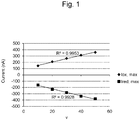
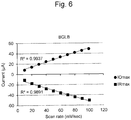
- the sweep rate was allowed to vary in the range from 10 mV/sec to 50 mV/sec, and how the maximum value of oxidation current (I Omax ) and the maximum value of reduction current (I Rmax ) would change was examined.
- I Omax oxidation current
- I Rmax maximum value of reduction current
- the printed electrode described above was loaded with 10 ⁇ l of a solution containing p-phenylenediamine having a final concentration of 100 ⁇ g/ml in 10% ethanol and 10 ⁇ l of a 100 mM potassium phosphate buffer solution (pH 7.0), and cyclic voltammetry was performed by sweeping voltage in the range from -200 mV to +400 mV (vs. Ag/Ag+).
- I Omax and I Rmax were confirmed to be proportional to the one-half power of the sweep rate. This indicates that p-phenylenediamine is diffused without being adsorbed onto an electrode.
- Bindschedler's green leuco base (BGLB, manufactured by Tokyo Chemical Industry Co., Ltd., product code: B0482, CAS No. 637-31-0 ) or tris[4-(diethylamino)phenyl]amine (TDPA, manufactured by Sigma-Aldrich Co. LLC, product code: 556394, CAS No. 5981-09-9 ) was used to perform cyclic voltammetry (CV) with a printed electrode. More specifically, the compound was adsorbed onto SCREEN-PRINTED ELECTRODES (manufactured by Metrohm Dropsens, S.L., product No.
- TDPA has two redox waves, which are therefore indicated by I O1 , I O2 , I R1 and I R2 in the figure.
- the sweep rate and I Omax and I Rmax were also confirmed to have a proportional relationship, indicating that the compound is adsorbed onto a carbon electrode, as in the case of BGLB.
- FAD-dependent GDH and three phenylenediamine type compounds were used to perform cyclic voltammetry using a printed electrode.
- a round carbon electrode manufactured by BioDevice Technology, Ltd., DEP-Chip EP-PP in which a carbon working electrode (2.64 mm 2 ) and a silver/silver chloride reference electrode were printed was connected to ALS electrochemical analyzer 814D (manufactured by BAS Inc.) using a dedicated connector.
- the electrode was loaded with 2 ⁇ l of a 2000 U/ml FADGDH-AA (manufactured by Kikkoman Biochemifa Company, product No. 60100) solution, 8 ⁇ l of a 50 mM potassium phosphate buffer solution (pH 7.0) containing 1.5 M potassium chloride, and 10 ⁇ l of an aqueous solution containing IPPD in 10% ethanol.
- IPPD IP-dimethylcellulose
- cyclic voltammetry was performed by sweeping voltage in the range from -200 mV to 400 mV (vs. Ag/AgCl). The sweep rate was set to 10 mV/sec. Subsequently, a glucose solution was added with a final concentration of 200 mM, and cyclic voltammetry was performed in the same manner.
- FIG. 8 A cyclic voltammogram at the time of measurement is shown in Figure 8 .
- a response current was observed for glucose, indicating that IPPD functions as a mediator.
- SCREEN-PRINTED ELECTRODES manufactured by Metrohm Dropsens, S.L., product No. DRP-110 onto which a carbon working electrode (12.6 mm 2 ) and a silver/silver chloride reference electrode were printed were connected to ALS electrochemical analyzer 814D (manufactured by BAS Inc.) using a dedicated connector (manufactured by Metrohm Dropsens, S.L., DRP-CAC).
- the electrode was loaded with 5 ⁇ l of a 2000 U/ml Glucose Dehydrogenase (FAD-dependent) (manufactured by BBI Solutions, Product Code: GLD3; hereinafter, referred to as GLD3) solution, 20 ⁇ l of a 50 mM potassium phosphate buffer solution (pH 7.0) containing 1.5 M potassium chloride, and 25 ⁇ l of an aqueous solution containing the phenylenediamine type compound in 10% ethanol. The final concentration of the compound was set to 2.5 ⁇ M for IPPD and 0.5 ⁇ M for DPPD and 6PPD. Then, cyclic voltammetry was performed by sweeping voltage in the range from -200 mV to 400 mV (vs.
- FAD-dependent 2000 U/ml Glucose Dehydrogenase
- a plot of the relationship between the final glucose concentration and the oxidation current value at 300 mV when IPPD, DPPD, and 6PPD were used is shown in Figures 9 , 10 , and 11 , respectively.
- response current was observed for glucose.
- no response current was observed when these compounds were not included, indicating that all of IPPD, DPPD, and 6PPD function as a mediator. This indicated that these compounds can also be utilized as an anode electrode.
- GOD GOD from A. niger Type X-S (manufactured by Sigma-Aldrich Co. LLC, product No. G7141; hereinafter, referred to as GOD) and IPPD were mixed, and cyclic voltammetry was performed in the same manner as above. The results are shown in Figure 14 . A response current was observed for glucose only when IPPD was added, demonstrating that IPPD functions as a mediator. This indicated that the compound can also be utilized as an anode electrode.
- DPPD FAD-dependent GDH and N,N'-diphenyl-1,4-phenylenediamine
- CV cyclic voltammetry
- the electrode was coated with 3 ⁇ l of a 4 mg/ml FADGDH-AA (manufactured by Kikkoman Biochemifa Company, product No. 60100) solution and dried in air again. Subsequently, the electrode was exposed to steam of a 25% glutaraldehyde solution (manufactured by FUJIFILM Wako Pure Chemical Corp., Wako 1st Grade, product No. 079-00533) for 30 minutes and then, the electrode was washed with pure water to prepare a DPPD/GDH-immobilized electrode.
- a 4 mg/ml FADGDH-AA manufactured by Kikkoman Biochemifa Company, product No. 60100
- This electrode was connected to ALS electrochemical analyzer 814D (manufactured by BAS Inc.) using a dedicated connector (manufactured by Metrohm Dropsens, S.L., DRP-CAC), and dipped in 10 ml of a 20 mM potassium phosphate buffer solution (pH 7.0) containing glucose having a final concentration of 100 mM.
- the printed electrode was used as a working electrode, a silver/silver chloride electrode (manufactured by BAS Inc.) was used as a reference electrode, and a platinum electrode (manufactured by BAS Inc.) was used as a counter electrode and the solution was stirred at 750 rpm, and while stirring CV was performed by sweeping voltage in the range from -200 mV to +400 mV (vs. Ag/AgCl). The sweep rate was set to 30 mV/sec. Subsequently, the electrode was taken out of the solution, washed with ultrapure water, and then dipped in a fresh measurement solution having the same composition as above. Similar measurement was repetitively carried out a total of three times.
- the measurement value of oxidation current in the third CV at +150 mV differed by 149 nA between the solution containing glucose and a blank solution containing no glucose.
- the response current was higher as compared with the blank, indicating that DPPD functions as an electron migration promoter.
- the current value hardly changed if any, indicating that DPPD and GDH are stably immobilized to an electrode without being dissociated into the solution.
- FPOX-CE Fructosyl-peptide Oxidase
- IPPD IPPD
- FADGDH-AA, BGLB, and TDPA were used to perform CV with a printed electrode. More specifically, a compound/GDH-immobilized electrode was prepared by the same procedures as in Example 2 to carry out CV. However, the sweep range of CV was set to from -200 mV to +600 mV (vs. Ag/AgCl) and further, measurement was performed as a control experiment using a solution containing no glucose.
- CV was carried out by sweeping voltage in the range from -200 mV to +400 mV (vs. Ag/AgCl).
- the sweep rate was set to 30 mV/sec.
- a glucose solution was added with various final concentrations, and CV was carried out in the same manner.
- FIG. 18 A plot of the relationship between the final glucose concentration and the oxidation current value at +300 mV is shown in Figures 18 and 19 .
- IPPD and BGLB were used, a glucose concentration-dependent current was observed, indicating that these compounds function as mediators for PQQ-dependent GDH.
- the solution used for dissolving the enzyme was a 150 mM potassium phosphate buffer solution (pH 8.0). A potential of +150 mV (vs. Ag/AgCl) was applied thereto. After 60 seconds from the start of measurement, 5 ⁇ l of a 500 mM glucose solution was added, and change in current was measured. Further, a similar test was conducted as a control experiment using a measurement solution containing no DPPD.
- CV was carried out by sweeping voltage in the range from -200 mV to +400 mV (vs. Ag/AgCl).
- the sweep rate was set to 30 mV/sec.
- a lactic acid solution was added with various final concentrations, and CV was carried out in the same manner.
- FDH fructose dehydrogenase
- IPPD IPPD
- printed electrode DRP-C110 was connected to ALS electrochemical analyzer 814D using a dedicated connector (DRP-CAC) and 5 ⁇ l of a 10 mg/ml D-Fructose dehydrogenase (manufactured by Toyobo Co., Ltd., product code: FCD-302) solution, 20 ⁇ l of a 150 mM sodium acetate buffer solution (pH 4.5) containing 1.5 M potassium chloride, and 25 ⁇ l of a solution containing 5 ⁇ M IPPD in 10% ethanol were added dropwise onto the electrode.
- DRP-CAC dedicated connector
- FCD-302 product code
- a solution used for dissolving the enzyme was a 150 mM sodium acetate buffer solution (pH 4.5) containing 0.1% polyoxyethylene (10) octylphenylether. Then, CV was carried out by sweeping voltage in the range from -200 mV to +400 mV (vs. Ag/AgCl). The sweep rate was set to 30 mV/sec. Subsequently, a fructose solution was added with various final concentrations, and CV was carried out in the same manner.
- FIG. 22 A plot of the relationship between a final fructose concentration and the oxidation current value at +100 mV is shown in Figure 22 when current without the addition of fructose was defined as 0. Since FDH has the ability to directly transfer electrons, a fructose-dependent response current is observed even in the absence of IPPD. However, a larger current was observed in the presence of IPPD as compared with in the case where IPPD was non-existent. This indicated that IPPD functions as a mediator even for FDH which has having the ability to directly transfer electrons.
- SCREEN-PRINTED ELECTRODES manufactured by Metrohm Dropsens, S.L., product No. DRP-C110
- 3 ⁇ l of 5% polyethylenimine average molecular weight: 10000
- the electrode was coated with 3 ⁇ l of IPPD (dissolved in 10% ethanol) and 30 U of GDH-M2 and dried at room temperature.
- the electrode was coated with 1 ⁇ l of 2.5 mg/dl polyethylene glycol diglycidyl ether (average molecular weight: 500) and left standing overnight at 4°C. The obtained electrode was washed with pure water to prepare an IPPD/GDH-immobilized electrode.
- the IPPD/GDH-immobilized electrode, an Ag/AgCl reference electrode, and a platinum counter electrode were dipped in a 100 mM potassium phosphate buffer solution (pH 7), and CV measurements were performed.
- the sweep rate was set to 10 mV/sec. 2 M glucose was appropriately added, and the oxidation current value at +200 mV was calculated for each glucose concentration.
- the results are shown in Figure 23 .
- the response current value was found to increase as glucose concentration increased.
- the glucose concentration can be quantified by measuring glucose having a known concentration and preparing a calibration curve. This also indicated that the compound can be utilized as an anode electrode.
- a gold electrode manufactured by BAS Inc., Cat No. 002421
- an Ag/AgCl reference electrode and a platinum counter electrode were dipped in a phosphate buffer solution of pH 7 containing IPPD and GDH-M2, and CV measurement was performed.
- the sweep rate was set to 10 to 100 mV/sec, and the sweep rate and I Omax and I Rmax were plotted. As a result, the sweep rate and I Omax and I Rmax were confirmed to have a proportional relationship, indicating that IPPD is adsorbed onto a gold electrode.
- Printed electrode DRP-C110 was left standing in a 50 mM potassium phosphate buffer solution containing DPPD diluted into each concentration from 10 pM to 100 nM. A control experiment was also carried out using a solution not comprising any DPPD. The electrode was appropriately left standing for 1 hour to 5 days and then connected to ALS electrochemical analyzer 814D using a dedicated connector (DRP-CAC) and CV was carried out by sweeping voltage in the range from -400 mV to +200 mV (vs. Ag/Ag+) in 10 ml of a 50 mM potassium phosphate buffer solution (pH 6.8) containing no DPPD and containing FADGDH-AA having a final concentration of 4 mg/ml.
- DRP-CAC dedicated connector
- the sweep rate was set to 30 mV/sec. Then, 1 ml of a 1 M glucose solution was added, and CV was carried out in the same manner. A value was calculated by subtracting the oxidation current value at +100 mV without the addition of glucose from the oxidation current value at +100 mV.
- a 5 mm ⁇ 5 mm carbon cloth (manufactured by TOYO Corp.) was coated with 80 ⁇ l of a multilayered carbon nanotube solution in several divided portions and dried at 60°C. The carbon cloth was washed with pure water and then further dried, followed by the adsorptive fixation of IPPD thereto. Subsequently, the carbon cloth was coated with 20 ⁇ l of 12 mg/ml FAD-dependent glucose dehydrogenase (GLD1, manufactured by Funakoshi Co., Ltd.) and dried at 25°C. The carbon cloth was exposed to steam of 25% glutaraldehyde for 30 minutes so that GLD1 was immobilized by cross-linking to prepare an anode electrode.
- GLD1 FAD-dependent glucose dehydrogenase
- Platinum manufactured by BAS Inc. was used as a cathode electrode, and dipped, together with the anode electrode and an Ag/AgCl reference electrode, in PBS containing 100 mM D-glucose, and connected to variable resistance and a potentiostat.
- current of 60 ⁇ A/cm2 was observed when connecting 10 k ⁇ . No current could be observed at the time of connection of 10 k ⁇ when an electrode without the adsorptive fixation of IPPD was used.
- a battery that can generate electricity without the addition of a mediator into a fuel tank can be prepared by using an electrode onto which the phenylenediamine type compound of the present invention is immobilized.
- Adsorptive fixation was performed to a single-layered carbon nanotube using 1 mg/ml IPPD to prepare a solution.
- the working electrode of the printed electrode used in Example 2 was coated with 3 ⁇ L of this solution, dried, and thoroughly washed with ultrapure water. Subsequently, the electrode was coated with 4 mg/ml GLD1 and dried, and GLD1 was immobilized by cross-linking using glutaraldehyde in the same manner as above.
- the electrode was washed with ultrapure water and then dipped in PBS.
- a silver/silver chloride reference electrode and a platinum counter electrode were also dipped therein and chronoamperometry measurement was performed by the application of +250 mV.
- an enzyme sensor can be prepared in the same manner by coating a printed electrode with a carbon-adsorbed solution in advance.
- a similar enzyme sensor was prepared using ketjen black instead of the single-layered carbon nanotube.
- Electrochemical measurements of batteries, etc. can be performed by using an electrode modifying agent comprising the phenylenediamine type compound of the present invention or an electrode onto which the electrode modifying agent is adsorbed.
Landscapes
- Chemical & Material Sciences (AREA)
- Organic Chemistry (AREA)
- Life Sciences & Earth Sciences (AREA)
- Chemical Kinetics & Catalysis (AREA)
- Electrochemistry (AREA)
- Health & Medical Sciences (AREA)
- Engineering & Computer Science (AREA)
- Biochemistry (AREA)
- General Chemical & Material Sciences (AREA)
- Analytical Chemistry (AREA)
- Immunology (AREA)
- Physics & Mathematics (AREA)
- Molecular Biology (AREA)
- General Health & Medical Sciences (AREA)
- Microbiology (AREA)
- Manufacturing & Machinery (AREA)
- General Physics & Mathematics (AREA)
- Pathology (AREA)
- Sustainable Development (AREA)
- Sustainable Energy (AREA)
- Materials Engineering (AREA)
- Zoology (AREA)
- Wood Science & Technology (AREA)
- Proteomics, Peptides & Aminoacids (AREA)
- Biotechnology (AREA)
- Biophysics (AREA)
- Bioinformatics & Cheminformatics (AREA)
- General Engineering & Computer Science (AREA)
- Genetics & Genomics (AREA)
- Hematology (AREA)
- Inert Electrodes (AREA)
- Organic Low-Molecular-Weight Compounds And Preparation Thereof (AREA)
Abstract
Description
- The present invention relates to the application of a phenylenediamine type compound (phenylenediamine compounds) as a mediator and an electrode modifying agent comprising the compound, an electrode comprising the compound, an enzyme sensor comprising the electrode, as well as a battery. The present invention also relates to electrochemical measurement using the phenylenediamine type compound and an oxidoreductase, a composition comprising the phenylenediamine type compound and an oxidoreductase, as well as an electrode comprising the phenylenediamine type compound.
- In enzyme electrodes, mediators are utilized as intermediary substances for delivering electrons generated through enzyme-catalyzed redox reaction to electrodes. For efficient electron transfer from an enzyme to an electrode, it is desirable for the mediator to be localized in proximity to the electrode. Therefore, various approaches of fixing the mediator to the electrode have been utilized, such as a method of chemically binding the mediator to the electrode, and a method of polymerizing the mediator itself. However, the chemical binding method is limited by the side chain functional group of the mediator, and the method of polymerizing the mediator itself may change the redox potential of the mediator. Thus, conventional approaches lacked versatility. There is also a report on treating glassy carbon electrodes with strong acids, and thereby activating functional groups on the surface for adsorptive fixation of mediators such as quinones. However, this approach has hardly been put into practical use in the industry.
- Further, all of these methods require complicated steps for the fixation of the mediator to the electrode, and are associated with the problem of high cost. Accordingly, an electron mediator that can be conveniently used without the need of complicated steps for fixation to electrodes was needed.
- Patent Literature 1 (JP Patent Publication (Kokai) No.
7-234201 - Patent Literature 2 (
WO 2004/011929 ) has reported that after surface activation of carbon particles by an acid treatment, N,N'-diphenyl-p-phenylenediamine (DPPD) is added to the acid-treated carbon powder, and then this carbon powder is immobilized to a carbon electrode; and that hydrogen sulfide or thiol in a solution is detected using the electrode. - Patent Literature 3 (JP Patent Publication (Kohyo) No.
2007-526474 - Patent Literature 4 (JP Patent Publication (Kokai) No.
2008-185534 phenylenediamine type compound - Patent Literature 5 (JP Patent Publication (Kokai) No.
2016-042032 - N-isopropyl-N'-phenyl-p-phenylenediamine (IPPD), N,N'-diphenyl-p-phenylenediamine (DPPD), and N-(1,3-dimethylbutyl)-N'-phenyl-p-phenylenediamine (6PPD) are all known as rubber antioxidants (
Non Patent Literature 2, NIPPON GOMU KYOKAISHI, the Journal of The Society of Rubber Science and Technology, Japan, Vol. 82, No. 2, 2009, p. 45-49). - Non Patent Literature 1 (Analyst, 2003, 128, 473-479) has reported that after carbon surface activation of a carbon powder by acid treatment with 0.1 M hydrochloric acid, DPPD is added to the acid-treated carbon powder, and this carbon powder is immobilized to a carbon electrode (basal plane pyrolytic graphite electrode: BPPG electrode), and that sulfide is detected using the electrode.
Patent Literature 6 describes a flow battery. -
- Patent Literature 1: JP Patent Publication (Kokai) No.
7-234201 - Patent Literature 2:
WO 2004/011929 - Patent Literature 3: JP Patent Publication (Kohyo) No.
2007-526474 WO 2005/085825 ) - Patent Literature 4: JP Patent Publication (Kokai) No.
2008-185534 - Patent Literature 5: JP Patent Publication (Kokai) No.
2016-042032 - Patent Literature 6: JP Patent Publication (Kokai) No.
2019-003928 -
- Non Patent Literature 1: Analyst, 2003, 128, 473-479
- Non Patent Literature 2: NIPPON GOMU KYOKAISHI, the Journal of The Society of Rubber Science and Technology, Japan, Vol. 82, No. 2, 2009, p. 45-49
- An object of the present invention is to provide a novel mediator that can at least partially solve the problems described above.
- The present inventors have carried out extensive studies to attain the object and found that, surprisingly, a phenylenediamine type compound can be adsorbed onto an electrode surface without the need of special treatment such as an acid treatment, and the compound is capable of functioning as a mediator, thereby completing the present invention. To the best of the present inventors' knowledge, there is no previous report stating that IPPD, DPPD, or 6PPD are mediators that can be adsorbed onto electrodes and this is a surprising finding. The present inventors have also found, surprisingly, a further phenylenediamine type compound that can be adsorbed onto an electrode surface without the need of special treatment such as an acid treatment.
- The present invention encompasses the following embodiments:
- [1] An electrode modifying agent comprising a compound having a property of being adsorbed, without being bound to a polymer or without being polymerized, onto an electrode untreated with an acid.
- [2] An electron transfer promoting agent comprising a compound having a property of being adsorbed, without being bound to a polymer or without being polymerized, onto an electrode untreated with an acid.
- [3] A battery comprising the electrode modifying agent according to
embodiment 1 or the electron transfer promoting agent according toembodiment 2. - [4] The battery according to
embodiment 3, wherein the compound is immobilized to an electrode of the battery. - [5] The battery according to
embodiment - [6] The battery according to
embodiment 5, wherein the oxidoreductase is immobilized to the electrode. - [7] A composition comprising the electrode modifying agent according to
embodiment 1 or the electron transfer promoting agent according toembodiment 2. - [8] An electrode comprising the electrode modifying agent according to
embodiment 1 or the electron transfer promoting agent according toembodiment 2. - [9] The electrode according to
embodiment 8, having an enzyme, or the composition according toembodiment 7, comprising an enzyme. - [10] The electrode or the composition according to embodiment 9, wherein the enzyme is an oxidoreductase.
- [11] The electrode according to
embodiment 10, wherein the oxidoreductase is immobilized. - [12] A sensor comprising the electrode modifying agent according to
embodiment 1 or the electron transfer promoting agent according toembodiment 2, or an enzyme sensor having an electrode according toembodiment 10 or 11. - [13] The electrode modifying agent according to
embodiment 1,
the electron transfer promoting agent according toembodiment 2,
the battery according to any ofembodiments 3 to 6,
the composition according toembodiment
the electrode according to any ofembodiments 8 to 11, or
the enzyme sensor according to embodiment 12, wherein
the compound is a compound having a structure of formula I or formula II:
- R1 is -NR7R8 , -N=N-R9, or -N+≡N,
- R2 is -NR10R11 or -N=N-R12,
- R7 and R8 are each independently hydrogen, or linear or branched C1-7 alkyl, C1-7 alkenyl, C1-7 alkynyl, C3-9 cycloalkyl, phenyl, 1-naphthyl, 2-naphthyl, anthracenyl, phenanthrenyl, acetyl, carboxy, furanylformyl, pyrazolylformyl, 1-methyl-1H-pyrazol-5-ylformyl, 9,9-dimethylfluoren-2-yl, -N+≡N, -N=N-phenyl, benzyl,

- R10 is hydrogen, or linear or branched C1-7 alkyl, C1-7 alkenyl, C1-7 alkynyl, C3-9 cycloalkyl, phenyl, 1-naphthyl, 2-naphthyl, anthracenyl or phenanthrenyl, which may optionally be substituted with one or more X or V,
- R3, R4, R5 and R6 are each independently hydrogen, or linear or branched C1-7 alkyl, C1-7 alkenyl, C1-7 alkynyl, C1-7 alkoxy, halo, nitro, cyano, carboxy, sulfo, hydroxy or amino, which may optionally be substituted with one or more Y,
- or R3 and R4, or R5 and R6, together with the benzene ring containing these moieties, form a benzene ring, or

- wherein * is bonded to the carbon atom bonded to R3, and ** is bonded to the carbon atom bonded to R4, or * is bonded to the carbon atom bonded to R5, and ** is bonded to the carbon atom bonded to R6,
- R11 is selected from the group consisting of phenyl, 1-naphthyl, 2-naphthyl, anthracenyl and phenanthrenyl, which may optionally be substituted with one or more X or Z,
- R9 is selected from the group consisting of hydrogen, and phenyl, 1-naphthyl, 2-naphthyl, anthracenyl and phenanthrenyl, which may optionally be substituted with one or more X,
- R12 is selected from the group consisting of phenyl, 1-naphthyl, 2-naphthyl, anthracenyl, phenanthrenyl, and
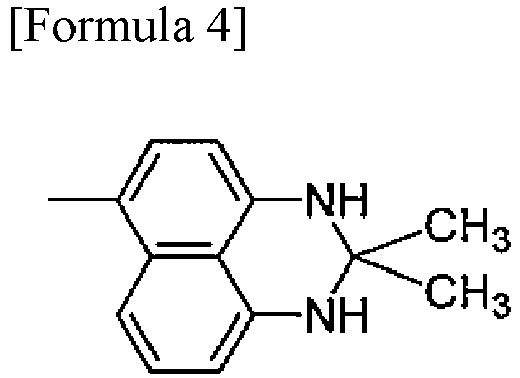
V is -O-acryloyl, acetylamino, or phenyl, which may optionally be substituted with C1-7 alkyl, W is D- or L-alanylsulfonyl, D- or L-valylsulfonyl, D- or L-leucylsulfonyl, D- or L-methionylsulfonyl, D- or L-prolylsulfonyl, D- or L-tryptophylsulfonyl, D- or L-glycylsulfonyl, D- or L-cysteinylsulfonyl, D- or L-isoleucylsulfonyl, D- or L-phenylalanylsulfonyl, D- or L-tyrosylsulfonyl, D- or L-serylsulfonyl, D- or L-threonylsulfonyl, D- or L-asparaginylsulfonyl, D- or L-glutamylsulfonyl, D- or L-arginylsulfonyl, D- or L-histidylsulfonyl, D- or L-lysylsulfonyl, D- or L-asparagylsulfonyl, D- or L-glutaminylsulfonyl, -C(=O)-O-succinimidyl, acetyl, trifluoroacetyl, benzoylamino, -N=N-phenyl, phenylamino, or diaminophenylazophenyl, which may optionally be substituted with one or more amino, C1-7 alkyl, or aminoalkyl, or phenylazo, which may optionally be substituted with one or more X, naphthylazo, which may optionally be substituted with one or more Y, acetylamino,

- X is linear or branched C1-7 alkyl, C1-7 alkenyl, C1-7 alkynyl, C1-7 alkoxy, halo, hydroxy, nitro, carboxy, cyano, sulfo, amino or alkylamino, which may optionally be substituted with one or more substituents selected from the group consisting of halo, amino, cyano, carboxy, carbonyl, alkoxy, alkylamino, nitroso, nitro and sulfo,
- Y is selected from the group consisting of halo, amino, cyano, carboxy, carbonyl, hydroxy, alkoxy and sulfo, and
- Z is -SO2-CH=CH2, -SO2-C2H4-O-SO3H, or 4,6-dichlorotriazin-2-ylamino,
- [14] The electrode modifying agent, electron transfer promoting agent, battery, composition, electrode, or sensor according to embodiment 13, wherein the compound is a compound having a structure of formula Ia or IIa:


- R1a is -NR7aR8a , -N=N-R9a, or -N+≡N,
- R2a is -NR10aR11a, or -N=N-R12a,
- R7a and R8a are each independently hydrogen, or linear or branched C1-6 alkyl, C1-6 alkenyl, C1-6 alkynyl, C3-9 cycloalkyl, phenyl, 1-naphthyl, 2-naphthyl, anthracenyl, or phenanthrenyl, which may optionally be substituted with one or more Xa,
- R10 is hydrogen, or linear or branched C1-6 alkyl, C1-6 alkenyl, C1-6 alkynyl, C3-9 cycloalkyl, phenyl, 1-naphthyl, 2-naphthyl, anthracenyl or phenanthrenyl, which may optionally be substituted with one or more Xa,
- R3a, R4a, R5a and R6a are each independently hydrogen, or linear or branched C1-6 alkyl, C1-6 alkenyl, C1-6 alkynyl, C1-6 alkoxy, halo, nitro, cyano, carboxy, sulfo, hydroxy or amino, which may optionally be substituted with one or more Y,

- wherein * is bonded to the carbon atom bonded to R3a, and ** is bonded to the carbon atom bonded to R4a, or * is bonded to the carbon atom bonded to R5a, and ** is bonded to the carbon atom bonded to R6a,
- R11a is selected from the group consisting of phenyl, 1-naphthyl, 2-naphthyl, anthracenyl and phenanthrenyl, which may optionally be substituted with one or more Xa,
- R9a and R12a are each independently selected from the group consisting of hydrogen, and phenyl, 1-naphthyl, 2-naphthyl, anthracenyl and phenanthrenyl, which may optionally be substituted with one or more Xa,
- Xa is linear or branched C1-6 alkyl, C1-6 alkenyl, C1-6 alkynyl, C1-6 alkoxy, halo, hydroxy, nitro, carboxy, cyano, sulfo, amino or alkylamino, which may optionally be substituted with one or more substituents selected from the group consisting of halo, amino, cyano, carboxy, carbonyl, hydroxy, alkoxy, alkylamino, nitroso, nitro and sulfo, and
- Y is selected from the group consisting of halo, amino, cyano, carboxy, carbonyl, alkoxy and sulfo, or

- R7b, R8b and R10b are each independently hydrogen, or linear or branched C1-6 alkyl, C1-6 alkenyl, C1-6 alkynyl, C3-9 cycloalkyl, phenyl, 1-naphthyl, 2-naphthyl, anthracenyl or phenanthrenyl, which may optionally be substituted with one or more Xb,
- R3b, R4b, R5b and R6b are each independently hydrogen, or linear or branched C1-6 alkyl, C1-6 alkenyl, C1-6 alkynyl, C1-6 alkoxy, halo, nitro, cyano, carboxy, sulfo or amino, which may optionally be substituted with one or more Y,
- R11b is selected from the group consisting of phenyl, 1-naphthyl, 2-naphthyl, anthracenyl and phenanthrenyl, which may optionally be substituted with one or more Xb, wherein
- Xb is linear or branched C1-6 alkyl, C1-6 alkenyl, C1-6 alkynyl, C1-6 alkoxy, halo, hydroxy, nitro, carboxy, cyano, sulfo or amino, which may optionally be substituted with one or more substituents selected from the group consisting of halo, amino, cyano, carboxy, carbonyl, alkoxy and sulfo, and
- Y is selected from the group consisting of halo, amino, cyano, carboxy, carbonyl, alkoxy and sulfo,
- [15] The electrode modifying agent, electron transfer promoting agent, battery, composition, electrode or sensor according to embodiment 13 or 14, wherein the compound is selected from the group consisting of


- [16] A method for producing a battery, comprising the step of using the electrode modifying agent according to
embodiment 1 or the electron transfer promoting agent according toembodiment 2. - [17] The method according to embodiment 16, comprising the step of contacting the electrode modifying agent or the electron transfer promoting agent with an electrode of the battery.
- [18] A power generation method using a battery according to any of
embodiments 3 to 6 and 13 to 15. - [19] An electrochemical measurement method using
the composition according to any ofembodiments
the electrode according to any ofembodiments 8 to 11 and 13 to 15, or
the sensor according to any of embodiments 12 to 15. - [20] A method for modifying or altering an electrode, comprising the step of contacting
the electrode modifying agent according to any ofembodiments 1 and 13 to 15,
the electron transfer promoting agent according to any ofembodiments 2 and 13 to 15, or
the composition according to any ofembodiments
with the electrode. - The present specification encompasses the contents disclosed in Japanese Patent Application Nos.
2018-077593 2018-077628 - The phenylenediamine type compound of the present invention, unlike conventional mediators such as p-phenylenediamine, can be adsorbed directly onto electrode surface without the need of special treatment such as the acid treatment of electrodes or the polymerization of the mediator itself, and can therefore be conveniently immobilized onto an electrode. Furthermore, such electrode can be used in electrochemical measurements. Moreover, such electrode can be applied to batteries.
-
- [
Figure 1] Figure 1 shows results of carrying out cyclic voltammetry using IPPD and GDH and plotting a sweep rate and IOmax and IRmax. - [
Figure 2] Figure 2 shows results obtained using DPPD instead of IPPD. - [
Figure 3] Figure 3 shows results obtained using 6PPD instead of IPPD. - [
Figure 4] Figure 4 shows results obtained using p-phenylenediamine instead of IPPD. - [
Figure 5] Figure 5 shows results obtained using p-phenylenediamine instead of IPPD. The abscissa depicts a square root of the sweep rate. - [
Figure 6] Figure 6 shows results obtained using BGLB instead of IPPD. - [
Figure 7] Figure 7 shows results obtained using TDPA instead of BGLB. - [
Figure 8] Figure 8 shows a cyclic voltammogram obtained using IPPD. - [
Figure 9] Figure 9 shows the relationship between the final glucose concentration and the oxidation current value at 300 mV when IPPD was used. - [
Figure 10] Figure 10 shows the relationship between the final glucose concentration and the oxidation current value at 300 mV when DPPD was used. - [
Figure 11] Figure 11 shows the relationship between the final glucose concentration and the oxidation current value at 300 mV when 6PPD was used. - [
Figure 12] Figure 12 shows the relationship between the final glucose concentration and the oxidation current value at 300 mV when FADGDH-AA and IPPD were used. - [
Figure 13] Figure 13 shows the relationship between the final glucose concentration and the oxidation current value at 300 mV when GLD1 and IPPD were used. - [
Figure 14] Figure 14 shows the relationship between the final glucose concentration and the oxidation current value at 300 mV when GOD and IPPD were used. - [
Figure 15] Figure 15 shows the relationship between the final glucose concentration and the oxidation current value at 300 mV when FPOX-CE IPPD were used. - [
Figure 16] Figure 16 shows the comparison of an oxidation current value when BGLB was used with FADGDH-AA and +300 mV was applied. - [
Figure 17] Figure 17 shows the comparison of an oxidation current value when TDPA was used with FADGDH-AA and +300 mV was applied. - [
Figure 18] Figure 18 shows results of plotting the relationship between the final glucose concentration and the oxidation current value at +300 mV using IPPD with PQQ-GDH. - [
Figure 19] Figure 19 shows results of plotting the relationship between the final glucose concentration and the oxidation current value at +300 mV using BGLB with PQQ-GDH. - [
Figure 20] Figure 20 shows response current between before and after addition of glucose when NAD-GDH was used in the presence or absence of DPPD. - [
Figure 21] Figure 21 shows results of plotting the relationship between a final concentration of lactic acid and the oxidation current value at +150 mV using IPPD with LOD. - [
Figure 22] Figure 22 shows results of plotting the relationship between a final concentration of fructose and the oxidation current value at +100 mV when FDH was used in the presence or absence of IPPD. The current without the addition of fructose was defined as 0. - [
Figure 23] Figure 23 shows the relationship between the final glucose concentration and the oxidation current value at 200 mV when an electrode onto which IPPD was adsorbed and GDH was immobilized was used. - [
Figure 24] Figure 24 shows the oxidation current value at +100 mV when an electrode modified using DPPD having a final concentration of 10 pM was placed in a solution containing FADGDH-AA and glucose. The current without the addition of glucose was defined as 0. - In one embodiment, the present invention provides a phenylenediamine type compound (phenylenediamine compounds). While the compound of the present invention also includes azo compounds and diazonio compounds, in the present specification for the sake of convenience, the term phenylenediamine type compound (phenylenediamine compounds), or the phenylenediamine type compound of the present invention includes not only compounds having a phenylenediamine skeleton but also azo compounds and diazonios compound. In another embodiment, the present invention provides an electrode modifying agent comprising the phenylenediamine type compound. This electrode modifying agent can be adsorbed onto electrode surface and is capable of modifying the electron accepting properties of the electrode. In another embodiment, the present invention provides an electrode onto which the phenylenediamine type compound or the electrode modifying agent of the present invention is adsorbed. In another embodiment, the present invention provides a composition for electrochemical measurement comprising the phenylenediamine type compound or the electrode modifying agent of the present invention. The composition may further comprise an enzyme. The enzyme may be an oxidoreductase. In another embodiment, the present invention provides a kit for electrochemical measurement comprising the phenylenediamine type compound or the electrode modifying agent of the present invention. In the present specification, the electrode modifying agent is also referred to as an electrode adsorber agent.
- The phenylenediamine type compound of the present invention can be contacted with an electrode and thereby adsorbed onto the electrode surface. This adsorption onto an electrode does not require a special procedure such as the activation of electrode surface by an acid treatment. In one embodiment, the property of being adsorbed onto an electrode, possessed by the compound of the present invention refers to a property of the compound of being physically adsorbed onto an electrode. An electrode made of a material such as carbon, gold, or platinum can be used. Further, aspects are included in which the compound is adsorbed onto a primary material such as a carbon powder or a carbon material and subsequently the primary material such as a carbon powder or a carbon material is immobilized (fixed) to an electrode. However, these descriptions are merely for illustrating the properties possessed by the compound of the present invention and do not limit the method of use of the compound. That is, in one embodiment, the present invention provides a method of adsorbing the compound of the present invention onto a primary material such as a carbon powder or a carbon material, and subsequently fixing the primary material such as a carbon powder or a carbon material to an electrode.
- In one embodiment, the present invention provides a primary material such as a carbon powder or a carbon material on which the compound of the present invention is adsorbed. This primary material such as a carbon powder or a carbon material can be applied to or coated onto an electrode. Examples of the primary material include, but are not limited to, carbon, platinum, and gold. Examples of the carbon material include carbon black, carbon fiber, single-layered or multilayered carbon nanotubes, graphene, and ketjen black.
- In one embodiment, the property of being adsorbed onto an electrode, a carbon powder or a carbon material, possessed by the compound of the present invention refers to a property of the compound capable of being physically adsorbed directly onto an electrode, a carbon powder or a carbon material, and does not refer to a property of the compound of binding to an electrode, a carbon powder or a carbon material through covalent binding via a polymer or a linker. In the present specification, such property is also referred to as a property of being adsorbed onto an electrode without being bound to a polymer, or a property of being adsorbed onto a carbon powder or a carbon material without being bound to a polymer or without (the compound) being polymerized. However, these descriptions are merely for illustrating the properties possessed by the compound of the present invention and do not limit the method of use of the compound. That is, in one embodiment, the present invention provides a method of binding the compound of the present invention to an electrode, a carbon powder or a carbon material via covalent binding to a polymer or a linker. That the compound can be physically adsorbed directly onto an electrode, a carbon powder or a carbon material does not exclude the covalent binding of the compound of the present invention per se to a carbon powder or a carbon material. In the present specification, the polymer refers to, for example, a multimerized form of 10 or more identical units.
- In one embodiment, the carbon powder or the carbon material, the carbon electrode, the gold electrode, or the platinum electrode for adsorbing the compound of the present invention is not treated with an acid. That is, in one embodiment, a carbon powder or a carbon material, or a carbon electrode treated with an acid is excluded from the carbon powder or the carbon material onto which the compound of the present invention is to be adsorbed.
- In one embodiment, the compound of the present invention can be used in combination with an enzyme. In one embodiment, the compound of the present invention can be used in combination with an oxidoreductase. In one embodiment, the compound of the present invention can be used as an electron transfer promoting agent. In one embodiment, the phenylenediamine type compound of the present invention functions as a mediator in redox reaction catalyzed by an oxidoreductase. Examples of the oxidoreductase include, but are not limited to, various oxidoreductases classified into
EC 1, for example, glucose oxidase, glucose dehydrogenase, amadoriase (also referred to as fructosyl peptide oxidase or fructosyl amino acid oxidase), peroxidase, galactose oxidase, bilirubin oxidase, pyruvate oxidase, D- or L-amino acid oxidase, amine oxidase, cholesterol oxidase, choline oxidase, xanthine oxidase, sarcosine oxidase, D- or L-lactate oxidase (LOD), ascorbate oxidase, cytochrome oxidase, alcohol dehydrogenase, cholesterol dehydrogenase, aldehyde dehydrogenase, aldehyde oxidase, fructose dehydrogenase (FDH), sorbitol dehydrogenase, D- or L-lactate dehydrogenase, malate dehydrogenase, glycerol dehydrogenase, 17B hydroxysteroid dehydrogenase, estradiol 17B dehydrogenase, D- or L-amino acid dehydrogenase, glyceraldehyde 3-phosphate dehydrogenase, 3-hydroxysteroid dehydrogenase, diaphorase, catalase, glutathione reductase, cytochrome b5 reductase, adrenoxine reductase, cytochrome b5 reductase, adrenodoxin reductase, nitrate reductase, phosphate dehydrogenase, bilirubin oxidase, laccase, polyamine oxidase, formate dehydrogenase, pyranose oxidase, pyranose dehydrogenase, and tauropine dehydrogenase. Further, a plurality of enzymes may be combined. Examples of the coenzyme of the enzymes above include nicotinamide adenine dinucleotide (NAD), nicotinamide adenine dinucleotide phosphate, flavin adenine dinucleotide (FAD), and pyrroloquinolinequinone. That is, examples of the glucose dehydrogenase (GDH) include FAD-dependent GDH, NAD-dependent GDH, and PQQ-dependent GDH. The oxidoreductases listed above can be subjected to activity measurement using various substrates by methods described in, for example, Methods in Enzymology (Vol. 1-602). - In the present specification, the phrase "functioning as a mediator" means that the phenylenediamine type compound contributes to electron migration. For example, in a system using an electrode, the phenylenediamine type compound of the present invention becomes a reduced form by receiving an electron from an oxidoreductase and returns to the oxidized form by giving an electron to the electrode. From such a perspective, the phenylenediamine type compound of the present invention functioning as a mediator can also be referred to as an electron migration intermediary agent, an electron transfer promoting agent, or an electron mediator (also referred to simply as a mediator). In the present specification, these terms are used interchangeably.
- In one embodiment, an electrode having a carbon powder or carbon particles treated with an acid is excluded from the electrode of the present invention.
- In one embodiment, the oxidoreductase that is used with the electrode of the present invention may be immobilized to the electrode. That is, in this embodiment, the present invention provides an electrode onto which an oxidoreductase is immobilized and the electrode modifying agent of the present invention is adsorbed. In one embodiment, the present invention provides an enzyme sensor comprising the an electrode onto which an oxidoreductase is immobilized and the electrode modifying agent of the present invention is adsorbed. In one embodiment, the present invention provides a sensor comprising the electrode modifying agent or the electron transfer promoting agent of the present invention.
- The phenylenediamine type compound of the present invention or the electrode modifying agent, the electrode adsorber or the electron transfer promoting agent comprising the phenylenediamine type compound can be adsorbed onto electrode surface without the need of a special treatment. Thus, in one embodiment, the phenylenediamine type compound, the electrode modifying agent, the electrode adsorber or the electron transfer promoting agent of the present invention may be adsorbed onto an electrode in advance in order to prepare a modified electrode. In another embodiment, a measurement solution (composition) comprising the phenylenediamine type compound, the electrode modifying agent, the electrode adsorber or the electron transfer promoting agent of the present invention, and oxidoreductase can be used when performing an electrochemical measurement. In this embodiment, when the composition comprising the phenylenediamine type compound, the electrode modifying agent, the electrode adsorber or the electron transfer promoting agent of the present invention, and an oxidoreductase is physically brought into contact with an electrode, the phenylenediamine type compound, the electrode modifying agent, the electrode adsorber or the electron transfer promoting agent of the present invention is adsorbed onto the electrode so that an electrode with modified electrochemical characteristics (properties) is prepared on the spot at the time of measurement (in situ).
- In one embodiment, the electrode is not pretreated with an acid when the phenylenediamine type compound, the electrode modifying agent, the electrode adsorber or the electron transfer promoting agent of the present invention is adsorbed onto the electrode. In another embodiment, the electrode may be pretreated with an acid prior to adsorption of the phenylenediamine type compound, the electrode modifying agent, the electrode adsorber or the electron transfer promoting agent of the present invention onto the electrode. In this context, the pretreatment with an acid includes contact of an electrolyte solution containing an acid with the electrode. In the present specification, an acid refers to an acid of
pH 4 or lower, for example, lower thanpH 4,pH 3 or lower, lower thanpH 3,pH 2 or lower, lower thanpH 2, orpH 1. In one embodiment, the phenylenediamine type compound, the electrode modifying agent, the electrode adsorber or the electron transfer promoting agent of the present invention may be converted to an oxidized form or a reduced form by applying a particular potential, and then be adsorbed onto an electrode. As an approach of converting the compound to an oxidized from or a reduced form, an oxidizing agent or a reducing agent may be used, and the approach is not particularly limited. In one embodiment, the phenylenediamine type compound, the electrode modifying agent, the electrode adsorbed agent or the electron transfer promoting agent of the present invention may be embedded in a polymer and adsorbed onto an electrode. In the present specification, such adsorption may also be referred to as embedding or entrapment. This is distinguished from adsorptive fixation, i.e., fixation by physical adsorption. The compound of the present invention in an embedding or entrapment can be diffused within the polymer, whereas, in adsorptive fixation, the compound of the present invention is not or almost not diffused. In another embodiment, the compound, the electrode modifying agent, the electrode adsorber agent or the electron transfer promoting agent of the present invention may be adsorbed onto an electrode through electrostatic interaction using an ionic polymer, for example, a cationic polymer such as polyethylenimine or polylysine, or an anionic polymer such as polyaniline or polyacrylic acid. In another embodiment, the compound, the electrode modifying agent, the electrode adsorber agent or the electron transfer promoting agent of the present invention may be adsorbed or immobilized via a cross-linking agent onto an enzyme, and then immobilized, together with the enzyme, onto an electrode. In another embodiment, the adsorbed compound of the present invention may be polymerized through redox reaction or by a cross-linking agent. - In one embodiment, the phenylenediamine type compound of the present invention may be a compound of the following general formula I or II, or a salt, an anhydride or a solvate thereof:

- R1 is -NR7R8 , -N=N-R9, or -N+≡N,
- R2 is -NR10R11 or -N=N-R12,
- R7 and R8 are each independently hydrogen, or linear or branched C1-7 alkyl, C1-7 alkenyl, C1-7 alkynyl, C3-9 cycloalkyl, phenyl, 1-naphthyl, 2-naphthyl, anthracenyl, phenanthrenyl, acetyl, carboxy, furanylformyl, pyrazolylformyl, 1-methyl-1H-pyrazol-5-ylformyl, 9,9-dimethylfluoren-2-yl, -N+≡N, -N=N-phenyl, benzyl,
- R10 is hydrogen, or linear or branched C1-7 alkyl, C1-7 alkenyl, C1-7 alkynyl, C3-9 cycloalkyl, phenyl, 1-naphthyl, 2-naphthyl, anthracenyl or phenanthrenyl, which may optionally be substituted with one or more X or V,
- R3, R4, R5 and R6 are each independently hydrogen, or linear or branched C1-7 alkyl, C1-7 alkenyl, C1-7 alkynyl, C1-7 alkoxy, halo, nitro, cyano, carboxy, sulfo, hydroxy or amino, which may optionally be substituted with one or more Y,
- or R3 and R4, or R5 and R6, together with the benzene ring containing these moieties, form a benzene ring, or
- wherein * is bonded to the carbon atom bonded to R3, and ** is bonded to the carbon atom bonded to R4, or * is bonded to the carbon atom bonded to R5, and ** is bonded to the carbon atom bonded to R6,
- R11 is selected from the group consisting of phenyl, 1-naphthyl, 2-naphthyl, anthracenyl and phenanthrenyl, which may optionally be substituted with one or more X or Z,
- R9 is selected from the group consisting of hydrogen, and phenyl, 1-naphthyl, 2-naphthyl, anthracenyl and phenanthrenyl, which may optionally be substituted with one or more X,
- R12 is selected from the group consisting of phenyl, 1-naphthyl, 2-naphthyl, anthracenyl, phenanthrenyl, and
- X is linear or branched C1-7 alkyl, C1-7 alkenyl, C1-7 alkynyl, C1-7 alkoxy, halo, hydroxy, nitro, carboxy, cyano, sulfo, amino or alkylamino, which may optionally be substituted with one or more substituents selected from the group consisting of halo, amino, cyano, carboxy, carbonyl, alkoxy, alkylamino, nitroso, nitro and sulfo,
- Y is selected from the group consisting of halo, amino, cyano, carboxy, carbonyl, hydroxy, alkoxy and sulfo, and
- Z is -SO2-CH=CH2, -SO2-C2H4-O-SO3H, or 4,6-dichlorotriazin-2-ylamino.
- In one embodiment, the phenylenediamine type compound of the present invention may be a compound having a structure of the following general formula Ia or IIa, or a salt, an anhydride or a solvate thereof:


- R1a is -NR7aR8a, -N=N-R9a, or -N+≡N,
- R2a is -NR10aR11a, or -N=N-R12a,
- R7a and R8a are each independently hydrogen, or linear or branched C1-6 alkyl, C1-6 alkenyl, C1-6 alkynyl, C3-9 cycloalkyl, phenyl, 1-naphthyl, 2-naphthyl, anthracenyl, or phenanthrenyl, which may optionally be substituted with one or more Xa,
- R10 is hydrogen, or linear or branched C1-6 alkyl, C1-6 alkenyl, C1-6 alkynyl, C3-9 cycloalkyl, phenyl, 1-naphthyl, 2-naphthyl, anthracenyl or phenanthrenyl, which may optionally be substituted with one or more Xa,
- R3a, R4a, R5a and R6a are each independently hydrogen, or linear or branched C1-6 alkyl, C1-6 alkenyl, C1-6 alkynyl, C1-6 alkoxy, halo, nitro, cyano, carboxy, sulfo, hydroxy or amino, which may optionally be substituted with one or more Y,
- wherein * is bonded to the carbon atom bonded to R3a, and ** is bonded to the carbon atom bonded to R4a, or * is bonded to the carbon atom bonded to R5a, and ** is bonded to the carbon atom bonded to R6a,
- R11a is selected from the group consisting of phenyl, 1-naphthyl, 2-naphthyl, anthracenyl and phenanthrenyl, which may optionally be substituted with one or more Xa,
- R9a and R12a are each independently selected from the group consisting of hydrogen, and phenyl, 1-naphthyl, 2-naphthyl, anthracenyl and phenanthrenyl, which may optionally be substituted with one or more Xa,
- Xa is linear or branched C1-6 alkyl, C1-6 alkenyl, C1-6 alkynyl, C1-6 alkoxy, halo, hydroxy, nitro, carboxy, cyano, sulfo, amino or alkylamino, which may optionally be substituted with one or more substituents selected from the group consisting of halo, amino, cyano, carboxy, carbonyl, hydroxy, alkoxy, alkylamino, nitroso, nitro and sulfo, and
- Y is selected from the group consisting of halo, amino, cyano, carboxy, carbonyl, alkoxy and sulfo.
- In one embodiment, the phenylenediamine type compound of the present invention may be a compound having a structure of the following general formula Ib or IIb, or a salt, an anhydride or a solvate thereof:

- R7b, R8b and R10b are each independently hydrogen, or linear or branched C1-6 alkyl, C1-6 alkenyl, C1-6 alkynyl, C3-9 cycloalkyl, phenyl, 1-naphthyl, 2-naphthyl, anthracenyl or phenanthrenyl, which may optionally be substituted with one or more Xb,
- R3b, R4b, R5b and R6b are each independently hydrogen, or linear or branched C1-6 alkyl, C1-6 alkenyl, C1-6 alkynyl, C1-6 alkoxy, halo, nitro, cyano, carboxy, sulfo or amino, which may optionally be substituted with one or more Y,
- R11b is selected from the group consisting of phenyl, 1-naphthyl, 2-naphthyl, anthracenyl and phenanthrenyl, which may optionally be substituted with one or more Xb, wherein
- Xb is linear or branched C1-6 alkyl, C1-6 alkenyl, C1-6 alkynyl, C1-6 alkoxy, halo, hydroxy, nitro, carboxy, cyano, sulfo or amino, which may optionally be substituted with one or more substituents selected from the group consisting of halo, amino, cyano, carboxy, carbonyl, alkoxy and sulfo, and
- Y is selected from the group consisting of halo, amino, cyano, carboxy, carbonyl, alkoxy and sulfo.
- In the present specification, the alkyl refers to a linear or branched hydrocarbon having, for example, 1 to 7 carbon atoms, for example, 1 to 6 carbon atoms. Examples of the alkyl include, but are not limited to, methyl, ethyl, propyl, isopropyl, isobutyl, n-butyl, tert-butyl, isopentyl, n-pentyl, and heptyl.
- The number of atoms (e.g., carbon atoms) used in the present specification is indicated by, for example, "Cx-Cy alkyl", which refers to an alkyl group having x to y carbon atoms. Other substituents and ranges are indicated similarly.
- The term alkenyl used in the present specification refers to a linear or branched aliphatic hydrocarbon having one or more carbon-carbon double bonds. Examples thereof include, but are not limited to, vinyl and allyl.
- The term alkynyl used in the present specification refers to a linear or branched aliphatic hydrocarbon having one or more carbon-carbon triple bonds. Examples thereof include, but are not limited to, ethynyl.
- The term cycloalkyl used in the present specification refers to a substituted or unsubstituted nonaromatic cyclic hydrocarbon ring. Examples of the cycloalkyl group include, but are not limited to, cyclopropyl, cyclobutyl, cyclopentyl, cyclohexyl, and cycloheptyl.
- The term halo used in the present specification refers to a chemical group from the group 17 elements, for example, -Cl, -Br, or -I. The term halogen used in the present specification refers to fluorine, chlorine, bromine, or iodine.
- The term haloalkyl used in the present specification refers to an alkyl group substituted with at least one halogen. Examples of a haloalkyl group include, but are not limited to, methyl, ethyl, propyl, isopropyl, n-butyl, and t-butyl each independently substituted with one or more halogen, for example, fluoro, chloro, bromo, or iodo.
- The term halosulfonyl used in the present specification refers to a sulfonyl group substituted with at least one halogen. Examples thereof include, but are not limited to, chlorosulfonyl (C1-SO2-) and bromosulfonyl (Br-SO2-).
- The term phenyl used in the present specification refers to a substituted or unsubstituted benzene ring system. The term naphthyl used in the present specification refers to a substituted or unsubstituted naphthalene ring system and examples thereof include 1-naphthyl and 2-naphthyl. The term anthracenyl used in the present specification refers to a substituted or unsubstituted anthracene ring system. The term phenanthrenyl used in the present specification refers to a substituted or unsubstituted phenanthrene ring system.
- In the present specification, the term acetyl refers to CH3CO-. In the present specification, the term trifluoroacetyl refers to CF3CO-. The term carboxy used in the present specification refers to -COOH. In the present specification, the term furanyl refers to a monovalent group of furan, for example, 2-furanyl or 3-furanyl. In the present specification, the term formyl, also referred to as aldehyde, refers to -COH. In the present specification, the term furanylformyl refers to a formyl group bonded to a furanyl group (furanyl-CO-). In the present specification, the term pyrazolyl refers to a pyrazole ring system. In the present specification, the term pyrazolylformyl refers to a formyl group bonded to a pyrazolyl group (pyrazolyl-CO-). The term fluorenyl used in the present specification refers to a substituted or unsubstituted fluorene ring system.
- In the present specification, -N+≡N, is also referred to as azide, and can also be indicated by a -N2 group. In the present specification, the term benzyl refers to C6H5CH2-. In the present specification, the term benzoyl refers to C6H5-C(=O)-. In the present specification, the term azo is also indicated by R'-N=N-R", wherein R' and R" may be the same or different. For example, naphthylazo refers to naphthyl-N=N-.
- In the present specification, the term nitro refers to a -NO2 group. In the present specification, the term nitroso refers to a -N=O group. In the present specification, the term cyano refers to a -CN group. In the present specification, the term sulfo refers to -SO3H. In the present specification, the term hydroxy refers to -OH. In the present specification, the term oxo refers to =O.
- In the present specification, the term amino refers to a -NR'R" group, wherein R' and R" may be the same or different. Each of R' and R" may, for example, be H, alkyl, alkenyl, alkynyl, cycloalkyl, phenyl, naphthyl, anthracenyl, or phenanthrenyl, although not limited thereto. In the present specification, the aminoalkyl comprises an alkylene linker linked to an amino group. Examples of aminoalkyl include, but are not limited to, -(CH2)nNH2. In the present specification, the term alkylamino refers to amino linked to an alkyl group. Examples of alkylamino include, but are not limited to, C1-7 alkyl-NH-. In the present specification, the term acetylamino refers to amino linked to an acetyl group. Examples of acetylamino include, but are not limited to, acetyl-NH-.
- In the present specification, the term acryloyl refers to H2C=CH-C(=O)-. In the present specification, the term -O-acryloyl refers to H2C=CH-C(=O)-O-. In the present specification, the term isothiocyanate refers to -N=C=S. In the present specification, the term succinimidyl refers to (CH2CO)2N-. In the present specification, the term carbonyl refers to - C(=O)-. In the present specification, the term alkoxy refers to an -O- alkyl group.
- In the present specification, the phrase "which may optionally be substituted" or "substituted or unsubstituted" means an arbitrary substitution with one or more substituents and also includes a plurality of (degrees of) substitutions.
- In one embodiment, the phenylenediamine type compound of the present invention may be N-isopropyl-N'-phenyl-p-phenylenediamine (IPPD):

- In one embodiment, the phenylenediamine type compound of the present invention may be N,N'-diphenyl-p-phenylenediamine (DPPD):

- In one embodiment, the phenylenediamine type compound of the present invention may be N-(1,3-dimethylbutyl)-N'-phenyl-p-phenylenediamine (6PPD):

- In one embodiment, the phenylenediamine type compound of the present invention may be Bindschedler's green leuco base (BGLB, CAS No. 637-31-0):

- In one embodiment, the phenylenediamine type compound of the present invention may be Variamine Blue B Base (CAS No. 101-64-4):

- In one embodiment, the phenylenediamine type compound of the present invention may be 2-nitro-4-aminodiphenylamine (CAS No. 2784-89-6):


- In one embodiment, the phenylenediamine type compound of the present invention may be N-methyl-N'-phenyl-p-phenylenediamine:

- In one embodiment, the phenylenediamine type compound of the present invention may be N-ethyl-N'-phenyl-p-phenylenediamine:
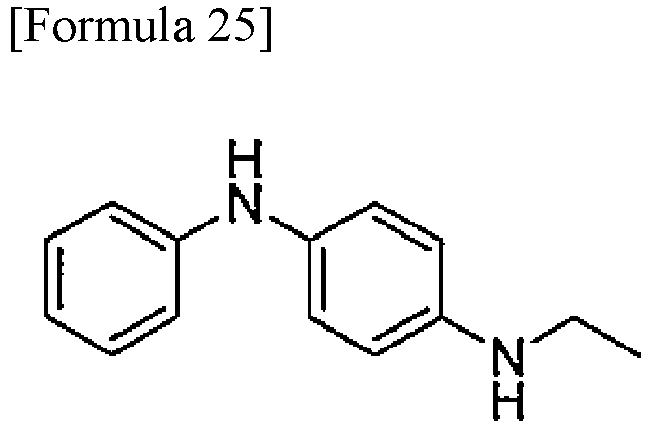
- In one embodiment, the phenylenediamine type compound of the present invention may be N-isopropyl-N'-(4-aminophenyl)-p-phenylenediamine:


- In one embodiment, the phenylenediamine type compound of the present invention may be tris[4-(diethylamino)phenyl]amine (TDPA, CAS No. 47743-70-4):

- In one embodiment, the phenylenediamine type compound of the present invention may be 4-(dimethylamino)-4'-nitrosodiphenylamine (CAS No. 7696-70-0):

- In one embodiment, the phenylenediamine type compound of the present invention may be N-phenyl-o-phenylenediamine (CAS No. 534-85-0):


- In one embodiment, the phenylenediamine type compound of the present invention may be N-(4-chlorophenyl)-1,2-phenylenediamine (CAS No. 68817-71-0):

- In one embodiment, the phenylenediamine type compound of the present invention may be 4-diazodiphenylamine sulfate (CAS No. 4477-28-5):

- In one embodiment, the phenylenediamine type compound of the present invention may be Acid Yellow 36 (CAS No. 587-98-4):

- In one embodiment, the phenylenediamine type compound of the present invention may be 2-amino-4-isopropylamino-diphenylamine:

- In one embodiment, the phenylenediamine type compound of the present invention may be N-isopropyl-N'-(4-hydroxyphenyl)-p-phenylenediamine:

- In one embodiment, the phenylenediamine type compound of the present invention may be N,N'-di-2-naphthyl-1,4-phenylenediamine (CAS No. 93-46-9):

- In one embodiment, the phenylenediamine type compound of the present invention may be 4-(2-octylamino)diphenylamine (CAS No. 15233-47-3):


- In one embodiment, the phenylenediamine type compound of the present invention may be N-(2-amino-4-chlorophenyl)anthranilic acid (CAS No. 67990-66-3):

- In one embodiment, the phenylenediamine type compound of the present invention may be 4-diazo-3-methoxydiphenylamine sulfate (CAS No. 36305-05-2):

- In one embodiment, the phenylenediamine type compound of the present invention may be 4-(phenylazo)diphenylamine (CAS No. 101-75-7):

- In one embodiment, the phenylenediamine type compound of the present invention may be Acid Orange 5 (CAS RN:554-73-4):

- In one embodiment, the phenylenediamine type compound of the present invention may be Alizarin Cyanine Green F (CAS No. 4403-90-1):

- In one embodiment, the phenylenediamine type compound of the present invention may be Alizarin Astrol (CAS RN: 6408-51-1):
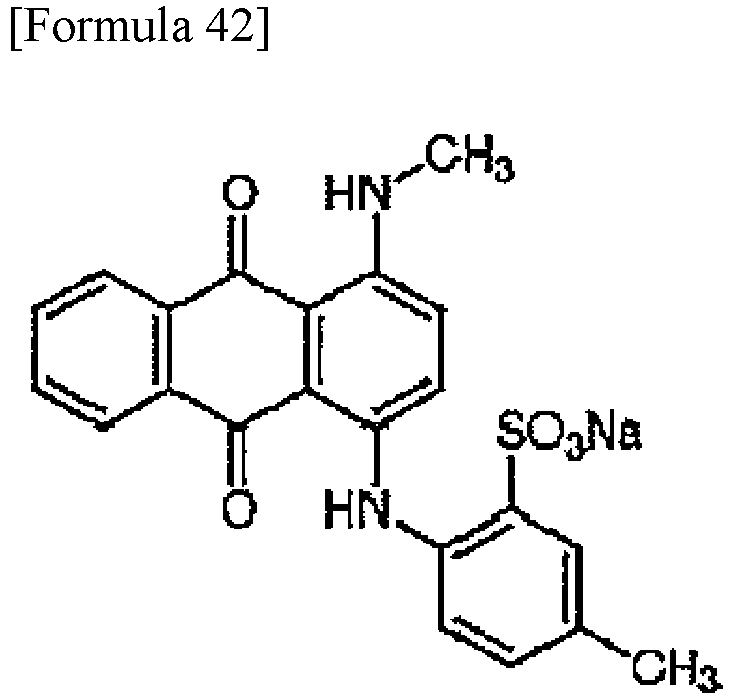
- In one embodiment, the phenylenediamine type compound of the present invention may be Disperse Yellow 9 (CAS No. 6373-73-5):

- In one embodiment, the phenylenediamine type compound of the present invention may be 5-sulfo-4'-diethylamino-2,2'-dihydroxyazobenzene (CAS No. 1563-01-5):
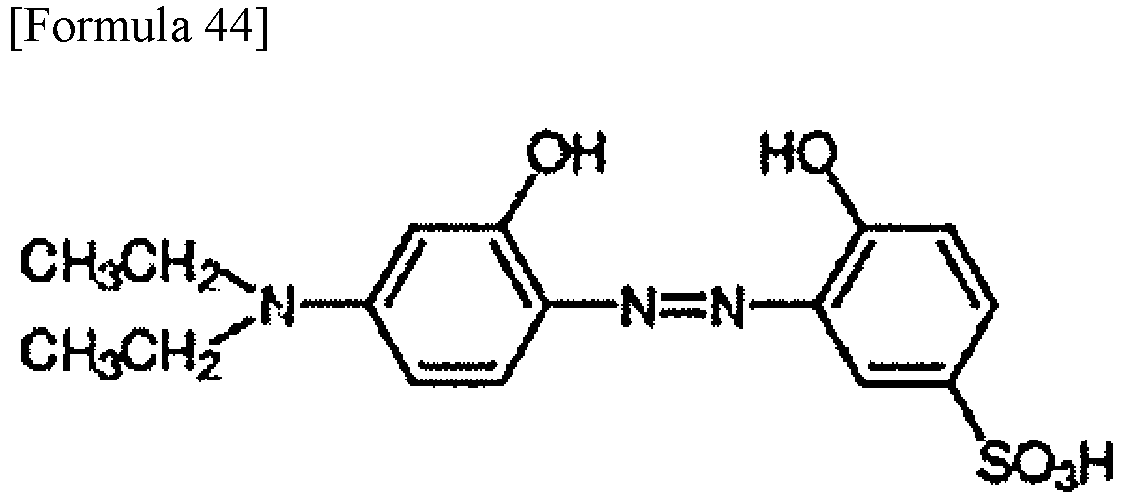
- In one embodiment, the phenylenediamine type compound of the present invention may be Alizarin Cyanine Green F (CAS No. 4403-90-1):

- In one embodiment, the phenylenediamine type compound of the present invention may be Alphamine Red R Base (CAS No. 57322-42-6):

- In one embodiment, the phenylenediamine type compound of the present invention may be Crocein scarlet 3B (CAS No. 5413-75-2):

- In one embodiment, the phenylenediamine type compound of the present invention may be p-phenylphenylenediamine (CAS No. 2198-59-6):

- In oneembodiment, the phenylenediamine type compound of the present invention may be any of compounds shown in the following tables.
[Table 1-1] No. Structure Compound name CAS 1 
4-(Phenylazo)diphenylamine 101-75-7 2 
Acid Orange 5 554-73-4 3 
Acid Yellow 36 587-98-4 4 
Disperse Red 13 acrylate 10462-94-9 5 
4-[4-(Dimethylamino) phenylazo]benzoic acid N-succinimidyl ester 146998-31-4 6 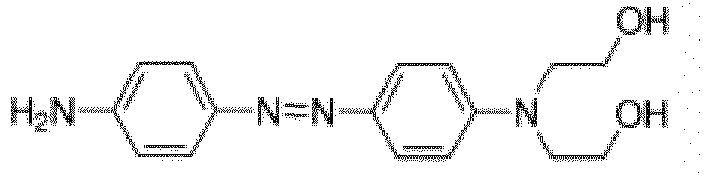
Disperse Black 9 20721-50-0 7 
Disperse Yellow 3 2832-40-8 8 
Disperse Orange 25 31482-56-1 9 
Disperse Red 13 3180-81-2 10 
Chrysoidine G 532-82-1 11 
Disperse Orange 3 730-40-5 12 
Disperse Red 13 methacrylate 82701-58-4 13 
Disperse Red 1 methacrylate 103553-48-6 14 
HC Yellow 7 104226-21-3 15 
Disperse Orange 37 13301-61-6 16 
Disperse Red 1 acrylate 13695-46-0 17 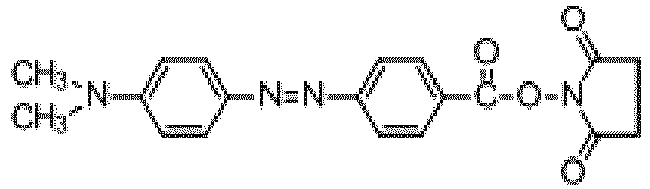
N-Succinimidyl 4-[4-(Dimethylamino) phenylazo]benzoate 146998-31-4 18 
5-Sulfo-4'-diethylamino-2,2'-dihydroxyazobenzene 1563-01-5 19 
4-(Dioctylamino)-4'- (trifluoroacetyl)azobenzene 193154-07-3 20 
m-Methyl Red 20691-84-3 21 
4-Ethoxychrysoidine Hydrochloride 2313-87-3 22 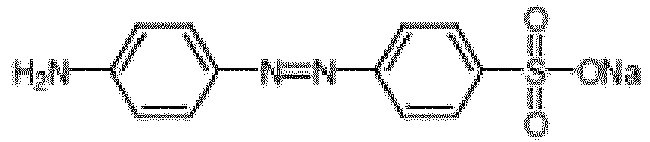
Sodium 4-Aminoazobenzene-4'-sulfonate 2491-71-6 23 
4'-Nitro-4-dimethylaminoazobenzene 2491-74-9 24 
4'-Chloro-4-dimethylaminoazobenzene 2491-76-1 25 
4-Hydroxy-4'-dimethylaminoazobenzene 2496-15-3 26 
Disperse Red 19 2734-52-3 27 
Disperse Red 1 2872-52-8 28 
N-[2-Methyl-4-[2-(2-methylphenyl)diazenyl]phenyl]-2-furancarboxamide 289494-16-2 29 
2'-Chloro-4-dimethylaminoazobenzene 3010-47-7 30 
CH-223191 301326-22-7 31 
Disperse Red 17 3179-89-3 32 
4-(Dimethylamino)-2'-methylazobenzene 3731-39-3 33 
3'-Chloro-4-dimethylaminoazobenzene 3789-77-3 34 
4'-lodo-4-dimethylaminoazobenzene 3805-67-2 35 
3'-Nitro-4-dimethylaminoazobenzene 3837-55-6 36 
4-Amino-4'-dimethylaminoazobenzene 539-17-3 37 
Methyl Orange 547-58-0 38 
4-(Dimethylamino)-2-methylazobenzene 54-88-6 39 
4-(Dimethylamino)-3'-methylazobenzene 55-80-1 40 
Dabsyl Chloride 56512-49-3 41 
4-Acetamido-2',3-dimethylazobenzene 588-23-8 42 
4-Aminoazobenzene 60-09-3 43 
4-(Methylamino)azobenzene 621-90-9 44 
Disperse Diazo Black 3BF 6232-57-1 45 
4-Dimethylaminoazobenzene-4'-carboxylic Acid 6268-49-1 46 
Methoxy Red 68936-13-0 47 
4-Amino-1,1-azobenzene-3,4'-disulfonic acid monosodium salt 74543-21-8 48 
4-(Dimethylamino) azobenzene 4'-Isothiocyanate 7612-98-8 49 
N,N-Diacetyl-o-aminoazotoluene 83-63-6 50 
Dabsyl-L-proline 89131-09-9 51 
Dabsyl-L-alanine 89131-10-2 52 
Dabsyl-L-valine 89131-11-3 53 
Dabsyl-L-leucine 89131-12-4 54 
2-Aminoazotoluene 97-56-3 55 
Dabsyl-L-methionine 97684-99-6 56 
Dabsyl-L -tryptophan 97685-00-2 57 
Direct Yellow 26 2829-42-7 58 
Benzyl Orange 36402-77-4 59 
Cadion 5392-67-6 60 
Direct Yellow 44 8005-52-5 61 
4-[Bis(9,9-dimethylfluoren-2 -yl) amino]azobenzene 883554-70-9 62 
4-Phenylazo-1-naphthylamine 131-22-6 63 
Beryllon III 3627-04-1 64 
Acid Blue 92 3861-73-2 65 
Alphamine Red R Base 57322-42-6 66 
Chlorantine Fast Red 5B 259636 67 
Oil Red O 1320-06-5 68 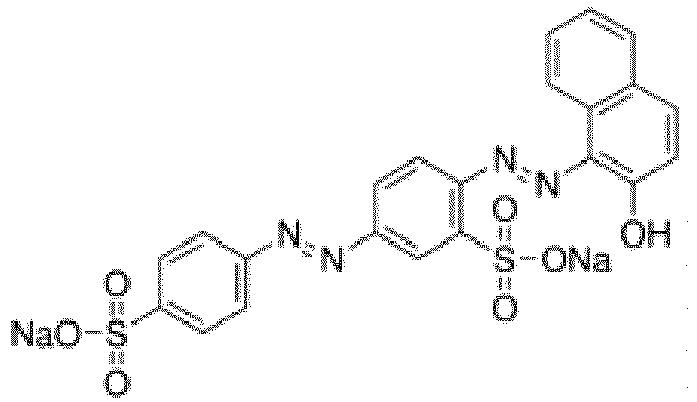
Ponceau BS 4196-99-0 69 
Disperse Yellow 7 6300-37-4 70 
Lipid Crimson 125455-63-2 71 
Black PN 2519-30-4 72 
Sudan Red B 3176-79-2 73 
Sudan Black B 4197-25-5 74 
Oil Red EGN 4477-79-6 75 
Crocein Scarlet 7B 6226-76-2 76 
Ponceau SS 6226-78-4 77 
Oil Violet 6368-72-5 78 
Sudan IV 85-83-6 79 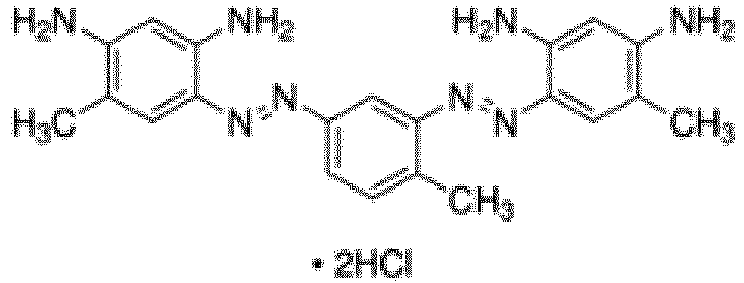
Bismarck Brown R 5421-66-9 80 
Disperse Orange 13 1590182 81 
Acid Blue 113 3351-05-1 82 
4-Diazo-3-methoxydiphenylamine Sulfate 36305-05-2 83 
4-Diazo-4'-methoxydiphenylamine Sulfate 49732-38-9 84 
Acid Violet 7 4321-69-1 85 
Direct Red 80 2610-10-8 86 
Direct Red 23 3441-14-3 87 
Direct Blue 71 4399-55-7 88 
Crocein scarlet 3B 5413-75-2 [Table 1-2] No. Structure Compound name CAS 89 
Acid Green 27 6408-57-7 90 
Alizarin Astrol 6408-51-1 91 
Alizarin Cyanin Green F 4403-90-1 92 
Acid Blue 804474-24-2 93 
Acid Blue 256408-78-2 94 
Acid Blue 129 6397-02-0 95 
Uniblue A sodium salt 14541-90-3 96 
Remazol Brilliant Blue R 2580-78-1 97 
Reactive Blue 413324-20-4 - P-phenylenediamine and o-phenylenediamine having the following structure:

- In one embodiment, a triphenylamine derivative having a structure of the following general formula (1):

- In another embodiment, N,N'-diphenyl-N,N'-bis(p-tolyl-1,4-phenylenediamine is excluded from the compound of the present invention. In another embodiment, N,N'-diphenyl-N,N'-bis(p-tolyl)-1,4-phenylenediamine is excluded from the compound of the present invention for use in a battery.
- The phenylenediamine type compound of the present invention may be modified with a functional group for covalent binding to an enzyme. A linker such as a C1 to C20 alkyl, an amino acid, or a peptide may be placed between the phenylenediamine type compound and the functional group. A hydroxyl group, an amino group, alkene, or the like may be appropriately included between the linker and the compound or the functional group. Examples of the functional group include a hydroxyl group, a carboxy group, an amino group, an aldehyde group, a hydrazino group, a thiocyanate group, an epoxy group, a vinyl group, a halogen group, an acid ester group, a phosphoric acid group, a thiol group, a disulfide group, a dithiocarbamate group, a dithiophosphate group, a dithiophosphonate group, a thioether group, a thiosulfuric acid group, a succinimide group, a maleimide group and a thiourea group.
- The phenylenediamine type compound may be in a redox state and in an ionized state. In the chemical formulae described above, the phenylenediamine type compound of the present invention is described in a neutral reduced form. However, the phenylenediamine type compound of the present invention is not limited by this form and may be in an oxidized (diimine) form, a semi-oxidized form, or a reduced (diamine) form. Likewise, the azo compound or the diazonio compound of the present invention may also be in an oxidized form, a semi-oxidized form, or a reduced form. Further, the phenylenediamine type compound of the present invention may be in a neutral form or a cationic form. For the sake of convenience, when the present specification refers to the phenylenediamine type compound of the present invention, for example, the phenylenediamine type compound of the present invention represented by any of the chemical formulae, this encompasses the neutral or cationic oxidized, semi-oxidized, or reduced form thereof. For example, a neutral oxidized compound may be added as the phenylenediamine type compound of the present invention to a measurement system and then be converted to an oxidized cationic compound depending on the pH of the solution or due to electron transfer and such compound is also encompassed by (the phrase) the phenylenediamine type compound of the present invention. The phenylenediamine type compound of the present invention also encompasses a salt, an acid addition salt, an anhydride and a solvate thereof. Examples of the salt include, but are not limited to, salts of
group 1 elements, salts of group 17 elements, for example, Na salt, K salt, Cl salt, and Br salt. Examples of the acid addition salt include, but are not limited to, hydrochloride, sulfate, sulfite, and nitrate. - The phenylenediamine type compound of the present invention may be artificially synthesized or may be obtained as a naturally occurring product. Alternatively, a commercially available product may be used. In the case of synthesizing the phenylenediamine type compound, organic synthesis may be performed by using a routine organic synthesis approach, and the product can be confirmed by NMR, IR, mass spectrometry, etc. The present invention is carried out by using conventional techniques of chemistry, organic synthesis, biochemistry, molecular biology, or electrochemistry, unless otherwise specified, and these are well within the competence of those skilled in the art. Such techniques are described in the literature. See, for example, Organic Chemistry (Jonathan Clayden (ed.), Nick Greeves, Stuart Warren, Peter Wothers), Oxford Univ Pr, 2000, and March's Advanced Organic Chemistry: Reactions, Mechanisms, and Structure (Michael B. Smith, Jerry March), Wiley-Interscience, 6th edition, 2007. Each of these general textbooks are incorporated herein by reference.
- The enzyme or the oxidoreductase may be immobilized (fixed) to a solid phase by an arbitrary method known in the art. The enzyme, for example, an oxidoreductase, may be immobilized onto beads, a film, carbon particles, gold particles, platinum particles, a polymer, or an electrode surface. The fixation method may be a method using a cross-linking reagent, a method involving embedding (encapsulation) in a polymer matrix, a method involving covering with a dialysis membrane, a photocrosslinkable polymer, a conductive polymer, a redox polymer, or the like, or may be fixating into a polymer or adsorptive fixating onto an electrode or, alternatively, these approaches may be used in combination. Typically, the oxidoreductase is immobilized onto a carbon electrode using glutaraldehyde, and then, the glutaraldehyde is blocked by treatment with a reagent having an amine group. The amount of the oxidoreductase immobilized can be an amount capable of generating current necessary for electrochemical measurement or fuel cell power generation, and may be determined appropriately.
- In one embodiment, the phenylenediamine type compound of the present invention may be present in a free state in a solution, or may be adsorbed, for example, physically adsorbed, onto beads, a membrane, carbon particles, gold particles, platinum particles, polymer, or an electrode surface. That the phenylenediamine type compound of the present invention is adsorbed on electrode surface may also be referred to as the phenylenediamine type compound immobilized to electrode surface and, in the present specification, these terms are used interchangeably. Examples of the adsorption method include a method comprising the step of dissolving the phenylenediamine type compound of the present invention in an appropriate medium, and physically contacting the solution with an electrode. In another embodiment, the phenylenediamine type compound of the present invention may be sprayed onto an electrode. The amount of the phenylenediamine type compound adsorbed can be an amount capable of generating current necessary for electrochemical measurement or battery power generation, and may be determined appropriately.
- In one embodiment, the phenylenediamine type compound of the present invention may be adsorbed onto an electrode, to which an enzyme, for example, an oxidoreductase, can also be immobilized. In this case, the phenylenediamine type compound of the present invention may be adsorbed first, and subsequently, the enzyme, for example, an oxidoreductase, can be immobilized, or the enzyme, for example, an oxidoreductase, may be immobilized first, and subsequently, the phenylenediamine type compound of the present invention can be adsorbed. Alternatively, the phenylenediamine type compound may be adsorbed simultaneously with the operation of fixing the enzyme, for example, an oxidoreductase.
- The final concentration of the phenylenediamine type compound of the present invention to be added to a sample solution is not particularly limited and may be, for example, 1 pM or higher, 2 pM or higher, 3 pM or higher, 4 pM or higher, 5 pM or higher, 6 pM or higher, 7 pM or higher, 8 pM or higher, 9 pM or higher, or 10 pM or higher, and 1 M or lower, 100 mM or lower, 20 mM or lower, 10 mM or lower, 5 mM or lower, 1 mM or lower, 800 µM or lower, 600 µM or lower, 500 µM or lower, 400 µM or lower, 300 µM or lower, 200 µM or lower, 100 µM or lower, or 50 µM or lower, for example, in the range of 1 pM to 1 M, 1 pM to 100 mM, 1 pM to 20 mM, 1 pM to 10 mM, 1 pM to 5 mM, 2 pM to 1 mM, 3 pM to 800 µM, 4 pM to 600 µM, 5 pM to 500 µM, 6 pM to 400 µM, 7 pM to 300 µM, 8 pM to 200 µM, 9 pM to 100 µM, or 10 pM to 50 µM. The final concentration of the phenylenediamine type compound of the present invention to be added to a sample solution is not particularly limited and may be, for example, 0.000001 to 0.5% (w/v), 0.000003 to 0.3% (w/v), 0.000005 to 0.1% (w/v), 0.00001 to 0.05% (w/v), 0.00002 to 0.03% (w/v), or 0.00003 to 0.01% (w/v). The order of addition of the phenylenediamine type compound and an additional reagent is not limited, and the phenylenediamine type compound and the reagent may be added simultaneously or sequentially.
- In one embodiment, the time for which redox reaction is performed or the time for which electrochemical measurement is performed can be 60 minutes or shorter, 30 minutes or shorter, 10 minutes or shorter, 5 minutes or shorter, or 1 minute or shorter. Alternatively, for an enzyme sensor, a battery, or the like for long-term measurement, the time for which redox reaction is performed can be 60 minutes or longer, 120 minutes or longer, 1 day or longer, 2 days or longer, 3 days or longer, 1 week or longer, 2 weeks or longer, or 3 weeks or longer. For example, in the case of using the phenylenediamine type compound with an oxidoreductase, the concentration of each component in a reagent for electrochemical measurement can be adjusted according to the concentration range of the reduced mediator contained in a sample or presumed to be produced in a sample.
- Unless otherwise specified, the enzyme comprised in the composition of the present invention or the enzyme immobilized to the electrode of the present invention is a purified enzyme. Cell extracts, cell homogenates, or liquid crude enzyme extracts containing the enzyme contain various contaminating substances (foreign substances) in addition to the enzyme. For example, the amount of riboflavin in liquid crude enzyme extracts from a microbe is reported to be approximately 53 to 133 µM (J Indust Micro Biotech 1999, 22, pp. 8-18). Such liquid crude enzyme extracts, etc., when subjected directly to electrochemical measurement, interfere with electron transfer to electrodes, for example, due to contaminating substances receiving electrons. Therefore, for the liquid crude enzyme extracts, it is difficult to achieve accurate electrochemical measurement at this riboflavin concentration. Accordingly, the electrochemical measurement method of the present invention can employ an enzyme from which contaminating substances have been removed. In the present specification, the phrase "enzyme has been purified or is a purified enzyme" does not necessarily require that the protein should be a pure product, and means that contaminating substances have been removed from the enzyme preparation to an extent under which electrochemical measurement can be carried out.
- The activity measurement of an oxidoreductase will be described by taking glucose dehydrogenase (GDH) as a specific example of the enzyme. GDH (EC 1.1.99.10) catalyzes reaction to produce glucono-δ-lactone by oxidizing a hydroxy group of glucose. In this reaction, an electron acceptor becomes a reduced electron acceptor by receiving an electron. The activity of GDH can be measured by utilizing this action principle and using, for example, the following measurement system using phenazine methosulfate (PMS) and 2,6-dichloroindophenol (DCIP) as electron acceptors.
(Reaction 1) D-Glucose + PMS (oxidized form) → D-glucono-δ-lactone + PMS (reduced form)
(Reaction 2) PMS (reduced form) + DCIP (oxidized form) → PMS (oxidized form) + DCIP (reduced form)
- More specifically, first, in (reaction 1), PMS (reduced form) is produced in association with the oxidation of D-glucose. Through (reaction 2) which proceeds subsequently, DCIP is reduced in association with the oxidation of PMS (reduced form). The degree of disappearance of this "DCIP (oxidized form)" is detected as an amount of change in absorbance at a wavelength of 600 nm, and the enzyme activity can be determined on the basis of this amount of change.
- The activity of GDH can be measured according to the following procedures: 2.05 mL of a 100 mM phosphate buffer solution (pH 7.0), 0.6 mL of a 1 M D-glucose solution and 0.15 mL of a 2 mM DCIP solution are mixed and incubated at 37°C for 5 minutes. Subsequently, 0.1 mL of a 15 mM PMS solution and 0.1 mL of an enzyme sample solution are added thereto to start the reaction. Absorbance is measured at the start of reaction and over time. The amount of decrease per minute in absorbance at 600 nm (ΔA600) in association with the progression of the enzyme reaction is determined, and the GDH activity is calculated according to the formula below. In this respect, as for the GDH activity, the amount of the enzyme reducing 1 µmol of DCIP for 1 minute in the presence of D-glucose having a concentration of 200 mM at 37°C is defined as 1 U.

- In the formula above, 3.0 represents the liquid volume (mL) of reaction reagent + enzyme reagent, 16.3 represents the millimolar molecular extinction coefficient (cm2/µmol) under these activity measurement conditions, 0.1 represents the liquid volume (mL) of the enzyme solution, 1.0 represents the optical path length (cm) of a cell, ΔA600blank represents the amount of decrease per minute in absorbance at 600 nm when reaction is started by the addition of a 100 mM phosphate buffer solution (pH 7.0) instead of the enzyme sample solution, and df represents the dilution factor.
- The kit for electrochemical measurement of the present invention comprises the phenylenediamine type compound of the present invention or an electrode modifying agent comprising the phenylenediamine type compound, in an amount sufficient for at least one time of assay. Typically, the kit for electrochemical measurement of the present invention comprises an oxidoreductase, a buffer solution necessary for assay, a substrate standard solution for preparation of a calibration curve, and a guideline, in addition to the phenylenediamine type compound of the present invention. The oxidoreductase may be, for example, GDH. In this case, the substrate standard solution may be a glucose standard solution.
- In one embodiment, the kit for electrochemical measurement of the present invention comprises the phenylenediamine type compound of the present invention and the oxidoreductase as one reagent. In another embodiment, the kit for electrochemical measurement of the present invention comprises the phenylenediamine type compound and the oxidoreductase as separate reagents. In another embodiment, the oxidoreductase may be immobilized to an electrode and the kit for electrochemical measurement of the present invention for use in such electrode comprises the phenylenediamine type compound as a single reagent. In this context, however, a single reagent does not mean that the reagent does not contain any substance other than the phenylenediamine type compound. The single reagent may contain an appropriate medium such that the phenylenediamine type compound of the present invention can be dissolved in the single reagent. The medium can be any medium that dissolves the phenylenediamine type compound of the present invention and examples thereof include, but are not limited to, water, methanol, ethanol, propanol, acetone, and acetonitrile. The phenylenediamine type compound of the present invention can be provided in various forms, for example, as a powder solid reagent, as a reagent immobilized to beads or an electrode surface, or as a solution in a suitable preservation solution, for example, a light-shielded solution.
- One example of the electrochemical measurement includes the measurement of glucose concentrations. For colorimetric electrochemical measurement, the measurement of glucose concentrations can be performed, for example, as described below. A reactive layer for electrochemical measurement is allowed to retain a liquid or solid composition containing glucose dehydrogenase (GDH) and one or more substances selected from the group consisting of N-(2-acetamido)imidodiacetic acid (ADA), bis(2-hydroxyethyl)iminotris(hydroxymethyl)methane (Bis-Tris), sodium carbonate and imidazole as a reaction accelerator. In this context, the reactive layer may be supplemented, if necessary, with a pH buffer and a color reagent (indicating reagent). A sample containing glucose is added thereto and reacted for a given time. During this reaction, absorbance corresponding to the maximum absorption wavelength of a dye produced by polymerization or a reduced dye through direct receipt of an electron from GDH is monitored. The glucose concentration in the sample can be calculated on the basis of a calibration curve prepared in advance using glucose solutions having standard concentrations, from the rate of change per time in absorbance in a rate method or from change in absorbance up to the point in time when glucose in the sample is completely oxidized in an endpoint method.
- As the color reagent (indicating reagent) that can be used in this method, for example, 2,6-dichloroindophenol (DCIP) is added as the electron acceptor, and decrease in absorbance at 600 nm can be monitored to quantify glucose. Alternatively, the glucose concentration may be calculated by adding nitro tetrazolium blue (NTB) as the color reagent and measuring absorbance at 570 nm, thereby determining the amount of diformazan produced. As a matter of course, the color reagent (indicating reagent) used is not limited thereto.
- In one embodiment, a sensor that can detect the compound of the present invention can be prepared by utilizing the property of the compound of the present invention of being able to be adsorbed onto an electrode. An electrode, for example, a carbon electrode, is inserted into a solution containing the compound of the present invention, for example, DPPD, and the amount of the compound of the present invention can be quantitatively or qualitatively detected by electrochemical measurement, for example, CV or chronoamperometry, in this solution or after re-insertion into another measurement solution after a lapse of given time.
- In one embodiment, the present invention provides an enzyme sensor comprising an electrode onto which an oxidoreductase is immobilized and the electrode modifying agent of the present invention is adsorbed. Examples of the electrode of the enzyme sensor include carbon electrodes, gold electrodes, and platinum electrodes and this electrode can be coated with the oxidoreductase, or the oxidoreductase can be immobilized onto the electrode. Further, the enzyme sensor may comprise fine metal particles comprising at least one type of element selected from Co, Pd, Rh, Ir, Ru, Os, Re, Ni, Cr, Fe, Mo, Ti, Al, Cu, V, Nb, Zr, Sn, In, Ga, Mg, Pb, Au, Pt, and Ag as a conductive material. These particles may be composed of an alloy or may be plated. The carbon also includes carbon nanotubes, carbon black, graphite, fullerene, and derivatives thereof. For the method for fixing the oxidoreductase, see the preceding paragraph "Method for fixing enzyme or oxidoreductase".
- In one embodiment, an example of the enzyme sensor of the present invention includes a glucose sensor. This glucose sensor may comprise the phenylenediamine type compound of the present invention adsorbed onto an electrode and GDH or glucose oxidase (GOD) immobilized to the electrode. The glucose sensor may be used in continuous blood sugar monitoring or continuous glucose monitoring.
- The electrode, the enzyme sensor, and the composition for electrochemical measurement of the present invention can be used in various electrochemical measurement approaches by using a potentiostat, a galvanostat, or the like. Examples of the electrochemical measurement method include various approaches such as amperometry, for example, chronoamperometry and potential step chronoamperometry, voltammetry, for example, cyclic voltammetry and differential pulse voltammetry, potentiometry, and coulometry. For example, when the substrate to be measured is glucose, the glucose concentration in a sample can be measured by measuring the current according to the amperometry method when glucose is being reduced. The applied voltage can be set to, for example, -1000 mV to +1000 mV (vs. Ag/AgCl), although this may differ depending on conditions or apparatus settings.
- Incidentally, whether or not a test compound is adsorbed onto an electrode can be confirmed by cyclic voltammetry. How the maximum value of oxidation current (IOmax) and the maximum value of reduction current (IRmax) change can be examined at varying sweep rates in varying ranges from 10 mV/sec to 50 mV/sec, for example. In general, it is known that when a mediator is adsorbed onto an electrode, the sweep rate and the values of IOmax and IRmax have a proportional relationship in cyclic voltammetry. When the mediator is diffused, IOmax and IRmax are proportional to the one-half power of the sweep rate. Whether the compound is adsorbed or diffused is determined from the relationship between IOmax and IRmax and the sweep rate.
- One example of the electrochemical measurement includes the electrochemical measurement of glucose. In one embodiment, the present invention provides an electrochemical measurement method for glucose, comprising the steps of: contacting a sample that may contain glucose with the phenylenediamine type compound and a purified glucose oxidase or purified glucose dehydrogenase; and measuring the current. The phenylenediamine type compound may be present in a solution or may be adsorbed onto an electrode. The enzyme may be immobilized to the electrode.
- The electrochemical measurement of a glucose concentration can be performed, for example, as described below. A buffer solution is placed in a thermostat cell and kept at a given temperature. An electrode onto which GDH or GOD is immobilized is used as a working electrode, and a counter electrode (e.g., a platinum electrode) and a reference electrode (e.g., an Ag/AgCl electrode or an Ag/Ag+ electrode) are used. The phenylenediamine type compound of the present invention is added to a reaction solution. A given voltage is applied to the carbon electrode so that the current becomes steady and then, a sample containing glucose is added thereto, and the increase of the current is measured. The glucose concentration in the sample can be calculated according to a calibration curve prepared from glucose solutions having standard concentrations. The potential to be applied can be set to, for example, +800 mV or lower, +700 mV or lower, +600 mV or lower, +500 mV or lower, +400 mV or lower, +300 mV or lower, +200 mV or lower, +100 mV or lower, or +50 mV or lower, and -200 mV or higher, -100 mV or higher, or -50 mV or higher, for example, 0 mV or higher, and can be set to, for example, +800 mV to -200 mV, +800 mV to - 100 mV, +800 mV to -50 mV, +600 mV to 0 mV, +500 mV to 0 mV, +400 mV to 0 mV, +300 mV to 0 mV, or +200 mV to 0 mV (for a silver/silver chloride reference electrode). The pH of the measurement solution containing glucose may be in the range of
pH 3 to 10. The pH may, for example, bepH 5,pH 6,pH 7,pH 8, pH 9, orpH 10 and the solution may contain a buffer such as glycine, acetate, citrate, phosphate, carbonate, or Good's buffer. In the case of using an enzyme other than GDH or GOD and a substrate other than glucose, the pH can also be appropriately changed for measurement. - As a specific example, the phenylenediamine type compound, for example, IPPD, is immobilized to a glassy carbon (GC) electrode in advance and then, 0.2 U to 150 U, for example, 0.5 U to 100 U, of GDH or GOD is immobilized thereto, and the response current value is measured for glucose concentration. 10.0 ml of a 100 mM potassium phosphate buffer solution (pH 6.0) is added into an electrolysis cell. The GC electrode is connected to potentiostat BAS100B/W (manufactured by BAS Inc.). The solution is stirred at 37°C, and +500 mV is applied to the silver/silver chloride reference electrode. A 1 M D-glucose solution is added with final concentrations of 5, 10, 20, 30, 40, and 50 mM to the system and the current value is measured in a steady state for each addition. This current value is plotted against the known glucose concentrations (5, 10, 20, 30, 40, and 50 mM) to prepare a calibration curve. As a result, glucose can be quantified using the GDH or GOD enzyme-immobilized electrode.
- A printed electrode may be used for electrochemical measurement. This can reduce the amount of a solution necessary for measurement. The electrode may be formed on an insulating substrate. More specifically, the electrode may be formed on a substrate by a photolithography technique or a printing technique such as screen printing, gravure printing, or flexographic printing. Examples of the material for the insulating substrate include silicon, glass, ceramic, polyvinyl chloride, polyethylene, polypropylene, and polyester and a material strongly resistant to various solvents or chemicals can be used. The area of the working electrode can be set according to the desired response current. In one embodiment, the area of the working electrode can be set to, for example, 1 mm2 or larger, 1.5 mm2 or larger, 2 mm2 or larger, 2.5 mm2 or larger, 3 mm2 or larger, 4 mm2 or larger, 5 mm2 or larger, 6 mm2 or larger, 7 mm2 or larger, 8 mm2 or larger, 9 mm2 or larger, 10 mm2 or larger, 12 mm2 or larger, 15 mm2 or larger, 20 mm2 or larger, 30 mm2 or larger, 40 mm2 or larger, 50 mm2 or larger, 1 cm2 or larger, 2 cm2 or larger, 3 cm2 or larger, 4 cm2 or larger, or 5 cm2 or larger, for example, 10 cm2 or larger. In one embodiment, the area of the working electrode can be set to 10 cm2 or smaller or 5 cm2 or smaller, for example, 1 cm2 or smaller. The same holds true for the counter electrode. The apparent surface area of the working electrode may be increased by fixing a carbon nanotube, graphene, ketjen black, or the like onto the same. In this case, the apparent area may be increased by 10 or more times, 50 or more times, 100 or more times, or 1000 or more times.
- In one embodiment, in the case of using the electrode modifying agent, the electrode adsorber agent or the electron transfer promoting agent of the present invention with an electrode, the electrode modifying agent, the electrode adsorber agent or the electron transfer promoting agent may be used at a physical amount of 0.1 pmol or higher, 0.2 pmol or higher, 0.3 pmol or higher, 0.4 pmol or higher, 0.5 pmol or higher, or 1 pmol or higher, and 10 mmol or lower, 5 mmol or lower, 1 mmol or lower, 800 µmol or lower, 600 µmol or lower, 500 µmol or lower, 400 µmol or lower, 300 µmol or lower, 200 µmol or lower, 100 µmol or lower, or 50 µmol or lower, for example, 0.1 pmol to 10 mmol, 0.1 pmol to 5 mmol, 0.2 pmol to 1 mmol, 0.3 pmol to 800 µmol, 0.4 pmol to 600 µmol, 0.5 pmol to 500 µmol, 0.6 pmol to 400 µmol, 0.7 pmol to 300 µmol, 0.8 pmol to 200 µmol, 0.9 pmol to 100 µmol, or 1 pmol to 50 µmol, per cm2 of the area of the working electrode. These numeric values are based on an area of 1 cm2 of the working electrode and in the case of increasing or decreasing the area of the working electrode or using a carbon nanotube, graphene, or the like having a large specific surface area, the apparent surface area is increased and thus, the electrode modifying agent of the present invention may be used at a corresponding mole number.
- In one embodiment, the present invention provides a battery comprising the phenylenediamine type compound, the electrode modifying agent, the electrode adsorber agent, or the electron transfer promoting agent of the present invention. In one embodiment, in the battery of the present invention, the compound of the present invention is immobilized to an electrode of the battery. In one embodiment, the battery of the present invention comprises an oxidoreductase. In one embodiment, the oxidoreductase may be immobilized to the electrode of the battery. In one embodiment, the present invention provides a power generation method using the battery of the present invention.
- In one embodiment, the present invention provides an anode or a cathode for a fuel cell comprising the phenylenediamine type compound, the electrode modifying agent, the electrode adsorber agent, or the electron transfer promoting agent of the present invention, and a fuel cell comprising the anode or the cathode. In one embodiment, the present invention provides a power generation method using the phenylenediamine type compound of the present invention or an electrode onto which the phenylenediamine type compound is adsorbed, and a power generation method using an oxidoreductase such as GDH or GOD immobilized to an anode electrode and a substrate corresponding to the oxidoreductase, for example, glucose, as the fuel. In the case of fixing the oxidoreductase described above, a compound serving as a substrate for the immobilized oxidoreductase can be appropriately used as a fuel.
- In one embodiment, the fuel cell (fuel battery) of the present invention comprises an anode or a cathode on which the phenylenediamine type compound of the present invention is adsorbed, a fuel tank, a cathode, an anode having an oxidoreductase, and an electrolyte. In the fuel cell of the present invention, a load resistance can be placed, if necessary, between the anode and the cathode, and the fuel cell may comprise wirings therefor. In one embodiment, the load resistance is a part of the fuel cell of the present invention. In one embodiment, the load resistance is not a part of the fuel cell of the present invention, and the fuel cell of the present invention is configured such that the fuel cell can be connected to an appropriate load resistance. In the fuel cell of the present invention, the oxidoreductase constitutes a portion of the anode. For example, the oxidoreductase may be located in proximity to or in contact with the anode, may be immobilized thereto, or may be adsorbed thereonto. The fuel tank contains a compound serving as a substrate for the oxidoreductase immobilized to the electrode. For example, in the case of fixing glucose dehydrogenase to the electrode, the fuel may be glucose. In one embodiment, the fuel cell of the present invention may have an ion-exchange membrane which separates the anode from the cathode. The ion-exchange membrane may have pores of 1 nm to 20 nm. The anode may be a typical electrode such as a carbon electrode. For example, an electrode made of conductive carbon such as carbon black, graphite, or active carbon, or an electrode made of a metal such as gold or platinum can be used. Specific examples thereof include carbon paper, carbon cloth, carbon felt, glassy carbon, and HOPG (highly oriented pyrolytic graphite). As for the cathode to be paired therewith, for example, an electrode in which an electrode catalyst, such as platinum or platinum alloy, which is used in general in fuel cells is supported on a carbon material such as carbon black, graphite, carbon cloth, carbon felt, or active carbon, or a conductor made of gold, platinum, or the like, or a conductor made of an electrode catalyst itself such as platinum or platinum alloy is used as the cathode electrode and can be in a form in which an oxidizing agent (cathode-side substrate, oxygen, etc.) is supplied to the electrode catalyst. In one embodiment, a mercury electrodes are excluded from the electrode of the present invention.
- In another embodiment, a substrate reduction-type enzyme electrode may be used as the cathode to be paired with the anode consisting of the substrate oxidation-type enzyme electrode as described above. Examples of the oxidoreductase that reduces the oxidizing agent include enzymes known in the art such as laccase and bilirubin oxidase. In the case of using an oxidoreductase as a catalyst reducing the oxidizing agent, a known electron transfer mediator may be used, if necessary. The mediator for the cathode may be the same as or different from the mediator for the anode. Examples of the oxidizing agent include oxygen and hydrogen peroxide.
- In one embodiment, an oxygen-selective membrane (e.g., a dimethylpolysiloxane membrane) can be placed around the cathode electrode in order to circumvent the influence of impurities (ascorbic acid, uric acid, etc.) interfering with electrode reaction in the cathode.
- The power generation method of the present invention comprises the step of supplying a fuel compound serving as a substrate for an oxidoreductase to an anode having the oxidoreductase. When the fuel is supplied to the anode having the oxidoreductase, the substrate is oxidized and the oxidoreductase delivers an electron generated at the same time therewith, to the electron transfer mediator, for example, the phenylenediamine type compound, which mediates electron transfer between the oxidoreductase and the electrode and the electron transfer mediator delivers the electron to a conductive substrate (anode electrode). The electron arrives at the cathode electrode through wiring (external circuit) from the anode electrode, thereby generating a current.
- Protons (H+) generated in the process described above migrate within an electrolyte solution to the cathode electrode. Then, in the cathode electrode, a proton that has migrated within the electrolyte solution from the anode, the electron that has migrated from the anode side through the external circuit, and an oxidizing agent (cathode-side substrate) such as oxygen or hydrogen peroxide react and produce water. Electricity can be generating by utilizing this mechanism.
- In one embodiment, the present invention provides an organic battery comprising the phenylenediamine type compound, the electrode modifying agent, the electrode adsorber agent, or the electron transfer promoting agent of the present invention. The electrode modifying agent, the electrode adsorber agent, or the electron transfer promoting agent may be adsorbed onto an electrode. Examples of the electrode material for use in the organic battery include, but are not limited to, quinone, indigo derivatives, benzoquinone compounds having a methoxy group, indigo carmine, and pentacenetetrone. Examples of the electrode material for use in organic radical batteries include, but are not limited to, electrode materials in which a compound having a nitroxyl radical, for example, 2,2,6,6-tetramethylpiperidine-N-oxyl, is bound to a polymer such as polymethacrylate or acrylate, and lithium. See, for example, Polymer, vol. 54, December issue, 2005, p. 886. In the organic battery, the electrode modifying agent of the present invention may be used as an electron mediator on the anode-side or the cathode-side.
- The electrode modifying agent comprising the phenylenediamine type compound of the present invention or an electrode onto which the electrode modifying agent is adsorbed can be used in various electrochemical measurements. The electrode can be utilized in an enzyme sensor by fixing an oxidoreductase to the electrode. Furthermore, the electrode modifying agent comprising the phenylenediamine type compound of the present invention or an electrode onto which the electrode modifying agent is adsorbed can be used in a fuel cell or an organic battery. These descriptions are given merely for illustration, and use of the electrode modifying agent comprising the phenylenediamine type compound of the present invention or an electrode onto which the electrode modifying agent is adsorbed is not limited thereto.
- Hereinafter, the present invention will be further illustrated with reference to the Examples. However, the technique scope of the present invention is not limited by these examples in any way.
- Materials and reagents were commercially available, or were obtained or prepared according to routine approaches of the technical field or procedures of literatures known in the art, unless otherwise specified. The single-layered carbon nanotube used is manufactured by Sigma-Aldrich Co., LLC, Meijo Nano Carbon Co., Ltd., or Zeon Nano Technology Co., Ltd. The multilayered carbon nanotube used is manufactured by Sigma-Aldrich Co., LLC, Meijo Nano Carbon Co., Ltd., or Kanto Chemical Co., Inc. The carbon nanotube used was appropriately dispersed by ultrasonication in an aqueous solution containing a low-molecular surfactant, a water-soluble polymer, a water-soluble polysaccharide, and the like. The surfactant used is, but is not limited to, Triton X-100, sodium dodecyl sulfate, or the like. The compounds N-methyl-N'-phenyl-p-phenylenediamine, N-ethyl-N'-phenyl-p-phenylenediamine, N-isopropyl-N'-(4-aminophenyl)-p-phenylenediamine, 2-amino-4-isopropylamino-diphenylamine, and N-isopropyl-N'-(4-hydroxyphenyl)-p-phenylenediamine were obtained from NARD institute, Ltd. Their production procedures are as described below.
- The following scheme was used to synthesize N-Methyl-N'-phenyl-p-phenylenediamine (indicated as compound 1-1 in the scheme) and N-ethyl-N'-phenyl-p-phenylenediamine (indicated as compound 1-2 in the scheme).


- Each product was purified through a silica gel column (developing solvent: heptane/ethyl acetate) and confirmed by mass spectrometry and NMR. Compound 1-1: [M+H]+ ion m/z = calcd 199.1, found 199.1. Compound 1-2: [M+H]+ ion m/z = calcd 213.1, found 213.1.
- The following scheme was used to synthesize N-Isopropyl-N'-(4-aminophenyl)-p-phenylenediamine (indicated as compound 2-2 in the scheme) and N-isopropyl-N'-(4-hydroxyphenyl)-p-phenylenediamine (indicated as compound 2-3 in the scheme).


- Each product was purified through a silica gel column (developing solvent: heptane/ethyl acetate) and confirmed by mass spectrometry and NMR. Compound 2-2: [M+H]+ ion m/z = calcd 242.1, found 242.1. Compound 3-2: [M+H]+ ion m/z = calcd 243.1, found 243.0.
- The following scheme was used to synthesize 2-Amino-4-isopropylamino-diphenylamine (indicated as compound 2-1 in the scheme).

- The product was purified through a silica gel column (developing solvent: heptane/ethyl acetate) and confirmed by mass spectrometry and NMR. Compound 2-1: [M+H]+ ion m/z = calcd 242.1, found 242.2.
- Other compounds were obtained as commercially available products from TCI or Sigma-Aldrich Co., LLC.
- The amino acid sequence of GDH derived from the genus Mucor (MpGDH) described in Japanese Patent No.
4648993 - The gene was expressed in Aspergillus sojae, and the GDH activity was evaluated.
- More specifically, for the purpose of obtaining MpGDH-M2, double-joint PCR (Fungal Genetics and Biology, 2004, vol. 41, p. 973-981) was performed using the GDH gene to construct a cassette composed of 5' arm region-pyrG gene-TEF1 promoter gene-flavin binding GDH gene-3' arm region, which was then used in the transformation of an Aspergillus sojae NBRC4239 strain-derived pyrG disruptant (strain deficient in a 48 bp upstream region, an 896 bp coding region, and a 240 bp downstream region of the pyrG gene) according to procedures described below. The pyrG gene is an uracil auxotrophic marker. Conidia of the Aspergillus sojae NBRC4239 strain-derived pyrG disruptant were inoculated to 100 ml of a polypeptone-dextrin liquid medium containing 20 mM uridine in a 500 ml Erlenmeyer flask, and shake-cultured at 30°C for approximately 20 hours, followed by the recovery of the fungus body. Protoplasts were prepared from the recovered fungus body. The obtained protoplasts and 20 µg of the DNA construct having an insert of the gene of interest were used for transformation with the protoplast PEG method, and subsequently incubated at 30°C for 5 days or more using Czapek-Dox minimum medium (Difco; pH 6) containing 0.5% (w/v) agar and 1.2 M sorbitol to obtain transformed Aspergillus sojae having the ability to form colonies.
- The obtained transformed Aspergillus sojae became able to survive in a uridine-free medium by the introduction of the pyrG gene compensating uridine-dependent growth, and thereby could be selected as a strain harboring the gene of interest. Transformants of interest were confirmed by PCR and selected from among the strains thus obtained.
- GDH production was performed using the transformed Aspergillus sojae obtained by transformation with the gene of the MpGDH mutant.
- Conidia of each strain were inoculated to 40 ml of DPY liquid medium (1% (w/v) polypeptone, 2% (w/v) dextrin, 0.5% (w/v) yeast extracts, 0.5% (w/v) KH2PO4, 0.05% (w/v) MgSO4·
7H 20; pH unadjusted) in a 200 ml Erlenmeyer flask, and shake-cultured at 160 rpm at 30°C for 4 days. Subsequently, the fungus body was filtered from the cultures thus obtained, and the obtained medium supernatant fraction was concentrated into 10 mL and desalted using Amicon Ultra-15, 30K NMWL (manufactured by Millipore Corp.) and replaced with a 20 mM potassium phosphate buffer solution (pH 6.5) containing 150 mM NaCl. Subsequently, the resultant was applied to HiLoad 26/60Superdex 200 pg (manufactured by GE Healthcare Japan Corp.) equilibrated with a 20 mM potassium phosphate buffer solution (pH 6.5) containing 150 mM NaCl, followed by elution with this buffer solution and a fraction exhibiting GDH activity was recovered to obtain a purified preparation of MpGDH-M2. This enzyme was in a state bound to FAD via its FAD binding site (holoenzyme). - Three phenylenediamine type compounds (N-isopropyl-N'-phenyl-p-phenylenediamine (IPPD, manufactured by Tokyo Chemical Industry Co., Ltd., product code: P0327), N,N'-diphenyl-p-phenylenediamine (DPPD, manufactured by Tokyo Chemical Industry Co., Ltd., product code: D0609), and N-(1,3-dimethylbutyl)-N'-phenyl-p-phenylenediamine (6PPD, manufactured by Tokyo Chemical Industry Co., Ltd., product code: D3331) were used to perform cyclic voltammetry (CV) with a printed electrode. More specifically, SCREEN-PRINTED ELECTRODES (manufactured by Metrohm Dropsens, S.L., product No. DRP-C110) onto which a carbon working electrode (12.6 mm2) and a silver reference electrode were printed were coated with 3 µl of an aqueous solution containing IPPD having a final concentration of 10 µg/ml in 10% ethanol, and dried at room temperature. Then, the electrode was washed with ultrapure water and connected to ALS electrochemical analyzer 814D (manufactured by BAS Inc.) using a dedicated connector (manufactured by Metrohm Dropsens, S.L., DRP-CAC). The printed electrode used as a working electrode, a silver/silver chloride electrode (manufactured by BAS Inc.) used as a reference electrode, and a platinum electrode (manufactured by BAS Inc.) used as a counter electrode were dipped into 10 mL of a 100 mM potassium phosphate buffer solution (pH 7.0). While this solution was stirred at 650 rpm, cyclic voltammetry was performed by sweeping voltage in the range from - 200 mV to +400 mV (vs. Ag/AgCl). The sweep rate was allowed to vary in the range from 10 mV/sec to 50 mV/sec, and how the maximum value of oxidation current (IOmax) and the maximum value of reduction current (IRmax) would change was examined. In general, it is known that when a mediator is adsorbed on an electrode, the sweep rate and the values of IOmax and IRmax have a proportional relationship in cyclic voltammetry. When the mediator is diffused, IOmax and IRmax are proportional to the one-half power of the sweep rate.
- Results of carrying out cyclic voltammetry using IPPD and plotting a sweep rate and IOmax and IRmax are shown in
Figure 1 . As a result, the sweep rate and IOmax and IRmax were confirmed to have a proportional relationship, indicating that IPPD is adsorbed onto a carbon electrode. - Results of conducting a similar test using DPPD and 6PPD instead of IPPD are shown in
Figures 2 and3 , respectively. For both compounds, the sweep rate and IOmax and IRmax were confirmed to have a proportional relationship, indicating that these compounds are adsorbed onto a carbon electrode, as in the case of IPPD. - A similar measurement was carried out using p-phenylenediamine already known to function as a mediator instead of the diphenylamine type compound of the present invention. As a result, neither an oxidation wave nor a reduction wave was observed. It is indicated that p-phenylenediamine was detached from the electrode due to the washing of the electrode with ultrapure water or dipping in a potassium phosphate buffer solution.
- The printed electrode described above was loaded with 10 µl of a solution containing p-phenylenediamine having a final concentration of 100 µg/ml in 10% ethanol and 10 µl of a 100 mM potassium phosphate buffer solution (pH 7.0), and cyclic voltammetry was performed by sweeping voltage in the range from -200 mV to +400 mV (vs. Ag/Ag+). As a result, as shown in
Figures 4 and5 , IOmax and IRmax were confirmed to be proportional to the one-half power of the sweep rate. This indicates that p-phenylenediamine is diffused without being adsorbed onto an electrode. - Bindschedler's green leuco base (BGLB, manufactured by Tokyo Chemical Industry Co., Ltd., product code: B0482, CAS No. 637-31-0) or tris[4-(diethylamino)phenyl]amine (TDPA, manufactured by Sigma-Aldrich Co. LLC, product code: 556394, CAS No. 5981-09-9) was used to perform cyclic voltammetry (CV) with a printed electrode. More specifically, the compound was adsorbed onto SCREEN-PRINTED ELECTRODES (manufactured by Metrohm Dropsens, S.L., product No. DRP-C110) in which a carbon working electrode (12.6 mm2) and a silver reference electrode were printed, using an ethanol solution containing BGLB having a final concentration of 1 mg/ml. Then, cyclic voltammetry was carried out in the same manner as in Example 2.
- Results of plotting a sweep rate and IOmax and IRmax in measurement using BGLB are shown in
Figure 6 . As a result, the sweep rate and IOmax and IRmax were confirmed to have a proportional relationship, indicating that BGLB is adsorbed onto a carbon electrode. - Results of conducting a similar test using TDPA instead of BGLB are shown in
Figure 7 . TDPA has two redox waves, which are therefore indicated by IO1, IO2, IR1 and IR2 in the figure. When TDPA was used, the sweep rate and IOmax and IRmax were also confirmed to have a proportional relationship, indicating that the compound is adsorbed onto a carbon electrode, as in the case of BGLB. - The following compounds were similarly confirmed to be adsorbed onto an electrode by the same approach as above using a round carbon electrode (manufactured by BioDevice Technology, Ltd., DEP-Chip EP-PP) or SCREEN-PRINTED ELECTRODES (manufactured by Metrohm Dropsens, S.L., product No. DRP-C110) as the electrode.
[Table 2] Compound name Manufacturer Product code CAS Alizarin Astrol TCl A0609 6408-51-1 
Variamine Blue B Base TCl M0493 101-64-4 
4-Diazo-3-methoxydiphenylamine Sulfate TCl D2285 36305-05-2 
4-(Dimethylamino)-4'-nitrosodiphenylamine TCl D3571 7696-70-0 
4-(2-Octylamino)diphenylamine TCl 00166 15233-47-3 
4-(Phenylazo)diphenylamine TCl P0146 101-75-7 
4-Diazodiphenylamine Sulfate TCl D0141 4477-28-5 
Acid Orange 5TCl A0576 554-73-4 
N -(2-Amino-4-chlorophenyl)anthranilic acid Sigma-Aldrich 153230 67990-66-3 
N-Phenyl-o-phenylenediamine Sigma-Aldrich P28352 534-85-0 
Acid Yellow 36 TCl M0490 587-98-4 
2-nitro-4-aminodiphenylamine Sigma-Aldrich CDS013636 2784-89-6 
Disperse Yellow 9 Sigma-Aldrich 38464 6373-73-5 
N-(4-Chlorophenyl)-1,2-phenylenediamine Sigma-Aldrich 327522 68817-71-0 
N-Methyl-N'-phenyl-p-phenylenediamine NARD institute, Ltd. Contract synthesis 
N-Ethyl-N'-phenyl-p-phenylenediamine NARD institute, Ltd. Contract synthesis 
N-Isopropyl-N'-(4-aminophenyl)-p-phenylenediamine NARD institute, Ltd. Contract synthesis 
2-Amino-4-isopropylamino-diphenylamine NARD institute, Ltd. Contract synthesis 
N-Isopropyl-N'-(4-hydroxyphenyl)-p-phenylenediamine NARD institute, Ltd. Contract synthesis 
N,N'-Di-2-naphthyl-1,4-phenylenediamine TCl D0812 93-46-9 
5-Sulfo-4'-diethylamino-2,2'-dihydroxyazobenzene TCl S0128 1563-01-5 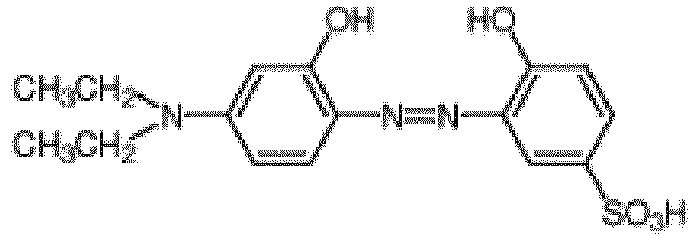
Alizarin Cyanin Green F TCl A0610 4403-90-1 
Alphamine Red R Base TCl A0474 57322-42-6 
Crocein scarlet 3B TCl C0531 5413-75-2 

TCl P0189 2198-59-6 - FAD-dependent GDH and three phenylenediamine type compounds (IPPD, DPPD, and 6PPD) were used to perform cyclic voltammetry using a printed electrode.
- More specifically, a round carbon electrode (manufactured by BioDevice Technology, Ltd., DEP-Chip EP-PP) in which a carbon working electrode (2.64 mm2) and a silver/silver chloride reference electrode were printed was connected to ALS electrochemical analyzer 814D (manufactured by BAS Inc.) using a dedicated connector. The electrode was loaded with 2 µl of a 2000 U/ml FADGDH-AA (manufactured by Kikkoman Biochemifa Company, product No. 60100) solution, 8 µl of a 50 mM potassium phosphate buffer solution (pH 7.0) containing 1.5 M potassium chloride, and 10 µl of an aqueous solution containing IPPD in 10% ethanol. The final concentration of IPPD was set to 2.5 µM. Then, cyclic voltammetry was performed by sweeping voltage in the range from -200 mV to 400 mV (vs. Ag/AgCl). The sweep rate was set to 10 mV/sec. Subsequently, a glucose solution was added with a final concentration of 200 mM, and cyclic voltammetry was performed in the same manner.
- A cyclic voltammogram at the time of measurement is shown in
Figure 8 . A response current was observed for glucose, indicating that IPPD functions as a mediator. - Subsequently, SCREEN-PRINTED ELECTRODES (manufactured by Metrohm Dropsens, S.L., product No. DRP-110) onto which a carbon working electrode (12.6 mm2) and a silver/silver chloride reference electrode were printed were connected to ALS electrochemical analyzer 814D (manufactured by BAS Inc.) using a dedicated connector (manufactured by Metrohm Dropsens, S.L., DRP-CAC). The electrode was loaded with 5 µl of a 2000 U/ml Glucose Dehydrogenase (FAD-dependent) (manufactured by BBI Solutions, Product Code: GLD3; hereinafter, referred to as GLD3) solution, 20 µl of a 50 mM potassium phosphate buffer solution (pH 7.0) containing 1.5 M potassium chloride, and 25 µl of an aqueous solution containing the phenylenediamine type compound in 10% ethanol. The final concentration of the compound was set to 2.5 µM for IPPD and 0.5 µM for DPPD and 6PPD. Then, cyclic voltammetry was performed by sweeping voltage in the range from -200 mV to 400 mV (vs. Ag/AgCl). The sweep rate was set to 30 mV/sec. Subsequently, a glucose solution was added with various final concentrations, and cyclic voltammetry was performed in the same manner. Further, cyclic voltammetry was performed as a control experiment in the same manner as above under conditions with no phenylenediamine type compound.
- A plot of the relationship between the final glucose concentration and the oxidation current value at 300 mV when IPPD, DPPD, and 6PPD were used is shown in
Figures 9 ,10 , and11 , respectively. When any of the compounds IPPD, DPPD, and 6PPD were used, response current was observed for glucose. On the other hand, no response current was observed when these compounds were not included, indicating that all of IPPD, DPPD, and 6PPD function as a mediator. This indicated that these compounds can also be utilized as an anode electrode. - Subsequently, FADGDH-AA (manufactured by Kikkoman Biochemifa Company, product No. 60100) or Glucose Dehydrogenase (FAD-dependent) (manufactured by BBI Solutions, Product Code: GLD1; hereinafter, referred to as GLD1) and IPPD were mixed, and cyclic voltammetry was performed by sweeping voltage in the range from -200 mV to 400 mV (vs. Ag/AgCl) in the same manner as above. However, the final concentration of IPPD was set to 5 µM for the combination with FADGDH-AA and 2.5 µM for the combination with GLD1. The results are shown in
Figures 12 and13 . A response current was observed for glucose only when IPPD was added, demonstrating that IPPD functions as a mediator. This indicated that the compound can also be utilized as an anode electrode. - Subsequently, GOD from A. niger Type X-S (manufactured by Sigma-Aldrich Co. LLC, product No. G7141; hereinafter, referred to as GOD) and IPPD were mixed, and cyclic voltammetry was performed in the same manner as above. The results are shown in
Figure 14 . A response current was observed for glucose only when IPPD was added, demonstrating that IPPD functions as a mediator. This indicated that the compound can also be utilized as an anode electrode. - FAD-dependent GDH and N,N'-diphenyl-1,4-phenylenediamine (DPPD, manufactured by Tokyo Chemical Industry Co., Ltd., product code: D0609) were used to carry out cyclic voltammetry (CV) using a printed electrode. More specifically, first, DPPD was adsorbed onto SCREEN-PRINTED ELECTRODES (manufactured by Metrohm Dropsens, S.L., product No. DRP-C110) by the same procedures as in Example 2 and the electrode was washed with ultrapure water and then dried in air. Then, the electrode was coated with 3 µl of a 4 mg/ml FADGDH-AA (manufactured by Kikkoman Biochemifa Company, product No. 60100) solution and dried in air again. Subsequently, the electrode was exposed to steam of a 25% glutaraldehyde solution (manufactured by FUJIFILM Wako Pure Chemical Corp., Wako 1st Grade, product No. 079-00533) for 30 minutes and then, the electrode was washed with pure water to prepare a DPPD/GDH-immobilized electrode. This electrode was connected to ALS electrochemical analyzer 814D (manufactured by BAS Inc.) using a dedicated connector (manufactured by Metrohm Dropsens, S.L., DRP-CAC), and dipped in 10 ml of a 20 mM potassium phosphate buffer solution (pH 7.0) containing glucose having a final concentration of 100 mM. The printed electrode was used as a working electrode, a silver/silver chloride electrode (manufactured by BAS Inc.) was used as a reference electrode, and a platinum electrode (manufactured by BAS Inc.) was used as a counter electrode and the solution was stirred at 750 rpm, and while stirring CV was performed by sweeping voltage in the range from -200 mV to +400 mV (vs. Ag/AgCl). The sweep rate was set to 30 mV/sec. Subsequently, the electrode was taken out of the solution, washed with ultrapure water, and then dipped in a fresh measurement solution having the same composition as above. Similar measurement was repetitively carried out a total of three times. The measurement value of oxidation current in the third CV at +150 mV differed by 149 nA between the solution containing glucose and a blank solution containing no glucose. The response current was higher as compared with the blank, indicating that DPPD functions as an electron migration promoter. As a result of comparing the first or second CV with the third CV, the current value hardly changed if any, indicating that DPPD and GDH are stably immobilized to an electrode without being dissociated into the solution.
- When methylene blue (MB) already known as a mediator was used instead of the compound of the present invention, no glucose-dependent response current was observed. On the other hand, in a test system using FADGDH-AA and MB added into an electrolyte solution, glucose-dependent response current was confirmed. These results indicated that MB is detached in an electrode preparation step and is not adsorbed onto the electrode.
- A similar test was conducted using 1-methoxy-5-methylphenazinium methyl sulfate (mPMS) already known as a mediator, as in MB The measurement value of oxidation current in the third CV at +150 mV hardly differed between the solution containing glucose and a blank solution containing no glucose. The value was much lower compared to the case of using DPPD. This indicates that mPMS was easily detached from the electrode and diffused into the solution.
- Subsequently, Fructosyl-peptide Oxidase (FPOX-CE) (manufactured by Kikkoman Biochemifa Company, product No. 60123; hereinafter, referred to as FPOX-CE) and IPPD were used to perform chronoamperometry with a printed electrode. More specifically, the electrode was loaded with 5 µl of a 0.79 U/ml FPOX-CE solution, 35 µl of a 100 mM potassium phosphate buffer solution (pH 8.0) containing 3 M sodium chloride, and 5 µl of a solution containing 10 ng/µl IPPD in 10% ethanol. Further, 1 µl of a 9 mM fructosyl glycine solution was added thereto. Then, +250 mV (vs. Ag/AgCl) was applied thereto, and change in response current value was observed for 120 seconds.
- As a result of recording the
value 10 seconds after application, as shown inFigure 15 , the response current value was found to increase as the concentration of fructosyl glycine increased. These results indicated that IPPD functions as a mediator for FPOX-CE as well. This indicated that the compound can also be utilized as an anode electrode. - FADGDH-AA, BGLB, and TDPA were used to perform CV with a printed electrode. More specifically, a compound/GDH-immobilized electrode was prepared by the same procedures as in Example 2 to carry out CV. However, the sweep range of CV was set to from -200 mV to +600 mV (vs. Ag/AgCl) and further, measurement was performed as a control experiment using a solution containing no glucose.
- The comparison of the oxidation current value at +300 mV when BGLB and TDPA were used is shown in
Figures 16 and17 , respectively. When any of the compounds BGLB and TDPA were used, a glucose-dependent response current was observed. This demonstrated that both BGLB and TDPA can be utilized as a mediator for FADGDH-AA. - Subsequently, CV was performed using PQQ-dependent GDH, N-isopropyl-N'-phenyl-1,4-phenylenediamine (IPPD, manufactured by Tokyo Chemical Industry Co., Ltd., product code: P0327) and BGLB. More specifically, printed electrode DRP-C110 was connected to ALS electrochemical analyzer 814D using a dedicated connector (DRP-CAC). 5 µl of a 0.8 mg/ml Glucose dehydrogenase (PQQ-dependent) (manufactured by Toyobo Co., Ltd., product code: GLD-321) solution, 20 µl of a 50 mM potassium phosphate buffer solution (pH 6.8) containing 1.5 M potassium chloride, and 25 µl of a solution containing 5 µM compound in 10% ethanol were added dropwise onto the electrode. A solution used for dissolving the enzyme was a 50 mM potassium phosphate buffer solution (pH 6.8) containing 1 mM calcium chloride and 0.1% polyoxyethylene (10) octylphenylether. Then, CV was carried out by sweeping voltage in the range from -200 mV to +400 mV (vs. Ag/AgCl). The sweep rate was set to 30 mV/sec. Subsequently, a glucose solution was added with various final concentrations, and CV was carried out in the same manner.
- A plot of the relationship between the final glucose concentration and the oxidation current value at +300 mV is shown in
Figures 18 and19 . When any of the compounds IPPD and BGLB were used, a glucose concentration-dependent current was observed, indicating that these compounds function as mediators for PQQ-dependent GDH. - Subsequently, chronoamperometry was carried out using NAD-dependent GDH and DPPD. More specifically, printed electrode DRP-C110 was connected to ALS electrochemical analyzer 814D using a dedicated connector (DRP-CAC) and 5 µl of a 5 mg/ml Glucose dehydrogenase (NAD(P)-dependent) (manufactured by Toyobo Co., Ltd., product code: GLD-311) solution, 15 µl of a 150 mM potassium phosphate buffer solution (pH 8.0) containing 1.5 M potassium chloride, 5 µl of a 50 mM aqueous NAD solution, and 25 µl of a solution containing 5 µM DPPD in 10% ethanol were added dropwise onto the electrode. The solution used for dissolving the enzyme was a 150 mM potassium phosphate buffer solution (pH 8.0). A potential of +150 mV (vs. Ag/AgCl) was applied thereto. After 60 seconds from the start of measurement, 5 µl of a 500 mM glucose solution was added, and change in current was measured. Further, a similar test was conducted as a control experiment using a measurement solution containing no DPPD.
- Difference in response current between before and after addition of glucose at the point in time when the current value became constant after addition of the glucose solution is shown in
Figure 20 . The current value increased largely by the addition of glucose in the presence of DPPD, whereas response to glucose was hardly observed in the absence of DPPD. This demonstrated that DPPD also functions as a mediator for NAD-dependent GDH. - Subsequently, CV was carried out using lactate oxidase (LOD) and IPPD. More specifically, printed electrode DRP-C110 was connected to ALS electrochemical analyzer 814D using a dedicated connector (DRP-CAC) and 5 µl of a 5 mg/ml Lactate Oxidase (manufactured by Toyobo Co., Ltd., product code: LCO-301) solution, 20 µl of a 1 M potassium phosphate buffer solution (pH 7.0) containing 1.5 M potassium chloride, and 25 µl of a solution containing 5 µM IPPD in 10% ethanol were added dropwise onto the electrode. The solution used for dissolving the enzyme was a 1 M potassium phosphate buffer solution (pH 7.0). Then, CV was carried out by sweeping voltage in the range from -200 mV to +400 mV (vs. Ag/AgCl). The sweep rate was set to 30 mV/sec. Subsequently, a lactic acid solution was added with various final concentrations, and CV was carried out in the same manner.
- A plot of the relationship between a final concentration of lactic acid and the oxidation current value at +150 mV is shown in
Figure 21 . Increase in lactic acid concentration-dependent response current was seen, indicating that IPPD functions as a mediator for LOD. - Subsequently, CV was carried out using fructose dehydrogenase (FDH) and IPPD. FDH is an enzyme known to be able to transfer electrons directly to an electrode even in the absence of a mediator (i.e., to have the ability to directly transfer electrons) and to allow substrate-dependent response current to be observed even in the absence of a mediator. More specifically, printed electrode DRP-C110 was connected to ALS electrochemical analyzer 814D using a dedicated connector (DRP-CAC) and 5 µl of a 10 mg/ml D-Fructose dehydrogenase (manufactured by Toyobo Co., Ltd., product code: FCD-302) solution, 20 µl of a 150 mM sodium acetate buffer solution (pH 4.5) containing 1.5 M potassium chloride, and 25 µl of a solution containing 5 µM IPPD in 10% ethanol were added dropwise onto the electrode. A solution used for dissolving the enzyme was a 150 mM sodium acetate buffer solution (pH 4.5) containing 0.1% polyoxyethylene (10) octylphenylether. Then, CV was carried out by sweeping voltage in the range from -200 mV to +400 mV (vs. Ag/AgCl). The sweep rate was set to 30 mV/sec. Subsequently, a fructose solution was added with various final concentrations, and CV was carried out in the same manner.
- A plot of the relationship between a final fructose concentration and the oxidation current value at +100 mV is shown in
Figure 22 when current without the addition of fructose was defined as 0. Since FDH has the ability to directly transfer electrons, a fructose-dependent response current is observed even in the absence of IPPD. However, a larger current was observed in the presence of IPPD as compared with in the case where IPPD was non-existent. This indicated that IPPD functions as a mediator even for FDH which has having the ability to directly transfer electrons. - SCREEN-PRINTED ELECTRODES (manufactured by Metrohm Dropsens, S.L., product No. DRP-C110) were coated with 3 µl of 5% polyethylenimine (average molecular weight: 10000) and dried at room temperature. Subsequently, the electrode was coated with 3 µl of IPPD (dissolved in 10% ethanol) and 30 U of GDH-M2 and dried at room temperature. Finally, the electrode was coated with 1 µl of 2.5 mg/dl polyethylene glycol diglycidyl ether (average molecular weight: 500) and left standing overnight at 4°C. The obtained electrode was washed with pure water to prepare an IPPD/GDH-immobilized electrode. Next, the IPPD/GDH-immobilized electrode, an Ag/AgCl reference electrode, and a platinum counter electrode were dipped in a 100 mM potassium phosphate buffer solution (pH 7), and CV measurements were performed. The sweep rate was set to 10 mV/sec. 2 M glucose was appropriately added, and the oxidation current value at +200 mV was calculated for each glucose concentration. The results are shown in
Figure 23 . The response current value was found to increase as glucose concentration increased. Thus, it is concluded that the glucose concentration can be quantified by measuring glucose having a known concentration and preparing a calibration curve. This also indicated that the compound can be utilized as an anode electrode. - A gold electrode (manufactured by BAS Inc., Cat No. 002421), an Ag/AgCl reference electrode, and a platinum counter electrode were dipped in a phosphate buffer solution of
pH 7 containing IPPD and GDH-M2, and CV measurement was performed. The sweep rate was set to 10 to 100 mV/sec, and the sweep rate and IOmax and IRmax were plotted. As a result, the sweep rate and IOmax and IRmax were confirmed to have a proportional relationship, indicating that IPPD is adsorbed onto a gold electrode. - Similarly, when a platinum electrode (manufactured by BAS Inc., Cat No. 002422) was used instead of the gold electrode, the sweep rate and IOmax and IRmax were also confirmed to have a proportional relationship, indicating that IPPD is adsorbed onto a platinum electrode.
- Printed electrode DRP-C110 was left standing in a 50 mM potassium phosphate buffer solution containing DPPD diluted into each concentration from 10 pM to 100 nM. A control experiment was also carried out using a solution not comprising any DPPD. The electrode was appropriately left standing for 1 hour to 5 days and then connected to ALS electrochemical analyzer 814D using a dedicated connector (DRP-CAC) and CV was carried out by sweeping voltage in the range from -400 mV to +200 mV (vs. Ag/Ag+) in 10 ml of a 50 mM potassium phosphate buffer solution (pH 6.8) containing no DPPD and containing FADGDH-AA having a final concentration of 4 mg/ml. The sweep rate was set to 30 mV/sec. Then, 1 ml of a 1 M glucose solution was added, and CV was carried out in the same manner. A value was calculated by subtracting the oxidation current value at +100 mV without the addition of glucose from the oxidation current value at +100 mV.
- The results obtained using the 10 pM DPPD solution are shown in
Figure 24 . The current value increased by the addition of glucose, suggesting that the compound is useful as a sensor that can detect DPPD at a concentration as low as 10 pM in this system. No increase in response current was seen by the addition of glucose when the solution containing no DPPD was used. Significant increase in response current was also confirmed by the addition of glucose as compared with without the addition of glucose when 100 pM, 1 nM, 10 nM, or 100 nM DPPD was used in the same manner. - A 5 mm × 5 mm carbon cloth (manufactured by TOYO Corp.) was coated with 80 µl of a multilayered carbon nanotube solution in several divided portions and dried at 60°C. The carbon cloth was washed with pure water and then further dried, followed by the adsorptive fixation of IPPD thereto. Subsequently, the carbon cloth was coated with 20 µl of 12 mg/ml FAD-dependent glucose dehydrogenase (GLD1, manufactured by Funakoshi Co., Ltd.) and dried at 25°C. The carbon cloth was exposed to steam of 25% glutaraldehyde for 30 minutes so that GLD1 was immobilized by cross-linking to prepare an anode electrode. Platinum (manufactured by BAS Inc.) was used as a cathode electrode, and dipped, together with the anode electrode and an Ag/AgCl reference electrode, in PBS containing 100 mM D-glucose, and connected to variable resistance and a potentiostat. As a result of performing measurement at an open circuit potential, current of 60 µA/cm2 was observed when connecting 10 kΩ. No current could be observed at the time of connection of 10 kΩ when an electrode without the adsorptive fixation of IPPD was used. Thus, a battery that can generate electricity without the addition of a mediator into a fuel tank can be prepared by using an electrode onto which the phenylenediamine type compound of the present invention is immobilized.
- Similarly, a current was generated when a single-layered carbon nanotube was used instead of the multilayered carbon nanotube.
- Adsorptive fixation was performed to a single-layered carbon nanotube using 1 mg/ml IPPD to prepare a solution. The working electrode of the printed electrode used in Example 2 was coated with 3 µL of this solution, dried, and thoroughly washed with ultrapure water. Subsequently, the electrode was coated with 4 mg/ml GLD1 and dried, and GLD1 was immobilized by cross-linking using glutaraldehyde in the same manner as above. The electrode was washed with ultrapure water and then dipped in PBS. A silver/silver chloride reference electrode and a platinum counter electrode were also dipped therein and chronoamperometry measurement was performed by the application of +250 mV. As a result, a response current of 1.3 µA was observed by the addition of 100 µM glucose as compared to the case without the addition of glucose. This suggested that an enzyme sensor can be prepared in the same manner by coating a printed electrode with a carbon-adsorbed solution in advance. A similar enzyme sensor was prepared using ketjen black instead of the single-layered carbon nanotube.
- Various electrochemical measurements of batteries, etc. can be performed by using an electrode modifying agent comprising the phenylenediamine type compound of the present invention or an electrode onto which the electrode modifying agent is adsorbed.
- All publications, patents and patent applications cited herein are incorporated herein by reference in their entirety.
-
- SEQ ID NO: 1: Mucor prainii-derived GDH (aa)
- SEQ ID NO: 2: Mucor prainii-derived GDH (DNA)
- SEQ ID NO: 3: MpGDH-M2 (aa)
- SEQ ID NO: 4: MpGDH-M2 (DNA)

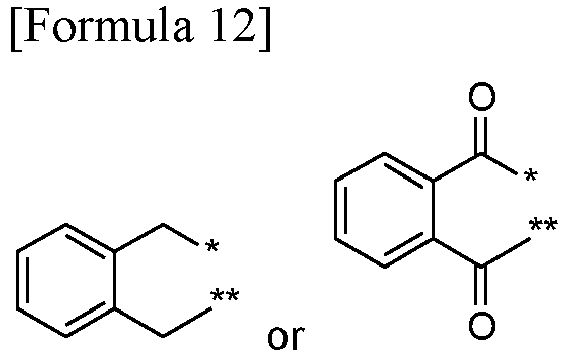

V is -O-acryloyl, acetylamino, or phenyl, which may optionally be substituted with C1-7 alkyl, W is D- or L-alanylsulfonyl, D- or L-valylsulfonyl, D- or L-leucylsulfonyl, D- or L-methionylsulfonyl, D- or L-prolylsulfonyl, D- or L-tryptophylsulfonyl, D- or L-glycylsulfonyl, D- or L-cysteinylsulfonyl, D- or L-isoleucylsulfonyl, D- or L-phenylalanylsulfonyl, D- or L-tyrosylsulfonyl, D- or L-serylsulfonyl, D- or L-threonylsulfonyl, D- or L-asparaginylsulfonyl, D- or L-glutamylsulfonyl, D- or L-arginylsulfonyl, D- or L-histidylsulfonyl, D- or L-lysylsulfonyl, D- or L-asparagylsulfonyl, D- or L-glutaminylsulfonyl, -C(=O)-O-succinimidyl, acetyl, trifluoroacetyl, benzoylamino, -N=N-phenyl, phenylamino, or diaminophenylazophenyl, which may optionally be substituted with one or more amino, C1-7 alkyl, or aminoalkyl, or phenylazo, which may optionally be substituted with one or more X, naphthylazo


Claims (20)
- An electrode modifying agent comprising a compound having a property of being adsorbed, without being bound to a polymer or without being polymerized, onto an electrode untreated with an acid.
- An electron transfer promoting agent comprising a compound having a property of being adsorbed, without being bound to a polymer or without being polymerized, onto an electrode untreated with an acid.
- A battery comprising the electrode modifying agent according to claim 1 or the electron transfer promoting agent according to claim 2.
- The battery according to claim 3, wherein the compound is immobilized to an electrode of the battery.
- The battery according to claim 3 or 4, comprising an oxidoreductase.
- The battery according to claim 5, wherein the oxidoreductase is immobilized to the electrode.
- A composition comprising the electrode modifying agent according to claim 1 or the electron transfer promoting agent according to claim 2.
- An electrode comprising the electrode modifying agent according to claim 1 or the electron transfer promoting agent according to claim 2.
- The electrode according to claim 8, comprising an enzyme, or the composition according to claim 7, comprising an enzyme.
- The electrode or the composition according to claim 9, wherein the enzyme is an oxidoreductase.
- The electrode according to claim 10, wherein the oxidoreductase is immobilized.
- A sensor comprising the electrode modifying agent according to claim 1 or the electron transfer promoting agent according to claim 2, or an enzyme sensor comprising the electrode according to claim 10 or 11.
- The electrode modifying agent according to claim 1,
the electron transfer promoting agent according to claim 2,
the battery according to any one of claims 3 to 6,
the composition according to claim 7, 9 or 10,
the electrode according to any one of claims 8 to 11, or
the enzyme sensor according to claim 12, wherein
the compound is a compound having a structure of formula I or formula II: R1 is -NR7R8, -N=N-R9, or -N+≡N,R2 is -NR10R11 or -N=N-R12,R7 and R8 are each independently hydrogen, or linear or branched C1-7 alkyl, C1-7 alkenyl, C1-7 alkynyl, C3-9 cycloalkyl, phenyl, 1-naphthyl, 2-naphthyl, anthracenyl, phenanthrenyl, acetyl, carboxy, furanylformyl, pyrazolylformyl, 1-methyl-1H-pyrazol-5-ylformyl, 9,9-dimethylfluoren-2-yl, -N+≡N, -N=N-phenyl, benzyl,
 R10 is hydrogen, or linear or branched C1-7 alkyl, C1-7 alkenyl, C1-7 alkynyl, C3-9 cycloalkyl, phenyl, 1-naphthyl, 2-naphthyl, anthracenyl or phenanthrenyl, which may optionally be substituted with one or more X or V,R3, R4, R5 and R6 are each independently hydrogen, or linear or branched C1-7 alkyl, C1-7 alkenyl, C1-7 alkynyl, C1-7 alkoxy, halo, nitro, cyano, carboxy, sulfo, hydroxy or amino, which may optionally be substituted with one or more Y,or R3 and R4, or R5 and R6, together with the benzene ring containing these moieties, form a benzene ring, or
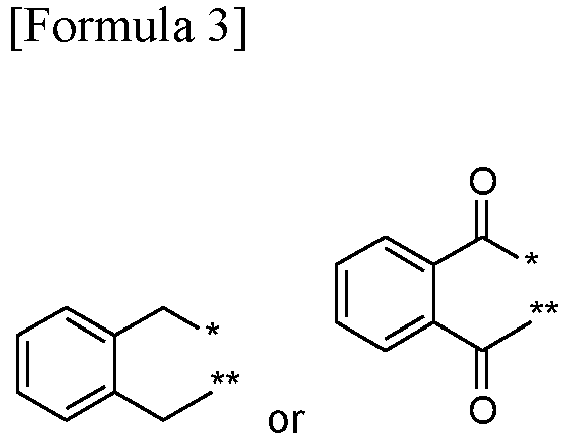 wherein * is bonded to the carbon atom bonded to R3, and ** is bonded to the carbon atom bonded to R4, or * is bonded to the carbon atom bonded to R5, and ** is bonded to the carbon atom bonded to R6,R11 is selected from the group consisting of phenyl, 1-naphthyl, 2-naphthyl, anthracenyl and phenanthrenyl, which may optionally be substituted with one or more X or Z,R9 is selected from the group consisting of hydrogen, and phenyl, 1-naphthyl, 2-naphthyl, anthracenyl and phenanthrenyl, which may optionally be substituted with one or more X,R12 is selected from the group consisting of phenyl, 1-naphthyl, 2-naphthyl, anthracenyl, phenanthrenyl, and
 V is -O-acryloyl, acetylamino, or phenyl, which may optionally be substituted with C1-7 alkyl,W is D- or L-alanylsulfonyl, D- or L-valylsulfonyl, D- or L-leucylsulfonyl, D- or L-methionylsulfonyl, D- or L-prolylsulfonyl, D- or L-tryptophylsulfonyl, D- or L-glycylsulfonyl, D- or L-cysteinylsulfonyl, D- or L-isoleucylsulfonyl, D- or L-phenylalanylsulfonyl, D- or L-tyrosylsulfonyl, D- or L-serylsulfonyl, D- or L-threonylsulfonyl, D- or L-asparaginylsulfonyl, D- or L-glutamylsulfonyl, D- or L-arginylsulfonyl, D- or L-histidylsulfonyl, D- or L-lysylsulfonyl, D- or L-asparagylsulfonyl, D- or L-glutaminylsulfonyl, -C(=O)-O-succinimidyl, acetyl, trifluoroacetyl, benzoylamino, -N=N-phenyl, phenylamino, or diaminophenylazophenyl, which may optionally be substituted with one or more amino, C1-7 alkyl, or aminoalkyl, or phenylazo, which may optionally be substituted with one or more X, naphthylazo, which may optionally be substituted with one or more Y, acetylamino,
 X is linear or branched C1-7 alkyl, C1-7 alkenyl, C1-7 alkynyl, C1-7 alkoxy, halo, hydroxy, nitro, carboxy, cyano, sulfo, amino or alkylamino, which may optionally be substituted with one or more substituents selected from the group consisting of halo, amino, cyano, carboxy, carbonyl, alkoxy, alkylamino, nitroso, nitro and sulfo,Y is selected from the group consisting of halo, amino, cyano, carboxy, carbonyl, hydroxy, alkoxy and sulfo, andZ is -SO2-CH=CH2, -SO2-C2H4-O-SO3H, or 4,6-dichlorotriazin-2-ylamino, or a salt, an anhydride or a solvate thereof.
 - The electrode modifying agent, the electron transfer promoting agent, the battery, the composition, the electrode, or the sensor according to claim 13, wherein the compound is a compound having a structure of formula Ia or IIa:

 R1a is -NR7aR8a, -N=N-R9a, or -N+≡N,R2a is -NR10aR11a, or -N=N-R12a,R7a and R8a are each independently hydrogen, or linear or branched C1-6 alkyl, C1-6 alkenyl, C1-6 alkynyl, C3-9 cycloalkyl, phenyl, 1-naphthyl, 2-naphthyl, anthracenyl, or phenanthrenyl, which may optionally be substituted with one or more Xa,R10 is hydrogen, or linear or branched C1-6 alkyl, C1-6 alkenyl, C1-6 alkynyl, C3-9 cycloalkyl, phenyl, 1-naphthyl, 2-naphthyl, anthracenyl or phenanthrenyl, which may optionally be substituted with one or more Xa,R3a, R4a, R5a and R6a are each independently hydrogen, or linear or branched C1-6 alkyl, C1-6 alkenyl, C1-6 alkynyl, C1-6 alkoxy, halo, nitro, cyano, carboxy, sulfo, hydroxy or amino, which may optionally be substituted with one or more Y,or R3a and R4a, or R5a and R6a form a benzene ring, or
 wherein * is bonded to the carbon atom bonded to R3a, and ** is bonded to the carbon atom bonded to R4a, or * is bonded to the carbon atom bonded to R5a, and ** is bonded to the carbon atom bonded to R6a,R11a is selected from the group consisting of phenyl, 1-naphthyl, 2-naphthyl, anthracenyl and phenanthrenyl, which may optionally be substituted with one or more Xa,R9a and R12a are each independently selected from the group consisting of hydrogen, and phenyl, 1-naphthyl, 2-naphthyl, anthracenyl and phenanthrenyl, which may optionally be substituted with one or more Xa,Xa is linear or branched C1-6 alkyl, C1-6 alkenyl, C1-6 alkynyl, C1-6 alkoxy, halo, hydroxy, nitro, carboxy, cyano, sulfo, amino or alkylamino, which may optionally be substituted with one or more substituents selected from the group consisting of halo, amino, cyano, carboxy, carbonyl, hydroxy, alkoxy, alkylamino, nitroso, nitro and sulfo, andY is selected from the group consisting of halo, amino, cyano, carboxy, carbonyl, alkoxy and sulfo, orhaving a structure of formula Ib or IIb:
 R7b, R8b and R10b are each independently hydrogen, or linear or branched C1-6 alkyl, C1-6 alkenyl, C1-6 alkynyl, C3-9 cycloalkyl, phenyl, 1-naphthyl, 2-naphthyl, anthracenyl or phenanthrenyl, which may optionally be substituted with one or more Xb,R3b, R4b, R5b and R6b are each independently hydrogen, or linear or branched C1-6 alkyl, C1-6 alkenyl, C1-6 alkynyl, C1-6 alkoxy, halo, nitro, cyano, carboxy, sulfo or amino, which may optionally be substituted with one or more Y,R11b is selected from the group consisting of phenyl, 1-naphthyl, 2-naphthyl, anthracenyl and phenanthrenyl, which may optionally be substituted with one or more Xb, whereinXb is linear or branched C1-6 alkyl, C1-6 alkenyl, C1-6 alkynyl, C1-6 alkoxy, halo, hydroxy, nitro, carboxy, cyano, sulfo or amino, which may optionally be substituted with one or more substituents selected from the group consisting of halo, amino, cyano, carboxy, carbonyl, alkoxy and sulfo, andY is selected from the group consisting of halo, amino, cyano, carboxy, carbonyl, alkoxy and sulfo,or a salt, an anhydride or a solvate thereof.
 - The electrode modifying agent, electron transfer promoting agent, battery, composition, electrode or sensor according to claim 13 or 14, wherein the compound is selected from the group consisting of


- A method for producing a battery, comprising the step of using the electrode modifying agent according to claim 1 or the electron transfer promoting agent according to claim 2.
- The method according to claim 16, comprising the step of contacting the electrode modifying agent or the electron transfer promoting agent with an electrode of the battery.
- A power generation method using the battery according to any one of claims 3 to 6 and 13 to 15.
- An electrochemical measurement method using
the composition according to any one of claims 7, 9, 10 and 13 to 15,
the electrode according to any one of claims 8 to 11 and 13 to 15, or
the sensor according to any one of claims 12 to 15. - A method for modifying or altering an electrode, comprising the step of contacting
the electrode modifying agent according to any one of claims 1 and 13 to 15,
the electron transfer promoting agent according to any one of claims 2 and 13 to 15, or
the composition according to any one of claims 7, 9, 10 and 13 to 15,
with the electrode.
Applications Claiming Priority (3)
| Application Number | Priority Date | Filing Date | Title |
|---|---|---|---|
| JP2018077628A JP6484742B1 (en) | 2018-04-13 | 2018-04-13 | New mediator |
| JP2018077593A JP6484741B1 (en) | 2018-04-13 | 2018-04-13 | New mediator |
| PCT/JP2019/007373 WO2019198359A1 (en) | 2018-04-13 | 2019-02-26 | Novel mediator |
Publications (2)
| Publication Number | Publication Date |
|---|---|
| EP3780207A1 true EP3780207A1 (en) | 2021-02-17 |
| EP3780207A4 EP3780207A4 (en) | 2022-11-02 |
Family
ID=68164035
Family Applications (1)
| Application Number | Title | Priority Date | Filing Date |
|---|---|---|---|
| EP19784987.0A Pending EP3780207A4 (en) | 2018-04-13 | 2019-02-26 | Novel mediator |
Country Status (5)
| Country | Link |
|---|---|
| US (1) | US20210115489A1 (en) |
| EP (1) | EP3780207A4 (en) |
| KR (1) | KR20200142012A (en) |
| CN (1) | CN112042026A (en) |
| WO (1) | WO2019198359A1 (en) |
Families Citing this family (4)
| Publication number | Priority date | Publication date | Assignee | Title |
|---|---|---|---|---|
| CN113564943A (en) * | 2021-07-09 | 2021-10-29 | 天津工业大学 | Electronic mediator enhanced indigo whole-cell reduction dyeing method |
| WO2024157495A1 (en) * | 2023-01-27 | 2024-08-02 | キッコーマン株式会社 | Enzyme electrode, method for manufacturing same, and enzyme sensor |
| EP4691545A1 (en) | 2023-03-28 | 2026-02-11 | Kikkoman Corporation | Transdermal current-carrying patch |
| US12006278B1 (en) | 2023-10-31 | 2024-06-11 | King Faisal University | 4,4′-naphthalene-1,5-diylbis(diazene-2,1-diyl)diphenol as an antioxidant compound |
Family Cites Families (15)
| Publication number | Priority date | Publication date | Assignee | Title |
|---|---|---|---|---|
| JPH07234201A (en) | 1993-12-29 | 1995-09-05 | Mochida Pharmaceut Co Ltd | Electrochemical measuring method and novel p-phenylenediamine compound |
| US20030113606A1 (en) * | 2001-04-13 | 2003-06-19 | Rosalyn Ritts | Biocompatible membranes of block copolymers and fuel cells produced therewith |
| JP3801098B2 (en) | 2002-06-03 | 2006-07-26 | 三菱電機株式会社 | Water heater and valve unit used for this water heater |
| GB2391314B (en) | 2002-07-25 | 2005-08-10 | Schlumberger Holdings | Methods and apparatus for the measurement of hydrogen sulphide and thiols in fluids |
| US20080035481A1 (en) | 2004-03-04 | 2008-02-14 | Mccormack Sean P | Electrochemical Sensors |
| GB2430749B (en) * | 2005-09-21 | 2007-11-28 | Schlumberger Holdings | Electro-chemical sensor |
| ATE550642T1 (en) * | 2006-12-14 | 2012-04-15 | Nippon Kayaku Kk | METHOD FOR MEASURING 1,5-ANHYDROGLUCITOL IN WHOLE BLOOD |
| JP4766430B2 (en) | 2007-01-31 | 2011-09-07 | 独立行政法人産業技術総合研究所 | Measurement method of ethanol |
| JP6049454B2 (en) * | 2009-03-25 | 2016-12-21 | セノバ システムズ インコーポレイテッド | Device for detecting analytes |
| EP2348108B1 (en) | 2009-06-04 | 2014-02-12 | Kikkoman Corporation | Flavin-bound glucose dehydrogenase |
| JP2016042032A (en) | 2014-08-14 | 2016-03-31 | ニプロ株式会社 | Glucose sensor |
| JP6708354B2 (en) | 2016-11-07 | 2020-06-10 | 富士通コネクテッドテクノロジーズ株式会社 | Character input device, character input method, and character input program |
| JP6833460B2 (en) | 2016-11-08 | 2021-02-24 | 株式会社東芝 | Work support system, work method, and processing equipment |
| JP2019003928A (en) | 2017-06-16 | 2019-01-10 | パナソニックIpマネジメント株式会社 | Flow battery |
| JP6484741B1 (en) * | 2018-04-13 | 2019-03-13 | キッコーマン株式会社 | New mediator |
-
2019
- 2019-02-26 US US17/046,610 patent/US20210115489A1/en active Pending
- 2019-02-26 KR KR1020207029617A patent/KR20200142012A/en active Pending
- 2019-02-26 CN CN201980025393.2A patent/CN112042026A/en active Pending
- 2019-02-26 EP EP19784987.0A patent/EP3780207A4/en active Pending
- 2019-02-26 WO PCT/JP2019/007373 patent/WO2019198359A1/en not_active Ceased
Also Published As
| Publication number | Publication date |
|---|---|
| US20210115489A1 (en) | 2021-04-22 |
| EP3780207A4 (en) | 2022-11-02 |
| CN112042026A (en) | 2020-12-04 |
| WO2019198359A1 (en) | 2019-10-17 |
| KR20200142012A (en) | 2020-12-21 |
Similar Documents
| Publication | Publication Date | Title |
|---|---|---|
| JP7421268B2 (en) | new mediator | |
| Tsujimura et al. | Novel FAD-dependent glucose dehydrogenase for a dioxygen-insensitive glucose biosensor | |
| EP3780207A1 (en) | Novel mediator | |
| Tanne et al. | Development of a (PQQ)-GDH-anode based on MWCNT-modified gold and its application in a glucose/O2-biofuel cell | |
| Hoshino et al. | Amperometric biosensor based on multilayer containing carbon nanotube, plasma-polymerized film, electron transfer mediator phenothiazine, and glucose dehydrogenase | |
| Malinauskas et al. | Bioelectrochemical sensor based on PQQ-dependent glucose dehydrogenase | |
| US12571758B2 (en) | Glucose redox reaction and composition for glucose measurement using flavin compound | |
| Pöller et al. | Low potential biofuel cell anodes based on redox polymers with covalently bound phenothiazine derivatives for wiring flavin adenine dinucleotide-dependent enzymes | |
| US20170191105A1 (en) | Enzyme electrode | |
| JP6484741B1 (en) | New mediator | |
| Saleh et al. | Development of a dehydrogenase-based glucose anode using a molecular assembly composed of nile blue and functionalized SWCNTs and its applications to a glucose sensor and glucose/O2 biofuel cell | |
| Jiang et al. | Amperometric ethanol biosensor based on integration of alcohol dehydrogenase with Meldola's blue/ordered mesoporous carbon electrode | |
| JP7032906B2 (en) | Composition for glucose redox reaction and glucose measurement using flavin compound | |
| JP6484742B1 (en) | New mediator | |
| Ishida et al. | Comparison of direct and mediated electron transfer in electrodes with novel fungal flavin adenine dinucleotide glucose dehydrogenase | |
| Takamura et al. | Site-directed mutagenesis of multicopper oxidase from hyperthermophilic archaea for high-voltage biofuel cells | |
| JP7716187B2 (en) | New Mediators | |
| Nakashima et al. | Amphiphilic polymer mediators promoting electron transfer on bioanodes with PQQ-dependent glucose dehydrogenase | |
| WO2024224731A1 (en) | Enzyme, enzyme electrode, biosensor, bioreactor, and biofuel cell | |
| JP7641891B2 (en) | Method for modifying substrate specificity of glucose dehydrogenase and agent for modifying substrate specificity of glucose dehydrogenase | |
| Shin et al. | Irreversible and reversible deactivation of bilirubin oxidase by urate | |
| Sun et al. | A Promising Reconstitution Platform for PQQ-Dependent Apo-Enzymes in Chitosan–Carbon Nanotube Matrices | |
| US20260015646A1 (en) | Enzyme electrode, method for producing enzyme electrode, biosensor, and bio battery |
Legal Events
| Date | Code | Title | Description |
|---|---|---|---|
| STAA | Information on the status of an ep patent application or granted ep patent |
Free format text: STATUS: THE INTERNATIONAL PUBLICATION HAS BEEN MADE |
|
| PUAI | Public reference made under article 153(3) epc to a published international application that has entered the european phase |
Free format text: ORIGINAL CODE: 0009012 |
|
| STAA | Information on the status of an ep patent application or granted ep patent |
Free format text: STATUS: REQUEST FOR EXAMINATION WAS MADE |
|
| 17P | Request for examination filed |
Effective date: 20201019 |
|
| AK | Designated contracting states |
Kind code of ref document: A1 Designated state(s): AL AT BE BG CH CY CZ DE DK EE ES FI FR GB GR HR HU IE IS IT LI LT LU LV MC MK MT NL NO PL PT RO RS SE SI SK SM TR |
|
| AX | Request for extension of the european patent |
Extension state: BA ME |
|
| DAV | Request for validation of the european patent (deleted) | ||
| DAX | Request for extension of the european patent (deleted) | ||
| RIC1 | Information provided on ipc code assigned before grant |
Ipc: H01M 4/90 20060101ALI20220104BHEP Ipc: H01M 4/88 20060101ALI20220104BHEP Ipc: H01M 4/86 20060101ALI20220104BHEP Ipc: G01N 27/416 20060101ALI20220104BHEP Ipc: G01N 27/327 20060101ALI20220104BHEP Ipc: C07C 211/55 20060101ALI20220104BHEP Ipc: H01M 8/16 20060101AFI20220104BHEP |
|
| A4 | Supplementary search report drawn up and despatched |
Effective date: 20220930 |
|
| RIC1 | Information provided on ipc code assigned before grant |
Ipc: H01M 4/90 20060101ALI20220926BHEP Ipc: H01M 4/88 20060101ALI20220926BHEP Ipc: H01M 4/86 20060101ALI20220926BHEP Ipc: G01N 27/416 20060101ALI20220926BHEP Ipc: G01N 27/327 20060101ALI20220926BHEP Ipc: C07C 211/55 20060101ALI20220926BHEP Ipc: H01M 8/16 20060101AFI20220926BHEP |