EP3779829A1 - Dual transaction method and system based on centralization and decentralization - Google Patents
Dual transaction method and system based on centralization and decentralization Download PDFInfo
- Publication number
- EP3779829A1 EP3779829A1 EP19847837.2A EP19847837A EP3779829A1 EP 3779829 A1 EP3779829 A1 EP 3779829A1 EP 19847837 A EP19847837 A EP 19847837A EP 3779829 A1 EP3779829 A1 EP 3779829A1
- Authority
- EP
- European Patent Office
- Prior art keywords
- user
- amount
- designated
- attestation
- transaction information
- Prior art date
- Legal status (The legal status is an assumption and is not a legal conclusion. Google has not performed a legal analysis and makes no representation as to the accuracy of the status listed.)
- Withdrawn
Links
Images


Classifications
-
- G—PHYSICS
- G06—COMPUTING OR CALCULATING; COUNTING
- G06Q—INFORMATION AND COMMUNICATION TECHNOLOGY [ICT] SPECIALLY ADAPTED FOR ADMINISTRATIVE, COMMERCIAL, FINANCIAL, MANAGERIAL OR SUPERVISORY PURPOSES; SYSTEMS OR METHODS SPECIALLY ADAPTED FOR ADMINISTRATIVE, COMMERCIAL, FINANCIAL, MANAGERIAL OR SUPERVISORY PURPOSES, NOT OTHERWISE PROVIDED FOR
- G06Q20/00—Payment architectures, schemes or protocols
- G06Q20/38—Payment protocols; Details thereof
- G06Q20/389—Keeping log of transactions for guaranteeing non-repudiation of a transaction
-
- G—PHYSICS
- G06—COMPUTING OR CALCULATING; COUNTING
- G06Q—INFORMATION AND COMMUNICATION TECHNOLOGY [ICT] SPECIALLY ADAPTED FOR ADMINISTRATIVE, COMMERCIAL, FINANCIAL, MANAGERIAL OR SUPERVISORY PURPOSES; SYSTEMS OR METHODS SPECIALLY ADAPTED FOR ADMINISTRATIVE, COMMERCIAL, FINANCIAL, MANAGERIAL OR SUPERVISORY PURPOSES, NOT OTHERWISE PROVIDED FOR
- G06Q20/00—Payment architectures, schemes or protocols
- G06Q20/38—Payment protocols; Details thereof
- G06Q20/40—Authorisation, e.g. identification of payer or payee, verification of customer or shop credentials; Review and approval of payers, e.g. check credit lines or negative lists
- G06Q20/401—Transaction verification
-
- G—PHYSICS
- G06—COMPUTING OR CALCULATING; COUNTING
- G06Q—INFORMATION AND COMMUNICATION TECHNOLOGY [ICT] SPECIALLY ADAPTED FOR ADMINISTRATIVE, COMMERCIAL, FINANCIAL, MANAGERIAL OR SUPERVISORY PURPOSES; SYSTEMS OR METHODS SPECIALLY ADAPTED FOR ADMINISTRATIVE, COMMERCIAL, FINANCIAL, MANAGERIAL OR SUPERVISORY PURPOSES, NOT OTHERWISE PROVIDED FOR
- G06Q20/00—Payment architectures, schemes or protocols
- G06Q20/38—Payment protocols; Details thereof
- G06Q20/40—Authorisation, e.g. identification of payer or payee, verification of customer or shop credentials; Review and approval of payers, e.g. check credit lines or negative lists
- G06Q20/405—Establishing or using transaction specific rules
Definitions
- Embodiments of this specification relate to the field of information technologies, and in particular, to a dual transaction method and system based on centralization and decentralization.
- the blockchain technology is a decentralized distributed storage technology, and may implement multi-party attestation of data. This means that data stored in a blockchain is difficult to be tampered with and is reliable.
- a blockchain transaction system may be built based on the blockchain technology.
- the blockchain transaction system is actually a blockchain network formed by a plurality of member nodes. Any member node may accept a transaction initiated by a user, and broadcast transaction information of the accepted transaction to the blockchain network, for member nodes to publish the transaction information to a blockchain based on a consensus mechanism after transaction validity verification (generally, whether a balance of a transfer-out party is sufficient is verified) performed by the blockchain network on the transaction information is successful. With that, the transaction is completed. In this way, attestation of each transaction is implemented.
- a dual transaction method based on centralization and decentralization where a blockchain network includes a plurality of member nodes, a virtual resource account is registered by a user with a designated member node, and the method includes:
- a dual transaction apparatus based on centralization and decentralization where a blockchain network includes a plurality of member nodes, the apparatus is any of the member nodes, a virtual resource account is registered by a user with the apparatus, and the apparatus includes:
- a dual transaction system based on centralization and decentralization includes a blockchain network formed by a plurality of member nodes, and a user can register a virtual resource account with a designated member node, where the designated member node receives a transaction request that is sent by a paying user and that includes a paying user identifier of the paying user, a designated resource amount, and a receiving user identifier of a receiving user, the paying user being a user paying the designated resource amount, and the receiving user being a user receiving the designated resource amount; performs transaction feasibility verification on the transaction request, and after the verification is successful, deducts the designated resource amount from a virtual resource account corresponding to the paying user identifier and adds the designated resource amount to a virtual resource account corresponding to the receiving user identifier; and constructs, according to the transaction request, target transaction information including the paying user identifier, the designated resource amount, and the receiving user identifier, and broadcasts the target transaction information to
- a blockchain network includes a plurality of member nodes, and a virtual resource account is registered by a user with a designated member node.
- the designated member node When receiving a transaction request, on one hand, the designated member node performs transaction feasibility verification on the transaction request, and after the verification is successful, deducts a designated resource amount from a virtual resource account corresponding to a paying user identifier and adds the designated resource amount to a virtual resource account corresponding to a receiving user identifier.
- the designated member node broadcasts target transaction information to the blockchain network according to the transaction request, for the member nodes to publish the target transaction information to a blockchain based on a consensus mechanism after transaction feasibility verification performed by the blockchain network on the target transaction information is successful.
- a transaction between users can be quickly confirmed by a designated member node, which has an advantage of a centralized transaction mode.
- the transaction between users is also submitted to a blockchain network for verification, and is published by the member nodes to a blockchain based on a consensus mechanism (that is, the transaction is confirmed by the member nodes). Because the transaction has been quickly confirmed by the designated member node, even if the transaction confirmation speed in the blockchain network is low, no inconvenience is caused to users, and a feasible transaction is finally published to the blockchain for attestation.
- an existing blockchain transaction system transaction information of transactions between users is broadcast to a blockchain network, and after feasibility verification performed by the blockchain network on the transaction information is successful, member nodes publish the transaction information to a blockchain.
- the existing blockchain transaction system is a decentralized distributed system, and a certain period of time is required for the member nodes to achieve a consensus of message consistency based on a consensus mechanism, which causes an excessively long time from initiating to confirming a transaction. That is, transaction confirmation has a delay in time, which causes inconvenience to users.
- a dual transaction mechanism is introduced.
- transaction information is not only broadcast to the blockchain network, but also verified and settled in a timely manner by a member node accepting the transaction.
- the transaction is confirmed without a delay, and the transaction information is also published to the blockchain for attestation.
- the user may receive feedback that the transaction is quickly confirmed, or may find a reliable transaction information attestation record in the blockchain after the transaction.
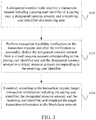
- FIG. 1 is a schematic flowchart of a dual transaction method based on centralization and decentralization, according to an embodiment of this specification. The method includes the following steps: S100.
- a designated member node receives a transaction request including a paying user identifier of a paying user, a designated resource amount, and a receiving user identifier of a receiving user.
- a blockchain network includes a plurality of member nodes.
- a “node” may be one or more devices managed by a management party (a person or an institution), and management parties to which the member nodes respectively correspond are usually different.
- a virtual resource account is registered by a user with the designated member node.
- the designated member node may be designated according to actual service needs. For example, assuming that the blockchain network is a consortium blockchain network formed by 10 financial institutions (including banks and electronic payment platforms), a member node managed by an electronic payment platform may be designated as a designated member node, and a virtual resource account is registered by a user with the electronic payment platform.
- the virtual resource account registered by the user with the designated member node is actually maintained in a relational database of the designated member node.
- a virtual resource described in this specification is not limited to an electronic currency, and may also be bonus points, a game currency, a virtual object, and the like.
- a transaction may be performed between users by using any virtual resource as a transaction medium according to actual service rules.
- the designated member node may receive a transaction request sent by the paying user, or may receive a transaction request sent by the receiving user.
- the transaction request usually includes a paying user identifier of a paying user, a designated resource amount, and a receiving user identifier of a receiving user, the paying user being a user paying the designated resource amount, and the receiving user being a user receiving the designated resource amount.
- the transaction feasibility verification refers to verifying whether a transaction is reasonable and executable, which mainly includes verifying whether an account balance of the paying user is sufficient.
- other items of the transaction may also be the subject of feasibility verification according to actual service rules, for example, whether the paying user has an authorization.
- settlement is performed. That is, the designated resource amount is deducted from a virtual resource account corresponding to the paying user identifier and the designated resource amount is added to a virtual resource account corresponding to the receiving user identifier.
- the designated member node may immediately send a transaction confirmation notification to the paying user and/or the receiving user.
- S104 Construct, according to the transaction request, target transaction information including the paying user identifier, the designated resource amount, and the receiving user identifier, and broadcast the target transaction information to the blockchain network.
- step S102 is performed, or after step S102 is performed, the designated member node may perform step S104, for the member nodes to publish the target transaction information to a blockchain based on a consensus mechanism after transaction feasibility verification performed by the blockchain network on the target transaction information is successful.
- the blockchain network performs transaction feasibility verification on the target transaction information, and subsequently, the member nodes publish the target transaction information to a blockchain based on a consensus mechanism. This depends on a technical architecture used by the blockchain network.
- the blockchain network uses a public chain architecture (such as Ethereum)
- each member node receiving the target transaction information performs feasibility verification on the target transaction information.
- the member node stores the target transaction information in a cache (or referred to as a transaction pool) of the member node.
- a member node responsible for packing blocks is selected from the member nodes based on a consensus mechanism (such as a proof-of-work mechanism or a proof-of-stake mechanism).
- the accounting node retrieves several transaction information from a transaction pool of the accounting node, and packs the transaction information into a block.
- the accounting node stores the block into a blockchain at the accounting node, and on the other hand, broadcasts the block to the whole network, and other member nodes also store the block into the blockchain at the other member nodes.
- a consortium blockchain architecture such as Hyperledger
- a plurality of member nodes responsible for endorsement first perform feasibility verification on the target transaction information.
- the endorsement nodes write the target transaction information into the tail of a transaction queue.
- a plurality of member nodes (generally referred to as confirmation nodes) responsible for confirmation may periodically retrieve a specified quantity of transaction information from the transaction queue sequentially from front to back, pack the transaction information into a block, and further publish the block to the blockchain based on a consensus mechanism (such as Practical Byzantine Fault Tolerance (PBFT)).
- PBFT Practical Byzantine Fault Tolerance
- the transaction is verified and settled based on a centralized mechanism to ensure transaction confirmation efficiency, and the transaction is also verified and settled based on a decentralized mechanism (that is, a blockchain technology) to implement attestation of the transaction.
- a decentralized mechanism that is, a blockchain technology
- a transaction between users can be quickly confirmed by a designated member node, which has an advantage of a centralized transaction mode.
- the transaction between users is also submitted to a blockchain network for verification, and is published by the member nodes to a blockchain based on a consensus mechanism (that is, the transaction is confirmed by the member nodes). Because the transaction has been quickly confirmed by the designated member node, even if a transaction confirmation speed in the blockchain network is low, no inconvenience is caused to users, and a feasible transaction is finally published to the blockchain for attestation.
- FIG. 2 is an exemplary flowchart of a dual transaction method based on centralization and decentralization, according to an embodiment of this specification.
- a blockchain network is formed by a plurality of member nodes (6 member nodes are shown in the figure).
- a solid circle is a designated member node, and hollow circles are other member nodes than the designated member node.
- a paying user may initiate a transaction, and send a transaction request to the designated member node.
- the designated member node on one hand, performs a settlement operation in a local relational database, and on the other hand, broadcasts transaction information to the whole network, for the member nodes to publish the transaction information to a blockchain at the member nodes. It is worth emphasizing that, not only the designated member node needs to perform feasibility verification on the transaction, but also the blockchain network needs to perform feasibility verification on the transaction.
- step S102 and step S104 may be performed after step S102 is performed, or step S102 may be performed after step S104 is performed, or step S102 and step S104 may be performed at the same time.
- one transaction is performed respectively based on a centralized mechanism and a decentralized mechanism. Therefore, in fact, an account managed by the designated member node is a centralized account of a user, and the blockchain is actually a decentralized account of a user.
- a centralized account and a decentralized account of the user may be inconsistent. The cause of inconsistency may be that a balance of the centralized account is tampered with.
- the present application provides an account reconciliation method, to ensure a centralized account and a decentralized account of one user to be consistent.
- the designated member node may further locally store the target transaction information constructed in step S104 after the feasibility verification is successful.
- the designated member node may obtain transaction information published to the blockchain within a designated period as attestation transaction information, and obtain transaction information that is locally stored within the designated period as actual transaction information.
- the designated member node determines, for any user according to the attestation transaction information, a resource amount that needs to be received by the user within the designated period as an attestation received amount corresponding to the user, and determines, according to the actual transaction information, a resource amount actually received by the user within the designated period as an actually received amount corresponding to the user; compares the attestation received amount with the actually received amount; and corrects a balance of a virtual resource account of the user if a result of the comparison meets a first designated condition.
- the designated member node may also determine, for any user according to the attestation transaction information, a resource amount that needs to be paid by the user within the designated period as an attestation payment amount corresponding to the user, and determine, according to the actual transaction information, a resource amount actually paid by the user within the designated period as an actual payment amount corresponding to the user; compare the attestation payment amount with the actual payment amount; and correct a balance of a virtual resource account of the user if a result of the comparison meets a second designated condition.
- a centralized account and a decentralized account of one user may be reconciled for each other.
- a balance of the decentralized account is more reliable, and the centralized account may be corrected according to the balance of the decentralized account.
- the balance of the decentralized account may also be corrected according to a balance of the centralized account.
- a blockchain network includes a plurality of member nodes, the apparatus is any of the member nodes, a virtual resource account is registered by a user with the apparatus, and the apparatus includes:
- the apparatus further includes: a storage module 304, configured to locally store the target transaction information after the transaction feasibility verification performed on the transaction request is successful.
- the apparatus further includes: a first account reconciliation module 305, configured to obtain transaction information published to the blockchain within a designated period as attestation transaction information, and obtain transaction information that is locally stored within the designated period as actual transaction information; determine, for any user according to the attestation transaction information, a resource amount that needs to be received by the user within the designated period as an attestation received amount corresponding to the user, and determine, according to the actual transaction information, a resource amount actually received by the user within the designated period as an actually received amount corresponding to the user; compare the attestation received amount with the actually received amount; and correct a balance of a virtual resource account of the user if a result of the comparison meets a first designated condition.
- a first account reconciliation module 305 configured to obtain transaction information published to the blockchain within a designated period as attestation transaction information, and obtain transaction information that is locally stored within the designated period as actual transaction information; determine, for any user according to the attestation transaction information, a resource amount that needs to be received by the user within the designated period as an attestation
- the first designated condition is that the attestation received amount is greater than the actually received amount.
- the first account reconciliation module 305 adds a difference between the attestation received amount and the actually received amount to the virtual resource account of the user.
- the first designated condition is that the attestation received amount is less than the actually received amount.
- the first account reconciliation module 305 deducts a difference between the actually received amount and the attestation received amount from the virtual resource account of the user.
- the first designated condition is that the attestation received amount is greater than the actually received amount, and a ratio of a receiving difference to the attestation received amount is greater than a first designated ratio, the receiving difference being a difference between the attestation received amount and the actually received amount.
- the first account reconciliation module 305 adds the receiving difference to the virtual resource account of the user; and determines a first compensation amount, and adds the first compensation amount to the virtual resource account of the user.
- the apparatus further includes: a second account reconciliation module 306, configured to obtain transaction information published to the blockchain within a designated period as attestation transaction information, and obtain transaction information that is locally stored within the designated period as actual transaction information; determine, for any user according to the attestation transaction information, a resource amount that needs to be paid by the user within the designated period as an attestation payment amount corresponding to the user, and determine, according to the actual transaction information, a resource amount actually paid by the user within the designated period as an actual payment amount corresponding to the user; compare the attestation payment amount with the actual payment amount; and correct a balance of a virtual resource account of the user if a result of the comparison meets a second designated condition.
- a second account reconciliation module 306 configured to obtain transaction information published to the blockchain within a designated period as attestation transaction information, and obtain transaction information that is locally stored within the designated period as actual transaction information; determine, for any user according to the attestation transaction information, a resource amount that needs to be paid by the user within the designated period as an attestation payment
- the second designated condition is that the attestation payment amount is greater than the actual payment amount.
- the second account reconciliation module 306 deducts a difference between the attestation payment amount and the actual payment amount from the virtual resource account of the user.
- the second designated condition is that the attestation payment amount is less than the actual payment amount.
- the second account reconciliation module 306 adds a difference between the actual payment amount and the attestation payment amount to the virtual resource account of the user.
- the second designated condition is that the attestation payment amount is less than the actual payment amount, and a ratio of a payment difference to the attestation payment amount is greater than a second designated ratio, the payment difference being a difference between the actual payment amount and the attestation payment amount.
- the second account reconciliation module 306 adds the payment difference to the virtual resource account of the user; and determines a second compensation amount, and adds the second compensation amount to the virtual resource account of the user.
- an embodiment of this specification further correspondingly provides a dual transaction system based on centralization and decentralization.
- the system includes a blockchain network formed by a plurality of member nodes, and a virtual resource is registered by a user account with a designated member node.
- the designated member node receives a transaction request that is sent by a paying user and that includes a paying user identifier of the paying user, a designated resource amount, and a receiving user identifier of a receiving user, the paying user being a user paying the designated resource amount, and the receiving user being a user receiving the designated resource amount; performs transaction feasibility verification on the transaction request, and after the verification is successful, deducts the designated resource amount from a virtual resource account corresponding to the paying user identifier and adds the designated resource amount to a virtual resource account corresponding to the receiving user identifier; and constructs, according to the transaction request, target transaction information including the paying user identifier, the designated resource amount, and the receiving user identifier, and broadcasts the target transaction information to the blockchain network; and other member nodes (the hollow nodes) and the designated member node publish the target transaction information to a blockchain after transaction feasibility verification performed by the blockchain network on the target transaction information is successful.
- An embodiment of this specification further provides a computer device, where a blockchain network includes a plurality of member nodes, the device is any of the member nodes, and a virtual resource account is registered by a user with the device.
- the device includes at least a memory, a processor, and a computer program stored on the memory and executable on the processor. When executing the program, the processor implements functions of the method shown in FIG. 1 .
- FIG. 5 is a schematic diagram of a more detailed hardware structure of a computer device, according to an embodiment of this specification.
- the device may include: a processor 1010, a memory 1020, an input/output interface 1030, a communication interface 1040, and a bus 1050.
- the processor 1010, the memory 1020, the input/output interface 1030, and the communication interface 1040 communicate with and connect to each other inside the device by using the bus 1050.
- the processor 1010 may be implemented in a manner of a general central processing unit (CPU), a microprocessor, an application-specific integrated circuit (ASIC), or one or more integrated circuits, and is configured to execute a related program to implement the technical solutions provided in the embodiments of this specification.
- CPU central processing unit
- ASIC application-specific integrated circuit
- the memory 1020 may be implemented in a form of a read-only memory (ROM), a random access memory (RAM), a static storage device, or a dynamic storage device.
- the memory 1020 may store an operating system and another application program.
- related program code is stored in the memory 1020 and is executed by the processor 1010.
- the input/output interface 1030 is configured to connect to an input/output module, to implement input and output of information.
- the input/output module may be used as a component and configured in the device (not shown in the figure), or may be externally connected to the device, to provide corresponding functions.
- An input device may include a keyboard, a mouse, a touchscreen, a microphone, and various sensors.
- An output device may include a display, a speaker, a vibrator, and an indicator.
- the communication interface 1040 is configured to connect to a communication module (not shown in the figure), to implement communication interaction between the device and another device.
- the communication module may implement communication in a wired manner (such as a USB and a network cable), or may implement communication in a wireless manner (such as a mobile network, WiFi, and Bluetooth).
- the bus 1050 includes a path, for transmitting information between the components (for example, the processor 1010, the memory 1020, the input/output interface 1030, and the communication interface 1040) of the device.
- the device may further include other components required by normal running.
- the device may alternatively include only components necessary for implementing the solution of this embodiment of this specification and not necessarily include all components shown in the figure.
- An embodiment of this specification further provides a computer-readable storage medium storing a computer program.
- the program when executed by a processor, implements functions of the method shown in FIG. 1 .
- the computer-readable medium includes a persistent medium and a non-persistent medium, a removable medium and a non-removable medium, which may implement storage of information by using any method or technology.
- the information may be a computer-readable instruction, a data structure, a module of a program, or other data.
- Examples of computer storage media include, but are not limited to, a phase change memory (PRAM), a static random access memory (SRAM), a dynamic random access memory (DRAM), other type of random access memory (RAM), a read-only memory (ROM), an electrically erasable programmable read-only memory (EEPROM), a flash memory or other memory technology, a compact disc read-only memory (CD-ROM), a digital versatile disc (DVD) or other optical storage, a cassette magnetic tape, tape and disk storage or other magnetic storage device or any other non-transmission media that may be configured to store information that a computing device can access.
- the computer readable medium does not include transitory computer readable media (transitory media), such as a modulated data signal and a carrier.
- the embodiments of this specification may be implemented by using software in addition to a necessary universal hardware platform. Based on such an understanding, the technical solutions of the embodiments of this specification essentially or the part contributing to the existing technologies may be implemented in a form of a software product.
- the computer software product may be stored in a storage medium, such as a ROM/RAM, a hard disk, or an optical disc, and includes a plurality of instructions for instructing a computer device (which may be a personal computer, a server, or a network device) to perform the methods described in the embodiments or some parts of the embodiments of this specification.
- the system, the method, the module or the unit described in the foregoing embodiments may be, for example, implemented by a computer chip or an entity, or implemented by a product having a certain function.
- a typical implementation device is a computer, and the specific form of the computer may be a personal computer, a laptop computer, a cellular telephone, a camera phone, a smartphone, a personal digital assistant, a media player, a navigation device, an email transceiver device, a game console, a tablet computer, a wearable device, or a combination thereof.
- the embodiments are described in a progressive manner. Reference may be made to each other for a same or similar part of the embodiments. Each embodiment focuses on a difference from other embodiments. Especially, apparatus and device embodiments are basically similar to a method embodiment, and therefore are described briefly; for related parts, refer to partial descriptions in the method embodiment.
- the method embodiment described above is merely an example.
- the modules described as separate parts may or may not be physically separate.
- the function of the modules may be implemented in the same piece of or a plurality of pieces of software and/or hardware. A part or all of the modules may be selected according to actual needs to achieve the objectives of the solutions of the embodiments. A person of ordinary skill in the art may understand and implement this specification without creative efforts.
Landscapes
- Business, Economics & Management (AREA)
- Accounting & Taxation (AREA)
- Engineering & Computer Science (AREA)
- General Physics & Mathematics (AREA)
- Physics & Mathematics (AREA)
- General Business, Economics & Management (AREA)
- Strategic Management (AREA)
- Finance (AREA)
- Theoretical Computer Science (AREA)
- Computer Security & Cryptography (AREA)
- Development Economics (AREA)
- Economics (AREA)
- Financial Or Insurance-Related Operations Such As Payment And Settlement (AREA)
- Management, Administration, Business Operations System, And Electronic Commerce (AREA)
- Mobile Radio Communication Systems (AREA)
Abstract
Description
- Embodiments of this specification relate to the field of information technologies, and in particular, to a dual transaction method and system based on centralization and decentralization.
- It is well-known that the blockchain technology is a decentralized distributed storage technology, and may implement multi-party attestation of data. This means that data stored in a blockchain is difficult to be tampered with and is reliable.
- In practice, a blockchain transaction system may be built based on the blockchain technology. The blockchain transaction system is actually a blockchain network formed by a plurality of member nodes. Any member node may accept a transaction initiated by a user, and broadcast transaction information of the accepted transaction to the blockchain network, for member nodes to publish the transaction information to a blockchain based on a consensus mechanism after transaction validity verification (generally, whether a balance of a transfer-out party is sufficient is verified) performed by the blockchain network on the transaction information is successful. With that, the transaction is completed. In this way, attestation of each transaction is implemented.
- However, the decentralization characteristic of blockchain transaction systems usually cause delay in confirming transactions, which brings inconvenience to users.
- To resolve the delay problem of transaction confirmation in existing blockchain transaction systems, embodiments of this specification provide a dual transaction method and system based on centralization and decentralization, and the technical solutions are as follows:
- According to a first aspect of the embodiments of this specification, a dual transaction method based on centralization and decentralization is provided, where a blockchain network includes a plurality of member nodes, a virtual resource account is registered by a user with a designated member node, and the method includes:
- receiving, by the designated member node, a transaction request including a paying user identifier of a paying user, a designated resource amount, and a receiving user identifier of a receiving user, the paying user being a user paying the designated resource amount, and the receiving user being a user receiving the designated resource amount;
- performing transaction feasibility verification on the transaction request, and after the verification is successful, deducting the designated resource amount from a virtual resource account corresponding to the paying user identifier and adding the designated resource amount to a virtual resource account corresponding to the receiving user identifier;
- and
- constructing, according to the transaction request, target transaction information including the paying user identifier, the designated resource amount, and the receiving user identifier, and broadcasting the target transaction information to the blockchain network, for the member nodes to publish the target transaction information to a blockchain based on a consensus mechanism after transaction feasibility verification performed by the blockchain network on the target transaction information is successful.
- According to a second aspect of the embodiments of this specification, a dual transaction apparatus based on centralization and decentralization is provided, where a blockchain network includes a plurality of member nodes, the apparatus is any of the member nodes, a virtual resource account is registered by a user with the apparatus, and the apparatus includes:
- a receiving module, configured to receive a transaction request including a paying user identifier of a paying user, a designated resource amount, and a receiving user identifier of a receiving user, the paying user being a user paying the designated resource amount, and the receiving user being a user receiving the designated resource amount;
- a centralization processing module, configured to perform transaction feasibility verification on the transaction request, and after the verification is successful, deduct the designated resource amount from a virtual resource account corresponding to the paying user identifier and add the designated resource amount to a virtual resource account corresponding to the receiving user identifier; and
- a blockchain processing module, configured to construct, according to the transaction request, target transaction information including the paying user identifier, the designated resource amount, and the receiving user identifier, and broadcast the target transaction information to the blockchain network, for the member nodes to publish the target transaction information to a blockchain based on a consensus mechanism after transaction feasibility verification performed by the blockchain network on the target transaction information is successful.
- According to a third aspect of the embodiments of this specification, a dual transaction system based on centralization and decentralization is provided, where the system includes a blockchain network formed by a plurality of member nodes, and a user can register a virtual resource account with a designated member node, where
the designated member node receives a transaction request that is sent by a paying user and that includes a paying user identifier of the paying user, a designated resource amount, and a receiving user identifier of a receiving user, the paying user being a user paying the designated resource amount, and the receiving user being a user receiving the designated resource amount; performs transaction feasibility verification on the transaction request, and after the verification is successful, deducts the designated resource amount from a virtual resource account corresponding to the paying user identifier and adds the designated resource amount to a virtual resource account corresponding to the receiving user identifier; and constructs, according to the transaction request, target transaction information including the paying user identifier, the designated resource amount, and the receiving user identifier, and broadcasts the target transaction information to the blockchain network; and
other member nodes and the designated member node publish the target transaction information to a blockchain after transaction feasibility verification performed by the blockchain network on the target transaction information is successful. - In the technical solutions provided in the embodiments of this specification, a blockchain network includes a plurality of member nodes, and a virtual resource account is registered by a user with a designated member node. When receiving a transaction request, on one hand, the designated member node performs transaction feasibility verification on the transaction request, and after the verification is successful, deducts a designated resource amount from a virtual resource account corresponding to a paying user identifier and adds the designated resource amount to a virtual resource account corresponding to a receiving user identifier. On the other hand, the designated member node broadcasts target transaction information to the blockchain network according to the transaction request, for the member nodes to publish the target transaction information to a blockchain based on a consensus mechanism after transaction feasibility verification performed by the blockchain network on the target transaction information is successful. In this way, on one hand, a transaction between users can be quickly confirmed by a designated member node, which has an advantage of a centralized transaction mode. On the other hand, the transaction between users is also submitted to a blockchain network for verification, and is published by the member nodes to a blockchain based on a consensus mechanism (that is, the transaction is confirmed by the member nodes). Because the transaction has been quickly confirmed by the designated member node, even if the transaction confirmation speed in the blockchain network is low, no inconvenience is caused to users, and a feasible transaction is finally published to the blockchain for attestation.
- It should be understood that the foregoing general description and detailed description in the following are merely exemplary and explanative, and cannot constitute a limitation to the embodiments of this specification.
- In addition, any one of the embodiments of this specification does not need to achieve all the foregoing effects.
- To describe the technical solutions in the embodiments of this specification or in the existing technologies more clearly, the following briefly describes the accompanying drawings required for describing the embodiments or the existing technologies. Apparently, the accompanying drawings in the following description show merely some of the embodiments of this specification, and a person of ordinary skill in the art may still derive other drawings from the accompanying drawings.
-
FIG. 1 is a schematic flowchart of a dual transaction method based on centralization and decentralization, according to an embodiment of this specification; -
FIG. 2 is an exemplary flowchart of a dual transaction method based on centralization and decentralization, according to an embodiment of this specification; -
FIG. 3 is a schematic structural diagram of a dual transaction apparatus based on centralization and decentralization, according to an embodiment of this specification; -
FIG. 4 is a schematic structural diagram of a dual transaction system based on centralization and decentralization, according to an embodiment of this specification; and -
FIG. 5 is a schematic structural diagram of a computer device configured for the method of the embodiments of this specification. - In an existing blockchain transaction system, transaction information of transactions between users is broadcast to a blockchain network, and after feasibility verification performed by the blockchain network on the transaction information is successful, member nodes publish the transaction information to a blockchain. However, the existing blockchain transaction system is a decentralized distributed system, and a certain period of time is required for the member nodes to achieve a consensus of message consistency based on a consensus mechanism, which causes an excessively long time from initiating to confirming a transaction. That is, transaction confirmation has a delay in time, which causes inconvenience to users.
- Therefore, in the embodiments of this specification, a dual transaction mechanism is introduced. When a transaction is initiated, transaction information is not only broadcast to the blockchain network, but also verified and settled in a timely manner by a member node accepting the transaction. In this way, the transaction is confirmed without a delay, and the transaction information is also published to the blockchain for attestation. For a user, the user may receive feedback that the transaction is quickly confirmed, or may find a reliable transaction information attestation record in the blockchain after the transaction.
- To enable a person skilled in the art to better understand technical solutions in the embodiments of this specification, the technical solutions in the embodiments of this specification are described in detail below with reference to the accompanying drawings in the embodiments of this specification. Obviously, the described embodiments are only a part of the embodiments of this specification, other than all of the embodiments. Based on the embodiments in this specification, all other embodiments obtained by a person of ordinary skill in the art should fall within the protection scope.
- The technical solutions provided in the embodiments of this specification are described in detail below with reference to the accompanying drawings.
-
FIG. 1 is a schematic flowchart of a dual transaction method based on centralization and decentralization, according to an embodiment of this specification. The method includes the following steps:
S100. A designated member node receives a transaction request including a paying user identifier of a paying user, a designated resource amount, and a receiving user identifier of a receiving user. - In this embodiment of this specification, a blockchain network includes a plurality of member nodes. It should be noted that, in this specification, a "node" may be one or more devices managed by a management party (a person or an institution), and management parties to which the member nodes respectively correspond are usually different.
- In this embodiment of this specification, a virtual resource account is registered by a user with the designated member node. The designated member node may be designated according to actual service needs. For example, assuming that the blockchain network is a consortium blockchain network formed by 10 financial institutions (including banks and electronic payment platforms), a member node managed by an electronic payment platform may be designated as a designated member node, and a virtual resource account is registered by a user with the electronic payment platform.
- It should be noted that, the virtual resource account registered by the user with the designated member node is actually maintained in a relational database of the designated member node.
- It should be further noted that, a virtual resource described in this specification is not limited to an electronic currency, and may also be bonus points, a game currency, a virtual object, and the like. In short, a transaction may be performed between users by using any virtual resource as a transaction medium according to actual service rules.
- In step S100, the designated member node may receive a transaction request sent by the paying user, or may receive a transaction request sent by the receiving user. The transaction request usually includes a paying user identifier of a paying user, a designated resource amount, and a receiving user identifier of a receiving user, the paying user being a user paying the designated resource amount, and the receiving user being a user receiving the designated resource amount.
- S102. Perform transaction feasibility verification on the transaction request, and after the verification is successful, deduct the designated resource amount from a virtual resource account corresponding to the paying user identifier and add the designated resource amount to a virtual resource account corresponding to the receiving user identifier.
- In this specification, the transaction feasibility verification refers to verifying whether a transaction is reasonable and executable, which mainly includes verifying whether an account balance of the paying user is sufficient. In addition, in practice, other items of the transaction may also be the subject of feasibility verification according to actual service rules, for example, whether the paying user has an authorization.
- If the feasibility verification performed by the designated member node on the transaction request is successful, settlement is performed. That is, the designated resource amount is deducted from a virtual resource account corresponding to the paying user identifier and the designated resource amount is added to a virtual resource account corresponding to the receiving user identifier.
- Further, after performing step S102, the designated member node may immediately send a transaction confirmation notification to the paying user and/or the receiving user.
- S104. Construct, according to the transaction request, target transaction information including the paying user identifier, the designated resource amount, and the receiving user identifier, and broadcast the target transaction information to the blockchain network.
- While step S102 is performed, or after step S102 is performed, the designated member node may perform step S104, for the member nodes to publish the target transaction information to a blockchain based on a consensus mechanism after transaction feasibility verification performed by the blockchain network on the target transaction information is successful.
- It should be noted herein that, there may be a plurality of manners in which the blockchain network performs transaction feasibility verification on the target transaction information, and subsequently, the member nodes publish the target transaction information to a blockchain based on a consensus mechanism. This depends on a technical architecture used by the blockchain network.
- For example, if the blockchain network uses a public chain architecture (such as Ethereum), after the designated member node broadcasts the target transaction information to the whole network, each member node receiving the target transaction information performs feasibility verification on the target transaction information. After the verification is successful, the member node stores the target transaction information in a cache (or referred to as a transaction pool) of the member node. Subsequently, after a consensus trigger condition is met (for example, after a designated period), a member node (which may be referred to as an accounting node) responsible for packing blocks is selected from the member nodes based on a consensus mechanism (such as a proof-of-work mechanism or a proof-of-stake mechanism). The accounting node retrieves several transaction information from a transaction pool of the accounting node, and packs the transaction information into a block. The accounting node, on one hand, stores the block into a blockchain at the accounting node, and on the other hand, broadcasts the block to the whole network, and other member nodes also store the block into the blockchain at the other member nodes.
- In another example, if the blockchain network uses a consortium blockchain architecture (such as Hyperledger), after the designated member node broadcasts the target transaction information to the whole network, a plurality of member nodes (generally referred to as endorsement nodes) responsible for endorsement first perform feasibility verification on the target transaction information. When a designated quantity of endorsement nodes confirm that the verification is successful, the endorsement nodes write the target transaction information into the tail of a transaction queue. A plurality of member nodes (generally referred to as confirmation nodes) responsible for confirmation may periodically retrieve a specified quantity of transaction information from the transaction queue sequentially from front to back, pack the transaction information into a block, and further publish the block to the blockchain based on a consensus mechanism (such as Practical Byzantine Fault Tolerance (PBFT)).
- From the above, in this embodiment of this specification, for a transaction, the transaction is verified and settled based on a centralized mechanism to ensure transaction confirmation efficiency, and the transaction is also verified and settled based on a decentralized mechanism (that is, a blockchain technology) to implement attestation of the transaction.
- Through the dual transaction method based on centralization and decentralization shown in
FIG. 1 , on one hand, a transaction between users can be quickly confirmed by a designated member node, which has an advantage of a centralized transaction mode. On the other hand, the transaction between users is also submitted to a blockchain network for verification, and is published by the member nodes to a blockchain based on a consensus mechanism (that is, the transaction is confirmed by the member nodes). Because the transaction has been quickly confirmed by the designated member node, even if a transaction confirmation speed in the blockchain network is low, no inconvenience is caused to users, and a feasible transaction is finally published to the blockchain for attestation. -
FIG. 2 is an exemplary flowchart of a dual transaction method based on centralization and decentralization, according to an embodiment of this specification. As shown inFIG. 2 , a blockchain network is formed by a plurality of member nodes (6 member nodes are shown in the figure). A solid circle is a designated member node, and hollow circles are other member nodes than the designated member node. A paying user may initiate a transaction, and send a transaction request to the designated member node. The designated member node, on one hand, performs a settlement operation in a local relational database, and on the other hand, broadcasts transaction information to the whole network, for the member nodes to publish the transaction information to a blockchain at the member nodes. It is worth emphasizing that, not only the designated member node needs to perform feasibility verification on the transaction, but also the blockchain network needs to perform feasibility verification on the transaction. - In addition, it should be noted that, in this embodiment of this specification, an execution sequence of step S102 and step S104 is not limited. Step S104 may be performed after step S102 is performed, or step S102 may be performed after step S104 is performed, or step S102 and step S104 may be performed at the same time.
- In addition, in this embodiment of this specification, for one transaction request, one transaction is performed respectively based on a centralized mechanism and a decentralized mechanism. Therefore, in fact, an account managed by the designated member node is a centralized account of a user, and the blockchain is actually a decentralized account of a user. In practice, for one user, a centralized account and a decentralized account of the user may be inconsistent. The cause of inconsistency may be that a balance of the centralized account is tampered with.
- Therefore, the present application provides an account reconciliation method, to ensure a centralized account and a decentralized account of one user to be consistent.
- For example, the designated member node may further locally store the target transaction information constructed in step S104 after the feasibility verification is successful. The designated member node may obtain transaction information published to the blockchain within a designated period as attestation transaction information, and obtain transaction information that is locally stored within the designated period as actual transaction information.
- Based on this, the designated member node determines, for any user according to the attestation transaction information, a resource amount that needs to be received by the user within the designated period as an attestation received amount corresponding to the user, and determines, according to the actual transaction information, a resource amount actually received by the user within the designated period as an actually received amount corresponding to the user; compares the attestation received amount with the actually received amount; and corrects a balance of a virtual resource account of the user if a result of the comparison meets a first designated condition. There are at least the following several situations:
- 1. The first designated condition may be that the attestation received amount is greater than the actually received amount. Actually, in this situation, it is found that some incomes of the user are not added to the centralized account within the designated period. In this case, the designated member node may add a difference between the attestation received amount and the actually received amount to the virtual resource account of the user.
- 2. The first designated condition may alternatively be that the attestation received amount is less than the actually received amount. Actually, in this situation, it is found that the designated member node incorrectly adds some resource amounts to the centralized account of the user within the designated period. In this case, the designated member node may deduct a difference between the actually received amount and the attestation received amount from the virtual resource account of the user.
- 3. The first designated condition may alternatively be that the attestation received amount is greater than the actually received amount, and a ratio of a receiving difference to the attestation received amount is greater than a first designated ratio, the receiving difference being a difference between the attestation received amount and the actually received amount. Actually, in this situation, it is found that some incomes of the user are not added to the centralized account within the designated period, and the resource amounts that are not added to the centralized account are relatively large. In this case, the receiving difference may be added to the virtual resource account of the user, and a first compensation amount is determined, and is added to the virtual resource account of the user. The first compensation amount is actually a punishment for a management party of the designated member node. For example, the first compensation amount may be determined according to a formula: an attestation received amount∗(a ratio of a receiving difference to the attestation received amount-a first designated ratio)∗a punishment coefficient.
- For example, assuming that the first designated ratio is 2%, the attestation received amount is 10000 yuan, and the actually received amount is 9700 yuan, the receiving difference is 300 yuan, and 300/10000=3%>2%. Therefore, the first compensation amount should be determined. Therefore, assuming that the punishment coefficient is 10, the first compensation amount is that 10000∗(3%-2%)∗ 10=1000 yuan.
- In addition, the designated member node may also determine, for any user according to the attestation transaction information, a resource amount that needs to be paid by the user within the designated period as an attestation payment amount corresponding to the user, and determine, according to the actual transaction information, a resource amount actually paid by the user within the designated period as an actual payment amount corresponding to the user; compare the attestation payment amount with the actual payment amount; and correct a balance of a virtual resource account of the user if a result of the comparison meets a second designated condition.
- There are at least the following several situations:
- 1. The second designated condition may be that the attestation payment amount is greater than the actual payment amount. Actually, in this situation, it is found that some payments of the user are not deducted from the centralized account within the designated period. In this case, the designated member node may deduct a difference between the attestation payment amount and the actual payment amount from the virtual resource account of the user.
- 2. The second designated condition may alternatively be that the attestation payment amount is less than the actual payment amount. Actually, in this situation, it is found that the designated member node incorrectly deducts some resource amounts from the centralized account of the user within the designated period. In this case, the designated member node may add a difference between the actual payment amount and the attestation payment amount to the virtual resource account of the user.
- 3. The second designated condition may alternatively be that the attestation payment amount is less than the actual payment amount, and a ratio of a payment difference to the attestation payment amount is greater than a second designated ratio, the payment difference being a difference between the actual payment amount and the attestation payment amount. Actually, in this situation, it is found that the designated member node incorrectly deducts some resource amounts from the centralized account of the user within the designated period, and the incorrectly deducted resource amounts are relatively large. In this case, the payment difference may be added to the virtual resource account of the user, and a second compensation amount is determined, and is added to the virtual resource account of the user. The second compensation amount is actually a punishment for a management party of the designated member node. For example, the second compensation amount may be determined according to a formula: an attestation payment amount∗(a ratio of a payment difference to the attestation payment amount-a second designated ratio)∗a punishment coefficient.
- For example, assuming that the second designated ratio is 2%, the attestation payment amount is 10000 yuan, and the actual payment amount is 9700 yuan, the payment difference is 300 yuan, and 300/10000=3%>2%. Therefore, the second compensation amount should be determined. Therefore, assuming that the punishment coefficient is 10, the second compensation amount is that 10000∗(3%-2%)∗10=1000 yuan.
- In addition, it should be noted that, in this embodiment of this specification, a centralized account and a decentralized account of one user may be reconciled for each other. Generally, a balance of the decentralized account is more reliable, and the centralized account may be corrected according to the balance of the decentralized account. Sometimes, if there is a failure in the blockchain network, and the balance of the decentralized account is inaccurate, the balance of the decentralized account may also be corrected according to a balance of the centralized account.
- Based on the dual transaction method based on centralization and decentralization shown in
FIG. 1 , an embodiment of this specification further correspondingly provides a dual transaction apparatus based on centralization and decentralization. As shown inFIG. 3 , a blockchain network includes a plurality of member nodes, the apparatus is any of the member nodes, a virtual resource account is registered by a user with the apparatus, and the apparatus includes: - a
receiving module 301, configured to receive a transaction request including a paying user identifier of a paying user, a designated resource amount, and a receiving user identifier of a receiving user, the paying user being a user paying the designated resource amount, and the receiving user being a user receiving the designated resource amount; - a
centralization processing module 302, configured to perform transaction feasibility verification on the transaction request, and after the verification is successful, deduct the designated resource amount from a virtual resource account corresponding to the paying user identifier and add the designated resource amount to a virtual resource account corresponding to the receiving user identifier; and - a
blockchain processing module 303, configured to construct, according to the transaction request, target transaction information including the paying user identifier, the designated resource amount, and the receiving user identifier, and broadcast the target transaction information to the blockchain network, for the member nodes to publish the target transaction information to a blockchain based on a consensus mechanism after transaction feasibility verification performed by the blockchain network on the target transaction information is successful. - The apparatus further includes: a
storage module 304, configured to locally store the target transaction information after the transaction feasibility verification performed on the transaction request is successful. - The apparatus further includes: a first
account reconciliation module 305, configured to obtain transaction information published to the blockchain within a designated period as attestation transaction information, and obtain transaction information that is locally stored within the designated period as actual transaction information; determine, for any user according to the attestation transaction information, a resource amount that needs to be received by the user within the designated period as an attestation received amount corresponding to the user, and determine, according to the actual transaction information, a resource amount actually received by the user within the designated period as an actually received amount corresponding to the user; compare the attestation received amount with the actually received amount; and correct a balance of a virtual resource account of the user if a result of the comparison meets a first designated condition. - The first designated condition is that the attestation received amount is greater than the actually received amount.
- The first
account reconciliation module 305 adds a difference between the attestation received amount and the actually received amount to the virtual resource account of the user. - The first designated condition is that the attestation received amount is less than the actually received amount.
- The first
account reconciliation module 305 deducts a difference between the actually received amount and the attestation received amount from the virtual resource account of the user. - The first designated condition is that the attestation received amount is greater than the actually received amount, and a ratio of a receiving difference to the attestation received amount is greater than a first designated ratio, the receiving difference being a difference between the attestation received amount and the actually received amount.
- The first
account reconciliation module 305 adds the receiving difference to the virtual resource account of the user; and determines a first compensation amount, and adds the first compensation amount to the virtual resource account of the user. - The apparatus further includes: a second
account reconciliation module 306, configured to obtain transaction information published to the blockchain within a designated period as attestation transaction information, and obtain transaction information that is locally stored within the designated period as actual transaction information; determine, for any user according to the attestation transaction information, a resource amount that needs to be paid by the user within the designated period as an attestation payment amount corresponding to the user, and determine, according to the actual transaction information, a resource amount actually paid by the user within the designated period as an actual payment amount corresponding to the user; compare the attestation payment amount with the actual payment amount; and correct a balance of a virtual resource account of the user if a result of the comparison meets a second designated condition. - The second designated condition is that the attestation payment amount is greater than the actual payment amount.
- The second
account reconciliation module 306 deducts a difference between the attestation payment amount and the actual payment amount from the virtual resource account of the user. - The second designated condition is that the attestation payment amount is less than the actual payment amount.
- The second
account reconciliation module 306 adds a difference between the actual payment amount and the attestation payment amount to the virtual resource account of the user. - The second designated condition is that the attestation payment amount is less than the actual payment amount, and a ratio of a payment difference to the attestation payment amount is greater than a second designated ratio, the payment difference being a difference between the actual payment amount and the attestation payment amount.
- The second
account reconciliation module 306 adds the payment difference to the virtual resource account of the user; and determines a second compensation amount, and adds the second compensation amount to the virtual resource account of the user. - Based on the dual transaction method based on centralization and decentralization shown in
FIG. 1 , an embodiment of this specification further correspondingly provides a dual transaction system based on centralization and decentralization. As shown inFIG. 4 , the system includes a blockchain network formed by a plurality of member nodes, and a virtual resource is registered by a user account with a designated member node. - The designated member node (the solid node) receives a transaction request that is sent by a paying user and that includes a paying user identifier of the paying user, a designated resource amount, and a receiving user identifier of a receiving user, the paying user being a user paying the designated resource amount, and the receiving user being a user receiving the designated resource amount; performs transaction feasibility verification on the transaction request, and after the verification is successful, deducts the designated resource amount from a virtual resource account corresponding to the paying user identifier and adds the designated resource amount to a virtual resource account corresponding to the receiving user identifier; and constructs, according to the transaction request, target transaction information including the paying user identifier, the designated resource amount, and the receiving user identifier, and broadcasts the target transaction information to the blockchain network; and
other member nodes (the hollow nodes) and the designated member node publish the target transaction information to a blockchain after transaction feasibility verification performed by the blockchain network on the target transaction information is successful. - An embodiment of this specification further provides a computer device, where a blockchain network includes a plurality of member nodes, the device is any of the member nodes, and a virtual resource account is registered by a user with the device. The device includes at least a memory, a processor, and a computer program stored on the memory and executable on the processor. When executing the program, the processor implements functions of the method shown in
FIG. 1 . -
FIG. 5 is a schematic diagram of a more detailed hardware structure of a computer device, according to an embodiment of this specification. The device may include: aprocessor 1010, amemory 1020, an input/output interface 1030, acommunication interface 1040, and abus 1050. Theprocessor 1010, thememory 1020, the input/output interface 1030, and thecommunication interface 1040 communicate with and connect to each other inside the device by using thebus 1050. - The
processor 1010 may be implemented in a manner of a general central processing unit (CPU), a microprocessor, an application-specific integrated circuit (ASIC), or one or more integrated circuits, and is configured to execute a related program to implement the technical solutions provided in the embodiments of this specification. - The
memory 1020 may be implemented in a form of a read-only memory (ROM), a random access memory (RAM), a static storage device, or a dynamic storage device. Thememory 1020 may store an operating system and another application program. When the technical solutions provided in the embodiments of this specification are implemented by means of software or firmware, related program code is stored in thememory 1020 and is executed by theprocessor 1010. - The input/
output interface 1030 is configured to connect to an input/output module, to implement input and output of information. The input/output module may be used as a component and configured in the device (not shown in the figure), or may be externally connected to the device, to provide corresponding functions. An input device may include a keyboard, a mouse, a touchscreen, a microphone, and various sensors. An output device may include a display, a speaker, a vibrator, and an indicator. - The
communication interface 1040 is configured to connect to a communication module (not shown in the figure), to implement communication interaction between the device and another device. The communication module may implement communication in a wired manner (such as a USB and a network cable), or may implement communication in a wireless manner (such as a mobile network, WiFi, and Bluetooth). - The
bus 1050 includes a path, for transmitting information between the components (for example, theprocessor 1010, thememory 1020, the input/output interface 1030, and the communication interface 1040) of the device. - It should be noted that although the foregoing device shows only the
processor 1010, thememory 1020, the input/output interface 1030, thecommunication interface 1040, and thebus 1050, in a detailed implementation process, the device may further include other components required by normal running. In addition, a person skilled in the art may understand that the device may alternatively include only components necessary for implementing the solution of this embodiment of this specification and not necessarily include all components shown in the figure. - An embodiment of this specification further provides a computer-readable storage medium storing a computer program. The program, when executed by a processor, implements functions of the method shown in
FIG. 1 . - The computer-readable medium includes a persistent medium and a non-persistent medium, a removable medium and a non-removable medium, which may implement storage of information by using any method or technology. The information may be a computer-readable instruction, a data structure, a module of a program, or other data. Examples of computer storage media include, but are not limited to, a phase change memory (PRAM), a static random access memory (SRAM), a dynamic random access memory (DRAM), other type of random access memory (RAM), a read-only memory (ROM), an electrically erasable programmable read-only memory (EEPROM), a flash memory or other memory technology, a compact disc read-only memory (CD-ROM), a digital versatile disc (DVD) or other optical storage, a cassette magnetic tape, tape and disk storage or other magnetic storage device or any other non-transmission media that may be configured to store information that a computing device can access. Based on the definition in the present disclosure, the computer readable medium does not include transitory computer readable media (transitory media), such as a modulated data signal and a carrier.
- It may be learned from description of the foregoing implementations that, a person skilled in the art may clearly understand that the embodiments of this specification may be implemented by using software in addition to a necessary universal hardware platform. Based on such an understanding, the technical solutions of the embodiments of this specification essentially or the part contributing to the existing technologies may be implemented in a form of a software product. The computer software product may be stored in a storage medium, such as a ROM/RAM, a hard disk, or an optical disc, and includes a plurality of instructions for instructing a computer device (which may be a personal computer, a server, or a network device) to perform the methods described in the embodiments or some parts of the embodiments of this specification.
- The system, the method, the module or the unit described in the foregoing embodiments may be, for example, implemented by a computer chip or an entity, or implemented by a product having a certain function. A typical implementation device is a computer, and the specific form of the computer may be a personal computer, a laptop computer, a cellular telephone, a camera phone, a smartphone, a personal digital assistant, a media player, a navigation device, an email transceiver device, a game console, a tablet computer, a wearable device, or a combination thereof.
- In this specification, the embodiments are described in a progressive manner. Reference may be made to each other for a same or similar part of the embodiments. Each embodiment focuses on a difference from other embodiments. Especially, apparatus and device embodiments are basically similar to a method embodiment, and therefore are described briefly; for related parts, refer to partial descriptions in the method embodiment. The method embodiment described above is merely an example. The modules described as separate parts may or may not be physically separate. During implementation of the solutions of the embodiments of this specification, the function of the modules may be implemented in the same piece of or a plurality of pieces of software and/or hardware. A part or all of the modules may be selected according to actual needs to achieve the objectives of the solutions of the embodiments. A person of ordinary skill in the art may understand and implement this specification without creative efforts.
- The foregoing descriptions are merely detailed implementations of the embodiments of this specification. It should be noted that a person of ordinary skill in the art may make several improvements and modifications without departing from the principle of the embodiments of this specification and the improvements and modifications shall fall within the protection scope of the embodiments of this specification.
Claims (22)
- A dual transaction method based on centralization and decentralization, wherein a blockchain network comprises a plurality of member nodes, a virtual resource account is registered by a user with a designated member node, and the method comprises:receiving, by the designated member node, a transaction request comprising a paying user identifier of a paying user, a designated resource amount, and a receiving user identifier of a receiving user, the paying user being a user paying the designated resource amount, and the receiving user being a user receiving the designated resource amount;performing transaction feasibility verification on the transaction request, and after the verification is successful, deducting the designated resource amount from a virtual resource account corresponding to the paying user identifier and adding the designated resource amount to a virtual resource account corresponding to the receiving user identifier;andconstructing, according to the transaction request, target transaction information comprising the paying user identifier, the designated resource amount, and the receiving user identifier, and broadcasting the target transaction information to the blockchain network, for the member nodes to publish the target transaction information to a blockchain based on a consensus mechanism after transaction feasibility verification performed by the blockchain network on the target transaction information is successful.
- The method according to claim 1, wherein the method further comprises:
locally storing the target transaction information after the transaction feasibility verification performed on the transaction request is successful. - The method according to claim 2, wherein the method further comprises:obtaining transaction information published to the blockchain within a designated period as attestation transaction information, and obtaining transaction information that is locally stored within the designated period as actual transaction information;determining, for any user according to the attestation transaction information, a resource amount that needs to be received by the user within the designated period as an attestation received amount corresponding to the user, and determining, according to the actual transaction information, a resource amount actually received by the user within the designated period as an actually received amount corresponding to the user;comparing the attestation received amount with the actually received amount; andcorrecting a balance of a virtual resource account of the user if a result of the comparison meets a first designated condition.
- The method according to claim 3, wherein the first designated condition is that the attestation received amount is greater than the actually received amount; and
the correcting a balance of a virtual resource account of the user comprises:
adding a difference between the attestation received amount and the actually received amount to the virtual resource account of the user. - The method according to claim 3, wherein the first designated condition is that the attestation received amount is less than the actually received amount; and
the correcting a balance of a virtual resource account of the user comprises:
deducting a difference between the actually received amount and the attestation received amount from the virtual resource account of the user. - The method according to claim 3, wherein the first designated condition is that the attestation received amount is greater than the actually received amount, and a ratio of a receiving difference to the attestation received amount is greater than a first designated ratio, the receiving difference being a difference between the attestation received amount and the actually received amount; and
the correcting a balance of a virtual resource account of the user comprises:adding the receiving difference to the virtual resource account of the user; anddetermining a first compensation amount, and adding the first compensation amount to the virtual resource account of the user. - The method according to claim 2, wherein the method further comprises:obtaining transaction information published to the blockchain within a designated period as attestation transaction information, and obtaining transaction information that is locally stored within the designated period as actual transaction information;determining, for any user according to the attestation transaction information, a resource amount that needs to be paid by the user within the designated period as an attestation payment amount corresponding to the user, and determining, according to the actual transaction information, a resource amount actually paid by the user within the designated period as an actual payment amount corresponding to the user;comparing the attestation payment amount with the actual payment amount; andcorrecting a balance of a virtual resource account of the user if a result of the comparison meets a second designated condition.
- The method according to claim 7, wherein the second designated condition is that the attestation payment amount is greater than the actual payment amount; and
the correcting a balance of a virtual resource account of the user comprises:
deducting a difference between the attestation payment amount and the actual payment amount from the virtual resource account of the user. - The method according to claim 7, wherein the second designated condition is that the attestation payment amount is less than the actual payment amount; and
the correcting a balance of a virtual resource account of the user comprises:
adding a difference between the actual payment amount and the attestation payment amount to the virtual resource account of the user. - The method according to claim 7, wherein the second designated condition is that the attestation payment amount is less than the actual payment amount, and a ratio of a payment difference to the attestation payment amount is greater than a second designated ratio, the payment difference being a difference between the actual payment amount and the attestation payment amount; and
the correcting a balance of a virtual resource account of the user comprises:adding the payment difference to the virtual resource account of the user; anddetermining a second compensation amount, and adding the second compensation amount to the virtual resource account of the user. - A dual transaction apparatus based on centralization and decentralization, wherein a blockchain network comprises a plurality of member nodes, the apparatus is any of the member nodes, a virtual resource account is registered by a user with the apparatus, and the apparatus comprises:a receiving module, configured to receive a transaction request comprising a paying user identifier of a paying user, a designated resource amount, and a receiving user identifier of a receiving user, the paying user being a user paying the designated resource amount, and the receiving user being a user receiving the designated resource amount;a centralization processing module, configured to perform transaction feasibility verification on the transaction request, and after the verification is successful, deduct the designated resource amount from a virtual resource account corresponding to the paying user identifier and add the designated resource amount to a virtual resource account corresponding to the receiving user identifier; anda blockchain processing module, configured to construct, according to the transaction request, target transaction information comprising the paying user identifier, the designated resource amount, and the receiving user identifier, and broadcast the target transaction information to the blockchain network, for the member nodes to publish the target transaction information to a blockchain based on a consensus mechanism after transaction feasibility verification performed by the blockchain network on the target transaction information is successful.
- The apparatus according to claim 11, wherein the apparatus further comprises:
a storage module, configured to locally store the target transaction information after the transaction feasibility verification performed on the transaction request is successful. - The apparatus according to claim 12, wherein the apparatus further comprises:
a first account reconciliation module, configured to obtain transaction information published to the blockchain within a designated period as attestation transaction information, and obtain transaction information that is locally stored within the designated period as actual transaction information; determine, for any user according to the attestation transaction information, a resource amount that needs to be received by the user within the designated period as an attestation received amount corresponding to the user, and determine, according to the actual transaction information, a resource amount actually received by the user within the designated period as an actually received amount corresponding to the user; compare the attestation received amount with the actually received amount; and correct a balance of a virtual resource account of the user if a result of the comparison meets a first designated condition. - The apparatus according to claim 13, wherein the first designated condition is that the attestation received amount is greater than the actually received amount; and
the first account reconciliation module adds a difference between the attestation received amount and the actually received amount to the virtual resource account of the user. - The apparatus according to claim 13, wherein the first designated condition is that the attestation received amount is less than the actually received amount; and
the first account reconciliation module deducts a difference between the actually received amount and the attestation received amount from the virtual resource account of the user. - The apparatus according to claim 13, wherein the first designated condition is that the attestation received amount is greater than the actually received amount, and a ratio of a receiving difference to the attestation received amount is greater than a first designated ratio, the receiving difference being a difference between the attestation received amount and the actually received amount; and
the first account reconciliation module adds the receiving difference to the virtual resource account of the user; and determines a first compensation amount, and adds the first compensation amount to the virtual resource account of the user. - The apparatus according to claim 12, wherein the apparatus further comprises:
a second account reconciliation module, configured to obtain transaction information published to the blockchain within a designated period as attestation transaction information, and obtain transaction information that is locally stored within the designated period as actual transaction information; determine, for any user according to the attestation transaction information, a resource amount that needs to be paid by the user within the designated period as an attestation payment amount corresponding to the user, and determine, according to the actual transaction information, a resource amount actually paid by the user within the designated period as an actual payment amount corresponding to the user; compare the attestation payment amount with the actual payment amount; and correct a balance of a virtual resource account of the user if a result of the comparison meets a second designated condition. - The apparatus according to claim 17, wherein the second designated condition is that the attestation payment amount is greater than the actual payment amount; and
the second account reconciliation module deducts a difference between the attestation payment amount and the actual payment amount from the virtual resource account of the user. - The apparatus according to claim 17, wherein the second designated condition is that the attestation payment amount is less than the actual payment amount; and
the second account reconciliation module adds a difference between the actual payment amount and the attestation payment amount to the virtual resource account of the user. - The apparatus according to claim 17, wherein the second designated condition is that the attestation payment amount is less than the actual payment amount, and a ratio of a payment difference to the attestation payment amount is greater than a second designated ratio, the payment difference being a difference between the actual payment amount and the attestation payment amount; and
the second account reconciliation module adds the payment difference to the virtual resource account of the user; and determines a second compensation amount, and adds the second compensation amount to the virtual resource account of the user. - A dual transaction system based on centralization and decentralization, comprising a blockchain network formed by a plurality of member nodes, wherein a user can register a virtual resource account with a designated member node, wherein:the designated member node receives a transaction request that is sent by a paying user and that comprises a paying user identifier of the paying user, a designated resource amount, and a receiving user identifier of a receiving user, the paying user being a user paying the designated resource amount, and the receiving user being a user receiving the designated resource amount; performs transaction feasibility verification on the transaction request, and after the verification is successful, deducts the designated resource amount from a virtual resource account corresponding to the paying user identifier and adds the designated resource amount to a virtual resource account corresponding to the receiving user identifier; and constructs, according to the transaction request, target transaction information comprising the paying user identifier, the designated resource amount, and the receiving user identifier, and broadcasts the target transaction information to the blockchain network; andother member nodes and the designated member node publish the target transaction information to a blockchain after transaction feasibility verification performed by the blockchain network on the target transaction information is successful.
- A computer device, wherein a blockchain network comprises a plurality of member nodes, the device is any of the member nodes, and a virtual resource account is registered by a user with the device, wherein
the device comprises a memory, a processor, and a computer program stored on the memory and executable on the processor, when executing the program, the processor implementing the method according to any of claims 1 to 10.
Applications Claiming Priority (2)
| Application Number | Priority Date | Filing Date | Title |
|---|---|---|---|
| CN201810893269.5A CN109242483A (en) | 2018-08-07 | 2018-08-07 | A kind of dual trading method and system based on centralization and decentralization |
| PCT/CN2019/086757 WO2020029628A1 (en) | 2018-08-07 | 2019-05-14 | Dual transaction method and system based on centralization and decentralization |
Publications (2)
| Publication Number | Publication Date |
|---|---|
| EP3779829A1 true EP3779829A1 (en) | 2021-02-17 |
| EP3779829A4 EP3779829A4 (en) | 2021-06-23 |
Family
ID=65071279
Family Applications (1)
| Application Number | Title | Priority Date | Filing Date |
|---|---|---|---|
| EP19847837.2A Withdrawn EP3779829A4 (en) | 2018-08-07 | 2019-05-14 | Dual transaction method and system based on centralization and decentralization |
Country Status (6)
| Country | Link |
|---|---|
| US (1) | US11386428B2 (en) |
| EP (1) | EP3779829A4 (en) |
| CN (1) | CN109242483A (en) |
| SG (1) | SG11202010777VA (en) |
| TW (1) | TWI754133B (en) |
| WO (1) | WO2020029628A1 (en) |
Families Citing this family (21)
| Publication number | Priority date | Publication date | Assignee | Title |
|---|---|---|---|---|
| CN109242483A (en) | 2018-08-07 | 2019-01-18 | 阿里巴巴集团控股有限公司 | A kind of dual trading method and system based on centralization and decentralization |
| CN109981565B (en) * | 2019-01-29 | 2021-10-15 | 广州中国科学院软件应用技术研究所 | Blockchain platform and implementation method based on Meta-BFT consensus mechanism |
| CN109995850B (en) * | 2019-03-05 | 2022-04-26 | 深圳前海微众银行股份有限公司 | Block chain system and transaction processing method thereof |
| CN110445657B (en) * | 2019-08-15 | 2022-01-04 | 北京计算机技术及应用研究所 | Distributed networking management system based on block chain |
| CN110599170B (en) * | 2019-09-16 | 2021-06-25 | 腾讯科技(深圳)有限公司 | Transaction information processing method and system based on block chain and storage medium |
| CN110675149B (en) * | 2019-09-23 | 2024-03-05 | 腾讯科技(深圳)有限公司 | Data processing methods, devices, equipment and storage media based on blockchain |
| CN110689333B (en) * | 2019-10-12 | 2023-02-14 | 深圳市迅雷网络技术有限公司 | Block chain automatic account checking method, device, system and storage medium |
| CN111209346B (en) * | 2020-04-24 | 2020-07-28 | 腾讯科技(深圳)有限公司 | Block chain data archiving method and device and computer readable storage medium |
| CN111813795B (en) * | 2020-08-28 | 2020-12-04 | 支付宝(杭州)信息技术有限公司 | Method and apparatus for confirming transactions in a blockchain network |
| CN112862989A (en) * | 2021-01-05 | 2021-05-28 | 北京智联云海科技有限公司 | Identity recognition and parking credit management system based on block chain |
| CN112926967B (en) * | 2021-03-18 | 2024-02-02 | 上海零数众合信息科技有限公司 | Metering and payment method for blockchain platform |
| CN113298652B (en) * | 2021-05-27 | 2025-01-14 | 李政德 | A virtual resource data processing method and device based on blockchain |
| CN113409047B (en) * | 2021-08-18 | 2021-11-23 | 腾讯科技(深圳)有限公司 | Data processing method, device and equipment based on block chain and readable storage medium |
| CN113902442A (en) * | 2021-10-13 | 2022-01-07 | 中国银行股份有限公司 | Donation service processing method and device based on block chain |
| CN114139219B (en) * | 2021-12-09 | 2026-01-23 | 杭州金线连科技有限公司 | Account balance tamper-proof method |
| CN114298701B (en) * | 2021-12-29 | 2024-09-03 | 中国科学技术大学先进技术研究院 | Compensation method, device, equipment and storage medium for virtual resources in transactions |
| CN115738287A (en) * | 2022-11-23 | 2023-03-07 | 北京字跳网络技术有限公司 | Virtual resource processing method and device and electronic equipment |
| CN115953243B (en) * | 2022-12-28 | 2024-03-29 | 北京航天智造科技发展有限公司 | Block chain-based block transaction management system, method and storage medium |
| CN115964298A (en) * | 2022-12-30 | 2023-04-14 | 蚂蚁区块链科技(上海)有限公司 | Testing method and computing equipment for block chain decentralized application |
| CN117076471A (en) * | 2023-08-22 | 2023-11-17 | 中国工商银行股份有限公司 | Virtual resource update methods, devices, equipment, media and products |
| CN119272328A (en) * | 2024-09-23 | 2025-01-07 | 招商局智融供应链服务有限公司 | Enterprise bank account management method, device and medium based on supply chain platform |
Family Cites Families (47)
| Publication number | Priority date | Publication date | Assignee | Title |
|---|---|---|---|---|
| US20050222928A1 (en) * | 2004-04-06 | 2005-10-06 | Pricewaterhousecoopers Llp | Systems and methods for investigation of financial reporting information |
| US8332286B1 (en) * | 2007-08-09 | 2012-12-11 | Lopes Ricardo A Georg | Accounting accuracy methodology |
| US20150170112A1 (en) | 2013-10-04 | 2015-06-18 | Erly Dalvo DeCastro | Systems and methods for providing multi-currency platforms comprising means for exchanging and interconverting tangible and virtual currencies in various transactions, banking operations, and wealth management scenarios |
| US20180096175A1 (en) * | 2016-10-01 | 2018-04-05 | James L. Schmeling | Blockchain Enabled Packaging |
| US8886570B1 (en) * | 2013-10-29 | 2014-11-11 | Quisk, Inc. | Hacker-resistant balance monitoring |
| US9830593B2 (en) | 2014-04-26 | 2017-11-28 | Ss8 Networks, Inc. | Cryptographic currency user directory data and enhanced peer-verification ledger synthesis through multi-modal cryptographic key-address mapping |
| US9961076B2 (en) | 2015-05-11 | 2018-05-01 | Genesys Telecommunications Laboratoreis, Inc. | System and method for identity authentication |
| US11488147B2 (en) | 2015-07-14 | 2022-11-01 | Fmr Llc | Computationally efficient transfer processing and auditing apparatuses, methods and systems |
| US11436598B2 (en) | 2017-12-15 | 2022-09-06 | Fmr Llc | Social data tracking datastructures, apparatuses, methods and systems |
| US10719816B1 (en) * | 2015-11-19 | 2020-07-21 | Wells Fargo Bank, N.A. | Systems and methods for math-based currency escrow transactions |
| WO2017109140A1 (en) | 2015-12-22 | 2017-06-29 | Bigchaindb Gmbh | Decentralized, tamper-resistant, asset-oriented database system and method of recording a transaction |
| US9959428B2 (en) | 2016-02-05 | 2018-05-01 | Fujitsu Limited | Packet generation and authentication in a process chain |
| US10693658B2 (en) | 2016-02-12 | 2020-06-23 | Visa International Service Association | Methods and systems for using digital signatures to create trusted digital asset transfers |
| US10140470B2 (en) * | 2016-02-22 | 2018-11-27 | Bank Of America Corporation | System for external validation of distributed resource status |
| CN109154885B (en) * | 2016-03-21 | 2023-05-12 | 澳大利亚国家Ict有限公司 | Business processing execution on the blockchain platform |
| US10362058B2 (en) | 2016-05-13 | 2019-07-23 | Vmware, Inc | Secure and scalable data transfer using a hybrid blockchain-based approach |
| US10204341B2 (en) * | 2016-05-24 | 2019-02-12 | Mastercard International Incorporated | Method and system for an efficient consensus mechanism for permissioned blockchains using bloom filters and audit guarantees |
| US10158703B2 (en) * | 2016-06-10 | 2018-12-18 | Bank Of America Corporation | Resource allocation and transfer utilizing holds and a distributed network |
| WO2017218986A1 (en) * | 2016-06-16 | 2017-12-21 | The Bank Of New York Mellon | Managing verifiable, cryptographically strong transactions |
| CN105976232B (en) * | 2016-06-24 | 2020-04-28 | 深圳前海微众银行股份有限公司 | Asset transaction method and device |
| US11062366B2 (en) * | 2016-06-24 | 2021-07-13 | Raise Marketplace Inc. | Securely processing exchange items in a data communication system |
| CN105976231A (en) * | 2016-06-24 | 2016-09-28 | 深圳前海微众银行股份有限公司 | Asset management method based on intelligent block chain contracts and nodes |
| US10114980B2 (en) | 2016-07-21 | 2018-10-30 | Acronis International Gmbh | System and method for verifying data integrity using a blockchain network |
| CN106327173A (en) * | 2016-08-22 | 2017-01-11 | 布比(北京)网络技术有限公司 | Network payment method and network payment device |
| US10402796B2 (en) | 2016-08-29 | 2019-09-03 | Bank Of America Corporation | Application life-cycle transition record recreation system |
| TWI654574B (en) * | 2016-10-07 | 2019-03-21 | 永豐商業銀行股份有限公司 | Block block electronic ticket trading system and electronic ticket trading method thereof |
| US20180130034A1 (en) | 2016-11-07 | 2018-05-10 | LedgerDomain, LLC | Extended blockchains for event tracking and management |
| CN106790431B (en) | 2016-12-05 | 2020-11-27 | 同济大学 | Blockchain-based cloud manufacturing service transaction information recording system and method |
| US10243731B2 (en) * | 2017-01-27 | 2019-03-26 | Accenture Global Solutions Limited | Hardware blockchain acceleration |
| US20180285217A1 (en) | 2017-03-31 | 2018-10-04 | Intel Corporation | Failover response using a known good state from a distributed ledger |
| CN113435994A (en) | 2017-03-31 | 2021-09-24 | 唐晓领 | Method, device and system for sharing transaction metadata information by multiple financial borrowing parties based on block chain |
| US10102265B1 (en) | 2017-04-12 | 2018-10-16 | Vijay K. Madisetti | Method and system for tuning blockchain scalability for fast and low-cost payment and transaction processing |
| US11107048B2 (en) * | 2017-04-17 | 2021-08-31 | International Business Machines Corporation | Providing out-of-band verification for blockchain transactions |
| US12026685B2 (en) | 2017-04-21 | 2024-07-02 | Blockdaemon Inc. | Method and apparatus for blockchain management |
| CN107392040B (en) | 2017-04-28 | 2019-08-09 | 阿里巴巴集团控股有限公司 | A method and device for consensus verification |
| US10552556B2 (en) | 2017-08-03 | 2020-02-04 | Liquineq AG | System and method for performance testing of scalable distributed network transactional databases |
| US20190095879A1 (en) * | 2017-09-26 | 2019-03-28 | Cornell University | Blockchain payment channels with trusted execution environments |
| US11244309B2 (en) | 2017-11-22 | 2022-02-08 | Cornell University | Real-time cryptocurrency exchange using trusted hardware |
| US10853772B2 (en) * | 2018-04-04 | 2020-12-01 | Vijay K. Madisetti | Method and system for exchange of value or tokens between blockchain networks |
| CN108022090B (en) * | 2017-12-18 | 2022-01-18 | 深圳前海微众银行股份有限公司 | Virtual account management method, device, system and readable storage medium |
| CN108171489A (en) * | 2017-12-18 | 2018-06-15 | 深圳前海微众银行股份有限公司 | Data liquidation method, system and computer readable storage medium |
| CN108154367B (en) * | 2017-12-26 | 2021-07-02 | 成都质数斯达克科技有限公司 | Block chain service checking method and device |
| CN108256859B (en) * | 2018-01-02 | 2021-02-23 | 中国工商银行股份有限公司 | Financial product transaction consensus method, node and system based on block chain |
| US10686601B2 (en) | 2018-01-24 | 2020-06-16 | Sensoriant, Inc. | Consistency and consensus management in decentralized and distributed systems |
| US20190319938A1 (en) * | 2018-04-12 | 2019-10-17 | Bank Of America Corporation | Network authentication for real-time interaction using pre-authorized data record |
| US10650023B2 (en) | 2018-07-24 | 2020-05-12 | Booz Allen Hamilton, Inc. | Process for establishing trust between multiple autonomous systems for the purposes of command and control |
| CN109242483A (en) * | 2018-08-07 | 2019-01-18 | 阿里巴巴集团控股有限公司 | A kind of dual trading method and system based on centralization and decentralization |
-
2018
- 2018-08-07 CN CN201810893269.5A patent/CN109242483A/en active Pending
-
2019
- 2019-03-12 TW TW108108215A patent/TWI754133B/en active
- 2019-05-14 EP EP19847837.2A patent/EP3779829A4/en not_active Withdrawn
- 2019-05-14 WO PCT/CN2019/086757 patent/WO2020029628A1/en not_active Ceased
- 2019-05-14 SG SG11202010777VA patent/SG11202010777VA/en unknown
-
2020
- 2020-10-30 US US17/085,672 patent/US11386428B2/en active Active
Also Published As
| Publication number | Publication date |
|---|---|
| US20210049601A1 (en) | 2021-02-18 |
| SG11202010777VA (en) | 2020-11-27 |
| TWI754133B (en) | 2022-02-01 |
| US11386428B2 (en) | 2022-07-12 |
| WO2020029628A1 (en) | 2020-02-13 |
| TW202008260A (en) | 2020-02-16 |
| CN109242483A (en) | 2019-01-18 |
| EP3779829A4 (en) | 2021-06-23 |
Similar Documents
| Publication | Publication Date | Title |
|---|---|---|
| US11386428B2 (en) | Dual transaction method and system based on centralization and decentralization | |
| US11042876B2 (en) | Transaction method and system based on centralized settlement and blockchain deposit certificates | |
| US20210049608A1 (en) | Transaction method and system based on centralized clearing and blockchain record keeping | |
| US20210049595A1 (en) | Transaction method and system based on centralized settlement and block chain storage | |
| US20200286091A1 (en) | Automated multi-currency refund service | |
| KR20200091882A (en) | Incremental digital asset collateral wallet | |
| US20200294100A1 (en) | Blockchain-based virtual resource delivery and crowdfunding | |
| KR20200080288A (en) | Blockchain balance adjustment method and device, and electronic device | |
| EP3779832A1 (en) | Payment risk control method and system | |
| CN110020846B (en) | Transfer service processing method and system | |
| TWI709924B (en) | Method and device for realizing resource transfer, and method and device for realizing collection and payment | |
| US20150193743A1 (en) | Settlement facilitation hub | |
| CN111861429A (en) | Blockchain transaction miner fee delegation method and off-chain repeater | |
| CN108446905B (en) | A payment method, device and electronic device | |
| CN113240415A (en) | Block chain based value-stored card recharging method, system, node and storage medium | |
| CN113298631A (en) | Bearing processing method and device | |
| CN113421045B (en) | Method, device, electronic equipment and computer readable medium for sending waybill information | |
| KR102070252B1 (en) | Blockchain based payment service server and operating method thereof | |
| HK40003293A (en) | A dual trading method and system based on centralization and decentralization | |
| CN106570734B (en) | Game transaction request processing method and device | |
| HK40011335A (en) | Transfer service processing method and system | |
| HK40011335B (en) | Transfer service processing method and system | |
| HK40003292B (en) | A transaction method and system based on centralized settlement and block chain storage | |
| HK40003292A (en) | A transaction method and system based on centralized settlement and block chain storage | |
| HK40000694A (en) | Transaction method and system based on centralized settlement and block chain deposit certification |
Legal Events
| Date | Code | Title | Description |
|---|---|---|---|
| STAA | Information on the status of an ep patent application or granted ep patent |
Free format text: STATUS: THE INTERNATIONAL PUBLICATION HAS BEEN MADE |
|
| PUAI | Public reference made under article 153(3) epc to a published international application that has entered the european phase |
Free format text: ORIGINAL CODE: 0009012 |
|
| STAA | Information on the status of an ep patent application or granted ep patent |
Free format text: STATUS: REQUEST FOR EXAMINATION WAS MADE |
|
| 17P | Request for examination filed |
Effective date: 20201029 |
|
| AK | Designated contracting states |
Kind code of ref document: A1 Designated state(s): AL AT BE BG CH CY CZ DE DK EE ES FI FR GB GR HR HU IE IS IT LI LT LU LV MC MK MT NL NO PL PT RO RS SE SI SK SM TR |
|
| AX | Request for extension of the european patent |
Extension state: BA ME |
|
| A4 | Supplementary search report drawn up and despatched |
Effective date: 20210521 |
|
| RIC1 | Information provided on ipc code assigned before grant |
Ipc: G06Q 20/38 20120101AFI20210517BHEP Ipc: G06Q 20/40 20120101ALI20210517BHEP |
|
| DAV | Request for validation of the european patent (deleted) | ||
| DAX | Request for extension of the european patent (deleted) | ||
| STAA | Information on the status of an ep patent application or granted ep patent |
Free format text: STATUS: EXAMINATION IS IN PROGRESS |
|
| 17Q | First examination report despatched |
Effective date: 20220126 |
|
| STAA | Information on the status of an ep patent application or granted ep patent |
Free format text: STATUS: THE APPLICATION HAS BEEN WITHDRAWN |
|
| 18W | Application withdrawn |
Effective date: 20220524 |