EP3779827A1 - Data processing method, data processing apparatus and terminal device - Google Patents
Data processing method, data processing apparatus and terminal device Download PDFInfo
- Publication number
- EP3779827A1 EP3779827A1 EP19842137.2A EP19842137A EP3779827A1 EP 3779827 A1 EP3779827 A1 EP 3779827A1 EP 19842137 A EP19842137 A EP 19842137A EP 3779827 A1 EP3779827 A1 EP 3779827A1
- Authority
- EP
- European Patent Office
- Prior art keywords
- service code
- service
- label
- specified quantity
- identification information
- Prior art date
- Legal status (The legal status is an assumption and is not a legal conclusion. Google has not performed a legal analysis and makes no representation as to the accuracy of the status listed.)
- Ceased
Links
Images




Classifications
-
- G—PHYSICS
- G06—COMPUTING OR CALCULATING; COUNTING
- G06Q—INFORMATION AND COMMUNICATION TECHNOLOGY [ICT] SPECIALLY ADAPTED FOR ADMINISTRATIVE, COMMERCIAL, FINANCIAL, MANAGERIAL OR SUPERVISORY PURPOSES; SYSTEMS OR METHODS SPECIALLY ADAPTED FOR ADMINISTRATIVE, COMMERCIAL, FINANCIAL, MANAGERIAL OR SUPERVISORY PURPOSES, NOT OTHERWISE PROVIDED FOR
- G06Q20/00—Payment architectures, schemes or protocols
- G06Q20/04—Payment circuits
- G06Q20/047—Payment circuits using payment protocols involving electronic receipts
-
- G—PHYSICS
- G06—COMPUTING OR CALCULATING; COUNTING
- G06Q—INFORMATION AND COMMUNICATION TECHNOLOGY [ICT] SPECIALLY ADAPTED FOR ADMINISTRATIVE, COMMERCIAL, FINANCIAL, MANAGERIAL OR SUPERVISORY PURPOSES; SYSTEMS OR METHODS SPECIALLY ADAPTED FOR ADMINISTRATIVE, COMMERCIAL, FINANCIAL, MANAGERIAL OR SUPERVISORY PURPOSES, NOT OTHERWISE PROVIDED FOR
- G06Q20/00—Payment architectures, schemes or protocols
- G06Q20/30—Payment architectures, schemes or protocols characterised by the use of specific devices or networks
- G06Q20/32—Payment architectures, schemes or protocols characterised by the use of specific devices or networks using wireless devices
- G06Q20/327—Short range or proximity payments by means of M-devices
- G06Q20/3274—Short range or proximity payments by means of M-devices using a pictured code, e.g. barcode or QR-code, being displayed on the M-device
-
- G—PHYSICS
- G06—COMPUTING OR CALCULATING; COUNTING
- G06F—ELECTRIC DIGITAL DATA PROCESSING
- G06F3/00—Input arrangements for transferring data to be processed into a form capable of being handled by the computer; Output arrangements for transferring data from processing unit to output unit, e.g. interface arrangements
- G06F3/01—Input arrangements or combined input and output arrangements for interaction between user and computer
- G06F3/048—Interaction techniques based on graphical user interfaces [GUI]
- G06F3/0481—Interaction techniques based on graphical user interfaces [GUI] based on specific properties of the displayed interaction object or a metaphor-based environment, e.g. interaction with desktop elements like windows or icons, or assisted by a cursor's changing behaviour or appearance
-
- G—PHYSICS
- G06—COMPUTING OR CALCULATING; COUNTING
- G06Q—INFORMATION AND COMMUNICATION TECHNOLOGY [ICT] SPECIALLY ADAPTED FOR ADMINISTRATIVE, COMMERCIAL, FINANCIAL, MANAGERIAL OR SUPERVISORY PURPOSES; SYSTEMS OR METHODS SPECIALLY ADAPTED FOR ADMINISTRATIVE, COMMERCIAL, FINANCIAL, MANAGERIAL OR SUPERVISORY PURPOSES, NOT OTHERWISE PROVIDED FOR
- G06Q20/00—Payment architectures, schemes or protocols
- G06Q20/04—Payment circuits
- G06Q20/045—Payment circuits using payment protocols involving tickets
- G06Q20/0457—Payment circuits using payment protocols involving tickets the tickets being sent electronically
-
- G—PHYSICS
- G06—COMPUTING OR CALCULATING; COUNTING
- G06Q—INFORMATION AND COMMUNICATION TECHNOLOGY [ICT] SPECIALLY ADAPTED FOR ADMINISTRATIVE, COMMERCIAL, FINANCIAL, MANAGERIAL OR SUPERVISORY PURPOSES; SYSTEMS OR METHODS SPECIALLY ADAPTED FOR ADMINISTRATIVE, COMMERCIAL, FINANCIAL, MANAGERIAL OR SUPERVISORY PURPOSES, NOT OTHERWISE PROVIDED FOR
- G06Q20/00—Payment architectures, schemes or protocols
- G06Q20/30—Payment architectures, schemes or protocols characterised by the use of specific devices or networks
- G06Q20/32—Payment architectures, schemes or protocols characterised by the use of specific devices or networks using wireless devices
- G06Q20/326—Payment applications installed on the mobile devices
- G06Q20/3263—Payment applications installed on the mobile devices characterised by activation or deactivation of payment capabilities
-
- G—PHYSICS
- G06—COMPUTING OR CALCULATING; COUNTING
- G06Q—INFORMATION AND COMMUNICATION TECHNOLOGY [ICT] SPECIALLY ADAPTED FOR ADMINISTRATIVE, COMMERCIAL, FINANCIAL, MANAGERIAL OR SUPERVISORY PURPOSES; SYSTEMS OR METHODS SPECIALLY ADAPTED FOR ADMINISTRATIVE, COMMERCIAL, FINANCIAL, MANAGERIAL OR SUPERVISORY PURPOSES, NOT OTHERWISE PROVIDED FOR
- G06Q20/00—Payment architectures, schemes or protocols
- G06Q20/38—Payment protocols; Details thereof
- G06Q20/40—Authorisation, e.g. identification of payer or payee, verification of customer or shop credentials; Review and approval of payers, e.g. check credit lines or negative lists
- G06Q20/401—Transaction verification
-
- G—PHYSICS
- G06—COMPUTING OR CALCULATING; COUNTING
- G06Q—INFORMATION AND COMMUNICATION TECHNOLOGY [ICT] SPECIALLY ADAPTED FOR ADMINISTRATIVE, COMMERCIAL, FINANCIAL, MANAGERIAL OR SUPERVISORY PURPOSES; SYSTEMS OR METHODS SPECIALLY ADAPTED FOR ADMINISTRATIVE, COMMERCIAL, FINANCIAL, MANAGERIAL OR SUPERVISORY PURPOSES, NOT OTHERWISE PROVIDED FOR
- G06Q2240/00—Transportation facility access, e.g. fares, tolls or parking
Definitions
- Embodiments of the present specification relate to the field of computer technologies, and in particular, to data processing methods, apparatuses, and terminal devices.
- a mobile terminal can use two-dimensional codes generated by mobile terminals to take public transportation. Specifically, when taking public transportation, a user can use a mobile terminal to generate a two-dimensional code, scan the code at an entry station, and scan the code at an exit station, thereby completing the payment.
- a mobile terminal can generate only one two-dimensional code each time for one user to take public transportation. As such, when multiple persons traveling together take public transportation and one of them makes payment, the user usually needs to perform the operation multiple times so that the mobile terminal generates multiple two-dimensional codes. Consequently, user operations are cumbersome and user experience is poor.
- a purpose of embodiments of the present specification is to provide data processing methods, apparatuses, and terminal devices, so as to simplify user operations and improve user experience.
- some embodiments of the present specification provide a data processing method, including the following: providing a service code management interface; receiving a specified quantity that is input by a user in the service code management interface; generating the specified quantity of service codes, where the specified quantity of service codes include the same user identification information; and displaying the specified quantity of service codes.
- some embodiments of the present specification provide a data processing apparatus, including the following: a providing unit, configured to provide a service code management interface; a receiving unit, configured to receive a specified quantity that is input by a user in the service code management interface; a generating unit, configured to generate the specified quantity of service codes, where the specified quantity of service codes include the same user identification information; and a displaying unit, configured to display the specified quantity of service codes.
- some embodiments of the present specification provide a terminal device, including the following: a displaying component, configured to display a service code management interface and a service code; and a processor, coupled to the displaying component, and configured to: control the displaying component to display the service code management interface; receive a specified quantity that is input by a user in the service code management interface; generate the specified quantity of service codes, where the specified quantity of service codes include the same user identification information; and control the displaying component to display the specified quantity of service codes.
- the mobile terminal can provide the service code management interface; can receive the specified quantity that is input by the user in the service code management interface; can generate the specified quantity of service codes, where the specified quantity of service codes include the same user identification information; and can display the specified quantity of service codes.
- the user performs the operation once so that the mobile terminal generates multiple service codes, thereby simplifying user operations and improving user experience.
- the data processing system can implement a public transportation charging service.
- the public transportation corresponding to the public transportation charging service can be a metro, a bus, a tram, a high-speed railway, etc.
- the public transportation charging service can be a segmented charging service or a one ticket price charging service.
- the data processing system can include a mobile terminal.
- the mobile terminal can have a service code generation function.
- a service code can include a graphical code, and the graphical code can include a bar code, a two-dimensional code, etc.
- the mobile terminal can be implemented in a form of hardware or software, or can be implemented in a form of a combination of hardware and software.
- the mobile terminal can be a hardware device such as a smartphone, a tablet electronic device, a portable computer, a personal digital assistant (PDA), or a smart wearable device.
- PDA personal digital assistant
- the mobile terminal can also be an application program running on the hardware device.
- the data processing system can further include a station-entry toll terminal.
- the station-entry toll terminal can have a service code scanning and recognition function.
- the station-entry toll terminal can be implemented in a form of hardware or software, or can be implemented in a form of a combination of hardware and software.
- the station-entry toll terminal can be a hardware device such as a smartphone, a tablet electronic device, a portable computer, a personal digital assistant (PDA), an in-vehicle device, a POS machine (such as a merchant POS machine, a bus POS machine, or a metro POS machine), or a smart self-service terminal (kiosk) (such as a metro ticket vending machine or a train ticket vending machine).
- PDA personal digital assistant
- an in-vehicle device such as a merchant POS machine, a bus POS machine, or a metro POS machine
- a smart self-service terminal such as a metro ticket vending machine or a train ticket vending machine.
- the station-entry toll terminal can also be an application program running on the hardware device.
- the data processing system can further include a station-exit toll terminal.
- the station-exit toll terminal can have a service code scanning and recognition function.
- the station-exit toll terminal can be implemented in a form of hardware or software, or can be implemented in a form of a combination of hardware and software.
- the station-exit toll terminal can be a hardware device such as a smartphone, a tablet electronic device, a portable computer, a personal digital assistant (PDA), an in-vehicle device, a POS machine (such as a merchant POS machine, a bus POS machine, or a metro POS machine), or a smart self-service terminal (kiosk) (such as a metro ticket vending machine or a train ticket vending machine).
- PDA personal digital assistant
- an in-vehicle device such as a merchant POS machine, a bus POS machine, or a metro POS machine
- a smart self-service terminal such as a metro ticket vending machine or a train ticket vending machine.
- the station-exit toll terminal can also be an application program running on the hardware device. It is worthwhile to note that, the station-exit toll terminal and the station-entry toll terminal can be the same or different.
- the station-exit toll terminal and the station-entry toll terminal can be different terminals.
- the station-exit toll terminal and the station-entry toll terminal can be the same terminal.
- the data processing system can further include a charging server.
- the charging server can communicate with the station-entry toll terminal and the station-exit toll terminal.
- the charging server can be a server, or a server cluster that includes multiple servers.
- the data processing system can further include a payment server.
- the payment server can communicate with the mobile terminal.
- the payment server can be a server, or a server cluster that includes multiple servers.
- Some embodiments of the present specification provide a data processing method.
- the data processing method is implemented by the data processing system.
- the mobile terminal can provide a service code management interface.
- the mobile terminal can receive a specified quantity that is input by a user in the service code management interface; can generate the specified quantity of service codes; and can display the specified quantity of service codes.
- the specified quantity can be multiple.
- Each service code can include user identification information.
- the user identification information can be a user account, a code of the user account, or any other form of information that can be used to deduce the user account.
- the user account can be an ALIPAY account, a WeChat account, a bus card number, a metro card number, an all-in-one city card number, etc.
- the user identification information included in the specified quantity of service codes can be the same.
- Each service code can represent one service order initiated by the mobile terminal.
- Each service code can include order identification information, and the order identification information can be used to identify a service order represented by the service code. Order identification information in different service codes can be different.
- the user after arriving at the entry station, the user can use a service code that has not been scanned and recognized by the station-entry toll terminal for code scanning by the station-entry toll terminal at the entry station, so as to take public transportation at the entry station.
- the mobile terminal can display multiple service codes
- the user can perform code scanning multiple times, so that multiple persons (for example, the user and the user's parents, etc.) traveling together take public transportation at the entry station.
- a quantity of times the user scans the code can be less than or equal to the specified quantity.
- the station-entry toll terminal can obtain the service code through scanning; can identify the service code to obtain user identification information and order identification information; and can send the user identification information, the order identification information, and entry station information to the charging server.
- the entry station information can be used to identify the entry station, and can be, for example, a name or a number of the entry station.
- the charging server can receive the user identification information, the order identification information, and the entry station information, so as to charge a user account corresponding to the user identification information.
- the user can use the service code that has been scanned and recognized by the station-entry toll terminal but has not been scanned and recognized by the station-exit toll terminal for code scanning by the station-exit toll terminal at the exit station, so as to leave the exit station.
- the user can perform code scanning once or multiple times, so that one or more of the multiple persons traveling together leave the exit station.
- the station-exit toll terminal can obtain the service code through scanning; can identify the service code to obtain user identification information and order identification information; and can send the user identification information, the order identification information, and exit station information to the charging server.
- the exit station information can be used to identify the exit station, and can be, for example, a name or a number of the exit station.
- the charging server can receive the user identification information, the order identification information, and the exit station information; can determine a charging amount based on the previously received entry station information that corresponds to both the user identification information and the order identification information, and a charging rule; and can send a payment request to the payment server.
- the payment request can include the user identification information, the order identification information, and the charging amount.
- the payment request can further include other information, such as payee account information.
- the payment server can receive the payment request; can deduct money from a user account corresponding to the user identification information based on the charging amount; and can send payment result information to the mobile terminal.
- the payment result information can include the order identification information.
- the payment result information can further include other information, such as the user identification information and/or the charging amount.
- FIG. 1 , FIG. 4 , FIG. 5 , FIG. 6 , FIG. 7 , and FIG. 8 Some embodiments of the present specification further provide another data processing method.
- the data processing method can be performed by a mobile terminal.
- the data processing method can include the following steps.
- Step S10 Provide a service code management interface.
- the service code management interface can be provided by the mobile terminal for a user to set a quantity of service codes to be generated.
- the mobile terminal can display the service code management interface after receiving an interface display instruction.
- the interface display instruction can be automatically generated by the mobile terminal.
- the mobile terminal can run an application program. After the application program is started, the interface display instruction can be generated by default.
- the interface display instruction can be generated through triggering by a user operation.
- the mobile terminal can generate the interface display instruction after detecting that one or any combination of multiple specified keys is pressed, tapped, double-tapped, or swiped.
- the specified key can be a virtual key or a physical key.
- the virtual key can be a button control or a graphic control, etc.
- the physical key can be a press button, a rocker button, a dial, a slider switch, or a joystick, etc.
- the mobile terminal can further generate the interface display instruction after recognizing a predetermined gesture.
- the predetermined gesture can be swiping left, swiping right, etc.
- the mobile terminal can have a gyroscope and/or an acceleration sensor.
- the mobile terminal can further generate the interface display instruction after detecting a predetermined motion state by using a gyroscope and/or an acceleration sensor.
- the predetermined motion state can be shaking, etc.
- Step S12 Receive a specified quantity that is input by a user in the service code management interface.
- the specified quantity can be a quantity of service codes to be generated by the mobile terminal.
- the specified quantity can be multiple, for example, two, three, or five.
- the mobile terminal can receive, in any method, the specified quantity that is input by the user in the service code management interface.
- the service code management interface can include a text box.
- the user can input the specified quantity in the text box.
- the mobile terminal can receive the specified quantity that is input by the user in the text box.
- the user can input first audio information in the service code management interface.
- the mobile terminal can receive the first audio information that is input by the user; and can recognize the first audio information to obtain the specified quantity.
- Step S 14 Generate the specified quantity of service codes.
- the mobile terminal can generate the specified quantity of service codes after receiving a service code generation instruction.
- a process of generating the service code generation instruction can be similar to a process of generating the interface display instruction.
- the mobile terminal can generate the specified quantity of service codes by using a service code generation algorithm.
- the service code generation algorithms can be the same or different.
- the service code generation algorithm can be a quick response code (QR code) algorithm.
- QR code quick response code
- the service code generation algorithm can also be other algorithms, which are not listed here one by one.
- the mobile terminal can generate the specified quantity of service codes offline.
- the mobile terminal can generate the specified quantity of service codes by interacting with a payment server online. For the description of the payment server, references can be made to the previous embodiments.
- Step S16 Display the specified quantity of service codes.
- the mobile terminal can display the specified quantity of service codes in any method.
- the mobile terminal can provide a service code display interface; and can display the specified quantity of service codes in the service code display interface.
- the mobile terminal after receiving a first label generation instruction for a first service code, can generate a first label for the first service code; and can display the first label.
- the first service code can include a service code that has been scanned and recognized by the station-entry toll terminal but has not been scanned and recognized by the station-exit toll terminal.
- the first label can be used to indicate that a service order represented by the first service code is in a charging state. For example, the first label can be "entered".
- the first label generation instruction can be generated through triggering by a user operation.
- the user can trigger the service code that has been scanned and recognized by the station-entry toll terminal but has not been scanned and recognized by the station-exit toll terminal.
- the mobile terminal can use a service code corresponding to the trigger operation as a first service code; and can generate a first label generation instruction for the first service code.
- the trigger operation can include a tap operation, a double-tap operation, a press operation, a swipe operation, an operation of pressing and holding for more than a predetermined time (also referred to as a touch and hold operation), etc.
- the first label generation instruction can be generated after tolling start information sent by the payment server is received.
- the user can use a service code that has not been scanned and recognized by the station-entry toll terminal for code scanning by the station-entry toll terminal at the entry station.
- the station-entry toll terminal can obtain the service code through scanning; can identify the service code to obtain user identification information and order identification information; and can send the user identification information, the order identification information, and entry station information to the charging server.
- the charging server can receive the user identification information, the order identification information, and the entry station information; and can send the tolling start information to the payment server.
- the tolling start information can include the order identification information.
- the tolling start information can further include other information, such as the user identification information and/or the entry station information.
- the payment server can receive the tolling start information; and can send the tolling start information to the mobile terminal.
- the mobile terminal can receive the tolling start information; can use a service code that includes the order identification information in the tolling start information as a first service code; and can generate a first label generation instruction for the first service code.
- the mobile terminal after receiving a second label generation instruction for a second service code, can generate a second label for the second service code; and can display the second label.
- the second service code can include a service code that has been scanned and recognized by the station-exit toll terminal.
- the second label can be used to indicate that a service order represented by the second service code is in a payment end state. For example, the second label can be "exited".
- the second label generation instruction can be generated through triggering by a user operation.
- the user can trigger the service code that has been scanned and recognized by the station-exit toll terminal.
- the mobile terminal can use a service code corresponding to the trigger operation as a second service code; and can generate a second label generation instruction for the second service code.
- the trigger operation can include a tap operation, a double-tap operation, a press operation, a swipe operation, an operation of pressing and holding for more than a predetermined time (also referred to as a touch and hold operation), etc.
- the second label generation instruction can be generated after payment result information sent by the payment server is received.
- the user can use the service code that has been scanned and recognized by the station-entry toll terminal but has not been scanned and recognized by the station-exit toll terminal for code scanning by the station-exit toll terminal at the exit station.
- the station-exit toll terminal can obtain the service code through scanning; can identify the service code to obtain user identification information and order identification information; and can send the user identification information, the order identification information, and exit station information to the charging server.
- the charging server can receive the user identification information, the order identification information, and the exit station information; can determine a charging amount based on the previously received entry station information that corresponds to both the user identification information and the order identification information, and a charging rule; and can send a payment request to the payment server.
- the payment request can include the user identification information, the order identification information, and the charging amount.
- the payment server can receive the payment request; can deduct money from a user account corresponding to the user identification information based on the charging amount; and can send payment result information to the mobile terminal.
- the payment result information can include the order identification information.
- the mobile terminal can receive the payment result information; can use a service code that includes the order identification information in the payment result information as a second service code; and can generate a second label generation instruction for the second service code.
- the mobile terminal after receiving a third label generation instruction for a third service code, can generate a third label for the third service code; and can display the third label.
- the third service code can include a service code that has not been scanned and recognized by the station-entry toll terminal.
- the third label can be used to indicate that a service order represented by the third service code is in a canceled state. For example, the third label can be "canceled".
- the third label generation instruction can be generated through triggering by a user operation.
- the user can trigger the service code that has not been scanned and recognized by the station-entry toll terminal.
- the mobile terminal can use a service code corresponding to the trigger operation as a third service code; and can generate a third label generation instruction for the third service code.
- the trigger operation can include a tap operation, a double-tap operation, a press operation, a swipe operation, an operation of pressing and holding for more than a predetermined time (also referred to as a touch and hold operation), etc.
- the mobile terminal after receiving an enlarged display instruction for a fourth service code, can enter an enlarged display interface for enlarged display of the fourth service code.
- the fourth service code is in an enlarged display state, facilitating code scanning by the user.
- the fourth service code can include a service code that has not been scanned and recognized by the station-entry toll terminal, and a service code that has been scanned and recognized by the station-entry toll terminal but has not been scanned and recognized by the station-exit toll terminal.
- the enlarged display instruction can be generated through triggering by a user operation.
- the user can trigger the service code that has not been scanned and recognized by the station-entry toll terminal.
- the mobile terminal can use a service code corresponding to the trigger operation as a fourth service code; and can generate an enlarged display instruction for the fourth service code.
- the trigger operation can include a tap operation, a double-tap operation, a press operation, a swipe operation, an operation of pressing and holding for more than a predetermined time (also referred to as a touch and hold operation), etc.
- the user can trigger the service code that has been scanned and recognized by the station-entry toll terminal but has not been scanned and recognized by the station-exit toll terminal.
- the mobile terminal can use a service code corresponding to the trigger operation as a fourth service code; and can generate an enlarged display instruction for the fourth service code.
- the enlarged display instruction can be generated after second audio information is received.
- the mobile terminal can display the specified quantity of service codes. At least one service code in the specified quantity of service codes can have a label.
- the label can include a first label, a second label, a third label, etc.
- the user can input the second audio information.
- the mobile terminal can receive audio information that is input by a user; can recognize the second audio information to obtain a target label; can use a service code that has the target label as a fourth service code; and can generate an enlarged display instruction for the fourth service code.
- the second audio information can be "display the service code that has been used for entry", and then the target label can be the first label "entered”.
- the second audio information can be "display the service code that has been used for exit", and then the target label can be the second label "exited”.
- the mobile terminal can display the specified quantity of service codes. At least one service code in the specified quantity of service codes can have a label.
- the label can include a first label, a second label, a third label, etc.
- the mobile terminal can broadcast a label that the fifth service code has.
- the fifth service code can include a service code that has been scanned and recognized by the station-entry toll terminal, but has not been scanned and recognized by the station-exit toll terminal, and a service code that has been scanned and recognized by the station-exit toll terminal.
- the label broadcast instruction can be generated through triggering by a user operation.
- the user can trigger the service code that has been scanned and recognized by the station-entry toll terminal but has not been scanned and recognized by the station-exit toll terminal.
- the mobile terminal can use a service code corresponding to the trigger operation as a fifth service code; and can generate a label broadcast instruction for the fifth service code.
- the user can trigger the service code that has been scanned and recognized by the station-exit toll terminal.
- the mobile terminal can use a service code corresponding to the trigger operation as a fifth service code; and can generate a label broadcast instruction for the fifth service code.
- the mobile terminal can provide the service code management interface; can receive the specified quantity that is input by the user in the service code management interface; can generate the specified quantity of service codes, where the specified quantity of service codes include the same user identification information; and can display the specified quantity of service codes.
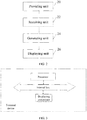
- the data processing apparatus can include the following units: a providing unit 20, configured to provide a service code management interface; a receiving unit 22, configured to receive a specified quantity that is input by a user in the service code management interface; a generating unit 24, configured to generate the specified quantity of service codes, where the specified quantity of service codes include the same user identification information; and a displaying unit 26, configured to display the specified quantity of service codes.
- the terminal device can include a displaying component and a processor.
- the displaying component can include but is not limited to a liquid crystal display (LCD), a cathode ray tube (CRT) display, a light emitting diode (LED) display, etc.
- the displaying component can be configured to display a service code management interface and a service code.
- the processor can be implemented in any proper method.
- the processor can take the form of, for example, a microprocessor or processor, a computer readable medium storing computer readable program code (such as software or firmware) executable by the microprocessor or processor, a logic gate, a switch, an application specific integrated circuit (ASIC), a programmable logic controller, and an embedded microcontroller.
- the processor can be coupled to the displaying component, and configured to: control the displaying component to display the service code management interface; receive a specified quantity that is input by a user in the service code management interface; generate the specified quantity of service codes, where the specified quantity of service codes include the same user identification information; and control the displaying component to display the specified quantity of service codes.
- a technical improvement is a hardware improvement (for example, an improvement to a circuit structure, such as a diode, a transistor, or a switch) or a software improvement (an improvement to a method procedure) can be clearly distinguished.
- a hardware improvement for example, an improvement to a circuit structure, such as a diode, a transistor, or a switch
- a software improvement an improvement to a method procedure
- a designer usually programs an improved method procedure into a hardware circuit, to obtain a corresponding hardware circuit structure. Therefore, a method procedure can be improved by using a hardware entity module.
- a programmable logic device for example, a field programmable gate array (FPGA)
- FPGA field programmable gate array
- the designer performs programming to "integrate" a digital system to a PLD without requesting a chip manufacturer to design and produce an application-specific integrated circuit chip.
- this type of programming is mostly implemented by using "logic compiler” software.
- the programming is similar to a software compiler used to develop and write a program. Original code needs to be written in a particular programming language for compilation. The language is referred to as a hardware description language (HDL).
- HDL hardware description language
- HDLs such as the Advanced Boolean Expression Language (ABEL), the Altera Hardware Description Language (AHDL), Confluence, the Cornell University Programming Language (CUPL), HDCal, the Java Hardware Description Language (JHDL), Lava, Lola, MyHDL, PALASM, and the Ruby Hardware Description Language (RHDL).
- ABEL Advanced Boolean Expression Language
- AHDL Altera Hardware Description Language
- CUPL Cornell University Programming Language
- HDCal the Java Hardware Description Language
- JHDL Java Hardware Description Language
- Lava Lola
- MyHDL MyHDL
- PALASM Ruby Hardware Description Language
- RHDL Ruby Hardware Description Language
- VHDL very-high-speed integrated circuit hardware description language
- Verilog2 Verilog2
- the system, apparatus, module, or unit illustrated in the previous embodiments can be implemented by using a computer chip or an entity, or can be implemented by using a product having a certain function.
- a typical implementation device is a computer.
- the computer can be a personal computer, a laptop computer, a cellular phone, a camera phone, a smart phone, a personal digital assistant, a media player, a navigation device, an e-mail device, a game console, a tablet computer, a wearable device, or any combination of these devices.
- the computer software product can be stored in a storage medium, such as a ROM/RAM, a magnetic disk, or an optical disc, and includes some instructions for instructing a computer device (can be a personal computer, a server, or a network device) to perform the methods described in some embodiments or in some parts of some embodiments of the present specification.
- the present specification can be applied to many general-purpose or special-purpose computer system environments or configurations, for example, a personal computer, a server computer, a handheld device or a portable device, a tablet device, a multi-processor system, a microprocessor-based system, a set-top box, a programmable consumer electronic device, a network PC, a minicomputer, a mainframe computer, and a distributed computing environment including any one of the previous systems or devices.
- the present specification can be described in the general context of computer-executable instructions, for example, a program module.
- the program module includes a routine, a program, an object, a component, a data structure, etc. executing a specific task or implementing a specific abstract data type.
- the present specification can also be practiced in distributed computing environments. In the distributed computing environments, tasks are performed by remote processing devices connected through a communications network. In a distributed computing environment, the program module can be located in both local and remote computer storage media including storage devices.
Landscapes
- Engineering & Computer Science (AREA)
- Business, Economics & Management (AREA)
- Theoretical Computer Science (AREA)
- Physics & Mathematics (AREA)
- General Physics & Mathematics (AREA)
- Accounting & Taxation (AREA)
- Strategic Management (AREA)
- General Business, Economics & Management (AREA)
- General Engineering & Computer Science (AREA)
- Computer Networks & Wireless Communication (AREA)
- Human Computer Interaction (AREA)
- Finance (AREA)
- Computer Security & Cryptography (AREA)
- User Interface Of Digital Computer (AREA)
- Telephonic Communication Services (AREA)
- Telephone Function (AREA)
- Management, Administration, Business Operations System, And Electronic Commerce (AREA)
Abstract
Description
- Embodiments of the present specification relate to the field of computer technologies, and in particular, to data processing methods, apparatuses, and terminal devices.
- With the continuous development of mobile payment technologies, mobile payment is gradually changing people's daily travel modes. More public transportation is beginning to support mobile payment. Users can use two-dimensional codes generated by mobile terminals to take public transportation. Specifically, when taking public transportation, a user can use a mobile terminal to generate a two-dimensional code, scan the code at an entry station, and scan the code at an exit station, thereby completing the payment. In related technologies, a mobile terminal can generate only one two-dimensional code each time for one user to take public transportation. As such, when multiple persons traveling together take public transportation and one of them makes payment, the user usually needs to perform the operation multiple times so that the mobile terminal generates multiple two-dimensional codes. Consequently, user operations are cumbersome and user experience is poor.
- A purpose of embodiments of the present specification is to provide data processing methods, apparatuses, and terminal devices, so as to simplify user operations and improve user experience.
- To achieve the previous purpose, some embodiments of the present specification provide a data processing method, including the following: providing a service code management interface; receiving a specified quantity that is input by a user in the service code management interface; generating the specified quantity of service codes, where the specified quantity of service codes include the same user identification information; and displaying the specified quantity of service codes.
- To achieve the previous purpose, some embodiments of the present specification provide a data processing apparatus, including the following: a providing unit, configured to provide a service code management interface; a receiving unit, configured to receive a specified quantity that is input by a user in the service code management interface; a generating unit, configured to generate the specified quantity of service codes, where the specified quantity of service codes include the same user identification information; and a displaying unit, configured to display the specified quantity of service codes.
- To achieve the previous purpose, some embodiments of the present specification provide a terminal device, including the following: a displaying component, configured to display a service code management interface and a service code; and a processor, coupled to the displaying component, and configured to: control the displaying component to display the service code management interface; receive a specified quantity that is input by a user in the service code management interface; generate the specified quantity of service codes, where the specified quantity of service codes include the same user identification information; and control the displaying component to display the specified quantity of service codes.
- It can be seen from the technical solutions provided in the previous embodiments of the present specification that, in some embodiments of the present specification, the mobile terminal can provide the service code management interface; can receive the specified quantity that is input by the user in the service code management interface; can generate the specified quantity of service codes, where the specified quantity of service codes include the same user identification information; and can display the specified quantity of service codes. As such, when multiple persons traveling together take public transportation and one of them makes payment, the user performs the operation once so that the mobile terminal generates multiple service codes, thereby simplifying user operations and improving user experience.
- To describe the technical solutions in some embodiments of the present specification or in the existing technology more clearly, the following briefly describes the accompanying drawings needed for describing some embodiments or the existing technology. Clearly, the accompanying drawings in the following descriptions merely show some embodiments of the present specification, and a person of ordinary skill in the art can still derive other drawings from these accompanying drawings without creative efforts.
-
FIG. 1 is a flowchart illustrating a data processing method, according to some embodiments of the present specification; -
FIG. 2 is a schematic diagram illustrating a functional structure of a data processing apparatus, according to some embodiments of the present specification; -
FIG. 3 is a schematic diagram illustrating a functional structure of a terminal device, according to some embodiments of the present specification; -
FIG. 4 is a schematic diagram illustrating an electronic metro card, according to some embodiments of the present specification; -
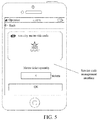
FIG. 5 is a schematic diagram illustrating a service code management interface, according to some embodiments of the present specification; -
FIG. 6 is a schematic diagram illustrating a service code display interface, according to some embodiments of the present specification; -
FIG. 7 is a schematic diagram illustrating a label, according to some embodiments of the present specification; and -
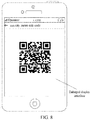
FIG. 8 is a schematic diagram illustrating an enlarged display interface, according to some embodiments of the present specification. - The following clearly describes the technical solutions in some embodiments of the present specification with reference to the accompanying drawings in some embodiments of the present specification. Clearly, the described embodiments are merely some but not all of some embodiments of the present specification. All other embodiments obtained by a person of ordinary skill in the art based on some embodiments of the present specification without creative efforts shall fall within the protection scope of the present specification.
- Some embodiments of the present specification provide a data processing system. The data processing system can implement a public transportation charging service. For example, the public transportation corresponding to the public transportation charging service can be a metro, a bus, a tram, a high-speed railway, etc. Specifically, the public transportation charging service can be a segmented charging service or a one ticket price charging service.
- In some embodiments, the data processing system can include a mobile terminal. The mobile terminal can have a service code generation function. A service code can include a graphical code, and the graphical code can include a bar code, a two-dimensional code, etc. The mobile terminal can be implemented in a form of hardware or software, or can be implemented in a form of a combination of hardware and software. For example, the mobile terminal can be a hardware device such as a smartphone, a tablet electronic device, a portable computer, a personal digital assistant (PDA), or a smart wearable device. The mobile terminal can also be an application program running on the hardware device.
- In some embodiments, the data processing system can further include a station-entry toll terminal. The station-entry toll terminal can have a service code scanning and recognition function. The station-entry toll terminal can be implemented in a form of hardware or software, or can be implemented in a form of a combination of hardware and software. For example, the station-entry toll terminal can be a hardware device such as a smartphone, a tablet electronic device, a portable computer, a personal digital assistant (PDA), an in-vehicle device, a POS machine (such as a merchant POS machine, a bus POS machine, or a metro POS machine), or a smart self-service terminal (kiosk) (such as a metro ticket vending machine or a train ticket vending machine). The station-entry toll terminal can also be an application program running on the hardware device.
- In some embodiments, the data processing system can further include a station-exit toll terminal. The station-exit toll terminal can have a service code scanning and recognition function. The station-exit toll terminal can be implemented in a form of hardware or software, or can be implemented in a form of a combination of hardware and software. For example, the station-exit toll terminal can be a hardware device such as a smartphone, a tablet electronic device, a portable computer, a personal digital assistant (PDA), an in-vehicle device, a POS machine (such as a merchant POS machine, a bus POS machine, or a metro POS machine), or a smart self-service terminal (kiosk) (such as a metro ticket vending machine or a train ticket vending machine). The station-exit toll terminal can also be an application program running on the hardware device. It is worthwhile to note that, the station-exit toll terminal and the station-entry toll terminal can be the same or different. For example, when the public transportation corresponding to the public transportation charging service is metro, the station-exit toll terminal and the station-entry toll terminal can be different terminals. When the public transportation corresponding to the public transportation charging service is bus, the station-exit toll terminal and the station-entry toll terminal can be the same terminal.
- In some embodiments, the data processing system can further include a charging server. The charging server can communicate with the station-entry toll terminal and the station-exit toll terminal. The charging server can be a server, or a server cluster that includes multiple servers.
- In some embodiments, the data processing system can further include a payment server. The payment server can communicate with the mobile terminal. The payment server can be a server, or a server cluster that includes multiple servers.
- Some embodiments of the present specification provide a data processing method. The data processing method is implemented by the data processing system.
- In some embodiments, the mobile terminal can provide a service code management interface. The mobile terminal can receive a specified quantity that is input by a user in the service code management interface; can generate the specified quantity of service codes; and can display the specified quantity of service codes. Specifically, the specified quantity can be multiple. Each service code can include user identification information. For example, the user identification information can be a user account, a code of the user account, or any other form of information that can be used to deduce the user account. For example, the user account can be an ALIPAY account, a WeChat account, a bus card number, a metro card number, an all-in-one city card number, etc. The user identification information included in the specified quantity of service codes can be the same. Each service code can represent one service order initiated by the mobile terminal. Each service code can include order identification information, and the order identification information can be used to identify a service order represented by the service code. Order identification information in different service codes can be different.
- In some embodiments, after arriving at the entry station, the user can use a service code that has not been scanned and recognized by the station-entry toll terminal for code scanning by the station-entry toll terminal at the entry station, so as to take public transportation at the entry station. Considering that the mobile terminal can display multiple service codes, the user can perform code scanning multiple times, so that multiple persons (for example, the user and the user's parents, etc.) traveling together take public transportation at the entry station. A quantity of times the user scans the code can be less than or equal to the specified quantity. Each time the user scans a service code, the station-entry toll terminal can obtain the service code through scanning; can identify the service code to obtain user identification information and order identification information; and can send the user identification information, the order identification information, and entry station information to the charging server. The entry station information can be used to identify the entry station, and can be, for example, a name or a number of the entry station. The charging server can receive the user identification information, the order identification information, and the entry station information, so as to charge a user account corresponding to the user identification information.
- In some embodiments, after arriving at the exit station, the user can use the service code that has been scanned and recognized by the station-entry toll terminal but has not been scanned and recognized by the station-exit toll terminal for code scanning by the station-exit toll terminal at the exit station, so as to leave the exit station. Considering that multiple persons traveling together may not leave at the same exit station, the user can perform code scanning once or multiple times, so that one or more of the multiple persons traveling together leave the exit station. Each time the user scans a service code, the station-exit toll terminal can obtain the service code through scanning; can identify the service code to obtain user identification information and order identification information; and can send the user identification information, the order identification information, and exit station information to the charging server. The exit station information can be used to identify the exit station, and can be, for example, a name or a number of the exit station. The charging server can receive the user identification information, the order identification information, and the exit station information; can determine a charging amount based on the previously received entry station information that corresponds to both the user identification information and the order identification information, and a charging rule; and can send a payment request to the payment server. The payment request can include the user identification information, the order identification information, and the charging amount. Certainly, the payment request can further include other information, such as payee account information. The payment server can receive the payment request; can deduct money from a user account corresponding to the user identification information based on the charging amount; and can send payment result information to the mobile terminal. The payment result information can include the order identification information. Certainly, the payment result information can further include other information, such as the user identification information and/or the charging amount.
- Further references can be made to
FIG. 1 ,FIG. 4 ,FIG. 5 ,FIG. 6 ,FIG. 7 , andFIG. 8 . Some embodiments of the present specification further provide another data processing method. The data processing method can be performed by a mobile terminal. The data processing method can include the following steps. - Step S10: Provide a service code management interface.
- In some embodiments, the service code management interface can be provided by the mobile terminal for a user to set a quantity of service codes to be generated. The mobile terminal can display the service code management interface after receiving an interface display instruction.
- The interface display instruction can be automatically generated by the mobile terminal. For example, the mobile terminal can run an application program. After the application program is started, the interface display instruction can be generated by default.
- Alternatively, the interface display instruction can be generated through triggering by a user operation. For example, the mobile terminal can generate the interface display instruction after detecting that one or any combination of multiple specified keys is pressed, tapped, double-tapped, or swiped. The specified key can be a virtual key or a physical key. For example, the virtual key can be a button control or a graphic control, etc. The physical key can be a press button, a rocker button, a dial, a slider switch, or a joystick, etc. For another example, the mobile terminal can further generate the interface display instruction after recognizing a predetermined gesture. For example, the predetermined gesture can be swiping left, swiping right, etc. For another example, the mobile terminal can have a gyroscope and/or an acceleration sensor. The mobile terminal can further generate the interface display instruction after detecting a predetermined motion state by using a gyroscope and/or an acceleration sensor. For example, the predetermined motion state can be shaking, etc.
- Step S12: Receive a specified quantity that is input by a user in the service code management interface.
- In some embodiments, the specified quantity can be a quantity of service codes to be generated by the mobile terminal. Specifically, the specified quantity can be multiple, for example, two, three, or five. The mobile terminal can receive, in any method, the specified quantity that is input by the user in the service code management interface. For example, the service code management interface can include a text box. The user can input the specified quantity in the text box. The mobile terminal can receive the specified quantity that is input by the user in the text box. For another example, the user can input first audio information in the service code management interface. The mobile terminal can receive the first audio information that is input by the user; and can recognize the first audio information to obtain the specified quantity.
- Step S 14: Generate the specified quantity of service codes.
- In some embodiments, for the description of the service code, references can be made to the previous embodiments. The mobile terminal can generate the specified quantity of service codes after receiving a service code generation instruction. A process of generating the service code generation instruction can be similar to a process of generating the interface display instruction. The mobile terminal can generate the specified quantity of service codes by using a service code generation algorithm. Depending on different generated service codes, the service code generation algorithms can be the same or different. For example, when a two-dimensional code is generated, the service code generation algorithm can be a quick response code (QR code) algorithm. A person skilled in the art should understand that, the QR code algorithm here is only an example, and in fact any algorithm that can generate a two-dimensional code can be applied here. Certainly, when other service codes are generated, the service code generation algorithm can also be other algorithms, which are not listed here one by one. In addition, the mobile terminal can generate the specified quantity of service codes offline. Alternatively, the mobile terminal can generate the specified quantity of service codes by interacting with a payment server online. For the description of the payment server, references can be made to the previous embodiments.
- Step S16: Display the specified quantity of service codes.
- In some embodiments, the mobile terminal can display the specified quantity of service codes in any method. For example, the mobile terminal can provide a service code display interface; and can display the specified quantity of service codes in the service code display interface.
- In some implementations of some embodiments, after receiving a first label generation instruction for a first service code, the mobile terminal can generate a first label for the first service code; and can display the first label. The first service code can include a service code that has been scanned and recognized by the station-entry toll terminal but has not been scanned and recognized by the station-exit toll terminal. The first label can be used to indicate that a service order represented by the first service code is in a charging state. For example, the first label can be "entered".
- The first label generation instruction can be generated through triggering by a user operation. For example, the user can trigger the service code that has been scanned and recognized by the station-entry toll terminal but has not been scanned and recognized by the station-exit toll terminal. After detecting the trigger operation, the mobile terminal can use a service code corresponding to the trigger operation as a first service code; and can generate a first label generation instruction for the first service code. For example, the trigger operation can include a tap operation, a double-tap operation, a press operation, a swipe operation, an operation of pressing and holding for more than a predetermined time (also referred to as a touch and hold operation), etc.
- Alternatively, the first label generation instruction can be generated after tolling start information sent by the payment server is received. Specifically, the user can use a service code that has not been scanned and recognized by the station-entry toll terminal for code scanning by the station-entry toll terminal at the entry station. The station-entry toll terminal can obtain the service code through scanning; can identify the service code to obtain user identification information and order identification information; and can send the user identification information, the order identification information, and entry station information to the charging server. The charging server can receive the user identification information, the order identification information, and the entry station information; and can send the tolling start information to the payment server. The tolling start information can include the order identification information. Certainly, the tolling start information can further include other information, such as the user identification information and/or the entry station information. The payment server can receive the tolling start information; and can send the tolling start information to the mobile terminal. The mobile terminal can receive the tolling start information; can use a service code that includes the order identification information in the tolling start information as a first service code; and can generate a first label generation instruction for the first service code.
- In some implementations of some embodiments, after receiving a second label generation instruction for a second service code, the mobile terminal can generate a second label for the second service code; and can display the second label. The second service code can include a service code that has been scanned and recognized by the station-exit toll terminal. The second label can be used to indicate that a service order represented by the second service code is in a payment end state. For example, the second label can be "exited".
- The second label generation instruction can be generated through triggering by a user operation. For example, the user can trigger the service code that has been scanned and recognized by the station-exit toll terminal. After detecting the trigger operation, the mobile terminal can use a service code corresponding to the trigger operation as a second service code; and can generate a second label generation instruction for the second service code. For example, the trigger operation can include a tap operation, a double-tap operation, a press operation, a swipe operation, an operation of pressing and holding for more than a predetermined time (also referred to as a touch and hold operation), etc.
- Alternatively, the second label generation instruction can be generated after payment result information sent by the payment server is received. Specifically, the user can use the service code that has been scanned and recognized by the station-entry toll terminal but has not been scanned and recognized by the station-exit toll terminal for code scanning by the station-exit toll terminal at the exit station. The station-exit toll terminal can obtain the service code through scanning; can identify the service code to obtain user identification information and order identification information; and can send the user identification information, the order identification information, and exit station information to the charging server. The charging server can receive the user identification information, the order identification information, and the exit station information; can determine a charging amount based on the previously received entry station information that corresponds to both the user identification information and the order identification information, and a charging rule; and can send a payment request to the payment server. The payment request can include the user identification information, the order identification information, and the charging amount. The payment server can receive the payment request; can deduct money from a user account corresponding to the user identification information based on the charging amount; and can send payment result information to the mobile terminal. The payment result information can include the order identification information. The mobile terminal can receive the payment result information; can use a service code that includes the order identification information in the payment result information as a second service code; and can generate a second label generation instruction for the second service code.
- In some implementations of some embodiments, after receiving a third label generation instruction for a third service code, the mobile terminal can generate a third label for the third service code; and can display the third label. The third service code can include a service code that has not been scanned and recognized by the station-entry toll terminal. The third label can be used to indicate that a service order represented by the third service code is in a canceled state. For example, the third label can be "canceled".
- The third label generation instruction can be generated through triggering by a user operation. For example, the user can trigger the service code that has not been scanned and recognized by the station-entry toll terminal. After detecting the trigger operation, the mobile terminal can use a service code corresponding to the trigger operation as a third service code; and can generate a third label generation instruction for the third service code. For example, the trigger operation can include a tap operation, a double-tap operation, a press operation, a swipe operation, an operation of pressing and holding for more than a predetermined time (also referred to as a touch and hold operation), etc.
- In some implementations of some embodiments, after receiving an enlarged display instruction for a fourth service code, the mobile terminal can enter an enlarged display interface for enlarged display of the fourth service code. In the enlarged display interface, the fourth service code is in an enlarged display state, facilitating code scanning by the user. The fourth service code can include a service code that has not been scanned and recognized by the station-entry toll terminal, and a service code that has been scanned and recognized by the station-entry toll terminal but has not been scanned and recognized by the station-exit toll terminal.
- The enlarged display instruction can be generated through triggering by a user operation. For example, the user can trigger the service code that has not been scanned and recognized by the station-entry toll terminal. After detecting the trigger operation, the mobile terminal can use a service code corresponding to the trigger operation as a fourth service code; and can generate an enlarged display instruction for the fourth service code. For example, the trigger operation can include a tap operation, a double-tap operation, a press operation, a swipe operation, an operation of pressing and holding for more than a predetermined time (also referred to as a touch and hold operation), etc. For another example, the user can trigger the service code that has been scanned and recognized by the station-entry toll terminal but has not been scanned and recognized by the station-exit toll terminal. After detecting the trigger operation, the mobile terminal can use a service code corresponding to the trigger operation as a fourth service code; and can generate an enlarged display instruction for the fourth service code.
- Alternatively, the enlarged display instruction can be generated after second audio information is received. Specifically, as described previously, the mobile terminal can display the specified quantity of service codes. At least one service code in the specified quantity of service codes can have a label. The label can include a first label, a second label, a third label, etc. As such, the user can input the second audio information. The mobile terminal can receive audio information that is input by a user; can recognize the second audio information to obtain a target label; can use a service code that has the target label as a fourth service code; and can generate an enlarged display instruction for the fourth service code. For example, the second audio information can be "display the service code that has been used for entry", and then the target label can be the first label "entered". For another example, the second audio information can be "display the service code that has been used for exit", and then the target label can be the second label "exited".
- In some implementations of some embodiments, as described previously, the mobile terminal can display the specified quantity of service codes. At least one service code in the specified quantity of service codes can have a label. The label can include a first label, a second label, a third label, etc. As such, after receiving a label broadcast instruction for a fifth service code, the mobile terminal can broadcast a label that the fifth service code has. The fifth service code can include a service code that has been scanned and recognized by the station-entry toll terminal, but has not been scanned and recognized by the station-exit toll terminal, and a service code that has been scanned and recognized by the station-exit toll terminal.
- The label broadcast instruction can be generated through triggering by a user operation. For example, the user can trigger the service code that has been scanned and recognized by the station-entry toll terminal but has not been scanned and recognized by the station-exit toll terminal. After detecting the trigger operation, the mobile terminal can use a service code corresponding to the trigger operation as a fifth service code; and can generate a label broadcast instruction for the fifth service code. For another example, the user can trigger the service code that has been scanned and recognized by the station-exit toll terminal. After detecting the trigger operation, the mobile terminal can use a service code corresponding to the trigger operation as a fifth service code; and can generate a label broadcast instruction for the fifth service code.
- In some embodiments, the mobile terminal can provide the service code management interface; can receive the specified quantity that is input by the user in the service code management interface; can generate the specified quantity of service codes, where the specified quantity of service codes include the same user identification information; and can display the specified quantity of service codes. As such, when multiple persons traveling together take public transportation and one of them makes payment, the user performs the operation once so that the mobile terminal generates multiple service codes, thereby simplifying user operations and improving user experience.
- References are made to
FIG. 2 . Some embodiments of the present specification provide a data processing apparatus. The data processing apparatus can include the following units: a providingunit 20, configured to provide a service code management interface; a receivingunit 22, configured to receive a specified quantity that is input by a user in the service code management interface; a generatingunit 24, configured to generate the specified quantity of service codes, where the specified quantity of service codes include the same user identification information; and a displayingunit 26, configured to display the specified quantity of service codes. - References are made to
FIG. 3 . Some embodiments of the present specification provide a terminal device. The terminal device can include a displaying component and a processor. - In some embodiments, the displaying component can include but is not limited to a liquid crystal display (LCD), a cathode ray tube (CRT) display, a light emitting diode (LED) display, etc. The displaying component can be configured to display a service code management interface and a service code.
- In some embodiments, the processor can be implemented in any proper method. For example, the processor can take the form of, for example, a microprocessor or processor, a computer readable medium storing computer readable program code (such as software or firmware) executable by the microprocessor or processor, a logic gate, a switch, an application specific integrated circuit (ASIC), a programmable logic controller, and an embedded microcontroller. The processor can be coupled to the displaying component, and configured to: control the displaying component to display the service code management interface; receive a specified quantity that is input by a user in the service code management interface; generate the specified quantity of service codes, where the specified quantity of service codes include the same user identification information; and control the displaying component to display the specified quantity of service codes.
- Some embodiments of the present specification are described in a progressive way. For same or similar parts of some embodiments, mutual references can be made to some embodiments. Each embodiment focuses on a difference from the other embodiments. Particularly, data processing apparatus embodiments and terminal device embodiments are basically similar to method embodiments, and therefore are described briefly. For related parts, references can be made to related descriptions in the method embodiments.
- In the 1990s, whether a technical improvement is a hardware improvement (for example, an improvement to a circuit structure, such as a diode, a transistor, or a switch) or a software improvement (an improvement to a method procedure) can be clearly distinguished. However, as technologies develop, current improvements to many method procedures can be considered as direct improvements to hardware circuit structures. A designer usually programs an improved method procedure into a hardware circuit, to obtain a corresponding hardware circuit structure. Therefore, a method procedure can be improved by using a hardware entity module. For example, a programmable logic device (PLD) (for example, a field programmable gate array (FPGA)) is such an integrated circuit, and a logical function of the PLD is determined by a user through device programming. The designer performs programming to "integrate" a digital system to a PLD without requesting a chip manufacturer to design and produce an application-specific integrated circuit chip. In addition, at present, instead of manually manufacturing an integrated chip, this type of programming is mostly implemented by using "logic compiler" software. The programming is similar to a software compiler used to develop and write a program. Original code needs to be written in a particular programming language for compilation. The language is referred to as a hardware description language (HDL). There are many HDLs, such as the Advanced Boolean Expression Language (ABEL), the Altera Hardware Description Language (AHDL), Confluence, the Cornell University Programming Language (CUPL), HDCal, the Java Hardware Description Language (JHDL), Lava, Lola, MyHDL, PALASM, and the Ruby Hardware Description Language (RHDL). The very-high-speed integrated circuit hardware description language (VHDL) and Verilog2 are most commonly used. A person skilled in the art should also understand that a hardware circuit that implements a logical method procedure can be readily obtained once the method procedure is logically programmed by using the some described hardware description languages and is programmed into an integrated circuit.
- The system, apparatus, module, or unit illustrated in the previous embodiments can be implemented by using a computer chip or an entity, or can be implemented by using a product having a certain function. A typical implementation device is a computer. Specifically, for example, the computer can be a personal computer, a laptop computer, a cellular phone, a camera phone, a smart phone, a personal digital assistant, a media player, a navigation device, an e-mail device, a game console, a tablet computer, a wearable device, or any combination of these devices.
- It can be seen from the descriptions of the implementations that a person skilled in the art can clearly understand that the present specification can be implemented by using software and a necessary general hardware platform. Based on such an understanding, the technical solutions in the present specification essentially or the part contributing to the existing technology can be implemented in a form of a software product. The computer software product can be stored in a storage medium, such as a ROM/RAM, a magnetic disk, or an optical disc, and includes some instructions for instructing a computer device (can be a personal computer, a server, or a network device) to perform the methods described in some embodiments or in some parts of some embodiments of the present specification.
- The present specification can be applied to many general-purpose or special-purpose computer system environments or configurations, for example, a personal computer, a server computer, a handheld device or a portable device, a tablet device, a multi-processor system, a microprocessor-based system, a set-top box, a programmable consumer electronic device, a network PC, a minicomputer, a mainframe computer, and a distributed computing environment including any one of the previous systems or devices.
- The present specification can be described in the general context of computer-executable instructions, for example, a program module. Generally, the program module includes a routine, a program, an object, a component, a data structure, etc. executing a specific task or implementing a specific abstract data type. The present specification can also be practiced in distributed computing environments. In the distributed computing environments, tasks are performed by remote processing devices connected through a communications network. In a distributed computing environment, the program module can be located in both local and remote computer storage media including storage devices.
- Although the present specification is described by using some embodiments, a person of ordinary skill in the art knows that many variations of the present specification can be made without departing from the spirit of the present specification. It is expected that the appended claims include these variations without departing from the spirit of the present specification.
Claims (11)
- A data processing method, comprising the following:providing a service code management interface;receiving a specified quantity that is input by a user in the service code management interface;generating the specified quantity of service codes, wherein the specified quantity of service codes comprise the same user identification information; anddisplaying the specified quantity of service codes.
- The method according to claim 1, wherein the method further comprises the following:after receiving a first label generation instruction for a first service code, generating a first label for the first service code, wherein the first label is used to indicate that a service order represented by the first service code is in a charging state; anddisplaying the first label.
- The method according to claim 2, wherein each service code further comprises order identification information; correspondingly, the first label generation instruction is generated after tolling start information is received; and the tolling start information comprises order identification information in the first service code.
- The method according to claim 1, wherein the method further comprises the following:after receiving a second label generation instruction for a second service code, generating a second label for the second service code, wherein the second label is used to indicate that a service order represented by the second service code is in a payment end state; anddisplaying the second label.
- The method according to claim 4, wherein each service code further comprises order identification information; correspondingly, the second label generation instruction is generated after payment result information is received; and the payment result information comprises order identification information in the second service code.
- The method according to claim 1, wherein the method further comprises the following:after receiving a third label generation instruction for a third service code, generating a third label for the third service code, wherein the third label is used to indicate that a service order represented by the third service code is in a canceled state; anddisplaying the third label.
- The method according to claim 1, wherein the method further comprises the following:
after receiving an enlarged display instruction for a fourth service code, entering an enlarged display interface for enlarged display of the fourth service code. - The method according to claim 1, wherein at least one service code in the specified quantity of service codes has a label; correspondingly, the method further comprises the following:
after receiving a label broadcast instruction for a fifth service code, broadcasting a label that the fifth service code has. - The method according to claim 1, wherein each service code further comprises order identification information; and order identification information in different service codes is different.
- A data processing apparatus, comprising the following:a providing unit, configured to provide a service code management interface;a receiving unit, configured to receive a specified quantity that is input by a user in the service code management interface;a generating unit, configured to generate the specified quantity of service codes, wherein the specified quantity of service codes comprise the same user identification information; anda displaying unit, configured to display the specified quantity of service codes.
- A terminal device, comprising the following:a displaying component, configured to display a service code management interface and a service code; anda processor, coupled to the displaying component, and configured to: control the displaying component to display the service code management interface; receive a specified quantity that is input by a user in the service code management interface; generate the specified quantity of service codes, wherein the specified quantity of service codes comprise the same user identification information; and control the displaying component to display the specified quantity of service codes.
Applications Claiming Priority (2)
| Application Number | Priority Date | Filing Date | Title |
|---|---|---|---|
| CN201810839423.0A CN109118205B (en) | 2018-07-27 | 2018-07-27 | Data processing method, data processing device and terminal equipment |
| PCT/CN2019/094875 WO2020019967A1 (en) | 2018-07-27 | 2019-07-05 | Data processing method, data processing apparatus and terminal device |
Publications (2)
| Publication Number | Publication Date |
|---|---|
| EP3779827A1 true EP3779827A1 (en) | 2021-02-17 |
| EP3779827A4 EP3779827A4 (en) | 2021-06-09 |
Family
ID=64863356
Family Applications (1)
| Application Number | Title | Priority Date | Filing Date |
|---|---|---|---|
| EP19842137.2A Ceased EP3779827A4 (en) | 2018-07-27 | 2019-07-05 | Data processing method, data processing apparatus and terminal device |
Country Status (6)
| Country | Link |
|---|---|
| US (2) | US11042847B2 (en) |
| EP (1) | EP3779827A4 (en) |
| CN (1) | CN109118205B (en) |
| SG (1) | SG11202010562UA (en) |
| TW (1) | TW202008253A (en) |
| WO (1) | WO2020019967A1 (en) |
Families Citing this family (1)
| Publication number | Priority date | Publication date | Assignee | Title |
|---|---|---|---|---|
| CN109118205B (en) | 2018-07-27 | 2020-09-29 | 阿里巴巴集团控股有限公司 | Data processing method, data processing device and terminal equipment |
Family Cites Families (22)
| Publication number | Priority date | Publication date | Assignee | Title |
|---|---|---|---|---|
| CN1452131A (en) * | 2002-04-19 | 2003-10-29 | 黄庆祥 | Two-dimensional barcode online coupon generation system |
| US20100033572A1 (en) * | 2004-03-24 | 2010-02-11 | Richard Steven Trela | Ticket-holder security checkpoint system for deterring terrorist attacks |
| US20120221474A1 (en) | 2011-02-24 | 2012-08-30 | Skycore Llc | Secure Electronic Ticketing using Mobile Communication Devices over the Internet |
| TW201232432A (en) | 2011-11-16 | 2012-08-01 | Media Co Ltd M | Electronic ticket system |
| CN203350948U (en) * | 2013-06-24 | 2013-12-18 | 南京航空航天大学 | One-card type multiple person-time accounting terminal of metro |
| US10769625B2 (en) * | 2013-12-20 | 2020-09-08 | Cellco Partnership | Dynamic generation of quick response (QR) codes for secure communication from/to a mobile device |
| CN105630319A (en) * | 2014-11-20 | 2016-06-01 | 阿里巴巴集团控股有限公司 | Two-dimensional code generation method and apparatus as well as secure decoding method and apparatus for two-dimensional code |
| CN104700260A (en) | 2015-03-26 | 2015-06-10 | 何冬华 | Method for achieving bus taking voucher by using two-dimension code displayed by mobile phone |
| CN104915831A (en) * | 2015-06-19 | 2015-09-16 | 苏州富欣智能交通控制有限公司 | Mobile terminal ticket payment system and method applied to rail transit field |
| US20170140315A1 (en) * | 2015-11-17 | 2017-05-18 | International Business Machines Corporation | Managing incident tickets in a cloud managed service environment |
| CN106250956A (en) * | 2016-08-02 | 2016-12-21 | 立德高科(昆山)数码科技有限责任公司 | According to the interval method and system generating Quick Response Code with the information of appointment of selected code value |
| CN106453846B (en) * | 2016-09-14 | 2020-01-14 | 北京小米移动软件有限公司 | Display method and device of two-dimensional code business card |
| CN106447328A (en) * | 2016-10-20 | 2017-02-22 | 严珂 | Electronic payment method, bus electronic payment system, and metro electronic payment system |
| CN106600716A (en) * | 2016-12-07 | 2017-04-26 | 深圳市万通顺达科技股份有限公司 | One-way ticket purchasing and checking method and system based on two-dimensional code |
| CN106846506B (en) * | 2017-01-25 | 2021-08-10 | 腾讯科技(深圳)有限公司 | Method and system for information verification based on information identification code |
| CN107038562A (en) | 2017-03-13 | 2017-08-11 | 阿里巴巴集团控股有限公司 | Method of payment, charge system and the payment system of traffic block meter rate |
| CN107451902A (en) | 2017-08-17 | 2017-12-08 | 郑州云海信息技术有限公司 | The management method and device of ticket |
| CN107609856B (en) * | 2017-09-27 | 2019-03-15 | 深圳市万通顺达科技股份有限公司 | A kind of two dimensional code payment system and its method of payment |
| CN207440837U (en) * | 2017-09-30 | 2018-06-01 | 深圳市极成光电有限公司 | Electronic-parking ticket Quick Response Code dynamic generation apparatus |
| CN108022162A (en) * | 2017-12-28 | 2018-05-11 | 深圳春沐源控股有限公司 | Hotel self-service selects room to move in method, apparatus, terminal and storage medium |
| US20200012999A1 (en) * | 2018-07-03 | 2020-01-09 | Baidu Usa Llc | Method and apparatus for information processing |
| CN109118205B (en) * | 2018-07-27 | 2020-09-29 | 阿里巴巴集团控股有限公司 | Data processing method, data processing device and terminal equipment |
-
2018
- 2018-07-27 CN CN201810839423.0A patent/CN109118205B/en active Active
-
2019
- 2019-05-20 TW TW108117328A patent/TW202008253A/en unknown
- 2019-07-05 EP EP19842137.2A patent/EP3779827A4/en not_active Ceased
- 2019-07-05 SG SG11202010562UA patent/SG11202010562UA/en unknown
- 2019-07-05 WO PCT/CN2019/094875 patent/WO2020019967A1/en not_active Ceased
-
2020
- 2020-10-29 US US17/083,415 patent/US11042847B2/en active Active
-
2021
- 2021-06-07 US US17/340,468 patent/US11250392B2/en active Active
Also Published As
| Publication number | Publication date |
|---|---|
| US11250392B2 (en) | 2022-02-15 |
| US11042847B2 (en) | 2021-06-22 |
| SG11202010562UA (en) | 2020-11-27 |
| EP3779827A4 (en) | 2021-06-09 |
| CN109118205A (en) | 2019-01-01 |
| CN109118205B (en) | 2020-09-29 |
| US20210042716A1 (en) | 2021-02-11 |
| TW202008253A (en) | 2020-02-16 |
| WO2020019967A1 (en) | 2020-01-30 |
| US20210295281A1 (en) | 2021-09-23 |
Similar Documents
| Publication | Publication Date | Title |
|---|---|---|
| CN118798877B (en) | A payment method, device, equipment and medium based on near field communication | |
| US11284251B2 (en) | Mobile device and control method thereof | |
| US9258691B2 (en) | Merchant server programmed for user acquisition within a repeat payment computer system | |
| KR102259714B1 (en) | Method and device for account creation, account refill and data synchronization | |
| CN108305065B (en) | Data processing method, terminal device and data processing system | |
| CN107038569A (en) | Information interaction method and device | |
| CN108564359B (en) | Data processing method, terminal equipment and data processing system | |
| EP4535267A1 (en) | Payment method, apparatus and device | |
| CN112950219A (en) | Payment processing method and system | |
| CN111340471B (en) | Payment method, device and equipment based on face recognition | |
| US11250392B2 (en) | Data processing methods, apparatuses, and terminal devices | |
| CN114217754A (en) | Screen projection control method and device, electronic equipment and storage medium | |
| CN115330380A (en) | Payment processing method and device | |
| CN111580659B (en) | File processing method and device and electronic equipment | |
| US9066222B2 (en) | Mobile billing operator server programmed for user acquisition within a repeat payment computer system | |
| WO2023173741A1 (en) | Automatic account checking method and apparatus, and electronic device and storage medium | |
| CN113821294A (en) | Two-dimensional code scanning method and device, electronic equipment and storage medium | |
| CN113783580A (en) | Equipment control method and device | |
| HK40002331A (en) | Data processing method, data processing apparatus, and terminal apparatus | |
| HK40002331B (en) | Data processing method, data processing apparatus, and terminal apparatus | |
| HK1256778A1 (en) | Data processing method, terminal device, and data processing system | |
| HK1256778B (en) | Data processing method, terminal device, and data processing system | |
| HK40030946A (en) | Payment method, device and equipment apparatus based on faciale recognition | |
| HK1248892A1 (en) | Account creation, account recharging and data synchronization method and device |
Legal Events
| Date | Code | Title | Description |
|---|---|---|---|
| STAA | Information on the status of an ep patent application or granted ep patent |
Free format text: STATUS: THE INTERNATIONAL PUBLICATION HAS BEEN MADE |
|
| PUAI | Public reference made under article 153(3) epc to a published international application that has entered the european phase |
Free format text: ORIGINAL CODE: 0009012 |
|
| STAA | Information on the status of an ep patent application or granted ep patent |
Free format text: STATUS: REQUEST FOR EXAMINATION WAS MADE |
|
| 17P | Request for examination filed |
Effective date: 20201027 |
|
| AK | Designated contracting states |
Kind code of ref document: A1 Designated state(s): AL AT BE BG CH CY CZ DE DK EE ES FI FR GB GR HR HU IE IS IT LI LT LU LV MC MK MT NL NO PL PT RO RS SE SI SK SM TR |
|
| AX | Request for extension of the european patent |
Extension state: BA ME |
|
| A4 | Supplementary search report drawn up and despatched |
Effective date: 20210510 |
|
| RIC1 | Information provided on ipc code assigned before grant |
Ipc: G06Q 20/32 20120101AFI20210503BHEP Ipc: G06Q 20/04 20120101ALI20210503BHEP |
|
| DAV | Request for validation of the european patent (deleted) | ||
| DAX | Request for extension of the european patent (deleted) | ||
| STAA | Information on the status of an ep patent application or granted ep patent |
Free format text: STATUS: EXAMINATION IS IN PROGRESS |
|
| 17Q | First examination report despatched |
Effective date: 20220121 |
|
| REG | Reference to a national code |
Ref country code: DE Ref legal event code: R003 |
|
| STAA | Information on the status of an ep patent application or granted ep patent |
Free format text: STATUS: THE APPLICATION HAS BEEN REFUSED |
|
| 18R | Application refused |
Effective date: 20230330 |