EP3779749A1 - Risk control method, risk control device, electronic device and storage medium - Google Patents
Risk control method, risk control device, electronic device and storage medium Download PDFInfo
- Publication number
- EP3779749A1 EP3779749A1 EP19834389.9A EP19834389A EP3779749A1 EP 3779749 A1 EP3779749 A1 EP 3779749A1 EP 19834389 A EP19834389 A EP 19834389A EP 3779749 A1 EP3779749 A1 EP 3779749A1
- Authority
- EP
- European Patent Office
- Prior art keywords
- risk
- identity verification
- risk control
- security
- user operation
- Prior art date
- Legal status (The legal status is an assumption and is not a legal conclusion. Google has not performed a legal analysis and makes no representation as to the accuracy of the status listed.)
- Granted
Links
Images


Classifications
-
- H—ELECTRICITY
- H04—ELECTRIC COMMUNICATION TECHNIQUE
- H04L—TRANSMISSION OF DIGITAL INFORMATION, e.g. TELEGRAPHIC COMMUNICATION
- H04L63/00—Network architectures or network communication protocols for network security
- H04L63/14—Network architectures or network communication protocols for network security for detecting or protecting against malicious traffic
- H04L63/1433—Vulnerability analysis
-
- G—PHYSICS
- G06—COMPUTING OR CALCULATING; COUNTING
- G06F—ELECTRIC DIGITAL DATA PROCESSING
- G06F21/00—Security arrangements for protecting computers, components thereof, programs or data against unauthorised activity
- G06F21/50—Monitoring users, programs or devices to maintain the integrity of platforms, e.g. of processors, firmware or operating systems
- G06F21/57—Certifying or maintaining trusted computer platforms, e.g. secure boots or power-downs, version controls, system software checks, secure updates or assessing vulnerabilities
- G06F21/577—Assessing vulnerabilities and evaluating computer system security
-
- G—PHYSICS
- G06—COMPUTING OR CALCULATING; COUNTING
- G06F—ELECTRIC DIGITAL DATA PROCESSING
- G06F21/00—Security arrangements for protecting computers, components thereof, programs or data against unauthorised activity
- G06F21/30—Authentication, i.e. establishing the identity or authorisation of security principals
- G06F21/31—User authentication
-
- G—PHYSICS
- G06—COMPUTING OR CALCULATING; COUNTING
- G06F—ELECTRIC DIGITAL DATA PROCESSING
- G06F21/00—Security arrangements for protecting computers, components thereof, programs or data against unauthorised activity
- G06F21/30—Authentication, i.e. establishing the identity or authorisation of security principals
- G06F21/31—User authentication
- G06F21/32—User authentication using biometric data, e.g. fingerprints, iris scans or voiceprints
-
- G—PHYSICS
- G06—COMPUTING OR CALCULATING; COUNTING
- G06F—ELECTRIC DIGITAL DATA PROCESSING
- G06F21/00—Security arrangements for protecting computers, components thereof, programs or data against unauthorised activity
- G06F21/60—Protecting data
- G06F21/62—Protecting access to data via a platform, e.g. using keys or access control rules
- G06F21/6218—Protecting access to data via a platform, e.g. using keys or access control rules to a system of files or objects, e.g. local or distributed file system or database
-
- G—PHYSICS
- G06—COMPUTING OR CALCULATING; COUNTING
- G06Q—INFORMATION AND COMMUNICATION TECHNOLOGY [ICT] SPECIALLY ADAPTED FOR ADMINISTRATIVE, COMMERCIAL, FINANCIAL, MANAGERIAL OR SUPERVISORY PURPOSES; SYSTEMS OR METHODS SPECIALLY ADAPTED FOR ADMINISTRATIVE, COMMERCIAL, FINANCIAL, MANAGERIAL OR SUPERVISORY PURPOSES, NOT OTHERWISE PROVIDED FOR
- G06Q10/00—Administration; Management
- G06Q10/06—Resources, workflows, human or project management; Enterprise or organisation planning; Enterprise or organisation modelling
- G06Q10/063—Operations research, analysis or management
- G06Q10/0635—Risk analysis of enterprise or organisation activities
-
- G—PHYSICS
- G06—COMPUTING OR CALCULATING; COUNTING
- G06Q—INFORMATION AND COMMUNICATION TECHNOLOGY [ICT] SPECIALLY ADAPTED FOR ADMINISTRATIVE, COMMERCIAL, FINANCIAL, MANAGERIAL OR SUPERVISORY PURPOSES; SYSTEMS OR METHODS SPECIALLY ADAPTED FOR ADMINISTRATIVE, COMMERCIAL, FINANCIAL, MANAGERIAL OR SUPERVISORY PURPOSES, NOT OTHERWISE PROVIDED FOR
- G06Q40/00—Finance; Insurance; Tax strategies; Processing of corporate or income taxes
- G06Q40/02—Banking, e.g. interest calculation or account maintenance
-
- G—PHYSICS
- G06—COMPUTING OR CALCULATING; COUNTING
- G06Q—INFORMATION AND COMMUNICATION TECHNOLOGY [ICT] SPECIALLY ADAPTED FOR ADMINISTRATIVE, COMMERCIAL, FINANCIAL, MANAGERIAL OR SUPERVISORY PURPOSES; SYSTEMS OR METHODS SPECIALLY ADAPTED FOR ADMINISTRATIVE, COMMERCIAL, FINANCIAL, MANAGERIAL OR SUPERVISORY PURPOSES, NOT OTHERWISE PROVIDED FOR
- G06Q50/00—Information and communication technology [ICT] specially adapted for implementation of business processes of specific business sectors, e.g. utilities or tourism
- G06Q50/10—Services
- G06Q50/26—Government or public services
- G06Q50/265—Personal security, identity or safety
-
- H—ELECTRICITY
- H04—ELECTRIC COMMUNICATION TECHNIQUE
- H04L—TRANSMISSION OF DIGITAL INFORMATION, e.g. TELEGRAPHIC COMMUNICATION
- H04L63/00—Network architectures or network communication protocols for network security
- H04L63/10—Network architectures or network communication protocols for network security for controlling access to devices or network resources
- H04L63/104—Grouping of entities
-
- H—ELECTRICITY
- H04—ELECTRIC COMMUNICATION TECHNIQUE
- H04L—TRANSMISSION OF DIGITAL INFORMATION, e.g. TELEGRAPHIC COMMUNICATION
- H04L63/00—Network architectures or network communication protocols for network security
- H04L63/14—Network architectures or network communication protocols for network security for detecting or protecting against malicious traffic
- H04L63/1408—Network architectures or network communication protocols for network security for detecting or protecting against malicious traffic by monitoring network traffic
- H04L63/1425—Traffic logging, e.g. anomaly detection
-
- G—PHYSICS
- G06—COMPUTING OR CALCULATING; COUNTING
- G06F—ELECTRIC DIGITAL DATA PROCESSING
- G06F2221/00—Indexing scheme relating to security arrangements for protecting computers, components thereof, programs or data against unauthorised activity
- G06F2221/21—Indexing scheme relating to G06F21/00 and subgroups addressing additional information or applications relating to security arrangements for protecting computers, components thereof, programs or data against unauthorised activity
- G06F2221/2111—Location-sensitive, e.g. geographical location, GPS
-
- G—PHYSICS
- G06—COMPUTING OR CALCULATING; COUNTING
- G06F—ELECTRIC DIGITAL DATA PROCESSING
- G06F2221/00—Indexing scheme relating to security arrangements for protecting computers, components thereof, programs or data against unauthorised activity
- G06F2221/21—Indexing scheme relating to G06F21/00 and subgroups addressing additional information or applications relating to security arrangements for protecting computers, components thereof, programs or data against unauthorised activity
- G06F2221/2113—Multi-level security, e.g. mandatory access control
Definitions
- the present application relates to the technical field of risk control, and more particularly, to a risk control method, a risk control apparatus, an electronic device, and a storage medium.
- the risk grading for the user operations is relatively rough, and defense schemes against risks are relatively simple and inflexible. Therefore, if the standard for identity verification is set to be strict, that is, more user operations are judged as high-risk operations, users will be frequently asked for identity verification; otherwise, if the standard for identity verification is set to be loose, the security of user operations is reduced.
- embodiments of the present specification provide a risk control method, a risk control apparatus, a risk control system, an electronic device, and a storage medium, which can accurately calculate an expected asset loss, flexibly implement risk control processing for different users and risks, reduce interruptions to users caused by risk control processing while guaranteeing the security of user operations, and improve user experience.
- a risk control method includes: acquiring risk information of a current user operation, the risk information including a risk type and/or a parameter characterizing the magnitude of a risk corresponding to the risk type; calculating, for an identity verification mode corresponding to historical identity verification, a security coefficient according to the risk information and security information corresponding to the identity verification mode, wherein the historical identity verification includes identity verification for a current user prior to the user operation, and the security information is information related to the security of the identity verification mode; calculating an expected asset loss according to the security coefficient and an amount corresponding to the user operation; and performing prescribed risk control processing on the user operation when the expected asset loss satisfies a preset condition, and waiving performing prescribed risk control processing on the user operation when the expected asset loss does not satisfy the preset condition.
- a risk control apparatus includes: a risk acquisition unit, configured to acquire risk information of a current user operation, the risk information including a risk type and/or a parameter characterizing the magnitude of a risk corresponding to the risk type; a security coefficient calculation unit, configured to calculate, for an identity verification mode corresponding to historical identity verification, a security coefficient according to the risk information and security information corresponding to the identity verification mode, wherein the historical identity verification includes identity verification for a current user prior to the user operation, and the security information is information related to the security of the identity verification mode; an asset loss calculation unit, configured to calculate an expected asset loss according to the security coefficient and an amount corresponding to the user operation; and a risk control processing unit, configured to perform prescribed risk control processing on the user operation when the expected asset loss satisfies a preset condition, and waive performing prescribed risk control processing on the user operation when the expected asset loss does not satisfy the preset condition.
- an electronic device includes a processor and a memory for storing computer-readable programs that cause the processor to perform the risk control method according to the first aspect.
- a storage medium storing computer-readable programs.
- the computer-readable programs cause a processing apparatus to perform the risk control method according to the first aspect.
- an expected asset loss can be accurately calculated
- risk control processing can be flexibly implemented for different users and risks
- interruptions to users caused by risk control processing can be reduced while guaranteeing the security of user operations, and user experience can be improved.
- Embodiment 1 provides a risk control method.
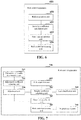
- FIG. 1 is a schematic diagram of the risk control method in the present embodiment.
- the risk control method includes the following steps.
- step 102 risk information of a current user operation is acquired, the risk information including a risk type and/or a parameter characterizing the magnitude of a risk corresponding to the risk type.
- a security coefficient is calculated according to the risk information and security information corresponding to the identity verification mode.
- the historical identity verification includes identity verification for a current user prior to the user operation, and the security information is information related to the security of the identity verification mode.
- step 106 an expected asset loss is calculated according to the security coefficient and an amount corresponding to the user operation.
- step 108 prescribed risk control processing is performed on the user operation in the case where the expected asset loss satisfies a preset condition, and prescribed risk control processing is waived on the user operation in the case where the expected asset loss does not satisfy the preset condition.
- the expected asset loss can be accurately calculated. Therefore, it can be accurately determined whether prescribed risk control processing is performed, so that risk control processing can be flexibly implemented for different users and risks, interruptions to users caused by risk control processing can be reduced while guaranteeing the security of user operations, and user experience can be improved.
- the security coefficient is calculated for an identity verification mode, the security can be guaranteed for various identity verification modes and the interruptions can be reduced, that is, the security can be guaranteed and the interruptions can be reduced in a scenario of various user identity verification modes.
- step 100 is performed before step 102, but the present embodiment is not limited thereto. Step 100 may also be performed after step 102 and before step 104, or may be performed in parallel with step 102.
- a user operation is an operation for a certain amount.
- it may be a transaction operation between a user and a merchant, or it may be an asset transfer operation of a user.
- the asset transfer operation may be, for example, a transfer operation.
- the risk type may include, for example, a risk of device loss, a remote risk for a personal computer, a risk of secondary number allocation, a risk of conventional theft, etc.
- the risk of conventional theft characterizes a risk of the theft of an operating account other than the device loss, but the present embodiment is not limited thereto and may include other risk types that can be identified.
- the parameter characterizing the magnitude of a risk corresponding to the risk type may be, for example, a risk score corresponding to the risk type, and the score may be, for example, a value between 0-1, which is used to characterize the corresponding risk magnitude.
- the present embodiment is not limited thereto, and the score may also use other numerical ranges.
- the risk score may not be used as the parameter, but a risk grade may be used as the parameter.
- the risk information may also include other information related to the risk, for example, indicating a risk weight corresponding to the risk type, etc.
- the risk information in the present embodiment may be identified using existing risk identification strategies.
- the identity verification mode includes, for example, a manual verification mode, a face verification mode, a privacy verification mode, etc.
- the privacy verification may be, for example, security inquiry verification, ID card number verification, bank card verification, etc.
- the present embodiment is not limited thereto, and may also include other modes capable of achieving identity verification.
- the security information is security-related information corresponding to a certain identity verification mode.
- the security information may include at least one of the following information: an identifier of a device used for identity verification corresponding to the identity verification mode, an execution environment of identity verification corresponding to the identity verification mode, an execution time of identity verification corresponding to the identity verification mode, a result of identity verification corresponding to the identity verification mode, and a frequency or number of identity verification corresponding to the identity verification mode.
- the present embodiment is not limited thereto, and the security information may also include other information.
- the identifier of a device may be, for example, an identification code and/or address of the device.
- the identification code of the device may be, for example, a Unique Material Identifier (UMID) of the device.
- UID Unique Material Identifier
- the address of the device may be, for example, a hardware address or an Internet address.
- the execution environment of identity verification may be, for example, the Internet, a wireless local area network, a Location Based Service (LBS), etc.
- LBS Location Based Service
- the result of identity verification may be, for example, that the identity verification is successful or not.
- the present embodiment is not limited thereto, and other device identifiers and operating environments may also be adopted.
- the prescribed risk control processing is to reduce risks, for example, including: not allowing the user operation, restricting the authority for the user operation, and requiring the user to verify the identity, etc., but the present embodiment is not limited thereto.
- Other risk control processing modes may also be included.
- the risk control processing may be prescribed according to an actual situation. Waiving performing the risk control processing is that the user operation is directly allowed.
- each piece of specific information in the above risk information and security information may be quantified as a numerical value, corresponding weights are assigned to these different pieces of specific information, and they are combined according to a certain rule for calculating the security coefficient.
- Specific quantification modes and rules may be determined according to actual needs.
- the security coefficient may be calculated using the Delphi method.
- the security coefficient may be calculated according to the above information and the Delphi method. For example, it is calculated as 0.95 (when a highest value of the security coefficient is 1).
- the above historical identity verification may correspond to one or at least two identity verification modes.
- a security coefficient corresponding to the identity verification mode is calculated according to the risk information and security information corresponding to the identity authentication mode.
- FIG. 2 is a schematic diagram of an implementation method for step 104. As shown in FIG. 2 , in the case where the historical identity verification corresponds to at least two identity verification modes, step 104 may include the following steps:
- a sub-security coefficient corresponding to the identity verification mode is calculated according to the risk information and security information corresponding to the identity verification mode.
- step 204 weighted calculation is performed on the sub-security coefficients respectively corresponding to the at least two identity verification modes, and a weighted value is used as the security coefficient.
- Steps 202-204 are optional steps.
- the expected asset loss may be calculated according to the security coefficient and the amount corresponding to the user operation in accordance with a preset rule.
- the expected asset loss may characterize a potential asset loss.
- step 106 may, for example, calculate the expected asset loss according to the following formula (1):
- Expected asset loss amount corresponding to user operationx(l-security coefficient) (1)
- the value of the security coefficient is limited to vary in a range of 0 to 1.
- the present embodiment is not limited thereto, and the range of values of the security coefficient may also be limited to other ranges.
- the limitation of the value range of the security coefficient may be achieved by adjusting specific rules used when calculating the security coefficient.
- the present embodiment is not limited to calculating the expected asset loss using the above formula (1), and other suitable formulas may also be used for calculation.
- FIG. 3 is another schematic diagram of the risk control method in the present embodiment. As shown in FIG. 3 , the risk control method may further include the following steps.
- step 110 an adjustment coefficient is obtained according to a characteristic variable characterizing an aggregated risk for the user operation.
- the risk control method may further include the following step.
- step 112 the security coefficient is adjusted according to the adjustment coefficient.
- the expected asset loss may be calculated according to the adjusted security coefficient and the amount corresponding to the user operation. Therefore, the impact of an aggregated risk can be reflected in the calculated expected asset loss, so that the expected asset loss can be calculated more accurately, and the risk control can quickly respond to the aggregated risk.
- the aggregated risk may be, for example, a batch attack risk, but the present embodiment is not limited thereto.
- the aggregated risk may also be other types of aggregated risk.
- Steps 110-112 are optional steps.
- step 110 is performed after step 104, but the present embodiment is not limited thereto. Step 110 may also be performed before step 104, or may be performed in parallel with step 104.
- step 112 may include: using a value obtained by multiplying the adjustment coefficient and the security coefficient as the adjusted security coefficient.
- step 106 may calculate the expected asset loss according to the following formula (2):
- Expected asset loss amount corresponding to user operation ⁇ (1-adjusted security coefficient) (2)
- FIG. 4 is another schematic diagram of the risk control method in the present embodiment. As shown in FIG. 4 , before step 110, the risk control method may further include the following step.
- step 114 based on grids obtained from division according to two preset dimensions and historical data in each grid, a preset index in each grid is calculated, and a characteristic variable is determined according to the preset index in each grid.
- the historical data is data, related to a user operation prior to the current user operation, in the grid.
- the two preset dimensions are a first dimension and a second dimension corresponding to the current user operation.
- the first dimension may be, for example, a merchant or an Internet address corresponding to the current user operation
- the second dimension may be, for example, the time, environment or region, etc. of the current user operation.
- the preset index may be, for example, an event audit rate indicating a hit rate of a risk identification strategy, a verification failure rate indicating a failure rate of identity verification, a proportion of trusted operations indicating a proportion of the number of user operations performed in a trusted environment and/or a trusted device to the total number of user operations, or an incidence of cases within a prescribed number of days (for example, 30 days).
- the preset index may also be other indexes.
- the historical data may be any data related to a user operation before the current user operation and used to calculate the preset index.
- Step 114 is an optional step. Moreover, in FIG. 4 , step 114 is performed after step 104, but the present embodiment is not limited thereto. Step 114 may also be performed before step 104, or may be performed in parallel with step 104.
- the adjustment coefficient is obtained according to the characteristic variable.
- the risk control method may further include a step (not shown): performing weighted calculation on the at least two characteristic variables to obtain a weighted value of the characteristic variables.
- the step is an optional step.
- step 110 may include: obtaining the adjustment coefficient according to the weighted value of the characteristic variables.
- step 108 may include: performing prescribed risk control processing on the user operation in the case where the expected asset loss exceeds a threshold, and waiving performing prescribed risk control processing on the user operation in the case where the expected asset loss does not exceed the threshold. That is, the preset condition in step 108 is that the threshold is exceeded.
- performing prescribed risk control processing on the user operation may further include: performing prescribed first risk control processing on the user operation in the case where the expected asset loss exceeds the above threshold and does not exceed another threshold; and performing prescribed second risk control processing on the user operation in the case where the expected asset loss exceeds the another threshold.
- the step is an optional step.
- the risk control method may further include a step (not shown): setting the threshold according to the risk information and the amount corresponding to the user operation. Therefore, the threshold may be set more reasonably corresponding to the calculation of the expected asset loss.
- the step is an optional step.
- FIG. 5 is yet another schematic diagram of the risk control method in the present embodiment. As shown in FIG. 5 , before step 104, the risk control method may further include the following step.
- step 100 users are classified to obtain a classification result.
- step 104 may include: calculating the security coefficient according to the classification result, the risk information, and the security information. Therefore, the impact of user classification can be further reflected in the calculated expected asset loss, so that the expected asset loss can be calculated more accurately.
- step 100 is performed before step 102, but the present embodiment is not limited thereto. Step 100 may also be performed after step 102 and before step 104, or may be performed in parallel with step 102.
- current users may be classified according to at least one of the following information: user consumption behaviors, social attributes of users, information about devices used by users, identity verification modes and results corresponding to historical identity verification, user complaints, user cases (such as fraud cases reported by users), and user security awareness.
- user consumption behaviors e.g., user consumption behaviors, social attributes of users, information about devices used by users, identity verification modes and results corresponding to historical identity verification, user complaints, user cases (such as fraud cases reported by users), and user security awareness.
- user complaints e.g., user cases, and user security awareness.
- users may be classified according to other information related to the users.
- a classification rule may, for example, consider factors such as the gullibility of users and/or the disturbance sensitivity of users. Therefore, the classification results may correspondingly be gullible users and disturbance sensitive users. For example, for gullible users, if other conditions are the same, in step 104, the security coefficient is lower; for disturbance sensitive users, if other conditions are the same, in step 104, the security coefficient is higher.
- the present embodiment is not limited thereto, and other factors that can affect the security coefficient may also be considered to classify users.
- the threshold may be set according to the classification result, the risk information, and the amount corresponding to the user operation. Therefore, the threshold may be set more reasonably corresponding to the calculation mode of the expected asset loss.
- an expected asset loss can be accurately calculated, risk control processing can be flexibly implemented for different users and risks, interruptions to users caused by risk control processing can be reduced while guaranteeing the security of user operations, and user experience can be improved.
- Embodiment 2 provides a risk control apparatus.
- FIG. 6 is a schematic diagram of a risk control apparatus in the present embodiment. In the present embodiment, the same parts as those in Embodiment 1 will not be described again.
- risk control apparatus 600 includes risk acquisition unit 601, security coefficient calculation unit 602, asset loss calculation unit 603, and risk control processing unit 604.
- Risk acquisition unit 601 acquires risk information of a current user operation, the risk information including a risk type and/or a parameter characterizing the magnitude of a risk corresponding to the risk type.
- Security coefficient calculation unit 602 calculates, for an identity verification mode corresponding to historical identity verification, a security coefficient according to the risk information and security information corresponding to the identity verification mode.
- the historical identity verification includes identity verification for a current user prior to the user operation.
- the security information is information related to the security of the identity verification mode.
- Asset loss calculation unit 603 calculates an expected asset loss according to the security coefficient and an amount corresponding to the user operation.
- Risk control processing unit 604 performs prescribed risk control processing on the user operation in the case where the expected asset loss satisfies a preset condition, and waives performing prescribed risk control processing on the user operation in the case where the expected asset loss does not satisfy the preset condition.
- security coefficient calculation unit 602 may calculate a security coefficient corresponding to the identity verification mode according to the risk information and the security information for the identity verification mode.
- security coefficient calculation unit 602 may calculate, for each of the at least two identity verification modes, a sub-security coefficient corresponding to the identity verification mode according to the risk information and security information corresponding to the identity verification mode, perform weighted calculation on the sub-security coefficients respectively corresponding to the at least two identity verification modes, and use a weighted value as the security coefficient.
- FIG. 7 is another schematic diagram of the risk control apparatus in the present embodiment.
- risk control unit 700 includes risk acquisition unit 601, security coefficient calculation unit 702, asset loss calculation unit 703, and risk control processing unit 704.
- Security coefficient calculation unit 702, asset loss calculation unit 703, and risk control processing unit 704 can respectively implement the functions implemented by security coefficient calculation unit 602, asset loss calculation unit 603, and risk control processing unit 604.
- risk control unit 700 may further include adjustment coefficient obtaining unit 705 and adjustment unit 706.
- Adjustment coefficient obtaining unit 705 may obtain an adjustment coefficient according to a characteristic variable characterizing an aggregated risk for the user operation.
- Adjustment unit 706 may adjust the security coefficient according to the adjustment coefficient.
- Asset loss calculation unit 703 may calculate the expected asset loss according to the adjusted security coefficient and the amount corresponding to the user operation.
- Adjustment coefficient obtaining unit 705 and adjustment unit 706 are optional units.
- risk control apparatus 700 may further include characteristic variable determination unit 707.
- Characteristic variable determination unit 707 may calculate, based on grids obtained from division according to two preset dimensions and historical data in each grid, a preset index in each grid, and determine the characteristic variable according to the preset index in each grid.
- the historical data is data, related to a user operation prior to the current user operation, in the grid.
- characteristic variable calculation unit 707 may further perform weighted calculation on the at least two characteristic variables to obtain a weighted value of the characteristic variables
- adjustment coefficient obtaining unit 705 may obtain the adjustment coefficient according to the weighted value of the characteristic variables.
- Characteristic variable determination unit 707 is an optional unit.
- risk control processing unit 704 may perform prescribed risk control processing on the user operation in the case where the expected asset loss exceeds a threshold, and may waive performing prescribed risk control processing on the user operation in the case where the expected asset loss does not exceed the threshold.
- risk control apparatus 700 may further include threshold setting unit 708 that sets the above threshold according to the risk information and the amount corresponding to the user operation.
- Threshold setting unit 708 is an optional unit.
- risk control apparatus 700 may further include user classification unit 709.
- User classification unit 709 may classify users to obtain a classification result
- security coefficient calculation unit 702 may calculate the security coefficient according to the classification result, the risk information, and the security information.
- User classification unit 709 is an optional unit.
- an expected asset loss can be accurately calculated, risk control processing can be flexibly implemented for different users and risks, interruptions to users caused by risk control processing can be reduced while guaranteeing the security of user operations, and user experience can be improved.
- Embodiment 1 further provide a computer-readable program that causes a processor to perform the method in Embodiment 1.
- the embodiments of the present specification further provide a storage medium storing computer-readable programs.
- the computer-readable programs cause a processor to perform the method in Embodiment 1.
- the embodiments of the present specification further provide an electronic device.
- the electronic device includes a processor and a memory for storing computer-readable programs that cause the processor to perform the method in Embodiment 1.
- the electronic device in the present embodiment may be any type of electronic devices.
- the electronic device may be, for example, a terminal device on a user side, or a server device on a network side, or may be implemented in cooperation between the terminal device and the server device, and the server device may be a server device or a server device cluster composed of a plurality of server devices.
- the processor and the memory of the electronic device in the present embodiment may be a processor and a memory provided in one device, or may be processors and memories provided in a plurality of devices in a distributed manner.
- the risk control apparatus described in conjunction with the embodiments of the present specification may be directly embodied as hardware, a software module executed by a processor, or a combination of both.
- one or more of the functional block diagrams shown in FIG. 6 and/or one or more combinations of the functional block diagrams may correspond to each software module of a computer program flow or each hardware module.
- These software modules may respectively correspond to the various steps shown in FIG. 1 .
- These hardware modules may be implemented by, for example, changing these software modules into firmware using a field programmable gate array (FPGA).
- FPGA field programmable gate array
- the software modules may be located in a RAM, a flash memory, a ROM, an EPROM, an EEPROM, a register, a hard disk, a removable disk, a CD-ROM, or any other forms of storage medium known in the art.
- a storage medium may be coupled to the processor, so that the processor can read information from the storage medium and write information to the storage medium. Or the storage medium may be a component of the processor.
- the processor and the storage medium may be located in an application-specific integrated circuit (ASIC).
- the software modules may be stored in the memory of the electronic device, or may be stored in a memory card that can be inserted into the electronic device. For example, if the electronic device adopts a larger-capacity MEGA-SIM card or a large-capacity flash memory device, the software modules may be stored in the MEGA-SIM card or the large-capacity flash memory device.
- One or more of the functional block diagrams described in the drawings and/or one or more combinations of the functional block diagrams may be implemented as a general-purpose processor, a digital signal processor (DSP), an ASIC, an FPGA or other programmable logic devices, discrete gates or transistor logic devices, discrete hardware components, or any suitable combination thereof for performing the functions described in the present application.
- One or more of the functional block diagrams described in the drawings and/or one or more combinations of the functional block diagrams may also be implemented as a combination of computing devices, for example, a combination of a DSP and a microprocessor, a plurality of microprocessors, one or more microprocessors combined with the DSP communicatively, or any other such configuration.
Landscapes
- Engineering & Computer Science (AREA)
- Computer Security & Cryptography (AREA)
- Theoretical Computer Science (AREA)
- General Engineering & Computer Science (AREA)
- Computer Hardware Design (AREA)
- Business, Economics & Management (AREA)
- General Physics & Mathematics (AREA)
- Physics & Mathematics (AREA)
- Software Systems (AREA)
- Computing Systems (AREA)
- Human Resources & Organizations (AREA)
- Computer Networks & Wireless Communication (AREA)
- Signal Processing (AREA)
- Strategic Management (AREA)
- Economics (AREA)
- Tourism & Hospitality (AREA)
- Marketing (AREA)
- General Business, Economics & Management (AREA)
- Development Economics (AREA)
- Accounting & Taxation (AREA)
- Finance (AREA)
- Entrepreneurship & Innovation (AREA)
- General Health & Medical Sciences (AREA)
- Health & Medical Sciences (AREA)
- Educational Administration (AREA)
- Databases & Information Systems (AREA)
- Technology Law (AREA)
- Primary Health Care (AREA)
- Bioethics (AREA)
- Game Theory and Decision Science (AREA)
- Operations Research (AREA)
- Quality & Reliability (AREA)
- Management, Administration, Business Operations System, And Electronic Commerce (AREA)
- Telephonic Communication Services (AREA)
Abstract
Description
- The present application relates to the technical field of risk control, and more particularly, to a risk control method, a risk control apparatus, an electronic device, and a storage medium.
- In order to guarantee the security of user operations, user operations with high risks are captured in existing risk control systems, and prescribed risk control processing such as user identity verification is performed on such user operations. Only users who pass the identity verification are allowed to continue transactions. User operations with low risks are allowed. Therefore, insecure transactions are avoided.
- It should be noted that the above introduction to the technical background is only to facilitate a clear and complete description of the technical solution of the present invention and to facilitate understanding by those skilled in the art. It should not be considered that the technical solutions are known to those skilled in the art just because these solutions are set forth in the Background section of the present invention.
- The inventor found that in the above existing technologies, differences between different users and differences in risks of different user operations are not considered. The risk grading for the user operations is relatively rough, and defense schemes against risks are relatively simple and inflexible. Therefore, if the standard for identity verification is set to be strict, that is, more user operations are judged as high-risk operations, users will be frequently asked for identity verification; otherwise, if the standard for identity verification is set to be loose, the security of user operations is reduced.
- In order to solve the above problems, embodiments of the present specification provide a risk control method, a risk control apparatus, a risk control system, an electronic device, and a storage medium, which can accurately calculate an expected asset loss, flexibly implement risk control processing for different users and risks, reduce interruptions to users caused by risk control processing while guaranteeing the security of user operations, and improve user experience.
- According to a first aspect of the embodiments of the present specification, a risk control method is provided. The risk control method includes: acquiring risk information of a current user operation, the risk information including a risk type and/or a parameter characterizing the magnitude of a risk corresponding to the risk type; calculating, for an identity verification mode corresponding to historical identity verification, a security coefficient according to the risk information and security information corresponding to the identity verification mode, wherein the historical identity verification includes identity verification for a current user prior to the user operation, and the security information is information related to the security of the identity verification mode; calculating an expected asset loss according to the security coefficient and an amount corresponding to the user operation; and performing prescribed risk control processing on the user operation when the expected asset loss satisfies a preset condition, and waiving performing prescribed risk control processing on the user operation when the expected asset loss does not satisfy the preset condition.
- According to a second aspect of the embodiments of the present specification, a risk control apparatus is provided. The risk control apparatus includes: a risk acquisition unit, configured to acquire risk information of a current user operation, the risk information including a risk type and/or a parameter characterizing the magnitude of a risk corresponding to the risk type; a security coefficient calculation unit, configured to calculate, for an identity verification mode corresponding to historical identity verification, a security coefficient according to the risk information and security information corresponding to the identity verification mode, wherein the historical identity verification includes identity verification for a current user prior to the user operation, and the security information is information related to the security of the identity verification mode; an asset loss calculation unit, configured to calculate an expected asset loss according to the security coefficient and an amount corresponding to the user operation; and a risk control processing unit, configured to perform prescribed risk control processing on the user operation when the expected asset loss satisfies a preset condition, and waive performing prescribed risk control processing on the user operation when the expected asset loss does not satisfy the preset condition.
- According to a third aspect of the embodiments of the present specification, an electronic device is provided. The electronic device includes a processor and a memory for storing computer-readable programs that cause the processor to perform the risk control method according to the first aspect.
- According to a fourth aspect of the embodiments of the present specification, a storage medium storing computer-readable programs is provided. The computer-readable programs cause a processing apparatus to perform the risk control method according to the first aspect.
- The beneficial effects of the embodiments of the present specification are as follows: an expected asset loss can be accurately calculated, risk control processing can be flexibly implemented for different users and risks, interruptions to users caused by risk control processing can be reduced while guaranteeing the security of user operations, and user experience can be improved.
- With reference to the following description and drawings, specific implementations of the present invention are disclosed in detail, and the manner in which the principles of the present invention can be adopted is indicated. It should be understood that the implementations of the present invention are not thus limited in scope. Within the scope of the spirit and terms of the appended claims, the implementations of the present invention include many changes, modifications, and equivalents.
- Features described and/or illustrated for one implementation may be used in one or more other implementations in the same or similar manner, combined with features in other implementations, or replace features in other implementations.
- It should be emphasized that the term "comprising/including/having" as used herein refers to the presence of features, whole pieces, steps, or components, but does not exclude the presence or addition of one or more other features, whole pieces, steps, or components.
- The included drawings are used to provide a further understanding of the embodiments of the present specification, which form a part of the specification, are used to exemplify the implementations of the present invention, and explain the principles of the present invention together with the literal descriptions. Apparently, the drawings in the following description are only some embodiments of the present invention. Those of ordinary skill in the art can also obtain other drawings according to these drawings without creative labor. In the drawings:
-
FIG. 1 is a schematic diagram of a risk control method in Embodiment 1 of the present specification. -
FIG. 2 is a schematic diagram of an implementation method forstep 104 in Embodiment 1 of the present specification. -
FIG. 3 is another schematic diagram of the risk control method in Embodiment 1 of the present specification. -
FIG. 4 is another schematic diagram of the risk control method in Embodiment 1 of the present specification. -
FIG. 5 is yet another schematic diagram of the risk control method in Embodiment 1 of the present specification. -
FIG. 6 is a schematic diagram of a risk control apparatus in Embodiment 2 of the present specification. -
FIG. 7 is another schematic diagram of the risk control apparatus in Embodiment 2 of the present specification. - The foregoing and other features of the present invention will become apparent from the following specification with reference to the drawings. In the specification and the drawings, specific implementations of the present invention are disclosed in detail, which show some implementations in which the principles of the present invention can be adopted. It should be understood that the present invention is not limited to the described implementations. Rather, the present invention includes all modifications, variations, and equivalents falling within the scope of the appended claims.
- In the embodiments of the present specification, the term "and/or" includes any and all combinations of one or more of the associated listed terms.
- In the embodiments of the present specification, the singular forms "a," "the," etc. include plural forms, which should be broadly understood as "a" or "a class of' and not limited to the meaning of "one." In addition, the term "the" should be understood to include both singular and plural forms unless the context clearly indicates otherwise. In addition, the term "according to" should be understood as "according at least in part to..." and the term "based on" should be understood as "based at least in part on..." unless the context clearly indicates otherwise.
- Various implementations of the embodiments of the present specification are described below with reference to the drawings. These implementations are only examples of, not limitations to, the embodiments of the present specification.
- Embodiment 1 provides a risk control method.
FIG. 1 is a schematic diagram of the risk control method in the present embodiment. - As shown in
FIG. 1 , the risk control method includes the following steps. - In
step 102, risk information of a current user operation is acquired, the risk information including a risk type and/or a parameter characterizing the magnitude of a risk corresponding to the risk type. - In
step 104, for an identity verification mode corresponding to historical identity verification, a security coefficient is calculated according to the risk information and security information corresponding to the identity verification mode. The historical identity verification includes identity verification for a current user prior to the user operation, and the security information is information related to the security of the identity verification mode. - In
step 106, an expected asset loss is calculated according to the security coefficient and an amount corresponding to the user operation. - In
step 108, prescribed risk control processing is performed on the user operation in the case where the expected asset loss satisfies a preset condition, and prescribed risk control processing is waived on the user operation in the case where the expected asset loss does not satisfy the preset condition. - It can be seen from the above embodiments that by calculating a security coefficient according to risk information and security information of a current user operation and using the security coefficient for calculating an expected asset loss, the expected asset loss can be accurately calculated. Therefore, it can be accurately determined whether prescribed risk control processing is performed, so that risk control processing can be flexibly implemented for different users and risks, interruptions to users caused by risk control processing can be reduced while guaranteeing the security of user operations, and user experience can be improved.
- Moreover, since the security coefficient is calculated for an identity verification mode, the security can be guaranteed for various identity verification modes and the interruptions can be reduced, that is, the security can be guaranteed and the interruptions can be reduced in a scenario of various user identity verification modes.
- In
FIG. 1 ,step 100 is performed beforestep 102, but the present embodiment is not limited thereto.Step 100 may also be performed afterstep 102 and beforestep 104, or may be performed in parallel withstep 102. - In the present embodiment, a user operation is an operation for a certain amount. For example, it may be a transaction operation between a user and a merchant, or it may be an asset transfer operation of a user. The asset transfer operation may be, for example, a transfer operation.
- In the present embodiment, the risk type may include, for example, a risk of device loss, a remote risk for a personal computer, a risk of secondary number allocation, a risk of conventional theft, etc. The risk of conventional theft characterizes a risk of the theft of an operating account other than the device loss, but the present embodiment is not limited thereto and may include other risk types that can be identified. In addition, the parameter characterizing the magnitude of a risk corresponding to the risk type may be, for example, a risk score corresponding to the risk type, and the score may be, for example, a value between 0-1, which is used to characterize the corresponding risk magnitude. However, the present embodiment is not limited thereto, and the score may also use other numerical ranges. Moreover, the risk score may not be used as the parameter, but a risk grade may be used as the parameter.
- In the present embodiment, in addition to the risk type and/or the above parameter, the risk information may also include other information related to the risk, for example, indicating a risk weight corresponding to the risk type, etc. The risk information in the present embodiment may be identified using existing risk identification strategies.
- In the present embodiment, the identity verification mode includes, for example, a manual verification mode, a face verification mode, a privacy verification mode, etc. The privacy verification may be, for example, security inquiry verification, ID card number verification, bank card verification, etc. However, the present embodiment is not limited thereto, and may also include other modes capable of achieving identity verification.
- In the present embodiment, the security information is security-related information corresponding to a certain identity verification mode. For example, the security information may include at least one of the following information: an identifier of a device used for identity verification corresponding to the identity verification mode, an execution environment of identity verification corresponding to the identity verification mode, an execution time of identity verification corresponding to the identity verification mode, a result of identity verification corresponding to the identity verification mode, and a frequency or number of identity verification corresponding to the identity verification mode. However, the present embodiment is not limited thereto, and the security information may also include other information.
- In the present embodiment, the identifier of a device may be, for example, an identification code and/or address of the device. The identification code of the device may be, for example, a Unique Material Identifier (UMID) of the device. The address of the device may be, for example, a hardware address or an Internet address. The execution environment of identity verification may be, for example, the Internet, a wireless local area network, a Location Based Service (LBS), etc. The result of identity verification may be, for example, that the identity verification is successful or not. However, the present embodiment is not limited thereto, and other device identifiers and operating environments may also be adopted.
- In the present embodiment, the prescribed risk control processing is to reduce risks, for example, including: not allowing the user operation, restricting the authority for the user operation, and requiring the user to verify the identity, etc., but the present embodiment is not limited thereto. Other risk control processing modes may also be included. The risk control processing may be prescribed according to an actual situation. Waiving performing the risk control processing is that the user operation is directly allowed.
- In the present embodiment, in
step 104, each piece of specific information in the above risk information and security information may be quantified as a numerical value, corresponding weights are assigned to these different pieces of specific information, and they are combined according to a certain rule for calculating the security coefficient. Specific quantification modes and rules may be determined according to actual needs. For example, the security coefficient may be calculated using the Delphi method. - For example, under the following circumstances: "the risk type is a conventional theft risk, the risk magnitude is 0.4, the security information includes: identity verification is performed within 24 hours, face identification verification is performed once under the same device, and the verification result is that the verification is passed", the security coefficient may be calculated according to the above information and the Delphi method. For example, it is calculated as 0.95 (when a highest value of the security coefficient is 1).
- In the present embodiment, the above historical identity verification may correspond to one or at least two identity verification modes.
- In the case where the historical identity verification corresponds to one identity verification mode, for the identity verification mode, a security coefficient corresponding to the identity verification mode is calculated according to the risk information and security information corresponding to the identity authentication mode.
-
FIG. 2 is a schematic diagram of an implementation method forstep 104. As shown inFIG. 2 , in the case where the historical identity verification corresponds to at least two identity verification modes,step 104 may include the following steps: - In
step 202, for each of the at least two identity verification modes, a sub-security coefficient corresponding to the identity verification mode is calculated according to the risk information and security information corresponding to the identity verification mode. - In
step 204, weighted calculation is performed on the sub-security coefficients respectively corresponding to the at least two identity verification modes, and a weighted value is used as the security coefficient. - Steps 202-204 are optional steps.
- In the present embodiment, in
step 106, the expected asset loss may be calculated according to the security coefficient and the amount corresponding to the user operation in accordance with a preset rule. The expected asset loss may characterize a potential asset loss. - In the present embodiment, step 106 may, for example, calculate the expected asset loss according to the following formula (1):
- Expected asset loss=amount corresponding to user operationx(l-security coefficient) (1)
- The value of the security coefficient is limited to vary in a range of 0 to 1. However, the present embodiment is not limited thereto, and the range of values of the security coefficient may also be limited to other ranges. The limitation of the value range of the security coefficient may be achieved by adjusting specific rules used when calculating the security coefficient.
- However, the present embodiment is not limited to calculating the expected asset loss using the above formula (1), and other suitable formulas may also be used for calculation.
-
FIG. 3 is another schematic diagram of the risk control method in the present embodiment. As shown inFIG. 3 , the risk control method may further include the following steps. - In
step 110, an adjustment coefficient is obtained according to a characteristic variable characterizing an aggregated risk for the user operation. - Moreover, after
step 104, the risk control method may further include the following step. - In
step 112, the security coefficient is adjusted according to the adjustment coefficient. - At this moment, in
step 106, the expected asset loss may be calculated according to the adjusted security coefficient and the amount corresponding to the user operation. Therefore, the impact of an aggregated risk can be reflected in the calculated expected asset loss, so that the expected asset loss can be calculated more accurately, and the risk control can quickly respond to the aggregated risk. Here, the aggregated risk may be, for example, a batch attack risk, but the present embodiment is not limited thereto. The aggregated risk may also be other types of aggregated risk. - Steps 110-112 are optional steps.
- In
FIG. 3 ,step 110 is performed afterstep 104, but the present embodiment is not limited thereto. Step 110 may also be performed beforestep 104, or may be performed in parallel withstep 104. - In the present embodiment, step 112 may include: using a value obtained by multiplying the adjustment coefficient and the security coefficient as the adjusted security coefficient.
- In the case where
steps step 106 may calculate the expected asset loss according to the following formula (2): - Expected asset loss=amount corresponding to user operation×(1-adjusted security coefficient) (2)
-
FIG. 4 is another schematic diagram of the risk control method in the present embodiment. As shown inFIG. 4 , beforestep 110, the risk control method may further include the following step. - In
step 114, based on grids obtained from division according to two preset dimensions and historical data in each grid, a preset index in each grid is calculated, and a characteristic variable is determined according to the preset index in each grid. The historical data is data, related to a user operation prior to the current user operation, in the grid. - For example, the two preset dimensions are a first dimension and a second dimension corresponding to the current user operation. The first dimension may be, for example, a merchant or an Internet address corresponding to the current user operation, and the second dimension may be, for example, the time, environment or region, etc. of the current user operation. The preset index may be, for example, an event audit rate indicating a hit rate of a risk identification strategy, a verification failure rate indicating a failure rate of identity verification, a proportion of trusted operations indicating a proportion of the number of user operations performed in a trusted environment and/or a trusted device to the total number of user operations, or an incidence of cases within a prescribed number of days (for example, 30 days). However, the present embodiment is not limited thereto. The preset index may also be other indexes. The historical data may be any data related to a user operation before the current user operation and used to calculate the preset index.
- Step 114 is an optional step. Moreover, in
FIG. 4 ,step 114 is performed afterstep 104, but the present embodiment is not limited thereto. Step 114 may also be performed beforestep 104, or may be performed in parallel withstep 104. - In the present embodiment, there may be one or at least two characteristic variables.
- In the case where there is only one characteristic variable, the adjustment coefficient is obtained according to the characteristic variable.
- In the present embodiment, in the case where there are at least two characteristic variables, the risk control method may further include a step (not shown): performing weighted calculation on the at least two characteristic variables to obtain a weighted value of the characteristic variables. The step is an optional step.
- At this moment, step 110 may include: obtaining the adjustment coefficient according to the weighted value of the characteristic variables.
- In the present embodiment, step 108 may include: performing prescribed risk control processing on the user operation in the case where the expected asset loss exceeds a threshold, and waiving performing prescribed risk control processing on the user operation in the case where the expected asset loss does not exceed the threshold. That is, the preset condition in
step 108 is that the threshold is exceeded. - In addition, other preset conditions may also be set according to actual needs.
- In the present embodiment, in the case where the expected asset loss exceeds a threshold, performing prescribed risk control processing on the user operation may further include: performing prescribed first risk control processing on the user operation in the case where the expected asset loss exceeds the above threshold and does not exceed another threshold; and performing prescribed second risk control processing on the user operation in the case where the expected asset loss exceeds the another threshold. The step is an optional step.
- Before
step 108, the risk control method may further include a step (not shown): setting the threshold according to the risk information and the amount corresponding to the user operation. Therefore, the threshold may be set more reasonably corresponding to the calculation of the expected asset loss. The step is an optional step. -
FIG. 5 is yet another schematic diagram of the risk control method in the present embodiment. As shown inFIG. 5 , beforestep 104, the risk control method may further include the following step. - In
step 100, users are classified to obtain a classification result. - At this moment, step 104 may include: calculating the security coefficient according to the classification result, the risk information, and the security information. Therefore, the impact of user classification can be further reflected in the calculated expected asset loss, so that the expected asset loss can be calculated more accurately.
- In
FIG. 5 ,step 100 is performed beforestep 102, but the present embodiment is not limited thereto. Step 100 may also be performed afterstep 102 and beforestep 104, or may be performed in parallel withstep 102. - In the present embodiment, current users may be classified according to at least one of the following information: user consumption behaviors, social attributes of users, information about devices used by users, identity verification modes and results corresponding to historical identity verification, user complaints, user cases (such as fraud cases reported by users), and user security awareness. However, the present embodiment is not limited thereto, and users may be classified according to other information related to the users.
- In the present embodiment, a classification rule may, for example, consider factors such as the gullibility of users and/or the disturbance sensitivity of users. Therefore, the classification results may correspondingly be gullible users and disturbance sensitive users. For example, for gullible users, if other conditions are the same, in
step 104, the security coefficient is lower; for disturbance sensitive users, if other conditions are the same, instep 104, the security coefficient is higher. However, the present embodiment is not limited thereto, and other factors that can affect the security coefficient may also be considered to classify users. - In the method shown in
FIG. 5 , if the preset condition is set to be exceeding a threshold, the threshold may be set according to the classification result, the risk information, and the amount corresponding to the user operation. Therefore, the threshold may be set more reasonably corresponding to the calculation mode of the expected asset loss. - By means of the risk control method of the present embodiment, an expected asset loss can be accurately calculated, risk control processing can be flexibly implemented for different users and risks, interruptions to users caused by risk control processing can be reduced while guaranteeing the security of user operations, and user experience can be improved.
- Embodiment 2 provides a risk control apparatus.
FIG. 6 is a schematic diagram of a risk control apparatus in the present embodiment. In the present embodiment, the same parts as those in Embodiment 1 will not be described again. - As shown in
FIG. 6 ,risk control apparatus 600 includesrisk acquisition unit 601, securitycoefficient calculation unit 602, assetloss calculation unit 603, and riskcontrol processing unit 604. -
Risk acquisition unit 601 acquires risk information of a current user operation, the risk information including a risk type and/or a parameter characterizing the magnitude of a risk corresponding to the risk type. Securitycoefficient calculation unit 602 calculates, for an identity verification mode corresponding to historical identity verification, a security coefficient according to the risk information and security information corresponding to the identity verification mode. The historical identity verification includes identity verification for a current user prior to the user operation. The security information is information related to the security of the identity verification mode. Assetloss calculation unit 603 calculates an expected asset loss according to the security coefficient and an amount corresponding to the user operation. Riskcontrol processing unit 604 performs prescribed risk control processing on the user operation in the case where the expected asset loss satisfies a preset condition, and waives performing prescribed risk control processing on the user operation in the case where the expected asset loss does not satisfy the preset condition. - In the present embodiment, in the case where the historical identity verification corresponds to one identity verification mode, security
coefficient calculation unit 602 may calculate a security coefficient corresponding to the identity verification mode according to the risk information and the security information for the identity verification mode. - In the present embodiment, in the case where the historical identity verification corresponds to at least two identity verification modes, security
coefficient calculation unit 602 may calculate, for each of the at least two identity verification modes, a sub-security coefficient corresponding to the identity verification mode according to the risk information and security information corresponding to the identity verification mode, perform weighted calculation on the sub-security coefficients respectively corresponding to the at least two identity verification modes, and use a weighted value as the security coefficient. -
FIG. 7 is another schematic diagram of the risk control apparatus in the present embodiment. As shown inFIG. 7 ,risk control unit 700 includesrisk acquisition unit 601, securitycoefficient calculation unit 702, assetloss calculation unit 703, and riskcontrol processing unit 704. -
Risk acquisition unit 601 is as described above and will not be repeated here. Securitycoefficient calculation unit 702, assetloss calculation unit 703, and riskcontrol processing unit 704 can respectively implement the functions implemented by securitycoefficient calculation unit 602, assetloss calculation unit 603, and riskcontrol processing unit 604. - In the present embodiment, as shown in
FIG. 7 ,risk control unit 700 may further include adjustmentcoefficient obtaining unit 705 andadjustment unit 706. Adjustmentcoefficient obtaining unit 705 may obtain an adjustment coefficient according to a characteristic variable characterizing an aggregated risk for the user operation.Adjustment unit 706 may adjust the security coefficient according to the adjustment coefficient. Assetloss calculation unit 703 may calculate the expected asset loss according to the adjusted security coefficient and the amount corresponding to the user operation. - Adjustment
coefficient obtaining unit 705 andadjustment unit 706 are optional units. - In the present embodiment, as shown in
FIG. 7 ,risk control apparatus 700 may further include characteristicvariable determination unit 707. Characteristicvariable determination unit 707 may calculate, based on grids obtained from division according to two preset dimensions and historical data in each grid, a preset index in each grid, and determine the characteristic variable according to the preset index in each grid. The historical data is data, related to a user operation prior to the current user operation, in the grid. - In the present embodiment, as shown in
FIG. 7 , in the case where there are at least two characteristic variables, characteristicvariable calculation unit 707 may further perform weighted calculation on the at least two characteristic variables to obtain a weighted value of the characteristic variables, and adjustmentcoefficient obtaining unit 705 may obtain the adjustment coefficient according to the weighted value of the characteristic variables. - Characteristic
variable determination unit 707 is an optional unit. - In the present embodiment, risk
control processing unit 704 may perform prescribed risk control processing on the user operation in the case where the expected asset loss exceeds a threshold, and may waive performing prescribed risk control processing on the user operation in the case where the expected asset loss does not exceed the threshold. - In the present embodiment, as shown in
FIG. 7 ,risk control apparatus 700 may further includethreshold setting unit 708 that sets the above threshold according to the risk information and the amount corresponding to the user operation. -
Threshold setting unit 708 is an optional unit. - In the present embodiment, as shown in
FIG. 7 ,risk control apparatus 700 may further includeuser classification unit 709.User classification unit 709 may classify users to obtain a classification result, and securitycoefficient calculation unit 702 may calculate the security coefficient according to the classification result, the risk information, and the security information. -
User classification unit 709 is an optional unit. - For specific implementations of the functions of the above units in the present embodiment, reference may be made to Embodiment 1, and details are not described herein again.
- By means of the risk control apparatus of the present embodiment, an expected asset loss can be accurately calculated, risk control processing can be flexibly implemented for different users and risks, interruptions to users caused by risk control processing can be reduced while guaranteeing the security of user operations, and user experience can be improved.
- The embodiments of the present specification further provide a computer-readable program that causes a processor to perform the method in Embodiment 1.
- The embodiments of the present specification further provide a storage medium storing computer-readable programs. The computer-readable programs cause a processor to perform the method in Embodiment 1.
- The embodiments of the present specification further provide an electronic device. The electronic device includes a processor and a memory for storing computer-readable programs that cause the processor to perform the method in Embodiment 1. The electronic device in the present embodiment may be any type of electronic devices. The electronic device may be, for example, a terminal device on a user side, or a server device on a network side, or may be implemented in cooperation between the terminal device and the server device, and the server device may be a server device or a server device cluster composed of a plurality of server devices. That is to say, the processor and the memory of the electronic device in the present embodiment may be a processor and a memory provided in one device, or may be processors and memories provided in a plurality of devices in a distributed manner.
- The risk control apparatus described in conjunction with the embodiments of the present specification may be directly embodied as hardware, a software module executed by a processor, or a combination of both. For example, one or more of the functional block diagrams shown in
FIG. 6 and/or one or more combinations of the functional block diagrams may correspond to each software module of a computer program flow or each hardware module. These software modules may respectively correspond to the various steps shown inFIG. 1 . These hardware modules may be implemented by, for example, changing these software modules into firmware using a field programmable gate array (FPGA). - The software modules may be located in a RAM, a flash memory, a ROM, an EPROM, an EEPROM, a register, a hard disk, a removable disk, a CD-ROM, or any other forms of storage medium known in the art. A storage medium may be coupled to the processor, so that the processor can read information from the storage medium and write information to the storage medium. Or the storage medium may be a component of the processor. The processor and the storage medium may be located in an application-specific integrated circuit (ASIC). The software modules may be stored in the memory of the electronic device, or may be stored in a memory card that can be inserted into the electronic device. For example, if the electronic device adopts a larger-capacity MEGA-SIM card or a large-capacity flash memory device, the software modules may be stored in the MEGA-SIM card or the large-capacity flash memory device.
- One or more of the functional block diagrams described in the drawings and/or one or more combinations of the functional block diagrams may be implemented as a general-purpose processor, a digital signal processor (DSP), an ASIC, an FPGA or other programmable logic devices, discrete gates or transistor logic devices, discrete hardware components, or any suitable combination thereof for performing the functions described in the present application. One or more of the functional block diagrams described in the drawings and/or one or more combinations of the functional block diagrams may also be implemented as a combination of computing devices, for example, a combination of a DSP and a microprocessor, a plurality of microprocessors, one or more microprocessors combined with the DSP communicatively, or any other such configuration.
- The present invention has been described above in conjunction with specific implementations, but those skilled in the art should understand that these descriptions are examples and do not limit the protection scope of the present invention. Those skilled in the art can make various variations and modifications to the present invention according to the principles of the present invention, and these variations and modifications are also within the scope of the present invention.
Claims (18)
- A risk control method, the risk control method comprising:acquiring risk information of a current user operation, the risk information comprising a risk type and/or a parameter characterizing a magnitude of a risk corresponding to the risk type;calculating, for an identity verification mode corresponding to historical identity verification, a security coefficient according to the risk information and security information corresponding to the identity verification mode, wherein the historical identity verification comprises identity verification for a current user prior to the user operation, and the security information is information related to security of the identity verification mode;calculating an expected asset loss according to the security coefficient and an amount corresponding to the user operation; andperforming prescribed risk control processing on the user operation when the expected asset loss satisfies a preset condition, and waiving performing prescribed risk control processing on the user operation when the expected asset loss does not satisfy the preset condition.
- The risk control method according to claim 1, wherein when the historical identity verification corresponds to at least two identity verification modes, calculating, for an identity verification mode corresponding to historical identity verification, a security coefficient according to the risk information and security information corresponding to the identity verification mode comprises:calculating, for each of the at least two identity verification modes, a sub-security coefficient corresponding to the identity verification mode according to the risk information and security information corresponding to the identity verification mode; andperforming weighted calculation on the sub-security coefficients respectively corresponding to the at least two identity verification modes, and using a weighted value as the security coefficient.
- The risk control method according to claim 1, the risk control method further comprising:obtaining an adjustment coefficient according to a characteristic variable characterizing an aggregated risk for the user operation,and after calculating, for an identity verification mode corresponding to historical identity verification, a security coefficient according to the risk information and security information corresponding to the identity verification mode, the risk control method further comprising:adjusting the security coefficient according to the adjustment coefficient,wherein calculating an expected asset loss according to the security coefficient and an amount corresponding to the user operation comprises:
calculating the expected asset loss according to the adjusted security coefficient and the amount corresponding to the user operation. - The risk control method according to claim 3,
before obtaining an adjustment coefficient according to a characteristic variable characterizing an aggregated risk for the user operation, the risk control method further comprising:
calculating, based on grids obtained from division according to two preset dimensions and historical data in each grid, a preset index in each grid, and determining the characteristic variable according to the preset index in each grid, wherein the historical data is data, related to a user operation prior to the user operation, in the grid. - The risk control method according to claim 3 or 4, when there are at least two characteristic variables, the risk control method further comprising:performing weighted calculation on the at least two characteristic variables to obtain a weighted value of the characteristic variables,wherein obtaining an adjustment coefficient according to a characteristic variable characterizing an aggregated risk for the user operation comprises:
obtaining the adjustment coefficient according to the weighted value of the characteristic variables. - The risk control method according to claim 1,
wherein performing prescribed risk control processing on the user operation when the expected asset loss satisfies a preset condition and waiving performing prescribed risk control processing on the user operation when the expected asset loss does not satisfy the preset condition comprises:
performing prescribed risk control processing on the user operation when the expected asset loss exceeds a threshold, and waiving performing prescribed risk control processing on the user operation when the expected asset loss does not exceed the threshold. - The risk control method according to claim 6, before performing prescribed risk control processing on the user operation when the expected asset loss satisfies a preset condition and waiving performing prescribed risk control processing on the user operation when the expected asset loss does not satisfy the preset condition, the risk control method further comprising:
setting the threshold according to the risk information and the amount. - The risk control method according to claim 1, before calculating, for an identity verification mode corresponding to historical identity verification, a security coefficient according to the risk information and security information corresponding to the identity verification mode, the risk control method further comprising:classifying users to obtain a classification result,wherein calculating, for an identity verification mode corresponding to historical identity verification, a security coefficient according to the risk information and security information corresponding to the identity verification mode comprises:
calculating, for an identity verification mode corresponding to historical identity verification, the security coefficient according to the classification result, the risk information, and security information corresponding to the identity verification mode. - A risk control apparatus, the risk control apparatus comprising:a risk acquisition unit, configured to acquire risk information of a current user operation, the risk information comprising a risk type and/or a parameter characterizing a magnitude of a risk corresponding to the risk type;a security coefficient calculation unit, configured to calculate, for an identity verification mode corresponding to historical identity verification, a security coefficient according to the risk information and security information corresponding to the identity verification mode, wherein the historical identity verification comprises identity verification for a current user prior to the user operation, and the security information is information related to the security of the identity verification mode;an asset loss calculation unit, configured to calculate an expected asset loss according to the security coefficient and an amount corresponding to the user operation; anda risk control processing unit, configured to perform prescribed risk control processing on the user operation when the expected asset loss satisfies a preset condition, and waive performing prescribed risk control processing on the user operation when the expected asset loss does not satisfy the preset condition.
- The risk control apparatus according to claim 9,
wherein when the historical identity verification corresponds to at least two identity verification modes, the security coefficient calculation unit calculates, for each of the at least two identity verification modes, a sub-security coefficient corresponding to the identity verification mode according to the risk information and security information corresponding to the identity verification mode, performs weighted calculation on the sub-security coefficients respectively corresponding to the at least two identity verification modes, and uses a weighted value as the security coefficient. - The risk control apparatus according to claim 9, the risk control apparatus further comprising:an adjustment coefficient obtaining unit, configured to obtain an adjustment coefficient according to a characteristic variable characterizing an aggregated risk for the user operation; andan adjustment unit, configured to adjust the security coefficient according to the adjustment coefficient,wherein the asset loss calculation unit calculates the expected asset loss according to the adjusted security coefficient and the amount corresponding to the user operation.
- The risk control apparatus according to claim 11, the risk control apparatus further comprising:
a characteristic variable determination unit, configured to calculate, based on grids obtained from division according to two preset dimensions and historical data in each grid, a preset index in each grid, and calculate the characteristic variable according to the preset index in each grid, wherein the historical data is data, related to a user operation prior to the user operation, in the grid. - The risk control apparatus according to claim 11 or 12,
wherein when there are at least two characteristic variables, the characteristic variable calculation unit further performs weighted calculation on the at least two characteristic variables to obtain a weighted value of the characteristic variables, and the adjustment coefficient obtaining unit obtains the adjustment coefficient according to the weighted value of the characteristic variables. - The risk control apparatus according to claim 9,
wherein the risk control processing unit performs prescribed risk control processing on the user operation when the expected asset loss exceeds a threshold, and waives performing prescribed risk control processing on the user operation when the expected asset loss does not exceed the threshold. - The risk control apparatus according to claim 9, the risk control apparatus further comprising:
a threshold setting unit, configured to set the threshold according to the risk information and the amount. - The risk control apparatus according to claim 9, the risk control apparatus further comprising:a user classification unit, configured to classify users to obtain a classification result,wherein the security coefficient calculation unit calculates, for an identity verification mode corresponding to historical identity verification, the security coefficient according to the classification result, the risk information, and security information corresponding to the identity verification mode.
- An electronic device, the electronic device comprising a processor and a memory for storing computer-readable programs that cause the processor to perform the risk control method according to any one of claims 1 to 8.
- A storage medium storing computer-readable programs that cause a processor to perform the risk control method of any one of claims 1-8.
Applications Claiming Priority (2)
| Application Number | Priority Date | Filing Date | Title |
|---|---|---|---|
| CN201810755331.4A CN108985070B (en) | 2018-07-11 | 2018-07-11 | Risk control method, risk control device, electronic equipment and storage medium |
| PCT/CN2019/090737 WO2020010983A1 (en) | 2018-07-11 | 2019-06-11 | Risk control method, risk control device, electronic device and storage medium |
Publications (3)
| Publication Number | Publication Date |
|---|---|
| EP3779749A1 true EP3779749A1 (en) | 2021-02-17 |
| EP3779749A4 EP3779749A4 (en) | 2021-08-11 |
| EP3779749B1 EP3779749B1 (en) | 2022-09-07 |
Family
ID=64537753
Family Applications (1)
| Application Number | Title | Priority Date | Filing Date |
|---|---|---|---|
| EP19834389.9A Active EP3779749B1 (en) | 2018-07-11 | 2019-06-11 | Risk control method, risk control device, electronic device and storage medium |
Country Status (6)
| Country | Link |
|---|---|
| US (1) | US11075941B2 (en) |
| EP (1) | EP3779749B1 (en) |
| CN (1) | CN108985070B (en) |
| SG (1) | SG11202010699XA (en) |
| TW (1) | TWI706363B (en) |
| WO (1) | WO2020010983A1 (en) |
Families Citing this family (12)
| Publication number | Priority date | Publication date | Assignee | Title |
|---|---|---|---|---|
| CN108985070B (en) * | 2018-07-11 | 2020-07-03 | 阿里巴巴集团控股有限公司 | Risk control method, risk control device, electronic equipment and storage medium |
| CN109948800B (en) * | 2019-03-11 | 2023-07-18 | 创新先进技术有限公司 | Risk Control Method and System |
| CN110322349B (en) * | 2019-06-25 | 2023-08-22 | 创新先进技术有限公司 | Data processing method, device and equipment |
| CN112016783B (en) * | 2020-05-15 | 2023-09-05 | 长江勘测规划设计研究有限责任公司 | Flood Control Emergency Avoidance Method Based on LBS |
| CN112398838B (en) * | 2020-11-06 | 2022-09-23 | 支付宝(杭州)信息技术有限公司 | Authentication method, device, equipment and storage medium based on privacy protection |
| CN112566098A (en) * | 2020-11-27 | 2021-03-26 | 中国联合网络通信集团有限公司 | Identification information verification method and server |
| CN112822676B (en) * | 2021-01-15 | 2023-06-30 | 中国银联股份有限公司 | Method and device for accessing application |
| CN114819430B (en) * | 2021-01-18 | 2025-05-27 | 京东科技控股股份有限公司 | Risk control management method, device, electronic device and storage medium |
| CN113988483B (en) * | 2021-12-23 | 2022-04-29 | 支付宝(杭州)信息技术有限公司 | The management and control of risk operation behavior and its model training method and electronic equipment |
| CN115484063B (en) * | 2022-08-12 | 2023-05-30 | 国家管网集团北方管道有限责任公司 | Network security prevention and control method and system for industrial control system |
| CN115730283B (en) * | 2022-10-19 | 2023-06-23 | 广州易幻网络科技有限公司 | Account login risk control system, method, computer equipment and storage medium |
| CN120783428B (en) * | 2025-09-11 | 2025-11-11 | 安徽旅贲科技有限公司 | Intelligent management and control method for secret-related carrier cabinet based on RFID (radio frequency identification) tag |
Family Cites Families (27)
| Publication number | Priority date | Publication date | Assignee | Title |
|---|---|---|---|---|
| US9009084B2 (en) * | 2002-10-21 | 2015-04-14 | Rockwell Automation Technologies, Inc. | System and methodology providing automation security analysis and network intrusion protection in an industrial environment |
| US8255698B2 (en) * | 2008-12-23 | 2012-08-28 | Motorola Mobility Llc | Context aware biometric authentication |
| CN102117459A (en) * | 2010-01-06 | 2011-07-06 | 阿里巴巴集团控股有限公司 | Risk Control System and Method |
| US9338181B1 (en) * | 2014-03-05 | 2016-05-10 | Netflix, Inc. | Network security system with remediation based on value of attacked assets |
| US9769167B2 (en) * | 2014-06-18 | 2017-09-19 | Ca, Inc. | Authentication and authorization using device-based validation |
| GB2529632A (en) * | 2014-08-26 | 2016-03-02 | Ibm | Authentication management |
| US9798883B1 (en) * | 2014-10-06 | 2017-10-24 | Exabeam, Inc. | System, method, and computer program product for detecting and assessing security risks in a network |
| WO2016070096A1 (en) * | 2014-10-30 | 2016-05-06 | Sas Institute Inc. | Generating accurate reason codes with complex non-linear modeling and neural networks |
| CN105791335B (en) * | 2014-12-17 | 2019-10-01 | 阿里巴巴集团控股有限公司 | A kind of information processing method and device |
| CN106203754A (en) * | 2015-05-04 | 2016-12-07 | 阿里巴巴集团控股有限公司 | A kind of electronic surface list risk control method, device and electronic equipment |
| US9904916B2 (en) * | 2015-07-01 | 2018-02-27 | Klarna Ab | Incremental login and authentication to user portal without username/password |
| US9800606B1 (en) * | 2015-11-25 | 2017-10-24 | Symantec Corporation | Systems and methods for evaluating network security |
| CN105550927A (en) * | 2015-11-30 | 2016-05-04 | 吉林大学 | Bank credit system risk assessment method and device |
| US9876825B2 (en) * | 2016-02-04 | 2018-01-23 | Amadeus S.A.S. | Monitoring user authenticity |
| US10268976B2 (en) * | 2016-02-17 | 2019-04-23 | SecurityScorecard, Inc. | Non-intrusive techniques for discovering and using organizational relationships |
| US10375104B1 (en) * | 2016-12-27 | 2019-08-06 | Symantec Corporation | System and method for determining a decayed threat score |
| US10652282B2 (en) * | 2017-02-15 | 2020-05-12 | Microsoft Technology Licensing, Llc | Brokered authentication with risk sharing |
| US10601800B2 (en) * | 2017-02-24 | 2020-03-24 | Fmr Llc | Systems and methods for user authentication using pattern-based risk assessment and adjustment |
| CN108257022A (en) * | 2017-04-07 | 2018-07-06 | 平安科技(深圳)有限公司 | Business data processing method and device |
| CN107679856B (en) * | 2017-09-15 | 2021-05-18 | 创新先进技术有限公司 | Transaction-based business control method and device |
| CN107844977B (en) * | 2017-10-09 | 2021-08-27 | 中国银联股份有限公司 | Payment method and device |
| CN107749844A (en) * | 2017-10-16 | 2018-03-02 | 维沃移动通信有限公司 | Auth method and mobile terminal |
| CN107977787A (en) * | 2017-11-30 | 2018-05-01 | 上海龙弈信息科技有限公司 | A kind of transaction risk control processing system and method |
| CN108108973A (en) * | 2017-12-01 | 2018-06-01 | 北京三快在线科技有限公司 | Business risk control method and device |
| CN108985070B (en) * | 2018-07-11 | 2020-07-03 | 阿里巴巴集团控股有限公司 | Risk control method, risk control device, electronic equipment and storage medium |
| US20200074070A1 (en) * | 2018-08-28 | 2020-03-05 | Michael Boodaei | Risk based time-based one-time password (totp) authenticator |
| US20200097662A1 (en) * | 2018-09-25 | 2020-03-26 | Ca, Inc. | Combined threat score for container images |
-
2018
- 2018-07-11 CN CN201810755331.4A patent/CN108985070B/en active Active
-
2019
- 2019-05-08 TW TW108115872A patent/TWI706363B/en not_active IP Right Cessation
- 2019-06-11 EP EP19834389.9A patent/EP3779749B1/en active Active
- 2019-06-11 WO PCT/CN2019/090737 patent/WO2020010983A1/en not_active Ceased
- 2019-06-11 SG SG11202010699XA patent/SG11202010699XA/en unknown
-
2020
- 2020-10-29 US US17/083,946 patent/US11075941B2/en not_active Expired - Fee Related
Also Published As
| Publication number | Publication date |
|---|---|
| US11075941B2 (en) | 2021-07-27 |
| TW202006648A (en) | 2020-02-01 |
| CN108985070B (en) | 2020-07-03 |
| EP3779749B1 (en) | 2022-09-07 |
| WO2020010983A1 (en) | 2020-01-16 |
| US20210044614A1 (en) | 2021-02-11 |
| SG11202010699XA (en) | 2020-11-27 |
| TWI706363B (en) | 2020-10-01 |
| EP3779749A4 (en) | 2021-08-11 |
| CN108985070A (en) | 2018-12-11 |
Similar Documents
| Publication | Publication Date | Title |
|---|---|---|
| EP3779749A1 (en) | Risk control method, risk control device, electronic device and storage medium | |
| CN105516130B (en) | A data processing method and device | |
| CN115514562B (en) | Data security early warning method and system | |
| CN110214322A (en) | System and method for protecting the access to resource | |
| CN112819611A (en) | Fraud identification method, device, electronic equipment and computer-readable storage medium | |
| CN114386025B (en) | Abnormality detection method, abnormality detection device, electronic device, and storage medium | |
| CN109063969A (en) | A kind of method and device of account risk assessment | |
| CN108090831A (en) | Credit Risk Assessment method, application server and computer readable storage medium | |
| CN109493086A (en) | A kind of method and device of determining violation trade company | |
| CN111709603A (en) | Method, device and system for processing service request based on risk control | |
| CN111586028A (en) | Abnormal login evaluation method and device, server and storage medium | |
| CN119963186B (en) | Payment security control method and system for data center | |
| CN110955884B (en) | Method and device for determining upper limit times of password trial and error | |
| CN109284908B (en) | Industrial equipment risk analysis method and system and related equipment | |
| CN114881802B (en) | Metadata-based data asset management method and system | |
| CN111541703A (en) | Terminal equipment authentication method and device, computer equipment and storage medium | |
| CN113127837B (en) | Method, device and computer readable medium for updating configuration parameters of electronic equipment | |
| CN116980238B (en) | Multi-terminal login control method and system | |
| CN114707579B (en) | Enterprise network security assessment method, system, storage medium and electronic equipment | |
| CN113919186B (en) | Event tree-based flight overrun event comprehensive consequence severity calculation method | |
| CN111371761A (en) | An information processing method and device based on risk identification | |
| CN117221008A (en) | Multi-behavior baseline correction method, system, device and medium based on feedback mechanism | |
| CN116483670A (en) | Wind control method and device based on user access behaviors | |
| CN110975295B (en) | Method, device, equipment and storage medium for determining abnormal player | |
| CN113256422A (en) | Method and device for identifying bin account, computer equipment and storage medium |
Legal Events
| Date | Code | Title | Description |
|---|---|---|---|
| STAA | Information on the status of an ep patent application or granted ep patent |
Free format text: STATUS: THE INTERNATIONAL PUBLICATION HAS BEEN MADE |
|
| PUAI | Public reference made under article 153(3) epc to a published international application that has entered the european phase |
Free format text: ORIGINAL CODE: 0009012 |
|
| STAA | Information on the status of an ep patent application or granted ep patent |
Free format text: STATUS: REQUEST FOR EXAMINATION WAS MADE |
|
| 17P | Request for examination filed |
Effective date: 20201030 |
|
| AK | Designated contracting states |
Kind code of ref document: A1 Designated state(s): AL AT BE BG CH CY CZ DE DK EE ES FI FR GB GR HR HU IE IS IT LI LT LU LV MC MK MT NL NO PL PT RO RS SE SI SK SM TR |
|
| AX | Request for extension of the european patent |
Extension state: BA ME |
|
| A4 | Supplementary search report drawn up and despatched |
Effective date: 20210709 |
|
| RIC1 | Information provided on ipc code assigned before grant |
Ipc: G06F 21/57 20130101AFI20210705BHEP Ipc: G06F 21/32 20130101ALI20210705BHEP Ipc: G06F 21/62 20130101ALI20210705BHEP Ipc: H04L 29/06 20060101ALI20210705BHEP Ipc: G06Q 40/08 20120101ALI20210705BHEP |
|
| DAV | Request for validation of the european patent (deleted) | ||
| DAX | Request for extension of the european patent (deleted) | ||
| REG | Reference to a national code |
Ref country code: DE Ref legal event code: R079 Ref document number: 602019019428 Country of ref document: DE Free format text: PREVIOUS MAIN CLASS: G06F0021570000 Ipc: H04L0009400000 |
|
| GRAP | Despatch of communication of intention to grant a patent |
Free format text: ORIGINAL CODE: EPIDOSNIGR1 |
|
| STAA | Information on the status of an ep patent application or granted ep patent |
Free format text: STATUS: GRANT OF PATENT IS INTENDED |
|
| RIC1 | Information provided on ipc code assigned before grant |
Ipc: G06Q 50/26 20120101ALI20220318BHEP Ipc: G06Q 40/02 20120101ALI20220318BHEP Ipc: G06Q 10/06 20120101ALI20220318BHEP Ipc: G06F 21/62 20130101ALI20220318BHEP Ipc: G06F 21/57 20130101ALI20220318BHEP Ipc: G06F 21/32 20130101ALI20220318BHEP Ipc: H04L 9/40 20220101AFI20220318BHEP |
|
| INTG | Intention to grant announced |
Effective date: 20220414 |
|
| GRAS | Grant fee paid |
Free format text: ORIGINAL CODE: EPIDOSNIGR3 |
|
| GRAA | (expected) grant |
Free format text: ORIGINAL CODE: 0009210 |
|
| STAA | Information on the status of an ep patent application or granted ep patent |
Free format text: STATUS: THE PATENT HAS BEEN GRANTED |
|
| AK | Designated contracting states |
Kind code of ref document: B1 Designated state(s): AL AT BE BG CH CY CZ DE DK EE ES FI FR GB GR HR HU IE IS IT LI LT LU LV MC MK MT NL NO PL PT RO RS SE SI SK SM TR |
|
| REG | Reference to a national code |
Ref country code: GB Ref legal event code: FG4D |
|
| REG | Reference to a national code |
Ref country code: CH Ref legal event code: EP Ref country code: AT Ref legal event code: REF Ref document number: 1517967 Country of ref document: AT Kind code of ref document: T Effective date: 20220915 |
|
| REG | Reference to a national code |
Ref country code: DE Ref legal event code: R096 Ref document number: 602019019428 Country of ref document: DE |
|
| REG | Reference to a national code |
Ref country code: IE Ref legal event code: FG4D |
|
| REG | Reference to a national code |
Ref country code: LT Ref legal event code: MG9D |
|
| REG | Reference to a national code |
Ref country code: NL Ref legal event code: MP Effective date: 20220907 |
|
| PG25 | Lapsed in a contracting state [announced via postgrant information from national office to epo] |
Ref country code: SE Free format text: LAPSE BECAUSE OF FAILURE TO SUBMIT A TRANSLATION OF THE DESCRIPTION OR TO PAY THE FEE WITHIN THE PRESCRIBED TIME-LIMIT Effective date: 20220907 Ref country code: RS Free format text: LAPSE BECAUSE OF FAILURE TO SUBMIT A TRANSLATION OF THE DESCRIPTION OR TO PAY THE FEE WITHIN THE PRESCRIBED TIME-LIMIT Effective date: 20220907 Ref country code: NO Free format text: LAPSE BECAUSE OF FAILURE TO SUBMIT A TRANSLATION OF THE DESCRIPTION OR TO PAY THE FEE WITHIN THE PRESCRIBED TIME-LIMIT Effective date: 20221207 Ref country code: LV Free format text: LAPSE BECAUSE OF FAILURE TO SUBMIT A TRANSLATION OF THE DESCRIPTION OR TO PAY THE FEE WITHIN THE PRESCRIBED TIME-LIMIT Effective date: 20220907 Ref country code: LT Free format text: LAPSE BECAUSE OF FAILURE TO SUBMIT A TRANSLATION OF THE DESCRIPTION OR TO PAY THE FEE WITHIN THE PRESCRIBED TIME-LIMIT Effective date: 20220907 Ref country code: FI Free format text: LAPSE BECAUSE OF FAILURE TO SUBMIT A TRANSLATION OF THE DESCRIPTION OR TO PAY THE FEE WITHIN THE PRESCRIBED TIME-LIMIT Effective date: 20220907 |
|
| REG | Reference to a national code |
Ref country code: AT Ref legal event code: MK05 Ref document number: 1517967 Country of ref document: AT Kind code of ref document: T Effective date: 20220907 |
|
| PG25 | Lapsed in a contracting state [announced via postgrant information from national office to epo] |
Ref country code: HR Free format text: LAPSE BECAUSE OF FAILURE TO SUBMIT A TRANSLATION OF THE DESCRIPTION OR TO PAY THE FEE WITHIN THE PRESCRIBED TIME-LIMIT Effective date: 20220907 Ref country code: GR Free format text: LAPSE BECAUSE OF FAILURE TO SUBMIT A TRANSLATION OF THE DESCRIPTION OR TO PAY THE FEE WITHIN THE PRESCRIBED TIME-LIMIT Effective date: 20221208 |
|
| PG25 | Lapsed in a contracting state [announced via postgrant information from national office to epo] |
Ref country code: SM Free format text: LAPSE BECAUSE OF FAILURE TO SUBMIT A TRANSLATION OF THE DESCRIPTION OR TO PAY THE FEE WITHIN THE PRESCRIBED TIME-LIMIT Effective date: 20220907 Ref country code: RO Free format text: LAPSE BECAUSE OF FAILURE TO SUBMIT A TRANSLATION OF THE DESCRIPTION OR TO PAY THE FEE WITHIN THE PRESCRIBED TIME-LIMIT Effective date: 20220907 Ref country code: PT Free format text: LAPSE BECAUSE OF FAILURE TO SUBMIT A TRANSLATION OF THE DESCRIPTION OR TO PAY THE FEE WITHIN THE PRESCRIBED TIME-LIMIT Effective date: 20230109 Ref country code: ES Free format text: LAPSE BECAUSE OF FAILURE TO SUBMIT A TRANSLATION OF THE DESCRIPTION OR TO PAY THE FEE WITHIN THE PRESCRIBED TIME-LIMIT Effective date: 20220907 Ref country code: CZ Free format text: LAPSE BECAUSE OF FAILURE TO SUBMIT A TRANSLATION OF THE DESCRIPTION OR TO PAY THE FEE WITHIN THE PRESCRIBED TIME-LIMIT Effective date: 20220907 Ref country code: AT Free format text: LAPSE BECAUSE OF FAILURE TO SUBMIT A TRANSLATION OF THE DESCRIPTION OR TO PAY THE FEE WITHIN THE PRESCRIBED TIME-LIMIT Effective date: 20220907 |
|
| PG25 | Lapsed in a contracting state [announced via postgrant information from national office to epo] |
Ref country code: SK Free format text: LAPSE BECAUSE OF FAILURE TO SUBMIT A TRANSLATION OF THE DESCRIPTION OR TO PAY THE FEE WITHIN THE PRESCRIBED TIME-LIMIT Effective date: 20220907 Ref country code: PL Free format text: LAPSE BECAUSE OF FAILURE TO SUBMIT A TRANSLATION OF THE DESCRIPTION OR TO PAY THE FEE WITHIN THE PRESCRIBED TIME-LIMIT Effective date: 20220907 Ref country code: IS Free format text: LAPSE BECAUSE OF FAILURE TO SUBMIT A TRANSLATION OF THE DESCRIPTION OR TO PAY THE FEE WITHIN THE PRESCRIBED TIME-LIMIT Effective date: 20230107 Ref country code: EE Free format text: LAPSE BECAUSE OF FAILURE TO SUBMIT A TRANSLATION OF THE DESCRIPTION OR TO PAY THE FEE WITHIN THE PRESCRIBED TIME-LIMIT Effective date: 20220907 |
|
| REG | Reference to a national code |
Ref country code: DE Ref legal event code: R097 Ref document number: 602019019428 Country of ref document: DE |
|
| P01 | Opt-out of the competence of the unified patent court (upc) registered |
Effective date: 20230524 |
|
| PG25 | Lapsed in a contracting state [announced via postgrant information from national office to epo] |
Ref country code: NL Free format text: LAPSE BECAUSE OF FAILURE TO SUBMIT A TRANSLATION OF THE DESCRIPTION OR TO PAY THE FEE WITHIN THE PRESCRIBED TIME-LIMIT Effective date: 20220907 Ref country code: AL Free format text: LAPSE BECAUSE OF FAILURE TO SUBMIT A TRANSLATION OF THE DESCRIPTION OR TO PAY THE FEE WITHIN THE PRESCRIBED TIME-LIMIT Effective date: 20220907 |
|
| PLBE | No opposition filed within time limit |
Free format text: ORIGINAL CODE: 0009261 |
|
| STAA | Information on the status of an ep patent application or granted ep patent |
Free format text: STATUS: NO OPPOSITION FILED WITHIN TIME LIMIT |
|
| PG25 | Lapsed in a contracting state [announced via postgrant information from national office to epo] |
Ref country code: DK Free format text: LAPSE BECAUSE OF FAILURE TO SUBMIT A TRANSLATION OF THE DESCRIPTION OR TO PAY THE FEE WITHIN THE PRESCRIBED TIME-LIMIT Effective date: 20220907 |
|
| 26N | No opposition filed |
Effective date: 20230608 |
|
| PG25 | Lapsed in a contracting state [announced via postgrant information from national office to epo] |
Ref country code: SI Free format text: LAPSE BECAUSE OF FAILURE TO SUBMIT A TRANSLATION OF THE DESCRIPTION OR TO PAY THE FEE WITHIN THE PRESCRIBED TIME-LIMIT Effective date: 20220907 |
|
| PG25 | Lapsed in a contracting state [announced via postgrant information from national office to epo] |
Ref country code: MC Free format text: LAPSE BECAUSE OF FAILURE TO SUBMIT A TRANSLATION OF THE DESCRIPTION OR TO PAY THE FEE WITHIN THE PRESCRIBED TIME-LIMIT Effective date: 20220907 |
|
| PG25 | Lapsed in a contracting state [announced via postgrant information from national office to epo] |
Ref country code: MC Free format text: LAPSE BECAUSE OF FAILURE TO SUBMIT A TRANSLATION OF THE DESCRIPTION OR TO PAY THE FEE WITHIN THE PRESCRIBED TIME-LIMIT Effective date: 20220907 |
|
| REG | Reference to a national code |
Ref country code: CH Ref legal event code: PL |
|
| REG | Reference to a national code |
Ref country code: BE Ref legal event code: MM Effective date: 20230630 |
|
| GBPC | Gb: european patent ceased through non-payment of renewal fee |
Effective date: 20230611 |
|
| PG25 | Lapsed in a contracting state [announced via postgrant information from national office to epo] |
Ref country code: LU Free format text: LAPSE BECAUSE OF NON-PAYMENT OF DUE FEES Effective date: 20230611 |
|
| REG | Reference to a national code |
Ref country code: IE Ref legal event code: MM4A |
|
| PG25 | Lapsed in a contracting state [announced via postgrant information from national office to epo] |
Ref country code: LU Free format text: LAPSE BECAUSE OF NON-PAYMENT OF DUE FEES Effective date: 20230611 |
|
| PG25 | Lapsed in a contracting state [announced via postgrant information from national office to epo] |
Ref country code: IE Free format text: LAPSE BECAUSE OF NON-PAYMENT OF DUE FEES Effective date: 20230611 |
|
| PG25 | Lapsed in a contracting state [announced via postgrant information from national office to epo] |
Ref country code: IE Free format text: LAPSE BECAUSE OF NON-PAYMENT OF DUE FEES Effective date: 20230611 Ref country code: GB Free format text: LAPSE BECAUSE OF NON-PAYMENT OF DUE FEES Effective date: 20230611 Ref country code: CH Free format text: LAPSE BECAUSE OF NON-PAYMENT OF DUE FEES Effective date: 20230630 |
|
| PG25 | Lapsed in a contracting state [announced via postgrant information from national office to epo] |
Ref country code: IT Free format text: LAPSE BECAUSE OF FAILURE TO SUBMIT A TRANSLATION OF THE DESCRIPTION OR TO PAY THE FEE WITHIN THE PRESCRIBED TIME-LIMIT Effective date: 20220907 Ref country code: FR Free format text: LAPSE BECAUSE OF NON-PAYMENT OF DUE FEES Effective date: 20230630 Ref country code: BE Free format text: LAPSE BECAUSE OF NON-PAYMENT OF DUE FEES Effective date: 20230630 |
|
| PGFP | Annual fee paid to national office [announced via postgrant information from national office to epo] |
Ref country code: DE Payment date: 20240328 Year of fee payment: 6 |
|
| PG25 | Lapsed in a contracting state [announced via postgrant information from national office to epo] |
Ref country code: BG Free format text: LAPSE BECAUSE OF FAILURE TO SUBMIT A TRANSLATION OF THE DESCRIPTION OR TO PAY THE FEE WITHIN THE PRESCRIBED TIME-LIMIT Effective date: 20220907 |
|
| PG25 | Lapsed in a contracting state [announced via postgrant information from national office to epo] |
Ref country code: BG Free format text: LAPSE BECAUSE OF FAILURE TO SUBMIT A TRANSLATION OF THE DESCRIPTION OR TO PAY THE FEE WITHIN THE PRESCRIBED TIME-LIMIT Effective date: 20220907 |
|
| PG25 | Lapsed in a contracting state [announced via postgrant information from national office to epo] |
Ref country code: CY Free format text: LAPSE BECAUSE OF FAILURE TO SUBMIT A TRANSLATION OF THE DESCRIPTION OR TO PAY THE FEE WITHIN THE PRESCRIBED TIME-LIMIT; INVALID AB INITIO Effective date: 20190611 |
|
| PG25 | Lapsed in a contracting state [announced via postgrant information from national office to epo] |
Ref country code: HU Free format text: LAPSE BECAUSE OF FAILURE TO SUBMIT A TRANSLATION OF THE DESCRIPTION OR TO PAY THE FEE WITHIN THE PRESCRIBED TIME-LIMIT; INVALID AB INITIO Effective date: 20190611 |
|
| PG25 | Lapsed in a contracting state [announced via postgrant information from national office to epo] |
Ref country code: TR Free format text: LAPSE BECAUSE OF FAILURE TO SUBMIT A TRANSLATION OF THE DESCRIPTION OR TO PAY THE FEE WITHIN THE PRESCRIBED TIME-LIMIT Effective date: 20220907 |
|
| REG | Reference to a national code |
Ref country code: DE Ref legal event code: R119 Ref document number: 602019019428 Country of ref document: DE |
|
| PG25 | Lapsed in a contracting state [announced via postgrant information from national office to epo] |
Ref country code: DE Free format text: LAPSE BECAUSE OF NON-PAYMENT OF DUE FEES Effective date: 20260101 |