EP3779731A1 - Distributed graph embedding method, apparatus and system, and device - Google Patents
Distributed graph embedding method, apparatus and system, and device Download PDFInfo
- Publication number
- EP3779731A1 EP3779731A1 EP19852888.7A EP19852888A EP3779731A1 EP 3779731 A1 EP3779731 A1 EP 3779731A1 EP 19852888 A EP19852888 A EP 19852888A EP 3779731 A1 EP3779731 A1 EP 3779731A1
- Authority
- EP
- European Patent Office
- Prior art keywords
- data structure
- vertex
- message data
- graph
- embedding
- Prior art date
- Legal status (The legal status is an assumption and is not a legal conclusion. Google has not performed a legal analysis and makes no representation as to the accuracy of the status listed.)
- Withdrawn
Links
Images

Classifications
-
- G—PHYSICS
- G06—COMPUTING OR CALCULATING; COUNTING
- G06F—ELECTRIC DIGITAL DATA PROCESSING
- G06F16/00—Information retrieval; Database structures therefor; File system structures therefor
- G06F16/90—Details of database functions independent of the retrieved data types
- G06F16/901—Indexing; Data structures therefor; Storage structures
- G06F16/9024—Graphs; Linked lists
-
- G—PHYSICS
- G06—COMPUTING OR CALCULATING; COUNTING
- G06F—ELECTRIC DIGITAL DATA PROCESSING
- G06F16/00—Information retrieval; Database structures therefor; File system structures therefor
- G06F16/20—Information retrieval; Database structures therefor; File system structures therefor of structured data, e.g. relational data
- G06F16/22—Indexing; Data structures therefor; Storage structures
- G06F16/2228—Indexing structures
- G06F16/2237—Vectors, bitmaps or matrices
-
- G—PHYSICS
- G06—COMPUTING OR CALCULATING; COUNTING
- G06F—ELECTRIC DIGITAL DATA PROCESSING
- G06F16/00—Information retrieval; Database structures therefor; File system structures therefor
- G06F16/90—Details of database functions independent of the retrieved data types
- G06F16/901—Indexing; Data structures therefor; Storage structures
-
- G—PHYSICS
- G06—COMPUTING OR CALCULATING; COUNTING
- G06N—COMPUTING ARRANGEMENTS BASED ON SPECIFIC COMPUTATIONAL MODELS
- G06N20/00—Machine learning
Definitions
- the present specification relates to the field of data processing, and in particular, to a distributed graph embedding method and apparatus, a device, and a system.
- a graph data structure is a data structure with a high degree of abstraction and strong expressive power: vertices (which may also be referred to as nodes) can be used to represent real-world entities, and relationships between the entities are reflected by edges between the vertices.
- Common graph data structures include social networks, commodity networks, knowledge graphs, user-commodity networks, and so on.
- Graph embedding is a method of graph calculation. It is a continuous, dense, and low-dimensional vector representation for learning the vertices. Relationships between the vertices can be measured by relationship between the vectors. For example, by using graph embedding learning algorithms such as Deep Walk and node2vec, a graph embedding matrix composed of vectors of vertices in the graph data structure can be generated.
- the graph embedding technology is often used for feature extraction because of the versatility of its results, and the results are further input to downstream tasks/projects.
- social media extracts a user's graph embedding features for anti-cheat detection; e-commerce optimizes commodity recommendation tasks through graph embedding features of commodities; and content distributors optimize content recommendation tasks through graph embedding features of articles.
- the present specification provides a distributed graph embedding method and apparatus, a device, and a system.
- a distributed graph embedding method wherein a graph data structure is distributed in at least two computing nodes, and the method includes:
- the current embedding vectors of the vertices in the graph data structure are stored in graph vertex data of the computing nodes where the vertices are located.
- the method further includes: when the data length of the message data structure does not reach the window length defined by the word vector algorithm, sampling a vertex adjacent to and connected to the current sampled vertex by using the preset sampling algorithm, and sending the updated message data structure to the computing node where a determined sampled vertex is located.
- an upper limit of the data length of the message data structure is the window length
- the method further includes: when the data length of the message data structure reaches or is greater than the window length defined by the word vector algorithm, deleting an identification and a current embedding vector of the earliest added sampled vertex in the message data structure.
- the method further includes: constructing a training sample by using the graph embedding matrix based on a preset task, and training a preset model by using the constructed training sample to obtain a model for processing the preset task.
- a distributed graph embedding apparatus wherein a graph data structure is distributed in at least two computing nodes, and the apparatus is arranged on one of the computing nodes and includes:
- the current embedding vectors of the vertices in the graph data structure are stored in graph vertex data of the computing nodes where the vertices are located.
- the apparatus further includes:
- an upper limit of the data length of the message data structure is the window length
- the message updating module is further configured to: delete an identification and a current embedding vector of the earliest added sampled vertex in the message data structure when the data length of the message data structure reaches or is greater than the window length defined by the word vector algorithm.
- a distributed graph embedding system wherein the system includes at least two computing nodes, a graph data structure is stored in the system in a distributed manner, and any one of the computing nodes executes a following method:
- a computer device including a memory, a processor, and a computer program stored on the memory and executable on the processor, wherein a graph data structure is distributed in at least two computing nodes, and when the processor executes the program, a following method is implemented:
- the graph data structure is distributed in at least two computing nodes, and a plurality of computing nodes are configured to store and calculate the embedding vectors of the vertices, so that there is no need of storing the embedding vectors of all the vertices in the same computing node during calculation, and memory consumption can be dispersed to the maximum degree; and meanwhile, the vertices distributed in different computing nodes can also perform corresponding vector calculations by way of message propagation.
- first, second, third, etc. may be used to describe various information in the present specification, the information should not be limited to these terms. These terms are only used to distinguish the same type of information from each other.
- first information may also be referred to as second information, and similarly, second information may also be referred to as first information.
- the word “if” used herein may be interpreted as "when,” or “while,” or “in response to a determination,” depending on the context.
- a graph data structure is a data structure with a high degree of abstraction and strong expressive power.
- Many data issues in the physical world may be expressed in an abstraction way by the graph data structure, such as social networks, commodity networks, knowledge graphs, user-commodity networks, etc.
- the graph data structure well expresses the relationships between data, and the relationship calculation is the core of big data calculation, i.e., by obtaining the data relationships, useful information can be extracted from massive data with a lot of noise. For example, by modeling the relationship between shoppers, users with similar interests can be quickly found and recommended with commodities; or in social networks, opinion leaders are found by a transmission relationship.
- a graph may be constructed based on user purchase behaviors, nodes: commodities, edges: the behavior of simultaneous purchases of commodities, and weights: the proportion of simultaneous purchases, which may be characteristics such as the number of purchases, purchase time, amount of money, etc.
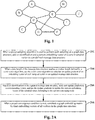
- Fig. 1 is an example of a network diagram provided by one or more embodiments of the present specification.
- vertex A to vertex J are used to represent commodities, and connection lines between the vertices may be used to represent the behavior of simultaneous purchases of the commodities.
- Fig. 1 is for illustration only, and an actual network diagram may be determined according to business requirements.
- the user purchase behaviors may be sampled based on weights as candidates for positive samples. Negative samples are randomly sampled from non-purchase user behaviors. The samples are used to train a supervised model to obtain a model for recommending add-on commodities for a user.
- Graph embedding is a graph calculation method, which can embed the vertices (nodes) in the graph into computable vectors, and the vertex vectors can form a graph vector matrix.
- the graph embedding matrix requires a lot of memory, which often results in memory overflow.
- the present specification provides a solution for dispersing memory consumption in the distributed computing nodes to the greatest extent, which will greatly reduce the calculation bottleneck caused by memory consumption in calculation.
- the embodiments of the present specification are illustrated below with reference to the accompanying drawings.
- a graph data structure is distributed in at least two computing nodes, and the method includes:
- Fig. 2B is a schematic diagram of distribution of a graph data structure shown according to an example embodiment of the present specification. Vertices A, B, C, and D may be stored on computing node 22, vertices E, H, I, and J may be stored on computing node 24, and vertices G and F may be stored on computing node 26.
- the graph data structure is distributed in at least two computing nodes, and a plurality of computing nodes are configured to store and calculate the embedding vectors of the vertices, so that there is no need of storing the embedding vectors of all the vertices in the same computing node during calculation, and memory consumption can be dispersed to the maximum degree; and meanwhile, the vertices distributed in different computing nodes can also perform corresponding vector calculations by way of message propagation.
- the graph data structure may be created based on different business requirements; for example, it may be a social network, a commodity network, a knowledge graph, a user-commodity network, and so on.
- the preset sampling algorithm may be an algorithm for mining the relationship between the vertices, and a vertex sequence (which may also be referred to as a node sequence) may be obtained by sampling through the preset sampling algorithm.
- the preset sampling algorithm may be random sampling in the form of Deep Walk, or biased sampling in the form of node2vec, or other sampling methods. This solution may be applied to different vertex/path sampling algorithms.
- the identification and the current embedding vector of the current sampled vertex may be added to the predefined message data structure.
- the vertex determined by the current sampling may be referred to as the current sampled vertex.
- the identification may be an identification for uniquely identifying the current sampled vertex; for example, it may be a vertex ID.
- the current embedding vector may be an embedding vector stored in the current sampled vertex at the moment. For example, when the current sampled vertex is sampled for the first time, the current embedding vector may be an initial embedding vector.
- the initial embedding vector of each vertex is obtained by initializing the graph data structure.
- the embedding vector of the vertex will be updated. Therefore, when the current sampled vertex is sampled not for the first time, the current embedding vector may be the embedding vector obtained in the last update.
- the embedding vector may be a vectorized feature representation.
- the current embedding vector of a vertex in the graph data structure is stored in graph vertex data of the computing node where the vertex is located, and the graph embedding vector is directly stored in the graph vertex data and distributed in all the computing nodes so as to reduce the memory consumption of the same computing node.
- the message data structure is a specific data structure configured to transfer data during the calculation of the embedding vector, and may also be referred to as a path window message.
- the message data structure may be a data structure such as a linked list or a list.
- the graph data structure is distributed in at least two computing nodes, different computing nodes store vertex data of different vertices respectively, and the same vertex sequence may be distributed in different computing nodes. Therefore, by way of message data structure propagation, data transfer between the different computing nodes may be realized for updating the vertex embedding vectors.
- At least the identifications and the current embedding vectors of the sampled vertices are recorded in the message data structure, and the message data structure may be transferred between the sampled vertices.
- the message data structure may be obtained by sending from the computing node where the previous sampled vertex is located. If the previous sampled vertex and the current sampled vertex are in the same computing node, the computing node may directly add the identification and the current embedding vector of the current sampled vertex to the message data structure.
- the computing node where the previous sampled vertex is located sends the message data structure to the computing node where the current sampled vertex is located, and the computing node where the current sampled vertex is located may add the identification and the current embedding vector of the current sampled vertex to the message data structure.
- a vertex adjacent to and connected to the current sampled vertex is sampled by using the preset sampling algorithm, and the updated message data structure is sent to the computing node where the determined sampled vertex is located.
- the message data structure may be transferred between the vertices to avoid the situation where the same vertex sequence is distributed in different computing nodes and consequently the vertex embedding vectors cannot be calculated.
- One of the functions of the message data structure is to calculate the update gradient of the embedding vectors of the vertices in the same vertex path. Therefore, the upper limit of the number of sampled vertices in the message data structure is much smaller than the number of all vertices in the graph data structure.
- the identifications and the current embedding vectors of the sampled vertices are used as a set of data for the sampled vertices.
- the number of sampled vertices in the so-called message data structure may be the number of data sets.
- the upper limit of the data length of the message data structure may be determined according to the window length defined by the word vector algorithm.
- the data length of the message data structure may be the number of current embedding vectors in the message data structure.
- the upper limit of the data length of the message data structure may be the window length; and in another example, the upper limit of the data length of the message data structure may be slightly larger than the window length.
- the message data structure may be a dynamic linked list or list, and may execute an adding or deleting operation along with message transfer to ensure that the current length of the message data structure does not exceed the upper limit of the length.
- the upper limit of the data length of the message data structure is the window length
- the method further includes: when the data length of the message data structure reaches or is greater than the window length defined by the word vector algorithm, an identification and a current embedding vector of the earliest added sampled vertex in the message data structure are deleted.
- the principle of first added first deleted may be adopted, and when the data length of the message data structure reaches or is greater than the window length defined by the word vector algorithm, data in the message data structure may be deleted according to adding time of the data. For example, the identification and the current embedding vector of the earliest added sampled vertex in the message data structure are deleted, so that only the vertex data within the window length are retained and communicated and dynamically updated, thereby reducing unnecessary memory consumption caused by storing training samples.
- the identifications and the current embedding vectors of the sampled vertices may be stored in the order of addition; for example, the first-added identification and current embedding vector are added to the header of the message data structure, and then subsequently added identifications and current embedding vectors are added to the tail of the current message data structure, so that the identifications and the current embedding vectors of the sampled vertices are arranged in the order of addition.
- the word vector algorithm may be used to calculate the update gradient of the embedding vector of each sampled vertex in the updated message data structure.
- the word vector algorithm may be a tool for calculating word vectors.
- the SkipGram or CBoW algorithm may be used to calculate the update gradients of the embedding vectors
- other word vector algorithms may also be used
- a custom loss function may also be supported to calculate the update gradients of the embedding vectors. Since the word vector algorithm is a conventional algorithm, its specific calculation method is no longer detailed.
- each update gradient is respectively sent to a corresponding vertex, and the update gradients are used to update the current embedding vectors of the sampled vertices through the computing nodes where the vertices are located.
- Each training is an update to the vertex embedding vectors.
- the vertex embedding vectors may be updated to a relatively stable state. Therefore, the vertex embedding vectors need to be adjusted in each training.
- the gradients (which may be referred to as update gradients) of the embedding vectors are calculated. Because the gradients are also vectors, the current embedding vectors are added with or subtracted by the gradients, and thus the current embedding vectors are updated.
- the preset convergence condition may be a condition that makes the embedding vectors stable. For example, it may be that sliding windows in all vertex sequences reach a preset number of training steps (iteration steps).
- different vertex sequences may update the embedding vectors at the same time.
- Different vertex sequences may be different vertex sequences in the same computing node, or different vertex sequences in different computing nodes.
- the embodiments of the present specification can use the graph embedding vector as part of the vertex data and store it in each computing node in a distributed manner to avoid memory bottleneck caused by a single computing node. Meanwhile, since only the vertex data within the window length are retained and communicated and dynamically updated, unnecessary memory consumption caused by storing training samples can be reduced.
- a training sample may be constructed by using the graph embedding matrix based on a preset task, and a preset model is trained by using the constructed training sample to obtain a model for processing the preset task.
- the preset task may be a commodity recommendation task and so on.
- Fig. 3 is a schematic diagram of another distributed graph embedding method shown according to an example embodiment of the present specification. Some of the vertices are shown in Fig. 3 , and vertex 1 to vertex N+1 may be stored in different computing nodes in a distributed manner.
- a graph data structure is initialized to obtain an initial embedding vector of each vertex, and the initial embedding vectors are stored in a vertex data structure (step 1).
- a preset sampling algorithm is used to perform path sampling on the graph data structure, and assuming that a determined sampled vertex is vertex 1, the computing node where vertex 1 is located adds a vertex ID and an initial embedding vector of vertex 1 to the header of a message data structure.
- a data length of the message data structure does not reach a window length defined by a Skip Gram/CboW algorithm, an adjacent vertex continues to be sampled, and an updated message data structure is sent to the determined sampled vertex.
- the computing node where vertex 1 is located sends the updated message data structure to the computing node where vertex 2 is located (step 2).
- the computing node where vertex 2 is located adds a vertex ID and a current embedding vector of vertex 2 to the tail of the message data structure.
- the message data structure is: an array of vertex 1 (ID and current embedding vector) and an array of vertex 2 (ID and current embedding vector).
- step 4 The addition operation of the message data structure and the data length judgment operation are repeated until the data length of the message data structure reaches the window length defined by the Skip Gram/CboW algorithm (step 4).
- step 5 an update gradient of the embedding vector of each vertex in the message data structure is calculated according to the Skip Gram/CBoW algorithm (step 5).
- the computing node where vertex N is located sends the update gradient to a corresponding vertex (step 6).
- the update gradient is used to update the embedding vector of the vertex (step 7).
- the vertex data in the header of the message data structure are deleted, and the message data structure is sent to the vertex determined by sampling, so that the computing node where the vertex is located adds an identification and a current embedding vector of the vertex to the message data structure (step 8).
- step 9 The steps 3 to 8 above are repeated until the specified number of training steps is reached.
- the graph embedding vector is directly stored in the graph vertex data and distributed in all the computing nodes. While path sampling is performed on a graph, training samples are dynamically generated for training, thereby reducing memory consumption.
- the present specification further provides embodiments of a distributed graph embedding apparatus and system, and an electronic device to which the apparatus is applied.
- the embodiment of the distributed graph embedding apparatus in the present specification may be applied to a computer device.
- the apparatus embodiment may be implemented by software, or by hardware or a combination of hardware and software. Taking software implementation as an example, as an apparatus in a logical sense, it is formed by reading corresponding computer program instructions in a non-volatile memory into a memory for running through a processor of the computer device where it is located.
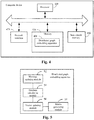
- Fig. 4 which is a hardware structure diagram of the computer device where the distributed graph embedding apparatus is located in the present specification, in addition to processor 410, network interface 420, memory 430, and non-volatile memory 440 shown in Fig. 4 , the computer device where distributed graph embedding apparatus 431 is located in the embodiment may generally further include other hardware according to the actual function of the device, which will not be repeated here.
- a graph data structure is distributed in at least two computing nodes, and the apparatus is arranged on one of the computing nodes and includes:
- the current embedding vectors of the vertices in the graph data structure are stored in graph vertex data of the computing nodes where the vertices are located.
- the apparatus further includes:
- an upper limit of the data length of the message data structure is the window length
- the message updating module is further configured to: delete an identification and a current embedding vector of the earliest added sampled vertex in the message data structure when the data length of the message data structure reaches or is greater than the window length defined by the word vector algorithm.
- the apparatus further includes a task model determining module configured to: construct a training sample by using the graph embedding matrix based on a preset task, and train a preset model by using the constructed training sample to obtain a model for processing the preset task.
- a task model determining module configured to: construct a training sample by using the graph embedding matrix based on a preset task, and train a preset model by using the constructed training sample to obtain a model for processing the preset task.
- the apparatus embodiment basically corresponds to the method embodiment, and therefore reference may be made to the description of the method embodiment section for relevant parts.
- the apparatus embodiment described above is only schematic, where the modules described as separate components may or may not be physically separated, and the components displayed as modules may or may not be physical modules, that is, may be located in one place, or may be distributed to a plurality of network modules. Part or all of the modules may be selected according to actual needs to achieve the objectives of the solution in the present specification. Those of ordinary skill in the art can understand and implement without creative efforts.
- the embodiments of the present specification further provide a computer device including a memory, a processor, and a computer program stored on the memory and executable on the processor, wherein a graph data structure is distributed in at least two computing nodes, and a following method is implemented when the processor executes the program:
- the embodiments of the present specification further provide a computer storage medium in which program instructions are stored, and the program instructions include:
- the embodiments of the present specification further provide a distributed graph embedding system, wherein the system includes at least two computing nodes, a graph data structure is stored in the system in a distributed manner, and any one of the computing nodes may execute a following method:
- the embodiments of the present specification may take the form of computer program products implemented on one or more storage media (including but not limited to a disk storage, a CD-ROM, an optical storage, etc.) containing program code.
- Computer-usable storage media include permanent, non-permanent, removable, and non-removable media, and can store information by any method or technology.
- the information may be computer-readable instructions, data structures, modules of programs, or other data.
- Examples of computer storage media include, but are not limited to, a phase change memory (PRAM), a static random access memory (SRAM), a dynamic random access memory (DRAM), other types of random access memories (RAM), read-only memories (ROM), electrically erasable programmable read-only memories (EEPROM), flash memories or other memory technologies, read-only compact disc read-only memories (CD-ROM), digital versatile disks (DVD) or other optical storage, magnetic tape cassettes, magnetic tape magnetic disk storage or other magnetic storage devices, or any other non-transmission media, and the computer storage media can be used to store information that can be accessed by computing devices.
- PRAM phase change memory
- SRAM static random access memory
- DRAM dynamic random access memory
- RAM random access memories
- ROM read-only memories
- EEPROM electrically erasable programmable read-only memories
- flash memories or other memory technologies
- CD-ROM compact disc read-only memories
- DVD digital versatile disks
- magnetic tape cassettes magnetic tape magnetic disk storage or other magnetic storage devices, or any
Landscapes
- Engineering & Computer Science (AREA)
- Theoretical Computer Science (AREA)
- Databases & Information Systems (AREA)
- Software Systems (AREA)
- General Physics & Mathematics (AREA)
- General Engineering & Computer Science (AREA)
- Physics & Mathematics (AREA)
- Data Mining & Analysis (AREA)
- Artificial Intelligence (AREA)
- Computer Vision & Pattern Recognition (AREA)
- Evolutionary Computation (AREA)
- Medical Informatics (AREA)
- Computing Systems (AREA)
- Mathematical Physics (AREA)
- Information Retrieval, Db Structures And Fs Structures Therefor (AREA)
Abstract
Description
- The present specification relates to the field of data processing, and in particular, to a distributed graph embedding method and apparatus, a device, and a system.
- A graph data structure is a data structure with a high degree of abstraction and strong expressive power: vertices (which may also be referred to as nodes) can be used to represent real-world entities, and relationships between the entities are reflected by edges between the vertices. Common graph data structures include social networks, commodity networks, knowledge graphs, user-commodity networks, and so on. Graph embedding is a method of graph calculation. It is a continuous, dense, and low-dimensional vector representation for learning the vertices. Relationships between the vertices can be measured by relationship between the vectors. For example, by using graph embedding learning algorithms such as Deep Walk and node2vec, a graph embedding matrix composed of vectors of vertices in the graph data structure can be generated. The graph embedding technology is often used for feature extraction because of the versatility of its results, and the results are further input to downstream tasks/projects. For example, social media extracts a user's graph embedding features for anti-cheat detection; e-commerce optimizes commodity recommendation tasks through graph embedding features of commodities; and content distributors optimize content recommendation tasks through graph embedding features of articles.
- However, when performing large-scale graph embedding calculations on the graph data structure, since a graph embedding matrix will be loaded into a memory for calculation and the size of the graph embedding matrix is determined by the number of vertices in the graph data structure and the size of each vector, the graph embedding matrix needs a lot of memory when there are many vertices and the vector dimension is large, which often leads to memory overflow.
- In order to overcome the problems in the related art, the present specification provides a distributed graph embedding method and apparatus, a device, and a system.
- According to a first aspect of embodiments of the present specification, there is provided a distributed graph embedding method, wherein a graph data structure is distributed in at least two computing nodes, and the method includes:
- when a preset sampling algorithm is used to perform path sampling on the graph data structure, adding an identification and a current embedding vector of a current sampled vertex to a predefined message data structure, wherein identifications and current embedding vectors of sampled vertices in a sampling process are recorded in the message data structure, and the message data structure is obtained by transfer via the computing node where a previous sampled vertex is located;
- when a data length of the message data structure reaches a window length defined by a word vector algorithm, using the word vector algorithm to calculate an update gradient of an embedding vector of each sampled vertex in an updated message data structure;
- based on identifications in the updated message data structure, sending each update gradient to a corresponding vertex respectively, and using the update gradients to update the current embedding vector of the sampled vertex belonging to the current computing node; and
- after a preset convergence condition is met, constituting a graph embedding matrix by final embedding vectors of all vertices in the graph data structure.
- In one embodiment, the current embedding vectors of the vertices in the graph data structure are stored in graph vertex data of the computing nodes where the vertices are located.
- In one embodiment, the method further includes:
when the data length of the message data structure does not reach the window length defined by the word vector algorithm, sampling a vertex adjacent to and connected to the current sampled vertex by using the preset sampling algorithm, and sending the updated message data structure to the computing node where a determined sampled vertex is located. - In one embodiment, an upper limit of the data length of the message data structure is the window length, and the method further includes:
when the data length of the message data structure reaches or is greater than the window length defined by the word vector algorithm, deleting an identification and a current embedding vector of the earliest added sampled vertex in the message data structure. - In one embodiment, the method further includes:
constructing a training sample by using the graph embedding matrix based on a preset task, and training a preset model by using the constructed training sample to obtain a model for processing the preset task. - According to a second aspect of the embodiments of the present specification, there is provided a distributed graph embedding apparatus, wherein a graph data structure is distributed in at least two computing nodes, and the apparatus is arranged on one of the computing nodes and includes:
- a message updating module configured to add an identification and a current embedding vector of a current sampled vertex to a predefined message data structure when a preset sampling algorithm is used to perform path sampling on the graph data structure, wherein identifications and current embedding vectors of sampled vertices in a sampling process are recorded in the message data structure, and the message data structure is obtained by transfer via the computing node where a previous sampled vertex is located;
- a gradient calculating module configured to use a word vector algorithm to calculate an update gradient of an embedding vector of each sampled vertex in an updated message data structure when a data length of the message data structure reaches a window length defined by the word vector algorithm;
- a vector updating module configured to respectively send each update gradient to a corresponding vertex based on identifications in the updated message data structure, and use the update gradients to update the current embedding vector of the sampled vertex belonging to the current computing node; and
- a matrix generating module configured to constitute a graph embedding matrix by final embedding vectors of all vertices in the graph data structure after a preset convergence condition is met.
- In one embodiment, the current embedding vectors of the vertices in the graph data structure are stored in graph vertex data of the computing nodes where the vertices are located.
- In one embodiment, the apparatus further includes:
- a vertex sampling module configured to sample a vertex adjacent to and connected to the current sampled vertex by using the preset sampling algorithm when the data length of the message data structure does not reach the window length defined by the word vector algorithm; and
- an information transmission module configured to send the updated message data structure to the computing node where a determined sampled vertex is located.
- In one embodiment, an upper limit of the data length of the message data structure is the window length, and the message updating module is further configured to:
delete an identification and a current embedding vector of the earliest added sampled vertex in the message data structure when the data length of the message data structure reaches or is greater than the window length defined by the word vector algorithm. - According to a third aspect of the embodiments of the present specification, there is provided a distributed graph embedding system, wherein the system includes at least two computing nodes, a graph data structure is stored in the system in a distributed manner, and any one of the computing nodes executes a following method:
- when a preset sampling algorithm is used to perform path sampling on the graph data structure, adding an identification and a current embedding vector of a current sampled vertex to a predefined message data structure, wherein identifications and current embedding vectors of sampled vertices in a sampling process are recorded in the message data structure, and the message data structure is obtained by transfer via the computing node where a previous sampled vertex is located;
- when a data length of the message data structure reaches a window length defined by a word vector algorithm, using the word vector algorithm to calculate an update gradient of an embedding vector of each sampled vertex in an updated message data structure;
- based on identifications in the updated message data structure, sending each update gradient to a corresponding vertex respectively, and using the update gradients to update the current embedding vector of the sampled vertex belonging to the current computing node; and
- after a preset convergence condition is met, constituting a graph embedding matrix by final embedding vectors of all vertices in the graph data structure.
- According to a fourth aspect of the embodiments of the present specification, there is provided a computer device, including a memory, a processor, and a computer program stored on the memory and executable on the processor, wherein a graph data structure is distributed in at least two computing nodes, and when the processor executes the program, a following method is implemented:
- when a preset sampling algorithm is used to perform path sampling on the graph data structure, adding an identification and a current embedding vector of a current sampled vertex to a predefined message data structure, wherein identifications and current embedding vectors of sampled vertices in a sampling process are recorded in the message data structure, and the message data structure is obtained by transfer via the computing node where a previous sampled vertex is located;
- when a data length of the message data structure reaches a window length defined by a word vector algorithm, using the word vector algorithm to calculate an update gradient of an embedding vector of each sampled vertex in an updated message data structure;
- based on identifications in the updated message data structure, sending each update gradient to a corresponding vertex respectively, and using the update gradients to update the current embedding vector of the sampled vertex belonging to the current computing node; and
- after a preset convergence condition is met, constituting a graph embedding matrix by final embedding vectors of all vertices in the graph data structure.
- The technical solution provided by the embodiments of the present specification may include the following beneficial effects:
by applying the embodiments of the present specification, the graph data structure is distributed in at least two computing nodes, and a plurality of computing nodes are configured to store and calculate the embedding vectors of the vertices, so that there is no need of storing the embedding vectors of all the vertices in the same computing node during calculation, and memory consumption can be dispersed to the maximum degree; and meanwhile, the vertices distributed in different computing nodes can also perform corresponding vector calculations by way of message propagation. - It should be understood that the above general description and the following detailed description are only exemplary and explanatory, and do not limit the present specification.
- The drawings herein are incorporated into the present specification and constitute a part of the present specification, show embodiments consistent with the present specification, and are used to explain the principles of the present specification together with the specification.
-
Fig. 1 is an example of a network diagram provided by one or more embodiments of the present specification. -
Fig. 2A is a flowchart of a distributed graph embedding method shown according to an example embodiment of the present specification. -
Fig. 2B is a schematic diagram of distribution of a graph data structure shown according to an example embodiment of the present specification. -
Fig. 3 is a schematic diagram of another distributed graph embedding method shown according to an example embodiment of the present specification. -
Fig. 4 is a hardware structure diagram of a computer device where a distributed graph embedding apparatus is located shown according to an example embodiment of the present specification. -
Fig. 5 is a block diagram of a distributed graph embedding apparatus shown according to an example embodiment of the present specification. - Example embodiments will be described in detail here, examples of which are shown in the drawings. When the following description refers to the accompanying drawings, unless otherwise indicated, the same numerals in different drawings represent the same or similar elements. The implementation modes described in the following example embodiments do not represent all implementation modes consistent with the present specification. Rather, they are merely examples of apparatuses and methods consistent with some aspects of the present specification as detailed in the appended claims.
- The terminology used in the present specification is for the purpose of describing particular embodiments only, and is not intended to limit the present specification. The singular forms "a," "said," and "the" used in the present specification and the appended claims are also intended to include plural forms unless the context clearly indicates other meanings. It should also be understood that the term "and/or" as used herein refers to and encompasses any or all possible combinations of one or more associated listed items.
- It should be understood that although the terms first, second, third, etc. may be used to describe various information in the present specification, the information should not be limited to these terms. These terms are only used to distinguish the same type of information from each other. For example, without departing from the scope of the present specification, first information may also be referred to as second information, and similarly, second information may also be referred to as first information. The word "if" used herein may be interpreted as "when," or "while," or "in response to a determination," depending on the context.
- A graph data structure is a data structure with a high degree of abstraction and strong expressive power. Generally, in graph calculation, a basic data structure expression may be: G = (V, E, D), V = vertex (vertex or node), E = edge, D = data (weight or other attribute information). Many data issues in the physical world may be expressed in an abstraction way by the graph data structure, such as social networks, commodity networks, knowledge graphs, user-commodity networks, etc. The graph data structure well expresses the relationships between data, and the relationship calculation is the core of big data calculation, i.e., by obtaining the data relationships, useful information can be extracted from massive data with a lot of noise. For example, by modeling the relationship between shoppers, users with similar interests can be quickly found and recommended with commodities; or in social networks, opinion leaders are found by a transmission relationship.
- For example, for add-on business, a graph may be constructed based on user purchase behaviors, nodes: commodities, edges: the behavior of simultaneous purchases of commodities, and weights: the proportion of simultaneous purchases, which may be characteristics such as the number of purchases, purchase time, amount of money, etc.
Fig. 1 is an example of a network diagram provided by one or more embodiments of the present specification. In this example, vertex A to vertex J are used to represent commodities, and connection lines between the vertices may be used to represent the behavior of simultaneous purchases of the commodities. It can be understood thatFig. 1 is for illustration only, and an actual network diagram may be determined according to business requirements. After a network diagram is constructed based on user purchase behaviors, the user purchase behaviors may be sampled based on weights as candidates for positive samples. Negative samples are randomly sampled from non-purchase user behaviors. The samples are used to train a supervised model to obtain a model for recommending add-on commodities for a user. - Graph embedding is a graph calculation method, which can embed the vertices (nodes) in the graph into computable vectors, and the vertex vectors can form a graph vector matrix. However, when a large scale of graph embedding calculations are performed on the graph data structure in the related art, the graph embedding matrix requires a lot of memory, which often results in memory overflow.
- The present specification provides a solution for dispersing memory consumption in the distributed computing nodes to the greatest extent, which will greatly reduce the calculation bottleneck caused by memory consumption in calculation. The embodiments of the present specification are illustrated below with reference to the accompanying drawings.
- As shown in
Fig. 2A which is a flowchart of a distributed graph embedding method shown according to an example embodiment of the present specification, a graph data structure is distributed in at least two computing nodes, and the method includes: - in
step 202, when a preset sampling algorithm is used to perform path sampling on the graph data structure, an identification and a current embedding vector of a current sampled vertex are added to a predefined message data structure, wherein identifications and current embedding vectors of sampled vertices in a sampling process are recorded in the message data structure, and the message data structure is obtained by transfer via the computing node where a previous sampled vertex is located; - in
step 204, when a data length of the message data structure reaches a window length defined by a word vector algorithm, the word vector algorithm is used to calculate an update gradient of an embedding vector of each sampled vertex in an updated message data structure; - in
step 206, based on identifications in the updated message data structure, each update gradient is respectively sent to a corresponding vertex, and the update gradients are used to update the current embedding vector of the sampled vertex belonging to the current computing node; and - in
step 208, after a preset convergence condition is met, a graph embedding matrix is constituted by final embedding vectors of all vertices in the graph data structure. - The distributed graph embedding method of the present embodiment may be applied to a distributed system including at least two computing nodes. For example,
Fig. 2B is a schematic diagram of distribution of a graph data structure shown according to an example embodiment of the present specification. Vertices A, B, C, and D may be stored on computing node 22, vertices E, H, I, and J may be stored on computingnode 24, and vertices G and F may be stored on computingnode 26. The graph data structure is distributed in at least two computing nodes, and a plurality of computing nodes are configured to store and calculate the embedding vectors of the vertices, so that there is no need of storing the embedding vectors of all the vertices in the same computing node during calculation, and memory consumption can be dispersed to the maximum degree; and meanwhile, the vertices distributed in different computing nodes can also perform corresponding vector calculations by way of message propagation. - The graph data structure may be created based on different business requirements; for example, it may be a social network, a commodity network, a knowledge graph, a user-commodity network, and so on. The preset sampling algorithm may be an algorithm for mining the relationship between the vertices, and a vertex sequence (which may also be referred to as a node sequence) may be obtained by sampling through the preset sampling algorithm. For example, the preset sampling algorithm may be random sampling in the form of Deep Walk, or biased sampling in the form of node2vec, or other sampling methods. This solution may be applied to different vertex/path sampling algorithms.
- In the process of path sampling on the graph data structure by using the preset sampling algorithm, when the current sampled vertex is determined, the identification and the current embedding vector of the current sampled vertex may be added to the predefined message data structure. It can be understood that, for distinction, the vertex determined by the current sampling may be referred to as the current sampled vertex. The identification may be an identification for uniquely identifying the current sampled vertex; for example, it may be a vertex ID. The current embedding vector may be an embedding vector stored in the current sampled vertex at the moment. For example, when the current sampled vertex is sampled for the first time, the current embedding vector may be an initial embedding vector. The initial embedding vector of each vertex is obtained by initializing the graph data structure. In a training process, the embedding vector of the vertex will be updated. Therefore, when the current sampled vertex is sampled not for the first time, the current embedding vector may be the embedding vector obtained in the last update. The embedding vector may be a vectorized feature representation. The current embedding vector of a vertex in the graph data structure is stored in graph vertex data of the computing node where the vertex is located, and the graph embedding vector is directly stored in the graph vertex data and distributed in all the computing nodes so as to reduce the memory consumption of the same computing node.
- Regarding the message data structure, the message data structure is a specific data structure configured to transfer data during the calculation of the embedding vector, and may also be referred to as a path window message. For example, the message data structure may be a data structure such as a linked list or a list. The graph data structure is distributed in at least two computing nodes, different computing nodes store vertex data of different vertices respectively, and the same vertex sequence may be distributed in different computing nodes. Therefore, by way of message data structure propagation, data transfer between the different computing nodes may be realized for updating the vertex embedding vectors.
- At least the identifications and the current embedding vectors of the sampled vertices are recorded in the message data structure, and the message data structure may be transferred between the sampled vertices. For example, the message data structure may be obtained by sending from the computing node where the previous sampled vertex is located. If the previous sampled vertex and the current sampled vertex are in the same computing node, the computing node may directly add the identification and the current embedding vector of the current sampled vertex to the message data structure. If the previous sampled vertex and the current sampled vertex are not in the same computing node, then the computing node where the previous sampled vertex is located sends the message data structure to the computing node where the current sampled vertex is located, and the computing node where the current sampled vertex is located may add the identification and the current embedding vector of the current sampled vertex to the message data structure.
- For example, in one embodiment, when the data length of the message data structure does not reach the window length defined by the word vector algorithm, a vertex adjacent to and connected to the current sampled vertex is sampled by using the preset sampling algorithm, and the updated message data structure is sent to the computing node where the determined sampled vertex is located.
- It can be seen that the message data structure may be transferred between the vertices to avoid the situation where the same vertex sequence is distributed in different computing nodes and consequently the vertex embedding vectors cannot be calculated.
- One of the functions of the message data structure is to calculate the update gradient of the embedding vectors of the vertices in the same vertex path. Therefore, the upper limit of the number of sampled vertices in the message data structure is much smaller than the number of all vertices in the graph data structure. The identifications and the current embedding vectors of the sampled vertices are used as a set of data for the sampled vertices. The number of sampled vertices in the so-called message data structure may be the number of data sets.
- In one embodiment, the upper limit of the data length of the message data structure may be determined according to the window length defined by the word vector algorithm. The data length of the message data structure may be the number of current embedding vectors in the message data structure. In one example, the upper limit of the data length of the message data structure may be the window length; and in another example, the upper limit of the data length of the message data structure may be slightly larger than the window length.
- The message data structure may be a dynamic linked list or list, and may execute an adding or deleting operation along with message transfer to ensure that the current length of the message data structure does not exceed the upper limit of the length.
- In one embodiment, the upper limit of the data length of the message data structure is the window length, and the method further includes:
when the data length of the message data structure reaches or is greater than the window length defined by the word vector algorithm, an identification and a current embedding vector of the earliest added sampled vertex in the message data structure are deleted. - In the present embodiment, the principle of first added first deleted may be adopted, and when the data length of the message data structure reaches or is greater than the window length defined by the word vector algorithm, data in the message data structure may be deleted according to adding time of the data. For example, the identification and the current embedding vector of the earliest added sampled vertex in the message data structure are deleted, so that only the vertex data within the window length are retained and communicated and dynamically updated, thereby reducing unnecessary memory consumption caused by storing training samples.
- Further, in order to improve the deletion efficiency, the identifications and the current embedding vectors of the sampled vertices may be stored in the order of addition; for example, the first-added identification and current embedding vector are added to the header of the message data structure, and then subsequently added identifications and current embedding vectors are added to the tail of the current message data structure, so that the identifications and the current embedding vectors of the sampled vertices are arranged in the order of addition.
- When the data length of the message data structure reaches the window length defined by the word vector algorithm, the word vector algorithm may be used to calculate the update gradient of the embedding vector of each sampled vertex in the updated message data structure.
- The word vector algorithm may be a tool for calculating word vectors. For example, the SkipGram or CBoW algorithm may be used to calculate the update gradients of the embedding vectors, other word vector algorithms may also be used, and a custom loss function may also be supported to calculate the update gradients of the embedding vectors. Since the word vector algorithm is a conventional algorithm, its specific calculation method is no longer detailed.
- Based on the identifications in the updated message data structure, each update gradient is respectively sent to a corresponding vertex, and the update gradients are used to update the current embedding vectors of the sampled vertices through the computing nodes where the vertices are located.
- Each training is an update to the vertex embedding vectors. After multiple rounds of training, the vertex embedding vectors may be updated to a relatively stable state. Therefore, the vertex embedding vectors need to be adjusted in each training. The gradients (which may be referred to as update gradients) of the embedding vectors are calculated. Because the gradients are also vectors, the current embedding vectors are added with or subtracted by the gradients, and thus the current embedding vectors are updated.
- The preset convergence condition may be a condition that makes the embedding vectors stable. For example, it may be that sliding windows in all vertex sequences reach a preset number of training steps (iteration steps).
- Further, different vertex sequences may update the embedding vectors at the same time. Different vertex sequences may be different vertex sequences in the same computing node, or different vertex sequences in different computing nodes.
- As can be seen from the above embodiments, the embodiments of the present specification can use the graph embedding vector as part of the vertex data and store it in each computing node in a distributed manner to avoid memory bottleneck caused by a single computing node. Meanwhile, since only the vertex data within the window length are retained and communicated and dynamically updated, unnecessary memory consumption caused by storing training samples can be reduced.
- Further, the present specification also provides an application of the graph embedding matrix. In one embodiment, a training sample may be constructed by using the graph embedding matrix based on a preset task, and a preset model is trained by using the constructed training sample to obtain a model for processing the preset task. For example, if the graph data structure is a commodity network graph, the preset task may be a commodity recommendation task and so on.
- The various technical features in the above implementations can be arbitrarily combined, as long as there is no conflict or contradiction between the combinations of the features. However, due to the limited space, the combinations will not be described one by one, and therefore, arbitrary combinations of the various technical features in the above implementations also belong to the scope disclosed in the present specification.
- Illustration is performed with an application example below.
-
Fig. 3 is a schematic diagram of another distributed graph embedding method shown according to an example embodiment of the present specification. Some of the vertices are shown inFig. 3 , andvertex 1 to vertex N+1 may be stored in different computing nodes in a distributed manner. - A graph data structure is initialized to obtain an initial embedding vector of each vertex, and the initial embedding vectors are stored in a vertex data structure (step 1).
- A preset sampling algorithm is used to perform path sampling on the graph data structure, and assuming that a determined sampled vertex is
vertex 1, the computing node wherevertex 1 is located adds a vertex ID and an initial embedding vector ofvertex 1 to the header of a message data structure. When a data length of the message data structure does not reach a window length defined by a Skip Gram/CboW algorithm, an adjacent vertex continues to be sampled, and an updated message data structure is sent to the determined sampled vertex. Assuming that the sampled vertex isvertex 2, the computing node wherevertex 1 is located sends the updated message data structure to the computing node wherevertex 2 is located (step 2). - The computing node where
vertex 2 is located adds a vertex ID and a current embedding vector ofvertex 2 to the tail of the message data structure. For example, the message data structure is: an array of vertex 1 (ID and current embedding vector) and an array of vertex 2 (ID and current embedding vector). When the data length of the message data structure does not reach the window length defined by the Skip Gram/CboW algorithm, an adjacent vertex continues to be sampled, and the updated message data structure is sent to the determined sampled vertex (step 3). - The addition operation of the message data structure and the data length judgment operation are repeated until the data length of the message data structure reaches the window length defined by the Skip Gram/CboW algorithm (step 4).
- Assuming that after the computing node where vertex N is located adds a vertex ID and a current embedding vector of vertex N to the tail of the message data structure, the data length of the message data structure reaches the window length defined by the Skip Gram/CboW algorithm, an update gradient of the embedding vector of each vertex in the message data structure is calculated according to the Skip Gram/CBoW algorithm (step 5).
- The computing node where vertex N is located sends the update gradient to a corresponding vertex (step 6).
- After the update gradient is received by the computing node where the corresponding vertex is located, the update gradient is used to update the embedding vector of the vertex (step 7).
- The vertex data in the header of the message data structure are deleted, and the message data structure is sent to the vertex determined by sampling, so that the computing node where the vertex is located adds an identification and a current embedding vector of the vertex to the message data structure (step 8).
- The
steps 3 to 8 above are repeated until the specified number of training steps is reached (step 9). - It can be seen that the graph embedding vector is directly stored in the graph vertex data and distributed in all the computing nodes. While path sampling is performed on a graph, training samples are dynamically generated for training, thereby reducing memory consumption.
- Corresponding to the embodiments of the foregoing distributed graph embedding method, the present specification further provides embodiments of a distributed graph embedding apparatus and system, and an electronic device to which the apparatus is applied.
- The embodiment of the distributed graph embedding apparatus in the present specification may be applied to a computer device. The apparatus embodiment may be implemented by software, or by hardware or a combination of hardware and software. Taking software implementation as an example, as an apparatus in a logical sense, it is formed by reading corresponding computer program instructions in a non-volatile memory into a memory for running through a processor of the computer device where it is located. From a hardware perspective, as shown in
Fig. 4 which is a hardware structure diagram of the computer device where the distributed graph embedding apparatus is located in the present specification, in addition toprocessor 410,network interface 420,memory 430, andnon-volatile memory 440 shown inFig. 4 , the computer device where distributedgraph embedding apparatus 431 is located in the embodiment may generally further include other hardware according to the actual function of the device, which will not be repeated here. - As shown in
Fig. 5 which is a block diagram of a distributed graph embedding apparatus shown according to an example embodiment of the present specification, a graph data structure is distributed in at least two computing nodes, and the apparatus is arranged on one of the computing nodes and includes: -
message updating module 52 configured to add an identification and a current embedding vector of a current sampled vertex to a predefined message data structure when a preset sampling algorithm is used to perform path sampling on the graph data structure, wherein identifications and current embedding vectors of sampled vertices in a sampling process are recorded in the message data structure, and the message data structure is obtained by transfer via the computing node where a previous sampled vertex is located; -
gradient calculating module 54 configured to use a word vector algorithm to calculate an update gradient of an embedding vector of each sampled vertex in an updated message data structure when a data length of the message data structure reaches a window length defined by the word vector algorithm; -
vector updating module 56 configured to respectively send each update gradient to a corresponding vertex based on identifications in the updated message data structure, and use the update gradients to update the current embedding vector of the sampled vertex belonging to the current computing node; and -
matrix generating module 58 configured to constitute a graph embedding matrix by final embedding vectors of all vertices in the graph data structure after a preset convergence condition is met. - In one embodiment, the current embedding vectors of the vertices in the graph data structure are stored in graph vertex data of the computing nodes where the vertices are located.
- In one embodiment, the apparatus further includes:
- a vertex sampling module configured to sample a vertex adjacent to and connected to the current sampled vertex by using the preset sampling algorithm when the data length of the message data structure does not reach the window length defined by the word vector algorithm; and
- an information transmission module configured to send the updated message data structure to the computing node where a determined sampled vertex is located.
- In one embodiment, an upper limit of the data length of the message data structure is the window length, and the message updating module is further configured to:
delete an identification and a current embedding vector of the earliest added sampled vertex in the message data structure when the data length of the message data structure reaches or is greater than the window length defined by the word vector algorithm. - In one embodiment, the apparatus further includes a task model determining module configured to:
construct a training sample by using the graph embedding matrix based on a preset task, and train a preset model by using the constructed training sample to obtain a model for processing the preset task. - The apparatus embodiment basically corresponds to the method embodiment, and therefore reference may be made to the description of the method embodiment section for relevant parts. The apparatus embodiment described above is only schematic, where the modules described as separate components may or may not be physically separated, and the components displayed as modules may or may not be physical modules, that is, may be located in one place, or may be distributed to a plurality of network modules. Part or all of the modules may be selected according to actual needs to achieve the objectives of the solution in the present specification. Those of ordinary skill in the art can understand and implement without creative efforts.
- Correspondingly, the embodiments of the present specification further provide a computer device including a memory, a processor, and a computer program stored on the memory and executable on the processor, wherein a graph data structure is distributed in at least two computing nodes, and a following method is implemented when the processor executes the program:
- when a preset sampling algorithm is used to perform path sampling on the graph data structure, an identification and a current embedding vector of a current sampled vertex are added to a predefined message data structure, wherein identifications and current embedding vectors of sampled vertices in a sampling process are recorded in the message data structure, and the message data structure is obtained by transfer via the computing node where a previous sampled vertex is located;
- when a data length of the message data structure reaches a window length defined by a word vector algorithm, the word vector algorithm is used to calculate an update gradient of an embedding vector of each sampled vertex in an updated message data structure;
- based on identifications in the updated message data structure, each update gradient is respectively sent to a corresponding vertex, and the update gradients are used to update the current embedding vector of the sampled vertex belonging to the current computing node; and
- after a preset convergence condition is met, a graph embedding matrix is constituted by final embedding vectors of all vertices in the graph data structure.
- The embodiments in the present specification are described in a progressive manner. Reference can be made to each other for the same or similar parts between the embodiments. Each embodiment focuses on the differences from other embodiments. In particular, the device embodiment is described relatively simply since it is basically similar to the method embodiment, and reference may be made to the description of the method embodiment for relevant parts.
- Correspondingly, the embodiments of the present specification further provide a computer storage medium in which program instructions are stored, and the program instructions include:
- when a preset sampling algorithm is used to perform path sampling on a graph data structure, an identification and a current embedding vector of a current sampled vertex are added to a predefined message data structure, wherein identifications and current embedding vectors of sampled vertices in a sampling process are recorded in the message data structure, and the message data structure is obtained by transfer via a computing node where a previous sampled vertex is located;
- when a data length of the message data structure reaches a window length defined by a word vector algorithm, the word vector algorithm is used to calculate an update gradient of an embedding vector of each sampled vertex in an updated message data structure;
- based on identifications in the updated message data structure, each update gradient is respectively sent to a corresponding vertex, and the update gradients are used to update the current embedding vector of the sampled vertex belonging to the current computing node; and
- after a preset convergence condition is met, a graph embedding matrix is constituted by final embedding vectors of all vertices in the graph data structure.
- Correspondingly, the embodiments of the present specification further provide a distributed graph embedding system, wherein the system includes at least two computing nodes, a graph data structure is stored in the system in a distributed manner, and any one of the computing nodes may execute a following method:
- when a preset sampling algorithm is used to perform path sampling on the graph data structure, an identification and a current embedding vector of a current sampled vertex are added to a predefined message data structure, wherein identifications and current embedding vectors of sampled vertices in a sampling process are recorded in the message data structure, and the message data structure is obtained by transfer via the computing node where a previous sampled vertex is located;
- when a data length of the message data structure reaches a window length defined by a word vector algorithm, the word vector algorithm is used to calculate an update gradient of an embedding vector of each sampled vertex in an updated message data structure;
- based on identifications in the updated message data structure, each update gradient is respectively sent to a corresponding vertex, and the update gradients are used to update the current embedding vector of the sampled vertex belonging to the current computing node; and
- after a preset convergence condition is met, a graph embedding matrix is constituted by final embedding vectors of all vertices in the graph data structure.
- The embodiments of the present specification may take the form of computer program products implemented on one or more storage media (including but not limited to a disk storage, a CD-ROM, an optical storage, etc.) containing program code. Computer-usable storage media include permanent, non-permanent, removable, and non-removable media, and can store information by any method or technology. The information may be computer-readable instructions, data structures, modules of programs, or other data. Examples of computer storage media include, but are not limited to, a phase change memory (PRAM), a static random access memory (SRAM), a dynamic random access memory (DRAM), other types of random access memories (RAM), read-only memories (ROM), electrically erasable programmable read-only memories (EEPROM), flash memories or other memory technologies, read-only compact disc read-only memories (CD-ROM), digital versatile disks (DVD) or other optical storage, magnetic tape cassettes, magnetic tape magnetic disk storage or other magnetic storage devices, or any other non-transmission media, and the computer storage media can be used to store information that can be accessed by computing devices.
- Those skilled in the art will easily think of other implementation solutions of the present specification after considering the specification and practicing the invention filed here. The present specification is intended to cover any variations, uses, or adaptations of the present specification. These variations, uses, or adaptations follow the general principles of the present specification and include common general knowledge or conventional technical means in the technical field not applied for in the present specification. The specification and embodiments are to be considered exemplary only, and the true scope and spirit of the present specification are pointed out by the following claims.
- It should be understood that the present specification is not limited to the precise structure that has been described above and shown in the drawings, and that various modifications and changes can be made without departing from the scope thereof. The scope of the present specification is limited only by the appended claims.
- The above description is only preferred embodiments of the present specification and is not intended to limit the present specification. Any modification, equivalent replacement, improvement, etc. made within the spirit and principle of the present specification shall fall within the protection scope of the present specification.
Claims (11)
- A distributed graph embedding method, wherein a graph data structure is distributed in at least two computing nodes, and the method comprises:when a preset sampling algorithm is used to perform path sampling on the graph data structure, adding an identification and a current embedding vector of a current sampled vertex to a predefined message data structure, wherein identifications and current embedding vectors of sampled vertices in a sampling process are recorded in the message data structure, and the message data structure is obtained by transfer via the computing node where a previous sampled vertex is located;when a data length of the message data structure reaches a window length defined by a word vector algorithm, using the word vector algorithm to calculate an update gradient of an embedding vector of each sampled vertex in an updated message data structure;based on identifications in the updated message data structure, sending each update gradient to a corresponding vertex respectively, and using the update gradients to update the current embedding vector of the sampled vertex belonging to the current computing node; andafter a preset convergence condition is met, constituting a graph embedding matrix by final embedding vectors of all vertices in the graph data structure.
- The method according to claim 1, wherein the current embedding vectors of the vertices in the graph data structure are stored in graph vertex data of the computing nodes where the vertices are located.
- The method according to claim 1, further comprising:
when the data length of the message data structure does not reach the window length defined by the word vector algorithm, sampling a vertex adjacent to and connected to the current sampled vertex by using the preset sampling algorithm, and sending the updated message data structure to the computing node where a determined sampled vertex is located. - The method according to claim 1, wherein an upper limit of the data length of the message data structure is the window length, and the method further comprises:
when the data length of the message data structure reaches or is greater than the window length defined by the word vector algorithm, deleting an identification and a current embedding vector of the earliest added sampled vertex in the message data structure. - The method according to any one of claims 1 to 4, further comprising:
constructing a training sample by using the graph embedding matrix based on a preset task, and training a preset model by using the constructed training sample to obtain a model for processing the preset task. - A distributed graph embedding apparatus, wherein a graph data structure is distributed in at least two computing nodes, and the apparatus is arranged on one of the computing nodes and comprises:a message updating module configured to add an identification and a current embedding vector of a current sampled vertex to a predefined message data structure when a preset sampling algorithm is used to perform path sampling on the graph data structure, wherein identifications and current embedding vectors of sampled vertices in a sampling process are recorded in the message data structure, and the message data structure is obtained by transfer via the computing node where a previous sampled vertex is located;a gradient calculating module configured to use a word vector algorithm to calculate an update gradient of an embedding vector of each sampled vertex in an updated message data structure when a data length of the message data structure reaches a window length defined by the word vector algorithm;a vector updating module configured to respectively send each update gradient to a corresponding vertex based on identifications in the updated message data structure, and use the update gradients to update the current embedding vector of the sampled vertex belonging to the current computing node; anda matrix generating module configured to constitute a graph embedding matrix by final embedding vectors of all vertices in the graph data structure after a preset convergence condition is met.
- The apparatus according to claim 6, wherein the current embedding vectors of the vertices in the graph data structure are stored in graph vertex data of the computing nodes where the vertices are located.
- The apparatus according to claim 6, further comprising:a vertex sampling module configured to sample a vertex adjacent to and connected to the current sampled vertex by using the preset sampling algorithm when the data length of the message data structure does not reach the window length defined by the word vector algorithm; andan information transmission module configured to send the updated message data structure to the computing node where a determined sampled vertex is located.
- The apparatus according to claim 6, wherein an upper limit of the data length of the message data structure is the window length, and the message updating module is further configured to:
delete an identification and a current embedding vector of the earliest added sampled vertex in the message data structure when the data length of the message data structure reaches or is greater than the window length defined by the word vector algorithm. - A distributed graph embedding system, wherein the system comprises at least two computing nodes, a graph data structure is stored in the system in a distributed manner, and any one of the computing nodes executes a following method:when a preset sampling algorithm is used to perform path sampling on the graph data structure, adding an identification and a current embedding vector of a current sampled vertex to a predefined message data structure, wherein identifications and current embedding vectors of sampled vertices in a sampling process are recorded in the message data structure, and the message data structure is obtained by transfer via the computing node where a previous sampled vertex is located;when a data length of the message data structure reaches a window length defined by a word vector algorithm, using the word vector algorithm to calculate an update gradient of an embedding vector of each sampled vertex in an updated message data structure;based on identifications in the updated message data structure, sending each update gradient to a corresponding vertex respectively, and using the update gradients to update the current embedding vector of the sampled vertex belonging to the current computing node; andafter a preset convergence condition is met, constituting a graph embedding matrix by final embedding vectors of all vertices in the graph data structure.
- A computer device, comprising a memory, a processor, and a computer program stored on the memory and executable on the processor, wherein a graph data structure is distributed in at least two computing nodes, and a following method is implemented when the processor executes the program:when a preset sampling algorithm is used to perform path sampling on the graph data structure, adding an identification and a current embedding vector of a current sampled vertex to a predefined message data structure, wherein identifications and current embedding vectors of sampled vertices in a sampling process are recorded in the message data structure, and the message data structure is obtained by transfer via the computing node where a previous sampled vertex is located;when a data length of the message data structure reaches a window length defined by a word vector algorithm, using the word vector algorithm to calculate an update gradient of an embedding vector of each sampled vertex in an updated message data structure;based on identifications in the updated message data structure, sending each update gradient to a corresponding vertex respectively, and using the update gradients to update the current embedding vector of the sampled vertex belonging to the current computing node; andafter a preset convergence condition is met, constituting a graph embedding matrix by final embedding vectors of all vertices in the graph data structure.
Applications Claiming Priority (2)
| Application Number | Priority Date | Filing Date | Title |
|---|---|---|---|
| CN201810975295.2A CN109344295B (en) | 2018-08-24 | 2018-08-24 | Distributed graph embedding method, apparatus, device and system |
| PCT/CN2019/095340 WO2020038141A1 (en) | 2018-08-24 | 2019-07-10 | Distributed graph embedding method, apparatus and system, and device |
Publications (2)
| Publication Number | Publication Date |
|---|---|
| EP3779731A1 true EP3779731A1 (en) | 2021-02-17 |
| EP3779731A4 EP3779731A4 (en) | 2021-06-09 |
Family
ID=65296601
Family Applications (1)
| Application Number | Title | Priority Date | Filing Date |
|---|---|---|---|
| EP19852888.7A Withdrawn EP3779731A4 (en) | 2018-08-24 | 2019-07-10 | Distributed graph embedding method, apparatus and system, and device |
Country Status (6)
| Country | Link |
|---|---|
| US (1) | US11074295B2 (en) |
| EP (1) | EP3779731A4 (en) |
| CN (1) | CN109344295B (en) |
| SG (1) | SG11202010746SA (en) |
| TW (1) | TWI703460B (en) |
| WO (1) | WO2020038141A1 (en) |
Families Citing this family (18)
| Publication number | Priority date | Publication date | Assignee | Title |
|---|---|---|---|---|
| CN109344295B (en) * | 2018-08-24 | 2020-05-05 | 阿里巴巴集团控股有限公司 | Distributed graph embedding method, apparatus, device and system |
| CN110019253B (en) * | 2019-04-18 | 2021-10-12 | 北京邮电大学 | Distributed graph data sequence sampling method and device |
| CN110688610B (en) * | 2019-09-27 | 2023-05-09 | 支付宝(杭州)信息技术有限公司 | Weight calculation method and device for graph data and electronic equipment |
| CN110928992B (en) * | 2019-11-21 | 2022-06-10 | 邝俊伟 | Text searching method, device, server and storage medium |
| CN111461826B (en) * | 2020-03-30 | 2024-04-09 | 京东科技控股股份有限公司 | Information pushing method and device, storage medium and electronic device |
| CN111966889B (en) * | 2020-05-20 | 2023-04-28 | 清华大学深圳国际研究生院 | Generation method of graph embedded vector and generation method of recommended network model |
| CN113742531B (en) * | 2020-05-27 | 2023-09-01 | 杭州海康威视数字技术股份有限公司 | Picture recommendation method and device and electronic equipment |
| CN112215604B (en) * | 2020-10-15 | 2022-06-07 | 支付宝(杭州)信息技术有限公司 | Method and device for identifying transaction mutual-party relationship information |
| CN113051317B (en) * | 2021-04-09 | 2024-05-28 | 上海云从企业发展有限公司 | Data mining model updating method, system, computer equipment and readable medium |
| EP4348515A4 (en) * | 2021-05-25 | 2024-09-25 | Visa International Service Association | SYSTEMS, METHODS AND COMPUTER PROGRAM PRODUCTS FOR GENERATING NODE EMBEDDMENTS |
| CN113850384B (en) * | 2021-09-30 | 2025-02-28 | 维沃移动通信有限公司 | Model training method and device |
| CN114218634B (en) * | 2021-12-08 | 2024-03-19 | 浙江大学 | A method to generate a planar expandable structure that adds hinge points and hinge rods |
| CN114492647B (en) | 2022-01-28 | 2024-06-21 | 中国银联股份有限公司 | Federated graph clustering method, device and readable storage medium based on distributed graph embedding |
| CN114254164B (en) * | 2022-03-01 | 2022-06-28 | 全球能源互联网研究院有限公司 | Method and device for storing graph data |
| US12013897B2 (en) * | 2022-09-02 | 2024-06-18 | Tsinghua University | Systems and methods for general-purpose out-of-core random walk graph computing |
| US12174835B2 (en) * | 2022-10-27 | 2024-12-24 | Oracle International Corporation | Offloading graph components to persistent storage for reducing resident memory in distributed graph processing |
| US12361068B2 (en) * | 2023-12-19 | 2025-07-15 | Oracle International Corporation | Distributed multi-hop neighborhood extraction for graph machine-learning via push-lazy-push-traversal |
| CN118446277B (en) * | 2024-05-20 | 2025-04-08 | 浙江工业大学 | Self-supervision message passing graph representation learning method based on comparison generation |
Family Cites Families (13)
| Publication number | Priority date | Publication date | Assignee | Title |
|---|---|---|---|---|
| US8725796B2 (en) * | 2011-07-07 | 2014-05-13 | F. David Serena | Relationship networks having link quality metrics with inference and concomitant digital value exchange |
| US9098941B2 (en) * | 2012-01-23 | 2015-08-04 | Ayasdi, Inc. | Systems and methods for graphical layout |
| CN103530604A (en) * | 2013-09-27 | 2014-01-22 | 中国人民解放军空军工程大学 | A Robust Visual Tracking Method Based on Transduction |
| US10032244B2 (en) * | 2014-08-21 | 2018-07-24 | Intel Corporation | Method and apparatus for implementing a nearest neighbor search on a graphics processing unit (GPU) |
| US10120956B2 (en) * | 2014-08-29 | 2018-11-06 | GraphSQL, Inc. | Methods and systems for distributed computation of graph data |
| US20160188519A1 (en) * | 2014-12-27 | 2016-06-30 | Intel Corporation | Method, apparatus, system for embedded stream lanes in a high-performance interconnect |
| CN105824802B (en) * | 2016-03-31 | 2018-10-30 | 清华大学 | It is a kind of to obtain the method and device that knowledge mapping vectorization indicates |
| US11301774B2 (en) * | 2017-02-28 | 2022-04-12 | Nec Corporation | System and method for multi-modal graph-based personalization |
| CN108062551A (en) * | 2017-06-28 | 2018-05-22 | 浙江大学 | A kind of figure Feature Extraction System based on adjacency matrix, figure categorizing system and method |
| CN107633263A (en) * | 2017-08-30 | 2018-01-26 | 清华大学 | Network embedding grammar based on side |
| CN107729290B (en) * | 2017-09-21 | 2021-05-11 | 北京大学深圳研究生院 | A Representation Learning Method for Very Large Scale Graphs Using Locality-Sensitive Hashing Optimization |
| CN108427773B (en) * | 2018-05-08 | 2022-06-21 | 南京大学 | Distributed knowledge graph embedding method |
| CN109344295B (en) * | 2018-08-24 | 2020-05-05 | 阿里巴巴集团控股有限公司 | Distributed graph embedding method, apparatus, device and system |
-
2018
- 2018-08-24 CN CN201810975295.2A patent/CN109344295B/en active Active
-
2019
- 2019-06-20 TW TW108121473A patent/TWI703460B/en active
- 2019-07-10 SG SG11202010746SA patent/SG11202010746SA/en unknown
- 2019-07-10 WO PCT/CN2019/095340 patent/WO2020038141A1/en not_active Ceased
- 2019-07-10 EP EP19852888.7A patent/EP3779731A4/en not_active Withdrawn
-
2020
- 2020-10-30 US US17/085,219 patent/US11074295B2/en active Active
Also Published As
| Publication number | Publication date |
|---|---|
| EP3779731A4 (en) | 2021-06-09 |
| CN109344295B (en) | 2020-05-05 |
| SG11202010746SA (en) | 2020-11-27 |
| TW202029014A (en) | 2020-08-01 |
| US20210049209A1 (en) | 2021-02-18 |
| CN109344295A (en) | 2019-02-15 |
| WO2020038141A1 (en) | 2020-02-27 |
| US11074295B2 (en) | 2021-07-27 |
| TWI703460B (en) | 2020-09-01 |
Similar Documents
| Publication | Publication Date | Title |
|---|---|---|
| US11074295B2 (en) | Distributed graph embedding method and apparatus, device, and system | |
| US11935049B2 (en) | Graph data processing method and apparatus, computer device, and storage medium | |
| JP7527716B2 (en) | DATA PROCESSING METHOD, APPARATUS, ELECTRONIC DEVICE, AND COMPUTER PROGRAM | |
| CN112381216A (en) | Training and predicting method and device for mixed graph neural network model | |
| CN107292326A (en) | The training method and device of a kind of model | |
| CN110070382B (en) | Method and apparatus for generating information | |
| CN111340522A (en) | Resource recommendation method, device, server and storage medium | |
| CN107609583A (en) | Parameter optimization method, device, computer equipment and the storage medium of disaggregated model | |
| CN115345293A (en) | Training method and device of text processing model based on differential privacy | |
| CA3131040A1 (en) | Method and system for optimizing an objective having discrete constraints | |
| CN112541556A (en) | Model building optimization method, apparatus, medium and computer program product | |
| CN105678323A (en) | Image-based-on method and system for analysis of users | |
| CN110674181B (en) | Information recommendation method and device, electronic equipment and computer-readable storage medium | |
| CN110110154B (en) | Image file processing method, device and storage medium | |
| US10313457B2 (en) | Collaborative filtering in directed graph | |
| US20240086762A1 (en) | Drift-tolerant machine learning models | |
| US11294917B2 (en) | Data attribution using frequent pattern analysis | |
| CN113034168A (en) | Content item delivery method and device, computer equipment and storage medium | |
| Zhang et al. | Service composition in cloud manufacturing: A DQN-based approach | |
| CN110084455B (en) | Data processing method, device and system | |
| Prasasti et al. | Customer lifetime value and defection possibility prediction model using machine learning: An application to a cloud-based software company | |
| CN113256362A (en) | Method and apparatus for outputting information | |
| TWI686704B (en) | Graph-based data processing method and system | |
| CN119600038B (en) | Large scene point cloud incremental segmentation method, device, equipment, medium and program product | |
| US20250292188A1 (en) | Optimized layout generator using client virtualization and optimization techniques |
Legal Events
| Date | Code | Title | Description |
|---|---|---|---|
| STAA | Information on the status of an ep patent application or granted ep patent |
Free format text: STATUS: THE INTERNATIONAL PUBLICATION HAS BEEN MADE |
|
| PUAI | Public reference made under article 153(3) epc to a published international application that has entered the european phase |
Free format text: ORIGINAL CODE: 0009012 |
|
| STAA | Information on the status of an ep patent application or granted ep patent |
Free format text: STATUS: REQUEST FOR EXAMINATION WAS MADE |
|
| 17P | Request for examination filed |
Effective date: 20201030 |
|
| AK | Designated contracting states |
Kind code of ref document: A1 Designated state(s): AL AT BE BG CH CY CZ DE DK EE ES FI FR GB GR HR HU IE IS IT LI LT LU LV MC MK MT NL NO PL PT RO RS SE SI SK SM TR |
|
| AX | Request for extension of the european patent |
Extension state: BA ME |
|
| A4 | Supplementary search report drawn up and despatched |
Effective date: 20210507 |
|
| RIC1 | Information provided on ipc code assigned before grant |
Ipc: G06F 16/901 20190101AFI20210430BHEP |
|
| DAV | Request for validation of the european patent (deleted) | ||
| DAX | Request for extension of the european patent (deleted) | ||
| STAA | Information on the status of an ep patent application or granted ep patent |
Free format text: STATUS: EXAMINATION IS IN PROGRESS |
|
| 17Q | First examination report despatched |
Effective date: 20220706 |
|
| STAA | Information on the status of an ep patent application or granted ep patent |
Free format text: STATUS: THE APPLICATION HAS BEEN WITHDRAWN |
|
| 18W | Application withdrawn |
Effective date: 20230907 |