EP3779729A1 - Feature relationship recommendation method and apparatus, computing device and storage medium - Google Patents
Feature relationship recommendation method and apparatus, computing device and storage medium Download PDFInfo
- Publication number
- EP3779729A1 EP3779729A1 EP19852264.1A EP19852264A EP3779729A1 EP 3779729 A1 EP3779729 A1 EP 3779729A1 EP 19852264 A EP19852264 A EP 19852264A EP 3779729 A1 EP3779729 A1 EP 3779729A1
- Authority
- EP
- European Patent Office
- Prior art keywords
- entities
- feature relationship
- sample
- feature
- label
- Prior art date
- Legal status (The legal status is an assumption and is not a legal conclusion. Google has not performed a legal analysis and makes no representation as to the accuracy of the status listed.)
- Withdrawn
Links
Images



Classifications
-
- G—PHYSICS
- G06—COMPUTING OR CALCULATING; COUNTING
- G06F—ELECTRIC DIGITAL DATA PROCESSING
- G06F16/00—Information retrieval; Database structures therefor; File system structures therefor
- G06F16/90—Details of database functions independent of the retrieved data types
- G06F16/906—Clustering; Classification
-
- G—PHYSICS
- G06—COMPUTING OR CALCULATING; COUNTING
- G06F—ELECTRIC DIGITAL DATA PROCESSING
- G06F18/00—Pattern recognition
- G06F18/20—Analysing
- G06F18/21—Design or setup of recognition systems or techniques; Extraction of features in feature space; Blind source separation
- G06F18/211—Selection of the most significant subset of features
- G06F18/2113—Selection of the most significant subset of features by ranking or filtering the set of features, e.g. using a measure of variance or of feature cross-correlation
-
- G—PHYSICS
- G06—COMPUTING OR CALCULATING; COUNTING
- G06F—ELECTRIC DIGITAL DATA PROCESSING
- G06F18/00—Pattern recognition
- G06F18/20—Analysing
- G06F18/21—Design or setup of recognition systems or techniques; Extraction of features in feature space; Blind source separation
- G06F18/213—Feature extraction, e.g. by transforming the feature space; Summarisation; Mappings, e.g. subspace methods
-
- G—PHYSICS
- G06—COMPUTING OR CALCULATING; COUNTING
- G06F—ELECTRIC DIGITAL DATA PROCESSING
- G06F18/00—Pattern recognition
- G06F18/20—Analysing
- G06F18/21—Design or setup of recognition systems or techniques; Extraction of features in feature space; Blind source separation
- G06F18/214—Generating training patterns; Bootstrap methods, e.g. bagging or boosting
-
- G—PHYSICS
- G06—COMPUTING OR CALCULATING; COUNTING
- G06F—ELECTRIC DIGITAL DATA PROCESSING
- G06F18/00—Pattern recognition
- G06F18/20—Analysing
- G06F18/22—Matching criteria, e.g. proximity measures
-
- G—PHYSICS
- G06—COMPUTING OR CALCULATING; COUNTING
- G06F—ELECTRIC DIGITAL DATA PROCESSING
- G06F18/00—Pattern recognition
- G06F18/20—Analysing
- G06F18/24—Classification techniques
-
- G—PHYSICS
- G06—COMPUTING OR CALCULATING; COUNTING
- G06F—ELECTRIC DIGITAL DATA PROCESSING
- G06F18/00—Pattern recognition
- G06F18/20—Analysing
- G06F18/29—Graphical models, e.g. Bayesian networks
-
- G—PHYSICS
- G06—COMPUTING OR CALCULATING; COUNTING
- G06N—COMPUTING ARRANGEMENTS BASED ON SPECIFIC COMPUTATIONAL MODELS
- G06N20/00—Machine learning
-
- G—PHYSICS
- G06—COMPUTING OR CALCULATING; COUNTING
- G06N—COMPUTING ARRANGEMENTS BASED ON SPECIFIC COMPUTATIONAL MODELS
- G06N5/00—Computing arrangements using knowledge-based models
- G06N5/01—Dynamic search techniques; Heuristics; Dynamic trees; Branch-and-bound
-
- G—PHYSICS
- G06—COMPUTING OR CALCULATING; COUNTING
- G06N—COMPUTING ARRANGEMENTS BASED ON SPECIFIC COMPUTATIONAL MODELS
- G06N5/00—Computing arrangements using knowledge-based models
- G06N5/02—Knowledge representation; Symbolic representation
- G06N5/022—Knowledge engineering; Knowledge acquisition
-
- G—PHYSICS
- G06—COMPUTING OR CALCULATING; COUNTING
- G06N—COMPUTING ARRANGEMENTS BASED ON SPECIFIC COMPUTATIONAL MODELS
- G06N5/00—Computing arrangements using knowledge-based models
- G06N5/02—Knowledge representation; Symbolic representation
- G06N5/022—Knowledge engineering; Knowledge acquisition
- G06N5/025—Extracting rules from data
-
- G—PHYSICS
- G06—COMPUTING OR CALCULATING; COUNTING
- G06N—COMPUTING ARRANGEMENTS BASED ON SPECIFIC COMPUTATIONAL MODELS
- G06N5/00—Computing arrangements using knowledge-based models
- G06N5/04—Inference or reasoning models
- G06N5/046—Forward inferencing; Production systems
- G06N5/047—Pattern matching networks; Rete networks
-
- G—PHYSICS
- G06—COMPUTING OR CALCULATING; COUNTING
- G06N—COMPUTING ARRANGEMENTS BASED ON SPECIFIC COMPUTATIONAL MODELS
- G06N3/00—Computing arrangements based on biological models
- G06N3/02—Neural networks
- G06N3/08—Learning methods
Definitions
- the present specification relates to the field of computer security technologies, and in particular, to feature relationship recommendation methods, apparatuses, computing devices, and storage media.
- a heuristic search algorithm is used to perform search, and then selection is performed by using a certain evaluation model.
- service knowledge is not introduced, search space is still large, and it is difficult to find a valid feature relationship.
- embodiments of the present specification provide feature relationship recommendation methods, apparatuses, computing devices, and storage media, to alleviate a technical problem in the existing technology.
- Some embodiments of the present specification disclose a feature relationship recommendation method, where the method includes: determining parameter instances based on service data, where the parameter instances include event entities and node entities, and the node entities are associated by using the event entities; constructing a knowledge graph based on feature relationships between the parameter instances and predetermined operator entities; and extracting a feature relationship from the knowledge graph based on an inference rule, to obtain a newly added feature relationship and recommend the newly added feature relationship.
- some embodiments of the present specification disclose a feature relationship recommendation apparatus, where the apparatus includes: a determining module, configured to determine parameter instances based on service data, where the parameter instances include event entities and node entities, and the node entities are associated by using the event entities; a construction module, configured to construct a knowledge graph based on feature relationships between the parameter instances and predetermined operator entities; and an extraction module, configured to extract a feature relationship from the knowledge graph based on an inference rule, to obtain a newly added feature relationship and recommend the newly added feature relationship.
- a determining module configured to determine parameter instances based on service data, where the parameter instances include event entities and node entities, and the node entities are associated by using the event entities
- a construction module configured to construct a knowledge graph based on feature relationships between the parameter instances and predetermined operator entities
- an extraction module configured to extract a feature relationship from the knowledge graph based on an inference rule, to obtain a newly added feature relationship and recommend the newly added feature relationship.
- the present specification further provides a computing device, including a memory, a processor, and computer instructions that are stored in the memory and that can run on the processor, where when executing the instructions, the processor implements step of the feature relationship recommendation method.
- the present specification further provides a computer readable storage medium, where the computer readable storage medium stores computer instructions, and steps of the feature relationship recommendation method are implemented when the program is executed by a processor.
- the present specification provides feature relationship recommendation methods, apparatuses, computing devices, and storage media.
- the method includes: determining parameter instances based on service data, where the parameter instances include event entities and node entities, and the node entities are associated by using the event entities; constructing a knowledge graph based on feature relationships between the parameter instances and predetermined operator entities; and extracting a feature relationship from the knowledge graph based on an inference rule, to obtain a newly added feature relationship and recommend the newly added feature relationship.
- first can also be referred to as second, and similarly, second can be referred to as first.
- word “if' used here can be explained as “while”, “when”, or “in response to determining”.
- a knowledge graph/vault is also referred to as a scientific knowledge graph, is a knowledge cluster organized in a form of a graph in knowledge engineering, and is formed by using different types of entities as nodes and relationships as edges that connect the nodes.
- Knowledge inference is to supplement and discover new knowledge through certain logical inference based on existing knowledge in the knowledge graph.
- feature relationship recommendation methods In some embodiments of the present specification, feature relationship recommendation methods, apparatuses, computing devices, and computer storage media are provided. Details are described one by one in the following embodiments.
- FIG. 1 is a structural block diagram of a computing device 100, according to some embodiments of the present specification.
- Components of the computing device 100 include but are not limited to a memory 110, a processor 120, and a communications interface 140.
- the processor 120 is connected to the memory 110 by using a bus 130, and a database 150 is configured to store log data of an access request.
- the communications interface 140 enables the computing device 100 to perform communication through one or more networks.
- networks include a local area network (LAN), a wide area network (WAN), a personal area network (PAN), or a combination of communications networks such as the Internet.
- a network interface can include one or more of any type of wired or wireless network interface (for example, a network interface card (NIC)), for example, an IEEE 802.11 wireless local area network (WLAN) wireless interface, a Worldwide Interoperability for Microwave Access (WiMAX) interface, an Ethernet interface, a Universal Serial Bus (USB) interface, a cellular network interface, a Bluetooth interface, or a Near Field Communication (NFC) interface.
- NIC network interface card
- the memory 110 is configured to store service data sent by the communications interface 140 by using the bus 130 and computer instructions that are stored in the memory 110 and that can run on the processor 120.
- the processor 120 is configured to: after the service data stored in the memory 110 is obtained, execute the computer instructions stored in the memory 110, to verify the to-be-identified object.
- the computing device 100 can be any type of fixed or mobile computing device, including a mobile computer or mobile computing device (for example, a tablet computer, a personal digital assistant, a laptop computer, a notebook computer, or a netbook), a mobile phone (for example, a smartphone), a wearable computing device (for example, a smart watch or smart glasses) or another type of mobile device, or a fixed computing device such as a desktop computer or a PC.
- a mobile computer or mobile computing device for example, a tablet computer, a personal digital assistant, a laptop computer, a notebook computer, or a netbook
- a mobile phone for example, a smartphone
- a wearable computing device for example, a smart watch or smart glasses
- a fixed computing device such as a desktop computer or a PC.
- FIG. 2 is a schematic flowchart illustrating a feature relationship recommendation method, according to some embodiments of the present specification.
- the method includes step 202 to step 206.
- Step 202 Determine parameter instances based on service data, where the parameter instances include event entities and node entities, and the node entities are associated by using the event entities.
- the service data includes but is not limited to transaction data, login data, transfer data, etc.
- the parameter instances are determined based on primary parameters in the service data.
- the primary parameters are concepts, and the corresponding parameter instances are instances of specific concepts.
- the primary parameters include entity parameters: an event, an account, a device, and a location.
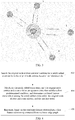
- the corresponding parameter instances are instances of specific parameters:
- An intermediate entity is a certain ALIPAY event eventID: 4a8167a*****
- entity 3 and entity 4 each are a certain ALIPAY account ID: 208821***** and 208890*****
- entity 2 is a geohash value of location service information of a certain mobile phone device: wm6n
- entity 1 is an IP address of a certain mobile phone device: 117.136.**.**.
- the parameter instances include but are not limited to specific entities such as events, accounts, identity cards, devices, mobile phone numbers, location based services (LBS), and IP addresses.
- entities such as events, accounts, identity cards, devices, mobile phone numbers, location based services (LBS), and IP addresses.
- LBS location based services
- the node entities include but are not limited to device entities, account entities, and/or transaction entities.
- the parameter instances include node entities and event entities, and the node entities are associated by using the event entities.
- the node entities include account 1 and account 2, and the event entity is transferring 3 yuan.
- the node entities can be associated by using the event entities, to represent transferring 3 yuan from account 1 to account 2.
- the association can represent a relationship such as ALIPAY event transaction or login.
- Step 204 Construct a knowledge graph based on feature relationships between the parameter instances and predetermined operator entities.
- the predetermined operator entities can be obtained by using an existing feature. For example, if the existing feature includes "a maximum moving speed of an ALIPAY account ID in a certain time period", a corresponding operator entity includes a gradient operator. If the existing feature includes "historical location dispersion of a certain ALIPAY mobile phone", a corresponding operator entity includes an entropy operator. If the existing feature includes "an accumulated red envelope amount within 3 days of a certain ALIPAY account", a corresponding operator entity includes a sum operator.
- operators in the feature are first classified based on the existing feature, and different types of operators are named as different operator entities, for example, a velocity operator, a sequence operator, and a topology operator.
- operator entities corresponding to the operator entities are obtained, for example, a sum operator, an entropy operator, and a gradient operator.
- the knowledge graph is constructed based on the feature relationships between the parameter instances and the predetermined operator entities.
- the operator entity can complete basic query, annotation, calculation, inference, and prediction based on the knowledge graph.
- Step 206 Extract a feature relationship from the knowledge graph based on an inference rule, to obtain a newly added feature relationship and recommend the newly added feature relationship.
- the inference rule includes a path ranking algorithm, and a new feature relationship is extracted based on the knowledge graph by using the path ranking algorithm, to obtain a newly added feature relationship and recommend the newly added feature relationship.
- extracting a feature relationship from the knowledge graph based on an inference rule includes step 402 to step 406.
- Step 402 Search the original node entities and event entities for a newly added event entity in the original node entities based on the inference rule.
- the node entities include account A, account B, and account C, and the event entity includes transferring 3 yuan.
- the three node entities are associated by using the event entities as follows: Account A transfers 3 yuan to account B, and account B transfers 3 yuan to account C. Based on the path ranking algorithm, the newly added event entity in the original node entities can be obtained: Account A transfers 3 yuan to account C.
- Step 404 Match, for the newly added event entity and the original node entities and event entities, an operator entity that satisfies a first predetermined condition, and determine combined feature relationships among the newly added event entity, the original node entities and event entities, and the operator entity.
- the first predetermined condition includes but is not limited to an actual need feature.
- FIG. 5 is used as an example. If the first predetermined condition includes "an accumulated quantity of transfer times of account A in two days", the matched operator entity is a sum operator.
- the newly added event entity includes transferring 3 yuan from account A to account C
- association between the original node entities and the event entities includes: transferring 3 yuan from account A to account B, transferring 3 yuan from account B to account C, and transferring 1 yuan from account A to account D
- the operator entity includes a sum operator.
- the combined feature relationships among the newly added event entity, and the original node entities and event entities, and the operator entity are determined, and the combined feature relationships include "an accumulated quantity of transfer times of account A", "an accumulated transfer amount of account A", etc.
- Step 406 Represent, based on the combined feature relationships, a first feature relationship extracted from the knowledge graph.
- the first feature relationship is a combined feature relationship.
- the relationships between the node entities and the event entities are first supplemented by using the inference rule to determine, through inference, which node entities can form an abstract key-collection relationship. Then, an operator entity that satisfies the condition is matched based on the key-collection relationship and the relationships between the original node entities and the event entities, to determine the combined feature relationships.
- the node entities include an identity card, a card number, a mobile phone number, an ALIPAY account, an IP address, a mobile phone device number, etc. Then, the node entity is used as a key, and statistics about other event entities and node entities including a transaction amount, a login lbs location, a transaction time, a login city, an identity card, a card number, a mobile phone number, etc.
- the identity card as the key is collected as a group, to collect statistics about a key-collection relationship between the identity card as the key and each of the transaction amount, the login lbs location, the transaction time, the login city, another identity card, the card number, the mobile phone number, etc., and a key-collection relationship between the card number as the key and each of the transaction amount, the login lbs location, the transaction time, the login city, the identity card, another card number, the mobile phone number, etc.
- a feature relationship can be formed by cooperating with the operator entity.
- An ALIPAY account is used as the key. All identity cards that appear in the account are grouped, and a combined feature relationship "a quantity of identity cards obtained in a certain ALIPAY account after removing duplications" can be formed by combining with a count operator.
- An identity card number is used as the key. Transaction amounts of the identity card are grouped, and a combined feature relationship "an accumulated consumption amount of a certain ALIPAY account” can be formed by combining with a sum operator.
- a mobile phone device account is used as the key. Lbs of the mobile phone device account are grouped, and a combined feature relationship "a maximum moving distance of the mobile phone device” is formed by combining with a maxDistance operator.
- the apparatus is further subject to a second predetermined condition, and the apparatus further performs: filtering the combined feature relationships based on the second predetermined condition; and representing, based on the filtered combined feature relationships, a second feature relationship extracted from the knowledge graph.
- the second predetermined condition includes but is not limited to a node entity in the knowledge graph that is newly added to the combined feature relationships.
- the combined feature relationships include "a maximum moving distance of the mobile phone device", and the second predetermined condition includes a newly added node entity "time window three days” in the knowledge graph.
- a combined feature relationship "a maximum moving distance of the mobile phone device within three days” can be obtained, and the combined feature relationship is the second feature relationship.
- relationship paths are used as one-dimensional features in the path ranking algorithm, and feature vectors of relationship classification are constructed by collecting statistics about a large quantity of relationship paths in the knowledge graph, to establish a relationship classifier to extract a new feature relationship.
- the inference rule is implemented in a form of a Horn clause under a first-order logical inference framework, and can be written based on knowledge, or can be obtained through learning by using a machine learning method based on data.
- the rule is implemented through learning and training of an artificial neural network, parameter instances, operator entities, and relationships between the parameter instances and the operator entities are input by using the inference rule, and the extracted new feature relationship is output, to recommend the newly added feature relationship.
- the service data is implemented in the knowledge graph by using the parameter instances, the operator entity, and the feature relationships between the parameter instances and the operator entity, and searching of the new feature relationship is instructed and restricted based on the original feature relationship by using the inference rule, thereby alleviating searching for and recommending a large quantity of meaningless feature relationships.
- FIG. 6 is a schematic flowchart illustrating a feature relationship recommendation method, according to some embodiments of the present specification. The method includes step 602 to step 612.
- Step 602 Determine a parameter instances based on service data, where the parameter instances include event entities and node entities, and the node entities are associated by using the event entities.
- Step 604 Construct a knowledge graph based on feature relationships between the parameter instances and predetermined operator entities.
- Step 606 Extract a feature relationship from the knowledge graph based on an inference rule, to obtain a newly added feature relationship and recommend the newly added feature relationship.
- Step 608 Determine a label corresponding to the newly added feature relationship based on a pre-trained classification model, where the label includes a black label and a white label.
- pre-training the classification model includes the following steps: obtaining a training sample data set, where the training sample data set includes a feature relationship sample between a parameter instance sample and an operator entity sample and a sample label corresponding to the feature relationship sample, and the sample label includes a white sample label and a black sample label; and training the classification model based on a tree-type model, where the classification model associates the feature relationship sample with the sample label.
- an importance degree of each feature relationship sample corresponding to the white sample label is obtained by using the classification model.
- the tree-type model includes an XGBoost model.
- the white label can be a label without a fraud risk
- the black label can be a label with a fraud risk
- Determining a label corresponding to the newly added feature relationship based on a pre-trained classification model includes: determining, based on the pre-trained classification model, which newly added feature relationship is a white label without a fraud risk, and which newly added feature relationship is a black label with a fraud risk.
- Step 610 Determine an importance degree of a newly added feature relationship corresponding to the white label based on the pre-trained classification model.
- the importance degree of the newly added feature relationship corresponding to the white label is determined.
- An importance degree of a newly added feature relationship corresponding to the black label does not need to be obtained, to reduce workload and improve working efficiency of the classification model.
- Step 612 If the importance degree is greater than a predetermined threshold, add, to the knowledge graph, the newly added feature relationship corresponding to the white label.
- the predetermined threshold can be set based on actual applications, and can be set to 80%, 95%, or 100%. Embodiments are not limited in the present specification.
- the predetermined threshold is 80%, an importance degree of a newly added feature relationship corresponding to a certain white label is 85%, and the importance degree of the newly added feature relationship is greater than the predetermined threshold, the newly added feature relationship is added to the knowledge graph.
- the feature is input into the XGBoost model, it is evaluated that an importance degree of the feature is 89%, and the predetermined threshold is 85%, a feature relationship among "an ALIPAY account entity”, “an lbs entity”, and "a gradient operator entity” is constructed in the knowledge graph.
- newly added feature relationships are classified and the importance degree of the newly added feature relationship corresponding to the white label is evaluated based on the classification model, and a newly added feature relationship whose importance degree reaches a specified requirement is added to the constructed knowledge graph, to enrich the knowledge graph, thereby improving extension performance of the knowledge graph.
- some embodiments of the present specification provide a feature relationship recommendation apparatus, including: a determining module 702, configured to determine parameter instances based on service data, where the parameter instances include event entities and node entities, and the node entities are associated by using the event entities; a construction module 704, configured to construct a knowledge graph based on feature relationships between the parameter instances and predetermined operator entities; and an extraction module 706, configured to extract a feature relationship from the knowledge graph based on an inference rule, to obtain a newly added feature relationship and recommend the newly added feature relationship.
- a determining module 702 configured to determine parameter instances based on service data, where the parameter instances include event entities and node entities, and the node entities are associated by using the event entities
- a construction module 704 configured to construct a knowledge graph based on feature relationships between the parameter instances and predetermined operator entities
- an extraction module 706, configured to extract a feature relationship from the knowledge graph based on an inference rule, to obtain a newly added feature relationship and recommend the newly added feature relationship.
- the apparatus further includes: a label selection module, configured to determine a label corresponding to the newly added feature relationship based on a pre-trained classification model, where the label includes a black label and a white label.
- a label selection module configured to determine a label corresponding to the newly added feature relationship based on a pre-trained classification model, where the label includes a black label and a white label.
- the apparatus further includes: an importance degree determining module, configured to determine an importance degree of a newly added feature relationship corresponding to the white label based on the pre-trained classification model; and an addition module, configured to: if the importance degree is greater than a predetermined threshold, add, to the knowledge graph, the newly added feature relationship corresponding to the white label.
- an importance degree determining module configured to determine an importance degree of a newly added feature relationship corresponding to the white label based on the pre-trained classification model
- an addition module configured to: if the importance degree is greater than a predetermined threshold, add, to the knowledge graph, the newly added feature relationship corresponding to the white label.
- the classification model is trained by using the following steps: obtaining a training sample data set, where the training sample data set includes a feature relationship sample between a parameter instance sample and an operator entity sample and a sample label corresponding to the feature relationship sample, and the sample label includes a white sample label and a black sample label; and training the classification model based on a tree-type model, where the classification model associates the feature relationship sample with the sample label.
- the apparatus further includes: an acquisition module, configured to obtain an importance degree of each feature relationship sample corresponding to the white sample label by using the classification model.
- the extraction module includes: an addition submodule, configured to search the original node entities and event entities for a newly added event entity in the original node entities based on the inference rule; and a combined feature relationship determining submodule, configured to: match, for the newly added event entity and the original node entities and event entities, an operator entity that satisfies a first predetermined condition, and determine combined feature relationships among the newly added event entity, the original node entities and event entities, and the operator entity; and a feature relationship extraction submodule, configured to represent, based on the combined feature relationships, a first feature relationship extracted from the knowledge graph.
- an addition submodule configured to search the original node entities and event entities for a newly added event entity in the original node entities based on the inference rule
- a combined feature relationship determining submodule configured to: match, for the newly added event entity and the original node entities and event entities, an operator entity that satisfies a first predetermined condition, and determine combined feature relationships among the newly added event entity, the original node
- the apparatus is further subject to a second predetermined condition, and the apparatus further performs: filtering the combined feature relationships based on the second predetermined condition; and representing, based on the filtered combined feature relationships, a second feature relationship extracted from the knowledge graph.
- the tree-type model includes an XGBoost model.
- the inference rule includes a path ranking algorithm.
- the operator entity includes a sum operator, an entropy operator, or a gradient operator.
- the service data is implemented in the knowledge graph by using the parameter instances, the operator entity, and the feature relationships between the parameter instances and the operator entity, and searching of the new feature relationship is instructed and restricted based on the original feature relationship by using the inference rule, thereby alleviating searching for and recommending a large quantity of meaningless feature relationships.
- Some embodiments of the present specification further provide a computer readable storage medium, where the computer readable storage medium stores computer instructions, and when the instructions are executed by a processor, steps of the feature relationship recommendation method are implemented.
- NFC Near Field Communication
- Wi-Fi Wireless Fidelity
- 3G/4G/5G a technology of swiping card by using a point of sale (POS) machine
- POS point of sale
- quick response code scanning technology a bar code scanning technology
- Bluetooth infrared
- SMS short message service
- MMS multimedia messaging service
- the computer instructions include computer instruction code, and the computer instruction code can be in a source code form, an object code form, an executable file, some intermediate forms, etc.
- the computer readable medium can include any entity or apparatus that can include the computer instruction code, a recording medium, a USB flash drive, a removable hard disk, a magnetic disk, an optical disc, a computer memory, a read-only memory (ROM), a random access memory (RAM), an electrical carrier signal, a telecommunication signal, a software distribution medium, etc. It is worthwhile to note that content included in the computer readable medium can be appropriately increased or decreased based on a need of legislation and patent practice in a jurisdiction. For example, in some jurisdictions, based on legislation and patent practice, the computer readable medium does not include an electrical carrier signal and a telecommunication signal.
Landscapes
- Engineering & Computer Science (AREA)
- Theoretical Computer Science (AREA)
- Data Mining & Analysis (AREA)
- General Engineering & Computer Science (AREA)
- Physics & Mathematics (AREA)
- General Physics & Mathematics (AREA)
- Artificial Intelligence (AREA)
- Evolutionary Computation (AREA)
- Computer Vision & Pattern Recognition (AREA)
- Life Sciences & Earth Sciences (AREA)
- Software Systems (AREA)
- Evolutionary Biology (AREA)
- Bioinformatics & Cheminformatics (AREA)
- Bioinformatics & Computational Biology (AREA)
- Computing Systems (AREA)
- Mathematical Physics (AREA)
- Computational Linguistics (AREA)
- Databases & Information Systems (AREA)
- Medical Informatics (AREA)
- Molecular Biology (AREA)
- Biomedical Technology (AREA)
- Biophysics (AREA)
- General Health & Medical Sciences (AREA)
- Health & Medical Sciences (AREA)
- Information Retrieval, Db Structures And Fs Structures Therefor (AREA)
Abstract
Description
- The present specification relates to the field of computer security technologies, and in particular, to feature relationship recommendation methods, apparatuses, computing devices, and storage media.
- As ALIPAY services develop, a security environment of ALIPAY is constantly changing, and manually generating a feature relationship in conventional technologies becomes inefficient.
- Currently, in the existing technologies, the feature relationship is usually recommended by using the following methods: manual search, selection, and determining, but this solution depends on manpower, and brute-force search consumes too many resources.
- A heuristic search algorithm is used to perform search, and then selection is performed by using a certain evaluation model. However, in the solution, service knowledge is not introduced, search space is still large, and it is difficult to find a valid feature relationship.
- In view of this, embodiments of the present specification provide feature relationship recommendation methods, apparatuses, computing devices, and storage media, to alleviate a technical problem in the existing technology.
- Some embodiments of the present specification disclose a feature relationship recommendation method, where the method includes: determining parameter instances based on service data, where the parameter instances include event entities and node entities, and the node entities are associated by using the event entities; constructing a knowledge graph based on feature relationships between the parameter instances and predetermined operator entities; and extracting a feature relationship from the knowledge graph based on an inference rule, to obtain a newly added feature relationship and recommend the newly added feature relationship.
- According to another aspect, some embodiments of the present specification disclose a feature relationship recommendation apparatus, where the apparatus includes: a determining module, configured to determine parameter instances based on service data, where the parameter instances include event entities and node entities, and the node entities are associated by using the event entities; a construction module, configured to construct a knowledge graph based on feature relationships between the parameter instances and predetermined operator entities; and an extraction module, configured to extract a feature relationship from the knowledge graph based on an inference rule, to obtain a newly added feature relationship and recommend the newly added feature relationship.
- According to another aspect, the present specification further provides a computing device, including a memory, a processor, and computer instructions that are stored in the memory and that can run on the processor, where when executing the instructions, the processor implements step of the feature relationship recommendation method.
- According to another aspect, the present specification further provides a computer readable storage medium, where the computer readable storage medium stores computer instructions, and steps of the feature relationship recommendation method are implemented when the program is executed by a processor.
- The present specification provides feature relationship recommendation methods, apparatuses, computing devices, and storage media. The method includes: determining parameter instances based on service data, where the parameter instances include event entities and node entities, and the node entities are associated by using the event entities; constructing a knowledge graph based on feature relationships between the parameter instances and predetermined operator entities; and extracting a feature relationship from the knowledge graph based on an inference rule, to obtain a newly added feature relationship and recommend the newly added feature relationship.
-
-
FIG. 1 is a structural block diagram illustrating a computing device, according to some embodiments of the present specification; -
FIG. 2 is a flowchart illustrating a feature relationship recommendation method, according to some embodiments of the present specification; -
FIG. 3 is a schematic diagram illustrating a parameter instance, according to some embodiments of the present specification; -
FIG. 4 is a flowchart illustrating a feature relationship recommendation method, according to some embodiments of the present specification; -
FIG. 5 is a flowchart illustrating a feature relationship recommendation method, according to some embodiments of the present specification; -
FIG. 6 is a flowchart illustrating a feature relationship recommendation method, according to some embodiments of the present specification; and -
FIG. 7 is a schematic structural diagram illustrating a feature relationship recommendation apparatus, according to some embodiments of the present specification. - Many specific details are described in the following descriptions to facilitate full understanding of the present specification. However, the present specification can be implemented by using many different methods from those described here. A person skilled in the art can perform similar promotion without departing from the intension of the present specification. Therefore, the present specification is not limited to the specific embodiment disclosed below.
- Terms used in some embodiments of the present specification are only used to describe specific embodiments, and are not intended to limit the some embodiments of the present specification. The terms "a" and "the" of singular forms used in some embodiments of the present specification and the appended claims are also intended to include plural forms, unless otherwise specified in the context clearly. It should be further understood that the term "and/or" used in some embodiments of the present specification indicates and includes any or all possible combinations of one or more associated listed items.
- It should be understood that although terms "first", "second", "third", etc. may be used in some embodiments of the present specification to describe various types of information, the information is not limited to these terms. These terms are only used to distinguish between information of the same type. For example, without departing from the scope of some embodiments of the present specification, first can also be referred to as second, and similarly, second can be referred to as first. Depending on the context, for example, the word "if' used here can be explained as "while", "when", or "in response to determining".
- First, technical terms used in some embodiments of the present specification are explained.
- A knowledge graph/vault is also referred to as a scientific knowledge graph, is a knowledge cluster organized in a form of a graph in knowledge engineering, and is formed by using different types of entities as nodes and relationships as edges that connect the nodes.
- Knowledge inference is to supplement and discover new knowledge through certain logical inference based on existing knowledge in the knowledge graph.
- In some embodiments of the present specification, feature relationship recommendation methods, apparatuses, computing devices, and computer storage media are provided. Details are described one by one in the following embodiments.
-
FIG. 1 is a structural block diagram of acomputing device 100, according to some embodiments of the present specification. Components of thecomputing device 100 include but are not limited to amemory 110, aprocessor 120, and acommunications interface 140. Theprocessor 120 is connected to thememory 110 by using a bus 130, and adatabase 150 is configured to store log data of an access request. - The
communications interface 140 enables thecomputing device 100 to perform communication through one or more networks. Examples of these networks include a local area network (LAN), a wide area network (WAN), a personal area network (PAN), or a combination of communications networks such as the Internet. A network interface can include one or more of any type of wired or wireless network interface (for example, a network interface card (NIC)), for example, an IEEE 802.11 wireless local area network (WLAN) wireless interface, a Worldwide Interoperability for Microwave Access (WiMAX) interface, an Ethernet interface, a Universal Serial Bus (USB) interface, a cellular network interface, a Bluetooth interface, or a Near Field Communication (NFC) interface. - The
memory 110 is configured to store service data sent by thecommunications interface 140 by using the bus 130 and computer instructions that are stored in thememory 110 and that can run on theprocessor 120. - The
processor 120 is configured to: after the service data stored in thememory 110 is obtained, execute the computer instructions stored in thememory 110, to verify the to-be-identified object. - The
computing device 100 can be any type of fixed or mobile computing device, including a mobile computer or mobile computing device (for example, a tablet computer, a personal digital assistant, a laptop computer, a notebook computer, or a netbook), a mobile phone (for example, a smartphone), a wearable computing device (for example, a smart watch or smart glasses) or another type of mobile device, or a fixed computing device such as a desktop computer or a PC. - The
processor 120 can perform steps in the method shown inFIG. 2. FIG. 2 is a schematic flowchart illustrating a feature relationship recommendation method, according to some embodiments of the present specification. The method includesstep 202 tostep 206. - Step 202: Determine parameter instances based on service data, where the parameter instances include event entities and node entities, and the node entities are associated by using the event entities.
- In some embodiments of the present specification, the service data includes but is not limited to transaction data, login data, transfer data, etc.
- The parameter instances are determined based on primary parameters in the service data. The primary parameters are concepts, and the corresponding parameter instances are instances of specific concepts.
- For example, referring to
FIG. 3 , the primary parameters include entity parameters: an event, an account, a device, and a location. In a specific application scenario, the corresponding parameter instances are instances of specific parameters: An intermediate entity is a certain ALIPAY event eventID: 4a8167a*****,entity 3 andentity 4 each are a certain ALIPAY account ID: 208821***** and 208890*****,entity 2 is a geohash value of location service information of a certain mobile phone device: wm6n, andentity 1 is an IP address of a certain mobile phone device: 117.136.**.**. - In practice, the parameter instances include but are not limited to specific entities such as events, accounts, identity cards, devices, mobile phone numbers, location based services (LBS), and IP addresses.
- The node entities include but are not limited to device entities, account entities, and/or transaction entities.
- In some embodiments of the present specification, the parameter instances include node entities and event entities, and the node entities are associated by using the event entities. For example, the node entities include
account 1 andaccount 2, and the event entity is transferring 3 yuan. In this case, the node entities can be associated by using the event entities, to represent transferring 3 yuan fromaccount 1 toaccount 2. In actual use, the association can represent a relationship such as ALIPAY event transaction or login. - Step 204: Construct a knowledge graph based on feature relationships between the parameter instances and predetermined operator entities.
- In some embodiments of the present specification, the predetermined operator entities can be obtained by using an existing feature. For example, if the existing feature includes "a maximum moving speed of an ALIPAY account ID in a certain time period", a corresponding operator entity includes a gradient operator. If the existing feature includes "historical location dispersion of a certain ALIPAY mobile phone", a corresponding operator entity includes an entropy operator. If the existing feature includes "an accumulated red envelope amount within 3 days of a certain ALIPAY account", a corresponding operator entity includes a sum operator.
- In practice, operators in the feature are first classified based on the existing feature, and different types of operators are named as different operator entities, for example, a velocity operator, a sequence operator, and a topology operator. After the different operator entities are specifically instantiated, operator entities corresponding to the operator entities are obtained, for example, a sum operator, an entropy operator, and a gradient operator.
- The knowledge graph is constructed based on the feature relationships between the parameter instances and the predetermined operator entities. The operator entity can complete basic query, annotation, calculation, inference, and prediction based on the knowledge graph.
- Step 206: Extract a feature relationship from the knowledge graph based on an inference rule, to obtain a newly added feature relationship and recommend the newly added feature relationship.
- In some embodiments of the present specification, the inference rule includes a path ranking algorithm, and a new feature relationship is extracted based on the knowledge graph by using the path ranking algorithm, to obtain a newly added feature relationship and recommend the newly added feature relationship.
- Referring to
FIG. 4 , extracting a feature relationship from the knowledge graph based on an inference rule includesstep 402 to step 406. - Step 402: Search the original node entities and event entities for a newly added event entity in the original node entities based on the inference rule.
- Referring to
FIG. 5 , in some embodiments of the present specification, for example, the node entities include account A, account B, and account C, and the event entity includes transferring 3 yuan. The three node entities are associated by using the event entities as follows: Account A transfers 3 yuan to account B, and account B transfers 3 yuan to account C. Based on the path ranking algorithm, the newly added event entity in the original node entities can be obtained: Account A transfers 3 yuan to account C. - Step 404: Match, for the newly added event entity and the original node entities and event entities, an operator entity that satisfies a first predetermined condition, and determine combined feature relationships among the newly added event entity, the original node entities and event entities, and the operator entity.
- In some embodiments of the present specification, the first predetermined condition includes but is not limited to an actual need feature.
FIG. 5 is used as an example. If the first predetermined condition includes "an accumulated quantity of transfer times of account A in two days", the matched operator entity is a sum operator. - For example, the newly added event entity includes transferring 3 yuan from account A to account C, association between the original node entities and the event entities includes: transferring 3 yuan from account A to account B, transferring 3 yuan from account B to account C, and transferring 1 yuan from account A to account D, and the operator entity includes a sum operator. The combined feature relationships among the newly added event entity, and the original node entities and event entities, and the operator entity are determined, and the combined feature relationships include "an accumulated quantity of transfer times of account A", "an accumulated transfer amount of account A", etc.
- Step 406: Represent, based on the combined feature relationships, a first feature relationship extracted from the knowledge graph.
- In some embodiments of the present specification, the first feature relationship is a combined feature relationship.
- In actual use, the relationships between the node entities and the event entities are first supplemented by using the inference rule to determine, through inference, which node entities can form an abstract key-collection relationship. Then, an operator entity that satisfies the condition is matched based on the key-collection relationship and the relationships between the original node entities and the event entities, to determine the combined feature relationships.
- For example, the node entities include an identity card, a card number, a mobile phone number, an ALIPAY account, an IP address, a mobile phone device number, etc. Then, the node entity is used as a key, and statistics about other event entities and node entities including a transaction amount, a login lbs location, a transaction time, a login city, an identity card, a card number, a mobile phone number, etc. are collected as a group, to collect statistics about a key-collection relationship between the identity card as the key and each of the transaction amount, the login lbs location, the transaction time, the login city, another identity card, the card number, the mobile phone number, etc., and a key-collection relationship between the card number as the key and each of the transaction amount, the login lbs location, the transaction time, the login city, the identity card, another card number, the mobile phone number, etc.
- After the key-collection relationship is obtained, a feature relationship can be formed by cooperating with the operator entity. An ALIPAY account is used as the key. All identity cards that appear in the account are grouped, and a combined feature relationship "a quantity of identity cards obtained in a certain ALIPAY account after removing duplications" can be formed by combining with a count operator. An identity card number is used as the key. Transaction amounts of the identity card are grouped, and a combined feature relationship "an accumulated consumption amount of a certain ALIPAY account" can be formed by combining with a sum operator. A mobile phone device account is used as the key. Lbs of the mobile phone device account are grouped, and a combined feature relationship "a maximum moving distance of the mobile phone device" is formed by combining with a maxDistance operator.
- In some embodiments of the present specification, the apparatus is further subject to a second predetermined condition, and the apparatus further performs: filtering the combined feature relationships based on the second predetermined condition; and representing, based on the filtered combined feature relationships, a second feature relationship extracted from the knowledge graph.
- In some embodiments of the present specification, the second predetermined condition includes but is not limited to a node entity in the knowledge graph that is newly added to the combined feature relationships.
- For example, the combined feature relationships include "a maximum moving distance of the mobile phone device", and the second predetermined condition includes a newly added node entity "time window three days" in the knowledge graph. In this case, a combined feature relationship "a maximum moving distance of the mobile phone device within three days" can be obtained, and the combined feature relationship is the second feature relationship.
- In actual use, different relationship paths are used as one-dimensional features in the path ranking algorithm, and feature vectors of relationship classification are constructed by collecting statistics about a large quantity of relationship paths in the knowledge graph, to establish a relationship classifier to extract a new feature relationship.
- In some embodiments of the present specification, the inference rule is implemented in a form of a Horn clause under a first-order logical inference framework, and can be written based on knowledge, or can be obtained through learning by using a machine learning method based on data. For example, the rule is implemented through learning and training of an artificial neural network, parameter instances, operator entities, and relationships between the parameter instances and the operator entities are input by using the inference rule, and the extracted new feature relationship is output, to recommend the newly added feature relationship.
- In some embodiments of the present specification, based on the method, the service data is implemented in the knowledge graph by using the parameter instances, the operator entity, and the feature relationships between the parameter instances and the operator entity, and searching of the new feature relationship is instructed and restricted based on the original feature relationship by using the inference rule, thereby alleviating searching for and recommending a large quantity of meaningless feature relationships.
-
FIG. 6 is a schematic flowchart illustrating a feature relationship recommendation method, according to some embodiments of the present specification. The method includesstep 602 to step 612. - Step 602: Determine a parameter instances based on service data, where the parameter instances include event entities and node entities, and the node entities are associated by using the event entities.
- Step 604: Construct a knowledge graph based on feature relationships between the parameter instances and predetermined operator entities.
- Step 606: Extract a feature relationship from the knowledge graph based on an inference rule, to obtain a newly added feature relationship and recommend the newly added feature relationship.
- Step 608: Determine a label corresponding to the newly added feature relationship based on a pre-trained classification model, where the label includes a black label and a white label.
- In some embodiments of the present specification, pre-training the classification model includes the following steps: obtaining a training sample data set, where the training sample data set includes a feature relationship sample between a parameter instance sample and an operator entity sample and a sample label corresponding to the feature relationship sample, and the sample label includes a white sample label and a black sample label; and training the classification model based on a tree-type model, where the classification model associates the feature relationship sample with the sample label.
- In some embodiments of the present specification, an importance degree of each feature relationship sample corresponding to the white sample label is obtained by using the classification model.
- In some embodiments of the present specification, the tree-type model includes an XGBoost model.
- In some embodiments of the present specification, if the classification model is applied to anti-fraud in the financial industry, the white label can be a label without a fraud risk, and the black label can be a label with a fraud risk.
- Determining a label corresponding to the newly added feature relationship based on a pre-trained classification model includes: determining, based on the pre-trained classification model, which newly added feature relationship is a white label without a fraud risk, and which newly added feature relationship is a black label with a fraud risk.
- Step 610: Determine an importance degree of a newly added feature relationship corresponding to the white label based on the pre-trained classification model.
- In some embodiments of the present specification, after the label corresponding to the newly added feature relationship is determined, the importance degree of the newly added feature relationship corresponding to the white label is determined. An importance degree of a newly added feature relationship corresponding to the black label does not need to be obtained, to reduce workload and improve working efficiency of the classification model.
- Step 612: If the importance degree is greater than a predetermined threshold, add, to the knowledge graph, the newly added feature relationship corresponding to the white label.
- In some embodiments of the present specification, the predetermined threshold can be set based on actual applications, and can be set to 80%, 95%, or 100%. Embodiments are not limited in the present specification.
- If the predetermined threshold is 80%, an importance degree of a newly added feature relationship corresponding to a certain white label is 85%, and the importance degree of the newly added feature relationship is greater than the predetermined threshold, the newly added feature relationship is added to the knowledge graph.
- In some embodiments of the present specification, for example, if the newly added feature relationship is "a maximum moving speed of an ALIPAY account within 6 hours", the feature is input into the XGBoost model, it is evaluated that an importance degree of the feature is 89%, and the predetermined threshold is 85%, a feature relationship among "an ALIPAY account entity", "an lbs entity", and "a gradient operator entity" is constructed in the knowledge graph.
- In some embodiments of the present specification, based on the method, newly added feature relationships are classified and the importance degree of the newly added feature relationship corresponding to the white label is evaluated based on the classification model, and a newly added feature relationship whose importance degree reaches a specified requirement is added to the constructed knowledge graph, to enrich the knowledge graph, thereby improving extension performance of the knowledge graph.
- Referring to
FIG. 7 , some embodiments of the present specification provide a feature relationship recommendation apparatus, including: a determiningmodule 702, configured to determine parameter instances based on service data, where the parameter instances include event entities and node entities, and the node entities are associated by using the event entities; aconstruction module 704, configured to construct a knowledge graph based on feature relationships between the parameter instances and predetermined operator entities; and anextraction module 706, configured to extract a feature relationship from the knowledge graph based on an inference rule, to obtain a newly added feature relationship and recommend the newly added feature relationship. - Optionally, the apparatus further includes: a label selection module, configured to determine a label corresponding to the newly added feature relationship based on a pre-trained classification model, where the label includes a black label and a white label.
- Optionally, the apparatus further includes: an importance degree determining module, configured to determine an importance degree of a newly added feature relationship corresponding to the white label based on the pre-trained classification model; and an addition module, configured to: if the importance degree is greater than a predetermined threshold, add, to the knowledge graph, the newly added feature relationship corresponding to the white label.
- Optionally, the classification model is trained by using the following steps: obtaining a training sample data set, where the training sample data set includes a feature relationship sample between a parameter instance sample and an operator entity sample and a sample label corresponding to the feature relationship sample, and the sample label includes a white sample label and a black sample label; and training the classification model based on a tree-type model, where the classification model associates the feature relationship sample with the sample label.
- Optionally, the apparatus further includes: an acquisition module, configured to obtain an importance degree of each feature relationship sample corresponding to the white sample label by using the classification model.
- Optionally, the extraction module includes: an addition submodule, configured to search the original node entities and event entities for a newly added event entity in the original node entities based on the inference rule; and a combined feature relationship determining submodule, configured to: match, for the newly added event entity and the original node entities and event entities, an operator entity that satisfies a first predetermined condition, and determine combined feature relationships among the newly added event entity, the original node entities and event entities, and the operator entity; and a feature relationship extraction submodule, configured to represent, based on the combined feature relationships, a first feature relationship extracted from the knowledge graph.
- Optionally, the apparatus is further subject to a second predetermined condition, and the apparatus further performs: filtering the combined feature relationships based on the second predetermined condition; and representing, based on the filtered combined feature relationships, a second feature relationship extracted from the knowledge graph.
- Optionally, the tree-type model includes an XGBoost model.
- Optionally, the inference rule includes a path ranking algorithm.
- Optionally, the operator entity includes a sum operator, an entropy operator, or a gradient operator.
- In some embodiments of the present specification, based on the apparatus, the service data is implemented in the knowledge graph by using the parameter instances, the operator entity, and the feature relationships between the parameter instances and the operator entity, and searching of the new feature relationship is instructed and restricted based on the original feature relationship by using the inference rule, thereby alleviating searching for and recommending a large quantity of meaningless feature relationships.
- The embodiments in some embodiments of the present specification are described by using a progressive method. For the same or similar parts in the embodiments, references can be made to each other. Each embodiment focuses on a difference from other embodiments. Particularly, an apparatus embodiment is similar to a method embodiment, and therefore is described briefly. For a related part, references can be made to some descriptions in the method embodiment.
- Some embodiments of the present specification further provide a computer readable storage medium, where the computer readable storage medium stores computer instructions, and when the instructions are executed by a processor, steps of the feature relationship recommendation method are implemented.
- The previous descriptions are schematic solutions of the computer readable storage medium in this embodiment. It is worthwhile to note that the technical solutions of the storage medium and the technical solutions of the previous feature relationship recommendation method belong to a same concept. For details that are not described in detail in the technical solutions of the storage medium, references can be made to descriptions of the technical solutions of the previous feature relationship recommendation method.
- Specific embodiments of the present specification are described above. Other embodiments fall within the scope of the appended claims. In some situations, the actions or steps described in the claims can be performed in an order different from the order in the embodiments and the desired results can still be achieved. In addition, the process depicted in the accompanying drawings does not necessarily need a particular execution order to achieve the desired results. In some embodiments, multi-tasking and concurrent processing is feasible or may be advantageous.
- Technical carriers related to payment in the embodiments of the present specification can include, for example, Near Field Communication (NFC), Wireless Fidelity (Wi-Fi), 3G/4G/5G, a technology of swiping card by using a point of sale (POS) machine, a quick response code scanning technology, a bar code scanning technology, Bluetooth, infrared, a short message service (SMS), and a multimedia messaging service (MMS).
- The computer instructions include computer instruction code, and the computer instruction code can be in a source code form, an object code form, an executable file, some intermediate forms, etc. The computer readable medium can include any entity or apparatus that can include the computer instruction code, a recording medium, a USB flash drive, a removable hard disk, a magnetic disk, an optical disc, a computer memory, a read-only memory (ROM), a random access memory (RAM), an electrical carrier signal, a telecommunication signal, a software distribution medium, etc. It is worthwhile to note that content included in the computer readable medium can be appropriately increased or decreased based on a need of legislation and patent practice in a jurisdiction. For example, in some jurisdictions, based on legislation and patent practice, the computer readable medium does not include an electrical carrier signal and a telecommunication signal.
- It is worthwhile to note that, for brief description, the previous method embodiments are expressed as a combination of a series of actions. However, a person skilled in the art should appreciate that the present specification is not limited to the described action sequence because some steps can be performed in other sequences or performed simultaneously according to the present specification. In addition, a person skilled in the art should also appreciate that all the embodiments described in the present specification are examples of embodiments, and the mentioned actions and modules are not necessarily mandatory to the present specification.
- In the previous embodiments, the description of each embodiment has respective focuses. For a part not described in detail in some embodiments, references can be made to related descriptions in other embodiments.
- The embodiments of the present specification disclosed above are merely intended to help describe the present specification. Not all details of the optional embodiments are described in detail, and the present specification is not limited to the specific embodiment. Clearly, many modifications and changes can be made based on the content of the present specification. In the present specification, these embodiments are selected and specifically described to better explain principles and practical applications of the present specification, so a person skilled in the art can better understand and use the present specification. The present specification is only limited by the claims and all the scope and equivalents thereof.
Claims (22)
- A feature relationship recommendation method, comprising:determining parameter instances based on service data, wherein the parameter instances comprise event entities and node entities, and the node entities are associated by using the event entities;constructing a knowledge graph based on feature relationships between the parameter instances and predetermined operator entities; andextracting a feature relationship from the knowledge graph based on an inference rule, to obtain a newly added feature relationship and recommend the newly added feature relationship.
- The method according to claim 1, further comprising:
determining a label corresponding to the newly added feature relationship based on a pre-trained classification model, wherein the label comprises a black label and a white label. - The method according to claim 2, further comprising:determining an importance degree of a newly added feature relationship corresponding to the white label based on the pre-trained classification model; andif the importance degree is greater than a predetermined threshold, adding, to the knowledge graph, the newly added feature relationship corresponding to the white label.
- The method according to claim 2, wherein the classification model is trained by using the following steps:obtaining a training sample data set, wherein the training sample data set comprises a feature relationship sample between a parameter instance sample and an operator entity sample and a sample label corresponding to the feature relationship sample, and the sample label comprises a white sample label and a black sample label; andtraining the classification model based on a tree-type model, wherein the classification model associates the feature relationship sample with the sample label.
- The method according to claim 4, wherein after the classification model associates the feature relationship sample with the sample label, the method further comprises:
obtaining an importance degree of each feature relationship sample corresponding to the white sample label by using the classification model. - The method according to claim 1, wherein extracting a feature relationship from the knowledge graph based on an inference rule comprises:searching the original node entities and event entities for a newly added event entity in the original node entities based on the inference rule;matching, for the newly added event entity and the original node entities and event entities, an operator entity that satisfies a first predetermined condition, and determining combined feature relationships among the newly added event entity, the original node entities and event entities, and the operator entity; andrepresenting, based on the combined feature relationships, a first feature relationship extracted from the knowledge graph.
- The method according to claim 6, wherein the method further comprises:filtering the combined feature relationships based on a second predetermined condition; andrepresenting, based on the filtered combined feature relationships, a second feature relationship extracted from the knowledge graph.
- The method according to claim 4, wherein the tree-type model comprises an XGBoost model.
- The method according to claim 1, wherein the inference rule comprises a path ranking algorithm.
- The method according to claim 1, wherein the operator entity comprises a sum operator, an entropy operator, or a gradient operator.
- A feature relationship recommendation apparatus, comprising:a determining module, configured to determine parameter instances based on service data, wherein the parameter instances comprise event entities and node entities, and the node entities are associated by using the event entities;a construction module, configured to construct a knowledge graph based on feature relationships between the parameter instances and predetermined operator entities; andan extraction module, configured to extract a feature relationship from the knowledge graph based on an inference rule, to obtain a newly added feature relationship and recommend the newly added feature relationship.
- The apparatus according to claim 11, wherein the apparatus further comprises:
a label selection module, configured to determine a label corresponding to the newly added feature relationship based on a pre-trained classification model, wherein the label comprises a black label and a white label. - The apparatus according to claim 12, wherein the apparatus further comprises:an importance degree determining module, configured to determine an importance degree of a newly added feature relationship corresponding to the white label based on the pre-trained classification model; andan addition module, configured to: if the importance degree is greater than a predetermined threshold, add, to the knowledge graph, the newly added feature relationship corresponding to the white label.
- The apparatus according to claim 12, wherein the classification model is trained by using the following steps:obtaining a training sample data set, wherein the training sample data set comprises a feature relationship sample between a parameter instance sample and an operator entity sample and a sample label corresponding to the feature relationship sample, and the sample label comprises a white sample label and a black sample label; andtraining the classification model based on a tree-type model, wherein the classification model associates the feature relationship sample with the sample label.
- The apparatus according to claim 14, wherein the apparatus further comprises:
an acquisition module, configured to obtain an importance degree of each feature relationship sample corresponding to the white sample label by using the classification model. - The apparatus according to claim 11, wherein the extraction module comprises:an addition submodule, configured to search the original node entities and event entities for a newly added event entity in the original node entities based on the inference rule; anda combined feature relationship determining submodule, configured to: match, for the newly added event entity and the original node entities and event entities, an operator entity that satisfies a first predetermined condition, and determine combined feature relationships among the newly added event entity, the original node entities and event entities, and the operator entity; anda feature relationship extraction submodule, configured to represent, based on the combined feature relationships, a first feature relationship extracted from the knowledge graph.
- The apparatus according to claim 16, wherein the apparatus is further subject to a second predetermined condition, and the apparatus further performs:filtering the combined feature relationships based on the second predetermined condition; andrepresenting, based on the filtered combined feature relationships, a second feature relationship extracted from the knowledge graph.
- The apparatus according to claim 14, wherein the tree-type model comprises an XGBoost model.
- The apparatus according to claim 11, wherein the inference rule comprises a path ranking algorithm.
- The apparatus according to claim 11, wherein the operator entity comprises a sum operator, an entropy operator, or a gradient operator.
- A computing device, comprising a memory, a processor, and computer instructions that are stored in the memory and that can run on the processor, wherein when executing the instructions, the processor executes the method according to any one of claims 1 to 10.
- A computer readable storage medium on which computer instructions are stored, wherein steps of the method according to any one of claims 1 to 10 are implemented when the program is executed by a processor.
Applications Claiming Priority (2)
| Application Number | Priority Date | Filing Date | Title |
|---|---|---|---|
| CN201810959354.7A CN109189937B (en) | 2018-08-22 | 2018-08-22 | Feature relationship recommendation method and device, computing device and storage medium |
| PCT/CN2019/092738 WO2020038100A1 (en) | 2018-08-22 | 2019-06-25 | Feature relationship recommendation method and apparatus, computing device and storage medium |
Publications (2)
| Publication Number | Publication Date |
|---|---|
| EP3779729A1 true EP3779729A1 (en) | 2021-02-17 |
| EP3779729A4 EP3779729A4 (en) | 2021-08-11 |
Family
ID=64918936
Family Applications (1)
| Application Number | Title | Priority Date | Filing Date |
|---|---|---|---|
| EP19852264.1A Withdrawn EP3779729A4 (en) | 2018-08-22 | 2019-06-25 | Feature relationship recommendation method and apparatus, computing device and storage medium |
Country Status (6)
| Country | Link |
|---|---|
| US (1) | US11244232B2 (en) |
| EP (1) | EP3779729A4 (en) |
| CN (1) | CN109189937B (en) |
| SG (1) | SG11202010836TA (en) |
| TW (1) | TWI705341B (en) |
| WO (1) | WO2020038100A1 (en) |
Families Citing this family (14)
| Publication number | Priority date | Publication date | Assignee | Title |
|---|---|---|---|---|
| CN109189937B (en) | 2018-08-22 | 2021-02-09 | 创新先进技术有限公司 | Feature relationship recommendation method and device, computing device and storage medium |
| CN111522886B (en) * | 2019-01-17 | 2023-05-09 | 中国移动通信有限公司研究院 | Information recommendation method, terminal and storage medium |
| CN112507076A (en) * | 2020-12-14 | 2021-03-16 | 英大传媒投资集团有限公司 | Semantic analysis searching method and device and storage medium |
| CN112650482A (en) * | 2020-12-25 | 2021-04-13 | 浙江蓝卓工业互联网信息技术有限公司 | Recommendation method and related device for logic component |
| CN112950324B (en) * | 2021-03-15 | 2022-06-03 | 重庆邮电大学 | Knowledge graph assisted pairwise sorting personalized merchant recommendation method and system |
| CN112906391B (en) * | 2021-03-16 | 2024-05-31 | 合肥讯飞数码科技有限公司 | Meta event extraction method, meta event extraction device, electronic equipment and storage medium |
| CN113505214B (en) * | 2021-06-30 | 2024-06-14 | 北京明略软件系统有限公司 | Content recommendation method, device, computer equipment and storage medium |
| CN113989018A (en) * | 2021-10-25 | 2022-01-28 | 中国工商银行股份有限公司 | Risk management method, risk management device, electronic equipment and medium |
| CN115048533B (en) * | 2022-06-21 | 2023-06-27 | 四维创智(北京)科技发展有限公司 | Knowledge graph construction method and device, electronic equipment and readable storage medium |
| US12026203B1 (en) * | 2022-09-26 | 2024-07-02 | Amazon Technologies, Inc. | Knowledge graph alignment |
| CN115719260A (en) * | 2022-11-25 | 2023-02-28 | 中国银行股份有限公司 | Client portrait label reconstruction method and device |
| CN116414872B (en) * | 2023-04-11 | 2024-02-20 | 浙商证券股份有限公司 | Data searching method and system based on natural language identification and knowledge graph |
| CN116992045A (en) * | 2023-08-04 | 2023-11-03 | 支付宝(杭州)信息技术有限公司 | Knowledge graph construction method and device |
| CN121542464B (en) * | 2026-01-20 | 2026-03-31 | 湖南方实验室文化传媒有限公司 | Knowledge-graph-based cultural digital video content display method and system |
Family Cites Families (26)
| Publication number | Priority date | Publication date | Assignee | Title |
|---|---|---|---|---|
| US9704130B2 (en) * | 2009-10-26 | 2017-07-11 | International Business Machines Corporation | Standard based mapping of industry vertical model to legacy environments |
| US10303999B2 (en) * | 2011-02-22 | 2019-05-28 | Refinitiv Us Organization Llc | Machine learning-based relationship association and related discovery and search engines |
| CN103699663B (en) * | 2013-12-27 | 2017-02-08 | 中国科学院自动化研究所 | Hot event mining method based on large-scale knowledge base |
| US10474949B2 (en) * | 2014-08-19 | 2019-11-12 | Qualcomm Incorporated | Knowledge-graph biased classification for data |
| CN106156030A (en) * | 2014-09-18 | 2016-11-23 | 华为技术有限公司 | The method and apparatus that in social networks, information of forecasting is propagated |
| CN104462501A (en) * | 2014-12-19 | 2015-03-25 | 北京奇虎科技有限公司 | Knowledge graph construction method and device based on structural data |
| US9547823B2 (en) * | 2014-12-31 | 2017-01-17 | Verizon Patent And Licensing Inc. | Systems and methods of using a knowledge graph to provide a media content recommendation |
| US20170097984A1 (en) * | 2015-10-05 | 2017-04-06 | Yahoo! Inc. | Method and system for generating a knowledge representation |
| US11675824B2 (en) * | 2015-10-05 | 2023-06-13 | Yahoo Assets Llc | Method and system for entity extraction and disambiguation |
| US10354204B2 (en) * | 2016-04-21 | 2019-07-16 | Sas Institute Inc. | Machine learning predictive labeling system |
| US10275690B2 (en) * | 2016-04-21 | 2019-04-30 | Sas Institute Inc. | Machine learning predictive labeling system |
| CN106022834B (en) * | 2016-05-24 | 2020-04-07 | 腾讯科技(深圳)有限公司 | Advertisement anti-cheating method and device |
| CN108615044A (en) * | 2016-12-12 | 2018-10-02 | 腾讯科技(深圳)有限公司 | A kind of method of disaggregated model training, the method and device of data classification |
| CN106815369B (en) * | 2017-01-24 | 2019-09-20 | 中山大学 | A Text Classification Method Based on Xgboost Classification Algorithm |
| CN108334528B (en) * | 2017-03-02 | 2020-12-01 | 腾讯科技(深圳)有限公司 | Method and device for recommending information |
| CN106934042B (en) * | 2017-03-16 | 2020-05-29 | 中国人民解放军国防科学技术大学 | A knowledge graph representation system and its implementation method |
| CN107016072B (en) * | 2017-03-23 | 2020-05-15 | 成都市公安科学技术研究所 | Knowledge inference system and method based on social network knowledge graph |
| US11327989B2 (en) * | 2017-08-02 | 2022-05-10 | Accenture Global Solutions Limited | Multi-dimensional industrial knowledge graph |
| CN107748754B (en) * | 2017-09-15 | 2021-10-26 | 广州唯品会研究院有限公司 | Knowledge graph perfecting method and device |
| CN107665252B (en) * | 2017-09-27 | 2020-08-25 | 深圳证券信息有限公司 | Method and device for creating knowledge graph |
| US20190172075A1 (en) * | 2017-12-01 | 2019-06-06 | International Business Machines Corporation | Maintaining Dynamic Product Catalogs By Tracking Current Trends |
| CN108109063A (en) * | 2017-12-07 | 2018-06-01 | 上海点融信息科技有限责任公司 | For the method, apparatus and computer readable storage medium of prediction label predicted value |
| CN108287881A (en) * | 2017-12-29 | 2018-07-17 | 北京理工大学 | A kind of optimization method found based on random walk relationship |
| CN108154198B (en) * | 2018-01-25 | 2021-07-13 | 北京百度网讯科技有限公司 | Knowledge base entity normalization method, system, terminal and computer-readable storage medium |
| US11960981B2 (en) * | 2018-03-09 | 2024-04-16 | Zestfinance, Inc. | Systems and methods for providing machine learning model evaluation by using decomposition |
| CN109189937B (en) * | 2018-08-22 | 2021-02-09 | 创新先进技术有限公司 | Feature relationship recommendation method and device, computing device and storage medium |
-
2018
- 2018-08-22 CN CN201810959354.7A patent/CN109189937B/en active Active
-
2019
- 2019-06-19 TW TW108121186A patent/TWI705341B/en active
- 2019-06-25 SG SG11202010836TA patent/SG11202010836TA/en unknown
- 2019-06-25 WO PCT/CN2019/092738 patent/WO2020038100A1/en not_active Ceased
- 2019-06-25 EP EP19852264.1A patent/EP3779729A4/en not_active Withdrawn
-
2020
- 2020-10-29 US US17/084,436 patent/US11244232B2/en active Active
Also Published As
| Publication number | Publication date |
|---|---|
| CN109189937B (en) | 2021-02-09 |
| SG11202010836TA (en) | 2020-11-27 |
| TWI705341B (en) | 2020-09-21 |
| EP3779729A4 (en) | 2021-08-11 |
| TW202009741A (en) | 2020-03-01 |
| CN109189937A (en) | 2019-01-11 |
| US11244232B2 (en) | 2022-02-08 |
| US20210049478A1 (en) | 2021-02-18 |
| WO2020038100A1 (en) | 2020-02-27 |
Similar Documents
| Publication | Publication Date | Title |
|---|---|---|
| US11244232B2 (en) | Feature relationship recommendation method, apparatus, computing device, and storage medium | |
| US11107007B2 (en) | Classification model generation method and apparatus, and data identification method and apparatus | |
| CN107436875B (en) | Text classification method and device | |
| CN104077723B (en) | A kind of social networks commending system and method | |
| Díaz-Morales | Cross-device tracking: Matching devices and cookies | |
| CN111949643A (en) | Data processing method and system based on business modeling | |
| WO2025016322A1 (en) | Target detection method | |
| Al-Najran et al. | A requirements specification framework for big data collection and capture | |
| CN114048294B (en) | Similar population extension model training method, similar population extension method and device | |
| CN116668331A (en) | Distributed performance monitoring system and method | |
| CN116629375A (en) | Model processing method and system | |
| Liu et al. | Cloud service selection based on rough set theory | |
| US20210241121A1 (en) | Systems Configured for Cell-Based Histopathological Learning and Prediction and Methods Thereof | |
| CN111552846A (en) | Method and device for identifying suspicious relationship | |
| WO2025200320A1 (en) | Training data acquisition method and apparatus, and electronic device | |
| WO2024021630A1 (en) | Method and apparatus for calculating indicator data | |
| CN111967671B (en) | Cross-border active user identification method and device based on support vector data domain description | |
| Yu et al. | A semi-supervised social relationships inferred model based on mobile phone data | |
| CN111309766B (en) | Business feature construction method and device | |
| CN116992119A (en) | Content push method, device, electronic equipment and storage medium | |
| CN116431319B (en) | Task processing method and device | |
| CN118552966B (en) | Method for identifying target objects in character-separated value files | |
| Hao et al. | Telecom Big Data based Precision Marketing Algorithms for Financial Industry | |
| CN110163761A (en) | Suspect items member recognition methods and device based on image procossing | |
| Globa et al. | Ontology model for telecom operator Big Data representation |
Legal Events
| Date | Code | Title | Description |
|---|---|---|---|
| STAA | Information on the status of an ep patent application or granted ep patent |
Free format text: STATUS: THE INTERNATIONAL PUBLICATION HAS BEEN MADE |
|
| PUAI | Public reference made under article 153(3) epc to a published international application that has entered the european phase |
Free format text: ORIGINAL CODE: 0009012 |
|
| STAA | Information on the status of an ep patent application or granted ep patent |
Free format text: STATUS: REQUEST FOR EXAMINATION WAS MADE |
|
| 17P | Request for examination filed |
Effective date: 20201029 |
|
| AK | Designated contracting states |
Kind code of ref document: A1 Designated state(s): AL AT BE BG CH CY CZ DE DK EE ES FI FR GB GR HR HU IE IS IT LI LT LU LV MC MK MT NL NO PL PT RO RS SE SI SK SM TR |
|
| AX | Request for extension of the european patent |
Extension state: BA ME |
|
| A4 | Supplementary search report drawn up and despatched |
Effective date: 20210712 |
|
| RIC1 | Information provided on ipc code assigned before grant |
Ipc: G06F 16/36 20190101AFI20210706BHEP Ipc: G06K 9/62 20060101ALI20210706BHEP Ipc: G06N 20/00 20190101ALI20210706BHEP Ipc: G06Q 20/40 20120101ALI20210706BHEP Ipc: G06F 16/906 20190101ALI20210706BHEP |
|
| DAV | Request for validation of the european patent (deleted) | ||
| DAX | Request for extension of the european patent (deleted) | ||
| STAA | Information on the status of an ep patent application or granted ep patent |
Free format text: STATUS: EXAMINATION IS IN PROGRESS |
|
| 17Q | First examination report despatched |
Effective date: 20220210 |
|
| STAA | Information on the status of an ep patent application or granted ep patent |
Free format text: STATUS: THE APPLICATION HAS BEEN WITHDRAWN |
|
| 18W | Application withdrawn |
Effective date: 20220503 |