EP3779672B1 - System und verfahren zur erzeugung einheitlicher erfahrungen auf digitalen plattformen - Google Patents
System und verfahren zur erzeugung einheitlicher erfahrungen auf digitalen plattformen Download PDFInfo
- Publication number
- EP3779672B1 EP3779672B1 EP20182602.1A EP20182602A EP3779672B1 EP 3779672 B1 EP3779672 B1 EP 3779672B1 EP 20182602 A EP20182602 A EP 20182602A EP 3779672 B1 EP3779672 B1 EP 3779672B1
- Authority
- EP
- European Patent Office
- Prior art keywords
- platform
- code
- tile
- pattern
- design
- Prior art date
- Legal status (The legal status is an assumption and is not a legal conclusion. Google has not performed a legal analysis and makes no representation as to the accuracy of the status listed.)
- Active
Links
Images



Classifications
-
- G—PHYSICS
- G06—COMPUTING OR CALCULATING; COUNTING
- G06F—ELECTRIC DIGITAL DATA PROCESSING
- G06F8/00—Arrangements for software engineering
- G06F8/30—Creation or generation of source code
- G06F8/38—Creation or generation of source code for implementing user interfaces
-
- G—PHYSICS
- G06—COMPUTING OR CALCULATING; COUNTING
- G06F—ELECTRIC DIGITAL DATA PROCESSING
- G06F8/00—Arrangements for software engineering
- G06F8/20—Software design
-
- G—PHYSICS
- G06—COMPUTING OR CALCULATING; COUNTING
- G06F—ELECTRIC DIGITAL DATA PROCESSING
- G06F8/00—Arrangements for software engineering
- G06F8/30—Creation or generation of source code
- G06F8/34—Graphical or visual programming
-
- G—PHYSICS
- G06—COMPUTING OR CALCULATING; COUNTING
- G06N—COMPUTING ARRANGEMENTS BASED ON SPECIFIC COMPUTATIONAL MODELS
- G06N3/00—Computing arrangements based on biological models
- G06N3/02—Neural networks
- G06N3/04—Architecture, e.g. interconnection topology
- G06N3/0464—Convolutional networks [CNN, ConvNet]
-
- G—PHYSICS
- G06—COMPUTING OR CALCULATING; COUNTING
- G06N—COMPUTING ARRANGEMENTS BASED ON SPECIFIC COMPUTATIONAL MODELS
- G06N3/00—Computing arrangements based on biological models
- G06N3/02—Neural networks
- G06N3/08—Learning methods
- G06N3/09—Supervised learning
-
- G—PHYSICS
- G06—COMPUTING OR CALCULATING; COUNTING
- G06F—ELECTRIC DIGITAL DATA PROCESSING
- G06F8/00—Arrangements for software engineering
- G06F8/60—Software deployment
- G06F8/61—Installation
- G06F8/64—Retargetable
Definitions
- the present disclosure generally relates to experiences on digital platforms. More specifically, the disclosure relates to an intelligent platform for generating experiences on digital platforms.
- a digital experience is any interaction between a user and an organization that is implemented through a digital technology. Companies building software and applications for digital devices often attempt to create a unified digital experience across different digital channels, different applications and different types of devices. Typically, digital experiences are initially created by designers using design tools. The designs are then passed to engineers who specialize in creating code for specific platforms (mobile, web, wearables, AR/VR, etc.) and/or specific software frameworks (Angular, React, Swift, etc.).
- Designers may use a variety of different experience design tools, such as Photoshop, Figma, etc. There are currently no unified approaches to converting the outputs from these design tools into deployable code for given choices of platform and framework. There is thus a significant amount of work required to translate the designs into executable code for target platforms and frameworks. In some cases, up to fifty percent of the development effort for a given experience may be spent working on user interface layouts. As the market moves towards full stack developers who prefer working on business logic rather than layouts, there is an even greater need to increase the efficiency of translating designs into deployable code. Moreover, there is a need to efficiently generate code so that different systems (including design tools, software frameworks, and physical platforms) can interoperate more reliably.
- ALEX ROBINSON "Sketch2code: Generating a website from a paper mockup", ARXIV,ORG, CORNELL UNIVERSITY LIBRARY, 201 OLIN LIBRARY CORNELL UNIVERSITY ITHACA, NY 14853, 9 MAY 2019 describes converting wireframe from sketches into code.
- the intelligent experience generation system and method solves the problems discussed above by automating the process of generating deployable code that implements a digital experience for target platforms (that is, mobile devices, web, wearables, AR/VR, etc.) and frameworks based on input designs.
- the system can automatically convert design images, including wireframes and other graphical designs, for digital experiences (e.g., websites, mobile applications, wearable experiences and VR/AR experiences) into deployable code that implements those digital experiences on a variety of different platforms and for a variety of different frameworks.
- the system improves on existing low code platforms that allow designers to build a user interface with pre-defined widgets by enabling a 1-1 mapping from input designs to output digital experiences that are not constrained by the available widgets.
- the system can also take images and/or portable document formatted files (PDFs) as input, rather than customized design file types, thereby allowing the system to incorporate designs from any design tool.
- PDFs portable document formatted files
- the system may convert wireframe and/or other visual designs into target platform and framework code according to the following process: (1) render designs on a canvas; (2) recursively traverse the canvas and read the design pixels; (3) analyze the pixel maps and recommend indicative patterns (or feature patterns); (4) transform identified patterns according to target platform standards; (5) transform platform patterns according to target framework standards; (6) enhance the patterns according to best industry practices; (7) display finalized patterns for users; (8) apply accessibility and disability guidelines; (9); generate output files; (10) apply test scaffolding; (11) output target platform and framework code along with test case scripts.
- the system may use artificial intelligence to identify and then classify elements from the input designs. Specifically, identification may be performed using a convolutional neural network (CNN) and the classification may be performed using a Softmax classifier for multi-class classification.
- CNN convolutional neural network
- Softmax classifier for multi-class classification.
- a "design image” may comprise any kind of image generated by a designer using design tools.
- a design image could include wireframes or other graphic designs.
- a canvas, or "digital canvas” comprises a representation of an image, or of an area of pixels within which an image may be contained.
- tile maps are fed into a convolutional neural network (CNN), which has been trained to recognize distinct types of feature patterns in images.
- CNN convolutional neural network
- feature pattern refers to a pattern in an image that can be associated with an element of a design.
- a feature pattern may indicate that a given tile map contains a title, an input label, an input box, a menu selector, a photo, or any other element of a design.
- those features patterns may be classified using a Softmax classifier.
- the Softmax classifier takes an identified feature pattern and provides probabilities that the feature pattern belongs to a set of known classes.
- the classifier may compare the selected feature pattern with sample/known patterns from a database of known patterns (a pattern factory).
- a system for automatically generating code to be executed on a target digital platform includes a device processor, and a non-transitory computer readable medium storing instructions that are executable by the device processor to implement: (1) a canvas rendering engine that renders an input design image on a digital canvas; (2) a design parser that reads pixels in the design image and parses the pixels into tile sets; (3) a pattern identification and classification module that can convert the tile sets into tile maps, further comprising a neural network that identifies feature patterns in the tile maps and a classifier that classifies the feature patterns identified by the neural network; (4) a platform pattern transformation module that transforms the identified feature patterns into platform specific programming objects; and (5) an output generator that outputs deployable code for the target digital platform, wherein the code reproduces the feature patterns on the target platform.
- a non-transitory computer-readable medium storing software includes instructions executable by one or more computers which, upon such execution, cause the one or more computers to: (1) receive a design image; (2) render the design image on a digital canvas and read pixels of the design image; (3) automatically generate a tile map from the pixels of the design image upon reading the design image; (4) use a neural network to identify a feature pattern in the tile map; (5) classify the feature pattern in the tile map; and (6) use the classified feature pattern to automatically generate code, wherein the code reproduces the feature pattern in the tile map on the target platform.
- a system and method for intelligently and automatically generating deployable code that implements digital experiences for target platforms and frameworks based on images or other graphical inputs is disclosed.
- the digital experiences can include graphics, inputs (such as menus and forms), and other elements associated with software applications running on various digital platforms.
- the system and method leverage artificial intelligence to automatically identify and classify elements of a design as feature patterns.
- the intelligent system can then automatically generate code for target platforms and frameworks that reproduce the feature patterns and thereby implement a digital experience for the users.
- Target platforms may include web platforms, mobile platforms (such as mobile applications/browsers), wearable platforms (such as smart watches), and extended reality platforms (which includes augmented reality (AR), virtual reality (VR), and/or combinations of AR/VR).
- the code may also be automatically generated for use with target frameworks.
- Target frameworks can include, for example, server-side web frameworks such as Ruby on Rails and Django, and client-side web frameworks such as Angular and React, or mobile application frameworks such as Android SDK
- FIG. 1 is a schematic view of a system for automatically converting experience designs into deployable code that can be run on a variety of platforms.
- the deployable code implements a digital experience on the target platform that corresponds to the experience design.
- experience designs 102 are fed as inputs into an intelligent experience generation engine 100.
- Experience designs 102 may comprise any outputs of a design tool or other graphical interface.
- experience designs 102 could comprise wireframes or other visual designs.
- the format of the experience designs could be any image based or graphical based format, such as JPEG, SVG, PDF, PNG or GIF.
- Other format types include formats associated with specific design tools, such as the adobe photoshop format or the adobe illustrator format.
- experience designs may be PDFs or other image files.
- intelligent experience generation engine 100 could include provisions for converting files in other formats (such as the adobe photoshop format) into PDF or image files (such as JPEG).
- Intelligent experience generation engine 100 takes the PDF or image files for an experience design and outputs code that can be deployed across multiple different target platforms so as to provide a variety of different digital experiences associated with the experience design.
- engine 100 may output modern web components 110 (such as HTML files, JavaScript files, and/or various web framework components) that can be used to implement a web experience 120.
- engine 100 may output screen layouts 112 (such as responsive layouts or native android/ios screen layouts that are important for mobile design) that can be used to implement a mobile experience 122.
- engine 100 may output wearable layouts 114 (which are generally highly constrained in size as compared to mobile and web layouts) that can be used as part of a wearable experience 124.
- engine 100 may output AR/VR scenes 116 that can be used as part of an extended reality experience 126.
- Each of these experiences may be consumed by software architects, software developers, usability testers, and/or end users 140. Some of these people may participate in a feedback cycle. This feedback cycle is used to provide feedback 130 to intelligent experience generation engine 100 to refine the pattern recognition abilities of the system.
- Engine 100 may be configured with one or more processors 104 and memory 106.
- Memory 106 may comprise a non-transitory computer readable medium. Instructions stored within memory 106 may be executed by the one or more processors 104. More specifically, memory 106 may store software modules and other software components, as well as data, which facilitates translating experience designs into deployable code that implements digital experiences.
- FIG. 2 is a schematic view of an architecture for intelligent experience generation engine 100, according to one embodiment.
- engine 100 may receive input including designs 200. Additionally, engine 100 receives information about the target platform and framework 202. Optionally, engine 100 may receive information about the target industry 204, which may inform how the designs are translated into digital experiences. Moreover, in some cases, engine 100 may be in communication with an external component that may be consulted for accessibility and compliance guidelines 206.
- Engine 100 automatically generates output 210.
- the output is comprised of code that is specific to a selected target platform and framework. In some cases, engine 100 may generate code for multiple different platform and framework combinations. Output 210 is then used to generate experiences for users 212 who can, optionally, provide feedback.
- Engine 100 may be comprised of a plurality of different components. These may include software modules for performing particular operations, as well as data storage components (for example, databases).
- engine 100 can include a canvas rendering engine 220, a design parser 222, a pattern identification and classification module 224, a platform pattern transformation module 226, a framework pattern transformation module 228, an industry pattern enhancer 230, a feedback analyzer 232, an accessibility and disability validator 234, an output generator 236, and a test scaffolding module 238.
- engine 100 may include various data storage systems, such as a pattern factory 240, a platform pattern repository 242, a framework components repository 244, and an industry pattern best practices store 246. Each component may be configured with one or more sub-modules or sub-components that facilitate converting the input into deployable code, as described in further detail below.
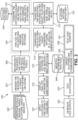
- FIG. 3 is a schematic view of a process 300 for automatically converting input designs into code that can be deployed on a target platform and for a target framework to implement a digital experience. Some of these steps may be performed by one or more of the modules or components described above and shown in FIG. 2 .
- the exemplary process starts with inputs 302. These may include wireframe and/or other visual designs, the target platform(s) and/or framework(s), as well as the target industry.
- engine 100 renders the designs on a canvas for further decoding in step 304.
- canvas rendering engine 220 engine 100 may receive command line inputs from the user and covert the inputs into configuration objects with details for: sources files associated with the experience design, the output destination for the code, target platforms, target frameworks, and a target industry (if applicable).
- Canvas rendering engine 220 may then make a network call to any associated cloud interfaces to retrieve the image files and any necessary rulesets to be distributed to other components of engine 100.
- Canvas rendering engine 220 further reads in source image files and prepares an image object and any metadata based on the dimensions and resolutions of the design images. Canvas rendering engine 220 may also read in any PDF files and parse those files to extract an image object and any metadata. The source files can then be iterated over and one or more HTML canvases can be constructed using a headless browser controller in a browser. The design images are then rendered in the canvas.
- engine 100 may recursively traverse each canvas and read in the pixels from the design images in step 306.
- This step is performed by design parser 222.
- design parser 222 parses each image object in the canvas into individual pixel elements.
- design parser 222 creates a tile set by iterating through each pixel using 2D traversal.
- each "tile" in the tile set is comprised of a group of pixels having a predefined set of rows and columns. The size of the tile sets could be set according to the desired degree of granularity and accuracy.
- design parser 222 assembles the individual tiles into a 2D array that represents the original design image.
- engine 100 may analyze the tile sets to identify and classify portions of the image in step 308.
- pattern identification and classification module 224 receives a 2D array of the tile set assembled by design parser 222. Using rulesets that have been previously retrieved, module 224 iterates through the tile set to create multiple tile maps.
- a tile map (or "pixel map”) may correspond to one or more tiles that have been grouped together.
- module 224 analyzes each tile map to identify feature patterns.
- feature pattern refers to a pattern in an image that can be associated with an element of a design. Thus, a feature pattern indicates that a given tile map contains a title, an input label, an input box, a menu selector, a photo, or any other element of a design.
- feature patterns may be identified using a deep neural network (DNN).
- the DNN may comprise different kinds of layers including convolutional layers, pooling layers, and/or fully connected layers.
- the DNN may comprise at least one convolutional layer that feeds into at least one pooling layer. Additionally, the at least one pooling layer could feed into a series of two or more fully connected layers.
- module 224 Once module 224 has identified different feature patterns, those features are classified as in step 310. Classification is performed using a Softmax classifier.
- the Softmax classifier takes an identified feature pattern and provides probabilities that the feature pattern belongs to a set of known classes. In some cases, the classifier may compare the selected feature pattern with sample/known patterns from pattern factory 240.
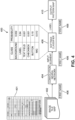
- FIG. 4 depicts a schematic view of a process 400 that may be performed by module 224.
- module 224 receives a tile set 401 and constructs an associated set of tile maps, which may correspond to groups of tile sets.
- Each image tile map 402 is then analyzed by a convolutional neural network 404.
- the convolutional neural network may also incorporate pooling layers as well as fully connected layers as part of its architecture.
- a tile map 406 is provided as input to CNN 404.
- CNN 404 identifies tile map 406 as an "input element".
- Softmax classifier 408 may receive both tile map 406 and the "input element" identifier. Based on this information, classifier 408 compares tile map 406 with known sample input elements and estimates a probability that tile map 406 corresponds to a particular type of UI element. For example, classifier 408 gives a high probability (0.94 or 94%) to tile map 406 being a "label" (for an input element). Based on this classification, tile map 406 is identified with an output pattern map 410 that will be used to automatically generate code.
- the table 500 shown in FIG. 5 further illustrates how tile maps can be identified and classified.
- tile map 2 is a fragment of an actual design element.
- tile map 502 namely part of the first name label on a web form.
- tile map 504 corresponds to the complete label "first name”
- tile map 506 corresponds to the complete label "last name.”
- the feature pattern of each tile map is then classified by the classifier.
- the probabilities for each feature pattern are given in the bottom four rows of the table.
- tile map 501 which is identified as a "background” element, has a 93% probability of being a background element, according to the classifier.
- engine 100 may transform the identified patterns into the appropriate coding elements for the target platform in step 312.
- platform pattern transformation module 226 may transform feature patterns into core elements for a target platform.
- a "core element” refers to a class, object, or other programming element used to generate a particular digital element in a given platform.
- the identified pattern is an input text element
- the core elements for each pattern can be retrieved from platform pattern repository 242.
- engine 100 may transform the platform pattern to target framework patterns.
- framework pattern transformation module 228 may convert the platform specific core elements identified in step 312 into framework specific elements for the target platform.
- HTML, CSS and JavaScript code could be reorganized (or transformed) into standard framework components that implement the digital experience using known rules and strategies.
- the framework specific patterns can be enhanced according to best practices that may be industry specific.
- industry pattern enhancer 230 may retrieve best practices from industry best practices storage 246. These best practices may provide guidance for implementing the framework patterns so that the resulting code is in compliance with security standards, aesthetic standards, and/or any other kinds of standards associated with a particular industry.
- engine 100 may display the finalized patterns for user feedback.
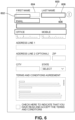
- FIG. 6 illustrates a sample output. In this output, experience elements are superimposed over the original design image 600 so that a user can easily see how well the automatically generated digital experience matches the experience design. For clarity, only some digital experience elements are shown.
- design image 600 includes a first design box 604 (for inputting a first name) and a second design box 608 (for inputting a last name).
- first input box 602 is overlaid onto first design box 604.
- first input box 602 does not have the correct size or alignment to match first design box 604.
- second input box 606 substantially matches second experience box 608.
- a user reviewing the output of step 318 may provide feedback that indicates that first input box 602 is incorrect. The system may then iterate over the design until this error is corrected.
- engine 100 may apply accessibility and disability guidelines. Specifically, accessibility and disability validator 234 may iterate through the elements of the output to ensure compliance with accessibility and disability guidelines. In some cases, as part of this step, validator 234 may consult accessibility and compliance guidelines 206 (shown in FIG. 2 ).
- step 322 output files can be generated.
- step 324 the system may also output test scaffolding files that can be used to test the automatically generated code against various templates.
- the outputs 326 may therefore include both target platform and framework code 328, as well as test case scripts 330.
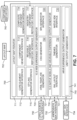
- FIG. 7 is a schematic view of one embodiment of output generator 700.
- Output generator 700 may comprise various modules for generating the deployable code for implementing unified experiences across a variety of different digital platforms. It may be appreciated that output generator 236, shown in FIG. 2 , could include some or all of the same modules and other components as output generator 700.
- output generator 236 may receive layout map 702 as input.
- Layout map 702 may comprise the target framework patterns (themselves converted from the target platform patterns) necessary to build the final layout for deployment on one or more platforms.
- Layout map iterator 711 iterates through each element in layout map 702. Each element may be identified according to its metadata. The elements may then be handed over to an appropriate interface for generating the output code.
- a core element interface 712 provides the necessary code generator function definitions for the core elements.
- a component generator interface 713 provides the necessary code generator function definitions for components that are not already identified as reusable components or industry ready components.
- a composite component generator 714 interface provides the necessary code generator function definitions for the composite components that are not already identified as reusable components or industry ready components.
- a styling component generator interface 715 provides the necessary code generator function definitions for the styling generation of core elements, components or composite elements.
- a reusable component repository interface 716 provides the necessary interfaces and implementations to pull the code from the existing reusable components repository and the necessary binding to the target output code.
- An industry component repository interface 717 provides the necessary interfaces and implementations to pull the code from the existing industry components repository and the necessary binding to the target output code. In some cases, interface 717 may retrieve information from a component repository 760.
- output generator 236 may include a web experience output generator 720, a native mobile and wearable experience output generator 730, and an AR/VR experience output generator 740.
- web experience output generator 720 includes provisions to implement classes for various web platform components.
- Generator 720 may further include an HTML template generator 721 to provide the HTML template generation capabilities as per the standard W3C definitions.
- Generator 720 may also include a CSS generator 722 to provide the CSS styling capabilities as per the standard CSS3 specifications.
- Generator 720 may also include an SPA generator interface 723 to provide the necessary interfaces to integrate with existing CLI based open source tools for single page application generation and component creation such as "ng CLI", "createreactapp CLI", and "Vue CLI".
- generator 720 may communicate with an open source CLI interface 750.
- Native mobile and wearables experience output generator 730 may include provisions to implement classes for the various native mobile and wearable platform components.
- generator 730 may include an XML layout interface 731 for generating native UI layouts, a themes generator 732 for applying styling to the layouts, and a native SDK interface 733 for project and component creation and for binding the XML layouts.
- generator 730 may communicate with an android/ios SDK interface 752.
- ARVR experience output generator 740 may include provisions to implement classes for the various ARVR scene definitions. These may have specific implementations to generate code for specific elements.
- Generator 740 may include a unity output generator 741, which may interface with unity based scripting toolsets for the AR/VR scene generation (for example, with a unity SDK interface 754).
- experience designs in the form of images or PDFs can be automatically converted into code to implement digital experiences on a variety of platforms.
- the system and method may therefore provide significant time savings for developers, allowing them to focus on the business logic of applications rather than building user layouts from designs.
Landscapes
- Engineering & Computer Science (AREA)
- Theoretical Computer Science (AREA)
- Software Systems (AREA)
- General Engineering & Computer Science (AREA)
- Physics & Mathematics (AREA)
- General Physics & Mathematics (AREA)
- General Health & Medical Sciences (AREA)
- Biomedical Technology (AREA)
- Data Mining & Analysis (AREA)
- Evolutionary Computation (AREA)
- Biophysics (AREA)
- Molecular Biology (AREA)
- Computing Systems (AREA)
- Computational Linguistics (AREA)
- Artificial Intelligence (AREA)
- Mathematical Physics (AREA)
- Life Sciences & Earth Sciences (AREA)
- Health & Medical Sciences (AREA)
- Human Computer Interaction (AREA)
- Processing Or Creating Images (AREA)
Claims (13)
- Verfahren zur automatischen Erzeugung von Code zur Ausführung auf einer digitalen Zielplattform, umfassend:Empfangen eines Grafikdesignbilds als eine Quellbilddatei;Erstellen eines HTML-Canvas aus der Quellbilddatei unter Verwendung eines Headless-Browser-Controllers in einem Browser;Rendern des Designbilds auf dem HTML-Canvas und Auslesen von Pixeln des Grafikdesignbilds mittels eines Design-Parsers (222), der ein Bildobjekt in dem HTML-Canvas in einzelne Pixelelemente parst;wobei der Design-Parser (222) einen Kachelsatz erschafft, der eine Gruppe von einzelnen Pixelelementen umfasst, die einen vorbestimmten Satz von Zeilen und Spalten aufweist;automatisches Erzeugen einer Anordnung von Kacheln als eine Kachelkarte (402) in einem 2D-Array von Kacheln aus dem Kachelsatz;Verwenden eines neuronalen Netzwerks (404), um ein Merkmalsmuster in der Kachelkarte (402) zu identifizieren, wobei das Merkmalsmuster ein Muster des Bilds, assoziiert mit einem Element des Designs, ist;Klassifizieren des Merkmalsmusters in der Kachelkarte (402) unter Verwendung eines Softmax-Klassifikators (408);Verwenden des klassifizierten Merkmalsmusters, um automatisch Code zu erzeugen, wobei der Code das Merkmalsmuster in der Kachelkarte (402) auf der digitalen Zielplattform reproduziert; undAusgeben von Scaffolding-Testdateien, die Testfallskripte (330) zum Testen des automatisch erzeugten Codes umfassen.
- Verfahren nach Anspruch 1, wobei das neuronale Netzwerk (404) ein Convolutional Neural Network ist.
- Verfahren nach einem beliebigen vorhergehenden Anspruch, wobei das Verfahren ein Auswählen eines Ziel-Software-Frameworks umfasst, und wobei ein automatisches Erzeugen von Code ein Erzeugen von Code umfasst, der das Merkmalsmuster in der Kachelkarte (402) auf der Zielplattform und für das Ziel-Software-Framework reproduziert.
- System nach einem beliebigen vorhergehenden Anspruch, wobei die digitale Zielplattform Folgendes ist:eine Webplattform;eine Mobilplattform;eine Extended-Reality-Plattform; und/odereine Plattform für Wearable-Vorrichtungen.
- System zur automatischen Erzeugung von Code zur Ausführung auf einer digitalen Zielplattform, wobei das System Folgendes umfasst:einen Vorrichtungsprozessor (104); undein nichtflüchtiges computerlesbares Medium, das Anweisungen speichert, die mittels des Vorrichtungsprozessors ausführbar sind, sodass Folgendes implementiert wird:eine Canvas-Rendering-Engine (220), die ein Eingangsgrafikdesignbild aus einer Quellbilddatei auf einem HTML-Canvas rendert;einen Design-Parser (222), der ein Bildobjekt in dem HTML-Canvas in einzelne Pixelelemente parst und einen Kachelsatz erschafft, der eine Gruppe von einzelnen Pixelelementen umfasst, die einen vorbestimmten Satz von Zeilen und Spalten aufweist;ein Musteridentifizierungs- und Klassifizierungsmodul (224), das die Kachelsätze in eine Anordnung von Kacheln als Kachelkarten (402) in einem 2D-Array von Kacheln aus dem Kachelsatz umwandeln kann, ferner umfassend:ein neuronales Netzwerk (404), das Merkmalsmuster in den Kachelkarten identifiziert, wobei das Merkmalsmuster ein Muster des Bilds, assoziiert mit einem Element des Designs, ist;einen Softmax-Klassifikator, der die Merkmalsmuster, die von dem neuronalen Netzwerk (404) identifiziert wurden, klassifiziert;ein Plattform-Mustertransformationsmodul (226), das die identifizierten Merkmalsmuster zu plattformspezifischen Programmierobjekten transformiert; undeinen Ausgabegenerator (700), der bereitstellbaren Code für die digitale Zielplattform ausgibt, wobei der Code die Merkmalsmuster auf der digitalen Zielplattform reproduziert, und Scaffolding-Testdateien ausgibt, die Testfallskripte (330) zum Testen des automatisch erzeugten Codes umfassen.
- System nach Anspruch 5, ferner umfassend:ein Framework-Mustertransformationsmodul (228), das die plattformspezifischen Programmierobjekte zu frameworkspezifischen Programmierobjekten transformiert; und/odereinen Branchen-Musterverbesserer (230), der frameworkspezifische Programmierelemente auswählt, die für eine Zielbranche verbessert werden können.
- System nach einem beliebigen der Ansprüche 5 bis 6, ferner umfassend:einen Feedback-Analysator (232), der das reproduzierte Merkmalsmuster mit dem Eingangsdesignbild überlagert; und/odereinen Validator 234 für Barrierefreiheit und Behindertengerechtigkeit, der den Code auf Konformität bezüglich Barrierefreiheit und Behindertengerechtigkeit prüft.
- System nach einem beliebigen der Ansprüche 5 bis 7, wobei das neuronale Netzwerk (404) eine oder mehrere Faltungsschichten umfasst.
- System nach Anspruch 8, wobei das neuronale Netzwerk (404) eine oder mehrere Pooling-Schichten umfasst.
- System nach Anspruch 9, wobei das neuronale Netzwerk (404) zwei oder mehr vollständig verbundene Schichten umfasst.
- System nach einem beliebigen der Ansprüche 5 bis 10, wobei die digitale Zielplattform eines von einer Webplattform, einer Mobilplattform und/oder einer Wearable-Plattform ist.
- System nach einem beliebigen der Ansprüche 5 bis 11, wobei die digitale Zielplattform eine Extended-Reality-Plattform ist.
- Nichtflüchtiges computerlesbares Medium, das Software speichert, die Anweisungen, die mittels eines oder mehrerer Computer ausführbar sind, umfasst, die, bei einer solchen Ausführung, den einen oder die mehreren Computer dazu veranlassen:ein Grafikdesignbild als eine Quellbilddatei zu empfangen;ein HTML-Canvas aus der Quellbilddatei unter Verwendung eines Headless-Browser-Controllers in einem Browser zu erstellen;das Designbild auf dem HTML-Canvas zu rendern und Pixel des Grafikdesignbilds mittels eines Design-Parsers (222) auszulesen, der ein Bildobjekt in dem HTML-Canvas in einzelne Pixelelemente parst;einen Kachelsatz zu erschaffen, der eine Gruppe von einzelnen Pixelelementen umfasst, die einen vorbestimmten Satz von Zeilen und Spalten aufweist;automatisch eine Anordnung von Kacheln als eine Kachelkarte (402) in einem 2D-Array von Kacheln aus dem Kachelsatz zu erzeugen;ein neuronales Netzwerk (404) zu verwenden, um ein Merkmalsmuster in der Kachelkarte (402) zu identifizieren, wobei das Merkmalsmuster ein Muster des Bilds, assoziiert mit einem Element des Designs, ist;das Merkmalsmuster in der Kachelkarte (402) unter Verwendung eines Softmax-Klassifikators zu klassifizieren;das klassifizierte Merkmalsmuster zu verwenden, um automatisch Code zu erzeugen, wobei der Code das Merkmalsmuster in der Kachelkarte (402) auf der digitalen Zielplattform reproduziert;Scaffolding-Testdateien auszugeben, die Testfallskripte (330) zum Testen des automatisch erzeugten Codes umfassen.
Applications Claiming Priority (1)
| Application Number | Priority Date | Filing Date | Title |
|---|---|---|---|
| US16/539,623 US10884710B1 (en) | 2019-08-13 | 2019-08-13 | System and method for generating unified experiences on digital platforms |
Publications (2)
| Publication Number | Publication Date |
|---|---|
| EP3779672A1 EP3779672A1 (de) | 2021-02-17 |
| EP3779672B1 true EP3779672B1 (de) | 2025-06-25 |
Family
ID=71266327
Family Applications (1)
| Application Number | Title | Priority Date | Filing Date |
|---|---|---|---|
| EP20182602.1A Active EP3779672B1 (de) | 2019-08-13 | 2020-06-26 | System und verfahren zur erzeugung einheitlicher erfahrungen auf digitalen plattformen |
Country Status (2)
| Country | Link |
|---|---|
| US (1) | US10884710B1 (de) |
| EP (1) | EP3779672B1 (de) |
Families Citing this family (5)
| Publication number | Priority date | Publication date | Assignee | Title |
|---|---|---|---|---|
| US12417080B2 (en) * | 2022-02-28 | 2025-09-16 | Justin Haug | System and method for generating single page web applications |
| CN115291876B (zh) * | 2022-09-29 | 2023-03-17 | 安徽商信政通信息技术股份有限公司 | 一种表单设计工具构建方法、系统、电子设备和存储介质 |
| CN116541111B (zh) * | 2023-04-06 | 2024-02-27 | 上海数聚软件系统股份有限公司 | 画布图形渲染方法、装置、电子设备和计算机可读介质 |
| US20250189945A1 (en) * | 2023-12-12 | 2025-06-12 | Rockwell Automation Technologies, Inc. | Generative artificial intelligence for creation of instruction code from an input |
| CN117971175B (zh) * | 2024-03-28 | 2024-07-05 | 杭州昄达网络科技有限公司 | 一种基于设计稿自适应的应用软件开发方法及电子设备 |
Family Cites Families (12)
| Publication number | Priority date | Publication date | Assignee | Title |
|---|---|---|---|---|
| US6829063B1 (en) * | 2000-06-14 | 2004-12-07 | Hewlett-Packard Development Company, L.P. | Method for designing sets of color matrices that tile together |
| US9135752B2 (en) * | 2009-12-28 | 2015-09-15 | Cyber Ai Entertainment Inc. | Image display system |
| US10186061B1 (en) * | 2013-01-11 | 2019-01-22 | Electronic Arts Inc. | Proximate-tile-type-based map generation |
| US10140102B2 (en) * | 2014-08-21 | 2018-11-27 | International Business Machines Corporation | Evaluating accessibility compliance of a hybrid user interface design |
| WO2016099539A1 (en) * | 2014-12-19 | 2016-06-23 | Hewlett Packard Enterprise Development Lp | Model-driven architecture for user-centered design |
| US10671918B2 (en) * | 2017-10-24 | 2020-06-02 | International Business Machines Corporation | Attention based sequential image processing |
| KR102585216B1 (ko) * | 2017-12-14 | 2023-10-05 | 삼성전자주식회사 | 영상 인식 방법 및 그 장치 |
| US20190042743A1 (en) * | 2017-12-15 | 2019-02-07 | Intel Corporation | Malware detection and classification using artificial neural network |
| TWI649698B (zh) * | 2017-12-21 | 2019-02-01 | 財團法人工業技術研究院 | 物件偵測裝置、物件偵測方法及電腦可讀取媒體 |
| US11023360B2 (en) * | 2018-11-14 | 2021-06-01 | The Mathworks, Inc. | Systems and methods for configuring programmable logic devices for deep learning networks |
| US12159231B2 (en) * | 2018-12-04 | 2024-12-03 | Optum Services (Ireland) Limited | Predictive data analytics with automatic feature extraction |
| US11061650B2 (en) * | 2019-06-27 | 2021-07-13 | Intel Corporation | Methods and apparatus to automatically generate code for graphical user interfaces |
-
2019
- 2019-08-13 US US16/539,623 patent/US10884710B1/en active Active
-
2020
- 2020-06-26 EP EP20182602.1A patent/EP3779672B1/de active Active
Also Published As
| Publication number | Publication date |
|---|---|
| EP3779672A1 (de) | 2021-02-17 |
| US10884710B1 (en) | 2021-01-05 |
Similar Documents
| Publication | Publication Date | Title |
|---|---|---|
| EP3779672B1 (de) | System und verfahren zur erzeugung einheitlicher erfahrungen auf digitalen plattformen | |
| Villán | Mastering OpenCV 4 with Python: a practical guide covering topics from image processing, augmented reality to deep learning with OpenCV 4 and Python 3.7 | |
| US10885266B2 (en) | Preserving semantic information in document conversion via color codes | |
| US20100070852A1 (en) | Method for Transforming the Source Documents to Corresponding Web Pages | |
| KR102445932B1 (ko) | 지식 증류 기반의 멀티모달 매핑 정보를 활용한 이미지 생성 기법 | |
| CN110096275B (zh) | 一种页面处理方法及装置 | |
| KR101798475B1 (ko) | 다중 플랫폼 지원 다국어 웹문서 출판 시스템 | |
| US20230377225A1 (en) | Method and apparatus for editing an image and method and apparatus for training an image editing model, device and medium | |
| US20200364034A1 (en) | System and Method for Automated Code Development and Construction | |
| CN114820881A (zh) | 图片的生成方法、智能终端及其计算机可读存储介质 | |
| CN118470158A (zh) | 一种基于机器学习的视觉语言模型构建方法 | |
| CN112114803B (zh) | 基于深度学习的ui界面的前端代码生成方法、设备及介质 | |
| CN115481599A (zh) | 文档的处理方法、装置、电子设备和存储介质 | |
| CN120406917A (zh) | 一种神经网络图文解析与跨框架代码生成方法和系统 | |
| US20210012060A1 (en) | Structured document conversion and display system and method | |
| EP4657308A1 (de) | Kontextbewusste dokumentvergrösserung und -synthese | |
| CN115130437A (zh) | 一种文档智能填写方法、装置及存储介质 | |
| CN120071373A (zh) | 跨页单元格合并方法和装置、电子设备、存储介质 | |
| JP2013152564A (ja) | 文書処理装置及び文書処理方法 | |
| KR20250058056A (ko) | 디스플레이가능한 콘텐츠의 엘리먼트에 대한 속성 결정 및 접근성 트리에 추가 | |
| JP2020135523A (ja) | 情報処理装置、情報処理方法及びプログラム | |
| Zhekova et al. | Automatic conversion of image design into HTML and CSS | |
| Singh | Automating Generation of Web GUI from a Design Image | |
| US20250371262A1 (en) | Multilingual support using llm for document information extraction | |
| US20260024304A1 (en) | Image difference captioning for a series of versions of a digital image with applied manipulations |
Legal Events
| Date | Code | Title | Description |
|---|---|---|---|
| PUAI | Public reference made under article 153(3) epc to a published international application that has entered the european phase |
Free format text: ORIGINAL CODE: 0009012 |
|
| STAA | Information on the status of an ep patent application or granted ep patent |
Free format text: STATUS: REQUEST FOR EXAMINATION WAS MADE |
|
| 17P | Request for examination filed |
Effective date: 20200626 |
|
| AK | Designated contracting states |
Kind code of ref document: A1 Designated state(s): AL AT BE BG CH CY CZ DE DK EE ES FI FR GB GR HR HU IE IS IT LI LT LU LV MC MK MT NL NO PL PT RO RS SE SI SK SM TR |
|
| AX | Request for extension of the european patent |
Extension state: BA ME |
|
| STAA | Information on the status of an ep patent application or granted ep patent |
Free format text: STATUS: EXAMINATION IS IN PROGRESS |
|
| 17Q | First examination report despatched |
Effective date: 20220919 |
|
| GRAP | Despatch of communication of intention to grant a patent |
Free format text: ORIGINAL CODE: EPIDOSNIGR1 |
|
| STAA | Information on the status of an ep patent application or granted ep patent |
Free format text: STATUS: GRANT OF PATENT IS INTENDED |
|
| INTG | Intention to grant announced |
Effective date: 20250321 |
|
| GRAS | Grant fee paid |
Free format text: ORIGINAL CODE: EPIDOSNIGR3 |
|
| GRAA | (expected) grant |
Free format text: ORIGINAL CODE: 0009210 |
|
| STAA | Information on the status of an ep patent application or granted ep patent |
Free format text: STATUS: THE PATENT HAS BEEN GRANTED |
|
| AK | Designated contracting states |
Kind code of ref document: B1 Designated state(s): AL AT BE BG CH CY CZ DE DK EE ES FI FR GB GR HR HU IE IS IT LI LT LU LV MC MK MT NL NO PL PT RO RS SE SI SK SM TR |
|
| REG | Reference to a national code |
Ref country code: GB Ref legal event code: FG4D |
|
| REG | Reference to a national code |
Ref country code: CH Ref legal event code: EP |
|
| P01 | Opt-out of the competence of the unified patent court (upc) registered |
Free format text: CASE NUMBER: APP_25148/2025 Effective date: 20250527 |
|
| REG | Reference to a national code |
Ref country code: CH Ref legal event code: EP |
|
| REG | Reference to a national code |
Ref country code: IE Ref legal event code: FG4D |
|
| REG | Reference to a national code |
Ref country code: DE Ref legal event code: R096 Ref document number: 602020053188 Country of ref document: DE |
|
| PG25 | Lapsed in a contracting state [announced via postgrant information from national office to epo] |
Ref country code: FI Free format text: LAPSE BECAUSE OF FAILURE TO SUBMIT A TRANSLATION OF THE DESCRIPTION OR TO PAY THE FEE WITHIN THE PRESCRIBED TIME-LIMIT Effective date: 20250625 |
|
| PGFP | Annual fee paid to national office [announced via postgrant information from national office to epo] |
Ref country code: DE Payment date: 20250716 Year of fee payment: 6 |
|
| REG | Reference to a national code |
Ref country code: LT Ref legal event code: MG9D |
|
| PG25 | Lapsed in a contracting state [announced via postgrant information from national office to epo] |
Ref country code: GR Free format text: LAPSE BECAUSE OF FAILURE TO SUBMIT A TRANSLATION OF THE DESCRIPTION OR TO PAY THE FEE WITHIN THE PRESCRIBED TIME-LIMIT Effective date: 20250926 Ref country code: NO Free format text: LAPSE BECAUSE OF FAILURE TO SUBMIT A TRANSLATION OF THE DESCRIPTION OR TO PAY THE FEE WITHIN THE PRESCRIBED TIME-LIMIT Effective date: 20250925 |
|
| PG25 | Lapsed in a contracting state [announced via postgrant information from national office to epo] |
Ref country code: BG Free format text: LAPSE BECAUSE OF FAILURE TO SUBMIT A TRANSLATION OF THE DESCRIPTION OR TO PAY THE FEE WITHIN THE PRESCRIBED TIME-LIMIT Effective date: 20250625 |
|
| PGFP | Annual fee paid to national office [announced via postgrant information from national office to epo] |
Ref country code: GB Payment date: 20250717 Year of fee payment: 6 |
|
| PG25 | Lapsed in a contracting state [announced via postgrant information from national office to epo] |
Ref country code: HR Free format text: LAPSE BECAUSE OF FAILURE TO SUBMIT A TRANSLATION OF THE DESCRIPTION OR TO PAY THE FEE WITHIN THE PRESCRIBED TIME-LIMIT Effective date: 20250625 |
|
| PGFP | Annual fee paid to national office [announced via postgrant information from national office to epo] |
Ref country code: FR Payment date: 20250722 Year of fee payment: 6 |
|
| PG25 | Lapsed in a contracting state [announced via postgrant information from national office to epo] |
Ref country code: RS Free format text: LAPSE BECAUSE OF FAILURE TO SUBMIT A TRANSLATION OF THE DESCRIPTION OR TO PAY THE FEE WITHIN THE PRESCRIBED TIME-LIMIT Effective date: 20250925 |
|
| PGFP | Annual fee paid to national office [announced via postgrant information from national office to epo] |
Ref country code: IE Payment date: 20250723 Year of fee payment: 6 |
|
| PG25 | Lapsed in a contracting state [announced via postgrant information from national office to epo] |
Ref country code: LV Free format text: LAPSE BECAUSE OF FAILURE TO SUBMIT A TRANSLATION OF THE DESCRIPTION OR TO PAY THE FEE WITHIN THE PRESCRIBED TIME-LIMIT Effective date: 20250625 |
|
| REG | Reference to a national code |
Ref country code: NL Ref legal event code: MP Effective date: 20250625 |
|
| PG25 | Lapsed in a contracting state [announced via postgrant information from national office to epo] |
Ref country code: NL Free format text: LAPSE BECAUSE OF FAILURE TO SUBMIT A TRANSLATION OF THE DESCRIPTION OR TO PAY THE FEE WITHIN THE PRESCRIBED TIME-LIMIT Effective date: 20250625 |
|
| PG25 | Lapsed in a contracting state [announced via postgrant information from national office to epo] |
Ref country code: PT Free format text: LAPSE BECAUSE OF FAILURE TO SUBMIT A TRANSLATION OF THE DESCRIPTION OR TO PAY THE FEE WITHIN THE PRESCRIBED TIME-LIMIT Effective date: 20251027 |
|
| REG | Reference to a national code |
Ref country code: AT Ref legal event code: MK05 Ref document number: 1807172 Country of ref document: AT Kind code of ref document: T Effective date: 20250625 |
|
| PG25 | Lapsed in a contracting state [announced via postgrant information from national office to epo] |
Ref country code: IS Free format text: LAPSE BECAUSE OF FAILURE TO SUBMIT A TRANSLATION OF THE DESCRIPTION OR TO PAY THE FEE WITHIN THE PRESCRIBED TIME-LIMIT Effective date: 20251025 |
|
| PG25 | Lapsed in a contracting state [announced via postgrant information from national office to epo] |
Ref country code: AT Free format text: LAPSE BECAUSE OF FAILURE TO SUBMIT A TRANSLATION OF THE DESCRIPTION OR TO PAY THE FEE WITHIN THE PRESCRIBED TIME-LIMIT Effective date: 20250625 Ref country code: SM Free format text: LAPSE BECAUSE OF FAILURE TO SUBMIT A TRANSLATION OF THE DESCRIPTION OR TO PAY THE FEE WITHIN THE PRESCRIBED TIME-LIMIT Effective date: 20250625 |
|
| PG25 | Lapsed in a contracting state [announced via postgrant information from national office to epo] |
Ref country code: CZ Free format text: LAPSE BECAUSE OF FAILURE TO SUBMIT A TRANSLATION OF THE DESCRIPTION OR TO PAY THE FEE WITHIN THE PRESCRIBED TIME-LIMIT Effective date: 20250625 |
|
| PG25 | Lapsed in a contracting state [announced via postgrant information from national office to epo] |
Ref country code: PL Free format text: LAPSE BECAUSE OF FAILURE TO SUBMIT A TRANSLATION OF THE DESCRIPTION OR TO PAY THE FEE WITHIN THE PRESCRIBED TIME-LIMIT Effective date: 20250625 |
|
| PG25 | Lapsed in a contracting state [announced via postgrant information from national office to epo] |
Ref country code: EE Free format text: LAPSE BECAUSE OF FAILURE TO SUBMIT A TRANSLATION OF THE DESCRIPTION OR TO PAY THE FEE WITHIN THE PRESCRIBED TIME-LIMIT Effective date: 20250625 |
|
| PG25 | Lapsed in a contracting state [announced via postgrant information from national office to epo] |
Ref country code: SK Free format text: LAPSE BECAUSE OF FAILURE TO SUBMIT A TRANSLATION OF THE DESCRIPTION OR TO PAY THE FEE WITHIN THE PRESCRIBED TIME-LIMIT Effective date: 20250625 |
|
| REG | Reference to a national code |
Ref country code: CH Ref legal event code: H13 Free format text: ST27 STATUS EVENT CODE: U-0-0-H10-H13 (AS PROVIDED BY THE NATIONAL OFFICE) Effective date: 20260127 |
|
| PG25 | Lapsed in a contracting state [announced via postgrant information from national office to epo] |
Ref country code: ES Free format text: LAPSE BECAUSE OF FAILURE TO SUBMIT A TRANSLATION OF THE DESCRIPTION OR TO PAY THE FEE WITHIN THE PRESCRIBED TIME-LIMIT Effective date: 20250625 |