EP3778924A1 - Molecular predictors of patient response to radiotherapy treatment - Google Patents
Molecular predictors of patient response to radiotherapy treatment Download PDFInfo
- Publication number
- EP3778924A1 EP3778924A1 EP19192006.5A EP19192006A EP3778924A1 EP 3778924 A1 EP3778924 A1 EP 3778924A1 EP 19192006 A EP19192006 A EP 19192006A EP 3778924 A1 EP3778924 A1 EP 3778924A1
- Authority
- EP
- European Patent Office
- Prior art keywords
- profile
- seq
- nucleotide sequence
- epigenomics
- gene
- Prior art date
- Legal status (The legal status is an assumption and is not a legal conclusion. Google has not performed a legal analysis and makes no representation as to the accuracy of the status listed.)
- Withdrawn
Links
- 238000001959 radiotherapy Methods 0.000 title claims abstract description 86
- 230000004044 response Effects 0.000 title description 57
- 238000000034 method Methods 0.000 claims abstract description 116
- 206010058467 Lung neoplasm malignant Diseases 0.000 claims abstract description 45
- 201000005202 lung cancer Diseases 0.000 claims abstract description 45
- 208000020816 lung neoplasm Diseases 0.000 claims abstract description 45
- 238000004590 computer program Methods 0.000 claims abstract description 15
- 108090000623 proteins and genes Proteins 0.000 claims description 170
- 239000002773 nucleotide Substances 0.000 claims description 132
- 125000003729 nucleotide group Chemical group 0.000 claims description 132
- 108010026664 MutL Protein Homolog 1 Proteins 0.000 claims description 90
- 102000013609 MutL Protein Homolog 1 Human genes 0.000 claims description 89
- 206010028980 Neoplasm Diseases 0.000 claims description 88
- 230000000869 mutational effect Effects 0.000 claims description 78
- 230000008859 change Effects 0.000 claims description 74
- 102100030493 HEAT repeat-containing protein 1 Human genes 0.000 claims description 66
- 101000990572 Homo sapiens HEAT repeat-containing protein 1 Proteins 0.000 claims description 66
- 101001125496 Homo sapiens Pre-mRNA-processing factor 19 Proteins 0.000 claims description 59
- 102100029522 Pre-mRNA-processing factor 19 Human genes 0.000 claims description 59
- 102100025339 ATP-dependent DNA helicase DDX11 Human genes 0.000 claims description 57
- 101000722210 Homo sapiens ATP-dependent DNA helicase DDX11 Proteins 0.000 claims description 57
- 102100024058 Flap endonuclease GEN homolog 1 Human genes 0.000 claims description 53
- 101000833646 Homo sapiens Flap endonuclease GEN homolog 1 Proteins 0.000 claims description 53
- 102100038885 Histone acetyltransferase p300 Human genes 0.000 claims description 38
- 101000882390 Homo sapiens Histone acetyltransferase p300 Proteins 0.000 claims description 38
- 101000744394 Homo sapiens Oxidized purine nucleoside triphosphate hydrolase Proteins 0.000 claims description 36
- 102100039792 Oxidized purine nucleoside triphosphate hydrolase Human genes 0.000 claims description 36
- 102100025825 Methylated-DNA-protein-cysteine methyltransferase Human genes 0.000 claims description 32
- 108040008770 methylated-DNA-[protein]-cysteine S-methyltransferase activity proteins Proteins 0.000 claims description 32
- 101000981742 Homo sapiens Protein lifeguard 1 Proteins 0.000 claims description 30
- 101000613614 Homo sapiens Protein mono-ADP-ribosyltransferase PARP10 Proteins 0.000 claims description 30
- 102100024139 Protein lifeguard 1 Human genes 0.000 claims description 30
- 102100040847 Protein mono-ADP-ribosyltransferase PARP10 Human genes 0.000 claims description 30
- 102100035886 Adenine DNA glycosylase Human genes 0.000 claims description 29
- 102000052609 BRCA2 Human genes 0.000 claims description 29
- 108700020462 BRCA2 Proteins 0.000 claims description 29
- 101150008921 Brca2 gene Proteins 0.000 claims description 29
- 101001000351 Homo sapiens Adenine DNA glycosylase Proteins 0.000 claims description 29
- 201000005243 lung squamous cell carcinoma Diseases 0.000 claims description 29
- 101150076616 EPHA2 gene Proteins 0.000 claims description 27
- 102100030340 Ephrin type-A receptor 2 Human genes 0.000 claims description 27
- 102100032742 Histone-lysine N-methyltransferase SETD2 Human genes 0.000 claims description 27
- 101000654725 Homo sapiens Histone-lysine N-methyltransferase SETD2 Proteins 0.000 claims description 27
- 101000851018 Homo sapiens Vascular endothelial growth factor receptor 1 Proteins 0.000 claims description 27
- 101000744932 Homo sapiens Zinc finger protein 208 Proteins 0.000 claims description 27
- 102000017791 KCNJ12 Human genes 0.000 claims description 27
- 101150037139 KCNJ12 gene Proteins 0.000 claims description 27
- 102100033178 Vascular endothelial growth factor receptor 1 Human genes 0.000 claims description 27
- 102100039975 Zinc finger protein 208 Human genes 0.000 claims description 27
- 102100026406 G/T mismatch-specific thymine DNA glycosylase Human genes 0.000 claims description 26
- 102100032862 General transcription factor IIH subunit 4 Human genes 0.000 claims description 26
- 102220562132 HEAT repeat-containing protein 1_M607V_mutation Human genes 0.000 claims description 26
- 241000282414 Homo sapiens Species 0.000 claims description 26
- 101000835738 Homo sapiens G/T mismatch-specific thymine DNA glycosylase Proteins 0.000 claims description 26
- 101000655406 Homo sapiens General transcription factor IIH subunit 4 Proteins 0.000 claims description 26
- 102100022302 DNA polymerase beta Human genes 0.000 claims description 24
- 102100033071 Histone acetyltransferase KAT6A Human genes 0.000 claims description 24
- 101000902539 Homo sapiens DNA polymerase beta Proteins 0.000 claims description 24
- 101000944179 Homo sapiens Histone acetyltransferase KAT6A Proteins 0.000 claims description 24
- 101000864342 Homo sapiens Tyrosine-protein kinase BTK Proteins 0.000 claims description 24
- 108010075654 MAP Kinase Kinase Kinase 1 Proteins 0.000 claims description 24
- 102100033115 Mitogen-activated protein kinase kinase kinase 1 Human genes 0.000 claims description 24
- -1 PMS2P9 Proteins 0.000 claims description 24
- 102100029823 Tyrosine-protein kinase BTK Human genes 0.000 claims description 24
- 108091006655 SLC9A4 Proteins 0.000 claims description 23
- 102100030707 Sodium/hydrogen exchanger 4 Human genes 0.000 claims description 23
- 102100036517 Apolipoprotein L domain-containing protein 1 Human genes 0.000 claims description 22
- 102100023328 G-protein coupled estrogen receptor 1 Human genes 0.000 claims description 22
- 101000928701 Homo sapiens Apolipoprotein L domain-containing protein 1 Proteins 0.000 claims description 22
- 101000829902 Homo sapiens G-protein coupled estrogen receptor 1 Proteins 0.000 claims description 22
- 108010064218 Poly (ADP-Ribose) Polymerase-1 Proteins 0.000 claims description 20
- 102100023712 Poly [ADP-ribose] polymerase 1 Human genes 0.000 claims description 20
- 102100036191 Acyl-coenzyme A diphosphatase NUDT19 Human genes 0.000 claims description 18
- 102100023003 Ankyrin repeat domain-containing protein 30A Human genes 0.000 claims description 18
- 101000594506 Homo sapiens Acyl-coenzyme A diphosphatase NUDT19 Proteins 0.000 claims description 18
- 101000757191 Homo sapiens Ankyrin repeat domain-containing protein 30A Proteins 0.000 claims description 18
- 101100508538 Homo sapiens IKBKE gene Proteins 0.000 claims description 18
- 101000694802 Homo sapiens Receptor-type tyrosine-protein phosphatase T Proteins 0.000 claims description 18
- 101000625376 Homo sapiens Transcription initiation factor TFIID subunit 3 Proteins 0.000 claims description 18
- 102100021857 Inhibitor of nuclear factor kappa-B kinase subunit epsilon Human genes 0.000 claims description 18
- 102100028645 Receptor-type tyrosine-protein phosphatase T Human genes 0.000 claims description 18
- 102100025042 Transcription initiation factor TFIID subunit 3 Human genes 0.000 claims description 18
- 102220562098 HEAT repeat-containing protein 1_E2017G_mutation Human genes 0.000 claims description 17
- 102220562092 HEAT repeat-containing protein 1_V1854A_mutation Human genes 0.000 claims description 17
- 208000002154 non-small cell lung carcinoma Diseases 0.000 claims description 17
- 230000002829 reductive effect Effects 0.000 claims description 17
- 208000029729 tumor suppressor gene on chromosome 11 Diseases 0.000 claims description 17
- 239000003550 marker Substances 0.000 claims description 11
- 210000004369 blood Anatomy 0.000 claims description 7
- 239000008280 blood Substances 0.000 claims description 7
- 239000000523 sample Substances 0.000 description 32
- 230000035945 sensitivity Effects 0.000 description 29
- 230000005865 ionizing radiation Effects 0.000 description 28
- 108700028369 Alleles Proteins 0.000 description 27
- 230000003334 potential effect Effects 0.000 description 27
- 210000001519 tissue Anatomy 0.000 description 18
- 201000011510 cancer Diseases 0.000 description 15
- 238000012163 sequencing technique Methods 0.000 description 12
- 108091032973 (ribonucleotides)n+m Proteins 0.000 description 9
- 108020004414 DNA Proteins 0.000 description 9
- 230000000694 effects Effects 0.000 description 9
- 238000011127 radiochemotherapy Methods 0.000 description 9
- 238000012217 deletion Methods 0.000 description 7
- 230000037430 deletion Effects 0.000 description 7
- 238000011161 development Methods 0.000 description 7
- 238000003780 insertion Methods 0.000 description 7
- 230000037431 insertion Effects 0.000 description 7
- 230000035772 mutation Effects 0.000 description 7
- 208000037821 progressive disease Diseases 0.000 description 7
- 208000010507 Adenocarcinoma of Lung Diseases 0.000 description 6
- 102100029766 DNA polymerase theta Human genes 0.000 description 6
- 102100029094 DNA repair endonuclease XPF Human genes 0.000 description 6
- 101001094659 Homo sapiens DNA polymerase kappa Proteins 0.000 description 6
- 101000865085 Homo sapiens DNA polymerase theta Proteins 0.000 description 6
- 101000825820 Homo sapiens Structure-specific endonuclease subunit SLX1 Proteins 0.000 description 6
- 102000015335 Ku Autoantigen Human genes 0.000 description 6
- 108010025026 Ku Autoantigen Proteins 0.000 description 6
- 102100022826 Structure-specific endonuclease subunit SLX1 Human genes 0.000 description 6
- 201000005249 lung adenocarcinoma Diseases 0.000 description 6
- 230000004048 modification Effects 0.000 description 6
- 238000012986 modification Methods 0.000 description 6
- 230000000392 somatic effect Effects 0.000 description 6
- 238000002560 therapeutic procedure Methods 0.000 description 6
- 230000005855 radiation Effects 0.000 description 5
- 238000012360 testing method Methods 0.000 description 5
- 238000002725 brachytherapy Methods 0.000 description 4
- 238000004364 calculation method Methods 0.000 description 4
- JJWKPURADFRFRB-UHFFFAOYSA-N carbonyl sulfide Chemical compound O=C=S JJWKPURADFRFRB-UHFFFAOYSA-N 0.000 description 4
- 238000002710 external beam radiation therapy Methods 0.000 description 4
- 238000007481 next generation sequencing Methods 0.000 description 4
- KIAPWMKFHIKQOZ-UHFFFAOYSA-N 2-[[(4-fluorophenyl)-oxomethyl]amino]benzoic acid methyl ester Chemical compound COC(=O)C1=CC=CC=C1NC(=O)C1=CC=C(F)C=C1 KIAPWMKFHIKQOZ-UHFFFAOYSA-N 0.000 description 3
- 102100025915 5' exonuclease Apollo Human genes 0.000 description 3
- 102100027447 ATP-dependent DNA helicase Q1 Human genes 0.000 description 3
- 102100027452 ATP-dependent DNA helicase Q4 Human genes 0.000 description 3
- 102100038351 ATP-dependent DNA helicase Q5 Human genes 0.000 description 3
- 102100039086 Alpha-ketoglutarate-dependent dioxygenase alkB homolog 3 Human genes 0.000 description 3
- 102100024044 Aprataxin Human genes 0.000 description 3
- 102100040051 Aprataxin and PNK-like factor Human genes 0.000 description 3
- 108010004586 Ataxia Telangiectasia Mutated Proteins Proteins 0.000 description 3
- 108700020463 BRCA1 Proteins 0.000 description 3
- 101150072950 BRCA1 gene Proteins 0.000 description 3
- 102100035631 Bloom syndrome protein Human genes 0.000 description 3
- 102100025401 Breast cancer type 1 susceptibility protein Human genes 0.000 description 3
- 102100030933 CDK-activating kinase assembly factor MAT1 Human genes 0.000 description 3
- 102100025048 Cell cycle checkpoint control protein RAD9A Human genes 0.000 description 3
- 102100031441 Cell cycle checkpoint protein RAD17 Human genes 0.000 description 3
- 102100037631 Centrin-2 Human genes 0.000 description 3
- 102100028487 Checkpoint protein HUS1 Human genes 0.000 description 3
- 102100038602 Chromatin assembly factor 1 subunit A Human genes 0.000 description 3
- 102100033832 Crossover junction endonuclease EME1 Human genes 0.000 description 3
- 102100027041 Crossover junction endonuclease MUS81 Human genes 0.000 description 3
- 108050006400 Cyclin Proteins 0.000 description 3
- 102100036883 Cyclin-H Human genes 0.000 description 3
- 102100026810 Cyclin-dependent kinase 7 Human genes 0.000 description 3
- 102000012698 DDB1 Human genes 0.000 description 3
- 102100033697 DNA cross-link repair 1A protein Human genes 0.000 description 3
- 230000005971 DNA damage repair Effects 0.000 description 3
- 102100021122 DNA damage-binding protein 2 Human genes 0.000 description 3
- 102100039524 DNA endonuclease RBBP8 Human genes 0.000 description 3
- 102100035186 DNA excision repair protein ERCC-1 Human genes 0.000 description 3
- 108010035476 DNA excision repair protein ERCC-5 Proteins 0.000 description 3
- 102100031866 DNA excision repair protein ERCC-5 Human genes 0.000 description 3
- 102100031867 DNA excision repair protein ERCC-6 Human genes 0.000 description 3
- 102100031868 DNA excision repair protein ERCC-8 Human genes 0.000 description 3
- 102100029995 DNA ligase 1 Human genes 0.000 description 3
- 102100033195 DNA ligase 4 Human genes 0.000 description 3
- 102100028849 DNA mismatch repair protein Mlh3 Human genes 0.000 description 3
- 102100034157 DNA mismatch repair protein Msh2 Human genes 0.000 description 3
- 102100037700 DNA mismatch repair protein Msh3 Human genes 0.000 description 3
- 102100021147 DNA mismatch repair protein Msh6 Human genes 0.000 description 3
- 102100039084 DNA oxidative demethylase ALKBH2 Human genes 0.000 description 3
- 102100024829 DNA polymerase delta catalytic subunit Human genes 0.000 description 3
- 102100035472 DNA polymerase iota Human genes 0.000 description 3
- 102100035474 DNA polymerase kappa Human genes 0.000 description 3
- 102100029765 DNA polymerase lambda Human genes 0.000 description 3
- 102100029763 DNA polymerase nu Human genes 0.000 description 3
- 102100036951 DNA polymerase subunit gamma-1 Human genes 0.000 description 3
- 102100028216 DNA polymerase zeta catalytic subunit Human genes 0.000 description 3
- 102100034490 DNA repair and recombination protein RAD54B Human genes 0.000 description 3
- 102100039116 DNA repair protein RAD50 Human genes 0.000 description 3
- 102100033934 DNA repair protein RAD51 homolog 2 Human genes 0.000 description 3
- 102100034484 DNA repair protein RAD51 homolog 3 Human genes 0.000 description 3
- 102100034483 DNA repair protein RAD51 homolog 4 Human genes 0.000 description 3
- 102100028285 DNA repair protein REV1 Human genes 0.000 description 3
- 102100027830 DNA repair protein XRCC2 Human genes 0.000 description 3
- 102100027829 DNA repair protein XRCC3 Human genes 0.000 description 3
- 102100027828 DNA repair protein XRCC4 Human genes 0.000 description 3
- 102100022474 DNA repair protein complementing XP-A cells Human genes 0.000 description 3
- 102100022477 DNA repair protein complementing XP-C cells Human genes 0.000 description 3
- 102100026754 DNA topoisomerase 2-binding protein 1 Human genes 0.000 description 3
- 102100037373 DNA-(apurinic or apyrimidinic site) endonuclease Human genes 0.000 description 3
- 102100035619 DNA-(apurinic or apyrimidinic site) lyase Human genes 0.000 description 3
- 102100026816 DNA-dependent metalloprotease SPRTN Human genes 0.000 description 3
- 102100022204 DNA-dependent protein kinase catalytic subunit Human genes 0.000 description 3
- 102100029764 DNA-directed DNA/RNA polymerase mu Human genes 0.000 description 3
- 102100027700 DNA-directed RNA polymerase I subunit RPA2 Human genes 0.000 description 3
- 102100023933 Deoxyuridine 5'-triphosphate nucleotidohydrolase, mitochondrial Human genes 0.000 description 3
- 101100226017 Dictyostelium discoideum repD gene Proteins 0.000 description 3
- 101100170004 Dictyostelium discoideum repE gene Proteins 0.000 description 3
- 101100170005 Drosophila melanogaster pic gene Proteins 0.000 description 3
- 102100040844 Dual specificity protein kinase CLK2 Human genes 0.000 description 3
- 102100021820 E3 ubiquitin-protein ligase RNF4 Human genes 0.000 description 3
- 102100029944 E3 ubiquitin-protein ligase SHPRH Human genes 0.000 description 3
- 208000037595 EN1-related dorsoventral syndrome Diseases 0.000 description 3
- 101150105460 ERCC2 gene Proteins 0.000 description 3
- 102100028778 Endonuclease 8-like 1 Human genes 0.000 description 3
- 102100028779 Endonuclease 8-like 2 Human genes 0.000 description 3
- 102100028773 Endonuclease 8-like 3 Human genes 0.000 description 3
- 102100021710 Endonuclease III-like protein 1 Human genes 0.000 description 3
- 102100037696 Endonuclease V Human genes 0.000 description 3
- 102100029075 Exonuclease 1 Human genes 0.000 description 3
- 102000009095 Fanconi Anemia Complementation Group A protein Human genes 0.000 description 3
- 108010087740 Fanconi Anemia Complementation Group A protein Proteins 0.000 description 3
- 102000018825 Fanconi Anemia Complementation Group C protein Human genes 0.000 description 3
- 108010027673 Fanconi Anemia Complementation Group C protein Proteins 0.000 description 3
- 102000013601 Fanconi Anemia Complementation Group D2 protein Human genes 0.000 description 3
- 108010026653 Fanconi Anemia Complementation Group D2 protein Proteins 0.000 description 3
- 102000010634 Fanconi Anemia Complementation Group E protein Human genes 0.000 description 3
- 108010077898 Fanconi Anemia Complementation Group E protein Proteins 0.000 description 3
- 102000012216 Fanconi Anemia Complementation Group F protein Human genes 0.000 description 3
- 108010022012 Fanconi Anemia Complementation Group F protein Proteins 0.000 description 3
- 102000007122 Fanconi Anemia Complementation Group G protein Human genes 0.000 description 3
- 108010033305 Fanconi Anemia Complementation Group G protein Proteins 0.000 description 3
- 108700026162 Fanconi Anemia Complementation Group L protein Proteins 0.000 description 3
- 108010067741 Fanconi Anemia Complementation Group N protein Proteins 0.000 description 3
- 102100027639 Fanconi anemia core complex-associated protein 20 Human genes 0.000 description 3
- 102100022352 Fanconi anemia core complex-associated protein 24 Human genes 0.000 description 3
- 102100034554 Fanconi anemia group I protein Human genes 0.000 description 3
- 102100034553 Fanconi anemia group J protein Human genes 0.000 description 3
- 102100034552 Fanconi anemia group M protein Human genes 0.000 description 3
- 102100027284 Fanconi-associated nuclease 1 Human genes 0.000 description 3
- 102100026121 Flap endonuclease 1 Human genes 0.000 description 3
- 108090000652 Flap endonucleases Proteins 0.000 description 3
- 108050007570 GTP-binding protein Rad Proteins 0.000 description 3
- 102100031885 General transcription and DNA repair factor IIH helicase subunit XPB Human genes 0.000 description 3
- 102100035184 General transcription and DNA repair factor IIH helicase subunit XPD Human genes 0.000 description 3
- 102100038308 General transcription factor IIH subunit 1 Human genes 0.000 description 3
- 102100032864 General transcription factor IIH subunit 2 Human genes 0.000 description 3
- 102100032863 General transcription factor IIH subunit 3 Human genes 0.000 description 3
- 102100032865 General transcription factor IIH subunit 5 Human genes 0.000 description 3
- 102100022536 Helicase POLQ-like Human genes 0.000 description 3
- 102100027489 Helicase-like transcription factor Human genes 0.000 description 3
- 102100034533 Histone H2AX Human genes 0.000 description 3
- 101000720953 Homo sapiens 5' exonuclease Apollo Proteins 0.000 description 3
- 101000580659 Homo sapiens ATP-dependent DNA helicase Q1 Proteins 0.000 description 3
- 101000580577 Homo sapiens ATP-dependent DNA helicase Q4 Proteins 0.000 description 3
- 101000743497 Homo sapiens ATP-dependent DNA helicase Q5 Proteins 0.000 description 3
- 101000959152 Homo sapiens Alpha-ketoglutarate-dependent dioxygenase alkB homolog 3 Proteins 0.000 description 3
- 101000757586 Homo sapiens Aprataxin Proteins 0.000 description 3
- 101000890463 Homo sapiens Aprataxin and PNK-like factor Proteins 0.000 description 3
- 101000583935 Homo sapiens CDK-activating kinase assembly factor MAT1 Proteins 0.000 description 3
- 101001077508 Homo sapiens Cell cycle checkpoint control protein RAD9A Proteins 0.000 description 3
- 101001130422 Homo sapiens Cell cycle checkpoint protein RAD17 Proteins 0.000 description 3
- 101000880516 Homo sapiens Centrin-2 Proteins 0.000 description 3
- 101000839968 Homo sapiens Checkpoint protein HUS1 Proteins 0.000 description 3
- 101000851684 Homo sapiens Chimeric ERCC6-PGBD3 protein Proteins 0.000 description 3
- 101000741348 Homo sapiens Chromatin assembly factor 1 subunit A Proteins 0.000 description 3
- 101000925818 Homo sapiens Crossover junction endonuclease EME1 Proteins 0.000 description 3
- 101000982890 Homo sapiens Crossover junction endonuclease MUS81 Proteins 0.000 description 3
- 101000713120 Homo sapiens Cyclin-H Proteins 0.000 description 3
- 101000911952 Homo sapiens Cyclin-dependent kinase 7 Proteins 0.000 description 3
- 101000871548 Homo sapiens DNA cross-link repair 1A protein Proteins 0.000 description 3
- 101001041466 Homo sapiens DNA damage-binding protein 2 Proteins 0.000 description 3
- 101000746134 Homo sapiens DNA endonuclease RBBP8 Proteins 0.000 description 3
- 101000876529 Homo sapiens DNA excision repair protein ERCC-1 Proteins 0.000 description 3
- 101000920783 Homo sapiens DNA excision repair protein ERCC-6 Proteins 0.000 description 3
- 101000920778 Homo sapiens DNA excision repair protein ERCC-8 Proteins 0.000 description 3
- 101000863770 Homo sapiens DNA ligase 1 Proteins 0.000 description 3
- 101000927847 Homo sapiens DNA ligase 3 Proteins 0.000 description 3
- 101000927810 Homo sapiens DNA ligase 4 Proteins 0.000 description 3
- 101000577867 Homo sapiens DNA mismatch repair protein Mlh3 Proteins 0.000 description 3
- 101001134036 Homo sapiens DNA mismatch repair protein Msh2 Proteins 0.000 description 3
- 101001027762 Homo sapiens DNA mismatch repair protein Msh3 Proteins 0.000 description 3
- 101000968658 Homo sapiens DNA mismatch repair protein Msh6 Proteins 0.000 description 3
- 101000959163 Homo sapiens DNA oxidative demethylase ALKBH2 Proteins 0.000 description 3
- 101000909198 Homo sapiens DNA polymerase delta catalytic subunit Proteins 0.000 description 3
- 101001094607 Homo sapiens DNA polymerase eta Proteins 0.000 description 3
- 101001094672 Homo sapiens DNA polymerase iota Proteins 0.000 description 3
- 101000865101 Homo sapiens DNA polymerase nu Proteins 0.000 description 3
- 101000804964 Homo sapiens DNA polymerase subunit gamma-1 Proteins 0.000 description 3
- 101000579381 Homo sapiens DNA polymerase zeta catalytic subunit Proteins 0.000 description 3
- 101000712511 Homo sapiens DNA repair and recombination protein RAD54-like Proteins 0.000 description 3
- 101001132263 Homo sapiens DNA repair and recombination protein RAD54B Proteins 0.000 description 3
- 101000743929 Homo sapiens DNA repair protein RAD50 Proteins 0.000 description 3
- 101001132271 Homo sapiens DNA repair protein RAD51 homolog 3 Proteins 0.000 description 3
- 101001132266 Homo sapiens DNA repair protein RAD51 homolog 4 Proteins 0.000 description 3
- 101000649306 Homo sapiens DNA repair protein XRCC2 Proteins 0.000 description 3
- 101000649315 Homo sapiens DNA repair protein XRCC4 Proteins 0.000 description 3
- 101000806846 Homo sapiens DNA-(apurinic or apyrimidinic site) endonuclease Proteins 0.000 description 3
- 101001137256 Homo sapiens DNA-(apurinic or apyrimidinic site) lyase Proteins 0.000 description 3
- 101000629403 Homo sapiens DNA-dependent metalloprotease SPRTN Proteins 0.000 description 3
- 101000619536 Homo sapiens DNA-dependent protein kinase catalytic subunit Proteins 0.000 description 3
- 101000865099 Homo sapiens DNA-directed DNA/RNA polymerase mu Proteins 0.000 description 3
- 101000729474 Homo sapiens DNA-directed RNA polymerase I subunit RPA1 Proteins 0.000 description 3
- 101000650600 Homo sapiens DNA-directed RNA polymerase I subunit RPA2 Proteins 0.000 description 3
- 101000904652 Homo sapiens Deoxyuridine 5'-triphosphate nucleotidohydrolase, mitochondrial Proteins 0.000 description 3
- 101000749291 Homo sapiens Dual specificity protein kinase CLK2 Proteins 0.000 description 3
- 101001130401 Homo sapiens E3 ubiquitin-protein ligase RAD18 Proteins 0.000 description 3
- 101000670537 Homo sapiens E3 ubiquitin-protein ligase RNF168 Proteins 0.000 description 3
- 101001107086 Homo sapiens E3 ubiquitin-protein ligase RNF4 Proteins 0.000 description 3
- 101001107071 Homo sapiens E3 ubiquitin-protein ligase RNF8 Proteins 0.000 description 3
- 101000863869 Homo sapiens E3 ubiquitin-protein ligase SHPRH Proteins 0.000 description 3
- 101001123824 Homo sapiens Endonuclease 8-like 1 Proteins 0.000 description 3
- 101001123823 Homo sapiens Endonuclease 8-like 2 Proteins 0.000 description 3
- 101001123819 Homo sapiens Endonuclease 8-like 3 Proteins 0.000 description 3
- 101000970385 Homo sapiens Endonuclease III-like protein 1 Proteins 0.000 description 3
- 101000880860 Homo sapiens Endonuclease V Proteins 0.000 description 3
- 101000918264 Homo sapiens Exonuclease 1 Proteins 0.000 description 3
- 101000937164 Homo sapiens Fanconi anemia core complex-associated protein 20 Proteins 0.000 description 3
- 101000824568 Homo sapiens Fanconi anemia core complex-associated protein 24 Proteins 0.000 description 3
- 101000914679 Homo sapiens Fanconi anemia group B protein Proteins 0.000 description 3
- 101000848174 Homo sapiens Fanconi anemia group I protein Proteins 0.000 description 3
- 101000848171 Homo sapiens Fanconi anemia group J protein Proteins 0.000 description 3
- 101000848187 Homo sapiens Fanconi anemia group M protein Proteins 0.000 description 3
- 101000914689 Homo sapiens Fanconi-associated nuclease 1 Proteins 0.000 description 3
- 101000920748 Homo sapiens General transcription and DNA repair factor IIH helicase subunit XPB Proteins 0.000 description 3
- 101000666405 Homo sapiens General transcription factor IIH subunit 1 Proteins 0.000 description 3
- 101000655398 Homo sapiens General transcription factor IIH subunit 2 Proteins 0.000 description 3
- 101000655391 Homo sapiens General transcription factor IIH subunit 3 Proteins 0.000 description 3
- 101000655402 Homo sapiens General transcription factor IIH subunit 5 Proteins 0.000 description 3
- 101000899334 Homo sapiens Helicase POLQ-like Proteins 0.000 description 3
- 101001081105 Homo sapiens Helicase-like transcription factor Proteins 0.000 description 3
- 101001067891 Homo sapiens Histone H2AX Proteins 0.000 description 3
- 101000998810 Homo sapiens Insulin-like peptide INSL6 Proteins 0.000 description 3
- 101000619640 Homo sapiens Leucine-rich repeats and immunoglobulin-like domains protein 1 Proteins 0.000 description 3
- 101000619643 Homo sapiens Ligand-dependent nuclear receptor-interacting factor 1 Proteins 0.000 description 3
- 101001028836 Homo sapiens M-phase-specific PLK1-interacting protein Proteins 0.000 description 3
- 101000977270 Homo sapiens MMS19 nucleotide excision repair protein homolog Proteins 0.000 description 3
- 101000581326 Homo sapiens Mediator of DNA damage checkpoint protein 1 Proteins 0.000 description 3
- 101000949825 Homo sapiens Meiotic recombination protein DMC1/LIM15 homolog Proteins 0.000 description 3
- 101000825217 Homo sapiens Meiotic recombination protein SPO11 Proteins 0.000 description 3
- 101000615492 Homo sapiens Methyl-CpG-binding domain protein 4 Proteins 0.000 description 3
- 101000583811 Homo sapiens Mitotic spindle assembly checkpoint protein MAD2B Proteins 0.000 description 3
- 101000968674 Homo sapiens MutS protein homolog 4 Proteins 0.000 description 3
- 101000968663 Homo sapiens MutS protein homolog 5 Proteins 0.000 description 3
- 101000981336 Homo sapiens Nibrin Proteins 0.000 description 3
- 101000578059 Homo sapiens Non-homologous end-joining factor 1 Proteins 0.000 description 3
- 101000738901 Homo sapiens PMS1 protein homolog 1 Proteins 0.000 description 3
- 101000595929 Homo sapiens POLG alternative reading frame Proteins 0.000 description 3
- 101001113440 Homo sapiens Poly [ADP-ribose] polymerase 2 Proteins 0.000 description 3
- 101001094809 Homo sapiens Polynucleotide 5'-hydroxyl-kinase Proteins 0.000 description 3
- 101000647571 Homo sapiens Pre-mRNA-splicing factor SYF1 Proteins 0.000 description 3
- 101000921256 Homo sapiens Probable crossover junction endonuclease EME2 Proteins 0.000 description 3
- 101001046894 Homo sapiens Protein HID1 Proteins 0.000 description 3
- 101000720958 Homo sapiens Protein artemis Proteins 0.000 description 3
- 101000735456 Homo sapiens Protein mono-ADP-ribosyltransferase PARP3 Proteins 0.000 description 3
- 101001002182 Homo sapiens Putative postmeiotic segregation increased 2-like protein 3 Proteins 0.000 description 3
- 101000580370 Homo sapiens RAD52 motif-containing protein 1 Proteins 0.000 description 3
- 101000709305 Homo sapiens Replication protein A 14 kDa subunit Proteins 0.000 description 3
- 101000709341 Homo sapiens Replication protein A 30 kDa subunit Proteins 0.000 description 3
- 101001092206 Homo sapiens Replication protein A 32 kDa subunit Proteins 0.000 description 3
- 101001092125 Homo sapiens Replication protein A 70 kDa DNA-binding subunit Proteins 0.000 description 3
- 101001095783 Homo sapiens Ribonucleoside-diphosphate reductase subunit M2 B Proteins 0.000 description 3
- 101000824892 Homo sapiens SOSS complex subunit B1 Proteins 0.000 description 3
- 101000777293 Homo sapiens Serine/threonine-protein kinase Chk1 Proteins 0.000 description 3
- 101000777277 Homo sapiens Serine/threonine-protein kinase Chk2 Proteins 0.000 description 3
- 101000664956 Homo sapiens Single-strand selective monofunctional uracil DNA glycosylase Proteins 0.000 description 3
- 101000702606 Homo sapiens Structure-specific endonuclease subunit SLX4 Proteins 0.000 description 3
- 101001095487 Homo sapiens Telomere-associated protein RIF1 Proteins 0.000 description 3
- 101000735431 Homo sapiens Terminal nucleotidyltransferase 4A Proteins 0.000 description 3
- 101000830950 Homo sapiens Three prime repair exonuclease 2 Proteins 0.000 description 3
- 101000830956 Homo sapiens Three-prime repair exonuclease 1 Proteins 0.000 description 3
- 101000836339 Homo sapiens Transposon Hsmar1 transposase Proteins 0.000 description 3
- 101000760764 Homo sapiens Tyrosyl-DNA phosphodiesterase 1 Proteins 0.000 description 3
- 101000760781 Homo sapiens Tyrosyl-DNA phosphodiesterase 2 Proteins 0.000 description 3
- 101000717428 Homo sapiens UV excision repair protein RAD23 homolog A Proteins 0.000 description 3
- 101000717424 Homo sapiens UV excision repair protein RAD23 homolog B Proteins 0.000 description 3
- 101000749407 Homo sapiens UV-stimulated scaffold protein A Proteins 0.000 description 3
- 101000807344 Homo sapiens Ubiquitin-conjugating enzyme E2 A Proteins 0.000 description 3
- 101000807337 Homo sapiens Ubiquitin-conjugating enzyme E2 B Proteins 0.000 description 3
- 101000644684 Homo sapiens Ubiquitin-conjugating enzyme E2 N Proteins 0.000 description 3
- 101000940063 Homo sapiens Ubiquitin-conjugating enzyme E2 variant 2 Proteins 0.000 description 3
- 102100033284 Leucine-rich repeats and immunoglobulin-like domains protein 3 Human genes 0.000 description 3
- 102100022172 Ligand-dependent nuclear receptor-interacting factor 1 Human genes 0.000 description 3
- 102100037185 M-phase-specific PLK1-interacting protein Human genes 0.000 description 3
- 102100023474 MMS19 nucleotide excision repair protein homolog Human genes 0.000 description 3
- 102000046961 MRE11 Homologue Human genes 0.000 description 3
- 108700019589 MRE11 Homologue Proteins 0.000 description 3
- 229910015837 MSH2 Inorganic materials 0.000 description 3
- 102100027643 Mediator of DNA damage checkpoint protein 1 Human genes 0.000 description 3
- 102100035285 Meiotic recombination protein DMC1/LIM15 homolog Human genes 0.000 description 3
- 102100022253 Meiotic recombination protein SPO11 Human genes 0.000 description 3
- 102100021290 Methyl-CpG-binding domain protein 4 Human genes 0.000 description 3
- 108010074346 Mismatch Repair Endonuclease PMS2 Proteins 0.000 description 3
- 102100037480 Mismatch repair endonuclease PMS2 Human genes 0.000 description 3
- 102100030955 Mitotic spindle assembly checkpoint protein MAD2B Human genes 0.000 description 3
- 102100021157 MutS protein homolog 4 Human genes 0.000 description 3
- 102100021156 MutS protein homolog 5 Human genes 0.000 description 3
- 101100355599 Neurospora crassa (strain ATCC 24698 / 74-OR23-1A / CBS 708.71 / DSM 1257 / FGSC 987) mus-11 gene Proteins 0.000 description 3
- 102100024403 Nibrin Human genes 0.000 description 3
- 102100028156 Non-homologous end-joining factor 1 Human genes 0.000 description 3
- 102100037482 PMS1 protein homolog 1 Human genes 0.000 description 3
- 102100040884 Partner and localizer of BRCA2 Human genes 0.000 description 3
- 102100023652 Poly [ADP-ribose] polymerase 2 Human genes 0.000 description 3
- 102100035460 Polynucleotide 5'-hydroxyl-kinase Human genes 0.000 description 3
- 102100025391 Pre-mRNA-splicing factor SYF1 Human genes 0.000 description 3
- 102100032060 Probable crossover junction endonuclease EME2 Human genes 0.000 description 3
- 102100036691 Proliferating cell nuclear antigen Human genes 0.000 description 3
- 102100025918 Protein artemis Human genes 0.000 description 3
- 102100034935 Protein mono-ADP-ribosyltransferase PARP3 Human genes 0.000 description 3
- 102100020956 Putative postmeiotic segregation increased 2-like protein 3 Human genes 0.000 description 3
- 102000001170 RAD18 Human genes 0.000 description 3
- 102000001195 RAD51 Human genes 0.000 description 3
- 101710018890 RAD51B Proteins 0.000 description 3
- 101150006234 RAD52 gene Proteins 0.000 description 3
- 102100027420 RAD52 motif-containing protein 1 Human genes 0.000 description 3
- 102000004909 RNF168 Human genes 0.000 description 3
- 102000004910 RNF8 Human genes 0.000 description 3
- 108010068097 Rad51 Recombinase Proteins 0.000 description 3
- 102000053062 Rad52 DNA Repair and Recombination Human genes 0.000 description 3
- 108700031762 Rad52 DNA Repair and Recombination Proteins 0.000 description 3
- 102100034372 Replication protein A 14 kDa subunit Human genes 0.000 description 3
- 102100034373 Replication protein A 30 kDa subunit Human genes 0.000 description 3
- 102100035729 Replication protein A 70 kDa DNA-binding subunit Human genes 0.000 description 3
- 102100038013 Ribonucleoside-diphosphate reductase subunit M2 B Human genes 0.000 description 3
- 102100022379 SOSS complex subunit B1 Human genes 0.000 description 3
- 102100031081 Serine/threonine-protein kinase Chk1 Human genes 0.000 description 3
- 102100031075 Serine/threonine-protein kinase Chk2 Human genes 0.000 description 3
- 102100038661 Single-strand selective monofunctional uracil DNA glycosylase Human genes 0.000 description 3
- 102100031003 Structure-specific endonuclease subunit SLX4 Human genes 0.000 description 3
- 101150096319 TOPBP1 gene Proteins 0.000 description 3
- 102100024872 Three prime repair exonuclease 2 Human genes 0.000 description 3
- 102100024855 Three-prime repair exonuclease 1 Human genes 0.000 description 3
- 102100023931 Transcriptional regulator ATRX Human genes 0.000 description 3
- 102100027172 Transposon Hsmar1 transposase Human genes 0.000 description 3
- 102000015098 Tumor Suppressor Protein p53 Human genes 0.000 description 3
- 108010078814 Tumor Suppressor Protein p53 Proteins 0.000 description 3
- 102000000504 Tumor Suppressor p53-Binding Protein 1 Human genes 0.000 description 3
- 108010041385 Tumor Suppressor p53-Binding Protein 1 Proteins 0.000 description 3
- 102100024579 Tyrosyl-DNA phosphodiesterase 1 Human genes 0.000 description 3
- 102100024578 Tyrosyl-DNA phosphodiesterase 2 Human genes 0.000 description 3
- 102100020845 UV excision repair protein RAD23 homolog A Human genes 0.000 description 3
- 102100020779 UV excision repair protein RAD23 homolog B Human genes 0.000 description 3
- 102100040533 UV-stimulated scaffold protein A Human genes 0.000 description 3
- 102100037261 Ubiquitin-conjugating enzyme E2 A Human genes 0.000 description 3
- 102100037262 Ubiquitin-conjugating enzyme E2 B Human genes 0.000 description 3
- 102100020695 Ubiquitin-conjugating enzyme E2 N Human genes 0.000 description 3
- 102100031122 Ubiquitin-conjugating enzyme E2 variant 2 Human genes 0.000 description 3
- 102100037111 Uracil-DNA glycosylase Human genes 0.000 description 3
- 102100035336 Werner syndrome ATP-dependent helicase Human genes 0.000 description 3
- 108010000443 X-ray Repair Cross Complementing Protein 1 Proteins 0.000 description 3
- 102000002258 X-ray Repair Cross Complementing Protein 1 Human genes 0.000 description 3
- 108010074310 X-ray repair cross complementing protein 3 Proteins 0.000 description 3
- 108700031763 Xeroderma Pigmentosum Group D Proteins 0.000 description 3
- 238000009098 adjuvant therapy Methods 0.000 description 3
- 230000033590 base-excision repair Effects 0.000 description 3
- 101150077768 ddb1 gene Proteins 0.000 description 3
- 230000001419 dependent effect Effects 0.000 description 3
- 238000013461 design Methods 0.000 description 3
- 201000010099 disease Diseases 0.000 description 3
- 208000037265 diseases, disorders, signs and symptoms Diseases 0.000 description 3
- 238000011156 evaluation Methods 0.000 description 3
- 238000009396 hybridization Methods 0.000 description 3
- 230000002427 irreversible effect Effects 0.000 description 3
- 101150071637 mre11 gene Proteins 0.000 description 3
- 108020004707 nucleic acids Proteins 0.000 description 3
- 102000039446 nucleic acids Human genes 0.000 description 3
- 150000007523 nucleic acids Chemical class 0.000 description 3
- 230000020520 nucleotide-excision repair Effects 0.000 description 3
- 102000004169 proteins and genes Human genes 0.000 description 3
- 238000007637 random forest analysis Methods 0.000 description 3
- 108010073629 xeroderma pigmentosum group F protein Proteins 0.000 description 3
- 102100023817 26S proteasome complex subunit SEM1 Human genes 0.000 description 2
- 102000000872 ATM Human genes 0.000 description 2
- 102100027938 ATR-interacting protein Human genes 0.000 description 2
- 108091009167 Bloom syndrome protein Proteins 0.000 description 2
- 206010006187 Breast cancer Diseases 0.000 description 2
- 208000026310 Breast neoplasm Diseases 0.000 description 2
- 230000007067 DNA methylation Effects 0.000 description 2
- 108010032250 DNA polymerase beta2 Proteins 0.000 description 2
- 238000001712 DNA sequencing Methods 0.000 description 2
- 102100039128 DNA-3-methyladenine glycosylase Human genes 0.000 description 2
- 108090000626 DNA-directed RNA polymerases Proteins 0.000 description 2
- 102000004163 DNA-directed RNA polymerases Human genes 0.000 description 2
- 102000052930 Fanconi Anemia Complementation Group L protein Human genes 0.000 description 2
- 102100027285 Fanconi anemia group B protein Human genes 0.000 description 2
- 108010033040 Histones Proteins 0.000 description 2
- 101000684297 Homo sapiens 26S proteasome complex subunit SEM1 Proteins 0.000 description 2
- 101000697966 Homo sapiens ATR-interacting protein Proteins 0.000 description 2
- 101000785776 Homo sapiens Artemin Proteins 0.000 description 2
- 101000618531 Homo sapiens DNA repair protein complementing XP-A cells Proteins 0.000 description 2
- 101000618535 Homo sapiens DNA repair protein complementing XP-C cells Proteins 0.000 description 2
- 101000744174 Homo sapiens DNA-3-methyladenine glycosylase Proteins 0.000 description 2
- 101100119754 Homo sapiens FANCL gene Proteins 0.000 description 2
- 101000873438 Homo sapiens Putative protein SEM1, isoform 2 Proteins 0.000 description 2
- 101000804798 Homo sapiens Werner syndrome ATP-dependent helicase Proteins 0.000 description 2
- 208000037396 Intraductal Noninfiltrating Carcinoma Diseases 0.000 description 2
- 241000124008 Mammalia Species 0.000 description 2
- 108091028043 Nucleic acid sequence Proteins 0.000 description 2
- 102000012338 Poly(ADP-ribose) Polymerases Human genes 0.000 description 2
- 108010061844 Poly(ADP-ribose) Polymerases Proteins 0.000 description 2
- 229920000776 Poly(Adenosine diphosphate-ribose) polymerase Polymers 0.000 description 2
- 208000019155 Radiation injury Diseases 0.000 description 2
- 101100495925 Schizosaccharomyces pombe (strain 972 / ATCC 24843) chr3 gene Proteins 0.000 description 2
- 101710160987 Uracil-DNA glycosylase Proteins 0.000 description 2
- 241000251539 Vertebrata <Metazoa> Species 0.000 description 2
- 238000003556 assay Methods 0.000 description 2
- 230000008901 benefit Effects 0.000 description 2
- 239000000090 biomarker Substances 0.000 description 2
- 238000001574 biopsy Methods 0.000 description 2
- 210000000481 breast Anatomy 0.000 description 2
- 238000002512 chemotherapy Methods 0.000 description 2
- 238000001514 detection method Methods 0.000 description 2
- 230000004069 differentiation Effects 0.000 description 2
- 239000003814 drug Substances 0.000 description 2
- 208000028715 ductal breast carcinoma in situ Diseases 0.000 description 2
- 238000005516 engineering process Methods 0.000 description 2
- 230000006870 function Effects 0.000 description 2
- 230000036541 health Effects 0.000 description 2
- 238000012165 high-throughput sequencing Methods 0.000 description 2
- 238000009169 immunotherapy Methods 0.000 description 2
- 238000000338 in vitro Methods 0.000 description 2
- 238000007477 logistic regression Methods 0.000 description 2
- 238000010801 machine learning Methods 0.000 description 2
- 230000000873 masking effect Effects 0.000 description 2
- 108020004999 messenger RNA Proteins 0.000 description 2
- 238000002493 microarray Methods 0.000 description 2
- 230000036961 partial effect Effects 0.000 description 2
- 238000002727 particle therapy Methods 0.000 description 2
- 230000001575 pathological effect Effects 0.000 description 2
- 210000005259 peripheral blood Anatomy 0.000 description 2
- 239000011886 peripheral blood Substances 0.000 description 2
- 230000002980 postoperative effect Effects 0.000 description 2
- 230000008569 process Effects 0.000 description 2
- 239000000047 product Substances 0.000 description 2
- 230000002441 reversible effect Effects 0.000 description 2
- 238000007619 statistical method Methods 0.000 description 2
- 238000003860 storage Methods 0.000 description 2
- 102000040650 (ribonucleotides)n+m Human genes 0.000 description 1
- PXFBZOLANLWPMH-UHFFFAOYSA-N 16-Epiaffinine Natural products C1C(C2=CC=CC=C2N2)=C2C(=O)CC2C(=CC)CN(C)C1C2CO PXFBZOLANLWPMH-UHFFFAOYSA-N 0.000 description 1
- 108020005345 3' Untranslated Regions Proteins 0.000 description 1
- 108091023043 Alu Element Proteins 0.000 description 1
- 241000271566 Aves Species 0.000 description 1
- 238000007450 ChIP-chip Methods 0.000 description 1
- 238000001353 Chip-sequencing Methods 0.000 description 1
- 108010077544 Chromatin Proteins 0.000 description 1
- 206010053138 Congenital aplastic anaemia Diseases 0.000 description 1
- 241000938605 Crocodylia Species 0.000 description 1
- 108020001738 DNA Glycosylase Proteins 0.000 description 1
- 108090000323 DNA Topoisomerases Proteins 0.000 description 1
- 102000003915 DNA Topoisomerases Human genes 0.000 description 1
- 239000012623 DNA damaging agent Substances 0.000 description 1
- 102000028381 DNA glycosylase Human genes 0.000 description 1
- 238000000018 DNA microarray Methods 0.000 description 1
- 230000033616 DNA repair Effects 0.000 description 1
- 108010014303 DNA-directed DNA polymerase Proteins 0.000 description 1
- 102000016928 DNA-directed DNA polymerase Human genes 0.000 description 1
- 102000004190 Enzymes Human genes 0.000 description 1
- 108090000790 Enzymes Proteins 0.000 description 1
- 201000004939 Fanconi anemia Diseases 0.000 description 1
- 206010016654 Fibrosis Diseases 0.000 description 1
- 238000000729 Fisher's exact test Methods 0.000 description 1
- 241000282412 Homo Species 0.000 description 1
- 101000579484 Homo sapiens Period circadian protein homolog 1 Proteins 0.000 description 1
- 101001126582 Homo sapiens Post-GPI attachment to proteins factor 3 Proteins 0.000 description 1
- 206010020751 Hypersensitivity Diseases 0.000 description 1
- 206010073094 Intraductal proliferative breast lesion Diseases 0.000 description 1
- 238000000585 Mann–Whitney U test Methods 0.000 description 1
- 206010027476 Metastases Diseases 0.000 description 1
- 241001465754 Metazoa Species 0.000 description 1
- 101710163270 Nuclease Proteins 0.000 description 1
- 102000017795 Perilipin-1 Human genes 0.000 description 1
- 108010067162 Perilipin-1 Proteins 0.000 description 1
- 102100028293 Period circadian protein homolog 1 Human genes 0.000 description 1
- 206010036790 Productive cough Diseases 0.000 description 1
- 206010060862 Prostate cancer Diseases 0.000 description 1
- 208000000236 Prostatic Neoplasms Diseases 0.000 description 1
- 230000006093 RNA methylation Effects 0.000 description 1
- 238000003559 RNA-seq method Methods 0.000 description 1
- 238000011529 RT qPCR Methods 0.000 description 1
- 230000033540 T cell apoptotic process Effects 0.000 description 1
- 210000001744 T-lymphocyte Anatomy 0.000 description 1
- 108091023040 Transcription factor Proteins 0.000 description 1
- 102000040945 Transcription factor Human genes 0.000 description 1
- 238000007792 addition Methods 0.000 description 1
- 238000011353 adjuvant radiotherapy Methods 0.000 description 1
- 230000001640 apoptogenic effect Effects 0.000 description 1
- 238000013459 approach Methods 0.000 description 1
- 239000011324 bead Substances 0.000 description 1
- 238000001369 bisulfite sequencing Methods 0.000 description 1
- 210000001124 body fluid Anatomy 0.000 description 1
- 239000010839 body fluid Substances 0.000 description 1
- 230000003197 catalytic effect Effects 0.000 description 1
- 210000004027 cell Anatomy 0.000 description 1
- 238000004113 cell culture Methods 0.000 description 1
- 210000003483 chromatin Anatomy 0.000 description 1
- 210000000349 chromosome Anatomy 0.000 description 1
- AGVAZMGAQJOSFJ-WZHZPDAFSA-M cobalt(2+);[(2r,3s,4r,5s)-5-(5,6-dimethylbenzimidazol-1-yl)-4-hydroxy-2-(hydroxymethyl)oxolan-3-yl] [(2r)-1-[3-[(1r,2r,3r,4z,7s,9z,12s,13s,14z,17s,18s,19r)-2,13,18-tris(2-amino-2-oxoethyl)-7,12,17-tris(3-amino-3-oxopropyl)-3,5,8,8,13,15,18,19-octamethyl-2 Chemical compound [Co+2].N#[C-].[N-]([C@@H]1[C@H](CC(N)=O)[C@@]2(C)CCC(=O)NC[C@@H](C)OP(O)(=O)O[C@H]3[C@H]([C@H](O[C@@H]3CO)N3C4=CC(C)=C(C)C=C4N=C3)O)\C2=C(C)/C([C@H](C\2(C)C)CCC(N)=O)=N/C/2=C\C([C@H]([C@@]/2(CC(N)=O)C)CCC(N)=O)=N\C\2=C(C)/C2=N[C@]1(C)[C@@](C)(CC(N)=O)[C@@H]2CCC(N)=O AGVAZMGAQJOSFJ-WZHZPDAFSA-M 0.000 description 1
- 230000000052 comparative effect Effects 0.000 description 1
- 239000002299 complementary DNA Substances 0.000 description 1
- 238000002790 cross-validation Methods 0.000 description 1
- 239000012228 culture supernatant Substances 0.000 description 1
- 230000002950 deficient Effects 0.000 description 1
- 235000005911 diet Nutrition 0.000 description 1
- 230000037213 diet Effects 0.000 description 1
- 201000007273 ductal carcinoma in situ Diseases 0.000 description 1
- 230000001973 epigenetic effect Effects 0.000 description 1
- 230000004049 epigenetic modification Effects 0.000 description 1
- 230000006846 excision repair Effects 0.000 description 1
- 230000004761 fibrosis Effects 0.000 description 1
- 230000008014 freezing Effects 0.000 description 1
- 238000007710 freezing Methods 0.000 description 1
- 238000011331 genomic analysis Methods 0.000 description 1
- 210000004602 germ cell Anatomy 0.000 description 1
- 230000006801 homologous recombination Effects 0.000 description 1
- 238000002744 homologous recombination Methods 0.000 description 1
- 238000007031 hydroxymethylation reaction Methods 0.000 description 1
- 230000006872 improvement Effects 0.000 description 1
- 230000010354 integration Effects 0.000 description 1
- 150000002500 ions Chemical class 0.000 description 1
- 230000000670 limiting effect Effects 0.000 description 1
- 235000019689 luncheon sausage Nutrition 0.000 description 1
- 238000004949 mass spectrometry Methods 0.000 description 1
- 239000011807 nanoball Substances 0.000 description 1
- 230000000955 neuroendocrine Effects 0.000 description 1
- 230000006780 non-homologous end joining Effects 0.000 description 1
- 239000013610 patient sample Substances 0.000 description 1
- 210000002381 plasma Anatomy 0.000 description 1
- 108091033319 polynucleotide Proteins 0.000 description 1
- 102000040430 polynucleotide Human genes 0.000 description 1
- 239000002157 polynucleotide Substances 0.000 description 1
- 238000012545 processing Methods 0.000 description 1
- 230000009822 protein phosphorylation Effects 0.000 description 1
- 238000012175 pyrosequencing Methods 0.000 description 1
- 238000011472 radical prostatectomy Methods 0.000 description 1
- 230000000306 recurrent effect Effects 0.000 description 1
- 230000008439 repair process Effects 0.000 description 1
- 230000003252 repetitive effect Effects 0.000 description 1
- 230000028617 response to DNA damage stimulus Effects 0.000 description 1
- 210000003296 saliva Anatomy 0.000 description 1
- 238000007480 sanger sequencing Methods 0.000 description 1
- 239000004065 semiconductor Substances 0.000 description 1
- 238000000926 separation method Methods 0.000 description 1
- 210000002966 serum Anatomy 0.000 description 1
- 239000007787 solid Substances 0.000 description 1
- 210000003802 sputum Anatomy 0.000 description 1
- 208000024794 sputum Diseases 0.000 description 1
- 239000000126 substance Substances 0.000 description 1
- 238000006467 substitution reaction Methods 0.000 description 1
- 230000000451 tissue damage Effects 0.000 description 1
- 231100000827 tissue damage Toxicity 0.000 description 1
- 231100000331 toxic Toxicity 0.000 description 1
- 230000002588 toxic effect Effects 0.000 description 1
- 230000005945 translocation Effects 0.000 description 1
- 230000034512 ubiquitination Effects 0.000 description 1
- 238000010798 ubiquitination Methods 0.000 description 1
- 210000002700 urine Anatomy 0.000 description 1
Images


Classifications
-
- C—CHEMISTRY; METALLURGY
- C12—BIOCHEMISTRY; BEER; SPIRITS; WINE; VINEGAR; MICROBIOLOGY; ENZYMOLOGY; MUTATION OR GENETIC ENGINEERING
- C12Q—MEASURING OR TESTING PROCESSES INVOLVING ENZYMES, NUCLEIC ACIDS OR MICROORGANISMS; COMPOSITIONS OR TEST PAPERS THEREFOR; PROCESSES OF PREPARING SUCH COMPOSITIONS; CONDITION-RESPONSIVE CONTROL IN MICROBIOLOGICAL OR ENZYMOLOGICAL PROCESSES
- C12Q1/00—Measuring or testing processes involving enzymes, nucleic acids or microorganisms; Compositions therefor; Processes of preparing such compositions
- C12Q1/68—Measuring or testing processes involving enzymes, nucleic acids or microorganisms; Compositions therefor; Processes of preparing such compositions involving nucleic acids
- C12Q1/6876—Nucleic acid products used in the analysis of nucleic acids, e.g. primers or probes
- C12Q1/6883—Nucleic acid products used in the analysis of nucleic acids, e.g. primers or probes for diseases caused by alterations of genetic material
- C12Q1/6886—Nucleic acid products used in the analysis of nucleic acids, e.g. primers or probes for diseases caused by alterations of genetic material for cancer
-
- G—PHYSICS
- G16—INFORMATION AND COMMUNICATION TECHNOLOGY [ICT] SPECIALLY ADAPTED FOR SPECIFIC APPLICATION FIELDS
- G16B—BIOINFORMATICS, i.e. INFORMATION AND COMMUNICATION TECHNOLOGY [ICT] SPECIALLY ADAPTED FOR GENETIC OR PROTEIN-RELATED DATA PROCESSING IN COMPUTATIONAL MOLECULAR BIOLOGY
- G16B20/00—ICT specially adapted for functional genomics or proteomics, e.g. genotype-phenotype associations
- G16B20/50—Mutagenesis
-
- G—PHYSICS
- G16—INFORMATION AND COMMUNICATION TECHNOLOGY [ICT] SPECIALLY ADAPTED FOR SPECIFIC APPLICATION FIELDS
- G16B—BIOINFORMATICS, i.e. INFORMATION AND COMMUNICATION TECHNOLOGY [ICT] SPECIALLY ADAPTED FOR GENETIC OR PROTEIN-RELATED DATA PROCESSING IN COMPUTATIONAL MOLECULAR BIOLOGY
- G16B25/00—ICT specially adapted for hybridisation; ICT specially adapted for gene or protein expression
- G16B25/10—Gene or protein expression profiling; Expression-ratio estimation or normalisation
-
- G—PHYSICS
- G16—INFORMATION AND COMMUNICATION TECHNOLOGY [ICT] SPECIALLY ADAPTED FOR SPECIFIC APPLICATION FIELDS
- G16B—BIOINFORMATICS, i.e. INFORMATION AND COMMUNICATION TECHNOLOGY [ICT] SPECIALLY ADAPTED FOR GENETIC OR PROTEIN-RELATED DATA PROCESSING IN COMPUTATIONAL MOLECULAR BIOLOGY
- G16B30/00—ICT specially adapted for sequence analysis involving nucleotides or amino acids
-
- G—PHYSICS
- G16—INFORMATION AND COMMUNICATION TECHNOLOGY [ICT] SPECIALLY ADAPTED FOR SPECIFIC APPLICATION FIELDS
- G16B—BIOINFORMATICS, i.e. INFORMATION AND COMMUNICATION TECHNOLOGY [ICT] SPECIALLY ADAPTED FOR GENETIC OR PROTEIN-RELATED DATA PROCESSING IN COMPUTATIONAL MOLECULAR BIOLOGY
- G16B50/00—ICT programming tools or database systems specially adapted for bioinformatics
-
- C—CHEMISTRY; METALLURGY
- C12—BIOCHEMISTRY; BEER; SPIRITS; WINE; VINEGAR; MICROBIOLOGY; ENZYMOLOGY; MUTATION OR GENETIC ENGINEERING
- C12Q—MEASURING OR TESTING PROCESSES INVOLVING ENZYMES, NUCLEIC ACIDS OR MICROORGANISMS; COMPOSITIONS OR TEST PAPERS THEREFOR; PROCESSES OF PREPARING SUCH COMPOSITIONS; CONDITION-RESPONSIVE CONTROL IN MICROBIOLOGICAL OR ENZYMOLOGICAL PROCESSES
- C12Q1/00—Measuring or testing processes involving enzymes, nucleic acids or microorganisms; Compositions therefor; Processes of preparing such compositions
- C12Q1/68—Measuring or testing processes involving enzymes, nucleic acids or microorganisms; Compositions therefor; Processes of preparing such compositions involving nucleic acids
- C12Q1/6813—Hybridisation assays
- C12Q1/6827—Hybridisation assays for detection of mutation or polymorphism
-
- C—CHEMISTRY; METALLURGY
- C12—BIOCHEMISTRY; BEER; SPIRITS; WINE; VINEGAR; MICROBIOLOGY; ENZYMOLOGY; MUTATION OR GENETIC ENGINEERING
- C12Q—MEASURING OR TESTING PROCESSES INVOLVING ENZYMES, NUCLEIC ACIDS OR MICROORGANISMS; COMPOSITIONS OR TEST PAPERS THEREFOR; PROCESSES OF PREPARING SUCH COMPOSITIONS; CONDITION-RESPONSIVE CONTROL IN MICROBIOLOGICAL OR ENZYMOLOGICAL PROCESSES
- C12Q2600/00—Oligonucleotides characterized by their use
- C12Q2600/106—Pharmacogenomics, i.e. genetic variability in individual responses to drugs and drug metabolism
-
- C—CHEMISTRY; METALLURGY
- C12—BIOCHEMISTRY; BEER; SPIRITS; WINE; VINEGAR; MICROBIOLOGY; ENZYMOLOGY; MUTATION OR GENETIC ENGINEERING
- C12Q—MEASURING OR TESTING PROCESSES INVOLVING ENZYMES, NUCLEIC ACIDS OR MICROORGANISMS; COMPOSITIONS OR TEST PAPERS THEREFOR; PROCESSES OF PREPARING SUCH COMPOSITIONS; CONDITION-RESPONSIVE CONTROL IN MICROBIOLOGICAL OR ENZYMOLOGICAL PROCESSES
- C12Q2600/00—Oligonucleotides characterized by their use
- C12Q2600/118—Prognosis of disease development
-
- C—CHEMISTRY; METALLURGY
- C12—BIOCHEMISTRY; BEER; SPIRITS; WINE; VINEGAR; MICROBIOLOGY; ENZYMOLOGY; MUTATION OR GENETIC ENGINEERING
- C12Q—MEASURING OR TESTING PROCESSES INVOLVING ENZYMES, NUCLEIC ACIDS OR MICROORGANISMS; COMPOSITIONS OR TEST PAPERS THEREFOR; PROCESSES OF PREPARING SUCH COMPOSITIONS; CONDITION-RESPONSIVE CONTROL IN MICROBIOLOGICAL OR ENZYMOLOGICAL PROCESSES
- C12Q2600/00—Oligonucleotides characterized by their use
- C12Q2600/154—Methylation markers
-
- C—CHEMISTRY; METALLURGY
- C12—BIOCHEMISTRY; BEER; SPIRITS; WINE; VINEGAR; MICROBIOLOGY; ENZYMOLOGY; MUTATION OR GENETIC ENGINEERING
- C12Q—MEASURING OR TESTING PROCESSES INVOLVING ENZYMES, NUCLEIC ACIDS OR MICROORGANISMS; COMPOSITIONS OR TEST PAPERS THEREFOR; PROCESSES OF PREPARING SUCH COMPOSITIONS; CONDITION-RESPONSIVE CONTROL IN MICROBIOLOGICAL OR ENZYMOLOGICAL PROCESSES
- C12Q2600/00—Oligonucleotides characterized by their use
- C12Q2600/156—Polymorphic or mutational markers
-
- C—CHEMISTRY; METALLURGY
- C12—BIOCHEMISTRY; BEER; SPIRITS; WINE; VINEGAR; MICROBIOLOGY; ENZYMOLOGY; MUTATION OR GENETIC ENGINEERING
- C12Q—MEASURING OR TESTING PROCESSES INVOLVING ENZYMES, NUCLEIC ACIDS OR MICROORGANISMS; COMPOSITIONS OR TEST PAPERS THEREFOR; PROCESSES OF PREPARING SUCH COMPOSITIONS; CONDITION-RESPONSIVE CONTROL IN MICROBIOLOGICAL OR ENZYMOLOGICAL PROCESSES
- C12Q2600/00—Oligonucleotides characterized by their use
- C12Q2600/158—Expression markers
Definitions
- the present invention relates to methods of predicting a radiotherapy success in a method of treating a lung cancer of a patient, the use of specific markers for predicting a radiotherapy success in a method of treating a lung cancer of a patient, a database comprising the markers, and a computer program product for use in such a method.
- adjuvant therapies such as chemotherapy, immunotherapy, and surgical therapy.
- Patients respond differently to radiation therapy, depending on cancer type, cancer stage, and form of therapy; with a response rate of ⁇ 50 % for conventional radiotherapy. This is due in particular to the tumor tissue's inherent sensitivity or resistance to radiation. Furthermore, (irreversible) side effects can occur, depending on the radiosensitivity inherent to the healthy tissue that is located adjacent to the tumor.
- Cvergenx' pGRT (precision genomic radiation therapy) platform (under development) is based on measuring the activity of ten genes (via RNA) to calculate a tumor radiosensitivity index (RSI, Eschrich et al., 2009, Int J Radiat Oncol Biol Phys, DOI: 10.1016/j.ijrobp.2009.06.014) and its integration into a model to adapt radiation dose (genomic-adjusted radiation dose, GARD, Scott et al., 2017, Lancet Oncol, DOI: 10.1016/S1470-2045(16)30648-9 ) in chemoradiation therapy.
- RSI tumor radiosensitivity index
- RadiotypeDX test (under development) is based on measuring the activity of 51 genes (via RNA) in breast cancer tissue and predicts a locoregional recurrence after adjuvant radiotherapy ( Speers et al., 2015, Clin Cancer Res, DOI: 10.1158/1078-0432.CCR-14-2898 ).
- Genomic Health's OncotypeDx test is based on measuring the activity of 21 genes (via RNA) in breast cancer tissue (in particular ductal carcinoma in situ, DCIS) and predicts radiotherapy success as well as locoregional recurrence after radiotherapy.
- GenomeDx' Decipher test is based on measuring the activity of 22 and 24 genes (via RNA) in prostate cancer tissue and predicts the development of distal metastases after radical prostatectomy and post-operative radiotherapy (post-operative radiation therapy outcomes score, PORTOS, Zhao et al., 2016, Lancet Oncol, under development, DOI: 10.1016/S1470-2045(16)30491-0 ), respectively.
- RadiomiX platform is based on calculating general, quantitative tumor features from medical CT images and predicts radiotherapy success, among other things ( Aerts et al, 2014, Nat Commun, DOI: 10.1038/ncomms5006 ).
- NovaGray's Breast test is based on measuring apoptotic T-lymphocytes, induced by in vitro radiation of a blood sample (radiation-induced T-lymphocyte apoptosis, RILA), and identifies patients who likely respond hypersensitive to ionizing radiation and, therefore, are at risk of developing irreversible side effects, in particular fibrosis, in healthy breast tissue.
- RILA radiation-induced T-lymphocyte apoptosis
- DiaCarta's RadTox test (under development) is based on measuring circulating, cell-free DNA (cfDNA) in blood, particularly the repetitive Alu sequence, as a measure of radiotherapy-induced tissue damage, and monitors potentially toxic side effects in healthy tissue, located adjacent to the tumor, after radiotherapy.
- cfDNA cell-free DNA
- the present inventors found efficient markers for predicting radiotherapy success in patients suffering from a lung cancer.
- the invention relates to a method of predicting a radiotherapy success in a method of treating a lung cancer of a patient, comprising:
- the invention furthermore is directed in a third aspect to a database comprising the above markers of the second aspect.
- a fourth aspect relates to a method of predicting a radiotherapy success in a method of treating a lung cancer of a patient, comprising:
- a fifth aspect is directed to a computer program product comprising computer executable instructions which, when executed, perform the method of the fourth aspect.
- a method of predicting a radiotherapy success in a method of treating a lung cancer of a patient comprising:
- FIG. 1 shows schematically steps in a method of the first aspect of the invention.
- FIG. 2 a method of the fourth aspect of the invention is illustrated schematically.
- a gene is a sequence of nucleotides (nucleotide sequence) in DNA - which can be copied to RNA, e.g. mRNA - or RNA, i.e. nucleic acid molecules, coding for a molecule that has a function in an organism.
- RNA e.g. mRNA - or RNA
- nucleic acid molecule refers to a polynucleotide molecule having a defined sequence. It comprises DNA molecules, RNA molecules, nucleotide analog molecules and combinations and derivatives thereof, such as DNA molecules or RNA molecules with incorporated nucleotide analogs or cDNA.
- a change in the nucleotide sequence relates to a variation in the sequence as compared to a reference sequence.
- a change in the nucleotide sequence is for example a deletion of one or multiple nucleotides, an insertion of one or multiple nucleotides, a substitution of one or multiple nucleotides, a duplication of one or a sequence of multiple nucleotides, a translocation of one or a sequence of multiple nucleotides, etc.
- SNVs single-nucleotide variants
- MNVs multi-nucleotide variants
- An epigenomics profile corresponds to the multitude of all epigenomic modifications, i.e. DNA methylation, DNA hydroxymethylation, histone modification, etc., that can occur in a patient.
- An expression profile corresponds to the quantity and/or activity of all molecules that are expressed or realized from a gene, i.e. mRNAs, proteins, etc., including the multitude of its modifications, i.e. RNA methylation, protein phosphorylation, etc., that can occur in a patient.
- a copy number corresponds to the number of copies of any defined DNA region within the genome.
- the characteristic copy number of any gene is two. Deviations from this copy number can occur in a patient as a result of structural sequence variations. These deviations are termed copy number variations (CNVs) and are herein also termed change in copy number.
- sample is a sample which comprises at least nucleotide sequence and/or epigenetic profile and/or expression profile and/or copy number information of a patient.
- samples are cells, tissue, biopsy specimens, body fluids, blood, urine, saliva, sputum, plasma, serum, cell culture supernatant, swab sample and others, e.g. tumor tissue.
- the sample is a blood sample.
- the mutations particularly are not somatic, so that also blood samples, e.g. peripheral blood, are possible as samples.
- Peripheral blood in this regard refers to the circulating pool of blood within the patient.
- the sample is a tissue or a biopsy specimen which can be fixated or not, wherein a fixation can be e.g. carried out by freezing or usual fixation methods like for formalin-fixed paraffin-embedded (FFPE) tissue.
- FFPE formalin-fixed paraffin-embedded
- the patient in the present methods is a vertebrate, more preferably a mammal and most preferred a human.
- a vertebrate within the present invention refers to animals having a vertebrae, which includes mammals - including humans, birds, reptiles, amphibians and fishes.
- the present invention thus is not only suitable for human medicine, but also for veterinary medicine.
- the gene mutational burden is a biomarker that measures the mutational burden in a gene by counting the number of considered mutations and e.g. provides a proxy for the remaining functionality of the gene. This metric can e.g. be used to classify genes into classes with low, medium, and high mutational burdens.
- the mutational burden is either a natural number (including 0) or a positive rational number (e.g. relative to 1 kbp).
- the number of the GMB can be entered into calculations for evaluating the probability of a radiotherapy success in a method of treating a lung cancer of a patient.
- the gene mutational burden in one gene can e.g. differ between patients that do and patients that do not respond to radiotherapy. It is not excluded that patients that do respond differ from patients that do not respond to radiotherapy by one or more specific mutations in a single gene, but do not show a difference in the overall mutational burden of the gene.
- the tumor mutational burden is a biomarker that measures the mutational burden in all or a subset of all genes by counting the number of considered mutations and e.g. approximates the number of mutations present in a tumor of a cancer patient. This metric can e.g. be used to classify tumors into classes with low, medium, and high mutational burdens.
- the tumor mutational burden is either a natural number (including 0) or a positive rational number (e.g. relative to 1 kbp).
- the number of the TMB can be entered into calculations for evaluating the probability of a radiotherapy success in a method of treating a lung cancer of a patient.
- the tumor mutational burden can e.g. differ between patients that do and patients that do not respond to radiotherapy.
- Radiotherapy success can be based on a combination of somatic features/mutations (e.g. radiosensitivity/radioresistance of cancerous tissue) and germline features/mutations (innate radiosensitivity/radioresistance).
- somatic features/mutations e.g. radiosensitivity/radioresistance of cancerous tissue
- germline features/mutations innate radiosensitivity/radioresistance
- a success in radiotherapy with adjuvant therapies is predicted in the present methods of treating a lung cancer of a patient.
- the radiotherapy method is not particularly restricted.
- the radiotherapy is external beam radiation therapy (EBRT), in particular x-ray and particle therapy, brachytherapy (internal radiation therapy), in particular low-dose rate (LDR) and high-dose rate (HDR) brachytherapy, or targeted radiation therapy.
- EBRT external beam radiation therapy
- brachytherapy internal radiation therapy
- LDR low-dose rate
- HDR high-dose rate
- the radiotherapy method thus also can be radiochemotherapy.
- the prediction of radiotherapy success includes a prediction of locoregional response and/or recurrence.
- Gene coordinates can be obtained from the following resource: ftp://ftp.ncbi.nlm.nih.gov/genomes/all/GCF/000/001/405/GCF_00 0001405.33_GRCh38.p7/GCF_000001405.33_GRCh38.p7_feature_table .txt.gz.
- the present invention relates to a method of predicting a radiotherapy success in a method of treating a lung cancer of a patient, comprising:
- the present invention relates to a method of predicting a radiotherapy success in a method of treating a lung cancer of a patient, comprising:
- the present method is especially suitable for predicting a radiotherapy success in a method of treating a lung cancer of a patient, particularly in a method of treating a non-small cell lung cancer (NSCLC), and further particularly in a method of treating lung squamous cell carcinoma (LUSC) and/or lung adenocarcinoma (LUAD).
- NSCLC non-small cell lung cancer
- LUSC lung squamous cell carcinoma
- LUAD lung adenocarcinoma
- the obtaining or providing of a sample of the patient is not particularly restricted but is preferably non-invasive, e.g. the sample can be taken from a stock or a storage, be obtained in vitro, etc.
- the determining of a change in the nucleotide sequence and/or epigenomics profile and/or expression profile and/or copy number compared to a reference sequence and/or epigenomics profile and/or expression profile and/or copy number of at least one gene selected from MLH1, EP300, BRCA2, FLT1, GRINA, HEATR1, MUTYH, NUDT1, PARP10, PRPF19, KCNJ12, MGMT, PMS2P9, DDX11, EPHA2, GEN1, SETD2, and ZNF208, and/or a gene mutational burden in at least one gene selected from the group consisting of MLH1, DDX11, APOLD1, GEN1, GPER1, POLB, PRPF19, ANKRD30A, AR, BTK, GTF2H4, HEATR1, IKBKE, KAT6A, NUDT19, PARP1, PTPRT, TAF3, TDG, MAP3K1, and SLC9A4, and/or a tumor mutational burden (TMB) is not particularly
- determining of a change in the nucleotide sequence and/or epigenomics profile and/or expression profile and/or copy number compared to a reference sequence and/or epigenomics profile and/or expression profile and/or copy number it is e.g.
- nucleotide sequence information of one or more nucleotide sequences of MLH1, EP300, BRCA2, FLT1, GRINA, HEATR1, MUTYH, NUDT1, PARP10, PRPF19, KCNJ12, MGMT, PMS2P9, DDX11, EPHA2, GEN1, SETD2, and ZNF208 and/or an epigenomics profile for one or more genes of MLH1, EP300, BRCA2, FLT1, GRINA, HEATR1, MUTYH, NUDT1, PARP10, PRPF19, KCNJ12, MGMT, PMS2P9, DDX11, EPHA2, GEN1, SETD2, and ZNF208, and/or an expression profile for one or more genes of MLH1, EP300, BRCA2, FLT1, GRINA, HEATR1, MUTYH, NUDT1, PARP10, PRPF19, KCNJ12, MGMT, PMS2P9, DDX11, EPHA2, GEN1, SETD2, and Z
- nucleotide sequence information can be obtained by DNA sequencing methods that are not particularly restricted, e.g. Sanger sequencing methods, shotgun sequencing methods, bridge PCR methods, and next-generation sequencing methods.
- next-generation sequencing refers to high-throughput sequencing technologies that parallelize the sequencing process, producing thousands or millions of sequences at once. Examples include Massively Parallel Signature Sequencing (MPSS), Polony sequencing, 454 pyrosequencing, Illumina (Solexa) sequencing, SOLiD sequencing, Ion Torrent semiconductor sequencing, DNA nanoball sequencing, Helioscope(TM) single molecule sequencing, Single Molecule Real Time (SMRT) sequencing, Nanopore DNA sequencing, and RNA Polymerase (RNAP) sequencing, each with or without prior employment of target enrichment techniques like hybridization capture.
- MPSS Massively Parallel Signature Sequencing
- Polony sequencing Polony sequencing
- 454 pyrosequencing Illumina (Solexa) sequencing
- SOLiD sequencing sequencing
- Ion Torrent semiconductor sequencing Ion Torrent semiconductor sequencing
- DNA nanoball sequencing Helioscope(TM) single molecule sequencing
- SMRT Single Molecule Real Time
- RNAP RNA Polymerase
- An epigenomics profile can be obtained based on specific epigenetic modifications that are not specifically restricted, e.g. histone modification assays like ChIP-Chip and ChIP-Seq and DNA methylation assays based on microarray or bead array, bisulfite sequencing, or mass spectrometry.
- the expression profile of genes can either be determined on the level of RNAs, e.g. using quantitative real-time PCR, DNA microarray, or RNA sequencing methods, or on the level of proteins, e.g. using quantitative proteomics methods.
- the copy number and copy number variations/changes can e.g. be determined by comparative genomic hybridizations to micro-arrays or next-generation sequencing methods.
- the nucleotide sequence and/or epigenomics profile and/or expression profile and/or copy number of the one or more gene can then be compared to the respective reference, i.e. the reference sequence, reference epigenomics profile, reference expression profile and reference copy number. By comparison, a change in the nucleotide sequence and/or epigenomics profile and/or expression profile and/or copy number can then be determined.
- nucleotide sequence and/or epigenomics profile and/or expression profile and/or copy number of the one or more gene is already provided together with the sample of the patient, so that e.g. only the comparing to a reference has to be carried out.
- a change in the nucleotide sequence and/or epigenomics profile and/or expression profile and/or copy number compared to a reference sequence and/or epigenomics profile and/or expression profile and/or copy number of at least one gene selected from MLH1, EP300, BRCA2, FLT1, GRINA, HEATR1, MUTYH, NUDT1, PARP10, PRPF19, KCNJ12, MGMT, PMS2P9, DDX11, EPHA2, GEN1, SETD2, and ZNF208, and/or a gene mutational burden in at least one gene selected from the group consisting of MLH1, DDX11, APOLD1, GEN1, GPER1, POLB, PRPF19, ANKRD30A, AR, BTK, GTF2H4, HEATR1, IKBKE, KAT6A, NUDT19, PARP1, PTPRT, TAF3, TDG, MAP3K1, and SLC9A4, and/or a tumor mutational burden (TMB) can be indicative of
- the lung cancer is a non-small cell lung cancer, wherein the change in the nucleotide sequence and/or epigenomics profile and/or expression profile and/or copy number compared to a reference sequence and/or epigenomics profile and/or expression profile and/or copy number, particularly a change in the nucleotide sequence compared to a reference sequence, is determined in at least one gene selected from the group consisting of BRCA2, DDX11, EPHA2, FLT1, GEN1, GRINA, HEATR1, MLH1, MUTYH, NUDT1, PARP10, PRPF19, SETD2, ZNF208, EP300, KCNJ12, MGMT, and PMS2P9, particularly MLH1 and/or EP300, and/or wherein the gene mutational burden is determined in at least one gene selected from the group consisting of APOLD1, DDX11, GEN1, GPER1, MLH1, POLB, PRPF19, ANKRD30A, AR, BTK, GTF2H4, H
- At least one change in the nucleotide sequence is determined chosen from rs1801406, rs1046456, rs3754334, rs7993418, rs16981869, rs72407975, rs67714660, rs56261297, rs2275685, rs2275687, rs1885533, rs1885534, rs1006456, rs2794763, rs1799977, rs3219472, rs1062492, rs11136344, rs11136345, rs2240045, rs4082155, rs10425763, rs20551, rs72846670, rs73979902, rs16906255, and rs73144285, as disclosed in the Single Nucleotide Polymorphism Database dbSNP of the National Center for Biotechnology Information (NCBI), and/or NC_000007.
- the present invention relates to a method of predicting a radiotherapy success in a method of treating a lung cancer of a patient, comprising:
- the present invention relates to a method of predicting a radiotherapy success in a method of treating a lung cancer of a patient, comprising:
- the at least one change in the nucleotide sequence determined is preferably chosen from NC_000013.11:g.32337751A>G, NC_000012.12:g.31101061C>T, NC_000001.11:g.16125272G>A, NC_000013.11:g.28308924G>A, NC_000002.12:g.17764976A>G, NC_000002.12:g.17768673_17768675delTAA, NC_000008.11:g.143991836C>G, NC_000008.11:g.143992685C>T, NC_000001.11:g.236553659C>T, NC_000001.11:g.236554626T>C, NC_000001.11:g.236555893A>G, NC_000001.11:g.236555959G>A, NC_000001.11:g.236585205T>C, NC_000001.11:g.236555893A>
- the present invention relates to a method of predicting a radiotherapy success in a method of treating a lung cancer of a patient, comprising:
- the present invention relates to a method of predicting a radiotherapy success in a method of treating a lung cancer of a patient, comprising:
- a change in the nucleotide sequence and/or epigenomics profile and/or expression profile and/or copy number compared to a reference sequence and/or epigenomics profile and/or expression profile and/or copy number of at least one gene selected from DDX11, GEN1, MUTYH, MGMT, and PMS2P9, preferably MGMT, is indicative of a reduced radiotherapy success in a method of treating a lung cancer of a patient.
- a change in the nucleotide sequence chosen from NC_000013.11:g.32337751A>G, NC_000001.11:g.16125272G>A, NC_000013.11:g.28308924G>A, NC_000008.11:g.143991836C>G, NC_000008.11:g.143992685C>T, NC_000001.11:g.236553659C>T, NC_000001.11:g.236554626T>C, NC_000001.11:g.236555893A>G, NC_000001.11:g.236555959G>A, NC_000001.11:g.236585205T>C, NC_000001.11:g.236586349T>C, NC_000003.12:g.37012077A>G, NC_000007.14:g.2251050C>T, NC_000008.11:g.143985257T>C, NC_000008.11:g.
- the cancer is a lung squamous cell carcinoma, wherein the change in the nucleotide sequence and/or epigenomics profile and/or expression profile and/or copy number compared to a reference sequence and/or epigenomics profile and/or expression profile and/or copy number, particularly a change in the nucleotide sequence compared to a reference sequence, is determined in at least one gene selected from the group consisting of BRCA2, DDX11, EPHA2, FLT1, GEN1, GRINA, HEATR1, MLH1, MUTYH, NUDT1, PARP10, PRPF19, SETD2, and ZNF208, particularly MLH1, and/or wherein the gene mutational burden is determined in at least one gene selected from the group consisting of APOLD1, DDX11, GEN1, GPER1, MLH1, POLB, and PRPF19, preferably DDX11, MLH1, and PRPF19, particularly MLH1, and/or wherein the tumor mutational burden is determined.
- the cancer is a lung squamous cell carcinoma, wherein at least one change in the nucleotide sequence is determined chosen from rs1801406, rs1046456, rs3754334, rs7993418, rs16981869, rs72407975, rs67714660, rs56261297, rs2275685, rs2275687, rs1885533, rs1885534, rs1006456, rs2794763, rs1799977, rs3219472, rs1062492, rs11136344, rs11136345, rs2240045, rs4082155, and rs10425763, preferably rs1885534, rs2794763, rs1799977, rs1062492, particularly rs1799977, as disclosed in the Single Nucleotide Polymorphism Database dbSNP
- the cancer is a lung squamous cell carcinoma, wherein at least one change in the nucleotide sequence is determined chosen from NC_000013.11:g.32337751A>G, NC_000012.12:g.31101061C>T, NC_000001.11:g.16125272G>A, NC_000013.11:g.28308924G>A, NC_000002.12:g.17764976A>G, NC_000002.12:g.17768673_17768675delTAA, NC_000008.11:g.143991836C>G, NC_000008.11:g.143992685C>T, NC_000001.11:g.236553659C>T, NC_000001.11:g.236554626T>C, NC_000001.11:g.236555893A>G, NC_000001.11:g.236555959G>A, NC_000001.11:g.236585205T>
- a change in the nucleotide sequence and/or epigenomics profile and/or expression profile and/or copy number compared to a reference sequence and/or epigenomics profile and/or expression profile and/or copy number of at least one gene selected from DDX11, GEN1, and MUTYH is indicative of a reduced radiotherapy success in a method of treating a lung squamous cell carcinoma of a patient.
- a change in the nucleotide sequence chosen from NC_000013.11:g.32337751A>G, NC_000001.11:g.16125272G>A, NC_000013.11:g.28308924G>A, NC_000008.11:g.143991836C>G, NC_000008.11:g.143992685C>T, NC_000001.11:g.236553659C>T, NC_000001.11:g.236554626T>C, NC_000001.11:g.236555893A>G, NC_000001.11:g.236555959G>A, NC_000001.11:g.236585205T>C, NC_000001.11:g.236586349T>C, NC_000003.12:g.37012077A>G, NC_000007.14:g.2251050C>T, NC_000008.11:g.143985257T>C, NC_000008.11:g.
- FIG. 1 shows schematically steps in a method of the first aspect of the invention, wherein step 1 corresponds to obtaining or providing a sample of the patient, and step 2 corresponds to determining a change in the nucleotide sequence and/or epigenomics profile and/or expression profile and/or copy number compared to a reference sequence and/or epigenomics profile and/or expression profile and/or copy number of at least one gene selected from MLH1, EP300, BRCA2, FLT1, GRINA, HEATR1, MUTYH, NUDT1, PARP10, PRPF19, KCNJ12, MGMT, PMS2P9, DDX11, EPHA2, GEN1, SETD2, and ZNF208, and/or a gene mutational burden in at least one gene selected from the group consisting of MLH1, DDX11, APOLD1, GEN1, GPER1, POLB, PRPF19, ANKRD30A, AR, BTK, GTF2H4, HEATR1, IKBKE, KAT6A, NUDT19
- a second aspect of the present invention is directed to a use of a change in the nucleotide sequence and/or epigenomics profile and/or expression profile and/or copy number compared to a reference sequence and/or epigenomics profile and/or expression profile and/or copy number of at least one gene selected from MLH1, EP300, BRCA2, FLT1, GRINA, HEATR1, MUTYH, NUDT1, PARP10, PRPF19, KCNJ12, MGMT, PMS2P9, DDX11, EPHA2, GEN1, SETD2, and ZNF208, preferably MLH1, EP300, HEATR1, NUDT1, and MGMT, further preferably MLH1 and EP300, particularly a change in the nucleotide sequence chosen from rs1801406, rs1046456, rs3754334, rs7993418, rs16981869, rs72407975, rs67714660, rs56261297, rs2275
- the second aspect is directed to the use of a change in the nucleotide sequence and/or epigenomics profile and/or expression profile and/or copy number compared to a reference sequence and/or epigenomics profile and/or expression profile and/or copy number of at least one gene selected from MLH1, EP300, BRCA2, FLT1, GRINA, HEATR1, MUTYH, NUDT1, PARP10, PRPF19, KCNJ12, MGMT, PMS2P9, DDX11, EPHA2, GEN1, SETD2, and ZNF208, preferably MLH1, EP300, HEATR1, NUDT1, and MGMT, further preferably MLH1 and EP300, particularly a change in the nucleotide sequence chosen from rs1801406, rs1046456, rs3754334, rs7993418, rs16981869, rs72407975, rs67714660, rs56261297, rs227568
- a third aspect of the present invention relates to a database comprising the markers disclosed in the second aspect.
- the database particularly comprises at least one change each in the nucleotide sequence and/or epigenomics profile and/or expression profile and/or copy number compared to a reference sequence and/or epigenomics profile and/or expression profile and/or copy number of the genes MLH1 and EP300, preferably MLH1, EP300, HEATR1, NUDT1, and MGMT, further preferably of the genes MLH1, EP300, BRCA2, FLT1, GRINA, HEATR1, MUTYH, NUDT1, PARP10, PRPF19, KCNJ12, MGMT, PMS2P9, DDX11, EPHA2, GEN1, SETD2, and ZNF208.
- the database of the third aspect particularly comprises the changes in the nucleotide sequence rs1799977 and rs20551, as disclosed in the Single Nucleotide Polymorphism Database dbSNP of the National Center for Biotechnology Information (NCBI), preferably rs1885534, rs2794763, rs1799977, rs1062492, rs20551, and rs16906255, further preferably rs1801406, rs1046456, rs3754334, rs7993418, rs16981869, rs72407975, rs67714660, rs56261297, rs2275685, rs2275687, rs1885533, rs1885534, rs1006456, rs2794763, rs1799977, rs3219472, rs1062492, rs11136344, rs11136345,
- the database of the third aspect further particularly comprises the changes in the nucleotide sequence NC_000003.12:g.37012077A>G and NC_000022.11:g.41152004A>G , preferably NC_000001.11:g.236555959G>A, NC_000001.11:g.236586349T>C, NC_000003.12:g.37012077A>G, NC_000007.14:g.2251050C>T, NC_000022.11:g.41152004A>G, NC_000010.11:g.129467401T>G, further preferably NC_000013.11:g.32337751A>G, NC_000012.12:g.31101061C>T, NC_000001.11:g.16125272G>A, NC_000013.11:g.28308924G>A, NC_000002.12:g.17764976A>G, NC_000002.12:g.17768673-177686
- the database of the third aspect comprises according to certain embodiments a gene mutational burden in the gene MLH1, preferably in the genes MLH1, DDX11, PRPF19, BTK, GTF2H4, KAT6A, TDG, and MAP3K1, further preferably in the genes MLH1, DDX11, APOLD1, GEN1, GPER1, POLB, PRPF19, ANKRD30A, AR, BTK, GTF2H4, HEATR1, IKBKE, KAT6A, NUDT19, PARP1, PTPRT, TAF3, TDG, MAP3K1, and SLC9A4, as markers.
- the database of the third aspect comprises according to certain embodiments at least one tumor mutational burden (TMB) as a marker.
- TMB tumor mutational burden
- the database is not particularly restricted, and can be e.g. machine readable, etc.
- the present invention relates to a method of predicting a radiotherapy success in a method of treating a lung cancer of a patient, comprising:
- the step of obtaining nucleotide sequence data and/or epigenomics profile data and/or expression profile data and/or copy number data of a sample of a patient is not particularly restricted, and the respective data can be obtained by any suitable method, particularly in electronic form, e.g. based on an evaluation of a sample of a patient.
- the step of determining the presence of at least one marker as disclosed in the second aspect is not particularly restricted, and it can be carried out in any suitable manner, e.g. using sufficient means like tools for automatically evaluating the nucleotide sequence data and/or epigenomics profile data and/or expression profile data and/or copy number data of the sample of the patient for the presence of the respective marker(s).
- the evaluation can be carried out with the help of or exclusively using a computer program product, which is not particularly restricted.
- step 3 corresponds to obtaining nucleotide sequence data and/or epigenomics profile data and/or expression profile data and/or copy number data of a sample of a patient, and step 4 to determining the presence of at least one marker as disclosed in the second aspect.
- a computer program product comprising computer executable instructions which, when executed, perform a method according to the fourth aspect.
- the computer program product is thereby not particularly restricted as long as it comprises computer executable instructions which, when executed, perform the method according to the fourth aspect.
- the computer program product is one on which program commands or program codes of a computer program for executing said method are stored.
- the computer program product is or comprises a storage medium.
- a sixth aspect of the present invention relates to a method of predicting a radiotherapy success in a method of treating a lung cancer of a patient, comprising:
- the step of obtaining nucleotide sequence data and/or epigenomics profile data and/or expression profile data and/or copy number data of a sample of a patient is not particularly restricted, as in the fourth aspect.
- the step of analyzing the nucleotide sequence data using the computer program product of the fifth aspect is not particularly restricted and can be carried out e.g. automatically, but also with the settings of suitable parameters by a user.
- FIG. 3 depicts schematically a method of the sixth aspect of the present invention, wherein step 5 corresponds to obtaining nucleotide sequence data and/or epigenomics profile data and/or expression profile data and/or copy number data of a sample of a patient, and step 6 corresponds to analyzing the nucleotide sequence data using the computer program product of the fifth aspect.
- the present inventors further also particularly found that a change in the nucleotide sequence and/or epigenomics profile and/or expression profile and/or copy number compared to a reference sequence and/or epigenomics profile and/or expression profile and/or copy number in a DNA damage repair gene can be predictive of a radiotherapy success in a method of treating a cancer of a patient, particularly a lung cancer.
- DNA damage repair genes UNG, SMUG1, MBD4, TDG, OGG1, MUTYH, NTHL1, MPG, NEIL1, NEIL2, NEIL3, APEX1, APEX2, LIG3, XRCC1, PNKP, APLF, PARP1, PARP2, PARP3, MGMT, ALKBH2, ALKBH3, TDP1, TDP2, MSH2, MSH3, MSH6, MLH1, PMS2, MSH4, MSH5, MLH3, PMS1, PMS2P3, XPC, RAD23B, CETN2, RAD23A, XPA, DDB1, DDB2, RPA1, RPA2, RPA3, ERCC3, ERCC2, GTF2H1, GTF2H2, GTF2H3, GTF2H4, GTF2H5, CDK7, CCNH, MNAT1, ERCC5, ERCC1, ERCC4, LIG1, ERCC8, ERCC6, UVSSA, XAB2, MMS19, RAD51
- the DNA damage repair genes therein can be e.g. grouped as follows:
- NSCLC non-small cell lung cancer
- RCT neoadjuvant radiochemotherapy
- NSCLC samples were classified as either lung adenocarcinoma (LUAD), lung squamous cell carcinoma (LUSC), NSCLC neuroendocrine differentiation (NE), or NSCLC not otherwise specified (NOS).
- LAD lung adenocarcinoma
- LUSC lung squamous cell carcinoma
- NE NSCLC neuroendocrine differentiation
- NOS NSCLC not otherwise specified
- Patient samples were classified as either complete response (CR), partial response (PR), stable disease (SD), or progressive disease (PD), dependent on locoregional response to chemoradiation.
- LUSC samples were classified as either complete response (CR), partial response (PR), stable disease (SD), or progressive disease (PD), dependent on locoregional response to chemoradiation.
- exome of extracted sample DNA was enriched using Agilent's SureSelect Human All Exon V6+COSMIC hybridization capture kit and sequenced on an Illumina NextSeq 500 instrument.
- Tables 1 cancer stage of patients Stage #Patients IIA 3 IIB 7 IIIA 69 IIIB 5
- Table 2 Cancer subtype Subtype #Patients LUAD 44 LUSC 32 NSCLC NE 2 NSCLC NOS 6
- Table 3 Pathologic response Response #NSCLC #LUAD #LUSC Yes CR 21 6 13 PR 20 11 7 No SD 19 15 3 PD 24 12 9
- the parameter setting was as follows: QIAGEN's Biomedical Genomics Workbench 5.0.1 a) Identify and Annotate Variants (WES) Map Reads to Reference Parameter Value References GRCh38.p7 Masking mode No masking Match score 1 Mismatch cost 2 Cost of insertions and deletions Affine gap cost Insertion open cost 6 Insertion extend cost 1 Deletion open cost 6 Deletion extend cost 1 Length fraction 0.5 Similarity fraction 0.8 Global alignment No Auto-detect paired distances Yes Non-specific match handling Map randomly Output mode Create reads track Create report No Collect un-mapped reads No b) InDels and Structural Variants 1.85 Parameter Value P-value threshold 0.0001 Maximum number of mismatches 2 Create report No Create breakpoints No Create InDel variants Yes Ignore broken pairs Yes Minimum relative consensus coverage 0.2 Minimum quality score 30 Create structural variations No Filter variants Yes Minimum number of reads 3 Restrict calling to target regions S07604715_Padded.bed* *Tar
- the variants are uniquely characterized by their Human Genome Variation Society (HGVS) nomenclature, Single Nucleotide Polymorphism Database (dbSNP) identifier, ClinVar identifier and/or Universal Protein Knowledgebase (UniProtKB) identifier (as of April 25, 2019)
- HGVS Human Genome Variation Society
- dbSNP Single Nucleotide Polymorphism Database
- ClinVar ClinVar identifier
- UniProtKB Universal Protein Knowledgebase
- the following variants are specifically predictive for radiotherapy response in lung squamous cell carcinoma (LUSC) patients.
- the number and fraction of patients carrying the respective variant are split into those that do respond (CR and PR) and those that do not respond (SD and PD) to locoregional chemoradiation.
- the following variants are predictive of radiotherapy response in the 84 non-small cell lung cancer (NSCLC) patients.
- NSCLC non-small cell lung cancer
- the number and fraction of patients carrying the respective variant are split into those that do respond (CR and PR) and those that do not respond (SD and PD) to locoregional chemo-radiation.
- the mutational burden in a gene has been calculated as the sum over all variants in that gene using the gene coordinates from Ensembl release 91. The following GMBs were found as predictive.
- the GMB of the following genes is specifically predictive for radiotherapy response in LUSC patients: APOLD1, DDX11, GEN1, GPER1, MLH1, POLB, PRPF19
- the statistical significance of association with radiotherapy response is higher for the GMB of these genes.
- the GMB of the following genes is specifically predictive for radiotherapy response in NSCLC - including LUSC - patients: ANKRD30A, AR, BTK, GTF2H4, HEATR1, IKBKE, KAT6A, MAP3K1, NUDT19, PARP1, PTPRT, SLC9A4, TAF3, TDG
- the statistical significance of association with radiotherapy response is higher for the GMB of these genes.
- TMB tumor mutational burden
- Somatic variants were defined as those that could not be found in the human reference sequence (build 38 patch release 7), the Common dbSNP database (build 150), the 1000 Genomes Project (all phase 3 individuals) or the HapMap Project (phase 3 populations ASW, CEU, CHB, CHD, GIH, HCB, JPT, LWK, MEX, MKK, TSI, YRI) using the Filter Somatic Variants (WES)-Workflow of QIAGEN's Biomedical Genomics Workbench 5.0.1.
- the TMB is a natural number (including zero).
- the TMB value can also be specified as the average number of somatic variants per mega base (1 MB) by dividing the TMB value by the size of the genomic territory and multiplying the resulting ratio by 1,000,000.
- the TMB is a positive rational number. While this procedure exemplifies the calculation of the TMB, the TMB can also be calculated differently, e.g. considering only non-synonymous variants or using genomic territories different to those stated above.
- Fig. 4 shows the positive relationship between TMB and locoregional response to radiotherapy for all LUSC samples.
- a negative response is therein shown with reference number 7, and a positive response with reference number 8.
- the TMB value of each LUSC sample is overlaid (and randomly scattered along the x-axis for better separation) and colored according to treatment response.
- the TMB value has been calculated within the genomic territory described in above 3.
- a cutoff value can be used. In the box plot a possible TMB cutoff value of 21.45648 per MB is drawn as dashed line. This cutoff results in a prediction accuracy of 0.6875
- SNV single nucleotide variation
- the TMB cutoff value of 21.45648 per MB is drawn as dashed line to make the two figures easier to compare.
- the accuracy is 0.78125 when using the presence or absence of the MLH1 variant as predictor.
- the accuracy increases to 0.875 when combining (OR logical operator) the presence or absence of the MLH1 variant with the TMB cutoff value. While this calculation exemplifies the combination of two features, the combination can also be done using a linear - e.g. logistic regression - or non-linear - e.g. Random Forest - statistical/machine learning method.
Landscapes
- Life Sciences & Earth Sciences (AREA)
- Health & Medical Sciences (AREA)
- Chemical & Material Sciences (AREA)
- Engineering & Computer Science (AREA)
- Proteomics, Peptides & Aminoacids (AREA)
- Physics & Mathematics (AREA)
- Organic Chemistry (AREA)
- Genetics & Genomics (AREA)
- Analytical Chemistry (AREA)
- Bioinformatics & Cheminformatics (AREA)
- General Health & Medical Sciences (AREA)
- Biophysics (AREA)
- Biotechnology (AREA)
- Immunology (AREA)
- Zoology (AREA)
- Wood Science & Technology (AREA)
- Pathology (AREA)
- Molecular Biology (AREA)
- Theoretical Computer Science (AREA)
- Bioinformatics & Computational Biology (AREA)
- Evolutionary Biology (AREA)
- Medical Informatics (AREA)
- Spectroscopy & Molecular Physics (AREA)
- Oncology (AREA)
- Microbiology (AREA)
- Hospice & Palliative Care (AREA)
- Biochemistry (AREA)
- General Engineering & Computer Science (AREA)
- Databases & Information Systems (AREA)
- Bioethics (AREA)
- Measuring Or Testing Involving Enzymes Or Micro-Organisms (AREA)
- Medicines That Contain Protein Lipid Enzymes And Other Medicines (AREA)
Abstract
The present invention relates to methods of predicting a radiotherapy success in a method of treating a lung cancer of a patient, the use of specific markers for predicting a radiotherapy success in a method of treating a lung cancer of a patient, a database comprising the markers, and a computer program product for use in such a method.
Description
- The present invention relates to methods of predicting a radiotherapy success in a method of treating a lung cancer of a patient, the use of specific markers for predicting a radiotherapy success in a method of treating a lung cancer of a patient, a database comprising the markers, and a computer program product for use in such a method.
- The overwhelming majority (∼70 %) of cancer patients needs a radiation therapy at some point in the course of its treatment. There are basically three forms of radiation therapy in cancer:
- External beam radiation therapy (EBRT), in particular x-ray and particle therapy
- Brachytherapy (internal radiation therapy), in particular low-dose rate (LDR) and high-dose rate (HDR) brachytherapy
- Targeted radiation therapy
- These can be combined among each other or with adjuvant therapies, such as chemotherapy, immunotherapy, and surgical therapy. Patients respond differently to radiation therapy, depending on cancer type, cancer stage, and form of therapy; with a response rate of ∼50 % for conventional radiotherapy. This is due in particular to the tumor tissue's inherent sensitivity or resistance to radiation. Furthermore, (irreversible) side effects can occur, depending on the radiosensitivity inherent to the healthy tissue that is located adjacent to the tumor.
- To avoid ineffective therapies and (irreversible) side effects, there is a clinical need for a solution that can pre-diet radiotherapy success. This is particularly interesting from a health economics point of view, since such a solution would reduce the patient's average length of stay in the hospital and, consequently, the associated cost.
- Existing products and products under development differ particularly in the following features:
- Prediction of radiosensitivity/radioresistance in tumor tissue versus radiosensitivity/radiotoxicity in healthy tissue
- Universal (pan-cancer) versus tissue-specific (e.g. squamous cell lung carcinoma) prediction/application
- Technologies used and measured biological substance
- Several platforms exist or are in development to determine radiosensitivity/radioresistance in tumor tissue.
- Cvergenx' pGRT (precision genomic radiation therapy) platform (under development) is based on measuring the activity of ten genes (via RNA) to calculate a tumor radiosensitivity index (RSI, Eschrich et al., 2009, Int J Radiat Oncol Biol Phys, DOI: 10.1016/j.ijrobp.2009.06.014) and its integration into a model to adapt radiation dose (genomic-adjusted radiation dose, GARD, Scott et al., 2017, Lancet Oncol, DOI: 10.1016/S1470-2045(16)30648-9) in chemoradiation therapy.
- PFS Genomics' RadiotypeDX test (under development) is based on measuring the activity of 51 genes (via RNA) in breast cancer tissue and predicts a locoregional recurrence after adjuvant radiotherapy (Speers et al., 2015, Clin Cancer Res, DOI: 10.1158/1078-0432.CCR-14-2898).
- Genomic Health's OncotypeDx test is based on measuring the activity of 21 genes (via RNA) in breast cancer tissue (in particular ductal carcinoma in situ, DCIS) and predicts radiotherapy success as well as locoregional recurrence after radiotherapy.
- GenomeDx' Decipher test is based on measuring the activity of 22 and 24 genes (via RNA) in prostate cancer tissue and predicts the development of distal metastases after radical prostatectomy and post-operative radiotherapy (post-operative radiation therapy outcomes score, PORTOS, Zhao et al., 2016, Lancet Oncol, under development, DOI: 10.1016/S1470-2045(16)30491-0), respectively.
- OncoRadiomics' RadiomiX platform is based on calculating general, quantitative tumor features from medical CT images and predicts radiotherapy success, among other things (Aerts et al, 2014, Nat Commun, DOI: 10.1038/ncomms5006).
- Also, several approaches exist regarding the determination of radiotoxicity in healthy tissue.
- NovaGray's Breast test is based on measuring apoptotic T-lymphocytes, induced by in vitro radiation of a blood sample (radiation-induced T-lymphocyte apoptosis, RILA), and identifies patients who likely respond hypersensitive to ionizing radiation and, therefore, are at risk of developing irreversible side effects, in particular fibrosis, in healthy breast tissue.
- DiaCarta's RadTox test (under development) is based on measuring circulating, cell-free DNA (cfDNA) in blood, particularly the repetitive Alu sequence, as a measure of radiotherapy-induced tissue damage, and monitors potentially toxic side effects in healthy tissue, located adjacent to the tumor, after radiotherapy.
- However, there remains a need for efficient markers for predicting a radiotherapy success in a method of treating a lung cancer of a patient.
- The present inventors found efficient markers for predicting radiotherapy success in patients suffering from a lung cancer.
- In a first aspect, the invention relates to a method of predicting a radiotherapy success in a method of treating a lung cancer of a patient, comprising:
- obtaining or providing a sample of the patient, and
- determining a change in the nucleotide sequence and/or epigenomics profile and/or expression profile and/or copy number compared to a reference sequence and/or epigenomics profile and/or expression profile and/or copy number of at least one gene selected from MLH1, EP300, BRCA2, FLT1, GRINA, HEATR1, MUTYH, NUDT1, PARP10, PRPF19, KCNJ12, MGMT, PMS2P9, DDX11, EPHA2, GEN1, SETD2, and ZNF208, and/or a gene mutational burden in at least one gene selected from the group consisting of MLH1, DDX11, APOLD1, GEN1, GPER1, POLB, PRPF19, ANKRD30A, AR, BTK, GTF2H4, HEATR1, IKBKE, KAT6A, NUDT19, PARP1, PTPRT, TAF3, TDG, MAP3K1, and SLC9A4, and/or a tumor mutational burden (TMB).
- Further disclosed is in a second aspect the use of a change in the nucleotide sequence and/or epigenomics profile and/or expression profile and/or copy number compared to a reference sequence and/or epigenomics profile and/or expression profile and/or copy number of at least one gene selected from MLH1, EP300, BRCA2, FLT1, GRINA, HEATR1, MUTYH, NUDT1, PARP10, PRPF19, KCNJ12, MGMT, PMS2P9, DDX11, EPHA2, GEN1, SETD2, and ZNF208, and/or a gene mutational burden in at least one gene selected from the group consisting of MLH1, DDX11, APOLD1, GEN1, GPER1, POLB, PRPF19, ANKRD30A, AR, BTK, GTF2H4, HEATR1, IKBKE, KAT6A, NUDT19, PARP1, PTPRT, TAF3, TDG, MAP3K1, and SLC9A4, and/or a tumor mutational burden (TMB), particularly a change in the nucleotide sequence chosen from rs1801406, rs1046456, rs3754334, rs7993418, rs16981869, rs72407975, rs67714660, rs56261297, rs2275685, rs2275687, rs1885533, rs1885534, rs1006456, rs2794763, rs1799977, rs3219472, rs1062492, rs11136344, rs11136345, rs2240045, rs4082155, rs10425763, rs20551, rs72846670, rs73979902, rs16906255, and/or rs73144285, further particularly rs1799977 and/or rs20551, as disclosed in the Single Nucleotide Polymorphism Database dbSNP of the National Center for Biotechnology Information (NCBI), as a marker for predicting a radiotherapy success in a method of treating a lung cancer of a patient.
- The invention furthermore is directed in a third aspect to a database comprising the above markers of the second aspect.
- A fourth aspect relates to a method of predicting a radiotherapy success in a method of treating a lung cancer of a patient, comprising:
- obtaining nucleotide sequence data and/or epigenomics profile data and/or expression profile data and/or copy number data of a sample of a patient, and
- determining the presence of at least one marker of the second aspect.
- A fifth aspect is directed to a computer program product comprising computer executable instructions which, when executed, perform the method of the fourth aspect.
- In a sixth aspect a method of predicting a radiotherapy success in a method of treating a lung cancer of a patient is disclosed, comprising:
- obtaining nucleotide sequence data and/or epigenomics profile data and/or expression profile data and/or copy number data of a sample of a patient, and
- analyzing the nucleotide sequence data using the computer program product the fifth aspect.
- Further aspects and embodiments of the invention are disclosed in the dependent claims and can be taken from the following description, figures and examples, without being limited thereto.
- The enclosed drawings should illustrate embodiments of the present invention and convey a further understanding thereof. In connection with the description they serve as explanation of concepts and principles of the invention. Other embodiments and many of the stated advantages can be derived in relation to the drawings. The elements of the drawings are not necessarily to scale towards each other. Identical, functionally equivalent and acting equal features and components are denoted in the figures of the drawings with the same reference numbers, unless noted otherwise.
-
FIG. 1 shows schematically steps in a method of the first aspect of the invention. - In
FIG. 2 a method of the fourth aspect of the invention is illustrated schematically. -
FIG. 3 depicts schematically a method of the sixth aspect of the present invention. -
FIGs 4 and5 show results obtained in Example 1. - Unless defined otherwise, technical and scientific terms used herein have the same meaning as commonly understood by one of ordinary skill in the art to which this invention belongs.
- In general, a gene is a sequence of nucleotides (nucleotide sequence) in DNA - which can be copied to RNA, e.g. mRNA - or RNA, i.e. nucleic acid molecules, coding for a molecule that has a function in an organism. The term "nucleic acid molecule" refers to a polynucleotide molecule having a defined sequence. It comprises DNA molecules, RNA molecules, nucleotide analog molecules and combinations and derivatives thereof, such as DNA molecules or RNA molecules with incorporated nucleotide analogs or cDNA.
- With regard to the present invention, the following genes have the following sequence ID No. as reference gene, as per the attached sequence protocol:
- SEQ ID No. 1: MLH1; SEQ ID No. 2: EP300;
- SEQ ID No. 3: BRCA2; SEQ ID No. 4: FLT1;
- SEQ ID No. 5: GRINA; SEQ ID No. 6: HEATR1;
- SEQ ID No. 7: MUTYH; SEQ ID No. 8: NUDT1;
- SEQ ID No. 9: PARP10; SEQ ID No. 10: PRPF19;
- SEQ ID No. 11: KCNJ12; SEQ ID No. 12: MGMT;
- SEQ ID No. 13: PMS2P9; SEQ ID No. 14: DDX11;
- SEQ ID No. 15: EPHA2; SEQ ID No. 16: GEN1;
- SEQ ID No. 17: SETD2; SEQ ID No. 18: ZNF208;
- SEQ ID No. 19: APOLD1; SEQ ID No. 20: GPER1;
- SEQ ID No. 21: POLB; SEQ ID No. 22: ANKRD30A;
- SEQ ID No. 23: AR; SEQ ID No. 24: BTK;
- SEQ ID No. 25: GTF2H4; SEQ ID No. 26: IKBKE;
- SEQ ID No. 27: KAT6A; SEQ ID No. 28: NUDT19;
- SEQ ID No. 29: PARP1; SEQ ID No. 30: PTPRT;
- SEQ ID No. 31: TAF3; SEQ ID No. 32: TDG;
- SEQ ID No. 33: MAP3K1; SEQ ID No. 34: SLC9A4;
- SEQ ID No. 35: UNG; SEQ ID No. 36: SMUG1;
- SEQ ID No. 37: MBD4; SEQ ID No. 38: OGG1;
- SEQ ID No. 39: NTHL1; SEQ ID No. 40: MPG;
- SEQ ID No. 41: NEIL1; SEQ ID No. 42: NEIL2;
- SEQ ID No. 43: NEIL3; SEQ ID No. 44: APEX1;
- SEQ ID No. 45: APEX2; SEQ ID No. 46: LIG3;
- SEQ ID No. 47: XRCC1; SEQ ID No. 48: PNKP;
- SEQ ID No. 49: APLF; SEQ ID No. 50: PARP2;
- SEQ ID No. 51: PARP3; SEQ ID No. 52: ALKBH2;
- SEQ ID No. 53: ALKBH3; SEQ ID No. 54: TDP1;
- SEQ ID No. 55: TDP2; SEQ ID No. 56: MSH2;
- SEQ ID No. 57: MSH3; SEQ ID No. 58: MSH6;
- SEQ ID No. 59: PMS2; SEQ ID No. 60: MSH4;
- SEQ ID No. 61: MSH5; SEQ ID No. 62: MLH3;
- SEQ ID No. 63: PMS1; SEQ ID No. 64: PMS2P3;
- SEQ ID No. 65: XPC; SEQ ID No. 66: RAD23B;
- SEQ ID No. 67: CETN2; SEQ ID No. 68: RAD23A;
- SEQ ID No. 69: XPA; SEQ ID No. 70: DDB1;
- SEQ ID No. 71: DDB2; SEQ ID No. 72: RPA1;
- SEQ ID No. 73: RPA2; SEQ ID No. 74: RPA3;
- SEQ ID No. 75: ERCC3; SEQ ID No. 76: ERCC2;
- SEQ ID No. 77: GTF2H1; SEQ ID No. 78: GTF2H2;
- SEQ ID No. 79: GTF2H3; SEQ ID No. 80: GTF2H5;
- SEQ ID No. 81: CDK7; SEQ ID No. 82: CCNH;
- SEQ ID No. 83: MNAT1; SEQ ID No. 84: ERCC5;
- SEQ ID No. 85: ERCC1; SEQ ID No. 86: ERCC4;
- SEQ ID No. 87: LIG1; SEQ ID No. 88: ERCC8;
- SEQ ID No. 89: ERCC6; SEQ ID No. 90: UVSSA;
- SEQ ID No. 91: XAB2; SEQ ID No. 92: MMS19;
- SEQ ID No. 93: RAD51; SEQ ID No. 94: RAD51B;
- SEQ ID No. 95: RAD51D; SEQ ID No. 96: DMC1;
- SEQ ID No. 97: XRCC2; SEQ ID No. 98: XRCC3;
- SEQ ID No. 99: RAD52; SEQ ID No. 100: RAD54L;
- SEQ ID No. 101: RAD54B; SEQ ID No. 102: BRCA1;
- SEQ ID No. 103: SHFM1; SEQ ID No. 104: RAD50;
- SEQ ID No. 105: MRE11A; SEQ ID No. 106: NBN;
- SEQ ID No. 107: RBBP8; SEQ ID No. 108: MUS81;
- SEQ ID No. 109: EME1; SEQ ID No. 110: EME2;
- SEQ ID No. 111: SLX1A; SEQ ID No. 112: SLX1B;
- SEQ ID No. 113: FANCA; SEQ ID No. 114: FANCB;
- SEQ ID No. 115: FANCC; SEQ ID No. 116: FANCD2;
- SEQ ID No. 117: FANCE; SEQ ID No. 118: FANCF;
- SEQ ID No. 119: FANCG; SEQ ID No. 120: FANCI;
- SEQ ID No. 121: BRIP1; SEQ ID No. 122: FANCL;
- SEQ ID No. 123: FANCM; SEQ ID No. 124: PALB2;
- SEQ ID No. 125: RAD51C; SEQ ID No. 126: SLX4;
- SEQ ID No. 127: FAAP20; SEQ ID No. 128: FAAP24;
- SEQ ID No. 129: XRCC6; SEQ ID No. 130: XRCC5;
- SEQ ID No. 131: PRKDC; SEQ ID No. 132: LIG4;
- SEQ ID No. 133: XRCC4; SEQ ID No. 134: DCLRE1C;
- SEQ ID No. 135: NHEJ1; SEQ ID No. 136: DUT;
- SEQ ID No. 137: RRM2B; SEQ ID No. 138: POLG;
- SEQ ID No. 139: POLD1; SEQ ID No. 140: POLE;
- SEQ ID No. 141: PCNA; SEQ ID No. 142: REV3L;
- SEQ ID No. 143: MAD2L2; SEQ ID No. 144: REV1;
- SEQ ID No. 145: POLH; SEQ ID No. 146: POLI;
- SEQ ID No. 147: POLQ; SEQ ID No. 148: POLK;
- SEQ ID No. 149: POLL; SEQ ID No. 150: POLM;
- SEQ ID No. 151: POLN; SEQ ID No. 152: FEN1;
- SEQ ID No. 153: FAN1; SEQ ID No. 154: TREX1;
- SEQ ID No. 155: TREX2; SEQ ID No. 156: EXO1;
- SEQ ID No. 157: APTX; SEQ ID No. 158: SPO11;
- SEQ ID No. 159: ENDOV; SEQ ID No. 160: UBE2A;
- SEQ ID No. 161: UBE2B; SEQ ID No. 162: RAD18;
- SEQ ID No. 163: SHPRH; SEQ ID No. 164: HLTF;
- SEQ ID No. 165: RNF168; SEQ ID No. 166: SPRTN;
- SEQ ID No. 167: RNF8; SEQ ID No. 168: UBE2V2;
- SEQ ID No. 169: UBE2N; SEQ ID No. 170: H2AFX;
- SEQ ID No. 171: CHAF1A; SEQ ID No. 172: SETMAR;
- SEQ ID No. 173: BLM; SEQ ID No. 174: WRN;
- SEQ ID No. 175: RECQL4; SEQ ID No. 176: ATM;
- SEQ ID No. 177: MPLKIP; SEQ ID No. 178: DCLRE1A;
- SEQ ID No. 179: DCLRE1B; SEQ ID No. 180: RPA4;
- SEQ ID No. 181: RECQL; SEQ ID No. 182: RECQL5;
- SEQ ID No. 183: HELQ; SEQ ID No. 184: RDM1;
- SEQ ID No. 185: NABP2; SEQ ID No. 186: ATR;
- SEQ ID No. 187: ATRIP; SEQ ID No. 188: MDC1;
- SEQ ID No. 189: RAD1; SEQ ID No. 190: RAD9A;
- SEQ ID No. 191: HUS1; SEQ ID No. 192: RAD17;
- SEQ ID No. 193: CHEK1; SEQ ID No. 194: CHEK2;
- SEQ ID No. 195: TP53; SEQ ID No. 196: TP53BP1;
- SEQ ID No. 197: RIF1; SEQ ID No. 198: TOPBP1;
- SEQ ID No. 199: CLK2; SEQ ID No. 200: PERI;
- SEQ ID No. 201: RNF4
- A change in the nucleotide sequence relates to a variation in the sequence as compared to a reference sequence. A change in the nucleotide sequence is for example a deletion of one or multiple nucleotides, an insertion of one or multiple nucleotides, a substitution of one or multiple nucleotides, a duplication of one or a sequence of multiple nucleotides, a translocation of one or a sequence of multiple nucleotides, etc. Thus, it also encompasses single-nucleotide variants (SNVs) and multi-nucleotide variants (MNVs).
- An epigenomics profile corresponds to the multitude of all epigenomic modifications, i.e. DNA methylation, DNA hydroxymethylation, histone modification, etc., that can occur in a patient.
- An expression profile corresponds to the quantity and/or activity of all molecules that are expressed or realized from a gene, i.e. mRNAs, proteins, etc., including the multitude of its modifications, i.e. RNA methylation, protein phosphorylation, etc., that can occur in a patient.
- A copy number corresponds to the number of copies of any defined DNA region within the genome. In the diploid human genome, e.g., the characteristic copy number of any gene is two. Deviations from this copy number can occur in a patient as a result of structural sequence variations. These deviations are termed copy number variations (CNVs) and are herein also termed change in copy number.
- In the context of the present invention a "sample" is a sample which comprises at least nucleotide sequence and/or epigenetic profile and/or expression profile and/or copy number information of a patient. Examples for samples are cells, tissue, biopsy specimens, body fluids, blood, urine, saliva, sputum, plasma, serum, cell culture supernatant, swab sample and others, e.g. tumor tissue. According to certain embodiments the sample is a blood sample. In this regard it was found that the mutations particularly are not somatic, so that also blood samples, e.g. peripheral blood, are possible as samples. Peripheral blood in this regard refers to the circulating pool of blood within the patient. According to certain embodiments the sample is a tissue or a biopsy specimen which can be fixated or not, wherein a fixation can be e.g. carried out by freezing or usual fixation methods like for formalin-fixed paraffin-embedded (FFPE) tissue.
- According to certain embodiments, the patient in the present methods is a vertebrate, more preferably a mammal and most preferred a human.
- A vertebrate within the present invention refers to animals having a vertebrae, which includes mammals - including humans, birds, reptiles, amphibians and fishes. The present invention thus is not only suitable for human medicine, but also for veterinary medicine.
- The gene mutational burden (GMB) is a biomarker that measures the mutational burden in a gene by counting the number of considered mutations and e.g. provides a proxy for the remaining functionality of the gene. This metric can e.g. be used to classify genes into classes with low, medium, and high mutational burdens. The mutational burden is either a natural number (including 0) or a positive rational number (e.g. relative to 1 kbp). The number of the GMB can be entered into calculations for evaluating the probability of a radiotherapy success in a method of treating a lung cancer of a patient. The gene mutational burden in one gene can e.g. differ between patients that do and patients that do not respond to radiotherapy. It is not excluded that patients that do respond differ from patients that do not respond to radiotherapy by one or more specific mutations in a single gene, but do not show a difference in the overall mutational burden of the gene.
- The tumor mutational burden (TMB) is a biomarker that measures the mutational burden in all or a subset of all genes by counting the number of considered mutations and e.g. approximates the number of mutations present in a tumor of a cancer patient. This metric can e.g. be used to classify tumors into classes with low, medium, and high mutational burdens. The tumor mutational burden is either a natural number (including 0) or a positive rational number (e.g. relative to 1 kbp). The number of the TMB can be entered into calculations for evaluating the probability of a radiotherapy success in a method of treating a lung cancer of a patient. The tumor mutational burden can e.g. differ between patients that do and patients that do not respond to radiotherapy.
- Radiotherapy success can be based on a combination of somatic features/mutations (e.g. radiosensitivity/radioresistance of cancerous tissue) and germline features/mutations (innate radiosensitivity/radioresistance).
- According to certain embodiments, a success in radiotherapy with adjuvant therapies, particularly chemotherapy, immunotherapy, and/or surgical therapy, is predicted in the present methods of treating a lung cancer of a patient.
- In the present invention the radiotherapy method is not particularly restricted. According to certain embodiments, the radiotherapy is external beam radiation therapy (EBRT), in particular x-ray and particle therapy, brachytherapy (internal radiation therapy), in particular low-dose rate (LDR) and high-dose rate (HDR) brachytherapy, or targeted radiation therapy. It is also not excluded that adjuvant therapies are included. According to certain embodiments the radiotherapy method thus also can be radiochemotherapy.
- According to certain embodiments, the prediction of radiotherapy success includes a prediction of locoregional response and/or recurrence.
- Gene coordinates can be obtained from the following resource: ftp://ftp.ncbi.nlm.nih.gov/genomes/all/GCF/000/001/405/GCF_00 0001405.33_GRCh38.p7/GCF_000001405.33_GRCh38.p7_feature_table .txt.gz.
- Before the invention is described in exemplary detail, it is to be understood that this invention is not limited to the particular component parts of the process steps of the methods described herein as such methods may vary. It is also to be understood that the terminology used herein is for purposes of describing particular embodiments only, and is not intended to be limiting. It must be noted that, as used in the specification and the appended claims, the singular forms "a," "an" and "the" include singular and/or plural referents unless the context clearly dictates otherwise. For example, the term "a" as used herein can be understood as one single entity or in the meaning of "one or more" entities. It is also to be understood that plural forms include singular and/or plural referents unless the context clearly dictates otherwise. It is moreover to be understood that, in case parameter ranges are given which are delimited by numeric values, the ranges are deemed to include these limitation values.
- In a first aspect the present invention relates to a method of predicting a radiotherapy success in a method of treating a lung cancer of a patient, comprising:
- obtaining or providing a sample of the patient, and
- determining a change in the nucleotide sequence and/or epigenomics profile and/or expression profile and/or copy number compared to a reference sequence and/or epigenomics profile and/or expression profile and/or copy number of at least one gene selected from MLH1, EP300, BRCA2, FLT1, GRINA, HEATR1, MUTYH, NUDT1, PARP10, PRPF19, KCNJ12, MGMT, PMS2P9, DDX11, EPHA2, GEN1, SETD2, and ZNF208, and/or a gene mutational burden in at least one gene selected from the group consisting of MLH1, DDX11, APOLD1, GEN1, GPER1, POLB, PRPF19, ANKRD30A, AR, BTK, GTF2H4, HEATR1, IKBKE, KAT6A, NUDT19, PARP1, PTPRT, TAF3, TDG, MAP3K1, and SLC9A4, and/or a tumor mutational burden (TMB).
- According to certain embodiments, the present invention relates to a method of predicting a radiotherapy success in a method of treating a lung cancer of a patient, comprising:
- obtaining or providing a sample of the patient, and
- determining a change in the nucleotide sequence and/or epigenomics profile and/or expression profile and/or copy number compared to a reference sequence and/or epigenomics profile and/or expression profile and/or copy number of at least one gene selected from MLH1, EP300, HEATR1, NUDT1, and MGMT, and/or a gene mutational burden in at least one gene selected from the group consisting of MLH1, DDX11, PRPF19, BTK, GTF2H4, KAT6A, TDG, MAP3K1, and SLC9A4, and/or a tumor mutational burden (TMB), particularly a change in the nucleotide sequence and/or epigenomics profile and/or expression profile and/or copy number compared to a reference sequence and/or epigenomics profile and/or expression profile and/or copy number of at least one gene selected from MLH1 and EP300, and/or a gene mutational burden in MLH1, and/or a tumor mutational burden (TMB).
- The present method is especially suitable for predicting a radiotherapy success in a method of treating a lung cancer of a patient, particularly in a method of treating a non-small cell lung cancer (NSCLC), and further particularly in a method of treating lung squamous cell carcinoma (LUSC) and/or lung adenocarcinoma (LUAD).
- In the present method the obtaining or providing of a sample of the patient is not particularly restricted but is preferably non-invasive, e.g. the sample can be taken from a stock or a storage, be obtained in vitro, etc.
- Also the determining of a change in the nucleotide sequence and/or epigenomics profile and/or expression profile and/or copy number compared to a reference sequence and/or epigenomics profile and/or expression profile and/or copy number of at least one gene selected from MLH1, EP300, BRCA2, FLT1, GRINA, HEATR1, MUTYH, NUDT1, PARP10, PRPF19, KCNJ12, MGMT, PMS2P9, DDX11, EPHA2, GEN1, SETD2, and ZNF208, and/or a gene mutational burden in at least one gene selected from the group consisting of MLH1, DDX11, APOLD1, GEN1, GPER1, POLB, PRPF19, ANKRD30A, AR, BTK, GTF2H4, HEATR1, IKBKE, KAT6A, NUDT19, PARP1, PTPRT, TAF3, TDG, MAP3K1, and SLC9A4, and/or a tumor mutational burden (TMB) is not particularly restricted.
- For the determining of a change in the nucleotide sequence and/or epigenomics profile and/or expression profile and/or copy number compared to a reference sequence and/or epigenomics profile and/or expression profile and/or copy number, it is e.g. possible to obtain nucleotide sequence information of one or more nucleotide sequences of MLH1, EP300, BRCA2, FLT1, GRINA, HEATR1, MUTYH, NUDT1, PARP10, PRPF19, KCNJ12, MGMT, PMS2P9, DDX11, EPHA2, GEN1, SETD2, and ZNF208, and/or an epigenomics profile for one or more genes of MLH1, EP300, BRCA2, FLT1, GRINA, HEATR1, MUTYH, NUDT1, PARP10, PRPF19, KCNJ12, MGMT, PMS2P9, DDX11, EPHA2, GEN1, SETD2, and ZNF208, and/or an expression profile for one or more genes of MLH1, EP300, BRCA2, FLT1, GRINA, HEATR1, MUTYH, NUDT1, PARP10, PRPF19, KCNJ12, MGMT, PMS2P9, DDX11, EPHA2, GEN1, SETD2, and ZNF208, and/or determine a copy number of one or more genes of MLH1, EP300, BRCA2, FLT1, GRINA, HEATR1, MUTYH, NUDT1, PARP10, PRPF19, KCNJ12, MGMT, PMS2P9, DDX11, EPHA2, GEN1, SETD2, and ZNF208, in the sample by a suitable method, which is not particularly restricted.
- For example, nucleotide sequence information can be obtained by DNA sequencing methods that are not particularly restricted, e.g. Sanger sequencing methods, shotgun sequencing methods, bridge PCR methods, and next-generation sequencing methods.
- The methods of sequencing nucleic acids referred to as next-generation sequencing have opened the possibility of large-scale genomic analysis. The term "next-generation sequencing" or "high-throughput sequencing" refers to high-throughput sequencing technologies that parallelize the sequencing process, producing thousands or millions of sequences at once. Examples include Massively Parallel Signature Sequencing (MPSS), Polony sequencing, 454 pyrosequencing, Illumina (Solexa) sequencing, SOLiD sequencing, Ion Torrent semiconductor sequencing, DNA nanoball sequencing, Helioscope(TM) single molecule sequencing, Single Molecule Real Time (SMRT) sequencing, Nanopore DNA sequencing, and RNA Polymerase (RNAP) sequencing, each with or without prior employment of target enrichment techniques like hybridization capture.
- An epigenomics profile can be obtained based on specific epigenetic modifications that are not specifically restricted, e.g. histone modification assays like ChIP-Chip and ChIP-Seq and DNA methylation assays based on microarray or bead array, bisulfite sequencing, or mass spectrometry.
- The expression profile of genes can either be determined on the level of RNAs, e.g. using quantitative real-time PCR, DNA microarray, or RNA sequencing methods, or on the level of proteins, e.g. using quantitative proteomics methods.
- The copy number and copy number variations/changes can e.g. be determined by comparative genomic hybridizations to micro-arrays or next-generation sequencing methods.
- After the determination, the nucleotide sequence and/or epigenomics profile and/or expression profile and/or copy number of the one or more gene can then be compared to the respective reference, i.e. the reference sequence, reference epigenomics profile, reference expression profile and reference copy number. By comparison, a change in the nucleotide sequence and/or epigenomics profile and/or expression profile and/or copy number can then be determined.
- However, it is not excluded that the respective information about the nucleotide sequence and/or epigenomics profile and/or expression profile and/or copy number of the one or more gene is already provided together with the sample of the patient, so that e.g. only the comparing to a reference has to be carried out.
- In the present invention a change in the nucleotide sequence and/or epigenomics profile and/or expression profile and/or copy number compared to a reference sequence and/or epigenomics profile and/or expression profile and/or copy number of at least one gene selected from MLH1, EP300, BRCA2, FLT1, GRINA, HEATR1, MUTYH, NUDT1, PARP10, PRPF19, KCNJ12, MGMT, PMS2P9, DDX11, EPHA2, GEN1, SETD2, and ZNF208, and/or a gene mutational burden in at least one gene selected from the group consisting of MLH1, DDX11, APOLD1, GEN1, GPER1, POLB, PRPF19, ANKRD30A, AR, BTK, GTF2H4, HEATR1, IKBKE, KAT6A, NUDT19, PARP1, PTPRT, TAF3, TDG, MAP3K1, and SLC9A4, and/or a tumor mutational burden (TMB) can be indicative of an enhanced or a reduced radiotherapy success in a method of treating a lung cancer of a patient. This means that a certain change in the nucleotide sequence and/or epigenomics profile and/or expression profile and/or copy number compared to a reference sequence and/or epigenomics profile and/or expression profile and/or copy number of one gene selected from MLH1, EP300, BRCA2, FLT1, GRINA, HEATR1, MUTYH, NUDT1, PARP10, PRPF19, KCNJ12, MGMT, PMS2P9, DDX11, EPHA2, GEN1, SETD2, and ZNF208, and/or a gene mutational burden in one gene selected from the group consisting of MLH1, DDX11, APOLD1, GEN1, GPER1, POLB, PRPF19, ANKRD30A, AR, BTK, GTF2H4, HEATR1, IKBKE, KAT6A, NUDT19, PARP1, PTPRT, TAF3, TDG, MAP3K1, and SLC9A4, and/or a tumor mutational burden (TMB) can be indicative of an enhanced radiotherapy success in a method of treating a lung cancer of a patient, while another change in the nucleotide sequence and/or epigenomics profile and/or expression profile and/or copy number compared to a reference sequence and/or epigenomics profile and/or expression profile and/or copy number of a different gene selected from MLH1, EP300, BRCA2, FLT1, GRINA, HEATR1, MUTYH, NUDT1, PARP10, PRPF19, KCNJ12, MGMT, PMS2P9, DDX11, EPHA2, GEN1, SETD2, and ZNF208, and/or a gene mutational burden in a different gene selected from the group consisting of MLH1, DDX11, APOLD1, GEN1, GPER1, POLB, PRPF19, ANKRD30A, AR, BTK, GTF2H4, HEATR1, IKBKE, KAT6A, NUDT19, PARP1, PTPRT, TAF3, TDG, MAP3K1, and SLC9A4, can be indicative of a reduced radiotherapy success in a method of treating a lung cancer of a patient.
- For example, it was found that LUSC patients with higher TMB show a better local response to radiotherapy compared to LUSC patients with lower TMB. However, better results are obtained when combinations of features, particularly with the TMB as one feature, are considered, i.e. at least one of the changes in the nucleotide sequence and/or epigenomics profile and/or expression profile and/or copy number compared to a reference sequence and/or epigenomics profile and/or expression profile and/or copy number of the genes mentioned for the present methods, and/or at least one GMB for the genes mentioned for the present methods.
- According to certain embodiments the lung cancer is a non-small cell lung cancer, wherein the change in the nucleotide sequence and/or epigenomics profile and/or expression profile and/or copy number compared to a reference sequence and/or epigenomics profile and/or expression profile and/or copy number, particularly a change in the nucleotide sequence compared to a reference sequence, is determined in at least one gene selected from the group consisting of BRCA2, DDX11, EPHA2, FLT1, GEN1, GRINA, HEATR1, MLH1, MUTYH, NUDT1, PARP10, PRPF19, SETD2, ZNF208, EP300, KCNJ12, MGMT, and PMS2P9, particularly MLH1 and/or EP300, and/or wherein the gene mutational burden is determined in at least one gene selected from the group consisting of APOLD1, DDX11, GEN1, GPER1, MLH1, POLB, PRPF19, ANKRD30A, AR, BTK, GTF2H4, HEATR1, IKBKE, KAT6A, MAP3K1, NUDT19, PARP1, PTPRT, SLC9A4, TAF3, and TDG, particularly MLH1, and/or wherein the tumor mutational burden is determined, preferably wherein a change in the nucleotide sequence and/or epigenomics profile and/or expression profile and/or copy number compared to a reference sequence and/or epigenomics profile and/or expression profile and/or copy number, particularly a change in the nucleotide sequence compared to a reference sequence, of at least one gene selected from MLH1, EP300, HEATR1, NUDT1, and MGMT, and/or a gene mutational burden in at least one gene selected from the group consisting of MLH1, DDX11, PRPF19, BTK, GTF2H4, KAT6A, TDG, MAP3K1, and SLC9A4, and/or a tumor mutational burden (TMB) is determined, further preferably wherein a change in the nucleotide sequence and/or epigenomics profile and/or expression profile and/or copy number compared to a reference sequence and/or epigenomics profile and/or expression profile and/or copy number, particularly a change in the nucleotide sequence compared to a reference sequence, of at least one gene selected from MLH1 and EP300, and/or a gene mutational burden in MLH1, and/or a tumor mutational burden (TMB) is determined.
- According to certain embodiments at least one change in the nucleotide sequence is determined chosen from rs1801406, rs1046456, rs3754334, rs7993418, rs16981869, rs72407975, rs67714660, rs56261297, rs2275685, rs2275687, rs1885533, rs1885534, rs1006456, rs2794763, rs1799977, rs3219472, rs1062492, rs11136344, rs11136345, rs2240045, rs4082155, rs10425763, rs20551, rs72846670, rs73979902, rs16906255, and rs73144285, as disclosed in the Single Nucleotide Polymorphism Database dbSNP of the National Center for Biotechnology Information (NCBI), and/or NC_000007.14:g.77040016_77040017delinsCA, as complied to the Human Genome Variation Society (HGVS; https://www.hgvs.org/) variant nomenclature, preferably rs1885534, rs2794763, rs1799977, rs1062492, rs20551, rs16906255, particularly rs1799977 and/or rs20551, as disclosed in the Single Nucleotide Polymorphism Database dbSNP of the National Center for Biotechnology Information (NCBI).
- The changes as disclosed in the Single Nucleotide Polymorphism Database dbSNP of the National Center for Biotechnology Information (NCBI) are thereby as follows (for Homo sapiens):
- rs1801406: position: chr13:32337751 (GRCh38.p12, obtained from NCBI) (position 22272 in SEQ ID No. 3, BRCA2); alleles: A>C (missense variant), A>G (synonymous variant); variation Type: Single Nucleotide Variation (SNV); gene: BRCA2
- rs1046456: position: chr12:31101061 (GRCh38.p12) (position 27488 in SEQ ID No. 14, DDX11); alleles: C>T; variation Type: SNV; gene: DDX11, synonymous or missense variant
- rs3754334: position: chr1:16125272 (GRCh38.p12) (position 936 in SEQ ID No. 14, EPHA2); alleles: G>A; variation Type: SNV; gene: EPHA2, synonymous variant
- rs7993418: position: chr13:28308924 (GRCh38.p12) (position 8579 in SEQ ID No. 4, FLT1); alleles: G>A; variation Type: SNV; gene: FLT1, synonymous variant
- rs16981869: position: chr2:17764976 (GRCh38.p12) (position 11290 in SEQ ID No. 16, GEN1); alleles: A>G; variation Type: SNV; gene: GEN1, missense variant
- rs72407975: position: chr2:17768673:17768675 (GRCh38.p7) (positions 14987:14989 in SEQ ID No. 16, GEN1); alleles: TAA/-; variation Type: Insertion and Deletion (Indel); gene: GEN1, intron variant
- rs67714660: chr8:143991836 (GRCh38.p12) (position 1779 in SEQ ID No. 5, GRINA); alleles: C>A, C>G; variation Type: SNV; gene: GRINA, intron variant
- rs56261297: chr8:143992685 (GRCh38.p12) (position 2628 in SEQ ID No. 5, GRINA); alleles: C>T; variation Type: SNV; gene: GRINA, intron variant
- rs2275685: chr1:236553659 (GRCh38.p12) (position 4655 in SEQ ID No. 6, HEATR1); alleles: C>T; variation Type: SNV; gene: HEATR1, synonymous variant
- rs2275687: chr1:236554626 (GRCh38.p12) (position 5622 in SEQ ID No. 6, HEATR1); alleles: T>C; variation Type: SNV; gene: HEATR1, missense variant
- rs1885533: chr1:236555893 (GRCh38.p12) (position 6889 in SEQ ID No. 6, HEATR1); alleles: A>C, A>G, A>T; variation Type: SNV; gene: HEATR1, missense variant
- rs1885534: chr1:236555959 (GRCh38.p12) (position 6955 in SEQ ID No. 6, HEATR1); alleles: G>A; variation Type: SNV; gene: HEATR1, intron variant
- rs1006456: chr1:236585205 (GRCh38.p12) (position 36201 in SEQ ID No. 6, HEATR1); alleles: T>C; variation Type: SNV; gene: HEATR1, synonymous variant
- rs2794763: chr1:236586349 (GRCh38.p12) (position 37345 in SEQ ID No. 6, HEATR1); alleles: T>C; variation Type: SNV; gene: HEATR1, missense variant
- rs1799977: chr3:37012077 (GRCh38.p12) (position 18728 in SEQ ID No. 1, MLH1); alleles: A>C, A>G, A>T; variation Type: SNV; gene: MLH1, missense variant
- rs3219472: chr1:45338378 (GRCh38.p12) (position 9137 in SEQ ID No. 7, MUTYH); alleles: C>T; variation Type: SNV; gene: MUTYH, intron variant
- rs1062492: chr7:2251050 (GRCh38.p12) (position 8829 in SEQ ID No. 8, NUDT1); alleles: C>T; variation Type: SNV; gene: NUDT1, 3'UTR variant
- rs11136344: chr8:143985257 (GRCh38.p12) (position 8106 in SEQ ID No. 9, PARP10); alleles: T>C; variation Type: SNV; gene: PARP10, missense variant
- rs11136345: chr8:143985944 (GRCh38.p12) (position 8793 in SEQ ID No. 9, PARP10); alleles: G>A (synonymous variant), G>C (missense variant); variation Type: SNV; gene: PARP10
- rs2240045: chr11:60903374 (GRCh38.p12) (position 12828 in SEQ ID No. 10, PRPF19); alleles: C>T; variation Type: SNV; gene: PRPF19, intron variant
- rs4082155: chr3:47083895 (GRCh38.p12) (position 67488 in SEQ ID No. 17, SETD2); alleles: G>A, G>T; variation Type: SNV; gene: SETD2, missense variant
- rs10425763: chr19:21973116 (GRCh38.p12) (position 7022 in SEQ ID No. 18, ZNF208); alleles: T>C; variation Type: SNV; gene: ZNF208, missense variant
- rs20551: chr22:41152004 (GRCh38.p12) (position 59395 in SEQ ID No. 2, EP300); alleles: A>G; variation Type: SNV; gene: EP300, missense variant
- rs72846670: chr17:21416533 (GRCh38.p12) (position 40147 in SEQ ID No. 11, KCNJ12); alleles: C>G (missense variant), C>T (synonymous variant); variation Type: SNV; gene: KCNJ12
- rs73979902: chr17:21416556 (GRCh38.p12) (position 40170 in SEQ ID No. 11, KCNJ12); alleles: G>A, G>T; variation Type: SNV; gene: KCNJ12, missense variant
- rs16906255: chr10:129467401 (GRCh38.p12) (position 218 in SEQ ID No. 12, MGMT); alleles: T>G; variation Type: SNV; gene: MGMT, intron variant
- rs73144285: chr7:77040017 (GRCh38.p12) (NC_000007.14:g.77040016_77040017delinsCA, position 77040016 in
chromosome 7 corresponds to position 537 in SEQ ID No. 13, PMS2P9; alleles: G>A, G>T; variation Type: SNV; gene: PMS2P9, non-coding transcript variant - According to certain embodiments, the present invention relates to a method of predicting a radiotherapy success in a method of treating a lung cancer of a patient, comprising:
- obtaining or providing a sample of the patient, and
- determining at least one change in the nucleotide sequence chosen from rs1801406, rs1046456, rs3754334, rs7993418, rs16981869, rs72407975, rs67714660, rs56261297, rs2275685, rs2275687, rs1885533, rs1885534, rs1006456, rs2794763, rs1799977, rs3219472, rs1062492, rs11136344, rs11136345, rs2240045, rs4082155, rs10425763, rs20551, rs72846670, rs73979902, rs16906255, and rs73144285, preferably rs1885534, rs2794763, rs1799977, rs1062492, rs20551, rs16906255, particularly rs1799977 and/or rs20551, as disclosed in the Single Nucleotide Polymorphism Database dbSNP of the National Center for Biotechnology Information (NCBI), and/or a gene mutational burden in at least one gene selected from the group consisting of MLH1, DDX11, APOLD1, GEN1, GPER1, POLB, PRPF19, ANKRD30A, AR, BTK, GTF2H4, HEATR1, IKBKE, KAT6A, NUDT19, PARP1, PTPRT, TAF3, TDG, MAP3K1, and SLC9A4, and/or a tumor mutational burden (TMB).
- According to certain embodiments, the present invention relates to a method of predicting a radiotherapy success in a method of treating a lung cancer of a patient, comprising:
- obtaining or providing a sample of the patient, and
- determining at least one change in the nucleotide sequence chosen from rs1801406, rs1046456, rs3754334, rs7993418, rs16981869, rs72407975, rs67714660, rs56261297, rs2275685, rs2275687, rs1885533, rs1885534, rs1006456, rs2794763, rs1799977, rs3219472, rs1062492, rs11136344, rs11136345, rs2240045, rs4082155, rs10425763, rs20551, rs72846670, rs73979902, rs16906255, and rs73144285, preferably rs1885534, rs2794763, rs1799977, rs1062492, rs20551, rs16906255, particularly rs1799977 and/or rs20551, as disclosed in the Single Nucleotide Polymorphism Database dbSNP of the National Center for Biotechnology Information (NCBI), and/or a gene mutational burden in at least one gene selected from the group consisting of MLH1, DDX11, PRPF19, BTK, GTF2H4, KAT6A, TDG, MAP3K1, and SLC9A4, particularly in MLH1, and/or a tumor mutational burden (TMB).
- According to certain embodiments, the at least one change in the nucleotide sequence determined is preferably chosen from NC_000013.11:g.32337751A>G, NC_000012.12:g.31101061C>T, NC_000001.11:g.16125272G>A, NC_000013.11:g.28308924G>A, NC_000002.12:g.17764976A>G, NC_000002.12:g.17768673_17768675delTAA, NC_000008.11:g.143991836C>G, NC_000008.11:g.143992685C>T, NC_000001.11:g.236553659C>T, NC_000001.11:g.236554626T>C, NC_000001.11:g.236555893A>G, NC_000001.11:g.236555959G>A, NC_000001.11:g.236585205T>C, NC_000001.11:g.236586349T>C, NC_000003.12:g.37012077A>G, NC_000001.11:g.45338378C>T, NC_000007.14:g.2251050C>T, NC_000008.11:g.143985257T>C, NC_000008.11:g.143985944G>A, NC_000011.10:g.60903374C>T, NC_000003.12:g.47083895G>A, NC_000019.10:g.21973116T>C, NC_000022.11:g.41152004A>G, NC_000017.11:g.21416533C>T, NC_000017.11:g.21416556G>A, NC_000010.11:g.129467401T>G, and NC_000007.14:g.77040016_77040017delinsCA, further preferably chosen from NC_000001.11:g.236555959G>A, NC_000001.11:g.236586349T>C, NC_000003.12:g.37012077A>G, NC_000007.14:g.2251050C>T, NC_000022.11:g.41152004A>G, NC-000010.11:g.129467401T>G, particularly NC_000003.12:g.37012077A>G or NC_000022.11:g.41152004A>G, as complied to the Human Genome Variation Society (HGVS; https://www.hgvs.org/) variant nomenclature.
- According to certain embodiments, the present invention relates to a method of predicting a radiotherapy success in a method of treating a lung cancer of a patient, comprising:
- obtaining or providing a sample of the patient, and
- determining at least one change in the nucleotide sequence chosen from NC_000013.11:g.32337751A>G, NC_000012.12:g.31101061C>T, NC_000001.11:g.16125272G>A, NC_000013.11:g.28308924G>A, NC_000002.12:g.17764976A>G, NC_000002.12:g.17768673-17768675delTAA, NC_000008.11:g.143991836C>G, NC_000008.11:g.143992685C>T, NC_000001.11:g.236553659C>T, NC_000001.11:g.236554626T>C, NC_000001.11:g.236555893A>G, NC_000001.11:g.236555959G>A, NC_000001.11:g.236585205T>C, NC_000001.11:g.236586349T>C, NC_000003.12:g.37012077A>G, NC_000001.11:g.45338378C>T, NC_000007.14:g.2251050C>T, NC_000008.11:g.143985257T>C, NC_000008.11:g.143985944G>A, NC_000011.10:g.60903374C>T, NC_000003.12:g.47083895G>A, NC_000019.10:g.21973116T>C, NC_000022.11:g.41152004A>G, NC_000017.11:g.21416533C>T, NC_000017.11:g.21416556G>A, NC_000010.11:g.129467401T>G, and NC_000007.14:g.77040016_77040017delinsCA, further preferably chosen from NC_000001.11:g.236555959G>A, NC_000001.11:g.236586349T>C, NC_000003.12:g.37012077A>G, NC_000007.14:g.2251050C>T, NC_000022.11:g.41152004A>G, NC_000010.11:g.129467401T>G, particularly NC_000003.12:g.37012077A>G or NC_000022.11:g.41152004A>G, as complied to the Human Genome Variation Society (HGVS; https://www.hgvs.org/) variant nomenclature, and/or a gene mutational burden in at least one gene selected from the group consisting of MLH1, DDX11, APOLD1, GEN1, GPER1, POLB, PRPF19, ANKRD30A, AR, BTK, GTF2H4, HEATR1, IKBKE, KAT6A, NUDT19, PARP1, PTPRT, TAF3, TDG, MAP3K1, and SLC9A4, and/or a tumor mutational burden (TMB).
- According to certain embodiments, the present invention relates to a method of predicting a radiotherapy success in a method of treating a lung cancer of a patient, comprising:
- obtaining or providing a sample of the patient, and
- determining at least one change in the nucleotide sequence chosen from NC_000013.11:g.32337751A>G, NC_000012.12:g.31101061C>T, NC_000001.11:g.16125272G>A, NC_000013.11:g.28308924G>A, NC_000002.12:g.17764976A>G, NC_000002.12:g.17768673-17768675delTAA, NC_000008.11:g.143991836C>G, NC_000008.11:g.143992685C>T, NC_000001.11:g.236553659C>T, NC_000001.11:g.236554626T>C, NC_000001.11:g.236555893A>G, NC_000001.11:g.236555959G>A, NC_000001.11:g.236585205T>C, NC_000001.11:g.236586349T>C, NC_000003.12:g.37012077A>G, NC_000001.11:g.45338378C>T, NC_000007.14:g.2251050C>T, NC_000008.11:g.143985257T>C, NC_000008.11:g.143985944G>A, NC_000011.10:g.60903374C>T, NC_000003.12:g.47083895G>A, NC_000019.10:g.21973116T>C, NC_000022.11:g.41152004A>G, NC_000017.11:g.21416533C>T, NC_000017.11:g.21416556G>A, NC_000010.11:g.129467401T>G, and NC_000007.14:g.77040016_77040017delinsCA, further preferably chosen from NC_000001.11:g.236555959G>A, NC_000001.11:g.236586349T>C, NC_000003.12:g.37012077A>G, NC_000007.14:g.2251050C>T, NC_000022.11:g.41152004A>G, NC_000010.11:g.129467401T>G, particularly NC_000003.12:g.37012077A>G or NC_000022.11:g.41152004A>G, as complied to the Human Genome Variation Society (HGVS; https://www.hgvs.org/) variant nomenclature, and/or a gene mutational burden in at least one gene selected from the group consisting of MLH1, DDX11, PRPF19, BTK, GTF2H4, KAT6A, TDG, MAP3K1, and SLC9A4, particularly in MLH1, and/or a tumor mutational burden (TMB).
- According to certain embodiments, a change in the nucleotide sequence and/or epigenomics profile and/or expression profile and/or copy number compared to a reference sequence and/or epigenomics profile and/or expression profile and/or copy number of at least one gene selected from MLH1, EP300, BRCA2, EPHA2,FLT1, GRINA, HEATR1, NUDT1, PARP10, PRPF19, KCNJ12, SETD2, and ZNF208, preferably HEATR1, MLH1, EP300, and NUDT1, particularly preferably MLH1 and/or EP300, is indicative of an enhanced radiotherapy success in a method of treating a lung cancer of a patient.
- According to certain embodiments, a change in the nucleotide sequence and/or epigenomics profile and/or expression profile and/or copy number compared to a reference sequence and/or epigenomics profile and/or expression profile and/or copy number of at least one gene selected from DDX11, GEN1, MUTYH, MGMT, and PMS2P9, preferably MGMT, is indicative of a reduced radiotherapy success in a method of treating a lung cancer of a patient.
- According to certain embodiments, a change in the nucleotide sequence chosen from rs1801406, rs3754334, rs7993418, rs67714660, rs56261297, rs2275685, rs2275687, rs1885533, rs1885534, rs1006456, rs2794763, rs1799977, rs1062492, rs11136344, rs11136345, rs2240045, rs4082155, rs10425763, rs20551, rs72846670, and/or rs73979902, preferably rs1885534, rs2794763, rs1799977, rs1062492, and/or rs20551, further preferably rs1799977 and/or rs20551, is indicative of an enhanced radiotherapy success in a method of treating a lung cancer of a patient, and/or a change in the nucleotide sequence chosen from rs1046456, rs16981869, rs72407975, rs3219472, rs16906255, and/or rs73144285, preferably rs16906255, is indicative of a reduced radiotherapy success in a method of treating a lung cancer of a patient.
- According to certain embodiments, a change in the nucleotide sequence chosen from NC_000013.11:g.32337751A>G, NC_000001.11:g.16125272G>A, NC_000013.11:g.28308924G>A, NC_000008.11:g.143991836C>G, NC_000008.11:g.143992685C>T, NC_000001.11:g.236553659C>T, NC_000001.11:g.236554626T>C, NC_000001.11:g.236555893A>G, NC_000001.11:g.236555959G>A, NC_000001.11:g.236585205T>C, NC_000001.11:g.236586349T>C, NC_000003.12:g.37012077A>G, NC_000007.14:g.2251050C>T, NC_000008.11:g.143985257T>C, NC_000008.11:g.143985944G>A, NC_000011.10:g.60903374C>T, NC_000003.12:g.47083895G>A, NC_000019.10:g.21973116T>C, NC_000022.11:g.41152004A>G, NC_000017.11:g.21416533C>T, and/or NC_000017.11:g.21416556G>A, preferably NC_000001.11:g.236555959G>A, NC_000001.11:g.236586349T>C, NC_000003.12:g.37012077A>G, NC_000007.14:g.2251050C>T, and/or NC_000022.11:g.41152004A>G, further preferably NC_000003.12:g.37012077A>G and/or NC_000022.11:g.41152004A>G, as complied to the Human Genome Variation Society (HGVS; https://www.hgvs.org/) variant nomenclature, is indicative of an enhanced radiotherapy success in a method of treating a lung cancer of a patient, and/or a change in the nucleotide sequence chosen from NC_000012.12:g.31101061C>T, NC_000002.12:g.17764976A>G, NC_000002.12:g.17768673_17768675delTAA, NC_000001.11:g.45338378C>T, NC_000010.11:g.129467401T>G, and/or NC_000007.14:g.77040016_77040017delinsCA, preferably NC_000010.11:g.129467401T>G, as complied to the Human Genome Variation Society (HGVS; https://www.hgvs.org/) variant nomenclature, is indicative of a reduced radiotherapy success in a method of treating a lung cancer of a patient.
- According to certain embodiments the cancer is a lung squamous cell carcinoma, wherein the change in the nucleotide sequence and/or epigenomics profile and/or expression profile and/or copy number compared to a reference sequence and/or epigenomics profile and/or expression profile and/or copy number, particularly a change in the nucleotide sequence compared to a reference sequence, is determined in at least one gene selected from the group consisting of BRCA2, DDX11, EPHA2, FLT1, GEN1, GRINA, HEATR1, MLH1, MUTYH, NUDT1, PARP10, PRPF19, SETD2, and ZNF208, particularly MLH1, and/or wherein the gene mutational burden is determined in at least one gene selected from the group consisting of APOLD1, DDX11, GEN1, GPER1, MLH1, POLB, and PRPF19, preferably DDX11, MLH1, and PRPF19, particularly MLH1, and/or wherein the tumor mutational burden is determined.
- According to certain embodiments the cancer is a lung squamous cell carcinoma, wherein at least one change in the nucleotide sequence is determined chosen from rs1801406, rs1046456, rs3754334, rs7993418, rs16981869, rs72407975, rs67714660, rs56261297, rs2275685, rs2275687, rs1885533, rs1885534, rs1006456, rs2794763, rs1799977, rs3219472, rs1062492, rs11136344, rs11136345, rs2240045, rs4082155, and rs10425763, preferably rs1885534, rs2794763, rs1799977, rs1062492, particularly rs1799977, as disclosed in the Single Nucleotide Polymorphism Database dbSNP of the National Center for Biotechnology Information (NCBI), and/or wherein the gene mutational burden is determined in at least one gene selected from the group consisting of APOLD1, DDX11, GEN1, GPER1, MLH1, POLB, and PRPF19, preferably DDX11, MLH1, and PRPF19, particularly MLH1, and/or wherein the tumor mutational burden is determined.
- According to certain embodiments the cancer is a lung squamous cell carcinoma, wherein at least one change in the nucleotide sequence is determined chosen from NC_000013.11:g.32337751A>G, NC_000012.12:g.31101061C>T, NC_000001.11:g.16125272G>A, NC_000013.11:g.28308924G>A, NC_000002.12:g.17764976A>G, NC_000002.12:g.17768673_17768675delTAA, NC_000008.11:g.143991836C>G, NC_000008.11:g.143992685C>T, NC_000001.11:g.236553659C>T, NC_000001.11:g.236554626T>C, NC_000001.11:g.236555893A>G, NC_000001.11:g.236555959G>A, NC_000001.11:g.236585205T>C, NC_000001.11:g.236586349T>C, NC_000003.12:g.37012077A>G, NC_000001.11:g.45338378C>T, NC_000007.14:g.2251050C>T, NC_000008.11:g.143985257T>C, NC_000008.11:g.143985944G>A, NC_000011.10:g.60903374C>T, NC_000003.12:g.47083895G>A, NC_000019.10:g.21973116T>C, preferably NC_000001.11:g.236555959G>A, NC_000001.11:g.236586349T>C, NC_000003.12:g.37012077A>G, NC_000007.14:g.2251050C>T, particularly NC_000003.12:g.37012077A>G, as complied to the Human Genome Variation Society (HGVS; https://www.hgvs.org/) variant nomenclature, and/or wherein the gene mutational burden is determined in at least one gene selected from the group consisting of APOLD1, DDX11, GEN1, GPER1, MLH1, POLB, and PRPF19, preferably DDX11, MLH1, and PRPF19, particularly MLH1, and/or wherein the tumor mutational burden is determined.
- According to certain embodiments, a change in the nucleotide sequence and/or epigenomics profile and/or expression profile and/or copy number compared to a reference sequence and/or epigenomics profile and/or expression profile and/or copy number of at least one gene selected from MLH1, BRCA2, EPHA2,FLT1, GRINA, HEATR1, NUDT1, PARP10, PRPF19, SETD2, and ZNF208, preferably HEATR1, MLH1, and NUDT1, particularly preferably MLH1, is indicative of an enhanced radiotherapy success in a method of treating a lung squamous cell carcinoma of a patient.
- According to certain embodiments, a change in the nucleotide sequence and/or epigenomics profile and/or expression profile and/or copy number compared to a reference sequence and/or epigenomics profile and/or expression profile and/or copy number of at least one gene selected from DDX11, GEN1, and MUTYH, is indicative of a reduced radiotherapy success in a method of treating a lung squamous cell carcinoma of a patient.
- According to certain embodiments a change in the nucleotide sequence chosen from rs1801406, rs3754334, rs7993418, rs67714660, rs56261297, rs2275685, rs2275687, rs1885533, rs1885534, rs1006456, rs2794763, rs1799977, rs1062492, rs11136344, rs11136345, rs2240045, rs4082155, and/or rs10425763, preferably rs1885534, rs2794763, rs1799977, and/or rs1062492, further preferably rs1799977, is indicative of an enhanced radiotherapy success in a method of treating a lung squamous cell carcinoma of a patient, and/or a change in the nucleotide sequence chosen from rs1046456, rs16981869, rs72407975, and/or rs3219472 is indicative of a reduced radiotherapy success in a method of treating a lung squamous cell carcinoma of a patient.
- According to certain embodiments a change in the nucleotide sequence chosen from NC_000013.11:g.32337751A>G, NC_000001.11:g.16125272G>A, NC_000013.11:g.28308924G>A, NC_000008.11:g.143991836C>G, NC_000008.11:g.143992685C>T, NC_000001.11:g.236553659C>T, NC_000001.11:g.236554626T>C, NC_000001.11:g.236555893A>G, NC_000001.11:g.236555959G>A, NC_000001.11:g.236585205T>C, NC_000001.11:g.236586349T>C, NC_000003.12:g.37012077A>G, NC_000007.14:g.2251050C>T, NC_000008.11:g.143985257T>C, NC_000008.11:g.143985944G>A, NC_000011.10:g.60903374C>T, NC_000003.12:g.47083895G>A, and/or NC_000019.10:g.21973116T>C, preferably NC_000001.11:g.236555959G>A, NC_000001.11:g.236586349T>C, NC_000003.12:g.37012077A>G, and/or NC_000007.14:g.2251050C>T, particularly NC_000003.12:g.37012077A>G, as complied to the Human Genome Variation Society (HGVS; https://www.hgvs.org/) variant nomenclature, is indicative of an enhanced radiotherapy success in a method of treating a lung squamous cell carcinoma of a patient, and/or a change in the nucleotide sequence chosen from NC_000012.12:g.31101061C>T, NC_000002.12:g.17764976A>G, NC_000002.12:g.17768673_17768675delTAA, and/or NC_000001.11:g.45338378C>T, as complied to the Human Genome Variation Society (HGVS; https://www.hgvs.org/) variant nomenclature, is indicative of a reduced radiotherapy success in a method of treating a lung squamous cell carcinoma of a patient.
- According to certain embodiments a combination of at least two changes in the nucleotide sequence and/or epigenomics profile and/or expression profile and/or copy number compared to a reference sequence and/or epigenomics profile and/or expression profile and/or copy number within one gene or in at least two genes, particularly at least two changes in the nucleotide sequences above, and/or a combination of gene mutational burdens in at least two genes, and/or a combination of at least one change in the nucleotide sequence and/or epigenomics profile and/or expression profile and/or copy number compared to a reference sequence and/or epigenomics profile and/or expression profile and/or copy number of at least one gene, particularly at least one change in the nucleotide sequence above, and a gene mutational burden in at least one gene that is the same or different thereof, and/or at least one change in the nucleotide sequence and/or epigenomics profile and/or expression profile and/or copy number compared to a reference sequence and/or epigenomics profile and/or expression profile and/or copy number of at least one gene, particularly at least one change in the nucleotide sequence above, and the tumor mutational burden, and/or a gene mutational burden in at least one gene and the tumor mutational burden, particularly at least one change in the nucleotide sequence and/or epigenomics profile and/or expression profile and/or copy number compared to a reference sequence and/or epigenomics profile and/or expression profile and/or copy number of at least one gene, particularly at least one change in the nucleotide sequence above, and the tumor mutational burden, are determined.
-
FIG. 1 shows schematically steps in a method of the first aspect of the invention, wherein step 1 corresponds to obtaining or providing a sample of the patient, andstep 2 corresponds to determining a change in the nucleotide sequence and/or epigenomics profile and/or expression profile and/or copy number compared to a reference sequence and/or epigenomics profile and/or expression profile and/or copy number of at least one gene selected from MLH1, EP300, BRCA2, FLT1, GRINA, HEATR1, MUTYH, NUDT1, PARP10, PRPF19, KCNJ12, MGMT, PMS2P9, DDX11, EPHA2, GEN1, SETD2, and ZNF208, and/or a gene mutational burden in at least one gene selected from the group consisting of MLH1, DDX11, APOLD1, GEN1, GPER1, POLB, PRPF19, ANKRD30A, AR, BTK, GTF2H4, HEATR1, IKBKE, KAT6A, NUDT19, PARP1, PTPRT, TAF3, TDG, MAP3K1, and SLC9A4, and/or a tumor mutational burden (TMB). - A second aspect of the present invention is directed to a use of a change in the nucleotide sequence and/or epigenomics profile and/or expression profile and/or copy number compared to a reference sequence and/or epigenomics profile and/or expression profile and/or copy number of at least one gene selected from MLH1, EP300, BRCA2, FLT1, GRINA, HEATR1, MUTYH, NUDT1, PARP10, PRPF19, KCNJ12, MGMT, PMS2P9, DDX11, EPHA2, GEN1, SETD2, and ZNF208, preferably MLH1, EP300, HEATR1, NUDT1, and MGMT, further preferably MLH1 and EP300, particularly a change in the nucleotide sequence chosen from rs1801406, rs1046456, rs3754334, rs7993418, rs16981869, rs72407975, rs67714660, rs56261297, rs2275685, rs2275687, rs1885533, rs1885534, rs1006456, rs2794763, rs1799977, rs3219472, rs1062492, rs11136344, rs11136345, rs2240045, rs4082155, rs10425763, rs20551, rs72846670, rs73979902, rs16906255, and/or rs73144285, as disclosed in the Single Nucleotide Polymorphism Database dbSNP of the National Center for Biotechnology Information (NCBI), and/or NC_000007.14:g.77040016_77040017delinsCA, as complied to the Human Genome Variation Society (HGVS; https://www.hgvs.org/) variant nomenclature, preferably rs1885534, rs2794763, rs1799977, rs1062492, rs20551, rs16906255, particularly rs1799977 and/or rs20551, as disclosed in the Single Nucleotide Polymorphism Database dbSNP of the National Center for Biotechnology Information (NCBI), further particularly at least one change in the nucleotide sequence chosen from NC_000013.11:g.32337751A>G, NC_000012.12:g.31101061C>T, NC_000001.11:g.16125272G>A, NC_000013.11:g.28308924G>A, NC_000002.12:g.17764976A>G, NC_000002.12:g.17768673-17768675delTAA, NC_000008.11:g.143991836C>G, NC_000008.11:g.143992685C>T, NC_000001.11:g.236553659C>T, NC_000001.11:g.236554626T>C, NC_000001.11:g.236555893A>G, NC_000001.11:g.236555959G>A, NC_000001.11:g.236585205T>C, NC_000001.11:g.236586349T>C, NC_000003.12:g.37012077A>G, NC_000001.11:g.45338378C>T, NC_000007.14:g.2251050C>T, NC_000008.11:g.143985257T>C, NC_000008.11:g.143985944G>A, NC_000011.10:g.60903374C>T, NC_000003.12:g.47083895G>A, NC_000019.10:g.21973116T>C, NC_000022.11:g.41152004A>G, NC_000017.11:g.21416533C>T, NC_000017.11:g.21416556G>A, NC_000010.11:g.129467401T>G, and NC_000007.14:g.77040016_77040017delinsCA, further preferably chosen from NC_000001.11:g.236555959G>A, NC_000001.11:g.236586349T>C, NC_000003.12:g.37012077A>G, NC_000007.14:g.2251050C>T, NC_000022.11:g.41152004A>G, NC_000010.11:g.129467401T>G, particularly NC_000003.12:g.37012077A>G or NC_000022.11:g.41152004A>G, as complied to the Human Genome Variation Society (HGVS; https://www.hgvs.org/) variant nomenclature, and/or a gene mutational burden in at least one gene selected from the group consisting of MLH1, DDX11, APOLD1, GEN1, GPER1, POLB, PRPF19, ANKRD30A, AR, BTK, GTF2H4, HEATR1, IKBKE, KAT6A, NUDT19, PARP1, PTPRT, TAF3, TDG, MAP3K1, and SLC9A4, preferably MLH1, DDX11, PRPF19, BTK, GTF2H4, KAT6A, TDG, MAP3K1, and SLC9A4, further preferably MLH1, and/or a tumor mutational burden (TMB), as a marker for predicting a radiotherapy success in a method of treating a lung cancer of a patient.
- According to certain embodiments the second aspect is directed to the use of a change in the nucleotide sequence and/or epigenomics profile and/or expression profile and/or copy number compared to a reference sequence and/or epigenomics profile and/or expression profile and/or copy number of at least one gene selected from MLH1, EP300, BRCA2, FLT1, GRINA, HEATR1, MUTYH, NUDT1, PARP10, PRPF19, KCNJ12, MGMT, PMS2P9, DDX11, EPHA2, GEN1, SETD2, and ZNF208, preferably MLH1, EP300, HEATR1, NUDT1, and MGMT, further preferably MLH1 and EP300, particularly a change in the nucleotide sequence chosen from rs1801406, rs1046456, rs3754334, rs7993418, rs16981869, rs72407975, rs67714660, rs56261297, rs2275685, rs2275687, rs1885533, rs1885534, rs1006456, rs2794763, rs1799977, rs3219472, rs1062492, rs11136344, rs11136345, rs2240045, rs4082155, rs10425763, rs20551, rs72846670, rs73979902, rs16906255, and/or rs73144285, as disclosed in the Single Nucleotide Polymorphism Database dbSNP of the National Center for Biotechnology Information (NCBI), and/or NC_000007.14:g.77040016_77040017delinsCA as complied to the Human Genome Variation Society (HGVS; https://www.hgvs.org/) variant nomenclature, preferably rs1885534, rs2794763, rs1799977, rs1062492, rs20551, rs16906255, particularly rs1799977 and/or rs20551, as disclosed in the Single Nucleotide Polymorphism Database dbSNP of the National Center for Biotechnology Information (NCBI), further particularly at least one change in the nucleotide sequence chosen from NC_000013.11:g.32337751A>G, NC_000012.12:g.31101061C>T, NC_000001.11:g.16125272G>A, NC_000013.11:g.28308924G>A, NC_000002.12:g.17764976A>G, NC_000002.12:g.17768673-17768675delTAA, NC_000008.11:g.143991836C>G, NC_000008.11:g.143992685C>T, NC_000001.11:g.236553659C>T, NC_000001.11:g.236554626T>C, NC_000001.11:g.236555893A>G, NC_000001.11:g.236555959G>A, NC_000001.11:g.236585205T>C, NC_000001.11:g.236586349T>C, NC_000003.12:g.37012077A>G, NC_000001.11:g.45338378C>T, NC_000007.14:g.2251050C>T, NC_000008.11:g.143985257T>C, NC_000008.11:g.143985944G>A, NC_000011.10:g.60903374C>T, NC_000003.12:g.47083895G>A, NC_000019.10:g.21973116T>C, NC_000022.11:g.41152004A>G, NC_000017.11:g.21416533C>T, NC_000017.11:g.21416556G>A, NC_000010.11:g.129467401T>G, and NC_000007.14:g.77040016_77040017delinsCA, further preferably chosen from NC_000001.11:g.236555959G>A, NC_000001.11:g.236586349T>C, NC_000003.12:g.37012077A>G, NC_000007.14:g.2251050C>T, NC_000022.11:g.41152004A>G, NC_000010.11:g.129467401T>G, particularly NC_000003.12:g.37012077A>G or NC_000022.11:g.41152004A>G, as complied to the Human Genome Variation Society (HGVS; https://www.hgvs.org/) variant nomenclature, as a marker for predicting a radiotherapy success in a method of treating a lung cancer of a patient.
- For the use of the second aspect also the differentiations regarding the specific genes and sequences with regard to treating LUSC and/or with regard to enhanced/reduced radiotherapy success, etc., given with regard to the first aspect apply.
- A third aspect of the present invention relates to a database comprising the markers disclosed in the second aspect. The database particularly comprises at least one change each in the nucleotide sequence and/or epigenomics profile and/or expression profile and/or copy number compared to a reference sequence and/or epigenomics profile and/or expression profile and/or copy number of the genes MLH1 and EP300, preferably MLH1, EP300, HEATR1, NUDT1, and MGMT, further preferably of the genes MLH1, EP300, BRCA2, FLT1, GRINA, HEATR1, MUTYH, NUDT1, PARP10, PRPF19, KCNJ12, MGMT, PMS2P9, DDX11, EPHA2, GEN1, SETD2, and ZNF208. According to certain embodiments, the database of the third aspect particularly comprises the changes in the nucleotide sequence rs1799977 and rs20551, as disclosed in the Single Nucleotide Polymorphism Database dbSNP of the National Center for Biotechnology Information (NCBI), preferably rs1885534, rs2794763, rs1799977, rs1062492, rs20551, and rs16906255, further preferably rs1801406, rs1046456, rs3754334, rs7993418, rs16981869, rs72407975, rs67714660, rs56261297, rs2275685, rs2275687, rs1885533, rs1885534, rs1006456, rs2794763, rs1799977, rs3219472, rs1062492, rs11136344, rs11136345, rs2240045, rs4082155, rs10425763, rs20551, rs72846670, rs73979902, rs16906255, and rs73144285, as disclosed in the Single Nucleotide Polymorphism Database dbSNP of the National Center for Biotechnology Information (NCBI), and NC_000007.14:g.77040016_77040017delinsCA, as complied to the Human Genome Variation Society (HGVS; https://www.hgvs.org/) variant nomenclature, as markers. According to certain embodiments, the database of the third aspect further particularly comprises the changes in the nucleotide sequence NC_000003.12:g.37012077A>G and NC_000022.11:g.41152004A>G , preferably NC_000001.11:g.236555959G>A, NC_000001.11:g.236586349T>C, NC_000003.12:g.37012077A>G, NC_000007.14:g.2251050C>T, NC_000022.11:g.41152004A>G, NC_000010.11:g.129467401T>G, further preferably NC_000013.11:g.32337751A>G, NC_000012.12:g.31101061C>T, NC_000001.11:g.16125272G>A, NC_000013.11:g.28308924G>A, NC_000002.12:g.17764976A>G, NC_000002.12:g.17768673-17768675delTAA, NC_000008.11:g.143991836C>G, NC_000008.11:g.143992685C>T, NC_000001.11:g.236553659C>T, NC_000001.11:g.236554626T>C, NC_000001.11:g.236555893A>G, NC_000001.11:g.236555959G>A, NC_000001.11:g.236585205T>C, NC_000001.11:g.236586349T>C, NC_000003.12:g.37012077A>G, NC_000001.11:g.45338378C>T, NC_000007.14:g.2251050C>T, NC_000008.11:g.143985257T>C, NC_000008.11:g.143985944G>A, NC_000011.10:g.60903374C>T, NC_000003.12:g.47083895G>A, NC_000019.10:g.21973116T>C, NC_000022.11:g.41152004A>G, NC_000017.11:g.21416533C>T, NC_000017.11:g.21416556G>A, NC_000010.11:g.129467401T>G, and NC_000007.14:g.77040016_77040017delinsCA, as complied to the Human Genome Variation Society (HGVS; https://www.hgvs.org/) variant nomenclature, as markers. In addition, the database of the third aspect comprises according to certain embodiments a gene mutational burden in the gene MLH1, preferably in the genes MLH1, DDX11, PRPF19, BTK, GTF2H4, KAT6A, TDG, and MAP3K1, further preferably in the genes MLH1, DDX11, APOLD1, GEN1, GPER1, POLB, PRPF19, ANKRD30A, AR, BTK, GTF2H4, HEATR1, IKBKE, KAT6A, NUDT19, PARP1, PTPRT, TAF3, TDG, MAP3K1, and SLC9A4, as markers. In addition, the database of the third aspect comprises according to certain embodiments at least one tumor mutational burden (TMB) as a marker.
- Apart from containing the markers, the database is not particularly restricted, and can be e.g. machine readable, etc.
- In a fourth aspect the present invention relates to a method of predicting a radiotherapy success in a method of treating a lung cancer of a patient, comprising:
- obtaining nucleotide sequence data and/or epigenomics profile data and/or expression profile data and/or copy number data of a sample of a patient, and
- determining the presence of at least one marker as disclosed in the second aspect.
- In the method of the fourth aspect the step of obtaining nucleotide sequence data and/or epigenomics profile data and/or expression profile data and/or copy number data of a sample of a patient is not particularly restricted, and the respective data can be obtained by any suitable method, particularly in electronic form, e.g. based on an evaluation of a sample of a patient.
- Also, the step of determining the presence of at least one marker as disclosed in the second aspect is not particularly restricted, and it can be carried out in any suitable manner, e.g. using sufficient means like tools for automatically evaluating the nucleotide sequence data and/or epigenomics profile data and/or expression profile data and/or copy number data of the sample of the patient for the presence of the respective marker(s). For example, the evaluation can be carried out with the help of or exclusively using a computer program product, which is not particularly restricted.
- In
FIG. 2 a method of the fourth aspect of the invention is illustrated schematically, whereinstep 3 corresponds to obtaining nucleotide sequence data and/or epigenomics profile data and/or expression profile data and/or copy number data of a sample of a patient, andstep 4 to determining the presence of at least one marker as disclosed in the second aspect. - In a fifth aspect a computer program product is disclosed, comprising computer executable instructions which, when executed, perform a method according to the fourth aspect.
- The computer program product is thereby not particularly restricted as long as it comprises computer executable instructions which, when executed, perform the method according to the fourth aspect. According to certain embodiments the computer program product is one on which program commands or program codes of a computer program for executing said method are stored. According to certain embodiments the computer program product is or comprises a storage medium.
- A sixth aspect of the present invention relates to a method of predicting a radiotherapy success in a method of treating a lung cancer of a patient, comprising:
- obtaining nucleotide sequence data and/or epigenomics profile data and/or expression profile data and/or copy number data of a sample of a patient, and
- analyzing the nucleotide sequence data using the computer program product of the fifth aspect.
- Again, the step of obtaining nucleotide sequence data and/or epigenomics profile data and/or expression profile data and/or copy number data of a sample of a patient is not particularly restricted, as in the fourth aspect.
- Also, the step of analyzing the nucleotide sequence data using the computer program product of the fifth aspect is not particularly restricted and can be carried out e.g. automatically, but also with the settings of suitable parameters by a user.
-
FIG. 3 depicts schematically a method of the sixth aspect of the present invention, whereinstep 5 corresponds to obtaining nucleotide sequence data and/or epigenomics profile data and/or expression profile data and/or copy number data of a sample of a patient, and step 6 corresponds to analyzing the nucleotide sequence data using the computer program product of the fifth aspect. - The present inventors further also particularly found that a change in the nucleotide sequence and/or epigenomics profile and/or expression profile and/or copy number compared to a reference sequence and/or epigenomics profile and/or expression profile and/or copy number in a DNA damage repair gene can be predictive of a radiotherapy success in a method of treating a cancer of a patient, particularly a lung cancer.
- Particularly this was found for the following DNA damage repair genes:
UNG, SMUG1, MBD4, TDG, OGG1, MUTYH, NTHL1, MPG, NEIL1, NEIL2, NEIL3, APEX1, APEX2, LIG3, XRCC1, PNKP, APLF, PARP1, PARP2, PARP3, MGMT, ALKBH2, ALKBH3, TDP1, TDP2, MSH2, MSH3, MSH6, MLH1, PMS2, MSH4, MSH5, MLH3, PMS1, PMS2P3, XPC, RAD23B, CETN2, RAD23A, XPA, DDB1, DDB2, RPA1, RPA2, RPA3, ERCC3, ERCC2, GTF2H1, GTF2H2, GTF2H3, GTF2H4, GTF2H5, CDK7, CCNH, MNAT1, ERCC5, ERCC1, ERCC4, LIG1, ERCC8, ERCC6, UVSSA, XAB2, MMS19, RAD51, RAD51B, RAD51D, DMC1, XRCC2, XRCC3, RAD52, RAD54L, RAD54B, BRCA1, SHFM1, RAD50, MRE11A, NBN, RBBP8, MUS81, EME1, EME2, SLX1A, SLX1B, GEN1, FANCA, FANCB, FANCC, BRCA2, FANCD2, FANCE, FANCF, FANCG, FANCI, BRIP1, FANCL, FANCM, PALB2, RAD51C, SLX4, FAAP20, FAAP24, XRCC6, XRCC5, PRKDC, LIG4, XRCC4, DCLRE1C, NHEJ1, NUDT1, DUT, RRM2B, POLB, POLG, POLD1, POLE, PCNA, REV3L, MAD2L2, REV1, POLH, POLI, POLQ, POLK, POLL, POLM, POLN, FEN1, FAN1, TREX1, TREX2, EXO1, APTX, SPO11, ENDOV, UBE2A, UBE2B, RAD18, SHPRH, HLTF, RNF168, SPRTN, RNF8, UBE2V2, UBE2N, H2AFX, CHAF1A, SETMAR, BLM, WRN, RECQL4, ATM, MPLKIP, DCLRE1A, DCLRE1B, RPA4, PRPF19, RECQL, RECQL5, HELQ, RDM1, NABP2, ATR, ATRIP, MDC1, RAD1, RAD9A, HUS1, RAD17, CHEK1, CHEK2, TP53, TP53BP1, RIF1, TOPBP1, CLK2, PER1, and RNF4. - The DNA damage repair genes therein can be e.g. grouped as follows:
- Base excision repair (BER) DNA glycosylases
UNG, SMUG1, MBD4, TDG, OGG1, MUTYH, NTHL1, MPG, NEIL1, NEIL2, NEIL3 - Other BER and strand break joining factors
APEX1, APEX2, LIG3, XRCC1, PNKP, APLF - Poly(ADP-ribose) polymerase (PARP) enzymes that bind to DNA PARP1, PARP2, PARP3, MGMT, ALKBH2, ALKBH3
- Repair of DNA-topoisomerase crosslinks
TDP1, TDP2 - Mismatch excision repair (MMR)
MSH2, MSH3, MSH6, MLH1, PMS2, MSH4, MSH5, MLH3, PMS1, PMS2P3 - Nucleotide excision repair (NER)
XPC, RAD23B, CETN2, RAD23A, XPA, DDB1, DDB2, RPA1, RPA2, RPA3 - TFIIH (Transcription factor II H)
ERCC3, ERCC2, GTF2H1, GTF2H2, GTF2H3, GTF2H4, GTF2H5, CDK7, CCNH, MNAT1, ERCC5, ERCC1, ERCC4, LIG1 - NER-related
ERCC8, ERCC6, UVSSA, XAB2, MMS19 - Homologous recombination
RAD51, RAD51B, RAD51D, DMC1, XRCC2, XRCC3, RAD52, RAD54L, RAD54B, BRCA1, SHFM1, RAD50, MRE11A, NBN, RBBP8, MUS81, EME1, EME2, SLX1A, SLX1B, GEN1 - Fanconi anemia
FANCA, FANCB, FANCC, BRCA2, FANCD2, FANCE, FANCF, FANCG, FANCI, BRIP1, FANCL, FANCM, PALB2, RAD51C, SLX4, FAAP20, FAAP24 - Non-homologous end-joining
XRCC6, XRCC5, PRKDC, LIG4, XRCC4, DCLRE1C, NHEJ1 - Modulation of nucleotide pools
NUDT1, DUT, RRM2B - DNA polymerases (catalytic subunits)
POLB, POLG, POLD1, POLE, PCNA, REV3L, MAD2L2, REV1, POLH, POLI, POLQ, POLK, POLL, POLM, POLN - Editing and processing nucleases
FEN1, FAN1, TREX1, TREX2, EXO1, APTX, SPO11, ENDOV - Ubiquitination and modification
UBE2A, UBE2B, RAD18, SHPRH, HLTF, RNF168, SPRTN, RNF8, RNF4, UBE2V2, UBE2N - Chromatin structure and modification
H2AFX, CHAF1A, SETMAR - Genes defective in diseases associated with sensitivity to DNA damaging agents
BLM, WRN, RECQL4, ATM, MPLKIP - Other identified genes with known or suspected DNA repair function
DCLRE1A, DCLRE1B, RPA4, PRPF19, RECQL, RECQL5, HELQ, RDM1, NABP2 - Other conserved DNA damage response genes
ATR, ATRIP, MDC1, RAD1, RAD9A, HUS1, RAD17, CHEK1, CHEK2, TP53, TP53BP1, RIF1, TOPBP1, CLK2, PERI - The above embodiments can be combined arbitrarily, if appropriate. Further possible embodiments and implementations of the invention comprise also combinations of features not explicitly mentioned in the foregoing or in the following with regard to the Examples of the invention. Particularly, a person skilled in the art will also add individual aspects as improvements or additions to the respective basic form of the invention.
- The present invention will now be described in detail with reference to several examples thereof. However, these examples are illustrative and do not limit the scope of the invention.
- A cohort of 84 patients with non-small cell lung cancer (NSCLC) and different response rates to chemoradiotherapy was evaluated in a cross-validated evaluation. The therapy comprised neoadjuvant radiochemotherapy (RCT).
- The samples of the cohort were fresh frozen tumor tissue. NSCLC samples were classified as either lung adenocarcinoma (LUAD), lung squamous cell carcinoma (LUSC), NSCLC neuroendocrine differentiation (NE), or NSCLC not otherwise specified (NOS). Patient samples were classified as either complete response (CR), partial response (PR), stable disease (SD), or progressive disease (PD), dependent on locoregional response to chemoradiation. LUSC samples were classified as either complete response (CR), partial response (PR), stable disease (SD), or progressive disease (PD), dependent on locoregional response to chemoradiation.
- The exome of extracted sample DNA was enriched using Agilent's SureSelect Human All Exon V6+COSMIC hybridization capture kit and sequenced on an Illumina NextSeq 500 instrument.
- Further information regarding the patients is given in Tables 1 (cancer stage), 2 (cancer subtype) and 3 (pathological response) .
Table 1: cancer stage of patients Stage #Patients IIA 3 IIB 7 IIIA 69 IIIB 5 Table 2: Cancer subtype Subtype #Patients LUAD 44 LUSC 32 NSCLC NE 2 NSCLC NOS 6 Table 3: Pathologic response Response #NSCLC #LUAD #LUSC Yes CR 21 6 13 PR 20 11 7 No SD 19 15 3 PD 24 12 9 - Small insertions, deletions, single nucleotide variants (SNVs), multiple nucleotide variants (MNVs), and replacements (in the following termed variants) were called using the Low Frequency Variant Detection tool from the Identify and Annotate Variants (WES)-Workflow of QIAGEN's Biomedical Genomics Workbench 5.0.1.
- The parameter setting was as follows:
QIAGEN's Biomedical Genomics Workbench 5.0.1
a) Identify and Annotate Variants (WES)
Map Reads to ReferenceParameter Value References GRCh38.p7 Masking mode No masking Match score 1 Mismatch cost 2 Cost of insertions and deletions Affine gap cost Insertion open cost 6 Insertion extend cost 1 Deletion open cost 6 Deletion extend cost 1 Length fraction 0.5 Similarity fraction 0.8 Global alignment No Auto-detect paired distances Yes Non-specific match handling Map randomly Output mode Create reads track Create report No Collect un-mapped reads No Parameter Value P-value threshold 0.0001 Maximum number of mismatches 2 Create report No Create breakpoints No Create InDel variants Yes Ignore broken pairs Yes Minimum relative consensus coverage 0.2 Minimum quality score 30 Create structural variations No Filter variants Yes Minimum number of reads 3 Restrict calling to target regions S07604715_Padded.bed* *Target regions of Agilent's SureSelect Human All Exon V6+COSMIC r2 (Design ID: S07604715) Parameter Value Realign unaligned ends Yes Multi-pass realignment 3 Guidance-variant track InDels from InDels and Structural Variants Maximum guidance-variant length 200 Force realignment to guidance-variants No Output mode Create reads track Output track of realigned regions No Parameter Value Required significance (%) 1.0 Ignore positions with coverage above 100,000 Restrict calling to target regions S07604715_Padded.bed* Ignore broken pairs Yes Ignore non-specific matches Reads Minimum coverage 5 Minimum count 3 Minimum frequency (%) 5.0 Base quality filter Yes Neighborhood radius 5 Minimum central quality 30 Minimum neighborhood quality 20 Read direction filter No Relative read direction filter No Read position filter Yes Significance (%) 1.0 Remove pyro-error variants No Create track Yes Create annotated table No Create report No * Target regions of Agilent's SureSelect Human All Exon V6+COSMIC r2 (Design ID: S07604715) Parameter Value Minimum frequency (%) 5.0 Minimum forward/reverse balance 0.1 Minimum average base quality 30.0 Variant frequency Yes Forward/reverse balance Yes Average base quality Yes - In the following, the methods used to build models predicting radiotherapy response are described.
- Three feature levels were included:
- 1. Small insertions, small deletions, single nucleotide variants (SNVs), multiple nucleotide variants (MNVs), and replacements (in the following termed variants)
- 2. Mutational burden in single genes (GMB)
- 3. Mutational burden in multiple genes (TMB)
- Only informative GMB features (standard deviation across samples > 0.5) and frequently occurring variants (variants occurring in at least 50 % of samples in either response group) were considered.
- Features with a p-value < 0.05 calculated using either Fisher's exact tests (variants) or Wilcoxon rank-sum tests (GMB features) were selected. In the process, a bootstrapping procedure was applied to primarily select stable/recurrent features, i.e. features that repeatedly emerge in bootstrapping samples (features with p-value < 0.05 in at least 80 % of 50 bootstrap samples containing a random sample of 80 % of all samples).
- For the predictive models, both linear - in particular elastic-net regularized logistic regression (R package glmnet 2.0-16; alpha = 0.99) - and non-linear - in particular random forest (R package randomForest 4.6-14; ntree = 1000) - models were calculated predicting radiotherapy response. To evaluate the performance of predictive models, a 100-fold iterated 4-fold cross-validation procedure was applied.
- The variants described in the following were found.
- The variants are uniquely characterized by their Human Genome Variation Society (HGVS) nomenclature, Single Nucleotide Polymorphism Database (dbSNP) identifier, ClinVar identifier and/or Universal Protein Knowledgebase (UniProtKB) identifier (as of April 25, 2019)
- The following variants are specifically predictive for radiotherapy response in lung squamous cell carcinoma (LUSC) patients. The number and fraction of patients carrying the respective variant are split into those that do respond (CR and PR) and those that do not respond (SD and PD) to locoregional chemoradiation.
-
Database ID/URI HGVS NC_000013.11:g.32337751A>G dbSNP https://www.ncbi.nlm.nih.gov/snp/rs1801406 ClinVar https://preview.ncbi.nlm.nih.gov/clinvar/variation /126010 UniProtKB - Response #Patients Yes 11 (of 20) No 1 (of 12) - Potential effect of variant on tumor sensitivity to ionizing radiation: Enhanced
-
Database ID/URI HGVS NC_000012.12:g.31101061C>T dbSNP https://www.ncbi.nlm.nih.gov/snp/rs1046456 ClinVar - UniProtKB - Response #Patients Yes 8 (of 20) No 11 (of 12) - Potential effect of variant on tumor sensitivity to ionizing radiation: Reduced
-
Database ID/URI HGVS NC_000001.11:g.16125272G>A dbSNP https://www.ncbi.nlm.nih.gov/snp/rs3754334 ClinVar https://preview.ncbi.nlm.nih.gov/clinvar/variation /259392 UniProtKB - Response #Patients Yes 11 (of 20) No 1 (of 12) - Potential effect of variant on tumor sensitivity to ionizing radiation: Enhanced
-
Database ID/URI HGVS NC_000013.11:g.28308924G>A dbSNP https://www.ncbi.nlm.nih.gov/snp/rs7993418 ClinVar - UniProtKB - Response #Patients Yes 20 (of 20) No 8 (of 12) - Potential effect of variant on tumor sensitivity to ionizing radiation: Enhanced
-
Database ID/URI HGVS NC_000002.12:g.17764976A>G dbSNP https://www.ncbi.nlm.nih.gov/snp/rs16981869 ClinVar - UniProtKB https://www.uniprot.org/uniprot/Q17RS7#VAR_037845 Response #Patients Yes 2 (of 20) No 6 (of 12) - Potential effect of variant on tumor sensitivity to ionizing radiation: Reduced
-
Database ID/URI HGVS NC_000002.12:g.17768673_17768675delTAA) dbSNP https://www.ncbi.nlm.nih.gov/projects/SNP/snp_ref .cgi?do_not_redirect&rs=rs72407975 ClinVar - UniProtKB - Response #Patients Yes 1 (of 20) No 6 (of 12) - Potential effect of variant on tumor sensitivity to ionizing radiation: Reduced
-
Database ID/URI HGVS NC_000008.11:g.143991836C>G dbSNP https://www.ncbi.nlm.nih.gov/snp/rs67714660 ClinVar - UniProtKB - Response #Patients Yes 19 (of 20) No 6 (of 12) - Potential effect of variant on tumor sensitivity to ionizing radiation: Enhanced
-
Database ID/URI HGVS NC_000008.11:g.143992685C>T dbSNP https://www.ncbi.nlm.nih.gov/snp/rs56261297 ClinVar - UniProtKB - Response #Patients Yes 19 (of 20) No 6 (of 12) - Potential effect of variant on tumor sensitivity to ionizing radiation: Enhanced
-
Database ID/URI HGVS NC_000001.11:g.236553659C>T dbSNP https://www.ncbi.nlm.nih.gov/snp/rs2275685 ClinVar - UniProtKB - Response #Patients Yes 20 (of 20) No 8 (of 12) - Potential effect of variant on tumor sensitivity to ionizing radiation: Enhanced
-
Database ID/URI HGVS NC_ 000001.11:g.236554626T>C dbSNP https://www.ncbi.nlm.nih.gov/snp/rs2275687 ClinVar - UniProtKB https://www.uniprot.org/uniprot/Q9H583#VAR_010942 Response #Patients Yes 20 (of 20) No 8 (of 12) - Potential effect of variant on tumor sensitivity to ionizing radiation: Enhanced
-
Database ID/URI HGVS NC_000001.11:g.236555893A>G dbSNP https://www.ncbi.nlm.nih.gov/snp/rs1885533 ClinVar - UniProtKB https://www.uniprot.org/uniprot/Q9H583#VAR_010940 Response #Patients Yes 20 (of 20) No 8 (of 12) - Potential effect of variant on tumor sensitivity to ionizing radiation: Enhanced
-
Database ID/URI HGVS NC_000001.11:g.236555959G>A dbSNP https://www.ncbi.nlm.nih.gov/snp/rs1885534 ClinVar - UniProtKB - Response #Patients Yes 20 (of 20) No 7 (of 12) - Potential effect of variant on tumor sensitivity to ionizing radiation: Enhanced
-
Database ID/URI HGVS NC_000001.11:g.236585205T>C dbSNP https://www.ncbi.nlm.nih.gov/snp/rs1006456 ClinVar - UniProtKB - Response #Patients Yes 20 (of 20) No 8 (of 12) - Potential effect of variant on tumor sensitivity to ionizing radiation: Enhanced
-
Database ID/URI HGVS NC_000001.11:g.236586349T>C dbSNP https://www.ncbi.nlm.nih.gov/snp/rs2794763 ClinVar - UniProtKB https://www.uniprot.org/uniprot/Q9H583#VAR_049330 Response #Patients Yes 20 (of 20) No 7 (of 12) - Potential effect of variant on tumor sensitivity to ionizing radiation: Enhanced
-
Database ID/URI HGVS NC_000003.12:g.37012077A>G dbSNP https://www.ncbi.nlm.nih.gov/snp/rs1799977 ClinVar https://preview.ncbi.nlm.nih.gov/clinvar/variation /36557 UniProtKB https://www.uniprot.org/uniprot/P40692#VAR_ 004450 Response #Patients Yes 13 (of 20) No 0 (of 12) - Potential effect of variant on tumor sensitivity to ionizing radiation: Enhanced
-
Database ID/URI HGVS NC_000001.11:g.45338378C>T dbSNP https://www.ncbi.nlm.nih.gov/snp/rs3219472 ClinVar - UniProtKB - Response #Patients Yes 4 (of 20) No 8 (of 12) - Potential effect of variant on tumor sensitivity to ionizing radiation: Reduced
-
Database ID/URI HGVS NC_000007.14:g.2251050C>T dbSNP https://www.ncbi.nlm.nih.gov/snp/rs1062492 ClinVar - UniProtKB - Response #Patients Yes 10 (of 20) No 0 (of 12) - Potential effect of variant on tumor sensitivity to ionizing radiation: Enhanced
-
Database ID/URI HGVS NC_000008.11:g.143985257T>C dbSNP https://www.ncbi.nlm.nih.gov/snp/rs11136344 ClinVar - UniProtKB https://www.uniprot.org/uniprot/Q9H583#VAR_027859 Response #Patients Yes 19 (of 20) No 6 (of 12) - Potential effect of variant on tumor sensitivity to ionizing radiation: Enhanced
-
Database ID/URI HGVS NC_000008.11:g.143985944G>A dbSNP https://www.ncbi.nlm.nih.gov/snp/rslll36345 ClinVar - UniProtKB - Response #Patients Yes 19 (of 20) No 6 (of 12) - Potential effect of variant on tumor sensitivity to ionizing radiation: Enhanced
-
Database ID/URI HGVS NC_000011.10:g.60903374C>T dbSNP https://www.ncbi.nlm.nih.gov/snp/rs2240045 ClinVar - UniProtKB - Response #Patients Yes 17 (of 20) No 4 (of 12) - Potential effect of variant on tumor sensitivity to ionizing radiation: Enhanced
-
Database ID/URI HGVS NC_000003.12:g.47083895G>A dbSNP https://www.ncbi.nlm.nih.gov/snp/rs4082155 ClinVar https://preview.ncbi.nlm.nih.gov/clinvar/variation /135202 UniProtKB https://www.uniprot.org/uniprot/Q9BYW2#VAR_ 027841 Response #Patients Yes 18 (of 20) No 5 (of 12) - Potential effect of variant on tumor sensitivity to ionizing radiation: Enhanced
-
Database ID/URI HGVS NC_000019.10:g.21973116T>C dbSNP https://www.ncbi.nlm.nih.gov/snp/rs10425763 ClinVar - UniProtKB https://www.uniprot.org/uniprot/043345#VAR_059903 Response #Patients Yes 12 (of 20) No 1 (of 12) - Potential effect of variant on tumor sensitivity to ionizing radiation: Enhanced
- The following variants are predictive of radiotherapy response in the 84 non-small cell lung cancer (NSCLC) patients. The number and fraction of patients carrying the respective variant are split into those that do respond (CR and PR) and those that do not respond (SD and PD) to locoregional chemo-radiation.
-
Database ID/URI HGVS NC_000022.11:g.41152004A>G dbSNP https://www.ncbi.nlm.nih.gov/snp/rs20551 ClinVar https://preview.ncbi.nlm.nih.gov/clinvar/variation /93736 UniProtKB https://www.uniprot.org/uniprot/Q09472#VAR_ 020425) Response #Patients Yes 23 (of 41) No 10 (of 43) - Potential effect of variant on tumor sensitivity to ionizing radiation: Enhanced
-
Database ID/URI HGVS NC_000017.11:g.21416533C>T dbSNP https://www.ncbi.nlm.nih.gov/snp/rs72846670 ClinVar - UniProtKB - Response #Patients Yes 40 (of 41) No 33 (of 43) - Potential effect of variant on tumor sensitivity to ionizing radiation: Enhanced
-
Database ID/URI HGVS NC_000017.11:g.21416556G>A dbSNP https://www.ncbi.nlm.nih.gov/snp/rs73979902 ClinVar - UniProtKB - Response #Patients Yes 41 (of 41) No 35 (of 43) - Potential effect of variant on tumor sensitivity to ionizing radiation: Enhanced
-
Database ID/URI HGVS NC_000010.11:g.129467401T>G dbSNP https://www.ncbi.nlm.nih.gov/snp/rs16906255 ClinVar - UniProtKB - Response #Patients Yes 12 (of 41) No 29 (of 43) - Potential effect of variant on tumor sensitivity to ionizing radiation: Reduced
-
Database ID/URI HGVS NC_000007.14:g.77040016_77040017delinsCA dbSNP https://www.ncbi.nlm.nih.gov/snp/rs73144285 ClinVar - UniProtKB - Response #Patients Yes 12 (of 41) No 25 (of 43) - Potential effect of variant on tumor sensitivity to ionizing radiation: Reduced
- The mutational burden in a gene (GMB) has been calculated as the sum over all variants in that gene using the gene coordinates from Ensembl release 91. The following GMBs were found as predictive.
- The GMB of the following genes is specifically predictive for radiotherapy response in LUSC patients:
APOLD1, DDX11, GEN1, GPER1, MLH1, POLB, PRPF19
The statistical significance of association with radiotherapy response is higher for the GMB of these genes. - The GMB of the following genes is specifically predictive for radiotherapy response in NSCLC - including LUSC - patients: ANKRD30A, AR, BTK, GTF2H4, HEATR1, IKBKE, KAT6A, MAP3K1, NUDT19, PARP1, PTPRT, SLC9A4, TAF3, TDG
The statistical significance of association with radiotherapy response is higher for the GMB of these genes. - The tumor mutational burden (TMB) has been calculated as the sum over all somatic variants in one of the following genomic territories
- 1. All genomic positions that are covered by the SureSelect Human All Exon V6+COSMIC r2 kit (Design ID: S07604715) of Agilent (65,724,874 bases)
- 2. All genomic positions that are covered by the NEOplus v2 RUO panel of NEO New Oncology (1,150,757 bases)
- 3. All genomic positions that are covered by both above kits (1,118,543 bases)
- Somatic variants were defined as those that could not be found in the human reference sequence (build 38 patch release 7), the Common dbSNP database (build 150), the 1000 Genomes Project (all
phase 3 individuals) or the HapMap Project (phase 3 populations ASW, CEU, CHB, CHD, GIH, HCB, JPT, LWK, MEX, MKK, TSI, YRI) using the Filter Somatic Variants (WES)-Workflow of QIAGEN's Biomedical Genomics Workbench 5.0.1. Hence, the TMB is a natural number (including zero). To make a TMB value better comparable to a TMB value that has been calculated on a genomic territory of a different size, the TMB value can also be specified as the average number of somatic variants per mega base (1 MB) by dividing the TMB value by the size of the genomic territory and multiplying the resulting ratio by 1,000,000. In this case, the TMB is a positive rational number.
While this procedure exemplifies the calculation of the TMB, the TMB can also be calculated differently, e.g. considering only non-synonymous variants or using genomic territories different to those stated above. -
Fig. 4 shows the positive relationship between TMB and locoregional response to radiotherapy for all LUSC samples. A negative response is therein shown withreference number 7, and a positive response withreference number 8. - The TMB value of each LUSC sample is overlaid (and randomly scattered along the x-axis for better separation) and colored according to treatment response. The TMB value has been calculated within the genomic territory described in above 3.. To separate responding from non-responding samples, a cutoff value can be used. In the box plot a possible TMB cutoff value of 21.45648 per MB is drawn as dashed line. This cutoff results in a prediction accuracy

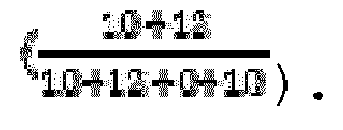
- As an exemplary value, also a radiotherapy success prediction has been made for a combination of the above SNV in MLH1 combined with TMB.
-
Fig.5 shows the benefit when combining two features - TMB and single nucleotide variation (SNV) rs1799977 in MLH1 - in the prediction of treatment response (WT = wild type or reference base). A negative response is therein again shown withreference number 7, and a positive response withreference number 8. - The TMB cutoff value of 21.45648 per MB is drawn as dashed line to make the two figures easier to compare. The accuracy is 0.78125


Claims (15)
- A method of predicting a radiotherapy success in a method of treating a lung cancer of a patient, comprising:- obtaining or providing a sample of the patient, and- determining a change in the nucleotide sequence and/or epigenomics profile and/or expression profile and/or copy number compared to a reference sequence and/or epigenomics profile and/or expression profile and/or copy number of at least one gene selected from MLH1, EP300, BRCA2, FLT1, GRINA, HEATR1, MUTYH, NUDT1, PARP10, PRPF19, KCNJ12, MGMT, PMS2P9, DDX11, EPHA2, GEN1, SETD2, and ZNF208, and/or a gene mutational burden in at least one gene selected from the group consisting of MLH1, DDX11, APOLD1, GEN1, GPER1, POLB, PRPF19, ANKRD30A, AR, BTK, GTF2H4, HEATR1, IKBKE, KAT6A, NUDT19, PARP1, PTPRT, TAF3, TDG, MAP3K1, and SLC9A4, and/or a tumor mutational burden (TMB).
- The method of claim 1, wherein the lung cancer is non-small cell lung cancer, and wherein the change in the nucleotide sequence and/or epigenomics profile and/or expression profile and/or copy number compared to a reference sequence and/or epigenomics profile and/or expression profile and/or copy number, particularly a change in the nucleotide sequence compared to a reference sequence, is determined in at least one gene selected from the group consisting of BRCA2, DDX11, EPHA2, FLT1, GEN1, GRINA, HEATR1, MLH1, MUTYH, NUDT1, PARP10, PRPF19, SETD2, ZNF208, EP300, KCNJ12, MGMT, and PMS2P9, particularly MLH1 and/or EP300, and/or wherein the gene mutational burden is determined in at least one gene selected from the group consisting of APOLD1, DDX11, GEN1, GPER1, MLH1, POLB, PRPF19, ANKRD30A, AR, BTK, GTF2H4, HEATR1, IKBKE, KAT6A, MAP3K1, NUDT19, PARP1, PTPRT, SLC9A4, TAF3, and TDG, particularly MLH1, and/or wherein the tumor mutational burden is determined.
- The method of claim 2, wherein at least one change in the nucleotide sequence is determined chosen from rs1801406, rs1046456, rs3754334, rs7993418, rs16981869, rs72407975, rs67714660, rs56261297, rs2275685, rs2275687, rs1885533, rs1885534, rs1006456, rs2794763, rs1799977, rs3219472, rs1062492, rs11136344, rs11136345, rs2240045, rs4082155, rs10425763, rs20551, rs72846670, rs73979902, rs16906255, and rs73144285, particularly rs1799977 and/or rs20551, as disclosed in the Single Nucleotide Polymorphism Database dbSNP of the National Center for Biotechnology Information (NCBI).
- The method of claim 3, wherein a change in the nucleotide sequence chosen from rs1801406, rs3754334, rs7993418, rs67714660, rs56261297, rs2275685, rs2275687, rs1885533, rs1885534, rs1006456, rs2794763, rs1799977, rs1062492, rs11136344, rs11136345, rs2240045, rs4082155, rs10425763, rs20551, rs72846670, and/or rs73979902 is indicative of an enhanced radiotherapy success in a method of treating a lung cancer of a patient, and/or wherein a change in the nucleotide sequence chosen from rs1046456, rs16981869, rs72407975, rs3219472, rs16906255, and/or rs73144285 is indicative of a reduced radiotherapy success in a method of treating a lung cancer of a patient.
- The method of claim 1 or 2, wherein the lung cancer is lung squamous cell carcinoma, and wherein the change in the nucleotide sequence and/or epigenomics profile and/or expression profile and/or copy number compared to a reference sequence and/or epigenomics profile and/or expression profile and/or copy number, particularly a change in the nucleotide sequence compared to a reference sequence, is determined in at least one gene selected from the group consisting of BRCA2, DDX11, EPHA2, FLT1, GEN1, GRINA, HEATR1, MLH1, MUTYH, NUDT1, PARP10, PRPF19, SETD2, and ZNF208, particularly MLH1, and/or wherein the gene mutational burden is determined in at least one gene selected from the group consisting of APOLD1, DDX11, GEN1, GPER1, MLH1, POLB, and PRPF19, particularly MLH1, and/or wherein the tumor mutational burden is determined.
- The method of claim 5, wherein at least one change in the nucleotide sequence is determined chosen from rs1801406, rs1046456, rs3754334, rs7993418, rs16981869, rs72407975, rs67714660, rs56261297, rs2275685, rs2275687, rs1885533, rs1885534, rs1006456, rs2794763, rs1799977, rs3219472, rs1062492, rs11136344, rs11136345, rs2240045, rs4082155, and rs10425763, particularly rs1799977, as disclosed in the Single Nucleotide Polymorphism Database dbSNP of the National Center for Biotechnology Information (NCBI).
- The method of claim 6, wherein a change in the nucleotide sequence chosen from rs1801406, rs3754334, rs7993418, rs67714660, rs56261297, rs2275685, rs2275687, rs1885533, rs1885534, rs1006456, rs2794763, rs1799977, rs1062492, rs11136344, rs11136345, rs2240045, rs4082155, and/or rs10425763 is indicative of an enhanced radiotherapy success in a method of treating a lung cancer of a patient, and/or wherein a change in the nucleotide sequence chosen from rs1046456, rs16981869, rs72407975, and/or rs3219472 is indicative of a reduced radiotherapy success in a method of treating a lung cancer of a patient.
- The method of any one of the preceding claims, wherein a combination of at least two changes in the nucleotide sequence and/or epigenomics profile and/or expression profile and/or copy number compared to a reference sequence and/or epigenomics profile and/or expression profile and/or copy number within one gene or in at least two genes, and/or a combination of gene mutational burdens in at least two genes, and/or a combination of at least one change in the nucleotide sequence and/or epigenomics profile and/or expression profile and/or copy number compared to a reference sequence and/or epigenomics profile and/or expression profile and/or copy number of at least one gene and a gene mutational burden in at least one gene that is the same or different thereof, and/or at least one change in the nucleotide sequence and/or epigenomics profile and/or expression profile and/or copy number compared to a reference sequence and/or epigenomics profile and/or expression profile and/or copy number of at least one gene and the tumor mutational burden, and/or a gene mutational burden in at least one gene and the tumor mutational burden, particularly at least one change in the nucleotide sequence and/or epigenomics profile and/or expression profile and/or copy number compared to a reference sequence and/or epigenomics profile and/or expression profile and/or copy number of at least one gene and the tumor mutational burden, are determined.
- The method of any one of the preceding claims, wherein the patient is a human.
- The method of any one of the preceding claims, wherein the sample is a blood sample.
- Use of a change in the nucleotide sequence and/or epigenomics profile and/or expression profile and/or copy number compared to a reference sequence and/or epigenomics profile and/or expression profile and/or copy number of at least one gene selected from MLH1, EP300, BRCA2, FLT1, GRINA, HEATR1, MUTYH, NUDT1, PARP10, PRPF19, KCNJ12, MGMT, PMS2P9, DDX11, EPHA2, GEN1, SETD2, and ZNF208, and/or a gene mutational burden in at least one gene selected from the group consisting of MLH1, DDX11, APOLD1, GEN1, GPER1, POLB, PRPF19, ANKRD30A, AR, BTK, GTF2H4, HEATR1, IKBKE, KAT6A, NUDT19, PARP1, PTPRT, TAF3, TDG, MAP3K1, and SLC9A4, and/or a tumor mutational burden (TMB), particularly a change in the nucleotide sequence chosen from rs1801406, rs1046456, rs3754334, rs7993418, rs16981869, rs72407975, rs67714660, rs56261297, rs2275685, rs2275687, rs1885533, rs1885534, rs1006456, rs2794763, rs1799977, rs3219472, rs1062492, rs11136344, rs11136345, rs2240045, rs4082155, rs10425763, rs20551, rs72846670, rs73979902, rs16906255, and/or rs73144285, further particularly rs1799977 and/or rs20551, as disclosed in the Single Nucleotide Polymorphism Database dbSNP of the National Center for Biotechnology Information (NCBI), as a marker for predicting a radiotherapy success in a method of treating a lung cancer of a patient.
- A database comprising the markers disclosed in claim 11.
- A method of predicting a radiotherapy success in a method of treating a lung cancer of a patient, comprising:- obtaining nucleotide sequence data and/or epigenomics profile data and/or expression profile data and/or copy number data of a sample of a patient, and- determining the presence of at least one marker as disclosed in claim 11.
- Computer program product comprising computer executable instructions which, when executed, perform a method according to claim 13.
- A method of predicting a radiotherapy success in a method of treating a lung cancer of a patient, comprising:- obtaining nucleotide sequence data and/or epigenomics profile data and/or expression profile data and/or copy number data of a sample of a patient, and- analyzing the nucleotide sequence data using the computer program product of claim 14.
Priority Applications (5)
| Application Number | Priority Date | Filing Date | Title |
|---|---|---|---|
| EP19192006.5A EP3778924A1 (en) | 2019-08-16 | 2019-08-16 | Molecular predictors of patient response to radiotherapy treatment |
| PCT/EP2020/071658 WO2021032441A1 (en) | 2019-08-16 | 2020-07-31 | Molecular predictors of patient response to radiotherapy treatment |
| CN202080072088.1A CN115176035A (en) | 2019-08-16 | 2020-07-31 | Molecular predictors of patient response to radiation therapy |
| EP20754676.3A EP4013895B1 (en) | 2019-08-16 | 2020-07-31 | Molecular predictors of patient response to radiotherapy treatment |
| US17/634,673 US12553090B2 (en) | 2019-08-16 | 2020-07-31 | Molecular predictors of patient response to radiotherapy treatment |
Applications Claiming Priority (1)
| Application Number | Priority Date | Filing Date | Title |
|---|---|---|---|
| EP19192006.5A EP3778924A1 (en) | 2019-08-16 | 2019-08-16 | Molecular predictors of patient response to radiotherapy treatment |
Publications (1)
| Publication Number | Publication Date |
|---|---|
| EP3778924A1 true EP3778924A1 (en) | 2021-02-17 |
Family
ID=67659044
Family Applications (2)
| Application Number | Title | Priority Date | Filing Date |
|---|---|---|---|
| EP19192006.5A Withdrawn EP3778924A1 (en) | 2019-08-16 | 2019-08-16 | Molecular predictors of patient response to radiotherapy treatment |
| EP20754676.3A Active EP4013895B1 (en) | 2019-08-16 | 2020-07-31 | Molecular predictors of patient response to radiotherapy treatment |
Family Applications After (1)
| Application Number | Title | Priority Date | Filing Date |
|---|---|---|---|
| EP20754676.3A Active EP4013895B1 (en) | 2019-08-16 | 2020-07-31 | Molecular predictors of patient response to radiotherapy treatment |
Country Status (4)
| Country | Link |
|---|---|
| US (1) | US12553090B2 (en) |
| EP (2) | EP3778924A1 (en) |
| CN (1) | CN115176035A (en) |
| WO (1) | WO2021032441A1 (en) |
Cited By (6)
| Publication number | Priority date | Publication date | Assignee | Title |
|---|---|---|---|---|
| CN111286540A (en) * | 2020-03-24 | 2020-06-16 | 中国辐射防护研究院 | Use of POLN gene as molecular marker for predicting radiation sensitivity |
| CN111378752A (en) * | 2020-03-24 | 2020-07-07 | 中国辐射防护研究院 | POLN gene mutation site detection kit and application thereof |
| US20220275460A1 (en) * | 2019-08-16 | 2022-09-01 | Siemens Healthcare Gmbh | Molecular predictors of patient response to radiotherapy treatment |
| CN116920097A (en) * | 2023-08-16 | 2023-10-24 | 上海市徐汇区中心医院 | Application of PRPF19 in treating lung cancer |
| CN120082647A (en) * | 2023-12-01 | 2025-06-03 | 上海交通大学 | Application of PTPRT as a biomarker and target for predicting the efficacy of immune checkpoint therapy in lung cancer |
| CN120809194A (en) * | 2025-06-24 | 2025-10-17 | 首都医科大学附属北京友谊医院 | Construction method of cancer cachexia prognosis composite index CCAR based on creatinine and CAR combination |
Families Citing this family (1)
| Publication number | Priority date | Publication date | Assignee | Title |
|---|---|---|---|---|
| CN118879858B (en) * | 2024-06-27 | 2025-09-30 | 中国科学院合肥物质科学研究院 | A set of gene signatures for predicting the prognosis of non-small cell lung cancer after radiotherapy and its application |
Citations (1)
| Publication number | Priority date | Publication date | Assignee | Title |
|---|---|---|---|---|
| CN107099586A (en) * | 2017-04-25 | 2017-08-29 | 北京市化工职业病防治院 | Detect lung carcinoma cell to the method for x-ray radiosensitivity, chip and purposes |
Family Cites Families (3)
| Publication number | Priority date | Publication date | Assignee | Title |
|---|---|---|---|---|
| KR101443214B1 (en) | 2007-01-09 | 2014-09-24 | 삼성전자주식회사 | Compositions, kits and microarrays for diagnosing the risk of recurrence of lung cancer in patients with lung cancer or lung cancer treated with lung cancer |
| CA3087060A1 (en) | 2017-12-27 | 2019-07-04 | Tesaro, Inc. | Methods of treating cancer |
| EP3778924A1 (en) * | 2019-08-16 | 2021-02-17 | Siemens Healthcare GmbH | Molecular predictors of patient response to radiotherapy treatment |
-
2019
- 2019-08-16 EP EP19192006.5A patent/EP3778924A1/en not_active Withdrawn
-
2020
- 2020-07-31 EP EP20754676.3A patent/EP4013895B1/en active Active
- 2020-07-31 WO PCT/EP2020/071658 patent/WO2021032441A1/en not_active Ceased
- 2020-07-31 US US17/634,673 patent/US12553090B2/en active Active
- 2020-07-31 CN CN202080072088.1A patent/CN115176035A/en active Pending
Patent Citations (1)
| Publication number | Priority date | Publication date | Assignee | Title |
|---|---|---|---|---|
| CN107099586A (en) * | 2017-04-25 | 2017-08-29 | 北京市化工职业病防治院 | Detect lung carcinoma cell to the method for x-ray radiosensitivity, chip and purposes |
Non-Patent Citations (13)
| Title |
|---|
| AERTS ET AL., NAT COMMUN, 2014 |
| ANONYMOUS: "rs1799977 RefSNP Report - dbSNP - NCBI", 9 July 2019 (2019-07-09), XP055671614, Retrieved from the Internet <URL:https://www.ncbi.nlm.nih.gov/snp/rs1799977> [retrieved on 20200225] * |
| ENGUIX-RIEGO, ET AL: "S77 ESTRO 37 OC-0153 Multicenter prospective validation of HSPB1 rs2868371 SNP and survival in non-small cell lung cancer", 15 June 2018 (2018-06-15), XP055671506, Retrieved from the Internet <URL:https://www.thegreenjournal.com/article/S0167-8140(18)30463-8/pdf> [retrieved on 20200225] * |
| FLORCZUK MATEUSZ ET AL: "miRNAs as Biomarkers and Therapeutic Targets in Non-Small Cell Lung Cancer: Current Perspectives", TARGETED ONCOLOGY, SPRINGER PARIS, PARIS, vol. 12, no. 2, 27 February 2017 (2017-02-27), pages 179 - 200, XP036201139, ISSN: 1776-2596, [retrieved on 20170227], DOI: 10.1007/S11523-017-0478-5 * |
| GARD, SCOTT ET AL., LANCET ONCOL, 2017 |
| JIN-YAN LIANG ET AL: "Clinical value of MLH1-negative circulating tumor cells in lung cancer patients :", MEDICINE., vol. 98, no. 25, 1 June 2019 (2019-06-01), US, pages e15721, XP055671623, ISSN: 0025-7974, DOI: 10.1097/MD.0000000000015721 * |
| MARÍA DEL VALLE ENGUIX-RIEGO ET AL: "The single nucleotide variant rs2868371 associates with the risk of mortality in non-small cell lung cancer patients: A multicenter prospective validation", RADIOTHERAPY AND ONCOLOGY, vol. 136, 6 April 2019 (2019-04-06), Ireland, pages 29 - 36, XP055671510, ISSN: 0167-8140, DOI: 10.1016/j.radonc.2019.03.025 * |
| NATALIE L AUSBORN ET AL: "Molecular Profiling to Optimize Treatment in Non-Small Cell Lung Cancer: A Review of Potential Molecular Targets for Radiation Therapy by the Translational Research Program of the Radiation Therapy Oncology Group", INTERNATIONAL JOURNAL OF RADIATION: ONCOLOGY BIOLOGY PHYSICS, PERGAMON PRESS, USA, vol. 83, no. 4, 17 January 2012 (2012-01-17), pages e453 - e464, XP028492512, ISSN: 0360-3016, [retrieved on 20120120], DOI: 10.1016/J.IJROBP.2012.01.056 * |
| OLGA PERN?A ET AL: "Methylation status of IGFBP-3 as a useful clinical tool for deciding on a concomitant radiotherapy", EPIGENETICS, vol. 9, no. 11, 2 November 2014 (2014-11-02), US, pages 1446 - 1453, XP055324576, ISSN: 1559-2294, DOI: 10.4161/15592294.2014.971626 * |
| PORTOS, ZHAO ET AL., LANCET ONCOL, UNDER DEVELOPMENT, 2016 |
| RSI, ESCHRICH ET AL., INT J RADIAT ONCOL BIOL PHYS, 2009 |
| SPEERS ET AL., CLIN CANCER RES, 2015 |
| SU ET AL: "Genetic polymorphisms and treatment response in advanced non-small cell lung cancer", LUNG CANCER, ELSEVIER, AMSTERDAM, NL, vol. 56, no. 2, 19 April 2007 (2007-04-19), pages 281 - 288, XP022034233, ISSN: 0169-5002, DOI: 10.1016/J.LUNGCAN.2006.12.002 * |
Cited By (8)
| Publication number | Priority date | Publication date | Assignee | Title |
|---|---|---|---|---|
| US20220275460A1 (en) * | 2019-08-16 | 2022-09-01 | Siemens Healthcare Gmbh | Molecular predictors of patient response to radiotherapy treatment |
| US12553090B2 (en) * | 2019-08-16 | 2026-02-17 | The Cleveland Clinic Foundation | Molecular predictors of patient response to radiotherapy treatment |
| CN111286540A (en) * | 2020-03-24 | 2020-06-16 | 中国辐射防护研究院 | Use of POLN gene as molecular marker for predicting radiation sensitivity |
| CN111378752A (en) * | 2020-03-24 | 2020-07-07 | 中国辐射防护研究院 | POLN gene mutation site detection kit and application thereof |
| CN111286540B (en) * | 2020-03-24 | 2023-05-12 | 中国辐射防护研究院 | Use of POLN gene as molecular marker for predicting radiation sensitivity |
| CN116920097A (en) * | 2023-08-16 | 2023-10-24 | 上海市徐汇区中心医院 | Application of PRPF19 in treating lung cancer |
| CN120082647A (en) * | 2023-12-01 | 2025-06-03 | 上海交通大学 | Application of PTPRT as a biomarker and target for predicting the efficacy of immune checkpoint therapy in lung cancer |
| CN120809194A (en) * | 2025-06-24 | 2025-10-17 | 首都医科大学附属北京友谊医院 | Construction method of cancer cachexia prognosis composite index CCAR based on creatinine and CAR combination |
Also Published As
| Publication number | Publication date |
|---|---|
| EP4013895B1 (en) | 2025-02-19 |
| CN115176035A (en) | 2022-10-11 |
| EP4013895A1 (en) | 2022-06-22 |
| WO2021032441A1 (en) | 2021-02-25 |
| US12553090B2 (en) | 2026-02-17 |
| US20220275460A1 (en) | 2022-09-01 |
Similar Documents
| Publication | Publication Date | Title |
|---|---|---|
| US12553090B2 (en) | Molecular predictors of patient response to radiotherapy treatment | |
| Msaouel et al. | Comprehensive molecular characterization identifies distinct genomic and immune hallmarks of renal medullary carcinoma | |
| US20230287384A1 (en) | Methods of capturing cell-free methylated dna and uses of same | |
| Hellmann et al. | Circulating tumor DNA analysis to assess risk of progression after long-term response to PD-(L) 1 blockade in NSCLC | |
| US20250003005A1 (en) | Detection of cancer | |
| US20190256924A1 (en) | Methods and materials for assessing and treating cancer | |
| US11810672B2 (en) | Cancer score for assessment and response prediction from biological fluids | |
| Aihara et al. | Genetic and epigenetic stability of oligodendrogliomas at recurrence | |
| US20200165685A1 (en) | Circulating rna for detection, prediction, and monitoring of cancer | |
| Zhou et al. | Stereotactic body radiotherapy is effective in modifying the tumor genome and tumor immune microenvironment in non-small cell lung cancer or lung metastatic carcinoma | |
| Nientiedt et al. | High prevalence of DNA damage repair gene defects and TP53 alterations in men with treatment-naïve metastatic prostate cancer–Results from a prospective pilot study using a 37 gene panel | |
| Xicola et al. | Implication of DNA repair genes in Lynch-like syndrome: RM Xicola et al. | |
| Mossanen et al. | Genomic features of muscle-invasive bladder cancer arising after prostate radiotherapy | |
| Yoon et al. | Comprehensive cancer panel sequencing defines genetic diversity and changes in the mutational characteristics of pancreatic cancer patients receiving neoadjuvant treatment | |
| J Ain et al. | Applications of biotechnology in oncology | |
| Cherri et al. | Microsatellite instability and chemosensitivity in solid tumours | |
| EP4031118B1 (en) | Mithramycin analog for the treatment of swi-snf mutant tumors | |
| Lopez et al. | Novel germline PTEN mutation associated with Cowden syndrome and osteosarcoma | |
| Tinhofer et al. | Next-generation sequencing: hype and hope for development of personalized radiation therapy? | |
| JP2024529192A (en) | Use of circulating cell-free methylated DNA to detect tissue damage | |
| WO2023284736A1 (en) | Biomarkers for colorectal cancer treatment | |
| Hong et al. | A case of interdigitating dendritic cell sarcoma studied by whole-exome sequencing | |
| TW201843306A (en) | Tumor vs. Matched Normal cfRNA | |
| Gerashchenko et al. | Identification of clinically relevant gene variants in colon adenocarcinoma samples of Ukrainian patients using a comprehensive cancer panel: a pilot study | |
| Yaegashi et al. | Frequent post-treatment monitoring of colorectal cancer using individualized ctDNA validated by multi-regional molecular profiling |
Legal Events
| Date | Code | Title | Description |
|---|---|---|---|
| PUAI | Public reference made under article 153(3) epc to a published international application that has entered the european phase |
Free format text: ORIGINAL CODE: 0009012 |
|
| STAA | Information on the status of an ep patent application or granted ep patent |
Free format text: STATUS: THE APPLICATION HAS BEEN PUBLISHED |
|
| AK | Designated contracting states |
Kind code of ref document: A1 Designated state(s): AL AT BE BG CH CY CZ DE DK EE ES FI FR GB GR HR HU IE IS IT LI LT LU LV MC MK MT NL NO PL PT RO RS SE SI SK SM TR |
|
| AX | Request for extension of the european patent |
Extension state: BA ME |
|
| STAA | Information on the status of an ep patent application or granted ep patent |
Free format text: STATUS: THE APPLICATION IS DEEMED TO BE WITHDRAWN |
|
| 18D | Application deemed to be withdrawn |
Effective date: 20210818 |