EP3778608B1 - Polycyclic carbamoylpyridone derivatives, pharmaceutical compositions and use thereof - Google Patents
Polycyclic carbamoylpyridone derivatives, pharmaceutical compositions and use thereof Download PDFInfo
- Publication number
- EP3778608B1 EP3778608B1 EP19784679.3A EP19784679A EP3778608B1 EP 3778608 B1 EP3778608 B1 EP 3778608B1 EP 19784679 A EP19784679 A EP 19784679A EP 3778608 B1 EP3778608 B1 EP 3778608B1
- Authority
- EP
- European Patent Office
- Prior art keywords
- acid
- pharmaceutically acceptable
- acceptable salt
- polycyclic carbamoylpyridone
- stereoisomer
- Prior art date
- Legal status (The legal status is an assumption and is not a legal conclusion. Google has not performed a legal analysis and makes no representation as to the accuracy of the status listed.)
- Active
Links
Classifications
-
- A—HUMAN NECESSITIES
- A61—MEDICAL OR VETERINARY SCIENCE; HYGIENE
- A61K—PREPARATIONS FOR MEDICAL, DENTAL OR TOILETRY PURPOSES
- A61K31/00—Medicinal preparations containing organic active ingredients
- A61K31/13—Amines
-
- A—HUMAN NECESSITIES
- A61—MEDICAL OR VETERINARY SCIENCE; HYGIENE
- A61K—PREPARATIONS FOR MEDICAL, DENTAL OR TOILETRY PURPOSES
- A61K31/00—Medicinal preparations containing organic active ingredients
- A61K31/185—Acids; Anhydrides, halides or salts thereof, e.g. sulfur acids, imidic, hydrazonic or hydroximic acids
- A61K31/19—Carboxylic acids, e.g. valproic acid
- A61K31/195—Carboxylic acids, e.g. valproic acid having an amino group
- A61K31/196—Carboxylic acids, e.g. valproic acid having an amino group the amino group being directly attached to a ring, e.g. anthranilic acid, mefenamic acid, diclofenac, chlorambucil
-
- A—HUMAN NECESSITIES
- A61—MEDICAL OR VETERINARY SCIENCE; HYGIENE
- A61K—PREPARATIONS FOR MEDICAL, DENTAL OR TOILETRY PURPOSES
- A61K31/00—Medicinal preparations containing organic active ingredients
- A61K31/33—Heterocyclic compounds
- A61K31/335—Heterocyclic compounds having oxygen as the only ring hetero atom, e.g. fungichromin
- A61K31/35—Heterocyclic compounds having oxygen as the only ring hetero atom, e.g. fungichromin having six-membered rings with one oxygen as the only ring hetero atom
- A61K31/351—Heterocyclic compounds having oxygen as the only ring hetero atom, e.g. fungichromin having six-membered rings with one oxygen as the only ring hetero atom not condensed with another ring
-
- A—HUMAN NECESSITIES
- A61—MEDICAL OR VETERINARY SCIENCE; HYGIENE
- A61K—PREPARATIONS FOR MEDICAL, DENTAL OR TOILETRY PURPOSES
- A61K31/00—Medicinal preparations containing organic active ingredients
- A61K31/33—Heterocyclic compounds
- A61K31/395—Heterocyclic compounds having nitrogen as a ring hetero atom, e.g. guanethidine or rifamycins
- A61K31/41—Heterocyclic compounds having nitrogen as a ring hetero atom, e.g. guanethidine or rifamycins having five-membered rings with two or more ring hetero atoms, at least one of which being nitrogen, e.g. tetrazole
- A61K31/425—Thiazoles
- A61K31/426—1,3-Thiazoles
-
- A—HUMAN NECESSITIES
- A61—MEDICAL OR VETERINARY SCIENCE; HYGIENE
- A61K—PREPARATIONS FOR MEDICAL, DENTAL OR TOILETRY PURPOSES
- A61K31/00—Medicinal preparations containing organic active ingredients
- A61K31/33—Heterocyclic compounds
- A61K31/395—Heterocyclic compounds having nitrogen as a ring hetero atom, e.g. guanethidine or rifamycins
- A61K31/495—Heterocyclic compounds having nitrogen as a ring hetero atom, e.g. guanethidine or rifamycins having six-membered rings with two or more nitrogen atoms as the only ring heteroatoms, e.g. piperazine or tetrazines
- A61K31/4965—Non-condensed pyrazines
-
- A—HUMAN NECESSITIES
- A61—MEDICAL OR VETERINARY SCIENCE; HYGIENE
- A61K—PREPARATIONS FOR MEDICAL, DENTAL OR TOILETRY PURPOSES
- A61K31/00—Medicinal preparations containing organic active ingredients
- A61K31/33—Heterocyclic compounds
- A61K31/395—Heterocyclic compounds having nitrogen as a ring hetero atom, e.g. guanethidine or rifamycins
- A61K31/495—Heterocyclic compounds having nitrogen as a ring hetero atom, e.g. guanethidine or rifamycins having six-membered rings with two or more nitrogen atoms as the only ring heteroatoms, e.g. piperazine or tetrazines
- A61K31/505—Pyrimidines; Hydrogenated pyrimidines, e.g. trimethoprim
- A61K31/506—Pyrimidines; Hydrogenated pyrimidines, e.g. trimethoprim not condensed and containing further heterocyclic rings
-
- A—HUMAN NECESSITIES
- A61—MEDICAL OR VETERINARY SCIENCE; HYGIENE
- A61K—PREPARATIONS FOR MEDICAL, DENTAL OR TOILETRY PURPOSES
- A61K31/00—Medicinal preparations containing organic active ingredients
- A61K31/33—Heterocyclic compounds
- A61K31/395—Heterocyclic compounds having nitrogen as a ring hetero atom, e.g. guanethidine or rifamycins
- A61K31/53—Heterocyclic compounds having nitrogen as a ring hetero atom, e.g. guanethidine or rifamycins having six-membered rings with three nitrogens as the only ring hetero atoms, e.g. chlorazanil, melamine
-
- A—HUMAN NECESSITIES
- A61—MEDICAL OR VETERINARY SCIENCE; HYGIENE
- A61K—PREPARATIONS FOR MEDICAL, DENTAL OR TOILETRY PURPOSES
- A61K31/00—Medicinal preparations containing organic active ingredients
- A61K31/33—Heterocyclic compounds
- A61K31/395—Heterocyclic compounds having nitrogen as a ring hetero atom, e.g. guanethidine or rifamycins
- A61K31/535—Heterocyclic compounds having nitrogen as a ring hetero atom, e.g. guanethidine or rifamycins having six-membered rings with at least one nitrogen and one oxygen as the ring hetero atoms, e.g. 1,2-oxazines
- A61K31/5375—1,4-Oxazines, e.g. morpholine
- A61K31/5383—1,4-Oxazines, e.g. morpholine ortho- or peri-condensed with heterocyclic ring systems
-
- A—HUMAN NECESSITIES
- A61—MEDICAL OR VETERINARY SCIENCE; HYGIENE
- A61K—PREPARATIONS FOR MEDICAL, DENTAL OR TOILETRY PURPOSES
- A61K39/00—Medicinal preparations containing antigens or antibodies
- A61K39/395—Antibodies; Immunoglobulins; Immune serum, e.g. antilymphocytic serum
- A61K39/39533—Antibodies; Immunoglobulins; Immune serum, e.g. antilymphocytic serum against materials from animals
-
- A—HUMAN NECESSITIES
- A61—MEDICAL OR VETERINARY SCIENCE; HYGIENE
- A61K—PREPARATIONS FOR MEDICAL, DENTAL OR TOILETRY PURPOSES
- A61K45/00—Medicinal preparations containing active ingredients not provided for in groups A61K31/00 - A61K41/00
- A61K45/06—Mixtures of active ingredients without chemical characterisation, e.g. antiphlogistics and cardiaca
-
- A—HUMAN NECESSITIES
- A61—MEDICAL OR VETERINARY SCIENCE; HYGIENE
- A61P—SPECIFIC THERAPEUTIC ACTIVITY OF CHEMICAL COMPOUNDS OR MEDICINAL PREPARATIONS
- A61P31/00—Antiinfectives, i.e. antibiotics, antiseptics, chemotherapeutics
- A61P31/12—Antivirals
-
- A—HUMAN NECESSITIES
- A61—MEDICAL OR VETERINARY SCIENCE; HYGIENE
- A61P—SPECIFIC THERAPEUTIC ACTIVITY OF CHEMICAL COMPOUNDS OR MEDICINAL PREPARATIONS
- A61P31/00—Antiinfectives, i.e. antibiotics, antiseptics, chemotherapeutics
- A61P31/12—Antivirals
- A61P31/14—Antivirals for RNA viruses
- A61P31/16—Antivirals for RNA viruses for influenza or rhinoviruses
-
- C—CHEMISTRY; METALLURGY
- C07—ORGANIC CHEMISTRY
- C07D—HETEROCYCLIC COMPOUNDS
- C07D471/00—Heterocyclic compounds containing nitrogen atoms as the only ring hetero atoms in the condensed system, at least one ring being a six-membered ring with one nitrogen atom, not provided for by groups C07D451/00 - C07D463/00
- C07D471/12—Heterocyclic compounds containing nitrogen atoms as the only ring hetero atoms in the condensed system, at least one ring being a six-membered ring with one nitrogen atom, not provided for by groups C07D451/00 - C07D463/00 in which the condensed system contains three hetero rings
- C07D471/14—Ortho-condensed systems
-
- C—CHEMISTRY; METALLURGY
- C07—ORGANIC CHEMISTRY
- C07D—HETEROCYCLIC COMPOUNDS
- C07D491/00—Heterocyclic compounds containing in the condensed ring system both one or more rings having oxygen atoms as the only ring hetero atoms and one or more rings having nitrogen atoms as the only ring hetero atoms, not provided for by groups C07D451/00 - C07D459/00, C07D463/00, C07D477/00 or C07D489/00
- C07D491/22—Heterocyclic compounds containing in the condensed ring system both one or more rings having oxygen atoms as the only ring hetero atoms and one or more rings having nitrogen atoms as the only ring hetero atoms, not provided for by groups C07D451/00 - C07D459/00, C07D463/00, C07D477/00 or C07D489/00 in which the condensed system contains four or more hetero rings
-
- C—CHEMISTRY; METALLURGY
- C07—ORGANIC CHEMISTRY
- C07D—HETEROCYCLIC COMPOUNDS
- C07D498/00—Heterocyclic compounds containing in the condensed system at least one hetero ring having nitrogen and oxygen atoms as the only ring hetero atoms
- C07D498/12—Heterocyclic compounds containing in the condensed system at least one hetero ring having nitrogen and oxygen atoms as the only ring hetero atoms in which the condensed system contains three hetero rings
- C07D498/14—Ortho-condensed systems
-
- C—CHEMISTRY; METALLURGY
- C07—ORGANIC CHEMISTRY
- C07B—GENERAL METHODS OF ORGANIC CHEMISTRY; APPARATUS THEREFOR
- C07B2200/00—Indexing scheme relating to specific properties of organic compounds
- C07B2200/05—Isotopically modified compounds, e.g. labelled
Definitions
- the present disclosure relates to polycyclic carbamoylpyridone derivatives, pharmaceutical compositions, and their uses.
- Influenza is an acute viral infection that can easily spread among people.
- the influenza infections especially reach peak during winter in temperate regions. Since the influenza virus is prevalent worldwide and can infect anyone of any age group, it often causes serious concurrent diseases and deaths in high-risk groups, which is currently a serious public health problem. According to statistics, the annual influenza pandemic causes about 3 to 5 million severe cases and about 250,000 to 500,000 deaths.
- the messenger RNA (mRNA) of influenza virus needs to have both a 5'cap (CAP) structure and a 3'-poly(A) tail structure that can be recognized by the translation system of the host cell.
- CAP 5'cap
- the 5'cap structure is "snatched" from the 5'end of the host cell precursor mRNA by the endonuclease activity of the PA subunit in the influenza virus RNA polymerase complex.
- This method called "CAP-snatching" captures the CAP cap structure of the host's mRNA for transcription of the virus's own mRNA, which is necessary for the initiation of influenza virus transcription.
- CAP-snatching is a key part in the replication cycle of influenza virus, and there is no similar mechanism and corresponding protease in host cells, inhibitors of "CAP-snatching" endonuclease can selectively block the transcription process of influenza virus without affecting the host cell at the same time. As a result, this mechanism makes it become a potential anti-influenza drug target.
- the present disclosure satisfies these needs and provides other related advantages.
- CA 3033180 A1 and EP 3290424 A1 disclose compounds having a chemical structure as shown below for use in the treatment of influenza:
- US 2018/0057501 discloses compounds having a chemical structure as shown below for the treatment of certain viral disorders including influenza:
- the invention is defined by the appended claims.
- the present disclosure provides a polycyclic carbamoylpyridone derivative, a stereoisomer thereof or a pharmaceutically acceptable salt thereof, wherein, the polycyclic carbamoylpyridone derivative is selected from the following compounds:
- the compounds of the present disclosure are usually used in the form of free acid or free base.
- the compounds of the present disclosure can be used in the form of acid or base addition salts.
- the acid addition salt of the compounds of the present disclosure with free amino group(s) can be prepared by methods well known in the art, and can be prepared from organic and inorganic acids.
- Suitable organic acids include maleic acid, fumaric acid, benzoic acid, ascorbic acid, succinic acid, methanesulfonic acid, acetic acid, trifluoroacetic acid, oxalic acid, propionic acid, tartaric acid, salicylic acid, citric acid, gluconic acid, lactic acid, mandelic acid, phenylacetic acid, aspartic acid, stearic acid, palmitic acid, glycolic acid, glutamic acid and benzenesulfonic acid.
- Suitable inorganic acids include hydrochloric acid, hydrobromic acid, sulfuric acid, phosphoric acid, and nitric acid.
- Basic salts include salts formed with carboxylate anions, and include those formed with e.g.
- organic and inorganic cations selected from alkali metal ions, alkaline earth metal ions (for example, lithium, sodium, potassium, magnesium, barium, calcium) and ammonium ions, and substituted derivatives thereof (for example, dibenzylammonium, benzylammonium, 2-hydroxyethylammonium, etc .). Therefore, the term "pharmaceutically acceptable salt" of any polycyclic carbamoylpyridone derivative as disclosed herein shall include all acceptable salt forms.
- the polycyclic carbamoylpyridone derivatives as disclosed herein can have a chiral center, and can exist as racemates, racemic mixtures, and individual enantiomers or diastereomers. All isomeric forms are included in the present disclosure, including mixtures thereof.
- any compound can contain unnatural proportions of atomic isotopes on one or more of the atoms constituting the compound.
- the deuteration means that the atoms at the relevant sites of the compound contain deuterium atoms in a proportion exceeding the natural ratio (that is, exceeding the natural abundance of deuterium). Therefore, any polycyclic carbamoylpyridone derivative that contains deuterium atoms at a ratio higher than the natural abundance of deuterium at the relevant site falls within the protection scope of the present disclosure.
- the corresponding polycyclic carbamoylpyridone derivatives with certain deuteration rate or deuterium content which are obtained by introducing deuterium atoms with commercially available deuterated reagents via the same or similar chemical synthesis methods shown in the embodiments of the present disclosure, are all within the protection scope of the present disclosure.
- the chemical synthesis methods and deuterated reagents herein are not limited to those exemplified in the examples, but should be understood as all synthetic methods or routes that can be used in the art to obtain the compounds of the present disclosure, and all deuterated reagent that can introduce deuterium atom(s) into the target molecules via the aforementioned synthetic methods or routes.
- the present disclosure further provides the polycyclic carbamoylpyridone derivative as disclosed herein, the stereoisomer thereof, or the pharmaceutically acceptable salt thereof, for use as a 5'cap-dependent endonuclease inhibitor.
- the present disclosure further provides the polycyclic carbamoylpyridone derivative as disclosed herein, the stereoisomer thereof, or the pharmaceutically acceptable salt thereof, for use in preventing, treating and/or alleviating a disease related to 5'cap-dependent endonuclease.
- the disease related to 5'cap-dependent endonuclease refers to symptoms and/or diseases that are prevented, treated and/or alleviated by inhibiting the level of 5'cap-dependent endonuclease in vivo, specifically refers to symptoms and/or diseases caused by influenza virus infection. More specifically, the influenza virus includes, but is not limited to, type A, B, and C.
- the symptoms include, but are not limited to, for example, cold-like symptoms such as fever, chill, headache, muscle pain and general fatigue, or respiratory tract inflammations such as sore throat, runny nose, nasal congestion, cough and sputum; gastrointestinal symptoms such as abdominal pain, vomiting and diarrhea; and further complications of secondary infection such as acute encephalopathy and pneumonia.
- the present disclosure further provides a pharmaceutical composition, which comprises a therapeutically effective amount of the polycyclic carbamoylpyridone derivative as disclosed herein, the stereoisomer thereof, or the pharmaceutically acceptable salt thereof, and a pharmaceutically acceptable carrier.
- the present disclosure further provides a pharmaceutical composition, which not only comprises a therapeutically effective amount of the polycyclic carbamoylpyridone derivative as disclosed herein, the stereoisomer thereof, or the pharmaceutically acceptable salt thereof, and a pharmaceutically acceptable carrier, but also comprises other active pharmaceutical ingredient.
- the other active pharmaceutical ingredient is selected from neuraminidase inhibitors (such as oseltamivir, zanamivir, peramivir, Inavir and the like), RNA-dependent RNA polymerase inhibitors (such as favipiravir), M2 protein inhibitors (amantadine), PB2 Cap binding inhibitors (such as VX-787), anti-HA antibodies (MHAA4594A), or immune action drugs (nitazoxanide).
- the compounds of the present disclosure can be used in combination with other pharmaceutical preparations in order to enhance the efficacy of the compounds or reduce the dosage of the compounds.
- neuraminidase inhibitors such as oseltamivir, zanamivir, peramivir, Inavir, and the like
- RNA-dependent RNA polymerase inhibitors such as favipiravir
- M2 Protein inhibitors amantadine
- PB2 Cap binding inhibitors VX-787
- anti-HA antibodies MHAA4594A
- immune action drugs nitazoxanide
- the pure forms or appropriate pharmaceutical compositions of the compounds of the present disclosure or pharmaceutically acceptable salts thereof can be administered by any acceptable administration mode of a drug with similar effects.
- the pharmaceutical composition of the present disclosure can be prepared by combining the compound of the present disclosure with a suitable pharmaceutically acceptable carrier, diluent or excipient, and can be formulated into a solid, semi-solid, liquid or gaseous preparation, such as tablet, capsule, powder, granule, ointment, solution, suppository, injection, inhalant, gel, microsphere and aerosol.
- Typical administration routes of the pharmaceutical composition include, but are not limited to, oral, topical, transdermal, inhalation, parenteral, sublingual, buccal, rectal, vaginal and intranasal administration.
- parenteral includes subcutaneous injection, intravenous, intramuscular, intrasternal injection or infusion techniques.
- the pharmaceutical composition of the present disclosure is formulated to allow the active ingredients contained therein to be bioavailable after the composition is administered to the patient.
- the composition to be administered to an individual or patient can have one or more dosage unit forms, wherein, for example, a tablet can have a single dosage unit, and a container containing the compound of the present disclosure in the form of an aerosol can contain multiple dosage units.
- the actual method for preparing the dosage form is known or will be known to those skilled in the art.
- the composition to be administered will in any case contain a therapeutically effective amount of the compound of the present disclosure or a pharmaceutically acceptable salt thereof, so as to treat the concerned disease or condition according to the teachings of the present disclosure.
- the pharmaceutical composition of the present disclosure may be in solid or liquid form.
- the carrier is microparticles, so that the composition is, for example, in the form of a tablet or powder.
- the carrier can be a liquid, and the composition is, for example, an oral syrup, an injectable liquid, or an aerosol suitable for, such as inhalation administration.
- the pharmaceutical composition is preferably in a solid or liquid form, wherein semi-solid, semi-liquid, suspension and gel forms are considered to be included in the solid or liquid form herein.
- the pharmaceutical composition can be formulated into powder, granule, compressed tablet, pill, capsule, chewable tablet, powder tablet and the like.
- Such solid compositions usually contain one or more inert diluents or edible carriers.
- one or more of the following substances may also be present: binders, such as carboxymethyl cellulose, ethyl cellulose, microcrystalline cellulose, xanthan gum or gelatin; excipients, such as starch, lactose or dextrin; disintegrants, such as alginic acid, sodium alginate, Primogel, corn starch, etc .; lubricants, such as magnesium stearate or hydrogenated vegetable oil (Sterotex); glidants, such as colloidal silicon dioxide; sweeteners, for example, sucrose or saccharin; flavoring agents such as peppermint, methyl salicylate or orange flavoring agents; and coloring agents.
- binders such as carboxymethyl cellulose, ethyl cellulose, microcrystalline cellulose, xanthan gum or gelatin
- excipients such as starch, lactose or dextrin
- disintegrants such as alg
- the pharmaceutical composition When the pharmaceutical composition is in the form of a capsule, such as a gelatin capsule, it may contain a liquid carrier such as polyethylene glycol or oil in addition to the above-mentioned types of substances.
- the pharmaceutical composition may be in liquid form, such as tincture, syrup, solution, emulsion or suspension. This liquid can be taken orally, or delivered by injection, as two examples.
- the composition preferably contains one or more of sweeteners, preservatives, dyes/colorants and flavor enhancers in addition to the compound of the present disclosure.
- one or more of surfactants, preservatives, wetting agents, dispersants, suspending agents, buffers, stabilizers and isotonic agents may be contained.
- liquid pharmaceutical composition of the present disclosure can contain one or more of the following adjuvants: sterile diluent, such as water for injection, normal saline solution, preferably normal saline, Ringer's solution, isotonic sodium chloride, non-volatile oil (e.g., synthetic monoglycerides or diglycerides, which can be used as solvents or suspension media), solvents such as polyethylene glycol, glycerol, propylene glycol; antibacterial agents, such as benzyl alcohol or methyl p -hydroxybenzoate; antioxidants, such as ascorbic acid or sodium bisulfite; chelating agents, such as ethylenediaminetetraacetic acid; buffers, such as acetate salts, citrate salts, or phosphate salts, and regents for adjusting tonicity, such as sodium oxide or dextrose.
- sterile diluent such as water for injection, normal saline solution, preferably normal saline, Ring
- the liquid pharmaceutical composition of the present disclosure to be administered parenterally or orally should contain a certain amount of the compound of the present disclosure so that a suitable dosage can be obtained.
- the pharmaceutical composition of the present disclosure may be intended for topical administration, in which case the carrier preferably comprises a solution, an emulsion, an ointment or a gel base.
- this base may contain one or more of the following: paraffin oil, lanolin, polyethylene glycol, beeswax, mineral oil, diluent (such as water and alcohol), and emulsifier and stabilizer.
- Thickener may be present in pharmaceutical composition for topical administration.
- the composition may include a transdermal patch or iontophoresis device.
- the pharmaceutical composition of the present disclosure may be intended for rectal administration, taking the form of a suppository as an example, a suppository will melt in the rectum and release the drug.
- the composition for rectal administration may contain an oily base as a suitable non-irritating excipient.
- the base includes, but is not limited to, lanolin, cocoa butter, and polyethylene glycol.
- the pharmaceutical composition of the present disclosure may contain various substances that modify the physical form of a solid or liquid dosage unit.
- the composition may contain a substance that forms a coating shell around the active ingredient.
- the substance that forms a coating shell is generally inert and may be selected from, for example, sugar, shellac and other enteric coating agents.
- the active ingredient can be enclosed in gelatin capsules.
- the pharmaceutical composition of the present disclosure in solid or liquid form may contain an agent that binds the compound of the present disclosure and thereby aids delivery of the compound.
- Suitable reagents with this ability include monoclonal or polyclonal antibodies, proteins or liposomes.
- the pharmaceutical composition of the present disclosure may consist of a dosage unit that can be administered in the form of an aerosol.
- aerosol is used to denote a variety of systems from colloidal types to systems consisting of pressurized packaging. Delivery can be by liquefied or compressed gas, or by a suitable pump system that dispenses the active ingredient. Aerosols of the compounds of the present disclosure can be delivered in a single-phase, two-phase or three-phase system to deliver the active ingredient.
- the side delivery of the aerosol includes necessary containers, starters, valves, sub-containers, etc., which together can form a kit. Those skilled in the art can determine the preferred aerosol without undue experiments.
- the pharmaceutical composition of the present disclosure can be prepared by methods well known in the pharmaceutical field.
- a pharmaceutical composition to be administered by injection can be prepared by combining the compound of the present disclosure with sterile distilled water to form a solution.
- Surfactants can be added to facilitate the formation of a uniform solution or suspension.
- Surfactants are compounds that non-covalently interact with the compounds of the present disclosure, thereby promoting the dissolution or uniform suspension of the compounds in an aqueous delivery system.
- the compounds of the present disclosure or pharmaceutically acceptable salts thereof are administered in a therapeutically effective amount, and the therapeutically effective amount will vary depending on various factors, including the activity of the specific compounds used, the metabolic stability of the compounds and the length of action time, and the age, weight, general health status, gender and diet of the patient, administration mode and time, excretion rate, drug combination, severity of a specific disease or condition, and individuals subjected to therapy.
- the compounds of the present disclosure or pharmaceutically acceptable derivatives thereof may also be administered simultaneously, before or after the administration of one or more other therapeutic agents.
- This combination therapy includes administration of a single pharmaceutical formulation containing the compound of the present disclosure and one or more other active agents, and administration of separate pharmaceutical formulations of the compound of the present disclosure and each active agent.
- the compound of the present disclosure and another active agent may be administered to a patient together in a single oral administration composition (for example, a tablet or capsule), or each agent may be administered in a separate oral administration formulation.
- the compound of the present disclosure and one or more additional active agents can be administered substantially at the same time ( i.e., simultaneously) or at separate staggered times ( i.e., successively). Combination therapy should be understood as including all these schemes.
- the dosage of the pharmaceutical combination of the present disclosure can be adjusted according to the disease state, route of administration, age or weight of the patient.
- oral administration For oral administration to adults, it is usually 0. 1 to 100 mg/kg/day, preferably 1 to 20 mg/kg/day.
- the appropriate dosage of the present disclosure needs to be determined in consideration of the patient's age, weight, condition, route of administration, etc., oral administration is usually in the range of 0.05 to 100 mg/kg/day, preferably 0.1 to 10 mg/kg/day.
- the dosage of the pharmaceutical composition of the present disclosure varies greatly according to different administration routes, but is usually 0.005 to 10 mg/kg/day, preferably 0.01 to 1 mg/kg/day.
- the dosage of the compound of the present disclosure varies according to the method of administration, the patient's age, weight, state, and the type of disease, but generally for oral administration, the dosage per day for adults is about 0.05 mg to 3000 mg, preferably about 0.1 mg to 1000 mg, and can be administered separately as needed. In addition, in the case of non-oral administration, the dosage per day for adults is about 0.01 mg to 1000 mg, preferably about 0.05 mg to 500 mg. It should be understood that, in the present disclosure, the combination of substituents and/or variables of the chemical formula is allowed only if it produces a stable compound.
- the present disclosure relates to substituted polycyclic carbamoylpyridone derivatives with 5'cap structure (CAP) dependent endonuclease inhibitory activity which are deuterated, and pharmaceutical compositions containing the same, and the composition for use in inhibiting the proliferation of influenza virus.
- CAP 5'cap structure
- the compounds of the present disclosure are prodrug, and therefore have the following advantages: high oral absorption, good bioavailability, good clearance rate, and high lung metastasis, and the like. Therefore, they can form an excellent drug.
- the parent compounds of the compounds of present disclosure have high inhibitory activity against 5'cap structure-dependent endonuclease, and since the endonuclease is a virus-specific enzyme, the compounds will have high selectivity and can be a drug with reduced side effects.
- the compounds of the present disclosure and/or the parent compounds of the compounds of the present disclosure have the following advantages, i.e ., high metabolic stability, high solubility, high oral absorbability, good bioavailability, good clearance rate, high lung metastasis, long half-life, high non-protein binding rate, low inhibition against hERG channel, low inhibition against drug metabolizing enzymes of liver, confirmed cytopathic effect (CPE) inhibitory effect, and/or being negative in phototoxicity test, Ames test and in the genotoxicity test, or no liver toxicity, so the compounds of the present disclosure have better pharmacological properties.
- advantages i.e ., high metabolic stability, high solubility, high oral absorbability, good bioavailability, good clearance rate, high lung metastasis, long half-life, high non-protein binding rate, low inhibition against hERG channel, low inhibition against drug metabolizing enzymes of liver, confirmed cytopathic effect (CPE) inhibitory effect, and/or being negative in phototoxicity test, Ames
- the compounds of the present disclosure can be used for symptoms and/or diseases caused by influenza viruses, and are effective to treat and/or prevent, e.g., cold-like symptoms such as fever, chills, headache, muscle pain and general fatigue, or respiratory tract inflammations such as sore throat, runny nose, nasal congestion, cough and phlegm, gastrointestinal symptoms such as abdominal pain, vomiting and diarrhea, further complications of secondary infections such as acute encephalopathy and pneumonia, and improve symptoms thereof.
- cold-like symptoms such as fever, chills, headache, muscle pain and general fatigue
- respiratory tract inflammations such as sore throat, runny nose, nasal congestion, cough and phlegm
- gastrointestinal symptoms such as abdominal pain, vomiting and diarrhea
- further complications of secondary infections such as acute encephalopathy and pneumonia, and improve symptoms thereof.
- reagents and raw materials used in the present disclosure are commercially available.
- the synthetic route is as follows:
- the obtained solid was dissolved in 1.4 L of THF, added with 198 g of potassium carbonate. After the temperature was raised to 50 °C, 60 mL of benzyl bromide was added dropwise, and the mixture was stirred at 60 °C for 9 hours. 2 N aqueous solution of hydrochloric acid was added dropwise to the reaction mixture under cooling of an ice bath, and the mixture was stirred at room temperature, extracted with ethyl acetate. The organic layer was washed with water and then 8% sodium bicarbonate aqueous solution, and dried over anhydrous magnesium sulfate, added with activated carbon for adsorption for 1 hour, filtered with diatomaceous earth, and the filtrate was concentrated under reduced pressure.
- Example compound 1C (not according to the invention and present for illustration purposes only)
- the synthetic route is as follows:
- the intermediate 21 was prepared by referring to the preparation process of intermediate 15 except that lithium tetrahydroaluminate-D4 was replaced with lithium tetrahydroaluminate, and intermediate 14 was replaced with intermediate 20.
- the intermediate 22 was prepared by referring to the preparation process of intermediate 16 except that intermediate 15 was replaced with intermediate 21.
- the synthetic route is as follows:
- the intermediate 23 was prepared by referring to the preparation process of intermediate 15, the difference was that intermediate 14 was replaced with intermediate 20.
- the intermediate 24 was prepared by referring to the preparation process of intermediate 16, the difference was that intermediate 15 was replaced with intermediate 23.
- the example compound 3A was prepared by referring to the preparation process of compound 1A, the difference was that intermediate 16 was replaced with intermediate 24.
- the example compound 3B was prepared by referring to the preparation process of compound 1B, the difference was that compound 1A was replaced with compound 3A.
- intermediate 1 50 g was dissolved in 1 L of THF, 305 mL of a solution of n- butyllithium in hexane was added under N 2 atmosphere at -78 °C, and the mixture was stirred at -78 °C for 2 hours.
- a solution of 59.6 g of allyl chloroformate in THF (200 mL) was added dropwise to the reaction solution, and the mixture was stirred at -78 °C for 2 hours.
- the reaction solution was quenched in a saturated aqueous solution of ammonium chloride, and warmed to room temperature, followed by extraction with ethyl acetate.
- the organic layer was washed with saturated brine, dried, and concentrated under reduced pressure to remove solvent to obtain intermediate 2, with a yield of 76%.
- intermediate 2 20 g was dissolved in 200 mL of THF, and 138 mL of a solution of DIBAL-H in hexane was added dropwise under N 2 atmosphere at -78 °C, and the mixture was stirred at -78 °C for 1 hour.
- the reaction was quenched by adding an aqueous solution of sodium potassium tartrate and the mixture was extracted with ethyl acetate. The organic layer was washed with saturated brine, dried, and concentrated under reduced pressure to remove solvent to obtain intermediate 3.
- intermediate 5 30 g was dissolved in 150 mL of DMF, and 15.2 g of iodoethane and 27.6 mL of diazabicycloundecene were added dropwise to the solution, and stirred at room temperature overnight. The reaction was quenched with 10% ammonium chloride aqueous solution and extracted with ethyl acetate. The organic layer was washed with saturated brine, dried, and concentrated under reduced pressure to obtain intermediate 6.
- the crude intermediate 9 was dissolved in 800 mL of THF, morpholine (115 mL), and tetrakis(triphenylphosphine)palladium (150 g) were added, and the mixture was stirred at room temperature for 2.5 hours. Methyl tert- butyl ether was added to the reaction mixture, the mixture was filtered to obtain a solid, and the obtained solid was dried to obtain intermediate 10.
- S-033188A was prepared by referring to the preparation method of example compound 1A.
- S-033188B was prepared by referring to the preparation method of example compound 1B.
- Table 1 structure of the compounds in the table Structure of the compounds Mass spectrometry 483.2 ESI [M+H] + 482.2 ESI [M+H] + 481.2 ESI [M+H] + 485.1 ESI [M+H] + 484.1 ESI [M+H] + 483.1 ESI [M+H] + 513.2 ESI [M+H] + 511.2 ESI [M+H] + 512.2 ESI [M+H] + 499.2 ESI [M+H] + 498.2 ESI [M+H] + 497.2 ESI [M+H] + 467.5 ESI [M+H] + 466.5 ESI [M+H] + 465.5 ESI [M+H] +
- ScriptCap system was used to add cap structure to obtain a product of m7G[5']-ppp-[5'] [m2' -0]GAA UAU(-Cy3)GCA UCA CUA GUA AGC UUU GCU CUA(-BHQ2)-3'. It was separated and purified by modified polyacrylamide gel electrophoresis and used as substrate.
- RNP was prepared from virus particles according to a prescribed method (Reference: VIROLOGY (1976) 73, pages 327-338 . LGA M.ROCHOVANSKY). Specifically, 200 ⁇ L of 1 ⁇ 10 3 PFU/mL A/WSN/33 virus was inoculated into 10-day-old developing chicken eggs, cultured at 37 °C for 2 days, and then the allantoic fluid of the chicken eggs was recovered.
- the virus particles were purified by ultracentrifugation with 20% sucrose, TritonX-100 and lysolecithin were used to dissolve the virus particles, and then separated by ultracentrifugation with 30% to 70% glycerol density gradients, the RNP fraction was collected (50% to 70% glycerol fraction), used as enzyme solution (containing about 1 nM of PB1 • PB2 • PA complex).
- reaction mixture was incubated at room temperature for 60 minutes, and then 1 ⁇ L of the reaction mixture was added to 10 ⁇ L of high-purity formamide solution (containing GeneScan120LizSize Standard as sizing marker, manufactured by Applied Biosystem(ABI)) to terminate the reaction.
- high-purity formamide solution containing GeneScan120LizSize Standard as sizing marker, manufactured by Applied Biosystem(ABI)
- the reaction of NC was stopped in advance by adding EDTA (4.5 mM) before the start of the reaction (all labeled concentrations were the final concentrations).
- the solution was heated at 85 °C for 5 minutes, quenched on ice for 2 minutes, and then analyzed with ABIPRIZM3730Genetic Analyzer (Genetic Analyzer).
- ABIPRIZM3730Genetic Analyzer Genetic Analyzer.
- the peak of the cap-dependent endonuclease product was quantified by the analysis software ABI Genemapper, and the fluorescence intensity of PC and NC was used as 0% inhibition and 100% inhibition, respectively, the CEN reaction inhibitory rate (%) of the test compounds was calculated, and curve fitting software was used to calculate the IC 50 value.
- FCS E-MEM 2% FCS E-MEM was used as the culture medium for MDBK cells, and 0.5% BSA E-MEM was used as the culture medium for MDCK cells.
- BSA E-MEM 0.5% BSA E-MEM was used as the culture medium for MDCK cells.
- the same culture medium was used for the dilution of viruses, cells, and test samples.
- test samples were diluted to an appropriate concentration with the culture solution in advance, and 2-5 times serial dilutions (50 ⁇ L/well) were prepared on a 96-well plate. Two plates were made for anti-influenza activity measurement and cytotoxicity measurement. The determination was performed in triplicate for each drug.
- influenza virus was diluted with culture medium to an appropriate concentration in advance, and each was aliquoted at 50 ⁇ L/well into the 96-well plate containing the test sample.
- the culture solution was aliquoted to the plate for cytotoxicity measurement at 50 ⁇ L/well.
- the cells with the cell density adjusted to an appropriate value were aliquoted in an amount of 100 ⁇ L/well into the 96-well plate containing the test sample.
- the mixture was mixed with a plate mixer.
- the cells were cultured in a CO 2 incubator for 3 days in both the anti-influenza activity test and the cytotoxicity test.
- the 96-well plate cultured for 3 days was observed with naked eyes and under a microscope, and the supernatant was removed from the plate in a manner that the cells were not suck away.
- the WST-8 kit was 10-fold diluted with the culture medium, and 100 ⁇ L of each WST-8 solution was aliquoted into each well. The mixture was mixed with a plate mixer. The cells were then incubated in a CO 2 incubator for 1 to 3 hours.
- the absorbance was measured with EnVision at 450 nm/620 nm dual wavelength.
- Example 4 For the test substance (compounds of the examples) as the parent compound, the measurement results of Example 4 and Example 5 are shown in Table 2.
- Table 2 CEN inhibitory activity test and CPE inhibitory effect test results Code of the compounds of the examples # CEN_IC 50 nM CPE_EC 50 nM 1A 1.14 0.68 2A 1.89 1.24 3A 1.65 0.60 S-033188A 2.01 1.22
- compounds 1A, 2A, and 3A show high cap-dependent endonuclease inhibitory activity and high CPE inhibitory effect, especially the CPE inhibitory effect of compound 1A and compound 3A are twice that of S-033188A. Therefore, the compounds of the examples can be prepared as drugs for preventing/treating symptoms/disease induced by influenza virus infection.
- Table 3 Bioavailability measurement results of the compounds of the examples Code of the compounds of the examples # The compounds of the examples BA% Half-life through intravenous administration T 1 / 2 hour 1A 7.1 4.0 2A 5.0 5.0 3A 7.8 5.2 S-033188A 4.7 3.8 1B 18.4 -- 2B 15.9 -- 3B 19.8 -- S-033188B 15.3 --
- the prodrugs (1B, 2B, 3B) have improved bioavailability compared with the parent compounds (1A, 2A, 3A).
- the compounds 1A, 2A, and 3A of the examples have significantly improved bioavailability than S-033188A; and the bioavailability of the compounds 1B, 2B, and 3B of the examples have improved significantly than that of S-033188B.
- the elimination half-life of the example compounds through intravenous administration have prolonged at different degrees.
- the compounds of the present disclosure have better oral absorption than S-033188A/S-033188B, and can be used as a medicament for the treatment and/or prevention of symptoms and/or diseases caused by influenza virus infection, and are expected to have smaller dosage and lower side effects.
- HEK293 cells expressing human ether-a-go-go related gene (hERG) channel were used to study delayed rectifier K + current (I Kr ) which plays an important role in the process of ventricular repolarization.
- Fully automatic patch clamp system was used to record the I Kr caused by giving +50mV depolarization stimulation for 2 seconds and further -50mV repolarization stimulation for 2 seconds after keeping the cells at a membrane potential of -80mV by the whole-cell patch clamp method.
- the cells were treated with an extracellular fluid dissolved with the test substances at target concentrations (NaCl: 137 mmol/L, KCl: 4 mmol/L, CaCl 2 : 1.8 mmol/L, MgCl 2 -6H 2 O: 1 mmol/L, glucose: 10 mmol/L, HEPES: 10 mmol/L, pH 7.4) at room temperature for 10 minutes.
- inhibitory rate in Table 4 It can be seen from the results of inhibitory rate in Table 4 that the inhibitory rates of the compounds 1A, 2A, and 3A of the examples are significantly lower than that of S-033188A, especially the inhibitory rates of 1A and 3A are less than half of S-033188A.
- the test results show that 1A and 3A have lower cardiotoxicity than compound S-033188A.
- Example 8 Influenza virus infection mice lethal inhibition test
- mice BALB/cAnNCrlCrlj 6 to 7 week old mice were used in the experiment.
- A/WS/33, A/Victoria/3/75 or B/Maryland/1/59 were passaged in the lungs of the mice to make mouse domesticated viruses.
- the cryopreserved mouse domesticated virus solutions were quickly thawed and diluted with DPBS to form the infectivity titer (A/WS/33: 800-4000TC ID501 mice, A/Victoria/3/75:750 TCID 50 /mouse, B/Maryland/1/59: 100 TCID 50 /mouse).
- test sample was suspended in 0.5% methylcellulose solution at an appropriate concentration.
- mice just after infection with the virus or after a certain period of time 200 ⁇ L of the diluted test sample was orally administered.
- mice After virus infection, the mice were raised for 14 days, and the daily administration amount ED 50 (mg/kg/day) required for 50% lethal suppression was calculated and compared with the control group to evaluate the virus suppression effect.
- ED 50 mg/kg/day
- Table 5 shows the ED 50 value in the case of single administration.
- Table 5 ED 50 value in the case of single administration of the compounds of the examples Code of the compounds of the examples # ED 50 mg/kg/ day 1B 0.41 2B 0.71 3B 0.33 S-033188B 0.78
- Example 9 Detection of toxicity of samples to MDCK cells
- the experiment uses alamarBlue ® (Invitrogen) kit to detect the toxic effects of drugs on cells.
- AlamarBlue ® (Invitrogen) kit to detect the toxic effects of drugs on cells.
- AlamarBlue ® is a redox indicator that produces changes in absorbance and fluorescent signals based on cellular metabolic activity.
- AlamarBlue ® is freely soluble in water. After its oxidized form enters cells, it will be reduced by mitochondrial enzymes to produce measurable fluorescence and color changes. It is used for quantitative analysis of cell viability and cell proliferation, and for in vitro cytotoxicity studies. Normal cells with metabolic activity can convert the reagents to produce strong fluorescence and color changes. Damaged and inactive cells have lower natural metabolic activity and lower corresponding signals, so the strength of fluorescence signal can reflect the level of cell activity.
- the drug has a toxic effect on MDCK cells at very high concentrations.
- the concentration that causes 50% of the toxic effect is shown by CC 50 . See the table below for details.
- Table 6 Toxicity of the compounds of the examples on cells Code of the compounds of the examples # CC 50 nM 1A 48285 S-033188A 29882
- the toxicity of compound 1A is significantly lower than that of S-033188A. It shows that compound 1A has higher safety than S-033188A.
Landscapes
- Health & Medical Sciences (AREA)
- Chemical & Material Sciences (AREA)
- Organic Chemistry (AREA)
- Life Sciences & Earth Sciences (AREA)
- Medicinal Chemistry (AREA)
- Pharmacology & Pharmacy (AREA)
- Animal Behavior & Ethology (AREA)
- General Health & Medical Sciences (AREA)
- Public Health (AREA)
- Veterinary Medicine (AREA)
- Virology (AREA)
- Epidemiology (AREA)
- General Chemical & Material Sciences (AREA)
- Communicable Diseases (AREA)
- Oncology (AREA)
- Chemical Kinetics & Catalysis (AREA)
- Nuclear Medicine, Radiotherapy & Molecular Imaging (AREA)
- Molecular Biology (AREA)
- Pulmonology (AREA)
- Engineering & Computer Science (AREA)
- Bioinformatics & Cheminformatics (AREA)
- Immunology (AREA)
- Microbiology (AREA)
- Mycology (AREA)
- Pharmaceuticals Containing Other Organic And Inorganic Compounds (AREA)
Description
- The present disclosure relates to polycyclic carbamoylpyridone derivatives, pharmaceutical compositions, and their uses.
- Influenza is an acute viral infection that can easily spread among people. The influenza infections especially reach peak during winter in temperate regions. Since the influenza virus is prevalent worldwide and can infect anyone of any age group, it often causes serious concurrent diseases and deaths in high-risk groups, which is currently a serious public health problem. According to statistics, the annual influenza pandemic causes about 3 to 5 million severe cases and about 250,000 to 500,000 deaths.
- Because the influenza virus genome is very tiny, the influenza virus relies on the host cells' translation system to synthesize required proteins. Therefore, the messenger RNA (mRNA) of influenza virus needs to have both a 5'cap (CAP) structure and a 3'-poly(A) tail structure that can be recognized by the translation system of the host cell. Among them, the 5'cap structure is "snatched" from the 5'end of the host cell precursor mRNA by the endonuclease activity of the PA subunit in the influenza virus RNA polymerase complex. This method, called "CAP-snatching", captures the CAP cap structure of the host's mRNA for transcription of the virus's own mRNA, which is necessary for the initiation of influenza virus transcription.
- Because "CAP-snatching" is a key part in the replication cycle of influenza virus, and there is no similar mechanism and corresponding protease in host cells, inhibitors of "CAP-snatching" endonuclease can selectively block the transcription process of influenza virus without affecting the host cell at the same time. As a result, this mechanism makes it become a potential anti-influenza drug target. The present disclosure satisfies these needs and provides other related advantages.
-
CA 3033180 A1 andEP 3290424 A1 disclose compounds having a chemical structure as shown below for use in the treatment of influenza:
-
US 2018/0057501 discloses compounds having a chemical structure as shown below for the treatment of certain viral disorders including influenza:
- The invention is defined by the appended claims. The present disclosure provides a polycyclic carbamoylpyridone derivative, a stereoisomer thereof or a pharmaceutically acceptable salt thereof, wherein, the polycyclic carbamoylpyridone derivative is selected from the following compounds:


- The compounds of the present disclosure are usually used in the form of free acid or free base. Alternatively, the compounds of the present disclosure can be used in the form of acid or base addition salts. The acid addition salt of the compounds of the present disclosure with free amino group(s) can be prepared by methods well known in the art, and can be prepared from organic and inorganic acids. Suitable organic acids include maleic acid, fumaric acid, benzoic acid, ascorbic acid, succinic acid, methanesulfonic acid, acetic acid, trifluoroacetic acid, oxalic acid, propionic acid, tartaric acid, salicylic acid, citric acid, gluconic acid, lactic acid, mandelic acid, phenylacetic acid, aspartic acid, stearic acid, palmitic acid, glycolic acid, glutamic acid and benzenesulfonic acid. Suitable inorganic acids include hydrochloric acid, hydrobromic acid, sulfuric acid, phosphoric acid, and nitric acid. Basic salts include salts formed with carboxylate anions, and include those formed with e.g., organic and inorganic cations selected from alkali metal ions, alkaline earth metal ions (for example, lithium, sodium, potassium, magnesium, barium, calcium) and ammonium ions, and substituted derivatives thereof (for example, dibenzylammonium, benzylammonium, 2-hydroxyethylammonium, etc.). Therefore, the term "pharmaceutically acceptable salt" of any polycyclic carbamoylpyridone derivative as disclosed herein shall include all acceptable salt forms.
- For stereoisomers, the polycyclic carbamoylpyridone derivatives as disclosed herein can have a chiral center, and can exist as racemates, racemic mixtures, and individual enantiomers or diastereomers. All isomeric forms are included in the present disclosure, including mixtures thereof.
- Those skilled in the art should understand that any compound can contain unnatural proportions of atomic isotopes on one or more of the atoms constituting the compound. In the polycyclic carbamoylpyridone derivatives involved in the present disclosure, the deuteration means that the atoms at the relevant sites of the compound contain deuterium atoms in a proportion exceeding the natural ratio (that is, exceeding the natural abundance of deuterium). Therefore, any polycyclic carbamoylpyridone derivative that contains deuterium atoms at a ratio higher than the natural abundance of deuterium at the relevant site falls within the protection scope of the present disclosure. For example, it can be understood that the corresponding polycyclic carbamoylpyridone derivatives with certain deuteration rate or deuterium content, which are obtained by introducing deuterium atoms with commercially available deuterated reagents via the same or similar chemical synthesis methods shown in the embodiments of the present disclosure, are all within the protection scope of the present disclosure. The chemical synthesis methods and deuterated reagents herein are not limited to those exemplified in the examples, but should be understood as all synthetic methods or routes that can be used in the art to obtain the compounds of the present disclosure, and all deuterated reagent that can introduce deuterium atom(s) into the target molecules via the aforementioned synthetic methods or routes.
- According to the specific embodiments of the present disclosure disclosed below, those skilled in the art can use the same or similar principles and methods to prepare the specific compounds of the polycyclic carbamoylpyridone derivatives as disclosed herein.
- The present disclosure further provides the polycyclic carbamoylpyridone derivative as disclosed herein, the stereoisomer thereof, or the pharmaceutically acceptable salt thereof, for use as a 5'cap-dependent endonuclease inhibitor.
- The present disclosure further provides the polycyclic carbamoylpyridone derivative as disclosed herein, the stereoisomer thereof, or the pharmaceutically acceptable salt thereof, for use in preventing, treating and/or alleviating a disease related to 5'cap-dependent endonuclease. Wherein the disease related to 5'cap-dependent endonuclease refers to symptoms and/or diseases that are prevented, treated and/or alleviated by inhibiting the level of 5'cap-dependent endonuclease in vivo, specifically refers to symptoms and/or diseases caused by influenza virus infection. More specifically, the influenza virus includes, but is not limited to, type A, B, and C. The symptoms include, but are not limited to, for example, cold-like symptoms such as fever, chill, headache, muscle pain and general fatigue, or respiratory tract inflammations such as sore throat, runny nose, nasal congestion, cough and sputum; gastrointestinal symptoms such as abdominal pain, vomiting and diarrhea; and further complications of secondary infection such as acute encephalopathy and pneumonia.
- The present disclosure further provides a pharmaceutical composition, which comprises a therapeutically effective amount of the polycyclic carbamoylpyridone derivative as disclosed herein, the stereoisomer thereof, or the pharmaceutically acceptable salt thereof, and a pharmaceutically acceptable carrier.
- The present disclosure further provides a pharmaceutical composition, which not only comprises a therapeutically effective amount of the polycyclic carbamoylpyridone derivative as disclosed herein, the stereoisomer thereof, or the pharmaceutically acceptable salt thereof, and a pharmaceutically acceptable carrier, but also comprises other active pharmaceutical ingredient. The other active pharmaceutical ingredient is selected from neuraminidase inhibitors (such as oseltamivir, zanamivir, peramivir, Inavir and the like), RNA-dependent RNA polymerase inhibitors (such as favipiravir), M2 protein inhibitors (amantadine), PB2 Cap binding inhibitors (such as VX-787), anti-HA antibodies (MHAA4594A), or immune action drugs (nitazoxanide).
- The compounds of the present disclosure can be used in combination with other pharmaceutical preparations in order to enhance the efficacy of the compounds or reduce the dosage of the compounds. For example, in the case of influenza, they can be used in combination with neuraminidase inhibitors (such as oseltamivir, zanamivir, peramivir, Inavir, and the like), RNA-dependent RNA polymerase inhibitors (such as favipiravir), M2 Protein inhibitors (amantadine), PB2 Cap binding inhibitors (VX-787), anti-HA antibodies (MHAA4594A), or immune action drugs (nitazoxanide), etc.
- The pure forms or appropriate pharmaceutical compositions of the compounds of the present disclosure or pharmaceutically acceptable salts thereof can be administered by any acceptable administration mode of a drug with similar effects. The pharmaceutical composition of the present disclosure can be prepared by combining the compound of the present disclosure with a suitable pharmaceutically acceptable carrier, diluent or excipient, and can be formulated into a solid, semi-solid, liquid or gaseous preparation, such as tablet, capsule, powder, granule, ointment, solution, suppository, injection, inhalant, gel, microsphere and aerosol. Typical administration routes of the pharmaceutical composition include, but are not limited to, oral, topical, transdermal, inhalation, parenteral, sublingual, buccal, rectal, vaginal and intranasal administration. As used herein, the term parenteral includes subcutaneous injection, intravenous, intramuscular, intrasternal injection or infusion techniques. The pharmaceutical composition of the present disclosure is formulated to allow the active ingredients contained therein to be bioavailable after the composition is administered to the patient. The composition to be administered to an individual or patient can have one or more dosage unit forms, wherein, for example, a tablet can have a single dosage unit, and a container containing the compound of the present disclosure in the form of an aerosol can contain multiple dosage units. The actual method for preparing the dosage form is known or will be known to those skilled in the art. The composition to be administered will in any case contain a therapeutically effective amount of the compound of the present disclosure or a pharmaceutically acceptable salt thereof, so as to treat the concerned disease or condition according to the teachings of the present disclosure.
- The pharmaceutical composition of the present disclosure may be in solid or liquid form. In one aspect, the carrier is microparticles, so that the composition is, for example, in the form of a tablet or powder. The carrier can be a liquid, and the composition is, for example, an oral syrup, an injectable liquid, or an aerosol suitable for, such as inhalation administration. When intended to be taken orally, the pharmaceutical composition is preferably in a solid or liquid form, wherein semi-solid, semi-liquid, suspension and gel forms are considered to be included in the solid or liquid form herein. For oral solid compositions, the pharmaceutical composition can be formulated into powder, granule, compressed tablet, pill, capsule, chewable tablet, powder tablet and the like. Such solid compositions usually contain one or more inert diluents or edible carriers. In addition, one or more of the following substances may also be present: binders, such as carboxymethyl cellulose, ethyl cellulose, microcrystalline cellulose, xanthan gum or gelatin; excipients, such as starch, lactose or dextrin; disintegrants, such as alginic acid, sodium alginate, Primogel, corn starch, etc.; lubricants, such as magnesium stearate or hydrogenated vegetable oil (Sterotex); glidants, such as colloidal silicon dioxide; sweeteners, for example, sucrose or saccharin; flavoring agents such as peppermint, methyl salicylate or orange flavoring agents; and coloring agents.
- When the pharmaceutical composition is in the form of a capsule, such as a gelatin capsule, it may contain a liquid carrier such as polyethylene glycol or oil in addition to the above-mentioned types of substances. The pharmaceutical composition may be in liquid form, such as tincture, syrup, solution, emulsion or suspension. This liquid can be taken orally, or delivered by injection, as two examples. When it is intended to be taken orally, the composition preferably contains one or more of sweeteners, preservatives, dyes/colorants and flavor enhancers in addition to the compound of the present disclosure. In the composition intended to be administered by injection, one or more of surfactants, preservatives, wetting agents, dispersants, suspending agents, buffers, stabilizers and isotonic agents may be contained.
- Whether the liquid pharmaceutical composition of the present disclosure is in a solution, suspension or other similar form, it can contain one or more of the following adjuvants: sterile diluent, such as water for injection, normal saline solution, preferably normal saline, Ringer's solution, isotonic sodium chloride, non-volatile oil (e.g., synthetic monoglycerides or diglycerides, which can be used as solvents or suspension media), solvents such as polyethylene glycol, glycerol, propylene glycol; antibacterial agents, such as benzyl alcohol or methyl p-hydroxybenzoate; antioxidants, such as ascorbic acid or sodium bisulfite; chelating agents, such as ethylenediaminetetraacetic acid; buffers, such as acetate salts, citrate salts, or phosphate salts, and regents for adjusting tonicity, such as sodium oxide or dextrose. The parenteral preparation can be packaged in an ampoule, disposable syringe or multi-dose vial made of glass or plastic. Normal saline is the best adjuvant. The injectable pharmaceutical composition is preferably sterile.
- The liquid pharmaceutical composition of the present disclosure to be administered parenterally or orally should contain a certain amount of the compound of the present disclosure so that a suitable dosage can be obtained. The pharmaceutical composition of the present disclosure may be intended for topical administration, in which case the carrier preferably comprises a solution, an emulsion, an ointment or a gel base. For example, this base may contain one or more of the following: paraffin oil, lanolin, polyethylene glycol, beeswax, mineral oil, diluent (such as water and alcohol), and emulsifier and stabilizer. Thickener may be present in pharmaceutical composition for topical administration. If transdermal administration is intended, the composition may include a transdermal patch or iontophoresis device.
- The pharmaceutical composition of the present disclosure may be intended for rectal administration, taking the form of a suppository as an example, a suppository will melt in the rectum and release the drug. The composition for rectal administration may contain an oily base as a suitable non-irritating excipient. The base includes, but is not limited to, lanolin, cocoa butter, and polyethylene glycol.
- The pharmaceutical composition of the present disclosure may contain various substances that modify the physical form of a solid or liquid dosage unit. For example, the composition may contain a substance that forms a coating shell around the active ingredient. The substance that forms a coating shell is generally inert and may be selected from, for example, sugar, shellac and other enteric coating agents. Alternatively, the active ingredient can be enclosed in gelatin capsules.
- The pharmaceutical composition of the present disclosure in solid or liquid form may contain an agent that binds the compound of the present disclosure and thereby aids delivery of the compound. Suitable reagents with this ability include monoclonal or polyclonal antibodies, proteins or liposomes.
- The pharmaceutical composition of the present disclosure may consist of a dosage unit that can be administered in the form of an aerosol. The term aerosol is used to denote a variety of systems from colloidal types to systems consisting of pressurized packaging. Delivery can be by liquefied or compressed gas, or by a suitable pump system that dispenses the active ingredient. Aerosols of the compounds of the present disclosure can be delivered in a single-phase, two-phase or three-phase system to deliver the active ingredient. The side delivery of the aerosol includes necessary containers, starters, valves, sub-containers, etc., which together can form a kit. Those skilled in the art can determine the preferred aerosol without undue experiments.
- The pharmaceutical composition of the present disclosure can be prepared by methods well known in the pharmaceutical field. For example, a pharmaceutical composition to be administered by injection can be prepared by combining the compound of the present disclosure with sterile distilled water to form a solution. Surfactants can be added to facilitate the formation of a uniform solution or suspension. Surfactants are compounds that non-covalently interact with the compounds of the present disclosure, thereby promoting the dissolution or uniform suspension of the compounds in an aqueous delivery system.
- The compounds of the present disclosure or pharmaceutically acceptable salts thereof are administered in a therapeutically effective amount, and the therapeutically effective amount will vary depending on various factors, including the activity of the specific compounds used, the metabolic stability of the compounds and the length of action time, and the age, weight, general health status, gender and diet of the patient, administration mode and time, excretion rate, drug combination, severity of a specific disease or condition, and individuals subjected to therapy.
- The compounds of the present disclosure or pharmaceutically acceptable derivatives thereof may also be administered simultaneously, before or after the administration of one or more other therapeutic agents. This combination therapy includes administration of a single pharmaceutical formulation containing the compound of the present disclosure and one or more other active agents, and administration of separate pharmaceutical formulations of the compound of the present disclosure and each active agent. For example, the compound of the present disclosure and another active agent may be administered to a patient together in a single oral administration composition (for example, a tablet or capsule), or each agent may be administered in a separate oral administration formulation. In the case of using separate administration formulations, the compound of the present disclosure and one or more additional active agents can be administered substantially at the same time (i.e., simultaneously) or at separate staggered times (i.e., successively). Combination therapy should be understood as including all these schemes.
- The dosage of the pharmaceutical combination of the present disclosure can be adjusted according to the disease state, route of administration, age or weight of the patient. For oral administration to adults, it is usually 0. 1 to 100 mg/kg/day, preferably 1 to 20 mg/kg/day. The appropriate dosage of the present disclosure needs to be determined in consideration of the patient's age, weight, condition, route of administration, etc., oral administration is usually in the range of 0.05 to 100 mg/kg/day, preferably 0.1 to 10 mg/kg/day. In the case of non-oral administration, the dosage of the pharmaceutical composition of the present disclosure varies greatly according to different administration routes, but is usually 0.005 to 10 mg/kg/day, preferably 0.01 to 1 mg/kg/day.
- The dosage of the compound of the present disclosure varies according to the method of administration, the patient's age, weight, state, and the type of disease, but generally for oral administration, the dosage per day for adults is about 0.05 mg to 3000 mg, preferably about 0.1 mg to 1000 mg, and can be administered separately as needed. In addition, in the case of non-oral administration, the dosage per day for adults is about 0.01 mg to 1000 mg, preferably about 0.05 mg to 500 mg. It should be understood that, in the present disclosure, the combination of substituents and/or variables of the chemical formula is allowed only if it produces a stable compound.
- The present disclosure relates to substituted polycyclic carbamoylpyridone derivatives with 5'cap structure (CAP) dependent endonuclease inhibitory activity which are deuterated, and pharmaceutical compositions containing the same, and the composition for use in inhibiting the proliferation of influenza virus.
- The compounds of the present disclosure are prodrug, and therefore have the following advantages: high oral absorption, good bioavailability, good clearance rate, and high lung metastasis, and the like. Therefore, they can form an excellent drug.
- The parent compounds of the compounds of present disclosure have high inhibitory activity against 5'cap structure-dependent endonuclease, and since the endonuclease is a virus-specific enzyme, the compounds will have high selectivity and can be a drug with reduced side effects. Further, the compounds of the present disclosure and/or the parent compounds of the compounds of the present disclosure have the following advantages, i.e., high metabolic stability, high solubility, high oral absorbability, good bioavailability, good clearance rate, high lung metastasis, long half-life, high non-protein binding rate, low inhibition against hERG channel, low inhibition against drug metabolizing enzymes of liver, confirmed cytopathic effect (CPE) inhibitory effect, and/or being negative in phototoxicity test, Ames test and in the genotoxicity test, or no liver toxicity, so the compounds of the present disclosure have better pharmacological properties.
- The compounds of the present disclosure can be used for symptoms and/or diseases caused by influenza viruses, and are effective to treat and/or prevent, e.g., cold-like symptoms such as fever, chills, headache, muscle pain and general fatigue, or respiratory tract inflammations such as sore throat, runny nose, nasal congestion, cough and phlegm, gastrointestinal symptoms such as abdominal pain, vomiting and diarrhea, further complications of secondary infections such as acute encephalopathy and pneumonia, and improve symptoms thereof.
- Unless otherwise specified, the reagents and raw materials used in the present disclosure are commercially available.
- Unless otherwise specified, the compounds of the present disclosure are named manually or by ChemDraw® software, and the commercially available compounds use their vendor directory names.
- In conformity with common knowledge in the art, the above-mentioned preferred conditions can be combined arbitrarily to obtain preferred embodiments of the present disclosure.
- In the following examples, the experimental methods without indicating specific conditions are conducted according to conventional methods and conditions, or according to the product specification. The raw materials are commercially available, or prepared by methods known in the art, or prepared according to the methods described herein.
- The synthetic route is as follows:

- 156 g of intermediate 14 (purchased from Nanjing Leizheng Pharmaceutical Technology Co., Ltd., also can be prepared by referring to Rajsner et al., Collection of Czechoslovak Chemical Communications, 1987, vol.47, #1, p.65-71) was dissolved in 2.5 L of THF, and 14 g of lithium tetrahydroaluminate-D4 was added slowly at 0°C. The resulting mixture was warmed to room temperature, and stirred for 3 hours. After the completion of the reaction monitored by TLC, 2N hydrochloric acid was added to the reaction mixture. The mixture was extracted with ethyl acetate, and concentrated under reduced pressure. The residue was slurried with cyclohexane/dichloromethane to obtain intermediate 15 as a white solid. MS: ESI 266.1[M+1]+.
- 257 g of intermediate 13 and 244.3 g of intermediate 15 were suspended in a solution (803 g) of 50 wt% propyl phosphoric anhydride in ethyl acetate, and 280 mL of ethyl acetate was added. Methanesulfonic acid (109 g) was added to the reaction mixture at room temperature, and the resulting mixture was stirred under reflux for 6 hours. Water was added to the reaction mixture under cooling of an ice bath. After stirring at room temperature for 1 hour, THF was added, and the obtained mixture was extracted with ethyl acetate. The organic layer was washed with water and then 8% sodium bicarbonate aqueous solution, and concentrated under reduced pressure. The obtained solid was dissolved in 1.4 L of THF, added with 198 g of potassium carbonate. After the temperature was raised to 50 °C, 60 mL of benzyl bromide was added dropwise, and the mixture was stirred at 60 °C for 9 hours. 2 N aqueous solution of hydrochloric acid was added dropwise to the reaction mixture under cooling of an ice bath, and the mixture was stirred at room temperature, extracted with ethyl acetate. The organic layer was washed with water and then 8% sodium bicarbonate aqueous solution, and dried over anhydrous magnesium sulfate, added with activated carbon for adsorption for 1 hour, filtered with diatomaceous earth, and the filtrate was concentrated under reduced pressure. The concentrated solution was slurried with ethyl acetate/hexane, during which a solid precipitated. The mixture was filtered and the obtained solid was dried to obtain intermediate 16 with a yield of 45%. MS: ESI 575.2[M+H]+.
-

- 15 g of lithium chloride was added to 120 mL of a solution of intermediate 16 (40 g) in DMA at 25 °C, and the mixture was stirred at 80 °C for 3 hours. Acetone, 0.5 N dilute hydrochloric acid solution and water were added to the reaction mixture at 0 to 5°C, and stirred for 1.5 hours, during which a solid precipitated. The mixture was filtered, and the obtained solid was recrystallized with chloroform/isopropyl ether, filtered and dried to obtain example compound 1A with a yield of 79%. MS: ESI 485.1[M+H]+. 1H-NMR (CDCl3) δ: 3.00-3.51 (2H, m), 3.62 (1H, t), 3.83 (2H, m), 4.60 (2H, m), 5.28-5.33 (2H, m), 5.78-6.72 (2H, m), 6.86-6.90 (1H, m), 6.70-7.18(5H, m). Deuteration rate: 99.6%.
-

- To example compound 1A (5.0 g) was added DMA (25 mL) and stirred, then methyl chloromethyl carbonate (2.4 g), potassium carbonate (2.9 g), and potassium iodide (1.7 g) were added. The resulting mixture was heated to 50 °C and stirred for 6 hours. DMA (5 mL) was added and the stirring was continued for 6 hours. The reaction mixture was cooled to room temperature, added with DMA (25 mL), stirred at 50 °C for 5 minutes, and filtered. 1 mol/L hydrochloric acid aqueous solution (50 mL) and water (15 mL) were added dropwise to the filtrate at 0 to 5°C and stirred for 1 hour. The mixture was filtered and the obtained solid was dried under reduced pressure at 60 °C to obtain example compound 1B with a yield of 88%. MS: ESI 573.1[M+H]+. 1H-NMR(DMSO-D6) δ: 2.89-3.28(2H, m), 3.41 (1H, t), 3.68 (1H, m), 3.70 (3H, s), 3.97-4.39 (2H, m), 4.42 (1H, m), 5.39-5.68 (2H, m), 5.71-5.74 (3H, m), 6.81-7.00 (2H, J = 6.9Hz), 7.08-7.45 (5H, m). Deuteration rate: 99.6%.
- Example compound 1C (not according to the invention and present for illustration purposes only)

- To example compound 1A (4.8 g) was added DMA (30 mL) and stirred, and then bromohexane (1.7 g), potassium carbonate (2.9 g), and potassium iodide (1.7 g) were added. The mixture was heated to 50 °C and stirred for 6 hours. DMA (5 mL) was added and the stirring was continued for 6 hours. The reaction mixture was cooled to room temperature, DMA (30 mL) was added, and the mixture was stirred at 50 °C for 5 minutes, and filtered. 1 mol/L hydrochloric acid aqueous solution (50 mL) and water (25 mL) were added dropwise to the filtrate at 0 to 5 °C and stirred for 1 hour. The mixture was filtered to obtain a solid, and the solid was dried under reduced pressure at 60 °C to obtain example compound 1C with a yield of 79%. MS: ESI 569.2[M+H]+.
- The synthetic route is as follows:

- Intermediate 20 was purchased from Nanjing Leizheng Pharmaceutical Technology Co., Ltd., and can also be prepared by referring to Rajsner et al., Collection of Czechoslovak Chemical Communications, 1987, vol. 47, #1, p. 65-71. MS: ESI 265.5[M+H]+.
- The intermediate 21 was prepared by referring to the preparation process of intermediate 15 except that lithium tetrahydroaluminate-D4 was replaced with lithium tetrahydroaluminate, and intermediate 14 was replaced with intermediate 20.
- The intermediate 22 was prepared by referring to the preparation process of intermediate 16 except that intermediate 15 was replaced with intermediate 21.
-

- To 120 mL of a solution of intermediate 22 (40 g) was added 15 g of lithium chloride at 25°C, and the mixture was stirred at 80 °C for 3 hours. Acetone, 0.5 N dilute hydrochloric acid solution and water were added to the reaction mixture at 0 to 5 °C and stirred for 1.5 hours, during which a solid precipitated. The mixture was filtered, and the obtained solid was recrystallized with chloroform/isopropyl ether, filtered and dried to obtain example compound 2A with a yield of 65%. MS: ESI 486.1[M+H]+. 1H-NMR (CDCl3) δ: 3.01-3.50 (2H, m), 3.61 (1H, t), 3.80 (2H, m), 4.02 (1H, m), 4.58 (2H, m), 5.76-6.70 (2H, m), 6.85-6.8/8 (1H, m), 6.70-7.20 (5H, m). Deuteration rate: 98.6%.
-

- DMA (50 mL) was added to example compound 2A (10.0 g) and stirred, and then methyl chloromethyl carbonate (4.8 g), potassium carbonate (6.0 g), potassium iodide (3.4 g) were added. The mixture was heated to 50 °C and stirred for 6 hours. DMA (10 mL) was added and the stirring was continued for 6 hours. The reaction mixture was cooled to room temperature, DMA (50 mL) was added, and the mixture was stirred at 50 °C for 5 minutes, and filtered. 1 mol/L hydrochloric acid aqueous solution (100 mL) and water (30 mL) were added dropwise to the filtrate at 0 to 5°C and stirred for 1 hour. The mixture was filtered to obtain a solid and the solid was dried under reduced pressure at 60 °C to obtain example compound 2B with a yield of 90%. MS: ESI 574.2[M+H]+. 1H-NMR (DMSO-D6) δ: 2.91-3.30 (2H, m), 3.44 (1H, t), 3.71 (1H, m), 3.73 (3H, s), 4.02-4.41 (3H, m), 4.43 (1H, m), 5.43-5.76 (2H, m), 5.79 (1H, m), 6.84-7.05 (2H, J = 6.9Hz), 7.10-7.49 (5H, m). Deuteration rate: 99.6%.
- The synthetic route is as follows:

- The intermediate 23 was prepared by referring to the preparation process of intermediate 15, the difference was that intermediate 14 was replaced with intermediate 20.
- The intermediate 24 was prepared by referring to the preparation process of intermediate 16, the difference was that intermediate 15 was replaced with intermediate 23.
-
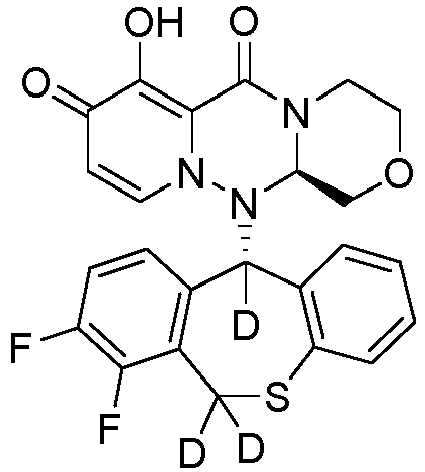
- The example compound 3A was prepared by referring to the preparation process of compound 1A, the difference was that intermediate 16 was replaced with intermediate 24. MS: ESI 487.1[M+H]+. Deuteration rate: 99.5%.
-

- The example compound 3B was prepared by referring to the preparation process of compound 1B, the difference was that compound 1A was replaced with compound 3A. MS: ESI 575.2[M+H]+. Deuteration rate: 99.6%.
- 50 g of intermediate 1 was dissolved in 1 L of THF, 305 mL of a solution of n-butyllithium in hexane was added under N2 atmosphere at -78 °C, and the mixture was stirred at -78 °C for 2 hours. A solution of 59.6 g of allyl chloroformate in THF (200 mL) was added dropwise to the reaction solution, and the mixture was stirred at -78 °C for 2 hours. The reaction solution was quenched in a saturated aqueous solution of ammonium chloride, and warmed to room temperature, followed by extraction with ethyl acetate. The organic layer was washed with saturated brine, dried, and concentrated under reduced pressure to remove solvent to obtain intermediate 2, with a yield of 76%.
- 20 g of intermediate 2 was dissolved in 200 mL of THF, and 138 mL of a solution of DIBAL-H in hexane was added dropwise under N2 atmosphere at -78 °C, and the mixture was stirred at -78 °C for 1 hour. The reaction was quenched by adding an aqueous solution of sodium potassium tartrate and the mixture was extracted with ethyl acetate. The organic layer was washed with saturated brine, dried, and concentrated under reduced pressure to remove solvent to obtain intermediate 3.
- To a solution of intermediate 3 (12.4 g) in methanol (130 mL) was added p-toluenesulfonic acid monohydrate (1.3 g), and the mixture was stirred at room temperature for 8 hours. The reaction was quenched with aqueous sodium bicarbonate solution, concentrated, and extracted with ethyl acetate. The organic layer was washed with saturated brine and dried, followed by concentration under reduced pressure to remove solvent to obtain intermediate 4 with a yield of 88%. MS: ESI 202.2[M+H]+.
- 30 g of intermediate 5 was dissolved in 150 mL of DMF, and 15.2 g of iodoethane and 27.6 mL of diazabicycloundecene were added dropwise to the solution, and stirred at room temperature overnight. The reaction was quenched with 10% ammonium chloride aqueous solution and extracted with ethyl acetate. The organic layer was washed with saturated brine, dried, and concentrated under reduced pressure to obtain intermediate 6.
- 2.5 g of the intermediate was dissolved in 25 mL of DMA solution, 6.9 g of pyridinium tosylate and 1.8 g of boc-hydrazine were added, and the mixture was stirred at 60 °C for 15 hours. Water was added, and the mixture was extracted with ethyl acetate. The organic layer was washed with saturated aqueous solution of ammonium chloride, and saturated aqueous solution of sodium chloride, dried, concentrated under reduced pressure, and subjected to flash silica gel column chromatography to obtain intermediate 7.
- 2.5 g of compound 8 was dissolved in 4 N hydrogen chloride in ethyl acetate (25 mL). The mixture was stirred at room temperature for 1 hour, concentrated under reduced pressure, washed with saturated sodium bicarbonate aqueous solution, and extracted with dichloromethane. The organic layer was washed with saturated brine, dried, and concentrated under reduced pressure to obtain intermediate 8.
- Compound 4 (31 g) was dissolved in 820 mL of acetonitrile at -25 °C under nitrogen atmosphere, 40 g of intermediate 8 was added, tin tetrachloride (230 mL) was added dropwise, and the mixture was stirred at -25°C for 45 minutes. After the reaction solution was quenched in aqueous sodium bicarbonate solution, dichloromethane was added. The mixture was stirred at room temperature, filtered through diatomaceous earth, and extracted with dichloromethane. The organic layer was washed with saturated brine, dried, and concentrated under reduced pressure to obtain crude intermediate 9. The crude intermediate 9 was dissolved in 800 mL of THF, morpholine (115 mL), and tetrakis(triphenylphosphine)palladium (150 g) were added, and the mixture was stirred at room temperature for 2.5 hours. Methyl tert-butyl ether was added to the reaction mixture, the mixture was filtered to obtain a solid, and the obtained solid was dried to obtain intermediate 10.
- (R)-tetrahydrofuran-2-carboxylic acid (855 mg, 7.36 mmol) and 40 g of intermediate 10 were sequentially dissolved in 180 mL of ethyl acetate at room temperature, 80 mL of pyridine and 50% propylphosphoric anhydride in ethyl acetate were added. The mixture was stirred for 8 hours, and filtered to obtain a solid. The solid was washed with ethyl acetate and ethanol, and slurried in 120 mL of ethanol at room temperature for 7 hours. The suspension was filtered and the filter cake was washed twice with ethanol to obtain crude intermediate 11.
- 15g of the crude intermediate 11 was suspended in ethanol (700 mL), DBU (10.5 mL) was added and the mixture was stirred for 30 minutes. 1.3 L of diisopropyl ether was added and stirred at room temperature for 30 minutes. The mixture was filtered and washed with ethyl acetate twice to obtain intermediate 13, with a yield of 91%. MS: ESI 328.1[M+H]+.
- Preparation of S-033188A (not according to the invention and present for illustration purposes only)

- S-033188A was prepared by referring to the preparation method of example compound 1A.
- Ms: ESI 485.1[M+H]+.
-

- S-033188B was prepared by referring to the preparation method of example compound 1B.
- Ms: ESI 572.1[M+H]+.
- Compounds in the table (not according to the invention and present for illustration purposes only):
The compounds in the following table and their single enantiomers, and prodrugs of the corresponding ester of the compounds in the following table were prepared by the processes similar as the above. Such esters can convert into active metabolites with hydroxyl group(s) in vivo through e.g., oral administration under the action of drug metabolizing enzymes, hydrolytic enzymes, digestive juice, or bacteria in the digestive tract, and the like. The corresponding esters of the compounds in the table are preferably but not limited to methyl methyl carbonate.Table 1: structure of the compounds in the table Structure of the compounds Mass spectrometry 
483.2 ESI [M+H]+ 
482.2 ESI [M+H]+ 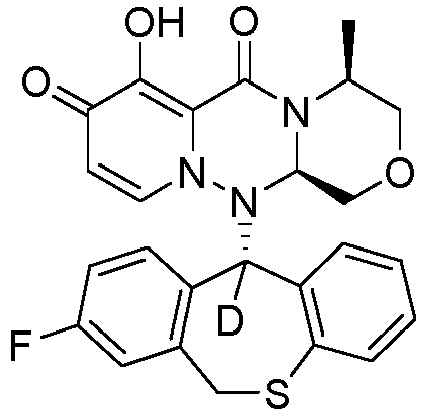
481.2 ESI [M+H]+ 
485.1 ESI [M+H]+ 
484.1 ESI [M+H]+ 
483.1 ESI [M+H]+ 
513.2 ESI [M+H]+ 
511.2 ESI [M+H]+ 
512.2 ESI [M+H]+ 
499.2 ESI [M+H]+ 
498.2 ESI [M+H]+ 
497.2 ESI [M+H]+ 
467.5 ESI [M+H]+ 
466.5 ESI [M+H]+ 
465.5 ESI [M+H]+ 


- 30merRNA (5'-pp- [m2' -0]GAA UAU(-Cy3)GCA UCA CUA GUA AGCUUU GCU CUA-BHQ2-3', given by China Pharmaceutical University) in which the G at the 5'end was diphosphorylated, the hydroxyl at the 2'position was methoxylated, the U at the 6th position from the 5'end was labeled with Cy3, and the 3'end was labeled with BHQ2 was purchased. ScriptCap system was used to add cap structure to obtain a product of m7G[5']-ppp-[5'] [m2' -0]GAA UAU(-Cy3)GCA UCA CUA GUA AGC UUU GCU CUA(-BHQ2)-3'. It was separated and purified by modified polyacrylamide gel electrophoresis and used as substrate.
- RNP was prepared from virus particles according to a prescribed method (Reference: VIROLOGY (1976) 73, pages 327-338. LGA M.ROCHOVANSKY). Specifically, 200 µL of 1×10³ PFU/mL A/WSN/33 virus was inoculated into 10-day-old developing chicken eggs, cultured at 37 °C for 2 days, and then the allantoic fluid of the chicken eggs was recovered. The virus particles were purified by ultracentrifugation with 20% sucrose, TritonX-100 and lysolecithin were used to dissolve the virus particles, and then separated by ultracentrifugation with 30% to 70% glycerol density gradients, the RNP fraction was collected (50% to 70% glycerol fraction), used as enzyme solution (containing about 1 nM of PB1 • PB2 • PA complex).
- 2.5 µL of enzymatic reaction mixture (composition: 53 mM Tris hydrochloride (pH 7.8), 1 mM MgCl2, 1.25 mM dithiothreitol, 80 mM NaCl, 12.5% glycerol, 0.15 µL enzyme solution) was dispensed in a 384-well plate made of polypropylene. Then, 0.5 µL of DMSO was added to 0.5 µL of the test compound solution serially diluted with DMSO, the positive control (PC) and the negative control (NC), and mixed thoroughly. Then 2 µL of substrate solution (1.4 nM substrate RNA, 0.05% Tween20) was added, and the reaction was initiated. The reaction mixture was incubated at room temperature for 60 minutes, and then 1 µL of the reaction mixture was added to 10 µL of high-purity formamide solution (containing GeneScan120LizSize Standard as sizing marker, manufactured by Applied Biosystem(ABI)) to terminate the reaction. The reaction of NC was stopped in advance by adding EDTA (4.5 mM) before the start of the reaction (all labeled concentrations were the final concentrations).
- After the reaction was terminated, the solution was heated at 85 °C for 5 minutes, quenched on ice for 2 minutes, and then analyzed with ABIPRIZM3730Genetic Analyzer (Genetic Analyzer). The peak of the cap-dependent endonuclease product was quantified by the analysis software ABI Genemapper, and the fluorescence intensity of PC and NC was used as 0% inhibition and 100% inhibition, respectively, the CEN reaction inhibitory rate (%) of the test compounds was calculated, and curve fitting software was used to calculate the IC50 value.
-
- 1) 2% FCS E-MEM (prepared by adding kanamycin and FCS to MEM (minimum essential medium))
- 2) 0.5% BSA E -MEM (prepared by adding kanamycin and BSA to MEM (minimum essential medium))
- 3) HBSS (Hanks balanced salt solution)
- 4) MDBK cells: the cell density was adjusted to an appropriate value (3 X 10⁵/mL) with 2% FCS E-MEM
- 5) MDCK cells: the cells was washed twice with HBSS, and then the cell density was adjusted to an appropriate value (5 X 10⁵ /mL) with 0.5% BSA E-MEM.
- 6) Trypsin solution
The trypsin (SIGMA) from porcine pancreas was dissolved with PBS(-), and filtered with a 0.45 µm filter. - 7) Microplate reader
- 8) WST-8 kit
- 9) 10% SDS solution
- 2% FCS E-MEM was used as the culture medium for MDBK cells, and 0.5% BSA E-MEM was used as the culture medium for MDCK cells. In the following, the same culture medium was used for the dilution of viruses, cells, and test samples.
- The test samples were diluted to an appropriate concentration with the culture solution in advance, and 2-5 times serial dilutions (50 µL/well) were prepared on a 96-well plate. Two plates were made for anti-influenza activity measurement and cytotoxicity measurement. The determination was performed in triplicate for each drug.
- When MDCK cells were used, trypsin with a final concentration of 3 µg/mL was added to the cells only for the determination of the anti-influenza activity.
- The influenza virus was diluted with culture medium to an appropriate concentration in advance, and each was aliquoted at 50 µL/well into the 96-well plate containing the test sample. The culture solution was aliquoted to the plate for cytotoxicity measurement at 50 µL/well.
- The cells with the cell density adjusted to an appropriate value were aliquoted in an amount of 100 µL/well into the 96-well plate containing the test sample.
- The mixture was mixed with a plate mixer. The cells were cultured in a CO2 incubator for 3 days in both the anti-influenza activity test and the cytotoxicity test.
- The 96-well plate cultured for 3 days was observed with naked eyes and under a microscope, and the supernatant was removed from the plate in a manner that the cells were not suck away.
- The WST-8 kit was 10-fold diluted with the culture medium, and 100 µL of each WST-8 solution was aliquoted into each well. The mixture was mixed with a plate mixer. The cells were then incubated in a CO2 incubator for 1 to 3 hours.
- For the plate for measuring anti-influenza activity, after incubation, 10 µL of 10% SDS solution was aliquoted into each well to inactivate the virus.
- For the mixed 96-well plate, the absorbance was measured with EnVision at 450 nm/620 nm dual wavelength.
- Based on the following calculation formula, the Microsoft Excel program was used for calculation.
- Calculation of 50% cell death inhibitory concentration (EC50) for influenza infection

Z = (50% - High%)/(High% - Low%) × {log(High conc.) - log(Low conc.)} + log(High conc.) - For the test substance (compounds of the examples) as the parent compound, the measurement results of Example 4 and Example 5 are shown in Table 2.
Table 2: CEN inhibitory activity test and CPE inhibitory effect test results Code of the compounds of the examples # CEN_IC50 nM CPE_EC50 nM 1A 1.14 0.68 2A 1.89 1.24 3A 1.65 0.60 S-033188A 2.01 1.22 - From the above results, it can be seen that compounds 1A, 2A, and 3A show high cap-dependent endonuclease inhibitory activity and high CPE inhibitory effect, especially the CPE inhibitory effect of compound 1A and compound 3A are twice that of S-033188A. Therefore, the compounds of the examples can be prepared as drugs for preventing/treating symptoms/disease induced by influenza virus infection.
-
- (1) Animals used: SD rats are used.
- (2) Feeding conditions: SD rats were allowed to take in solid feed and purified water freely.
- (3) Dosing amount and grouping setting: Oral or intravenous administration were performed at prescribed dosage. The groups were set as follows. (the dosage of each compound varied)
- Oral administration 1 to 30 mg/kg (n = 5 to 6)
- Intravenous administration 0.5 to 10 mg/kg (n = 5 to 6)
- (4) Preparation of dosing solution: suspension was used for oral administration through intragastric administration. Solution was used for intravenous administration through tail vein.
- (5) Evaluation items: Blood was collected over time, and the concentrations of the drugs in plasma were determined by LC/MS/MS.
- (6) Statistical analysis: For concentration changes in plasma, the area under the concentration-time curve (AUC) in plasma was calculated using the nonlinear least squares method, and the bioavailability (BA) was calculated from the AUC in the oral administration group and the intravenous administration group, and the elimination half-life of drug concentration in plasma through intravenous administration was counted.
- The test results are shown in Table 3.
Table 3: Bioavailability measurement results of the compounds of the examples Code of the compounds of the examples # The compounds of the examples BA% Half-life through intravenous administration T1/2 hour 1A 7.1 4.0 2A 5.0 5.0 3A 7.8 5.2 S-033188A 4.7 3.8 1B 18.4 -- 2B 15.9 -- 3B 19.8 -- S-033188B 15.3 -- - From the results in Table 3, it can be seen that the prodrugs (1B, 2B, 3B) have improved bioavailability compared with the parent compounds (1A, 2A, 3A). The compounds 1A, 2A, and 3A of the examples have significantly improved bioavailability than S-033188A; and the bioavailability of the compounds 1B, 2B, and 3B of the examples have improved significantly than that of S-033188B. The elimination half-life of the example compounds through intravenous administration have prolonged at different degrees.
- Therefore, the compounds of the present disclosure have better oral absorption than S-033188A/S-033188B, and can be used as a medicament for the treatment and/or prevention of symptoms and/or diseases caused by influenza virus infection, and are expected to have smaller dosage and lower side effects.
- In order to evaluate the risk of prolonged QT interval in electrocardiogram, HEK293 cells expressing human ether-a-go-go related gene (hERG) channel were used to study delayed rectifier K+ current (IKr) which plays an important role in the process of ventricular repolarization.
- Fully automatic patch clamp system was used to record the IKr caused by giving +50mV depolarization stimulation for 2 seconds and further -50mV repolarization stimulation for 2 seconds after keeping the cells at a membrane potential of -80mV by the whole-cell patch clamp method. After the generated current is stabilized, the cells were treated with an extracellular fluid dissolved with the test substances at target concentrations (NaCl: 137 mmol/L, KCl: 4 mmol/L, CaCl2: 1.8 mmol/L, MgCl2-6H2O: 1 mmol/L, glucose: 10 mmol/L, HEPES: 10 mmol/L, pH 7.4) at room temperature for 10 minutes. The absolute value of the maximum tail current was measured based on the current value of the resting membrane potential by using analysis software from the obtained IKr. Furthermore, the inhibitory rate with respect to the maximum tail current before the treatment of test substances was calculated, and compared with the medium application group (0.1% DMSO solution), and the influences of the test substances on IKr were evaluated.
Table 4: Inhibitory rates of the compounds of the examples under the condition of 0.3-10 µmol/L Code of the compounds of the examples # Inhibitory rate% 1A 3.1 2A 7.8 3A 3.5 S-033188A 8.2 - It can be seen from the results of inhibitory rate in Table 4 that the inhibitory rates of the compounds 1A, 2A, and 3A of the examples are significantly lower than that of S-033188A, especially the inhibitory rates of 1A and 3A are less than half of S-033188A. The test results show that 1A and 3A have lower cardiotoxicity than compound S-033188A.
- BALB/cAnNCrlCrlj 6 to 7 week old mice were used in the experiment.
- A/WS/33, A/Victoria/3/75 or B/Maryland/1/59 (ATCC) were passaged in the lungs of the mice to make mouse domesticated viruses. The cryopreserved mouse domesticated virus solutions were quickly thawed and diluted with DPBS to form the infectivity titer (A/WS/33: 800-4000TC ID501 mice, A/Victoria/3/75:750 TCID50/mouse, B/Maryland/1/59: 100 TCID50/mouse).
- Under the anesthesia of the ketamine-xylazine mixture, 100 µL of the prepared virus solution was inoculated through the nose to directly infect the lungs of the mice.
- The test sample was suspended in 0.5% methylcellulose solution at an appropriate concentration.
- For mice just after infection with the virus or after a certain period of time, 200 µL of the diluted test sample was orally administered.
- After virus infection, the mice were raised for 14 days, and the daily administration amount ED50 (mg/kg/day) required for 50% lethal suppression was calculated and compared with the control group to evaluate the virus suppression effect.
- Table 5 shows the ED50 value in the case of single administration.
Table 5: ED50 value in the case of single administration of the compounds of the examples Code of the compounds of the examples # ED50 mg/kg/ day 1B 0.41 2B 0.71 3B 0.33 S-033188B 0.78 - From the above results, it can be seen that all the tested compounds show various degrees of virus-inhibiting effects in vivo, especially the half effective doses of compound 1B and compound 3B are significantly less than S-033188B. It shows that the dosage of the compounds of the examples in clinical application will be less, or the medication interval will be longer, and the corresponding side effects will be also smaller, than that of S-033188B.
- The experiment uses alamarBlue® (Invitrogen) kit to detect the toxic effects of drugs on cells.
- Experimental principle: The experiment uses alamarBlue® (Invitrogen) kit to detect the toxic effects of drugs on cells. AlamarBlue® is a redox indicator that produces changes in absorbance and fluorescent signals based on cellular metabolic activity. AlamarBlue® is freely soluble in water. After its oxidized form enters cells, it will be reduced by mitochondrial enzymes to produce measurable fluorescence and color changes. It is used for quantitative analysis of cell viability and cell proliferation, and for in vitro cytotoxicity studies. Normal cells with metabolic activity can convert the reagents to produce strong fluorescence and color changes. Damaged and inactive cells have lower natural metabolic activity and lower corresponding signals, so the strength of fluorescence signal can reflect the level of cell activity.
- Experimental procedure: MDCK cells were seeded in a 96-well cell culture plate, and cultured till cell attachment for later use. The drug was serially 3 times diluted from 2 times the highest test concentration to 8 gradients. The drug was added to the cells and cultured in a CO2 incubator at 37 °C. After 48 hours of dosing and incubation, the cytopathic effect (CPE) caused by the drug was observed under a microscope. Then alamarBlue® medium was added to detect the survival rate of the cells. The toxicity of the drug to cells is inversely proportional to the activity of the cells and is expressed as the activity of the cells.
Calculation formula: cell activity (%) = (drug group-blank control)/(cell control-blank control) * 100 - The drug has a toxic effect on MDCK cells at very high concentrations. The concentration that causes 50% of the toxic effect is shown by CC50. See the table below for details.
Table 6: Toxicity of the compounds of the examples on cells Code of the compounds of the examples # CC50 nM 1A 48285 S-033188A 29882 - The toxicity of compound 1A is significantly lower than that of S-033188A. It shows that compound 1A has higher safety than S-033188A.
Claims (10)
- A polycyclic carbamoylpyridone derivative, a stereoisomer thereof, or a pharmaceutically acceptable salt thereof, wherein,
the polycyclic carbamoylpyridone derivative is selected from the group consisting of:

- The polycyclic carbamoylpyridone derivative, the stereoisomer thereof, or the pharmaceutically acceptable salt thereof as claimed in claim 1, wherein,the pharmaceutically acceptable salt thereof is an acid addition salt formed by the polycyclic carbamoylpyridone derivative and an organic acid or an inorganic acid; wherein, the organic acid is one or more selected from the group consisting of maleic acid, fumaric acid, benzoic acid, ascorbic acid, succinic acid, methanesulfonic acid, acetic acid, trifluoroacetic acid, oxalic acid, propionic acid, tartaric acid, salicylic acid, citric acid, gluconic acid, lactic acid, mandelic acid, phenylacetic acid, aspartic acid, stearic acid, palmitic acid, glycolic acid, glutamic acid and benzenesulfonic acid; the inorganic acid is one or more selected from the group consisting of hydrochloric acid, hydrobromic acid, sulfuric acid, phosphoric acid and nitric acid;or, the pharmaceutically acceptable salt thereof is a salt formed by the polycyclic carbamoylpyridone derivative and one or more organic and inorganic cations selected from the group consisting of alkali metal ions, alkaline earth metal ions and ammonium ions; wherein, the alkali metal is selected from lithium, sodium, or potassium; and the alkaline earth metal is selected from magnesium, barium, or calcium.
- A pharmaceutical composition comprising a therapeutically effective amount of the polycyclic carbamoylpyridone derivative, the stereoisomer thereof, or the pharmaceutically acceptable salt thereof as claimed in claim 1 or 2, and a pharmaceutically acceptable carrier.
- The pharmaceutical composition as claimed in claim 3, further comprising other active pharmaceutical ingredient, and the other active pharmaceutical ingredient is selected from neuraminidase inhibitors, RNA-dependent RNA polymerase inhibitors, M2 protein inhibitors, PB2 Cap binding inhibitors, anti-HA antibodies, or immune action drugs.
- The pharmaceutical composition as claimed in claim 4, wherein the neuraminidase inhibitor is oseltamivir, zanamivir, peramivir, or Inavir; the RNA-dependent RNA polymerase inhibitor is favipiravir; the M2 protein inhibitor is amantadine; the PB2 Cap binding inhibitor is VX-787; the anti-HA antibody is MHAA4594A; the immune action drug is nitazoxanide.
- The polycyclic carbamoylpyridone derivative, the stereoisomer thereof, or the pharmaceutically acceptable salt thereof, as claimed in claim 1 or 2 for use as a 5'cap-dependent endonuclease inhibitor.
- The polycyclic carbamoylpyridone derivative, the stereoisomer thereof, or the pharmaceutically acceptable salt thereof, as claimed in claim 1 or 2 for use in preventing, treating and/or alleviating a disease related to 5'cap-dependent endonuclease.
- The polycyclic carbamoylpyridone derivative, the stereoisomer thereof, or the pharmaceutically acceptable salt thereof for use as claimed in claim 7, wherein the disease related to 5'cap-dependent endonuclease refers to a symptom and/or disease caused by influenza virus infection.
- The polycyclic carbamoylpyridone derivative, the stereoisomer thereof, or the pharmaceutically acceptable salt thereof for use as claimed in claim 8, wherein the influenza virus is selected from type A, type B, or type C.
- The polycyclic carbamoylpyridone derivative, the stereoisomer thereof, or the pharmaceutically acceptable salt thereof for use as claimed in claim 8, wherein the symptom is selected from cold-like symptoms of fever, chill, headache, muscle pain, general fatigue, or respiratory tract inflammations of sore throat, runny nose, nasal congestion, cough, sputum; gastrointestinal symptoms of abdominal pain, vomiting, diarrhea; and further complications of secondary infection of acute encephalopathy, pneumonia.
Applications Claiming Priority (2)
| Application Number | Priority Date | Filing Date | Title |
|---|---|---|---|
| CN201810323355.2A CN108440564B (en) | 2018-04-11 | 2018-04-11 | Substituted polycyclic carbamoylpyridone derivative and its prodrug |
| PCT/CN2019/082195 WO2019196891A1 (en) | 2018-04-11 | 2019-04-11 | Polycyclic carbamoylpyridone derivatives, pharmaceutical compositions and use thereof |
Publications (4)
| Publication Number | Publication Date |
|---|---|
| EP3778608A1 EP3778608A1 (en) | 2021-02-17 |
| EP3778608A4 EP3778608A4 (en) | 2021-06-23 |
| EP3778608B1 true EP3778608B1 (en) | 2025-06-18 |
| EP3778608C0 EP3778608C0 (en) | 2025-06-18 |
Family
ID=63199693
Family Applications (1)
| Application Number | Title | Priority Date | Filing Date |
|---|---|---|---|
| EP19784679.3A Active EP3778608B1 (en) | 2018-04-11 | 2019-04-11 | Polycyclic carbamoylpyridone derivatives, pharmaceutical compositions and use thereof |
Country Status (6)
| Country | Link |
|---|---|
| US (1) | US12161646B2 (en) |
| EP (1) | EP3778608B1 (en) |
| CN (1) | CN108440564B (en) |
| AU (1) | AU2019252208B2 (en) |
| RU (1) | RU2770096C1 (en) |
| WO (1) | WO2019196891A1 (en) |
Families Citing this family (30)
| Publication number | Priority date | Publication date | Assignee | Title |
|---|---|---|---|---|
| JP6323860B2 (en) | 2015-12-15 | 2018-05-16 | 塩野義製薬株式会社 | A medicine for treating influenza characterized by combining a cap-dependent endonuclease inhibitor and an anti-influenza drug |
| AU2017310774B2 (en) | 2016-08-10 | 2023-01-19 | Shionogi & Co., Ltd. | Substituted polycyclic pyridone derivative and pharmaceutical composition containing prodrug thereof |
| EP3686201A4 (en) * | 2017-09-18 | 2021-04-28 | Sunshine Lake Pharma Co., Ltd. | INHIBITOR OF INFLUENZA VIRUS REPLICATION AND ITS USE |
| CN109503625A (en) * | 2018-01-19 | 2019-03-22 | 赵蕾 | A kind of polycyclic pyridines ketone compound and its pharmaceutical composition and purposes |
| CN108440564B (en) * | 2018-04-11 | 2019-08-06 | 安帝康(无锡)生物科技有限公司 | Substituted polycyclic carbamoylpyridone derivative and its prodrug |
| KR102501180B1 (en) * | 2018-04-24 | 2023-02-21 | 시오노기세야쿠 가부시키가이샤 | Solid formulation with excellent stability |
| MX395463B (en) | 2018-04-24 | 2025-03-25 | Shionogi & Co | Solid formulation having excellent stability |
| CN110317211B (en) * | 2018-07-27 | 2022-05-13 | 深圳市塔吉瑞生物医药有限公司 | Substituted polycyclic pyridone compound and prodrug thereof |
| CN109721585B (en) * | 2018-12-19 | 2020-09-29 | 浙江工业大学 | Preparation method of baroxavir key intermediate |
| CN109516998B (en) * | 2018-12-25 | 2021-06-25 | 深圳市华先医药科技有限公司 | Synthesis method of Barosavir intermediate |
| CN111410661B (en) * | 2019-01-04 | 2023-05-05 | 周雨恬 | Cap-dependent endonuclease inhibitors and uses thereof |
| CN110128366A (en) * | 2019-06-05 | 2019-08-16 | 南京焕然生物科技有限公司 | The preparation method of one kind (R) -3- methoxyl group -4- morpholine carboxylic acid -2- propylene -1- base ester |
| CN110105372B (en) * | 2019-06-05 | 2022-05-10 | 南京焕然生物科技有限公司 | Preparation method of R-7- (benzyloxy) -tetrahydro-1H-oxazine pyrido-triazine-6, 8-diketone |
| CN111057070A (en) * | 2019-10-30 | 2020-04-24 | 浙江工业大学 | Synthesis method of baroxavir key intermediate |
| WO2021093860A1 (en) * | 2019-11-13 | 2021-05-20 | 南京知和医药科技有限公司 | Substituted bis-tricyclic compound, and pharmaceutical composition and use thereof |
| CN112940009A (en) * | 2020-02-03 | 2021-06-11 | 南京知和医药科技有限公司 | Sulfonic acid polycyclic compound, pharmaceutical composition and application thereof |
| CN112876510A (en) * | 2020-02-10 | 2021-06-01 | 石家庄迪斯凯威医药科技有限公司 | Phosphate polycyclic compound, and pharmaceutical composition and application thereof |
| CN111233891B (en) * | 2020-03-04 | 2021-05-04 | 江苏柯菲平医药股份有限公司 | Fused ring pyridone derivative and preparation method and application thereof |
| CN113527296B (en) * | 2020-03-13 | 2025-03-07 | 北京凯因科技股份有限公司 | An influenza virus inhibitor |
| WO2021180147A1 (en) * | 2020-03-13 | 2021-09-16 | 北京凯因科技股份有限公司 | Influenza virus inhibitor |
| CN112409379B (en) * | 2020-09-28 | 2023-07-28 | 长沙晶易医药科技股份有限公司 | Deuterated dihydrodibenzothiazepine compound and pharmaceutical composition comprising same |
| WO2022128934A1 (en) * | 2020-12-15 | 2022-06-23 | Synthon B.V. | Solid forms of baloxavir, salts of baloxavir and cocrystals of baloxavir |
| CN112778332B (en) * | 2020-12-31 | 2021-12-14 | 重庆医科大学 | A kind of synthetic method of baloxavir dipivoxil intermediate polycyclic carbamoyl pyridone |
| CN112898312B (en) * | 2021-01-29 | 2021-11-12 | 湖南南新制药股份有限公司 | Fused polycyclic pyridone derivative and application thereof |
| CN113717199B (en) * | 2021-08-13 | 2022-04-01 | 北京北朋科技有限公司 | Deuterated derivative of baroxavir and application of deuterated derivative in anti-influenza virus |
| CN116082361B (en) * | 2023-04-11 | 2023-06-13 | 和鼎(南京)医药技术有限公司 | Method for preparing Marbalo Sha Wei intermediate and Marbalo Sha Wei |
| WO2024213129A1 (en) * | 2023-04-14 | 2024-10-17 | 南京卡文迪许生物工程技术有限公司 | Acyl ethyl ester polycyclic compound, and pharmaceutical composition and use thereof |
| WO2025152855A1 (en) * | 2024-01-16 | 2025-07-24 | 上海翊石医药科技有限公司 | Compound for treating influenza and preparation method therefor |
| CN118384116A (en) * | 2024-04-24 | 2024-07-26 | 嘉兴安谛康生物科技有限公司 | Pharmaceutical preparation of polycyclic carbamoyl pyridone derivative |
| CN118561867B (en) * | 2024-05-27 | 2025-04-18 | 安徽贝克制药股份有限公司 | Cap-dependent endonuclease inhibitor, preparation method thereof and application thereof |
Family Cites Families (7)
| Publication number | Priority date | Publication date | Assignee | Title |
|---|---|---|---|---|
| CA2812363C (en) * | 2010-09-24 | 2019-04-02 | Shionogi & Co., Ltd. | Substituted polycyclic carbamoyl pyridone derivative prodrug |
| DK4219508T3 (en) * | 2015-04-28 | 2024-08-05 | Shionogi & Co | Substituted polycyclic pyridone derivative and prodrug thereof |
| AU2017310774B2 (en) * | 2016-08-10 | 2023-01-19 | Shionogi & Co., Ltd. | Substituted polycyclic pyridone derivative and pharmaceutical composition containing prodrug thereof |
| JOP20170169A1 (en) * | 2016-08-29 | 2019-01-30 | Novartis Ag | Fused tricyclic pyridazinone compounds useful to treat orthomyxovirus infections |
| CN109503625A (en) * | 2018-01-19 | 2019-03-22 | 赵蕾 | A kind of polycyclic pyridines ketone compound and its pharmaceutical composition and purposes |
| CN108440564B (en) * | 2018-04-11 | 2019-08-06 | 安帝康(无锡)生物科技有限公司 | Substituted polycyclic carbamoylpyridone derivative and its prodrug |
| CN110317211B (en) * | 2018-07-27 | 2022-05-13 | 深圳市塔吉瑞生物医药有限公司 | Substituted polycyclic pyridone compound and prodrug thereof |
-
2018
- 2018-04-11 CN CN201810323355.2A patent/CN108440564B/en active Active
-
2019
- 2019-04-11 AU AU2019252208A patent/AU2019252208B2/en active Active
- 2019-04-11 RU RU2020136675A patent/RU2770096C1/en active
- 2019-04-11 WO PCT/CN2019/082195 patent/WO2019196891A1/en not_active Ceased
- 2019-04-11 US US17/044,079 patent/US12161646B2/en active Active
- 2019-04-11 EP EP19784679.3A patent/EP3778608B1/en active Active
Also Published As
| Publication number | Publication date |
|---|---|
| AU2019252208B2 (en) | 2022-03-03 |
| CN108440564A (en) | 2018-08-24 |
| AU2019252208A1 (en) | 2020-11-19 |
| WO2019196891A1 (en) | 2019-10-17 |
| EP3778608A4 (en) | 2021-06-23 |
| CN108440564B (en) | 2019-08-06 |
| US20210093640A1 (en) | 2021-04-01 |
| RU2770096C1 (en) | 2022-04-14 |
| US12161646B2 (en) | 2024-12-10 |
| EP3778608C0 (en) | 2025-06-18 |
| EP3778608A1 (en) | 2021-02-17 |
Similar Documents
| Publication | Publication Date | Title |
|---|---|---|
| US12161646B2 (en) | Polycyclic carbamoylpyridone derivatives, pharmaceutical compositions and use thereof | |
| CN114426568B (en) | 2-oxo-3-pyrrolidinyl propionitrile compounds, pharmaceutical composition and application thereof | |
| EP3391888B1 (en) | Medicine for treating influenza characterized by comprising combination of cap-dependent endonuclease inhibitor with anti-influenza drug | |
| CN111548384B (en) | Substituted N4-hydroxycytidine derivatives and prodrugs thereof for antiviral therapy | |
| JP6989509B2 (en) | Aryl-substituted pyrimidines for use in influenza virus infection | |
| CN113620929B (en) | Aldehyde-based compounds and preparation methods, pharmaceutical compositions and uses thereof | |
| CN111410661A (en) | Cap-dependent endonuclease inhibitors and uses thereof | |
| JP2021514967A (en) | Crystal type, salt type and method for producing the pyridinoimidazole compound | |
| CN109071436B (en) | Indole alkaloid compound and preparation method and application thereof | |
| US8765941B2 (en) | Aniline derivative having anti-RNA viral activity | |
| KR20230011972A (en) | Compounds for treating and/or preventing diseases caused by coronaviruses and uses thereof | |
| CN106957315B (en) | N- replaces benzenesulfonyl-azaindole oxybenzamide class compound and its prepares the purposes of drug | |
| CN112771048A (en) | Inhibitors of influenza virus replication and intermediates and uses thereof | |
| JP2015521186A (en) | Fluorine-substituted (3R, 4R, 5S) -5-guanidino-4-acetamido-3- (pentan-3-yloxy) cyclohexene-1-carboxylic acid, ester thereof and use thereof | |
| HK40036696B (en) | Polycyclic carbamoylpyridone derivatives, pharmaceutical compositions and use thereof | |
| HK40036696A (en) | Polycyclic carbamoylpyridone derivatives, pharmaceutical compositions and use thereof | |
| CN107434770B (en) | p-Nitroaniline compound and its preparation method and pharmaceutical composition and use | |
| AU2019311117B2 (en) | Pyrrolo(2,3-b)pyridin derivatives as inhibitors of influenza virus replication | |
| CN115737632A (en) | Application of LSD1 inhibitor in medicine for resisting acute myelogenous leukemia | |
| CN111909174B (en) | Crystal form of pyridone derivative, preparation method and application | |
| CN102146062A (en) | Thiazolidine neuraminidase inhibitor and application thereof | |
| WO2024098856A1 (en) | Anti-influenza-virus derivatives and use thereof | |
| CN113979936A (en) | 2-Arylureido-N-[3-(4-morpholinyl)propyl]nicotinamide compounds and their application | |
| CN113979935A (en) | 2-Arylureido-N-(4-fluorobenzyl)nicotinamide compounds and their application | |
| HK40101641A (en) | Anti-influenza virus derivative and the use thereof |
Legal Events
| Date | Code | Title | Description |
|---|---|---|---|
| STAA | Information on the status of an ep patent application or granted ep patent |
Free format text: STATUS: THE INTERNATIONAL PUBLICATION HAS BEEN MADE |
|
| PUAI | Public reference made under article 153(3) epc to a published international application that has entered the european phase |
Free format text: ORIGINAL CODE: 0009012 |
|
| STAA | Information on the status of an ep patent application or granted ep patent |
Free format text: STATUS: REQUEST FOR EXAMINATION WAS MADE |
|
| 17P | Request for examination filed |
Effective date: 20201105 |
|
| AK | Designated contracting states |
Kind code of ref document: A1 Designated state(s): AL AT BE BG CH CY CZ DE DK EE ES FI FR GB GR HR HU IE IS IT LI LT LU LV MC MK MT NL NO PL PT RO RS SE SI SK SM TR |
|
| AX | Request for extension of the european patent |
Extension state: BA ME |
|
| REG | Reference to a national code |
Ref country code: HK Ref legal event code: DE Ref document number: 40036696 Country of ref document: HK |
|
| A4 | Supplementary search report drawn up and despatched |
Effective date: 20210526 |
|
| RIC1 | Information provided on ipc code assigned before grant |
Ipc: C07D 498/14 20060101AFI20210519BHEP Ipc: C07D 471/14 20060101ALI20210519BHEP Ipc: A61K 31/53 20060101ALI20210519BHEP |
|
| DAV | Request for validation of the european patent (deleted) | ||
| DAX | Request for extension of the european patent (deleted) | ||
| RAP3 | Party data changed (applicant data changed or rights of an application transferred) |
Owner name: JIAXING ANDICON BIOTECH CO., LTD. |
|
| STAA | Information on the status of an ep patent application or granted ep patent |
Free format text: STATUS: EXAMINATION IS IN PROGRESS |
|
| 17Q | First examination report despatched |
Effective date: 20240910 |
|
| GRAP | Despatch of communication of intention to grant a patent |
Free format text: ORIGINAL CODE: EPIDOSNIGR1 |
|
| STAA | Information on the status of an ep patent application or granted ep patent |
Free format text: STATUS: GRANT OF PATENT IS INTENDED |
|
| INTG | Intention to grant announced |
Effective date: 20250123 |
|
| GRAS | Grant fee paid |
Free format text: ORIGINAL CODE: EPIDOSNIGR3 |
|
| GRAA | (expected) grant |
Free format text: ORIGINAL CODE: 0009210 |
|
| STAA | Information on the status of an ep patent application or granted ep patent |
Free format text: STATUS: THE PATENT HAS BEEN GRANTED |
|
| AK | Designated contracting states |
Kind code of ref document: B1 Designated state(s): AL AT BE BG CH CY CZ DE DK EE ES FI FR GB GR HR HU IE IS IT LI LT LU LV MC MK MT NL NO PL PT RO RS SE SI SK SM TR |
|
| REG | Reference to a national code |
Ref country code: GB Ref legal event code: FG4D |
|
| REG | Reference to a national code |
Ref country code: CH Ref legal event code: EP |
|
| REG | Reference to a national code |
Ref country code: DE Ref legal event code: R096 Ref document number: 602019071296 Country of ref document: DE |
|
| REG | Reference to a national code |
Ref country code: CH Ref legal event code: EP |
|
| REG | Reference to a national code |
Ref country code: IE Ref legal event code: FG4D |
|
| U01 | Request for unitary effect filed |
Effective date: 20250707 |
|
| U07 | Unitary effect registered |
Designated state(s): AT BE BG DE DK EE FI FR IT LT LU LV MT NL PT RO SE SI Effective date: 20250711 |
|
| PG25 | Lapsed in a contracting state [announced via postgrant information from national office to epo] |
Ref country code: NO Free format text: LAPSE BECAUSE OF FAILURE TO SUBMIT A TRANSLATION OF THE DESCRIPTION OR TO PAY THE FEE WITHIN THE PRESCRIBED TIME-LIMIT Effective date: 20250918 Ref country code: GR Free format text: LAPSE BECAUSE OF FAILURE TO SUBMIT A TRANSLATION OF THE DESCRIPTION OR TO PAY THE FEE WITHIN THE PRESCRIBED TIME-LIMIT Effective date: 20250919 |
|
| PG25 | Lapsed in a contracting state [announced via postgrant information from national office to epo] |
Ref country code: HR Free format text: LAPSE BECAUSE OF FAILURE TO SUBMIT A TRANSLATION OF THE DESCRIPTION OR TO PAY THE FEE WITHIN THE PRESCRIBED TIME-LIMIT Effective date: 20250618 |
|
| PG25 | Lapsed in a contracting state [announced via postgrant information from national office to epo] |
Ref country code: RS Free format text: LAPSE BECAUSE OF FAILURE TO SUBMIT A TRANSLATION OF THE DESCRIPTION OR TO PAY THE FEE WITHIN THE PRESCRIBED TIME-LIMIT Effective date: 20250918 |
|
| PG25 | Lapsed in a contracting state [announced via postgrant information from national office to epo] |
Ref country code: IS Free format text: LAPSE BECAUSE OF FAILURE TO SUBMIT A TRANSLATION OF THE DESCRIPTION OR TO PAY THE FEE WITHIN THE PRESCRIBED TIME-LIMIT Effective date: 20251018 |
|
| PG25 | Lapsed in a contracting state [announced via postgrant information from national office to epo] |
Ref country code: SM Free format text: LAPSE BECAUSE OF FAILURE TO SUBMIT A TRANSLATION OF THE DESCRIPTION OR TO PAY THE FEE WITHIN THE PRESCRIBED TIME-LIMIT Effective date: 20250618 |
|
| PG25 | Lapsed in a contracting state [announced via postgrant information from national office to epo] |
Ref country code: CZ Free format text: LAPSE BECAUSE OF FAILURE TO SUBMIT A TRANSLATION OF THE DESCRIPTION OR TO PAY THE FEE WITHIN THE PRESCRIBED TIME-LIMIT Effective date: 20250618 |
|
| PG25 | Lapsed in a contracting state [announced via postgrant information from national office to epo] |
Ref country code: PL Free format text: LAPSE BECAUSE OF FAILURE TO SUBMIT A TRANSLATION OF THE DESCRIPTION OR TO PAY THE FEE WITHIN THE PRESCRIBED TIME-LIMIT Effective date: 20250618 |
|
| PG25 | Lapsed in a contracting state [announced via postgrant information from national office to epo] |
Ref country code: SK Free format text: LAPSE BECAUSE OF FAILURE TO SUBMIT A TRANSLATION OF THE DESCRIPTION OR TO PAY THE FEE WITHIN THE PRESCRIBED TIME-LIMIT Effective date: 20250618 |
|
| PG25 | Lapsed in a contracting state [announced via postgrant information from national office to epo] |
Ref country code: ES Free format text: LAPSE BECAUSE OF FAILURE TO SUBMIT A TRANSLATION OF THE DESCRIPTION OR TO PAY THE FEE WITHIN THE PRESCRIBED TIME-LIMIT Effective date: 20250618 |
|
| PGFP | Annual fee paid to national office [announced via postgrant information from national office to epo] |
Ref country code: GB Payment date: 20260302 Year of fee payment: 8 |
|
| U20 | Renewal fee for the european patent with unitary effect paid |
Year of fee payment: 8 Effective date: 20260317 |
|
| PLBE | No opposition filed within time limit |
Free format text: ORIGINAL CODE: 0009261 |
|
| STAA | Information on the status of an ep patent application or granted ep patent |
Free format text: STATUS: NO OPPOSITION FILED WITHIN TIME LIMIT |
|
| REG | Reference to a national code |
Ref country code: CH Ref legal event code: L10 Free format text: ST27 STATUS EVENT CODE: U-0-0-L10-L00 (AS PROVIDED BY THE NATIONAL OFFICE) Effective date: 20260430 |