EP3778552A1 - Tetraalkyl ammonium nitrite production method - Google Patents
Tetraalkyl ammonium nitrite production method Download PDFInfo
- Publication number
- EP3778552A1 EP3778552A1 EP19774247.1A EP19774247A EP3778552A1 EP 3778552 A1 EP3778552 A1 EP 3778552A1 EP 19774247 A EP19774247 A EP 19774247A EP 3778552 A1 EP3778552 A1 EP 3778552A1
- Authority
- EP
- European Patent Office
- Prior art keywords
- group
- salt
- solvents
- tetraalkylammonium
- nitrite
- Prior art date
- Legal status (The legal status is an assumption and is not a legal conclusion. Google has not performed a legal analysis and makes no representation as to the accuracy of the status listed.)
- Withdrawn
Links
- 125000005207 tetraalkylammonium group Chemical group 0.000 title claims abstract description 42
- 238000004519 manufacturing process Methods 0.000 title claims abstract description 26
- 239000002904 solvent Substances 0.000 claims abstract description 83
- 229910052751 metal Inorganic materials 0.000 claims abstract description 81
- 239000002184 metal Substances 0.000 claims abstract description 81
- IOVCWXUNBOPUCH-UHFFFAOYSA-M Nitrite anion Chemical compound [O-]N=O IOVCWXUNBOPUCH-UHFFFAOYSA-M 0.000 claims abstract description 76
- 150000003839 salts Chemical class 0.000 claims abstract description 64
- -1 step A of reacting Chemical compound 0.000 claims abstract description 51
- 150000005621 tetraalkylammonium salts Chemical class 0.000 claims abstract description 36
- GGCZERPQGJTIQP-UHFFFAOYSA-N sodium;9,10-dioxoanthracene-2-sulfonic acid Chemical compound [Na+].C1=CC=C2C(=O)C3=CC(S(=O)(=O)O)=CC=C3C(=O)C2=C1 GGCZERPQGJTIQP-UHFFFAOYSA-N 0.000 claims abstract description 4
- 238000000034 method Methods 0.000 claims description 52
- 239000002798 polar solvent Substances 0.000 claims description 50
- 125000001183 hydrocarbyl group Chemical group 0.000 claims description 33
- 125000001424 substituent group Chemical group 0.000 claims description 30
- XLYOFNOQVPJJNP-UHFFFAOYSA-N water Substances O XLYOFNOQVPJJNP-UHFFFAOYSA-N 0.000 claims description 22
- RTZKZFJDLAIYFH-UHFFFAOYSA-N Diethyl ether Chemical compound CCOCC RTZKZFJDLAIYFH-UHFFFAOYSA-N 0.000 claims description 20
- 229910052783 alkali metal Inorganic materials 0.000 claims description 20
- 229910052784 alkaline earth metal Inorganic materials 0.000 claims description 20
- 239000000203 mixture Substances 0.000 claims description 16
- LFQSCWFLJHTTHZ-UHFFFAOYSA-N Ethanol Chemical compound CCO LFQSCWFLJHTTHZ-UHFFFAOYSA-N 0.000 claims description 13
- 150000001408 amides Chemical class 0.000 claims description 11
- 229910001914 chlorine tetroxide Inorganic materials 0.000 claims description 11
- 229910052757 nitrogen Inorganic materials 0.000 claims description 11
- QJGQUHMNIGDVPM-UHFFFAOYSA-N nitrogen group Chemical group [N] QJGQUHMNIGDVPM-UHFFFAOYSA-N 0.000 claims description 11
- VLTRZXGMWDSKGL-UHFFFAOYSA-M perchlorate Chemical compound [O-]Cl(=O)(=O)=O VLTRZXGMWDSKGL-UHFFFAOYSA-M 0.000 claims description 11
- 125000000008 (C1-C10) alkyl group Chemical group 0.000 claims description 10
- 125000004433 nitrogen atom Chemical group N* 0.000 claims description 9
- 150000001340 alkali metals Chemical class 0.000 claims description 8
- 150000001342 alkaline earth metals Chemical class 0.000 claims description 8
- 150000004945 aromatic hydrocarbons Chemical class 0.000 claims description 8
- 239000004210 ether based solvent Substances 0.000 claims description 8
- 239000005453 ketone based solvent Substances 0.000 claims description 8
- 239000005456 alcohol based solvent Substances 0.000 claims description 7
- 125000000217 alkyl group Chemical group 0.000 claims description 6
- 239000003125 aqueous solvent Substances 0.000 claims description 4
- 239000003759 ester based solvent Substances 0.000 claims description 4
- 150000008282 halocarbons Chemical class 0.000 claims description 4
- 150000002825 nitriles Chemical class 0.000 claims description 4
- 150000003462 sulfoxides Chemical class 0.000 claims description 4
- 125000004435 hydrogen atom Chemical group [H]* 0.000 claims description 3
- 150000002576 ketones Chemical class 0.000 claims description 3
- WYURNTSHIVDZCO-UHFFFAOYSA-N Tetrahydrofuran Chemical compound C1CCOC1 WYURNTSHIVDZCO-UHFFFAOYSA-N 0.000 description 30
- OKKJLVBELUTLKV-UHFFFAOYSA-N Methanol Chemical compound OC OKKJLVBELUTLKV-UHFFFAOYSA-N 0.000 description 27
- ZMXDDKWLCZADIW-UHFFFAOYSA-N N,N-Dimethylformamide Chemical compound CN(C)C=O ZMXDDKWLCZADIW-UHFFFAOYSA-N 0.000 description 16
- 239000000460 chlorine Substances 0.000 description 10
- CSCPPACGZOOCGX-UHFFFAOYSA-N Acetone Chemical compound CC(C)=O CSCPPACGZOOCGX-UHFFFAOYSA-N 0.000 description 9
- 238000006243 chemical reaction Methods 0.000 description 9
- KFZMGEQAYNKOFK-UHFFFAOYSA-N Isopropanol Chemical compound CC(C)O KFZMGEQAYNKOFK-UHFFFAOYSA-N 0.000 description 8
- IJGRMHOSHXDMSA-UHFFFAOYSA-N Atomic nitrogen Chemical compound N#N IJGRMHOSHXDMSA-UHFFFAOYSA-N 0.000 description 7
- 150000003863 ammonium salts Chemical class 0.000 description 7
- FXHOOIRPVKKKFG-UHFFFAOYSA-N N,N-Dimethylacetamide Chemical compound CN(C)C(C)=O FXHOOIRPVKKKFG-UHFFFAOYSA-N 0.000 description 6
- 239000000047 product Substances 0.000 description 6
- 239000007858 starting material Substances 0.000 description 6
- 125000000304 alkynyl group Chemical group 0.000 description 5
- BDERNNFJNOPAEC-UHFFFAOYSA-N propan-1-ol Chemical compound CCCO BDERNNFJNOPAEC-UHFFFAOYSA-N 0.000 description 5
- LRHPLDYGYMQRHN-UHFFFAOYSA-N N-Butanol Chemical compound CCCCO LRHPLDYGYMQRHN-UHFFFAOYSA-N 0.000 description 4
- AZFNGPAYDKGCRB-XCPIVNJJSA-M [(1s,2s)-2-amino-1,2-diphenylethyl]-(4-methylphenyl)sulfonylazanide;chlororuthenium(1+);1-methyl-4-propan-2-ylbenzene Chemical compound [Ru+]Cl.CC(C)C1=CC=C(C)C=C1.C1=CC(C)=CC=C1S(=O)(=O)[N-][C@@H](C=1C=CC=CC=1)[C@@H](N)C1=CC=CC=C1 AZFNGPAYDKGCRB-XCPIVNJJSA-M 0.000 description 4
- 125000003342 alkenyl group Chemical group 0.000 description 4
- 150000001875 compounds Chemical class 0.000 description 4
- 235000010289 potassium nitrite Nutrition 0.000 description 4
- 239000004304 potassium nitrite Substances 0.000 description 4
- 238000000746 purification Methods 0.000 description 4
- YLQBMQCUIZJEEH-UHFFFAOYSA-N tetrahydrofuran Natural products C=1C=COC=1 YLQBMQCUIZJEEH-UHFFFAOYSA-N 0.000 description 4
- NUZWSPHJXIOBEH-UHFFFAOYSA-M 1-ethyl-1-methylpyrrolidin-1-ium nitrite Chemical compound N(=O)[O-].C(C)[N+]1(CCCC1)C NUZWSPHJXIOBEH-UHFFFAOYSA-M 0.000 description 3
- ZWEHNKRNPOVVGH-UHFFFAOYSA-N 2-Butanone Chemical compound CCC(C)=O ZWEHNKRNPOVVGH-UHFFFAOYSA-N 0.000 description 3
- WEVYAHXRMPXWCK-UHFFFAOYSA-N Acetonitrile Chemical compound CC#N WEVYAHXRMPXWCK-UHFFFAOYSA-N 0.000 description 3
- UHOVQNZJYSORNB-UHFFFAOYSA-N Benzene Chemical compound C1=CC=CC=C1 UHOVQNZJYSORNB-UHFFFAOYSA-N 0.000 description 3
- YMWUJEATGCHHMB-UHFFFAOYSA-N Dichloromethane Chemical compound ClCCl YMWUJEATGCHHMB-UHFFFAOYSA-N 0.000 description 3
- XEKOWRVHYACXOJ-UHFFFAOYSA-N Ethyl acetate Chemical compound CCOC(C)=O XEKOWRVHYACXOJ-UHFFFAOYSA-N 0.000 description 3
- DGAQECJNVWCQMB-PUAWFVPOSA-M Ilexoside XXIX Chemical compound C[C@@H]1CC[C@@]2(CC[C@@]3(C(=CC[C@H]4[C@]3(CC[C@@H]5[C@@]4(CC[C@@H](C5(C)C)OS(=O)(=O)[O-])C)C)[C@@H]2[C@]1(C)O)C)C(=O)O[C@H]6[C@@H]([C@H]([C@@H]([C@H](O6)CO)O)O)O.[Na+] DGAQECJNVWCQMB-PUAWFVPOSA-M 0.000 description 3
- ZLMJMSJWJFRBEC-UHFFFAOYSA-N Potassium Chemical compound [K] ZLMJMSJWJFRBEC-UHFFFAOYSA-N 0.000 description 3
- RWRDLPDLKQPQOW-UHFFFAOYSA-N Pyrrolidine Chemical compound C1CCNC1 RWRDLPDLKQPQOW-UHFFFAOYSA-N 0.000 description 3
- YXFVVABEGXRONW-UHFFFAOYSA-N Toluene Chemical compound CC1=CC=CC=C1 YXFVVABEGXRONW-UHFFFAOYSA-N 0.000 description 3
- 125000003545 alkoxy group Chemical group 0.000 description 3
- 150000001450 anions Chemical class 0.000 description 3
- JFDZBHWFFUWGJE-UHFFFAOYSA-N benzonitrile Chemical compound N#CC1=CC=CC=C1 JFDZBHWFFUWGJE-UHFFFAOYSA-N 0.000 description 3
- 125000000753 cycloalkyl group Chemical group 0.000 description 3
- 229910001873 dinitrogen Inorganic materials 0.000 description 3
- 238000004821 distillation Methods 0.000 description 3
- 125000001495 ethyl group Chemical group [H]C([H])([H])C([H])([H])* 0.000 description 3
- 125000005843 halogen group Chemical group 0.000 description 3
- 239000011261 inert gas Substances 0.000 description 3
- 125000002496 methyl group Chemical group [H]C([H])([H])* 0.000 description 3
- VLKZOEOYAKHREP-UHFFFAOYSA-N n-Hexane Chemical compound CCCCCC VLKZOEOYAKHREP-UHFFFAOYSA-N 0.000 description 3
- 125000004108 n-butyl group Chemical group [H]C([H])([H])C([H])([H])C([H])([H])C([H])([H])* 0.000 description 3
- 125000004123 n-propyl group Chemical group [H]C([H])([H])C([H])([H])C([H])([H])* 0.000 description 3
- 229910052700 potassium Inorganic materials 0.000 description 3
- 239000011591 potassium Substances 0.000 description 3
- 229910052708 sodium Inorganic materials 0.000 description 3
- 239000011734 sodium Substances 0.000 description 3
- 238000006467 substitution reaction Methods 0.000 description 3
- CXWXQJXEFPUFDZ-UHFFFAOYSA-N tetralin Chemical compound C1=CC=C2CCCCC2=C1 CXWXQJXEFPUFDZ-UHFFFAOYSA-N 0.000 description 3
- 238000011282 treatment Methods 0.000 description 3
- 125000004191 (C1-C6) alkoxy group Chemical group 0.000 description 2
- KVNYFPKFSJIPBJ-UHFFFAOYSA-N 1,2-diethylbenzene Chemical compound CCC1=CC=CC=C1CC KVNYFPKFSJIPBJ-UHFFFAOYSA-N 0.000 description 2
- QPUYECUOLPXSFR-UHFFFAOYSA-N 1-methylnaphthalene Chemical compound C1=CC=C2C(C)=CC=CC2=C1 QPUYECUOLPXSFR-UHFFFAOYSA-N 0.000 description 2
- YBYIRNPNPLQARY-UHFFFAOYSA-N 1H-indene Chemical compound C1=CC=C2CC=CC2=C1 YBYIRNPNPLQARY-UHFFFAOYSA-N 0.000 description 2
- YEJRWHAVMIAJKC-UHFFFAOYSA-N 4-Butyrolactone Chemical compound O=C1CCCO1 YEJRWHAVMIAJKC-UHFFFAOYSA-N 0.000 description 2
- KWOLFJPFCHCOCG-UHFFFAOYSA-N Acetophenone Chemical compound CC(=O)C1=CC=CC=C1 KWOLFJPFCHCOCG-UHFFFAOYSA-N 0.000 description 2
- 101150092509 Actn gene Proteins 0.000 description 2
- OYPRJOBELJOOCE-UHFFFAOYSA-N Calcium Chemical compound [Ca] OYPRJOBELJOOCE-UHFFFAOYSA-N 0.000 description 2
- HEDRZPFGACZZDS-UHFFFAOYSA-N Chloroform Chemical compound ClC(Cl)Cl HEDRZPFGACZZDS-UHFFFAOYSA-N 0.000 description 2
- IAZDPXIOMUYVGZ-UHFFFAOYSA-N Dimethylsulphoxide Chemical compound CS(C)=O IAZDPXIOMUYVGZ-UHFFFAOYSA-N 0.000 description 2
- XLYOFNOQVPJJNP-ZSJDYOACSA-N Heavy water Chemical compound [2H]O[2H] XLYOFNOQVPJJNP-ZSJDYOACSA-N 0.000 description 2
- IMNFDUFMRHMDMM-UHFFFAOYSA-N N-Heptane Chemical compound CCCCCCC IMNFDUFMRHMDMM-UHFFFAOYSA-N 0.000 description 2
- OFBQJSOFQDEBGM-UHFFFAOYSA-N Pentane Chemical compound CCCCC OFBQJSOFQDEBGM-UHFFFAOYSA-N 0.000 description 2
- NQRYJNQNLNOLGT-UHFFFAOYSA-N Piperidine Chemical compound C1CCNCC1 NQRYJNQNLNOLGT-UHFFFAOYSA-N 0.000 description 2
- 150000001298 alcohols Chemical class 0.000 description 2
- 125000003277 amino group Chemical group 0.000 description 2
- 125000004397 aminosulfonyl group Chemical group NS(=O)(=O)* 0.000 description 2
- 239000000908 ammonium hydroxide Substances 0.000 description 2
- 125000000484 butyl group Chemical group [H]C([*])([H])C([H])([H])C([H])([H])C([H])([H])[H] 0.000 description 2
- 229910052791 calcium Inorganic materials 0.000 description 2
- 239000011575 calcium Substances 0.000 description 2
- MVPPADPHJFYWMZ-UHFFFAOYSA-N chlorobenzene Chemical compound ClC1=CC=CC=C1 MVPPADPHJFYWMZ-UHFFFAOYSA-N 0.000 description 2
- 125000004093 cyano group Chemical group *C#N 0.000 description 2
- NNBZCPXTIHJBJL-UHFFFAOYSA-N decalin Chemical compound C1CCCC2CCCCC21 NNBZCPXTIHJBJL-UHFFFAOYSA-N 0.000 description 2
- DIOQZVSQGTUSAI-UHFFFAOYSA-N decane Chemical compound CCCCCCCCCC DIOQZVSQGTUSAI-UHFFFAOYSA-N 0.000 description 2
- 230000000694 effects Effects 0.000 description 2
- 238000000605 extraction Methods 0.000 description 2
- 125000003187 heptyl group Chemical group [H]C([*])([H])C([H])([H])C([H])([H])C([H])([H])C([H])([H])C([H])([H])C([H])([H])[H] 0.000 description 2
- 125000004051 hexyl group Chemical group [H]C([H])([H])C([H])([H])C([H])([H])C([H])([H])C([H])([H])C([H])([H])* 0.000 description 2
- 125000002887 hydroxy group Chemical group [H]O* 0.000 description 2
- 125000000959 isobutyl group Chemical group [H]C([H])([H])C([H])(C([H])([H])[H])C([H])([H])* 0.000 description 2
- 125000001972 isopentyl group Chemical group [H]C([H])([H])C([H])(C([H])([H])[H])C([H])([H])C([H])([H])* 0.000 description 2
- HJOVHMDZYOCNQW-UHFFFAOYSA-N isophorone Chemical compound CC1=CC(=O)CC(C)(C)C1 HJOVHMDZYOCNQW-UHFFFAOYSA-N 0.000 description 2
- 125000001449 isopropyl group Chemical group [H]C([H])([H])C([H])(*)C([H])([H])[H] 0.000 description 2
- 150000007522 mineralic acids Chemical class 0.000 description 2
- 125000000740 n-pentyl group Chemical group [H]C([H])([H])C([H])([H])C([H])([H])C([H])([H])C([H])([H])* 0.000 description 2
- 125000001971 neopentyl group Chemical group [H]C([*])([H])C(C([H])([H])[H])(C([H])([H])[H])C([H])([H])[H] 0.000 description 2
- 125000000449 nitro group Chemical group [O-][N+](*)=O 0.000 description 2
- LQNUZADURLCDLV-UHFFFAOYSA-N nitrobenzene Chemical compound [O-][N+](=O)C1=CC=CC=C1 LQNUZADURLCDLV-UHFFFAOYSA-N 0.000 description 2
- 125000002347 octyl group Chemical group [H]C([*])([H])C([H])([H])C([H])([H])C([H])([H])C([H])([H])C([H])([H])C([H])([H])C([H])([H])[H] 0.000 description 2
- 125000004043 oxo group Chemical group O=* 0.000 description 2
- 125000003538 pentan-3-yl group Chemical group [H]C([H])([H])C([H])([H])C([H])(*)C([H])([H])C([H])([H])[H] 0.000 description 2
- 125000001147 pentyl group Chemical group C(CCCC)* 0.000 description 2
- XAEFZNCEHLXOMS-UHFFFAOYSA-M potassium benzoate Chemical compound [K+].[O-]C(=O)C1=CC=CC=C1 XAEFZNCEHLXOMS-UHFFFAOYSA-M 0.000 description 2
- 238000001556 precipitation Methods 0.000 description 2
- 125000001436 propyl group Chemical group [H]C([*])([H])C([H])([H])C([H])([H])[H] 0.000 description 2
- 125000001453 quaternary ammonium group Chemical group 0.000 description 2
- 150000003242 quaternary ammonium salts Chemical class 0.000 description 2
- 125000002914 sec-butyl group Chemical group [H]C([H])([H])C([H])([H])C([H])(*)C([H])([H])[H] 0.000 description 2
- 125000003548 sec-pentyl group Chemical group [H]C([H])([H])C([H])([H])C([H])([H])C([H])(*)C([H])([H])[H] 0.000 description 2
- GEHJYWRUCIMESM-UHFFFAOYSA-L sodium sulfite Chemical compound [Na+].[Na+].[O-]S([O-])=O GEHJYWRUCIMESM-UHFFFAOYSA-L 0.000 description 2
- 125000000020 sulfo group Chemical group O=S(=O)([*])O[H] 0.000 description 2
- 125000000999 tert-butyl group Chemical group [H]C([H])([H])C(*)(C([H])([H])[H])C([H])([H])[H] 0.000 description 2
- 125000001973 tert-pentyl group Chemical group [H]C([H])([H])C([H])([H])C(*)(C([H])([H])[H])C([H])([H])[H] 0.000 description 2
- 125000003396 thiol group Chemical group [H]S* 0.000 description 2
- IIYFAKIEWZDVMP-UHFFFAOYSA-N tridecane Chemical compound CCCCCCCCCCCCC IIYFAKIEWZDVMP-UHFFFAOYSA-N 0.000 description 2
- ABDKAPXRBAPSQN-UHFFFAOYSA-N veratrole Chemical compound COC1=CC=CC=C1OC ABDKAPXRBAPSQN-UHFFFAOYSA-N 0.000 description 2
- 125000004178 (C1-C4) alkyl group Chemical group 0.000 description 1
- XPIJMQVLTXAGME-UHFFFAOYSA-N 1,1-dimethoxycyclohexane Chemical compound COC1(OC)CCCCC1 XPIJMQVLTXAGME-UHFFFAOYSA-N 0.000 description 1
- CYSGHNMQYZDMIA-UHFFFAOYSA-N 1,3-Dimethyl-2-imidazolidinon Chemical compound CN1CCN(C)C1=O CYSGHNMQYZDMIA-UHFFFAOYSA-N 0.000 description 1
- RYHBNJHYFVUHQT-UHFFFAOYSA-N 1,4-Dioxane Chemical compound C1COCCO1 RYHBNJHYFVUHQT-UHFFFAOYSA-N 0.000 description 1
- KHJQQUGSPDBDRM-UHFFFAOYSA-M 1-ethyl-1-methylpyrrolidin-1-ium;bromide Chemical compound [Br-].CC[N+]1(C)CCCC1 KHJQQUGSPDBDRM-UHFFFAOYSA-M 0.000 description 1
- 238000005160 1H NMR spectroscopy Methods 0.000 description 1
- LTMRRSWNXVJMBA-UHFFFAOYSA-L 2,2-diethylpropanedioate Chemical compound CCC(CC)(C([O-])=O)C([O-])=O LTMRRSWNXVJMBA-UHFFFAOYSA-L 0.000 description 1
- PTTPXKJBFFKCEK-UHFFFAOYSA-N 2-Methyl-4-heptanone Chemical compound CC(C)CC(=O)CC(C)C PTTPXKJBFFKCEK-UHFFFAOYSA-N 0.000 description 1
- GTJOHISYCKPIMT-UHFFFAOYSA-N 2-methylundecane Chemical compound CCCCCCCCCC(C)C GTJOHISYCKPIMT-UHFFFAOYSA-N 0.000 description 1
- PLAZTCDQAHEYBI-UHFFFAOYSA-N 2-nitrotoluene Chemical compound CC1=CC=CC=C1[N+]([O-])=O PLAZTCDQAHEYBI-UHFFFAOYSA-N 0.000 description 1
- OMQHDIHZSDEIFH-UHFFFAOYSA-N 3-Acetyldihydro-2(3H)-furanone Chemical compound CC(=O)C1CCOC1=O OMQHDIHZSDEIFH-UHFFFAOYSA-N 0.000 description 1
- ZCYVEMRRCGMTRW-UHFFFAOYSA-N 7553-56-2 Chemical compound [I] ZCYVEMRRCGMTRW-UHFFFAOYSA-N 0.000 description 1
- NLXLAEXVIDQMFP-UHFFFAOYSA-N Ammonia chloride Chemical compound [NH4+].[Cl-] NLXLAEXVIDQMFP-UHFFFAOYSA-N 0.000 description 1
- CPELXLSAUQHCOX-UHFFFAOYSA-M Bromide Chemical compound [Br-] CPELXLSAUQHCOX-UHFFFAOYSA-M 0.000 description 1
- WKBOTKDWSSQWDR-UHFFFAOYSA-N Bromine atom Chemical compound [Br] WKBOTKDWSSQWDR-UHFFFAOYSA-N 0.000 description 1
- KUNWLYUXEMCGJJ-UHFFFAOYSA-N C(CC1)C[N]11CCCC1 Chemical compound C(CC1)C[N]11CCCC1 KUNWLYUXEMCGJJ-UHFFFAOYSA-N 0.000 description 1
- 125000006725 C1-C10 alkenyl group Chemical group 0.000 description 1
- NIHOUJYFWMURBG-UHFFFAOYSA-N CC[N+]1(C)CCCC1 Chemical compound CC[N+]1(C)CCCC1 NIHOUJYFWMURBG-UHFFFAOYSA-N 0.000 description 1
- VEXZGXHMUGYJMC-UHFFFAOYSA-M Chloride anion Chemical compound [Cl-] VEXZGXHMUGYJMC-UHFFFAOYSA-M 0.000 description 1
- ZAMOUSCENKQFHK-UHFFFAOYSA-N Chlorine atom Chemical compound [Cl] ZAMOUSCENKQFHK-UHFFFAOYSA-N 0.000 description 1
- XDTMQSROBMDMFD-UHFFFAOYSA-N Cyclohexane Chemical compound C1CCCCC1 XDTMQSROBMDMFD-UHFFFAOYSA-N 0.000 description 1
- AQZGPSLYZOOYQP-UHFFFAOYSA-N Diisoamyl ether Chemical compound CC(C)CCOCCC(C)C AQZGPSLYZOOYQP-UHFFFAOYSA-N 0.000 description 1
- ZAFNJMIOTHYJRJ-UHFFFAOYSA-N Diisopropyl ether Chemical compound CC(C)OC(C)C ZAFNJMIOTHYJRJ-UHFFFAOYSA-N 0.000 description 1
- XTHFKEDIFFGKHM-UHFFFAOYSA-N Dimethoxyethane Chemical compound COCCOC XTHFKEDIFFGKHM-UHFFFAOYSA-N 0.000 description 1
- KMTRUDSVKNLOMY-UHFFFAOYSA-N Ethylene carbonate Chemical compound O=C1OCCO1 KMTRUDSVKNLOMY-UHFFFAOYSA-N 0.000 description 1
- PXGOKWXKJXAPGV-UHFFFAOYSA-N Fluorine Chemical compound FF PXGOKWXKJXAPGV-UHFFFAOYSA-N 0.000 description 1
- SGVYKUFIHHTIFL-UHFFFAOYSA-N Isobutylhexyl Natural products CCCCCCCC(C)C SGVYKUFIHHTIFL-UHFFFAOYSA-N 0.000 description 1
- 229910020261 KBF4 Inorganic materials 0.000 description 1
- 229910021135 KPF6 Inorganic materials 0.000 description 1
- WHXSMMKQMYFTQS-UHFFFAOYSA-N Lithium Chemical compound [Li] WHXSMMKQMYFTQS-UHFFFAOYSA-N 0.000 description 1
- NTIZESTWPVYFNL-UHFFFAOYSA-N Methyl isobutyl ketone Chemical compound CC(C)CC(C)=O NTIZESTWPVYFNL-UHFFFAOYSA-N 0.000 description 1
- UIHCLUNTQKBZGK-UHFFFAOYSA-N Methyl isobutyl ketone Natural products CCC(C)C(C)=O UIHCLUNTQKBZGK-UHFFFAOYSA-N 0.000 description 1
- BZLVMXJERCGZMT-UHFFFAOYSA-N Methyl tert-butyl ether Chemical compound COC(C)(C)C BZLVMXJERCGZMT-UHFFFAOYSA-N 0.000 description 1
- SUAKHGWARZSWIH-UHFFFAOYSA-N N,N‐diethylformamide Chemical compound CCN(CC)C=O SUAKHGWARZSWIH-UHFFFAOYSA-N 0.000 description 1
- SECXISVLQFMRJM-UHFFFAOYSA-N N-Methylpyrrolidone Chemical compound CN1CCCC1=O SECXISVLQFMRJM-UHFFFAOYSA-N 0.000 description 1
- 238000005481 NMR spectroscopy Methods 0.000 description 1
- IOVCWXUNBOPUCH-UHFFFAOYSA-N Nitrous acid Chemical compound ON=O IOVCWXUNBOPUCH-UHFFFAOYSA-N 0.000 description 1
- CTQNGGLPUBDAKN-UHFFFAOYSA-N O-Xylene Chemical compound CC1=CC=CC=C1C CTQNGGLPUBDAKN-UHFFFAOYSA-N 0.000 description 1
- NINIDFKCEFEMDL-UHFFFAOYSA-N Sulfur Chemical compound [S] NINIDFKCEFEMDL-UHFFFAOYSA-N 0.000 description 1
- LSNNMFCWUKXFEE-UHFFFAOYSA-N Sulfurous acid Chemical compound OS(O)=O LSNNMFCWUKXFEE-UHFFFAOYSA-N 0.000 description 1
- RHQDFWAXVIIEBN-UHFFFAOYSA-N Trifluoroethanol Chemical compound OCC(F)(F)F RHQDFWAXVIIEBN-UHFFFAOYSA-N 0.000 description 1
- 125000005073 adamantyl group Chemical group C12(CC3CC(CC(C1)C3)C2)* 0.000 description 1
- 125000004453 alkoxycarbonyl group Chemical group 0.000 description 1
- 150000001350 alkyl halides Chemical class 0.000 description 1
- HSFWRNGVRCDJHI-UHFFFAOYSA-N alpha-acetylene Natural products C#C HSFWRNGVRCDJHI-UHFFFAOYSA-N 0.000 description 1
- 239000003957 anion exchange resin Substances 0.000 description 1
- 125000000129 anionic group Chemical group 0.000 description 1
- 125000003710 aryl alkyl group Chemical group 0.000 description 1
- 125000003118 aryl group Chemical group 0.000 description 1
- 125000004429 atom Chemical group 0.000 description 1
- QVGXLLKOCUKJST-UHFFFAOYSA-N atomic oxygen Chemical compound [O] QVGXLLKOCUKJST-UHFFFAOYSA-N 0.000 description 1
- 229910052788 barium Inorganic materials 0.000 description 1
- DSAJWYNOEDNPEQ-UHFFFAOYSA-N barium atom Chemical compound [Ba] DSAJWYNOEDNPEQ-UHFFFAOYSA-N 0.000 description 1
- GDTBXPJZTBHREO-UHFFFAOYSA-N bromine Substances BrBr GDTBXPJZTBHREO-UHFFFAOYSA-N 0.000 description 1
- 229910052794 bromium Inorganic materials 0.000 description 1
- 229910052792 caesium Inorganic materials 0.000 description 1
- TVFDJXOCXUVLDH-UHFFFAOYSA-N caesium atom Chemical compound [Cs] TVFDJXOCXUVLDH-UHFFFAOYSA-N 0.000 description 1
- WUKWITHWXAAZEY-UHFFFAOYSA-L calcium difluoride Chemical compound [F-].[F-].[Ca+2] WUKWITHWXAAZEY-UHFFFAOYSA-L 0.000 description 1
- 229910001634 calcium fluoride Inorganic materials 0.000 description 1
- 125000004432 carbon atom Chemical group C* 0.000 description 1
- 125000003178 carboxy group Chemical group [H]OC(*)=O 0.000 description 1
- 238000005119 centrifugation Methods 0.000 description 1
- 239000003795 chemical substances by application Substances 0.000 description 1
- 229910052801 chlorine Inorganic materials 0.000 description 1
- 238000004587 chromatography analysis Methods 0.000 description 1
- 125000001485 cycloalkadienyl group Chemical group 0.000 description 1
- 125000000392 cycloalkenyl group Chemical group 0.000 description 1
- 125000001995 cyclobutyl group Chemical group [H]C1([H])C([H])([H])C([H])(*)C1([H])[H] 0.000 description 1
- 125000000582 cycloheptyl group Chemical group [H]C1([H])C([H])([H])C([H])([H])C([H])([H])C([H])(*)C([H])([H])C1([H])[H] 0.000 description 1
- 125000000113 cyclohexyl group Chemical group [H]C1([H])C([H])([H])C([H])([H])C([H])(*)C([H])([H])C1([H])[H] 0.000 description 1
- 125000000640 cyclooctyl group Chemical group [H]C1([H])C([H])([H])C([H])([H])C([H])([H])C([H])(*)C([H])([H])C([H])([H])C1([H])[H] 0.000 description 1
- 125000001511 cyclopentyl group Chemical group [H]C1([H])C([H])([H])C([H])([H])C([H])(*)C1([H])[H] 0.000 description 1
- 125000001559 cyclopropyl group Chemical group [H]C1([H])C([H])([H])C1([H])* 0.000 description 1
- 125000002704 decyl group Chemical group [H]C([H])([H])C([H])([H])C([H])([H])C([H])([H])C([H])([H])C([H])([H])C([H])([H])C([H])([H])C([H])([H])C([H])([H])* 0.000 description 1
- 230000018044 dehydration Effects 0.000 description 1
- 238000006297 dehydration reaction Methods 0.000 description 1
- 150000008050 dialkyl sulfates Chemical class 0.000 description 1
- SBZXBUIDTXKZTM-UHFFFAOYSA-N diglyme Chemical compound COCCOCCOC SBZXBUIDTXKZTM-UHFFFAOYSA-N 0.000 description 1
- IEJIGPNLZYLLBP-UHFFFAOYSA-N dimethyl carbonate Chemical compound COC(=O)OC IEJIGPNLZYLLBP-UHFFFAOYSA-N 0.000 description 1
- LTYMSROWYAPPGB-UHFFFAOYSA-N diphenyl sulfide Chemical compound C=1C=CC=CC=1SC1=CC=CC=C1 LTYMSROWYAPPGB-UHFFFAOYSA-N 0.000 description 1
- 238000004090 dissolution Methods 0.000 description 1
- 125000002534 ethynyl group Chemical group [H]C#C* 0.000 description 1
- 239000000706 filtrate Substances 0.000 description 1
- 238000001914 filtration Methods 0.000 description 1
- 239000011737 fluorine Substances 0.000 description 1
- 229910052731 fluorine Inorganic materials 0.000 description 1
- 150000004820 halides Chemical class 0.000 description 1
- 229910052736 halogen Inorganic materials 0.000 description 1
- 125000005842 heteroatom Chemical group 0.000 description 1
- 125000000623 heterocyclic group Chemical group 0.000 description 1
- 125000003707 hexyloxy group Chemical group [H]C([H])([H])C([H])([H])C([H])([H])C([H])([H])C([H])([H])C([H])([H])O* 0.000 description 1
- XMBWDFGMSWQBCA-UHFFFAOYSA-N hydrogen iodide Chemical compound I XMBWDFGMSWQBCA-UHFFFAOYSA-N 0.000 description 1
- 230000001771 impaired effect Effects 0.000 description 1
- 239000012535 impurity Substances 0.000 description 1
- 239000011630 iodine Substances 0.000 description 1
- 229910052740 iodine Inorganic materials 0.000 description 1
- 238000005342 ion exchange Methods 0.000 description 1
- 150000002500 ions Chemical class 0.000 description 1
- VKPSKYDESGTTFR-UHFFFAOYSA-N isododecane Natural products CC(C)(C)CC(C)CC(C)(C)C VKPSKYDESGTTFR-UHFFFAOYSA-N 0.000 description 1
- 238000002955 isolation Methods 0.000 description 1
- JMMWKPVZQRWMSS-UHFFFAOYSA-N isopropanol acetate Natural products CC(C)OC(C)=O JMMWKPVZQRWMSS-UHFFFAOYSA-N 0.000 description 1
- 125000000555 isopropenyl group Chemical group [H]\C([H])=C(\*)C([H])([H])[H] 0.000 description 1
- 229940011051 isopropyl acetate Drugs 0.000 description 1
- GWYFCOCPABKNJV-UHFFFAOYSA-N isovaleric acid Chemical compound CC(C)CC(O)=O GWYFCOCPABKNJV-UHFFFAOYSA-N 0.000 description 1
- 229910052744 lithium Inorganic materials 0.000 description 1
- ORUIBWPALBXDOA-UHFFFAOYSA-L magnesium fluoride Chemical compound [F-].[F-].[Mg+2] ORUIBWPALBXDOA-UHFFFAOYSA-L 0.000 description 1
- 229910001635 magnesium fluoride Inorganic materials 0.000 description 1
- 238000005259 measurement Methods 0.000 description 1
- AUHZEENZYGFFBQ-UHFFFAOYSA-N mesitylene Substances CC1=CC(C)=CC(C)=C1 AUHZEENZYGFFBQ-UHFFFAOYSA-N 0.000 description 1
- 125000001827 mesitylenyl group Chemical group [H]C1=C(C(*)=C(C([H])=C1C([H])([H])[H])C([H])([H])[H])C([H])([H])[H] 0.000 description 1
- 150000002739 metals Chemical class 0.000 description 1
- XVTQAXXMUNXFMU-UHFFFAOYSA-N methyl 2-(3-oxo-2-pyridin-2-yl-1h-pyrazol-5-yl)acetate Chemical compound N1C(CC(=O)OC)=CC(=O)N1C1=CC=CC=N1 XVTQAXXMUNXFMU-UHFFFAOYSA-N 0.000 description 1
- AJFDBNQQDYLMJN-UHFFFAOYSA-N n,n-diethylacetamide Chemical compound CCN(CC)C(C)=O AJFDBNQQDYLMJN-UHFFFAOYSA-N 0.000 description 1
- YPEWWOUWRRQBAX-UHFFFAOYSA-N n,n-dimethyl-3-oxobutanamide Chemical compound CN(C)C(=O)CC(C)=O YPEWWOUWRRQBAX-UHFFFAOYSA-N 0.000 description 1
- 229940088644 n,n-dimethylacrylamide Drugs 0.000 description 1
- YLGYACDQVQQZSW-UHFFFAOYSA-N n,n-dimethylprop-2-enamide Chemical compound CN(C)C(=O)C=C YLGYACDQVQQZSW-UHFFFAOYSA-N 0.000 description 1
- 238000006396 nitration reaction Methods 0.000 description 1
- 150000002826 nitrites Chemical class 0.000 description 1
- 125000001400 nonyl group Chemical group [H]C([*])([H])C([H])([H])C([H])([H])C([H])([H])C([H])([H])C([H])([H])C([H])([H])C([H])([H])C([H])([H])[H] 0.000 description 1
- TVMXDCGIABBOFY-UHFFFAOYSA-N octane Chemical compound CCCCCCCC TVMXDCGIABBOFY-UHFFFAOYSA-N 0.000 description 1
- 229910052760 oxygen Inorganic materials 0.000 description 1
- 239000001301 oxygen Substances 0.000 description 1
- DLRJIFUOBPOJNS-UHFFFAOYSA-N phenetole Chemical compound CCOC1=CC=CC=C1 DLRJIFUOBPOJNS-UHFFFAOYSA-N 0.000 description 1
- 239000003495 polar organic solvent Substances 0.000 description 1
- SCVFZCLFOSHCOH-UHFFFAOYSA-M potassium acetate Chemical compound [K+].CC([O-])=O SCVFZCLFOSHCOH-UHFFFAOYSA-M 0.000 description 1
- CHKVPAROMQMJNQ-UHFFFAOYSA-M potassium bisulfate Chemical compound [K+].OS([O-])(=O)=O CHKVPAROMQMJNQ-UHFFFAOYSA-M 0.000 description 1
- 229910000343 potassium bisulfate Inorganic materials 0.000 description 1
- KRIOVPPHQSLHCZ-UHFFFAOYSA-N propiophenone Chemical compound CCC(=O)C1=CC=CC=C1 KRIOVPPHQSLHCZ-UHFFFAOYSA-N 0.000 description 1
- RUOJZAUFBMNUDX-UHFFFAOYSA-N propylene carbonate Chemical compound CC1COC(=O)O1 RUOJZAUFBMNUDX-UHFFFAOYSA-N 0.000 description 1
- SBYHFKPVCBCYGV-UHFFFAOYSA-N quinuclidine Chemical compound C1CC2CCN1CC2 SBYHFKPVCBCYGV-UHFFFAOYSA-N 0.000 description 1
- 229910052705 radium Inorganic materials 0.000 description 1
- HCWPIIXVSYCSAN-UHFFFAOYSA-N radium atom Chemical compound [Ra] HCWPIIXVSYCSAN-UHFFFAOYSA-N 0.000 description 1
- 239000011541 reaction mixture Substances 0.000 description 1
- 230000035484 reaction time Effects 0.000 description 1
- 229910052701 rubidium Inorganic materials 0.000 description 1
- IGLNJRXAVVLDKE-UHFFFAOYSA-N rubidium atom Chemical compound [Rb] IGLNJRXAVVLDKE-UHFFFAOYSA-N 0.000 description 1
- 235000010265 sodium sulphite Nutrition 0.000 description 1
- 238000001179 sorption measurement Methods 0.000 description 1
- 229910052712 strontium Inorganic materials 0.000 description 1
- CIOAGBVUUVVLOB-UHFFFAOYSA-N strontium atom Chemical compound [Sr] CIOAGBVUUVVLOB-UHFFFAOYSA-N 0.000 description 1
- 239000000126 substance Substances 0.000 description 1
- HXJUTPCZVOIRIF-UHFFFAOYSA-N sulfolane Chemical compound O=S1(=O)CCCC1 HXJUTPCZVOIRIF-UHFFFAOYSA-N 0.000 description 1
- 150000003459 sulfonic acid esters Chemical class 0.000 description 1
- 229910052717 sulfur Inorganic materials 0.000 description 1
- 239000011593 sulfur Substances 0.000 description 1
- 150000003512 tertiary amines Chemical class 0.000 description 1
- 125000001814 trioxo-lambda(7)-chloranyloxy group Chemical group *OCl(=O)(=O)=O 0.000 description 1
- 125000000391 vinyl group Chemical group [H]C([*])=C([H])[H] 0.000 description 1
- 229920002554 vinyl polymer Polymers 0.000 description 1
- 239000008096 xylene Substances 0.000 description 1
Classifications
-
- C—CHEMISTRY; METALLURGY
- C07—ORGANIC CHEMISTRY
- C07C—ACYCLIC OR CARBOCYCLIC COMPOUNDS
- C07C211/00—Compounds containing amino groups bound to a carbon skeleton
- C07C211/62—Quaternary ammonium compounds
- C07C211/63—Quaternary ammonium compounds having quaternised nitrogen atoms bound to acyclic carbon atoms
-
- C—CHEMISTRY; METALLURGY
- C07—ORGANIC CHEMISTRY
- C07C—ACYCLIC OR CARBOCYCLIC COMPOUNDS
- C07C209/00—Preparation of compounds containing amino groups bound to a carbon skeleton
- C07C209/68—Preparation of compounds containing amino groups bound to a carbon skeleton from amines, by reactions not involving amino groups, e.g. reduction of unsaturated amines, aromatisation, or substitution of the carbon skeleton
-
- C—CHEMISTRY; METALLURGY
- C07—ORGANIC CHEMISTRY
- C07C—ACYCLIC OR CARBOCYCLIC COMPOUNDS
- C07C209/00—Preparation of compounds containing amino groups bound to a carbon skeleton
-
- C—CHEMISTRY; METALLURGY
- C07—ORGANIC CHEMISTRY
- C07D—HETEROCYCLIC COMPOUNDS
- C07D207/00—Heterocyclic compounds containing five-membered rings not condensed with other rings, with one nitrogen atom as the only ring hetero atom
- C07D207/02—Heterocyclic compounds containing five-membered rings not condensed with other rings, with one nitrogen atom as the only ring hetero atom with only hydrogen or carbon atoms directly attached to the ring nitrogen atom
- C07D207/04—Heterocyclic compounds containing five-membered rings not condensed with other rings, with one nitrogen atom as the only ring hetero atom with only hydrogen or carbon atoms directly attached to the ring nitrogen atom having no double bonds between ring members or between ring members and non-ring members
- C07D207/06—Heterocyclic compounds containing five-membered rings not condensed with other rings, with one nitrogen atom as the only ring hetero atom with only hydrogen or carbon atoms directly attached to the ring nitrogen atom having no double bonds between ring members or between ring members and non-ring members with radicals, containing only hydrogen and carbon atoms, attached to ring carbon atoms
-
- C—CHEMISTRY; METALLURGY
- C07—ORGANIC CHEMISTRY
- C07D—HETEROCYCLIC COMPOUNDS
- C07D487/00—Heterocyclic compounds containing nitrogen atoms as the only ring hetero atoms in the condensed system, not provided for by groups C07D451/00 - C07D477/00
- C07D487/02—Heterocyclic compounds containing nitrogen atoms as the only ring hetero atoms in the condensed system, not provided for by groups C07D451/00 - C07D477/00 in which the condensed system contains two hetero rings
- C07D487/10—Spiro-condensed systems
Definitions
- the present disclosure relates to a method for producing tetraalkylammonium nitrite and related matter.
- Tetraalkylammonium nitrite is a useful compound, for example, as a nitration agent for sulfonic acid ester.
- a method for producing a quaternary ammonium salt such as tetraalkylammonium nitrite a method for quaternizing a tertiary amine with, for example, alkyl halide or dialkyl sulfate has been adopted.
- quaternary ammonium salt with various different anionic species
- a method of exchanging an anion using the obtained quaternary ammonium halide e.g., chloride, bromide, and iodide
- Method a and method b are difficult to use due to the instability of the corresponding nitrous acid.
- Method c has a drawback in that a large amount of halogen ions remains in the obtained nitrite.
- Method d is poor in productivity due to limitations such as the need for slowly passing a diluted aqueous halide solution, and distilling off water.
- an object of the present disclosure is to provide a method for producing tetraalkylammonium nitrite that is capable of efficiently producing a desired product, and/or increasing the purity of the desired product.
- Another object of the present disclosure is to provide a novel tetraalkylammonium nitrite.
- the present inventors conducted extensive research, and found that the objects can be achieved by a method for producing tetraalkylammonium nitrite, comprising step A of reacting, in a polar solvent, a tetraalkylammonium salt with at least one metal nitrite selected from the group consisting of alkali metal nitrites and alkaline earth metal nitrites, to form tetraalkylammonium nitrite and an insoluble metal salt.
- a method for producing tetraalkylammonium nitrite comprising step A of reacting, in a polar solvent, a tetraalkylammonium salt with at least one metal nitrite selected from the group consisting of alkali metal nitrites and alkaline earth metal nitrites, to form tetraalkylammonium nitrite and an insoluble metal salt.
- the present disclosure includes the following subject matter.
- the present disclosure provides a method for producing a tetraalkylammonium nitrite that is capable of efficiently producing a desired product, and/or increasing the purity of the desired product.
- the present disclosure further provides a novel tetraalkylammonium nitrite.
- insolubility can be replaced by the phrase “insolubility or poor solubility.”
- room temperature refers to a temperature within the range of 10 to 40°C.
- C n -C m (n and m represents a number) indicates that the number of carbon atoms is n or more and m or less, as would be typically understood by a person skilled in the art.
- insolubility can indicate complete or substantial insolubility, and/or extremely low solubility.
- extreme low solubility specifically indicates, for example, that the solubility at room temperature is 1 g/100 g or less.
- halogen atoms include fluorine, chlorine, bromine, and iodine.
- alkali metals include lithium, sodium, potassium, rubidium, and cesium.
- alkaline earth metals include calcium, strontium, barium, and radium.
- hydrocarbyl groups include alkyl, alkenyl, alkynyl, cycloalkyl, cycloalkenyl, cycloalkadienyl, aryl, aralkyl, and groups formed of at least one combination thereof.
- alkyl examples include linear or branched C 1 -C 10 alkyl such as methyl, ethyl, propyl (e.g., n-propyl, isopropyl), butyl (e.g., n-butyl, isobutyl, s-butyl, t-butyl), pentyl (e.g., n-pentyl, tert-pentyl, neopentyl, isopentyl, sec-pentyl, 3-pentyl), hexyl, heptyl, octyl, nonyl, and decyl.
- C 1 -C 10 alkyl such as methyl, ethyl, propyl (e.g., n-propyl, isopropyl), butyl (e.g., n-butyl, isobutyl, s-butyl, t-butyl), penty
- alkynyl examples include linear or branched C 1 -C 10 alkynyl such as methynyl (HC ⁇ ), ethynyl, 1-propyn-1-yl, 2-propyn-1-yl, 4-pentyn-1-yl, and 5-hexyn-1-yl.
- alkoxy examples include C 1 -C 6 alkoxy.
- examples of C 1 -C 6 alkoxy include methoxy, ethoxy, propoxy, isopropoxy, butoxy, isobutoxy, sec-butoxy, pentyloxy, and hexyloxy.
- cycloalkyl examples include C 3 -C 10 cycloalkyl such as cyclopropyl, cyclobutyl, cyclopentyl, cyclohexyl, cycloheptyl, cyclooctyl, and adamantyl.
- the method for producing a tetraalkylammonium nitrite according to the present disclosure includes step A of reacting, in a polar solvent, a tetraalkylammonium salt with at least one metal nitrite selected from the group consisting of alkali metal nitrites and alkaline earth metal nitrites to form a tetraalkylammonium nitrite and an insoluble metal salt.
- the production method according to the present disclosure may further preferably include step B of removing the insoluble metal salt formed in step A.
- the production method according to the present disclosure may further preferably include step C of removing the polar solvent.
- the tetraalkylammonium nitrite produced by the production method according to the present disclosure is preferably represented by formula: R 4 N + NO 2 - , wherein Rs, in each occurrence, are identical or different, and represent a C 1 -C 10 alkyl group optionally having at least one substituent, or two or three Rs may be taken together with an adjacent nitrogen atom to form a nitrogen-containing C 2 -C 20 heterocyclic ring optionally having at least one substituent.
- Rs in each occurrence, are identical or different, and preferably represent methyl, ethyl, propyl (e.g., n-propyl, and isopropyl), butyl (e.g., n-butyl, isobutyl, s-butyl, and t-butyl), pentyl (e.g., n-pentyl, tert-pentyl, neopentyl, isopentyl, sec-pentyl, and 3-pentyl), hexyl, heptyl, or octyl.
- propyl e.g., n-propyl, and isopropyl
- butyl e.g., n-butyl, isobutyl, s-butyl, and t-butyl
- pentyl e.g., n-pentyl, tert-pentyl, neopen
- Rs in each occurrence, are identical, and represent a C 1 -C 4 alkyl group.
- Rs in each occurrence, are identical, and represent methyl.
- Rs in each occurrence, are identical, and represent ethyl.
- Rs in each occurrence, are identical, and represent n-propyl.
- Rs in each occurrence, are identical, and represent n-butyl.
- substituents in the C 1 -C 10 alkyl group optionally having at least one substituent, which is represented by R include the following:
- the number of substituents may be within the range of one to the maximum number possible for substitution (e.g., 1, 2, 3, 4, 5, or 6) .
- substituents that may be contained in the alkoxy group, alkenyl group, and alkynyl group include the substituents in the following substituent group A; the number of substituents may be within the range of one to the maximum number possible for substitution (e.g., 1, 2, 3, 4, 5, or 6).
- Substituent group A include the following:
- the ring When two or three Rs are taken together with an adjacent nitrogen atom to form a nitrogen-containing C 2 -C 20 heterocyclic ring optionally having at least one substituent, the ring may be, for example, a 3- to 21-membered ring.
- the ring may further contain, as a ring-constituting atom, at least one heteroatom (e.g., nitrogen, oxygen, and sulfur) in addition to the nitrogen.
- ring examples include 5- to 6-membered monocyclic nitrogen-containing heterocyclic rings (e.g., pyrrolidine, and piperidine), and basket-form nitrogen-containing heterocyclic rings (e.g., quinuclidine).
- monocyclic nitrogen-containing heterocyclic rings e.g., pyrrolidine, and piperidine
- basket-form nitrogen-containing heterocyclic rings e.g., quinuclidine
- the number of substituents may be within the range of one to the maximum number possible for substitution (e.g., 1, 2, 3, 4, 5, or 6).
- Step A is explained below.
- the solvent for use in step A is preferably a polar solvent.
- the solvent and the polar solvent, which is a preferable solvent, for use in step A are preferably a solvent for which the tetraalkylammonium salt shows high solubility.
- the solubility can be understood from the explanation regarding a tetraalkylammonium salt, described later.
- the polar solvent is preferably a polar solvent for which the tetraalkylammonium nitrite shows high solubility.
- the solubility can be understood from the explanation regarding a tetraalkylammonium nitrite, described later.
- the solvent and the polar solvent, which is a preferable solvent, for use in step A are preferably a solvent for which the insoluble salt shows low solubility.
- the solubility can be understood from the explanation regarding an insoluble salt, described later.
- the polar solvent for use in step A is preferably a polar solvent that can be easily separated and removed from the tetraalkylammonium nitrite by a means such as distillation.
- solvents for use in step A include non-aromatic hydrocarbon solvents, aromatic hydrocarbon solvents, halogenated hydrocarbon solvents, ether solvents, ester solvents, nitrile solvents, sulfoxide solvents, amide solvents, ketone solvents, lower alcohol solvents, and aqueous solvents.
- the ether solvent may be a solvent represented by formula: R-O-R, wherein Rs, in each occurrence, independently represent a hydrocarbyl group, or may form a hydrocarbyl chain such that these hydrocarbyl groups are linked to each other.
- the amide solvent may be a solvent represented by formula: R-N(-COR A )-R, wherein Rs, in each occurrence, independently represent a hydrocarbyl group, or may form a hydrocarbyl chain such that these hydrocarbyl groups are linked to each other, and R A represents a hydrogen atom, or an alkyl group.
- the ketone solvent may be a solvent represented by formula: R-CO-R, wherein Rs, in each occurrence, independently represent a hydrocarbyl group, or may form a hydrocarbyl chain such that these hydrocarbyl groups are linked to each other.
- the lower alcohol solvent may be a solvent represented by formula: R-OH, wherein R represents a hydrocarbyl group, or may form a hydrocarbyl chain such that these hydrocarbyl groups are linked to each other.
- the aqueous solvent may be, for example, water.
- non-aromatic hydrocarbon solvents examples include pentane, hexane, heptane, octane, cyclohexane, decahydronaphthalene, n-decane, isododecane, and tridecane.
- aromatic hydrocarbon solvents examples include benzene, toluene, xylene, tetralin, veratrole, diethylbenzene, methylnaphthalene, nitrobenzene, o-nitrotoluene, mesitylene, indene, and diphenyl sulfide.
- ketone solvents include acetone, methyl ethyl ketone, methyl isobutyl ketone, acetophenone, propiophenone, diisobutyl ketone, and isophorone.
- halogenated hydrocarbon solvents examples include dichloromethane, chloroform, and chlorobenzene.
- ether solvents include diethyl ether, tetrahydrofuran, diisopropyl ether, methyl t-butyl ether, dioxane, dimethoxyethane, diglyme, phenetole, 1,1-dimethoxycyclohexane, and diisoamyl ether.
- ester solvents include ethyl acetate, isopropyl acetate, diethyl malonate, 3-methoxy-3-methylbutyl acetate, ⁇ -butyrolactone, ethylene carbonate, propylene carbonate, dimethyl carbonate, and ⁇ -acetyl- ⁇ -butyrolactone.
- nitrile solvents examples include acetonitrile and benzonitrile.
- sulfoxide solvents include dimethyl sulfoxide and sulfolane.
- amide solvents include N,N-dimethylformamide, N,N-dimethylacetamide, N-methylpyrrolidone, 1,3-dimethyl-2-imidazolidinone, N,N-dimethylacrylamide, N,N-dimethylacetoacetamide, N,N-diethylformamide, and N,N-diethylacetamide.
- the solvent is preferably a polar solvent.
- polar solvents for use in step A include organic polar solvents, such as
- polar solvents may be used singly, or in a combination of two or more.
- polar solvents for use in step A include organic polar solvents, such as
- the polar solvent which is a preferable solvent, may be preferably an organic polar solvent; the organic polar solvent can be a solvent that contains an organic polar solvent, a solvent that consists essentially of an organic polar solvent, or a solvent that consists of an organic polar solvent.
- the organic polar solvent for use in step A may contain components other than the polar organic solvent, as long as the effects of the present disclosure are not significantly impaired. Specific examples of such other components include water.
- the content of the components other than the organic polar solvent in the organic polar solvent for use in step A may be, for example, 20 mass% or less, 10 mass% or less, 5 mass% or less, 2 mass% or less, 1 mass% or less, or 0 mass%, as a total amount of the components.
- the content of water as the other component may be, for example, 20 mass% or less, 10 mass% or less, 5 mass% or less, 2 mass% or less, 1 mass% or less, or 0 mass%.
- the content of water in the organic polar solvent for use in step A may be, for example, 20 mass% or less, 10 mass% or less, 5 mass% or less, 2 mass% or less, 1 mass% or less, or 0 mass% as a total amount of the components.
- the content of water as the other component may be, for example, 20 mass% or less, 10 mass% or less, 5 mass% or less, 2 mass% or less, 1 mass% or less, or 0 mass%.
- the tetraalkylammonium salt to be reacted with a metal nitrite, described later, in step A is preferably represented by formula: R 4 N + X - , wherein X - is at least one member selected from the group consisting of Cl - , OH - , BH 4 - , HF 2 - , Cl 2 Br - , Br 3 - , ClO 4 - , F - , BF 4 - , Br - , I - , HSO 4 - , CH 3 COO - , and PF 6 - (preferably at least one member selected from the group consisting of F - , BF 4 - , Br - , I - , HSO 4 - , CH 3 COO - , and PF 6 - ) .
- R is as defined above.
- the tetraalkylammonium salt to be reacted with a metal nitrite, described later, is not a nitrite.
- the tetraalkylammonium salt is preferably one capable of providing an insoluble metal salt that exhibits low solubility in the polar solvent, by undergoing the metal nitrite reaction in step A.
- the tetraalkylammonium salt is preferably one capable of providing an insoluble metal salt that exhibits low solubility in water at 20°C, by undergoing the metal nitrite reaction in step A.
- the metal salt for use in the reaction with a tetraalkylammonium salt in step A as described above excludes a silver salt.
- the metal salt is preferably at least one metal nitrite selected from the group consisting of alkali metal nitrites and alkaline earth metal nitrites.
- the metal nitrite is at least one member selected from the group consisting of alkali metal nitrites and alkaline earth metal nitrites.
- Preferable examples include metal nitrites represented by formula: M n+ (NO 2 - ) n , wherein M represents an alkali metal or an alkaline earth metal, and n represents the number 1 or 2.
- n is the valence of metal M ion.
- the metal nitrite formed in step A is preferably highly soluble in the polar solvent.
- the solubility in the polar solvent at the temperature in step A (or 20°C) is preferably 3 g/100 g or more, more preferably 4 g/100 g or more, still more preferably 5 g/100 g or more, and yet still more preferably 6 g/100 g or more.
- the metal nitrite formed in step A is preferably highly soluble in water.
- the solubility in water at 20°C is preferably 953 g/100 g or more, more preferably 984 g/100 g or more, and still more preferably 995 g/100 g or more.
- the upper limit of the solubility may be, although not particularly limited thereto, for example, 100 g/100g.
- preferable metals for the metal nitrite include sodium, potassium, and calcium.
- the metal nitrite is preferably one capable of providing an insoluble metal salt that exhibits low solubility in the polar solvent, by undergoing the reaction with a tetraalkylammonium salt in step A.
- the metal nitrite is preferably one capable of providing an insoluble metal salt that exhibits low solubility in water at 20°C, by undergoing the reaction with a tetraalkylammonium salt in step A.
- a tetraalkylammonium salt wherein the anion (X - ) is at least one member selected from the group consisting of Cl - , OH - , BH 4 - , HF 2 - , Cl 2 Br - , Br 3 - , ClO 4 - , F - , BF 4 - , Br - , I - , HSO 4 - , CH 3 COO - , and PF 6 - (preferably at least one member selected from the group consisting of F - , BF 4 - , Br - , I - , HSO 4 - , CH 3 COO - , and PF 6 - ) is reacted with a metal nitrite represented by formula: M n+ (NO 2 - ) n , wherein M represents an alkali metal or an alkaline earth metal
- a tetraalkylammonium salt wherein the anion (X - ) is at least one member selected from the group consisting of Cl - , OH - , BH 4 - , HF 2 - , Cl 2 Br - , Br 3 - , ClO 4 - , F - , BF 4 - , Br - , I - , HSO 4 - , CH 3 COO - , and PF 6 - (preferably at least one member selected from the group consisting of F - , BF 4 - , Br - , I - , HSO 4 - , CH 3 COO - , and PF 6 - ) is reacted with a metal nitrite represented by formula: M n+ (NO 2 - ) n , wherein M represents an alkali metal or an alka
- the combination of a polar solvent, a tetraalkylammonium salt, and a metal nitrite is preferably a combination capable of providing an insoluble metal salt that exhibits low solubility in the polar solvent.
- the combination of a polar solvent, a tetraalkylammonium salt, and a metal nitrite is preferably a combination capable of providing an insoluble metal salt that exhibits low solubility in water at 20°C.
- the insoluble metal salt formed in step A is a metal salt that exhibits low solubility in the polar solvent.
- the insoluble metal salt is a metal salt that is insoluble in the polar solvent.
- the insoluble metal salt formed in step A is a metal salt that exhibits low solubility in water.
- the insoluble metal salt is a metal salt that is insoluble in water.
- the solubility of the insoluble metal salt formed in step A in the polar solvent is preferably low; specifically, the solubility of the insoluble metal salt in a polar solvent at the temperature in step A (or 20°C) is preferably 0.016 g/100 g or less, more preferably 0.0088 g/100 g or less, still more preferably 0.0016 g/100 g or less, yet still more preferably 0.00088 g/100 g or less, and particularly preferably 0.00016 g/100 g.
- the solubility of the insoluble metal salt formed in step A in water is preferably low; specifically, the solubility of the insoluble metal salt in water at 20°C is preferably 0.016 g/100 g or less, more preferably 0.0088 g/100 g or less, still more preferably 0.0016 g/100 g or less, yet still more preferably 0.00088 g/100 g or less, and particularly preferably 0.00016 g/100 g or less.
- the salt is precipitated in step A; and the salt can be removed in step B, described later.
- insoluble metal salts that exhibit low solubility include calcium fluoride (0.0016 g/100 g), magnesium fluoride (0.013 g/100 g), potassium tetrafluoroborate (0.45 g/100 g), sodium silicofluoride (0.44 g/100 g), and potassium silicofluoride (0.12 g/100 g).
- the numerical values in parentheses indicate their solubility in water at 20°C.
- examples of preferable combinations of a polar solvent, a tetraalkylammonium salt, and a metal nitrite include combinations capable of providing these insoluble metal salts.
- the amount of the polar solvent for use in step A may vary depending on the solubility of the tetraalkylammonium salt. However, the amount of the polar solvent for use in step A may be, for example, preferably within the range of 1 to 1000 parts by mass, more preferably within the range of 50 to 750 parts by mass, and still more preferably within the range of 100 to 600 parts by mass, per 100 parts by mass of the tetraalkylammonium salt.
- the amount of the polar solvent for use in step A may vary depending on the solubility of the metal nitrite. However, the amount of the polar solvent for use in step A may be, for example, preferably within the range of 1 to 100 parts by mass, more preferably within the range of 2 to 70 parts by mass, and still more preferably within the range of 3 to 50 parts by mass, per 100 parts by mass of the metal nitrite. The amount of the metal nitrite for use in step A may be, for example, preferably within the range of 100 to 2000 parts by mass, more preferably within the range of 200 to 1900 parts by mass, and still more preferably within the range of 300 to 1800 parts by mass, per 100 parts by mass of the tetraalkylammonium salt.
- the reaction temperature in step A may be, for example, within the range of 10 to 30°C.
- the reaction time in step A may be, for example, within the range of 2 to 10 hours.
- Step A can be performed in the presence or absence of an inert gas (e.g., nitrogen gas).
- an inert gas e.g., nitrogen gas
- a preferable embodiment of the production method according to the present disclosure is a method for producing a tetraalkylammonium nitrite represented by formula: R 4 N + NO 2 - , wherein Rs, in each occurrence, are identical or different, and represent a C 1 -C 10 alkyl group optionally having at least one substituent, or two or three Rs may be taken together with an adjacent nitrogen atom to form a nitrogen-containing C 2 -C 20 heterocyclic ring optionally having at least one substituent,
- a more preferable embodiment of the production method according to the present disclosure is a method for producing a tetraalkylammonium nitrite represented by formula: R 4 N + NO 2 - , wherein Rs, in each occurrence, are identical or different, and represent a C 1 -C 10 alkyl group optionally having at least one substituent, or two or three Rs are taken together with an adjacent nitrogen atom to form a nitrogen-containing C 2 -C 20 heterocyclic ring optionally having at least one substituent, the method including, as step A, a step of reacting, in a methanol solvent, a tetraalkylammonium salt with a metal nitrite to form an insoluble metal salt, the tetraalkylammonium salt is represented by formula: R 4 N + X - , wherein X - is at least one member selected from the group consisting of Cl - , OH - , BH 4 - , HF 2 - , Cl 2 Br
- the method according to the present disclosure may further include step B of removing the insoluble metal salt formed in step A.
- Step B is started after the start of step A.
- Step B may be performed concurrently with step A.
- Another step may be performed between step A and step B.
- the removal of the salt in step B may be performed by a known method, such as filtration or centrifugation.
- the treatment temperature in step B can be, for example, within the range of 10 to 30°C.
- Step B can be performed in the presence or absence of an inert gas (e.g., nitrogen gas).
- an inert gas e.g., nitrogen gas
- the method according to the present disclosure may further include step C of removing the polar solvent.
- Step C is a step of removing the polar solvent.
- Step C is preferably performed after step B.
- Another step may be performed between step B and step C.
- the removal of the polar solvent in step C may be performed by a known method, such as distillation (e.g., distillation under reduced pressure).
- the treatment temperature in step C can be, for example, within the range of 10 to 30°C.
- Step C can be performed in the presence or absence of an inert gas (e.g., nitrogen gas).
- an inert gas e.g., nitrogen gas
- the tetraalkylammonium nitrite formed in step A of the production method according to the present disclosure may be subjected to a purification step in addition to step B and step C, if desired.
- the purification step can be performed, for example, after step B and/or step C.
- the purification can be performed, for example, by using a known method capable of isolation or purification selected from commonly used methods, such as extraction, dissolution, concentration, precipitation, dehydration, adsorption, or chromatography; and a combination of these methods, as desired.
- the tetraalkylammonium salt that can be produced by the production method according to the present disclosure and that is represented by formula: R 4 N + NO 2 - , is a novel compound wherein two or three Rs may be taken together with an adjacent nitrogen atom to form an optionally substituted, nitrogen-containing C 2 -C 20 heterocyclic ring, and the remaining Rs, in each occurrence, are identical or different, and represent a C 1 -C 10 alkyl group optionally having at least one substituent.
- the present disclosure also provides this compound.
- the present disclosure also provides a composition containing a salt that contains (a) a tetraalkylammonium nitrite, and at least one counter-cation selected from the group consisting of alkali metal nitrites and alkaline earth metal nitrites, and (b) at least one counter-anion selected from the group consisting of Cl - , OH - , BH 4 - , HF 2 - , Cl 2 Br - , Br 3 - , ClO 4 - , F - , BF 4 - , Br - , I - , HSO 4 - , CH 3 COO - , and PF 6 - .
- the present disclosure also provides a composition containing a salt that contains (a) a tetraalkylammonium nitrite, and at least one counter-cation selected from the group consisting of alkali metal nitrites and alkaline earth metal nitrites, and (b) at least one counter-anion selected from the group consisting of F - , BF 4- , Br - , I - , HSO 4 - , CH 3 COO - , and PF 6 - .
- compositions can be understood from the disclosures in the present specification, and common technical knowledge.
- the salt content in these compositions is preferably less than 1 mass%, more preferably less than 0.5 mass%, and still more preferably less than 0.1 mass%.
- the counter-anion content in these compositions is preferably less than 1%, more preferably less than 0.5 mass%, and still more preferably less than 0.1 mass%.
- the obtained 1-ethyl-1-methylpyrrolidinium nitrite was confirmed to have a purity of 99% or more.
- Table 1 illustrates the content of impurities other than the main component.
- the water content of the methanol used in the reaction was measured with a Karl Fischer moisture meter (Table 1)
- Example 1 The procedure of Example 1 was repeated to perform a reaction, thereby obtaining a tetraalkyl nitrite.
- 2.0 g of the compounds indicated in Table 1 (Table 1-1 and Table 1-2) were used as a starting-material ammonium salt, and 1.05 mol equivalent of potassium nitrite to the starting-material ammonium salt was used as a metal nitrite.
- a solvent in an amount 12 times the volume of the starting-material ammonium salt was used.
- the water content of each solvent used in the reaction illustrated in Table 1 (the H 2 O content in a solvent (wt%)) was measured with a Karl Fischer moisture meter.
Landscapes
- Chemical & Material Sciences (AREA)
- Organic Chemistry (AREA)
- Chemical Kinetics & Catalysis (AREA)
- Organic Low-Molecular-Weight Compounds And Preparation Thereof (AREA)
- Nitrogen Condensed Heterocyclic Rings (AREA)
- Pyrrole Compounds (AREA)
Abstract
Description
- The present disclosure relates to a method for producing tetraalkylammonium nitrite and related matter.
- Tetraalkylammonium nitrite is a useful compound, for example, as a nitration agent for sulfonic acid ester.
- As a method for producing a quaternary ammonium salt such as tetraalkylammonium nitrite, a method for quaternizing a tertiary amine with, for example, alkyl halide or dialkyl sulfate has been adopted.
- To produce a quaternary ammonium salt with various different anionic species, a method of exchanging an anion using the obtained quaternary ammonium halide (e.g., chloride, bromide, and iodide) as a starting material is known.
- Examples of these methods include the following:
- (Method a) a quaternary ammonium halide is converted to a quaternary ammonium hydroxide, and an inorganic acid is added thereto to neutralize the quaternary ammonium hydroxide;
- (Method b) a quaternary ammonium halide is reacted with an inorganic acid to allow the corresponding tetraalkylammonium inorganic acid salt to precipitate and separate by selecting a solvent in which the tetraalkylammonium inorganic acid salt is insoluble;
- (Method c) the method disclosed in PTL 1, in which quaternary ammonium chloride is reacted with sodium sulfite, and the corresponding tetraalkylammonium sulfite is obtained by precipitation or extraction;
- (Method d) the method disclosed in PTL 3, in which a quaternary ammonium halide solution is passed through an anion-exchange resin that has been ion-exchanged with nitrite ions to perform ion exchange.
- However, when these methods are applied to the production of a nitrite, the following problems or drawbacks arise.
- Method a and method b are difficult to use due to the instability of the corresponding nitrous acid.
- Method c has a drawback in that a large amount of halogen ions remains in the obtained nitrite.
- Method d is poor in productivity due to limitations such as the need for slowly passing a diluted aqueous halide solution, and distilling off water.
- Thus, there is demand for a method for producing tetraalkylammonium nitrite that is capable of efficiently producing a desired product, and increasing the purity of the desired product.
-
- PTL 1:
US Patent No. 3175005 - PTL 2:
US Patent No. 3121091 - In view of the background art, an object of the present disclosure is to provide a method for producing tetraalkylammonium nitrite that is capable of efficiently producing a desired product, and/or increasing the purity of the desired product.
- Another object of the present disclosure is to provide a novel tetraalkylammonium nitrite.
- The present inventors conducted extensive research, and found that the objects can be achieved by a method for producing tetraalkylammonium nitrite, comprising step A of reacting, in a polar solvent, a tetraalkylammonium salt with at least one metal nitrite selected from the group consisting of alkali metal nitrites and alkaline earth metal nitrites, to form tetraalkylammonium nitrite and an insoluble metal salt. The inventors then completed the disclosure.
- The present disclosure includes the following subject matter.
- Item 1. A method for producing a tetraalkylammonium nitrite, comprising step A of reacting, in a solvent, a tetraalkylammonium salt with a metal salt that is not a silver salt, to form a tetraalkylammonium nitrite and an insoluble metal salt.
- Item 2. The method according to Item 1, wherein the metal salt is at least one metal nitrite selected from the group consisting of alkali metal nitrites and alkaline earth metal nitrites.
- Item 3. The method according to Item 1 or 2, wherein a counter-anion of the tetraalkylammonium salt is at least one member selected from the group consisting of Cl-, OH-, BH4 -, HF2 -, Cl2Br-, Br3 -, ClO4-, F-, BF4 -, Br-, I-, HSO4 -, CH3COO-, and PF6 -.
- Item 4. The method according to Item 3, wherein the counter-anion of the tetraalkylammonium salt is at least one member selected from the group consisting of F-, BF4 -, Br-, I-, HSO4 -, CH3COO-, and PF6 -.
- Item 5. The method according to any one of Items 1 to 4, wherein the solvent is at least one member selected from the group consisting of non-aromatic hydrocarbon solvents, aromatic hydrocarbon solvents, halogenated hydrocarbon solvents, ether solvents, ester solvents, nitrile solvents, sulfoxide solvents, amide solvents, ketone solvents, lower alcohol solvents, and aqueous solvents.
- Item 6. The method according to Item 5, wherein the solvent is at least one polar solvent selected from the group consisting of ether solvents, amide solvents, ketone solvents, and lower alcohol solvents.
- Item 7. The method according to Item 6, wherein the ether solvent is represented by formula: R-O-R, wherein Rs independently represent, in each occurrence, a hydrocarbon group, or may form a hydrocarbon chain such that these hydrocarbon groups are linked to each other.
- Item 8. The method according to Item 6, wherein the amide solvent is at least one member selected from the group consisting of solvents represented by formula: R-N(-CORA)-R, wherein Rs independently represent, in each occurrence, a hydrocarbon group, or may form a hydrocarbon chain such that these hydrocarbon groups are linked to each other, and RA represents a hydrogen atom or an alkyl group.
- Item 9. The method according to Item 6, wherein the ketone solvent is represented by formula: R-CO-R, wherein Rs independently represent, in each occurrence, a hydrocarbon group, or may form a hydrocarbon chain such that these hydrocarbon groups are linked to each other.
- Item 10. The method according to Item 6, wherein the lower alcohol solvent is at least one member selected from the group consisting of solvents represented by formula: R-OH, wherein R represents a hydrocarbon group.
- Item 11. The method according to any one of Items 1 to 10, the method producing a tetraalkylammonium nitrite represented by formula: R4N+NO2 -, wherein Rs, in each occurrence, are identical or different, and represent a C1-C10 alkyl group optionally having at least one substituent, or two or three Rs may be taken together with an adjacent nitrogen atom to form a nitrogen-containing C2-C20 heterocyclic ring optionally having at least one substituent,
wherein in step A, in the solvent, the tetraalkylammonium salt is reacted with the metal nitrite to form formula: Mn+(X-)n,
the tetraalkylammonium salt is represented by formula: R4N+X-, wherein X- is at least one member selected from the group consisting of Cl-, OH-, BH4 -, HF2 -, Cl2Br-, Br3 -, ClO4 -, F-, BF4 -, Br-, I-, HSO4 -, CH3COO-, and PF6 -, preferably at least one member selected from the group consisting of F-, BF4 -, Br-, I-, HSO4 -, CH3COO-, and PF6 -, and R is as defined above,
the metal nitrite is represented by formula: Mn+(NO2 -)n, wherein M represents an alkali metal or an alkaline earth metal, and n represents the number 1 or 2, and
alphabetical symbols in formula: Mn+(X-)n are as defined above. - Item 12. The method according to any one of Items 1 to 11, wherein the insoluble metal salt formed in step A has a solubility in water at 20°C of 1 g/100 g or less.
- Item 13. The method according to any one of Items 1 to 12, further comprising step B of removing the insoluble metal salt formed in step A.
- Item 14. The method according to Item 10, further comprising step C of removing the solvent.
- Item 15. A tetraalkylammonium nitrite represented by formula: R4N+NO2 -, wherein two or three Rs are taken together with an adjacent nitrogen atom to form an optionally substituted, nitrogen-containing C2-C20 heterocyclic ring, and the remaining Rs, in each occurrence, are identical or different, and represent a C1-C10 alkyl group optionally having at least one substituent.
- Item 16. A composition comprising a salt,
the salt comprising- (a) a tetraalkylammonium nitrite, and at least one counter-cation selected from the group consisting of alkali metal nitrites and alkaline earth metal nitrites, and
- (b) at least one counter-anion selected from the group consisting of Cl-, OH-, BH4 -, HF2 -, Cl2Br-, Br3 -, ClO4 -, F-, BF4 -, Br-, I-, HSO4-, CH3COO-, and PF6 - .
- Item 17. A composition comprising a salt,
the salt comprising- (a) a tetraalkylammonium nitrite, and at least one counter-cation selected from the group consisting of alkali metal nitrites and alkaline earth metal nitrites, and
- (b) at least one counter-anion selected from the group consisting of F-, BF4-, Br-, I-, HSO4 -, CH3COO-, and PF6 -.
- Item 18. The composition according to Item 16 or 17, wherein the content of the salt is less than 1 mass%.
- Item 19. The composition according to any one of Items 16 to 18, wherein the content of the counter-anion is less than 1 mass%.
- The present disclosure provides a method for producing a tetraalkylammonium nitrite that is capable of efficiently producing a desired product, and/or increasing the purity of the desired product.
- The present disclosure further provides a novel tetraalkylammonium nitrite.
- The symbols and abbreviations in the present specification are understood, unless otherwise indicated, as indicating typical meanings in the technical field to which the present disclosure belongs, in accordance with the context of the present specification.
- In the present specification, the term "insolubility" can be replaced by the phrase "insolubility or poor solubility."
- In the present specification, the term "comprise" is used with the intention to include the meanings of "consist essentially of" and "consist of."
- Unless otherwise indicated, the steps, treatments, and operations described in the present specification can be performed at room temperature.
- In the present specification, "room temperature" refers to a temperature within the range of 10 to 40°C.
- In the present specification, "Cn-Cm" (n and m represents a number) indicates that the number of carbon atoms is n or more and m or less, as would be typically understood by a person skilled in the art.
- In the present specification, the term "insolubility" can indicate complete or substantial insolubility, and/or extremely low solubility. The phrase "extremely low solubility" specifically indicates, for example, that the solubility at room temperature is 1 g/100 g or less.
- In the present specification, unless otherwise indicated, examples of halogen atoms include fluorine, chlorine, bromine, and iodine.
- In the present specification, unless otherwise indicated, examples of alkali metals include lithium, sodium, potassium, rubidium, and cesium.
- In the present specification, unless otherwise indicated, examples of alkaline earth metals include calcium, strontium, barium, and radium.
- In the present specification, examples of hydrocarbyl groups include alkyl, alkenyl, alkynyl, cycloalkyl, cycloalkenyl, cycloalkadienyl, aryl, aralkyl, and groups formed of at least one combination thereof.
- In the present specification, unless otherwise indicated, examples of alkyl include linear or branched C1-C10 alkyl such as methyl, ethyl, propyl (e.g., n-propyl, isopropyl), butyl (e.g., n-butyl, isobutyl, s-butyl, t-butyl), pentyl (e.g., n-pentyl, tert-pentyl, neopentyl, isopentyl, sec-pentyl, 3-pentyl), hexyl, heptyl, octyl, nonyl, and decyl.
- In the present specification, unless otherwise indicated, examples of alkenyl include linear or branched C1-C10 alkenyl such as methenyl (H2C=), vinyl, 1-propen-1-yl, 2-propen-1-yl, isopropenyl, 2-buten-1-yl, 4-penten-1-yl, and 5-hexen-1-yl.
- In the present specification, unless otherwise indicated, examples of alkynyl include linear or branched C1-C10 alkynyl such as methynyl (HC≡), ethynyl, 1-propyn-1-yl, 2-propyn-1-yl, 4-pentyn-1-yl, and 5-hexyn-1-yl.
- In the present specification, unless otherwise indicated, examples of alkoxy include C1-C6 alkoxy.
- In the present specification, unless otherwise indicated, examples of C1-C6 alkoxy include methoxy, ethoxy, propoxy, isopropoxy, butoxy, isobutoxy, sec-butoxy, pentyloxy, and hexyloxy.
- In the present specification, unless otherwise indicated, examples of cycloalkyl include C3-C10 cycloalkyl such as cyclopropyl, cyclobutyl, cyclopentyl, cyclohexyl, cycloheptyl, cyclooctyl, and adamantyl.
- The method for producing a tetraalkylammonium nitrite according to the present disclosure includes step A of reacting, in a polar solvent, a tetraalkylammonium salt with at least one metal nitrite selected from the group consisting of alkali metal nitrites and alkaline earth metal nitrites to form a tetraalkylammonium nitrite and an insoluble metal salt.
- The production method according to the present disclosure may further preferably include step B of removing the insoluble metal salt formed in step A.
- The production method according to the present disclosure may further preferably include step C of removing the polar solvent.
- The tetraalkylammonium nitrite produced by the production method according to the present disclosure is preferably represented by formula: R4N+NO2 -, wherein Rs, in each occurrence, are identical or different, and represent a C1-C10 alkyl group optionally having at least one substituent, or two or three Rs may be taken together with an adjacent nitrogen atom to form a nitrogen-containing C2-C20 heterocyclic ring optionally having at least one substituent.
- Rs, in each occurrence, are identical or different, and preferably represent methyl, ethyl, propyl (e.g., n-propyl, and isopropyl), butyl (e.g., n-butyl, isobutyl, s-butyl, and t-butyl), pentyl (e.g., n-pentyl, tert-pentyl, neopentyl, isopentyl, sec-pentyl, and 3-pentyl), hexyl, heptyl, or octyl.
- In a preferable embodiment of the present disclosure, Rs, in each occurrence, are identical, and represent a C1-C4 alkyl group.
- In a preferable embodiment of the present disclosure, Rs, in each occurrence, are identical, and represent methyl.
- In another preferable embodiment of the present disclosure, Rs, in each occurrence, are identical, and represent ethyl.
- In yet another preferable embodiment of the present disclosure, Rs, in each occurrence, are identical, and represent n-propyl.
- In yet another preferable embodiment of the present disclosure, Rs, in each occurrence, are identical, and represent n-butyl.
- Examples of substituents in the C1-C10 alkyl group optionally having at least one substituent, which is represented by R, include the following:
- (1) a halogen atom;
- (2) a nitro group;
- (3) a cyano group;
- (4) an amino group;
- (5) an oxo group (=O);
- (6) a hydroxy group;
- (7) an alkoxy group optionally having at least one substituent;
- (8) an optionally esterified carboxy group (e.g., alkoxy-carbonyl group optionally having at least one substituent);
- (9) a thiol group;
- (10) a sulfo group;
- (11) a sulfamoyl group;
- (12) a sulfinamoyl group;
- (13) a sulfenamoyl group;
- (14) a thiocarbamoyl group;
- (15) an alkenyl group optionally having at least one substituent; and
- (16) an alkynyl group optionally having at least one substituent.
- The number of substituents may be within the range of one to the maximum number possible for substitution (e.g., 1, 2, 3, 4, 5, or 6) .
- Examples of substituents that may be contained in the alkoxy group, alkenyl group, and alkynyl group include the substituents in the following substituent group A; the number of substituents may be within the range of one to the maximum number possible for substitution (e.g., 1, 2, 3, 4, 5, or 6).
- Substituent group A include the following:
- (a) a halogen atom;
- (b) a nitro group;
- (c) a cyano group;
- (d) an amino group;
- (e) an oxo group (=O);
- (f) a hydroxy group;
- (g) a thiol group;
- (h) a sulfo group;
- (i) a sulfamoyl group;
- (j) a sulfinamoyl group;
- (k) a sulfenamoyl group; and
- (l) a thiocarbamoyl group.
- When two or three Rs are taken together with an adjacent nitrogen atom to form a nitrogen-containing C2-C20 heterocyclic ring optionally having at least one substituent, the ring may be, for example, a 3- to 21-membered ring. The ring may further contain, as a ring-constituting atom, at least one heteroatom (e.g., nitrogen, oxygen, and sulfur) in addition to the nitrogen.
- Examples of the ring include 5- to 6-membered monocyclic nitrogen-containing heterocyclic rings (e.g., pyrrolidine, and piperidine), and basket-form nitrogen-containing heterocyclic rings (e.g., quinuclidine).
- Examples of substituents that may be contained in the nitrogen-containing C2-C20 heterocyclic ring include alkyl groups, and the substituents of substituent group A. The number of substituents may be within the range of one to the maximum number possible for substitution (e.g., 1, 2, 3, 4, 5, or 6).
- Step A is explained below.
- The solvent for use in step A is preferably a polar solvent.
- The solvent and the polar solvent, which is a preferable solvent, for use in step A are preferably a solvent for which the tetraalkylammonium salt shows high solubility. The solubility can be understood from the explanation regarding a tetraalkylammonium salt, described later.
- The polar solvent is preferably a polar solvent for which the tetraalkylammonium nitrite shows high solubility. The solubility can be understood from the explanation regarding a tetraalkylammonium nitrite, described later.
- As can be understood, for example, from the explanation regarding step B, described later, the solvent and the polar solvent, which is a preferable solvent, for use in step A are preferably a solvent for which the insoluble salt shows low solubility. The solubility can be understood from the explanation regarding an insoluble salt, described later.
- As can be understood, for example, from the explanation regarding step C, described later, the polar solvent for use in step A is preferably a polar solvent that can be easily separated and removed from the tetraalkylammonium nitrite by a means such as distillation.
- Other preferable properties required of the polar solvent can be understood from other descriptions in the present specification.
- Examples of solvents for use in step A include non-aromatic hydrocarbon solvents, aromatic hydrocarbon solvents, halogenated hydrocarbon solvents, ether solvents, ester solvents, nitrile solvents, sulfoxide solvents, amide solvents, ketone solvents, lower alcohol solvents, and aqueous solvents.
- The ether solvent may be a solvent represented by formula: R-O-R, wherein Rs, in each occurrence, independently represent a hydrocarbyl group, or may form a hydrocarbyl chain such that these hydrocarbyl groups are linked to each other.
- The amide solvent may be a solvent represented by formula: R-N(-CORA)-R, wherein Rs, in each occurrence, independently represent a hydrocarbyl group, or may form a hydrocarbyl chain such that these hydrocarbyl groups are linked to each other, and RA represents a hydrogen atom, or an alkyl group.
- The ketone solvent may be a solvent represented by formula: R-CO-R, wherein Rs, in each occurrence, independently represent a hydrocarbyl group, or may form a hydrocarbyl chain such that these hydrocarbyl groups are linked to each other.
- The lower alcohol solvent may be a solvent represented by formula: R-OH, wherein R represents a hydrocarbyl group, or may form a hydrocarbyl chain such that these hydrocarbyl groups are linked to each other.
- The aqueous solvent may be, for example, water.
- Examples of non-aromatic hydrocarbon solvents include pentane, hexane, heptane, octane, cyclohexane, decahydronaphthalene, n-decane, isododecane, and tridecane.
- Examples of aromatic hydrocarbon solvents include benzene, toluene, xylene, tetralin, veratrole, diethylbenzene, methylnaphthalene, nitrobenzene, o-nitrotoluene, mesitylene, indene, and diphenyl sulfide.
- Examples of ketone solvents include acetone, methyl ethyl ketone, methyl isobutyl ketone, acetophenone, propiophenone, diisobutyl ketone, and isophorone.
- Examples of halogenated hydrocarbon solvents include dichloromethane, chloroform, and chlorobenzene.
- Examples of ether solvents include diethyl ether, tetrahydrofuran, diisopropyl ether, methyl t-butyl ether, dioxane, dimethoxyethane, diglyme, phenetole, 1,1-dimethoxycyclohexane, and diisoamyl ether.
- Examples of ester solvents include ethyl acetate, isopropyl acetate, diethyl malonate, 3-methoxy-3-methylbutyl acetate, γ-butyrolactone, ethylene carbonate, propylene carbonate, dimethyl carbonate, and α-acetyl-γ-butyrolactone.
- Examples of nitrile solvents include acetonitrile and benzonitrile.
- Examples of sulfoxide solvents include dimethyl sulfoxide and sulfolane.
- Examples of amide solvents include N,N-dimethylformamide, N,N-dimethylacetamide, N-methylpyrrolidone, 1,3-dimethyl-2-imidazolidinone, N,N-dimethylacrylamide, N,N-dimethylacetoacetamide, N,N-diethylformamide, and N,N-diethylacetamide.
- The solvent is preferably a polar solvent. Preferable examples of polar solvents for use in step A include organic polar solvents, such as
- (1) lower alcohol solvents (e.g., C1-C6 alcohols, preferably C1-C4 alcohols) (specific examples: methanol, ethanol, propanol, isopropanol, and butanol),
- (2) ether solvents (specific examples: tetrahydrofuran and diethyl ether),
- (3) amide solvents (specific examples: N,N-dimethylformamide and N,N-dimethylacetamide), and
- (4) ketone solvents (specific examples: acetone); and water.
- These polar solvents may be used singly, or in a combination of two or more.
- Preferable examples of polar solvents for use in step A include organic polar solvents, such as
- (1) C2-C6 alcohol solvents (specific examples: ethanol, propanol, isopropanol, and butanol),
- (2) ether solvents (specific examples: tetrahydrofuran and diethyl ether),
- (3) amide solvents (specific examples: N,N-dimethylformamide and N,N-dimethylacetamide), and
- (4) ketone solvents (specific examples: acetone); and water.
- The polar solvent, which is a preferable solvent, may be preferably an organic polar solvent; the organic polar solvent can be a solvent that contains an organic polar solvent, a solvent that consists essentially of an organic polar solvent, or a solvent that consists of an organic polar solvent.
- The organic polar solvent for use in step A may contain components other than the polar organic solvent, as long as the effects of the present disclosure are not significantly impaired. Specific examples of such other components include water.
- The content of the components other than the organic polar solvent in the organic polar solvent for use in step A may be, for example, 20 mass% or less, 10 mass% or less, 5 mass% or less, 2 mass% or less, 1 mass% or less, or 0 mass%, as a total amount of the components.
- The content of water as the other component may be, for example, 20 mass% or less, 10 mass% or less, 5 mass% or less, 2 mass% or less, 1 mass% or less, or 0 mass%.
- The content of water in the organic polar solvent for use in step A may be, for example, 20 mass% or less, 10 mass% or less, 5 mass% or less, 2 mass% or less, 1 mass% or less, or 0 mass% as a total amount of the components.
- The content of water as the other component may be, for example, 20 mass% or less, 10 mass% or less, 5 mass% or less, 2 mass% or less, 1 mass% or less, or 0 mass%.
- The tetraalkylammonium salt to be reacted with a metal nitrite, described later, in step A is preferably represented by formula:
R4N+X-,
wherein X- is at least one member selected from the group consisting of Cl-, OH-, BH4 -, HF2 -, Cl2Br-, Br3 -, ClO4 -, F-, BF4 -, Br-, I-, HSO4 -, CH3COO-, and PF6 - (preferably at least one member selected from the group consisting of F-, BF4 -, Br-, I-, HSO4 -, CH3COO-, and PF6 -) . R is as defined above. - As can be understood by a person skilled in the art in view of the basic concept of the present disclosure, the tetraalkylammonium salt to be reacted with a metal nitrite, described later, is not a nitrite.
- The tetraalkylammonium salt is preferably one capable of providing an insoluble metal salt that exhibits low solubility in the polar solvent, by undergoing the metal nitrite reaction in step A.
- The tetraalkylammonium salt is preferably one capable of providing an insoluble metal salt that exhibits low solubility in water at 20°C, by undergoing the metal nitrite reaction in step A.
- The metal salt for use in the reaction with a tetraalkylammonium salt in step A as described above excludes a silver salt. The metal salt is preferably at least one metal nitrite selected from the group consisting of alkali metal nitrites and alkaline earth metal nitrites.
- The metal nitrite is at least one member selected from the group consisting of alkali metal nitrites and alkaline earth metal nitrites.
- Preferable examples include metal nitrites represented by formula: Mn+(NO2 -)n, wherein M represents an alkali metal or an alkaline earth metal, and n represents the number 1 or 2.
- As would typically be understood by a person skilled in the art, n is the valence of metal M ion.
- The metal nitrite formed in step A is preferably highly soluble in the polar solvent. Specifically, the solubility in the polar solvent at the temperature in step A (or 20°C) is preferably 3 g/100 g or more, more preferably 4 g/100 g or more, still more preferably 5 g/100 g or more, and yet still more preferably 6 g/100 g or more.
- The metal nitrite formed in step A is preferably highly soluble in water. Specifically, the solubility in water at 20°C is preferably 953 g/100 g or more, more preferably 984 g/100 g or more, and still more preferably 995 g/100 g or more.
- The upper limit of the solubility may be, although not particularly limited thereto, for example, 100 g/100g.
- Specific examples of preferable metals for the metal nitrite include sodium, potassium, and calcium.
- The metal nitrite is preferably one capable of providing an insoluble metal salt that exhibits low solubility in the polar solvent, by undergoing the reaction with a tetraalkylammonium salt in step A.
- The metal nitrite is preferably one capable of providing an insoluble metal salt that exhibits low solubility in water at 20°C, by undergoing the reaction with a tetraalkylammonium salt in step A.
- In a preferable embodiment of the production method according to the present disclosure,
in step A, in the polar solvent, a tetraalkylammonium salt wherein the anion (X-) is at least one member selected from the group consisting of Cl-, OH-, BH4 -, HF2 -, Cl2Br-, Br3 -, ClO4 -, F-, BF4 -, Br-, I-, HSO4 -, CH3COO-, and PF6 - (preferably at least one member selected from the group consisting of F-, BF4 -, Br-, I-, HSO4 -, CH3COO-, and PF6 -) is reacted with a metal nitrite represented by formula: Mn+(NO2 -)n, wherein M represents an alkali metal or an alkaline earth metal, and n represents the number 1 or 2, to form an insoluble metal salt represented by formula: Mn+(X-)n, wherein the alphabetical symbols are as defined above. - In a more preferable embodiment of the production method according to the present disclosure,
in step A, in a methanol solvent, a tetraalkylammonium salt wherein the anion (X-) is at least one member selected from the group consisting of Cl-, OH-, BH4 -, HF2 -, Cl2Br-, Br3 -, ClO4 -, F-, BF4 -, Br-, I-, HSO4 -, CH3COO-, and PF6 - (preferably at least one member selected from the group consisting of F-, BF4 -, Br-, I-, HSO4 -, CH3COO-, and PF6 -) is reacted with a metal nitrite represented by formula: Mn+(NO2 -)n, wherein M represents an alkali metal or an alkaline earth metal, and n represents the number 1 or 2, to form an insoluble metal salt represented by formula: Mn+(X-)n, wherein the alphabetical symbols are as defined above. - As can be understood from the explanation above, the combination of a polar solvent, a tetraalkylammonium salt, and a metal nitrite is preferably a combination capable of providing an insoluble metal salt that exhibits low solubility in the polar solvent.
- As can be understood from the explanation above, the combination of a polar solvent, a tetraalkylammonium salt, and a metal nitrite is preferably a combination capable of providing an insoluble metal salt that exhibits low solubility in water at 20°C.
- The insoluble metal salt formed in step A is a metal salt that exhibits low solubility in the polar solvent. Specifically, the insoluble metal salt is a metal salt that is insoluble in the polar solvent.
- The insoluble metal salt formed in step A is a metal salt that exhibits low solubility in water. Specifically, the insoluble metal salt is a metal salt that is insoluble in water.
- The solubility of the insoluble metal salt formed in step A in the polar solvent is preferably low; specifically, the solubility of the insoluble metal salt in a polar solvent at the temperature in step A (or 20°C) is preferably 0.016 g/100 g or less, more preferably 0.0088 g/100 g or less, still more preferably 0.0016 g/100 g or less, yet still more preferably 0.00088 g/100 g or less, and particularly preferably 0.00016 g/100 g.
- The solubility of the insoluble metal salt formed in step A in water is preferably low; specifically, the solubility of the insoluble metal salt in water at 20°C is preferably 0.016 g/100 g or less, more preferably 0.0088 g/100 g or less, still more preferably 0.0016 g/100 g or less, yet still more preferably 0.00088 g/100 g or less, and particularly preferably 0.00016 g/100 g or less.
- Due to the solubility within the ranges above, the salt is precipitated in step A; and the salt can be removed in step B, described later.
- Examples of insoluble metal salts that exhibit low solubility include calcium fluoride (0.0016 g/100 g), magnesium fluoride (0.013 g/100 g), potassium tetrafluoroborate (0.45 g/100 g), sodium silicofluoride (0.44 g/100 g), and potassium silicofluoride (0.12 g/100 g). The numerical values in parentheses indicate their solubility in water at 20°C.
- Specifically, examples of preferable combinations of a polar solvent, a tetraalkylammonium salt, and a metal nitrite include combinations capable of providing these insoluble metal salts.
- The amount of the polar solvent for use in step A may vary depending on the solubility of the tetraalkylammonium salt. However, the amount of the polar solvent for use in step A may be, for example, preferably within the range of 1 to 1000 parts by mass, more preferably within the range of 50 to 750 parts by mass, and still more preferably within the range of 100 to 600 parts by mass, per 100 parts by mass of the tetraalkylammonium salt.
- The amount of the polar solvent for use in step A may vary depending on the solubility of the metal nitrite. However, the amount of the polar solvent for use in step A may be, for example, preferably within the range of 1 to 100 parts by mass, more preferably within the range of 2 to 70 parts by mass, and still more preferably within the range of 3 to 50 parts by mass, per 100 parts by mass of the metal nitrite. The amount of the metal nitrite for use in step A may be, for example, preferably within the range of 100 to 2000 parts by mass, more preferably within the range of 200 to 1900 parts by mass, and still more preferably within the range of 300 to 1800 parts by mass, per 100 parts by mass of the tetraalkylammonium salt.
- The reaction temperature in step A may be, for example, within the range of 10 to 30°C.
- The reaction time in step A may be, for example, within the range of 2 to 10 hours.
- Step A can be performed in the presence or absence of an inert gas (e.g., nitrogen gas).
- A preferable embodiment of the production method according to the present disclosure is a method for producing a tetraalkylammonium nitrite represented by formula: R4N+NO2 -, wherein Rs, in each occurrence, are identical or different, and represent a C1-C10 alkyl group optionally having at least one substituent, or two or three Rs may be taken together with an adjacent nitrogen atom to form a nitrogen-containing C2-C20 heterocyclic ring optionally having at least one substituent,
- the method including, as step A, a step of reacting, in the polar solvent, a tetraalkylammonium salt with a metal nitrite to form an insoluble metal salt,
- the tetraalkylammonium salt is represented by formula: R4N+X-, wherein X- is at least one member selected from the group consisting of Cl-, OH-, BH4 -, HF2 -, Cl2Br-, Br3 -, ClO4 -, F-, BF4 -, Br-, I-, HSO4 -, CH3COO-, and PF6 - (preferably at least one member selected from the group consisting of F-, BF4 -, Br-, I-, HSO4 -, CH3COO-, and PF6 -), and R is as defined above,
- the metal nitrite is represented by formula: Mn+(NO2 -)n, wherein M represents an alkali metal or an alkaline earth metal, and n represents the number 1 or 2, and
- the insoluble metal salt is represented by formula: Mn+(X-)n, wherein the alphabetical symbols are as defined above.
- A more preferable embodiment of the production method according to the present disclosure is a method for producing a tetraalkylammonium nitrite represented by formula: R4N+NO2 -, wherein Rs, in each occurrence, are identical or different, and represent a C1-C10 alkyl group optionally having at least one substituent, or two or three Rs are taken together with an adjacent nitrogen atom to form a nitrogen-containing C2-C20 heterocyclic ring optionally having at least one substituent,
the method including, as step A, a step of reacting, in a methanol solvent, a tetraalkylammonium salt with a metal nitrite to form an insoluble metal salt,
the tetraalkylammonium salt is represented by formula: R4N+X-, wherein X- is at least one member selected from the group consisting of Cl-, OH-, BH4 -, HF2 -, Cl2Br-, Br3 -, ClO4 -, F-, BF4 -, Br-, I-, HSO4 -, CH3COO-, and PF6 - (preferably at least one member selected from the group consisting of F-, BF4 -, Br-, I-, HSO4 -, CH3COO-, and PF6 -), and R is as defined above,
the metal nitrite is represented by formula: Mn+(NO2 -)n, wherein M represents an alkali metal or an alkaline earth metal, and n represents the number 1 or 2, and
the insoluble metal salt is represented by Mn+(X-)n, wherein the alphabetical symbols are as defined above. - The method according to the present disclosure may further include step B of removing the insoluble metal salt formed in step A.
- Step B is started after the start of step A.
- Step B may be performed concurrently with step A.
- Another step may be performed between step A and step B.
- The removal of the salt in step B may be performed by a known method, such as filtration or centrifugation.
- The treatment temperature in step B can be, for example, within the range of 10 to 30°C.
- Step B can be performed in the presence or absence of an inert gas (e.g., nitrogen gas).
- The method according to the present disclosure may further include step C of removing the polar solvent.
- Step C is a step of removing the polar solvent.
- Step C is preferably performed after step B.
- Another step may be performed between step B and step C.
- The removal of the polar solvent in step C may be performed by a known method, such as distillation (e.g., distillation under reduced pressure).
- The treatment temperature in step C can be, for example, within the range of 10 to 30°C.
- Step C can be performed in the presence or absence of an inert gas (e.g., nitrogen gas).
- The tetraalkylammonium nitrite formed in step A of the production method according to the present disclosure may be subjected to a purification step in addition to step B and step C, if desired. The purification step can be performed, for example, after step B and/or step C. The purification can be performed, for example, by using a known method capable of isolation or purification selected from commonly used methods, such as extraction, dissolution, concentration, precipitation, dehydration, adsorption, or chromatography; and a combination of these methods, as desired.
- The tetraalkylammonium salt that can be produced by the production method according to the present disclosure and that is represented by formula: R4N+NO2 -, is a novel compound wherein two or three Rs may be taken together with an adjacent nitrogen atom to form an optionally substituted, nitrogen-containing C2-C20 heterocyclic ring, and the remaining Rs, in each occurrence, are identical or different, and represent a C1-C10 alkyl group optionally having at least one substituent.
- The present disclosure also provides this compound.
- Examples of R in the formula can be the same as the examples explained for the production method.
- The present disclosure also provides a composition containing a salt that contains (a) a tetraalkylammonium nitrite, and at least one counter-cation selected from the group consisting of alkali metal nitrites and alkaline earth metal nitrites, and (b) at least one counter-anion selected from the group consisting of Cl-, OH-, BH4 -, HF2 -, Cl2Br-, Br3 -, ClO4 -, F-, BF4 -, Br-, I-, HSO4 -, CH3COO-, and PF6 - .
- The present disclosure also provides a composition containing a salt that contains (a) a tetraalkylammonium nitrite, and at least one counter-cation selected from the group consisting of alkali metal nitrites and alkaline earth metal nitrites, and (b) at least one counter-anion selected from the group consisting of F-, BF4-, Br-, I-, HSO4 -, CH3COO-, and PF6 -.
- These compositions can be understood from the disclosures in the present specification, and common technical knowledge.
- The salt content in these compositions is preferably less than 1 mass%, more preferably less than 0.5 mass%, and still more preferably less than 0.1 mass%.
- The counter-anion content in these compositions is preferably less than 1%, more preferably less than 0.5 mass%, and still more preferably less than 0.1 mass%.
- The present disclosure is described below in more detail, with reference to Examples. However, the present disclosure is not limited to the Examples.
- The meanings of the symbols and abbreviations in the Examples are as shown below.
- THF: tetrahydrofuran
- DMF: N,N-dimethylformamide
- DMA: N,N-dimethylacetamide
- Et2O: diethyl ether
- ACTN: acetone
- EtOH: ethanol
- MeOH: methanol
- PrOH: propanol
- iPrOH: isopropanol
- A mixture of 1-ethyl-1-methylpyrrolidinium bromide (2.00 g), potassium nitrite (0.91 g), and methanol (24 mL) was stirred at 20°C for 2 hours. The reaction mixture was filtered under reduced pressure; and the filtrate was evaporated, thereby obtaining 1-ethyl-1-methylpyrrolidinium nitrite (1.45 g) with a yield of 90%. An internal standard substance, trifluoroethanol (0.013 g), was added to the obtained 1-ethyl-1-methylpyrrolidinium nitrite (0.1 g), and the mixture was diluted with heavy water to prepare a sample for NMR measurement. Then, 1H-NMR measurement was performed. The obtained 1-ethyl-1-methylpyrrolidinium nitrite was confirmed to have a purity of 99% or more. Table 1 illustrates the content of impurities other than the main component. The water content of the methanol used in the reaction was measured with a Karl Fischer moisture meter (Table 1)
- The procedure of Example 1 was repeated to perform a reaction, thereby obtaining a tetraalkyl nitrite. 2.0 g of the compounds indicated in Table 1 (Table 1-1 and Table 1-2) were used as a starting-material ammonium salt, and 1.05 mol equivalent of potassium nitrite to the starting-material ammonium salt was used as a metal nitrite. A solvent in an amount 12 times the volume of the starting-material ammonium salt was used. The water content of each solvent used in the reaction illustrated in Table 1 (the H2O content in a solvent (wt%)) was measured with a Karl Fischer moisture meter.
Table 1-1 Component Other Than Main Component (Tetraalkylammonium Nitrite) Ammonium Salt Solvent H2O Content in a Solvent (wt%) Yield (%) Purity (%) Starting-Material Ammonium Salt (%) Potassium Nitrite (%) Potassium Salt (%) Example 1 
MeOH 0 95 ≥99 0.2 0.2 KBr 0.1 Example 2 
MeOH 1 95 ≥99 0.2 0.2 KBr 0.1 Example 3 
THF 5 95 ≥99 0.4 0.1 KBr 0.1 Example 4 
DMF 0 95 ≥99 0.4 0.1 KBr 0.1 Example 5 
THF 0 90 ≥99 0 0.1 KBr 0 Example 6 
THF 0 90 ≥99 0.2 0 KPF6 0 Example 7 
THF 0 90 ≥99 0.2 0.4 KBF4 0 Example 8 
THF 0 ≥99 ≥99 0.1 0 CH3COOK 0.2 Example 9 
THF 0 ≥99 ≥99 0.3 0 KF 0 Example 10 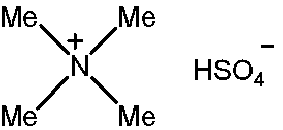
THF 0 ≥99 ≥99 0.2 0 KHSO4 0.1 Example 11 
THF 0 96 ≥99 0.5 0 KBr 0.1 Table 1-2 Component Other Than Main Component (Tetraalkylammonium Nitrite) Ammonium Salt Solvent H2O Content in a Solvent (wt%) Yield (%) Purity (%) Starting-Material Ammonium Salt (%) Potassium Nitrite (%) Potassium Salt (%) Example 12 
THF 0 93 ≥99 0.2 0.1 KC I 0.1 Example 13 
THF 0 95 ≥99 0.1 0 KBr 0.1 Example 14 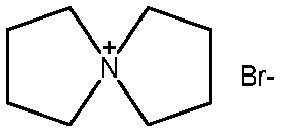
DMA 0 ≥99 ≥99 0.5 0.2 KBr 0.1 Example 15 
Et2O 0 ≥99 ≥99 0.5 0 KBr 0.2 Example 16 
EtOH 0 ≥99 ≥99 0.2 0.1 KBr 0.1 Example 17 
PrOH 0 ≥99 ≥99 0.1 0.1 KBr 0 Example 18 
iPrOH 0 ≥99 ≥99 0.5 0 KBr 0 Example 19 
ACTN 0 ≥99 ≥99 0.2 0.1 KBr 0.1
Claims (19)
- A method for producing a tetraalkylammonium nitrite, comprising step A of reacting, in a solvent, a tetraalkylammonium salt with a metal salt that is not a silver salt, to form a tetraalkylammonium nitrite and an insoluble metal salt.
- The method according to claim 1, wherein the metal salt is at least one metal nitrite selected from the group consisting of alkali metal nitrites and alkaline earth metal nitrites.
- The method according to claim 1 or 2, wherein a counter-anion of the tetraalkylammonium salt is at least one member selected from the group consisting of Cl-, OH-, BH4 -, HF2 -, Cl2Br-, Br3 -, ClO4 -, F-, BF4 -, Br-, I-, HSO4 -, CH3COO-, and PF6 -.
- The method according to claim 3, wherein the counter-anion of the tetraalkylammonium salt is at least one member selected from the group consisting of F-, BF4 -, Br-, I-, HSO4 -, CH3COO-, and PF6 -.
- The method according to any one of claims 1 to 4, wherein the solvent is at least one member selected from the group consisting of non-aromatic hydrocarbon solvents, aromatic hydrocarbon solvents, halogenated hydrocarbon solvents, ether solvents, ester solvents, nitrile solvents, sulfoxide solvents, amide solvents, ketone solvents, lower alcohol solvents, and aqueous solvents.
- The method according to claim 5, wherein the solvent is at least one polar solvent selected from the group consisting of ether solvents, amide solvents, ketone solvents, and lower alcohol solvents.
- The method according to claim 6, wherein the ether solvent is represented by formula: R-O-R, wherein Rs independently represent, in each occurrence, a hydrocarbon group, or may form a hydrocarbon chain such that these hydrocarbon groups are linked to each other.
- The method according to claim 6, wherein the amide solvent is at least one member selected from the group consisting of solvents represented by formula: R-N(-CORA)-R, wherein Rs independently represent, in each occurrence, a hydrocarbon group, or may form a hydrocarbon chain such that these hydrocarbon groups are linked to each other, and RA represents a hydrogen atom or an alkyl group.
- The method according to claim 6, wherein the ketone solvent is represented by formula: R-CO-R, wherein Rs independently represent, in each occurrence, a hydrocarbon group, or may form a hydrocarbon chain such that these hydrocarbon groups are linked to each other.
- The method according to claim 6, wherein the lower alcohol solvent is at least one member selected from the group consisting of solvents represented by formula: R-OH, wherein R represents a hydrocarbon group.
- The method according to any one of claims 1 to 10, the method producing a tetraalkylammonium nitrite represented by formula: R4N+NO2 -, wherein Rs, in each occurrence, are identical or different, and represent a C1-C10 alkyl group optionally having at least one substituent, or two or three Rs may be taken together with an adjacent nitrogen atom to form a nitrogen-containing C2-C20 heterocyclic ring optionally having at least one substituent,
wherein in step A, in the solvent, the tetraalkylammonium salt is reacted with the metal nitrite to form formula:
Mn+(X-)n,
the tetraalkylammonium salt is represented by formula: R4N+X-, wherein X- is at least one member selected from the group consisting of Cl-, OH-, BH4 -, HF2 -, Cl2Br-, Br3 -, ClO4 -, F-, BF4 -, Br-, I-, HSO4 -, CH3COO-, and PF6 -, preferably at least one member selected from the group consisting of F-, BF4 -, Br-, I-, HSO4 -, CH3COO-, and PF6 -, and R is as defined above,the metal nitrite is represented by formula: Mn+(NO2 -)n, wherein M represents an alkali metal or an alkaline earth metal, and n represents the number 1 or 2, andalphabetical symbols in formula: Mn+(X-)n are as defined above. - The method according to any one of claims 1 to 11, wherein the insoluble metal salt formed in step A has a solubility in water at 20°C of 1 g/100 g or less.
- The method according to any one of claims 1 to 12, further comprising step B of removing the insoluble metal salt formed in step A.
- The method according to claim 10, further comprising step C of removing the solvent.
- A tetraalkylammonium nitrite represented by formula: R4N+NO2 -, wherein two or three Rs are taken together with an adjacent nitrogen atom to form an optionally substituted, nitrogen-containing C2-C20 heterocyclic ring, and the remaining Rs, in each occurrence, are identical or different, and represent a C1-C10 alkyl group optionally having at least one substituent.
- A composition comprising a salt,
the salt comprising(a) a tetraalkylammonium nitrite, and at least one counter-cation selected from the group consisting of alkali metal nitrites and alkaline earth metal nitrites, and(b) at least one counter-anion selected from the group consisting of Cl-, OH-, BH4 -, HF2 -, Cl2Br-, Br3 -, ClO4 -, F-, BF4 -, Br-, I-, HSO4 -, CH3COO-, and PF6 -. - A composition comprising a salt,
the salt comprising(a) a tetraalkylammonium nitrite, and at least one counter-cation selected from the group consisting of alkali metal nitrites and alkaline earth metal nitrites, and(b) at least one counter-anion selected from the group consisting of F-, BF4-, Br-, I-, HSO4 -, CH3COO-, and PF6 -. - The composition according to claim 16 or 17, wherein the content of the salt is less than 1 mass%.
- The composition according to any one of claims 16 to 18, wherein the content of the counter-anion is less than 1 mass%.
Applications Claiming Priority (2)
| Application Number | Priority Date | Filing Date | Title |
|---|---|---|---|
| JP2018057442 | 2018-03-26 | ||
| PCT/JP2019/013035 WO2019189274A1 (en) | 2018-03-26 | 2019-03-26 | Tetraalkyl ammonium nitrite production method |
Publications (2)
| Publication Number | Publication Date |
|---|---|
| EP3778552A1 true EP3778552A1 (en) | 2021-02-17 |
| EP3778552A4 EP3778552A4 (en) | 2022-03-09 |
Family
ID=68059991
Family Applications (1)
| Application Number | Title | Priority Date | Filing Date |
|---|---|---|---|
| EP19774247.1A Withdrawn EP3778552A4 (en) | 2018-03-26 | 2019-03-26 | Tetraalkyl ammonium nitrite production method |
Country Status (5)
| Country | Link |
|---|---|
| US (1) | US20210053906A1 (en) |
| EP (1) | EP3778552A4 (en) |
| JP (2) | JP6696605B2 (en) |
| CN (1) | CN112189005A (en) |
| WO (1) | WO2019189274A1 (en) |
Family Cites Families (4)
| Publication number | Priority date | Publication date | Assignee | Title |
|---|---|---|---|---|
| US3121091A (en) * | 1960-03-03 | 1964-02-11 | Nalco Chemical Co | Quaternary imidazolium and imidazolinium bisulfites |
| US3175005A (en) | 1961-10-09 | 1965-03-23 | Armour & Co | Preparation of quaternary ammonium nitrites |
| JPH0830046B2 (en) * | 1987-12-18 | 1996-03-27 | 株式会社キレスト技研 | Method for producing diisopropyl ammonium nitrite |
| US20140256468A1 (en) * | 2013-03-05 | 2014-09-11 | Nike, Inc. | Method for dyeing golf balls and dyed golf balls |
-
2019
- 2019-03-26 EP EP19774247.1A patent/EP3778552A4/en not_active Withdrawn
- 2019-03-26 CN CN201980034970.4A patent/CN112189005A/en active Pending
- 2019-03-26 JP JP2019059293A patent/JP6696605B2/en not_active Expired - Fee Related
- 2019-03-26 WO PCT/JP2019/013035 patent/WO2019189274A1/en not_active Ceased
- 2019-03-26 US US17/041,261 patent/US20210053906A1/en not_active Abandoned
-
2020
- 2020-03-10 JP JP2020041061A patent/JP2020100666A/en active Pending
Also Published As
| Publication number | Publication date |
|---|---|
| US20210053906A1 (en) | 2021-02-25 |
| EP3778552A4 (en) | 2022-03-09 |
| JP2019172666A (en) | 2019-10-10 |
| CN112189005A (en) | 2021-01-05 |
| JP2020100666A (en) | 2020-07-02 |
| WO2019189274A1 (en) | 2019-10-03 |
| JP6696605B2 (en) | 2020-05-20 |
Similar Documents
| Publication | Publication Date | Title |
|---|---|---|
| EP3390371B1 (en) | Method for producing 2-[4-(4-chlorophenoxy)-2-(trifluoromethyl)phenyl]-1-(1,2,4-triazol-1-yl)propan-2-ol | |
| Kirk et al. | Photochemistry of diazonium salts. II. Synthesis of 2-fluoro-L-histidine and 2-fluorohistamine, and the halogen lability of 2-fluoroimidazoles | |
| CN112321395B (en) | Application of metalate/palladium compound catalytic reduction system in allyl removal reaction of allyl allyloxy naphthalene | |
| US2408096A (en) | Polyhydroxyamino compounds | |
| US20210053906A1 (en) | Tetraalkyl ammonium nitrite production method | |
| US3137705A (en) | Hydroxylamino compounds | |
| US3059030A (en) | Diketocyclobutenediol and alkali metal salts thereof | |
| US3317607A (en) | Chemical reduction of nitrosamines | |
| CN112694410A (en) | 3-amino-1-adamantanol and synthesis method thereof | |
| US3457302A (en) | Process for the preparation of tertiary amino acids | |
| EP0003052B1 (en) | Process for the preparation of 4-methyl-5-chloromethyl-imidazole | |
| US2917545A (en) | Preparation of n-substituted hydrazine derivatives | |
| EP3124653B1 (en) | Electroplating additive and preparation method for the same | |
| US2875243A (en) | Process for the production of 1-nitronaphthalene-6-sulfonic acid and 1-naphthylamine-7-sulfonic acid | |
| US2917522A (en) | Process for the production of alkali metal estrone sulfate salts | |
| TWI662017B (en) | Neutralization of acidic catalysts in the production of phenol | |
| US2831891A (en) | 2-hexyl-2 hydroxytridecanedioic acid | |
| Shine et al. | Ion radicals. XXIII. Reactions of the perylene cation radical | |
| US2047571A (en) | Process for preparing iron sulphate chloride | |
| US5750775A (en) | Sodium orthohydroxymandelate/phenol/water complex, preparation process and use for isolation of sodium orthohydroxymandelate | |
| US3260755A (en) | Preparation of aromatic disulfides | |
| US2788348A (en) | Diazotization of 3-amino-4, 5-bis-(aminomethyl)-2-methyl pyridine trihydrochloride with barium nitrite | |
| US3114784A (en) | Separation of xylene isomers with alkylidene-bis-benzamides | |
| CN105968058B (en) | A kind of 3,5- diaminostilbenes, 2,4- triazole hydrothermal synthesis methods | |
| US2490706A (en) | Manufacture of zinc nicotinyl fluosilicate |
Legal Events
| Date | Code | Title | Description |
|---|---|---|---|
| STAA | Information on the status of an ep patent application or granted ep patent |
Free format text: STATUS: THE INTERNATIONAL PUBLICATION HAS BEEN MADE |
|
| PUAI | Public reference made under article 153(3) epc to a published international application that has entered the european phase |
Free format text: ORIGINAL CODE: 0009012 |
|
| STAA | Information on the status of an ep patent application or granted ep patent |
Free format text: STATUS: REQUEST FOR EXAMINATION WAS MADE |
|
| 17P | Request for examination filed |
Effective date: 20201015 |
|
| AK | Designated contracting states |
Kind code of ref document: A1 Designated state(s): AL AT BE BG CH CY CZ DE DK EE ES FI FR GB GR HR HU IE IS IT LI LT LU LV MC MK MT NL NO PL PT RO RS SE SI SK SM TR |
|
| AX | Request for extension of the european patent |
Extension state: BA ME |
|
| DAV | Request for validation of the european patent (deleted) | ||
| DAX | Request for extension of the european patent (deleted) | ||
| A4 | Supplementary search report drawn up and despatched |
Effective date: 20220209 |
|
| RIC1 | Information provided on ipc code assigned before grant |
Ipc: C07D 209/68 20060101ALI20220203BHEP Ipc: C07D 487/10 20060101ALI20220203BHEP Ipc: C07D 207/06 20060101ALI20220203BHEP Ipc: C07C 211/63 20060101ALI20220203BHEP Ipc: C07C 209/00 20060101AFI20220203BHEP |
|
| RAP3 | Party data changed (applicant data changed or rights of an application transferred) |
Owner name: DAIKIN INDUSTRIES, LTD. |
|
| P01 | Opt-out of the competence of the unified patent court (upc) registered |
Effective date: 20230525 |
|
| STAA | Information on the status of an ep patent application or granted ep patent |
Free format text: STATUS: THE APPLICATION HAS BEEN WITHDRAWN |
|
| 18W | Application withdrawn |
Effective date: 20230810 |