EP3778302B1 - Stowable cargo guide for cargo roller trays - Google Patents
Stowable cargo guide for cargo roller trays Download PDFInfo
- Publication number
- EP3778302B1 EP3778302B1 EP19214487.1A EP19214487A EP3778302B1 EP 3778302 B1 EP3778302 B1 EP 3778302B1 EP 19214487 A EP19214487 A EP 19214487A EP 3778302 B1 EP3778302 B1 EP 3778302B1
- Authority
- EP
- European Patent Office
- Prior art keywords
- cargo
- guide block
- guide
- restraint
- rail
- Prior art date
- Legal status (The legal status is an assumption and is not a legal conclusion. Google has not performed a legal analysis and makes no representation as to the accuracy of the status listed.)
- Active
Links
Images






Classifications
-
- B—PERFORMING OPERATIONS; TRANSPORTING
- B64—AIRCRAFT; AVIATION; COSMONAUTICS
- B64D—EQUIPMENT FOR FITTING IN OR TO AIRCRAFT; FLIGHT SUITS; PARACHUTES; ARRANGEMENT OR MOUNTING OF POWER PLANTS OR PROPULSION TRANSMISSIONS IN AIRCRAFT
- B64D9/00—Equipment for handling freight; Equipment for facilitating passenger embarkation or the like
- B64D9/003—Devices for retaining pallets or freight containers
-
- B—PERFORMING OPERATIONS; TRANSPORTING
- B60—VEHICLES IN GENERAL
- B60P—VEHICLES ADAPTED FOR LOAD TRANSPORTATION OR TO TRANSPORT, TO CARRY, OR TO COMPRISE SPECIAL LOADS OR OBJECTS
- B60P7/00—Securing or covering of load on vehicles
- B60P7/06—Securing of load
- B60P7/13—Securing freight containers or forwarding containers on vehicles
-
- B—PERFORMING OPERATIONS; TRANSPORTING
- B60—VEHICLES IN GENERAL
- B60P—VEHICLES ADAPTED FOR LOAD TRANSPORTATION OR TO TRANSPORT, TO CARRY, OR TO COMPRISE SPECIAL LOADS OR OBJECTS
- B60P1/00—Vehicles predominantly for transporting loads and modified to facilitate loading, consolidating the load, or unloading
- B60P1/52—Vehicles predominantly for transporting loads and modified to facilitate loading, consolidating the load, or unloading using rollers in the load-transporting element
-
- B—PERFORMING OPERATIONS; TRANSPORTING
- B60—VEHICLES IN GENERAL
- B60P—VEHICLES ADAPTED FOR LOAD TRANSPORTATION OR TO TRANSPORT, TO CARRY, OR TO COMPRISE SPECIAL LOADS OR OBJECTS
- B60P1/00—Vehicles predominantly for transporting loads and modified to facilitate loading, consolidating the load, or unloading
- B60P1/64—Vehicles predominantly for transporting loads and modified to facilitate loading, consolidating the load, or unloading the load supporting or containing element being readily removable
- B60P1/6418—Vehicles predominantly for transporting loads and modified to facilitate loading, consolidating the load, or unloading the load supporting or containing element being readily removable the load-transporting element being a container or similar
- B60P1/649—Guiding means for the load-transporting element
-
- B—PERFORMING OPERATIONS; TRANSPORTING
- B64—AIRCRAFT; AVIATION; COSMONAUTICS
- B64D—EQUIPMENT FOR FITTING IN OR TO AIRCRAFT; FLIGHT SUITS; PARACHUTES; ARRANGEMENT OR MOUNTING OF POWER PLANTS OR PROPULSION TRANSMISSIONS IN AIRCRAFT
- B64D9/00—Equipment for handling freight; Equipment for facilitating passenger embarkation or the like
- B64D2009/006—Rollers or drives for pallets of freight containers, e.g. PDU
Definitions
- the present disclosure relates generally to cargo handling systems, and more specifically, to a stowable cargo guide, which can be mounted to a cargo system roller tray.
- Cargo handling systems such as those used by aircraft for transport of containerized cargo or pallets, also referred to as unit load devices (ULDs), typically include longitudinal trays containing transport rollers positioned along a cargo deck floor to facilitate movement of the ULDs relative to the deck floor.
- the cargo handling systems may include cargo guides configured to provide longitudinal guidance and/or lateral restraint of ULDs through the cargo deck.
- Conventional cargo handling systems are typically designed to accommodate a particular size ULD. However, it may be desirable to provide longitudinal guidance, lateral restraint, and/or vertical restraint of different size ULDs and/or of ULDs translating in varying locations along the cargo bay floor.
- guidance and/or restraint provided along a longitudinal tray may be desirable where one or both of the longitudinal edges of the ULDs are positioned proximate the longitudinal tray.
- Cargo handling systems are disclosed in FR 2918641 , FR2918640 , US6729818 and GB2436715 .
- a stowable cargo guide is provided as defined by claim 1.
- the securement clip may be biased in a first circumferential direction and the first vertical restraint may be biased in a second circumferential direction opposite the first circumferential direction.
- the guide block may be biased in the second circumferential direction, and engagement between the hook end of the securement clip and the laterally extending protrusion of the tray base may restrict rotation of the guide block in the second circumferential direction.
- a first restraint latch may be located in a first latch channel defined by the guide block and may be biased toward the first restraint opening.
- a second vertical restraint may be located in a second restraint opening defined by the guide block and may be configured to rotate relative to the guide block.
- a second restraint latch may be located in a second latch channel defined by the guide block and may be biased toward the second restraint opening.
- the securement clip may be located between the first restraint opening and the second restraint opening.
- a cargo handling system is provided as defined by claim 6.
- the guide block In the stowed position, the guide block may be located below a conveyance plane of the roller. In the raised position, the guide block may be located above the conveyance plane of the roller. In various embodiments, in the raised position, a guide face of the guide block may vertically overlap a volume defined by the first rail and the second rail of the roller tray.
- a cargo handling system is also provided as defined by claim 12.
- tail refers to the direction associated with the tail (i.e., the back end) of an aircraft, or generally, to the direction of exhaust of a gas turbine engine.
- forward refers to the direction associated with the nose (i.e., the front end) of an aircraft, or generally, to the direction of flight or motion.
- Cargo handling systems may comprise stowable cargo guides configured to guide and restrain the movement of ULDs or other cargo across the floor or "cargo deck" of an aircraft.
- the stowable cargo guides may be coupled to roller trays located along the cargo deck.
- the stowable cargo guides are configured to be rotated between a stowed position, wherein the stowable cargo guides are located below the conveyance plane of the roller tray rollers such that the stowable cargo guides do not contact ULDs located over the roller tray, and a raised position, wherein the stowable cargo guides are located above the conveyance plane of the roller tray rollers to guide and restrain movement of ULDs.
- the stowable cargo guides may be raised to guide and restrain smaller width ULDs and rotated to the stowed position so as not to interfere with the conveyance of larger width ULDs.
- the stowable cargo guides may be located anywhere guidance and restraint of ULDs is desired.
- the stowable cargo guides may be located throughout the cargo deck.
- an operator may select which stowable cargo guides to rotate the raised position based on where guidance and restraint of ULDs is desired.
- the stowable cargo guides may provide restraint and guidance regardless of ULD size.
- Aircraft 10 includes a cargo compartment 12.
- a cargo door 14 provides access to cargo compartment 12 from outside aircraft 10.
- Cargo 16 e.g., pallets or ULDs
- Cargo 16 may be loaded and unloaded through cargo door 14 and onto a cargo deck 18 of aircraft 10.
- cargo handling system 90 may be used to load, move, and unload cargo 16 from cargo deck 18.
- Cargo handling system 90 includes components configured to facilitate translation of cargo 16 along cargo deck 18.
- cargo handling system 90 may include ball mats (or caster panels) 92, roller trays (or caster trays) 94, and guide rails 96.
- ball mats 92 may be located proximate cargo door 14, with momentary reference to FIG. 1 .
- Roller trays 94 which each include one or more rollers 98, may be oriented in a longitudinal direction.
- Cargo handling system 90 may further include one or more power drive units (PDUs) 100 configured to propel cargo 16 in a desired direction.
- PDUs 100 may be located in ball mats 92, roller trays 94, and/or in any other desired location along cargo deck 18.
- Guide rails 96 may be located along the edges of cargo deck 18. Guide rails 96 may restrict lateral and vertical translation of cargo 16.
- lateral refers to directions perpendicular to the longitudinal direction (i.e., directions parallel to the y-axis on the provided xyz axes).
- vertical refers to directions perpendicular to cargo deck 18 (i.e., direction perpendicular to the xy-plane and/or parallel to the z-axis on the provided xyz axes).
- Cargo handling system 90 may include one or more stowable cargo guides 110.
- stowable cargo guides 110 may be mounted to one or more of the roller trays 94.
- To handle cargo 16 of width W1, stowable cargo guides 110 may be positioned in a stowed position. In the stowed position, cargo 16 may translate over roller trays 94 without contacting stowable cargo guides 110.
- cargo handling system 90 is shown with stowable cargo guides 110 in a raised position.
- stowable cargo guides 110 may be rotated to a raised positioned to facilitate and control movement of cargo 102 having a width W2.
- stowable cargo guides 110 may restrict the lateral and/or vertical movement of cargo 102.
- cargo handling system 90 may include guide rails 96 to guide, restrain, and/or secure cargo 16 having width W1 and stowable cargo guides 110 to guide, restrain, and/or secure the cargo 102 having width W2 (i.e., a width less than width W1).
- stowable cargo guides 110 may allow cargo handling system 90 to accommodate and support cargo of varying widths.
- stowable cargo guides 110 may allow cargo handling system 90 to accommodate and support cargo at varying locations (laterally) across the cargo deck 18.
- a first group of stowable cargo guides 110a may be in the raised position to provide longitudinal guidance and lateral restraint to cargo 103 having width W3.
- the first group of stowable cargo guides 110a may also provide vertical restraint of cargo 103.
- a second group of stowable cargo guides 110b may be in stowed position.
- the second group of stowable cargo guides 110b may be positioned below the conveyance plane of roller trays 94, such that the second group of stowable cargo guides 110b do not contact or otherwise interfere with conveyance of cargo 103.
- cargo handling system 90 may include any number of stowable cargo guides 110 coupled to roller trays 94 at any desired location. Which stowable cargo guides 110 are in the raised position and which stowable cargo guides 110 are in the stowed position may be determined (e.g., by an operator) based on the width of the cargo being loaded/unloaded and/or based on where restraint and guidance is desired. For example, while stowable cargo guides 110 in FIG.
- cargo handling system 90 may include stowable cargo guides 110, which can be raised to guide and restrain cargo of larger width (e.g., width W1 or width W3) provided that that cargo is positioned such that it needs guidance and restraint above a roller tray.
- stowable cargo guides 110 are positioned to provide a cargo handling system having customizable longitudinal guidance, lateral restraint, and/or vertical restraint throughout the cargo deck.
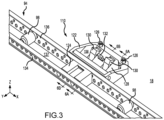
- stowable cargo guide 110 of cargo handling system 90 is illustrated in the stowed position.
- stowable cargo guide 110 includes a housing 122 and a tray base 124.
- Housing 122 may be coupled to cargo deck 18 via one or more fastener(s) 126.
- fasteners 126 may include a lift nut 125 in ramped engagement with a shear plunger 127.
- Fasteners 126 may also include a tension stud 129.
- Lift nut 125, shear plunger 127, and tension stud 129 may be configured to secure housing 122 to cargo deck 18.
- fasteners 126 are illustrated as seat track (or floor) fitting fasteners, it is further contemplated that any suitable securement device may be employed to secure housing 122 to cargo deck 18.
- fasteners 126 may comprise rivets, screws, clips, etc.
- housing 122 and tray base 124 may be secured to a roller tray 94 of cargo handling system 90.
- tray base 124 may be located between a first rail 134 and a second rail 136 of roller tray 94.
- First and second rails 134, 136 may extend vertically from a floor 137 of roller tray 94.
- First and second rails 134, 136 and floor 137 may be oriented in the longitudinal direction.
- One or more rollers 98 of roller tray 94 may be located between first rail 134 and second rail 136.
- one or more fasteners 138 may secure housing 122 and tray base 124 to first and second rails 134, 136.
- Fasteners 138 may comprise screws, nuts and bolts, clips, or any other suitable securement device. Fasteners 138 may extend through holes 140 defined by first rail 134, holes 142 defined by tray base 124, holes 144 defined by second rail 136, and holes 146 defined by housing 122. In various embodiments, fasteners 138 may be in threaded engagement with housing 122.
- stowable cargo guide 110 further includes a guide block 128.
- guide block 128 In the stowed position, guide block 128 may be located in a block opening 118 defined by housing 122. Guide block 128 is configured to rotate relative to housing 122.
- a shaft 150 may be located through guide block 128 and housing 122. Shaft 150 may facilitate rotation of guide block 128 between the stowed position ( FIG. 3 ) and the raised position ( FIG. 7A ).
- guide block 128 may be biased toward the stowed position.
- one or more torsion springs 152 may bias guide block 128 toward the stowed position.
- torsion springs 152 may bias guide block 128 in a circumferential direction C2 ( FIG. 6A ).
- a first surface 154 of guide block 128 may be oriented toward the floor (i.e., toward cargo deck 18) and a second surface 156 of guide block 128 may be oriented away from cargo deck 18.
- Second surface 156 is oriented generally away from first surface 154.
- first surface 154 of guide block 128 may be oriented away from cargo deck 18 and second surface 156 may be oriented toward cargo deck 18 and the floor 137 of roller tray 94.
- stowable cargo guide 110 further includes one or more vertical restraint(s) 130.
- Vertical restraints 130 are configured to rotate relative to guide block 128.
- vertical restraints 130 may be generally "L-shaped".
- vertical restraints 130 may include a first portion 131 and second portion 133 extending from first portion 131. In the deployed position ( FIG. 8C ), first portion 131 may extend in a generally vertical direction and second portion 133 may extend laterally from first portion 131.
- a shaft 160 may be located through a shaft hole 161 defined by guide block 128 and a shaft hole 163 defined by vertical restraint 130.
- Shaft 160 may facilitate rotation of vertical restraints 130 between the non-deployed position ( FIGs. 3 and 7A ) and the deployed position ( FIGs. 8A , 8B , and 8C ).
- vertical restraints 130 may be biased toward the non-deployed position.
- one or more torsion springs 162 may bias vertical restraints 130 toward the non-deployed position. Stated differently, torsion springs 162 may bias vertical restraints 130 in circumferential direction C2 ( FIG. 6A ). In the non-deployed position, vertical restraints 130 may be located in restraint openings 164 defined by guide block 128.
- cargo 102 in FIG. 2B may have a groove configured to receive end 166 of deployed vertical restraints 130. Locating end 166 in the groove defined by cargo 102 may restrict vertical movement of cargo 102.
- the radially inward facing surface 167 of vertical restraint 130 may contact the surface of the cargo 102 to react vertical loads and/or generate a reaction force against cargo 102, thereby blocking and/or reducing vertical translation of cargo 102.
- torsion springs 162 may be configured to bias end 166 of vertical restraints 130 circumferentially away from guide face 168 of guide block 128.
- Stowable cargo guide 110 may include one or more restraint latches 180. Restraint latches 180 are located, at least partially, in latch channels 182 defined by guide block 128. Restraint latches 180 may be biased toward restraint openings 164 (e.g., in a longitudinal direction, parallel to the axis of rotation of vertical restraints 130). Restraint latches 180 may be configured to maintain vertical restraints 130 in the deployed position. For example, when vertical restraints 130 are in the deployed position, restraint latches 180 may generate a reaction force against a surface 184 of vertical restraints 130, thereby blocking vertical restraints 130 from rotating to the non-deployed position.
- the stowable cargo guide 110 further includes a securement clip 132.
- Securement clip 132 is located in a clip opening 148 defined by guide block 128.
- securement clip 132 may be located between restraint openings 164.
- Securement clip 132 is configured to rotate relative to guide block 128.
- a shaft 170 may be located through a shaft hole 172 defined by guide block 128 and a shaft hole 174 defined by securement clip 132. Shaft 170 may facilitate rotation of securement clip 132 relative to guide block 128.
- securement clip 132 is configured to engage tray base 124 to secure guide block 128 in the raised position.
- a hook end 176 of securement clip 132 is biased toward tray base 124.
- one or more torsion springs 178 may bias hook end 176 of securement clip 132 toward a laterally extending protrusion 190, with momentary reference to FIG. 6A , of tray base 124. Stated differently, torsion springs 178 bias hook end 176 of securement clip 132 in a first circumferential direction C1, with momentary reference to FIG. 7C , toward laterally extending protrusion 190 of tray base 124.
- FIGs. 6A and 6B cross-section views of stowable cargo guide 110 taken along the lines 6A-6A and 6B-6B, respectively, in FIG. 3 , are illustrated with stowable cargo guide 110 in the stowed position and vertical restraints 130 in the non-deployed position.
- guide block 128 in the stowed position, guide block 128 is located in block opening 118 and first surface 154 of guide block is oriented toward cargo deck 18.
- guide face 168 of guide block 128 is distal to roller tray 94 and shaft 150 is located laterally between roller tray 94 and guide face 168.
- end 166 of vertical restraint 130 may be located in restraint opening 164. Stated differently, in the non-deployed position, end 166 of vertical restraint 130 may be positioned between first surface 154 and second surface 156 of guide block 128. Stated yet another way, in the non-deployed position, shaft 160 is located between end 166 of vertical restraint 130 and guide face 168 of guide block 128.
- hook end 176 of securement clip 132 extends beyond (i.e., protrudes from) second surface 156 of guide block 128. In the stowed position, hook end 176 of securement clip 132 may be oriented away from cargo deck 18 with shaft 170 positioned vertically between hook end 176 and cargo deck 18 and/or vertically between hook end 176 and first surface 154 of guide block 128.
- stowable cargo guide 110 is configured such that the components of stowable cargo guide 110 (e.g., housing 122, tray base 124, guide block 128, vertical restraints 130, and securement clip 132) are each located below the conveyance plane 200 of roller 98.
- the conveyance plane refers to a horizontal plane (i.e., an xy-plane perpendicular to the z-axis) tangent to the point on roller 98 that is farthest from cargo deck 18 and floor 137 of roller tray 94.
- housing 122, tray base 124, guide block 128, vertical restraints 130, and securement clip 132 are each located between conveyance plane 200 and cargo deck 18. Stated differently, the vertical height of housing 122, of tray base 124, of guide block 128, of vertical restraints 130, and of securement clip 132 is less than the distance D1 between conveyance plane 200 and cargo deck 18. In this regard, when stowable cargo guide 110 is in the stowed position, housing 122, tray base 124, guide block 128, vertical restraints 130, and securement clip 132 do not contact cargo located on roller 98 and/or traveling along conveyance plane 200.
- stowable cargo guide 110 is illustrated in the raised position with vertical restraints 130 in the non-deployed position.
- stowable cargo guide 110 may be rotated from the stowed position ( FIG. 3 ) to the raised position by rotating guide block 128 relative to housing 122.
- guide block 128 may pivot about shaft 150.
- first surface 154 of guide block is oriented away from cargo deck 18 and second surface 156 is oriented toward cargo deck 18 and floor 137 of roller tray 94.
- guide face 168 of guide block 128 may vertically overlap a volume 171 defined by first rail 134 and second rail 136 of roller tray 94.
- rollers 98 are located in the volume 171 between first rail 134 and second rail 136.
- second rail 136 of roller tray 94 may be located laterally between guide face 168 and shaft 150.
- guide block 128 may include slanted surfaces 202a and 202b. Slanted surfaces 202a, 202b may extend from guide face 168. Slanted surfaces 202a and 202b are oriented at a non-normal angle relative to guide face 168.
- an angle theta ( ⁇ ) formed by guide face 168 and slanted surface 202a is greater than 90°.
- angle theta ( ⁇ ) may be between 91° and 179°.
- angle theta ( ⁇ ) may be between 100° and 150°.
- the angle formed by guide face 168 and slanted surface 202b is equal to angle theta ( ⁇ ).
- Slanted surfaces 202a, 202b may be configured to align cargo that is laterally misaligned. In this regard, cargo may shift in the lateral direction as the cargo translates along slanted surface 202a or slanted surface 202b toward guide face 168.
- vertical restraints 130 in the raised position, remain in the non-deployed position, such that end 166 of vertical restraint 130 is located in restraint opening 164.
- end 166 of vertical restraint 130 may be positioned between first surface 154 and second surface 156 of guide block 128 when guide block 128 is in the raised position.
- securement clip 132 in the raised position, securement clip 132 may be oriented toward cargo deck 18 such that hook end 176 is positioned vertically between shaft 170 and cargo deck 18 and/or such that second surface 156 of guide block 128 is positioned vertically between hook end 176 of securement clip 32 and shaft 170.
- the hook end 176 of securement clip 132 is configured to engage laterally extending protrusion 190 of tray base 124, when stowable cargo guide 110 is in the raised position.
- stowable cargo guide 110 may be rotated (e.g., by an operator) to the raised position by rotating guide block 128 about shaft 150.
- second surface 156 of guide block 128 and hook end 176 of securement clip 132 rotate toward laterally extending protrusion 190 of tray base 124.
- hook end 176 contacts laterally extending protrusion 190.
- securement clip 132 rotates in a second circumferential direction, opposite first circumferential direction C1 and hook end 176 rotates away from laterally extending protrusion 190.
- hook end 176 clearing (i.e., moving away from, without contact or substantial contact) laterally extending protrusion 190, securement clip 132 rotates in first circumferential direction C1 and hook end 176 rotates toward second rail 136.
- torsion springs 178 biases hook end 176 toward second rail 136 and housing 122, in response to hook end 176 translating to a position that is vertically offset from laterally extending protrusion 190.
- securement clip 132 may be biased in first circumferential direction C1 and guide block 128 and vertical restraints 130 may be biased in second circumferential direction C2 ( FIG. 6A ).
- a reaction force generated between hook end 176 and laterally extending protrusion 190 tends to prevent guide block 128 from rotating to the stowed position.
- the reaction force generated between hook end 176 and laterally extending protrusion 190 may be greater than the force applied by torsion springs 152 ( FIG. 5 ).
- a force may be applied (e.g., by an operator) to a back surface 216 of securement clip 132.
- Securement clip 132 rotates in the second circumferential direction C2, in response to the force applied to back surface 216 exceeding the biasing force applied by torsion springs 178, thereby removing the interference between hook end 176 and laterally extending protrusion 190 and allowing the biasing force applied by torsion springs 152 to rotate guide block 128 about shaft 150.
- stowable cargo guide 110 is configured such that in the raised position, guide block 128 is located above the conveyance plane 200 of roller 98.
- conveyance plane 200 is located vertically between guide block 128 and cargo deck 18, when stowable cargo guide 110 is in the raised position.
- guide block 128 may contact cargo 102 ( FIG. 2B ) located over cargo deck 18 to guide the longitudinal translation and/or restrict the lateral translation of cargo 102.
- stowable cargo guide 110 is illustrated in the raised position with vertical restraints 130 in the deployed position.
- vertical restraints 130 may be rotated from the non-deployed position ( FIGs. 3 and 7A ) to the deployed position by rotating vertical restraints 130 relative to guide block 128.
- vertical restraints 130 may pivot about shaft 160.
- end 166 of vertical restraint 130 is located outside restraint opening 164.
- guide block 128 is located vertically between vertical restraints 130 and tray base 124.
- end 166 may extend laterally from guide face 168 of guide block 128 such that guide face 168 is located laterally between end 166 of vertical restraints 130 and shaft 160.
- Vertical restraints 130 extending laterally beyond guide face 168 tends to allow vertical restraints 130 to be located within grooves defined by cargo 102 ( FIG. 2B ).
- the longitudinal distance between vertical restraints 130 may be selected to increase a likelihood that at least one of the vertical restraints 130 will contact cargo 102, thereby restricting vertical translation of cargo 102.
- Torsion springs 162 may be configured to bias vertical restraints 130 toward the non-deployed position.
- vertical restraints 130 may be rotated to the deployed position, in response a force being applied (e.g., by an operator) to vertical restraints 130 that is greater than the biasing force of torsion springs 162.
- Vertical restraints 130 may be maintained in the deployed position by restraint latches 180.
- restraint latches 180 In the deployed position, at least a portion of vertical restraints 130 is located between guide face 168 of guide block 128 and restraint latches 180.
- restraint latches 180 generate a reaction force with surface 184 of vertical restraints 130, thereby preventing vertical restraints 130 from rotating to the non-deployed position.
- vertical restraints 130 may be rotated (e.g., by an operator) to the deployed position by rotating vertical restraints 130 about shaft 160. As vertical restraints 130 rotate, vertical restraints 130 rotate circumferentially toward restraint latches 180 and guide face 168 of guide block 128. In response to the rotation of vertical restraints 130, vertical restraints 130 contact restraint latches 180. In response to the force applied (e.g., by an operator) to vertical restraints 130 exceeding the biasing force applied to restraint latches 180, restraint latches 180 translate longitudinally into latch channels 182.
- restraint latches 180 In response to surface 184 of vertical restraints 130 clearing (i.e., moving away from, without contact or substantial contact) restraint latches 180, restraint latches 180 translate out latch channels 182, thereby generating a reaction force with surface 184 that prevents vertical restraints 130 from rotating to the non-deployed position.
- the interference between surface 184 and restraint latches 180 prevents the biasing force applied by torsion springs 162 ( FIG. 5 ) from rotating vertical restraints 130 to the non-deployed position.
- a force may be applied (e.g., by an operator) to restraint latches 180, thereby forcing restraint latches 180 into latch channels 182 and removing the interference between surface 184 and restraint latches 180. Removing the interference between surface 184 and restraint latches 180 allows the biasing force of torsion springs 162 to rotate vertical restraints 130 about shaft 160.
- an actuation device may be operably coupled to restraint latches 180.
- the actuation device may be configured to translate restraint latches 180 into latch channels 182, in response to guide block 128 rotating from the raised position to the stowed position (e.g., in response to rotation of guide block 128 about shaft 150 and into block opening 118). In this regard, the actuation device may reduce occurrences of vertical restraints 130 being in the deployed position, when guide block 128 is in the stowed position.
- references to “one embodiment”, “an embodiment”, “various embodiments”, etc. indicate that the embodiment described may include a particular feature, structure, or characteristic, but every embodiment may not necessarily include the particular feature, structure, or characteristic. Moreover, such phrases are not necessarily referring to the same embodiment.
Landscapes
- Engineering & Computer Science (AREA)
- Transportation (AREA)
- Mechanical Engineering (AREA)
- Aviation & Aerospace Engineering (AREA)
- Vehicle Step Arrangements And Article Storage (AREA)
- Fittings On The Vehicle Exterior For Carrying Loads, And Devices For Holding Or Mounting Articles (AREA)
Description
- The present disclosure relates generally to cargo handling systems, and more specifically, to a stowable cargo guide, which can be mounted to a cargo system roller tray.
- Cargo handling systems, such as those used by aircraft for transport of containerized cargo or pallets, also referred to as unit load devices (ULDs), typically include longitudinal trays containing transport rollers positioned along a cargo deck floor to facilitate movement of the ULDs relative to the deck floor. The cargo handling systems may include cargo guides configured to provide longitudinal guidance and/or lateral restraint of ULDs through the cargo deck. Conventional cargo handling systems are typically designed to accommodate a particular size ULD. However, it may be desirable to provide longitudinal guidance, lateral restraint, and/or vertical restraint of different size ULDs and/or of ULDs translating in varying locations along the cargo bay floor. For example, guidance and/or restraint provided along a longitudinal tray may be desirable where one or both of the longitudinal edges of the ULDs are positioned proximate the longitudinal tray. Cargo handling systems are disclosed in
FR 2918641 FR2918640 US6729818 andGB2436715 - A stowable cargo guide is provided as defined by
claim 1. - deleted
- In various embodiments, the securement clip may be biased in a first circumferential direction and the first vertical restraint may be biased in a second circumferential direction opposite the first circumferential direction. In various embodiments, the guide block may be biased in the second circumferential direction, and engagement between the hook end of the securement clip and the laterally extending protrusion of the tray base may restrict rotation of the guide block in the second circumferential direction.
- In various embodiments, a first restraint latch may be located in a first latch channel defined by the guide block and may be biased toward the first restraint opening. In various embodiments, a second vertical restraint may be located in a second restraint opening defined by the guide block and may be configured to rotate relative to the guide block. A second restraint latch may be located in a second latch channel defined by the guide block and may be biased toward the second restraint opening.
- In various embodiments, the securement clip may be located between the first restraint opening and the second restraint opening.
- A cargo handling system is provided as defined by
claim 6. - In the stowed position, the guide block may be located below a conveyance plane of the roller. In the raised position, the guide block may be located above the conveyance plane of the roller. In various embodiments, in the raised position, a guide face of the guide block may vertically overlap a volume defined by the first rail and the second rail of the roller tray.
- deleted
- deleted
- deleted
- deleted
- A cargo handling system is also provided as defined by
claim 12. - deleted
- The foregoing features and elements may be combined in various combinations without exclusivity, unless expressly indicated herein otherwise. These features and elements as well as the operation of the disclosed embodiments will become more apparent in light of the following description and accompanying drawings.
- The subject matter of the present disclosure is particularly pointed out and distinctly claimed in the concluding portion of the specification. A more complete understanding of the present disclosure, however, may best be obtained by referring to the detailed description and claims when considered in connection with the drawing figures.
-
FIG. 1 illustrates an axonometric view of an aircraft being loaded with cargo, in accordance with various embodiments; -
FIG. 2A illustrates a top down view of a ULD located on a cargo handling system with the stowable cargo guides of the cargo handling system in a stowed position, in accordance with various embodiments; -
FIG. 2B illustrates a top down view of a ULD located on a cargo handling system with the stowable cargo guides of the cargo handling system in a raised position, in accordance with various embodiments; -
FIG. 2C illustrates a top down view of a ULD located on a cargo handling system with a first group of the stowable cargo guides of the cargo handling system in a raised position and a second group of the stowable cargo guides of the cargo handling system in a stowed position, in accordance with various embodiments; -
FIG. 3 illustrates an axonometric view of a stowable cargo guide mounted to a roller tray and in a stowed position, in accordance with various embodiments; -
FIG. 4 illustrates an assembly view for mounting a stowable cargo guide to a roller tray, in accordance with various embodiments; -
FIG. 5 illustrates an exploded view of a stowable cargo guide, in accordance with various embodiments; -
FIGs. 6A and 6B illustrate cross-section views, taken along thelines 6A-6A and 6B-6B, respectively, inFIG. 3 , of a stowable cargo guide mounted to a roller tray and in a stowed position, in accordance with various embodiments; -
FIG. 7A illustrates an axonometric view of a stowable cargo guide mounted to a roller tray and in a raised position, in accordance with various embodiments; -
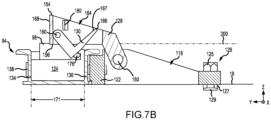
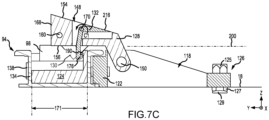
FIGs. 7B and7C illustrate cross-section views, taken along thelines 7B-7B and 7C-7C, respectively, inFIG. 7A , of a stowable cargo guide mounted to a roller tray and in a raised position, in accordance with various embodiments; -
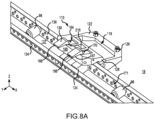
FIGs. 8A and8B illustrate axonometric views of a stowable cargo guide mounted to a roller tray and in the raised position with the vertical restraints of the stowable cargo guide in a deployed position, in accordance with various embodiments; and -
FIG. 8C illustrates a cross-section view, taken along theline 8C-8C inFIG. 8B , of a stowable cargo guide mounted to a roller tray and in the raised portion with the vertical restraints of the stowable cargo guide in a deployed position, in accordance with various embodiments. - The detailed description of various embodiments herein makes reference to the accompanying drawings, which show various embodiments by way of illustration. While these various embodiments are described in sufficient detail to enable those skilled in the art to practice the disclosure, it should be understood that other embodiments may be realized and that logical mechanical changes may be made without departing from the scope of the invention as defined by the claims. Thus, the detailed description herein is presented for purposes of illustration only and not of limitation. For example, the steps recited in any of the method or process descriptions may be executed in any order and are not necessarily limited to the order presented. Furthermore, any reference to singular includes plural embodiments, and any reference to more than one component or step may include a singular embodiment or step. Also, any reference to attached, fixed, connected, or the like may include permanent, removable, temporary, partial, full, and/or any other possible attachment option. Additionally, any reference to without contact (or similar phrases) may also include reduced contact or minimal contact.
- Cross hatching lines may be used throughout the figures to denote different parts but not necessarily to denote the same or different materials. Throughout the present disclosure, like reference numbers denote like elements. Accordingly, elements with like element numbering may be shown in the figures, but may not necessarily be repeated herein for the sake of clarity.
- As used herein, "aft" refers to the direction associated with the tail (i.e., the back end) of an aircraft, or generally, to the direction of exhaust of a gas turbine engine. As used herein, "forward" refers to the direction associated with the nose (i.e., the front end) of an aircraft, or generally, to the direction of flight or motion.
- Cargo handling systems, as disclosed herein, may comprise stowable cargo guides configured to guide and restrain the movement of ULDs or other cargo across the floor or "cargo deck" of an aircraft. In accordance with various embodiments, the stowable cargo guides may be coupled to roller trays located along the cargo deck. The stowable cargo guides are configured to be rotated between a stowed position, wherein the stowable cargo guides are located below the conveyance plane of the roller tray rollers such that the stowable cargo guides do not contact ULDs located over the roller tray, and a raised position, wherein the stowable cargo guides are located above the conveyance plane of the roller tray rollers to guide and restrain movement of ULDs. In this regard, the stowable cargo guides may be raised to guide and restrain smaller width ULDs and rotated to the stowed position so as not to interfere with the conveyance of larger width ULDs. In accordance with various embodiments, the stowable cargo guides may be located anywhere guidance and restraint of ULDs is desired. In this regard, the stowable cargo guides may be located throughout the cargo deck. During a loading event, an operator may select which stowable cargo guides to rotate the raised position based on where guidance and restraint of ULDs is desired. In this regard, the stowable cargo guides may provide restraint and guidance regardless of ULD size.
- With reference to
FIG. 1 , anaircraft 10 is illustrated.Aircraft 10 includes acargo compartment 12. Acargo door 14 provides access tocargo compartment 12 fromoutside aircraft 10. Cargo 16 (e.g., pallets or ULDs) may be loaded and unloaded throughcargo door 14 and onto acargo deck 18 ofaircraft 10. - With reference to
FIG. 2A , acargo handling system 90 is illustrated. In accordance with various embodiments,cargo handling system 90 may be used to load, move, and unloadcargo 16 fromcargo deck 18.Cargo handling system 90 includes components configured to facilitate translation ofcargo 16 alongcargo deck 18. For example,cargo handling system 90 may include ball mats (or caster panels) 92, roller trays (or caster trays) 94, and guide rails 96. In various embodiments,ball mats 92 may be locatedproximate cargo door 14, with momentary reference toFIG. 1 .Roller trays 94, which each include one ormore rollers 98, may be oriented in a longitudinal direction. As used herein, the term "longitudinal" refers to forward and aft directions (i.e., a direction parallel to the x-axis on the provided xyz axes). In this regard,roller trays 94 may facilitate forward and aft translation ofcargo 16.Cargo handling system 90 may further include one or more power drive units (PDUs) 100 configured to propelcargo 16 in a desired direction.PDUs 100 may be located inball mats 92,roller trays 94, and/or in any other desired location alongcargo deck 18.Guide rails 96 may be located along the edges ofcargo deck 18.Guide rails 96 may restrict lateral and vertical translation ofcargo 16. As used herein, the term "lateral" refers to directions perpendicular to the longitudinal direction (i.e., directions parallel to the y-axis on the provided xyz axes). As used herein, the term "vertical" refers to directions perpendicular to cargo deck 18 (i.e., direction perpendicular to the xy-plane and/or parallel to the z-axis on the provided xyz axes). -
Cargo handling system 90 may include one or more stowable cargo guides 110. In various embodiments, stowable cargo guides 110 may be mounted to one or more of theroller trays 94. To handlecargo 16 of width W1, stowable cargo guides 110 may be positioned in a stowed position. In the stowed position,cargo 16 may translate overroller trays 94 without contacting stowable cargo guides 110. - With reference to
FIG. 2B ,cargo handling system 90 is shown with stowable cargo guides 110 in a raised position. In accordance with various embodiments, stowable cargo guides 110 may be rotated to a raised positioned to facilitate and control movement ofcargo 102 having a width W2. In the raised position, stowable cargo guides 110 may restrict the lateral and/or vertical movement ofcargo 102. With combined reference toFIGs. 2A and2B , in accordance with various embodiments,cargo handling system 90 may includeguide rails 96 to guide, restrain, and/orsecure cargo 16 having width W1 and stowable cargo guides 110 to guide, restrain, and/or secure thecargo 102 having width W2 (i.e., a width less than width W1). For example, operators ofcargo handling system 90 may rotate stowable cargo guides 110 to the stowed position for loading and unloading cargo having width W1 and to the raised position for loading cargo having width W2. In this regard, stowable cargo guides 110 may allowcargo handling system 90 to accommodate and support cargo of varying widths. In addition, stowable cargo guides 110 may allowcargo handling system 90 to accommodate and support cargo at varying locations (laterally) across thecargo deck 18. - With reference to
FIG. 2C , a first group ofstowable cargo guides 110a may be in the raised position to provide longitudinal guidance and lateral restraint tocargo 103 having width W3. In various embodiments, the first group ofstowable cargo guides 110a may also provide vertical restraint ofcargo 103. A second group of stowable cargo guides 110b may be in stowed position. In this regard, the second group of stowable cargo guides 110b may be positioned below the conveyance plane ofroller trays 94, such that the second group of stowable cargo guides 110b do not contact or otherwise interfere with conveyance ofcargo 103. - In accordance with various embodiments,
cargo handling system 90 may include any number of stowable cargo guides 110 coupled toroller trays 94 at any desired location. Which stowable cargo guides 110 are in the raised position and which stowable cargo guides 110 are in the stowed position may be determined (e.g., by an operator) based on the width of the cargo being loaded/unloaded and/or based on where restraint and guidance is desired. For example, while stowable cargo guides 110 inFIG. 2B are depicted as raised for cargo having width W2,cargo handling system 90 may include stowable cargo guides 110, which can be raised to guide and restrain cargo of larger width (e.g., width W1 or width W3) provided that that cargo is positioned such that it needs guidance and restraint above a roller tray. In this regard, stowable cargo guides 110 are positioned to provide a cargo handling system having customizable longitudinal guidance, lateral restraint, and/or vertical restraint throughout the cargo deck. - With reference to
FIG. 3 , astowable cargo guide 110 ofcargo handling system 90 is illustrated in the stowed position. In accordance with various embodiments,stowable cargo guide 110 includes ahousing 122 and atray base 124.Housing 122 may be coupled tocargo deck 18 via one or more fastener(s) 126. In various embodiments, and with combined reference toFIG. 6A ,fasteners 126 may include alift nut 125 in ramped engagement with ashear plunger 127.Fasteners 126 may also include atension stud 129. Liftnut 125,shear plunger 127, andtension stud 129 may be configured to securehousing 122 tocargo deck 18. Whilefasteners 126 are illustrated as seat track (or floor) fitting fasteners, it is further contemplated that any suitable securement device may be employed to securehousing 122 tocargo deck 18. For example,fasteners 126 may comprise rivets, screws, clips, etc. - With reference to
FIG. 4 , and continuing reference toFIG. 3 ,housing 122 andtray base 124 may be secured to aroller tray 94 ofcargo handling system 90. In various embodiments,tray base 124 may be located between afirst rail 134 and asecond rail 136 ofroller tray 94. First andsecond rails floor 137 ofroller tray 94. First andsecond rails floor 137 may be oriented in the longitudinal direction. One ormore rollers 98 ofroller tray 94 may be located betweenfirst rail 134 andsecond rail 136. In various embodiments, one ormore fasteners 138 may securehousing 122 andtray base 124 to first andsecond rails Fasteners 138 may comprise screws, nuts and bolts, clips, or any other suitable securement device.Fasteners 138 may extend throughholes 140 defined byfirst rail 134,holes 142 defined bytray base 124,holes 144 defined bysecond rail 136, and holes 146 defined byhousing 122. In various embodiments,fasteners 138 may be in threaded engagement withhousing 122. - With additional reference to
FIG. 5 ,stowable cargo guide 110 further includes aguide block 128. In the stowed position,guide block 128 may be located in ablock opening 118 defined byhousing 122.Guide block 128 is configured to rotate relative tohousing 122. In various embodiments, ashaft 150 may be located throughguide block 128 andhousing 122.Shaft 150 may facilitate rotation ofguide block 128 between the stowed position (FIG. 3 ) and the raised position (FIG. 7A ). In various embodiments,guide block 128 may be biased toward the stowed position. For example, one or more torsion springs 152 may biasguide block 128 toward the stowed position. Stated differently, torsion springs 152 may biasguide block 128 in a circumferential direction C2 (FIG. 6A ). In the stowed position, afirst surface 154 ofguide block 128 may be oriented toward the floor (i.e., toward cargo deck 18) and asecond surface 156 ofguide block 128 may be oriented away fromcargo deck 18.Second surface 156 is oriented generally away fromfirst surface 154. In the raised position,first surface 154 ofguide block 128 may be oriented away fromcargo deck 18 andsecond surface 156 may be oriented towardcargo deck 18 and thefloor 137 ofroller tray 94. - In accordance with various embodiments,
stowable cargo guide 110 further includes one or more vertical restraint(s) 130.Vertical restraints 130 are configured to rotate relative to guideblock 128. In various embodiments,vertical restraints 130 may be generally "L-shaped". In this regard,vertical restraints 130 may include afirst portion 131 andsecond portion 133 extending fromfirst portion 131. In the deployed position (FIG. 8C ),first portion 131 may extend in a generally vertical direction andsecond portion 133 may extend laterally fromfirst portion 131. In various embodiments, ashaft 160 may be located through ashaft hole 161 defined byguide block 128 and ashaft hole 163 defined byvertical restraint 130.Shaft 160 may facilitate rotation ofvertical restraints 130 between the non-deployed position (FIGs. 3 and7A ) and the deployed position (FIGs. 8A ,8B , and8C ). In various embodiments,vertical restraints 130 may be biased toward the non-deployed position. For example, one or more torsion springs 162 may biasvertical restraints 130 toward the non-deployed position. Stated differently, torsion springs 162 may biasvertical restraints 130 in circumferential direction C2 (FIG. 6A ). In the non-deployed position,vertical restraints 130 may be located inrestraint openings 164 defined byguide block 128. In the deployed position, anend 166 ofvertical restraints 130 extends laterally beyond aguide face 168 ofguide block 128. In various embodiments,cargo 102 inFIG. 2B may have a groove configured to receiveend 166 of deployedvertical restraints 130. Locatingend 166 in the groove defined bycargo 102 may restrict vertical movement ofcargo 102. In this regard, in the deployed position, the radially inward facingsurface 167 ofvertical restraint 130 may contact the surface of thecargo 102 to react vertical loads and/or generate a reaction force againstcargo 102, thereby blocking and/or reducing vertical translation ofcargo 102. - In various embodiments, torsion springs 162 may be configured to bias end 166 of
vertical restraints 130 circumferentially away fromguide face 168 ofguide block 128.Stowable cargo guide 110 may include one or more restraint latches 180. Restraint latches 180 are located, at least partially, inlatch channels 182 defined byguide block 128. Restraint latches 180 may be biased toward restraint openings 164 (e.g., in a longitudinal direction, parallel to the axis of rotation of vertical restraints 130). Restraint latches 180 may be configured to maintainvertical restraints 130 in the deployed position. For example, whenvertical restraints 130 are in the deployed position, restraint latches 180 may generate a reaction force against asurface 184 ofvertical restraints 130, thereby blockingvertical restraints 130 from rotating to the non-deployed position. - The
stowable cargo guide 110 further includes asecurement clip 132.Securement clip 132 is located in aclip opening 148 defined byguide block 128. In various embodiments,securement clip 132 may be located betweenrestraint openings 164.Securement clip 132 is configured to rotate relative to guideblock 128. In various embodiments, ashaft 170 may be located through ashaft hole 172 defined byguide block 128 and ashaft hole 174 defined bysecurement clip 132.Shaft 170 may facilitate rotation ofsecurement clip 132 relative to guideblock 128. As discussed in further detail below,securement clip 132 is configured to engagetray base 124 to secureguide block 128 in the raised position. Ahook end 176 ofsecurement clip 132 is biased towardtray base 124. For example, one or more torsion springs 178 may biashook end 176 ofsecurement clip 132 toward a laterally extendingprotrusion 190, with momentary reference toFIG. 6A , oftray base 124. Stated differently, torsion springs 178bias hook end 176 ofsecurement clip 132 in a first circumferential direction C1, with momentary reference toFIG. 7C , toward laterally extendingprotrusion 190 oftray base 124. - With reference to
FIGs. 6A and 6B , cross-section views ofstowable cargo guide 110 taken along thelines 6A-6A and 6B-6B, respectively, inFIG. 3 , are illustrated withstowable cargo guide 110 in the stowed position andvertical restraints 130 in the non-deployed position. In accordance with various embodiments, in the stowed position,guide block 128 is located inblock opening 118 andfirst surface 154 of guide block is oriented towardcargo deck 18. In the stowed position, guideface 168 ofguide block 128 is distal toroller tray 94 andshaft 150 is located laterally betweenroller tray 94 and guideface 168. In the non-deployed position, end 166 ofvertical restraint 130 may be located inrestraint opening 164. Stated differently, in the non-deployed position, end 166 ofvertical restraint 130 may be positioned betweenfirst surface 154 andsecond surface 156 ofguide block 128. Stated yet another way, in the non-deployed position,shaft 160 is located betweenend 166 ofvertical restraint 130 and guideface 168 ofguide block 128. - The
hook end 176 ofsecurement clip 132 extends beyond (i.e., protrudes from)second surface 156 ofguide block 128. In the stowed position,hook end 176 ofsecurement clip 132 may be oriented away fromcargo deck 18 withshaft 170 positioned vertically betweenhook end 176 andcargo deck 18 and/or vertically betweenhook end 176 andfirst surface 154 ofguide block 128. - In accordance with various embodiments,
stowable cargo guide 110 is configured such that the components of stowable cargo guide 110 (e.g.,housing 122,tray base 124,guide block 128,vertical restraints 130, and securement clip 132) are each located below theconveyance plane 200 ofroller 98. As used herein, the term "the conveyance plane" refers to a horizontal plane (i.e., an xy-plane perpendicular to the z-axis) tangent to the point onroller 98 that is farthest fromcargo deck 18 andfloor 137 ofroller tray 94. In this regard,housing 122,tray base 124,guide block 128,vertical restraints 130, andsecurement clip 132 are each located betweenconveyance plane 200 andcargo deck 18. Stated differently, the vertical height ofhousing 122, oftray base 124, ofguide block 128, ofvertical restraints 130, and ofsecurement clip 132 is less than the distance D1 betweenconveyance plane 200 andcargo deck 18. In this regard, whenstowable cargo guide 110 is in the stowed position,housing 122,tray base 124,guide block 128,vertical restraints 130, andsecurement clip 132 do not contact cargo located onroller 98 and/or traveling alongconveyance plane 200. - With reference to
FIGs. 7A ,7B , and7C ,stowable cargo guide 110 is illustrated in the raised position withvertical restraints 130 in the non-deployed position. In accordance with various embodiments,stowable cargo guide 110 may be rotated from the stowed position (FIG. 3 ) to the raised position by rotatingguide block 128 relative tohousing 122. In various embodiments,guide block 128 may pivot aboutshaft 150. In the raised position,first surface 154 of guide block is oriented away fromcargo deck 18 andsecond surface 156 is oriented towardcargo deck 18 andfloor 137 ofroller tray 94. In the raised position, guideface 168 ofguide block 128 may vertically overlap avolume 171 defined byfirst rail 134 andsecond rail 136 ofroller tray 94. In accordance with various embodiments,rollers 98 are located in thevolume 171 betweenfirst rail 134 andsecond rail 136. In the raised position,second rail 136 ofroller tray 94 may be located laterally betweenguide face 168 andshaft 150. In various embodiments,guide block 128 may include slantedsurfaces Slanted surfaces guide face 168.Slanted surfaces face 168. For example, in various embodiments, an angle theta (θ) formed byguide face 168 and slantedsurface 202a is greater than 90°. In various embodiments, angle theta (θ) may be between 91° and 179°. In various embodiments, angle theta (θ) may be between 100° and 150°. In accordance with various embodiments, the angle formed byguide face 168 and slantedsurface 202b is equal to angle theta (θ).Slanted surfaces surface 202a or slantedsurface 202b towardguide face 168. - In various embodiments, in the raised position,
vertical restraints 130 remain in the non-deployed position, such thatend 166 ofvertical restraint 130 is located inrestraint opening 164. In this regard, end 166 ofvertical restraint 130 may be positioned betweenfirst surface 154 andsecond surface 156 ofguide block 128 whenguide block 128 is in the raised position. - In accordance with various embodiments, in the raised position,
securement clip 132 may be oriented towardcargo deck 18 such thathook end 176 is positioned vertically betweenshaft 170 andcargo deck 18 and/or such thatsecond surface 156 ofguide block 128 is positioned vertically betweenhook end 176 of securement clip 32 andshaft 170. - The
hook end 176 ofsecurement clip 132 is configured to engage laterally extendingprotrusion 190 oftray base 124, whenstowable cargo guide 110 is in the raised position. For example,stowable cargo guide 110 may be rotated (e.g., by an operator) to the raised position by rotatingguide block 128 aboutshaft 150. Asguide block 128 is rotated aboutshaft 150,second surface 156 ofguide block 128 and hook end 176 ofsecurement clip 132 rotate toward laterally extendingprotrusion 190 oftray base 124. In response to the rotation ofguide block 128, hook end 176 contacts laterally extendingprotrusion 190. In response to the force applied (e.g., by the operator) to guide block 128 exceeding the biasing force of torsion springs 178 (FIG. 5 ),securement clip 132 rotates in a second circumferential direction, opposite first circumferential direction C1 andhook end 176 rotates away from laterally extendingprotrusion 190. In response to hookend 176 clearing (i.e., moving away from, without contact or substantial contact) laterally extendingprotrusion 190,securement clip 132 rotates in first circumferential direction C1 andhook end 176 rotates towardsecond rail 136. In this regard, torsion springs 178 biases hookend 176 towardsecond rail 136 andhousing 122, in response to hookend 176 translating to a position that is vertically offset from laterally extendingprotrusion 190. In accordance with various embodiments,securement clip 132 may be biased in first circumferential direction C1 and guideblock 128 andvertical restraints 130 may be biased in second circumferential direction C2 (FIG. 6A ). - A reaction force generated between
hook end 176 and laterally extendingprotrusion 190 tends to prevent guide block 128 from rotating to the stowed position. In this regard, the reaction force generated betweenhook end 176 and laterally extendingprotrusion 190 may be greater than the force applied by torsion springs 152 (FIG. 5 ). To returnguide block 128 to the stowed position, a force may be applied (e.g., by an operator) to aback surface 216 ofsecurement clip 132.Securement clip 132 rotates in the second circumferential direction C2, in response to the force applied to backsurface 216 exceeding the biasing force applied by torsion springs 178, thereby removing the interference betweenhook end 176 and laterally extendingprotrusion 190 and allowing the biasing force applied bytorsion springs 152 to rotate guide block 128 aboutshaft 150. - In accordance with various embodiments,
stowable cargo guide 110 is configured such that in the raised position,guide block 128 is located above theconveyance plane 200 ofroller 98. In this regard,conveyance plane 200 is located vertically betweenguide block 128 andcargo deck 18, whenstowable cargo guide 110 is in the raised position. Whenstowable cargo guide 110 is in the raised position,guide block 128 may contact cargo 102 (FIG. 2B ) located overcargo deck 18 to guide the longitudinal translation and/or restrict the lateral translation ofcargo 102. - With reference to
FIGs. 8A ,8B , and8C ,stowable cargo guide 110 is illustrated in the raised position withvertical restraints 130 in the deployed position. In accordance with various embodiments,vertical restraints 130 may be rotated from the non-deployed position (FIGs. 3 and7A ) to the deployed position by rotatingvertical restraints 130 relative to guideblock 128. In various embodiments,vertical restraints 130 may pivot aboutshaft 160. In the deployed position, end 166 ofvertical restraint 130 is located outsiderestraint opening 164. In the deployed position,guide block 128 is located vertically betweenvertical restraints 130 andtray base 124. In the deployed position, end 166 may extend laterally fromguide face 168 ofguide block 128 such thatguide face 168 is located laterally betweenend 166 ofvertical restraints 130 andshaft 160.Vertical restraints 130 extending laterally beyondguide face 168 tends to allowvertical restraints 130 to be located within grooves defined by cargo 102 (FIG. 2B ). The longitudinal distance betweenvertical restraints 130 may be selected to increase a likelihood that at least one of thevertical restraints 130 will contactcargo 102, thereby restricting vertical translation ofcargo 102. - Torsion springs 162 (
FIG. 5 ) may be configured to biasvertical restraints 130 toward the non-deployed position. In this regard,vertical restraints 130 may be rotated to the deployed position, in response a force being applied (e.g., by an operator) tovertical restraints 130 that is greater than the biasing force of torsion springs 162.Vertical restraints 130 may be maintained in the deployed position by restraint latches 180. In the deployed position, at least a portion ofvertical restraints 130 is located betweenguide face 168 ofguide block 128 and restraint latches 180. In this regard, restraint latches 180 generate a reaction force withsurface 184 ofvertical restraints 130, thereby preventingvertical restraints 130 from rotating to the non-deployed position. - In accordance with various embodiments,
vertical restraints 130 may be rotated (e.g., by an operator) to the deployed position by rotatingvertical restraints 130 aboutshaft 160. Asvertical restraints 130 rotate,vertical restraints 130 rotate circumferentially toward restraint latches 180 and guideface 168 ofguide block 128. In response to the rotation ofvertical restraints 130,vertical restraints 130 contact restraint latches 180. In response to the force applied (e.g., by an operator) tovertical restraints 130 exceeding the biasing force applied to restraint latches 180, restraint latches 180 translate longitudinally intolatch channels 182. In response to surface 184 ofvertical restraints 130 clearing (i.e., moving away from, without contact or substantial contact) restraint latches 180, restraint latches 180 translate outlatch channels 182, thereby generating a reaction force withsurface 184 that preventsvertical restraints 130 from rotating to the non-deployed position. In this regard, the interference betweensurface 184 and restraint latches 180, prevents the biasing force applied by torsion springs 162 (FIG. 5 ) from rotatingvertical restraints 130 to the non-deployed position. To returnvertical restraints 130 to the non-deployed position, a force may be applied (e.g., by an operator) to restraint latches 180, thereby forcing restraint latches 180 intolatch channels 182 and removing the interference betweensurface 184 and restraint latches 180. Removing the interference betweensurface 184 and restraint latches 180 allows the biasing force of torsion springs 162 to rotatevertical restraints 130 aboutshaft 160. In various embodiments, an actuation device may be operably coupled to restraint latches 180. The actuation device may be configured to translate restraint latches 180 intolatch channels 182, in response to guide block 128 rotating from the raised position to the stowed position (e.g., in response to rotation ofguide block 128 aboutshaft 150 and into block opening 118). In this regard, the actuation device may reduce occurrences ofvertical restraints 130 being in the deployed position, whenguide block 128 is in the stowed position. - Benefits, other advantages, and solutions to problems have been described herein with regard to specific embodiments. Furthermore, the connecting lines shown in the various figures contained herein are intended to represent exemplary functional relationships and/or physical couplings between the various elements. It should be noted that many alternative or additional functional relationships or physical connections may be present in a practical system. However, the benefits, advantages, solutions to problems, and any elements that may cause any benefit, advantage, or solution to occur or become more pronounced are not to be construed as critical, required, or essential features or elements of the disclosure. The scope of the disclosure is accordingly to be limited by nothing other than the appended claims, in which reference to an element in the singular is not intended to mean "one and only one" unless explicitly so stated, but rather "one or more." It is to be understood that unless specifically stated otherwise, references to "a," "an," and/or "the" may include one or more than one and that reference to an item in the singular may also include the item in the plural. All ranges and ratio limits disclosed herein may be combined.
- Moreover, where a phrase similar to "at least one of A, B, or C" is used in the claims, it is intended that the phrase be interpreted to mean that A alone may be present in an embodiment, B alone may be present in an embodiment, C alone may be present in an embodiment, or that any combination of the elements A, B and C may be present in a single embodiment; for example, A and B, A and C, B and C, or A and B and C. Elements and steps in the figures are illustrated for simplicity and clarity and have not necessarily been rendered according to any particular sequence. For example, steps that may be performed concurrently or in different order are illustrated in the figures to help to improve understanding of embodiments of the present disclosure.
- Systems, methods and apparatus are provided herein. In the detailed description herein, references to "one embodiment", "an embodiment", "various embodiments", etc., indicate that the embodiment described may include a particular feature, structure, or characteristic, but every embodiment may not necessarily include the particular feature, structure, or characteristic. Moreover, such phrases are not necessarily referring to the same embodiment.
Claims (12)
- A stowable cargo guide, comprising:a housing (122);a guide block (128) located in a block opening (118) defined by the housing and configured to rotate relative to the housing, the guide block (128) being configured to rotate between a stowed position and a raised position;a first vertical restraint (130) located in a first restraint opening defined by the guide block and configured to rotate relative to the guide block, the first vertical restraint (130) being configured to rotate between a deployed position and a non-deployed position, and characterised in that in the deployed position, an end (166) of the vertical restraint extends laterally from a guide face of the guide block; the cargo guide further comprising:a securement clip (132) located in a clip opening defined by the guide block and configured to rotate relative to the guide block; anda tray base (124) including a laterally extending protrusion (190) configured to engage a hook end (176) of the securement clip to secure the guide block in the raised position, wherein engagement between the hook end (176) of the securement clip (132) and the laterally extending protrusion (190) of the tray base (124) restricts rotation of the guide block toward the stowed position.
- The stowable cargo guide of claim 1, wherein the securement clip is biased in a first circumferential direction toward the raised position and the first vertical restraint is biased in a second circumferential direction toward the stowed position, opposite the first circumferential direction.
- The stowable cargo guide of claim 2, wherein the guide block is biased in the second circumferential direction toward the stowed position, and wherein engagement between the hook end of the securement clip and the laterally extending protrusion of the tray base restricts rotation of the guide block in the second circumferential direction.
- The stowable cargo guide of any of claims 1 to 3, further comprising a first restraint latch (180) located in a first latch channel defined by the guide block and biased toward the first restraint opening, wherein when the first vertical restrain is in the deployed position, the first restraint latch (180) generates a reaction force against a surface (184) of the first vertical restraint (130) and blocks the first vertical restraint (130) from rotating to the non-deployed position.
- The stowable cargo guide of claim 4, further comprising:a second vertical restraint located in a second restraint opening defined by the guide block and configured to rotate relative to the guide block; anda second restraint latch located in a second latch channel defined by the guide block and biased toward the second restraint opening, and optionally wherein the securement clip is located between the first restraint opening and the second restraint opening.
- A cargo handling system, comprising:a roller tray (94) including a first rail (134), a second rail (136), and a roller (98) located between the first rail and the second rail; andthe stowable cargo guide (110) of any preceding claim coupled to the roller tray,wherein the tray base (124) is located between the first rail and the second rail; andthe housing (122) is coupled to the second rail.
- The cargo handling system of claim 6, wherein in the stowed position the guide block is located below a conveyance plane of the roller, and wherein in the raised position the guide block is located above the conveyance plane of the roller.
- The cargo handling system of claim 7, wherein in the raised position the guide face of the guide block vertically overlaps a volume defined by the first rail and the second rail of the roller tray.
- The cargo handling system of claim 7, wherein the guide block is biased toward the stowed position, and the vertical restraint is biased toward the non-deployed position.
- The cargo handling system of claim 9, wherein the stowable cargo guide further comprises a restraint latch located in a latch channel defined by the guide block, and wherein the restraint latch is biased toward the restraint opening, and wherein when the vertical restraint (130) is in the deployed position, the restraint latch (180) generates a reaction force against a surface (184) of the vertical restraint (130) and blocks the vertical restraint from rotating to the non-deployed position..
- The cargo handling system of any of claims 7 to 10, wherein the stowable cargo guide further comprises a shaft located through the guide block and the housing, and wherein in the stowed position the shaft is located laterally between the second rail and the guide face of the guide block, and optionally wherein the guide block comprises a slanted surface extending from the guide face of the guide block, and wherein the slanted surface and the guide face form an angle greater than 90°.
- A cargo handling system, comprising:a roller tray (94) including a first rail (134), a second rail (136), and a roller (98) located between the first rail and the second rail; anda stowable cargo guide (110) as defined by any of claims 1 to 5 coupled to the roller tray, wherein in the stowed position the guide block is located below a conveyance plane of the roller, and wherein in the raised position the guide block is located above the conveyance plane of the roller.
Applications Claiming Priority (1)
| Application Number | Priority Date | Filing Date | Title |
|---|---|---|---|
| US16/539,782 US11345475B2 (en) | 2019-08-13 | 2019-08-13 | Stowable cargo guide for cargo roller trays |
Publications (2)
| Publication Number | Publication Date |
|---|---|
| EP3778302A1 EP3778302A1 (en) | 2021-02-17 |
| EP3778302B1 true EP3778302B1 (en) | 2024-01-24 |
Family
ID=68840934
Family Applications (1)
| Application Number | Title | Priority Date | Filing Date |
|---|---|---|---|
| EP19214487.1A Active EP3778302B1 (en) | 2019-08-13 | 2019-12-09 | Stowable cargo guide for cargo roller trays |
Country Status (2)
| Country | Link |
|---|---|
| US (1) | US11345475B2 (en) |
| EP (1) | EP3778302B1 (en) |
Families Citing this family (3)
| Publication number | Priority date | Publication date | Assignee | Title |
|---|---|---|---|---|
| US20210362761A1 (en) * | 2020-05-21 | 2021-11-25 | B/E Aerospace, Inc. | Cabin cargo compartments |
| US20230322387A1 (en) * | 2022-03-25 | 2023-10-12 | Goodrich Corporation | Tie down for cargo handling systems |
| EP4594184A1 (en) | 2022-09-30 | 2025-08-06 | Textron Systems Corporation | Roller-and-rail cargo handling system with pallet-moving trolley |
Family Cites Families (54)
| Publication number | Priority date | Publication date | Assignee | Title |
|---|---|---|---|---|
| US3377040A (en) | 1966-12-05 | 1968-04-09 | Boeing Co | Retractable cargo securing device |
| US3759476A (en) | 1972-02-18 | 1973-09-18 | Mc Donnell Douglas Corp | Latching system |
| DE2432245B2 (en) | 1974-07-05 | 1976-07-01 | Messerschmitt-Bölkow-Blohm GmbH, 8000 München | ROLLABLE DEVICE FOR LOCKING CARRIERS |
| US4049286A (en) | 1976-01-12 | 1977-09-20 | Saginaw Products Corporation | Latch assembly for containerized baggage trailer |
| US4077590A (en) | 1976-03-11 | 1978-03-07 | The Boeing Company | Integrated treadway cargo handling system |
| US4331412A (en) | 1979-11-23 | 1982-05-25 | Brooks & Perkins, Incorporated | Retractable pallet securing device |
| AU6712381A (en) | 1980-02-13 | 1981-08-20 | Visser, K. | Device for loading goods |
| US4395172A (en) | 1980-12-12 | 1983-07-26 | The Boeing Company | Cargo restraint system with spring fuse |
| DE3107745C2 (en) | 1981-02-28 | 1987-03-19 | Messerschmitt-Bölkow-Blohm GmbH, 8012 Ottobrunn | Locking element for locking cargo items |
| US4867622A (en) | 1988-07-21 | 1989-09-19 | Bethlehem Steel Corporation | Lateral restraining device for cargo containers having more than one width |
| US5000635A (en) | 1989-11-17 | 1991-03-19 | The Boeing Company | Spring-loaded outboard side lock |
| US5131606A (en) | 1991-04-01 | 1992-07-21 | Arnold Nordstrom | Seat pallet and cargo pallet restraining system |
| DE4210702C2 (en) | 1992-04-01 | 1995-09-21 | Daimler Benz Aerospace Airbus | Device for guiding |
| DE59807512D1 (en) | 1997-05-28 | 2003-04-24 | Telair Int Gmbh | Installation device for a roller drive unit |
| US6193453B1 (en) | 1997-07-24 | 2001-02-27 | Willem J. A. Kernkamp | Cargo lock for fixing cargo pallets to seat tracks in aircraft |
| US5957406A (en) | 1997-12-03 | 1999-09-28 | The Boeing Company | Bi-directional cargo restraint |
| DE19816892C2 (en) * | 1998-04-16 | 2000-05-18 | Telair Int Gmbh | bars |
| US6425717B1 (en) | 2000-11-08 | 2002-07-30 | The Boeing Company | Cargo restraint device |
| US6485238B2 (en) | 2001-03-16 | 2002-11-26 | Pemco Aviation Group | Restraint apparatus |
| US6557800B2 (en) | 2001-09-26 | 2003-05-06 | The Boeing Company | Cargo handling system for aircraft compartments |
| DE10205871B4 (en) | 2002-02-13 | 2006-05-04 | Telair International Gmbh | Mounting device for a functional element |
| DE10258439B4 (en) | 2002-12-13 | 2007-04-05 | Pfw Aerospace Ag | Locking device for cargo loading systems |
| US6729818B1 (en) | 2003-01-14 | 2004-05-04 | The Boeing Company | Supplemental cargo restraint system for oversized cargo |
| US20040265085A1 (en) | 2003-06-27 | 2004-12-30 | Mayer Henry P. | Cargo restraint device |
| DE102004039666B4 (en) * | 2004-08-16 | 2008-09-04 | Airbus Deutschland Gmbh | Device for locking objects |
| US7086517B2 (en) | 2004-10-29 | 2006-08-08 | The Boeing Company | Cargo system roller/lock/power drive unit tray integration |
| DE102005017425B4 (en) | 2005-04-15 | 2010-08-19 | Airbus Deutschland Gmbh | Loading aids for cargo holds in aircraft |
| US7429157B2 (en) | 2005-10-13 | 2008-09-30 | Goodrich Corporation | Overrideable guide and vertical restraint for an air cargo system |
| US7665938B2 (en) | 2006-03-30 | 2010-02-23 | Goodrich Corporation | Coaxially mounted retracting guide and restraint for an air cargo system |
| US7731460B2 (en) | 2006-10-30 | 2010-06-08 | Goodrich Corporation | Self-adjusting ULD loading guide and restraint |
| FR2916422B1 (en) | 2007-05-25 | 2016-09-30 | Goodrich Corp | METHOD FOR MODIFYING THE CARGO AIRBAR FOR RECEIVING STANDARD PALLETS OF DIFFERENT LENGTHS, KIT OF IMPLEMENTATION AND PLANE SO EQUIPPED |
| US20080310944A1 (en) | 2007-06-14 | 2008-12-18 | Goodrich Corporation | Power drive unit with eccentric roller lift system |
| US7854579B2 (en) | 2007-07-13 | 2010-12-21 | Goodrich Corporation | Air cargo rollout stop |
| US7530774B2 (en) | 2007-07-13 | 2009-05-12 | Goodrich Corporation | Air cargo rollout stop |
| WO2009061347A1 (en) | 2007-10-17 | 2009-05-14 | Woodland Richard L K | Aircraft based non-dedicated special mission pod mounting apparatus |
| US8038373B2 (en) | 2008-12-05 | 2011-10-18 | Drs Training & Control Systems, Llc | Folding pallet latch with integral rollout prevention |
| US7988391B2 (en) | 2009-02-17 | 2011-08-02 | Goodrich Corporation | Self-locking, overrideable and attenuating cargo guide and restraint |
| DE102009012427B4 (en) | 2009-03-10 | 2015-08-27 | Telair International Gmbh | roller conveyor |
| DE102010036983B4 (en) | 2010-08-13 | 2012-05-03 | Telair International Gmbh | Side guide, side guide group, cargo deck |
| DE102010035099A1 (en) | 2010-08-23 | 2012-02-23 | Airbus Operations Gmbh | Fully automatic freight loading system |
| US8585334B2 (en) | 2012-04-03 | 2013-11-19 | Ancra International Llc | Attenuating cargo restraint device |
| US9079665B2 (en) | 2012-06-18 | 2015-07-14 | Goodrich Corporation | Sequential latch for palletized cargo |
| DE102012213104A1 (en) | 2012-07-25 | 2014-01-30 | Jost-Werke Gmbh | CONTAINER LOCK |
| US8936419B1 (en) | 2013-08-15 | 2015-01-20 | Aar Corp. | Restraint system for restraining a unit load device in an aircraft |
| US20160001870A1 (en) | 2014-07-07 | 2016-01-07 | Ancra International Llc | Method for loading cargo into an aircraft |
| US20160194082A1 (en) | 2015-01-05 | 2016-07-07 | Goodrich Corporation | Conformal manually operated aircraft cargo restraint mechanism with integrated tie off |
| BR102016000552B1 (en) | 2016-01-11 | 2022-12-27 | Embraer S.A | LONGITUDINAL LOCKING DEVICE FOR LOADING IN AIRCRAFT |
| US10118700B2 (en) | 2016-10-12 | 2018-11-06 | Goodrich Corporation | SMA actuated restraint assembly |
| ES2788133T3 (en) | 2016-11-24 | 2020-10-20 | Airbus Defence & Space Sau | Anti-rattle device for pallets in cargo aircraft |
| US9932113B1 (en) | 2016-12-02 | 2018-04-03 | Goodrich Corporation | Restraint assembly for cargo system |
| US10450066B2 (en) | 2017-02-09 | 2019-10-22 | Goodrich Corporation | Lock assembly with rotating inner pawl |
| US10392111B2 (en) | 2017-03-23 | 2019-08-27 | Goodrich Corporation | Semi-automated lock assembly |
| US10577106B2 (en) | 2017-08-31 | 2020-03-03 | The Boeing Company | System and method for restraining cargo |
| US10562627B2 (en) | 2018-01-09 | 2020-02-18 | Goodrich Corporation | Tray mounted longitudinal guide with conveyance in the lowered position and vertical restraint in the raised position |
-
2019
- 2019-08-13 US US16/539,782 patent/US11345475B2/en active Active
- 2019-12-09 EP EP19214487.1A patent/EP3778302B1/en active Active
Also Published As
| Publication number | Publication date |
|---|---|
| US11345475B2 (en) | 2022-05-31 |
| US20210047041A1 (en) | 2021-02-18 |
| EP3778302A1 (en) | 2021-02-17 |
Similar Documents
| Publication | Publication Date | Title |
|---|---|---|
| EP3778395B1 (en) | Restraint assembly for cargo system | |
| EP3778302B1 (en) | Stowable cargo guide for cargo roller trays | |
| EP2441668B1 (en) | Low profile cargo handling system | |
| EP3006336B1 (en) | Adjustable restraint assemblies | |
| US11505319B2 (en) | Restraint assembly for cargo system | |
| EP3640145A1 (en) | Moveable integrated side guide and roller tray assembly for cargo management system | |
| EP3875362B1 (en) | Cargo restraint assembly | |
| EP3778394B1 (en) | Restraint assembly for cargo system | |
| EP4134307B1 (en) | Cargo restraint system with individually retractable restraints | |
| EP4180328B1 (en) | Restraint system utilizing co-axial actuation | |
| US20230322387A1 (en) | Tie down for cargo handling systems | |
| US12017794B2 (en) | Systems and methods for restraining cargo on aircraft loading systems using indexing mechanisms | |
| US20260109543A1 (en) | Attenuated braking roller | |
| US12384540B2 (en) | Cargo handling system repositionable side guide | |
| US20250289589A1 (en) | MANUFACTURING METHOD AND MaaS PROVIDING METHOD | |
| US20230415893A1 (en) | Anti-rattle device for use on cargo aircraft |
Legal Events
| Date | Code | Title | Description |
|---|---|---|---|
| PUAI | Public reference made under article 153(3) epc to a published international application that has entered the european phase |
Free format text: ORIGINAL CODE: 0009012 |
|
| STAA | Information on the status of an ep patent application or granted ep patent |
Free format text: STATUS: THE APPLICATION HAS BEEN PUBLISHED |
|
| AK | Designated contracting states |
Kind code of ref document: A1 Designated state(s): AL AT BE BG CH CY CZ DE DK EE ES FI FR GB GR HR HU IE IS IT LI LT LU LV MC MK MT NL NO PL PT RO RS SE SI SK SM TR |
|
| AX | Request for extension of the european patent |
Extension state: BA ME |
|
| STAA | Information on the status of an ep patent application or granted ep patent |
Free format text: STATUS: REQUEST FOR EXAMINATION WAS MADE |
|
| 17P | Request for examination filed |
Effective date: 20210817 |
|
| RBV | Designated contracting states (corrected) |
Designated state(s): AL AT BE BG CH CY CZ DE DK EE ES FI FR GB GR HR HU IE IS IT LI LT LU LV MC MK MT NL NO PL PT RO RS SE SI SK SM TR |
|
| STAA | Information on the status of an ep patent application or granted ep patent |
Free format text: STATUS: EXAMINATION IS IN PROGRESS |
|
| 17Q | First examination report despatched |
Effective date: 20220317 |
|
| GRAP | Despatch of communication of intention to grant a patent |
Free format text: ORIGINAL CODE: EPIDOSNIGR1 |
|
| STAA | Information on the status of an ep patent application or granted ep patent |
Free format text: STATUS: GRANT OF PATENT IS INTENDED |
|
| INTG | Intention to grant announced |
Effective date: 20230705 |
|
| P01 | Opt-out of the competence of the unified patent court (upc) registered |
Effective date: 20230922 |
|
| GRAS | Grant fee paid |
Free format text: ORIGINAL CODE: EPIDOSNIGR3 |
|
| GRAA | (expected) grant |
Free format text: ORIGINAL CODE: 0009210 |
|
| STAA | Information on the status of an ep patent application or granted ep patent |
Free format text: STATUS: THE PATENT HAS BEEN GRANTED |
|
| AK | Designated contracting states |
Kind code of ref document: B1 Designated state(s): AL AT BE BG CH CY CZ DE DK EE ES FI FR GB GR HR HU IE IS IT LI LT LU LV MC MK MT NL NO PL PT RO RS SE SI SK SM TR |
|
| REG | Reference to a national code |
Ref country code: GB Ref legal event code: FG4D |
|
| REG | Reference to a national code |
Ref country code: CH Ref legal event code: EP |
|
| REG | Reference to a national code |
Ref country code: DE Ref legal event code: R096 Ref document number: 602019045499 Country of ref document: DE |
|
| REG | Reference to a national code |
Ref country code: IE Ref legal event code: FG4D |
|
| REG | Reference to a national code |
Ref country code: LT Ref legal event code: MG9D |
|
| REG | Reference to a national code |
Ref country code: NL Ref legal event code: MP Effective date: 20240124 |
|
| PG25 | Lapsed in a contracting state [announced via postgrant information from national office to epo] |
Ref country code: NL Free format text: LAPSE BECAUSE OF FAILURE TO SUBMIT A TRANSLATION OF THE DESCRIPTION OR TO PAY THE FEE WITHIN THE PRESCRIBED TIME-LIMIT Effective date: 20240124 |
|
| PG25 | Lapsed in a contracting state [announced via postgrant information from national office to epo] |
Ref country code: NL Free format text: LAPSE BECAUSE OF FAILURE TO SUBMIT A TRANSLATION OF THE DESCRIPTION OR TO PAY THE FEE WITHIN THE PRESCRIBED TIME-LIMIT Effective date: 20240124 |
|
| PG25 | Lapsed in a contracting state [announced via postgrant information from national office to epo] |
Ref country code: IS Free format text: LAPSE BECAUSE OF FAILURE TO SUBMIT A TRANSLATION OF THE DESCRIPTION OR TO PAY THE FEE WITHIN THE PRESCRIBED TIME-LIMIT Effective date: 20240524 |
|
| PG25 | Lapsed in a contracting state [announced via postgrant information from national office to epo] |
Ref country code: LT Free format text: LAPSE BECAUSE OF FAILURE TO SUBMIT A TRANSLATION OF THE DESCRIPTION OR TO PAY THE FEE WITHIN THE PRESCRIBED TIME-LIMIT Effective date: 20240124 |
|
| PG25 | Lapsed in a contracting state [announced via postgrant information from national office to epo] |
Ref country code: GR Free format text: LAPSE BECAUSE OF FAILURE TO SUBMIT A TRANSLATION OF THE DESCRIPTION OR TO PAY THE FEE WITHIN THE PRESCRIBED TIME-LIMIT Effective date: 20240425 |
|
| REG | Reference to a national code |
Ref country code: AT Ref legal event code: MK05 Ref document number: 1651936 Country of ref document: AT Kind code of ref document: T Effective date: 20240124 |
|
| PG25 | Lapsed in a contracting state [announced via postgrant information from national office to epo] |
Ref country code: RS Free format text: LAPSE BECAUSE OF FAILURE TO SUBMIT A TRANSLATION OF THE DESCRIPTION OR TO PAY THE FEE WITHIN THE PRESCRIBED TIME-LIMIT Effective date: 20240424 Ref country code: HR Free format text: LAPSE BECAUSE OF FAILURE TO SUBMIT A TRANSLATION OF THE DESCRIPTION OR TO PAY THE FEE WITHIN THE PRESCRIBED TIME-LIMIT Effective date: 20240124 |
|
| PG25 | Lapsed in a contracting state [announced via postgrant information from national office to epo] |
Ref country code: ES Free format text: LAPSE BECAUSE OF FAILURE TO SUBMIT A TRANSLATION OF THE DESCRIPTION OR TO PAY THE FEE WITHIN THE PRESCRIBED TIME-LIMIT Effective date: 20240124 |
|
| PG25 | Lapsed in a contracting state [announced via postgrant information from national office to epo] |
Ref country code: AT Free format text: LAPSE BECAUSE OF FAILURE TO SUBMIT A TRANSLATION OF THE DESCRIPTION OR TO PAY THE FEE WITHIN THE PRESCRIBED TIME-LIMIT Effective date: 20240124 |
|
| PG25 | Lapsed in a contracting state [announced via postgrant information from national office to epo] |
Ref country code: RS Free format text: LAPSE BECAUSE OF FAILURE TO SUBMIT A TRANSLATION OF THE DESCRIPTION OR TO PAY THE FEE WITHIN THE PRESCRIBED TIME-LIMIT Effective date: 20240424 Ref country code: NO Free format text: LAPSE BECAUSE OF FAILURE TO SUBMIT A TRANSLATION OF THE DESCRIPTION OR TO PAY THE FEE WITHIN THE PRESCRIBED TIME-LIMIT Effective date: 20240424 Ref country code: LT Free format text: LAPSE BECAUSE OF FAILURE TO SUBMIT A TRANSLATION OF THE DESCRIPTION OR TO PAY THE FEE WITHIN THE PRESCRIBED TIME-LIMIT Effective date: 20240124 Ref country code: IS Free format text: LAPSE BECAUSE OF FAILURE TO SUBMIT A TRANSLATION OF THE DESCRIPTION OR TO PAY THE FEE WITHIN THE PRESCRIBED TIME-LIMIT Effective date: 20240524 Ref country code: HR Free format text: LAPSE BECAUSE OF FAILURE TO SUBMIT A TRANSLATION OF THE DESCRIPTION OR TO PAY THE FEE WITHIN THE PRESCRIBED TIME-LIMIT Effective date: 20240124 Ref country code: GR Free format text: LAPSE BECAUSE OF FAILURE TO SUBMIT A TRANSLATION OF THE DESCRIPTION OR TO PAY THE FEE WITHIN THE PRESCRIBED TIME-LIMIT Effective date: 20240425 Ref country code: FI Free format text: LAPSE BECAUSE OF FAILURE TO SUBMIT A TRANSLATION OF THE DESCRIPTION OR TO PAY THE FEE WITHIN THE PRESCRIBED TIME-LIMIT Effective date: 20240124 Ref country code: ES Free format text: LAPSE BECAUSE OF FAILURE TO SUBMIT A TRANSLATION OF THE DESCRIPTION OR TO PAY THE FEE WITHIN THE PRESCRIBED TIME-LIMIT Effective date: 20240124 Ref country code: BG Free format text: LAPSE BECAUSE OF FAILURE TO SUBMIT A TRANSLATION OF THE DESCRIPTION OR TO PAY THE FEE WITHIN THE PRESCRIBED TIME-LIMIT Effective date: 20240124 Ref country code: AT Free format text: LAPSE BECAUSE OF FAILURE TO SUBMIT A TRANSLATION OF THE DESCRIPTION OR TO PAY THE FEE WITHIN THE PRESCRIBED TIME-LIMIT Effective date: 20240124 |
|
| PG25 | Lapsed in a contracting state [announced via postgrant information from national office to epo] |
Ref country code: PL Free format text: LAPSE BECAUSE OF FAILURE TO SUBMIT A TRANSLATION OF THE DESCRIPTION OR TO PAY THE FEE WITHIN THE PRESCRIBED TIME-LIMIT Effective date: 20240124 Ref country code: PT Free format text: LAPSE BECAUSE OF FAILURE TO SUBMIT A TRANSLATION OF THE DESCRIPTION OR TO PAY THE FEE WITHIN THE PRESCRIBED TIME-LIMIT Effective date: 20240524 |
|
| PG25 | Lapsed in a contracting state [announced via postgrant information from national office to epo] |
Ref country code: SE Free format text: LAPSE BECAUSE OF FAILURE TO SUBMIT A TRANSLATION OF THE DESCRIPTION OR TO PAY THE FEE WITHIN THE PRESCRIBED TIME-LIMIT Effective date: 20240124 Ref country code: PT Free format text: LAPSE BECAUSE OF FAILURE TO SUBMIT A TRANSLATION OF THE DESCRIPTION OR TO PAY THE FEE WITHIN THE PRESCRIBED TIME-LIMIT Effective date: 20240524 Ref country code: PL Free format text: LAPSE BECAUSE OF FAILURE TO SUBMIT A TRANSLATION OF THE DESCRIPTION OR TO PAY THE FEE WITHIN THE PRESCRIBED TIME-LIMIT Effective date: 20240124 Ref country code: LV Free format text: LAPSE BECAUSE OF FAILURE TO SUBMIT A TRANSLATION OF THE DESCRIPTION OR TO PAY THE FEE WITHIN THE PRESCRIBED TIME-LIMIT Effective date: 20240124 |
|
| PG25 | Lapsed in a contracting state [announced via postgrant information from national office to epo] |
Ref country code: DK Free format text: LAPSE BECAUSE OF FAILURE TO SUBMIT A TRANSLATION OF THE DESCRIPTION OR TO PAY THE FEE WITHIN THE PRESCRIBED TIME-LIMIT Effective date: 20240124 |
|
| PG25 | Lapsed in a contracting state [announced via postgrant information from national office to epo] |
Ref country code: SM Free format text: LAPSE BECAUSE OF FAILURE TO SUBMIT A TRANSLATION OF THE DESCRIPTION OR TO PAY THE FEE WITHIN THE PRESCRIBED TIME-LIMIT Effective date: 20240124 |
|
| PG25 | Lapsed in a contracting state [announced via postgrant information from national office to epo] |
Ref country code: CZ Free format text: LAPSE BECAUSE OF FAILURE TO SUBMIT A TRANSLATION OF THE DESCRIPTION OR TO PAY THE FEE WITHIN THE PRESCRIBED TIME-LIMIT Effective date: 20240124 Ref country code: EE Free format text: LAPSE BECAUSE OF FAILURE TO SUBMIT A TRANSLATION OF THE DESCRIPTION OR TO PAY THE FEE WITHIN THE PRESCRIBED TIME-LIMIT Effective date: 20240124 |
|
| REG | Reference to a national code |
Ref country code: DE Ref legal event code: R097 Ref document number: 602019045499 Country of ref document: DE |
|
| PG25 | Lapsed in a contracting state [announced via postgrant information from national office to epo] |
Ref country code: SK Free format text: LAPSE BECAUSE OF FAILURE TO SUBMIT A TRANSLATION OF THE DESCRIPTION OR TO PAY THE FEE WITHIN THE PRESCRIBED TIME-LIMIT Effective date: 20240124 |
|
| PG25 | Lapsed in a contracting state [announced via postgrant information from national office to epo] |
Ref country code: SM Free format text: LAPSE BECAUSE OF FAILURE TO SUBMIT A TRANSLATION OF THE DESCRIPTION OR TO PAY THE FEE WITHIN THE PRESCRIBED TIME-LIMIT Effective date: 20240124 Ref country code: SK Free format text: LAPSE BECAUSE OF FAILURE TO SUBMIT A TRANSLATION OF THE DESCRIPTION OR TO PAY THE FEE WITHIN THE PRESCRIBED TIME-LIMIT Effective date: 20240124 Ref country code: RO Free format text: LAPSE BECAUSE OF FAILURE TO SUBMIT A TRANSLATION OF THE DESCRIPTION OR TO PAY THE FEE WITHIN THE PRESCRIBED TIME-LIMIT Effective date: 20240124 Ref country code: EE Free format text: LAPSE BECAUSE OF FAILURE TO SUBMIT A TRANSLATION OF THE DESCRIPTION OR TO PAY THE FEE WITHIN THE PRESCRIBED TIME-LIMIT Effective date: 20240124 Ref country code: DK Free format text: LAPSE BECAUSE OF FAILURE TO SUBMIT A TRANSLATION OF THE DESCRIPTION OR TO PAY THE FEE WITHIN THE PRESCRIBED TIME-LIMIT Effective date: 20240124 Ref country code: CZ Free format text: LAPSE BECAUSE OF FAILURE TO SUBMIT A TRANSLATION OF THE DESCRIPTION OR TO PAY THE FEE WITHIN THE PRESCRIBED TIME-LIMIT Effective date: 20240124 |
|
| PLBE | No opposition filed within time limit |
Free format text: ORIGINAL CODE: 0009261 |
|
| STAA | Information on the status of an ep patent application or granted ep patent |
Free format text: STATUS: NO OPPOSITION FILED WITHIN TIME LIMIT |
|
| PG25 | Lapsed in a contracting state [announced via postgrant information from national office to epo] |
Ref country code: IT Free format text: LAPSE BECAUSE OF FAILURE TO SUBMIT A TRANSLATION OF THE DESCRIPTION OR TO PAY THE FEE WITHIN THE PRESCRIBED TIME-LIMIT Effective date: 20240124 |
|
| PG25 | Lapsed in a contracting state [announced via postgrant information from national office to epo] |
Ref country code: IT Free format text: LAPSE BECAUSE OF FAILURE TO SUBMIT A TRANSLATION OF THE DESCRIPTION OR TO PAY THE FEE WITHIN THE PRESCRIBED TIME-LIMIT Effective date: 20240124 |
|
| 26N | No opposition filed |
Effective date: 20241025 |
|
| PG25 | Lapsed in a contracting state [announced via postgrant information from national office to epo] |
Ref country code: SI Free format text: LAPSE BECAUSE OF FAILURE TO SUBMIT A TRANSLATION OF THE DESCRIPTION OR TO PAY THE FEE WITHIN THE PRESCRIBED TIME-LIMIT Effective date: 20240124 |
|
| PG25 | Lapsed in a contracting state [announced via postgrant information from national office to epo] |
Ref country code: MC Free format text: LAPSE BECAUSE OF FAILURE TO SUBMIT A TRANSLATION OF THE DESCRIPTION OR TO PAY THE FEE WITHIN THE PRESCRIBED TIME-LIMIT Effective date: 20240124 |
|
| REG | Reference to a national code |
Ref country code: CH Ref legal event code: PL |
|
| PG25 | Lapsed in a contracting state [announced via postgrant information from national office to epo] |
Ref country code: LU Free format text: LAPSE BECAUSE OF NON-PAYMENT OF DUE FEES Effective date: 20241209 |
|
| REG | Reference to a national code |
Ref country code: BE Ref legal event code: MM Effective date: 20241231 |
|
| PG25 | Lapsed in a contracting state [announced via postgrant information from national office to epo] |
Ref country code: BE Free format text: LAPSE BECAUSE OF NON-PAYMENT OF DUE FEES Effective date: 20241231 |
|
| PG25 | Lapsed in a contracting state [announced via postgrant information from national office to epo] |
Ref country code: CH Free format text: LAPSE BECAUSE OF NON-PAYMENT OF DUE FEES Effective date: 20241231 |
|
| PG25 | Lapsed in a contracting state [announced via postgrant information from national office to epo] |
Ref country code: IE Free format text: LAPSE BECAUSE OF NON-PAYMENT OF DUE FEES Effective date: 20241209 |
|
| PGFP | Annual fee paid to national office [announced via postgrant information from national office to epo] |
Ref country code: DE Payment date: 20251126 Year of fee payment: 7 |
|
| PGFP | Annual fee paid to national office [announced via postgrant information from national office to epo] |
Ref country code: GB Payment date: 20251119 Year of fee payment: 7 |
|
| PGFP | Annual fee paid to national office [announced via postgrant information from national office to epo] |
Ref country code: FR Payment date: 20251120 Year of fee payment: 7 |