EP3775998B1 - Method and apparatus for improved gnss location detection - Google Patents
Method and apparatus for improved gnss location detection Download PDFInfo
- Publication number
- EP3775998B1 EP3775998B1 EP19780701.9A EP19780701A EP3775998B1 EP 3775998 B1 EP3775998 B1 EP 3775998B1 EP 19780701 A EP19780701 A EP 19780701A EP 3775998 B1 EP3775998 B1 EP 3775998B1
- Authority
- EP
- European Patent Office
- Prior art keywords
- gnss
- automatically
- data
- location point
- reading
- Prior art date
- Legal status (The legal status is an assumption and is not a legal conclusion. Google has not performed a legal analysis and makes no representation as to the accuracy of the status listed.)
- Active
Links
Images



Classifications
-
- G—PHYSICS
- G01—MEASURING; TESTING
- G01C—MEASURING DISTANCES, LEVELS OR BEARINGS; SURVEYING; NAVIGATION; GYROSCOPIC INSTRUMENTS; PHOTOGRAMMETRY OR VIDEOGRAMMETRY
- G01C15/00—Surveying instruments or accessories not provided for in groups G01C1/00 - G01C13/00
- G01C15/02—Means for marking measuring points
- G01C15/06—Surveyors' staffs; Movable markers
-
- G—PHYSICS
- G01—MEASURING; TESTING
- G01S—RADIO DIRECTION-FINDING; RADIO NAVIGATION; DETERMINING DISTANCE OR VELOCITY BY USE OF RADIO WAVES; LOCATING OR PRESENCE-DETECTING BY USE OF THE REFLECTION OR RERADIATION OF RADIO WAVES; ANALOGOUS ARRANGEMENTS USING OTHER WAVES
- G01S19/00—Satellite radio beacon positioning systems; Determining position, velocity or attitude using signals transmitted by such systems
- G01S19/01—Satellite radio beacon positioning systems transmitting time-stamped messages, e.g. GPS [Global Positioning System], GLONASS [Global Orbiting Navigation Satellite System] or GALILEO
- G01S19/03—Cooperating elements; Interaction or communication between different cooperating elements or between cooperating elements and receivers
- G01S19/09—Cooperating elements; Interaction or communication between different cooperating elements or between cooperating elements and receivers providing processing capability normally carried out by the receiver
-
- G—PHYSICS
- G01—MEASURING; TESTING
- G01C—MEASURING DISTANCES, LEVELS OR BEARINGS; SURVEYING; NAVIGATION; GYROSCOPIC INSTRUMENTS; PHOTOGRAMMETRY OR VIDEOGRAMMETRY
- G01C9/00—Measuring inclination, e.g. by clinometers, by levels
-
- G—PHYSICS
- G01—MEASURING; TESTING
- G01C—MEASURING DISTANCES, LEVELS OR BEARINGS; SURVEYING; NAVIGATION; GYROSCOPIC INSTRUMENTS; PHOTOGRAMMETRY OR VIDEOGRAMMETRY
- G01C9/00—Measuring inclination, e.g. by clinometers, by levels
- G01C9/02—Details
-
- G—PHYSICS
- G01—MEASURING; TESTING
- G01S—RADIO DIRECTION-FINDING; RADIO NAVIGATION; DETERMINING DISTANCE OR VELOCITY BY USE OF RADIO WAVES; LOCATING OR PRESENCE-DETECTING BY USE OF THE REFLECTION OR RERADIATION OF RADIO WAVES; ANALOGOUS ARRANGEMENTS USING OTHER WAVES
- G01S19/00—Satellite radio beacon positioning systems; Determining position, velocity or attitude using signals transmitted by such systems
- G01S19/01—Satellite radio beacon positioning systems transmitting time-stamped messages, e.g. GPS [Global Positioning System], GLONASS [Global Orbiting Navigation Satellite System] or GALILEO
- G01S19/13—Receivers
- G01S19/14—Receivers specially adapted for specific applications
-
- G—PHYSICS
- G01—MEASURING; TESTING
- G01S—RADIO DIRECTION-FINDING; RADIO NAVIGATION; DETERMINING DISTANCE OR VELOCITY BY USE OF RADIO WAVES; LOCATING OR PRESENCE-DETECTING BY USE OF THE REFLECTION OR RERADIATION OF RADIO WAVES; ANALOGOUS ARRANGEMENTS USING OTHER WAVES
- G01S19/00—Satellite radio beacon positioning systems; Determining position, velocity or attitude using signals transmitted by such systems
- G01S19/38—Determining a navigation solution using signals transmitted by a satellite radio beacon positioning system
- G01S19/39—Determining a navigation solution using signals transmitted by a satellite radio beacon positioning system the satellite radio beacon positioning system transmitting time-stamped messages, e.g. GPS [Global Positioning System], GLONASS [Global Orbiting Navigation Satellite System] or GALILEO
- G01S19/396—Determining accuracy or reliability of position or pseudorange measurements
Definitions
- This invention relates generally to Global Navigation Satellite Systems (GNSS) and, more particularly, to an apparatus and method for improving data quality and ease of use of GNSS and/or GIS systems.
- GNSS Global Navigation Satellite Systems
- GNSS receivers calculate a new point up to 20 times per second.
- the quality of the point can change from good to bad and back to good several times per second.
- the change in quality can be caused by different factors including rapid changes in satellite reception and/or conditions or by procedural error(s) introduced by a user. For example, a user may decide to collect a point that seems high quality, but in the time it takes to make the motion to issue the "collect” or "save" command the point broadcast as a GNSS message may change.
- JIUNG-YAO HUANG ET AL "Improve GPS positioning accuracy with context awareness", UBI-MEDIA COMPUTING, 2008 FIRST IEEE INTERNATIONAL CONFERENCE ON, IEEE, PISCATAWAY, NJ, USA, 31 July 2008 (2008-07-31), pages 94-99, ISBN: 978-1-4244-1865-7 disclose improving GPS positioning accuracy with context awareness by calibrating GPS position using the context awareness techniques from Pervasive Computing.
- PGPS Perceptive GPS
- HMM Hidden Markov Model
- Newton's Laws After constructing the required matrix, PGPS then can interactively rectify received GPS data in real time. That is, based on the transition matrix and received online GPS data, PGPS infers the behavior of GPS carrier to verify the rationality of received GPS data.
- a Fuzzy Logic approach is used to determine the accuracy of a GPS receiver position, which can select a more accurate position according to preset rules of Position Dilution of Precision (PDOP) and SNR If the received GPS data deviate from the inferred position, the received GPS data is then dropped.
- PDOP Position Dilution of Precision
- CN103530361A discloses farming land parcel graph construction and precision management middleware based on a BD and a GIS.
- the farming land parcel graph construction and precision management middleware comprises a data processor, a locating module and a data transmitting module, and the locating module and the data transmitting module are respectively connected with the data processor.
- marking of the features requires the use of a handheld terminal with a middleware.
- the surveyor carries the hand-held terminal and walks around the plot to be measured. Each step is taken (the speed measurement accuracy can reach 0.1m/s).
- the middleware will pick and locate the current position through the Beidou navigation function of the positioning module. Latitude and longitude and altitude are transmitted to the parcel composition module.
- US8125379B2 discloses a surveying apparatus including an antenna to receive a positioning signal.
- the surveying apparatus further includes a tilt sensor to obtain a tilt measurement that indicates a degree of tilt of the survey apparatus.
- the surveying apparatus further includes a processor to obtain a positioning measurement from the positioning signal, and to determine a degree of accuracy of the positioning measurement based on the tilt measurement.
- the invention includes a method and apparatus intended for improving, such as through smart automations, data quality from and ease of use of pole mounted GNSS antennas or systems.
- Embodiments of this invention include a method of improving data quality using GNSS according to claim 1. Preferred embodiments are defined by the dependent claims.
- the invention further includes an apparatus for improving data quality in GNSS according to claim 11. detailed herein, the invention can desirably make field collection of GNSS locations easier and more accurate by eliminating user steps and potential user errors.
- the apparatus e.g., software and/or hardware
- the apparatus generally operate as a middleware between a user's existing GNSS receiver and GIS mobile software, to intercept and/or filter GNSS standard messages.
- the GNSS messages are analyzed for preconfigured conditions while sensors measure the pole angle or tilt. When the pole is held vertical and conditions within the stream of GNSS messages are met, the middleware software and/or controller locks onto the point and repeats the point's GNSS message so that the GIS software can collect the point.
- the invention generally relates to a method and apparatus for improving GNSS data gathering, with features termed as smart GNSS automations.
- the method and/or device provides automated determination of predetermined preferred use conditions, and filters the GNSS data (e.g., NMEA data) received via the GNSS receiver as a function of the conditions, by locking a location point and its corresponding GNSS data upon determining the conditions are met.
- GNSS data e.g., NMEA data
- the preconfigured condition(s) can include one or more of, for example, an angle or tilt of the GNSS receiver and/or signal quality conditions such as number of satellites in solution, a distance root mean squared (DRMS) value, a horizontal dilution of precision (HDOP) value, and/or fix quality.
- DRMS distance root mean squared
- HDOP horizontal dilution of precision
- the device and method provide automated measuring of an angle or tilt of a GNSS receiver, and automated filtering of GNSS data received via the GNSS receiver as a function of the measured angle or tilt.
- the best location point information can be automatically coordinated to a sufficiently vertical position of the GNSS receiver, and the point reading only taken if the sufficient vertical position is obtained. User error in thus reduced or eliminated.
- the smart GNSS automations of embodiments of this invention do not compensate for user error. Instead the subject helper automations encourage proper GNSS collection techniques which in turn produce or result in the highest quality data.
- the smart GNSS automations of the invention also do not introduce new 'gestures', but instead they intelligently monitor several factors and make an independent decision on when to collect a location point.
- An additional advantage of the invention is that it can work with any GNSS device and/or mobile GIS software, such as those Bluetooth ® compatible and/or which communicate via, for example, industry standard NMEA messages. Users of this system can keep their existing hardware and software. They do not need to buy a high end GNSS system or retrain on their personnel on the use of these systems.
- FIG. 1 schematically illustrates a use of a GNSS receiver for point surveying, according to one embodiment of this invention.
- a user 30 has a GNSS survey pole 32 with a GNSS antenna 34 and a GNSS receiver 36 mounted thereon.
- the receiver 36 can alternatively be a hand-held unit or in some cases can even be a hand-held unit without a survey pole.
- the receiver 36 further includes an internal or external communications output (e.g., wired or wireless), antenna, or other equivalent for communicating with a GIS system 38 (e.g., a user tablet) and/or optionally transmitting to or receiving information from remote personnel and systems 45, such as by radio or cellular transmissions.
- the GNSS antenna 34 receives signals from GNSS satellites 40.
- the GNSS survey pole 32 is shown at a first location point 42.
- the user 30 places the tip of the survey pole 32 at the survey point 42, holds the pole 32 level (vertical) so that the center of GNSS antenna 34 is located over the survey point 42, and takes readings.
- the pole 32 is subsequently moved by the user 30 to further location points 44 and 46 during use for further measurements.
- the GNSS receiver 36 of FIG. 1 includes a middleware according to embodiments of this invention for improving the accuracy of the location point determination.
- the middleware can be software stored in and/or executed by the GNSS receiver 36.
- the middleware can also be embodied via a separate device connected to the GNSS receiver 36 (e.g., wired or wireless), such as with a housing mounted to the pole 32 for user efficiency.
- a device of embodiments of this invention desirably includes a housing 52 with a display 54, and enclosing one or more sensors in combination with a control module. Any suitable sensors can be used, such as accelerometers, gyroscopes, degree of freedom sensors, etc. Ultrasonic or laser measurement can also be used.
- the device includes processors, non-transitory recordable memory components including executable software code and for data storage, such as a cache memory, and other computer components for operation and to implement the method of this invention.
- FIG. 2 shows a block diagram of a GNSS receiver system 70 according to embodiments of this invention.
- the GNSS antenna 34 sends satellite information to the receiver 36.
- the receiver transmitting the satellite information directly to the mapping system 45, such as a GIS system, the satellite information first goes through, and is filtered by middleware 50 (software and/or device) according to this invention.
- the middleware uses or includes a plumb or level sensor that determines the orientation of the pole 32 relative to the vertical.
- the middleware control module determines that the pole 32 is sufficiently close to vertical, according to a predetermined value, and any other preconfigured condition(s) is/are also met, the middleware locks onto a location point from the GNSS receiver.
- the device can lock a location point when the pole 32 is within any predetermined angle from vertical, such as 10% from vertical, desirably 5% from vertical, and preferably 0-2% from vertical.
- the middleware replaces a continuing live stream of GNSS messages with a broadcast of the GNSS message of the locked location point, such as by with a repeated broadcast of the GNSS message of the locked location point.
- the middleware thereby filters the GNSS data provided to, for example, the downstream GIS system, by providing only the GNSS message of the desired, locked vertical position.
- the user 30 is thus relieved from maintaining the vertical orientation, thereby reducing user error and freeing the user to collect/input other information according to the job assignment.
- the device continues blocking the live stream and forwarding the repeated broadcast until the user clears the device for the next measurement.
- the operation allows a field personnel to set aside a mobile data collection tablet, and focus on accurately placing the survey pole at the correct location.
- the field personnel instructs the middleware to unlock to clear any previous inadvertent lock, and the middleware desirably displays visual indicators of quality criteria status, such as including an electronic bubble level on a device display.
- the field personnel holds the survey pole plumb based on the electronic bubble level display.
- the middleware locks the point and caches in memory a segment of GNSS sentences containing the high quality positional data.
- the middleware intercepts the live GNSS stream coming from the GNSS device and instead repeatedly rebroadcasts the high quality GNSS stream cache.
- the field personnel can set aside the survey pole and receiver, pick up the mobile data collection tablet, and focus on recording an accurate record within the mobile GIS software. Once the record has been recorded the field personnel can unlock the system so that it is ready to collect the next position.
- the system desirably provides opportunities to improve quality of field location data collected using GNSS receivers. To achieve this, the system desirably automates appropriate steps of the collection process.
- the system desirably is able to sense the degree the pole is held out of plumb and provide the user some indication of the plumb status via visual display.
- the system desirably is able to intercept, for example, GST, GSA, GSV, and GGA type NMEA sentences via a connection (e.g., via a serial port) to a GNSS receiver.
- the system is desirably able to parse, without limitation, the following information from the NMEA messages: GST (latitude and longitude standard deviation values); GGA (current fix quality); GGA (horizontal dilution of precision (HDOP)); GGA (number of satellites); GSV (signal to noise ratio for satellite ID); and/or GSA (satellite IDs used).
- the system desirably detects when a segment of GNSS sentences has met any preconfigured quality indicators.
- the system desirably caches those high-quality messages and repeatedly send those message to the mobile tablet instead of the real-time GNSS being produced by the GNSS receiver.
- the system desirably allows the user to unlock the GNSS repeat mode via a button.
- the system desirably displays to the user in some visual manner such as a light, blinking light or icon the indicating status of the system and real-time status of quality components which trigger the hold point.
- the system desirably enters a test mode on user request to validate the configured quality criteria.
- the test will be completed in area where the GNSS device can receive satellite signals and any required correction data.
- the test logic will validate that the GNSS is sending NMEA, for example, which make it possible to achieve a point lock. For example, if the quality configuration requires a RTK Fix, the test can look for RTK Float or Fix messages verifying that the GNSS is in RTK mode and receiving correction data.
- the system desirably supports a normal mode and a relaxed mode for quality configuration criteria. The user desirably is able to activate the relaxed mode for a single point at a time.
- the criteria categories desirably include one or more of: plumb level, valid NMEA, constellations in use, GST reported standard deviation, live sample 2DRMS, GGA fix quality, GGA HDOP, GGA number of satellites, and GSA to GSV SNR filter.
- Desirable features and/or characteristics of the user interface include one or more of the following.
- the system desirably minimizes the number of devices that the operator needs to manage in the process of data collection.
- Any visual indicator desirably is visible in daylight conditions up to six feet away.
- Desirable performance requirements characteristics of the device include a rechargeable battery with a life that matches common GNSS receivers.
- the system may desirably receive and transmit data via, for example, a serial port to and from a USB or Bluetooth connected GNSS device.
- the system desirably is able to receive NMEA or equivalent formatted messages from the GNSS.
- the system desirably is able to forward RTCM formatted correction messages to the GNSS device.
- the system desirably can receive and transmit data via, for example, a serial port to and from a USB or Bluetooth connected mobile tablet.
- the system desirably is able to send NMEA formatted messages to the mobile tablet.
- the system desirably is able to forward RTCM formatted correction messages from the mobile tablet.
- the system desirably provides hardware interfaces, for example R2 USB ver. 2.0 Type A, preferably with multiple connections to support connections to the GNSS equipment.
- FIGS. 5-13 illustrate operations of a device 50 for implementing the middleware according to embodiments of this invention.
- the device 50 includes a housing 52 and a display screen 54.
- the display screen is used to communicate to the user whether the device (and survey pole) is level, and any other information relevant to the device and/or GNSS data gathering.
- the display screen includes an array (8 x 8) of individual LED lights 56, preferably each capable of more than one color.
- the darkened circles represent illuminated lights 56.
- the display 54 includes four corner quadrants 58 (3 x 3) that are illuminated, creating level-indicating light channels 60 therebetween.
- the internal control module of the device 50 communicates a plumb or level reading via the lights 56 on the display 54.
- FIG. 5 shows a display 54 when the survey pole is tilted five degrees from vertical, away from the user.
- the lights are illuminated further from a center of the array, and shows a display 54 when the survey pole is tilted ten degrees from vertical, away from the user.
- FIG. 7 shows a display 54 when the survey pole is tilted fifteen degrees from vertical, away from the user
- FIG. 8 shows a display 54 when the survey pole is tilted twenty or more degrees from vertical, away from the user.
- FIGS. 9-12 illustrate when the pole is tilted five, ten, fifteen, and twenty or more degrees, respectively, in a different direction to that of FIGS. 5-8 , namely to the right of the user.
- Different colors can further be used in addition to the moving lights for ease of user recognition.
- the displays of FIGS. 6 and 10 can use yellow lights to indicate a further distance from vertical
- FIGS. 7-8 and 11-12 can use red lights to indicate being very far from vertical.
- FIG. 13 shows the display 54 when the pole is held within an acceptable vertical position, such as two degrees level in both the left-right and front-back orientation.
- the four quadrants can display colors, such as all four quadrants are green indicating that the current signal has met all quality criteria.
- the system would lock the location point, and can show a lock icon.
- Additional or alternative sizes, shapes, or configurations are available to display the level sensor readings.
- the four corner quadrants can change color (green-yellow-red) to indicate a vertical plumb position, or lack thereof, and/or whether other quality conditions are met.
- a LCD or equivalent screen can be used and incorporate any suitable alphanumeric or pictorial level-indicating representation.
- Haptic or audible signals can be used alternatively or additionally.
- the display can include scrolling or other messages to the user, such as indicating normal vs. relaxed modes, signal fix issues, calibration or rest events/errors, or a location lock, such as displaying a padlock image.
- the invention provides a method, such as implemented in a middleware software or device for new or existing GNSS equipment, that allow for GNSS point collection in the GNSS software at a difficult location with less burden on the field user.
- a GNSS point estimate is collected in the GNSS software with more confidence that user-introduced errors have been minimized.
Landscapes
- Engineering & Computer Science (AREA)
- Radar, Positioning & Navigation (AREA)
- Remote Sensing (AREA)
- Physics & Mathematics (AREA)
- General Physics & Mathematics (AREA)
- Computer Networks & Wireless Communication (AREA)
- Mobile Radio Communication Systems (AREA)
- Position Fixing By Use Of Radio Waves (AREA)
Description
- This invention relates generally to Global Navigation Satellite Systems (GNSS) and, more particularly, to an apparatus and method for improving data quality and ease of use of GNSS and/or GIS systems.
- In practice, GNSS receivers calculate a new point up to 20 times per second. The quality of the point, however, can change from good to bad and back to good several times per second. The change in quality can be caused by different factors including rapid changes in satellite reception and/or conditions or by procedural error(s) introduced by a user. For example, a user may decide to collect a point that seems high quality, but in the time it takes to make the motion to issue the "collect" or "save" command the point broadcast as a GNSS message may change.
- In addition, as field data collection processes make greater use of and place greater reliance on technology 'gadgets,' users are more commonly burdened with operating several devices simultaneously. Unfortunately, a single individual oftentimes simply does not have enough hands to correctly operate all of the equipment in a manner that produces the optimal quality.
JIUNG-YAO HUANG ET AL: "Improve GPS positioning accuracy with context awareness", UBI-MEDIA COMPUTING, 2008 FIRST IEEE INTERNATIONAL CONFERENCE ON, IEEE, PISCATAWAY, NJ, USA, 31 July 2008 (2008-07-31), pages 94-99, ISBN: 978-1-4244-1865-7 disclose improving GPS positioning accuracy with context awareness by calibrating GPS position using the context awareness techniques from Pervasive Computing. From the inspiration of the pervasive computing research, this paper proposes a novel approach, called PGPS (Perceptive GPS), to directly improve GPS positioning accuracy from the contextual information of received GPS data. PGPS is started with sampling received GPS data to learning carrier's behavior and building a transition probability matrix based upon HMM (Hidden Markov Model) model and Newton's Laws. After constructing the required matrix, PGPS then can interactively rectify received GPS data in real time. That is, based on the transition matrix and received online GPS data, PGPS infers the behavior of GPS carrier to verify the rationality of received GPS data. In particular, a Fuzzy Logic approach is used to determine the accuracy of a GPS receiver position, which can select a more accurate position according to preset rules of Position Dilution of Precision (PDOP) and SNR If the received GPS data deviate from the inferred position, the received GPS data is then dropped.
JIAN-ZHONG HUANG ET AL: "Research and Application on Network Update of Land Survey Spatial Data Based on Embedded GIS and GPS", EDUCATION TECHNOLOGY AND TRAINING, 2008. AND 2008 INTERNATIONAL WORKSHOP ON GEOSCIENCE AND REMOTE SENSING. ETT AND GRS 2008. INTERNATIONAL WORKSHOP ON, IEEE, PISCATAWAY, NJ, USA, 21 December 2008 (2008-12-21), pages 532-535, ISBN: 978-0-7695-3563-0 discloses methods and strategies of the network update of the land survey spatial data based on embedded terminal equipment and server and application of multilevel distributed heterogeneous land spatial database. This paper discloses using a DGPS device used for land surveying, positioning, and other information collection which can automatically provide a three-dimensional positioning data under the dynamic conditions within a few seconds. -
CN103530361A discloses farming land parcel graph construction and precision management middleware based on a BD and a GIS. The farming land parcel graph construction and precision management middleware comprises a data processor, a locating module and a data transmitting module, and the locating module and the data transmitting module are respectively connected with the data processor. This disclosure mentions that marking of the features requires the use of a handheld terminal with a middleware. The surveyor carries the hand-held terminal and walks around the plot to be measured. Each step is taken (the speed measurement accuracy can reach 0.1m/s). The middleware will pick and locate the current position through the Beidou navigation function of the positioning module. Latitude and longitude and altitude are transmitted to the parcel composition module. -
US8125379B2 discloses a surveying apparatus including an antenna to receive a positioning signal. The surveying apparatus further includes a tilt sensor to obtain a tilt measurement that indicates a degree of tilt of the survey apparatus. The surveying apparatus further includes a processor to obtain a positioning measurement from the positioning signal, and to determine a degree of accuracy of the positioning measurement based on the tilt measurement. - The invention includes a method and apparatus intended for improving, such as through smart automations, data quality from and ease of use of pole mounted GNSS antennas or systems.
- Embodiments of this invention include a method of improving data quality using GNSS according to claim 1. Preferred embodiments are defined by the dependent claims. The invention further includes an apparatus for improving data quality in GNSS according to claim 11. detailed herein, the invention can desirably make field collection of GNSS locations easier and more accurate by eliminating user steps and potential user errors. The apparatus (e.g., software and/or hardware) and method of this invention generally operate as a middleware between a user's existing GNSS receiver and GIS mobile software, to intercept and/or filter GNSS standard messages. In embodiments, the GNSS messages are analyzed for preconfigured conditions while sensors measure the pole angle or tilt. When the pole is held vertical and conditions within the stream of GNSS messages are met, the middleware software and/or controller locks onto the point and repeats the point's GNSS message so that the GIS software can collect the point.
- Other objects and advantages will be apparent to those skilled in the art from the following detailed description taken in conjunction with the appended claims and drawings.
-
-
FIG. 1 representatively illustrates a surveying of a location point according to one embodiment of this invention. -
FIG. 2 shows a block diagram of a GNSS receiver system according to embodiments of this invention. -
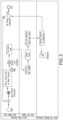
FIG. 3 is a flow diagram showing use of a device to collect GNSS point estimates according to one embodiment of this invention. -
FIG. 4 is a flow diagram of the device locking a location point according to one embodiment of this invention. -
FIGS. 5-13 show an exemplary operation of a device according to one embodiment of this invention. - As described in greater detail below, the invention generally relates to a method and apparatus for improving GNSS data gathering, with features termed as smart GNSS automations. In embodiments of this invention, the method and/or device provides automated determination of predetermined preferred use conditions, and filters the GNSS data (e.g., NMEA data) received via the GNSS receiver as a function of the conditions, by locking a location point and its corresponding GNSS data upon determining the conditions are met. The preconfigured condition(s) can include one or more of, for example, an angle or tilt of the GNSS receiver and/or signal quality conditions such as number of satellites in solution, a distance root mean squared (DRMS) value, a horizontal dilution of precision (HDOP) value, and/or fix quality.
- In embodiments of this invention, the device and method provide automated measuring of an angle or tilt of a GNSS receiver, and automated filtering of GNSS data received via the GNSS receiver as a function of the measured angle or tilt. By this invention, for example, the best location point information can be automatically coordinated to a sufficiently vertical position of the GNSS receiver, and the point reading only taken if the sufficient vertical position is obtained. User error in thus reduced or eliminated.
- The smart GNSS automations of embodiments of this invention do not compensate for user error. Instead the subject helper automations encourage proper GNSS collection techniques which in turn produce or result in the highest quality data. The smart GNSS automations of the invention also do not introduce new 'gestures', but instead they intelligently monitor several factors and make an independent decision on when to collect a location point.
- An additional advantage of the invention is that it can work with any GNSS device and/or mobile GIS software, such as those Bluetooth® compatible and/or which communicate via, for example, industry standard NMEA messages. Users of this system can keep their existing hardware and software. They do not need to buy a high end GNSS system or retrain on their personnel on the use of these systems.
-
FIG. 1 schematically illustrates a use of a GNSS receiver for point surveying, according to one embodiment of this invention. Auser 30 has a GNSSsurvey pole 32 with aGNSS antenna 34 and aGNSS receiver 36 mounted thereon. Thereceiver 36 can alternatively be a hand-held unit or in some cases can even be a hand-held unit without a survey pole. Thereceiver 36 further includes an internal or external communications output (e.g., wired or wireless), antenna, or other equivalent for communicating with a GIS system 38 (e.g., a user tablet) and/or optionally transmitting to or receiving information from remote personnel andsystems 45, such as by radio or cellular transmissions. The GNSSantenna 34 receives signals from GNSSsatellites 40. The GNSSsurvey pole 32 is shown at afirst location point 42. Theuser 30 places the tip of thesurvey pole 32 at thesurvey point 42, holds thepole 32 level (vertical) so that the center ofGNSS antenna 34 is located over thesurvey point 42, and takes readings. Thepole 32 is subsequently moved by theuser 30 to further location points 44 and 46 during use for further measurements. - The
GNSS receiver 36 ofFIG. 1 includes a middleware according to embodiments of this invention for improving the accuracy of the location point determination. The middleware can be software stored in and/or executed by theGNSS receiver 36. The middleware can also be embodied via a separate device connected to the GNSS receiver 36 (e.g., wired or wireless), such as with a housing mounted to thepole 32 for user efficiency. As shown inFIGS. 5-13 , a device of embodiments of this invention desirably includes ahousing 52 with adisplay 54, and enclosing one or more sensors in combination with a control module. Any suitable sensors can be used, such as accelerometers, gyroscopes, degree of freedom sensors, etc. Ultrasonic or laser measurement can also be used. Additionally the device includes processors, non-transitory recordable memory components including executable software code and for data storage, such as a cache memory, and other computer components for operation and to implement the method of this invention. -
FIG. 2 shows a block diagram of aGNSS receiver system 70 according to embodiments of this invention. TheGNSS antenna 34 sends satellite information to thereceiver 36. Instead of the receiver transmitting the satellite information directly to themapping system 45, such as a GIS system, the satellite information first goes through, and is filtered by middleware 50 (software and/or device) according to this invention. - Referring to
FIG. 1 , theuser 30 places thepole 32 onsurvey point 42. When the middleware determines that the conditions are met, the middleware automatically locks onto a location point from the GNSS receiver. In presently preferred embodiments, the middleware uses or includes a plumb or level sensor that determines the orientation of thepole 32 relative to the vertical. When the middleware control module determines that thepole 32 is sufficiently close to vertical, according to a predetermined value, and any other preconfigured condition(s) is/are also met, the middleware locks onto a location point from the GNSS receiver. In embodiments of this invention, the device can lock a location point when thepole 32 is within any predetermined angle from vertical, such as 10% from vertical, desirably 5% from vertical, and preferably 0-2% from vertical. - In embodiments of this invention, the middleware replaces a continuing live stream of GNSS messages with a broadcast of the GNSS message of the locked location point, such as by with a repeated broadcast of the GNSS message of the locked location point. The middleware thereby filters the GNSS data provided to, for example, the downstream GIS system, by providing only the GNSS message of the desired, locked vertical position. The
user 30 is thus relieved from maintaining the vertical orientation, thereby reducing user error and freeing the user to collect/input other information according to the job assignment. In embodiments of this invention, the device continues blocking the live stream and forwarding the repeated broadcast until the user clears the device for the next measurement. - As a further example of using the middleware to collect GNSS point estimates with more confidence that user introduced errors have been minimized, as illustrated in
FIG. 3 , the operation allows a field personnel to set aside a mobile data collection tablet, and focus on accurately placing the survey pole at the correct location. The field personnel instructs the middleware to unlock to clear any previous inadvertent lock, and the middleware desirably displays visual indicators of quality criteria status, such as including an electronic bubble level on a device display. The field personnel holds the survey pole plumb based on the electronic bubble level display. When all quality criteria are met, such as illustrated inFIG. 4 , the middleware locks the point and caches in memory a segment of GNSS sentences containing the high quality positional data. The middleware intercepts the live GNSS stream coming from the GNSS device and instead repeatedly rebroadcasts the high quality GNSS stream cache. Upon seeing a confirmation of the lock on the display, the field personnel can set aside the survey pole and receiver, pick up the mobile data collection tablet, and focus on recording an accurate record within the mobile GIS software. Once the record has been recorded the field personnel can unlock the system so that it is ready to collect the next position. - Systems and assemblies in accordance with embodiments of the invention preferably satisfy at least one or more of the following functional requirements. The system desirably provides opportunities to improve quality of field location data collected using GNSS receivers. To achieve this, the system desirably automates appropriate steps of the collection process. The system desirably is able to sense the degree the pole is held out of plumb and provide the user some indication of the plumb status via visual display. The system desirably is able to intercept, for example, GST, GSA, GSV, and GGA type NMEA sentences via a connection (e.g., via a serial port) to a GNSS receiver. The system is desirably able to parse, without limitation, the following information from the NMEA messages: GST (latitude and longitude standard deviation values); GGA (current fix quality); GGA (horizontal dilution of precision (HDOP)); GGA (number of satellites); GSV (signal to noise ratio for satellite ID); and/or GSA (satellite IDs used). The system desirably detects when a segment of GNSS sentences has met any preconfigured quality indicators. The system desirably caches those high-quality messages and repeatedly send those message to the mobile tablet instead of the real-time GNSS being produced by the GNSS receiver. The system desirably allows the user to unlock the GNSS repeat mode via a button. The system desirably displays to the user in some visual manner such as a light, blinking light or icon the indicating status of the system and real-time status of quality components which trigger the hold point.
- The system desirably enters a test mode on user request to validate the configured quality criteria. The test will be completed in area where the GNSS device can receive satellite signals and any required correction data. The test logic will validate that the GNSS is sending NMEA, for example, which make it possible to achieve a point lock. For example, if the quality configuration requires a RTK Fix, the test can look for RTK Float or Fix messages verifying that the GNSS is in RTK mode and receiving correction data. The system desirably supports a normal mode and a relaxed mode for quality configuration criteria. The user desirably is able to activate the relaxed mode for a single point at a time. The criteria categories desirably include one or more of: plumb level, valid NMEA, constellations in use, GST reported standard deviation, live sample 2DRMS, GGA fix quality, GGA HDOP, GGA number of satellites, and GSA to GSV SNR filter.
- Desirable features and/or characteristics of the user interface include one or more of the following. The system desirably minimizes the number of devices that the operator needs to manage in the process of data collection. Any visual indicator desirably is visible in daylight conditions up to six feet away. Desirable performance requirements characteristics of the device include a rechargeable battery with a life that matches common GNSS receivers.
- Interface requirement constraints for interactions with other systems, such as transferring data, may include one or more of the following. The system may desirably receive and transmit data via, for example, a serial port to and from a USB or Bluetooth connected GNSS device. The system desirably is able to receive NMEA or equivalent formatted messages from the GNSS. In some configurations, such as RTK operational modes, the system desirably is able to forward RTCM formatted correction messages to the GNSS device. The system desirably can receive and transmit data via, for example, a serial port to and from a USB or Bluetooth connected mobile tablet. The system desirably is able to send NMEA formatted messages to the mobile tablet. In some configurations, such as RTK operational modes, the system desirably is able to forward RTCM formatted correction messages from the mobile tablet. The system desirably provides hardware interfaces, for example R2 USB ver. 2.0 Type A, preferably with multiple connections to support connections to the GNSS equipment.
-
FIGS. 5-13 illustrate operations of adevice 50 for implementing the middleware according to embodiments of this invention. Thedevice 50 includes ahousing 52 and adisplay screen 54. The display screen is used to communicate to the user whether the device (and survey pole) is level, and any other information relevant to the device and/or GNSS data gathering. As illustrated, the display screen includes an array (8 x 8) ofindividual LED lights 56, preferably each capable of more than one color. InFIGS. 5-13 , the darkened circles represent illuminated lights 56. - In the embodiment of
FIGS. 5-13 , thedisplay 54 includes four corner quadrants 58 (3 x 3) that are illuminated, creating level-indicatinglight channels 60 therebetween. The internal control module of thedevice 50 communicates a plumb or level reading via thelights 56 on thedisplay 54.FIG. 5 shows adisplay 54 when the survey pole is tilted five degrees from vertical, away from the user. InFIG. 6 the lights are illuminated further from a center of the array, and shows adisplay 54 when the survey pole is tilted ten degrees from vertical, away from the user.FIG. 7 shows adisplay 54 when the survey pole is tilted fifteen degrees from vertical, away from the user, andFIG. 8 shows adisplay 54 when the survey pole is tilted twenty or more degrees from vertical, away from the user.FIGS. 9-12 illustrate when the pole is tilted five, ten, fifteen, and twenty or more degrees, respectively, in a different direction to that ofFIGS. 5-8 , namely to the right of the user. Different colors can further be used in addition to the moving lights for ease of user recognition. For example, the displays ofFIGS. 6 and 10 can use yellow lights to indicate a further distance from vertical, andFIGS. 7-8 and 11-12 can use red lights to indicate being very far from vertical. -
FIG. 13 shows thedisplay 54 when the pole is held within an acceptable vertical position, such as two degrees level in both the left-right and front-back orientation. Additionally, the four quadrants can display colors, such as all four quadrants are green indicating that the current signal has met all quality criteria. In the orientation ofFIG. 13 , the system would lock the location point, and can show a lock icon. Additional or alternative sizes, shapes, or configurations are available to display the level sensor readings. For example, the four corner quadrants can change color (green-yellow-red) to indicate a vertical plumb position, or lack thereof, and/or whether other quality conditions are met. Also, a LCD or equivalent screen can be used and incorporate any suitable alphanumeric or pictorial level-indicating representation. Haptic or audible signals can be used alternatively or additionally. In addition, the display can include scrolling or other messages to the user, such as indicating normal vs. relaxed modes, signal fix issues, calibration or rest events/errors, or a location lock, such as displaying a padlock image. - Thus the invention provides a method, such as implemented in a middleware software or device for new or existing GNSS equipment, that allow for GNSS point collection in the GNSS software at a difficult location with less burden on the field user. A GNSS point estimate is collected in the GNSS software with more confidence that user-introduced errors have been minimized.
- The invention illustratively disclosed herein suitably may be practiced in the absence of any element, part, step, component, or ingredient which is not specifically disclosed herein.
- While in the foregoing detailed description this invention has been described in relation to certain preferred embodiments thereof, and many details have been set forth for purposes of illustration, it will be apparent to those skilled in the art that the invention is susceptible to additional embodiments and that certain of the details described herein can be varied considerably without departing from the basic principles of the invention as defined in the appended claims.
Claims (11)
- A method of improving data quality using GNSS, the method comprising:automatically analyzing a stream of GNSS messages from a GNSS receiver (36) for a preconfigured condition;automatically filtering the GNSS data received via the GNSS receiver (36) as a function of the preconfigured condition; andautomatically providing the filtered GNSS data to a GIS system (38),wherein the method further comprises automatically locking onto a location point (42, 44, 46) reading of the GNSS receiver (36) when the preconfigured condition is met; andwherein the filtering comprises repeating the GNSS message of the single locked location point (42, 44, 46) reading determined as a function of the preconfigured condition to the GIS system (38).
- The method of claim 1, wherein the preconfigured condition is selected from: an angle or tilt of the GNSS receiver (36), number of satellites in solution, a distance root mean squared (DRMS) value, a horizontal dilution of precision (HDOP) value, fix quality, or combinations thereof.
- The method of any of Claims 1 or 2, wherein the GNSS receiver (36) is mounted to a GNSS survey pole (32), and further comprising:automatically measuring an angle or tilt of the GNSS receiver (36) or GNSS survey pole (32); andautomatically filtering the GNSS data received via the GNSS receiver (36) as a function of the measured angle or tilt.
- The method of Claim 3, further comprising:providing a device including a plumb or level sensor and a control module configured to receive the GNSS data; andautomatically forwarding filtered GNSS data corresponding to a predetermined angle or tilt measurement.
- The method of any of Claims 1 to 4, further comprising:automatically determining an acceptable vertical position of the GNSS receiver (36); andautomatically locking onto the single locked location point (42, 44, 46) reading of the GNSS receiver (36) in the acceptable vertical position.
- The method of Claim 5, further comprising:
automatically repeating the GNSS message of the single locked location point (44, 46) reading to the GIS system (38) to enable collection of the single locked location point (42, 44, 46) reading, wherein the repeated GNSS message replaces a live stream of GNSS data from the GNSS receiver (36). - The method of Claims 1 or 3, further comprising:providing a device including a plumb or level sensor and a control module configured to receive the GNSS data;the device automatically determining an acceptable vertical position of the GNSS receiver (36) via the sensor;upon determining the acceptable vertical position, the device automatically caching a segment of the GNSS data corresponding to the acceptable vertical position; andrepeating a broadcast of the segment of the GNSS data, wherein the device intercepts and/or blocks a live GNSS stream while repeating the broadcast of the segment of the GNSS data, and/or the repeating of the broadcast occurs regardless of any further position of the GNSS receiver (36), and until cleared from a memory cache of the device.
- The method of Claim 1, wherein the repeated GNSS message replaces the stream of GNSS messages from the GNSS receiver (36) to the GIS system (38), and further comprising repeating the GNSS message of the single locked location point (42, 44, 46) reading regardless of any further position of the GNSS receiver (36) until the GNSS message of the single locked location point (42, 44, 46) reading is cleared by a user (30).
- The method of Claim 1, further comprising:a device automatically caching the GNSS message of the single locked location point (42, 44, 46) reading; andthe device repeating a broadcast of the GNSS message of the single locked location point (42, 44, 46) reading.
- The method of Claim 9, further comprising:
intercepting and/or blocking the stream of GNSS messages while providing the broadcast of the GNSS message of the single locked location point (42, 44, 46) reading. - An apparatus for improving data quality in GNSS, the apparatus configured to perform the method of one of claims 1 to 10.
Applications Claiming Priority (3)
| Application Number | Priority Date | Filing Date | Title |
|---|---|---|---|
| US201862651767P | 2018-04-03 | 2018-04-03 | |
| US16/212,975 US11181644B2 (en) | 2018-04-03 | 2018-12-07 | Method and apparatus for improved GNSS location detection |
| PCT/US2019/022069 WO2019194944A1 (en) | 2018-04-03 | 2019-03-13 | Method and apparatus for improved gnss location detection |
Publications (4)
| Publication Number | Publication Date |
|---|---|
| EP3775998A1 EP3775998A1 (en) | 2021-02-17 |
| EP3775998A4 EP3775998A4 (en) | 2022-07-27 |
| EP3775998B1 true EP3775998B1 (en) | 2025-05-28 |
| EP3775998C0 EP3775998C0 (en) | 2025-05-28 |
Family
ID=68054195
Family Applications (1)
| Application Number | Title | Priority Date | Filing Date |
|---|---|---|---|
| EP19780701.9A Active EP3775998B1 (en) | 2018-04-03 | 2019-03-13 | Method and apparatus for improved gnss location detection |
Country Status (3)
| Country | Link |
|---|---|
| US (1) | US11181644B2 (en) |
| EP (1) | EP3775998B1 (en) |
| WO (1) | WO2019194944A1 (en) |
Families Citing this family (4)
| Publication number | Priority date | Publication date | Assignee | Title |
|---|---|---|---|---|
| JP7659479B2 (en) * | 2021-09-24 | 2025-04-09 | Necネッツエスアイ株式会社 | Location Search Method |
| CN113917498B (en) * | 2021-09-30 | 2025-05-30 | 西安理工大学 | A dynamic positioning accuracy detection device and detection method thereof |
| CN114111643A (en) * | 2021-12-01 | 2022-03-01 | 成都陵川特种工业有限责任公司 | Equipment post capable of being used for positioning and orientation |
| CN117053768B (en) * | 2023-07-24 | 2025-09-19 | 苏州天硕导航科技有限责任公司 | Extension measurement method based on inclination measurement technology and GNSS receiver |
Family Cites Families (12)
| Publication number | Priority date | Publication date | Assignee | Title |
|---|---|---|---|---|
| US6501422B1 (en) | 1998-08-19 | 2002-12-31 | Trimble Navigation, Ltd. | Precise parallel swathing guidance via satellite navigation and tilt measurement |
| US8125379B2 (en) * | 2008-04-28 | 2012-02-28 | Trimble Navigation Limited | Position measurement results by a surveying device using a tilt sensor |
| US8232916B2 (en) | 2009-05-05 | 2012-07-31 | Trimble Navigation Limited | Tilt compensation for GNSS antenna |
| US8718673B2 (en) * | 2010-05-21 | 2014-05-06 | Maple Acquisition Llc | System and method for location assurance of a mobile device |
| EP2904351B1 (en) | 2012-10-05 | 2019-08-28 | Trimble Inc. | Enhanced position measurement systems and methods |
| US9612341B2 (en) | 2012-12-28 | 2017-04-04 | Trimble Inc. | GNSS receiver positioning system |
| US20140274031A1 (en) * | 2013-03-13 | 2014-09-18 | Qualcomm Incorporated | Sharing data among proximate mobile devices with short-range wireless signals |
| CN103530361A (en) | 2013-10-13 | 2014-01-22 | 林兴志 | Farming land parcel graph construction and precision management middleware based on BD and GIS |
| US9541648B2 (en) | 2013-12-18 | 2017-01-10 | Agco Corporation | System and method of communicating GNSS information between mobile machines |
| US10613231B2 (en) | 2014-12-18 | 2020-04-07 | Javad Gnss, Inc. | Portable GNSS survey system |
| US20180011200A1 (en) | 2016-07-06 | 2018-01-11 | Qualcomm Incorporated | Satellite signal exclusion based on doppler information |
| WO2019168571A2 (en) | 2017-11-20 | 2019-09-06 | Javad Gnss, Inc. | Spoofing detection and rejection |
-
2018
- 2018-12-07 US US16/212,975 patent/US11181644B2/en active Active
-
2019
- 2019-03-13 EP EP19780701.9A patent/EP3775998B1/en active Active
- 2019-03-13 WO PCT/US2019/022069 patent/WO2019194944A1/en not_active Ceased
Also Published As
| Publication number | Publication date |
|---|---|
| US20190302270A1 (en) | 2019-10-03 |
| EP3775998C0 (en) | 2025-05-28 |
| CA3057651A1 (en) | 2019-10-03 |
| WO2019194944A1 (en) | 2019-10-10 |
| EP3775998A1 (en) | 2021-02-17 |
| US11181644B2 (en) | 2021-11-23 |
| EP3775998A4 (en) | 2022-07-27 |
Similar Documents
| Publication | Publication Date | Title |
|---|---|---|
| US20120188122A1 (en) | Handheld global positioning system device | |
| US6587788B1 (en) | Integrated position and direction system with radio communication for updating data | |
| US11422270B2 (en) | GNSS mobile base station and data collector with electronic leveling and hands-free data collection | |
| EP2737338B1 (en) | Method for ensuring continuity of service of a personal navigation device and device thereof | |
| US9228835B2 (en) | Visual stakeout | |
| US11181644B2 (en) | Method and apparatus for improved GNSS location detection | |
| US20170102467A1 (en) | Systems, methods, and apparatus for tracking an object | |
| US20030048218A1 (en) | GPS based tracking system | |
| US6791492B2 (en) | GPS positioning system | |
| KR20030023872A (en) | Satellite position measurement system | |
| US12276738B2 (en) | Total station with GNSS device | |
| CN111006650B (en) | Ground observation post reconnaissance and early warning system | |
| KR20190107692A (en) | Accurate Altitude Estimation for Indoor Positioning | |
| US20070109185A1 (en) | Providing GPS pseudo-ranges | |
| KR102102398B1 (en) | Apparatus and method for making navigation performance evaluation in real time | |
| US11656076B2 (en) | Method of calibrating a total station using a GNSS device | |
| US20220276394A1 (en) | Map-aided satellite selection | |
| US20180045834A1 (en) | Clustering gnss data | |
| US20200245099A1 (en) | Condition based accurate indoor positioning | |
| CA3057651C (en) | Method and apparatus for improved gnss location detection | |
| EP1992960B1 (en) | Positioning system and receiving terminal used therein | |
| KR20130026031A (en) | Apparatas and method for providing automatic location information calibration of a muti-path area in a portable terminal | |
| WO2023178440A1 (en) | Method, system and apparatus for communication for geolocation devices | |
| CN113985458B (en) | System and method for outdoor high-precision positioning and displaying | |
| US20250076521A1 (en) | Methods and apparatus for evaluating location measurements of underground objects |
Legal Events
| Date | Code | Title | Description |
|---|---|---|---|
| STAA | Information on the status of an ep patent application or granted ep patent |
Free format text: STATUS: THE INTERNATIONAL PUBLICATION HAS BEEN MADE |
|
| PUAI | Public reference made under article 153(3) epc to a published international application that has entered the european phase |
Free format text: ORIGINAL CODE: 0009012 |
|
| STAA | Information on the status of an ep patent application or granted ep patent |
Free format text: STATUS: REQUEST FOR EXAMINATION WAS MADE |
|
| 17P | Request for examination filed |
Effective date: 20201027 |
|
| AK | Designated contracting states |
Kind code of ref document: A1 Designated state(s): AL AT BE BG CH CY CZ DE DK EE ES FI FR GB GR HR HU IE IS IT LI LT LU LV MC MK MT NL NO PL PT RO RS SE SI SK SM TR |
|
| AX | Request for extension of the european patent |
Extension state: BA ME |
|
| DAV | Request for validation of the european patent (deleted) | ||
| DAX | Request for extension of the european patent (deleted) | ||
| RIC1 | Information provided on ipc code assigned before grant |
Ipc: G01C 9/02 20060101ALI20211217BHEP Ipc: G01C 15/06 20060101ALI20211217BHEP Ipc: G01S 19/39 20100101ALI20211217BHEP Ipc: G01S 19/14 20100101AFI20211217BHEP |
|
| REG | Reference to a national code |
Ref country code: DE Ref legal event code: R079 Free format text: PREVIOUS MAIN CLASS: G01S0019200000 Ipc: G01S0019140000 Ref document number: 602019070548 Country of ref document: DE |
|
| A4 | Supplementary search report drawn up and despatched |
Effective date: 20220623 |
|
| RIC1 | Information provided on ipc code assigned before grant |
Ipc: G01C 9/02 20060101ALI20220617BHEP Ipc: G01C 15/06 20060101ALI20220617BHEP Ipc: G01S 19/39 20100101ALI20220617BHEP Ipc: G01S 19/14 20100101AFI20220617BHEP |
|
| P01 | Opt-out of the competence of the unified patent court (upc) registered |
Effective date: 20230507 |
|
| STAA | Information on the status of an ep patent application or granted ep patent |
Free format text: STATUS: EXAMINATION IS IN PROGRESS |
|
| 17Q | First examination report despatched |
Effective date: 20240809 |
|
| GRAP | Despatch of communication of intention to grant a patent |
Free format text: ORIGINAL CODE: EPIDOSNIGR1 |
|
| STAA | Information on the status of an ep patent application or granted ep patent |
Free format text: STATUS: GRANT OF PATENT IS INTENDED |
|
| INTG | Intention to grant announced |
Effective date: 20250109 |
|
| GRAS | Grant fee paid |
Free format text: ORIGINAL CODE: EPIDOSNIGR3 |
|
| GRAA | (expected) grant |
Free format text: ORIGINAL CODE: 0009210 |
|
| STAA | Information on the status of an ep patent application or granted ep patent |
Free format text: STATUS: THE PATENT HAS BEEN GRANTED |
|
| AK | Designated contracting states |
Kind code of ref document: B1 Designated state(s): AL AT BE BG CH CY CZ DE DK EE ES FI FR GB GR HR HU IE IS IT LI LT LU LV MC MK MT NL NO PL PT RO RS SE SI SK SM TR |
|
| REG | Reference to a national code |
Ref country code: GB Ref legal event code: FG4D |
|
| REG | Reference to a national code |
Ref country code: CH Ref legal event code: EP |
|
| REG | Reference to a national code |
Ref country code: IE Ref legal event code: FG4D Ref country code: DE Ref legal event code: R096 Ref document number: 602019070548 Country of ref document: DE |
|
| U01 | Request for unitary effect filed |
Effective date: 20250528 |
|
| P04 | Withdrawal of opt-out of the competence of the unified patent court (upc) registered |
Free format text: CASE NUMBER: APP_27227/2025 Effective date: 20250607 |
|
| U07 | Unitary effect registered |
Designated state(s): AT BE BG DE DK EE FI FR IT LT LU LV MT NL PT RO SE SI Effective date: 20250612 |
|
| PG25 | Lapsed in a contracting state [announced via postgrant information from national office to epo] |
Ref country code: ES Free format text: LAPSE BECAUSE OF FAILURE TO SUBMIT A TRANSLATION OF THE DESCRIPTION OR TO PAY THE FEE WITHIN THE PRESCRIBED TIME-LIMIT Effective date: 20250528 |
|
| PG25 | Lapsed in a contracting state [announced via postgrant information from national office to epo] |
Ref country code: NO Free format text: LAPSE BECAUSE OF FAILURE TO SUBMIT A TRANSLATION OF THE DESCRIPTION OR TO PAY THE FEE WITHIN THE PRESCRIBED TIME-LIMIT Effective date: 20250828 Ref country code: GR Free format text: LAPSE BECAUSE OF FAILURE TO SUBMIT A TRANSLATION OF THE DESCRIPTION OR TO PAY THE FEE WITHIN THE PRESCRIBED TIME-LIMIT Effective date: 20250829 |
|
| PG25 | Lapsed in a contracting state [announced via postgrant information from national office to epo] |
Ref country code: PL Free format text: LAPSE BECAUSE OF FAILURE TO SUBMIT A TRANSLATION OF THE DESCRIPTION OR TO PAY THE FEE WITHIN THE PRESCRIBED TIME-LIMIT Effective date: 20250528 |
|
| PG25 | Lapsed in a contracting state [announced via postgrant information from national office to epo] |
Ref country code: HR Free format text: LAPSE BECAUSE OF FAILURE TO SUBMIT A TRANSLATION OF THE DESCRIPTION OR TO PAY THE FEE WITHIN THE PRESCRIBED TIME-LIMIT Effective date: 20250528 |
|
| PG25 | Lapsed in a contracting state [announced via postgrant information from national office to epo] |
Ref country code: RS Free format text: LAPSE BECAUSE OF FAILURE TO SUBMIT A TRANSLATION OF THE DESCRIPTION OR TO PAY THE FEE WITHIN THE PRESCRIBED TIME-LIMIT Effective date: 20250828 |
|
| PG25 | Lapsed in a contracting state [announced via postgrant information from national office to epo] |
Ref country code: IS Free format text: LAPSE BECAUSE OF FAILURE TO SUBMIT A TRANSLATION OF THE DESCRIPTION OR TO PAY THE FEE WITHIN THE PRESCRIBED TIME-LIMIT Effective date: 20250928 |
|
| PG25 | Lapsed in a contracting state [announced via postgrant information from national office to epo] |
Ref country code: SM Free format text: LAPSE BECAUSE OF FAILURE TO SUBMIT A TRANSLATION OF THE DESCRIPTION OR TO PAY THE FEE WITHIN THE PRESCRIBED TIME-LIMIT Effective date: 20250528 |
|
| PG25 | Lapsed in a contracting state [announced via postgrant information from national office to epo] |
Ref country code: CZ Free format text: LAPSE BECAUSE OF FAILURE TO SUBMIT A TRANSLATION OF THE DESCRIPTION OR TO PAY THE FEE WITHIN THE PRESCRIBED TIME-LIMIT Effective date: 20250528 |
|
| PG25 | Lapsed in a contracting state [announced via postgrant information from national office to epo] |
Ref country code: SK Free format text: LAPSE BECAUSE OF FAILURE TO SUBMIT A TRANSLATION OF THE DESCRIPTION OR TO PAY THE FEE WITHIN THE PRESCRIBED TIME-LIMIT Effective date: 20250528 |
|
| PLBE | No opposition filed within time limit |
Free format text: ORIGINAL CODE: 0009261 |
|
| STAA | Information on the status of an ep patent application or granted ep patent |
Free format text: STATUS: NO OPPOSITION FILED WITHIN TIME LIMIT |
|
| REG | Reference to a national code |
Ref country code: CH Ref legal event code: L10 Free format text: ST27 STATUS EVENT CODE: U-0-0-L10-L00 (AS PROVIDED BY THE NATIONAL OFFICE) Effective date: 20260409 |
|
| 26N | No opposition filed |
Effective date: 20260303 |
|
| U20 | Renewal fee for the european patent with unitary effect paid |
Year of fee payment: 8 Effective date: 20260327 |