EP3772526A1 - Formulation of a rheology modifier and a thermoplastic-epoxy hybrid latex - Google Patents
Formulation of a rheology modifier and a thermoplastic-epoxy hybrid latex Download PDFInfo
- Publication number
- EP3772526A1 EP3772526A1 EP20188723.9A EP20188723A EP3772526A1 EP 3772526 A1 EP3772526 A1 EP 3772526A1 EP 20188723 A EP20188723 A EP 20188723A EP 3772526 A1 EP3772526 A1 EP 3772526A1
- Authority
- EP
- European Patent Office
- Prior art keywords
- hydrophobically modified
- polymer particles
- thermoplastic polymer
- composition
- imbibed
- Prior art date
- Legal status (The legal status is an assumption and is not a legal conclusion. Google has not performed a legal analysis and makes no representation as to the accuracy of the status listed.)
- Pending
Links
Classifications
-
- C—CHEMISTRY; METALLURGY
- C09—DYES; PAINTS; POLISHES; NATURAL RESINS; ADHESIVES; COMPOSITIONS NOT OTHERWISE PROVIDED FOR; APPLICATIONS OF MATERIALS NOT OTHERWISE PROVIDED FOR
- C09D—COATING COMPOSITIONS, e.g. PAINTS, VARNISHES OR LACQUERS; FILLING PASTES; CHEMICAL PAINT OR INK REMOVERS; INKS; CORRECTING FLUIDS; WOODSTAINS; PASTES OR SOLIDS FOR COLOURING OR PRINTING; USE OF MATERIALS THEREFOR
- C09D4/00—Coating compositions, e.g. paints, varnishes or lacquers, based on organic non-macromolecular compounds having at least one polymerisable carbon-to-carbon unsaturated bond ; Coating compositions, based on monomers of macromolecular compounds of groups C09D183/00 - C09D183/16
- C09D4/06—Organic non-macromolecular compounds having at least one polymerisable carbon-to-carbon unsaturated bond in combination with a macromolecular compound other than an unsaturated polymer of groups C09D159/00 - C09D187/00
-
- C—CHEMISTRY; METALLURGY
- C08—ORGANIC MACROMOLECULAR COMPOUNDS; THEIR PREPARATION OR CHEMICAL WORKING-UP; COMPOSITIONS BASED THEREON
- C08G—MACROMOLECULAR COMPOUNDS OBTAINED OTHERWISE THAN BY REACTIONS ONLY INVOLVING UNSATURATED CARBON-TO-CARBON BONDS
- C08G59/00—Polycondensates containing more than one epoxy group per molecule; Macromolecules obtained by polymerising compounds containing more than one epoxy group per molecule using curing agents or catalysts which react with the epoxy groups
- C08G59/18—Macromolecules obtained by polymerising compounds containing more than one epoxy group per molecule using curing agents or catalysts which react with the epoxy groups ; e.g. general methods of curing
- C08G59/40—Macromolecules obtained by polymerising compounds containing more than one epoxy group per molecule using curing agents or catalysts which react with the epoxy groups ; e.g. general methods of curing characterised by the curing agents used
- C08G59/50—Amines
-
- C—CHEMISTRY; METALLURGY
- C08—ORGANIC MACROMOLECULAR COMPOUNDS; THEIR PREPARATION OR CHEMICAL WORKING-UP; COMPOSITIONS BASED THEREON
- C08L—COMPOSITIONS OF MACROMOLECULAR COMPOUNDS
- C08L33/00—Compositions of homopolymers or copolymers of compounds having one or more unsaturated aliphatic radicals, each having only one carbon-to-carbon double bond, and only one being terminated by only one carboxyl radical, or of salts, anhydrides, esters, amides, imides or nitriles thereof; Compositions of derivatives of such polymers
- C08L33/24—Homopolymers or copolymers of amides or imides
- C08L33/26—Homopolymers or copolymers of acrylamide or methacrylamide
-
- C—CHEMISTRY; METALLURGY
- C08—ORGANIC MACROMOLECULAR COMPOUNDS; THEIR PREPARATION OR CHEMICAL WORKING-UP; COMPOSITIONS BASED THEREON
- C08K—Use of inorganic or non-macromolecular organic substances as compounding ingredients
- C08K13/00—Use of mixtures of ingredients not covered by one single of the preceding main groups, each of these compounds being essential
- C08K13/02—Organic and inorganic ingredients
-
- C—CHEMISTRY; METALLURGY
- C08—ORGANIC MACROMOLECULAR COMPOUNDS; THEIR PREPARATION OR CHEMICAL WORKING-UP; COMPOSITIONS BASED THEREON
- C08G—MACROMOLECULAR COMPOUNDS OBTAINED OTHERWISE THAN BY REACTIONS ONLY INVOLVING UNSATURATED CARBON-TO-CARBON BONDS
- C08G18/00—Polymeric products of isocyanates or isothiocyanates
- C08G18/06—Polymeric products of isocyanates or isothiocyanates with compounds having active hydrogen
- C08G18/83—Chemically modified polymers
-
- C—CHEMISTRY; METALLURGY
- C08—ORGANIC MACROMOLECULAR COMPOUNDS; THEIR PREPARATION OR CHEMICAL WORKING-UP; COMPOSITIONS BASED THEREON
- C08G—MACROMOLECULAR COMPOUNDS OBTAINED OTHERWISE THAN BY REACTIONS ONLY INVOLVING UNSATURATED CARBON-TO-CARBON BONDS
- C08G63/00—Macromolecular compounds obtained by reactions forming a carboxylic ester link in the main chain of the macromolecule
- C08G63/91—Polymers modified by chemical after-treatment
-
- C—CHEMISTRY; METALLURGY
- C08—ORGANIC MACROMOLECULAR COMPOUNDS; THEIR PREPARATION OR CHEMICAL WORKING-UP; COMPOSITIONS BASED THEREON
- C08G—MACROMOLECULAR COMPOUNDS OBTAINED OTHERWISE THAN BY REACTIONS ONLY INVOLVING UNSATURATED CARBON-TO-CARBON BONDS
- C08G65/00—Macromolecular compounds obtained by reactions forming an ether link in the main chain of the macromolecule
- C08G65/02—Macromolecular compounds obtained by reactions forming an ether link in the main chain of the macromolecule from cyclic ethers by opening of the heterocyclic ring
- C08G65/32—Polymers modified by chemical after-treatment
-
- C—CHEMISTRY; METALLURGY
- C08—ORGANIC MACROMOLECULAR COMPOUNDS; THEIR PREPARATION OR CHEMICAL WORKING-UP; COMPOSITIONS BASED THEREON
- C08L—COMPOSITIONS OF MACROMOLECULAR COMPOUNDS
- C08L63/00—Compositions of epoxy resins; Compositions of derivatives of epoxy resins
-
- C—CHEMISTRY; METALLURGY
- C09—DYES; PAINTS; POLISHES; NATURAL RESINS; ADHESIVES; COMPOSITIONS NOT OTHERWISE PROVIDED FOR; APPLICATIONS OF MATERIALS NOT OTHERWISE PROVIDED FOR
- C09D—COATING COMPOSITIONS, e.g. PAINTS, VARNISHES OR LACQUERS; FILLING PASTES; CHEMICAL PAINT OR INK REMOVERS; INKS; CORRECTING FLUIDS; WOODSTAINS; PASTES OR SOLIDS FOR COLOURING OR PRINTING; USE OF MATERIALS THEREFOR
- C09D133/00—Coating compositions based on homopolymers or copolymers of compounds having one or more unsaturated aliphatic radicals, each having only one carbon-to-carbon double bond, and at least one being terminated by only one carboxyl radical, or of salts, anhydrides, esters, amides, imides, or nitriles thereof; Coating compositions based on derivatives of such polymers
- C09D133/04—Homopolymers or copolymers of esters
-
- C—CHEMISTRY; METALLURGY
- C09—DYES; PAINTS; POLISHES; NATURAL RESINS; ADHESIVES; COMPOSITIONS NOT OTHERWISE PROVIDED FOR; APPLICATIONS OF MATERIALS NOT OTHERWISE PROVIDED FOR
- C09D—COATING COMPOSITIONS, e.g. PAINTS, VARNISHES OR LACQUERS; FILLING PASTES; CHEMICAL PAINT OR INK REMOVERS; INKS; CORRECTING FLUIDS; WOODSTAINS; PASTES OR SOLIDS FOR COLOURING OR PRINTING; USE OF MATERIALS THEREFOR
- C09D163/00—Coating compositions based on epoxy resins; Coating compositions based on derivatives of epoxy resins
-
- C—CHEMISTRY; METALLURGY
- C09—DYES; PAINTS; POLISHES; NATURAL RESINS; ADHESIVES; COMPOSITIONS NOT OTHERWISE PROVIDED FOR; APPLICATIONS OF MATERIALS NOT OTHERWISE PROVIDED FOR
- C09D—COATING COMPOSITIONS, e.g. PAINTS, VARNISHES OR LACQUERS; FILLING PASTES; CHEMICAL PAINT OR INK REMOVERS; INKS; CORRECTING FLUIDS; WOODSTAINS; PASTES OR SOLIDS FOR COLOURING OR PRINTING; USE OF MATERIALS THEREFOR
- C09D175/00—Coating compositions based on polyureas or polyurethanes; Coating compositions based on derivatives of such polymers
- C09D175/04—Polyurethanes
-
- C—CHEMISTRY; METALLURGY
- C09—DYES; PAINTS; POLISHES; NATURAL RESINS; ADHESIVES; COMPOSITIONS NOT OTHERWISE PROVIDED FOR; APPLICATIONS OF MATERIALS NOT OTHERWISE PROVIDED FOR
- C09D—COATING COMPOSITIONS, e.g. PAINTS, VARNISHES OR LACQUERS; FILLING PASTES; CHEMICAL PAINT OR INK REMOVERS; INKS; CORRECTING FLUIDS; WOODSTAINS; PASTES OR SOLIDS FOR COLOURING OR PRINTING; USE OF MATERIALS THEREFOR
- C09D5/00—Coating compositions, e.g. paints, varnishes or lacquers, characterised by their physical nature or the effects produced; Filling pastes
- C09D5/08—Anti-corrosive paints
-
- C—CHEMISTRY; METALLURGY
- C09—DYES; PAINTS; POLISHES; NATURAL RESINS; ADHESIVES; COMPOSITIONS NOT OTHERWISE PROVIDED FOR; APPLICATIONS OF MATERIALS NOT OTHERWISE PROVIDED FOR
- C09D—COATING COMPOSITIONS, e.g. PAINTS, VARNISHES OR LACQUERS; FILLING PASTES; CHEMICAL PAINT OR INK REMOVERS; INKS; CORRECTING FLUIDS; WOODSTAINS; PASTES OR SOLIDS FOR COLOURING OR PRINTING; USE OF MATERIALS THEREFOR
- C09D7/00—Features of coating compositions, not provided for in group C09D5/00; Processes for incorporating ingredients in coating compositions
- C09D7/40—Additives
- C09D7/47—Levelling agents
-
- C—CHEMISTRY; METALLURGY
- C09—DYES; PAINTS; POLISHES; NATURAL RESINS; ADHESIVES; COMPOSITIONS NOT OTHERWISE PROVIDED FOR; APPLICATIONS OF MATERIALS NOT OTHERWISE PROVIDED FOR
- C09D—COATING COMPOSITIONS, e.g. PAINTS, VARNISHES OR LACQUERS; FILLING PASTES; CHEMICAL PAINT OR INK REMOVERS; INKS; CORRECTING FLUIDS; WOODSTAINS; PASTES OR SOLIDS FOR COLOURING OR PRINTING; USE OF MATERIALS THEREFOR
- C09D7/00—Features of coating compositions, not provided for in group C09D5/00; Processes for incorporating ingredients in coating compositions
- C09D7/40—Additives
- C09D7/65—Additives macromolecular
-
- C—CHEMISTRY; METALLURGY
- C08—ORGANIC MACROMOLECULAR COMPOUNDS; THEIR PREPARATION OR CHEMICAL WORKING-UP; COMPOSITIONS BASED THEREON
- C08G—MACROMOLECULAR COMPOUNDS OBTAINED OTHERWISE THAN BY REACTIONS ONLY INVOLVING UNSATURATED CARBON-TO-CARBON BONDS
- C08G69/00—Macromolecular compounds obtained by reactions forming a carboxylic amide link in the main chain of the macromolecule
- C08G69/48—Polymers modified by chemical after-treatment
-
- C—CHEMISTRY; METALLURGY
- C08—ORGANIC MACROMOLECULAR COMPOUNDS; THEIR PREPARATION OR CHEMICAL WORKING-UP; COMPOSITIONS BASED THEREON
- C08K—Use of inorganic or non-macromolecular organic substances as compounding ingredients
- C08K2201/00—Specific properties of additives
- C08K2201/013—Additives applied to the surface of polymers or polymer particles
-
- C—CHEMISTRY; METALLURGY
- C08—ORGANIC MACROMOLECULAR COMPOUNDS; THEIR PREPARATION OR CHEMICAL WORKING-UP; COMPOSITIONS BASED THEREON
- C08L—COMPOSITIONS OF MACROMOLECULAR COMPOUNDS
- C08L33/00—Compositions of homopolymers or copolymers of compounds having one or more unsaturated aliphatic radicals, each having only one carbon-to-carbon double bond, and only one being terminated by only one carboxyl radical, or of salts, anhydrides, esters, amides, imides or nitriles thereof; Compositions of derivatives of such polymers
-
- C—CHEMISTRY; METALLURGY
- C08—ORGANIC MACROMOLECULAR COMPOUNDS; THEIR PREPARATION OR CHEMICAL WORKING-UP; COMPOSITIONS BASED THEREON
- C08L—COMPOSITIONS OF MACROMOLECULAR COMPOUNDS
- C08L75/00—Compositions of polyureas or polyurethanes; Compositions of derivatives of such polymers
- C08L75/04—Polyurethanes
-
- C—CHEMISTRY; METALLURGY
- C09—DYES; PAINTS; POLISHES; NATURAL RESINS; ADHESIVES; COMPOSITIONS NOT OTHERWISE PROVIDED FOR; APPLICATIONS OF MATERIALS NOT OTHERWISE PROVIDED FOR
- C09D—COATING COMPOSITIONS, e.g. PAINTS, VARNISHES OR LACQUERS; FILLING PASTES; CHEMICAL PAINT OR INK REMOVERS; INKS; CORRECTING FLUIDS; WOODSTAINS; PASTES OR SOLIDS FOR COLOURING OR PRINTING; USE OF MATERIALS THEREFOR
- C09D5/00—Coating compositions, e.g. paints, varnishes or lacquers, characterised by their physical nature or the effects produced; Filling pastes
- C09D5/02—Emulsion paints including aerosols
- C09D5/024—Emulsion paints including aerosols characterised by the additives
-
- C—CHEMISTRY; METALLURGY
- C09—DYES; PAINTS; POLISHES; NATURAL RESINS; ADHESIVES; COMPOSITIONS NOT OTHERWISE PROVIDED FOR; APPLICATIONS OF MATERIALS NOT OTHERWISE PROVIDED FOR
- C09D—COATING COMPOSITIONS, e.g. PAINTS, VARNISHES OR LACQUERS; FILLING PASTES; CHEMICAL PAINT OR INK REMOVERS; INKS; CORRECTING FLUIDS; WOODSTAINS; PASTES OR SOLIDS FOR COLOURING OR PRINTING; USE OF MATERIALS THEREFOR
- C09D7/00—Features of coating compositions, not provided for in group C09D5/00; Processes for incorporating ingredients in coating compositions
- C09D7/40—Additives
- C09D7/43—Thickening agents
Definitions
- the present invention relates to a composition comprising a rheology modifier and thermoplastic-epoxy hybrid latex for coating applications.
- Two-component acrylic epoxy hybrid (2K-AEH) latexes containing amine curing agents are used in a variety of industrial coating applications including metal coatings for rail cars and freight containers.
- rheology modifiers used in a formulated 2K-AEH system do not meet the sag resistance and corrosion/blister resistance requirements necessary for such applications. It would be advantageous to provide a rheology modifier that exhibits sag resistance rating of ⁇ 14 mil at KU ⁇ 95 while maintaining good corrosion and blistering resistance for the coating. It would also be advantageous if the rheology modifier could be used in high gloss formulations.
- the present invention addresses a need in the art by providing a composition
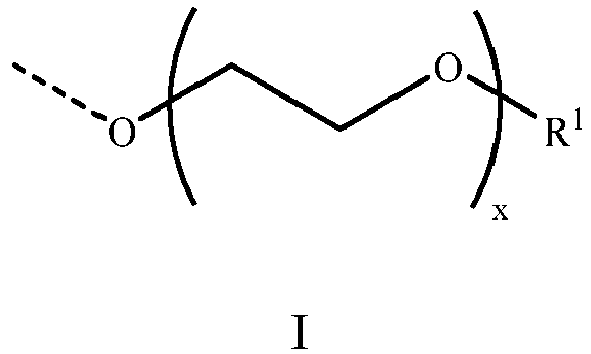
- a composition comprising a1) an aqueous dispersion of thermoplastic polymer particles imbibed with a thermosettable compound having at least two oxirane groups, which polymer particles are functionalized with from 0.1 to 5 weight percent structural units of an anti-agglomerating monomer, and/or a2) a curing agent; and b) a hydrophobically modified alkylene oxide polymer having a hydrophobic portion characterized by the following group: where R 1 is C 8 -C 32 -alkyl; and x is from 10 to 200; and wherein the hydrophobically modified alkylene oxide polymer has a weight average molecular weight in the range of from 40,000 to 200,000 g/mol; wherein the weight-to-weight ratio of the imbibed thermoplastic polymer particles to the hydrophobically modified alkylene oxide copolymer is in the range of from 10:1 to 200:1.
- the composition of the present invention is useful for
- the present invention is a composition
- thermosettable compound having at least two oxirane groups.
- "imbibed” means that the thermosettable compound is partitioned into the thermoplastic polymer particles but substantially unreactive therewith in the absence of a curing agent.
- concentration of imbibed thermosettable compound is preferably in the range of from 20, more preferably from 25 weight percent, to 60, more preferably to 40 weight percent, based on the weight of the thermoplastic polymer particles and the thermosettable compound.
- thermosettable compound is preferably a novolac resin, a di-, tri- or tetraglycidyl ether or a di-, or tri- or tetraglycidyl ester.
- suitable thermosettable compounds include the diglycidyl ether of bisphenol A, the diglycidyl ether of bisphenol F, 1,4-butanediol diglycidyl ether, 1,6-hexanediol diglycidyl ether, the diglycidyl ester of phthalic acid, 1,4-cyclohexanedmethanol diglycidyl ether, 1,3-cyclohexanedmethanol diglycidyl ether, the diglycidyl ester of hexahydrophthalic acid, and novolac resins, and combinations thereof.
- a commercially available thermosettable compound is D.E.R. 331 Liquid Epoxy Resin.
- thermoplastic polymer particles can be achieved through free radical emulsion or suspension addition polymerization or by dispersion of a pre-formed polymer under shear into an aqueous medium.
- suitable latexes include acrylic, styrene-acrylic, styrene-butadiene, urethane, ester, olefin, vinyl chloride, ethylene vinyl acetate, and polyvinyl acetate based latexes, with acrylic and styrene-acrylic latexes being preferred.
- Examples of monomers suitable for the preparation of acrylic and styrene-acrylic latexes include styrene, methyl methacrylate, 2-ethylhexyl acrylate, butyl acrylate, ethyl acrylate, cyclohexyl methacrylate, isobornyl methacrylate, butyl methacrylate, isobutyl methacrylate, t -butyl methacrylate, ureido methacrylate, and acrylonitrile.
- thermoplastic polymer particles are functionalized with from 0.1, preferably from 0.2, and more preferably from 0.5 weight percent, to 5, preferably to 3, and most preferably to 2 weight percent anti-agglomerating groups, based on the weight of the thermoplastic polymer particles.
- the anti-agglomerating groups are advantageously incorporated into the polymer particles by copolymerization of anti-agglomerating monomers; it would also be possible to incorporate such groups by grafting.
- the anti-agglomerating groups are believed to be effective because they are hydrophilic as well as non-reactive with oxirane groups under heat-age conditions.
- the general class of such groups includes amide groups, acetoacetoxy groups, and strong protic acids, which are pH adjusted to form their conjugate bases.
- Classes of suitable anti-agglomerating monomers include sulfur acid monomers and salts thereof; phosphorus acid monomer and salts thereof; acrylamide monomers; and acetoacetoxy containing monomers.
- Examples of such monomers include acrylamide, phosphoethyl methacrylate and salts thereof, sodium styrene sulfonate and salts thereof, acetoacetoxyethyl methacrylate, and acrylamido-methyl-propane sulfonate and salts thereof.
- thermoplastic polymer particles not be functionalized with carboxylic acid groups, although it has been discovered that some amount of carboxylic acid functionalization is permissible provided the polymer contains sufficient levels of anti-agglomerating groups and the pH is sufficiently high to maintain latex stability under heat-age conditions.
- concentration of carboxylic acid groups is not greater than 5, more preferably not greater than 3, and most preferably not greater than 1 weight percent based on the weight of the thermoplastic polymer particles.
- thermosettable compound which can be neat or in the form of an aqueous dispersion, preferably as an aqueous dispersion, more preferably as a micronized aqueous dispersion.
- the thermosettable compound is added as an aqueous dispersion, the emulsion is stabilized with a stabilizing amount of a surfactant, preferably at a concentration in the range of about 0.5 to about 5% by weight.
- Nonionic surfactants are preferred, including APEO free, non-ionic wetting agents such as polyalkylene oxide block copolymers, polyoxyethylene glycol alkyl ethers, glucoside alkyl ethers, fatty acid esters, glycerol alkyl esters, sorbitan alkyl esters, and polyoxyethylene glycol alkylphenol ethers, including commercially available wetting agents such as TRITON X-405 Octylphenol Ethoxylate (A trademark of Dow, Inc. or its affiliates).
- wetting agents such as TRITON X-405 Octylphenol Ethoxylate (A trademark of Dow, Inc. or its affiliates).
- the imbibed thermoplastic polymer particles typically have a volume average particle size as measured by dynamic light scattering in the range of from 100 nm to 350 nm.
- alkylene oxide polymer refers to water-soluble polyethylene oxide polymers, as well as water-soluble polyethylene oxide/polypropylene oxide and polyethylene oxide/polybutylene oxide copolymers.
- the alkylene oxide polymer is an alkylene oxide urethane polymer, more preferably an ethylene oxide urethane polymer.
- the preferred hydrophobically modified alkylene oxide urethane polymer is conveniently prepared by contacting under suitable reactive conditions, a) a water-soluble polyalkylene glycol; b) a stoichiometric excess of a diisocyanate relative to the polyalkylene glycol; and c) a hydrophobic compound to form the hydrophobically modified alkylene oxide urethane polymer.
- Component b) may also be dichloromethane, dibromomethane, epichlorohydrin, or an aminoplast instead of a diisocyanate.
- the hydrophobic compound is defined by Stucture Ia where R and x are as previously defined.
- R 1 is preferably in the range of C 10 -C 28 -alkyl; and x is preferably in the range of from 10, to 100, more preferably to 50, and most preferably to 32.
- the M w of the HEUR is preferably in the range of from 40,000 to 100,000 g/mol, more preferably to 75,000.
- the weight-to-weight ratio of the imbibed thermoplastic polymer particles to the hydrophobically modified alkylene oxide urethane copolymer is preferably in the range of from 30:1, to 100:1.
- a water-soluble polyalkylene glycol refers to water-soluble polyethylene oxides, water-soluble polyethylene oxide/polypropylene oxide copolymers, and water-soluble polyethylene oxide/polybutylene oxide copolymers.
- Preferred water-soluble polyalkylene oxides are polyethylene glycols, particularly polyethylene glycols having M w in the range of from 4000, more preferably from 6000, and most preferably from 7000 g/mol, to 20,000, more preferably to 12,000 and most preferably to 9000 g/mol.
- a commercially available polyethylene glycol is CARBOWAXTM 8000 Polyethylene Glycol (PEG 8000, a trademark of Dow, Inc. or an affiliate thereof).
- diisocyanates examples include 1,4-tetramethylene diisocyanate, 1,6-hexamethylene diisocyanate, 2,2,4-trimethyl-1,6-diisocyanatohexane, 1,10-decamethylene diisocyanate, 4,4'-methylenebis(isocyanatocyclohexane), 1,4-cyclohexylene diisocyanate, 1-isocyanato-3-isocyanatomethyl-3,5,5-trimethylcyclohexane, and m - and p -phenylene diisocyanates.
- composition of the present invention can be prepared by combining separate components of a 2K system, one of which comprises a) the aqueous dispersion of imbibed thermoplastic polymer particles and the other which comprises b) the hydrophobically modified alkylene oxide polymer and a curing agent.
- the composition can be prepared by combining one component that comprises a) the aqueous dispersion of imbibed thermoplastic polymer particles and the hydrophobically modified alkylene oxide polymer, and the other which comprises b) the curing agent.
- the curing agent includes amines, amidoamines, hydrazine, anhydrides, isocyanates, phenolic resins, polyamides, and polymercaptans.
- suitable curing agents include diethylenetriamine, triethylenetetramine, tetraethylene-pentamine, 2,2,4-trimethylhexamethylenediamine, 2,4,4-trimethylhexamethylenediamine, 1,6-hexanediamine, 1-ethyl-1,3-propanediamine, bis(3-aminopropyl) piperazine, N-aminoethylpiperazine, N,N-bis(3-aminopropyl)ethylenediamine, 2,4-toluenediamine, 2,6-toluenediamine, 1,2-diaminocyclohexane, 1,4-diamino-3,6-diethylcyclohexane, 1,2-diamino-4-ethylcyclohexane, 1,4-
- water-compatible curing agents include Epi-cure 8535, 8536, 8537, 8290 and 8292 curing agents; Anquamine 401 curing agent; Casamid 360 and 362 curing agents; Epilink 381 curing agent, DP660 curing agent, Hardener HZ350, 92-113, and 92-116; Beckopox EH659W, EH623W, VEH2133W curing agents; and Epotuf 37-680 and 37-681 curing agents.
- composition of the present invention is useful as part of a 2K system that gives improved Brookfield viscosity (and, therefore, improved sag resistance) without compromising KU viscosity.
- the combined 2K system advantageously include additional materials such as solvents, surfactants, dispersants, neutralizers, defoamers, colorants, pigments, extenders, biocides, and additional thickening agents.
- Ethal SA-20 ethoxylated stearyl alcohol with 20 ethylene oxide units per molecule (Ethal SA-20, 17.27 g) was added to the mixture and stirring was continued for an additional 1 h. The mixture was cooled to 60 °C and the polymer was isolated in vacuo. The dried polymer was then dissolved in a water/butyl carbitol mixture at 15 wt% solids.
- Table 1 shows the materials and amounts used in Parts A and B of the two-component system.
- DOWANOL, Butyl CARBITOL, ECOSURF, TAMOL, MAINCOTE, and ACRYSOL are Trademarks of Dow, Inc.
- the total pigment volume concentration for Parts A and B was 19% and the total volume solids was 38%.
- Sag resistance was determined according to the ASTM D4400 (Standard Test Method for Sag Resistance in Paints Using a Multinotch Applicator).
- M w of the HEUR polymers were determined by size exclusion chromatography as follows: Samples were prepared by dissolving 1-2 mg of polymer/g of 100 mM ammonium acetate in methanol. Samples were brought into solution by shaking overnight on a mechanical shaker at room temperature. Sample solutions were filtered using 0.45 ⁇ m PTFE filter.
- Separations were carried out on a Waters Acquity APC system consisting of an isocratic pump, degasser, injector, column oven and both UV and RI detectors operated at 40 °C. System control, data acquisition, and data processing were performed using version 3 of Empower software (Waters, Milford, MA). SEC separations were performed in 100 mM ammonium acetate in methanol (Optima grade from Fisher) at 0.5 mL/min using an APC column set composed of two Water APC columns (150 x 4.6 mm ID) packed with BEH Diol particles (pore size marked as BEH 200 ⁇ and BEH 450 ⁇ , particle size 1.7 ⁇ m and 2.5 ⁇ m, respectively) purchased from Waters (Milford, MA).
Landscapes
- Chemical & Material Sciences (AREA)
- Organic Chemistry (AREA)
- Life Sciences & Earth Sciences (AREA)
- Engineering & Computer Science (AREA)
- Materials Engineering (AREA)
- Wood Science & Technology (AREA)
- Health & Medical Sciences (AREA)
- Chemical Kinetics & Catalysis (AREA)
- Medicinal Chemistry (AREA)
- Polymers & Plastics (AREA)
- General Chemical & Material Sciences (AREA)
- Paints Or Removers (AREA)
- Compositions Of Macromolecular Compounds (AREA)
- Epoxy Resins (AREA)
Abstract
Description
- The present invention relates to a composition comprising a rheology modifier and thermoplastic-epoxy hybrid latex for coating applications.
- Two-component acrylic epoxy hybrid (2K-AEH) latexes containing amine curing agents are used in a variety of industrial coating applications including metal coatings for rail cars and freight containers. Currently, rheology modifiers used in a formulated 2K-AEH system do not meet the sag resistance and corrosion/blister resistance requirements necessary for such applications. It would be advantageous to provide a rheology modifier that exhibits sag resistance rating of ≥ 14 mil at KU <95 while maintaining good corrosion and blistering resistance for the coating. It would also be advantageous if the rheology modifier could be used in high gloss formulations.
- The present invention addresses a need in the art by providing a composition comprising a1) an aqueous dispersion of thermoplastic polymer particles imbibed with a thermosettable compound having at least two oxirane groups, which polymer particles are functionalized with from 0.1 to 5 weight percent structural units of an anti-agglomerating monomer, and/or a2) a curing agent; and b) a hydrophobically modified alkylene oxide polymer having a hydrophobic portion characterized by the following group:

- In one aspect, the present invention is a composition comprising a1) an aqueous dispersion of thermoplastic polymer particles imbibed with a thermosettable compound having at least two oxirane groups, which polymer particles are functionalized with from 0.1 to 5 weight percent structural units of an anti-agglomerating monomer, and/or a2) a curing agent; and b) a hydrophobically modified alkylene oxide copolymer having a hydrophobic portion characterized by the following group:

- The aqueous dispersion of thermoplastic polymer particles are imbibed with a thermosettable compound having at least two oxirane groups. As used herein, "imbibed" means that the thermosettable compound is partitioned into the thermoplastic polymer particles but substantially unreactive therewith in the absence of a curing agent. The concentration of imbibed thermosettable compound is preferably in the range of from 20, more preferably from 25 weight percent, to 60, more preferably to 40 weight percent, based on the weight of the thermoplastic polymer particles and the thermosettable compound.
- The thermosettable compound is preferably a novolac resin, a di-, tri- or tetraglycidyl ether or a di-, or tri- or tetraglycidyl ester. Examples of suitable thermosettable compounds include the diglycidyl ether of bisphenol A, the diglycidyl ether of bisphenol F, 1,4-butanediol diglycidyl ether, 1,6-hexanediol diglycidyl ether, the diglycidyl ester of phthalic acid, 1,4-cyclohexanedmethanol diglycidyl ether, 1,3-cyclohexanedmethanol diglycidyl ether, the diglycidyl ester of hexahydrophthalic acid, and novolac resins, and combinations thereof. A commercially available thermosettable compound is D.E.R. 331 Liquid Epoxy Resin.
- Aqueous dispersions of the thermoplastic polymer particles can be achieved through free radical emulsion or suspension addition polymerization or by dispersion of a pre-formed polymer under shear into an aqueous medium. Examples of suitable latexes include acrylic, styrene-acrylic, styrene-butadiene, urethane, ester, olefin, vinyl chloride, ethylene vinyl acetate, and polyvinyl acetate based latexes, with acrylic and styrene-acrylic latexes being preferred. Examples of monomers suitable for the preparation of acrylic and styrene-acrylic latexes include styrene, methyl methacrylate, 2-ethylhexyl acrylate, butyl acrylate, ethyl acrylate, cyclohexyl methacrylate, isobornyl methacrylate, butyl methacrylate, isobutyl methacrylate, t-butyl methacrylate, ureido methacrylate, and acrylonitrile.
- Critically, the thermoplastic polymer particles are functionalized with from 0.1, preferably from 0.2, and more preferably from 0.5 weight percent, to 5, preferably to 3, and most preferably to 2 weight percent anti-agglomerating groups, based on the weight of the thermoplastic polymer particles. The anti-agglomerating groups are advantageously incorporated into the polymer particles by copolymerization of anti-agglomerating monomers; it would also be possible to incorporate such groups by grafting. The anti-agglomerating groups are believed to be effective because they are hydrophilic as well as non-reactive with oxirane groups under heat-age conditions. The general class of such groups includes amide groups, acetoacetoxy groups, and strong protic acids, which are pH adjusted to form their conjugate bases.
- Classes of suitable anti-agglomerating monomers include sulfur acid monomers and salts thereof; phosphorus acid monomer and salts thereof; acrylamide monomers; and acetoacetoxy containing monomers. Examples of such monomers include acrylamide, phosphoethyl methacrylate and salts thereof, sodium styrene sulfonate and salts thereof, acetoacetoxyethyl methacrylate, and acrylamido-methyl-propane sulfonate and salts thereof.
- It is preferred that the thermoplastic polymer particles not be functionalized with carboxylic acid groups, although it has been discovered that some amount of carboxylic acid functionalization is permissible provided the polymer contains sufficient levels of anti-agglomerating groups and the pH is sufficiently high to maintain latex stability under heat-age conditions. Preferably, the concentration of carboxylic acid groups is not greater than 5, more preferably not greater than 3, and most preferably not greater than 1 weight percent based on the weight of the thermoplastic polymer particles.
- The aqueous dispersion of thermoplastic polymer particles is advantageously prepared separately from the thermosettable compound using conventional emulsion polymerization techniques, then combined with the thermosettable compound, which can be neat or in the form of an aqueous dispersion, preferably as an aqueous dispersion, more preferably as a micronized aqueous dispersion. When the thermosettable compound is added as an aqueous dispersion, the emulsion is stabilized with a stabilizing amount of a surfactant, preferably at a concentration in the range of about 0.5 to about 5% by weight. Nonionic surfactants are preferred, including APEO free, non-ionic wetting agents such as polyalkylene oxide block copolymers, polyoxyethylene glycol alkyl ethers, glucoside alkyl ethers, fatty acid esters, glycerol alkyl esters, sorbitan alkyl esters, and polyoxyethylene glycol alkylphenol ethers, including commercially available wetting agents such as TRITON X-405 Octylphenol Ethoxylate (A trademark of Dow, Inc. or its Affiliates). When the thermosettable compound is combined with the aqueous dispersion of the thermoplastic polymer particles as a neat compound, imbibing is facilitated by agitation at or above room temperature. A commercially available aqueous dispersion of imbibed thermoplastic polymer particles is MAINCOTE™ AEH-10 Resin (A trademark of Dow, Inc. or its Affiliates).
- The imbibed thermoplastic polymer particles typically have a volume average particle size as measured by dynamic light scattering in the range of from 100 nm to 350 nm.
- As used herein, the term "alkylene oxide polymer" refers to water-soluble polyethylene oxide polymers, as well as water-soluble polyethylene oxide/polypropylene oxide and polyethylene oxide/polybutylene oxide copolymers. Preferably, the alkylene oxide polymer is an alkylene oxide urethane polymer, more preferably an ethylene oxide urethane polymer.
- The preferred hydrophobically modified alkylene oxide urethane polymer (HEUR) is conveniently prepared by contacting under suitable reactive conditions, a) a water-soluble polyalkylene glycol; b) a stoichiometric excess of a diisocyanate relative to the polyalkylene glycol; and c) a hydrophobic compound to form the hydrophobically modified alkylene oxide urethane polymer. Component b) may also be dichloromethane, dibromomethane, epichlorohydrin, or an aminoplast instead of a diisocyanate. The hydrophobic compound is defined by Stucture Ia

- The Mw of the HEUR is preferably in the range of from 40,000 to 100,000 g/mol, more preferably to 75,000. The weight-to-weight ratio of the imbibed thermoplastic polymer particles to the hydrophobically modified alkylene oxide urethane copolymer is preferably in the range of from 30:1, to 100:1.
- A water-soluble polyalkylene glycol refers to water-soluble polyethylene oxides, water-soluble polyethylene oxide/polypropylene oxide copolymers, and water-soluble polyethylene oxide/polybutylene oxide copolymers. Preferred water-soluble polyalkylene oxides are polyethylene glycols, particularly polyethylene glycols having Mw in the range of from 4000, more preferably from 6000, and most preferably from 7000 g/mol, to 20,000, more preferably to 12,000 and most preferably to 9000 g/mol. A commercially available polyethylene glycol is CARBOWAX™ 8000 Polyethylene Glycol (PEG 8000, a trademark of Dow, Inc. or an affiliate thereof).
- Examples of diisocyanates include 1,4-tetramethylene diisocyanate, 1,6-hexamethylene diisocyanate, 2,2,4-trimethyl-1,6-diisocyanatohexane, 1,10-decamethylene diisocyanate, 4,4'-methylenebis(isocyanatocyclohexane), 1,4-cyclohexylene diisocyanate, 1-isocyanato-3-isocyanatomethyl-3,5,5-trimethylcyclohexane, and m- and p-phenylene diisocyanates.
- The composition of the present invention can be prepared by combining separate components of a 2K system, one of which comprises a) the aqueous dispersion of imbibed thermoplastic polymer particles and the other which comprises b) the hydrophobically modified alkylene oxide polymer and a curing agent. Alternatively, the composition can be prepared by combining one component that comprises a) the aqueous dispersion of imbibed thermoplastic polymer particles and the hydrophobically modified alkylene oxide polymer, and the other which comprises b) the curing agent.
- The curing agent includes amines, amidoamines, hydrazine, anhydrides, isocyanates, phenolic resins, polyamides, and polymercaptans. Examples of suitable curing agents include diethylenetriamine, triethylenetetramine, tetraethylene-pentamine, 2,2,4-trimethylhexamethylenediamine, 2,4,4-trimethylhexamethylenediamine, 1,6-hexanediamine, 1-ethyl-1,3-propanediamine, bis(3-aminopropyl) piperazine, N-aminoethylpiperazine, N,N-bis(3-aminopropyl)ethylenediamine, 2,4-toluenediamine, 2,6-toluenediamine, 1,2-diaminocyclohexane, 1,4-diamino-3,6-diethylcyclohexane, 1,2-diamino-4-ethylcyclohexane, 1,4-diamino-3,6-diethylcyclohexane, 1-cyclohexyl-3,4-diaminocyclohexane, isophorone-diamine, norboranediamine, 4,4'-diaminodicyclohexylmethane, 4,4'-diaminodicyclohexylmethane, 4,4'-diaminodicyclohexyl-propane, 2,2-bis(4-aminocyclohexyl)propane, 3,3'-dimethyl-4,4'-diaminodicyclohexylmethane, 3-amino-1-cyclohexane-amino-propane, 1,3-and 1,4-bis(aminomethyl)cyclohexane, m-xylylenediamine, p-xylylenediamine, polyoxypropylenediamines, polyamidoamines, and aminoplast resins formed by the reaction of ureas and melamines with aldehydes.
- Commercial examples of water-compatible curing agents include Epi-cure 8535, 8536, 8537, 8290 and 8292 curing agents; Anquamine 401 curing agent; Casamid 360 and 362 curing agents; Epilink 381 curing agent, DP660 curing agent, Hardener HZ350, 92-113, and 92-116; Beckopox EH659W, EH623W, VEH2133W curing agents; and Epotuf 37-680 and 37-681 curing agents.
- The composition of the present invention is useful as part of a 2K system that gives improved Brookfield viscosity (and, therefore, improved sag resistance) without compromising KU viscosity. The combined 2K system advantageously include additional materials such as solvents, surfactants, dispersants, neutralizers, defoamers, colorants, pigments, extenders, biocides, and additional thickening agents.
- A mixture of CARBOWAX™ 8000 Polyethylene Glycol (PEG 8000, A Trademark of Dow, Inc., 150 g) and toluene (400 g) were added to a vessel and dried by azeotropic distillation. The mixture was cooled to 90 °C and Desmodur W HMDI (Des W, 6.21 g) was added to the mixture with stirring for 5 min. Dibutyltin dilaurate (0.21 g) was then added to the mixture, which was stirred for 1 h, then cooled to 80 °C. Ethal SA-20 ethoxylated stearyl alcohol with 20 ethylene oxide units per molecule (Ethal SA-20, 17.27 g) was added to the mixture and stirring was continued for an additional 1 h. The mixture was cooled to 60 °C and the polymer was isolated in vacuo. The dried polymer was then dissolved in a water/butyl carbitol mixture at 15 wt% solids.
- The procedure of Intermediate Example 1 was followed except that Ethal BA-25 ethoxylated behenyl alcohol with 25 units of ethylene oxide per molecule (BA-25, 21.81 g) was used in place of Ethal SA-20.
- The procedure of Intermediate Example 1 was followed except that Des W (5.40 g) and Desmodur N3600 HDI trimer (Des N3600, 0.69 g) were used as diisocyanates, and BA-25 (18.97 g) was used in place of Ethal SA-20.
- The procedure of Intermediate Example 1 was followed except that BRIJ S10 ethoxylated stearyl alcohol 10 ethylene oxide units per molecular (Brij S10, 6.69 g) was used in place of Ethal SA-20.
- The procedure of Intermediate Example 1 was followed except that Ethal LA-23 ethoxylated lauryl alcohol with 23 ethylene oxide units per molecule (Ethal LA-23, 7.62 g) was used in place of Ethal SA-20.
- The procedure of Intermediate Example 1 was followed except that n-octadecanol (4.08 g) was used in place of Ethal SA-20.
- The procedure of Intermediate Example 1 was followed except that increased quantities of Des W (10.05 g) and Ethal SA-20 (53.46 g) were used in the preparation.
- The procedure of Intermediate Example 1 was followed except that an increased amount of Des W (10.05 g) was used and BA-25 (63.14 g) was used in place of Ethal SA-20.
- Table 1 shows the materials and amounts used in Parts A and B of the two-component system. In the following table, DOWANOL, Butyl CARBITOL, ECOSURF, TAMOL, MAINCOTE, and ACRYSOL are Trademarks of Dow, Inc.
Table 1 - Parts A and B of the 2K Coating System Ingredients Wt (g) Part A Water 67.31 Sodium Nitrite Aqueous Solution (15%) 8.67 Anquamine 721 Curing Agent 102.44 DOWANOL™ PnB glycol ether 8.18 Butyl CARBITOL™ glycol ether 8.18 ECOSURF™ EH-9 Surfactant 2.14 TAMOL™ 731A Dispersant 8.99 Aqueous Ammonia (28%) 0.82 DISPERBYK-194 N Dispersant 16.87 BYK-019 Defoamer 1.54 Novocolor 11 8892N LB Universal Colorants 9.78 Ti-Pure R-706 titanium dioxide 203.71 Imsil A-10 silica filler 16.87 Optifilm Enhancer 400 coalescent 5.65 HEUR (15% solids) 27.61 Water 52.50 Total Part A 541.26 Part B MAINCOTE™ AEH-10 Resin (52% solids) 437.32 Aqueous Ammonia (28%) 0.29 Tego Airex 902W deaerator emulsion 1.45 Water 54.16 ACRYSOL™ RM-8W Rheology Modifier 1.03 Total Part B 494.25 Totals Part A and B 1035.51 - The total pigment volume concentration for Parts A and B was 19% and the total volume solids was 38%. Sag resistance was determined according to the ASTM D4400 (Standard Test Method for Sag Resistance in Paints Using a Multinotch Applicator).
- Mw of the HEUR polymers were determined by size exclusion chromatography as follows: Samples were prepared by dissolving 1-2 mg of polymer/g of 100 mM ammonium acetate in methanol. Samples were brought into solution by shaking overnight on a mechanical shaker at room temperature. Sample solutions were filtered using 0.45 µm PTFE filter.
- Separations were carried out on a Waters Acquity APC system consisting of an isocratic pump, degasser, injector, column oven and both UV and RI detectors operated at 40 °C. System control, data acquisition, and data processing were performed using version 3 of Empower software (Waters, Milford, MA). SEC separations were performed in 100 mM ammonium acetate in methanol (Optima grade from Fisher) at 0.5 mL/min using an APC column set composed of two Water APC columns (150 x 4.6 mm ID) packed with BEH Diol particles (pore size marked as BEH 200 Å and BEH 450 Å, particle size 1.7 µm and 2.5 µm, respectively) purchased from Waters (Milford, MA). 20 µL of sample were injected for APC separations. A 12-point calibration curve of 3rd order was obtained from narrow polyethylene oxide (PEO) standards. Table 2 shows the Mw of the intermediate HEURs, as well as KU viscosity, Brookfield viscosity (spindle LV#3, rpm = 6; 25 °C (BF 3/6)), and Sag resistance (Sag) of the 2K system after mixing together Parts A and B for 5 min.
Table 2 - Mw, Viscosity, and Sag of 2K Coating System vs. HEUR Type Int. Ex. No. Mw 5 min mix KU BF (3/6) (cps) Sag (mils) 1 53,969 77.8 6359 22 2 46,382 77.2 6611 ≥24 3 174,260 83 8238 ≥24 4 47,104 75.1 4379 14 5 56,208 78 5859 22 Comp. 1 43,000 75.4 919 6 Comp. 2 25,194 75.6 1020 8 Comp. 3 24,492 78.2 3030 12 - The data suggest the criticality of Mw as well as the composition of the HEUR hydrophobe as it relates to Brookfield viscosity and Sag of the 2K coating system. Notably, the KU viscosity is advantageously unaffected by the improvement in Brookfield viscosity and Sag.
Claims (9)
- A composition comprising a1) an aqueous dispersion of thermoplastic polymer particles imbibed with a thermosettable compound having at least two oxirane groups, which polymer particles are functionalized with from 0.1 to 5 weight percent structural units of an anti-agglomerating monomer, and/or a2) a curing agent; and b) a hydrophobically modified alkylene oxide polymer having a hydrophobic portion characterized by the following group:

- The composition of Claim 1 which comprises the hydrophobically modified alkylene oxide polymer and the aqueous dispersion of thermoplastic polymer particles imbibed with thermosettable compound having at least two oxirane groups and not the curing agent, wherein the concentration of the thermosettable compound imbibed in the thermoplastic polymer particles is in the range of from 20 to 60 weight percent, based on the weight of the thermoplastic polymer particles and the thermosettable compound.
- The composition of Claim 2 wherein the hydrophobically modified alkylene oxide polymer is a hydrophobically modified ethylene oxide urethane polymer, and the thermoplastic polymer particles are acrylate or styrene acrylate copolymers, wherein the imbibed thermosettable compound has two oxirane groups.
- The composition of Claim 3 wherein the anti-agglomerating monomer is a sulfur acid monomer or a salt thereof; a phosphorus acid monomer or a salt thereof; an acrylamide monomer; or an acetoacetoxy containing monomer.
- The composition of Claim 4 wherein the anti-agglomerating monomer is phosphoethyl methacrylate.
- The composition of Claim 5 wherein the hydrophobically modified ethylene oxide urethane polymer has an Mw in the range of from 40,000 to 100,000 g/mol; and wherein the hydrophobic portion is represented by the following structure:

- The composition of Claim 1 which comprises the hydrophobically modified alkylene oxide polymer and the curing agent and not the aqueous dispersion of imbibed thermoplastic polymer particles, wherein the hydrophobically modified alkylene oxide polymer is a hydrophobically modified ethylene oxide urethane polymer having an Mw in the range of from 40,000 to 100,000 g/mol; and wherein the hydrophobic portion is represented by the following structure:

- The composition of Claim 1 which comprises the imbibed thermoplastic polymer particles and the curing agent and further comprises a solvent, a surfactant, a dispersant, a defoamer, a colorant, a pigment, and an extender.
- The composition of Claim 8 wherein:a) the hydrophobically modified alkylene oxide polymer is a hydrophobically modified ethylene oxide urethane polymer;b) the thermoplastic polymer particles are acrylate or styrene acrylate copolymers, wherein the imbibed thermosettable compound has two oxirane groups;c) the concentration of the thermosettable compound imbibed in the thermoplastic polymer particles is in the range of from 20 to 60 weight percent, based on the weight of the thermoplastic polymer particles and the thermosettable compoundd) the anti-agglomerating monomer is phosphoethyl methacrylate; ande) the hydrophobic portion of the hydrophobically modified ethylene oxide urethane polymer is represented by the following structure:

Applications Claiming Priority (1)
| Application Number | Priority Date | Filing Date | Title |
|---|---|---|---|
| US201962884881P | 2019-08-09 | 2019-08-09 |
Publications (1)
| Publication Number | Publication Date |
|---|---|
| EP3772526A1 true EP3772526A1 (en) | 2021-02-10 |
Family
ID=72178327
Family Applications (1)
| Application Number | Title | Priority Date | Filing Date |
|---|---|---|---|
| EP20188723.9A Pending EP3772526A1 (en) | 2019-08-09 | 2020-07-30 | Formulation of a rheology modifier and a thermoplastic-epoxy hybrid latex |
Country Status (7)
| Country | Link |
|---|---|
| US (1) | US11629242B2 (en) |
| EP (1) | EP3772526A1 (en) |
| CN (1) | CN112341852B (en) |
| AU (1) | AU2020205289B2 (en) |
| BR (1) | BR102020014398A2 (en) |
| CA (1) | CA3088607A1 (en) |
| MX (1) | MX2020007600A (en) |
Families Citing this family (1)
| Publication number | Priority date | Publication date | Assignee | Title |
|---|---|---|---|---|
| CN116730742A (en) * | 2023-06-15 | 2023-09-12 | 山东高速交通科技有限公司 | Concrete anti-corrosion material and anti-corrosion method |
Citations (4)
| Publication number | Priority date | Publication date | Assignee | Title |
|---|---|---|---|---|
| EP2166044A1 (en) * | 2008-09-19 | 2010-03-24 | Rohm and Haas Company | Thickened compositions and method for thickening aqueous polymer compositions |
| US8658742B2 (en) * | 2011-05-26 | 2014-02-25 | Rohm And Haas Company | Epoxy resin imbibed polymer particles |
| EP3164454A1 (en) * | 2014-07-04 | 2017-05-10 | Dow Global Technologies LLC | Epoxy resin imbibed polymer particles |
| US20170130072A1 (en) * | 2015-11-05 | 2017-05-11 | Rohm And Haas Company | Heur thickener |
Family Cites Families (7)
| Publication number | Priority date | Publication date | Assignee | Title |
|---|---|---|---|---|
| US4155892A (en) | 1975-10-03 | 1979-05-22 | Rohm And Haas Company | Polyurethane thickeners for aqueous compositions |
| US4079028A (en) * | 1975-10-03 | 1978-03-14 | Rohm And Haas Company | Polyurethane thickeners in latex compositions |
| DE4327481A1 (en) * | 1993-08-16 | 1995-02-23 | Bayer Ag | Polyurethanes suitable as thickeners and their use for thickening aqueous systems |
| US6107394A (en) * | 1995-12-08 | 2000-08-22 | Henkel Corporation | Polymeric thickeners for aqueous compositions |
| JP5813431B2 (en) * | 2010-10-25 | 2015-11-17 | ローム アンド ハース カンパニーRohm And Haas Company | Rheology modifier |
| JP5443526B2 (en) * | 2011-03-01 | 2014-03-19 | ローム アンド ハース カンパニー | Epoxy resin absorbent polymer particles |
| JP6159738B2 (en) | 2012-11-29 | 2017-07-05 | 株式会社Adeka | Urethane type polymer and its use |
-
2020
- 2020-07-07 CN CN202010643760.XA patent/CN112341852B/en active Active
- 2020-07-15 AU AU2020205289A patent/AU2020205289B2/en active Active
- 2020-07-15 BR BR102020014398-0A patent/BR102020014398A2/en not_active Application Discontinuation
- 2020-07-16 MX MX2020007600A patent/MX2020007600A/en unknown
- 2020-07-23 US US16/937,097 patent/US11629242B2/en active Active
- 2020-07-30 EP EP20188723.9A patent/EP3772526A1/en active Pending
- 2020-07-31 CA CA3088607A patent/CA3088607A1/en active Pending
Patent Citations (4)
| Publication number | Priority date | Publication date | Assignee | Title |
|---|---|---|---|---|
| EP2166044A1 (en) * | 2008-09-19 | 2010-03-24 | Rohm and Haas Company | Thickened compositions and method for thickening aqueous polymer compositions |
| US8658742B2 (en) * | 2011-05-26 | 2014-02-25 | Rohm And Haas Company | Epoxy resin imbibed polymer particles |
| EP3164454A1 (en) * | 2014-07-04 | 2017-05-10 | Dow Global Technologies LLC | Epoxy resin imbibed polymer particles |
| US20170130072A1 (en) * | 2015-11-05 | 2017-05-11 | Rohm And Haas Company | Heur thickener |
Also Published As
| Publication number | Publication date |
|---|---|
| US11629242B2 (en) | 2023-04-18 |
| CA3088607A1 (en) | 2021-02-09 |
| AU2020205289A1 (en) | 2021-02-25 |
| BR102020014398A2 (en) | 2021-02-09 |
| CN112341852A (en) | 2021-02-09 |
| US20210040291A1 (en) | 2021-02-11 |
| CN112341852B (en) | 2023-06-16 |
| AU2020205289B2 (en) | 2025-12-18 |
| MX2020007600A (en) | 2021-02-10 |
Similar Documents
| Publication | Publication Date | Title |
|---|---|---|
| EP2495281B2 (en) | Epoxy resin imbibed polymer particles | |
| US8658742B2 (en) | Epoxy resin imbibed polymer particles | |
| US10829591B2 (en) | Latex products having polymers and polymer adducts as quick-setting additives | |
| JPH11503478A (en) | Powder transparent lacquer aqueous dispersion | |
| EP3630900B1 (en) | Waterborne epoxy coating composition | |
| US8148451B2 (en) | Production of stable water dispersion epoxy phosphate ester resins and their aqueous coating compositions | |
| JP2002524650A (en) | Powder clear lacquer and aqueous powder clear lacquer slurry | |
| EP2545121B1 (en) | Storage stable water based epoxy-amine curable systems | |
| EP0330887B1 (en) | Coatings based on polycondensation and/or polyaddition products containing carboxylic and amino groups, and their use | |
| AU2020205289B2 (en) | Formulation of a rheology modifier and a thermoplastic-epoxy hybrid latex | |
| KR20000006374A (en) | Cationic electrocoating composition | |
| EP3344713B1 (en) | Floor coating composition | |
| US10800932B2 (en) | Coating formulation with a poly(oxyalkylene-urethane) associative thickener modified with a hydrophobic oligomer | |
| US12146074B2 (en) | Dispersant and waterborne epoxy coating composition | |
| WO1995018183A1 (en) | Epoxy resins compatible with polyamine curing agents | |
| JPS61276864A (en) | Paint composition | |
| CN120303358A (en) | Acrylic-epoxy hybrid coatings for improved hardness |
Legal Events
| Date | Code | Title | Description |
|---|---|---|---|
| PUAI | Public reference made under article 153(3) epc to a published international application that has entered the european phase |
Free format text: ORIGINAL CODE: 0009012 |
|
| STAA | Information on the status of an ep patent application or granted ep patent |
Free format text: STATUS: THE APPLICATION HAS BEEN PUBLISHED |
|
| AK | Designated contracting states |
Kind code of ref document: A1 Designated state(s): AL AT BE BG CH CY CZ DE DK EE ES FI FR GB GR HR HU IE IS IT LI LT LU LV MC MK MT NL NO PL PT RO RS SE SI SK SM TR |
|
| AX | Request for extension of the european patent |
Extension state: BA ME |
|
| STAA | Information on the status of an ep patent application or granted ep patent |
Free format text: STATUS: REQUEST FOR EXAMINATION WAS MADE |
|
| 17P | Request for examination filed |
Effective date: 20210803 |
|
| RBV | Designated contracting states (corrected) |
Designated state(s): AL AT BE BG CH CY CZ DE DK EE ES FI FR GB GR HR HU IE IS IT LI LT LU LV MC MK MT NL NO PL PT RO RS SE SI SK SM TR |
|
| P01 | Opt-out of the competence of the unified patent court (upc) registered |
Effective date: 20230526 |
|
| STAA | Information on the status of an ep patent application or granted ep patent |
Free format text: STATUS: EXAMINATION IS IN PROGRESS |
|
| 17Q | First examination report despatched |
Effective date: 20230920 |