EP3772423B1 - Electrified air system for use with central tire inflation system - Google Patents
Electrified air system for use with central tire inflation system Download PDFInfo
- Publication number
- EP3772423B1 EP3772423B1 EP20189918.4A EP20189918A EP3772423B1 EP 3772423 B1 EP3772423 B1 EP 3772423B1 EP 20189918 A EP20189918 A EP 20189918A EP 3772423 B1 EP3772423 B1 EP 3772423B1
- Authority
- EP
- European Patent Office
- Prior art keywords
- compressor
- valve
- fluid communication
- vehicle
- air
- Prior art date
- Legal status (The legal status is an assumption and is not a legal conclusion. Google has not performed a legal analysis and makes no representation as to the accuracy of the status listed.)
- Active
Links
Images




Classifications
-
- B—PERFORMING OPERATIONS; TRANSPORTING
- B60—VEHICLES IN GENERAL
- B60C—VEHICLE TYRES; TYRE INFLATION; TYRE CHANGING; CONNECTING VALVES TO INFLATABLE ELASTIC BODIES IN GENERAL; DEVICES OR ARRANGEMENTS RELATED TO TYRES
- B60C23/00—Devices for measuring, signalling, controlling, or distributing tyre pressure or temperature, specially adapted for mounting on vehicles; Arrangement of tyre inflating devices on vehicles, e.g. of pumps or of tanks; Tyre cooling arrangements
- B60C23/10—Arrangement of tyre-inflating pumps mounted on vehicles
- B60C23/14—Arrangement of tyre-inflating pumps mounted on vehicles operated by the prime mover of the vehicle
-
- B—PERFORMING OPERATIONS; TRANSPORTING
- B60—VEHICLES IN GENERAL
- B60W—CONJOINT CONTROL OF VEHICLE SUB-UNITS OF DIFFERENT TYPE OR DIFFERENT FUNCTION; CONTROL SYSTEMS SPECIALLY ADAPTED FOR HYBRID VEHICLES; ROAD VEHICLE DRIVE CONTROL SYSTEMS FOR PURPOSES NOT RELATED TO THE CONTROL OF A PARTICULAR SUB-UNIT
- B60W10/00—Conjoint control of vehicle sub-units of different type or different function
- B60W10/30—Conjoint control of vehicle sub-units of different type or different function including control of auxiliary equipment, e.g. air-conditioning compressors or oil pumps
-
- F—MECHANICAL ENGINEERING; LIGHTING; HEATING; WEAPONS; BLASTING
- F02—COMBUSTION ENGINES; HOT-GAS OR COMBUSTION-PRODUCT ENGINE PLANTS
- F02D—CONTROLLING COMBUSTION ENGINES
- F02D41/00—Electrical control of supply of combustible mixture or its constituents
- F02D41/0002—Controlling intake air
-
- F—MECHANICAL ENGINEERING; LIGHTING; HEATING; WEAPONS; BLASTING
- F04—POSITIVE - DISPLACEMENT MACHINES FOR LIQUIDS; PUMPS FOR LIQUIDS OR ELASTIC FLUIDS
- F04D—NON-POSITIVE-DISPLACEMENT PUMPS
- F04D17/00—Radial-flow pumps, e.g. centrifugal pumps; Helico-centrifugal pumps
- F04D17/08—Centrifugal pumps
- F04D17/10—Centrifugal pumps for compressing or evacuating
- F04D17/12—Multi-stage pumps
-
- F—MECHANICAL ENGINEERING; LIGHTING; HEATING; WEAPONS; BLASTING
- F04—POSITIVE - DISPLACEMENT MACHINES FOR LIQUIDS; PUMPS FOR LIQUIDS OR ELASTIC FLUIDS
- F04B—POSITIVE-DISPLACEMENT MACHINES FOR LIQUIDS; PUMPS
- F04B35/00—Piston pumps specially adapted for elastic fluids and characterised by the driving means to their working members, or by combination with, or adaptation to, specific driving engines or motors, not otherwise provided for
- F04B35/002—Piston pumps specially adapted for elastic fluids and characterised by the driving means to their working members, or by combination with, or adaptation to, specific driving engines or motors, not otherwise provided for driven by internal combustion engines
Definitions
- the present invention relates to an electrified air system (EAS), and more specifically to an EAS for use with a central tire inflation system (CTIS).
- EAS electrified air system
- CIS central tire inflation system
- CTIS computed tomography
- US 2007/144171 relates to a tyre pressure regulating system for regulating the pressure of tyres mounted on a vehicle.
- Said tyre pressure regulating system comprises a compressed air source.
- the vehicle comprises an internal combustion engine provided with a turbocharger as a compressed air source for the tyre pressure regulating system.
- the turbocharger has a variable geometry.
- US 2018/223751 provides methods and systems for operating an electric supercharger as an on-board air pump and/or vacuum pump. During conditions when a vehicle is not being propelled and the vehicle engine is idling, a portion of an air intake passage is sealed and the supercharger is operated to deliver compressed air into the sealed portion. Compressed air can then be picked up directly from the sealed portion for use in tire inflation, or picked up via an ejector to provide vacuum for vacuum actuators.
- the invention generally relates to a vehicle having a central tire inflation system (CTIS) in operable communication with the electrified air system (EAS) of an internal combustion engine (ICE). More specifically, the EAS is configured to selectively provide compressed air at a pressure greater than atmospheric pressure to both the central tire inflation system and/or the intake manifold (e.g., the cylinders) of the ICE.
- CTIS central tire inflation system
- EAS electrified air system
- ICE internal combustion engine
- the EAS is configured to selectively provide compressed air at a pressure greater than atmospheric pressure to both the central tire inflation system and/or the intake manifold (e.g., the cylinders) of the ICE.
- the EAS is used to supplement the dedicated air compressor of the CTIS for quicker and more efficient operation.
- the EAS may act as the sole compressed air source for the CTIS.
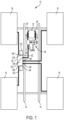
- a vehicle 10 includes a frame 14, one or more pneumatic wheels 18 rotatably coupled to the frame 14, and an ICE 22 coupled to the frame 14.
- the vehicle 10 also includes a CTIS 26 in fluid communication with at least one of the one or more pneumatic wheels 18, and an EAS 30 in operable communication with both the ICE 22 and the CTIS 26.
- the illustrated vehicle 10 is a tractor having four pneumatic wheels 18 (e.g., rubber tires mounted on metallic rims).
- other forms of vehicle may be used having a different number and type of wheel.
- only a subset of the wheels may be pneumatic or in operable communication with the CTIS 26.
- the ICE 22 of the vehicle 10 includes one or more cylinders (not shown), an intake manifold 34 in operable communication with the one or more cylinders, an exhaust manifold 38 in operable communication with the one or more cylinders, and a crank shaft (not shown) as is well known in the art.
- air is directed into the intake manifold 34 where it is subsequently distributed into each of the one or more cylinders, the ICE 22 then mixes fuel with the air to rotate the crank shaft via combustion. Finally, the ICE 22 expels the resulting heated exhaust gasses into the exhaust manifold 38 as is well known in the art.
- the ICE 22 also includes a primary intake system 44 positioned upstream of the intake manifold 34 and configured to act as a throttle for the ICE 22 and provide intake air thereto (e.g., via the EAS 30). More specifically, the primary intake system 44 of the ICE 22 includes a pair of sequential turbochargers 48a, 48b driven by the exhaust manifold 38 (see FIG. 2 ) and configured to output a compressed airflow therefrom.
- the primary intake system 44 system may include a supercharger or a single turbocharger.
- the primary intake system 44 may include a throttle body (not shown) or an air filter (not shown).
- the EAS 30 of the vehicle 10 includes an EAS manifold 42, and an electrically assisted compressor assembly 46 in fluid communication with the manifold 42.
- the EAS 30 receives airflow from the primary intake system 44, selectively compresses the airflow, and selectively directs the resulting airflow at a first pressure higher than atmospheric pressure to at least one of the intake manifold 34 and the CTIS 26.
- the EAS 30 is operable independently of both the CTIS 26 and the ICE 22.
- the compressor assembly 46 of the EAS 30 includes a compressor housing 50, a compressor wheel 54 at least partially positioned within and rotatable with respect to the compressor housing 50, and a motor unit 58 coupled to the compressor wheel 54 and configured to selectively rotate the compressor wheel 54 relative to the compressor housing 50.
- the compressor housing 50 includes a compressor inlet 62, and a compressor outlet 66.
- rotating the compressor wheel 54 relative to the compressor housing 50 draws air into the compressor housing 50 via the compressor inlet 62, compresses the air, and exhausts the resulting compressed air through the compressor outlet 66.
- the level of compression provided by the compressor assembly 46 can be varied by changing the speed at which the compressor wheel 54 rotates relative to the compressor housing 50.
- the compressor assembly 46 may also include a turbine assembly configured to harness exhaust gasses from the exhaust manifold 38 to rotate the compressor wheel 54 relative to the compressor housing 50.
- the turbine assembly may be used to supplement the torque provided by the motor unit 58 (described below).
- the motor unit 58 of the compressor assembly 46 includes a body 70 fixed relative to the compressor housing 50, and an output shaft 74 rotatable with respect to the body 70. As shown in FIG. 2 , the output shaft 74 is coupled to the compressor wheel 54 such that the shaft 74 and compressor wheel 54 rotate together as a unit.
- the motor 58 is operable in a an activated mode, in which the motor 58 receives electrical energy (e.g., from a controller, not shown) causing the shaft 74 to rotate relative to the body 70, and therefore, the compressor wheel 54 to rotate relative to the compressor housing 50.
- the motor 58 is also operable in a deactivated mode, in which the shaft 74 is not driven relative to the body 70, and therefore, the compressor wheel 54 does not rotate relative to the compressor housing 50.
- the rotating speed of the motor 58 may also be adjustable allowing the EAS 30 to vary the level of compression provided by the compressor assembly during operation (described above). While the illustrated implementation includes an electrical motor, in other implementations outside the scope of the claims, the motor unit may be a motor-generator, a pneumatic motor, a hydraulic motor, and the like.
- the manifold 42 of the EAS 30 includes a series of passageways and valves selectively interconnecting the ICE 22, the compressor assembly 46, the CTIS 26, and the primary intake system 44. More specifically, the manifold 42 includes a first opening or passageway 78 open to and configured to receive airflow from the compressor outlet 66, a second opening or passageway 82 open to and configured to receive airflow from the primary intake system 44, a third opening or passageway 86 open to and configured to provide airflow to the intake manifold 34 or cylinders of the ICE 22, a fourth opening or passageway 90 open to and configured to provide airflow to the CTIS 26, and a fifth opening or passageway 94 open to and configured to provide airflow to the compressor inlet 62.
- the manifold 42 of the EAS 30 also include a first or bypass valve 98.
- the first valve 98 has a first end 102 open to and in fluid communication with the first opening 78 (e.g., the compressor outlet 66) and the third opening 86 (e.g., the intake manifold 34).
- the first valve 98 also includes a second end 106 open to and in fluid communication with the fifth opening 94 (e.g., the compressor inlet 62) and the second opening 82 (e.g., the primary intake system 44).
- the first valve 98 is adjustable between an open configuration (see FIG. 2 ), in which the first end 102 is in fluid communication with the second end 106 via the valve (e.g., the valve gate is open), and a closed configuration (see FIG. 3 ), in which the first end 102 is not in fluid communication with the second end 106 via the valve (e.g., the valve gate is closed).
- the first valve 98 is configured to act as a bypass in the open configuration, allowing at least a portion of the air from the primary intake system 44 to bypass the compressor assembly 46 and flow directly into the intake manifold 34 and cylinders of the ICE 22 (see FIG. 4 ).
- placing the first valve 98 in the closed configuration forces the airflow from the primary intake system 44 to flow into the compressor assembly 46 (see FIG. 3 ).
- the first valve 98 is an automatically controlled butterfly valve adjustable between the open and closed configurations using a controller (not shown).
- the valve 98 may be mechanically operated.
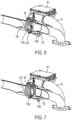
- another implementation of the bypass valve 98' included a spring loaded, one-way valve (see FIGS. 6 and 7 , which show embodiments outside the scope of the claimed invention).
- the bypass valve 98' may include a pair of pivotable disks 100a, 100b that are biased toward a closed configuration (described above; see FIG. 6 ) by a spring 104.
- the bypass valve 98' remains in the closed configuration until the fluid pressure at the second end 106 exceeds the fluid pressure at the first end 102 (i.e., the valve pressure differential) by a predetermined amount (i.e., the pressure differential activation level).
- the disks 100a, 100b overcome the resistance of the spring 104 and open, placing the valve 98' in the open configuration.
- operation of the compressor assembly 46 sufficiently reduces the pressure at the second end 106 relative to the first end 102 causing the valve 98' to remain closed.
- deactivating the compressor assembly 46 during operation of the ICE 22 causes the pressure differential to increase beyond the pressure differential activation level, causing the valve 98' to open.
- the manifold 42 of the EAS 30 also includes a second or CTIS feed valve 110.
- the second valve 110 includes a first end 114 open to and in fluid communication with both the first opening 78 (e.g., the compressor outlet 66) and the fourth opening 90 (e.g., the CTIS 26).
- the second valve 110 also includes a second end 118 open to and in fluid communication with the third opening 86 (e.g., the intake manifold 34). Similar to the first valve 98, the illustrated valve 110 is an automatically controlled butterfly valve. However, in alternative implementations, different types of valves may be used. In still other implementations, the valve may be mechanically operated.
- the second valve 110 is adjustable between an open configuration (see FIG. 3 ), in which the first end 114 is in fluid communication with the second end 118 via the valve (e.g., the valve gate is open), and a closed configuration (see FIG. 4 ), in which the first end 114 is not in fluid communication with the second end 118 via the valve (e.g., the valve gate is closed).
- the second valve 110 is configured to act as a CTIS feed valve to help re-direct the airflow discharged from the compressor assembly 46 to the CTIS 26 (described below).
- the manifold 42 of the EAS 30 may also include a third valve configured to control the flow of air through the fourth opening 90 (e.g., to the CTIS 26).
- the third valve may be operable independently of the first valve 98 and the second valve 110 and be used to isolate the CTIS 26 from the compressor assembly 46 when the CTIS 26 is not in use.
- manifold 42 is presented for use together with the electrically assisted compressor assembly 46, it is to be understood that in other implementations the manifold 42 may be used together with any forced air intake system (e.g., a turbocharger, supercharger, and the like). In such implementations, the manifold 42 is configured to selectively direct the compressed air output by the forced air intake system to both the ICE 22 (e.g., via the intake manifold 34) and the CTIS 26.
- any forced air intake system e.g., a turbocharger, supercharger, and the like.
- the manifold 42 is configured to selectively direct the compressed air output by the forced air intake system to both the ICE 22 (e.g., via the intake manifold 34) and the CTIS 26.
- the EAS 30 is operable in a passive mode, an engine boost mode, a CTI boost mode, and a CTI recirculating boost mode.
- the bypass valve 98 is in the open configuration, and the motor 58 is in the deactivated mode.
- the airflow (A1) from the primary intake system 44 e.g., from the second opening 82
- the intake manifold 34 e.g., through the third opening 86.
- the primary intake system 44 controls the flow of air into the ICE 22.
- the bypass valve 98 In the engine boost mode (see FIG. 3 ), the bypass valve 98 is in the closed configuration, the CTIS feed valve 110 is in the open configuration, and the motor unit 58 is in the activated mode causing the compressor wheel 54 to rotate relative to the compressor housing 50.
- the outlet 66 of the compressor assembly 46 With the valves 98, 110 in the engine boost mode, the outlet 66 of the compressor assembly 46 is in fluid communication with both the intake manifold 34 (i.e., the cylinders of the ICE 22) and the CTIS 26.
- the airflow (A2) from the primary intake system 44 (e.g., via the second opening 82) is directed into the compressor assembly 46 via the compressor inlet 62.
- the airflow (A2) is further compressed to a first pressure greater than atmospheric pressure and directed through the open CTIS feed valve 110 and into the intake manifold 34 of the ICE 22.
- the compressor assembly 46 While operating in the engine boost mode, the compressor assembly 46 is able to supplement the primary intake system 44 by providing additional boost in instances where the airflow provided by the primary intake system 44 is not sufficient (e.g., to compensate for turbo lag and the like).
- the level of additional boost provided by the compressor assembly 46 can be dictated by a controller (not shown) by altering the speed at which the compressor wheel 54 rotates relative to the compressor housing 50, as described above.
- the bypass valve 98 In the CTI boost mode (see FIG. 4 ), the bypass valve 98 is in the open configuration, the CTIS feed valve 110 is in the closed configuration, and the motor unit 58 is in the activated mode causing the compressor wheel 54 to rotate relative to the compressor housing 50.
- the outlet 66 of the compressor assembly 46 With the valves 98, 110 in the CTI boost mode, the outlet 66 of the compressor assembly 46 is in fluid communication with the CTIS 26 and is not in fluid communication with the intake manifold 34.
- the airflow (A3) entering the manifold 42 via the primary intake system 44 (e.g., through the second opening 82) is split such that a first portion (B3) bypasses the compressor assembly 46 and is directed into the intake manifold 34 of the ICE 22 while a second portion (C3) of the airflow is directed through the compressor assembly 46 and on to the CTIS 26. More specifically, the second portion (C3) of the airflow flows into the compressor inlet 62 where it is further compressed via the rotation of the compressor wheel 54 relative to the compressor housing 50 and is directed to the CTIS 26 via the closed CTIS feed valve 110.
- the compressor assembly 46 Due to the independent electrical operation of the compressor assembly 46, the compressor assembly 46 is able to provided compressed air to the CTIS 26 even when the ICE 22 is not operating (e.g., when the primary intake system 44 is not supplying compressed air to the manifold 42). In such implementations, the operation of the compressor assembly 46 alone draws air into the manifold 42.
- the bypass valve 98 is in the open configuration
- the CTIS feed valve 110 is in the open configuration
- the motor unit 58 is in the activated mode causing the compressor wheel 54 to rotate relative to the compressor housing 50.
- the outlet 66 of the compressor assembly 46 is in fluid communication with the CTIS 26 and the inlet 62 of the compressor assembly 46.
- the airflow (A8) entering the manifold 42 via the primary intake system 44 (e.g., through the second opening 82) is directed into the inlet 62 of the compressor assembly 46.
- the airflow is then compressed via rotation of the compressor wheel 54 relative to the compressor housing 50 and is exhausted through the outlet 66.
- the airflow is split such that a first portion (B8) is directed into the CTIS 26 while a second portion (C8) is recirculated to the inlet 62 of the compressor. More specifically, the second portion (C8) flows through the open CTIS feed valve 110, flows through the bypass valve 98, and merges with the initial airflow (A8).
- the combined airflow then re-enters the inlet 62 of the compressor assembly 46 where it is further compressed and re-exhausted through the outlet 66.
- a portion of the airflow (C8) By re-circulating a portion of the airflow (C8) through the compressor assembly 46, a higher level of boost can be provided to the CTIS 26 and potential surge conditions can be avoiding by allowing a larger volume of air to pass through the compressor assembly 46 during use. This is particularly useful in instances where the ICE 22 has little to no airflow entering therein (e.g., when the ICE 22 is either not operating or operating at low throttle conditions).
- the CTIS 26 includes a secondary air compressor 122, a reservoir tank 126, and a CTI manifold 130 in fluid communication with and extending between the EAS 30, the reservoir tank 126, and the secondary air compressor 122.
- the CTIS 26 is configured to monitor and adjust the air pressure within each of the pneumatic wheels 18 of the vehicle 10.
- the secondary air compressor 122 operates independently of the compressor assembly 46 and the ICE 22 and includes an outlet 134 where compressed air is discharged.
- the secondary air compressor 122 may include, but is not limited to, electrically powered air compressors, PTO driven air compressor, and the like.
- the CTI manifold 130 includes a series of passageways and valves configured to control the flow of air between each of the pneumatic wheels 18, the secondary air compressor 122, the reservoir tank 126, and the EAS 30.
- the CTI manifold 130 includes a first opening or passageway138 open to and in fluid communication with the fourth opening or passageway 90 of the EAS manifold 42, a second opening or passageway 142 open to and in fluid communication with the outlet 134 of the secondary air compressor 122, a third opening or passageway 144 open to and in fluid communication with the reservoir tank 126, and a plurality of wheel openings or passageways 146 each of which correspond to and are in fluid communication with one or more corresponding pneumatic wheels 18.
- the CTI manifold 130 is configured such that the flow of air can be controlled through each of the wheel openings 146 individually.
- the CTI manifold 130 is configured to direct air into and allow air to escape from each of the individual pneumatic wheels 18.
- the CTI manifold 130 is configured to adjust the valves therein to direct compressed air from the EAS 30, the secondary air compressor 122, the reservoir tank 126, or some combination thereof into the desired wheel.
- the CTI manifold 130 is able to supplement the volumetric output of the secondary air compressor 122 with that of the EAS 30 to allow for more quick and efficient tire filing.
- the CTI manifold 130 is configured to adjust the valves therein to vent a particular wheel opening 146 to the atmosphere allowing the air within the wheel 18 to escape.
- the CTI manifold 130 may be configured to direct compressed air from the EAS 30 to the reservoir tank 126 to charge the tank 126 for future use.
- the user While driving the vehicle 10, the user typically operates the EAS 30 in one of the passive mode and the engine boost mode. As described above, in both instances air is directed from the primary intake system 44 to the intake manifold 34 of the ICE 22 to allow operation thereof. More specifically, the engine boost mode may be entered to allow the compressor assembly 46 to supplement the flow of intake air provided by the primary intake system 44, while the passive mode may be entered when supplemental boost is not required and the airflow provided by the primary intake system 44 is sufficient for ICE 22 operations.
- the EAS 30 may enter the CTI boost mode (see FIG. 4 ). To do so, the EAS 30 adjusts the bypass valve 98 into the open configuration, adjusts the CTIS feed valve 110 to the closed configuration, and activates the motor unit 58 causing the compressor wheel 54 to rotate relative to the compressor housing 50. As described above, a first portion (B3) of the airflow is allowed to bypass the compressor assembly 46 and flow into the intake manifold 34 of the ICE 22. This bypass airflow (B3) assures the ICE 22 can continue to operate when the EAS 30 is in the CTI boost mode.
- a second portion (C3) of the airflow is further compressed by the compressor assembly 46 and subsequently directed to the CTI manifold 130 via the fourth opening 90.
- the CTIS 26 then utilizes the compressed air provided therefrom to fill the pneumatic wheel 18 as described above. More specifically, the air provided by the EAS 30 supplmenets the compressed air provided by the secondary air compressor 122 to more quickly and efficiently fill the pneumatic wheels 18. This capability is particularly useful for use with tractors where wheel pressure often needs to be changed between on-road and off-road driving and the wheels themselves are large - requiring a large volume of air to adjust the pressure therein.
- the CTIS 26 may rely solely on the EAS 30 for compressed air.
- the CTIS 26 stops the flow of air to the relevant wheels 18 and the EAS 30 exits the CTI boost mode.
- the EAS 30 may then return to either the passive or engine boost modes of operation.
- FIGS. 8-11 illustrate another embodiment of the EAS 1030.
- the EAS 1030 is substantially similar to the EAS 30 described above. As such, only the differences will be described herein.
- the EAS 1030 includes a dual-stage compressor assembly 1046, and a manifold 1042.
- the dual stage compressor assembly 1046 includes a first compressor stage 1500, a second compressor stage 1504, and a motor unit 1058 in operable communication with and configured to selectively drive both the first compressor stage 1500 and the second compressor stage 1504.
- the dual-stage compressor assembly 1046 also includes a clutch 1520 positioned between and configured to selectively transmit torque between the motor 1058 and the second compressor stage 1504.
- the clutch 1520 is operable in an engaged configuration, in which the motor 1058 is in operable communication with the second compressor stage 1504 (e.g., rotation of the motor 1058 drives the second compressor stage 1504), and a disengaged configuration, in which the motor 1058 is not in operable communication with the second compressor stage 1504 (e.g., rotation of the motor 1058 is not transmitted to the second compressor stage 1504).
- the manifold 1042 of the EAS 1030 includes a first opening or passageway 1524 open to and in fluid communication with the primary intake system 44, a second opening or passageway 1528 open to and in fluid communication with the inlet 1062 of the first compressor stage 1500, a third opening or passageway 1532 open to and in fluid communication with the outlet 1066 of the first compressor stage 1500, a fourth opening or passageway 1536 open to and in fluid communication with the outlet 1066 of the second compressor stage 1504, a fifth opening or passageway 1540 open to and in fluid communication with the intake manifold 34 of the ICE 22, and a sixth opening or passageway 1544 open to and in fluid communication with the CTIS 26.
- the manifold 1042 also includes a first or bypass valve 1548 having a first end 1552 in fluid communication with the second opening 1528 (e.g., the inlet 1062 of the first compressor stage 1500) and the first opening 1524 (e.g., the primary intake system 44).
- the first valve 1548 also includes a second end 1556 in fluid communication with the third opening 1532 (e.g., the outlet 1066 of the first compressor stage 1500) and the fifth opening 1540 (e.g., the intake manifold 34).
- the first valve 1548 is adjustable between an open configuration (see FIG. 8 ), in which the two ends 1552, 1556 are in fluid communication with one another via the valve 1548, and a closed configuration (see FIG. 9 ), in which the two ends 1552, 1556 are not in fluid communication with one another via the valve 1548.
- the manifold 1042 also includes a second or second stage activation valve 1560.
- the second valve 1560 includes a first end 1564 in fluid communication with the third opening 1532 (e.g., the outlet 1066 of the first compressor stage 1500), and a second end 1568 in fluid communication with the fifth opening 1540 (e.g., the intake manifold 34).
- the second valve 1560 is adjustable between an open configuration (see FIG. 9 ), in which the two ends 1564, 1568 are in fluid communication with one another via the valve 1560, and a closed configuration (see FIG. 10 ), in which the two ends 1564, 1568 are not in fluid communication with one another via the valve 1560.
- the manifold 1042 also includes a third or CTIS feed valve 1572.
- the CTIS feed valve 1572 includes a first end 1576 in fluid communication with the fifth opening 1540 (e.g., the intake manifold 34), and a second end 1580 in fluid communication with the sixth opening 1544 (e.g., the CTIS 26) and the outlet 1066 of the second compressor stage 1504.
- the third valve 1572 is adjustable between an open configuration (see FIG. 10 ), in which the two ends 1576, 1580 are in fluid communication with one another via the valve 1572, and a closed configuration (see FIG. 11 ), in which the two ends 1576, 1580 are not in fluid communication with one another via the valve 1572.
- the EAS 1030 is operable in a passive mode, a first engine boost mode, a second engine boost mode, and a CTIS boost mode.
- the bypass valve 1548 is in the open configuration and the motor 1058 is in the deactivated configuration.
- the airflow (A4) from the primary intake system 44 e.g., via the first opening 1524
- the primary intake system 44 establishes the flow of air into the ICE 22.
- the bypass valve 1548 In the first engine boost mode (see FIG. 9 ), the bypass valve 1548 is in the closed configuration, the second stage activation valve 1560 is in the open configuration, the motor 1058 is in the activated mode, and the clutch 1520 is in the disengaged configuration. With the clutch 1520 in the disengaged configuration, operation of the motor 1058 drives the first compressor stage 1500 but does not drive the second compressor stage 1504. By doing so, parasitic load on the motor 1058 is minimized since the second compressor stage 1504 is not in use during the first engine boost mode.
- the airflow (A5) fed into the manifold 1042 from the primary intake system 44 is directed into the first compressor stage 1500.
- the airflow (A5) is further compressed and directed through the open second stage activation valve 1560 and into the intake manifold 34 of the ICE 22.
- the compressor assembly 46 is able to supplement the primary intake system 44 by providing additional boost in instances where the airflow provided by the primary intake system 44 is not sufficient (e.g., to compensate for turbo lag and the like).
- the magnitude of supplemental boost provided by the compressor assembly 46 can be dictated by a controller (not shown) by altering the speed of the motor 1058, as described above.
- the bypass valve 1548 is in the closed configuration
- the second stage activation valve 1560 is in the closed configuration
- the CTIS feed valve 1572 is in the open configuration
- the motor 1058 is in the activated mode
- the clutch 1520 is engaged. With the motor 1058 activated and the clutch 1520 engaged, both the first and second stages 1500, 1504 of the compressor assembly 1046 are driven by the motor 1058.
- the airflow (A6) fed into the manifold 1042 from the primary intake system 44 is directed into the first compressor stage 1500.
- the airflow (A6) is compressed and exhausted into the interstage portion 1590 of the manifold 1042.
- the airflow (A6) is then directed into the inlet 1062 of the second compressor stage 1504 via the closed second stage activation valve 1560.
- the airflow (A6) is compressed even further and passes through the open CTIS feed valve 1572 and to the intake manifold 34.
- the second engine boost mode allows the EAS 30 to further supplement the airflow of the primary intake system 44 beyond the levels capable during the first engine boost mode through the use of both stages 1500, 1504 of the compressor assembly 1046.
- the bypass valve 1548 is in the open configuration
- the second stage activation valve 1560 is in the closed configuration
- the CTIS feed valve 1572 is in the closed configuration
- the motor 1058 is in the activated mode
- the clutch 1520 is in the engaged configuration.
- both the first and second stages 1500, 1504 of the compressor assembly 1046 are driven by the motor 1058.
- the airflow (A7) entering the manifold 1042 via the primary intake system 44 is split such that a first portion (B7) bypasses the compressor assembly 1046 and is directed into the intake manifold 34 of the ICE 22 while a second portion (C7) of the airflow is directed to the compressor assembly 1046.
- the airflow (C7) Upon entering the first compressor stage 1500 of the compressor assembly 1046, the airflow (C7) is compressed and exhausted into the interstage portion 1590 of the manifold 1042.
- the airflow (C7) is then directed into the inlet 1062 of the second compressor stage 1504 via the closed second stage activation valve 1560 where it is compressed even further.
- the airflow (C7) leaves the second compressor stage 1504 and is directed to the CTIS 26 via the closed CTIS feed valve 1572.
- the CTI boost mode in FIG. 11 allows the EAS 1030 to provide a large volume of air at a high pressure to the CTIS 26 by utilizing both stages of the compressor assembly 1046.
- the user While driving the vehicle 10, the user typically operates the EAS 30 in one of the passive mode, the first engine boost mode, and the second engine boost mode.
- the EAS 30 changes to the CTI boost mode to supplement CTIS operation, as described above.
- FIG. 12 illustrates another embodiment outside the scope of the claimed invention of the EAS 2030.
- the EAS 2030 is substantially similar to the EAS 30 described above. More specifically, FIG. 12 illustrates various locations (positions 1-5) where an electrically assisted compressor assembly 2046 may be positioned along the intake fluid path 2598 of the ICE 22.
- the intake fluid path 2598 is generally defined as the fluid path originating at each of the one or more cylinders of the ICE 22 and extending upstream to the intake location 2602 where ambient air is drawn into the overall ICE 22 system.
- the compressor assembly 2046 may be positioned, but is not limited to: upstream of the low-pressure turbocharger 2048a (see position 1), between the low-pressure turbocharger 2048a and the high-pressure turbocharger 2048b (see position 2), downstream of the high-pressure turbocharger 2048b but upstream of the intercooler 2600 (see position 3), downstream of the intercooler 2600 but upstream of the EGR valve 2604 (see position 4), and/or downstream of the EGR valve 2604 (see position 5).
- the electrically assisted compressor assembly 2046 may be incorporated into at least one of the low-pressure turbocharger 2048a and the high-pressure turbocharger 2048b.
- the electrically assisted compressor assembly 2046 may also include a turbine (not shown) to further assist the rotation of the compressor wheel relative to the compressor housing.
- the compressor assembly 2046 is presumed located at position 4, downstream of the intercooler 2600 but upstream of the EGR valve 2604.
- the EAS 2030 also includes a feed line 2608 extending between and in fluid communication with the intake fluid path 2598 and the CTIS 26.
- the feed line 2608 is positioned downstream of the compressor assembly 2046 and configured to direct at least a portion of the airflow exhausted therefrom to the CTIS 26.
- no valves are present to re-direct airflow from the intake fluid path 2598 and into the feed line 2608.
- the CTIS 26 the compressor assembly 2046 and the intake manifold 34 are all in constant fluid communication with one another. Due to this layout, the EAS 2030 relies upon the relative high pressure region created by the compressor assembly 2046 to produce the desired airflow characteristics (e.g., into both the CTIS 26 and the intake manifold 34).
- one or more valves e.g., such as a three-way valve, not shown may be used.
Landscapes
- Engineering & Computer Science (AREA)
- Mechanical Engineering (AREA)
- Chemical & Material Sciences (AREA)
- Combustion & Propulsion (AREA)
- General Engineering & Computer Science (AREA)
- Transportation (AREA)
- Supercharger (AREA)
Description
- The present invention relates to an electrified air system (EAS), and more specifically to an EAS for use with a central tire inflation system (CTIS).
- Some vehicle, such as tractors, utilize a CTIS to allow for the inflation and deflation of pneumatic wheels on-demand. CTIS systems typically include a built-in or dedicated air compressor to provide air for these tasks.
-
US 2007/144171 relates to a tyre pressure regulating system for regulating the pressure of tyres mounted on a vehicle. Said tyre pressure regulating system comprises a compressed air source. The vehicle comprises an internal combustion engine provided with a turbocharger as a compressed air source for the tyre pressure regulating system. In order to obtain a sufficiently high tyre pressure and to be able to fill the tyres in a relatively rapid manner, the turbocharger has a variable geometry. -
US 2018/223751 provides methods and systems for operating an electric supercharger as an on-board air pump and/or vacuum pump. During conditions when a vehicle is not being propelled and the vehicle engine is idling, a portion of an air intake passage is sealed and the supercharger is operated to deliver compressed air into the sealed portion. Compressed air can then be picked up directly from the sealed portion for use in tire inflation, or picked up via an ejector to provide vacuum for vacuum actuators. - Embodiments of the invention are defined by the independent claim to which reference should be made. Preferable features are set out in the dependent claims.
- Other aspects of the invention will become apparent by consideration of the detailed description and accompanying drawings.
-
-
FIG. 1 is a schematic view of a vehicle having an EAS in operable communication with a CTIS. -
FIG. 2 is a schematic of the EAS ofFIG. 1 in a passive mode. -
FIG. 3 is a schematic of the EAS ofFIG. 1 in an engine boost mode. -
FIG. 4 is a schematic of the EAS ofFIG. 1 in a CTIS boost mode. -
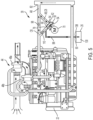
FIG. 5 is a schematic of the EAS ofFIG. 1 in a CTIS recirculating boost mode. -
FIGS. 6 and 7 illustrate another implementation of a bypass valve. -
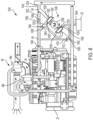
FIG. 8 is a schematic of another implementation of an EAS in a passive mode. -
FIG. 9 is a schematic of the EAS ofFIG. 8 in a first engine boost mode. -
FIG. 10 is a schematic of the EAS ofFIG. 8 in a second engine boost mode. -
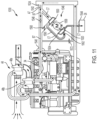
FIG. 11 is a schematic of the EAS ofFIG. 8 is a CTIS boost mode. -
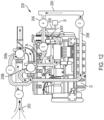
FIG. 12 is a schematic of another implementation of an EAS. - Before any embodiments of the invention are explained in detail, it is to be understood that the invention is not limited in its application to the details of the formation and arrangement of components set forth in the following description or illustrated in the accompanying drawings. The invention is capable of supporting other implementations and of being practiced or of being carried out in various ways.
- The invention generally relates to a vehicle having a central tire inflation system (CTIS) in operable communication with the electrified air system (EAS) of an internal combustion engine (ICE). More specifically, the EAS is configured to selectively provide compressed air at a pressure greater than atmospheric pressure to both the central tire inflation system and/or the intake manifold (e.g., the cylinders) of the ICE. In the illustrated implementation, the EAS is used to supplement the dedicated air compressor of the CTIS for quicker and more efficient operation. In other implementation, the EAS may act as the sole compressed air source for the CTIS.
- Referring to
FIG. 1 , avehicle 10 includes aframe 14, one or morepneumatic wheels 18 rotatably coupled to theframe 14, and an ICE 22 coupled to theframe 14. Thevehicle 10 also includes aCTIS 26 in fluid communication with at least one of the one or morepneumatic wheels 18, and an EAS 30 in operable communication with both the ICE 22 and the CTIS 26. In the illustrated implementation, the illustratedvehicle 10 is a tractor having four pneumatic wheels 18 (e.g., rubber tires mounted on metallic rims). In alternative implementations, other forms of vehicle may be used having a different number and type of wheel. In still other implementations, only a subset of the wheels may be pneumatic or in operable communication with the CTIS 26. - The ICE 22 of the
vehicle 10 includes one or more cylinders (not shown), anintake manifold 34 in operable communication with the one or more cylinders, anexhaust manifold 38 in operable communication with the one or more cylinders, and a crank shaft (not shown) as is well known in the art. During use, air is directed into theintake manifold 34 where it is subsequently distributed into each of the one or more cylinders, the ICE 22 then mixes fuel with the air to rotate the crank shaft via combustion. Finally, the ICE 22 expels the resulting heated exhaust gasses into theexhaust manifold 38 as is well known in the art. - In the illustrated implementation, the ICE 22 also includes a
primary intake system 44 positioned upstream of theintake manifold 34 and configured to act as a throttle for the ICE 22 and provide intake air thereto (e.g., via the EAS 30). More specifically, theprimary intake system 44 of the ICE 22 includes a pair ofsequential turbochargers FIG. 2 ) and configured to output a compressed airflow therefrom. In alternative implementations, theprimary intake system 44 system may include a supercharger or a single turbocharger. In still other implementations, theprimary intake system 44 may include a throttle body (not shown) or an air filter (not shown). - Illustrated in
FIGS. 2-5 , in embodiments outside the scope of the claimed invention, the EAS 30 of thevehicle 10 includes anEAS manifold 42, and an electrically assisted compressor assembly 46 in fluid communication with themanifold 42. During use, the EAS 30 receives airflow from theprimary intake system 44, selectively compresses the airflow, and selectively directs the resulting airflow at a first pressure higher than atmospheric pressure to at least one of theintake manifold 34 and theCTIS 26. In the illustrated implementation, the EAS 30 is operable independently of both the CTIS 26 and the ICE 22. - The compressor assembly 46 of the EAS 30 includes a
compressor housing 50, acompressor wheel 54 at least partially positioned within and rotatable with respect to thecompressor housing 50, and amotor unit 58 coupled to thecompressor wheel 54 and configured to selectively rotate thecompressor wheel 54 relative to thecompressor housing 50. The compressor housing 50, in turn, includes acompressor inlet 62, and acompressor outlet 66. During use, rotating thecompressor wheel 54 relative to thecompressor housing 50 draws air into thecompressor housing 50 via thecompressor inlet 62, compresses the air, and exhausts the resulting compressed air through thecompressor outlet 66. As is well known in the art, the level of compression provided by the compressor assembly 46 can be varied by changing the speed at which thecompressor wheel 54 rotates relative to thecompressor housing 50. While not shown, the compressor assembly 46 may also include a turbine assembly configured to harness exhaust gasses from theexhaust manifold 38 to rotate thecompressor wheel 54 relative to thecompressor housing 50. In such implementations, the turbine assembly may be used to supplement the torque provided by the motor unit 58 (described below). - The
motor unit 58 of the compressor assembly 46 includes abody 70 fixed relative to thecompressor housing 50, and anoutput shaft 74 rotatable with respect to thebody 70. As shown inFIG. 2 , theoutput shaft 74 is coupled to thecompressor wheel 54 such that theshaft 74 andcompressor wheel 54 rotate together as a unit. During use, themotor 58 is operable in a an activated mode, in which themotor 58 receives electrical energy (e.g., from a controller, not shown) causing theshaft 74 to rotate relative to thebody 70, and therefore, thecompressor wheel 54 to rotate relative to thecompressor housing 50. Themotor 58 is also operable in a deactivated mode, in which theshaft 74 is not driven relative to thebody 70, and therefore, thecompressor wheel 54 does not rotate relative to thecompressor housing 50. In some implementations, the rotating speed of themotor 58 may also be adjustable allowing the EAS 30 to vary the level of compression provided by the compressor assembly during operation (described above). While the illustrated implementation includes an electrical motor, in other implementations outside the scope of the claims, the motor unit may be a motor-generator, a pneumatic motor, a hydraulic motor, and the like. - The
manifold 42 of the EAS 30 includes a series of passageways and valves selectively interconnecting the ICE 22, the compressor assembly 46, the CTIS 26, and theprimary intake system 44. More specifically, themanifold 42 includes a first opening orpassageway 78 open to and configured to receive airflow from thecompressor outlet 66, a second opening orpassageway 82 open to and configured to receive airflow from theprimary intake system 44, a third opening orpassageway 86 open to and configured to provide airflow to theintake manifold 34 or cylinders of the ICE 22, a fourth opening orpassageway 90 open to and configured to provide airflow to the CTIS 26, and a fifth opening orpassageway 94 open to and configured to provide airflow to thecompressor inlet 62. - The
manifold 42 of the EAS 30 also include a first orbypass valve 98. Thefirst valve 98 has afirst end 102 open to and in fluid communication with the first opening 78 (e.g., the compressor outlet 66) and the third opening 86 (e.g., the intake manifold 34). Thefirst valve 98 also includes asecond end 106 open to and in fluid communication with the fifth opening 94 (e.g., the compressor inlet 62) and the second opening 82 (e.g., the primary intake system 44). - During use, the
first valve 98 is adjustable between an open configuration (seeFIG. 2 ), in which thefirst end 102 is in fluid communication with thesecond end 106 via the valve (e.g., the valve gate is open), and a closed configuration (seeFIG. 3 ), in which thefirst end 102 is not in fluid communication with thesecond end 106 via the valve (e.g., the valve gate is closed). Generally speaking, thefirst valve 98 is configured to act as a bypass in the open configuration, allowing at least a portion of the air from theprimary intake system 44 to bypass the compressor assembly 46 and flow directly into theintake manifold 34 and cylinders of the ICE 22 (seeFIG. 4 ). In contrast, placing thefirst valve 98 in the closed configuration forces the airflow from theprimary intake system 44 to flow into the compressor assembly 46 (seeFIG. 3 ). - In the illustrated implementation the
first valve 98 is an automatically controlled butterfly valve adjustable between the open and closed configurations using a controller (not shown). However, in alternative implementations, thevalve 98 may be mechanically operated. For example, another implementation of the bypass valve 98' included a spring loaded, one-way valve (seeFIGS. 6 and 7 , which show embodiments outside the scope of the claimed invention). In such an implementation, the bypass valve 98' may include a pair ofpivotable disks FIG. 6 ) by aspring 104. As such, the bypass valve 98' remains in the closed configuration until the fluid pressure at thesecond end 106 exceeds the fluid pressure at the first end 102 (i.e., the valve pressure differential) by a predetermined amount (i.e., the pressure differential activation level). Once the pressure differential is sufficiently large, thedisks spring 104 and open, placing the valve 98' in the open configuration. Generally speaking, operation of the compressor assembly 46 sufficiently reduces the pressure at thesecond end 106 relative to thefirst end 102 causing the valve 98' to remain closed. In contrast, deactivating the compressor assembly 46 during operation of theICE 22 causes the pressure differential to increase beyond the pressure differential activation level, causing the valve 98' to open. - The
manifold 42 of theEAS 30 also includes a second orCTIS feed valve 110. Thesecond valve 110 includes afirst end 114 open to and in fluid communication with both the first opening 78 (e.g., the compressor outlet 66) and the fourth opening 90 (e.g., the CTIS 26). Thesecond valve 110 also includes asecond end 118 open to and in fluid communication with the third opening 86 (e.g., the intake manifold 34). Similar to thefirst valve 98, the illustratedvalve 110 is an automatically controlled butterfly valve. However, in alternative implementations, different types of valves may be used. In still other implementations, the valve may be mechanically operated. - During use, the
second valve 110 is adjustable between an open configuration (seeFIG. 3 ), in which thefirst end 114 is in fluid communication with thesecond end 118 via the valve (e.g., the valve gate is open), and a closed configuration (seeFIG. 4 ), in which thefirst end 114 is not in fluid communication with thesecond end 118 via the valve (e.g., the valve gate is closed). Generally speaking, thesecond valve 110 is configured to act as a CTIS feed valve to help re-direct the airflow discharged from the compressor assembly 46 to the CTIS 26 (described below). - While not illustrated, the
manifold 42 of theEAS 30 may also include a third valve configured to control the flow of air through the fourth opening 90 (e.g., to the CTIS 26). In such implementations, the third valve may be operable independently of thefirst valve 98 and thesecond valve 110 and be used to isolate theCTIS 26 from the compressor assembly 46 when theCTIS 26 is not in use. - While the illustrated
manifold 42 is presented for use together with the electrically assisted compressor assembly 46, it is to be understood that in other implementations the manifold 42 may be used together with any forced air intake system (e.g., a turbocharger, supercharger, and the like). In such implementations, the manifold 42 is configured to selectively direct the compressed air output by the forced air intake system to both the ICE 22 (e.g., via the intake manifold 34) and theCTIS 26. - During use, the
EAS 30 is operable in a passive mode, an engine boost mode, a CTI boost mode, and a CTI recirculating boost mode. In the passive mode (seeFIG. 2 ), thebypass valve 98 is in the open configuration, and themotor 58 is in the deactivated mode. With thebypass valve 98 in the open configuration, the airflow (A1) from the primary intake system 44 (e.g., from the second opening 82) is directed bypasses the compressor assembly 46 and is fed directly to the cylinders of theICE 22 via the intake manifold 34 (e.g., through the third opening 86). When theEAS 30 is in the passive mode, theprimary intake system 44 controls the flow of air into theICE 22. - In the engine boost mode (see
FIG. 3 ), thebypass valve 98 is in the closed configuration, theCTIS feed valve 110 is in the open configuration, and themotor unit 58 is in the activated mode causing thecompressor wheel 54 to rotate relative to thecompressor housing 50. With thevalves outlet 66 of the compressor assembly 46 is in fluid communication with both the intake manifold 34 (i.e., the cylinders of the ICE 22) and theCTIS 26. - With the
bypass valve 98 in the closed configuration, the airflow (A2) from the primary intake system 44 (e.g., via the second opening 82) is directed into the compressor assembly 46 via thecompressor inlet 62. Upon entering the compressor assembly 46, the airflow (A2) is further compressed to a first pressure greater than atmospheric pressure and directed through the openCTIS feed valve 110 and into theintake manifold 34 of theICE 22. While operating in the engine boost mode, the compressor assembly 46 is able to supplement theprimary intake system 44 by providing additional boost in instances where the airflow provided by theprimary intake system 44 is not sufficient (e.g., to compensate for turbo lag and the like). The level of additional boost provided by the compressor assembly 46 can be dictated by a controller (not shown) by altering the speed at which thecompressor wheel 54 rotates relative to thecompressor housing 50, as described above. - In the CTI boost mode (see
FIG. 4 ), thebypass valve 98 is in the open configuration, theCTIS feed valve 110 is in the closed configuration, and themotor unit 58 is in the activated mode causing thecompressor wheel 54 to rotate relative to thecompressor housing 50. With thevalves outlet 66 of the compressor assembly 46 is in fluid communication with theCTIS 26 and is not in fluid communication with theintake manifold 34. - With both the
bypass valve 98 open and themotor unit 58 activated, the airflow (A3) entering the manifold 42 via the primary intake system 44 (e.g., through the second opening 82) is split such that a first portion (B3) bypasses the compressor assembly 46 and is directed into theintake manifold 34 of theICE 22 while a second portion (C3) of the airflow is directed through the compressor assembly 46 and on to theCTIS 26. More specifically, the second portion (C3) of the airflow flows into thecompressor inlet 62 where it is further compressed via the rotation of thecompressor wheel 54 relative to thecompressor housing 50 and is directed to theCTIS 26 via the closedCTIS feed valve 110. Due to the independent electrical operation of the compressor assembly 46, the compressor assembly 46 is able to provided compressed air to theCTIS 26 even when theICE 22 is not operating (e.g., when theprimary intake system 44 is not supplying compressed air to the manifold 42). In such implementations, the operation of the compressor assembly 46 alone draws air into themanifold 42. - In the CTI recirculating boost mode (see
FIG. 5 ), thebypass valve 98 is in the open configuration, theCTIS feed valve 110 is in the open configuration, and themotor unit 58 is in the activated mode causing thecompressor wheel 54 to rotate relative to thecompressor housing 50. With thevalves outlet 66 of the compressor assembly 46 is in fluid communication with theCTIS 26 and theinlet 62 of the compressor assembly 46. - With the
bypass valve 98 open, theCTIS feed valve 110 open, and themotor unit 58 activated, the airflow (A8) entering the manifold 42 via the primary intake system 44 (e.g., through the second opening 82) is directed into theinlet 62 of the compressor assembly 46. The airflow is then compressed via rotation of thecompressor wheel 54 relative to thecompressor housing 50 and is exhausted through theoutlet 66. After leaving theoutlet 66, the airflow is split such that a first portion (B8) is directed into theCTIS 26 while a second portion (C8) is recirculated to theinlet 62 of the compressor. More specifically, the second portion (C8) flows through the openCTIS feed valve 110, flows through thebypass valve 98, and merges with the initial airflow (A8). The combined airflow then re-enters theinlet 62 of the compressor assembly 46 where it is further compressed and re-exhausted through theoutlet 66. By re-circulating a portion of the airflow (C8) through the compressor assembly 46, a higher level of boost can be provided to theCTIS 26 and potential surge conditions can be avoiding by allowing a larger volume of air to pass through the compressor assembly 46 during use. This is particularly useful in instances where theICE 22 has little to no airflow entering therein (e.g., when theICE 22 is either not operating or operating at low throttle conditions). - As shown in
FIG. 1 , theCTIS 26 includes asecondary air compressor 122, areservoir tank 126, and aCTI manifold 130 in fluid communication with and extending between theEAS 30, thereservoir tank 126, and thesecondary air compressor 122. During use, theCTIS 26 is configured to monitor and adjust the air pressure within each of thepneumatic wheels 18 of thevehicle 10. - The
secondary air compressor 122 operates independently of the compressor assembly 46 and theICE 22 and includes anoutlet 134 where compressed air is discharged. Thesecondary air compressor 122 may include, but is not limited to, electrically powered air compressors, PTO driven air compressor, and the like. - The
CTI manifold 130 includes a series of passageways and valves configured to control the flow of air between each of thepneumatic wheels 18, thesecondary air compressor 122, thereservoir tank 126, and theEAS 30. TheCTI manifold 130 includes a first opening or passageway138 open to and in fluid communication with the fourth opening orpassageway 90 of theEAS manifold 42, a second opening orpassageway 142 open to and in fluid communication with theoutlet 134 of thesecondary air compressor 122, a third opening orpassageway 144 open to and in fluid communication with thereservoir tank 126, and a plurality of wheel openings orpassageways 146 each of which correspond to and are in fluid communication with one or more correspondingpneumatic wheels 18. In the illustrated implementation, theCTI manifold 130 is configured such that the flow of air can be controlled through each of thewheel openings 146 individually. - During use, the
CTI manifold 130 is configured to direct air into and allow air to escape from each of the individualpneumatic wheels 18. To increase the air pressure within aparticular wheel 18, theCTI manifold 130 is configured to adjust the valves therein to direct compressed air from theEAS 30, thesecondary air compressor 122, thereservoir tank 126, or some combination thereof into the desired wheel. When filing thewheels 18, theCTI manifold 130 is able to supplement the volumetric output of thesecondary air compressor 122 with that of theEAS 30 to allow for more quick and efficient tire filing. In contrast, to reduce the air pressure within aparticular wheel 18, theCTI manifold 130 is configured to adjust the valves therein to vent a particular wheel opening 146 to the atmosphere allowing the air within thewheel 18 to escape. In still other operating modes, theCTI manifold 130 may be configured to direct compressed air from theEAS 30 to thereservoir tank 126 to charge thetank 126 for future use. - While driving the
vehicle 10, the user typically operates theEAS 30 in one of the passive mode and the engine boost mode. As described above, in both instances air is directed from theprimary intake system 44 to theintake manifold 34 of theICE 22 to allow operation thereof. More specifically, the engine boost mode may be entered to allow the compressor assembly 46 to supplement the flow of intake air provided by theprimary intake system 44, while the passive mode may be entered when supplemental boost is not required and the airflow provided by theprimary intake system 44 is sufficient forICE 22 operations. - To increase the air pressure within one or more of the
pneumatic wheels 18, theEAS 30 may enter the CTI boost mode (seeFIG. 4 ). To do so, theEAS 30 adjusts thebypass valve 98 into the open configuration, adjusts theCTIS feed valve 110 to the closed configuration, and activates themotor unit 58 causing thecompressor wheel 54 to rotate relative to thecompressor housing 50. As described above, a first portion (B3) of the airflow is allowed to bypass the compressor assembly 46 and flow into theintake manifold 34 of theICE 22. This bypass airflow (B3) assures theICE 22 can continue to operate when theEAS 30 is in the CTI boost mode. - With the
EAS 30 in the CTI boost mode, a second portion (C3) of the airflow is further compressed by the compressor assembly 46 and subsequently directed to theCTI manifold 130 via thefourth opening 90. TheCTIS 26 then utilizes the compressed air provided therefrom to fill thepneumatic wheel 18 as described above. More specifically, the air provided by theEAS 30 supplmenets the compressed air provided by thesecondary air compressor 122 to more quickly and efficiently fill thepneumatic wheels 18. This capability is particularly useful for use with tractors where wheel pressure often needs to be changed between on-road and off-road driving and the wheels themselves are large - requiring a large volume of air to adjust the pressure therein. In alternative implementations, theCTIS 26 may rely solely on theEAS 30 for compressed air. - After the
wheels 18 have reached the desired pressure, theCTIS 26 stops the flow of air to therelevant wheels 18 and theEAS 30 exits the CTI boost mode. TheEAS 30 may then return to either the passive or engine boost modes of operation. -
FIGS. 8-11 illustrate another embodiment of theEAS 1030. TheEAS 1030 is substantially similar to theEAS 30 described above. As such, only the differences will be described herein. TheEAS 1030 includes a dual-stage compressor assembly 1046, and amanifold 1042. - The dual
stage compressor assembly 1046 includes afirst compressor stage 1500, asecond compressor stage 1504, and amotor unit 1058 in operable communication with and configured to selectively drive both thefirst compressor stage 1500 and thesecond compressor stage 1504. Eachcompressor stage compressor inlet 1062 and acompressor outlet 1066. - The dual-
stage compressor assembly 1046 also includes a clutch 1520 positioned between and configured to selectively transmit torque between themotor 1058 and thesecond compressor stage 1504. The clutch 1520, in turn, is operable in an engaged configuration, in which themotor 1058 is in operable communication with the second compressor stage 1504 (e.g., rotation of themotor 1058 drives the second compressor stage 1504), and a disengaged configuration, in which themotor 1058 is not in operable communication with the second compressor stage 1504 (e.g., rotation of themotor 1058 is not transmitted to the second compressor stage 1504). - The
manifold 1042 of theEAS 1030 includes a first opening orpassageway 1524 open to and in fluid communication with theprimary intake system 44, a second opening orpassageway 1528 open to and in fluid communication with theinlet 1062 of thefirst compressor stage 1500, a third opening orpassageway 1532 open to and in fluid communication with theoutlet 1066 of thefirst compressor stage 1500, a fourth opening orpassageway 1536 open to and in fluid communication with theoutlet 1066 of thesecond compressor stage 1504, a fifth opening orpassageway 1540 open to and in fluid communication with theintake manifold 34 of theICE 22, and a sixth opening orpassageway 1544 open to and in fluid communication with theCTIS 26. - The manifold 1042 also includes a first or
bypass valve 1548 having afirst end 1552 in fluid communication with the second opening 1528 (e.g., theinlet 1062 of the first compressor stage 1500) and the first opening 1524 (e.g., the primary intake system 44). Thefirst valve 1548 also includes asecond end 1556 in fluid communication with the third opening 1532 (e.g., theoutlet 1066 of the first compressor stage 1500) and the fifth opening 1540 (e.g., the intake manifold 34). During use, thefirst valve 1548 is adjustable between an open configuration (seeFIG. 8 ), in which the two ends 1552, 1556 are in fluid communication with one another via thevalve 1548, and a closed configuration (seeFIG. 9 ), in which the two ends 1552, 1556 are not in fluid communication with one another via thevalve 1548. - The manifold 1042 also includes a second or second
stage activation valve 1560. Thesecond valve 1560 includes afirst end 1564 in fluid communication with the third opening 1532 (e.g., theoutlet 1066 of the first compressor stage 1500), and asecond end 1568 in fluid communication with the fifth opening 1540 (e.g., the intake manifold 34). Thesecond valve 1560 is adjustable between an open configuration (seeFIG. 9 ), in which the two ends 1564, 1568 are in fluid communication with one another via thevalve 1560, and a closed configuration (seeFIG. 10 ), in which the two ends 1564, 1568 are not in fluid communication with one another via thevalve 1560. - The manifold 1042 also includes a third or
CTIS feed valve 1572. TheCTIS feed valve 1572 includes afirst end 1576 in fluid communication with the fifth opening 1540 (e.g., the intake manifold 34), and asecond end 1580 in fluid communication with the sixth opening 1544 (e.g., the CTIS 26) and theoutlet 1066 of thesecond compressor stage 1504. Thethird valve 1572 is adjustable between an open configuration (seeFIG. 10 ), in which the two ends 1576, 1580 are in fluid communication with one another via thevalve 1572, and a closed configuration (seeFIG. 11 ), in which the two ends 1576, 1580 are not in fluid communication with one another via thevalve 1572. - During operation, the
EAS 1030 is operable in a passive mode, a first engine boost mode, a second engine boost mode, and a CTIS boost mode. In the passive mode (seeFIG. 8 ), thebypass valve 1548 is in the open configuration and themotor 1058 is in the deactivated configuration. With thebypass valve 1548 in the open configuration, the airflow (A4) from the primary intake system 44 (e.g., via the first opening 1524) is allowed to bypass bothstages compressor assembly 1046 and is fed directly into theintake manifold 34 of the ICE 22 (e.g., via the fifth opening 1540). When theEAS 1030 is in the passive mode, theprimary intake system 44 establishes the flow of air into theICE 22. - In the first engine boost mode (see
FIG. 9 ), thebypass valve 1548 is in the closed configuration, the secondstage activation valve 1560 is in the open configuration, themotor 1058 is in the activated mode, and the clutch 1520 is in the disengaged configuration. With the clutch 1520 in the disengaged configuration, operation of themotor 1058 drives thefirst compressor stage 1500 but does not drive thesecond compressor stage 1504. By doing so, parasitic load on themotor 1058 is minimized since thesecond compressor stage 1504 is not in use during the first engine boost mode. - With the
bypass valve 1548 in the closed configuration, the airflow (A5) fed into the manifold 1042 from the primary intake system 44 (e.g., via the first opening 1524) is directed into thefirst compressor stage 1500. Upon entering thefirst compressor stage 1500, the airflow (A5) is further compressed and directed through the open secondstage activation valve 1560 and into theintake manifold 34 of theICE 22. By doing so, the compressor assembly 46 is able to supplement theprimary intake system 44 by providing additional boost in instances where the airflow provided by theprimary intake system 44 is not sufficient (e.g., to compensate for turbo lag and the like). The magnitude of supplemental boost provided by the compressor assembly 46 can be dictated by a controller (not shown) by altering the speed of themotor 1058, as described above. - In the second engine boost mode (see
FIG. 10 ), thebypass valve 1548 is in the closed configuration, the secondstage activation valve 1560 is in the closed configuration, theCTIS feed valve 1572 is in the open configuration, themotor 1058 is in the activated mode, and the clutch 1520 is engaged. With themotor 1058 activated and the clutch 1520 engaged, both the first andsecond stages compressor assembly 1046 are driven by themotor 1058. - With the
bypass valve 1548 in the closed configuration, the airflow (A6) fed into the manifold 1042 from the primary intake system 44 (e.g., via the first opening 1524) is directed into thefirst compressor stage 1500. Upon entering thefirst compressor stage 1500, the airflow (A6) is compressed and exhausted into theinterstage portion 1590 of themanifold 1042. The airflow (A6) is then directed into theinlet 1062 of thesecond compressor stage 1504 via the closed secondstage activation valve 1560. Upon entering thesecond compressor stage 1504, the airflow (A6) is compressed even further and passes through the openCTIS feed valve 1572 and to theintake manifold 34. The second engine boost mode allows theEAS 30 to further supplement the airflow of theprimary intake system 44 beyond the levels capable during the first engine boost mode through the use of bothstages compressor assembly 1046. - In the CTI boost mode (see
FIG. 11 ), thebypass valve 1548 is in the open configuration, the secondstage activation valve 1560 is in the closed configuration, theCTIS feed valve 1572 is in the closed configuration, themotor 1058 is in the activated mode, and the clutch 1520 is in the engaged configuration. As described above, with themotor 1058 activated and the clutch 1520 engaged, both the first andsecond stages compressor assembly 1046 are driven by themotor 1058. - With both the
bypass valve 1548 open and themotor unit 1058 on, the airflow (A7) entering the manifold 1042 via theprimary intake system 44 is split such that a first portion (B7) bypasses thecompressor assembly 1046 and is directed into theintake manifold 34 of theICE 22 while a second portion (C7) of the airflow is directed to thecompressor assembly 1046. Upon entering thefirst compressor stage 1500 of thecompressor assembly 1046, the airflow (C7) is compressed and exhausted into theinterstage portion 1590 of themanifold 1042. The airflow (C7) is then directed into theinlet 1062 of thesecond compressor stage 1504 via the closed secondstage activation valve 1560 where it is compressed even further. Finally, the airflow (C7) leaves thesecond compressor stage 1504 and is directed to theCTIS 26 via the closedCTIS feed valve 1572. The CTI boost mode inFIG. 11 allows theEAS 1030 to provide a large volume of air at a high pressure to theCTIS 26 by utilizing both stages of thecompressor assembly 1046. - While driving the
vehicle 10, the user typically operates theEAS 30 in one of the passive mode, the first engine boost mode, and the second engine boost mode. When changes in wheel pressure are required, theEAS 30 changes to the CTI boost mode to supplement CTIS operation, as described above. -
FIG. 12 illustrates another embodiment outside the scope of the claimed invention of theEAS 2030. TheEAS 2030 is substantially similar to theEAS 30 described above. More specifically,FIG. 12 illustrates various locations (positions 1-5) where an electrically assistedcompressor assembly 2046 may be positioned along theintake fluid path 2598 of theICE 22. For the purposes of this application, theintake fluid path 2598 is generally defined as the fluid path originating at each of the one or more cylinders of theICE 22 and extending upstream to theintake location 2602 where ambient air is drawn into theoverall ICE 22 system. - As shown in
FIG. 12 , thecompressor assembly 2046 may be positioned, but is not limited to: upstream of the low-pressure turbocharger 2048a (see position 1), between the low-pressure turbocharger 2048a and the high-pressure turbocharger 2048b (see position 2), downstream of the high-pressure turbocharger 2048b but upstream of the intercooler 2600 (see position 3), downstream of theintercooler 2600 but upstream of the EGR valve 2604 (see position 4), and/or downstream of the EGR valve 2604 (see position 5). - In still other implementations, the electrically assisted
compressor assembly 2046 may be incorporated into at least one of the low-pressure turbocharger 2048a and the high-pressure turbocharger 2048b. In such implementations, the electrically assistedcompressor assembly 2046 may also include a turbine (not shown) to further assist the rotation of the compressor wheel relative to the compressor housing. For the purposes of this subsection, thecompressor assembly 2046 is presumed located at position 4, downstream of theintercooler 2600 but upstream of theEGR valve 2604. - The
EAS 2030 also includes afeed line 2608 extending between and in fluid communication with theintake fluid path 2598 and theCTIS 26. Thefeed line 2608 is positioned downstream of thecompressor assembly 2046 and configured to direct at least a portion of the airflow exhausted therefrom to theCTIS 26. In the illustrated implementation, no valves are present to re-direct airflow from theintake fluid path 2598 and into thefeed line 2608. As such theCTIS 26, thecompressor assembly 2046 and theintake manifold 34 are all in constant fluid communication with one another. Due to this layout, theEAS 2030 relies upon the relative high pressure region created by thecompressor assembly 2046 to produce the desired airflow characteristics (e.g., into both theCTIS 26 and the intake manifold 34). However, in alternative implementations, one or more valves (e.g., such as a three-way valve, not shown) may be used.
Claims (13)
- A vehicle (10) having one or more pneumatic wheels, the vehicle comprising:an internal combustion engine (22) including a cylinder and an intake manifold (34) in fluid communication with the cylinder;a tire inflation system (26) configured to direct air into at least one of the one or more pneumatic wheels (18);an air assembly (1046) configured to supply air at a first pressure higher than atmospheric pressure to both the intake manifold (34) and the tire inflation system (26), wherein the air assembly (1046) includes a first compressor stage (1500) and a second compressor stage (1504), wherein the air assembly includes an electric motor; characterized in that the electric motor is (1058) in operable communication with both the first compressor stage (1500) and the second compressor stage (1504), and a wherein the air assembly includes a clutch (1520) positioned between and operably connecting the electric motor (1058) to one of the first compressor stage (1500) and the second compressor stage (1504).
- The vehicle (10) of claim 1, wherein air output from the first compressor stage (1500) is selectively directed into the second compressor stage (1504).
- The vehicle (10) of claim 1 or 2 wherein the air assembly (1046) is operable in a first mode, in which air output by the first compressor stage (1500) is directed to the intake manifold (34), a second mode, in which air output by the first (1500) and second (1504) compressor stages are directed to the intake manifold (34), and a third mode, in which air output by the first (1500) and second (1504) compressor stages are directed to the tire inflation system (26).
- The vehicle (10) of claim 3, wherein air output from the first compressor stage (1500) is directed into the second compressor stage (1504) in the second and third modes.
- The vehicle (10) of any preceding claim, wherein the tire inflation system (26) includes a secondary air compressor (122).
- The vehicle (10) of claim 5, wherein the secondary air compressor (122) is operable independent of the first compressor stage (1500) and the second compressor stage (1504).
- The vehicle (10) of claim 5, or 6wherein the tire inflation system (26) includes a CTI manifold (130), and wherein the manifold (130) is in fluid communication with at least one of the one or more pneumatic wheels (18), the air assembly (1046), and the secondary air compressor (1504).
- The vehicle (10) of claim 1, wherein the first compressor stage (1500) includes a first inlet (1062) and a first outlet (1066), wherein the second compressor stage (1504) includes a second inlet (1062) and a second outlet (1066), the vehicle further comprising a second manifold (1042) including:a first passageway (1540) configured to be open to and in fluid communication with the at least one cylinder of the internal combustion engine,a second passageway (1544) configured to be open to and in fluid communication with the tire inflation system (26),a first valve (1548) having a first end (1552) in fluid communication with the first inlet (1062) and a second end (1556) in fluid communication with the first outlet (1066), and wherein the first valve (1548) is adjustable between an open configuration and a closed configuration,a second valve (1560) having a third end (1564) in fluid communication with the first outlet (1062) and a fourth end (1568) in fluid communication with the first passageway (1540), and wherein the second valve (1560) is adjustable between an open configuration and a closed configuration,a third valve (1572) having a fifth end (1576) in fluid communication with the second outlet (1066) and a sixth end (1580) in fluid communication with the first passageway (1540), andwherein the first outlet (1062) is in fluid communication with the second inlet (1066).
- The vehicle (10) of claim 8, wherein the second passageway (1544) is in fluid communication with the second outlet (1066).
- The vehicle (10) of claim 8 or 9, wherein the manifold (1042) is operable in a CTI boost mode, in which the first valve (1548) is in an open configuration, the second valve (1560) is in a closed configuration, and the third valve (1572) is in a closed configuration.
- The vehicle (10) of claim 10, wherein the manifold (1048) is operable in a passive mode, in which the first valve (1548) is in the open configuration, the second valve (1560) is in the closed configuration, and the third valve (1572) is in the closed configuration.
- The vehicle (10) of claim 8, wherein the fifth end (1576) is in fluid communication with the second passageway (1544).
- The vehicle (10) of claim 8, wherein the first outlet (1062) is in fluid communication with the second inlet (1062).
Applications Claiming Priority (1)
| Application Number | Priority Date | Filing Date | Title |
|---|---|---|---|
| US16/533,507 US11745550B2 (en) | 2019-08-06 | 2019-08-06 | Electrified air system for use with central tire inflation system |
Publications (2)
| Publication Number | Publication Date |
|---|---|
| EP3772423A1 EP3772423A1 (en) | 2021-02-10 |
| EP3772423B1 true EP3772423B1 (en) | 2023-04-12 |
Family
ID=71994420
Family Applications (1)
| Application Number | Title | Priority Date | Filing Date |
|---|---|---|---|
| EP20189918.4A Active EP3772423B1 (en) | 2019-08-06 | 2020-08-06 | Electrified air system for use with central tire inflation system |
Country Status (2)
| Country | Link |
|---|---|
| US (1) | US11745550B2 (en) |
| EP (1) | EP3772423B1 (en) |
Families Citing this family (2)
| Publication number | Priority date | Publication date | Assignee | Title |
|---|---|---|---|---|
| US11292302B2 (en) * | 2019-08-06 | 2022-04-05 | Deere & Company | Electrified air system for use with central tire inflation system |
| US11292301B2 (en) * | 2019-08-06 | 2022-04-05 | Deere & Company | Electrified air system for use with central tire inflation system |
Family Cites Families (42)
| Publication number | Priority date | Publication date | Assignee | Title |
|---|---|---|---|---|
| GB344109A (en) | 1929-12-23 | 1931-03-05 | Richard Hurtley Daneel | Improvements in means for transmitting fluid pressure from a stationary to a rotary part, more particularly for inflating pneumatic tyres |
| US2634782A (en) | 1950-10-30 | 1953-04-14 | Bendix Westinghouse Automotive | Tire inflation control system |
| DE2220570A1 (en) * | 1972-04-26 | 1973-11-08 | Linde Ag | LIFT LOADER WITH BATTERY-FURNISHED ELECTRIC MOTOR |
| US4418737A (en) | 1981-07-31 | 1983-12-06 | Am General Corporation | Automatic tire inflation system |
| US4622817A (en) | 1984-09-14 | 1986-11-18 | The Garrett Corporation | Hydraulic assist turbocharger system and method of operation |
| EP0210833B1 (en) | 1985-07-26 | 1991-06-26 | Isuzu Motors Limited | Control system for a supercharged internal combustion engine |
| JPS6293429A (en) | 1985-10-19 | 1987-04-28 | Isuzu Motors Ltd | Turbo compound engine |
| US4817387A (en) | 1986-10-27 | 1989-04-04 | Hamilton C. Forman, Trustee | Turbocharger/supercharger control device |
| US6568173B1 (en) | 2000-08-02 | 2003-05-27 | Ford Global Technologies, Inc. | Control method for turbocharged diesel engine aftertreatment system |
| US20020116925A1 (en) | 2001-02-28 | 2002-08-29 | Hampson Gregory James | Auxiliary energy management system for mobile diesel electric power plants |
| DE10111532A1 (en) * | 2001-03-10 | 2002-09-19 | Deere & Co | Tire pressure adjustment unit |
| US6557347B1 (en) | 2002-10-31 | 2003-05-06 | General Electric Co. | Methods and apparatus for controlling peak firing pressure for turbo-charged diesel engines |
| DE10343621A1 (en) * | 2003-09-20 | 2005-04-28 | Deere & Co | Tire pressure regulating system for regulating the pressure of tires mounted on an agricultural vehicle comprises a turbocharger having a variable geometry as compressed air source |
| JP4033110B2 (en) | 2003-11-11 | 2008-01-16 | トヨタ自動車株式会社 | Internal combustion engine and control method for internal combustion engine |
| US6871498B1 (en) | 2003-12-20 | 2005-03-29 | Honeywell International, Inc. | Compressor surge protector for electric assisted turbocharger |
| JP2005207234A (en) | 2004-01-20 | 2005-08-04 | Denso Corp | Engine control system |
| US20080121218A1 (en) | 2004-12-13 | 2008-05-29 | Caterpillar Inc. | Electric turbocompound control system |
| US7762068B2 (en) | 2006-08-10 | 2010-07-27 | Toyota Jidosha Kabushiki Kaisha | Control apparatus for internal combustion engine with supercharger |
| EP2055942B1 (en) * | 2007-11-01 | 2012-06-06 | Sauer-Danfoss ApS | Hydraulic system with supplement pump |
| JP2010093078A (en) | 2008-10-08 | 2010-04-22 | Hamamatsu Photonics Kk | Optical element, laser beam oscillation device, and laser beam amplifying device |
| US8225608B2 (en) | 2008-11-04 | 2012-07-24 | GM Global Technology Operations LLC | Hybrid powertrain and method for controlling a hybrid powertrain |
| DE102009016392A1 (en) * | 2009-04-07 | 2010-10-14 | Man Turbo Ag | compressor assembly |
| US20100263639A1 (en) | 2009-04-20 | 2010-10-21 | Ford Global Technologies, Llc | Engine Control Method and System |
| US8958971B2 (en) | 2009-07-27 | 2015-02-17 | Ecomotors, Inc. | System and method to control an electronically-controlled turbocharger |
| EP2463497A1 (en) | 2010-12-10 | 2012-06-13 | Perkins Engines Company Limited | Turbocharger control |
| JP5433643B2 (en) | 2011-07-15 | 2014-03-05 | 三菱重工業株式会社 | Electric supercharging device and multistage supercharging system |
| US9097174B2 (en) | 2012-05-11 | 2015-08-04 | Delphi Technologies, Inc. | System and method for conditioning intake air to an internal combustion engine |
| US20140090374A1 (en) | 2012-10-03 | 2014-04-03 | Caterpollar Inc. | Exhaust aftertreatment system and method |
| US9010114B2 (en) | 2013-02-19 | 2015-04-21 | The Boeing Company | Air charge system and method for an internal combustion engine |
| US9587588B2 (en) | 2013-07-03 | 2017-03-07 | Ford Global Technologies, Llc | Direct inlet axial automotive turbine |
| JP2017519681A (en) | 2014-06-15 | 2017-07-20 | エコモーターズ,インコーポレーテッド | Electronically controlled turbocharger control system and method during automatic shift event of transmission |
| JP6015724B2 (en) | 2014-09-02 | 2016-10-26 | トヨタ自動車株式会社 | Internal combustion engine system |
| DE102015001797A1 (en) | 2015-02-12 | 2016-08-18 | Man Truck & Bus Ag | Method and device for raising and / or lowering an exhaust gas temperature of an internal combustion engine with an exhaust gas aftertreatment device arranged in an exhaust line |
| GB2539260B (en) | 2015-06-12 | 2019-01-23 | Jaguar Land Rover Ltd | Control system, vehicle and method |
| US20180112633A1 (en) | 2016-10-20 | 2018-04-26 | GM Global Technology Operations LLC | Method for operating an internal combustion engine employing a dedicated-cylinder egr system |
| US10202913B2 (en) * | 2017-02-06 | 2019-02-12 | Ford Global Technologies, Llc | Method and system for boosted engine system |
| US10279635B2 (en) | 2017-02-23 | 2019-05-07 | Ford Global Technologies, Llc | Method and system for vehicle tire inflation |
| US10690066B2 (en) | 2017-09-05 | 2020-06-23 | Ford Global Technologies, Llc | Method and system for pressurization of depressurized objects |
| DE102017220524B3 (en) | 2017-11-17 | 2019-01-10 | Bayerische Motoren Werke Aktiengesellschaft | Exhaust system with actuatable exhaust gas turbine |
| US10926588B2 (en) | 2018-04-05 | 2021-02-23 | Cnh Industrial America Llc | Combination air supply system and method |
| DE102018113677A1 (en) * | 2018-06-08 | 2019-12-12 | Dr. Ing. H.C. F. Porsche Aktiengesellschaft | Car pump assembly |
| US11143097B2 (en) | 2018-11-29 | 2021-10-12 | Deere & Company | Electrified air system for removing cold start aids |
-
2019
- 2019-08-06 US US16/533,507 patent/US11745550B2/en active Active
-
2020
- 2020-08-06 EP EP20189918.4A patent/EP3772423B1/en active Active
Also Published As
| Publication number | Publication date |
|---|---|
| EP3772423A1 (en) | 2021-02-10 |
| US11745550B2 (en) | 2023-09-05 |
| US20210039454A1 (en) | 2021-02-11 |
Similar Documents
| Publication | Publication Date | Title |
|---|---|---|
| US8434305B2 (en) | Compressed-air-assisted turbocharger system for internal combustion engine | |
| US7752844B2 (en) | Engine braking method for an internal combustion engine having two serially arranged exhaust-gas turbochargers | |
| US6324848B1 (en) | Turbocharger system to inhibit surge in a multi-stage compressor | |
| US8793995B2 (en) | Systems for recovering the unused energy of exhaust gas of an internal combustion engine and corresponding methods | |
| CN105317536B (en) | Supercharging device, combustion engine and its operation method for combustion engine | |
| EP3772423B1 (en) | Electrified air system for use with central tire inflation system | |
| EP2448777B1 (en) | Vehicle tyre inflation systems | |
| US9187073B2 (en) | Negative pressure forming device for brake of vehicle | |
| US20130233289A1 (en) | Supercharged Internal Combustion Engine | |
| US6604362B2 (en) | Turbocharger electric preheater for exhaust gases with integrated generator and storage device | |
| RU2018109139A (en) | METHOD AND SYSTEM FOR SUPPLY ENGINE SYSTEM | |
| EP1291505A2 (en) | Turbocharger with controllable wastegate for two stage turbine | |
| US11591992B2 (en) | Engine system with air pump for enhanced turbocharger air exchange | |
| US10227915B2 (en) | Wastegate subassembly for a turbocharger | |
| US8910614B2 (en) | Supercharger with continuously variable drive system | |
| EP3772422B1 (en) | Electrified air system for use with central tire inflation system | |
| EP3772421B1 (en) | Electrified air system for use with central tire inflation system | |
| CN104632370A (en) | Transient acceleration lifting system of supercharged engine | |
| US9945329B2 (en) | Engine with cylinder deactivation and multi-stage turbocharging system | |
| US20180045101A1 (en) | A multi-stage exhaust turbocharger system | |
| CA2963031C (en) | Method and device for adjusting a charging pressure in an internal combustion engine by means of a pressure-wave supercharger | |
| JP2024531742A (en) | Internal combustion engines for motor vehicles, in particular for automobiles | |
| KR102288891B1 (en) | Apparatus and method of supplying air for commercial vehicle | |
| CN207879461U (en) | Pneumatic booster and the pneumatic supercharging device of motor vehicle | |
| KR101199657B1 (en) | Two-stage supercharging type exhaust turbo supercharger |
Legal Events
| Date | Code | Title | Description |
|---|---|---|---|
| PUAI | Public reference made under article 153(3) epc to a published international application that has entered the european phase |
Free format text: ORIGINAL CODE: 0009012 |
|
| STAA | Information on the status of an ep patent application or granted ep patent |
Free format text: STATUS: THE APPLICATION HAS BEEN PUBLISHED |
|
| AK | Designated contracting states |
Kind code of ref document: A1 Designated state(s): AL AT BE BG CH CY CZ DE DK EE ES FI FR GB GR HR HU IE IS IT LI LT LU LV MC MK MT NL NO PL PT RO RS SE SI SK SM TR |
|
| AX | Request for extension of the european patent |
Extension state: BA ME |
|
| STAA | Information on the status of an ep patent application or granted ep patent |
Free format text: STATUS: REQUEST FOR EXAMINATION WAS MADE |
|
| 17P | Request for examination filed |
Effective date: 20210810 |
|
| RBV | Designated contracting states (corrected) |
Designated state(s): AL AT BE BG CH CY CZ DE DK EE ES FI FR GB GR HR HU IE IS IT LI LT LU LV MC MK MT NL NO PL PT RO RS SE SI SK SM TR |
|
| STAA | Information on the status of an ep patent application or granted ep patent |
Free format text: STATUS: EXAMINATION IS IN PROGRESS |
|
| 17Q | First examination report despatched |
Effective date: 20211117 |
|
| GRAP | Despatch of communication of intention to grant a patent |
Free format text: ORIGINAL CODE: EPIDOSNIGR1 |
|
| STAA | Information on the status of an ep patent application or granted ep patent |
Free format text: STATUS: GRANT OF PATENT IS INTENDED |
|
| INTG | Intention to grant announced |
Effective date: 20221223 |
|
| GRAS | Grant fee paid |
Free format text: ORIGINAL CODE: EPIDOSNIGR3 |
|
| GRAA | (expected) grant |
Free format text: ORIGINAL CODE: 0009210 |
|
| STAA | Information on the status of an ep patent application or granted ep patent |
Free format text: STATUS: THE PATENT HAS BEEN GRANTED |
|
| AK | Designated contracting states |
Kind code of ref document: B1 Designated state(s): AL AT BE BG CH CY CZ DE DK EE ES FI FR GB GR HR HU IE IS IT LI LT LU LV MC MK MT NL NO PL PT RO RS SE SI SK SM TR |
|
| REG | Reference to a national code |
Ref country code: GB Ref legal event code: FG4D |
|
| REG | Reference to a national code |
Ref country code: CH Ref legal event code: EP |
|
| REG | Reference to a national code |
Ref country code: DE Ref legal event code: R096 Ref document number: 602020009643 Country of ref document: DE |
|
| REG | Reference to a national code |
Ref country code: IE Ref legal event code: FG4D |
|
| REG | Reference to a national code |
Ref country code: AT Ref legal event code: REF Ref document number: 1559569 Country of ref document: AT Kind code of ref document: T Effective date: 20230515 |
|
| REG | Reference to a national code |
Ref country code: LT Ref legal event code: MG9D |
|
| REG | Reference to a national code |
Ref country code: NL Ref legal event code: MP Effective date: 20230412 |
|
| REG | Reference to a national code |
Ref country code: AT Ref legal event code: MK05 Ref document number: 1559569 Country of ref document: AT Kind code of ref document: T Effective date: 20230412 |
|
| PG25 | Lapsed in a contracting state [announced via postgrant information from national office to epo] |
Ref country code: NL Free format text: LAPSE BECAUSE OF FAILURE TO SUBMIT A TRANSLATION OF THE DESCRIPTION OR TO PAY THE FEE WITHIN THE PRESCRIBED TIME-LIMIT Effective date: 20230412 |
|
| PG25 | Lapsed in a contracting state [announced via postgrant information from national office to epo] |
Ref country code: SE Free format text: LAPSE BECAUSE OF FAILURE TO SUBMIT A TRANSLATION OF THE DESCRIPTION OR TO PAY THE FEE WITHIN THE PRESCRIBED TIME-LIMIT Effective date: 20230412 Ref country code: PT Free format text: LAPSE BECAUSE OF FAILURE TO SUBMIT A TRANSLATION OF THE DESCRIPTION OR TO PAY THE FEE WITHIN THE PRESCRIBED TIME-LIMIT Effective date: 20230814 Ref country code: NO Free format text: LAPSE BECAUSE OF FAILURE TO SUBMIT A TRANSLATION OF THE DESCRIPTION OR TO PAY THE FEE WITHIN THE PRESCRIBED TIME-LIMIT Effective date: 20230712 Ref country code: ES Free format text: LAPSE BECAUSE OF FAILURE TO SUBMIT A TRANSLATION OF THE DESCRIPTION OR TO PAY THE FEE WITHIN THE PRESCRIBED TIME-LIMIT Effective date: 20230412 Ref country code: AT Free format text: LAPSE BECAUSE OF FAILURE TO SUBMIT A TRANSLATION OF THE DESCRIPTION OR TO PAY THE FEE WITHIN THE PRESCRIBED TIME-LIMIT Effective date: 20230412 |
|
| PG25 | Lapsed in a contracting state [announced via postgrant information from national office to epo] |
Ref country code: RS Free format text: LAPSE BECAUSE OF FAILURE TO SUBMIT A TRANSLATION OF THE DESCRIPTION OR TO PAY THE FEE WITHIN THE PRESCRIBED TIME-LIMIT Effective date: 20230412 Ref country code: PL Free format text: LAPSE BECAUSE OF FAILURE TO SUBMIT A TRANSLATION OF THE DESCRIPTION OR TO PAY THE FEE WITHIN THE PRESCRIBED TIME-LIMIT Effective date: 20230412 Ref country code: LV Free format text: LAPSE BECAUSE OF FAILURE TO SUBMIT A TRANSLATION OF THE DESCRIPTION OR TO PAY THE FEE WITHIN THE PRESCRIBED TIME-LIMIT Effective date: 20230412 Ref country code: LT Free format text: LAPSE BECAUSE OF FAILURE TO SUBMIT A TRANSLATION OF THE DESCRIPTION OR TO PAY THE FEE WITHIN THE PRESCRIBED TIME-LIMIT Effective date: 20230412 Ref country code: IS Free format text: LAPSE BECAUSE OF FAILURE TO SUBMIT A TRANSLATION OF THE DESCRIPTION OR TO PAY THE FEE WITHIN THE PRESCRIBED TIME-LIMIT Effective date: 20230812 Ref country code: HR Free format text: LAPSE BECAUSE OF FAILURE TO SUBMIT A TRANSLATION OF THE DESCRIPTION OR TO PAY THE FEE WITHIN THE PRESCRIBED TIME-LIMIT Effective date: 20230412 Ref country code: GR Free format text: LAPSE BECAUSE OF FAILURE TO SUBMIT A TRANSLATION OF THE DESCRIPTION OR TO PAY THE FEE WITHIN THE PRESCRIBED TIME-LIMIT Effective date: 20230713 Ref country code: AL Free format text: LAPSE BECAUSE OF FAILURE TO SUBMIT A TRANSLATION OF THE DESCRIPTION OR TO PAY THE FEE WITHIN THE PRESCRIBED TIME-LIMIT Effective date: 20230412 |
|
| PG25 | Lapsed in a contracting state [announced via postgrant information from national office to epo] |
Ref country code: FI Free format text: LAPSE BECAUSE OF FAILURE TO SUBMIT A TRANSLATION OF THE DESCRIPTION OR TO PAY THE FEE WITHIN THE PRESCRIBED TIME-LIMIT Effective date: 20230412 |
|
| REG | Reference to a national code |
Ref country code: DE Ref legal event code: R097 Ref document number: 602020009643 Country of ref document: DE |
|
| PG25 | Lapsed in a contracting state [announced via postgrant information from national office to epo] |
Ref country code: SK Free format text: LAPSE BECAUSE OF FAILURE TO SUBMIT A TRANSLATION OF THE DESCRIPTION OR TO PAY THE FEE WITHIN THE PRESCRIBED TIME-LIMIT Effective date: 20230412 |
|
| PG25 | Lapsed in a contracting state [announced via postgrant information from national office to epo] |
Ref country code: SM Free format text: LAPSE BECAUSE OF FAILURE TO SUBMIT A TRANSLATION OF THE DESCRIPTION OR TO PAY THE FEE WITHIN THE PRESCRIBED TIME-LIMIT Effective date: 20230412 Ref country code: SK Free format text: LAPSE BECAUSE OF FAILURE TO SUBMIT A TRANSLATION OF THE DESCRIPTION OR TO PAY THE FEE WITHIN THE PRESCRIBED TIME-LIMIT Effective date: 20230412 Ref country code: RO Free format text: LAPSE BECAUSE OF FAILURE TO SUBMIT A TRANSLATION OF THE DESCRIPTION OR TO PAY THE FEE WITHIN THE PRESCRIBED TIME-LIMIT Effective date: 20230412 Ref country code: EE Free format text: LAPSE BECAUSE OF FAILURE TO SUBMIT A TRANSLATION OF THE DESCRIPTION OR TO PAY THE FEE WITHIN THE PRESCRIBED TIME-LIMIT Effective date: 20230412 Ref country code: DK Free format text: LAPSE BECAUSE OF FAILURE TO SUBMIT A TRANSLATION OF THE DESCRIPTION OR TO PAY THE FEE WITHIN THE PRESCRIBED TIME-LIMIT Effective date: 20230412 Ref country code: CZ Free format text: LAPSE BECAUSE OF FAILURE TO SUBMIT A TRANSLATION OF THE DESCRIPTION OR TO PAY THE FEE WITHIN THE PRESCRIBED TIME-LIMIT Effective date: 20230412 |
|
| PLBE | No opposition filed within time limit |
Free format text: ORIGINAL CODE: 0009261 |
|
| STAA | Information on the status of an ep patent application or granted ep patent |
Free format text: STATUS: NO OPPOSITION FILED WITHIN TIME LIMIT |
|
| PG25 | Lapsed in a contracting state [announced via postgrant information from national office to epo] |
Ref country code: MC Free format text: LAPSE BECAUSE OF FAILURE TO SUBMIT A TRANSLATION OF THE DESCRIPTION OR TO PAY THE FEE WITHIN THE PRESCRIBED TIME-LIMIT Effective date: 20230412 |
|
| 26N | No opposition filed |
Effective date: 20240115 |
|
| REG | Reference to a national code |
Ref country code: CH Ref legal event code: PL |
|
| PG25 | Lapsed in a contracting state [announced via postgrant information from national office to epo] |
Ref country code: MC Free format text: LAPSE BECAUSE OF FAILURE TO SUBMIT A TRANSLATION OF THE DESCRIPTION OR TO PAY THE FEE WITHIN THE PRESCRIBED TIME-LIMIT Effective date: 20230412 |
|
| PG25 | Lapsed in a contracting state [announced via postgrant information from national office to epo] |
Ref country code: LU Free format text: LAPSE BECAUSE OF NON-PAYMENT OF DUE FEES Effective date: 20230806 |
|
| PG25 | Lapsed in a contracting state [announced via postgrant information from national office to epo] |
Ref country code: LU Free format text: LAPSE BECAUSE OF NON-PAYMENT OF DUE FEES Effective date: 20230806 Ref country code: CH Free format text: LAPSE BECAUSE OF NON-PAYMENT OF DUE FEES Effective date: 20230831 |
|
| PG25 | Lapsed in a contracting state [announced via postgrant information from national office to epo] |
Ref country code: SI Free format text: LAPSE BECAUSE OF FAILURE TO SUBMIT A TRANSLATION OF THE DESCRIPTION OR TO PAY THE FEE WITHIN THE PRESCRIBED TIME-LIMIT Effective date: 20230412 |
|
| REG | Reference to a national code |
Ref country code: BE Ref legal event code: MM Effective date: 20230831 |
|
| REG | Reference to a national code |
Ref country code: IE Ref legal event code: MM4A |
|
| PG25 | Lapsed in a contracting state [announced via postgrant information from national office to epo] |
Ref country code: SI Free format text: LAPSE BECAUSE OF FAILURE TO SUBMIT A TRANSLATION OF THE DESCRIPTION OR TO PAY THE FEE WITHIN THE PRESCRIBED TIME-LIMIT Effective date: 20230412 Ref country code: IT Free format text: LAPSE BECAUSE OF FAILURE TO SUBMIT A TRANSLATION OF THE DESCRIPTION OR TO PAY THE FEE WITHIN THE PRESCRIBED TIME-LIMIT Effective date: 20230412 |
|
| PG25 | Lapsed in a contracting state [announced via postgrant information from national office to epo] |
Ref country code: IE Free format text: LAPSE BECAUSE OF NON-PAYMENT OF DUE FEES Effective date: 20230806 |
|
| PG25 | Lapsed in a contracting state [announced via postgrant information from national office to epo] |
Ref country code: IE Free format text: LAPSE BECAUSE OF NON-PAYMENT OF DUE FEES Effective date: 20230806 Ref country code: FR Free format text: LAPSE BECAUSE OF NON-PAYMENT OF DUE FEES Effective date: 20230831 |
|
| PG25 | Lapsed in a contracting state [announced via postgrant information from national office to epo] |
Ref country code: BE Free format text: LAPSE BECAUSE OF NON-PAYMENT OF DUE FEES Effective date: 20230831 |
|
| PG25 | Lapsed in a contracting state [announced via postgrant information from national office to epo] |
Ref country code: BG Free format text: LAPSE BECAUSE OF FAILURE TO SUBMIT A TRANSLATION OF THE DESCRIPTION OR TO PAY THE FEE WITHIN THE PRESCRIBED TIME-LIMIT Effective date: 20230412 |
|
| PG25 | Lapsed in a contracting state [announced via postgrant information from national office to epo] |
Ref country code: BG Free format text: LAPSE BECAUSE OF FAILURE TO SUBMIT A TRANSLATION OF THE DESCRIPTION OR TO PAY THE FEE WITHIN THE PRESCRIBED TIME-LIMIT Effective date: 20230412 |
|
| PG25 | Lapsed in a contracting state [announced via postgrant information from national office to epo] |
Ref country code: CY Free format text: LAPSE BECAUSE OF FAILURE TO SUBMIT A TRANSLATION OF THE DESCRIPTION OR TO PAY THE FEE WITHIN THE PRESCRIBED TIME-LIMIT; INVALID AB INITIO Effective date: 20200806 |
|
| PG25 | Lapsed in a contracting state [announced via postgrant information from national office to epo] |
Ref country code: HU Free format text: LAPSE BECAUSE OF FAILURE TO SUBMIT A TRANSLATION OF THE DESCRIPTION OR TO PAY THE FEE WITHIN THE PRESCRIBED TIME-LIMIT; INVALID AB INITIO Effective date: 20200806 |
|
| PGFP | Annual fee paid to national office [announced via postgrant information from national office to epo] |
Ref country code: DE Payment date: 20250721 Year of fee payment: 6 |
|
| PGFP | Annual fee paid to national office [announced via postgrant information from national office to epo] |
Ref country code: GB Payment date: 20250827 Year of fee payment: 6 |
|
| PG25 | Lapsed in a contracting state [announced via postgrant information from national office to epo] |
Ref country code: TR Free format text: LAPSE BECAUSE OF FAILURE TO SUBMIT A TRANSLATION OF THE DESCRIPTION OR TO PAY THE FEE WITHIN THE PRESCRIBED TIME-LIMIT Effective date: 20230412 |