EP3772120B1 - Battery module, secondary battery and cap plate assembly thereof - Google Patents
Battery module, secondary battery and cap plate assembly thereof Download PDFInfo
- Publication number
- EP3772120B1 EP3772120B1 EP19217502.4A EP19217502A EP3772120B1 EP 3772120 B1 EP3772120 B1 EP 3772120B1 EP 19217502 A EP19217502 A EP 19217502A EP 3772120 B1 EP3772120 B1 EP 3772120B1
- Authority
- EP
- European Patent Office
- Prior art keywords
- cap plate
- explosion
- groove
- fixing piece
- proof sheet
- Prior art date
- Legal status (The legal status is an assumption and is not a legal conclusion. Google has not performed a legal analysis and makes no representation as to the accuracy of the status listed.)
- Active
Links
Images



Classifications
-
- H—ELECTRICITY
- H01—ELECTRIC ELEMENTS
- H01M—PROCESSES OR MEANS, e.g. BATTERIES, FOR THE DIRECT CONVERSION OF CHEMICAL ENERGY INTO ELECTRICAL ENERGY
- H01M50/00—Constructional details or processes of manufacture of the non-active parts of electrochemical cells other than fuel cells, e.g. hybrid cells
- H01M50/30—Arrangements for facilitating escape of gases
- H01M50/383—Flame arresting or ignition-preventing means
-
- H—ELECTRICITY
- H01—ELECTRIC ELEMENTS
- H01M—PROCESSES OR MEANS, e.g. BATTERIES, FOR THE DIRECT CONVERSION OF CHEMICAL ENERGY INTO ELECTRICAL ENERGY
- H01M10/00—Secondary cells; Manufacture thereof
- H01M10/05—Accumulators with non-aqueous electrolyte
- H01M10/052—Li-accumulators
- H01M10/0525—Rocking-chair batteries, i.e. batteries with lithium insertion or intercalation in both electrodes; Lithium-ion batteries
-
- H—ELECTRICITY
- H01—ELECTRIC ELEMENTS
- H01M—PROCESSES OR MEANS, e.g. BATTERIES, FOR THE DIRECT CONVERSION OF CHEMICAL ENERGY INTO ELECTRICAL ENERGY
- H01M50/00—Constructional details or processes of manufacture of the non-active parts of electrochemical cells other than fuel cells, e.g. hybrid cells
- H01M50/10—Primary casings; Jackets or wrappings
- H01M50/147—Lids or covers
- H01M50/148—Lids or covers characterised by their shape
- H01M50/15—Lids or covers characterised by their shape for prismatic or rectangular cells
-
- H—ELECTRICITY
- H01—ELECTRIC ELEMENTS
- H01M—PROCESSES OR MEANS, e.g. BATTERIES, FOR THE DIRECT CONVERSION OF CHEMICAL ENERGY INTO ELECTRICAL ENERGY
- H01M50/00—Constructional details or processes of manufacture of the non-active parts of electrochemical cells other than fuel cells, e.g. hybrid cells
- H01M50/10—Primary casings; Jackets or wrappings
- H01M50/147—Lids or covers
- H01M50/155—Lids or covers characterised by the material
- H01M50/157—Inorganic material
- H01M50/159—Metals
-
- H—ELECTRICITY
- H01—ELECTRIC ELEMENTS
- H01M—PROCESSES OR MEANS, e.g. BATTERIES, FOR THE DIRECT CONVERSION OF CHEMICAL ENERGY INTO ELECTRICAL ENERGY
- H01M50/00—Constructional details or processes of manufacture of the non-active parts of electrochemical cells other than fuel cells, e.g. hybrid cells
- H01M50/30—Arrangements for facilitating escape of gases
- H01M50/342—Non-re-sealable arrangements
-
- H—ELECTRICITY
- H01—ELECTRIC ELEMENTS
- H01M—PROCESSES OR MEANS, e.g. BATTERIES, FOR THE DIRECT CONVERSION OF CHEMICAL ENERGY INTO ELECTRICAL ENERGY
- H01M50/00—Constructional details or processes of manufacture of the non-active parts of electrochemical cells other than fuel cells, e.g. hybrid cells
- H01M50/30—Arrangements for facilitating escape of gases
- H01M50/342—Non-re-sealable arrangements
- H01M50/3425—Non-re-sealable arrangements in the form of rupturable membranes or weakened parts, e.g. pierced with the aid of a sharp member
-
- H—ELECTRICITY
- H01—ELECTRIC ELEMENTS
- H01M—PROCESSES OR MEANS, e.g. BATTERIES, FOR THE DIRECT CONVERSION OF CHEMICAL ENERGY INTO ELECTRICAL ENERGY
- H01M50/00—Constructional details or processes of manufacture of the non-active parts of electrochemical cells other than fuel cells, e.g. hybrid cells
- H01M50/30—Arrangements for facilitating escape of gases
- H01M50/375—Vent means sensitive to or responsive to temperature
-
- H—ELECTRICITY
- H01—ELECTRIC ELEMENTS
- H01M—PROCESSES OR MEANS, e.g. BATTERIES, FOR THE DIRECT CONVERSION OF CHEMICAL ENERGY INTO ELECTRICAL ENERGY
- H01M50/00—Constructional details or processes of manufacture of the non-active parts of electrochemical cells other than fuel cells, e.g. hybrid cells
- H01M50/50—Current conducting connections for cells or batteries
- H01M50/572—Means for preventing undesired use or discharge
- H01M50/574—Devices or arrangements for the interruption of current
- H01M50/578—Devices or arrangements for the interruption of current in response to pressure
-
- H—ELECTRICITY
- H01—ELECTRIC ELEMENTS
- H01M—PROCESSES OR MEANS, e.g. BATTERIES, FOR THE DIRECT CONVERSION OF CHEMICAL ENERGY INTO ELECTRICAL ENERGY
- H01M2200/00—Safety devices for primary or secondary batteries
- H01M2200/10—Temperature sensitive devices
-
- H—ELECTRICITY
- H01—ELECTRIC ELEMENTS
- H01M—PROCESSES OR MEANS, e.g. BATTERIES, FOR THE DIRECT CONVERSION OF CHEMICAL ENERGY INTO ELECTRICAL ENERGY
- H01M2200/00—Safety devices for primary or secondary batteries
- H01M2200/20—Pressure-sensitive devices
-
- H—ELECTRICITY
- H01—ELECTRIC ELEMENTS
- H01M—PROCESSES OR MEANS, e.g. BATTERIES, FOR THE DIRECT CONVERSION OF CHEMICAL ENERGY INTO ELECTRICAL ENERGY
- H01M50/00—Constructional details or processes of manufacture of the non-active parts of electrochemical cells other than fuel cells, e.g. hybrid cells
- H01M50/10—Primary casings; Jackets or wrappings
- H01M50/183—Sealing members
- H01M50/186—Sealing members characterised by the disposition of the sealing members
-
- H—ELECTRICITY
- H01—ELECTRIC ELEMENTS
- H01M—PROCESSES OR MEANS, e.g. BATTERIES, FOR THE DIRECT CONVERSION OF CHEMICAL ENERGY INTO ELECTRICAL ENERGY
- H01M50/00—Constructional details or processes of manufacture of the non-active parts of electrochemical cells other than fuel cells, e.g. hybrid cells
- H01M50/50—Current conducting connections for cells or batteries
- H01M50/572—Means for preventing undesired use or discharge
- H01M50/584—Means for preventing undesired use or discharge for preventing incorrect connections inside or outside the batteries
- H01M50/59—Means for preventing undesired use or discharge for preventing incorrect connections inside or outside the batteries characterised by the protection means
- H01M50/593—Spacers; Insulating plates
-
- Y—GENERAL TAGGING OF NEW TECHNOLOGICAL DEVELOPMENTS; GENERAL TAGGING OF CROSS-SECTIONAL TECHNOLOGIES SPANNING OVER SEVERAL SECTIONS OF THE IPC; TECHNICAL SUBJECTS COVERED BY FORMER USPC CROSS-REFERENCE ART COLLECTIONS [XRACs] AND DIGESTS
- Y02—TECHNOLOGIES OR APPLICATIONS FOR MITIGATION OR ADAPTATION AGAINST CLIMATE CHANGE
- Y02E—REDUCTION OF GREENHOUSE GAS [GHG] EMISSIONS, RELATED TO ENERGY GENERATION, TRANSMISSION OR DISTRIBUTION
- Y02E60/00—Enabling technologies; Technologies with a potential or indirect contribution to GHG emissions mitigation
- Y02E60/10—Energy storage using batteries
Definitions
- the present disclosure relates to the field of battery, and in particular to a battery module, a secondary battery and a cap plate assembly thereof.
- an ordinary second battery usually includes a case, an electrode assembly received in the case and a cap plate fixed on the case.
- an explosion-proof sheet is usually disposed at the cap plate. When an internal pressure in the secondary battery reaches an opening pressure of the explosion-proof sheet, the explosion-proof sheet will open to release pressure.
- a plurality of secondary batteries may be assembled into a module through series or parallel connection.
- the explosion-proof sheet of the secondary battery can open in time to release pressure and cool down.
- another secondary battery adjacent to the secondary battery causes its temperature to increase quickly due to heat diffusion and internal short circuit. At this time, the internal gas pressure does not reach the opening pressure of the explosion-proof sheet, thereby resulting in an explosion.
- an object of some embodiments of the present disclosure is to provide a battery module, a secondary battery and a cap plate assembly thereof, the explosion-proof sheet of which may be open in time to achieve pressure release and temperature decrease, thereby increasing safety performance.
- DE102013210292 , EP1821355 and CN204632837 describe batteries having vent elements fixed on cap plate by low melting materials.
- the present disclosure provides a battery module, a secondary battery and a cap plate assembly thereof according to claim 1.
- the cap plate assembly includes a cap plate, an explosion-proof sheet and a fixing piece.
- the cap plate is provided with a through hole, the explosion-proof sheet is disposed at the cap plate and seals the through hole. Further, the explosion-proof has a weak region.
- the fixing piece connects the cap plate and the explosion-proof sheet.
- the fixing piece has a melting point lower than the cap plate and the explosion-proof sheet.
- the explosion-proof sheet is configured as follows: when the fixing piece does not melt, the weak region may break in a case that the internal gas pressure of the secondary battery exceeds an gas pressure required for breakage of the weak region; when the fixing piece melts, the explosion-proof sheet can separate at least partially from the cap plate in a case that the internal gas pressure of the secondary battery is lower than the pressure required for breakage of the weak region.
- the fixing piece is an alloy and the alloy has a melting point of 50°C-300°C.
- the alloy is a tin-Bismuth alloy or a tin-copper-silver alloy.
- the explosion-proof sheet includes a main body and a connecting part.
- the main body covers the through hole.
- the weak region is formed at the main body, and a thickness of the weak region is smaller than a thickness of other region of the main body.
- the connecting part surrounds an outer side of the main body and is fixed to the cap plate through the fixing piece. When the fixing piece does not melt, a connecting strength between the fixing piece and the connecting part is larger than a breaking strength of the weak region.
- the cap plate has a first surface and a second surface both disposed oppositely in a thickness direction, and the through hole penetrates through the first surface and the second surface. Further, the cap plate has a first groove which concaves toward the second surface from the first surface, and the first groove surrounds the periphery of the through hole.
- the fixing piece is at least partially received in the first groove and located between the explosion-proof sheet and a bottom wall of the first groove.
- the cap plate further includes a stopping part extending toward the explosion-proof sheet from the bottom wall of the first groove.
- the stopping part surrounds the periphery of the through hole and the fixing piece is at least partially located at a side that is on the stopping part and away from the through hole.
- a top surface of the stopping part does not go beyond the first surface along the extending direction of the stopping part; the explosion-proof sheet is at least partially located in the first groove in the thickness direction.
- the fixing piece includes a first part and a second part.
- the first part is located at a side that is on the stopping part and away from the through hole and the second part extends from an edge that is on the first part and close to the through hole and is located between the stopping part and the explosion-proof sheet.
- the secondary battery according to claim 11 includes an electrode assembly, a case and the cap plate assembly according to claim 1.
- the electrode assembly is received in the case and the cap plate of the cap plate assembly is connected with the case.
- the battery module according to claim 12 includes the secondary battery according to claim 11. There are a plurality of secondary batteries arranged in sequence.
- the fixing piece with a low melting point connects the cap plate and the explosion-proof sheet, and moreover the weak region is disposed on the explosion-proof sheet, thus the gas pressure and temperature inside the secondary battery are both taken into consideration, the explosion-proof sheet may be open in time to achieve pressure release and temperature decrease, thereby increasing safety performance.
- connection should be understood in a broad sense.
- connection may be a fixed connection, a removable connection, an integrated connection, an electric connection or a signal connection.
- connection may be a direct connection or may be an indirect connection through an intermediate medium.
- a battery module according to the present disclosure may include a secondary battery, an end plate, a side plate and a bus bar.
- the secondary battery may be a cylindrical lithium ion battery.
- the battery module 10 may comprise a plurality of secondary batteries 100 arranged in sequence. There are two end plates which are respectively disposed at both ends of the plurality of secondary batteries along an arrangement direction. There are also two side plates which are respectively disposed at both sides of the plurality of secondary batteries. The end plates and the side plates are connected into one piece and form a rectangular frame. The frame fixes the plurality of secondary batteries.
- the bus bar electrically connects the plurality of secondary batteries in series connection, parallel connection or a combination of series connection and parallel connection.
- the secondary battery includes a cap plate assembly 1, an electrode assembly 2, a case 3 and a current collecting assembly 4.
- the electrode assembly 2 is a core member used for the secondary battery to realize charge and discharge functions.
- the electrode assembly 2 includes a positive electrode plate, a negative electrode plate and a separator.
- the separator separates the positive electrode plate from the negative electrode plate.
- the positive electrode plate includes a positive electrode current collector and a positive electrode active material layer coated on a surface of the positive electrode current collector.
- the positive electrode current collector may be an aluminum foil, and the positive electrode active material layer includes a ternary material, lithium manganate or lithium iron phosphate.
- the negative electrode plate includes a negative electrode current collector and a negative electrode active material layer coated on a surface of the negative electrode current collector.
- the negative electrode current collector may be a copper foil and the negative electrode active material layer includes graphite or silicon.
- the electrode assembly 2 may be of a winding structure. Specifically, there is one positive electrode plate and one negative electrode plate respectively, and the positive electrode plate and the negative electrode plate are of a strip structure. The positive electrode plate, the separator and the negative electrode plate are stacked in sequence and wound two or more circles to form the electrode assembly 2. During preparation of the electrode assembly 2, the electrode assembly 2 may be firstly wound into a hollow cylindrical structure and then flattened to a flat shape.
- the electrode assembly 2 may also be of a stacked structure. Specifically, there are a plurality of positive electrode plates and a plurality of negative electrode plates. The plurality of positive electrode plates and the plurality of negative electrode plates are stacked alternately and the separator separates the positive electrode plate from the negative electrode plate.
- the case 3 may be of hexahedral shape or another shape.
- the interior of the case 3 is formed into a receiving chamber to receive the electrode assembly 2 and electrolyte.
- An opening is formed at an end of the case 3 and the electrode assembly 2 may be placed into the receiving chamber through the opening.
- the case 3 may be made of a conductive metal material.
- the case 3 is made of aluminum or an aluminum alloy.
- the cap plate assembly 1 includes a cap plate 11, an electrode terminal 15 and an insulator 16.
- the cap plate is disposed at the case 3 and covers the opening of the case 3. Therefore, the electrode assembly 2 is sealed in the case 3.
- the cap plate 11 may be a metal plate and may be connected to the case 3 by welding.
- the cap plate 11 is provided with two penetrating terminal holes.
- Two electrode terminals 15 are disposed at an upper side of the cap plate 11, that is, at a side of the cap plate 11 away from the electrode assembly 2. Each electrode terminal 15 covers a corresponding terminal hole.
- a sealing ring is disposed between the cap plate 11 and the electrode terminal 15. The terminal holes may be sealed up by compressing the sealing ring.
- the insulator 16 is disposed at an inner side of the cap plate 11 so that the electrode assembly 2 and the cap plate 11 are separated, thereby reducing the risk of short circuit.
- One current collecting assembly 4 is connected to one electrode terminal 15 and the positive electrode plate of the electrode assembly 2; the other current collecting assembly 4 is connected to another electrode terminal 15 and the negative electrode plate of the electrode assembly 2.
- the cap plate assembly 1 of the present disclosure may further include an explosion-proof sheet 12.
- the cap plate 11 is disposed with a through hole 111
- the explosion-proof sheet 12 is disposed at the cap plate 11 and seals the through hole 111.
- the explosion-proof sheet 12 can cover the through hole 111 and separate an internal space of the secondary battery from an outside space, thereby preventing the electrolyte in the case 3 from leaking through the through hole 111.
- the explosion-proof sheet has a weak region 121a. Compared with other region of the explosion-proof sheet, the weak region 121a has a low strength and thus easy to break. In the present disclosure, the weak region 121a may be of ring shape.
- the strength of the weak region 121a may be reduced by decreasing the thickness of the weak region 121a. That is, a thickness of the weak region 121a is smaller than a thickness of other region of the explosion-proof sheet 12.
- the electrode assembly 2 may release gas.
- the gas pressure in the secondary battery will gradually increase.
- the explosion-proof sheet 12 will deform under the action of the gas pressure.
- the explosion-proof sheet 12 will break at the weak region 121a.
- the high pressure gas breaks through the explosion-proof sheet 12 and is released to outside of the secondary battery, thereby releasing pressure and reducing explosion risk.
- the explosion-proof sheet 12 includes a main body 121 and a connecting part 122.
- the main body 121 covers the through hole 111.
- the weak region 121a is formed at the main body 121 and the thickness of the weak region 121a is smaller than the thickness of other region of the main body 121.
- the weak region 121a is formed by pressing a notch 121b on the main body 121.
- the connecting part 122 surrounds the outer side of the main body 121, the connecting part 122 is connected to the cap plate 11 and a connecting region between the connecting part 122 and the cap plate 11 is of ring shape. In this way, sealing is achieved.
- the explosion-proof sheet of the secondary battery can open in time to release pressure and reduce temperature.
- the heat of the nail-penetrated secondary battery may be quickly diffused to an adjacent secondary battery.
- the internal temperature of the adjacent secondary battery is quickly increased due to heat diffusion of other secondary battery and its internal short circuit.
- the cap plate assembly 1 of the present disclosure may further include a fixing piece 13.
- the fixing piece 13 connects the cap plate 11 and the explosion-proof sheet 12. Specifically, the fixing piece 13 is connected to the connecting part 122 of the explosion-proof sheet 12. The melting point of the fixing piece 13 is lower than the melting point of the cap plate 11 and the melting point of the explosion-proof sheet 12. Normally, the fixing piece is in a solid state and connects with the cap plate 11 and the connecting part 122 to ensure connecting strength between the cap plate 11 and the connecting part 122, thereby preventing the connecting part 122 from disconnecting the cap plate 11.
- the fixing piece When a secondary battery has a quickly increasing temperature due to heat diffusion of another secondary battery and/or its internal short circuit, the fixing piece may be molten at a high temperature. During the melting process, the connecting strength between the cap plate 11 and the connecting part 122 may be reduced.
- the explosion-proof sheet 12 is configured as follows: when the fixing piece 13 does not melt, the weak region 121a will break in a case that the internal gas pressure in the secondary battery exceeds a value required for breakage of the weak region 121a.
- the statement that "the fixing piece 13 does not melt” refers to that the fixing piece 13 is entirely in a solid state. In case of no melting, the fixing piece 13 can effectively connect the cap plate 11 and the connecting part 122. Thus, the connecting part 122 will not separate from the cap plate 11.
- the gas pressure required for breakage of the weak region 121a may be set to 0.5MPa - 10MPa. The specific value may be set according to the model of the secondary battery.
- the explosion-proof sheet 12 is further configured as follows: when the fixing piece 13 melts, the explosion-proof sheet 12 can at least partially separate from the cap plate 11 in a case that the internal gas pressure in the secondary battery is lower than the value required for breakage of the weak region 121a.
- the statement "the fixing piece 13 melts” refers to that the fixing piece 13 at least partially melts into liquid.
- the connecting strength between the cap plate 11 and the connecting part 122 is reduced. Therefore, the connecting part 122 can at least partially separate from the cap plate 11 in a case that the internal gas pressure of the secondary battery is lower than the gas pressure required for breakage of the weak region 121a.
- the electrode assembly 2 of the secondary battery will release heat and gas.
- the internal gas pressure of the secondary battery can reach a value required for breakage of the weak region 121a.
- the explosion-proof sheet 12 breaks at the weak region 121a.
- the high pressure gas breaks through the explosion-proof sheet 12 and is released to outside of the secondary battery, thereby releasing pressure and reducing temperature, and further reducing safety risk.
- the secondary battery may have a quickly increasing temperature due to heat diffusion of the another secondary battery and its internal short circuit.
- the fixing piece 13 melts.
- the gas may still separate the connecting part 122 from the cap plate 11. In this way, the gas is discharged to outside of the secondary battery, thereby releasing pressure, reducing temperature and lowering safety risk.
- the fixing piece 13 with a low melting point is connected with the cap plate and the explosion-proof sheet, and moreover the weak region is disposed at the explosion-proof sheet, thus the gas pressure and temperature inside the secondary battery are both taken into consideration, the explosion-proof sheet may be opened in time to achieve pressure release and temperature decrease, thereby reducing explosion risk and improving safety performance.
- the fixing piece 13 may be firstly placed between the cap plate 11 and the explosion-proof sheet 12, and then the fixing piece 13 is heated. After the fixing piece 13 melts, the fixing piece 13 is connected with the cap plate 11 and the explosion-proof sheet 12. After solidification, the fixing piece 13 may connect the cap plate 11 and the explosion-proof sheet 12 to ensure the connecting strength between the cap plate 11 and the explosion-proof sheet 12.
- the material of the fixing piece 13 is alloy.
- the electrode assembly 2 may also releases heat, resulting in temperature increase of the secondary battery. If the melting point of the alloy is excessively low, the fixing piece 13 may melt during a normal use of the secondary battery, so that the connecting strength between the cap plate 11 and the explosion-proof sheet 12 is insufficient. Further, when the secondary battery vibrates, the explosion-proof sheet 12 may separate from the cap plate 11, resulting in leakage of electrolyte and safety accident.
- the temperature of the alloy shall not be lower than 50°C.
- the melting point of the alloy is excessively high, when the secondary battery reaches a critical temperature of an explosion, the alloy may not melt and the explosion-proof sheet 12 also may not separate from the cap plate 11, resulting in safety accident. Therefore, in an example, the melting point of the alloy shall not be higher than 300°C.
- the alloy is a tin-bismuth alloy or a tin-copper-silver alloy.
- the tin-bismuth alloy or the tin-copper-silver alloy may be better connected with the cap plate 11 and the explosion-proof sheet 12 both made of aluminum, thereby increasing connecting strength.
- the connecting strength between the fixing piece 13 and the connecting part 122 is larger than the breaking strength of the weak region 121a.
- the breaking strength of the weak region 121a refers to a gas pressure critical value enabling the explosion-proof sheet 12 to break at the weak region 121a on a precondition that the fixing piece 13 does not melt.
- the gas pressure critical value may be 0.5MPa - 10MPa.
- the connecting strength between the fixing piece 13 and the explosion-proof sheet 12 refers to a gas pressure critical value enabling the explosion-proof sheet 12 to separate from the fixing piece 13 on a precondition that the fixing piece 13 does not melt.
- the explosion-proof sheet 12 may separate from the fixing piece 13 and the cap plate 11 before the internal gas pressure of the secondary battery reaches the breaking strength of the weak region 121a, so that the explosion-proof sheet 12 cannot open in a case that the secondary battery reaches a set gas pressure value. Further, compared with control of consistency of thickness of the weak region 121a, it is more difficult to control consistency of connecting strength between the fixing piece 13 and the explosion-proof sheet 12.
- the connecting strength between the fixing piece 13 and the cap plate 11 is larger than the breaking strength of the weak region 121a.
- the cap plate assembly 1 of the secondary battery according to the present disclosure will be detailed below in combination with different examples.
- the cap plate 11 has a first surface 112 and a second surface 113 disposed oppositely in a thickness direction Z.
- the first surface 112 is an outer surface of the cap plate 11 away from the electrode assembly 2 and the second surface 113 is an inner surface of the cap plate 11 close to the electrode assembly 2.
- the through hole 111 penetrates through the first surface 112 and the second surface 113.
- the explosion-proof sheet 12 is located at a side of the cap plate 11 away from the electrode assembly 2, and the fixing piece 13 is located between the first surface 112 of the cap plate 11 and the explosion-proof sheet 12.
- the cap plate 11 may support the explosion-proof sheet 12 from a lower side. In this case, when the fixing piece 13 melts, the explosion-proof sheet 12 is prevented from falling into the secondary battery, thereby reducing a potential safety hazard.
- the cap plate 11 according to a second example not falling within the scope of the claims further has a first groove 114.
- the first groove 114 concaves toward the second surface 113 from the first surface 112.
- the first groove 114 is of ring shape, surrounds the periphery of the through hole 111 and communicates with the through hole 111.
- the fixing piece 13 is at least partially received in the first groove 114. Further, the fixing piece 13 is located between the explosion-proof sheet 12 and a bottom wall 114a of the first groove 114. In an example, the fixing piece 13 is completely received in the first groove 114.
- space occupied by the fixing piece 13 in the thickness direction Z may be reduced by disposing the first groove 114 in the second example.
- the explosion-proof sheet 12 is at least partially located in the first groove 114. In an example, the explosion-proof sheet 12 is completely received in the first groove 114. In this way, the space occupied by the explosion-proof sheet 12 in the thickness direction is saved.
- the cap plate assembly 1 further includes a protection sheet 14.
- the protection sheet 14 is located at a side of the explosion-proof sheet 12 away from the electrode assembly 2.
- the protection sheet 14 may also be fixed at the first surface 112 of the cap plate 11 and cover the first groove 114.
- the protection sheet 14 may protect the explosion-proof sheet 12 from being damaged by external impurities.
- the protection sheet is a film sheet with less strength. When the explosion-proof sheet 12 opens, the protection sheet 14 is easily broken through by the high temperature gas and thus will not block release of the high temperature gas.
- a gap is disposed between the explosion-proof sheet 12 and the protection sheet 14.
- the explosion-proof sheet 12 deforms under the action of gas pressure. If the explosion-proof sheet 12 is in direct contact with the protection sheet 14, the protection sheet 14 may limit the deformation of the explosion-proof sheet 12, thereby hindering breakage of the weak region 121a.
- a third example includes a stopping part 115.
- the stopping part 115 extends toward the explosion-proof sheet 12 from the bottom wall 114a of the first groove 114.
- the stopping part 115 surrounds the periphery of the through hole 111.
- the fixing piece 13 is at least partially located at a side of the stopping part away from the through hole 111. That is, the fixing piece 13 is at least partially located between the stopping part 115 and a side wall 114b of the first groove 114.
- the stopping part 115 may block flow of the metal liquid, thereby reducing the metal liquid flowing to the electrode assembly 2 and lowering the safety risk.
- the explosion-proof sheet 12 is at least partially located in the first groove 114 to reduce space occupied by the explosion-proof sheet 12 in the thickness direction Z. In an example, the explosion-proof sheet 12 is completely located in the first groove 114.
- the cap plate 11 according to a fourth example further has a second groove 116.
- the second groove 116 concaves toward the second surface 113 from the first surface 112 and the second groove 116 surrounds the periphery of the first groove 114.
- a depth of the second groove 116 is smaller than a depth of the first groove 114.
- a step may be formed at the cap plate 11 by disposing the first groove 114 and the second groove 116.
- the step may facilite location and installation of the explosion-proof sheet 12.
- the fixing piece 13 includes a first part 131 and a second part 132.
- the first part 131 is located at a side of the stopping part 115 away from the through hole 111, and the second part 132 extends from an edge of the first part 131 close to the through hole 111, and is located between the stopping part 115 and the explosion-proof sheet 12.
- connecting area between the fixing piece 13 and the connecting part 122 is increased by disposing the second part 132 in the fifth example, so that sealing performance between the fixing piece 13 and the explosion-proof sheet 12 is improved.
- the fixing piece has a receiving groove 133.
- the receiving groove 133 concaves from an inner wall 134 of the fixing piece 13 close to the through hole 111.
- the connecting part 122 of the explosion-proof sheet 12 is inserted into the receiving groove 133 of the fixing piece 13 and connected with the fixing piece 13.
Landscapes
- Chemical & Material Sciences (AREA)
- Chemical Kinetics & Catalysis (AREA)
- Electrochemistry (AREA)
- General Chemical & Material Sciences (AREA)
- Inorganic Chemistry (AREA)
- Engineering & Computer Science (AREA)
- Materials Engineering (AREA)
- Manufacturing & Machinery (AREA)
- Gas Exhaust Devices For Batteries (AREA)
Description
- The present disclosure relates to the field of battery, and in particular to a battery module, a secondary battery and a cap plate assembly thereof.
- At present, an ordinary second battery usually includes a case, an electrode assembly received in the case and a cap plate fixed on the case. To ensure safety of the secondary battery, an explosion-proof sheet is usually disposed at the cap plate. When an internal pressure in the secondary battery reaches an opening pressure of the explosion-proof sheet, the explosion-proof sheet will open to release pressure.
- The inventors find during the invention process that: a plurality of secondary batteries may be assembled into a module through series or parallel connection. When one of the secondary batteries is in a case of abuse such as nail penetration, the explosion-proof sheet of the secondary battery can open in time to release pressure and cool down. However, another secondary battery adjacent to the secondary battery causes its temperature to increase quickly due to heat diffusion and internal short circuit. At this time, the internal gas pressure does not reach the opening pressure of the explosion-proof sheet, thereby resulting in an explosion.
- In view of the foregoing problems in the related art, an object of some embodiments of the present disclosure is to provide a battery module, a secondary battery and a cap plate assembly thereof, the explosion-proof sheet of which may be open in time to achieve pressure release and temperature decrease, thereby increasing safety performance.
DE102013210292 ,EP1821355 andCN204632837 describe batteries having vent elements fixed on cap plate by low melting materials. - To achieve the above object, the present disclosure provides a battery module, a secondary battery and a cap plate assembly thereof according to
claim 1. - The cap plate assembly includes a cap plate, an explosion-proof sheet and a fixing piece. The cap plate is provided with a through hole, the explosion-proof sheet is disposed at the cap plate and seals the through hole. Further, the explosion-proof has a weak region. The fixing piece connects the cap plate and the explosion-proof sheet. The fixing piece has a melting point lower than the cap plate and the explosion-proof sheet. The explosion-proof sheet is configured as follows: when the fixing piece does not melt, the weak region may break in a case that the internal gas pressure of the secondary battery exceeds an gas pressure required for breakage of the weak region; when the fixing piece melts, the explosion-proof sheet can separate at least partially from the cap plate in a case that the internal gas pressure of the secondary battery is lower than the pressure required for breakage of the weak region.
- The fixing piece is an alloy and the alloy has a melting point of 50°C-300°C.
- The alloy is a tin-Bismuth alloy or a tin-copper-silver alloy.
- The explosion-proof sheet includes a main body and a connecting part. The main body covers the through hole. The weak region is formed at the main body, and a thickness of the weak region is smaller than a thickness of other region of the main body. The connecting part surrounds an outer side of the main body and is fixed to the cap plate through the fixing piece. When the fixing piece does not melt, a connecting strength between the fixing piece and the connecting part is larger than a breaking strength of the weak region.
- The cap plate has a first surface and a second surface both disposed oppositely in a thickness direction, and the through hole penetrates through the first surface and the second surface. Further, the cap plate has a first groove which concaves toward the second surface from the first surface, and the first groove surrounds the periphery of the through hole. The fixing piece is at least partially received in the first groove and located between the explosion-proof sheet and a bottom wall of the first groove.
- The cap plate further includes a stopping part extending toward the explosion-proof sheet from the bottom wall of the first groove. The stopping part surrounds the periphery of the through hole and the fixing piece is at least partially located at a side that is on the stopping part and away from the through hole.
- A top surface of the stopping part does not go beyond the first surface along the extending direction of the stopping part; the explosion-proof sheet is at least partially located in the first groove in the thickness direction.
- The fixing piece includes a first part and a second part. The first part is located at a side that is on the stopping part and away from the through hole and the second part extends from an edge that is on the first part and close to the through hole and is located between the stopping part and the explosion-proof sheet.
- The secondary battery according to
claim 11 includes an electrode assembly, a case and the cap plate assembly according toclaim 1. The electrode assembly is received in the case and the cap plate of the cap plate assembly is connected with the case. - The battery module according to
claim 12 includes the secondary battery according toclaim 11. There are a plurality of secondary batteries arranged in sequence. - In the present disclosure, the fixing piece with a low melting point connects the cap plate and the explosion-proof sheet, and moreover the weak region is disposed on the explosion-proof sheet, thus the gas pressure and temperature inside the secondary battery are both taken into consideration, the explosion-proof sheet may be open in time to achieve pressure release and temperature decrease, thereby increasing safety performance.
-
-
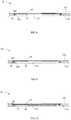
FIG. 1 is a schematic diagram illustrating a secondary battery according to the present disclosure. -
FIG. 2 is an enlarged view of a box position of the secondary battery ofFIG. 1 . -
FIG. 3 is an enlarged view of a circled position ofFIG. 2 . -
FIG. 4 is an exploded diagram of a cap plate assembly ofFIG. 1 . -
FIG. 5 is a schematic diagram illustrating a cap plate of a secondary battery according to the present disclosure. -
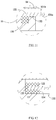
FIGS. 6-10 are schematic diagrams of different examples of a cap plate assembly. -
FIG. 11 is an enlarged view of a circled position ofFIG. 9 . -
FIG. 12 is an enlarged view of a circled position ofFIG. 10 . -
FIG. 13 is a schematic diagram illustrating a battery module according to the present disclosure. - Reference numerals are described as follows:
- 1 cap plate assembly
- 11 cap plate
- 111 through hole
- 112 first surface
- 113 second surface
- 114 first groove
- 114a bottom wall
- 114b side wall
- 115 stopping part
- 116 second groove
- 12 explosion-proof sheet
- 121 main body
- 121a weak region
- 121b notch
- 122 connecting part
- 121 main body
- 13 fixing piece
- 131 first part
- 132 second part
- 133 receiving groove
- 134 inner wall
- 14 protection sheet
- 15 electrode terminal
- 16 insulator
- 11 cap plate
- 2 electrode assembly
- 3 case
- 4 current collecting assembly
- X length direction
- Y width direction
- Z thickness direction
- 10 battery module
- 100 secondary battery
- To make the object, technical solutions and advantages of the present disclosure more clear, the present disclosure will be further detailed below in combination with accompanying drawings and examples. It is understood that the specific examples described herein are used only for explaining the present disclosure and not intended to limit the present disclosure.
- In the descriptions of the present disclosure, the terms "first" and "second" are used only for the purpose of description rather than understood as indicating or implying relative importance, unless otherwise stated herein. The term "a plurality" refers to two or more. Unless otherwise stated, the term "connection" should be understood in a broad sense. For example, the "connection" may be a fixed connection, a removable connection, an integrated connection, an electric connection or a signal connection. The "connection" may be a direct connection or may be an indirect connection through an intermediate medium. Those skilled in the art may understand the specific meanings of the above terms in the present disclosure based on actual situations.
- In the descriptions of the present disclosure, it is understood that the location words such as "upper" and "lower" described in the present disclosure are described from the angle shown in figures and shall not be understood as limiting of the examples of the present disclosure. The present disclosure will be further detailed below in combination with specific examples and accompanying drawings.
- A battery module according to the present disclosure may include a secondary battery, an end plate, a side plate and a bus bar. The secondary battery may be a cylindrical lithium ion battery. As shown in
FIG. 13 , thebattery module 10 may comprise a plurality ofsecondary batteries 100 arranged in sequence. There are two end plates which are respectively disposed at both ends of the plurality of secondary batteries along an arrangement direction. There are also two side plates which are respectively disposed at both sides of the plurality of secondary batteries. The end plates and the side plates are connected into one piece and form a rectangular frame. The frame fixes the plurality of secondary batteries. The bus bar electrically connects the plurality of secondary batteries in series connection, parallel connection or a combination of series connection and parallel connection. - As shown in
FIG. 1 , the secondary battery includes acap plate assembly 1, anelectrode assembly 2, a case 3 and a current collecting assembly 4. - The
electrode assembly 2 is a core member used for the secondary battery to realize charge and discharge functions. Theelectrode assembly 2 includes a positive electrode plate, a negative electrode plate and a separator. The separator separates the positive electrode plate from the negative electrode plate. The positive electrode plate includes a positive electrode current collector and a positive electrode active material layer coated on a surface of the positive electrode current collector. The positive electrode current collector may be an aluminum foil, and the positive electrode active material layer includes a ternary material, lithium manganate or lithium iron phosphate. The negative electrode plate includes a negative electrode current collector and a negative electrode active material layer coated on a surface of the negative electrode current collector. The negative electrode current collector may be a copper foil and the negative electrode active material layer includes graphite or silicon. - The
electrode assembly 2 may be of a winding structure. Specifically, there is one positive electrode plate and one negative electrode plate respectively, and the positive electrode plate and the negative electrode plate are of a strip structure. The positive electrode plate, the separator and the negative electrode plate are stacked in sequence and wound two or more circles to form theelectrode assembly 2. During preparation of theelectrode assembly 2, theelectrode assembly 2 may be firstly wound into a hollow cylindrical structure and then flattened to a flat shape. - Alternatively, the
electrode assembly 2 may also be of a stacked structure. Specifically, there are a plurality of positive electrode plates and a plurality of negative electrode plates. The plurality of positive electrode plates and the plurality of negative electrode plates are stacked alternately and the separator separates the positive electrode plate from the negative electrode plate. - The case 3 may be of hexahedral shape or another shape. The interior of the case 3 is formed into a receiving chamber to receive the
electrode assembly 2 and electrolyte. An opening is formed at an end of the case 3 and theelectrode assembly 2 may be placed into the receiving chamber through the opening. The case 3 may be made of a conductive metal material. In an example, the case 3 is made of aluminum or an aluminum alloy. - The
cap plate assembly 1 includes acap plate 11, anelectrode terminal 15 and aninsulator 16. The cap plate is disposed at the case 3 and covers the opening of the case 3. Therefore, theelectrode assembly 2 is sealed in the case 3. Thecap plate 11 may be a metal plate and may be connected to the case 3 by welding. - The
cap plate 11 is provided with two penetrating terminal holes. Twoelectrode terminals 15 are disposed at an upper side of thecap plate 11, that is, at a side of thecap plate 11 away from theelectrode assembly 2. Eachelectrode terminal 15 covers a corresponding terminal hole. A sealing ring is disposed between thecap plate 11 and theelectrode terminal 15. The terminal holes may be sealed up by compressing the sealing ring. - The
insulator 16 is disposed at an inner side of thecap plate 11 so that theelectrode assembly 2 and thecap plate 11 are separated, thereby reducing the risk of short circuit. - There are two current collecting assemblies 4. One current collecting assembly 4 is connected to one
electrode terminal 15 and the positive electrode plate of theelectrode assembly 2; the other current collecting assembly 4 is connected to anotherelectrode terminal 15 and the negative electrode plate of theelectrode assembly 2. - During use of the secondary batteries, if the secondary battery is in a case of abuse such as nail penetration, the
electrode assembly 2 may be short circuited and generate a large amount of gas. The gas accumulates in the case 3, which easily cause explosion. Therefore, to increase the safety performance of the secondary battery, thecap plate assembly 1 of the present disclosure may further include an explosion-proof sheet 12. - Specifically, the
cap plate 11 is disposed with a throughhole 111, and the explosion-proof sheet 12 is disposed at thecap plate 11 and seals the throughhole 111. The explosion-proof sheet 12 can cover the throughhole 111 and separate an internal space of the secondary battery from an outside space, thereby preventing the electrolyte in the case 3 from leaking through the throughhole 111. - The explosion-proof sheet has a
weak region 121a. Compared with other region of the explosion-proof sheet, theweak region 121a has a low strength and thus easy to break. In the present disclosure, theweak region 121a may be of ring shape. - According to the present disclosure, the strength of the
weak region 121a may be reduced by decreasing the thickness of theweak region 121a. That is, a thickness of theweak region 121a is smaller than a thickness of other region of the explosion-proof sheet 12. - In a case of short circuit, the
electrode assembly 2 may release gas. With increasing gas, the gas pressure in the secondary battery will gradually increase. The explosion-proof sheet 12 will deform under the action of the gas pressure. When the gas pressure in the secondary battery reaches a given value, the explosion-proof sheet 12 will break at theweak region 121a. The high pressure gas breaks through the explosion-proof sheet 12 and is released to outside of the secondary battery, thereby releasing pressure and reducing explosion risk. - Specifically, the explosion-
proof sheet 12 includes amain body 121 and a connectingpart 122. Themain body 121 covers the throughhole 111. Theweak region 121a is formed at themain body 121 and the thickness of theweak region 121a is smaller than the thickness of other region of themain body 121. As shown inFIG. 3 , theweak region 121a is formed by pressing anotch 121b on themain body 121. The connectingpart 122 surrounds the outer side of themain body 121, the connectingpart 122 is connected to thecap plate 11 and a connecting region between the connectingpart 122 and thecap plate 11 is of ring shape. In this way, sealing is achieved. - In a battery module, when a particular secondary battery is in a case of abuse such as nail penetration, the explosion-proof sheet of the secondary battery can open in time to release pressure and reduce temperature. However, the heat of the nail-penetrated secondary battery may be quickly diffused to an adjacent secondary battery. The internal temperature of the adjacent secondary battery is quickly increased due to heat diffusion of other secondary battery and its internal short circuit. When the secondary battery reaches a temperature of an explosion, but the gas pressure in the secondary battery does not reach a value required for breakage of the
weak region 121a, burning and explosion may occur. - To reduce safety risk, in an example, the
cap plate assembly 1 of the present disclosure may further include a fixingpiece 13. The fixingpiece 13 connects thecap plate 11 and the explosion-proof sheet 12. Specifically, the fixingpiece 13 is connected to the connectingpart 122 of the explosion-proof sheet 12. The melting point of the fixingpiece 13 is lower than the melting point of thecap plate 11 and the melting point of the explosion-proof sheet 12. Normally, the fixing piece is in a solid state and connects with thecap plate 11 and the connectingpart 122 to ensure connecting strength between thecap plate 11 and the connectingpart 122, thereby preventing the connectingpart 122 from disconnecting thecap plate 11. When a secondary battery has a quickly increasing temperature due to heat diffusion of another secondary battery and/or its internal short circuit, the fixing piece may be molten at a high temperature. During the melting process, the connecting strength between thecap plate 11 and the connectingpart 122 may be reduced. - In the present disclosure, the explosion-
proof sheet 12 is configured as follows: when the fixingpiece 13 does not melt, theweak region 121a will break in a case that the internal gas pressure in the secondary battery exceeds a value required for breakage of theweak region 121a. The statement that "the fixingpiece 13 does not melt" refers to that the fixingpiece 13 is entirely in a solid state. In case of no melting, the fixingpiece 13 can effectively connect thecap plate 11 and the connectingpart 122. Thus, the connectingpart 122 will not separate from thecap plate 11. In the present disclosure, the gas pressure required for breakage of theweak region 121a may be set to 0.5MPa - 10MPa. The specific value may be set according to the model of the secondary battery. - The explosion-
proof sheet 12 is further configured as follows: when the fixingpiece 13 melts, the explosion-proof sheet 12 can at least partially separate from thecap plate 11 in a case that the internal gas pressure in the secondary battery is lower than the value required for breakage of theweak region 121a. The statement "the fixingpiece 13 melts" refers to that the fixingpiece 13 at least partially melts into liquid. When the fixingpiece 13 melts, the connecting strength between thecap plate 11 and the connectingpart 122 is reduced. Therefore, the connectingpart 122 can at least partially separate from thecap plate 11 in a case that the internal gas pressure of the secondary battery is lower than the gas pressure required for breakage of theweak region 121a. When the connectingpart 122 separates from thecap plate 11, a distance between the connectingpart 122 and thecap plate 11 is increased so that a gap is formed between the connectingpart 122 and thecap plate 11. In this case, the internal gas of the secondary battery will be released from the gap. - In a battery module of the present disclosure, when a particular secondary battery is short circuited, the
electrode assembly 2 of the secondary battery will release heat and gas. - If no other secondary battery diffuses a large amount of heat to the secondary battery, before the fixing
piece 13 of the secondary battery reaches the melting point, the internal gas pressure of the secondary battery can reach a value required for breakage of theweak region 121a. At this time, the explosion-proof sheet 12 breaks at theweak region 121a. The high pressure gas breaks through the explosion-proof sheet 12 and is released to outside of the secondary battery, thereby releasing pressure and reducing temperature, and further reducing safety risk. - If another secondary battery, for example, a battery in case of abuse such as nail penetration, diffuses a large amount of heat to the short-circuited secondary battery, the secondary battery may have a quickly increasing temperature due to heat diffusion of the another secondary battery and its internal short circuit. When the temperature of the secondary battery reaches a given value, the fixing
piece 13 melts. At this time, even though the internal gas pressure of the secondary battery is lower than the gas pressure required for breakage of theweak region 121a, the gas may still separate the connectingpart 122 from thecap plate 11. In this way, the gas is discharged to outside of the secondary battery, thereby releasing pressure, reducing temperature and lowering safety risk. - In conclusion, in the present disclosure, the fixing
piece 13 with a low melting point is connected with the cap plate and the explosion-proof sheet, and moreover the weak region is disposed at the explosion-proof sheet, thus the gas pressure and temperature inside the secondary battery are both taken into consideration, the explosion-proof sheet may be opened in time to achieve pressure release and temperature decrease, thereby reducing explosion risk and improving safety performance. - During the assembly process of the
cap plate assembly 1, the fixingpiece 13 may be firstly placed between thecap plate 11 and the explosion-proof sheet 12, and then the fixingpiece 13 is heated. After the fixingpiece 13 melts, the fixingpiece 13 is connected with thecap plate 11 and the explosion-proof sheet 12. After solidification, the fixingpiece 13 may connect thecap plate 11 and the explosion-proof sheet 12 to ensure the connecting strength between thecap plate 11 and the explosion-proof sheet 12. - The material of the fixing
piece 13 is alloy. During a normal use process of the secondary battery, theelectrode assembly 2 may also releases heat, resulting in temperature increase of the secondary battery. If the melting point of the alloy is excessively low, the fixingpiece 13 may melt during a normal use of the secondary battery, so that the connecting strength between thecap plate 11 and the explosion-proof sheet 12 is insufficient. Further, when the secondary battery vibrates, the explosion-proof sheet 12 may separate from thecap plate 11, resulting in leakage of electrolyte and safety accident. Thus, in an example, the temperature of the alloy shall not be lower than 50°C. - If the melting point of the alloy is excessively high, when the secondary battery reaches a critical temperature of an explosion, the alloy may not melt and the explosion-
proof sheet 12 also may not separate from thecap plate 11, resulting in safety accident. Therefore, in an example, the melting point of the alloy shall not be higher than 300°C. - The alloy is a tin-bismuth alloy or a tin-copper-silver alloy. The tin-bismuth alloy or the tin-copper-silver alloy may be better connected with the
cap plate 11 and the explosion-proof sheet 12 both made of aluminum, thereby increasing connecting strength. - When the fixing
piece 13 does not melt, the connecting strength between the fixingpiece 13 and the connectingpart 122 is larger than the breaking strength of theweak region 121a. It is noted that the breaking strength of theweak region 121a refers to a gas pressure critical value enabling the explosion-proof sheet 12 to break at theweak region 121a on a precondition that the fixingpiece 13 does not melt. The gas pressure critical value may be 0.5MPa - 10MPa. The connecting strength between the fixingpiece 13 and the explosion-proof sheet 12 refers to a gas pressure critical value enabling the explosion-proof sheet 12 to separate from the fixingpiece 13 on a precondition that the fixingpiece 13 does not melt. When the fixingpiece 13 does not melt, if the connecting strength between the fixingpiece 13 and the explosion-proof sheet 12 is excessively small, the explosion-proof sheet 12 may separate from the fixingpiece 13 and thecap plate 11 before the internal gas pressure of the secondary battery reaches the breaking strength of theweak region 121a, so that the explosion-proof sheet 12 cannot open in a case that the secondary battery reaches a set gas pressure value. Further, compared with control of consistency of thickness of theweak region 121a, it is more difficult to control consistency of connecting strength between the fixingpiece 13 and the explosion-proof sheet 12. That is, if the connecting strength between the fixingpiece 13 and the connectingpart 122 is smaller than the breaking strength of theweak region 121a, gas pressures required by the explosion-proof sheet 12 to separate from the fixingpiece 13 at different connecting regions of the fixingpiece 13 and the explosion-proof sheet 12 will be different. Thus, it is difficult to control consistency of the internal critical gas pressure of the secondary battery. - Similarly, when the fixing
piece 13 does not melt, the connecting strength between the fixingpiece 13 and thecap plate 11 is larger than the breaking strength of theweak region 121a. - The
cap plate assembly 1 of the secondary battery according to the present disclosure will be detailed below in combination with different examples. - As shown in
FIG. 6 , in a first example, not according to invention, thecap plate 11 has afirst surface 112 and asecond surface 113 disposed oppositely in a thickness direction Z. Thefirst surface 112 is an outer surface of thecap plate 11 away from theelectrode assembly 2 and thesecond surface 113 is an inner surface of thecap plate 11 close to theelectrode assembly 2. - The through
hole 111 penetrates through thefirst surface 112 and thesecond surface 113. In this example, the explosion-proof sheet 12 is located at a side of thecap plate 11 away from theelectrode assembly 2, and the fixingpiece 13 is located between thefirst surface 112 of thecap plate 11 and the explosion-proof sheet 12. - In this example, the
cap plate 11 may support the explosion-proof sheet 12 from a lower side. In this case, when the fixingpiece 13 melts, the explosion-proof sheet 12 is prevented from falling into the secondary battery, thereby reducing a potential safety hazard. - As shown in
FIG. 7 , on the basis of the first example, thecap plate 11 according to a second example not falling within the scope of the claims further has afirst groove 114. Thefirst groove 114 concaves toward thesecond surface 113 from thefirst surface 112. Thefirst groove 114 is of ring shape, surrounds the periphery of the throughhole 111 and communicates with the throughhole 111. - The fixing
piece 13 is at least partially received in thefirst groove 114. Further, the fixingpiece 13 is located between the explosion-proof sheet 12 and abottom wall 114a of thefirst groove 114. In an example, the fixingpiece 13 is completely received in thefirst groove 114. - Compared with the first example, space occupied by the fixing
piece 13 in the thickness direction Z may be reduced by disposing thefirst groove 114 in the second example. - The explosion-
proof sheet 12 is at least partially located in thefirst groove 114. In an example, the explosion-proof sheet 12 is completely received in thefirst groove 114. In this way, the space occupied by the explosion-proof sheet 12 in the thickness direction is saved. - The
cap plate assembly 1 further includes aprotection sheet 14. Theprotection sheet 14 is located at a side of the explosion-proof sheet 12 away from theelectrode assembly 2. Theprotection sheet 14 may also be fixed at thefirst surface 112 of thecap plate 11 and cover thefirst groove 114. Theprotection sheet 14 may protect the explosion-proof sheet 12 from being damaged by external impurities. The protection sheet is a film sheet with less strength. When the explosion-proof sheet 12 opens, theprotection sheet 14 is easily broken through by the high temperature gas and thus will not block release of the high temperature gas. - In the thickness direction Z, a gap is disposed between the explosion-
proof sheet 12 and theprotection sheet 14. In a case of short circuit of the secondary battery, the explosion-proof sheet 12 deforms under the action of gas pressure. If the explosion-proof sheet 12 is in direct contact with theprotection sheet 14, theprotection sheet 14 may limit the deformation of the explosion-proof sheet 12, thereby hindering breakage of theweak region 121a. - As shown in
FIG. 8 , on the basis of the second example, thecap plate 11 according to the invention, a third example includes a stoppingpart 115. The stoppingpart 115 extends toward the explosion-proof sheet 12 from thebottom wall 114a of thefirst groove 114. The stoppingpart 115 surrounds the periphery of the throughhole 111. The fixingpiece 13 is at least partially located at a side of the stopping part away from the throughhole 111. That is, the fixingpiece 13 is at least partially located between the stoppingpart 115 and aside wall 114b of thefirst groove 114. - In the second example, if the fixing
piece 13 melts, metal liquid resulting from melting may flow to theelectrode assembly 2 through the throughhole 111. In this case, the metal liquid may cause internal short circuit to the secondary battery, increasing explosion risk. In the third example, the stoppingpart 115 may block flow of the metal liquid, thereby reducing the metal liquid flowing to theelectrode assembly 2 and lowering the safety risk. - Along the extending direction of the stopping
part 115, a top surface of the stoppingpart 115 does not go beyond thefirst surface 112 so that additional space occupied by the stoppingpart 115 along the thickness direction Z is avoided. In the thickness direction Z, the explosion-proof sheet 12 is at least partially located in thefirst groove 114 to reduce space occupied by the explosion-proof sheet 12 in the thickness direction Z. In an example, the explosion-proof sheet 12 is completely located in thefirst groove 114. - As shown in
FIG. 2 , on the basis of the third example, thecap plate 11 according to a fourth example further has asecond groove 116. Thesecond groove 116 concaves toward thesecond surface 113 from thefirst surface 112 and thesecond groove 116 surrounds the periphery of thefirst groove 114. In the thickness direction Z, a depth of thesecond groove 116 is smaller than a depth of thefirst groove 114. - In the fourth example, a step may be formed at the
cap plate 11 by disposing thefirst groove 114 and thesecond groove 116. The step may facilite location and installation of the explosion-proof sheet 12. - As shown in
FIGS. 9 and11 , on the basis of the fourth example, the fixingpiece 13 according to a fifth example includes afirst part 131 and asecond part 132. Thefirst part 131 is located at a side of the stoppingpart 115 away from the throughhole 111, and thesecond part 132 extends from an edge of thefirst part 131 close to the throughhole 111, and is located between the stoppingpart 115 and the explosion-proof sheet 12. - Compared with the fourth example, connecting area between the fixing
piece 13 and the connectingpart 122 is increased by disposing thesecond part 132 in the fifth example, so that sealing performance between the fixingpiece 13 and the explosion-proof sheet 12 is improved. - In a sixth example, not according to the invention, as shown in
FIGS. 10 and12 , the fixing piece has a receivinggroove 133. The receivinggroove 133 concaves from aninner wall 134 of the fixingpiece 13 close to the throughhole 111. The connectingpart 122 of the explosion-proof sheet 12 is inserted into the receivinggroove 133 of the fixingpiece 13 and connected with the fixingpiece 13. By disposing the receivinggroove 133, the connecting area between the fixingpiece 13 and the explosion-proof sheet 12 is increased, thereby improving the sealing performance.
Claims (12)
- A cap plate assembly (1) of a secondary battery, comprising a cap plate (11), an explosion-proof sheet (12) and a fixing piece (13); wherein,
the cap plate (11) is disposed with a through hole (111), the explosion-proof sheet (12) is disposed at the cap plate (11) and seals the through hole (111), and the explosion-proof sheet (12) has a weak region (121a);
the fixing piece (13) connects the cap plate (11) and the explosion-proof sheet (12), the fixing piece (13) has a lower melting point than the cap plate (11) and the explosion-proof sheet (12);
the fixing piece (13) is configured as that: the explosion-proof sheet (12) at least partially separates from the cap plate when a temperature in the secondary battery is higher that a melting point of the fixing piece (13) and when an internal gas pressure of the secondary battery is lower than the gas pressure required for breakage of the weak region (121a);
characterized in that,
the cap plate (11) has a first surface (112) and a second surface (113) disposed oppositely in a thickness direction (Z), and the through hole (111) penetrates through the first surface (112) and the second surface (113);
the cap plate (11) further has a first groove (114), wherein the first groove (114) concaves toward the second surface (113) from the first surface (112) and the first groove (114) surrounds periphery of the through hole (111);
the fixing piece (13) is at least partially received in the first groove (114), and the fixing piece (13) is located between the explosion-proof sheet (12) and a bottom wall (114a) of the first groove (114);
the cap plate (11) further comprises a stopping part (115), wherein the stopping part (115) extends toward the explosion-proof sheet (12) from the bottom wall (114a) of the first groove (114);
the stopping part (115) surrounds the periphery of the through hole (111) and the fixing piece (13) is at least partially located between the stopping part (115) and a side wall (114b) of the first groove (114). - The cap plate assembly (1) according to claim 1, wherein,the explosion-proof sheet (12) comprises a main body (121) and a connecting part (122), wherein the main body (121) covers the through hole (111); the weak region (121a) is formed at the main body (121) and has a smaller thickness than other region of the main body (121); the connecting part (122) surrounds an outer side of the main body (121) and is fixed to the cap plate (11) through the fixing piece (13);the cap plate assembly (1) is further configured as that: when the fixing piece (13) does not melt, a connecting strength between the fixing piece (13) and the connecting part (122) is larger than a breaking strength of the weak region (121a).
- The cap plate assembly (1) according to claim 2, wherein, the weak region (121a) is formed by a notch (121b) at the main body (121).
- The cap plate assembly (1) according to claim 1, wherein, the explosion-proof sheet (12) is at least partially located in the first groove (114).
- The cap plate assembly according to claim 4, wherein,
the cap plate (11) assembly further comprises a protection sheet (14), the protection sheet (14) is fixed at the first surface (112) of the cap plate (11) and covers the first groove (114);
a gap is disposed between the explosion-proof sheet (12) and the protection sheet (14) in the thickness direction (Z). - The cap plate assembly (1) according to claim 1, wherein a top surface of the stopping part (115) does not go beyond the first surface (112) along the extending direction of the stopping part (115); the explosion-proof sheet (12) is at least partially located in the first groove (114) in the thickness direction (Z).
- The cap plate assembly (1) according to claim 1, whereinthe cap plate (11) further comprises a second groove (116), the second groove (116) concaves toward the second surface (113) from the first surface (112) and the second groove (116) surrounds the periphery of the first groove (114);a depth of the second groove (116) is smaller than a depth of the first groove (114) in the thickness direction (Z);the first groove (114) and the second groove (116) forms a step at the cap plate (11) for location and installation of the explosion-proof sheet (12).
- The cap plate assembly (1) according to claim 1, wherein the fixing piece (13) comprises a first part (131) and a second part (132); the first part (131) is located at a side of the stopping part (115) away from the through hole (111); the second part (132) extends from an edge of the first part (131) close to the through hole (111) and is located between the stopping part (115) and the explosion-proof sheet (12).
- The cap plate assembly (1) according to any one of claims 1 to 8, wherein the fixing piece (13) is an alloy and the alloy has a melting point of 50°C-300°C.
- The cap plate assembly (1) according to claim 9, wherein the alloy is a tin-Bismuth alloy or a tin-copper-silver alloy.
- A secondary battery, comprising an electrode assembly (2), a case (3) and the cap plate assembly (1) according to any one of claims 1 to 10;
wherein the electrode assembly (2) is received in the case (3) and the cap plate (11) of the cap plate assembly (1) is connected to the case (3). - A battery module (10), comprising the secondary battery (110) according to claim11, wherein there are a plurality of secondary batteries (110) arranged in sequence.
Applications Claiming Priority (1)
| Application Number | Priority Date | Filing Date | Title |
|---|---|---|---|
| CN201910696198.4A CN110400895B (en) | 2019-07-30 | 2019-07-30 | Battery module, secondary battery and top cover assembly thereof |
Publications (2)
| Publication Number | Publication Date |
|---|---|
| EP3772120A1 EP3772120A1 (en) | 2021-02-03 |
| EP3772120B1 true EP3772120B1 (en) | 2021-07-28 |
Family
ID=68326600
Family Applications (1)
| Application Number | Title | Priority Date | Filing Date |
|---|---|---|---|
| EP19217502.4A Active EP3772120B1 (en) | 2019-07-30 | 2019-12-18 | Battery module, secondary battery and cap plate assembly thereof |
Country Status (4)
| Country | Link |
|---|---|
| US (1) | US20210036285A1 (en) |
| EP (1) | EP3772120B1 (en) |
| CN (1) | CN110400895B (en) |
| WO (1) | WO2021017905A1 (en) |
Cited By (3)
| Publication number | Priority date | Publication date | Assignee | Title |
|---|---|---|---|---|
| DE102021214245A1 (en) | 2021-12-13 | 2023-06-15 | Audi Aktiengesellschaft | Covering element in sandwich construction with a meltable intermediate layer for a battery housing, battery housing and motor vehicle |
| EP4553952A1 (en) * | 2023-11-07 | 2025-05-14 | SK On Co., Ltd. | Battery module |
| EP4456278A4 (en) * | 2022-05-16 | 2025-07-02 | Contemporary Amperex Technology Co Ltd | END CAP ASSEMBLY, BATTERY CELL, BATTERY AND ELECTRICAL DEVICE |
Families Citing this family (39)
| Publication number | Priority date | Publication date | Assignee | Title |
|---|---|---|---|---|
| CN110400895B (en) * | 2019-07-30 | 2021-03-09 | 宁德时代新能源科技股份有限公司 | Battery module, secondary battery and top cover assembly thereof |
| DE102019220391A1 (en) * | 2019-12-20 | 2021-06-24 | Volkswagen Aktiengesellschaft | Emergency degassing arrangement for the emergency degassing of a battery in an electrically powered motor vehicle |
| CN113146148A (en) * | 2020-01-21 | 2021-07-23 | 常州微宙电子科技有限公司 | Explosion-proof shell, grooving method thereof and battery with explosion-proof shell |
| CN111564651B (en) * | 2020-05-12 | 2024-01-19 | 路华置富电子(深圳)有限公司 | Lap wound cell |
| CN111525070B (en) * | 2020-05-28 | 2021-09-24 | 瑞声科技(南京)有限公司 | Button cell and electronic equipment |
| CN111525072A (en) * | 2020-05-28 | 2020-08-11 | 瑞声科技(南京)有限公司 | Button cell |
| CN111525071B (en) * | 2020-05-28 | 2021-09-24 | 瑞声科技(南京)有限公司 | Button cell and electronic equipment |
| JP7321300B2 (en) * | 2020-07-10 | 2023-08-04 | 寧徳時代新能源科技股▲分▼有限公司 | BATTERY, RELATED DEVICE, MANUFACTURING METHOD AND MANUFACTURING MACHINE |
| CN112234309A (en) * | 2020-11-19 | 2021-01-15 | 常州瑞德丰精密技术有限公司 | Secondary cell top cap subassembly and secondary cell |
| EP4254613A4 (en) * | 2020-11-26 | 2024-10-09 | Ningde Amperex Technology Limited | ELECTROCHEMICAL APPARATUS AND ELECTRONIC DEVICE |
| JP2022113312A (en) * | 2021-01-25 | 2022-08-04 | プライムプラネットエナジー&ソリューションズ株式会社 | Sealing plate with gas exhaust valve and secondary battery using the same |
| CN112886110B (en) * | 2021-03-09 | 2025-07-15 | 江苏瑞德丰精密技术股份有限公司 | A top cover assembly and a power battery |
| CN113178907A (en) * | 2021-04-21 | 2021-07-27 | 深圳市驰普科达科技有限公司 | Intelligent charging equipment for industrial battery and charging method thereof |
| WO2022252114A1 (en) * | 2021-06-01 | 2022-12-08 | 宁德时代新能源科技股份有限公司 | End cover assembly, battery cell, battery, and manufacturing device and method for battery cell |
| WO2022252108A1 (en) * | 2021-06-01 | 2022-12-08 | 宁德时代新能源科技股份有限公司 | End cover assembly, battery cell, battery and power-consuming apparatus |
| CN114018511A (en) * | 2021-11-04 | 2022-02-08 | 中船澄西扬州船舶有限公司 | Cabin gas tightness detects frock |
| CN114142188B (en) * | 2021-11-30 | 2024-11-05 | 宁德新能源科技有限公司 | Electrochemical devices and electrical equipment |
| WO2023141902A1 (en) * | 2022-01-27 | 2023-08-03 | 宁德时代新能源科技股份有限公司 | End cap assembly, battery cell, battery and power consuming device |
| CN114374049A (en) * | 2022-02-10 | 2022-04-19 | 中创新航科技股份有限公司 | Battery box and battery package |
| JP7720995B2 (en) * | 2022-04-24 | 2025-08-08 | 香港時代新能源科技有限公司 | End cap assembly, battery and power consumer |
| CN114643430B (en) * | 2022-04-27 | 2024-05-17 | 深圳市大德激光技术有限公司 | Laser engraving fixture device for explosion-proof piece of power battery |
| CN115036643B (en) * | 2022-08-12 | 2022-12-02 | 江苏时代新能源科技有限公司 | Battery monomer, battery and consumer |
| CN118451572A (en) * | 2022-08-25 | 2024-08-06 | 宁德时代新能源科技股份有限公司 | Battery monomer, battery and electric equipment |
| CN115275502A (en) * | 2022-08-31 | 2022-11-01 | 宁德新能源科技有限公司 | Electrochemical device and electric equipment |
| CN115528378B (en) * | 2022-09-30 | 2024-01-23 | 厦门海辰储能科技股份有限公司 | Lower plastic, top cover components, batteries, battery modules and electrical equipment |
| CN115832394A (en) * | 2022-11-07 | 2023-03-21 | 深圳市比克动力电池有限公司 | Winding core, battery, manufacturing method of winding core and manufacturing method of battery |
| CN115882125B (en) * | 2022-11-17 | 2024-09-06 | 宁德时代新能源科技股份有限公司 | Battery cells, batteries and electrical equipment |
| CN116274558A (en) * | 2023-01-09 | 2023-06-23 | 东莞领益精密制造科技有限公司 | Explosion-proof disk pressing equipment, production line and processing method of explosion-proof disk |
| CN116787070A (en) * | 2023-02-07 | 2023-09-22 | 万向一二三股份公司 | Method for processing explosion-proof piece welding hole on battery shell |
| CN116666887A (en) * | 2023-05-31 | 2023-08-29 | 宁德时代新能源科技股份有限公司 | Battery monomer, battery and electric equipment |
| CN119231083A (en) * | 2023-06-29 | 2024-12-31 | 宁德时代新能源科技股份有限公司 | Battery cells, batteries and electrical devices |
| EP4507101A4 (en) * | 2023-07-12 | 2025-12-17 | Eve Energy Co Ltd | BATTERY ELEMENT AND BATTERY BLOCK |
| CN117080638B (en) * | 2023-10-12 | 2023-12-26 | 厦门海辰储能科技股份有限公司 | End cover assembly, energy storage device and electric equipment |
| CN117080671B (en) * | 2023-10-16 | 2024-01-26 | 厦门海辰储能科技股份有限公司 | Top cover assembly, battery, energy storage device and electricity utilization device |
| EP4664645A4 (en) * | 2023-11-21 | 2026-03-25 | Contemporary Amperex Technology Co Ltd | BATTERY CELL, BATTERY AND ELECTRICAL DEVICE |
| CN222355249U (en) * | 2023-12-14 | 2025-01-14 | 惠州亿纬锂能股份有限公司 | Cap assembly, battery cell and battery |
| CN118507975A (en) * | 2024-02-22 | 2024-08-16 | 比亚迪股份有限公司 | Explosion-proof valve, cover plate assembly, battery cell, battery pack and power utilization system |
| CN118507976A (en) * | 2024-02-22 | 2024-08-16 | 比亚迪股份有限公司 | Explosion-proof valve, cover plate assembly, battery cell, battery pack and power utilization system |
| CN121238190A (en) * | 2024-06-27 | 2025-12-30 | 宁德时代新能源科技股份有限公司 | Battery cells, batteries, energy storage devices and electrical equipment |
Family Cites Families (17)
| Publication number | Priority date | Publication date | Assignee | Title |
|---|---|---|---|---|
| EP0948065B1 (en) * | 1998-03-30 | 2003-06-04 | Renata AG | Safety vent for accumulator or battery |
| JP2000231912A (en) * | 1999-02-15 | 2000-08-22 | Toyota Central Res & Dev Lab Inc | Safety valve device for secondary battery |
| JP4589596B2 (en) * | 2002-03-22 | 2010-12-01 | パナソニック株式会社 | Battery pack |
| US6887618B2 (en) * | 2002-08-09 | 2005-05-03 | The Gillette Company | Electrochemical cell with flat casing and vent |
| CN1983674A (en) * | 2005-12-13 | 2007-06-20 | 中国电子科技集团公司第十八研究所 | Explosion-proof device of lithium series battery |
| JP4996857B2 (en) * | 2006-01-24 | 2012-08-08 | トヨタ自動車株式会社 | battery |
| KR100908912B1 (en) * | 2008-06-03 | 2009-07-23 | (주) 파워옵틱스 | Safety exhaust assembly, method for manufacturing the same, and electric device having the same |
| DE102013210292A1 (en) * | 2013-06-04 | 2014-12-04 | Robert Bosch Gmbh | Safety valve to protect a galvanic cell against damaging overpressure as well as cell housing cover and galvanic cell with safety valve |
| CN203445174U (en) * | 2013-08-29 | 2014-02-19 | 天津中聚新能源科技有限公司 | Battery anti-explosion structure and battery comprising same |
| CN105470431A (en) * | 2014-09-12 | 2016-04-06 | 宁德时代新能源科技股份有限公司 | Battery and explosion-proof device thereof |
| CN204632837U (en) * | 2015-04-27 | 2015-09-09 | 迪吉亚节能科技股份有限公司 | Lithium battery cell pressure relief structure |
| JP6996505B2 (en) * | 2016-06-29 | 2022-01-17 | 三洋電機株式会社 | Secondary battery |
| CN206040781U (en) * | 2016-07-29 | 2017-03-22 | 比亚迪股份有限公司 | Explosion-proof valve, cover assembly and battery |
| CN113488747B (en) * | 2017-02-14 | 2024-01-09 | 宁德时代新能源科技股份有限公司 | Power battery |
| CN207454851U (en) * | 2017-07-27 | 2018-06-05 | 惠州市沃瑞科技有限公司 | It is a kind of to be applied to the explosion-proof vent valve with metallic rupture disk on new-energy automobile |
| CN209880668U (en) * | 2019-07-25 | 2019-12-31 | 宁德时代新能源科技股份有限公司 | Top cover assembly and secondary battery |
| CN110400895B (en) * | 2019-07-30 | 2021-03-09 | 宁德时代新能源科技股份有限公司 | Battery module, secondary battery and top cover assembly thereof |
-
2019
- 2019-07-30 CN CN201910696198.4A patent/CN110400895B/en active Active
- 2019-12-18 EP EP19217502.4A patent/EP3772120B1/en active Active
- 2019-12-20 US US16/722,251 patent/US20210036285A1/en not_active Abandoned
-
2020
- 2020-07-17 WO PCT/CN2020/102831 patent/WO2021017905A1/en not_active Ceased
Cited By (4)
| Publication number | Priority date | Publication date | Assignee | Title |
|---|---|---|---|---|
| DE102021214245A1 (en) | 2021-12-13 | 2023-06-15 | Audi Aktiengesellschaft | Covering element in sandwich construction with a meltable intermediate layer for a battery housing, battery housing and motor vehicle |
| WO2023110605A1 (en) | 2021-12-13 | 2023-06-22 | Audi Ag | Cover element in sandwich design having a fusible intermediate layer for a battery housing, battery housing and motor vehicle |
| EP4456278A4 (en) * | 2022-05-16 | 2025-07-02 | Contemporary Amperex Technology Co Ltd | END CAP ASSEMBLY, BATTERY CELL, BATTERY AND ELECTRICAL DEVICE |
| EP4553952A1 (en) * | 2023-11-07 | 2025-05-14 | SK On Co., Ltd. | Battery module |
Also Published As
| Publication number | Publication date |
|---|---|
| WO2021017905A1 (en) | 2021-02-04 |
| US20210036285A1 (en) | 2021-02-04 |
| CN110400895B (en) | 2021-03-09 |
| CN110400895A (en) | 2019-11-01 |
| EP3772120A1 (en) | 2021-02-03 |
Similar Documents
| Publication | Publication Date | Title |
|---|---|---|
| EP3772120B1 (en) | Battery module, secondary battery and cap plate assembly thereof | |
| US11949119B2 (en) | Cover assembly of secondary battery and secondary battery | |
| US12113234B2 (en) | Cover assembly of secondary battery and secondary battery | |
| JP5517974B2 (en) | Secondary battery | |
| KR101256071B1 (en) | Rechargeable battery | |
| KR101279994B1 (en) | Cap Assembly of Structure Having Safety Element on Electrode Lead and Cylindrical Battery Employed with the Same | |
| EP2924763B1 (en) | Secondary battery | |
| EP3694013B1 (en) | Secondary battery and battery module | |
| WO2024139221A1 (en) | Battery cell and electric device | |
| KR101772415B1 (en) | Cap assembly and secondary battery including the same | |
| WO2021012912A1 (en) | Top cover assembly, secondary battery, and apparatus using battery | |
| EP2793295A2 (en) | Rechargeable battery | |
| KR20150047417A (en) | Rechargeable battery having fuse and battery module | |
| KR102761907B1 (en) | Secondary Battery | |
| US7943251B2 (en) | Rechargeable battery having safety vent | |
| CN209183613U (en) | Secondary batteries and battery modules | |
| EP1919010B1 (en) | Rechargeable Battery | |
| EP2775554B1 (en) | Rechargeable battery | |
| CN118867557A (en) | Batteries and batteries | |
| KR102293970B1 (en) | Cap Assembly Comprising Current Interruptive Device Made of Bimetal | |
| KR100770111B1 (en) | Cylindrical Lithium Secondary Battery | |
| KR100731426B1 (en) | Can type secondary battery | |
| CN121042411B (en) | Forming method of pressure relief structure and cover plate assembly | |
| KR101285898B1 (en) | Secondary battery | |
| KR20080037862A (en) | Secondary battery |
Legal Events
| Date | Code | Title | Description |
|---|---|---|---|
| PUAI | Public reference made under article 153(3) epc to a published international application that has entered the european phase |
Free format text: ORIGINAL CODE: 0009012 |
|
| STAA | Information on the status of an ep patent application or granted ep patent |
Free format text: STATUS: REQUEST FOR EXAMINATION WAS MADE |
|
| 17P | Request for examination filed |
Effective date: 20191218 |
|
| AK | Designated contracting states |
Kind code of ref document: A1 Designated state(s): AL AT BE BG CH CY CZ DE DK EE ES FI FR GB GR HR HU IE IS IT LI LT LU LV MC MK MT NL NO PL PT RO RS SE SI SK SM TR |
|
| AX | Request for extension of the european patent |
Extension state: BA ME |
|
| REG | Reference to a national code |
Ref country code: DE Ref legal event code: R079 Ref document number: 602019006447 Country of ref document: DE Free format text: PREVIOUS MAIN CLASS: H01M0002040000 Ipc: H01M0050147000 |
|
| GRAP | Despatch of communication of intention to grant a patent |
Free format text: ORIGINAL CODE: EPIDOSNIGR1 |
|
| STAA | Information on the status of an ep patent application or granted ep patent |
Free format text: STATUS: GRANT OF PATENT IS INTENDED |
|
| RIC1 | Information provided on ipc code assigned before grant |
Ipc: H01M 50/147 20210101AFI20210226BHEP |
|
| INTG | Intention to grant announced |
Effective date: 20210329 |
|
| GRAS | Grant fee paid |
Free format text: ORIGINAL CODE: EPIDOSNIGR3 |
|
| GRAA | (expected) grant |
Free format text: ORIGINAL CODE: 0009210 |
|
| STAA | Information on the status of an ep patent application or granted ep patent |
Free format text: STATUS: THE PATENT HAS BEEN GRANTED |
|
| AK | Designated contracting states |
Kind code of ref document: B1 Designated state(s): AL AT BE BG CH CY CZ DE DK EE ES FI FR GB GR HR HU IE IS IT LI LT LU LV MC MK MT NL NO PL PT RO RS SE SI SK SM TR |
|
| REG | Reference to a national code |
Ref country code: GB Ref legal event code: FG4D |
|
| REG | Reference to a national code |
Ref country code: CH Ref legal event code: EP |
|
| REG | Reference to a national code |
Ref country code: AT Ref legal event code: REF Ref document number: 1415525 Country of ref document: AT Kind code of ref document: T Effective date: 20210815 |
|
| REG | Reference to a national code |
Ref country code: IE Ref legal event code: FG4D |
|
| REG | Reference to a national code |
Ref country code: DE Ref legal event code: R096 Ref document number: 602019006447 Country of ref document: DE |
|
| REG | Reference to a national code |
Ref country code: LT Ref legal event code: MG9D |
|
| REG | Reference to a national code |
Ref country code: NL Ref legal event code: MP Effective date: 20210728 |
|
| REG | Reference to a national code |
Ref country code: AT Ref legal event code: MK05 Ref document number: 1415525 Country of ref document: AT Kind code of ref document: T Effective date: 20210728 |
|
| PG25 | Lapsed in a contracting state [announced via postgrant information from national office to epo] |
Ref country code: SE Free format text: LAPSE BECAUSE OF FAILURE TO SUBMIT A TRANSLATION OF THE DESCRIPTION OR TO PAY THE FEE WITHIN THE PRESCRIBED TIME-LIMIT Effective date: 20210728 Ref country code: RS Free format text: LAPSE BECAUSE OF FAILURE TO SUBMIT A TRANSLATION OF THE DESCRIPTION OR TO PAY THE FEE WITHIN THE PRESCRIBED TIME-LIMIT Effective date: 20210728 Ref country code: ES Free format text: LAPSE BECAUSE OF FAILURE TO SUBMIT A TRANSLATION OF THE DESCRIPTION OR TO PAY THE FEE WITHIN THE PRESCRIBED TIME-LIMIT Effective date: 20210728 Ref country code: PT Free format text: LAPSE BECAUSE OF FAILURE TO SUBMIT A TRANSLATION OF THE DESCRIPTION OR TO PAY THE FEE WITHIN THE PRESCRIBED TIME-LIMIT Effective date: 20211129 Ref country code: NO Free format text: LAPSE BECAUSE OF FAILURE TO SUBMIT A TRANSLATION OF THE DESCRIPTION OR TO PAY THE FEE WITHIN THE PRESCRIBED TIME-LIMIT Effective date: 20211028 Ref country code: NL Free format text: LAPSE BECAUSE OF FAILURE TO SUBMIT A TRANSLATION OF THE DESCRIPTION OR TO PAY THE FEE WITHIN THE PRESCRIBED TIME-LIMIT Effective date: 20210728 Ref country code: FI Free format text: LAPSE BECAUSE OF FAILURE TO SUBMIT A TRANSLATION OF THE DESCRIPTION OR TO PAY THE FEE WITHIN THE PRESCRIBED TIME-LIMIT Effective date: 20210728 Ref country code: HR Free format text: LAPSE BECAUSE OF FAILURE TO SUBMIT A TRANSLATION OF THE DESCRIPTION OR TO PAY THE FEE WITHIN THE PRESCRIBED TIME-LIMIT Effective date: 20210728 Ref country code: BG Free format text: LAPSE BECAUSE OF FAILURE TO SUBMIT A TRANSLATION OF THE DESCRIPTION OR TO PAY THE FEE WITHIN THE PRESCRIBED TIME-LIMIT Effective date: 20211028 Ref country code: AT Free format text: LAPSE BECAUSE OF FAILURE TO SUBMIT A TRANSLATION OF THE DESCRIPTION OR TO PAY THE FEE WITHIN THE PRESCRIBED TIME-LIMIT Effective date: 20210728 Ref country code: LT Free format text: LAPSE BECAUSE OF FAILURE TO SUBMIT A TRANSLATION OF THE DESCRIPTION OR TO PAY THE FEE WITHIN THE PRESCRIBED TIME-LIMIT Effective date: 20210728 |
|
| PG25 | Lapsed in a contracting state [announced via postgrant information from national office to epo] |
Ref country code: PL Free format text: LAPSE BECAUSE OF FAILURE TO SUBMIT A TRANSLATION OF THE DESCRIPTION OR TO PAY THE FEE WITHIN THE PRESCRIBED TIME-LIMIT Effective date: 20210728 Ref country code: LV Free format text: LAPSE BECAUSE OF FAILURE TO SUBMIT A TRANSLATION OF THE DESCRIPTION OR TO PAY THE FEE WITHIN THE PRESCRIBED TIME-LIMIT Effective date: 20210728 Ref country code: GR Free format text: LAPSE BECAUSE OF FAILURE TO SUBMIT A TRANSLATION OF THE DESCRIPTION OR TO PAY THE FEE WITHIN THE PRESCRIBED TIME-LIMIT Effective date: 20211029 |
|
| PG25 | Lapsed in a contracting state [announced via postgrant information from national office to epo] |
Ref country code: DK Free format text: LAPSE BECAUSE OF FAILURE TO SUBMIT A TRANSLATION OF THE DESCRIPTION OR TO PAY THE FEE WITHIN THE PRESCRIBED TIME-LIMIT Effective date: 20210728 |
|
| REG | Reference to a national code |
Ref country code: DE Ref legal event code: R097 Ref document number: 602019006447 Country of ref document: DE |
|
| PG25 | Lapsed in a contracting state [announced via postgrant information from national office to epo] |
Ref country code: SM Free format text: LAPSE BECAUSE OF FAILURE TO SUBMIT A TRANSLATION OF THE DESCRIPTION OR TO PAY THE FEE WITHIN THE PRESCRIBED TIME-LIMIT Effective date: 20210728 Ref country code: SK Free format text: LAPSE BECAUSE OF FAILURE TO SUBMIT A TRANSLATION OF THE DESCRIPTION OR TO PAY THE FEE WITHIN THE PRESCRIBED TIME-LIMIT Effective date: 20210728 Ref country code: RO Free format text: LAPSE BECAUSE OF FAILURE TO SUBMIT A TRANSLATION OF THE DESCRIPTION OR TO PAY THE FEE WITHIN THE PRESCRIBED TIME-LIMIT Effective date: 20210728 Ref country code: EE Free format text: LAPSE BECAUSE OF FAILURE TO SUBMIT A TRANSLATION OF THE DESCRIPTION OR TO PAY THE FEE WITHIN THE PRESCRIBED TIME-LIMIT Effective date: 20210728 Ref country code: CZ Free format text: LAPSE BECAUSE OF FAILURE TO SUBMIT A TRANSLATION OF THE DESCRIPTION OR TO PAY THE FEE WITHIN THE PRESCRIBED TIME-LIMIT Effective date: 20210728 Ref country code: AL Free format text: LAPSE BECAUSE OF FAILURE TO SUBMIT A TRANSLATION OF THE DESCRIPTION OR TO PAY THE FEE WITHIN THE PRESCRIBED TIME-LIMIT Effective date: 20210728 |
|
| PLBE | No opposition filed within time limit |
Free format text: ORIGINAL CODE: 0009261 |
|
| STAA | Information on the status of an ep patent application or granted ep patent |
Free format text: STATUS: NO OPPOSITION FILED WITHIN TIME LIMIT |
|
| 26N | No opposition filed |
Effective date: 20220429 |
|
| PG25 | Lapsed in a contracting state [announced via postgrant information from national office to epo] |
Ref country code: MC Free format text: LAPSE BECAUSE OF FAILURE TO SUBMIT A TRANSLATION OF THE DESCRIPTION OR TO PAY THE FEE WITHIN THE PRESCRIBED TIME-LIMIT Effective date: 20210728 Ref country code: IT Free format text: LAPSE BECAUSE OF FAILURE TO SUBMIT A TRANSLATION OF THE DESCRIPTION OR TO PAY THE FEE WITHIN THE PRESCRIBED TIME-LIMIT Effective date: 20210728 |
|
| REG | Reference to a national code |
Ref country code: BE Ref legal event code: MM Effective date: 20211231 |
|
| PG25 | Lapsed in a contracting state [announced via postgrant information from national office to epo] |
Ref country code: LU Free format text: LAPSE BECAUSE OF NON-PAYMENT OF DUE FEES Effective date: 20211218 Ref country code: IE Free format text: LAPSE BECAUSE OF NON-PAYMENT OF DUE FEES Effective date: 20211218 |
|
| PG25 | Lapsed in a contracting state [announced via postgrant information from national office to epo] |
Ref country code: BE Free format text: LAPSE BECAUSE OF NON-PAYMENT OF DUE FEES Effective date: 20211231 |
|
| P01 | Opt-out of the competence of the unified patent court (upc) registered |
Effective date: 20230516 |
|
| PG25 | Lapsed in a contracting state [announced via postgrant information from national office to epo] |
Ref country code: CY Free format text: LAPSE BECAUSE OF FAILURE TO SUBMIT A TRANSLATION OF THE DESCRIPTION OR TO PAY THE FEE WITHIN THE PRESCRIBED TIME-LIMIT Effective date: 20210728 |
|
| PG25 | Lapsed in a contracting state [announced via postgrant information from national office to epo] |
Ref country code: HU Free format text: LAPSE BECAUSE OF FAILURE TO SUBMIT A TRANSLATION OF THE DESCRIPTION OR TO PAY THE FEE WITHIN THE PRESCRIBED TIME-LIMIT; INVALID AB INITIO Effective date: 20191218 |
|
| REG | Reference to a national code |
Ref country code: CH Ref legal event code: PL |
|
| PG25 | Lapsed in a contracting state [announced via postgrant information from national office to epo] |
Ref country code: LI Free format text: LAPSE BECAUSE OF NON-PAYMENT OF DUE FEES Effective date: 20221231 Ref country code: CH Free format text: LAPSE BECAUSE OF NON-PAYMENT OF DUE FEES Effective date: 20221231 |
|
| PG25 | Lapsed in a contracting state [announced via postgrant information from national office to epo] |
Ref country code: MK Free format text: LAPSE BECAUSE OF FAILURE TO SUBMIT A TRANSLATION OF THE DESCRIPTION OR TO PAY THE FEE WITHIN THE PRESCRIBED TIME-LIMIT Effective date: 20210728 |
|
| PG25 | Lapsed in a contracting state [announced via postgrant information from national office to epo] |
Ref country code: TR Free format text: LAPSE BECAUSE OF FAILURE TO SUBMIT A TRANSLATION OF THE DESCRIPTION OR TO PAY THE FEE WITHIN THE PRESCRIBED TIME-LIMIT Effective date: 20210728 |
|
| REG | Reference to a national code |
Ref country code: DE Ref legal event code: R081 Ref document number: 602019006447 Country of ref document: DE Owner name: CONTEMPORARY AMPEREX TECHNOLOGY (HONG KONG) LI, HK Free format text: FORMER OWNER: CONTEMPORARY AMPEREX TECHNOLOGY CO., LTD., NINGDE CITY, FUJIAN, CN |
|
| REG | Reference to a national code |
Ref country code: GB Ref legal event code: 732E Free format text: REGISTERED BETWEEN 20240815 AND 20240821 |
|
| PG25 | Lapsed in a contracting state [announced via postgrant information from national office to epo] |
Ref country code: MT Free format text: LAPSE BECAUSE OF FAILURE TO SUBMIT A TRANSLATION OF THE DESCRIPTION OR TO PAY THE FEE WITHIN THE PRESCRIBED TIME-LIMIT Effective date: 20210728 |
|
| PGFP | Annual fee paid to national office [announced via postgrant information from national office to epo] |
Ref country code: DE Payment date: 20250930 Year of fee payment: 7 |
|
| PGFP | Annual fee paid to national office [announced via postgrant information from national office to epo] |
Ref country code: GB Payment date: 20251001 Year of fee payment: 7 |
|
| PGFP | Annual fee paid to national office [announced via postgrant information from national office to epo] |
Ref country code: FR Payment date: 20251008 Year of fee payment: 7 |