EP3772002A1 - Management of taint information attached to strings - Google Patents
Management of taint information attached to strings Download PDFInfo
- Publication number
- EP3772002A1 EP3772002A1 EP20187560.6A EP20187560A EP3772002A1 EP 3772002 A1 EP3772002 A1 EP 3772002A1 EP 20187560 A EP20187560 A EP 20187560A EP 3772002 A1 EP3772002 A1 EP 3772002A1
- Authority
- EP
- European Patent Office
- Prior art keywords
- string
- taint
- data corresponding
- result
- taint data
- Prior art date
- Legal status (The legal status is an assumption and is not a legal conclusion. Google has not performed a legal analysis and makes no representation as to the accuracy of the status listed.)
- Granted
Links
Images





Classifications
-
- G—PHYSICS
- G06—COMPUTING OR CALCULATING; COUNTING
- G06F—ELECTRIC DIGITAL DATA PROCESSING
- G06F21/00—Security arrangements for protecting computers, components thereof, programs or data against unauthorised activity
- G06F21/50—Monitoring users, programs or devices to maintain the integrity of platforms, e.g. of processors, firmware or operating systems
- G06F21/52—Monitoring users, programs or devices to maintain the integrity of platforms, e.g. of processors, firmware or operating systems during program execution, e.g. stack integrity ; Preventing unwanted data erasure; Buffer overflow
-
- G—PHYSICS
- G06—COMPUTING OR CALCULATING; COUNTING
- G06F—ELECTRIC DIGITAL DATA PROCESSING
- G06F21/00—Security arrangements for protecting computers, components thereof, programs or data against unauthorised activity
- G06F21/50—Monitoring users, programs or devices to maintain the integrity of platforms, e.g. of processors, firmware or operating systems
- G06F21/57—Certifying or maintaining trusted computer platforms, e.g. secure boots or power-downs, version controls, system software checks, secure updates or assessing vulnerabilities
- G06F21/577—Assessing vulnerabilities and evaluating computer system security
-
- G—PHYSICS
- G06—COMPUTING OR CALCULATING; COUNTING
- G06F—ELECTRIC DIGITAL DATA PROCESSING
- G06F21/00—Security arrangements for protecting computers, components thereof, programs or data against unauthorised activity
- G06F21/50—Monitoring users, programs or devices to maintain the integrity of platforms, e.g. of processors, firmware or operating systems
- G06F21/55—Detecting local intrusion or implementing counter-measures
- G06F21/56—Computer malware detection or handling, e.g. anti-virus arrangements
- G06F21/562—Static detection
- G06F21/563—Static detection by source code analysis
-
- G—PHYSICS
- G06—COMPUTING OR CALCULATING; COUNTING
- G06F—ELECTRIC DIGITAL DATA PROCESSING
- G06F21/00—Security arrangements for protecting computers, components thereof, programs or data against unauthorised activity
- G06F21/50—Monitoring users, programs or devices to maintain the integrity of platforms, e.g. of processors, firmware or operating systems
- G06F21/55—Detecting local intrusion or implementing counter-measures
- G06F21/56—Computer malware detection or handling, e.g. anti-virus arrangements
- G06F21/566—Dynamic detection, i.e. detection performed at run-time, e.g. emulation, suspicious activities
-
- H—ELECTRICITY
- H04—ELECTRIC COMMUNICATION TECHNIQUE
- H04L—TRANSMISSION OF DIGITAL INFORMATION, e.g. TELEGRAPHIC COMMUNICATION
- H04L63/00—Network architectures or network communication protocols for network security
- H04L63/14—Network architectures or network communication protocols for network security for detecting or protecting against malicious traffic
- H04L63/1441—Countermeasures against malicious traffic
- H04L63/1466—Active attacks involving interception, injection, modification, spoofing of data unit addresses, e.g. hijacking, packet injection or TCP sequence number attacks
-
- G—PHYSICS
- G06—COMPUTING OR CALCULATING; COUNTING
- G06F—ELECTRIC DIGITAL DATA PROCESSING
- G06F21/00—Security arrangements for protecting computers, components thereof, programs or data against unauthorised activity
- G06F21/50—Monitoring users, programs or devices to maintain the integrity of platforms, e.g. of processors, firmware or operating systems
- G06F21/55—Detecting local intrusion or implementing counter-measures
- G06F21/56—Computer malware detection or handling, e.g. anti-virus arrangements
-
- G—PHYSICS
- G06—COMPUTING OR CALCULATING; COUNTING
- G06F—ELECTRIC DIGITAL DATA PROCESSING
- G06F21/00—Security arrangements for protecting computers, components thereof, programs or data against unauthorised activity
- G06F21/60—Protecting data
Definitions
- Taint tracking is an effective countermeasure against various injection attacks, like cross-site scripting (XSS) or structured query language (SQL) injection. These attacks rely on injecting malicious information, such as malicious code, into an otherwise clean string.
- XSS cross-site scripting
- SQL structured query language
- One approach for future-proofing against injection attacks is to track tainted user input. If this user input is included in a string that is consumed by a "sink" (any piece of code that uses that string as an input), the situation may be cause for concern. Specifically, any time a sink consumes a potentially tainted string, that string constitutes an attack vector. Any sanitization of the string (and corresponding marking of that string as untainted), should occur before consumption by the sink.
- Providing taint data to allow for tracking of a tainted string is a cumbersome process.
- a single flag is used for an entire string to indicate whether the string is tainted by user input data or not. If untrusted user input is included in a string, the entire string is flagged as tainted.
- taint information for each string can be managed by a single Boolean flag, but at a loss of granularity. Even if the tainted portion of the string is ultimately not used by the sink, the entire string must be treated as tainted (and therefore a potential attack vector).
- a taint flag is used for each character in a string.
- a string is understood as a character array.
- strings made up of character arrays are used by way of non-limiting example.
- FIGs. 1A and 1B illustrate operations on character arrays having character-level taint flags, in accordance with an embodiment.
- the string "HELLO" 102 has tainted characters at positions 1, 2, and 4, shown by a taint array 104 ⁇ 0, 1, 1, 0, 1 ⁇ .
- the string "WORLD” 106 is entirely tainted, as shown by a taint array 108 ⁇ 1, 1, 1, 1, 1 ⁇ .
- a '1' indicates that the corresponding character is tainted
- a '0' indicates that the corresponding character is not tainted.
- the new taint array 114 is ⁇ 0, 1, 1, 0, 1, 1, 1, 1, 1, 1 ⁇ , and is determined by performing a similar insertion operation on the taint arrays to place taint array 108 into taint array 104.
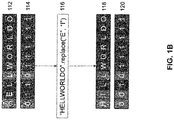
- FIG. 1B shows an additional operation performed on string 112 - operation 116 "HELLWORLDO”.replace("E","I”). This operation results in string 118 "HILLWORLDO" with taint array 120 ⁇ 0, 0, 1, 0, 1, 1, 1, 1, 1, 1 ⁇ .
- replacing a tainted character the “E” at string 112 position [1]
- a trusted character that character is marked as untainted.
- different operations may be treated as tainting or untainting a character, or even as propagating a prior taint flag for that character, and that this specific replace operation is provided by way of example and not limitation.
- taint arrays like taint arrays 104, 108, 114, and 120 allows easy character-by-character identification of taint and quick lookup of the same, maintaining these taint arrays requires large amounts of memory for both storage and computation.
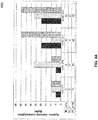
- FIGs. 4A and 4B illustrate graphs 400A and 400B showing memory consumption costs for maintaining taint information, in accordance with an embodiment.
- Graphs 400A and 400B show various memory consumption scenarios, in accordance with an embodiment.
- Taint ranges preserve the granularity of character-level taint protection, but reduce memory usage.
- the string "HELLO" 102 has tainted characters at positions 1, 2, and 4, shown by a taint array 104 ⁇ 0, 1, 1, 0, 1 ⁇ .
- This same taint information can be conveyed by a set of taint ranges: [1,3] and [4,5], indicating that the tainted characters are those at positions 1, 2, and 4.
- "WORLD" 106 is entirely tainted, as shown by a taint array 108 ⁇ 1, 1, 1, 1, 1 ⁇ .
- This same taint information can be conveyed by a single taint range: [0,5].
- Taint ranges are stored as metadata with a string.
- the memory cost of using a taint range scales with the number of ranges needed.
- the value 'k' denotes the number of taint ranges needed to convey the full taint information equivalent to the r_naive approach, which will vary depending on how many gaps (i.e., non-tainted characters) interrupt a contiguous range of tainted characters.
- the string "HELLO" required two taint ranges to convey the taint information
- the fully-tainted string "WORLD” only required one taint range.
- Graphs 400A and 400B assume that each taint range has a memory cost of 9 bytes, although one skilled in the relevant arts will appreciate that this amount will vary depending on what information is included with a taint range. The result, however, is that the memory cost of maintaining taint ranges (shown as r_tr in graphs 400A and 400B) is less than the memory cost of the r_naive implementation for larger string sizes (i.e., larger values of 'n').
- the overhead for the r_naive implementation is significantly higher than the r_tr implementation: 20000 bytes versus 900 bytes.
- taint ranges are desirable, especially for larger string sizes.
- other information may be stored with taint ranges that can be useful for aiding processing of the tainted characters.
- a source for a given taint range may be specified and stored together with the taint range. This source information can be used to determine, for example, how to address potential taint of that taint range (e.g., what filters to apply, how dangerous the data may be, etc.).
- taint ranges can significantly reduce the overhead of taint information compared to the use of character-level taint arrays
- the use of taint ranges introduces costs in maintenance of the taint ranges. This is because string operations (such as the "HELLO”.insert(4, "WORLD”) insert operation discussed previously) require special handling of the ranges in order to provide a result range for the resulting string.
- string operations such as the "HELLO”.insert(4, "WORLD" insert operation discussed previously
- the resulting "HELLWORLDO" string would have taint ranges [1,3] and [4,10].
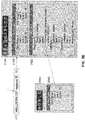
- FIGs. 2A and 2B illustrate string metadata having taint range base layers and delta layers, in accordance with an embodiment.
- FIG. 2A illustrates "HELLO" string 202A having the same character taint profile as before - characters 1, 2, and 4 are tainted (shown by the darker background), while characters 0 and 3 are not tainted (shown by the lighter background).
- "WORLD" string 204A is shown as fully tainted as before.
- Each string 202A and 204A includes metadata, in accordance with an embodiment.
- This metadata includes base layer 202B corresponding to string 202A, and base layer 204B corresponding to string 204A.
- Metadata base layer 202B stores information about the two taint ranges for string 202A, shown as taint range 1 [1,3] and taint range 2 [4,5]. Additionally, in accordance with an embodiment, base layer 202B can store additional information corresponding to each taint range, such as a source (e.g., source [A] and source [B]) from which each taint range was received.
- a source e.g., source [A] and source [B]
- Metadata base layer 204B has a single taint range, taint range 1 [0,5], which indicates that the entire string 204A is tainted. And, similarly to base layer 202B, base layer 204B includes a source for taint range 1 [0,5] given as source [C], in accordance with an embodiment.
- base layer 208B mirrors the base layer of a given first string.
- string 202A and its corresponding base layer 202B are taken as the first string from which base layer 208B is obtained.
- the foregoing multi-operand "insert" instruction results in one of the two operand strings being selected as the given first string, but that the specific selection of string 202A as the first string is given by way of example, and not limitation.
- delta layers 208C a first delta layer, delta layer 0, is created which includes information about the operation performed.
- the delta layer 208C tracks that the operation was an "insertion" operation, which inserted characters starting at position 4 and ending at position 9 of the result string.
- the taint information corresponding to string 204A (held at base layer 204B) is referenced in an incoming taint field.
- the incoming taint information may be copied into the delta layer 208C rather than referenced.
- One skilled in the relevant arts will appreciate that any mechanism that allows tracking of the base layer information 204B within delta layer 208C will accomplish the needed operation.
- the resulting taint ranges of this operation (which would be [1,3] and [4,10] if computed) can be resolved by collapsing the information in delta layers 208C into the information in base layer 208B.
- maintenance of the taint range data for result string 208A by collapsing delta layers 208C into base layer 208B can be deferred until such time as the taint ranges for string 208A are needed.
- changes in delta layers are encoded as a quadruple containing the following information:
- Operation 210 "HELLWORLDO”.replace("E", “I") shown at the bottom of FIG. 2A (and which carries over to FIG. 2B ) can be performed on the string 208A "HELLWORLDO” with the result being string 212A "HILLWORLDO”.
- the character-level taint information for string 212A is ⁇ 0, 0, 1, 0, 1, 1, 1, 1, 1 ⁇ indicating that characters 2, 4, 5, 6, 7, 8, and 9 are tainted (shown by the darker background), while characters 0, 1, and 3 are not tainted (shown by the lighter background).
- the resulting taint ranges, once computed, would therefore be [2,3] and [4,10].
- the base layer 212B is maintained from the earlier base layer 208B (which itself was maintained from base layer 202B), and additional delta layer information is inserted into delta layer 212C, in accordance with an embodiment.
- Delta layer 212C carries over from the earlier delta layer 208C, with the exact same delta layer 0 (including reference to the incoming taint information of base layer 204B) present here. However, new delta layer information is included to address any taint introduced or removed by operation 210.
- the replace operation of operation 210 is translated into a deletion operation (in delta layer 1) and an insertion operation (in delta layer 2).
- the deletion operation of delta layer 1 indicates that the character starting at position 1 and ending at position 2 (so, the single character at position 1) is deleted.
- a deletion operation cannot have an incoming taint, in accordance with an embodiment, so the incoming taint field is omitted.
- the insertion operation of delta layer 2 indicates that an insertion has been made starting at character position 1 and ending at character position 2, and that the insertion is trusted so there is no incoming taint.
- each type of string operation may, depending on its operands, handle incoming taint information differently.
- FIG. 3 is a flowchart 300 illustrating steps by which a result string with metadata including delta layers is encoded, in accordance with an embodiment.
- a string is stored in a data structure having accompanying metadata. This could be, for example, string 202A of FIG. 2A with an accompanying metadata area.
- a base layer with taint data corresponding to the string is encoded into the metadata. For example, base layer 202B of FIG. 2A is encoded into the metadata of string 202A.
- an operation is performed on the string.
- operation 206 is performed on string 202A, which results in string 208A.
- the operation and taint data corresponding to the operation are encoded into a next delta layer of the metadata.
- the insert operation of operation 206 and the corresponding taint data are encoded into a next delta layer of delta layers 208C (in this case this is the first delta layer, delta layer 0).
- Steps 306 and 308 may be repeated on the string for any additional operations, with the additional operations and taint data corresponding to the operation being encoded into subsequent delta layers (e.g., delta layers 1 and 2 of 212C in FIG. 2B ).
- FIG. 5 Various embodiments may be implemented, for example, using one or more well-known computer systems, such as computer system 500 shown in FIG. 5 .
- One or more computer systems 500 may be used, for example, to implement any of the embodiments discussed herein, as well as combinations and sub-combinations thereof.
- Computer system 500 may include one or more processors (also called central processing units, or CPUs), such as a processor 504.
- processors also called central processing units, or CPUs
- Processor 504 may be connected to a communication infrastructure or bus 506.
- Computer system 500 may also include user input/output device(s) 503, such as monitors, keyboards, pointing devices, etc., which may communicate with communication infrastructure 506 through user input/output interface(s) 502.
- user input/output device(s) 503 such as monitors, keyboards, pointing devices, etc.
- communication infrastructure 506 may communicate with user input/output interface(s) 502.
- processors 504 may be a graphics processing unit (GPU).
- a GPU may be a processor that is a specialized electronic circuit designed to process mathematically intensive applications.
- the GPU may have a parallel structure that is efficient for parallel processing of large blocks of data, such as mathematically intensive data common to computer graphics applications, images, videos, etc.
- Computer system 500 may also include a main or primary memory 508, such as random access memory (RAM).
- Main memory 508 may include one or more levels of cache.
- Main memory 508 may have stored therein control logic (i.e., computer software) and/or data.
- Computer system 500 may also include one or more secondary storage devices or memory 510.
- Secondary memory 510 may include, for example, a hard disk drive 512 and/or a removable storage device or drive 514.
- Removable storage drive 514 may be a floppy disk drive, a magnetic tape drive, a compact disk drive, an optical storage device, tape backup device, and/or any other storage device/drive.
- Removable storage drive 514 may interact with a removable storage unit 518.
- Removable storage unit 518 may include a computer usable or readable storage device having stored thereon computer software (control logic) and/or data.
- Removable storage unit 518 may be a floppy disk, magnetic tape, compact disk, DVD, optical storage disk, and/ any other computer data storage device.
- Removable storage drive 514 may read from and/or write to removable storage unit 518.
- Secondary memory 510 may include other means, devices, components, instrumentalities or other approaches for allowing computer programs and/or other instructions and/or data to be accessed by computer system 500.
- Such means, devices, components, instrumentalities or other approaches may include, for example, a removable storage unit 522 and an interface 520.
- Examples of the removable storage unit 522 and the interface 520 may include a program cartridge and cartridge interface (such as that found in video game devices), a removable memory chip (such as an EPROM or PROM) and associated socket, a memory stick and USB port, a memory card and associated memory card slot, and/or any other removable storage unit and associated interface.
- Computer system 500 may further include a communication or network interface 524.
- Communication interface 524 may enable computer system 500 to communicate and interact with any combination of external devices, external networks, external entities, etc. (individually and collectively referenced by reference number 528).
- communication interface 524 may allow computer system 500 to communicate with external or remote devices 528 over communications path 526, which may be wired and/or wireless (or a combination thereof), and which may include any combination of LANs, WANs, the Internet, etc.
- Control logic and/or data may be transmitted to and from computer system 500 via communication path 526.
- Computer system 500 may also be any of a personal digital assistant (PDA), desktop workstation, laptop or notebook computer, netbook, tablet, smart phone, smart watch or other wearable, appliance, part of the Intemet-of-Things, and/or embedded system, to name a few non-limiting examples, or any combination thereof.
- PDA personal digital assistant
- desktop workstation laptop or notebook computer
- netbook tablet
- smart phone smart watch or other wearable
- appliance part of the Intemet-of-Things
- embedded system part of the Intemet-of-Things, and/or embedded system, to name a few non-limiting examples, or any combination thereof.
- Computer system 500 may be a client or server, accessing or hosting any applications and/or data through any delivery paradigm, including but not limited to remote or distributed cloud computing solutions; local or on-premises software ("on-premise” cloud-based solutions); "as a service” models (e.g., content as a service (CaaS), digital content as a service (DCaaS), software as a service (SaaS), managed software as a service (MSaaS), platform as a service (PaaS), desktop as a service (DaaS), framework as a service (FaaS), backend as a service (BaaS), mobile backend as a service (MBaaS), infrastructure as a service (IaaS), etc.); and/or a hybrid model including any combination of the foregoing examples or other services or delivery paradigms.
- as a service” models e.g., content as a service (CaaS), digital content as a service (DCaaS), software as a
- Any applicable data structures, file formats, and schemas in computer system 500 may be derived from standards including but not limited to JavaScript Object Notation (JSON), Extensible Markup Language (XML), Yet Another Markup Language (YAML), Extensible Hypertext Markup Language (XHTML), Wireless Markup Language (WML), MessagePack, XML User Interface Language (XUL), or any other functionally similar representations alone or in combination.
- JSON JavaScript Object Notation
- XML Extensible Markup Language
- YAML Yet Another Markup Language
- XHTML Extensible Hypertext Markup Language
- WML Wireless Markup Language
- MessagePack XML User Interface Language
- XUL XML User Interface Language
- a tangible, non-transitory apparatus or article of manufacture comprising a tangible, non-transitory computer useable or readable medium having control logic (software) stored thereon may also be referred to herein as a computer program product or program storage device.
- control logic software stored thereon
- control logic when executed by one or more data processing devices (such as computer system 500), may cause such data processing devices to operate as described herein.
- references herein to "one embodiment,” “an embodiment,” “an example embodiment,” or similar phrases, indicate that the embodiment described can include a particular feature, structure, or characteristic, but every embodiment can not necessarily include the particular feature, structure, or characteristic. Moreover, such phrases are not necessarily referring to the same embodiment. Further, when a particular feature, structure, or characteristic is described in connection with an embodiment, it would be within the knowledge of persons skilled in the relevant art(s) to incorporate such feature, structure, or characteristic into other embodiments whether or not explicitly mentioned or described herein. Additionally, some embodiments can be described using the expression “coupled” and “connected” along with their derivatives. These terms are not necessarily intended as synonyms for each other.
- Coupled can also mean that two or more elements are not in direct contact with each other, but yet still cooperate or interact with each other.
Landscapes
- Engineering & Computer Science (AREA)
- Computer Security & Cryptography (AREA)
- Computer Hardware Design (AREA)
- General Engineering & Computer Science (AREA)
- Software Systems (AREA)
- Theoretical Computer Science (AREA)
- Physics & Mathematics (AREA)
- General Physics & Mathematics (AREA)
- Virology (AREA)
- Health & Medical Sciences (AREA)
- General Health & Medical Sciences (AREA)
- Computing Systems (AREA)
- Computer Networks & Wireless Communication (AREA)
- Signal Processing (AREA)
- Information Retrieval, Db Structures And Fs Structures Therefor (AREA)
- Document Processing Apparatus (AREA)
Abstract
Description
- When data is received by a program from an external source, the integrity of the data cannot necessarily be trusted. This is particularly the case for web-based interfaces that take data from an untrusted client and use it in a backend program. Such data may be manipulated to perform cross-site scripting (XSS) or SQL injections that can adversely impact the operation of the backend program itself, or data sources or systems accessible to the backend program.
- Accordingly, approaches are needed to sanitize data received from untrusted sources to prevent attacks.
- The accompanying drawings are incorporated herein and form a part of the specification.
-
FIGs. 1A and1B illustrate operations on character arrays having character-level taint flags, in accordance with an embodiment. -
FIGs. 2A and2B illustrate string metadata having taint range base layers and delta layers, in accordance with an embodiment. -
FIG. 3 is a flowchart illustrating steps by which a result string with metadata including delta layers is encoded, in accordance with an embodiment. -
FIGs. 4A and4B illustrate graphs showing memory consumption costs for maintaining taint information, in accordance with an embodiment. -
FIG. 5 is an example computer system useful for implementing various embodiments. - In the drawings, like reference numbers generally indicate identical or similar elements. Additionally, generally, the left-most digit(s) of a reference number identifies the drawing in which the reference number first appears.
- Provided herein are system, apparatus, device, method and/or computer program product embodiments, and/or combinations and sub-combinations thereof, for managing taint information attached to strings.
- Taint tracking is an effective countermeasure against various injection attacks, like cross-site scripting (XSS) or structured query language (SQL) injection. These attacks rely on injecting malicious information, such as malicious code, into an otherwise clean string.
- Common approaches to dealing with injection attacks include sanitizing and filtering inputs. However, these approaches are often fixed at development-time, and cannot necessarily address unexpected attacks dynamically at runtime.
- One approach for future-proofing against injection attacks is to track tainted user input. If this user input is included in a string that is consumed by a "sink" (any piece of code that uses that string as an input), the situation may be cause for concern. Specifically, any time a sink consumes a potentially tainted string, that string constitutes an attack vector. Any sanitization of the string (and corresponding marking of that string as untainted), should occur before consumption by the sink.
- When a tainted string reaches the sink, a number of approaches can be taken to mitigate any possible harm, such as raising an exception, ignoring the string input, and/or logging information about the tainted string. Persons skilled in the relevant arts will appreciate that any approach dealing with taint data for a string is contemplated within the scope of this disclosure.
- Providing taint data to allow for tracking of a tainted string is a cumbersome process. In some approaches, a single flag is used for an entire string to indicate whether the string is tainted by user input data or not. If untrusted user input is included in a string, the entire string is flagged as tainted. In this approach, taint information for each string can be managed by a single Boolean flag, but at a loss of granularity. Even if the tainted portion of the string is ultimately not used by the sink, the entire string must be treated as tainted (and therefore a potential attack vector).
- In another approach, a taint flag is used for each character in a string. In this scenario, a string is understood as a character array. One skilled in the relevant arts will appreciate that other data arrays could be flagged for taint information in a similar manner to the character arrays discussed herein, but strings made up of character arrays are used by way of non-limiting example.
-
FIGs. 1A and1B illustrate operations on character arrays having character-level taint flags, in accordance with an embodiment. As shown inFIG. 1A , the string "HELLO" 102 has tainted characters atpositions - A number of operations can be performed on strings. When these operations are performed on a string, the taint information must be computed and follow the resulting string. For example, as shown in
FIG. 1A , theoperation 110 "HELLO".insert(4, "WORLD") inserts string "WORLD" 106 into the fourth position (assuming a 0-numbered character array) of the string "HELLO" 102, resulting instring 112 "HELLWORLDO". - Using the
taint arrays resulting string 112. Thenew taint array 114 is {0, 1, 1, 0, 1, 1, 1, 1, 1, 1}, and is determined by performing a similar insertion operation on the taint arrays to placetaint array 108 intotaint array 104. -
FIG. 1B shows an additional operation performed on string 112 -operation 116 "HELLWORLDO".replace("E","I"). This operation results instring 118 "HILLWORLDO" with taint array 120 {0, 0, 1, 0, 1, 1, 1, 1, 1, 1}. By way of non-limiting example, replacing a tainted character (the "E" atstring 112 position [1]) with a trusted character, that character is marked as untainted. One skilled in the art will recognize that different operations may be treated as tainting or untainting a character, or even as propagating a prior taint flag for that character, and that this specific replace operation is provided by way of example and not limitation. - While using taint arrays like
taint arrays -
FIGs. 4A and4B illustrategraphs - The character-level taint arrays will be sized proportionately to each corresponding string. If each taint array element consumes a byte (by way of non-limiting example, Java Virtual Machine implementations map Boolean values to byte data types), the string "HELLO" requires an additional five bytes of data just to store the taint data. This result is shown as the r_naive cost in each set of bar graphs (e.g., r_naive = 5 bytes if n = 5; r_naive = 1000 bytes if n = 1000; etc.)
- As shown in the later bar graphs of
chart 400B, the costs of r naive scale proportionately to the size of the strings being tracked for taint data. If n = 20000, then r_naive = 20000 bytes. Passing larger taint data sets and using them in operations therefore becomes increasingly expensive as more strings are tracked in a program. In this particular scenario, the cost is a 50% overhead beyond the string itself. - An alternative approach to one-to-one taint elements mapped to strings is the use of taint ranges. Taint ranges preserve the granularity of character-level taint protection, but reduce memory usage.
- For example, in the example above the string "HELLO" 102 has tainted characters at
positions positions - Taint ranges are stored as metadata with a string. The memory cost of using a taint range scales with the number of ranges needed. Returning to
graphs -
Graphs graphs graph 400B, for example, the string size n = 20000 with the number of taint ranges at k = 100, the overhead for the r_naive implementation is significantly higher than the r_tr implementation: 20000 bytes versus 900 bytes. - As a result, using taint ranges is desirable, especially for larger string sizes. Additionally, other information may be stored with taint ranges that can be useful for aiding processing of the tainted characters. For example, a source for a given taint range may be specified and stored together with the taint range. This source information can be used to determine, for example, how to address potential taint of that taint range (e.g., what filters to apply, how dangerous the data may be, etc.).
- While taint ranges can significantly reduce the overhead of taint information compared to the use of character-level taint arrays, the use of taint ranges introduces costs in maintenance of the taint ranges. This is because string operations (such as the "HELLO".insert(4, "WORLD") insert operation discussed previously) require special handling of the ranges in order to provide a result range for the resulting string. Continuing this example, the resulting "HELLWORLDO" string would have taint ranges [1,3] and [4,10].
- However, there is no simple operation to combine the taint ranges [1,3] and [4,5] from the first string with the [0,5] taint range of the second string to produce the taint ranges [1,3] and [4,10] of the resulting string. Performing these operations therefore requires special string operations that also maintain the taint ranges. Despite the memory savings of taint ranges, a cost is present in finding resulting taint ranges when string operations are performed.
-
FIGs. 2A and2B illustrate string metadata having taint range base layers and delta layers, in accordance with an embodiment.FIG. 2A illustrates "HELLO"string 202A having the same character taint profile as before -characters characters string 204A is shown as fully tainted as before. - Each
string base layer 202B corresponding to string 202A, andbase layer 204B corresponding to string 204A.Metadata base layer 202B stores information about the two taint ranges forstring 202A, shown as taint range 1 [1,3] and taint range 2 [4,5]. Additionally, in accordance with an embodiment,base layer 202B can store additional information corresponding to each taint range, such as a source (e.g., source [A] and source [B]) from which each taint range was received. -
Metadata base layer 204B has a single taint range, taint range 1 [0,5], which indicates that theentire string 204A is tainted. And, similarly tobase layer 202B,base layer 204B includes a source for taint range 1 [0,5] given as source [C], in accordance with an embodiment. - Again, as before,
operation 206 "HELLO".insert(4, "WORLD") is performed onstrings string 208A "HELLWORLDO". However, rather than immediately resolving the taint range for thisnew result string 208A, the metadata ofstring 208A maintains itsown base layer 208B and delta layers 208C, in accordance with an embodiment. - In accordance with an embodiment,
base layer 208B mirrors the base layer of a given first string. In this case,string 202A and itscorresponding base layer 202B are taken as the first string from whichbase layer 208B is obtained. One skilled in the relevant art will appreciate that the foregoing multi-operand "insert" instruction results in one of the two operand strings being selected as the given first string, but that the specific selection ofstring 202A as the first string is given by way of example, and not limitation. - Again, rather than resolving the taint information provided by
base layer 204B of the second string,string 204A "WORLD", the introduced taint information is tracked in delta layers 208C. In this example, a first delta layer,delta layer 0, is created which includes information about the operation performed. In this non-limiting example, thedelta layer 208C tracks that the operation was an "insertion" operation, which inserted characters starting atposition 4 and ending atposition 9 of the result string. Further in this non-limiting example, the taint information corresponding to string 204A (held atbase layer 204B) is referenced in an incoming taint field. - The incoming taint information may be copied into the
delta layer 208C rather than referenced. One skilled in the relevant arts will appreciate that any mechanism that allows tracking of thebase layer information 204B withindelta layer 208C will accomplish the needed operation. - The resulting taint ranges of this operation (which would be [1,3] and [4,10] if computed) can be resolved by collapsing the information in delta layers 208C into the information in
base layer 208B. However, maintenance of the taint range data forresult string 208A by collapsing delta layers 208C intobase layer 208B can be deferred until such time as the taint ranges forstring 208A are needed. - By way of non-limiting example, changes in delta layers are encoded as a quadruple containing the following information:
- An operation: All modifications to character sequences can be broken down into two primitives: insertion and deletion. Other, higher order operations may be used as well, such as replace, or the operations can be described solely by way of insertions and deletions, in accordance with an embodiment.
- Start of change: Describes the beginning of a region or range of a change. In accordance with an embodiment, this value is given in an absolute index to the string in order to not require reference to other layers. However, relative indices may be used instead.
- End of change: Describes the end of a region or range of a change, using an absolute index. Again, one skilled in the relevant arts would appreciate that relative indices may be used instead.
- Incoming taint information: In case of an insertion operation, taint information from a second string is merged into the first string.
- Notably, without needing to resolve the taint information for
string 208A first, another operation may be performed in accordance with an embodiment. Operation 210 "HELLWORLDO".replace("E", "I") shown at the bottom ofFIG. 2A (and which carries over toFIG. 2B ) can be performed on thestring 208A "HELLWORLDO" with theresult being string 212A "HILLWORLDO". - In this case, as previously discussed, replacement of a character is a trusted operation, and replaced characters are considered untainted. Accordingly, the character-level taint information for
string 212A is {0, 0, 1, 0, 1, 1, 1, 1, 1, 1} indicating thatcharacters characters - However, once again rather than needing to resolve the taint ranges for
string 212A, thebase layer 212B is maintained from theearlier base layer 208B (which itself was maintained frombase layer 202B), and additional delta layer information is inserted intodelta layer 212C, in accordance with an embodiment. -
Delta layer 212C carries over from theearlier delta layer 208C, with the exact same delta layer 0 (including reference to the incoming taint information ofbase layer 204B) present here. However, new delta layer information is included to address any taint introduced or removed by operation 210. - By way of non-limiting example, the replace operation of operation 210 is translated into a deletion operation (in delta layer 1) and an insertion operation (in delta layer 2). In this case, the deletion operation of
delta layer 1 indicates that the character starting atposition 1 and ending at position 2 (so, the single character at position 1) is deleted. A deletion operation cannot have an incoming taint, in accordance with an embodiment, so the incoming taint field is omitted. The insertion operation ofdelta layer 2 indicates that an insertion has been made starting atcharacter position 1 and ending atcharacter position 2, and that the insertion is trusted so there is no incoming taint. - One skilled in the relevant arts will appreciate that other string operations may be considered, each with their corresponding delta layer configuration. Similarly, each type of string operation may, depending on its operands, handle incoming taint information differently.
- Any additional operations performed on
string 212A can continue to be added as delta layers to delta layers 212C. -
FIG. 3 is aflowchart 300 illustrating steps by which a result string with metadata including delta layers is encoded, in accordance with an embodiment. Atstep 302, a string is stored in a data structure having accompanying metadata. This could be, for example,string 202A ofFIG. 2A with an accompanying metadata area. Atstep 304, a base layer with taint data corresponding to the string is encoded into the metadata. For example,base layer 202B ofFIG. 2A is encoded into the metadata ofstring 202A. - At
step 306, an operation is performed on the string. Returning again toFIG. 2A by way of example,operation 206 is performed onstring 202A, which results instring 208A. And atstep 308, the operation and taint data corresponding to the operation are encoded into a next delta layer of the metadata. In the example ofFIG. 2A , the insert operation ofoperation 206 and the corresponding taint data are encoded into a next delta layer of delta layers 208C (in this case this is the first delta layer, delta layer 0). -
Steps FIG. 2B ). - Various embodiments may be implemented, for example, using one or more well-known computer systems, such as
computer system 500 shown inFIG. 5 . One ormore computer systems 500 may be used, for example, to implement any of the embodiments discussed herein, as well as combinations and sub-combinations thereof. -
Computer system 500 may include one or more processors (also called central processing units, or CPUs), such as aprocessor 504.Processor 504 may be connected to a communication infrastructure orbus 506. -
Computer system 500 may also include user input/output device(s) 503, such as monitors, keyboards, pointing devices, etc., which may communicate withcommunication infrastructure 506 through user input/output interface(s) 502. - One or more of
processors 504 may be a graphics processing unit (GPU). In an embodiment, a GPU may be a processor that is a specialized electronic circuit designed to process mathematically intensive applications. The GPU may have a parallel structure that is efficient for parallel processing of large blocks of data, such as mathematically intensive data common to computer graphics applications, images, videos, etc. -
Computer system 500 may also include a main orprimary memory 508, such as random access memory (RAM).Main memory 508 may include one or more levels of cache.Main memory 508 may have stored therein control logic (i.e., computer software) and/or data. -
Computer system 500 may also include one or more secondary storage devices ormemory 510.Secondary memory 510 may include, for example, ahard disk drive 512 and/or a removable storage device or drive 514.Removable storage drive 514 may be a floppy disk drive, a magnetic tape drive, a compact disk drive, an optical storage device, tape backup device, and/or any other storage device/drive. -
Removable storage drive 514 may interact with aremovable storage unit 518.Removable storage unit 518 may include a computer usable or readable storage device having stored thereon computer software (control logic) and/or data.Removable storage unit 518 may be a floppy disk, magnetic tape, compact disk, DVD, optical storage disk, and/ any other computer data storage device.Removable storage drive 514 may read from and/or write toremovable storage unit 518. -
Secondary memory 510 may include other means, devices, components, instrumentalities or other approaches for allowing computer programs and/or other instructions and/or data to be accessed bycomputer system 500. Such means, devices, components, instrumentalities or other approaches may include, for example, aremovable storage unit 522 and aninterface 520. Examples of theremovable storage unit 522 and theinterface 520 may include a program cartridge and cartridge interface (such as that found in video game devices), a removable memory chip (such as an EPROM or PROM) and associated socket, a memory stick and USB port, a memory card and associated memory card slot, and/or any other removable storage unit and associated interface. -
Computer system 500 may further include a communication ornetwork interface 524.Communication interface 524 may enablecomputer system 500 to communicate and interact with any combination of external devices, external networks, external entities, etc. (individually and collectively referenced by reference number 528). For example,communication interface 524 may allowcomputer system 500 to communicate with external orremote devices 528 overcommunications path 526, which may be wired and/or wireless (or a combination thereof), and which may include any combination of LANs, WANs, the Internet, etc. Control logic and/or data may be transmitted to and fromcomputer system 500 viacommunication path 526. -
Computer system 500 may also be any of a personal digital assistant (PDA), desktop workstation, laptop or notebook computer, netbook, tablet, smart phone, smart watch or other wearable, appliance, part of the Intemet-of-Things, and/or embedded system, to name a few non-limiting examples, or any combination thereof. -
Computer system 500 may be a client or server, accessing or hosting any applications and/or data through any delivery paradigm, including but not limited to remote or distributed cloud computing solutions; local or on-premises software ("on-premise" cloud-based solutions); "as a service" models (e.g., content as a service (CaaS), digital content as a service (DCaaS), software as a service (SaaS), managed software as a service (MSaaS), platform as a service (PaaS), desktop as a service (DaaS), framework as a service (FaaS), backend as a service (BaaS), mobile backend as a service (MBaaS), infrastructure as a service (IaaS), etc.); and/or a hybrid model including any combination of the foregoing examples or other services or delivery paradigms. - Any applicable data structures, file formats, and schemas in
computer system 500 may be derived from standards including but not limited to JavaScript Object Notation (JSON), Extensible Markup Language (XML), Yet Another Markup Language (YAML), Extensible Hypertext Markup Language (XHTML), Wireless Markup Language (WML), MessagePack, XML User Interface Language (XUL), or any other functionally similar representations alone or in combination. Alternatively, proprietary data structures, formats or schemas may be used, either exclusively or in combination with known or open standards. - In some embodiments, a tangible, non-transitory apparatus or article of manufacture comprising a tangible, non-transitory computer useable or readable medium having control logic (software) stored thereon may also be referred to herein as a computer program product or program storage device. This includes, but is not limited to,
computer system 500,main memory 508,secondary memory 510, andremovable storage units - Based on the teachings contained in this disclosure, it will be apparent to persons skilled in the relevant art(s) how to make and use embodiments of this disclosure using data processing devices, computer systems and/or computer architectures other than that shown in
FIG. 5 . In particular, embodiments can operate with software, hardware, and/or operating system implementations other than those described herein. - It is to be appreciated that the Detailed Description section, and not any other section, is intended to be used to interpret the claims. Other sections can set forth one or more but not all exemplary embodiments as contemplated by the inventor(s), and thus, are not intended to limit this disclosure or the appended claims in any way.
- While this disclosure describes exemplary embodiments for exemplary fields and applications, it should be understood that the disclosure is not limited thereto. Other embodiments and modifications thereto are possible, and are within the scope and spirit of this disclosure. For example, and without limiting the generality of this paragraph, embodiments are not limited to the software, hardware, firmware, and/or entities illustrated in the figures and/or described herein. Further, embodiments (whether or not explicitly described herein) have significant utility to fields and applications beyond the examples described herein.
- Embodiments have been described herein with the aid of functional building blocks illustrating the implementation of specified functions and relationships thereof. The boundaries of these functional building blocks have been arbitrarily defined herein for the convenience of the description. Alternate boundaries can be defined as long as the specified functions and relationships (or equivalents thereof) are appropriately performed. Also, alternative embodiments can perform functional blocks, steps, operations, methods, etc. using orderings different than those described herein.
- References herein to "one embodiment," "an embodiment," "an example embodiment," or similar phrases, indicate that the embodiment described can include a particular feature, structure, or characteristic, but every embodiment can not necessarily include the particular feature, structure, or characteristic. Moreover, such phrases are not necessarily referring to the same embodiment. Further, when a particular feature, structure, or characteristic is described in connection with an embodiment, it would be within the knowledge of persons skilled in the relevant art(s) to incorporate such feature, structure, or characteristic into other embodiments whether or not explicitly mentioned or described herein. Additionally, some embodiments can be described using the expression "coupled" and "connected" along with their derivatives. These terms are not necessarily intended as synonyms for each other. For example, some embodiments can be described using the terms "connected" and/or "coupled" to indicate that two or more elements are in direct physical or electrical contact with each other. The term "coupled," however, can also mean that two or more elements are not in direct contact with each other, but yet still cooperate or interact with each other.
- The breadth and scope of this disclosure should not be limited by any of the above-described exemplary embodiments, but should be defined only in accordance with the following claims and their equivalents.
Claims (15)
- A computer implemented method, comprising:storing, by one or more computing devices, a first string in a data structure having metadata;encoding, by the one or more computing devices, taint data corresponding to the first string in a base layer of the metadata;performing, by the one or more computing devices, an operation on the first string to create a result string, wherein the result string is stored in place of the first string in the data structure; andencoding, by the one or more computing devices, the operation and taint data corresponding to the operation into a delta layer of the metadata.
- The computer implemented method of claim 1, wherein the taint data corresponding to the first string comprises a range indicating tainted characters of the first string.
- The computer implemented method of claim 1 or 2, further comprising:
determining, by the one or more computing devices, that the result string is needed in a security sensitive operation; and
resolving, by the one or more computing devices, responsive to the determining that the result string is needed in the security sensitive operation, the taint data corresponding to the first string and the taint data corresponding to the operation into taint data corresponding to the result string, wherein, optionally, resolving the taint data corresponding to the result string is deferred until the result string is needed in the security sensitive operation. - The computer implemented method of any one of the preceding claims, further comprising:
detecting, by the one or more computing devices, malicious data in the result string based on the taint data corresponding to the first string and the taint data corresponding to the operation. - The computer implemented method of any one of the preceding claims, wherein the taint data corresponding to the first string comprises a source for tainted characters of the first string, and/or
wherein performing the operation on the first string to create the result string comprises:
inserting a second string into the first string to create the result string, and
wherein encoding the operation and the taint data corresponding to the operation into the delta layer of the metadata comprises:
encoding a reference to taint data corresponding to the second string into the delta layer of the metadata as the taint data corresponding to the operation. - A system, comprising:a memory configured to store operations; andone or more processors configured to perform the operations, the operations comprising:storing a first string in a data structure having metadata,encoding taint data corresponding to the first string in a base layer of the metadata,performing an operation on the first string to create a result string, wherein the result string is stored in place of the first string in the data structure, andencoding the operation and taint data corresponding to the operation into a delta layer of the metadata.
- The system of claim 6, wherein the taint data corresponding to the first string comprises a range indicating tainted characters of the first string.
- The system of claim 6 or 7, the operations further comprising:
determining that the result string is needed in a security sensitive operation; and resolving, responsive to the determining that the result string is needed in the security sensitive operation, the taint data corresponding to the first string and the taint data corresponding to the operation into taint data corresponding to the result string, wherein, optionally, resolving the taint data corresponding to the result string is deferred until the result string is needed in the security sensitive operation. - The system of any one of claims 6 to 8, the operations further comprising:
detecting malicious data in the result string based on the taint data corresponding to the first string and the taint data corresponding to the operation. - The system of any one of claims 6 to 9, wherein the taint data corresponding to the first string comprises a source for tainted characters of the first string, and/or
wherein performing the operation on the first string to create the result string comprises:
inserting a second string into the first string to create the result string, and
wherein encoding the operation and the taint data corresponding to the operation into the delta layer of the metadata comprises:
encoding a reference to taint data corresponding to the second string into the delta layer of the metadata as the taint data corresponding to the operation. - A computer readable storage device having instructions stored thereon, execution of which, by one or more processing devices, causes the one or more processing devices to perform operations comprising:storing a first string in a data structure having metadata;encoding taint data corresponding to the first string in a base layer of the metadata;performing an operation on the first string to create a result string, wherein the result string is stored in place of the first string in the data structure; andencoding the operation and taint data corresponding to the operation into a delta layer of the metadata.
- The computer readable storage device of claim 11, wherein the taint data corresponding to the first string comprises a range indicating tainted characters of the first string.
- The computer readable storage device of claim 11 or 12, the operations further comprising:
determining that the result string is needed in a security sensitive operation; and resolving, responsive to the determining that the result string is needed in the security sensitive operation, the taint data corresponding to the first string and the taint data corresponding to the operation into taint data corresponding to the result string, wherein, optionally, resolving the taint data corresponding to the result string is deferred until the result string is needed in the security sensitive operation. - The computer readable storage device of any one of claims 11 to 13, the operations further comprising:
detecting malicious data in the result string based on the taint data corresponding to the first string and the taint data corresponding to the operation. - The computer readable storage device of any one of claims 11 to 14,
wherein performing the operation on the first string to create the result string comprises:
inserting a second string into the first string to create the result string, and
wherein encoding the operation and the taint data corresponding to the operation into the delta layer of the metadata comprises:
encoding a reference to taint data corresponding to the second string into the delta layer of the metadata as the taint data corresponding to the operation.
Applications Claiming Priority (1)
| Application Number | Priority Date | Filing Date | Title |
|---|---|---|---|
| US16/524,891 US11275840B2 (en) | 2019-07-29 | 2019-07-29 | Management of taint information attached to strings |
Publications (2)
| Publication Number | Publication Date |
|---|---|
| EP3772002A1 true EP3772002A1 (en) | 2021-02-03 |
| EP3772002B1 EP3772002B1 (en) | 2022-04-20 |
Family
ID=71786769
Family Applications (1)
| Application Number | Title | Priority Date | Filing Date |
|---|---|---|---|
| EP20187560.6A Active EP3772002B1 (en) | 2019-07-29 | 2020-07-24 | Management of taint information attached to strings |
Country Status (3)
| Country | Link |
|---|---|
| US (1) | US11275840B2 (en) |
| EP (1) | EP3772002B1 (en) |
| CN (1) | CN112307474B (en) |
Families Citing this family (2)
| Publication number | Priority date | Publication date | Assignee | Title |
|---|---|---|---|---|
| CN114417353B (en) * | 2021-12-24 | 2024-11-15 | 深圳开源互联网安全技术有限公司 | A byte array detection method, device and computer readable storage medium |
| CN114138681A (en) * | 2022-01-29 | 2022-03-04 | 深圳开源互联网安全技术有限公司 | Taint data tracking method and device and computer readable storage medium |
Citations (3)
| Publication number | Priority date | Publication date | Assignee | Title |
|---|---|---|---|---|
| US20110145918A1 (en) * | 2009-12-15 | 2011-06-16 | Jaeyeon Jung | Sensitive data tracking using dynamic taint analysis |
| US20170318045A1 (en) * | 2016-04-27 | 2017-11-02 | Sap Se | End-to-End Taint Tracking for Detection and Mitigation of Injection Vulnerabilities in Web Applications |
| US20190205532A1 (en) * | 2018-01-04 | 2019-07-04 | Sap Se | Dynamic, Non-Invasive Taint Tracking Using Auto-Generated Datatypes |
Family Cites Families (20)
| Publication number | Priority date | Publication date | Assignee | Title |
|---|---|---|---|---|
| US8621607B2 (en) | 2006-05-18 | 2013-12-31 | Vmware, Inc. | Computational system including mechanisms for tracking taint |
| US8127360B1 (en) * | 2006-06-29 | 2012-02-28 | Symantec Corporation | Method and apparatus for detecting leakage of sensitive information |
| US7870610B1 (en) * | 2007-03-16 | 2011-01-11 | The Board Of Directors Of The Leland Stanford Junior University | Detection of malicious programs |
| US8584232B2 (en) | 2007-04-23 | 2013-11-12 | Sap Ag | Enhanced cross-site attack prevention |
| JP4669053B2 (en) | 2008-09-29 | 2011-04-13 | 株式会社半導体理工学研究センター | Information processing apparatus, information processing method, and program for realizing the same |
| US8615804B2 (en) * | 2010-02-18 | 2013-12-24 | Polytechnic Institute Of New York University | Complementary character encoding for preventing input injection in web applications |
| US20110314337A1 (en) | 2010-06-18 | 2011-12-22 | International Business Machines Corporation | Method and Apparatus for Locating Input-Model Faults Using Dynamic Tainting |
| US9063766B2 (en) | 2011-03-16 | 2015-06-23 | Vmware, Inc. | System and method of manipulating virtual machine recordings for high-level execution and replay |
| US9298918B2 (en) * | 2011-11-30 | 2016-03-29 | Elwha Llc | Taint injection and tracking |
| US9460290B2 (en) | 2011-07-19 | 2016-10-04 | Elwha Llc | Conditional security response using taint vector monitoring |
| US9171028B1 (en) | 2013-06-11 | 2015-10-27 | Google Inc. | Method of maintaining a large set of taint labels |
| CN103745755B (en) | 2014-01-06 | 2017-01-11 | 中国科学院软件研究所 | Space memory error detection method with high efficiency and high availability |
| US9882930B2 (en) * | 2014-07-02 | 2018-01-30 | Waratek Limited | Command injection protection for java applications |
| US20160232346A1 (en) * | 2015-02-05 | 2016-08-11 | Qualcomm Incorporated | Mechanism for tracking tainted data |
| US10235176B2 (en) * | 2015-12-17 | 2019-03-19 | The Charles Stark Draper Laboratory, Inc. | Techniques for metadata processing |
| CN106156623B (en) * | 2016-07-29 | 2018-10-30 | 江西师范大学 | SQLIA defence methods based on intention |
| US10956562B2 (en) * | 2017-06-14 | 2021-03-23 | International Business Machines Corporation | Developing applications using precise static security analysis |
| US20190073473A1 (en) * | 2017-09-01 | 2019-03-07 | Dornerworks, Ltd. | Dynamic security domain data flow analysis via passive monitoring |
| WO2019070675A1 (en) | 2017-10-03 | 2019-04-11 | Rutgers, The State University Of New Jersey | Value-based information flow tracking in software packages |
| US20190108332A1 (en) * | 2017-10-06 | 2019-04-11 | Elwha Llc | Taint injection and tracking |
-
2019
- 2019-07-29 US US16/524,891 patent/US11275840B2/en active Active
-
2020
- 2020-07-24 EP EP20187560.6A patent/EP3772002B1/en active Active
- 2020-07-27 CN CN202010729636.5A patent/CN112307474B/en active Active
Patent Citations (3)
| Publication number | Priority date | Publication date | Assignee | Title |
|---|---|---|---|---|
| US20110145918A1 (en) * | 2009-12-15 | 2011-06-16 | Jaeyeon Jung | Sensitive data tracking using dynamic taint analysis |
| US20170318045A1 (en) * | 2016-04-27 | 2017-11-02 | Sap Se | End-to-End Taint Tracking for Detection and Mitigation of Injection Vulnerabilities in Web Applications |
| US20190205532A1 (en) * | 2018-01-04 | 2019-07-04 | Sap Se | Dynamic, Non-Invasive Taint Tracking Using Auto-Generated Datatypes |
Non-Patent Citations (1)
| Title |
|---|
| ERIKA CHIN ET AL: "Efficient character-level taint tracking for Java", SECURE WEB SERVICES, ACM, 2 PENN PLAZA, SUITE 701 NEW YORK NY 10121-0701 USA, 13 November 2009 (2009-11-13), pages 3 - 12, XP058297560, ISBN: 978-1-60558-789-9, DOI: 10.1145/1655121.1655125 * |
Also Published As
| Publication number | Publication date |
|---|---|
| US20210034751A1 (en) | 2021-02-04 |
| US11275840B2 (en) | 2022-03-15 |
| CN112307474A (en) | 2021-02-02 |
| CN112307474B (en) | 2024-02-09 |
| EP3772002B1 (en) | 2022-04-20 |
Similar Documents
| Publication | Publication Date | Title |
|---|---|---|
| US20230421381A1 (en) | Method and system for verification of identity attribute information | |
| US10747737B2 (en) | Altering data type of a column in a database | |
| US9582666B1 (en) | Computer system for improved security of server computers interacting with client computers | |
| US10430610B2 (en) | Adaptive data obfuscation | |
| US8656496B2 (en) | Global variable security analysis | |
| US9860063B2 (en) | Code analysis tool for recommending encryption of data without affecting program semantics | |
| KR102734806B1 (en) | Secure Dataset Management | |
| CN107683481A (en) | Compute Encrypted Data Using Lazy Evaluation | |
| US20190372880A1 (en) | Deserialization service | |
| Hornby | Side-channel attacks on everyday applications: Distinguishing inputs with flush+ reload | |
| EP3772002B1 (en) | Management of taint information attached to strings | |
| EP3797373B1 (en) | Ex post facto platform configuration attestation | |
| US10853572B2 (en) | System and method for detecting the occureances of irrelevant and/or low-score strings in community based or user generated content | |
| CN117909992A (en) | Smart contract vulnerability detection method, device, electronic device and storage medium | |
| US12072937B2 (en) | Data read method, data update method, electronic device, and program product | |
| US10331381B2 (en) | Method and device for recording memory access operation information | |
| US9164869B2 (en) | Scalable and precise string analysis using index-sensitive static string abstractions | |
| US20080256333A1 (en) | System and method for ignoring fetch protection | |
| US11934393B2 (en) | Input validation API using machine learning and database input validation framework | |
| CN115004623B (en) | Protecting encryption keys | |
| US12288078B2 (en) | Systems and methods for bootstrap management | |
| CN112202822B (en) | Database injection detection method and device, electronic equipment and storage medium | |
| CN116915454A (en) | SQL injection vulnerability detection method, device, electronic equipment and storage medium | |
| US20240028519A1 (en) | Data processing method, electronic device and computer program product | |
| US20220245107A1 (en) | Method, electronic device, and computer program product for processing data |
Legal Events
| Date | Code | Title | Description |
|---|---|---|---|
| PUAI | Public reference made under article 153(3) epc to a published international application that has entered the european phase |
Free format text: ORIGINAL CODE: 0009012 |
|
| STAA | Information on the status of an ep patent application or granted ep patent |
Free format text: STATUS: THE APPLICATION HAS BEEN PUBLISHED |
|
| AK | Designated contracting states |
Kind code of ref document: A1 Designated state(s): AL AT BE BG CH CY CZ DE DK EE ES FI FR GB GR HR HU IE IS IT LI LT LU LV MC MK MT NL NO PL PT RO RS SE SI SK SM TR |
|
| AX | Request for extension of the european patent |
Extension state: BA ME |
|
| STAA | Information on the status of an ep patent application or granted ep patent |
Free format text: STATUS: REQUEST FOR EXAMINATION WAS MADE |
|
| 17P | Request for examination filed |
Effective date: 20210708 |
|
| RBV | Designated contracting states (corrected) |
Designated state(s): AL AT BE BG CH CY CZ DE DK EE ES FI FR GB GR HR HU IE IS IT LI LT LU LV MC MK MT NL NO PL PT RO RS SE SI SK SM TR |
|
| GRAP | Despatch of communication of intention to grant a patent |
Free format text: ORIGINAL CODE: EPIDOSNIGR1 |
|
| STAA | Information on the status of an ep patent application or granted ep patent |
Free format text: STATUS: GRANT OF PATENT IS INTENDED |
|
| INTG | Intention to grant announced |
Effective date: 20211116 |
|
| GRAS | Grant fee paid |
Free format text: ORIGINAL CODE: EPIDOSNIGR3 |
|
| GRAA | (expected) grant |
Free format text: ORIGINAL CODE: 0009210 |
|
| STAA | Information on the status of an ep patent application or granted ep patent |
Free format text: STATUS: THE PATENT HAS BEEN GRANTED |
|
| AK | Designated contracting states |
Kind code of ref document: B1 Designated state(s): AL AT BE BG CH CY CZ DE DK EE ES FI FR GB GR HR HU IE IS IT LI LT LU LV MC MK MT NL NO PL PT RO RS SE SI SK SM TR |
|
| REG | Reference to a national code |
Ref country code: GB Ref legal event code: FG4D |
|
| REG | Reference to a national code |
Ref country code: CH Ref legal event code: EP |
|
| REG | Reference to a national code |
Ref country code: IE Ref legal event code: FG4D |
|
| REG | Reference to a national code |
Ref country code: DE Ref legal event code: R096 Ref document number: 602020002737 Country of ref document: DE |
|
| REG | Reference to a national code |
Ref country code: AT Ref legal event code: REF Ref document number: 1485760 Country of ref document: AT Kind code of ref document: T Effective date: 20220515 |
|
| REG | Reference to a national code |
Ref country code: LT Ref legal event code: MG9D |
|
| REG | Reference to a national code |
Ref country code: NL Ref legal event code: MP Effective date: 20220420 |
|
| REG | Reference to a national code |
Ref country code: AT Ref legal event code: MK05 Ref document number: 1485760 Country of ref document: AT Kind code of ref document: T Effective date: 20220420 |
|
| PG25 | Lapsed in a contracting state [announced via postgrant information from national office to epo] |
Ref country code: NL Free format text: LAPSE BECAUSE OF FAILURE TO SUBMIT A TRANSLATION OF THE DESCRIPTION OR TO PAY THE FEE WITHIN THE PRESCRIBED TIME-LIMIT Effective date: 20220420 |
|
| PG25 | Lapsed in a contracting state [announced via postgrant information from national office to epo] |
Ref country code: SE Free format text: LAPSE BECAUSE OF FAILURE TO SUBMIT A TRANSLATION OF THE DESCRIPTION OR TO PAY THE FEE WITHIN THE PRESCRIBED TIME-LIMIT Effective date: 20220420 Ref country code: PT Free format text: LAPSE BECAUSE OF FAILURE TO SUBMIT A TRANSLATION OF THE DESCRIPTION OR TO PAY THE FEE WITHIN THE PRESCRIBED TIME-LIMIT Effective date: 20220822 Ref country code: NO Free format text: LAPSE BECAUSE OF FAILURE TO SUBMIT A TRANSLATION OF THE DESCRIPTION OR TO PAY THE FEE WITHIN THE PRESCRIBED TIME-LIMIT Effective date: 20220720 Ref country code: LT Free format text: LAPSE BECAUSE OF FAILURE TO SUBMIT A TRANSLATION OF THE DESCRIPTION OR TO PAY THE FEE WITHIN THE PRESCRIBED TIME-LIMIT Effective date: 20220420 Ref country code: HR Free format text: LAPSE BECAUSE OF FAILURE TO SUBMIT A TRANSLATION OF THE DESCRIPTION OR TO PAY THE FEE WITHIN THE PRESCRIBED TIME-LIMIT Effective date: 20220420 Ref country code: GR Free format text: LAPSE BECAUSE OF FAILURE TO SUBMIT A TRANSLATION OF THE DESCRIPTION OR TO PAY THE FEE WITHIN THE PRESCRIBED TIME-LIMIT Effective date: 20220721 Ref country code: FI Free format text: LAPSE BECAUSE OF FAILURE TO SUBMIT A TRANSLATION OF THE DESCRIPTION OR TO PAY THE FEE WITHIN THE PRESCRIBED TIME-LIMIT Effective date: 20220420 Ref country code: ES Free format text: LAPSE BECAUSE OF FAILURE TO SUBMIT A TRANSLATION OF THE DESCRIPTION OR TO PAY THE FEE WITHIN THE PRESCRIBED TIME-LIMIT Effective date: 20220420 Ref country code: BG Free format text: LAPSE BECAUSE OF FAILURE TO SUBMIT A TRANSLATION OF THE DESCRIPTION OR TO PAY THE FEE WITHIN THE PRESCRIBED TIME-LIMIT Effective date: 20220720 Ref country code: AT Free format text: LAPSE BECAUSE OF FAILURE TO SUBMIT A TRANSLATION OF THE DESCRIPTION OR TO PAY THE FEE WITHIN THE PRESCRIBED TIME-LIMIT Effective date: 20220420 |
|
| PG25 | Lapsed in a contracting state [announced via postgrant information from national office to epo] |
Ref country code: RS Free format text: LAPSE BECAUSE OF FAILURE TO SUBMIT A TRANSLATION OF THE DESCRIPTION OR TO PAY THE FEE WITHIN THE PRESCRIBED TIME-LIMIT Effective date: 20220420 Ref country code: PL Free format text: LAPSE BECAUSE OF FAILURE TO SUBMIT A TRANSLATION OF THE DESCRIPTION OR TO PAY THE FEE WITHIN THE PRESCRIBED TIME-LIMIT Effective date: 20220420 Ref country code: LV Free format text: LAPSE BECAUSE OF FAILURE TO SUBMIT A TRANSLATION OF THE DESCRIPTION OR TO PAY THE FEE WITHIN THE PRESCRIBED TIME-LIMIT Effective date: 20220420 Ref country code: IS Free format text: LAPSE BECAUSE OF FAILURE TO SUBMIT A TRANSLATION OF THE DESCRIPTION OR TO PAY THE FEE WITHIN THE PRESCRIBED TIME-LIMIT Effective date: 20220820 |
|
| REG | Reference to a national code |
Ref country code: DE Ref legal event code: R097 Ref document number: 602020002737 Country of ref document: DE |
|
| PG25 | Lapsed in a contracting state [announced via postgrant information from national office to epo] |
Ref country code: SM Free format text: LAPSE BECAUSE OF FAILURE TO SUBMIT A TRANSLATION OF THE DESCRIPTION OR TO PAY THE FEE WITHIN THE PRESCRIBED TIME-LIMIT Effective date: 20220420 Ref country code: SK Free format text: LAPSE BECAUSE OF FAILURE TO SUBMIT A TRANSLATION OF THE DESCRIPTION OR TO PAY THE FEE WITHIN THE PRESCRIBED TIME-LIMIT Effective date: 20220420 Ref country code: RO Free format text: LAPSE BECAUSE OF FAILURE TO SUBMIT A TRANSLATION OF THE DESCRIPTION OR TO PAY THE FEE WITHIN THE PRESCRIBED TIME-LIMIT Effective date: 20220420 Ref country code: EE Free format text: LAPSE BECAUSE OF FAILURE TO SUBMIT A TRANSLATION OF THE DESCRIPTION OR TO PAY THE FEE WITHIN THE PRESCRIBED TIME-LIMIT Effective date: 20220420 Ref country code: DK Free format text: LAPSE BECAUSE OF FAILURE TO SUBMIT A TRANSLATION OF THE DESCRIPTION OR TO PAY THE FEE WITHIN THE PRESCRIBED TIME-LIMIT Effective date: 20220420 Ref country code: CZ Free format text: LAPSE BECAUSE OF FAILURE TO SUBMIT A TRANSLATION OF THE DESCRIPTION OR TO PAY THE FEE WITHIN THE PRESCRIBED TIME-LIMIT Effective date: 20220420 |
|
| PLBE | No opposition filed within time limit |
Free format text: ORIGINAL CODE: 0009261 |
|
| STAA | Information on the status of an ep patent application or granted ep patent |
Free format text: STATUS: NO OPPOSITION FILED WITHIN TIME LIMIT |
|
| PG25 | Lapsed in a contracting state [announced via postgrant information from national office to epo] |
Ref country code: MC Free format text: LAPSE BECAUSE OF FAILURE TO SUBMIT A TRANSLATION OF THE DESCRIPTION OR TO PAY THE FEE WITHIN THE PRESCRIBED TIME-LIMIT Effective date: 20220420 |
|
| 26N | No opposition filed |
Effective date: 20230123 |
|
| REG | Reference to a national code |
Ref country code: BE Ref legal event code: MM Effective date: 20220731 |
|
| PG25 | Lapsed in a contracting state [announced via postgrant information from national office to epo] |
Ref country code: AL Free format text: LAPSE BECAUSE OF FAILURE TO SUBMIT A TRANSLATION OF THE DESCRIPTION OR TO PAY THE FEE WITHIN THE PRESCRIBED TIME-LIMIT Effective date: 20220420 |
|
| PG25 | Lapsed in a contracting state [announced via postgrant information from national office to epo] |
Ref country code: LU Free format text: LAPSE BECAUSE OF NON-PAYMENT OF DUE FEES Effective date: 20220724 |
|
| PG25 | Lapsed in a contracting state [announced via postgrant information from national office to epo] |
Ref country code: BE Free format text: LAPSE BECAUSE OF NON-PAYMENT OF DUE FEES Effective date: 20220731 Ref country code: SI Free format text: LAPSE BECAUSE OF FAILURE TO SUBMIT A TRANSLATION OF THE DESCRIPTION OR TO PAY THE FEE WITHIN THE PRESCRIBED TIME-LIMIT Effective date: 20220420 |
|
| PG25 | Lapsed in a contracting state [announced via postgrant information from national office to epo] |
Ref country code: IE Free format text: LAPSE BECAUSE OF NON-PAYMENT OF DUE FEES Effective date: 20220724 |
|
| PG25 | Lapsed in a contracting state [announced via postgrant information from national office to epo] |
Ref country code: IT Free format text: LAPSE BECAUSE OF FAILURE TO SUBMIT A TRANSLATION OF THE DESCRIPTION OR TO PAY THE FEE WITHIN THE PRESCRIBED TIME-LIMIT Effective date: 20220420 |
|
| REG | Reference to a national code |
Ref country code: CH Ref legal event code: PL |
|
| PG25 | Lapsed in a contracting state [announced via postgrant information from national office to epo] |
Ref country code: MK Free format text: LAPSE BECAUSE OF FAILURE TO SUBMIT A TRANSLATION OF THE DESCRIPTION OR TO PAY THE FEE WITHIN THE PRESCRIBED TIME-LIMIT Effective date: 20220420 Ref country code: CY Free format text: LAPSE BECAUSE OF FAILURE TO SUBMIT A TRANSLATION OF THE DESCRIPTION OR TO PAY THE FEE WITHIN THE PRESCRIBED TIME-LIMIT Effective date: 20220420 Ref country code: CH Free format text: LAPSE BECAUSE OF NON-PAYMENT OF DUE FEES Effective date: 20230731 |
|
| PG25 | Lapsed in a contracting state [announced via postgrant information from national office to epo] |
Ref country code: HU Free format text: LAPSE BECAUSE OF FAILURE TO SUBMIT A TRANSLATION OF THE DESCRIPTION OR TO PAY THE FEE WITHIN THE PRESCRIBED TIME-LIMIT; INVALID AB INITIO Effective date: 20200724 |
|
| PG25 | Lapsed in a contracting state [announced via postgrant information from national office to epo] |
Ref country code: MT Free format text: LAPSE BECAUSE OF FAILURE TO SUBMIT A TRANSLATION OF THE DESCRIPTION OR TO PAY THE FEE WITHIN THE PRESCRIBED TIME-LIMIT Effective date: 20220420 |
|
| PG25 | Lapsed in a contracting state [announced via postgrant information from national office to epo] |
Ref country code: BG Free format text: LAPSE BECAUSE OF FAILURE TO SUBMIT A TRANSLATION OF THE DESCRIPTION OR TO PAY THE FEE WITHIN THE PRESCRIBED TIME-LIMIT Effective date: 20220420 |
|
| PG25 | Lapsed in a contracting state [announced via postgrant information from national office to epo] |
Ref country code: BG Free format text: LAPSE BECAUSE OF FAILURE TO SUBMIT A TRANSLATION OF THE DESCRIPTION OR TO PAY THE FEE WITHIN THE PRESCRIBED TIME-LIMIT Effective date: 20220420 |
|
| PGFP | Annual fee paid to national office [announced via postgrant information from national office to epo] |
Ref country code: DE Payment date: 20250722 Year of fee payment: 6 |
|
| PGFP | Annual fee paid to national office [announced via postgrant information from national office to epo] |
Ref country code: GB Payment date: 20250722 Year of fee payment: 6 |
|
| PGFP | Annual fee paid to national office [announced via postgrant information from national office to epo] |
Ref country code: FR Payment date: 20250725 Year of fee payment: 6 |
|
| PG25 | Lapsed in a contracting state [announced via postgrant information from national office to epo] |
Ref country code: TR Free format text: LAPSE BECAUSE OF FAILURE TO SUBMIT A TRANSLATION OF THE DESCRIPTION OR TO PAY THE FEE WITHIN THE PRESCRIBED TIME-LIMIT Effective date: 20220420 |