EP3770868A1 - Illegal attack prevention - Google Patents
Illegal attack prevention Download PDFInfo
- Publication number
- EP3770868A1 EP3770868A1 EP19799856.0A EP19799856A EP3770868A1 EP 3770868 A1 EP3770868 A1 EP 3770868A1 EP 19799856 A EP19799856 A EP 19799856A EP 3770868 A1 EP3770868 A1 EP 3770868A1
- Authority
- EP
- European Patent Office
- Prior art keywords
- feature
- living
- user
- detection
- locally
- Prior art date
- Legal status (The legal status is an assumption and is not a legal conclusion. Google has not performed a legal analysis and makes no representation as to the accuracy of the status listed.)
- Granted
Links
Images


Classifications
-
- G—PHYSICS
- G07—CHECKING-DEVICES
- G07C—TIME OR ATTENDANCE REGISTERS; REGISTERING OR INDICATING THE WORKING OF MACHINES; GENERATING RANDOM NUMBERS; VOTING OR LOTTERY APPARATUS; ARRANGEMENTS, SYSTEMS OR APPARATUS FOR CHECKING NOT PROVIDED FOR ELSEWHERE
- G07C9/00—Individual registration on entry or exit
- G07C9/20—Individual registration on entry or exit involving the use of a pass
- G07C9/22—Individual registration on entry or exit involving the use of a pass in combination with an identity check of the pass holder
- G07C9/25—Individual registration on entry or exit involving the use of a pass in combination with an identity check of the pass holder using biometric data, e.g. fingerprints, iris scans or voice recognition
- G07C9/257—Individual registration on entry or exit involving the use of a pass in combination with an identity check of the pass holder using biometric data, e.g. fingerprints, iris scans or voice recognition electronically
-
- G—PHYSICS
- G06—COMPUTING OR CALCULATING; COUNTING
- G06V—IMAGE OR VIDEO RECOGNITION OR UNDERSTANDING
- G06V40/00—Recognition of biometric, human-related or animal-related patterns in image or video data
- G06V40/10—Human or animal bodies, e.g. vehicle occupants or pedestrians; Body parts, e.g. hands
- G06V40/16—Human faces, e.g. facial parts, sketches or expressions
- G06V40/161—Detection; Localisation; Normalisation
- G06V40/165—Detection; Localisation; Normalisation using facial parts and geometric relationships
-
- G—PHYSICS
- G06—COMPUTING OR CALCULATING; COUNTING
- G06V—IMAGE OR VIDEO RECOGNITION OR UNDERSTANDING
- G06V40/00—Recognition of biometric, human-related or animal-related patterns in image or video data
- G06V40/10—Human or animal bodies, e.g. vehicle occupants or pedestrians; Body parts, e.g. hands
- G06V40/16—Human faces, e.g. facial parts, sketches or expressions
- G06V40/168—Feature extraction; Face representation
- G06V40/169—Holistic features and representations, i.e. based on the facial image taken as a whole
-
- G—PHYSICS
- G06—COMPUTING OR CALCULATING; COUNTING
- G06V—IMAGE OR VIDEO RECOGNITION OR UNDERSTANDING
- G06V40/00—Recognition of biometric, human-related or animal-related patterns in image or video data
- G06V40/40—Spoof detection, e.g. liveness detection
-
- G—PHYSICS
- G06—COMPUTING OR CALCULATING; COUNTING
- G06V—IMAGE OR VIDEO RECOGNITION OR UNDERSTANDING
- G06V40/00—Recognition of biometric, human-related or animal-related patterns in image or video data
- G06V40/40—Spoof detection, e.g. liveness detection
- G06V40/45—Detection of the body part being alive
Definitions
- the present disclosure relates to biometric identification technologies, and more particularly to anti-illegal attack.
- living body detection is to be performed on the user feature.
- the living body detection is mainly performed by detecting whether the user feature is obtained from a legitimate user with a biometric living body.
- the current living body detection is not optimal and has the possibility of misjudgment. For example, when the living body detection on the user feature provided by the attacker is failed, the misjudgment will occurs if the attacker passes the living body detection by the attacker attempting the living body detection for a plurality of times subsequently.
- the present disclosure provides a method and an apparatus for preventing illegal attack, and an electronic device, so as to prevent misjudgment of user feature provided by an attacker from passing through identity authentication and improve security.
- a method of preventing illegal attack which includes: when a user feature of a user is successfully identified, determining whether a living body detection result for the user feature indicates a failure or not; in a case where the living body detection result for the user feature indicates failure, when a feature ID of the user feature is not locked and a locking condition of the feature ID is satisfied currently, locking the feature ID; and in a case where the living-body detection result for the user feature indicates success, when the feature ID of the user feature is locked and an unlocking condition of the locked feature ID is satisfied currently, unlocking the locked feature ID.
- An apparatus for preventing illegal attack which includes: a feature identifying module configured to identify a user feature of a user; a living body detecting module configured to perform a living body detection on the user feature; a processing module configured to: in a case where the feature identifying module successfully identifies the user feature of the user, and the living body detecting module indicates failure for detecting the user feature, when a feature ID of the user feature is not locked and a locking condition of the feature ID is satisfied currently, lock the feature ID; and in a case where the feature identifying module successfully identifies the user feature of the user, and the living body detecting module successfully detects the user feature, when the feature ID of the user feature is locked and an unlocking condition of the locked feature ID is satisfied currently, unlock the locked feature ID.
- An electronic device which includes: an internal bus, a memory, a processor and a communication interface; wherein the processor, the communication interface and the memory communicate with each other via the internal bus.
- the memory is configured to store machine executable instructions corresponding to the method of preventing an illegal attack.
- the processor is configured to read the machine executable instructions stored in the memory, and execute the instructions to implement the method of preventing an illegal attack.
- the feature ID of the user feature for which the living body detection indicates failure satisfies the locking condition
- the feature ID is locked. In this way, even if the living body detection is successfully discovered when the user feature attempts to detect the living body subsequently, it is not directly determined that the user feature passes the identity authentication, but it is detected whether the feature ID satisfies the unlocking condition, and the feature ID is unlocked first when the unlocking condition is satisfied, and then the user feature attempts to detect the living body. Only if the live body detection succeeds at this time, it is determined that the user feature passes the identity authentication. Therefore, the technical solutions of the present disclosure can effectively prevent misjudgment of the user features provided by an attacker from passing through identity authentication, further reduce the possibility of illegal attack, thereby effectively improving security.
- the misjudgment occurs if the living body detection of the attacker is successful, it means that the user feature provided by the attacker passes the identity authentication, and the attacker may access the resources which may be accessed only with the legal identity. For example, in the field of access control, when an access control device determines that the attacker passes the identity authentication, the access control of the access control device will be released to allow the attacker to pass through, which provides an illegitimate attack of the attacker, reducing the security.
- a locking condition of a feature ID (abbreviation for "identity” or “identification”) corresponding to the user feature is satisfied currently, the feature ID is locked.
- identity a feature ID
- the identity authentication is not immediately passed, but it is determined whether the unlocking condition of the locked feature ID is satisfied currently.
- the unlocking condition of the feature ID it is not immediately determined that the identity authentication is passed, merely unlocking the feature ID. This may effectively prevent an attacker from initiating an illegal attack due to misjudgment, greatly improving the security.
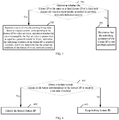
- FIG 1 is a flowchart of a method according to an embodiment of the present disclosure.
- the method in the present disclosure may be applicable in various fields, such as a field of access control, which is not specifically limited therein. Taking the method in the present disclosure applicable to the field of access control as an example, the method may be applicable to an access control device. Other fields are similar, and are not further exemplified.
- Step 101 when a user feature of a user is successfully identified, it is determined whether a living body detection result for the user feature indicates that a living body detection fails or not.
- Step 102 is performed.
- Step 103 is performed.
- the user feature may be a biometric feature of the user, such as a face, an iris, a fingerprint, or a palm print, which is not particularly limited herein.
- the identification technology of the user feature is a known identification technology to a person skilled in the art.
- the identification for the user's face may use any human face identification technology known to a person skilled in the art.
- the identification for the user's iris may use any iris identification technology known to a person skilled in the art.
- two kinds of results may occur when the user feature of the user is identified, one is that the identification succeeds, and the other one is that the identification fails.
- the flowchart shown in FIG. 1 of the present disclosure is performed on the premise that the user feature is successfully identified. However, once the user feature identification fails, it may be directly determined that the user feature fails to pass the identity authentication, and the method shown in FIG. 1 of the present disclosure is not required to be performed.
- Step 102 the feature ID is locked when the feature ID of the user feature is not locked and a locking condition of the feature ID is satisfied currently.
- each user feature has a unique feature ID.
- the feature ID may be a sequence number or an account number. For example, taking a human face as an example, a feature ID in the present disclosure corresponding to the human face is 00001, and 00001 may represent the human face.
- step 102 if it is detected that the locking condition of the feature ID is not satisfied, the lock operation is not performed on the feature ID.
- Step 103 the locked feature ID is unlocked when the feature ID is locked and an unlocking condition of the feature ID is satisfied currently.
- This step 103 is performed on the premise of successfully identifying the user feature of the user and the living body detection result for the user feature indicates the living body detection succeeds. Based on the premise, as an example, if the living body detection result for the user feature indicates that the living body detection is successful and the feature ID of the user feature is found to be not locked, it may be directly determined that the user feature passes the identity authentication.
- FIG. 3 illustrates one implementation therefor, which is not described herein.
- the locking condition for detecting whether the feature ID is satisfied currently is described below.
- FIG 2 is a flowchart of detecting whether the locking condition of the feature ID is satisfied currently according to an embodiment of the present disclosure.
- the method may include the following steps.
- Step 201 it is determined whether the feature ID is the same as a second feature ID of a second user feature for which a latest locally recorded living body detection indicates failure; if yes, step 202 is performed, and if not, step 203 is performed.
- the live body detection performed on the user feature each time is recorded locally. Based on this, it is easy to determine, according to the local record, whether the feature ID is the same as the second feature ID of the second user feature for which a latest locally recorded living body detection indicates failure.
- the purpose for determining whether the feature ID is the same as the second feature ID is, determining whether living body detections on the user feature indicate failure continuously, which will be described in step 202 below.
- Step 202 a count of a locally existing living-body-detection failure counter corresponding to the feature ID is increased by a first set value, and it is detected whether the count increased by the first set value is greater than or equal to a preset threshold N; if yes, it is determined a locking condition of the feature ID is satisfied currently, and if not, it is determined that a locking condition of the feature ID is not satisfied currently.
- Step 202 is performed on the premise of determining that a current feature ID is the same as the second feature ID of the second user feature for which a latest locally recorded living body detection indicates failure.
- the current feature ID is the same as the second feature ID of the second user feature for which a latest locally recorded living body detection indicates failure, it means that in the last time a living body detection is also performed on the user feature corresponding to the feature ID and its living body detection result indicates a failure (equivalent to at least two living body detection failures continuously performed on the user feature corresponding to the feature ID),
- the count of the living-body-detection failure counter corresponding to the feature ID may be directly increased by the first set value.
- the first set value here may be set to, for example, 1. As an embodiment, the first set value here is smaller than the preset threshold N.
- step 202 it can be seen that, in the present disclosure, when at least N living body detections performed continuously on a user feature corresponding to the feature ID fail, it is determined that a locking condition for locking the feature ID is satisfied, and in other cases, it is determined that the locking condition for locking the feature ID is not satisfied currently.
- Step 203 it is determined that the locking condition of the feature ID is not satisfied currently.
- Step 203 is performed on the premise that the current feature ID is different from the second feature ID of the second user feature for which a latest locally recorded living body detection indicates failure.
- the current feature ID is different from the second feature ID of the second user feature for which a latest locally recorded living body detection indicates failure, it means that the living body detection is not performed for the user feature corresponding to the feature ID last time (equivalent to the case where the living body detection is not performed continuously on the user feature corresponding to the feature ID). In other words, it may be determined whether it is the first time to perform living body detection on the user feature corresponding to the feature ID or not.
- determining whether it is the first time to perform living body detection on the user feature corresponding to the feature ID may be realized by detecting whether a living-body-detection failure counter corresponding to the feature ID locally exists.
- the living-body-detection failure counter When it is detected that the living-body-detection failure counter corresponding to the feature ID does not exist locally, it is determined that the living body detection is performed on the user feature corresponding to the feature ID for the first time.
- the living-body-detection failure counter may be newly established locally, and the count of the living-body-detection failure counter is set to a second set value.
- the second set value may be set to, for example, 1.
- the count of the living-body-detection failure counter may be set to a second set value.
- the second set value is described above, and in an example may be set to 1.
- the purpose of setting the count of the living-body-detection failure counter to a second set value is to record the number of times that the living-body-detection failures are continuously performed on the user feature corresponding to the feature ID.
- the method shown in FIG. 2 describes detecting whether the locking condition of the feature ID is satisfied currently.
- the following describes how to detect whether the unlocking condition of the feature ID is satisfied currently.
- FIG. 3 is a flowchart of detecting whether an unlocking condition of the feature ID is satisfied currently according to an embodiment of the present disclosure.
- the method may include the following steps.
- Step 301 it is determined whether the feature ID is the same as a third feature ID of a third user feature for which a latest locally recorded living body detection indicates success; if yes, step 302 is performed, and if not, step 303 is performed.
- the live body detection performed on the user feature each time is recorded locally. Based on this, it is easy to determine, according to the local record, whether the feature ID is the same as the third feature ID of the third user feature for which a latest locally recorded living body detection indicates success.
- the purpose for determining whether the feature ID is the same as the second feature ID of the second user feature for which a latest locally recorded living body detection indicates failure is, determining whether living body detections on the user feature succeeds continuously.
- Step 302 a count of a locally existing living-body-detection success counter corresponding to the feature ID is increased by a first set value, and it is detected whether the count increased by the first set value is greater than or equal to a preset threshold M; if yes, it is determined the unlocking condition of the feature ID is satisfied currently, and if not, it is determined that the unlocking condition of the feature ID is not satisfied currently.
- Step 302 is performed on the premise of determining that the current feature ID is the same as the third feature ID of the third user feature for which a latest locally recorded living body detection indicates success.
- the current feature ID is the same as the third feature ID, it means that in the last time a living body detection is also performed on the user feature corresponding to the feature ID and its living body detection result indicates a success (equivalent to at least two living body detection successes continuously performed on the user feature corresponding to the feature ID),
- the count of the living-body-detection success counter corresponding to the feature ID may be directly increased by the first set value.
- the first set value here may be set to, for example, 1. As an embodiment, the first set value here is smaller than the preset threshold M.
- step 302 it can be seen that, in the present disclosure, when at least M living body detections performed on a user feature corresponding to the locked feature ID succeed, it is determined that the unlocking condition for unlocking the feature ID is satisfied, and in other cases, it is determined that the unlocking condition for unlocking the feature ID is not satisfied.
- Step 303 it is determined that the unlocking condition of the feature ID is not satisfied currently.
- Step 303 is performed on the premise that the current feature ID is different from the third feature ID of the third user feature for which a latest locally recorded living body detection indicates success.
- the current feature ID is different from the third feature ID, it means that the live body detection is not performed for the user feature corresponding to the feature ID last time (equivalent to the case where the live body detection is not performed continuously for the user feature corresponding to the feature ID currently). Based on this, it may be determined whether it is the first time to perform living body detection on the user feature corresponding to the feature ID after the feature ID is locked, or not,.
- determining whether it is the first time to perform living body detection on the user feature corresponding to the feature ID after the feature ID is locked may be realized by detecting whether a living-body-detection success counter corresponding to the feature ID locally exists.
- the living-body-detection success counter corresponding to the feature ID When it is detected that the living-body-detection success counter corresponding to the feature ID does not exist in local, it is determined that the living body detection is performed on the user feature corresponding to the feature ID for the first time after the feature ID is locked.
- the living-body-detection success counter may be newly created locally, and the count of the living-body-detection success counter is set to a second set value.
- the second set value may be, for example, 1.
- the count of the living-body-detection success counter may be set to a second set value.
- the second set value is described above, and in an example may be set to 1.
- the purpose of setting the count of the living-body-detection success counter to a second set value is to record the number of times that the living-body-detection successes are continuously performed on the user feature corresponding to the feature ID after locking the feature ID.
- the method shown in FIG. 3 describes detecting whether the unlocking condition of the feature ID is satisfied currently.
- step 103 of the present disclosure after a feature ID is locked, the method further includes starting a timer corresponding to the feature ID.
- the method may further include, resetting a timer corresponding to the feature ID.
- the timer decrements from the maximum timing T after being started, and instructs to unlock the feature ID when decrementing to the first set time threshold.
- the timer corresponding to the feature ID is decremented to the first set time threshold, regardless of whether the user feature corresponding to the feature ID is currently identified and living body detection is performed, and regardless of whether the identification result of the user feature corresponding to the feature ID is successfully or unsuccessfully identified, and the detection result (success or failure) of the user feature corresponding to the feature ID, it is necessary to perform unlocking on the feature ID.
- the timer may also be incremented from a specific value, for example, 0 after being started, and instructs to unlock the feature ID when being incremented to a second set time threshold.
- the present disclosure further performs the following steps shown in FIG. 4 .
- Step 401 it is detected whether current timing of the timer corresponding to the feature ID is equal to a set time threshold; if yes, step 402 is performed, and if not, step 403 is performed.
- the set time threshold may be 0.
- Step 402 the locked feature ID is unlocked.
- Step 403 feature ID is kept locking.
- the method may further include, closing or deleting the timer corresponding to the feature ID, so as to prevent the timer corresponding to the feature ID from being in a working state after the feature ID is unlocked, thereby saving resources.
- FIG. 5 is a structural diagram of an apparatus 500 according to an embodiment of the present disclosure.
- the apparatus 500 may include a feature identifying module 501, a living body detecting module 502 and a processing module 503.
- the feature identifying module 501 is configured to identify a user feature of a user.
- the living body detecting module 502 is configured to perform a living body detection on the user feature
- the processing module 503 is configured to, in a case where the feature identifying module 501 successfully identifies the user feature and the living body detecting module 502 indicates failure for detecting the user feature, when a feature ID of the user feature is not locked and a locking condition of the feature ID is satisfied currently, lock the feature ID; and, in a case where the feature identifying module 501 successfully identifies the user feature and the living body detecting module 502 successfully detects the user feature, i when a feature ID of the user feature is locked and an unlocking condition of the locked feature ID is satisfied currently, unlock the locked feature ID.
- the processing module 503 configured to determine whether the locking condition of the feature ID is satisfied currently, is further configured to: determine whether the feature ID is the same as a second feature ID of a second user feature for which a latest locally recorded living body detection indicates failure; when the feature ID is different from the second feature ID, determine that the locking condition of the feature ID is not satisfied; when the feature ID is the same as the second feature ID, increase a count of a locally existing living-body-detection failure counter corresponding to the feature ID by a first set value, to obtain an updated count of the living-body-detection failure counter; when detecting that the updated count is greater than or equal to a preset threshold N, determine that the locking condition of the feature ID is satisfied currently; when the updated count is less than the first preset threshold, determine that the locking condition of the feature ID is not satisfied currently.
- the processing module 503 is further configured to detect whether a living-body-detection failure counter corresponding to the feature ID locally exists, when the feature ID is different from the second feature ID for which a latest locally recorded living body detection indicates failure, if the living-body-detection failure counter does not locally exist, establish locally the living-body-detection failure counter corresponding to the feature ID, and set a count of the living-body-detection failure counter to a second set value; If the living-body-detection failure counter locally exists, set the count of the living-body-detection failure counter corresponding to the feature ID to the second set value.
- the processing module 503 configured to detect whether the unlocking condition of the feature ID is satisfied currently, is further configured to:
- the processing module 503 is further configured to detect whether a living-body-detection success counter corresponding to the feature ID locally exists, when the feature ID is different from the third feature ID of the third user feature for which a latest locally recorded living body detection indicates success; when the living-body-detection success counter does not locally exist, establish locally the living-body-detection success counter corresponding to the feature ID, and set a count of the living-body-detection failure counter to a second set value; when the living-body-detection success counter locally exists, set the count of the living-body-detection success counter corresponding to the feature ID to the second set value.
- the processing module 503 is further configured to: start a timer corresponding to the feature ID after locking the feature ID.
- the timer decrements from the maximum timing T after being started, and instructs to unlock the feature ID when decrementing to the first set time threshold.
- the timer may also be incremented from a specific value, for example, 0 after being started, and instructs to unlock the feature ID when being incremented to a second set time threshold.
- the processing module 503 is further configured to: reset the timer corresponding to the feature ID when the feature identifying module 501 successfully identifies the user feature of the user, the living body detection of the living body detecting module 502 indicates failure, and the feature ID of the user feature is locked.
- the processing module 503 is further configured to turns off or deletes the timer corresponding to the feature ID, after unlocking the feature ID.
- an electronic device 600 is also provided according to the embodiments of the present disclosure.
- the electronic device 600 may be an access control device or the like, which is not specifically limited in the present disclosure.
- the electronic device 600 includes an internal bus 601, a memory 602, a processor 603, and a communication interface 604.
- the processor 603, the communication interface 604 and the memory 602 communicate with each other through the internal bus 601.
- the memory 602 is configured to store machine readable instructions corresponding to the method of preventing an illegal attack.
- the processor 603 is configured to read the machine readable instructions stored in the memory 602, and execute the instructions to implement an anti-illegal attack method.
- the apparatus substantially corresponds to the method embodiment, reference may be made to a part of the description of the method embodiment.
- the apparatus embodiments described above are merely schematic, in which the units described as separate components may or may not be physically separate, and the components displayed as units may or may not be physical units, may be located in one place, or may be distributed to a plurality of network units. Some or all of the modules may be selected according to actual needs to achieve the purpose of the solution of the present disclosure. A person of ordinary skill in the art would understand and implement without creative efforts.
Landscapes
- Engineering & Computer Science (AREA)
- Physics & Mathematics (AREA)
- Human Computer Interaction (AREA)
- General Physics & Mathematics (AREA)
- Multimedia (AREA)
- Theoretical Computer Science (AREA)
- Health & Medical Sciences (AREA)
- Oral & Maxillofacial Surgery (AREA)
- General Health & Medical Sciences (AREA)
- Geometry (AREA)
- Computer Vision & Pattern Recognition (AREA)
- Lock And Its Accessories (AREA)
- Collating Specific Patterns (AREA)
- Measurement Of The Respiration, Hearing Ability, Form, And Blood Characteristics Of Living Organisms (AREA)
Abstract
Description
- The disclosure claims priority to Chinese Patent Application No.
201810437289.1 - The present disclosure relates to biometric identification technologies, and more particularly to anti-illegal attack.
- In the biometric identification system, in order to prevent an attacker from counterfeiting and stealing other user feature (also referred to as biometric information) for passing identity authentication, usually living body detection is to be performed on the user feature. The living body detection is mainly performed by detecting whether the user feature is obtained from a legitimate user with a biometric living body.
- The current living body detection is not optimal and has the possibility of misjudgment. For example, when the living body detection on the user feature provided by the attacker is failed, the misjudgment will occurs if the attacker passes the living body detection by the attacker attempting the living body detection for a plurality of times subsequently.
- The present disclosure provides a method and an apparatus for preventing illegal attack, and an electronic device, so as to prevent misjudgment of user feature provided by an attacker from passing through identity authentication and improve security.
- The technical solutions provided by the present disclosure include:
- A method of preventing illegal attack, which includes: when a user feature of a user is successfully identified, determining whether a living body detection result for the user feature indicates a failure or not; in a case where the living body detection result for the user feature indicates failure, when a feature ID of the user feature is not locked and a locking condition of the feature ID is satisfied currently, locking the feature ID; and in a case where the living-body detection result for the user feature indicates success, when the feature ID of the user feature is locked and an unlocking condition of the locked feature ID is satisfied currently, unlocking the locked feature ID.
- An apparatus for preventing illegal attack, which includes: a feature identifying module configured to identify a user feature of a user; a living body detecting module configured to perform a living body detection on the user feature; a processing module configured to: in a case where the feature identifying module successfully identifies the user feature of the user, and the living body detecting module indicates failure for detecting the user feature, when a feature ID of the user feature is not locked and a locking condition of the feature ID is satisfied currently, lock the feature ID; and in a case where the feature identifying module successfully identifies the user feature of the user, and the living body detecting module successfully detects the user feature, when the feature ID of the user feature is locked and an unlocking condition of the locked feature ID is satisfied currently, unlock the locked feature ID.
- An electronic device, which includes: an internal bus, a memory, a processor and a communication interface; wherein the processor, the communication interface and the memory communicate with each other via the internal bus. The memory is configured to store machine executable instructions corresponding to the method of preventing an illegal attack. The processor is configured to read the machine executable instructions stored in the memory, and execute the instructions to implement the method of preventing an illegal attack.
- From the above technical solutions, in the present disclosure, when the feature ID of the user feature for which the living body detection indicates failure satisfies the locking condition, the feature ID is locked. In this way, even if the living body detection is successfully discovered when the user feature attempts to detect the living body subsequently, it is not directly determined that the user feature passes the identity authentication, but it is detected whether the feature ID satisfies the unlocking condition, and the feature ID is unlocked first when the unlocking condition is satisfied, and then the user feature attempts to detect the living body. Only if the live body detection succeeds at this time, it is determined that the user feature passes the identity authentication. Therefore, the technical solutions of the present disclosure can effectively prevent misjudgment of the user features provided by an attacker from passing through identity authentication, further reduce the possibility of illegal attack, thereby effectively improving security.
- The accompanying drawings herein are incorporated in and constitute a part of this description, illustrate embodiments consistent with the present disclosure, and together with the description serve to explain the principles of the present disclosure.
-
FIG. 1 is a flowchart of a method according to an embodiment of the present disclosure. -
FIG 2 is a flowchart of detecting whether a locking condition of a feature ID is satisfied currently according to an embodiment of the present disclosure. -
FIG. 3 is a flowchart of detecting whether an unlocking condition of a feature ID is satisfied currently according to an embodiment of the present disclosure. -
FIG. 4 is a flowchart of a timer according to an embodiment of the present disclosure. -
FIG. 5 is a schematic structural diagram of an apparatus according to an embodiment of the present disclosure. -
FIG. 6 is a schematic structural diagram of an electronic device according to an embodiment of the present disclosure. - Hereinafter, the technical solutions in the embodiments of the present disclosure will be described clearly and completely with reference to the accompanying drawings in the embodiments of the present disclosure. Obviously, the described embodiments are merely a part of the embodiments of the present disclosure, rather than all of the embodiments. Based on the embodiments of the present disclosure, all other embodiments obtained by a person of ordinary skill in the art without creative efforts all belong to the scope of protection of the present disclosure.
- Once the misjudgment occurs if the living body detection of the attacker is successful, it means that the user feature provided by the attacker passes the identity authentication, and the attacker may access the resources which may be accessed only with the legal identity. For example, in the field of access control, when an access control device determines that the attacker passes the identity authentication, the access control of the access control device will be released to allow the attacker to pass through, which provides an illegitimate attack of the attacker, reducing the security.
- In the present disclosure, when a living body detection performed based on a user feature indicates failure, if a locking condition of a feature ID (abbreviation for "identity" or "identification") corresponding to the user feature is satisfied currently, the feature ID is locked. As such, even if one misjudgment occurs when the living body detection of the user feature corresponding to the locked feature ID is successfully detected, the identity authentication is not immediately passed, but it is determined whether the unlocking condition of the locked feature ID is satisfied currently. Even when the unlocking condition of the feature ID is satisfied, it is not immediately determined that the identity authentication is passed, merely unlocking the feature ID. This may effectively prevent an attacker from initiating an illegal attack due to misjudgment, greatly improving the security.
- In order to make the present disclosure more clear, the present disclosure is described below in conjunction with specific embodiments.
-
FIG 1 is a flowchart of a method according to an embodiment of the present disclosure. The method in the present disclosure may be applicable in various fields, such as a field of access control, which is not specifically limited therein. Taking the method in the present disclosure applicable to the field of access control as an example, the method may be applicable to an access control device. Other fields are similar, and are not further exemplified. - As shown in
FIG. 1 , the following steps may be included. -
Step 101, when a user feature of a user is successfully identified, it is determined whether a living body detection result for the user feature indicates that a living body detection fails or not. When the living body detection result for the user feature indicates a failure on the living body detection,Step 102 is performed. When the living-body detection result for the user feature indicates that the living-body detection succeeds,Step 103 is performed. - In an embodiment of the present disclosure, the user feature may be a biometric feature of the user, such as a face, an iris, a fingerprint, or a palm print, which is not particularly limited herein.
- In the present disclosure, the identification technology of the user feature is a known identification technology to a person skilled in the art. Taking the user's face as the user feature for an example, in the present disclosure, the identification for the user's face may use any human face identification technology known to a person skilled in the art. Taking the feature of the user as an example, in the present disclosure, the identification for the user's iris may use any iris identification technology known to a person skilled in the art.
- In an implementation, two kinds of results may occur when the user feature of the user is identified, one is that the identification succeeds, and the other one is that the identification fails. The flowchart shown in
FIG. 1 of the present disclosure is performed on the premise that the user feature is successfully identified. However, once the user feature identification fails, it may be directly determined that the user feature fails to pass the identity authentication, and the method shown inFIG. 1 of the present disclosure is not required to be performed. -
Step 102, the feature ID is locked when the feature ID of the user feature is not locked and a locking condition of the feature ID is satisfied currently. - This
step 102 is performed on the premise of successfully identifying the user feature of the user, and a living body detection result for the user feature indicates a failure. Based on this premise, in the present disclosure, there are many implementations for detecting whether the locking condition of the feature ID is satisfied currently, andFIG. 2 below illustrates one implementation therefor, which is not described herein. In the present disclosure, each user feature has a unique feature ID. In a specific implementation, the feature ID may be a sequence number or an account number. For example, taking a human face as an example, a feature ID in the present disclosure corresponding to the human face is 00001, and 00001 may represent the human face. - In
step 102, if it is detected that the locking condition of the feature ID is not satisfied, the lock operation is not performed on the feature ID. -
Step 103, the locked feature ID is unlocked when the feature ID is locked and an unlocking condition of the feature ID is satisfied currently. - This
step 103 is performed on the premise of successfully identifying the user feature of the user and the living body detection result for the user feature indicates the living body detection succeeds. Based on the premise, as an example, if the living body detection result for the user feature indicates that the living body detection is successful and the feature ID of the user feature is found to be not locked, it may be directly determined that the user feature passes the identity authentication. - In the present disclosure, there are many implementations for detecting whether the unlocking condition of the feature ID is satisfied currently, and
FIG. 3 below illustrates one implementation therefor, which is not described herein. - So far, the method shown in
FIG. 1 is described above. - From the flowchart shown in
FIG. 1 it can be seen that, in the present disclosure, on the premise of successfully identifying the user feature of the user, if the living body detection for the user feature indicates failure, the feature ID is locked when the locking condition for locking the feature ID of the user feature is satisfied currently. In this way, when attempting the living body detection on the user feature subsequently, even if the living body detection succeeds, it is not directly determined that the user feature passes the identity authentication. Instead, it is detected whether the unlocking condition of the feature ID is satisfied currently, and when the unlocking condition is satisfied, the locked feature ID is unlocked first, and the living body detection on the user feature then is attempted. In this case, if the live body detection is successful, it is determined that the user feature passes the identity authentication. This may effectively prevent the user feature provided by the attacker from passing through identity authentication and further reduce the possibility of illegal attack, thereby improving security. - The locking condition for detecting whether the feature ID is satisfied currently is described below.
-
FIG 2 is a flowchart of detecting whether the locking condition of the feature ID is satisfied currently according to an embodiment of the present disclosure. - As shown in
FIG. 2 , the method may include the following steps. -
Step 201, it is determined whether the feature ID is the same as a second feature ID of a second user feature for which a latest locally recorded living body detection indicates failure; if yes, step 202 is performed, and if not, step 203 is performed. - In the present disclosure, the live body detection performed on the user feature each time is recorded locally. Based on this, it is easy to determine, according to the local record, whether the feature ID is the same as the second feature ID of the second user feature for which a latest locally recorded living body detection indicates failure.
- The purpose for determining whether the feature ID is the same as the second feature ID is, determining whether living body detections on the user feature indicate failure continuously, which will be described in
step 202 below. -
Step 202, a count of a locally existing living-body-detection failure counter corresponding to the feature ID is increased by a first set value, and it is detected whether the count increased by the first set value is greater than or equal to a preset threshold N; if yes, it is determined a locking condition of the feature ID is satisfied currently, and if not, it is determined that a locking condition of the feature ID is not satisfied currently. - Step 202 is performed on the premise of determining that a current feature ID is the same as the second feature ID of the second user feature for which a latest locally recorded living body detection indicates failure. Where, If the current feature ID is the same as the second feature ID of the second user feature for which a latest locally recorded living body detection indicates failure, it means that in the last time a living body detection is also performed on the user feature corresponding to the feature ID and its living body detection result indicates a failure (equivalent to at least two living body detection failures continuously performed on the user feature corresponding to the feature ID), In this case, the count of the living-body-detection failure counter corresponding to the feature ID may be directly increased by the first set value. The first set value here may be set to, for example, 1. As an embodiment, the first set value here is smaller than the preset threshold N.
- From
step 202 it can be seen that, in the present disclosure, when at least N living body detections performed continuously on a user feature corresponding to the feature ID fail, it is determined that a locking condition for locking the feature ID is satisfied, and in other cases, it is determined that the locking condition for locking the feature ID is not satisfied currently. -
Step 203, it is determined that the locking condition of the feature ID is not satisfied currently. - Step 203 is performed on the premise that the current feature ID is different from the second feature ID of the second user feature for which a latest locally recorded living body detection indicates failure. Where, if the current feature ID is different from the second feature ID of the second user feature for which a latest locally recorded living body detection indicates failure, it means that the living body detection is not performed for the user feature corresponding to the feature ID last time (equivalent to the case where the living body detection is not performed continuously on the user feature corresponding to the feature ID). In other words, it may be determined whether it is the first time to perform living body detection on the user feature corresponding to the feature ID or not.
- As an example, in the present disclosure, determining whether it is the first time to perform living body detection on the user feature corresponding to the feature ID, may be realized by detecting whether a living-body-detection failure counter corresponding to the feature ID locally exists.
- When it is detected that the living-body-detection failure counter corresponding to the feature ID does not exist locally, it is determined that the living body detection is performed on the user feature corresponding to the feature ID for the first time. In this case, the living-body-detection failure counter may be newly established locally, and the count of the living-body-detection failure counter is set to a second set value. Here, the second set value may be set to, for example, 1.
- When it is detected that the living-body-detection failure counter corresponding to the feature ID exists in local, it is determined that the living body detection is not performed on the user feature corresponding to the feature ID for the first time. In this case, the count of the living-body-detection failure counter may be set to a second set value. The second set value is described above, and in an example may be set to 1. The purpose of setting the count of the living-body-detection failure counter to a second set value is to record the number of times that the living-body-detection failures are continuously performed on the user feature corresponding to the feature ID.
- So far, the method shown in
FIG. 2 is described above. - The method shown in
FIG. 2 describes detecting whether the locking condition of the feature ID is satisfied currently. - The following describes how to detect whether the unlocking condition of the feature ID is satisfied currently.
-
FIG. 3 is a flowchart of detecting whether an unlocking condition of the feature ID is satisfied currently according to an embodiment of the present disclosure. - As shown in
FIG. 3 , the method may include the following steps. -
Step 301, it is determined whether the feature ID is the same as a third feature ID of a third user feature for which a latest locally recorded living body detection indicates success; if yes, step 302 is performed, and if not, step 303 is performed. - In the present disclosure, the live body detection performed on the user feature each time is recorded locally. Based on this, it is easy to determine, according to the local record, whether the feature ID is the same as the third feature ID of the third user feature for which a latest locally recorded living body detection indicates success.
- The purpose for determining whether the feature ID is the same as the second feature ID of the second user feature for which a latest locally recorded living body detection indicates failure is, determining whether living body detections on the user feature succeeds continuously.
-
Step 302, a count of a locally existing living-body-detection success counter corresponding to the feature ID is increased by a first set value, and it is detected whether the count increased by the first set value is greater than or equal to a preset threshold M; if yes, it is determined the unlocking condition of the feature ID is satisfied currently, and if not, it is determined that the unlocking condition of the feature ID is not satisfied currently. - Step 302 is performed on the premise of determining that the current feature ID is the same as the third feature ID of the third user feature for which a latest locally recorded living body detection indicates success. Where, If the current feature ID is the same as the third feature ID, it means that in the last time a living body detection is also performed on the user feature corresponding to the feature ID and its living body detection result indicates a success (equivalent to at least two living body detection successes continuously performed on the user feature corresponding to the feature ID), In this case, the count of the living-body-detection success counter corresponding to the feature ID may be directly increased by the first set value. The first set value here may be set to, for example, 1. As an embodiment, the first set value here is smaller than the preset threshold M.
- From
step 302 it can be seen that, in the present disclosure, when at least M living body detections performed on a user feature corresponding to the locked feature ID succeed, it is determined that the unlocking condition for unlocking the feature ID is satisfied, and in other cases, it is determined that the unlocking condition for unlocking the feature ID is not satisfied. -
Step 303; it is determined that the unlocking condition of the feature ID is not satisfied currently. - Step 303 is performed on the premise that the current feature ID is different from the third feature ID of the third user feature for which a latest locally recorded living body detection indicates success. Where, if the current feature ID is different from the third feature ID, it means that the live body detection is not performed for the user feature corresponding to the feature ID last time (equivalent to the case where the live body detection is not performed continuously for the user feature corresponding to the feature ID currently). Based on this, it may be determined whether it is the first time to perform living body detection on the user feature corresponding to the feature ID after the feature ID is locked, or not,.
- As an embodiment, in the present disclosure, determining whether it is the first time to perform living body detection on the user feature corresponding to the feature ID after the feature ID is locked, may be realized by detecting whether a living-body-detection success counter corresponding to the feature ID locally exists.
- When it is detected that the living-body-detection success counter corresponding to the feature ID does not exist in local, it is determined that the living body detection is performed on the user feature corresponding to the feature ID for the first time after the feature ID is locked. In this case, the living-body-detection success counter may be newly created locally, and the count of the living-body-detection success counter is set to a second set value. Here, the second set value may be, for example, 1.
- When it is detected that there is a locally living-body-detection success counter corresponding to the feature ID, it is determined that the living body detection is not performed on the user feature corresponding to the feature ID for the first time after the feature ID is locked. In this case, the count of the living-body-detection success counter may be set to a second set value. The second set value is described above, and in an example may be set to 1. The purpose of setting the count of the living-body-detection success counter to a second set value is to record the number of times that the living-body-detection successes are continuously performed on the user feature corresponding to the feature ID after locking the feature ID.
- So far, the method shown in
FIG. 3 is described above. - The method shown in
FIG. 3 describes detecting whether the unlocking condition of the feature ID is satisfied currently. - In
step 103 of the present disclosure, after a feature ID is locked, the method further includes starting a timer corresponding to the feature ID. - In
step 103 of the present disclosure, if it is found that a feature ID of the user feature is locked, the method may further include, resetting a timer corresponding to the feature ID. - In an embodiment of the present disclosure, the timer decrements from the maximum timing T after being started, and instructs to unlock the feature ID when decrementing to the first set time threshold. When the timer corresponding to the feature ID is decremented to the first set time threshold, regardless of whether the user feature corresponding to the feature ID is currently identified and living body detection is performed, and regardless of whether the identification result of the user feature corresponding to the feature ID is successfully or unsuccessfully identified, and the detection result (success or failure) of the user feature corresponding to the feature ID, it is necessary to perform unlocking on the feature ID. In another embodiment, the timer may also be incremented from a specific value, for example, 0 after being started, and instructs to unlock the feature ID when being incremented to a second set time threshold.
- On this basis, the present disclosure further performs the following steps shown in
FIG. 4 . -
Step 401, it is detected whether current timing of the timer corresponding to the feature ID is equal to a set time threshold; if yes, step 402 is performed, and if not, step 403 is performed. - Here, as an example, the set time threshold may be 0.
-
Step 402, the locked feature ID is unlocked. - Step 403, feature ID is kept locking.
- So far, the method shown in
FIG. 4 is described above. - In the present disclosure, after the feature ID is unlocked in
step 103, the method may further include, closing or deleting the timer corresponding to the feature ID, so as to prevent the timer corresponding to the feature ID from being in a working state after the feature ID is unlocked, thereby saving resources. - The method provided by the present disclosure is described above. The apparatus provided in the present disclosure is described below.
-
FIG. 5 is a structural diagram of an apparatus 500 according to an embodiment of the present disclosure. As shown inFIG 5 , the apparatus 500 may include afeature identifying module 501, a livingbody detecting module 502 and aprocessing module 503. - The
feature identifying module 501 is configured to identify a user feature of a user. - The living
body detecting module 502 is configured to perform a living body detection on the user feature; - The
processing module 503 is configured to,
in a case where thefeature identifying module 501 successfully identifies the user feature and the livingbody detecting module 502 indicates failure for detecting the user feature, when a feature ID of the user feature is not locked and a locking condition of the feature ID is satisfied currently, lock the feature ID; and,
in a case where thefeature identifying module 501 successfully identifies the user feature and the livingbody detecting module 502 successfully detects the user feature, i when a feature ID of the user feature is locked and an unlocking condition of the locked feature ID is satisfied currently, unlock the locked feature ID. - In an example, the
processing module 503 configured to determine whether the locking condition of the feature ID is satisfied currently, is further configured to: determine whether the feature ID is the same as a second feature ID of a second user feature for which a latest locally recorded living body detection indicates failure;
when the feature ID is different from the second feature ID, determine that the locking condition of the feature ID is not satisfied;
when the feature ID is the same as the second feature ID, increase a count of a locally existing living-body-detection failure counter corresponding to the feature ID by a first set value, to obtain an updated count of the living-body-detection failure counter; when detecting that the updated count is greater than or equal to a preset threshold N, determine that the locking condition of the feature ID is satisfied currently; when the updated count is less than the first preset threshold, determine that the locking condition of the feature ID is not satisfied currently. - In an example, the
processing module 503 is further configured to detect whether a living-body-detection failure counter corresponding to the feature ID locally exists, when the feature ID is different from the second feature ID for which a latest locally recorded living body detection indicates failure,
if the living-body-detection failure counter does not locally exist, establish locally the living-body-detection failure counter corresponding to the feature ID, and set a count of the living-body-detection failure counter to a second set value;
If the living-body-detection failure counter locally exists, set the count of the living-body-detection failure counter corresponding to the feature ID to the second set value.. - In an example, the
processing module 503 configured to detect whether the unlocking condition of the feature ID is satisfied currently, is further configured to: - determine whether the feature ID is the same as a third feature ID of a third user feature for which a latest locally recorded living body detection indicates success;
- if determining that the feature ID is different from the third feature ID of the third user feature, determine that the unlocking condition of the feature ID is not satisfied;
- if determining that the feature ID is the same as the third feature ID of the third user feature, increase a count of a locally existing living-body-detection success counter corresponding to the feature ID by a first set value, to obtain an updated count of the living-body-detection success counter; when the updated count is greater than or equal to a preset threshold M, determine that the unlocking condition of the feature ID is satisfied currently; when the updated count is less than the preset threshold M, determine that the unlocking condition of the feature ID is not satisfied currently.
- In an example, the
processing module 503 is further configured to detect whether a living-body-detection success counter corresponding to the feature ID locally exists, when the feature ID is different from the third feature ID of the third user feature for which a latest locally recorded living body detection indicates success;
when the living-body-detection success counter does not locally exist, establish locally the living-body-detection success counter corresponding to the feature ID, and set a count of the living-body-detection failure counter to a second set value;
when the living-body-detection success counter locally exists, set the count of the living-body-detection success counter corresponding to the feature ID to the second set value. - In an example, the
processing module 503 is further configured to: start a timer corresponding to the feature ID after locking the feature ID. The timer decrements from the maximum timing T after being started, and instructs to unlock the feature ID when decrementing to the first set time threshold. Alternatively, the timer may also be incremented from a specific value, for example, 0 after being started, and instructs to unlock the feature ID when being incremented to a second set time threshold.
theprocessing module 503 is further configured to: reset the timer corresponding to the feature ID when thefeature identifying module 501 successfully identifies the user feature of the user, the living body detection of the livingbody detecting module 502 indicates failure, and the feature ID of the user feature is locked. - The
processing module 503 is further configured to turns off or deletes the timer corresponding to the feature ID, after unlocking the feature ID. - So far, the structure of the apparatus 500 shown in
FIG. 5 is described above. - Corresponding to the method embodiments, an
electronic device 600 is also provided according to the embodiments of the present disclosure. In practical applications, theelectronic device 600 may be an access control device or the like, which is not specifically limited in the present disclosure. - As shown in
FIG. 6 , theelectronic device 600 includes an internal bus 601, amemory 602, aprocessor 603, and a communication interface 604. Theprocessor 603, the communication interface 604 and thememory 602 communicate with each other through the internal bus 601. - The
memory 602 is configured to store machine readable instructions corresponding to the method of preventing an illegal attack. - The
processor 603 is configured to read the machine readable instructions stored in thememory 602, and execute the instructions to implement an anti-illegal attack method. - In the embodiments, reference may be made to the description of the method embodiment provided in the present disclosure for the related description of the anti-illegal attack method, and details are not described herein.
- So far, the structure of the
electronic device 600 provided by the present disclosure is described above. - For the apparatus embodiment, since the apparatus substantially corresponds to the method embodiment, reference may be made to a part of the description of the method embodiment. The apparatus embodiments described above are merely schematic, in which the units described as separate components may or may not be physically separate, and the components displayed as units may or may not be physical units, may be located in one place, or may be distributed to a plurality of network units. Some or all of the modules may be selected according to actual needs to achieve the purpose of the solution of the present disclosure. A person of ordinary skill in the art would understand and implement without creative efforts.
- The above description is merely exemplary embodiments of the present disclosure, and is not intended to limit the present disclosure. Any modifications, equivalent replacements, improvements, etc. made within the spirit and principle of the present disclosure should be included within the scope of protection of the present disclosure.
Claims (15)
- A method of preventing illegal attack, comprising:when a user feature of a user is successfully identified, determining whether a living body detection result for the user feature indicates a failure or not;in a case where the living body detection result for the user feature indicates failure,
when a feature ID of the user feature is not locked and a locking condition of the feature ID is satisfied currently, locking the feature ID; andin a case where the living-body detection result for the user feature indicates success,
when the feature ID of the user feature is locked and an unlocking condition of the locked feature ID is satisfied currently, unlocking the locked feature ID. - The method according to claim 1, wherein determining whether the locking condition of the feature ID is satisfied currently comprises:determining whether the feature ID is the same as a second feature ID of a second user feature for which a latest locally recorded living body detection indicates failure;when the feature ID is different from the second feature ID, determining that the locking condition of the feature ID is not satisfied;when the feature ID is the same as the second feature ID,updating a count of a locally existing living-body-detection failure counter corresponding to the feature ID by increasing it with a first set value;when the updated count is greater than or equal to a first preset threshold, determining that the locking condition of the feature ID is satisfied currently;when the updated count is less than the first preset threshold, determining that the locking condition of the feature ID is not satisfied currently.
- The method according to claim 2, when the feature ID is different from the second feature ID of the second user feature for which a latest locally recorded living body detection indicates failure, further comprising:detecting whether a living-body-detection failure counter corresponding to the feature ID locally exists;when the living-body-detection failure counter does not locally exist,establishing locally the living-body-detection failure counter corresponding to the feature ID, andsetting a count of the living-body-detection failure counter to a second set value;when the living-body-detection failure counter locally exists, setting the count of the living-body-detection failure counter corresponding to the feature ID to the second set value.
- The method according to claim 1, wherein detecting whether the unlocking condition of the feature ID is satisfied currently comprises:determining whether the feature ID is the same as a third feature ID of a third user feature for which a latest locally recorded living body detection indicates success;when the feature ID is different from the third feature ID, determining that the unlocking condition of the feature ID is not satisfied;when the feature ID is the same as the third feature ID,updating a count of a locally existing living-body-detection success counter corresponding to the feature ID by increasing it with a first set value;when the updated count is greater than or equal to a second preset threshold, determining that the unlocking condition of the feature ID is satisfied currently;when the updated count is less than the second preset threshold, determining that the unlocking condition of the feature ID is not satisfied currently.
- The method according to claim 4, when the feature ID is different from the third feature ID of the third user feature for which a latest locally recorded living body detection indicates success, further comprising:detecting whether a living-body-detection success counter corresponding to the feature ID locally exists;when the living-body-detection success counter does not locally exist,establishing locally the living-body-detection success counter corresponding to the feature ID, andsetting a count of the living-body-detection failure counter to a second set value;when the living-body-detection success counter locally exists, setting the count of the living-body-detection success counter corresponding to the feature ID to the second set value.
- The method according to claim 1, further comprising:after locking the feature ID, starting a timer corresponding to the feature ID; andunlocking the feature ID when the timer reaches a set time threshold.
- The method according to claim 6, further comprising:
resetting the timer corresponding to the feature ID, when the user feature of the user is successfully identified, the living body detection result for the user feature indicates failure, and the feature ID of the user feature is locked. - An apparatus for preventing illegal attack, comprising:a feature identifying module, configured to identify a user feature of a user;a living body detecting module, configured to perform a living body detection on the user feature;a processing module, configured to:in a case where the feature identifying module successfully identifies the user feature of the user, and the living body detecting module indicates failure for detecting the user feature,
when a feature ID of the user feature is not locked and a locking condition of the feature ID is satisfied currently, lock the feature ID; andin a case where the feature identifying module successfully identifies the user feature of the user, and the living body detecting module successfully detects the user feature,
when the feature ID of the user feature is locked and an unlocking condition of the locked feature ID is satisfied currently, unlock the locked feature ID. - The apparatus according to claim 8, wherein the processing module configured to determine whether the locking condition of the feature ID is satisfied currently, is further configured to:determine whether the feature ID is the same as a second feature ID of a second user feature for which a latest locally recorded living body detection indicates failure;when the feature ID is different from the second feature ID, determine that the locking condition of the feature ID is not satisfied;when the feature ID is the same as the second feature ID,update a count of a locally existing living-body-detection failure counter corresponding to the feature ID by increasing it with a first set value;when the updated count is greater than or equal to a first preset threshold, determine that the locking condition of the feature ID is satisfied currently;when the updated count is less than the first preset threshold, determine that the locking condition of the feature ID is not satisfied currently.
- The apparatus according to claim 9, wherein the processing module is further configured to:detect whether a living-body-detection failure counter corresponding to the feature ID locally exists, when the feature ID is different from the second feature ID of the second user feature for which a latest locally recorded living body detection indicates failure,when the living-body-detection failure counter does not locally exist,establish locally the living-body-detection failure counter corresponding to the feature ID, andset a count of the living-body-detection failure counter to a second set value;when the living-body-detection failure counter locally exists, set the count of the living-body-detection failure counter corresponding to the feature ID to the second set value.
- The apparatus according to claim 8, wherein the processing module configured to detect whether the unlocking condition of the feature ID is satisfied currently, is further configured to:determine w whether the feature ID is the same as a third feature ID of a third user feature for which a latest locally recorded living body detection indicates success;when the feature ID is different from the third feature ID, determine that the unlocking condition of the feature ID is not satisfied;when the feature ID is the same as the third feature ID,update a count of a locally existing living-body-detection success counter corresponding to the feature ID by increasing it with a first set value;when the updated count is greater than or equal to a second preset threshold, determine that the unlocking condition of the feature ID is satisfied currently;when the updated count is less than the second preset threshold, determine that the unlocking condition of the feature ID is not satisfied currently.
- The apparatus according to claim 11, wherein the processing module is further configured to:when the feature ID is different from the third feature ID of the third user feature for which a latest locally recorded living body detection indicates success, detect whether a living-body-detection success counter corresponding to the feature ID locally exists,when the living-body-detection success counter does not locally exist,establish locally the living-body-detection success counter corresponding to the feature ID, andset a count of the living-body-detection failure counter to a second set value;when the living-body-detection success counter locally exists, set the count of the living-body-detection success counter corresponding to the feature ID to the second set value.
- The apparatus according to claim 8, wherein, the processing module is further configured to:start a timer corresponding to the feature ID after locking the feature ID, andunlock the feature ID when the timer reaches a set time threshold.
- The apparatus according to claim 13, wherein, the processing module is further configured to:
reset the timer corresponding to the feature ID when the feature identifying module successfully identifies the user feature of the user, the living body detection of the living body detecting module indicates failure, and the feature ID of the user feature is locked. - An electronic device, comprising:an internal bus,a memory,a processor, anda communication interface; whereinthe processor, the communication interface and the memory communicate with each other via the internal bus;the memory is configured to store machine executable instructions corresponding to the method of preventing an illegal attack;the processor is configured to read the machine executable instructions stored in the memory, and execute the instructions to implement the method of preventing an illegal attack according to any one of claims 1-7.
Applications Claiming Priority (2)
| Application Number | Priority Date | Filing Date | Title |
|---|---|---|---|
| CN201810437289.1A CN110473311B (en) | 2018-05-09 | 2018-05-09 | Preventing illegal attack methods, devices and electronic equipment |
| PCT/CN2019/073094 WO2019214295A1 (en) | 2018-05-09 | 2019-01-25 | Illegal attack prevention |
Publications (3)
| Publication Number | Publication Date |
|---|---|
| EP3770868A1 true EP3770868A1 (en) | 2021-01-27 |
| EP3770868A4 EP3770868A4 (en) | 2021-04-28 |
| EP3770868B1 EP3770868B1 (en) | 2025-03-19 |
Family
ID=68467192
Family Applications (1)
| Application Number | Title | Priority Date | Filing Date |
|---|---|---|---|
| EP19799856.0A Active EP3770868B1 (en) | 2018-05-09 | 2019-01-25 | Illegal attack prevention |
Country Status (4)
| Country | Link |
|---|---|
| US (1) | US11270140B2 (en) |
| EP (1) | EP3770868B1 (en) |
| CN (1) | CN110473311B (en) |
| WO (1) | WO2019214295A1 (en) |
Families Citing this family (3)
| Publication number | Priority date | Publication date | Assignee | Title |
|---|---|---|---|---|
| CN112069878B (en) * | 2020-07-21 | 2025-01-21 | 北京迈格威科技有限公司 | Method, device and electronic equipment for determining the legitimacy of a target object |
| CN112215113A (en) * | 2020-09-30 | 2021-01-12 | 张成林 | Face recognition method and device |
| CN118314647B (en) * | 2024-05-09 | 2024-10-11 | 上海红松塔安防科技有限公司 | Anti-prying method and system for intelligent door lock |
Family Cites Families (21)
| Publication number | Priority date | Publication date | Assignee | Title |
|---|---|---|---|---|
| TWI282941B (en) * | 2001-03-15 | 2007-06-21 | Toshiba Corp | Entrance management apparatus and entrance management method by using face features identification |
| JP2007052720A (en) * | 2005-08-19 | 2007-03-01 | Fujitsu Ltd | Information access method by biometric authentication and information processing system by biometric authentication |
| WO2010099475A1 (en) * | 2009-02-26 | 2010-09-02 | Kynen Llc | User authentication system and method |
| EP3176687B1 (en) * | 2009-06-16 | 2026-04-01 | Intel Corporation | Adaptive virtual keyboard for handheld device |
| JP5584578B2 (en) * | 2010-10-08 | 2014-09-03 | 富士通株式会社 | Biometric information registration / authentication device and registration / authentication method thereof |
| US9405967B2 (en) * | 2014-09-03 | 2016-08-02 | Samet Privacy Llc | Image processing apparatus for facial recognition |
| US20160092665A1 (en) * | 2014-09-27 | 2016-03-31 | Intel Corporation | Liveness Detection for User Authentication |
| CN105989264B (en) * | 2015-02-02 | 2020-04-07 | 北京中科奥森数据科技有限公司 | Biological characteristic living body detection method and system |
| CN105447443B (en) | 2015-06-16 | 2019-03-19 | 北京眼神智能科技有限公司 | Improve the method and device of iris identification device identification accuracy |
| CN105096420A (en) * | 2015-07-31 | 2015-11-25 | 北京旷视科技有限公司 | Access control system and data processing method for same |
| CN205140028U (en) * | 2015-07-31 | 2016-04-06 | 北京旷视科技有限公司 | Gate inhibition system |
| CN105320939B (en) | 2015-09-28 | 2019-01-25 | 深圳爱酷智能科技有限公司 | The method and apparatus of iris In vivo detection |
| CN105825562B (en) * | 2016-03-18 | 2018-08-24 | 胡家安 | A kind of unlocking apparatus and method for unlocking |
| GB2553258A (en) | 2016-04-12 | 2018-03-07 | Stephen Frew | Access authentication method and system |
| CN106296920A (en) * | 2016-08-11 | 2017-01-04 | 苏州优化智能仪器科技有限公司 | Intelligent access control system |
| CN106570489A (en) | 2016-11-10 | 2017-04-19 | 腾讯科技(深圳)有限公司 | Living body determination method and apparatus, and identity authentication method and device |
| CN106778525B (en) * | 2016-11-25 | 2021-08-10 | 北京旷视科技有限公司 | Identity authentication method and device |
| CN106778607A (en) * | 2016-12-15 | 2017-05-31 | 国政通科技股份有限公司 | A kind of people based on recognition of face and identity card homogeneity authentication device and method |
| CN106846577A (en) * | 2017-01-19 | 2017-06-13 | 泰康保险集团股份有限公司 | Personnel access authority control method and device based on face recognition |
| CN107086985A (en) | 2017-03-17 | 2017-08-22 | 崔俊新 | Fingerprint authority checking method and system |
| KR102387571B1 (en) * | 2017-03-27 | 2022-04-18 | 삼성전자주식회사 | Liveness test method and apparatus for |
-
2018
- 2018-05-09 CN CN201810437289.1A patent/CN110473311B/en active Active
-
2019
- 2019-01-25 WO PCT/CN2019/073094 patent/WO2019214295A1/en not_active Ceased
- 2019-01-25 EP EP19799856.0A patent/EP3770868B1/en active Active
- 2019-01-25 US US17/049,873 patent/US11270140B2/en active Active
Also Published As
| Publication number | Publication date |
|---|---|
| US20210241012A1 (en) | 2021-08-05 |
| US11270140B2 (en) | 2022-03-08 |
| EP3770868A4 (en) | 2021-04-28 |
| CN110473311A (en) | 2019-11-19 |
| EP3770868B1 (en) | 2025-03-19 |
| CN110473311B (en) | 2021-07-23 |
| WO2019214295A1 (en) | 2019-11-14 |
Similar Documents
| Publication | Publication Date | Title |
|---|---|---|
| EP2297993B1 (en) | Protecting a mobile device against a denial of service attack | |
| US8718602B2 (en) | Method and system for remote control of smart card | |
| US9411946B2 (en) | Fingerprint password | |
| US11270140B2 (en) | Illegal attack prevention | |
| CN107633580B (en) | Intelligent lock, control method thereof and intelligent safe box | |
| WO2020216131A1 (en) | Digital key-based identity authentication method, terminal apparatus, and medium | |
| US20160182491A1 (en) | Methods, systems and apparatus to manage an authentication sequence | |
| GB2511054A (en) | Protecting multi-factor authentication | |
| CN107851159B (en) | Control configuration data storage | |
| CN106600776A (en) | Method and system of access control | |
| CN107729742A (en) | Equipment unlocking control method, device, equipment and storage medium | |
| US20210271858A1 (en) | Atm transaction security using facial detection | |
| WO2016188230A1 (en) | Unlocking method and device | |
| US12596827B1 (en) | Systems and methods for providing role-based access control to web services using mirrored, secluded web instances | |
| US10091204B1 (en) | Controlling user access to protected resource based on outcome of one-time passcode authentication token and predefined access policy | |
| US20210303667A1 (en) | Facilitating secure unlocking of a computing device | |
| US11366904B2 (en) | Secure configuration data storage | |
| CN114363008A (en) | Virtual equipment authentication method and device, electronic equipment and storage medium | |
| CN113536260A (en) | Method and device for improving identity authentication security level based on biological characteristics | |
| US9967251B1 (en) | Security-aware single-server passcode verification for one-time authentication tokens | |
| CN110084947A (en) | Access information update method, device | |
| CN110826040A (en) | Authority control method and device, electronic equipment and storage medium | |
| KR102060563B1 (en) | Method and apparatus for providing authentication using voice and facial data | |
| CN113111336A (en) | Authentication method based on security computer | |
| US12462012B2 (en) | Hardware-assisted client authentication for security enhancement of virtual device |
Legal Events
| Date | Code | Title | Description |
|---|---|---|---|
| STAA | Information on the status of an ep patent application or granted ep patent |
Free format text: STATUS: THE INTERNATIONAL PUBLICATION HAS BEEN MADE |
|
| PUAI | Public reference made under article 153(3) epc to a published international application that has entered the european phase |
Free format text: ORIGINAL CODE: 0009012 |
|
| STAA | Information on the status of an ep patent application or granted ep patent |
Free format text: STATUS: REQUEST FOR EXAMINATION WAS MADE |
|
| 17P | Request for examination filed |
Effective date: 20201021 |
|
| AK | Designated contracting states |
Kind code of ref document: A1 Designated state(s): AL AT BE BG CH CY CZ DE DK EE ES FI FR GB GR HR HU IE IS IT LI LT LU LV MC MK MT NL NO PL PT RO RS SE SI SK SM TR |
|
| AX | Request for extension of the european patent |
Extension state: BA ME |
|
| A4 | Supplementary search report drawn up and despatched |
Effective date: 20210325 |
|
| RIC1 | Information provided on ipc code assigned before grant |
Ipc: G07C 9/00 20200101AFI20210319BHEP Ipc: G07C 9/25 20200101ALI20210319BHEP |
|
| DAV | Request for validation of the european patent (deleted) | ||
| DAX | Request for extension of the european patent (deleted) | ||
| STAA | Information on the status of an ep patent application or granted ep patent |
Free format text: STATUS: EXAMINATION IS IN PROGRESS |
|
| 17Q | First examination report despatched |
Effective date: 20230224 |
|
| GRAP | Despatch of communication of intention to grant a patent |
Free format text: ORIGINAL CODE: EPIDOSNIGR1 |
|
| STAA | Information on the status of an ep patent application or granted ep patent |
Free format text: STATUS: GRANT OF PATENT IS INTENDED |
|
| INTG | Intention to grant announced |
Effective date: 20241021 |
|
| GRAS | Grant fee paid |
Free format text: ORIGINAL CODE: EPIDOSNIGR3 |
|
| GRAA | (expected) grant |
Free format text: ORIGINAL CODE: 0009210 |
|
| STAA | Information on the status of an ep patent application or granted ep patent |
Free format text: STATUS: THE PATENT HAS BEEN GRANTED |
|
| P01 | Opt-out of the competence of the unified patent court (upc) registered |
Free format text: CASE NUMBER: APP_2051/2025 Effective date: 20250113 |
|
| AK | Designated contracting states |
Kind code of ref document: B1 Designated state(s): AL AT BE BG CH CY CZ DE DK EE ES FI FR GB GR HR HU IE IS IT LI LT LU LV MC MK MT NL NO PL PT RO RS SE SI SK SM TR |
|
| REG | Reference to a national code |
Ref country code: GB Ref legal event code: FG4D |
|
| REG | Reference to a national code |
Ref country code: CH Ref legal event code: EP |
|
| REG | Reference to a national code |
Ref country code: IE Ref legal event code: FG4D |
|
| REG | Reference to a national code |
Ref country code: DE Ref legal event code: R096 Ref document number: 602019067525 Country of ref document: DE |
|
| PG25 | Lapsed in a contracting state [announced via postgrant information from national office to epo] |
Ref country code: RS Free format text: LAPSE BECAUSE OF FAILURE TO SUBMIT A TRANSLATION OF THE DESCRIPTION OR TO PAY THE FEE WITHIN THE PRESCRIBED TIME-LIMIT Effective date: 20250619 |
|
| PG25 | Lapsed in a contracting state [announced via postgrant information from national office to epo] |
Ref country code: FI Free format text: LAPSE BECAUSE OF FAILURE TO SUBMIT A TRANSLATION OF THE DESCRIPTION OR TO PAY THE FEE WITHIN THE PRESCRIBED TIME-LIMIT Effective date: 20250319 |
|
| REG | Reference to a national code |
Ref country code: LT Ref legal event code: MG9D |
|
| PG25 | Lapsed in a contracting state [announced via postgrant information from national office to epo] |
Ref country code: NO Free format text: LAPSE BECAUSE OF FAILURE TO SUBMIT A TRANSLATION OF THE DESCRIPTION OR TO PAY THE FEE WITHIN THE PRESCRIBED TIME-LIMIT Effective date: 20250619 |
|
| PG25 | Lapsed in a contracting state [announced via postgrant information from national office to epo] |
Ref country code: HR Free format text: LAPSE BECAUSE OF FAILURE TO SUBMIT A TRANSLATION OF THE DESCRIPTION OR TO PAY THE FEE WITHIN THE PRESCRIBED TIME-LIMIT Effective date: 20250319 |
|
| PG25 | Lapsed in a contracting state [announced via postgrant information from national office to epo] |
Ref country code: LV Free format text: LAPSE BECAUSE OF FAILURE TO SUBMIT A TRANSLATION OF THE DESCRIPTION OR TO PAY THE FEE WITHIN THE PRESCRIBED TIME-LIMIT Effective date: 20250319 |
|
| PG25 | Lapsed in a contracting state [announced via postgrant information from national office to epo] |
Ref country code: BG Free format text: LAPSE BECAUSE OF FAILURE TO SUBMIT A TRANSLATION OF THE DESCRIPTION OR TO PAY THE FEE WITHIN THE PRESCRIBED TIME-LIMIT Effective date: 20250319 Ref country code: GR Free format text: LAPSE BECAUSE OF FAILURE TO SUBMIT A TRANSLATION OF THE DESCRIPTION OR TO PAY THE FEE WITHIN THE PRESCRIBED TIME-LIMIT Effective date: 20250620 |
|
| REG | Reference to a national code |
Ref country code: NL Ref legal event code: MP Effective date: 20250319 |
|
| REG | Reference to a national code |
Ref country code: AT Ref legal event code: MK05 Ref document number: 1777621 Country of ref document: AT Kind code of ref document: T Effective date: 20250319 |
|
| PG25 | Lapsed in a contracting state [announced via postgrant information from national office to epo] |
Ref country code: NL Free format text: LAPSE BECAUSE OF FAILURE TO SUBMIT A TRANSLATION OF THE DESCRIPTION OR TO PAY THE FEE WITHIN THE PRESCRIBED TIME-LIMIT Effective date: 20250319 |
|
| PG25 | Lapsed in a contracting state [announced via postgrant information from national office to epo] |
Ref country code: SE Free format text: LAPSE BECAUSE OF FAILURE TO SUBMIT A TRANSLATION OF THE DESCRIPTION OR TO PAY THE FEE WITHIN THE PRESCRIBED TIME-LIMIT Effective date: 20250319 |
|
| PG25 | Lapsed in a contracting state [announced via postgrant information from national office to epo] |
Ref country code: SM Free format text: LAPSE BECAUSE OF FAILURE TO SUBMIT A TRANSLATION OF THE DESCRIPTION OR TO PAY THE FEE WITHIN THE PRESCRIBED TIME-LIMIT Effective date: 20250319 |
|
| PG25 | Lapsed in a contracting state [announced via postgrant information from national office to epo] |
Ref country code: ES Free format text: LAPSE BECAUSE OF FAILURE TO SUBMIT A TRANSLATION OF THE DESCRIPTION OR TO PAY THE FEE WITHIN THE PRESCRIBED TIME-LIMIT Effective date: 20250319 Ref country code: PT Free format text: LAPSE BECAUSE OF FAILURE TO SUBMIT A TRANSLATION OF THE DESCRIPTION OR TO PAY THE FEE WITHIN THE PRESCRIBED TIME-LIMIT Effective date: 20250721 |
|
| PG25 | Lapsed in a contracting state [announced via postgrant information from national office to epo] |
Ref country code: PL Free format text: LAPSE BECAUSE OF FAILURE TO SUBMIT A TRANSLATION OF THE DESCRIPTION OR TO PAY THE FEE WITHIN THE PRESCRIBED TIME-LIMIT Effective date: 20250319 Ref country code: IT Free format text: LAPSE BECAUSE OF FAILURE TO SUBMIT A TRANSLATION OF THE DESCRIPTION OR TO PAY THE FEE WITHIN THE PRESCRIBED TIME-LIMIT Effective date: 20250319 |
|
| PG25 | Lapsed in a contracting state [announced via postgrant information from national office to epo] |
Ref country code: AT Free format text: LAPSE BECAUSE OF FAILURE TO SUBMIT A TRANSLATION OF THE DESCRIPTION OR TO PAY THE FEE WITHIN THE PRESCRIBED TIME-LIMIT Effective date: 20250319 |
|
| PG25 | Lapsed in a contracting state [announced via postgrant information from national office to epo] |
Ref country code: CZ Free format text: LAPSE BECAUSE OF FAILURE TO SUBMIT A TRANSLATION OF THE DESCRIPTION OR TO PAY THE FEE WITHIN THE PRESCRIBED TIME-LIMIT Effective date: 20250319 Ref country code: EE Free format text: LAPSE BECAUSE OF FAILURE TO SUBMIT A TRANSLATION OF THE DESCRIPTION OR TO PAY THE FEE WITHIN THE PRESCRIBED TIME-LIMIT Effective date: 20250319 |
|
| PG25 | Lapsed in a contracting state [announced via postgrant information from national office to epo] |
Ref country code: RO Free format text: LAPSE BECAUSE OF FAILURE TO SUBMIT A TRANSLATION OF THE DESCRIPTION OR TO PAY THE FEE WITHIN THE PRESCRIBED TIME-LIMIT Effective date: 20250319 |
|
| PG25 | Lapsed in a contracting state [announced via postgrant information from national office to epo] |
Ref country code: SK Free format text: LAPSE BECAUSE OF FAILURE TO SUBMIT A TRANSLATION OF THE DESCRIPTION OR TO PAY THE FEE WITHIN THE PRESCRIBED TIME-LIMIT Effective date: 20250319 |
|
| PG25 | Lapsed in a contracting state [announced via postgrant information from national office to epo] |
Ref country code: IS Free format text: LAPSE BECAUSE OF FAILURE TO SUBMIT A TRANSLATION OF THE DESCRIPTION OR TO PAY THE FEE WITHIN THE PRESCRIBED TIME-LIMIT Effective date: 20250719 |
|
| REG | Reference to a national code |
Ref country code: DE Ref legal event code: R097 Ref document number: 602019067525 Country of ref document: DE |
|
| PG25 | Lapsed in a contracting state [announced via postgrant information from national office to epo] |
Ref country code: DK Free format text: LAPSE BECAUSE OF FAILURE TO SUBMIT A TRANSLATION OF THE DESCRIPTION OR TO PAY THE FEE WITHIN THE PRESCRIBED TIME-LIMIT Effective date: 20250319 |
|
| PLBE | No opposition filed within time limit |
Free format text: ORIGINAL CODE: 0009261 |
|
| STAA | Information on the status of an ep patent application or granted ep patent |
Free format text: STATUS: NO OPPOSITION FILED WITHIN TIME LIMIT |
|
| REG | Reference to a national code |
Ref country code: CH Ref legal event code: L10 Free format text: ST27 STATUS EVENT CODE: U-0-0-L10-L00 (AS PROVIDED BY THE NATIONAL OFFICE) Effective date: 20260128 |
|
| 26N | No opposition filed |
Effective date: 20251222 |
|
| PGFP | Annual fee paid to national office [announced via postgrant information from national office to epo] |
Ref country code: GB Payment date: 20260127 Year of fee payment: 8 |
|
| PGFP | Annual fee paid to national office [announced via postgrant information from national office to epo] |
Ref country code: DE Payment date: 20260114 Year of fee payment: 8 |
|
| PGFP | Annual fee paid to national office [announced via postgrant information from national office to epo] |
Ref country code: FR Payment date: 20260128 Year of fee payment: 8 |