EP3770593A1 - Use of a device comprising a porous electrode and an electrically insulating porous layer to remove oxygen in contact with a working electrode - Google Patents
Use of a device comprising a porous electrode and an electrically insulating porous layer to remove oxygen in contact with a working electrode Download PDFInfo
- Publication number
- EP3770593A1 EP3770593A1 EP19188711.6A EP19188711A EP3770593A1 EP 3770593 A1 EP3770593 A1 EP 3770593A1 EP 19188711 A EP19188711 A EP 19188711A EP 3770593 A1 EP3770593 A1 EP 3770593A1
- Authority
- EP
- European Patent Office
- Prior art keywords
- electrode
- electrically insulating
- oxygen
- porous layer
- contact
- Prior art date
- Legal status (The legal status is an assumption and is not a legal conclusion. Google has not performed a legal analysis and makes no representation as to the accuracy of the status listed.)
- Withdrawn
Links
- QVGXLLKOCUKJST-UHFFFAOYSA-N atomic oxygen Chemical compound [O] QVGXLLKOCUKJST-UHFFFAOYSA-N 0.000 title claims abstract description 115
- 239000001301 oxygen Substances 0.000 title claims abstract description 115
- 229910052760 oxygen Inorganic materials 0.000 title claims abstract description 115
- 239000012491 analyte Substances 0.000 claims abstract description 14
- BASFCYQUMIYNBI-UHFFFAOYSA-N platinum Chemical compound [Pt] BASFCYQUMIYNBI-UHFFFAOYSA-N 0.000 claims description 90
- 239000010948 rhodium Substances 0.000 claims description 30
- 229910052697 platinum Inorganic materials 0.000 claims description 28
- 238000000034 method Methods 0.000 claims description 26
- OKTJSMMVPCPJKN-UHFFFAOYSA-N Carbon Chemical compound [C] OKTJSMMVPCPJKN-UHFFFAOYSA-N 0.000 claims description 25
- 229910052799 carbon Inorganic materials 0.000 claims description 21
- 230000008569 process Effects 0.000 claims description 21
- 229910052751 metal Inorganic materials 0.000 claims description 20
- 239000002184 metal Substances 0.000 claims description 20
- FIKAKWIAUPDISJ-UHFFFAOYSA-L paraquat dichloride Chemical compound [Cl-].[Cl-].C1=C[N+](C)=CC=C1C1=CC=[N+](C)C=C1 FIKAKWIAUPDISJ-UHFFFAOYSA-L 0.000 claims description 18
- MHAJPDPJQMAIIY-UHFFFAOYSA-N Hydrogen peroxide Chemical compound OO MHAJPDPJQMAIIY-UHFFFAOYSA-N 0.000 claims description 17
- 229910001220 stainless steel Inorganic materials 0.000 claims description 15
- 239000010935 stainless steel Substances 0.000 claims description 15
- XLYOFNOQVPJJNP-UHFFFAOYSA-N water Substances O XLYOFNOQVPJJNP-UHFFFAOYSA-N 0.000 claims description 12
- 239000011148 porous material Substances 0.000 claims description 11
- 229910052793 cadmium Inorganic materials 0.000 claims description 10
- -1 polyethylene Polymers 0.000 claims description 8
- VNWKTOKETHGBQD-UHFFFAOYSA-N methane Chemical compound C VNWKTOKETHGBQD-UHFFFAOYSA-N 0.000 claims description 7
- 229920000049 Carbon (fiber) Polymers 0.000 claims description 6
- 239000004917 carbon fiber Substances 0.000 claims description 6
- 239000012528 membrane Substances 0.000 claims description 6
- 229920000642 polymer Polymers 0.000 claims description 6
- MYMOFIZGZYHOMD-UHFFFAOYSA-N Dioxygen Chemical compound O=O MYMOFIZGZYHOMD-UHFFFAOYSA-N 0.000 claims description 5
- 239000004952 Polyamide Substances 0.000 claims description 5
- 229910001882 dioxygen Inorganic materials 0.000 claims description 5
- 239000007789 gas Substances 0.000 claims description 5
- 229910010272 inorganic material Inorganic materials 0.000 claims description 5
- 229920002647 polyamide Polymers 0.000 claims description 5
- 229910052703 rhodium Inorganic materials 0.000 claims description 5
- MHOVAHRLVXNVSD-UHFFFAOYSA-N rhodium atom Chemical compound [Rh] MHOVAHRLVXNVSD-UHFFFAOYSA-N 0.000 claims description 5
- KDLHZDBZIXYQEI-UHFFFAOYSA-N Palladium Chemical compound [Pd] KDLHZDBZIXYQEI-UHFFFAOYSA-N 0.000 claims description 4
- 239000004744 fabric Substances 0.000 claims description 4
- 239000000835 fiber Substances 0.000 claims description 4
- 229910002804 graphite Inorganic materials 0.000 claims description 4
- 239000010439 graphite Substances 0.000 claims description 4
- 239000004009 herbicide Substances 0.000 claims description 4
- WQZGKKKJIJFFOK-GASJEMHNSA-N Glucose Natural products OC[C@H]1OC(O)[C@H](O)[C@@H](O)[C@@H]1O WQZGKKKJIJFFOK-GASJEMHNSA-N 0.000 claims description 3
- 229910002651 NO3 Inorganic materials 0.000 claims description 3
- NHNBFGGVMKEFGY-UHFFFAOYSA-N Nitrate Chemical compound [O-][N+]([O-])=O NHNBFGGVMKEFGY-UHFFFAOYSA-N 0.000 claims description 3
- 229910052802 copper Inorganic materials 0.000 claims description 3
- 239000008103 glucose Substances 0.000 claims description 3
- 239000011147 inorganic material Substances 0.000 claims description 3
- 229910052753 mercury Inorganic materials 0.000 claims description 3
- 239000003960 organic solvent Substances 0.000 claims description 3
- 239000002245 particle Substances 0.000 claims description 3
- SPSSULHKWOKEEL-UHFFFAOYSA-N 2,4,6-trinitrotoluene Chemical compound CC1=C([N+]([O-])=O)C=C([N+]([O-])=O)C=C1[N+]([O-])=O SPSSULHKWOKEEL-UHFFFAOYSA-N 0.000 claims description 2
- QDHHCQZDFGDHMP-UHFFFAOYSA-N Chloramine Chemical compound ClN QDHHCQZDFGDHMP-UHFFFAOYSA-N 0.000 claims description 2
- BWGNESOTFCXPMA-UHFFFAOYSA-N Dihydrogen disulfide Chemical compound SS BWGNESOTFCXPMA-UHFFFAOYSA-N 0.000 claims description 2
- IAZDPXIOMUYVGZ-UHFFFAOYSA-N Dimethylsulphoxide Chemical compound CS(C)=O IAZDPXIOMUYVGZ-UHFFFAOYSA-N 0.000 claims description 2
- IOVCWXUNBOPUCH-UHFFFAOYSA-M Nitrite anion Chemical compound [O-]N=O IOVCWXUNBOPUCH-UHFFFAOYSA-M 0.000 claims description 2
- 239000004698 Polyethylene Substances 0.000 claims description 2
- 239000004642 Polyimide Substances 0.000 claims description 2
- KJTLSVCANCCWHF-UHFFFAOYSA-N Ruthenium Chemical compound [Ru] KJTLSVCANCCWHF-UHFFFAOYSA-N 0.000 claims description 2
- SXDBWCPKPHAZSM-UHFFFAOYSA-M bromate Inorganic materials [O-]Br(=O)=O SXDBWCPKPHAZSM-UHFFFAOYSA-M 0.000 claims description 2
- SXDBWCPKPHAZSM-UHFFFAOYSA-N bromic acid Chemical compound OBr(=O)=O SXDBWCPKPHAZSM-UHFFFAOYSA-N 0.000 claims description 2
- ZCDOYSPFYFSLEW-UHFFFAOYSA-N chromate(2-) Chemical compound [O-][Cr]([O-])(=O)=O ZCDOYSPFYFSLEW-UHFFFAOYSA-N 0.000 claims description 2
- 239000004020 conductor Substances 0.000 claims description 2
- RWSXRVCMGQZWBV-WDSKDSINSA-N glutathione Chemical compound OC(=O)[C@@H](N)CCC(=O)N[C@@H](CS)C(=O)NCC(O)=O RWSXRVCMGQZWBV-WDSKDSINSA-N 0.000 claims description 2
- 229960003180 glutathione Drugs 0.000 claims description 2
- 235000003969 glutathione Nutrition 0.000 claims description 2
- PCHJSUWPFVWCPO-UHFFFAOYSA-N gold Chemical compound [Au] PCHJSUWPFVWCPO-UHFFFAOYSA-N 0.000 claims description 2
- 229910052737 gold Inorganic materials 0.000 claims description 2
- 239000010931 gold Substances 0.000 claims description 2
- YWTYJOPNNQFBPC-UHFFFAOYSA-N imidacloprid Chemical compound [O-][N+](=O)\N=C1/NCCN1CC1=CC=C(Cl)N=C1 YWTYJOPNNQFBPC-UHFFFAOYSA-N 0.000 claims description 2
- 229910001410 inorganic ion Inorganic materials 0.000 claims description 2
- 239000002917 insecticide Substances 0.000 claims description 2
- 229910052745 lead Inorganic materials 0.000 claims description 2
- 229910021645 metal ion Inorganic materials 0.000 claims description 2
- 239000004745 nonwoven fabric Substances 0.000 claims description 2
- 229910052763 palladium Inorganic materials 0.000 claims description 2
- VLTRZXGMWDSKGL-UHFFFAOYSA-M perchlorate Inorganic materials [O-]Cl(=O)(=O)=O VLTRZXGMWDSKGL-UHFFFAOYSA-M 0.000 claims description 2
- VLTRZXGMWDSKGL-UHFFFAOYSA-N perchloric acid Chemical compound OCl(=O)(=O)=O VLTRZXGMWDSKGL-UHFFFAOYSA-N 0.000 claims description 2
- 229920000728 polyester Polymers 0.000 claims description 2
- 229920000573 polyethylene Polymers 0.000 claims description 2
- 229920001721 polyimide Polymers 0.000 claims description 2
- 229920005597 polymer membrane Polymers 0.000 claims description 2
- 229920001343 polytetrafluoroethylene Polymers 0.000 claims description 2
- 239000004810 polytetrafluoroethylene Substances 0.000 claims description 2
- 229910052707 ruthenium Inorganic materials 0.000 claims description 2
- 239000000015 trinitrotoluene Substances 0.000 claims description 2
- BAWFJGJZGIEFAR-NNYOXOHSSA-O NAD(+) Chemical compound NC(=O)C1=CC=C[N+]([C@H]2[C@@H]([C@H](O)[C@@H](COP(O)(=O)OP(O)(=O)OC[C@@H]3[C@H]([C@@H](O)[C@@H](O3)N3C4=NC=NC(N)=C4N=C3)O)O2)O)=C1 BAWFJGJZGIEFAR-NNYOXOHSSA-O 0.000 description 38
- 238000002474 experimental method Methods 0.000 description 36
- 238000006722 reduction reaction Methods 0.000 description 33
- 229910021607 Silver chloride Inorganic materials 0.000 description 32
- HKZLPVFGJNLROG-UHFFFAOYSA-M silver monochloride Chemical compound [Cl-].[Ag+] HKZLPVFGJNLROG-UHFFFAOYSA-M 0.000 description 32
- 230000009467 reduction Effects 0.000 description 29
- 239000000243 solution Substances 0.000 description 28
- 229930027945 nicotinamide-adenine dinucleotide Natural products 0.000 description 21
- BOPGDPNILDQYTO-NNYOXOHSSA-N nicotinamide-adenine dinucleotide Chemical compound C1=CCC(C(=O)N)=CN1[C@H]1[C@H](O)[C@H](O)[C@@H](COP(O)(=O)OP(O)(=O)OC[C@@H]2[C@H]([C@@H](O)[C@@H](O2)N2C3=NC=NC(N)=C3N=C2)O)O1 BOPGDPNILDQYTO-NNYOXOHSSA-N 0.000 description 20
- 230000008929 regeneration Effects 0.000 description 20
- 238000011069 regeneration method Methods 0.000 description 20
- 239000003570 air Substances 0.000 description 18
- IJGRMHOSHXDMSA-UHFFFAOYSA-N Atomic nitrogen Chemical compound N#N IJGRMHOSHXDMSA-UHFFFAOYSA-N 0.000 description 16
- 230000003197 catalytic effect Effects 0.000 description 16
- 239000000463 material Substances 0.000 description 16
- 229950006238 nadide Drugs 0.000 description 16
- 238000002484 cyclic voltammetry Methods 0.000 description 15
- 238000001514 detection method Methods 0.000 description 10
- LFQSCWFLJHTTHZ-UHFFFAOYSA-N Ethanol Chemical compound CCO LFQSCWFLJHTTHZ-UHFFFAOYSA-N 0.000 description 9
- 238000006243 chemical reaction Methods 0.000 description 9
- 239000004677 Nylon Substances 0.000 description 8
- 230000005587 bubbling Effects 0.000 description 8
- BDOSMKKIYDKNTQ-UHFFFAOYSA-N cadmium atom Chemical compound [Cd] BDOSMKKIYDKNTQ-UHFFFAOYSA-N 0.000 description 8
- 229910021397 glassy carbon Inorganic materials 0.000 description 8
- 229910052757 nitrogen Inorganic materials 0.000 description 8
- 239000012299 nitrogen atmosphere Substances 0.000 description 8
- 229920001778 nylon Polymers 0.000 description 8
- 230000004044 response Effects 0.000 description 8
- VYPSYNLAJGMNEJ-UHFFFAOYSA-N silicon dioxide Inorganic materials O=[Si]=O VYPSYNLAJGMNEJ-UHFFFAOYSA-N 0.000 description 8
- 239000012736 aqueous medium Substances 0.000 description 7
- 239000013256 coordination polymer Substances 0.000 description 7
- 230000008030 elimination Effects 0.000 description 7
- 238000003379 elimination reaction Methods 0.000 description 7
- 239000000126 substance Substances 0.000 description 7
- XKRFYHLGVUSROY-UHFFFAOYSA-N Argon Chemical compound [Ar] XKRFYHLGVUSROY-UHFFFAOYSA-N 0.000 description 6
- GQPLMRYTRLFLPF-UHFFFAOYSA-N Nitrous Oxide Chemical compound [O-][N+]#N GQPLMRYTRLFLPF-UHFFFAOYSA-N 0.000 description 6
- VWDWKYIASSYTQR-UHFFFAOYSA-N sodium nitrate Chemical compound [Na+].[O-][N+]([O-])=O VWDWKYIASSYTQR-UHFFFAOYSA-N 0.000 description 6
- 230000015572 biosynthetic process Effects 0.000 description 5
- 150000001875 compounds Chemical class 0.000 description 5
- 238000006392 deoxygenation reaction Methods 0.000 description 5
- 239000002609 medium Substances 0.000 description 5
- 239000002048 multi walled nanotube Substances 0.000 description 5
- CIWBSHSKHKDKBQ-JLAZNSOCSA-N Ascorbic acid Chemical compound OC[C@H](O)[C@H]1OC(=O)C(O)=C1O CIWBSHSKHKDKBQ-JLAZNSOCSA-N 0.000 description 4
- 239000003638 chemical reducing agent Substances 0.000 description 4
- 230000000694 effects Effects 0.000 description 4
- 230000005518 electrochemistry Effects 0.000 description 4
- 230000002255 enzymatic effect Effects 0.000 description 4
- 238000010926 purge Methods 0.000 description 4
- FBPFZTCFMRRESA-FSIIMWSLSA-N D-Glucitol Natural products OC[C@H](O)[C@H](O)[C@@H](O)[C@H](O)CO FBPFZTCFMRRESA-FSIIMWSLSA-N 0.000 description 3
- FBPFZTCFMRRESA-JGWLITMVSA-N D-glucitol Chemical compound OC[C@H](O)[C@@H](O)[C@H](O)[C@H](O)CO FBPFZTCFMRRESA-JGWLITMVSA-N 0.000 description 3
- XJLXINKUBYWONI-DQQFMEOOSA-N [[(2r,3r,4r,5r)-5-(6-aminopurin-9-yl)-3-hydroxy-4-phosphonooxyoxolan-2-yl]methoxy-hydroxyphosphoryl] [(2s,3r,4s,5s)-5-(3-carbamoylpyridin-1-ium-1-yl)-3,4-dihydroxyoxolan-2-yl]methyl phosphate Chemical compound NC(=O)C1=CC=C[N+]([C@@H]2[C@H]([C@@H](O)[C@H](COP([O-])(=O)OP(O)(=O)OC[C@@H]3[C@H]([C@@H](OP(O)(O)=O)[C@@H](O3)N3C4=NC=NC(N)=C4N=C3)O)O2)O)=C1 XJLXINKUBYWONI-DQQFMEOOSA-N 0.000 description 3
- 239000007864 aqueous solution Substances 0.000 description 3
- 229910052786 argon Inorganic materials 0.000 description 3
- 239000003054 catalyst Substances 0.000 description 3
- 239000000919 ceramic Substances 0.000 description 3
- 238000000970 chrono-amperometry Methods 0.000 description 3
- 239000003792 electrolyte Substances 0.000 description 3
- 230000002452 interceptive effect Effects 0.000 description 3
- 238000004519 manufacturing process Methods 0.000 description 3
- 239000000203 mixture Substances 0.000 description 3
- 239000001272 nitrous oxide Substances 0.000 description 3
- 230000010287 polarization Effects 0.000 description 3
- 229920006395 saturated elastomer Polymers 0.000 description 3
- 230000035945 sensitivity Effects 0.000 description 3
- 239000000377 silicon dioxide Substances 0.000 description 3
- AKHNMLFCWUSKQB-UHFFFAOYSA-L sodium thiosulfate Chemical compound [Na+].[Na+].[O-]S([O-])(=O)=S AKHNMLFCWUSKQB-UHFFFAOYSA-L 0.000 description 3
- 229960002920 sorbitol Drugs 0.000 description 3
- 238000003756 stirring Methods 0.000 description 3
- 239000010409 thin film Substances 0.000 description 3
- 230000009466 transformation Effects 0.000 description 3
- 238000000870 ultraviolet spectroscopy Methods 0.000 description 3
- NVMMUAUTQCWYHD-ABHRYQDASA-N Asp-Val-Pro-Pro Chemical compound OC(=O)C[C@H](N)C(=O)N[C@@H](C(C)C)C(=O)N1CCC[C@H]1C(=O)N1[C@H](C(O)=O)CCC1 NVMMUAUTQCWYHD-ABHRYQDASA-N 0.000 description 2
- RFSUNEUAIZKAJO-VRPWFDPXSA-N D-Fructose Natural products OC[C@H]1OC(O)(CO)[C@@H](O)[C@@H]1O RFSUNEUAIZKAJO-VRPWFDPXSA-N 0.000 description 2
- RFSUNEUAIZKAJO-ARQDHWQXSA-N Fructose Chemical compound OC[C@H]1O[C@](O)(CO)[C@@H](O)[C@@H]1O RFSUNEUAIZKAJO-ARQDHWQXSA-N 0.000 description 2
- 229910019142 PO4 Inorganic materials 0.000 description 2
- 229910000831 Steel Inorganic materials 0.000 description 2
- 239000004809 Teflon Substances 0.000 description 2
- 229920006362 Teflon® Polymers 0.000 description 2
- 238000002835 absorbance Methods 0.000 description 2
- 238000004458 analytical method Methods 0.000 description 2
- 235000010323 ascorbic acid Nutrition 0.000 description 2
- 229960005070 ascorbic acid Drugs 0.000 description 2
- 239000011668 ascorbic acid Substances 0.000 description 2
- 230000008901 benefit Effects 0.000 description 2
- 150000001721 carbon Chemical class 0.000 description 2
- 238000004769 chrono-potentiometry Methods 0.000 description 2
- 239000010949 copper Substances 0.000 description 2
- 238000002848 electrochemical method Methods 0.000 description 2
- 238000004070 electrodeposition Methods 0.000 description 2
- 238000001914 filtration Methods 0.000 description 2
- 239000000499 gel Substances 0.000 description 2
- 230000014509 gene expression Effects 0.000 description 2
- 239000011521 glass Substances 0.000 description 2
- 230000002363 herbicidal effect Effects 0.000 description 2
- 150000004678 hydrides Chemical class 0.000 description 2
- 230000003647 oxidation Effects 0.000 description 2
- 238000007254 oxidation reaction Methods 0.000 description 2
- 230000036284 oxygen consumption Effects 0.000 description 2
- NBIIXXVUZAFLBC-UHFFFAOYSA-K phosphate Chemical compound [O-]P([O-])([O-])=O NBIIXXVUZAFLBC-UHFFFAOYSA-K 0.000 description 2
- 239000010452 phosphate Substances 0.000 description 2
- 150000003003 phosphines Chemical class 0.000 description 2
- 238000000053 physical method Methods 0.000 description 2
- 238000011946 reduction process Methods 0.000 description 2
- 239000011734 sodium Substances 0.000 description 2
- 241000894007 species Species 0.000 description 2
- 239000010959 steel Substances 0.000 description 2
- 239000003115 supporting electrolyte Substances 0.000 description 2
- 238000003786 synthesis reaction Methods 0.000 description 2
- 238000012360 testing method Methods 0.000 description 2
- 238000012546 transfer Methods 0.000 description 2
- 229910052720 vanadium Inorganic materials 0.000 description 2
- NACWJEQGDKTEKR-UHFFFAOYSA-M 1,1-dimethyl-4-pyridin-1-ium-4-yl-2h-pyridin-1-ium;dichloride Chemical compound [Cl-].[Cl-].C1=C[N+](C)(C)CC=C1C1=CC=[NH+]C=C1 NACWJEQGDKTEKR-UHFFFAOYSA-M 0.000 description 1
- RYGMFSIKBFXOCR-UHFFFAOYSA-N Copper Chemical compound [Cu] RYGMFSIKBFXOCR-UHFFFAOYSA-N 0.000 description 1
- 101710088194 Dehydrogenase Proteins 0.000 description 1
- 241000196324 Embryophyta Species 0.000 description 1
- 108090000790 Enzymes Proteins 0.000 description 1
- 102000004190 Enzymes Human genes 0.000 description 1
- 108010015133 Galactose oxidase Proteins 0.000 description 1
- 229920001410 Microfiber Polymers 0.000 description 1
- 108090000854 Oxidoreductases Proteins 0.000 description 1
- 102000004316 Oxidoreductases Human genes 0.000 description 1
- 229940123973 Oxygen scavenger Drugs 0.000 description 1
- 208000018737 Parkinson disease Diseases 0.000 description 1
- 101710086439 Pyranose 2-oxidase Proteins 0.000 description 1
- BOTDANWDWHJENH-UHFFFAOYSA-N Tetraethyl orthosilicate Chemical compound CCO[Si](OCC)(OCC)OCC BOTDANWDWHJENH-UHFFFAOYSA-N 0.000 description 1
- 239000000853 adhesive Substances 0.000 description 1
- 238000004026 adhesive bonding Methods 0.000 description 1
- 230000001070 adhesive effect Effects 0.000 description 1
- WQZGKKKJIJFFOK-PHYPRBDBSA-N alpha-D-galactose Chemical compound OC[C@H]1O[C@H](O)[C@H](O)[C@@H](O)[C@H]1O WQZGKKKJIJFFOK-PHYPRBDBSA-N 0.000 description 1
- PNEYBMLMFCGWSK-UHFFFAOYSA-N aluminium oxide Inorganic materials [O-2].[O-2].[O-2].[Al+3].[Al+3] PNEYBMLMFCGWSK-UHFFFAOYSA-N 0.000 description 1
- 239000012080 ambient air Substances 0.000 description 1
- 238000013459 approach Methods 0.000 description 1
- 239000012298 atmosphere Substances 0.000 description 1
- WQZGKKKJIJFFOK-VFUOTHLCSA-N beta-D-glucose Chemical compound OC[C@H]1O[C@@H](O)[C@H](O)[C@@H](O)[C@@H]1O WQZGKKKJIJFFOK-VFUOTHLCSA-N 0.000 description 1
- 239000011942 biocatalyst Substances 0.000 description 1
- 239000006227 byproduct Substances 0.000 description 1
- 230000015556 catabolic process Effects 0.000 description 1
- 125000002091 cationic group Chemical group 0.000 description 1
- 238000012512 characterization method Methods 0.000 description 1
- 239000003153 chemical reaction reagent Substances 0.000 description 1
- 239000004927 clay Substances 0.000 description 1
- 229910052570 clay Inorganic materials 0.000 description 1
- 238000004140 cleaning Methods 0.000 description 1
- 239000005515 coenzyme Substances 0.000 description 1
- 238000010668 complexation reaction Methods 0.000 description 1
- 238000006731 degradation reaction Methods 0.000 description 1
- 238000000151 deposition Methods 0.000 description 1
- 230000008021 deposition Effects 0.000 description 1
- 238000011161 development Methods 0.000 description 1
- 230000018109 developmental process Effects 0.000 description 1
- 230000008034 disappearance Effects 0.000 description 1
- ZBFQOIBWJITQRI-UHFFFAOYSA-H disodium;hexachloroplatinum(2-);hexahydrate Chemical compound O.O.O.O.O.O.[Na+].[Na+].[Cl-].[Cl-].[Cl-].[Cl-].[Cl-].[Cl-].[Pt+4] ZBFQOIBWJITQRI-UHFFFAOYSA-H 0.000 description 1
- 239000006185 dispersion Substances 0.000 description 1
- 239000012153 distilled water Substances 0.000 description 1
- 238000000840 electrochemical analysis Methods 0.000 description 1
- 238000000835 electrochemical detection Methods 0.000 description 1
- 239000008151 electrolyte solution Substances 0.000 description 1
- 238000006056 electrooxidation reaction Methods 0.000 description 1
- 238000006911 enzymatic reaction Methods 0.000 description 1
- 239000010433 feldspar Substances 0.000 description 1
- 229930182830 galactose Natural products 0.000 description 1
- 239000005431 greenhouse gas Substances 0.000 description 1
- 238000000227 grinding Methods 0.000 description 1
- 210000002216 heart Anatomy 0.000 description 1
- 239000012535 impurity Substances 0.000 description 1
- 238000011065 in-situ storage Methods 0.000 description 1
- 150000002484 inorganic compounds Chemical class 0.000 description 1
- 238000002955 isolation Methods 0.000 description 1
- 210000003734 kidney Anatomy 0.000 description 1
- 239000007788 liquid Substances 0.000 description 1
- 210000004185 liver Anatomy 0.000 description 1
- 210000004072 lung Anatomy 0.000 description 1
- 238000003760 magnetic stirring Methods 0.000 description 1
- 238000010297 mechanical methods and process Methods 0.000 description 1
- QSHDDOUJBYECFT-UHFFFAOYSA-N mercury Chemical group [Hg] QSHDDOUJBYECFT-UHFFFAOYSA-N 0.000 description 1
- 239000003658 microfiber Substances 0.000 description 1
- 238000002156 mixing Methods 0.000 description 1
- 238000012986 modification Methods 0.000 description 1
- 230000004048 modification Effects 0.000 description 1
- 150000002894 organic compounds Chemical class 0.000 description 1
- 239000007800 oxidant agent Substances 0.000 description 1
- 230000001590 oxidative effect Effects 0.000 description 1
- 229920000767 polyaniline Polymers 0.000 description 1
- 238000002360 preparation method Methods 0.000 description 1
- 238000003825 pressing Methods 0.000 description 1
- 239000000047 product Substances 0.000 description 1
- 238000000746 purification Methods 0.000 description 1
- 108010001816 pyranose oxidase Proteins 0.000 description 1
- 238000011002 quantification Methods 0.000 description 1
- 239000010453 quartz Substances 0.000 description 1
- 238000011084 recovery Methods 0.000 description 1
- 238000004064 recycling Methods 0.000 description 1
- 238000006479 redox reaction Methods 0.000 description 1
- 239000012047 saturated solution Substances 0.000 description 1
- 230000002000 scavenging effect Effects 0.000 description 1
- 231100000004 severe toxicity Toxicity 0.000 description 1
- 239000000741 silica gel Substances 0.000 description 1
- 229910002027 silica gel Inorganic materials 0.000 description 1
- 235000010344 sodium nitrate Nutrition 0.000 description 1
- 239000004317 sodium nitrate Substances 0.000 description 1
- 235000019345 sodium thiosulphate Nutrition 0.000 description 1
- 239000011550 stock solution Substances 0.000 description 1
- 231100000331 toxic Toxicity 0.000 description 1
- 230000002588 toxic effect Effects 0.000 description 1
- 238000002525 ultrasonication Methods 0.000 description 1
- 238000002371 ultraviolet--visible spectrum Methods 0.000 description 1
- 238000001075 voltammogram Methods 0.000 description 1
Images


Classifications
-
- G—PHYSICS
- G01—MEASURING; TESTING
- G01N—INVESTIGATING OR ANALYSING MATERIALS BY DETERMINING THEIR CHEMICAL OR PHYSICAL PROPERTIES
- G01N27/00—Investigating or analysing materials by the use of electric, electrochemical, or magnetic means
- G01N27/26—Investigating or analysing materials by the use of electric, electrochemical, or magnetic means by investigating electrochemical variables; by using electrolysis or electrophoresis
- G01N27/416—Systems
- G01N27/48—Systems using polarography, i.e. measuring changes in current under a slowly-varying voltage
-
- G—PHYSICS
- G01—MEASURING; TESTING
- G01N—INVESTIGATING OR ANALYSING MATERIALS BY DETERMINING THEIR CHEMICAL OR PHYSICAL PROPERTIES
- G01N27/00—Investigating or analysing materials by the use of electric, electrochemical, or magnetic means
- G01N27/26—Investigating or analysing materials by the use of electric, electrochemical, or magnetic means by investigating electrochemical variables; by using electrolysis or electrophoresis
- G01N27/403—Cells and electrode assemblies
- G01N27/404—Cells with anode, cathode and cell electrolyte on the same side of a permeable membrane which separates them from the sample fluid, e.g. Clark-type oxygen sensors
-
- G—PHYSICS
- G01—MEASURING; TESTING
- G01N—INVESTIGATING OR ANALYSING MATERIALS BY DETERMINING THEIR CHEMICAL OR PHYSICAL PROPERTIES
- G01N27/00—Investigating or analysing materials by the use of electric, electrochemical, or magnetic means
- G01N27/26—Investigating or analysing materials by the use of electric, electrochemical, or magnetic means by investigating electrochemical variables; by using electrolysis or electrophoresis
- G01N27/28—Electrolytic cell components
-
- G—PHYSICS
- G01—MEASURING; TESTING
- G01N—INVESTIGATING OR ANALYSING MATERIALS BY DETERMINING THEIR CHEMICAL OR PHYSICAL PROPERTIES
- G01N27/00—Investigating or analysing materials by the use of electric, electrochemical, or magnetic means
- G01N27/26—Investigating or analysing materials by the use of electric, electrochemical, or magnetic means by investigating electrochemical variables; by using electrolysis or electrophoresis
- G01N27/28—Electrolytic cell components
- G01N27/30—Electrodes, e.g. test electrodes; Half-cells
- G01N27/327—Biochemical electrodes, e.g. electrical or mechanical details for in vitro measurements
- G01N27/3271—Amperometric enzyme electrodes for analytes in body fluids, e.g. glucose in blood
- G01N27/3273—Devices therefor, e.g. test element readers, circuitry
-
- G—PHYSICS
- G01—MEASURING; TESTING
- G01N—INVESTIGATING OR ANALYSING MATERIALS BY DETERMINING THEIR CHEMICAL OR PHYSICAL PROPERTIES
- G01N33/00—Investigating or analysing materials by specific methods not covered by groups G01N1/00 - G01N31/00
- G01N33/0004—Gaseous mixtures, e.g. polluted air
- G01N33/0009—General constructional details of gas analysers, e.g. portable test equipment
- G01N33/0011—Sample conditioning
- G01N33/0014—Sample conditioning by eliminating a gas
Definitions
- the present invention concerns the use of a device comprising a porous electrode and an electrically insulating porous layer to remove oxygen in contact with a working electrode.
- the present invention also concerns the use of said device in contact to said working electrode to detect and/or quantify an analyte in presence of oxygen.
- Electrochemical techniques offer the advantage of being label-free, rapid, simple and cost-efficient. Nevertheless, an intrinsic problem in electroanalytical detection is that the analytical current is the sum of all (possibly interfering) currents of the electroactive species present in solution, including oxygen from air. Moreover, oxygen can be competing during the detection of some species, e.g. low metal concentration, leading to a degradation of the analytical performances of the sensor.
- oxygen is soluble in water and is therefore likely to be found in aqueous solutions that are in contact or have been in contact with air.
- Chemical deoxygenation is based on chemicals reacting with oxygen.
- ascorbic acid has been used as a reducing agent to remove interfering oxygen for the greenhouse gas nitrous oxide (N 2 O) detection which is very sensible toward dioxygen.
- Other oxygen scavengers like sodium thiosulfate (Na 2 S 2 O 3 ), phosphines, also proved its efficient ability for this purpose.
- the sensing of H 2 O 2 could be done under both air-saturated and O 2 -saturated solution at polyaniline modified Pt electrode by adding Na 2 S 2 O 3 with concentration below 1 mM.
- phosphines soluble in organic solvents showed a high sensitivity and long response time.
- devices, uses and processes of the invention enable to only remove oxygen in an area confined to the surface of the sensor, quickly allowing an oxygen concentration close to zero in this area, and therefore optimal operation of the sensor, without the need to consume all the oxygen in the solution (which is difficult to achieve and in any case more time consuming and more expensive).
- the removal of oxygen is paired with the formation of water only, with no formation of unwanted compounds like H 2 O 2 .
- the present invention relates to the use of a device comprising :
- the present invention relates to a process of reducing or removing oxygen from a solution in contact with a working electrode comprising the steps of:
- the present invention relates to the use of a device comprising :
- the present invention relates to a process of detecting and/or quantifying an analyte dissolved in a solution further comprising oxygen, comprising the steps of:
- the porous electrode is a second working electrode.
- the porous electrode is a working electrode enabling the reduction of dissolved oxygen into water
- the first working electrode is a working electrode as well known by the skilled person in the art, in particular in the context of electroanalysis of a given analyte, within a electrochemical sensor, of electrochemical conversion, for example NAD(P)+ regeneration, or as a biocathode, for example for the nitrate reduction.
- the porous electrode is constituted of or comprises a metal and/or carbon.
- the porous electrode is constituted of or comprises at least one porous, electrically conductive material, in particular chosen from metal grids, metal meshes, metal nets, metal lattices, carbon papers, more particularly graphitized or carbonized carbon fiber papers, metallized carbon paper, carbon fiber nonwovens, woven carbon fiber fabrics, carbon or graphite felts, beds of carbon or graphite particles, or combinations thereof.
- the porous electrode may be constituted of or comprised a plurality of the above-mentioned materials, for example a plurality of metal grids, more particularly 2 or 3 stacked metal, for example Pt, grids.
- the metal is chosen from the group comprising platinum, stainless steel, palladium, rhodium, ruthenium, gold or combinations thereof.
- the metal of the porous electrode is constituted of or comprises a platinum or stainless steel grid or mesh.
- the carbon is chosen from carbon papers.
- the carbon is chosen from the group comprising metal modified carbon papers, in particular platinum modified carbon papers, more particularly platinum coated carbon papers.
- the metal the porous electrode may be constituted of or comprise a plurality of modified carbon papers, in particular platinum modified carbon papers, more particularly platinum coated carbon papers, for example 2 or 3.
- the thickness of the porous electrode is comprised from about 1 to about 1000 ⁇ m, in particular from about 10 to about 200 ⁇ m, more particularly from about 50 to about 100 ⁇ m.
- the size of the pores of the porous electrode is comprised from 1 to 500 ⁇ m in particular from about 10 to about 250 ⁇ m.
- the size of the pores of the porous electrode is comprised from 1 to 500 ⁇ m in particular from about 10 to about 250 ⁇ m, and the thickness of the porous electrode is comprised from 2 to 10 times the size of the pores of the porous electrode, notably from 2 to 5 times.
- the electrically insulating porous layer is constituted of or comprises a polymer, or an inorganic material.
- the electrically insulating porous layer is constituted of or comprises a membrane, grid, mesh, woven fiber fabric, fiber nonwoven, in particular a polymer membrane or a polymer grid, more particularly a polyamide grid.
- Said membrane is for example a membrane for filtration, as well known by the skilled person in the art.
- the polymer is chosen from polyamide, polyimide, polyester, polyethylene, polytetrafluoroethylene.
- the inorganic material is chosen from glass, in particular sintered glass, and ceramics, in particular sintered ceramics, said ceramics being notably made from clay, quartz, alumina, feldspar or their mixtures.
- the thickness of the electrically insulating porous layer is comprised from about 10 nm to about 500 ⁇ m, in particular from about 1 ⁇ m to about 200 ⁇ m, more particularly from about 10 to about 100 ⁇ m, even more particularly from about 50 to about 100 ⁇ m.
- the size of the pores of the electrically insulating porous layer is comprised from 0.002 to 500 ⁇ m, in particular from about 0.1 ⁇ m to about 100 ⁇ m.
- the size of the pores of the electrically insulating porous layer is comprised from 0.002 to 500 ⁇ m, in particular from about 0.1 ⁇ m to about 100 ⁇ m, and the thickness of the electrically insulating porous layer is comprised from 2 to 10 times the size of the pores of the electrically insulating porous layer, notably from 2 to 5 times.
- the applied potential is a potential that enables the conversion of dioxygen into water thanks to the porous electrode ("second working electrode").
- This applied potential is easily determined by the skilled person in the art, for example by varying said potential and note the values that enable a good conversion of dioxygen into water.
- the potential applied during step b) is a fixed potential.
- the potential applied during step b) is a potential comprised from 2 to -1 V, in particular vs. Ag/AgCl, more particularly of about 0.6 to about - 0.8 V vs. Ag/AgCl.
- the potential may be of about -0.7 V vs Ag/AgCl for a stainless steel based porous electrode ("second working electrode"), or of about -0.4 to about -0.3 V vs Ag/AgCl for a platinum based porous electrode ("second working electrode").
- the analyte is chosen from:
- the working electrode is a porous working electrode.
- the present invention concerns a device comprising:
- the present invention concerns a process of preparation of a device as define above, comprising:
- the two steps can be performed in any order, in particular in the order as mentioned above.
- the two contacting steps can be performed by any mechanical methods known by the skilled person in the art, for example by mechanical pressing, gluing or using an adhesive, preferably on the periphery of the device to obtain.
- the term “about” refers to a range of values of ⁇ 10% of a specific value.
- the expression “approximately 100 ⁇ m” includes values of 100 ⁇ m ⁇ 10%, i.e. values from 90 ⁇ m to 110 ⁇ m.
- a range of values in the form "x-y” or “x to y”, or “x through y”, include integers x, y, and the integers therebetween.
- the phrases “1-6", or “1 to 6” or “1 through 6” are intended to include the integers 1, 2, 3, 4, 5, and 6.
- Preferred embodiments include each individual integer in the range, as well as any subcombination of integers.
- preferred integers for "1-6” can include 1, 2, 3, 4, 5, 6, 1-2, 1-3, 1-4, 1-5, 2-3, 2-4, 2-5, 2-6, etc.
- porous is in particular meant a material containing pores, arranged in such a way that a liquid, in particular an aqueous solution, is able to circulate through the material.
- pore is in particular meant a cavity in a material, said cavity being for example located within the material, or in contact with one or more of the surfaces of the material.
- Example 1 An electrochemistry cell according to the invention for the oxygen removal
- Stainless steel (SS) and Platinum (Pt) grid were purchased from Goodfellow SARL with purity of 99.9 %.
- Membrane filters (DVPP), glassy carbon (GCE) electrode were bought from Merck Milipore and Sigradur HTWHochtemperatur-Werkstoffe, Germany, respectively.
- the electrochemistry cell was composed of four electrodes and fabricated from Teflon material with cylindered form as depicted in Figure 1 .
- the WE1 and WE2 were separated by a DVPP membrane filter with diameter of 0.5 cm and pore size at 0.65 ⁇ m.
- glassy carbon was firstly wet-polished by SiC grinding paper ( ⁇ 4000, Struers, Denmark) for 1 min, then cleaned with ethanol and distilled water under ultrasonic condition.
- SS or Pt grid was used as WE2 material, Ag/AgCl as reference electrode and a steel auxiliary bar as counter electrode.
- the connection of WE2 was done via Pt wire, or copper tape for WE1.
- O 2 removal was controlled by scanning WE1 from 0 V to -1.2 V versus ( vs .) Ag/AgCl in the absence and presence of WE2.
- the applied potential at WE2 was chosen depending on the O 2 reduction peak observed on WE2 by performing the experiment with three electrodes, including working electrode (SS or Pt grid), reference electrode (Ag/AgCl) and counter electrode (steel bar).
- SS or Pt grid working electrode
- reference electrode Ag/AgCl
- counter electrode steel bar
- a 10 mL aqueous solution of KCl (0.1 M) was utilized as supporting electrolyte.
- the cyclic voltammogram (CV) was recorded on a Palm Sens 3 potentiostat at a scan rate of 100 mV s -1 .
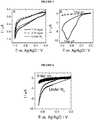
- the oxygen removal was investigated by scanning WE1 (Glassy carbon) in the absence or presence of SS as WE2 at fixed potential. Without applying WE2, a broad oxygen reduction in the range -0.4 V -> -0.8 V was observed on WE1. However, once the second electrode was polarized at potential of -0.7 V, the reduction wave on WE1 was very straight with complete disappearance of oxygen peak. The experiment was repeated by stirring solution in 30 min and done again the polarization steps. The similar behavior was repeatable from the first cycle to third cycles and fifth cycle. The obtained results confirmed strongly that the oxygen was nearly removed totally at surface of WE2 and prevented from reaching WE1. The comparison experiment was performed under nitrogen atmosphere. The oxygen consumption at WE2 was even better than by nitrogen saturation where a small peak with very low current was observed around -0.5 V on Figure 2A .
- Paraquat (1,1-dimethyl-4,4 bipyridinium dichloride) is a cationic redox chemical compound of the viologen family, highly soluble in water. Paraquat is used as herbicide to control broad leaf weeds in agricultural practices since the 1960s. It is used worldwide in more than 100 countries but is banned in European Union. It causes severe toxicity to living organisms by damaging the lungs, kidneys, liver and heart. It is also reported to cause Parkinson's disease. Therefore, it is necessary to detect this compound at small concentration in aqueous medium. At low concentration, paraquat is detected by electrochemical method via running the cycle voltammograms.
- the paraquat at concentration of 20 ⁇ M was detected under air on a silica thin film modified GCE (WE1) using designed electrochemistry cell with the polarization of Pt as WE2 at fixed potential of -0.5 V, as described in Example 1.
- Sodium nitrate (0.07 M) was used as electrolyte.
- the attained result was compared with the one done under N 2 saturation or without applying WE2.
- the CV was also recorded on a Palm Sens 3 potentiostat at a scan rate of 20 mV s -1 . All potentials in this study were quoted with respect to the Ag/AgCl.
- Example 3 Electrochemical oxygen filter according to the invention for the detection of cadmium
- Figure 4A reports the tentative of electrochemical detection of cadmium in solution by scanning chronopotentiometry in the presence of oxygen.
- the sensor was introduced in solution and a potential of -0.75 V (vs. Ag/AgCl) was applied to the electrode for 45 s before scanning chronopotentiometry.
- the result of this experiment is a graph that link dt/dE versus the electrode potential.
- the introduction of 4x10 -8 mol/L cadmium modifies slightly the profile of the curve, with a sharp increase of the signal between -0.4 and -0.45 V, but no peak related to cadmium was observed.
- Figure 4B reports a similar experiment performed with the oxygen filter made of Pt grids and a Nylon grid according to the invention.
- the experiment in the absence of cadmium shows that the sharp increase of signal is observed at -0.65 V, a potential lower than the one measured in the absence of oxygen filtration. This is due to the low concentration of oxygen when the oxygen filter is used. This low concentration of oxygen allows to detect 4x10 -8 mol/L cadmium at -0.5 V. Moreover, the peak intensity of this signal at -0.5 V is increasing linearly with the concentration of cadmium.
- Example 4 NAD + detection and NAD(P)H regeneration using a platinum grid based oxygen filter according to the invention
- NAD(P)H Coenzyme/cofactor, ⁇ -nicotinamide adenine dinucleotide NAD(P)H, has been widely used in biocatalysts as a hydride source for the synthesis of chiral compounds.
- NAD(P)H played the role of a reductant that is in situ oxidized to NAD(P) + , and the conversion occurs stoichiometrically.
- the development of regeneration approaches for continuous recycling of this cofactor is very crucial for practical application.
- the NAD(P)H regeneration requests transfer of two electrons and a proton to NAD(P) + from the hydride donors.
- the electrochemical NAD(P)H regeneration strategy presents some remarkable advantages relevant to its potentially low cost and without reducing agent addition which is important for the product isolation.
- the interfering oxygen removal is essential to expel the O 2 reduction process occurred at the same catalytic potential range on carbon electrodes, which hinders the NAD(P)H regeneration.
- the oxygen elimination methods of the prior art e.g. physical (bubbling nitrogen/argon flow in the solution), chemical (adding oxygen reducing agent such as ascorbic acid (C 6 H 8 O 6 )] kill total oxygen species in reaction area and cannot be applied for the electroenzymatic synthesis demanding the O 2 supply.
- Platinum grid 99.9 % and polyamide - Nylon grid (39 ⁇ m wire diameter, 50 ⁇ m nominal space) were purchased from Goodfellow, England.
- Multi-walled carbon nanotubes > 95%, ⁇ 6-9nm, L 5 ⁇ m).
- the oxygen removal from aqueous medium was carried out in an open cylindrical electrochemical reactor.
- GCE glassy carbon
- WE2 platinum grid
- a Bucky paper electrode immobilized with [Cp ⁇ Rh(bpy)Cl] + (BP-Bpy-Rh) was prepared following the protocol published by Zhang et al. ("Electrocatalytic biosynthesis using a bucky paper functionalized by [Cp ⁇ Rh(bpy)Cl]+ and a renewable enzymatic layer," ChemCatChem, 2018 ). This functionalized electrode was used for NADH or NADPH regeneration by observation of the catalytic peak on BP-Bpy-Rh during NAD + /NADP + addition. This reaction is very sensitive with O 2 presence, so it is essential to avoid completely the oxygen presence. The oxygen removal was also carried out by applying a constant potential (-0.4 V vs.
- DSDH D-sorbitol dehydrogenase
- silica gel which called DSDH sol was deposited on microfiber filter layer.
- the DSDH sol was synthesized by stirring overnight a mixture of 0.13 g GPS, 0.18 g TEOS with 0.5 mL water and 0.625 mL 0.01 M HCl. The day after, the sol was diluted three times before mixing 40 ⁇ L this aliquot with 20 ⁇ L of PEI (20%), 20 ⁇ L of H 2 O and 30 ⁇ L of DSDH stock solution.
- the oxygen presence was detected on WE1, and oxygen was consumed at WE2.
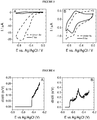
- Figure 5A displayed the complete oxygen elimination by applying a constant reduction potential (-0.4 V) at WE2 with one Pt layer or two Pt layers. This elimination was realized under N 2 bubbling with the absence of O 2 peak on WE1 (GCE).
- [Cp ⁇ Rh(bpy)Cl] + was chosen as an efficient non-enzymatic catalyst.
- the immobilization of [Cp ⁇ Rh(bpy)Cl] + on the surface of bucky paper (BP) was achieved via electro-grafting and complexation steps.
- the Rh(III) on the surface of electrode was reduced to Rh(I).
- the oxygen presence could be detected while performing NAD + reduction reaction, and NADH regeneration could be performed under air medium by using the cell of the invention for O 2 removal at WE2.
- Example 5 NADH regeneration on Rh-based electrode using a platinum modified carbon paper based oxygen filter of the invention
- Carbon paper (CP, thickness 80 ⁇ m, CeTech GDS090) were bought from FuelCellStore.
- Sodium hexachloro-platinate (IV) hexahydrate Na 2 PtCl 6 .6H 2 O, 98%), multi-walled carbon nanotubes (MWCNT, > 95%, ⁇ 6-9nm, L 5 ⁇ m, were obtained from Sigma-Aldrich.
- Nylon grid 39 ⁇ m wire diameter, 50 ⁇ m nominal space, Goodfellow
- platinum grid (0.04 mm wire diameter, 0.12 mm nominal space, Goodfellow) were used without any purification.
- the commercial CP was firstly cleaned in an ultrasonic bath with the mixture of ethanol/H 2 O0 to eliminate any impurity resulting from the industrial manufacturing process. In addition, the cleaning step helped to reduce the hydrophobicity of CP, which was necessary for Pt deposition in next step occurred in aqueous medium.
- This pretreated carbon felt was denoted as raw CP.
- the Pt was electrodeposited on the surface of CP by the method of CV running 30 cycles from 0 to -1 V vs. Ag/AgCl at a scan rate of 20 mV s -1 in Na 2 PtCl 6 solution under nitrogen atmosphere to avoid the oxygen reduction reaction (ORR).
- the process was recorded on a Autolab (PGSTAT 100) using a three-electrode system with the CP as working electrode, an Ag/AgCl/1 M KCl (purchased from Metrohm, Switzerland) as reference electrode and platinum grid as counter electrode. After the electrodeposition step, the sample was rinsed and dried at 70 °C. The as-prepared sample was labeled as « Carbon paper + Pt » or Pt@CP.
- the oxygen filter system was an electrochemical Teflon cylinder cell with round working area of 16.61 mm 2 . It was compacted of Pt@CP (working electrode 2, WE2), Nylon separator, glassy carbon (working electrode 1, WE1). An Ag/AgCl/1 M KCl and platinum grid as reference electrode and counter electrode, respectively were played in the solution of KCl 100 mM. In this system, WE2 played the role of oxygen filter which prevented O 2 molecules passing from solution to WE1. The experiment was perform under convection by stirring at a rate of 800 rpm. The oxygen presence at the surface of WE1 was detected by running experiment from 0 V to -0.9 V vs. Ag/AgCl, and applying a reduction potential at WE2. To evaluate the efficiency of oxygen filter, different parameters were evaluated, including : various amount of Pt deposited on carbon paper, potential valued applied on WE2, number of Pt@CP. The O 2 removal by using the filter was confirmed by repeating the experiment under nitrogen bubbling.
- BP Bucky paper electrode
- BP-Bpy-Rh a Bucky paper electrode
- WE1 was BP-Bpy-Rh
- WE2 was Pt@CP and reference electrode as well as counter electrode were kept unchanged.
- the formed NADH concentration was identified by absorbance at 340 nm by UV-Vis spectroscopy. UV-Vis spectra have been recorded on a Cary 60 Scan UV-Vis spectrophotometer.
- the NADH regeneration was repeated under nitrogen and air atmosphere (without applying WE2) to compare the faraday efficiency of the transformation.
- the oxygen removal was performed in a four-electrode cell, including platinum grid (counter electrode), Ag/AgCl/1 M KCl (reference electrode), glassy carbon (GCE, working electrode 1), and Pt@CP or Pt grid (working electrode 2).
- Applying a reduction potential (-0.4 V) at WE2 could eliminate completely interference oxygen.
- the O 2 absence on WE1 was confirmed by running CV from 0 V to -0.9 V at a scan rate of 5 mV s -1 in 100 mM KCl under convection.
- By disconnecting WE2 oxygen presented in the solution under air passed easily to WE2 as well as nylon separator and came to the surface of GCE. Therefore, a huge reduction current was observed around -0.6 V to -0.8 V vs. Ag/AgCl which was assigned for ORR.
- the catalytic current to 1 mM of NAD + addition was kept at the same level for both cases of using filter and under N 2 atmosphere. It was noticed that the catalytic current by using oxygen filter was more stable that N 2 bubbling, which confirmed the better performance for O 2 removal.
- the produced NADH was calculated by measuring the absorbance at 340 nm using UV-Vis spectroscopy ( Figure 7C ). The NADH production was done in three mediums like using filter, under N 2 atmosphere, and under air that meant disconnected with WE2. The formed NADH was measured after 20 min adding of 4 mM NAD + in PBS solution. The O 2 presence at the surface of WE1 in case of without using filter, hinder significantly the NADH regeneration.
- Platinum particles were grown successfully on the surface of carbon paper electrode via electrochemical method by running CV Na 2 PtCl 6 solution with 30 cycles from 0 to -1 V vs. Ag/AgCl.
- the Pt deposited on CP was confirm by various physical characterization such as SEM, XRD and EDX.
- the electrochemical performance toward the ORR was improved by Pt modification and 0.4 mg cm -2 was chosen as the optimal Pt amount.
- the fabricated Pt@CP was used as material for oxygen filter in a four-electrode cell. Total interference oxygen was removed at filter which was compacted by two Pt@CP layers at applied potential of -0.4 V vs. Ag/AgCl.
Landscapes
- Health & Medical Sciences (AREA)
- Chemical & Material Sciences (AREA)
- Life Sciences & Earth Sciences (AREA)
- General Physics & Mathematics (AREA)
- Pathology (AREA)
- Immunology (AREA)
- Physics & Mathematics (AREA)
- Analytical Chemistry (AREA)
- Biochemistry (AREA)
- General Health & Medical Sciences (AREA)
- Electrochemistry (AREA)
- Chemical Kinetics & Catalysis (AREA)
- Molecular Biology (AREA)
- Engineering & Computer Science (AREA)
- Hematology (AREA)
- Combustion & Propulsion (AREA)
- Food Science & Technology (AREA)
- Medicinal Chemistry (AREA)
- Catalysts (AREA)
- Electrolytic Production Of Non-Metals, Compounds, Apparatuses Therefor (AREA)
Abstract
Description
- The present invention concerns the use of a device comprising a porous electrode and an electrically insulating porous layer to remove oxygen in contact with a working electrode. The present invention also concerns the use of said device in contact to said working electrode to detect and/or quantify an analyte in presence of oxygen.
- Electrochemical techniques offer the advantage of being label-free, rapid, simple and cost-efficient. Nevertheless, an intrinsic problem in electroanalytical detection is that the analytical current is the sum of all (possibly interfering) currents of the electroactive species present in solution, including oxygen from air. Moreover, oxygen can be competing during the detection of some species, e.g. low metal concentration, leading to a degradation of the analytical performances of the sensor.
- Indeed, oxygen is soluble in water and is therefore likely to be found in aqueous solutions that are in contact or have been in contact with air.
- However, some sensing reactions in aqueous media are hindered by the presence of dissolved oxygen. Thus the removal of dissolved oxygen plays a crucial role in these sensor applications, notably under ambient air. In particular, it is often necessary to detect a given analyte in aqueous medium at a small concentration. But this detection cannot be performed in presence of dissolved oxygen, the detection efficiency depending on the O2 removal ability since oxygen induces a significant error in analyte detection, especially at very low analyte concentrations.
- Therefore, in many cases, oxygen has to be removed from water as completely as possible.
- Present methods of oxygen removal are physical or chemical deoxygenation. An easy and common physical method to eliminate dissolved oxygen is purging solution with nitrogen or argon.The main disadvantages of the physical methods is the high capital cost, for example in outdoor applications where compress nitrogen or argon needs to be carried by the user.
- Chemical deoxygenation is based on chemicals reacting with oxygen. To avoid using of N2 or Ar, ascorbic acid has been used as a reducing agent to remove interfering oxygen for the greenhouse gas nitrous oxide (N2O) detection which is very sensible toward dioxygen. Other oxygen scavengers like sodium thiosulfate (Na2S2O3), phosphines, also proved its efficient ability for this purpose. The sensing of H2O2 could be done under both air-saturated and O2-saturated solution at polyaniline modified Pt electrode by adding Na2S2O3 with concentration below 1 mM. For application in N2O sensor, phosphines soluble in organic solvents showed a high sensitivity and long response time. An enzymatic oxygen scavenging system using different oxidase enzymes such as glucose, galactose or pyranose 2-oxidase as effective catalysts for O2 reduction has been known recently. One of the main drawbacks with the chemical and enzymatic methods is the need of a continuous addition of reagent to the reactor.
- Accordingly, it is an object of the present invention to provide devices, uses and processes that have high efficiency with a low energy and chemicals consumption.
- Inventors have for the first time demonstrated that devices, uses and processes of the invention enable to only remove oxygen in an area confined to the surface of the sensor, quickly allowing an oxygen concentration close to zero in this area, and therefore optimal operation of the sensor, without the need to consume all the oxygen in the solution (which is difficult to achieve and in any case more time consuming and more expensive). The removal of oxygen is paired with the formation of water only, with no formation of unwanted compounds like H2O2.
- Moreover, it is advantageous to avoid the use of toxic deoxygenation chemicals. Thus, in one aspect, the present invention relates to the use of a device comprising :
- ∘ A porous electrode ;
- ∘ In contact with said porous electrode, an electrically insulating porous layer;
- In another aspect, the present invention relates to a process of reducing or removing oxygen from a solution in contact with a working electrode comprising the steps of:
- a) Contacting the electrically insulating porous layer a device comprising:
- ∘ A porous electrode ; and
- ∘ In contact with said porous electrode, an electrically insulating porous layer;
- b) Applying a potential to the porous electrode.
- In another aspect, the present invention relates to the use of a device comprising :
- ∘ A porous electrode ;
- ∘ In contact with said porous electrode, an electrically insulating porous layer; and
- ∘ In contact with said electrically insulating porous layer, a working electrode; to detect and/or quantify an analyte dissolved in a solution further comprising oxygen.
- In another aspect, the present invention relates to a process of detecting and/or quantifying an analyte dissolved in a solution further comprising oxygen, comprising the steps of:
- a) Contacting the electrically insulating porous layer a device comprising:
- ∘ A porous electrode ;
- ∘ In contact with said porous electrode, an electrically insulating porous layer; and
- ∘ In contact with said electrically insulating porous layer, a working electrode;
- b) When performing step c), and optionally before performing step c), applying a potential to the porous electrode;
- c) Detecting and/or quantifying said analyte using said working electrode.
- In particular, and further to the working electrode defined above (also referred as the first working electrode), the porous electrode is a second working electrode. Indeed, the porous electrode is a working electrode enabling the reduction of dissolved oxygen into water, whereas the first working electrode is a working electrode as well known by the skilled person in the art, in particular in the context of electroanalysis of a given analyte, within a electrochemical sensor, of electrochemical conversion, for example NAD(P)+ regeneration, or as a biocathode, for example for the nitrate reduction.
- In a particular embodiment, the porous electrode is constituted of or comprises a metal and/or carbon.
- In a particular embodiment, the porous electrode is constituted of or comprises at least one porous, electrically conductive material, in particular chosen from metal grids, metal meshes, metal nets, metal lattices, carbon papers, more particularly graphitized or carbonized carbon fiber papers, metallized carbon paper, carbon fiber nonwovens, woven carbon fiber fabrics, carbon or graphite felts, beds of carbon or graphite particles, or combinations thereof.
- It is noted that the porous electrode may be constituted of or comprised a plurality of the above-mentioned materials, for example a plurality of metal grids, more particularly 2 or 3 stacked metal, for example Pt, grids.
- In a more particular embodiment, the metal is chosen from the group comprising platinum, stainless steel, palladium, rhodium, ruthenium, gold or combinations thereof.
- In a more particular embodiment, the metal of the porous electrode is constituted of or comprises a platinum or stainless steel grid or mesh.
- In a more particular embodiment, the carbon is chosen from carbon papers.
- In a more particular embodiment, the carbon is chosen from the group comprising metal modified carbon papers, in particular platinum modified carbon papers, more particularly platinum coated carbon papers.
- As mentioned above, the metal the porous electrode may be constituted of or comprise a plurality of modified carbon papers, in particular platinum modified carbon papers, more particularly platinum coated carbon papers, for example 2 or 3.
- In a particular embodiment, the thickness of the porous electrode is comprised from about 1 to about 1000 µm, in particular from about 10 to about 200 µm, more particularly from about 50 to about 100 µm.
- In a particular embodiment, the size of the pores of the porous electrode is comprised from 1 to 500 µm in particular from about 10 to about 250 µm.
- In a more particular embodiment, the size of the pores of the porous electrode is comprised from 1 to 500 µm in particular from about 10 to about 250 µm, and the thickness of the porous electrode is comprised from 2 to 10 times the size of the pores of the porous electrode, notably from 2 to 5 times.
- In a particular embodiment, the electrically insulating porous layer is constituted of or comprises a polymer, or an inorganic material.
- In a particular embodiment, the electrically insulating porous layer is constituted of or comprises a membrane, grid, mesh, woven fiber fabric, fiber nonwoven, in particular a polymer membrane or a polymer grid, more particularly a polyamide grid.
- Said membrane is for example a membrane for filtration, as well known by the skilled person in the art.
- In a more particular embodiment, the polymer is chosen from polyamide, polyimide, polyester, polyethylene, polytetrafluoroethylene.
- In another more particular embodiment, the inorganic material is chosen from glass, in particular sintered glass, and ceramics, in particular sintered ceramics, said ceramics being notably made from clay, quartz, alumina, feldspar or their mixtures.
- In a particular embodiment, the thickness of the electrically insulating porous layer is comprised from about 10 nm to about 500 µm, in particular from about 1 µm to about 200 µm, more particularly from about 10 to about 100 µm, even more particularly from about 50 to about 100 µm.
- In a particular embodiment, the size of the pores of the electrically insulating porous layer is comprised from 0.002 to 500 µm, in particular from about 0.1 µm to about 100 µm.
- In a more particular embodiment, the size of the pores of the electrically insulating porous layer is comprised from 0.002 to 500 µm, in particular from about 0.1 µm to about 100 µm, and the thickness of the electrically insulating porous layer is comprised from 2 to 10 times the size of the pores of the electrically insulating porous layer, notably from 2 to 5 times.
- The applied potential is a potential that enables the conversion of dioxygen into water thanks to the porous electrode ("second working electrode"). This applied potential is easily determined by the skilled person in the art, for example by varying said potential and note the values that enable a good conversion of dioxygen into water.
- In a particular embodiment, the potential applied during step b) is a fixed potential.
- In a particular embodiment, the potential applied during step b) is a potential comprised from 2 to -1 V, in particular vs. Ag/AgCl, more particularly of about 0.6 to about - 0.8 V vs. Ag/AgCl.
- For example, the potential may be of about -0.7 V vs Ag/AgCl for a stainless steel based porous electrode ("second working electrode"), or of about -0.4 to about -0.3 V vs Ag/AgCl for a platinum based porous electrode ("second working electrode").
- In a particular embodiment, the analyte is chosen from:
- organic compounds, in particular herbicides, more particularly paraquat; insecticides, more particularly imidaclopride; organic solvents, more particularly dimethylsulfoxyde; glucose; glutathion disulfide; trinitrotoluene; NAD(P)+ ;
- inorganic compounds, in particular hydrogen peroxide; monochloramine; inorganic ions, more particularly nitrate, nitrite, chromate, perchlorate, bromate, or metal ions, the metal being for example Cu, Cd, Pb, Hg;
- gas, with the proviso the gas is not dioxygen, in particular H2, CO2, SO2.
- In a particular embodiment, the working electrode is a porous working electrode.
- In another aspect, the present invention concerns a device comprising:
- ∘ A porous electrode for reducing into water oxygen dissolved in a solution;
- ∘ In contact with said porous electrode, an electrically insulating porous layer; and
- ∘ In contact with said electrically insulating porous layer, a working electrode.
- All the particular embodiments mentioned above are applicable here, alone or in combination.
- In another aspect, the present invention concerns a process of preparation of a device as define above, comprising:
- A step of contacting said electrode with said electrically insulating porous layer; and
- a step of contacting said electrically insulating porous layer with said working electrode.
- The two steps can be performed in any order, in particular in the order as mentioned above.
- In particular, the two contacting steps, independently from each other, can be performed by any mechanical methods known by the skilled person in the art, for example by mechanical pressing, gluing or using an adhesive, preferably on the periphery of the device to obtain.
- The following terms and expressions contained herein are defined as follows:
As used in this description, the term "about" refers to a range of values of ± 10% of a specific value. For example, the expression "approximately 100 µm" includes values of 100 µm ± 10%, i.e. values from 90 µm to 110 µm. - As used herein, a range of values in the form "x-y" or "x to y", or "x through y", include integers x, y, and the integers therebetween. For example, the phrases "1-6", or "1 to 6" or "1 through 6" are intended to include the
integers - By "porous" is in particular meant a material containing pores, arranged in such a way that a liquid, in particular an aqueous solution, is able to circulate through the material.
- By "pore" is in particular meant a cavity in a material, said cavity being for example located within the material, or in contact with one or more of the surfaces of the material.
-
-
Figure 1 is a scheme of the open, stirred four-electrode electrochemical cell used for the oxygen removal according to example 1. -
Figure 2 presents in relation with example 1 the cyclic voltammogram (CV) concerning: (A) a comparison of oxygen reduction on WE1 with applying WE2 (SS) at -0.7 V and under N2 atscan rate 100 mV s-1; (B) oxygen reduction atscan rate 10 mV s-1 on WE1 applying WE2 (Pt) at -0.4 V. -
Figure 3 presents in relation with example 2 the cyclic voltammogram (CV) of 20 µM paraquat in 0.07 M NaNO3 at silica thin film modified GCE (A) "filter" curve by applying - 0.5V atWE 2 for O2 reduction, "under air" curve without applying potential atWE 2 in the presence of oxygen, (B) "filter" curve by continuous N2 purging to liberate O2 from solution, "under N2" curve by applying -0.5 V vs Ag/AgCl at WE2 to reduce oxygen. Scan rate = 20 mv s-1. -
Figure 4 presents in relation with example 3 the scanning chronopotentiometric analysis performed with a screen printed carbon electrode modified with mercury in 0.1 M NaNO3 at pH 3 solution in the presence of 4x10⁻⁸ mol/L Cd2+. (A) Oxygen is present in solution. (B) Oxygen is removed by the filter made of platinum grids (200 µm thickness) on a Nylon grid (50 µm thickness). -
Figure 5 presents in relation with example 4 the cyclic voltammograms of oxygen reduction on GCE in 100 mM KCl (A) applying Pt filter and under N2, (B) Comparison between with/without using filter. Scan rate at 5 mV s-1. -
Figure 6 presents in relation with example 5 the CV of oxygen reduction under convection on GCE in 100 mM KCl. Comparison between using filter ("Filter on") and under N2. Scan rate at 5 mV s-1. -
Figure 7 presents (A) the catalytic current measured from chronoamperometry versus NAD+ concentration recorded on [Cp∗Rh(bpy)Cl]+ functionalized bucky paper electrode in 50 mM PBS (pH 6.5) at an applied potential of -0.78 V vs Ag/AgCl. (B) a comparison the amperometric response by using oxygen filter and under N2 atmosphere with 1 mM NAD+ addition. (C) the UV-vis spectroscopy of NADH formed after 20 min by adding 4 mM of NAD+ in the chonoamperometry experiment. (D) the Faraday efficiency of NADH regeneration under air, nitrogen, and applying oxygen filter. - Stainless steel (SS) and Platinum (Pt) grid were purchased from Goodfellow SARL with purity of 99.9 %. Membrane filters (DVPP), glassy carbon (GCE) electrode were bought from Merck Milipore and Sigradur HTWHochtemperatur-Werkstoffe, Germany, respectively.
- The electrochemistry cell was composed of four electrodes and fabricated from Teflon material with cylindered form as depicted in
Figure 1 . The WE1 and WE2 were separated by a DVPP membrane filter with diameter of 0.5 cm and pore size at 0.65 µm. For usage as WE1, glassy carbon was firstly wet-polished by SiC grinding paper (≠4000, Struers, Denmark) for 1 min, then cleaned with ethanol and distilled water under ultrasonic condition. SS or Pt grid was used as WE2 material, Ag/AgCl as reference electrode and a steel auxiliary bar as counter electrode. The connection of WE2 was done via Pt wire, or copper tape for WE1. O2 removal was controlled by scanning WE1 from 0 V to -1.2 V versus (vs.) Ag/AgCl in the absence and presence of WE2. Prior to electrochemical tests, the applied potential at WE2 was chosen depending on the O2 reduction peak observed on WE2 by performing the experiment with three electrodes, including working electrode (SS or Pt grid), reference electrode (Ag/AgCl) and counter electrode (steel bar). A 10 mL aqueous solution of KCl (0.1 M) was utilized as supporting electrolyte. The cyclic voltammogram (CV) was recorded on a Palm Sens 3 potentiostat at a scan rate of 100 mV s-1. To repeat the performance of O2 elimination at WE2, at each cycle the electrolyte was stirred in 30 min with a constant magnetic stirring of 600 rpm using 728 Stirrer (Ω Metrohm) for recovery of dissolved O2 into solution from the air. The comparison experiment was done under nitrogen. Purging the solution with N2 gas was performed at least 15 min before running experiment to saturate electrolyte and kept during the test. - The oxygen removal was investigated by scanning WE1 (Glassy carbon) in the absence or presence of SS as WE2 at fixed potential. Without applying WE2, a broad oxygen reduction in the range -0.4 V -> -0.8 V was observed on WE1. However, once the second electrode was polarized at potential of -0.7 V, the reduction wave on WE1 was very straight with complete disappearance of oxygen peak. The experiment was repeated by stirring solution in 30 min and done again the polarization steps. The similar behavior was repeatable from the first cycle to third cycles and fifth cycle. The obtained results confirmed strongly that the oxygen was nearly removed totally at surface of WE2 and prevented from reaching WE1. The comparison experiment was performed under nitrogen atmosphere. The oxygen consumption at WE2 was even better than by nitrogen saturation where a small peak with very low current was observed around -0.5 V on
Figure 2A . - The oxygen removal efficiency at WE2 using the designed electrochemistry cell was also proved by replacing SS by another material like Pt. The acquired electrochemical feature on CV waves in both case of using and without WE2 were similar to the above results for SS. Regarding on
Figure 2B , a sharp and strong peak was noticed from -0.6 V to -0.8 V, which indicated the presence of dissolved O2 in electrolyte solution under air. On the contrary, no reduction peak at the same potential range in case of polarizing Pt at -0.4 V. In conclusion, the concept of O2 elimination at second electrode was successfully carried out, and the applied potential value depended on the material using as WE2. - In sensor application, the presence of hydrogen peroxide can create some negative effects because of its high oxidation property which often used as oxidant. Therefore, the oxygen removal without H2O2 production is also an important factor to evaluate the efficiency of the designed cell. The testing experiments were performed by scanning WE1 in the range 1.0 V -> -1.2 V under applying of SS (WE2) at -0.7 V and adding H2O2 concentration from 0 mM to 1.6 mM or 3.2 mM. The addition of H2O2 increased clearly the anodic response near 0.6 V, which came from the H2O2 oxidation. There was no peak observed in this area on the curve obtained with no H2O2 addition, proving that the deoxygenation on WE2 did not generated other side products like H2O2.
- Paraquat (1,1-dimethyl-4,4 bipyridinium dichloride) is a cationic redox chemical compound of the viologen family, highly soluble in water. Paraquat is used as herbicide to control broad leaf weeds in agricultural practices since the 1960s. It is used worldwide in more than 100 countries but is banned in European Union. It causes severe toxicity to living organisms by damaging the lungs, kidneys, liver and heart. It is also reported to cause Parkinson's disease. Therefore, it is necessary to detect this compound at small concentration in aqueous medium. At low concentration, paraquat is detected by electrochemical method via running the cycle voltammograms. There is the appearance of two successive one electron reactions at -0.7V and -1.025V on reduction curve and then oxidize back to the relative potential values. However, these processes cannot be observed in case the presence of dissolved oxygen and the detection efficiency depends on the O2 removal ability. For electrochemical sensing of paraquat, study of the first redox reaction is enough to provide sufficient quantification of paraquat in the aqueous media. However, the first single electron reduction of paraquat is at - 0.7 V at GCE which is almost at the same potential where reduction of oxygen takes place.
- As a result, the signal of paraquat is suppressed (
Figure 3 , "under air" curve) by oxygen reduction. - The paraquat at concentration of 20 µM was detected under air on a silica thin film modified GCE (WE1) using designed electrochemistry cell with the polarization of Pt as WE2 at fixed potential of -0.5 V, as described in Example 1. Sodium nitrate (0.07 M) was used as electrolyte.
- The attained result was compared with the one done under N2 saturation or without applying WE2. The CV was also recorded on a Palm Sens 3 potentiostat at a scan rate of 20 mV s-1. All potentials in this study were quoted with respect to the Ag/AgCl.
- As described in example 1, WE1 was used for paraquat analysis and WE2 for the continuous reduction of oxygen by applying -0.5V potential during the experiment. In
Figure 3A , the paraquat signal was suppressed due to the presence of oxygen but after the reduction of O2 at WE2 the paraquat signal was greater. InFigure 3B the paraquat signal when recorded by applying potential at WE2 showed even better response as compared to N2 purging. This result was linked to the better oxygen consumption by applying WE2 in comparison with N2 saturation, proving the high efficiency of the uses, processes and devices of the invention for O2 removal in sensor application. - In this example, two kinds of WE2 materials, SS and Pt, were tested and the similar results were obtained for both. In fact, the polarization of SS at -0.7 V vs Ag/AgCl or -0.4 V vs Ag/AgCl for Pt could eliminate oxygen reduction peaks from -0.4 V to -0.8 V vs Ag/AgCl on the GCE as WE1. The experimental results were repeatable at least to five cycles. Importantly, the experiment about the electrochemical oxidation of hydrogen peroxide confirmed that there was no H2O2 generation during the deoxygenation at WE2. Additionally, the effect of O2 removal was clearly proved in case of using the designed cell to detect an herbicide compound, paraquat. Paraquat at concentration of 20 µM was well detected under air on silica thin film modified GCE (WE1) by applying a fixed potential at -0.5 V on Pt (WE2). The obtained results showed that the O2 elimination at WE2 was better than under N2 atmosphere.
- Two experiments are reported here to illustrate the interest of O2 filter for the detection of cadmium.
Figure 4A reports the tentative of electrochemical detection of cadmium in solution by scanning chronopotentiometry in the presence of oxygen. In this experiment, the sensor was introduced in solution and a potential of -0.75 V (vs. Ag/AgCl) was applied to the electrode for 45 s before scanning chronopotentiometry. The result of this experiment is a graph that link dt/dE versus the electrode potential. The introduction of 4x10⁻⁸ mol/L cadmium modifies slightly the profile of the curve, with a sharp increase of the signal between -0.4 and -0.45 V, but no peak related to cadmium was observed.Figure 4B reports a similar experiment performed with the oxygen filter made of Pt grids and a Nylon grid according to the invention. The experiment in the absence of cadmium shows that the sharp increase of signal is observed at -0.65 V, a potential lower than the one measured in the absence of oxygen filtration. This is due to the low concentration of oxygen when the oxygen filter is used. This low concentration of oxygen allows to detect 4x10⁻⁸ mol/L cadmium at -0.5 V. Moreover, the peak intensity of this signal at -0.5 V is increasing linearly with the concentration of cadmium. - Coenzyme/cofactor, β-nicotinamide adenine dinucleotide NAD(P)H, has been widely used in biocatalysts as a hydride source for the synthesis of chiral compounds. During the enzymatic reduction process, NAD(P)H played the role of a reductant that is in situ oxidized to NAD(P)+, and the conversion occurs stoichiometrically. Regarding on its high cost, the development of regeneration approaches for continuous recycling of this cofactor is very crucial for practical application. The NAD(P)H regeneration requests transfer of two electrons and a proton to NAD(P)+ from the hydride donors. Among the known methods, the electrochemical NAD(P)H regeneration strategy presents some remarkable advantages relevant to its potentially low cost and without reducing agent addition which is important for the product isolation. However, the interfering oxygen removal is essential to expel the O2 reduction process occurred at the same catalytic potential range on carbon electrodes, which hinders the NAD(P)H regeneration.
- Although showing a good efficiency for O2 removal, the oxygen elimination methods of the prior art [e.g. physical (bubbling nitrogen/argon flow in the solution), chemical (adding oxygen reducing agent such as ascorbic acid (C6H8O6)] kill total oxygen species in reaction area and cannot be applied for the electroenzymatic synthesis demanding the O2 supply.
- Platinum grid (99.9 %) and polyamide - Nylon grid (39 µm wire diameter, 50 µm nominal space) were purchased from Goodfellow, England. Multi-walled carbon nanotubes (MWCNT, > 95%, Φ 6-9nm, L 5µm).
- The oxygen removal from aqueous medium was carried out in an open cylindrical electrochemical reactor. This system included four electrodes with an Ag/AgCl/1 M KCl (purchased from Metrohm, Switzerland) as reference electrode, platinum grid (0.1 mm wire diameter, 0.4 mm nominal space) as counter electrode, the glassy carbon (GCE) as working electrode 1 (WE1, S = 16.61 mm2) and platinum grid (0.04 mm wire diameter, 0.12 mm nominal space) as working electrode 2 (WE2, S = 16.61 mm2). The effect of WE2 layer numbers to O2 removal efficiency was simultaneously examined. Between WE1 and WE2 was separated by a porous Nylon grid which allowing oxygen easily transfer from solution to surface of WE1. The connection of both WE1 and WE2 was done via Pt wires. Oxygen presented in 10 mL of supporting electrolyte (
KCl 100 mM) under air was eliminated by applying a constant potential (-0.4 V vs. Ag/AgCl) at WE2. The oxygen absence was recorded on WE1 by running cyclic voltammograms using Autolab (PGSTAT 100). A similar experiment was also performed by disconnecting of WE2 to see the O2 presence on WE1. In addition, the O2 disappeared signal in the case of WE2 connection was confirmed by running experiment in a closed reactor under N2 bubbling. - A Bucky paper electrode immobilized with [Cp∗Rh(bpy)Cl]+ (BP-Bpy-Rh) was prepared following the protocol published by Zhang et al. ("Electrocatalytic biosynthesis using a bucky paper functionalized by [Cp∗Rh(bpy)Cl]+ and a renewable enzymatic layer," ChemCatChem, 2018). This functionalized electrode was used for NADH or NADPH regeneration by observation of the catalytic peak on BP-Bpy-Rh during NAD+/NADP+ addition. This reaction is very sensitive with O2 presence, so it is essential to avoid completely the oxygen presence. The oxygen removal was also carried out by applying a constant potential (-0.4 V vs. Ag/AgCl) at WE2 as explained above. However, in this case, replacing GCE by BP-Bpy-Rh as WE1 where catalytic response was evaluated by running cyclic voltammetry from -0.4 V to -0.9 V vs. Ag/AgCl at scan rate of 5 mV s-1. Some comparison experiments were done to prove : (1) The O2 removal capacity of WE2 filter by repeating experiment under N2 bubbling ; (2) The catalytic role of [Cp∗Rh(bpy)Cl]+ for NAD(P)H regeneration by doing experiment with bare electrode (bucky paper) in N2 medium; (3) The sensitivity with oxygen during the reduction of NAD(P)+ by performing experiment under air without WE2 connection.
- Towards the bioconversion of D-fructose to D-sorbitol, a compact cell was designed, including different layers. Firstly, D-sorbitol dehydrogenase (DSDH) in silica gel which called DSDH sol was deposited on microfiber filter layer. The DSDH sol was synthesized by stirring overnight a mixture of 0.13 g GPS, 0.18 g TEOS with 0.5 mL water and 0.625 mL 0.01 M HCl. The day after, the sol was diluted three times before mixing 40 µL this aliquot with 20 µL of PEI (20%), 20 µL of H2O and 30 µL of DSDH stock solution. Then, it is necessary to dry this DSDH gel layer at 4 °C overnight. After that, it was put on the top of WE2, following to Nylon separator and BP-Bpy-Rh electrode as WE1. Platinum grid (0.1 mm wire diameter, 0.4 mm nominal space) and Ag/AgCl/1 M KCl were still used as counter electrode and reference electrode, respectively. Prior of experiment, 1 mM NADH was mixed in 10 mL of buffer phosphate solution (PBS, 50 mM pH = 6.5). The transformation of D-fructose to D-sorbitol on the surface of DSDH gel layer consumed NADH which was regenerated at WE1. In this system, two layers of platinum grid (0.04 mm wire diameter, 0.12 mm nominal space) was used as WE2 for oxygen filter during the NADH regeneration.
- The oxygen removal experiment was carried out in a four-electrode system with platinum grid (0.1 mm wire diameter, 0.4 mm nominal space) as counter electrode, Ag/AgCl/1 M KCl as reference electrode, the glassy carbon (GCE) as working electrode 1 (WE1, S = 16.61 mm2) and platinum grid (0.04 mm wire diameter, 0.12 mm nominal space) as working electrode 2 (WE2, S = 16.61 mm2). The oxygen presence was detected on WE1, and oxygen was consumed at WE2.
Figure 5A displayed the complete oxygen elimination by applying a constant reduction potential (-0.4 V) at WE2 with one Pt layer or two Pt layers. This elimination was realized under N2 bubbling with the absence of O2 peak on WE1 (GCE). Without applying WE2 in the case of filter off inFigure 5B , the O2 reduction was observed obviously with the current value of 11 µA at -0.95 V. This consequence proved that using the electrochemical cell according to the invention as WE2 could avoid interference oxygen molecules coming to the WE1. This is very important to proceed the experiments sensitive with oxygen like NAD(P)H regeneration. - For NAD(P)H regeneration, [Cp∗Rh(bpy)Cl]+ was chosen as an efficient non-enzymatic catalyst. The immobilization of [Cp∗Rh(bpy)Cl]+ on the surface of bucky paper (BP) was achieved via electro-grafting and complexation steps. By applying a negative potential on the BP-Bpy-Rh electrode, the Rh(III) on the surface of electrode was reduced to Rh(I). The catalytic response of [Cp∗Rh(bpy)Cl]+ was noticed around -0.65V by running CV without adding NAD+ in 10 mL of PBS (50 mM, pH = 6.5) from -0.4 V to -0.9 V vs. Ag/AgCl. This experiment was performed in above four-electrode cell. Platinum grid (0.1 mm wire diameter, 0.4 mm nominal space) and, Ag/AgCl/1 M KCl were still used as counter electrode and reference electrode, respectively. Applying reduction potential (-0.4 V) at WE2 to remove oxygen approaching to WE1 where the catalytic response of [Cp∗Rh(bpy)Cl]+ was observed. The peak at -0.65 V was also obtained when the experiment was repeated under N2 medium. The absence of [Cp∗Rh(bpy)Cl]+ immobilization on the surface of BP electrode, there was no peak presented on WE1. The oxygen presence by disconnection WE2 covered the catalytic peak by a large peak in the range from -0.4 V to -0.7 V.
- In conclusion, the oxygen presence could be detected while performing NAD+ reduction reaction, and NADH regeneration could be performed under air medium by using the cell of the invention for O2 removal at WE2.
- Applying a reduction potential (-0.4 vs. Ag/AgCl) at WE2 which was composed for example by two layers of platinum grid (0.04 mm wire diameter, 0.12 mm nominal space) could remove totally oxygen and no oxygen was detected at WE1 (glassy carbon electrode). Then, NAD+ reduction reaction at the surface of BP-Bpy-Rh electrode was chosen to detect the oxygen presence because of its sensitivity to O2. Without applying WE2, a board peak in the range from -0.4 V to -0.7 V corresponding to O2 presented in solution, hided the catalytic response of rhodium complex. The oxygen removal by filter made the cathodic peak appear around -0.65V without NAD+ addition, and current value increased from 35 µA to 60 µA by adding 0.25 mM of NAD+. The result was repeated by running experiment under N2. This phenomenon also happened in the case replacing NAD+ by NADP+ and the catalytic current reached to the saturated value at 100 µA. Therefore, it could be concluded that NAD(P)+ could be detected under air medium by applying our oxygen filter, and NAD+ reduction reaction is sensitive reaction to O2.
- Carbon paper (CP,
thickness 80 µm, CeTech GDS090) were bought from FuelCellStore. Sodium hexachloro-platinate (IV) hexahydrate (Na2PtCl6.6H2O, 98%), multi-walled carbon nanotubes (MWCNT, > 95%, Φ 6-9nm, L 5µm, were obtained from Sigma-Aldrich. Nylon grid (39 µm wire diameter, 50 µm nominal space, Goodfellow), platinum grid (0.04 mm wire diameter, 0.12 mm nominal space, Goodfellow), were used without any purification. - The commercial CP was firstly cleaned in an ultrasonic bath with the mixture of ethanol/H2O0 to eliminate any impurity resulting from the industrial manufacturing process. In addition, the cleaning step helped to reduce the hydrophobicity of CP, which was necessary for Pt deposition in next step occurred in aqueous medium. This pretreated carbon felt was denoted as raw CP. The Pt was electrodeposited on the surface of CP by the method of CV running 30 cycles from 0 to -1 V vs. Ag/AgCl at a scan rate of 20 mV s-1 in Na2PtCl6 solution under nitrogen atmosphere to avoid the oxygen reduction reaction (ORR). The process was recorded on a Autolab (PGSTAT 100) using a three-electrode system with the CP as working electrode, an Ag/AgCl/1 M KCl (purchased from Metrohm, Switzerland) as reference electrode and platinum grid as counter electrode. After the electrodeposition step, the sample was rinsed and dried at 70 °C. The as-prepared sample was labeled as « Carbon paper + Pt » or Pt@CP.
- The oxygen filter system was an electrochemical Teflon cylinder cell with round working area of 16.61 mm2. It was compacted of Pt@CP (working
electrode 2, WE2), Nylon separator, glassy carbon (workingelectrode 1, WE1). An Ag/AgCl/1 M KCl and platinum grid as reference electrode and counter electrode, respectively were played in the solution ofKCl 100 mM. In this system, WE2 played the role of oxygen filter which prevented O2 molecules passing from solution to WE1. The experiment was perform under convection by stirring at a rate of 800 rpm. The oxygen presence at the surface of WE1 was detected by running experiment from 0 V to -0.9 V vs. Ag/AgCl, and applying a reduction potential at WE2. To evaluate the efficiency of oxygen filter, different parameters were evaluated, including : various amount of Pt deposited on carbon paper, potential valued applied on WE2, number of Pt@CP. The O2 removal by using the filter was confirmed by repeating the experiment under nitrogen bubbling. - The oxygen filter was used to regenerate NADH. To perform this experiment, firstly, a Bucky paper electrode (BP) was prepared from dispersion of MWCNT in 50 mL ethanol by ultrasonication for 5 h. Then the rhodium catalyst ([Cp∗Rh(bpy)Cl]+) was immobilized on BP. The NAD+ transformation was carried out via the chronoamperometry experiment with applied potential of -0.78 V. Different amount of NAD+ was added gradually to the buffer phosphate solution (PBS, 50 mM, pH = 6.5) to measure catalytic current versus NAD+ concentration recorded on [Cp∗Rh(bpy)Cl]+ functionalized Bucky paper electrode (BP-Bpy-Rh). In this case, WE1 was BP-Bpy-Rh, WE2 was Pt@CP and reference electrode as well as counter electrode were kept unchanged. The formed NADH concentration was identified by absorbance at 340 nm by UV-Vis spectroscopy. UV-Vis spectra have been recorded on a
Cary 60 Scan UV-Vis spectrophotometer. The NADH regeneration was repeated under nitrogen and air atmosphere (without applying WE2) to compare the faraday efficiency of the transformation. - The oxygen removal was performed in a four-electrode cell, including platinum grid (counter electrode), Ag/AgCl/1 M KCl (reference electrode), glassy carbon (GCE, working electrode 1), and Pt@CP or Pt grid (working electrode 2). Applying a reduction potential (-0.4 V) at WE2 could eliminate completely interference oxygen. The O2 absence on WE1 was confirmed by running CV from 0 V to -0.9 V at a scan rate of 5 mV s-1 in 100 mM KCl under convection. By disconnecting WE2, oxygen presented in the solution under air passed easily to WE2 as well as nylon separator and came to the surface of GCE. Therefore, a huge reduction current was observed around -0.6 V to -0.8 V vs. Ag/AgCl which was assigned for ORR.
- To prove the efficiency of the filter for oxygen removal, the experiment was repeated under N2 bubbling in
Figure 6 . It was noticed that the interference oxygen molecules were totally eliminated at the filter, while it was seemly difficult to perform even by running experiment under nitrogen atmosphere. When potential was applied on WE2, all of oxygen molecular at electrode surface was immediately reduced and its concentration at the surface of filter was nearly to zero. Consequently, O2 could not pass through the filter and come to WE1. - To carry out this experiment, Bucky paper functionalized by rhodium complexe (BP-Bpy-Rh) with 35.3 µm of thickness was placed at WE1 in which happened the NAD+ reduction. Two Pt@CP layers, Ag/AgCl/1 M KCl and platinum grid were kept unchanged as WE2, reference electrode and counter electrode, respectively. The gradual NAD+ concentrations were added in 10 mL solution of PBS (50 mM, pH = 6.5) during the chronoamperometry experiment with applied potential of -0.78 V at BP-Bpy-Rh electrode.
Figure 7A pointed out that the catalytic current increased nearly linear with the NAD+ rise and attained to saturated value at 4 mM. As shown inFigure 7B , the catalytic current to 1 mM of NAD+ addition was kept at the same level for both cases of using filter and under N2 atmosphere. It was noticed that the catalytic current by using oxygen filter was more stable that N2 bubbling, which confirmed the better performance for O2 removal. The produced NADH was calculated by measuring the absorbance at 340 nm using UV-Vis spectroscopy (Figure 7C ). The NADH production was done in three mediums like using filter, under N2 atmosphere, and under air that meant disconnected with WE2. The formed NADH was measured after 20 min adding of 4 mM NAD+ in PBS solution. The O2 presence at the surface of WE1 in case of without using filter, hinder significantly the NADH regeneration. In consequence, a few amount of NADH was detected while NAD+ reduction occurred efficiently in the O2 absence medium by using filter or N2 bubbling. From calculated NADH concentrations, the faradaic efficiency (FE) values were obtained at 63.4 %, 61.7 % and 10.6 % for O2 filter, under N2 and under air, respectively (Figure 7D ). In fact, the usage of oxygen filter could improve 52.8 % of FE and brought back a stable catalytic current, proving the excellent performance of designed filter for bio-electrochemical applications. - Platinum particles were grown successfully on the surface of carbon paper electrode via electrochemical method by running CV Na2PtCl6 solution with 30 cycles from 0 to -1 V vs. Ag/AgCl. The Pt deposited on CP was confirm by various physical characterization such as SEM, XRD and EDX. The electrochemical performance toward the ORR was improved by Pt modification and 0.4 mg cm-2 was chosen as the optimal Pt amount. Then the fabricated Pt@CP was used as material for oxygen filter in a four-electrode cell. Total interference oxygen was removed at filter which was compacted by two Pt@CP layers at applied potential of -0.4 V vs. Ag/AgCl. By evaluating the effect of applied potential at WE2 to the oxygen removal efficiency, it could be noticed that a suitable value could be from -0.3 V to -0.4 V. The O2 elimination capacity of filter was proved by repeating the same experiment under nitrogen atmosphere. Interestingly, oxygen was removed better in case of using the filter of the invnetion. This brought to more stable of catalytic current during the NADH regeneration at BP-Bpy-Rh electrode. From that, a faradaic efficiency (FE) values of 63.4 % was obtained which was nearly 6 times higher than without applying filter at WE2. In conclusion, Pt@CP was an excellent material filter at WE2 to remove completely oxygen under convection, which was very useful for applications in sensing and electrocatalysis.
Claims (16)
- Use of a device comprising :∘ A porous electrode ;∘ In contact with said porous electrode, an electrically insulating porous layer;to reduce or remove the oxygen dissolved from a solution in contact with a working electrode by contacting said electrically insulating porous layer of said device with said working electrode.
- A process of reducing or removing oxygen from a solution in contact with a working electrode comprising the steps of:a) Contacting the electrically insulating porous layer a device comprising:∘ A porous electrode ; and∘ In contact with said porous electrode, an electrically insulating porous layer;with said working electrode; andb) Applying a potential to the porous electrode.
- Use of a device comprising :∘ A porous electrode ;∘ In contact with said porous electrode, an electrically insulating porous layer; and∘ In contact with said electrically insulating porous layer, a working electrode;to detect and/or quantify an analyte dissolved in a solution further comprising oxygen.
- A process of detecting and/or quantifying an analyte dissolved in a solution further comprising oxygen, comprising the steps of:a) Contacting the electrically insulating porous layer a device comprising:∘ A porous electrode ;∘ In contact with said porous electrode, an electrically insulating porous layer; and∘ In contact with said electrically insulating porous layer, a working electrode;b) When performing step c), and optionally before performing step c), applying a potential to the porous electrode;c) detecting and/or quantifying said analyte using said working electrode.
- The use or process as defined in any one of the preceding claims, wherein the porous electrode is constituted of or comprises a metal and/or carbon.
- The use or process as defined in any one of the preceding claims, wherein the porous electrode is constituted of or comprises a porous, electrically conductive material, in particular chosen from metal grids, metal meshes, metal nets, metal lattices, carbon papers, more particularly graphitized or carbonized carbon fiber papers, metallized carbon paper, carbon fiber nonwovens, woven carbon fiber fabrics, carbon or graphite felts, beds of carbon or graphite particles, or combinations thereof.
- The use or process as defined in claim 5 or 6, wherein the metal is chosen from the group comprising platinum, stainless steel, palladium, rhodium, ruthenium, gold or combinations thereof.
- The use or process as defined in any one of the preceding claims, wherein the thickness of the porous electrode is comprised from 1 to 1000 µm, in particular from 10 to 200 µm, more particularly from 50 to 100 µm.
- The use or process as defined in any one of claims 1 to 7, wherein the size of the pores of the porous electrode is comprised from 1 to 500 µm, in particular from 10 to 250 µm.
- The use or process as defined in any one of the preceding claims, wherein electrically insulating porous layer is constituted of or comprises a polymer, or an inorganic material.
- The use or process as defined in any one of the preceding claims, wherein electrically insulating porous layer is constituted of or comprises a membrane, grid, mesh, woven fiber fabric, fiber nonwoven, in particular a polymer membrane or a polymer grid, more particularly a polyamide grid.
- The use or process as defined in claim 11, wherein the polymer is chosen from polyamide, polyimide, polyester, polyethylene, polytetrafluoroethylene.
- The use or process as defined in any one of the preceding claims, wherein the thickness of the electrically insulating porous layer is comprised from 10 nm to 500 µm, in particular from 1 µm to 200 µm, more particularly from 10 to 100 µm, even more particularly from 50 to 100 µm.
- The use or process as defined in any one of claims 1 to 12, wherein the size of the pores of the electrically insulating porous layer is comprised from 0.002 to 500 µm, in particular from 0.1 µm to 100 µm.
- The use or process as defined in any one of claims 3 to 14, wherein the analyte is chosen from:- organic compounds, in particular herbicides, more particularly paraquat; insecticides, more particularly imidaclopride; organic solvents, more particularly dimethylsulfoxyde; glucose; glutathion disulfide; trinitrotoluene; NAD(P)+;- inorganic compounds, in particular hydrogen peroxide; monochloramine; inorganic ions, more particularly nitrate, nitrite, chromate, perchlorate, bromate, or metal ions, the metal being for example Cu, Cd, Pb, Hg;- gas, with the proviso the gas is not dioxygen, in particular H2, CO2, SO2.
- A device comprising:∘ A porous electrode for reducing into water oxygen dissolved in a solution;∘ In contact with said porous electrode, an electrically insulating porous layer; and∘ In contact with said electrically insulating porous layer, a working electrode.
Priority Applications (4)
| Application Number | Priority Date | Filing Date | Title |
|---|---|---|---|
| EP19188711.6A EP3770593A1 (en) | 2019-07-26 | 2019-07-26 | Use of a device comprising a porous electrode and an electrically insulating porous layer to remove oxygen in contact with a working electrode |
| PCT/EP2020/069576 WO2021018550A1 (en) | 2019-07-26 | 2020-07-10 | Use of a device comprising a porous electrode and an electrically insulating porous layer to remove oxygen in contact with a working electrode |
| US17/630,267 US20220283111A1 (en) | 2019-07-26 | 2020-07-10 | Use of a device comprising a porous electrode and an electrically insulating porous la yer to remove oxygen in contact with a working electrode |
| EP20740581.2A EP4004532A1 (en) | 2019-07-26 | 2020-07-10 | Use of a device comprising a porous electrode and an electrically insulating porous layer to remove oxygen in contact with a working electrode |
Applications Claiming Priority (1)
| Application Number | Priority Date | Filing Date | Title |
|---|---|---|---|
| EP19188711.6A EP3770593A1 (en) | 2019-07-26 | 2019-07-26 | Use of a device comprising a porous electrode and an electrically insulating porous layer to remove oxygen in contact with a working electrode |
Publications (1)
| Publication Number | Publication Date |
|---|---|
| EP3770593A1 true EP3770593A1 (en) | 2021-01-27 |
Family
ID=67439142
Family Applications (2)
| Application Number | Title | Priority Date | Filing Date |
|---|---|---|---|
| EP19188711.6A Withdrawn EP3770593A1 (en) | 2019-07-26 | 2019-07-26 | Use of a device comprising a porous electrode and an electrically insulating porous layer to remove oxygen in contact with a working electrode |
| EP20740581.2A Pending EP4004532A1 (en) | 2019-07-26 | 2020-07-10 | Use of a device comprising a porous electrode and an electrically insulating porous layer to remove oxygen in contact with a working electrode |
Family Applications After (1)
| Application Number | Title | Priority Date | Filing Date |
|---|---|---|---|
| EP20740581.2A Pending EP4004532A1 (en) | 2019-07-26 | 2020-07-10 | Use of a device comprising a porous electrode and an electrically insulating porous layer to remove oxygen in contact with a working electrode |
Country Status (3)
| Country | Link |
|---|---|
| US (1) | US20220283111A1 (en) |
| EP (2) | EP3770593A1 (en) |
| WO (1) | WO2021018550A1 (en) |
Cited By (1)
| Publication number | Priority date | Publication date | Assignee | Title |
|---|---|---|---|---|
| CN114682215A (en) * | 2022-04-02 | 2022-07-01 | 安徽芈源环保科技有限公司 | Setaria viridis-shaped composite nano-adsorption material with bionic structure and preparation method thereof |
Citations (3)
| Publication number | Priority date | Publication date | Assignee | Title |
|---|---|---|---|---|
| US4419021A (en) * | 1980-02-04 | 1983-12-06 | Matsushita Electric Industrial Co., Ltd. | Multi-functional sensing or measuring system |
| US4891574A (en) * | 1987-12-23 | 1990-01-02 | Mitchell Instruments Ltd. | Hygrometer with plural measuring bones and redundancy system circuit |
| US20180088072A1 (en) * | 2015-05-08 | 2018-03-29 | Forschungszentrum Juelich Gmbh | Method for Producing a Device for Electrochemical Detection of Molecules by Way of Redox Cycling, Device Therefor and the Use Thereof |
Family Cites Families (4)
| Publication number | Priority date | Publication date | Assignee | Title |
|---|---|---|---|---|
| US7235164B2 (en) * | 2002-10-18 | 2007-06-26 | Eksigent Technologies, Llc | Electrokinetic pump having capacitive electrodes |
| EP1556612B1 (en) * | 2002-10-18 | 2008-12-03 | Eksigent Technologie, LLC | Electrokinetic devices |
| EP3007256B1 (en) * | 2013-06-04 | 2019-04-24 | Nec Corporation | Electrode slurry composition and electrode |
| GB201714645D0 (en) * | 2017-09-12 | 2017-10-25 | Osmotex Ag | Method |
-
2019
- 2019-07-26 EP EP19188711.6A patent/EP3770593A1/en not_active Withdrawn
-
2020
- 2020-07-10 WO PCT/EP2020/069576 patent/WO2021018550A1/en not_active Ceased
- 2020-07-10 US US17/630,267 patent/US20220283111A1/en not_active Abandoned
- 2020-07-10 EP EP20740581.2A patent/EP4004532A1/en active Pending
Patent Citations (3)
| Publication number | Priority date | Publication date | Assignee | Title |
|---|---|---|---|---|
| US4419021A (en) * | 1980-02-04 | 1983-12-06 | Matsushita Electric Industrial Co., Ltd. | Multi-functional sensing or measuring system |
| US4891574A (en) * | 1987-12-23 | 1990-01-02 | Mitchell Instruments Ltd. | Hygrometer with plural measuring bones and redundancy system circuit |
| US20180088072A1 (en) * | 2015-05-08 | 2018-03-29 | Forschungszentrum Juelich Gmbh | Method for Producing a Device for Electrochemical Detection of Molecules by Way of Redox Cycling, Device Therefor and the Use Thereof |
Non-Patent Citations (4)
| Title |
|---|
| LIN ZHANG ET AL: "Electrocatalytic Biosynthesis using a Bucky Paper Functionalized by [Cp*Rh(bpy)Cl] + and a Renewable Enzymatic Layer", CHEMCATCHEM, vol. 10, no. 18, 20 September 2018 (2018-09-20), DE, pages 4067 - 4073, XP055654304, ISSN: 1867-3880, DOI: 10.1002/cctc.201800681 * |
| NICOLAS PLUMERÉ: "Interferences from oxygen reduction reactions in bioelectroanalytical measurements: the case study of nitrate and nitrite biosensors", ANALYTICAL AND BIOANALYTICAL CHEMISTRY, vol. 405, no. 11, 8 March 2013 (2013-03-08), DE, pages 3731 - 3738, XP055654450, ISSN: 1618-2642, DOI: 10.1007/s00216-013-6827-z * |
| WENJING KANG ET AL: "Determination of Lead with a Copper-Based Electrochemical Sensor", ANALYTICAL CHEMISTRY, vol. 89, no. 6, 3 March 2017 (2017-03-03), US, pages 3345 - 3352, XP055654548, ISSN: 0003-2700, DOI: 10.1021/acs.analchem.6b03894 * |
| ZHANG ET AL.: "Electrocatalytic biosynthesis using a bucky paper functionalized by [Cp*Rh(bpy)Cl]+ and a renewable enzymatic layer", CHEMCATCHEM, 2018 |
Cited By (1)
| Publication number | Priority date | Publication date | Assignee | Title |
|---|---|---|---|---|
| CN114682215A (en) * | 2022-04-02 | 2022-07-01 | 安徽芈源环保科技有限公司 | Setaria viridis-shaped composite nano-adsorption material with bionic structure and preparation method thereof |
Also Published As
| Publication number | Publication date |
|---|---|
| US20220283111A1 (en) | 2022-09-08 |
| EP4004532A1 (en) | 2022-06-01 |
| WO2021018550A1 (en) | 2021-02-04 |
Similar Documents
| Publication | Publication Date | Title |
|---|---|---|
| Chen et al. | Ultrafine palladium nanoparticles grown on graphene nanosheets for enhanced electrochemical sensing of hydrogen peroxide | |
| Zhou et al. | Highly ordered mesoporous carbons as electrode material for the construction of electrochemical dehydrogenase-and oxidase-based biosensors | |
| Nguyen et al. | Nickel/cobalt oxide-decorated 3D graphene nanocomposite electrode for enhanced electrochemical detection of urea | |
| Li et al. | A comparative study of nonenzymatic electrochemical glucose sensors based on Pt-Pd nanotube and nanowire arrays | |
| Zuo et al. | An electrochemical biosensor for determination of ascorbic acid by cobalt (II) phthalocyanine–multi-walled carbon nanotubes modified glassy carbon electrode | |
| Fang et al. | A non-enzymatic hydrogen peroxide sensor based on poly (vinyl alcohol)–multiwalled carbon nanotubes–platinum nanoparticles hybrids modified glassy carbon electrode | |
| Babu et al. | Freestanding and binder free PVdF-HFP/Ni-Co nanofiber membrane as a versatile platform for the electrocatalytic oxidation and non-enzymatic detection of urea | |
| Savari et al. | High sensitivity amperometric and voltammetric determination of persulfate with neutral red/nickel oxide nanowires modified carbon paste electrodes | |
| Fujishima et al. | Electroanalysis of dopamine and NADH at conductive diamond electrodes | |
| Unnikrishnan et al. | Electrochemically synthesized Pt–MnO2 composite particles for simultaneous determination of catechol and hydroquinone | |
| Sharifi et al. | Electrocatalytic activity of nickel oxide nanoparticles as mediatorless system for NADH and ethanol sensing at physiological pH solution | |
| Abdelwahab et al. | Nonenzymatic H2O2 sensing based on silver nanoparticles capped polyterthiophene/MWCNT nanocomposite | |
| Zhu et al. | Electrocatalytic oxidation of NADH with Meldola's blue functionalized carbon nanotubes electrodes | |
| Devasenathipathy et al. | A sensitive and selective enzyme-free amperometric glucose biosensor using a composite from multi-walled carbon nanotubes and cobalt phthalocyanine | |
| Palanisamy et al. | Highly sensitive and selective amperometric nitrite sensor based on electrochemically activated graphite modified screen printed carbon electrode | |
| Wang et al. | Simultaneous electrochemical determination of dihydroxybenzene isomers based on the hydrophilic carbon nanoparticles and ferrocene-derivative mediator dual sensitized graphene composite | |
| Gholivand et al. | Amperometric sensor based on a graphene/copper hexacyanoferrate nano-composite for highly sensitive electrocatalytic determination of captopril | |
| Hua et al. | Glucose sensor based on an electrochemical reduced graphene oxide-poly (l-lysine) composite film modified GC electrode | |
| Zhang et al. | A polyaniline microtube platform for direct electron transfer of glucose oxidase and biosensing applications | |
| Zhao et al. | Amperometric detection of hydrazine utilizing synergistic action of prussian blue@ silver nanoparticles/graphite felt modified electrode | |
| Guler et al. | A novel nonenzymatic hydrogen peroxide amperometric sensor based on Pd@ CeO2-NH2 nanocomposites modified glassy carbon electrode | |
| Yasmin et al. | Nitrogen-doped graphene supported cobalt oxide for sensitive determination of dopamine in presence of high level ascorbic acid | |
| Zhong et al. | A novel substitution-sensing for hydroquinone and catechol based on a poly (3-aminophenylboronic acid)/MWCNTs modified electrode | |
| Saghatforoush et al. | Deposition of new thia-containing Schiff-base iron (III) complexes onto carbon nanotube-modified glassy carbon electrodes as a biosensor for electrooxidation and determination of amino acids | |
| Yang et al. | Fabrication of a cholesterol biosensor based on cholesterol oxidase and multiwall carbon nanotube hybrid composites |
Legal Events
| Date | Code | Title | Description |
|---|---|---|---|
| PUAI | Public reference made under article 153(3) epc to a published international application that has entered the european phase |
Free format text: ORIGINAL CODE: 0009012 |
|
| STAA | Information on the status of an ep patent application or granted ep patent |
Free format text: STATUS: THE APPLICATION HAS BEEN PUBLISHED |
|
| AK | Designated contracting states |
Kind code of ref document: A1 Designated state(s): AL AT BE BG CH CY CZ DE DK EE ES FI FR GB GR HR HU IE IS IT LI LT LU LV MC MK MT NL NO PL PT RO RS SE SI SK SM TR |
|
| AX | Request for extension of the european patent |
Extension state: BA ME |
|
| STAA | Information on the status of an ep patent application or granted ep patent |
Free format text: STATUS: REQUEST FOR EXAMINATION WAS MADE |
|
| 17P | Request for examination filed |
Effective date: 20210713 |
|
| RBV | Designated contracting states (corrected) |
Designated state(s): AL AT BE BG CH CY CZ DE DK EE ES FI FR GB GR HR HU IE IS IT LI LT LU LV MC MK MT NL NO PL PT RO RS SE SI SK SM TR |
|
| STAA | Information on the status of an ep patent application or granted ep patent |
Free format text: STATUS: EXAMINATION IS IN PROGRESS |
|
| 17Q | First examination report despatched |
Effective date: 20220802 |
|
| STAA | Information on the status of an ep patent application or granted ep patent |
Free format text: STATUS: THE APPLICATION IS DEEMED TO BE WITHDRAWN |
|
| 18D | Application deemed to be withdrawn |
Effective date: 20221213 |