EP3770239A1 - Preparation method of microcapsules - Google Patents
Preparation method of microcapsules Download PDFInfo
- Publication number
- EP3770239A1 EP3770239A1 EP19831160.7A EP19831160A EP3770239A1 EP 3770239 A1 EP3770239 A1 EP 3770239A1 EP 19831160 A EP19831160 A EP 19831160A EP 3770239 A1 EP3770239 A1 EP 3770239A1
- Authority
- EP
- European Patent Office
- Prior art keywords
- fragrance
- integer
- inorganic nanoparticles
- polymerization
- monomers
- Prior art date
- Legal status (The legal status is an assumption and is not a legal conclusion. Google has not performed a legal analysis and makes no representation as to the accuracy of the status listed.)
- Pending
Links
Images

Classifications
-
- B—PERFORMING OPERATIONS; TRANSPORTING
- B01—PHYSICAL OR CHEMICAL PROCESSES OR APPARATUS IN GENERAL
- B01J—CHEMICAL OR PHYSICAL PROCESSES, e.g. CATALYSIS OR COLLOID CHEMISTRY; THEIR RELEVANT APPARATUS
- B01J13/00—Colloid chemistry, e.g. the production of colloidal materials or their solutions, not otherwise provided for; Making microcapsules or microballoons
- B01J13/02—Making microcapsules or microballoons
- B01J13/06—Making microcapsules or microballoons by phase separation
- B01J13/14—Polymerisation; cross-linking
-
- C—CHEMISTRY; METALLURGY
- C11—ANIMAL OR VEGETABLE OILS, FATS, FATTY SUBSTANCES OR WAXES; FATTY ACIDS THEREFROM; DETERGENTS; CANDLES
- C11D—DETERGENT COMPOSITIONS; USE OF SINGLE SUBSTANCES AS DETERGENTS; SOAP OR SOAP-MAKING; RESIN SOAPS; RECOVERY OF GLYCEROL
- C11D3/00—Other compounding ingredients of detergent compositions covered in group C11D1/00
- C11D3/50—Perfumes
- C11D3/502—Protected perfumes
- C11D3/505—Protected perfumes encapsulated or adsorbed on a carrier, e.g. zeolite or clay
-
- B—PERFORMING OPERATIONS; TRANSPORTING
- B01—PHYSICAL OR CHEMICAL PROCESSES OR APPARATUS IN GENERAL
- B01J—CHEMICAL OR PHYSICAL PROCESSES, e.g. CATALYSIS OR COLLOID CHEMISTRY; THEIR RELEVANT APPARATUS
- B01J13/00—Colloid chemistry, e.g. the production of colloidal materials or their solutions, not otherwise provided for; Making microcapsules or microballoons
- B01J13/02—Making microcapsules or microballoons
-
- B—PERFORMING OPERATIONS; TRANSPORTING
- B01—PHYSICAL OR CHEMICAL PROCESSES OR APPARATUS IN GENERAL
- B01J—CHEMICAL OR PHYSICAL PROCESSES, e.g. CATALYSIS OR COLLOID CHEMISTRY; THEIR RELEVANT APPARATUS
- B01J13/00—Colloid chemistry, e.g. the production of colloidal materials or their solutions, not otherwise provided for; Making microcapsules or microballoons
- B01J13/02—Making microcapsules or microballoons
- B01J13/20—After-treatment of capsule walls, e.g. hardening
- B01J13/22—Coating
-
- C—CHEMISTRY; METALLURGY
- C11—ANIMAL OR VEGETABLE OILS, FATS, FATTY SUBSTANCES OR WAXES; FATTY ACIDS THEREFROM; DETERGENTS; CANDLES
- C11D—DETERGENT COMPOSITIONS; USE OF SINGLE SUBSTANCES AS DETERGENTS; SOAP OR SOAP-MAKING; RESIN SOAPS; RECOVERY OF GLYCEROL
- C11D2111/00—Cleaning compositions characterised by the objects to be cleaned; Cleaning compositions characterised by non-standard cleaning or washing processes
- C11D2111/10—Objects to be cleaned
- C11D2111/12—Soft surfaces, e.g. textile
Definitions
- the invention relates to a method for preparing environmentally friendly microcapsules that can increase fiber adhesion of fragrance capsules, and are not swollen in water, and thus, have excellent fragrance supporting force, and have excellent fragrance durability even after use, due to improved biodegradability.
- Microcapsules are used in various fields. For example, they have various uses such as colorant, adhesive, flavoring, fuel, agricultural pesticide, biomaterial, drug, food, cosmetics, daily necessities, detergent, and the like.
- fragrance oil microcapsules used in drug, food, cosmetics, detergent, and the like should be harmless to humans, and should be biodegraded and environmentally friendly .
- fragrance microcapsules using biopolymer (gum arabic, starch, cellulose, gelatin, alginate, albumin, and the like) and modified biopolymer (ethyl cellulose, CMC, HPMC, HPMC-AS).
- biopolymer glycopolymer
- modified biopolymer ethyl cellulose, CMC, HPMC, HPMC-AS
- the pickering emulsion thus prepared is vulnerable to surrounding environment such as acid, base, temperature, and the like, and thus, is easily destroyed, it may be difficult to prepare desired microcapsules and fiber adhesion of the fragrance capsules may be lowered.
- a method for preparing microcapsules comprising the steps of:
- inorganic nanoparticles-acryl resin complex microcapsules that can increase fiber adhesion of fragrance capsules through the charge control of the surface of fragrance capsules, and are not swollen in water, and thus, have excellent fragrance supporting force, and due to improved biodegradability, have excellent fragrance durability even after use, and are environmentally friendly.
- Acrylic monomers are adsorbed on the hydrophilic inorganic nanoparticles such as silica and a stable fragrance emulsion is formed by a pickering emulsion method, and then, inorganic nanoparticles-acryl resin microcapsules are prepared by radical polymerization by the initiation reaction of a radical initiator dissolved in fragrance, and then, amine-based monomers are additionally polymerized on the surface of the capsules to control the surface charge of the capsules, thereby increasing fiber adhesion of fragrance capsules.
- microcapsules crosslinked using the pickering emulsion are polyacrylate capsules, and the ester groups in the structure are biodegraded by hydrolysis, and thus, fragrance capsules environmentally friendly than before may be prepared.
- a method for preparing a microcapsule comprising the steps of:
- acrylic monomers are adsorbed on the surface of hydrophilic inorganic nanoparticles.
- any hydrophilic particles may be used as the inorganic nanoparticles.
- the inorganic nanoparticles may be selected from the group consisting of silica, titania, metal oxide, noble metal, apatite, and limestone having an average particle diameter of 2nm to 100nm. More preferably, the average particle diameter of the inorganic nanoparticles may be 5nm to 50nm.
- silica or titania having an average particle diameter of 2nm to 100nm or 5nm to 50nm may be used.
- the inorganic nanoparticles may be used in the state of an aqueous colloidal solution, and acrylic monomers are dispersed in the aqueous colloidal solution, and thus, when fragrance oil is added, a stable pickering emulsion may be formed.
- the step 1 may comprise the steps of adding acrylic monomers using an aqueous silica colloidal solution, and dispersing them, to adsorb acrylic monomers on the surface of silica.
- the dispersion method is not limited as long as it makes inorganic nanoparticles such as silica in the state of an aqueous colloidal solution, and for example, sonication may be used.
- hydrophilic silica is used as inorganic nanoparticles.
- a fragrance pickering emulsion of inorganic nanoparticles (preferably, silica) is stably formed.
- silica-acrylate microcapsules may be prepared by radical polymerization of such stable pickering emulsion, by the initiation reaction of a radical initiator dissolved in fragrance.
- acrylic monomers such as acrylate or diacrylate monomers are adsorbed on the surface of hydrophilic inorganic nanoparticles(silica nanoparticles), and a pickering emulsion of fragrance oil is formed, and then, capsules are immediately formed by free radical polymerization.
- the acrylic monomers include biodegradable ester groups, have water solubility of 1 to 100 g/L, and may be used alone or in combination.
- the temperature condition of the water solubility may be based on room temperature of 25°C.
- acrylic monomers having water solubility of 5 to 60 g/L or 10 to 60g/L may be used.
- the water solubility of acrylic monomers is 1 g/L or less, it may be difficult to adsorb acrylic monomers on the hydrophilic inorganic nanoparticles, and thus, a pickering emulsion cannot be formed. And, if the water solubility of acrylic monomers is 100 g/L or more, hydrophilicity of the surface of hydrophilic inorganic nanoparticles may be maximized, and contact angle between water/oil may become small, and thus, most of particle surfaces may exist as aqueous phases, and in this case, unstable emulsion may be formed.
- Such acrylic monomers may include one or more selected from the group consisting of diacrylic monomers represented by the following Chemical Formula 1 and monoacrylic monomers represented by the following Chemical Formula 2: in the Chemical Formula 1, R 1 and R 2 are each independently, hydrogen or -(CH 2 ) n CH 3 (n is an integer of 0 to 5), R 3 is -(CH 2 CR 4 H-O) m , -(CH 2 CR 4 H) m O, or -(CH 2 CH(OH)CH 2 -O) m (m is an integer of 1 to 5), R 4 is hydorgen or-(CH 2 ) n CH 3 (n is an integer of 0 to 5), in the Chemical Formula 2, R 1 is hydrogen or -(CH 2 ) n CH 3 (n is an integer of 0 to 5), R 3 is -(CH 2 CR 4 H-O) m , -(CH 2 CR 4 H) m O, or -(CH 2 CH(OH)CH 2 -O)
- acrylic monomers having water solubility of 5 to 50 g/L may be used, as explained.
- Specific examples of such acrylic monomers may include one or more selected from the group consisting of dipropyleneglycol diacrylate, diethyleneglycol diacrylate, and tetraethyleneglycol dimethacrylate, as shown in the following Table 1.
- Table 1 Monomers Water solubility (g/L) Tg (°C) Dipropyleneglycol diacrylate (DPGDA) 5.2 104 Diethyleneglycole diacrylate (DEGDA) 10-50 12 Tetraethylene glycol Dimethacrylate (TeEGDMA) 52 to 53 -83
- step 1 in case sonication is used to adsorb acrylic monomers on the surface of inorganic nanoparticles, it may be progressed as follows.
- the step 1 may comprise the steps of adding acrylic monomers using an aqueous colloidal solution of inorganic nanoparticles, and conducting sonication for 1 to 30 minutes, thus adsorbing acrylic monomers on the surface of inorganic nanoparticles. It is preferable that the sonication is progressed under low temperature condition such as an ice bath.
- the inorganic nanoparticles may have an average particle diameter of 5nm to 50nm.
- fragrance oil is added to form an emulsion.
- the emulsion formed in the step 2 may be a pickering emulsion.
- the step 2 may comprise the step of adding fragrance oil to the inorganic nanoparticles having acrylic monomers adsorbed on the surface, and conducting sonication for 1 to 30 minutes, thus forming an O/W pickering emulsion. It is preferable that the sonication is progressed under low temperature condition such as an ice bath.
- an oil soluble initiator may be dissolved in the fragrance oil.
- the oil soluble initiator may be one or more selected from the group consisting of azo and peroxide initiators.
- the oil soluble initiator is in the form of powder, the amount used is not significantly limited as long as it can be dissolved in fragrance oil. And, commercially available products may be used.
- inorganic nanoparticles, acrylic monomers and fragrance oil are added to an aqueous colloidal solution comprising water when preparing microcapsules, the contents of the inorganic nanoparticles, acrylic monomers and fragrance oil may be appropriately controlled, based on the total content of the pickering emulsion.
- the pickering emulsion solution of the step 3 may be a solution comprising water, inorganic nanoparticels, acrylic monomers, and fragrance.
- the pickering emulsion solution may comprise, based on the total content of the solution, 60 to 80 wt% of water, 0.1 to 16 wt% of inorganic nanoparticles, 0.2 to 25 wt% of acrylic monomers, and 2 to 36 wt% of fragrance.
- emulsion may be formed over 1000 ⁇ m, and if it is greater than 16 wt%, emulsion may be formed below 0.1 ⁇ m.
- the content of the acrylic monomers is less than 0.2 wt%, it may be impossible to form a pickering emulsion, or it may be impossible to form inorganic nanoparticles-acryl resin capsules, and if it is greater than 25 wt%, acrylic monomers that are not adsorbed on the inorganic nanoparticles and do not participate in the polymerization reaction may remain in the aqueous phase in a large quantity.
- capsules may be too thick, and thus, fragrance may not be emitted, and if it is greater than 36 wt%, unstable emulsion may be formed, thus deteriorating the performance of capsules.
- step 3 polymerization of the pickering emulsion obtained in the step 2 is progressed.
- the polymerization of the step 3 may comprise the step of progressing radical polymerization of the O/W pickering emulsion at 30 to 90°C for 6 to 20 hours to form microcapsules. And, during the polymerization, stirring condition may be 100 to 700 rpm, preferably 200 to 400 rpm. And, the polymerization may be progressed under inert conditions through nitrogen purging, and the like.
- concentration and/or drying processes may be additionally progressed, and the conditions are not limited.
- microcapsules obtained through the polymerization of the step 3 consist of inorganic nanoparticles, acrylic monomers, and fragrance.
- the step 4 may comprise the steps of adding amine-based monomers and an initiator to the polymerization solution of the step 3, and conducting polymerization.
- amine-based monomers are additionally polymerized on the surface of capsules, to control the surface charge of the capsules, and thereby, fiber adhesion of the fragrance capsules may be improved.
- the amine-based monomers and initiator may be introduced during the polymerization of the step 3, or after completing the polymerization.
- additional amine-based monomers and initiator may be introduced into the polymerization solution of the step 3.
- the time between the latter part of the polymerization and completion of the polymerization means a time when the polymerization is completed about 80 to 100%, in the total polymerization time(6 to 20 hours).
- the amine-based monomers include the amine-based monomers of the following Chemical Formula 3 or Chemical Formula 4. (in the Chemical Formulae 3 and 4,
- R 4 to R 6 may be -(CH 2 )n-CH 3 (n is an integer of 0 to 5), and R 7 may be the Chemical Formula a.
- n may be 2 to 3
- R 11 may be -(CH 2 ) n CH 3 (n' is an integer of 0 to 2, more preferably 0).
- the C 1 to C 5 alkyl may include a linear or branched alkyl group.
- amine-based monomers a [3-(methacryloylamino)propyl]trimethylammonium chloride solution or a diallyldimethylammonium chloride solution may be preferably used.
- the content of the amine-based monomers may be 0.2 to 5 parts by weight, based on 100 parts by weight of the total solution up to the step 3. If the content of the amine-based monomers is 0.2 parts by weight or less, surface charge modification effect may decreased, and if it is 5 parts by weight or more, introduced monomers may be not only polymerized on the capsule surface, but also separately polymerized to form polymer particles.
- the initiator used in the step 4 may be water soluble initiators, may be one or more selected from the group consisting of azo and peroxide initiators, and any water soluble initiators well known in the art may be used.
- any water soluble initiators well known in the art may be used.
- SPS Sodium persulfate
- APS Ammonium persulfate
- the content of the water soluble initiator may be 0.004 to 0.03 parts by weight, based on 100 parts by weight of the total solution up to the step 3.
- the polymerization of the step 4 may comprise the step of progressing polymerization at 30 to 90°C for 6 to 20 hours, to modify the surface of formed microcapsules. And, during the polymerization, stirring condition may be 100 to 700 rpm, preferably 200 to 400 rpm.
- surface modified microcapsules comprising inorganic nanoparticles-acryl resin complex and a fragrance component, wherein the surface of the microcapsule is modified with an amine-based compound, and the surface charge has a zeta potential of +5 to 60mV.
- the microcapsules provided herein mean fragrance capsules of which surfaces are modified with an amine-based compound, and comprise surface modified inorganic nanoparticles-acryl resin complex microcapsules containing a fragrance component, and the zeta potential may be about +5 to 60mV or +10 to 55mV or +30 to 50mV.
- Such microcapsules may be obtained by surface modification with an amine-based compound, and the zeta potential is the result obtained by measuring apparent zeta potential of each microcapsule 10 times, using Malvern zetasizer equipment and disposable folded capillary cell (Malvern DTS 1070).
- the microcapsules may comprise, based on the total weight of the surface modified fragrance capsules, 0.5 to 40 wt% of inorganic nanoparticles, 1 to 60 wt% of acrylic monomers, 0.02 to 15 wt% of amine-based monomers, and 10 to 90 wt% of fragrance.
- the surface modified microcapsules may be provided in the form of surface modified inorganic nanoparticles-acryl resin complex capsules containing a fragrance component and having an average particle diameter of 0.1 ⁇ m to 1000 ⁇ m.
- the surface modified inorganic nanoparticles-acryl resin complex microcapsules are not swollen in water, and thus, have excellent fragrance supporting force, and are environmentally friendly because the ester groups are biodegraded.
- fragrance oil in which an oil soluble initiator was dissolved was introduced in the solution, and the mixture was sonicated again in an ice bath for 20minutes, thus preparing a pickering emulsion.
- a water soluble initiator APS (Ammonium persulfate)
- a [3-(methacryloylamino)propyl]trimethylammonium chloride solution were introduced and polymerization was further progressed for 15 hours to prepare surface modified fragrance/silica-acryl resin microcapsules.
- hydrophilic silica 25nm was dispersed in 50ml of water to prepare an aqueous colloidal silica solution, and then, 3g of diethyleneglycol diacrylate having water solubility of about 25 g/L was added, and the mixture was sonicated in an ice bath for 20 minutes, thus adsorbing acrylic monomers on the surface of silica.
- fragrance oil in which an oil soluble initiator was dissolved was introduced in the solution, and the mixture was sonicated again in an ice bath for 20minutes, thus preparing a pickering emulsion.
- SMA styrene maleic anhydride copolymer
- pre-melamine formaldehyde(pre-MF) solution pH 8.5 to 9
- a temperature was raised to 50 to 70°C, and a reaction was conducted for about 3 hours to synthesize silica-MF microcapsules.
- a surfactant (tween80) was added to water-saturated ethyl acetate at the concentration of 1% to prepare an aqueous phase.
- Ethyl cellulose(EC) was dissolved in ethyl acetate at the concentration of 20%, and fragrance oil was mixed therewith at the weight ratio of fragrance : EC of 1:1 to prepare a core solution.
- the prepared fragrance emulsion solution was heated to about 60°C, and stirred at 500rpm to remove ethyl acetate, thus synthesizing fragrance/EC microcapsules.
- Microcapsules were synthesized by the same method as Example 1, except that 0.1g of the [3-(methacryloylamino)propyl]trimethylammonium chloride solution was used in the step 4.
- Microcapsules were synthesized by the same method as Example 1, except that 3g of the [3-(methacryloylamino)propyl]trimethylammonium chloride solution was used in the step 4.
- hydrophilic silica 25nm was dispersed in 87.5g of water to prepare an aqueous colloidal silica solution, and then, 10g of (E-trimethylolpropane triacrylate(E-TMPTA) having water solubility of about 0.9 g/L was added, and the mixture was sonicated in an ice bath for 20 minutes.
- E-TMPTA E-trimethylolpropane triacrylate
- fragrance oil in which an oil soluble initiator was dissolved was introduced in the solution, and the mixture was sonicated again in an ice bath for 20minutes, thus preparing a pickering emulsion.
- E-TMPTA has low water solubility of 0.9 g/L, due to the formation of unstable emulsion, capsulation was not properly progressed.
- fragrance oil failing to form an emulsion floated after synthesis of capsules, and the shape of prepared capsules was not smooth.
- Fragrance/silica-acrylate microcapsules were prepared by the same method as Example 1, except using 2g of tetraethyleneglycol dimethacrylate having water solubility of 52g/L instead of diethyleneglycol diacrylate.
- fragrance capsules before surface modification (Reference Example 1) and fragrance capsules after surface modification (Example 1) were respectively prepared with size of about 5um, and there was no difference in the shape before and after surface modification.
- silica-acryl resin fragrance capsules without surface modification exhibited zeta potential of about -76mV, and the capsules surface modified with amine-based monomers exhibited zeta potential of about +43mV.
- fragrance supporting amount and supporting efficiency of each fragrance capsule are the same, fiber adhesion of fragrance capsules was evaluated by evaluating smell in fiber after washing.
- the content of the amine-based monomers should be within a specific range, so as to obtain excellent effects in terms of both fiber adhesion and fragrance supporting force.
Landscapes
- Chemical & Material Sciences (AREA)
- Organic Chemistry (AREA)
- Dispersion Chemistry (AREA)
- Chemical Kinetics & Catalysis (AREA)
- Life Sciences & Earth Sciences (AREA)
- Engineering & Computer Science (AREA)
- Oil, Petroleum & Natural Gas (AREA)
- Wood Science & Technology (AREA)
- Manufacturing Of Micro-Capsules (AREA)
- Polymerisation Methods In General (AREA)
- Graft Or Block Polymers (AREA)
Abstract
Description
- This application claims the benefit of Korean Patent Application No.
10-2018-0076605 10-2019-0079286 filed on July 2, 2019 - The invention relates to a method for preparing environmentally friendly microcapsules that can increase fiber adhesion of fragrance capsules, and are not swollen in water, and thus, have excellent fragrance supporting force, and have excellent fragrance durability even after use, due to improved biodegradability.
- Microcapsules are used in various fields. For example, they have various uses such as colorant, adhesive, flavoring, fuel, agricultural pesticide, biomaterial, drug, food, cosmetics, daily necessities, detergent, and the like.
- Among them, fragrance oil microcapsules used in drug, food, cosmetics, detergent, and the like (for example, hair rinse, body wash, fabric softener, and the like) should be harmless to humans, and should be biodegraded and environmentally friendly .
- However, most of the previous methods capsulate fragrance oil by forming emulsion liquid drops using surfactant polymer or nanoparticles, and then, conducting condensation polymerization of melamine-formaldehyde, urea, urethane, and the like on the surface of the emulsion fragrance liquid drops. Although the fragrance capsules thus prepared have excellent fragrance supporting force and supporting efficiency, the capsules are not degraded after use, thus causing an environmental problem.
- In order to solve such a problem, there have been attempts to prepare fragrance microcapsules using biopolymer (gum arabic, starch, cellulose, gelatin, alginate, albumin, and the like) and modified biopolymer (ethyl cellulose, CMC, HPMC, HPMC-AS). However, since these polymers may be swollen by water or fragrance oil, they have very weak fragrance supporting force.
- As another method, a method of preparing oil-in-water pickering emulsion using hydrophilic silica nanoparticels and dialkyl adipate has been suggested (Soft Matter, Pickering emulsions stabilized by hydrophilic nanoparticles: in situ surface modification by oil, Binks et al., 2016, 12, 6858 to 6867)
- However, since the pickering emulsion thus prepared is vulnerable to surrounding environment such as acid, base, temperature, and the like, and thus, is easily destroyed, it may be difficult to prepare desired microcapsules and fiber adhesion of the fragrance capsules may be lowered.
- It is an object of the invention to provide a method for preparing microcapsules that can increase fiber adhesion of fragrance capsules through the charge control of the surface of fragrance capsules, and are not swollen in water, and thus, have excellent fragrance supporting force, and due to improved biodegradability, have excellent fragrance durability even after use, and are environmentally friendly.
- According to one embodiment of the invention, there is provided a method for preparing microcapsules comprising the steps of:
- adsorbing acrylic monomers having water solubility of 1 to 100 g/L on the surface of inorganic nanoparticles (step 1);
- adding fragrance oil to the inorganic nanoparticles having acrylic monomers adsorbed on the surface, thus forming an emulsion (step 2);
- polymerizing the mixture of the step 2 (step 3); and
- adding amine-based monomers and an initiator to the polymerization solution of the step 3, thus progressing polymerization (step 4).
- According to another embodiment of the invention, there is provided surface modified microcapsules prepared by the above method.
- There are provided inorganic nanoparticles-acryl resin complex microcapsules that can increase fiber adhesion of fragrance capsules through the charge control of the surface of fragrance capsules, and are not swollen in water, and thus, have excellent fragrance supporting force, and due to improved biodegradability, have excellent fragrance durability even after use, and are environmentally friendly.
-
-
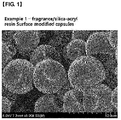
Fig 1 shows the electron microscope image of the microcapsules of Example 1. -
Fig. 2 shows the electron microscope image of the microcapsules of Reference Example 1. -
Fig. 3 shows comparison between the measurement results of zeta potentials of Example 1 and Reference Example 1. - Hereinafter, the invention will be explained in more detail. Although various modifications can be made to the present invention and the present invention may have various forms, specific examples will be illustrated and explained in detail below. However, it should be understood that these are not intended to limit the present invention to specific disclosure, and that the present invention includes all the modifications, equivalents or replacements thereof without departing from the spirit and technical scope of the invention.
- As used herein, the term "comprise" is intended to designate the existence of practiced characteristic, number, step, constructional element or combinations thereof, and it is not intended to preclude the possibility of existence or addition of one or more other characteristics, numbers, steps, constructional elements or combinations thereof.
- Hereinafter, a method for preparing microcapsules, and microcapsules prepared thereby according to specific embodiments of the invention will be explained.
- In order to solve the problems of the prior art, a method for forming inorganic nanoparticles-acryl resin complex capsules is presented.
- Acrylic monomers are adsorbed on the hydrophilic inorganic nanoparticles such as silica and a stable fragrance emulsion is formed by a pickering emulsion method, and then, inorganic nanoparticles-acryl resin microcapsules are prepared by radical polymerization by the initiation reaction of a radical initiator dissolved in fragrance, and then, amine-based monomers are additionally polymerized on the surface of the capsules to control the surface charge of the capsules, thereby increasing fiber adhesion of fragrance capsules.
- And, the microcapsules crosslinked using the pickering emulsion are polyacrylate capsules, and the ester groups in the structure are biodegraded by hydrolysis, and thus, fragrance capsules environmentally friendly than before may be prepared.
- Specifically, according to one embodiment of the invention, there is provided a method for preparing a microcapsule comprising the steps of:
- adsorbing acrylic monomers having water solubility of 1 to 100 g/L on the surface of inorganic nanoparticles (step 1);
- adding fragrance oil to the inorganic nanoparticles having acrylic monomers adsorbed on the surface, thus forming an emulsion (step 2);
- polymerizing the mixture of the step 2 (step 3); and
- adding amine monomers and an initiator to the polymerization solution of the step 3, thus progressing polymerization (step 4).
- Hereinafter, the invention will be explained in more detail.
- In the
step 1, acrylic monomers are adsorbed on the surface of hydrophilic inorganic nanoparticles. - Preferably, as the inorganic nanoparticles, any hydrophilic particles may be used. For example, the inorganic nanoparticles may be selected from the group consisting of silica, titania, metal oxide, noble metal, apatite, and limestone having an average particle diameter of 2nm to 100nm. More preferably, the average particle diameter of the inorganic nanoparticles may be 5nm to 50nm.
- Most preferably, as the inorganic nanoparticles, silica or titania having an average particle diameter of 2nm to 100nm or 5nm to 50nm may be used.
- And, in the step 2, the inorganic nanoparticles may be used in the state of an aqueous colloidal solution, and acrylic monomers are dispersed in the aqueous colloidal solution, and thus, when fragrance oil is added, a stable pickering emulsion may be formed.
- Thus, the
step 1 may comprise the steps of adding acrylic monomers using an aqueous silica colloidal solution, and dispersing them, to adsorb acrylic monomers on the surface of silica. - The dispersion method is not limited as long as it makes inorganic nanoparticles such as silica in the state of an aqueous colloidal solution, and for example, sonication may be used.
- More specifically, for example, hydrophilic silica is used as inorganic nanoparticles.
- Since acrylic monomers are adsorbed on the surface of hydrophilic silica by sonication, a fragrance pickering emulsion of inorganic nanoparticles (preferably, silica) is stably formed. And, silica-acrylate microcapsules may be prepared by radical polymerization of such stable pickering emulsion, by the initiation reaction of a radical initiator dissolved in fragrance.
- Namely, acrylic monomers such as acrylate or diacrylate monomers are adsorbed on the surface of hydrophilic inorganic nanoparticles(silica nanoparticles), and a pickering emulsion of fragrance oil is formed, and then, capsules are immediately formed by free radical polymerization.
- The acrylic monomers include biodegradable ester groups, have water solubility of 1 to 100 g/L, and may be used alone or in combination. The temperature condition of the water solubility may be based on room temperature of 25°C.
- More preferably, acrylic monomers having water solubility of 5 to 60 g/L or 10 to 60g/L may be used.
- If the water solubility of acrylic monomers is 1 g/L or less, it may be difficult to adsorb acrylic monomers on the hydrophilic inorganic nanoparticles, and thus, a pickering emulsion cannot be formed. And, if the water solubility of acrylic monomers is 100 g/L or more, hydrophilicity of the surface of hydrophilic inorganic nanoparticles may be maximized, and contact angle between water/oil may become small, and thus, most of particle surfaces may exist as aqueous phases, and in this case, unstable emulsion may be formed.
- Such acrylic monomers may include one or more selected from the group consisting of diacrylic monomers represented by the following Chemical Formula 1 and monoacrylic monomers represented by the following Chemical Formula 2:


- Preferably, acrylic monomers having water solubility of 5 to 50 g/L may be used, as explained. Specific examples of such acrylic monomers may include one or more selected from the group consisting of dipropyleneglycol diacrylate, diethyleneglycol diacrylate, and tetraethyleneglycol dimethacrylate, as shown in the following Table 1.
[Table 1] Monomers Water solubility (g/L) Tg (°C) Dipropyleneglycol diacrylate (DPGDA) 5.2 104 Diethyleneglycole diacrylate (DEGDA) 10-50 12 Tetraethylene glycol Dimethacrylate (TeEGDMA) 52 to 53 -83 - And, in the
step 1, in case sonication is used to adsorb acrylic monomers on the surface of inorganic nanoparticles, it may be progressed as follows. - Specifically, the
step 1 may comprise the steps of adding acrylic monomers using an aqueous colloidal solution of inorganic nanoparticles, and conducting sonication for 1 to 30 minutes, thus adsorbing acrylic monomers on the surface of inorganic nanoparticles. It is preferable that the sonication is progressed under low temperature condition such as an ice bath. - The inorganic nanoparticles may have an average particle diameter of 5nm to 50nm.
- Meanwhile, in the step 2, to the inorganic nanoparticles prepared in the
step 1, having acrylic monomers adsorbed on the surface, fragrance oil is added to form an emulsion. - The emulsion formed in the step 2 may be a pickering emulsion.
- Specifically, the step 2 may comprise the step of adding fragrance oil to the inorganic nanoparticles having acrylic monomers adsorbed on the surface, and conducting sonication for 1 to 30 minutes, thus forming an O/W pickering emulsion. It is preferable that the sonication is progressed under low temperature condition such as an ice bath.
- When fragrance oil is used in the step 2, an oil soluble initiator may be dissolved in the fragrance oil.
- The oil soluble initiator may be one or more selected from the group consisting of azo and peroxide initiators. The oil soluble initiator is in the form of powder, the amount used is not significantly limited as long as it can be dissolved in fragrance oil. And, commercially available products may be used.
- Meanwhile, since inorganic nanoparticles, acrylic monomers and fragrance oil are added to an aqueous colloidal solution comprising water when preparing microcapsules, the contents of the inorganic nanoparticles, acrylic monomers and fragrance oil may be appropriately controlled, based on the total content of the pickering emulsion.
- Preferably, before progressing polymerization, the pickering emulsion solution of the step 3 may be a solution comprising water, inorganic nanoparticels, acrylic monomers, and fragrance.
- And, the pickering emulsion solution may comprise, based on the total content of the solution, 60 to 80 wt% of water, 0.1 to 16 wt% of inorganic nanoparticles, 0.2 to 25 wt% of acrylic monomers, and 2 to 36 wt% of fragrance.
- If the content of the inorganic nanoparticles is less than 0.1 wt%, emulsion may be formed over 1000 µm, and if it is greater than 16 wt%, emulsion may be formed below 0.1 µm.
- If the content of the acrylic monomers is less than 0.2 wt%, it may be impossible to form a pickering emulsion, or it may be impossible to form inorganic nanoparticles-acryl resin capsules, and if it is greater than 25 wt%, acrylic monomers that are not adsorbed on the inorganic nanoparticles and do not participate in the polymerization reaction may remain in the aqueous phase in a large quantity.
- If the content of fragrance is less than 2 wt%, capsules may be too thick, and thus, fragrance may not be emitted, and if it is greater than 36 wt%, unstable emulsion may be formed, thus deteriorating the performance of capsules.
- In the step 3, polymerization of the pickering emulsion obtained in the step 2 is progressed.
- After a pickering emulsion is obtained by the above explained method, radical polymerization is progressed under certain conditions, thus synthesizing fragrance/inorganic nanoparticles-polyacrylate capsules.
- Preferably, the polymerization of the step 3 may comprise the step of progressing radical polymerization of the O/W pickering emulsion at 30 to 90°C for 6 to 20 hours to form microcapsules. And, during the polymerization, stirring condition may be 100 to 700 rpm, preferably 200 to 400 rpm. And, the polymerization may be progressed under inert conditions through nitrogen purging, and the like.
- After the polymerization of the step 3, before progressing the step 4 described below, if necessary, concentration and/or drying processes may be additionally progressed, and the conditions are not limited.
- The microcapsules obtained through the polymerization of the step 3 consist of inorganic nanoparticles, acrylic monomers, and fragrance.
- And, the step 4 may comprise the steps of adding amine-based monomers and an initiator to the polymerization solution of the step 3, and conducting polymerization. In the step 4, amine-based monomers are additionally polymerized on the surface of capsules, to control the surface charge of the capsules, and thereby, fiber adhesion of the fragrance capsules may be improved.
- In the step 4, the amine-based monomers and initiator may be introduced during the polymerization of the step 3, or after completing the polymerization. Preferably, in the step 4, at a time between the latter part of the polymerization of the step 3 and completion of the polymerization, additional amine-based monomers and initiator may be introduced into the polymerization solution of the step 3. The time between the latter part of the polymerization and completion of the polymerization means a time when the polymerization is completed about 80 to 100%, in the total polymerization time(6 to 20 hours).
- It is preferable that the amine-based monomers include the amine-based monomers of the following Chemical Formula 3 or Chemical Formula 4.


- R4 and R5 may be identical to or different from each other, and are-(CH2)n-(CH)=CH2 (n is an integer of 1 to 5) or -(CH2)n-CH3 (n is an integer of 0 to 5),
- R6 and R7 may be identical to or different from each other, and are C1 to C5 alkyl, -(CH2)n-CH=CH2 (n is an integer of 1 to 5), an acrylamide substituent of the following Chemical Formula a, or an acrylic acid substituent of the following Chemical Formula b, and both R6 and R7 are not C1 to C5 alkyl groups,
- R8 is hydrogen, -(CH2)n-(CH)=CH2 (n is an integer of 1 to 5) or -(CH2)n-CH3 (n is an integer of 0 to 5),
- R9 and R10 may be identical to or different from each other, and are-(CH2)n-CH=CH2 (n is an integer of 1 to 5), an acrylamide substituent of the following Chemical Formula a, or an acrylic acid substituent of the following Chemical Formula b,


- in the Chemical Formulas a and b, n and m are each independently, or simultaneously, integers of 1 to 5, and R11 and R12 are each independently, or simultaneously, hydrogen or -(CH2)n'CH3 (n' is an integer of 0 to 5).
- In the Chemical Formulae 3 and 4, R4 to R6 may be -(CH2)n-CH3(n is an integer of 0 to 5), and R7 may be the Chemical Formula a. Wherein, in the Chemical Formula a, n may be 2 to 3, R11 may be -(CH2)nCH3 (n' is an integer of 0 to 2, more preferably 0).
- The C1 to C5 alkyl may include a linear or branched alkyl group.
- As the amine-based monomers, a [3-(methacryloylamino)propyl]trimethylammonium chloride solution or a diallyldimethylammonium chloride solution may be preferably used.
- The content of the amine-based monomers may be 0.2 to 5 parts by weight, based on 100 parts by weight of the total solution up to the step 3. If the content of the amine-based monomers is 0.2 parts by weight or less, surface charge modification effect may decreased, and if it is 5 parts by weight or more, introduced monomers may be not only polymerized on the capsule surface, but also separately polymerized to form polymer particles.
- And, the initiator used in the step 4 may be water soluble initiators, may be one or more selected from the group consisting of azo and peroxide initiators, and any water soluble initiators well known in the art may be used. For example, as the water soluble initiator, SPS(Sodium persulfate), APS(Ammonium persulfate), and the like may be used. The content of the water soluble initiator may be 0.004 to 0.03 parts by weight, based on 100 parts by weight of the total solution up to the step 3.
- The polymerization of the step 4 may comprise the step of progressing polymerization at 30 to 90°C for 6 to 20 hours, to modify the surface of formed microcapsules. And, during the polymerization, stirring condition may be 100 to 700 rpm, preferably 200 to 400 rpm.
- According to another embodiment of the invention, there are provided surface modified microcapsules prepared by the above method.
- According to yet another embodiment, there are provided surface modified microcapsules comprising inorganic nanoparticles-acryl resin complex and a fragrance component, wherein the surface of the microcapsule is modified with an amine-based compound, and the surface charge has a zeta potential of +5 to 60mV.
- Specifically, the microcapsules provided herein mean fragrance capsules of which surfaces are modified with an amine-based compound, and comprise surface modified inorganic nanoparticles-acryl resin complex microcapsules containing a fragrance component, and the zeta potential may be about +5 to 60mV or +10 to 55mV or +30 to 50mV. Such microcapsules may be obtained by surface modification with an amine-based compound, and the zeta potential is the result obtained by measuring apparent zeta potential of each microcapsule 10 times, using Malvern zetasizer equipment and disposable folded capillary cell (Malvern DTS 1070).
- And, the microcapsules may comprise, based on the total weight of the surface modified fragrance capsules, 0.5 to 40 wt% of inorganic nanoparticles, 1 to 60 wt% of acrylic monomers, 0.02 to 15 wt% of amine-based monomers, and 10 to 90 wt% of fragrance.
- And, the surface modified microcapsules may be provided in the form of surface modified inorganic nanoparticles-acryl resin complex capsules containing a fragrance component and having an average particle diameter of 0.1µm to 1000µm.
- Particularly, the surface modified inorganic nanoparticles-acryl resin complex microcapsules are not swollen in water, and thus, have excellent fragrance supporting force, and are environmentally friendly because the ester groups are biodegraded.
- Hereinafter, the actions and effects of the invention will be explained in detail through specific examples. However, these examples are presented only as the illustrations of the invention and the scope of the right of the invention is not limited thereby.
- 0.4g of hydrophilic silica (25nm) was dispersed in 50ml of water to prepare an aqueous colloidal silica solution, and then, 3g of diethyleneglycol diacrylate having water solubility of about 25 g/L was added, and the mixture was sonicated in an ice bath for 20 minutes, thus adsorbing acrylic monomers on the surface of silica.
- Thereafter, 20g of fragrance oil in which an oil soluble initiator was dissolved was introduced in the solution, and the mixture was sonicated again in an ice bath for 20minutes, thus preparing a pickering emulsion.
- Subsequently, the solution was introduced into a three neck round bottom flask connected to a condenser, and the flask was sealed, and then, N2 bubbling was conducted about 30 minutes while stirring at 300rpm, and radical polymerization was progressed in an oil bath heated to 60°C for 20 hours to prepare fragrance/silica-acrylate microcapsules.
- During the polymerization of the step 3, 0.01g of a water soluble initiator (APS (Ammonium persulfate)) and 0.6g of a [3-(methacryloylamino)propyl]trimethylammonium chloride solution were introduced and polymerization was further progressed for 15 hours to prepare surface modified fragrance/silica-acryl resin microcapsules.
- Surface modified fragrance/silica-acrylate microcapsules were prepared by the same method as Example 1, except that 0.5g of a diallyldimethylammonium chloride solution was used instead of the [3-(methacryloylamino)propyl]trimethylammonium chloride solution in the step 4.
- 0.4g of hydrophilic silica (25nm) was dispersed in 50ml of water to prepare an aqueous colloidal silica solution, and then, 3g of diethyleneglycol diacrylate having water solubility of about 25 g/L was added, and the mixture was sonicated in an ice bath for 20 minutes, thus adsorbing acrylic monomers on the surface of silica.
- Thereafter, 20g of fragrance oil in which an oil soluble initiator was dissolved was introduced in the solution, and the mixture was sonicated again in an ice bath for 20minutes, thus preparing a pickering emulsion.
- Subsequently, the solution was introduced into a three neck round bottom flask connected to a condenser, and the flask was sealed, and then, N2 bubbling was conducted about 30 minutes while stirring at 300rpm, and radical polymerization was progressed in an oil bath heated to 60°C for 20 hours to prepare fragrance/silica-acrylate microcapsules.
- To an aqueous colloidal silica solution containing silica having an average particle diameter of 20nm, 20g of fragrance oil was added to prepare an oil phase pickering emulsion.
- In order to maintain a stable emulsion state, 1.6g of styrene maleic anhydride copolymer (SMA) was added, and the pH of the solution was made to 4 to 6.
- A pre-melamine formaldehyde(pre-MF) solution (pH 8.5 to 9) was slowly dropped thereto, and then, a temperature was raised to 50 to 70°C, and a reaction was conducted for about 3 hours to synthesize silica-MF microcapsules.
- A surfactant (tween80) was added to water-saturated ethyl acetate at the concentration of 1% to prepare an aqueous phase.
- Ethyl cellulose(EC) was dissolved in ethyl acetate at the concentration of 20%, and fragrance oil was mixed therewith at the weight ratio of fragrance : EC of 1:1 to prepare a core solution.
- Into 100ml of water-saturated ethyl acetate, 30ml of the prepared core solution was introduced, and an emulsion was prepared using ultra turrax.
- The prepared fragrance emulsion solution was heated to about 60°C, and stirred at 500rpm to remove ethyl acetate, thus synthesizing fragrance/EC microcapsules.
- Microcapsules were synthesized by the same method as Example 1, except that 0.1g of the [3-(methacryloylamino)propyl]trimethylammonium chloride solution was used in the step 4.
- Microcapsules were synthesized by the same method as Example 1, except that 3g of the [3-(methacryloylamino)propyl]trimethylammonium chloride solution was used in the step 4.
- 1g of hydrophilic silica (25nm) was dispersed in 87.5g of water to prepare an aqueous colloidal silica solution, and then, 10g of (E-trimethylolpropane triacrylate(E-TMPTA) having water solubility of about 0.9 g/L was added, and the mixture was sonicated in an ice bath for 20 minutes.
- Thereafter, 20g of fragrance oil in which an oil soluble initiator was dissolved was introduced in the solution, and the mixture was sonicated again in an ice bath for 20minutes, thus preparing a pickering emulsion.
- Subsequently, the solution was introduced into a three neck round bottom flask connected to a condenser, and the flask was sealed, and then, N2 bubbling was conducted about 30 minutes while stirring at 300rpm, and radical polymerization was progressed in an oil bath heated to 60°C for 20 hours, for the purpose of preparing fragrance/silica-acrylate microcapsules.
- However, since E-TMPTA has low water solubility of 0.9 g/L, due to the formation of unstable emulsion, capsulation was not properly progressed.
- Namely, it was confirmed that fragrance oil failing to form an emulsion floated after synthesis of capsules, and the shape of prepared capsules was not smooth.
- Fragrance/silica-acrylate microcapsules were prepared by the same method as Example 1, except using 2g of tetraethyleneglycol dimethacrylate having water solubility of 52g/L instead of diethyleneglycol diacrylate.
- For Examples 1 to 3, Comparative Examples and Reference Examples 1 to 3, the shape of the surface and fragrance supporting efficiency were evaluated, and the results were shown in the following Tables 2 and 3.
- The electron microscope images of the microcapsules of Example 1 and Reference Example 1 were taken, and the results was shown in
Figs. 1 and2 . And, using Malvern zetasizer equipment and disposable folded capillary cell (Malvern DTS 1070), apparent zeta potential was measured for each microcapsule 10 times, and the results were shown inFig. 3 . - As shown in
Figs. 1 and2 , fragrance capsules before surface modification (Reference Example 1) and fragrance capsules after surface modification (Example 1) were respectively prepared with size of about 5um, and there was no difference in the shape before and after surface modification. - However, as shown in
Fig. 3 , silica-acryl resin fragrance capsules without surface modification exhibited zeta potential of about -76mV, and the capsules surface modified with amine-based monomers exhibited zeta potential of about +43mV. - Thus, it can be seen that surface charge of fragrance capsules significantly changed due to the surface polymerization of amine-based monomers, and the resulting fiber adhesion improvement effect was shown below.
- Assuming that fragrance supporting amount and supporting efficiency of each fragrance capsule are the same, fiber adhesion of fragrance capsules was evaluated by evaluating smell in fiber after washing.
-
- General washer evaluation : Commercially available 100% cotton towel(30*20cm), and mixed spun cloth for evaluation of smell(30x20cm) were prepared, and then, using a standard amount of general laundry detergent, repeatedly washed with a washer 5 times, and dehydrated, which were used as test specimens.
1% aqueous solution of the composition (microcapsules) of the invention was prepared, and then, the test specimens were treated with a rinsing course in each rinsing water(20°C) using a standard use amount (0.67mℓ/1ℓ wash water) in a stirred washer, and dehydrated, and then, taken out. And, the test specimens were flat dried under 20°C, 60% RH conditions for 24 hours so as not to be extended or distorted, and then, the degree of fragrance intensity was assigned from the lowest 1 point to the highest 5 point by sensory evaluation test of skilled panelists, which was repeated more than 3 times, and smell effect was measured as the average values. Other detailed test conditions follows the test method of EL306(fabric softener) among Environmental Product Declaration standards of Korean Environmental Industry and Technology Institute. - Soak washing evaluation : Commercially available 100% cotton towel(30*20cm) and fabric cotton standard cloth(30x20cm) were prepared, and then, using a standard amount of general laundry detergent, repeatedly washed with a washer 5 times, and dehydrated, which were used as test specimens. In the 0.2% aqueous solution of the composition (microcapsules) of the invention, the test specimens were soaked for 10 minutes and then taken out. And, the test specimens were flat dried under 20°C, 60% RH conditions for 24 hours so as not to be extended or distorted, and then, the degree of fragrance intensity was assigned from the lowest 1 point to the highest 5 point by sensory evaluation test of skilled panelists, which was repeated more than 3 times, and smell effect was measured as the average values. Other detailed test conditions follows the test method of EL306(fabric softener) among Environmental Product Declaration standards of Korean Environmental Industry and Technology Institute.
- From the results of Table 2, it was confirmed that Examples 1 to 3 of the invention maintained excellent fiber adhesion and fragrance durability, in both washer washing and soak washing evaluations, compared to Reference Example 1.
- And, as can be seen from the Table 3, previously used fragrance capsules of Comparative Examples 1 and 2 have weak fragrance supporting force, and thus, inferior fiber adhesion. And, in the case of Reference Examples 2 and 3 wherein the content of amine-based monomers used for surface modification do not fall within the range of the invention, fiber adhesion improvement effect could not be obtained. And, as explained above, in Comparative Example 3, synthesis of capsules was not properly progressed, and thus, the properties could not be evaluated.
- Thus, when the surface of capsules is modified using an amine-based compound, the content of the amine-based monomers should be within a specific range, so as to obtain excellent effects in terms of both fiber adhesion and fragrance supporting force.
| Test specim en | Free fragran ce | Example 1 | Example 2 | Example 3 | Referen ce Exampl e1 | |
| Surface modified fragrance/sil ica-acryl resin capsules | Surface modified fragrance/sil ica-acryl resin capsule | Surface modified fragrance/sil ica-acryl resin capsule | fragranc e/ silica-acryl resin capsule | |||
| Washe r washin g: After drying | |
1 | 1.75 | 1.6 | 1.55 | 1.46 |
| Mixed spun |
1 | 2.0 | 1.85 | 1.8 | 1.45 | |
| Soak washin g: After drying | Cotton towel | 1.5 | 2.95 | 2.9 | 2.85 | 2.82 |
| Cotton standar d cloth | 1.5 | 3.15 | 3 | 3 | 2.35 |
| Test specime n | Free fragranc e | Comparativ e Example 1 | Comparativ e Example 2 | Reference Example 2 | Reference Example 3 | |
| fragrance/ melamine capsule | fragrance/ ethyl cellulose capsule | The content of amine-based monomers used for surface modificatio n is small | The content of amine-based monomers used for surface modificatio n is excessive | |||
| Washer washing : After drying | |
1 | 1.85 | 1.3 | 1.5 | 1.75 |
| Mixed spun |
1 | 2.3 | 1.5 | 1.75 | 2.0 | |
| Soak washing : After drying | Cotton cloth | 1.5 | 2.6 | 1.8 | 2.55 | 2.85 |
| Cotton standard cloth | 1.5 | 2.8 | 2.0 | 2.65 | 3.2 |
Claims (17)
- A method for preparing microcapsules comprising the steps of:adsorbing acrylic monomers having water solubility of 1 to 100 g/L on the surface of inorganic nanoparticles (step 1);adding fragrance oil to the inorganic nanoparticles having acrylic monomers adsorbed on the surface, thus forming an emulsion (step 2);polymerizing the mixture of the step 2 (step 3); andadding amine-based monomers and an initiator to the polymerization solution of the step 3, thus progressing polymerization (step 4).
- The method for preparing microcapsules according to claim 1, wherein the acrylic monomers have water solubility of 5 to 60 g/L.
- The method for preparing microcapsules according to claim 1, wherein the acrylic monomers include one or more selected from the group consisting of diacrylic monomers represented by the following Chemical Formula 1 and monoacrylic monomers represented by the following Chemical Formula 2:


- The method for preparing microcapsules according to claim 1, wherein the acrylic monomers are one or more selected from the group consisting of dipropyleneglycol diacrylate, diethyleneglycol diacrylate and tetraethyleneglycol dimethacrylate.
- The method for preparing microcapsules according to claim 1, wherein the amine-based monomers include amine-based monomers of the following Chemical Formula 3 or Chemical Formula 4.

 R4 and R5 may be identical to or different from each other, and are-(CH2)n-(CH)=CH2 (n is an integer of 1 to 5) or -(CH2)n-CH3 (n is an integer of 0 to 5),R6 and R7 may be identical to or different from each other, and are C1 to C5 alkyl, -(CH2)n-CH=CH2 (n is an integer of 1 to 5), an acrylamide substituent of the following Chemical Formula a, or an acrylic acid substituent of the following Chemical Formula b, and both R6 and R7 are not C1 to C5 alkyl groups,R8 is hydrogen, -(CH2)n-(CH)=CH2 (n is an integer of 1 to 5) or -(CH2)n-CH3 (n is an integer of 0 to 5),R9 and R10 may be identical to or different from each other, and are-(CH2)n-CH=CH2 (n is an integer of 1 to 5), an acrylamide substituent of the following Chemical Formula a, or an acrylic acid substituent of the following Chemical Formula b,

- The method for preparing microcapsules according to claim 1, wherein the content of the amine-based monomers is 0.2 to 5 parts by weight, based on 100 parts by weight of the total solution up to the step 3.
- The method for preparing microcapsules according to claim 1, wherein the inorganic nanoparticles are selected from the group consisting of silica, titania, metal oxide, noble metal, apatite, and limestone, having average particle diameter of 2nm to 100nm.
- The method for preparing microcapsules according to claim 1, wherein the step 1 copmrises the steps of adding acrylic monomers using an aqueous colloidal solution of inorganic nanoparticles, and dispersing them, to adsorb acrylic monomers on the surface of the inorganic nanoparticles.
- The method for preparing microcapsules according to claim 1, wherein the step 2 comprises the steps of adding fragrance oil to the inorganic nanoparticles having acrylic monomers adsorbed on the surface, and forming O/W pickering emulsion.
- The method for preparing microcapsules according to claim 1, wherein an oil soulbe initiator is dissolved in the fragrance oil of the step 2.
- The method for preparing microcapsules according to claim 1, wherein the polymerization of the step 3 comprises the step of progressing radical polymerization of the O/W pickering emulsion at 30 to 90°C for 6 to 20 hours to form microcapsules.
- The method for preparing microcapsules according to claim 1, wherein in the step 4, the amine-based monomers and initiator are introduced during the polymerization of the step 3 or after completing the polymerization.
- The method for preparing microcapsules according to claim 1, wherein the polymerization of the step 4 comprises the step of progresing polymerization at 30 to 90°C for 6 to 20 hours, thus modifying the surface of the microcapsules formed in the step 3.
- The method for preparing microcapsules according to claim 1, wherein the microcapsules comprise 0.5 to 40 wt% of inorganic nanoparticles, 1 to 60 wt% of acrylic monomers, 0.02 to 15 wt% of amine-based monomers, and 10 to 90 wt% of fragrance, based on the total weight of the surface modified fragrance capsules.
- The method for preparing microcapsules according to claim 1, wherein the microcapsules comprise surface modified inorganic nanoparticles-acryl resin complex capsules containing a fragrance component, with an average particle diameter of 0.1µm to 1000µm.
- Surface modified microcapsules prepared by the method of any one of claims 1 to 15.
- Surface modified microcapsules comprising inorganic nanoparticles-acryl resin complex, and a fragrance component;
wherein the surface of the microcapsule is modified with an amine-based compound, and the surface charge has a zeta potential of +5 to 60mV.
Applications Claiming Priority (2)
| Application Number | Priority Date | Filing Date | Title |
|---|---|---|---|
| KR20180076605 | 2018-07-02 | ||
| PCT/KR2019/008067 WO2020009438A1 (en) | 2018-07-02 | 2019-07-02 | Preparation method of microcapsules |
Publications (2)
| Publication Number | Publication Date |
|---|---|
| EP3770239A1 true EP3770239A1 (en) | 2021-01-27 |
| EP3770239A4 EP3770239A4 (en) | 2021-03-17 |
Family
ID=69158367
Family Applications (1)
| Application Number | Title | Priority Date | Filing Date |
|---|---|---|---|
| EP19831160.7A Pending EP3770239A4 (en) | 2018-07-02 | 2019-07-02 | MICROCAPSULES PREPARATION PROCESS |
Country Status (5)
| Country | Link |
|---|---|
| US (1) | US11986790B2 (en) |
| EP (1) | EP3770239A4 (en) |
| JP (1) | JP7080988B2 (en) |
| KR (1) | KR102457231B1 (en) |
| CN (1) | CN112262208B (en) |
Families Citing this family (3)
| Publication number | Priority date | Publication date | Assignee | Title |
|---|---|---|---|---|
| CN115386208B (en) * | 2022-08-11 | 2025-06-24 | 长兴电子(苏州)有限公司 | Degradable microbeads and preparation method and application thereof |
| CN116023804B (en) * | 2022-10-21 | 2025-03-25 | 武汉中科先进材料科技有限公司 | A modified silica aerogel microcapsule and preparation method thereof |
| CN118085180B (en) * | 2024-02-26 | 2024-07-30 | 中国地质大学(武汉) | Solid waste capsule for household garbage incineration fly ash and preparation method and application thereof |
Family Cites Families (18)
| Publication number | Priority date | Publication date | Assignee | Title |
|---|---|---|---|---|
| DE10163162A1 (en) * | 2001-12-20 | 2003-07-03 | Basf Ag | microcapsules |
| EP1691791A2 (en) | 2003-10-02 | 2006-08-23 | Trustees of Stevens Institute of Technology | Capsules of multilayered neutral polymer films associated by hydrogen bonding |
| PT103265B (en) | 2005-04-22 | 2007-02-28 | Univ Do Minho | MICROCAPSULES WITH FUNCTIONAL REACTIVE GROUPS OF CONNECTION TO TEXTILE FIBERS AND APPLICATION AND FIXATION PROCESS |
| US7833960B2 (en) * | 2006-12-15 | 2010-11-16 | International Flavors & Fragrances Inc. | Encapsulated active material containing nanoscaled material |
| GB0718300D0 (en) * | 2007-09-20 | 2007-10-31 | Univ Leeds | Microcapsules and methods |
| US20160166480A1 (en) * | 2009-09-18 | 2016-06-16 | International Flavors & Fragrances Inc. | Microcapsule compositions |
| EP2536786B1 (en) | 2010-02-18 | 2015-12-30 | Dow Corning Corporation | Surface-modified hydrogels and hydrogel microparticles |
| ES2383271B1 (en) | 2010-03-24 | 2013-08-01 | Lipotec S.A. | PROCESSING PROCESSING OF FIBERS AND / OR TEXTILE MATERIALS |
| EP2674477B1 (en) | 2010-04-01 | 2018-09-12 | The Procter and Gamble Company | Cationic polymer stabilized microcapsule composition |
| GB201010701D0 (en) | 2010-06-25 | 2010-08-11 | Givaudan Sa | Process for producing microcapsules |
| KR102141256B1 (en) | 2012-05-22 | 2020-08-05 | 디에스엠 아이피 어셋츠 비.브이. | Hybrid organic-inorganic nano-particles |
| MX2015017289A (en) | 2013-06-14 | 2016-08-05 | Basf Se | Process for producing a microcapsule dispersion comprising microcapsules with a hydrophilic capsule core. |
| BR112016002056A2 (en) | 2013-07-29 | 2017-08-01 | Takasago Perfumery Co Ltd | microcapsules |
| CN105431227B (en) * | 2013-07-29 | 2018-01-30 | 高砂香料工业株式会社 | Microcapsule |
| JP6387394B2 (en) * | 2013-07-29 | 2018-09-05 | 高砂香料工業株式会社 | Micro capsule |
| CN105828927B (en) | 2013-12-19 | 2018-10-30 | 弗门尼舍有限公司 | Mixing microcapsule |
| JP6320905B2 (en) | 2013-12-24 | 2018-05-09 | 花王株式会社 | Liquid softener composition |
| JP6548950B2 (en) | 2015-05-08 | 2019-07-24 | 株式会社東芝 | TONER, IMAGE FORMING APPARATUS, AND METHOD OF MANUFACTURING TONER |
-
2019
- 2019-07-02 EP EP19831160.7A patent/EP3770239A4/en active Pending
- 2019-07-02 JP JP2020554453A patent/JP7080988B2/en active Active
- 2019-07-02 CN CN201980027247.3A patent/CN112262208B/en active Active
- 2019-07-02 KR KR1020190079286A patent/KR102457231B1/en active Active
- 2019-07-02 US US17/051,391 patent/US11986790B2/en active Active
Also Published As
| Publication number | Publication date |
|---|---|
| JP7080988B2 (en) | 2022-06-06 |
| US11986790B2 (en) | 2024-05-21 |
| EP3770239A4 (en) | 2021-03-17 |
| CN112262208B (en) | 2022-07-01 |
| CN112262208A (en) | 2021-01-22 |
| KR20200003735A (en) | 2020-01-10 |
| KR102457231B1 (en) | 2022-10-20 |
| JP2021528506A (en) | 2021-10-21 |
| US20210046444A1 (en) | 2021-02-18 |
Similar Documents
| Publication | Publication Date | Title |
|---|---|---|
| JP7482796B2 (en) | Manufacturing method of organic-inorganic hybrid microcapsules | |
| US9102904B2 (en) | Microcapsules, a process of making such microcapsules and compositions utilizing such microcapsules | |
| US8747999B2 (en) | Capsules | |
| JP4495720B2 (en) | Method for producing polymer particle and fragrance delivery system, and polymer particle and fragrance delivery system obtained by the method | |
| ES2582229T3 (en) | Product | |
| US11986790B2 (en) | Method for preparing microcapsules | |
| JP2006518790A5 (en) | ||
| CN107787215A (en) | Improve the delivery system of deposition | |
| KR102437749B1 (en) | Method for preparing microcapsule | |
| WO2015016368A1 (en) | Microcapsules | |
| EP4056262A1 (en) | Biodegradable microcapsule and method for manufacturing same | |
| KR20200004152A (en) | Method for prreparing organic-inorganic hybrid microcapsule | |
| CN116490536A (en) | Biodegradable Delivery Particles | |
| CN109453724A (en) | A kind of inside is the preparation method of the slow-release type microcapsule of multicore | |
| KR20200004153A (en) | METHOD FOR PRREPARING Organic-inorganic hybrid micro-capsule | |
| KR20190068369A (en) | Method for preparing microcapsule | |
| KR102355447B1 (en) | A method of preparing a biodegrading microcapsule | |
| WO2009121831A1 (en) | Controlled release particles | |
| CN1882645B (en) | Flavonoid-depositing polymer composite particles, preparation method thereof, and cosmetic composition containing the particles | |
| CN110354083A (en) | A kind of drug-loaded microspheres based on water-in-water system and preparation method thereof | |
| CN103524756B (en) | Preparation method of light/pH (potential of hydrogen) sensitive type pyrene functional polymer micelle | |
| TWI913241B (en) | Functionalized particles | |
| Huan et al. | Nanocelluloses at the oil–water interface: emulsions toward function and material development | |
| Peng et al. | Cellulose nanocrystal-based multi-stimuli-responsive Pickering emulsion for targeted pesticide delivery: Enhancing foliar retention, photostability, and biosafety | |
| CN121446399A (en) | Core-shell microcapsule and preparation method thereof |
Legal Events
| Date | Code | Title | Description |
|---|---|---|---|
| STAA | Information on the status of an ep patent application or granted ep patent |
Free format text: STATUS: THE INTERNATIONAL PUBLICATION HAS BEEN MADE |
|
| PUAI | Public reference made under article 153(3) epc to a published international application that has entered the european phase |
Free format text: ORIGINAL CODE: 0009012 |
|
| STAA | Information on the status of an ep patent application or granted ep patent |
Free format text: STATUS: REQUEST FOR EXAMINATION WAS MADE |
|
| 17P | Request for examination filed |
Effective date: 20201022 |
|
| AK | Designated contracting states |
Kind code of ref document: A1 Designated state(s): AL AT BE BG CH CY CZ DE DK EE ES FI FR GB GR HR HU IE IS IT LI LT LU LV MC MK MT NL NO PL PT RO RS SE SI SK SM TR |
|
| AX | Request for extension of the european patent |
Extension state: BA ME |
|
| A4 | Supplementary search report drawn up and despatched |
Effective date: 20210217 |
|
| RIC1 | Information provided on ipc code assigned before grant |
Ipc: C11D 3/50 20060101AFI20210211BHEP Ipc: C11D 11/00 20060101ALI20210211BHEP Ipc: B01J 13/14 20060101ALI20210211BHEP |
|
| DAV | Request for validation of the european patent (deleted) | ||
| DAX | Request for extension of the european patent (deleted) | ||
| STAA | Information on the status of an ep patent application or granted ep patent |
Free format text: STATUS: EXAMINATION IS IN PROGRESS |
|
| 17Q | First examination report despatched |
Effective date: 20221129 |