EP3770003B1 - Decentralized lmv charging infrastructure - Google Patents
Decentralized lmv charging infrastructure Download PDFInfo
- Publication number
- EP3770003B1 EP3770003B1 EP20187590.3A EP20187590A EP3770003B1 EP 3770003 B1 EP3770003 B1 EP 3770003B1 EP 20187590 A EP20187590 A EP 20187590A EP 3770003 B1 EP3770003 B1 EP 3770003B1
- Authority
- EP
- European Patent Office
- Prior art keywords
- vehicle
- charging
- localized use
- decentralized
- mobile device
- Prior art date
- Legal status (The legal status is an assumption and is not a legal conclusion. Google has not performed a legal analysis and makes no representation as to the accuracy of the status listed.)
- Active
Links
Images



Classifications
-
- G—PHYSICS
- G01—MEASURING; TESTING
- G01C—MEASURING DISTANCES, LEVELS OR BEARINGS; SURVEYING; NAVIGATION; GYROSCOPIC INSTRUMENTS; PHOTOGRAMMETRY OR VIDEOGRAMMETRY
- G01C21/00—Navigation; Navigational instruments not provided for in groups G01C1/00 - G01C19/00
- G01C21/26—Navigation; Navigational instruments not provided for in groups G01C1/00 - G01C19/00 specially adapted for navigation in a road network
- G01C21/34—Route searching; Route guidance
- G01C21/36—Input/output arrangements for on-board computers
- G01C21/3626—Details of the output of route guidance instructions
- G01C21/3644—Landmark guidance, e.g. using POIs or conspicuous other objects
-
- B—PERFORMING OPERATIONS; TRANSPORTING
- B60—VEHICLES IN GENERAL
- B60L—PROPULSION OF ELECTRICALLY-PROPELLED VEHICLES; SUPPLYING ELECTRIC POWER FOR AUXILIARY EQUIPMENT OF ELECTRICALLY-PROPELLED VEHICLES; ELECTRODYNAMIC BRAKE SYSTEMS FOR VEHICLES IN GENERAL; MAGNETIC SUSPENSION OR LEVITATION FOR VEHICLES; MONITORING OPERATING VARIABLES OF ELECTRICALLY-PROPELLED VEHICLES; ELECTRIC SAFETY DEVICES FOR ELECTRICALLY-PROPELLED VEHICLES
- B60L50/00—Electric propulsion with power supplied within the vehicle
- B60L50/50—Electric propulsion with power supplied within the vehicle using propulsion power supplied by batteries or fuel cells
- B60L50/60—Electric propulsion with power supplied within the vehicle using propulsion power supplied by batteries or fuel cells using power supplied by batteries
-
- B—PERFORMING OPERATIONS; TRANSPORTING
- B60—VEHICLES IN GENERAL
- B60L—PROPULSION OF ELECTRICALLY-PROPELLED VEHICLES; SUPPLYING ELECTRIC POWER FOR AUXILIARY EQUIPMENT OF ELECTRICALLY-PROPELLED VEHICLES; ELECTRODYNAMIC BRAKE SYSTEMS FOR VEHICLES IN GENERAL; MAGNETIC SUSPENSION OR LEVITATION FOR VEHICLES; MONITORING OPERATING VARIABLES OF ELECTRICALLY-PROPELLED VEHICLES; ELECTRIC SAFETY DEVICES FOR ELECTRICALLY-PROPELLED VEHICLES
- B60L53/00—Methods of charging batteries, specially adapted for electric vehicles; Charging stations or on-board charging equipment therefor; Exchange of energy storage elements in electric vehicles
-
- B—PERFORMING OPERATIONS; TRANSPORTING
- B60—VEHICLES IN GENERAL
- B60L—PROPULSION OF ELECTRICALLY-PROPELLED VEHICLES; SUPPLYING ELECTRIC POWER FOR AUXILIARY EQUIPMENT OF ELECTRICALLY-PROPELLED VEHICLES; ELECTRODYNAMIC BRAKE SYSTEMS FOR VEHICLES IN GENERAL; MAGNETIC SUSPENSION OR LEVITATION FOR VEHICLES; MONITORING OPERATING VARIABLES OF ELECTRICALLY-PROPELLED VEHICLES; ELECTRIC SAFETY DEVICES FOR ELECTRICALLY-PROPELLED VEHICLES
- B60L53/00—Methods of charging batteries, specially adapted for electric vehicles; Charging stations or on-board charging equipment therefor; Exchange of energy storage elements in electric vehicles
- B60L53/10—Methods of charging batteries, specially adapted for electric vehicles; Charging stations or on-board charging equipment therefor; Exchange of energy storage elements in electric vehicles characterised by the energy transfer between the charging station and the vehicle
- B60L53/14—Conductive energy transfer
-
- B—PERFORMING OPERATIONS; TRANSPORTING
- B60—VEHICLES IN GENERAL
- B60L—PROPULSION OF ELECTRICALLY-PROPELLED VEHICLES; SUPPLYING ELECTRIC POWER FOR AUXILIARY EQUIPMENT OF ELECTRICALLY-PROPELLED VEHICLES; ELECTRODYNAMIC BRAKE SYSTEMS FOR VEHICLES IN GENERAL; MAGNETIC SUSPENSION OR LEVITATION FOR VEHICLES; MONITORING OPERATING VARIABLES OF ELECTRICALLY-PROPELLED VEHICLES; ELECTRIC SAFETY DEVICES FOR ELECTRICALLY-PROPELLED VEHICLES
- B60L53/00—Methods of charging batteries, specially adapted for electric vehicles; Charging stations or on-board charging equipment therefor; Exchange of energy storage elements in electric vehicles
- B60L53/10—Methods of charging batteries, specially adapted for electric vehicles; Charging stations or on-board charging equipment therefor; Exchange of energy storage elements in electric vehicles characterised by the energy transfer between the charging station and the vehicle
- B60L53/14—Conductive energy transfer
- B60L53/18—Cables specially adapted for charging electric vehicles
-
- B—PERFORMING OPERATIONS; TRANSPORTING
- B60—VEHICLES IN GENERAL
- B60L—PROPULSION OF ELECTRICALLY-PROPELLED VEHICLES; SUPPLYING ELECTRIC POWER FOR AUXILIARY EQUIPMENT OF ELECTRICALLY-PROPELLED VEHICLES; ELECTRODYNAMIC BRAKE SYSTEMS FOR VEHICLES IN GENERAL; MAGNETIC SUSPENSION OR LEVITATION FOR VEHICLES; MONITORING OPERATING VARIABLES OF ELECTRICALLY-PROPELLED VEHICLES; ELECTRIC SAFETY DEVICES FOR ELECTRICALLY-PROPELLED VEHICLES
- B60L53/00—Methods of charging batteries, specially adapted for electric vehicles; Charging stations or on-board charging equipment therefor; Exchange of energy storage elements in electric vehicles
- B60L53/60—Monitoring or controlling charging stations
- B60L53/67—Controlling two or more charging stations
-
- B—PERFORMING OPERATIONS; TRANSPORTING
- B60—VEHICLES IN GENERAL
- B60L—PROPULSION OF ELECTRICALLY-PROPELLED VEHICLES; SUPPLYING ELECTRIC POWER FOR AUXILIARY EQUIPMENT OF ELECTRICALLY-PROPELLED VEHICLES; ELECTRODYNAMIC BRAKE SYSTEMS FOR VEHICLES IN GENERAL; MAGNETIC SUSPENSION OR LEVITATION FOR VEHICLES; MONITORING OPERATING VARIABLES OF ELECTRICALLY-PROPELLED VEHICLES; ELECTRIC SAFETY DEVICES FOR ELECTRICALLY-PROPELLED VEHICLES
- B60L58/00—Methods or circuit arrangements for monitoring or controlling batteries or fuel cells, specially adapted for electric vehicles
- B60L58/10—Methods or circuit arrangements for monitoring or controlling batteries or fuel cells, specially adapted for electric vehicles for monitoring or controlling batteries
- B60L58/12—Methods or circuit arrangements for monitoring or controlling batteries or fuel cells, specially adapted for electric vehicles for monitoring or controlling batteries responding to state of charge [SoC]
-
- G—PHYSICS
- G01—MEASURING; TESTING
- G01C—MEASURING DISTANCES, LEVELS OR BEARINGS; SURVEYING; NAVIGATION; GYROSCOPIC INSTRUMENTS; PHOTOGRAMMETRY OR VIDEOGRAMMETRY
- G01C21/00—Navigation; Navigational instruments not provided for in groups G01C1/00 - G01C19/00
- G01C21/26—Navigation; Navigational instruments not provided for in groups G01C1/00 - G01C19/00 specially adapted for navigation in a road network
- G01C21/34—Route searching; Route guidance
- G01C21/36—Input/output arrangements for on-board computers
- G01C21/3664—Details of the user input interface, e.g. buttons, knobs or sliders, including those provided on a touch screen; remote controllers; input using gestures
-
- G—PHYSICS
- G01—MEASURING; TESTING
- G01C—MEASURING DISTANCES, LEVELS OR BEARINGS; SURVEYING; NAVIGATION; GYROSCOPIC INSTRUMENTS; PHOTOGRAMMETRY OR VIDEOGRAMMETRY
- G01C21/00—Navigation; Navigational instruments not provided for in groups G01C1/00 - G01C19/00
- G01C21/26—Navigation; Navigational instruments not provided for in groups G01C1/00 - G01C19/00 specially adapted for navigation in a road network
- G01C21/34—Route searching; Route guidance
- G01C21/36—Input/output arrangements for on-board computers
- G01C21/3667—Display of a road map
- G01C21/3676—Overview of the route on the road map
-
- G—PHYSICS
- G01—MEASURING; TESTING
- G01C—MEASURING DISTANCES, LEVELS OR BEARINGS; SURVEYING; NAVIGATION; GYROSCOPIC INSTRUMENTS; PHOTOGRAMMETRY OR VIDEOGRAMMETRY
- G01C21/00—Navigation; Navigational instruments not provided for in groups G01C1/00 - G01C19/00
- G01C21/26—Navigation; Navigational instruments not provided for in groups G01C1/00 - G01C19/00 specially adapted for navigation in a road network
- G01C21/34—Route searching; Route guidance
- G01C21/36—Input/output arrangements for on-board computers
- G01C21/3697—Output of additional, non-guidance related information, e.g. low fuel level
-
- B—PERFORMING OPERATIONS; TRANSPORTING
- B60—VEHICLES IN GENERAL
- B60L—PROPULSION OF ELECTRICALLY-PROPELLED VEHICLES; SUPPLYING ELECTRIC POWER FOR AUXILIARY EQUIPMENT OF ELECTRICALLY-PROPELLED VEHICLES; ELECTRODYNAMIC BRAKE SYSTEMS FOR VEHICLES IN GENERAL; MAGNETIC SUSPENSION OR LEVITATION FOR VEHICLES; MONITORING OPERATING VARIABLES OF ELECTRICALLY-PROPELLED VEHICLES; ELECTRIC SAFETY DEVICES FOR ELECTRICALLY-PROPELLED VEHICLES
- B60L2200/00—Type of vehicles
- B60L2200/46—Vehicles with auxiliary ad-on propulsions, e.g. add-on electric motor kits for bicycles
-
- B—PERFORMING OPERATIONS; TRANSPORTING
- B60—VEHICLES IN GENERAL
- B60L—PROPULSION OF ELECTRICALLY-PROPELLED VEHICLES; SUPPLYING ELECTRIC POWER FOR AUXILIARY EQUIPMENT OF ELECTRICALLY-PROPELLED VEHICLES; ELECTRODYNAMIC BRAKE SYSTEMS FOR VEHICLES IN GENERAL; MAGNETIC SUSPENSION OR LEVITATION FOR VEHICLES; MONITORING OPERATING VARIABLES OF ELECTRICALLY-PROPELLED VEHICLES; ELECTRIC SAFETY DEVICES FOR ELECTRICALLY-PROPELLED VEHICLES
- B60L2240/00—Control parameters of input or output; Target parameters
- B60L2240/60—Navigation input
- B60L2240/62—Vehicle position
-
- B—PERFORMING OPERATIONS; TRANSPORTING
- B60—VEHICLES IN GENERAL
- B60L—PROPULSION OF ELECTRICALLY-PROPELLED VEHICLES; SUPPLYING ELECTRIC POWER FOR AUXILIARY EQUIPMENT OF ELECTRICALLY-PROPELLED VEHICLES; ELECTRODYNAMIC BRAKE SYSTEMS FOR VEHICLES IN GENERAL; MAGNETIC SUSPENSION OR LEVITATION FOR VEHICLES; MONITORING OPERATING VARIABLES OF ELECTRICALLY-PROPELLED VEHICLES; ELECTRIC SAFETY DEVICES FOR ELECTRICALLY-PROPELLED VEHICLES
- B60L2240/00—Control parameters of input or output; Target parameters
- B60L2240/70—Interactions with external data bases, e.g. traffic centres
- B60L2240/72—Charging station selection relying on external data
-
- B—PERFORMING OPERATIONS; TRANSPORTING
- B60—VEHICLES IN GENERAL
- B60L—PROPULSION OF ELECTRICALLY-PROPELLED VEHICLES; SUPPLYING ELECTRIC POWER FOR AUXILIARY EQUIPMENT OF ELECTRICALLY-PROPELLED VEHICLES; ELECTRODYNAMIC BRAKE SYSTEMS FOR VEHICLES IN GENERAL; MAGNETIC SUSPENSION OR LEVITATION FOR VEHICLES; MONITORING OPERATING VARIABLES OF ELECTRICALLY-PROPELLED VEHICLES; ELECTRIC SAFETY DEVICES FOR ELECTRICALLY-PROPELLED VEHICLES
- B60L53/00—Methods of charging batteries, specially adapted for electric vehicles; Charging stations or on-board charging equipment therefor; Exchange of energy storage elements in electric vehicles
- B60L53/60—Monitoring or controlling charging stations
- B60L53/63—Monitoring or controlling charging stations in response to network capacity
-
- Y—GENERAL TAGGING OF NEW TECHNOLOGICAL DEVELOPMENTS; GENERAL TAGGING OF CROSS-SECTIONAL TECHNOLOGIES SPANNING OVER SEVERAL SECTIONS OF THE IPC; TECHNICAL SUBJECTS COVERED BY FORMER USPC CROSS-REFERENCE ART COLLECTIONS [XRACs] AND DIGESTS
- Y02—TECHNOLOGIES OR APPLICATIONS FOR MITIGATION OR ADAPTATION AGAINST CLIMATE CHANGE
- Y02E—REDUCTION OF GREENHOUSE GAS [GHG] EMISSIONS, RELATED TO ENERGY GENERATION, TRANSMISSION OR DISTRIBUTION
- Y02E60/00—Enabling technologies; Technologies with a potential or indirect contribution to GHG emissions mitigation
-
- Y—GENERAL TAGGING OF NEW TECHNOLOGICAL DEVELOPMENTS; GENERAL TAGGING OF CROSS-SECTIONAL TECHNOLOGIES SPANNING OVER SEVERAL SECTIONS OF THE IPC; TECHNICAL SUBJECTS COVERED BY FORMER USPC CROSS-REFERENCE ART COLLECTIONS [XRACs] AND DIGESTS
- Y02—TECHNOLOGIES OR APPLICATIONS FOR MITIGATION OR ADAPTATION AGAINST CLIMATE CHANGE
- Y02T—CLIMATE CHANGE MITIGATION TECHNOLOGIES RELATED TO TRANSPORTATION
- Y02T10/00—Road transport of goods or passengers
- Y02T10/60—Other road transportation technologies with climate change mitigation effect
- Y02T10/70—Energy storage systems for electromobility, e.g. batteries
-
- Y—GENERAL TAGGING OF NEW TECHNOLOGICAL DEVELOPMENTS; GENERAL TAGGING OF CROSS-SECTIONAL TECHNOLOGIES SPANNING OVER SEVERAL SECTIONS OF THE IPC; TECHNICAL SUBJECTS COVERED BY FORMER USPC CROSS-REFERENCE ART COLLECTIONS [XRACs] AND DIGESTS
- Y02—TECHNOLOGIES OR APPLICATIONS FOR MITIGATION OR ADAPTATION AGAINST CLIMATE CHANGE
- Y02T—CLIMATE CHANGE MITIGATION TECHNOLOGIES RELATED TO TRANSPORTATION
- Y02T10/00—Road transport of goods or passengers
- Y02T10/60—Other road transportation technologies with climate change mitigation effect
- Y02T10/7072—Electromobility specific charging systems or methods for batteries, ultracapacitors, supercapacitors or double-layer capacitors
-
- Y—GENERAL TAGGING OF NEW TECHNOLOGICAL DEVELOPMENTS; GENERAL TAGGING OF CROSS-SECTIONAL TECHNOLOGIES SPANNING OVER SEVERAL SECTIONS OF THE IPC; TECHNICAL SUBJECTS COVERED BY FORMER USPC CROSS-REFERENCE ART COLLECTIONS [XRACs] AND DIGESTS
- Y02—TECHNOLOGIES OR APPLICATIONS FOR MITIGATION OR ADAPTATION AGAINST CLIMATE CHANGE
- Y02T—CLIMATE CHANGE MITIGATION TECHNOLOGIES RELATED TO TRANSPORTATION
- Y02T90/00—Enabling technologies or technologies with a potential or indirect contribution to GHG emissions mitigation
- Y02T90/10—Technologies relating to charging of electric vehicles
- Y02T90/12—Electric charging stations
-
- Y—GENERAL TAGGING OF NEW TECHNOLOGICAL DEVELOPMENTS; GENERAL TAGGING OF CROSS-SECTIONAL TECHNOLOGIES SPANNING OVER SEVERAL SECTIONS OF THE IPC; TECHNICAL SUBJECTS COVERED BY FORMER USPC CROSS-REFERENCE ART COLLECTIONS [XRACs] AND DIGESTS
- Y02—TECHNOLOGIES OR APPLICATIONS FOR MITIGATION OR ADAPTATION AGAINST CLIMATE CHANGE
- Y02T—CLIMATE CHANGE MITIGATION TECHNOLOGIES RELATED TO TRANSPORTATION
- Y02T90/00—Enabling technologies or technologies with a potential or indirect contribution to GHG emissions mitigation
- Y02T90/10—Technologies relating to charging of electric vehicles
- Y02T90/14—Plug-in electric vehicles
-
- Y—GENERAL TAGGING OF NEW TECHNOLOGICAL DEVELOPMENTS; GENERAL TAGGING OF CROSS-SECTIONAL TECHNOLOGIES SPANNING OVER SEVERAL SECTIONS OF THE IPC; TECHNICAL SUBJECTS COVERED BY FORMER USPC CROSS-REFERENCE ART COLLECTIONS [XRACs] AND DIGESTS
- Y02—TECHNOLOGIES OR APPLICATIONS FOR MITIGATION OR ADAPTATION AGAINST CLIMATE CHANGE
- Y02T—CLIMATE CHANGE MITIGATION TECHNOLOGIES RELATED TO TRANSPORTATION
- Y02T90/00—Enabling technologies or technologies with a potential or indirect contribution to GHG emissions mitigation
- Y02T90/10—Technologies relating to charging of electric vehicles
- Y02T90/16—Information or communication technologies improving the operation of electric vehicles
-
- Y—GENERAL TAGGING OF NEW TECHNOLOGICAL DEVELOPMENTS; GENERAL TAGGING OF CROSS-SECTIONAL TECHNOLOGIES SPANNING OVER SEVERAL SECTIONS OF THE IPC; TECHNICAL SUBJECTS COVERED BY FORMER USPC CROSS-REFERENCE ART COLLECTIONS [XRACs] AND DIGESTS
- Y04—INFORMATION OR COMMUNICATION TECHNOLOGIES HAVING AN IMPACT ON OTHER TECHNOLOGY AREAS
- Y04S—SYSTEMS INTEGRATING TECHNOLOGIES RELATED TO POWER NETWORK OPERATION, COMMUNICATION OR INFORMATION TECHNOLOGIES FOR IMPROVING THE ELECTRICAL POWER GENERATION, TRANSMISSION, DISTRIBUTION, MANAGEMENT OR USAGE, i.e. SMART GRIDS
- Y04S10/00—Systems supporting electrical power generation, transmission or distribution
- Y04S10/12—Monitoring or controlling equipment for energy generation units, e.g. distributed energy generation [DER] or load-side generation
- Y04S10/126—Monitoring or controlling equipment for energy generation units, e.g. distributed energy generation [DER] or load-side generation the energy generation units being or involving electric vehicles [EV] or hybrid vehicles [HEV], i.e. power aggregation of EV or HEV, vehicle to grid arrangements [V2G]
Definitions
- the present disclosure related to systems, components and methodologies for a decentralized charging infrastructure.
- the present disclosure related to systems, components, and methodologies for charging localized use vehicles, or last mile vehicles (LMVs), using a dynamically positioned charging infrastructure.
- LMVs last mile vehicles
- GB2555692 discloses a method for optimizing selection of battery electric vehicles to perform delivery tasks.
- US2018307226 discloses a remote control system for intelligent vehicle charging.
- Disclosed embodiments provide a system for charging localized use vehicles, or LMVs, which may include a mobile device having a display configured to display the locations of one or more localized use vehicle and one or more decentralized charging vehicles and one or more decentralized charging vehicles configured to communicate charging availability to the mobile device and permit access to the system.
- the system may include means, located on the mobile device, for evaluating the charge state of a localized use vehicle, displaying a decentralized charging vehicle that has charging availability, and providing access to a charging interface of the decentralized charging vehicle so that the localized use vehicle is coupled to the charging interface.
- the means may be an application on the mobile device configured to activate a localized use vehicle session, track the geographical location of the localized use vehicle used in the activated session, and unlock the trunk or a charging cap to provide access to the charging interface.
- a device for decentralized charging of localized use vehicle may comprise a mobile device with an application.
- the application configured to: evaluate the charge state of a localized use vehicle in an active session, display a decentralized charging vehicle that has charging availability, and provide access to a charging interface of the decentralized charging vehicle to couple the localized use vehicle to the charging interface.
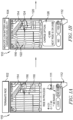
- Figs. 1A-1D constitute a diagrammatic view of an exemplary system for charging a vehicle for localized use, in particular a scooter.
- the scooter may be part of a fleet of scooters that may be activated or deactivated via an application.
- the application may be accessible via a mobile device such as a mobile phone and visible via a display of the mobile device.
- an active riding session is coming to a conclusion.
- the display includes a map 116, geolocation information about the LMV 114, 118, and one or more selectable buttons 111 that a user 112 may select to end the ride.
- Fig. 1B illustrates how the application 110 has updated in response to a selection to end the ride via one of the selectable buttons 111, by the user 112 in Fig. 1A .
- the application 110 may determine and indicate a low battery and the availability of charging 104.
- Application 110 may display map 116 with the location of the LMV 114, locations of vehicles being able to charge the LMV, or charging vehicles 122, and the closest charging vehicle 120 to the LMV.
- Route guidance 124 such as a dashed line, may be provided between the position of the LMV and the position of the closest charging vehicle on the map 116.
- a text box 126 may appear communicating the option for charging, the estimated additional transit time to the charging vehicle, and any incentives for traveling to the charging vehicle.
- the user 112 may indicate they wish to travel to the charging vehicle.
- Fig. 1C illustrates how to access the charger 106 in the charging vehicle 120.
- a one-time charger access such as a trunk unlock message 128, may be communicated to the user 112 and the user may access the trunk by selecting an open button. Additional instructions may be included in message window 128, such as how to load LMV into the trunk or how to couple the LMV to charging infrastructure.
- Fig. 1D illustrating confirmation of charging 108, the application 110 updates with a message 130 to indicate the LMV has been successfully coupled to the charger and that the charging vehicle will be locked upon confirming 132.
- Figs. 2A-2B illustrate two different types of charging infrastructure.
- Fig. 2A illustrates a charging vehicle 200 having trunk-accessible charging infrastructure 211.
- the trunk-accessible charging infrastructure includes an outlet, for example a 12-volt or 48-volt battery, and corresponding outlet 208 and a charging cable or other coupling device 210 for wired or wireless charging of the LMV 214.
- LMV 214 may be secured in the trunk 204 with one or more mountings or securing mechanisms to prevent the LMV 214 from moving while the charging vehicle 200 is in motion.
- Tailgate 206 may be closed once the LMV 214 is coupled to the charging infrastructure 211 so that the LMV does not take up additional space in the environment.
- charging infrastructure 211 may be accessible to LMV 214 outside the vehicle while the vehicle cabin or trunk access remains locked.
- charging infrastructure 211 may comprise the charging vehicle's high voltage battery 209 and a power coupler or cable 210.
- the power coupler 210 may be accessible via a lockable panel covering the cable, on the exterior of the charging vehicle 202.
- Power coupler 210 couples the LMV 214 to the high voltage battery 209 so that the LMV may charge while remaining accessible on a street, curb, sidewalk, or other surface adjacent to and exterior to the charging vehicle 202.
- an LMV active ride session has been started and has been indicated to be complete 302.
- the LMV may be any of a scooter, a bicycle, a battery for a scooter or bicycle, or an electronic vehicle belonging to a fleet of decentralized vehicles.
- a battery of the LMV is determined to be low at 304.
- a low battery may be a battery whose charge is below a predefined threshold.
- a low battery may be a battery below 50% or below 25%.
- Charging vehicles may be, for example, a fleet of rentable vehicles such as a carshare fleet that is decentralized and parked wherever the last user parks it.
- Charging vehicles may also or alternatively include private vehicles.
- a predefined radius relative to the LMV may be searched. For example, a 5-block radius may be searched. Alternatively, the search radius may be adjusted and may be the size of a map that is viewable in the user mobile device window. If there is no vehicle nearby with available charging, then the LMV is simply locked and left at the termination point of the activate ride session 308.
- the user selects to charge the LMV 310. For example, the user may select a particular vehicle closer to their final destination on foot or may simply approve a highlighted closest vehicle to the LMV. If the user does not select the charging option, then the LMV is simply locked in place 312 for the next user. If the charging option is selected then route guidance may be displayed to the user from the LMV to the charging vehicle 314. An indicator of the vehicle with available charging may be provided visually and/or audibly as the LMV operator approaches the charging vehicle 316. For example, the charging vehicle lights may flash and/or the horn may sound when the user of the LMV is on the same block as the charging vehicle to assist the user in identifying the appropriate vehicle.
- This proximity can be based on either a vehicle detection of the LMV or of a mobile device of the user.
- access may be provided to charging infrastructure of the charging vehicle 318. For example, if the charging infrastructure is within the trunk, the user may receive a one-time access via a mobile device to unlock and open the tailgate.
- the charging infrastructure is accessible at the exterior of the vehicle, a one-time access via the mobile device may similarly be provided to unlock and open a panel covering the infrastructure.
- the LMV itself when in proximity to the charging vehicle may function as an access device to that specific charging vehicle.
- the trunk would automatically open as the LMV approaches the charging vehicle.
- the user may then couple the LMV to the charging equipment at 320. This may involve folding the LMV, or otherwise loading the LMV into the trunk of the vehicle and securing it from movement. Then the LMV is coupled to the charging infrastructure via a wired cable or wireless charging.
- a charging indicator may register on the user's mobile device to ensure successful coupling. Then the user may close the trunk and it may securely locked.
- the LMV is simply the battery, the battery may be removed from a bicycle or scooter, placed in the trunk to charge and replaced with an available battery already charged in the vehicle trunk.
- the application 410 depicts available LMVs for a new active ride session.
- the location of the user of the application may be indicated on the map relative to the available LMVs.
- the closest available LMV is indicated to be coupled to the charging infrastructure in a charging vehicle.
- LMVs will only be shown as available when coupled to charging infrastructure if they are fully charged or over a predetermined percentage charged.
- the user may receive a one-time access via a mobile device to unlock and open the tailgate as detailed above with respect to Fig. 3 .
- the user may then disconnect the LMV from the charging infrastructure, remove the LMV and confirm closing the tailgate as discussed above.
- the user may simply disconnect the LMV from charging infrastructure and confirm closing and locking of a panel for exterior charging infrastructure. Then the user may use the application to initiate an active ride session.
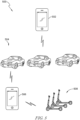
- Fig. 5 illustrates an exemplary charging system in which a first mobile 506 device includes an application configured to communicate with a fleet of shareable LMVs 508 and a fleet of shareable vehicles 504 as described above with respect to Figs. 1-4 .
- a second mobile device 502 may include a second application configured to communicate with the fleet of shareable vehicles 504 that may be configured as charging vehicles.
- the second mobile device 502 may receive information from the fleet of vehicles 504 or from particular vehicles within the fleet of vehicles 504 regarding whether an LMV 508 is charging in or adjacent to the vehicle.
- a map of vehicle icons may appear with indicators as to which vehicles have LMVs in the trunk or which vehicles have LMVs attached on the outside.
- the second mobile device 502 may indicate an incentive, such as a better rate or ride credit, to encourage the user to use the particular charging vehicle so that the LMV may charge while the charging vehicle is operated.
- first and second mobile devices 502, 506 may have one of or both of the first and second applications.
- Fig. 6 is an illustrative embodiment of the application of Figs. 1-4 , in which the application 610 is in a charging seeking mode.
- a user of a fleet vehicle 620 may be terminating a ride.
- the low battery LMVs 614 within a particular proximity may be displayed on a map and the user may adjust his final parking spot in order to be adjacent to an LMV to charge.
- the application may calculate the shortest distance between several LMVs that have a low battery and parked charging vehicles. The Charger would then get an optimized route to drive from LMV to LMV to drop each LMV inside a different charging vehicle for charging.
- LMVs have had to be collected by individuals at the end of the day. Therefore, LMVs may be out of circulation a substantial portion of the day if they are used heavily early in the day and the battery runs out earlier than collection time at the end of the day. The charging takes place over night and LMVs are distributed on the next morning. This takes a lot of time and is not cost effective.
- the systems and methods provide the technical utility of controlled access to decentralized charging infrastructure. In other words, LMVs can be charged as they run out of power and continuously be reintroduced into use throughout the day and night.
- the decentralized system may further reduce transportation efforts for charging, as individuals are not required to be dispatched as chargers.
- Furthermore, by providing charging inside the vehicle there may be a reduction of clutter on streets and sidewalks of LMVs not in use. Additionally, there may be an additional revenue stream to fleets of shared vehicles or individual vehicles that are being used as charging vehicles.
Landscapes
- Engineering & Computer Science (AREA)
- Remote Sensing (AREA)
- Radar, Positioning & Navigation (AREA)
- Mechanical Engineering (AREA)
- Transportation (AREA)
- Power Engineering (AREA)
- Automation & Control Theory (AREA)
- Physics & Mathematics (AREA)
- General Physics & Mathematics (AREA)
- Life Sciences & Earth Sciences (AREA)
- Sustainable Development (AREA)
- Sustainable Energy (AREA)
- Human Computer Interaction (AREA)
- Charge And Discharge Circuits For Batteries Or The Like (AREA)
- Electric Propulsion And Braking For Vehicles (AREA)
Description
- The present disclosure related to systems, components and methodologies for a decentralized charging infrastructure. In particular, the present disclosure related to systems, components, and methodologies for charging localized use vehicles, or last mile vehicles (LMVs), using a dynamically positioned charging infrastructure.
-
GB2555692 -
US2018307226 discloses a remote control system for intelligent vehicle charging. - Disclosed embodiments provide a system for charging localized use vehicles, or LMVs, which may include a mobile device having a display configured to display the locations of one or more localized use vehicle and one or more decentralized charging vehicles and one or more decentralized charging vehicles configured to communicate charging availability to the mobile device and permit access to the system. The system may include means, located on the mobile device, for evaluating the charge state of a localized use vehicle, displaying a decentralized charging vehicle that has charging availability, and providing access to a charging interface of the decentralized charging vehicle so that the localized use vehicle is coupled to the charging interface.
- In some embodiments, the means may be an application on the mobile device configured to activate a localized use vehicle session, track the geographical location of the localized use vehicle used in the activated session, and unlock the trunk or a charging cap to provide access to the charging interface.
- In disclosed embodiments, a device for decentralized charging of localized use vehicle may comprise a mobile device with an application. The application configured to: evaluate the charge state of a localized use vehicle in an active session, display a decentralized charging vehicle that has charging availability, and provide access to a charging interface of the decentralized charging vehicle to couple the localized use vehicle to the charging interface.
- Additional features of the present disclosure will become apparent to those skilled in the art upon consideration of illustrative embodiments exemplifying the best mode of carrying out the disclosure as presently perceived.
- The detailed description particularly refers to the accompanying figures in which:
-
Figs. 1A-D depict a diagrammatic view of an exemplary process of a LMV in the field that is in need of charging and accessing a charger in a fleet vehicle in order to charge the LMV in the field; -
Fig. 1A shows an LMV completing a trip in which the operator is ending the ride in an application; -
Fig. 1B illustrates how the application determines that the battery is low in the LMV and offers a charging option in a nearby parked vehicle; -
Fig. 1C depicts an exemplary trunk access to the charger for charging the LMV; -
Fig. 1D shows a confirmation that the LMV is charging in the trunk of the vehicle; -
Fig. 2A is an exemplary embodiment of a trunk access to charging interface where the LMV is secured in the trunk of the vehicle and the trunk may be closed and locked; -
Fig. 2B is an exemplary embodiment of an exterior access to charging interface in which the LMV may be left on the sidewalk or otherwise adjacent to the exterior to the vehicle; -
Fig. 3 is a diagrammatic flow chart of a method provided in accordance with the disclosed embodiments; -
Fig. 4 is an exemplary embodiment of how an LMV may be retrieved from a vehicle; -
Fig. 5 is a schematic diagram of mobile devices in communication with a fleet of decentralized charging vehicles and a fleet of LMVs in accordance with the disclosed embodiments; and -
Fig. 6 is an exemplary embodiment of how a charging vehicle may identify one or more LMVs in need of charging. - The figures and descriptions provided herein may have been simplified to illustrate aspects that are relevant for a clear understanding of the herein described devices, systems, and methods, while eliminating, for the purpose of clarity, other aspects that may be found in typical devices, systems, and methods. Those of ordinary skill may recognize that other elements and/or operations may be desirable and/or necessary to implement the devices, systems, and methods described herein. Because such elements and operations are well known in the art, and because they do not facilitate a better understanding of the present disclosure, a discussion of such elements and operations may not be provided herein. However, the present disclosure is deemed to inherently include all such elements, variations, and modifications to the described aspects that would be known to those of ordinary skill in the art.
-
Figs. 1A-1D constitute a diagrammatic view of an exemplary system for charging a vehicle for localized use, in particular a scooter. The scooter may be part of a fleet of scooters that may be activated or deactivated via an application. The application may be accessible via a mobile device such as a mobile phone and visible via a display of the mobile device. - As seen in
Fig. 1A , an active riding session is coming to a conclusion. Anapplication 110 in which the active session displays anLMV 114 at location at the point the user wishes to terminate theride 102. The display includes amap 116, geolocation information about theLMV selectable buttons 111 that auser 112 may select to end the ride. -
Fig. 1B illustrates how theapplication 110 has updated in response to a selection to end the ride via one of theselectable buttons 111, by theuser 112 inFig. 1A . Theapplication 110 may determine and indicate a low battery and the availability ofcharging 104.Application 110 may displaymap 116 with the location of the LMV 114, locations of vehicles being able to charge the LMV, or chargingvehicles 122, and theclosest charging vehicle 120 to the LMV.Route guidance 124, such as a dashed line, may be provided between the position of the LMV and the position of the closest charging vehicle on themap 116. Additionally, atext box 126 may appear communicating the option for charging, the estimated additional transit time to the charging vehicle, and any incentives for traveling to the charging vehicle. Theuser 112 may indicate they wish to travel to the charging vehicle. -
Fig. 1C illustrates how to access thecharger 106 in thecharging vehicle 120. When the LMV 114 reaches thecharging vehicle 120, a one-time charger access, such as atrunk unlock message 128, may be communicated to theuser 112 and the user may access the trunk by selecting an open button. Additional instructions may be included inmessage window 128, such as how to load LMV into the trunk or how to couple the LMV to charging infrastructure. InFig. 1D , illustrating confirmation of charging 108, theapplication 110 updates with amessage 130 to indicate the LMV has been successfully coupled to the charger and that the charging vehicle will be locked upon confirming 132. -
Figs. 2A-2B illustrate two different types of charging infrastructure.Fig. 2A illustrates acharging vehicle 200 having trunk-accessible charging infrastructure 211. The trunk-accessible charging infrastructure includes an outlet, for example a 12-volt or 48-volt battery, and correspondingoutlet 208 and a charging cable orother coupling device 210 for wired or wireless charging of theLMV 214. LMV 214 may be secured in thetrunk 204 with one or more mountings or securing mechanisms to prevent theLMV 214 from moving while thecharging vehicle 200 is in motion.Tailgate 206 may be closed once theLMV 214 is coupled to thecharging infrastructure 211 so that the LMV does not take up additional space in the environment.Fig. 2B illustrates a chargingvehicle 202 in whichcharging infrastructure 211 may be accessible toLMV 214 outside the vehicle while the vehicle cabin or trunk access remains locked. For example, charginginfrastructure 211 may comprise the charging vehicle'shigh voltage battery 209 and a power coupler orcable 210. Thepower coupler 210 may be accessible via a lockable panel covering the cable, on the exterior of the chargingvehicle 202.Power coupler 210 couples theLMV 214 to thehigh voltage battery 209 so that the LMV may charge while remaining accessible on a street, curb, sidewalk, or other surface adjacent to and exterior to the chargingvehicle 202. - In a method for decentralized charging of an LMV 300, an LMV active ride session has been started and has been indicated to be complete 302. For example, the LMV may be any of a scooter, a bicycle, a battery for a scooter or bicycle, or an electronic vehicle belonging to a fleet of decentralized vehicles. A battery of the LMV is determined to be low at 304. A low battery may be a battery whose charge is below a predefined threshold. For example, a low battery may be a battery below 50% or below 25%. Next it is determined if there is a vehicle nearby that has available charging 306. Charging vehicles may be, for example, a fleet of rentable vehicles such as a carshare fleet that is decentralized and parked wherever the last user parks it. Charging vehicles may also or alternatively include private vehicles. A predefined radius relative to the LMV may be searched. For example, a 5-block radius may be searched. Alternatively, the search radius may be adjusted and may be the size of a map that is viewable in the user mobile device window. If there is no vehicle nearby with available charging, then the LMV is simply locked and left at the termination point of the activate
ride session 308. - If there is a charging vehicle nearby, it is further determined if the user selects to charge the
LMV 310. For example, the user may select a particular vehicle closer to their final destination on foot or may simply approve a highlighted closest vehicle to the LMV. If the user does not select the charging option, then the LMV is simply locked inplace 312 for the next user. If the charging option is selected then route guidance may be displayed to the user from the LMV to the chargingvehicle 314. An indicator of the vehicle with available charging may be provided visually and/or audibly as the LMV operator approaches the chargingvehicle 316. For example, the charging vehicle lights may flash and/or the horn may sound when the user of the LMV is on the same block as the charging vehicle to assist the user in identifying the appropriate vehicle. This proximity can be based on either a vehicle detection of the LMV or of a mobile device of the user. Once the LMV has arrived at the vehicle, access may be provided to charging infrastructure of the chargingvehicle 318. For example, if the charging infrastructure is within the trunk, the user may receive a one-time access via a mobile device to unlock and open the tailgate. - An example of mobile access is provided in
US 20170325095 , incorporated by reference. - Furthermore, if the charging infrastructure is accessible at the exterior of the vehicle, a one-time access via the mobile device may similarly be provided to unlock and open a panel covering the infrastructure. In some embodiments, the LMV itself, when in proximity to the charging vehicle may function as an access device to that specific charging vehicle. In this embodiment, the trunk would automatically open as the LMV approaches the charging vehicle. Accordingly, the user may then couple the LMV to the charging equipment at 320. This may involve folding the LMV, or otherwise loading the LMV into the trunk of the vehicle and securing it from movement. Then the LMV is coupled to the charging infrastructure via a wired cable or wireless charging. A charging indicator may register on the user's mobile device to ensure successful coupling. Then the user may close the trunk and it may securely locked. In examples where the LMV is simply the battery, the battery may be removed from a bicycle or scooter, placed in the trunk to charge and replaced with an available battery already charged in the vehicle trunk.
- As seen in
Fig. 4 , theapplication 410 depicts available LMVs for a new active ride session. The location of the user of the application may be indicated on the map relative to the available LMVs. In this example, the closest available LMV is indicated to be coupled to the charging infrastructure in a charging vehicle. In some embodiments, LMVs will only be shown as available when coupled to charging infrastructure if they are fully charged or over a predetermined percentage charged. In this embodiment, when the user andapplication 410 are within a predetermined distance of the charging vehicle, the user may receive a one-time access via a mobile device to unlock and open the tailgate as detailed above with respect toFig. 3 . The user may then disconnect the LMV from the charging infrastructure, remove the LMV and confirm closing the tailgate as discussed above. Likewise, the user may simply disconnect the LMV from charging infrastructure and confirm closing and locking of a panel for exterior charging infrastructure. Then the user may use the application to initiate an active ride session. -
Fig. 5 illustrates an exemplary charging system in which a first mobile 506 device includes an application configured to communicate with a fleet ofshareable LMVs 508 and a fleet ofshareable vehicles 504 as described above with respect toFigs. 1-4 . A secondmobile device 502 may include a second application configured to communicate with the fleet ofshareable vehicles 504 that may be configured as charging vehicles. The secondmobile device 502 may receive information from the fleet ofvehicles 504 or from particular vehicles within the fleet ofvehicles 504 regarding whether anLMV 508 is charging in or adjacent to the vehicle. For example, when a user of the secondmobile device 502 accesses the second application and wishes to initiate an active riding session in a vehicle, a map of vehicle icons may appear with indicators as to which vehicles have LMVs in the trunk or which vehicles have LMVs attached on the outside. In some embodiments, when the LMV is in the trunk, the secondmobile device 502 may indicate an incentive, such as a better rate or ride credit, to encourage the user to use the particular charging vehicle so that the LMV may charge while the charging vehicle is operated. In some embodiment's first and secondmobile devices -
Fig. 6 is an illustrative embodiment of the application ofFigs. 1-4 , in which theapplication 610 is in a charging seeking mode. In this mode, for example, a user of afleet vehicle 620 may be terminating a ride. Thelow battery LMVs 614 within a particular proximity may be displayed on a map and the user may adjust his final parking spot in order to be adjacent to an LMV to charge. Additionally, using the existing model of having a dedicated or assigned "Charger" who collects and charges multiple LMVs, the application may calculate the shortest distance between several LMVs that have a low battery and parked charging vehicles. The Charger would then get an optimized route to drive from LMV to LMV to drop each LMV inside a different charging vehicle for charging. - To date LMVs have had to be collected by individuals at the end of the day. Therefore, LMVs may be out of circulation a substantial portion of the day if they are used heavily early in the day and the battery runs out earlier than collection time at the end of the day. The charging takes place over night and LMVs are distributed on the next morning. This takes a lot of time and is not cost effective. By using a decentralized fleet of shared vehicles as described above, the systems and methods provide the technical utility of controlled access to decentralized charging infrastructure. In other words, LMVs can be charged as they run out of power and continuously be reintroduced into use throughout the day and night. The decentralized system may further reduce transportation efforts for charging, as individuals are not required to be dispatched as chargers. Furthermore, by providing charging inside the vehicle, there may be a reduction of clutter on streets and sidewalks of LMVs not in use. Additionally, there may be an additional revenue stream to fleets of shared vehicles or individual vehicles that are being used as charging vehicles.
- Although certain embodiments have been described and illustrated in exemplary forms with a certain degree of particularity, it is noted that the description and illustrations have been made by way of example only and the invention is merely defined by the scope of the appended claims.
Claims (15)
- A method for charging a localized use vehicle (214, 508) comprising the following steps performed by a mobile device (502, 506):evaluating (304) the charge state of a localized use vehicle,tracking the geographical location of the localized use vehicle,characterised in that it further comprises the steps of,determining (306) a decentralized charging vehicle (200, 504) being within a predefined distance of the localized use vehicle and having charging availability,displaying (314) the decentralized charging vehicle that has charging availability, andproviding (318) access to a charging interface of the decentralized charging vehicle to couple the localized use vehicle to the charging interface by unlocking the trunk (204) or a charging cap of the decentralized charging vehicle.
- The method of claim 1, wherein the method is performed by an application (110, 410) on the mobile device (502, 506).
- The method of claim 1 or 2, further comprising activating a vehicle session, and notifying a user whether a vehicle available for a vehicle session is charging a localized use vehicle (214, 508) at a time prior to activation of the vehicle session.
- The method of any of claims 1 to 3, wherein the decentralized charging vehicle (200, 504) that has charging availability is configured to provide a visual or audible indicator in response to the mobile device (502, 506) being in proximity to the vehicle.
- The method of any of claim 1 to 4, wherein the one or more decentralized charging vehicles (200, 504) comprises a charging interface accessible in the trunk (204) of the vehicle and comprises a power cord coupled to a power supply of the vehicle, and the localized use vehicle is positioned in the vehicle trunk (204) in a charge position.
- The method of any of claim 1 to 4, wherein the one or more decentralized charging vehicles comprises a charging interface accessible on the exterior of the vehicle and comprises a power cord (210) coupled to a high voltage battery (209) of the vehicle, and the localized use vehicle is positioned exterior to the vehicle in a charge position.
- A mobile device (502, 506) with an application (110, 410) for decentralized charging of a localized use vehicle (214, 508), the application configured to:evaluate the charge state of a localized use vehicle,track the geographical location of the localized use vehicle,characterised in that the application is further configured to:determine a decentralized charging vehicle being within a predefined distance of the localized use vehicle and having charging availability,display the decentralized charging vehicle that has charging availability, andprovide access to a charging interface of the decentralized charging vehicle to couple the localized use vehicle to the charging interface by unlocking the trunk (204) or a charging cap of the decentralized charging vehicle.
- The mobile device of claim 7, wherein the application (110, 410) on the mobile device (502, 506) is further configured to activate a localized use vehicle session.
- The method of any of claims 2 to 6, or the mobile device of claim 7 or 8, wherein the application (110, 410) provides a one-time access prompt to unlock the trunk (204) or the charging cap.
- The method of any of claims 1 to 6 or 9, or the mobile device of any of claims 7 to 9, wherein the decentralized charging vehicle (200, 504) that has charging availability is displayed in response to all of: the charge state of the localized use vehicle (214, 508) being below a certain threshold, a user terminating the active session, and the decentralized charging vehicle being within a predefined distance of the localized use vehicle at the time of termination of the active session.
- The method of any of claims 1 to 6, 9 or 10, or the mobile device of any of claims 7 to 10, wherein the application (110, 410) further displays a map (116) of localized use vehicles available to activate a new active session.
- The method of claim 11 or the mobile device of claim 11, where the display includes localized use vehicles coupled to charging interfaces of decentralized charging vehicles.
- The method of any of claims 2 to 6, 9 to 12, or the mobile device of any of claims 7 to 12, wherein the application (110, 410) permits selection of a localized use vehicle coupled to a charging interface of the plurality of localized use vehicles coupled to the plurality of charging interfaces.
- The method of claim 13 or the mobile device of claim 13, wherein, in response to the mobile device (502, 506) being in proximity to the selected localized use vehicle, the application (110, 410) provides a one-time access prompt to unlock the trunk (204) of the vehicle to access the localized use vehicle.
- The method of any of claims 1 to 6, 9 to 14, or the mobile device of any of claims 7 to 14, wherein the localized use vehicle (214, 508) comprises one of a scooter, a bicycle, or a fleet vehicle, and/or wherein the one or more decentralized charging vehicles (200, 504) comprises a fleet of shared vehicles and/or privately owned vehicles.
Applications Claiming Priority (1)
| Application Number | Priority Date | Filing Date | Title |
|---|---|---|---|
| US16/521,759 US11733056B2 (en) | 2019-07-25 | 2019-07-25 | Decentralized LMV charging infrastructure |
Publications (2)
| Publication Number | Publication Date |
|---|---|
| EP3770003A1 EP3770003A1 (en) | 2021-01-27 |
| EP3770003B1 true EP3770003B1 (en) | 2023-09-06 |
Family
ID=71786783
Family Applications (1)
| Application Number | Title | Priority Date | Filing Date |
|---|---|---|---|
| EP20187590.3A Active EP3770003B1 (en) | 2019-07-25 | 2020-07-24 | Decentralized lmv charging infrastructure |
Country Status (3)
| Country | Link |
|---|---|
| US (1) | US11733056B2 (en) |
| EP (1) | EP3770003B1 (en) |
| CN (1) | CN112277666B (en) |
Families Citing this family (5)
| Publication number | Priority date | Publication date | Assignee | Title |
|---|---|---|---|---|
| DE102020205561A1 (en) * | 2020-04-30 | 2021-11-04 | INSTATE GmbH | Curb module, curb module group, charging station and method for operating such devices |
| US11890957B2 (en) * | 2020-05-06 | 2024-02-06 | University Of Florida Research Foundation, Incorporated | System and method for a battery on wheels (BoW) for charging mobile battery-operated units |
| KR20220120838A (en) * | 2021-02-24 | 2022-08-31 | 현대자동차주식회사 | Vehicle and its control method |
| US12580392B2 (en) * | 2021-11-15 | 2026-03-17 | Caterpillar Paving Products Inc. | System, apparatus, and method for machine-to-machine charging at a worksite |
| JP7746980B2 (en) * | 2022-12-23 | 2025-10-01 | トヨタ自動車株式会社 | Information transmission device |
Family Cites Families (34)
| Publication number | Priority date | Publication date | Assignee | Title |
|---|---|---|---|---|
| US9566868B2 (en) * | 2010-07-01 | 2017-02-14 | Nation-E Ltd. | Real-time system and method for tracking, locating and recharging electric vehicles in transit |
| US20200175551A1 (en) * | 2011-04-22 | 2020-06-04 | Emerging Automotive, Llc | Electric vehicle batteries and stations for charging batteries |
| BR112013032908B1 (en) * | 2011-06-20 | 2023-01-10 | The Aes Corporation | APPARATUS AND METHOD FOR CONTROLLING POWER SERVICE EQUIPMENT CONNECTED TO AN ELECTRICAL POWER NETWORK AND READABLE STORAGE MEDIA |
| CN108082002B (en) * | 2012-02-13 | 2021-06-22 | 埃森哲环球服务有限公司 | Method and system for distributed intelligence for power tracking and power distribution |
| US20140081490A1 (en) * | 2012-09-14 | 2014-03-20 | Plug-In Conversions Corporation | System and method of converting a standard hybrid vehicle into a plug-in hybrid electric vehicle (phev) |
| MX344295B (en) * | 2012-09-19 | 2016-12-13 | Nissan Motor | Charge port structure. |
| US9199548B2 (en) * | 2013-09-30 | 2015-12-01 | Elwha Llc | Communication and control regarding electricity provider for wireless electric vehicle electrical energy transfer |
| US20150226566A1 (en) * | 2014-02-07 | 2015-08-13 | Recargo, Inc. | Determining a route of travel for an electric vehicle |
| US10124852B2 (en) * | 2014-07-22 | 2018-11-13 | Ford Global Technologies, Llc | Internal vehicle docking arm and storage |
| GB201512713D0 (en) * | 2014-08-01 | 2015-08-26 | Ford Global Tech Llc | Electric bicycle |
| US9658076B2 (en) | 2014-10-06 | 2017-05-23 | Ford Global Technologies, Llc | Vehicle and electric bicycle charge monitoring interface |
| US9709988B2 (en) * | 2015-12-09 | 2017-07-18 | Ford Global Technologies, Llc | Identification of acceptable vehicle charge stations |
| EP3206176A1 (en) | 2016-02-09 | 2017-08-16 | Volkswagen Aktiengesellschaft | Method, devices, and computer programs for providing a lock control signal for a mobile logistics destination |
| KR101916511B1 (en) * | 2016-05-16 | 2018-11-07 | 현대자동차주식회사 | Vehicle system and battery charging method thereof |
| WO2017205690A1 (en) * | 2016-05-25 | 2017-11-30 | Chargepoint, Inc. | Dynamic allocation of power modules for charging electric vehicles |
| WO2017217929A1 (en) | 2016-06-16 | 2017-12-21 | Neuron Mobility Pte Ltd. | Docking station for motorised vehicles |
| US20180060776A1 (en) | 2016-08-29 | 2018-03-01 | Ford Global Technologies, Llc | Optimizing Selection of Battery Electric Vehicles to Perform Delivery Tasks |
| CN107843265A (en) * | 2016-09-21 | 2018-03-27 | 福特环球技术公司 | Vehicular system, be mounted with secondary vehicle vehicle navigation system and traveling method |
| CN108116242B (en) | 2016-11-28 | 2022-04-12 | 奥迪股份公司 | Transport vehicle, electric vehicle and electric vehicle charging method |
| US10272793B2 (en) * | 2017-04-04 | 2019-04-30 | Ford Global Technologies, Llc | System and method for determining availability of vehicle charging stations |
| US11584240B2 (en) | 2017-04-19 | 2023-02-21 | Arnold Chase | Intelligent vehicle charging station |
| WO2019105052A1 (en) * | 2017-11-30 | 2019-06-06 | Beijing Didi Infinity Technology And Development Co., Ltd. | Systems and methods for electric vehicle charging |
| JP7082536B2 (en) * | 2018-07-02 | 2022-06-08 | 本田技研工業株式会社 | Electric vehicle support system |
| US10419904B2 (en) * | 2018-10-24 | 2019-09-17 | Neuron Corporation | Mobile connectivity and self-generating illumination electric scooter |
| US11376979B2 (en) * | 2019-02-20 | 2022-07-05 | University Of Florida Research Foundation, Incorporated | System and method for charging a network of mobile battery-operated units on-the-go |
| US11192463B2 (en) * | 2019-05-08 | 2021-12-07 | Honda Motor Co., Ltd. | Cooperative automotive mobile charging infrastructure |
| JP7360269B2 (en) * | 2019-08-01 | 2023-10-12 | 株式会社Subaru | Vehicle travel control device |
| US12049151B2 (en) * | 2020-03-10 | 2024-07-30 | University Of Florida Research Foundation, Incorporated | Multi-level battery systems for battery-operated entities, methods for rapid charge transfer therebetween, and methods for optimizing entity routing and network charge distribution |
| US11552507B2 (en) * | 2020-03-17 | 2023-01-10 | Toyota Motor North America, Inc. | Wirelessly notifying a transport to provide a portion of energy |
| US11485247B2 (en) * | 2020-03-23 | 2022-11-01 | Gm Cruise Holdings Llc | Dispatch-based charging for electric vehicle fleet |
| US20210323420A1 (en) * | 2020-04-21 | 2021-10-21 | Toyota Motor North America, Inc. | Vehicle to vehicle wireless energy transfer |
| US11535113B2 (en) * | 2020-05-05 | 2022-12-27 | Toyota Motor North America, Inc. | Transport battery recharging via virtual power plant |
| US11890957B2 (en) * | 2020-05-06 | 2024-02-06 | University Of Florida Research Foundation, Incorporated | System and method for a battery on wheels (BoW) for charging mobile battery-operated units |
| US11760223B2 (en) * | 2020-06-23 | 2023-09-19 | Toyota Motor North America, Inc. | Need-based energy sharing |
-
2019
- 2019-07-25 US US16/521,759 patent/US11733056B2/en active Active
-
2020
- 2020-07-24 CN CN202010722061.4A patent/CN112277666B/en active Active
- 2020-07-24 EP EP20187590.3A patent/EP3770003B1/en active Active
Also Published As
| Publication number | Publication date |
|---|---|
| CN112277666B (en) | 2023-09-26 |
| US11733056B2 (en) | 2023-08-22 |
| CN112277666A (en) | 2021-01-29 |
| US20210025728A1 (en) | 2021-01-28 |
| EP3770003A1 (en) | 2021-01-27 |
Similar Documents
| Publication | Publication Date | Title |
|---|---|---|
| EP3770003B1 (en) | Decentralized lmv charging infrastructure | |
| EP2447107B1 (en) | Information providing device, information providing server, vehicle assistance system, navigation device, and charging cable | |
| EP1067498B1 (en) | Shared vehicle system and method involving reserving vehicles with highest states of electrical charge | |
| US20120109519A1 (en) | System and method for routing bev to charging station | |
| US6947881B1 (en) | Shared vehicle system and method with vehicle relocation | |
| US6941197B1 (en) | Vehicle sharing system and method with vehicle parameter tracking | |
| US6850898B1 (en) | Vehicle sharing system and method for allocating vehicles based on state of charge | |
| US6636145B1 (en) | Vehicle sharing system and method with parking state detection | |
| US6253980B1 (en) | Shared vehicle system and method with system for carrying a first vehicle with a second vehicle | |
| JP4486650B2 (en) | Vehicle share management device and vehicle share management method | |
| KR101211374B1 (en) | Auto parking control system using mobile device | |
| EP1067480A2 (en) | Vehicle sharing system and method with vehicle allocation based on travel information | |
| CN102971775A (en) | Method for determining a parking space in the vicinity of a motor vehicle and a motor vehicle assistance system suitable therefor | |
| CA2648972A1 (en) | System and method for improved electric cars and/or electric car batteries and/or improved infrastructures for recharging electric cars | |
| GB2460500A (en) | Electric cars, electric car batteries, and infrastructures for recharging electric cars | |
| DE112011104788T5 (en) | Charging advisory device and on-board navigation system | |
| WO2015143097A1 (en) | Determining parking status and parking availability | |
| AU2008264146A1 (en) | System and method for improved electric cars and/or electric car batteries and/or improved infrastructures for recharging electric cars. | |
| EP4402015A1 (en) | Method for determining an intelligent preselection of suitable charging stations for carrying out a charging stop, charging stop planning assistant, and vehicle | |
| KR20160051985A (en) | Call taxi service method and call taxi service server | |
| JP2015094695A (en) | Electric vehicle driving support system | |
| JP7354945B2 (en) | Car sharing fee system | |
| JP2021167759A (en) | Inter-vehicle energy transfer support system, inter-vehicle energy transfer support device and computer program | |
| KR20200065824A (en) | Auto reservation system for battery exchanging of electric two-wheeled vehicle and auto reservation method for battery exchanging of electric two-wheeled vehicle | |
| WO2011163623A1 (en) | System for charging an electric vehicle |
Legal Events
| Date | Code | Title | Description |
|---|---|---|---|
| PUAI | Public reference made under article 153(3) epc to a published international application that has entered the european phase |
Free format text: ORIGINAL CODE: 0009012 |
|
| STAA | Information on the status of an ep patent application or granted ep patent |
Free format text: STATUS: THE APPLICATION HAS BEEN PUBLISHED |
|
| AK | Designated contracting states |
Kind code of ref document: A1 Designated state(s): AL AT BE BG CH CY CZ DE DK EE ES FI FR GB GR HR HU IE IS IT LI LT LU LV MC MK MT NL NO PL PT RO RS SE SI SK SM TR |
|
| AX | Request for extension of the european patent |
Extension state: BA ME |
|
| STAA | Information on the status of an ep patent application or granted ep patent |
Free format text: STATUS: REQUEST FOR EXAMINATION WAS MADE |
|
| 17P | Request for examination filed |
Effective date: 20210727 |
|
| RBV | Designated contracting states (corrected) |
Designated state(s): AL AT BE BG CH CY CZ DE DK EE ES FI FR GB GR HR HU IE IS IT LI LT LU LV MC MK MT NL NO PL PT RO RS SE SI SK SM TR |
|
| GRAP | Despatch of communication of intention to grant a patent |
Free format text: ORIGINAL CODE: EPIDOSNIGR1 |
|
| STAA | Information on the status of an ep patent application or granted ep patent |
Free format text: STATUS: GRANT OF PATENT IS INTENDED |
|
| INTG | Intention to grant announced |
Effective date: 20230329 |
|
| GRAS | Grant fee paid |
Free format text: ORIGINAL CODE: EPIDOSNIGR3 |
|
| P01 | Opt-out of the competence of the unified patent court (upc) registered |
Effective date: 20230529 |
|
| GRAA | (expected) grant |
Free format text: ORIGINAL CODE: 0009210 |
|
| STAA | Information on the status of an ep patent application or granted ep patent |
Free format text: STATUS: THE PATENT HAS BEEN GRANTED |
|
| AK | Designated contracting states |
Kind code of ref document: B1 Designated state(s): AL AT BE BG CH CY CZ DE DK EE ES FI FR GB GR HR HU IE IS IT LI LT LU LV MC MK MT NL NO PL PT RO RS SE SI SK SM TR |
|
| REG | Reference to a national code |
Ref country code: GB Ref legal event code: FG4D |
|
| REG | Reference to a national code |
Ref country code: CH Ref legal event code: EP |
|
| REG | Reference to a national code |
Ref country code: DE Ref legal event code: R096 Ref document number: 602020017093 Country of ref document: DE |
|
| REG | Reference to a national code |
Ref country code: IE Ref legal event code: FG4D |
|
| REG | Reference to a national code |
Ref country code: LT Ref legal event code: MG9D |
|
| REG | Reference to a national code |
Ref country code: NL Ref legal event code: MP Effective date: 20230906 |
|
| PG25 | Lapsed in a contracting state [announced via postgrant information from national office to epo] |
Ref country code: GR Free format text: LAPSE BECAUSE OF FAILURE TO SUBMIT A TRANSLATION OF THE DESCRIPTION OR TO PAY THE FEE WITHIN THE PRESCRIBED TIME-LIMIT Effective date: 20231207 |
|
| PG25 | Lapsed in a contracting state [announced via postgrant information from national office to epo] |
Ref country code: SE Free format text: LAPSE BECAUSE OF FAILURE TO SUBMIT A TRANSLATION OF THE DESCRIPTION OR TO PAY THE FEE WITHIN THE PRESCRIBED TIME-LIMIT Effective date: 20230906 Ref country code: RS Free format text: LAPSE BECAUSE OF FAILURE TO SUBMIT A TRANSLATION OF THE DESCRIPTION OR TO PAY THE FEE WITHIN THE PRESCRIBED TIME-LIMIT Effective date: 20230906 Ref country code: NO Free format text: LAPSE BECAUSE OF FAILURE TO SUBMIT A TRANSLATION OF THE DESCRIPTION OR TO PAY THE FEE WITHIN THE PRESCRIBED TIME-LIMIT Effective date: 20231206 Ref country code: LV Free format text: LAPSE BECAUSE OF FAILURE TO SUBMIT A TRANSLATION OF THE DESCRIPTION OR TO PAY THE FEE WITHIN THE PRESCRIBED TIME-LIMIT Effective date: 20230906 Ref country code: LT Free format text: LAPSE BECAUSE OF FAILURE TO SUBMIT A TRANSLATION OF THE DESCRIPTION OR TO PAY THE FEE WITHIN THE PRESCRIBED TIME-LIMIT Effective date: 20230906 Ref country code: HR Free format text: LAPSE BECAUSE OF FAILURE TO SUBMIT A TRANSLATION OF THE DESCRIPTION OR TO PAY THE FEE WITHIN THE PRESCRIBED TIME-LIMIT Effective date: 20230906 Ref country code: GR Free format text: LAPSE BECAUSE OF FAILURE TO SUBMIT A TRANSLATION OF THE DESCRIPTION OR TO PAY THE FEE WITHIN THE PRESCRIBED TIME-LIMIT Effective date: 20231207 Ref country code: FI Free format text: LAPSE BECAUSE OF FAILURE TO SUBMIT A TRANSLATION OF THE DESCRIPTION OR TO PAY THE FEE WITHIN THE PRESCRIBED TIME-LIMIT Effective date: 20230906 |
|
| REG | Reference to a national code |
Ref country code: AT Ref legal event code: MK05 Ref document number: 1608119 Country of ref document: AT Kind code of ref document: T Effective date: 20230906 |
|
| PG25 | Lapsed in a contracting state [announced via postgrant information from national office to epo] |
Ref country code: NL Free format text: LAPSE BECAUSE OF FAILURE TO SUBMIT A TRANSLATION OF THE DESCRIPTION OR TO PAY THE FEE WITHIN THE PRESCRIBED TIME-LIMIT Effective date: 20230906 |
|
| PG25 | Lapsed in a contracting state [announced via postgrant information from national office to epo] |
Ref country code: IS Free format text: LAPSE BECAUSE OF FAILURE TO SUBMIT A TRANSLATION OF THE DESCRIPTION OR TO PAY THE FEE WITHIN THE PRESCRIBED TIME-LIMIT Effective date: 20240106 |
|
| PG25 | Lapsed in a contracting state [announced via postgrant information from national office to epo] |
Ref country code: AT Free format text: LAPSE BECAUSE OF FAILURE TO SUBMIT A TRANSLATION OF THE DESCRIPTION OR TO PAY THE FEE WITHIN THE PRESCRIBED TIME-LIMIT Effective date: 20230906 |
|
| PG25 | Lapsed in a contracting state [announced via postgrant information from national office to epo] |
Ref country code: ES Free format text: LAPSE BECAUSE OF FAILURE TO SUBMIT A TRANSLATION OF THE DESCRIPTION OR TO PAY THE FEE WITHIN THE PRESCRIBED TIME-LIMIT Effective date: 20230906 |
|
| PG25 | Lapsed in a contracting state [announced via postgrant information from national office to epo] |
Ref country code: SM Free format text: LAPSE BECAUSE OF FAILURE TO SUBMIT A TRANSLATION OF THE DESCRIPTION OR TO PAY THE FEE WITHIN THE PRESCRIBED TIME-LIMIT Effective date: 20230906 Ref country code: RO Free format text: LAPSE BECAUSE OF FAILURE TO SUBMIT A TRANSLATION OF THE DESCRIPTION OR TO PAY THE FEE WITHIN THE PRESCRIBED TIME-LIMIT Effective date: 20230906 Ref country code: IS Free format text: LAPSE BECAUSE OF FAILURE TO SUBMIT A TRANSLATION OF THE DESCRIPTION OR TO PAY THE FEE WITHIN THE PRESCRIBED TIME-LIMIT Effective date: 20240106 Ref country code: ES Free format text: LAPSE BECAUSE OF FAILURE TO SUBMIT A TRANSLATION OF THE DESCRIPTION OR TO PAY THE FEE WITHIN THE PRESCRIBED TIME-LIMIT Effective date: 20230906 Ref country code: EE Free format text: LAPSE BECAUSE OF FAILURE TO SUBMIT A TRANSLATION OF THE DESCRIPTION OR TO PAY THE FEE WITHIN THE PRESCRIBED TIME-LIMIT Effective date: 20230906 Ref country code: CZ Free format text: LAPSE BECAUSE OF FAILURE TO SUBMIT A TRANSLATION OF THE DESCRIPTION OR TO PAY THE FEE WITHIN THE PRESCRIBED TIME-LIMIT Effective date: 20230906 Ref country code: AT Free format text: LAPSE BECAUSE OF FAILURE TO SUBMIT A TRANSLATION OF THE DESCRIPTION OR TO PAY THE FEE WITHIN THE PRESCRIBED TIME-LIMIT Effective date: 20230906 Ref country code: PT Free format text: LAPSE BECAUSE OF FAILURE TO SUBMIT A TRANSLATION OF THE DESCRIPTION OR TO PAY THE FEE WITHIN THE PRESCRIBED TIME-LIMIT Effective date: 20240108 Ref country code: SK Free format text: LAPSE BECAUSE OF FAILURE TO SUBMIT A TRANSLATION OF THE DESCRIPTION OR TO PAY THE FEE WITHIN THE PRESCRIBED TIME-LIMIT Effective date: 20230906 |
|
| PG25 | Lapsed in a contracting state [announced via postgrant information from national office to epo] |
Ref country code: PL Free format text: LAPSE BECAUSE OF FAILURE TO SUBMIT A TRANSLATION OF THE DESCRIPTION OR TO PAY THE FEE WITHIN THE PRESCRIBED TIME-LIMIT Effective date: 20230906 Ref country code: IT Free format text: LAPSE BECAUSE OF FAILURE TO SUBMIT A TRANSLATION OF THE DESCRIPTION OR TO PAY THE FEE WITHIN THE PRESCRIBED TIME-LIMIT Effective date: 20230906 |
|
| REG | Reference to a national code |
Ref country code: DE Ref legal event code: R097 Ref document number: 602020017093 Country of ref document: DE |
|
| PG25 | Lapsed in a contracting state [announced via postgrant information from national office to epo] |
Ref country code: DK Free format text: LAPSE BECAUSE OF FAILURE TO SUBMIT A TRANSLATION OF THE DESCRIPTION OR TO PAY THE FEE WITHIN THE PRESCRIBED TIME-LIMIT Effective date: 20230906 |
|
| PLBE | No opposition filed within time limit |
Free format text: ORIGINAL CODE: 0009261 |
|
| STAA | Information on the status of an ep patent application or granted ep patent |
Free format text: STATUS: NO OPPOSITION FILED WITHIN TIME LIMIT |
|
| PG25 | Lapsed in a contracting state [announced via postgrant information from national office to epo] |
Ref country code: DK Free format text: LAPSE BECAUSE OF FAILURE TO SUBMIT A TRANSLATION OF THE DESCRIPTION OR TO PAY THE FEE WITHIN THE PRESCRIBED TIME-LIMIT Effective date: 20230906 Ref country code: SI Free format text: LAPSE BECAUSE OF FAILURE TO SUBMIT A TRANSLATION OF THE DESCRIPTION OR TO PAY THE FEE WITHIN THE PRESCRIBED TIME-LIMIT Effective date: 20230906 |
|
| 26N | No opposition filed |
Effective date: 20240607 |
|
| PG25 | Lapsed in a contracting state [announced via postgrant information from national office to epo] |
Ref country code: BG Free format text: LAPSE BECAUSE OF FAILURE TO SUBMIT A TRANSLATION OF THE DESCRIPTION OR TO PAY THE FEE WITHIN THE PRESCRIBED TIME-LIMIT Effective date: 20230906 |
|
| PG25 | Lapsed in a contracting state [announced via postgrant information from national office to epo] |
Ref country code: BG Free format text: LAPSE BECAUSE OF FAILURE TO SUBMIT A TRANSLATION OF THE DESCRIPTION OR TO PAY THE FEE WITHIN THE PRESCRIBED TIME-LIMIT Effective date: 20230906 |
|
| PG25 | Lapsed in a contracting state [announced via postgrant information from national office to epo] |
Ref country code: MC Free format text: LAPSE BECAUSE OF FAILURE TO SUBMIT A TRANSLATION OF THE DESCRIPTION OR TO PAY THE FEE WITHIN THE PRESCRIBED TIME-LIMIT Effective date: 20230906 |
|
| REG | Reference to a national code |
Ref country code: CH Ref legal event code: PL |
|
| PG25 | Lapsed in a contracting state [announced via postgrant information from national office to epo] |
Ref country code: LU Free format text: LAPSE BECAUSE OF NON-PAYMENT OF DUE FEES Effective date: 20240724 |
|
| GBPC | Gb: european patent ceased through non-payment of renewal fee |
Effective date: 20240724 |
|
| PG25 | Lapsed in a contracting state [announced via postgrant information from national office to epo] |
Ref country code: LU Free format text: LAPSE BECAUSE OF NON-PAYMENT OF DUE FEES Effective date: 20240724 |
|
| PG25 | Lapsed in a contracting state [announced via postgrant information from national office to epo] |
Ref country code: BE Free format text: LAPSE BECAUSE OF NON-PAYMENT OF DUE FEES Effective date: 20240731 Ref country code: CH Free format text: LAPSE BECAUSE OF NON-PAYMENT OF DUE FEES Effective date: 20240731 |
|
| PG25 | Lapsed in a contracting state [announced via postgrant information from national office to epo] |
Ref country code: FR Free format text: LAPSE BECAUSE OF NON-PAYMENT OF DUE FEES Effective date: 20240731 |
|
| PG25 | Lapsed in a contracting state [announced via postgrant information from national office to epo] |
Ref country code: GB Free format text: LAPSE BECAUSE OF NON-PAYMENT OF DUE FEES Effective date: 20240724 |
|
| REG | Reference to a national code |
Ref country code: BE Ref legal event code: MM Effective date: 20240731 |
|
| PG25 | Lapsed in a contracting state [announced via postgrant information from national office to epo] |
Ref country code: IE Free format text: LAPSE BECAUSE OF NON-PAYMENT OF DUE FEES Effective date: 20240724 |
|
| PGFP | Annual fee paid to national office [announced via postgrant information from national office to epo] |
Ref country code: DE Payment date: 20250731 Year of fee payment: 6 |
|
| PG25 | Lapsed in a contracting state [announced via postgrant information from national office to epo] |
Ref country code: CY Free format text: LAPSE BECAUSE OF FAILURE TO SUBMIT A TRANSLATION OF THE DESCRIPTION OR TO PAY THE FEE WITHIN THE PRESCRIBED TIME-LIMIT; INVALID AB INITIO Effective date: 20200724 |
|
| PG25 | Lapsed in a contracting state [announced via postgrant information from national office to epo] |
Ref country code: HU Free format text: LAPSE BECAUSE OF FAILURE TO SUBMIT A TRANSLATION OF THE DESCRIPTION OR TO PAY THE FEE WITHIN THE PRESCRIBED TIME-LIMIT; INVALID AB INITIO Effective date: 20200724 |