EP3769759A1 - Epilepsy treatment agent - Google Patents
Epilepsy treatment agent Download PDFInfo
- Publication number
- EP3769759A1 EP3769759A1 EP19772593.0A EP19772593A EP3769759A1 EP 3769759 A1 EP3769759 A1 EP 3769759A1 EP 19772593 A EP19772593 A EP 19772593A EP 3769759 A1 EP3769759 A1 EP 3769759A1
- Authority
- EP
- European Patent Office
- Prior art keywords
- pyrano
- dihydro
- oxo
- dipyridin
- fluoro
- Prior art date
- Legal status (The legal status is an assumption and is not a legal conclusion. Google has not performed a legal analysis and makes no representation as to the accuracy of the status listed.)
- Granted
Links
- RPRCWRJRGIMHMR-UHFFFAOYSA-N N#Cc1c(C2=CC(c3ncccc3OC3)=C3N(c3c[s]cc3)C2=O)nccn1 Chemical compound N#Cc1c(C2=CC(c3ncccc3OC3)=C3N(c3c[s]cc3)C2=O)nccn1 RPRCWRJRGIMHMR-UHFFFAOYSA-N 0.000 description 1
Images


Classifications
-
- A—HUMAN NECESSITIES
- A61—MEDICAL OR VETERINARY SCIENCE; HYGIENE
- A61K—PREPARATIONS FOR MEDICAL, DENTAL OR TOILETRY PURPOSES
- A61K31/00—Medicinal preparations containing organic active ingredients
- A61K31/16—Amides, e.g. hydroxamic acids
- A61K31/18—Sulfonamides
-
- A—HUMAN NECESSITIES
- A61—MEDICAL OR VETERINARY SCIENCE; HYGIENE
- A61K—PREPARATIONS FOR MEDICAL, DENTAL OR TOILETRY PURPOSES
- A61K45/00—Medicinal preparations containing active ingredients not provided for in groups A61K31/00 - A61K41/00
- A61K45/06—Mixtures of active ingredients without chemical characterisation, e.g. antiphlogistics and cardiaca
-
- A—HUMAN NECESSITIES
- A61—MEDICAL OR VETERINARY SCIENCE; HYGIENE
- A61K—PREPARATIONS FOR MEDICAL, DENTAL OR TOILETRY PURPOSES
- A61K31/00—Medicinal preparations containing organic active ingredients
- A61K31/33—Heterocyclic compounds
- A61K31/395—Heterocyclic compounds having nitrogen as a ring hetero atom, e.g. guanethidine or rifamycins
- A61K31/435—Heterocyclic compounds having nitrogen as a ring hetero atom, e.g. guanethidine or rifamycins having six-membered rings with one nitrogen as the only ring hetero atom
- A61K31/4353—Heterocyclic compounds having nitrogen as a ring hetero atom, e.g. guanethidine or rifamycins having six-membered rings with one nitrogen as the only ring hetero atom ortho- or peri-condensed with heterocyclic ring systems
- A61K31/4375—Heterocyclic compounds having nitrogen as a ring hetero atom, e.g. guanethidine or rifamycins having six-membered rings with one nitrogen as the only ring hetero atom ortho- or peri-condensed with heterocyclic ring systems the heterocyclic ring system containing a six-membered ring having nitrogen as a ring heteroatom, e.g. quinolizines, naphthyridines, berberine, vincamine
-
- A—HUMAN NECESSITIES
- A61—MEDICAL OR VETERINARY SCIENCE; HYGIENE
- A61K—PREPARATIONS FOR MEDICAL, DENTAL OR TOILETRY PURPOSES
- A61K31/00—Medicinal preparations containing organic active ingredients
- A61K31/33—Heterocyclic compounds
- A61K31/395—Heterocyclic compounds having nitrogen as a ring hetero atom, e.g. guanethidine or rifamycins
- A61K31/435—Heterocyclic compounds having nitrogen as a ring hetero atom, e.g. guanethidine or rifamycins having six-membered rings with one nitrogen as the only ring hetero atom
- A61K31/44—Non condensed pyridines; Hydrogenated derivatives thereof
- A61K31/4427—Non condensed pyridines; Hydrogenated derivatives thereof containing further heterocyclic ring systems
- A61K31/444—Non condensed pyridines; Hydrogenated derivatives thereof containing further heterocyclic ring systems containing a six-membered ring with nitrogen as a ring heteroatom, e.g. amrinone
-
- A—HUMAN NECESSITIES
- A61—MEDICAL OR VETERINARY SCIENCE; HYGIENE
- A61K—PREPARATIONS FOR MEDICAL, DENTAL OR TOILETRY PURPOSES
- A61K31/00—Medicinal preparations containing organic active ingredients
- A61K31/33—Heterocyclic compounds
- A61K31/395—Heterocyclic compounds having nitrogen as a ring hetero atom, e.g. guanethidine or rifamycins
- A61K31/495—Heterocyclic compounds having nitrogen as a ring hetero atom, e.g. guanethidine or rifamycins having six-membered rings with two or more nitrogen atoms as the only ring heteroatoms, e.g. piperazine or tetrazines
- A61K31/4965—Non-condensed pyrazines
- A61K31/497—Non-condensed pyrazines containing further heterocyclic rings
-
- A—HUMAN NECESSITIES
- A61—MEDICAL OR VETERINARY SCIENCE; HYGIENE
- A61K—PREPARATIONS FOR MEDICAL, DENTAL OR TOILETRY PURPOSES
- A61K31/00—Medicinal preparations containing organic active ingredients
- A61K31/33—Heterocyclic compounds
- A61K31/395—Heterocyclic compounds having nitrogen as a ring hetero atom, e.g. guanethidine or rifamycins
- A61K31/495—Heterocyclic compounds having nitrogen as a ring hetero atom, e.g. guanethidine or rifamycins having six-membered rings with two or more nitrogen atoms as the only ring heteroatoms, e.g. piperazine or tetrazines
- A61K31/505—Pyrimidines; Hydrogenated pyrimidines, e.g. trimethoprim
- A61K31/506—Pyrimidines; Hydrogenated pyrimidines, e.g. trimethoprim not condensed and containing further heterocyclic rings
-
- A—HUMAN NECESSITIES
- A61—MEDICAL OR VETERINARY SCIENCE; HYGIENE
- A61K—PREPARATIONS FOR MEDICAL, DENTAL OR TOILETRY PURPOSES
- A61K45/00—Medicinal preparations containing active ingredients not provided for in groups A61K31/00 - A61K41/00
-
- A—HUMAN NECESSITIES
- A61—MEDICAL OR VETERINARY SCIENCE; HYGIENE
- A61P—SPECIFIC THERAPEUTIC ACTIVITY OF CHEMICAL COMPOUNDS OR MEDICINAL PREPARATIONS
- A61P25/00—Drugs for disorders of the nervous system
- A61P25/08—Antiepileptics; Anticonvulsants
-
- A—HUMAN NECESSITIES
- A61—MEDICAL OR VETERINARY SCIENCE; HYGIENE
- A61P—SPECIFIC THERAPEUTIC ACTIVITY OF CHEMICAL COMPOUNDS OR MEDICINAL PREPARATIONS
- A61P43/00—Drugs for specific purposes, not provided for in groups A61P1/00-A61P41/00
-
- A—HUMAN NECESSITIES
- A61—MEDICAL OR VETERINARY SCIENCE; HYGIENE
- A61K—PREPARATIONS FOR MEDICAL, DENTAL OR TOILETRY PURPOSES
- A61K2300/00—Mixtures or combinations of active ingredients, wherein at least one active ingredient is fully defined in groups A61K31/00 - A61K41/00
Definitions
- the present invention relates to a therapeutic agent for epilepsy that combines an indan-1-ylsulfamide derivative and an AMPA-type glutamate receptor antagonist. More specifically, it relates to a therapeutic agent for epilepsy that combines N-[(1S)-2,2,5,7-tetrafluoro-2,3-dihydro-1H-inden-1-yl]sulfamide (or a pharmaceutically acceptable salt thereof) and an AMPA-type glutamate receptor antagonist.
- Epilepsy is one of the most common central nervous system diseases, affecting over 50,000,000 or more persons throughout the world.
- the WHO defines it as "chronic disease of the brain of various causes, characterized by recurrent seizures (epileptic seizures) due to excessive discharge of cerebral neurons, accompanied by highly variable clinical and laboratory findings”.
- epileptic seizures examples include partial seizures such as simple partial seizures, complex partial seizures and secondary generalized seizures, as well as absent seizures, myoclonic seizures, clonic seizures, tonic seizures, tonic-clonic seizures and cataplexy.
- the known types of intractable epilepsy include West syndrome, Lennox-Gastaut syndrome, tuberous sclerosis, Dravet syndrome and fragile X syndrome.
- Treatment for epilepsy is focused on drug therapy with antiepileptic drugs (AED).
- AED antiepileptic drugs
- the goal of epilepsy drugs is to eliminate epileptic seizures while avoiding side-effects of the treatment. Treatment using antiepileptic drugs generally begins with a single agent.
- Single-drug treatment will usually be carried out with 2 or 3 different types of drugs, and if found to be ineffective, it may be followed by combination therapy.
- About 70% of newly diagnosed epilepsy patients can expect remission of seizures with antiepileptic drug treatment.
- epileptic seizures are difficult to suppress even with combination therapy using existing drugs. A need therefore exists for development of a highly effective combination therapy.
- drugs being marketed for treatment of epilepsy include carbamazepine, ethosuximide, phenobarbital, phenytoin, primidone, sodium valproate, zonisamide, felbamate, gabapentin, lamotrigine, topiramate, tiagabine, levetiracetam, oxcarbazepine, eslicarbazepine, pregabalin, lacosamide, rufinamide, trimethadione, sultiame, acetazolamide, vigabatrin, benzodiazepine-based drugs (such as clonazepam, clobazam, nitrazepam and diazepam), perampanel and retigabine (NPL 1). These existing antiepileptic drugs exhibit their effects by suppressing over-excitation of neurons.
- Indan-1-ylsulfamide derivatives such as N-[(1S)-2,2,5,7-tetrafluoro-2,3-dihydro-1H-inden-1-yl]sulfamide (hereunder also referred to as "compound (Ia)”), N-[(1S)-2,2,4,7-tetrafluoro-2,3-dihydro-1H-inden-1-yl]sulfamide (hereunder also referred to as “compound (Ib)”) and (+)-N-(2,2,4,6,7-pentafluoro-2,3-dihydro-1H-inden-1-yl)sulfamide (hereunder also referred to as "compound (Ic)”) represented by formulas (Ia), (Ib) and (Ic), respectively, have been reported to exhibit an ameliorating effect on seizure severity (score) in mouse kindling models, a type of epilepsy model, and to be useful as epilepsy treatment agents (PTL
- AMPA-type glutamate receptors play an important role in generation of epilepsy waves and their propagation through synapses.
- AMPA-type glutamate receptor antagonists inhibit activation of post-synaptic AMPA-type glutamate receptors by glutamate, suppressing overexcitement of nerves and reducing epileptic seizures.
- a large number of AMPA-type glutamate receptor antagonists have been reported to date.
- perampanel (3-(2-cyanophenyl)-5-(2-pyridyl)-1-phenyl-1,2-dihydropyridin-2-one) represented by chemical formula (II) (also referred to hereunder as “compound (II)") is an AMPA-type glutamate receptor antagonist.
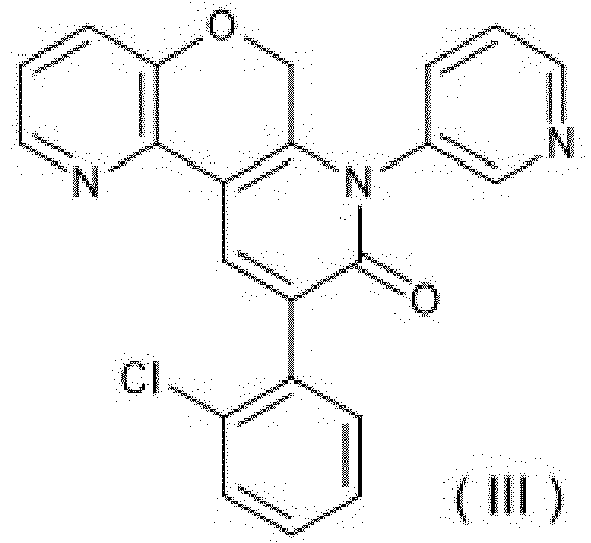
- the group of pyranodipyridine compounds including compounds represented by chemical formula (III) also exhibit antagonism for AMPA-type glutamate receptors, and are reported to be useful as epilepsy treatment agents (PTL 2).
- the present inventors have carried out avid investigation using a mouse sound-induced convulsion model and a rat lithium-pilocarpine status epilepticus model.
- combination of an indan-1-ylsulfamide derivative and an AMPA-type glutamate receptor antagonist markedly inhibits sound-induced convulsions in a mouse sound-induced convulsion model.
- combination of an indan-1-ylsulfamide derivative and an AMPA-type glutamate receptor antagonist markedly inhibits status epilepticus seizures, and the invention was thereupon completed.
- the invention relates to the following ⁇ 1> to ⁇ 14>.
- the present invention provides a drug that combines an indan-1-ylsulfamide derivative and an AMPA-type glutamate receptor antagonist.
- the drug exhibits a more remarkable antiepileptic effect than when each of the components are used independently, and it has a potential for use as a therapeutic agent for epilepsy.
- Compound (Ia), (Ib) or (Ic), or a pharmaceutically acceptable salt thereof can be produced by the method described in PTL 1, for example.
- Compound (II) or its pharmaceutically acceptable salt can be produced by the method described in International Patent Publication No. WO2006/004100 , for example.
- Compounds (III) to (XXIV) or their pharmaceutically acceptable salts can be produced by the method described in PTL 2, for example.
- a “pharmaceutically acceptable salt” is not particularly restricted so long as it is formed with the compound of the invention, and specific examples include acid addition salts such as inorganic acid salts, organic acid salts or acidic amino acid salts.
- salts with inorganic acids include salts with hydrochloric acid, hydrobromic acid, sulfuric acid, nitric acid or phosphoric acid.
- salts of organic acids include salts of acetic acid, succinic acid, fumaric acid, maleic acid, tartaric acid, citric acid, lactic acid, stearic acid, benzoic acid, methanesulfonic acid, ethanesulfonic acid and p -toluenesulfonic acid.
- salts of acidic amino acids include salts of aspartic acid and glutamic acid.
- the therapeutic agent of the invention may have compound (Ia), (Ib) or (Ic), or a pharmaceutically acceptable salt thereof, and an AMPA-type glutamate receptor antagonist, i.e. a compound selected from the group consisting of compound (II) and compounds (III) to (XXIV), or a pharmaceutically acceptable salt thereof, formulated separately, and both administered either simultaneously or separately.
- an AMPA-type glutamate receptor antagonist i.e. a compound selected from the group consisting of compound (II) and compounds (III) to (XXIV), or a pharmaceutically acceptable salt thereof, formulated separately, and both administered either simultaneously or separately.
- the two preparations may also be placed in a single package as a kit formulation. Both compounds may also be included in a single formulation.
- the therapeutic agent of the invention can be produced by mixing pharmaceutically acceptable additives with compound (Ia), (Ib) or (Ic) or a pharmaceutically acceptable salt thereof, and/or a compound selected from the group consisting of compound (II) and compounds (III) to (XXIV) or a pharmaceutically acceptable salt thereof
- the epilepsy treatment agent of the invention can be produced by a known method, such as the method described in the General Rules for Preparations of the Japanese Pharmacopoeia, 16th Editi on.
- the therapeutic agent of the invention may be appropriately administered to a patient as suitable for the dosage form.
- the dose of compound (Ia), (Ib) or (Ic) or a pharmaceutically acceptable salt thereof in the therapeutic agent of the invention will differ depending on the severity of symptoms, the patient age, gender, body weight and sensitivity, the method and timing of administration, and the type of medical formulation, but usually the daily dose for oral administration to an adult (60 kg body weight) will be 100 ⁇ g to 5 g, or alternatively 300 ⁇ g to 3 g or yet alternatively 1 mg to 1 g, or for injected administration, 30 ⁇ g to 1 g, alternatively 30 ⁇ g to 500 mg or yet alternatively 50 ⁇ g to 300 mg, given either once or in divided portions.
- the dosage of the compound selected from the group consisting of compound (II) and compounds (III) to (XXIV) or a pharmaceutically acceptable salt thereof in the therapeutic agent of the invention may be selected as appropriate, in the manner described above.
- the daily administration will usually be 10 ⁇ g to 500 mg, alternatively 30 ⁇ g to 300 mg or yet alternatively 50 ⁇ g to 100 mg, or for injected administration, 3 ⁇ g to 100 mg, alternatively 10 ⁇ g to 100 mg or yet alternatively 10 ⁇ g to 50 mg, given either once or in divided portions.
- the dose of compound (Ia), (Ib) or (Ic) or a pharmaceutically acceptable salt thereof in the therapeutic agent of the invention and the dose of the compound selected from the group consisting of compound (II) and compounds (III) to (XXIV) or a pharmaceutically acceptable salt thereof, will differ depending on the severity of symptoms, the patient age, gender, body weight and sensitivity, the method and timing of administration, and the type of medical formulation.
- the daily administration of compound (Ia), (Ib) or (Ic) or a pharmaceutically acceptable salt thereof will be 100 ⁇ g to 5 g and the daily administration of the compound selected from the group consisting of compound (II) and compounds (III) to (XXIV) or a pharmaceutically acceptable salt thereof will be 10 ⁇ g to 500 mg, given orally either once or in divided portions.
- the daily administration of compound (Ia), (Ib) or (Ic) or a pharmaceutically acceptable salt thereof may be 300 ⁇ g to 3 g and the daily administration of the compound selected from the group consisting of compound (II) and compounds (III) to (XXIV) or a pharmaceutically acceptable salt thereof may be 30 ⁇ g to 300 mg, given either once or in divided portions.
- the daily administration of compound (Ia), (Ib) or (Ic) or a pharmaceutically acceptable salt thereof may be 1 mg to 1 g and the daily administration of the compound selected from the group consisting of compound (II) and compounds (III) to (XXIV) or a pharmaceutically acceptable salt thereof may be 50 ⁇ g to 100 mg, given either once or in divided portions.
- the daily administration of compound (Ia), (Ib) or (Ic) or a pharmaceutically acceptable salt thereof will be 30 ⁇ g to 1 g and the daily administration of the compound selected from the group consisting of compound (II) and compounds (III) to (XXIV) or a pharmaceutically acceptable salt thereof will be 3 ⁇ g to 100 mg, given orally either once or in divided portions.
- the daily administration of compound (Ia), (Ib) or (Ic) or a pharmaceutically acceptable salt thereof may be 30 ⁇ g to 500 mg and the daily administration of the compound selected from the group consisting of compound (II) and compounds (III) to (XXIV) or a pharmaceutically acceptable salt thereof will be 10 ⁇ g to 100 mg, given either once or in divided portions.
- the daily administration of compound (Ia), (Ib) or (Ic) or a pharmaceutically acceptable salt thereof may be 50 ⁇ g to 300 mg and the daily administration of the compound selected from the group consisting of compound (II) and compounds (III) to (XXIV) or a pharmaceutically acceptable salt thereof will be 10 ⁇ g to 50 mg, given either once or in divided portions.
- the present inventors carried out research using a mouse sound-induced convulsion model to confirm the suppressive effects on seizures.
- Compound (Ia) and/or compound (II) was dissolved in a 0.4% methyl cellulose/5% cremophor/5% IN hydrochloric acid/10% dimethyl sulfoxide solution for an administered dose of 20 mL/kg each to prepare samples which were orally administered.
- a mixed solution without the compound (vehicle) was used as a negative control.
- the group composition was as shown in Table 1.
- Sound stimulation (11 kHz, 115 dB, duration: 30 sec) was carried out 30 minutes after administration of the samples, to induce convulsions.
- tonic convulsion was evaluated by observing the presence or absence of hindlimb extension. The percentage in each administered group exhibiting tonic convulsion (% Tonic convulsion) was calculated.
- the 50% effective doses for the group administered compound (Ia) alone, the group administered compound (II) alone, and the group administered a combination of compound (Ia) and compound (II) were calculated by regression analysis. Following a method described in the literature ( Epilepsia, 44, p1003-1013(2003 )), the theoretical additive ED50 value (ED50 add) was calculated and the isobologram method was used for assessment, as synergy when the ED50 mix/ED50 add ratio was less than 0.7, addition when it was 0.7 to 1.3, and antagonism when it was greater than 1.3.
- the ED50 for each administered group in the mouse sound-induced convulsion model is shown in Table 2.
- the theoretical additive ED50 value (ED50 add) was calculated to be 26 mg/kg. Since the result was an ED50 mix/ED50 add ratio of 0.58 (Table 3), it was demonstrated that combination of compound (Ia) and compound (II) exhibited a synergistic anti-convulsive effect. This result indicates that the drugs of the invention exhibit a remarkable suppressive effect against convulsions.
- Table 1 Group No.
- Treatment 1 Vehicle 2 25 mg/kg compound (Ia) 3 50 mg/kg compound (Ia) 4 100 mg/kg compound (Ia) 5 200 mg/kg compound (Ia) 6 0.125 mg/kg compound (II) 7 0.25 mg/kg compound (II) 8 0.5 mg/kg compound (II) 9 1 mg/kg compound (II) 10 7.5 mg/kg compound (Ia) + 0.05 mg/kg compound (II) 11 15 mg/kg compound (Ia) + 0.1 mg/kg compound (II) 12 30 mg/kg compound (Ia) + 0.2 mg/kg compound (II) 13 60 mg/kg compound (Ia) + 0.4 mg/kg compound (II) [Table 2] Compound ED50 (Ia) 53 mg/kg (II) 0.33 mg/kg (Ia) + (II) 15 mg/kg [Table 3] ED50mix 15 mg/kg ED50add 26 mg/kg Ratio (ED50mix/ED50add) 0.58 Assessment Synergy
- a rat lithium-pilocarpine status epilepticus model test was conducted to confirm the suppressive effects against status epilepticus seizures.
- the degree of brain wave spikes induced by the drug is used as the index for evaluation in this model ( Journal of Neuroscience Methods, 172, p143-157(2008 )).
- EEG electrodes were embedded into the cranial bone under 3-component mixture anesthesia (2 mg/kg midazolam, 0.15 mg/kg medetomidine hydrochloride, 2.5 mg/kg butorphanol tartrate, subcutaneous administration). After at least 2 days of recovery following surgery, lithium chloride was administered intraperitoneally (127 mg/kg dose, 1 mL/kg administered volume). After one day, pilocarpine hydrochloride (30 mg/kg dose, 5 mL/kg administered volume) and (-)-scopolaminemethyl bromide (5 mg/kg dose, 1 mL/kg administered volume) were intraperitoneally administered in a continuous manner to induce seizures. Only animals that exhibited seizures with a seizure score of 4 or higher were used for the experiment.
- Table 4 shows the correspondence between seizure score and symptoms.
- the vehicle or sample was administered into the caudal vein (administered volume: 1 mL/kg, injection rate: flush).
- the group composition was as shown in Table 5.
- Brain waves were recorded continuously until 1 hour after administration of the vehicle or sample.
- Brain wave analysis software (SleepSign by Kissei Comtec Co., Ltd., Nagano Prefecture) was used to calculate the Total power ( ⁇ V 2 ) for each set epoch (4 seconds/epoch) from the brain wave data for each individual (analysis target frequency: ⁇ 5 Hz, ⁇ 100 Hz).
- the period 10 minutes before administration was targeted and the average power ( ⁇ V 2 ) per epoch at each frequency was calculated, after which all of the frequency bands were totaled to obtain the Pre total power ( ⁇ V 2 ) for each individual.
- FFT analysis was carried out for a 1 hour period after administration in the same manner, to calculate the Post total power ( ⁇ V 2 ) for each individual.
- the percentage (%) of the Post total power with respect to the Pre total power ((Post total power/Pre total power) ⁇ 100) was calculated for each individual, and statistical analysis was performed.
- Statistical significance between the vehicle group and the group administered the combination of compound (Ia) and compound (II) was determined by the unpaired t test.
- Fig. 1 shows the effect of the combination of compound (Ia) and compound (II) in a rat lithium-pilocarpine status epilepticus model.
- the group given the combination of compound (Ia) and compound (II) exhibited a significant seizure-inhibitory effect compared to the vehicle group.
- the group given the combination of compound (Ia) and compound (II) exhibited a significant increase in seizure- inhibitory effect, even in comparison to the group given compound (Ia) alone and the group given compound (II) alone. This result demonstrates that the drugs of the invention have remarkable seizure- inhibitory effects against status epilepticus seizures.
- a rat lithium-pilocarpine status epilepticus model test was conducted to confirm the suppressive effects against status epilepticus seizures.
- Lithium chloride was intraperitoneally administered (127 mg/kg dose, 1 mL/kg administered volume). After one day, pilocarpine hydrochloride (30 mg/kg dose, 5 mL/kg administered volume) and (-)-scopolaminemethyl bromide (5 mg/kg dose, 1 mL/kg administered volume) were intraperitoneally administered in a continuous manner to induce seizure. Only animals that exhibited seizure with a seizure score of 4 or higher were used for the experiment. Table 4 shows the correspondence between seizure score and symptoms.
- the vehicle or sample was administered into the caudal vein (administered volume: 1-4 mL/kg, injection rate: flush).
- the group composition was as shown in Table 6. Seizure was scored at 1 hour after administration of the compound, as shown in Table 4.
- Statistical significance between the vehicle group and the group given compound (Ia) alone, the group given compound (XVI) alone, and the group given the combination of compound (Ia) and compound (XVI) was determined by Holm-Sidak statistical test.
- Fig. 2 shows the effect of the combination of compound (Ia) and compound (XVI) in a rat lithium-pilocarpine status epilepticus model.
- the group given the combination of compound (Ia) and compound (XVI) exhibited a significant seizure- inhibitory effect compared to the vehicle group.
- the group given the combination of compound (Ia) and compound (XVI) exhibited a significant increase in seizure- inhibitory effect, even in comparison to the group given compound (Ia) alone and the group given compound (XVI) alone.
- This result demonstrates that the drugs of the invention have remarkable seizure-inhibitory effects against status epilepticus seizures.
Landscapes
- Health & Medical Sciences (AREA)
- Animal Behavior & Ethology (AREA)
- Public Health (AREA)
- Veterinary Medicine (AREA)
- General Health & Medical Sciences (AREA)
- Life Sciences & Earth Sciences (AREA)
- Medicinal Chemistry (AREA)
- Chemical & Material Sciences (AREA)
- Pharmacology & Pharmacy (AREA)
- Epidemiology (AREA)
- Bioinformatics & Cheminformatics (AREA)
- Engineering & Computer Science (AREA)
- Organic Chemistry (AREA)
- General Chemical & Material Sciences (AREA)
- Nuclear Medicine, Radiotherapy & Molecular Imaging (AREA)
- Chemical Kinetics & Catalysis (AREA)
- Neurosurgery (AREA)
- Biomedical Technology (AREA)
- Neurology (AREA)
- Pain & Pain Management (AREA)
- Pharmaceuticals Containing Other Organic And Inorganic Compounds (AREA)
- Acyclic And Carbocyclic Compounds In Medicinal Compositions (AREA)
- Medicines That Contain Protein Lipid Enzymes And Other Medicines (AREA)
Abstract
Description
- The present invention relates to a therapeutic agent for epilepsy that combines an indan-1-ylsulfamide derivative and an AMPA-type glutamate receptor antagonist. More specifically, it relates to a therapeutic agent for epilepsy that combines N-[(1S)-2,2,5,7-tetrafluoro-2,3-dihydro-1H-inden-1-yl]sulfamide (or a pharmaceutically acceptable salt thereof) and an AMPA-type glutamate receptor antagonist.
- Epilepsy is one of the most common central nervous system diseases, affecting over 50,000,000 or more persons throughout the world. The WHO defines it as "chronic disease of the brain of various causes, characterized by recurrent seizures (epileptic seizures) due to excessive discharge of cerebral neurons, accompanied by highly variable clinical and laboratory findings".
- Examples of known types of epileptic seizures include partial seizures such as simple partial seizures, complex partial seizures and secondary generalized seizures, as well as absent seizures, myoclonic seizures, clonic seizures, tonic seizures, tonic-clonic seizures and cataplexy. The known types of intractable epilepsy include West syndrome, Lennox-Gastaut syndrome, tuberous sclerosis, Dravet syndrome and fragile X syndrome. Treatment for epilepsy is focused on drug therapy with antiepileptic drugs (AED). The goal of epilepsy drugs is to eliminate epileptic seizures while avoiding side-effects of the treatment. Treatment using antiepileptic drugs generally begins with a single agent. Single-drug treatment will usually be carried out with 2 or 3 different types of drugs, and if found to be ineffective, it may be followed by combination therapy. About 70% of newly diagnosed epilepsy patients can expect remission of seizures with antiepileptic drug treatment. For the remaining 30% of patients, however, epileptic seizures are difficult to suppress even with combination therapy using existing drugs. A need therefore exists for development of a highly effective combination therapy.
- Examples of drugs being marketed for treatment of epilepsy include carbamazepine, ethosuximide, phenobarbital, phenytoin, primidone, sodium valproate, zonisamide, felbamate, gabapentin, lamotrigine, topiramate, tiagabine, levetiracetam, oxcarbazepine, eslicarbazepine, pregabalin, lacosamide, rufinamide, trimethadione, sultiame, acetazolamide, vigabatrin, benzodiazepine-based drugs (such as clonazepam, clobazam, nitrazepam and diazepam), perampanel and retigabine (NPL 1). These existing antiepileptic drugs exhibit their effects by suppressing over-excitation of neurons.
- One of the major issues in drug therapy with antiepileptic drugs is toxic symptoms (symptoms including dizziness, nystagmus, diplopia, sleepiness, vomiting, ataxia, neurologic symptoms, malaise and loss of volition) resulting from suppression of neural function. These are side-effects that manifest in a dose-dependent manner for most conventional antiepileptic drugs, and they constituent a major problem that restricts selection and dosaging of therapeutic agents. They also significantly lower the quality of life of epilepsy patients in need of long-term use of the drugs. Reducing the dosages of the individual active ingredients in combination agents can potentially create divergence between effective doses and neurotoxic doses, thus allowing safer and more effective treatment to be provided not only for cases with resistance to the drug treatments but also for epilepsy cases in general.
- Indan-1-ylsulfamide derivatives such as N-[(1S)-2,2,5,7-tetrafluoro-2,3-dihydro-1H-inden-1-yl]sulfamide (hereunder also referred to as "compound (Ia)"), N-[(1S)-2,2,4,7-tetrafluoro-2,3-dihydro-1H-inden-1-yl]sulfamide (hereunder also referred to as "compound (Ib)") and (+)-N-(2,2,4,6,7-pentafluoro-2,3-dihydro-1H-inden-1-yl)sulfamide (hereunder also referred to as "compound (Ic)") represented by formulas (Ia), (Ib) and (Ic), respectively, have been reported to exhibit an ameliorating effect on seizure severity (score) in mouse kindling models, a type of epilepsy model, and to be useful as epilepsy treatment agents (PTL 1).

- AMPA-type glutamate receptors play an important role in generation of epilepsy waves and their propagation through synapses. AMPA-type glutamate receptor antagonists inhibit activation of post-synaptic AMPA-type glutamate receptors by glutamate, suppressing overexcitement of nerves and reducing epileptic seizures. A large number of AMPA-type glutamate receptor antagonists have been reported to date. Of the previously mentioned drugs that are being marketed for epilepsy treatment, perampanel (3-(2-cyanophenyl)-5-(2-pyridyl)-1-phenyl-1,2-dihydropyridin-2-one) represented by chemical formula (II) (also referred to hereunder as "compound (II)") is an AMPA-type glutamate receptor antagonist.

- The group of pyranodipyridine compounds including compounds represented by chemical formula (III) (hereunder also referred to as "compound (III)") also exhibit antagonism for AMPA-type glutamate receptors, and are reported to be useful as epilepsy treatment agents (PTL 2).

-
- [PTL 1] International Patent Publication No.
WO2013/191144 - [PTL 2] International Patent Publication No.
WO2017/82288 - [NPL 1] Shrivastava et al., "An overview on antiepileptic drugs", Drug Discoveries & Therapeutics., Vol.6, No.4, p. 178-193, 2012
- It is an object of the present invention to provide a combination agent that exhibits powerful anticonvulsant action and has a potential for use as a therapeutic agent for epilepsy.
- In order to solve this problem, the present inventors have carried out avid investigation using a mouse sound-induced convulsion model and a rat lithium-pilocarpine status epilepticus model. As a result it has been found that combination of an indan-1-ylsulfamide derivative and an AMPA-type glutamate receptor antagonist markedly inhibits sound-induced convulsions in a mouse sound-induced convulsion model. After further research using a rat lithium-pilocarpine status epilepticus model, it was found that combination of an indan-1-ylsulfamide derivative and an AMPA-type glutamate receptor antagonist markedly inhibits status epilepticus seizures, and the invention was thereupon completed.
- Specifically, the invention relates to the following <1> to <14>.
- <1> A therapeutic agent for epilepsy for combined use of N-[(1S)-2,2,5,7-tetrafluoro-2,3-dihydro-1H-inden-1-yl]sulfamide

- <2> A therapeutic agent for epilepsy for simultaneous or separate administration of N-[(1S)-2,2,5,7-tetrafluoro-2,3-dihydro-1H-inden-1-yl]sulfamide

- <3> A therapeutic agent for epilepsy, comprising N-[(1S)-2,2,5,7-tetrafluoro-2,3-dihydro-1H-inden-1-yl]sulfamide

- <4> The therapeutic agent according to any one of <1> to <3> above, wherein the AMPA-type glutamate receptor antagonist is a compound selected from the following group consisting of:
- 3-(2-cyanophenyl)-5-(2-pyridyl)-1-phenyl-1,2-dihydropyridin-2-one,

- 9-(2-chlorophenyl)-7-(pyridin-3-yl)-6H-pyrano[3,2-b:5,4-b']dipyridine-8(7H)-one,
- 2-fluoro-6-(7-(5-methoxypyridin-3-yl)-8-oxo-7,8-dihydro-6H-pyrano[3,2-b:5,4-b']dipyridin-9-yl)benzonitrile,

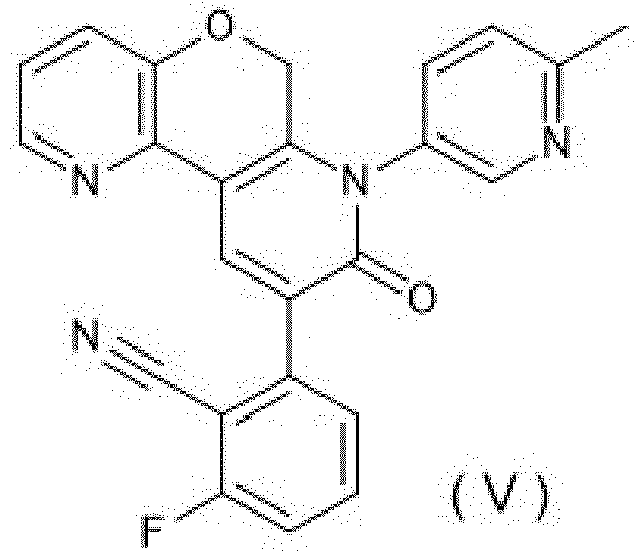
- 2-fluoro-6-(7-(6-methylpyridin-3-yl)-8-oxo-7,8-dihydro-6H-pyrano[3,2-b:5,4-b']dipyridin-9-yl)benzonitrile,
- 9-(2-chloro-3-fluorophenyl)-7-(6-methylpyridin-3-yl)-6H-pyrano[3,2-b:5,4-b']dipyridine-8(7 H)-one,

- 2-fluoro-6-(7-(2-methoxypyrimidin-5-yl)-8-oxo-7,8-dihydro-6H-pyrano[3,2-b:5,4-b']dipyridi n-9-yl)benzonitrile,

- 7-(pyridin-3-yl)-9-(2,3,5,6-tetrafluorophenyl)-6H-pyrano[3,2-b:5,4-b']dipyridine-8(7H)-one,

- 3-(8-oxo-7-(thiophen-3-yl)-7,8-dihydro-6H-pyrano[3,2-b:5,4-b']dipyridin-9-yl)picolinonitrile

- 3-(8-oxo-7-(thiophen-3-yl)-7,8-dihydro-6H-pyrano[3,2-b:5,4-b']dipyridin-9-yl)pyrazine-2-ca rbonitrile,

- 9-(2-fluorophenyl)-7-phenyl-6H-pyrano[3,2-b:5,4-b']dipyridine-8(7H)-one,

- 2-(7-(4-fluorophenyl)-8-oxo-7,8-dihydro-6H-pyrano[3,2-b:5,4-b']dipyridin-9-yl)benzonitrile,

- 3-(7-(4-fluorophenyl)-8-oxo-7,8-dihydro-6H-pyrano[3,2-b:5,4-b']dipyridin-9-yl)picolinonitri

- 3-(7-(2-fluorophenyl)-8-oxo-7,8-dihydro-6H-pyrano[3,2-b:5,4-b']dipyridin-9-yl)picolinonitri

- 3-(3-fluoro-8-oxo-7-phenyl-7,8-dihydro-6H-pyrano[3,2-b:5,4-b']dipyridin-9-yl)picolinonitril e,

- 2-fluoro-6-(3-fluoro-8-oxo-7-(pyridin-3-yl)-7,8-dihydro-6H-pyrano[3,2-b:5,4-b']dipyridin-9-yl)benzonitrile,

- 2-fluoro-6-(7-(5-fluoropyridin-3-yl)-8-oxo-7,8-dihydro-6H-pyrano[3,2-b:5,4-b']dipyridin-9-y l)benzonitrile,

- 2-fluoro-6-(10-fluoro-3-oxo-4-(pyridin-3-yl)-4,5-dihydro-3H-chromeno[3,4-b]pyridin-2-yl)b enzonitrile,

- 9-(2-chloro-3-fluorophenyl)-7-(5-fluoropyridin-3-yl)-6H-pyrano[3,2-b:5,4-b']dipyridine-8(7 H)-one,

- 2-fluoro-6-(8-oxo-7-(pyrimidin-5-yl)-7,8-dihydro-6H-pyrano[3,2-b:5,4-b']dipyridin-9-yl)ben zonitrile,

- 3,6-difluoro-2-(8-oxo-7-(pyridin-3-yl)-7,8-dihydro-6H-pyrano[3,2-b:5,4-b']dipyridin-9-yl)be nzonitrile,

- 2-(7-(5-chloropyridin-3-yl)-8-oxo-7,8-dihydro-6H-pyrano[3,2-b:5,4-b']dipyridin-9-yl)-6-fluo robenzonitrile,

- 2-fluoro-6-(7-(2-methylpyrimidin-5-yl)-8-oxo-7,8-dihydro-6H-pyrano[3,2-b:5,4-b']dipyridin -9-yl)benzonitrile, and

- 9-(3-fluoro-2-methylphenyl)-7-(pyridin-3-yl)-6H-pyrano[3,2-b:5,4-b']dipyridine-8(7H)-one

- 3-(2-cyanophenyl)-5-(2-pyridyl)-1-phenyl-1,2-dihydropyridin-2-one,
- <5> The therapeutic agent according to any one of <1> to <3> above, wherein the AMPA-type glutamate receptor antagonist is 3-(2-cyanophenyl)-5-(2-pyridyl)-1-phenyl-1,2-dihydropyridin-2-one

- <6> The therapeutic agent according to any one of <1> to <3> above, wherein the AMPA-type glutamate receptor antagonist is a compound selected from the following group consisting of:
- 9-(2-chlorophenyl)-7-(pyridin-3-yl)-6H-pyrano[3,2-b:5,4-b']dipyridine-8(7H)-one,

- 2-fluoro-6-(7-(5-methoxypyridin-3-yl)-8-oxo-7,8-dihydro-6H-pyrano[3,2-b:5,4-b']dipyridin-9-yl)benzonitrile,

- 2-fluoro-6-(7-(6-methylpyridin-3-yl)-8-oxo-7,8-dihydro-6H-pyrano[3,2-b:5,4-b']dipyridin-9-yl)benzonitrile,

- 9-(2-chloro-3-fluorophenyl)-7-(6-methylpyridin-3-yl)-6H-pyrano[3,2-b:5,4-b']dipyridine-8(7 H)-one,

- 2-fluoro-6-(7-(2-methoxypyrimidin-5-yl)-8-oxo-7,8-dihydro-6H-pyrano[3,2-b:5,4-b']dipyridi n-9-yl)benzonitrile,

- 7-(pyridin-3-yl)-9-(2,3,5,6-tetrafluorophenyl)-6H-pyrano[3,2-b:5,4-b']dipyridine-8(7H)-one,

- 3-(8-oxo-7-(thiophen-3-yl)-7,8-dihydro-6H-pyrano[3,2-b:5,4-b']dipyridin-9-yl)picolinonitrile

- 3-(8-oxo-7-(thiophen-3-yl)-7,8-dihydro-6H-pyrano[3,2-b:5,4-b']dipyridin-9-yl)pyrazine-2-ca rbonitrile,

- 9-(2-fluorophenyl)-7-phenyl-6H-pyrano[3,2-b:5,4-b']dipyridine-8(7H)-one,

- 2-(7-(4-fluorophenyl)-8-oxo-7,8-dihydro-6H-pyrano[3,2-b:5,4-b']dipyridin-9-yl)benzonitrile,

- 3-(7-(4-fluorophenyl)-8-oxo-7,8-dihydro-6H-pyrano[3,2-b:5,4-b']dipyridin-9-yl)picolinonitri le,
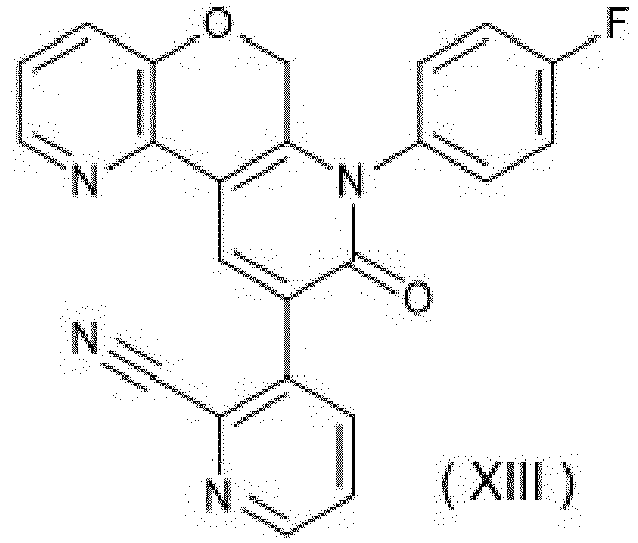
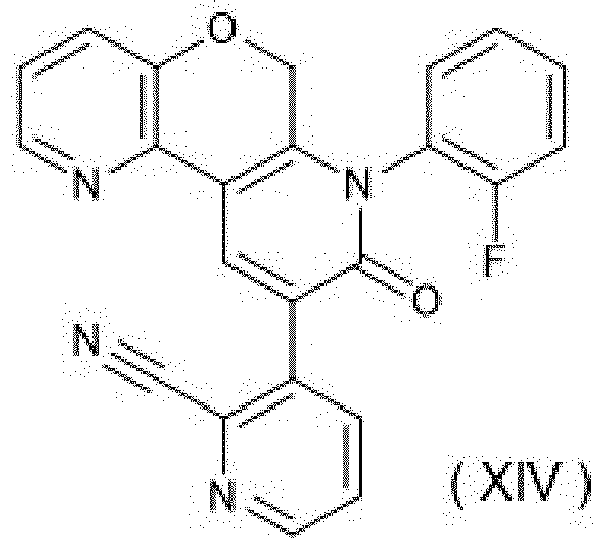
- 3-(7-(2-fluorophenyl)-8-oxo-7,8-dihydro-6H-pyrano[3,2-b:5,4-b']dipyridin-9-yl)picolinonitri le,

- 3-(3-fluoro-8-oxo-7-phenyl-7,8-dihydro-6H-pyrano[3,2-b:5,4-b']dipyridin-9-yl)picolinonitril e,

- 2-fluoro-6-(3-fluoro-8-oxo-7-(pyridin-3-yl)-7,8-dihydro-6H-pyrano[3,2-b:5,4-b']dipyridin-9-yl)benzonitrile,

- 2-fluoro-6-(7-(5-fluoropyridin-3-yl)-8-oxo-7,8-dihydro-6H-pyrano[3,2-b:5,4-b']dipyridin-9-y l)benzonitrile,
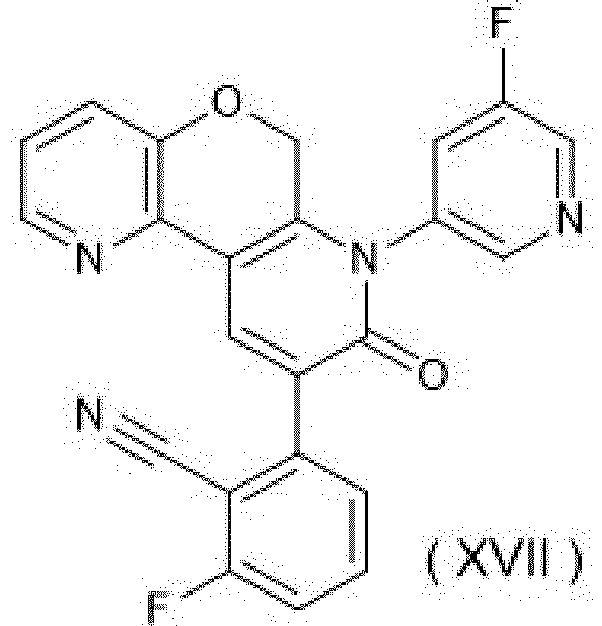
- 2-fluoro-6-(10-fluoro-3-oxo-4-(pyridin-3-yl)-4,5-dihydro-3H-chromeno[3,4-b]pyridin-2-yl)b enzonitrile,

- 9-(2-chloro-3-fluorophenyl)-7-(5-fluoropyridin-3-yl)-6H-pyrano[3,2-b:5,4-b']dipyridine-8(7 H)-one,

- 2-fluoro-6-(8-oxo-7-(pyrimidin-5-yl)-7,8-dihydro-6H-pyrano[3,2-b:5,4-b']dipyridin-9-yl)ben zonitrile,

- 3,6-difluoro-2-(8-oxo-7-(pyridin-3-yl)-7,8-dihydro-6H-pyrano[3,2-b:5,4-b']dipyridin-9-yl)be nzonitrile,

- 2-(7-(5-chloropyridin-3-yl)-8-oxo-7,8-dihydro-6H-pyrano[3,2-b:5,4-b']dipyridin-9-yl)-6-fluo robenzonitrile,

- 2-fluoro-6-(7-(2-methylpyrimidin-5-yl)-8-oxo-7,8-dihydro-6H-pyrano[3,2-b:5,4-b']dipyridin -9-yl)benzonitrile,

- 9-(3-fluoro-2-methylphenyl)-7-(pyridin-3-yl)-6H-pyrano[3,2-b:5,4-b']dipyridine-8(7H)-one

- 9-(2-chlorophenyl)-7-(pyridin-3-yl)-6H-pyrano[3,2-b:5,4-b']dipyridine-8(7H)-one,
- <7> The therapeutic agent according to any one of <1> to <3> above, wherein the AMPA-type glutamate receptor antagonist is 2-fluoro-6-(3-fluoro-8-oxo-7-(pyridin-3-yl)-7,8-dihydro-6H-pyrano[3,2-b:5,4-b']dipyridin-9-yl)benzonitrile

- <8> An AMPA-type glutamate receptor antagonist for treatment of epilepsy by use in combination with N-[(1S)-2,2,5,7-tetrafluoro-2,3-dihydro-1H-inden-1-yl]sulfamide

- <9> N-[(1S)-2,2,5,7-Tetrafluoro-2,3-dihydro-1H-inden-1-yl]sulfamide

- <10> A method for treating epilepsy, for combined use of N-[(1S)-2,2,5,7-tetrafluoro-2,3-dihydro-1H-inden-1-yl]sulfamide

- <11> A pharmaceutical composition comprising N-[(1S)-2,2,5,7-tetrafluoro-2,3-dihydro-1H-inden-1-yl]sulfamide

- <12> A kit comprising:
- a pharmaceutical composition comprising N-[(1S)-2,2,5,7-tetrafluoro-2,3-dihydro-1H-inden-1-yl]sulfamide

- a pharmaceutical composition comprising an AMPA-type glutamate receptor antagonist and an excipient.
- a pharmaceutical composition comprising N-[(1S)-2,2,5,7-tetrafluoro-2,3-dihydro-1H-inden-1-yl]sulfamide
- <13> Use of an AMPA-type glutamate receptor antagonist for production of a therapeutic agent for epilepsy by use in combination with N-[(1S)-2,2,5,7-tetrafluoro-2,3-dihydro-1H-inden-1-yl]sulfamide

- <14> Use of N-[(1S)-2,2,5,7-tetrafluoro-2,3-dihydro-1H-inden-1-yl]sulfamide

- The compounds represented by formulas (III) to (XXIV) will hereunder be referred to collectively as "compounds (III) to (XXIV)".
- The present invention provides a drug that combines an indan-1-ylsulfamide derivative and an AMPA-type glutamate receptor antagonist. The drug exhibits a more remarkable antiepileptic effect than when each of the components are used independently, and it has a potential for use as a therapeutic agent for epilepsy.
-
-
Fig. 1 shows the effect of the combination of compound (Ia) and compound (II) in a rat lithium-pilocarpine status epilepticus model, for Test Example 2. -
Fig. 2 shows the effect of the combination of compound (Ia) and compound (XVI) in a rat lithium-pilocarpine status epilepticus model, for Test Example 3. - The present invention will now be explained in detail.
- Compound (Ia), (Ib) or (Ic), or a pharmaceutically acceptable salt thereof, can be produced by the method described in
PTL 1, for example. Compound (II) or its pharmaceutically acceptable salt can be produced by the method described in International Patent Publication No.WO2006/004100 , for example. Compounds (III) to (XXIV) or their pharmaceutically acceptable salts can be produced by the method described inPTL 2, for example. - A "pharmaceutically acceptable salt" is not particularly restricted so long as it is formed with the compound of the invention, and specific examples include acid addition salts such as inorganic acid salts, organic acid salts or acidic amino acid salts.
- Examples of salts with inorganic acids include salts with hydrochloric acid, hydrobromic acid, sulfuric acid, nitric acid or phosphoric acid. Examples of salts of organic acids include salts of acetic acid, succinic acid, fumaric acid, maleic acid, tartaric acid, citric acid, lactic acid, stearic acid, benzoic acid, methanesulfonic acid, ethanesulfonic acid and p-toluenesulfonic acid.
- Examples of salts of acidic amino acids include salts of aspartic acid and glutamic acid.
- The therapeutic agent of the invention may have compound (Ia), (Ib) or (Ic), or a pharmaceutically acceptable salt thereof, and an AMPA-type glutamate receptor antagonist, i.e. a compound selected from the group consisting of compound (II) and compounds (III) to (XXIV), or a pharmaceutically acceptable salt thereof, formulated separately, and both administered either simultaneously or separately. The two preparations may also be placed in a single package as a kit formulation. Both compounds may also be included in a single formulation.
- The therapeutic agent of the invention can be produced by mixing pharmaceutically acceptable additives with compound (Ia), (Ib) or (Ic) or a pharmaceutically acceptable salt thereof, and/or a compound selected from the group consisting of compound (II) and compounds (III) to (XXIV) or a pharmaceutically acceptable salt thereof The epilepsy treatment agent of the invention can be produced by a known method, such as the method described in the General Rules for Preparations of the Japanese Pharmacopoeia, 16th Edition.
The therapeutic agent of the invention may be appropriately administered to a patient as suitable for the dosage form. - The dose of compound (Ia), (Ib) or (Ic) or a pharmaceutically acceptable salt thereof in the therapeutic agent of the invention will differ depending on the severity of symptoms, the patient age, gender, body weight and sensitivity, the method and timing of administration, and the type of medical formulation, but usually the daily dose for oral administration to an adult (60 kg body weight) will be 100 µg to 5 g, or alternatively 300 µg to 3 g or yet alternatively 1 mg to 1 g, or for injected administration, 30 µg to 1 g, alternatively 30 µg to 500 mg or yet alternatively 50 µg to 300 mg, given either once or in divided portions.
- The dosage of the compound selected from the group consisting of compound (II) and compounds (III) to (XXIV) or a pharmaceutically acceptable salt thereof in the therapeutic agent of the invention may be selected as appropriate, in the manner described above. For oral administration to an adult (60 kg body weight), the daily administration will usually be 10 µg to 500 mg, alternatively 30 µg to 300 mg or yet alternatively 50 µg to 100 mg, or for injected administration, 3 µg to 100 mg, alternatively 10 µg to 100 mg or yet alternatively 10 µg to 50 mg, given either once or in divided portions.
- The dose of compound (Ia), (Ib) or (Ic) or a pharmaceutically acceptable salt thereof in the therapeutic agent of the invention and the dose of the compound selected from the group consisting of compound (II) and compounds (III) to (XXIV) or a pharmaceutically acceptable salt thereof, will differ depending on the severity of symptoms, the patient age, gender, body weight and sensitivity, the method and timing of administration, and the type of medical formulation. Usually, for oral administration to an adult (60 kg body weight), the daily administration of compound (Ia), (Ib) or (Ic) or a pharmaceutically acceptable salt thereof will be 100 µg to 5 g and the daily administration of the compound selected from the group consisting of compound (II) and compounds (III) to (XXIV) or a pharmaceutically acceptable salt thereof will be 10 µg to 500 mg, given orally either once or in divided portions. Alternatively, for oral administration to an adult (60 kg body weight), the daily administration of compound (Ia), (Ib) or (Ic) or a pharmaceutically acceptable salt thereof may be 300 µg to 3 g and the daily administration of the compound selected from the group consisting of compound (II) and compounds (III) to (XXIV) or a pharmaceutically acceptable salt thereof may be 30 µg to 300 mg, given either once or in divided portions. Yet alternatively, for oral administration to an adult (60 kg body weight), the daily administration of compound (Ia), (Ib) or (Ic) or a pharmaceutically acceptable salt thereof may be 1 mg to 1 g and the daily administration of the compound selected from the group consisting of compound (II) and compounds (III) to (XXIV) or a pharmaceutically acceptable salt thereof may be 50 µg to 100 mg, given either once or in divided portions. Usually, for injected administration to an adult (60 kg body weight), the daily administration of compound (Ia), (Ib) or (Ic) or a pharmaceutically acceptable salt thereof will be 30 µg to 1 g and the daily administration of the compound selected from the group consisting of compound (II) and compounds (III) to (XXIV) or a pharmaceutically acceptable salt thereof will be 3 µg to 100 mg, given orally either once or in divided portions. Alternatively, for injected administration to an adult (60 kg body weight), the daily administration of compound (Ia), (Ib) or (Ic) or a pharmaceutically acceptable salt thereof may be 30 µg to 500 mg and the daily administration of the compound selected from the group consisting of compound (II) and compounds (III) to (XXIV) or a pharmaceutically acceptable salt thereof will be 10 µg to 100 mg, given either once or in divided portions. Yet alternatively, for injected administration to an adult (60 kg body weight), the daily administration of compound (Ia), (Ib) or (Ic) or a pharmaceutically acceptable salt thereof may be 50 µg to 300 mg and the daily administration of the compound selected from the group consisting of compound (II) and compounds (III) to (XXIV) or a pharmaceutically acceptable salt thereof will be 10 µg to 50 mg, given either once or in divided portions.
- The present inventors carried out research using a mouse sound-induced convulsion model to confirm the suppressive effects on seizures. We also conducted research using a rat lithium-pilocarpine status epilepticus model to confirm the suppressive effects against status epilepticus seizures.
- A mouse sound-induced convulsion model test was carried out to confirm the suppressive effect on convulsions. Tonic convulsion induced by sound stimulation is used as the index for evaluation in this model (European Journal of Pharmacology, 222, p193-203(1992)).
- Three-week-old male DBA/2 JJcl mice (Clea Japan, Inc.) were provided for the test (n = 5 for each treatment, total 2 times). Tonic convulsion induced by sound stimulation was used as the indicator for evaluation (see aforementioned publication).
- Compound (Ia) and/or compound (II) was dissolved in a 0.4% methyl cellulose/5% cremophor/5% IN hydrochloric acid/10% dimethyl sulfoxide solution for an administered dose of 20 mL/kg each to prepare samples which were orally administered. A mixed solution without the compound (vehicle) was used as a negative control. The group composition was as shown in Table 1. Sound stimulation (11 kHz, 115 dB, duration: 30 sec) was carried out 30 minutes after administration of the samples, to induce convulsions. Immediately after cessation of the sound stimulation, tonic convulsion was evaluated by observing the presence or absence of hindlimb extension. The percentage in each administered group exhibiting tonic convulsion (% Tonic convulsion) was calculated. Based on the calculated % Tonic convulsion, the 50% effective doses for the group administered compound (Ia) alone, the group administered compound (II) alone, and the group administered a combination of compound (Ia) and compound (II) (compound (Ia) ED50, compound (II) ED50 and ED50 mix, respectively) were calculated by regression analysis. Following a method described in the literature (Epilepsia, 44, p1003-1013(2003)), the theoretical additive ED50 value (ED50 add) was calculated and the isobologram method was used for assessment, as synergy when the ED50 mix/ED50 add ratio was less than 0.7, addition when it was 0.7 to 1.3, and antagonism when it was greater than 1.3.
- The ED50 for each administered group in the mouse sound-induced convulsion model is shown in Table 2. The theoretical additive ED50 value (ED50 add) was calculated to be 26 mg/kg. Since the result was an ED50 mix/ED50 add ratio of 0.58 (Table 3), it was demonstrated that combination of compound (Ia) and compound (II) exhibited a synergistic anti-convulsive effect. This result indicates that the drugs of the invention exhibit a remarkable suppressive effect against convulsions.
[Table 1] Group No. Treatment 1 Vehicle 2 25 mg/kg compound (Ia) 3 50 mg/kg compound (Ia) 4 100 mg/kg compound (Ia) 5 200 mg/kg compound (Ia) 6 0.125 mg/kg compound (II) 7 0.25 mg/kg compound (II) 8 0.5 mg/kg compound (II) 9 1 mg/kg compound (II) 10 7.5 mg/kg compound (Ia) + 0.05 mg/kg compound (II) 11 15 mg/kg compound (Ia) + 0.1 mg/kg compound (II) 12 30 mg/kg compound (Ia) + 0.2 mg/kg compound (II) 13 60 mg/kg compound (Ia) + 0.4 mg/kg compound (II) [Table 2] Compound ED50 (Ia) 53 mg/kg (II) 0.33 mg/kg (Ia) + (II) 15 mg/kg [Table 3] ED50mix 15 mg/kg ED50add 26 mg/kg Ratio (ED50mix/ED50add) 0.58 Assessment Synergy - A rat lithium-pilocarpine status epilepticus model test was conducted to confirm the suppressive effects against status epilepticus seizures. The degree of brain wave spikes induced by the drug is used as the index for evaluation in this model (Journal of Neuroscience Methods, 172, p143-157(2008)).
- EEG electrodes were embedded into the cranial bone under 3-component mixture anesthesia (2 mg/kg midazolam, 0.15 mg/kg medetomidine hydrochloride, 2.5 mg/kg butorphanol tartrate, subcutaneous administration). After at least 2 days of recovery following surgery, lithium chloride was administered intraperitoneally (127 mg/kg dose, 1 mL/kg administered volume). After one day, pilocarpine hydrochloride (30 mg/kg dose, 5 mL/kg administered volume) and (-)-scopolaminemethyl bromide (5 mg/kg dose, 1 mL/kg administered volume) were intraperitoneally administered in a continuous manner to induce seizures. Only animals that exhibited seizures with a seizure score of 4 or higher were used for the experiment. Table 4 shows the correspondence between seizure score and symptoms. At 30 minutes after visually confirming a seizure score of 4 or higher, the vehicle or sample was administered into the caudal vein (administered volume: 1 mL/kg, injection rate: flush). The group composition was as shown in Table 5. Brain waves were recorded continuously until 1 hour after administration of the vehicle or sample. Brain wave analysis software (SleepSign by Kissei Comtec Co., Ltd., Nagano Prefecture) was used to calculate the Total power (µV2) for each set epoch (4 seconds/epoch) from the brain wave data for each individual (analysis target frequency: ≥5 Hz, <100 Hz). After excluding epochs containing noise due to movement of the animals, the period 10 minutes before administration was targeted and the average power (µV2) per epoch at each frequency was calculated, after which all of the frequency bands were totaled to obtain the Pre total power (µV2) for each individual. FFT analysis was carried out for a 1 hour period after administration in the same manner, to calculate the Post total power (µV2) for each individual. The percentage (%) of the Post total power with respect to the Pre total power ((Post total power/Pre total power) × 100) was calculated for each individual, and statistical analysis was performed. Statistical significance between the vehicle group and the group administered the combination of compound (Ia) and compound (II) was determined by the unpaired t test. After one-way analysis of variance to determine the statistical significance between the group administered compound (Ia) alone and the group administered compound (II) alone, and the group administered the combination of compound (Ia) and compound (II), a Fisher LSD test was performed for significant cases. The significance level was considered to be 5% on both sides.
-
Fig. 1 shows the effect of the combination of compound (Ia) and compound (II) in a rat lithium-pilocarpine status epilepticus model. The group given the combination of compound (Ia) and compound (II) exhibited a significant seizure-inhibitory effect compared to the vehicle group. The group given the combination of compound (Ia) and compound (II) exhibited a significant increase in seizure- inhibitory effect, even in comparison to the group given compound (Ia) alone and the group given compound (II) alone. This result demonstrates that the drugs of the invention have remarkable seizure- inhibitory effects against status epilepticus seizures. - A rat lithium-pilocarpine status epilepticus model test was conducted to confirm the suppressive effects against status epilepticus seizures.
- Six-week-old male SD rats Charles River Laboratories, Japan Inc.) were provided for the test. Lithium chloride was intraperitoneally administered (127 mg/kg dose, 1 mL/kg administered volume). After one day, pilocarpine hydrochloride (30 mg/kg dose, 5 mL/kg administered volume) and (-)-scopolaminemethyl bromide (5 mg/kg dose, 1 mL/kg administered volume) were intraperitoneally administered in a continuous manner to induce seizure. Only animals that exhibited seizure with a seizure score of 4 or higher were used for the experiment. Table 4 shows the correspondence between seizure score and symptoms. At 30 minutes after visually confirming a seizure score of 4 or higher, the vehicle or sample was administered into the caudal vein (administered volume: 1-4 mL/kg, injection rate: flush). The group composition was as shown in Table 6. Seizure was scored at 1 hour after administration of the compound, as shown in Table 4. Statistical significance between the vehicle group and the group given compound (Ia) alone, the group given compound (XVI) alone, and the group given the combination of compound (Ia) and compound (XVI) was determined by Holm-Sidak statistical test. Statistical significance between the group given compound (Ia) alone and the group given compound (XVI) alone, and the group given the combination of compound (Ia) and compound (XVI), was also determined by Holm-Sidak statistical test. The significance level was considered to be 5% on both sides.
-
Fig. 2 shows the effect of the combination of compound (Ia) and compound (XVI) in a rat lithium-pilocarpine status epilepticus model. The group given the combination of compound (Ia) and compound (XVI) exhibited a significant seizure- inhibitory effect compared to the vehicle group. The group given the combination of compound (Ia) and compound (XVI) exhibited a significant increase in seizure- inhibitory effect, even in comparison to the group given compound (Ia) alone and the group given compound (XVI) alone. This result demonstrates that the drugs of the invention have remarkable seizure-inhibitory effects against status epilepticus seizures.[Table 4] Seizure score Symptoms 0 No seizure 1 Mild facial clonus and blinking 2 Severe facial clonus, head bobbing, chewing 3 Unilateral or alternating forelimb clonus 4 Bilateral forelimb clonus and standing 5 Bilateral forelimb clonus with standing and falling [Table 5] Group No. Treatment 1 Vehicle 2 75 mg/kg compound (Ia) 3 1 mg/kg compound (II) 4 75 mg/kg compound (Ia) + 1 mg/kg compound (II) [Table 6] Group No. Treatment 1 Vehicle 2 75 mg/kg compound (Ia) 3 2 mg/kg compound (XVI) 4 75 mg/kg (Ia) + 2 mg/kg (XVI)
Claims (7)
- A therapeutic agent for epilepsy for combined use of N-[(1S)-2,2,5,7-tetrafluoro-2,3-dihydro-1H-inden-1-yl]sulfamide

- A therapeutic agent for epilepsy for simultaneous or separate administration of N-[(1S)-2,2,5,7-tetrafluoro-2,3-dihydro-1H-inden-1-yl]sulfamide

- A therapeutic agent for epilepsy, comprising N-[(1S)-2,2,5,7-tetrafluoro-2,3-dihydro-1H-inden-1-yl]sulfamide

- The therapeutic agent according to any one of claims 1 to 3, wherein the AMPA-type glutamate receptor antagonist is a compound selected from the following group consisting of:3-(2-cyanophenyl)-5-(2-pyridyl)-1-phenyl-1,2-dihydropyridin-2-one,
 9-(2-chlorophenyl)-7-(pyridin-3-yl)-6H-pyrano[3,2-b:5,4-b']dipyridine-8(7H)-one,
 2-fluoro-6-(7-(5-methoxypyridin-3-yl)-8-oxo-7,8-dihydro-6H-pyrano[3,2-b:5,4-b']dipyridin-9-yl)benzonitrile,
 2-fluoro-6-(7-(6-methylpyridin-3-yl)-8-oxo-7,8-dihydro-6H-pyrano[3,2-b:5,4-b']dipyridin-9-yl)benzonitrile,
 9-(2-chloro-3-fluorophenyl)-7-(6-methylpyridin-3-yl)-6H-pyrano[3,2-b:5,4-b']dipyridine-8(7 H)-one,
 2-fluoro-6-(7-(2-methoxypyrimidin-5-yl)-8-oxo-7,8-dihydro-6H-pyrano[3,2-b:5,4-b']dipyridi n-9-yl)benzonitrile,
 7-(pyridin-3-yl)-9-(2,3,5,6-tetrafluorophenyl)-6H-pyrano[3,2-b:5,4-b']dipyridine-8(7H)-one,
 3-(8-oxo-7-(thiophen-3-yl)-7,8-dihydro-6H-pyrano[3,2-b:5,4-b']dipyridin-9-yl)picolinonitrile ,
 3-(8-oxo-7-(thiophen-3-yl)-7,8-dihydro-6H-pyrano[3,2-b:5,4-b']dipyridin-9-yl)pyrazine-2-ca rbonitrile,
 9-(2-fluorophenyl)-7-phenyl-6H-pyrano[3,2-b:5,4-b']dipyridine-8(7H)-one,
 2-(7-(4-fluorophenyl)-8-oxo-7,8-dihydro-6H-pyrano[3,2-b:5,4-b']dipyridin-9-yl)benzonitrile,
 3-(7-(4-fluorophenyl)-8-oxo-7,8-dihydro-6H-pyrano[3,2-b:5,4-b']dipyridin-9-yl)picolinonitri le,
 3-(7-(2-fluorophenyl)-8-oxo-7,8-dihydro-6H-pyrano[3,2-b:5,4-b']dipyridin-9-yl)picolinonitri le,
 3-(3-fluoro-8-oxo-7-phenyl-7,8-dihydro-6H-pyrano[3,2-b:5,4-b']dipyridin-9-yl)picolinonitril e,
 2-fluoro-6-(3-fluoro-8-oxo-7-(pyridin-3-yl)-7,8-dihydro-6H-pyrano[3,2-b:5,4-b']dipyridin-9-yl)benzonitrile,
 2-fluoro-6-(7-(5-fluoropyridin-3-yl)-8-oxo-7,8-dihydro-6H-pyrano[3,2-b:5,4-b']dipyridin-9-y l)benzonitrile,
 2-fluoro-6-(10-fluoro-3-oxo-4-(pyridin-3-yl)-4,5-dihydro-3H-chromeno[3,4-b]pyridin-2-yl)b enzonitrile,
 9-(2-chloro-3-fluorophenyl)-7-(5-fluoropyridin-3-yl)-6H-pyrano[3,2-b:5,4-b']dipyridine-8(7 H)-one,
 2-fluoro-6-(8-oxo-7-(pyrimidin-5-yl)-7,8-dihydro-6H-pyrano[3,2-b:5,4-b']dipyridin-9-yl)ben zonitrile,
 3,6-difluoro-2-(8-oxo-7-(pyridin-3-yl)-7,8-dihydro-6H-pyrano[3,2-b:5,4-b']dipyridin-9-yl)be nzonitrile,
 2-(7-(5-chloropyridin-3-yl)-8-oxo-7,8-dihydro-6H-pyrano[3,2-b:5,4-b']dipyridin-9-yl)-6-fluo robenzonitrile,
 2-fluoro-6-(7-(2-methylpyrimidin-5-yl)-8-oxo-7,8-dihydro-6H-pyrano[3,2-b:5,4-b']dipyridin -9-yl)benzonitrile, and
 9-(3-fluoro-2-methylphenyl)-7-(pyridin-3-yl)-6H-pyrano[3,2-b:5,4-b']dipyridine-8(7H)-one
- The therapeutic agent according to any one of claims 1 to 3, wherein the AMPA-type glutamate receptor antagonist is 3-(2-cyanophenyl)-5-(2-pyridyl)-1-phenyl-1,2-dihydropyridin-2-one

- The therapeutic agent according to any one of claims 1 to 3, wherein the AMPA-type glutamate receptor antagonist is a compound selected from the following group consisting of:9-(2-chlorophenyl)-7-(pyridin-3-yl)-6H-pyrano[3,2-b:5,4-b']dipyridine-8(7H)-one,
 2-fluoro-6-(7-(5-methoxypyridin-3-yl)-8-oxo-7,8-dihydro-6H-pyrano[3,2-b:5,4-b']dipyridin-9-yl)benzonitrile,
 2-fluoro-6-(7-(6-methylpyridin-3-yl)-8-oxo-7,8-dihydro-6H-pyrano[3,2-b:5,4-b']dipyridin-9-yl)benzonitrile,
 9-(2-chloro-3-fluorophenyl)-7-(6-methylpyridin-3-yl)-6H-pyrano[3,2-b:5,4-b']dipyridine-8(7 H)-one,
 2-fluoro-6-(7-(2-methoxypyrimidin-5-yl)-8-oxo-7,8-dihydro-6H-pyrano[3,2-b:5,4-b']dipyridi n-9-yl)benzonitrile,
 7-(pyridin-3-yl)-9-(2,3,5,6-tetrafluorophenyl)-6H-pyrano[3,2-b:5,4-b']dipyridine-8(7H)-one,
 3-(8-oxo-7-(thiophen-3-yl)-7,8-dihydro-6H-pyrano[3,2-b:5,4-b']dipyridin-9-yl)picolinonitrile
 3-(8-oxo-7-(thiophen-3-yl)-7,8-dihydro-6H-pyrano[3,2-b:5,4-b']dipyridin-9-yl)pyrazine-2-ca rbonitrile,
 9-(2-fluorophenyl)-7-phenyl-6H-pyrano[3,2-b:5,4-b']dipyridine-8(7H)-one,
 2-(7-(4-fluorophenyl)-8-oxo-7,8-dihydro-6H-pyrano[3,2-b:5,4-b']dipyridin-9-yl)benzonitrile,
 3-(7-(4-fluorophenyl)-8-oxo-7,8-dihydro-6H-pyrano[3,2-b:5,4-b']dipyridin-9-yl)picolinonitri le,
 3-(7-(2-fluorophenyl)-8-oxo-7,8-dihydro-6H-pyrano[3,2-b:5,4-b']dipyridin-9-yl)picolinonitri le,
 3-(3-fluoro-8-oxo-7-phenyl-7,8-dihydro-6H-pyrano[3,2-b:5,4-b']dipyridin-9-yl)picolinonitril e,
 2-fluoro-6-(3-fluoro-8-oxo-7-(pyridin-3-yl)-7,8-dihydro-6H-pyrano[3,2-b:5,4-b']dipyridin-9-yl)benzonitrile,
 2-fluoro-6-(7-(5-fluoropyridin-3-yl)-8-oxo-7,8-dihydro-6H-pyrano[3,2-b:5,4-b']dipyridin-9-y l)benzonitrile,
 2-fluoro-6-(10-fluoro-3-oxo-4-(pyridin-3-yl)-4,5-dihydro-3H-chromeno[3,4-b]pyridin-2-yl)b enzonitrile,
 9-(2-chloro-3-fluorophenyl)-7-(5-fluoropyridin-3-yl)-6H-pyrano[3,2-b:5,4-b']dipyridine-8(7 H)-one,
 2-fluoro-6-(8-oxo-7-(pyrimidin-5-yl)-7,8-dihydro-6H-pyrano[3,2-b:5,4-b']dipyridin-9-yl)ben zonitrile,
 3,6-difluoro-2-(8-oxo-7-(pyridin-3-yl)-7,8-dihydro-6H-pyrano[3,2-b:5,4-b']dipyridin-9-yl)be nzonitrile,
 2-(7-(5-chloropyridin-3-yl)-8-oxo-7,8-dihydro-6H-pyrano[3,2-b:5,4-b']dipyridin-9-yl)-6-fluo robenzonitrile,
 2-fluoro-6-(7-(2-methylpyrimidin-5-yl)-8-oxo-7,8-dihydro-6H-pyrano[3,2-b:5,4-b']dipyridin -9-yl)benzonitrile,
 9-(3-fluoro-2-methylphenyl)-7-(pyridin-3-yl)-6H-pyrano[3,2-b:5,4-b']dipyridine-8(7H)-one
- The therapeutic agent according to any one of claims 1 to 3, wherein the AMPA-type glutamate receptor antagonist is 2-fluoro-6-(3-fluoro-8-oxo-7-(pyridin-3-yl)-7,8-dihydro-6H-pyrano[3,2-b:5,4-b']dipyridin-9-yl)benzonitrile

Applications Claiming Priority (2)
| Application Number | Priority Date | Filing Date | Title |
|---|---|---|---|
| JP2018052974 | 2018-03-20 | ||
| PCT/JP2019/011184 WO2019181854A1 (en) | 2018-03-20 | 2019-03-18 | Epilepsy treatment agent |
Publications (3)
| Publication Number | Publication Date |
|---|---|
| EP3769759A1 true EP3769759A1 (en) | 2021-01-27 |
| EP3769759A4 EP3769759A4 (en) | 2021-11-17 |
| EP3769759B1 EP3769759B1 (en) | 2023-11-15 |
Family
ID=67986497
Family Applications (1)
| Application Number | Title | Priority Date | Filing Date |
|---|---|---|---|
| EP19772593.0A Active EP3769759B1 (en) | 2018-03-20 | 2019-03-18 | Combination of an indanesulfamide derivative with perampanel for use in the treatment of epilepsy |
Country Status (13)
| Country | Link |
|---|---|
| US (1) | US11660275B2 (en) |
| EP (1) | EP3769759B1 (en) |
| JP (1) | JP7265526B2 (en) |
| KR (1) | KR20200132858A (en) |
| CN (1) | CN111801096B (en) |
| AU (1) | AU2019239394A1 (en) |
| BR (1) | BR112020017835A2 (en) |
| CA (1) | CA3092295A1 (en) |
| IL (1) | IL276966A (en) |
| MX (1) | MX2020009100A (en) |
| RU (1) | RU2020128731A (en) |
| SG (1) | SG11202007200YA (en) |
| WO (1) | WO2019181854A1 (en) |
Families Citing this family (2)
| Publication number | Priority date | Publication date | Assignee | Title |
|---|---|---|---|---|
| JP2024026905A (en) * | 2020-11-25 | 2024-02-29 | エーザイ・アール・アンド・ディー・マネジメント株式会社 | Therapeutic agent for epilepsy |
| TW202345782A (en) * | 2022-04-27 | 2023-12-01 | 日商衛材R&D企管股份有限公司 | Pharmaceutical composition for treatment of Parkinson's disease |
Family Cites Families (24)
| Publication number | Priority date | Publication date | Assignee | Title |
|---|---|---|---|---|
| US3383414A (en) | 1964-08-26 | 1968-05-14 | Sandoz Ag | Benzocycloalkyl sulfamides |
| US3709677A (en) | 1969-06-25 | 1973-01-09 | Sandoz Ag | N-substituted sulfamoyl compounds useful as herbicides |
| DE3623944A1 (en) | 1986-07-16 | 1988-02-11 | Thomae Gmbh Dr K | NEW BENZOLSULFONAMIDO INDANYL COMPOUNDS, MEDICINAL PRODUCTS CONTAINING THESE COMPOUNDS AND METHOD FOR THE PRODUCTION THEREOF |
| EP1401805A1 (en) | 2001-06-26 | 2004-03-31 | Yissum Research Development Company Of The Hebrew University Of Jerusalem | Valproyltaurinamide derivatives as anticonvulsant and cns active agents |
| TW200307539A (en) | 2002-02-01 | 2003-12-16 | Bristol Myers Squibb Co | Cycloalkyl inhibitors of potassium channel function |
| DE10332473A1 (en) * | 2003-07-16 | 2005-02-03 | Boehringer Ingelheim Pharma Gmbh & Co. Kg | Ambroxol for the treatment of epilepsy |
| MY148809A (en) | 2004-07-06 | 2013-05-31 | Eisai R&D Man Co Ltd | Crystals of 1,2-dihydropyridine compound and their production process |
| PE20060500A1 (en) | 2004-08-24 | 2006-07-13 | Janssen Pharmaceutica Nv | DERIVATIVES OF BENZO-FUSED HETEROARYL SULFAMIDE AS ANTI-CONFUSIONS |
| US20070155823A1 (en) | 2005-12-19 | 2007-07-05 | Smith-Swintosky Virginia L | Use of benzo-fused heterocycle sulfamide derivatives as neuroprotective agents |
| CN100572365C (en) | 2006-01-26 | 2009-12-23 | 全哲山 | As 1,2 of antiepileptic drug, 4-triazolo [4,3-a] quinoline-1-ketone derivatives and pharmacologically acceptable salt thereof |
| JP2009537635A (en) | 2006-05-19 | 2009-10-29 | ジヤンセン・フアーマシユーチカ・ナームローゼ・フエンノートシヤツプ | Co-therapy for treatment of hemorrhoids |
| TW200812574A (en) | 2006-05-19 | 2008-03-16 | Janssen Pharmaceutica Nv | Co-therapy for the treatment of epilepsy and related disorders |
| AR070949A1 (en) | 2007-10-19 | 2010-05-19 | Solvay Pharm Gmbh | COMPOUNDS DERIVED FROM SULFAMATE FOR MEDICAL USE, MEDICINES AND PHARMACEUTICAL COMPOSITIONS THAT INCLUDE THEM, PROCEDURES TO PREPARE THESE COMPOUNDS AND THEIR USE |
| TW201012803A (en) | 2008-06-06 | 2010-04-01 | Organon Nv | Heterocyclic derivatives |
| US8633237B2 (en) | 2009-04-09 | 2014-01-21 | Merck Sharp & Dohme B.V. | Indane derivatives |
| PT2498609T (en) | 2009-11-13 | 2018-07-06 | Celgene Int Ii Sarl | Selective heterocyclic sphingosine 1 phosphate receptor modulators |
| SI2498610T2 (en) | 2009-11-13 | 2024-10-30 | Receptos Llc | Selective sphingosine 1 phosphate receptor modulators and methods of chiral synthesis |
| WO2011097337A1 (en) | 2010-02-04 | 2011-08-11 | Advanced Neural Dynamics, Inc. | Novel sulfamides exhibiting neuroprotective action and methods for use thereof |
| US20120077814A1 (en) | 2010-09-10 | 2012-03-29 | Zhong Wang | Sulfonamide, sulfamate, and sulfamothioate derivatives |
| WO2012137982A2 (en) * | 2011-04-05 | 2012-10-11 | Takeda Pharmaceutical Company Limited | Sulfonamide derivative and use thereof |
| ME02753B (en) | 2012-06-21 | 2018-01-20 | Eisai R&D Man Co Ltd | NEW INDANSULFAMIDE DERIVATIVES |
| AU2014367781B2 (en) | 2013-12-19 | 2019-07-04 | Eisai R&D Management Co., Ltd. | Therapeutic and/or preventive agent comprising 1-indansulfamide derivative for pain |
| CA2931073C (en) | 2013-12-23 | 2021-10-26 | Novartis Ag | Pharmaceutical combinations |
| CN108349989B (en) | 2015-11-13 | 2021-01-01 | 卫材R&D管理有限公司 | Pyranodipyridine compounds |
-
2019
- 2019-03-18 CN CN201980016269.XA patent/CN111801096B/en active Active
- 2019-03-18 BR BR112020017835-7A patent/BR112020017835A2/en not_active Application Discontinuation
- 2019-03-18 AU AU2019239394A patent/AU2019239394A1/en not_active Abandoned
- 2019-03-18 RU RU2020128731A patent/RU2020128731A/en unknown
- 2019-03-18 JP JP2020507787A patent/JP7265526B2/en active Active
- 2019-03-18 EP EP19772593.0A patent/EP3769759B1/en active Active
- 2019-03-18 US US16/975,865 patent/US11660275B2/en active Active
- 2019-03-18 CA CA3092295A patent/CA3092295A1/en active Pending
- 2019-03-18 MX MX2020009100A patent/MX2020009100A/en unknown
- 2019-03-18 SG SG11202007200YA patent/SG11202007200YA/en unknown
- 2019-03-18 KR KR1020207025052A patent/KR20200132858A/en not_active Withdrawn
- 2019-03-18 WO PCT/JP2019/011184 patent/WO2019181854A1/en not_active Ceased
-
2020
- 2020-08-26 IL IL276966A patent/IL276966A/en unknown
Also Published As
| Publication number | Publication date |
|---|---|
| MX2020009100A (en) | 2020-12-03 |
| CN111801096B (en) | 2024-03-05 |
| CN111801096A (en) | 2020-10-20 |
| US20210000771A1 (en) | 2021-01-07 |
| US11660275B2 (en) | 2023-05-30 |
| EP3769759A4 (en) | 2021-11-17 |
| IL276966A (en) | 2020-10-29 |
| BR112020017835A2 (en) | 2020-12-29 |
| KR20200132858A (en) | 2020-11-25 |
| AU2019239394A1 (en) | 2020-08-13 |
| CA3092295A1 (en) | 2019-09-26 |
| EP3769759B1 (en) | 2023-11-15 |
| WO2019181854A1 (en) | 2019-09-26 |
| JPWO2019181854A1 (en) | 2021-03-11 |
| JP7265526B2 (en) | 2023-04-26 |
| RU2020128731A3 (en) | 2022-04-20 |
| SG11202007200YA (en) | 2020-08-28 |
| RU2020128731A (en) | 2022-04-20 |
Similar Documents
| Publication | Publication Date | Title |
|---|---|---|
| Trenité et al. | Photosensitive epilepsy: a model to study the effects of antiepileptic drugs. Evaluation of the piracetam analogue, levetiracetam | |
| Bonaventure et al. | Selective blockade of 5-hydroxytryptamine (5-HT) 7 receptors enhances 5-HT transmission, antidepressant-like behavior, and rapid eye movement sleep suppression induced by citalopram in rodents | |
| Yost | A new look at the respiratory stimulant doxapram | |
| EP2340254B1 (en) | Compositions and methods for treating epilepsy | |
| BG107690A (en) | A method of analgesia | |
| MX2008013089A (en) | USE OF IMIDAZO[2,1-b)]-1,3,4-THIADIAZOLE-2-SULFONAMIDE COMPOUNDS TO TREAT NEUROPATHIC PAIN. | |
| JP2020513005A (en) | Methods and compositions for treating age-related dysfunction with CCR3 inhibitors | |
| Lang et al. | Pregabalin exerts oppositional effects on different inhibitory circuits in human motor cortex: a double‐blind, placebo‐controlled transcranial magnetic stimulation study | |
| EA017915B1 (en) | Kcnq-openers of potassium channels used for treating or reducing the symptoms of schizophrenia | |
| Keegan | Muscle relaxants and neuromuscular blockade | |
| EP2729176A1 (en) | The use of serotonin receptor agonists for treatment of movement disorders | |
| EP3769759B1 (en) | Combination of an indanesulfamide derivative with perampanel for use in the treatment of epilepsy | |
| CA3033534A1 (en) | Method for treating pruritus and/or itch | |
| EP1387685B1 (en) | Analgesic composition comprising an opioid and a sodium channel blocker | |
| Erdogan et al. | Levodropropizine suppresses seizure activity in rats with pentylenetetrazol-induced epilepsy | |
| US6956044B1 (en) | Compositions and methods for treatment of epilepsy | |
| AU2000237125B2 (en) | Compositions and methods for treatment of epilepsy | |
| JP2024026905A (en) | Therapeutic agent for epilepsy | |
| US20100120752A1 (en) | Muscarinic agonists to treat impulse control disorders | |
| EP3233825B1 (en) | Diarylmethylidene piperidine derivatives and their use as delta opioid receptor agonists | |
| Guven et al. | The conduction block produced by oxcarbazepine in the isolated rat sciatic nerve: a comparison with lamotrigine | |
| Warrit | Perianesthesia analgesia, recovery efficacy, and financial impact of ultrasound-guided lumbar plexus and sciatic nerve analgesia in dogs undergoing tibial plateau leveling osteotomy | |
| Hemanthkumar | Study of anticonvulsant activity of acetazolamide on albino rats and its influence on anticonvulsant activity of sodium valproate | |
| Kamath | Study of Anticonvulsant Effect of Simvastatin in Maximal Electroshock and Pentylenetetrazole Induced Seizure Model in Albino Mice | |
| Douglas | NMDA receptors play a role in spinally-organized locomotion in the decerebrate cat |
Legal Events
| Date | Code | Title | Description |
|---|---|---|---|
| STAA | Information on the status of an ep patent application or granted ep patent |
Free format text: STATUS: THE INTERNATIONAL PUBLICATION HAS BEEN MADE |
|
| PUAI | Public reference made under article 153(3) epc to a published international application that has entered the european phase |
Free format text: ORIGINAL CODE: 0009012 |
|
| STAA | Information on the status of an ep patent application or granted ep patent |
Free format text: STATUS: REQUEST FOR EXAMINATION WAS MADE |
|
| 17P | Request for examination filed |
Effective date: 20200730 |
|
| AK | Designated contracting states |
Kind code of ref document: A1 Designated state(s): AL AT BE BG CH CY CZ DE DK EE ES FI FR GB GR HR HU IE IS IT LI LT LU LV MC MK MT NL NO PL PT RO RS SE SI SK SM TR |
|
| AX | Request for extension of the european patent |
Extension state: BA ME |
|
| DAV | Request for validation of the european patent (deleted) | ||
| DAX | Request for extension of the european patent (deleted) | ||
| A4 | Supplementary search report drawn up and despatched |
Effective date: 20211018 |
|
| RIC1 | Information provided on ipc code assigned before grant |
Ipc: A61K 45/06 20060101ALI20211012BHEP Ipc: A61K 31/497 20060101ALI20211012BHEP Ipc: A61P 43/00 20060101ALI20211012BHEP Ipc: A61P 25/08 20060101ALI20211012BHEP Ipc: A61K 45/00 20060101ALI20211012BHEP Ipc: A61K 31/506 20060101ALI20211012BHEP Ipc: A61K 31/444 20060101ALI20211012BHEP Ipc: A61K 31/4375 20060101ALI20211012BHEP Ipc: A61K 31/18 20060101AFI20211012BHEP |
|
| GRAP | Despatch of communication of intention to grant a patent |
Free format text: ORIGINAL CODE: EPIDOSNIGR1 |
|
| STAA | Information on the status of an ep patent application or granted ep patent |
Free format text: STATUS: GRANT OF PATENT IS INTENDED |
|
| P01 | Opt-out of the competence of the unified patent court (upc) registered |
Effective date: 20230511 |
|
| INTG | Intention to grant announced |
Effective date: 20230526 |
|
| GRAS | Grant fee paid |
Free format text: ORIGINAL CODE: EPIDOSNIGR3 |
|
| GRAA | (expected) grant |
Free format text: ORIGINAL CODE: 0009210 |
|
| STAA | Information on the status of an ep patent application or granted ep patent |
Free format text: STATUS: THE PATENT HAS BEEN GRANTED |
|
| AK | Designated contracting states |
Kind code of ref document: B1 Designated state(s): AL AT BE BG CH CY CZ DE DK EE ES FI FR GB GR HR HU IE IS IT LI LT LU LV MC MK MT NL NO PL PT RO RS SE SI SK SM TR |
|
| REG | Reference to a national code |
Ref country code: CH Ref legal event code: EP Ref country code: GB Ref legal event code: FG4D |
|
| REG | Reference to a national code |
Ref country code: DE Ref legal event code: R096 Ref document number: 602019041542 Country of ref document: DE |
|
| REG | Reference to a national code |
Ref country code: IE Ref legal event code: FG4D |
|
| REG | Reference to a national code |
Ref country code: LT Ref legal event code: MG9D |
|
| REG | Reference to a national code |
Ref country code: NL Ref legal event code: MP Effective date: 20231115 |
|
| PG25 | Lapsed in a contracting state [announced via postgrant information from national office to epo] |
Ref country code: GR Free format text: LAPSE BECAUSE OF FAILURE TO SUBMIT A TRANSLATION OF THE DESCRIPTION OR TO PAY THE FEE WITHIN THE PRESCRIBED TIME-LIMIT Effective date: 20240216 |
|
| PG25 | Lapsed in a contracting state [announced via postgrant information from national office to epo] |
Ref country code: IS Free format text: LAPSE BECAUSE OF FAILURE TO SUBMIT A TRANSLATION OF THE DESCRIPTION OR TO PAY THE FEE WITHIN THE PRESCRIBED TIME-LIMIT Effective date: 20240315 |
|
| PG25 | Lapsed in a contracting state [announced via postgrant information from national office to epo] |
Ref country code: LT Free format text: LAPSE BECAUSE OF FAILURE TO SUBMIT A TRANSLATION OF THE DESCRIPTION OR TO PAY THE FEE WITHIN THE PRESCRIBED TIME-LIMIT Effective date: 20231115 |
|
| REG | Reference to a national code |
Ref country code: AT Ref legal event code: MK05 Ref document number: 1631145 Country of ref document: AT Kind code of ref document: T Effective date: 20231115 |
|
| PG25 | Lapsed in a contracting state [announced via postgrant information from national office to epo] |
Ref country code: NL Free format text: LAPSE BECAUSE OF FAILURE TO SUBMIT A TRANSLATION OF THE DESCRIPTION OR TO PAY THE FEE WITHIN THE PRESCRIBED TIME-LIMIT Effective date: 20231115 |
|
| PG25 | Lapsed in a contracting state [announced via postgrant information from national office to epo] |
Ref country code: AT Free format text: LAPSE BECAUSE OF FAILURE TO SUBMIT A TRANSLATION OF THE DESCRIPTION OR TO PAY THE FEE WITHIN THE PRESCRIBED TIME-LIMIT Effective date: 20231115 |
|
| PG25 | Lapsed in a contracting state [announced via postgrant information from national office to epo] |
Ref country code: ES Free format text: LAPSE BECAUSE OF FAILURE TO SUBMIT A TRANSLATION OF THE DESCRIPTION OR TO PAY THE FEE WITHIN THE PRESCRIBED TIME-LIMIT Effective date: 20231115 |
|
| PG25 | Lapsed in a contracting state [announced via postgrant information from national office to epo] |
Ref country code: NL Free format text: LAPSE BECAUSE OF FAILURE TO SUBMIT A TRANSLATION OF THE DESCRIPTION OR TO PAY THE FEE WITHIN THE PRESCRIBED TIME-LIMIT Effective date: 20231115 Ref country code: LT Free format text: LAPSE BECAUSE OF FAILURE TO SUBMIT A TRANSLATION OF THE DESCRIPTION OR TO PAY THE FEE WITHIN THE PRESCRIBED TIME-LIMIT Effective date: 20231115 Ref country code: IS Free format text: LAPSE BECAUSE OF FAILURE TO SUBMIT A TRANSLATION OF THE DESCRIPTION OR TO PAY THE FEE WITHIN THE PRESCRIBED TIME-LIMIT Effective date: 20240315 Ref country code: GR Free format text: LAPSE BECAUSE OF FAILURE TO SUBMIT A TRANSLATION OF THE DESCRIPTION OR TO PAY THE FEE WITHIN THE PRESCRIBED TIME-LIMIT Effective date: 20240216 Ref country code: ES Free format text: LAPSE BECAUSE OF FAILURE TO SUBMIT A TRANSLATION OF THE DESCRIPTION OR TO PAY THE FEE WITHIN THE PRESCRIBED TIME-LIMIT Effective date: 20231115 Ref country code: BG Free format text: LAPSE BECAUSE OF FAILURE TO SUBMIT A TRANSLATION OF THE DESCRIPTION OR TO PAY THE FEE WITHIN THE PRESCRIBED TIME-LIMIT Effective date: 20240215 Ref country code: AT Free format text: LAPSE BECAUSE OF FAILURE TO SUBMIT A TRANSLATION OF THE DESCRIPTION OR TO PAY THE FEE WITHIN THE PRESCRIBED TIME-LIMIT Effective date: 20231115 Ref country code: PT Free format text: LAPSE BECAUSE OF FAILURE TO SUBMIT A TRANSLATION OF THE DESCRIPTION OR TO PAY THE FEE WITHIN THE PRESCRIBED TIME-LIMIT Effective date: 20240315 |
|
| PG25 | Lapsed in a contracting state [announced via postgrant information from national office to epo] |
Ref country code: SE Free format text: LAPSE BECAUSE OF FAILURE TO SUBMIT A TRANSLATION OF THE DESCRIPTION OR TO PAY THE FEE WITHIN THE PRESCRIBED TIME-LIMIT Effective date: 20231115 Ref country code: RS Free format text: LAPSE BECAUSE OF FAILURE TO SUBMIT A TRANSLATION OF THE DESCRIPTION OR TO PAY THE FEE WITHIN THE PRESCRIBED TIME-LIMIT Effective date: 20231115 Ref country code: PL Free format text: LAPSE BECAUSE OF FAILURE TO SUBMIT A TRANSLATION OF THE DESCRIPTION OR TO PAY THE FEE WITHIN THE PRESCRIBED TIME-LIMIT Effective date: 20231115 Ref country code: NO Free format text: LAPSE BECAUSE OF FAILURE TO SUBMIT A TRANSLATION OF THE DESCRIPTION OR TO PAY THE FEE WITHIN THE PRESCRIBED TIME-LIMIT Effective date: 20240215 Ref country code: LV Free format text: LAPSE BECAUSE OF FAILURE TO SUBMIT A TRANSLATION OF THE DESCRIPTION OR TO PAY THE FEE WITHIN THE PRESCRIBED TIME-LIMIT Effective date: 20231115 Ref country code: HR Free format text: LAPSE BECAUSE OF FAILURE TO SUBMIT A TRANSLATION OF THE DESCRIPTION OR TO PAY THE FEE WITHIN THE PRESCRIBED TIME-LIMIT Effective date: 20231115 |
|
| PG25 | Lapsed in a contracting state [announced via postgrant information from national office to epo] |
Ref country code: DK Free format text: LAPSE BECAUSE OF FAILURE TO SUBMIT A TRANSLATION OF THE DESCRIPTION OR TO PAY THE FEE WITHIN THE PRESCRIBED TIME-LIMIT Effective date: 20231115 |
|
| PG25 | Lapsed in a contracting state [announced via postgrant information from national office to epo] |
Ref country code: CZ Free format text: LAPSE BECAUSE OF FAILURE TO SUBMIT A TRANSLATION OF THE DESCRIPTION OR TO PAY THE FEE WITHIN THE PRESCRIBED TIME-LIMIT Effective date: 20231115 |
|
| PG25 | Lapsed in a contracting state [announced via postgrant information from national office to epo] |
Ref country code: SK Free format text: LAPSE BECAUSE OF FAILURE TO SUBMIT A TRANSLATION OF THE DESCRIPTION OR TO PAY THE FEE WITHIN THE PRESCRIBED TIME-LIMIT Effective date: 20231115 |
|
| PG25 | Lapsed in a contracting state [announced via postgrant information from national office to epo] |
Ref country code: SM Free format text: LAPSE BECAUSE OF FAILURE TO SUBMIT A TRANSLATION OF THE DESCRIPTION OR TO PAY THE FEE WITHIN THE PRESCRIBED TIME-LIMIT Effective date: 20231115 Ref country code: SK Free format text: LAPSE BECAUSE OF FAILURE TO SUBMIT A TRANSLATION OF THE DESCRIPTION OR TO PAY THE FEE WITHIN THE PRESCRIBED TIME-LIMIT Effective date: 20231115 Ref country code: RO Free format text: LAPSE BECAUSE OF FAILURE TO SUBMIT A TRANSLATION OF THE DESCRIPTION OR TO PAY THE FEE WITHIN THE PRESCRIBED TIME-LIMIT Effective date: 20231115 Ref country code: IT Free format text: LAPSE BECAUSE OF FAILURE TO SUBMIT A TRANSLATION OF THE DESCRIPTION OR TO PAY THE FEE WITHIN THE PRESCRIBED TIME-LIMIT Effective date: 20231115 Ref country code: EE Free format text: LAPSE BECAUSE OF FAILURE TO SUBMIT A TRANSLATION OF THE DESCRIPTION OR TO PAY THE FEE WITHIN THE PRESCRIBED TIME-LIMIT Effective date: 20231115 Ref country code: DK Free format text: LAPSE BECAUSE OF FAILURE TO SUBMIT A TRANSLATION OF THE DESCRIPTION OR TO PAY THE FEE WITHIN THE PRESCRIBED TIME-LIMIT Effective date: 20231115 Ref country code: CZ Free format text: LAPSE BECAUSE OF FAILURE TO SUBMIT A TRANSLATION OF THE DESCRIPTION OR TO PAY THE FEE WITHIN THE PRESCRIBED TIME-LIMIT Effective date: 20231115 |
|
| REG | Reference to a national code |
Ref country code: DE Ref legal event code: R097 Ref document number: 602019041542 Country of ref document: DE |
|
| PLBE | No opposition filed within time limit |
Free format text: ORIGINAL CODE: 0009261 |
|
| STAA | Information on the status of an ep patent application or granted ep patent |
Free format text: STATUS: NO OPPOSITION FILED WITHIN TIME LIMIT |
|
| 26N | No opposition filed |
Effective date: 20240819 |
|
| PG25 | Lapsed in a contracting state [announced via postgrant information from national office to epo] |
Ref country code: SI Free format text: LAPSE BECAUSE OF FAILURE TO SUBMIT A TRANSLATION OF THE DESCRIPTION OR TO PAY THE FEE WITHIN THE PRESCRIBED TIME-LIMIT Effective date: 20231115 |
|
| PG25 | Lapsed in a contracting state [announced via postgrant information from national office to epo] |
Ref country code: SI Free format text: LAPSE BECAUSE OF FAILURE TO SUBMIT A TRANSLATION OF THE DESCRIPTION OR TO PAY THE FEE WITHIN THE PRESCRIBED TIME-LIMIT Effective date: 20231115 |
|
| REG | Reference to a national code |
Ref country code: CH Ref legal event code: PL |
|
| PG25 | Lapsed in a contracting state [announced via postgrant information from national office to epo] |
Ref country code: LU Free format text: LAPSE BECAUSE OF NON-PAYMENT OF DUE FEES Effective date: 20240318 |
|
| PG25 | Lapsed in a contracting state [announced via postgrant information from national office to epo] |
Ref country code: MC Free format text: LAPSE BECAUSE OF FAILURE TO SUBMIT A TRANSLATION OF THE DESCRIPTION OR TO PAY THE FEE WITHIN THE PRESCRIBED TIME-LIMIT Effective date: 20231115 |
|
| PG25 | Lapsed in a contracting state [announced via postgrant information from national office to epo] |
Ref country code: MC Free format text: LAPSE BECAUSE OF FAILURE TO SUBMIT A TRANSLATION OF THE DESCRIPTION OR TO PAY THE FEE WITHIN THE PRESCRIBED TIME-LIMIT Effective date: 20231115 Ref country code: LU Free format text: LAPSE BECAUSE OF NON-PAYMENT OF DUE FEES Effective date: 20240318 |
|
| REG | Reference to a national code |
Ref country code: BE Ref legal event code: MM Effective date: 20240331 |
|
| PG25 | Lapsed in a contracting state [announced via postgrant information from national office to epo] |
Ref country code: BE Free format text: LAPSE BECAUSE OF NON-PAYMENT OF DUE FEES Effective date: 20240331 |
|
| PG25 | Lapsed in a contracting state [announced via postgrant information from national office to epo] |
Ref country code: IE Free format text: LAPSE BECAUSE OF NON-PAYMENT OF DUE FEES Effective date: 20240318 |
|
| PG25 | Lapsed in a contracting state [announced via postgrant information from national office to epo] |
Ref country code: IE Free format text: LAPSE BECAUSE OF NON-PAYMENT OF DUE FEES Effective date: 20240318 Ref country code: BE Free format text: LAPSE BECAUSE OF NON-PAYMENT OF DUE FEES Effective date: 20240331 Ref country code: CH Free format text: LAPSE BECAUSE OF NON-PAYMENT OF DUE FEES Effective date: 20240331 |
|
| PG25 | Lapsed in a contracting state [announced via postgrant information from national office to epo] |
Ref country code: CY Free format text: LAPSE BECAUSE OF FAILURE TO SUBMIT A TRANSLATION OF THE DESCRIPTION OR TO PAY THE FEE WITHIN THE PRESCRIBED TIME-LIMIT; INVALID AB INITIO Effective date: 20190318 |
|
| PG25 | Lapsed in a contracting state [announced via postgrant information from national office to epo] |
Ref country code: HU Free format text: LAPSE BECAUSE OF FAILURE TO SUBMIT A TRANSLATION OF THE DESCRIPTION OR TO PAY THE FEE WITHIN THE PRESCRIBED TIME-LIMIT; INVALID AB INITIO Effective date: 20190318 |
|
| PG25 | Lapsed in a contracting state [announced via postgrant information from national office to epo] |
Ref country code: FI Free format text: LAPSE BECAUSE OF FAILURE TO SUBMIT A TRANSLATION OF THE DESCRIPTION OR TO PAY THE FEE WITHIN THE PRESCRIBED TIME-LIMIT Effective date: 20231115 |
|
| PG25 | Lapsed in a contracting state [announced via postgrant information from national office to epo] |
Ref country code: TR Free format text: LAPSE BECAUSE OF FAILURE TO SUBMIT A TRANSLATION OF THE DESCRIPTION OR TO PAY THE FEE WITHIN THE PRESCRIBED TIME-LIMIT Effective date: 20231115 |
|
| PGFP | Annual fee paid to national office [announced via postgrant information from national office to epo] |
Ref country code: GB Payment date: 20260324 Year of fee payment: 8 |
|
| PGFP | Annual fee paid to national office [announced via postgrant information from national office to epo] |
Ref country code: DE Payment date: 20260319 Year of fee payment: 8 |
|
| PGFP | Annual fee paid to national office [announced via postgrant information from national office to epo] |
Ref country code: FR Payment date: 20260323 Year of fee payment: 8 |