EP3767691A1 - Magnesiumdiboride powder-in-tube wire - Google Patents
Magnesiumdiboride powder-in-tube wire Download PDFInfo
- Publication number
- EP3767691A1 EP3767691A1 EP19250011.4A EP19250011A EP3767691A1 EP 3767691 A1 EP3767691 A1 EP 3767691A1 EP 19250011 A EP19250011 A EP 19250011A EP 3767691 A1 EP3767691 A1 EP 3767691A1
- Authority
- EP
- European Patent Office
- Prior art keywords
- wire
- oxides
- magnesiumdiboride
- powder
- magnesium
- Prior art date
- Legal status (The legal status is an assumption and is not a legal conclusion. Google has not performed a legal analysis and makes no representation as to the accuracy of the status listed.)
- Withdrawn
Links
- PZKRHHZKOQZHIO-UHFFFAOYSA-N [B].[B].[Mg] Chemical compound [B].[B].[Mg] PZKRHHZKOQZHIO-UHFFFAOYSA-N 0.000 title claims abstract description 35
- 238000002149 energy-dispersive X-ray emission spectroscopy Methods 0.000 claims abstract description 5
- 229910052760 oxygen Inorganic materials 0.000 claims description 30
- QVGXLLKOCUKJST-UHFFFAOYSA-N atomic oxygen Chemical compound [O] QVGXLLKOCUKJST-UHFFFAOYSA-N 0.000 claims description 29
- 239000001301 oxygen Substances 0.000 claims description 29
- 239000002002 slurry Substances 0.000 claims description 23
- 239000007788 liquid Substances 0.000 claims description 22
- 238000011065 in-situ storage Methods 0.000 claims description 21
- FYYHWMGAXLPEAU-UHFFFAOYSA-N Magnesium Chemical compound [Mg] FYYHWMGAXLPEAU-UHFFFAOYSA-N 0.000 claims description 20
- 235000012245 magnesium oxide Nutrition 0.000 claims description 17
- AXZKOIWUVFPNLO-UHFFFAOYSA-N magnesium;oxygen(2-) Chemical class [O-2].[Mg+2] AXZKOIWUVFPNLO-UHFFFAOYSA-N 0.000 claims description 13
- ZOXJGFHDIHLPTG-UHFFFAOYSA-N Boron Chemical compound [B] ZOXJGFHDIHLPTG-UHFFFAOYSA-N 0.000 claims description 12
- 238000000034 method Methods 0.000 claims description 10
- 238000005406 washing Methods 0.000 claims description 7
- 229910052810 boron oxide Inorganic materials 0.000 claims description 6
- MOWNZPNSYMGTMD-UHFFFAOYSA-N oxidoboron Chemical class O=[B] MOWNZPNSYMGTMD-UHFFFAOYSA-N 0.000 claims description 4
- 239000000843 powder Substances 0.000 description 31
- 239000011777 magnesium Substances 0.000 description 26
- 229910020073 MgB2 Inorganic materials 0.000 description 24
- 229910052749 magnesium Inorganic materials 0.000 description 16
- 229940091250 magnesium supplement Drugs 0.000 description 12
- CPLXHLVBOLITMK-UHFFFAOYSA-N magnesium oxide Inorganic materials [Mg]=O CPLXHLVBOLITMK-UHFFFAOYSA-N 0.000 description 9
- 239000002887 superconductor Substances 0.000 description 9
- 239000002019 doping agent Substances 0.000 description 7
- 230000001133 acceleration Effects 0.000 description 6
- 229910052796 boron Inorganic materials 0.000 description 6
- 238000011066 ex-situ storage Methods 0.000 description 6
- 239000000395 magnesium oxide Substances 0.000 description 6
- 238000013507 mapping Methods 0.000 description 6
- 239000011159 matrix material Substances 0.000 description 6
- 229910052802 copper Inorganic materials 0.000 description 4
- 239000010949 copper Substances 0.000 description 4
- 238000010438 heat treatment Methods 0.000 description 4
- 229910052751 metal Inorganic materials 0.000 description 4
- 239000002184 metal Substances 0.000 description 4
- 230000003647 oxidation Effects 0.000 description 4
- 238000007254 oxidation reaction Methods 0.000 description 4
- 239000007858 starting material Substances 0.000 description 4
- CSCPPACGZOOCGX-UHFFFAOYSA-N Acetone Chemical compound CC(C)=O CSCPPACGZOOCGX-UHFFFAOYSA-N 0.000 description 3
- RYGMFSIKBFXOCR-UHFFFAOYSA-N Copper Chemical compound [Cu] RYGMFSIKBFXOCR-UHFFFAOYSA-N 0.000 description 3
- XEKOWRVHYACXOJ-UHFFFAOYSA-N Ethyl acetate Chemical compound CCOC(C)=O XEKOWRVHYACXOJ-UHFFFAOYSA-N 0.000 description 3
- 241000519995 Stachys sylvatica Species 0.000 description 3
- 238000004458 analytical method Methods 0.000 description 3
- 229960000869 magnesium oxide Drugs 0.000 description 3
- 239000000463 material Substances 0.000 description 3
- 238000005259 measurement Methods 0.000 description 3
- 150000002739 metals Chemical class 0.000 description 3
- 230000001590 oxidative effect Effects 0.000 description 3
- 239000002245 particle Substances 0.000 description 3
- LFQSCWFLJHTTHZ-UHFFFAOYSA-N Ethanol Chemical compound CCO LFQSCWFLJHTTHZ-UHFFFAOYSA-N 0.000 description 2
- 239000004411 aluminium Substances 0.000 description 2
- 229910052782 aluminium Inorganic materials 0.000 description 2
- XAGFODPZIPBFFR-UHFFFAOYSA-N aluminium Chemical compound [Al] XAGFODPZIPBFFR-UHFFFAOYSA-N 0.000 description 2
- 238000005452 bending Methods 0.000 description 2
- 238000009826 distribution Methods 0.000 description 2
- 238000005516 engineering process Methods 0.000 description 2
- 238000004519 manufacturing process Methods 0.000 description 2
- 230000009257 reactivity Effects 0.000 description 2
- 238000001228 spectrum Methods 0.000 description 2
- 239000004215 Carbon black (E152) Substances 0.000 description 1
- 229910002482 Cu–Ni Inorganic materials 0.000 description 1
- 229910000792 Monel Inorganic materials 0.000 description 1
- 229910020012 Nb—Ti Inorganic materials 0.000 description 1
- XBDQKXXYIPTUBI-UHFFFAOYSA-M Propionate Chemical compound CCC([O-])=O XBDQKXXYIPTUBI-UHFFFAOYSA-M 0.000 description 1
- 229910000831 Steel Inorganic materials 0.000 description 1
- 238000010521 absorption reaction Methods 0.000 description 1
- KXKVLQRXCPHEJC-UHFFFAOYSA-N acetic acid trimethyl ester Natural products COC(C)=O KXKVLQRXCPHEJC-UHFFFAOYSA-N 0.000 description 1
- XKRFYHLGVUSROY-UHFFFAOYSA-N argon Substances [Ar] XKRFYHLGVUSROY-UHFFFAOYSA-N 0.000 description 1
- 229910052786 argon Inorganic materials 0.000 description 1
- -1 argon ions Chemical class 0.000 description 1
- 238000009954 braiding Methods 0.000 description 1
- 238000006243 chemical reaction Methods 0.000 description 1
- 239000004020 conductor Substances 0.000 description 1
- 239000002178 crystalline material Substances 0.000 description 1
- 230000003247 decreasing effect Effects 0.000 description 1
- 230000001419 dependent effect Effects 0.000 description 1
- 238000001035 drying Methods 0.000 description 1
- 235000019441 ethanol Nutrition 0.000 description 1
- 229940093499 ethyl acetate Drugs 0.000 description 1
- 235000019439 ethyl acetate Nutrition 0.000 description 1
- 230000007717 exclusion Effects 0.000 description 1
- 238000004880 explosion Methods 0.000 description 1
- 239000012530 fluid Substances 0.000 description 1
- 230000004927 fusion Effects 0.000 description 1
- 229930195733 hydrocarbon Natural products 0.000 description 1
- 150000002430 hydrocarbons Chemical class 0.000 description 1
- 229910052738 indium Inorganic materials 0.000 description 1
- 239000012774 insulation material Substances 0.000 description 1
- 229910052742 iron Inorganic materials 0.000 description 1
- 230000002427 irreversible effect Effects 0.000 description 1
- 238000002595 magnetic resonance imaging Methods 0.000 description 1
- 229910052759 nickel Inorganic materials 0.000 description 1
- 229910052758 niobium Inorganic materials 0.000 description 1
- 238000013021 overheating Methods 0.000 description 1
- 239000002243 precursor Substances 0.000 description 1
- 238000003908 quality control method Methods 0.000 description 1
- 238000010791 quenching Methods 0.000 description 1
- 239000011347 resin Substances 0.000 description 1
- 229920005989 resin Polymers 0.000 description 1
- 238000005096 rolling process Methods 0.000 description 1
- 238000004626 scanning electron microscopy Methods 0.000 description 1
- 238000007613 slurry method Methods 0.000 description 1
- 239000007787 solid Substances 0.000 description 1
- 239000002904 solvent Substances 0.000 description 1
- 229910001220 stainless steel Inorganic materials 0.000 description 1
- 239000010935 stainless steel Substances 0.000 description 1
- 239000010959 steel Substances 0.000 description 1
- 239000000126 substance Substances 0.000 description 1
- 229910052719 titanium Inorganic materials 0.000 description 1
- 230000001960 triggered effect Effects 0.000 description 1
- 238000003466 welding Methods 0.000 description 1
Images



Classifications
-
- H—ELECTRICITY
- H10—SEMICONDUCTOR DEVICES; ELECTRIC SOLID-STATE DEVICES NOT OTHERWISE PROVIDED FOR
- H10N—ELECTRIC SOLID-STATE DEVICES NOT OTHERWISE PROVIDED FOR
- H10N60/00—Superconducting devices
- H10N60/20—Permanent superconducting devices
- H10N60/202—Permanent superconducting devices comprising metal borides, e.g. MgB2
-
- H—ELECTRICITY
- H01—ELECTRIC ELEMENTS
- H01B—CABLES; CONDUCTORS; INSULATORS; SELECTION OF MATERIALS FOR THEIR CONDUCTIVE, INSULATING OR DIELECTRIC PROPERTIES
- H01B12/00—Superconductive or hyperconductive conductors, cables, or transmission lines
- H01B12/02—Superconductive or hyperconductive conductors, cables, or transmission lines characterised by their form
- H01B12/04—Single wire
-
- C—CHEMISTRY; METALLURGY
- C04—CEMENTS; CONCRETE; ARTIFICIAL STONE; CERAMICS; REFRACTORIES
- C04B—LIME, MAGNESIA; SLAG; CEMENTS; COMPOSITIONS THEREOF, e.g. MORTARS, CONCRETE OR LIKE BUILDING MATERIALS; ARTIFICIAL STONE; CERAMICS; REFRACTORIES; TREATMENT OF NATURAL STONE
- C04B35/00—Shaped ceramic products characterised by their composition; Ceramics compositions; Processing powders of inorganic compounds preparatory to the manufacturing of ceramic products
- C04B35/515—Shaped ceramic products characterised by their composition; Ceramics compositions; Processing powders of inorganic compounds preparatory to the manufacturing of ceramic products based on non-oxide ceramics
- C04B35/58—Shaped ceramic products characterised by their composition; Ceramics compositions; Processing powders of inorganic compounds preparatory to the manufacturing of ceramic products based on non-oxide ceramics based on borides, nitrides, i.e. nitrides, oxynitrides, carbonitrides or oxycarbonitrides or silicides
- C04B35/5805—Shaped ceramic products characterised by their composition; Ceramics compositions; Processing powders of inorganic compounds preparatory to the manufacturing of ceramic products based on non-oxide ceramics based on borides, nitrides, i.e. nitrides, oxynitrides, carbonitrides or oxycarbonitrides or silicides based on borides
- C04B35/58057—Shaped ceramic products characterised by their composition; Ceramics compositions; Processing powders of inorganic compounds preparatory to the manufacturing of ceramic products based on non-oxide ceramics based on borides, nitrides, i.e. nitrides, oxynitrides, carbonitrides or oxycarbonitrides or silicides based on borides based on magnesium boride, e.g. MgB2
-
- C—CHEMISTRY; METALLURGY
- C04—CEMENTS; CONCRETE; ARTIFICIAL STONE; CERAMICS; REFRACTORIES
- C04B—LIME, MAGNESIA; SLAG; CEMENTS; COMPOSITIONS THEREOF, e.g. MORTARS, CONCRETE OR LIKE BUILDING MATERIALS; ARTIFICIAL STONE; CERAMICS; REFRACTORIES; TREATMENT OF NATURAL STONE
- C04B35/00—Shaped ceramic products characterised by their composition; Ceramics compositions; Processing powders of inorganic compounds preparatory to the manufacturing of ceramic products
- C04B35/622—Forming processes; Processing powders of inorganic compounds preparatory to the manufacturing of ceramic products
- C04B35/626—Preparing or treating the powders individually or as batches ; preparing or treating macroscopic reinforcing agents for ceramic products, e.g. fibres; mechanical aspects section B
- C04B35/62605—Treating the starting powders individually or as mixtures
- C04B35/62625—Wet mixtures
-
- H—ELECTRICITY
- H01—ELECTRIC ELEMENTS
- H01B—CABLES; CONDUCTORS; INSULATORS; SELECTION OF MATERIALS FOR THEIR CONDUCTIVE, INSULATING OR DIELECTRIC PROPERTIES
- H01B1/00—Conductors or conductive bodies characterised by the conductive materials; Selection of materials as conductors
- H01B1/02—Conductors or conductive bodies characterised by the conductive materials; Selection of materials as conductors mainly consisting of metals or alloys
-
- H—ELECTRICITY
- H01—ELECTRIC ELEMENTS
- H01B—CABLES; CONDUCTORS; INSULATORS; SELECTION OF MATERIALS FOR THEIR CONDUCTIVE, INSULATING OR DIELECTRIC PROPERTIES
- H01B12/00—Superconductive or hyperconductive conductors, cables, or transmission lines
-
- H—ELECTRICITY
- H01—ELECTRIC ELEMENTS
- H01B—CABLES; CONDUCTORS; INSULATORS; SELECTION OF MATERIALS FOR THEIR CONDUCTIVE, INSULATING OR DIELECTRIC PROPERTIES
- H01B13/00—Apparatus or processes specially adapted for manufacturing conductors or cables
-
- H—ELECTRICITY
- H10—SEMICONDUCTOR DEVICES; ELECTRIC SOLID-STATE DEVICES NOT OTHERWISE PROVIDED FOR
- H10N—ELECTRIC SOLID-STATE DEVICES NOT OTHERWISE PROVIDED FOR
- H10N60/00—Superconducting devices
- H10N60/01—Manufacture or treatment
- H10N60/0856—Manufacture or treatment of devices comprising metal borides, e.g. MgB2
-
- C—CHEMISTRY; METALLURGY
- C04—CEMENTS; CONCRETE; ARTIFICIAL STONE; CERAMICS; REFRACTORIES
- C04B—LIME, MAGNESIA; SLAG; CEMENTS; COMPOSITIONS THEREOF, e.g. MORTARS, CONCRETE OR LIKE BUILDING MATERIALS; ARTIFICIAL STONE; CERAMICS; REFRACTORIES; TREATMENT OF NATURAL STONE
- C04B2235/00—Aspects relating to ceramic starting mixtures or sintered ceramic products
- C04B2235/02—Composition of constituents of the starting material or of secondary phases of the final product
- C04B2235/30—Constituents and secondary phases not being of a fibrous nature
- C04B2235/32—Metal oxides, mixed metal oxides, or oxide-forming salts thereof, e.g. carbonates, nitrates, (oxy)hydroxides, chlorides
- C04B2235/3205—Alkaline earth oxides or oxide forming salts thereof, e.g. beryllium oxide
- C04B2235/3206—Magnesium oxides or oxide-forming salts thereof
-
- C—CHEMISTRY; METALLURGY
- C04—CEMENTS; CONCRETE; ARTIFICIAL STONE; CERAMICS; REFRACTORIES
- C04B—LIME, MAGNESIA; SLAG; CEMENTS; COMPOSITIONS THEREOF, e.g. MORTARS, CONCRETE OR LIKE BUILDING MATERIALS; ARTIFICIAL STONE; CERAMICS; REFRACTORIES; TREATMENT OF NATURAL STONE
- C04B2235/00—Aspects relating to ceramic starting mixtures or sintered ceramic products
- C04B2235/02—Composition of constituents of the starting material or of secondary phases of the final product
- C04B2235/30—Constituents and secondary phases not being of a fibrous nature
- C04B2235/38—Non-oxide ceramic constituents or additives
- C04B2235/3804—Borides
- C04B2235/3808—Magnesium borides
-
- C—CHEMISTRY; METALLURGY
- C04—CEMENTS; CONCRETE; ARTIFICIAL STONE; CERAMICS; REFRACTORIES
- C04B—LIME, MAGNESIA; SLAG; CEMENTS; COMPOSITIONS THEREOF, e.g. MORTARS, CONCRETE OR LIKE BUILDING MATERIALS; ARTIFICIAL STONE; CERAMICS; REFRACTORIES; TREATMENT OF NATURAL STONE
- C04B2235/00—Aspects relating to ceramic starting mixtures or sintered ceramic products
- C04B2235/70—Aspects relating to sintered or melt-casted ceramic products
- C04B2235/80—Phases present in the sintered or melt-cast ceramic products other than the main phase
- C04B2235/85—Intergranular or grain boundary phases
Definitions
- the invention relates to a magnesiumdiboride powder-in-tube wire, more particularly to an in situ magnesiumdiboride powder-in-tube wire used as superconductive wire.
- the invention also relates to a way of manufacturing such a wire.
- WO 2017/064471 A1 discloses an in situ magnesiumdiboride powder-in-tube wire and a way of making this wire.
- a powder-in-tube wire is made by the known powder-in-tube (PIT) technology. According to this technology, precursor magnesium powder and boron powder is packed in one or more metal tubes. The tubes are mechanically deformed by drawing, swaging, rolling and heat treatment in order to obtain the final magnesiumdiboride powder-in-tube superconductive wire.
- PIT powder-in-tube
- magnesiumdiboride powder that has already reacted is used as starting material.
- WO 2017/064471 A1 discloses the use of a carrier liquid that is chemically inert with respect to either magnesium powder or boron powder or both.
- the liquid is not oxidizing to magnesium powder and / or not oxidizing to boron powder.
- the liquid carrier together with the powders forms a slurry that is continuously fed in the channel of the tube or tubes. Thereafter a heating is applied under a non-oxidizing atmosphere with as result a solid residue.
- a general aspect of the invention aims at further increasing the degree of superconductivity.
- a more specific aspect of the invention aims at locating oxygen or oxides in a superconductor wire at positions that are less harmful for superconductivity.
- Another particular aspect of the invention aims at further reducing the content of oxygen or oxides in a superconductor wire.
- Still another aspect of the invention is to allow the use of larger magnesium powders without decreasing the conductivity.
- Yet another aspect of the invention is to increase the normal zone propagation velocity of a superconductor wire.
- a magnesiumdiboride powder-in-tube wire having a cross-section showing
- the magnesiumdiboride powder-in-tube wire is preferably an in situ powder-in-tube wire.
- magnesiumoxide A major amount of present oxygen has reacted with the highly reactive magnesium and has formed magnesiumoxide. As a major part of this magnesiumoxide is present at the borders between the unavoidable voids or cavities and the magnesiumdiboride, very little oxygen is still present in the magnesiumdiboride crystalline material.
- magnesiumdiboride has stronger grain boundaries since it is only contaminated with oxygen to a very limited extent. Since the path of the electrical current is via the magnesiumdiboride a higher critical current I c can be obtained.
- the stronger grain boundaries in the magnesiumdiboride matrix lead to an improved grain connectivity and to a better bending performance. This means that a smaller radius of bending is possible for a same wire diameter, which facilitates the final coil making.
- magnesium oxide is not dependent upon the size of the magnesium powders.
- larger magnesium powders in the range of 100 ⁇ m to 350 ⁇ m may be used as starting material, which reduces the cost of the starting material and reduces the risk of explosion.
- magnesium is known to have a high degree of reactivity and it is known that the smaller the size of the magnesium powders the greater the risk for ignition.
- the longitudinal normal zone propagation velocity is higher than in prior art magnesiumdiboride wires.
- the longitudinal normal zone propagation velocity determines the speed of propagation of a local hot spot along the wire length.
- a high longitudinal normal zone propagation velocity means that the length of the normal resistive zone in a superconductor expands quickly, resulting in a faster increase of the resistive voltage that is measured at the coil ends. The faster this measurement can be done, the quicker an imminent quench can be detected and the quicker protection schemes can be triggered for safeguarding and protecting the magnet against local overheating and irreversible damage. It is believed that a more homogeneous magnesiumdiboride matrix with a lower oxygen concentration will lead to a higher n-value and, hence, to a higher normal zone propagation velocity.
- the n-value is a commonly used parameter to measure the homogeneity of a conductor. The higher the n-value the higher the normal zone propagation velocity.
- Magnesium is one of the most reactive elements towards oxidation. Hence, oxidation takes place at the surface of the magnesium powders and also of the boron powders. Magnesium oxides (mainly MgO) and boron oxides (B 2 O 3 ) are formed. Magnesium powder or boron powder or both and possible dopants as SiC are added to a first carrier liquid that is chemically inert to at least one of the powders.
- One way of further reducing the oxides in the final PIT wire is that after forming of a first slurry with the first carrier liquid and at least one of the powders, the slurry is washed.
- This washing step removes a substantial part of the magnesium oxides and / or the boron oxides and / or oxides formed with dopant material.
- a second carrier liquid that may be equal to or different from the first carrier liquid is then added to the remaining residue to form a second slurry.
- the result is that the total amount of oxygen and oxides is less in this second slurry than in the first slurry.
- magnesium oxides in the second slurry Magnesium oxides are present next to metallic magnesium particles. Both are relatively big in comparison to the size of the boron particles.
- the heating treatment starts to form the magnesiumdiboride, the heated metallic magnesium has little problems in infiltrating in the boron powder to react and form magnesiumdiboride. The majority of oxides are left behind at the border region between the voids and the magnesiumdiboride matrix. Little oxide is able to penetrate in the magnesiumdiboride matrix and to affect the inter-grain connectivity of the magnesiumdiboride particles.
- a controlled chemical reaction with the oxides in the slurry may reduce the content of oxygen in the final PIT wire, for example by use of a solvent.
- the magnesiumdiboride powder-in-tube wire has an amount of oxygen less than 5 weight per cent (wt %), for example less than 4 wt %, preferably less than 3 wt %, most preferably less than 2.5 wt %.
- the amount of oxygen is determined by means of scanning electron microscopy and energy dispersive X-ray technique taken over a statistically significant part of the cross-section of the superconducting material, leaving out the area of voids and cavities, so measuring or calculating outside the area of voids or cavities.
- a multi-wire comprising two or more in situ magnesiumdiboride powder-in-tube wires. These wires can be bundled together or, preferably, can be twisted.
- a processor making an in situ magnesiumdiboride powder-in-tube wire. The process comprises the following steps:
- step c) is done without drying the residue.
- the second carrier liquid is equal to the first carrier liquid.
- the first steps of making an in situ MgB 2 PIT wire relate to the preparing of a slurry.
- a first slurry is prepared by mixing B powder and / or Mg powder in a first carrier liquid.
- Mg powders with sizes ranging from 100 ⁇ m to 350 ⁇ m are perfectly suitable.
- the B powders may be of a nano to micro size. Dopant powders like SiC may be added.
- a suitable first carrier liquid are liquid hydrocarbon, ethyl alcohol, acetone, methyl acetate, and ethyl-acetate.
- This first slurry is then washed.
- the washing process removes not only the fluid substance but also a substantial part of the present oxides such as MgO and / or B 2 O 3 .
- a residue of B powders and Mg powders and possible dopant powders and a reduced amount of oxides remains.
- a second liquid carrier is added to the residue to form a second slurry.
- This second liquid carrier can be different from the first liquid carrier, but is preferably the same.
- FIG. 1 shows schematically the first steps of making a single in situ MgB 2 PIT wire.
- Step 100 is unwinding of a metallic or bi-metallic flat sheet 102.
- the sheet can be of Cu, Ni, Nb, Ti, Fe, stainless steel, Cu-Ni, Monel, Ag-Mg and Nb-Ti or of any combination of them.
- a bi-metallic sheet out of two metals is used or two sheets of different metals are used.
- One of the two metals is electrically more conducting than the other one.
- a preferred example is a combination of copper with steel.
- Step 104 is the preforming of the metallic sheet 102, for example in a U-form by means of preforming elements 106.
- the U-form is suitable for receiving the second slurry with the various powders.
- Step 108 is delivering the second slurry with the powders. This can be done in one step where all powders, B, Mg and any dopant powders are added via one nozzle 110 to the deformed sheet 102. Alternatively, the various powders in a separate second slurry can be added separately via nozzles 110, 112 and 114.
- Step 116 is preconditioning the powders by means of a heater 118.
- Step 120 is the closure of the metallic sheet 102 by means of preformers 122 and a welding operation to form a closed metallic tube.
- Step 124 is the reduction of cross-section of the tube to form a single wire. This reduction can be done by means of rollers 126 or by means of a series of dies.
- Step 128 is a quality control step.
- the result of this first series of manufacturing steps 100, 104, 108, 116, 120,124 and 128 is a single in PIT wire 130 with unreacted powders B and Mg and possible dopant powders inside a metallic sheet.
- Figure 2 illustrates the various steps for making a multifilament wire.
- a single PIT wire 130 forms the main starting product for making a multifilament wire.
- step 200 various single PIT wires 130 are put next to each other and next to a copper or aluminium wire 202 ready to be unwound and twisted.
- Step 204 is the twisting process where the various PIT wires 130 are twisted around the copper or aluminium wire 202 to form a twisted structure.
- step 208 elongated insulation material 210 is wrapped or braided around the twisted structure to form a consolidated muitifiiament 212.
- the consolidated multifilament 212 is subjected to a heat treatment in order to react the Mg with the B and to form MgB 2 .
- a final step 214 the multifilament 212 is impregnated with resin 216.
- Figure 3a shows the scanned area of an ex situ MgB 2 PIT wire.
- Figure 3b shows the energy dispersive X-ray mapping of oxygen of the prior art ex situ MgB 2 wire in the scanned area of Figure 3a .
- the white spots in Figure 3b correspond to oxygen.
- the oxygen is distributed homogeneously over the cross-section area and is thus largely present in the MgB 2 matrix.
- the voids or cavities are widely spread over the whole cross-section. Measurement of pure material without including a certain number of cavities was not possible.
- Figure 4a shows a scanned area of a prior art in situ MgB2 wire.
- Figure 4b shows energy dispersive X-ray mapping of oxygen of the prior art in situ MgB2 wire in the scanned area of Figure 4a .
- the white spots in Figure 4b correspond to oxygen.
- the oxygen is distributed in oxygen right areas and oxygen poor areas, but the oxygen concentration cannot be linked to the cavities or the voids. In contrast to prior art wire 1, it was possible here to do measurements with inclusion and exclusion of cavities.
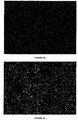
- Figure 5a shows a scanned area of an invention in situ MgB 2 wire.
- Figure 5b shows an energy dispersive X-ray mapping of oxygen of the invention in situ MgB 2 wire in the scanned area of Figure 5a .
- the white spots in Figure 5b correspond to oxygen.
- the oxygen is concentrated at the border between the MgB 2 matrix and the cavities.
- a MgB 2 PIT wire according to the invention can be used in superconductors.
- the superconductor is preferably used in a superconducting magnet of a magnetic resonance imaging apparatus.
- a superconductor according to the invention may also be applied in magnetic levitating vehicles, superconducting electromagnetic propulsion ships, nuclear fusion reactors, superconducting generators, accelerators, electron microscopes, energy storing apparatus, and power cables.
Landscapes
- Engineering & Computer Science (AREA)
- Chemical & Material Sciences (AREA)
- Manufacturing & Machinery (AREA)
- Ceramic Engineering (AREA)
- Materials Engineering (AREA)
- Structural Engineering (AREA)
- Organic Chemistry (AREA)
- Inorganic Chemistry (AREA)
- Superconductors And Manufacturing Methods Therefor (AREA)
- Inorganic Compounds Of Heavy Metals (AREA)
- Inorganic Fibers (AREA)
Abstract
A magnesiumdiboride (MgB2) powder-in-tube (PIT) wire has a cross-section showing
-voids,
- magnesiumdiboride, and
- oxides,
as measured by energy-dispersive X-ray spectroscopy. Oxides are located at the borders between the voids and the magnesiumdiboride.
-voids,
- magnesiumdiboride, and
- oxides,
as measured by energy-dispersive X-ray spectroscopy. Oxides are located at the borders between the voids and the magnesiumdiboride.
The MgB2 PIT wire has a higher degree of superconductivity.
Description
- The invention relates to a magnesiumdiboride powder-in-tube wire, more particularly to an in situ magnesiumdiboride powder-in-tube wire used as superconductive wire. The invention also relates to a way of manufacturing such a wire.
-
WO 2017/064471 A1 discloses an in situ magnesiumdiboride powder-in-tube wire and a way of making this wire. - A powder-in-tube wire is made by the known powder-in-tube (PIT) technology. According to this technology, precursor magnesium powder and boron powder is packed in one or more metal tubes. The tubes are mechanically deformed by drawing, swaging, rolling and heat treatment in order to obtain the final magnesiumdiboride powder-in-tube superconductive wire.
- In the ex situ route magnesiumdiboride powder that has already reacted is used as starting material.
- In the in situ route the unreacted powders of magnesium and boron and possible dopant powders are used as starting material.
-
WO 2017/064471 A1 discloses the use of a carrier liquid that is chemically inert with respect to either magnesium powder or boron powder or both. The liquid is not oxidizing to magnesium powder and / or not oxidizing to boron powder. The liquid carrier together with the powders forms a slurry that is continuously fed in the channel of the tube or tubes. Thereafter a heating is applied under a non-oxidizing atmosphere with as result a solid residue. By mixing the powders into an inert carrier liquid, problems with oxidation, moisture absorption and so on are reduced and the powders are mixed to a better homogeneity level. - A general aspect of the invention aims at further increasing the degree of superconductivity.
- A more specific aspect of the invention aims at locating oxygen or oxides in a superconductor wire at positions that are less harmful for superconductivity.
- Another particular aspect of the invention aims at further reducing the content of oxygen or oxides in a superconductor wire.
- Still another aspect of the invention is to allow the use of larger magnesium powders without decreasing the conductivity.
- Yet another aspect of the invention is to increase the normal zone propagation velocity of a superconductor wire.
- According to a first aspect of the invention, there is provided a magnesiumdiboride powder-in-tube wire having a cross-section showing
- voids or cavities,
- magnesiumdiboride, and
- oxides,
- The magnesiumdiboride powder-in-tube wire is preferably an in situ powder-in-tube wire.
- A major amount of present oxygen has reacted with the highly reactive magnesium and has formed magnesiumoxide. As a major part of this magnesiumoxide is present at the borders between the unavoidable voids or cavities and the magnesiumdiboride, very little oxygen is still present in the magnesiumdiboride crystalline material.
- Therefor the magnesiumdiboride has stronger grain boundaries since it is only contaminated with oxygen to a very limited extent.
Since the path of the electrical current is via the magnesiumdiboride a higher critical current Ic can be obtained. - The stronger grain boundaries in the magnesiumdiboride matrix lead to an improved grain connectivity and to a better bending performance. This means that a smaller radius of bending is possible for a same wire diameter, which facilitates the final coil making.
- Another advantage is that the content and location of the magnesiumoxide is not dependent upon the size of the magnesium powders. As a result, larger magnesium powders in the range of 100 µm to 350 µm may be used as starting material, which reduces the cost of the starting material and reduces the risk of explosion. Indeed magnesium is known to have a high degree of reactivity and it is known that the smaller the size of the magnesium powders the greater the risk for ignition.
- Yet another advantage is that the longitudinal normal zone propagation velocity is higher than in prior art magnesiumdiboride wires. The longitudinal normal zone propagation velocity determines the speed of propagation of a local hot spot along the wire length. A high longitudinal normal zone propagation velocity means that the length of the normal resistive zone in a superconductor expands quickly, resulting in a faster increase of the resistive voltage that is measured at the coil ends. The faster this measurement can be done, the quicker an imminent quench can be detected and the quicker protection schemes can be triggered for safeguarding and protecting the magnet against local overheating and irreversible damage.
It is believed that a more homogeneous magnesiumdiboride matrix with a lower oxygen concentration will lead to a higher n-value and, hence, to a higher normal zone propagation velocity. The n-value is a commonly used parameter to measure the homogeneity of a conductor. The higher the n-value the higher the normal zone propagation velocity. - Preferably more than 60%, most preferably more than 70%. 80%, 90% or 95%, of the present oxides are located at the borders between the voids and magnesiumdiboride. Due to the high reactivity of magnesium, a major part of these oxides are magnesium oxides. The magnesium oxides are mainly MgO.
- Even in case the slurry method of
WO 20171064471 A1 - In addition to the washing step or as an alternative to the washing step, a controlled chemical reaction with the oxides in the slurry may reduce the content of oxygen in the final PIT wire, for example by use of a solvent.
- In a particular preferable embodiment, the magnesiumdiboride powder-in-tube wire has an amount of oxygen less than 5 weight per cent (wt %), for example less than 4 wt %, preferably less than 3 wt %, most preferably less than 2.5 wt %. The amount of oxygen is determined by means of scanning electron microscopy and energy dispersive X-ray technique taken over a statistically significant part of the cross-section of the superconducting material, leaving out the area of voids and cavities, so measuring or calculating outside the area of voids or cavities.
- In another particular and preferable embodiment of the invention, there is provided a multi-wire comprising two or more in situ magnesiumdiboride powder-in-tube wires. These wires can be bundled together or, preferably, can be twisted.
- According to a second aspect of the present invention, there is provided a processor making an in situ magnesiumdiboride powder-in-tube wire.
The process comprises the following steps: - a) mixing magnesium powder and /or boron powder in a first carrier liquid to create a first slurry;
- b) washing the first slurry whereby magnesium oxides and / or boron oxides are washed away leaving a residue of magnesium powder, boron powder and remaining oxides;
- c) adding a second carrier liquid to the residue to create a second slurry;
- d) adding the second slurry to a preformed metallic sheath;
- e) closing the preformed metallic sheath to form a tube.
- Preferably, step c) is done without drying the residue.
- Preferably the second carrier liquid is equal to the first carrier liquid.
-
-
Figure 1 shows schematically first steps of making a single in situ magnesiumdiboride powder-in-tube wire. -
Figure 2 shows schematically following steps of making a multifilament wire. -
Figure 3a shows a scanned area of a prior art ex situ MgB2 wire,Figure 3b shows energy dispersive X-ray mapping of oxygen of the prior art ex situ MgB2 wire in the scanned area ofFigure 3a . -
Figure 4a shows a scanned area of a prior art in situ MgB2 wire,Figure 4b shows energy dispersive X-ray mapping of oxygen of the prior art in situ MgB2 wire in the scanned area ofFigure 4a . -
Figure 5a shows a scanned area of an invention in situ MgB2 wire,Figure 5b shows energy dispersive X-ray mapping of oxygen of the invention in situ MgB2 wire in the scanned area ofFigure 5a . - The first steps of making an in situ MgB2 PIT wire relate to the preparing of a slurry.
- A first slurry is prepared by mixing B powder and / or Mg powder in a first carrier liquid. As mentioned before, there is no need to use small Mg powders. Mg powders with sizes ranging from 100 µm to 350 µm are perfectly suitable. The B powders may be of a nano to micro size. Dopant powders like SiC may be added. Examples of a suitable first carrier liquid are liquid hydrocarbon, ethyl alcohol, acetone, methyl acetate, and ethyl-acetate.
- This first slurry is then washed. The washing process removes not only the fluid substance but also a substantial part of the present oxides such as MgO and / or B2O3. A residue of B powders and Mg powders and possible dopant powders and a reduced amount of oxides remains.
- After the washing step, a second liquid carrier is added to the residue to form a second slurry. This second liquid carrier can be different from the first liquid carrier, but is preferably the same.
- Reference is now made to
Figure 1 , which shows schematically the first steps of making a single in situ MgB2 PIT wire. - Step 100 is unwinding of a metallic or bi-metallic
flat sheet 102. The sheet can be of Cu, Ni, Nb, Ti, Fe, stainless steel, Cu-Ni, Monel, Ag-Mg and Nb-Ti or of any combination of them. Preferably a bi-metallic sheet out of two metals is used or two sheets of different metals are used. One of the two metals is electrically more conducting than the other one. A preferred example is a combination of copper with steel. - Step 104 is the preforming of the
metallic sheet 102, for example in a U-form by means of preformingelements 106. The U-form is suitable for receiving the second slurry with the various powders. - Step 108 is delivering the second slurry with the powders. This can be done in one step where all powders, B, Mg and any dopant powders are added via one
nozzle 110 to thedeformed sheet 102. Alternatively, the various powders in a separate second slurry can be added separately vianozzles - Step 116 is preconditioning the powders by means of a
heater 118. - Step 120 is the closure of the
metallic sheet 102 by means ofpreformers 122 and a welding operation to form a closed metallic tube. - Step 124 is the reduction of cross-section of the tube to form a single wire. This reduction can be done by means of
rollers 126 or by means of a series of dies. - Step 128 is a quality control step.
- The result of this first series of
manufacturing steps PIT wire 130 with unreacted powders B and Mg and possible dopant powders inside a metallic sheet. -
Figure 2 illustrates the various steps for making a multifilament wire. - A
single PIT wire 130 forms the main starting product for making a multifilament wire. - In
step 200 varioussingle PIT wires 130 are put next to each other and next to a copper oraluminium wire 202 ready to be unwound and twisted. - Step 204 is the twisting process where the
various PIT wires 130 are twisted around the copper oraluminium wire 202 to form a twisted structure. - In
step 208elongated insulation material 210 is wrapped or braided around the twisted structure to form aconsolidated muitifiiament 212. - There after preferably in line with the twisting and wrapping or braiding process, the
consolidated multifilament 212 is subjected to a heat treatment in order to react the Mg with the B and to form MgB2. - In a
final step 214 the multifilament 212 is impregnated withresin 216. - Energy-dispersive X-ray spectroscopy has been applied on several samples of two prior art MgB2 PIT superconductor wires and on several samples of an invention MgB2 PIT superconductor wire.
- All samples were cut by a plasma of argon ions with a cross-section polisher of the type JEOL (JSM 09010). After making a clean cross-section, the samples were put on a sample holder for analysis and stored in a vacuum chamber until analysis could start. This was done to avoid oxidation by air.
Several analyses were carried out in a JEOL 7200F equipped with an Oxford X-max EDX detector from Oxford Instruments with a 80 mm2 window. The software used is Oxford Aztec version 3.3.
All samples were measured on process time 5 with a fixed number of counts/spectrum of 500000. All elements other than B, O or Mg were removed from the spectrum by eliminating them in the Oxford Aztec software.
The acceleration voltage used in the method was 5 kV or 15 kV.
The results are in weight percentage (wt%). The measured values have an accuracy of 0.1 wt%. -
Figure 3a shows the scanned area of an ex situ MgB2 PIT wire.Figure 3b shows the energy dispersive X-ray mapping of oxygen of the prior art ex situ MgB2 wire in the scanned area ofFigure 3a . The white spots inFigure 3b correspond to oxygen. - The oxygen is distributed homogeneously over the cross-section area and is thus largely present in the MgB2 matrix.
- The voids or cavities are widely spread over the whole cross-section. Measurement of pure material without including a certain number of cavities was not possible.
- Nine different samples were measured with different magnification (2000x, or 10000x) and with different acceleration voltage (5 kV or 15 kV). These nine samples show following ranges:
- B: 51.0 wt% - 52.2 wt% - O: 6.8 wt% - 8.7 wt% - Mg: 40.5 wt% - 42.2 wt% -
Figure 4a shows a scanned area of a prior art in situ MgB2 wire.Figure 4b shows energy dispersive X-ray mapping of oxygen of the prior art in situ MgB2 wire in the scanned area ofFigure 4a .
The white spots inFigure 4b correspond to oxygen. The oxygen is distributed in oxygen right areas and oxygen poor areas, but the oxygen concentration cannot be linked to the cavities or the voids.
In contrast to prior art wire 1, it was possible here to do measurements with inclusion and exclusion of cavities. - Including the cavities and using an acceleration voltage of 15 kV and magnification of either 2000x or 10000x, following ranges were found over four samples:
- B: 40.9 wt% - 50.3 wt% - O: 13.8 wt% - 23.4 wt% - Mg: 29.4 wt% - 38,3 wt% - Excluding the cavities and using an acceleration voltage of either 5 kV or 15 kV, following ranges were found:
- B: 29.9 wt% - 57.3 wt% - O: 1.6 wt% - 34.1 wt% - Mg: 33.8 wt% - 42.6 wt% -
Figure 5a shows a scanned area of an invention in situ MgB2 wire.Figure 5b shows an energy dispersive X-ray mapping of oxygen of the invention in situ MgB2 wire in the scanned area ofFigure 5a . The white spots inFigure 5b correspond to oxygen. The oxygen is concentrated at the border between the MgB2 matrix and the cavities. - Including the cavities and using an acceleration voltage of 5 kV or 15 kV and magnification of either 2000x, following ranges were found over four samples:
- B: 52.8 wt% - 54.4 wt% - O: 6.2 wt% - 8.4 wt% - Mg: 37.2 wt% - 40.2 wt% - Excluding the cavities and using an acceleration voltage of 5 kV or 15 kV and varying magnification, following ranges were found:
- B: 56.0 wt% - 58.1 wt% - O: 0.9 wt% - 2.3 wt% - Mg: 41.0 wt% - 42.3 wt% - A MgB2 PIT wire according to the invention can be used in superconductors. The superconductor is preferably used in a superconducting magnet of a magnetic resonance imaging apparatus. A superconductor according to the invention may also be applied in magnetic levitating vehicles, superconducting electromagnetic propulsion ships, nuclear fusion reactors, superconducting generators, accelerators, electron microscopes, energy storing apparatus, and power cables.
wherein oxides are located at the borders between the voids and the magnesiumdiboride.
Claims (9)
- A magnesiumdiboride powder-in-tube wire having a cross-section showing- voids,- magnesiumdiboride, and- oxides,as measured by energy-dispersive X-ray spectroscopy,
wherein oxides are located at the borders between the voids and the magnesiumdiboride. - The wire according to claim 1, said wire being an in situ magnesiumdiboride powder-in-tube wire.
- The wire according to claim 1 or claim 2,
wherein more than 60% of the present oxides are located at the borders between the voids and magnesiumdiboride. - The wire according to claim 3,
wherein the oxides are magnesium oxides. - The wire according to claim 4,
wherein the magnesium oxides are MgO. - The wire according to any one of the preceding claims, wherein the amount of oxygen is less than 5 wt %, when measured over a cross-section voids not included.
- The multi-wire comprising two or more wires according to any one of the preceding claims.
- A process of making a wire according to any one of claims 1 to 6,
said process comprising following steps:a) mixing magnesium powder and/or boron powder in a first carrier liquid to create a first slurry;b) washing said first slurry whereby magnesium oxides and/or boron oxides are washed away leaving a residue of magnesium powder and/or boron powder and remaining oxides;c) adding a second carrier liquid to said residue to create a second slurry;d) adding said second slurry to a preformed metallic sheath;e) closing said preformed metallic sheath to form a tube. - The process according to claim 8,
wherein said first carrier liquid is equal to said second carrier liquid.
Priority Applications (7)
| Application Number | Priority Date | Filing Date | Title |
|---|---|---|---|
| EP19250011.4A EP3767691A1 (en) | 2019-07-18 | 2019-07-18 | Magnesiumdiboride powder-in-tube wire |
| KR1020227005037A KR102844618B1 (en) | 2019-07-18 | 2020-06-23 | Magnesium diboride tube-in-powder wire |
| EP20733818.7A EP4000108A1 (en) | 2019-07-18 | 2020-06-23 | Magnesiumdiboride powder-in-tube wire |
| US17/627,368 US12492150B2 (en) | 2019-07-18 | 2020-06-23 | Magnesiumdiboride powder-in-tube wire |
| PCT/EP2020/067507 WO2021008827A1 (en) | 2019-07-18 | 2020-06-23 | Magnesiumdiboride powder-in-tube wire |
| CN202080051715.3A CN114127868A (en) | 2019-07-18 | 2020-06-23 | Tubular filament containing magnesium diboride powder |
| JP2022502846A JP7664218B2 (en) | 2019-07-18 | 2020-06-23 | Magnesium diboride powder-in-tube wire |
Applications Claiming Priority (1)
| Application Number | Priority Date | Filing Date | Title |
|---|---|---|---|
| EP19250011.4A EP3767691A1 (en) | 2019-07-18 | 2019-07-18 | Magnesiumdiboride powder-in-tube wire |
Publications (1)
| Publication Number | Publication Date |
|---|---|
| EP3767691A1 true EP3767691A1 (en) | 2021-01-20 |
Family
ID=68069689
Family Applications (2)
| Application Number | Title | Priority Date | Filing Date |
|---|---|---|---|
| EP19250011.4A Withdrawn EP3767691A1 (en) | 2019-07-18 | 2019-07-18 | Magnesiumdiboride powder-in-tube wire |
| EP20733818.7A Pending EP4000108A1 (en) | 2019-07-18 | 2020-06-23 | Magnesiumdiboride powder-in-tube wire |
Family Applications After (1)
| Application Number | Title | Priority Date | Filing Date |
|---|---|---|---|
| EP20733818.7A Pending EP4000108A1 (en) | 2019-07-18 | 2020-06-23 | Magnesiumdiboride powder-in-tube wire |
Country Status (6)
| Country | Link |
|---|---|
| US (1) | US12492150B2 (en) |
| EP (2) | EP3767691A1 (en) |
| JP (1) | JP7664218B2 (en) |
| KR (1) | KR102844618B1 (en) |
| CN (1) | CN114127868A (en) |
| WO (1) | WO2021008827A1 (en) |
Citations (2)
| Publication number | Priority date | Publication date | Assignee | Title |
|---|---|---|---|---|
| US20020173428A1 (en) * | 2001-03-09 | 2002-11-21 | American Superconductor Corporation | Processing of magnesium-boride superconductors |
| WO2017064471A1 (en) | 2015-10-15 | 2017-04-20 | Epoch Wires Limited | Method for manufacturing continuous wire |
Family Cites Families (3)
| Publication number | Priority date | Publication date | Assignee | Title |
|---|---|---|---|---|
| JP4500901B2 (en) | 2004-10-01 | 2010-07-14 | 独立行政法人物質・材料研究機構 | Composite sheathed magnesium diboride superconducting wire and its manufacturing method |
| DE102008056824A1 (en) * | 2008-11-11 | 2010-05-20 | H.C. Starck Gmbh | Inorganic compounds |
| TW201446360A (en) * | 2012-12-27 | 2014-12-16 | 昭和電工股份有限公司 | Chemical composite body for tantalum capacitor anode and manufacturing method thereof |
-
2019
- 2019-07-18 EP EP19250011.4A patent/EP3767691A1/en not_active Withdrawn
-
2020
- 2020-06-23 JP JP2022502846A patent/JP7664218B2/en active Active
- 2020-06-23 CN CN202080051715.3A patent/CN114127868A/en active Pending
- 2020-06-23 KR KR1020227005037A patent/KR102844618B1/en active Active
- 2020-06-23 EP EP20733818.7A patent/EP4000108A1/en active Pending
- 2020-06-23 US US17/627,368 patent/US12492150B2/en active Active
- 2020-06-23 WO PCT/EP2020/067507 patent/WO2021008827A1/en not_active Ceased
Patent Citations (2)
| Publication number | Priority date | Publication date | Assignee | Title |
|---|---|---|---|---|
| US20020173428A1 (en) * | 2001-03-09 | 2002-11-21 | American Superconductor Corporation | Processing of magnesium-boride superconductors |
| WO2017064471A1 (en) | 2015-10-15 | 2017-04-20 | Epoch Wires Limited | Method for manufacturing continuous wire |
Non-Patent Citations (2)
| Title |
|---|
| BIRAJDAR B ET AL: "TOPICAL REVIEW; Quantitative electron microscopy and spectroscopy of MgB2 wires and tapes", SUPERCONDUCTOR SCIENCE AND TECHNOLOGY, IOP PUBLISHING, TECHNO HOUSE, BRISTOL, GB, vol. 21, no. 7, 1 July 2008 (2008-07-01), pages 73001, XP020135313, ISSN: 0953-2048 * |
| KARIO A ET AL: "Ex situ MgB2 barrier behavior of monofilament in situ MgB2 wires with Glidcop sheath material;Ex situ MgB2 barrier behavior of monofilament in situ MgB2 wires with Glidcopreg sheath material", SUPERCONDUCTOR SCIENCE AND TECHNOLOGY, IOP PUBLISHING, TECHNO HOUSE, BRISTOL, GB, vol. 23, no. 11, 5 October 2010 (2010-10-05), pages 115007, XP020199730, ISSN: 0953-2048, DOI: 10.1088/0953-2048/23/11/115007 * |
Also Published As
| Publication number | Publication date |
|---|---|
| EP4000108A1 (en) | 2022-05-25 |
| WO2021008827A1 (en) | 2021-01-21 |
| JP2022541239A (en) | 2022-09-22 |
| KR102844618B1 (en) | 2025-08-11 |
| CN114127868A (en) | 2022-03-01 |
| KR20220034876A (en) | 2022-03-18 |
| JP7664218B2 (en) | 2025-04-17 |
| US20220259110A1 (en) | 2022-08-18 |
| US12492150B2 (en) | 2025-12-09 |
Similar Documents
| Publication | Publication Date | Title |
|---|---|---|
| EP3107879B1 (en) | Superconducting wires and methods of making thereof | |
| US7018954B2 (en) | Processing of magnesium-boride superconductors | |
| Kumakura et al. | High transport critical current density obtained for powder-in-tube-processed MgB 2 tapes and wires using stainless steel and Cu–Ni tubes | |
| DE69026659T2 (en) | Ceramic superconducting wire and process for its manufacture | |
| EP0627773A1 (en) | Oxide superconducting wire and superconducting apparatus therewith | |
| US7226894B2 (en) | Superconducting wire, method of manufacture thereof and the articles derived therefrom | |
| US20050163644A1 (en) | Processing of magnesium-boride superconductor wires | |
| EP3441486B1 (en) | Superconducting wire and superconducting coil | |
| EP0292385B1 (en) | Method of making oxide ceramic superconducting wires | |
| EP2620991A2 (en) | Precursor of MgB2 superconducting wire, and method for producing the same | |
| CN1249263C (en) | Constrained filament niobium-based superconductor composite and process of fabrication | |
| Malagoli et al. | Fabrication and superconducting properties of multifilamentary MgB2 conductors for AC purposes: twisted tapes and wires with very thin filaments | |
| GB2078786A (en) | Superconductive wires | |
| US12492150B2 (en) | Magnesiumdiboride powder-in-tube wire | |
| JPWO2005022563A1 (en) | Method for producing oxide superconducting wire, method for modifying oxide superconducting wire, and oxide superconducting wire | |
| US20090209428A1 (en) | PRODUCTION METHOD OF Bi-2223-BASED SUPERCONDUCTING WIRE | |
| US5874384A (en) | Elongate Bi-based superconductors made by freeze dried conducting powders | |
| JP2003331660A (en) | Metal sheath superconductor wire, superconducting coil, and method of manufacturing the same | |
| JP4602237B2 (en) | High performance MgB2 superconducting wire and manufacturing method | |
| Atamert et al. | Novel superconducting MgB 2 wires made by continuous process | |
| WO2015049776A1 (en) | MgB2 SUPERCONDUCTING WIRE ROD, SUPERCONDUCTING CONNECTION STRUCTURE, SUPERCONDUCTING MAGNET USING MgB2 SUPERCONDUCTING WIRE ROD, AND SUPERCONDUCTING CABLE USING MgB2 SUPERCONDUCTING WIRE ROD | |
| CN114360807B (en) | Iron-based superconducting multi-core wire rod and preparation method and application thereof | |
| EP3503230A1 (en) | Magnesium diboride superconducting wire with magnesium coated iron sheath and method of obtaining | |
| JPH0917249A (en) | Oxide superconducting wire and method for producing the same | |
| JPH11329110A (en) | Method for producing multifilament tape-shaped oxide superconducting stranded wire |
Legal Events
| Date | Code | Title | Description |
|---|---|---|---|
| PUAI | Public reference made under article 153(3) epc to a published international application that has entered the european phase |
Free format text: ORIGINAL CODE: 0009012 |
|
| STAA | Information on the status of an ep patent application or granted ep patent |
Free format text: STATUS: THE APPLICATION HAS BEEN PUBLISHED |
|
| AK | Designated contracting states |
Kind code of ref document: A1 Designated state(s): AL AT BE BG CH CY CZ DE DK EE ES FI FR GB GR HR HU IE IS IT LI LT LU LV MC MK MT NL NO PL PT RO RS SE SI SK SM TR |
|
| AX | Request for extension of the european patent |
Extension state: BA ME |
|
| STAA | Information on the status of an ep patent application or granted ep patent |
Free format text: STATUS: THE APPLICATION IS DEEMED TO BE WITHDRAWN |
|
| 18D | Application deemed to be withdrawn |
Effective date: 20210721 |