EP3766746A1 - Method, device, computer program and computer program product for operating a vehicle - Google Patents
Method, device, computer program and computer program product for operating a vehicle Download PDFInfo
- Publication number
- EP3766746A1 EP3766746A1 EP19186229.1A EP19186229A EP3766746A1 EP 3766746 A1 EP3766746 A1 EP 3766746A1 EP 19186229 A EP19186229 A EP 19186229A EP 3766746 A1 EP3766746 A1 EP 3766746A1
- Authority
- EP
- European Patent Office
- Prior art keywords
- windshield
- vehicle
- data
- condition
- representative
- Prior art date
- Legal status (The legal status is an assumption and is not a legal conclusion. Google has not performed a legal analysis and makes no representation as to the accuracy of the status listed.)
- Granted
Links
Images

Classifications
-
- B—PERFORMING OPERATIONS; TRANSPORTING
- B60—VEHICLES IN GENERAL
- B60S—SERVICING, CLEANING, REPAIRING, SUPPORTING, LIFTING, OR MANOEUVRING OF VEHICLES, NOT OTHERWISE PROVIDED FOR
- B60S1/00—Cleaning of vehicles
- B60S1/02—Cleaning windscreens, windows or optical devices
- B60S1/04—Wipers or the like, e.g. scrapers
- B60S1/06—Wipers or the like, e.g. scrapers characterised by the drive
- B60S1/08—Wipers or the like, e.g. scrapers characterised by the drive electrically driven
- B60S1/0818—Wipers or the like, e.g. scrapers characterised by the drive electrically driven including control systems responsive to external conditions, e.g. by detection of moisture, dirt or the like
- B60S1/0822—Wipers or the like, e.g. scrapers characterised by the drive electrically driven including control systems responsive to external conditions, e.g. by detection of moisture, dirt or the like characterized by the arrangement or type of detection means
- B60S1/0859—Other types of detection of rain, e.g. by measuring friction or rain drop impact
-
- G—PHYSICS
- G01—MEASURING; TESTING
- G01N—INVESTIGATING OR ANALYSING MATERIALS BY DETERMINING THEIR CHEMICAL OR PHYSICAL PROPERTIES
- G01N29/00—Investigating or analysing materials by the use of ultrasonic, sonic or infrasonic waves; Visualisation of the interior of objects by transmitting ultrasonic or sonic waves through the object
- G01N29/14—Investigating or analysing materials by the use of ultrasonic, sonic or infrasonic waves; Visualisation of the interior of objects by transmitting ultrasonic or sonic waves through the object using acoustic emission techniques
-
- G—PHYSICS
- G01—MEASURING; TESTING
- G01N—INVESTIGATING OR ANALYSING MATERIALS BY DETERMINING THEIR CHEMICAL OR PHYSICAL PROPERTIES
- G01N29/00—Investigating or analysing materials by the use of ultrasonic, sonic or infrasonic waves; Visualisation of the interior of objects by transmitting ultrasonic or sonic waves through the object
- G01N29/22—Details, e.g. general constructional or apparatus details
- G01N29/32—Arrangements for suppressing undesired influences, e.g. temperature or pressure variations, compensating for signal noise
-
- G—PHYSICS
- G01—MEASURING; TESTING
- G01N—INVESTIGATING OR ANALYSING MATERIALS BY DETERMINING THEIR CHEMICAL OR PHYSICAL PROPERTIES
- G01N29/00—Investigating or analysing materials by the use of ultrasonic, sonic or infrasonic waves; Visualisation of the interior of objects by transmitting ultrasonic or sonic waves through the object
- G01N29/36—Detecting the response signal, e.g. electronic circuits specially adapted therefor
- G01N29/42—Detecting the response signal, e.g. electronic circuits specially adapted therefor by frequency filtering or by tuning to resonant frequency
-
- G—PHYSICS
- G01—MEASURING; TESTING
- G01N—INVESTIGATING OR ANALYSING MATERIALS BY DETERMINING THEIR CHEMICAL OR PHYSICAL PROPERTIES
- G01N29/00—Investigating or analysing materials by the use of ultrasonic, sonic or infrasonic waves; Visualisation of the interior of objects by transmitting ultrasonic or sonic waves through the object
- G01N29/44—Processing the detected response signal, e.g. electronic circuits specially adapted therefor
- G01N29/4454—Signal recognition, e.g. specific values or portions, signal events, signatures
-
- G—PHYSICS
- G01—MEASURING; TESTING
- G01N—INVESTIGATING OR ANALYSING MATERIALS BY DETERMINING THEIR CHEMICAL OR PHYSICAL PROPERTIES
- G01N29/00—Investigating or analysing materials by the use of ultrasonic, sonic or infrasonic waves; Visualisation of the interior of objects by transmitting ultrasonic or sonic waves through the object
- G01N29/44—Processing the detected response signal, e.g. electronic circuits specially adapted therefor
- G01N29/4481—Neural networks
Definitions
- the invention relates to a method for operating a vehicle.
- the invention relates further to a device for operating a vehicle.
- the invention relates further to a computer program and computer program product for operating a vehicle.
- a vehicle can comprise a rain sensor. Dependent of the rain sensor, wipers of a windshield of the vehicle can be switched on/off.
- the object of the invention is to contribute to a precise determination of a condition of the windshield of the vehicle.
- the invention is distinguished by a method method for operating a vehicle.
- the at least two piezo-electric sensors are mechanically coupled to a windshield of the vehicle in a spaced apart manner.
- the at least two piezo-electric sensors are mechanically coupled to the windshield in such a way, that the measurement signals are representative of vibrations of the windshield.
- Condition data are determined dependent on the measurement data.
- the condition data is representative of a condition of the windshield.
- the at least two piezo-electric sensors can sense the vibrations of the windshield and output corresponding electrical signals.
- the vibrations of the windshield may be gathered if the vehicle is static or moving.
- a condition of the windshield may be determined.
- a vibration pattern may be determined according to the measurement data and used to determine the condition data, wherein the vibration pattern may be unique with a certain condition of the windshield. For example, this enables to distinguish a water droplet on the windshield from a snow flake on the windshield or the like.
- an error such as a false negative error and/or a false positive error.
- Such an error may be, for example, that wipers of the vehicle do not wipe, because a sensor area is still dry, while the rest of the windshield is wet, for example in sight-critical areas.
- an error involving one of the at least two sensors may be detected by the other sensors.
- the term windshield may refer to the windshield as a whole and/or in part and/or the surface of the windshield, e.g. the term water on the windshield refers to water on the surface of the windshield.
- the windshield may be a front windshield of the vehicle and/or a rear screen and/or another window of the vehicle.
- Mechanically coupled may comprise one or more of the following: glued and/or mounted and/or included or the like.
- the at least two piezo-electric sensors may be mechanically coupled to an inside and/or an outside of the windshield. For example, it is possible to mount a first piezo-electric sensor on the outside and a second piezo-electric sensor on the inside of the windshield.
- the at least two piezo-electric sensors may be mechanically coupled to an area of the windshield that is not sight-critical for a driver of the vehicle, e.g. a corner of the windshield and/or near a rear-view mirror of the vehicle and/or along edges of the windshield.
- the at least two piezo-electric sensors may be constructed in such a way that they do not influence a field of vision of the driver.
- a spaced apart manner may comprise a proper spacing between the at least two piezo-electric sensors, to enable a precise determination of the condition data possibly including triangulation based on the measurement data.
- a spaced apart manner may refer to an area of the windshield in opposite corners of the windshield or the like.
- the condition of the windshield may comprise multiple conditions of the windshield.
- the condition of the windshield may comprise one or more of the following: the water droplet on the windshield and/or the snow flake on the windshield and/or a hailstone hitting the windshield and/or a stone hitting the windshield and/or an insect hitting the windshield and/or air turbulences caused by dirt/friction on the windshield and/or sound from a wiper of the windshield or the like.
- the condition of the windshield may be determined dependent on the measurement data and/or additional data to enable a more precise determination.
- the additional data may comprise a wiper motor information and/or driving data or the like.
- the method according to the first aspect may further comprise operating the vehicle according to the condition data.
- the operating the vehicle according to the condition data may comprise an automatic control of the wiper of the windshield or the like.
- the automatic control of the wiper may comprise switching on the wiper and/or switching off the wiper and/or changing the frequency of wiping or the like.
- the term wiper may refer to one or more wipers of windshield of the vehicle.
- the operating the vehicle according to the condition data may comprise an automatic control of one or more washer nozzles of the windshield.
- the automatic control of the one or more washer nozzles may comprise switching on the washer nozzles and/or switching off the washer nozzles or the like.
- the operating the vehicle according to the condition data may comprise providing the driver information to a driver of the vehicle according to the condition data.
- the providing the driver information may comprise providing the driver information on a user interface of the vehicle.
- the user interface may be a display and/or touch display in a front console of the vehicle or the like.
- the operating the vehicle according to the condition data may comprise controlling and/or operating and/or modifying a driving function of the vehicle according to the condition data, e.g. modifying a behaviour of an automatic driving assistant and/or modifying a behaviour of an autopilot or the like.
- speed data are provided.
- the speed data are representative of a speed of the vehicle and have a temporal relation to the measurement data.
- the condition data are determined dependent on the speed data.
- the additional data such as the speed data
- aerodynamics of the windshield such as an aerodynamic flow or the like
- the vibrations of the windshield may change according to the speed of the vehicle, when the vehicle is moving compared to if the vehicle is static.
- the vibration pattern that may be determined according to the measurement data and/or the speed data and used to determine the condition information may change with the speed of the vehicle.
- the temporal relation refers to, for example, a same time and/or time range or the like.
- the measurement data are based on measurement signals from the at least two piezo-electric sensors during a time range A
- the speed data may be representative of the speed of the vehicle during the time range A.
- condition data are determined dependent on the measurement data and/or the speed data.
- noise data of the vehicle are provided.
- the noise data of the vehicle are non-representative of the conditions of the windshield and have a temporal relation to the measurement data.
- the condition data are determined dependent on the noise data.
- the vibrations of the windshield may change according to the noise data.
- the vibration pattern that may be determined according to the measurement data and/or the speed data and/or the noise data and used to determine the condition information may change.
- the temporal relation refers to, for example, the same time and/or time range or the like. For example, if the measurement data are based on measurement signals from the at least two piezo-electric sensors during a time range A, then the noise data may be non-representative of the conditions of the windshield during the time range A.
- condition data are determined dependent on the measurement data and/or the speed data and /or the noise data or an arbitrary combination of the three.
- the noise data are based on vehicle internal sound data.
- the vehicle internal sound data are representative of sound generated by an entertainment system of the vehicle.
- the influence on the vibrations of the windshield may be in particular significant.
- the noise data are based on road condition data.
- the road condition data are representative of a condition of an underground that the vehicle is moving on.
- the condition of the underground that the vehicle is moving on may comprise multiple conditions of the underground that the vehicle is moving on.
- the condition of the underground that the vehicle is moving on may comprise one or more of the following: an underground surface, such as a slope and/or gravel and/or asphalt and/or cobble stones and/or water on the underground and/or snow on the underground and/or ice on the underground or the like, and/or a pothole on the underground and/or a bump on the underground or the like.
- the determining the condition data comprises applying artificial intelligence.
- Applying artificial intelligence may comprise a neural network and/or machine learning algorithms and/or training methods for artificial intelligence or the like.
- the artificial intelligence may be different for a type of a vehicle, e.g. a truck or a limousine, and/or may be different for a model of a vehicle and/or may be different for various speeds of the vehicle or the like.
- the artificial intelligence may be trained. This may include that it is pre-trained, in particular during development of the vehicle. This may additionally or alternatively include that the artificial intelligence may be adaptively trained during operation of the vehicle, in particular in order to operate the vehicle according to the condition data, e.g. the automatic control of the wiper and/or the automatic control of the washer nozzles or the like. For example, one or more actions of the driver in certain situations, e.g. turning on the wipers during rain, may be used as feedback information for the adaptive training.
- the feedback information and/or information about the adaptive training may be sent to a database external to the vehicle, e.g. a back-end server.
- a database external to the vehicle e.g. a back-end server.
- the artificial intelligence may be trained in order to determine vibration patterns of the vibrations of the windshield and/or to filter unwanted noise according to the measurement data and/or the speed data and/or the noise data or the like.
- the artificial intelligence is trained to filter out noise of the measurement signals being non-representative of the conditions of the windshield.
- condition data by, for example, filtering out unwanted noise and/or filtering out the vibrations of the windshield based on noise of the measurement signals.
- filtering out unwanted noise and/or filtering out the vibrations of the windshield based on noise of the measurement signals.
- vibrations of the windshield caused by one or more items hitting the vehicle in other places than the windshield, e.g. a stone hitting a rooftop of the vehicle or the like.
- the artificial intelligence is trained to filter out the noise of the measurement signals caused by vehicle internal sound.
- the noise of the measurement signals caused by vehicle internal sound is representative of the sound generated by the entertainment system of the vehicle.
- the artificial intelligence is trained to filter out the noise of the measurement signals caused by a road condition.
- the road condition is representative of the condition of an underground that the vehicle is moving on.
- the road condition may comprise multiple road conditions.
- the road condition may comprise one or more of the following: a road surface, such as a slope and/or gravel and/or asphalt and/or cobble stones and/or water on the road and/or snow on the road and/or ice on the road or the like, and/or a pothole on the road and/or a bump on the road and/or a puddle on the road or the like.
- the artificial intelligence is trained to determine the condition data in such a way, that they comprise information about one or more impacts on the windshield and/or a cleanliness of a surface of the windshield and/or a friction of the surface of the windshield and/or a wear of a wiper of the windshield.
- the information about the one or more impacts on the windshield may be representative of one or more objects hitting the windshield, e.g. the water droplet and/or the snow flake and/or the hailstone and/or the stone and/or the insect or the like.
- the information about the one or more impacts on the windshield may comprise an information about a location of the impacts and/or a quantity of the impacts and/or a quality of the impacts. For example, thirty rain drops may be detected in an area of the windshield in the center of the windshield in a specified time, wherein a size of the rain drops may be assessed.
- the information about the location of the impacts may be a precise location.
- the information about the cleanliness of the surface may be representative of conditions that influence the field of vision of the driver, e.g. mud and/or dirt and/or ice and/or oil and/or insects or the like.
- the information about the friction of the surface may be representative of conditions that influence the aerodynamics of the windshield and/or the vehicle, e.g. mud and/or dirt and/or ice and/or rain or the like.
- the information about the wear of the wiper may comprise information about the wear of multiple wipers of the windshield.
- the information about the wear of the wiper may be representative of an ability to clean the windshield as compared to a new wiper or the like.
- the information about one or more impacts on the windshield and/or a cleanliness of a surface of the windshield and/or a friction of the surface of the windshield and/or a wear of a wiper of the windshield may be provided as a percentage value between zero and hundred percent.
- Zero percent referring to a poor condition e.g. zero percent of cleanliness of the surface of the windshield may be regarded as a dirty surface of the windshield and hundred percent of cleanliness of the surface of the windshield may be regarded as a clean surface of the windshield.
- the information about one or more impacts on the windshield and/or a cleanliness of a surface of the windshield and/or a friction of the surface of the windshield and/or a wear of a wiper of the windshield and/or part of the information about one or more impacts on the windshield and/or a cleanliness of a surface of the windshield and/or a friction of the surface of the windshield and/or a wear of a wiper of the windshield may be comprised in the driver information or the like.
- an information is provided to a database external to the vehicle.
- the information is provided according to the condition data.
- the information comprises a location information which has a temporal relation to the measurement data.
- the database external to the vehicle may comprise multiple databases external to the vehicle.
- the database external to the vehicle may comprise one or more of the following: one or more back-end servers for a vehicle fleet, wherein the vehicle may or may not be part of the vehicle fleet, and/or one or more map providers and/or one or more municipal services.
- one or more back-end servers for a vehicle fleet wherein the vehicle may or may not be part of the vehicle fleet
- map providers and/or one or more municipal services By providing the information to the municipal service it is possible, for example to control dynamic speed signs on a street/road and/or dynamic warning signs on the street/road and/or to initiate pothole repair and/or initiate snow clearing or the like.
- the location information may be, for example, a geotag.
- the location information may be provided dependent on a GNSS position information provided by a GNSS device of the vehicle.
- the temporal relation refers to, for example, a same time and/or time range or the like.
- the location information may be representative of one or more GNSS position information provided by the GNSS device of the vehicle during the time range A.
- the measurement data are provided based on measurement signals from at least four piezo-electric sensors.
- Four of the at least four piezo-electric sensors are respectively mechanically coupled to an area of the windshield in corners of the windshield.
- a condition of the windshield may be determined more precisely. For example, by using the at least four piezo-electric sensors, it is possible to enable a more precise triangulation based on the measurement data and thus a more precise determination of the condition data. Furthermore, by using at least four piezo-electric sensors, it is possible to provide a multi-dimensional input for the determination of the condition data.
- the invention is distinguished by a device for operating a vehicle, wherein the device is designed to execute the method for operating a vehicle or an embodiment of the method according to the first aspect.
- the invention is distinguished by a computer program for operating a vehicle, wherein the computer program is designed to execute the method for operating a vehicle or an embodiment of the method by its execution on a data processing device.
- the invention is distinguished by a computer program product comprising executable program code, wherein the program code executes the method for operating a vehicle or an embodiment of the method by execution on a data processing device.
- the computer program product may comprise a medium which is readable by the data processing device and on which the program code is saved.
- Embodiments of the first aspect may also be present for the other aspects and show corresponding effects.
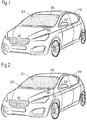
- Figure 1 shows a schematic drawing of a first embodiment of a vehicle 10.
- the vehicle 10 comprises two piezo-electric sensors 21, 22, a windshield 30 and a wiper 40.
- the piezo-electric sensor 21 is mechanically coupled to an area of the windshield 30 in a top right corner of the windshield 30.
- the piezo-electric sensor 22 is mechanically coupled to an area of the windshield 30 in a top left corner of the windshield 30.
- the two piezo-electric sensors 21, 22, may provide measurement signals.
- the two piezo-electric sensors 21, 22 are mechanically coupled to the windshield 30 in such a way, that the measurement signals are representative of vibrations of the windshield 30.
- Measurement data MD may be provided based on the measurement signals from the two piezo-electric sensors 21, 22.
- FIG. 2 shows a schematic drawing of a second embodiment of a vehicle 10.
- the vehicle 10 comprises four piezo-electric sensors 21, 22, 23, 24, a windshield 30 and a wiper 40.
- the piezo-electric sensor 21 is mechanically coupled to an area of the windshield 30 in a top right corner of the windshield 30.
- the piezo-electric sensor 22 is mechanically coupled to an area of the windshield 30 in a top left corner of the windshield 30.
- the piezo-electric sensor 23 is mechanically coupled to an area of the windshield 30 in a bottom right corner of the windshield 30.
- the piezo-electric sensor 24 is mechanically coupled to an area of the windshield 30 in a bottom left corner of the windshield 30.
- the four piezo-electric sensors 21, 22, 23, 24 may provide measurement signals.
- the four piezo-electric sensors 21, 22, 23, 24 are mechanically coupled to the windshield 30 in such a way, that the measurement signals are representative of vibrations of the windshield 30.
- Measurement data MD may be provided based on the measurement signals from the four piezo-electric sensors 21, 22, 23, 24.
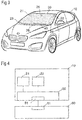
- FIG. 3 shows a schematic drawing of a third embodiment of a vehicle 10.
- the vehicle 10 comprises six piezo-electric sensors 21, 22, 23, 24, 25, 26, a windshield 30 and a wiper 40.
- the piezo-electric sensor 21 is mechanically coupled to an area of the windshield 30 in a top right corner of the windshield 30.
- the piezo-electric sensor 22 is mechanically coupled to an area of the windshield 30 in a top left corner of the windshield 30.
- the piezo-electric sensor 23 is mechanically coupled to an area of the windshield 30 in a bottom right corner of the windshield 30.
- the piezo-electric sensor 24 is mechanically coupled to an area of the windshield 30 in a bottom left corner of the windshield 30.
- the piezo-electric sensor 25 is mechanically coupled to an area of the windshield 30 near a rear-view mirror of the vehicle 10.
- the piezo-electric sensor 26 is mechanically coupled to an area of the windshield 30 along the bottom edge of the windshield 30 below the rear-view mirror.
- the six piezo-electric sensors 21, 22, 23, 24, 25, 26 may provide measurement signals.
- the six piezo-electric sensors 21, 22, 23, 24, 25, 26 are mechanically coupled to the windshield 30 in such a way, that the measurement signals are representative of vibrations of the windshield 30.
- Measurement data MD may be provided based on the measurement signals from the six piezo-electric sensors 21, 22, 23, 24, 25, 26.
- FIG. 4 shows a schematic drawing of the vehicle 10, according to one of the first to third or another embodiment.
- the vehicle 10 comprises at least two piezo-electric sensors 21, 22 and a device 50 for operating the vehicle 10.
- the device 50 comprises a first communication interface 51 which is configured to provide information external to the first communication interface 51.
- a database 60 external to the vehicle 10 comprises a second communication interface 61 which is configured to receive information from the first communication interface 51.
- the database 60 may be a back-end server for a vehicle fleet, wherein the vehicle 10 may or may not be part of the vehicle fleet, and/or a map provider and/or a municipal service.
- Figure 5 shows a flowchart of a program for operating the vehicle 10.
- the program can be stored in a program and/or data memory and can be processed by a computing unit.
- the device 50 may comprise the program and/or data memory and the computing unit which executes the program for operating a vehicle 10.
- the device 50 may comprise one or more communication interfaces.
- a step S101 the program is started and, for example, variables are initialized.
- step S103 The program is continued in a step S103.
- step S103 measurement data MD based on measurement signals from at least two piezo-electric sensors 21, 22 are provided.
- the program is continued in a step S105.
- speed data SD are provided.
- the speed data SD are representative of a speed of the vehicle 10 and have a temporal relation to the measurement data MD.
- the program is continued in a step S107.
- noise data ND of the vehicle 10 are provided.
- the noise data ND of the vehicle are non-representative of the conditions of the windshield 30 and have a temporal relation to the measurement data MD.
- the noise data ND are based on vehicle internal sound data.
- the vehicle internal sound data are representative of sound generated by an entertainment system of the vehicle 10.
- the noise data ND are based on road condition data.
- the road condition data are representative of a condition of an underground that the vehicle 10 is moving on.
- condition data CD are determined dependent on the measurement data MD.
- the condition data CD is representative of a condition of the windshield 30.
- condition data CD are determined dependent on the speed data SD.
- condition data CD are determined dependent on the noise data ND.
- the determining the condition data CD comprises applying artificial intelligence.
- the artificial intelligence is trained to filter out noise of the measurement signals being non-representative of the conditions of the windshield 30.
- the artificial intelligence is trained to filter out the noise of the measurement signals caused by vehicle internal sound.
- the noise of the measurement signals caused by vehicle internal sound is representative of the sound generated by the entertainment system of the vehicle 10.
- the artificial intelligence is trained to filter out the noise of the measurement signals caused by a road condition.
- the road condition is representative of the condition of an underground that the vehicle 10 is moving on.
- the artificial intelligence is trained to determine the condition data CD in such a way, that they comprise information about one or more impacts on the windshield 30 and/or a cleanliness of a surface of the windshield 30 and/or a friction of the surface of the windshield 30 and/or a wear of a wiper 40 of the windshield 30.
- the program is continued in a step Sill.
- an information is provided to a database 60 external to the vehicle 10.
- the information is provided according to the condition data CD.
- the information comprises a location information which has a temporal relation to the measurement data MD.
- a step S113 the program is stopped and can be started again in the step S1.
Landscapes
- Physics & Mathematics (AREA)
- Biochemistry (AREA)
- General Physics & Mathematics (AREA)
- Pathology (AREA)
- Health & Medical Sciences (AREA)
- Life Sciences & Earth Sciences (AREA)
- Chemical & Material Sciences (AREA)
- Analytical Chemistry (AREA)
- Engineering & Computer Science (AREA)
- General Health & Medical Sciences (AREA)
- Immunology (AREA)
- Signal Processing (AREA)
- Mechanical Engineering (AREA)
- Automation & Control Theory (AREA)
- Artificial Intelligence (AREA)
- Evolutionary Computation (AREA)
- Acoustics & Sound (AREA)
- Traffic Control Systems (AREA)
Abstract
- providing measurement data based on measurement signals from at least two piezo-electric sensors (21, 22) mechanically coupled to a windshield (30) of the vehicle (10) in a spaced apart manner, wherein the at least two piezo-electric sensors (21, 22) are mechanically coupled to the windshield (30) in such a way, that the measurement signals are representative of vibrations of the windshield (30), and
- determining condition data dependent on the measurement data, the condition data being representative of a condition of the windshield (30).
Description
- The invention relates to a method for operating a vehicle. The invention relates further to a device for operating a vehicle. The invention relates further to a computer program and computer program product for operating a vehicle.
- A vehicle can comprise a rain sensor. Dependent of the rain sensor, wipers of a windshield of the vehicle can be switched on/off.
- The object of the invention is to contribute to a precise determination of a condition of the windshield of the vehicle.
- This object is achieved by the features of the independent claims. Advantageous embodiments of the invention are given in the dependent claims.
- According to a first aspect the invention is distinguished by a method method for operating a vehicle.
- For operating a vehicle measurement data based on measurement signals from at least two piezo-electric sensors are provided. The at least two piezo-electric sensors are mechanically coupled to a windshield of the vehicle in a spaced apart manner. The at least two piezo-electric sensors are mechanically coupled to the windshield in such a way, that the measurement signals are representative of vibrations of the windshield. Condition data are determined dependent on the measurement data. The condition data is representative of a condition of the windshield.
- The at least two piezo-electric sensors can sense the vibrations of the windshield and output corresponding electrical signals. The vibrations of the windshield may be gathered if the vehicle is static or moving.
- By determining the condition data dependent on the measurement data based on the measurement signals from the at least two piezo-electric sensors, a condition of the windshield may be determined. For example, a vibration pattern may be determined according to the measurement data and used to determine the condition data, wherein the vibration pattern may be unique with a certain condition of the windshield. For example, this enables to distinguish a water droplet on the windshield from a snow flake on the windshield or the like.
- Contrary to using a photo-electric sensor that measures a reflectivity in a small dedicated area of the windshield to determine the condition of the windshield, by using at least two piezo-electric sensors, it is possible to enable a triangulation based on the measurement data and thus a more precise determination of the condition data concerning a localisation with respect to the windshield.
- Furthermore, by using at least two piezo-electric sensors, it is possible to provide a multi-dimensional input for the determination of the condition data, which is for example more robust regarding noise and/or interference or the like compared to a one dimensional input from a single sensor.
- Thus, for example, it is possible to filter unwanted noise.
- Contrary to using, for example, a single photo-electric sensor that measures a reflectivity in a small dedicated area of the windshield to provide statistical data for the whole windshield, by using at least two piezo-electric sensors it is possible to avoid an error, such as a false negative error and/or a false positive error. Such an error may be, for example, that wipers of the vehicle do not wipe, because a sensor area is still dry, while the rest of the windshield is wet, for example in sight-critical areas. By using at least two piezo-electric sensors, for example, an error involving one of the at least two sensors may be detected by the other sensors.
- The term windshield may refer to the windshield as a whole and/or in part and/or the surface of the windshield, e.g. the term water on the windshield refers to water on the surface of the windshield. The windshield may be a front windshield of the vehicle and/or a rear screen and/or another window of the vehicle.
- Mechanically coupled may comprise one or more of the following: glued and/or mounted and/or included or the like. The at least two piezo-electric sensors may be mechanically coupled to an inside and/or an outside of the windshield. For example, it is possible to mount a first piezo-electric sensor on the outside and a second piezo-electric sensor on the inside of the windshield.
- The at least two piezo-electric sensors, for example, may be mechanically coupled to an area of the windshield that is not sight-critical for a driver of the vehicle, e.g. a corner of the windshield and/or near a rear-view mirror of the vehicle and/or along edges of the windshield.
- The at least two piezo-electric sensors may be constructed in such a way that they do not influence a field of vision of the driver.
- In a spaced apart manner may comprise a proper spacing between the at least two piezo-electric sensors, to enable a precise determination of the condition data possibly including triangulation based on the measurement data. For example, a spaced apart manner may refer to an area of the windshield in opposite corners of the windshield or the like.
- The condition of the windshield may comprise multiple conditions of the windshield. The condition of the windshield may comprise one or more of the following: the water droplet on the windshield and/or the snow flake on the windshield and/or a hailstone hitting the windshield and/or a stone hitting the windshield and/or an insect hitting the windshield and/or air turbulences caused by dirt/friction on the windshield and/or sound from a wiper of the windshield or the like. The condition of the windshield may be determined dependent on the measurement data and/or additional data to enable a more precise determination. The additional data may comprise a wiper motor information and/or driving data or the like.
- The method according to the first aspect may further comprise operating the vehicle according to the condition data.
- By operating the vehicle according to the condition data, it is possible to control one or more vehicle functions of the vehicle according to the condition data and/or to contribute to a safety of the vehicle.
- For example, the operating the vehicle according to the condition data may comprise an automatic control of the wiper of the windshield or the like. The automatic control of the wiper may comprise switching on the wiper and/or switching off the wiper and/or changing the frequency of wiping or the like. The term wiper may refer to one or more wipers of windshield of the vehicle.
- For example, the operating the vehicle according to the condition data may comprise an automatic control of one or more washer nozzles of the windshield. The automatic control of the one or more washer nozzles may comprise switching on the washer nozzles and/or switching off the washer nozzles or the like.
- For example, the operating the vehicle according to the condition data may comprise providing the driver information to a driver of the vehicle according to the condition data.
- By providing the driver information, it is possible to warn and/or inform the driver about the condition of the windshield or the like.
- For example, the providing the driver information may comprise providing the driver information on a user interface of the vehicle. For example, the user interface may be a display and/or touch display in a front console of the vehicle or the like.
- For example, the operating the vehicle according to the condition data may comprise controlling and/or operating and/or modifying a driving function of the vehicle according to the condition data, e.g. modifying a behaviour of an automatic driving assistant and/or modifying a behaviour of an autopilot or the like.
- According to one embodiment speed data are provided. The speed data are representative of a speed of the vehicle and have a temporal relation to the measurement data. The condition data are determined dependent on the speed data.
- By using the additional data, such as the speed data, it is possible to enable a more precise determination of the condition data. For example, aerodynamics of the windshield, such as an aerodynamic flow or the like, and/or the vibrations of the windshield may change according to the speed of the vehicle, when the vehicle is moving compared to if the vehicle is static. Thus, for example, the vibration pattern that may be determined according to the measurement data and/or the speed data and used to determine the condition information may change with the speed of the vehicle.
- The temporal relation refers to, for example, a same time and/or time range or the like. For example, if the measurement data are based on measurement signals from the at least two piezo-electric sensors during a time range A, then the speed data may be representative of the speed of the vehicle during the time range A.
- For example, the condition data are determined dependent on the measurement data and/or the speed data.
- According to a further embodiment noise data of the vehicle are provided. The noise data of the vehicle are non-representative of the conditions of the windshield and have a temporal relation to the measurement data. The condition data are determined dependent on the noise data.
- By using the additional data, such as the noise data, it is possible to enable a more precise determination of the condition data. For example, the vibrations of the windshield may change according to the noise data. Thus, for example, the vibration pattern that may be determined according to the measurement data and/or the speed data and/or the noise data and used to determine the condition information may change. The temporal relation refers to, for example, the same time and/or time range or the like. For example, if the measurement data are based on measurement signals from the at least two piezo-electric sensors during a time range A, then the noise data may be non-representative of the conditions of the windshield during the time range A.
- For example, the condition data are determined dependent on the measurement data and/or the speed data and /or the noise data or an arbitrary combination of the three.
- According to a further embodiment the noise data are based on vehicle internal sound data.
- Thus, it is possible to distinguish the vibrations of the windshield based on the aerodynamics or the like and the vibrations of the windshield based on vehicle internal sound, e.g. when the windshield acts as a resonator.
- According to a further embodiment the vehicle internal sound data are representative of sound generated by an entertainment system of the vehicle.
- Thus, it is possible to distinguish the vibrations of the windshield based on the aerodynamics or the like and the vibrations of the windshield based on the sound generated by an entertainment system of the vehicle.
- For example, if the driver listens to loud music or the like, the influence on the vibrations of the windshield may be in particular significant.
- According to a further embodiment the noise data are based on road condition data. The road condition data are representative of a condition of an underground that the vehicle is moving on.
- Thus, it is possible to distinguish the vibrations of the windshield based on the aerodynamics and the vibrations of the windshield based on the condition of the underground that the vehicle is moving on.
- The condition of the underground that the vehicle is moving on may comprise multiple conditions of the underground that the vehicle is moving on. The condition of the underground that the vehicle is moving on may comprise one or more of the following: an underground surface, such as a slope and/or gravel and/or asphalt and/or cobble stones and/or water on the underground and/or snow on the underground and/or ice on the underground or the like, and/or a pothole on the underground and/or a bump on the underground or the like.
- According to a further embodiment the determining the condition data comprises applying artificial intelligence.
- Thus, it is possible to precisely assess and/or locate the vibrations of the windshield, as well as to react to the vibrations of the windshield.
- Applying artificial intelligence may comprise a neural network and/or machine learning algorithms and/or training methods for artificial intelligence or the like.
- The artificial intelligence may be different for a type of a vehicle, e.g. a truck or a limousine, and/or may be different for a model of a vehicle and/or may be different for various speeds of the vehicle or the like.
- For example, the artificial intelligence may be trained. This may include that it is pre-trained, in particular during development of the vehicle. This may additionally or alternatively include that the artificial intelligence may be adaptively trained during operation of the vehicle, in particular in order to operate the vehicle according to the condition data, e.g. the automatic control of the wiper and/or the automatic control of the washer nozzles or the like. For example, one or more actions of the driver in certain situations, e.g. turning on the wipers during rain, may be used as feedback information for the adaptive training.
- Furthermore, the feedback information and/or information about the adaptive training may be sent to a database external to the vehicle, e.g. a back-end server. Thus it is possible, to enable crowd-based improvement, such as artificial intelligence of another vehicle.
- For example, the artificial intelligence may be trained in order to determine vibration patterns of the vibrations of the windshield and/or to filter unwanted noise according to the measurement data and/or the speed data and/or the noise data or the like.
- According to a further embodiment the artificial intelligence is trained to filter out noise of the measurement signals being non-representative of the conditions of the windshield.
- Thus, it is possible to enable a more precise determination of the condition data by, for example, filtering out unwanted noise and/or filtering out the vibrations of the windshield based on noise of the measurement signals. For example, thus it is possible to filter out vibrations of the windshield caused by one or more items hitting the vehicle in other places than the windshield, e.g. a stone hitting a rooftop of the vehicle or the like.
- According to a further embodiment the artificial intelligence is trained to filter out the noise of the measurement signals caused by vehicle internal sound.
- Thus, it is possible to filter out the vibrations of the windshield based on the noise of the measurement signals based on vehicle internal sound.
- According to a further embodiment the noise of the measurement signals caused by vehicle internal sound is representative of the sound generated by the entertainment system of the vehicle.
- Thus, it is possible to filter out the vibrations of the windshield based on the noise of the measurement signals based on the sound generated by an entertainment system of the vehicle. Thus, it is possible to distinguish the vibrations of the windshield caused by the sound generated by the entertainment system from, for example, the vibrations of the windshield caused by the water droplet on the windshield or the like.
- According to a further embodiment the artificial intelligence is trained to filter out the noise of the measurement signals caused by a road condition. The road condition is representative of the condition of an underground that the vehicle is moving on.
- Thus, it is possible to filter out the vibrations of the windshield based on the noise of the measurement signals based on the road condition.
- The road condition may comprise multiple road conditions. The road condition may comprise one or more of the following: a road surface, such as a slope and/or gravel and/or asphalt and/or cobble stones and/or water on the road and/or snow on the road and/or ice on the road or the like, and/or a pothole on the road and/or a bump on the road and/or a puddle on the road or the like.
- According to a further embodiment the artificial intelligence is trained to determine the condition data in such a way, that they comprise information about one or more impacts on the windshield and/or a cleanliness of a surface of the windshield and/or a friction of the surface of the windshield and/or a wear of a wiper of the windshield.
- The information about the one or more impacts on the windshield may be representative of one or more objects hitting the windshield, e.g. the water droplet and/or the snow flake and/or the hailstone and/or the stone and/or the insect or the like. The information about the one or more impacts on the windshield may comprise an information about a location of the impacts and/or a quantity of the impacts and/or a quality of the impacts. For example, thirty rain drops may be detected in an area of the windshield in the center of the windshield in a specified time, wherein a size of the rain drops may be assessed. The information about the location of the impacts may be a precise location.
- The information about the cleanliness of the surface may be representative of conditions that influence the field of vision of the driver, e.g. mud and/or dirt and/or ice and/or oil and/or insects or the like.
- The information about the friction of the surface may be representative of conditions that influence the aerodynamics of the windshield and/or the vehicle, e.g. mud and/or dirt and/or ice and/or rain or the like.
- The information about the wear of the wiper may comprise information about the wear of multiple wipers of the windshield. The information about the wear of the wiper may be representative of an ability to clean the windshield as compared to a new wiper or the like.
- Thus, it is possible precisely determine the condition data. Furthermore, thus it may be possible to contribute to the safety of the vehicle. By operating the vehicle according to the information about one or more impacts on the windshield, a structural damage of the windshield and/or the vehicle may be prevented. For example, if one or more stones hit the windshield, significant structural damage may be possible immediately or during a following time period. Thus, if the driver is provided, for example, with a warning information on the the user interface, such consequences may be avoided.
- Furthermore, thus, it is possible to precisely assess and/or locate the condition of the windshield. For example, it may be possible to exactly determine a single piece of dirt and/or a dirty area of an arbitrary size.
- The information about one or more impacts on the windshield and/or a cleanliness of a surface of the windshield and/or a friction of the surface of the windshield and/or a wear of a wiper of the windshield, for example, may be provided as a percentage value between zero and hundred percent. Zero percent referring to a poor condition, e.g. zero percent of cleanliness of the surface of the windshield may be regarded as a dirty surface of the windshield and hundred percent of cleanliness of the surface of the windshield may be regarded as a clean surface of the windshield.
- The information about one or more impacts on the windshield and/or a cleanliness of a surface of the windshield and/or a friction of the surface of the windshield and/or a wear of a wiper of the windshield and/or part of the information about one or more impacts on the windshield and/or a cleanliness of a surface of the windshield and/or a friction of the surface of the windshield and/or a wear of a wiper of the windshield may be comprised in the driver information or the like.
- According to a further embodiment an information is provided to a database external to the vehicle. The information is provided according to the condition data. The information comprises a location information which has a temporal relation to the measurement data.
- The database external to the vehicle may comprise multiple databases external to the vehicle. The database external to the vehicle may comprise one or more of the following: one or more back-end servers for a vehicle fleet, wherein the vehicle may or may not be part of the vehicle fleet, and/or one or more map providers and/or one or more municipal services. By providing the information to the municipal service it is possible, for example to control dynamic speed signs on a street/road and/or dynamic warning signs on the street/road and/or to initiate pothole repair and/or initiate snow clearing or the like.
- The location information may be, for example, a geotag. For example, the location information may be provided dependent on a GNSS position information provided by a GNSS device of the vehicle.
- The temporal relation refers to, for example, a same time and/or time range or the like. For example, if the measurement data are based on measurement signals from the at least two piezo-electric sensors during a time range A, then the location information may be representative of one or more GNSS position information provided by the GNSS device of the vehicle during the time range A.
- According to a further embodiment the measurement data are provided based on measurement signals from at least four piezo-electric sensors. Four of the at least four piezo-electric sensors are respectively mechanically coupled to an area of the windshield in corners of the windshield.
- By determining the condition data dependent on the measurement data based on the measurement signals from the at least four piezo-electric sensors, a condition of the windshield may be determined more precisely. For example, by using the at least four piezo-electric sensors, it is possible to enable a more precise triangulation based on the measurement data and thus a more precise determination of the condition data. Furthermore, by using at least four piezo-electric sensors, it is possible to provide a multi-dimensional input for the determination of the condition data.
- According to a second aspect the invention is distinguished by a device for operating a vehicle, wherein the device is designed to execute the method for operating a vehicle or an embodiment of the method according to the first aspect.
- According to a further aspect the invention is distinguished by a computer program for operating a vehicle, wherein the computer program is designed to execute the method for operating a vehicle or an embodiment of the method by its execution on a data processing device.
- According to a further aspect the invention is distinguished by a computer program product comprising executable program code, wherein the program code executes the method for operating a vehicle or an embodiment of the method by execution on a data processing device.
- The computer program product may comprise a medium which is readable by the data processing device and on which the program code is saved.
- Embodiments of the first aspect may also be present for the other aspects and show corresponding effects.
- Exemplary embodiments of the invention are explained in the following with the aid of a schematic drawing.
- This is as follows:
-
Figure 1 a schematic drawing of a first embodiment of a vehicle, -
Figure 2 a schematic drawing of a second embodiment of a vehicle, -
Figure 3 a schematic drawing of a third embodiment of a vehicle, -
Figure 4 a schematic drawing of a vehicle, according to one of the first to third or another embodiment, and -
Figure 5 a flowchart of a program for operating a vehicle. -
Figure 1 shows a schematic drawing of a first embodiment of avehicle 10. According to the first embodiment, thevehicle 10 comprises two piezo-electric sensors windshield 30 and awiper 40. The piezo-electric sensor 21 is mechanically coupled to an area of thewindshield 30 in a top right corner of thewindshield 30. The piezo-electric sensor 22 is mechanically coupled to an area of thewindshield 30 in a top left corner of thewindshield 30. The two piezo-electric sensors electric sensors windshield 30 in such a way, that the measurement signals are representative of vibrations of thewindshield 30. Measurement data MD may be provided based on the measurement signals from the two piezo-electric sensors Figure 2 shows a schematic drawing of a second embodiment of avehicle 10. According to the second embodiment, thevehicle 10 comprises four piezo-electric sensors windshield 30 and awiper 40. The piezo-electric sensor 21 is mechanically coupled to an area of thewindshield 30 in a top right corner of thewindshield 30. The piezo-electric sensor 22 is mechanically coupled to an area of thewindshield 30 in a top left corner of thewindshield 30. The piezo-electric sensor 23 is mechanically coupled to an area of thewindshield 30 in a bottom right corner of thewindshield 30. The piezo-electric sensor 24 is mechanically coupled to an area of thewindshield 30 in a bottom left corner of thewindshield 30. The four piezo-electric sensors electric sensors windshield 30 in such a way, that the measurement signals are representative of vibrations of thewindshield 30. Measurement data MD may be provided based on the measurement signals from the four piezo-electric sensors -
Figure 3 shows a schematic drawing of a third embodiment of avehicle 10. According to the third embodiment, thevehicle 10 comprises six piezo-electric sensors windshield 30 and awiper 40. The piezo-electric sensor 21 is mechanically coupled to an area of thewindshield 30 in a top right corner of thewindshield 30. The piezo-electric sensor 22 is mechanically coupled to an area of thewindshield 30 in a top left corner of thewindshield 30. The piezo-electric sensor 23 is mechanically coupled to an area of thewindshield 30 in a bottom right corner of thewindshield 30. The piezo-electric sensor 24 is mechanically coupled to an area of thewindshield 30 in a bottom left corner of thewindshield 30. - The piezo-
electric sensor 25 is mechanically coupled to an area of thewindshield 30 near a rear-view mirror of thevehicle 10. The piezo-electric sensor 26 is mechanically coupled to an area of thewindshield 30 along the bottom edge of thewindshield 30 below the rear-view mirror. The six piezo-electric sensors electric sensors windshield 30 in such a way, that the measurement signals are representative of vibrations of thewindshield 30. Measurement data MD may be provided based on the measurement signals from the six piezo-electric sensors -
Figure 4 shows a schematic drawing of thevehicle 10, according to one of the first to third or another embodiment. Thevehicle 10 comprises at least two piezo-electric sensors device 50 for operating thevehicle 10. Thedevice 50 comprises afirst communication interface 51 which is configured to provide information external to thefirst communication interface 51. According to the fourth embodiment, adatabase 60 external to thevehicle 10 comprises asecond communication interface 61 which is configured to receive information from thefirst communication interface 51. For example, thedatabase 60 may be a back-end server for a vehicle fleet, wherein thevehicle 10 may or may not be part of the vehicle fleet, and/or a map provider and/or a municipal service. -
Figure 5 shows a flowchart of a program for operating thevehicle 10. The program can be stored in a program and/or data memory and can be processed by a computing unit. For example, thedevice 50 may comprise the program and/or data memory and the computing unit which executes the program for operating avehicle 10. Thedevice 50 may comprise one or more communication interfaces. - In a step S101 the program is started and, for example, variables are initialized.
- The program is continued in a step S103. In the step S103 measurement data MD based on measurement signals from at least two piezo-
electric sensors - The program is continued in a step S105. In the step S105 speed data SD are provided. The speed data SD are representative of a speed of the
vehicle 10 and have a temporal relation to the measurement data MD. - The program is continued in a step S107. In the step S107 noise data ND of the
vehicle 10 are provided. The noise data ND of the vehicle are non-representative of the conditions of thewindshield 30 and have a temporal relation to the measurement data MD. - Optionally, in the step 107, the noise data ND are based on vehicle internal sound data.
- Optionally, in the step 107, the vehicle internal sound data are representative of sound generated by an entertainment system of the
vehicle 10. - Optionally, in the step 107, the noise data ND are based on road condition data. The road condition data are representative of a condition of an underground that the
vehicle 10 is moving on. - The program is continued in a step S109. In the step S109 condition data CD are determined dependent on the measurement data MD. The condition data CD is representative of a condition of the
windshield 30. - Optionally, in the
step 109, the condition data CD are determined dependent on the speed data SD. - Optionally, in the
step 109, the condition data CD are determined dependent on the noise data ND. - Optionally, in the
step 109, the determining the condition data CD comprises applying artificial intelligence. - Optionally, in the
step 109, the artificial intelligence is trained to filter out noise of the measurement signals being non-representative of the conditions of thewindshield 30. - Optionally, in the
step 109, the artificial intelligence is trained to filter out the noise of the measurement signals caused by vehicle internal sound. - Optionally, in the
step 109, the noise of the measurement signals caused by vehicle internal sound is representative of the sound generated by the entertainment system of thevehicle 10. - Optionally, in the
step 109, the artificial intelligence is trained to filter out the noise of the measurement signals caused by a road condition. The road condition is representative of the condition of an underground that thevehicle 10 is moving on. - Optionally, in the
step 109, the artificial intelligence is trained to determine the condition data CD in such a way, that they comprise information about one or more impacts on thewindshield 30 and/or a cleanliness of a surface of thewindshield 30 and/or a friction of the surface of thewindshield 30 and/or a wear of awiper 40 of thewindshield 30. - The program is continued in a step Sill. In the step Sill an information is provided to a
database 60 external to thevehicle 10. The information is provided according to the condition data CD. The information comprises a location information which has a temporal relation to the measurement data MD. - In a step S113 the program is stopped and can be started again in the step S1.
Claims (17)
- Method for operating a vehicle (10) comprising- providing measurement data (MD) based on measurement signals from at least two piezo-electric sensors (21, 22) mechanically coupled to a windshield (30) of the vehicle (10) in a spaced apart manner, wherein the at least two piezo-electric sensors (21, 22) are mechanically coupled to the windshield (30) in such a way, that the measurement signals are representative of vibrations of the windshield (30), and- determining condition data (CD) dependent on the measurement data (MD), the condition data (CD) being representative of a condition of the windshield (30).
- Method according to claim 1, wherein the method comprises- providing speed data (SD) which are representative of a speed of the vehicle (10) and have a temporal relation to the measurement data (MD), and- determining the condition data (CD) dependent on the speed data (SD).
- Method according to the previous claims, wherein the method comprises- providing noise data (ND) of the vehicle (10) which are non-representative of the conditions of the windshield (30) and have a temporal relation to the measurement data (MD), and- determining the condition data (CD) dependent on the noise data (ND).
- Method according to claim 3, wherein the noise data (ND) are based on vehicle internal sound data.
- Method according to claim 4, wherein the vehicle internal sound data are representative of sound generated by an entertainment system of the vehicle (10).
- Method according to claim 3, wherein the noise data (ND) are based on road condition data which are representative of a condition of an underground that the vehicle (10) is moving on.
- Method according to the previous claims, wherein the determining the condition data (CD) comprises applying artificial intelligence.
- Method according to claim 7, wherein the artificial intelligence is trained to filter out noise of the measurement signals being non-representative of the conditions of the windshield (30).
- Method according to claim 8, wherein the artificial intelligence is trained to filter out the noise of the measurement signals caused by vehicle internal sound.
- Method according to claim 9, wherein the noise of the measurement signals caused by the vehicle internal sound is representative of the sound generated by the entertainment system of the vehicle (10).
- Method according to claim 8, wherein the artificial intelligence is trained to filter out the noise of the measurement signals caused by a road condition being representative of the condition of an underground that the vehicle (10) is moving on.
- Method according to any one of claims 7 to 11, wherein the artificial intelligence is trained to determine the condition data (CD) in such a way, that they comprise information about one or more impacts on the windshield (30) and/or a cleanliness of a surface of the windshield (30) and/or a friction of the surface of the windshield (30) and/or a wearr of a wiper (40) of the windshield (30).
- Method according to the previous claims, wherein the method comprises providing an information to a database (60) external to the vehicle (10) according to the condition data (CD), wherein the information comprises a location information which has a temporal relation to the measurement data (MD).
- Method according to the previous claims, wherein the method comprises providing the measurement data (MD) based on measurement signals from at least four piezo-electric sensors (21, 22, 23, 24), four of the at least four piezo-electric sensors (21, 22, 23, 24) being respectively mechanically coupled to an area of the windshield (30) in corners of the windshield (30).
- Device (50) for operating a vehicle (10), wherein the device (50) is designed to execute the method according to anyone of the claims 1 to 14.
- Computer program for operating a vehicle (10), wherein the computer program is designed to execute the method according to anyone of the claims 1 to 14 by its execution on a data processing device.
- Computer program product comprising executable program code, wherein the program code executes the method according to anyone of the claims 1 to 14 by execution on a data processing device.
Priority Applications (1)
| Application Number | Priority Date | Filing Date | Title |
|---|---|---|---|
| EP19186229.1A EP3766746B1 (en) | 2019-07-15 | 2019-07-15 | Method, device, computer program and computer program product for operating a vehicle |
Applications Claiming Priority (1)
| Application Number | Priority Date | Filing Date | Title |
|---|---|---|---|
| EP19186229.1A EP3766746B1 (en) | 2019-07-15 | 2019-07-15 | Method, device, computer program and computer program product for operating a vehicle |
Publications (2)
| Publication Number | Publication Date |
|---|---|
| EP3766746A1 true EP3766746A1 (en) | 2021-01-20 |
| EP3766746B1 EP3766746B1 (en) | 2022-01-05 |
Family
ID=67297016
Family Applications (1)
| Application Number | Title | Priority Date | Filing Date |
|---|---|---|---|
| EP19186229.1A Active EP3766746B1 (en) | 2019-07-15 | 2019-07-15 | Method, device, computer program and computer program product for operating a vehicle |
Country Status (1)
| Country | Link |
|---|---|
| EP (1) | EP3766746B1 (en) |
Cited By (4)
| Publication number | Priority date | Publication date | Assignee | Title |
|---|---|---|---|---|
| US20220398878A1 (en) * | 2021-06-14 | 2022-12-15 | Robert Bosch Gmbh | Automated windshield damage detection and mitigation for autonomous vehicles |
| CN116337207A (en) * | 2021-12-22 | 2023-06-27 | 动态Ad有限责任公司 | Method for delivery vehicle, delivery vehicle and storage medium |
| US20240351558A1 (en) * | 2023-04-18 | 2024-10-24 | Gm Cruise Holdings Llc | Activation of vehicle sensor cleaning systems |
| US20250100511A1 (en) * | 2023-09-22 | 2025-03-27 | Valeo Schalter Und Sensoren Gmbh | Rain sensor phantom wipe prevention |
Families Citing this family (1)
| Publication number | Priority date | Publication date | Assignee | Title |
|---|---|---|---|---|
| DE102023206727A1 (en) | 2023-07-14 | 2025-01-16 | Robert Bosch Gesellschaft mit beschränkter Haftung | Sensor system comprising at least one MEMS acceleration sensor and method for operating a sensor system comprising at least one MEMS acceleration sensor |
Citations (6)
| Publication number | Priority date | Publication date | Assignee | Title |
|---|---|---|---|---|
| JPS5945249A (en) * | 1982-09-02 | 1984-03-14 | Nissan Motor Co Ltd | Intermittent wiper for windshield of vehicle |
| US20050017666A1 (en) * | 2003-07-21 | 2005-01-27 | Pankey Brent W. | Sensing device for determining a rain rate |
| US20050016275A1 (en) * | 2003-07-21 | 2005-01-27 | Pankey Brent W. | Method for determining a rate of rain |
| US20080099042A1 (en) * | 2006-10-30 | 2008-05-01 | Agc Automotive Americas R&D, Inc. | Method Of Sensing An Amount Of Moisture On A Surface Of A Substrate With Temperature Compensation |
| DE102007002257A1 (en) * | 2007-01-16 | 2008-07-17 | GM Global Technology Operations, Inc., Detroit | Window pane e.g. front pane, arrangement for motor vehicle, has device that detects exact position of mechanical influences on one of sensors at any position of pressure sensitive section, during occurrence of influences |
| US20130145839A1 (en) * | 2011-12-12 | 2013-06-13 | Hella Kgaa Hueck & Co. | Method and device for detecting rain on a windshield |
-
2019
- 2019-07-15 EP EP19186229.1A patent/EP3766746B1/en active Active
Patent Citations (6)
| Publication number | Priority date | Publication date | Assignee | Title |
|---|---|---|---|---|
| JPS5945249A (en) * | 1982-09-02 | 1984-03-14 | Nissan Motor Co Ltd | Intermittent wiper for windshield of vehicle |
| US20050017666A1 (en) * | 2003-07-21 | 2005-01-27 | Pankey Brent W. | Sensing device for determining a rain rate |
| US20050016275A1 (en) * | 2003-07-21 | 2005-01-27 | Pankey Brent W. | Method for determining a rate of rain |
| US20080099042A1 (en) * | 2006-10-30 | 2008-05-01 | Agc Automotive Americas R&D, Inc. | Method Of Sensing An Amount Of Moisture On A Surface Of A Substrate With Temperature Compensation |
| DE102007002257A1 (en) * | 2007-01-16 | 2008-07-17 | GM Global Technology Operations, Inc., Detroit | Window pane e.g. front pane, arrangement for motor vehicle, has device that detects exact position of mechanical influences on one of sensors at any position of pressure sensitive section, during occurrence of influences |
| US20130145839A1 (en) * | 2011-12-12 | 2013-06-13 | Hella Kgaa Hueck & Co. | Method and device for detecting rain on a windshield |
Cited By (8)
| Publication number | Priority date | Publication date | Assignee | Title |
|---|---|---|---|---|
| US20220398878A1 (en) * | 2021-06-14 | 2022-12-15 | Robert Bosch Gmbh | Automated windshield damage detection and mitigation for autonomous vehicles |
| US12142093B2 (en) * | 2021-06-14 | 2024-11-12 | Robert Bosch Gmbh | Automated windshield damage detection and mitigation for autonomous vehicles |
| CN116337207A (en) * | 2021-12-22 | 2023-06-27 | 动态Ad有限责任公司 | Method for delivery vehicle, delivery vehicle and storage medium |
| GB2614340A (en) * | 2021-12-22 | 2023-07-05 | Motional Ad Llc | Acoustic emission based device control |
| GB2614340B (en) * | 2021-12-22 | 2024-01-10 | Motional Ad Llc | Acoustic emission based device control |
| US12071106B2 (en) | 2021-12-22 | 2024-08-27 | Motional Ad Llc | Acoustic emission based device control |
| US20240351558A1 (en) * | 2023-04-18 | 2024-10-24 | Gm Cruise Holdings Llc | Activation of vehicle sensor cleaning systems |
| US20250100511A1 (en) * | 2023-09-22 | 2025-03-27 | Valeo Schalter Und Sensoren Gmbh | Rain sensor phantom wipe prevention |
Also Published As
| Publication number | Publication date |
|---|---|
| EP3766746B1 (en) | 2022-01-05 |
Similar Documents
| Publication | Publication Date | Title |
|---|---|---|
| EP3766746B1 (en) | Method, device, computer program and computer program product for operating a vehicle | |
| CN111479728B (en) | Cleaning system for vehicle | |
| US10173646B1 (en) | Sequential sensor cleaning system for autonomous vehicle | |
| US6995663B2 (en) | Driving workload estimation | |
| JP7486416B2 (en) | Vehicle cleaner system and vehicle system | |
| US12233820B2 (en) | Vehicle sensor assembly | |
| US10894542B2 (en) | Driving feedback based safety system | |
| JP7143733B2 (en) | Environmental state estimation device, environmental state estimation method, environmental state estimation program | |
| CN108791066B (en) | System and method for automated cleaning of sensor lenses | |
| DE102017215667A1 (en) | Rain sensor, vehicle using the same, and methods of controlling the vehicle | |
| US11752976B1 (en) | Capacitance-based foreign object debris sensor | |
| CN113993756A (en) | Cleaning system for vehicle and sensor system with cleaner for vehicle | |
| US12115993B2 (en) | Contact and audible sensor system to detect and warn driver of environmental conditions | |
| CN108001411A (en) | Windshield wiper system, vehicle, rain sensor and scrape water controling method | |
| CN110997427A (en) | Method for controlling at least one cleaning device of at least one sensor arranged on the outer contour of a vehicle | |
| CN113102375A (en) | Sensor cleaning system | |
| DE102025100167A1 (en) | VISION OBSTRUCTION DETECTION FOR WINDSCREEN WIPER WEAR MONITORING | |
| JP7758531B2 (en) | Image processing device and on-board control device | |
| WO2023160792A1 (en) | Frontal section camera arrangement, vehicle, method and computer program | |
| CN119872465B (en) | Automobile wiper control method, device and storage medium | |
| CN113777624A (en) | Opaque Cleaning Fluid for LiDAR Sensors | |
| US12600322B2 (en) | Cleaner system | |
| CN121106102A (en) | Windshield cleaning methods, vehicles and storage media | |
| CN121777841A (en) | Windshield wiper control method and vehicle | |
| CN121415034A (en) | Sensor-based contamination identification |
Legal Events
| Date | Code | Title | Description |
|---|---|---|---|
| PUAI | Public reference made under article 153(3) epc to a published international application that has entered the european phase |
Free format text: ORIGINAL CODE: 0009012 |
|
| STAA | Information on the status of an ep patent application or granted ep patent |
Free format text: STATUS: THE APPLICATION HAS BEEN PUBLISHED |
|
| AK | Designated contracting states |
Kind code of ref document: A1 Designated state(s): AL AT BE BG CH CY CZ DE DK EE ES FI FR GB GR HR HU IE IS IT LI LT LU LV MC MK MT NL NO PL PT RO RS SE SI SK SM TR |
|
| AX | Request for extension of the european patent |
Extension state: BA ME |
|
| STAA | Information on the status of an ep patent application or granted ep patent |
Free format text: STATUS: REQUEST FOR EXAMINATION WAS MADE |
|
| 17P | Request for examination filed |
Effective date: 20210420 |
|
| RBV | Designated contracting states (corrected) |
Designated state(s): AL AT BE BG CH CY CZ DE DK EE ES FI FR GB GR HR HU IE IS IT LI LT LU LV MC MK MT NL NO PL PT RO RS SE SI SK SM TR |
|
| RIC1 | Information provided on ipc code assigned before grant |
Ipc: G01N 29/44 20060101ALI20210823BHEP Ipc: G01N 29/32 20060101ALI20210823BHEP Ipc: G01N 29/42 20060101ALI20210823BHEP Ipc: G01N 29/14 20060101ALI20210823BHEP Ipc: G01N 29/24 20060101ALI20210823BHEP Ipc: G01W 1/14 20060101ALI20210823BHEP Ipc: B60S 1/08 20060101AFI20210823BHEP |
|
| GRAP | Despatch of communication of intention to grant a patent |
Free format text: ORIGINAL CODE: EPIDOSNIGR1 |
|
| STAA | Information on the status of an ep patent application or granted ep patent |
Free format text: STATUS: GRANT OF PATENT IS INTENDED |
|
| INTG | Intention to grant announced |
Effective date: 20211006 |
|
| RIN1 | Information on inventor provided before grant (corrected) |
Inventor name: ILIFFE-MOON, ETIENNE Inventor name: KOSER, IRIS Inventor name: GREIN, DANIEL Inventor name: SCHWALM, MAIK Inventor name: WANG, WEI Inventor name: MOK, BRIAN Inventor name: EICHHORN, JULIAN |
|
| GRAS | Grant fee paid |
Free format text: ORIGINAL CODE: EPIDOSNIGR3 |
|
| GRAA | (expected) grant |
Free format text: ORIGINAL CODE: 0009210 |
|
| STAA | Information on the status of an ep patent application or granted ep patent |
Free format text: STATUS: THE PATENT HAS BEEN GRANTED |
|
| AK | Designated contracting states |
Kind code of ref document: B1 Designated state(s): AL AT BE BG CH CY CZ DE DK EE ES FI FR GB GR HR HU IE IS IT LI LT LU LV MC MK MT NL NO PL PT RO RS SE SI SK SM TR |
|
| REG | Reference to a national code |
Ref country code: GB Ref legal event code: FG4D |
|
| REG | Reference to a national code |
Ref country code: CH Ref legal event code: EP |
|
| REG | Reference to a national code |
Ref country code: AT Ref legal event code: REF Ref document number: 1460263 Country of ref document: AT Kind code of ref document: T Effective date: 20220115 |
|
| REG | Reference to a national code |
Ref country code: DE Ref legal event code: R096 Ref document number: 602019010595 Country of ref document: DE |
|
| REG | Reference to a national code |
Ref country code: IE Ref legal event code: FG4D |
|
| REG | Reference to a national code |
Ref country code: LT Ref legal event code: MG9D |
|
| REG | Reference to a national code |
Ref country code: NL Ref legal event code: MP Effective date: 20220105 |
|
| REG | Reference to a national code |
Ref country code: AT Ref legal event code: MK05 Ref document number: 1460263 Country of ref document: AT Kind code of ref document: T Effective date: 20220105 |
|
| PG25 | Lapsed in a contracting state [announced via postgrant information from national office to epo] |
Ref country code: NL Free format text: LAPSE BECAUSE OF FAILURE TO SUBMIT A TRANSLATION OF THE DESCRIPTION OR TO PAY THE FEE WITHIN THE PRESCRIBED TIME-LIMIT Effective date: 20220105 |
|
| PG25 | Lapsed in a contracting state [announced via postgrant information from national office to epo] |
Ref country code: SE Free format text: LAPSE BECAUSE OF FAILURE TO SUBMIT A TRANSLATION OF THE DESCRIPTION OR TO PAY THE FEE WITHIN THE PRESCRIBED TIME-LIMIT Effective date: 20220105 Ref country code: RS Free format text: LAPSE BECAUSE OF FAILURE TO SUBMIT A TRANSLATION OF THE DESCRIPTION OR TO PAY THE FEE WITHIN THE PRESCRIBED TIME-LIMIT Effective date: 20220105 Ref country code: PT Free format text: LAPSE BECAUSE OF FAILURE TO SUBMIT A TRANSLATION OF THE DESCRIPTION OR TO PAY THE FEE WITHIN THE PRESCRIBED TIME-LIMIT Effective date: 20220505 Ref country code: NO Free format text: LAPSE BECAUSE OF FAILURE TO SUBMIT A TRANSLATION OF THE DESCRIPTION OR TO PAY THE FEE WITHIN THE PRESCRIBED TIME-LIMIT Effective date: 20220405 Ref country code: LT Free format text: LAPSE BECAUSE OF FAILURE TO SUBMIT A TRANSLATION OF THE DESCRIPTION OR TO PAY THE FEE WITHIN THE PRESCRIBED TIME-LIMIT Effective date: 20220105 Ref country code: HR Free format text: LAPSE BECAUSE OF FAILURE TO SUBMIT A TRANSLATION OF THE DESCRIPTION OR TO PAY THE FEE WITHIN THE PRESCRIBED TIME-LIMIT Effective date: 20220105 Ref country code: ES Free format text: LAPSE BECAUSE OF FAILURE TO SUBMIT A TRANSLATION OF THE DESCRIPTION OR TO PAY THE FEE WITHIN THE PRESCRIBED TIME-LIMIT Effective date: 20220105 Ref country code: BG Free format text: LAPSE BECAUSE OF FAILURE TO SUBMIT A TRANSLATION OF THE DESCRIPTION OR TO PAY THE FEE WITHIN THE PRESCRIBED TIME-LIMIT Effective date: 20220405 |
|
| PG25 | Lapsed in a contracting state [announced via postgrant information from national office to epo] |
Ref country code: PL Free format text: LAPSE BECAUSE OF FAILURE TO SUBMIT A TRANSLATION OF THE DESCRIPTION OR TO PAY THE FEE WITHIN THE PRESCRIBED TIME-LIMIT Effective date: 20220105 Ref country code: LV Free format text: LAPSE BECAUSE OF FAILURE TO SUBMIT A TRANSLATION OF THE DESCRIPTION OR TO PAY THE FEE WITHIN THE PRESCRIBED TIME-LIMIT Effective date: 20220105 Ref country code: GR Free format text: LAPSE BECAUSE OF FAILURE TO SUBMIT A TRANSLATION OF THE DESCRIPTION OR TO PAY THE FEE WITHIN THE PRESCRIBED TIME-LIMIT Effective date: 20220406 Ref country code: FI Free format text: LAPSE BECAUSE OF FAILURE TO SUBMIT A TRANSLATION OF THE DESCRIPTION OR TO PAY THE FEE WITHIN THE PRESCRIBED TIME-LIMIT Effective date: 20220105 Ref country code: AT Free format text: LAPSE BECAUSE OF FAILURE TO SUBMIT A TRANSLATION OF THE DESCRIPTION OR TO PAY THE FEE WITHIN THE PRESCRIBED TIME-LIMIT Effective date: 20220105 |
|
| PG25 | Lapsed in a contracting state [announced via postgrant information from national office to epo] |
Ref country code: IS Free format text: LAPSE BECAUSE OF FAILURE TO SUBMIT A TRANSLATION OF THE DESCRIPTION OR TO PAY THE FEE WITHIN THE PRESCRIBED TIME-LIMIT Effective date: 20220505 |
|
| REG | Reference to a national code |
Ref country code: DE Ref legal event code: R097 Ref document number: 602019010595 Country of ref document: DE |
|
| PG25 | Lapsed in a contracting state [announced via postgrant information from national office to epo] |
Ref country code: SM Free format text: LAPSE BECAUSE OF FAILURE TO SUBMIT A TRANSLATION OF THE DESCRIPTION OR TO PAY THE FEE WITHIN THE PRESCRIBED TIME-LIMIT Effective date: 20220105 Ref country code: SK Free format text: LAPSE BECAUSE OF FAILURE TO SUBMIT A TRANSLATION OF THE DESCRIPTION OR TO PAY THE FEE WITHIN THE PRESCRIBED TIME-LIMIT Effective date: 20220105 Ref country code: RO Free format text: LAPSE BECAUSE OF FAILURE TO SUBMIT A TRANSLATION OF THE DESCRIPTION OR TO PAY THE FEE WITHIN THE PRESCRIBED TIME-LIMIT Effective date: 20220105 Ref country code: EE Free format text: LAPSE BECAUSE OF FAILURE TO SUBMIT A TRANSLATION OF THE DESCRIPTION OR TO PAY THE FEE WITHIN THE PRESCRIBED TIME-LIMIT Effective date: 20220105 Ref country code: DK Free format text: LAPSE BECAUSE OF FAILURE TO SUBMIT A TRANSLATION OF THE DESCRIPTION OR TO PAY THE FEE WITHIN THE PRESCRIBED TIME-LIMIT Effective date: 20220105 Ref country code: CZ Free format text: LAPSE BECAUSE OF FAILURE TO SUBMIT A TRANSLATION OF THE DESCRIPTION OR TO PAY THE FEE WITHIN THE PRESCRIBED TIME-LIMIT Effective date: 20220105 |
|
| PLBE | No opposition filed within time limit |
Free format text: ORIGINAL CODE: 0009261 |
|
| STAA | Information on the status of an ep patent application or granted ep patent |
Free format text: STATUS: NO OPPOSITION FILED WITHIN TIME LIMIT |
|
| PG25 | Lapsed in a contracting state [announced via postgrant information from national office to epo] |
Ref country code: AL Free format text: LAPSE BECAUSE OF FAILURE TO SUBMIT A TRANSLATION OF THE DESCRIPTION OR TO PAY THE FEE WITHIN THE PRESCRIBED TIME-LIMIT Effective date: 20220105 |
|
| 26N | No opposition filed |
Effective date: 20221006 |
|
| PG25 | Lapsed in a contracting state [announced via postgrant information from national office to epo] |
Ref country code: SI Free format text: LAPSE BECAUSE OF FAILURE TO SUBMIT A TRANSLATION OF THE DESCRIPTION OR TO PAY THE FEE WITHIN THE PRESCRIBED TIME-LIMIT Effective date: 20220105 Ref country code: MC Free format text: LAPSE BECAUSE OF FAILURE TO SUBMIT A TRANSLATION OF THE DESCRIPTION OR TO PAY THE FEE WITHIN THE PRESCRIBED TIME-LIMIT Effective date: 20220105 |
|
| REG | Reference to a national code |
Ref country code: CH Ref legal event code: PL |
|
| REG | Reference to a national code |
Ref country code: BE Ref legal event code: MM Effective date: 20220731 |
|
| PG25 | Lapsed in a contracting state [announced via postgrant information from national office to epo] |
Ref country code: LU Free format text: LAPSE BECAUSE OF NON-PAYMENT OF DUE FEES Effective date: 20220715 Ref country code: LI Free format text: LAPSE BECAUSE OF NON-PAYMENT OF DUE FEES Effective date: 20220731 Ref country code: FR Free format text: LAPSE BECAUSE OF NON-PAYMENT OF DUE FEES Effective date: 20220731 Ref country code: CH Free format text: LAPSE BECAUSE OF NON-PAYMENT OF DUE FEES Effective date: 20220731 |
|
| PG25 | Lapsed in a contracting state [announced via postgrant information from national office to epo] |
Ref country code: BE Free format text: LAPSE BECAUSE OF NON-PAYMENT OF DUE FEES Effective date: 20220731 |
|
| P01 | Opt-out of the competence of the unified patent court (upc) registered |
Effective date: 20230503 |
|
| PG25 | Lapsed in a contracting state [announced via postgrant information from national office to epo] |
Ref country code: IT Free format text: LAPSE BECAUSE OF FAILURE TO SUBMIT A TRANSLATION OF THE DESCRIPTION OR TO PAY THE FEE WITHIN THE PRESCRIBED TIME-LIMIT Effective date: 20220105 Ref country code: IE Free format text: LAPSE BECAUSE OF NON-PAYMENT OF DUE FEES Effective date: 20220715 |
|
| GBPC | Gb: european patent ceased through non-payment of renewal fee |
Effective date: 20230715 |
|
| PG25 | Lapsed in a contracting state [announced via postgrant information from national office to epo] |
Ref country code: MK Free format text: LAPSE BECAUSE OF FAILURE TO SUBMIT A TRANSLATION OF THE DESCRIPTION OR TO PAY THE FEE WITHIN THE PRESCRIBED TIME-LIMIT Effective date: 20220105 Ref country code: CY Free format text: LAPSE BECAUSE OF FAILURE TO SUBMIT A TRANSLATION OF THE DESCRIPTION OR TO PAY THE FEE WITHIN THE PRESCRIBED TIME-LIMIT Effective date: 20220105 Ref country code: GB Free format text: LAPSE BECAUSE OF NON-PAYMENT OF DUE FEES Effective date: 20230715 |
|
| PG25 | Lapsed in a contracting state [announced via postgrant information from national office to epo] |
Ref country code: HU Free format text: LAPSE BECAUSE OF FAILURE TO SUBMIT A TRANSLATION OF THE DESCRIPTION OR TO PAY THE FEE WITHIN THE PRESCRIBED TIME-LIMIT; INVALID AB INITIO Effective date: 20190715 |
|
| PG25 | Lapsed in a contracting state [announced via postgrant information from national office to epo] |
Ref country code: TR Free format text: LAPSE BECAUSE OF FAILURE TO SUBMIT A TRANSLATION OF THE DESCRIPTION OR TO PAY THE FEE WITHIN THE PRESCRIBED TIME-LIMIT Effective date: 20220105 |
|
| PG25 | Lapsed in a contracting state [announced via postgrant information from national office to epo] |
Ref country code: MT Free format text: LAPSE BECAUSE OF FAILURE TO SUBMIT A TRANSLATION OF THE DESCRIPTION OR TO PAY THE FEE WITHIN THE PRESCRIBED TIME-LIMIT Effective date: 20220105 |
|
| PGFP | Annual fee paid to national office [announced via postgrant information from national office to epo] |
Ref country code: DE Payment date: 20250702 Year of fee payment: 7 |