EP3766717A1 - Mobile hearable device and vehicle control system - Google Patents
Mobile hearable device and vehicle control system Download PDFInfo
- Publication number
- EP3766717A1 EP3766717A1 EP19187261.3A EP19187261A EP3766717A1 EP 3766717 A1 EP3766717 A1 EP 3766717A1 EP 19187261 A EP19187261 A EP 19187261A EP 3766717 A1 EP3766717 A1 EP 3766717A1
- Authority
- EP
- European Patent Office
- Prior art keywords
- mobile
- vehicle
- transceiver
- hearable device
- control
- Prior art date
- Legal status (The legal status is an assumption and is not a legal conclusion. Google has not performed a legal analysis and makes no representation as to the accuracy of the status listed.)
- Granted
Links
Images


Classifications
-
- B—PERFORMING OPERATIONS; TRANSPORTING
- B60—VEHICLES IN GENERAL
- B60R—VEHICLES, VEHICLE FITTINGS, OR VEHICLE PARTS, NOT OTHERWISE PROVIDED FOR
- B60R16/00—Electric or fluid circuits specially adapted for vehicles and not otherwise provided for; Arrangement of elements of electric or fluid circuits specially adapted for vehicles and not otherwise provided for
- B60R16/02—Electric or fluid circuits specially adapted for vehicles and not otherwise provided for; Arrangement of elements of electric or fluid circuits specially adapted for vehicles and not otherwise provided for electric constitutive elements
- B60R16/037—Electric or fluid circuits specially adapted for vehicles and not otherwise provided for; Arrangement of elements of electric or fluid circuits specially adapted for vehicles and not otherwise provided for electric constitutive elements for occupant comfort, e.g. for automatic adjustment of appliances according to personal settings, e.g. seats, mirrors, steering wheel
- B60R16/0373—Voice control
-
- B—PERFORMING OPERATIONS; TRANSPORTING
- B60—VEHICLES IN GENERAL
- B60R—VEHICLES, VEHICLE FITTINGS, OR VEHICLE PARTS, NOT OTHERWISE PROVIDED FOR
- B60R16/00—Electric or fluid circuits specially adapted for vehicles and not otherwise provided for; Arrangement of elements of electric or fluid circuits specially adapted for vehicles and not otherwise provided for
- B60R16/02—Electric or fluid circuits specially adapted for vehicles and not otherwise provided for; Arrangement of elements of electric or fluid circuits specially adapted for vehicles and not otherwise provided for electric constitutive elements
-
- G—PHYSICS
- G01—MEASURING; TESTING
- G01S—RADIO DIRECTION-FINDING; RADIO NAVIGATION; DETERMINING DISTANCE OR VELOCITY BY USE OF RADIO WAVES; LOCATING OR PRESENCE-DETECTING BY USE OF THE REFLECTION OR RERADIATION OF RADIO WAVES; ANALOGOUS ARRANGEMENTS USING OTHER WAVES
- G01S5/00—Position-fixing by co-ordinating two or more direction or position line determinations; Position-fixing by co-ordinating two or more distance determinations
- G01S5/0009—Transmission of position information to remote stations
- G01S5/0018—Transmission from mobile station to base station
- G01S5/0036—Transmission from mobile station to base station of measured values, i.e. measurement on mobile and position calculation on base station
-
- B—PERFORMING OPERATIONS; TRANSPORTING
- B60—VEHICLES IN GENERAL
- B60H—ARRANGEMENTS OF HEATING, COOLING, VENTILATING OR OTHER AIR-TREATING DEVICES SPECIALLY ADAPTED FOR PASSENGER OR GOODS SPACES OF VEHICLES
- B60H1/00—Heating, cooling or ventilating devices
- B60H1/00642—Control systems or circuits; Control members or indication devices for heating, cooling or ventilating devices
- B60H1/00735—Control systems or circuits characterised by their input, i.e. by the detection, measurement or calculation of particular conditions, e.g. signal treatment, dynamic models
- B60H1/00757—Control systems or circuits characterised by their input, i.e. by the detection, measurement or calculation of particular conditions, e.g. signal treatment, dynamic models by the input of sound, e.g. by using a voice synthesizer
-
- B—PERFORMING OPERATIONS; TRANSPORTING
- B60—VEHICLES IN GENERAL
- B60K—ARRANGEMENT OR MOUNTING OF PROPULSION UNITS OR OF TRANSMISSIONS IN VEHICLES; ARRANGEMENT OR MOUNTING OF PLURAL DIVERSE PRIME-MOVERS IN VEHICLES; AUXILIARY DRIVES FOR VEHICLES; INSTRUMENTATION OR DASHBOARDS FOR VEHICLES; ARRANGEMENTS IN CONNECTION WITH COOLING, AIR INTAKE, GAS EXHAUST OR FUEL SUPPLY OF PROPULSION UNITS IN VEHICLES
- B60K35/00—Instruments specially adapted for vehicles; Arrangement of instruments in or on vehicles
- B60K35/10—Input arrangements, i.e. from user to vehicle, associated with vehicle functions or specially adapted therefor
-
- B—PERFORMING OPERATIONS; TRANSPORTING
- B60—VEHICLES IN GENERAL
- B60K—ARRANGEMENT OR MOUNTING OF PROPULSION UNITS OR OF TRANSMISSIONS IN VEHICLES; ARRANGEMENT OR MOUNTING OF PLURAL DIVERSE PRIME-MOVERS IN VEHICLES; AUXILIARY DRIVES FOR VEHICLES; INSTRUMENTATION OR DASHBOARDS FOR VEHICLES; ARRANGEMENTS IN CONNECTION WITH COOLING, AIR INTAKE, GAS EXHAUST OR FUEL SUPPLY OF PROPULSION UNITS IN VEHICLES
- B60K35/00—Instruments specially adapted for vehicles; Arrangement of instruments in or on vehicles
- B60K35/80—Arrangements for controlling instruments
-
- B—PERFORMING OPERATIONS; TRANSPORTING
- B60—VEHICLES IN GENERAL
- B60K—ARRANGEMENT OR MOUNTING OF PROPULSION UNITS OR OF TRANSMISSIONS IN VEHICLES; ARRANGEMENT OR MOUNTING OF PLURAL DIVERSE PRIME-MOVERS IN VEHICLES; AUXILIARY DRIVES FOR VEHICLES; INSTRUMENTATION OR DASHBOARDS FOR VEHICLES; ARRANGEMENTS IN CONNECTION WITH COOLING, AIR INTAKE, GAS EXHAUST OR FUEL SUPPLY OF PROPULSION UNITS IN VEHICLES
- B60K35/00—Instruments specially adapted for vehicles; Arrangement of instruments in or on vehicles
- B60K35/85—Arrangements for transferring vehicle- or driver-related data
-
- B—PERFORMING OPERATIONS; TRANSPORTING
- B60—VEHICLES IN GENERAL
- B60R—VEHICLES, VEHICLE FITTINGS, OR VEHICLE PARTS, NOT OTHERWISE PROVIDED FOR
- B60R11/00—Arrangements for holding or mounting articles, not otherwise provided for
- B60R11/02—Arrangements for holding or mounting articles, not otherwise provided for for radio sets, television sets, telephones, or the like; Arrangement of controls thereof
- B60R11/0247—Arrangements for holding or mounting articles, not otherwise provided for for radio sets, television sets, telephones, or the like; Arrangement of controls thereof for microphones or earphones
-
- G—PHYSICS
- G01—MEASURING; TESTING
- G01S—RADIO DIRECTION-FINDING; RADIO NAVIGATION; DETERMINING DISTANCE OR VELOCITY BY USE OF RADIO WAVES; LOCATING OR PRESENCE-DETECTING BY USE OF THE REFLECTION OR RERADIATION OF RADIO WAVES; ANALOGOUS ARRANGEMENTS USING OTHER WAVES
- G01S5/00—Position-fixing by co-ordinating two or more direction or position line determinations; Position-fixing by co-ordinating two or more distance determinations
- G01S5/02—Position-fixing by co-ordinating two or more direction or position line determinations; Position-fixing by co-ordinating two or more distance determinations using radio waves
- G01S5/0205—Details
-
- G—PHYSICS
- G06—COMPUTING OR CALCULATING; COUNTING
- G06F—ELECTRIC DIGITAL DATA PROCESSING
- G06F3/00—Input arrangements for transferring data to be processed into a form capable of being handled by the computer; Output arrangements for transferring data from processing unit to output unit, e.g. interface arrangements
- G06F3/16—Sound input; Sound output
- G06F3/167—Audio in a user interface, e.g. using voice commands for navigating, audio feedback
-
- G—PHYSICS
- G08—SIGNALLING
- G08C—TRANSMISSION SYSTEMS FOR MEASURED VALUES, CONTROL OR SIMILAR SIGNALS
- G08C17/00—Arrangements for transmitting signals characterised by the use of a wireless electrical link
- G08C17/02—Arrangements for transmitting signals characterised by the use of a wireless electrical link using a radio link
-
- G—PHYSICS
- G10—MUSICAL INSTRUMENTS; ACOUSTICS
- G10L—SPEECH ANALYSIS TECHNIQUES OR SPEECH SYNTHESIS; SPEECH RECOGNITION; SPEECH OR VOICE PROCESSING TECHNIQUES; SPEECH OR AUDIO CODING OR DECODING
- G10L15/00—Speech recognition
- G10L15/08—Speech classification or search
-
- G—PHYSICS
- G10—MUSICAL INSTRUMENTS; ACOUSTICS
- G10L—SPEECH ANALYSIS TECHNIQUES OR SPEECH SYNTHESIS; SPEECH RECOGNITION; SPEECH OR VOICE PROCESSING TECHNIQUES; SPEECH OR AUDIO CODING OR DECODING
- G10L15/00—Speech recognition
- G10L15/22—Procedures used during a speech recognition process, e.g. man-machine dialogue
-
- H—ELECTRICITY
- H04—ELECTRIC COMMUNICATION TECHNIQUE
- H04B—TRANSMISSION
- H04B1/00—Details of transmission systems, not covered by a single one of groups H04B3/00 - H04B13/00; Details of transmission systems not characterised by the medium used for transmission
- H04B1/38—Transceivers, i.e. devices in which transmitter and receiver form a structural unit and in which at least one part is used for functions of transmitting and receiving
-
- H—ELECTRICITY
- H04—ELECTRIC COMMUNICATION TECHNIQUE
- H04B—TRANSMISSION
- H04B5/00—Near-field transmission systems, e.g. inductive or capacitive transmission systems
- H04B5/20—Near-field transmission systems, e.g. inductive or capacitive transmission systems characterised by the transmission technique; characterised by the transmission medium
- H04B5/24—Inductive coupling
-
- H—ELECTRICITY
- H04—ELECTRIC COMMUNICATION TECHNIQUE
- H04B—TRANSMISSION
- H04B5/00—Near-field transmission systems, e.g. inductive or capacitive transmission systems
- H04B5/70—Near-field transmission systems, e.g. inductive or capacitive transmission systems specially adapted for specific purposes
- H04B5/72—Near-field transmission systems, e.g. inductive or capacitive transmission systems specially adapted for specific purposes for local intradevice communication
-
- H—ELECTRICITY
- H04—ELECTRIC COMMUNICATION TECHNIQUE
- H04R—LOUDSPEAKERS, MICROPHONES, GRAMOPHONE PICK-UPS OR LIKE ACOUSTIC ELECTROMECHANICAL TRANSDUCERS; ELECTRIC HEARING AIDS; PUBLIC ADDRESS SYSTEMS
- H04R1/00—Details of transducers, loudspeakers or microphones
- H04R1/08—Mouthpieces; Microphones; Attachments therefor
-
- H—ELECTRICITY
- H04—ELECTRIC COMMUNICATION TECHNIQUE
- H04R—LOUDSPEAKERS, MICROPHONES, GRAMOPHONE PICK-UPS OR LIKE ACOUSTIC ELECTROMECHANICAL TRANSDUCERS; ELECTRIC HEARING AIDS; PUBLIC ADDRESS SYSTEMS
- H04R1/00—Details of transducers, loudspeakers or microphones
- H04R1/20—Arrangements for obtaining desired frequency or directional characteristics
- H04R1/32—Arrangements for obtaining desired frequency or directional characteristics for obtaining desired directional characteristic only
- H04R1/40—Arrangements for obtaining desired frequency or directional characteristics for obtaining desired directional characteristic only by combining a number of identical transducers
- H04R1/406—Arrangements for obtaining desired frequency or directional characteristics for obtaining desired directional characteristic only by combining a number of identical transducers microphones
-
- H—ELECTRICITY
- H04—ELECTRIC COMMUNICATION TECHNIQUE
- H04R—LOUDSPEAKERS, MICROPHONES, GRAMOPHONE PICK-UPS OR LIKE ACOUSTIC ELECTROMECHANICAL TRANSDUCERS; ELECTRIC HEARING AIDS; PUBLIC ADDRESS SYSTEMS
- H04R3/00—Circuits for transducers
- H04R3/005—Circuits for transducers for combining the signals of two or more microphones
-
- H—ELECTRICITY
- H04—ELECTRIC COMMUNICATION TECHNIQUE
- H04W—WIRELESS COMMUNICATION NETWORKS
- H04W4/00—Services specially adapted for wireless communication networks; Facilities therefor
- H04W4/02—Services making use of location information
- H04W4/025—Services making use of location information using location based information parameters
-
- H—ELECTRICITY
- H04—ELECTRIC COMMUNICATION TECHNIQUE
- H04W—WIRELESS COMMUNICATION NETWORKS
- H04W4/00—Services specially adapted for wireless communication networks; Facilities therefor
- H04W4/30—Services specially adapted for particular environments, situations or purposes
- H04W4/40—Services specially adapted for particular environments, situations or purposes for vehicles, e.g. vehicle-to-pedestrians [V2P]
- H04W4/48—Services specially adapted for particular environments, situations or purposes for vehicles, e.g. vehicle-to-pedestrians [V2P] for in-vehicle communication
-
- H—ELECTRICITY
- H04—ELECTRIC COMMUNICATION TECHNIQUE
- H04W—WIRELESS COMMUNICATION NETWORKS
- H04W4/00—Services specially adapted for wireless communication networks; Facilities therefor
- H04W4/80—Services using short range communication, e.g. near-field communication [NFC], radio-frequency identification [RFID] or low energy communication
-
- B—PERFORMING OPERATIONS; TRANSPORTING
- B60—VEHICLES IN GENERAL
- B60K—ARRANGEMENT OR MOUNTING OF PROPULSION UNITS OR OF TRANSMISSIONS IN VEHICLES; ARRANGEMENT OR MOUNTING OF PLURAL DIVERSE PRIME-MOVERS IN VEHICLES; AUXILIARY DRIVES FOR VEHICLES; INSTRUMENTATION OR DASHBOARDS FOR VEHICLES; ARRANGEMENTS IN CONNECTION WITH COOLING, AIR INTAKE, GAS EXHAUST OR FUEL SUPPLY OF PROPULSION UNITS IN VEHICLES
- B60K2360/00—Indexing scheme associated with groups B60K35/00 or B60K37/00 relating to details of instruments or dashboards
- B60K2360/148—Instrument input by voice
-
- E—FIXED CONSTRUCTIONS
- E05—LOCKS; KEYS; WINDOW OR DOOR FITTINGS; SAFES
- E05F—DEVICES FOR MOVING WINGS INTO OPEN OR CLOSED POSITION; CHECKS FOR WINGS; WING FITTINGS NOT OTHERWISE PROVIDED FOR, CONCERNED WITH THE FUNCTIONING OF THE WING
- E05F15/00—Power-operated mechanisms for wings
- E05F15/70—Power-operated mechanisms for wings with automatic actuation
-
- E—FIXED CONSTRUCTIONS
- E05—LOCKS; KEYS; WINDOW OR DOOR FITTINGS; SAFES
- E05Y—INDEXING SCHEME ASSOCIATED WITH SUBCLASSES E05D AND E05F, RELATING TO CONSTRUCTION ELEMENTS, ELECTRIC CONTROL, POWER SUPPLY, POWER SIGNAL OR TRANSMISSION, USER INTERFACES, MOUNTING OR COUPLING, DETAILS, ACCESSORIES, AUXILIARY OPERATIONS NOT OTHERWISE PROVIDED FOR, APPLICATION THEREOF
- E05Y2400/00—Electronic control; Electrical power; Power supply; Power or signal transmission; User interfaces
- E05Y2400/10—Electronic control
-
- E—FIXED CONSTRUCTIONS
- E05—LOCKS; KEYS; WINDOW OR DOOR FITTINGS; SAFES
- E05Y—INDEXING SCHEME ASSOCIATED WITH SUBCLASSES E05D AND E05F, RELATING TO CONSTRUCTION ELEMENTS, ELECTRIC CONTROL, POWER SUPPLY, POWER SIGNAL OR TRANSMISSION, USER INTERFACES, MOUNTING OR COUPLING, DETAILS, ACCESSORIES, AUXILIARY OPERATIONS NOT OTHERWISE PROVIDED FOR, APPLICATION THEREOF
- E05Y2400/00—Electronic control; Electrical power; Power supply; Power or signal transmission; User interfaces
- E05Y2400/80—User interfaces
- E05Y2400/85—User input means
- E05Y2400/8505—User authentication, e.g. biometric
-
- E—FIXED CONSTRUCTIONS
- E05—LOCKS; KEYS; WINDOW OR DOOR FITTINGS; SAFES
- E05Y—INDEXING SCHEME ASSOCIATED WITH SUBCLASSES E05D AND E05F, RELATING TO CONSTRUCTION ELEMENTS, ELECTRIC CONTROL, POWER SUPPLY, POWER SIGNAL OR TRANSMISSION, USER INTERFACES, MOUNTING OR COUPLING, DETAILS, ACCESSORIES, AUXILIARY OPERATIONS NOT OTHERWISE PROVIDED FOR, APPLICATION THEREOF
- E05Y2400/00—Electronic control; Electrical power; Power supply; Power or signal transmission; User interfaces
- E05Y2400/80—User interfaces
- E05Y2400/85—User input means
- E05Y2400/851—Voice
-
- E—FIXED CONSTRUCTIONS
- E05—LOCKS; KEYS; WINDOW OR DOOR FITTINGS; SAFES
- E05Y—INDEXING SCHEME ASSOCIATED WITH SUBCLASSES E05D AND E05F, RELATING TO CONSTRUCTION ELEMENTS, ELECTRIC CONTROL, POWER SUPPLY, POWER SIGNAL OR TRANSMISSION, USER INTERFACES, MOUNTING OR COUPLING, DETAILS, ACCESSORIES, AUXILIARY OPERATIONS NOT OTHERWISE PROVIDED FOR, APPLICATION THEREOF
- E05Y2900/00—Application of doors, windows, wings or fittings thereof
- E05Y2900/50—Application of doors, windows, wings or fittings thereof for vehicles
- E05Y2900/53—Type of wing
- E05Y2900/55—Windows
-
- G—PHYSICS
- G10—MUSICAL INSTRUMENTS; ACOUSTICS
- G10L—SPEECH ANALYSIS TECHNIQUES OR SPEECH SYNTHESIS; SPEECH RECOGNITION; SPEECH OR VOICE PROCESSING TECHNIQUES; SPEECH OR AUDIO CODING OR DECODING
- G10L15/00—Speech recognition
- G10L15/08—Speech classification or search
- G10L2015/088—Word spotting
-
- G—PHYSICS
- G10—MUSICAL INSTRUMENTS; ACOUSTICS
- G10L—SPEECH ANALYSIS TECHNIQUES OR SPEECH SYNTHESIS; SPEECH RECOGNITION; SPEECH OR VOICE PROCESSING TECHNIQUES; SPEECH OR AUDIO CODING OR DECODING
- G10L15/00—Speech recognition
- G10L15/22—Procedures used during a speech recognition process, e.g. man-machine dialogue
- G10L2015/223—Execution procedure of a spoken command
-
- H—ELECTRICITY
- H04—ELECTRIC COMMUNICATION TECHNIQUE
- H04B—TRANSMISSION
- H04B5/00—Near-field transmission systems, e.g. inductive or capacitive transmission systems
- H04B5/70—Near-field transmission systems, e.g. inductive or capacitive transmission systems specially adapted for specific purposes
-
- H—ELECTRICITY
- H04—ELECTRIC COMMUNICATION TECHNIQUE
- H04R—LOUDSPEAKERS, MICROPHONES, GRAMOPHONE PICK-UPS OR LIKE ACOUSTIC ELECTROMECHANICAL TRANSDUCERS; ELECTRIC HEARING AIDS; PUBLIC ADDRESS SYSTEMS
- H04R2420/00—Details of connection covered by H04R, not provided for in its groups
- H04R2420/07—Applications of wireless loudspeakers or wireless microphones
-
- H—ELECTRICITY
- H04—ELECTRIC COMMUNICATION TECHNIQUE
- H04R—LOUDSPEAKERS, MICROPHONES, GRAMOPHONE PICK-UPS OR LIKE ACOUSTIC ELECTROMECHANICAL TRANSDUCERS; ELECTRIC HEARING AIDS; PUBLIC ADDRESS SYSTEMS
- H04R2499/00—Aspects covered by H04R or H04S not otherwise provided for in their subgroups
- H04R2499/10—General applications
- H04R2499/13—Acoustic transducers and sound field adaptation in vehicles
-
- H—ELECTRICITY
- H05—ELECTRIC TECHNIQUES NOT OTHERWISE PROVIDED FOR
- H05B—ELECTRIC HEATING; ELECTRIC LIGHT SOURCES NOT OTHERWISE PROVIDED FOR; CIRCUIT ARRANGEMENTS FOR ELECTRIC LIGHT SOURCES, IN GENERAL
- H05B47/00—Circuit arrangements for operating light sources in general, i.e. where the type of light source is not relevant
- H05B47/10—Controlling the light source
- H05B47/105—Controlling the light source in response to determined parameters
- H05B47/115—Controlling the light source in response to determined parameters by determining the presence or movement of objects or living beings
- H05B47/12—Controlling the light source in response to determined parameters by determining the presence or movement of objects or living beings by detecting audible sound
Definitions
- This disclosure relates to a mobile hearable device for communicating with a vehicle control system.
- Voice recognition is used to allow car drivers to communicate with a virtual personal assistant to control in-car infotainment systems. This may allow a driver to perform operations without taking their hands off the wheel. Voice interaction may also eliminate the traditional buttons as input to vehicle infotainment systems or controller units.
- a mobile hearable device for communicating with a vehicle control system
- the mobile hearable device comprising: a microphone; a wireless transceiver configured as one of a near field magnetic induction (NFMI) transceiver and a near field electromagnetic induction (NFEMI) transceiver; a processor coupled to the transceiver and the microphone and configured to: receive a location identifier via the transceiver from a location identification transmitter located in a vehicle, the location identification transmitter being configured as one of a NFMI transmitter and a NFEMI transmitter; receive a speech signal from a user of the mobile hearable device; determine whether the speech signal comprises an actuator control command; generate a control instruction comprising the actuator control command and the location identifier; wherein the mobile hearable device is configured to transmit a control instruction to a vehicle control system wirelessly coupled to the mobile hearable device, the vehicle control system being configured to control an actuator in the vehicle dependent on the location of a person using
- NFMI near field magnetic induction
- NFEMI near field electromagnetic induction
- the mobile hearable device may comprise a further microphone.
- the processor may be operable to receive the speech signal from the microphone and further microphone and to apply beam-forming to the received speech signal.
- the processor may be further configured to identify one or more keywords from the received speech signal.
- the processor may be further configured to: in response to identifying one or more keywords, determine whether the one or more identified keywords correspond to an actuator control command.
- the processor in response to identifying a valid actuator control command the processor may be further configured to transmit a control instruction comprising the valid actuator control command and the location identifier.
- the mobile hearable device may comprise a biomarker interface coupled to the processor, wherein the mobile hearable device is further configured to receive biomarker data and to transmit a further instruction comprising biomarker data and the location identifier.
- the mobile hearable device may be further configured to transmit the control instruction to a location identification transceiver coupled to the vehicle control system via the transceiver.
- the mobile hearable device may comprise a further transceiver coupled to the processor and be further configured to transmit the control instruction to a vehicle control transceiver via the further transceiver.
- the processor may be further configured to receive a list of allowable keywords from the vehicle control transceiver.
- a vehicle control system comprising: at least one location identification transmitter located in a vehicle and configured as a NFMI or NFEMI transmitter; a vehicle function controller configured to be coupled to one or more vehicle actuators and comprising a vehicle control transceiver; wherein each of the at least one location identification transmitters are configured to transmit a respective location identifier to a mobile hearable device, the vehicle control transceiver is configured to receive a control instruction comprising the control command and one location identifier from the mobile hearable device, and the vehicle function controller is configured to control the one or more vehicle actuators dependent on the control command and the location identifier.
- the vehicle control system may further comprise a black box recorder, wherein the actuator controller is further configured to receive a further instruction comprising biomarker data and a location identifier and to store the biomarker data and the location identifier in a black box recorder.
- the vehicle control system may be coupled to one or more vehicle actuators configured to control one or more of heating ventilation and air conditioning, a window, a light, and an infotainment system.
- a method of controlling a vehicle actuator using a mobile hearable device comprising a transceiver configured as one of a NFMI transceiver and a NFEMI transceiver, the method comprising: receiving via the transceiver a location identifier transmitted by the location identification transmitter; receiving a speech signal from a user of the mobile hearable device; determining whether the speech signal comprises an actuator control command; generating a control instruction comprising the actuator control command and the location identifier; and wirelessly transmitting the control instruction to a vehicle control system wirelessly coupled to the mobile hearable device to control an actuator dependent on the location of a user of the mobile hearable device within the vehicle.
- the method may further comprise applying beam forming to the speech signal.
- the method may further comprise identifying one or more keywords from the received speech signal; and in response to identifying one or more keywords, determining whether the one or more identified keywords correspond to a valid actuator control command; and transmitting a control instruction comprising the valid actuator control command.
- a computer program product comprising instructions which, when being executed by a processing unit within a mobile hearable device comprising a transceiver configured as one of a NFMI transceiver and a NFEMI transceiver, cause said processing unit to perform the steps of receiving via the transceiver a location identifier transmitted by a location identification transmitter; receiving a speech signal; determining whether the speech signal comprises an actuator control command; generating a control instruction comprising the actuator control command and the location identifier; and wirelessly transmitting the control instruction to a vehicle control system wirelessly coupled to the mobile hearable device to control an actuator dependent on the location of a user of the mobile hearable device within the vehicle.
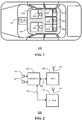
- FIG. 1 shows a car 100 including a vehicle control system according to an embodiment.
- the vehicle control system includes a vehicle function controller 110 and a number of location identification transmitters 102a to 102e.
- the location identification transmitters 102a to 102e each include a transmitter which may be a near field magnetic induction (NFMI) transmitter or a near field electromagnetic induction transmitter (NFEMI).
- NFMI refers to any communication means that makes use of transmissions within a localized magnetic field.
- NFEMI is an extension of NFMI which also uses an electric antenna for transmissions as explained for example in US 9197986B1 and European Patent application 15164621.3 .
- Each of the location identification transmitters 102a to 102e may be positioned in a respective seating position in the car 100 and preconfigured with an appropriate location identifier corresponding to a seating position within the car 100.
- Vehicle function controller 110 may include an actuator controller (not shown) typically used to control various actuators in a vehicle such as heating, ventilation and air-conditioning (HVAC), lighting systems, window control, seat position as well as in car audio systems and other infotainment systems typically found within a car.
- the vehicle function controller 110 may include a wireless transceiver (not shown), such as a Bluetooth or other interface which may be used to communicate with other devices.
- the vehicle function controller 110 may communicate with each of the location identification transmitters 102a-e if those transmitters also have a compatible wireless interface such as a Bluetooth interface. In some examples, the vehicle function controller 110 may have a wired network connection (not shown) to the location identification transmitters 102e-a. However, in some examples communication between the vehicle function controller 110 and the location identification transmitters 102a-e is not required. In some examples the location identification transmitters may also have NFMI and NFEMI receivers.
- the vehicle function controller 110 and the location identifiers 102a-e may be implemented as hardware or a combination of hardware and software running on microprocessors or digital signal processors.
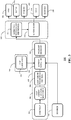
- Figure 2 illustrates a mobile hearable device 200.
- a first microphone 202 may be connected to a processor 210.
- a second microphone 202' may be connected to the processor 210.
- the processor 210 may have a first bidirectional connection 206 to a first transceiver 208 which may be a NFMI transceiver or a NFEMI transceiver.
- the first transceiver 208 may be connected to an antenna 212 which may be a NFMI antenna or NFEMI antenna.
- the processor 210 may have a second bidirectional connection 204 to a second wireless transceiver 214 such as a Bluetooth transceiver.
- the second wireless transceiver 214 may be connected to a second antenna 216
- the mobile hearable device 200 may be implemented in hardware or a combination of hardware and software.
- the processor 210 may be implemented by instructions executed by a digital signal processor or other microprocessor such as for example the NXP i.MX RT processor or processors with similar functionality.
- the second wireless transceiver 214 may be omitted.
- the processor 210 may implement speech detection of keywords for example using a machine learning model or other keyword detection method known to the skilled person.
- the processor 210 may implement beam forming from a combination of signals received via the first microphone 202 and the second microphone 202' using signal processing techniques known to the skilled person. In other examples, beamforming may not be used in which case the second microphone 202' may be omitted.
- Figure 3 illustrates 300 an example method of operation for controlling a vehicle actuator using the mobile hearable device 200, and a vehicle control system including the location identification transmitters 102a-e and the vehicle function controller 110.
- the mobile hearable device 200 determines the closest of the location identification transmitter 102a-e using the hearable device first transceiver 208
- the mobile hearable device 200 selects the seat location identifier 328 from the closest location identification transmitter 102a-e.
- the seat location identifier 328 may be as simple as a numerical indication of the seat used or have further information such as seat orientation or biomarker information.
- the mobile hearable device 200 can reliably detect the closest of the location identification transceivers 102a-e and so accurately identify the position of the user in the car within one of the personal zones 104a-e.
- the mobile hearable device 200 may detect a signal from multiple location identifier transmitters 102a-e.
- the signal from the closest location identifier transmitter will be significantly stronger than any others because of the short range of the NFMI or NFEMI transmitter and so, if multiple signals are detected, a received signal strength indication (RSSI) measurement may be used to reliably determine the closest location identification transmitter 102a-e.
- RSSI received signal strength indication
- each of the location identification transceivers 102a-e may be located in an upper part of the respective seat for example the headrest or top part of the seat. in some example the transceiver may be located in the roof above the given seat. For examples using NFEMI transmitters, the location may be any point inside the given seat.
- the voice when the user speaks, the voice may be detected in step 302 via the microphone 202 and second microphone 202' and the hearable device 200 may perform voice command detection and beam-forming in step 306.
- the beam-forming may be determined by the location of the microphones 202, 202' in the hearable device. In some examples, more than two microphones may be used. The beam forming may improve discrimination between speech from the user of the hearable device 200 and other occupants of the car 100.
- the processor 210 may process and interpret the voice command.
- the supported commands per vehicle per location within the vehicle may be predefined in the mobile hearable device 200 prior to use. In other examples the supported commands may be downloaded from the vehicle control system during initialisation.
- an instruction may be assembled by the processor 210 including the voice command and the seat identification.
- the voice command may be for example a command to increase or decrease temperature, turn on or turn off lights, open or close a window, or modify an audio setting such as volume, bass, treble.
- biomarker data generated from additional hearable sensors in step 304 may transmitted to the hearable device using a human body area network (not shown). This biomarker data may include but is not limited to for example heartbeat, body temperature, or indicators whether the occupant is active or asleep.
- the instruction may be broadcast in step 312 to the vehicle function controller 110.
- the assembled instruction may be output on processor output 204 and broadcast via wireless connection for example using Bluetooth connected directly to the vehicle function controller 110.
- the mobile device200 may be wirelessly coupled to the vehicle function controller 110 via the second transceiver 214.
- the location identification transmitters 102a-e may include a NFMI or NFEMI receiver and are coupled to the vehicle function controller 210 either via a wireless connection or an in-vehicle wired network such as for example but not limited to a Control Area Network (CAN), Local interconnect network (LIN) or Ethernet network.
- the mobile hearable device 200 may broadcast the assembled instruction to the paired location identification transceiver via the bidirectional connection 206 to the first transceiver 208.
- the location identification transceiver may then transmit the instruction to the vehicle function controller 110.
- the second wireless transceiver 214 may be omitted as the mobile device 200 may be wirelessly coupled to the vehicle function controller 110 via the first transceiver 208.
- the vehicle function controller 110 may receive and process the instruction in step 314 and then in step 316 perform an action dependent on the received instruction.
- the vehicle function controller 110 may control one or more actuators to control a HVAC system 318, lighting 320, windows 322, audio 324.
- the seat identification and biometric data and voice commands may be stored in a black box recorder 326.
- Figure 4 shows a method of operation 400 of a mobile hearable device, such as the mobile hearable device 200 illustrated in figure 2 .
- the process starts.
- the mobile hearable device may be in a listening mode, optionally with the beamforming algorithm active.
- the method may determine whether a voice has been detected. If a voice has not been detected, the method returns to step 404. If a voice has been detected, the method 400 proceeds to step 408 where a keyword may be extracted using techniques familiar to the skilled person.
- step 410 a check is made to determine if a keyword has been detected. If a keyword has not been detected, then the method returns to step 404. If a keyword has been detected, then the method proceeds to step 412 which includes a voice command identification process whereby the keyword is compared with a list of predetermined voice commands.
- a check may be made to determine whether the voice command is valid.
- This check may include for example a comparison of the identified voice commands compared with the allowable voice commands for a particular seat location from a preconfigured list provided to the hearable mobile device.
- this preconfigured list may be provided to the hearable mobile device by the location identification transmitter.
- the preconfigured list may be provided by vehicle control system via a different wireless connection, for example Bluetooth, as part of the pairing process or after the pairing process has complete.
- the method 400 may assemble an instruction including the seat identification together with the valid voice command.
- the assembled instruction may be sent to the vehicle control system.
- the method may check to see if an acknowledge message has been received from the vehicle control system. If an acknowledge message has not been received, the method may return to step 418 and retransmit the instruction. If the instruction has been received in step 420 the method proceeds to optional step 422 and checks whether or not the vehicle control system is still active. If the vehicle control system is inactive, then the method 400 terminates at optional step 424. Returning to step 422, if the vehicle control system is still active, then the method returns to step 404 and the cycle repeats. In other examples steps 422 and 424 may be omitted and the method may proceed directly from step 420 back to step 404
- Figure 5 shows the format of an example instruction packet 450 for communication between a hearable device 200 and the vehicle function controller 110.
- This instruction packet 450 may be assembled for example as part of the instruction assembly step 416 in method 400.
- the instruction packet 450 may include a packet header 452, followed by a seat identification 454.
- the voice command 456 may consist of two parts. The first part may indicate which parameter to control, for example temperature, or lighting. The optional second part may include the desired parameter value, for example temperature set to 25 degrees Celsius.
- the first part of the parameter of the voice command 456 may include a unique identifier, for example temperature control is set as command-1, lighting control is set as command-2.
- the instruction packet may include a cyclic-redundancy-check (CRC) 458 provided as a check for a receiver to confirm the validity of the packet.
- CRC cyclic-redundancy-check
- Figure 6 shows an optional instruction packet 460 used for biomarker data.
- the instruction 460 is the same as instruction packet 450 with the voice command data 456 replaced with biomarker data 462.
- the optional biomarker instruction may be used by a vehicle control system connected to a mobile hearable device to for example store the data in the Black Box and/or alert the emergency services.
- warnings may be provided to vehicle occupants in case of emergency, optionally signalling which occupant is concerned. For example, if the vehicle is a plane or train.
- FIG. 7 shows an example method of operation 500 of the vehicle control system according to an embodiment.
- the method starts at step 502, and then proceeds to step 504 which is a listening mode.
- step 506 the method checks whether an instruction has been received. If an instruction has not been received, the method returns to step 504. If an instruction has been received, then the method may check the CRC to determine whether any corruption of the received data has occurred. If the CRC is invalid, method may return to step 504. If the CRC is valid, at step 508, the method may generate an acknowledge signal to acknowledge receipt of the instruction in step 508.
- the seat occupation identification may be stored in a black box.
- step 512 if the instruction includes a voice command, then the voice command is processed.
- This processing may include the interpreting of the "What" parameter of the Voice command 456 in the received packet 450. In this way the vehicle control system may recognize a unique identifier for understanding what parameter is to be controlled (e.g. temperature, lighting, etc.). Depending on the "what" parameter of the voice command, there may also be data on "what amount” to be controlled. This may also be interpreted by the process voice command step 512.
- the seat ID is processed such that the control action can be done specifically for that specific location.
- control actions may be: Heating Ventilation and Air conditioning (HVAC) control, lighting control, window control, or any other possible control related to personal comfort zones.
- HVAC Heating Ventilation and Air conditioning
- the control action may control infotainment system functions.
- control functions may be restricted dependent on seat location. For example, control of the audio system may be restricted to the driver location.
- step 516 the method may check to determine whether the vehicle function control is still active. If the vehicle controller is active, the method may return to listening mode step 504. If the vehicle controller is not active, the method may terminate in step 518.
- Embodiments described herein may provide a voice-based human-machine interface for vehicles that enable control functionality for personal zones inside vehicles. Any occupant of the vehicle may be enabled to interact with the vehicle by means of voice commands, for customizing environment interiors within their personal seating zone.
- the control actuators include, but are not limited to, HVAC control, to lighting control, window control, seat positioning.
- HVAC control to lighting control
- window control seat positioning.
- a direct correlation between an occupant of the vehicle providing the voice command, and the seating location of the occupant is provided.
- the figures illustrated show embodiments used in a car. However, it will be appreciated that other embodiments may be included in other vehicles such as planes, trains, buses.
- Embodiments describe a mobile hearable device which may connect to a vehicle control system including a vehicle function controller and one or more location identification transmitters.
- Seats including a location identification transmitter may be used to determine a user location within a vehicle by the mobile hearable device.
- the mobile hearable device may implement beam forming techniques to improve the discrimination of any speech from a user with respect to other people in the vehicle and background noise.
- the collected voice commands at the mobile hearable device are provided to a vehicle control system wirelessly coupled to the mobile hearable device.
- the vehicle control system may implement the instructed control actions for the given personal seating zone.
- information may be provided to optional Black Boxes in a vehicle.
- the information may include for example, information on whether a given seat is occupied and biomarker information from a given seat occupant. This information may be retrieved for example in case of an accident or emergency.
- hearable or mobile hearable device in this disclosure includes for example ear-mounted wearable computer interfaces, and hearing aids with embedded processors.
- a mobile hearable device for communicating with a vehicle control system includes a microphone, and a wireless transceiver configured as one of a near field magnetic induction (NFMI) transceiver and a near field electromagnetic induction (NFEMI) transceiver.
- the mobile hearable device includes a processor coupled to the transceiver and the microphone. The processor receives a location identifier via the transceiver from a location identification transmitter located in a vehicle, the location identification transmitter is configured as one of a NFMI transmitter and a NFEMI transmitter.
- the processor receives a speech signal from a user of the mobile hearable device, it determines whether the speech signal includes an actuator control command and generates a control instruction comprising the actuator control command and the location identifier.
- the control instruction is transmitted to a vehicle control system and used to control an actuator in a vehicle dependent on the location of the person using the mobile hearable device.
- the set of instructions/method steps described above are implemented as functional and software instructions embodied as a set of executable instructions which are effected on a computer or machine which is programmed with and controlled by said executable instructions. Such instructions are loaded for execution on a processor (such as one or more CPUs).
- processor includes microprocessors, microcontrollers, processor modules or subsystems (including one or more microprocessors or microcontrollers), or other control or computing devices.
- a processor can refer to a single component or to plural components.
- the set of instructions/methods illustrated herein and data and instructions associated therewith are stored in respective storage devices, which are implemented as one or more non-transient machine or computer-readable or computer-usable storage media or mediums.
- Such computer-readable or computer usable storage medium or media is (are) considered to be part of an article (or article of manufacture).
- An article or article of manufacture can refer to any manufactured single component or multiple components.
- the non-transient machine or computer usable media or mediums as defined herein excludes signals, but such media or mediums may be capable of receiving and processing information from signals and/or other transient mediums.
- Example embodiments of the material discussed in this specification can be implemented in whole or in part through network, computer, or data based devices and/or services. These may include cloud, internet, intranet, mobile, desktop, processor, look-up table, microcontroller, consumer equipment, infrastructure, or other enabling devices and services. As may be used herein and in the claims, the following non-exclusive definitions are provided.
- one or more instructions or steps discussed herein are automated.
- the terms automated or automatically mean controlled operation of an apparatus, system, and/or process using computers and/or mechanical/electrical devices without the necessity of human intervention, observation, effort and/or decision.
Landscapes
- Engineering & Computer Science (AREA)
- Physics & Mathematics (AREA)
- Signal Processing (AREA)
- Mechanical Engineering (AREA)
- Computer Networks & Wireless Communication (AREA)
- Health & Medical Sciences (AREA)
- Acoustics & Sound (AREA)
- Chemical & Material Sciences (AREA)
- Transportation (AREA)
- Combustion & Propulsion (AREA)
- Multimedia (AREA)
- Human Computer Interaction (AREA)
- Audiology, Speech & Language Pathology (AREA)
- General Physics & Mathematics (AREA)
- Otolaryngology (AREA)
- Computational Linguistics (AREA)
- General Health & Medical Sciences (AREA)
- Remote Sensing (AREA)
- Theoretical Computer Science (AREA)
- Radar, Positioning & Navigation (AREA)
- Thermal Sciences (AREA)
- General Engineering & Computer Science (AREA)
- Selective Calling Equipment (AREA)
- Power Engineering (AREA)
Abstract
Description
- This disclosure relates to a mobile hearable device for communicating with a vehicle control system.
- Voice recognition is used to allow car drivers to communicate with a virtual personal assistant to control in-car infotainment systems. This may allow a driver to perform operations without taking their hands off the wheel. Voice interaction may also eliminate the traditional buttons as input to vehicle infotainment systems or controller units.
- Various aspects of the disclosure are defined in the accompanying claims. In a first aspect there is provided a mobile hearable device for communicating with a vehicle control system, the mobile hearable device comprising: a microphone; a wireless transceiver configured as one of a near field magnetic induction (NFMI) transceiver and a near field electromagnetic induction (NFEMI) transceiver; a processor coupled to the transceiver and the microphone and configured to: receive a location identifier via the transceiver from a location identification transmitter located in a vehicle, the location identification transmitter being configured as one of a NFMI transmitter and a NFEMI transmitter; receive a speech signal from a user of the mobile hearable device; determine whether the speech signal comprises an actuator control command; generate a control instruction comprising the actuator control command and the location identifier; wherein the mobile hearable device is configured to transmit a control instruction to a vehicle control system wirelessly coupled to the mobile hearable device, the vehicle control system being configured to control an actuator in the vehicle dependent on the location of a person using the mobile hearable device within the vehicle.
- In one or more embodiments, the mobile hearable device may comprise a further microphone. The processor may be operable to receive the speech signal from the microphone and further microphone and to apply beam-forming to the received speech signal.
- In one or more embodiments, the processor may be further configured to identify one or more keywords from the received speech signal.
- In one or more embodiments, the processor may be further configured to: in response to identifying one or more keywords, determine whether the one or more identified keywords correspond to an actuator control command.
- In one or more embodiments, in response to identifying a valid actuator control command the processor may be further configured to transmit a control instruction comprising the valid actuator control command and the location identifier.
- In one or more embodiments, the mobile hearable device may comprise a biomarker interface coupled to the processor, wherein the mobile hearable device is further configured to receive biomarker data and to transmit a further instruction comprising biomarker data and the location identifier.
- In one or more embodiments, the mobile hearable device may be further configured to transmit the control instruction to a location identification transceiver coupled to the vehicle control system via the transceiver.
- In one or more embodiments, the mobile hearable device may comprise a further transceiver coupled to the processor and be further configured to transmit the control instruction to a vehicle control transceiver via the further transceiver.
- In one or more embodiments, the processor may be further configured to receive a list of allowable keywords from the vehicle control transceiver.
- In a second aspect there is provided a vehicle control system comprising: at least one location identification transmitter located in a vehicle and configured as a NFMI or NFEMI transmitter; a vehicle function controller configured to be coupled to one or more vehicle actuators and comprising a vehicle control transceiver; wherein each of the at least one location identification transmitters are configured to transmit a respective location identifier to a mobile hearable device, the vehicle control transceiver is configured to receive a control instruction comprising the control command and one location identifier from the mobile hearable device, and the vehicle function controller is configured to control the one or more vehicle actuators dependent on the control command and the location identifier.
- In one or more embodiments, the vehicle control system may further comprise a black box recorder, wherein the actuator controller is further configured to receive a further instruction comprising biomarker data and a location identifier and to store the biomarker data and the location identifier in a black box recorder.
- In one or more embodiments, the vehicle control system may be coupled to one or more vehicle actuators configured to control one or more of heating ventilation and air conditioning, a window, a light, and an infotainment system.
- In a third aspect there is provided a method of controlling a vehicle actuator using a mobile hearable device comprising a transceiver configured as one of a NFMI transceiver and a NFEMI transceiver, the method comprising: receiving via the transceiver a location identifier transmitted by the location identification transmitter; receiving a speech signal from a user of the mobile hearable device; determining whether the speech signal comprises an actuator control command; generating a control instruction comprising the actuator control command and the location identifier; and wirelessly transmitting the control instruction to a vehicle control system wirelessly coupled to the mobile hearable device to control an actuator dependent on the location of a user of the mobile hearable device within the vehicle.
- In one or more embodiments, the method may further comprise applying beam forming to the speech signal.
- In one or more embodiments, the method may further comprise identifying one or more keywords from the received speech signal; and in response to identifying one or more keywords, determining whether the one or more identified keywords correspond to a valid actuator control command; and transmitting a control instruction comprising the valid actuator control command.
- In a fourth aspect there is described a computer program product comprising instructions which, when being executed by a processing unit within a mobile hearable device comprising a transceiver configured as one of a NFMI transceiver and a NFEMI transceiver, cause said processing unit to perform the steps of receiving via the transceiver a location identifier transmitted by a location identification transmitter; receiving a speech signal; determining whether the speech signal comprises an actuator control command; generating a control instruction comprising the actuator control command and the location identifier; and wirelessly transmitting the control instruction to a vehicle control system wirelessly coupled to the mobile hearable device to control an actuator dependent on the location of a user of the mobile hearable device within the vehicle.
- In the figures and description like reference numerals refer to like features. Embodiments of are now described in detail, by way of example only, illustrated by the accompanying drawings in which:
-
Figure 1 Shows a car including a vehicle control system according to an embodiment. -
Figure 2 Illustrates mobile hearable device according to an embodiment. -
Figure 3 illustrates a functional block diagram of the method of operation of a system including the vehicle control system offigure 1 and the mobile hearable device offigure 2 . -
Figure 4 shows a method of operation of a mobile hearable device according to an embodiment. -
Figure 5 shows an example command instruction used in one or more embodiments. -
Figure 6 illustrates an example command instruction used in one or more embodiments. -
Figure 7 illustrates a method of operation of a vehicle control system according to an embodiment. -
Figure 1 shows acar 100 including a vehicle control system according to an embodiment. The vehicle control system includes avehicle function controller 110 and a number oflocation identification transmitters 102a to 102e. Thelocation identification transmitters 102a to 102e each include a transmitter which may be a near field magnetic induction (NFMI) transmitter or a near field electromagnetic induction transmitter (NFEMI). NFMI refers to any communication means that makes use of transmissions within a localized magnetic field. NFEMI is an extension of NFMI which also uses an electric antenna for transmissions as explained for example inUS 9197986B1 15164621.3 location identification transmitters 102a to 102e may be positioned in a respective seating position in thecar 100 and preconfigured with an appropriate location identifier corresponding to a seating position within thecar 100. - These
location identification transmitters 102a-e may be used to identify a correspondingpersonal area zone 104a-e.Vehicle function controller 110 may include an actuator controller (not shown) typically used to control various actuators in a vehicle such as heating, ventilation and air-conditioning (HVAC), lighting systems, window control, seat position as well as in car audio systems and other infotainment systems typically found within a car. Thevehicle function controller 110 may include a wireless transceiver (not shown), such as a Bluetooth or other interface which may be used to communicate with other devices. - In some examples, the
vehicle function controller 110 may communicate with each of thelocation identification transmitters 102a-e if those transmitters also have a compatible wireless interface such as a Bluetooth interface. In some examples, thevehicle function controller 110 may have a wired network connection (not shown) to thelocation identification transmitters 102e-a. However, in some examples communication between thevehicle function controller 110 and thelocation identification transmitters 102a-e is not required. In some examples the location identification transmitters may also have NFMI and NFEMI receivers. - The
vehicle function controller 110 and thelocation identifiers 102a-e may be implemented as hardware or a combination of hardware and software running on microprocessors or digital signal processors. -
Figure 2 illustrates a mobilehearable device 200. Afirst microphone 202 may be connected to aprocessor 210. A second microphone 202' may be connected to theprocessor 210. Theprocessor 210 may have a firstbidirectional connection 206 to afirst transceiver 208 which may be a NFMI transceiver or a NFEMI transceiver. Thefirst transceiver 208 may be connected to anantenna 212 which may be a NFMI antenna or NFEMI antenna. Theprocessor 210 may have a secondbidirectional connection 204 to a secondwireless transceiver 214 such as a Bluetooth transceiver. The secondwireless transceiver 214 may be connected to asecond antenna 216 The mobilehearable device 200 may be implemented in hardware or a combination of hardware and software. For example, theprocessor 210 may be implemented by instructions executed by a digital signal processor or other microprocessor such as for example the NXP i.MX RT processor or processors with similar functionality. In some examples the secondwireless transceiver 214 may be omitted. Theprocessor 210 may implement speech detection of keywords for example using a machine learning model or other keyword detection method known to the skilled person. Theprocessor 210 may implement beam forming from a combination of signals received via thefirst microphone 202 and the second microphone 202' using signal processing techniques known to the skilled person. In other examples, beamforming may not be used in which case the second microphone 202' may be omitted. -
Figure 3 illustrates 300 an example method of operation for controlling a vehicle actuator using the mobilehearable device 200, and a vehicle control system including thelocation identification transmitters 102a-e and thevehicle function controller 110. When a user is positioned in the vehicle, the mobilehearable device 200 determines the closest of thelocation identification transmitter 102a-e using the hearable device firsttransceiver 208 The mobilehearable device 200 selects theseat location identifier 328 from the closestlocation identification transmitter 102a-e. Theseat location identifier 328 may be as simple as a numerical indication of the seat used or have further information such as seat orientation or biomarker information. - The inventors of the present disclosure have appreciated that by using NFMI communication which may have a range less than 1m or NFEMI communication which is used for communication across the human body, the mobile
hearable device 200 can reliably detect the closest of thelocation identification transceivers 102a-e and so accurately identify the position of the user in the car within one of thepersonal zones 104a-e. The mobilehearable device 200 may detect a signal from multiplelocation identifier transmitters 102a-e. The signal from the closest location identifier transmitter will be significantly stronger than any others because of the short range of the NFMI or NFEMI transmitter and so, if multiple signals are detected, a received signal strength indication (RSSI) measurement may be used to reliably determine the closestlocation identification transmitter 102a-e. In some examples using NFMI transmitters, each of thelocation identification transceivers 102a-e may be located in an upper part of the respective seat for example the headrest or top part of the seat. in some example the transceiver may be located in the roof above the given seat. For examples using NFEMI transmitters, the location may be any point inside the given seat. - In operation, when the user speaks, the voice may be detected in
step 302 via themicrophone 202 and second microphone 202' and thehearable device 200 may perform voice command detection and beam-forming instep 306. The beam-forming may be determined by the location of themicrophones 202, 202' in the hearable device. In some examples, more than two microphones may be used. The beam forming may improve discrimination between speech from the user of thehearable device 200 and other occupants of thecar 100. Instep 308 theprocessor 210 may process and interpret the voice command. The supported commands per vehicle per location within the vehicle may be predefined in the mobilehearable device 200 prior to use. In other examples the supported commands may be downloaded from the vehicle control system during initialisation. Instep 310 an instruction may be assembled by theprocessor 210 including the voice command and the seat identification. The voice command may be for example a command to increase or decrease temperature, turn on or turn off lights, open or close a window, or modify an audio setting such as volume, bass, treble. Optionally, biomarker data generated from additional hearable sensors instep 304 may transmitted to the hearable device using a human body area network (not shown). This biomarker data may include but is not limited to for example heartbeat, body temperature, or indicators whether the occupant is active or asleep. - After the instruction is assembled in
step 310, the instruction may be broadcast instep 312 to thevehicle function controller 110. In some examples, the assembled instruction may be output onprocessor output 204 and broadcast via wireless connection for example using Bluetooth connected directly to thevehicle function controller 110. In this case the mobile device200 may be wirelessly coupled to thevehicle function controller 110 via thesecond transceiver 214. - In other examples the
location identification transmitters 102a-e may include a NFMI or NFEMI receiver and are coupled to thevehicle function controller 210 either via a wireless connection or an in-vehicle wired network such as for example but not limited to a Control Area Network (CAN), Local interconnect network (LIN) or Ethernet network. In these examples, the mobilehearable device 200 may broadcast the assembled instruction to the paired location identification transceiver via thebidirectional connection 206 to thefirst transceiver 208. The location identification transceiver may then transmit the instruction to thevehicle function controller 110. In this case, thesecond wireless transceiver 214 may be omitted as themobile device 200 may be wirelessly coupled to thevehicle function controller 110 via thefirst transceiver 208. - The
vehicle function controller 110 may receive and process the instruction instep 314 and then instep 316 perform an action dependent on the received instruction. Thevehicle function controller 110 may control one or more actuators to control aHVAC system 318,lighting 320,windows 322,audio 324. Optionally the seat identification and biometric data and voice commands may be stored in ablack box recorder 326. -
Figure 4 shows a method ofoperation 400 of a mobile hearable device, such as the mobilehearable device 200 illustrated infigure 2 . Instep 402 the process starts. Atstep 404 the mobile hearable device may be in a listening mode, optionally with the beamforming algorithm active. Instep 406, the method may determine whether a voice has been detected. If a voice has not been detected, the method returns to step 404. If a voice has been detected, themethod 400 proceeds to step 408 where a keyword may be extracted using techniques familiar to the skilled person. Instep 410, a check is made to determine if a keyword has been detected. If a keyword has not been detected, then the method returns to step 404. If a keyword has been detected, then the method proceeds to step 412 which includes a voice command identification process whereby the keyword is compared with a list of predetermined voice commands. - In step 414 a check may be made to determine whether the voice command is valid. This check may include for example a comparison of the identified voice commands compared with the allowable voice commands for a particular seat location from a preconfigured list provided to the hearable mobile device. In some examples, this preconfigured list may be provided to the hearable mobile device by the location identification transmitter. In other examples, the preconfigured list may be provided by vehicle control system via a different wireless connection, for example Bluetooth, as part of the pairing process or after the pairing process has complete.
- In
step 416, themethod 400 may assemble an instruction including the seat identification together with the valid voice command. Instep 418 the assembled instruction may be sent to the vehicle control system. Instep 420, the method may check to see if an acknowledge message has been received from the vehicle control system. If an acknowledge message has not been received, the method may return to step 418 and retransmit the instruction. If the instruction has been received instep 420 the method proceeds to optional step 422 and checks whether or not the vehicle control system is still active. If the vehicle control system is inactive, then themethod 400 terminates atoptional step 424. Returning to step 422, if the vehicle control system is still active, then the method returns to step 404 and the cycle repeats. Inother examples steps 422 and 424 may be omitted and the method may proceed directly fromstep 420 back to step 404 -
Figure 5 shows the format of anexample instruction packet 450 for communication between ahearable device 200 and thevehicle function controller 110. Thisinstruction packet 450 may be assembled for example as part of theinstruction assembly step 416 in method 400.Theinstruction packet 450 may include apacket header 452, followed by aseat identification 454. Thevoice command 456 may consist of two parts. The first part may indicate which parameter to control, for example temperature, or lighting. The optional second part may include the desired parameter value, for example temperature set to 25 degrees Celsius. The first part of the parameter of thevoice command 456 may include a unique identifier, for example temperature control is set as command-1, lighting control is set as command-2. The instruction packet may include a cyclic-redundancy-check (CRC) 458 provided as a check for a receiver to confirm the validity of the packet. -
Figure 6 shows anoptional instruction packet 460 used for biomarker data. Theinstruction 460 is the same asinstruction packet 450 with thevoice command data 456 replaced withbiomarker data 462. The optional biomarker instruction may be used by a vehicle control system connected to a mobile hearable device to for example store the data in the Black Box and/or alert the emergency services. In some examples, warnings may be provided to vehicle occupants in case of emergency, optionally signalling which occupant is concerned. For example, if the vehicle is a plane or train. -
Figure 7 shows an example method ofoperation 500 of the vehicle control system according to an embodiment. The method starts atstep 502, and then proceeds to step 504 which is a listening mode. Instep 506, the method checks whether an instruction has been received. If an instruction has not been received, the method returns to step 504. If an instruction has been received, then the method may check the CRC to determine whether any corruption of the received data has occurred. If the CRC is invalid, method may return to step 504. If the CRC is valid, atstep 508, the method may generate an acknowledge signal to acknowledge receipt of the instruction instep 508. Inoptional step 510, the seat occupation identification may be stored in a black box. - In
step 512, if the instruction includes a voice command, then the voice command is processed. This processing may include the interpreting of the "What" parameter of theVoice command 456 in the receivedpacket 450. In this way the vehicle control system may recognize a unique identifier for understanding what parameter is to be controlled (e.g. temperature, lighting, etc.). Depending on the "what" parameter of the voice command, there may also be data on "what amount" to be controlled. This may also be interpreted by the processvoice command step 512. In addition, the seat ID is processed such that the control action can be done specifically for that specific location. - In
step 514, after the instruction has been interpreted, the requested control action will be performed. These control actions may be: Heating Ventilation and Air conditioning (HVAC) control, lighting control, window control, or any other possible control related to personal comfort zones. Optionally, the control action may control infotainment system functions. In some examples control functions may be restricted dependent on seat location. For example, control of the audio system may be restricted to the driver location. - In
step 516, the method may check to determine whether the vehicle function control is still active. If the vehicle controller is active, the method may return to listeningmode step 504. If the vehicle controller is not active, the method may terminate instep 518. - Embodiments described herein may provide a voice-based human-machine interface for vehicles that enable control functionality for personal zones inside vehicles. Any occupant of the vehicle may be enabled to interact with the vehicle by means of voice commands, for customizing environment interiors within their personal seating zone. The control actuators include, but are not limited to, HVAC control, to lighting control, window control, seat positioning. A direct correlation between an occupant of the vehicle providing the voice command, and the seating location of the occupant is provided. The figures illustrated show embodiments used in a car. However, it will be appreciated that other embodiments may be included in other vehicles such as planes, trains, buses.
- Embodiments describe a mobile hearable device which may connect to a vehicle control system including a vehicle function controller and one or more location identification transmitters. Seats including a location identification transmitter may be used to determine a user location within a vehicle by the mobile hearable device. The mobile hearable device may implement beam forming techniques to improve the discrimination of any speech from a user with respect to other people in the vehicle and background noise. The collected voice commands at the mobile hearable device are provided to a vehicle control system wirelessly coupled to the mobile hearable device. The vehicle control system may implement the instructed control actions for the given personal seating zone. In some examples information may be provided to optional Black Boxes in a vehicle. The information may include for example, information on whether a given seat is occupied and biomarker information from a given seat occupant. This information may be retrieved for example in case of an accident or emergency.
- The term hearable or mobile hearable device in this disclosure includes for example ear-mounted wearable computer interfaces, and hearing aids with embedded processors.
- A mobile hearable device for communicating with a vehicle control system is described. The mobile hearable device includes a microphone, and a wireless transceiver configured as one of a near field magnetic induction (NFMI) transceiver and a near field electromagnetic induction (NFEMI) transceiver. The mobile hearable device includes a processor coupled to the transceiver and the microphone. The processor receives a location identifier via the transceiver from a location identification transmitter located in a vehicle, the location identification transmitter is configured as one of a NFMI transmitter and a NFEMI transmitter. If the processor receives a speech signal from a user of the mobile hearable device, it determines whether the speech signal includes an actuator control command and generates a control instruction comprising the actuator control command and the location identifier. The control instruction is transmitted to a vehicle control system and used to control an actuator in a vehicle dependent on the location of the person using the mobile hearable device.
- In some example embodiments the set of instructions/method steps described above are implemented as functional and software instructions embodied as a set of executable instructions which are effected on a computer or machine which is programmed with and controlled by said executable instructions. Such instructions are loaded for execution on a processor (such as one or more CPUs). The term processor includes microprocessors, microcontrollers, processor modules or subsystems (including one or more microprocessors or microcontrollers), or other control or computing devices. A processor can refer to a single component or to plural components.
- In other examples, the set of instructions/methods illustrated herein and data and instructions associated therewith are stored in respective storage devices, which are implemented as one or more non-transient machine or computer-readable or computer-usable storage media or mediums. Such computer-readable or computer usable storage medium or media is (are) considered to be part of an article (or article of manufacture). An article or article of manufacture can refer to any manufactured single component or multiple components. The non-transient machine or computer usable media or mediums as defined herein excludes signals, but such media or mediums may be capable of receiving and processing information from signals and/or other transient mediums.
- Example embodiments of the material discussed in this specification can be implemented in whole or in part through network, computer, or data based devices and/or services. These may include cloud, internet, intranet, mobile, desktop, processor, look-up table, microcontroller, consumer equipment, infrastructure, or other enabling devices and services. As may be used herein and in the claims, the following non-exclusive definitions are provided.
- In one example, one or more instructions or steps discussed herein are automated. The terms automated or automatically (and like variations thereof) mean controlled operation of an apparatus, system, and/or process using computers and/or mechanical/electrical devices without the necessity of human intervention, observation, effort and/or decision.
- Although the appended claims are directed to particular combinations of features, it should be understood that the scope of the disclosure of the present invention also includes any novel feature or any novel combination of features disclosed herein either explicitly or implicitly or any generalisation thereof, whether or not it relates to the same invention as presently claimed in any claim and whether or not it mitigates any or all of the same technical problems as does the present invention.
- Features which are described in the context of separate embodiments may also be provided in combination in a single embodiment. Conversely, various features which are, for brevity, described in the context of a single embodiment, may also be provided separately or in any suitable sub combination.
- The applicant hereby gives notice that new claims may be formulated to such features and/or combinations of such features during the prosecution of the present application or of any further application derived therefrom.
- For the sake of completeness it is also stated that the term "comprising" does not exclude other elements or steps, the term "a" or "an" does not exclude a plurality, a single processor or other unit may fulfil the functions of several means recited in the claims and reference signs in the claims shall not be construed as limiting the scope of the claims.
Claims (15)
- A mobile hearable device for communicating with a vehicle control system, the mobile hearable device comprising:a microphone;a wireless transceiver configured as one of a near field magnetic induction, NFMI, transceiver and a near field electromagnetic induction, NFEMI, transceiver;a processor coupled to the transceiver and the microphone and configured to:receive a location identifier via the transceiver from a location identification transmitter located in a vehicle, the location identification transmitter being configured as one of a NFMI transmitter and a NFEMI transmitter;receive a speech signal from a user of the mobile hearable device;determine whether the speech signal comprises an actuator control command;generate a control instruction comprising the actuator control command and the location identifier;wherein the mobile hearable device is configured to transmit a control instruction to a vehicle control system wirelessly coupled to the mobile hearable device, the vehicle control system being configured to control an actuator in the vehicle dependent on the location of a person using the mobile hearable device within the vehicle.
- The mobile hearable device of claim 1 wherein the mobile hearable device comprises a further microphone and wherein the processor is operable to receive the speech signal from the microphone and further microphone and to apply beam-forming to the received speech signal.
- The mobile hearable device of any preceding claim, wherein the processor is further configured to identify one or more keywords from the received speech signal.
- The mobile hearable device of claim 3 wherein the processor is further configured to: in response to identifying one or more keywords, determine whether the one or more identified keywords correspond to an actuator control command.
- The mobile hearable device of claim 4 wherein in response to identifying a valid actuator control command the processor is further configured to transmit a control instruction comprising the valid actuator control command and the location identifier.
- The mobile hearable device of any preceding claim further comprising a biomarker interface coupled to the processor, wherein the mobile hearable device is further configured to receive biomarker data and to transmit a further instruction comprising biomarker data and the location identifier.
- The mobile hearable device of any preceding claim further configured to transmit the control instruction to a location identification transceiver coupled to the vehicle control system via the transceiver.
- The mobile hearable device of any of claims 1 to 6 comprising a further transceiver and further configured to transmit the control instruction to a vehicle control transceiver via the further transceiver.
- The mobile hearable device of claim 8 wherein the processor is further configured to receive a list of allowable keywords from the vehicle control transceiver.
- A vehicle control system comprising:at least one location identification transmitter located in a vehicle and configured as a NFMI or NFEMI transmitter;a vehicle function controller configured to be coupled to one or more vehicle actuators and comprising a vehicle control transceiver;wherein each of the at least one location identification transmitters are configured to transmit a respective location identifier to a mobile hearable device, the vehicle control transceiver is configured to receive a control instruction comprising the control command and one location identifier from the mobile hearable device, and the vehicle function controller is configured to control the one or more vehicle actuators dependent on the control command and the location identifier.
- The vehicle control system of claim 10 further comprising a black box recorder, wherein the actuator controller is further configured to receive a further instruction comprising biomarker data and a location identifier and to store the biomarker data and the location identifier in a black box recorder.
- The vehicle control system of any of claims 10 or 11 coupled to one or more vehicle actuators configured to control one or more of heating ventilation and air conditioning, a window, a light, and an infotainment system.
- A method of controlling a vehicle actuator using a mobile hearable device comprising a transceiver configured as one of a NFMI transceiver and a NFEMI transceiver, the method comprising:receiving via the transceiver a location identifier transmitted by the location identification transmitter;receiving a speech signal from a user of the mobile hearable device;determining whether the speech signal comprises an actuator control command;generating a control instruction comprising the actuator control command and the location identifier; andwirelessly transmitting the control instruction to a vehicle control system wirelessly coupled to the mobile hearable device to control an actuator dependent on the location of a user of the mobile hearable device within the vehicle.
- The method of claim 13 further comprising applying beam forming to the speech signal.
- The method of claim 13 or 14 further comprising identifying one or more keywords from the received speech signal; and in response to identifying one or more keywords, determining whether the one or more identified keywords correspond to a valid actuator control command; and transmitting a control instruction comprising the valid actuator control command.
Priority Applications (3)
| Application Number | Priority Date | Filing Date | Title |
|---|---|---|---|
| EP19187261.3A EP3766717B1 (en) | 2019-07-19 | 2019-07-19 | Mobile hearable device and vehicle control system |
| US16/929,022 US12427939B2 (en) | 2019-07-19 | 2020-07-14 | Mobile hearable device |
| CN202010686303.9A CN112238827B (en) | 2019-07-19 | 2020-07-16 | Mobile hearing device |
Applications Claiming Priority (1)
| Application Number | Priority Date | Filing Date | Title |
|---|---|---|---|
| EP19187261.3A EP3766717B1 (en) | 2019-07-19 | 2019-07-19 | Mobile hearable device and vehicle control system |
Publications (2)
| Publication Number | Publication Date |
|---|---|
| EP3766717A1 true EP3766717A1 (en) | 2021-01-20 |
| EP3766717B1 EP3766717B1 (en) | 2023-09-06 |
Family
ID=67438148
Family Applications (1)
| Application Number | Title | Priority Date | Filing Date |
|---|---|---|---|
| EP19187261.3A Active EP3766717B1 (en) | 2019-07-19 | 2019-07-19 | Mobile hearable device and vehicle control system |
Country Status (3)
| Country | Link |
|---|---|
| US (1) | US12427939B2 (en) |
| EP (1) | EP3766717B1 (en) |
| CN (1) | CN112238827B (en) |
Cited By (1)
| Publication number | Priority date | Publication date | Assignee | Title |
|---|---|---|---|---|
| FR3113875A1 (en) * | 2020-09-08 | 2022-03-11 | Renault S.A.S. | method and system for locating a speaker in a vehicle-related repository |
Families Citing this family (2)
| Publication number | Priority date | Publication date | Assignee | Title |
|---|---|---|---|---|
| CN116259318A (en) * | 2023-02-01 | 2023-06-13 | 长城汽车股份有限公司 | Vehicle voice control method, device, vehicle and storage medium |
| WO2026053065A1 (en) * | 2024-09-03 | 2026-03-12 | Cochlear Limited | Linguistic context in hearing device systems |
Citations (5)
| Publication number | Priority date | Publication date | Assignee | Title |
|---|---|---|---|---|
| US20140142783A1 (en) * | 2012-11-19 | 2014-05-22 | GM Global Technology Operations LLC | Methods of controlling vehicle interfaces using device motion and near field communications |
| US9197986B1 (en) | 2014-06-12 | 2015-11-24 | Nxp, B.V. | Electromagnetic induction radio |
| US9377860B1 (en) * | 2012-12-19 | 2016-06-28 | Amazon Technologies, Inc. | Enabling gesture input for controlling a presentation of content |
| US20160335038A1 (en) * | 2014-05-26 | 2016-11-17 | Lg Electronics Inc. | Information Providing Apparatus And Method Thereof |
| US20170305371A1 (en) * | 2016-04-25 | 2017-10-26 | Ford Global Technologies, Llc | Connectionless communication with interior vehicle components |
Family Cites Families (23)
| Publication number | Priority date | Publication date | Assignee | Title |
|---|---|---|---|---|
| US6324453B1 (en) | 1998-12-31 | 2001-11-27 | Automotive Technologies International, Inc. | Methods for determining the identification and position of and monitoring objects in a vehicle |
| US6005958A (en) | 1997-04-23 | 1999-12-21 | Automotive Systems Laboratory, Inc. | Occupant type and position detection system |
| DE19722922A1 (en) * | 1997-05-31 | 1998-12-03 | Lufthansa Technik Ag | Power supply device |
| FR2785342B1 (en) | 1998-11-02 | 2002-05-10 | Ntn Toyo Bearing Co Ltd | UNIVERSAL HOMOCINETIC JOINT |
| US6298306B1 (en) * | 1999-07-28 | 2001-10-02 | Motorola, Inc. | Vehicle locating system utilizing global positioning |
| KR20020047366A (en) | 2000-12-13 | 2002-06-22 | 류정열 | lutch pedal returning device for vehicle |
| US20080297341A1 (en) | 2006-09-11 | 2008-12-04 | Mcclanahan James B | Real-time passenger identification, passenger onboard inventory, location and safety monitoring system |
| DK2464143T3 (en) * | 2010-12-09 | 2013-09-16 | Oticon As | Procedure for operating a hearing aid, hearing system and audiogateway devices |
| US9122775B2 (en) | 2011-01-03 | 2015-09-01 | Ford Global Technologies, Llc | Medical data acquisition and provision |
| US9493130B2 (en) | 2011-04-22 | 2016-11-15 | Angel A. Penilla | Methods and systems for communicating content to connected vehicle users based detected tone/mood in voice input |
| US8873233B2 (en) * | 2011-10-28 | 2014-10-28 | Xplore Technologies Corp. | Vehicle dock for ruggedized tablet |
| GB201205410D0 (en) * | 2012-02-19 | 2012-05-09 | Jennings Mark R | Communications |
| DE102013207094B4 (en) | 2012-04-27 | 2023-03-23 | GM Global Technology Operations, LLC (n.d. Ges. d. Staates Delaware) | System for implementing functions in the vehicle using short-range communication |
| US9196248B2 (en) | 2013-02-13 | 2015-11-24 | Bayerische Motoren Werke Aktiengesellschaft | Voice-interfaced in-vehicle assistance |
| US10009069B2 (en) | 2014-05-05 | 2018-06-26 | Nxp B.V. | Wireless power delivery and data link |
| KR20160021657A (en) * | 2014-08-18 | 2016-02-26 | 현대모비스 주식회사 | Smartkey system and method of smartkey system control |
| KR101614735B1 (en) | 2014-12-08 | 2016-04-22 | 현대자동차주식회사 | Avn device, vehicle having the same, and method for contolling vehicle |
| US10164685B2 (en) * | 2014-12-31 | 2018-12-25 | Freelinc Technologies Inc. | Spatially aware wireless network |
| US20170308689A1 (en) * | 2016-04-26 | 2017-10-26 | Bragi GmbH | Gesture-based Wireless Toggle Control System and Method |
| US20180277123A1 (en) * | 2017-03-22 | 2018-09-27 | Bragi GmbH | Gesture controlled multi-peripheral management |
| US20190179416A1 (en) * | 2017-12-12 | 2019-06-13 | Ford Global Technologies, Llc | Interactive vehicle speech recognition and correction system |
| US20190303095A1 (en) * | 2018-03-27 | 2019-10-03 | Ford Global Technologies, Llc | Voice activation system of a vehicle |
| KR102778269B1 (en) * | 2019-11-28 | 2025-03-12 | 현대자동차주식회사 | Vehicle control apparatus and method using speech recognition |
-
2019
- 2019-07-19 EP EP19187261.3A patent/EP3766717B1/en active Active
-
2020
- 2020-07-14 US US16/929,022 patent/US12427939B2/en active Active
- 2020-07-16 CN CN202010686303.9A patent/CN112238827B/en active Active
Patent Citations (5)
| Publication number | Priority date | Publication date | Assignee | Title |
|---|---|---|---|---|
| US20140142783A1 (en) * | 2012-11-19 | 2014-05-22 | GM Global Technology Operations LLC | Methods of controlling vehicle interfaces using device motion and near field communications |
| US9377860B1 (en) * | 2012-12-19 | 2016-06-28 | Amazon Technologies, Inc. | Enabling gesture input for controlling a presentation of content |
| US20160335038A1 (en) * | 2014-05-26 | 2016-11-17 | Lg Electronics Inc. | Information Providing Apparatus And Method Thereof |
| US9197986B1 (en) | 2014-06-12 | 2015-11-24 | Nxp, B.V. | Electromagnetic induction radio |
| US20170305371A1 (en) * | 2016-04-25 | 2017-10-26 | Ford Global Technologies, Llc | Connectionless communication with interior vehicle components |
Cited By (2)
| Publication number | Priority date | Publication date | Assignee | Title |
|---|---|---|---|---|
| FR3113875A1 (en) * | 2020-09-08 | 2022-03-11 | Renault S.A.S. | method and system for locating a speaker in a vehicle-related repository |
| WO2022053334A1 (en) * | 2020-09-08 | 2022-03-17 | Renault S.A.S | Method and system for locating a speaker in a reference frame linked to a vehicle |
Also Published As
| Publication number | Publication date |
|---|---|
| CN112238827A (en) | 2021-01-19 |
| EP3766717B1 (en) | 2023-09-06 |
| US20210016732A1 (en) | 2021-01-21 |
| CN112238827B (en) | 2026-02-27 |
| US12427939B2 (en) | 2025-09-30 |
Similar Documents
| Publication | Publication Date | Title |
|---|---|---|
| US20230110523A1 (en) | Personalization system and method for a vehicle based on spatial locations of occupants' body portions | |
| CN107396249B (en) | System for providing occupant-specific acoustic functions in a transportation vehicle | |
| US12427939B2 (en) | Mobile hearable device | |
| US10861457B2 (en) | Vehicle digital assistant authentication | |
| CN107791984B (en) | Method and apparatus for vehicle occupant position detection | |
| KR101614735B1 (en) | Avn device, vehicle having the same, and method for contolling vehicle | |
| CN106240491B (en) | For providing the system of alarm to Vehicular occupant | |
| US9896049B2 (en) | Voice recognition device and voice recognition system | |
| US20140074480A1 (en) | Voice stamp-driven in-vehicle functions | |
| US20200066070A1 (en) | Improvements relating to hearing assistance in vehicles | |
| CN108016383B (en) | Autonomous vehicle ingress and egress system and method | |
| EP4336492B1 (en) | Localized voice recognition assistant | |
| KR101999231B1 (en) | Control Unit for Vehicle Components And Mobile Terminal for Vehicle Control | |
| EP3944232A1 (en) | Voice control for autonomous vehicles | |
| KR20210066985A (en) | Vehicle control apparatus and method using speech recognition | |
| US20200324785A1 (en) | Voice assistant system | |
| US10688885B2 (en) | Vehicle seat memory from remote device | |
| CN115447517A (en) | Intelligent control method and device for a cockpit | |
| JP2015074315A (en) | On-vehicle relay device, and on-vehicle communication system | |
| CN115352385A (en) | Sound field adjusting method and device for automobile, electronic equipment and storage medium | |
| GB2557178A (en) | Improvements relating to hearing assistance in vehicles | |
| US20240278717A1 (en) | Method and system for enabling vehicle connected services for hearing-impaired vehicle occupants | |
| WO2018134197A1 (en) | Interface apparatus and method | |
| JP2016083984A (en) | In-vehicle air conditioning system operating device, in-vehicle air conditioning system | |
| EP4029737A1 (en) | Vehicle function control method and apparatus |
Legal Events
| Date | Code | Title | Description |
|---|---|---|---|
| PUAI | Public reference made under article 153(3) epc to a published international application that has entered the european phase |
Free format text: ORIGINAL CODE: 0009012 |
|
| STAA | Information on the status of an ep patent application or granted ep patent |
Free format text: STATUS: THE APPLICATION HAS BEEN PUBLISHED |
|
| AK | Designated contracting states |
Kind code of ref document: A1 Designated state(s): AL AT BE BG CH CY CZ DE DK EE ES FI FR GB GR HR HU IE IS IT LI LT LU LV MC MK MT NL NO PL PT RO RS SE SI SK SM TR |
|
| AX | Request for extension of the european patent |
Extension state: BA ME |
|
| STAA | Information on the status of an ep patent application or granted ep patent |
Free format text: STATUS: REQUEST FOR EXAMINATION WAS MADE |
|
| 17P | Request for examination filed |
Effective date: 20210720 |
|
| RBV | Designated contracting states (corrected) |
Designated state(s): AL AT BE BG CH CY CZ DE DK EE ES FI FR GB GR HR HU IE IS IT LI LT LU LV MC MK MT NL NO PL PT RO RS SE SI SK SM TR |
|
| GRAP | Despatch of communication of intention to grant a patent |
Free format text: ORIGINAL CODE: EPIDOSNIGR1 |
|
| STAA | Information on the status of an ep patent application or granted ep patent |
Free format text: STATUS: GRANT OF PATENT IS INTENDED |
|
| INTG | Intention to grant announced |
Effective date: 20230331 |
|
| GRAS | Grant fee paid |
Free format text: ORIGINAL CODE: EPIDOSNIGR3 |
|
| GRAA | (expected) grant |
Free format text: ORIGINAL CODE: 0009210 |
|
| STAA | Information on the status of an ep patent application or granted ep patent |
Free format text: STATUS: THE PATENT HAS BEEN GRANTED |
|
| AK | Designated contracting states |
Kind code of ref document: B1 Designated state(s): AL AT BE BG CH CY CZ DE DK EE ES FI FR GB GR HR HU IE IS IT LI LT LU LV MC MK MT NL NO PL PT RO RS SE SI SK SM TR |
|
| REG | Reference to a national code |
Ref country code: GB Ref legal event code: FG4D |
|
| REG | Reference to a national code |
Ref country code: CH Ref legal event code: EP |
|
| REG | Reference to a national code |
Ref country code: DE Ref legal event code: R096 Ref document number: 602019036613 Country of ref document: DE |
|
| REG | Reference to a national code |
Ref country code: IE Ref legal event code: FG4D |
|
| REG | Reference to a national code |
Ref country code: LT Ref legal event code: MG9D |
|
| REG | Reference to a national code |
Ref country code: NL Ref legal event code: MP Effective date: 20230906 |
|
| PG25 | Lapsed in a contracting state [announced via postgrant information from national office to epo] |
Ref country code: GR Free format text: LAPSE BECAUSE OF FAILURE TO SUBMIT A TRANSLATION OF THE DESCRIPTION OR TO PAY THE FEE WITHIN THE PRESCRIBED TIME-LIMIT Effective date: 20231207 |
|
| PG25 | Lapsed in a contracting state [announced via postgrant information from national office to epo] |
Ref country code: SE Free format text: LAPSE BECAUSE OF FAILURE TO SUBMIT A TRANSLATION OF THE DESCRIPTION OR TO PAY THE FEE WITHIN THE PRESCRIBED TIME-LIMIT Effective date: 20230906 Ref country code: RS Free format text: LAPSE BECAUSE OF FAILURE TO SUBMIT A TRANSLATION OF THE DESCRIPTION OR TO PAY THE FEE WITHIN THE PRESCRIBED TIME-LIMIT Effective date: 20230906 Ref country code: NO Free format text: LAPSE BECAUSE OF FAILURE TO SUBMIT A TRANSLATION OF THE DESCRIPTION OR TO PAY THE FEE WITHIN THE PRESCRIBED TIME-LIMIT Effective date: 20231206 Ref country code: LV Free format text: LAPSE BECAUSE OF FAILURE TO SUBMIT A TRANSLATION OF THE DESCRIPTION OR TO PAY THE FEE WITHIN THE PRESCRIBED TIME-LIMIT Effective date: 20230906 Ref country code: LT Free format text: LAPSE BECAUSE OF FAILURE TO SUBMIT A TRANSLATION OF THE DESCRIPTION OR TO PAY THE FEE WITHIN THE PRESCRIBED TIME-LIMIT Effective date: 20230906 Ref country code: HR Free format text: LAPSE BECAUSE OF FAILURE TO SUBMIT A TRANSLATION OF THE DESCRIPTION OR TO PAY THE FEE WITHIN THE PRESCRIBED TIME-LIMIT Effective date: 20230906 Ref country code: GR Free format text: LAPSE BECAUSE OF FAILURE TO SUBMIT A TRANSLATION OF THE DESCRIPTION OR TO PAY THE FEE WITHIN THE PRESCRIBED TIME-LIMIT Effective date: 20231207 Ref country code: FI Free format text: LAPSE BECAUSE OF FAILURE TO SUBMIT A TRANSLATION OF THE DESCRIPTION OR TO PAY THE FEE WITHIN THE PRESCRIBED TIME-LIMIT Effective date: 20230906 |
|
| REG | Reference to a national code |
Ref country code: AT Ref legal event code: MK05 Ref document number: 1608104 Country of ref document: AT Kind code of ref document: T Effective date: 20230906 |
|
| PG25 | Lapsed in a contracting state [announced via postgrant information from national office to epo] |
Ref country code: NL Free format text: LAPSE BECAUSE OF FAILURE TO SUBMIT A TRANSLATION OF THE DESCRIPTION OR TO PAY THE FEE WITHIN THE PRESCRIBED TIME-LIMIT Effective date: 20230906 |
|
| P01 | Opt-out of the competence of the unified patent court (upc) registered |
Effective date: 20240228 |
|
| PG25 | Lapsed in a contracting state [announced via postgrant information from national office to epo] |
Ref country code: IS Free format text: LAPSE BECAUSE OF FAILURE TO SUBMIT A TRANSLATION OF THE DESCRIPTION OR TO PAY THE FEE WITHIN THE PRESCRIBED TIME-LIMIT Effective date: 20240106 |
|
| PG25 | Lapsed in a contracting state [announced via postgrant information from national office to epo] |
Ref country code: AT Free format text: LAPSE BECAUSE OF FAILURE TO SUBMIT A TRANSLATION OF THE DESCRIPTION OR TO PAY THE FEE WITHIN THE PRESCRIBED TIME-LIMIT Effective date: 20230906 |
|
| PG25 | Lapsed in a contracting state [announced via postgrant information from national office to epo] |
Ref country code: ES Free format text: LAPSE BECAUSE OF FAILURE TO SUBMIT A TRANSLATION OF THE DESCRIPTION OR TO PAY THE FEE WITHIN THE PRESCRIBED TIME-LIMIT Effective date: 20230906 |
|
| PG25 | Lapsed in a contracting state [announced via postgrant information from national office to epo] |
Ref country code: SM Free format text: LAPSE BECAUSE OF FAILURE TO SUBMIT A TRANSLATION OF THE DESCRIPTION OR TO PAY THE FEE WITHIN THE PRESCRIBED TIME-LIMIT Effective date: 20230906 Ref country code: RO Free format text: LAPSE BECAUSE OF FAILURE TO SUBMIT A TRANSLATION OF THE DESCRIPTION OR TO PAY THE FEE WITHIN THE PRESCRIBED TIME-LIMIT Effective date: 20230906 Ref country code: IS Free format text: LAPSE BECAUSE OF FAILURE TO SUBMIT A TRANSLATION OF THE DESCRIPTION OR TO PAY THE FEE WITHIN THE PRESCRIBED TIME-LIMIT Effective date: 20240106 Ref country code: ES Free format text: LAPSE BECAUSE OF FAILURE TO SUBMIT A TRANSLATION OF THE DESCRIPTION OR TO PAY THE FEE WITHIN THE PRESCRIBED TIME-LIMIT Effective date: 20230906 Ref country code: EE Free format text: LAPSE BECAUSE OF FAILURE TO SUBMIT A TRANSLATION OF THE DESCRIPTION OR TO PAY THE FEE WITHIN THE PRESCRIBED TIME-LIMIT Effective date: 20230906 Ref country code: CZ Free format text: LAPSE BECAUSE OF FAILURE TO SUBMIT A TRANSLATION OF THE DESCRIPTION OR TO PAY THE FEE WITHIN THE PRESCRIBED TIME-LIMIT Effective date: 20230906 Ref country code: AT Free format text: LAPSE BECAUSE OF FAILURE TO SUBMIT A TRANSLATION OF THE DESCRIPTION OR TO PAY THE FEE WITHIN THE PRESCRIBED TIME-LIMIT Effective date: 20230906 Ref country code: SK Free format text: LAPSE BECAUSE OF FAILURE TO SUBMIT A TRANSLATION OF THE DESCRIPTION OR TO PAY THE FEE WITHIN THE PRESCRIBED TIME-LIMIT Effective date: 20230906 Ref country code: PT Free format text: LAPSE BECAUSE OF FAILURE TO SUBMIT A TRANSLATION OF THE DESCRIPTION OR TO PAY THE FEE WITHIN THE PRESCRIBED TIME-LIMIT Effective date: 20240108 |
|
| PG25 | Lapsed in a contracting state [announced via postgrant information from national office to epo] |
Ref country code: PL Free format text: LAPSE BECAUSE OF FAILURE TO SUBMIT A TRANSLATION OF THE DESCRIPTION OR TO PAY THE FEE WITHIN THE PRESCRIBED TIME-LIMIT Effective date: 20230906 Ref country code: IT Free format text: LAPSE BECAUSE OF FAILURE TO SUBMIT A TRANSLATION OF THE DESCRIPTION OR TO PAY THE FEE WITHIN THE PRESCRIBED TIME-LIMIT Effective date: 20230906 |
|
| REG | Reference to a national code |
Ref country code: DE Ref legal event code: R097 Ref document number: 602019036613 Country of ref document: DE |
|
| PG25 | Lapsed in a contracting state [announced via postgrant information from national office to epo] |
Ref country code: DK Free format text: LAPSE BECAUSE OF FAILURE TO SUBMIT A TRANSLATION OF THE DESCRIPTION OR TO PAY THE FEE WITHIN THE PRESCRIBED TIME-LIMIT Effective date: 20230906 |
|
| PLBE | No opposition filed within time limit |
Free format text: ORIGINAL CODE: 0009261 |
|
| STAA | Information on the status of an ep patent application or granted ep patent |
Free format text: STATUS: NO OPPOSITION FILED WITHIN TIME LIMIT |
|
| PG25 | Lapsed in a contracting state [announced via postgrant information from national office to epo] |
Ref country code: DK Free format text: LAPSE BECAUSE OF FAILURE TO SUBMIT A TRANSLATION OF THE DESCRIPTION OR TO PAY THE FEE WITHIN THE PRESCRIBED TIME-LIMIT Effective date: 20230906 Ref country code: SI Free format text: LAPSE BECAUSE OF FAILURE TO SUBMIT A TRANSLATION OF THE DESCRIPTION OR TO PAY THE FEE WITHIN THE PRESCRIBED TIME-LIMIT Effective date: 20230906 |
|
| 26N | No opposition filed |
Effective date: 20240607 |
|
| PG25 | Lapsed in a contracting state [announced via postgrant information from national office to epo] |
Ref country code: BG Free format text: LAPSE BECAUSE OF FAILURE TO SUBMIT A TRANSLATION OF THE DESCRIPTION OR TO PAY THE FEE WITHIN THE PRESCRIBED TIME-LIMIT Effective date: 20230906 |
|
| PG25 | Lapsed in a contracting state [announced via postgrant information from national office to epo] |
Ref country code: BG Free format text: LAPSE BECAUSE OF FAILURE TO SUBMIT A TRANSLATION OF THE DESCRIPTION OR TO PAY THE FEE WITHIN THE PRESCRIBED TIME-LIMIT Effective date: 20230906 |
|
| PG25 | Lapsed in a contracting state [announced via postgrant information from national office to epo] |
Ref country code: MC Free format text: LAPSE BECAUSE OF FAILURE TO SUBMIT A TRANSLATION OF THE DESCRIPTION OR TO PAY THE FEE WITHIN THE PRESCRIBED TIME-LIMIT Effective date: 20230906 |
|
| REG | Reference to a national code |
Ref country code: CH Ref legal event code: PL |
|
| PG25 | Lapsed in a contracting state [announced via postgrant information from national office to epo] |
Ref country code: LU Free format text: LAPSE BECAUSE OF NON-PAYMENT OF DUE FEES Effective date: 20240719 |
|
| GBPC | Gb: european patent ceased through non-payment of renewal fee |
Effective date: 20240719 |
|
| PG25 | Lapsed in a contracting state [announced via postgrant information from national office to epo] |
Ref country code: LU Free format text: LAPSE BECAUSE OF NON-PAYMENT OF DUE FEES Effective date: 20240719 |
|
| PG25 | Lapsed in a contracting state [announced via postgrant information from national office to epo] |
Ref country code: CH Free format text: LAPSE BECAUSE OF NON-PAYMENT OF DUE FEES Effective date: 20240731 Ref country code: BE Free format text: LAPSE BECAUSE OF NON-PAYMENT OF DUE FEES Effective date: 20240731 |
|
| PG25 | Lapsed in a contracting state [announced via postgrant information from national office to epo] |
Ref country code: FR Free format text: LAPSE BECAUSE OF NON-PAYMENT OF DUE FEES Effective date: 20240731 |
|
| PG25 | Lapsed in a contracting state [announced via postgrant information from national office to epo] |
Ref country code: GB Free format text: LAPSE BECAUSE OF NON-PAYMENT OF DUE FEES Effective date: 20240719 |
|
| REG | Reference to a national code |
Ref country code: BE Ref legal event code: MM Effective date: 20240731 |
|
| PG25 | Lapsed in a contracting state [announced via postgrant information from national office to epo] |
Ref country code: IE Free format text: LAPSE BECAUSE OF NON-PAYMENT OF DUE FEES Effective date: 20240719 |
|
| PGFP | Annual fee paid to national office [announced via postgrant information from national office to epo] |
Ref country code: DE Payment date: 20250620 Year of fee payment: 7 |
|
| PG25 | Lapsed in a contracting state [announced via postgrant information from national office to epo] |
Ref country code: CY Free format text: LAPSE BECAUSE OF FAILURE TO SUBMIT A TRANSLATION OF THE DESCRIPTION OR TO PAY THE FEE WITHIN THE PRESCRIBED TIME-LIMIT; INVALID AB INITIO Effective date: 20190719 |
|
| PG25 | Lapsed in a contracting state [announced via postgrant information from national office to epo] |
Ref country code: HU Free format text: LAPSE BECAUSE OF FAILURE TO SUBMIT A TRANSLATION OF THE DESCRIPTION OR TO PAY THE FEE WITHIN THE PRESCRIBED TIME-LIMIT; INVALID AB INITIO Effective date: 20190719 |