EP3764744B1 - Illumination device - Google Patents
Illumination device Download PDFInfo
- Publication number
- EP3764744B1 EP3764744B1 EP19763303.5A EP19763303A EP3764744B1 EP 3764744 B1 EP3764744 B1 EP 3764744B1 EP 19763303 A EP19763303 A EP 19763303A EP 3764744 B1 EP3764744 B1 EP 3764744B1
- Authority
- EP
- European Patent Office
- Prior art keywords
- light source
- vehicle
- cabin
- lighting fixture
- power supply
- Prior art date
- Legal status (The legal status is an assumption and is not a legal conclusion. Google has not performed a legal analysis and makes no representation as to the accuracy of the status listed.)
- Active
Links
Images




Classifications
-
- B—PERFORMING OPERATIONS; TRANSPORTING
- B60—VEHICLES IN GENERAL
- B60Q—ARRANGEMENT OF SIGNALLING OR LIGHTING DEVICES, THE MOUNTING OR SUPPORTING THEREOF OR CIRCUITS THEREFOR, FOR VEHICLES IN GENERAL
- B60Q3/00—Arrangement of lighting devices for vehicle interiors; Lighting devices specially adapted for vehicle interiors
- B60Q3/40—Arrangement of lighting devices for vehicle interiors; Lighting devices specially adapted for vehicle interiors specially adapted for specific vehicle types
- B60Q3/41—Arrangement of lighting devices for vehicle interiors; Lighting devices specially adapted for vehicle interiors specially adapted for specific vehicle types for mass transit vehicles, e.g. buses
- B60Q3/47—Circuits; Control arrangements
-
- B—PERFORMING OPERATIONS; TRANSPORTING
- B60—VEHICLES IN GENERAL
- B60Q—ARRANGEMENT OF SIGNALLING OR LIGHTING DEVICES, THE MOUNTING OR SUPPORTING THEREOF OR CIRCUITS THEREFOR, FOR VEHICLES IN GENERAL
- B60Q3/00—Arrangement of lighting devices for vehicle interiors; Lighting devices specially adapted for vehicle interiors
- B60Q3/40—Arrangement of lighting devices for vehicle interiors; Lighting devices specially adapted for vehicle interiors specially adapted for specific vehicle types
- B60Q3/41—Arrangement of lighting devices for vehicle interiors; Lighting devices specially adapted for vehicle interiors specially adapted for specific vehicle types for mass transit vehicles, e.g. buses
- B60Q3/43—General lighting
-
- B—PERFORMING OPERATIONS; TRANSPORTING
- B61—RAILWAYS
- B61D—BODY DETAILS OR KINDS OF RAILWAY VEHICLES
- B61D29/00—Lighting
-
- H—ELECTRICITY
- H05—ELECTRIC TECHNIQUES NOT OTHERWISE PROVIDED FOR
- H05B—ELECTRIC HEATING; ELECTRIC LIGHT SOURCES NOT OTHERWISE PROVIDED FOR; CIRCUIT ARRANGEMENTS FOR ELECTRIC LIGHT SOURCES, IN GENERAL
- H05B47/00—Circuit arrangements for operating light sources in general, i.e. where the type of light source is not relevant
- H05B47/10—Controlling the light source
- H05B47/17—Operational modes, e.g. switching from manual to automatic mode or prohibiting specific operations
Definitions
- the present invention relates to a lighting device that is loaded in a vehicle for illuminating the inside of a cabin thereof, and particularly to the same that is applied to a railroad vehicle.
- the conventional lighting device for use in a railroad vehicle as a plurality of indoor lamps for illuminating the inside of a cabin thereof, there has been provided a standby lamp that is lighted up with a drive circuit being switched over to an on-vehicle battery, in addition to a general lamp that is turned off in an emergency in which power fed to the vehicle is cut off.
- the standby lamp plays a role for clearly indicating the evacuation route.
- the standby lamp is generally installed in the vicinity of a door, and as shown in Figure 4 (b) , in a limited express train, such as the Shinkansen line, it is installed only in the vicinity of a cabin entrance at a vehicle end. Therefore, as shown in Figure 5(a) , in an emergency with a limited express train, the area in the vicinity of the vehicle end is bright, while, the areas other than that are dark, thus the difference in illuminance between the location where a standby lamp is provided and that where it is not provided is large, the passengers in the dark area being not capable of looking their feet at the time of evacuation, thereby the conventional lighting device having had room for improvement of the safety thereof.
- a limited express train such as the Shinkansen line
- the applicant of the present invention has already proposed a system that comprises at least one battery for each two indoor lamps (a general lamp and a standby lamp) in the different electrical systems, and that, in an emergency, driving of all the indoor lamps is switched over to that from the respective batteries.
- a system that comprises at least one battery for each two indoor lamps (a general lamp and a standby lamp) in the different electrical systems, and that, in an emergency, driving of all the indoor lamps is switched over to that from the respective batteries.
- Patent Document 1 With such a system, by increasing the brightness of the cabin in an emergency, the sense of insecurity of the passengers can be reduced.
- each one indoor lamp in the two electrical systems is separately provided with a battery, and an extra wiring for connecting the respective batteries is needed. Therefore, the wiring space in the spatially limited cabin is increased, resulting in the possibility of causing an increase in weight and cost, thereby a further measure for improvement having been demanded.
- the present invention has been made in view of the above-mentioned problems that are associated with the conventional technology, and is intended to provide a lighting device that is capable of easily securing the required brightness throughout the vehicle in an emergency with a simple and convenient configuration, and is capable of further improving the safety at the time of evacuation with no need for increasing the cost.
- the lighting fixture is provided in order to wholly irradiate the inside of the cabin over the longitudinal direction of the vehicle.
- the lighting fixture includes the first light source and the second light source, which is lighted at an illuminance lower than that at which the first light source is lighted, and the irradiation from each light source is executed in order to wholly illuminate the inside of the cabin over the longitudinal direction of the vehicle as with that from a conventional general lamp, rather than to locally illuminate the inside of the cabin as with that from a conventional standby lamp.
- the first light source is supplied with electric power from the power supply not through the storage battery, while the second light source being supplied with electric power from the power supply through the storage battery.
- the circuit and wiring for such lighting fixture in an emergency, when the power fed from the power supply is shut off, the supply of electric power to the first light source is interrupted, the first light source being extinguished.
- the second light source is supplied with electric power from the battery, thereby the second light source being continued to be lighted at a low illuminance without being extinguished.
- the second light source can be continued to be lighted without performing a special switching operation or control.
- the second light source functions as a standby lamp to wholly irradiate the inside of the cabin over the longitudinal direction of the vehicle, whereby the passengers can safely evacuate if they are in any location in the inside of the cabin.
- the second light source is specified to be one, being lighted at a low illuminance also at the normal time, and of a type, consuming less power, compared to the first light source, thus the lighting thereof can be maintained over a period of time as long as possible within the predetermined range of capacity of the battery.
- the parts of the wirings just ahead of the AC-DC conversion circuit can be unified into one for common use. Since the first light source and the second light source are included in the same lighting fixture, the length of the wiring can be reduced by the shortened distance between them, whereby the cost can be reduced with a substantial increase in weight being suppressed.
- the power supply supplies electric power obtained from the outside of the vehicle to loads including the lighting fixture.
- the power supply it is possible to continuously and stably supply a predetermined quantity of electric power with no need for increasing the capacity in particular, always charging the battery, and the power supply can be widely used also as a power supply for supplying power to the loads other than the lighting fixture.
- the lighting device includes a conversion circuit, converting AC electric power from the power supply to output DC power, and the storage battery is charged with a DC voltage from the conversion circuit. Further, the second light source is lighted with the DC voltage applied by the storage battery. In this way, even if the electric current from the power supply is an alternating current, a storage battery, which is charged with a DC voltage, can be readily accommodated.
- the lighting fixture has a shape, allowing extension thereof in the longitudinal direction thereof, and a plurality of the lighting fixtures are disposed in parallel with the longitudinal direction of the vehicle on the ceiling of the cabin in a state of one being extended to another.
- a plurality of the lighting fixtures can be easily arranged so as to wholly irradiate the inside of the cabin over the longitudinal direction of the vehicle.
- the general lamp light source 12 is supplied with electric power from the vehicle body power supply 20 not through the battery 30.
- the standby lamp light source 13 is supplied with electric power from the vehicle body power supply 20 through the battery 30.
- the standby lamp light source 13 is supplied with electric power from the battery 30, thereby the standby lamp light source 13 being continued to be lighted at a low illuminance without being extinguished.
- the relation between the capacity of the battery 30 and the illuminance of the standby lamp light source 13 can be established such that, in the event that the supply of power from the vehicle body power supply 20 is suddenly shut off, the lighting of the standby lamp light source 13 can be maintained for a period of 30 minutes with the power supplied from the battery 30, which is always charged to 100% at the normal time. Even in an emergency, the condition of power feeding from the battery 30 to the standby lamp light source 13 will not be subjected to any change or switched over. If it is possible to be implemented only with the configuration of the circuit itself with no need for performing a special control with the control device, the illuminance may be automatically changed over to, for example, a further low one in an emergency.
- the vehicle body power supply 20 supplies electric power obtained from the outside of the vehicle to the loads including the indoor lamp 11.
- the vehicle body power supply 20 it is possible to continuously and stably supply a predetermined quantity of electric power with no need for increasing the capacity in particular, always charging the battery 30, and the vehicle body power supply 20 can be widely used also as a vehicle body power supply for supplying power to the loads other than the indoor lamp 11.
Landscapes
- Engineering & Computer Science (AREA)
- Mechanical Engineering (AREA)
- Arrangements Of Lighting Devices For Vehicle Interiors, Mounting And Supporting Thereof, Circuits Therefore (AREA)
- Circuit Arrangement For Electric Light Sources In General (AREA)
Description
- The present invention relates to a lighting device that is loaded in a vehicle for illuminating the inside of a cabin thereof, and particularly to the same that is applied to a railroad vehicle.
- With the conventional lighting device for use in a railroad vehicle, as a plurality of indoor lamps for illuminating the inside of a cabin thereof, there has been provided a standby lamp that is lighted up with a drive circuit being switched over to an on-vehicle battery, in addition to a general lamp that is turned off in an emergency in which power fed to the vehicle is cut off. The standby lamp plays a role for clearly indicating the evacuation route.
- As shown in
Figure 4(a) , the standby lamp is generally installed in the vicinity of a door, and as shown inFigure 4 (b) , in a limited express train, such as the Shinkansen line, it is installed only in the vicinity of a cabin entrance at a vehicle end. Therefore, as shown inFigure 5(a) , in an emergency with a limited express train, the area in the vicinity of the vehicle end is bright, while, the areas other than that are dark, thus the difference in illuminance between the location where a standby lamp is provided and that where it is not provided is large, the passengers in the dark area being not capable of looking their feet at the time of evacuation, thereby the conventional lighting device having had room for improvement of the safety thereof. - Then, in order to solve the above problems, the applicant of the present invention has already proposed a system that comprises at least one battery for each two indoor lamps (a general lamp and a standby lamp) in the different electrical systems, and that, in an emergency, driving of all the indoor lamps is switched over to that from the respective batteries. For example, refer to Patent Document 1. With such a system, by increasing the brightness of the cabin in an emergency, the sense of insecurity of the passengers can be reduced.
-
- Patent Document 1 :
Japanese Unexamined Patent Application Publication No. 2016-203879 - Patent Document 2 : Japanese Patent Application
JP 2016203879 A - Patent Document 3: European
Patent Application EP 2 790 471 A2 discloses a system and method for controlling the intensity of a lighting system for vehicles comprising light emitting diodes mounted on printed circuit boards. - However, with the conventional technology as described in the above-mentioned Patent Document 1, each one indoor lamp in the two electrical systems is separately provided with a battery, and an extra wiring for connecting the respective batteries is needed. Therefore, the wiring space in the spatially limited cabin is increased, resulting in the possibility of causing an increase in weight and cost, thereby a further measure for improvement having been demanded.
- In addition, in an emergency, for each indoor lamp in the two electrical systems, there has been needed an operation for switching over the supply of electric power from the main power supply to the battery and control of it. Further, the power feeding from the battery in an emergency is limited in capacity, and in the case where the failure recovery takes a long period of time, there has been the possibility that lighting of each indoor lamp cannot be maintained. Then, each indoor lamp has been demanded to be of power saving type, whenever possible.
- Then, for the general lamp, which is lighted by the battery in an emergency, a control is considered which drives it at a lighting level as low as 70% to 80% of that in the lighting state at the normal time (which is assumed to be 100%) (refer to par. 0100, and others). However, in addition to the need for judging whether or not an emergency state has occurred, an operation for switching over to the lighting level to a lower one on the basis of the result of the judgement and a control of it have been additionally needed, thereby there having been the possibility that a further increase in cost may be caused.
- The present invention has been made in view of the above-mentioned problems that are associated with the conventional technology, and is intended to provide a lighting device that is capable of easily securing the required brightness throughout the vehicle in an emergency with a simple and convenient configuration, and is capable of further improving the safety at the time of evacuation with no need for increasing the cost.
- This object is solved by the subject matter of the independent claim. Advantageous further developments are provided by the respective dependent claims.
- According to the lighting device of the present invention, the lighting fixture is provided in order to wholly irradiate the inside of the cabin over the longitudinal direction of the vehicle. The lighting fixture includes the first light source and the second light source, which is lighted at an illuminance lower than that at which the first light source is lighted, and the irradiation from each light source is executed in order to wholly illuminate the inside of the cabin over the longitudinal direction of the vehicle as with that from a conventional general lamp, rather than to locally illuminate the inside of the cabin as with that from a conventional standby lamp.
- With the lighting fixture, the first light source is supplied with electric power from the power supply not through the storage battery, while the second light source being supplied with electric power from the power supply through the storage battery. With the circuit and wiring for such lighting fixture, in an emergency, when the power fed from the power supply is shut off, the supply of electric power to the first light source is interrupted, the first light source being extinguished. On the other hand, the second light source is supplied with electric power from the battery, thereby the second light source being continued to be lighted at a low illuminance without being extinguished.
- In this way, even if power fed from the power supply is shut off for some cause, the second light source can be continued to be lighted without performing a special switching operation or control. Herein, the second light source functions as a standby lamp to wholly irradiate the inside of the cabin over the longitudinal direction of the vehicle, whereby the passengers can safely evacuate if they are in any location in the inside of the cabin. The second light source is specified to be one, being lighted at a low illuminance also at the normal time, and of a type, consuming less power, compared to the first light source, thus the lighting thereof can be maintained over a period of time as long as possible within the predetermined range of capacity of the battery.
- Further, with the wiring for supplying power from the power supply to the first light source and the wiring for supplying power from the power supply to the second light source, the parts of the wirings just ahead of the AC-DC conversion circuit can be unified into one for common use. Since the first light source and the second light source are included in the same lighting fixture, the length of the wiring can be reduced by the shortened distance between them, whereby the cost can be reduced with a substantial increase in weight being suppressed.
- According to the lighting device of the present invention, the power supply supplies electric power obtained from the outside of the vehicle to loads including the lighting fixture. With such power supply, it is possible to continuously and stably supply a predetermined quantity of electric power with no need for increasing the capacity in particular, always charging the battery, and the power supply can be widely used also as a power supply for supplying power to the loads other than the lighting fixture.
- According to the lighting device of the present invention, the lighting device includes a conversion circuit, converting AC electric power from the power supply to output DC power, and the storage battery is charged with a DC voltage from the conversion circuit. Further, the second light source is lighted with the DC voltage applied by the storage battery. In this way, even if the electric current from the power supply is an alternating current, a storage battery, which is charged with a DC voltage, can be readily accommodated.
- According to the lighting device of the present invention, the lighting fixture has a shape, allowing extension thereof in the longitudinal direction thereof, and a plurality of the lighting fixtures are disposed in parallel with the longitudinal direction of the vehicle on the ceiling of the cabin in a state of one being extended to another. Thereby, with a simple and convenient configuration, a plurality of the lighting fixtures can be easily arranged so as to wholly irradiate the inside of the cabin over the longitudinal direction of the vehicle.
- In addition, with the lighting fixture, the first light source is disposed on one side thereof, extending in the longitudinal direction thereof, and the second light source is disposed on the other side thereof. Thereby, in a single lighting fixture, both the first light source and the second light source can be easily disposed such that different irradiation directions can be provided in any locations over the longitudinal direction of the vehicle.
- With the lighting device according to the present invention, the brightness required for the entire vehicle in an emergency can be easily secured throughout the vehicle with a simple and convenient configuration, and the safety at the time of evacuation can be further improved with no need for increasing the cost.
-
-
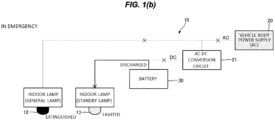
Figure 1 is a block diagram schematically showing one example of a lighting device according to an embodiment of the present invention; -
Figure 2 is a cross sectional view schematically showing a top portion of a cabin of a railroad vehicle according to an embodiment of the present invention; -
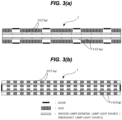
Figure 3 is a schematic diagram schematically showing an arrangement of seats, doors, and a lighting device on the ceiling side in a cabin of a railroad vehicle according to an embodiment of the present invention; -
Figure 4 is a schematic diagram schematically showing an arrangement of seats, doors, and a lighting device on the ceiling side in a cabin of a conventional railroad vehicle; and -
Figure 5 gives a graph showing the illuminance distribution in a cabin of a railroad vehicle in an emergency for a lighting device according to an embodiment of the present invention, and a graph showing that for a conventional lighting device. - Hereinbelow, an embodiment representing the present invention will be explained with reference to the drawings.
- A
lighting device 10 according to the present embodiment is a lighting device that is loaded in a vehicle for illuminating a cabin thereof. Herein, the vehicle refers to a variety of vehicles such as a railroad vehicle running on a track, a monorail vehicle, and a bus, however, hereinafter, a case where alighting device 10 is loaded in a railroad vehicle 1 will be taken as an example for explanation. -
Figure 1 is a block diagram schematically showing one example of alighting device 10 that is loaded in a railroad vehicle 1. The railroad vehicle 1 is normally formed by a plurality of vehicles, consisting of a first vehicle having a crew room, and intermediate vehicles, however, thelighting device 10 that is loaded in one vehicle is taken as a representative for explanation.Figure 2 is a cross sectional view schematically showing a top portion of the cabin of the railroad vehicle 1.Figure 3 is a schematic diagram schematically showing an arrangement of the seats, the doors, and thelighting device 10 on aceiling 2 in the cabin of the railroad vehicle 1. - As shown in
Figure 2 , thelighting device 10 is disposed on theceiling 2 in the cabin of the railroad vehicle 1, including a plurality ofindoor lamps 11 as lighting fixtures. As shown inFigure 3 , theindoor lamp 11 has a shape that allows extension thereof in the longitudinal direction thereof, as later described, and the plurality ofindoor lamps 11 are arranged on theceiling 2 from one end thereof to the other in parallel with the longitudinal direction of the vehicle, being linearly connected with one another. Thereby, theindoor lamps 11 are arranged so as to wholly irradiate the inside of the cabin over the longitudinal direction of the vehicle. - As shown in
Figure 3 , the arrangement of the seats, etc. in the cabin of the railroad vehicle 1 varies, depending upon the type of vehicle, such as the commuter train or the limited express train, as described in connection with the background art. In the railroad vehicle 1 of any type, theindoor lamps 11 are disposed in such a way that they are arranged in two rows on the right and left sides about the center line of the vehicle that extends along the longitudinal direction thereof, each in a location closer to aside wall 3 on theceiling 2. Thus, theindoor lamps 11 are disposed such that the required illuminance can be secured in the cabin also in a crosswise direction of the vehicle. - As shown in
Figure 1 , in addition to a plurality ofindoor lamps 11, which are arranged so as to wholly irradiate the inside of the cabin over the longitudinal direction of the vehicle, thelighting device 10 includes such components as a vehicle body power supply (power supply) 20, which supplies electric power to the respectiveindoor lamps 11, and a battery (storage battery) 30, which is charged with a voltage applied by the vehiclebody power supply 20. Herein, in the case where the railroad vehicle 1 is formed by a plurality of vehicles, theindoor lamps 11 and thebattery 30 are disposed in the same manner in each vehicle, however, it is enough that the vehiclebody power supply 20 is provided only for one vehicle, such as the first vehicle. - With the
indoor lamp 11, one unit that constitutes each individual lighting fixture includes a generallamp light source 12 as a first light source, and a standby lamplight source 13 as a second light source, which is lighted at an illuminance lower than that at which the generallamp light source 12 is lighted. InFigure 1 , the generallamp light source 12 and the standby lamplight source 13 in theindoor lamp 11 are illustrated separately for convenience, however, thoselight sources indoor lamp 11 provided as one unit. - As shown in
Figure 2 andFigure 3 , theindoor lamp 11 includes acasing 11a, having a shape allowing extension in the longitudinal direction thereof, and as described above, a plurality of the respectiveindoor lamps 11 are disposed in parallel with the longitudinal direction of the vehicle on theceiling 2 of the cabin in a state of one being extended to another. With theindoor lamp 11, the generallamp light source 12 is disposed on one side of thecasing 11a that extends in the longitudinal direction thereof, being located closer to the inside of the cabin than the center line of thecasing 11a, while the standby lamplight source 13 of theindoor lamps 11 being disposed on the other side of thecasing 11a that extends in the longitudinal direction thereof, being located closer to the outside of the cabin than the center line of thecasing 11a. - With the
indoor lamp 11, which has such a configuration, the irradiation direction of the generallamp light source 12 is established to be a direction toward the center of theceiling 2, which is a predetermined irradiation direction therefor. Further, the irradiation direction of the standby lamplight source 13 is specified to be a direction toward the lower portion of theside wall 3, which is a direction different from that for the generallamp light source 12. Thus, the generallamp light source 12 illuminates the whole of the inside of the cabin with indirect light from theceiling 2 as a main illuminator. In addition, the standby lamplight source 13 illuminates the inside of a luggage rack 4, which is provided in the upper portion of theside wall 3, with direct light as an auxiliary illuminator. - The
indoor lamp 11 shown inFigure 2 gives only one example of lighting fixture, however, any lighting fixture with any configuration is disposed in order to wholly irradiate the inside of the cabin over the longitudinal direction of the vehicle. Herein, "in order to wholly irradiate the inside of the cabin over the longitudinal direction of the vehicle", it is not always necessary for a plurality of theindoor lamps 11 to be disposed in a state in which one is extended to another, and even if a plurality of theindoor lamps 11 were disposed at a predetermined interval, a state in which the light from the plurality of theindoor lamps 11 irradiates almost uniformly in a contiguous manner in the inside of the cabin over the longitudinal direction of the vehicle can be achieved. - The particular number of
indoor lamps 11 is a design matter to be determined in accordance with the size of the individual unit and the size of the vehicle. InFigure 1 , one generallamp light source 12 and one standby lamplight source 13 are shown for convenience of explanation, however, as described above, actually, a plurality ofindoor lamps 11, the number thereof having been determined as appropriate, are arranged in each vehicle in the same manner. To theindoor lamp 11, a control device (not shown) is connected such that a variety of signals can be transmitted thereto or received therefrom. The control device executes lighting control, such as dimming, of thelight sources - The illuminance of the standby lamp
light source 13 may be lower than that of the generallamp light source 12 to such a degree that, in an emergency, the light emitted from the standby lamplight source 13 toward the floor allows the passengers to identify their feet. Thestandby lamp 13 is not such a one like a conventional standby lamp, which is installed only in the vicinity of the door, and in an emergency, locally illuminates only the area near the door brightly, but a one that, even if darker, can wholly irradiate the inside of the cabin over the longitudinal direction of the vehicle. Assuming that the illuminance of the generallamp light source 12 at the normal time is 100%, for example, the illuminance of the standby lamplight source 13 can be set at as low as 10 to 200. - As the general
lamp light source 12 and the standby lamplight source 13, LED is suitable for use. The LED offers such advantages as not only it being easy to be controlled for dimming and color matching, but also it being compact, consuming less power, and having a long service life. Specifically, thelight sources light sources - The vehicle
body power supply 20 supplies electric power to theindoor lamps 11, being normally loaded in one vehicle, such as the first one, with a wiring for supplying electric power to each vehicle being extended therefrom. The vehiclebody power supply 20 is configured such that it is supplied with electric power from outside, for example, from an overhead contact line through a pantograph, or the like, and supplies electric power not only to theindoor lamps 11, but also to the other loads. Herein, the loads other than theindoor lamps 11 refer to such components as door opening and closing apparatuses and information displays (monitors). - The vehicle
body power supply 20 supplies an alternating current to the loads including theindoor lamps 11, and with the wiring for thelighting device 10, the alternating current is supplied to the generallamp light source 12 as it is, while, to the standby lamplight source 13, a direct current, which is provided as a result of converting the alternating current by the later-described AC-DC conversion circuit 21, being supplied through thebattery 30. In case where the vehiclebody power supply 20 supplies a direct current, the configuration shown inFigure 1 will be altered depending upon the condition for supply of the direct current. - The
battery 30 is, for example, a storage battery that is provided by connecting a plurality of battery cells in series, and thereto, an AC-DC conversion circuit 21 is attached. To or from thebattery 30, a direct current at a low voltage that is obtained as a result of conversion by the AC-DC conversion circuit 21 is inputted or outputted. Herein, the AC-DC conversion circuit 21 is a circuit that converts the alternating current supplied from the vehiclebody power supply 20 into a direct current at a low voltage, and outputs it for charging thebattery 30. Thebattery 30 is disposed under the floor of each vehicle, for example. - As shown in
Figure 1 , with thelighting device 10, the circuit and wiring for theindoor lamp 11 is configured such that, to the generallamp light source 12 of theindoor lamp 11, electric power is supplied from the vehiclebody power supply 20 not through thebattery 30, while, to the standby lamplight source 13, electric power is supplied from the vehiclebody power supply 20 through thebattery 30. Herein, components, such as a switch for switching over the power feeding to that from thebattery 30, and a circuit for dimming control of thelight sources - With the circuit and wiring for such
indoor lamp 11, in an emergency, when the power fed from the vehiclebody power supply 20 is shut off, electric power is supplied from thebattery 30 only to the standby lamplight source 13 so as to maintain the lighting of the standby lamplight source 13 at a low illuminance, which is also given at the normal time. Shutoff of the power fed from the vehiclebody power supply 20 occurs from such a cause as cutting off of the overhead contact line or a failure of the pantograph. - Next, the functions of the
lighting device 10 according to the present embodiment will be explained. - With the
present lighting device 10, theindoor lamp 11, which illuminates the inside of the cabin of the railroad vehicle 1, is provided in order to wholly irradiate the inside of the cabin over the longitudinal direction of the vehicle. Theindoor lamp 11 can be extended to a desired length by linearly connecting a plurality of thecasings 11a, extending in the longitudinal direction thereof, one with another, whereby theindoor lamps 11 can be disposed on theceiling 2 in parallel with the longitudinal direction of the vehicle from one end thereof to the other. Thereby, theindoor lamps 11 can irradiate the entire inside of the cabin over the longitudinal direction of the vehicle. Theindoor lamps 11 are arranged in two rows such that they are symmetrically disposed about the center line of theceiling 2, whereby they can illuminate the inside of the cabin in a wide range with a good balance from both right and left sides. - The
indoor lamp 11 includes the generallamp light source 12 and the standby lamplight source 13, which is lighted at an illuminance lower than that at which the generallamp light source 12 is lighted. The irradiation by the generallamp light source 12 and that by the standby lamplight source 13 are both executed in order to wholly illuminate the inside of the cabin over the longitudinal direction of the vehicle as with that by the conventional general lamp, and are not executed to locally illuminate only the area in the vicinity of the door inside of the cabin as with that by the conventional standby lamp. The illuminance of the standby lamplight source 13 can be as low as, for example, 10 to 200 of that of the generallamp light source 12, in other words, it may be low to such a degree that the light emitted from the standby lamplight source 13 toward the floor allows the passengers to identify their feet in an emergency. - The irradiation direction for the general
lamp light source 12 is specified to be a direction toward the center of theceiling 2, and at the normal time, the generallamp light source 12 illuminates the whole of the inside of the cabin with indirect light from theceiling 2 as a main illuminator. On the other hand, the irradiation direction for the standby lamplight source 13 differs from that for the generallamp light source 12, being specified to be a direction toward the lower portion of theside wall 3, and the standby lamplight source 13 illuminates the inside of the luggage rack 4 installed in the upper portion of theside wall 3 with direct light as an auxiliary illuminator. In this way, by providing the light from thelight source 12 and that from thelight source 13 with different irradiation directions, illuminators having different applications can be realized even in a singleindoor lamp 11. - As shown in
Figure 1 , with theindoor lamp 11, the generallamp light source 12 is supplied with electric power from the vehiclebody power supply 20 not through thebattery 30. On the other hand, the standby lamplight source 13 is supplied with electric power from the vehiclebody power supply 20 through thebattery 30. With such circuit and wiring for theindoor lamp 11, in an emergency, when the power fed from the vehiclebody power supply 20 is shut off, the supply of electric power to the generallamp light source 12 is interrupted, the generallamp light source 12 being extinguished. On the other hand, the standby lamplight source 13 is supplied with electric power from thebattery 30, thereby the standby lamplight source 13 being continued to be lighted at a low illuminance without being extinguished. - In this way, in an emergency, the routes of supply of electric power to the general
lamp light source 12 and the standby lamplight source 13 will not be switched over from one to another by the switching operation and the control thereof, and the operation and the control thereof for selecting only a part of the generallamp light sources 12 and that of the standby lamplight sources 13 for lighting them will not be performed. In a state in which the power fed from the vehiclebody power supply 20 is shut off, there is the possibility that even the electric power required for performing such a special operation and the control thereof may not be able to be supplied. Contrarily, with the standby lamplight source 13, the lighting thereof can be maintained with no need for making a special switching operation and the control thereof by means of a control device. - As shown in
Figure 4(b) , with the arrangement of the indoor lamps in a conventional limited express train, the standby lamp is disposed only at the vehicle end. Therefore, as can been seen fromFigure 5 (a) , which indicates the illuminance distribution (that in the vehicle section along the direction of the rail) for the conventional lighting device, the illuminance in the inside of the cabin along the longitudinal direction in an emergency with the conventional lighting device has been bright only in the area in the vicinity of the cabin entrance at the vehicle end, while, in the area especially at the center of the vehicle, the illuminance has been dark, thereby the difference in illuminance between the area at the vehicle end and the areas other than that at the vehicle end having been great. Thus, with the conventional lighting device, the illuminance difference between the area in the vicinity of the vehicle end, where the standby lamp is installed, and the area at the center of the vehicle, which is away from the standby lamp, has been great, thereby the passengers in the dark area being difficult to identify their feet when they make evacuation, and thus there has been a room for improvement of the safety at the time of evacuation. - As shown in
Figures 3(a) and 3(b) , according to thepresent lighting device 10, the standby lamplight source 13, which is included in everyindoor lamp 11 in any vehicle, will function as a standby lamp in an emergency to wholly irradiate the inside of the cabin over the longitudinal direction of the vehicle even though at a low illuminance. Thereby, as shown inFigure 5(b) , the uniformity in illuminance in the inside of the cabin in an emergency is improved as compared to that with the conventional lighting device, whereby a minimum illuminance that is required for the passengers to evacuate from the inside of the cabin can be secured over the longitudinal direction of the vehicle, and the passengers, even if being in any location in the inside of the cabin, can evacuate safely. - However, since the standby lamp
light source 13 is supplied with power from thebattery 30 in an emergency, the duration of illumination is limited by the capacity of the battery, and in the case where the supply of power from the vehiclebody power supply 20 is shut off for a long period of time, there is the possibility that the lighting of the standby lamplight source 13 may not be able to be maintained. Then, with thepresent lighting device 10, the standby lamplight source 13 is specified to be of a power saving type, which provides lighting at a low illuminance also at the normal time, whereby the lighting thereof can be maintained over a period of time as long as possible within the predetermined range of capacity of thebattery 30. For example, both in the case where two generallamp light sources 12 are lighted at 100% and in the case where twenty standby lamplight sources 13 are lighted at 10%, it can be considered that the power consumption is the same in both cases. - The relation between the capacity of the
battery 30 and the illuminance of the standby lamplight source 13 can be established such that, in the event that the supply of power from the vehiclebody power supply 20 is suddenly shut off, the lighting of the standby lamplight source 13 can be maintained for a period of 30 minutes with the power supplied from thebattery 30, which is always charged to 100% at the normal time. Even in an emergency, the condition of power feeding from thebattery 30 to the standby lamplight source 13 will not be subjected to any change or switched over. If it is possible to be implemented only with the configuration of the circuit itself with no need for performing a special control with the control device, the illuminance may be automatically changed over to, for example, a further low one in an emergency. - Further, with the wiring for supplying power from the vehicle
body power supply 20 to the generallamp light source 12 and the wiring for supplying power from the vehiclebody power supply 20 to the standby lamplight source 13, the parts of the wirings just ahead of the AC-DC conversion circuit 21 can be unified into one for common use. Since the generallamp light source 12 and the standby lamplight source 13 are included in the sameindoor lamp 11, the length of the wiring can be reduced by the shortened distance between them, whereby the cost can be reduced with a substantial increase in weight being suppressed. Therefore, the need for disposing a wiring for exclusive use by the standby lamp behind theceiling 2 of the cabin at the time of manufacturing the railroad vehicle 1 as with the conventional lighting device is eliminated, thereby more allowance for space being created behind theceiling 2, with the weight and cost being able to be reduced. - Furthermore, with the
present lighting device 10, the vehiclebody power supply 20 supplies electric power obtained from the outside of the vehicle to the loads including theindoor lamp 11. With such vehiclebody power supply 20, it is possible to continuously and stably supply a predetermined quantity of electric power with no need for increasing the capacity in particular, always charging thebattery 30, and the vehiclebody power supply 20 can be widely used also as a vehicle body power supply for supplying power to the loads other than theindoor lamp 11. - In addition, the wiring and circuit for the standby lamp
light source 13 includes the AC-DC conversion circuit 21, which converts the alternating current from the vehiclebody power supply 20 to output a direct current, thebattery 30 being charged with a DC voltage from the AC-DC conversion circuit 21. Then, the standby lamplight source 13 is lighted with the DC voltage applied by thebattery 30. In this way, even if the electric current from the vehiclebody power supply 20 is an alternating current, a storage battery, which is charged with a DC voltage, can be readily accommodated. - Heretofore, the embodiment of the present invention has been described with reference to the drawings, however, the specific configuration is not limited to that of the embodiment as described above, and various changes and modifications may be included in the present invention, so long as they do not depart from the spirit and scope thereof.
- For example, in the above description, the
indoor lamp 11 of thelighting device 10 is that which is installed on theceiling 2 in the inside of the cabin of the railroad vehicle 1, however, it may be that which is installed as an illuminator in the inside of the cabin of any other vehicle, such as a monorail car or a bus. In addition, the specific geometry of theindoor lamp 11 is not limited to the example which is shown. - The present invention is widely applicable to a lighting device that is loaded in vehicles, such as the railroad vehicle, and is used to illuminate the inside of the cabin of the vehicle.
- Reference numeral 1 denotes a railroad vehicle; 2 a ceiling; 3 a side wall; 4 a luggage rack; 10 a lighting device; 11 an indoor lamp (lighting fixture); 11a a casing; 12 a general lamp light source (first light source); 13 a standby lamp light source (second light source); 20 a vehicle body power supply (power supply); 21 an AC-DC conversion circuit (conversion circuit); and 30 a battery (storage battery).
Claims (4)
- A lighting device (10) for use in a vehicle (1) to illuminate an inside of a cabin of the vehicle (1), comprising:a lighting fixture (11) suited for irradiating the inside of the cabin in order to irradiate the inside of the cabin as a whole over the longitudinal direction of the vehicle (1);a power supply (20) to supply electric power to said lighting fixture (11); anda storage battery (30) to be charged by electric power from said power supply (20),wherein said lighting fixture (11) includes a first light source (12) which is lighted at a first illuminance, and a second light source (13) which is lighted at a second illuminance lower than the first illuminance,characterized in that said first light source (12) and said second light source (13) are included in the same lighting fixture (11) ;wherein said first light source (12) is disposed on one side of the lighting fixture (11) that extends in the longitudinal direction thereof, being located closer to the inside of the cabin than a center line of the lighting fixture (11), wherein the second light source (13) is disposed on the other side of the lighting fixture (11) that extends in the longitudinal direction thereof, being located closer to an outside of the cabin than the center line of the lighting fixture (11);wherein an irradiation direction of said first light source (12) as a main illuminant is specified to be a direction toward a center of the ceiling (2) of the cabin, wherein an irradiation direction of said second light source (13) as an auxiliary illuminator is specified to be a different direction from that of the first light source and toward a lower portion of a side wall (3) of the cabin;wherein said first light source (12) is adapted to receive an alternating current that is provided from said power supply (20), while said second light source (13) is adapted to receive a direct current that is provided from said storage battery (30), andwherein in an emergency, when power fed from said power supply (20) is shut off, the second light source (13) continues to receive the direct current from said storage battery (30) and continues to illuminate at the second illuminance, allowing passengers to identify their feet.
- The lighting device (10) according to claim 1,
wherein said power supply (20) is configured to receive electric power from an outside of the vehicle, and to supply the received electric power to loads including said lighting fixture (11). - The lighting device (10) according to claim 1 or 2, further comprising a conversion circuit (21) configured to convert AC electric power from said power supply (20) to output DC power,
wherein said storage battery (30) is configured to be charged with a DC voltage from said conversion circuit (21), and said second light source (13) is configured to be lighted with the DC voltage applied by said storage battery (30). - The lighting device (10) according to any one of claims 1 to 3,wherein said lighting fixture (11) has a shape, allowing extension thereof in the longitudinal direction thereof, and a plurality of said lighting fixtures (11) are provided in series and in parallel with the longitudinal direction of the vehicle on a ceiling (2) of the cabin, andwherein said first light source (12) is disposed on one side of the lighting fixture (11), extending in the longitudinal direction, and said second light source (13) is disposed on the other side of the lighting fixture (11).
Applications Claiming Priority (2)
| Application Number | Priority Date | Filing Date | Title |
|---|---|---|---|
| JP2018043637A JP7239270B2 (en) | 2018-03-09 | 2018-03-09 | lighting equipment |
| PCT/JP2019/009410 WO2019172435A1 (en) | 2018-03-09 | 2019-03-08 | Illumination device |
Publications (3)
| Publication Number | Publication Date |
|---|---|
| EP3764744A1 EP3764744A1 (en) | 2021-01-13 |
| EP3764744A4 EP3764744A4 (en) | 2021-04-14 |
| EP3764744B1 true EP3764744B1 (en) | 2024-07-03 |
Family
ID=67846692
Family Applications (1)
| Application Number | Title | Priority Date | Filing Date |
|---|---|---|---|
| EP19763303.5A Active EP3764744B1 (en) | 2018-03-09 | 2019-03-08 | Illumination device |
Country Status (6)
| Country | Link |
|---|---|
| US (1) | US11665805B2 (en) |
| EP (1) | EP3764744B1 (en) |
| JP (1) | JP7239270B2 (en) |
| CN (1) | CN111989987A (en) |
| TW (1) | TWI800611B (en) |
| WO (1) | WO2019172435A1 (en) |
Families Citing this family (1)
| Publication number | Priority date | Publication date | Assignee | Title |
|---|---|---|---|---|
| EP4064795A1 (en) * | 2021-03-25 | 2022-09-28 | Schmitz Cargobull AG | Control of the interior lighting of a commercial vehicle |
Citations (1)
| Publication number | Priority date | Publication date | Assignee | Title |
|---|---|---|---|---|
| EP2790471A2 (en) * | 2013-04-09 | 2014-10-15 | Bombardier Transportation GmbH | Control of the intensity of a led lighting system |
Family Cites Families (12)
| Publication number | Priority date | Publication date | Assignee | Title |
|---|---|---|---|---|
| JPS4875487U (en) * | 1971-12-22 | 1973-09-19 | ||
| US7956490B2 (en) * | 2009-09-16 | 2011-06-07 | Jack Sotnikow | Battery backup for vehicle emergency communicator |
| CN201657420U (en) * | 2010-03-19 | 2010-11-24 | 南车青岛四方机车车辆股份有限公司 | Illumination control system of railway vehicle passenger room |
| SK50532010A3 (en) * | 2010-12-15 | 2012-07-03 | S Power Export-Import, S. R. O. | Involvement of the main and emergency lighting |
| KR101320670B1 (en) * | 2012-02-06 | 2013-10-23 | 박성훈 | LED Lighting charge system and power failure sensor |
| CN102991363B (en) * | 2012-12-07 | 2015-08-05 | 南车株洲电力机车有限公司 | A kind of storage battery of city rail vehicle and pantograph tractive power supply system |
| JP6118550B2 (en) | 2012-12-17 | 2017-04-19 | 川重車両テクノ株式会社 | Lighting device and lighting system |
| US9877374B2 (en) * | 2014-11-25 | 2018-01-23 | Cree, Inc. | Lighting apparatus and methods providing variable illumination characteristics based on object detection |
| TWM515984U (en) * | 2014-12-31 | 2016-01-21 | wen-tian Cai | Electric vehicle power supply system having plural sets of batteries |
| JP6570868B2 (en) | 2015-04-27 | 2019-09-04 | コイト電工株式会社 | Railway vehicle interior lighting system and interior light unit |
| JP6807156B2 (en) | 2016-01-29 | 2021-01-06 | コイト電工株式会社 | Power systems and railcars |
| CN107734739A (en) * | 2017-08-31 | 2018-02-23 | 今创集团股份有限公司 | Railcar dims LED illumination lamp control system certainly |
-
2018
- 2018-03-09 JP JP2018043637A patent/JP7239270B2/en active Active
-
2019
- 2019-03-07 TW TW108107532A patent/TWI800611B/en active
- 2019-03-08 CN CN201980017774.6A patent/CN111989987A/en active Pending
- 2019-03-08 WO PCT/JP2019/009410 patent/WO2019172435A1/en not_active Ceased
- 2019-03-08 US US16/979,286 patent/US11665805B2/en active Active
- 2019-03-08 EP EP19763303.5A patent/EP3764744B1/en active Active
Patent Citations (1)
| Publication number | Priority date | Publication date | Assignee | Title |
|---|---|---|---|---|
| EP2790471A2 (en) * | 2013-04-09 | 2014-10-15 | Bombardier Transportation GmbH | Control of the intensity of a led lighting system |
Also Published As
| Publication number | Publication date |
|---|---|
| WO2019172435A1 (en) | 2019-09-12 |
| CN111989987A (en) | 2020-11-24 |
| US20200398744A1 (en) | 2020-12-24 |
| EP3764744A4 (en) | 2021-04-14 |
| EP3764744A1 (en) | 2021-01-13 |
| TW201945222A (en) | 2019-12-01 |
| JP7239270B2 (en) | 2023-03-14 |
| US11665805B2 (en) | 2023-05-30 |
| JP2019160499A (en) | 2019-09-19 |
| TWI800611B (en) | 2023-05-01 |
Similar Documents
| Publication | Publication Date | Title |
|---|---|---|
| EP2790471B1 (en) | Control of the intensity of a led lighting system | |
| US20110163697A1 (en) | Cabin illuminating device of aircraft | |
| KR101087561B1 (en) | car | |
| EP2444294A1 (en) | Railway car equipped with LED lighting system, and method for controlling LED lighting system equipped in railway car | |
| JP6118550B2 (en) | Lighting device and lighting system | |
| EP3764744B1 (en) | Illumination device | |
| EP2803551B1 (en) | Led lighting system for a railway vehicle | |
| KR101816348B1 (en) | Electrical Circuit for LED Lamp in Salon of Rail Cars and Light Controlling System with there | |
| CA2803193C (en) | Rail vehicle emergency lighting | |
| JP2015024740A (en) | In-vehicle display and in-vehicle information display device for movable body | |
| US10668811B2 (en) | Power supply system and railroad car | |
| KR20110012755A (en) | Panel using LED lighting | |
| JP2009266604A (en) | Lighting system for tunnel | |
| ES2550944T3 (en) | Light module of a railway vehicle | |
| FI114195B (en) | Arrangements in connection with a lighting device | |
| BG2830U1 (en) | Controllable led lighting system for railway vehicles | |
| HK1170715B (en) | Emergency lighting for an elevator cab | |
| HK1170715A1 (en) | Emergency lighting for an elevator cab |
Legal Events
| Date | Code | Title | Description |
|---|---|---|---|
| STAA | Information on the status of an ep patent application or granted ep patent |
Free format text: STATUS: THE INTERNATIONAL PUBLICATION HAS BEEN MADE |
|
| PUAI | Public reference made under article 153(3) epc to a published international application that has entered the european phase |
Free format text: ORIGINAL CODE: 0009012 |
|
| STAA | Information on the status of an ep patent application or granted ep patent |
Free format text: STATUS: REQUEST FOR EXAMINATION WAS MADE |
|
| 17P | Request for examination filed |
Effective date: 20201007 |
|
| AK | Designated contracting states |
Kind code of ref document: A1 Designated state(s): AL AT BE BG CH CY CZ DE DK EE ES FI FR GB GR HR HU IE IS IT LI LT LU LV MC MK MT NL NO PL PT RO RS SE SI SK SM TR |
|
| AX | Request for extension of the european patent |
Extension state: BA ME |
|
| REG | Reference to a national code |
Ref legal event code: R079 Ipc: B60Q0003430000 Ref country code: DE Ref legal event code: R079 Ref document number: 602019054617 Country of ref document: DE Free format text: PREVIOUS MAIN CLASS: H05B0037020000 Ipc: B60Q0003430000 |
|
| A4 | Supplementary search report drawn up and despatched |
Effective date: 20210312 |
|
| RIC1 | Information provided on ipc code assigned before grant |
Ipc: B60Q 3/43 20170101AFI20210305BHEP Ipc: B60Q 3/47 20170101ALI20210305BHEP Ipc: B61D 29/00 20060101ALI20210305BHEP Ipc: H05B 47/17 20200101ALI20210305BHEP |
|
| DAV | Request for validation of the european patent (deleted) | ||
| DAX | Request for extension of the european patent (deleted) | ||
| STAA | Information on the status of an ep patent application or granted ep patent |
Free format text: STATUS: EXAMINATION IS IN PROGRESS |
|
| 17Q | First examination report despatched |
Effective date: 20220721 |
|
| GRAP | Despatch of communication of intention to grant a patent |
Free format text: ORIGINAL CODE: EPIDOSNIGR1 |
|
| STAA | Information on the status of an ep patent application or granted ep patent |
Free format text: STATUS: GRANT OF PATENT IS INTENDED |
|
| INTG | Intention to grant announced |
Effective date: 20230921 |
|
| GRAJ | Information related to disapproval of communication of intention to grant by the applicant or resumption of examination proceedings by the epo deleted |
Free format text: ORIGINAL CODE: EPIDOSDIGR1 |
|
| STAA | Information on the status of an ep patent application or granted ep patent |
Free format text: STATUS: EXAMINATION IS IN PROGRESS |
|
| INTC | Intention to grant announced (deleted) | ||
| GRAP | Despatch of communication of intention to grant a patent |
Free format text: ORIGINAL CODE: EPIDOSNIGR1 |
|
| STAA | Information on the status of an ep patent application or granted ep patent |
Free format text: STATUS: GRANT OF PATENT IS INTENDED |
|
| INTG | Intention to grant announced |
Effective date: 20240313 |
|
| GRAS | Grant fee paid |
Free format text: ORIGINAL CODE: EPIDOSNIGR3 |
|
| GRAA | (expected) grant |
Free format text: ORIGINAL CODE: 0009210 |
|
| STAA | Information on the status of an ep patent application or granted ep patent |
Free format text: STATUS: THE PATENT HAS BEEN GRANTED |
|
| AK | Designated contracting states |
Kind code of ref document: B1 Designated state(s): AL AT BE BG CH CY CZ DE DK EE ES FI FR GB GR HR HU IE IS IT LI LT LU LV MC MK MT NL NO PL PT RO RS SE SI SK SM TR |
|
| REG | Reference to a national code |
Ref country code: CH Ref legal event code: EP |
|
| REG | Reference to a national code |
Ref country code: DE Ref legal event code: R096 Ref document number: 602019054617 Country of ref document: DE |
|
| REG | Reference to a national code |
Ref country code: LT Ref legal event code: MG9D |
|
| REG | Reference to a national code |
Ref country code: NL Ref legal event code: MP Effective date: 20240703 |
|
| PG25 | Lapsed in a contracting state [announced via postgrant information from national office to epo] |
Ref country code: PT Free format text: LAPSE BECAUSE OF FAILURE TO SUBMIT A TRANSLATION OF THE DESCRIPTION OR TO PAY THE FEE WITHIN THE PRESCRIBED TIME-LIMIT Effective date: 20241104 |
|
| REG | Reference to a national code |
Ref country code: AT Ref legal event code: MK05 Ref document number: 1699509 Country of ref document: AT Kind code of ref document: T Effective date: 20240703 |
|
| PG25 | Lapsed in a contracting state [announced via postgrant information from national office to epo] |
Ref country code: NL Free format text: LAPSE BECAUSE OF FAILURE TO SUBMIT A TRANSLATION OF THE DESCRIPTION OR TO PAY THE FEE WITHIN THE PRESCRIBED TIME-LIMIT Effective date: 20240703 |
|
| PG25 | Lapsed in a contracting state [announced via postgrant information from national office to epo] |
Ref country code: PT Free format text: LAPSE BECAUSE OF FAILURE TO SUBMIT A TRANSLATION OF THE DESCRIPTION OR TO PAY THE FEE WITHIN THE PRESCRIBED TIME-LIMIT Effective date: 20241104 Ref country code: NL Free format text: LAPSE BECAUSE OF FAILURE TO SUBMIT A TRANSLATION OF THE DESCRIPTION OR TO PAY THE FEE WITHIN THE PRESCRIBED TIME-LIMIT Effective date: 20240703 |
|
| PG25 | Lapsed in a contracting state [announced via postgrant information from national office to epo] |
Ref country code: NO Free format text: LAPSE BECAUSE OF FAILURE TO SUBMIT A TRANSLATION OF THE DESCRIPTION OR TO PAY THE FEE WITHIN THE PRESCRIBED TIME-LIMIT Effective date: 20241003 |
|
| PG25 | Lapsed in a contracting state [announced via postgrant information from national office to epo] |
Ref country code: FI Free format text: LAPSE BECAUSE OF FAILURE TO SUBMIT A TRANSLATION OF THE DESCRIPTION OR TO PAY THE FEE WITHIN THE PRESCRIBED TIME-LIMIT Effective date: 20240703 Ref country code: GR Free format text: LAPSE BECAUSE OF FAILURE TO SUBMIT A TRANSLATION OF THE DESCRIPTION OR TO PAY THE FEE WITHIN THE PRESCRIBED TIME-LIMIT Effective date: 20241004 Ref country code: PL Free format text: LAPSE BECAUSE OF FAILURE TO SUBMIT A TRANSLATION OF THE DESCRIPTION OR TO PAY THE FEE WITHIN THE PRESCRIBED TIME-LIMIT Effective date: 20240703 |
|
| PG25 | Lapsed in a contracting state [announced via postgrant information from national office to epo] |
Ref country code: BG Free format text: LAPSE BECAUSE OF FAILURE TO SUBMIT A TRANSLATION OF THE DESCRIPTION OR TO PAY THE FEE WITHIN THE PRESCRIBED TIME-LIMIT Effective date: 20240703 |
|
| PG25 | Lapsed in a contracting state [announced via postgrant information from national office to epo] |
Ref country code: LV Free format text: LAPSE BECAUSE OF FAILURE TO SUBMIT A TRANSLATION OF THE DESCRIPTION OR TO PAY THE FEE WITHIN THE PRESCRIBED TIME-LIMIT Effective date: 20240703 |
|
| PG25 | Lapsed in a contracting state [announced via postgrant information from national office to epo] |
Ref country code: IS Free format text: LAPSE BECAUSE OF FAILURE TO SUBMIT A TRANSLATION OF THE DESCRIPTION OR TO PAY THE FEE WITHIN THE PRESCRIBED TIME-LIMIT Effective date: 20241103 Ref country code: AT Free format text: LAPSE BECAUSE OF FAILURE TO SUBMIT A TRANSLATION OF THE DESCRIPTION OR TO PAY THE FEE WITHIN THE PRESCRIBED TIME-LIMIT Effective date: 20240703 |
|
| PG25 | Lapsed in a contracting state [announced via postgrant information from national office to epo] |
Ref country code: HR Free format text: LAPSE BECAUSE OF FAILURE TO SUBMIT A TRANSLATION OF THE DESCRIPTION OR TO PAY THE FEE WITHIN THE PRESCRIBED TIME-LIMIT Effective date: 20240703 Ref country code: CZ Free format text: LAPSE BECAUSE OF FAILURE TO SUBMIT A TRANSLATION OF THE DESCRIPTION OR TO PAY THE FEE WITHIN THE PRESCRIBED TIME-LIMIT Effective date: 20240703 |
|
| PG25 | Lapsed in a contracting state [announced via postgrant information from national office to epo] |
Ref country code: ES Free format text: LAPSE BECAUSE OF FAILURE TO SUBMIT A TRANSLATION OF THE DESCRIPTION OR TO PAY THE FEE WITHIN THE PRESCRIBED TIME-LIMIT Effective date: 20240703 Ref country code: RS Free format text: LAPSE BECAUSE OF FAILURE TO SUBMIT A TRANSLATION OF THE DESCRIPTION OR TO PAY THE FEE WITHIN THE PRESCRIBED TIME-LIMIT Effective date: 20241003 |
|
| PG25 | Lapsed in a contracting state [announced via postgrant information from national office to epo] |
Ref country code: RS Free format text: LAPSE BECAUSE OF FAILURE TO SUBMIT A TRANSLATION OF THE DESCRIPTION OR TO PAY THE FEE WITHIN THE PRESCRIBED TIME-LIMIT Effective date: 20241003 Ref country code: PL Free format text: LAPSE BECAUSE OF FAILURE TO SUBMIT A TRANSLATION OF THE DESCRIPTION OR TO PAY THE FEE WITHIN THE PRESCRIBED TIME-LIMIT Effective date: 20240703 Ref country code: NO Free format text: LAPSE BECAUSE OF FAILURE TO SUBMIT A TRANSLATION OF THE DESCRIPTION OR TO PAY THE FEE WITHIN THE PRESCRIBED TIME-LIMIT Effective date: 20241003 Ref country code: LV Free format text: LAPSE BECAUSE OF FAILURE TO SUBMIT A TRANSLATION OF THE DESCRIPTION OR TO PAY THE FEE WITHIN THE PRESCRIBED TIME-LIMIT Effective date: 20240703 Ref country code: IS Free format text: LAPSE BECAUSE OF FAILURE TO SUBMIT A TRANSLATION OF THE DESCRIPTION OR TO PAY THE FEE WITHIN THE PRESCRIBED TIME-LIMIT Effective date: 20241103 Ref country code: HR Free format text: LAPSE BECAUSE OF FAILURE TO SUBMIT A TRANSLATION OF THE DESCRIPTION OR TO PAY THE FEE WITHIN THE PRESCRIBED TIME-LIMIT Effective date: 20240703 Ref country code: GR Free format text: LAPSE BECAUSE OF FAILURE TO SUBMIT A TRANSLATION OF THE DESCRIPTION OR TO PAY THE FEE WITHIN THE PRESCRIBED TIME-LIMIT Effective date: 20241004 Ref country code: FI Free format text: LAPSE BECAUSE OF FAILURE TO SUBMIT A TRANSLATION OF THE DESCRIPTION OR TO PAY THE FEE WITHIN THE PRESCRIBED TIME-LIMIT Effective date: 20240703 Ref country code: ES Free format text: LAPSE BECAUSE OF FAILURE TO SUBMIT A TRANSLATION OF THE DESCRIPTION OR TO PAY THE FEE WITHIN THE PRESCRIBED TIME-LIMIT Effective date: 20240703 Ref country code: CZ Free format text: LAPSE BECAUSE OF FAILURE TO SUBMIT A TRANSLATION OF THE DESCRIPTION OR TO PAY THE FEE WITHIN THE PRESCRIBED TIME-LIMIT Effective date: 20240703 Ref country code: BG Free format text: LAPSE BECAUSE OF FAILURE TO SUBMIT A TRANSLATION OF THE DESCRIPTION OR TO PAY THE FEE WITHIN THE PRESCRIBED TIME-LIMIT Effective date: 20240703 Ref country code: AT Free format text: LAPSE BECAUSE OF FAILURE TO SUBMIT A TRANSLATION OF THE DESCRIPTION OR TO PAY THE FEE WITHIN THE PRESCRIBED TIME-LIMIT Effective date: 20240703 |
|
| REG | Reference to a national code |
Ref country code: DE Ref legal event code: R097 Ref document number: 602019054617 Country of ref document: DE |
|
| PG25 | Lapsed in a contracting state [announced via postgrant information from national office to epo] |
Ref country code: DK Free format text: LAPSE BECAUSE OF FAILURE TO SUBMIT A TRANSLATION OF THE DESCRIPTION OR TO PAY THE FEE WITHIN THE PRESCRIBED TIME-LIMIT Effective date: 20240703 Ref country code: SM Free format text: LAPSE BECAUSE OF FAILURE TO SUBMIT A TRANSLATION OF THE DESCRIPTION OR TO PAY THE FEE WITHIN THE PRESCRIBED TIME-LIMIT Effective date: 20240703 Ref country code: RO Free format text: LAPSE BECAUSE OF FAILURE TO SUBMIT A TRANSLATION OF THE DESCRIPTION OR TO PAY THE FEE WITHIN THE PRESCRIBED TIME-LIMIT Effective date: 20240703 |
|
| PG25 | Lapsed in a contracting state [announced via postgrant information from national office to epo] |
Ref country code: EE Free format text: LAPSE BECAUSE OF FAILURE TO SUBMIT A TRANSLATION OF THE DESCRIPTION OR TO PAY THE FEE WITHIN THE PRESCRIBED TIME-LIMIT Effective date: 20240703 |
|
| PG25 | Lapsed in a contracting state [announced via postgrant information from national office to epo] |
Ref country code: IT Free format text: LAPSE BECAUSE OF FAILURE TO SUBMIT A TRANSLATION OF THE DESCRIPTION OR TO PAY THE FEE WITHIN THE PRESCRIBED TIME-LIMIT Effective date: 20240703 Ref country code: SK Free format text: LAPSE BECAUSE OF FAILURE TO SUBMIT A TRANSLATION OF THE DESCRIPTION OR TO PAY THE FEE WITHIN THE PRESCRIBED TIME-LIMIT Effective date: 20240703 |
|
| PLBE | No opposition filed within time limit |
Free format text: ORIGINAL CODE: 0009261 |
|
| STAA | Information on the status of an ep patent application or granted ep patent |
Free format text: STATUS: NO OPPOSITION FILED WITHIN TIME LIMIT |
|
| 26N | No opposition filed |
Effective date: 20250404 |
|
| PG25 | Lapsed in a contracting state [announced via postgrant information from national office to epo] |
Ref country code: SE Free format text: LAPSE BECAUSE OF FAILURE TO SUBMIT A TRANSLATION OF THE DESCRIPTION OR TO PAY THE FEE WITHIN THE PRESCRIBED TIME-LIMIT Effective date: 20240703 |
|
| PG25 | Lapsed in a contracting state [announced via postgrant information from national office to epo] |
Ref country code: MC Free format text: LAPSE BECAUSE OF FAILURE TO SUBMIT A TRANSLATION OF THE DESCRIPTION OR TO PAY THE FEE WITHIN THE PRESCRIBED TIME-LIMIT Effective date: 20240703 |
|
| REG | Reference to a national code |
Ref country code: CH Ref legal event code: H13 Free format text: ST27 STATUS EVENT CODE: U-0-0-H10-H13 (AS PROVIDED BY THE NATIONAL OFFICE) Effective date: 20251024 |
|
| PG25 | Lapsed in a contracting state [announced via postgrant information from national office to epo] |
Ref country code: LU Free format text: LAPSE BECAUSE OF NON-PAYMENT OF DUE FEES Effective date: 20250308 |
|
| REG | Reference to a national code |
Ref country code: BE Ref legal event code: MM Effective date: 20250331 |
|
| PG25 | Lapsed in a contracting state [announced via postgrant information from national office to epo] |
Ref country code: BE Free format text: LAPSE BECAUSE OF NON-PAYMENT OF DUE FEES Effective date: 20250331 |
|
| PG25 | Lapsed in a contracting state [announced via postgrant information from national office to epo] |
Ref country code: CH Free format text: LAPSE BECAUSE OF NON-PAYMENT OF DUE FEES Effective date: 20250331 |
|
| PG25 | Lapsed in a contracting state [announced via postgrant information from national office to epo] |
Ref country code: IE Free format text: LAPSE BECAUSE OF NON-PAYMENT OF DUE FEES Effective date: 20250308 |
|
| PGFP | Annual fee paid to national office [announced via postgrant information from national office to epo] |
Ref country code: GB Payment date: 20260324 Year of fee payment: 8 |
|
| PGFP | Annual fee paid to national office [announced via postgrant information from national office to epo] |
Ref country code: DE Payment date: 20260319 Year of fee payment: 8 |
|
| PGFP | Annual fee paid to national office [announced via postgrant information from national office to epo] |
Ref country code: FR Payment date: 20260323 Year of fee payment: 8 |