EP3764505B1 - Method and apparatus for controlling charge - Google Patents
Method and apparatus for controlling charge Download PDFInfo
- Publication number
- EP3764505B1 EP3764505B1 EP19217217.9A EP19217217A EP3764505B1 EP 3764505 B1 EP3764505 B1 EP 3764505B1 EP 19217217 A EP19217217 A EP 19217217A EP 3764505 B1 EP3764505 B1 EP 3764505B1
- Authority
- EP
- European Patent Office
- Prior art keywords
- charge
- battery
- current
- cut
- volume
- Prior art date
- Legal status (The legal status is an assumption and is not a legal conclusion. Google has not performed a legal analysis and makes no representation as to the accuracy of the status listed.)
- Active
Links
Images

Classifications
-
- H—ELECTRICITY
- H02—GENERATION; CONVERSION OR DISTRIBUTION OF ELECTRIC POWER
- H02J—ELECTRIC POWER NETWORKS; CIRCUIT ARRANGEMENTS OR SYSTEMS FOR SUPPLYING OR DISTRIBUTING ELECTRIC POWER; SYSTEMS FOR STORING ELECTRIC ENERGY
- H02J7/00—Circuit arrangements for charging or discharging batteries or for supplying loads from batteries
- H02J7/90—Regulation of charging or discharging current or voltage
- H02J7/94—Regulation of charging or discharging current or voltage in response to battery current
-
- H—ELECTRICITY
- H02—GENERATION; CONVERSION OR DISTRIBUTION OF ELECTRIC POWER
- H02J—ELECTRIC POWER NETWORKS; CIRCUIT ARRANGEMENTS OR SYSTEMS FOR SUPPLYING OR DISTRIBUTING ELECTRIC POWER; SYSTEMS FOR STORING ELECTRIC ENERGY
- H02J7/00—Circuit arrangements for charging or discharging batteries or for supplying loads from batteries
- H02J7/90—Regulation of charging or discharging current or voltage
- H02J7/933—Regulation of charging or discharging current or voltage the cycle being controlled or terminated in response to electric parameters
-
- H—ELECTRICITY
- H02—GENERATION; CONVERSION OR DISTRIBUTION OF ELECTRIC POWER
- H02J—ELECTRIC POWER NETWORKS; CIRCUIT ARRANGEMENTS OR SYSTEMS FOR SUPPLYING OR DISTRIBUTING ELECTRIC POWER; SYSTEMS FOR STORING ELECTRIC ENERGY
- H02J7/00—Circuit arrangements for charging or discharging batteries or for supplying loads from batteries
- H02J7/60—Circuit arrangements for charging or discharging batteries or for supplying loads from batteries including safety or protection arrangements
- H02J7/61—Circuit arrangements for charging or discharging batteries or for supplying loads from batteries including safety or protection arrangements against overcharge
Definitions
- the present disclosure relates to a method and an apparatus for controlling charge.
- the method comprises: measuring a battery voltage with a voltage sensor and a battery current with a current sensor; applying, with a charging circuit, a first charging current to the battery until the measured battery voltage exceeds a predetermined voltage threshold, a magnitude of the first charging current being held at a first constant value; applying, with the charging circuit, in response to the measured battery voltage exceeding the predetermined voltage threshold, a second charging current to the battery until a cutoff criterion is satisfied, a magnitude of the second charging current being such that the battery voltage exceeds a steady state voltage limit for the battery; after the cutoff criterion is satisfied, determining a rest voltage of the battery; and updating the cutoff criterion based on a difference between the determined rest voltage and a target rest voltage.
- CN106785132A discloses a charging method and device.
- the charging method provided by the embodiment of the invention comprises N charging stages, wherein each charging stage comprises M charging processes; N is an integer greater than or equal to 2; M is an integer greater than or equal to 1; each charging process comprises the steps of charging a battery with constant current until the battery reaches cutoff voltage and charging the battery with constant voltage until the battery reaches cutoff current, wherein the cutoff current used in the charging processes in the ith charging stage is smaller than that used in the charging processes in the (i+1)th charging stage; and the value range of i is [1, N-1].
- US 6337560B1 discloses a method and apparatus for extending the cycle life of a battery by using different charge voltages or different current cut-offs to recharge the battery during the course of the battery's life.
- the capacity of a battery is gradually depleted as the battery is repeatedly charged and discharged.
- the rate at which the battery capacity is depleted varies in accordance to the charge voltage, or the current cut-off, used to recharge the battery.
- the present disclosure relates to a method and an apparatus for controlling charging.
- a method of controlling charge is provided as defined by claim 1.
- an apparatus for controlling charge is provided as defined by claim 5
- An example of the present disclosure provides a method of controlling charge, which may be applied to any terminal with a rechargeable battery, such as a smart phone, a tablet computer, a laptop computer, a personal digital assistant, a medical device, a lighting device and the like.
- a rechargeable battery is a polymer lithium ion battery, and the present disclosure does not limit the type of the rechargeable battery, as long as the method of controlling charge in the present disclosure works on the rechargeable battery.
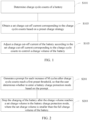
- FIG. 1 is a flowchart illustrating a method of controlling charge showing only a subset of the steps defined in claim 1.
- the method includes the following steps S101-S103.
- step S101 charge cycle counts of a battery are determined.
- the terminal records the charge cycle counts of the battery by obtaining an accumulation of battery charge volumes.
- One complete charge cycle refers to a process of full charge and full discharge of the battery.
- a set charge cut-off current corresponding to the charge cycle counts is obtained based on a preset charge strategy
- step S103 set charge cut-off currents corresponding to different charge cycle counts are preset based on the preset charge strategy. In this way, a set charge cut-off current corresponding to the charge cycle counts is obtained, where the set cut-off current is a current value when the battery reaches full charge state or a certain charge state.
- the preset charge strategy specifically includes: for each increase of N cycles, increasing the set charge cut-off current by X milliamperes based on an initial charge cut-off current, where N and X are respectively natural numbers. After the charge cycle counts reach a threshold, the set charge cut-off current reaches a maximum value.
- the charge cut-off current when a terminal is charged for the first time, the charge cut-off current is set to 100mA. When the charge cycle counts are 100, the charge cut-off current is increased to 125mA. When the charge cycle counts are 200, the charge cut-off current is increased to 150mA, and so on, the charge cut-off current is increased by 25mA for each increase of 100 cycles. When the charge cycle counts reach the threshold of 500 cycles, the maximum of the charge cut-off current is 200mA correspondingly.
- the charge cut-off currents corresponding to the charge cycle counts are described below:
- the increase of the charge cut-off current may lead to the reduction of the charge capacity of the battery.
- the increase of the charge cut-off current may effectively improve the occurrence of side reaction on a surface of the battery, thereby prolonging the life of the battery.
- a charge cut-off current of the battery is adjusted based on the set charge cut-off current corresponding to the charge cycle counts to control a charge volume of the battery.
- the cut-off current of the battery is adjusted according to the set charge cut-off current corresponding to the charge cycle count, so that the charge volume of the battery is controlled.
- shallow charge may be performed for the battery by controlling the charge volume through adjusting the charge cut-off current, which may effectively improve the aging and overcharging of the battery and optimize the Solid Electrolyte Interphase (SEI) film of the cathode of the battery, thereby effectively increasing the cycle life of the battery.
- SEI Solid Electrolyte Interphase
- the method of controlling charge further includes the following steps S201-S203.
- a prompt is generated for each increase of M cycles, so that a user determines whether to enter a battery charge protection mode based on the prompt.
- step S203 in the battery charge protection mode, the charging of the battery is stopped after the charge volume reaches a set charge volume, where the set charge volume is smaller than the full charge volume of the battery and M is a natural number.
- the method of controlling charge may perform intelligent charge strategy selection according to the use requirements of the user.
- a prompt is generated for each increase of M cycles (for example, 50 cycles) so that the user determines whether to enter the battery charge protection mode. If the user needs to go to an environment where the terminal device of the user cannot be charged, the battery of the terminal device may be charged to full. If the user does not require that the battery is charged to full, the battery charge protection mode may be selected, that is, the charging of the battery is stopped after the charge volume reaches the set charge volume.
- the set charge volume is 70%-90% of the full charge volume. Preferably, the set charge volume is 80%-90% of the full charge volume.
- the method of controlling charge according to the present disclosure further includes the following steps S301-S303.
- a prompt is generated for each increase of Y cycles, so that the user determines whether to enter the battery repair charge mode.
- a charge current of the battery is limited to a set charge current for battery charge.
- the charge current is a current charging for the battery, and the set charge current is lower than the charge current of the battery in a battery non-repair charge mode.
- the user may select a current-limited charge or a normal charge or the like based on its own requirements.
- the user may repair the battery by using a lower current for charging on a condition that a relatively long charge time is allowed, so as to prolong the use life of the battery. Further, the use life of a mobile phone having the battery is prolonged and the user experiences are greatly improved.
- Y is a natural number which is the same as or different from M.
- the user may determine whether to perform a full charge according to the method of controlling charge of the present disclosure. Meanwhile, the user may determine whether to perform a current-limited charge to repair the battery, in other words, the battery may reach a non-full charge, such as 90% of the full charge, in a manner of current-limited charging selected by the user.
- the present disclosure by adjusting the charge manner, the aging and overcharging of the battery are effectively improved and the SEI film of the cathode of the battery is optimized. In this way, a life of the battery is greatly improved without affecting the use of the user, thereby solving the problem that the battery is not durable after a long time of use.
- the present disclosure further provides an example of an apparatus for controlling charge.
- FIG. 4 is a block diagram illustrating a structure of an apparatus for controlling charge showing only a subset of modules defined in independent claim 6.
- the apparatus for controlling charge includes:
- circuits, device components, modules, units, blocks, or portions may have modular configurations, or are composed of discrete components, but nonetheless can be referred to as "units,” “modules,” or “portions” in general.
- the "circuits,” “components,” “modules,” “blocks,” “portions,” or “units” referred to herein may or may not be in modular forms.
- the terminal records the charge cycle counts of the battery by obtaining an accumulation of battery charge volumes.
- One complete charge cycle refers to a process of full charge and full discharge of the battery.
- Charge cut-off currents corresponding to different charge cycle counts are preset based on the preset charge strategy. In this way, a set charge cut-off current corresponding to the charge cycle counts is obtained, where the set cut-off current is a current value when the battery reaches full charge state or a certain charge state.
- the obtaining module includes a first processing module.
- the first processing module is configured to increase the set charge cut-off current by X milliamperes based on an initial charge cut-off current for each increase of N cycles, where N and X are respectively natural numbers. After the charge cycle counts reach a threshold, the set charge cut-off current reaches a maximum value. Based on the preset charge strategy of the apparatus for controlling charge, the cut-off current of the battery is adjusted according to the charge cut-off current corresponding to the charge cycle count, so that the charge volume of the battery is controlled.
- the apparatus further includes: a second processing module configured to generate a prompt for each increase of M cycles after the charge cycle counts reach a first preset threshold, so that a user determines whether to enter a battery charge protection mode based on the prompt, where the charging of the battery is stopped after the charge volume reaches a set charge volume in the battery charge protection mode.
- the set charge volume is smaller than the full charge volume of the battery.
- the apparatus for controlling charge may perform intelligent charge strategy selection according to the use requirements of the user.
- the apparatus for controlling charge after the charge cycle counts of the battery reach the first preset threshold (fixed counts, for example 200 cycles), a prompt is generated for each increase of M cycles (for example, 50 cycles) so that the user determines whether to enter the charge protection mode. If the user needs to go to an environment where the terminal device of the user cannot be charged, the battery of the terminal device may be charged to full. If the user does not require that the battery is charged to full, the charge protection mode may be selected, that is, the charging of the battery is stopped after the charge volume reaches the set charge volume.
- the set charge volume is 70%-90% of the full charge volume. Preferably, the set charge volume is 80%-90% of the full charge volume.
- the apparatus for controlling charge further includes: a third processing module configured to generate a prompt for each increase of Y cycles after the charge cycle counts reach a second preset threshold (in an example, the second preset threshold is a fixed value), so that the user determines whether to enter the battery repair charge mode, where the charge current of the battery is limited to a set charge quantity for battery charge in the battery repair charge mode.
- a third processing module configured to generate a prompt for each increase of Y cycles after the charge cycle counts reach a second preset threshold (in an example, the second preset threshold is a fixed value), so that the user determines whether to enter the battery repair charge mode, where the charge current of the battery is limited to a set charge quantity for battery charge in the battery repair charge mode.
- the user may select a current-limited charge or a normal charge or the like based on its own requirements.
- the user may repair the battery by using a lower current for charging on a condition that a relatively long charge time is allowed, so as to prolong the life of the battery. Further, the life of a mobile phone having the battery is prolonged and the user experiences are greatly improved.
- Y is a natural number which is the same as or different from M.
- the user may determine whether to perform a full charge according to the method of controlling charge of the present disclosure. Meanwhile, the user may determine whether to perform a current-limited charge to repair the battery, in other words, the battery may reach a non-full charge, such as 90% of the full charge, in a manner of current-limited charging selected by the user. In this way, a use life of the battery is greatly improved without affecting the use of the user, thereby solving the problem that the battery is not durable after a long time of use.
- an apparatus for controlling charge including:
- the one or mere processors are configured to:
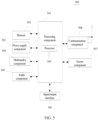
- FIG. 5 is a schematic diagram illustrating a structure of an apparatus for controlling charge according to an example of the present disclosure.
- the apparatus 500 for controlling charge according to an example may be a terminal such as a computer, a mobile phone, a digital broadcast terminal, a message transceiver, a game console, a tablet device, a medical device, a fitness device, a personal digital assistant.
- the apparatus 500 for controlling charge may include one or more of the following components: a processing component 501, a memory 502, a power supply component 503, a multimedia component 504, an audio component 505, an input/output (I/O) interface 506, a sensor component 507 and a communication component 508.
- the processing component 501 generally controls the overall operations of the apparatus 500, such as operations associated with display, phone calls, data communications, camera operations, and recording operations.
- the processing component 501 may include one or more processors 509 to execute instructions to complete all or part of the steps of the above methods.
- the processing component 501 may include one or more modules which facilitate the interaction between the processing component 501 and other components.
- the processing component 501 may include a multimedia module to facilitate the interaction between the multimedia component 504 and the processing component 501.
- the memory 502 is to store various types of data to support the operation on the apparatus 500. Examples of such data include instructions for any application or method operated on the apparatus 500, contact data, telephone directory data, messages, pictures, videos, and so on.
- the memory 502 may be implemented by any type of volatile or nonvolatile memory devices or a combination thereof, such as a Static Random Access Memory (SRAM), an Electrically Erasable Programmable Read-Only Memory (EEPROM), an Erasable Programmable Read-Only Memory (EPROM), a Programmable Read-Only Memory (PROM), a Read-Only Memory (ROM), a magnetic memory, a flash memory, a disk or a CD.
- SRAM Static Random Access Memory
- EEPROM Electrically Erasable Programmable Read-Only Memory
- EPROM Erasable Programmable Read-Only Memory
- PROM Programmable Read-Only Memory
- ROM Read-Only Memory
- the power supply component 503 supplies power for different components of the apparatus 500.
- the power supply component 503 may include a power supply management system, one or more power supplies, and other association components for generating, managing and distributing power for the apparatus 500.
- the multimedia component 508 includes a screen providing an output interface between the apparatus 500 and a user.
- the screen may include a Liquid Crystal Display (LCD) and a Touch Panel (TP).
- LCD Liquid Crystal Display
- TP Touch Panel
- OLED organic light-emitting diode
- the screen may be implemented as a touch screen to receive input signals from the user.
- the touch panel includes one or more touch sensors to sense touches, swipes and gestures on the touch panel.
- the touch sensors may not only sense the boundary of a touch or swipe operation but also sense a duration and a pressure associated with the touch or swipe operation.
- the multimedia component 508 may include a front camera and/or a rear camera.
- the front camera and/or rear camera may receive external multimedia data when the apparatus 500 is in an operating mode, such as a shooting mode or a video mode.
- Each of the front camera and the rear camera may be a fixed optical lens system or may be capable of focal length and optical zoom.
- the audio component 505 is to output and/or input an audio signal.
- the audio component 505 includes a microphone (MIC).
- the microphone When the apparatus 500 is in an operable mode, such as a call mode, a record mode and a voice recognition mode, the microphone is to receive an external audio signal.
- the received audio signal may be further stored in the memory 502 or sent via the communication component 508.
- the audio component 505 further includes a speaker for outputting an audio signal.
- the I/O interface 506 provides an interface between the processing component 501 and a peripheral interface module.
- the peripheral interface module may be a keyboard, a click wheel, a button and the like. These buttons may include but not limited to, a home button, a volume button, a start button and a lock button.
- the sensor component 507 includes one or more sensors to provide status assessments of various aspects for the apparatus 500.
- the sensor component 507 may detect the on/off state of the apparatus 500, and relative positioning of component, for example, the component is a display and a keypad of the apparatus 500.
- the sensor component 507 may also detect a change in position of the apparatus 500 or a component of the apparatus 500, a presence or absence of the contact between a user and the apparatus 500, an orientation or acceleration/deceleration of the apparatus 500 and a change in temperature of the apparatus 500.
- the sensor component 507 may include a proximity sensor to detect the presence of a nearby object without any physical contact.
- the sensor component 507 may further include an optical sensor, such as a Complementary Metal-Oxide-Semiconductor (CMOS) or Charged Coupled Device (CCD) image sensor which is used in imaging application.
- CMOS Complementary Metal-Oxide-Semiconductor
- CCD Charged Coupled Device
- the sensor component 507 may further include an acceleration sensor, a gyroscope sensor, a magnetic sensor, a pressure sensor, or a temperature sensor.
- the communication component 508 is configured to facilitate wired or wireless communication between the apparatus 500 and other devices.
- the apparatus 500 may access a wireless network based on a communication standard, such as WIFI, 2G or 3G, or a combination thereof.
- the communication component 508 may receive a broadcast signal or broadcast-related information from an external broadcast management system via a broadcast channel.
- the communication component 508 may also include a Near Field Communication (NFC) module for promoting short-range communication.
- the NFC module may be implemented based on Radio Frequency Identification (RFID) technology, Infrared Data Association (IrDA) technology, Ultra Wide Band (UWB) technology, Bluetooth (BT) technology and other technology.
- RFID Radio Frequency Identification
- IrDA Infrared Data Association
- UWB Ultra Wide Band
- Bluetooth Bluetooth
- the apparatus 500 may be implemented by one or more Application-Specific Integrated Circuits (ASICs), Digital Signal Processors (DSPs), Digital Signal Processing Devices (DSPDs), Programmable Logical Devices (PLDs), Field Programmable Gate Arrays (FPGAs), controllers, microcontrollers, microprocessors or other electronic elements for performing the method as described above.
- ASICs Application-Specific Integrated Circuits
- DSPs Digital Signal Processors
- DSPDs Digital Signal Processing Devices
- PLDs Programmable Logical Devices
- FPGAs Field Programmable Gate Arrays
- controllers microcontrollers, microprocessors or other electronic elements for performing the method as described above.
- non-transitory computer readable storage medium including instructions, such as the memory 502 including instructions.
- the above instructions may be executed by the processor 509 of the apparatus 500 to complete the above method.
- the non-transitory computer readable storage medium may be a Read Only Memory (ROM), a Random-Access Memory (RAM), a CD-ROM, a magnetic tape, a floppy disk, and optical data storage device and the like.
- the apparatus 500 is caused to perform the above method of controlling charge.
- modules/units can each be implemented by hardware, or software, or a combination of hardware and software.
- modules/units may be combined as one module/unit, and each of the above described modules/units may be further divided into a plurality of sub-modules/sub-units.
Landscapes
- Engineering & Computer Science (AREA)
- Power Engineering (AREA)
- Charge And Discharge Circuits For Batteries Or The Like (AREA)
- Secondary Cells (AREA)
Description
- The present disclosure relates to a method and an apparatus for controlling charge.
- Battery durability has always been an important concern for consumers. Batteries used currently are usually polymer lithium ion batteries. Along with use in electronic products such as mobile phones, irreversible reaction occurs in the polymer lithium ion batteries, such that the battery durability is gradually decreased.
US2018/145527 A1 discloses a method for charging a battery. The method comprises: measuring a battery voltage with a voltage sensor and a battery current with a current sensor; applying, with a charging circuit, a first charging current to the battery until the measured battery voltage exceeds a predetermined voltage threshold, a magnitude of the first charging current being held at a first constant value; applying, with the charging circuit, in response to the measured battery voltage exceeding the predetermined voltage threshold, a second charging current to the battery until a cutoff criterion is satisfied, a magnitude of the second charging current being such that the battery voltage exceeds a steady state voltage limit for the battery; after the cutoff criterion is satisfied, determining a rest voltage of the battery; and updating the cutoff criterion based on a difference between the determined rest voltage and a target rest voltage. -
CN106785132A discloses a charging method and device. The charging method provided by the embodiment of the invention comprises N charging stages, wherein each charging stage comprises M charging processes; N is an integer greater than or equal to 2; M is an integer greater than or equal to 1; each charging process comprises the steps of charging a battery with constant current until the battery reaches cutoff voltage and charging the battery with constant voltage until the battery reaches cutoff current, wherein the cutoff current used in the charging processes in the ith charging stage is smaller than that used in the charging processes in the (i+1)th charging stage; and the value range of i is [1, N-1].US 6337560B1 discloses a method and apparatus for extending the cycle life of a battery by using different charge voltages or different current cut-offs to recharge the battery during the course of the battery's life. The capacity of a battery is gradually depleted as the battery is repeatedly charged and discharged. The rate at which the battery capacity is depleted varies in accordance to the charge voltage, or the current cut-off, used to recharge the battery. - The present disclosure relates to a method and an apparatus for controlling charging.
- According to a first aspect of the present disclosure, a method of controlling charge is provided as defined by claim 1.
- According to a second aspect of the present disclosure, an apparatus for controlling charge is provided as defined by claim 5
- [DELETED]
-
-
FIG. 1 is a flowchart illustrating a method of controlling charge according to an example of the present disclosure. -
FIG. 2 is a flowchart illustrating another method of controlling charge according to an example of the present disclosure. -
FIG. 3 is a flowchart illustrating another method of controlling charge according to an example of the present disclosure. -
FIG. 4 is a block diagram illustrating a structure of an apparatus for controlling charge according to an example of the present disclosure. -
FIG. 5 is a schematic diagram illustrating a structure of an apparatus for controlling charge according to an example of the present disclosure. - The present disclosure will be detailed below in combination with specific examples shown in drawings. However, these examples are not intended to limit the present disclosure.
- The terms used in the present disclosure are for the purpose of describing particular examples only, and are not intended to limit the present disclosure. Terms determined by "a", "the" and "said" in their singular forms in the present disclosure and the appended claims are also intended to include plurality or multiple, unless clearly indicated otherwise in the context. It should also be understood that the term "and/or" as used herein is and includes any and all possible combinations of one or more of the associated listed items.
- Some examples of the present disclosure will be detailed below in combination with accompanying drawings. In a case of no conflict, the following examples and features in the examples may be combined mutually.
- An example of the present disclosure provides a method of controlling charge, which may be applied to any terminal with a rechargeable battery, such as a smart phone, a tablet computer, a laptop computer, a personal digital assistant, a medical device, a lighting device and the like. Generally, the rechargeable battery is a polymer lithium ion battery, and the present disclosure does not limit the type of the rechargeable battery, as long as the method of controlling charge in the present disclosure works on the rechargeable battery.
FIG. 1 is a flowchart illustrating a method of controlling charge showing only a subset of the steps defined in claim 1. - As shown in
FIG.1 , the method includes the following steps S101-S103. - At step S101, charge cycle counts of a battery are determined.
- At step S101, the terminal records the charge cycle counts of the battery by obtaining an accumulation of battery charge volumes. One complete charge cycle refers to a process of full charge and full discharge of the battery.
- At step S103, a set charge cut-off current corresponding to the charge cycle counts is obtained based on a preset charge strategy
- With the continuous increase of charge cycle counts, irreversible reaction occurs in the battery. Therefore, the battery will gradually age and the durability of the battery will also gradually decrease. At step S103, set charge cut-off currents corresponding to different charge cycle counts are preset based on the preset charge strategy. In this way, a set charge cut-off current corresponding to the charge cycle counts is obtained, where the set cut-off current is a current value when the battery reaches full charge state or a certain charge state.
- At this step, the preset charge strategy specifically includes: for each increase of N cycles, increasing the set charge cut-off current by X milliamperes based on an initial charge cut-off current, where N and X are respectively natural numbers. After the charge cycle counts reach a threshold, the set charge cut-off current reaches a maximum value.
- In an example, when a terminal is charged for the first time, the charge cut-off current is set to 100mA. When the charge cycle counts are 100, the charge cut-off current is increased to 125mA. When the charge cycle counts are 200, the charge cut-off current is increased to 150mA, and so on, the charge cut-off current is increased by 25mA for each increase of 100 cycles. When the charge cycle counts reach the threshold of 500 cycles, the maximum of the charge cut-off current is 200mA correspondingly. The charge cut-off currents corresponding to the charge cycle counts are described below:
- when the charge cycle count is 1-100, the charge cut-off current is 100mA;
- when the charge cycle count is 101-200, the charge cut-off current is 125mA;
- when the charge cycle count is 201-300, the charge cut-off current is 150mA;
- when the charge cycle count is 301-400, the charge cut-off current is 175mA;
- when the charge cycle count is 401-500, the charge cut-off current is 200mA;
- when the charge cycle count is above 501, the charge cut-off current is 200mA.
- As described above, the increase of the charge cut-off current may lead to the reduction of the charge capacity of the battery. However, the increase of the charge cut-off current may effectively improve the occurrence of side reaction on a surface of the battery, thereby prolonging the life of the battery.
- At step S105, a charge cut-off current of the battery is adjusted based on the set charge cut-off current corresponding to the charge cycle counts to control a charge volume of the battery.
- At step S105, based on the preset charge strategy in the method of controlling charge, the cut-off current of the battery is adjusted according to the set charge cut-off current corresponding to the charge cycle count, so that the charge volume of the battery is controlled. In this example, shallow charge may be performed for the battery by controlling the charge volume through adjusting the charge cut-off current, which may effectively improve the aging and overcharging of the battery and optimize the Solid Electrolyte Interphase (SEI) film of the cathode of the battery, thereby effectively increasing the cycle life of the battery.
- As shown in
FIG. 2 , the method of controlling charge further includes the following steps S201-S203. - At step S201, after the charge cycle counts reach a first preset threshold, a prompt is generated for each increase of M cycles, so that a user determines whether to enter a battery charge protection mode based on the prompt.
- At step S203, in the battery charge protection mode, the charging of the battery is stopped after the charge volume reaches a set charge volume, where the set charge volume is smaller than the full charge volume of the battery and M is a natural number.
- In an example, to prolong a life of the battery, the method of controlling charge according to the present disclosure may perform intelligent charge strategy selection according to the use requirements of the user. In the method of controlling charge, after the charge cycle counts of the battery reach the first preset threshold (fixed counts, for example 200 cycles), a prompt is generated for each increase of M cycles (for example, 50 cycles) so that the user determines whether to enter the battery charge protection mode. If the user needs to go to an environment where the terminal device of the user cannot be charged, the battery of the terminal device may be charged to full. If the user does not require that the battery is charged to full, the battery charge protection mode may be selected, that is, the charging of the battery is stopped after the charge volume reaches the set charge volume. The set charge volume is 70%-90% of the full charge volume. Preferably, the set charge volume is 80%-90% of the full charge volume.
- Further, as shown in
FIG. 3 , the method of controlling charge according to the present disclosure further includes the following steps S301-S303. - At step S301, after the charge cycle counts reach a second preset threshold (in an example, the second preset threshold is a fixed value), a prompt is generated for each increase of Y cycles, so that the user determines whether to enter the battery repair charge mode.
- At step S303, in the battery repair charge mode, a charge current of the battery is limited to a set charge current for battery charge. The charge current is a current charging for the battery, and the set charge current is lower than the charge current of the battery in a battery non-repair charge mode.
- In this example, the user may select a current-limited charge or a normal charge or the like based on its own requirements. Through the intelligent charge strategy selection, the user may repair the battery by using a lower current for charging on a condition that a relatively long charge time is allowed, so as to prolong the use life of the battery. Further, the use life of a mobile phone having the battery is prolonged and the user experiences are greatly improved.
- Y is a natural number which is the same as or different from M. In a case that there is no limitation both in the charge time and the charge environment, the user may determine whether to perform a full charge according to the method of controlling charge of the present disclosure. Meanwhile, the user may determine whether to perform a current-limited charge to repair the battery, in other words, the battery may reach a non-full charge, such as 90% of the full charge, in a manner of current-limited charging selected by the user.
- In the present disclosure, by adjusting the charge manner, the aging and overcharging of the battery are effectively improved and the SEI film of the cathode of the battery is optimized. In this way, a life of the battery is greatly improved without affecting the use of the user, thereby solving the problem that the battery is not durable after a long time of use.
- Corresponding to the examples of the above method, the present disclosure further provides an example of an apparatus for controlling charge.
-
FIG. 4 is a block diagram illustrating a structure of an apparatus for controlling charge showing only a subset of modules defined in independent claim 6. - The apparatus for controlling charge includes:
- a determining
module 401, configured to determine charge cycle counts of a battery; - an obtaining
module 403, configured to obtain a set charge cut-off current corresponding the charge cycle counts based on a preset charge strategy; and - a controlling
module 405, configured to adjust a charge cut-off current of the battery based on the set charge cut-off current corresponding to the charge cycle counts to control a charge volume of the battery. - The various circuits, device components, modules, units, blocks, or portions may have modular configurations, or are composed of discrete components, but nonetheless can be referred to as "units," "modules," or "portions" in general. In other words, the "circuits," "components," "modules," "blocks," "portions," or "units" referred to herein may or may not be in modular forms.
- In the apparatus for controlling charge according to the present disclosure, the terminal records the charge cycle counts of the battery by obtaining an accumulation of battery charge volumes. One complete charge cycle refers to a process of full charge and full discharge of the battery.
- With the continuous increase of charge cycle counts, irreversible reaction occurs in the battery. Therefore, the battery will gradually age and the durability of the battery will also gradually decrease. Charge cut-off currents corresponding to different charge cycle counts are preset based on the preset charge strategy. In this way, a set charge cut-off current corresponding to the charge cycle counts is obtained, where the set cut-off current is a current value when the battery reaches full charge state or a certain charge state.
- In this example, the obtaining module includes a first processing module. When the preset charge strategy is performed by the first processing module, the first processing module is configured to increase the set charge cut-off current by X milliamperes based on an initial charge cut-off current for each increase of N cycles, where N and X are respectively natural numbers. After the charge cycle counts reach a threshold, the set charge cut-off current reaches a maximum value. Based on the preset charge strategy of the apparatus for controlling charge, the cut-off current of the battery is adjusted according to the charge cut-off current corresponding to the charge cycle count, so that the charge volume of the battery is controlled.
- According to the invention, the apparatus further includes:
a second processing module configured to generate a prompt for each increase of M cycles after the charge cycle counts reach a first preset threshold, so that a user determines whether to enter a battery charge protection mode based on the prompt, where the charging of the battery is stopped after the charge volume reaches a set charge volume in the battery charge protection mode. The set charge volume is smaller than the full charge volume of the battery. - In an example, to prolong a life of the battery, the apparatus for controlling charge according to the present disclosure may perform intelligent charge strategy selection according to the use requirements of the user. In the apparatus for controlling charge, after the charge cycle counts of the battery reach the first preset threshold (fixed counts, for example 200 cycles), a prompt is generated for each increase of M cycles (for example, 50 cycles) so that the user determines whether to enter the charge protection mode. If the user needs to go to an environment where the terminal device of the user cannot be charged, the battery of the terminal device may be charged to full. If the user does not require that the battery is charged to full, the charge protection mode may be selected, that is, the charging of the battery is stopped after the charge volume reaches the set charge volume. The set charge volume is 70%-90% of the full charge volume. Preferably, the set charge volume is 80%-90% of the full charge volume.
- Further, the apparatus for controlling charge further includes:
a third processing module configured to generate a prompt for each increase of Y cycles after the charge cycle counts reach a second preset threshold (in an example, the second preset threshold is a fixed value), so that the user determines whether to enter the battery repair charge mode, where the charge current of the battery is limited to a set charge quantity for battery charge in the battery repair charge mode. - In this example, the user may select a current-limited charge or a normal charge or the like based on its own requirements. Through the intelligent charge strategy selection, the user may repair the battery by using a lower current for charging on a condition that a relatively long charge time is allowed, so as to prolong the life of the battery. Further, the life of a mobile phone having the battery is prolonged and the user experiences are greatly improved.
- Y is a natural number which is the same as or different from M. In a case that there is no limitation both in the charge time and the charge environment, the user may determine whether to perform a full charge according to the method of controlling charge of the present disclosure. Meanwhile, the user may determine whether to perform a current-limited charge to repair the battery, in other words, the battery may reach a non-full charge, such as 90% of the full charge, in a manner of current-limited charging selected by the user. In this way, a use life of the battery is greatly improved without affecting the use of the user, thereby solving the problem that the battery is not durable after a long time of use.
- For the apparatus examples, since it substantially corresponds to the method examples, a reference may be made to the partial descriptions of the method examples. The apparatus examples described above are merely illustrative, where the units described as separate components may or may not be physically separated, and the components displayed as units may or may not be physical units, that is, may be located at one place, or may be distributed to a plurality of network units. Some or all of the modules may be selected according to actual requirements to achieve the objectives of the solutions of the present disclosure. Those of ordinary skill in the art may understand and carry them out without creative work.
- According to an example not covered by the claims, there is provided an apparatus for controlling charge, including:
- one or more processors; and
- a memory storing processor-executable instructions.
- The one or mere processors are configured to:
- determine charge cycle counts of a battery;
- obtain a set charge cut-off current corresponding to the charge cycle counts based on a preset charge strategy; and
- adjust a charge cut-off current of the battery according to the set charge cut-off current corresponding to the charge cycle count to control a charge volume of the battery.
-
FIG. 5 is a schematic diagram illustrating a structure of an apparatus for controlling charge according to an example of the present disclosure. As shown inFIG. 5 , theapparatus 500 for controlling charge according to an example may be a terminal such as a computer, a mobile phone, a digital broadcast terminal, a message transceiver, a game console, a tablet device, a medical device, a fitness device, a personal digital assistant. - As shown in
FIG. 5 , theapparatus 500 for controlling charge may include one or more of the following components: aprocessing component 501, amemory 502, apower supply component 503, amultimedia component 504, anaudio component 505, an input/output (I/O)interface 506, asensor component 507 and acommunication component 508. - The
processing component 501 generally controls the overall operations of theapparatus 500, such as operations associated with display, phone calls, data communications, camera operations, and recording operations. Theprocessing component 501 may include one ormore processors 509 to execute instructions to complete all or part of the steps of the above methods. In addition, theprocessing component 501 may include one or more modules which facilitate the interaction between theprocessing component 501 and other components. For example, theprocessing component 501 may include a multimedia module to facilitate the interaction between themultimedia component 504 and theprocessing component 501. - The
memory 502 is to store various types of data to support the operation on theapparatus 500. Examples of such data include instructions for any application or method operated on theapparatus 500, contact data, telephone directory data, messages, pictures, videos, and so on. Thememory 502 may be implemented by any type of volatile or nonvolatile memory devices or a combination thereof, such as a Static Random Access Memory (SRAM), an Electrically Erasable Programmable Read-Only Memory (EEPROM), an Erasable Programmable Read-Only Memory (EPROM), a Programmable Read-Only Memory (PROM), a Read-Only Memory (ROM), a magnetic memory, a flash memory, a disk or a CD. - The
power supply component 503 supplies power for different components of theapparatus 500. Thepower supply component 503 may include a power supply management system, one or more power supplies, and other association components for generating, managing and distributing power for theapparatus 500. - The
multimedia component 508 includes a screen providing an output interface between theapparatus 500 and a user. In some examples, the screen may include a Liquid Crystal Display (LCD) and a Touch Panel (TP). In some embodiments, an organic light-emitting diode (OLED) display or other types of displays can be adopted. - If the screen includes a touch panel, the screen may be implemented as a touch screen to receive input signals from the user. The touch panel includes one or more touch sensors to sense touches, swipes and gestures on the touch panel. The touch sensors may not only sense the boundary of a touch or swipe operation but also sense a duration and a pressure associated with the touch or swipe operation. In some examples, the
multimedia component 508 may include a front camera and/or a rear camera. The front camera and/or rear camera may receive external multimedia data when theapparatus 500 is in an operating mode, such as a shooting mode or a video mode. Each of the front camera and the rear camera may be a fixed optical lens system or may be capable of focal length and optical zoom. - The
audio component 505 is to output and/or input an audio signal. For example, theaudio component 505 includes a microphone (MIC). When theapparatus 500 is in an operable mode, such as a call mode, a record mode and a voice recognition mode, the microphone is to receive an external audio signal. The received audio signal may be further stored in thememory 502 or sent via thecommunication component 508. In some examples, theaudio component 505 further includes a speaker for outputting an audio signal. - The I/
O interface 506 provides an interface between theprocessing component 501 and a peripheral interface module. The peripheral interface module may be a keyboard, a click wheel, a button and the like. These buttons may include but not limited to, a home button, a volume button, a start button and a lock button. - The
sensor component 507 includes one or more sensors to provide status assessments of various aspects for theapparatus 500. For example, thesensor component 507 may detect the on/off state of theapparatus 500, and relative positioning of component, for example, the component is a display and a keypad of theapparatus 500. Thesensor component 507 may also detect a change in position of theapparatus 500 or a component of theapparatus 500, a presence or absence of the contact between a user and theapparatus 500, an orientation or acceleration/deceleration of theapparatus 500 and a change in temperature of theapparatus 500. Thesensor component 507 may include a proximity sensor to detect the presence of a nearby object without any physical contact. Thesensor component 507 may further include an optical sensor, such as a Complementary Metal-Oxide-Semiconductor (CMOS) or Charged Coupled Device (CCD) image sensor which is used in imaging application. In some examples, thesensor component 507 may further include an acceleration sensor, a gyroscope sensor, a magnetic sensor, a pressure sensor, or a temperature sensor. - The
communication component 508 is configured to facilitate wired or wireless communication between theapparatus 500 and other devices. Theapparatus 500 may access a wireless network based on a communication standard, such as WIFI, 2G or 3G, or a combination thereof. In an example, thecommunication component 508 may receive a broadcast signal or broadcast-related information from an external broadcast management system via a broadcast channel. In an example, thecommunication component 508 may also include a Near Field Communication (NFC) module for promoting short-range communication. For example, the NFC module may be implemented based on Radio Frequency Identification (RFID) technology, Infrared Data Association (IrDA) technology, Ultra Wide Band (UWB) technology, Bluetooth (BT) technology and other technology. - In an example, the
apparatus 500 may be implemented by one or more Application-Specific Integrated Circuits (ASICs), Digital Signal Processors (DSPs), Digital Signal Processing Devices (DSPDs), Programmable Logical Devices (PLDs), Field Programmable Gate Arrays (FPGAs), controllers, microcontrollers, microprocessors or other electronic elements for performing the method as described above. - In an example not covered by the claims, there is further provided a non-transitory computer readable storage medium including instructions, such as the
memory 502 including instructions. The above instructions may be executed by theprocessor 509 of theapparatus 500 to complete the above method. For example, the non-transitory computer readable storage medium may be a Read Only Memory (ROM), a Random-Access Memory (RAM), a CD-ROM, a magnetic tape, a floppy disk, and optical data storage device and the like. - When the instructions in the storage medium are executed by the processor, the
apparatus 500 is caused to perform the above method of controlling charge. - Those of ordinary skill in the art will understand that the above described modules/units can each be implemented by hardware, or software, or a combination of hardware and software. Those of ordinary skill in the art will also understand that multiple ones of the above described modules/units may be combined as one module/unit, and each of the above described modules/units may be further divided into a plurality of sub-modules/sub-units.
Claims (8)
- A method of controlling charge, comprising:determining charge cycle counts of a battery;obtaining a set charge cut-off current corresponding to the charge cycle counts based on a preset charge strategy;adjusting a charge cut-off current of the battery according to the set charge cut-off currentcorresponding to the charge cycle counts to control a charge volume of the battery; andcharacterized by:after the charge cycle counts reach a first preset threshold, for each increase of M cycles, generating a first prompt, so that a user determines whether to enter a battery charge protection mode based on the first prompt, wherein M is a natural number;stopping charging the battery after the charge volume of the battery reaches a set charge volume in the battery charge protection mode, wherein the set charge volume is smaller than a full charge volume of the battery; andafter the charge cycle counts reach a second preset threshold, for each increase of Y cycles, generating a second prompt, so that the user determines whether to enter a battery repair charge mode based on the second prompt, wherein Y is a natural number; andlimiting a charge current of the battery to a set charge current in the battery repair charge mode, so that the battery is charged with the set charge current.
- The method according to claim 1, wherein obtaining the set charge cut-off current corresponding to the charge cycle counts based on the preset charge strategy comprises:for each increase of N cycles, increasing the set charge cut-off current by X milliamperes based on an initial charge cut-off current, wherein N and X are respectively natural number;wherein, the set charge cut-off current reaches a maximum value after the charge cycle counts reach a threshold.
- The method according to claim 1 or 2, wherein the set charge volume is 70%-90% of the full charge volume.
- The method according to claim 1, wherein the set charge current is lower than the charge current of the battery in a battery non-repair charge mode.
- An apparatus (500) for controlling charge, comprising:a collecting module, configured to determine charge cycle counts of a battery;an obtaining module (403), configured to obtain a set charge cut-off current corresponding to the charge cycle counts based on a preset charge strategy;a controlling module (405), configured to adjust a charge cut-off current of the battery according to the set charge cut-off current corresponding to the charge cycle counts to control a charge volume of the battery;characterized bya second processing module configured to generate a first prompt after the charge cyclecounts reach a first preset threshold, for each increase of M cycles, and further configured to receive an input, from a user, to determinewhether to enter a battery charge protection mode based on the first prompt, wherein M is a natural number; and stop charging the battery after the charge volume of the battery reaches a set charge volume in the battery charge protection mode, wherein the set charge volume is smaller than a full charge volume of the battery; anda third processing module configured to, after the charge cycle counts reach a second preset threshold, for each increase of Y cycles, generate a second prompt, and further configured to receive an input, from a user, to determine whether to enter a battery repair charge mode based on the second prompt, wherein Y is a natural number; andthe third processing module is further configured to limit a charge current of the battery to a set charge current in the battery repair charge mode, so that the battery is charged with the set charge current.
- The apparatus according to claim 5, wherein the obtaining module further comprises:a first processing module configured to increase the set charge cut-off current by X milliamperes based on an initial charge cut-off current for each increase of N cycles, where N and X are respectively natural numbers;wherein, the set charge cut-off current reaches a maximum value after the charge cycle counts reach a threshold.
- The apparatus according to claim 5 or 6, wherein the set charge volume is 70%-90% of the full charge volume.
- The apparatus according to claim 5, wherein the set charge current is lower than the charge current of the battery in a battery non-repair charge mode.
Applications Claiming Priority (1)
| Application Number | Priority Date | Filing Date | Title |
|---|---|---|---|
| CN201910613764.0A CN112217242A (en) | 2019-07-09 | 2019-07-09 | Charging control method and device |
Publications (2)
| Publication Number | Publication Date |
|---|---|
| EP3764505A1 EP3764505A1 (en) | 2021-01-13 |
| EP3764505B1 true EP3764505B1 (en) | 2024-10-16 |
Family
ID=68944354
Family Applications (1)
| Application Number | Title | Priority Date | Filing Date |
|---|---|---|---|
| EP19217217.9A Active EP3764505B1 (en) | 2019-07-09 | 2019-12-17 | Method and apparatus for controlling charge |
Country Status (3)
| Country | Link |
|---|---|
| US (1) | US11205913B2 (en) |
| EP (1) | EP3764505B1 (en) |
| CN (1) | CN112217242A (en) |
Families Citing this family (4)
| Publication number | Priority date | Publication date | Assignee | Title |
|---|---|---|---|---|
| CN113126732B (en) * | 2020-01-15 | 2024-03-08 | 戴尔产品有限公司 | Power backup equipment charging system |
| WO2022170581A1 (en) * | 2021-02-10 | 2022-08-18 | 杭州铅锂智行科技有限公司 | Charger and charging method therefor |
| US20230344262A1 (en) * | 2022-04-25 | 2023-10-26 | Apple Inc. | System and method for variable discharging techniques of a battery cell |
| CN115610278B (en) * | 2022-11-07 | 2024-09-13 | 中国第一汽车股份有限公司 | Battery charge control method and vehicle |
Citations (1)
| Publication number | Priority date | Publication date | Assignee | Title |
|---|---|---|---|---|
| US20140077769A1 (en) * | 2012-09-18 | 2014-03-20 | Motorola Mobility Llc | Method and apparatus for improving cycle life capacity of a battery pack |
Family Cites Families (9)
| Publication number | Priority date | Publication date | Assignee | Title |
|---|---|---|---|---|
| US4885523A (en) * | 1988-03-15 | 1989-12-05 | Norand Corporation | Battery conditioning system having communication with battery parameter memory means in conjunction with battery conditioning |
| US6337560B1 (en) * | 2000-11-28 | 2002-01-08 | Telefonaktiebolaget Lm Ericsson (Publ) | Life cycle charging for batteries |
| CN101609359A (en) * | 2008-06-17 | 2009-12-23 | 联想(北京)有限公司 | A kind of notebook computer and battery control method thereof |
| TWI489730B (en) * | 2010-01-08 | 2015-06-21 | 新普科技股份有限公司 | Battery charging method |
| TWI473323B (en) * | 2012-12-13 | 2015-02-11 | 財團法人工業技術研究院 | Charging battery charging method and related charging architecture |
| US9740264B2 (en) * | 2014-08-04 | 2017-08-22 | Kabushiki Kaisha Toshiba | Electronic apparatus having battery charge circuit and charge control method therefor |
| US9728995B2 (en) * | 2015-04-08 | 2017-08-08 | Intel Corporation | Systems, methods and devices for adaptable battery charging |
| US10291046B2 (en) | 2016-11-23 | 2019-05-14 | Robert Bosch Gmbh | Method for fast charging lithium-ion batteries |
| CN106785132A (en) * | 2016-11-30 | 2017-05-31 | 东莞新能源科技有限公司 | Charging method and device |
-
2019
- 2019-07-09 CN CN201910613764.0A patent/CN112217242A/en active Pending
- 2019-11-30 US US16/699,624 patent/US11205913B2/en active Active
- 2019-12-17 EP EP19217217.9A patent/EP3764505B1/en active Active
Patent Citations (1)
| Publication number | Priority date | Publication date | Assignee | Title |
|---|---|---|---|---|
| US20140077769A1 (en) * | 2012-09-18 | 2014-03-20 | Motorola Mobility Llc | Method and apparatus for improving cycle life capacity of a battery pack |
Also Published As
| Publication number | Publication date |
|---|---|
| CN112217242A (en) | 2021-01-12 |
| US20210013730A1 (en) | 2021-01-14 |
| EP3764505A1 (en) | 2021-01-13 |
| US11205913B2 (en) | 2021-12-21 |
Similar Documents
| Publication | Publication Date | Title |
|---|---|---|
| KR102471940B1 (en) | Battery charging method, battery charging device and storage medium | |
| EP3796511A1 (en) | Charging method, charging device and readable storage medium | |
| EP3764505B1 (en) | Method and apparatus for controlling charge | |
| EP4047780A1 (en) | Charging method and apparatus, electronic device and storage medium | |
| EP3832841A1 (en) | Charging circuit, electronic device, charging control method and device | |
| US11451070B2 (en) | Charging circuit, electronic device, charging method and charging device | |
| EP3832840A1 (en) | Charging method and device, terminal device and storage medium | |
| EP4135152A1 (en) | Charging method, electronic device and storage medium | |
| CN114362326B (en) | Charging and discharging system, method, device, terminal equipment and storage medium | |
| CN110941321A (en) | Power supply method, device and smart device for electronic equipment | |
| CN113675902A (en) | Battery charging method, battery charging device and storage medium | |
| US12489301B2 (en) | Charging method, electronic device and storage medium | |
| CN113572208B (en) | Battery charging method and device | |
| CN111509789B (en) | Charging method and device | |
| US12609551B2 (en) | Method of charging processing, electronic device and storage medium | |
| CN119381597B (en) | Battery charging method and device, electronic equipment and storage medium | |
| EP4170856B1 (en) | Charging method and device, terminal device and computer readable storage medium | |
| CN109066850B (en) | Battery management method and device | |
| CN117293935A (en) | A charging and discharging control method, device and storage medium | |
| CN119341139A (en) | Charging method, device, electronic device and storage medium | |
| CN116799883A (en) | Control method, device, terminal and storage medium | |
| CN119069847A (en) | Battery charging and discharging method, device, electronic equipment and storage medium | |
| CN119675172A (en) | Charging method, device, electronic device and storage medium | |
| CN121238726A (en) | Charging methods, devices, electronic equipment and media | |
| CN119495850A (en) | Battery charging method, device, electronic device and storage medium |
Legal Events
| Date | Code | Title | Description |
|---|---|---|---|
| PUAI | Public reference made under article 153(3) epc to a published international application that has entered the european phase |
Free format text: ORIGINAL CODE: 0009012 |
|
| STAA | Information on the status of an ep patent application or granted ep patent |
Free format text: STATUS: THE APPLICATION HAS BEEN PUBLISHED |
|
| AK | Designated contracting states |
Kind code of ref document: A1 Designated state(s): AL AT BE BG CH CY CZ DE DK EE ES FI FR GB GR HR HU IE IS IT LI LT LU LV MC MK MT NL NO PL PT RO RS SE SI SK SM TR |
|
| AX | Request for extension of the european patent |
Extension state: BA ME |
|
| STAA | Information on the status of an ep patent application or granted ep patent |
Free format text: STATUS: REQUEST FOR EXAMINATION WAS MADE |
|
| 17P | Request for examination filed |
Effective date: 20210113 |
|
| RBV | Designated contracting states (corrected) |
Designated state(s): AL AT BE BG CH CY CZ DE DK EE ES FI FR GB GR HR HU IE IS IT LI LT LU LV MC MK MT NL NO PL PT RO RS SE SI SK SM TR |
|
| STAA | Information on the status of an ep patent application or granted ep patent |
Free format text: STATUS: EXAMINATION IS IN PROGRESS |
|
| 17Q | First examination report despatched |
Effective date: 20220127 |
|
| GRAP | Despatch of communication of intention to grant a patent |
Free format text: ORIGINAL CODE: EPIDOSNIGR1 |
|
| STAA | Information on the status of an ep patent application or granted ep patent |
Free format text: STATUS: GRANT OF PATENT IS INTENDED |
|
| INTG | Intention to grant announced |
Effective date: 20240604 |
|
| P01 | Opt-out of the competence of the unified patent court (upc) registered |
Free format text: CASE NUMBER: APP_43776/2024 Effective date: 20240726 |
|
| GRAS | Grant fee paid |
Free format text: ORIGINAL CODE: EPIDOSNIGR3 |
|
| GRAA | (expected) grant |
Free format text: ORIGINAL CODE: 0009210 |
|
| STAA | Information on the status of an ep patent application or granted ep patent |
Free format text: STATUS: THE PATENT HAS BEEN GRANTED |
|
| AK | Designated contracting states |
Kind code of ref document: B1 Designated state(s): AL AT BE BG CH CY CZ DE DK EE ES FI FR GB GR HR HU IE IS IT LI LT LU LV MC MK MT NL NO PL PT RO RS SE SI SK SM TR |
|
| REG | Reference to a national code |
Ref country code: GB Ref legal event code: FG4D |
|
| REG | Reference to a national code |
Ref country code: DE Ref legal event code: R096 Ref document number: 602019060415 Country of ref document: DE Ref country code: CH Ref legal event code: EP |
|
| REG | Reference to a national code |
Ref country code: IE Ref legal event code: FG4D |
|
| REG | Reference to a national code |
Ref country code: LT Ref legal event code: MG9D |
|
| REG | Reference to a national code |
Ref country code: NL Ref legal event code: MP Effective date: 20241016 |
|
| REG | Reference to a national code |
Ref country code: AT Ref legal event code: MK05 Ref document number: 1733742 Country of ref document: AT Kind code of ref document: T Effective date: 20241016 |
|
| PG25 | Lapsed in a contracting state [announced via postgrant information from national office to epo] |
Ref country code: NL Free format text: LAPSE BECAUSE OF FAILURE TO SUBMIT A TRANSLATION OF THE DESCRIPTION OR TO PAY THE FEE WITHIN THE PRESCRIBED TIME-LIMIT Effective date: 20241016 |
|
| PG25 | Lapsed in a contracting state [announced via postgrant information from national office to epo] |
Ref country code: NL Free format text: LAPSE BECAUSE OF FAILURE TO SUBMIT A TRANSLATION OF THE DESCRIPTION OR TO PAY THE FEE WITHIN THE PRESCRIBED TIME-LIMIT Effective date: 20241016 |
|
| PG25 | Lapsed in a contracting state [announced via postgrant information from national office to epo] |
Ref country code: HR Free format text: LAPSE BECAUSE OF FAILURE TO SUBMIT A TRANSLATION OF THE DESCRIPTION OR TO PAY THE FEE WITHIN THE PRESCRIBED TIME-LIMIT Effective date: 20241016 Ref country code: PT Free format text: LAPSE BECAUSE OF FAILURE TO SUBMIT A TRANSLATION OF THE DESCRIPTION OR TO PAY THE FEE WITHIN THE PRESCRIBED TIME-LIMIT Effective date: 20250217 Ref country code: IS Free format text: LAPSE BECAUSE OF FAILURE TO SUBMIT A TRANSLATION OF THE DESCRIPTION OR TO PAY THE FEE WITHIN THE PRESCRIBED TIME-LIMIT Effective date: 20250216 |
|
| PG25 | Lapsed in a contracting state [announced via postgrant information from national office to epo] |
Ref country code: FI Free format text: LAPSE BECAUSE OF FAILURE TO SUBMIT A TRANSLATION OF THE DESCRIPTION OR TO PAY THE FEE WITHIN THE PRESCRIBED TIME-LIMIT Effective date: 20241016 |
|
| PG25 | Lapsed in a contracting state [announced via postgrant information from national office to epo] |
Ref country code: BG Free format text: LAPSE BECAUSE OF FAILURE TO SUBMIT A TRANSLATION OF THE DESCRIPTION OR TO PAY THE FEE WITHIN THE PRESCRIBED TIME-LIMIT Effective date: 20241016 |
|
| PG25 | Lapsed in a contracting state [announced via postgrant information from national office to epo] |
Ref country code: ES Free format text: LAPSE BECAUSE OF FAILURE TO SUBMIT A TRANSLATION OF THE DESCRIPTION OR TO PAY THE FEE WITHIN THE PRESCRIBED TIME-LIMIT Effective date: 20241016 |
|
| PG25 | Lapsed in a contracting state [announced via postgrant information from national office to epo] |
Ref country code: NO Free format text: LAPSE BECAUSE OF FAILURE TO SUBMIT A TRANSLATION OF THE DESCRIPTION OR TO PAY THE FEE WITHIN THE PRESCRIBED TIME-LIMIT Effective date: 20250116 |
|
| PG25 | Lapsed in a contracting state [announced via postgrant information from national office to epo] |
Ref country code: GR Free format text: LAPSE BECAUSE OF FAILURE TO SUBMIT A TRANSLATION OF THE DESCRIPTION OR TO PAY THE FEE WITHIN THE PRESCRIBED TIME-LIMIT Effective date: 20250117 Ref country code: LV Free format text: LAPSE BECAUSE OF FAILURE TO SUBMIT A TRANSLATION OF THE DESCRIPTION OR TO PAY THE FEE WITHIN THE PRESCRIBED TIME-LIMIT Effective date: 20241016 Ref country code: AT Free format text: LAPSE BECAUSE OF FAILURE TO SUBMIT A TRANSLATION OF THE DESCRIPTION OR TO PAY THE FEE WITHIN THE PRESCRIBED TIME-LIMIT Effective date: 20241016 |
|
| PG25 | Lapsed in a contracting state [announced via postgrant information from national office to epo] |
Ref country code: PL Free format text: LAPSE BECAUSE OF FAILURE TO SUBMIT A TRANSLATION OF THE DESCRIPTION OR TO PAY THE FEE WITHIN THE PRESCRIBED TIME-LIMIT Effective date: 20241016 |
|
| PG25 | Lapsed in a contracting state [announced via postgrant information from national office to epo] |
Ref country code: RS Free format text: LAPSE BECAUSE OF FAILURE TO SUBMIT A TRANSLATION OF THE DESCRIPTION OR TO PAY THE FEE WITHIN THE PRESCRIBED TIME-LIMIT Effective date: 20250116 |
|
| PG25 | Lapsed in a contracting state [announced via postgrant information from national office to epo] |
Ref country code: SM Free format text: LAPSE BECAUSE OF FAILURE TO SUBMIT A TRANSLATION OF THE DESCRIPTION OR TO PAY THE FEE WITHIN THE PRESCRIBED TIME-LIMIT Effective date: 20241016 |
|
| PG25 | Lapsed in a contracting state [announced via postgrant information from national office to epo] |
Ref country code: MC Free format text: LAPSE BECAUSE OF FAILURE TO SUBMIT A TRANSLATION OF THE DESCRIPTION OR TO PAY THE FEE WITHIN THE PRESCRIBED TIME-LIMIT Effective date: 20241016 |
|
| PG25 | Lapsed in a contracting state [announced via postgrant information from national office to epo] |
Ref country code: DK Free format text: LAPSE BECAUSE OF FAILURE TO SUBMIT A TRANSLATION OF THE DESCRIPTION OR TO PAY THE FEE WITHIN THE PRESCRIBED TIME-LIMIT Effective date: 20241016 |
|
| REG | Reference to a national code |
Ref country code: DE Ref legal event code: R097 Ref document number: 602019060415 Country of ref document: DE |
|
| PG25 | Lapsed in a contracting state [announced via postgrant information from national office to epo] |
Ref country code: EE Free format text: LAPSE BECAUSE OF FAILURE TO SUBMIT A TRANSLATION OF THE DESCRIPTION OR TO PAY THE FEE WITHIN THE PRESCRIBED TIME-LIMIT Effective date: 20241016 |
|
| PG25 | Lapsed in a contracting state [announced via postgrant information from national office to epo] |
Ref country code: RO Free format text: LAPSE BECAUSE OF FAILURE TO SUBMIT A TRANSLATION OF THE DESCRIPTION OR TO PAY THE FEE WITHIN THE PRESCRIBED TIME-LIMIT Effective date: 20241016 |
|
| PG25 | Lapsed in a contracting state [announced via postgrant information from national office to epo] |
Ref country code: SK Free format text: LAPSE BECAUSE OF FAILURE TO SUBMIT A TRANSLATION OF THE DESCRIPTION OR TO PAY THE FEE WITHIN THE PRESCRIBED TIME-LIMIT Effective date: 20241016 |
|
| PG25 | Lapsed in a contracting state [announced via postgrant information from national office to epo] |
Ref country code: CZ Free format text: LAPSE BECAUSE OF FAILURE TO SUBMIT A TRANSLATION OF THE DESCRIPTION OR TO PAY THE FEE WITHIN THE PRESCRIBED TIME-LIMIT Effective date: 20241016 |
|
| PG25 | Lapsed in a contracting state [announced via postgrant information from national office to epo] |
Ref country code: IT Free format text: LAPSE BECAUSE OF FAILURE TO SUBMIT A TRANSLATION OF THE DESCRIPTION OR TO PAY THE FEE WITHIN THE PRESCRIBED TIME-LIMIT Effective date: 20241016 |
|
| REG | Reference to a national code |
Ref country code: CH Ref legal event code: PL |
|
| PG25 | Lapsed in a contracting state [announced via postgrant information from national office to epo] |
Ref country code: LU Free format text: LAPSE BECAUSE OF NON-PAYMENT OF DUE FEES Effective date: 20241217 |
|
| PLBE | No opposition filed within time limit |
Free format text: ORIGINAL CODE: 0009261 |
|
| STAA | Information on the status of an ep patent application or granted ep patent |
Free format text: STATUS: NO OPPOSITION FILED WITHIN TIME LIMIT |
|
| PG25 | Lapsed in a contracting state [announced via postgrant information from national office to epo] |
Ref country code: SE Free format text: LAPSE BECAUSE OF FAILURE TO SUBMIT A TRANSLATION OF THE DESCRIPTION OR TO PAY THE FEE WITHIN THE PRESCRIBED TIME-LIMIT Effective date: 20241016 |
|
| 26N | No opposition filed |
Effective date: 20250717 |
|
| REG | Reference to a national code |
Ref country code: BE Ref legal event code: MM Effective date: 20241231 |
|
| PG25 | Lapsed in a contracting state [announced via postgrant information from national office to epo] |
Ref country code: BE Free format text: LAPSE BECAUSE OF NON-PAYMENT OF DUE FEES Effective date: 20241231 |
|
| PG25 | Lapsed in a contracting state [announced via postgrant information from national office to epo] |
Ref country code: FR Free format text: LAPSE BECAUSE OF NON-PAYMENT OF DUE FEES Effective date: 20241231 |
|
| PG25 | Lapsed in a contracting state [announced via postgrant information from national office to epo] |
Ref country code: CH Free format text: LAPSE BECAUSE OF NON-PAYMENT OF DUE FEES Effective date: 20241231 |
|
| PG25 | Lapsed in a contracting state [announced via postgrant information from national office to epo] |
Ref country code: IE Free format text: LAPSE BECAUSE OF NON-PAYMENT OF DUE FEES Effective date: 20241217 |
|
| PGFP | Annual fee paid to national office [announced via postgrant information from national office to epo] |
Ref country code: DE Payment date: 20251126 Year of fee payment: 7 |
|
| PGFP | Annual fee paid to national office [announced via postgrant information from national office to epo] |
Ref country code: GB Payment date: 20251127 Year of fee payment: 7 |