EP3764125B1 - Real-time scan point homogenization for terrestrial laser scanner - Google Patents
Real-time scan point homogenization for terrestrial laser scanner Download PDFInfo
- Publication number
- EP3764125B1 EP3764125B1 EP20184428.9A EP20184428A EP3764125B1 EP 3764125 B1 EP3764125 B1 EP 3764125B1 EP 20184428 A EP20184428 A EP 20184428A EP 3764125 B1 EP3764125 B1 EP 3764125B1
- Authority
- EP
- European Patent Office
- Prior art keywords
- scan
- point
- scan point
- points
- parameter
- Prior art date
- Legal status (The legal status is an assumption and is not a legal conclusion. Google has not performed a legal analysis and makes no representation as to the accuracy of the status listed.)
- Active
Links
Images




Classifications
-
- G—PHYSICS
- G01—MEASURING; TESTING
- G01S—RADIO DIRECTION-FINDING; RADIO NAVIGATION; DETERMINING DISTANCE OR VELOCITY BY USE OF RADIO WAVES; LOCATING OR PRESENCE-DETECTING BY USE OF THE REFLECTION OR RERADIATION OF RADIO WAVES; ANALOGOUS ARRANGEMENTS USING OTHER WAVES
- G01S17/00—Systems using the reflection or reradiation of electromagnetic waves other than radio waves, e.g. lidar systems
- G01S17/86—Combinations of lidar systems with systems other than lidar, radar or sonar, e.g. with direction finders
-
- G—PHYSICS
- G01—MEASURING; TESTING
- G01B—MEASURING LENGTH, THICKNESS OR SIMILAR LINEAR DIMENSIONS; MEASURING ANGLES; MEASURING AREAS; MEASURING IRREGULARITIES OF SURFACES OR CONTOURS
- G01B11/00—Measuring arrangements characterised by the use of optical techniques
- G01B11/002—Measuring arrangements characterised by the use of optical techniques for measuring two or more coordinates
-
- G—PHYSICS
- G01—MEASURING; TESTING
- G01B—MEASURING LENGTH, THICKNESS OR SIMILAR LINEAR DIMENSIONS; MEASURING ANGLES; MEASURING AREAS; MEASURING IRREGULARITIES OF SURFACES OR CONTOURS
- G01B9/00—Measuring instruments characterised by the use of optical techniques
- G01B9/02—Interferometers
- G01B9/02015—Interferometers characterised by the beam path configuration
-
- G—PHYSICS
- G01—MEASURING; TESTING
- G01B—MEASURING LENGTH, THICKNESS OR SIMILAR LINEAR DIMENSIONS; MEASURING ANGLES; MEASURING AREAS; MEASURING IRREGULARITIES OF SURFACES OR CONTOURS
- G01B9/00—Measuring instruments characterised by the use of optical techniques
- G01B9/02—Interferometers
- G01B9/0209—Low-coherence interferometers
-
- G—PHYSICS
- G01—MEASURING; TESTING
- G01C—MEASURING DISTANCES, LEVELS OR BEARINGS; SURVEYING; NAVIGATION; GYROSCOPIC INSTRUMENTS; PHOTOGRAMMETRY OR VIDEOGRAMMETRY
- G01C15/00—Surveying instruments or accessories not provided for in groups G01C1/00 - G01C13/00
- G01C15/002—Active optical surveying means
-
- G—PHYSICS
- G01—MEASURING; TESTING
- G01S—RADIO DIRECTION-FINDING; RADIO NAVIGATION; DETERMINING DISTANCE OR VELOCITY BY USE OF RADIO WAVES; LOCATING OR PRESENCE-DETECTING BY USE OF THE REFLECTION OR RERADIATION OF RADIO WAVES; ANALOGOUS ARRANGEMENTS USING OTHER WAVES
- G01S17/00—Systems using the reflection or reradiation of electromagnetic waves other than radio waves, e.g. lidar systems
- G01S17/02—Systems using the reflection of electromagnetic waves other than radio waves
- G01S17/06—Systems determining position data of a target
- G01S17/42—Simultaneous measurement of distance and other co-ordinates
-
- G—PHYSICS
- G01—MEASURING; TESTING
- G01S—RADIO DIRECTION-FINDING; RADIO NAVIGATION; DETERMINING DISTANCE OR VELOCITY BY USE OF RADIO WAVES; LOCATING OR PRESENCE-DETECTING BY USE OF THE REFLECTION OR RERADIATION OF RADIO WAVES; ANALOGOUS ARRANGEMENTS USING OTHER WAVES
- G01S17/00—Systems using the reflection or reradiation of electromagnetic waves other than radio waves, e.g. lidar systems
- G01S17/88—Lidar systems specially adapted for specific applications
- G01S17/89—Lidar systems specially adapted for specific applications for mapping or imaging
-
- G—PHYSICS
- G01—MEASURING; TESTING
- G01S—RADIO DIRECTION-FINDING; RADIO NAVIGATION; DETERMINING DISTANCE OR VELOCITY BY USE OF RADIO WAVES; LOCATING OR PRESENCE-DETECTING BY USE OF THE REFLECTION OR RERADIATION OF RADIO WAVES; ANALOGOUS ARRANGEMENTS USING OTHER WAVES
- G01S7/00—Details of systems according to groups G01S13/00, G01S15/00, G01S17/00
- G01S7/48—Details of systems according to groups G01S13/00, G01S15/00, G01S17/00 of systems according to group G01S17/00
- G01S7/481—Constructional features, e.g. arrangements of optical elements
- G01S7/4817—Constructional features, e.g. arrangements of optical elements relating to scanning
-
- G—PHYSICS
- G01—MEASURING; TESTING
- G01B—MEASURING LENGTH, THICKNESS OR SIMILAR LINEAR DIMENSIONS; MEASURING ANGLES; MEASURING AREAS; MEASURING IRREGULARITIES OF SURFACES OR CONTOURS
- G01B9/00—Measuring instruments characterised by the use of optical techniques
- G01B9/02—Interferometers
- G01B9/02041—Interferometers characterised by particular imaging or detection techniques
Definitions
- a 3D laser scanner of this type steers a beam of light to a non-cooperative target such as a diffusely scattering surface of an object.
- a distance meter in the device measures a distance to the object, and angular encoders measure the angles of rotation of two axles in the device. The measured distance and two angles enable a processor in the device to determine the 3D coordinates of the target.
- a TOF laser scanner is a scanner in which the distance to a target point is determined based on the speed of light in air between the scanner and a target point.
- Laser scanners are typically used for scanning closed or open spaces such as interior areas of buildings, industrial installations and tunnels. They may be used, for example, in industrial applications and accident reconstruction applications.
- a laser scanner optically scans and measures objects in a volume around the scanner through the acquisition of data points representing object surfaces within the volume. Such data points are obtained by transmitting a beam of light onto the objects and collecting the reflected or scattered light to determine the distance, two-angles (i.e., an azimuth and a zenith angle), and optionally a gray-scale value. This raw scan data is collected, stored and sent to a processor or processors to generate a 3D image representing the scanned area or object.
- Generating an image requires at least three values for each data point. These three values may include the distance and two angles, or may be transformed values, such as the x, y, z coordinates.
- an image is also based on a fourth gray-scale value, which is a value related to irradiance of scattered light returning to the scanner.
- the beam steering mechanism includes a first motor that steers the beam of light about a first axis by a first angle that is measured by a first angular encoder (or other angle transducer).
- the beam steering mechanism also includes a second motor that steers the beam of light about a second axis by a second angle that is measured by a second angular encoder (or other angle transducer).
- Many contemporary laser scanners include a camera mounted on the laser scanner for gathering camera digital images of the environment and for presenting the camera digital images to an operator of the laser scanner. By viewing the camera images, the operator of the scanner can determine the field of view of the measured volume and adjust settings on the laser scanner to measure over a larger or smaller region of space.
- the camera digital images may be transmitted to a processor to add color to the data captured by the scanner.
- To generate a color scanner image at least three positional coordinates (such as x, y, z) and three color values (such as red, green, blue "RGB”) are collected for each data point.
- a three-dimensional (3D) measuring device includes a processor system that is configured to generate a point cloud representing multiple surfaces.
- the point cloud includes multiple scan points.
- Generating the point cloud includes receiving spherical coordinates for a scan point, the spherical coordinates comprising a distance ( r ), a polar angle ( ⁇ ), and an azimuth angle ( ⁇ ).
- Generating the point cloud further includes homogenizing a scan point density of the surfaces by filtering the scan points.
- the homogenizing includes: computing a probability to determine whether to store the scan point according to the following steps: producing samples, using a pseudo-random number generator, of a random variable that behaves in accordance with a Bernoulli distribution; and calculating a parameter for the Bernoulli distribution, the parameter representing the probability of keeping the scan point. Based on the parameter for the Bernoulli distribution and a predetermined threshold, the scan point is stored as part of the point cloud or the scan point is discarded.
- a method for generating, by a three-dimensional (3D) scanner device, a point cloud representing multiple surfaces from an environment.
- the point cloud includes multiple scan points.
- the method includes receiving spherical coordinates for a scan point, the spherical coordinates comprising a distance ( r ), a polar angle ( ⁇ ), and an azimuth angle ( ⁇ ).
- the method further includes homogenizing a scan point density of the surfaces by filtering the scan points.
- the homogenizing includes: producing samples, using a pseudo-random number generator, of a random variable that behaves in accordance with a Bernoulli distribution; calculating a parameter for the Bernoulli distribution, the parameter representing the probability of keeping the scan point; and based on the parameter for the Bernoulli distribution and a predetermined threshold, determining to store or discard the scan point.
- a computer program product includes a memory storage device that has computer executable instructions stored therein.
- the computer executable instructions when executed by a processor cause the processor to perform a method for generating, by a three-dimensional (3D) scanner device, a point cloud representing multiple surfaces from an environment.
- the point cloud includes multiple scan points.
- the method includes receiving spherical coordinates for a scan point, the spherical coordinates comprising a distance ( r ), a polar angle ( ⁇ ), and an azimuth angle ( ⁇ ).
- the method further includes: producing samples, using a pseudo-random number generator, of a random variable that behaves in accordance with a Bernoulli distribution; calculating a parameter for the Bernoulli distribution, the parameter representing the probability of keeping the scan point; and based on the parameter for the Bernoulli distribution and a predetermined threshold, determining to store or discard the scan point.
- the present invention relates to a 3D measuring device having a 3D scanner.
- Embodiments of the invention provide advantages acquiring three-dimensional (3D) coordinates of an area of the environment with real-time sub-sampling of a stream of scan point data as the 3D scanner is capturing a point cloud.
- Embodiments of the invention provide advantages in acquiring 3D such point clouds using a constant amount of memory, and a constant computational complexity per scan point.
- the sub-sampling is performed to obtain a homogenized scan point density in the point clouds that are captured.
- the sub-sampling performed can result in a predetermined density of scan points on surfaces that are orthogonal to the direction of incidence of a measurement beam that is transmitted by the 3D scanner.
- the density of scan points can be limited/bounded to a predetermined density because of finite angular resolution. Further, the incidence of the measurement beam can also limit the predetermined density up to a certain distance, which is dependent on the angular sampling step-size, as well as a polar measurement angle (theta).
- the technical solutions described herein address the technical challenge of variable scan point densities in the captured point clouds. It is generally desired that in the captured point clouds two surfaces of substantially equal size include substantially equal number of scan points.
- the technical challenge can be expressed as: on a given surface that is scanned by the 3D scanner, the number of scan points be independent of a polar measurement angle (theta) and the measurement distance (r) between the surface and the 3D scanner.
- a laser scanner 20 is shown for optically scanning and measuring the environment surrounding the laser scanner 20.
- the laser scanner 20 has a measuring head 22 and a base 24.
- the measuring head 22 is mounted on the base 24 such that the laser scanner 20 may be rotated about a vertical axis 23.
- the measuring head 22 includes a gimbal point 27 that is a center of rotation about the vertical axis 23 and a horizontal axis 25.
- the measuring head 22 has a rotary mirror 26, which may be rotated about the horizontal axis 25.
- the rotation about the vertical axis may be about the center of the base 24.
- the terms vertical axis and horizontal axis refer to the scanner in its normal upright position.
- azimuth axis and zenith axis may be substituted for the terms vertical axis and horizontal axis, respectively.
- pan axis or standing axis may also be used as an alternative to vertical axis.
- the measuring head 22 is further provided with an electromagnetic radiation emitter, such as light emitter 28, for example, that emits an emitted light beam 30.
- the emitted light beam 30 is a coherent light beam such as a laser beam.
- the laser beam may have a wavelength range of approximately 300 to 1600 nanometers, for example 790 nanometers, 905 nanometers, 1550 nm, or less than 400 nanometers. It should be appreciated that other electromagnetic radiation beams having greater or smaller wavelengths may also be used.
- the emitted light beam 30 is amplitude or intensity modulated, for example, with a sinusoidal waveform or with a rectangular waveform.
- the emitted light beam 30 is emitted by the light emitter 28 onto a beam steering unit, such as mirror 26, where it is deflected to the environment.
- a reflected light beam 32 is reflected from the environment by an object 34.
- the reflected or scattered light is intercepted by the rotary mirror 26 and directed into a light receiver 36.
- the directions of the emitted light beam 30 and the reflected light beam 32 result from the angular positions of the rotary mirror 26 and the measuring head 22 about the axes 25 and 23, respectively. These angular positions in turn depend on the corresponding rotary drives or motors.
- Coupled to the light emitter 28 and the light receiver 36 is a controller 38.
- the controller 38 determines, for a multitude of measuring points X, a corresponding number of distances d between the laser scanner 20 and the points X on object 34.
- the distance to a particular point X is determined based at least in part on the speed of light in air through which electromagnetic radiation propagates from the device to the object point X.
- the phase shift of modulation in light emitted by the laser scanner 20 and the point X is determined and evaluated to obtain a measured distance d.
- the speed of light in air depends on the properties of the air such as the air temperature, barometric pressure, relative humidity, and concentration of carbon dioxide. Such air properties influence the index of refraction n of the air.
- a laser scanner of the type discussed herein is based on the time-of-flight (TOF) of the light in the air (the round-trip time for the light to travel from the device to the object and back to the device).
- TOF time-of-flight
- TOF scanners examples include scanners that measure round trip time using the time interval between emitted and returning pulses (pulsed TOF scanners), scanners that modulate light sinusoidally and measure phase shift of the returning light (phase-based scanners), as well as many other types.
- a method of measuring distance based on the time-of-flight of light depends on the speed of light in air and is therefore easily distinguished from methods of measuring distance based on triangulation.
- Triangulation-based methods involve projecting light from a light source along a particular direction and then intercepting the light on a camera pixel along a particular direction.
- the method of triangulation enables the distance to the object to be determined based on one known length and two known angles of a triangle.
- the method of triangulation does not directly depend on the speed of light in air.
- the scanning of the volume around the laser scanner 20 takes place by rotating the rotary mirror 26 relatively quickly about axis 25 while rotating the measuring head 22 relatively slowly about axis 23, thereby moving the assembly in a spiral pattern.
- the rotary mirror rotates at a maximum speed of 5820 revolutions per minute.
- the gimbal point 27 defines the origin of the local stationary reference system.
- the base 24 rests in this local stationary reference system.
- the scanner 20 may also collect gray-scale information related to the received optical power (equivalent to the term "brightness.")
- the gray-scale value may be determined at least in part, for example, by integration of the bandpass-filtered and amplified signal in the light receiver 36 over a measuring period attributed to the object point X.
- the measuring head 22 may include a display device 40 integrated into the laser scanner 20.
- the display device 40 may include a graphical touch screen 41, as shown in FIG. 1 , which allows the operator to set the parameters or initiate the operation of the laser scanner 20.
- the screen 41 may have a user interface that allows the operator to provide measurement instructions to the device, and the screen may also display measurement results.
- the laser scanner 20 includes a carrying structure 42 that provides a frame for the measuring head 22 and a platform for attaching the components of the laser scanner 20.
- the carrying structure 42 is made from a metal such as aluminum.
- the carrying structure 42 includes a traverse member 44 having a pair of walls 46, 48 on opposing ends.
- the walls 46, 48 are parallel to each other and extend in a direction opposite the base 24.
- Shells 50, 52 are coupled to the walls 46, 48 and cover the components of the laser scanner 20.
- the shells 50, 52 are made from a plastic material, such as polycarbonate or polyethylene for example.
- the shells 50, 52 cooperate with the walls 46, 48 to form a housing for the laser scanner 20.
- a pair of yokes 54, 56 are arranged to partially cover the respective shells 50, 52.
- the yokes 54, 56 are made from a suitably durable material, such as aluminum for example, that assists in protecting the shells 50, 52 during transport and operation.
- the yokes 54, 56 each includes a first arm portion 58 that is coupled, such as with a fastener for example, to the traverse 44 adjacent the base 24.
- the arm portion 58 for each yoke 54, 56 extends from the traverse 44 obliquely to an outer corner of the respective shell 50, 52.
- the yokes 54, 56 extend along the side edge of the shell to an opposite outer corner of the shell.
- Each yoke 54, 56 further includes a second arm portion that extends obliquely to the walls 46, 48. It should be appreciated that the yokes 54, 56 may be coupled to the traverse 42, the walls 46, 48 and the shells 50, 54 at multiple locations.
- the pair of yokes 54, 56 cooperate to circumscribe a convex space within which the two shells 50, 52 are arranged.
- the yokes 54, 56 cooperate to cover all of the outer edges of the shells 50, 54, while the top and bottom arm portions project over at least a portion of the top and bottom edges of the shells 50, 52. This provides advantages in protecting the shells 50, 52 and the measuring head 22 from damage during transportation and operation.
- the yokes 54, 56 may include additional features, such as handles to facilitate the carrying of the laser scanner 20 or attachment points for accessories for example.
- a prism 60 is provided on top of the traverse 44.
- the prism extends parallel to the walls 46, 48.
- the prism 60 is integrally formed as part of the carrying structure 42.
- the prism 60 is a separate component that is coupled to the traverse 44.
- the measured distances d may depend on signal strength, which may be measured in optical power entering the scanner or optical power entering optical detectors within the light receiver 36, for example.
- a distance correction is stored in the scanner as a function (possibly a nonlinear function) of distance to a measured point and optical power (generally unscaled quantity of light power sometimes referred to as "brightness") returned from the measured point and sent to an optical detector in the light receiver 36. Since the prism 60 is at a known distance from the gimbal point 27, the measured optical power level of light reflected by the prism 60 may be used to correct distance measurements for other measured points, thereby allowing for compensation to correct for the effects of environmental variables such as temperature. In the exemplary embodiment, the resulting correction of distance is performed by the controller 38.
- the base 24 is coupled to a swivel assembly (not shown) such as that described in commonly owned U.S. Patent No. 8,705,012 ('012).
- the swivel assembly is housed within the carrying structure 42 and includes a motor 138 that is configured to rotate the measuring head 22 about the axis 23.
- the angular/rotational position of the measuring head 22 about the axis 23 is measured by angular encoder 132.
- An auxiliary image acquisition device 66 may be a device that captures and measures a parameter associated with the scanned area or the scanned object and provides a signal representing the measured quantities over an image acquisition area.
- the auxiliary image acquisition device 66 may be, but is not limited to, a pyrometer, a thermal imager, an ionizing radiation detector, or a millimeter-wave detector.
- the auxiliary image acquisition device 66 is a color camera.
- a central color camera (first image acquisition device) 112 is located internally to the scanner and may have the same optical axis as the 3D scanner device.
- the first image acquisition device 112 is integrated into the measuring head 22 and arranged to acquire images along the same optical pathway as emitted light beam 30 and reflected light beam 32.
- the light from the light emitter 28 reflects off a fixed mirror 116 and travels to dichroic beam-splitter 118 that reflects the light 117 from the light emitter 28 onto the rotary mirror 26.
- the mirror 26 is rotated by a motor 136 and the angular/rotational position of the mirror is measured by angular encoder 134.
- the dichroic beam-splitter 118 allows light to pass through at wavelengths different than the wavelength of light 117.
- the light emitter 28 may be a near infrared laser light (for example, light at wavelengths of 780 nm or 1150 nm), with the dichroic beam-splitter 118 configured to reflect the infrared laser light while allowing visible light (e.g., wavelengths of 400 to 700 nm) to transmit through.
- the determination of whether the light passes through the beam-splitter 118 or is reflected depends on the polarization of the light.
- the digital camera 112 obtains 2D images of the scanned area to capture color data to add to the scanned image.
- the direction of the camera view may be easily obtained by simply adjusting the steering mechanisms of the scanner - for example, by adjusting the azimuth angle about the axis 23 and by steering the mirror 26 about the axis 25.
- Controller 38 is a suitable electronic device capable of accepting data and instructions, executing the instructions to process the data, and presenting the results.
- the controller 38 includes one or more processing elements 122.
- the processors may be microprocessors, field programmable gate arrays (FPGAs), digital signal processors (DSPs), and generally any device capable of performing computing functions.
- the one or more processors 122 have access to memory 124 for storing information.
- Controller 38 is capable of converting the analog voltage or current level provided by light receiver 36 into a digital signal to determine a distance from the laser scanner 20 to an object in the environment. Controller 38 uses the digital signals that act as input to various processes for controlling the laser scanner 20.
- the digital signals represent one or more laser scanner 20 data including but not limited to distance to an object, images of the environment, images acquired by panoramic camera 126, angular/rotational measurements by a first or azimuth encoder 132, and angular/rotational measurements by a second axis or zenith encoder 134.
- controller 38 accepts data from encoders 132, 134, light receiver 36, light source 28, and panoramic camera 126, and auxiliary device 66, and is given certain instructions for the purpose of generating a 3D point cloud of a scanned environment. Controller 38 provides operating signals to the light source 28, light receiver 36, panoramic camera 126, zenith motor 136, azimuth motor 138, and the auxiliary device 66. The controller 38 compares the operational parameters to predetermined variances and if the predetermined variance is exceeded, generates a signal that alerts an operator to a condition. The data received by the controller 38 may be displayed on a user interface 40 coupled to controller 38.
- the user interface 40 may be one or more LEDs (light-emitting diodes), an LCD (liquid-crystal diode) display, a CRT (cathode ray tube) display, a touch-screen display or the like.
- a keypad may also be coupled to the user interface for providing data input to controller 38.
- the user interface is arranged or executed on a mobile computing device that is coupled for communication, such as via a wired or wireless communications medium (e.g. Ethernet, serial, USB, Bluetooth TM or WiFi) for example, to the laser scanner 20.
- a wired or wireless communications medium e.g. Ethernet, serial, USB, Bluetooth TM or WiFi
- the controller 38 may also be coupled to external computer networks such as a local area network (LAN) and the Internet.
- a LAN interconnects one or more remote computers, which are configured to communicate with controller 38 using a well- known computer communications protocol such as TCP/IP (Transmission Control Protocol/Internet( ⁇ ) Protocol), RS-232, ModBus, and the like.
- Additional systems 20 may also be connected to LAN with the controllers 38 in each of these systems 20 being configured to send and receive data to and from remote computers and other systems 20.
- the LAN may be connected to the Internet. This connection allows controller 38 to communicate with one or more remote computers connected to the Internet.
- the processors 122 are coupled to memory 124.
- the memory 124 may include random access memory (RAM) device 140, a non-volatile memory (NVM) device 142, and a read-only memory (ROM) device 144.
- the processors 122 may be connected to one or more input/output (I/O) controllers 146 and a communications circuit 148.
- the communications circuit 148 provides an interface that allows wireless or wired communication with one or more external devices or networks, such as the LAN discussed above.
- Controller 38 includes operation control methods embodied in application code described herein. These methods are embodied in computer instructions written to be executed by processors 122, typically in the form of software.
- the software can be encoded in any language, including, but not limited to, assembly language, VHDL (Verilog Hardware Description Language), VHSIC HDL (Very High Speed IC Hardware Description Language), Fortran (formula translation), C, C++, C#, Objective-C, Visual C++, Java, ALGOL (algorithmic language), BASIC (beginners all-purpose symbolic instruction code), visual BASIC, ActiveX, HTML (HyperText Markup Language), Python, Ruby and any combination or derivative of at least one of the foregoing.
- assembly language VHDL (Verilog Hardware Description Language), VHSIC HDL (Very High Speed IC Hardware Description Language), Fortran (formula translation), C, C++, C#, Objective-C, Visual C++, Java, ALGOL (algorithmic language), BASIC (beginners all-purpose symbolic instruction code),
- FIG. 5 depicts geometry of a spherical coordinate system as used by a 3D scanner according to one or more embodiments.
- the 3D scanner 20 is scanning from a point 501 to capture scan points 510 in the environment.
- the 3D scanner 20 produces a set of distance measurements in a spherical coordinate system, where scan points for samples are captured at regular predetermined angular intervals of both, the polar angle ( ⁇ ) and the azimuth angle ( ⁇ ).
- ⁇ 0 coincides with the z-axis 23 in a Cartesian coordinate system; however, it is understood that the mapping of the spherical coordinate system with the Cartesian coordinate system can be different in other examples.
- the laser beam is deflected by the mirror 26 to determine the polar angle and pan axis to determine the azimuth angle.
- a point 510 in the spherical coordinate system can be represented by three-values - a distance ( r ) from the 3D scanner 20 in direction of the polar angle , the polar angle ( ⁇ ), and the azimuth angle ( ⁇ ).
- the scan points are captured at a regular interval of ⁇ for each ⁇ .
- FIG. 6 depicts a visualization of the measurements according to one or more embodiments. It is understood that the depiction is just an example and that in other example scenarios other depictions can be possible.
- a length of a line segment 505 swept out by the 3D scanner 20 in the ⁇ direction at a distance r is r ⁇ ⁇ .
- the corresponding line segment 510 swept out in the ⁇ direction is r sin ⁇ ⁇ ⁇ .
- the area of the surface/plane for which the 3D scanner 20 captures scanned points is r 2 sin ⁇ ⁇ ⁇ ⁇ ⁇ ⁇ .
- a technical challenge with the point clouds captured in this manner is that the scan point density for the surface can vary from another surface with the same area.
- the scan point density is a number of scan points captured per unit area of the surface that is scanned.
- the scan points that are captured by the 3D scanner 20 are sampled based on a predetermined scan point density.
- the collected scan points for a surface are selected to be stored (or not stored) based on this predetermined scan point density. Accordingly, only a particular number of scan points are stored so that the scan point density of the surface being captured is substantially equal to the predetermined scan point density.
- the sampling is performed at real time as the scan points are being captured.
- a pseudo-random number that is generated at real time.
- a probability to determine whether to store the scan point is then computed based on one or more parameters associated with the scan point 510.
- the random number generator is used to produce samples of a random variable which behaves in accordance with a given probability distribution, using a Bernoulli distribution in the present invention.
- parameters for the probability distribution are calculated (without any randomness).
- the only parameter is p, which represents the probability of keeping the point. Scan points with the probability value above (or below) a predetermined threshold are stored and others are discarded, in one or more examples.
- the decision to keep (store) or discard (drop/not store) is determined by the realization of a random variable P.
- the random variable P is associated with the probability distribution (e.g. the Bernoulli distribution) which is parametrized based on one or more parameters or measurements associated with the scan point 510.
- the parameters or measurements can include the coordinates associated with the scan point, the scan-point's reflectivity, brightness, intensity, and other such attributes.
- the decision to keep or discard the scan point 510 is made prior to sampling of any random variable. Instead, the decision is based on a comparison of a metric that is associated with one or more parameters or measurements associated with the scan point 510. Accordingly, in one embodiment, the decision to keep/drop is associated with angle ⁇ , distance r, and a prescribed constant parameter R 0 , yielding a metric of (r 2 /R 0 2 ) sin ⁇ . This metric, which is not a probability value (because it can be larger than 1) is then compared against a threshold value to determine if the point is to be kept discarded.
- FIG. 7 depicts a flowchart of an example method for sampling the captured scan points according to one or more embodiments.
- the method is performed on each scan point that is captured by the 3D scanner 20.
- the method includes capturing the scan point 510, at block 610.
- the method further includes computing a pseudo-random number X for the scan point 510, at block 620.
- the pseudo-random number X can be generated using known techniques (e.g. Mersenne-Twister, linear congruential generator engine, etc.) for generating a uniformly distributed random variable over a given range of numbers (integers, floating point numbers etc.). It is understood that the names/symbols used for representing one or more parameters in the description herein are exemplary, and that other names/symbols can be used in other examples.
- the pseudo random numbers X that are generated using uniform distribution are sampled, at 630.
- the sampling of the Bernoulli-distributed random variable X will give either "keep” or "drop” (Bernoulli is binary and will not give any other values). If the sampling results in "keep” then the scan point 510 is stored, if it results in "drop” then the scan point 510 is not stored (discarded).
- a predicate function can be defined, for example, f: E ⁇ ⁇ keep, drop ⁇ , where E is the set of values representing the range of the random variable. Accordingly, if the sampled value is from a predetermined set of values (range of values) associated with the pseudo-random number being generated, the scan point is stored (or discarded).
- the captured scan point 510 is stored, at blocks 635 and 640. If the sampled value represents "drop”, the scan point 510 is not stored, at blocks 635 and 650.
- FIG. 8A depicts an unfiltered point cloud 710 that is captured and stored without using a homogenizing sampling scheme such as the above, and a filtered point cloud 720 that does use a sampling scheme.
- the unfiltered point cloud includes "noisy" data that can be difficult during the registration process, the noisy data being points captured from outside of a spherical volume that the scanner 30.
- surfaces in the unfiltered point cloud 710 have different scan point density, for example, some surfaces are seen brighter (higher scan point density) compared to other darker surfaces (lower scan point density).
- the filtered point cloud 720 shown in FIG. 8B includes scan points that are homogenized across surfaces, and accordingly, substantially all the surfaces have a similar brightness.
- ⁇ max 1 R 0 2 ⁇ ⁇ ⁇ ⁇ ⁇ ⁇
- the scan point density of a surface is limited by the probability distribution used herein.
- the scan point density is therefore substantially more homogenized across the various surfaces captured by the 3D scanner 20 than capturing scan points without the techniques herein. There can still be remaining in-homogeneities for surfaces which are inclined against the angle of incidence (i.e. surfaces which deviate from a sphere centered about the gimbal point 27 of the scanner 20.
- the embodiments described herein describes the sampling being performed at the time the scan points are captured. The same techniques can be used for a collection of scan points that are already captured if, while storing the scan points, the 3D scanner 20 also stores the r, ⁇ , and ⁇ values for each scan point. The sampling in this case can filter the stored data to create a second data set with sampled scan points.
- the technical solutions described addresses the technical challenge with 3D scanners that use spherical scanning because when scanning a spherical volume, the scan point density is higher in the middle (near the center) than the edges due to the change in distance, and higher near the zenith.
- Existing solutions address this technical challenge by scanning the area and then defining a fixed volume box (voxel) and selecting one point within the voxel.
- the technical solutions described herein provide an improved solution because the amount of memory required at the runtime is lower.
- the voxel technique when further thinning, i.e. a lower scan point density is desired after the point cloud has been captured and stored, the voxel technique can be used offline after the random-distribution probability sampling is used at runtime.
- ⁇ min is a desired minimum scan point density (number of scan points per unit area) for the point cloud being captured.
- the scan point filter criterion for a scan point at a distance r and a polar angle ⁇ is as follows:
- the probabilistic filtering was applied to limit the scan point density to a predetermined maximum ( ⁇ max ), here the scanner imposed angular resolutions are used to provide lower limits on surface scan point density at a given distance and polar angle.
- the step sizes ⁇ and ⁇ are fixed.
- the resulting scan point density above is a constant.
- the surface density is based on a probability, but the expected surface density is a constant having units of points per area.
- the filter works under the assumption of perpendicular incidence angle of the laser beam, hence, the actual scan point density ( ⁇ ) can vary from the target minimum scan point density ( ⁇ min ) on surfaces that are hit in a non-perpendicular manner by the laser beam from the 3D scanner 20.
- the desired scan point density can be a user provided value.
- the desired scan point density can be based on other parameters, such as available network bandwidth. For example, if the network bandwidth for the streaming data transport is limited, in which case a threshold for the probability p can be calculated such that the bandwidth necessary for streaming equals (on average) MeasurementRate * SerializedScanPointSize * p. Accordingly, when using the probabilistic distribution, if the keep value is greater than the threshold p, the scan point is streamed, and not streamed otherwise.
- the scheme facilitates reacting to streaming-backpressure (e.g. due to changes in available network bandwidth) by changing the value of p dynamically.
- the technical solutions described herein can be used to filter scan points at runtime as the scan points are being captured and processed and on a per scan point basis.
- the filters can be applied on each scan point without additional information about adjacent scan points, such as in a voxel. Therefore, additional post-processing time is not required and the filtering can be performed as the scan points are being captured, prior to the scan points being stored.
- the computational resources required for the filters are readily available, and the filters are not computationally intensive making them suitable for being used in embedded computing environments.
- the resulting rendering of the point cloud is visually more appealing because of the filtering applied to outlier scan points, which may be at a further distance than remaining scan points of a surface.
- the technical solutions facilitate a substantial reduction in the scan data that can be performed at runtime as the scan points are being captured.
- the reduction is parameterized by a given surface scan point density, which can be a user configurable value.
- the technical solutions described herein produce homogenization of the scan point density.
- the homogenization produced in this manner is an improvement over the homogenization produced using a voxel based technique, which relies on a volume-density.
- processor controller, computer, DSP, FPGA are understood in this document to mean a computing device that may be located within an instrument, distributed in multiple elements throughout an instrument, or placed external to an instrument.
Landscapes
- Physics & Mathematics (AREA)
- Engineering & Computer Science (AREA)
- General Physics & Mathematics (AREA)
- Radar, Positioning & Navigation (AREA)
- Remote Sensing (AREA)
- Computer Networks & Wireless Communication (AREA)
- Electromagnetism (AREA)
- Length Measuring Devices By Optical Means (AREA)
- Optical Radar Systems And Details Thereof (AREA)
Description
- The subject matter disclosed herein relates to use of a 3D laser scanner time-of-flight (TOF) coordinate measurement device. A 3D laser scanner of this type steers a beam of light to a non-cooperative target such as a diffusely scattering surface of an object. A distance meter in the device measures a distance to the object, and angular encoders measure the angles of rotation of two axles in the device. The measured distance and two angles enable a processor in the device to determine the 3D coordinates of the target.
- A TOF laser scanner is a scanner in which the distance to a target point is determined based on the speed of light in air between the scanner and a target point. Laser scanners are typically used for scanning closed or open spaces such as interior areas of buildings, industrial installations and tunnels. They may be used, for example, in industrial applications and accident reconstruction applications. A laser scanner optically scans and measures objects in a volume around the scanner through the acquisition of data points representing object surfaces within the volume. Such data points are obtained by transmitting a beam of light onto the objects and collecting the reflected or scattered light to determine the distance, two-angles (i.e., an azimuth and a zenith angle), and optionally a gray-scale value. This raw scan data is collected, stored and sent to a processor or processors to generate a 3D image representing the scanned area or object.
- Generating an image requires at least three values for each data point. These three values may include the distance and two angles, or may be transformed values, such as the x, y, z coordinates. In an embodiment, an image is also based on a fourth gray-scale value, which is a value related to irradiance of scattered light returning to the scanner.
- Most TOF scanners direct the beam of light within the measurement volume by steering the light with a beam steering mechanism. The beam steering mechanism includes a first motor that steers the beam of light about a first axis by a first angle that is measured by a first angular encoder (or other angle transducer). The beam steering mechanism also includes a second motor that steers the beam of light about a second axis by a second angle that is measured by a second angular encoder (or other angle transducer).
- Many contemporary laser scanners include a camera mounted on the laser scanner for gathering camera digital images of the environment and for presenting the camera digital images to an operator of the laser scanner. By viewing the camera images, the operator of the scanner can determine the field of view of the measured volume and adjust settings on the laser scanner to measure over a larger or smaller region of space. In addition, the camera digital images may be transmitted to a processor to add color to the data captured by the scanner. To generate a color scanner image, at least three positional coordinates (such as x, y, z) and three color values (such as red, green, blue "RGB") are collected for each data point.
- "Improved Sampling for Terrestrial and Mobile Laser Scanner Point Cloud Data" (PUTTONEN et al., REMOTE SENSING, vol. 5, no. 12, 9 April 2013) relates to a sampling method for point clouds in laser scanning systems. The method generates uniformly distributed random numbers that are inversely range-weighted and used to pick points randomly from a point cloud.
- Technical challenges for existing 3D scanners include that of a variable scan-point density in point clouds that are captured, particularly when the scan point density is not a true representation of the physical reality in the environment being captured, or when the variation in the scan point density is introduced by the measurement process/apparatus. Here, scan-point density represents a number of points captured by a scanner per unit area/volume. Such variance in the scan-point density can lead to incorrect registration of the point clouds, which in turn can cause visual artifacts and other disturbances when displaying/rendering the point clouds. The density variations can cause visual artifacts and rendering-issues even prior to registration.
- Accordingly, while existing 3D scanners are suitable for their intended purposes, what is needed is a 3D scanner having certain features of embodiments of the present invention.
- According to one embodiment of the invention, a three-dimensional (3D) measuring device is provided. The 3D measuring device includes a processor system that is configured to generate a point cloud representing multiple surfaces. The point cloud includes multiple scan points. Generating the point cloud includes receiving spherical coordinates for a scan point, the spherical coordinates comprising a distance (r), a polar angle (θ), and an azimuth angle (ϕ). Generating the point cloud further includes homogenizing a scan point density of the surfaces by filtering the scan points. The homogenizing includes: computing a probability to determine whether to store the scan point according to the following steps: producing samples, using a pseudo-random number generator, of a random variable that behaves in accordance with a Bernoulli distribution; and calculating a parameter for the Bernoulli distribution, the parameter representing the probability of keeping the scan point. Based on the parameter for the Bernoulli distribution and a predetermined threshold, the scan point is stored as part of the point cloud or the scan point is discarded.
- According to one or more embodiments, a method is described for generating, by a three-dimensional (3D) scanner device, a point cloud representing multiple surfaces from an environment. The point cloud includes multiple scan points. The method includes receiving spherical coordinates for a scan point, the spherical coordinates comprising a distance (r), a polar angle (θ), and an azimuth angle (ϕ). The method further includes homogenizing a scan point density of the surfaces by filtering the scan points. The homogenizing includes: producing samples, using a pseudo-random number generator, of a random variable that behaves in accordance with a Bernoulli distribution; calculating a parameter for the Bernoulli distribution, the parameter representing the probability of keeping the scan point; and based on the parameter for the Bernoulli distribution and a predetermined threshold, determining to store or discard the scan point.
- According to one or more embodiments, a computer program product includes a memory storage device that has computer executable instructions stored therein. The computer executable instructions when executed by a processor cause the processor to perform a method for generating, by a three-dimensional (3D) scanner device, a point cloud representing multiple surfaces from an environment. The point cloud includes multiple scan points. The method includes receiving spherical coordinates for a scan point, the spherical coordinates comprising a distance (r), a polar angle (θ), and an azimuth angle (ϕ). The method further includes: producing samples, using a pseudo-random number generator, of a random variable that behaves in accordance with a Bernoulli distribution; calculating a parameter for the Bernoulli distribution, the parameter representing the probability of keeping the scan point; and based on the parameter for the Bernoulli distribution and a predetermined threshold, determining to store or discard the scan point.
- These and other advantages and features will become more apparent from the following description taken in conjunction with the drawings.
- The subject matter, which is regarded as the invention, is particularly pointed out and distinctly claimed in the claims at the conclusion of the specification. The foregoing and other features, and advantages of the invention are apparent from the following detailed description taken in conjunction with the accompanying drawings in which:
-
FIG. 1 is a perspective view of a laser scanner in accordance with an embodiment of the invention; -
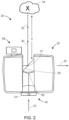
FIG. 2 is a side view of the laser scanner illustrating a method of measurement according to an embodiment; -
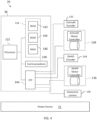
FIG. 3 is a schematic illustration of the optical, mechanical, and electrical components of the laser scanner according to an embodiment; -
FIG. 4 illustrates a schematic illustration of the laser scanner ofFIG. 1 according to an embodiment; -
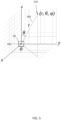
FIG. 5 depicts geometry of a spherical coordinate system as used by a 3D scanner according to one or more embodiments; -
FIG. 6 depicts a visualization of the measurements according to one or more embodiments; -
FIG. 7 depicts a flowchart of an example method for sampling the captured scan points according to one or more embodiments; -
FIG. 8A depicts an unfiltered point cloud that is captured and stored without using a homogenizing sampling scheme such as the above; and -
FIG. 8B depicts a filtered point cloud that does use a sampling scheme according to one or more embodiments. - The detailed description explains embodiments of the invention, together with advantages and features, by way of example with reference to the drawings.
- The present invention relates to a 3D measuring device having a 3D scanner. Embodiments of the invention provide advantages acquiring three-dimensional (3D) coordinates of an area of the environment with real-time sub-sampling of a stream of scan point data as the 3D scanner is capturing a point cloud. Embodiments of the invention provide advantages in acquiring 3D such point clouds using a constant amount of memory, and a constant computational complexity per scan point. Further, the sub-sampling is performed to obtain a homogenized scan point density in the point clouds that are captured. For example, the sub-sampling performed can result in a predetermined density of scan points on surfaces that are orthogonal to the direction of incidence of a measurement beam that is transmitted by the 3D scanner. In one or more examples, the density of scan points can be limited/bounded to a predetermined density because of finite angular resolution. Further, the incidence of the measurement beam can also limit the predetermined density up to a certain distance, which is dependent on the angular sampling step-size, as well as a polar measurement angle (theta).
- Accordingly, the technical solutions described herein address the technical challenge of variable scan point densities in the captured point clouds. It is generally desired that in the captured point clouds two surfaces of substantially equal size include substantially equal number of scan points. In other words, the technical challenge can be expressed as: on a given surface that is scanned by the 3D scanner, the number of scan points be independent of a polar measurement angle (theta) and the measurement distance (r) between the surface and the 3D scanner.
- Referring now to
FIGs. 1 - 3 , alaser scanner 20 is shown for optically scanning and measuring the environment surrounding thelaser scanner 20. Thelaser scanner 20 has a measuringhead 22 and abase 24. The measuringhead 22 is mounted on the base 24 such that thelaser scanner 20 may be rotated about avertical axis 23. In one embodiment, the measuringhead 22 includes agimbal point 27 that is a center of rotation about thevertical axis 23 and ahorizontal axis 25. The measuringhead 22 has arotary mirror 26, which may be rotated about thehorizontal axis 25. The rotation about the vertical axis may be about the center of thebase 24. The terms vertical axis and horizontal axis refer to the scanner in its normal upright position. It is possible to operate a 3D coordinate measurement device on its side or upside down, and so to avoid confusion, the terms azimuth axis and zenith axis may be substituted for the terms vertical axis and horizontal axis, respectively. The term pan axis or standing axis may also be used as an alternative to vertical axis. - The measuring
head 22 is further provided with an electromagnetic radiation emitter, such aslight emitter 28, for example, that emits an emittedlight beam 30. In one embodiment, the emittedlight beam 30 is a coherent light beam such as a laser beam. The laser beam may have a wavelength range of approximately 300 to 1600 nanometers, for example 790 nanometers, 905 nanometers, 1550 nm, or less than 400 nanometers. It should be appreciated that other electromagnetic radiation beams having greater or smaller wavelengths may also be used. The emittedlight beam 30 is amplitude or intensity modulated, for example, with a sinusoidal waveform or with a rectangular waveform. The emittedlight beam 30 is emitted by thelight emitter 28 onto a beam steering unit, such asmirror 26, where it is deflected to the environment. A reflectedlight beam 32 is reflected from the environment by anobject 34. The reflected or scattered light is intercepted by therotary mirror 26 and directed into alight receiver 36. The directions of the emittedlight beam 30 and the reflectedlight beam 32 result from the angular positions of therotary mirror 26 and the measuringhead 22 about theaxes - Coupled to the
light emitter 28 and thelight receiver 36 is acontroller 38. Thecontroller 38 determines, for a multitude of measuring points X, a corresponding number of distances d between thelaser scanner 20 and the points X onobject 34. The distance to a particular point X is determined based at least in part on the speed of light in air through which electromagnetic radiation propagates from the device to the object point X. In one embodiment the phase shift of modulation in light emitted by thelaser scanner 20 and the point X is determined and evaluated to obtain a measured distance d. - The speed of light in air depends on the properties of the air such as the air temperature, barometric pressure, relative humidity, and concentration of carbon dioxide. Such air properties influence the index of refraction n of the air. The speed of light in air is equal to the speed of light in vacuum c divided by the index of refraction. In other words, c air = c / n. A laser scanner of the type discussed herein is based on the time-of-flight (TOF) of the light in the air (the round-trip time for the light to travel from the device to the object and back to the device). Examples of TOF scanners include scanners that measure round trip time using the time interval between emitted and returning pulses (pulsed TOF scanners), scanners that modulate light sinusoidally and measure phase shift of the returning light (phase-based scanners), as well as many other types. A method of measuring distance based on the time-of-flight of light depends on the speed of light in air and is therefore easily distinguished from methods of measuring distance based on triangulation. Triangulation-based methods involve projecting light from a light source along a particular direction and then intercepting the light on a camera pixel along a particular direction. By knowing the distance between the camera and the projector and by matching a projected angle with a received angle, the method of triangulation enables the distance to the object to be determined based on one known length and two known angles of a triangle. The method of triangulation, therefore, does not directly depend on the speed of light in air.
- In one mode of operation, the scanning of the volume around the
laser scanner 20 takes place by rotating therotary mirror 26 relatively quickly aboutaxis 25 while rotating the measuringhead 22 relatively slowly aboutaxis 23, thereby moving the assembly in a spiral pattern. In an exemplary embodiment, the rotary mirror rotates at a maximum speed of 5820 revolutions per minute. For such a scan, thegimbal point 27 defines the origin of the local stationary reference system. Thebase 24 rests in this local stationary reference system. - In addition to measuring a distance d from the
gimbal point 27 to an object point X, thescanner 20 may also collect gray-scale information related to the received optical power (equivalent to the term "brightness.") The gray-scale value may be determined at least in part, for example, by integration of the bandpass-filtered and amplified signal in thelight receiver 36 over a measuring period attributed to the object point X. - The measuring
head 22 may include adisplay device 40 integrated into thelaser scanner 20. Thedisplay device 40 may include agraphical touch screen 41, as shown inFIG. 1 , which allows the operator to set the parameters or initiate the operation of thelaser scanner 20. For example, thescreen 41 may have a user interface that allows the operator to provide measurement instructions to the device, and the screen may also display measurement results. - The
laser scanner 20 includes a carryingstructure 42 that provides a frame for the measuringhead 22 and a platform for attaching the components of thelaser scanner 20. In one embodiment, the carryingstructure 42 is made from a metal such as aluminum. The carryingstructure 42 includes atraverse member 44 having a pair ofwalls walls base 24.Shells walls laser scanner 20. In the exemplary embodiment, theshells shells walls laser scanner 20. - On an end of the
shells walls 46, 48 a pair ofyokes respective shells yokes shells yokes first arm portion 58 that is coupled, such as with a fastener for example, to thetraverse 44 adjacent thebase 24. Thearm portion 58 for eachyoke traverse 44 obliquely to an outer corner of therespective shell yokes yoke walls yokes traverse 42, thewalls shells - The pair of
yokes shells yokes shells shells shells head 22 from damage during transportation and operation. In other embodiments, theyokes laser scanner 20 or attachment points for accessories for example. - On top of the
traverse 44, aprism 60 is provided. The prism extends parallel to thewalls prism 60 is integrally formed as part of the carryingstructure 42. In other embodiments, theprism 60 is a separate component that is coupled to thetraverse 44. When themirror 26 rotates, during each rotation themirror 26 directs the emittedlight beam 30 onto thetraverse 44 and theprism 60. Due to non-linearities in the electronic components, for example in thelight receiver 36, the measured distances d may depend on signal strength, which may be measured in optical power entering the scanner or optical power entering optical detectors within thelight receiver 36, for example. In an embodiment, a distance correction is stored in the scanner as a function (possibly a nonlinear function) of distance to a measured point and optical power (generally unscaled quantity of light power sometimes referred to as "brightness") returned from the measured point and sent to an optical detector in thelight receiver 36. Since theprism 60 is at a known distance from thegimbal point 27, the measured optical power level of light reflected by theprism 60 may be used to correct distance measurements for other measured points, thereby allowing for compensation to correct for the effects of environmental variables such as temperature. In the exemplary embodiment, the resulting correction of distance is performed by thecontroller 38. - In an embodiment, the
base 24 is coupled to a swivel assembly (not shown) such as that described in commonly ownedU.S. Patent No. 8,705,012 ('012). The swivel assembly is housed within the carryingstructure 42 and includes amotor 138 that is configured to rotate the measuringhead 22 about theaxis 23. In an embodiment, the angular/rotational position of the measuringhead 22 about theaxis 23 is measured byangular encoder 132. - An auxiliary
image acquisition device 66 may be a device that captures and measures a parameter associated with the scanned area or the scanned object and provides a signal representing the measured quantities over an image acquisition area. The auxiliaryimage acquisition device 66 may be, but is not limited to, a pyrometer, a thermal imager, an ionizing radiation detector, or a millimeter-wave detector. In an embodiment, the auxiliaryimage acquisition device 66 is a color camera. - In an embodiment, a central color camera (first image acquisition device) 112 is located internally to the scanner and may have the same optical axis as the 3D scanner device. In this embodiment, the first
image acquisition device 112 is integrated into the measuringhead 22 and arranged to acquire images along the same optical pathway as emittedlight beam 30 and reflectedlight beam 32. In this embodiment, the light from thelight emitter 28 reflects off a fixedmirror 116 and travels to dichroic beam-splitter 118 that reflects the light 117 from thelight emitter 28 onto therotary mirror 26. In an embodiment, themirror 26 is rotated by amotor 136 and the angular/rotational position of the mirror is measured byangular encoder 134. The dichroic beam-splitter 118 allows light to pass through at wavelengths different than the wavelength oflight 117. For example, thelight emitter 28 may be a near infrared laser light (for example, light at wavelengths of 780 nm or 1150 nm), with the dichroic beam-splitter 118 configured to reflect the infrared laser light while allowing visible light (e.g., wavelengths of 400 to 700 nm) to transmit through. In other embodiments, the determination of whether the light passes through the beam-splitter 118 or is reflected depends on the polarization of the light. Thedigital camera 112 obtains 2D images of the scanned area to capture color data to add to the scanned image. In the case of a built-in color camera having an optical axis coincident with that of the 3D scanning device, the direction of the camera view may be easily obtained by simply adjusting the steering mechanisms of the scanner - for example, by adjusting the azimuth angle about theaxis 23 and by steering themirror 26 about theaxis 25. - Referring now to
FIG. 4 with continuing reference toFIGS. 1-3 , elements are shown of thelaser scanner 20.Controller 38 is a suitable electronic device capable of accepting data and instructions, executing the instructions to process the data, and presenting the results. Thecontroller 38 includes one ormore processing elements 122. The processors may be microprocessors, field programmable gate arrays (FPGAs), digital signal processors (DSPs), and generally any device capable of performing computing functions. The one ormore processors 122 have access tomemory 124 for storing information. -
Controller 38 is capable of converting the analog voltage or current level provided bylight receiver 36 into a digital signal to determine a distance from thelaser scanner 20 to an object in the environment.Controller 38 uses the digital signals that act as input to various processes for controlling thelaser scanner 20. The digital signals represent one ormore laser scanner 20 data including but not limited to distance to an object, images of the environment, images acquired bypanoramic camera 126, angular/rotational measurements by a first orazimuth encoder 132, and angular/rotational measurements by a second axis orzenith encoder 134. - In general,
controller 38 accepts data fromencoders light receiver 36,light source 28, andpanoramic camera 126, andauxiliary device 66, and is given certain instructions for the purpose of generating a 3D point cloud of a scanned environment.Controller 38 provides operating signals to thelight source 28,light receiver 36,panoramic camera 126,zenith motor 136,azimuth motor 138, and theauxiliary device 66. Thecontroller 38 compares the operational parameters to predetermined variances and if the predetermined variance is exceeded, generates a signal that alerts an operator to a condition. The data received by thecontroller 38 may be displayed on auser interface 40 coupled tocontroller 38. Theuser interface 40 may be one or more LEDs (light-emitting diodes), an LCD (liquid-crystal diode) display, a CRT (cathode ray tube) display, a touch-screen display or the like. A keypad may also be coupled to the user interface for providing data input tocontroller 38. In one embodiment, the user interface is arranged or executed on a mobile computing device that is coupled for communication, such as via a wired or wireless communications medium (e.g. Ethernet, serial, USB, Bluetooth™ or WiFi) for example, to thelaser scanner 20. - The
controller 38 may also be coupled to external computer networks such as a local area network (LAN) and the Internet. A LAN interconnects one or more remote computers, which are configured to communicate withcontroller 38 using a well- known computer communications protocol such as TCP/IP (Transmission Control Protocol/Internet(^) Protocol), RS-232, ModBus, and the like.Additional systems 20 may also be connected to LAN with thecontrollers 38 in each of thesesystems 20 being configured to send and receive data to and from remote computers andother systems 20. The LAN may be connected to the Internet. This connection allowscontroller 38 to communicate with one or more remote computers connected to the Internet. - The
processors 122 are coupled tomemory 124. Thememory 124 may include random access memory (RAM)device 140, a non-volatile memory (NVM)device 142, and a read-only memory (ROM)device 144. In addition, theprocessors 122 may be connected to one or more input/output (I/O)controllers 146 and acommunications circuit 148. In an embodiment, thecommunications circuit 148 provides an interface that allows wireless or wired communication with one or more external devices or networks, such as the LAN discussed above. -
Controller 38 includes operation control methods embodied in application code described herein. These methods are embodied in computer instructions written to be executed byprocessors 122, typically in the form of software. The software can be encoded in any language, including, but not limited to, assembly language, VHDL (Verilog Hardware Description Language), VHSIC HDL (Very High Speed IC Hardware Description Language), Fortran (formula translation), C, C++, C#, Objective-C, Visual C++, Java, ALGOL (algorithmic language), BASIC (beginners all-purpose symbolic instruction code), visual BASIC, ActiveX, HTML (HyperText Markup Language), Python, Ruby and any combination or derivative of at least one of the foregoing. -
FIG. 5 depicts geometry of a spherical coordinate system as used by a 3D scanner according to one or more embodiments. The3D scanner 20 is scanning from apoint 501 to capture scan points 510 in the environment. The3D scanner 20 produces a set of distance measurements in a spherical coordinate system, where scan points for samples are captured at regular predetermined angular intervals of both, the polar angle (θ) and the azimuth angle (ϕ). Consider, in the examples described herein, that θ=0 coincides with the z-axis 23 in a Cartesian coordinate system; however, it is understood that the mapping of the spherical coordinate system with the Cartesian coordinate system can be different in other examples. In one or more examples of the3D scanner 20, such as in the FARO® FOCUS series of scanners manufactured by FARO Technologies, Inc of Lake Mary, Florida USA, the laser beam is deflected by themirror 26 to determine the polar angle and pan axis to determine the azimuth angle. - A
point 510 in the spherical coordinate system can be represented by three-values - a distance (r) from the3D scanner 20 in direction of the polar angle , the polar angle (θ), and the azimuth angle (ϕ). In one or more examples, the scan points are captured at a regular interval of θ for each ϕ. Consider, for example, that for each ϕ = 0, 1*2π/N,
3D scanner 20 samples at θ = 0, 1*2π/N, 2*2π/N, ..., (N-1)*2π/N, where N represents a number of samples for one mirror revolution. -
FIG. 6 depicts a visualization of the measurements according to one or more embodiments. It is understood that the depiction is just an example and that in other example scenarios other depictions can be possible. A length of aline segment 505 swept out by the3D scanner 20 in the θ direction at a distance r is rΔθ. Thecorresponding line segment 510 swept out in the ϕ direction is r sin θ Δϕ. Accordingly, the area of the surface/plane for which the3D scanner 20 captures scanned points is r2 sin θΔθ Δϕ. However, as described earlier, a technical challenge with the point clouds captured in this manner is that the scan point density for the surface can vary from another surface with the same area. The scan point density is a number of scan points captured per unit area of the surface that is scanned. - To address the technical challenge, in one or more embodiments, the scan points that are captured by the
3D scanner 20 are sampled based on a predetermined scan point density. The collected scan points for a surface are selected to be stored (or not stored) based on this predetermined scan point density. Accordingly, only a particular number of scan points are stored so that the scan point density of the surface being captured is substantially equal to the predetermined scan point density. In one or more examples, the sampling is performed at real time as the scan points are being captured. - To determine whether to store the captured
scan point 510, a pseudo-random number that is generated at real time. A probability to determine whether to store the scan point is then computed based on one or more parameters associated with thescan point 510. The random number generator is used to produce samples of a random variable which behaves in accordance with a given probability distribution, using a Bernoulli distribution in the present invention. Based on the desired surface scan point density, and based on scan point measurements/parameters, parameters for the probability distribution are calculated (without any randomness). For a Bernoulli distribution, the only parameter is p, which represents the probability of keeping the point. Scan points with the probability value above (or below) a predetermined threshold are stored and others are discarded, in one or more examples. In one or more examples, the decision to keep (store) or discard (drop/not store) is determined by the realization of a random variable P. The random variable P is associated with the probability distribution (e.g. the Bernoulli distribution) which is parametrized based on one or more parameters or measurements associated with thescan point 510. The parameters or measurements can include the coordinates associated with the scan point, the scan-point's reflectivity, brightness, intensity, and other such attributes. - Alternatively, or in addition, in one or more examples, the decision to keep or discard the
scan point 510 is made prior to sampling of any random variable. Instead, the decision is based on a comparison of a metric that is associated with one or more parameters or measurements associated with thescan point 510. Accordingly, in one embodiment, the decision to keep/drop is associated with angle θ, distance r, and a prescribed constant parameter R0, yielding a metric of (r2/R0 2) sinθ. This metric, which is not a probability value (because it can be larger than 1) is then compared against a threshold value to determine if the point is to be kept discarded. -
FIG. 7 depicts a flowchart of an example method for sampling the captured scan points according to one or more embodiments. The method is performed on each scan point that is captured by the3D scanner 20. The method includes capturing thescan point 510, atblock 610. - The method further includes computing a pseudo-random number X for the
scan point 510, atblock 620. The pseudo-random number X can be generated using known techniques (e.g. Mersenne-Twister, linear congruential generator engine, etc.) for generating a uniformly distributed random variable over a given range of numbers (integers, floating point numbers etc.). It is understood that the names/symbols used for representing one or more parameters in the description herein are exemplary, and that other names/symbols can be used in other examples. - The pseudo-random number is computed as a probability value of whether to keep or drop the captured scan point. For example, if r ≤ R0:


- Here, R0 is a normalization constant, which can be user defined/predefined value based on desired scan point density. If r > R0, different calculations can be performed. For example, in this case, p=1 is set, so that scan points are stored even if they do not meet the intended scan point density. Alternatively, p=0 is set, so that the scan points are discarded if they do not meet the desired point density.
- The pseudo random numbers X that are generated using uniform distribution are sampled, at 630. The sampling of the Bernoulli-distributed random variable X will give either "keep" or "drop" (Bernoulli is binary and will not give any other values). If the sampling results in "keep" then the
scan point 510 is stored, if it results in "drop" then thescan point 510 is not stored (discarded). It should be noted that besides Bernoulli distribution, in other examples, other probability distributions can be used with larger discrete or even continuous range of values they produce. For such cases, a predicate function can be defined, for example, f: E → { keep, drop }, where E is the set of values representing the range of the random variable. Accordingly, if the sampled value is from a predetermined set of values (range of values) associated with the pseudo-random number being generated, the scan point is stored (or discarded). - Accordingly, depending on whether the sampled value represents "keep", the captured
scan point 510 is stored, atblocks scan point 510 is not stored, atblocks -
FIG. 8A depicts anunfiltered point cloud 710 that is captured and stored without using a homogenizing sampling scheme such as the above, and a filteredpoint cloud 720 that does use a sampling scheme. As can be seen, the unfiltered point cloud includes "noisy" data that can be difficult during the registration process, the noisy data being points captured from outside of a spherical volume that thescanner 30. Further, as can be seen, surfaces in theunfiltered point cloud 710 have different scan point density, for example, some surfaces are seen brighter (higher scan point density) compared to other darker surfaces (lower scan point density). In contrast, the filteredpoint cloud 720 shown inFIG. 8B includes scan points that are homogenized across surfaces, and accordingly, substantially all the surfaces have a similar brightness. - The resulting point cloud that is obtained after storing (keeping) and not storing (dropping) the captured scan points according to the above procedure results in a locally averaged surface point density ρ that is limited by ρmax, which can be calculated as:

- Accordingly, the scan point density of a surface is limited by the probability distribution used herein. The scan point density is therefore substantially more homogenized across the various surfaces captured by the
3D scanner 20 than capturing scan points without the techniques herein. There can still be remaining in-homogeneities for surfaces which are inclined against the angle of incidence (i.e. surfaces which deviate from a sphere centered about thegimbal point 27 of thescanner 20. It should be noted that the embodiments described herein describes the sampling being performed at the time the scan points are captured. The same techniques can be used for a collection of scan points that are already captured if, while storing the scan points, the3D scanner 20 also stores the r, θ, and ϕ values for each scan point. The sampling in this case can filter the stored data to create a second data set with sampled scan points. - The technical solutions described addresses the technical challenge with 3D scanners that use spherical scanning because when scanning a spherical volume, the scan point density is higher in the middle (near the center) than the edges due to the change in distance, and higher near the zenith. Existing solutions address this technical challenge by scanning the area and then defining a fixed volume box (voxel) and selecting one point within the voxel. The technical solutions described herein provide an improved solution because the amount of memory required at the runtime is lower.
- In one or more examples, when further thinning, i.e. a lower scan point density is desired after the point cloud has been captured and stored, the voxel technique can be used offline after the random-distribution probability sampling is used at runtime.
- Another technical challenge faced by 3D laser scanners is that of filtering scan points so as to only drop scan points which are at a particular distance where a desired/prescribed scan point density cannot be fulfilled because of the scanner's limited resolution. While such filtering can be performed in an offline manner after the point cloud has been stored, such offline filtering can take a considerable amount of computational resources and time, and typically requires human intervention. Technical solutions are described herein to address such technical challenges. According to one or more embodiments, the number of undesired scan points is reduced by filtering out scan points that are captured at a particular distance/angle where the desired minimal surface scan point density cannot be guaranteed. Accordingly, the number of points that have to be processed in an offline manner is substantially reduced.
- As noted earlier, consider the
3D scanner 20 that captures scan points using a spherical coordinate system, where samples are captured at regular angular intervals of both, the polar angle and the azimuth angle. Consider that the angular resolution for the polar angle is Δθ and that the angular resolution for the azimuth angle is Δϕ. A predetermined constant RC is computed as:
- Here, ρmin is a desired minimum scan point density (number of scan points per unit area) for the point cloud being captured. The scan point filter criterion for a scan point at a distance r and a polar angle θ is as follows:
- If

- If

- While, in the technical features described earlier, the probabilistic filtering was applied to limit the scan point density to a predetermined maximum (ρmax ), here the scanner imposed angular resolutions are used to provide lower limits on surface scan point density at a given distance and polar angle.
- Here, if the angular resolutions Δϕ and Δθ are fixed at preconfigured values as the
3D scanner 20 moves the laser beam, the estimated surface scan point density can be calculated as:
- For a given setting on the
3D laser scanner 20, the step sizes Δφ and Δθ are fixed. For example, for a step size Δθ = Δϕ = 2π/N, the expected surface density is:
- As can be seen the resulting scan point density above is a constant. In other words, the surface density is based on a probability, but the expected surface density is a constant having units of points per area. The number of points in a unit area for a given step in Δθ and Δϕ is:

- For example, suppose the maximum number of points in a unit area for a given step Δθ and Δϕ is desired to be less than or equal to 1. It follows that a point will only be included in the final point cloud if

3D scanner 20 are not included in the final point cloud that is stored. This results in a cleaner looking point cloud when rendered because occasional extraneous far-away points are not included in the point cloud, and hence in the final 3D image. - It should be noted that the filter works under the assumption of perpendicular incidence angle of the laser beam, hence, the actual scan point density (ρ) can vary from the target minimum scan point density (ρmin) on surfaces that are hit in a non-perpendicular manner by the laser beam from the
3D scanner 20. - In the above examples, the desired scan point density can be a user provided value. Alternatively, or in addition, the desired scan point density can be based on other parameters, such as available network bandwidth. For example, if the network bandwidth for the streaming data transport is limited, in which case a threshold for the probability p can be calculated such that the bandwidth necessary for streaming equals (on average) MeasurementRate * SerializedScanPointSize * p. Accordingly, when using the probabilistic distribution, if the keep value is greater than the threshold p, the scan point is streamed, and not streamed otherwise. In one or more examples, the scheme facilitates reacting to streaming-backpressure (e.g. due to changes in available network bandwidth) by changing the value of p dynamically.
- The technical solutions described herein can be used to filter scan points at runtime as the scan points are being captured and processed and on a per scan point basis. As can be seen, the filters can be applied on each scan point without additional information about adjacent scan points, such as in a voxel. Therefore, additional post-processing time is not required and the filtering can be performed as the scan points are being captured, prior to the scan points being stored. The computational resources required for the filters are readily available, and the filters are not computationally intensive making them suitable for being used in embedded computing environments. The resulting rendering of the point cloud is visually more appealing because of the filtering applied to outlier scan points, which may be at a further distance than remaining scan points of a surface.
- Further, the technical solutions facilitate a substantial reduction in the scan data that can be performed at runtime as the scan points are being captured. The reduction is parameterized by a given surface scan point density, which can be a user configurable value. For 3D laser scanners in which sensors only measure points on surfaces of objects, the technical solutions described herein produce homogenization of the scan point density. The homogenization produced in this manner is an improvement over the homogenization produced using a voxel based technique, which relies on a volume-density.
- Terms such as processor, controller, computer, DSP, FPGA are understood in this document to mean a computing device that may be located within an instrument, distributed in multiple elements throughout an instrument, or placed external to an instrument.
Claims (9)
- A three-dimensional (3D) scanner device (20) comprising:
a processor system (122) that is configured to generate a point cloud (710) representing multiple surfaces, the point cloud (710) comprises a plurality of scan points, and wherein generating the point cloud (710) comprises:receiving spherical coordinates for a scan point, the spherical coordinates comprising a distance (r), a polar angle (θ), and an azimuth angle (ϕ);homogenizing a scan point density of the surfaces by filtering the scan points, the homogenizing comprising:
computing a probability to determine whether to store the scan point according to the following steps:producing samples, using a pseudo-random number generator, of a random variable that behaves in accordance with a Bernoulli distribution;calculating a parameter for the Bernoulli distribution, the parameter representing the probability of keeping the scan point; andbased on the parameter for the Bernoulli distribution and a predetermined threshold, determining to store (640) or discard (650) the scan point. - The three-dimensional scanner device of claim 1, wherein the homogenization is performed based on a locally averaged surface point density ρ that is limited by ρmax, which can be calculated as

- The three-dimensional scanner device of claim 1, wherein scan points are captured at a regular interval of θ for each ϕ in a capture cycle.
- The three-dimensional scanner device of claim 3, wherein the capture cycle is one revolution of a mirror used by the three-dimensional scanner device.
- A computer-implemented method for generating, by a three-dimensional (3D) scanner device (20), a point cloud (710) representing multiple surfaces from an environment, the point cloud comprises a plurality of scan points, and the method comprising:receiving spherical coordinates for a scan point, the spherical coordinates comprising a distance (r), a polar angle (θ), and an azimuth angle (ϕ);homogenizing a scan point density of the surfaces by filtering the scan points, the homogenizing comprising:based on the parameter for the Bernoulli distribution and a predetermined threshold, determining to store (640) or discard (650) the scan point.
computing a probability to determine whether to store the scan point according to the following steps:producing samples, using a pseudo-random number generator, of a random variable that behaves in accordance with a Bernoulli distribution;calculating a parameter for the Bernoulli distribution, the parameter representing the probability of keeping the scan point; and - The computer-implemented method of claim 5, wherein the homogenization is performed based on a locally averaged surface point density ρ that is limited by ρmax, which can be calculated as

- The computer-implemented method of claim 5, wherein scan points are captured at a regular interval of θ for each ϕ in a capture cycle.
- The computer-implemented method of claim 7, wherein the capture cycle is one revolution of a mirror used by the three-dimensional scanner device.
- A computer program product comprising a memory storage device that has computer executable instructions stored therein, the computer executable instructions, when executed by a processor (122) in a three-dimensional (3D) scanner device (20), cause the processor to perform a method comprising:
generating a point cloud representing multiple surfaces, the point cloud comprises a plurality of scan points, and wherein generating the point cloud comprises:receiving spherical coordinates for a scan point, the spherical coordinates comprising a distance (r), a polar angle (θ), and an azimuth angle (ϕ);homogenizing a scan point density of the surfaces by filtering the scan points, the homogenizing comprising:
computing a probability to determine whether to store the scan point according to the following steps:producing samples, using a pseudo-random number generator, of a random variable that behaves in accordance with a Bernoulli distribution;calculating a parameter for the Bernoulli distribution, the parameter representing the probability of keeping the scan point; andbased on the parameter for the Bernoulli distribution and a predetermined threshold, determining to store (640) or discard (650) the scan point.
Applications Claiming Priority (1)
| Application Number | Priority Date | Filing Date | Title |
|---|---|---|---|
| US201962873499P | 2019-07-12 | 2019-07-12 |
Publications (2)
| Publication Number | Publication Date |
|---|---|
| EP3764125A1 EP3764125A1 (en) | 2021-01-13 |
| EP3764125B1 true EP3764125B1 (en) | 2024-08-28 |
Family
ID=71523032
Family Applications (1)
| Application Number | Title | Priority Date | Filing Date |
|---|---|---|---|
| EP20184428.9A Active EP3764125B1 (en) | 2019-07-12 | 2020-07-07 | Real-time scan point homogenization for terrestrial laser scanner |
Country Status (2)
| Country | Link |
|---|---|
| US (1) | US11340058B2 (en) |
| EP (1) | EP3764125B1 (en) |
Families Citing this family (5)
| Publication number | Priority date | Publication date | Assignee | Title |
|---|---|---|---|---|
| USD917319S1 (en) * | 2020-02-04 | 2021-04-27 | Aukey Technology Co., Ltd | Distance measuring apparatus |
| US11727635B2 (en) | 2020-10-22 | 2023-08-15 | Faro Technologies, Inc. | Hybrid photogrammetry |
| EP4250225A3 (en) * | 2022-03-01 | 2024-01-31 | Faro Technologies, Inc. | Point cloud-defined boundary |
| CN115409880B (en) * | 2022-08-31 | 2024-03-22 | 深圳前海瑞集科技有限公司 | Workpiece data registration method, device, electronic equipment and storage medium |
| WO2025076191A1 (en) | 2023-10-06 | 2025-04-10 | Faro Technologies, Inc. | Method and apparatus for accurate mobile data capture |
Family Cites Families (15)
| Publication number | Priority date | Publication date | Assignee | Title |
|---|---|---|---|---|
| DE102010032726B3 (en) | 2010-07-26 | 2011-11-24 | Faro Technologies, Inc. | Device for optically scanning and measuring an environment |
| CN104603575A (en) | 2012-09-06 | 2015-05-06 | 法罗技术股份有限公司 | Laser scanner with additional sensing device |
| WO2014043461A1 (en) | 2012-09-14 | 2014-03-20 | Faro Technologies, Inc. | Laser scanner with dynamical adjustment of angular scan velocity |
| US20140300906A1 (en) | 2013-03-13 | 2014-10-09 | Faro Technologies, Inc. | Laser scanner with cellular transceiver communication |
| DE102013017500B3 (en) | 2013-10-17 | 2015-04-02 | Faro Technologies, Inc. | Method and apparatus for optically scanning and measuring a scene |
| DE102014110992A1 (en) * | 2014-08-01 | 2016-02-04 | Faro Technologies Inc. | Register a clustered scene with location tracking |
| US9378554B2 (en) * | 2014-10-09 | 2016-06-28 | Caterpillar Inc. | Real-time range map generation |
| EP3091333B1 (en) | 2015-05-08 | 2019-07-03 | Leica Geosystems AG | Scanning method and surveying system with scan functionality |
| JP6761715B2 (en) * | 2016-09-28 | 2020-09-30 | 株式会社トプコン | Surveying device |
| EP3315906B1 (en) | 2016-10-27 | 2023-05-31 | Leica Geosystems AG | Method for processing scan data |
| US10782118B2 (en) | 2018-02-21 | 2020-09-22 | Faro Technologies, Inc. | Laser scanner with photogrammetry shadow filling |
| US10830889B2 (en) | 2018-05-02 | 2020-11-10 | Faro Technologies, Inc. | System measuring 3D coordinates and method thereof |
| US10935378B2 (en) * | 2018-05-21 | 2021-03-02 | Tusimple, Inc. | System and method for angle measurement |
| US11054546B2 (en) | 2018-07-16 | 2021-07-06 | Faro Technologies, Inc. | Laser scanner with enhanced dymanic range imaging |
| US11035980B2 (en) | 2018-07-24 | 2021-06-15 | Faro Technologies, Inc. | Laser scanner with projector |
-
2020
- 2020-06-29 US US16/914,712 patent/US11340058B2/en active Active
- 2020-07-07 EP EP20184428.9A patent/EP3764125B1/en active Active
Non-Patent Citations (1)
| Title |
|---|
| EETU PUTTONEN ET AL: "Improved Sampling for Terrestrial and Mobile Laser Scanner Point Cloud Data", REMOTE SENSING, vol. 5, no. 12, 9 April 2013 (2013-04-09), pages 1754 - 1773, XP055454499, DOI: 10.3390/rs5041754 * |
Also Published As
| Publication number | Publication date |
|---|---|
| US20210010799A1 (en) | 2021-01-14 |
| EP3764125A1 (en) | 2021-01-13 |
| US11340058B2 (en) | 2022-05-24 |
Similar Documents
| Publication | Publication Date | Title |
|---|---|---|
| EP3764125B1 (en) | Real-time scan point homogenization for terrestrial laser scanner | |
| EP3598174B1 (en) | Laser scanner with enhanced dymanic range imaging | |
| US11887278B2 (en) | System and method for training a neural network to fill gaps between scan points in images and to de-noise point cloud images | |
| US10782118B2 (en) | Laser scanner with photogrammetry shadow filling | |
| US11080870B2 (en) | Method and apparatus for registering three-dimensional point clouds | |
| US11852777B2 (en) | Projector with three-dimensional measurement device | |
| US11523029B2 (en) | Artificial intelligence scan colorization | |
| US20240004076A1 (en) | Artifact filtering using artificial intelligence | |
| EP4180837A1 (en) | Removing reflection from scanned data | |
| US12266072B2 (en) | Scan color restoration | |
| US20230324557A1 (en) | Laser scanner for verifying positioning of components of assemblies | |
| US11686816B2 (en) | Laser scanner with target detection | |
| EP4089637B1 (en) | Hybrid feature matching between intensity image and color image | |
| US12560690B2 (en) | System and method of improving laser scanner unambiguity | |
| EP4086851A1 (en) | Occlusion detection for laser scan-point coloring | |
| US20240104874A1 (en) | Gap filling for three-dimensional data visualization | |
| EP4258011A1 (en) | Image-based scan pre-registration |
Legal Events
| Date | Code | Title | Description |
|---|---|---|---|
| PUAI | Public reference made under article 153(3) epc to a published international application that has entered the european phase |
Free format text: ORIGINAL CODE: 0009012 |
|
| STAA | Information on the status of an ep patent application or granted ep patent |
Free format text: STATUS: THE APPLICATION HAS BEEN PUBLISHED |
|
| AK | Designated contracting states |
Kind code of ref document: A1 Designated state(s): AL AT BE BG CH CY CZ DE DK EE ES FI FR GB GR HR HU IE IS IT LI LT LU LV MC MK MT NL NO PL PT RO RS SE SI SK SM TR |
|
| AX | Request for extension of the european patent |
Extension state: BA ME |
|
| STAA | Information on the status of an ep patent application or granted ep patent |
Free format text: STATUS: REQUEST FOR EXAMINATION WAS MADE |
|
| 17P | Request for examination filed |
Effective date: 20210713 |
|
| RBV | Designated contracting states (corrected) |
Designated state(s): AL AT BE BG CH CY CZ DE DK EE ES FI FR GB GR HR HU IE IS IT LI LT LU LV MC MK MT NL NO PL PT RO RS SE SI SK SM TR |
|
| STAA | Information on the status of an ep patent application or granted ep patent |
Free format text: STATUS: EXAMINATION IS IN PROGRESS |
|
| 17Q | First examination report despatched |
Effective date: 20230203 |
|
| REG | Reference to a national code |
Ref legal event code: R079 Ipc: G01S0017860000 Ref country code: DE Ref legal event code: R079 Ref document number: 602020036535 Country of ref document: DE Free format text: PREVIOUS MAIN CLASS: G01S0017890000 Ipc: G01S0017860000 |
|
| GRAP | Despatch of communication of intention to grant a patent |
Free format text: ORIGINAL CODE: EPIDOSNIGR1 |
|
| STAA | Information on the status of an ep patent application or granted ep patent |
Free format text: STATUS: GRANT OF PATENT IS INTENDED |
|
| RIC1 | Information provided on ipc code assigned before grant |
Ipc: G01C 15/00 20060101ALI20240321BHEP Ipc: G01S 7/481 20060101ALI20240321BHEP Ipc: G01S 17/42 20060101ALI20240321BHEP Ipc: G01S 17/89 20200101ALI20240321BHEP Ipc: G01S 17/86 20200101AFI20240321BHEP |
|
| INTG | Intention to grant announced |
Effective date: 20240417 |
|
| GRAS | Grant fee paid |
Free format text: ORIGINAL CODE: EPIDOSNIGR3 |
|
| GRAA | (expected) grant |
Free format text: ORIGINAL CODE: 0009210 |
|
| STAA | Information on the status of an ep patent application or granted ep patent |
Free format text: STATUS: THE PATENT HAS BEEN GRANTED |
|
| AK | Designated contracting states |
Kind code of ref document: B1 Designated state(s): AL AT BE BG CH CY CZ DE DK EE ES FI FR GB GR HR HU IE IS IT LI LT LU LV MC MK MT NL NO PL PT RO RS SE SI SK SM TR |
|
| REG | Reference to a national code |
Ref country code: CH Ref legal event code: EP |
|
| REG | Reference to a national code |
Ref country code: DE Ref legal event code: R096 Ref document number: 602020036535 Country of ref document: DE |
|
| REG | Reference to a national code |
Ref country code: IE Ref legal event code: FG4D |
|
| REG | Reference to a national code |
Ref country code: LT Ref legal event code: MG9D |
|
| PG25 | Lapsed in a contracting state [announced via postgrant information from national office to epo] |
Ref country code: NO Free format text: LAPSE BECAUSE OF FAILURE TO SUBMIT A TRANSLATION OF THE DESCRIPTION OR TO PAY THE FEE WITHIN THE PRESCRIBED TIME-LIMIT Effective date: 20241128 |
|
| REG | Reference to a national code |
Ref country code: AT Ref legal event code: MK05 Ref document number: 1718555 Country of ref document: AT Kind code of ref document: T Effective date: 20240828 |
|
| PG25 | Lapsed in a contracting state [announced via postgrant information from national office to epo] |
Ref country code: NL Free format text: LAPSE BECAUSE OF FAILURE TO SUBMIT A TRANSLATION OF THE DESCRIPTION OR TO PAY THE FEE WITHIN THE PRESCRIBED TIME-LIMIT Effective date: 20240828 Ref country code: FI Free format text: LAPSE BECAUSE OF FAILURE TO SUBMIT A TRANSLATION OF THE DESCRIPTION OR TO PAY THE FEE WITHIN THE PRESCRIBED TIME-LIMIT Effective date: 20240828 Ref country code: PL Free format text: LAPSE BECAUSE OF FAILURE TO SUBMIT A TRANSLATION OF THE DESCRIPTION OR TO PAY THE FEE WITHIN THE PRESCRIBED TIME-LIMIT Effective date: 20240828 Ref country code: GR Free format text: LAPSE BECAUSE OF FAILURE TO SUBMIT A TRANSLATION OF THE DESCRIPTION OR TO PAY THE FEE WITHIN THE PRESCRIBED TIME-LIMIT Effective date: 20241129 Ref country code: PT Free format text: LAPSE BECAUSE OF FAILURE TO SUBMIT A TRANSLATION OF THE DESCRIPTION OR TO PAY THE FEE WITHIN THE PRESCRIBED TIME-LIMIT Effective date: 20241230 |
|
| PG25 | Lapsed in a contracting state [announced via postgrant information from national office to epo] |
Ref country code: BG Free format text: LAPSE BECAUSE OF FAILURE TO SUBMIT A TRANSLATION OF THE DESCRIPTION OR TO PAY THE FEE WITHIN THE PRESCRIBED TIME-LIMIT Effective date: 20240828 |
|
| PG25 | Lapsed in a contracting state [announced via postgrant information from national office to epo] |
Ref country code: LV Free format text: LAPSE BECAUSE OF FAILURE TO SUBMIT A TRANSLATION OF THE DESCRIPTION OR TO PAY THE FEE WITHIN THE PRESCRIBED TIME-LIMIT Effective date: 20240828 |
|
| REG | Reference to a national code |
Ref country code: NL Ref legal event code: MP Effective date: 20240828 |
|
| PG25 | Lapsed in a contracting state [announced via postgrant information from national office to epo] |
Ref country code: IS Free format text: LAPSE BECAUSE OF FAILURE TO SUBMIT A TRANSLATION OF THE DESCRIPTION OR TO PAY THE FEE WITHIN THE PRESCRIBED TIME-LIMIT Effective date: 20241228 Ref country code: AT Free format text: LAPSE BECAUSE OF FAILURE TO SUBMIT A TRANSLATION OF THE DESCRIPTION OR TO PAY THE FEE WITHIN THE PRESCRIBED TIME-LIMIT Effective date: 20240828 |
|
| PG25 | Lapsed in a contracting state [announced via postgrant information from national office to epo] |
Ref country code: HR Free format text: LAPSE BECAUSE OF FAILURE TO SUBMIT A TRANSLATION OF THE DESCRIPTION OR TO PAY THE FEE WITHIN THE PRESCRIBED TIME-LIMIT Effective date: 20240828 |
|
| PG25 | Lapsed in a contracting state [announced via postgrant information from national office to epo] |
Ref country code: ES Free format text: LAPSE BECAUSE OF FAILURE TO SUBMIT A TRANSLATION OF THE DESCRIPTION OR TO PAY THE FEE WITHIN THE PRESCRIBED TIME-LIMIT Effective date: 20240828 Ref country code: RS Free format text: LAPSE BECAUSE OF FAILURE TO SUBMIT A TRANSLATION OF THE DESCRIPTION OR TO PAY THE FEE WITHIN THE PRESCRIBED TIME-LIMIT Effective date: 20241128 |
|
| PG25 | Lapsed in a contracting state [announced via postgrant information from national office to epo] |
Ref country code: RS Free format text: LAPSE BECAUSE OF FAILURE TO SUBMIT A TRANSLATION OF THE DESCRIPTION OR TO PAY THE FEE WITHIN THE PRESCRIBED TIME-LIMIT Effective date: 20241128 Ref country code: PT Free format text: LAPSE BECAUSE OF FAILURE TO SUBMIT A TRANSLATION OF THE DESCRIPTION OR TO PAY THE FEE WITHIN THE PRESCRIBED TIME-LIMIT Effective date: 20241230 Ref country code: PL Free format text: LAPSE BECAUSE OF FAILURE TO SUBMIT A TRANSLATION OF THE DESCRIPTION OR TO PAY THE FEE WITHIN THE PRESCRIBED TIME-LIMIT Effective date: 20240828 Ref country code: NO Free format text: LAPSE BECAUSE OF FAILURE TO SUBMIT A TRANSLATION OF THE DESCRIPTION OR TO PAY THE FEE WITHIN THE PRESCRIBED TIME-LIMIT Effective date: 20241128 Ref country code: NL Free format text: LAPSE BECAUSE OF FAILURE TO SUBMIT A TRANSLATION OF THE DESCRIPTION OR TO PAY THE FEE WITHIN THE PRESCRIBED TIME-LIMIT Effective date: 20240828 Ref country code: LV Free format text: LAPSE BECAUSE OF FAILURE TO SUBMIT A TRANSLATION OF THE DESCRIPTION OR TO PAY THE FEE WITHIN THE PRESCRIBED TIME-LIMIT Effective date: 20240828 Ref country code: IS Free format text: LAPSE BECAUSE OF FAILURE TO SUBMIT A TRANSLATION OF THE DESCRIPTION OR TO PAY THE FEE WITHIN THE PRESCRIBED TIME-LIMIT Effective date: 20241228 Ref country code: HR Free format text: LAPSE BECAUSE OF FAILURE TO SUBMIT A TRANSLATION OF THE DESCRIPTION OR TO PAY THE FEE WITHIN THE PRESCRIBED TIME-LIMIT Effective date: 20240828 Ref country code: GR Free format text: LAPSE BECAUSE OF FAILURE TO SUBMIT A TRANSLATION OF THE DESCRIPTION OR TO PAY THE FEE WITHIN THE PRESCRIBED TIME-LIMIT Effective date: 20241129 Ref country code: FI Free format text: LAPSE BECAUSE OF FAILURE TO SUBMIT A TRANSLATION OF THE DESCRIPTION OR TO PAY THE FEE WITHIN THE PRESCRIBED TIME-LIMIT Effective date: 20240828 Ref country code: ES Free format text: LAPSE BECAUSE OF FAILURE TO SUBMIT A TRANSLATION OF THE DESCRIPTION OR TO PAY THE FEE WITHIN THE PRESCRIBED TIME-LIMIT Effective date: 20240828 Ref country code: BG Free format text: LAPSE BECAUSE OF FAILURE TO SUBMIT A TRANSLATION OF THE DESCRIPTION OR TO PAY THE FEE WITHIN THE PRESCRIBED TIME-LIMIT Effective date: 20240828 Ref country code: AT Free format text: LAPSE BECAUSE OF FAILURE TO SUBMIT A TRANSLATION OF THE DESCRIPTION OR TO PAY THE FEE WITHIN THE PRESCRIBED TIME-LIMIT Effective date: 20240828 |
|
| PG25 | Lapsed in a contracting state [announced via postgrant information from national office to epo] |
Ref country code: DK Free format text: LAPSE BECAUSE OF FAILURE TO SUBMIT A TRANSLATION OF THE DESCRIPTION OR TO PAY THE FEE WITHIN THE PRESCRIBED TIME-LIMIT Effective date: 20240828 Ref country code: SM Free format text: LAPSE BECAUSE OF FAILURE TO SUBMIT A TRANSLATION OF THE DESCRIPTION OR TO PAY THE FEE WITHIN THE PRESCRIBED TIME-LIMIT Effective date: 20240828 Ref country code: RO Free format text: LAPSE BECAUSE OF FAILURE TO SUBMIT A TRANSLATION OF THE DESCRIPTION OR TO PAY THE FEE WITHIN THE PRESCRIBED TIME-LIMIT Effective date: 20240828 |
|
| PG25 | Lapsed in a contracting state [announced via postgrant information from national office to epo] |
Ref country code: EE Free format text: LAPSE BECAUSE OF FAILURE TO SUBMIT A TRANSLATION OF THE DESCRIPTION OR TO PAY THE FEE WITHIN THE PRESCRIBED TIME-LIMIT Effective date: 20240828 |
|
| PG25 | Lapsed in a contracting state [announced via postgrant information from national office to epo] |
Ref country code: CZ Free format text: LAPSE BECAUSE OF FAILURE TO SUBMIT A TRANSLATION OF THE DESCRIPTION OR TO PAY THE FEE WITHIN THE PRESCRIBED TIME-LIMIT Effective date: 20240828 |
|
| PG25 | Lapsed in a contracting state [announced via postgrant information from national office to epo] |
Ref country code: IT Free format text: LAPSE BECAUSE OF FAILURE TO SUBMIT A TRANSLATION OF THE DESCRIPTION OR TO PAY THE FEE WITHIN THE PRESCRIBED TIME-LIMIT Effective date: 20240828 Ref country code: SK Free format text: LAPSE BECAUSE OF FAILURE TO SUBMIT A TRANSLATION OF THE DESCRIPTION OR TO PAY THE FEE WITHIN THE PRESCRIBED TIME-LIMIT Effective date: 20240828 |
|
| REG | Reference to a national code |
Ref country code: DE Ref legal event code: R097 Ref document number: 602020036535 Country of ref document: DE |
|
| PLBE | No opposition filed within time limit |
Free format text: ORIGINAL CODE: 0009261 |
|
| STAA | Information on the status of an ep patent application or granted ep patent |
Free format text: STATUS: NO OPPOSITION FILED WITHIN TIME LIMIT |
|
| PGFP | Annual fee paid to national office [announced via postgrant information from national office to epo] |
Ref country code: GB Payment date: 20250619 Year of fee payment: 6 |
|
| 26N | No opposition filed |
Effective date: 20250530 |
|
| PG25 | Lapsed in a contracting state [announced via postgrant information from national office to epo] |
Ref country code: SE Free format text: LAPSE BECAUSE OF FAILURE TO SUBMIT A TRANSLATION OF THE DESCRIPTION OR TO PAY THE FEE WITHIN THE PRESCRIBED TIME-LIMIT Effective date: 20240828 |
|
| PGFP | Annual fee paid to national office [announced via postgrant information from national office to epo] |
Ref country code: DE Payment date: 20250620 Year of fee payment: 6 |
|
| REG | Reference to a national code |
Ref country code: CH Ref legal event code: H13 Free format text: ST27 STATUS EVENT CODE: U-0-0-H10-H13 (AS PROVIDED BY THE NATIONAL OFFICE) Effective date: 20260224 |
|
| PG25 | Lapsed in a contracting state [announced via postgrant information from national office to epo] |
Ref country code: LU Free format text: LAPSE BECAUSE OF NON-PAYMENT OF DUE FEES Effective date: 20250707 |
|
| REG | Reference to a national code |
Ref country code: BE Ref legal event code: MM Effective date: 20250731 |
|
| PG25 | Lapsed in a contracting state [announced via postgrant information from national office to epo] |
Ref country code: BE Free format text: LAPSE BECAUSE OF NON-PAYMENT OF DUE FEES Effective date: 20250731 |
|
| PG25 | Lapsed in a contracting state [announced via postgrant information from national office to epo] |
Ref country code: FR Free format text: LAPSE BECAUSE OF NON-PAYMENT OF DUE FEES Effective date: 20250731 |
|
| PG25 | Lapsed in a contracting state [announced via postgrant information from national office to epo] |
Ref country code: CH Free format text: LAPSE BECAUSE OF NON-PAYMENT OF DUE FEES Effective date: 20250731 |