EP3763767A1 - Liquid-crystal polymer, laminated material, liquid-crystal polymer solution, and method of forming liquid-crystal polymer film - Google Patents
Liquid-crystal polymer, laminated material, liquid-crystal polymer solution, and method of forming liquid-crystal polymer film Download PDFInfo
- Publication number
- EP3763767A1 EP3763767A1 EP20183612.9A EP20183612A EP3763767A1 EP 3763767 A1 EP3763767 A1 EP 3763767A1 EP 20183612 A EP20183612 A EP 20183612A EP 3763767 A1 EP3763767 A1 EP 3763767A1
- Authority
- EP
- European Patent Office
- Prior art keywords
- liquid
- crystal polymer
- mol
- solvent
- support
- Prior art date
- Legal status (The legal status is an assumption and is not a legal conclusion. Google has not performed a legal analysis and makes no representation as to the accuracy of the status listed.)
- Granted
Links
- 0 CC(C)C1(CC(CS(*)(=O)=O)CCC1)*(C)C Chemical compound CC(C)C1(CC(CS(*)(=O)=O)CCC1)*(C)C 0.000 description 11
Classifications
-
- C—CHEMISTRY; METALLURGY
- C08—ORGANIC MACROMOLECULAR COMPOUNDS; THEIR PREPARATION OR CHEMICAL WORKING-UP; COMPOSITIONS BASED THEREON
- C08G—MACROMOLECULAR COMPOUNDS OBTAINED OTHERWISE THAN BY REACTIONS ONLY INVOLVING UNSATURATED CARBON-TO-CARBON BONDS
- C08G63/00—Macromolecular compounds obtained by reactions forming a carboxylic ester link in the main chain of the macromolecule
- C08G63/68—Polyesters containing atoms other than carbon, hydrogen and oxygen
- C08G63/685—Polyesters containing atoms other than carbon, hydrogen and oxygen containing nitrogen
- C08G63/6854—Polyesters containing atoms other than carbon, hydrogen and oxygen containing nitrogen derived from polycarboxylic acids and polyhydroxy compounds
- C08G63/6856—Dicarboxylic acids and dihydroxy compounds
-
- C—CHEMISTRY; METALLURGY
- C08—ORGANIC MACROMOLECULAR COMPOUNDS; THEIR PREPARATION OR CHEMICAL WORKING-UP; COMPOSITIONS BASED THEREON
- C08G—MACROMOLECULAR COMPOUNDS OBTAINED OTHERWISE THAN BY REACTIONS ONLY INVOLVING UNSATURATED CARBON-TO-CARBON BONDS
- C08G63/00—Macromolecular compounds obtained by reactions forming a carboxylic ester link in the main chain of the macromolecule
- C08G63/02—Polyesters derived from hydroxycarboxylic acids or from polycarboxylic acids and polyhydroxy compounds
- C08G63/60—Polyesters derived from hydroxycarboxylic acids or from polycarboxylic acids and polyhydroxy compounds derived from the reaction of a mixture of hydroxy carboxylic acids, polycarboxylic acids and polyhydroxy compounds
- C08G63/605—Polyesters derived from hydroxycarboxylic acids or from polycarboxylic acids and polyhydroxy compounds derived from the reaction of a mixture of hydroxy carboxylic acids, polycarboxylic acids and polyhydroxy compounds the hydroxy and carboxylic groups being bound to aromatic rings
-
- B—PERFORMING OPERATIONS; TRANSPORTING
- B32—LAYERED PRODUCTS
- B32B—LAYERED PRODUCTS, i.e. PRODUCTS BUILT-UP OF STRATA OF FLAT OR NON-FLAT, e.g. CELLULAR OR HONEYCOMB, FORM
- B32B15/00—Layered products comprising a layer of metal
- B32B15/20—Layered products comprising a layer of metal comprising aluminium or copper
-
- B—PERFORMING OPERATIONS; TRANSPORTING
- B32—LAYERED PRODUCTS
- B32B—LAYERED PRODUCTS, i.e. PRODUCTS BUILT-UP OF STRATA OF FLAT OR NON-FLAT, e.g. CELLULAR OR HONEYCOMB, FORM
- B32B27/00—Layered products comprising a layer of synthetic resin
- B32B27/28—Layered products comprising a layer of synthetic resin comprising synthetic resins not wholly covered by any one of the sub-groups B32B27/30 - B32B27/42
- B32B27/285—Layered products comprising a layer of synthetic resin comprising synthetic resins not wholly covered by any one of the sub-groups B32B27/30 - B32B27/42 comprising polyethers
-
- B—PERFORMING OPERATIONS; TRANSPORTING
- B32—LAYERED PRODUCTS
- B32B—LAYERED PRODUCTS, i.e. PRODUCTS BUILT-UP OF STRATA OF FLAT OR NON-FLAT, e.g. CELLULAR OR HONEYCOMB, FORM
- B32B27/00—Layered products comprising a layer of synthetic resin
- B32B27/28—Layered products comprising a layer of synthetic resin comprising synthetic resins not wholly covered by any one of the sub-groups B32B27/30 - B32B27/42
- B32B27/288—Layered products comprising a layer of synthetic resin comprising synthetic resins not wholly covered by any one of the sub-groups B32B27/30 - B32B27/42 comprising polyketones
-
- B—PERFORMING OPERATIONS; TRANSPORTING
- B32—LAYERED PRODUCTS
- B32B—LAYERED PRODUCTS, i.e. PRODUCTS BUILT-UP OF STRATA OF FLAT OR NON-FLAT, e.g. CELLULAR OR HONEYCOMB, FORM
- B32B27/00—Layered products comprising a layer of synthetic resin
- B32B27/36—Layered products comprising a layer of synthetic resin comprising polyesters
-
- B—PERFORMING OPERATIONS; TRANSPORTING
- B32—LAYERED PRODUCTS
- B32B—LAYERED PRODUCTS, i.e. PRODUCTS BUILT-UP OF STRATA OF FLAT OR NON-FLAT, e.g. CELLULAR OR HONEYCOMB, FORM
- B32B7/00—Layered products characterised by the relation between layers; Layered products characterised by the relative orientation of features between layers, or by the relative values of a measurable parameter between layers, i.e. products comprising layers having different physical, chemical or physicochemical properties; Layered products characterised by the interconnection of layers
- B32B7/04—Interconnection of layers
- B32B7/12—Interconnection of layers using interposed adhesives or interposed materials with bonding properties
-
- C—CHEMISTRY; METALLURGY
- C08—ORGANIC MACROMOLECULAR COMPOUNDS; THEIR PREPARATION OR CHEMICAL WORKING-UP; COMPOSITIONS BASED THEREON
- C08G—MACROMOLECULAR COMPOUNDS OBTAINED OTHERWISE THAN BY REACTIONS ONLY INVOLVING UNSATURATED CARBON-TO-CARBON BONDS
- C08G63/00—Macromolecular compounds obtained by reactions forming a carboxylic ester link in the main chain of the macromolecule
- C08G63/02—Polyesters derived from hydroxycarboxylic acids or from polycarboxylic acids and polyhydroxy compounds
- C08G63/06—Polyesters derived from hydroxycarboxylic acids or from polycarboxylic acids and polyhydroxy compounds derived from hydroxycarboxylic acids
- C08G63/065—Polyesters derived from hydroxycarboxylic acids or from polycarboxylic acids and polyhydroxy compounds derived from hydroxycarboxylic acids the hydroxy and carboxylic ester groups being bound to aromatic rings
-
- C—CHEMISTRY; METALLURGY
- C08—ORGANIC MACROMOLECULAR COMPOUNDS; THEIR PREPARATION OR CHEMICAL WORKING-UP; COMPOSITIONS BASED THEREON
- C08G—MACROMOLECULAR COMPOUNDS OBTAINED OTHERWISE THAN BY REACTIONS ONLY INVOLVING UNSATURATED CARBON-TO-CARBON BONDS
- C08G63/00—Macromolecular compounds obtained by reactions forming a carboxylic ester link in the main chain of the macromolecule
- C08G63/02—Polyesters derived from hydroxycarboxylic acids or from polycarboxylic acids and polyhydroxy compounds
- C08G63/12—Polyesters derived from hydroxycarboxylic acids or from polycarboxylic acids and polyhydroxy compounds derived from polycarboxylic acids and polyhydroxy compounds
- C08G63/16—Dicarboxylic acids and dihydroxy compounds
- C08G63/18—Dicarboxylic acids and dihydroxy compounds the acids or hydroxy compounds containing carbocyclic rings
- C08G63/181—Acids containing aromatic rings
-
- C—CHEMISTRY; METALLURGY
- C08—ORGANIC MACROMOLECULAR COMPOUNDS; THEIR PREPARATION OR CHEMICAL WORKING-UP; COMPOSITIONS BASED THEREON
- C08G—MACROMOLECULAR COMPOUNDS OBTAINED OTHERWISE THAN BY REACTIONS ONLY INVOLVING UNSATURATED CARBON-TO-CARBON BONDS
- C08G63/00—Macromolecular compounds obtained by reactions forming a carboxylic ester link in the main chain of the macromolecule
- C08G63/02—Polyesters derived from hydroxycarboxylic acids or from polycarboxylic acids and polyhydroxy compounds
- C08G63/12—Polyesters derived from hydroxycarboxylic acids or from polycarboxylic acids and polyhydroxy compounds derived from polycarboxylic acids and polyhydroxy compounds
- C08G63/16—Dicarboxylic acids and dihydroxy compounds
- C08G63/18—Dicarboxylic acids and dihydroxy compounds the acids or hydroxy compounds containing carbocyclic rings
- C08G63/19—Hydroxy compounds containing aromatic rings
- C08G63/193—Hydroxy compounds containing aromatic rings containing two or more aromatic rings
-
- C—CHEMISTRY; METALLURGY
- C08—ORGANIC MACROMOLECULAR COMPOUNDS; THEIR PREPARATION OR CHEMICAL WORKING-UP; COMPOSITIONS BASED THEREON
- C08G—MACROMOLECULAR COMPOUNDS OBTAINED OTHERWISE THAN BY REACTIONS ONLY INVOLVING UNSATURATED CARBON-TO-CARBON BONDS
- C08G63/00—Macromolecular compounds obtained by reactions forming a carboxylic ester link in the main chain of the macromolecule
- C08G63/68—Polyesters containing atoms other than carbon, hydrogen and oxygen
- C08G63/685—Polyesters containing atoms other than carbon, hydrogen and oxygen containing nitrogen
-
- C—CHEMISTRY; METALLURGY
- C08—ORGANIC MACROMOLECULAR COMPOUNDS; THEIR PREPARATION OR CHEMICAL WORKING-UP; COMPOSITIONS BASED THEREON
- C08G—MACROMOLECULAR COMPOUNDS OBTAINED OTHERWISE THAN BY REACTIONS ONLY INVOLVING UNSATURATED CARBON-TO-CARBON BONDS
- C08G69/00—Macromolecular compounds obtained by reactions forming a carboxylic amide link in the main chain of the macromolecule
- C08G69/44—Polyester-amides
-
- C—CHEMISTRY; METALLURGY
- C08—ORGANIC MACROMOLECULAR COMPOUNDS; THEIR PREPARATION OR CHEMICAL WORKING-UP; COMPOSITIONS BASED THEREON
- C08J—WORKING-UP; GENERAL PROCESSES OF COMPOUNDING; AFTER-TREATMENT NOT COVERED BY SUBCLASSES C08B, C08C, C08F, C08G or C08H
- C08J5/00—Manufacture of articles or shaped materials containing macromolecular substances
- C08J5/18—Manufacture of films or sheets
-
- C—CHEMISTRY; METALLURGY
- C09—DYES; PAINTS; POLISHES; NATURAL RESINS; ADHESIVES; COMPOSITIONS NOT OTHERWISE PROVIDED FOR; APPLICATIONS OF MATERIALS NOT OTHERWISE PROVIDED FOR
- C09K—MATERIALS FOR MISCELLANEOUS APPLICATIONS, NOT PROVIDED FOR ELSEWHERE
- C09K19/00—Liquid crystal materials
- C09K19/04—Liquid crystal materials characterised by the chemical structure of the liquid crystal components, e.g. by a specific unit
- C09K19/38—Polymers
- C09K19/3804—Polymers with mesogenic groups in the main chain
- C09K19/3809—Polyesters; Polyester derivatives, e.g. polyamides
-
- C—CHEMISTRY; METALLURGY
- C09—DYES; PAINTS; POLISHES; NATURAL RESINS; ADHESIVES; COMPOSITIONS NOT OTHERWISE PROVIDED FOR; APPLICATIONS OF MATERIALS NOT OTHERWISE PROVIDED FOR
- C09K—MATERIALS FOR MISCELLANEOUS APPLICATIONS, NOT PROVIDED FOR ELSEWHERE
- C09K19/00—Liquid crystal materials
- C09K19/04—Liquid crystal materials characterised by the chemical structure of the liquid crystal components, e.g. by a specific unit
- C09K19/38—Polymers
- C09K19/3804—Polymers with mesogenic groups in the main chain
- C09K19/3814—Polyethers
-
- B—PERFORMING OPERATIONS; TRANSPORTING
- B32—LAYERED PRODUCTS
- B32B—LAYERED PRODUCTS, i.e. PRODUCTS BUILT-UP OF STRATA OF FLAT OR NON-FLAT, e.g. CELLULAR OR HONEYCOMB, FORM
- B32B2305/00—Condition, form or state of the layers or laminate
- B32B2305/55—Liquid crystals
-
- C—CHEMISTRY; METALLURGY
- C08—ORGANIC MACROMOLECULAR COMPOUNDS; THEIR PREPARATION OR CHEMICAL WORKING-UP; COMPOSITIONS BASED THEREON
- C08J—WORKING-UP; GENERAL PROCESSES OF COMPOUNDING; AFTER-TREATMENT NOT COVERED BY SUBCLASSES C08B, C08C, C08F, C08G or C08H
- C08J2367/00—Characterised by the use of polyesters obtained by reactions forming a carboxylic ester link in the main chain; Derivatives of such polymers
- C08J2367/02—Polyesters derived from dicarboxylic acids and dihydroxy compounds
-
- C—CHEMISTRY; METALLURGY
- C08—ORGANIC MACROMOLECULAR COMPOUNDS; THEIR PREPARATION OR CHEMICAL WORKING-UP; COMPOSITIONS BASED THEREON
- C08J—WORKING-UP; GENERAL PROCESSES OF COMPOUNDING; AFTER-TREATMENT NOT COVERED BY SUBCLASSES C08B, C08C, C08F, C08G or C08H
- C08J2377/00—Characterised by the use of polyamides obtained by reactions forming a carboxylic amide link in the main chain; Derivatives of such polymers
- C08J2377/12—Polyester-amides
-
- C—CHEMISTRY; METALLURGY
- C09—DYES; PAINTS; POLISHES; NATURAL RESINS; ADHESIVES; COMPOSITIONS NOT OTHERWISE PROVIDED FOR; APPLICATIONS OF MATERIALS NOT OTHERWISE PROVIDED FOR
- C09K—MATERIALS FOR MISCELLANEOUS APPLICATIONS, NOT PROVIDED FOR ELSEWHERE
- C09K2219/00—Aspects relating to the form of the liquid crystal [LC] material, or by the technical area in which LC material are used
- C09K2219/03—Aspects relating to the form of the liquid crystal [LC] material, or by the technical area in which LC material are used in the form of films, e.g. films after polymerisation of LC precursor
Definitions
- the technical field relates to liquid-crystal polymer.
- LCP liquid-crystal polymer
- FCCL flexible copper clad laminate
- FCCL flexible copper clad laminate
- the thermal processes for preparing LCP films need high-threshold equipments and technologies.
- a novel soluble LCP composition is called for, in order for solution-type and film-level LCP to be applied in FCCL product.
- One embodiment of the disclosure provides a liquid-crystal polymer, including at least one repeating unit having a spiro structure, and the liquid-crystal polymer includes 1 mol% to 20 mol% of the repeating unit.
- One embodiment of the disclosure provides a laminated material, including a support; and a liquid-crystal polymer film disposed on the support, wherein the liquid-crystal polymer film includes the described liquid-crystal polymer.
- One embodiment of the disclosure provides a liquid-crystal polymer solution, including 100 parts by weight of solvent; and 0.01 to 100 parts by weight of the described liquid-crystal polymer.
- One embodiment of the disclosure provides a method of forming liquid-crystal polymer film, including coating the described liquid-crystal polymer solution onto a support; and removing the solvent to form a liquid-crystal polymer film on the support.
- liquid-crystal polymer including at least one repeating unit having a spiro structure, and the liquid-crystal polymer includes 1 mol% to 20 mol% of the repeating unit.
- the liquid-crystal polymer is composed of the following repeating units: 1 mol% to 20 mol% of 10 mol% to 35 mol% of 10 mol% to 35 mol% of 10 mol% to 50 mol% of and 10 mol% to 40 mol% of wherein AR 1 is each of ring R and ring S is independently a C 3-20 ring, ring R and ring S share a carbon atom, and each of K 1 and K 2 is independently a C 5-20 conjugated system; wherein each of AR 2 , AR 3 , AR 4 , and AR 5 is independently AR 6 or AR 6 -Z-AR 7 , each of AR 6 and AR 7 is independently or a combination thereof, and Z is -O-, or C 1-5 alkylene group; wherein each of
- the liquid-crystal polymer is composed of the following repeating units: 1 mol% to 20 mol% of 10 mol% to 35 mol% of 10 mol% to 35 mol% of and 10 mol% to 50 mol% of Each of AR 1 , AR 2 , AR 3 , and AR 4 is defined as above, and the related description is not repeated here.
- (sum of diol) and (diacid) can be reacted to form the liquid-crystal polymer.
- (sum of diol) and (diacid) have a molar ratio of 1:1. If and (sum of diol) and (diacid) have a molar ratio of greater than or less than 1, excessive or excess cannot be reacted to copolymerize.
- the repeating unit is or a combination thereof.
- the repeating unit In some embodiments, the repeating unit is or a combination thereof. In some embodiments, the repeating unit is
- the solubility enhancement of the liquid-crystal polymer will be limited. If the content of such as or is too high, the crystallinity of the liquid-crystal polymer will be lowered, and the melting point of the liquid crystal polymer will disappear. In the liquid-crystal polymer, if the content of such as is too low, the crystallinity of the liquid-crystal polymer will be degraded. If the content of such as is too low, the solubility of the liquid-crystal polymer will be degraded. If the content of such as is too high, the solubility of the liquid-crystal polymer will be degraded.
- the crystallinity of the liquid-crystal polymer will be degraded. If the content of such as is too low, the solubility of the liquid-crystal polymer will be lowered. If the content of such as is too high, the crystallinity of the liquid-crystal polymer will be degraded. If the content of such as is too low, the crystallinity of the liquid-crystal polymer will be degraded. If the content of is too high, the solubility of the liquid-crystal polymer will be degraded. If the content of such as is too low, the solubility of the liquid-crystal polymer will be degraded.
- the dielectric property of the liquid-crystal polymer will be degraded, the crystallinity of the liquid-crystal polymer will be degraded, or the liquid-crystal polymer cannot be successfully polymerized.
- the liquid-crystal polymer is composed of the following repeating units: 1 mol% to 15 mol% of 15 mol% to 35 mol% of 15 mol% to 35 mol% of 15 mol% to 35 mol% of and 10 mol% to 40 mol% of
- Each of AR 1 , AR 2 , AR 3 , AR 4 , and AR 5 is defined as above, and the related description is not repeated here.
- the liquid-crystal polymer has an inherent viscosity of 0.1 dL/g to 5 dL/g. If the inherent viscosity of the liquid-crystal polymer is too low, the film formability of the liquid-crystal polymer will be degraded. If the inherent viscosity of the liquid-crystal polymer is too high, the solubility of the liquid-crystal polymer will be degraded.
- the method of manufacturing the liquid-crystal polymer of the disclosure is not specifically limited.
- the hydroxyl-containing monomer or amine-containing monomer is firstly reacted with excess amount of fatty acid anhydride to perform acylation to form an acylated compound.
- the acylated compound is reacted with carboxylic acid-containing monomer to perform transesterification to form the liquid-crystal polymer.
- the acylated compound that is pre-acylated can be reacted with the carboxylic acid-containing monomer to perform the transesterification to form the liquid-crystal polymer.
- the fatty acid anhydride content in the acylation can be 1.0 to 1.2 times the total equivalent of the hydroxyl group and amine group.
- the acylation can be performed at 130°C to 180°C for 5 minutes to 10 hours, such as 140°C to 160°C for 10 minutes to 3 hours.
- the fatty acid anhydride for the acylation in the disclosure is not specifically limited and may include acetic anhydride, propionic anhydride, butanoic anhydride, isobutanoic anhydride, pentanoic acid, trimethylacetic anhydride, 2-ethylhexanoic anhydride, monochloroacetic anhydride, dichloroacetic anhydride, trichloroacetic anhydride, monobromoacetic anhydride, dibromoacetic anhydride, tribromoacetic anhydride, monofluoroacetic anhydride, difluoroacetic anhydride, trifluoroacetic anhydride, glutaric anhydride, maleic anhydride, succinic anhydride, ⁇ -bromopropionic anhydride, the like, or a combination thereof.
- the fatty acid anhydride can be acetic anhydride, propionic anhydride, butanoic anhydride, or isobutyl
- a catalyst can be added into the acylation and the transesterification.
- the catalyst can be a known catalyst for polymerization of polyester, such as metal salt catalyst (e.g. magnesium acetate, tin acetate, tetrabutyl titanate, lead acetate, potassium acetate, antimony trioxide, or the like), or organic catalyst such as heterocyclic compound having at least two nitrogen atoms (e.g. N, N'-dimethylaminopyridine, N-methylimidazole, pyrazole, or the like).
- metal salt catalyst e.g. magnesium acetate, tin acetate, tetrabutyl titanate, lead acetate, potassium acetate, antimony trioxide, or the like
- organic catalyst such as heterocyclic compound having at least two nitrogen atoms (e.g. N, N'-dimethylaminopyridine, N-methylimidazole, pyrazole, or the like).
- An additive can be added into the acylation reaction and the transesterification reaction, and the specific additive those are known in the art includes binding agent, anti-precipitation agent, UV absorber, thermal stabilizer, anti-oxidant, or a combination thereof.
- the aromatic liquid-crystal polymer can be manufactured by batch-type equipment, continuous-type equipment, or the like.
- the liquid-crystal polymer can be dissolved in a solvent to form a liquid-crystal polymer solution.
- the solvent and the liquid-crystal polymer may have a weight ratio of 100:0.01 to 100:100.
- the liquid-crystal polymer solution may contain 100 parts by weight of the solvent and 0.01 to 100 parts by weight of the liquid-crystal polymer.
- the crystal liquid solution contains 100 parts by weight of the solvent and 1 to 40 parts by weight of the liquid-crystal polymer.
- the liquid-crystal polymer solution contains 100 parts by weight of the solvent and 1 to 20 parts by weight of the liquid-crystal polymer. If the amount of the liquid-crystal polymer is too low, the coated film cannot easily achieve the desired thickness.
- the solvent can be halogen-containing solvent (such as 1-chlorobutane, chlorobenzene, 1,1-dichloroethane, chloroform, or 1,1,2,2-tetrachloroethane), ether solvent (such as diethyl ether, tetrahydrofuran, or 1,4-dioxolane), ketone solvent (such as acetone or cyclohexanone), ester solvent (such as ethyl acetate), lactone solvent (such as butyl acrylate), carbonate solvent (such as vinyl carbonate or acrylic carbonate), amine solvent (such as triethylamine or pyridine), nitrile solvent (such as acetonitrile), amide solvent (such as N,N'-dimethylform
- ether solvent such as diethyl ether, tetrahydrofuran, or 1,4-dioxolane
- ketone solvent such as acetone or cyclohexanone
- the liquid-crystal polymer solution may further include another resin.
- the resin may include thermoplastic resin or thermosetting resin.
- the thermoplastic resin can be polypropylene, polyamide, polyester (such as non-liquid-crystal polyallylate), polyphenylene sulfide, polyetherketone, polycarbonate, polyether sulfone, polyphenylene ether, polyetherimide, fluororesin, an elastomer (typically, copolymer of glycidyl methacrylate and polyethylene), or a modified product thereof.
- the thermosetting resin can be novolac resin, epoxy resin, polyimide resin, or cyanate resin.
- the other resin can be dissolved in the solvent for the liquid-crystal polymer when the other resin is adopted.
- the liquid-crystal polymer solution may further include another additive to enhance the size stability, mechanical properties, thermal conductivity, dielectric properties, thermal stability, light stability, anti-aging properties, coatability, and film formability.
- the additive may include inorganic filler (e.g. silica, alumina, titania, zirconia, hydrous aluminum silicate, calcium carbonate, calcium phosphate, barium titanate, strontium titanate, or aluminum hydroxide), organic filler (e.g.
- epoxy resin powder epoxy resin powder, melamine resin powder, polyurea resin powder, benzomelamine formaldehyde resin powder, styrene resin powder, fluororesin powder, or fluororesin dispersion), anti-oxidant, thermal stabilizer, UV absorber, light stabilizer, anti-aging agent, toughening agent, chain extender, plasticizer, crosslinking agent, additives for coating inks (e.g. defoamer, leveling agent, wetting and dispersing agent, thickener, thixotropy controller, adhesion promoter, or coupling agent), or a combination thereof.
- inks e.g. defoamer, leveling agent, wetting and dispersing agent, thickener, thixotropy controller, adhesion promoter, or coupling agent
- the liquid-crystal polymer film can be prepared by the following method. First, the described liquid-crystal polymer solution is coated onto a support to make the coated layer flat and uniform.
- the coating method can be any suitable method such as roll coating, dip coating, spray coating, spin-on coating, curtain coating, slot coating, or screen coating.
- the support can be copper foil, glass, aluminum foil, or another suitable support. After coating the liquid-crystal polymer solution, the solvent is removed to form the liquid-crystal polymer film on the support. The support can be then optionally removed (depending on the application requirement) by the method such as etching or peeling.
- the method of removing the solvent is not specifically limited, which can be evaporation.
- the solvent can be evaporated by heating, reducing pressure, ventilation, or the like. In the above methods, the heating evaporation is beneficial in high yield and easy to operate.
- the coating can be heated in ventilation to evaporate the solvent.
- the coating can be pre-heated in ventilation drying at 60°C to 200°C for about 10 minutes to 2 hours, and then heated in ventilation at 200°C to 400°C for about 30 minutes to 10 hours.
- the thickness of the liquid-crystal polymer film prepared by the above method is not limited, which can be 1 micrometer to 100 micrometers.
- One embodiment of the disclosure provides a laminated material, including the support and the liquid-crystal polymer film on the support.
- the support can be copper foil, glass, aluminum foil, or another suitable support.
- the laminated material includes the copper foil and the liquid-crystal polymer film on the copper foil.
- An adhesive layer can be further disposed between the support (e.g. copper foil) and the liquid-crystal polymer film to enhance the adhesion between the support (e.g. copper foil) and the liquid-crystal polymer film.
- some adhesive having excellent electric properties e.g. fluororesin
- the laminated material can be further manufactured as a laminated material with double-sided copper foils.
- the laminated materials with single-sided copper foil can be attached to each other and heat pressed to form the laminated material with double-sided copper foils, in which a middle layer of the liquid-crystal polymer film is interposed between a top layer of the copper foil and a bottom layer of the copper foil.
- An appropriate content ratio of is introduced into the liquid-crystal polymer to combine with appropriate content ratios of and to efficiently enhance the solubility of the liquid-crystal polymer.
- the product had an inherent viscosity of 0.81 dL/g, which was measured with an Ostwald viscometer.
- the product was completely dissolved in N-methyl-2-pyrrolidone (NMP) at 140°C to obtain a solution with a concentration of 0.3 g/dL.
- the inherent viscosity of the solution at room temperature (25°C) was measured by the Ostwald viscometer.
- the product had thermal decomposition temperature (Td) of 453 °C (measured by thermogravimetric analysis, TGA).
- Tm melting point
- Tg glass transition temperature
- the product was dissolved in NMP to form a solution with a solid content of 8 wt% (maximum solubility).
- the solution was coated onto a copper foil and dried, and then heat treated at 200°C to 300°C to obtain a liquid-crystal polymer film (with a thickness of 25 micrometers) attached to the copper foil.
- the copper foil was then removed by etchant to obtain the liquid-crystal polymer film alone.
- the chemical structure of 4,4'-biphenol is the chemical structure of isophthalic acid is the chemical structure of 6-hydroxy-2-naphthalene carboxylic acid is and the chemical structure of 4-aminobenzoic acid is
- the vacuum was then broken by nitrogen, and the product was extruded out by the nitrogen pressure.
- the product had an inherent viscosity of 0.71 dL/g, which was measured with an Ostwald viscometer.
- the product was completely dissolved in NMP at 140°C to obtain a solution with a concentration of 0.3 g/dL.
- the inherent viscosity of the solution at room temperature (25°C) was measured by the Ostwald viscometer.
- the product had Td of 450°C (measured by TGA).
- the product had Tm of 243°C and Tg of 165°C, which were measured by DSC.
- the product was dissolved in NMP to form a solution with a solid content of 16 wt% (maximum solubility).
- the solution was coated onto a copper foil and dried, and then heat treated at 200°C to 300°C to obtain a liquid-crystal polymer film (with a thickness of 40 micrometers) attached to the copper foil.
- the copper foil was then removed by etchant to obtain the liquid-crystal polymer film alone.
- the product had an inherent viscosity of 0.2 dL/g, which was measured with an Ostwald viscometer.
- the product was completely dissolved in NMP at 140°C to obtain a solution with a concentration of 0.3 g/dL.
- the inherent viscosity of the solution at room temperature (25°C) was measured by the Ostwald viscometer.
- the product had Td of 413 °C (measured by TGA).
- the product had no Tm and Tg of 231°C, which were measured by DSC.
- the product was dissolved in NMP to form a solution with a solid content of 8 wt% (maximum solubility).
Landscapes
- Chemical & Material Sciences (AREA)
- Organic Chemistry (AREA)
- Polymers & Plastics (AREA)
- Health & Medical Sciences (AREA)
- Chemical Kinetics & Catalysis (AREA)
- Medicinal Chemistry (AREA)
- Engineering & Computer Science (AREA)
- Materials Engineering (AREA)
- Crystallography & Structural Chemistry (AREA)
- Manufacturing & Machinery (AREA)
- Polyesters Or Polycarbonates (AREA)
- Manufacture Of Macromolecular Shaped Articles (AREA)
- Laminated Bodies (AREA)
- Polyamides (AREA)
- Liquid Crystal Substances (AREA)
- Compositions Of Macromolecular Compounds (AREA)
Abstract
Description
- This application claims the benefit of
U.S. Provisional Application No. 62/869,669 filed on July 2, 2019 - The technical field relates to liquid-crystal polymer.
- In recent years, liquid-crystal polymer (LCP) has been widely utilized in many high-value, high-end applications, especially in LCP films. Such LCP films have low moisture absorption, low dielectric constant, and low dielectric loss. Moreover, the polyimide (PI) films utilized in flexible copper clad laminate (FCCL) in mobile cell phones cannot satisfy the needs of 4G/5G high speed communication, and the PI films may possibly be replaced with LCP films. However, traditional LCP materials have a high-order molecular alignment, which can easily result in a crystallinity difference between MD and TD directions during the processes of film extrusion and film blowing. As such, the LCP film strength in the MD orientation is high, and the LCP film can easily crack in the TD direction. Accordingly, the thermal processes for preparing LCP films need high-threshold equipments and technologies.
- Accordingly, a novel soluble LCP composition is called for, in order for solution-type and film-level LCP to be applied in FCCL product.
- One embodiment of the disclosure provides a liquid-crystal polymer, including at least one repeating unit having a spiro structure, and the liquid-crystal polymer includes 1 mol% to 20 mol% of the repeating unit.
- One embodiment of the disclosure provides a laminated material, including a support; and a liquid-crystal polymer film disposed on the support, wherein the liquid-crystal polymer film includes the described liquid-crystal polymer.
- One embodiment of the disclosure provides a liquid-crystal polymer solution, including 100 parts by weight of solvent; and 0.01 to 100 parts by weight of the described liquid-crystal polymer.
- One embodiment of the disclosure provides a method of forming liquid-crystal polymer film, including coating the described liquid-crystal polymer solution onto a support; and removing the solvent to form a liquid-crystal polymer film on the support.
- A detailed description is given in the following embodiments.
- In the following detailed description, for purposes of explanation, numerous specific details are set forth in order to provide a thorough understanding of the disclosed embodiments. It will be apparent, however, that one or more embodiments may be practiced without these specific details.
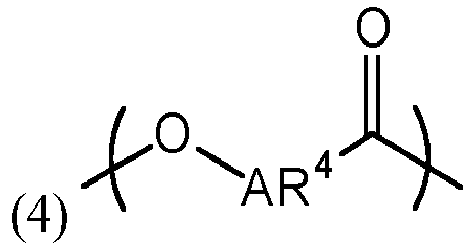
- One embodiment of the disclosure provides a liquid-crystal polymer including at least one repeating unit having a spiro structure, and the liquid-crystal polymer includes 1 mol% to 20 mol% of the repeating unit. For example, the liquid-crystal polymer is composed of the following repeating units: 1 mol% to 20 mol% of


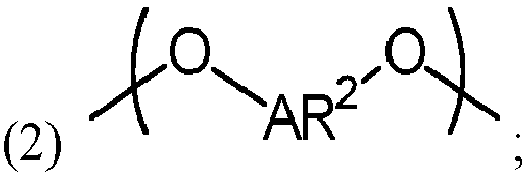
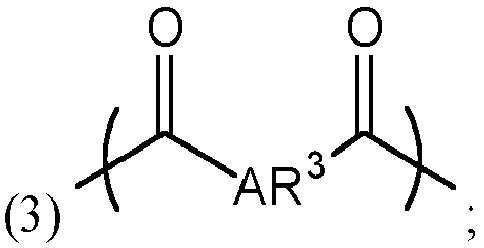


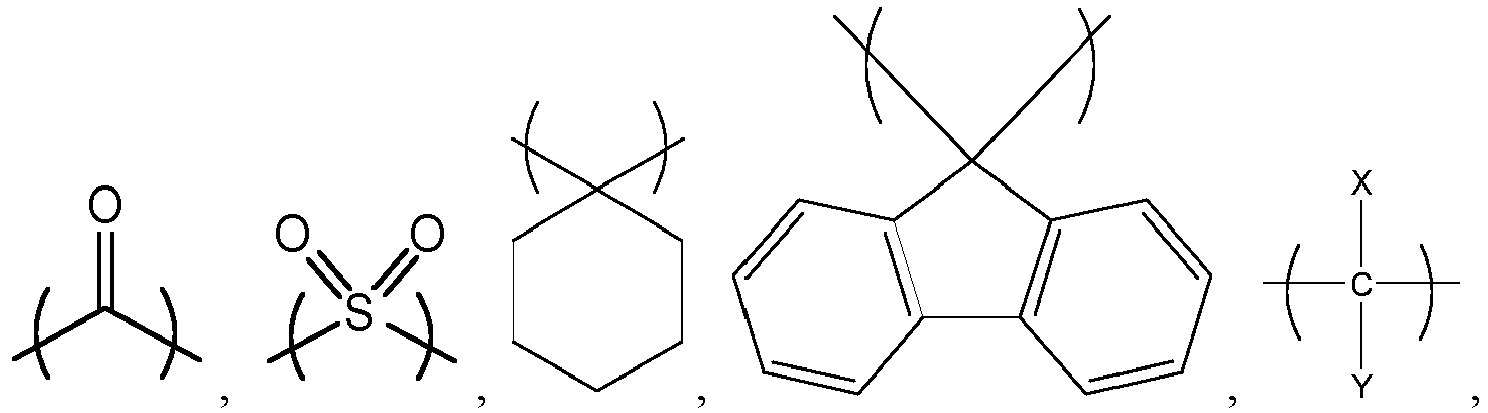


- In some embodiments, the liquid-crystal polymer is composed of the following repeating units: 1 mol% to 20 mol% of


- In some embodiments,



- In some embodiments, the repeating unit




- In the liquid crystal polymer, if the content of
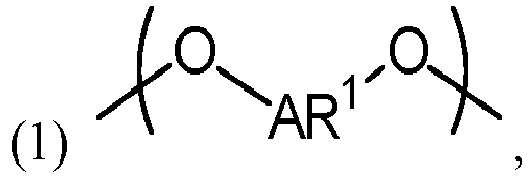


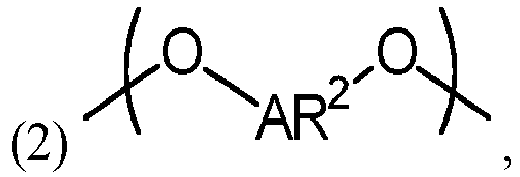


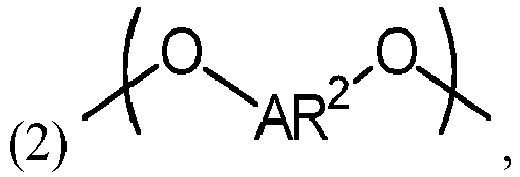


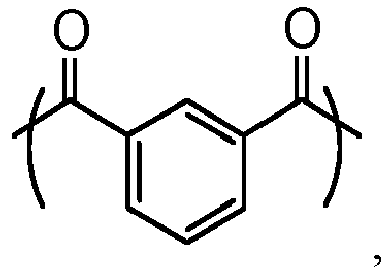


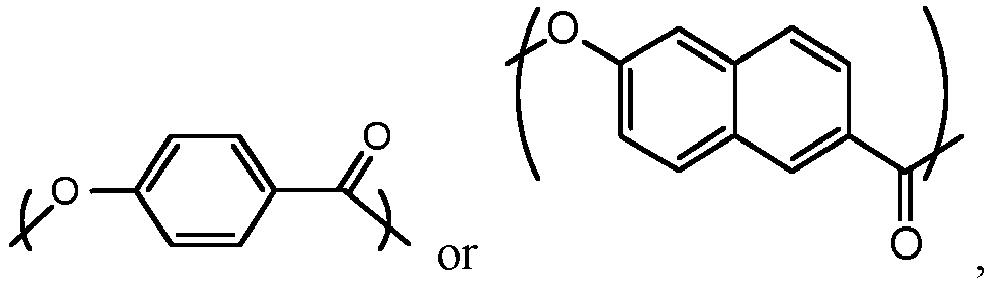


- In some embodiments, the liquid-crystal polymer is composed of the following repeating units: 1 mol% to 15 mol% of


- In some embodiments, the liquid-crystal polymer has an inherent viscosity of 0.1 dL/g to 5 dL/g. If the inherent viscosity of the liquid-crystal polymer is too low, the film formability of the liquid-crystal polymer will be degraded. If the inherent viscosity of the liquid-crystal polymer is too high, the solubility of the liquid-crystal polymer will be degraded.
- The method of manufacturing the liquid-crystal polymer of the disclosure is not specifically limited. For example, the hydroxyl-containing monomer or amine-containing monomer is firstly reacted with excess amount of fatty acid anhydride to perform acylation to form an acylated compound. The acylated compound is reacted with carboxylic acid-containing monomer to perform transesterification to form the liquid-crystal polymer. Alternatively, the acylated compound that is pre-acylated can be reacted with the carboxylic acid-containing monomer to perform the transesterification to form the liquid-crystal polymer.
- The fatty acid anhydride content in the acylation can be 1.0 to 1.2 times the total equivalent of the hydroxyl group and amine group. The acylation can be performed at 130°C to 180°C for 5 minutes to 10 hours, such as 140°C to 160°C for 10 minutes to 3 hours.
- The fatty acid anhydride for the acylation in the disclosure is not specifically limited and may include acetic anhydride, propionic anhydride, butanoic anhydride, isobutanoic anhydride, pentanoic acid, trimethylacetic anhydride, 2-ethylhexanoic anhydride, monochloroacetic anhydride, dichloroacetic anhydride, trichloroacetic anhydride, monobromoacetic anhydride, dibromoacetic anhydride, tribromoacetic anhydride, monofluoroacetic anhydride, difluoroacetic anhydride, trifluoroacetic anhydride, glutaric anhydride, maleic anhydride, succinic anhydride, β-bromopropionic anhydride, the like, or a combination thereof. In some embodiments, the fatty acid anhydride can be acetic anhydride, propionic anhydride, butanoic anhydride, or isobutanoic anhydride.
- A catalyst can be added into the acylation and the transesterification. The catalyst can be a known catalyst for polymerization of polyester, such as metal salt catalyst (e.g. magnesium acetate, tin acetate, tetrabutyl titanate, lead acetate, potassium acetate, antimony trioxide, or the like), or organic catalyst such as heterocyclic compound having at least two nitrogen atoms (e.g. N, N'-dimethylaminopyridine, N-methylimidazole, pyrazole, or the like).
- An additive can be added into the acylation reaction and the transesterification reaction, and the specific additive those are known in the art includes binding agent, anti-precipitation agent, UV absorber, thermal stabilizer, anti-oxidant, or a combination thereof.
- The aromatic liquid-crystal polymer can be manufactured by batch-type equipment, continuous-type equipment, or the like.
- The liquid-crystal polymer can be dissolved in a solvent to form a liquid-crystal polymer solution. The solvent and the liquid-crystal polymer may have a weight ratio of 100:0.01 to 100:100. For example, the liquid-crystal polymer solution may contain 100 parts by weight of the solvent and 0.01 to 100 parts by weight of the liquid-crystal polymer. In one embodiment, the crystal liquid solution contains 100 parts by weight of the solvent and 1 to 40 parts by weight of the liquid-crystal polymer. Alternatively, the liquid-crystal polymer solution contains 100 parts by weight of the solvent and 1 to 20 parts by weight of the liquid-crystal polymer. If the amount of the liquid-crystal polymer is too low, the coated film cannot easily achieve the desired thickness. If the amount of the liquid-crystal polymer is too high, the solution viscosity will be too high to be coated. The liquid-crystal polymer is similar to that described above, and the related description is not repeated here. For example, the solvent can be halogen-containing solvent (such as 1-chlorobutane, chlorobenzene, 1,1-dichloroethane, chloroform, or 1,1,2,2-tetrachloroethane), ether solvent (such as diethyl ether, tetrahydrofuran, or 1,4-dioxolane), ketone solvent (such as acetone or cyclohexanone), ester solvent (such as ethyl acetate), lactone solvent (such as butyl acrylate), carbonate solvent (such as vinyl carbonate or acrylic carbonate), amine solvent (such as triethylamine or pyridine), nitrile solvent (such as acetonitrile), amide solvent (such as N,N'-dimethylformamide, N,N'-dimethylacetamide, tetramethylurea, or N-methylpyrrolidone), nitro solvent (such as nitromethane or nitrobenzene), sulfide solvent (such as dimethyl sulfoxide or butane disulfone), phosphide solvent (hexamethyl phosphoric triamide or tri-n-butyl phosphide), paraffin, olefin, alcohol, aldehyde, aromatic hydrocarbon, terpene, hydrogenated hydrocarbon, heterocyclic compound, or a combination thereof.
- The liquid-crystal polymer solution may further include another resin. For example, at least one resin that is not the liquid-crystal polymer can be added to the liquid-state composition. The resin may include thermoplastic resin or thermosetting resin. The thermoplastic resin can be polypropylene, polyamide, polyester (such as non-liquid-crystal polyallylate), polyphenylene sulfide, polyetherketone, polycarbonate, polyether sulfone, polyphenylene ether, polyetherimide, fluororesin, an elastomer (typically, copolymer of glycidyl methacrylate and polyethylene), or a modified product thereof. The thermosetting resin can be novolac resin, epoxy resin, polyimide resin, or cyanate resin. In addition, the other resin can be dissolved in the solvent for the liquid-crystal polymer when the other resin is adopted.
- In addition, the liquid-crystal polymer solution may further include another additive to enhance the size stability, mechanical properties, thermal conductivity, dielectric properties, thermal stability, light stability, anti-aging properties, coatability, and film formability. The additive may include inorganic filler (e.g. silica, alumina, titania, zirconia, hydrous aluminum silicate, calcium carbonate, calcium phosphate, barium titanate, strontium titanate, or aluminum hydroxide), organic filler (e.g. epoxy resin powder, melamine resin powder, polyurea resin powder, benzomelamine formaldehyde resin powder, styrene resin powder, fluororesin powder, or fluororesin dispersion), anti-oxidant, thermal stabilizer, UV absorber, light stabilizer, anti-aging agent, toughening agent, chain extender, plasticizer, crosslinking agent, additives for coating inks (e.g. defoamer, leveling agent, wetting and dispersing agent, thickener, thixotropy controller, adhesion promoter, or coupling agent), or a combination thereof.
- The liquid-crystal polymer film can be prepared by the following method. First, the described liquid-crystal polymer solution is coated onto a support to make the coated layer flat and uniform. The coating method can be any suitable method such as roll coating, dip coating, spray coating, spin-on coating, curtain coating, slot coating, or screen coating. The support can be copper foil, glass, aluminum foil, or another suitable support. After coating the liquid-crystal polymer solution, the solvent is removed to form the liquid-crystal polymer film on the support. The support can be then optionally removed (depending on the application requirement) by the method such as etching or peeling.
- The method of removing the solvent is not specifically limited, which can be evaporation. The solvent can be evaporated by heating, reducing pressure, ventilation, or the like. In the above methods, the heating evaporation is beneficial in high yield and easy to operate. On the other hand, the coating can be heated in ventilation to evaporate the solvent. For example, the coating can be pre-heated in ventilation drying at 60°C to 200°C for about 10 minutes to 2 hours, and then heated in ventilation at 200°C to 400°C for about 30 minutes to 10 hours.
- The thickness of the liquid-crystal polymer film prepared by the above method is not limited, which can be 1 micrometer to 100 micrometers.
- One embodiment of the disclosure provides a laminated material, including the support and the liquid-crystal polymer film on the support. The support can be copper foil, glass, aluminum foil, or another suitable support. In some embodiments, the laminated material includes the copper foil and the liquid-crystal polymer film on the copper foil. An adhesive layer can be further disposed between the support (e.g. copper foil) and the liquid-crystal polymer film to enhance the adhesion between the support (e.g. copper foil) and the liquid-crystal polymer film. When the laminated material is applied to the printed circuit board, some adhesive having excellent electric properties (e.g. fluororesin) can be introduced to reduce the transmission loss of the printed circuit board. The laminated material can be further manufactured as a laminated material with double-sided copper foils. For example, the laminated materials with single-sided copper foil can be attached to each other and heat pressed to form the laminated material with double-sided copper foils, in which a middle layer of the liquid-crystal polymer film is interposed between a top layer of the copper foil and a bottom layer of the copper foil.
- An appropriate content ratio of




- Below, exemplary embodiments will be described in detail so as to be easily realized by a person having ordinary knowledge in the art. The inventive concept may be embodied in various forms without being limited to the exemplary embodiments set forth herein. Descriptions of well-known parts are omitted for clarity.
- 130.2g of 4,4'-biphenol (0.7 mole), 116.2g of isophthalic acid (0.7 mole), 131.6g of 6-hydroxy-2-naphthalene carboxylic acid (0.7 mole), 95.9g of 4-aminobenzoic acid (0.7 mole), and 286g of acetic anhydride (2.8 mole) were mixed, then heated to 150°C to be reacted at 150°C for 3 hours under nitrogen, and then heated to 320°C to be reacted at 320°C for 1 hour. Thereafter, the temperature was kept at 320°C and the pressure was gradually vacuumed until the reaction achieved ideal viscosity. The vacuum was then broken by using of nitrogen, and the product was extruded out by the nitrogen pressure. The product had an inherent viscosity of 0.81 dL/g, which was measured with an Ostwald viscometer. The product was completely dissolved in N-methyl-2-pyrrolidone (NMP) at 140°C to obtain a solution with a concentration of 0.3 g/dL. The inherent viscosity of the solution at room temperature (25°C) was measured by the Ostwald viscometer. The product had thermal decomposition temperature (Td) of 453 °C (measured by thermogravimetric analysis, TGA). The product had melting point (Tm) of 286°C and glass transition temperature (Tg) of 169°C, which were measured by differential scanning calorimetry (DSC). The product was dissolved in NMP to form a solution with a solid content of 8 wt% (maximum solubility). The solution was coated onto a copper foil and dried, and then heat treated at 200°C to 300°C to obtain a liquid-crystal polymer film (with a thickness of 25 micrometers) attached to the copper foil. The copper foil was then removed by etchant to obtain the liquid-crystal polymer film alone. In the above reaction, the chemical structure of 4,4'-biphenol is


- 86.3g of spirobiphenol (0.28 mole), 78.2g of 4,4'-biphenol (0.42 mole), 116.2g of isophthalic acid (0.7 mole), 131.6g of 6-hydroxy-2-naphthalene carboxylic acid (0.7 mole), 95.9g of 4-aminobenzoic acid (0.7 mole), and 286g of acetic anhydride (2.8 mole) were mixed, then heated to 150°C to be reacted at 150°C for 3 hours under nitrogen, and then heated to 320°C to be reacted at 320°C for 1 hour. Thereafter, the temperature was kept at 320°C and the pressure was gradually vacuumed until the reaction achieved ideal viscosity. The vacuum was then broken by nitrogen, and the product was extruded out by the nitrogen pressure. The product had an inherent viscosity of 0.71 dL/g, which was measured with an Ostwald viscometer. The product was completely dissolved in NMP at 140°C to obtain a solution with a concentration of 0.3 g/dL. The inherent viscosity of the solution at room temperature (25°C) was measured by the Ostwald viscometer. The product had Td of 450°C (measured by TGA). The product had Tm of 243°C and Tg of 165°C, which were measured by DSC. The product was dissolved in NMP to form a solution with a solid content of 16 wt% (maximum solubility). The solution was coated onto a copper foil and dried, and then heat treated at 200°C to 300°C to obtain a liquid-crystal polymer film (with a thickness of 40 micrometers) attached to the copper foil. The copper foil was then removed by etchant to obtain the liquid-crystal polymer film alone.
- In the above reaction, the chemical structure of spirobiphenol is

- 215.6g of spirobiphenol (0.7 mole), 116.2g of isophthalic acid (0.7 mole), 131.6g of 6-hydroxy-2-naphthalene carboxylic acid (0.7 mole), 95.9g of 4-aminobenzoic acid (0.7 mole), and 286g of acetic anhydride (2.8 mole) were mixed, then heated to 150°C to be reacted at 150°C for 3 hours under nitrogen, and then heated to 320°C to be reacted at 320°C for 1 hour. Thereafter, the temperature was kept at 320°C and the pressure was gradually vacuumed until the reaction achieved ideal viscosity. The vacuum was then broken by nitrogen, and the product was extruded out by the nitrogen pressure. The product had an inherent viscosity of 0.2 dL/g, which was measured with an Ostwald viscometer. The product was completely dissolved in NMP at 140°C to obtain a solution with a concentration of 0.3 g/dL. The inherent viscosity of the solution at room temperature (25°C) was measured by the Ostwald viscometer. The product had Td of 413 °C (measured by TGA). The product had no Tm and Tg of 231°C, which were measured by DSC. The product was dissolved in NMP to form a solution with a solid content of 8 wt% (maximum solubility).
- As shown in the comparison of Examples 1 and 2, appropriate amount of the spirobiphenol could efficiently increase the solubility of the liquid-crystal polymer, thereby increasing the thickness of the liquid-crystal polymer film. As shown in the comparison of Examples 2 and 3, an overly high ratio of the spirobiphenol resulted in the liquid-crystal polymer without melting point, and reduced the crystallinity of the liquid-crystal polymer.
- It will be apparent to those skilled in the art that various modifications and variations can be made to the disclosed methods and materials. It is intended that the specification and examples be considered as exemplary only, with the true scope of the disclosure being indicated by the following claims and their equivalents.
Claims (16)
- A liquid-crystal polymer, comprising:
at least one repeating unit having a spiro structure, and the liquid-crystal polymer includes 1 mol% to 20 mol% of the repeating unit. - The liquid-crystal polymer as claimed in claim 1, being composed of the following repeating units:1 mol% to 20 mol% of
 10 mol% to 35 mol% of
 10 mol% to 35 mol% of
 10 mol% to 50 mol% of
 10 mol% to 40 mol% of (5)
 wherein AR1 is
 each of AR2, AR3, AR4, and AR5 is independently AR6 or AR6-Z-AR7, each of AR6 and AR7 is independently


- The liquid-crystal polymer as claimed in claim 2, wherein


- The liquid-crystal polymer as claimed in claim 2 or 3, wherein


- The liquid-crystal polymer as claimed in any one of claims 2 to 4, wherein


- The liquid-crystal polymer as claimed in any one of claims 2 to 5, wherein


- The liquid-crystal polymer as claimed in claim any one of claims 2 to 6, wherein

- The liquid-crystal polymer as claimed in any one of claims 1 to 7, having an inherent viscosity of 0.1 dL/g to 5 dL/g.
- A laminated material, comprising:a support; anda liquid-crystal polymer film disposed on the support, wherein the liquid-crystal polymer film includes the liquid-crystal polymer as claimed in any one of claims 1 to 8.
- The laminated material as claimed in claim 9, further comprising an adhesive layer disposed between the support and the liquid-crystal polymer film.
- A liquid-crystal polymer solution, comprising:100 parts by weight of solvent; and0.01 to 100 parts by weight of the liquid-crystal polymer as claimed in any one of claims 1 to 8.
- The liquid-crystal polymer solution as claimed in claim 11, wherein the solvent comprises halogen-containing solvent, ether solvent, ketone solvent, ester solvent, carbonate solvent, amine solvent, nitrile solvent, amide solvent, nitro solvent, sulfide solvent, phosphide solvent, paraffin, olefin, alcohol, aldehyde, aromatic hydrocarbon, terpene, hydrogenated hydrocarbon, heterocyclic compound, or a combination thereof.
- The liquid-crystal polymer solution as claimed in claim 11 to 12, further comprising another resin, and the other resin comprises thermoplastic resin or thermosetting resin.
- The liquid-crystal polymer solution as claimed in any one of claims 11 to 13, further comprising an additive, and the additive comprises inorganic filler, organic filler, anti-oxidant, UV absorber, thermal stabilizer, light stabilizer, anti-aging agent, toughening agent, chain extender, plasticizer, crosslinking agent, additives for coating inks, or a combination thereof.
- A method of forming liquid-crystal polymer film, comprising:coating the liquid-crystal polymer solution as claimed in any one of claims 11 to 14 onto a support; andremoving the solvent to form a liquid-crystal polymer film on the support.
- The method as claimed in claim 15, further comprising removing the support after forming the liquid-crystal polymer film on the support.
Applications Claiming Priority (1)
| Application Number | Priority Date | Filing Date | Title |
|---|---|---|---|
| US201962869669P | 2019-07-02 | 2019-07-02 |
Publications (2)
| Publication Number | Publication Date |
|---|---|
| EP3763767A1 true EP3763767A1 (en) | 2021-01-13 |
| EP3763767B1 EP3763767B1 (en) | 2022-03-09 |
Family
ID=71170466
Family Applications (1)
| Application Number | Title | Priority Date | Filing Date |
|---|---|---|---|
| EP20183612.9A Active EP3763767B1 (en) | 2019-07-02 | 2020-07-02 | Liquid-crystal polymer, laminated material, liquid-crystal polymer solution, and method of forming liquid-crystal polymer film |
Country Status (5)
| Country | Link |
|---|---|
| US (1) | US11572438B2 (en) |
| EP (1) | EP3763767B1 (en) |
| JP (1) | JP7082159B2 (en) |
| CN (1) | CN112175175B (en) |
| TW (2) | TWI824136B (en) |
Families Citing this family (2)
| Publication number | Priority date | Publication date | Assignee | Title |
|---|---|---|---|---|
| TWI824136B (en) * | 2019-07-02 | 2023-12-01 | 財團法人工業技術研究院 | Liquid crystal polymer, laminated material, liquid crystal polymer solution, and method of forming liquid crystal polymer film |
| JP7750912B2 (en) * | 2022-09-22 | 2025-10-07 | 財團法人工業技術研究院 | Liquid crystal polymer, composition, liquid crystal polymer film, laminate material, and method for forming a liquid crystal polymer film |
Citations (2)
| Publication number | Priority date | Publication date | Assignee | Title |
|---|---|---|---|---|
| JPS6363719A (en) * | 1986-09-04 | 1988-03-22 | Mitsui Toatsu Chem Inc | Polyester |
| US20060036059A1 (en) * | 2004-03-24 | 2006-02-16 | Fuji Photo Film Co., Ltd. | Resin composition, film and image display device utilizing the resin composition |
Family Cites Families (13)
| Publication number | Priority date | Publication date | Assignee | Title |
|---|---|---|---|---|
| DE3542855A1 (en) * | 1985-12-04 | 1987-06-11 | Basf Ag | FULLY FLAVORED MESOMORPHIC POLYESTERAMIDES, THEIR PRODUCTION AND USE |
| JPH07331051A (en) | 1994-05-31 | 1995-12-19 | Nippon G Ii Plast Kk | Flame-retardant polycarbonate-based resin composition |
| US6294640B1 (en) * | 2000-01-14 | 2001-09-25 | Ticona Llc | Stretchable polymers and shaped articles produced by same |
| JP4470390B2 (en) | 2003-04-17 | 2010-06-02 | 住友化学株式会社 | Liquid crystalline polyester solution composition |
| US20070065600A1 (en) * | 2003-10-18 | 2007-03-22 | Robert Hammond-Smith | Barrier coating composition containing a liquid crystalline polymer as well as a device containing this barrier coating composition |
| JP2008297210A (en) * | 2007-05-29 | 2008-12-11 | Fujifilm Corp | Spiro compound, liquid crystal composition, and liquid crystal display device using the same |
| JP5017060B2 (en) | 2007-10-30 | 2012-09-05 | 上野製薬株式会社 | Totally aromatic liquid crystal polyester |
| JP2012033869A (en) | 2010-06-28 | 2012-02-16 | Sumitomo Chemical Co Ltd | Method of manufacturing laminated substrate, laminated substrate and printed circuit board |
| KR20120009705A (en) | 2010-07-20 | 2012-02-02 | 삼성정밀화학 주식회사 | Method for producing aromatic liquid crystal polyester resin and Method for producing aromatic liquid crystal polyester resin compound |
| US10377851B2 (en) * | 2014-09-19 | 2019-08-13 | Ueno Fine Chemicals Industry, Ltd. | Liquid crystal polymer |
| TW201738296A (en) * | 2016-04-29 | 2017-11-01 | 奇美實業股份有限公司 | Liquid crystal alignment agent, liquid crystal alignment film, and liquid crystal display element |
| CN106633859A (en) | 2016-12-29 | 2017-05-10 | 江苏沃特特种材料制造有限公司 | Wholly aromatic liquid crystal polyester resin as well as preparation method and application thereof |
| TWI824136B (en) * | 2019-07-02 | 2023-12-01 | 財團法人工業技術研究院 | Liquid crystal polymer, laminated material, liquid crystal polymer solution, and method of forming liquid crystal polymer film |
-
2020
- 2020-04-13 TW TW109112311A patent/TWI824136B/en active
- 2020-06-23 TW TW109121301A patent/TWI727835B/en active
- 2020-06-30 CN CN202010615947.9A patent/CN112175175B/en active Active
- 2020-07-01 JP JP2020113762A patent/JP7082159B2/en active Active
- 2020-07-01 US US16/918,990 patent/US11572438B2/en active Active
- 2020-07-02 EP EP20183612.9A patent/EP3763767B1/en active Active
Patent Citations (2)
| Publication number | Priority date | Publication date | Assignee | Title |
|---|---|---|---|---|
| JPS6363719A (en) * | 1986-09-04 | 1988-03-22 | Mitsui Toatsu Chem Inc | Polyester |
| US20060036059A1 (en) * | 2004-03-24 | 2006-02-16 | Fuji Photo Film Co., Ltd. | Resin composition, film and image display device utilizing the resin composition |
Also Published As
| Publication number | Publication date |
|---|---|
| TWI727835B (en) | 2021-05-11 |
| CN112175175B (en) | 2023-01-03 |
| JP2021008617A (en) | 2021-01-28 |
| US20210002555A1 (en) | 2021-01-07 |
| TWI824136B (en) | 2023-12-01 |
| EP3763767B1 (en) | 2022-03-09 |
| US11572438B2 (en) | 2023-02-07 |
| TW202102578A (en) | 2021-01-16 |
| CN112175175A (en) | 2021-01-05 |
| JP7082159B2 (en) | 2022-06-07 |
| TW202102579A (en) | 2021-01-16 |
Similar Documents
| Publication | Publication Date | Title |
|---|---|---|
| KR101642518B1 (en) | Composition for forming Board and Printed Circuit Board using the same | |
| JP5066861B2 (en) | Liquid crystal polyester and solution composition thereof | |
| JP6574281B2 (en) | Film and flexible printed wiring board | |
| EP3763766B1 (en) | Liquid-crystal polymer, laminated material, liquid-crystal polymer solution, and method of forming liquid-crystal polymer film | |
| JP6306369B2 (en) | Film production method | |
| EP3763767B1 (en) | Liquid-crystal polymer, laminated material, liquid-crystal polymer solution, and method of forming liquid-crystal polymer film | |
| CN115315499A (en) | Adhesive composition, adhesive sheet, laminate, and printed wiring board | |
| KR20180007306A (en) | Thermoplastic resin composition for high frequency, prepreg, laminate sheet and printed circuit board using the same | |
| KR20110058543A (en) | Composition for Forming Substrate, Prepreg and Substrate Using Same | |
| JP2008030464A (en) | Method for producing liquid crystal polyester laminated film, and liquid crystal polyester laminated film | |
| JP7405297B2 (en) | Polyester, film and adhesive compositions, as well as adhesive sheets, laminates and printed wiring boards | |
| KR20100066378A (en) | Composition for forming a board and printed circuit board using the same | |
| JP7750912B2 (en) | Liquid crystal polymer, composition, liquid crystal polymer film, laminate material, and method for forming a liquid crystal polymer film | |
| KR102820405B1 (en) | Method for Preparing Liquid Crystal Polymer Film |
Legal Events
| Date | Code | Title | Description |
|---|---|---|---|
| PUAI | Public reference made under article 153(3) epc to a published international application that has entered the european phase |
Free format text: ORIGINAL CODE: 0009012 |
|
| STAA | Information on the status of an ep patent application or granted ep patent |
Free format text: STATUS: THE APPLICATION HAS BEEN PUBLISHED |
|
| AK | Designated contracting states |
Kind code of ref document: A1 Designated state(s): AL AT BE BG CH CY CZ DE DK EE ES FI FR GB GR HR HU IE IS IT LI LT LU LV MC MK MT NL NO PL PT RO RS SE SI SK SM TR |
|
| AX | Request for extension of the european patent |
Extension state: BA ME |
|
| RIN1 | Information on inventor provided before grant (corrected) |
Inventor name: CHEN, MENG-HSIN Inventor name: LIN, CHIH-HSIANG Inventor name: CHU, YU-LIN Inventor name: CHIU, JEN-CHUN Inventor name: HO, PO-HSIEN Inventor name: GU, ZU-CHIANG |
|
| STAA | Information on the status of an ep patent application or granted ep patent |
Free format text: STATUS: REQUEST FOR EXAMINATION WAS MADE |
|
| 17P | Request for examination filed |
Effective date: 20210531 |
|
| RBV | Designated contracting states (corrected) |
Designated state(s): AL AT BE BG CH CY CZ DE DK EE ES FI FR GB GR HR HU IE IS IT LI LT LU LV MC MK MT NL NO PL PT RO RS SE SI SK SM TR |
|
| RIN1 | Information on inventor provided before grant (corrected) |
Inventor name: LIN, CHIH-HSIANG Inventor name: CHEN, MENG-HSIN Inventor name: HO, PO-HSIEN Inventor name: GU, ZU-CHIANG Inventor name: CHIU, JEN-CHUN Inventor name: CHU, YU-LIN |
|
| GRAP | Despatch of communication of intention to grant a patent |
Free format text: ORIGINAL CODE: EPIDOSNIGR1 |
|
| STAA | Information on the status of an ep patent application or granted ep patent |
Free format text: STATUS: GRANT OF PATENT IS INTENDED |
|
| INTG | Intention to grant announced |
Effective date: 20211029 |
|
| RIN1 | Information on inventor provided before grant (corrected) |
Inventor name: LIN, CHIH-HSIANG Inventor name: CHEN, MENG-HSIN Inventor name: HO, PO-HSIEN Inventor name: GU, ZU-CHIANG Inventor name: CHIU, JEN-CHUN Inventor name: CHU, YU-LIN |
|
| GRAS | Grant fee paid |
Free format text: ORIGINAL CODE: EPIDOSNIGR3 |
|
| GRAA | (expected) grant |
Free format text: ORIGINAL CODE: 0009210 |
|
| STAA | Information on the status of an ep patent application or granted ep patent |
Free format text: STATUS: THE PATENT HAS BEEN GRANTED |
|
| AK | Designated contracting states |
Kind code of ref document: B1 Designated state(s): AL AT BE BG CH CY CZ DE DK EE ES FI FR GB GR HR HU IE IS IT LI LT LU LV MC MK MT NL NO PL PT RO RS SE SI SK SM TR |
|
| REG | Reference to a national code |
Ref country code: CH Ref legal event code: EP Ref country code: AT Ref legal event code: REF Ref document number: 1474125 Country of ref document: AT Kind code of ref document: T Effective date: 20220315 |
|
| REG | Reference to a national code |
Ref country code: DE Ref legal event code: R096 Ref document number: 602020002133 Country of ref document: DE |
|
| REG | Reference to a national code |
Ref country code: IE Ref legal event code: FG4D |
|
| REG | Reference to a national code |
Ref country code: LT Ref legal event code: MG9D |
|
| REG | Reference to a national code |
Ref country code: NL Ref legal event code: MP Effective date: 20220309 |
|
| PG25 | Lapsed in a contracting state [announced via postgrant information from national office to epo] |
Ref country code: SE Free format text: LAPSE BECAUSE OF FAILURE TO SUBMIT A TRANSLATION OF THE DESCRIPTION OR TO PAY THE FEE WITHIN THE PRESCRIBED TIME-LIMIT Effective date: 20220309 Ref country code: RS Free format text: LAPSE BECAUSE OF FAILURE TO SUBMIT A TRANSLATION OF THE DESCRIPTION OR TO PAY THE FEE WITHIN THE PRESCRIBED TIME-LIMIT Effective date: 20220309 Ref country code: NO Free format text: LAPSE BECAUSE OF FAILURE TO SUBMIT A TRANSLATION OF THE DESCRIPTION OR TO PAY THE FEE WITHIN THE PRESCRIBED TIME-LIMIT Effective date: 20220609 Ref country code: LT Free format text: LAPSE BECAUSE OF FAILURE TO SUBMIT A TRANSLATION OF THE DESCRIPTION OR TO PAY THE FEE WITHIN THE PRESCRIBED TIME-LIMIT Effective date: 20220309 Ref country code: HR Free format text: LAPSE BECAUSE OF FAILURE TO SUBMIT A TRANSLATION OF THE DESCRIPTION OR TO PAY THE FEE WITHIN THE PRESCRIBED TIME-LIMIT Effective date: 20220309 Ref country code: BG Free format text: LAPSE BECAUSE OF FAILURE TO SUBMIT A TRANSLATION OF THE DESCRIPTION OR TO PAY THE FEE WITHIN THE PRESCRIBED TIME-LIMIT Effective date: 20220609 |
|
| REG | Reference to a national code |
Ref country code: AT Ref legal event code: MK05 Ref document number: 1474125 Country of ref document: AT Kind code of ref document: T Effective date: 20220309 |
|
| PG25 | Lapsed in a contracting state [announced via postgrant information from national office to epo] |
Ref country code: LV Free format text: LAPSE BECAUSE OF FAILURE TO SUBMIT A TRANSLATION OF THE DESCRIPTION OR TO PAY THE FEE WITHIN THE PRESCRIBED TIME-LIMIT Effective date: 20220309 Ref country code: GR Free format text: LAPSE BECAUSE OF FAILURE TO SUBMIT A TRANSLATION OF THE DESCRIPTION OR TO PAY THE FEE WITHIN THE PRESCRIBED TIME-LIMIT Effective date: 20220610 Ref country code: FI Free format text: LAPSE BECAUSE OF FAILURE TO SUBMIT A TRANSLATION OF THE DESCRIPTION OR TO PAY THE FEE WITHIN THE PRESCRIBED TIME-LIMIT Effective date: 20220309 |
|
| PG25 | Lapsed in a contracting state [announced via postgrant information from national office to epo] |
Ref country code: NL Free format text: LAPSE BECAUSE OF FAILURE TO SUBMIT A TRANSLATION OF THE DESCRIPTION OR TO PAY THE FEE WITHIN THE PRESCRIBED TIME-LIMIT Effective date: 20220309 |
|
| PG25 | Lapsed in a contracting state [announced via postgrant information from national office to epo] |
Ref country code: SM Free format text: LAPSE BECAUSE OF FAILURE TO SUBMIT A TRANSLATION OF THE DESCRIPTION OR TO PAY THE FEE WITHIN THE PRESCRIBED TIME-LIMIT Effective date: 20220309 Ref country code: SK Free format text: LAPSE BECAUSE OF FAILURE TO SUBMIT A TRANSLATION OF THE DESCRIPTION OR TO PAY THE FEE WITHIN THE PRESCRIBED TIME-LIMIT Effective date: 20220309 Ref country code: RO Free format text: LAPSE BECAUSE OF FAILURE TO SUBMIT A TRANSLATION OF THE DESCRIPTION OR TO PAY THE FEE WITHIN THE PRESCRIBED TIME-LIMIT Effective date: 20220309 Ref country code: PT Free format text: LAPSE BECAUSE OF FAILURE TO SUBMIT A TRANSLATION OF THE DESCRIPTION OR TO PAY THE FEE WITHIN THE PRESCRIBED TIME-LIMIT Effective date: 20220711 Ref country code: ES Free format text: LAPSE BECAUSE OF FAILURE TO SUBMIT A TRANSLATION OF THE DESCRIPTION OR TO PAY THE FEE WITHIN THE PRESCRIBED TIME-LIMIT Effective date: 20220309 Ref country code: EE Free format text: LAPSE BECAUSE OF FAILURE TO SUBMIT A TRANSLATION OF THE DESCRIPTION OR TO PAY THE FEE WITHIN THE PRESCRIBED TIME-LIMIT Effective date: 20220309 Ref country code: CZ Free format text: LAPSE BECAUSE OF FAILURE TO SUBMIT A TRANSLATION OF THE DESCRIPTION OR TO PAY THE FEE WITHIN THE PRESCRIBED TIME-LIMIT Effective date: 20220309 Ref country code: AT Free format text: LAPSE BECAUSE OF FAILURE TO SUBMIT A TRANSLATION OF THE DESCRIPTION OR TO PAY THE FEE WITHIN THE PRESCRIBED TIME-LIMIT Effective date: 20220309 |
|
| PG25 | Lapsed in a contracting state [announced via postgrant information from national office to epo] |
Ref country code: PL Free format text: LAPSE BECAUSE OF FAILURE TO SUBMIT A TRANSLATION OF THE DESCRIPTION OR TO PAY THE FEE WITHIN THE PRESCRIBED TIME-LIMIT Effective date: 20220309 Ref country code: IS Free format text: LAPSE BECAUSE OF FAILURE TO SUBMIT A TRANSLATION OF THE DESCRIPTION OR TO PAY THE FEE WITHIN THE PRESCRIBED TIME-LIMIT Effective date: 20220709 Ref country code: AL Free format text: LAPSE BECAUSE OF FAILURE TO SUBMIT A TRANSLATION OF THE DESCRIPTION OR TO PAY THE FEE WITHIN THE PRESCRIBED TIME-LIMIT Effective date: 20220309 |
|
| REG | Reference to a national code |
Ref country code: DE Ref legal event code: R097 Ref document number: 602020002133 Country of ref document: DE |
|
| PLBE | No opposition filed within time limit |
Free format text: ORIGINAL CODE: 0009261 |
|
| STAA | Information on the status of an ep patent application or granted ep patent |
Free format text: STATUS: NO OPPOSITION FILED WITHIN TIME LIMIT |
|
| PG25 | Lapsed in a contracting state [announced via postgrant information from national office to epo] |
Ref country code: DK Free format text: LAPSE BECAUSE OF FAILURE TO SUBMIT A TRANSLATION OF THE DESCRIPTION OR TO PAY THE FEE WITHIN THE PRESCRIBED TIME-LIMIT Effective date: 20220309 |
|
| 26N | No opposition filed |
Effective date: 20221212 |
|
| PG25 | Lapsed in a contracting state [announced via postgrant information from national office to epo] |
Ref country code: SI Free format text: LAPSE BECAUSE OF FAILURE TO SUBMIT A TRANSLATION OF THE DESCRIPTION OR TO PAY THE FEE WITHIN THE PRESCRIBED TIME-LIMIT Effective date: 20220309 Ref country code: MC Free format text: LAPSE BECAUSE OF FAILURE TO SUBMIT A TRANSLATION OF THE DESCRIPTION OR TO PAY THE FEE WITHIN THE PRESCRIBED TIME-LIMIT Effective date: 20220309 |
|
| REG | Reference to a national code |
Ref country code: BE Ref legal event code: MM Effective date: 20220731 |
|
| PG25 | Lapsed in a contracting state [announced via postgrant information from national office to epo] |
Ref country code: LU Free format text: LAPSE BECAUSE OF NON-PAYMENT OF DUE FEES Effective date: 20220702 Ref country code: FR Free format text: LAPSE BECAUSE OF NON-PAYMENT OF DUE FEES Effective date: 20220731 |
|
| PG25 | Lapsed in a contracting state [announced via postgrant information from national office to epo] |
Ref country code: BE Free format text: LAPSE BECAUSE OF NON-PAYMENT OF DUE FEES Effective date: 20220731 |
|
| PG25 | Lapsed in a contracting state [announced via postgrant information from national office to epo] |
Ref country code: IT Free format text: LAPSE BECAUSE OF FAILURE TO SUBMIT A TRANSLATION OF THE DESCRIPTION OR TO PAY THE FEE WITHIN THE PRESCRIBED TIME-LIMIT Effective date: 20220309 Ref country code: IE Free format text: LAPSE BECAUSE OF NON-PAYMENT OF DUE FEES Effective date: 20220702 |
|
| REG | Reference to a national code |
Ref country code: CH Ref legal event code: PL |
|
| PG25 | Lapsed in a contracting state [announced via postgrant information from national office to epo] |
Ref country code: MK Free format text: LAPSE BECAUSE OF FAILURE TO SUBMIT A TRANSLATION OF THE DESCRIPTION OR TO PAY THE FEE WITHIN THE PRESCRIBED TIME-LIMIT Effective date: 20220309 Ref country code: CY Free format text: LAPSE BECAUSE OF FAILURE TO SUBMIT A TRANSLATION OF THE DESCRIPTION OR TO PAY THE FEE WITHIN THE PRESCRIBED TIME-LIMIT Effective date: 20220309 Ref country code: CH Free format text: LAPSE BECAUSE OF NON-PAYMENT OF DUE FEES Effective date: 20230731 |
|
| PG25 | Lapsed in a contracting state [announced via postgrant information from national office to epo] |
Ref country code: HU Free format text: LAPSE BECAUSE OF FAILURE TO SUBMIT A TRANSLATION OF THE DESCRIPTION OR TO PAY THE FEE WITHIN THE PRESCRIBED TIME-LIMIT; INVALID AB INITIO Effective date: 20200702 |
|
| PG25 | Lapsed in a contracting state [announced via postgrant information from national office to epo] |
Ref country code: TR Free format text: LAPSE BECAUSE OF FAILURE TO SUBMIT A TRANSLATION OF THE DESCRIPTION OR TO PAY THE FEE WITHIN THE PRESCRIBED TIME-LIMIT Effective date: 20220309 |
|
| PG25 | Lapsed in a contracting state [announced via postgrant information from national office to epo] |
Ref country code: MT Free format text: LAPSE BECAUSE OF FAILURE TO SUBMIT A TRANSLATION OF THE DESCRIPTION OR TO PAY THE FEE WITHIN THE PRESCRIBED TIME-LIMIT Effective date: 20220309 |
|
| PGFP | Annual fee paid to national office [announced via postgrant information from national office to epo] |
Ref country code: DE Payment date: 20250729 Year of fee payment: 6 |
|
| PGFP | Annual fee paid to national office [announced via postgrant information from national office to epo] |
Ref country code: GB Payment date: 20250728 Year of fee payment: 6 |