EP3763142B1 - Method and device for correlating in a lawful intercept mediation system - Google Patents
Method and device for correlating in a lawful intercept mediation system Download PDFInfo
- Publication number
- EP3763142B1 EP3763142B1 EP18712279.1A EP18712279A EP3763142B1 EP 3763142 B1 EP3763142 B1 EP 3763142B1 EP 18712279 A EP18712279 A EP 18712279A EP 3763142 B1 EP3763142 B1 EP 3763142B1
- Authority
- EP
- European Patent Office
- Prior art keywords
- session
- specific
- cin
- key
- message
- Prior art date
- Legal status (The legal status is an assumption and is not a legal conclusion. Google has not performed a legal analysis and makes no representation as to the accuracy of the status listed.)
- Active
Links
Images



Classifications
-
- H—ELECTRICITY
- H04—ELECTRIC COMMUNICATION TECHNIQUE
- H04W—WIRELESS COMMUNICATION NETWORKS
- H04W12/00—Security arrangements; Authentication; Protecting privacy or anonymity
- H04W12/02—Protecting privacy or anonymity, e.g. protecting personally identifiable information [PII]
-
- H—ELECTRICITY
- H04—ELECTRIC COMMUNICATION TECHNIQUE
- H04L—TRANSMISSION OF DIGITAL INFORMATION, e.g. TELEGRAPHIC COMMUNICATION
- H04L63/00—Network architectures or network communication protocols for network security
- H04L63/30—Network architectures or network communication protocols for network security for supporting lawful interception, monitoring or retaining of communications or communication related information
- H04L63/306—Network architectures or network communication protocols for network security for supporting lawful interception, monitoring or retaining of communications or communication related information intercepting packet switched data communications, e.g. Web, Internet or IMS communications
-
- H—ELECTRICITY
- H04—ELECTRIC COMMUNICATION TECHNIQUE
- H04L—TRANSMISSION OF DIGITAL INFORMATION, e.g. TELEGRAPHIC COMMUNICATION
- H04L63/00—Network architectures or network communication protocols for network security
- H04L63/08—Network architectures or network communication protocols for network security for authentication of entities
- H04L63/0892—Network architectures or network communication protocols for network security for authentication of entities by using authentication-authorization-accounting [AAA] servers or protocols
-
- H—ELECTRICITY
- H04—ELECTRIC COMMUNICATION TECHNIQUE
- H04L—TRANSMISSION OF DIGITAL INFORMATION, e.g. TELEGRAPHIC COMMUNICATION
- H04L67/00—Network arrangements or protocols for supporting network services or applications
- H04L67/14—Session management
- H04L67/146—Markers for unambiguous identification of a particular session, e.g. session cookie or URL-encoding
Definitions
- the present technology relates to Lawful Interception (LI). More particular, it relates to a method and a device for correlating Intercept Related Information and Content Communication of a target.
- LI Lawful Interception
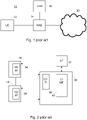
- Figure 1 is schematically illustrating in a fixed broadband system comprising a Network Access 10.
- the most important network elements that also take part to the lawful interception are:
- the user dials-in a NAS server 14 run by the Internet Service Provider (ISP). Before granting access to Internet, the NAS 14 authenticates the user via a RADIUS server 16. When a user and the user's UE 12 is authenticated and authorized, the NAS 14 will assign an IP address to him.
- ISP Internet Service Provider
- Figure 2 is illustrating a reference model of a system for Lawful Interception.
- the standard ETSI TS 102 528 defines the reference model for the interception of the data services.
- An Intercept Mediation and Delivery Unit, IMDU, 30 comprises an LI Mediation Function, LIMF, 40, connected to an Administration Function, AF, 32. Said Mediation Function 40 and Administration Function generate based on said received request a warrant comprising said one or more target identities, and sends said warrant towards an Intercepting Access Point, IAP, via an interface denoted X1_1.
- the lAPs are nodes of a network.
- an Intercept Related Information Internal Interception Function, IRI - IIF, 34 is placed in and connected to a server performing authentication, authorization, and accounting services 16, e.g. a Radius server.
- a Content Communications Internal Intercept Function, CC-IIF, 36 is placed in and connected to a NAS server 14.
- the Content Communication Trigger Function, CCTF, 38 is collocated with the LIMF 40.
- Said CC and IRI are network related data.
- the Intercept Related Information Internal Interception Function, IRI - IIF, 34 is placed in and connected to a server performing authentication, authorization, and accounting services 16, e.g. a Radius server.
- a Content Communications Internal Intercept Function, CC-IIF, 36 is placed in and connected to a NAS server 14.
- Figure 3 schematically illustrates a fixed broadband network access system comprising a system for Lawful Interception.
- the illustrated system is based on the reference model in figure 2 .
- the LI system shall provide access to the intercepted Content Communications, CC, and Intercept Related Information, IRI, of a target and services related to the target on behalf of one or more Law Enforcement Agencies, LEAs.
- the IRI - IIF, 34 sends IRI raw data via an interface X2 to a Mediation Function of IRI and Delivery Function for IRI reporting of the LIMF 40 of an IMDU 30 that generates and delivers to a collection functionality a standardized IRI report based on the received IRI report.
- Said standardized IRI report is sent over a standardized interface HI2 to the LEA.
- the CC-IIF sends CC raw data via an interface X3 to a Mediation Function and Delivery Function for CC reporting of the LIMF 40 of an IMDU 30 that generates and delivers to a collection functionality a standardized CC report based on the received CC report.
- Said standardized CC report is sent over a standardized interface HI3 to the requesting LEA.
- the HI2 and HI3-interfaces represent the interfaces between the LEA and two delivery functions.
- the delivery functions are used:
- Some NAS 14 cannot be flooded with a huge number of LI commands (activation/deactivation of target interception) because these could interfere with non-LI NAS activities.
- the traffic mirroring is a heavy operation for the NAS device that may influence its performance. For this reason the nature of the identity to be used as target type is very important.
- NAS-dependent target identities are preferred by Network Operators because they allow to intercept many user sessions at once with just one warrant.
- the warrant activation command has to be sent only once to the NAS and not for every Acct-Request-Start message as described in ETSI TS 102 528.
- Figure 3 shows the LI of a fixed broadband scenario when the target is NAS-dependent (e.g. NAS-PORT_ID) at prior art.
- User1 12A and User2 12B are sharing the same internet access via the same NAS-Port-ID 18 and are making different sessions.
- a unique session identification is provided to LEA that is target based, and it is not possible to real-time isolate each single user session.
- the Mediation Function is not able to provide such information on HI3 and on the LEA side there's no possibility to real-time follow and re-build the different intercepted user sessions.
- ETSI TS 102 232-3 doesn't cover this particular scenario of NAS-dependent target identities combined with the definition of user session.
- US 2003/0101356 A1 discloses a technique for generating a correlation number for use in lawful interception.
- the document discloses the generation of a PDP-ID (Packet Data Protocol Context Identifier), which is combined with an operator-ID and a Distribution Function-ID to generate the correlation number.
- PDP-ID Packet Data Protocol Context Identifier
- One object of the following disclosure is therefore to propose a solution of the problem to distinguish among different user sessions.
- a method and embodiments thereof are provided. It is a method for correlating in a Lawful Intercept Mediation system, LIMS, received Intercept Related Information, IRI, and, Communications Content, CC, data packets of a target's lawfully intercepted session for deliverance over HI2 and HI3 interfaces, respectively, by means of a session-specific Correlation Identification Number, CIN.
- the method comprises receiving an accounting server message of a first kind or a second kind, acquiring from the received message target identification data, session ID and a Framed-IP-address .
- the method continues by creating the session-specific CIN using said acquired target identification data, the session ID, and the Framed-IP-address.
- the method also includes the following features with respect to the CC data packets which are received over an X3 interface:
- a device is provided. It is a device for correlating in a Lawful Intercept Mediation system, LIMS, received Intercept Related Information, IRI, and, Communications Content, CC, data packets of a target's lawfully intercepted session for deliverance over HI2 and HI3 interfaces, respectively, by means of a session-specific Correlation Identification Number, CIN.
- the device comprising a processor in a processing circuitry being operative to perform the method.
- LEA is able to real-time follow and re-build the intercepted user sessions even in case of NAS-dependent target identities.
- ISP can continue use these types of targets without affecting NAS equipment performances during non-LI activities and adding values in LI information delivered to the LEA.
- This disclosure provides a method to be implemented in an LI Mediation System (LIMS) for detecting any particular intercepted user sessions in case of NAS-dependent target identities in a broadband scenario. It introduces an additional session-specific CIN, i.e. a CIN that is based on a target's ID and session identification to identify user sessions in case of NAS-dependent target identities.
- LIMS LI Mediation System
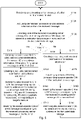
- Figure 4 is a flow chart illustrating a correlation method for solving the problem stated in the background section of this disclosure.
- the Framed IP-address information from IRI-IIF RADIUS messages and source/destination IP-address extracted from IP intercepted packets from CC-IIF are used by the mediation function MF to generate the additional session based CIN to be provided to the LEA over both HI2 and HI3 i/f.
- the proposed solution enables to provide the LEA with one alternative level of correlation information to the existing one related to the intercepted target.
- the proposed solution enables correlation method based on each separate intercepted user sessions.
- the flow chart in figure 4 comprises the steps of a method S100 for correlating in a Lawful Intercept Mediation system, LIMS, received Intercept Related Information, IRI, and, Communications Content, CC, data packets of a target's lawfully intercepted session for deliverance over HI2 and HI3 interfaces, respectively, by means of a session-specific Correlation Identification Number, CIN.
- the method comprises the steps of:
- Figure 5 is a flow chart illustrating an embodiment of the correlation method for solving the problem stated in the background section of this disclosure.
- This method comprises the steps of:
- S130 and S135 - Detecting kind of the received accounting server message for determining whether a session-specific CIN should be stored in a dedicated data storage or removed from the dedicated data storage. If the received message is of the first kind, result of test in S135 is yes, a CIN should be created and stored in a dedicated data storage. If the accounting server message is of the second kind, i.e. a stop message, a CIN has already been created and stored, but not to be used again. The CIN should therefore be deleted in the storage.
- LIMS When LIMS receives the X3 packets from CC-IIF it reads the TID value contained into the X3 header and both the source and destination IP addresses inspecting the intercepted IP packet. Using the above KeyFunction, it builds the key using the TID and source address pair and search for a matching into a dedicated data storage, herein also denoted the CinCacheMap. If the matching is found the related session based CIN is set on HI3, otherwise the operation is repeated using the TID and destination address pair.
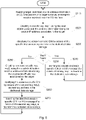
- Figure 6 is a flow chart illustrating a correlation method S200 using the session-specific CIN created in the method S100.
- the method S100 is related to the method S200, as the method S100 provides the session-specific CIN which is used in the HI3 messages transferring the CC IP packets to the LEA.
- method S200 CC packets of a target's lawfully intercepted session are received over an X3 interface.
- the method S200 comprises the steps of:
- step S240 Inserting the identified session-specific CIN in a HI3 message if a match of the key, key1, is found in the dedicated data storage.
- the session-specific CIN has been found by means of the created key, key1, the session-specific CIN is inserted in the HI3 message.
- the above described methods S100 and S200 are preferably used in a fixed broadband system.
- a device is described for implementing such a method.
- Figure 7 is a block diagram illustrating a Lawful Intercept System comprising a device 200 for correlation of IRI and CC data.
- the LI system shall provide access to the intercepted Content Communications, CC, and Intercept Related Information, IRI, of target 12Aand 12B connected to a Network Access Server and services related to the target on behalf of one or more Law Enforcement Agencies, LEAs.
- the IRI - IIF, 34 sends IRI raw data via an interface X2 to a Mediation Function of IRI and Delivery Function for IRI reporting of the LIMF 40 of an IMDU 30 that generates and delivers to a collection functionality a standardized IRI report based on the received IRI report.
- Said standardized IRI report is sent over a standardized interface HI2 to the LEA.
- the CC-IIF sends CC raw data via an interface X3 to a Mediation Function of IRI and Delivery Function for CC reporting of the LIMF 40 of an IMDU 30 that generates and delivers to a collection functionality a standardized CC report based on the received CC report.
- Said standardized CC report is sent over a standardized interface HI3 to the requesting LEA.
- the object of the device 200 is to correlate received Intercept Related Information, IRI, and, Communications Content, CC, data packets of a target's lawfully intercepted session for deliverance over HI2 and HI3 interfaces, respectively.
- the device 200 comprises the mediation function and it is configured to detect the target nature, NAS-dependent or not, based on the target type itself.
- target types are RADIUS Attributes defined in RADIUS RFC's and thus, for their nature, they have static or dynamic characteristics.
- the correlation is performed by means of a session-specific Correlation Identification Number, CIN, that is inserted in the messages delivering received Intercept Related Information, IRI, and, Communications Content, CC, data packets of a target's lawfully intercepted session for deliverance over HI2 and HI3 interfaces, respectively.
- CIN Correlation Identification Number
- Figure 8 is a block diagram illustrating a device in Lawful Intercept Mediation System.
- the device 200 comprises a receiver 210 configured to receive an accounting server message of a first kind or a second kind.
- the device 200 further comprises a data extractor 212 which is configured to acquire by reading identification and address information from the received message identification and address information.
- the device 200 comprises a processor 216 is configured to, if the accounting server message is of the first kind, create a session-specific CIN using said acquired identification, a session ID and address information and create a key using said acquired identification and address.
- the device 200 may comprise a detector 214 configured to detect which kind of the received accounting server message it is for determining whether a session-specific CIN should be created and stored in a dedicated data storage or removed from the dedicated data storage 220.
- Figure 9 is a block diagram illustrating an embodiment of the device in Lawful Intercept Mediation System.
- the device 200 comprises a receiver 210 configured to receive an accounting server message of a first kind or a second kind.
- the device 200 further comprises a data extractor 212 which is configured to acquire by reading identification and address information from the received message identification and address information.
- the device 200 comprises a detector 214 configured to detect which kind of the received accounting server message for determining whether a session-specific CIN should be stored in a dedicated data storage or removed from the dedicated data storage 220.
- the device 200 comprises a processor 216 is configured to, if the accounting server message is of the first kind, create a session-specific CIN using said acquired identification, a session ID and address information and create a key using said acquired identification and address.
- a data storage controller 218 of the device 200 is configured to storing the session-specific CIN with the corresponding key as memory address in the dedicated data storage, said session-CIN being inserted in HI2 and HI3 messages for correlating IRI and CC packets, respectively, corresponding to a target's session.
- a HI2 message generator 222 is configured to insert the session-specific CIN in a HI2 message corresponding to the received accounting server message of the first kind.
- the processor 216 is configured to create a key using said acquired identification and address information.
- the data storage controller 218 is configured to locate by means of the key corresponding session-specific CIN in the dedicated data storage, and the HI2 message generator 222 is configured to insert the session-specific CIN in a HI2 message corresponding to the received accounting server message of the second kind.
- the data storage controller 218 is configured to remove the session-specific CIN by means of the key as memory address in the dedicated data storage, if the accounting server message is of the second kind.
- the device 200 may further be adapted to receive CC packets of a target's lawfully intercepted session are received over an X3 interface by the receiver 210.
- the data extractor 212 being configured to read target identification and address information of CC data packets of a target's lawfully intercepted session received over the X3 interface.
- the processor 216 being configured to create a specific key, key1, using the read identification and the address information being the source-IP-address associated to the target.
- the data storage controller 218 is configured to identify the session-specific CIN by means of the specific key as memory address in the dedicated data storage.
- a HI3 message generator 224 is configured to insert the identified session-specific CIN in a HI3 message if a match of the key, key1, is found in the dedicated data storage and if the first key is not found.
- the processor 216 is configured to create a second specific key, key2, using the read identification and the address information being the destination-IP-address associated to the target, and the data storage controller 218 is configured to identify the session-specific CIN by means of the second key, key2, as memory address in the dedicated data storage 220.
- the HI3 message generator 224 is configured to insert the identified session-specific CIN in a HI3 message if a match of the second key, key2, is found in the dedicated data storage 220.
- the methods S100 and S200 may be implemented in digital electronically circuitry, or in computer hardware, firmware, software, or in combinations of them.
- the device 200 may be implemented in a computer program product tangibly embodied in a machine readable storage device for execution by a programmable processor; and method steps of the invention may be performed by a programmable processor executing a program of instructions to perform functions of the invention by operating on input data and generating output.
- the methods S100 and S200, and the device 200 may advantageously be implemented in one or more computer programs that are executable on a programmable system including at least one programmable processor coupled to receive data and instructions from, and to transmit data and instructions to, a data storage system, at least one input device, and at least one output device.
- Each computer program may be implemented in a high-level procedural or object-oriented programming language, or in assembly or machine language if desired; and in any case, the language may be a compiled or interpreted language.
- a processor will receive instructions and data from a read-only memory and/or a random access memory.
- Storage devices suitable for tangibly embodying computer program instructions and data include all forms of non-volatile memory, including by way of example semiconductor memory devices, such as EPROM (erasable programmable read only memory), EEPROM (electrically erasable programmable read only memory), and flash memory devices; magnetic disks such internal hard disks and removable disks; magneto-optical disks; and CD-ROM (Compact Disc Read-Only Memory) disks. Any of the foregoing may be supplemented by, or incorporated in, specially -designed ASICs (Application Specific Integrated Circuits).
- ASICs Application Specific Integrated Circuits
- Figure 10 is a block diagram illustrating an embodiment of a device in Lawful Intercept Mediation System.
- the device 200 for correlating in a Lawful Intercept Mediation system, LIMS, received Intercept Related Information, IRI, and, Communications Content, CC, data packets of a target's lawfully intercepted session for deliverance over HI2 and HI3 interfaces, respectively, by means of a session-specific Correlation Identification Number, CIN.
- the device comprises a processor 252 in a processing circuitry 250 being operative to perform the steps of the methods S100 and S200.
- the device comprises a processing circuitry 250, which comprises a processor 252 and a memory storage 254 for storing computer program instructions as code and data for enabling the processing of the incoming data.
- Said processing circuitry 250 may also be used for implementing a Delivery Function DF2 and DF3.
- the processor 252 will receive instructions and data from the memory storage 254 implemented by a read-only memory and/or a random access memory.
- Storage devices suitable for tangibly embodying computer program instructions and data include all forms of non-volatile memory.
- a memory storage 220 e.g. a Cache memory, is connected to the processing circuitry 250 for storing for storing different data information to be used and processed in the methods S100 and S200.
- the processing circuitry 250 is capable of communicating with LEAs via interface 256, which is adapted to communicate with lAPs via interfaces X2 and X3, and with the LEAs via interfaces H12 and H13.
- the processor 252 is preferably a programmable processor.
Landscapes
- Engineering & Computer Science (AREA)
- Computer Security & Cryptography (AREA)
- Computer Networks & Wireless Communication (AREA)
- Signal Processing (AREA)
- Computer Hardware Design (AREA)
- Computing Systems (AREA)
- General Engineering & Computer Science (AREA)
- Technology Law (AREA)
- Business, Economics & Management (AREA)
- Accounting & Taxation (AREA)
- Mobile Radio Communication Systems (AREA)
- Data Exchanges In Wide-Area Networks (AREA)
Description
- The present technology relates to Lawful Interception (LI). More particular, it relates to a method and a device for correlating Intercept Related Information and Content Communication of a target.
-
Figure 1 is schematically illustrating in a fixed broadband system comprising aNetwork Access 10. In this scenario, the most important network elements that also take part to the lawful interception are: - a RADIUS
server 16 that is used by Internet Service Providers (ISPs) and enterprises to manage access to the Internet 20 or internal networks, wireless networks, and integrated e-mail service. It performs the Authentication, Authorization and Accounting functions thanks to the AAA protocol. - a Network Access Server, NAS, 14 being the entry point of the
access network 10 for a user equipment, UE, 12. - When a user needs to use the
internet 20, the user dials-in aNAS server 14 run by the Internet Service Provider (ISP). Before granting access to Internet, the NAS 14 authenticates the user via a RADIUSserver 16. When a user and the user's UE 12 is authenticated and authorized, the NAS 14 will assign an IP address to him. -
Figure 2 is illustrating a reference model of a system for Lawful Interception. - The standard ETSI TS 102 528 defines the reference model for the interception of the data services.
- An Intercept Mediation and Delivery Unit, IMDU, 30 comprises an LI Mediation Function, LIMF, 40, connected to an Administration Function, AF, 32. Said Mediation Function 40 and Administration Function generate based on said received request a warrant comprising said one or more target identities, and sends said warrant towards an Intercepting Access Point, IAP, via an interface denoted X1_1. The lAPs are nodes of a network. In the illustrated example, an Intercept Related Information Internal Interception Function, IRI - IIF, 34 is placed in and connected to a server performing authentication, authorization, and
accounting services 16, e.g. a Radius server. A Content Communications Internal Intercept Function, CC-IIF, 36 is placed in and connected to aNAS server 14. - According to the Technical Standard of ETSI TS 102 528, the Content Communication Trigger Function, CCTF, 38 is collocated with the LIMF 40. Said CC and IRI are network related data. The Intercept Related Information Internal Interception Function, IRI - IIF, 34 is placed in and connected to a server performing authentication, authorization, and
accounting services 16, e.g. a Radius server. A Content Communications Internal Intercept Function, CC-IIF, 36 is placed in and connected to aNAS server 14. -
Figure 3 schematically illustrates a fixed broadband network access system comprising a system for Lawful Interception. - The illustrated system is based on the reference model in
figure 2 . - The LI system shall provide access to the intercepted Content Communications, CC, and Intercept Related Information, IRI, of a target and services related to the target on behalf of one or more Law Enforcement Agencies, LEAs. The IRI - IIF, 34 sends IRI raw data via an interface X2 to a Mediation Function of IRI and Delivery Function for IRI reporting of the LIMF 40 of an IMDU 30 that generates and delivers to a collection functionality a standardized IRI report based on the received IRI report. Said standardized IRI report is sent over a standardized interface HI2 to the LEA. The CC-IIF sends CC raw data via an interface X3 to a Mediation Function and Delivery Function for CC reporting of the LIMF 40 of an IMDU 30 that generates and delivers to a collection functionality a standardized CC report based on the received CC report. Said standardized CC report is sent over a standardized interface HI3 to the requesting LEA.
- The HI2 and HI3-interfaces represent the interfaces between the LEA and two delivery functions. The delivery functions are used:
- to distribute the Intercept Related Information (IRI) to the relevant LEA(s) via HI2;
- to distribute the Content of Communication (CC) to the relevant LEA(s) via HI3.
- Some
NAS 14 cannot be flooded with a huge number of LI commands (activation/deactivation of target interception) because these could interfere with non-LI NAS activities. In addition the traffic mirroring is a heavy operation for the NAS device that may influence its performance. For this reason the nature of the identity to be used as target type is very important. - NAS-dependent target identities are preferred by Network Operators because they allow to intercept many user sessions at once with just one warrant.
- To meet customer needs when using NAS-dependent target identity, the warrant activation command has to be sent only once to the NAS and not for every Acct-Request-Start message as described in ETSI TS 102 528.
- The problem with the existing solution is that the NAS-dependent target identities are not the best solution for LEA (LEgal Agencies). In fact, in the intercepted user plane, X3 i/f (X3 interface), it is not possible to distinguish among different user sessions due to the intrinsic not-session based nature of the target and to the fact some vendors don't provide the session identification means on their X3 interface.
-
Figure 3 shows the LI of a fixed broadband scenario when the target is NAS-dependent (e.g. NAS-PORT_ID) at prior art. User1 12A and User2 12B are sharing the same internet access via the same NAS-Port-ID 18 and are making different sessions. At prior art, it is not possible to distinguish among different user sessions. At prior art, a unique session identification is provided to LEA that is target based, and it is not possible to real-time isolate each single user session. - Consequently, the Mediation Function is not able to provide such information on HI3 and on the LEA side there's no possibility to real-time follow and re-build the different intercepted user sessions.
- In addition the ETSI TS 102 232-3 doesn't cover this particular scenario of NAS-dependent target identities combined with the definition of user session.
-
US 2003/0101356 A1 discloses a technique for generating a correlation number for use in lawful interception. The document discloses the generation of a PDP-ID (Packet Data Protocol Context Identifier), which is combined with an operator-ID and a Distribution Function-ID to generate the correlation number. - One object of the following disclosure is therefore to propose a solution of the problem to distinguish among different user sessions.
- According to one aspect of the proposed solution, a method and embodiments thereof are provided. It is a method for correlating in a Lawful Intercept Mediation system, LIMS, received Intercept Related Information, IRI, and, Communications Content, CC, data packets of a target's lawfully intercepted session for deliverance over HI2 and HI3 interfaces, respectively, by means of a session-specific Correlation Identification Number, CIN. The method comprises receiving an accounting server message of a first kind or a second kind, acquiring from the received message target identification data, session ID and a Framed-IP-address . If the accounting server message is of the first kind, the method continues by creating the session-specific CIN using said acquired target identification data, the session ID, and the Framed-IP-address. The method also includes the following features with respect to the CC data packets which are received over an X3 interface:
- reading the target identification data and the Framed-IP-address of the CC data packets of a target's lawfully intercepted session received over the X3 interface;
- creating a specific key, key1, using the read identification and the Framed-IP-address being the source-IP-address associated to the target;
- identifying the session-specific CIN by means of the specific key as memory address in a dedicated data storage;
- inserting the identified session-specific CIN in a HI3 message if a match of the key, key1, is found in the dedicated data storage;
- creating a second specific key, key2, using the read target identification data and the Framed-IP-address being the destination-IP-address associated to the target;
- identifying the session-specific CIN by means of the second key, key2, as memory address in the dedicated data storage;
- inserting the identified session-specific CIN in a HI3 message if a match of the second key, key2, is found in the dedicated data storage.
- According to another aspect of the proposed solution, a device is provided. It is a device for correlating in a Lawful Intercept Mediation system, LIMS, received Intercept Related Information, IRI, and, Communications Content, CC, data packets of a target's lawfully intercepted session for deliverance over HI2 and HI3 interfaces, respectively, by means of a session-specific Correlation Identification Number, CIN. The device comprising a processor in a processing circuitry being operative to perform the method.
- One advantage is that the LEA is able to real-time follow and re-build the intercepted user sessions even in case of NAS-dependent target identities.
- Another advantage is that ISP can continue use these types of targets without affecting NAS equipment performances during non-LI activities and adding values in LI information delivered to the LEA.
- The foregoing, and other, objects, features and advantages of the present invention will be more readily understood upon reading the following detailed description in conjunction with the drawings in which:
-
Figure 1 is a block diagram of an exemplary network in which devices and methods described herein may be implemented; -
Figure 2 is a block diagram illustrating a reference model of a system for Lawful Interception; -
Figure 3 is a block diagram showing the LI of a fixed broadband scenario when the target is NAS-dependent; -
Figure 4 is a flow chart illustrating a proposed correlation method for solving the stated problem; -
Figure 5 is a flow chart illustrating an embodiment of the proposed correlation method for solving the stated problem; -
Figure 6 is a flow chart illustrating a correlation method S200 using the session-specific CIN created in the method S100; -
Figure 7 is a block diagram illustrating a Lawful Intercept System comprising adevice 200 for correlation of IRI and CC data; -
Figure 8 is a block diagram illustrating a device in Lawful Intercept Mediation System; -
Figure 9 is a block diagram illustrating an embodiment of the device in Lawful Intercept Mediation System; -
Figure 10 is a block diagram illustrating another embodiment of a device in Lawful Intercept Mediation System. - In the following description, for purposes of explanation and not limitation, specific details are set forth, such as particular circuits, circuit components, techniques, etc. in order to provide a thorough understanding of the present invention. However, it will be apparent to one skilled in the art that the present invention may be practiced in other embodiments that depart from these specific details. In other instances, detailed descriptions of well-known methods, devices, and circuits are omitted so as not to obscure the description of the present invention with unnecessary detail.
- This disclosure provides a method to be implemented in an LI Mediation System (LIMS) for detecting any particular intercepted user sessions in case of NAS-dependent target identities in a broadband scenario. It introduces an additional session-specific CIN, i.e. a CIN that is based on a target's ID and session identification to identify user sessions in case of NAS-dependent target identities.
-
Figure 4 is a flow chart illustrating a correlation method for solving the problem stated in the background section of this disclosure. - The Framed IP-address information from IRI-IIF RADIUS messages and source/destination IP-address extracted from IP intercepted packets from CC-IIF are used by the mediation function MF to generate the additional session based CIN to be provided to the LEA over both HI2 and HI3 i/f.
- The proposed solution enables to provide the LEA with one alternative level of correlation information to the existing one related to the intercepted target. The proposed solution enables correlation method based on each separate intercepted user sessions.
- The flow chart in
figure 4 comprises the steps of a method S100 for correlating in a Lawful Intercept Mediation system, LIMS, received Intercept Related Information, IRI, and, Communications Content, CC, data packets of a target's lawfully intercepted session for deliverance over HI2 and HI3 interfaces, respectively, by means of a session-specific Correlation Identification Number, CIN. The method comprises the steps of: - S110: - Receiving an accounting server message of a first kind or a second kind. The method makes use of information contained in an accounting server message, e.g. a RADIUS messages coming from RADIUS servers, which is an accounting message. An accounting server message may be of a first kind, e.g. a start message or an interim update message, and the second kind may be a stop message.
- S120: - Acquiring identification and address information from the received message. The read and acquired identification information from the received message is Target Identification Data, TID, and Acct-Sessions-IDentification, and the address information is the Frame-IP-Address, said Frame-IP-Address being associated to the target.
- S140: - Creating a session-specific CIN using said acquired identification, a session ID and address information, if the accounting server message is of the first kind. When LIMS receives on X2 i/f a RADIUS accounting message it extracts the relevant information:
- the target identity, TID;
- the Framed-IP-Address (radius attribute 8)
- Acct-Session-ID (radius attribute 44)
- TID is the target identity used to set interception on IRI-IIF, i.e. the RADIUS server;
- Framed-IP-Address is the dynamic IP address assigned to the user for each specific session;
- Acct-Session-ID is the unique session identifier.
- LIMS builds a session-specific CIN, to be introduced on both HI2 and HI3, as a function of the above three parameters. The session-specific CIN may be created by generating the CIN by means of a CIN generation function CIN = CinFunction(TID, Framed-IP-Address, Acct-Session-ID). Among all the possible target identities it is possible to find RADIUS attributes whose lifecycle is session-specific, e.g account-session-id - RADIUS attribute 44, and others that do not change among different sessions, e.g. NAS-Port-ID - RADIUS attribute 87, that is called NAS-dependent target identities.
- Step 120 may also involve a step and test 130 and S135: - Detecting kind of the received accounting server message for determining whether a session-specific CIN should be stored in a dedicated data storage or removed from the dedicated data storage. If the received message is of the first kind, i.e. result of test in S135 is yes, a CIN should be created in S140 and stored in a dedicated data storage. If the accounting server message is of the second kind, i.e. a stop message, a CIN has already been created and stored, but not to be used again. The CIN should therefore be deleted in the storage.
-
Figure 5 is a flow chart illustrating an embodiment of the correlation method for solving the problem stated in the background section of this disclosure. - This method comprises the steps of:
- S110: - Receiving an accounting server message of a first kind or a second kind.
- S120: - Acquiring identification, a session ID and address information from the received message.
- S110 and S120 are described in the text above related to
figure 4 . - S130 and S135: - Detecting kind of the received accounting server message for determining whether a session-specific CIN should be stored in a dedicated data storage or removed from the dedicated data storage. If the received message is of the first kind, result of test in S135 is yes, a CIN should be created and stored in a dedicated data storage. If the accounting server message is of the second kind, i.e. a stop message, a CIN has already been created and stored, but not to be used again. The CIN should therefore be deleted in the storage.
- Thus, if the accounting server message is of the first kind according to test S135:
- S140: - Creating a session-specific CIN using said acquired identification, the session ID and address information, if the accounting server message is of the first kind.
- S150: - Creating a key using said acquired identification and address information. The key may be created by generating the key by means of a key generation function Key = KeyFunction(TID, Framed-IP-Address). A cache memory map, CinCacheMap, is built creating a key as a function of TID, Framed-IP-Address and the related value of session based CIN. Any cache item is created/updated every time a new Radius Accounting Start or InterimUpdate message is received. Besides, when a RADIUS accounting Stop message is received the related cache item is removed.
- S160: - Storing the session-specific CIN with the corresponding key as memory address in the dedicated data storage, said session-CIN being inserted in HI2 and HI3 messages for correlating IRI and CC packets, respectively, corresponding to a target's session.
The session-specific CIN is stored with the corresponding key as memory address in the dedicated data storage. The session-specific CIN is than used inserted in HI2 and HI3 messages for correlating IRI and CC packets - S170: - Inserting the session-specific CIN in a HI2 message corresponding to the received accounting server message of the first kind. If the received accounting server message is of the first kind, e.g. a start message or an interim update message, the session-specific CIN is inserted in the HI2 message corresponding to the received accounting server message.
- If the accounting server message is of the second kind, following steps are performed:
- S175: - Creating a key using said acquired identification and address information. The key is created by generating the key by means of a key generation function Key = KeyFunction(TID, Framed-IP-Address) using the acquired target identification TID and Framed-IP-Address.
- S178: - Locating by means of the key corresponding session-specific CIN in the dedicated data storage. The key is used as an address to the corresponding session-specific CIN stored in the dedicated data storage CinCacheMap.
- S180: - Inserting the session-specific CIN in a HI2 message corresponding to the received accounting server message of the second kind. If the received accounting server message is of the second kind, i.e. in this case a stop message, the session-specific CIN is inserted in the HI2 message corresponding to the received accounting server message.
- S190: - Removing the session-specific CIN by means of the key as memory address in the dedicated data storage. As a message of the second kind, i.e. in this case a stop message, said message indicates that the corresponding session is finished. The session-specific CIN and the corresponding key are removed from the dedicated data storage.
- When LIMS receives the X3 packets from CC-IIF it reads the TID value contained into the X3 header and both the source and destination IP addresses inspecting the intercepted IP packet. Using the above KeyFunction, it builds the key using the TID and source address pair and search for a matching into a dedicated data storage, herein also denoted the CinCacheMap. If the matching is found the related session based CIN is set on HI3, otherwise the operation is repeated using the TID and destination address pair.
- If no matching is found at all the related HI3 message is sent to the LEA without session based CIN information. That could happen if no RADIUS accounting message related to the given TID and Framed-IP-Address is received on X2 i/f prior of the related X3 intercepted packets.
-
Figure 6 is a flow chart illustrating a correlation method S200 using the session-specific CIN created in the method S100. - The method S100 is related to the method S200, as the method S100 provides the session-specific CIN which is used in the HI3 messages transferring the CC IP packets to the LEA. In method S200, CC packets of a target's lawfully intercepted session are received over an X3 interface. The method S200 comprises the steps of:
- S210: - Reading target identification and address information of CC data packets of a target's lawfully intercepted session received over the X3 interface. When a session of a target is started, CC IP data packets are received via the X3 interface. The target identification TID and the address information of the CC IP data packets are read by the LIMS. The address information may either be the target's source-IP-address or destination-IP-address.
- S220: - Creating a specific key, key1, using the read identification and the address information being the source-IP-address associated to the target. The key is created by means of a key function Key = KeyFunction(TID, source-IP-address), wherein the Targets Identity and source-IP-address is used for creating the key1.
- S230 and S235: - Identifying the session-specific CIN by means of the specific key as memory address in the dedicated data storage. The created key is used for finding the session's specific CIN in the memory storage.
- If the key is found, in test S235, than following step S240 is performed:
S240: - Inserting the identified session-specific CIN in a HI3 message if a match of the key, key1, is found in the dedicated data storage. When the session-specific CIN has been found by means of the created key, key1, the session-specific CIN is inserted in the HI3 message. - If the key is not found and identified (test S235) in the dedicated data storage, following steps are performed:
- S250: - Creating a second specific key, key2, using the read identification and the address information being the destination-IP-address associated to the target. The key function Key = KeyFunction(TID, destination-IP-address) wherein the Targets IDentity and destination-IP-address is used for creating the new key, key2.
- S260: - Identifying the session-specific CIN by means of the second key, key2, as memory address in the dedicated data storage. The new created key is used for finding the session's specific CIN in the memory storage.
- S270: - Inserting the identified session-specific CIN in a HI3 message if a match of the second key, key2, is found in the dedicated data storage.
- The above described methods S100 and S200 are preferably used in a fixed broadband system. In the following, a device is described for implementing such a method.
-
Figure 7 is a block diagram illustrating a Lawful Intercept System comprising adevice 200 for correlation of IRI and CC data. - The LI system shall provide access to the intercepted Content Communications, CC, and Intercept Related Information, IRI, of target 12Aand 12B connected to a Network Access Server and services related to the target on behalf of one or more Law Enforcement Agencies, LEAs. The IRI - IIF, 34 sends IRI raw data via an interface X2 to a Mediation Function of IRI and Delivery Function for IRI reporting of the
LIMF 40 of an IMDU 30 that generates and delivers to a collection functionality a standardized IRI report based on the received IRI report. Said standardized IRI report is sent over a standardized interface HI2 to the LEA. The CC-IIF sends CC raw data via an interface X3 to a Mediation Function of IRI and Delivery Function for CC reporting of theLIMF 40 of an IMDU 30 that generates and delivers to a collection functionality a standardized CC report based on the received CC report. Said standardized CC report is sent over a standardized interface HI3 to the requesting LEA. - The object of the
device 200 is to correlate received Intercept Related Information, IRI, and, Communications Content, CC, data packets of a target's lawfully intercepted session for deliverance over HI2 and HI3 interfaces, respectively. Thedevice 200 comprises the mediation function and it is configured to detect the target nature, NAS-dependent or not, based on the target type itself. Please note that target types are RADIUS Attributes defined in RADIUS RFC's and thus, for their nature, they have static or dynamic characteristics. - The correlation is performed by means of a session-specific Correlation Identification Number, CIN, that is inserted in the messages delivering received Intercept Related Information, IRI, and, Communications Content, CC, data packets of a target's lawfully intercepted session for deliverance over HI2 and HI3 interfaces, respectively.
-
Figure 8 is a block diagram illustrating a device in Lawful Intercept Mediation System. - The
device 200 comprises areceiver 210 configured to receive an accounting server message of a first kind or a second kind. - The
device 200 further comprises adata extractor 212 which is configured to acquire by reading identification and address information from the received message identification and address information. - The
device 200 comprises aprocessor 216 is configured to, if the accounting server message is of the first kind, create a session-specific CIN using said acquired identification, a session ID and address information and create a key using said acquired identification and address. - In addition, the
device 200 may comprise adetector 214 configured to detect which kind of the received accounting server message it is for determining whether a session-specific CIN should be created and stored in a dedicated data storage or removed from thededicated data storage 220. -
Figure 9 is a block diagram illustrating an embodiment of the device in Lawful Intercept Mediation System. - The
device 200 comprises areceiver 210 configured to receive an accounting server message of a first kind or a second kind. - The
device 200 further comprises adata extractor 212 which is configured to acquire by reading identification and address information from the received message identification and address information. - In addition, the
device 200 comprises adetector 214 configured to detect which kind of the received accounting server message for determining whether a session-specific CIN should be stored in a dedicated data storage or removed from thededicated data storage 220. - The
device 200 comprises aprocessor 216 is configured to, if the accounting server message is of the first kind, create a session-specific CIN using said acquired identification, a session ID and address information and create a key using said acquired identification and address. - A
data storage controller 218 of thedevice 200 is configured to storing the session-specific CIN with the corresponding key as memory address in the dedicated data storage, said session-CIN being inserted in HI2 and HI3 messages for correlating IRI and CC packets, respectively, corresponding to a target's session. - A
HI2 message generator 222 is configured to insert the session-specific CIN in a HI2 message corresponding to the received accounting server message of the first kind. - If the accounting server message is of the second kind, the
processor 216 is configured to create a key using said acquired identification and address information. In this case, thedata storage controller 218 is configured to locate by means of the key corresponding session-specific CIN in the dedicated data storage, and theHI2 message generator 222 is configured to insert the session-specific CIN in a HI2 message corresponding to the received accounting server message of the second kind. Thedata storage controller 218 is configured to remove the session-specific CIN by means of the key as memory address in the dedicated data storage, if the accounting server message is of the second kind. - The
device 200 may further be adapted to receive CC packets of a target's lawfully intercepted session are received over an X3 interface by thereceiver 210. - The
data extractor 212 being configured to read target identification and address information of CC data packets of a target's lawfully intercepted session received over the X3 interface. Theprocessor 216 being configured to create a specific key, key1, using the read identification and the address information being the source-IP-address associated to the target. Thedata storage controller 218 is configured to identify the session-specific CIN by means of the specific key as memory address in the dedicated data storage. AHI3 message generator 224 is configured to insert the identified session-specific CIN in a HI3 message if a match of the key, key1, is found in the dedicated data storage and if the first key is not found. Theprocessor 216 is configured to create a second specific key, key2, using the read identification and the address information being the destination-IP-address associated to the target, and thedata storage controller 218 is configured to identify the session-specific CIN by means of the second key, key2, as memory address in thededicated data storage 220. TheHI3 message generator 224 is configured to insert the identified session-specific CIN in a HI3 message if a match of the second key, key2, is found in thededicated data storage 220. - The methods S100 and S200 may be implemented in digital electronically circuitry, or in computer hardware, firmware, software, or in combinations of them. The
device 200 may be implemented in a computer program product tangibly embodied in a machine readable storage device for execution by a programmable processor; and method steps of the invention may be performed by a programmable processor executing a program of instructions to perform functions of the invention by operating on input data and generating output. - The methods S100 and S200, and the
device 200 may advantageously be implemented in one or more computer programs that are executable on a programmable system including at least one programmable processor coupled to receive data and instructions from, and to transmit data and instructions to, a data storage system, at least one input device, and at least one output device. Each computer program may be implemented in a high-level procedural or object-oriented programming language, or in assembly or machine language if desired; and in any case, the language may be a compiled or interpreted language. - Generally, a processor will receive instructions and data from a read-only memory and/or a random access memory. Storage devices suitable for tangibly embodying computer program instructions and data include all forms of non-volatile memory, including by way of example semiconductor memory devices, such as EPROM (erasable programmable read only memory), EEPROM (electrically erasable programmable read only memory), and flash memory devices; magnetic disks such internal hard disks and removable disks; magneto-optical disks; and CD-ROM (Compact Disc Read-Only Memory) disks. Any of the foregoing may be supplemented by, or incorporated in, specially -designed ASICs (Application Specific Integrated Circuits).
-
Figure 10 is a block diagram illustrating an embodiment of a device in Lawful Intercept Mediation System. - The
device 200 for correlating in a Lawful Intercept Mediation system, LIMS, received Intercept Related Information, IRI, and, Communications Content, CC, data packets of a target's lawfully intercepted session for deliverance over HI2 and HI3 interfaces, respectively, by means of a session-specific Correlation Identification Number, CIN. The device comprises aprocessor 252 in aprocessing circuitry 250 being operative to perform the steps of the methods S100 and S200. - The device comprises a
processing circuitry 250, which comprises aprocessor 252 and amemory storage 254 for storing computer program instructions as code and data for enabling the processing of the incoming data. Saidprocessing circuitry 250 may also be used for implementing a Delivery Function DF2 and DF3. Theprocessor 252 will receive instructions and data from thememory storage 254 implemented by a read-only memory and/or a random access memory. Storage devices suitable for tangibly embodying computer program instructions and data include all forms of non-volatile memory. Further, amemory storage 220, e.g. a Cache memory, is connected to theprocessing circuitry 250 for storing for storing different data information to be used and processed in the methods S100 and S200. - The
processing circuitry 250 is capable of communicating with LEAs viainterface 256, which is adapted to communicate with lAPs via interfaces X2 and X3, and with the LEAs via interfaces H12 and H13. Theprocessor 252 is preferably a programmable processor. - A number of embodiments of the present invention have been described. It will be understood that various modifications may be made without departing from the scope of the invention. Therefore, other implementations are within the scope of the following claims defining the invention.
-
- AAA
- Authentication, authorization, accounting
- CC
- Call Content or Communications Content
- CC-IIF
- CC Internal Interception Function
- CCTF
- CC Trigger Function
- CIN
- Correlation Identity Number
- CSP
- Customer Service Provider
- ETSI TS
- European Telecommunications Standards Institute Technical Specification
- IRI
- Intercept Related Information
- IRI-IIF
- Internal Interception Function
- ISP
- Internet Service Provider
- LEA
- Law enforcement agency
- LI
- Lawful Interception
- LIMS
- LI Management System
- MAC Address
- Media access control address
- NAS
- Network Access Server
- NASID
- NAS Identifier
- RADIUS
- Remote Authentication Dial-In User Service
- SIP
- Session Initiation Protocol
- TID
- Target Identifier
- URI
- Uniform Resource Identifier
Claims (5)
- Method (S100) for correlating in a Lawful Intercept Mediation system, LIMS, received Intercept Related Information, IRI, and, Communications Content, CC, data packets of a target's lawfully intercepted session for deliverance over HI2 and HI3 interfaces, respectively, by means of a session-specific Correlation Identification Number, CIN, and wherein the CC data packets are received over an X3 interface, the method characterized by:- receiving (S110) an accounting server message of a first kind or a second kind;- acquiring (S120) from the received message a target identification data, a session ID, and a Framed-IP-address associated with the target;- creating (S140) the session-specific CIN using said acquired target identification data, the session ID, and the Framed-IP-address, if the accounting server message is of the first kind,- reading (S210) the target identification data and the Framed-IP-address of the CC data packets of a target's lawfully intercepted session received over the X3 interface;- creating (S220) a specific key, key1, using the read identification and the Framed-IP-address being the source-IP-address associated to the target;- identifying (S230;S235) the session-specific CIN by means of the specific key as memory address in a dedicated data storage; and if the key is found (S235):- inserting (S240) the identified session-specific CIN in a HI3 message if a match of the key, key1, is found in the dedicated data storage; and if the first key is not found (S235):- creating (S250) a second specific key, key2, using the read target identification data and the Framed-IP-address being the destination-IP-address associated to the target;- identifying (S260) the session-specific CIN by means of the second key, key2, as memory address in the dedicated data storage;- inserting the identified session-specific CIN in a HI3 message if a match of the second key, key2, is found in the dedicated data storage.
- The method according to claim 1, wherein the method further comprises the steps of:- detecting (S130, S135) kind of the received accounting server message for determining whether a session-specific CIN should be stored in a dedicated data storage or removed from the dedicated data storage;and if the accounting server message is of the first kind:- creating (S150) a key using said acquired target identification data and the Framed-IP-address;- storing (S160) the session-specific CIN with the corresponding key as memory address in the dedicated data storage, said session-CIN being inserted in HI2 and HI3 messages for correlating IRI and CC packets, respectively, corresponding to a target's session;- inserting (S170) the session-specific CIN in a HI2 message corresponding to the received accounting server message of the first kind;or if the accounting server message is of the second kind;- creating (S175) a key using said acquired target identification data and the Framed-IP-address;- locating (S178) by means of the key corresponding session-specific CIN in the dedicated data storage;- inserting (S180) the session-specific CIN in a HI2 message corresponding to the received accounting server message of the second kind;- removing (S190) the session-specific CIN by means of the key as memory address in the dedicated data storage.
- The method according to claim 1 or 2, wherein the accounting server message is an accounting RADIUS message, the first kind being a start message or an interim update message, and the second kind being a stop message.
- The method according to any one of claims 1-3, wherein the specific first key, key1, and the specific second key, key2, is created by means of the Framed-IP-address such that key1 ≠ key2.
- Device (200) for correlating in a Lawful Intercept Mediation system, LIMS, received Intercept Related Information, IRI, and, Communications Content, CC, data packets of a target's lawfully intercepted session for deliverance over HI2 and HI3 interfaces, respectively, by means of a session-specific Correlation Identification Number, CIN, the device comprising a processor (252) in a processing circuitry (250) being operative to perform the method of any of claims 1 - 4.
Applications Claiming Priority (1)
| Application Number | Priority Date | Filing Date | Title |
|---|---|---|---|
| PCT/SE2018/050214 WO2019172810A1 (en) | 2018-03-07 | 2018-03-07 | Method and device for correlating in a lawful intercept mediation system |
Publications (2)
| Publication Number | Publication Date |
|---|---|
| EP3763142A1 EP3763142A1 (en) | 2021-01-13 |
| EP3763142B1 true EP3763142B1 (en) | 2022-05-04 |
Family
ID=61692035
Family Applications (1)
| Application Number | Title | Priority Date | Filing Date |
|---|---|---|---|
| EP18712279.1A Active EP3763142B1 (en) | 2018-03-07 | 2018-03-07 | Method and device for correlating in a lawful intercept mediation system |
Country Status (3)
| Country | Link |
|---|---|
| US (1) | US11290500B2 (en) |
| EP (1) | EP3763142B1 (en) |
| WO (1) | WO2019172810A1 (en) |
Families Citing this family (4)
| Publication number | Priority date | Publication date | Assignee | Title |
|---|---|---|---|---|
| US11290455B2 (en) | 2019-05-30 | 2022-03-29 | Palo Alto Networks, Inc. | Network entity id AAA |
| EP3981124A1 (en) * | 2019-06-10 | 2022-04-13 | Telefonaktiebolaget Lm Ericsson (Publ) | Handling of lawfully intercepted sip messages |
| US11601818B2 (en) * | 2021-03-15 | 2023-03-07 | Microsoft Technology Licensing, Llc | Cleaning up hanging lawful interception resources from a triggered point of interception when a triggering function fails |
| EP4309396B1 (en) * | 2021-03-15 | 2025-04-23 | Microsoft Technology Licensing, LLC | Cleaning up hanging lawful interception resources from a triggered point of interception when a triggering function fails |
Family Cites Families (6)
| Publication number | Priority date | Publication date | Assignee | Title |
|---|---|---|---|---|
| JP3593100B2 (en) | 1999-09-07 | 2004-11-24 | ノキア コーポレイション | Ordered delivery of intercepted data |
| US6754834B2 (en) * | 2001-11-23 | 2004-06-22 | Nokia Corporation | Technique for generating correlation number for use in lawful interception of telecommunications traffic |
| US7903719B2 (en) * | 2005-12-21 | 2011-03-08 | Qualcomm Incorporated | Optimal use of resources for signal processors |
| WO2008032771A1 (en) * | 2006-09-15 | 2008-03-20 | Kyocera Corporation | Communication system, communication device, and data frame retransmission control method |
| EP3342116B1 (en) | 2015-08-27 | 2019-04-03 | Telefonaktiebolaget LM Ericsson (PUBL) | Methods and devices for detecting and correlating data packet flows in a lawful interception system |
| JP6653222B2 (en) * | 2016-06-06 | 2020-02-26 | マクセル株式会社 | Hand exercise training menu generation system, method, and program |
-
2018
- 2018-03-07 EP EP18712279.1A patent/EP3763142B1/en active Active
- 2018-03-07 US US16/978,572 patent/US11290500B2/en active Active
- 2018-03-07 WO PCT/SE2018/050214 patent/WO2019172810A1/en not_active Ceased
Also Published As
| Publication number | Publication date |
|---|---|
| WO2019172810A1 (en) | 2019-09-12 |
| EP3763142A1 (en) | 2021-01-13 |
| US11290500B2 (en) | 2022-03-29 |
| US20210021645A1 (en) | 2021-01-21 |
Similar Documents
| Publication | Publication Date | Title |
|---|---|---|
| US10063377B2 (en) | Network-based authentication for third party content | |
| CN106537875B (en) | Privacy protection gateway for vehicle | |
| KR20220156970A (en) | Processing electronic tokens | |
| US9369873B2 (en) | Network application function authorisation in a generic bootstrapping architecture | |
| US11290500B2 (en) | Method and device for correlating in a lawful intercept mediation system | |
| US12244651B2 (en) | Lawful interception security | |
| GB2573262A (en) | Mobile identification method based on SIM card and device-related parameters | |
| US11974120B2 (en) | System and method for securing a communication network | |
| US10091249B2 (en) | Method and system for synchronization of two databases in a lawful interception network by comparing checksum values | |
| CN108353259B (en) | Method and device for authentication of billing records for use of anonymized network services | |
| CN110913011A (en) | Session keeping method, session keeping device, readable storage medium and electronic equipment | |
| CN106538003A (en) | Method and entity in LI system for positioning of target connected to wi-fi network | |
| US12556556B2 (en) | System and method for detecting fraudulent network traffic | |
| CN116471591A (en) | Method, system and computer readable medium for providing call intelligence | |
| EP2566126A1 (en) | Secure storage of provisioning data on network for control of lawful intercept | |
| US12524420B2 (en) | System and method for social media forensics | |
| US20150358336A1 (en) | Method for detecting fraud in an ims network | |
| Rupprecht | Enhancing the security of 4G and 5G mobile networks on protocol layer two | |
| CN105191226A (en) | Method and arrangement for adjusting quality of service of a dedicated channel based on service awareness | |
| CN113453226A (en) | Dual-stack user permission authentication method and device | |
| US20260140962A1 (en) | System and method for social media forensics | |
| CN116193421B (en) | Verification method, device and system of network connection information and electronic equipment | |
| KR101257067B1 (en) | Method and system for lawful interception of internet services | |
| CN116684113B (en) | A service processing method and related apparatus based on Software Defined Perimeter (SDP) | |
| US11832108B2 (en) | Lawful interception in mobile connect |
Legal Events
| Date | Code | Title | Description |
|---|---|---|---|
| STAA | Information on the status of an ep patent application or granted ep patent |
Free format text: STATUS: UNKNOWN |
|
| STAA | Information on the status of an ep patent application or granted ep patent |
Free format text: STATUS: THE INTERNATIONAL PUBLICATION HAS BEEN MADE |
|
| PUAI | Public reference made under article 153(3) epc to a published international application that has entered the european phase |
Free format text: ORIGINAL CODE: 0009012 |
|
| STAA | Information on the status of an ep patent application or granted ep patent |
Free format text: STATUS: REQUEST FOR EXAMINATION WAS MADE |
|
| 17P | Request for examination filed |
Effective date: 20201007 |
|
| AK | Designated contracting states |
Kind code of ref document: A1 Designated state(s): AL AT BE BG CH CY CZ DE DK EE ES FI FR GB GR HR HU IE IS IT LI LT LU LV MC MK MT NL NO PL PT RO RS SE SI SK SM TR |
|
| AX | Request for extension of the european patent |
Extension state: BA ME |
|
| DAV | Request for validation of the european patent (deleted) | ||
| DAX | Request for extension of the european patent (deleted) | ||
| GRAP | Despatch of communication of intention to grant a patent |
Free format text: ORIGINAL CODE: EPIDOSNIGR1 |
|
| STAA | Information on the status of an ep patent application or granted ep patent |
Free format text: STATUS: GRANT OF PATENT IS INTENDED |
|
| INTG | Intention to grant announced |
Effective date: 20211202 |
|
| GRAS | Grant fee paid |
Free format text: ORIGINAL CODE: EPIDOSNIGR3 |
|
| GRAA | (expected) grant |
Free format text: ORIGINAL CODE: 0009210 |
|
| STAA | Information on the status of an ep patent application or granted ep patent |
Free format text: STATUS: THE PATENT HAS BEEN GRANTED |
|
| AK | Designated contracting states |
Kind code of ref document: B1 Designated state(s): AL AT BE BG CH CY CZ DE DK EE ES FI FR GB GR HR HU IE IS IT LI LT LU LV MC MK MT NL NO PL PT RO RS SE SI SK SM TR |
|
| REG | Reference to a national code |
Ref country code: GB Ref legal event code: FG4D |
|
| REG | Reference to a national code |
Ref country code: CH Ref legal event code: EP |
|
| REG | Reference to a national code |
Ref country code: AT Ref legal event code: REF Ref document number: 1490448 Country of ref document: AT Kind code of ref document: T Effective date: 20220515 |
|
| REG | Reference to a national code |
Ref country code: IE Ref legal event code: FG4D Ref country code: DE Ref legal event code: R096 Ref document number: 602018034892 Country of ref document: DE |
|
| REG | Reference to a national code |
Ref country code: LT Ref legal event code: MG9D |
|
| REG | Reference to a national code |
Ref country code: NL Ref legal event code: MP Effective date: 20220504 |
|
| REG | Reference to a national code |
Ref country code: AT Ref legal event code: MK05 Ref document number: 1490448 Country of ref document: AT Kind code of ref document: T Effective date: 20220504 |
|
| PG25 | Lapsed in a contracting state [announced via postgrant information from national office to epo] |
Ref country code: SE Free format text: LAPSE BECAUSE OF FAILURE TO SUBMIT A TRANSLATION OF THE DESCRIPTION OR TO PAY THE FEE WITHIN THE PRESCRIBED TIME-LIMIT Effective date: 20220504 Ref country code: PT Free format text: LAPSE BECAUSE OF FAILURE TO SUBMIT A TRANSLATION OF THE DESCRIPTION OR TO PAY THE FEE WITHIN THE PRESCRIBED TIME-LIMIT Effective date: 20220905 Ref country code: NO Free format text: LAPSE BECAUSE OF FAILURE TO SUBMIT A TRANSLATION OF THE DESCRIPTION OR TO PAY THE FEE WITHIN THE PRESCRIBED TIME-LIMIT Effective date: 20220804 Ref country code: NL Free format text: LAPSE BECAUSE OF FAILURE TO SUBMIT A TRANSLATION OF THE DESCRIPTION OR TO PAY THE FEE WITHIN THE PRESCRIBED TIME-LIMIT Effective date: 20220504 Ref country code: LT Free format text: LAPSE BECAUSE OF FAILURE TO SUBMIT A TRANSLATION OF THE DESCRIPTION OR TO PAY THE FEE WITHIN THE PRESCRIBED TIME-LIMIT Effective date: 20220504 Ref country code: HR Free format text: LAPSE BECAUSE OF FAILURE TO SUBMIT A TRANSLATION OF THE DESCRIPTION OR TO PAY THE FEE WITHIN THE PRESCRIBED TIME-LIMIT Effective date: 20220504 Ref country code: GR Free format text: LAPSE BECAUSE OF FAILURE TO SUBMIT A TRANSLATION OF THE DESCRIPTION OR TO PAY THE FEE WITHIN THE PRESCRIBED TIME-LIMIT Effective date: 20220805 Ref country code: FI Free format text: LAPSE BECAUSE OF FAILURE TO SUBMIT A TRANSLATION OF THE DESCRIPTION OR TO PAY THE FEE WITHIN THE PRESCRIBED TIME-LIMIT Effective date: 20220504 Ref country code: BG Free format text: LAPSE BECAUSE OF FAILURE TO SUBMIT A TRANSLATION OF THE DESCRIPTION OR TO PAY THE FEE WITHIN THE PRESCRIBED TIME-LIMIT Effective date: 20220804 Ref country code: AT Free format text: LAPSE BECAUSE OF FAILURE TO SUBMIT A TRANSLATION OF THE DESCRIPTION OR TO PAY THE FEE WITHIN THE PRESCRIBED TIME-LIMIT Effective date: 20220504 |
|
| PG25 | Lapsed in a contracting state [announced via postgrant information from national office to epo] |
Ref country code: RS Free format text: LAPSE BECAUSE OF FAILURE TO SUBMIT A TRANSLATION OF THE DESCRIPTION OR TO PAY THE FEE WITHIN THE PRESCRIBED TIME-LIMIT Effective date: 20220504 Ref country code: PL Free format text: LAPSE BECAUSE OF FAILURE TO SUBMIT A TRANSLATION OF THE DESCRIPTION OR TO PAY THE FEE WITHIN THE PRESCRIBED TIME-LIMIT Effective date: 20220504 Ref country code: LV Free format text: LAPSE BECAUSE OF FAILURE TO SUBMIT A TRANSLATION OF THE DESCRIPTION OR TO PAY THE FEE WITHIN THE PRESCRIBED TIME-LIMIT Effective date: 20220504 Ref country code: IS Free format text: LAPSE BECAUSE OF FAILURE TO SUBMIT A TRANSLATION OF THE DESCRIPTION OR TO PAY THE FEE WITHIN THE PRESCRIBED TIME-LIMIT Effective date: 20220904 |
|
| PG25 | Lapsed in a contracting state [announced via postgrant information from national office to epo] |
Ref country code: SM Free format text: LAPSE BECAUSE OF FAILURE TO SUBMIT A TRANSLATION OF THE DESCRIPTION OR TO PAY THE FEE WITHIN THE PRESCRIBED TIME-LIMIT Effective date: 20220504 Ref country code: SK Free format text: LAPSE BECAUSE OF FAILURE TO SUBMIT A TRANSLATION OF THE DESCRIPTION OR TO PAY THE FEE WITHIN THE PRESCRIBED TIME-LIMIT Effective date: 20220504 Ref country code: RO Free format text: LAPSE BECAUSE OF FAILURE TO SUBMIT A TRANSLATION OF THE DESCRIPTION OR TO PAY THE FEE WITHIN THE PRESCRIBED TIME-LIMIT Effective date: 20220504 Ref country code: ES Free format text: LAPSE BECAUSE OF FAILURE TO SUBMIT A TRANSLATION OF THE DESCRIPTION OR TO PAY THE FEE WITHIN THE PRESCRIBED TIME-LIMIT Effective date: 20220504 Ref country code: EE Free format text: LAPSE BECAUSE OF FAILURE TO SUBMIT A TRANSLATION OF THE DESCRIPTION OR TO PAY THE FEE WITHIN THE PRESCRIBED TIME-LIMIT Effective date: 20220504 Ref country code: DK Free format text: LAPSE BECAUSE OF FAILURE TO SUBMIT A TRANSLATION OF THE DESCRIPTION OR TO PAY THE FEE WITHIN THE PRESCRIBED TIME-LIMIT Effective date: 20220504 Ref country code: CZ Free format text: LAPSE BECAUSE OF FAILURE TO SUBMIT A TRANSLATION OF THE DESCRIPTION OR TO PAY THE FEE WITHIN THE PRESCRIBED TIME-LIMIT Effective date: 20220504 |
|
| REG | Reference to a national code |
Ref country code: DE Ref legal event code: R097 Ref document number: 602018034892 Country of ref document: DE |
|
| PLBE | No opposition filed within time limit |
Free format text: ORIGINAL CODE: 0009261 |
|
| STAA | Information on the status of an ep patent application or granted ep patent |
Free format text: STATUS: NO OPPOSITION FILED WITHIN TIME LIMIT |
|
| PG25 | Lapsed in a contracting state [announced via postgrant information from national office to epo] |
Ref country code: AL Free format text: LAPSE BECAUSE OF FAILURE TO SUBMIT A TRANSLATION OF THE DESCRIPTION OR TO PAY THE FEE WITHIN THE PRESCRIBED TIME-LIMIT Effective date: 20220504 |
|
| 26N | No opposition filed |
Effective date: 20230207 |
|
| PG25 | Lapsed in a contracting state [announced via postgrant information from national office to epo] |
Ref country code: SI Free format text: LAPSE BECAUSE OF FAILURE TO SUBMIT A TRANSLATION OF THE DESCRIPTION OR TO PAY THE FEE WITHIN THE PRESCRIBED TIME-LIMIT Effective date: 20220504 |
|
| PGFP | Annual fee paid to national office [announced via postgrant information from national office to epo] |
Ref country code: DE Payment date: 20230329 Year of fee payment: 6 |
|
| PG25 | Lapsed in a contracting state [announced via postgrant information from national office to epo] |
Ref country code: MC Free format text: LAPSE BECAUSE OF FAILURE TO SUBMIT A TRANSLATION OF THE DESCRIPTION OR TO PAY THE FEE WITHIN THE PRESCRIBED TIME-LIMIT Effective date: 20220504 |
|
| REG | Reference to a national code |
Ref country code: CH Ref legal event code: PL |
|
| GBPC | Gb: european patent ceased through non-payment of renewal fee |
Effective date: 20230307 |
|
| REG | Reference to a national code |
Ref country code: BE Ref legal event code: MM Effective date: 20230331 |
|
| PG25 | Lapsed in a contracting state [announced via postgrant information from national office to epo] |
Ref country code: LU Free format text: LAPSE BECAUSE OF NON-PAYMENT OF DUE FEES Effective date: 20230307 |
|
| REG | Reference to a national code |
Ref country code: IE Ref legal event code: MM4A |
|
| PG25 | Lapsed in a contracting state [announced via postgrant information from national office to epo] |
Ref country code: GB Free format text: LAPSE BECAUSE OF NON-PAYMENT OF DUE FEES Effective date: 20230307 |
|
| PG25 | Lapsed in a contracting state [announced via postgrant information from national office to epo] |
Ref country code: LI Free format text: LAPSE BECAUSE OF NON-PAYMENT OF DUE FEES Effective date: 20230331 Ref country code: IT Free format text: LAPSE BECAUSE OF FAILURE TO SUBMIT A TRANSLATION OF THE DESCRIPTION OR TO PAY THE FEE WITHIN THE PRESCRIBED TIME-LIMIT Effective date: 20220504 Ref country code: IE Free format text: LAPSE BECAUSE OF NON-PAYMENT OF DUE FEES Effective date: 20230307 Ref country code: GB Free format text: LAPSE BECAUSE OF NON-PAYMENT OF DUE FEES Effective date: 20230307 Ref country code: FR Free format text: LAPSE BECAUSE OF NON-PAYMENT OF DUE FEES Effective date: 20230331 Ref country code: CH Free format text: LAPSE BECAUSE OF NON-PAYMENT OF DUE FEES Effective date: 20230331 |
|
| PG25 | Lapsed in a contracting state [announced via postgrant information from national office to epo] |
Ref country code: BE Free format text: LAPSE BECAUSE OF NON-PAYMENT OF DUE FEES Effective date: 20230331 |
|
| REG | Reference to a national code |
Ref country code: DE Ref legal event code: R119 Ref document number: 602018034892 Country of ref document: DE |
|
| PG25 | Lapsed in a contracting state [announced via postgrant information from national office to epo] |
Ref country code: BG Free format text: LAPSE BECAUSE OF FAILURE TO SUBMIT A TRANSLATION OF THE DESCRIPTION OR TO PAY THE FEE WITHIN THE PRESCRIBED TIME-LIMIT Effective date: 20220504 |
|
| PG25 | Lapsed in a contracting state [announced via postgrant information from national office to epo] |
Ref country code: BG Free format text: LAPSE BECAUSE OF FAILURE TO SUBMIT A TRANSLATION OF THE DESCRIPTION OR TO PAY THE FEE WITHIN THE PRESCRIBED TIME-LIMIT Effective date: 20220504 |
|
| PG25 | Lapsed in a contracting state [announced via postgrant information from national office to epo] |
Ref country code: DE Free format text: LAPSE BECAUSE OF NON-PAYMENT OF DUE FEES Effective date: 20241001 |
|
| PG25 | Lapsed in a contracting state [announced via postgrant information from national office to epo] |
Ref country code: DE Free format text: LAPSE BECAUSE OF NON-PAYMENT OF DUE FEES Effective date: 20241001 |
|
| PG25 | Lapsed in a contracting state [announced via postgrant information from national office to epo] |
Ref country code: CY Free format text: LAPSE BECAUSE OF FAILURE TO SUBMIT A TRANSLATION OF THE DESCRIPTION OR TO PAY THE FEE WITHIN THE PRESCRIBED TIME-LIMIT; INVALID AB INITIO Effective date: 20180307 |
|
| PG25 | Lapsed in a contracting state [announced via postgrant information from national office to epo] |
Ref country code: HU Free format text: LAPSE BECAUSE OF FAILURE TO SUBMIT A TRANSLATION OF THE DESCRIPTION OR TO PAY THE FEE WITHIN THE PRESCRIBED TIME-LIMIT; INVALID AB INITIO Effective date: 20180307 |
|
| PG25 | Lapsed in a contracting state [announced via postgrant information from national office to epo] |
Ref country code: TR Free format text: LAPSE BECAUSE OF FAILURE TO SUBMIT A TRANSLATION OF THE DESCRIPTION OR TO PAY THE FEE WITHIN THE PRESCRIBED TIME-LIMIT Effective date: 20220504 |