EP3762630B1 - Electrically controlled automatic locker differential - Google Patents
Electrically controlled automatic locker differential Download PDFInfo
- Publication number
- EP3762630B1 EP3762630B1 EP19709031.9A EP19709031A EP3762630B1 EP 3762630 B1 EP3762630 B1 EP 3762630B1 EP 19709031 A EP19709031 A EP 19709031A EP 3762630 B1 EP3762630 B1 EP 3762630B1
- Authority
- EP
- European Patent Office
- Prior art keywords
- adjustment
- differential assembly
- pawl
- leg
- actuator
- Prior art date
- Legal status (The legal status is an assumption and is not a legal conclusion. Google has not performed a legal analysis and makes no representation as to the accuracy of the status listed.)
- Active
Links
Images


Classifications
-
- F—MECHANICAL ENGINEERING; LIGHTING; HEATING; WEAPONS; BLASTING
- F16—ENGINEERING ELEMENTS AND UNITS; GENERAL MEASURES FOR PRODUCING AND MAINTAINING EFFECTIVE FUNCTIONING OF MACHINES OR INSTALLATIONS; THERMAL INSULATION IN GENERAL
- F16H—GEARING
- F16H48/00—Differential gearings
- F16H48/20—Arrangements for suppressing or influencing the differential action, e.g. locking devices
- F16H48/30—Arrangements for suppressing or influencing the differential action, e.g. locking devices using externally-actuatable means
- F16H48/34—Arrangements for suppressing or influencing the differential action, e.g. locking devices using externally-actuatable means using electromagnetic or electric actuators
-
- B—PERFORMING OPERATIONS; TRANSPORTING
- B60—VEHICLES IN GENERAL
- B60K—ARRANGEMENT OR MOUNTING OF PROPULSION UNITS OR OF TRANSMISSIONS IN VEHICLES; ARRANGEMENT OR MOUNTING OF PLURAL DIVERSE PRIME-MOVERS IN VEHICLES; AUXILIARY DRIVES FOR VEHICLES; INSTRUMENTATION OR DASHBOARDS FOR VEHICLES; ARRANGEMENTS IN CONNECTION WITH COOLING, AIR INTAKE, GAS EXHAUST OR FUEL SUPPLY OF PROPULSION UNITS IN VEHICLES
- B60K17/00—Arrangement or mounting of transmissions in vehicles
- B60K17/04—Arrangement or mounting of transmissions in vehicles characterised by arrangement, location or kind of gearing
- B60K17/16—Arrangement or mounting of transmissions in vehicles characterised by arrangement, location or kind of gearing of differential gearing
- B60K17/18—Arrangement or mounting of transmissions in vehicles characterised by arrangement, location or kind of gearing of differential gearing in which the differential movement is obtained by resilient means
-
- B—PERFORMING OPERATIONS; TRANSPORTING
- B60—VEHICLES IN GENERAL
- B60K—ARRANGEMENT OR MOUNTING OF PROPULSION UNITS OR OF TRANSMISSIONS IN VEHICLES; ARRANGEMENT OR MOUNTING OF PLURAL DIVERSE PRIME-MOVERS IN VEHICLES; AUXILIARY DRIVES FOR VEHICLES; INSTRUMENTATION OR DASHBOARDS FOR VEHICLES; ARRANGEMENTS IN CONNECTION WITH COOLING, AIR INTAKE, GAS EXHAUST OR FUEL SUPPLY OF PROPULSION UNITS IN VEHICLES
- B60K17/00—Arrangement or mounting of transmissions in vehicles
- B60K17/04—Arrangement or mounting of transmissions in vehicles characterised by arrangement, location or kind of gearing
- B60K17/16—Arrangement or mounting of transmissions in vehicles characterised by arrangement, location or kind of gearing of differential gearing
- B60K17/20—Arrangement or mounting of transmissions in vehicles characterised by arrangement, location or kind of gearing of differential gearing in which the differential movement is limited
-
- F—MECHANICAL ENGINEERING; LIGHTING; HEATING; WEAPONS; BLASTING
- F16—ENGINEERING ELEMENTS AND UNITS; GENERAL MEASURES FOR PRODUCING AND MAINTAINING EFFECTIVE FUNCTIONING OF MACHINES OR INSTALLATIONS; THERMAL INSULATION IN GENERAL
- F16H—GEARING
- F16H48/00—Differential gearings
- F16H48/06—Differential gearings with gears having orbital motion
- F16H48/08—Differential gearings with gears having orbital motion comprising bevel gears
-
- F—MECHANICAL ENGINEERING; LIGHTING; HEATING; WEAPONS; BLASTING
- F16—ENGINEERING ELEMENTS AND UNITS; GENERAL MEASURES FOR PRODUCING AND MAINTAINING EFFECTIVE FUNCTIONING OF MACHINES OR INSTALLATIONS; THERMAL INSULATION IN GENERAL
- F16H—GEARING
- F16H48/00—Differential gearings
- F16H48/12—Differential gearings without gears having orbital motion
- F16H48/14—Differential gearings without gears having orbital motion with cams
-
- F—MECHANICAL ENGINEERING; LIGHTING; HEATING; WEAPONS; BLASTING
- F16—ENGINEERING ELEMENTS AND UNITS; GENERAL MEASURES FOR PRODUCING AND MAINTAINING EFFECTIVE FUNCTIONING OF MACHINES OR INSTALLATIONS; THERMAL INSULATION IN GENERAL
- F16H—GEARING
- F16H48/00—Differential gearings
- F16H48/20—Arrangements for suppressing or influencing the differential action, e.g. locking devices
- F16H48/24—Arrangements for suppressing or influencing the differential action, e.g. locking devices using positive clutches or brakes
-
- B—PERFORMING OPERATIONS; TRANSPORTING
- B60—VEHICLES IN GENERAL
- B60Y—INDEXING SCHEME RELATING TO ASPECTS CROSS-CUTTING VEHICLE TECHNOLOGY
- B60Y2400/00—Special features of vehicle units
- B60Y2400/80—Differentials
- B60Y2400/802—Differential locking systems
-
- F—MECHANICAL ENGINEERING; LIGHTING; HEATING; WEAPONS; BLASTING
- F16—ENGINEERING ELEMENTS AND UNITS; GENERAL MEASURES FOR PRODUCING AND MAINTAINING EFFECTIVE FUNCTIONING OF MACHINES OR INSTALLATIONS; THERMAL INSULATION IN GENERAL
- F16H—GEARING
- F16H48/00—Differential gearings
- F16H48/20—Arrangements for suppressing or influencing the differential action, e.g. locking devices
- F16H2048/204—Control of arrangements for suppressing differential actions
-
- F—MECHANICAL ENGINEERING; LIGHTING; HEATING; WEAPONS; BLASTING
- F16—ENGINEERING ELEMENTS AND UNITS; GENERAL MEASURES FOR PRODUCING AND MAINTAINING EFFECTIVE FUNCTIONING OF MACHINES OR INSTALLATIONS; THERMAL INSULATION IN GENERAL
- F16H—GEARING
- F16H48/00—Differential gearings
- F16H48/20—Arrangements for suppressing or influencing the differential action, e.g. locking devices
- F16H2048/204—Control of arrangements for suppressing differential actions
- F16H2048/208—Control of arrangements for suppressing differential actions using flywheels
Definitions
- the invention relates to differential control mechanisms for a motor vehicle and with more particularity to an electric locker differential with an electrically adjustable automatic locking mechanism.
- an automatic locker differential is configured to allow two wheels on a motor vehicle to operate at different speeds.
- a locked mode the differential is locked so that the two wheels rotate at the same speed.
- Mechanical or automatic locker differentials are known and may include various mechanical structures to switch between the open and locked conditions of the differential.
- the mechanical structure may include flyweights that are actuated by rotation such that the weights move against a biasing force in response to a centrifugal force due to the rotation.
- flyweights are structured to include a predetermined or designed condition at which they operate to open or lock the differential.
- an automatic locker differential may include a variable or adjustable locking and unlocking ability such that various conditions may be selected to perform the locking and unlocking of the differential to accommodate various driving conditions and provide product intelligence.
- the present invention is an electric locker differential assembly that includes a first and second side gear.
- a pinion gear set is disposed between the first side gear and the second side gears.
- An engagement mechanism is configured to have at least a portion of the engagement mechanism moveable from a retracted position to an extended position to lock and unlock the differential assembly.
- An electrical adjustment mechanism is configured to engage and at least partially control movement of the engagement mechanism.
- the electrical adjustment mechanism includes an actuator operably connected with an adjustment biasing spring having a first leg retained by the adjustment mechanism and a second leg connected with the engagement mechanism wherein a biasing force of the adjustment biasing spring is varied.
- a differential assembly that includes a first and second side gear.
- a pinion gear set is disposed between the first side gear and the second side gears.
- An engagement shaft includes flyweights disposed on the engagement shaft which are moveable between retracted and extended positions to lock and unlock the differential assembly.
- a lockout shaft includes a pawl disposed thereon.
- An electrical adjustment mechanism includes an electric actuator operably connected with an adjustment nut.
- An adjustment biasing spring includes a first leg retained by the adjustment nut and a second leg connected with the pawl wherein movement of the adjustment nut by the actuator varies a biasing force applied to the pawl.
- a differential assembly that includes a first and second side gear.
- a pinion gear set is disposed between the first side gear and the second side gears.
- An engagement shaft includes flyweights disposed on the engagement shaft which are moveable between retracted and extended positions to lock and unlock the differential assembly.
- a lockout shaft includes a pawl disposed thereon.
- An adjustment mechanism includes an actuator operably connected with an adjustment nut.
- An adjustment biasing spring includes a first leg retained by the adjustment nut and a second leg connected with the pawl wherein movement of the adjustment nut by the electric actuator varies a preload applied to the pawl.
- torque may be provided by an engine to a transmission to a power transfer unit to a drive shaft to a pinion gear to a ring gear around a differential case to a pinion shaft within the differential.
- meshed pinion gears 22 and 24 transfer differentiated or undifferentiated torque to side gears 26 and 28.
- the side gears 26, 28 may transfer torque to drive axles. Torque is then transferred to the wheels of the vehicle.
- a differential In an open or unlocked condition, a differential is configured to allow two wheels on a motor vehicle to operate at different speeds. In a locked condition, the two wheels are locked so that they rotate at the same speed.
- An automatic locking differential uses a mechanical device to actuate between the preset locked and open conditions.
- the differential 10 includes a mechanical engagement mechanism including a lockout shaft 30 and an engagement shaft 32. Both of the shafts 30, 32 include opposing ends that are retained by the differential case.
- the engagement shaft 32 may include a shaft gear 34. End plates 36 may have flyweights 38 between them and a flyweight spring 40 may bias the flyweights 38 to a retracted position.
- the engagement shaft 32 may rotate with a cam plate 42 by meshing of the shaft gear 34 with rim teeth 44 formed on the cam plate 42.
- the flyweights 38 move outward to an extended position due to a centrifugal force that is greater than the biasing force of the flyweight spring 40.
- the lockout shaft 30 also includes a counterweight 48 to pull the pawl 46 out of the available range of the flyweights 38 if the vehicle travels over a predetermined speed such that the differential cannot enter the locked condition.
- the flyweights 38 are biased in a closed position. In the locked condition, the flyweights 38 have moved to engage the pawl 46. The engagement of the pawl 46 and the flyweights 38 blocks the engagement shaft 32 from rotation. As described above, the shaft gear 34 is geared to rim teeth 44 of the cam plate 42 which creates sufficient force to move the cam plate 42.
- the cam plate 42 has ramps 50 separated by valleys 52.
- the ramps 50 slide against corresponding side gear ramps 54.
- ramps 50 rest in side gear valleys 56, and side gear ramps 54 rest in valleys 52.
- the ramps 50 slide out of the valleys 56 and against opposed ramps 54 to lock the differential as will be described in more detail below.
- the side gear 26 is braced against the pinion gears 22 and 24 and motion of the side gear 26 as the cam plate 42 "ramps-up" can be passed to lock plates 58.
- lock plate 58 moves axially along side gear 26 to engage outer splines 60.
- the lock plate 58 is coupled to rotate with the side gear 26.
- the side gear 26 is locked to rotate with the differential case.
- the pinion shaft is locked to the differential case.
- the pinion gears 22 and 24 are locked to rotate with the side gear 26 via the meshing of side gear 26 with the pinion gears 22, 24. Therefore, the side gear 28 must rotate at the same rate as the side gear 26.
- side gear 28 further includes an outer spline for coupling to clutch pack 62.
- the clutch pack 62 can be used to provide limited slip capability to the differential.
- the position of the pawl 46 on the lockout shaft 30 may be adjusted relative to the engagement shaft 32 and subsequently relative to the flyweights 38.
- the position may be adjusted or varied by an electrical adjustment mechanism which includes an electric actuator 66 operably connected with an adjustment nut 68.
- An adjustment biasing spring 70 includes a first leg 72 retained by the adjustment nut 68 and a second leg 74 connected with the pawl 46. In this manner the position of the adjustment nut 68 may alter the angular position of the leg 72 such that the biasing force applied to the pawl 46 is varied to adjust a position of the pawl 42 relative to the flyweights 38.
- This adjustment provides controllable locking at different slip speed for traction and also controllable unlocking at different vehicle speed for
- Various actuators 66 may be utilized to adjust a position of the leg 72, such as a linear electric solenoid or a rotational electric solenoid.
- the actuator 66 may include an electric solenoid mechanism which provides linear motion that is translated to rotational motion by the adjustment nut 68.
- the adjustment nut 68 applies a variable preload to the pawl 46 due to the angular displacement of the adjustment biasing spring 70.
- FIG. 3 there is shown a free body diagram displaying the variable position of the adjustment biasing spring 70 having legs 72 and 74.
- the balance of the spring load and the eccentric force on the pawl 46 determines the equilibrium angular position of the pawl 46 which engages the flyweights 38 to lock the differential.
- the locking condition is a function of the angular positions of the pawl 42 and flyweight 38 ( ⁇ vo and ⁇ so) and the rotational unlocking vehicle speeds ⁇ V and locking wheel slip speed ⁇ S .
- the actuator 66 may be a three position solenoid having a neutral, forward and reverse position that is actuated by a DC current.
- the solenoid stator may be attached to the housing of the axle.
- the armature of the solenoid is movable along an axial direction of the differential, as shown in Figure 1 .
- control of the current to the actuator or solenoid 66 maybe selected by various systems.
- the solenoid position may be selected by a selection interface or position switch or driver selection 76 on a vehicle dashboard, where the driver can easily access and activate the switch depending on road conditions and driver intention.
- the switch position will send a signal to the control unit or ECU 80 which may be separate or a part of the electric drive or actuator mechanism 66 to adjust a position of the adjustment biasing spring 70 varying an engagement position of the pawl 46.
- the control of the electric actuator can also be integrated into a vehicle control unit or ECU.
- the control unit or ECU 80 includes a computer processor, communication ports, memory, and programming.
- the control unit 80 may be a portion of an engine control unit (ECU).
- the ECU may include a control algorithm for torque management intelligence and system condition and health diagnosis.
- the ECU may receive signals such as the steering, slip and vehicle speed as well as signals including the yaw and an ABS or brake signal. These signals may be processed and result in a command signal (Comd.) to the electric actuator 66.
- the electric actuator 66 may send a signal to the ECU 80 regarding the health or condition of the electric actuator 66.
- the electric actuator may lock the electric locker 20 and receive a position signal from the electric locker 20.
Landscapes
- Engineering & Computer Science (AREA)
- General Engineering & Computer Science (AREA)
- Mechanical Engineering (AREA)
- Physics & Mathematics (AREA)
- Electromagnetism (AREA)
- Chemical & Material Sciences (AREA)
- Combustion & Propulsion (AREA)
- Transportation (AREA)
- Retarders (AREA)
Description
- The invention relates to differential control mechanisms for a motor vehicle and with more particularity to an electric locker differential with an electrically adjustable automatic locking mechanism.
- Generally in an open mode, an automatic locker differential is configured to allow two wheels on a motor vehicle to operate at different speeds. In a locked mode, the differential is locked so that the two wheels rotate at the same speed. Mechanical or automatic locker differentials are known and may include various mechanical structures to switch between the open and locked conditions of the differential. For example, the mechanical structure may include flyweights that are actuated by rotation such that the weights move against a biasing force in response to a centrifugal force due to the rotation. Typically such flyweights are structured to include a predetermined or designed condition at which they operate to open or lock the differential.
- From
WO 2015/057258 A1 there is known an electric locker differential assembly as it is defined in the pre-characterizing portion of claim 1. - It would be desirable to have an automatic locker differential that may include a variable or adjustable locking and unlocking ability such that various conditions may be selected to perform the locking and unlocking of the differential to accommodate various driving conditions and provide product intelligence.
- The present invention is an electric locker differential assembly that includes a first and second side gear. A pinion gear set is disposed between the first side gear and the second side gears. An engagement mechanism is configured to have at least a portion of the engagement mechanism moveable from a retracted position to an extended position to lock and unlock the differential assembly. An electrical adjustment mechanism is configured to engage and at least partially control movement of the engagement mechanism. The electrical adjustment mechanism includes an actuator operably connected with an adjustment biasing spring having a first leg retained by the adjustment mechanism and a second leg connected with the engagement mechanism wherein a biasing force of the adjustment biasing spring is varied.
- In another aspect, there is disclosed a differential assembly that includes a first and second side gear. A pinion gear set is disposed between the first side gear and the second side gears. An engagement shaft includes flyweights disposed on the engagement shaft which are moveable between retracted and extended positions to lock and unlock the differential assembly. A lockout shaft includes a pawl disposed thereon. An electrical adjustment mechanism includes an electric actuator operably connected with an adjustment nut. An adjustment biasing spring includes a first leg retained by the adjustment nut and a second leg connected with the pawl wherein movement of the adjustment nut by the actuator varies a biasing force applied to the pawl.
- In a further aspect, there is disclosed a differential assembly that includes a first and second side gear. A pinion gear set is disposed between the first side gear and the second side gears. An engagement shaft includes flyweights disposed on the engagement shaft which are moveable between retracted and extended positions to lock and unlock the differential assembly. A lockout shaft includes a pawl disposed thereon. An adjustment mechanism includes an actuator operably connected with an adjustment nut. An adjustment biasing spring includes a first leg retained by the adjustment nut and a second leg connected with the pawl wherein movement of the adjustment nut by the electric actuator varies a preload applied to the pawl.
-
-
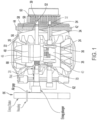
Figure 1 is a partial sectional view of a differential including an electrical adjustment mechanism; -
Figure 2 is a perspective view of a lockout shaft and an engagement shaft; -
Figure 3 is a vector diagram of the lockout shaft and engagement shaft detailing the pawl, flyweight and pawl biasing spring; -
Figure 4 is a diagram of an electrical control and communication system for the differential. - Generally, for a vehicle, torque may be provided by an engine to a transmission to a power transfer unit to a drive shaft to a pinion gear to a ring gear around a differential case to a pinion shaft within the differential. As the pinion shaft rotates, meshed
pinion gears side gears - In an open or unlocked condition, a differential is configured to allow two wheels on a motor vehicle to operate at different speeds. In a locked condition, the two wheels are locked so that they rotate at the same speed. An automatic locking differential uses a mechanical device to actuate between the preset locked and open conditions.
- Referring to
Figure 1 , the differential 10 includes a mechanical engagement mechanism including alockout shaft 30 and anengagement shaft 32. Both of theshafts - The
engagement shaft 32 may include a shaft gear 34. End plates 36 may haveflyweights 38 between them and aflyweight spring 40 may bias theflyweights 38 to a retracted position. Theengagement shaft 32 may rotate with acam plate 42 by meshing of the shaft gear 34 with rim teeth 44 formed on thecam plate 42. When theengagement shaft 32 rotates due to a difference between the speeds of the two wheels, and once the difference of rotation speed is above a predetermined value, theflyweights 38 move outward to an extended position due to a centrifugal force that is greater than the biasing force of theflyweight spring 40. - In order to lock the differential at least one of the
flyweights 38 must engage with apawl 46 on thelockout shaft 30. Thelockout shaft 30 also includes acounterweight 48 to pull thepawl 46 out of the available range of theflyweights 38 if the vehicle travels over a predetermined speed such that the differential cannot enter the locked condition. - In the open or unlocked condition the
flyweights 38 are biased in a closed position. In the locked condition, theflyweights 38 have moved to engage thepawl 46. The engagement of thepawl 46 and theflyweights 38 blocks theengagement shaft 32 from rotation. As described above, the shaft gear 34 is geared to rim teeth 44 of thecam plate 42 which creates sufficient force to move thecam plate 42. - The
cam plate 42 hasramps 50 separated by valleys 52. Theramps 50 slide against correspondingside gear ramps 54. When in the unlocked condition, ramps 50 rest inside gear valleys 56, andside gear ramps 54 rest in valleys 52. In the locked mode, theramps 50 slide out of thevalleys 56 and againstopposed ramps 54 to lock the differential as will be described in more detail below. - The
side gear 26 is braced against thepinion gears side gear 26 as thecam plate 42 "ramps-up" can be passed to lock plates 58. As thecam plate 42 "ramps-up," lock plate 58 moves axially alongside gear 26 to engage outer splines 60. The lock plate 58 is coupled to rotate with theside gear 26. When the lock plate 58 is engaged, theside gear 26 is locked to rotate with the differential case. The pinion shaft is locked to the differential case. Thepinion gears side gear 26 via the meshing ofside gear 26 with thepinion gears side gear 28 must rotate at the same rate as theside gear 26. In the depicted view,side gear 28 further includes an outer spline for coupling to clutch pack 62. The clutch pack 62 can be used to provide limited slip capability to the differential. - Referring to
Figures 1-3 , in one aspect, the position of thepawl 46 on thelockout shaft 30 may be adjusted relative to theengagement shaft 32 and subsequently relative to theflyweights 38. The position may be adjusted or varied by an electrical adjustment mechanism which includes anelectric actuator 66 operably connected with anadjustment nut 68. Anadjustment biasing spring 70 includes afirst leg 72 retained by theadjustment nut 68 and asecond leg 74 connected with thepawl 46. In this manner the position of theadjustment nut 68 may alter the angular position of theleg 72 such that the biasing force applied to thepawl 46 is varied to adjust a position of thepawl 42 relative to theflyweights 38. This adjustment provides controllable locking at different slip speed for traction and also controllable unlocking at different vehicle speed for -
Various actuators 66 may be utilized to adjust a position of theleg 72, such as a linear electric solenoid or a rotational electric solenoid. In the depicted embodiment ofFigure 1 , theactuator 66 may include an electric solenoid mechanism which provides linear motion that is translated to rotational motion by theadjustment nut 68. Theadjustment nut 68 applies a variable preload to thepawl 46 due to the angular displacement of theadjustment biasing spring 70. - Referring to
Figure 3 , there is shown a free body diagram displaying the variable position of theadjustment biasing spring 70 havinglegs pawl 46 determines the equilibrium angular position of thepawl 46 which engages theflyweights 38 to lock the differential. As shown in the figure, the locking condition is a function of the angular positions of thepawl 42 and flyweight 38 (θvo and θso) and the rotational unlocking vehicle speeds ωV and locking wheel slip speed ωS. - In one aspect, the
actuator 66 may be a three position solenoid having a neutral, forward and reverse position that is actuated by a DC current. The solenoid stator may be attached to the housing of the axle. The armature of the solenoid is movable along an axial direction of the differential, as shown inFigure 1 . - Referring to
Figure 4 , control of the current to the actuator orsolenoid 66 maybe selected by various systems. In one aspect, the solenoid position may be selected by a selection interface or position switch ordriver selection 76 on a vehicle dashboard, where the driver can easily access and activate the switch depending on road conditions and driver intention. The switch position will send a signal to the control unit orECU 80 which may be separate or a part of the electric drive oractuator mechanism 66 to adjust a position of theadjustment biasing spring 70 varying an engagement position of thepawl 46. The control of the electric actuator can also be integrated into a vehicle control unit or ECU. The control unit orECU 80 includes a computer processor, communication ports, memory, and programming. Thecontrol unit 80 may be a portion of an engine control unit (ECU). The ECU may include a control algorithm for torque management intelligence and system condition and health diagnosis. The ECU may receive signals such as the steering, slip and vehicle speed as well as signals including the yaw and an ABS or brake signal. These signals may be processed and result in a command signal (Comd.) to theelectric actuator 66. Theelectric actuator 66 may send a signal to theECU 80 regarding the health or condition of theelectric actuator 66. The electric actuator may lock theelectric locker 20 and receive a position signal from theelectric locker 20.
Claims (12)
- An electric locker differential assembly (10) comprising:a first and second side gear (26, 28);a pinion gear set (22, 24) between the first side gear (26) and the second side gear (28); andan engagement mechanism (30, 32) configured to have at least a portion of the engagement mechanism moveable between a retracted position and an extended position to lock and unlock the differential assembly (10);characterized by the electric locker differential assembly (10) further comprising:an electrical adjustment mechanism (64) configured to engage and at least partially control movement of the engagement mechanism (30, 32),wherein the adjustment mechanism (64) includes an actuator (66) operably connected with an adjustment biasing spring (70) having a first leg (72) retained by the adjustment mechanism (64) and a second leg (74) connected with the engagement mechanism (30, 32) wherein a biasing force of the adjustment biasing spring (70) is varied.
- The differential assembly (10) of claim 1 wherein the electrical adjustment mechanism (64) includes the actuator (66) operably connected with an adjustment nut (68) and the adjustment biasing spring (70) having the first leg (72) retained by the adjustment nut.
- The differential assembly (10) of claim 1 wherein the engagement mechanism (30, 32) includes an engagement shaft (32) having a shaft gear (34) formed thereon that engages rim teeth (44) formed on a cam plate (42).
- The differential assembly (10) of claim 1 wherein an engagement shaft (32) includes flyweights (38) disposed on the engagement shaft (32) and a flyweight spring (40) connected with the flyweights (38) biasing the flyweights (38) to the retracted position
- The differential assembly (10) of claim wherein the engagement mechanism (30, 32) includes a lockout shaft (30) having a pawl (46) disposed about the lockout shaft (30).
- The differential assembly (10) of claim 5 wherein the adjustment biasing spring (70) has the first leg (72) retained by an adjustment nut (68) and the second leg (74) connected with the pawl (46).
- The differential assembly (10) of claim 6 wherein movement of the adjustment nut (68) alters a position of the first leg (72) wherein a preload applied to the pawl (46) is varied and controlled.
- The differential assembly (10) of claim 1 wherein the actuator (66) includes a linear electric solenoid coupled to an adjustment nut (68).
- The differential assembly (10) of claim 1 wherein the actuator (66) includes a rotary electric solenoid coupled to an adjustment nut (68).
- The differential assembly (10) of claim 1 including a selection interface (76) connected to a control unit (80) that sends a signal to the actuator (66) adjusting a position of the actuator (66) and varying a preload on the adjustment biasing spring (70) wherein the lock and unlock conditions are controlled by the control unit (80).
- The differential assembly (10) of claim 1 wherein:the engagement mechanism (30, 32) includes an engagement shaft (32) including flyweights (38)disposed on the engagement shaft (32) and moveable between retracted and extended positionsto lock and unlock the differential assembly (10);the engagement mechanism (30, 32) includes a lockout shaft (30) including a pawl (46) disposed thereon;the adjustment mechanism (64) includes an actuator (66) operably connected with an adjustment nut (68); andthe differential assembly (10) further comprises an adjustment biasing spring (70) including a first leg (72) retained by the adjustment nut (68) and a second leg (74) connected with the pawl (46) wherein movement of the adjustment nut (68) by the actuator (66) varies a biasing force applied to the pawl or varies a preload applied to the pawl (46).
- The differential assembly of claim 11 wherein movement of the adjustment nut (68) alters a position of the first leg (72) wherein a preload applied to the pawl (46) is varied.
Applications Claiming Priority (2)
| Application Number | Priority Date | Filing Date | Title |
|---|---|---|---|
| US201862639714P | 2018-03-07 | 2018-03-07 | |
| PCT/EP2019/055415 WO2019170654A1 (en) | 2018-03-07 | 2019-03-05 | Electrically controlled automatic locker differential |
Publications (2)
| Publication Number | Publication Date |
|---|---|
| EP3762630A1 EP3762630A1 (en) | 2021-01-13 |
| EP3762630B1 true EP3762630B1 (en) | 2024-08-14 |
Family
ID=65685352
Family Applications (1)
| Application Number | Title | Priority Date | Filing Date |
|---|---|---|---|
| EP19709031.9A Active EP3762630B1 (en) | 2018-03-07 | 2019-03-05 | Electrically controlled automatic locker differential |
Country Status (6)
| Country | Link |
|---|---|
| US (1) | US11346432B2 (en) |
| EP (1) | EP3762630B1 (en) |
| KR (1) | KR102668090B1 (en) |
| CN (1) | CN112005031B (en) |
| RU (1) | RU2020131497A (en) |
| WO (1) | WO2019170654A1 (en) |
Family Cites Families (22)
| Publication number | Priority date | Publication date | Assignee | Title |
|---|---|---|---|---|
| US3818781A (en) * | 1973-01-02 | 1974-06-25 | Eaton Corp | Differential gear mechanism |
| US5342255A (en) * | 1992-11-16 | 1994-08-30 | Eaton Corporation | Locking mechanism for driving axle differential |
| JP2792372B2 (en) * | 1992-11-25 | 1998-09-03 | トヨタ自動車株式会社 | Method and apparatus for assembling a differential case for a differential gear device |
| JP4072235B2 (en) * | 1998-03-23 | 2008-04-09 | Gkn ドライブライン トルクテクノロジー株式会社 | Preload adjustment mechanism for friction clutch |
| US6319166B1 (en) | 2000-05-15 | 2001-11-20 | Eaton Corporation | Compact locking differential |
| US6835155B2 (en) * | 2002-12-11 | 2004-12-28 | Dana Corporation | Position compensating differential locking mechanism |
| US20050173180A1 (en) * | 2003-10-10 | 2005-08-11 | Hypes David D. | Power train for small recreational vehicle |
| KR100539703B1 (en) * | 2004-01-19 | 2005-12-29 | 에이디텍스(주) | Limited Slip Differential System of Electric Control for the Vehicle |
| JP4721965B2 (en) * | 2005-09-02 | 2011-07-13 | Gknドライブラインジャパン株式会社 | Clutch device and differential device using the clutch device |
| US7438661B2 (en) * | 2006-02-15 | 2008-10-21 | Eaton Corporation | Mechanical locking differential lockout mechanism |
| US7361116B2 (en) | 2006-02-15 | 2008-04-22 | Eaton Corporation | Mechanical locking differential lockout mechanism |
| US7399248B2 (en) * | 2006-05-22 | 2008-07-15 | Ford Motor Company | Moving coil electronic locking differential |
| US8167763B2 (en) | 2009-04-20 | 2012-05-01 | Eaton Corporation | Block mounted lock-out mechanism |
| US8216106B2 (en) * | 2009-05-29 | 2012-07-10 | Eaton Corporation | Locking differential side gear to friction disc unloading |
| US9605740B2 (en) * | 2009-10-01 | 2017-03-28 | Ford Global Technologies, Llc | Control of an electronic locking differential |
| CA2805163A1 (en) * | 2010-07-20 | 2012-01-26 | Dana Heavy Vehicle Systems Group, Llc | Drive axle system having a clutching device |
| CN104565280B (en) * | 2013-10-15 | 2019-04-16 | 伊顿公司 | Mechanical manipulation formula positive locking differential mechanism |
| US9243704B2 (en) * | 2014-01-31 | 2016-01-26 | Arvinmeritor Technology, Llc | Drive axle assembly with a collar actuator mechanism |
| US9500268B2 (en) * | 2014-12-03 | 2016-11-22 | American Axle & Manufacturing, Inc. | Locking differential assembly |
| CN205818939U (en) * | 2016-06-08 | 2016-12-21 | 浙江春风动力股份有限公司 | A kind of all-terrain vehicle and drive mechanism thereof |
| JP2018025239A (en) * | 2016-08-10 | 2018-02-15 | 株式会社ジェイテクト | Differential |
| US9784355B1 (en) * | 2016-08-31 | 2017-10-10 | Dana Heavy Vehicle Systems Group, Llc | Axle disconnect and differential lock combination |
-
2019
- 2019-03-05 WO PCT/EP2019/055415 patent/WO2019170654A1/en not_active Ceased
- 2019-03-05 RU RU2020131497A patent/RU2020131497A/en not_active Application Discontinuation
- 2019-03-05 CN CN201980025320.3A patent/CN112005031B/en active Active
- 2019-03-05 EP EP19709031.9A patent/EP3762630B1/en active Active
- 2019-03-05 KR KR1020207027370A patent/KR102668090B1/en active Active
- 2019-03-05 US US16/979,645 patent/US11346432B2/en active Active
Also Published As
| Publication number | Publication date |
|---|---|
| US11346432B2 (en) | 2022-05-31 |
| CN112005031B (en) | 2024-06-04 |
| CN112005031A (en) | 2020-11-27 |
| RU2020131497A (en) | 2022-03-24 |
| US20210364076A1 (en) | 2021-11-25 |
| KR102668090B1 (en) | 2024-05-21 |
| BR112020018253A2 (en) | 2020-12-29 |
| KR20200125964A (en) | 2020-11-05 |
| EP3762630A1 (en) | 2021-01-13 |
| WO2019170654A1 (en) | 2019-09-12 |
Similar Documents
| Publication | Publication Date | Title |
|---|---|---|
| US6827663B2 (en) | Differential gear | |
| EP1375294B1 (en) | Vehicle steering device | |
| US7306535B2 (en) | Vehicle steering device and method | |
| EP1984653B1 (en) | Mechanical locking differential lockout mechanism | |
| EP0112910B1 (en) | Coupling for drive shaft and servo-motor driven shaft | |
| US20180259050A1 (en) | Differential lock actuation and control | |
| WO2006075246A1 (en) | Electronically actuated locking differential | |
| WO2016014823A1 (en) | Electromechanical clutch actuation system for limited slip differential | |
| EP1511663B1 (en) | Differential drive for a superimposed steering system | |
| US20220186820A1 (en) | Electronically actuated ramp style locking differential having lock detection | |
| EP1447599B1 (en) | Shift assembly for a single fork shift assembly | |
| EP3762630B1 (en) | Electrically controlled automatic locker differential | |
| US6835156B2 (en) | Differential gearbox with locking coupling and distributor gearbox for motor vehicles equipped therewith | |
| WO2022096152A1 (en) | Collar type differential which combines limited slip and locking capability | |
| EP0390440B1 (en) | Differential gear mechanism | |
| CN119084489A (en) | Adjusting drive | |
| BR112020018253B1 (en) | ELECTRIC LOCKING DIFFERENTIAL ASSEMBLY | |
| JP2022542869A (en) | Method for controlling steering locking in a steer-by-wire steering system of an automobile | |
| WO2016014827A1 (en) | Compact electronically controlled front wheel drive torque vectoring system with single or dual axle modulation | |
| JP3969044B2 (en) | Vehicle steering device | |
| JP4699852B2 (en) | Front / rear wheel drive force distribution device for four-wheel drive vehicles | |
| JPS59186739A (en) | 2-4 wheel exchanger for 4-wheel-drive car |
Legal Events
| Date | Code | Title | Description |
|---|---|---|---|
| STAA | Information on the status of an ep patent application or granted ep patent |
Free format text: STATUS: UNKNOWN |
|
| STAA | Information on the status of an ep patent application or granted ep patent |
Free format text: STATUS: THE INTERNATIONAL PUBLICATION HAS BEEN MADE |
|
| PUAI | Public reference made under article 153(3) epc to a published international application that has entered the european phase |
Free format text: ORIGINAL CODE: 0009012 |
|
| STAA | Information on the status of an ep patent application or granted ep patent |
Free format text: STATUS: REQUEST FOR EXAMINATION WAS MADE |
|
| 17P | Request for examination filed |
Effective date: 20200922 |
|
| AK | Designated contracting states |
Kind code of ref document: A1 Designated state(s): AL AT BE BG CH CY CZ DE DK EE ES FI FR GB GR HR HU IE IS IT LI LT LU LV MC MK MT NL NO PL PT RO RS SE SI SK SM TR |
|
| AX | Request for extension of the european patent |
Extension state: BA ME |
|
| DAV | Request for validation of the european patent (deleted) | ||
| DAX | Request for extension of the european patent (deleted) | ||
| STAA | Information on the status of an ep patent application or granted ep patent |
Free format text: STATUS: EXAMINATION IS IN PROGRESS |
|
| 17Q | First examination report despatched |
Effective date: 20211117 |
|
| P01 | Opt-out of the competence of the unified patent court (upc) registered |
Effective date: 20230521 |
|
| GRAP | Despatch of communication of intention to grant a patent |
Free format text: ORIGINAL CODE: EPIDOSNIGR1 |
|
| STAA | Information on the status of an ep patent application or granted ep patent |
Free format text: STATUS: GRANT OF PATENT IS INTENDED |
|
| INTG | Intention to grant announced |
Effective date: 20240318 |
|
| GRAS | Grant fee paid |
Free format text: ORIGINAL CODE: EPIDOSNIGR3 |
|
| GRAA | (expected) grant |
Free format text: ORIGINAL CODE: 0009210 |
|
| STAA | Information on the status of an ep patent application or granted ep patent |
Free format text: STATUS: THE PATENT HAS BEEN GRANTED |
|
| AK | Designated contracting states |
Kind code of ref document: B1 Designated state(s): AL AT BE BG CH CY CZ DE DK EE ES FI FR GB GR HR HU IE IS IT LI LT LU LV MC MK MT NL NO PL PT RO RS SE SI SK SM TR |
|
| REG | Reference to a national code |
Ref country code: GB Ref legal event code: FG4D |
|
| REG | Reference to a national code |
Ref country code: CH Ref legal event code: EP |
|
| REG | Reference to a national code |
Ref country code: DE Ref legal event code: R096 Ref document number: 602019056948 Country of ref document: DE |
|
| REG | Reference to a national code |
Ref country code: IE Ref legal event code: FG4D |
|
| REG | Reference to a national code |
Ref country code: LT Ref legal event code: MG9D |
|
| REG | Reference to a national code |
Ref country code: NL Ref legal event code: MP Effective date: 20240814 |
|
| PG25 | Lapsed in a contracting state [announced via postgrant information from national office to epo] |
Ref country code: NO Free format text: LAPSE BECAUSE OF FAILURE TO SUBMIT A TRANSLATION OF THE DESCRIPTION OR TO PAY THE FEE WITHIN THE PRESCRIBED TIME-LIMIT Effective date: 20241114 |
|
| REG | Reference to a national code |
Ref country code: AT Ref legal event code: MK05 Ref document number: 1713572 Country of ref document: AT Kind code of ref document: T Effective date: 20240814 |
|
| PG25 | Lapsed in a contracting state [announced via postgrant information from national office to epo] |
Ref country code: FI Free format text: LAPSE BECAUSE OF FAILURE TO SUBMIT A TRANSLATION OF THE DESCRIPTION OR TO PAY THE FEE WITHIN THE PRESCRIBED TIME-LIMIT Effective date: 20240814 Ref country code: NL Free format text: LAPSE BECAUSE OF FAILURE TO SUBMIT A TRANSLATION OF THE DESCRIPTION OR TO PAY THE FEE WITHIN THE PRESCRIBED TIME-LIMIT Effective date: 20240814 Ref country code: PL Free format text: LAPSE BECAUSE OF FAILURE TO SUBMIT A TRANSLATION OF THE DESCRIPTION OR TO PAY THE FEE WITHIN THE PRESCRIBED TIME-LIMIT Effective date: 20240814 Ref country code: GR Free format text: LAPSE BECAUSE OF FAILURE TO SUBMIT A TRANSLATION OF THE DESCRIPTION OR TO PAY THE FEE WITHIN THE PRESCRIBED TIME-LIMIT Effective date: 20241115 Ref country code: PT Free format text: LAPSE BECAUSE OF FAILURE TO SUBMIT A TRANSLATION OF THE DESCRIPTION OR TO PAY THE FEE WITHIN THE PRESCRIBED TIME-LIMIT Effective date: 20241216 |
|
| PG25 | Lapsed in a contracting state [announced via postgrant information from national office to epo] |
Ref country code: BG Free format text: LAPSE BECAUSE OF FAILURE TO SUBMIT A TRANSLATION OF THE DESCRIPTION OR TO PAY THE FEE WITHIN THE PRESCRIBED TIME-LIMIT Effective date: 20240814 |
|
| PG25 | Lapsed in a contracting state [announced via postgrant information from national office to epo] |
Ref country code: LV Free format text: LAPSE BECAUSE OF FAILURE TO SUBMIT A TRANSLATION OF THE DESCRIPTION OR TO PAY THE FEE WITHIN THE PRESCRIBED TIME-LIMIT Effective date: 20240814 |
|
| PG25 | Lapsed in a contracting state [announced via postgrant information from national office to epo] |
Ref country code: IS Free format text: LAPSE BECAUSE OF FAILURE TO SUBMIT A TRANSLATION OF THE DESCRIPTION OR TO PAY THE FEE WITHIN THE PRESCRIBED TIME-LIMIT Effective date: 20241214 Ref country code: AT Free format text: LAPSE BECAUSE OF FAILURE TO SUBMIT A TRANSLATION OF THE DESCRIPTION OR TO PAY THE FEE WITHIN THE PRESCRIBED TIME-LIMIT Effective date: 20240814 |
|
| PG25 | Lapsed in a contracting state [announced via postgrant information from national office to epo] |
Ref country code: HR Free format text: LAPSE BECAUSE OF FAILURE TO SUBMIT A TRANSLATION OF THE DESCRIPTION OR TO PAY THE FEE WITHIN THE PRESCRIBED TIME-LIMIT Effective date: 20240814 |
|
| PG25 | Lapsed in a contracting state [announced via postgrant information from national office to epo] |
Ref country code: RS Free format text: LAPSE BECAUSE OF FAILURE TO SUBMIT A TRANSLATION OF THE DESCRIPTION OR TO PAY THE FEE WITHIN THE PRESCRIBED TIME-LIMIT Effective date: 20241114 Ref country code: ES Free format text: LAPSE BECAUSE OF FAILURE TO SUBMIT A TRANSLATION OF THE DESCRIPTION OR TO PAY THE FEE WITHIN THE PRESCRIBED TIME-LIMIT Effective date: 20240814 |
|
| PG25 | Lapsed in a contracting state [announced via postgrant information from national office to epo] |
Ref country code: RS Free format text: LAPSE BECAUSE OF FAILURE TO SUBMIT A TRANSLATION OF THE DESCRIPTION OR TO PAY THE FEE WITHIN THE PRESCRIBED TIME-LIMIT Effective date: 20241114 Ref country code: PT Free format text: LAPSE BECAUSE OF FAILURE TO SUBMIT A TRANSLATION OF THE DESCRIPTION OR TO PAY THE FEE WITHIN THE PRESCRIBED TIME-LIMIT Effective date: 20241216 Ref country code: PL Free format text: LAPSE BECAUSE OF FAILURE TO SUBMIT A TRANSLATION OF THE DESCRIPTION OR TO PAY THE FEE WITHIN THE PRESCRIBED TIME-LIMIT Effective date: 20240814 Ref country code: NO Free format text: LAPSE BECAUSE OF FAILURE TO SUBMIT A TRANSLATION OF THE DESCRIPTION OR TO PAY THE FEE WITHIN THE PRESCRIBED TIME-LIMIT Effective date: 20241114 Ref country code: NL Free format text: LAPSE BECAUSE OF FAILURE TO SUBMIT A TRANSLATION OF THE DESCRIPTION OR TO PAY THE FEE WITHIN THE PRESCRIBED TIME-LIMIT Effective date: 20240814 Ref country code: LV Free format text: LAPSE BECAUSE OF FAILURE TO SUBMIT A TRANSLATION OF THE DESCRIPTION OR TO PAY THE FEE WITHIN THE PRESCRIBED TIME-LIMIT Effective date: 20240814 Ref country code: IS Free format text: LAPSE BECAUSE OF FAILURE TO SUBMIT A TRANSLATION OF THE DESCRIPTION OR TO PAY THE FEE WITHIN THE PRESCRIBED TIME-LIMIT Effective date: 20241214 Ref country code: HR Free format text: LAPSE BECAUSE OF FAILURE TO SUBMIT A TRANSLATION OF THE DESCRIPTION OR TO PAY THE FEE WITHIN THE PRESCRIBED TIME-LIMIT Effective date: 20240814 Ref country code: GR Free format text: LAPSE BECAUSE OF FAILURE TO SUBMIT A TRANSLATION OF THE DESCRIPTION OR TO PAY THE FEE WITHIN THE PRESCRIBED TIME-LIMIT Effective date: 20241115 Ref country code: FI Free format text: LAPSE BECAUSE OF FAILURE TO SUBMIT A TRANSLATION OF THE DESCRIPTION OR TO PAY THE FEE WITHIN THE PRESCRIBED TIME-LIMIT Effective date: 20240814 Ref country code: ES Free format text: LAPSE BECAUSE OF FAILURE TO SUBMIT A TRANSLATION OF THE DESCRIPTION OR TO PAY THE FEE WITHIN THE PRESCRIBED TIME-LIMIT Effective date: 20240814 Ref country code: BG Free format text: LAPSE BECAUSE OF FAILURE TO SUBMIT A TRANSLATION OF THE DESCRIPTION OR TO PAY THE FEE WITHIN THE PRESCRIBED TIME-LIMIT Effective date: 20240814 Ref country code: AT Free format text: LAPSE BECAUSE OF FAILURE TO SUBMIT A TRANSLATION OF THE DESCRIPTION OR TO PAY THE FEE WITHIN THE PRESCRIBED TIME-LIMIT Effective date: 20240814 |
|
| PG25 | Lapsed in a contracting state [announced via postgrant information from national office to epo] |
Ref country code: RO Free format text: LAPSE BECAUSE OF FAILURE TO SUBMIT A TRANSLATION OF THE DESCRIPTION OR TO PAY THE FEE WITHIN THE PRESCRIBED TIME-LIMIT Effective date: 20240814 Ref country code: DK Free format text: LAPSE BECAUSE OF FAILURE TO SUBMIT A TRANSLATION OF THE DESCRIPTION OR TO PAY THE FEE WITHIN THE PRESCRIBED TIME-LIMIT Effective date: 20240814 Ref country code: SM Free format text: LAPSE BECAUSE OF FAILURE TO SUBMIT A TRANSLATION OF THE DESCRIPTION OR TO PAY THE FEE WITHIN THE PRESCRIBED TIME-LIMIT Effective date: 20240814 |
|
| PG25 | Lapsed in a contracting state [announced via postgrant information from national office to epo] |
Ref country code: EE Free format text: LAPSE BECAUSE OF FAILURE TO SUBMIT A TRANSLATION OF THE DESCRIPTION OR TO PAY THE FEE WITHIN THE PRESCRIBED TIME-LIMIT Effective date: 20240814 |
|
| PG25 | Lapsed in a contracting state [announced via postgrant information from national office to epo] |
Ref country code: CZ Free format text: LAPSE BECAUSE OF FAILURE TO SUBMIT A TRANSLATION OF THE DESCRIPTION OR TO PAY THE FEE WITHIN THE PRESCRIBED TIME-LIMIT Effective date: 20240814 |
|
| PG25 | Lapsed in a contracting state [announced via postgrant information from national office to epo] |
Ref country code: SK Free format text: LAPSE BECAUSE OF FAILURE TO SUBMIT A TRANSLATION OF THE DESCRIPTION OR TO PAY THE FEE WITHIN THE PRESCRIBED TIME-LIMIT Effective date: 20240814 Ref country code: IT Free format text: LAPSE BECAUSE OF FAILURE TO SUBMIT A TRANSLATION OF THE DESCRIPTION OR TO PAY THE FEE WITHIN THE PRESCRIBED TIME-LIMIT Effective date: 20240814 |
|
| REG | Reference to a national code |
Ref country code: DE Ref legal event code: R097 Ref document number: 602019056948 Country of ref document: DE |
|
| PLBE | No opposition filed within time limit |
Free format text: ORIGINAL CODE: 0009261 |
|
| STAA | Information on the status of an ep patent application or granted ep patent |
Free format text: STATUS: NO OPPOSITION FILED WITHIN TIME LIMIT |
|
| 26N | No opposition filed |
Effective date: 20250515 |
|
| PG25 | Lapsed in a contracting state [announced via postgrant information from national office to epo] |
Ref country code: SE Free format text: LAPSE BECAUSE OF FAILURE TO SUBMIT A TRANSLATION OF THE DESCRIPTION OR TO PAY THE FEE WITHIN THE PRESCRIBED TIME-LIMIT Effective date: 20240814 |
|
| PG25 | Lapsed in a contracting state [announced via postgrant information from national office to epo] |
Ref country code: MC Free format text: LAPSE BECAUSE OF FAILURE TO SUBMIT A TRANSLATION OF THE DESCRIPTION OR TO PAY THE FEE WITHIN THE PRESCRIBED TIME-LIMIT Effective date: 20240814 |
|
| REG | Reference to a national code |
Ref country code: CH Ref legal event code: H13 Free format text: ST27 STATUS EVENT CODE: U-0-0-H10-H13 (AS PROVIDED BY THE NATIONAL OFFICE) Effective date: 20251023 |
|
| PG25 | Lapsed in a contracting state [announced via postgrant information from national office to epo] |
Ref country code: LU Free format text: LAPSE BECAUSE OF NON-PAYMENT OF DUE FEES Effective date: 20250305 |
|
| GBPC | Gb: european patent ceased through non-payment of renewal fee |
Effective date: 20250305 |
|
| REG | Reference to a national code |
Ref country code: BE Ref legal event code: MM Effective date: 20250331 |
|
| PG25 | Lapsed in a contracting state [announced via postgrant information from national office to epo] |
Ref country code: GB Free format text: LAPSE BECAUSE OF NON-PAYMENT OF DUE FEES Effective date: 20250305 |
|
| PG25 | Lapsed in a contracting state [announced via postgrant information from national office to epo] |
Ref country code: FR Free format text: LAPSE BECAUSE OF NON-PAYMENT OF DUE FEES Effective date: 20250331 |
|
| PG25 | Lapsed in a contracting state [announced via postgrant information from national office to epo] |
Ref country code: BE Free format text: LAPSE BECAUSE OF NON-PAYMENT OF DUE FEES Effective date: 20250331 |
|
| PG25 | Lapsed in a contracting state [announced via postgrant information from national office to epo] |
Ref country code: CH Free format text: LAPSE BECAUSE OF NON-PAYMENT OF DUE FEES Effective date: 20250331 |
|
| PG25 | Lapsed in a contracting state [announced via postgrant information from national office to epo] |
Ref country code: IE Free format text: LAPSE BECAUSE OF NON-PAYMENT OF DUE FEES Effective date: 20250305 |
|
| PGFP | Annual fee paid to national office [announced via postgrant information from national office to epo] |
Ref country code: DE Payment date: 20260219 Year of fee payment: 8 |