EP3761390B1 - Connecting assembly and battery pack - Google Patents
Connecting assembly and battery pack Download PDFInfo
- Publication number
- EP3761390B1 EP3761390B1 EP19193220.1A EP19193220A EP3761390B1 EP 3761390 B1 EP3761390 B1 EP 3761390B1 EP 19193220 A EP19193220 A EP 19193220A EP 3761390 B1 EP3761390 B1 EP 3761390B1
- Authority
- EP
- European Patent Office
- Prior art keywords
- insulating sleeve
- busbar
- covering portion
- connecting assembly
- bent connection
- Prior art date
- Legal status (The legal status is an assumption and is not a legal conclusion. Google has not performed a legal analysis and makes no representation as to the accuracy of the status listed.)
- Active
Links
Images


Classifications
-
- H—ELECTRICITY
- H01—ELECTRIC ELEMENTS
- H01M—PROCESSES OR MEANS, e.g. BATTERIES, FOR THE DIRECT CONVERSION OF CHEMICAL ENERGY INTO ELECTRICAL ENERGY
- H01M50/00—Constructional details or processes of manufacture of the non-active parts of electrochemical cells other than fuel cells, e.g. hybrid cells
- H01M50/20—Mountings; Secondary casings or frames; Racks, modules or packs; Suspension devices; Shock absorbers; Transport or carrying devices; Holders
- H01M50/204—Racks, modules or packs for multiple batteries or multiple cells
-
- H—ELECTRICITY
- H01—ELECTRIC ELEMENTS
- H01M—PROCESSES OR MEANS, e.g. BATTERIES, FOR THE DIRECT CONVERSION OF CHEMICAL ENERGY INTO ELECTRICAL ENERGY
- H01M50/00—Constructional details or processes of manufacture of the non-active parts of electrochemical cells other than fuel cells, e.g. hybrid cells
- H01M50/50—Current conducting connections for cells or batteries
- H01M50/502—Interconnectors for connecting terminals of adjacent batteries; Interconnectors for connecting cells outside a battery casing
- H01M50/505—Interconnectors for connecting terminals of adjacent batteries; Interconnectors for connecting cells outside a battery casing comprising a single busbar
-
- H—ELECTRICITY
- H01—ELECTRIC ELEMENTS
- H01M—PROCESSES OR MEANS, e.g. BATTERIES, FOR THE DIRECT CONVERSION OF CHEMICAL ENERGY INTO ELECTRICAL ENERGY
- H01M2220/00—Batteries for particular applications
- H01M2220/20—Batteries in motive systems, e.g. vehicle, ship, plane
-
- H—ELECTRICITY
- H01—ELECTRIC ELEMENTS
- H01M—PROCESSES OR MEANS, e.g. BATTERIES, FOR THE DIRECT CONVERSION OF CHEMICAL ENERGY INTO ELECTRICAL ENERGY
- H01M50/00—Constructional details or processes of manufacture of the non-active parts of electrochemical cells other than fuel cells, e.g. hybrid cells
- H01M50/50—Current conducting connections for cells or batteries
- H01M50/502—Interconnectors for connecting terminals of adjacent batteries; Interconnectors for connecting cells outside a battery casing
- H01M50/521—Interconnectors for connecting terminals of adjacent batteries; Interconnectors for connecting cells outside a battery casing characterised by the material
- H01M50/522—Inorganic material
-
- Y—GENERAL TAGGING OF NEW TECHNOLOGICAL DEVELOPMENTS; GENERAL TAGGING OF CROSS-SECTIONAL TECHNOLOGIES SPANNING OVER SEVERAL SECTIONS OF THE IPC; TECHNICAL SUBJECTS COVERED BY FORMER USPC CROSS-REFERENCE ART COLLECTIONS [XRACs] AND DIGESTS
- Y02—TECHNOLOGIES OR APPLICATIONS FOR MITIGATION OR ADAPTATION AGAINST CLIMATE CHANGE
- Y02E—REDUCTION OF GREENHOUSE GAS [GHG] EMISSIONS, RELATED TO ENERGY GENERATION, TRANSMISSION OR DISTRIBUTION
- Y02E60/00—Enabling technologies; Technologies with a potential or indirect contribution to GHG emissions mitigation
- Y02E60/10—Energy storage using batteries
Definitions
- the present invention relates to the field of battery technology, and particularly relates to a connecting assembly and a battery pack.
- an integral heat shrinkable tube is usually sheathed on the busbar, or an insulating layer is disposed on the whole outside of the busbar by a powder spraying, dip molding or extrusion process.
- the busbar inside the battery pack has a relative long length, a complicated extension, and has various forms such as a horizontal bending structure, a vertical bending structure, a twisting structure and the like, and when the busbar is insulated with the integral heat shrinkable tube, because the integral heat shrinkable tube at the bending position of the busbar easily generates the defects such as whiteness, wrinkles, air bubbles, tearing and the like, so that it can not meet the insulation withstand-voltage reliability requirement of the battery pack; when the busbar is insulated by the powder spraying, dip molding or extrusion process, the material cost and process cost are high.
- the features of the preamble of the independent claim are known from CN 105 957 591 A .
- Related technology are known from JP 2013 062103 A and EP 3 490 025 Al.
- an object of the present invention is to provide a connecting assembly and a battery pack, the structure of the connecting assembly is simple, the manufacturing cost of the connecting assembly is low, and the insulation withstand-voltage reliability of the connecting assembly is high, when the connecting assembly is applied in the battery pack, the connecting assembly can meet the insulation withstand-voltage reliability requirement of the battery pack.
- the present invention is defined in the independent claim.
- the present invention provides a connecting assembly, which comprises a busbar, a first insulating sleeve, a second insulating sleeve and a third insulating sleeve.
- the busbar comprises a main body portion, an extending portion, and a bent connection portion, the bent connection portion connects the main body portion and the extending portion.
- the first insulating sleeve covers the main body portion of the busbar.
- the second insulating sleeve covers the extending portion of the busbar.
- the third insulating sleeve comprises a first covering portion, and the first covering portion covers the bent connection portion of the busbar.
- the first insulating sleeve, the second insulating sleeve and the third insulating sleeve each are a heat shrinkable tube.
- the third insulating sleeve is wholly located between the first insulating sleeve and the second insulating sleeve.
- the third insulating sleeve further comprises a second covering portion, and the second covering portion is connected to the first covering portion and covers a part of the first insulating sleeve.
- the third insulating sleeve further comprises a third covering portion, and the third covering portion is connected to the first covering portion and covers a part of the second insulating sleeve.
- the extending portion is formed as a rectangular structure.
- the second insulating sleeve is also formed as a rectangular structure, and the second insulating sleeve covers a part of the extending portion.
- the extending portion comprises a straight section, a bent connection section and an extending section, the straight section is connected to the bent connection portion, the bent connection section connects the straight section and the extending section.
- the second insulating sleeve comprises a fourth covering portion and a fifth covering portion, the fourth covering portion covers the straight section of the extending portion, the fifth covering portion covers the bent connection section of the extending portion.
- the busbar further comprises a connecting hole, and the connecting hole is provided through the extending portion.
- the present invention further provides a battery pack, which comprises a first battery module, a second battery module and the connecting assembly described above, the first battery module is electrically connected to the second battery module via the connecting assembly.
- the first battery module comprises a plurality of first batteries, a first output connecting piece and a first end plate, and one end of the first output connecting piece is electrically connected to the plurality of first batteries, the other end of the first output connecting piece is supported on the first end plate and electrically connected to the busbar.
- the second battery module comprises a plurality of second batteries, a second output connecting piece and a second end plate, and one end of the second output connecting piece is electrically connected to the plurality of second batteries, the other end of the second output connecting piece is supported on the second end plate and electrically connected to the busbar.
- the present invention has the following beneficial effects: in the connecting assembly, because the first insulating sleeve, the second insulating sleeve and the third insulating sleeve are independent components, and the first insulating sleeve, the second insulating sleeve and the third insulating sleeve segmentally cover different parts of the busbar, so that the first insulating sleeve, the second insulating sleeve and the third insulating sleeve each have a shorter length and less portion required to be bent, thereby facilitating the first insulating sleeve, the second insulating sleeve and the third insulating sleeve to be respectively sheathed on the different parts of the busbar, therefore the structure of the first insulating sleeve, the second insulating sleeve and the third insulating sleeve are simplified, and the manufacturing cost is greatly reduced.
- the first insulating sleeve, the second insulating sleeve and the third insulating sleeve After the first insulating sleeve, the second insulating sleeve and the third insulating sleeve to be respectively sheathed on the different parts of the busbar, because the first insulating sleeve, the second insulating sleeve and the third insulating sleeve each have insulation property, and the first insulating sleeve, the second insulating sleeve and the third insulating sleeve each have a shorter length and less portion required to be bent, in the process that the different parts of the busbar are respectively sheathed with the first insulating sleeve, the second insulating sleeve and the third insulating sleeve, it reduces the wearing of the first insulating sleeve, the second insulating sleeve and the third insulating slee
- the terms “first”, “second”, “third” and the like are only used for illustrative purposes and are not to be construed as expressing or implying a relative importance; the term “plurality” means two or more; the terms “connect” should be broadly interpreted, for example, the term “connect” can be “fixedly connect”, “detachably connect”, “integrally connect”, “electrically connect” or “signal connect”. The term “connect” also can be “directly connect” or “indirectly connect via a medium”. For the person skilled in the art, the specific meanings of the abovementioned terms in the present invention can be understood according to the specific situation.
- a battery pack of the present invention may comprise a connecting assembly 1, a first battery module 2 and a second battery module 3.
- the first battery module 2 and the second battery module 3 are arranged side by side in a transversal direction X, and the first battery module 2 is electrically connected to the second battery module 3 via the connecting assembly 1.
- the connecting assembly 1 may comprise a busbar 11, a first insulating sleeve 12, a second insulating sleeve 13 and a third insulating sleeve 14.
- the busbar 11 may be made of a conductive material such as copper, aluminum, nickel, and alloys thereof. Referring to FIG. 5 , the busbar 11 may comprise a main body portion 111, an extending portion 112, a bent connection portion 113 and a connecting hole 114. The bent connection portion 113 connects the main body portion 111 and the extending portion 112, and the connecting hole 114 is provided through the extending portion 112.
- the first insulating sleeve 12 covers the main body portion 111 of the busbar 11.
- the second insulating sleeve 13 covers the extending portion 112 of the busbar 11.
- the third insulating sleeve 14 may comprise a first covering portion 141, and the first covering portion 141 covers the bent connection portion 113 of the busbar 11.
- the connecting assembly 1 because the first insulating sleeve 12, the second insulating sleeve 13 and the third insulating sleeve 14 are independent components, and the first insulating sleeve 12, the second insulating sleeve 13 and the third insulating sleeve 14 segmentally cover different parts of the busbar 11, so that the first insulating sleeve 12, the second insulating sleeve 13 and the third insulating sleeve 14 each have a shorter length and less portion required to be bent, thereby facilitating the first insulating sleeve 12, the second insulating sleeve 13 and the third insulating sleeve 14 to be respectively sheathed on the different parts of the busbar 11, therefore the structure of the first insulating sleeve 12, the second insulating sleeve 13 and the third insulating sleeve 14 are simplified, and the manufacturing cost is greatly reduced.
- the first insulating sleeve 12, the second insulating sleeve 13 and the third insulating sleeve 14 After the first insulating sleeve 12, the second insulating sleeve 13 and the third insulating sleeve 14 to be respectively sheathed on the different parts of the busbar 11, because the first insulating sleeve 12, the second insulating sleeve 13 and the third insulating sleeve 14 each have insulation property, and the first insulating sleeve 12, the second insulating sleeve 13 and the third insulating sleeve 14 each have a shorter length and less portion required to be bent, in the process that the different parts of the busbar 11 are respectively sheathed with the first insulating sleeve 12, the second insulating sleeve 13 and the third insulating sleeve 14, it reduces the wearing of the first insulating sleeve 12, the second insulating sleeve
- the first insulating sleeve 12, the second insulating sleeve 13 and the third insulating sleeve 14 all may be made of an insulating material.
- the insulating material may be PVC, the resin of ABS, EVA or PET. It should be noted that, the materials of the first insulating sleeve 12, the second insulating sleeve 13 and the third insulating sleeve 14 may be the same or different, as long as they meet the requirement of insulation use.
- the first insulating sleeve 12, the second insulating sleeve 13 and the third insulating sleeve 14 each may be a heat shrinkable tube.
- the process that the different parts of the busbar 11 are respectively sheathed with the first insulating sleeve 12, the second insulating sleeve 13 and the third insulating sleeve 14 is described as follows.
- first insulating sleeve 12 and the second insulating sleeve 13 are in a cooling state, firstly the first insulating sleeve 12 is sheathed on the main body portion 111 of the busbar 11, the second insulating sleeve 13 is sequentially sheathed on the extending portion 112 of the busbar 11, and then the first insulating sleeve 12 and the second insulating sleeve 13 are heated to make them shrunk in place; then, when the third insulating sleeve 14 is in a cooling state, firstly the third insulating sleeve 14 is sheathed on the bent connection portion 113 of the busbar 11, and then the third insulating sleeve 14 is heated to make it shrunk in place.
- the first insulating sleeve 12, the second insulating sleeve 13 and the third insulating sleeve 14 all are sheathed on the busbar 11 in place.
- the main body portion 111 of the busbar 11 extends in the transversal direction X and is formed as a rectangular structure (i.e., the parts of the main body portion 111 are equal in cross-sectional area), and the thickness direction of the main body portion 111 is the longitudinal direction Y, the width direction of the main body portion 111 is the up-down direction Z.
- the first insulating sleeve 12 is also formed as a rectangular structure (i.e., the parts of the first insulating sleeve 12 are equal in cross-sectional area).
- the parts of the first insulating sleeve 12 in cross-sectional area are uniform and the structure of the first insulating sleeve 12 is simple, therefore it facilitates the first insulating sleeve 12 to be sheathed on the main body portion 111, and there is no wrinkles and air bubbles when the first insulating sleeve 12 shrinks, thereby ensuring the insulation withstand-voltage reliability of the main body portion 111.
- the extending portion 112 of the busbar 11 may be formed as a rectangular structure (as shown in FIG. 6 and FIG. 7 ).
- the second insulating sleeve 13 may also be formed as a rectangular structure (i.e., the parts of the second insulating sleeve 13 are equal in cross-sectional area), and the second insulating sleeve 13 covers a part of the extending portion 112. In other words, a part of the extending portion 112 extends out of the second insulating sleeve 13.
- the connecting hole 114 is provided through the part of the extending portion 112 extending out of the second insulating sleeve 13, so that the busbar 11 connects the first battery module 2 and the second battery module 3 with the connecting hole 114.
- the parts of the second insulating sleeve 13 in cross-sectional area are uniform, and the structure of the second insulating sleeve 13 is simple, therefore it facilitates the second insulating sleeve 13 to be sheathed on the extending portion 112, and there is no wrinkles and air bubbles when the second insulating sleeve 13 shrinks, thereby ensuring the insulation withstand-voltage reliability of the extending portion 112.
- the extending portion 112 of the busbar 11 may comprise a straight section 112A, a bent connection section 112B, and an extending section 112C (i.e., the extending portion 112 is formed as a L-shaped structure).
- the straight section 112A is directly connected to the bent connection portion 113, and the bent connection section 112B connects the straight section 112A and the extending section 112C.
- the second insulating sleeve 13 may comprise a fourth covering portion 131 and a fifth covering portion 132, the fourth covering portion 131 covers the straight section 112A of the extending portion 112, and the fifth covering portion 132 covers the bent connection section 112B of the extending portion 112.
- the connecting hole 114 penetrates the extending section 112C of the extending portion 112, so that the busbar 11 connects the first battery module 2 and the second battery module 3 with the connecting hole 114.
- the length of the second insulating sleeve 13 is shorter and it facilitates the second insulating sleeve 13 to be sheathed on the extending portion 112, and the second insulating sleeve 13 receives less resistance when the second insulating sleeve 13 shrinks, thereby improving the shrink effect of the second insulating sleeve 13, therefore it ensures the insulation withstand-voltage reliability of the extending portion 112.
- the extending portion 112 of the busbar 11 may be provided as two in number.
- the straight section 112A of the extending portion 112 may extend in the up-down direction Z
- the extending section 112C may extend in the longitudinal direction Y.
- the bent connection section 112B of the extending portion 112 may be formed as a horizontal bending structure, a vertical bending structure or a twisting structure.
- the bent connection portion 113 of the busbar 11 and the second insulating sleeve 13 are identical to the extending portion 112 in number. Based on the different bending direction of the bent connection portion 113 with respect to the main body portion 111, the bent connection portion 113 may be formed as a horizontal bending structure, a vertical bending structure or a twisting structure. However, regardless what kind structure form of the bent connection portion 113 is formed, the structure of the third insulating sleeve 14 is always consistent with the structure of the bent connection portion 113.
- bent connection portion 113 will be taken as an example, and the specific structural forms of the horizontal bending structure, the vertical bending structure and the twisting structure will be described in combination with the corresponding figures.
- the main body portion 111 of the busbar 11 When the main body portion 111 of the busbar 11 is a rectangular structure, the main body portion 111 has a large surface and a narrow surface, and the bent connection portion 113 may be bent with respect to the large surface of the main body portion 111 to form the horizontal bending structure (the structure shown by the bent connection portion 113 located at the lower side in FIG. 6 and the bent connection portion 113 located at the right side in FIG. 7 ); the bent connection portion 113 may be bent with respect to the narrow surface of the main body portion 111 to form the vertical bending structure (the structure shown by the bent connection portion 113 located at the upper side in FIG. 6 and the bent connection portion 113 in FIG. 5 ); the bent connection portion 113 may also be twisted with respect to the large surface and the narrow surface of the main body portion 111 to form the twisting structure (the structure shown by the bent connection portion 113 located at the left side in FIG. 7 ).
- the third insulating sleeve 14 only covers the bent connection portion 113 of the busbar 11, the length of the third insulating sleeve 14 is shorter and it facilitates the third insulating sleeve 14 to be sheathed on the bent connection portion 113, and the third insulating sleeve 14 receives less resistance when the third insulating sleeve 14 shrinks, thereby improving the shrink effect of the third insulating sleeve 14, therefore it ensures the insulation withstand-voltage reliability of the bent connection portion 113.
- the third insulating sleeve 14 may be wholly located between the first insulating sleeve 12 and the second insulating sleeve 13 (i.e., the third insulating sleeve 14 only covers the bent connection portion 113 of the busbar 11). At this time, in order to ensure the whole insulation withstand-voltage reliability of the connecting assembly 1, the third insulating sleeve 14 can be hermetically spliced together with the first insulating sleeve 12 and the second insulating sleeve 13 under the action of heat.
- the inner diameter of the first covering portion 141 is equal to the inner diameter of the first insulating sleeve 12 and the inner diameter of the second insulating sleeve 13.
- the third insulating sleeve 14 may further comprise a second covering portion 142, and the second covering portion 142 is connected to the first covering portion 141 and covers a part of the first insulating sleeve 12. At this time, the inner diameter of the second covering portion 142 is larger than the inner diameter of the first insulating sleeve 12.
- the insulation withstand-voltage reliability of them at the joint are improved; and at the same time, because the second covering portion 142 covers the part of the first insulating sleeve 12, there is a gap between the first covering portion 141 and the bent connection portion 113, thereby reducing the friction between the first covering portion 141 and the busbar 11, thus the first covering portion 141 can produce a greater degree of shrink, so that the first covering portion 141 does not cause the phenomena of whiteness and tearing, thereby ensuring the whole insulation withstand-voltage reliability of the connecting assembly 1.
- the third insulating sleeve 14 may further comprise a third covering portion 143, and the third covering portion 143 is connected to the first covering portion 141 and covers a part of the second insulating sleeve 13. At this time, the inner diameter of the third covering portion 143 is larger than the inner diameter of the second insulating sleeve 13.
- the insulation withstand-voltage reliability of them at the joint is improved; and at the same time, because the third covering portion 143 covers the part of the second insulating sleeve 13, so that there is a gap between the first covering portion 141 and the bent connection portion 113, thereby reducing the friction between the first covering portion 141 and the busbar 11, thus the first covering portion 141 can produce a greater degree of shrink, so that the first covering portion 141 does not cause the phenomena of whiteness and tearing, thereby ensuring the insulation whole withstand-voltage reliability of the connecting assembly 1.
- the first battery module 2 may comprise a plurality of first batteries, a first output connecting piece 21 and a first end plate 22, and one end of the first output connecting piece 21 is electrically connected to the plurality of first batteries, the other end of the first output connecting piece 21 is supported on the first end plate 22 and electrically connected to one extending portion 112 of the busbar 11.
- the connecting assembly 1 can also be used to realize the series and/or parallel connection between the plurality of first batteries.
- the second battery module 3 may comprise a plurality of second batteries, a second output connecting piece 31 and a second end plate 32, and one end of the second output connecting piece 31 is electrically connected to the plurality of second batteries, the other end of the second output connecting piece 31 is supported on the second end plate 32 and electrically connected to another extending portion 112 of the busbar 11.
- the connecting assembly 1 can also be used to realize the series and/or parallel connection between the plurality of second batteries.
Landscapes
- Chemical & Material Sciences (AREA)
- Chemical Kinetics & Catalysis (AREA)
- Electrochemistry (AREA)
- General Chemical & Material Sciences (AREA)
- Connection Of Batteries Or Terminals (AREA)
- Battery Mounting, Suspending (AREA)
Description
- The present application claims priority to Chinese patent application No.
CN201921051788.3, filed on July 5, 2019 - The present invention relates to the field of battery technology, and particularly relates to a connecting assembly and a battery pack.
- With the development of the new energy automobile industry, the capacity and voltage of the battery pack are getting higher and higher, and the arrangement of the battery pack is becoming more and more compact. Correspondingly, requirement on the insulation withstand-voltage reliability of the busbar inside the battery pack is also getting higher and higher. At present, in order to ensure the insulation withstand-voltage reliability of the busbar, an integral heat shrinkable tube is usually sheathed on the busbar, or an insulating layer is disposed on the whole outside of the busbar by a powder spraying, dip molding or extrusion process.
- However, because the busbar inside the battery pack has a relative long length, a complicated extension, and has various forms such as a horizontal bending structure, a vertical bending structure, a twisting structure and the like, and when the busbar is insulated with the integral heat shrinkable tube, because the integral heat shrinkable tube at the bending position of the busbar easily generates the defects such as whiteness, wrinkles, air bubbles, tearing and the like, so that it can not meet the insulation withstand-voltage reliability requirement of the battery pack; when the busbar is insulated by the powder spraying, dip molding or extrusion process, the material cost and process cost are high. The features of the preamble of the independent claim are known from
CN 105 957 591 A . Related technology are known fromJP 2013 062103 A EP 3 490 025 - In view of the problem existing in the background, an object of the present invention is to provide a connecting assembly and a battery pack, the structure of the connecting assembly is simple, the manufacturing cost of the connecting assembly is low, and the insulation withstand-voltage reliability of the connecting assembly is high, when the connecting assembly is applied in the battery pack, the connecting assembly can meet the insulation withstand-voltage reliability requirement of the battery pack. The present invention is defined in the independent claim.
- In order to achieve the above object, the present invention provides a connecting assembly, which comprises a busbar, a first insulating sleeve, a second insulating sleeve and a third insulating sleeve. The busbar comprises a main body portion, an extending portion, and a bent connection portion, the bent connection portion connects the main body portion and the extending portion. The first insulating sleeve covers the main body portion of the busbar. The second insulating sleeve covers the extending portion of the busbar. The third insulating sleeve comprises a first covering portion, and the first covering portion covers the bent connection portion of the busbar.
- The first insulating sleeve, the second insulating sleeve and the third insulating sleeve each are a heat shrinkable tube.
- The third insulating sleeve is wholly located between the first insulating sleeve and the second insulating sleeve.
- The third insulating sleeve further comprises a second covering portion, and the second covering portion is connected to the first covering portion and covers a part of the first insulating sleeve.
- The third insulating sleeve further comprises a third covering portion, and the third covering portion is connected to the first covering portion and covers a part of the second insulating sleeve.
- The extending portion is formed as a rectangular structure. Correspondingly, the second insulating sleeve is also formed as a rectangular structure, and the second insulating sleeve covers a part of the extending portion.
- The extending portion comprises a straight section, a bent connection section and an extending section, the straight section is connected to the bent connection portion, the bent connection section connects the straight section and the extending section. The second insulating sleeve comprises a fourth covering portion and a fifth covering portion, the fourth covering portion covers the straight section of the extending portion, the fifth covering portion covers the bent connection section of the extending portion.
- The busbar further comprises a connecting hole, and the connecting hole is provided through the extending portion.
- The present invention further provides a battery pack, which comprises a first battery module, a second battery module and the connecting assembly described above, the first battery module is electrically connected to the second battery module via the connecting assembly.
- The first battery module comprises a plurality of first batteries, a first output connecting piece and a first end plate, and one end of the first output connecting piece is electrically connected to the plurality of first batteries, the other end of the first output connecting piece is supported on the first end plate and electrically connected to the busbar. The second battery module comprises a plurality of second batteries, a second output connecting piece and a second end plate, and one end of the second output connecting piece is electrically connected to the plurality of second batteries, the other end of the second output connecting piece is supported on the second end plate and electrically connected to the busbar.
- The present invention has the following beneficial effects: in the connecting assembly, because the first insulating sleeve, the second insulating sleeve and the third insulating sleeve are independent components, and the first insulating sleeve, the second insulating sleeve and the third insulating sleeve segmentally cover different parts of the busbar, so that the first insulating sleeve, the second insulating sleeve and the third insulating sleeve each have a shorter length and less portion required to be bent, thereby facilitating the first insulating sleeve, the second insulating sleeve and the third insulating sleeve to be respectively sheathed on the different parts of the busbar, therefore the structure of the first insulating sleeve, the second insulating sleeve and the third insulating sleeve are simplified, and the manufacturing cost is greatly reduced. After the first insulating sleeve, the second insulating sleeve and the third insulating sleeve to be respectively sheathed on the different parts of the busbar, because the first insulating sleeve, the second insulating sleeve and the third insulating sleeve each have insulation property, and the first insulating sleeve, the second insulating sleeve and the third insulating sleeve each have a shorter length and less portion required to be bent, in the process that the different parts of the busbar are respectively sheathed with the first insulating sleeve, the second insulating sleeve and the third insulating sleeve, it reduces the wearing of the first insulating sleeve, the second insulating sleeve and the third insulating sleeve caused by the busbar, thereby improving the insulation withstand-voltage reliability of the entire connecting assembly, and in turn ensuring that the connecting assembly satisfies the insulation withstand-voltage reliability requirement of the battery pack.
-
-
FIG. 1 is a perspective view of a battery pack of the present invention. -
FIG. 2 is a perspective view of a connecting assembly ofFIG. 1 . -
FIG. 3 is a schematic view showing a position relationship of a busbar, a first insulating sleeve, a second insulating sleeve and a third insulating sleeve of the connecting assembly. -
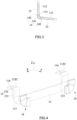
FIG. 4 is a perspective view of the third insulating sleeve and the busbar ofFIG. 2 before assembling, in which the first insulating sleeve and the second insulating sleeve have been mounted on the busbar. -
FIG. 5 is a perspective view of the busbar. -
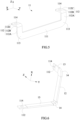
FIG. 6 is a variation ofFIG. 1 . -
FIG. 7 is another variation ofFIG. 1 . - Reference numerals in figures are represented as follows:
- 1 connecting assembly
- 11 busbar
- 111 main body portion
- 112 extending portion
- 112A straight section
- 112B bent connection section
- 112C extending section
- 113 bent connection portion
- 114 connecting hole
- 12 first insulating sleeve
- 13 second insulating sleeve
- 131 fourth covering portion
- 132 fifth covering portion
- 14 third insulating sleeve
- 141 first covering portion
- 142 second covering portion
- 143 third covering portion
- 11 busbar
- 2 first battery module
- 21 first output connecting piece
- 22 first end plate
- 3 second battery module
- 31 second output connecting piece
- 32 second end plate
- X transversal direction
- Y longitudinal direction
- Z up-down direction
- To make the object, technical solutions, and advantages of the present invention more apparent, hereinafter the present invention will be further described in detail in combination with the accompanying figures and the embodiments. It should be understood that the specific embodiments described herein are merely used to explain the present invention but are not intended to limit the present invention.
- In the description of the present invention, unless otherwise specifically defined and limited, the terms "first", "second", "third" and the like are only used for illustrative purposes and are not to be construed as expressing or implying a relative importance; the term "plurality" means two or more; the terms "connect" should be broadly interpreted, for example, the term "connect" can be "fixedly connect", "detachably connect", "integrally connect", "electrically connect" or "signal connect". The term "connect" also can be "directly connect" or "indirectly connect via a medium". For the person skilled in the art, the specific meanings of the abovementioned terms in the present invention can be understood according to the specific situation.
- In the description of the present invention, it should be understood that spatially relative terms, such as "above", "below" and the like, are described based on orientations illustrated in the figures, but are not intended to limit the embodiments of the present invention. Hereinafter the present invention will be further described in detail in combination with the figures.
- Referring to
FIG. 1 , a battery pack of the present invention may comprise a connectingassembly 1, afirst battery module 2 and asecond battery module 3. Thefirst battery module 2 and thesecond battery module 3 are arranged side by side in a transversal direction X, and thefirst battery module 2 is electrically connected to thesecond battery module 3 via the connectingassembly 1. - Referring to
FIG. 2 to FIG. 7 , the connectingassembly 1 may comprise abusbar 11, a first insulatingsleeve 12, a second insulatingsleeve 13 and a third insulatingsleeve 14. - The
busbar 11 may be made of a conductive material such as copper, aluminum, nickel, and alloys thereof. Referring toFIG. 5 , thebusbar 11 may comprise amain body portion 111, an extendingportion 112, abent connection portion 113 and a connectinghole 114. Thebent connection portion 113 connects themain body portion 111 and the extendingportion 112, and the connectinghole 114 is provided through the extendingportion 112. - Referring to
FIG. 2 andFIG. 4 , the first insulatingsleeve 12 covers themain body portion 111 of thebusbar 11. The second insulatingsleeve 13 covers the extendingportion 112 of thebusbar 11. The thirdinsulating sleeve 14 may comprise afirst covering portion 141, and thefirst covering portion 141 covers thebent connection portion 113 of thebusbar 11. - In the connecting
assembly 1, because the first insulatingsleeve 12, the second insulatingsleeve 13 and the third insulatingsleeve 14 are independent components, and the first insulatingsleeve 12, the second insulatingsleeve 13 and the third insulatingsleeve 14 segmentally cover different parts of thebusbar 11, so that the first insulatingsleeve 12, the second insulatingsleeve 13 and the third insulatingsleeve 14 each have a shorter length and less portion required to be bent, thereby facilitating the first insulatingsleeve 12, the second insulatingsleeve 13 and the third insulatingsleeve 14 to be respectively sheathed on the different parts of thebusbar 11, therefore the structure of the first insulatingsleeve 12, the second insulatingsleeve 13 and the third insulatingsleeve 14 are simplified, and the manufacturing cost is greatly reduced. - After the first insulating
sleeve 12, the second insulatingsleeve 13 and the third insulatingsleeve 14 to be respectively sheathed on the different parts of thebusbar 11, because the first insulatingsleeve 12, the second insulatingsleeve 13 and the third insulatingsleeve 14 each have insulation property, and the first insulatingsleeve 12, the second insulatingsleeve 13 and the third insulatingsleeve 14 each have a shorter length and less portion required to be bent, in the process that the different parts of thebusbar 11 are respectively sheathed with the first insulatingsleeve 12, the second insulatingsleeve 13 and the third insulatingsleeve 14, it reduces the wearing of the first insulatingsleeve 12, the second insulatingsleeve 13 and the third insulatingsleeve 14 caused by thebusbar 11, thereby improving the insulation withstand-voltage reliability of the entire connectingassembly 1, and in turn ensuring that the connectingassembly 1 satisfies the insulation withstand-voltage reliability requirement of the battery pack. - The first insulating
sleeve 12, the second insulatingsleeve 13 and the third insulatingsleeve 14 all may be made of an insulating material. Specifically, the insulating material may be PVC, the resin of ABS, EVA or PET. It should be noted that, the materials of the first insulatingsleeve 12, the second insulatingsleeve 13 and the third insulatingsleeve 14 may be the same or different, as long as they meet the requirement of insulation use. - Because the heat shrinkable tube has a special property of heat shrinkage and is convenient to use, the first insulating
sleeve 12, the second insulatingsleeve 13 and the third insulatingsleeve 14 each may be a heat shrinkable tube. The process that the different parts of thebusbar 11 are respectively sheathed with the first insulatingsleeve 12, the second insulatingsleeve 13 and the third insulatingsleeve 14 is described as follows. - When the first insulating
sleeve 12 and the second insulatingsleeve 13 are in a cooling state, firstly the first insulatingsleeve 12 is sheathed on themain body portion 111 of thebusbar 11, the second insulatingsleeve 13 is sequentially sheathed on the extendingportion 112 of thebusbar 11, and then the first insulatingsleeve 12 and the second insulatingsleeve 13 are heated to make them shrunk in place; then, when the third insulatingsleeve 14 is in a cooling state, firstly the third insulatingsleeve 14 is sheathed on thebent connection portion 113 of thebusbar 11, and then the third insulatingsleeve 14 is heated to make it shrunk in place. Thus, the first insulatingsleeve 12, the second insulatingsleeve 13 and the third insulatingsleeve 14 all are sheathed on thebusbar 11 in place. - Referring to
FIG. 2 ,FIG. 4 andFIG. 5 , themain body portion 111 of thebusbar 11 extends in the transversal direction X and is formed as a rectangular structure (i.e., the parts of themain body portion 111 are equal in cross-sectional area), and the thickness direction of themain body portion 111 is the longitudinal direction Y, the width direction of themain body portion 111 is the up-down direction Z. Correspondingly, the first insulatingsleeve 12 is also formed as a rectangular structure (i.e., the parts of the first insulatingsleeve 12 are equal in cross-sectional area). Here, because the parts of the first insulatingsleeve 12 in cross-sectional area are uniform and the structure of the first insulatingsleeve 12 is simple, therefore it facilitates the first insulatingsleeve 12 to be sheathed on themain body portion 111, and there is no wrinkles and air bubbles when the first insulatingsleeve 12 shrinks, thereby ensuring the insulation withstand-voltage reliability of themain body portion 111. - The extending
portion 112 of thebusbar 11 may be formed as a rectangular structure (as shown inFIG. 6 andFIG. 7 ). Correspondingly, the second insulatingsleeve 13 may also be formed as a rectangular structure (i.e., the parts of the second insulatingsleeve 13 are equal in cross-sectional area), and the second insulatingsleeve 13 covers a part of the extendingportion 112. In other words, a part of the extendingportion 112 extends out of the second insulatingsleeve 13. The connectinghole 114 is provided through the part of the extendingportion 112 extending out of the second insulatingsleeve 13, so that thebusbar 11 connects thefirst battery module 2 and thesecond battery module 3 with the connectinghole 114. Here, because the parts of the second insulatingsleeve 13 in cross-sectional area are uniform, and the structure of the second insulatingsleeve 13 is simple, therefore it facilitates the second insulatingsleeve 13 to be sheathed on the extendingportion 112, and there is no wrinkles and air bubbles when the second insulatingsleeve 13 shrinks, thereby ensuring the insulation withstand-voltage reliability of the extendingportion 112. - The extending
portion 112 of thebusbar 11 may comprise astraight section 112A, abent connection section 112B, and an extendingsection 112C (i.e., the extendingportion 112 is formed as a L-shaped structure). Thestraight section 112A is directly connected to thebent connection portion 113, and thebent connection section 112B connects thestraight section 112A and the extendingsection 112C. Correspondingly, the second insulatingsleeve 13 may comprise afourth covering portion 131 and afifth covering portion 132, thefourth covering portion 131 covers thestraight section 112A of the extendingportion 112, and thefifth covering portion 132 covers thebent connection section 112B of the extendingportion 112. The connectinghole 114 penetrates the extendingsection 112C of the extendingportion 112, so that thebusbar 11 connects thefirst battery module 2 and thesecond battery module 3 with the connectinghole 114. - Here, because the second insulating
sleeve 13 only covers thestraight section 112A and thebent connection section 112B of the extendingportion 112, the length of the second insulatingsleeve 13 is shorter and it facilitates the second insulatingsleeve 13 to be sheathed on the extendingportion 112, and the second insulatingsleeve 13 receives less resistance when the second insulatingsleeve 13 shrinks, thereby improving the shrink effect of the second insulatingsleeve 13, therefore it ensures the insulation withstand-voltage reliability of the extendingportion 112. - The extending
portion 112 of thebusbar 11 may be provided as two in number. Referring toFIG. 5 , thestraight section 112A of the extendingportion 112 may extend in the up-down direction Z, and the extendingsection 112C may extend in the longitudinal direction Y. Based on the different bending direction of thebent connection section 112B with respect to thestraight section 112A, thebent connection section 112B of the extendingportion 112 may be formed as a horizontal bending structure, a vertical bending structure or a twisting structure. - The
bent connection portion 113 of thebusbar 11 and the second insulatingsleeve 13 are identical to the extendingportion 112 in number. Based on the different bending direction of thebent connection portion 113 with respect to themain body portion 111, thebent connection portion 113 may be formed as a horizontal bending structure, a vertical bending structure or a twisting structure. However, regardless what kind structure form of thebent connection portion 113 is formed, the structure of the third insulatingsleeve 14 is always consistent with the structure of thebent connection portion 113. - Hereinafter the
bent connection portion 113 will be taken as an example, and the specific structural forms of the horizontal bending structure, the vertical bending structure and the twisting structure will be described in combination with the corresponding figures. - When the
main body portion 111 of thebusbar 11 is a rectangular structure, themain body portion 111 has a large surface and a narrow surface, and thebent connection portion 113 may be bent with respect to the large surface of themain body portion 111 to form the horizontal bending structure (the structure shown by thebent connection portion 113 located at the lower side inFIG. 6 and thebent connection portion 113 located at the right side inFIG. 7 ); thebent connection portion 113 may be bent with respect to the narrow surface of themain body portion 111 to form the vertical bending structure (the structure shown by thebent connection portion 113 located at the upper side inFIG. 6 and thebent connection portion 113 inFIG. 5 ); thebent connection portion 113 may also be twisted with respect to the large surface and the narrow surface of themain body portion 111 to form the twisting structure (the structure shown by thebent connection portion 113 located at the left side inFIG. 7 ). - Because the third insulating
sleeve 14 only covers thebent connection portion 113 of thebusbar 11, the length of the third insulatingsleeve 14 is shorter and it facilitates the third insulatingsleeve 14 to be sheathed on thebent connection portion 113, and the third insulatingsleeve 14 receives less resistance when the third insulatingsleeve 14 shrinks, thereby improving the shrink effect of the third insulatingsleeve 14, therefore it ensures the insulation withstand-voltage reliability of thebent connection portion 113. - The third
insulating sleeve 14 may be wholly located between the first insulatingsleeve 12 and the second insulating sleeve 13 (i.e., the third insulatingsleeve 14 only covers thebent connection portion 113 of the busbar 11). At this time, in order to ensure the whole insulation withstand-voltage reliability of the connectingassembly 1, the third insulatingsleeve 14 can be hermetically spliced together with the first insulatingsleeve 12 and the second insulatingsleeve 13 under the action of heat. The inner diameter of thefirst covering portion 141 is equal to the inner diameter of the first insulatingsleeve 12 and the inner diameter of the second insulatingsleeve 13. - Referring to
FIG. 2 to FIG. 4 , the third insulatingsleeve 14 may further comprise asecond covering portion 142, and thesecond covering portion 142 is connected to thefirst covering portion 141 and covers a part of the first insulatingsleeve 12. At this time, the inner diameter of thesecond covering portion 142 is larger than the inner diameter of the first insulatingsleeve 12. Because thesecond covering portion 142 of the third insulatingsleeve 14 has a certain length of overlap with the first insulatingsleeve 12, the insulation withstand-voltage reliability of them at the joint are improved; and at the same time, because thesecond covering portion 142 covers the part of the first insulatingsleeve 12, there is a gap between thefirst covering portion 141 and thebent connection portion 113, thereby reducing the friction between thefirst covering portion 141 and thebusbar 11, thus thefirst covering portion 141 can produce a greater degree of shrink, so that thefirst covering portion 141 does not cause the phenomena of whiteness and tearing, thereby ensuring the whole insulation withstand-voltage reliability of the connectingassembly 1. - Referring to
FIG. 2 to FIG. 4 , the third insulatingsleeve 14 may further comprise athird covering portion 143, and thethird covering portion 143 is connected to thefirst covering portion 141 and covers a part of the second insulatingsleeve 13. At this time, the inner diameter of thethird covering portion 143 is larger than the inner diameter of the second insulatingsleeve 13. Because thethird covering portion 143 of the third insulatingsleeve 14 has a certain length of overlap with the second insulatingsleeve 13, the insulation withstand-voltage reliability of them at the joint is improved; and at the same time, because thethird covering portion 143 covers the part of the second insulatingsleeve 13, so that there is a gap between thefirst covering portion 141 and thebent connection portion 113, thereby reducing the friction between thefirst covering portion 141 and thebusbar 11, thus thefirst covering portion 141 can produce a greater degree of shrink, so that thefirst covering portion 141 does not cause the phenomena of whiteness and tearing, thereby ensuring the insulation whole withstand-voltage reliability of the connectingassembly 1. - Referring to
FIG. 1 , thefirst battery module 2 may comprise a plurality of first batteries, a firstoutput connecting piece 21 and afirst end plate 22, and one end of the firstoutput connecting piece 21 is electrically connected to the plurality of first batteries, the other end of the firstoutput connecting piece 21 is supported on thefirst end plate 22 and electrically connected to one extendingportion 112 of thebusbar 11. The connectingassembly 1 can also be used to realize the series and/or parallel connection between the plurality of first batteries. - Referring to
FIG. 1 , thesecond battery module 3 may comprise a plurality of second batteries, a secondoutput connecting piece 31 and asecond end plate 32, and one end of the secondoutput connecting piece 31 is electrically connected to the plurality of second batteries, the other end of the secondoutput connecting piece 31 is supported on thesecond end plate 32 and electrically connected to another extendingportion 112 of thebusbar 11. The connectingassembly 1 can also be used to realize the series and/or parallel connection between the plurality of second batteries.
Claims (9)
- A connecting assembly (1), comprising a busbar (11), a first insulating sleeve (12), a second insulating sleeve (13) and a third insulating sleeve (14);the busbar (11) comprising a main body portion (111), an extending portion (112), and a bent connection portion (113), the bent connection portion (113) connecting the main body portion (111) and the extending portion (112);the first insulating sleeve (12) covering the main body portion (111) of the busbar (11);the second insulating sleeve (13) covering the extending portion (112) of the busbar (11);the third insulating sleeve (14) comprising a first covering portion (141), and the first covering portion (141) covering the bent connection portion (113) of the busbar (11);characterized in thatthe first insulating sleeve (12), the second insulating sleeve (13) and the third insulating sleeve (14) each are a heat shrinkable tube; andthe first insulating sleeve (12), the second insulating sleeve (13) and the third insulating sleeve (14) are independent components.
- The connecting assembly (1) according to claim 1, wherein the third insulating sleeve (14) is wholly located between the first insulating sleeve (12) and the second insulating sleeve (13).
- The connecting assembly (1) according to claim 1, wherein the third insulating sleeve (14) further comprises a second covering portion (142), and the second covering portion (142) is connected to the first covering portion (141) and covers a part of the first insulating sleeve (12).
- The connecting assembly (1) according to claim 1, wherein the third insulating sleeve (14) further comprises a third covering portion (143), and the third covering portion (143) is connected to the first covering portion (141) and covers a part of the second insulating sleeve (13).
- The connecting assembly (1) according to claim 1, whereinthe extending portion (112) is formed as a rectangular structure;correspondingly, the second insulating sleeve (13) is also formed as a rectangular structure, and the second insulating sleeve (13) covers a part of the extending portion (112).
- The connecting assembly (1) according to claim 1, whereinthe extending portion (112) comprises a straight section (112A), a bent connection section (112B) and an extending section (112C), the straight section (112A) is connected to the bent connection portion (113), the bent connection section (112B) connects the straight section (112A) and the extending section (112C);the second insulating sleeve (13) comprises a fourth covering portion (131) and a fifth covering portion (132), the fourth covering portion (131) covers the straight section (112A) of the extending portion (112), the fifth covering portion (132) covers the bent connection section (112B) of the extending portion (112).
- The connecting assembly (1) according to claim 1, wherein the busbar (11) further comprises a connecting hole (114), and the connecting hole (114) is provided through the extending portion (112).
- A battery pack, comprising a first battery module (2), a second battery module (3) and the connecting assembly (1) according to any one of claims 1 to 7, and the first battery module (2) being electrically connected to the second battery module (3) via the connecting assembly (1).
- The battery pack according to claim 8, whereinthe first battery module (2) comprises a plurality of first batteries, a first output connecting piece (21) and a first end plate (22), and one end of the first output connecting piece (21) is electrically connected to the plurality of first batteries, the other end of the first output connecting piece (21) is supported on the first end plate (22) and electrically connected to the busbar (11);the second battery module (3) comprises a plurality of second batteries, a second output connecting piece (31) and a second end plate (32), and one end of the second output connecting piece (31) is electrically connected to the plurality of second batteries, the other end of the second output connecting piece (31) is supported on the second end plate (32) and electrically connected to the busbar (11).
Applications Claiming Priority (1)
| Application Number | Priority Date | Filing Date | Title |
|---|---|---|---|
| CN201921051788.3U CN209963326U (en) | 2019-07-05 | 2019-07-05 | Connecting assembly and battery pack |
Publications (2)
| Publication Number | Publication Date |
|---|---|
| EP3761390A1 EP3761390A1 (en) | 2021-01-06 |
| EP3761390B1 true EP3761390B1 (en) | 2024-05-15 |
Family
ID=67742170
Family Applications (1)
| Application Number | Title | Priority Date | Filing Date |
|---|---|---|---|
| EP19193220.1A Active EP3761390B1 (en) | 2019-07-05 | 2019-08-23 | Connecting assembly and battery pack |
Country Status (6)
| Country | Link |
|---|---|
| US (1) | US20210005864A1 (en) |
| EP (1) | EP3761390B1 (en) |
| CN (1) | CN209963326U (en) |
| ES (1) | ES2986345T3 (en) |
| HU (1) | HUE067626T2 (en) |
| WO (1) | WO2021004283A1 (en) |
Families Citing this family (9)
| Publication number | Priority date | Publication date | Assignee | Title |
|---|---|---|---|---|
| CN209963326U (en) * | 2019-07-05 | 2020-01-17 | 江苏时代新能源科技有限公司 | Connecting assembly and battery pack |
| JP7663013B2 (en) * | 2021-04-23 | 2025-04-16 | 株式会社オートネットワーク技術研究所 | Method for manufacturing busbar member |
| CN115347333B (en) * | 2021-05-14 | 2026-01-02 | 中创新航科技集团股份有限公司 | Batteries and battery packs |
| CN216720226U (en) * | 2022-01-18 | 2022-06-10 | 宁德时代新能源科技股份有限公司 | Busbar assembly, battery and electric equipment |
| JP2024122742A (en) * | 2023-02-28 | 2024-09-09 | イビデン株式会社 | Busbar, manufacturing method thereof, and power storage device |
| JP2024122743A (en) * | 2023-02-28 | 2024-09-09 | イビデン株式会社 | Busbar, manufacturing method thereof, and power storage device |
| JP2024122741A (en) * | 2023-02-28 | 2024-09-09 | イビデン株式会社 | Busbar, manufacturing method thereof, and power storage device |
| DE102024102385A1 (en) * | 2024-01-29 | 2025-07-31 | Schaeffler Technologies AG & Co. KG | Electrical power cable with a multilayer hose; battery module; power electronics |
| CN119905782B (en) * | 2025-03-27 | 2025-11-18 | 宁德时代新能源科技股份有限公司 | Battery device and power utilization device |
Family Cites Families (10)
| Publication number | Priority date | Publication date | Assignee | Title |
|---|---|---|---|---|
| JP5813430B2 (en) * | 2011-09-13 | 2015-11-17 | 矢崎総業株式会社 | Connecting member for power supply body, bus bar module, and power supply device including the bus bar module |
| CN204577505U (en) * | 2015-04-24 | 2015-08-19 | 宁德时代新能源科技有限公司 | Battery modules brace |
| CN205828502U (en) * | 2016-04-25 | 2016-12-21 | 天津雅迪实业有限公司 | A kind of connecting line construction of multiple battery |
| CN105957591B (en) * | 2016-06-23 | 2018-12-04 | 深圳市沃尔核材股份有限公司 | A kind of irregular busbar and its insulating method |
| CN205722867U (en) * | 2016-06-23 | 2016-11-23 | 深圳市沃尔核材股份有限公司 | A kind of irregular busbar |
| KR102209825B1 (en) * | 2016-07-21 | 2021-01-29 | 삼성에스디아이 주식회사 | Battery module |
| KR102209824B1 (en) * | 2016-07-21 | 2021-01-29 | 삼성에스디아이 주식회사 | Battery module |
| CN206313012U (en) * | 2016-10-26 | 2017-07-07 | 深圳市科达利实业股份有限公司 | A kind of battery flexible link of highly versatile |
| CN109285633B (en) * | 2017-07-21 | 2021-08-10 | 矢崎(中国)投资有限公司 | Method for producing a busbar by means of a metal core and busbar |
| CN209963326U (en) * | 2019-07-05 | 2020-01-17 | 江苏时代新能源科技有限公司 | Connecting assembly and battery pack |
-
2019
- 2019-07-05 CN CN201921051788.3U patent/CN209963326U/en active Active
- 2019-08-23 ES ES19193220T patent/ES2986345T3/en active Active
- 2019-08-23 EP EP19193220.1A patent/EP3761390B1/en active Active
- 2019-08-23 HU HUE19193220A patent/HUE067626T2/en unknown
- 2019-08-26 US US16/551,480 patent/US20210005864A1/en not_active Abandoned
-
2020
- 2020-06-24 WO PCT/CN2020/098047 patent/WO2021004283A1/en not_active Ceased
Also Published As
| Publication number | Publication date |
|---|---|
| WO2021004283A1 (en) | 2021-01-14 |
| ES2986345T3 (en) | 2024-11-11 |
| US20210005864A1 (en) | 2021-01-07 |
| CN209963326U (en) | 2020-01-17 |
| EP3761390A1 (en) | 2021-01-06 |
| HUE067626T2 (en) | 2024-10-28 |
Similar Documents
| Publication | Publication Date | Title |
|---|---|---|
| EP3761390B1 (en) | Connecting assembly and battery pack | |
| EP2711935B1 (en) | High-voltage wire, and method for producing high-voltage wire | |
| US8722240B2 (en) | Single cell and power battery pack comprising the same | |
| CN110199361B (en) | Wire harness | |
| US10014509B2 (en) | Battery wiring module | |
| US9305681B2 (en) | High-voltage conductive path and wiring harness | |
| JP6290165B2 (en) | Busbar module manufacturing method and battery pack manufacturing method | |
| WO2016010150A1 (en) | Bus bar module and method for producing bus bar module | |
| JPH11237289A (en) | Pressure sensor and method of manufacturing pressure sensor | |
| US12095213B2 (en) | Connection terminal and wiring harness | |
| US9252575B2 (en) | High-voltage conduction path and wiring harness | |
| KR20210019296A (en) | A flexible bus bar with partial insert injection | |
| WO2017150088A1 (en) | Wiring module | |
| US10897096B2 (en) | Wire harness | |
| JP2019091668A (en) | Bus bar module and wire harness | |
| US11075470B2 (en) | Wire harness with covering materials and tube containing cross-linked polyethylene | |
| JP6518508B2 (en) | Coated conductive member | |
| CN218242508U (en) | Wire harness and photovoltaic system | |
| JP2013112122A (en) | Window glass structure | |
| US11050170B2 (en) | Pipe conductor and conductive path | |
| CN222735435U (en) | Electric connector | |
| CN219610669U (en) | High-voltage insulation connecting piece and power battery | |
| CN212303985U (en) | Energy storage device and electronic equipment | |
| KR101101138B1 (en) | New rechargeable battery pack | |
| CN211016801U (en) | Solid polymer capacitor |
Legal Events
| Date | Code | Title | Description |
|---|---|---|---|
| PUAI | Public reference made under article 153(3) epc to a published international application that has entered the european phase |
Free format text: ORIGINAL CODE: 0009012 |
|
| STAA | Information on the status of an ep patent application or granted ep patent |
Free format text: STATUS: REQUEST FOR EXAMINATION WAS MADE |
|
| 17P | Request for examination filed |
Effective date: 20190823 |
|
| AK | Designated contracting states |
Kind code of ref document: A1 Designated state(s): AL AT BE BG CH CY CZ DE DK EE ES FI FR GB GR HR HU IE IS IT LI LT LU LV MC MK MT NL NO PL PT RO RS SE SI SK SM TR |
|
| AX | Request for extension of the european patent |
Extension state: BA ME |
|
| REG | Reference to a national code |
Ref country code: DE Ref legal event code: R079 Free format text: PREVIOUS MAIN CLASS: H01M0002100000 Ipc: H01M0050204000 Ref country code: DE Ref legal event code: R079 Ref document number: 602019052175 Country of ref document: DE Free format text: PREVIOUS MAIN CLASS: H01M0002100000 Ipc: H01M0050204000 |
|
| RIC1 | Information provided on ipc code assigned before grant |
Ipc: H01M 50/522 20210101ALI20231026BHEP Ipc: H01M 50/505 20210101ALI20231026BHEP Ipc: H01M 50/204 20210101AFI20231026BHEP |
|
| GRAP | Despatch of communication of intention to grant a patent |
Free format text: ORIGINAL CODE: EPIDOSNIGR1 |
|
| STAA | Information on the status of an ep patent application or granted ep patent |
Free format text: STATUS: GRANT OF PATENT IS INTENDED |
|
| INTG | Intention to grant announced |
Effective date: 20231218 |
|
| GRAS | Grant fee paid |
Free format text: ORIGINAL CODE: EPIDOSNIGR3 |
|
| GRAA | (expected) grant |
Free format text: ORIGINAL CODE: 0009210 |
|
| STAA | Information on the status of an ep patent application or granted ep patent |
Free format text: STATUS: THE PATENT HAS BEEN GRANTED |
|
| AK | Designated contracting states |
Kind code of ref document: B1 Designated state(s): AL AT BE BG CH CY CZ DE DK EE ES FI FR GB GR HR HU IE IS IT LI LT LU LV MC MK MT NL NO PL PT RO RS SE SI SK SM TR |
|
| REG | Reference to a national code |
Ref country code: CH Ref legal event code: EP |
|
| REG | Reference to a national code |
Ref country code: DE Ref legal event code: R096 Ref document number: 602019052175 Country of ref document: DE |
|
| REG | Reference to a national code |
Ref country code: IE Ref legal event code: FG4D |
|
| REG | Reference to a national code |
Ref country code: NL Ref legal event code: FP |
|
| REG | Reference to a national code |
Ref country code: LT Ref legal event code: MG9D |
|
| PG25 | Lapsed in a contracting state [announced via postgrant information from national office to epo] |
Ref country code: IS Free format text: LAPSE BECAUSE OF FAILURE TO SUBMIT A TRANSLATION OF THE DESCRIPTION OR TO PAY THE FEE WITHIN THE PRESCRIBED TIME-LIMIT Effective date: 20240915 |
|
| PG25 | Lapsed in a contracting state [announced via postgrant information from national office to epo] |
Ref country code: BG Free format text: LAPSE BECAUSE OF FAILURE TO SUBMIT A TRANSLATION OF THE DESCRIPTION OR TO PAY THE FEE WITHIN THE PRESCRIBED TIME-LIMIT Effective date: 20240515 |
|
| PG25 | Lapsed in a contracting state [announced via postgrant information from national office to epo] |
Ref country code: FI Free format text: LAPSE BECAUSE OF FAILURE TO SUBMIT A TRANSLATION OF THE DESCRIPTION OR TO PAY THE FEE WITHIN THE PRESCRIBED TIME-LIMIT Effective date: 20240515 Ref country code: HR Free format text: LAPSE BECAUSE OF FAILURE TO SUBMIT A TRANSLATION OF THE DESCRIPTION OR TO PAY THE FEE WITHIN THE PRESCRIBED TIME-LIMIT Effective date: 20240515 |
|
| PG25 | Lapsed in a contracting state [announced via postgrant information from national office to epo] |
Ref country code: GR Free format text: LAPSE BECAUSE OF FAILURE TO SUBMIT A TRANSLATION OF THE DESCRIPTION OR TO PAY THE FEE WITHIN THE PRESCRIBED TIME-LIMIT Effective date: 20240816 |
|
| PG25 | Lapsed in a contracting state [announced via postgrant information from national office to epo] |
Ref country code: PT Free format text: LAPSE BECAUSE OF FAILURE TO SUBMIT A TRANSLATION OF THE DESCRIPTION OR TO PAY THE FEE WITHIN THE PRESCRIBED TIME-LIMIT Effective date: 20240916 |
|
| REG | Reference to a national code |
Ref country code: AT Ref legal event code: MK05 Ref document number: 1687649 Country of ref document: AT Kind code of ref document: T Effective date: 20240515 |
|
| PG25 | Lapsed in a contracting state [announced via postgrant information from national office to epo] |
Ref country code: AT Free format text: LAPSE BECAUSE OF FAILURE TO SUBMIT A TRANSLATION OF THE DESCRIPTION OR TO PAY THE FEE WITHIN THE PRESCRIBED TIME-LIMIT Effective date: 20240515 |
|
| PG25 | Lapsed in a contracting state [announced via postgrant information from national office to epo] |
Ref country code: PL Free format text: LAPSE BECAUSE OF FAILURE TO SUBMIT A TRANSLATION OF THE DESCRIPTION OR TO PAY THE FEE WITHIN THE PRESCRIBED TIME-LIMIT Effective date: 20240515 |
|
| REG | Reference to a national code |
Ref country code: HU Ref legal event code: AG4A Ref document number: E067626 Country of ref document: HU |
|
| PG25 | Lapsed in a contracting state [announced via postgrant information from national office to epo] |
Ref country code: LV Free format text: LAPSE BECAUSE OF FAILURE TO SUBMIT A TRANSLATION OF THE DESCRIPTION OR TO PAY THE FEE WITHIN THE PRESCRIBED TIME-LIMIT Effective date: 20240515 |
|
| PG25 | Lapsed in a contracting state [announced via postgrant information from national office to epo] |
Ref country code: PT Free format text: LAPSE BECAUSE OF FAILURE TO SUBMIT A TRANSLATION OF THE DESCRIPTION OR TO PAY THE FEE WITHIN THE PRESCRIBED TIME-LIMIT Effective date: 20240916 Ref country code: PL Free format text: LAPSE BECAUSE OF FAILURE TO SUBMIT A TRANSLATION OF THE DESCRIPTION OR TO PAY THE FEE WITHIN THE PRESCRIBED TIME-LIMIT Effective date: 20240515 Ref country code: NO Free format text: LAPSE BECAUSE OF FAILURE TO SUBMIT A TRANSLATION OF THE DESCRIPTION OR TO PAY THE FEE WITHIN THE PRESCRIBED TIME-LIMIT Effective date: 20240815 Ref country code: LV Free format text: LAPSE BECAUSE OF FAILURE TO SUBMIT A TRANSLATION OF THE DESCRIPTION OR TO PAY THE FEE WITHIN THE PRESCRIBED TIME-LIMIT Effective date: 20240515 Ref country code: IS Free format text: LAPSE BECAUSE OF FAILURE TO SUBMIT A TRANSLATION OF THE DESCRIPTION OR TO PAY THE FEE WITHIN THE PRESCRIBED TIME-LIMIT Effective date: 20240915 Ref country code: HR Free format text: LAPSE BECAUSE OF FAILURE TO SUBMIT A TRANSLATION OF THE DESCRIPTION OR TO PAY THE FEE WITHIN THE PRESCRIBED TIME-LIMIT Effective date: 20240515 Ref country code: GR Free format text: LAPSE BECAUSE OF FAILURE TO SUBMIT A TRANSLATION OF THE DESCRIPTION OR TO PAY THE FEE WITHIN THE PRESCRIBED TIME-LIMIT Effective date: 20240816 Ref country code: FI Free format text: LAPSE BECAUSE OF FAILURE TO SUBMIT A TRANSLATION OF THE DESCRIPTION OR TO PAY THE FEE WITHIN THE PRESCRIBED TIME-LIMIT Effective date: 20240515 Ref country code: BG Free format text: LAPSE BECAUSE OF FAILURE TO SUBMIT A TRANSLATION OF THE DESCRIPTION OR TO PAY THE FEE WITHIN THE PRESCRIBED TIME-LIMIT Effective date: 20240515 Ref country code: AT Free format text: LAPSE BECAUSE OF FAILURE TO SUBMIT A TRANSLATION OF THE DESCRIPTION OR TO PAY THE FEE WITHIN THE PRESCRIBED TIME-LIMIT Effective date: 20240515 Ref country code: RS Free format text: LAPSE BECAUSE OF FAILURE TO SUBMIT A TRANSLATION OF THE DESCRIPTION OR TO PAY THE FEE WITHIN THE PRESCRIBED TIME-LIMIT Effective date: 20240815 |
|
| REG | Reference to a national code |
Ref country code: ES Ref legal event code: FG2A Ref document number: 2986345 Country of ref document: ES Kind code of ref document: T3 Effective date: 20241111 |
|
| P01 | Opt-out of the competence of the unified patent court (upc) registered |
Free format text: CASE NUMBER: APP_52950/2024 Effective date: 20240923 |
|
| PG25 | Lapsed in a contracting state [announced via postgrant information from national office to epo] |
Ref country code: DK Free format text: LAPSE BECAUSE OF FAILURE TO SUBMIT A TRANSLATION OF THE DESCRIPTION OR TO PAY THE FEE WITHIN THE PRESCRIBED TIME-LIMIT Effective date: 20240515 |
|
| PG25 | Lapsed in a contracting state [announced via postgrant information from national office to epo] |
Ref country code: EE Free format text: LAPSE BECAUSE OF FAILURE TO SUBMIT A TRANSLATION OF THE DESCRIPTION OR TO PAY THE FEE WITHIN THE PRESCRIBED TIME-LIMIT Effective date: 20240515 |
|
| PG25 | Lapsed in a contracting state [announced via postgrant information from national office to epo] |
Ref country code: CZ Free format text: LAPSE BECAUSE OF FAILURE TO SUBMIT A TRANSLATION OF THE DESCRIPTION OR TO PAY THE FEE WITHIN THE PRESCRIBED TIME-LIMIT Effective date: 20240515 |
|
| PG25 | Lapsed in a contracting state [announced via postgrant information from national office to epo] |
Ref country code: SK Free format text: LAPSE BECAUSE OF FAILURE TO SUBMIT A TRANSLATION OF THE DESCRIPTION OR TO PAY THE FEE WITHIN THE PRESCRIBED TIME-LIMIT Effective date: 20240515 Ref country code: RO Free format text: LAPSE BECAUSE OF FAILURE TO SUBMIT A TRANSLATION OF THE DESCRIPTION OR TO PAY THE FEE WITHIN THE PRESCRIBED TIME-LIMIT Effective date: 20240515 |
|
| PG25 | Lapsed in a contracting state [announced via postgrant information from national office to epo] |
Ref country code: SM Free format text: LAPSE BECAUSE OF FAILURE TO SUBMIT A TRANSLATION OF THE DESCRIPTION OR TO PAY THE FEE WITHIN THE PRESCRIBED TIME-LIMIT Effective date: 20240515 |
|
| PG25 | Lapsed in a contracting state [announced via postgrant information from national office to epo] |
Ref country code: SM Free format text: LAPSE BECAUSE OF FAILURE TO SUBMIT A TRANSLATION OF THE DESCRIPTION OR TO PAY THE FEE WITHIN THE PRESCRIBED TIME-LIMIT Effective date: 20240515 Ref country code: SK Free format text: LAPSE BECAUSE OF FAILURE TO SUBMIT A TRANSLATION OF THE DESCRIPTION OR TO PAY THE FEE WITHIN THE PRESCRIBED TIME-LIMIT Effective date: 20240515 Ref country code: RO Free format text: LAPSE BECAUSE OF FAILURE TO SUBMIT A TRANSLATION OF THE DESCRIPTION OR TO PAY THE FEE WITHIN THE PRESCRIBED TIME-LIMIT Effective date: 20240515 Ref country code: EE Free format text: LAPSE BECAUSE OF FAILURE TO SUBMIT A TRANSLATION OF THE DESCRIPTION OR TO PAY THE FEE WITHIN THE PRESCRIBED TIME-LIMIT Effective date: 20240515 Ref country code: DK Free format text: LAPSE BECAUSE OF FAILURE TO SUBMIT A TRANSLATION OF THE DESCRIPTION OR TO PAY THE FEE WITHIN THE PRESCRIBED TIME-LIMIT Effective date: 20240515 Ref country code: CZ Free format text: LAPSE BECAUSE OF FAILURE TO SUBMIT A TRANSLATION OF THE DESCRIPTION OR TO PAY THE FEE WITHIN THE PRESCRIBED TIME-LIMIT Effective date: 20240515 |
|
| PG25 | Lapsed in a contracting state [announced via postgrant information from national office to epo] |
Ref country code: IT Free format text: LAPSE BECAUSE OF FAILURE TO SUBMIT A TRANSLATION OF THE DESCRIPTION OR TO PAY THE FEE WITHIN THE PRESCRIBED TIME-LIMIT Effective date: 20240515 |
|
| REG | Reference to a national code |
Ref country code: DE Ref legal event code: R097 Ref document number: 602019052175 Country of ref document: DE |
|
| PLBE | No opposition filed within time limit |
Free format text: ORIGINAL CODE: 0009261 |
|
| STAA | Information on the status of an ep patent application or granted ep patent |
Free format text: STATUS: NO OPPOSITION FILED WITHIN TIME LIMIT |
|
| REG | Reference to a national code |
Ref country code: CH Ref legal event code: PL |
|
| PG25 | Lapsed in a contracting state [announced via postgrant information from national office to epo] |
Ref country code: LU Free format text: LAPSE BECAUSE OF NON-PAYMENT OF DUE FEES Effective date: 20240823 |
|
| 26N | No opposition filed |
Effective date: 20250218 |
|
| PG25 | Lapsed in a contracting state [announced via postgrant information from national office to epo] |
Ref country code: SI Free format text: LAPSE BECAUSE OF FAILURE TO SUBMIT A TRANSLATION OF THE DESCRIPTION OR TO PAY THE FEE WITHIN THE PRESCRIBED TIME-LIMIT Effective date: 20240515 Ref country code: CH Free format text: LAPSE BECAUSE OF NON-PAYMENT OF DUE FEES Effective date: 20240831 Ref country code: MC Free format text: LAPSE BECAUSE OF FAILURE TO SUBMIT A TRANSLATION OF THE DESCRIPTION OR TO PAY THE FEE WITHIN THE PRESCRIBED TIME-LIMIT Effective date: 20240515 |
|
| REG | Reference to a national code |
Ref country code: BE Ref legal event code: MM Effective date: 20240831 |
|
| PG25 | Lapsed in a contracting state [announced via postgrant information from national office to epo] |
Ref country code: BE Free format text: LAPSE BECAUSE OF NON-PAYMENT OF DUE FEES Effective date: 20240831 |
|
| PG25 | Lapsed in a contracting state [announced via postgrant information from national office to epo] |
Ref country code: IE Free format text: LAPSE BECAUSE OF NON-PAYMENT OF DUE FEES Effective date: 20240823 |
|
| PG25 | Lapsed in a contracting state [announced via postgrant information from national office to epo] |
Ref country code: SE Free format text: LAPSE BECAUSE OF FAILURE TO SUBMIT A TRANSLATION OF THE DESCRIPTION OR TO PAY THE FEE WITHIN THE PRESCRIBED TIME-LIMIT Effective date: 20240515 |
|
| PGFP | Annual fee paid to national office [announced via postgrant information from national office to epo] |
Ref country code: NL Payment date: 20250826 Year of fee payment: 7 |
|
| PGFP | Annual fee paid to national office [announced via postgrant information from national office to epo] |
Ref country code: HU Payment date: 20250807 Year of fee payment: 7 |
|
| PGFP | Annual fee paid to national office [announced via postgrant information from national office to epo] |
Ref country code: ES Payment date: 20250902 Year of fee payment: 7 |
|
| PGFP | Annual fee paid to national office [announced via postgrant information from national office to epo] |
Ref country code: DE Payment date: 20250827 Year of fee payment: 7 |
|
| PGFP | Annual fee paid to national office [announced via postgrant information from national office to epo] |
Ref country code: GB Payment date: 20250826 Year of fee payment: 7 |
|
| PGFP | Annual fee paid to national office [announced via postgrant information from national office to epo] |
Ref country code: FR Payment date: 20250826 Year of fee payment: 7 |
|
| PG25 | Lapsed in a contracting state [announced via postgrant information from national office to epo] |
Ref country code: CY Free format text: LAPSE BECAUSE OF FAILURE TO SUBMIT A TRANSLATION OF THE DESCRIPTION OR TO PAY THE FEE WITHIN THE PRESCRIBED TIME-LIMIT; INVALID AB INITIO Effective date: 20190823 |